
A covered gown only looks modern when the coverage is designed into it rather than added on top. The brides I dress for modest weddings usually arrive with the same worry: that a high neck and long sleeves will make them look buttoned into someone else’s dress. They won’t, if the fit is right. Today’s modest gowns use clean crepe, structured satin, lace and the odd bow or dimensional flower, and the newest collections treat sleeves and collars as the main event. Before you fall for a fabric, think about your venue, your season and exactly how much coverage you need, because those three answers rule out half the racks. A defined waist and sleeves cut to your arm keep extra fabric from swallowing you. The twenty gowns below run from minimal columns to full ball gowns, each with the notes I’d give you in the fitting room.
Lining Decides Whether a Covered Gown Is Truly Covered
Most of the coverage problems I see aren’t about the design. They’re about what sits underneath it. A gown can have a high neck and full sleeves on the hanger and still show skin once you stand under a camera flash, because the sleeves are unlined lace or the bodice is backed in nude mesh. Before you judge a dress, ask the consultant three things: what the lining is made of, what color it is, and where it stops.
Test it under two kinds of light
Salon lighting is kind. Ask to step near a window, then have someone photograph you with the phone flash on. Flash passes straight through thin tulle and chiffon, and a nude lining that looked like fabric in the mirror can read as bare skin in the picture. An ivory or matching lining keeps the gown reading as one piece.
Order with modifications in mind
- Many designers will raise a neckline, close a back or add lined sleeves at the order stage, often for an extra fee. It is cheaper and neater than having a seamstress rebuild a finished gown.
- Made-to-order gowns commonly take several months to arrive, and alterations usually need another two to three months, so changes like these are best requested early. Timelines vary by designer, so ask before you commit.
- Ask for spare fabric from the same dye lot. If a sleeve or panel is added later, it will match.
1. High Neck Lace Ball Gown Wedding Dress
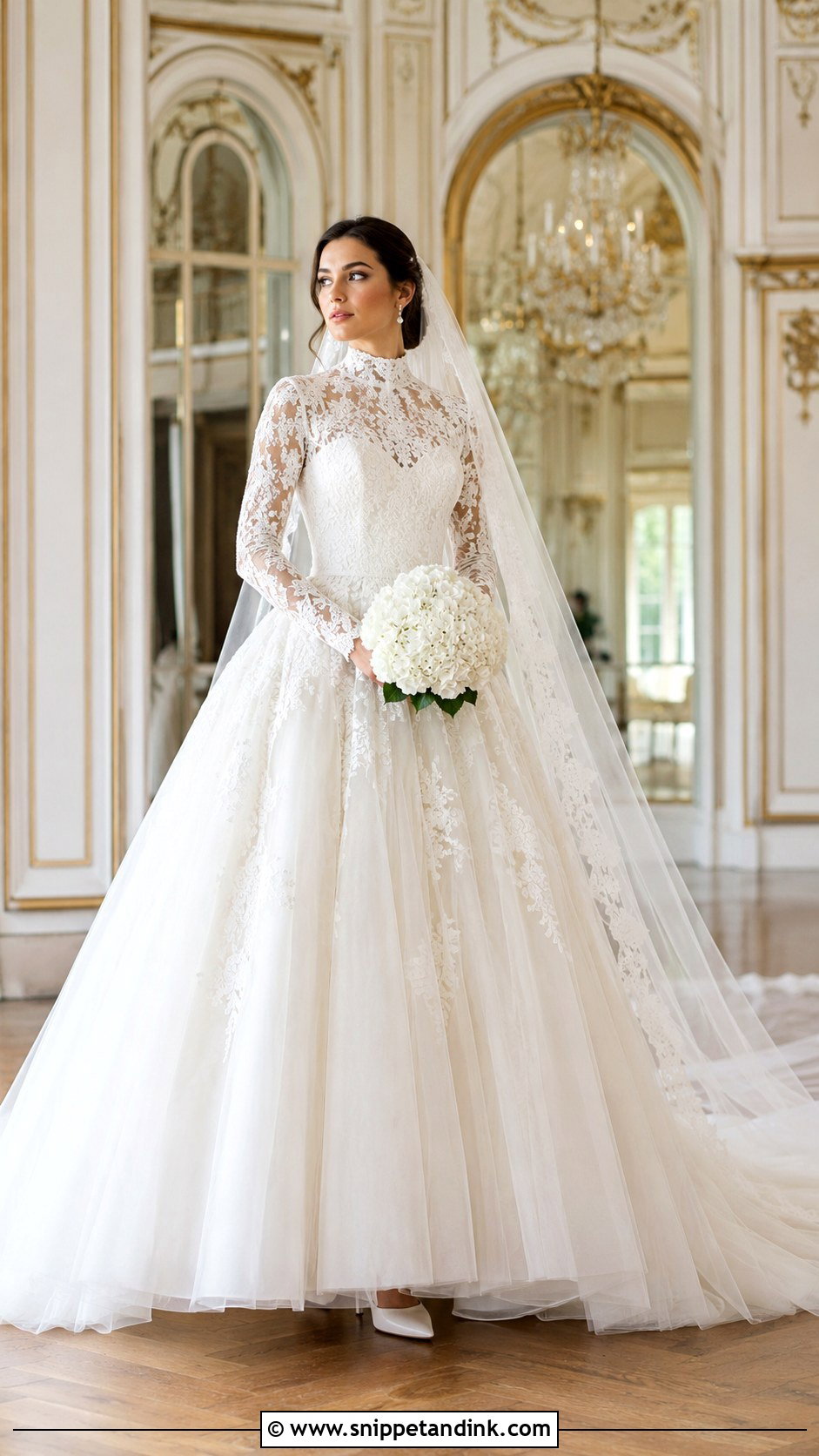
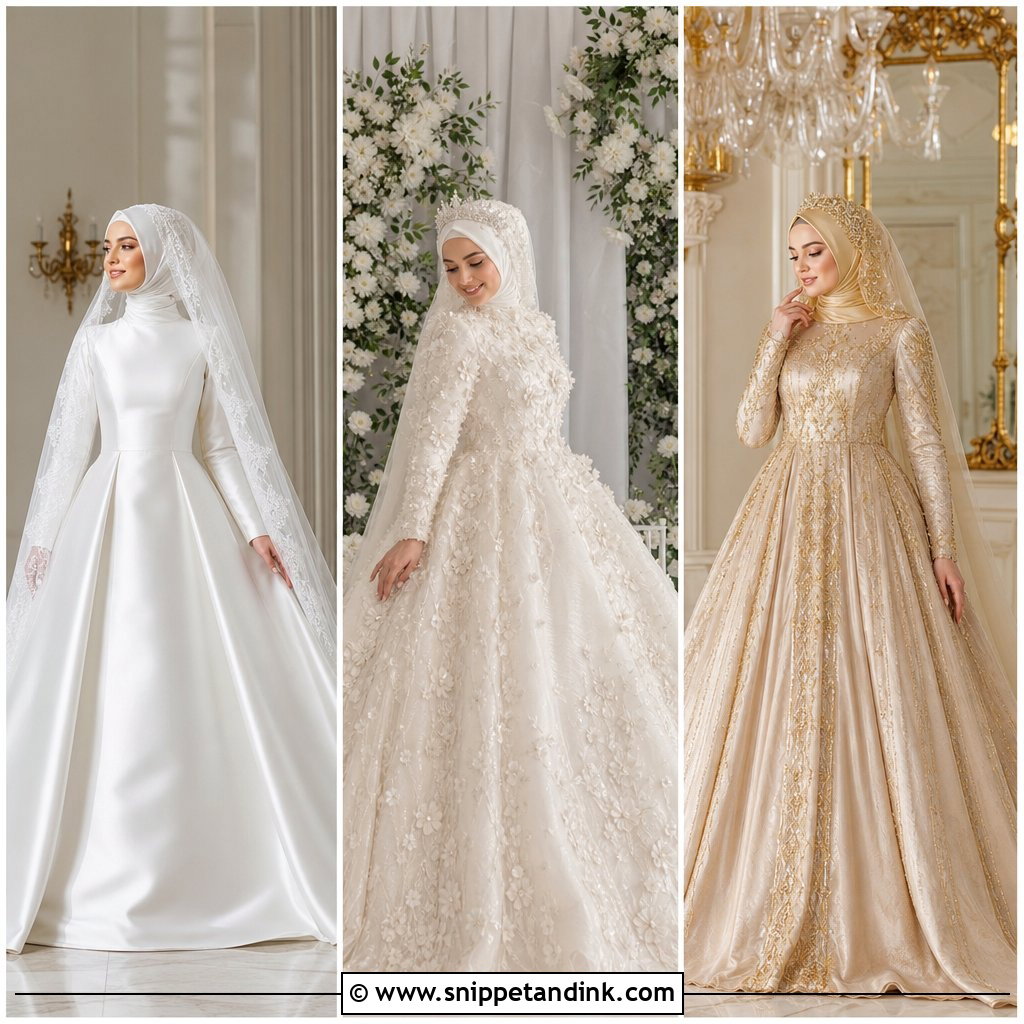
The high-neck lace ball gown is the most traditional route to full coverage, closing the chest, shoulders, arms and back in one piece. Ask what sits under the lace. An ivory lining reads as fabric; a nude one can read as skin from across a room, which surprises brides who only saw the gown under shop lighting. Covered buttons at the wrists and down the back give a finished edge, and a natural waist separates the busy bodice from the skirt so neither fights the other. I’d add a cathedral veil, pearl earrings and ivory satin pumps, and leave the neck bare of jewelry since the lace is already doing that job. If satin or brocade feels like carrying a duvet, a layered tulle skirt gives the same shape at a fraction of the weight.
2. Long Sleeve Satin A-Line Wedding Dress
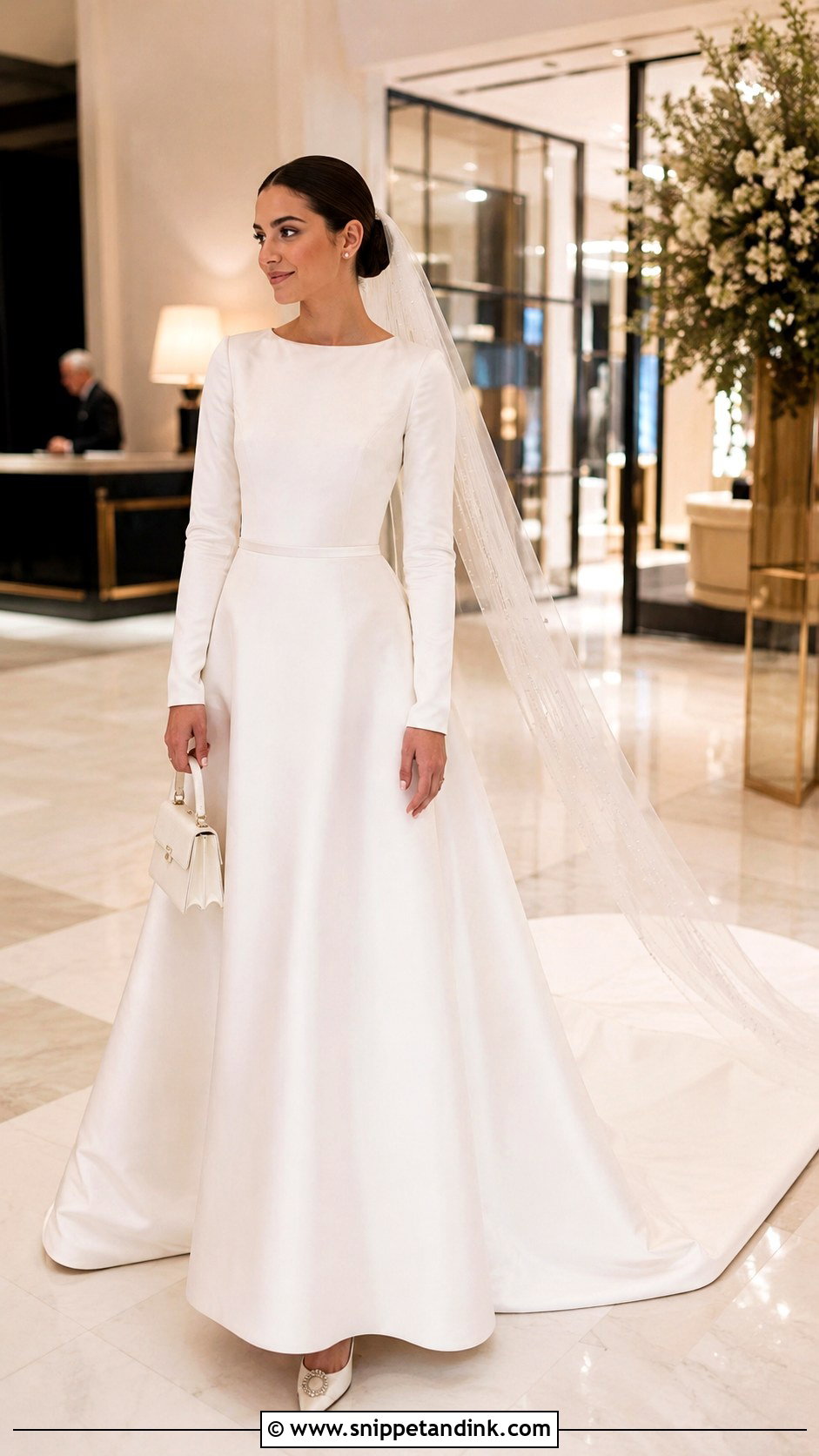
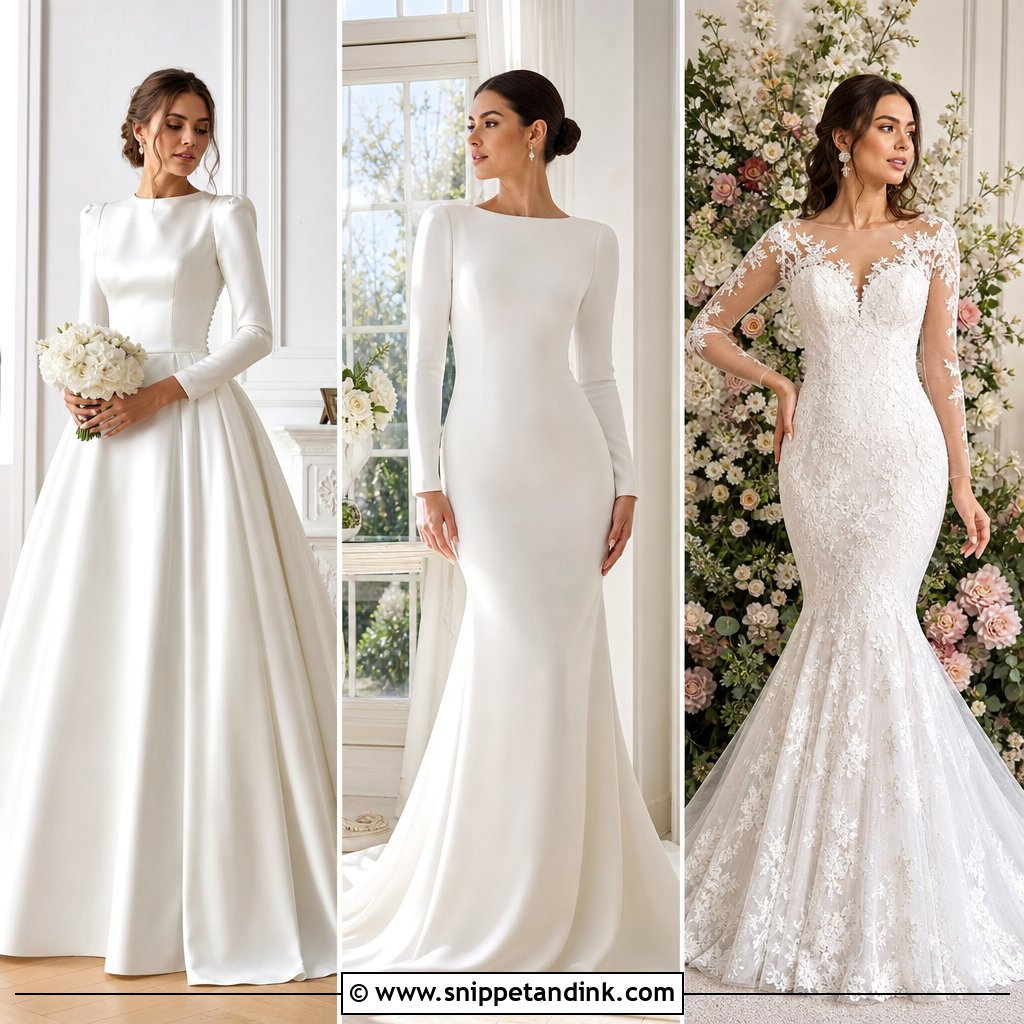
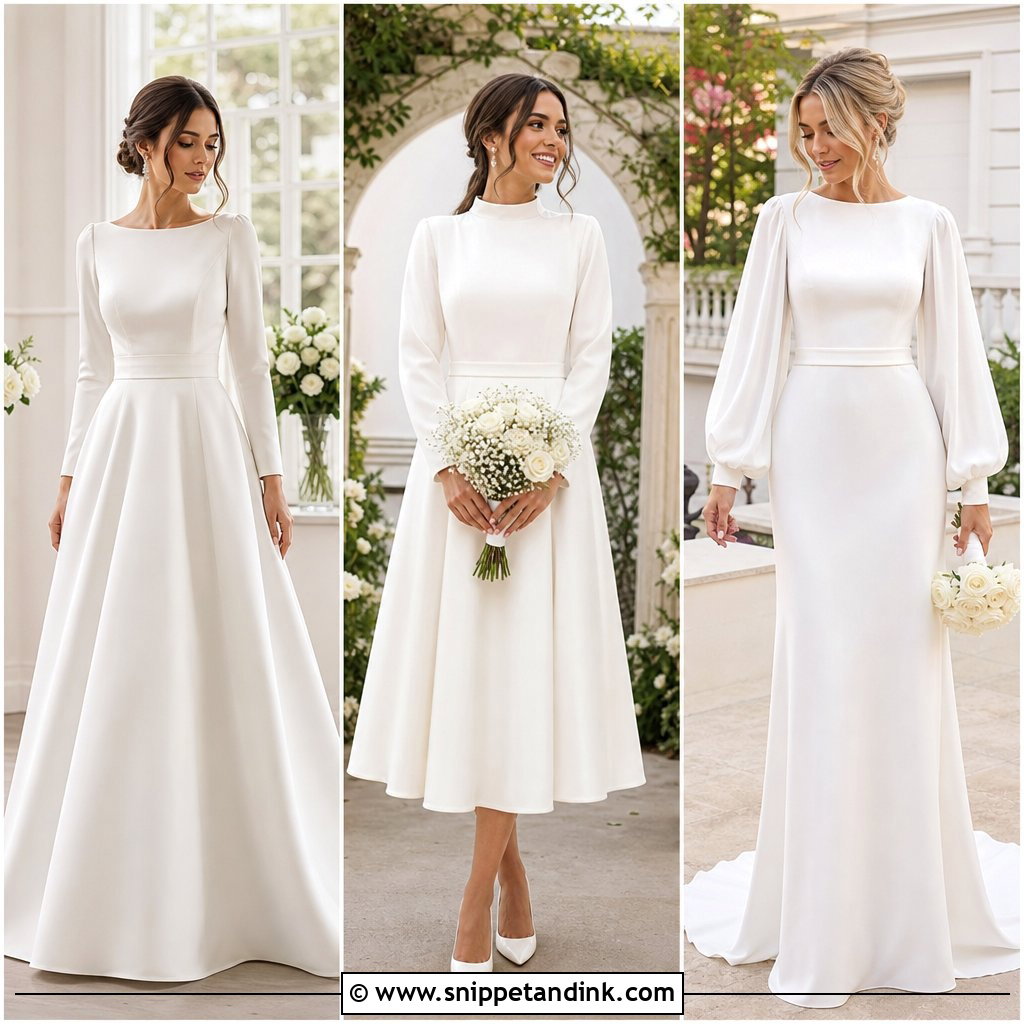
Satin has nowhere to hide a bad seam, so this is the gown where I spend the most time on the fitting itself. A high scoop neck, full-length fitted sleeves, a covered back and gentle waist shaping give you a clean, luminous line with no embroidery at all. It moves easily and suits ballrooms, hotels and formal indoor ceremonies. A chapel train adds drama and still bustles neatly for dinner. Style it with crystal studs, a sleek low bun, a structured mini bag and pointed heels. In cold months I’d go for heavier mikado or duchess satin; in spring a lighter satin breathes better. The test I always run: raise both arms over your head. If the whole bodice lifts with them, the sleeve cap needs reworking before the wedding, not after.
3. Minimalist Crepe Column Wedding Dress
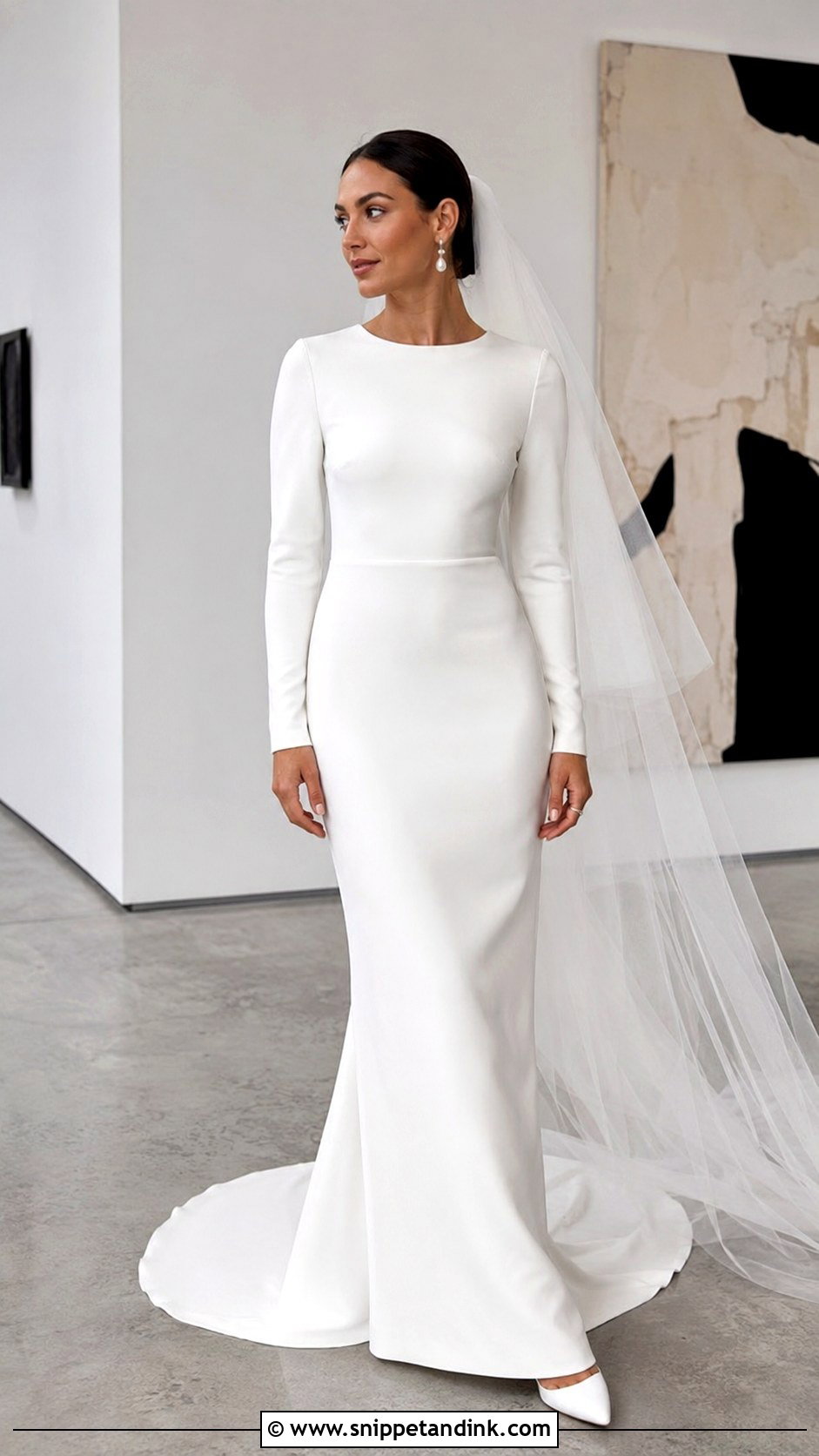
Crepe is my favorite answer for the bride who wants coverage without any sense of costume. A jewel neckline, long slim sleeves, a closed back and princess seams shape the body without clinging. The matte surface keeps the eye on the silhouette, and a narrow train adds movement while staying minimal. Pearl drops, a structured veil, white pointed pumps and a bouquet of a single flower type are all it needs. The catch is honesty: crepe shows every line underneath it. Try on your actual shapewear and bra at the first fitting, because a seam that disappears under lace will print straight through crepe. If you need more room through the hips, a subtle A-line adjustment is a simple alteration.
4. Square Neck Long Sleeve Wedding Dress
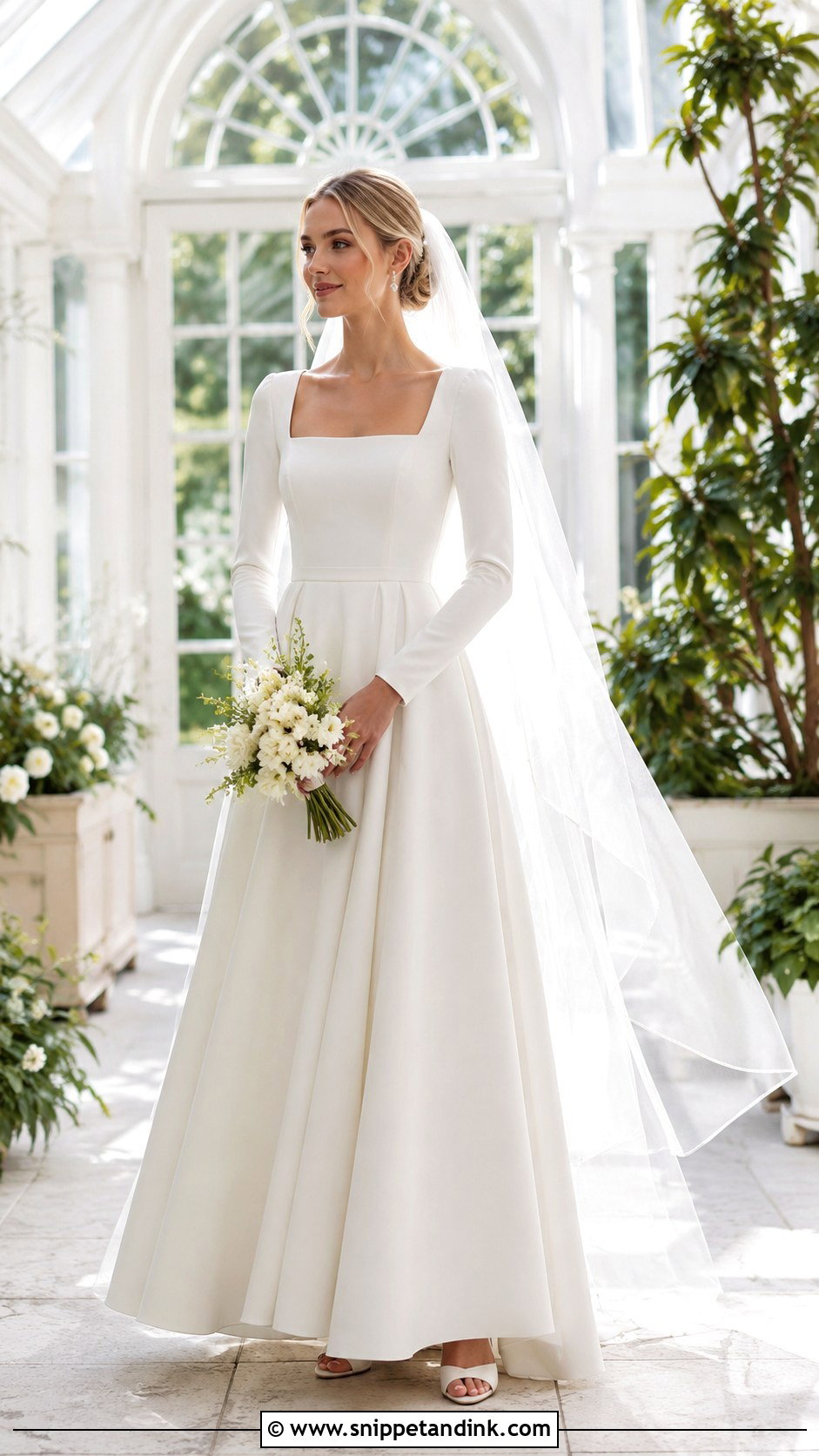
A raised square neck frames the face and collarbone with more structure than a sweetheart, and it has become one of the most requested modest necklines in the last few seasons as a fresh alternative to the round neck. Pair it with long opaque sleeves, a covered back and an A-line or softly gathered skirt. Vertical seams in the bodice and a quiet skirt keep it balanced. A fingertip veil, small drop earrings, block heels and a neat low chignon finish it. Here’s the part brides skip: sit down and lean forward in front of the mirror. A square neck that looks perfectly high when you stand can gape when you bend to sign the register or hug a grandparent, and a small tack at each corner fixes it.
5. Victorian High Neck Wedding Dress
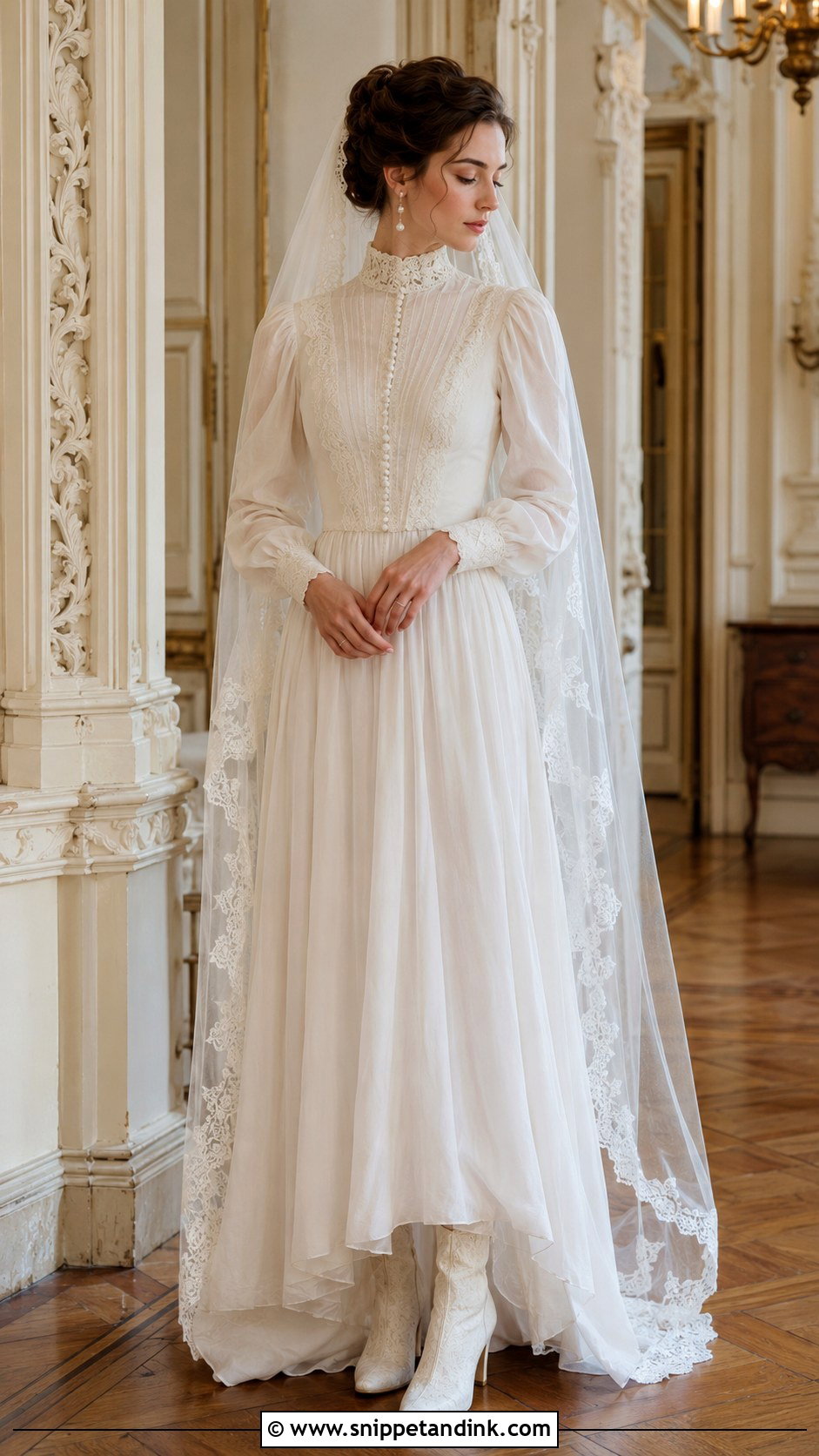
The trick with a Victorian-inspired wedding dress is restraint, or it starts to look like a period drama. Start with a fitted high collar, a lined lace bodice, full sleeves, a covered back and a floor-length skirt. Pintucks, fabric-covered buttons and narrow lace trim give the historical character; a slightly raised waist and a chiffon or tulle skirt keep it light enough to wear. A lace-edged veil, vintage-style pearl earrings, ivory ankle boots and a loose low bun suit it, with a plain bouquet so the details aren’t competing. High collars are the most common complaint I hear by mid-afternoon. Ask for a soft inner facing, or a hidden hook you can open once the formal portraits are done.
6. Bishop Sleeve Chiffon Wedding Dress
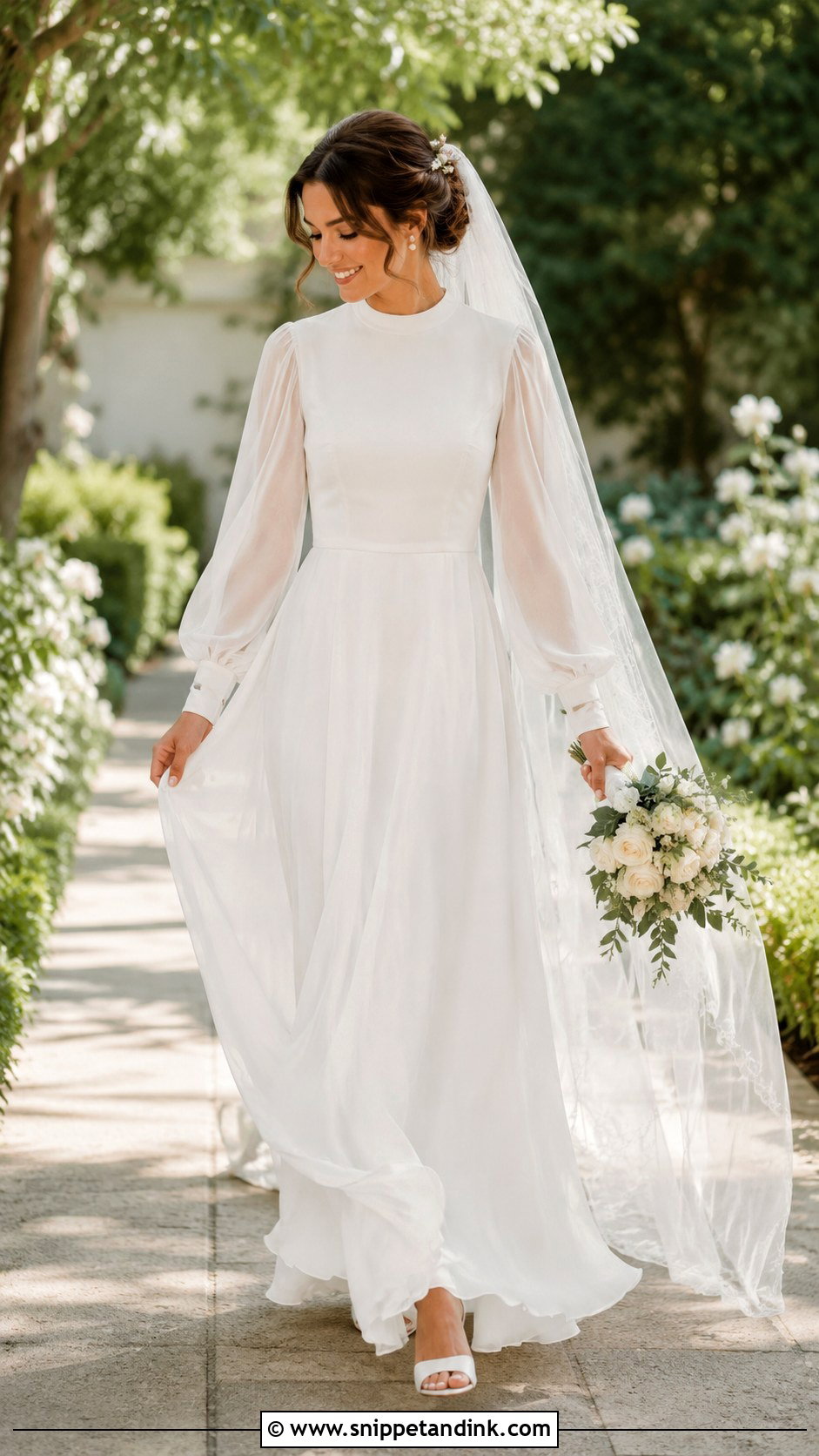
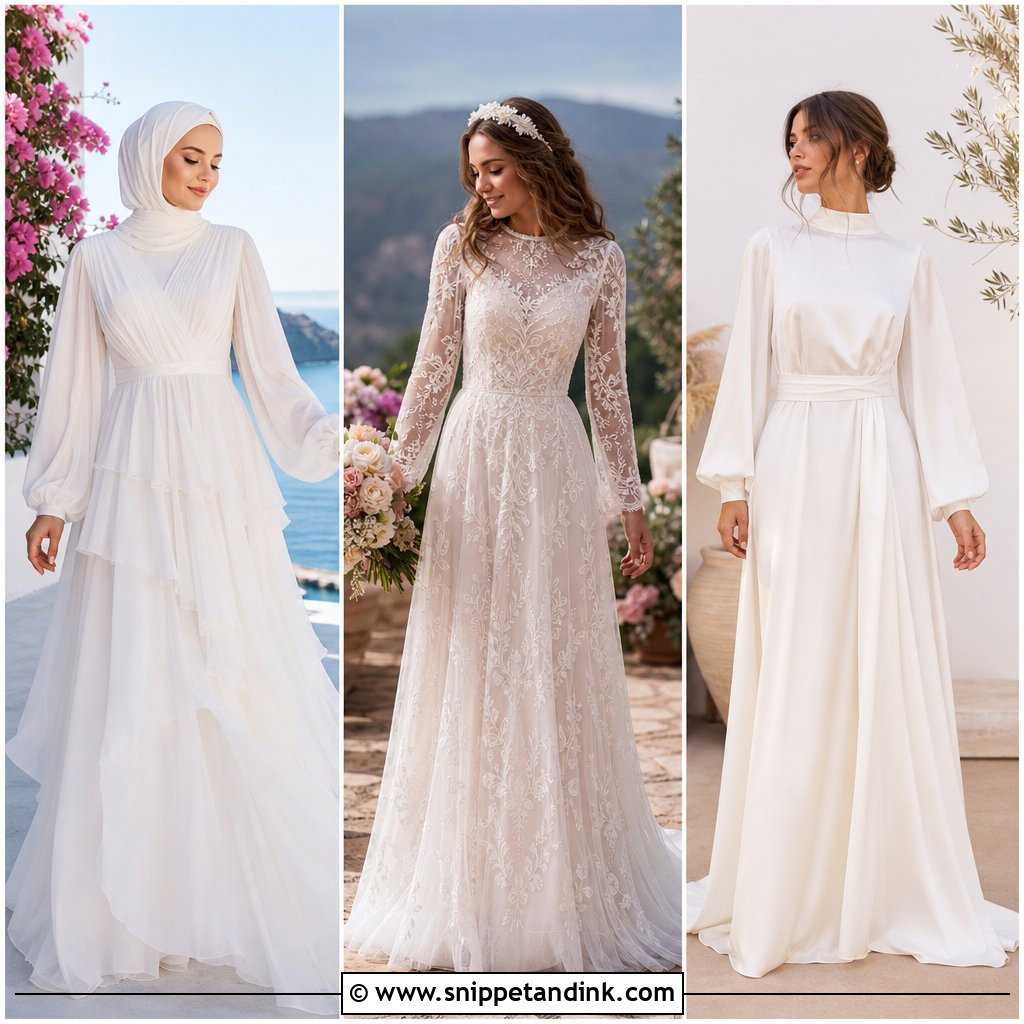
Bishop sleeves are the easiest way I know to give a plain covered gown some personality, and statement sleeves of this kind are still showing up strongly across bridal collections. Look for a chiffon A-line with a high neckline, an opaque bodice lining, a covered back and sleeves that gather into fitted cuffs. The fabric is light enough for a garden ceremony or a mild spring day. Floral hairpins, pearl studs, closed-toe block heels and a chapel veil complete it. Skip chunky bracelets, which hook on the cuffs every time you reach for a glass. Sheer chiffon sleeves are not opaque on their own, so if you need full arm coverage, ask the salon to line them in a breathable fabric before you order.
7. Mock Neck Mermaid Wedding Dress
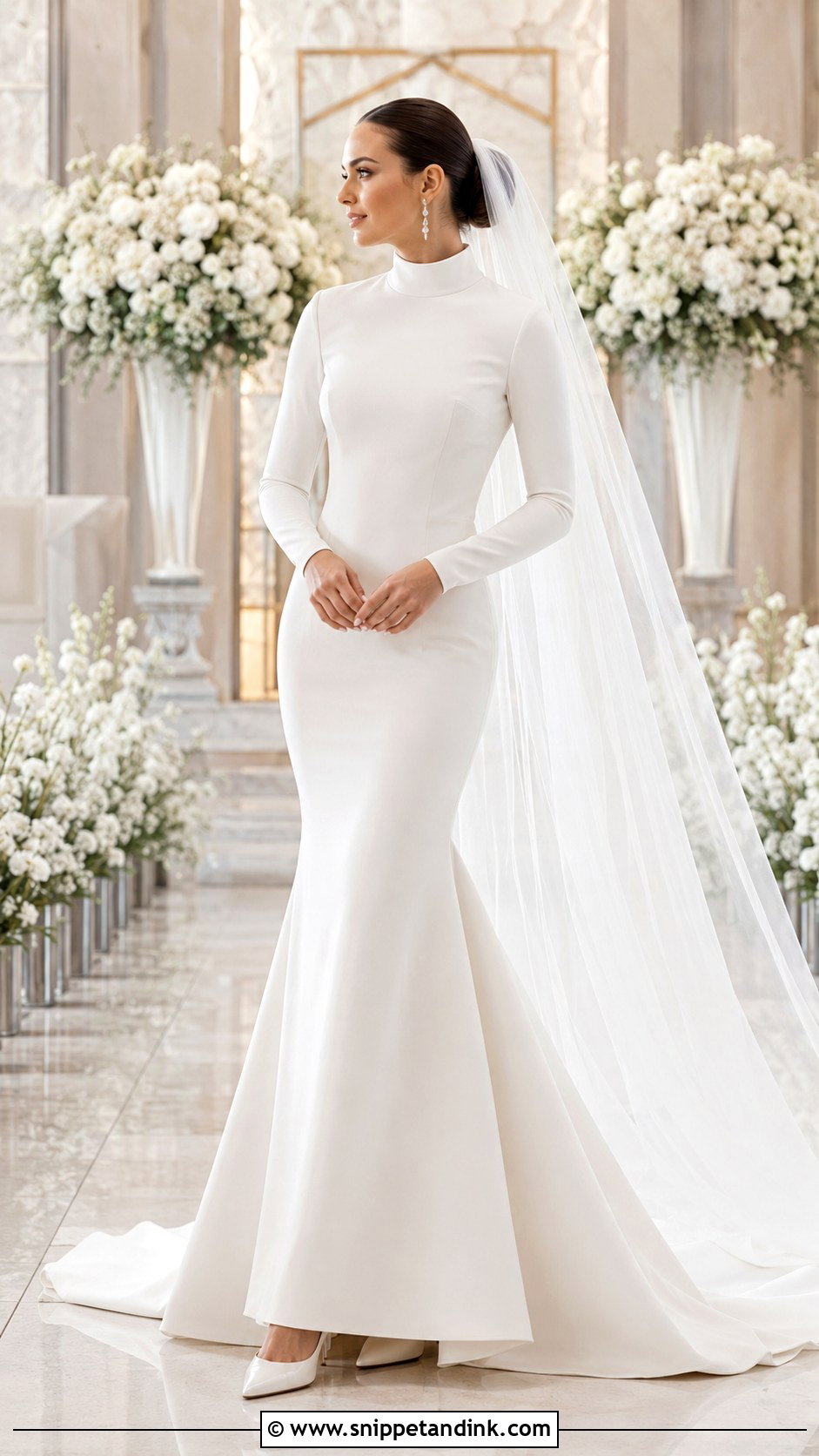
A mock-neck mermaid gown keeps everything covered and still shows your shape. Stretch crepe or lined lace with a high neck, long sleeves, a closed back and a flare below the knee is the classic build, with princess seams doing the shaping instead of visible boning. This is the silhouette I’m most cautious with. Walk, sit and climb a few stairs in it before the alterations are finished, because a flare set too low turns steps into shuffles. Raising the flare to just above the knee is the usual fix. A long plain veil, crystal earrings, pointed pumps and a sleek bun suit it, with a narrow bouquet so the shape stays visible. Insist on a proper bustle; dancing with a train underfoot is how hems tear.
8. Embroidered Tulle A-Line Wedding Dress
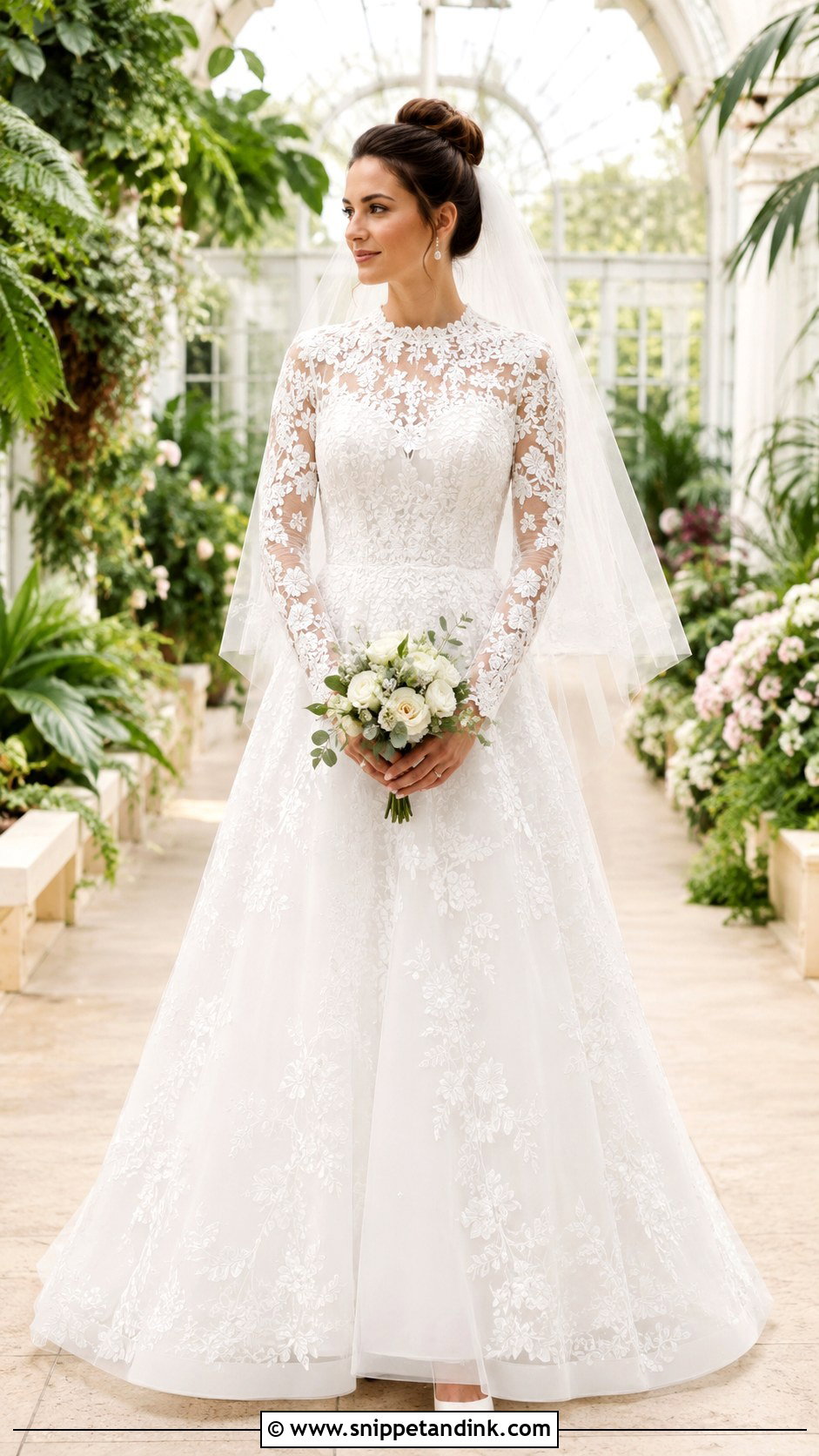
Embroidered tulle gives you intricate detail that still floats. Choose an A-line with a lined high neckline, full sleeves, an opaque bodice and embroidery that flows from the shoulders down into the skirt, spaced more widely as it falls so the design looks long rather than crowded. White threadwork on white tulle can vanish in photos; a soft ivory underlayer gives it something to sit against. A plain tulle veil, pearl earrings, satin heels and a bouquet that echoes one or two embroidered flowers is plenty. Skip the jeweled belt unless your waist genuinely needs definition. At every fitting I turn the sleeves inside out, because embroidery backs and bead knots can scratch the inner arm raw by the end of the night if they aren’t lined.
9. Covered Back Princess Wedding Dress
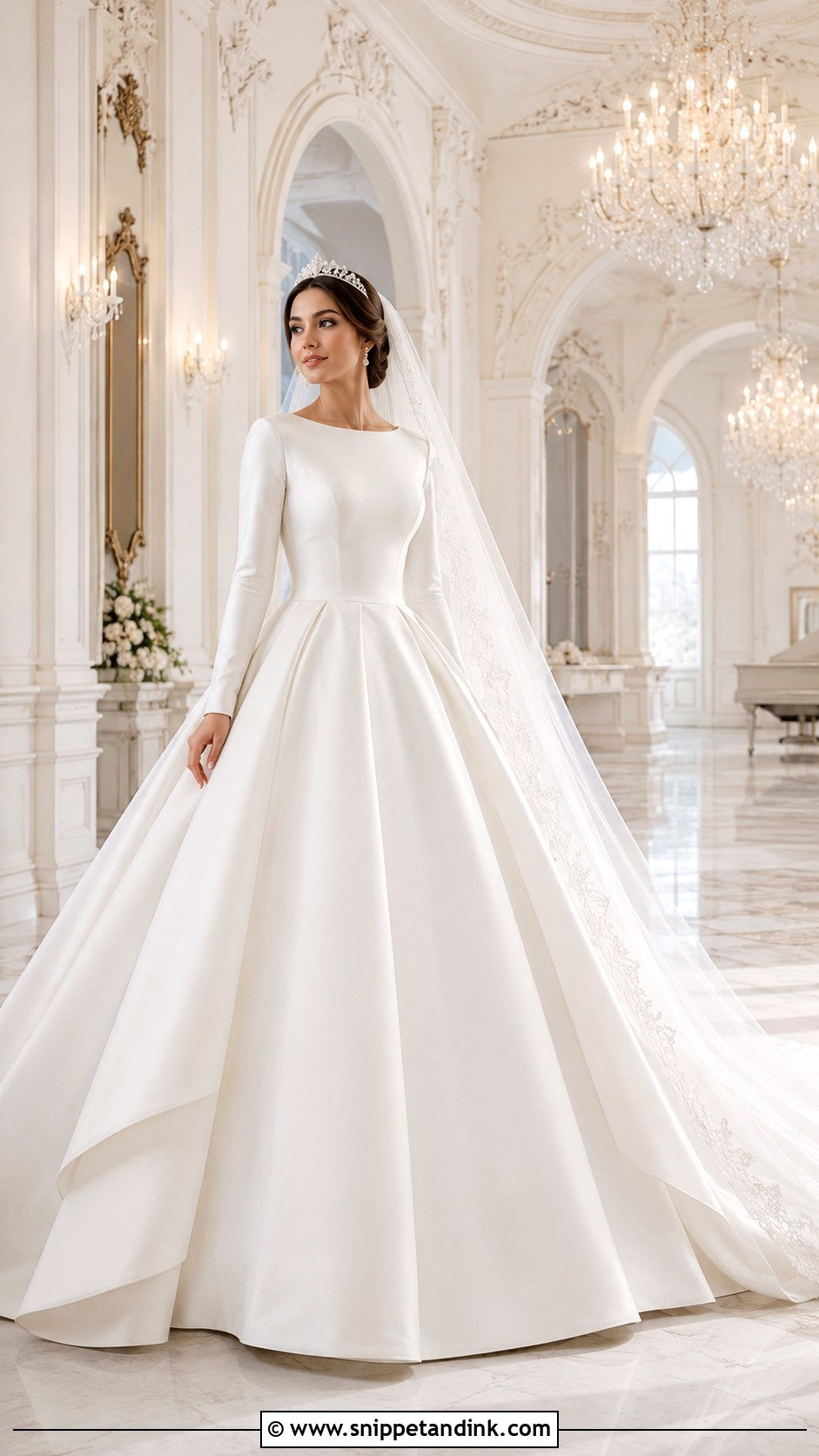
The princess gown is ceremony drama in its fullest form, and it covers you completely: a fitted bodice, jewel neckline, long sleeves, a buttoned back and a wide layered skirt. Structured satin makes it regal; tulle makes it softer and lighter. Get the waist seam sitting exactly at your natural waist, or the skirt starts too high and shortens your torso. A cathedral veil, a delicate tiara, pearl studs and platform pumps hidden under the hem suit it. If your venue is small, keep the full skirt and shorten the train. Volume doesn’t have to mean weight. Hidden skirt loops and a good supportive petticoat hold the shape far better than piling on extra layers.
10. Pearl Beaded Long Sleeve Wedding Dress
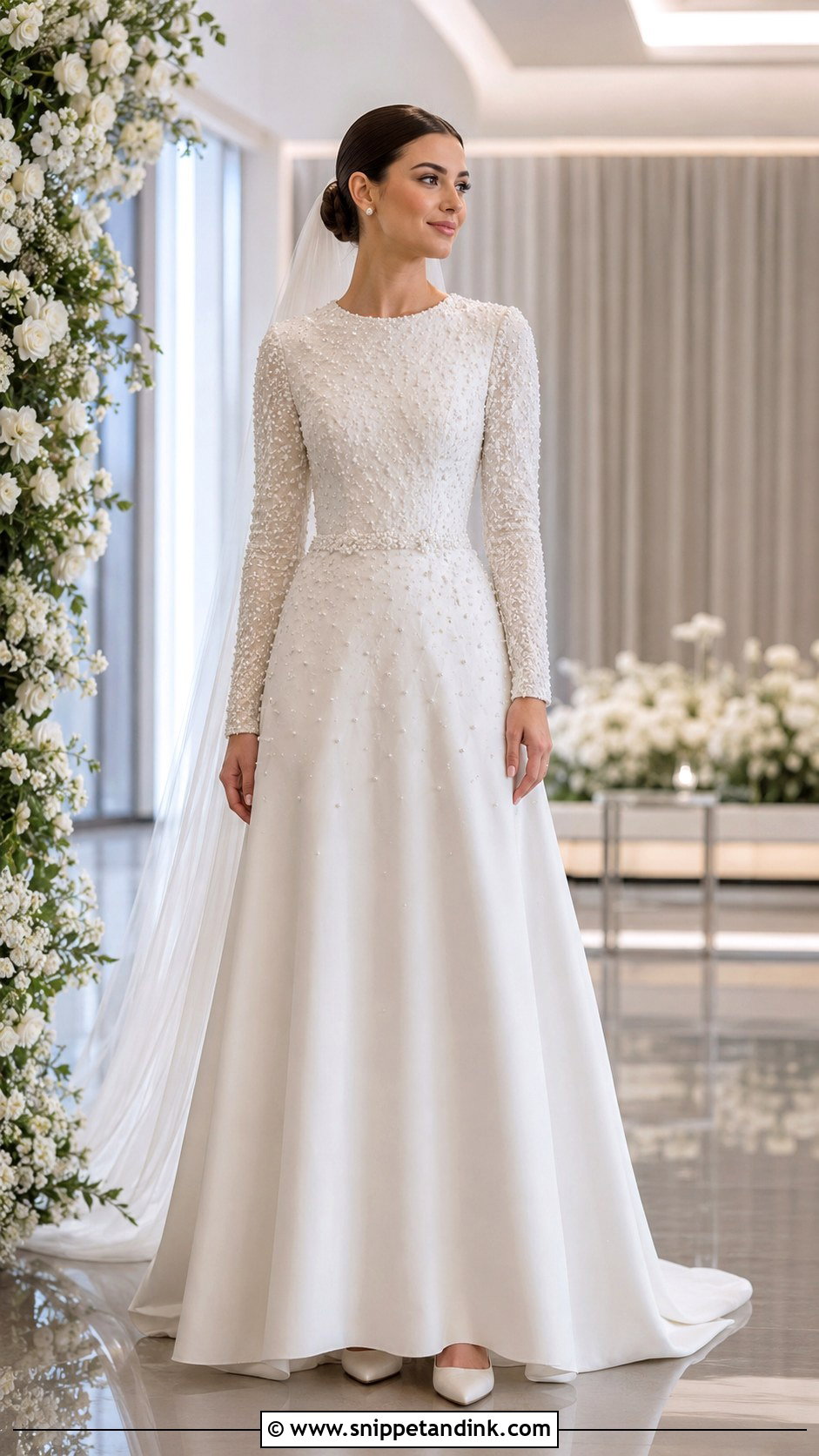
Pearl beading adds a soft glow without the glitter of crystals. I prefer it concentrated at the shoulders, cuffs or waist of a fully lined gown with a high round neck, covered back and fitted sleeves, leaving the lower skirt plain. That keeps it refined and stops the dress getting heavy. A-line and column shapes carry it well. Add pearl earrings, ivory pumps, a plain veil and a smooth low bun, and skip the necklace. Before you buy, tug gently on a few pearls. Each one should be stitched individually, not strung on one long thread, since a single snapped thread on a strung row can drop a whole line of pearls across the dance floor. Tuck matching thread and a needle into your emergency kit anyway.
11. Boho Lace Wedding Dress With Bell Sleeves
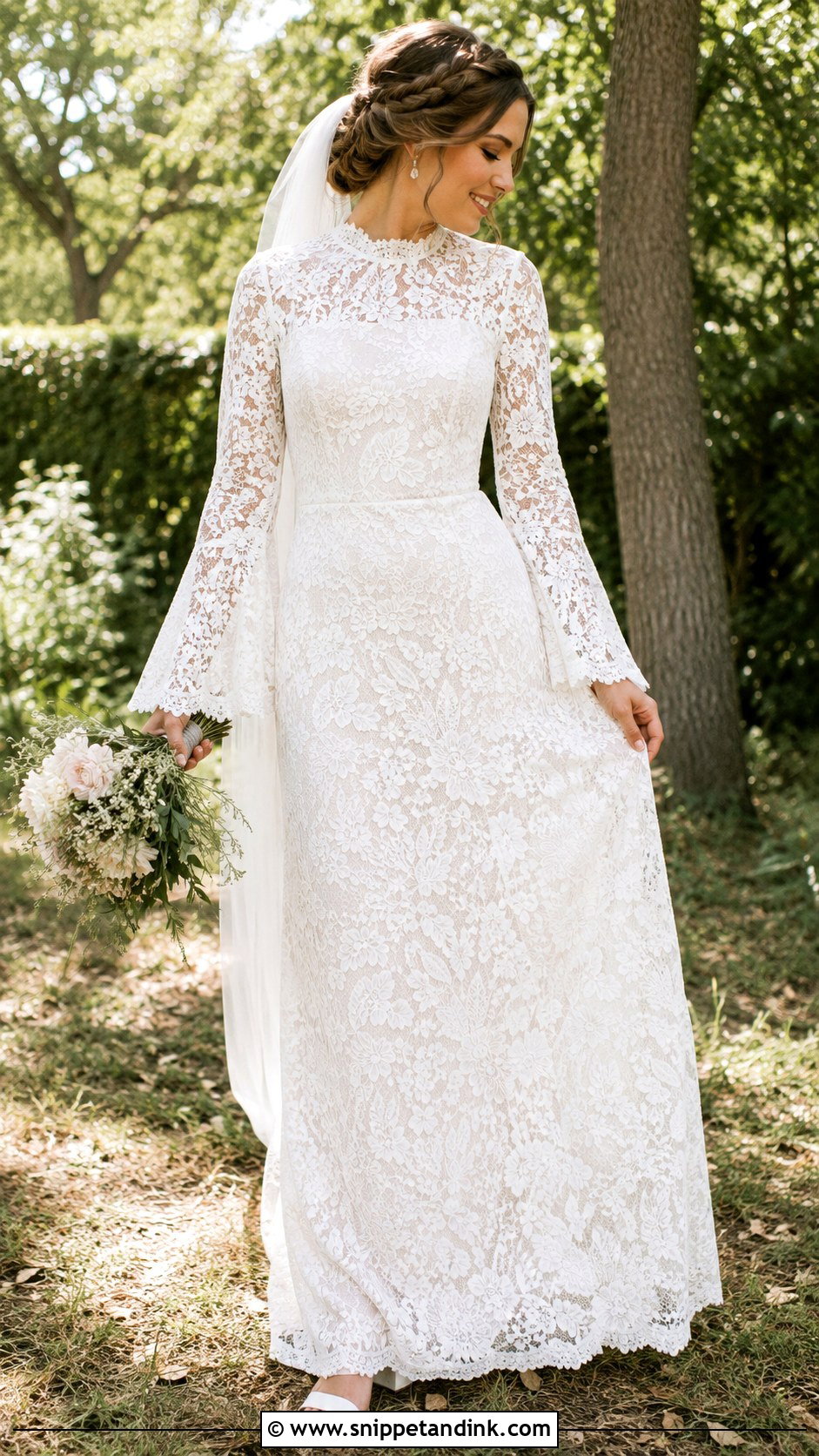
Lace with bell sleeves gives you full coverage that still feels relaxed enough for a field, a vineyard or a destination wedding. Choose a lined high-neck bodice, a covered back, a floor-length skirt and bell sleeves with an opaque lining through the arms. Geometric lace looks more modern; botanical lace is softer. Keep a gentle waist or the whole dress can look shapeless. A simple veil, low block heels, small gold or pearl earrings and a loose braided updo suit it. My one firm rule: the widest point of the sleeve should end above your fingertips, otherwise it drags through every plate and candle. Outdoors, ask for a train that bustles in under a minute, and a cotton-blend lining if the day will be warm.
12. Winter Mikado Wedding Dress With Puff Sleeves
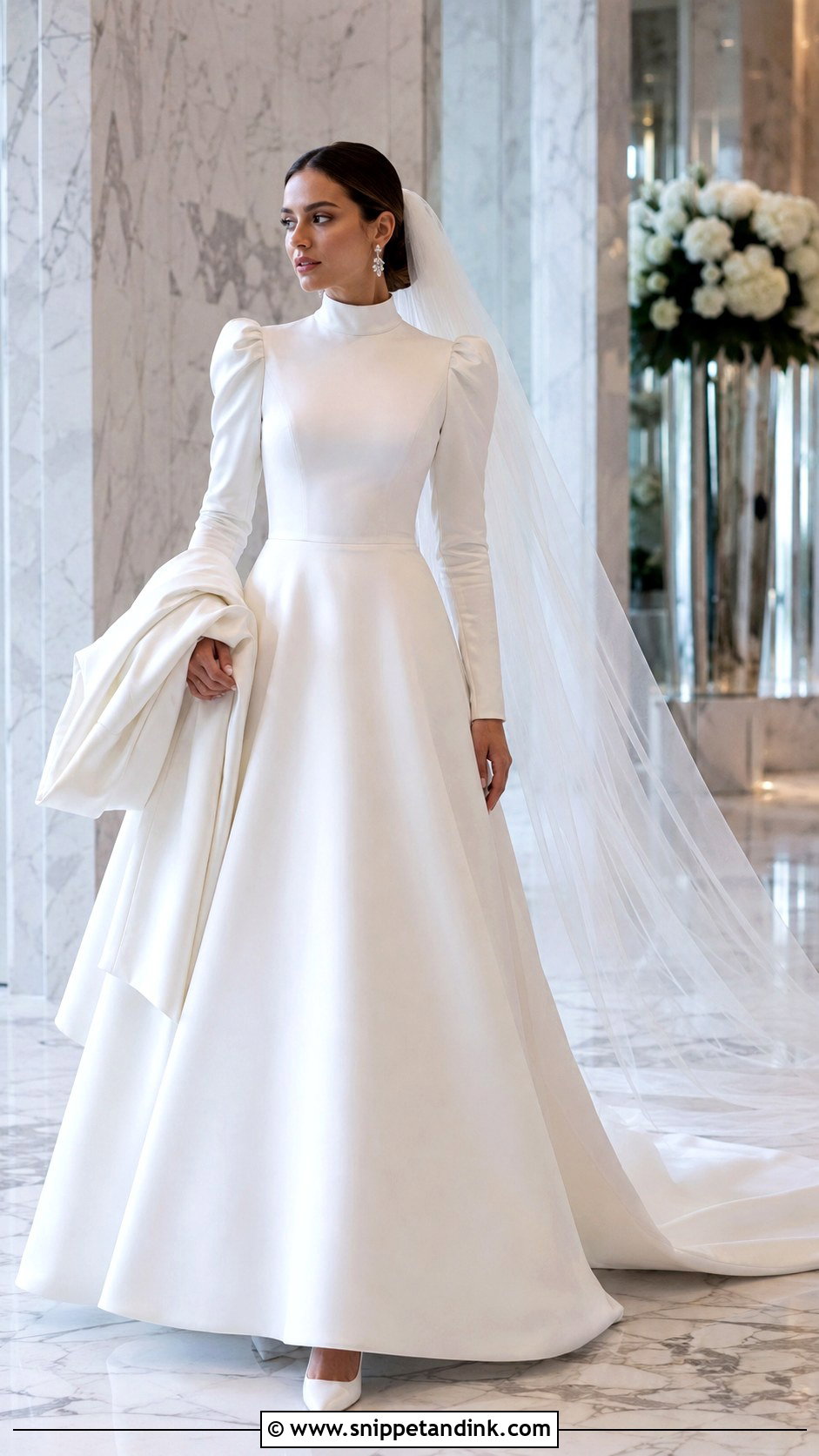
Mikado holds a shape like almost no other bridal fabric, which is why it suits structured puff sleeves on a winter gown. Pair them with a high bateau or jewel neckline, opaque long sleeves, a closed back and a tailored A-line skirt with a chapel train. A little volume at the shoulder balances a wide skirt and makes the waist look smaller. Keep the puff controlled, though. An oversized sleeve won’t fit under a coat or cape, and in winter you’ll want one for outdoor photos. Crystal studs, satin pumps and a long veil finish it. The fabric is substantial, so check that the bodice is properly boned and the underarm gives you room to hug people all day.
13. Plus Size Full Coverage Wedding Dress
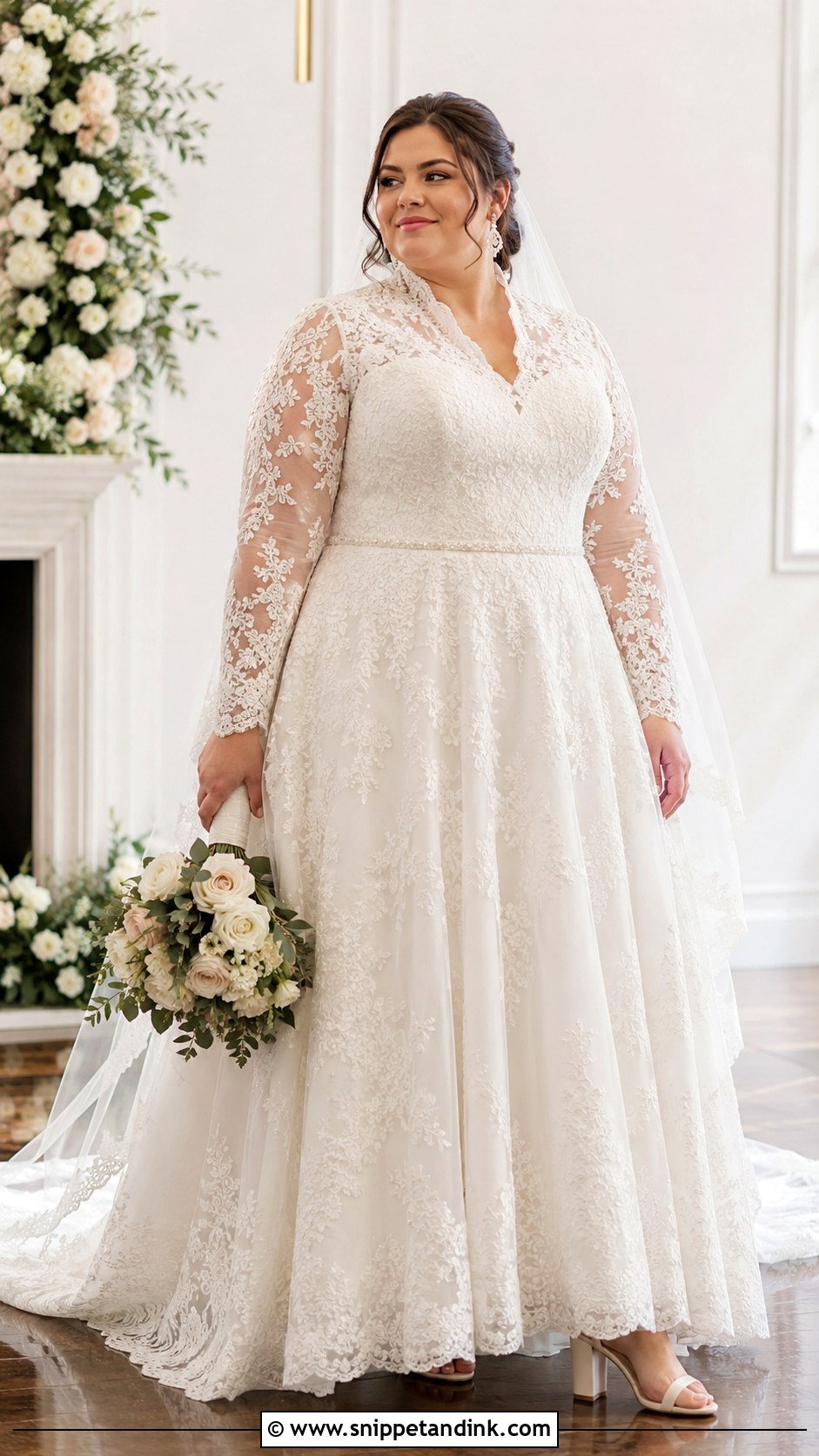
For a plus-size bride, a covered gown should feel supportive first and decorative second. I often start with an A-line that has a raised V-neck with a modest insert, long fitted sleeves, a covered back and real internal structure in the bodice. Princess seams shape smoothly, and a defined waistband shows the waist without squeezing it. Lined lace, matte crepe and medium-weight satin all work; the choice comes down to how much hold you like. Balance it with a fingertip veil, supportive block heels, statement earrings and a bouquet sized to your frame. Please don’t order a size down as a goal. Taking a gown in is routine, while letting one out is limited by the seam allowance. Ask whether the designer will customize sleeve width, neckline height and back coverage, since many will.
14. Petite High Neck Wedding Dress
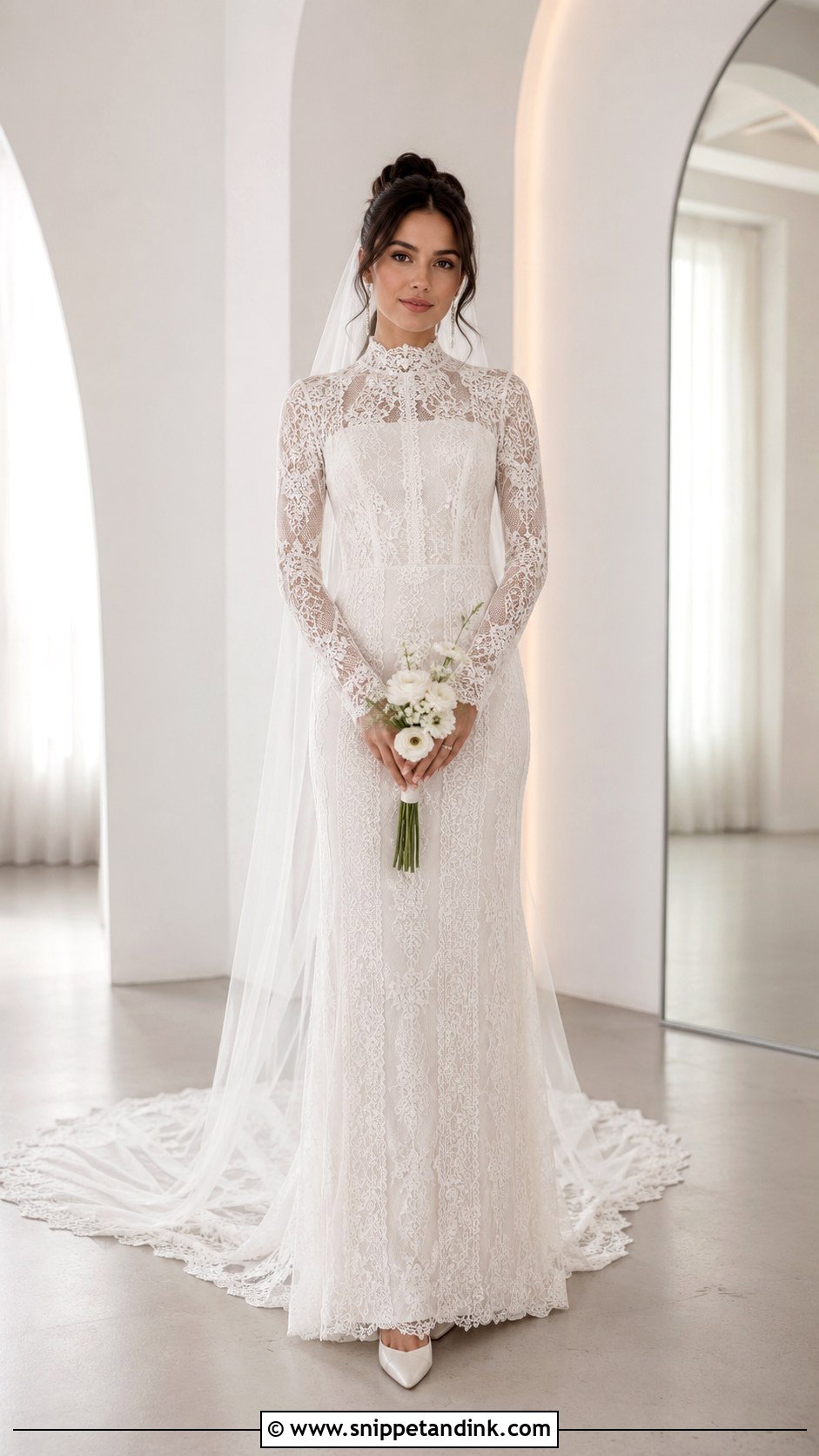
Coverage works on petite brides as long as the details are scaled down with you. A high-neck sheath or a narrow A-line with fitted sleeves, a covered back and a slim chapel train adds length without volume. Vertical lace, princess seams and covered buttons pull the eye upward. Very wide cuffs, oversized appliqués and huge skirts tend to wear you instead. Pointed heels, a narrow bouquet, delicate earrings and a single-layer veil keep the line clean. In my experience the hem is rarely the biggest alteration on a petite frame; the waist and shoulder seams usually need moving, so find a seamstress who has done it before. Sleeves matter too, since extra length bunching at the wrist makes the arm look shorter.
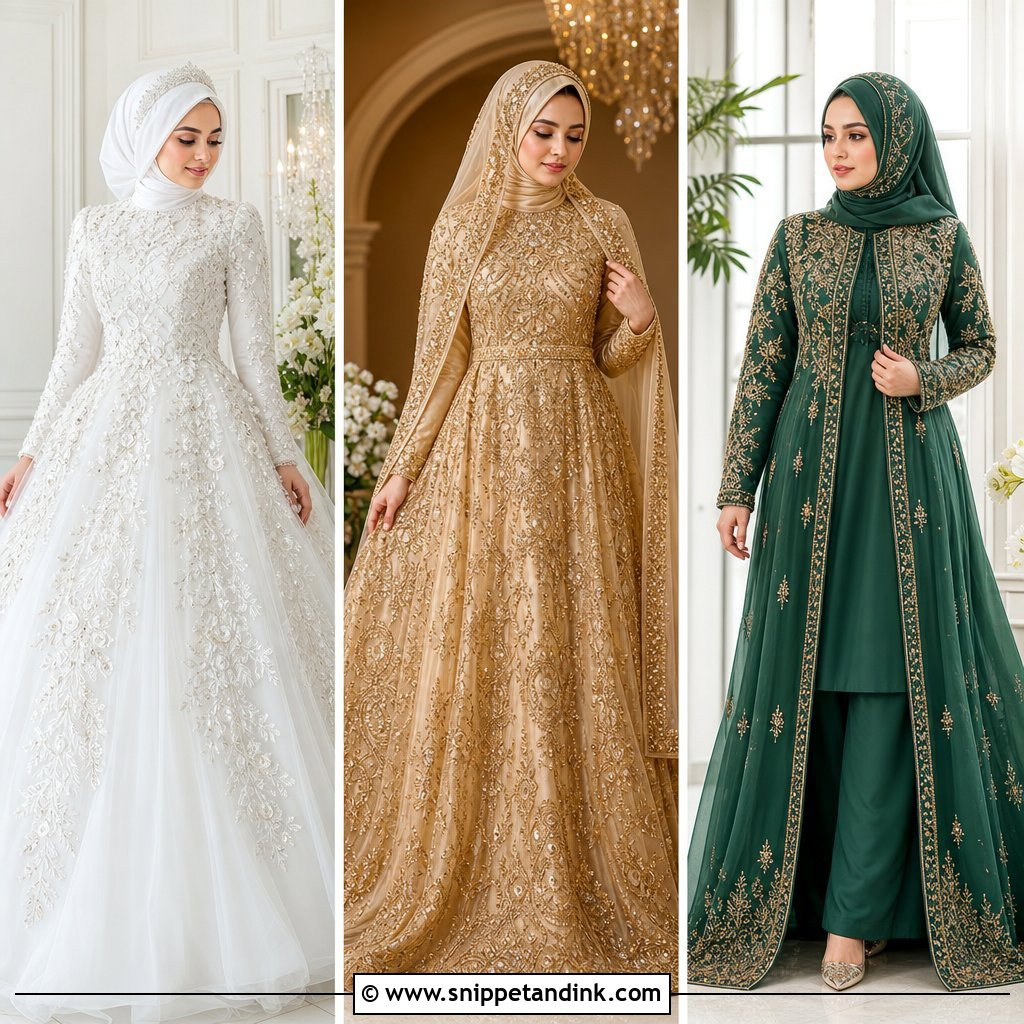
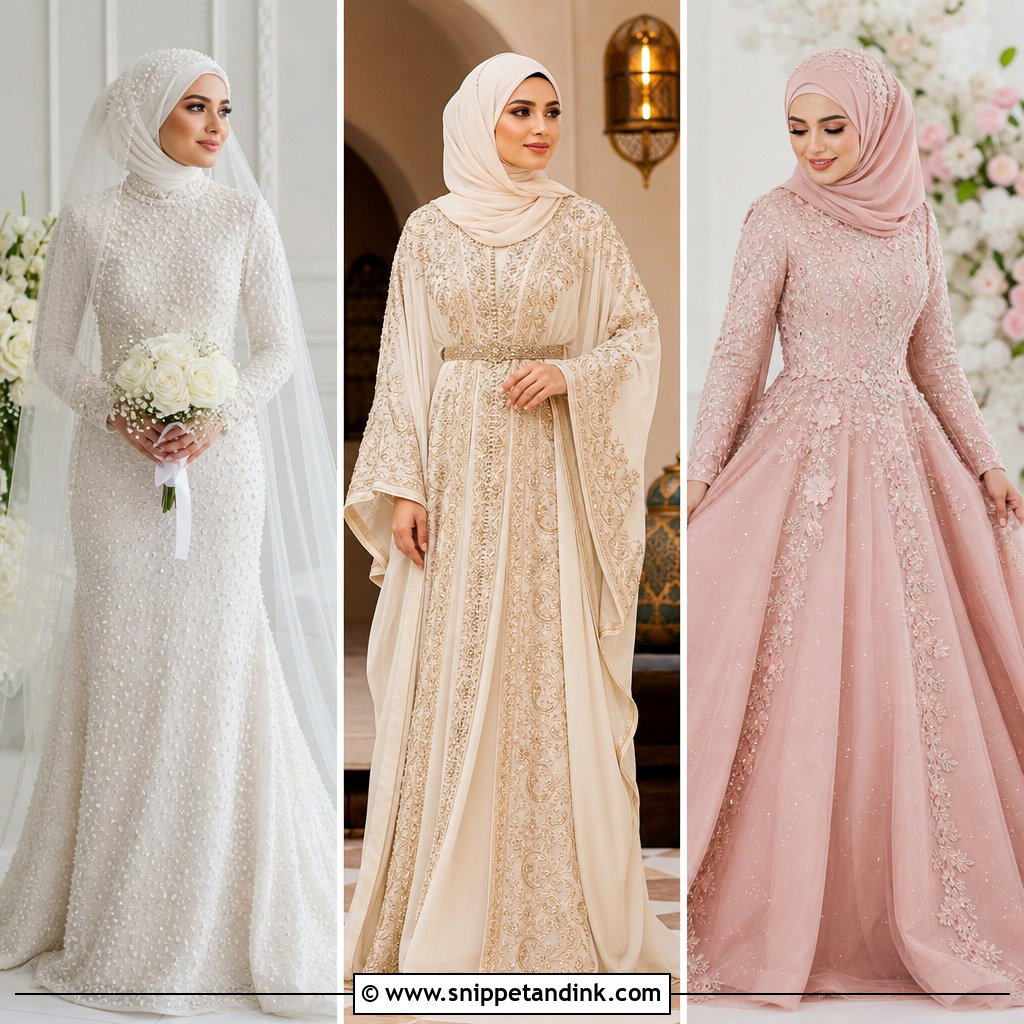
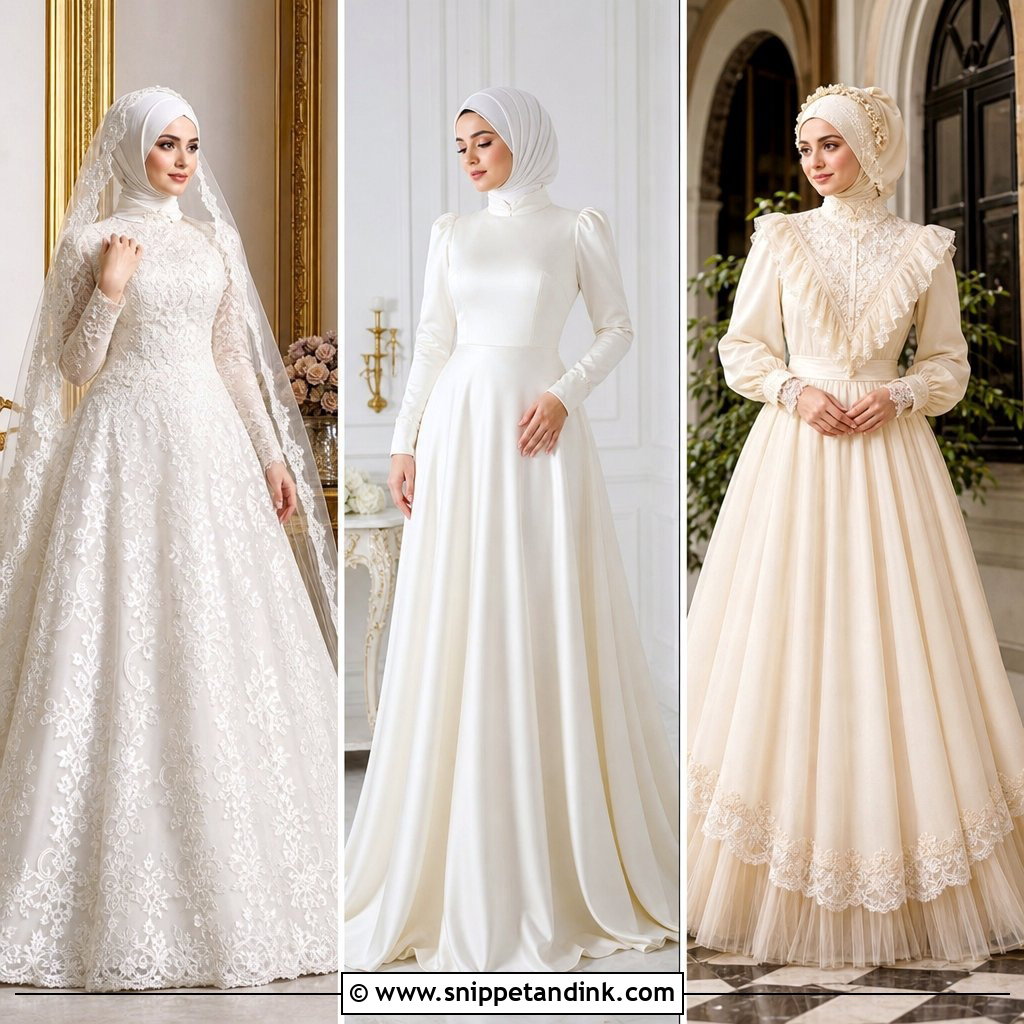
15. Hijab Wedding Dress With High Neck
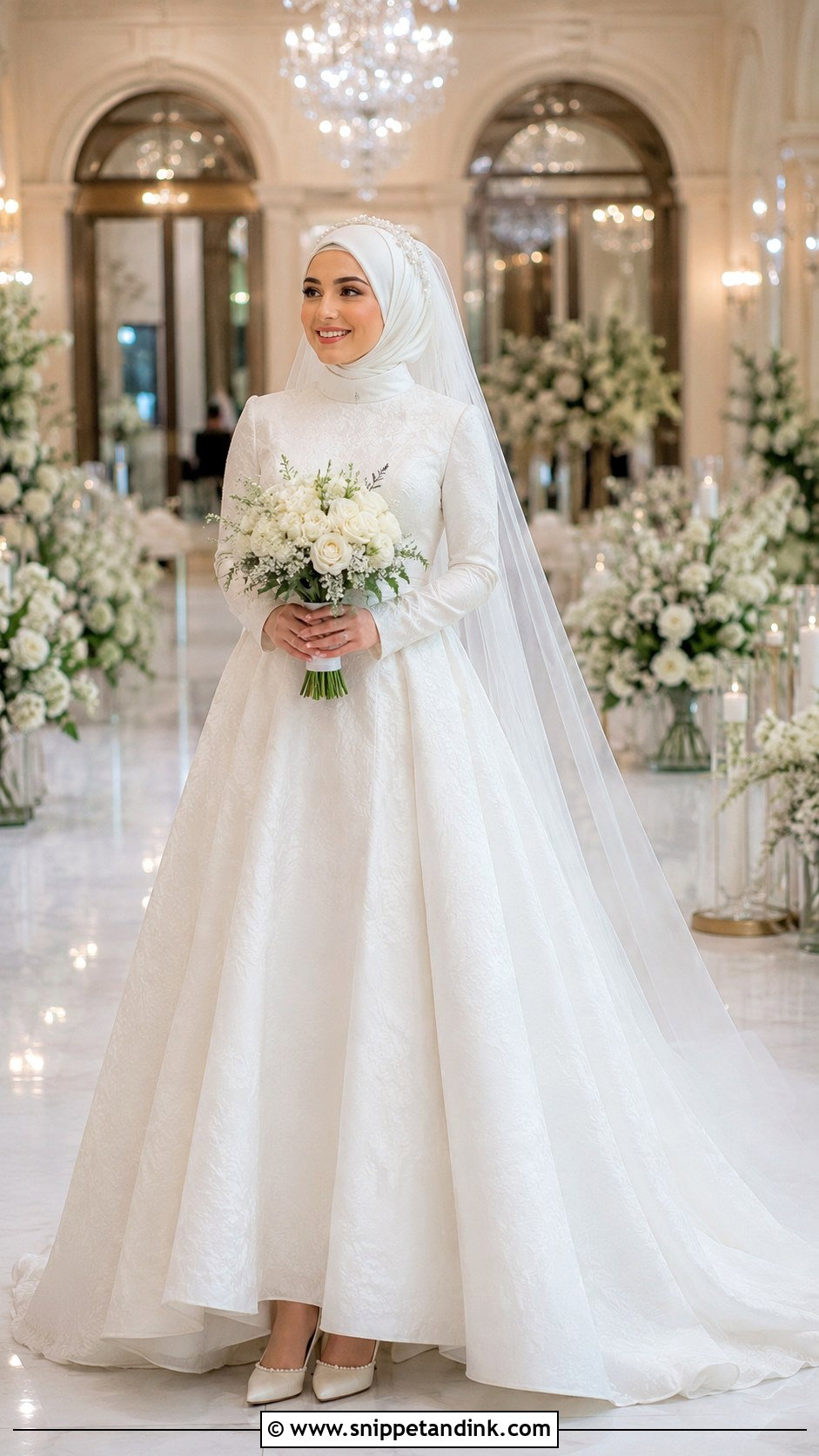
A hijab-friendly gown should give you dependable coverage straight off the hanger, with no last-minute layering. Look for an opaque high neckline, full-length sleeves, a completely covered back and a floor-length A-line skirt. If the outer fabric is lace or tulle, check that the lining runs right through the shoulders and down the sleeves. A smooth bridal hijab in a matching ivory sits neatly beneath a lightweight veil, with pearl pins, satin pumps and a small structured bouquet. Keep beads away from the neckline, since they snag fine hijab fabrics. Bring your undercap, hijab and veil to every fitting. Ivory varies wildly between suppliers, and it’s far easier to match tones and check how the layers move when you turn your head with everything on.
16. Cape Sleeve Full Coverage Wedding Dress
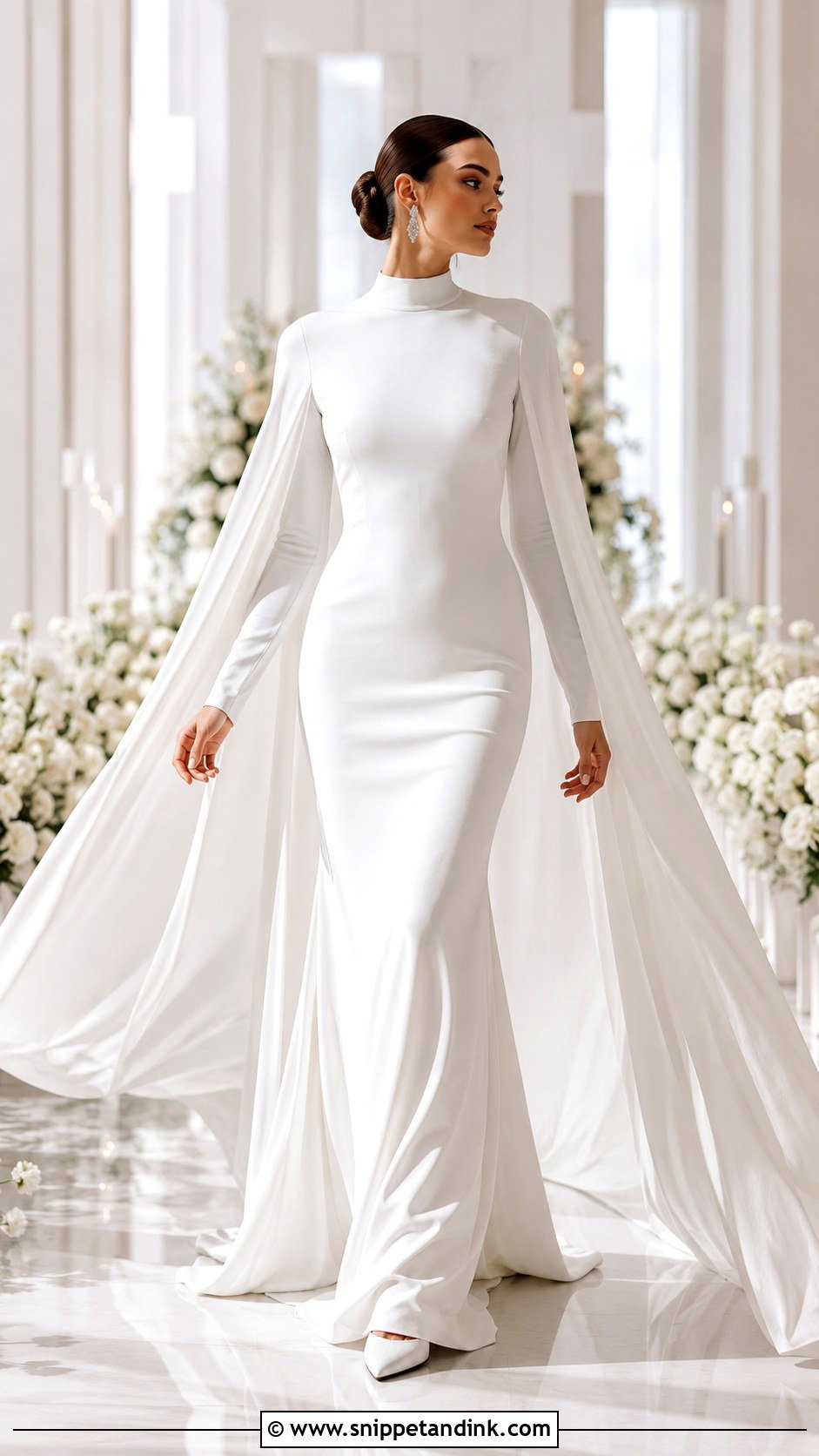
A cape gives you all the movement of a sheer overlay while the underdress does the covering. I build it on a high-neck crepe gown with fitted long sleeves, a closed back and a softly flared skirt, then add an attached chiffon cape falling from the shoulders toward the train. Small crystal earrings, a sleek bun and pointed heels are enough, and many brides skip the veil and let the cape take its place. If you want both, keep the veil shorter than the cape so they don’t tangle. Chiffon catches every breeze outdoors. I ask the seamstress for discreet wrist loops or snaps so you can gather the cape while walking, greeting guests and squeezing between tables.
17. Tea Length Long Sleeve Wedding Dress
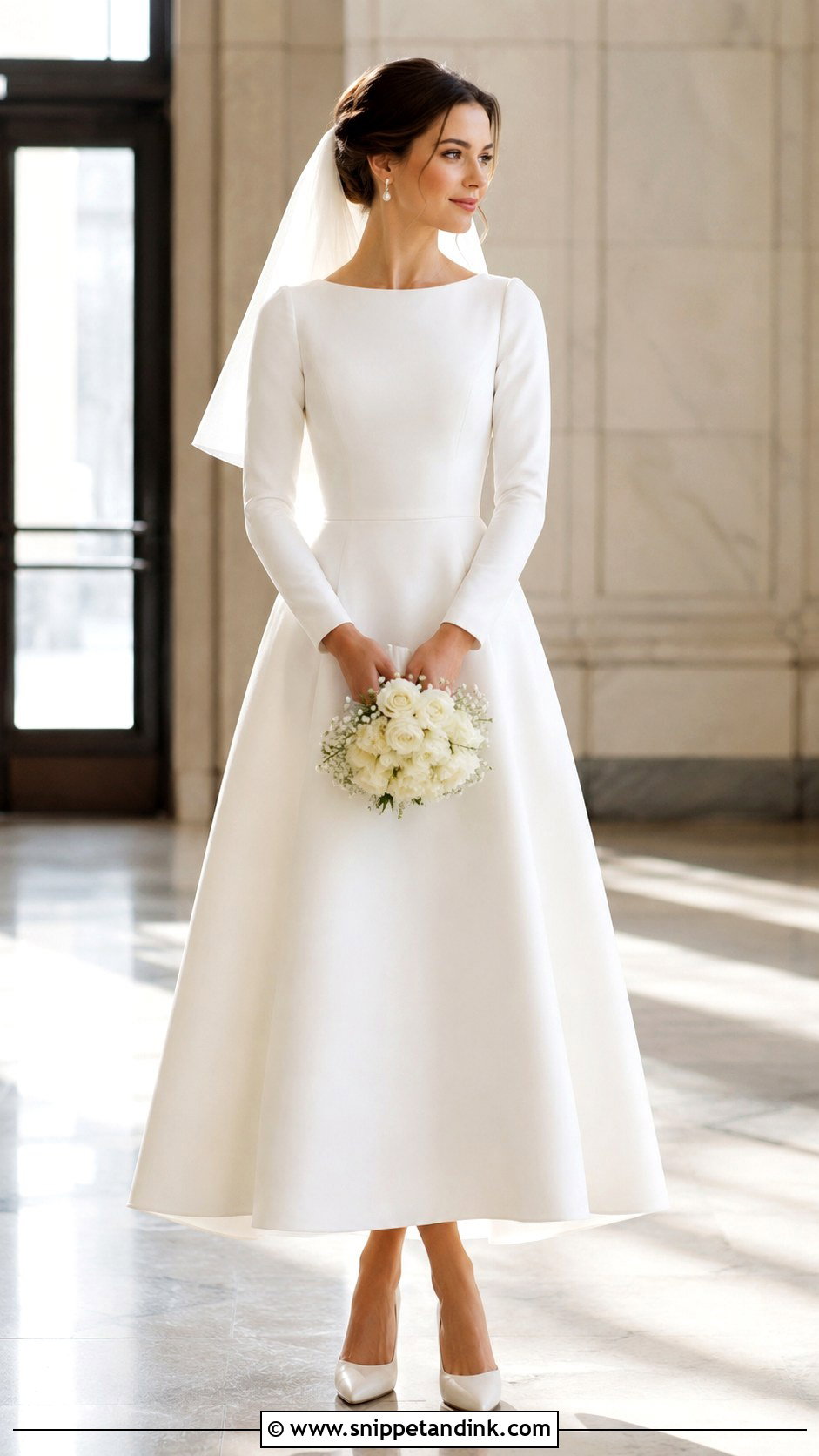
Tea length is the practical choice for a courthouse ceremony, a daytime party or a relaxed reception, and you lose nothing in coverage up top. Choose a high scoop neck, three-quarter or full-length fitted sleeves, a covered back and a skirt ending between the lower calf and the ankle, with a structured bodice and a soft flare for a polished vintage shape. Your shoes are on show, so pick them early: ivory pumps, with pearl earrings, a short veil and a compact bouquet. Full sleeves give the most arm coverage, and an ankle-length hem gives more leg coverage than a true tea dress. Always hem it in your exact wedding shoes. The hem should land at a slim point of the leg; ending at the widest part of the calf makes the whole dress look heavier.
18. Basque Waist Long Sleeve Wedding Dress
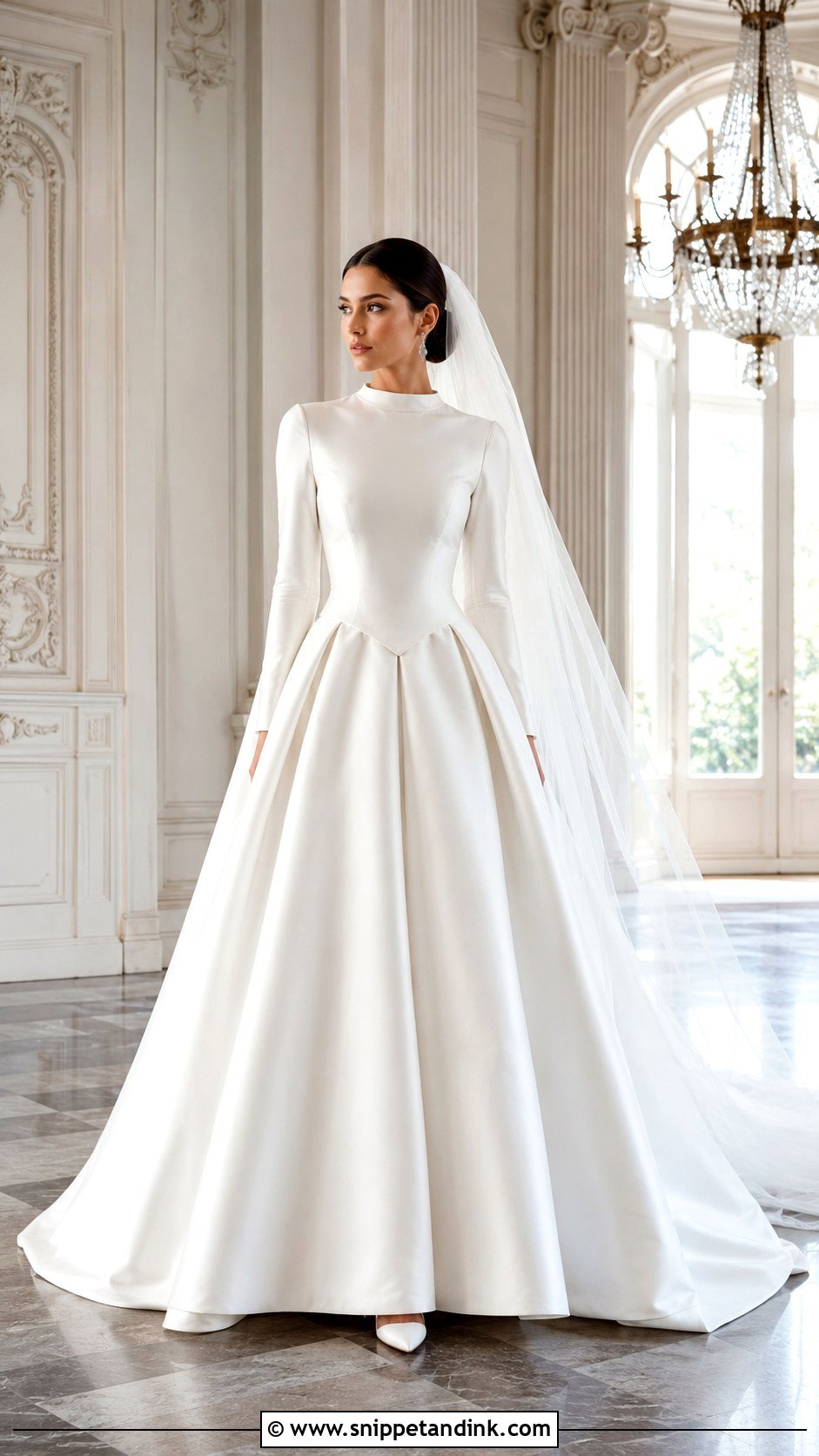
The basque waist dips into a gentle point at the front, which visually lengthens the torso before the skirt flows out in satin or tulle. Combined with a high neck, long sleeves and a closed back, it’s one of the most flattering covered shapes I fit. If coverage matters, choose internal structure and opaque panels rather than a sheer corset bodice. A plain cathedral veil, drop earrings, satin pumps and a neat updo suit it, with any embellishment kept at the neckline or cuffs so the waist stays the focus. Sit down during the fitting and look at the point. If it digs into your stomach or flips up, the seam needs adjusting. Shorter torsos usually want a shallow point; a longer torso can carry a deeper one.
19. Floral Appliqué Wedding Dress With Sleeves
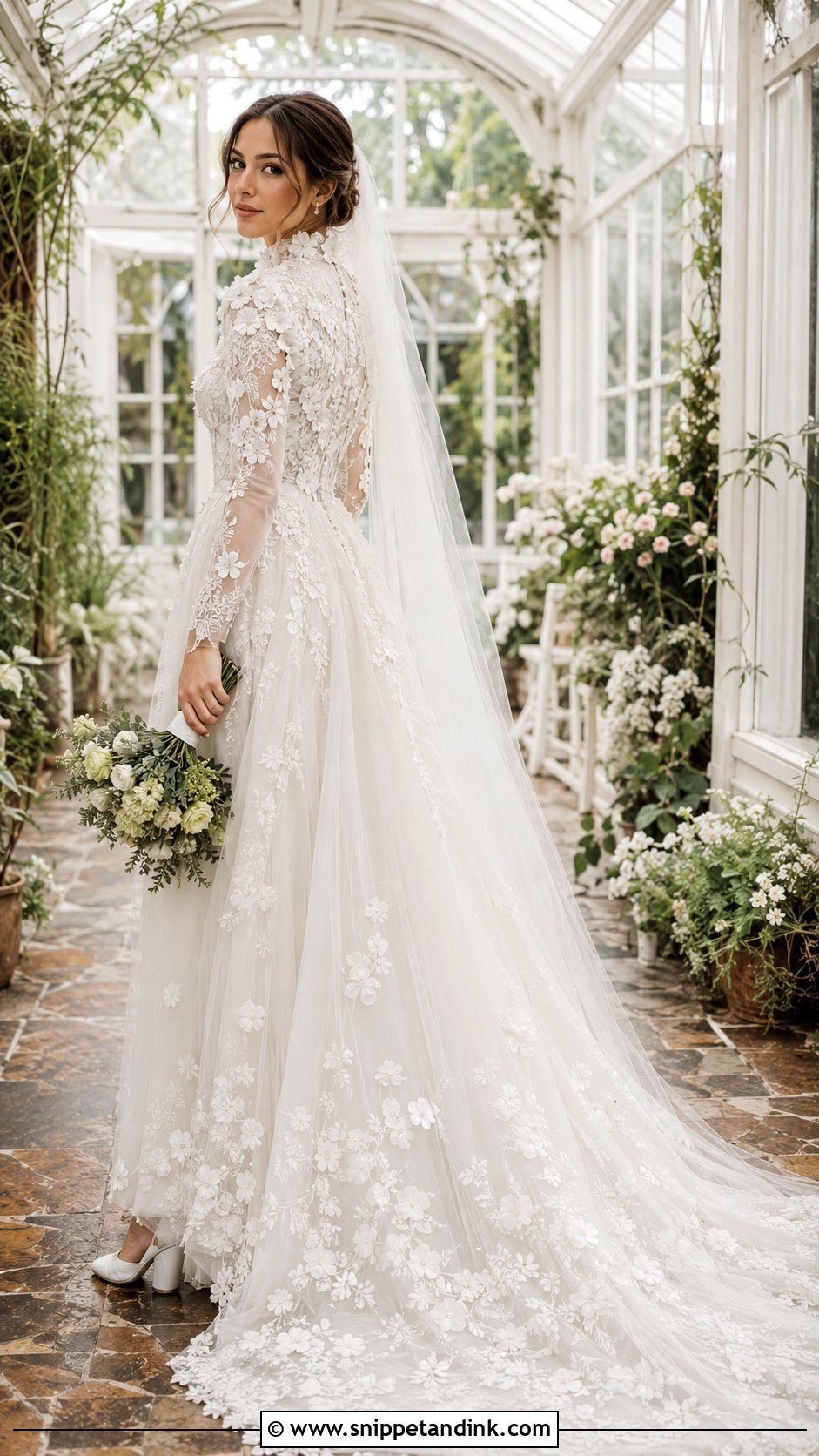
Raised floral appliqués turn a covered gown into something romantic, and flowers paired with expressive sleeves and soft tulle are still a strong thread in bridal design right now. Choose a high-neck A-line with lined long sleeves, an opaque bodice and a covered back, with flowers clustered at the shoulders and scattering as they fall down the skirt. That placement keeps bulk away from the waist. Stick to a plain veil, small earrings, satin block heels and a simple bouquet in complementary colors, and leave lace-edged accessories at home. Before the wedding, check every flower by hand. Raised petals at the shoulder rub against the sleeve with each arm swing, and loose ones are far easier to secure two weeks out than on the morning.


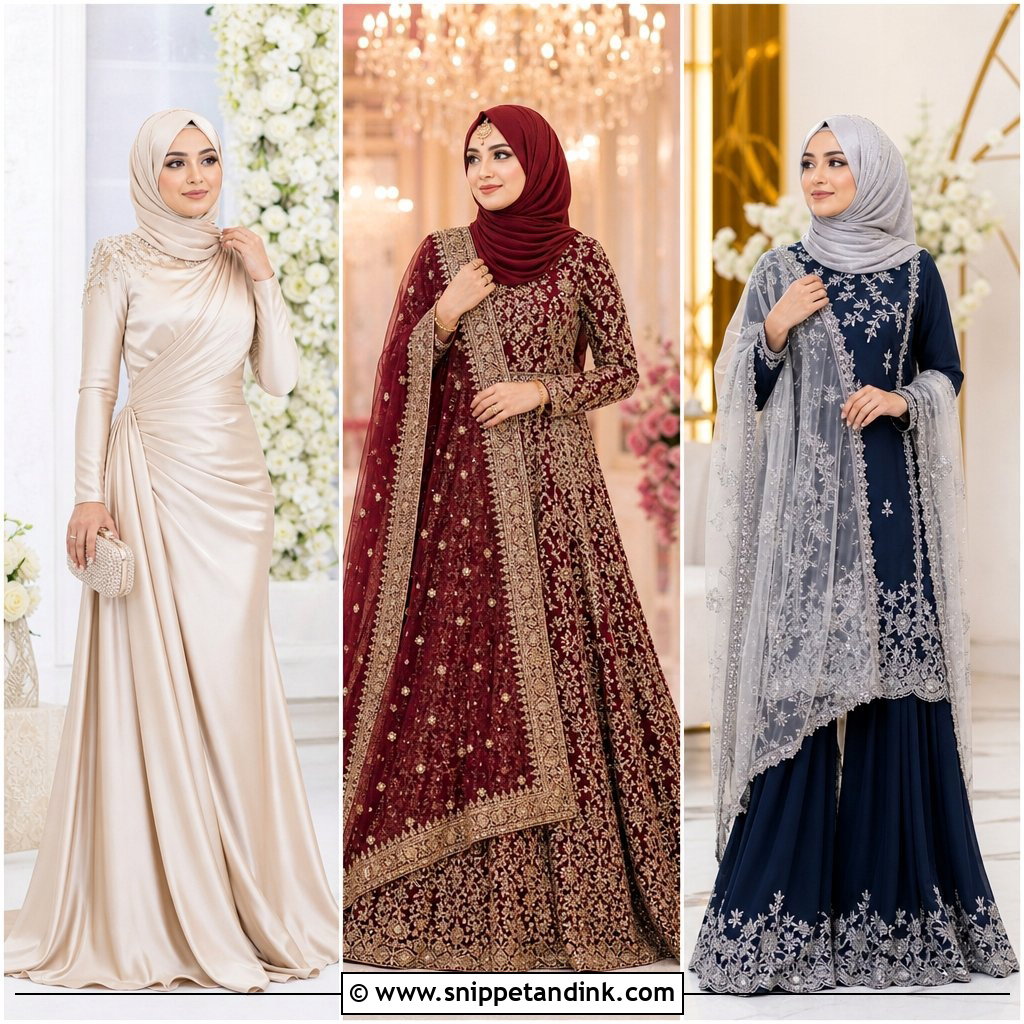
20. Mandarin Collar Satin Wedding Dress
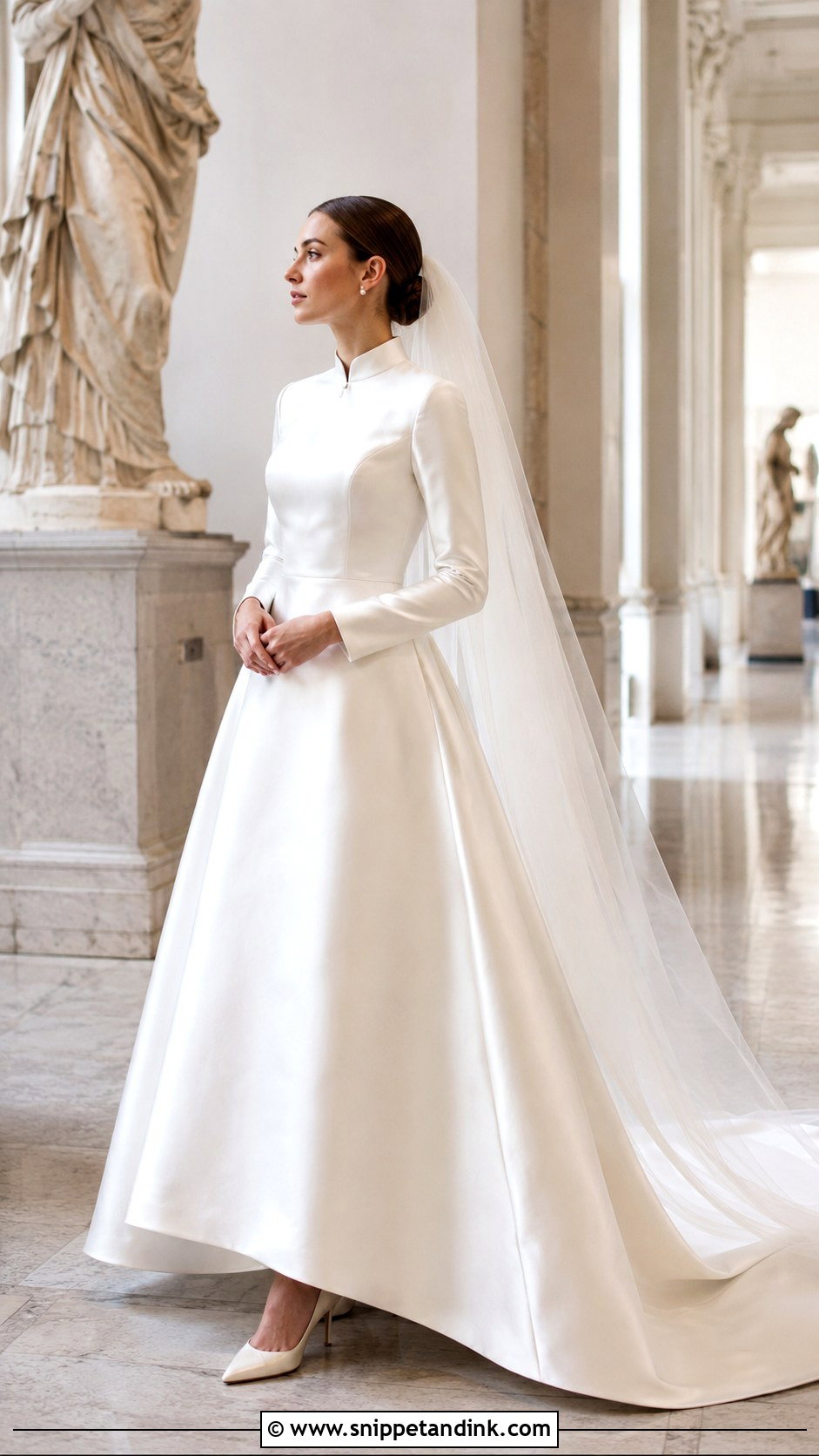
A mandarin-collar wedding dress gives you a high neck with a crisper, more architectural line than the usual round collar. Choose smooth satin or mikado with a short standing collar, long tailored sleeves, a fully buttoned back and a softly structured A-line skirt. Piping, covered buttons or a narrow cuff detail underline the clean construction. Pearl studs, a low bun, pointed satin heels and a plain chapel veil attached below the hairstyle finish it, with no necklace. The collar should sit close without touching your throat when you swallow. At the final fitting, turn your head both ways and look down at your feet; a few millimeters let out at the collar can make the difference between comfortable and counting the hours.
Staying Cool in Long Sleeves and a High Neck All Day
The fear I hear most from modest brides is overheating, and it’s a fair one. You’ll be covered from collar to wrist for photos, a ceremony, a meal and dancing, often under lights. Fabric choice is half the answer. Crepe, chiffon, silk organza and lighter satins breathe far better than heavy mikado, brocade or a polyester lining, and a cotton or silk lining against the skin makes a noticeable difference.
The other half is planning the day. I ask brides with summer dates to sew in discreet underarm shields, which protect the fabric from marks and are invisible from outside. Keep a small fan and blotting papers with whoever carries your emergency kit. Schedule outdoor portraits for the cooler part of the day rather than straight after the ceremony at midday.
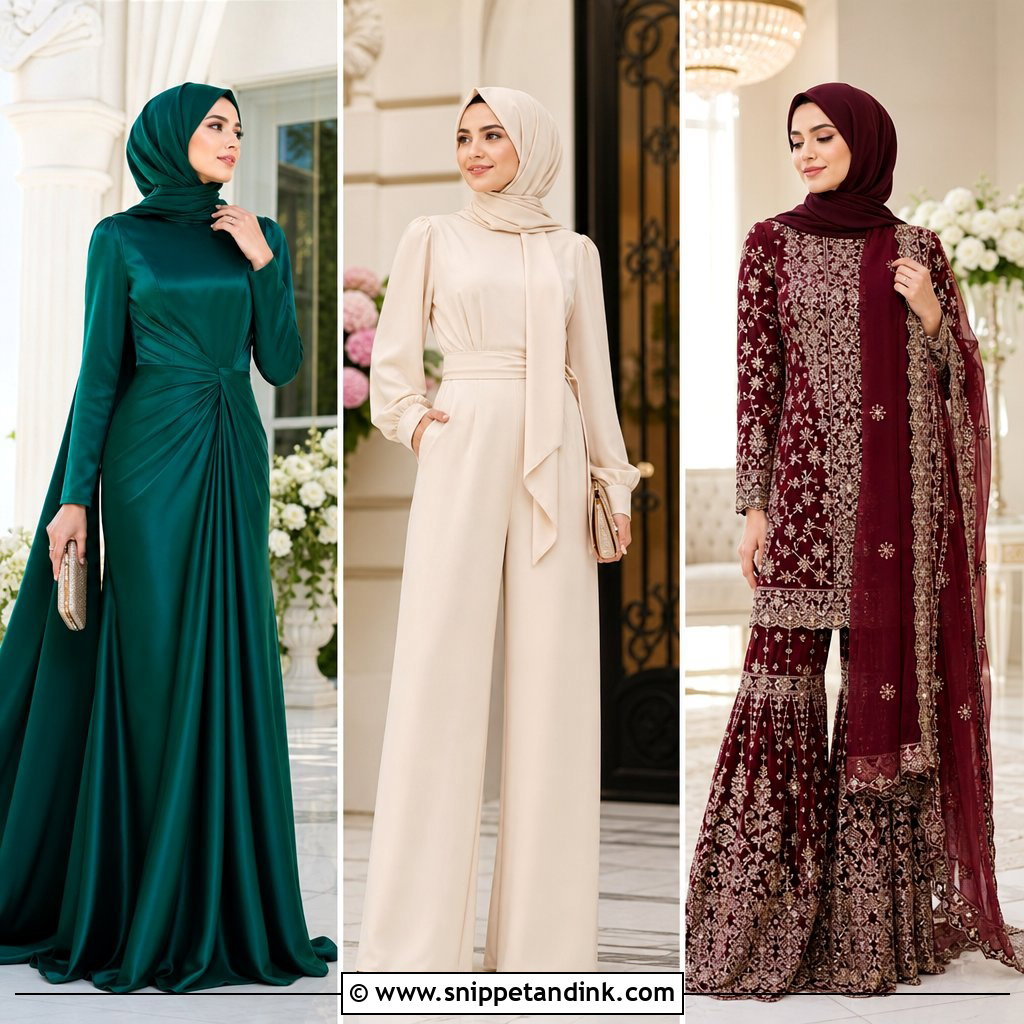
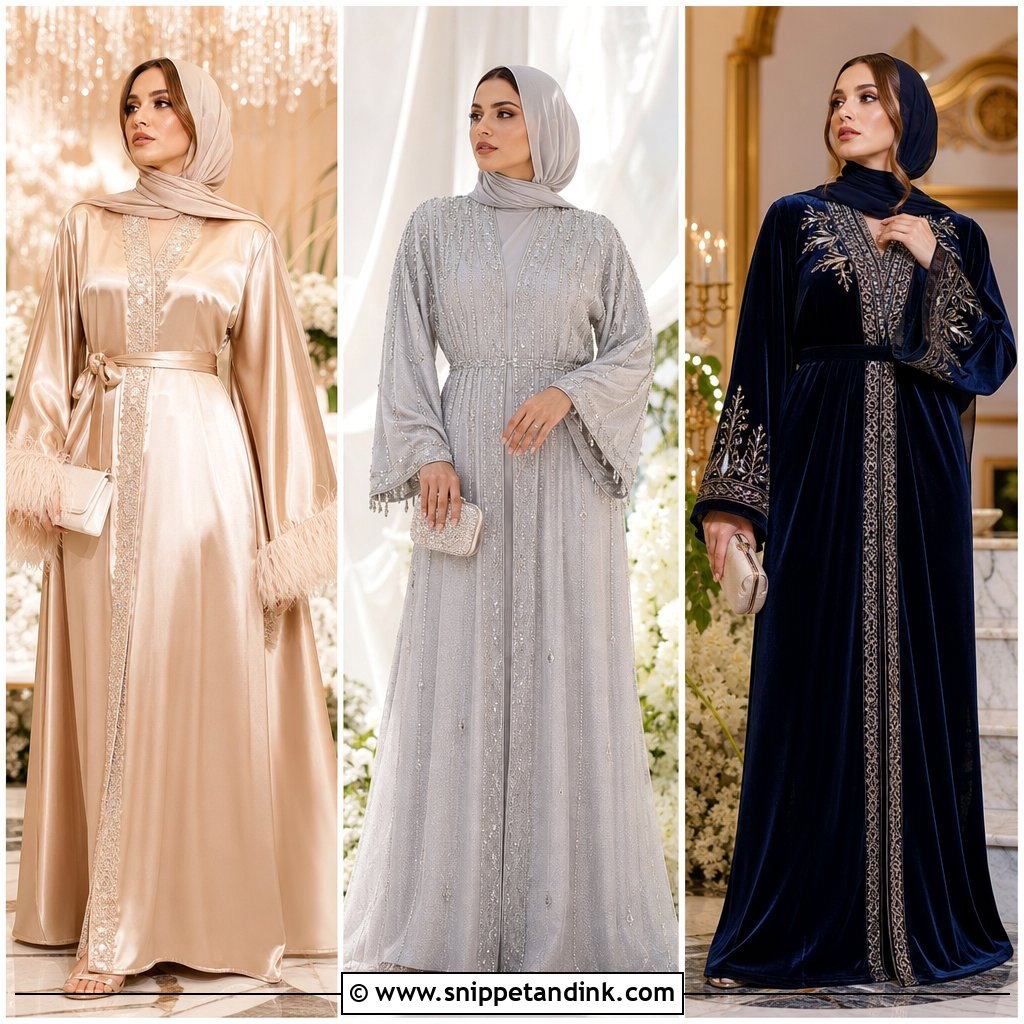
If you want a change for the evening, a second covered outfit is common at modest weddings, and it doesn’t have to be a second gown. A lighter crepe dress or a silk tunic and skirt in a softer color lets you dance comfortably without giving up any coverage. Try it on with your hijab or veil, too, since the head covering often changes for the reception as well.
Sit, Reach and Turn Before You Commit to a Gown
A full-coverage gown has to work for your body in motion, not only on a mannequin. The high neck, lined sleeves, covered back and long skirt are the foundation; fabric, silhouette and detail decide whether it feels like you. Let the season and venue rule out the wrong fabric early, then spend your fittings moving: sit, walk, raise your arms and turn your head, because those movements expose problems a standing photo never shows. Neckline height, sleeve width and lining can almost always be adjusted. Note which of these gowns you keep coming back to, and bring those pictures to the salon or your designer so the conversation starts from shapes you already love.
You'll Like These Ideas:





Leave a Reply