
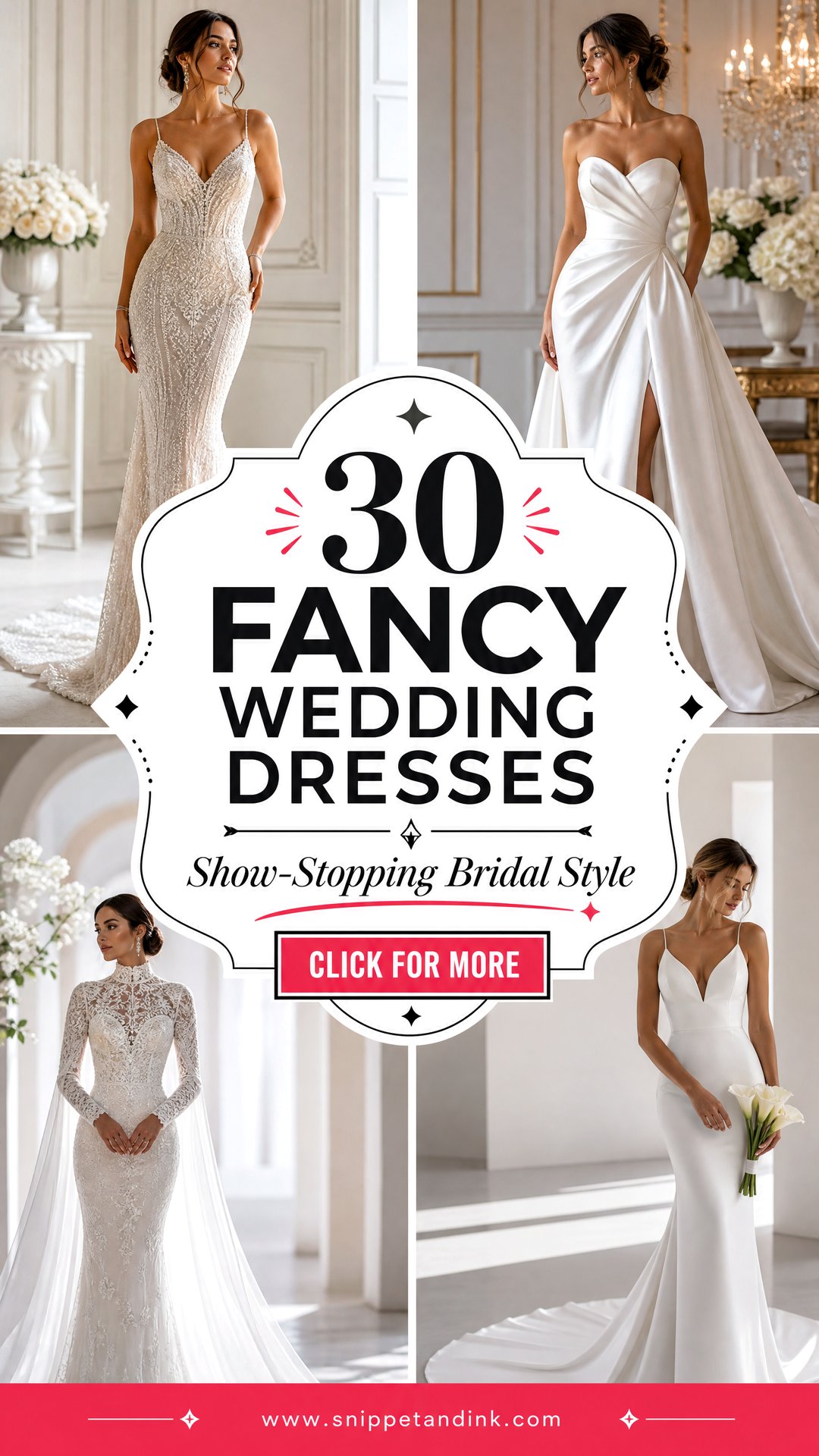
Shopping for a gown should be exciting, and it gets far less overwhelming once you know what “fancy” means to you. For some brides it’s a lace ball gown and a long train; for others it’s sleek satin, pearl embroidery, sculptural sleeves or a party-ready second look. Right now I’m seeing a lot of lace, bows, floral texture, soft color, minis and convertible gowns in my fitting rooms, alongside classic silhouettes chosen by brides who want photos that still look right decades later. The mood is a mix of traditional romance and personal style. Below are thirty gowns, each with what I’d pair it with and the fit issue I’d check first.
What Happens in a Bridal Appointment, and How Samples Mislead
Most brides arrive at their first appointment expecting to try on a dress in their size. Usually that isn’t what happens. Shops stock sample gowns, mostly in a narrow range of sizes, and your stylist clips them at the back or lets them hang open to show you the shape. So judge the silhouette, the neckline and the fabric, not the exact fit; that comes later, from your own ordered dress and alterations.
- Bring a strapless bra or the undergarments you’re likely to wear, and heels close to your wedding height.
- Keep your group small. Two or three trusted people give clearer feedback than six.
- Try at least one shape you think you’d never wear. I see brides change their minds on that dress more often than any other.
- Ask how long the gown takes to arrive once ordered. Many take several months, and alterations need time after that.
When you love one, take photos from the front, side and back, then sit down in it. A gown that only works standing will spend half of your wedding in the wrong position.
1. Lace Ball Gown Wedding Dress
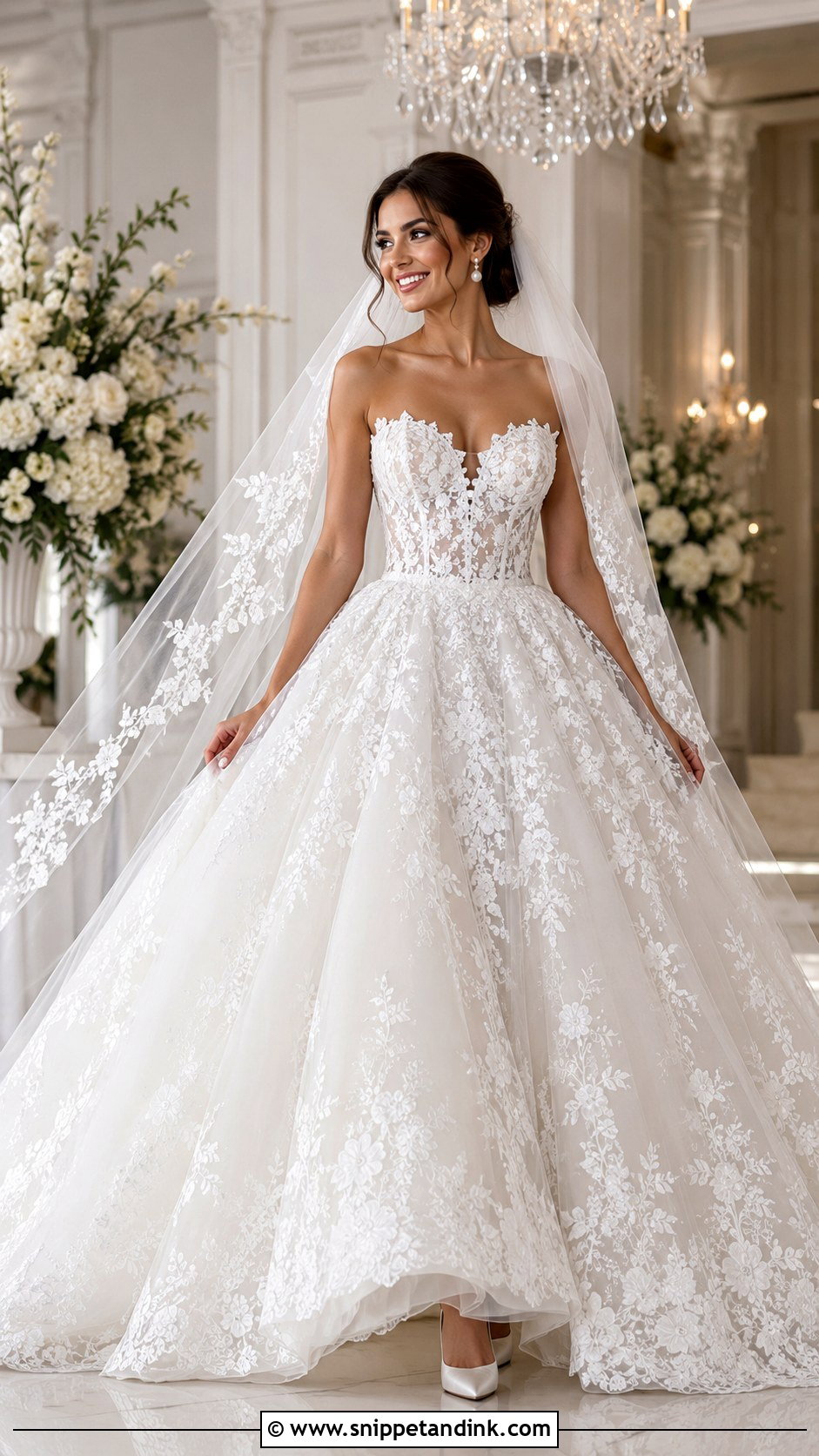
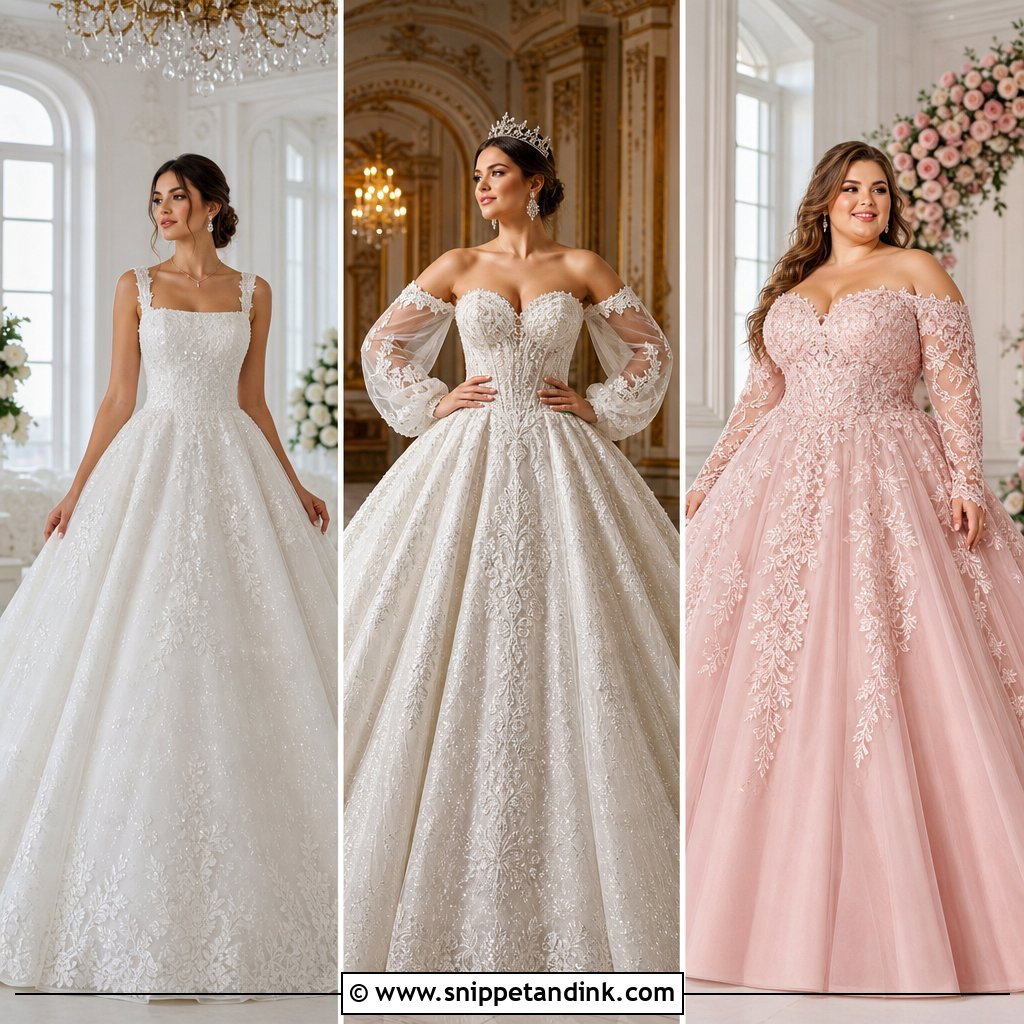
Ball gowns carry volume, and lace is what keeps all that volume from looking heavy. I look for floral lace over tulle, a structured bodice and a clearly defined waist so the skirt has somewhere to start. A sweetheart neckline, off-the-shoulder straps or long sheer sleeves personalise it. Pearl earrings, a cathedral veil and satin heels finish the classic version. A skirt this wide needs space: ballrooms, marble halls and gardens handle it, small registry rooms don’t.
2. Satin A Line Wedding Dress
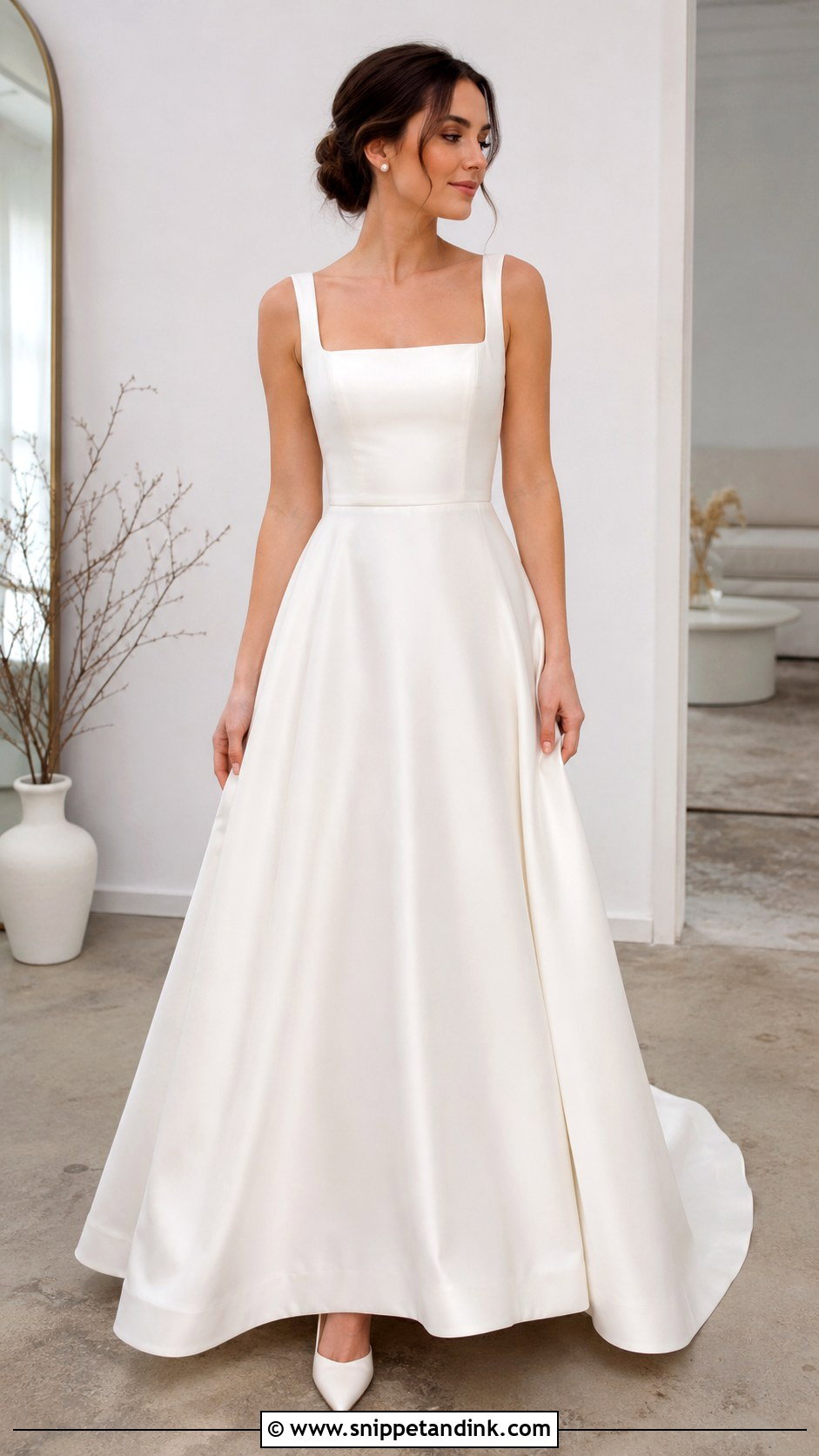
Satin does the work here, so the fit has to be close to perfect. The fitted bodice shapes you, the skirt falls away cleanly, and the sheen makes even a plain gown look expensive. Square, strapless or bateau necklines push it modern. I’d add pointed satin pumps, pearl studs and a smooth low bun. The one thing I warn about is creasing: satin marks across the lap the moment you sit in a car, so leave a few minutes and a steamer for the venue before photos.
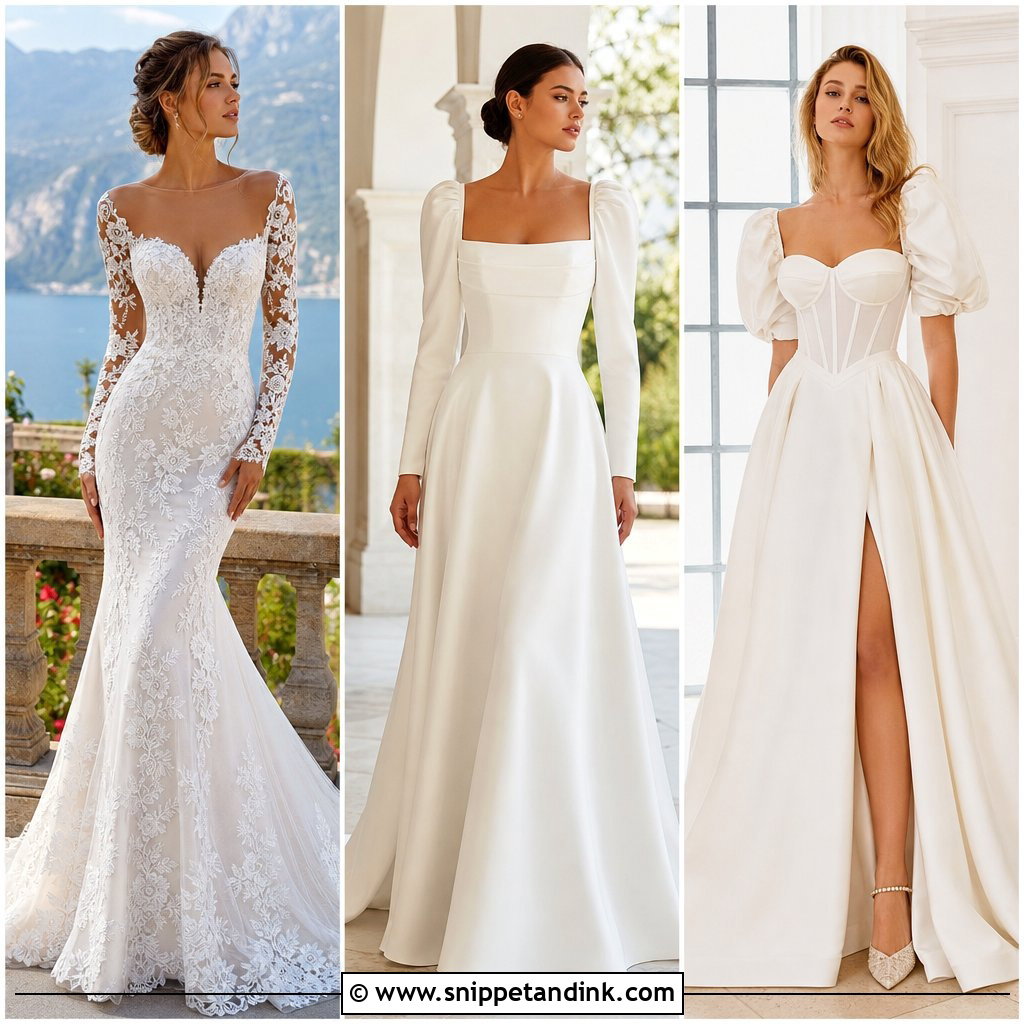
3. Long Sleeve Lace Wedding Dress
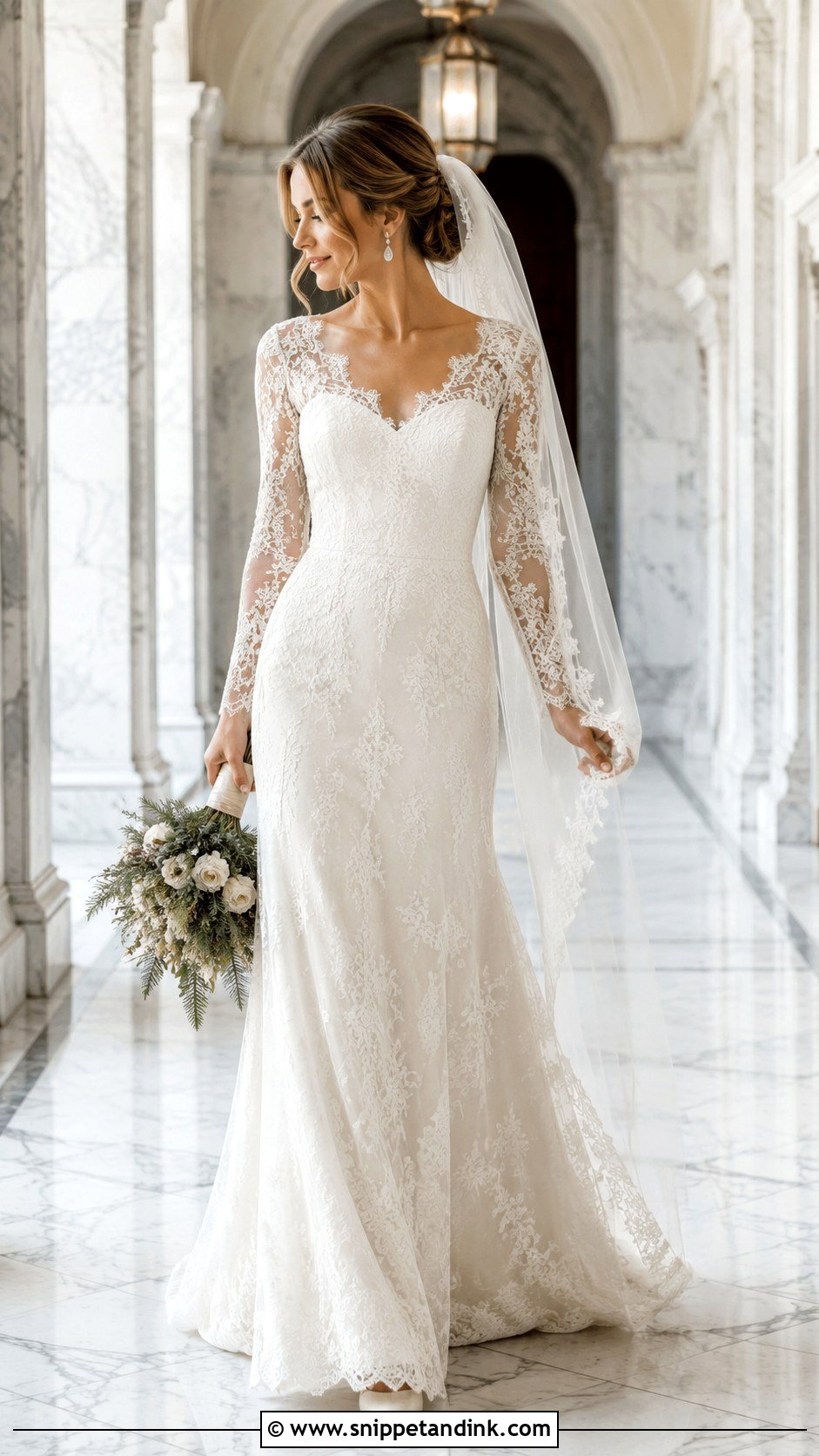
Long lace sleeves give coverage and still feel delicate, especially when the sleeve is sheer or lightly embroidered. Cooler months and formal venues suit it, as does any bride who’d rather not wear a low neckline. A fitted bodice with a soft skirt reads traditional; a slim column reads modern. Drop earrings, a fingertip veil and closed-toe heels complete it, and detailed lace needs few accessories. At fittings I have brides lift a bouquet and hug me, since tight lace sleeves pull the shoulders and can split at the underarm seam.
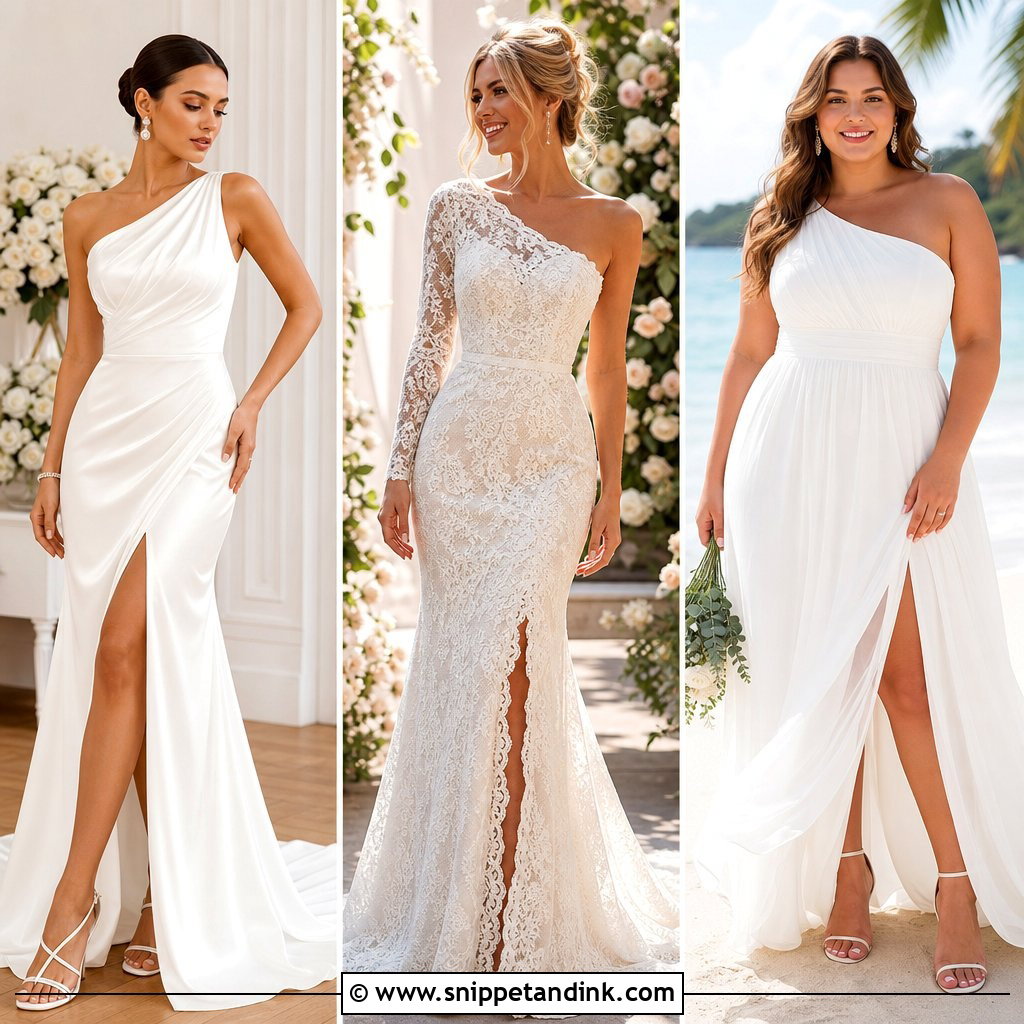
4. Off Shoulder Wedding Dress
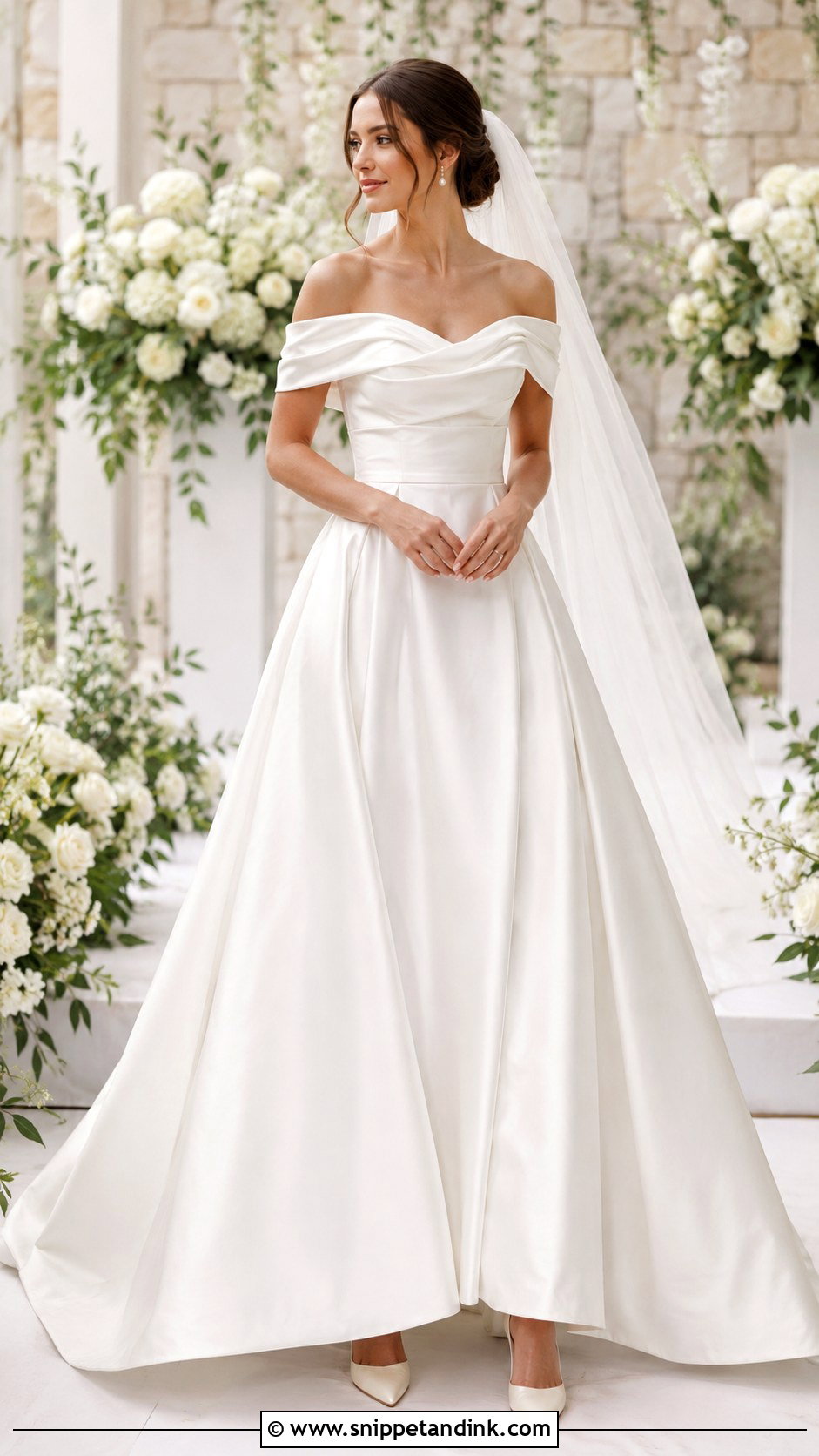
Off-the-shoulder necklines show the collarbones, and that’s all the decoration the neckline needs. It works on fitted gowns, ball gowns and A-lines, so the drama is your choice. I’d skip the necklace, add pearl drops and a smooth updo, and pick a long veil. Satin, mikado, lace or draped crepe give the polished version. The fit point is the band across the arms: too loose and it slides down, too tight and you can’t raise your arms to dance.
5. Mermaid Wedding Dress
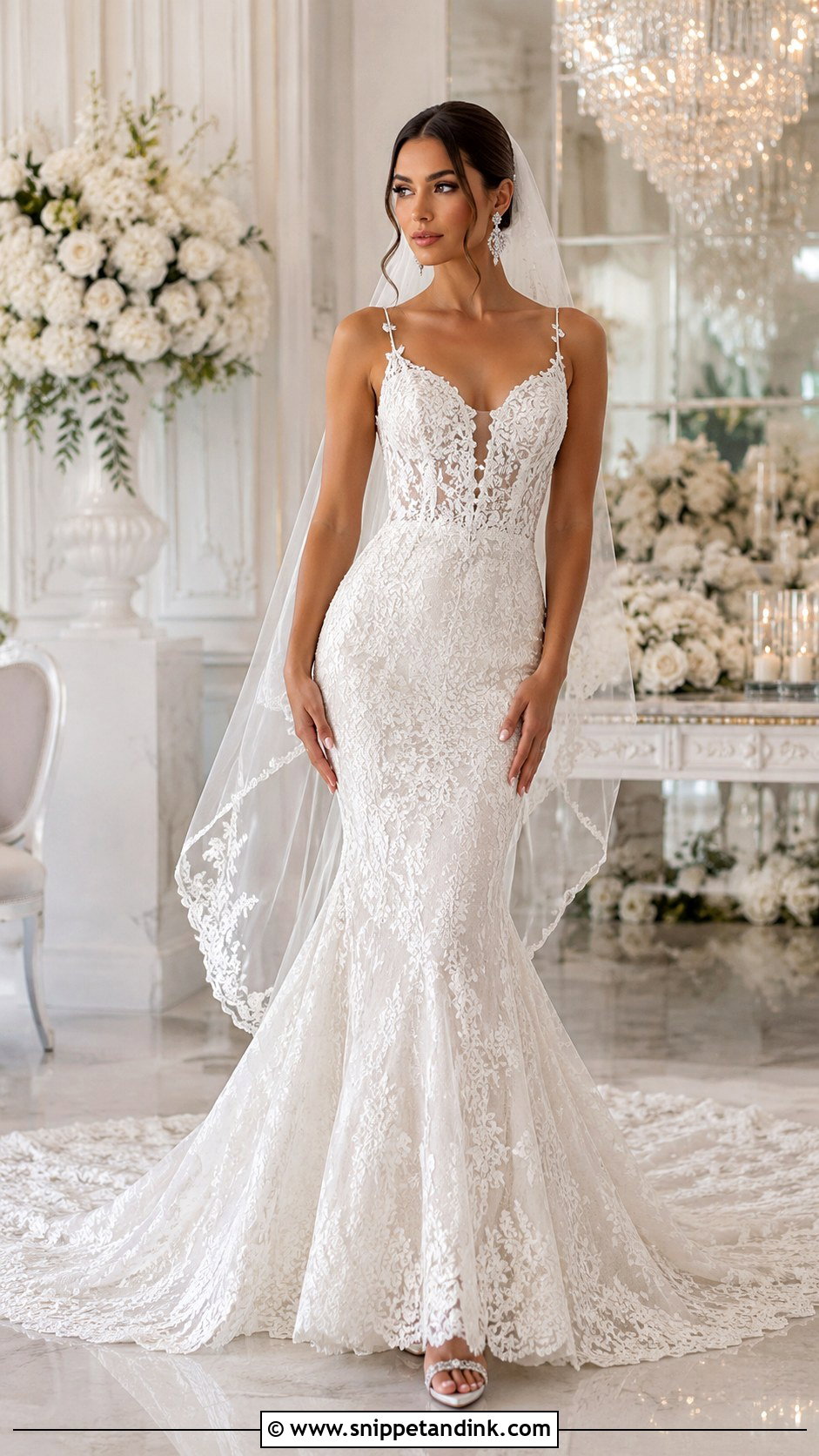
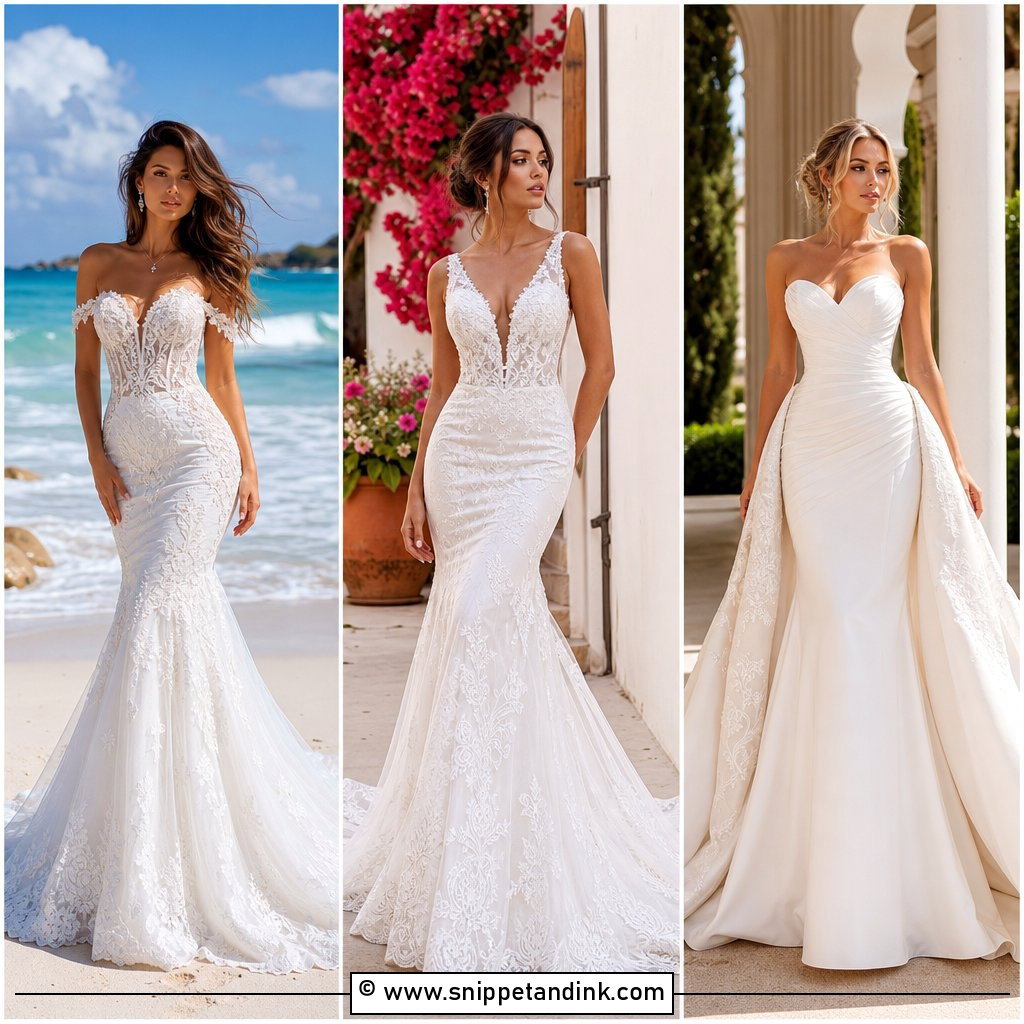
Fitted through the bodice, waist and hips, then flaring near the knee or lower thigh, a mermaid wedding dress gives the most defined hourglass of any shape. Lace, beading, satin and crepe all suit it, and a detachable train or sparkling embroidery adds glamour. Statement earrings, sleek heels and a smooth veil balance the silhouette. Tailoring decides whether you’ll enjoy wearing it. If the flare sits too high you’ll take tiny steps all day, so I always ask brides to climb a step and sit in it at the fitting.
6. Beaded Sheath Wedding Dress
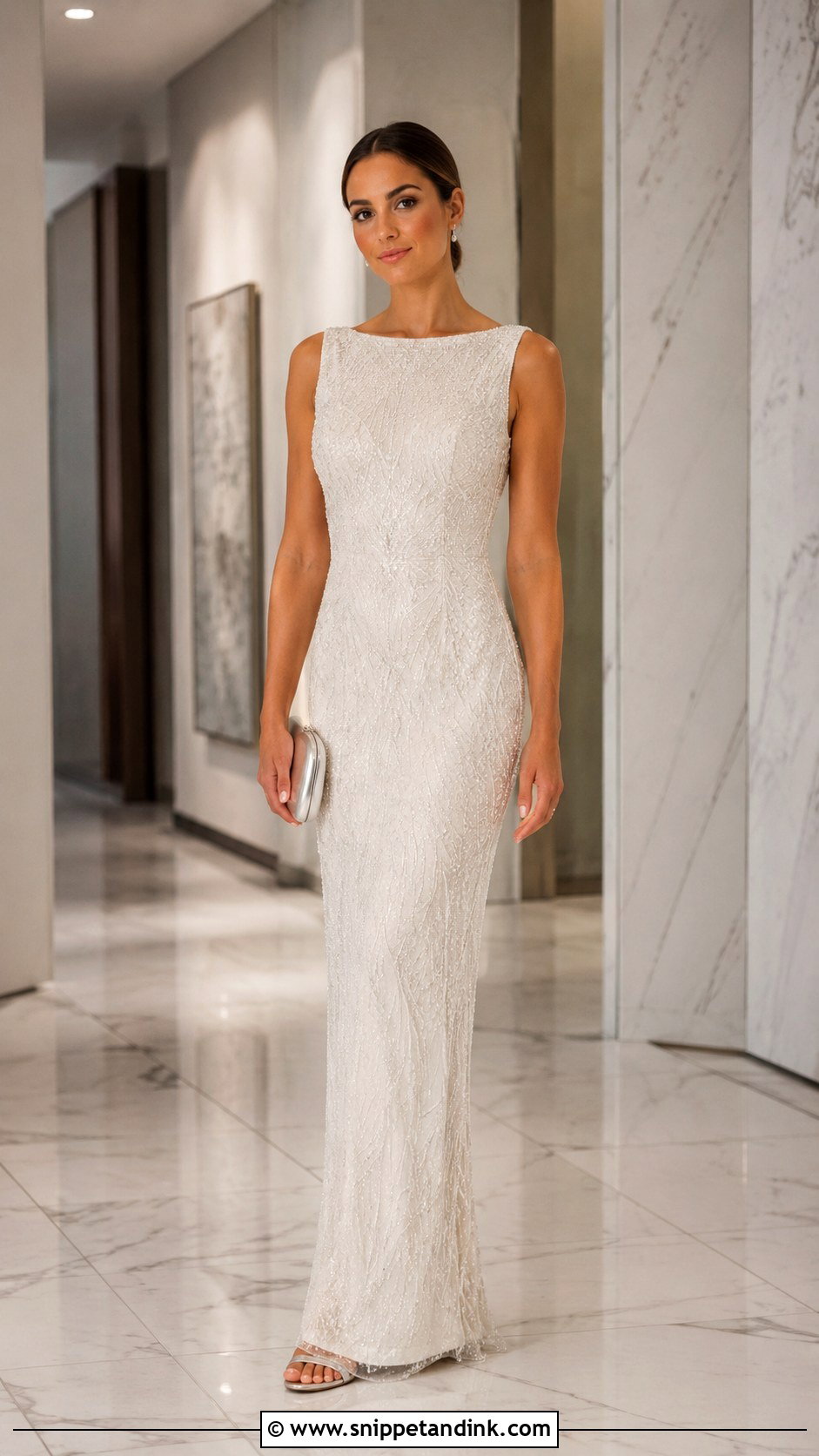
Sheaths stay close to the body and let the beadwork carry the drama, which suits brides who don’t want a big skirt. Linear beading lengthens the figure; floral beading softens it. Pattern sets the era too, from Art Deco geometry to modern scatter. Metallic heels, a small clutch and delicate earrings keep the shimmer in check. Heavy beading on a slim cut pulls on the shoulders and seams, so I check strap width and how the dress hangs after twenty minutes of wear, not two.
7. Pearl Wedding Dress
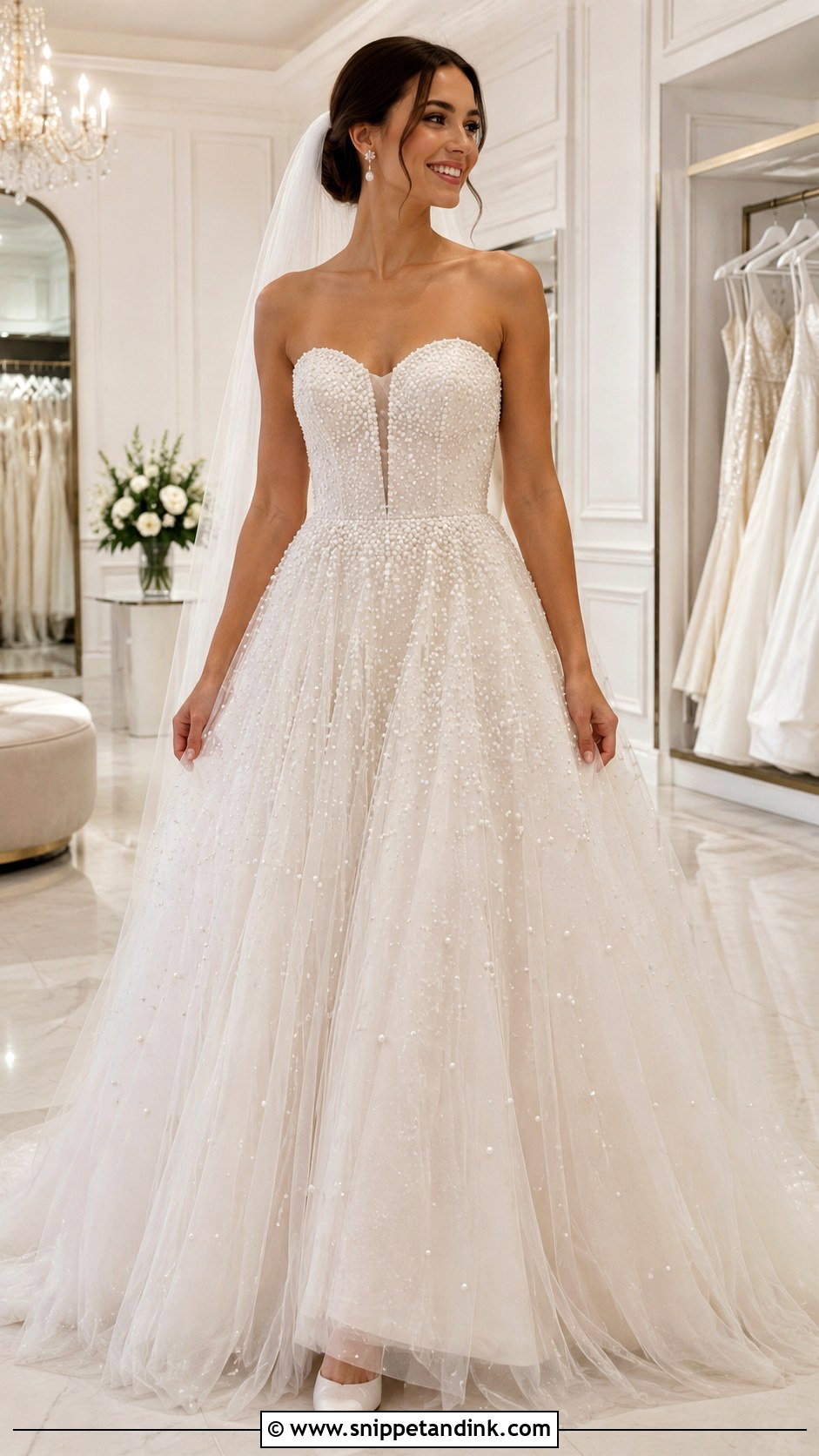
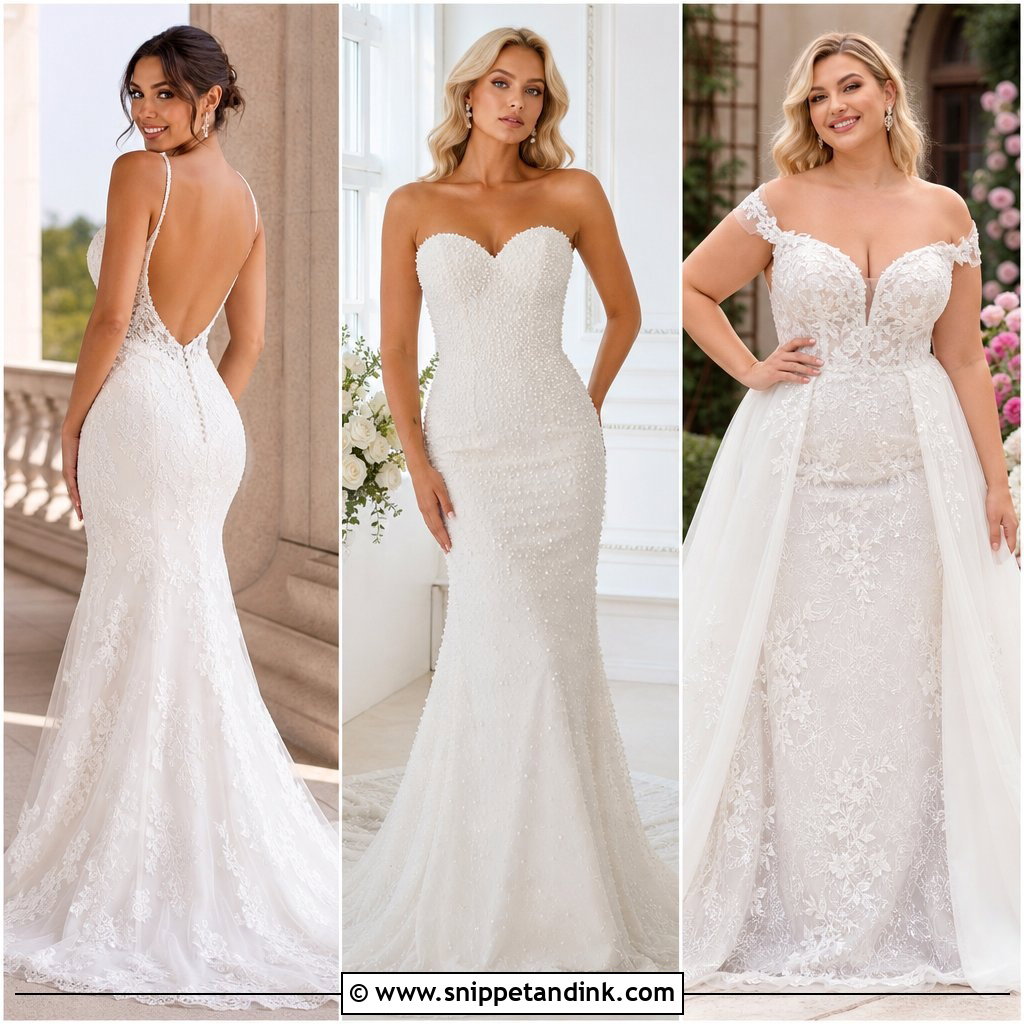
Pearls give texture and a soft glow instead of sharp sparkle. They can be scattered over tulle, arranged on the bodice or cover the whole gown. Satin heels, pearl earrings and a plain veil suit it, with a low bun or loose waves. Skip big jewelry, as the pearls already do that job. Before buying, I run my hand over the pearl work at the waist and inner arms, the spots that rub against a bouquet and a partner’s sleeve all day; loose ones should be resecured before you take it home.
8. Floral Applique Wedding Dress
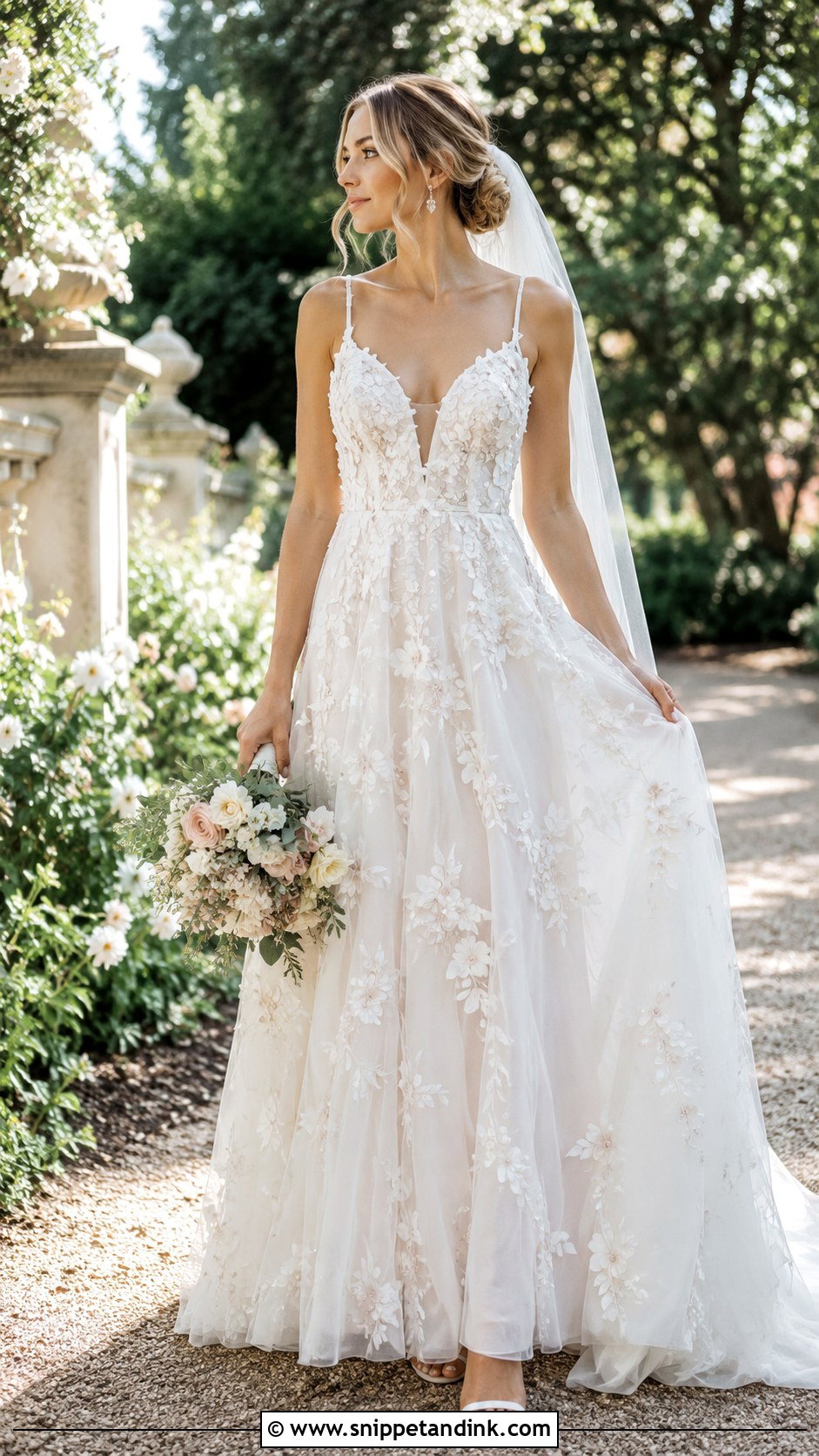
Flowers sewn onto tulle, lace, organza or sheer sleeves give the gown depth you can see from the back row. Scattered appliqués stay delicate; oversized blooms look fashion-forward. Gardens and spring ceremonies suit it. Simple heels, soft earrings and a veil that doesn’t hide the flowers work best, with a bouquet in matching tones. Raised appliqué flattens where you sit or get hugged, so plan a quick fluff and steam before portraits.
9. Strapless Satin Wedding Dress
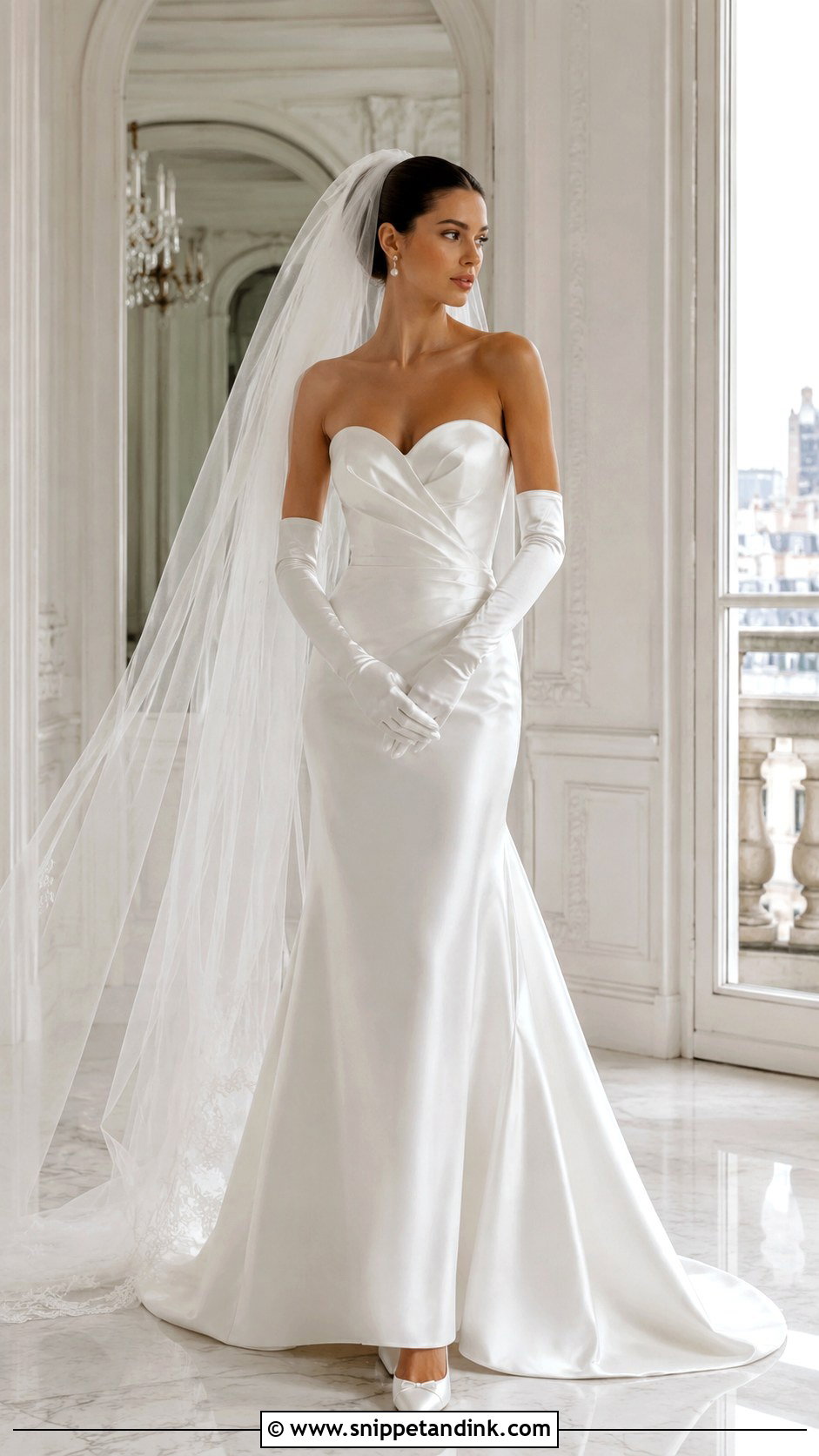
Strapless satin looks simple on the hanger and luxurious once it fits. Everything depends on the inner structure: boning, a waist stay and a supportive bodice that holds up without you tugging. A straight neckline reads modern, a sweetheart softer. Long gloves, pearl earrings or a dramatic veil add impact. Because satin shows every ripple, I’d put the budget into tailoring before decoration. If you catch yourself hitching it up in the mirror, it isn’t finished yet.
10. Corset Wedding Dress
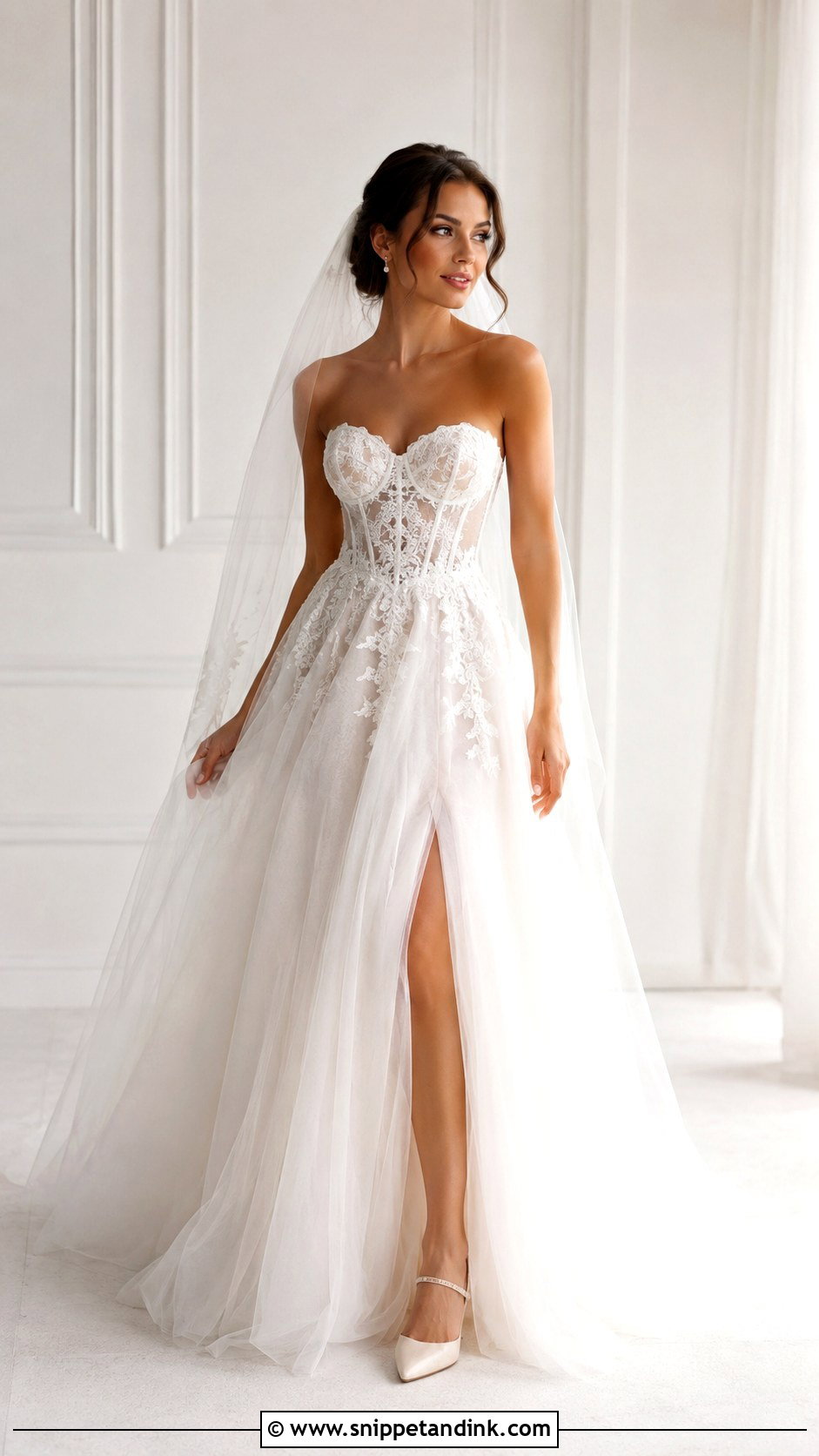
A corset bodice gives shape and support, and you can leave it exposed, lightly sheer or covered in lace. It pairs with full tulle, satin A-line or fitted skirts. A delicate veil, soft curls and simple earrings stop it getting busy; let the boning or embroidery be the feature. Sit in it for a while at the fitting. A corset that pinches standing will pinch more at the dinner table, and lacing needs a practised helper so it doesn’t pucker on one side.
11. Tulle Wedding Dress
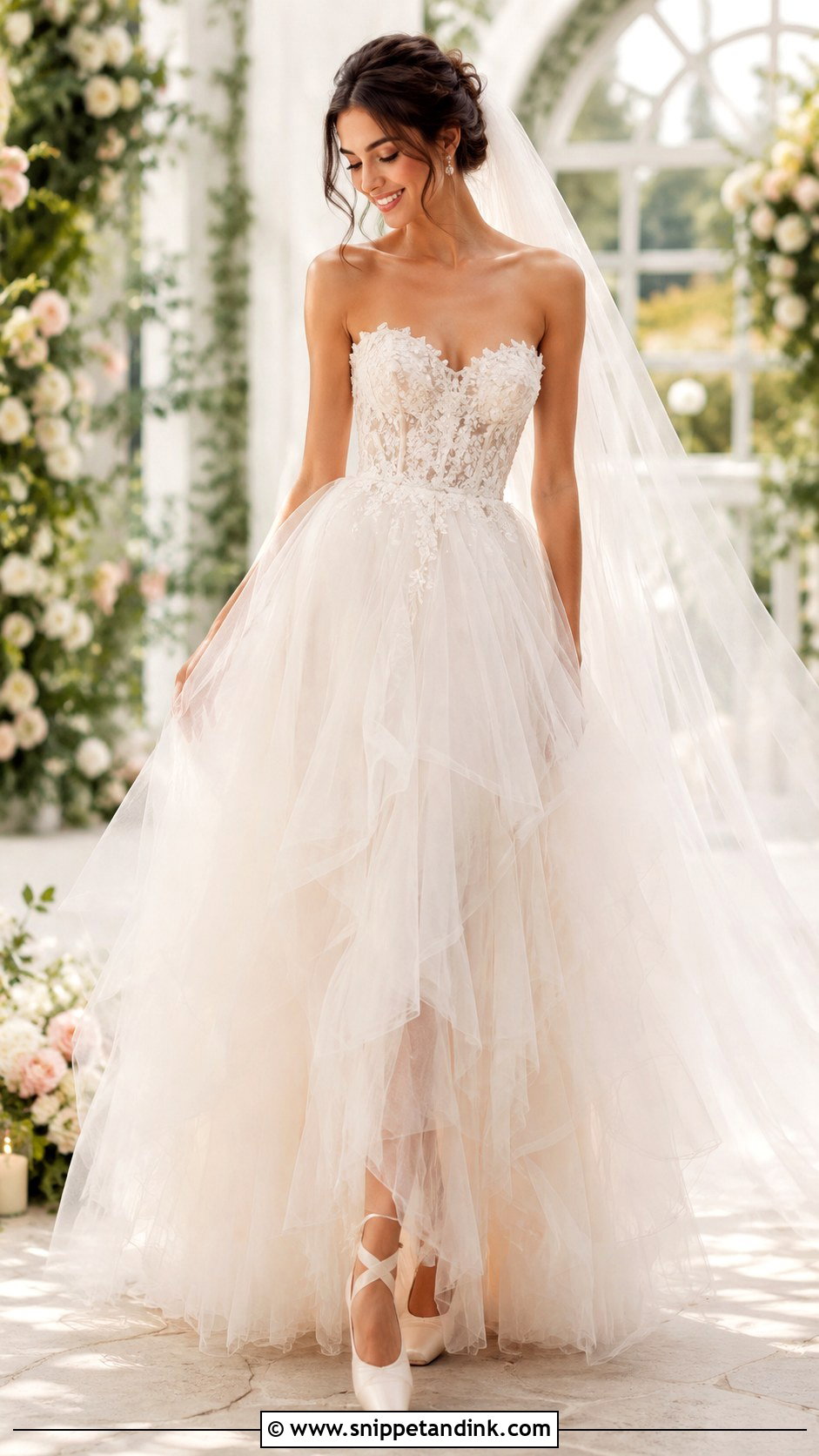
Tulle gives volume without weight, so the gown moves when you walk and looks soft in photos. Layers can build a princess shape, a flowing A-line or a light overlay on a fitted dress. Lace, pearls or a little sparkle make it formal without stiffness. Ballet-style heels, soft earrings and a veil that blends into the skirt finish it. Tulle snags on rings, bouquet wire and rough steps, so I tell brides to keep jewelry with prongs away from the skirt.
12. High Neck Wedding Dress
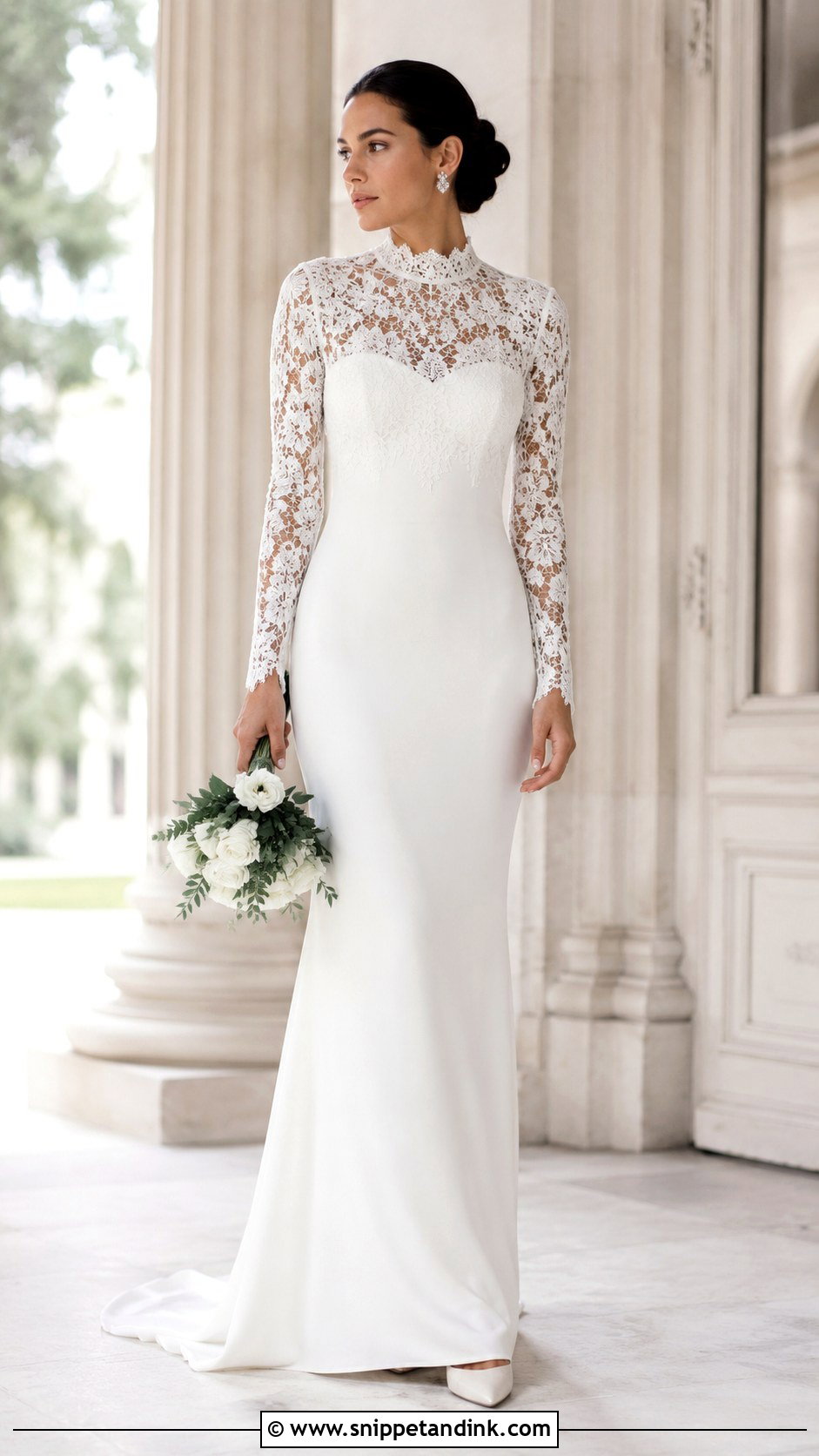
A high neck can look regal in lace, sharp in crepe or dramatic in satin. It pairs well with long sleeves, an open back or a clean column. Choose earrings over a necklace and wear hair up so the shape is clear. Pointed heels and a structured bouquet finish the formal version. Comfort is the thing to test: a high neck that’s even slightly tight feels like a collar by evening, so turn your head and swallow at the fitting.
13. Square Neck Wedding Dress
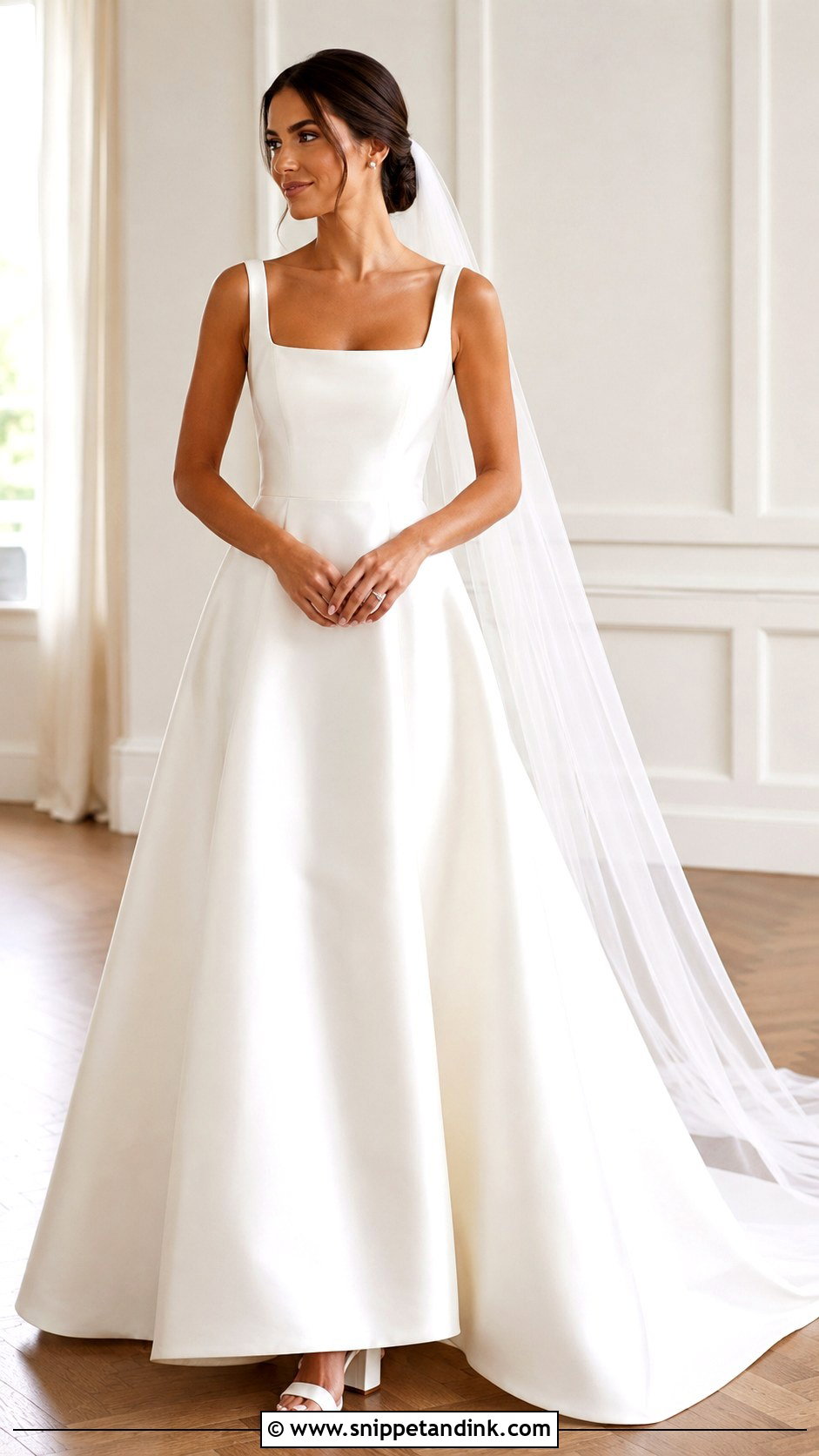
Square necklines frame the upper body cleanly and suit satin, crepe, lace and mikado. On an A-line it feels classic; on a fitted gown, sleek. Pearl studs, a low veil and either block heels or pointed pumps keep it balanced. The fancy part here is shape, fit and fabric, not ornament. Square necks also allow wider straps, which makes them one of the more supportive options for fuller busts.
14. Halter Wedding Dress
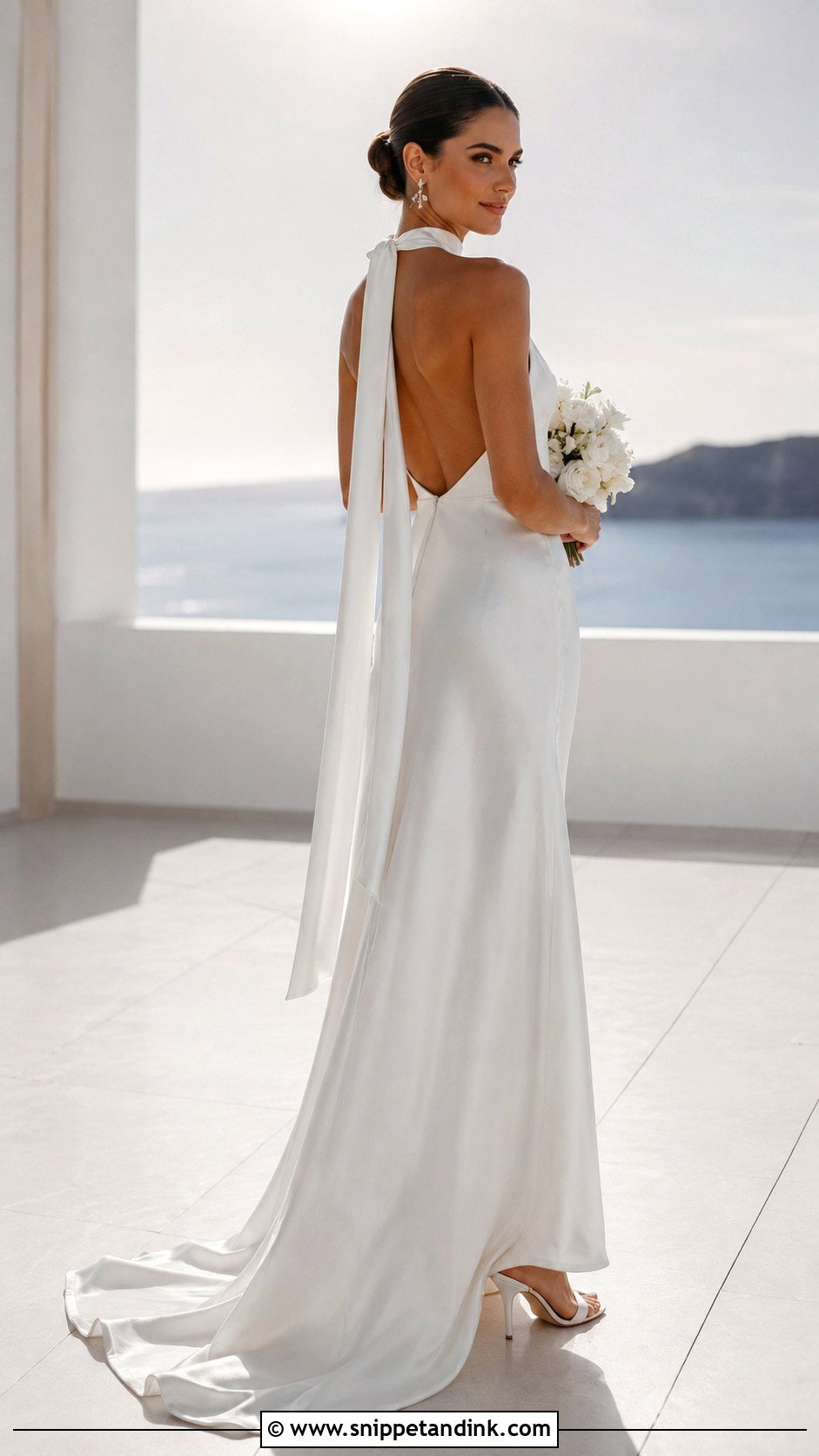
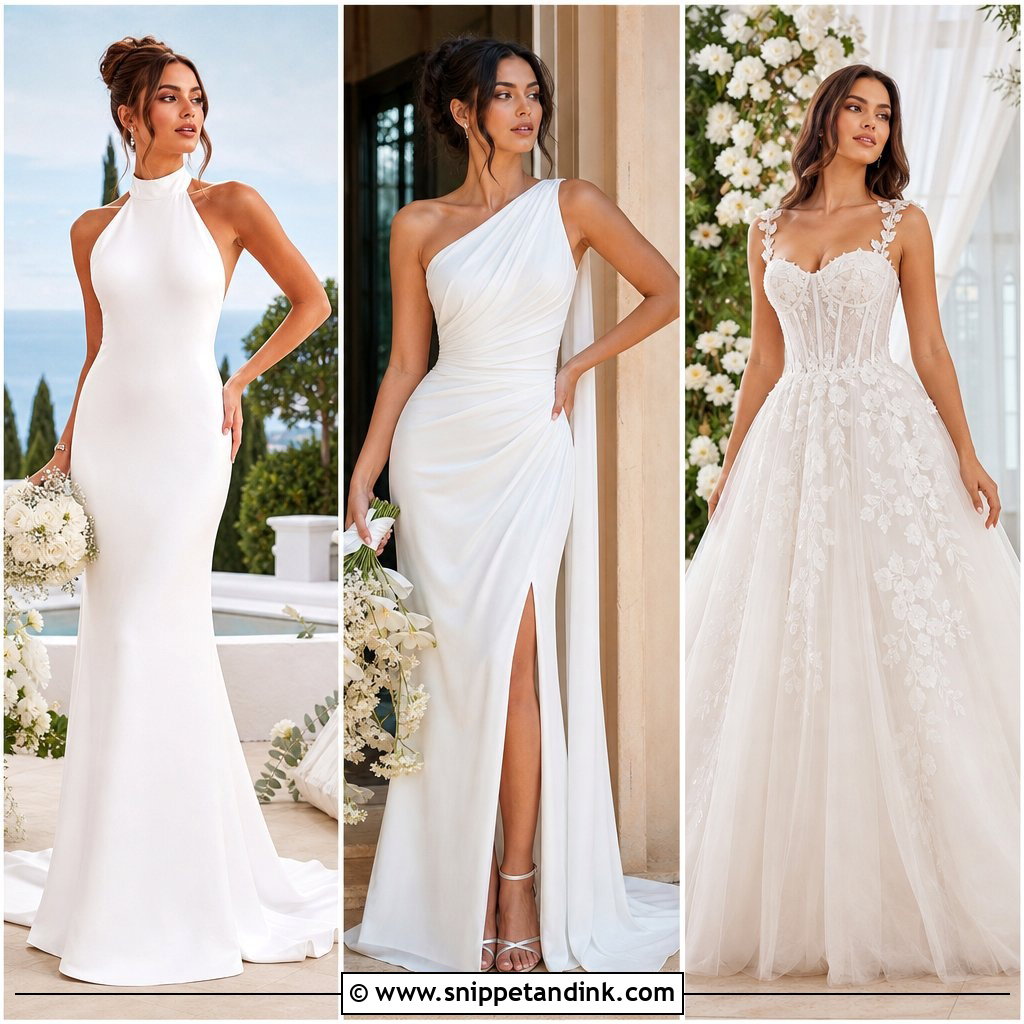
Halters draw the eye up and show the shoulders. They suit sleek satin, fitted crepe and soft A-lines. Some are high-necked, others plunge at the front or open at the back, and comfort and security matter more than the photo. A smooth bun, delicate earrings and clean heels are enough. I’d steer you to a hook closure rather than a tied neck; a knot pulls on the neck after hours of standing and can loosen during dancing.
15. One Shoulder Wedding Dress
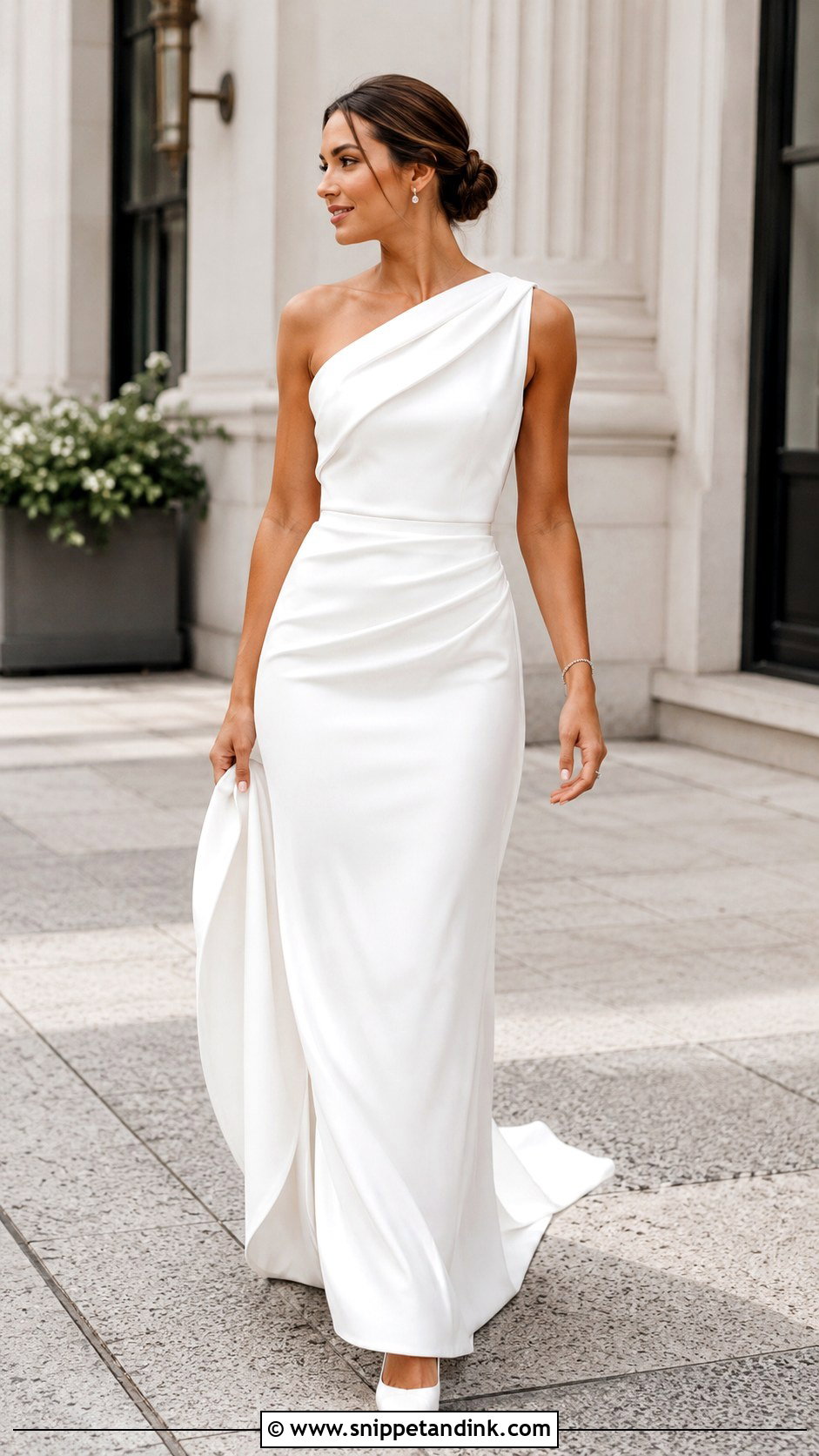
One bare shoulder makes even a simple gown look styled. Satin, crepe and structured mikado hold the asymmetric line best. Fitted reads sleek, A-line softer. Keep jewelry to a single bracelet or small earrings, and wear a low bun or side-parted waves. The strap is the fit point: if it slides or digs in, the whole neckline twists, so ask for silicone grip tape inside it.
16. Bow Wedding Dress
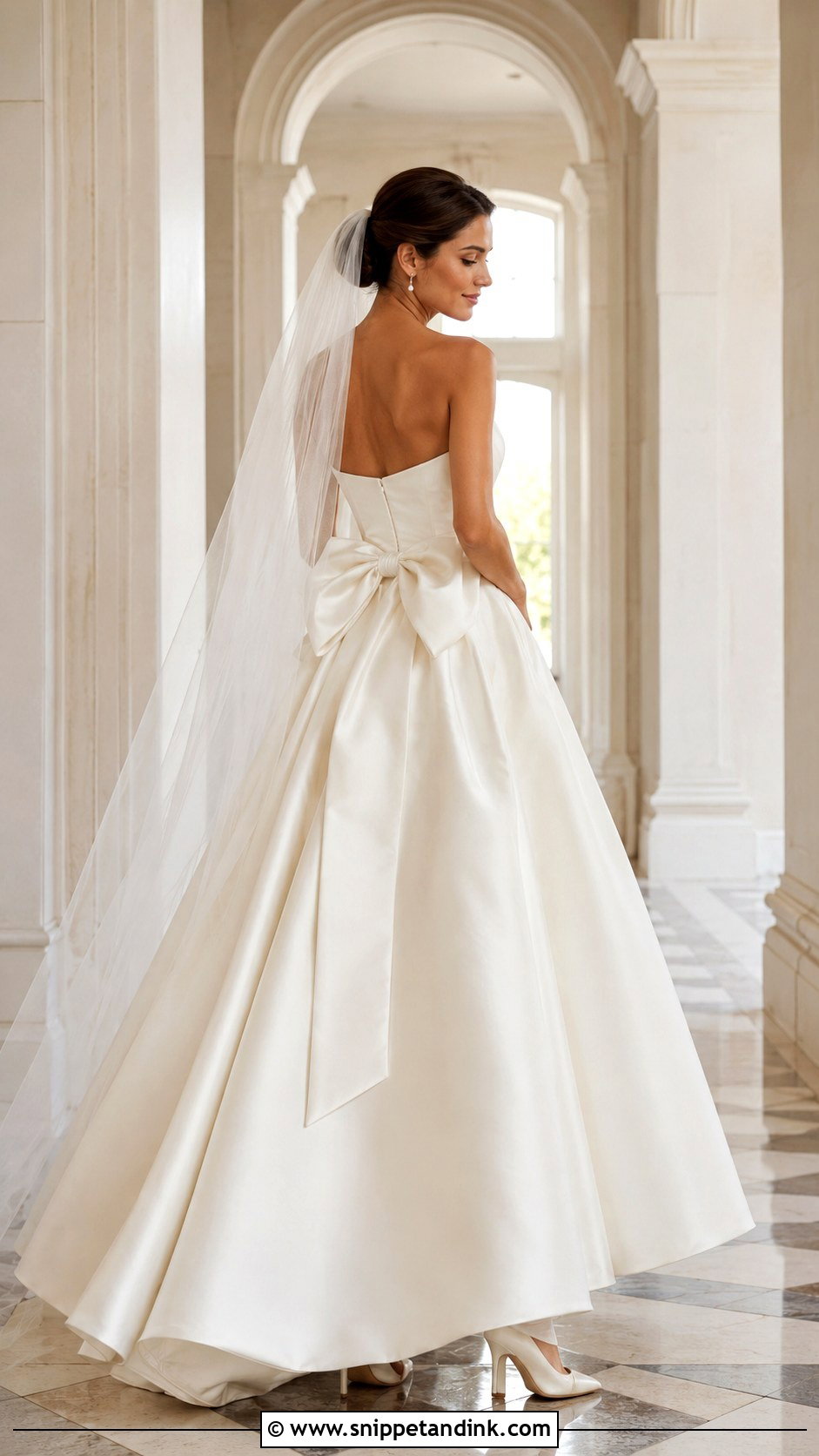
Bows are everywhere in bridal right now. A big satin bow at the back waist feels classic; a small shoulder bow on an A-line feels lighter. Bows can also sit at the neckline or trail into the train. Keep heels simple, earrings pearl and the veil smooth, since a bow already gives a focal point. Large back bows get crushed when you sit, so check that yours is lined or stiffened enough to bounce back after dinner.
17. Cape Wedding Dress
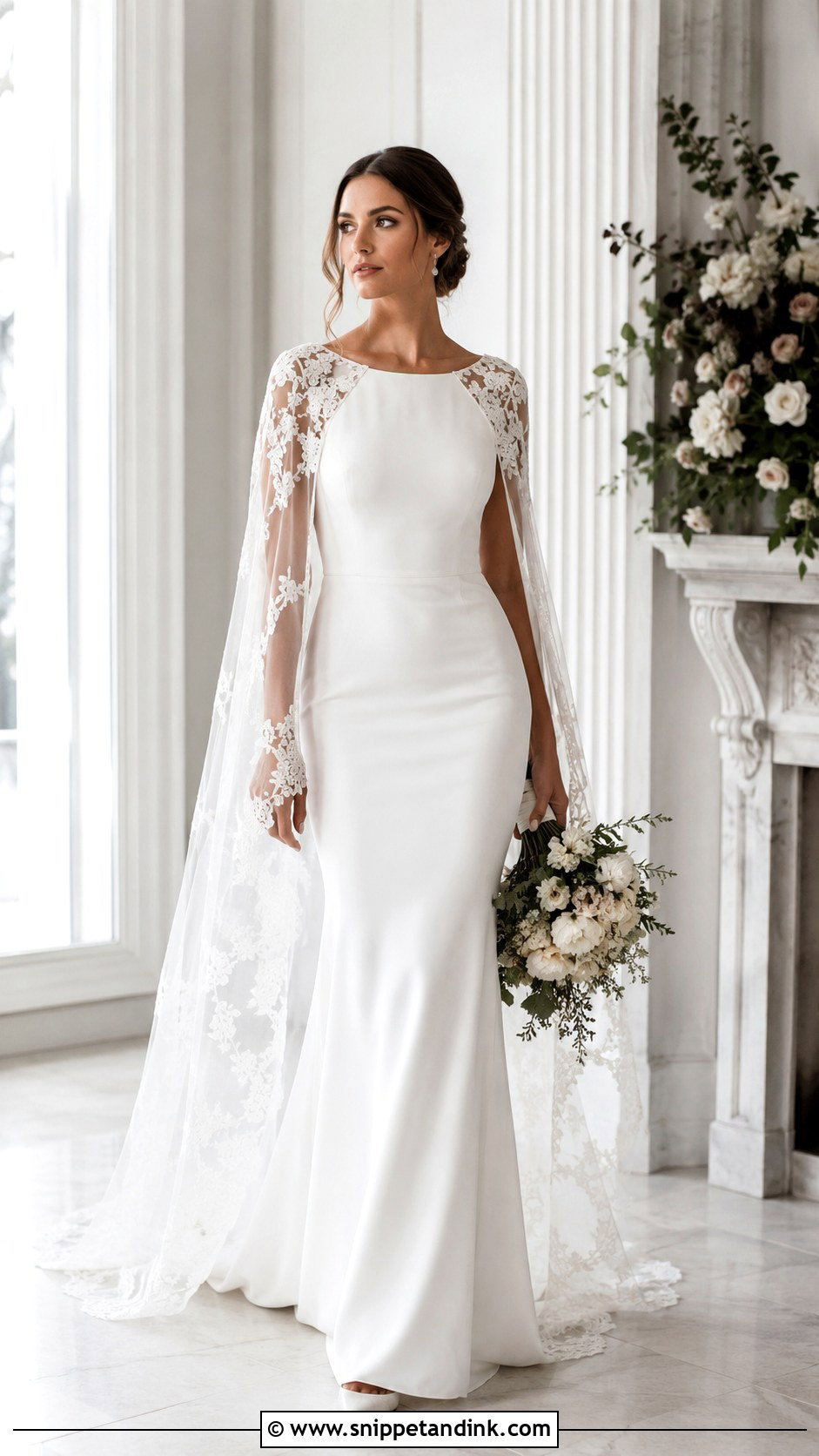
A cape can replace the veil and brings movement from the shoulders, neckline or back. Sheer, lace-covered, pearl-trimmed or plain fabric all work. Underneath, a sleek, fitted or simple A-line gown keeps the layers from competing. Understated jewelry and elegant heels suit it. Capes give coverage in a house of worship and come off for a lighter reception look; just make sure the fastening sits flat so it doesn’t dig into your neck.
18. Detachable Train Wedding Dress
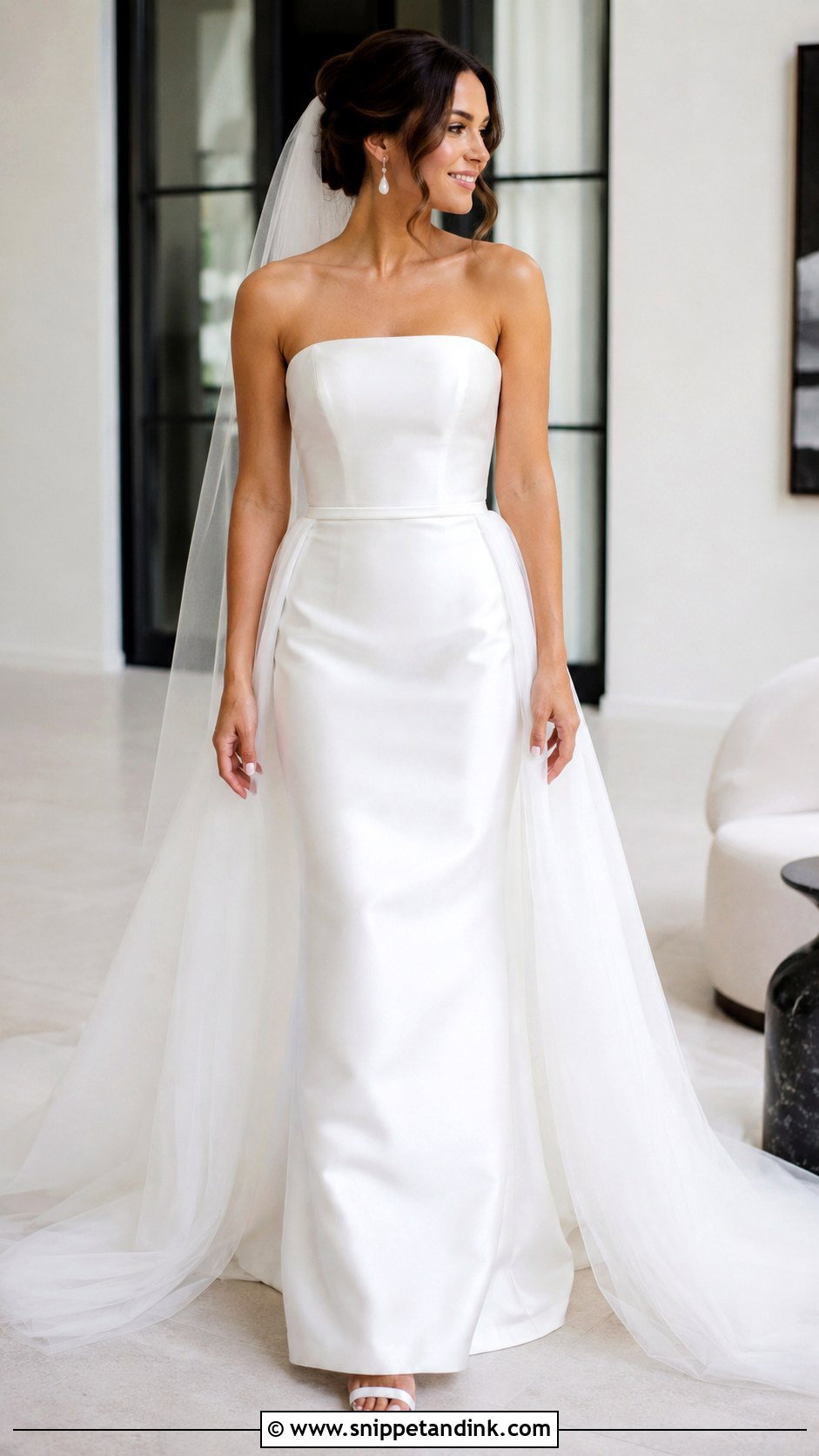
A detachable train wedding dress gives you a grand ceremony entrance and a lighter dress for dinner and dancing. It works over fitted gowns, minis, satin sheaths and corset dresses. Match the train to the main dress in fabric and mood, whether tulle, lace, satin or organza. Choose heels and jewelry that suit both versions. Rehearse removing the train with whoever will help; the hooks often sit under a fold and are fiddly in a crowded bathroom.
19. Cathedral Train Wedding Dress
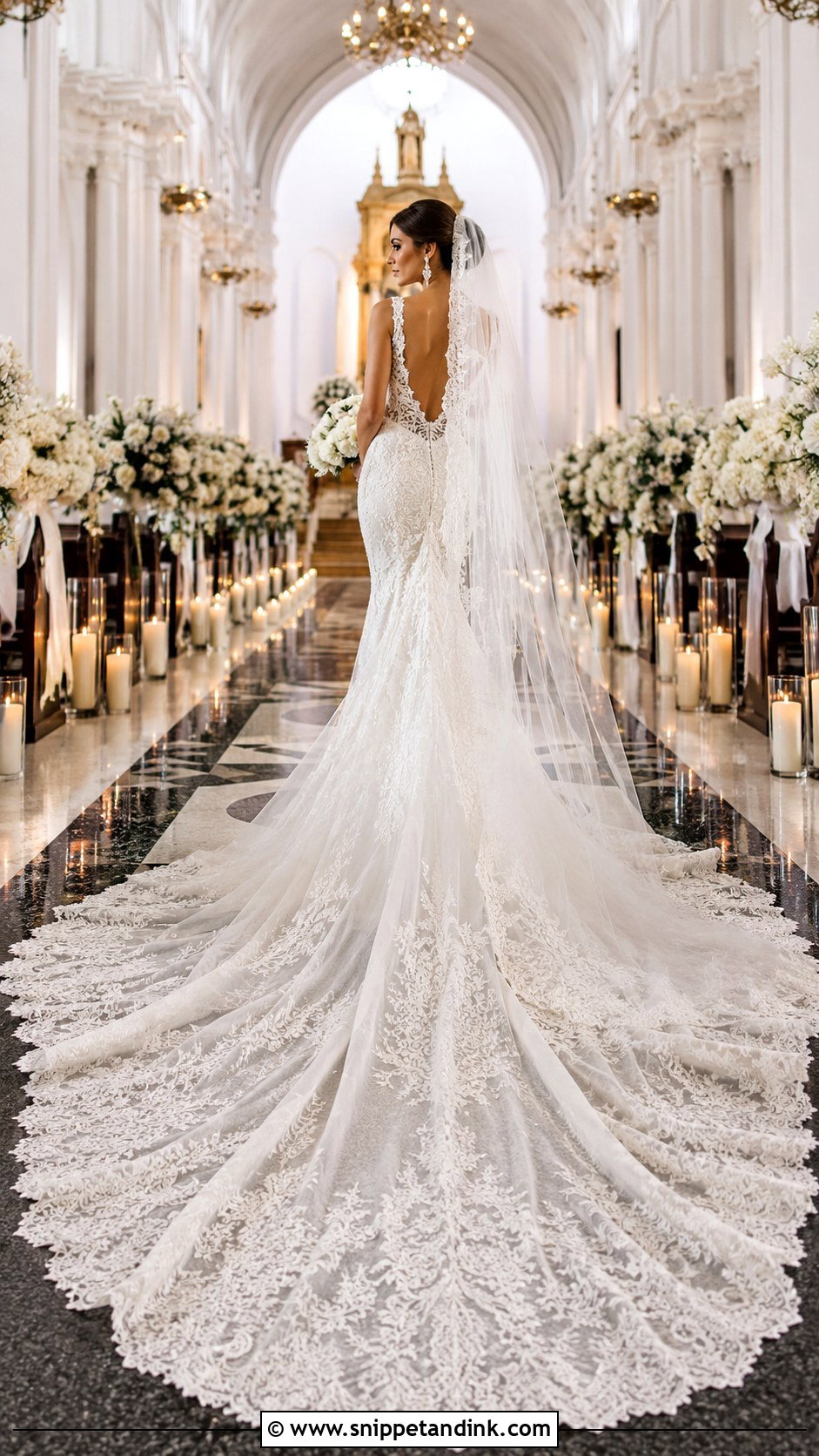
A cathedral train is about as formal as bridal gets. It needs a long, wide aisle and space to spread, and lace, satin or mikado show its length clearly. Add a cathedral veil for full drama, or a simpler one if the gown is heavily detailed. These trains are heavy, so comfortable shoes and a strong bustle matter. I always ask brides to practise the bustle with a helper before the day; a snapped loop halfway through the reception is the train problem I see most.
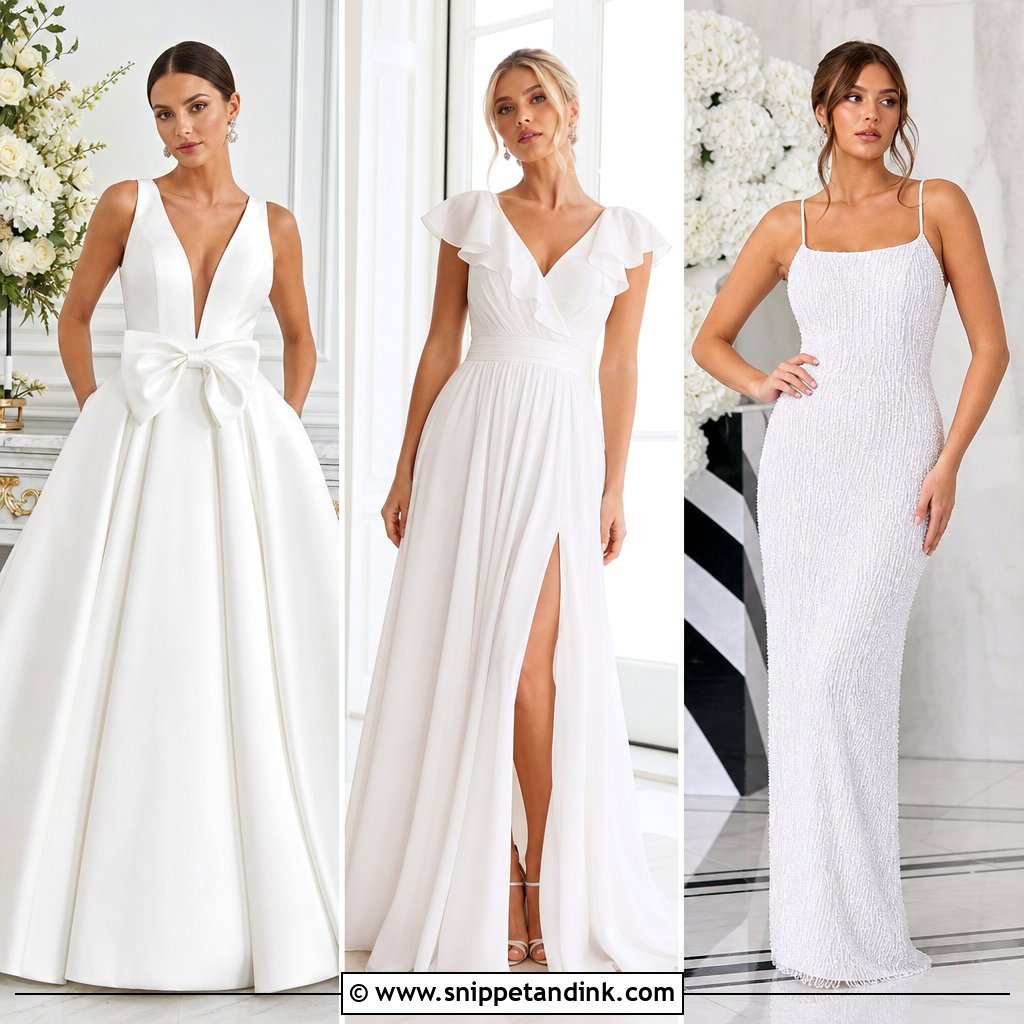

20. Embroidered Wedding Dress
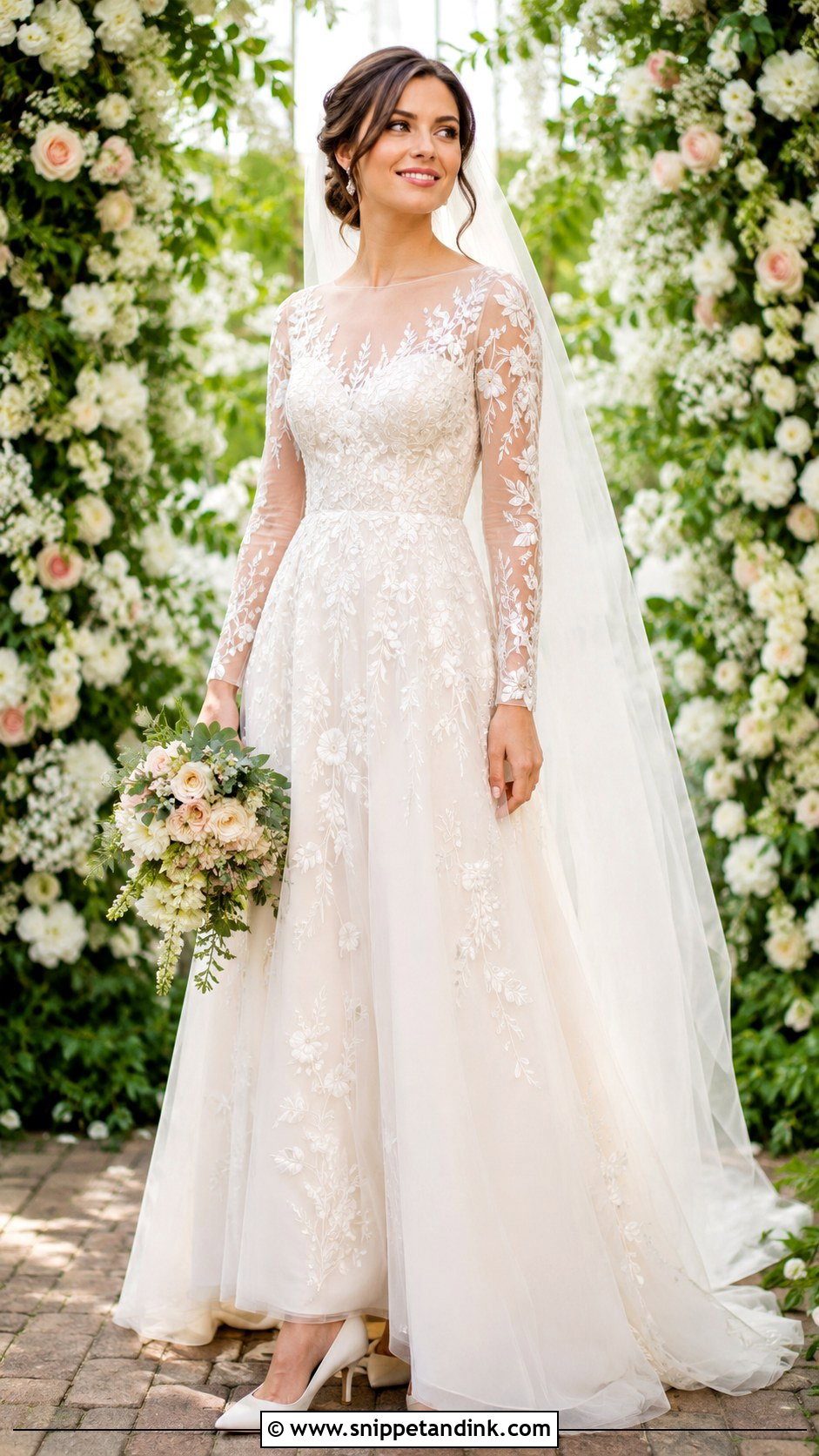
Embroidery adds texture without leaning on sparkle. It can be floral, botanical, geometric or tone-on-tone. A soft A-line, sheer sleeves or a fitted bodice all carry it well. Simple earrings, a clean veil and quiet shoes let the fabric show. If the thread has color, repeat one shade in your bouquet. Turn the bodice inside out at the shop: knots and metallic thread on the inside can rub underarms raw over a long day.
21. Sequin Wedding Dress
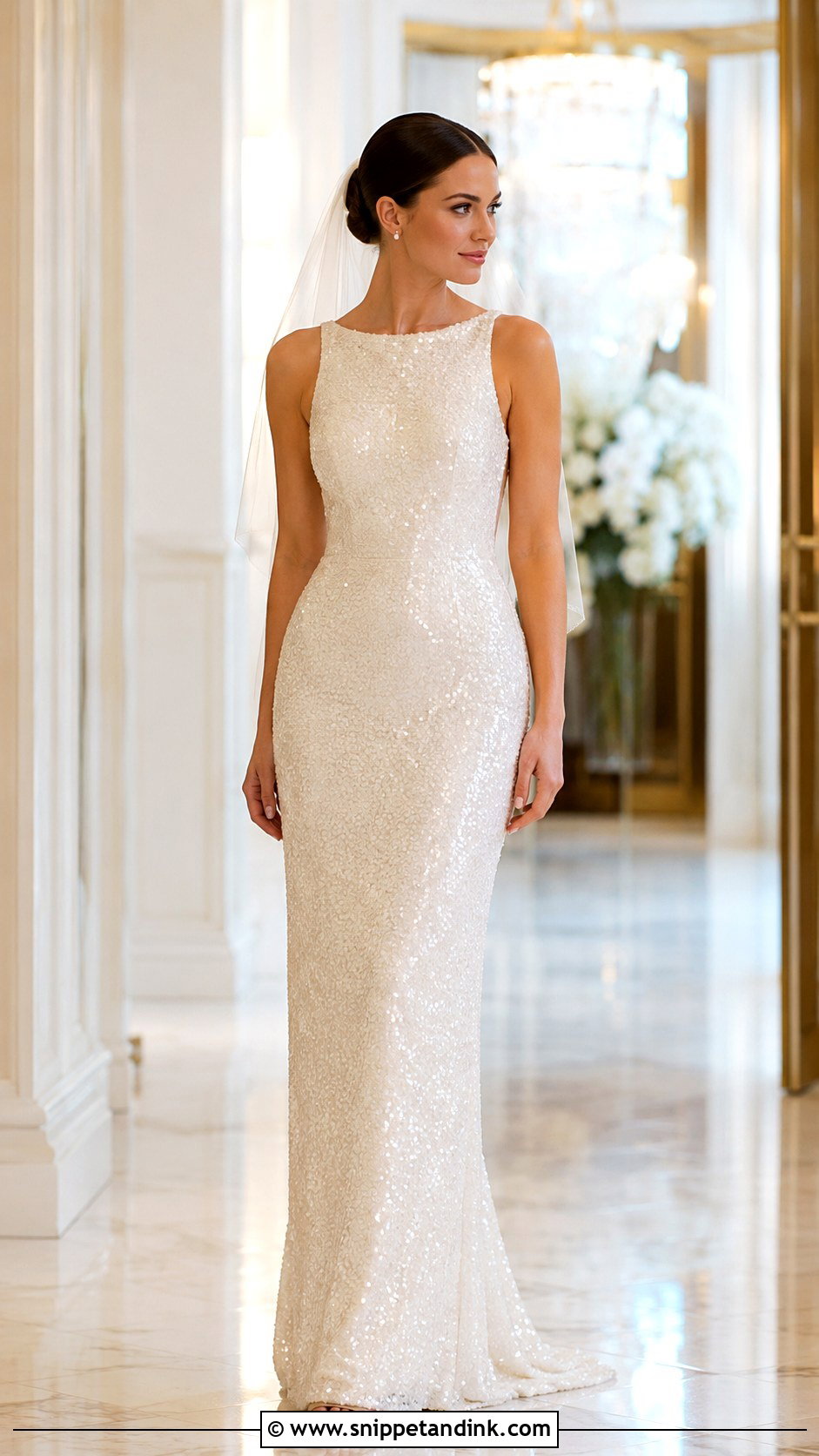
Sequins suit evening ceremonies, receptions and city weddings. Tiny clear sequins give a soft shimmer; larger ones make a fashion statement. A slim silhouette keeps the sparkle elegant, a full skirt adds drama. Simple heels and minimal jewelry are enough, with a sleek bun or soft waves. In ivory, champagne or soft white, it still reads as bridal. Sequins snag loose hair and scratch at seams, so check the inside of the arms at the fitting.
22. Vintage Inspired Wedding Dress
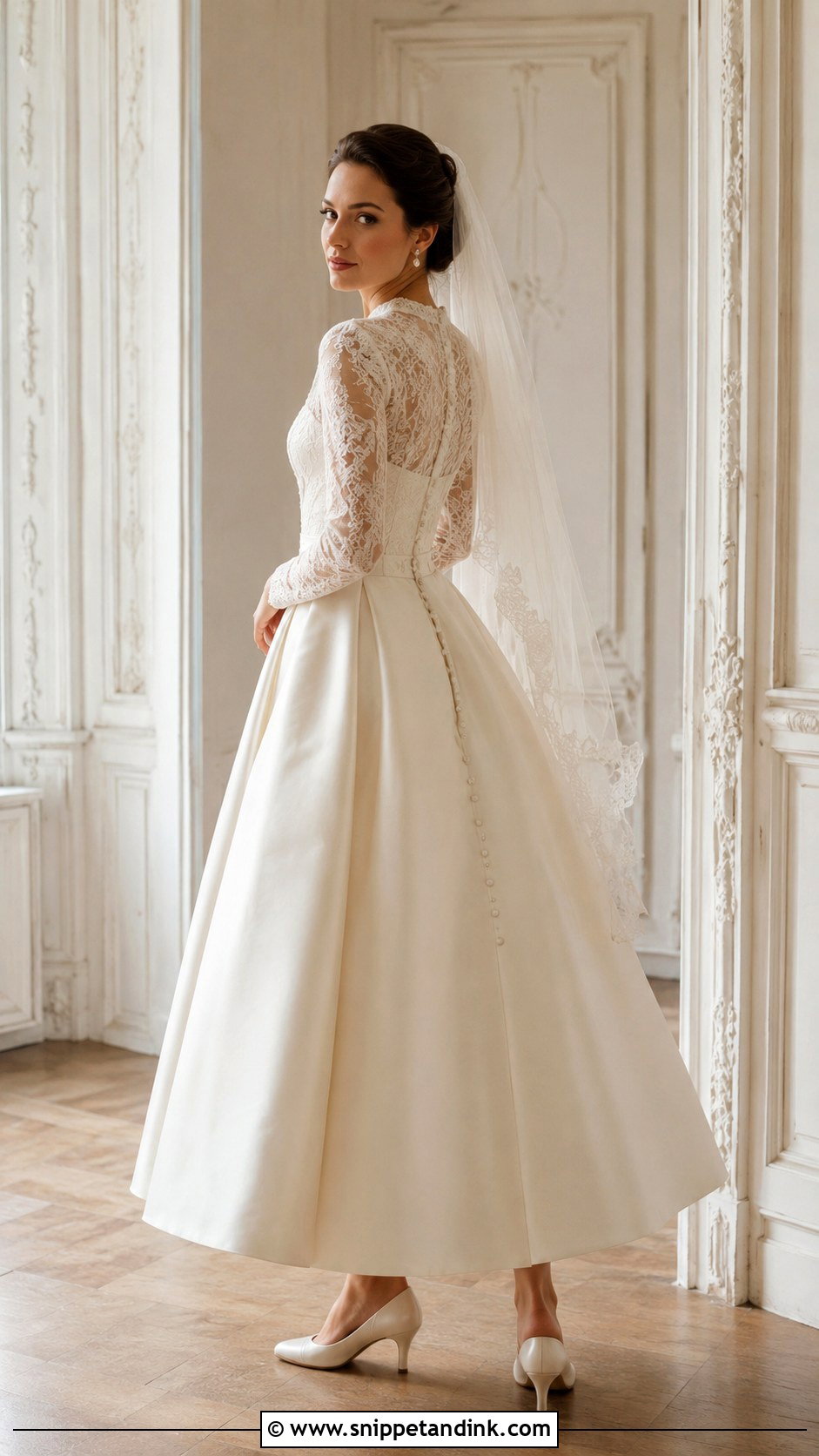
Pick one era detail and build around it: lace sleeves, covered buttons, a tea-length hem, a high neck, beading or soft satin. Combine too many and it starts to look like a costume. A vintage lace gown with simple pumps and pearl earrings is elegant; a beaded sheath with a veil is glamorous. Modern tailoring is what keeps it from looking borrowed. Historic venues and intimate ceremonies suit it best.
23. Minimalist Crepe Wedding Dress
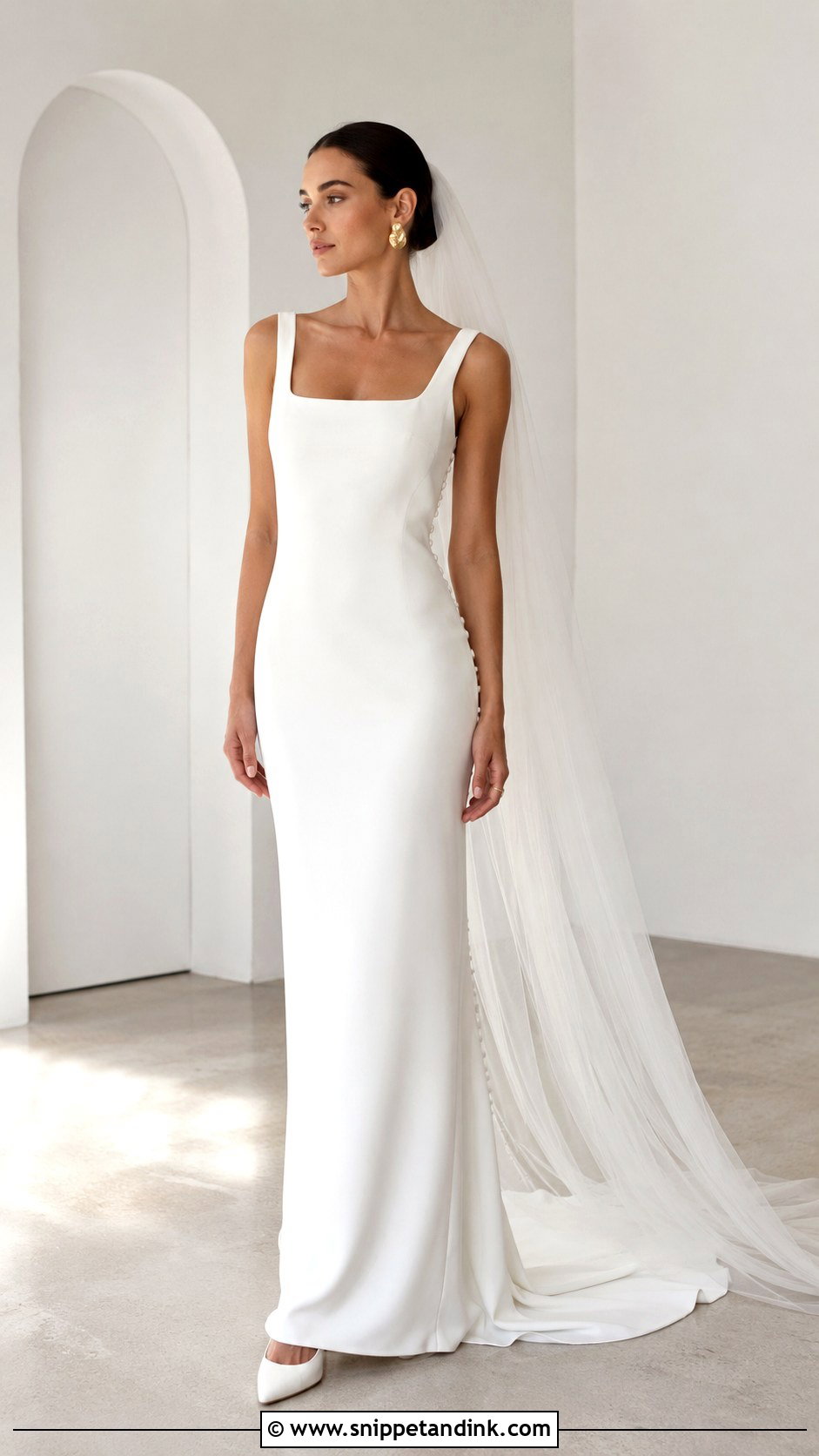
A minimalist crepe wedding dress relies on fit, fabric and line. Crepe has enough weight to skim the body, which suits sheaths, columns and fit-and-flare cuts. Look for a square neck, low back, covered buttons or a small train. Sculptural earrings, sleek heels and a smooth veil finish it. With no lace or beading to distract, every seam shows, so tailoring has to be excellent. Choose undergarments early, because crepe reveals lines that lace would hide.
24. Blush Wedding Dress
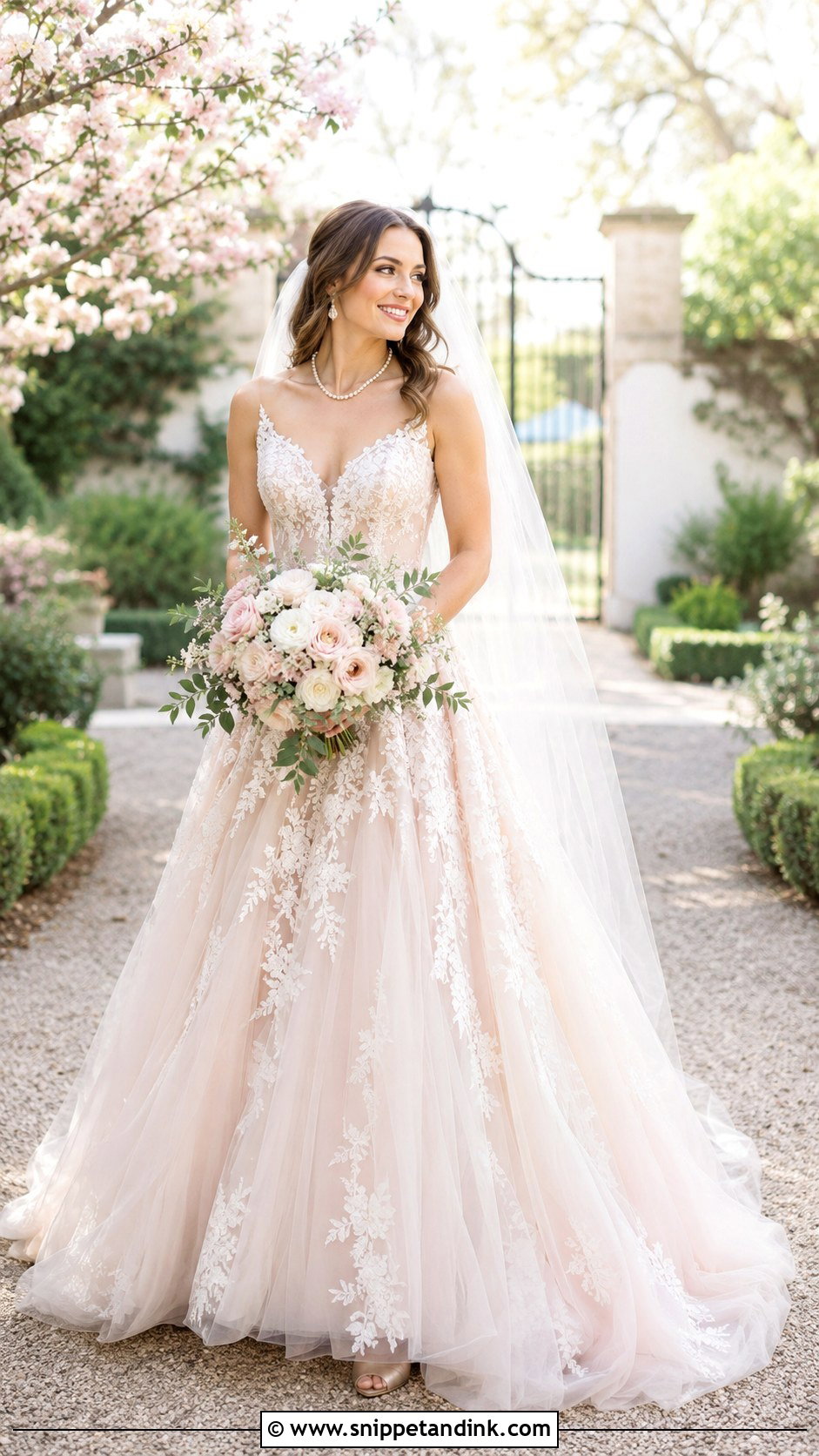
Blush steps away from white while staying bridal. It works in tulle, lace or floral appliqué, and pale blush on layered skirts gives lovely depth. Ivory veils, pearl jewelry and neutral heels suit it. For a hint of color, put blush under ivory lace; for more, choose blush fabric throughout with delicate embellishment. Garden venues and spring weddings show it best. See it in daylight against your skin, since some blush shades disappear on fair complexions.

25. Champagne Wedding Dress
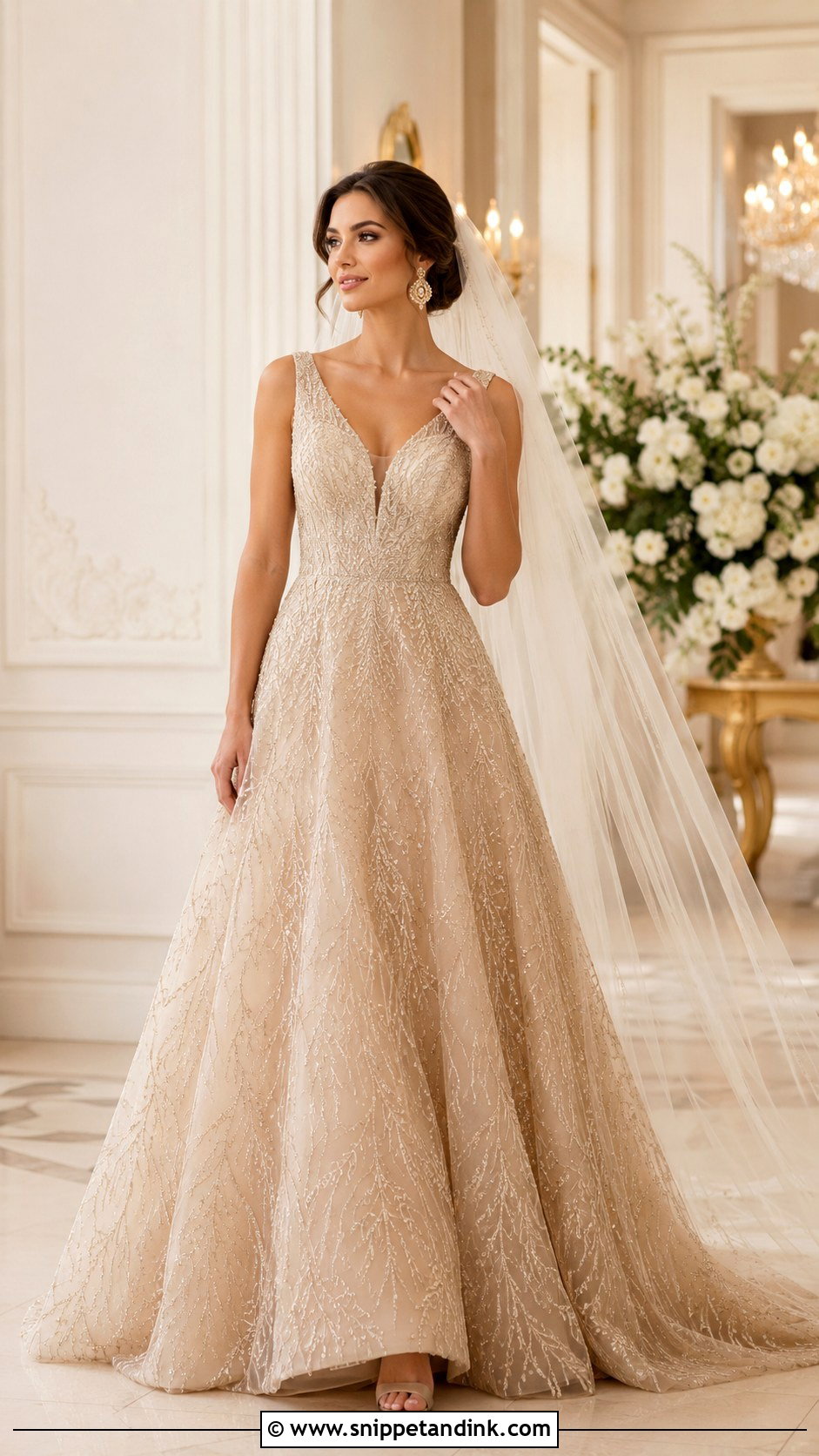
Champagne runs from pale beige to soft gold and warms most skin tones. It pairs richly with beading, satin, lace and tulle. Ivory accessories, gold-toned earrings and neutral heels keep it cohesive. The silhouette changes the mood: a beaded sheath feels evening-ready, a champagne ball gown regal. Match the veil to a warm ivory, not bright white, or it’ll make the dress look dingy beside it.
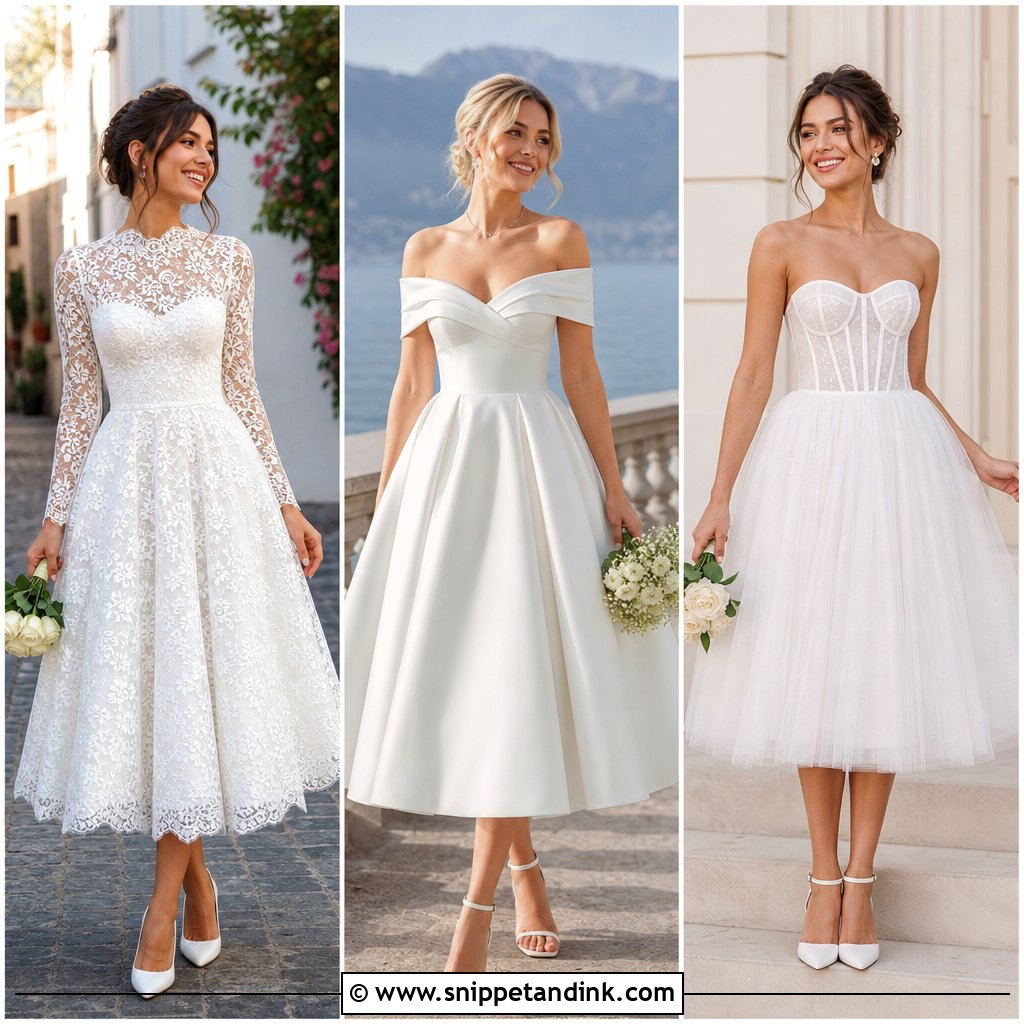
26. Tea Length Wedding Dress
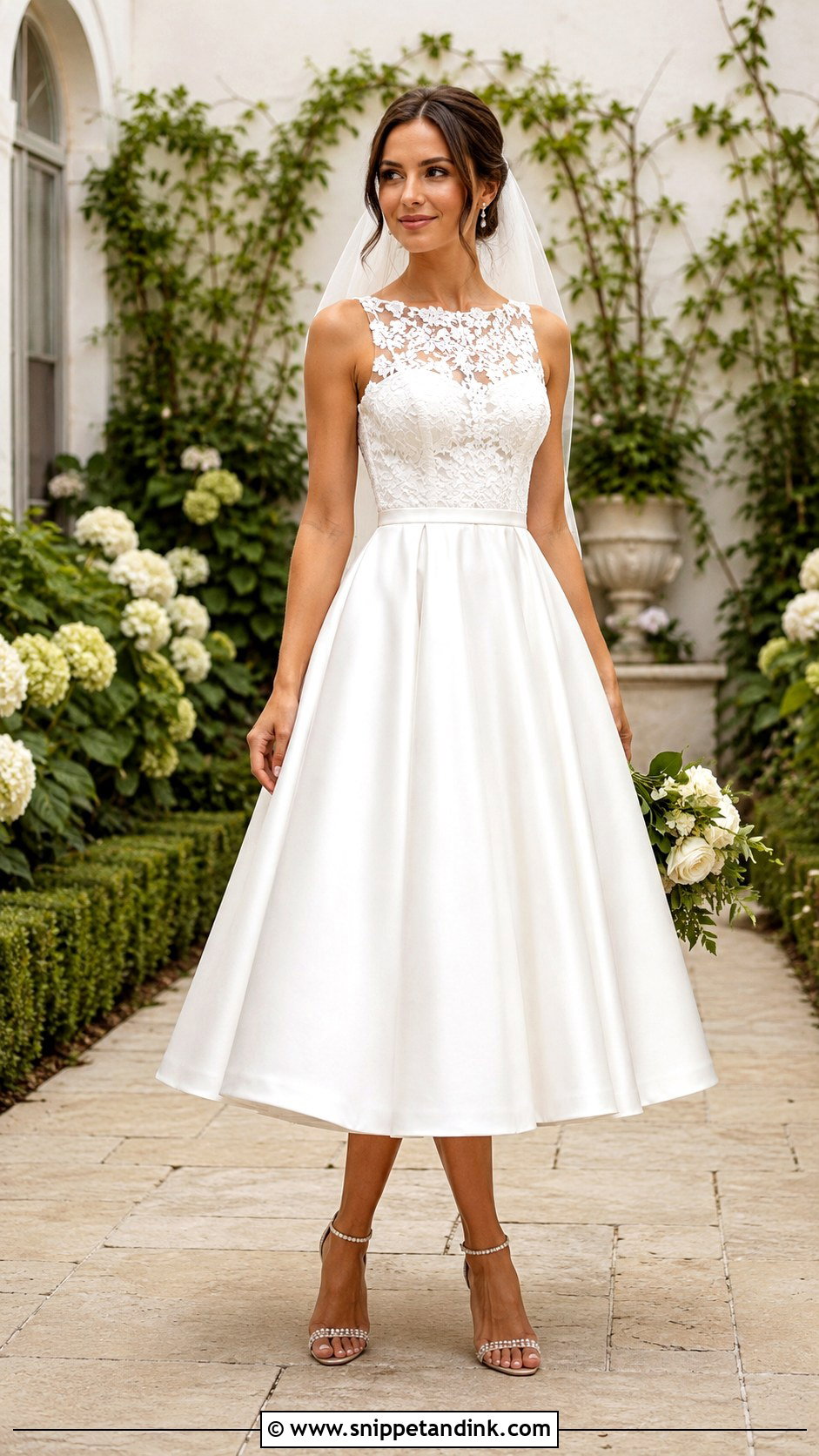
Tea length falls between knee and ankle and means everyone sees your shoes, so choose satin pumps, embellished heels or ankle-strap shoes with care. Structured bodices, lace overlays, full skirts and simple veils all suit it. Courthouse weddings, garden ceremonies and receptions are natural fits, and it adds a vintage touch. Pearl earrings and a short veil keep it classic. Get the hem done in the actual shoes; a centimetre either way changes the proportions on a shorter dress.
27. Mini Wedding Dress
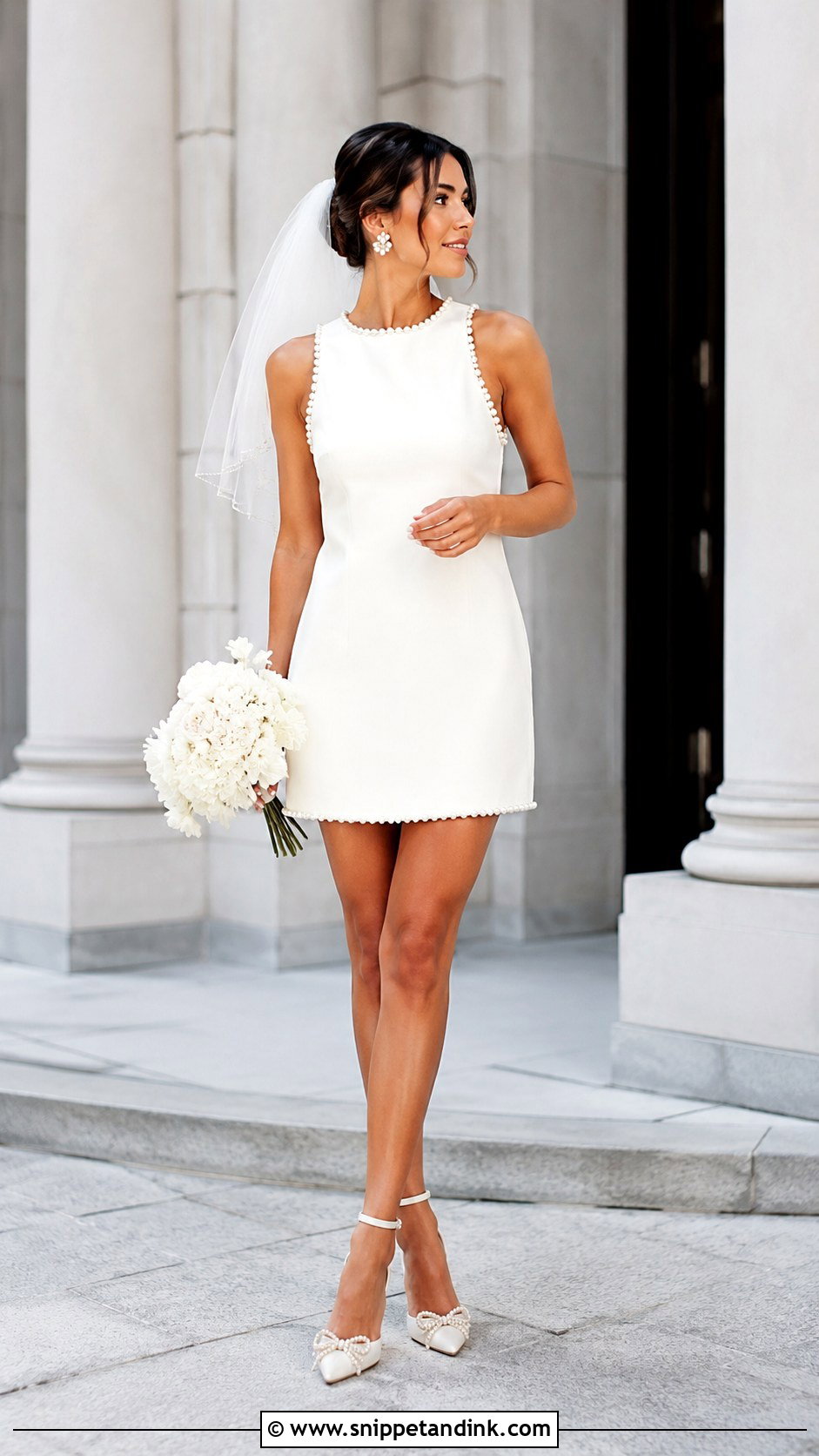
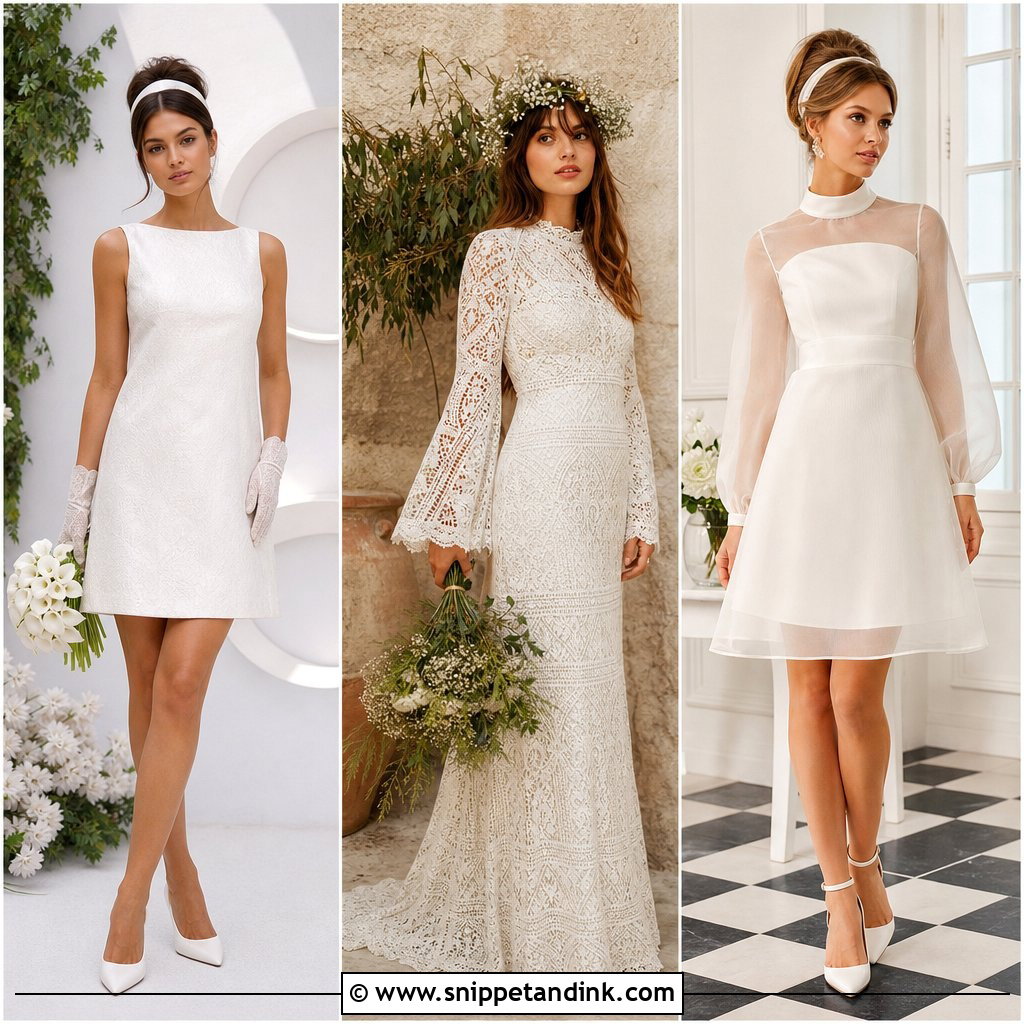
Minis work for receptions, elopements, after-parties and modern ceremonies, and the fabric and finishing are what make one feel bridal. Feathers, pearls, bows, lace, satin or sculptural sleeves all help. Statement heels, a short veil and polished jewelry keep it intentional. You’ll move freely, which is the point for dancing. A structured top or long sleeves balance the short hem. Sit down in front of a mirror at the fitting; a mini rides up more than you expect on a chair.
28. Overskirt Wedding Dress
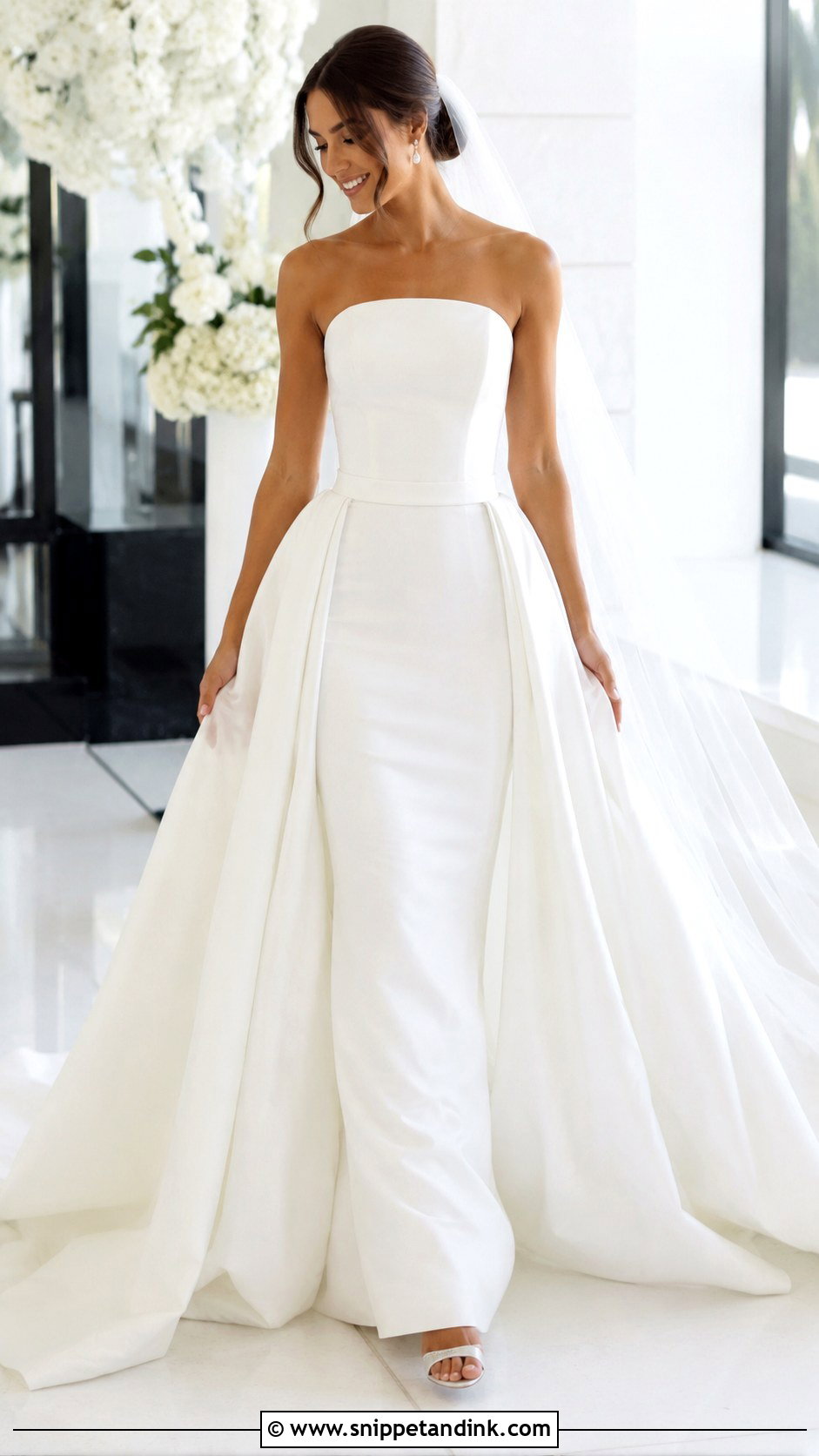
An overskirt gives ceremony volume over a slim base dress that takes over for the reception. Tulle, satin, organza and lace overskirts each change the mood, so match or complement the base. Elegant heels, delicate earrings and a veil that works with both looks suit it. You get the feel of a grand gown without wearing full volume all night. Practise the removal; most overskirts fasten with hooks or snaps at the waist that need a second pair of hands.
29. Ruffle Wedding Dress
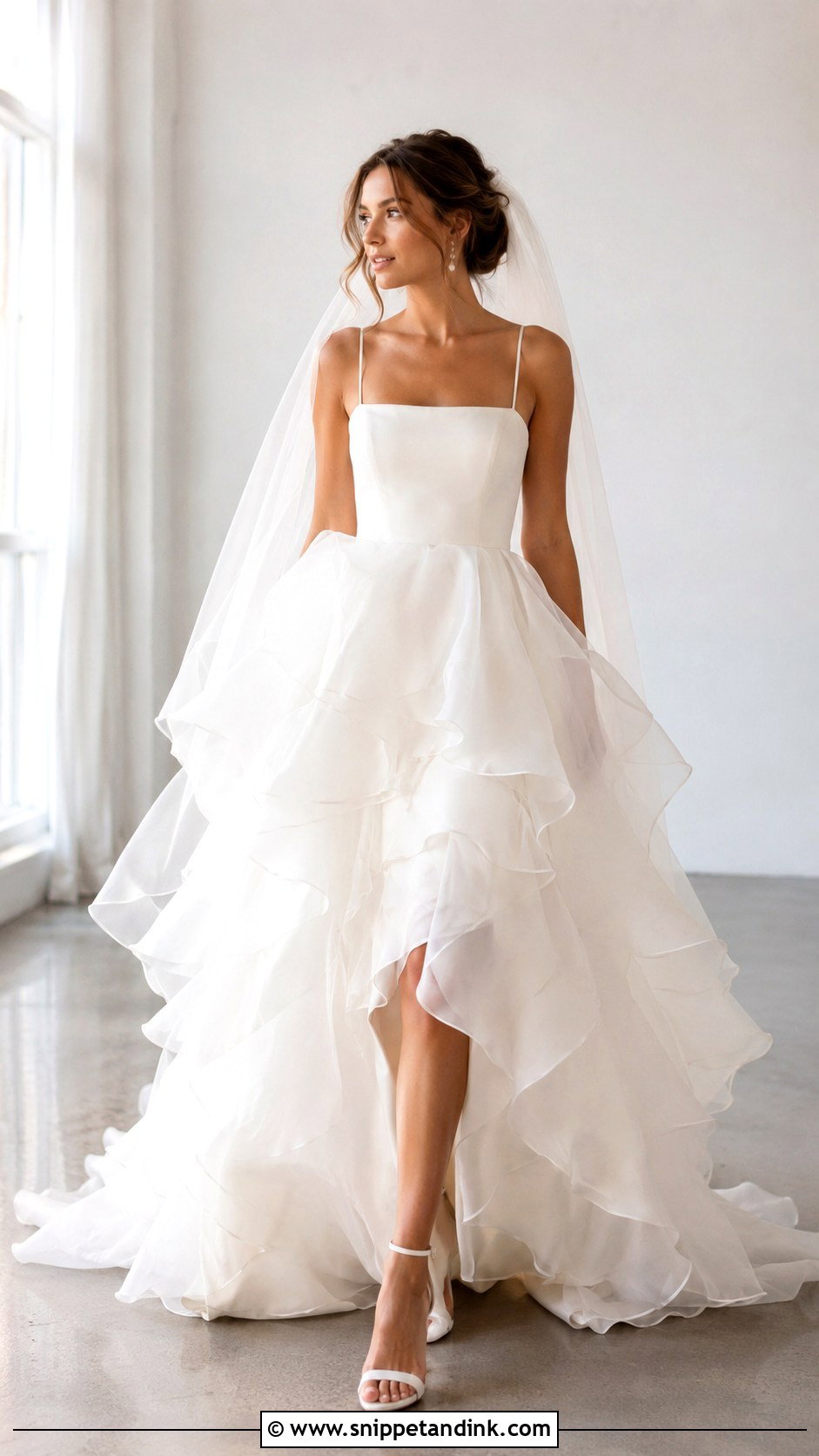
Ruffles can be soft on tulle or sculptural on organza, and they look best concentrated in one area: skirt, sleeves, neckline or train. A ruffled skirt with a clean bodice is balanced; ruffled sleeves on a slim gown look modern. Keep accessories simple. Heels help the skirt fall properly, so wear your wedding shoes at every fitting. Ruffles add width wherever they sit, which is worth remembering if you’re petite.
30. Reception Wedding Dress
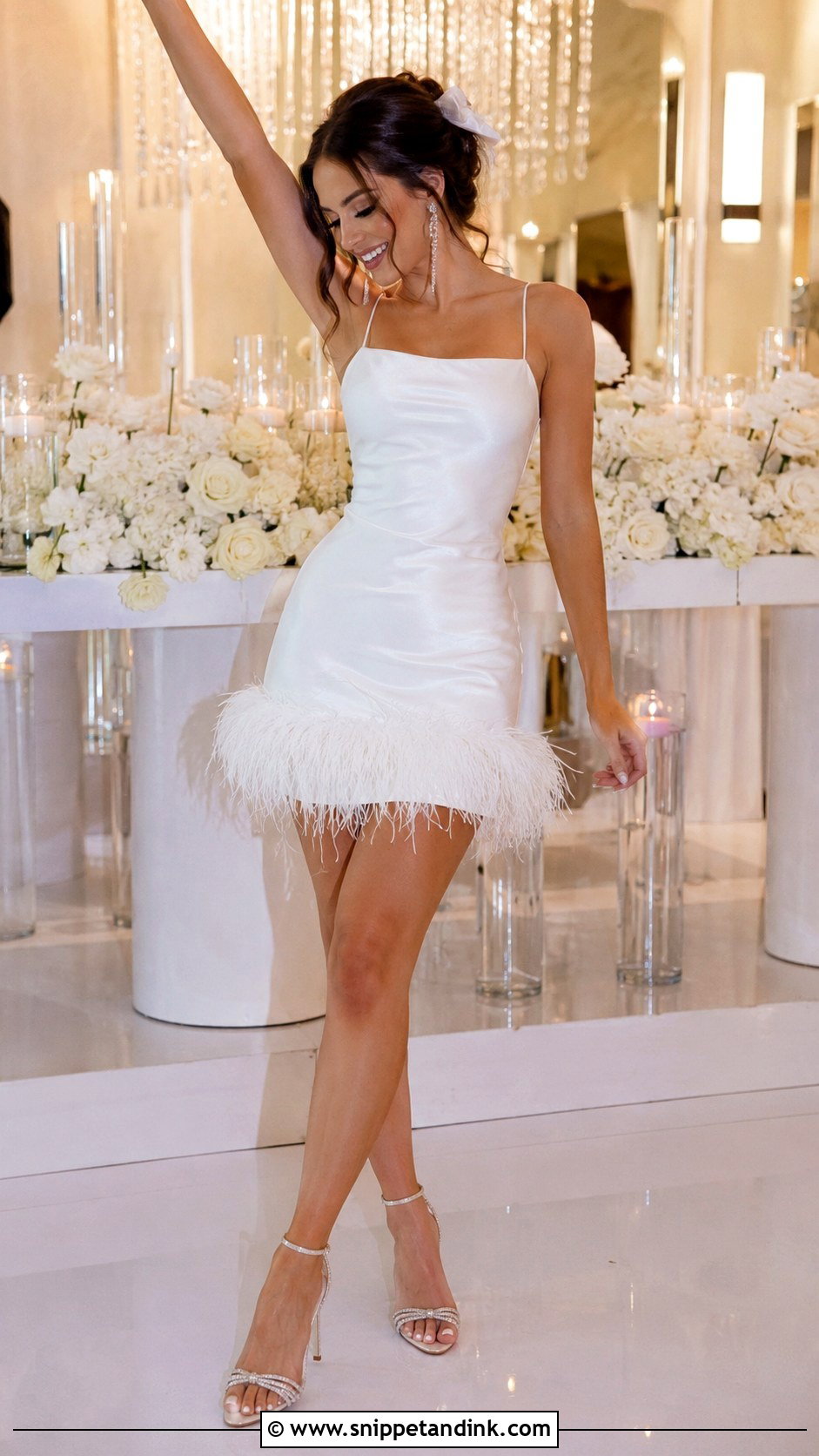
A reception dress should feel special and much easier to wear than the ceremony gown. Shorter dresses, sleek columns, feather-trim minis and satin slips are popular for the second look. Comfort, movement and a clear change of mood are the goals. Sparkly heels, statement earrings and a fun veil or hair bow suit a party finish. Tie it to the first dress through color, fabric or one accessory. If your ceremony gown is heavy, plan the change for right after dinner, when you’ll most want to sit and dance freely.
How a Showpiece Gown Feels by Hour Eight
The fanciest gowns are often the most demanding to wear. I ask every bride to imagine the whole day in hers, not just the walk down the aisle, because that’s where the real decisions are.
Weight and heat
Layered tulle, heavy beading and long satin trains add up. If you feel the gown pulling on your shoulders after twenty minutes in the shop, you’ll feel it much more by evening. For a summer wedding, lighter fabrics like chiffon or organza, or a dress with a removable layer, will keep you comfortable through the dinner and speeches.
Sitting, eating and the bathroom
Boned bodices push against your ribs when you sit, and tight mermaid skirts make chairs awkward. Have a practice meal in your fitting if the shop allows it. For the bathroom, choose your helper in advance; with a big skirt, the easiest method is often to step into it facing the wall and gather the skirt forward.
Dancing
This is where a bustle, a detachable train or a second dress pays for itself. If you plan to dance properly, a gown you can move in freely matters more than a dramatic silhouette nobody sees after nine o’clock.
Fancy Should Still Feel Like You at Midnight
Fancy isn’t only sparkle or volume. It’s a gown that suits your venue, body, comfort and taste. Lace ball gowns feel classic, crepe columns modern, blush soft and minis playful. Bows, pearls, floral appliqué, capes and detachable trains can make a gown feel custom without losing elegance. Before you decide, think about how you’ll move, sit, walk and be photographed in it. The right dress makes you feel comfortable and completely yourself, from the aisle to the last dance.
You'll Like These Ideas:







Leave a Reply