
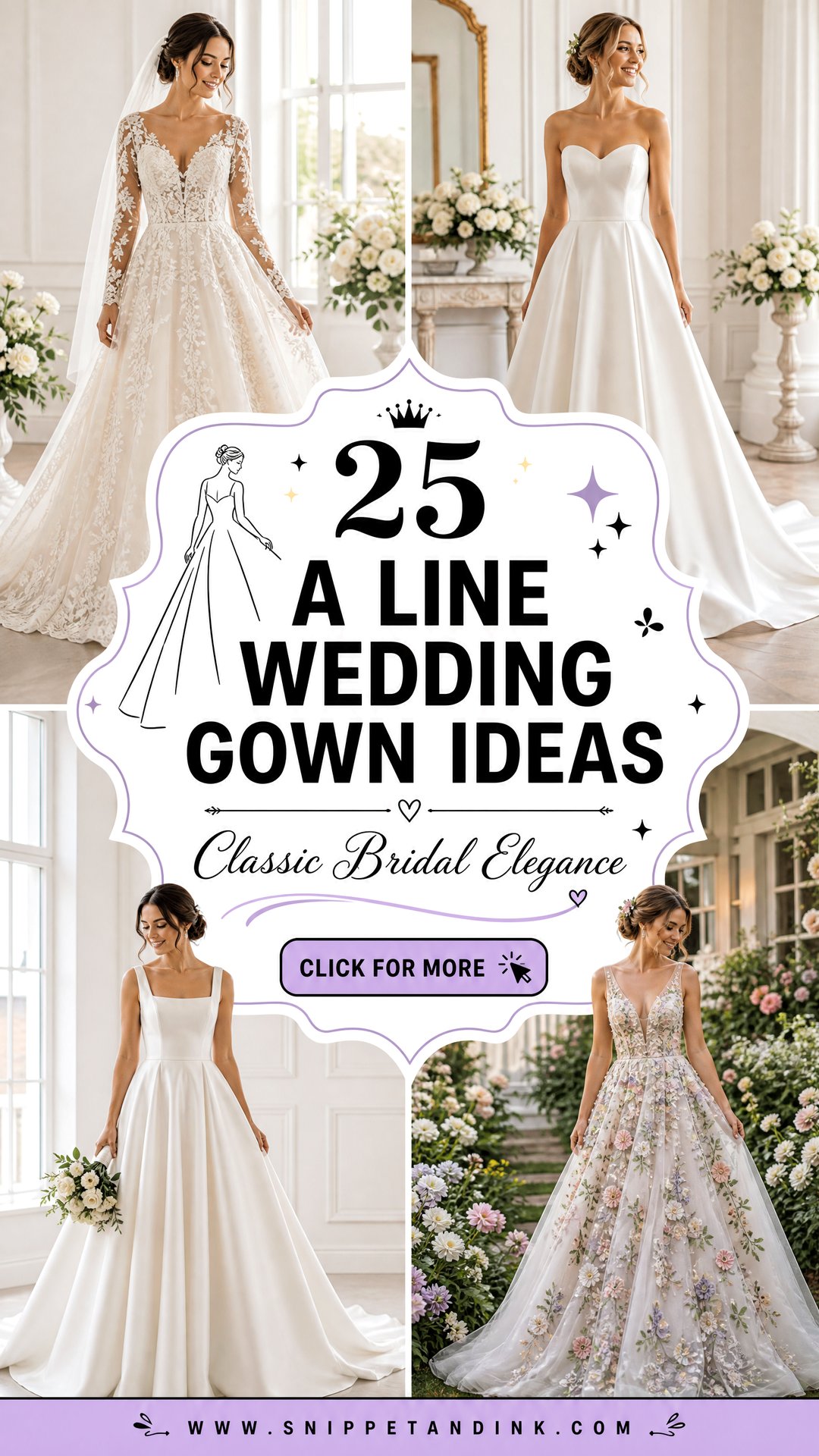
If a bride walks into a fitting room unsure of what she wants, the first gown I hand her is almost always an A-line. Fitted through the bodice, widening gradually from the waist to the hem, it flatters nearly every body and lets you walk, sit and dance without fighting the skirt. What changes the look from one A-line to the next is everything around that outline: the neckline, the fabric, the waist seam, the sleeves and the train. Right now I’m seeing clean satin, basque waists, 3D florals, pearl scatter, corset bodices, soft color and detachable layers. Here are 25 variations, each with what I’d look at when you try it on.
Where the Waist Seam Sits on Your Torso
Every A-line flares from a seam, and where that seam falls changes how the gown looks on you far more than the neckline does. When a bride tells me she doesn’t suit A-lines, it’s usually the seam placement that was wrong.
- Natural waist: the seam sits at your narrowest point. It suits most figures and is the version I try first.
- Empire: the seam sits just under the bust. It lengthens the legs and suits petite brides, but on a full bust it can look maternity.
- Basque or dropped waist: the seam dips below the natural waist. It suits a long torso and can shorten the legs on a short one.
- Princess seams: vertical seams run from bust to hem with no waist seam at all. It’s the smoothest option if you don’t want a horizontal line.
Try one of each at your first appointment, even if you think you know your answer. It takes ten minutes and narrows the field quickly.
1. Satin A Line Wedding Gown
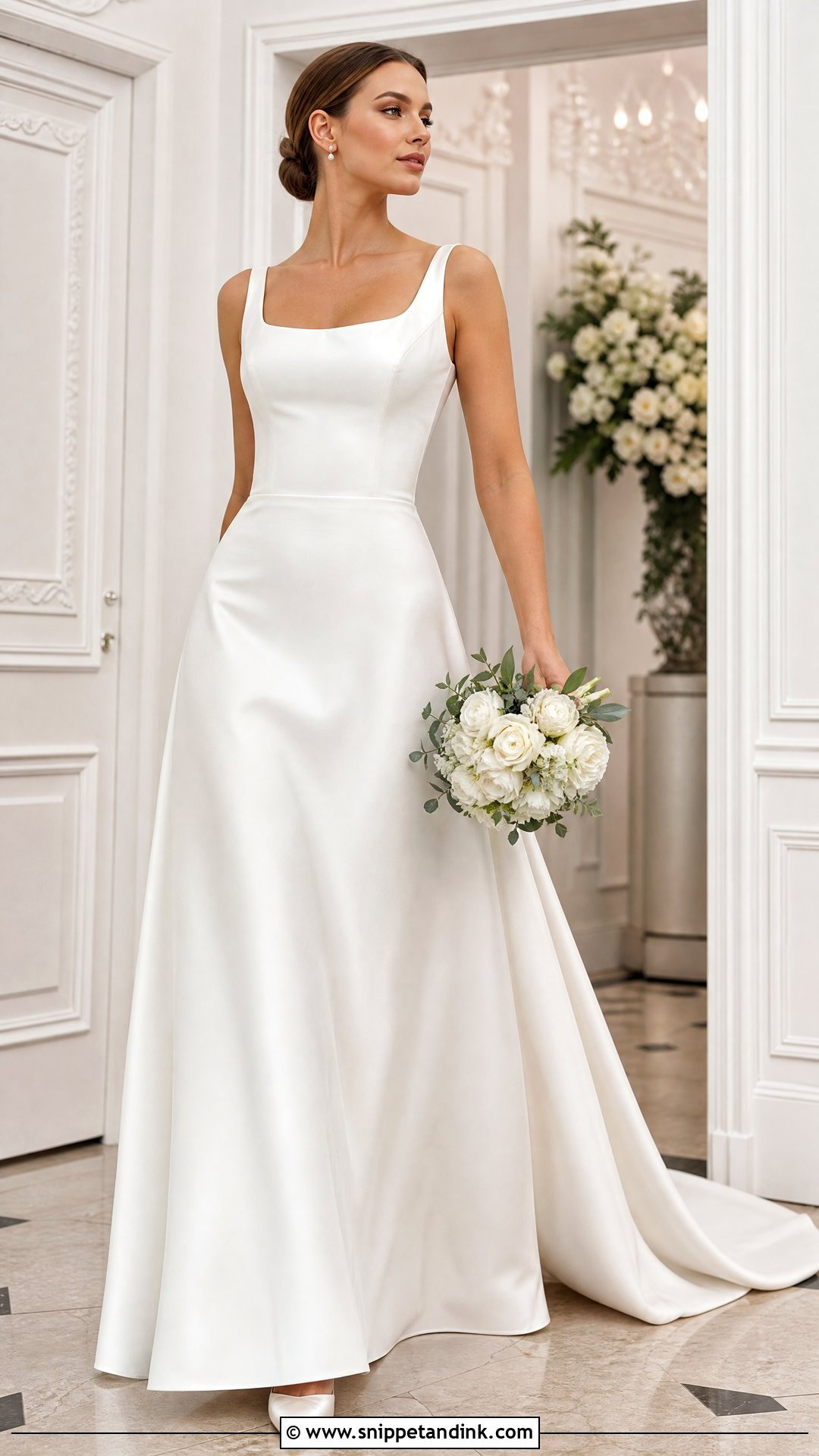
Satin is the most honest fabric for an A-line, because with no lace or beading to distract, all you see is the cut. That’s also the risk: satin shows a puckered seam or a strained zip immediately, so a good fit matters more here than anywhere else. A scoop, square or strapless bodice all suit it. Pointed satin heels, pearl studs and a low structured bun keep it classic. A cathedral veil formalises it for a ballroom; a fingertip veil keeps it lighter for a garden or city wedding.
2. Lace A Line Wedding Gown
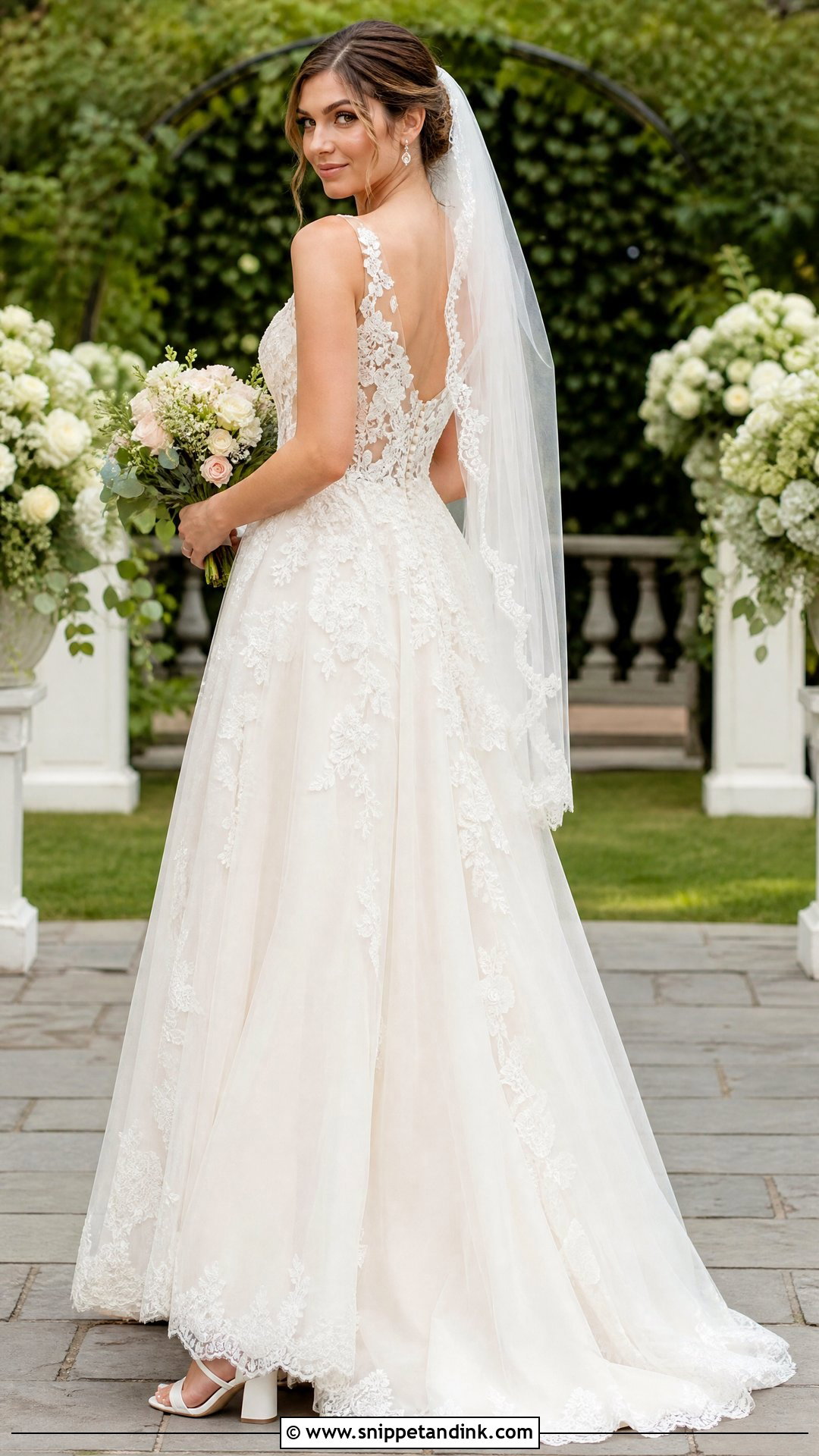
Lace over an A-line gives you pattern on the bodice and lets the skirt fall soft. Floral lace over ivory lining with a V or illusion neckline is the classic version. Look at how the lace edges are finished; scalloped edges hand-cut around the motifs sit far better at the neckline and hem than a straight-cut edge. Drop earrings and a lace-trimmed veil suit it. For grass or gravel, swap stilettos for block heels. Keep the bouquet soft in white, cream and pale blush.
3. Off Shoulder A Line Wedding Gown
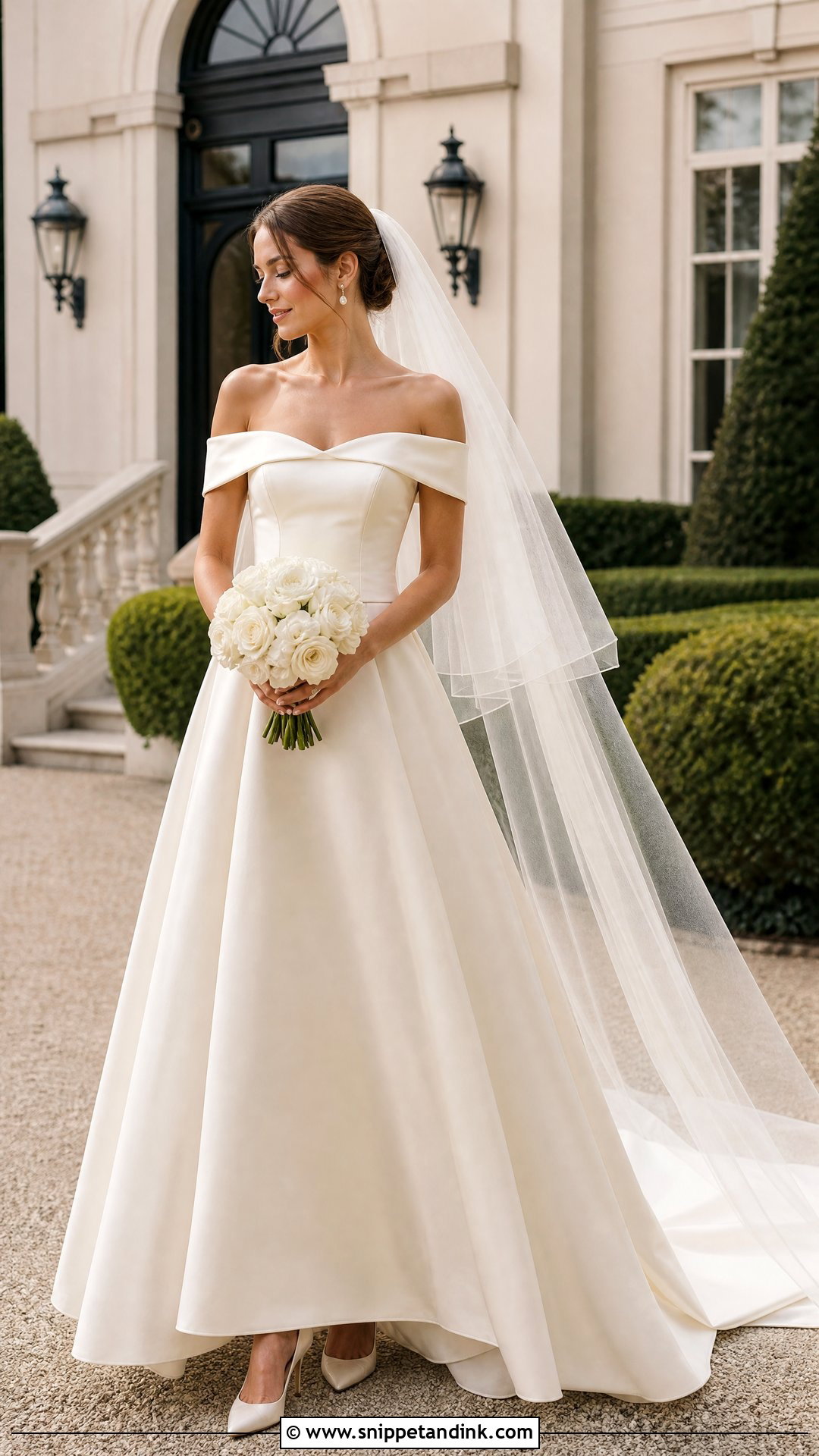
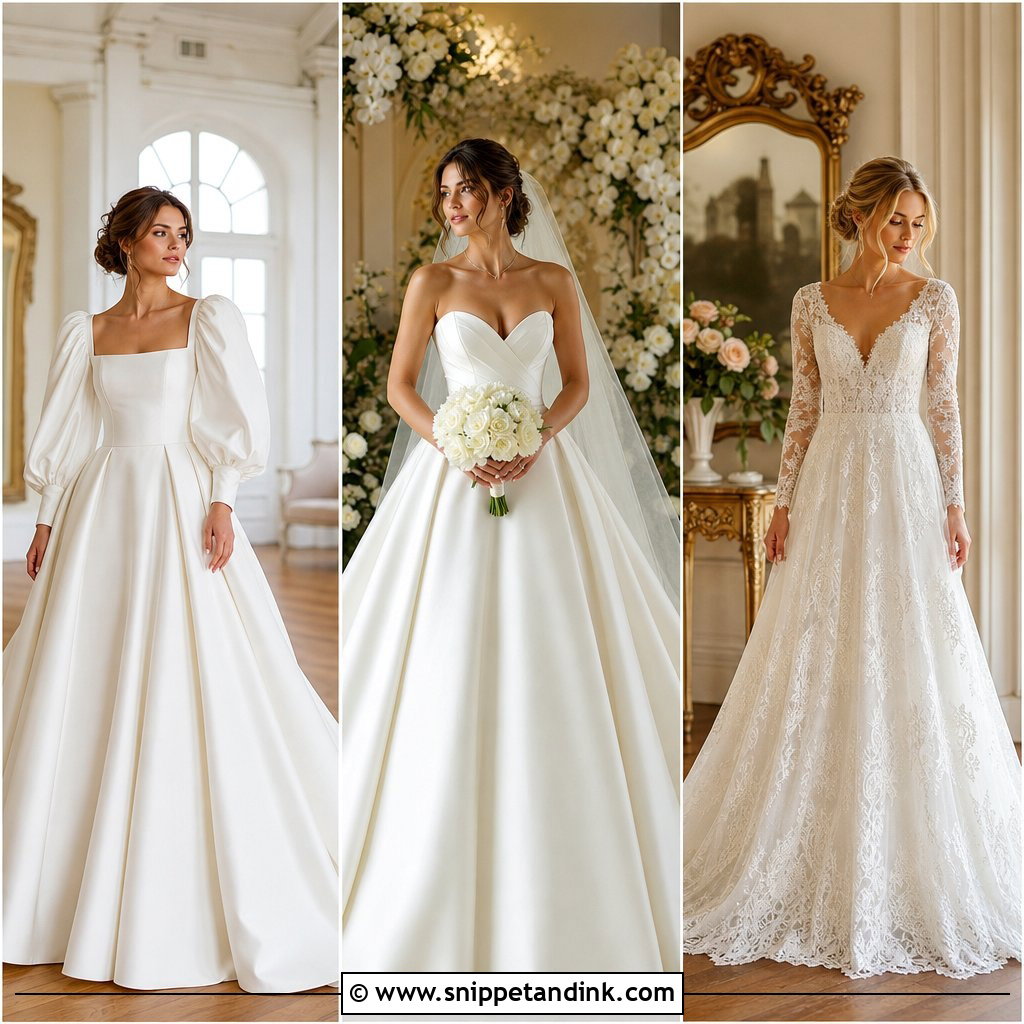
Off-shoulder necklines show the collarbone and shoulders, which makes them one of the most flattering frames for the face. The construction matters more than the fabric. Without straps doing any work, the bodice has to grip at the ribs, so look for inner boning and sleeves anchored to the bodice with elastic or a stay. Raise your arms at the fitting; if the sleeves ride up past your shoulders, they need adjusting. Lace, satin, mikado and tulle all work. Pearl earrings and a soft updo leave the neckline clear.
4. Long Sleeve A Line Wedding Gown
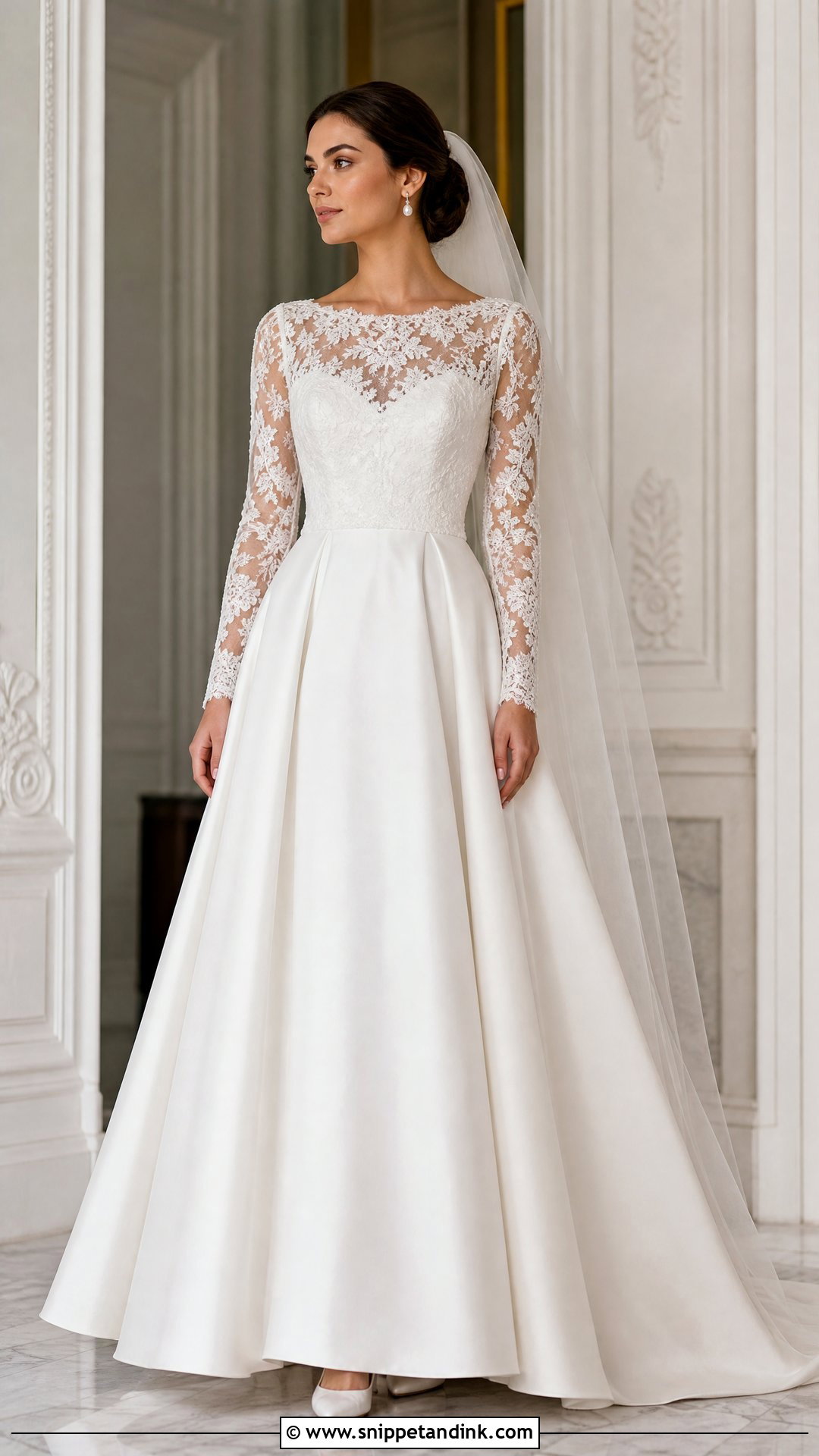
Long sleeves suit cooler months and formal or historic venues. Sheer lace sleeves keep it light; satin or crepe sleeves give a sleeker, more modest line. With the extra coverage on top, the gently flared A-line skirt keeps the outline balanced. The fit check is the elbow: bend your arm and hold a bouquet at waist height. If the sleeve pulls tight across the back of the arm, it needs more ease. Closed-toe heels and small pearls are plenty when the sleeves carry lace or beading.
5. Strapless A Line Wedding Gown
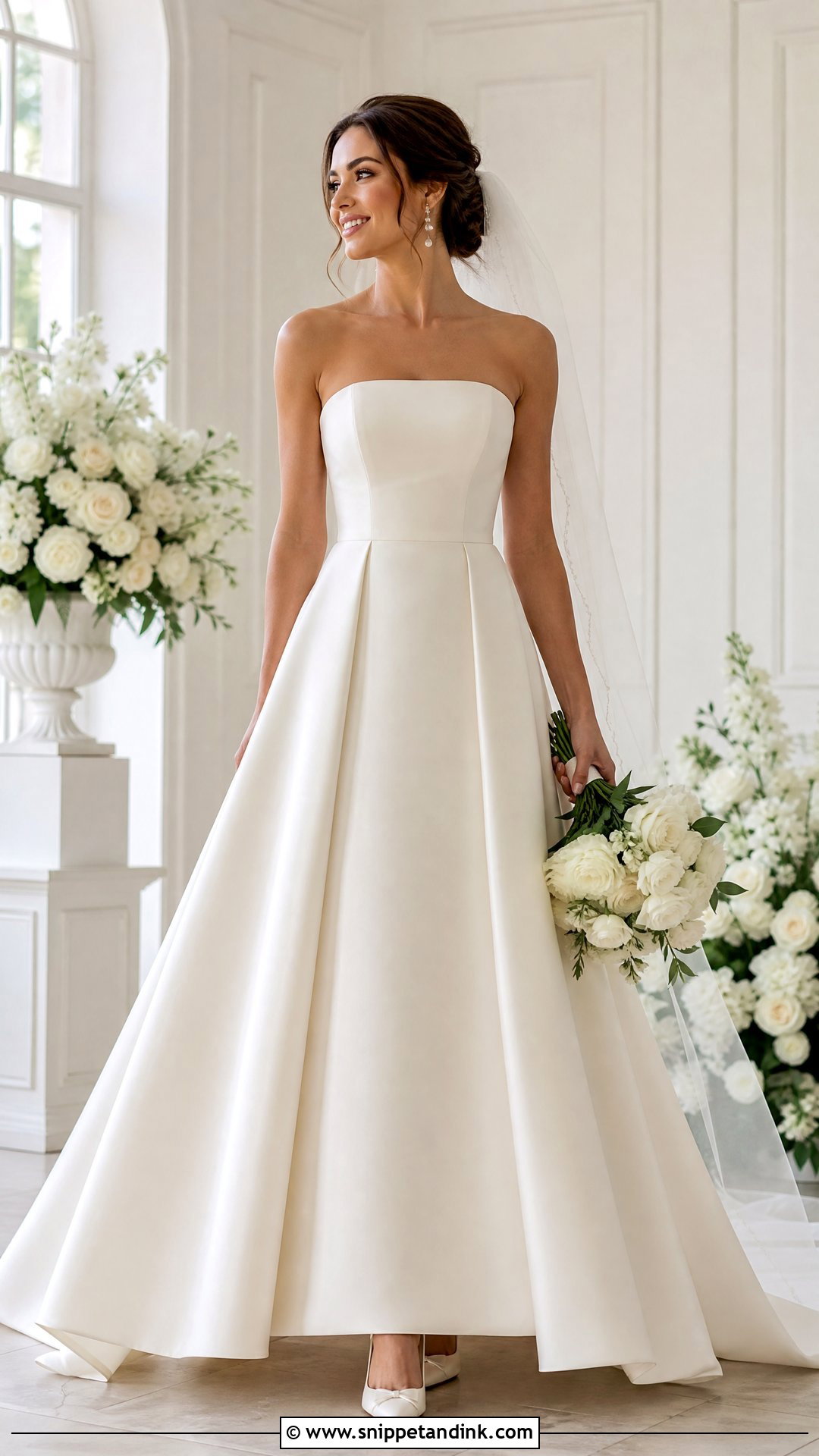
Everything about a strapless A-line depends on the bodice staying up without you hitching it. I test this by having a bride sit, lean forward as if signing a register, then lift her arms to hug. If the top edge gapes or slides, it needs taking in at the side seams or a waist stay. Satin gives a clean modern line; lace or tulle softens it. A statement necklace only works with a very plain bodice; otherwise choose drop earrings. A waist-length veil is easy, a long one gives ceremony drama.
6. Square Neck A Line Wedding Gown
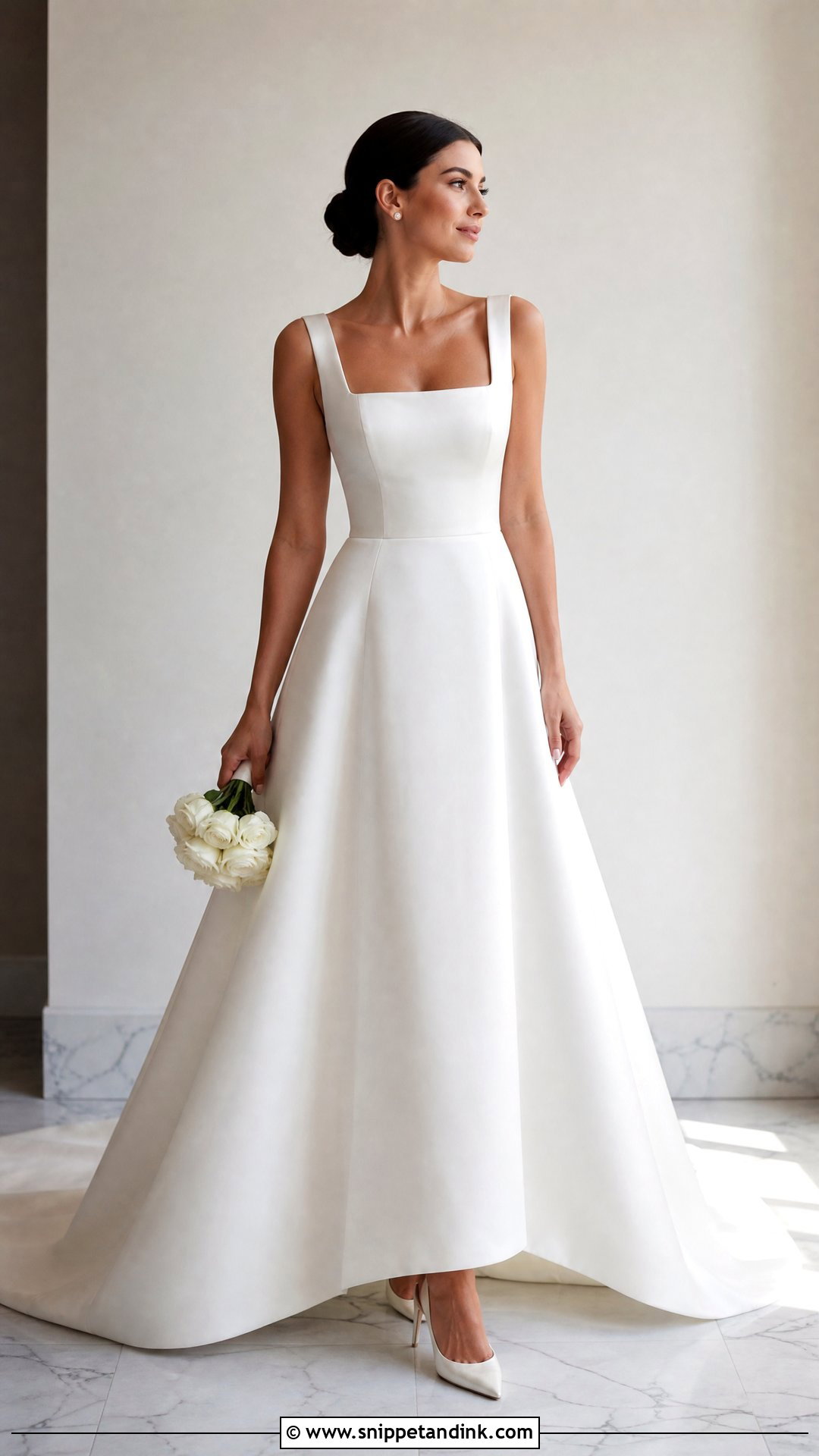
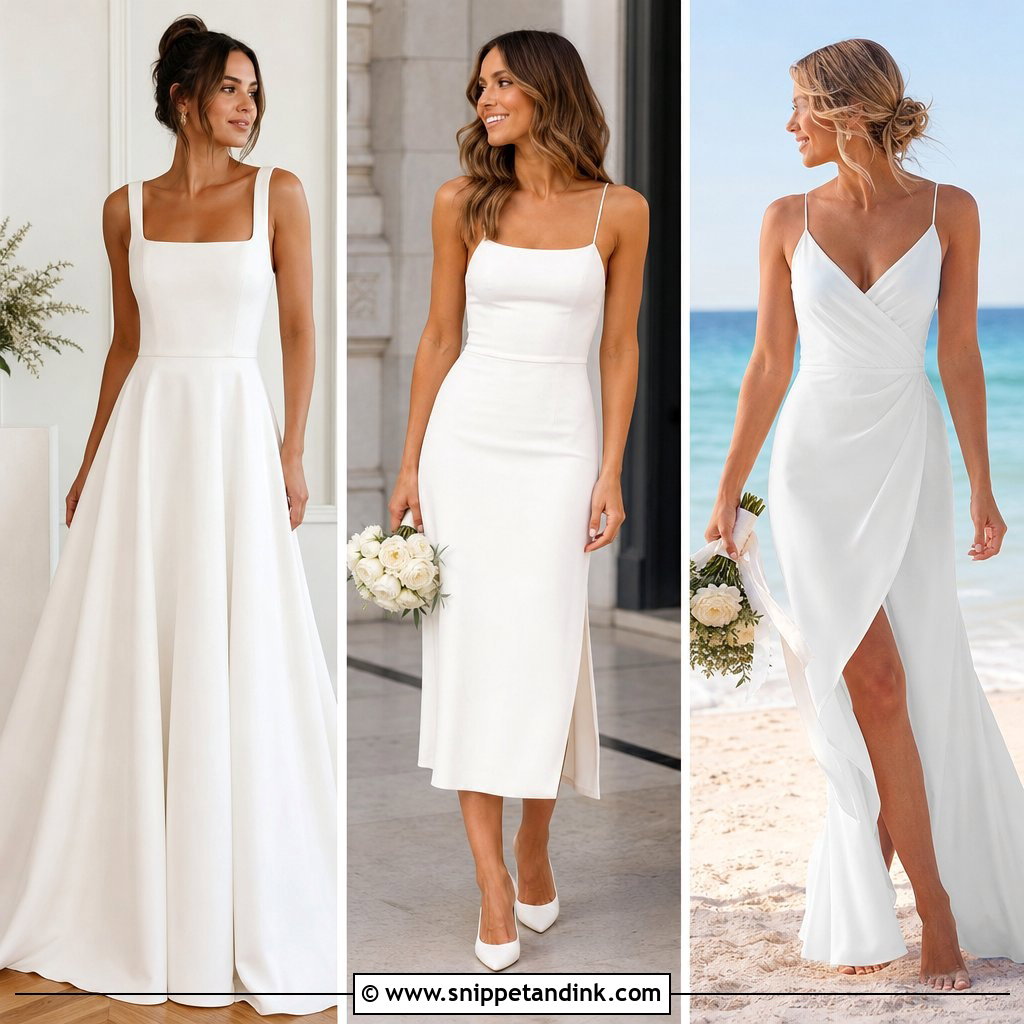
Square necklines frame the face with straight lines, and they’re often cut with wider straps, which gives more support than a strapless bodice. The corners need to sit flat; if the neckline is too wide for your shoulders the corners bow outward. Smooth satin or crepe keeps it minimal; lace appliqué adds texture. Sleek pumps, pearl studs, a low chignon and a sheer veil that doesn’t cover the neckline finish it.
7. V Neck A Line Wedding Gown
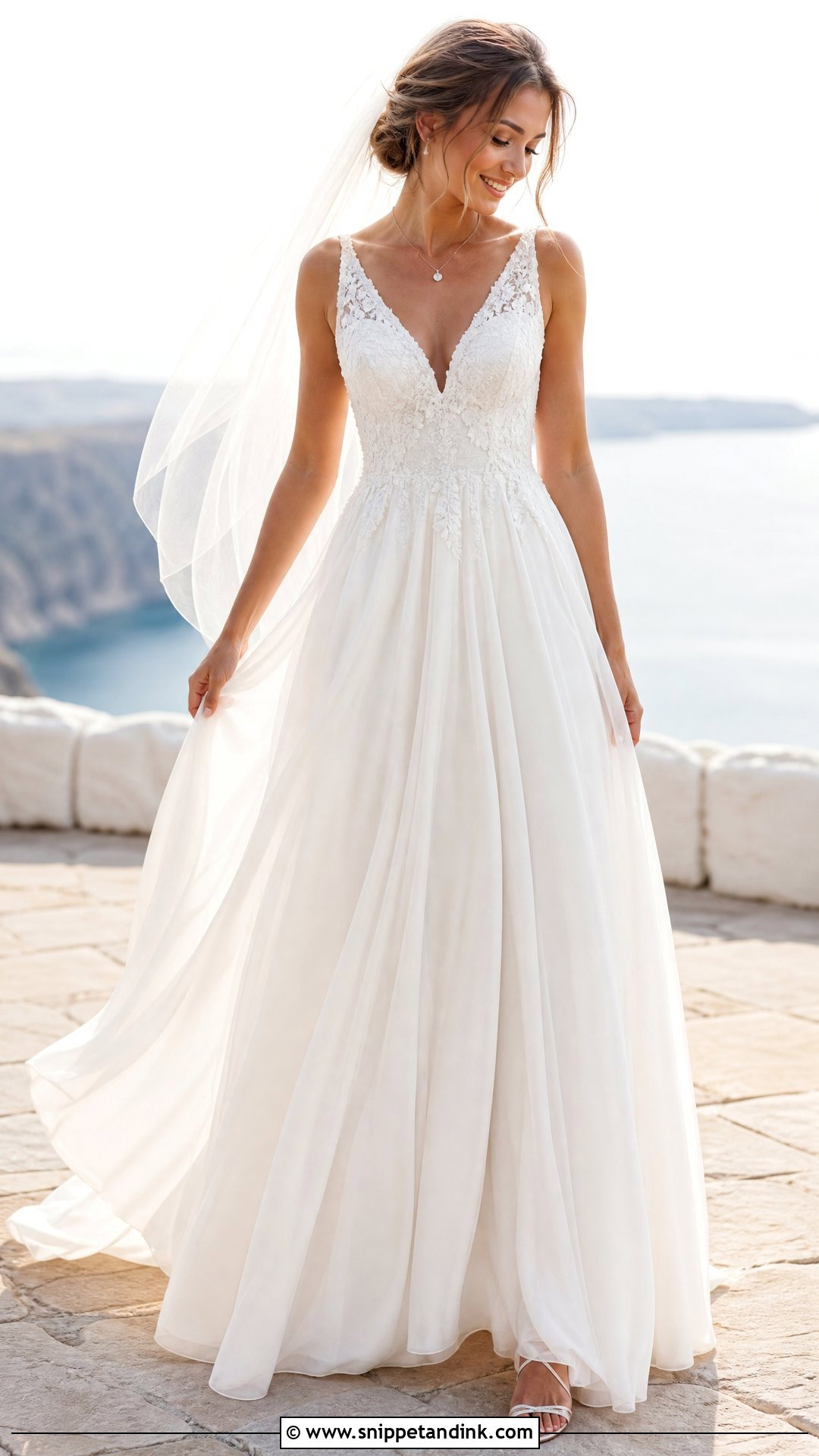
A V-neck draws the eye down and lengthens the upper body, and the depth can range from subtle to bold. A deep V needs either supportive mesh or sturdy straps, plus fashion tape you’ve tested beforehand. Lace, chiffon and tulle keep it airy. A pendant suits a plain neckline; with a detailed bodice, skip the necklace and choose earrings. Strappy heels and a soft veil suit beaches, gardens and resorts.
8. High Neck A Line Wedding Gown
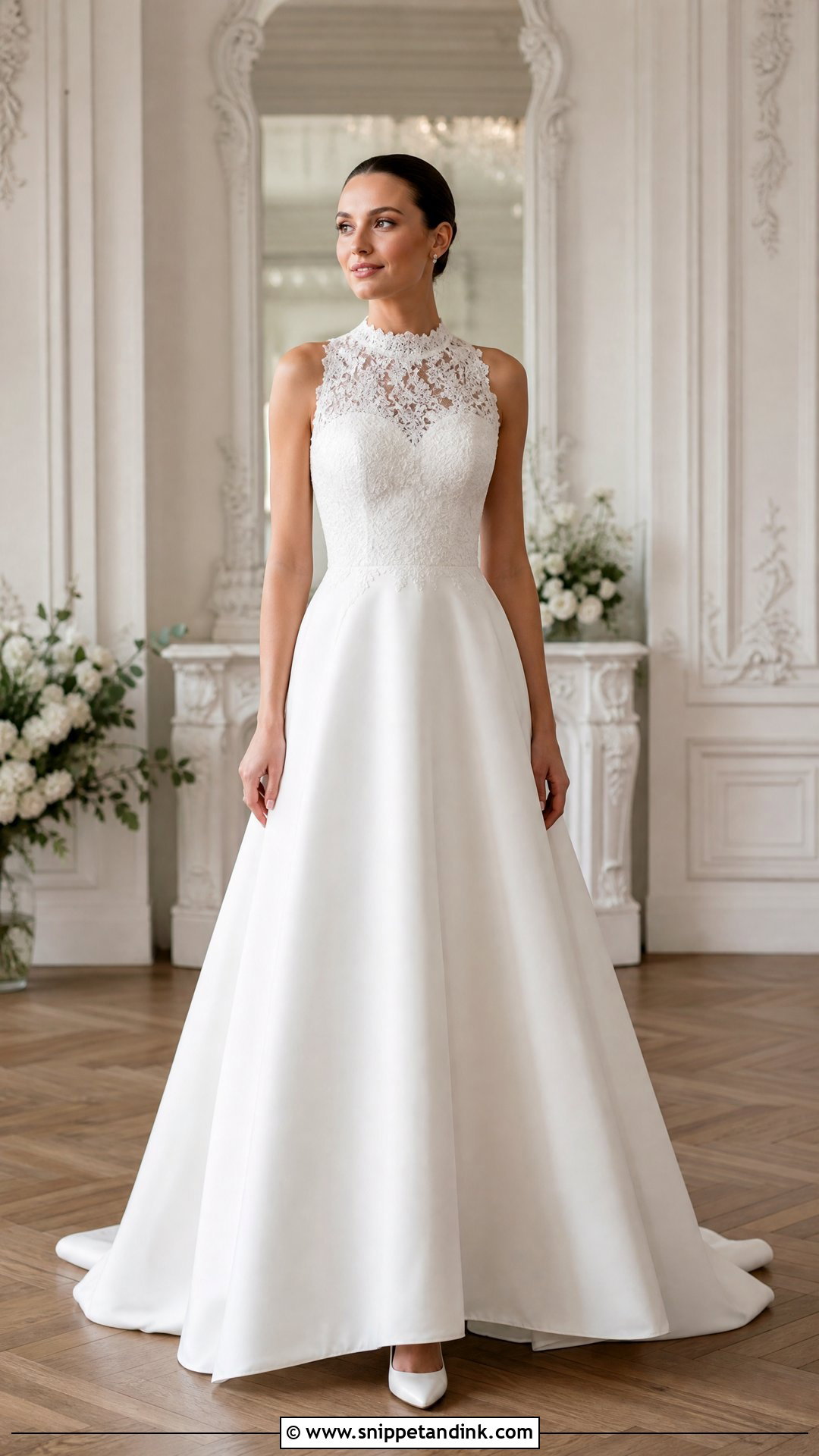
A high neck puts detail close to the face, which is why lace, crepe and sheer illusion fabric work well here. Balance it with a clean skirt, an open back or a delicate waist seam, otherwise the gown looks top-heavy. Pull hair back so the neckline is visible and place the veil low at the crown. The neckline gives modest coverage without any extra layer, and close-up portraits show off its detail. Check the collar at the fitting: you should be able to turn your head and swallow comfortably.
9. Corset A Line Wedding Gown
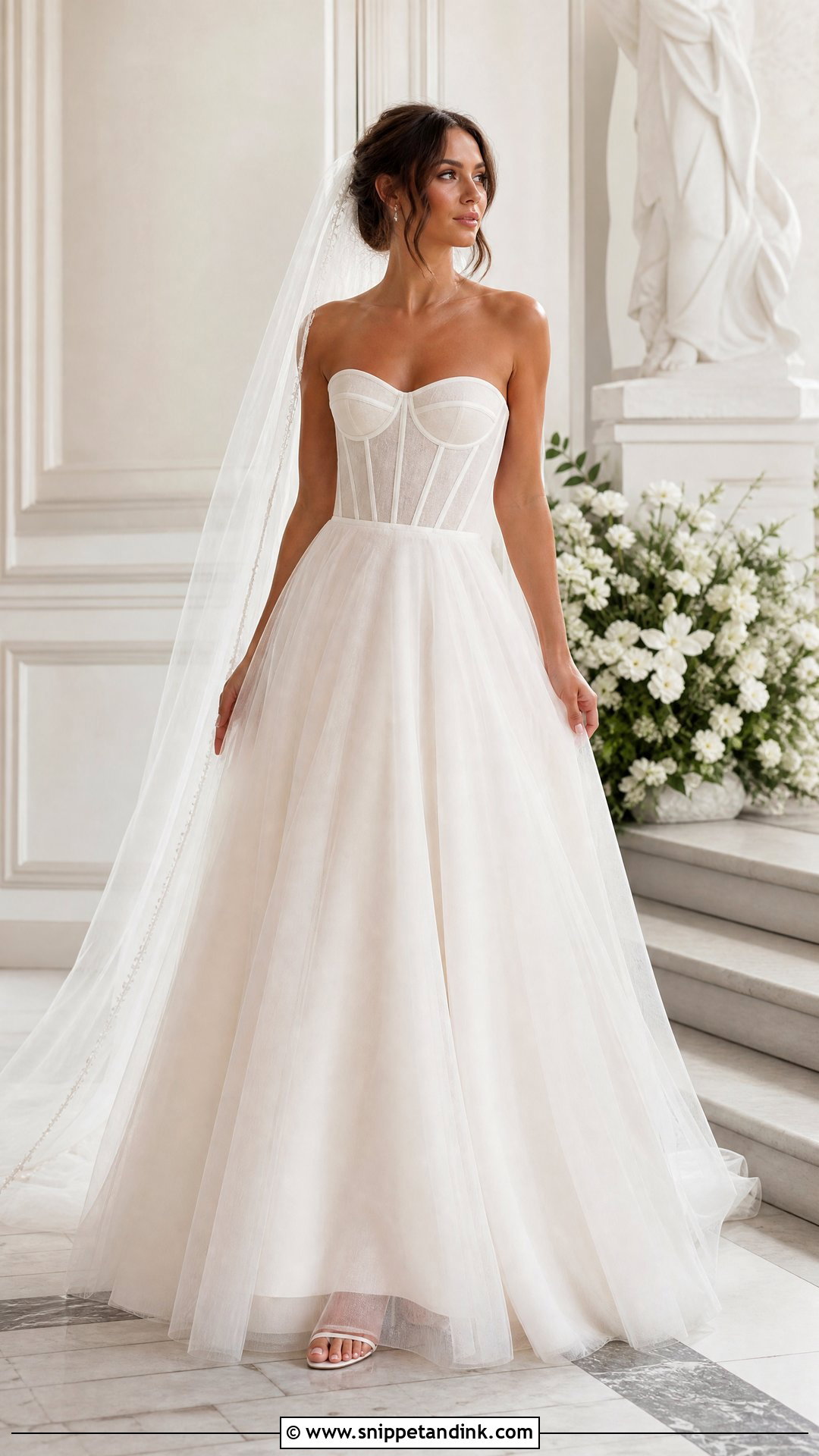
A corset A-line wedding gown uses boning to shape the waist and support the bust, so the skirt can stay soft. Exposed boning looks modern; hidden boning gives the same shape in a traditional way. Bones should lie flat; if they bend or press at the hip when you sit, they’re too long for your torso. Keep jewelry minimal and choose a veil that doesn’t cover the bodice detail. A bouquet that’s too large hides the waist, which is the whole point of the corset.
10. Basque Waist A Line Wedding Gown
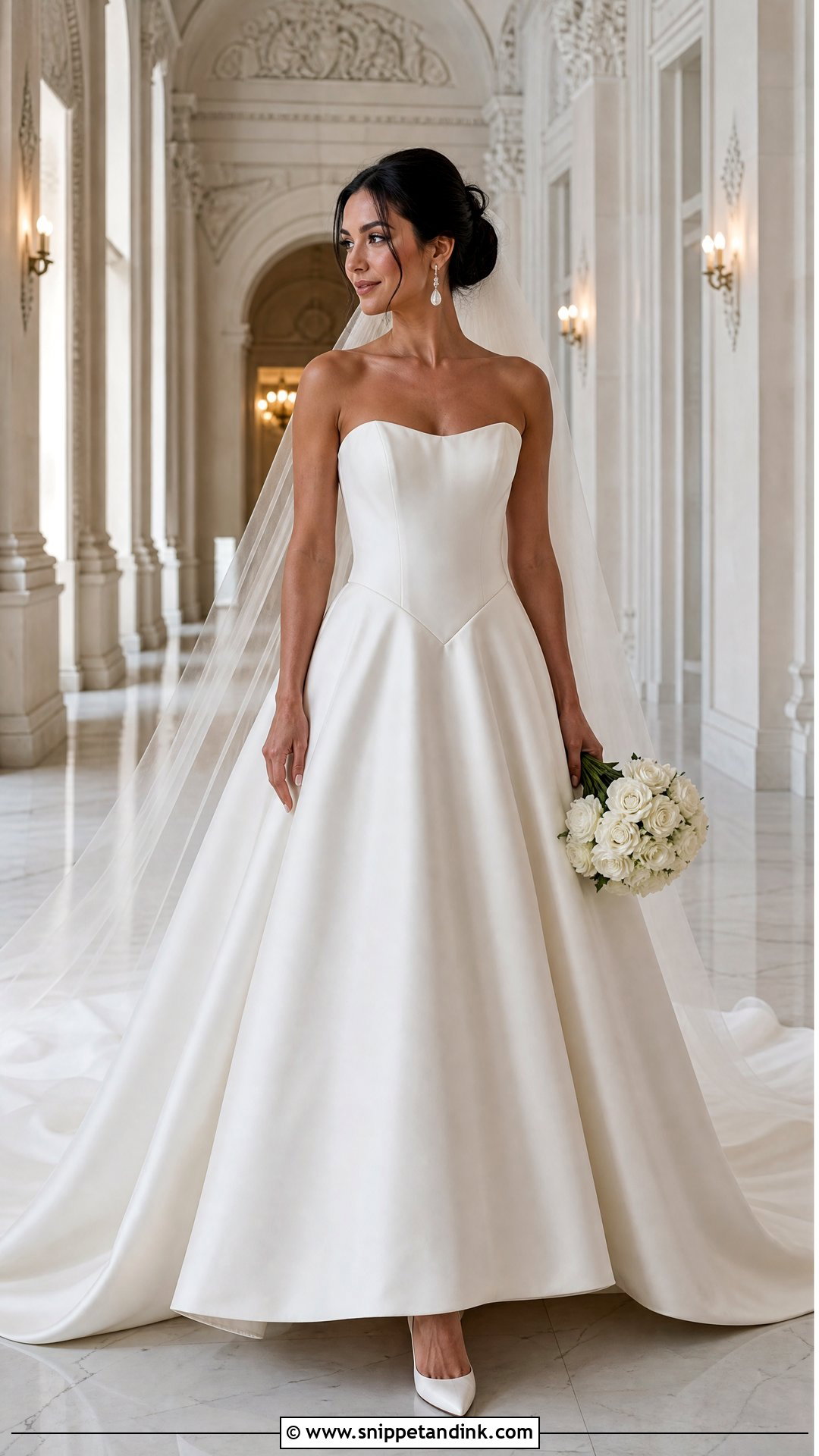
A basque waist dips into a V or U below the natural waistline, so the bodice looks longer and the skirt starts lower. A basque waist A-line wedding gown suits brides with a longer torso best; on a short torso it can make the legs look shorter. Satin, mikado and lace all hold the point well. Since the waistline is already the statement, skip belts and heavy jewelry. A long veil, pearl drops and classic heels suit formal venues and grand receptions.
11. Floral Applique A Line Wedding Gown
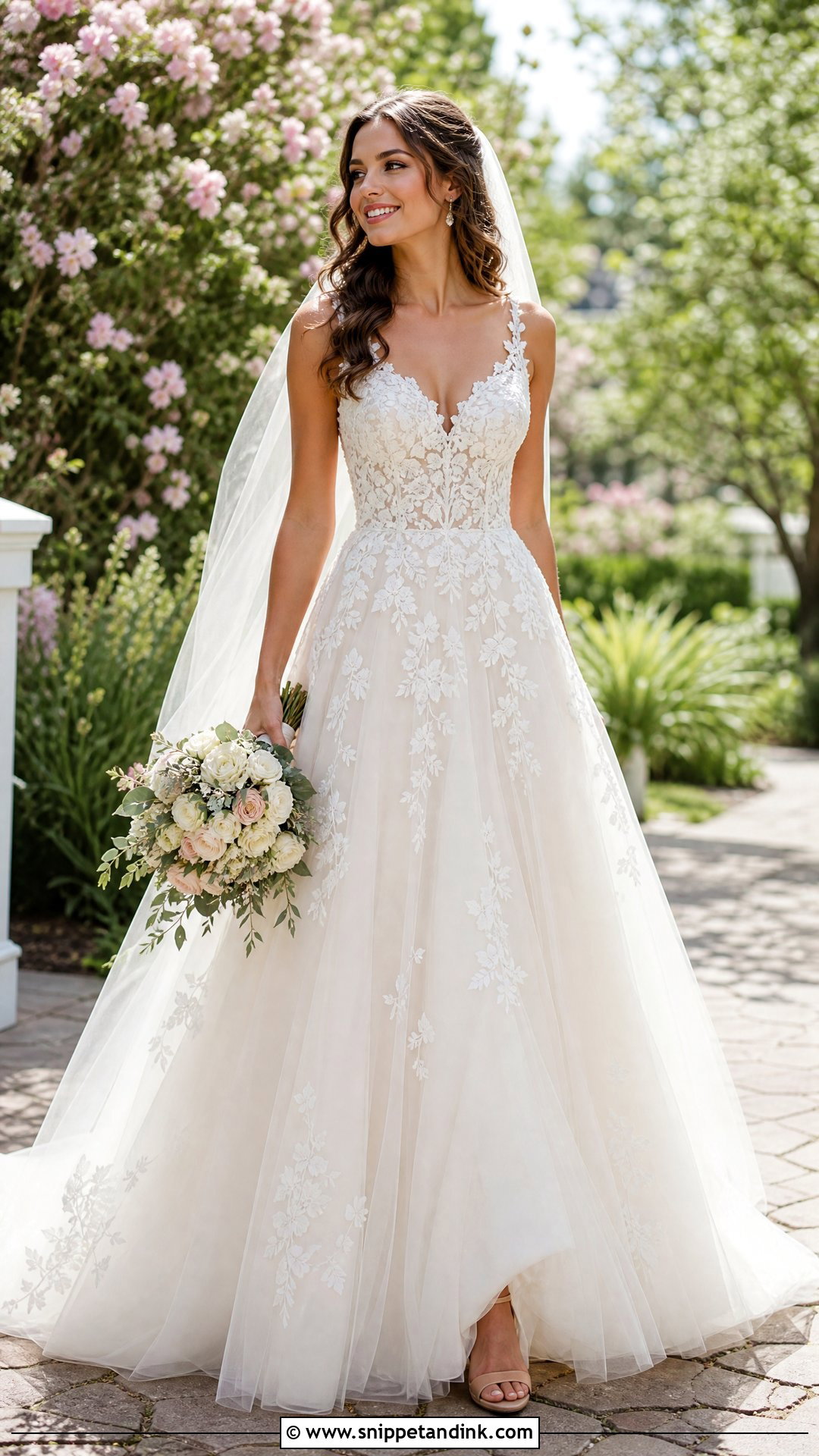
Floral appliqués can be scattered lightly over tulle or arranged boldly across bodice and skirt. Oversized flowers on a clean base look modern; small vines and blossoms look romantic. Check how the appliqués are attached. Glued ones lift at the edges after a few hours; hand-stitched ones stay put through dancing. A sheer veil and simple earrings let the flowers lead, and nude or ivory heels avoid a contrast at the hem. Spring gardens suit it.
12. 3D Flower A Line Wedding Gown
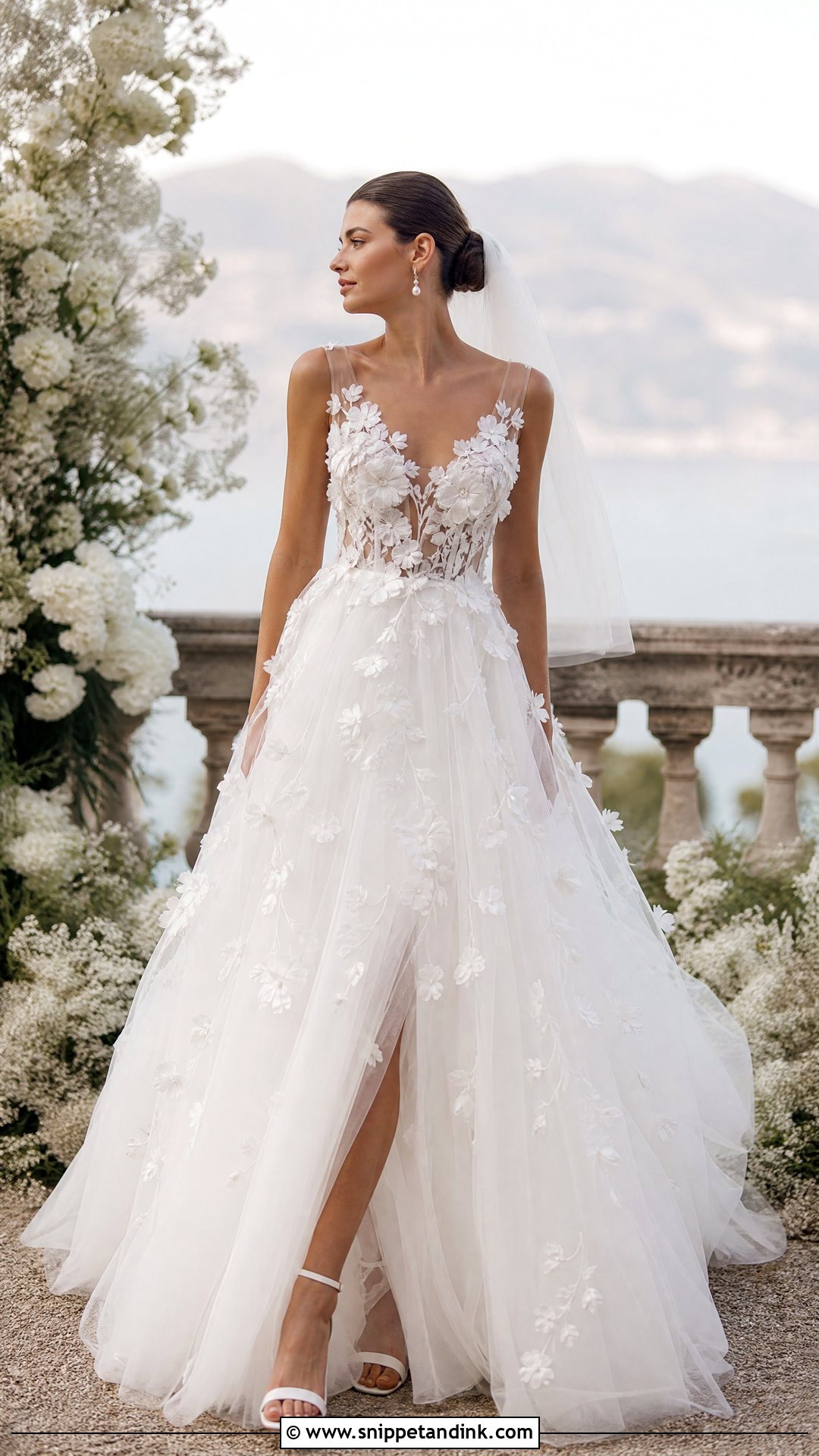
Raised 3D flowers add depth without any sparkle, so they read in daylight in a way flat lace doesn’t. I like them best concentrated on the bodice and thinning out down the skirt, which draws the eye to the face. The flowers crush easily, so the gown needs to be hung, not folded, and a bustle shouldn’t sit on top of them. Pearl earrings, soft makeup, a sleek bun and a veil with minimal trim keep it uncluttered.
13. Pearl A Line Wedding Gown
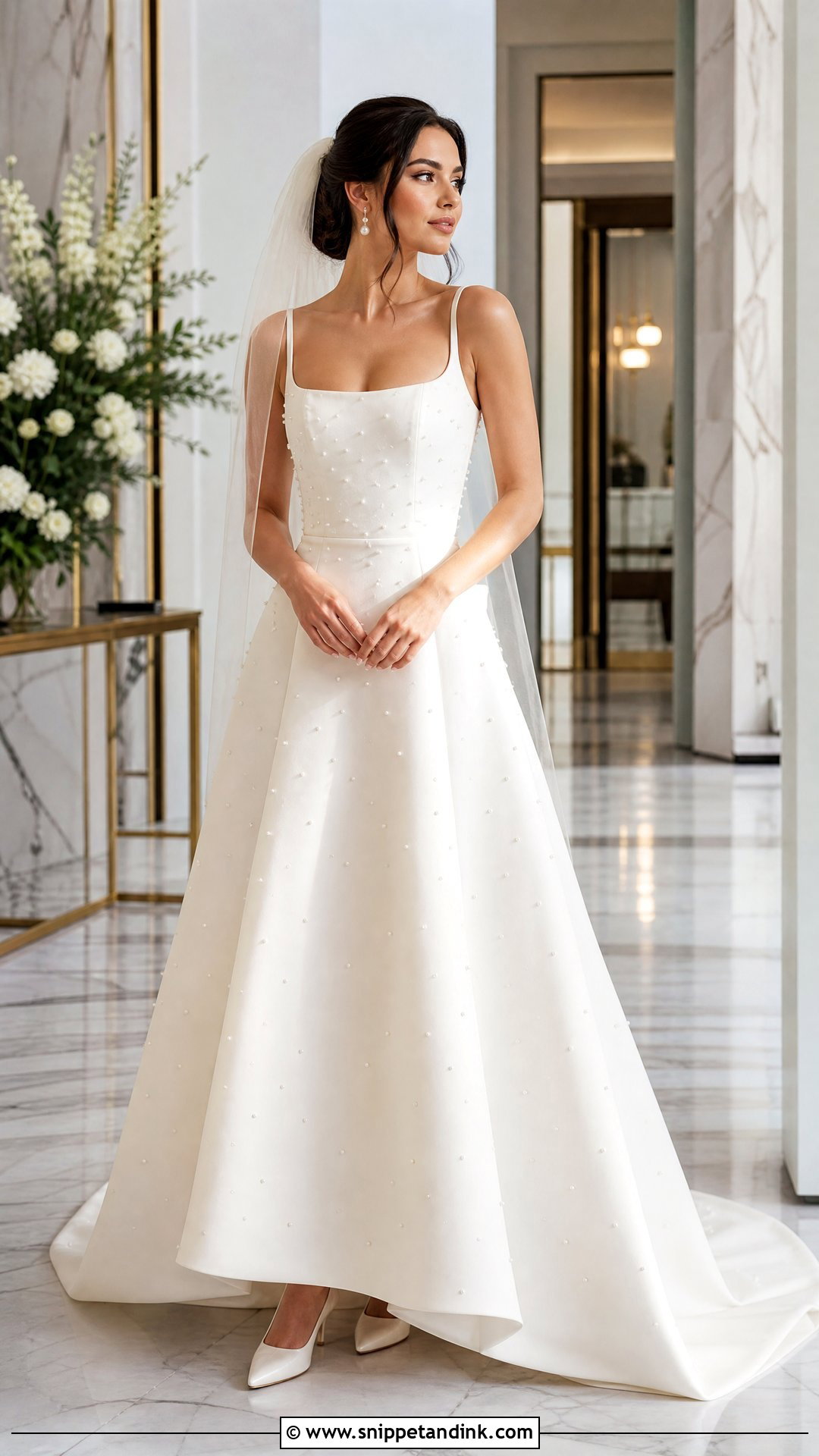
Pearls give a soft glow rather than a sparkle. They can be scattered over tulle, lined along the neckline or concentrated on the bodice. On gowns with heavy pearl work, look at the weight: pearls on fine tulle can drag a sleeve or neckline down over a long day. Keep other jewelry very simple. Pearl earrings, satin heels and a plain veil keep the look unified, and a white and green bouquet suits it.
14. Beaded A Line Wedding Gown
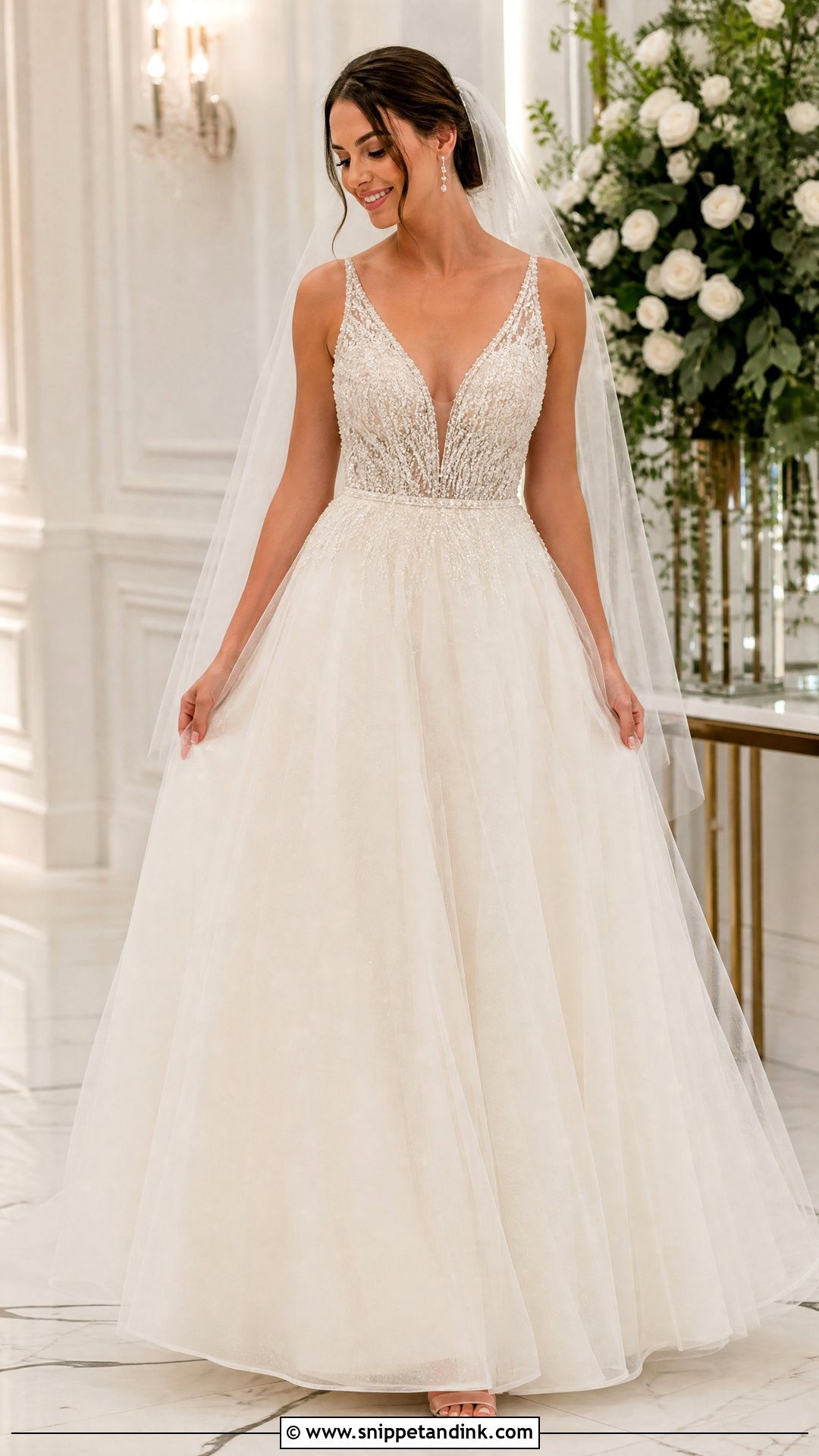
Beading catches evening light, so a beaded A-line suits rooftops, ballrooms and late receptions. Good beading follows the lines of the gown, like the neckline, waist or skirt seams, instead of sitting evenly everywhere. Turn the bodice inside out at the fitting; heavy beading has knots and thread ends that can scratch, and a smooth lining matters. Simple heels, delicate earrings and a sheer veil keep it from tipping into too much.
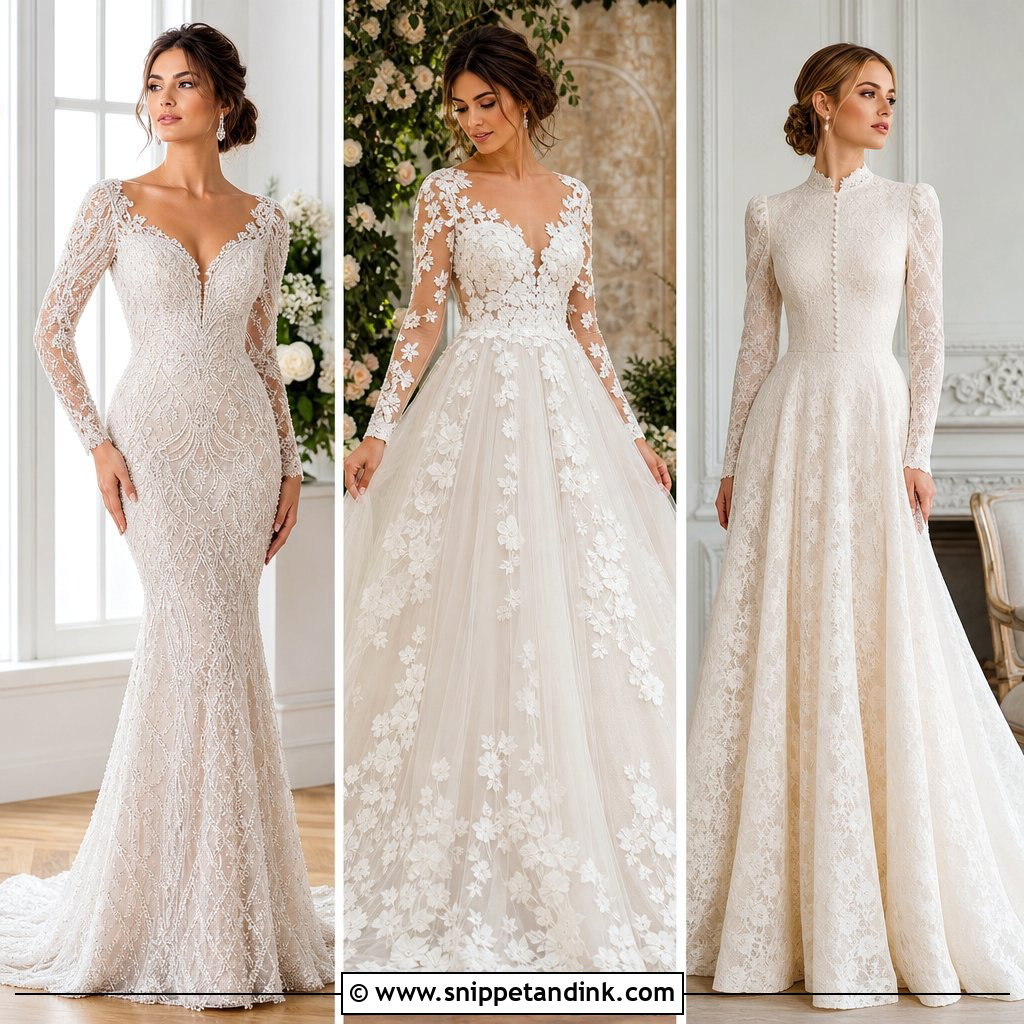
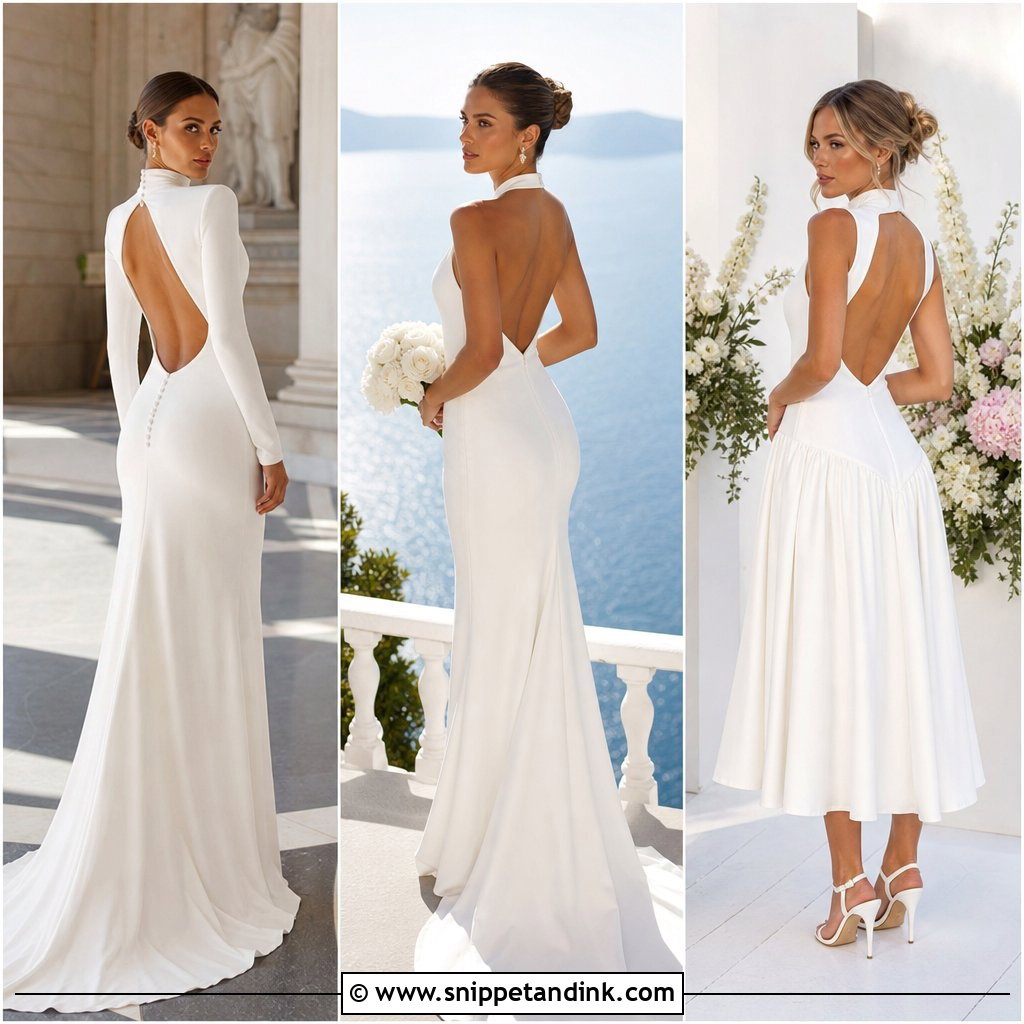
15. Minimalist A Line Wedding Gown
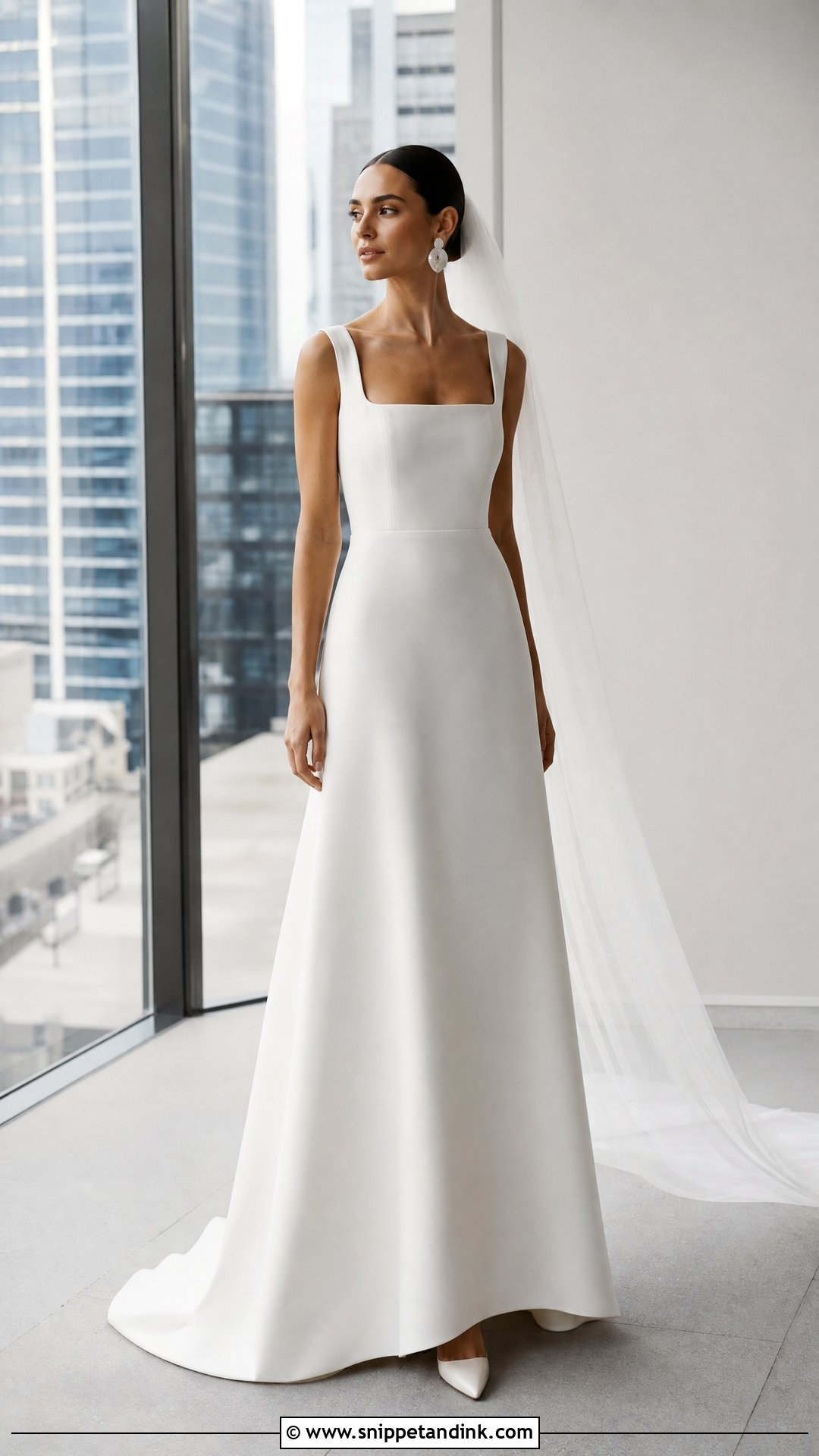
With a minimalist A-line wedding gown, fabric and fit are all you’ve got, so both have to be excellent. Smooth crepe, satin or mikado gives structure; a precise neckline, square, scoop or strapless, makes it look deliberate. Underwear shows through clean fabrics, so try the gown with what you’ll actually wear. Sculptural earrings, sleek heels and a polished bun suit city and modern venues. A plain long veil adds softness.
16. Boho A Line Wedding Gown
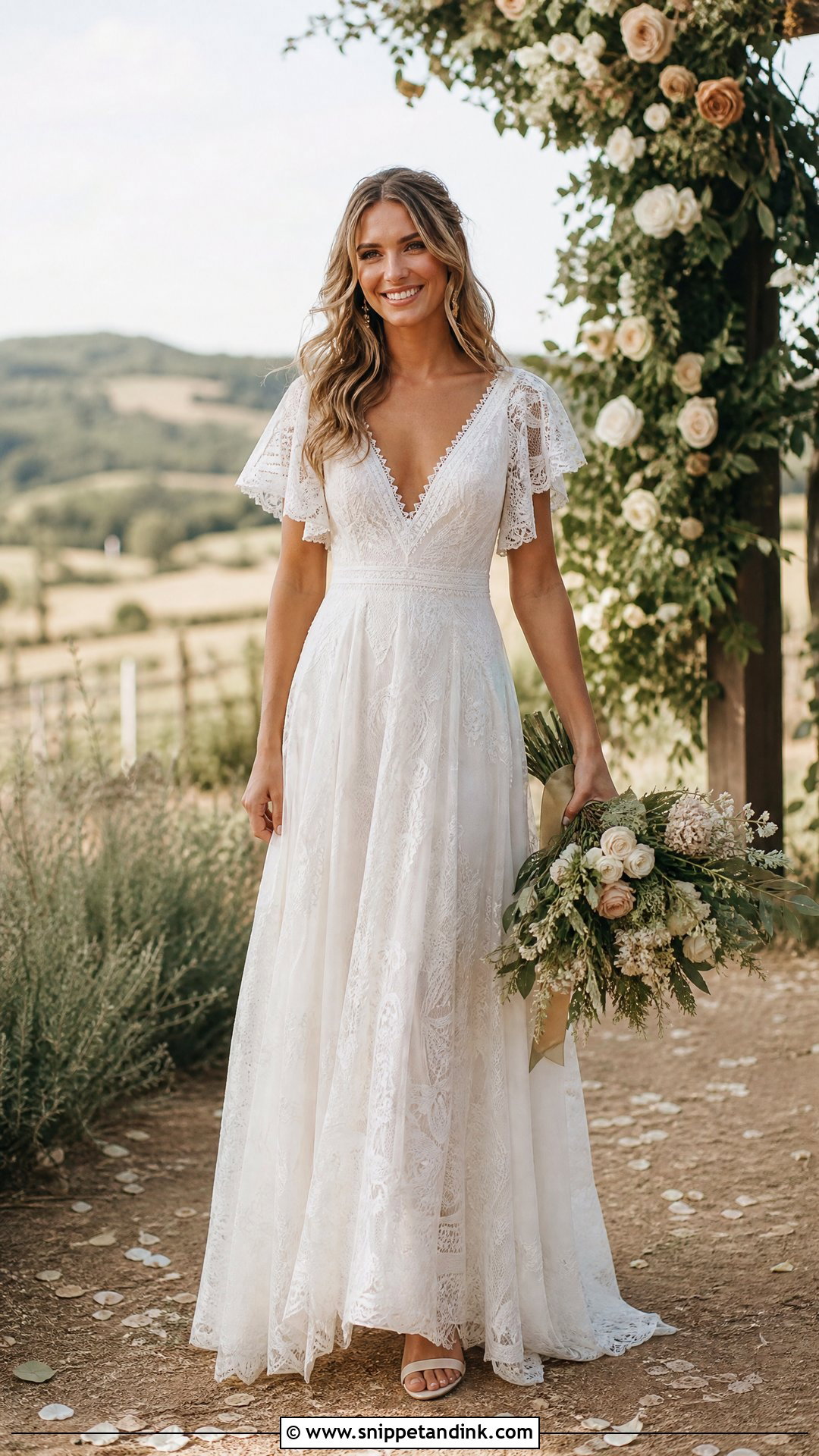
A boho A-line is softer through the bodice: lace, light tulle, flutter sleeves and a skirt that moves. It still needs some structure at the waist, or it can look like a nightgown in photos. Loose waves, delicate earrings and sandals or block heels suit it. A veil with soft lace trim or a simple hair piece finishes it. Outdoor, desert, garden and rustic venues all fit. Keep the bouquet loose with textured greenery and neutral flowers.
17. Beach A Line Wedding Gown
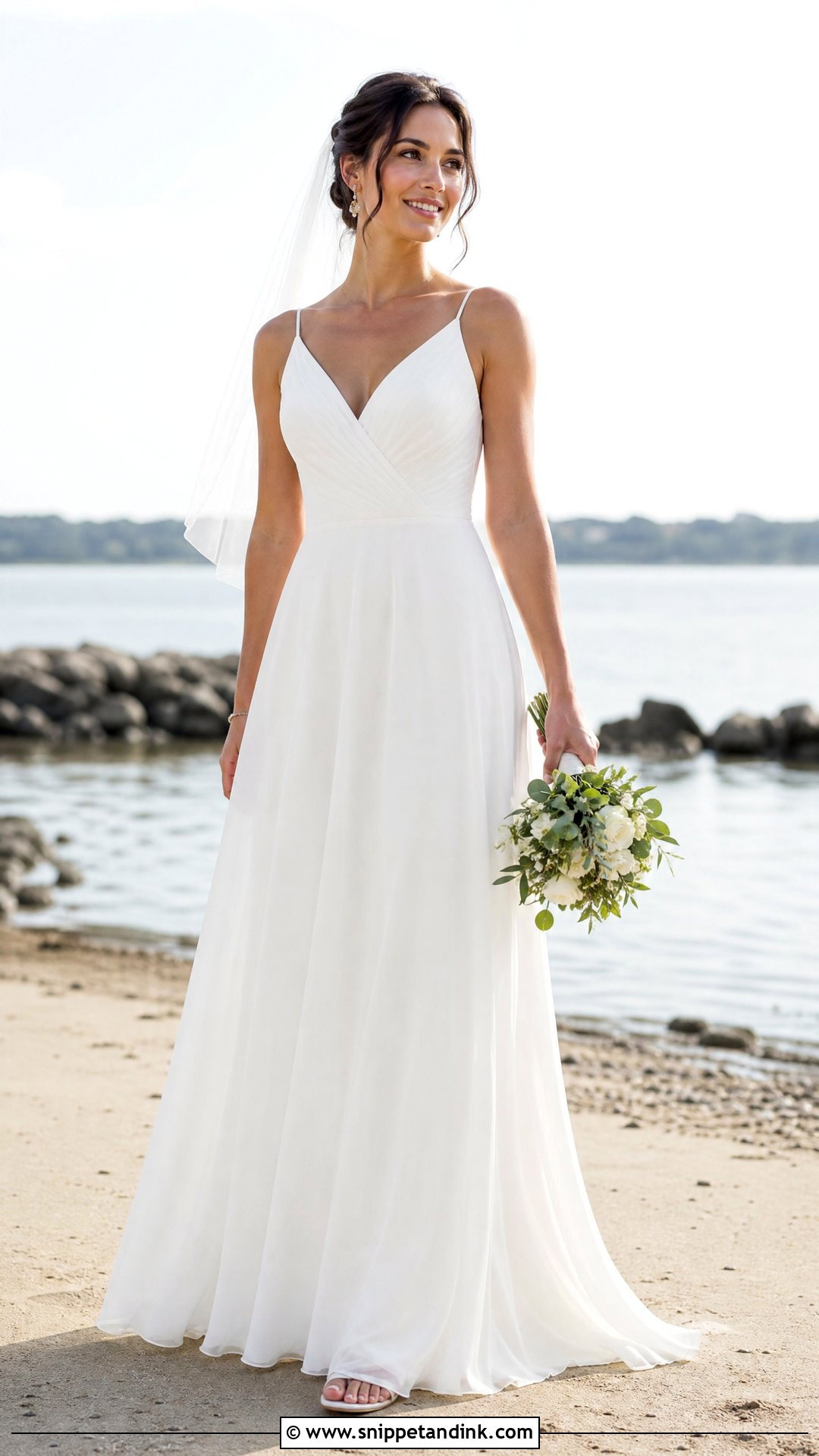
Sand and wind decide the beach gown. Chiffon, organza, soft tulle and light lace move in the breeze and dry fast if the hem gets wet. Skip the long train; it fills with sand and drags. A V-neck, thin straps or a scoop neckline stays comfortable in heat. Flat sandals are practical, or go barefoot. A shorter veil or sheer cape is easier than a cathedral veil, which wind will wrap around your face.
18. Garden A Line Wedding Gown
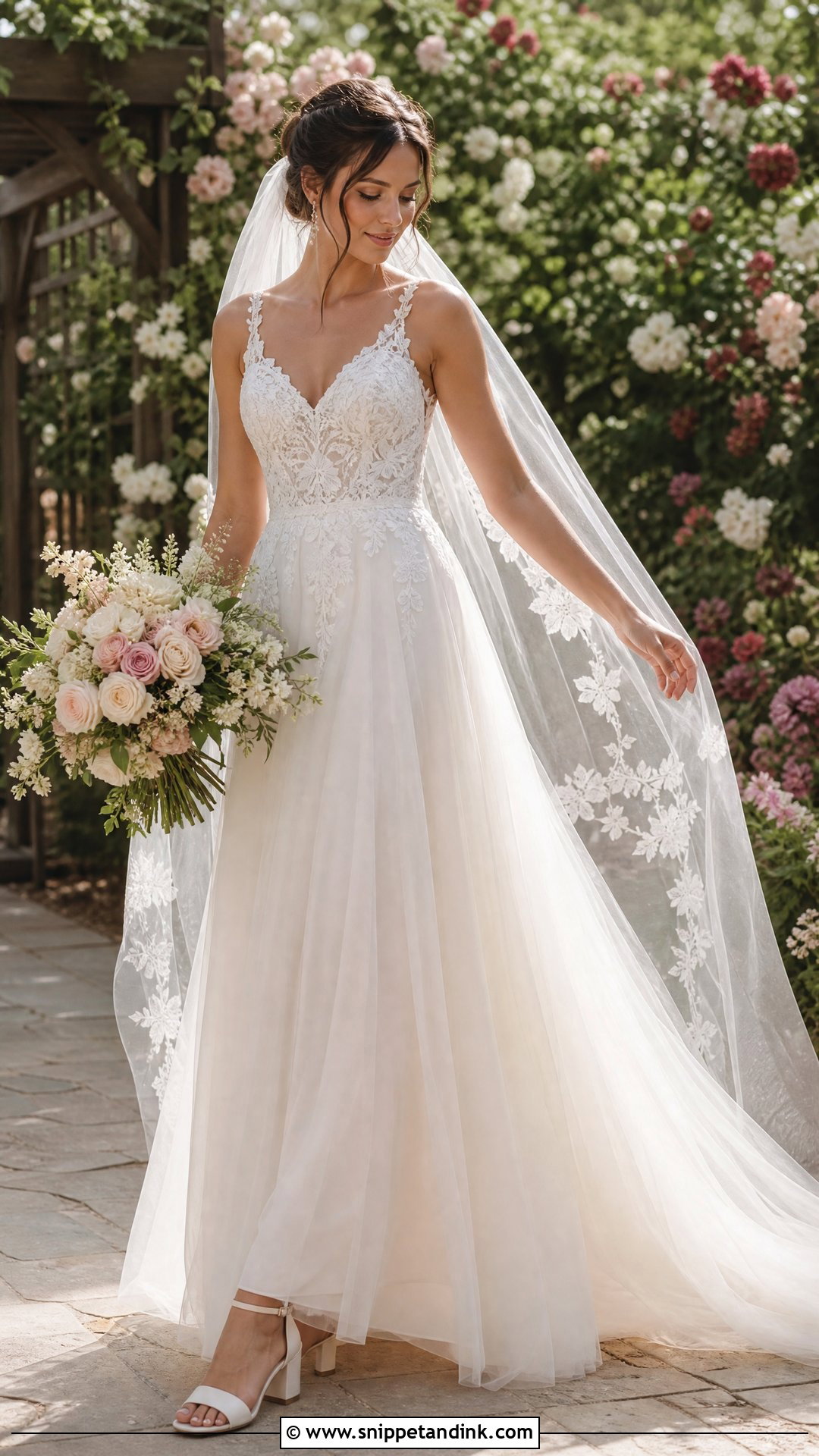
In a garden, the A-line’s flared skirt clears lawns and paths easily. Lace, tulle and floral appliqué look natural against greenery. Ground matters more than people expect; on lawns, block heels or bridal flats stop you sinking. Soft blush, ivory and champagne look good in daylight. A veil with subtle floral embroidery and a bouquet that echoes the garden tie it to the venue. Hem it slightly shorter than you would for a ballroom, so it skims rather than sweeps the grass.
19. Modern A Line Wedding Gown
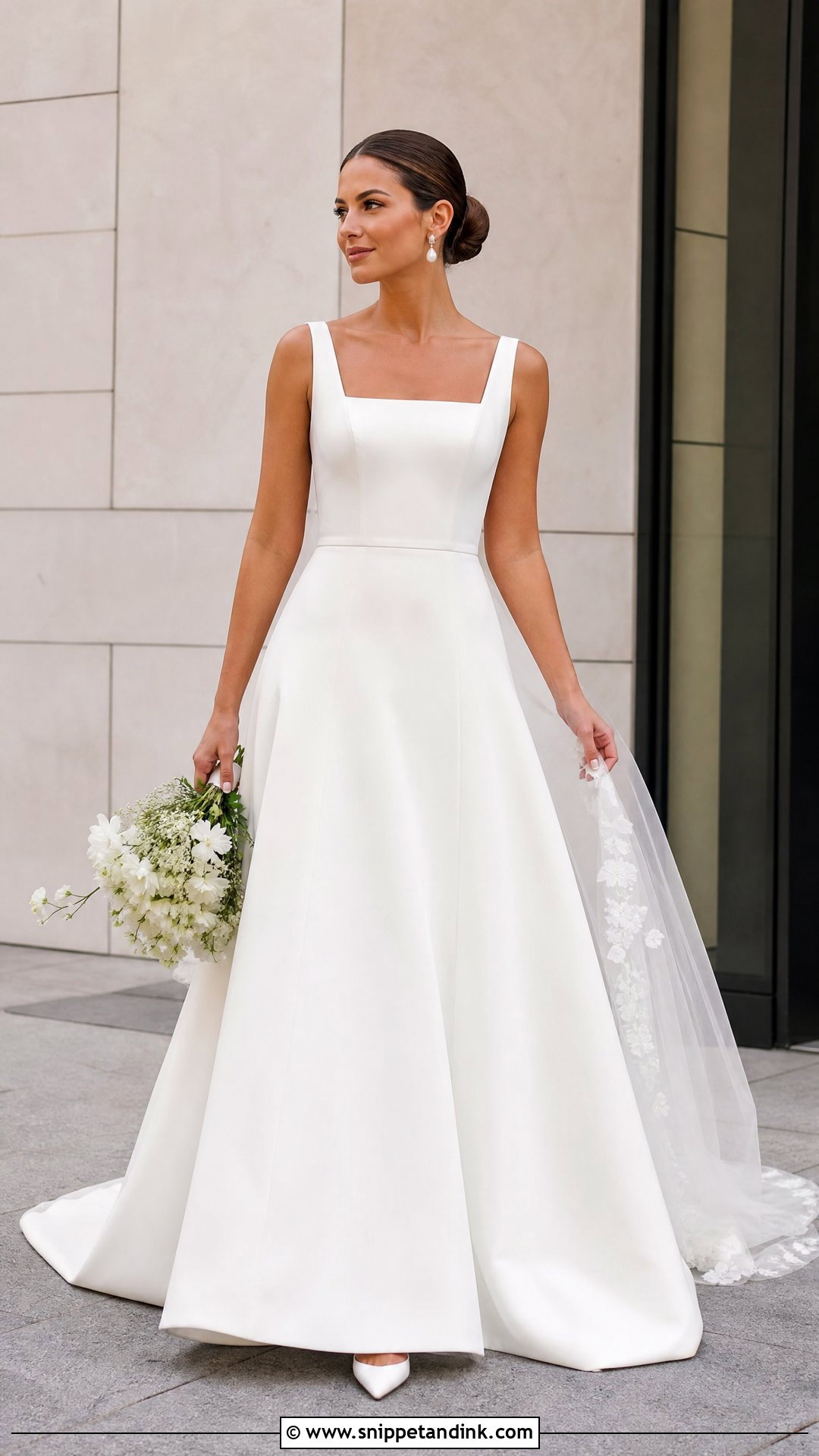
Modern A-lines rely on sharp detail: square necklines, structured bodices, architectural seams, high slits or detachable overskirts. Satin, mikado and crepe hold these shapes. A high slit needs testing on stairs and while sitting, since it can open more than you’d expect. Pointed heels, sleek earrings and a smooth veil, or no veil, keep it current. City venues, galleries and hotels suit it.


20. Vintage A Line Wedding Gown
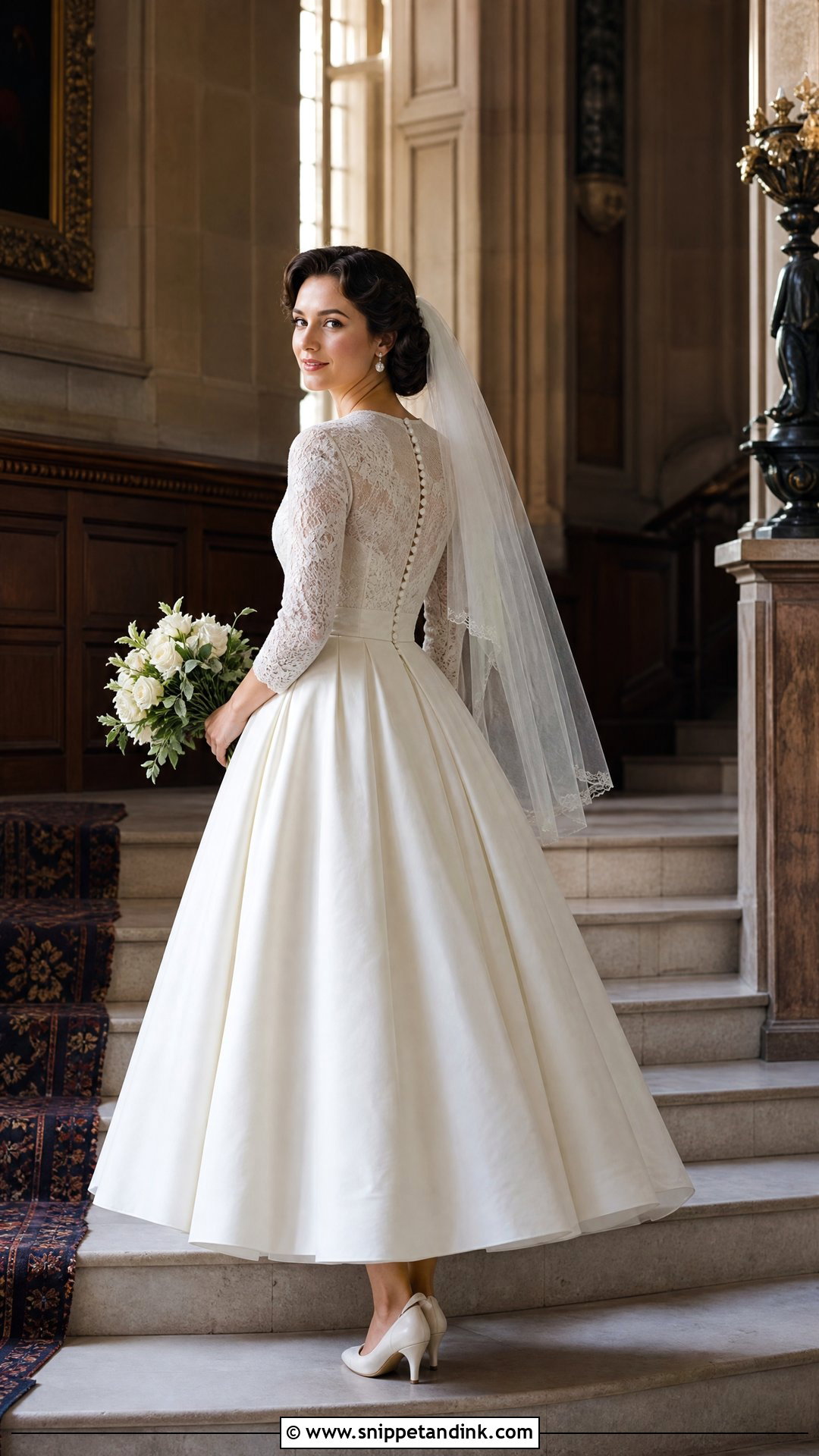
A vintage A-line wedding gown leans on details from earlier decades: tea-length skirts, lace sleeves, bateau necklines, covered buttons and satin trim. For full length, lace over ivory lining or a softly structured bodice looks period without feeling like a costume. Covered buttons down the back take time to fasten, so build ten extra minutes into getting dressed. Pearl earrings, low heels and soft curls finish it. Courthouses, historic houses and estates suit it.
21. Tulle A Line Wedding Gown
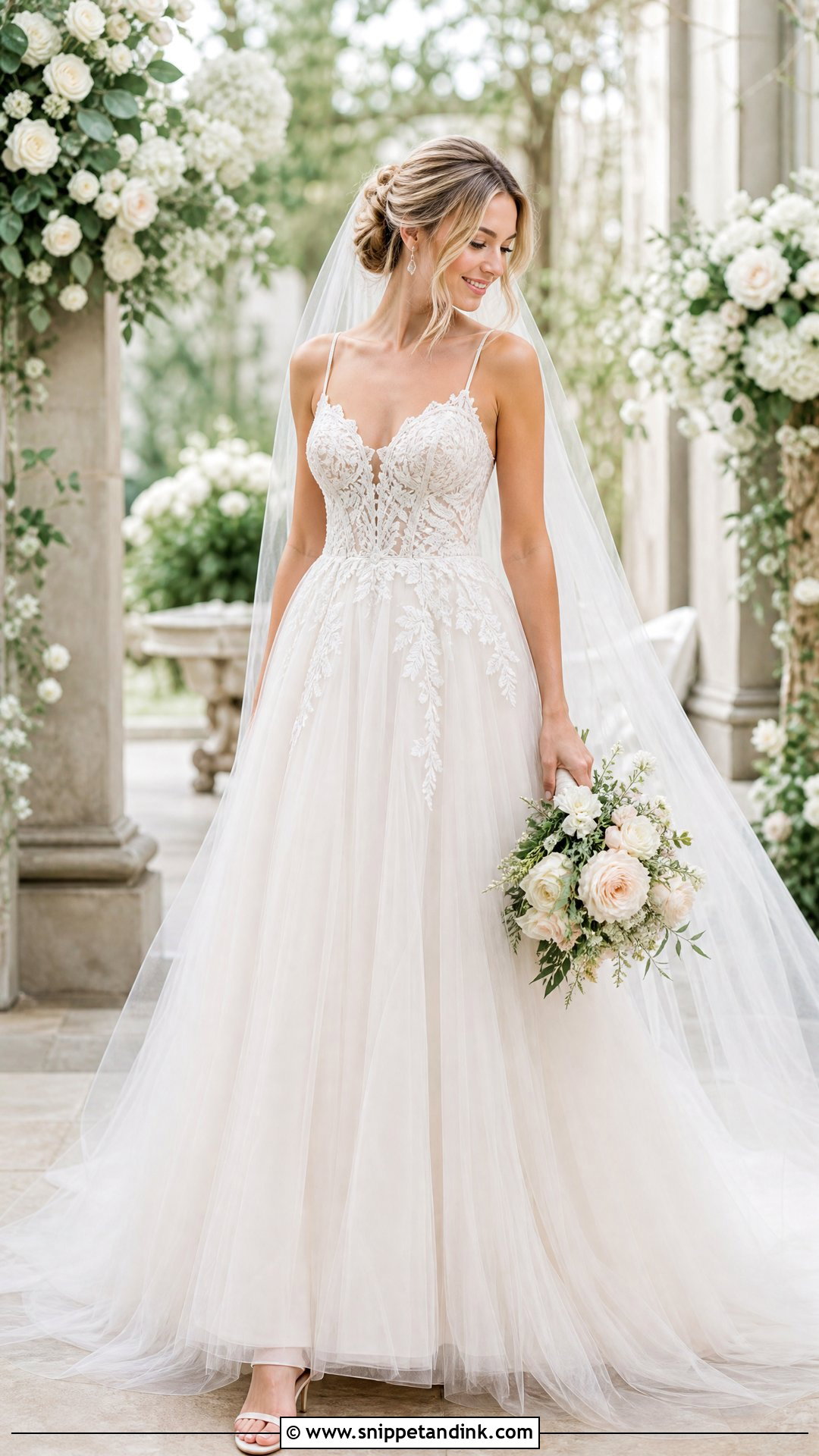
Tulle gives volume without the weight of a ball gown, so the skirt floats when you walk. A lace or beaded bodice over a tulle skirt is the sweeter version; plain tulle with a simple satin top is cleaner. Layers matter: several layers of soft tulle hold their shape, while a single layer goes limp in humidity. Delicate heels and a veil that blends into the skirt keep it light. It looks its best in motion, so it suits the aisle walk and outdoor portraits.
22. Mikado A Line Wedding Gown
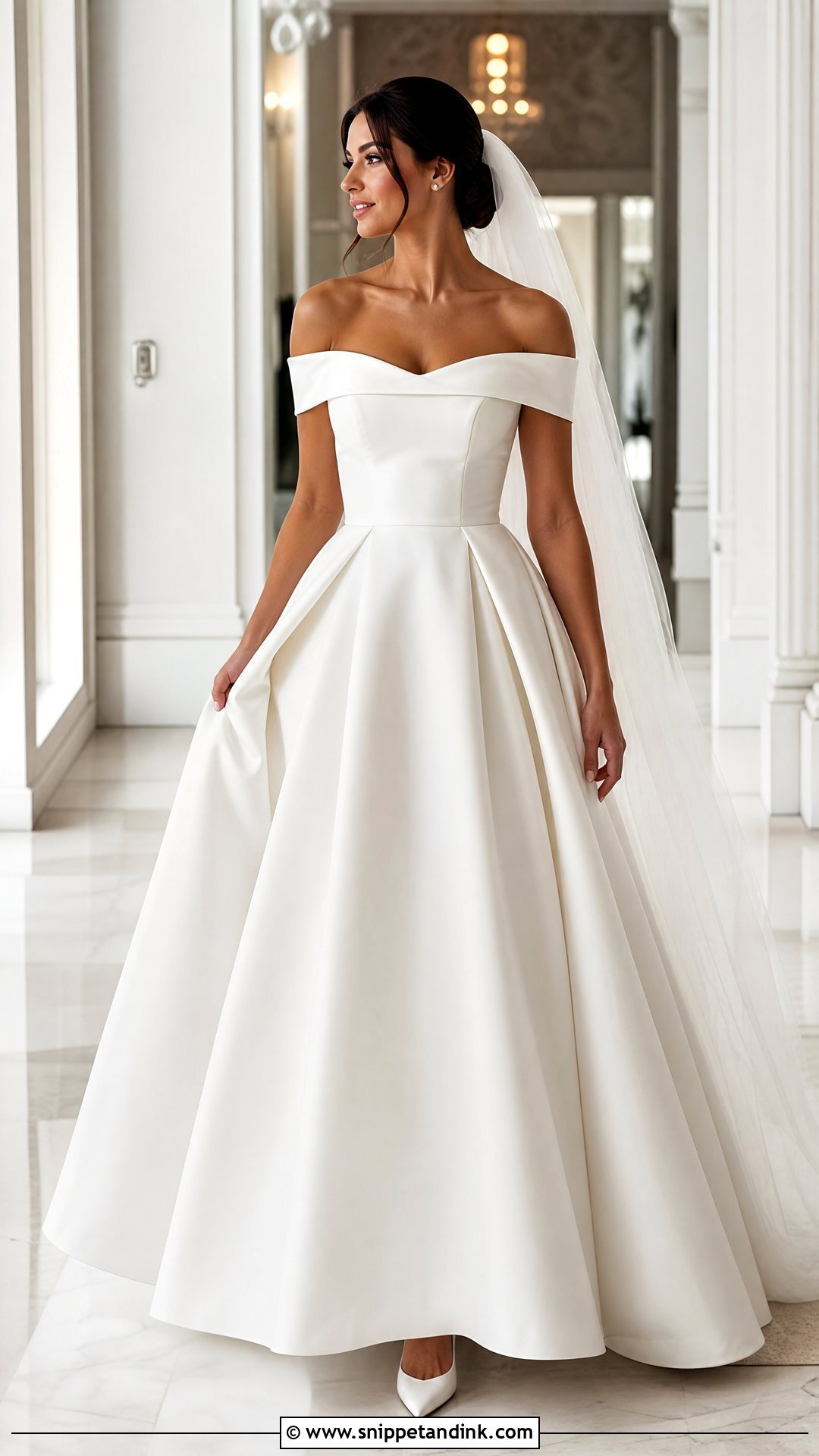
Mikado has more body than satin, so it holds pleats, folds and a crisp skirt without layers underneath. Strapless, square and off-shoulder bodices suit it. It’s warm and heavy, which I’d keep in mind for a summer afternoon outdoors. Because the fabric already looks rich, embellishment is unnecessary. Classic pumps, pearl or diamond-style studs, a long veil, a clean bouquet and a sleek hairstyle complete it.
23. Chiffon A Line Wedding Gown
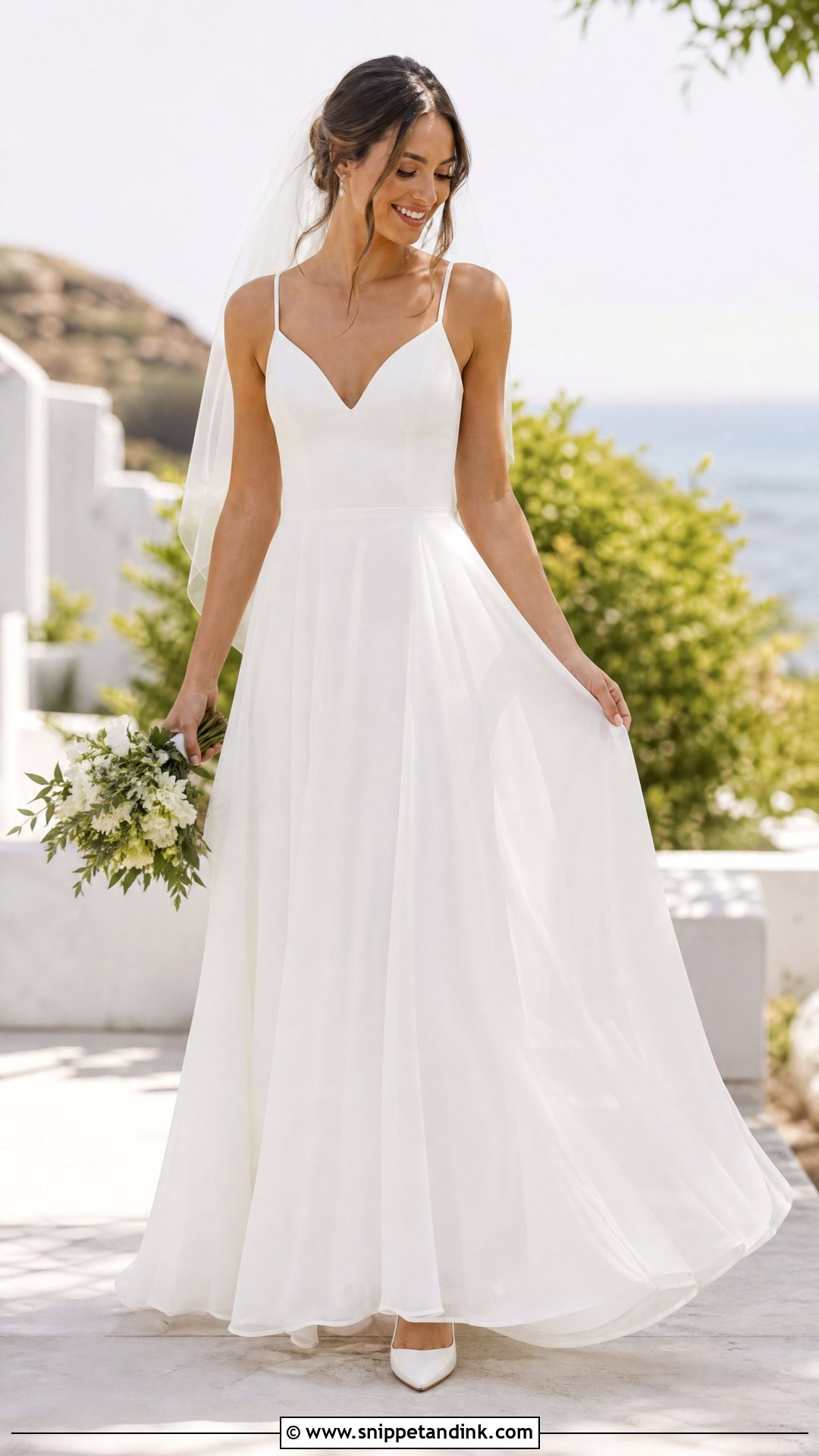
Chiffon floats close to the body rather than standing away, so a chiffon A-line flares gently instead of dramatically. That suits hot weather and long celebrations. Pair the skirt with a lace, beaded or plain crepe bodice. Chiffon frays and snags, so keep jewelry smooth and watch rough walls in photos. Sandals, soft block heels or delicate pumps depend on the ground. A light veil keeps the outfit airy for beaches and destination weddings.
24. Blush A Line Wedding Gown
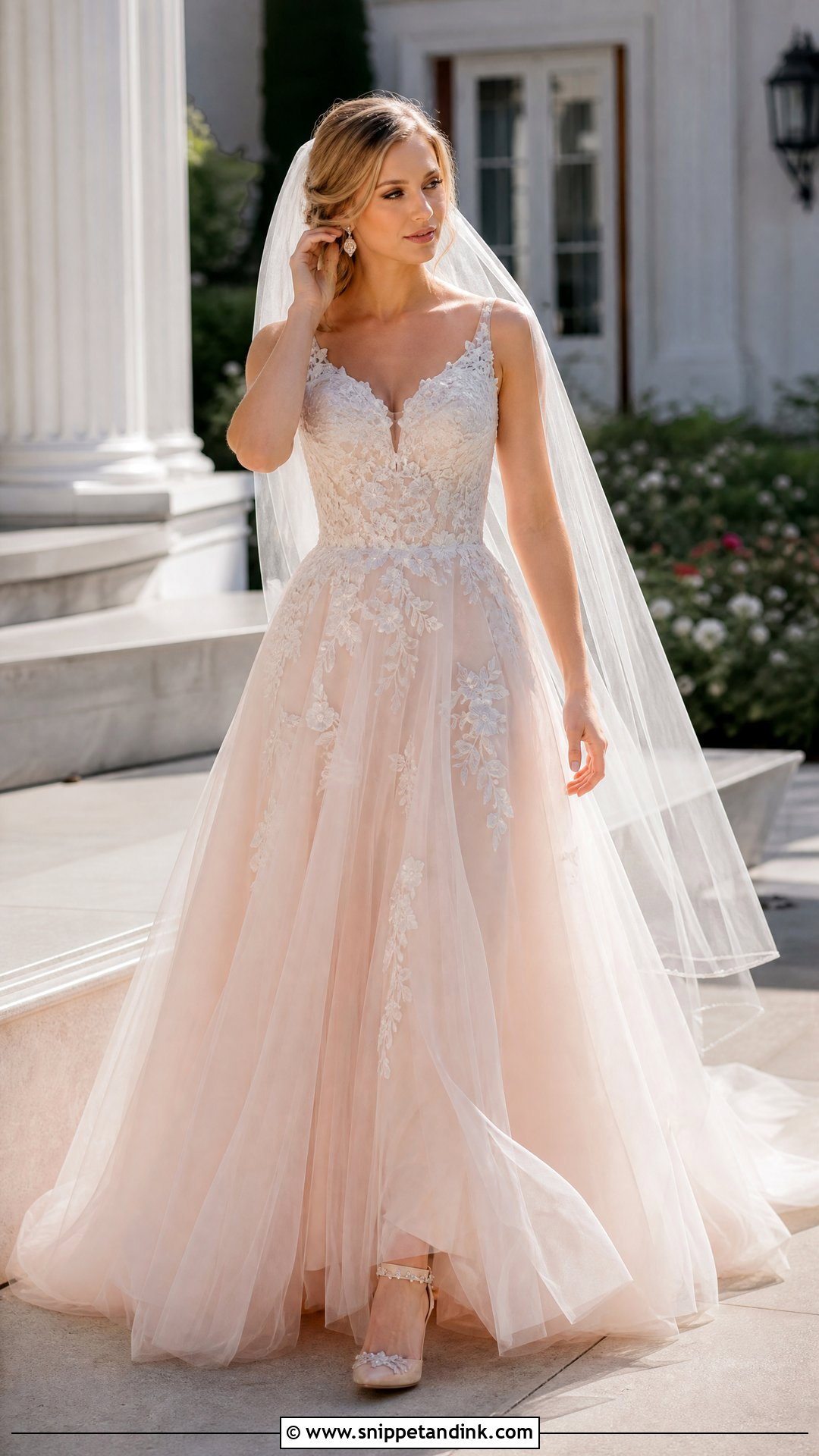
Blush ranges from barely there to clearly pink, mostly depending on the lining. A blush lining under ivory tulle gives a faint warmth; blush satin reads as a definite color. Look at it in daylight and under warm indoor bulbs before deciding, because the shade shifts. Ivory, pearl and champagne accessories keep it bridal, and an ivory veil softens it further. Pink, cream and neutral bouquets suit it.

25. Detachable Train A Line Wedding Gown
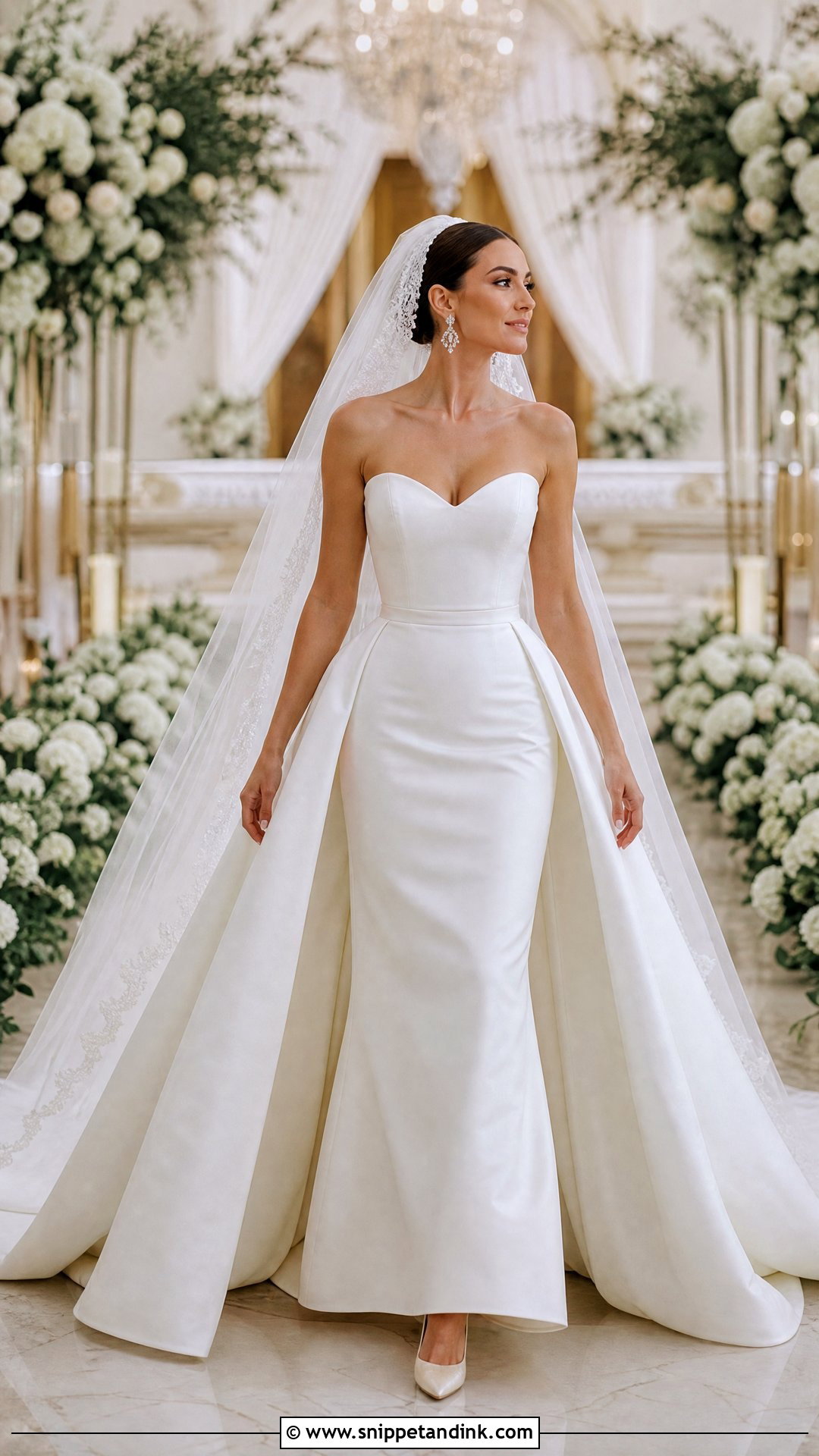
A detachable train gives you a ceremony entrance and a reception gown without a full change. Most attach at the waist with hooks, buttons or snaps. Look for a join that sits flat and doesn’t leave a ridge once removed. Practise taking it off with whoever will help you, because doing it for the first time in a crowded room takes far longer. Classic heels and statement earrings suit the full look; switch to lighter accessories for the party.
A Realistic Calendar From Order to Final Fitting
Most bridal gowns are made to order after you choose them, not taken off a rail. Lead times vary by designer, but these are the windows I plan around.
- Nine to twelve months before: start trying on. It gives you time to decide without pressure.
- Six to eight months before: place the order. Production often takes four to six months, and shipping adds more.
- Eight to ten weeks before: first fitting with your actual shoes and underwear.
- Two to four weeks before: second fitting for hem, bustle and fine adjustments.
- The final week: last try-on and collection, with whoever will dress you on the day.
Rush orders exist but usually cost extra, and alterations on beaded or appliquéd gowns take longer because detail has to be removed and re-stitched around changed seams. If you’re short on time, buy a sample gown off the rack and put the saved months into alterations.
Bring the same things to every fitting: the shoes, the bra or shapewear, and any heavy earrings or hairpiece you plan to wear. A hem set in flats is wrong in heels, and a neckline pinned over a different bra won’t sit the same on the day. If someone will bustle the train for you, bring her to the last fitting and have her do it twice.
The Bodice Fits You, the Skirt Does the Flattering
With an A-line, the skirt is forgiving and the bodice is where the fit happens, so spend your fitting time there. Think about your venue, the season and how long you’ll be in the gown, then pick a fabric that suits all three: satin for clean lines, lace for pattern, tulle for lightness, mikado for structure. Details like floral appliqué, pearls, corsetry, a basque waist or a detachable train change the personality without changing the flattering outline. Choose the version you can sit, eat and dance in, and you’ll still like it when you look back at the photos years from now.
You'll Like These Ideas:







Leave a Reply