
A vintage-inspired dress works when it borrows from the past without dressing you up as it. Lace sleeves, bias-cut satin, corset bodices, pearls, bows and tea-length skirts all come from older bridal styles, and today they’re cut with lighter fabrics, softer structure and layers you can remove after the ceremony. My rule when styling one is to pick a single era as the reference and keep everything else modern, because two decades in one outfit is where it starts to look like fancy dress. Below are the ideas I reach for most, from the 1920s through the 1990s, with the fit and styling notes I’d give a bride trying each on.
Inspired-By or Genuinely Old? Shop With the Difference in Mind
Brides often say vintage when they mean three different things: a new dress with vintage details, a modern reproduction of a historic pattern, or an actual dress from decades ago. All three can be wonderful, but a true vintage gown comes with problems a new one doesn’t.
Older dresses are often marked in sizes that bear no relation to today’s, so go by measurements only. They were also built for smaller frames and different undergarments, and many have narrow seam allowances, which limits how much a seamstress can let them out. Taking in is usually possible; letting out rarely is.
Checks before you buy an original
- Hold the fabric up to daylight and look for splitting along the folds. Old silk can shatter and cannot be repaired.
- Check the underarms, waistline and hem for yellowing or old stains. Some lift with professional cleaning; many don’t.
- Gently stretch a small section of lace. Brittle lace tears easily and won’t survive a day of wear.
- Look inside at the seams. Wide seam allowances mean room to adjust; narrow ones mean the dress fits nearly as it is.
- Ask a specialist bridal cleaner to assess it before you commit to alterations.
1. Lace Long Sleeve Wedding Dress
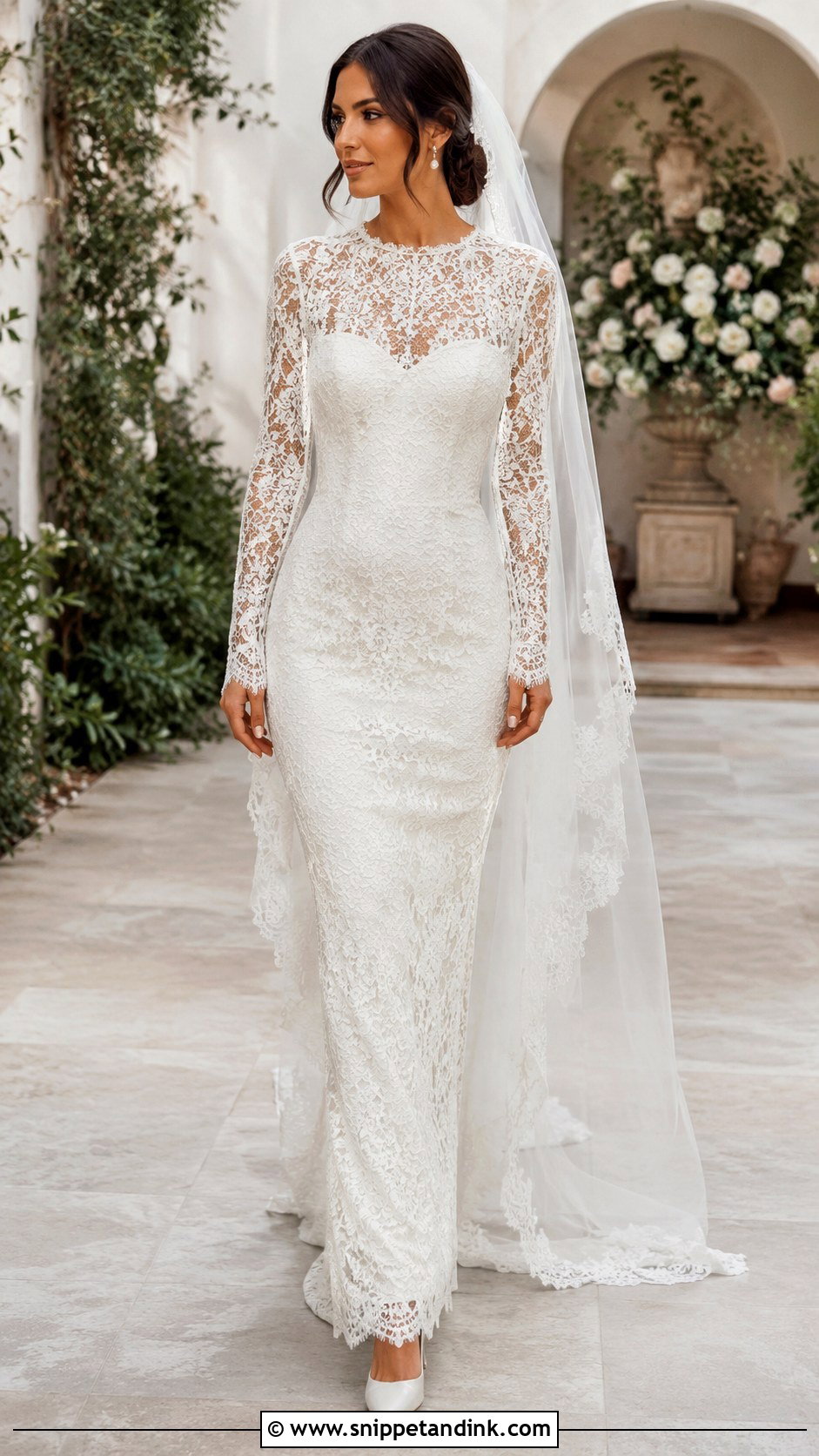
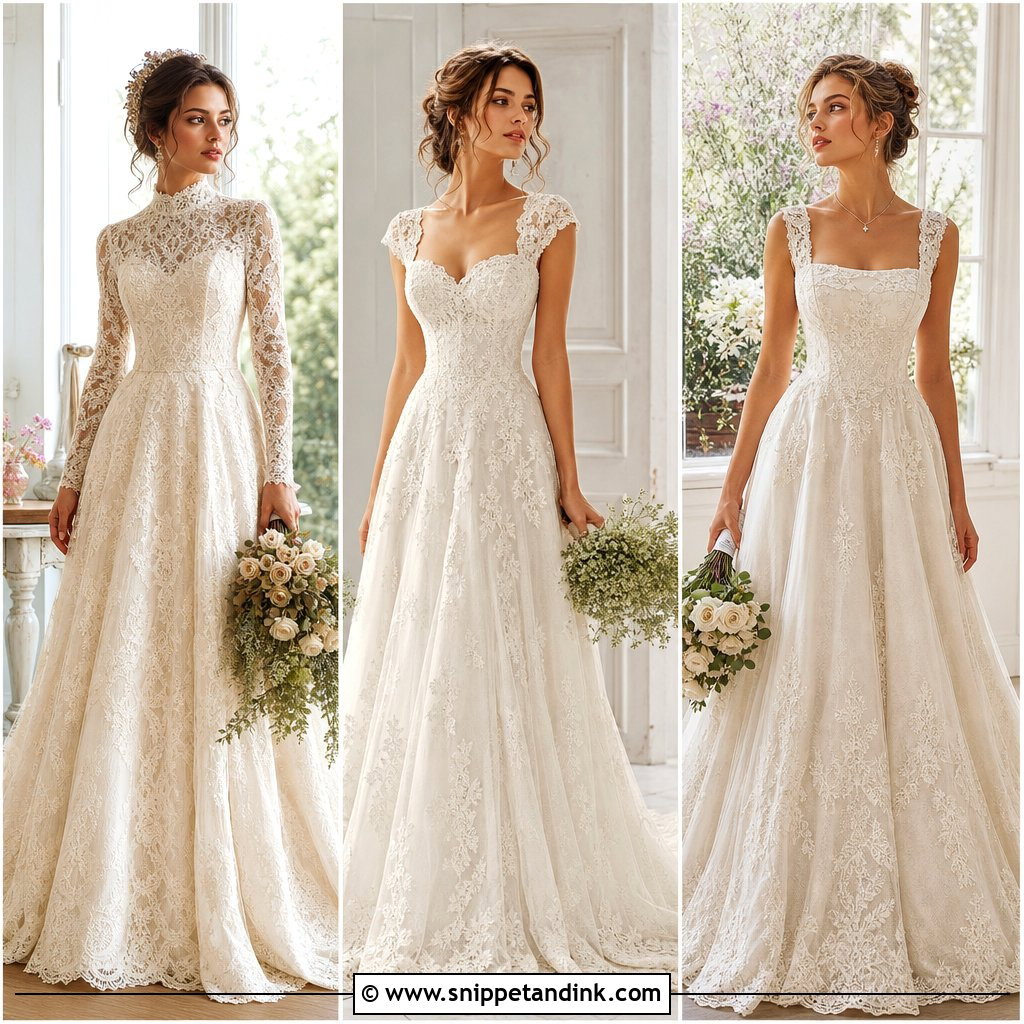
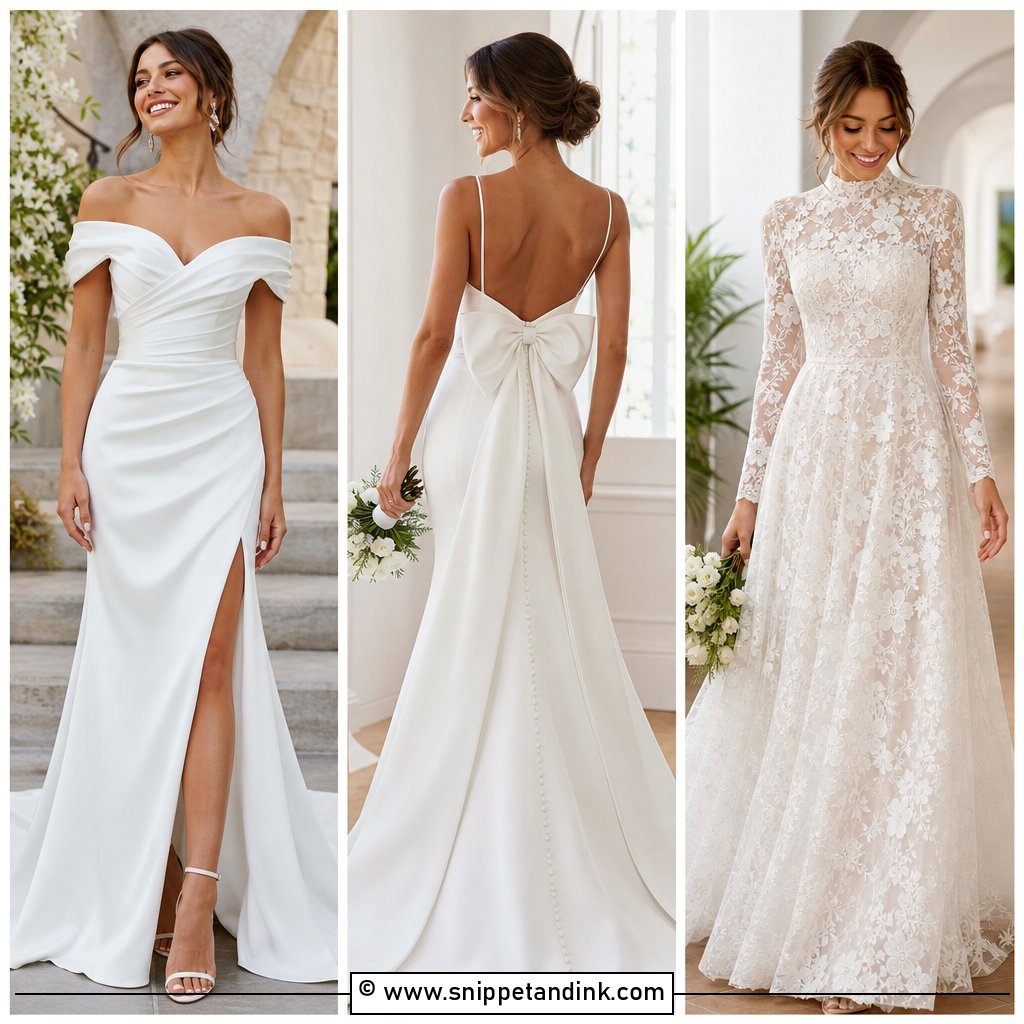
Long lace sleeves are the most recognizable vintage detail, and the lace type sets the mood. Chantilly is fine and soft with eyelash edges; heavier Alencon has corded outlines and more weight. Over a fitted lining with a high neck, either reads old-world, while a slim skirt or clean A-line keeps the dress current. Check that the sleeve lace has some stretch or that the sleeve is cut with room at the elbow, because rigid lace splits at the seam when you hug. A low bun, pearl drops, satin heels and a narrow lace-edged veil complete it.
2. Satin Slip Wedding Dress
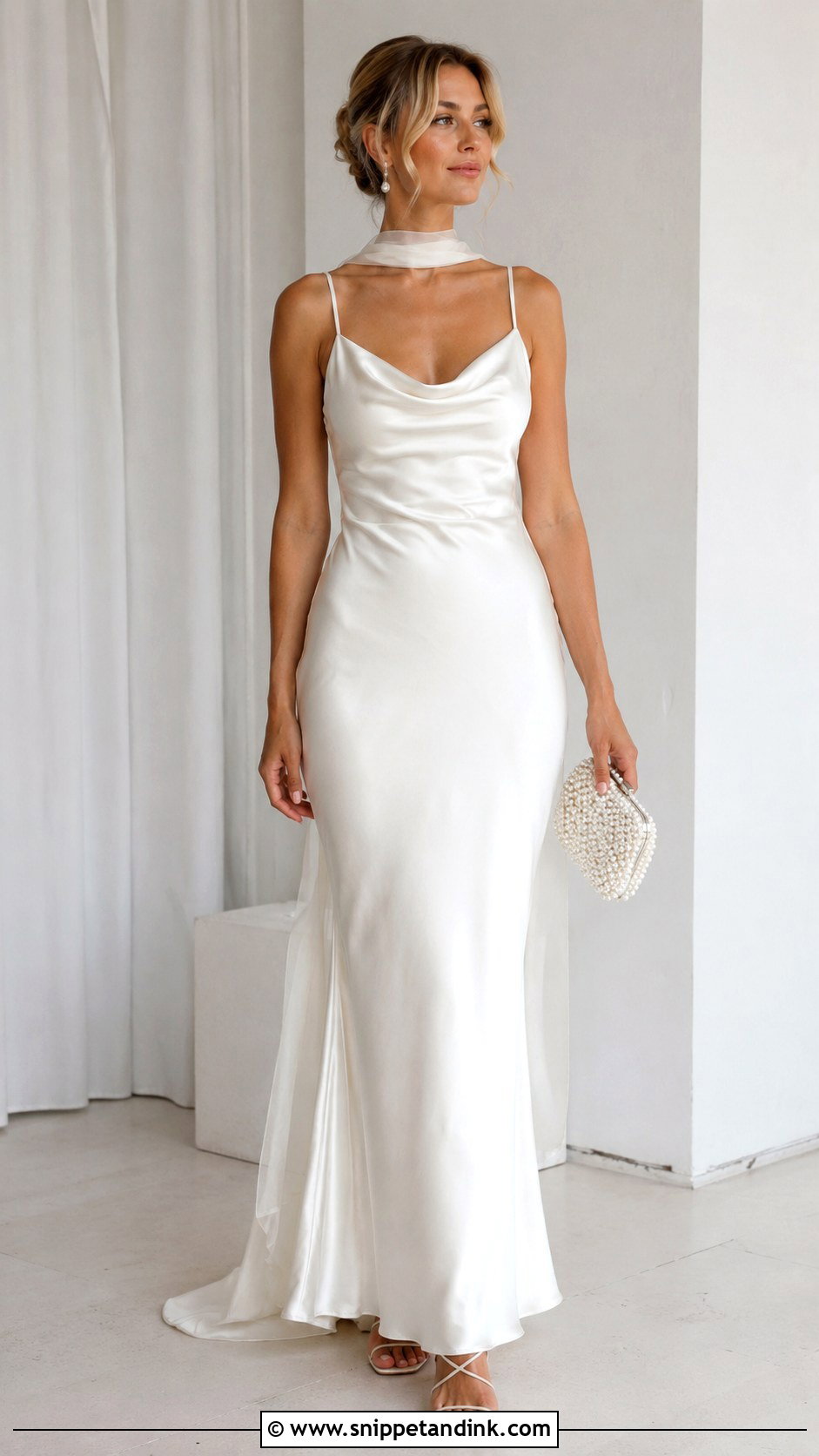
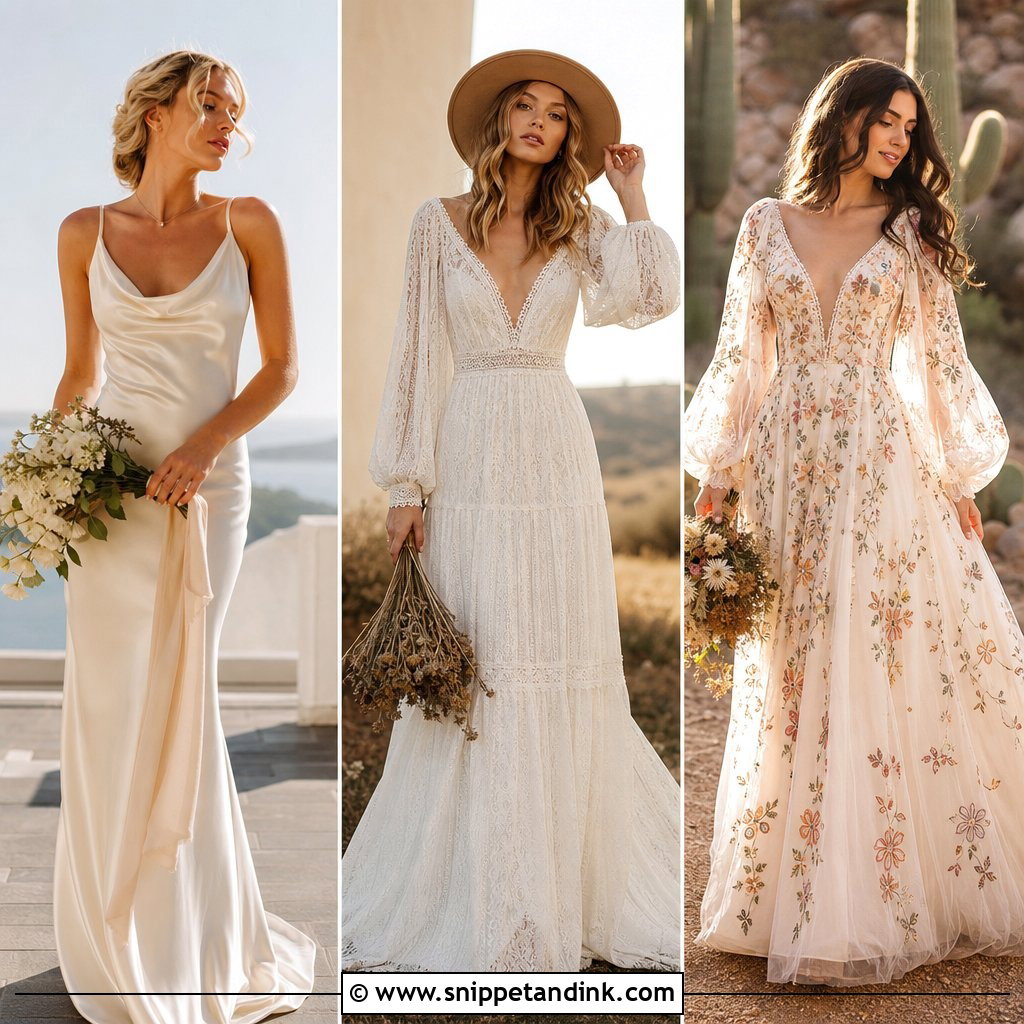
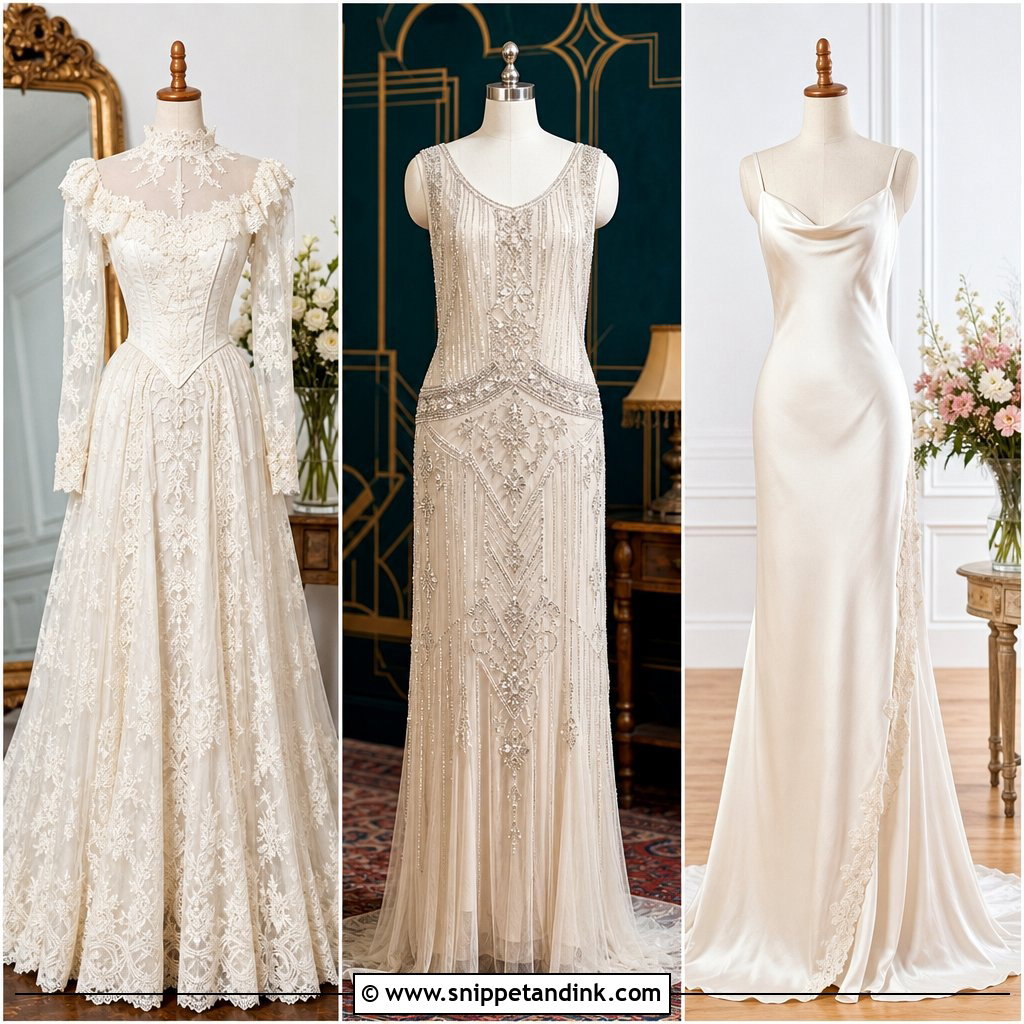
A bias-cut satin slip brings back vintage 1990s bridal style with almost nothing added. Bias cutting lets the satin stretch slightly and fall close to the body, which is lovely and also very revealing of what’s underneath, so fit it with the exact underwear you’ll wear. Silk satin, charmeuse and matte satin all give that soft glow. Thin straps, a cowl neck or a low back keep it simple. Strappy sandals, a small pearl clutch and a chiffon scarf over the shoulders take it from aisle to dinner.
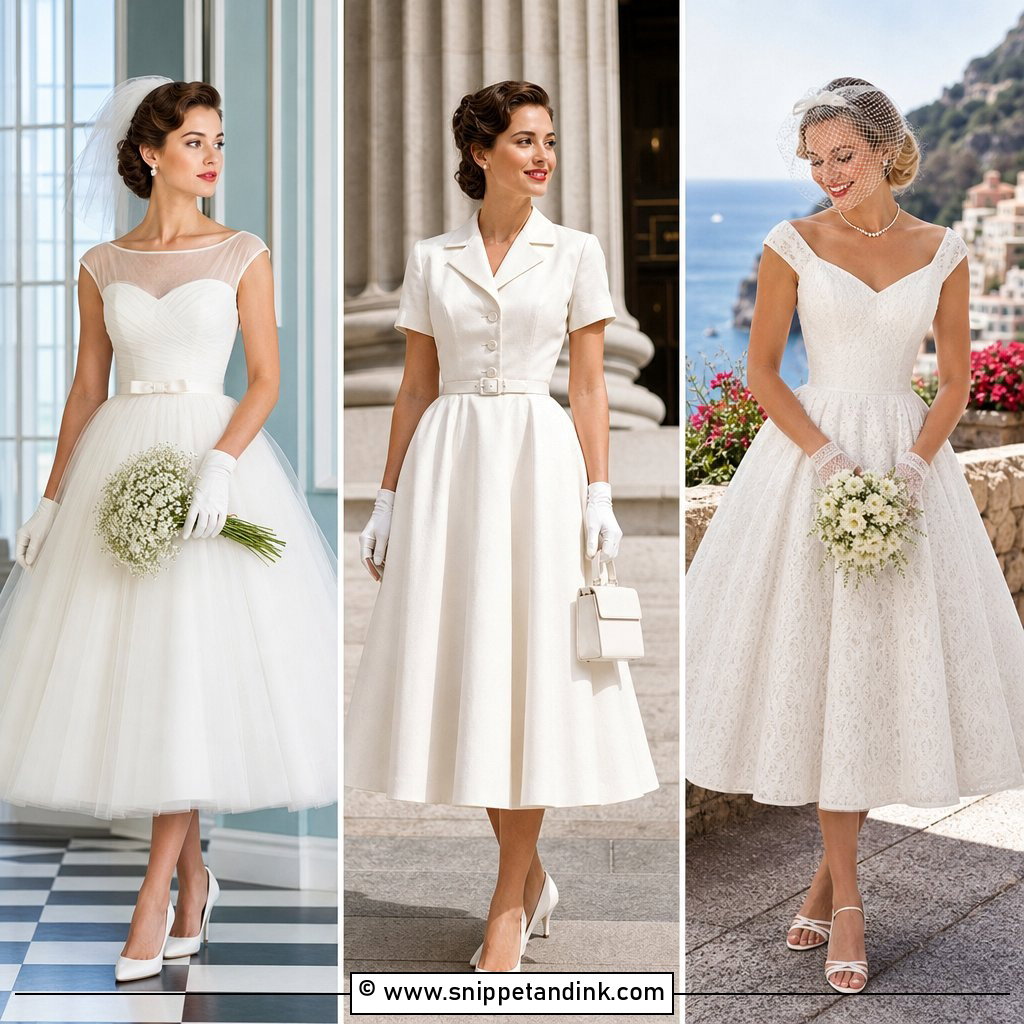
3. Tea Length Wedding Dress
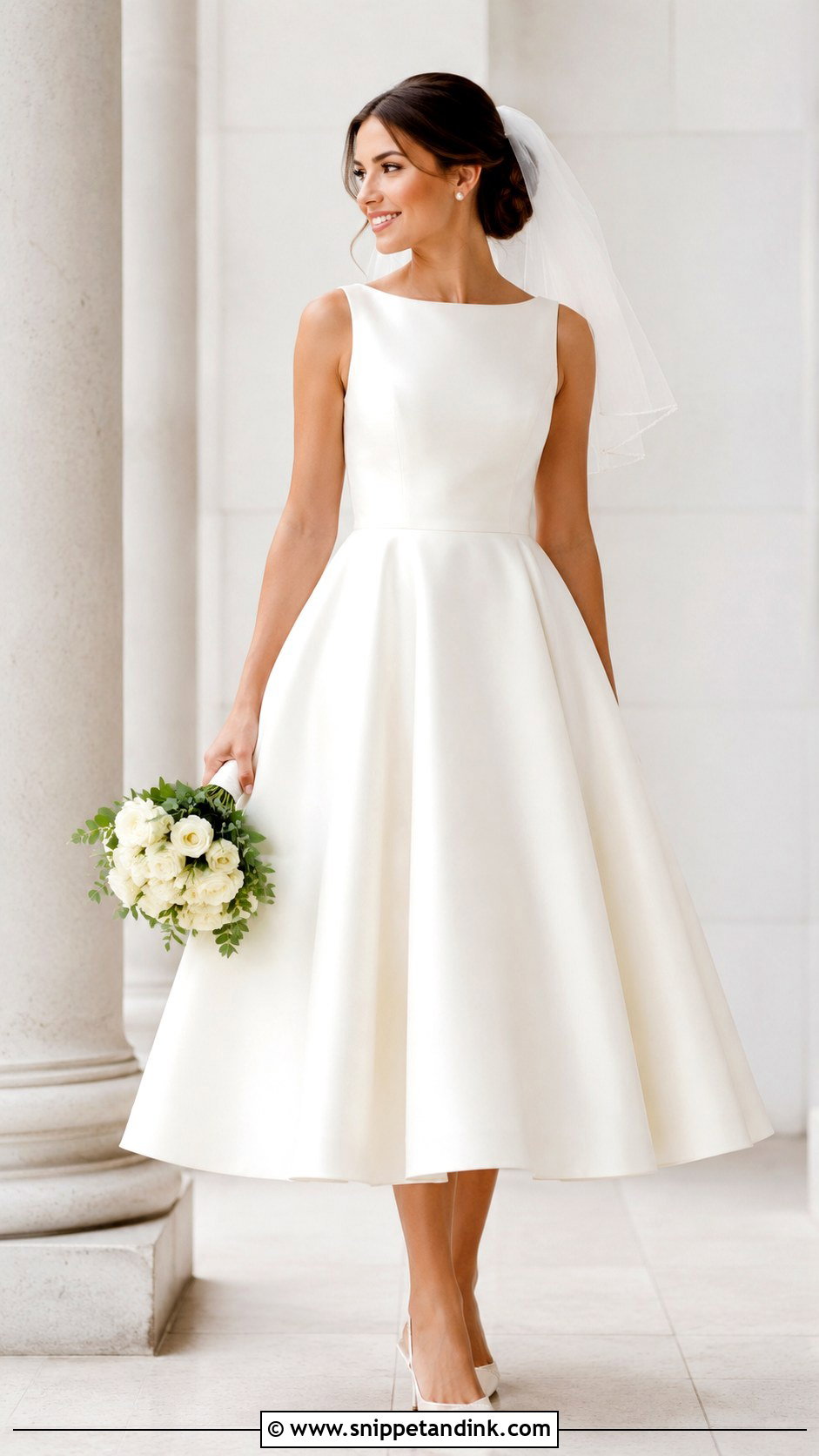
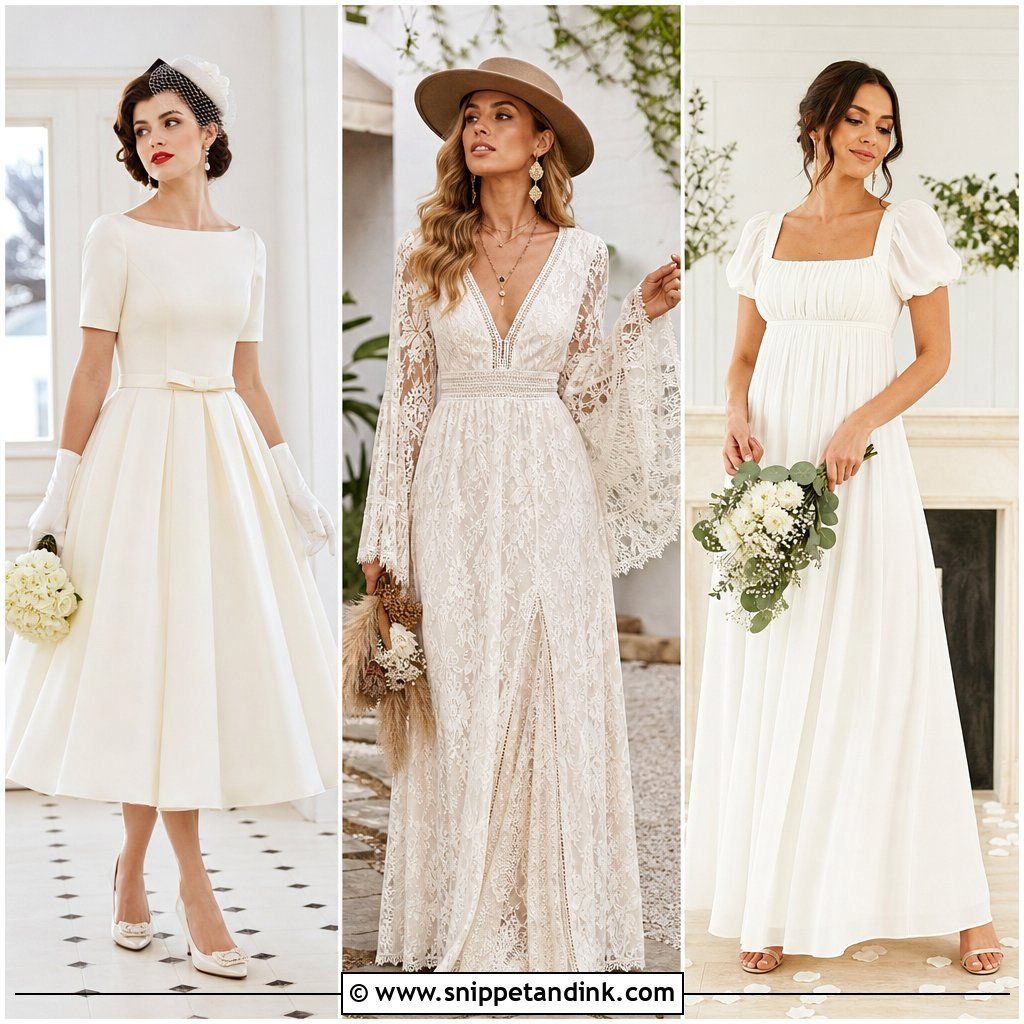
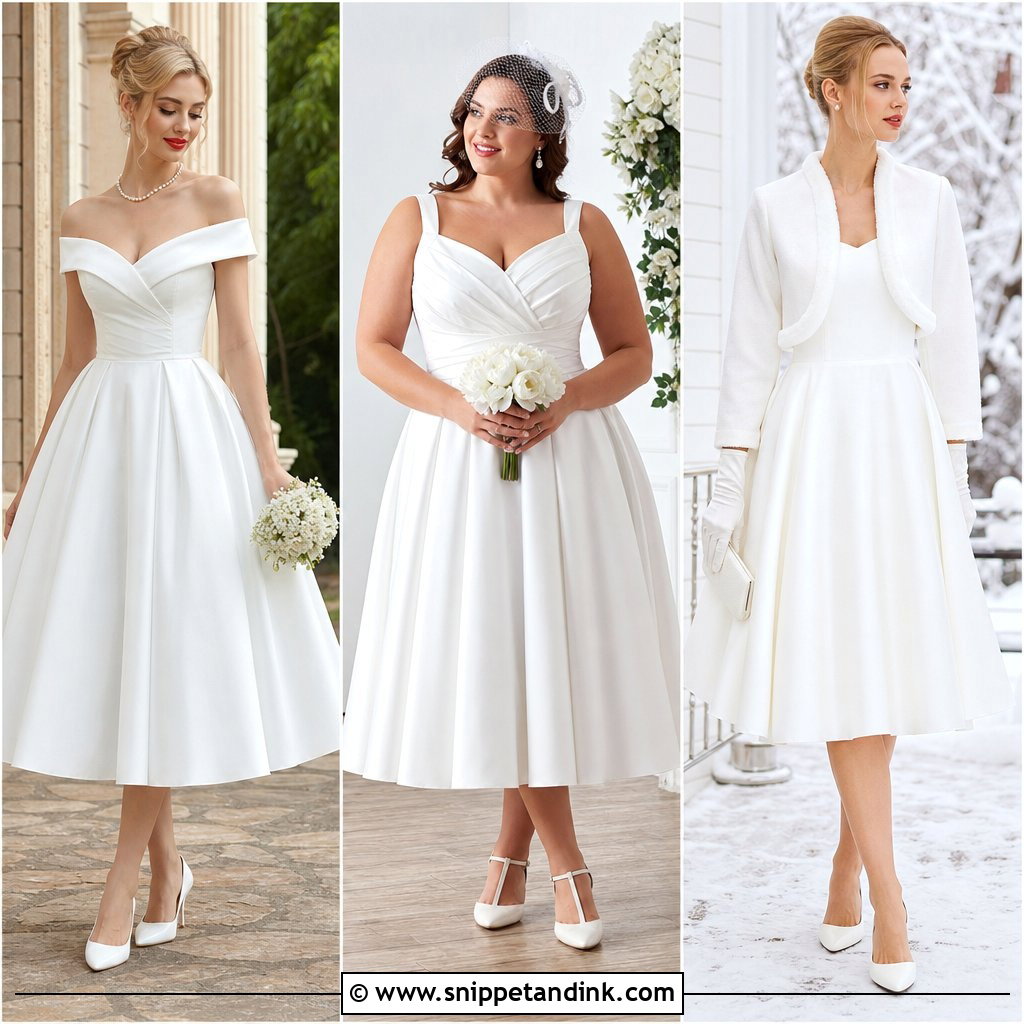
A tea length wedding dress is pure 1950s, and it turns your shoes into a feature. The hem falls between knee and ankle, and the full skirt needs a petticoat or a crisp fabric like mikado to hold that bell shape; soft tulle alone collapses by evening. A bateau or square neck or short sleeves strengthen the retro feel. Pointed slingbacks, pearl studs and a short veil or bow clip finish it. It fits a courthouse or garden wedding where you want to move and dance freely.
4. Corset Wedding Dress
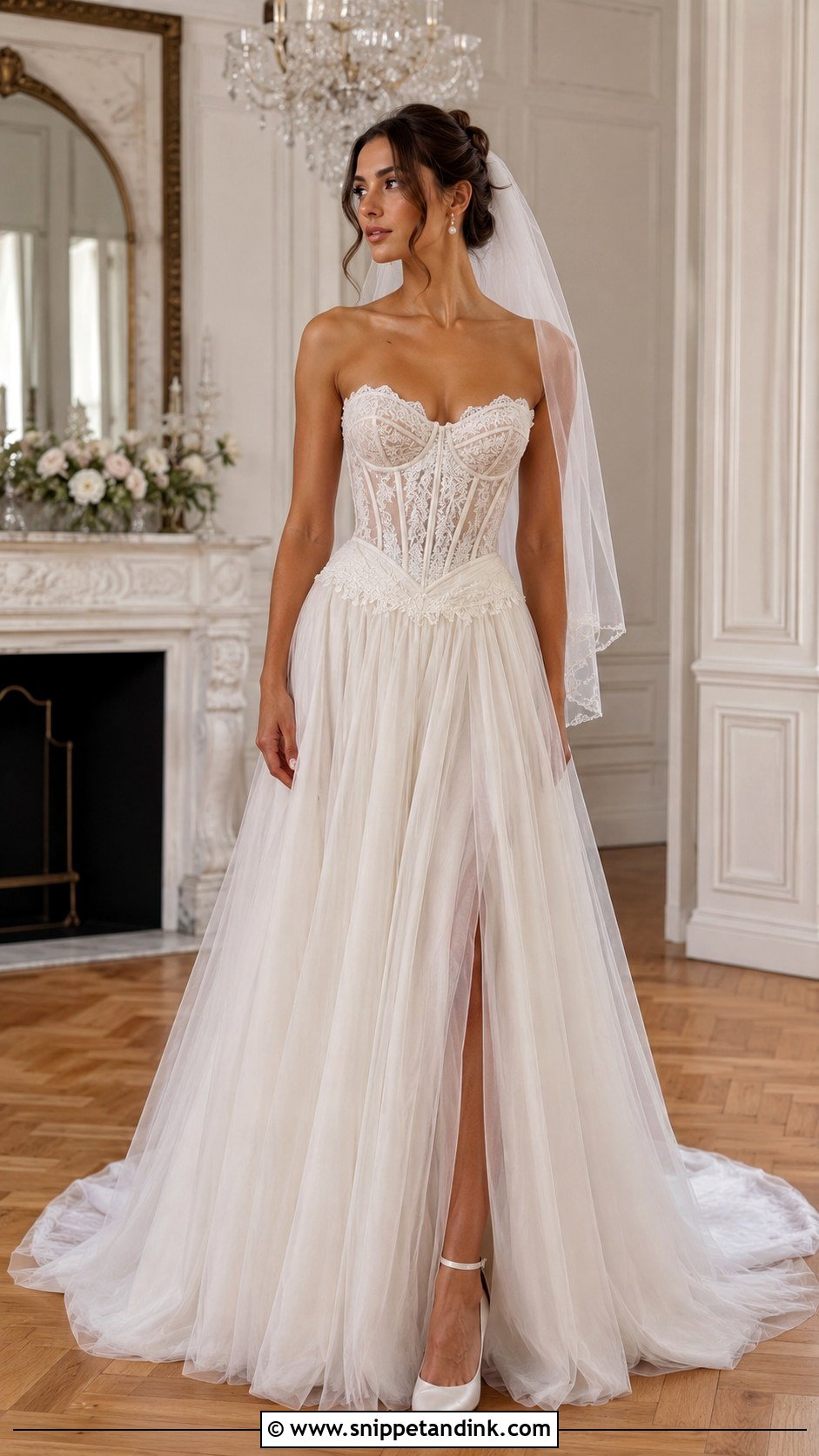
Corsetry gives a gown its old structure and also its old discomfort, so the build quality decides everything. Spiral steel boning follows your body and lets you breathe; cheap plastic bones warp and dig in by mid-afternoon. A basque waist, visible boning or lace-up back add period detail, and a soft A-line, tulle or satin skirt balances the fitted top. At the fitting, sit for several minutes and breathe deeply. If it pinches at the ribs then, it will be worse after dinner. Pearl earrings, a soft updo and pointed heels suit it.
5. Basque Waist Wedding Dress
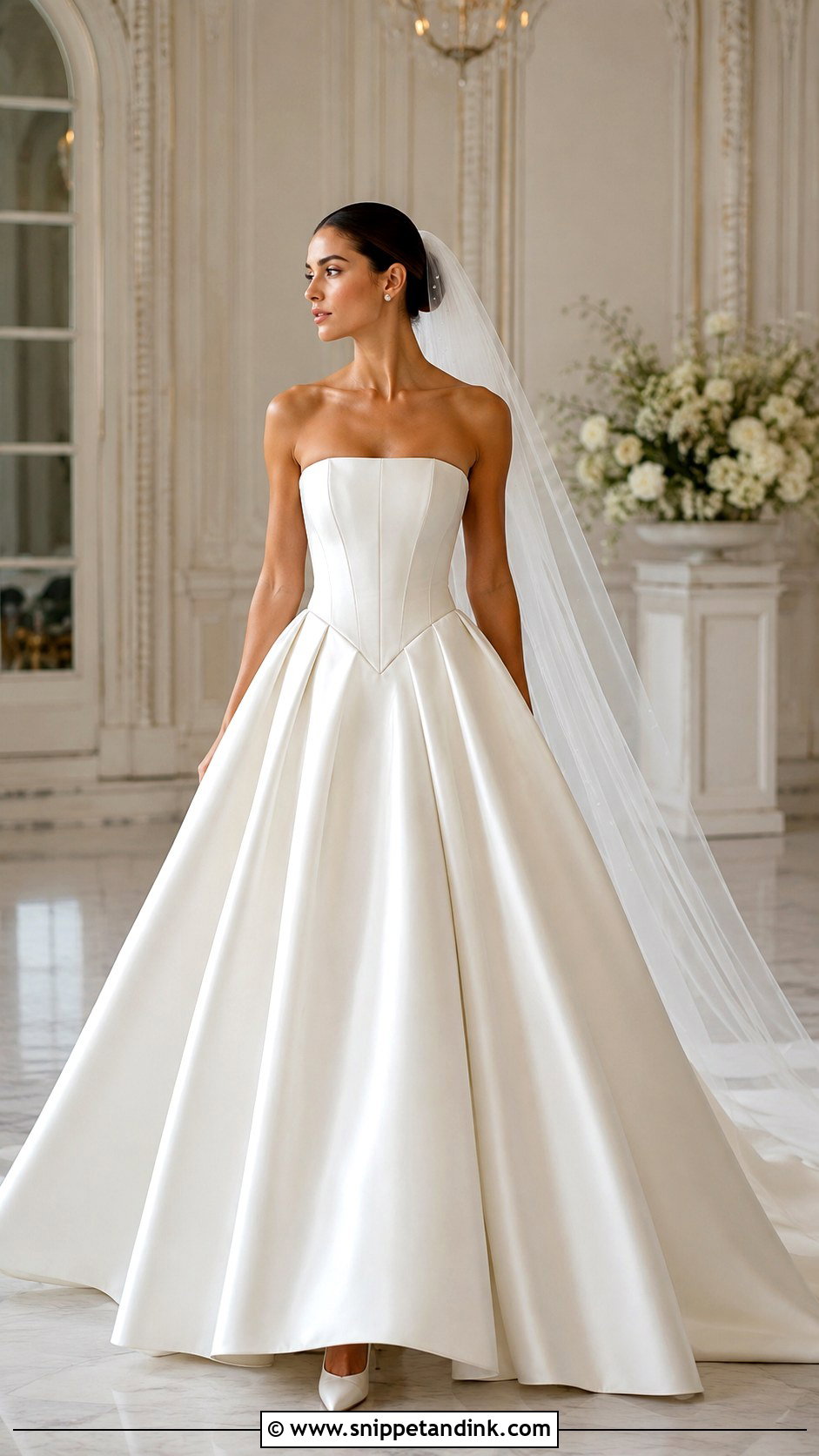
The basque waist dips to a point below the natural waist, lengthening the torso the way Victorian and Renaissance gowns did. In clean satin, mikado or lace, it reads sculpted rather than costume. I place the point carefully: too low and it presses into the lap when you sit. A strapless neckline feels fashion-led, and long sleeves push it more romantic. Pearl studs, a smooth veil and satin pumps keep it controlled, and it holds its shape well in a large formal room.
6. High Neck Wedding Dress
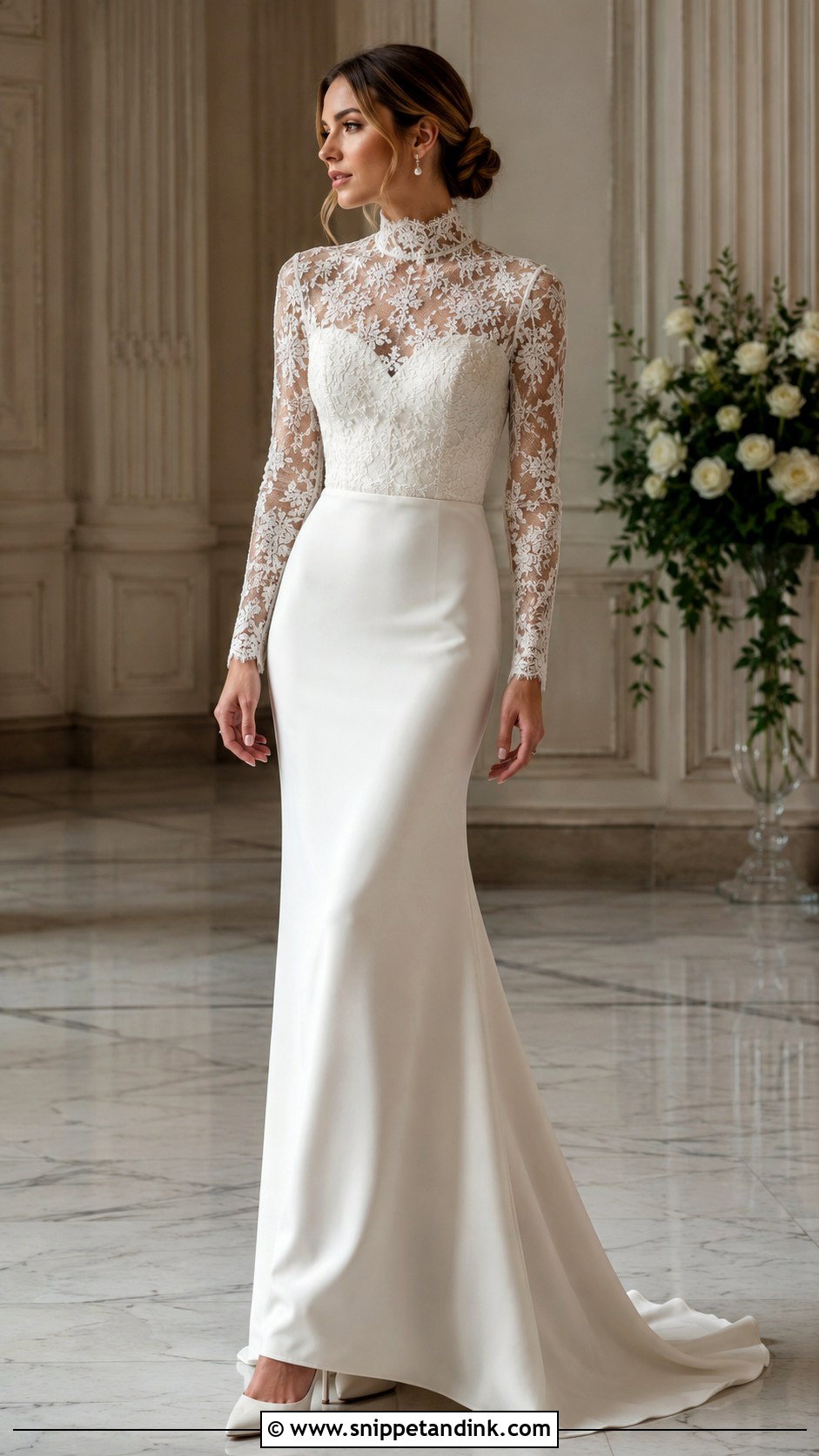
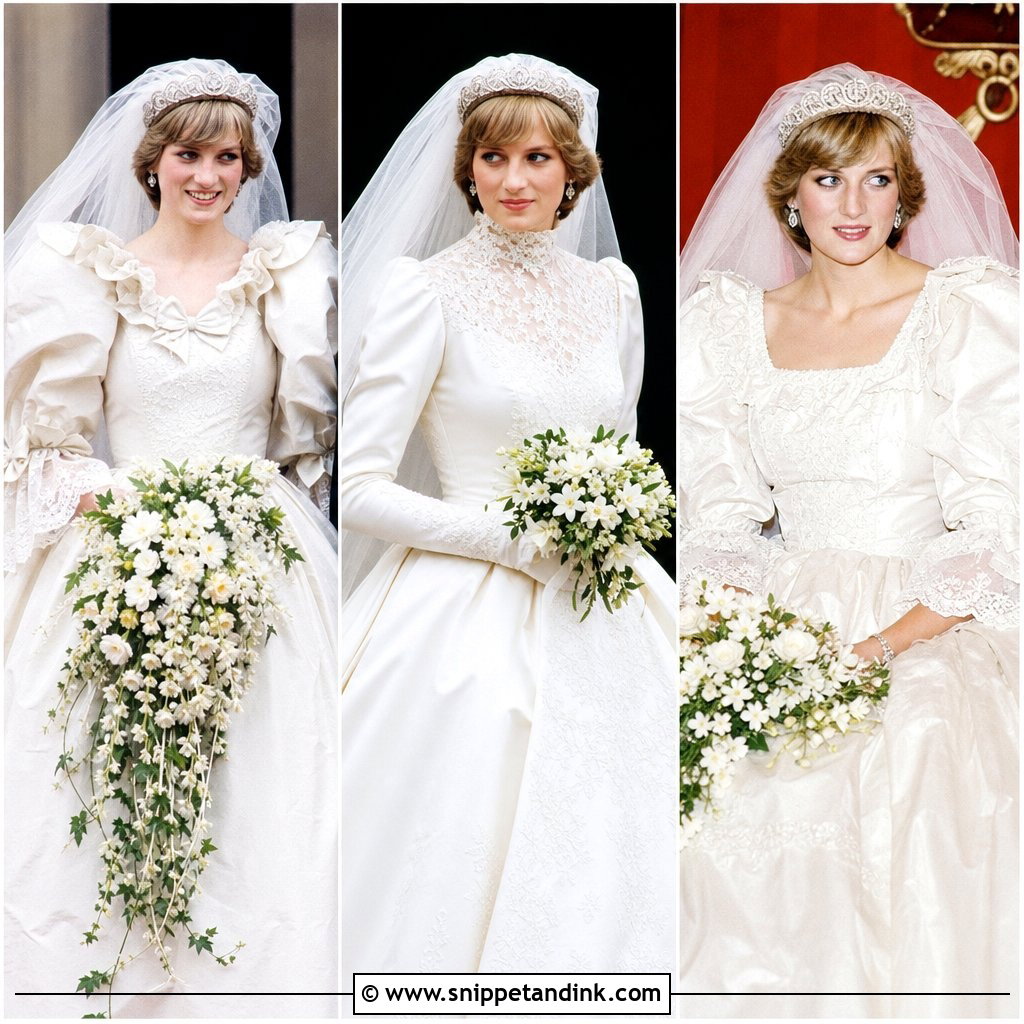
A high neck can point to several eras depending on the fabric. Sheer lace up to the jaw feels Victorian or Edwardian; a clean crepe or satin high neck reads 1960s. A fitted bodice, simple skirt or open back keeps it modern. The collar should sit flat with no gap when you turn your head, and I check it with the hair done, since a bun can push it forward. No necklace. Pearl earrings, a low chignon and pointed ivory heels are enough.
7. Off Shoulder Wedding Dress
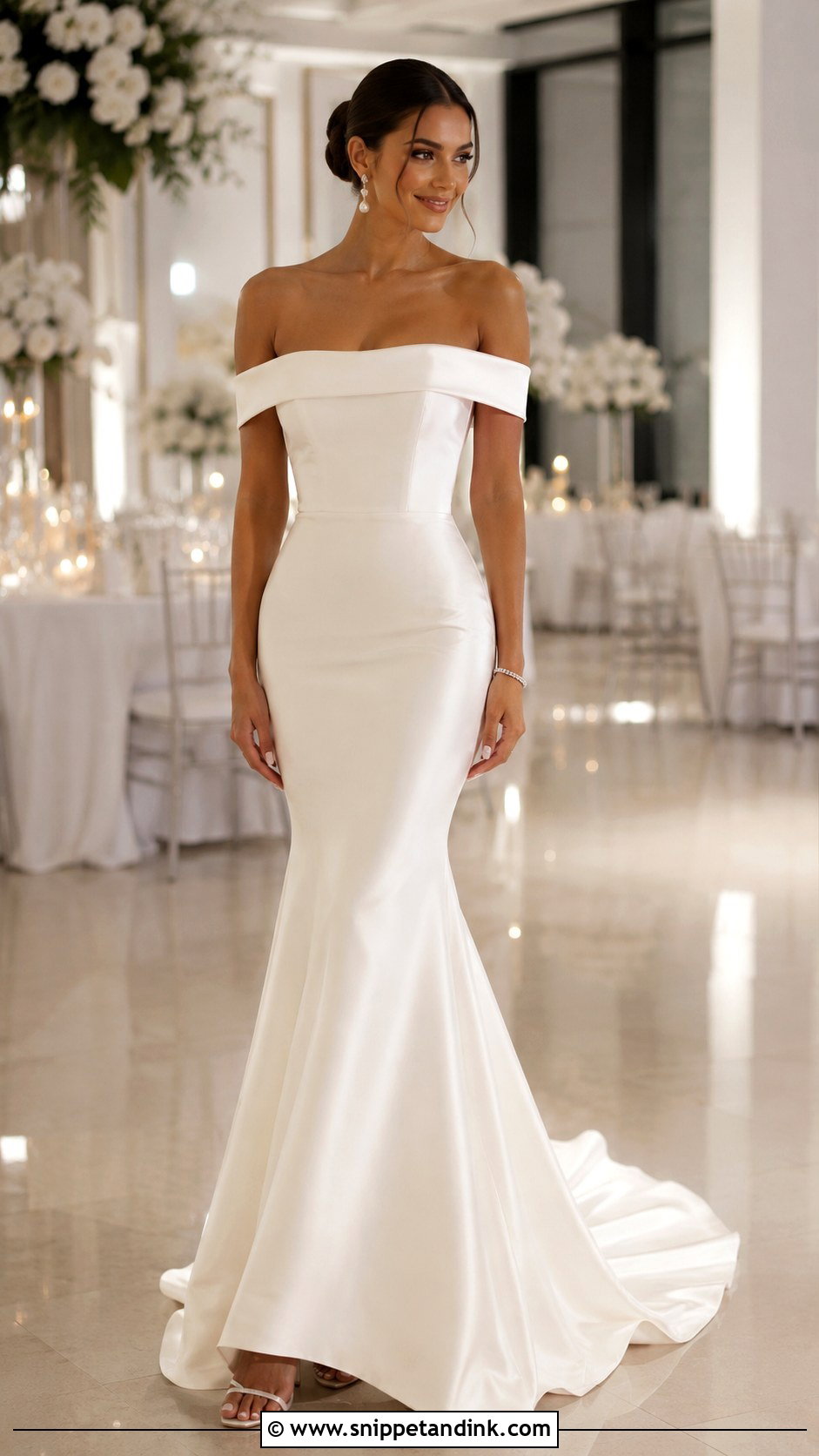
Off-the-shoulder necklines carry two different vintage references. A folded satin cuff across the arms gives Old Hollywood polish, while lace sleeves or tulle draping feel softer and older. A mermaid skirt adds drama; an A-line gives more ease. The band across the arms must grip well enough to stay put when you lift them, and that’s the first thing I test. Sweep the hair off the shoulders and keep jewelry light, maybe a bracelet and pearl drops.
8. Puff Sleeve Wedding Dress
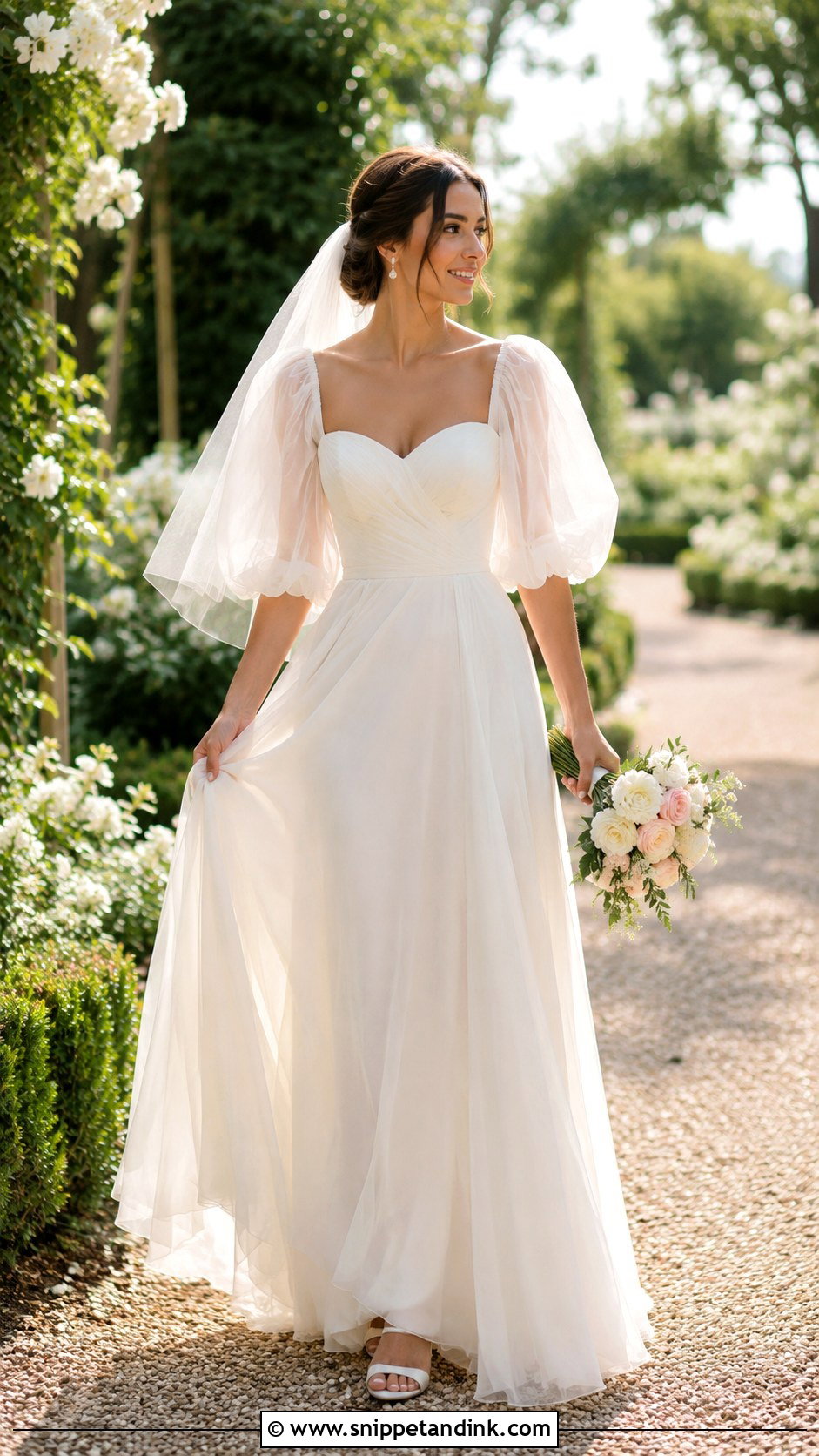
Puff sleeves need lightness to look modern. Sheer organza or soft tulle holds volume without weight, while heavy satin puffs quickly look like a costume. Detachable versions let you drop them for dancing, as long as they fasten with snaps or ties rather than elastic. A square neck gives a cottage feel and a sweetheart reads more classic. Delicate earrings, satin heels and a soft veil keep the sleeves the only big gesture, and the look suits outdoor and garden weddings.
9. Pearl Beaded Wedding Dress
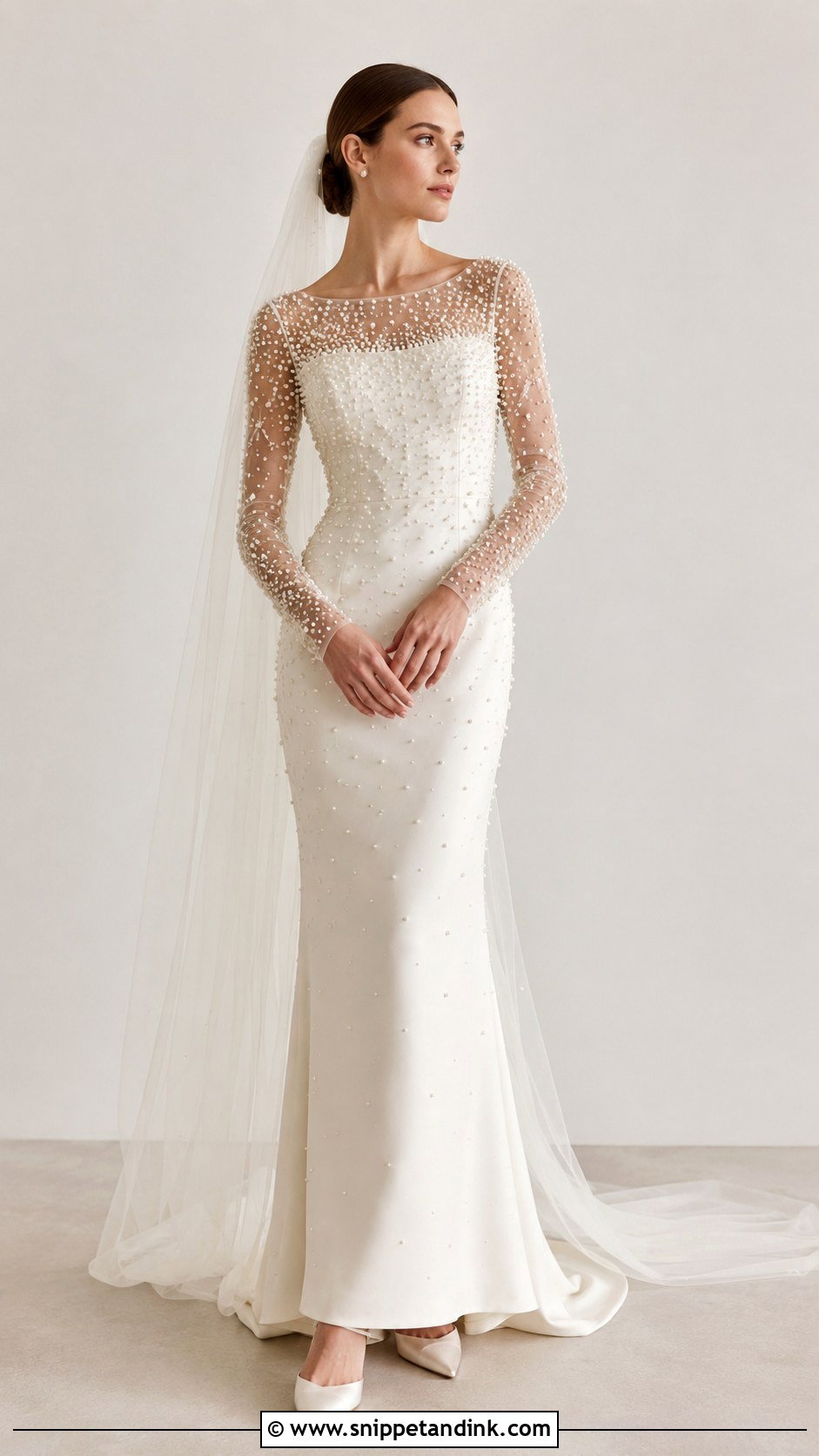
Pearls give an heirloom shine without glitter. They can be stitched across the bodice, along the sleeves, around the neckline or scattered through tulle. On a column, sheath or structured A-line, they look deliberate rather than ornate. Check the stitching at the sleeves and cuffs, where pearls rub against a bouquet or veil and loosen first. Pearl studs, satin heels and a sleek veil are all the extra jewelry it needs.
10. Art Deco Wedding Dress
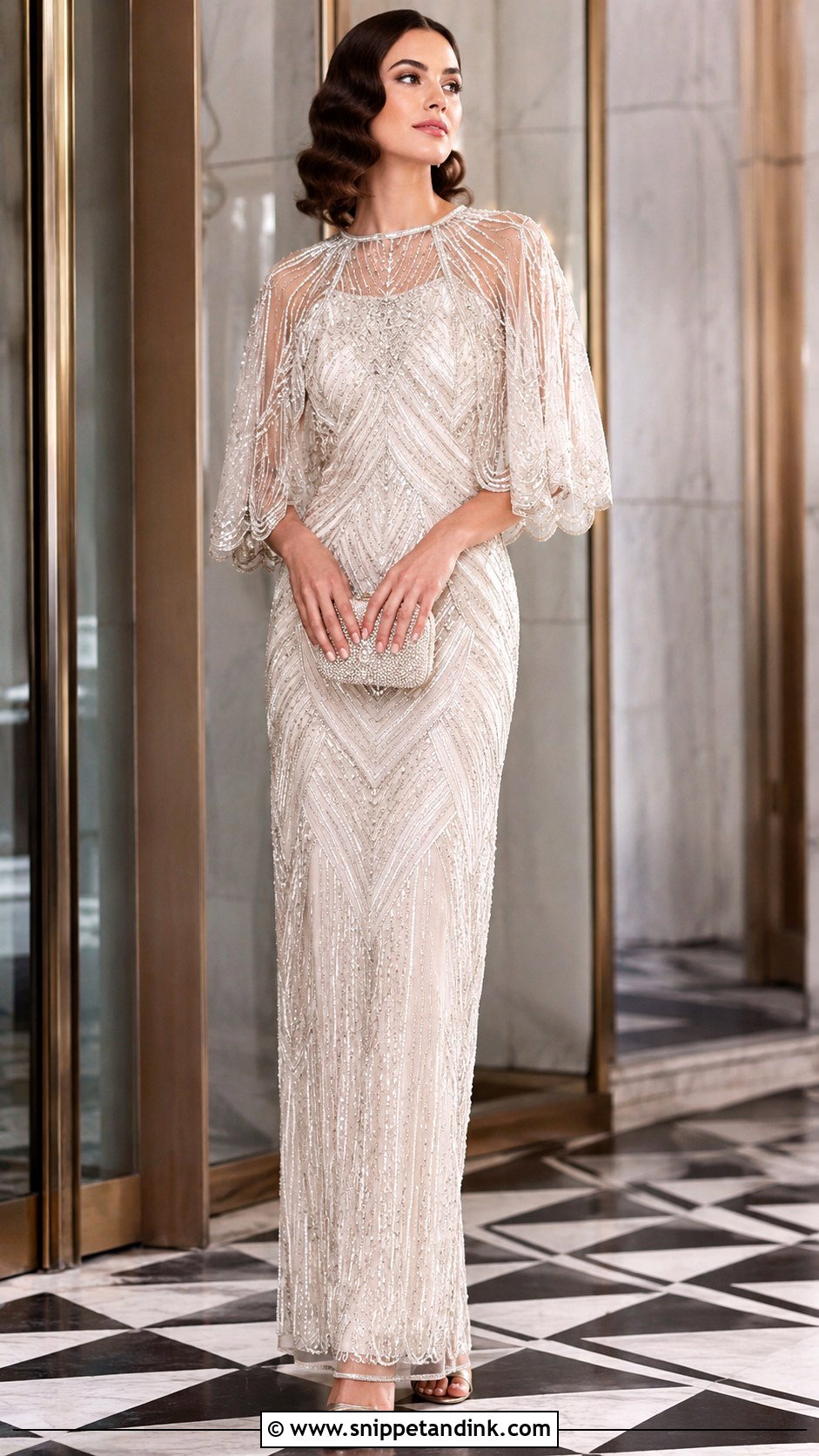
An Art Deco wedding dress is the 1920s in fabric form: geometric beading, linear embroidery, scalloped edges and a loose column shape. Heavy beading weighs a lot and can pull on a fine chiffon base, so these dresses need a strong underlayer and careful hanging. Keep the palette ivory and the accessories simple to stay clear of flapper costume. Metallic heels, a beaded clutch, sleek waves and perhaps a sheer capelet suit an evening hotel reception.
11. Old Hollywood Wedding Dress
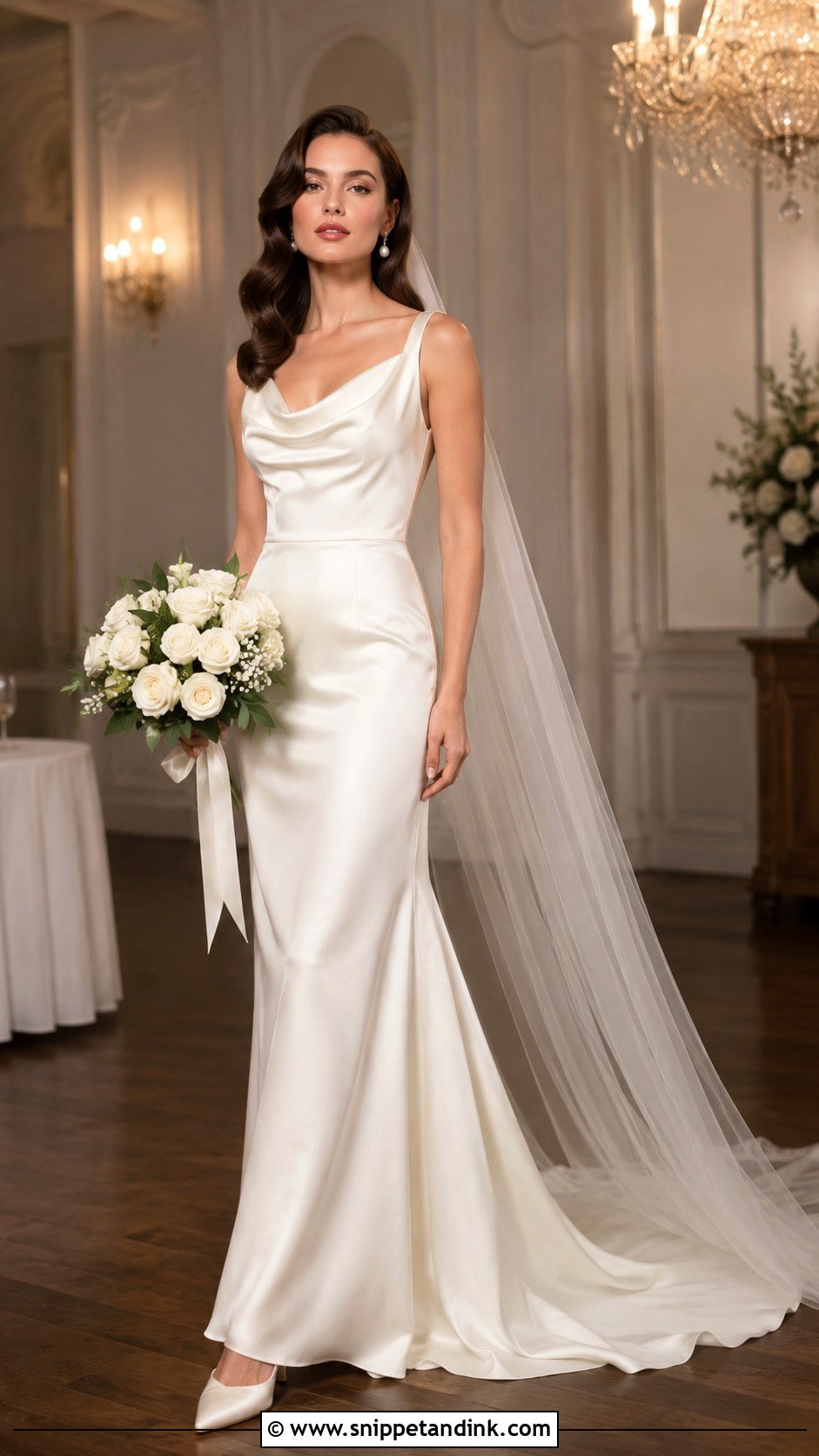
Old Hollywood is about line, not decoration. Satin, silk or crepe with a draped neckline, fitted waist and fluid skirt does the work, with a subtle train, covered buttons or a low back for drama. Liquid satin shows every bump, so I fit these with particular care through the hips and lower back. Side-parted waves, pearl earrings and satin pumps complete it, and a soft faux-fur wrap works on a cold evening. It belongs at a black-tie or ballroom reception.
12. Victorian Lace Wedding Dress
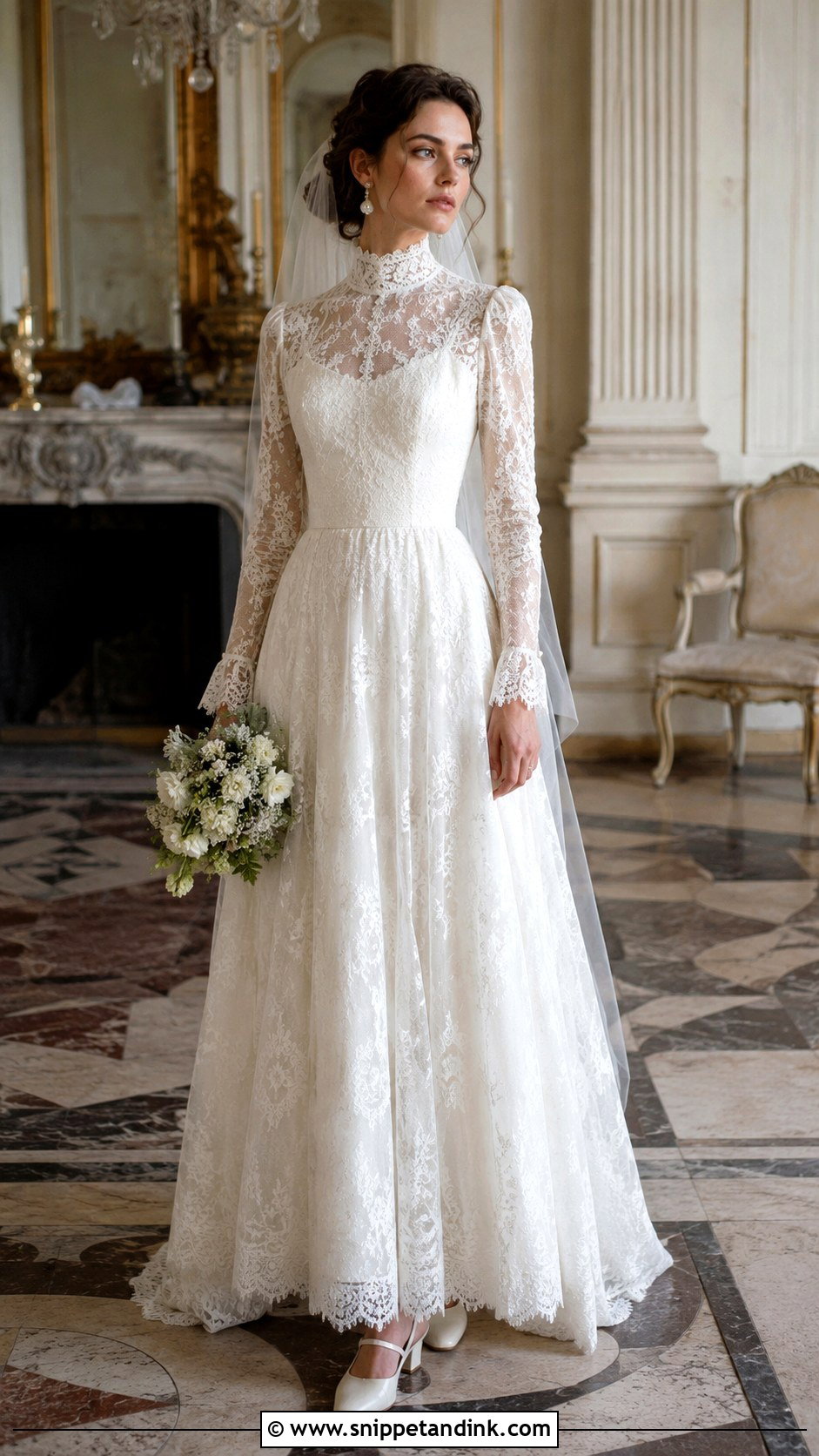
Victorian lace brings high necks, long sleeves, buttoned cuffs and layered lace over a soft lining. Too much volume plus all that lace weighs the dress down, so I keep the skirt slim, an A-line or soft sheath, and choose a lighter lace. Rows of tiny covered buttons at the back take time to fasten, so plan that into the getting-ready schedule, and keep a crochet hook in the kit to make it quicker. A simple veil, antique-style earrings and ivory block heels suit it.
13. Edwardian Wedding Dress
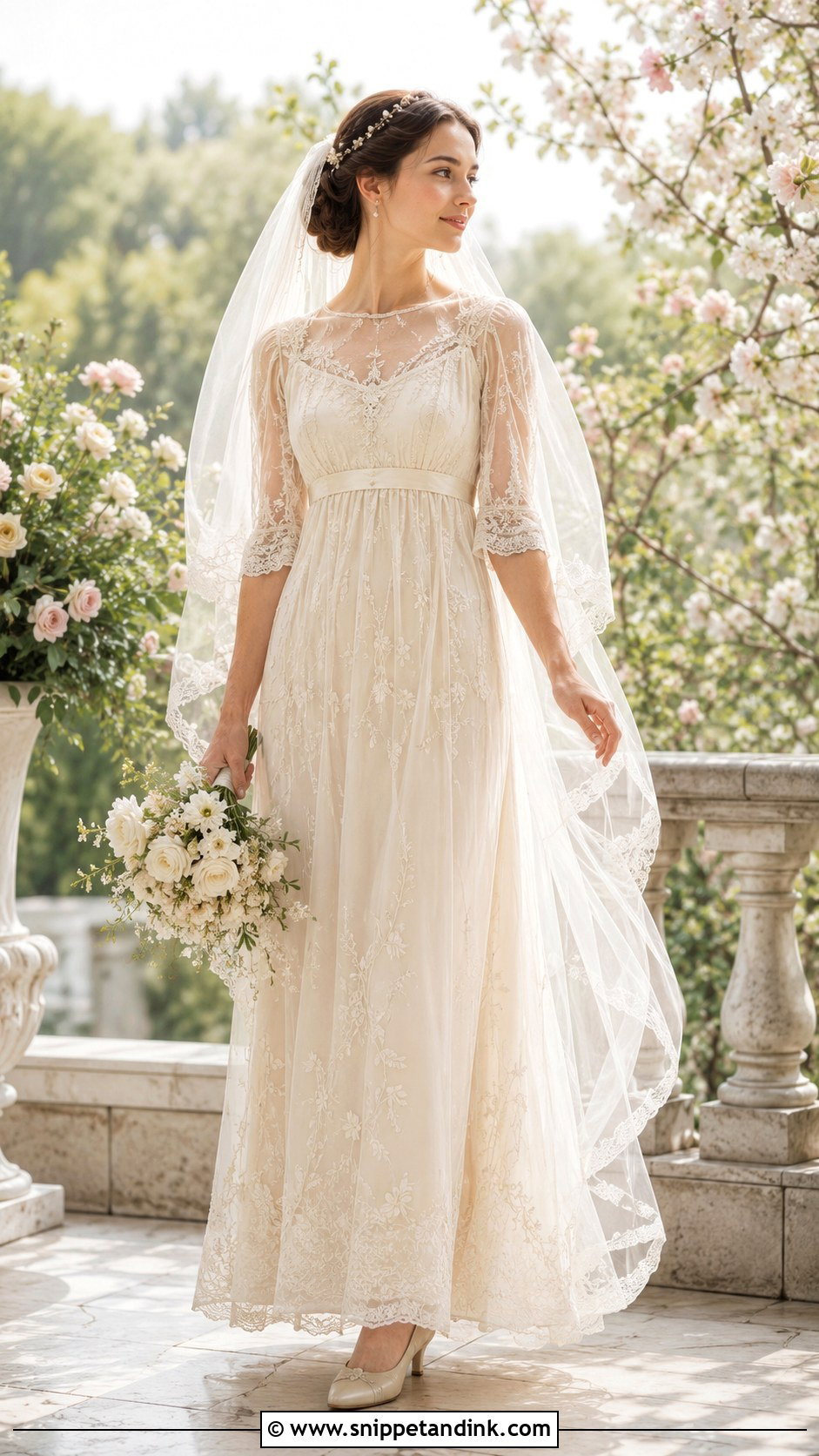
An Edwardian wedding dress is the lightest of the historical styles, with airy lace, pintucks, soft embroidery and a high or empire-style waist. A gentle high neck or sheer yoke keeps it breathable. I like it with satin ballet flats or low heels and loose waves with pearl pins, because the whole look is meant to feel soft rather than formal. A lightweight veil or tulle cape completes it. It’s my favorite vintage reference for a warm spring or summer wedding.
14. 1950s Ball Gown Wedding Dress
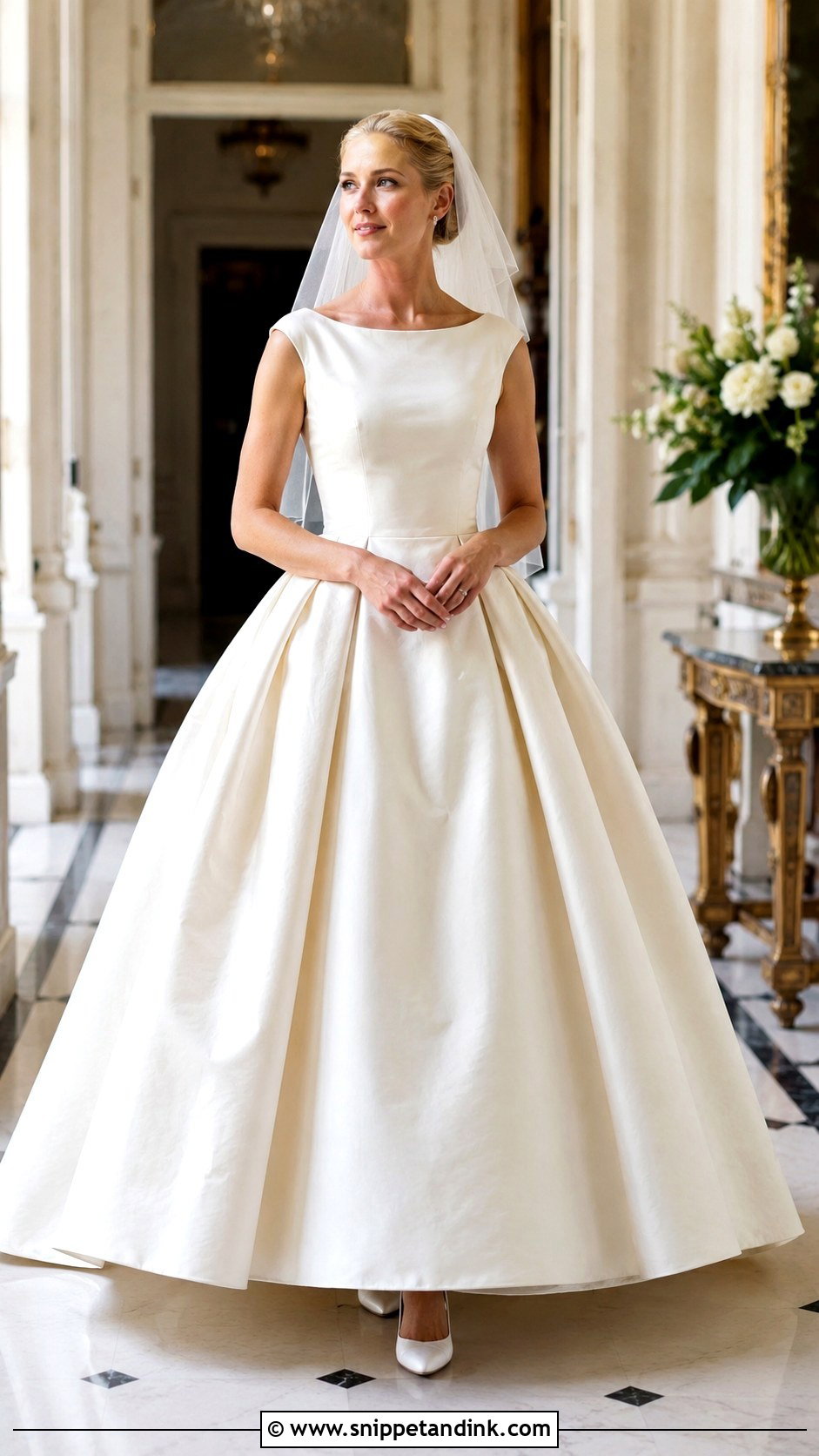
A 1950s ball gown pairs a nipped waist with a full skirt, and modern versions use mikado, satin or layered tulle so the volume holds without heavy petticoats. A sweetheart, bateau or short-sleeve bodice gives the retro note. That much skirt takes space in a car, a doorway and on the dance floor, so ask about a bustle and practice sitting. Classic pumps, pearl earrings and a short veil finish it, and a simple bouquet keeps the gown in front.
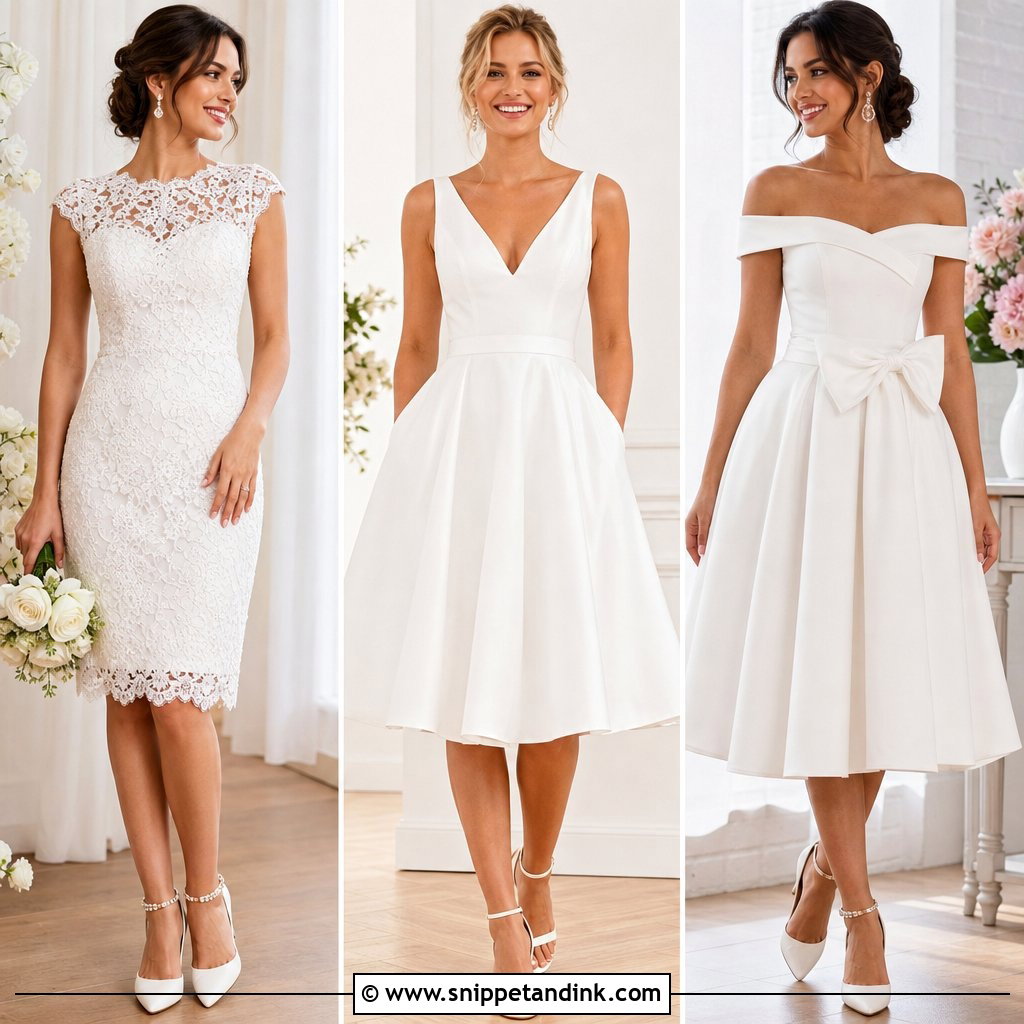
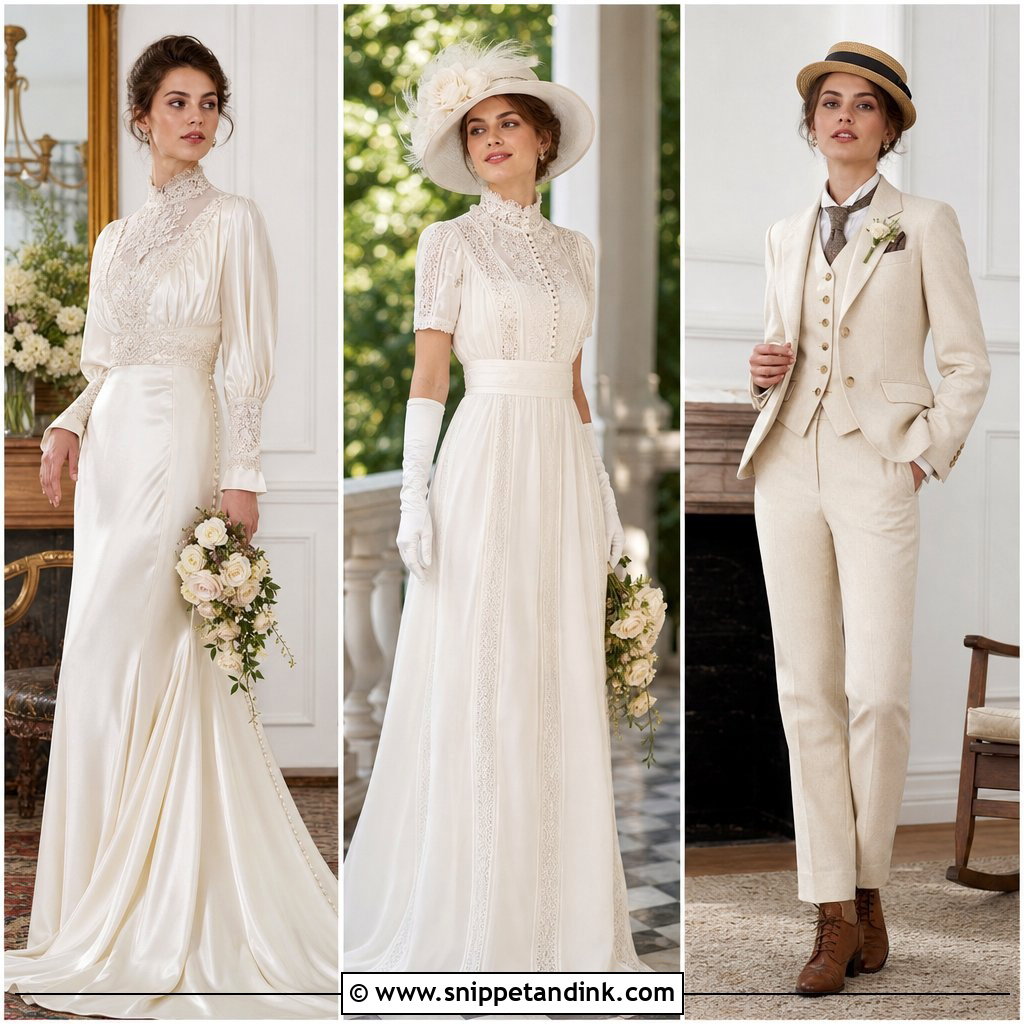

15. 1960s Mini Wedding Dress
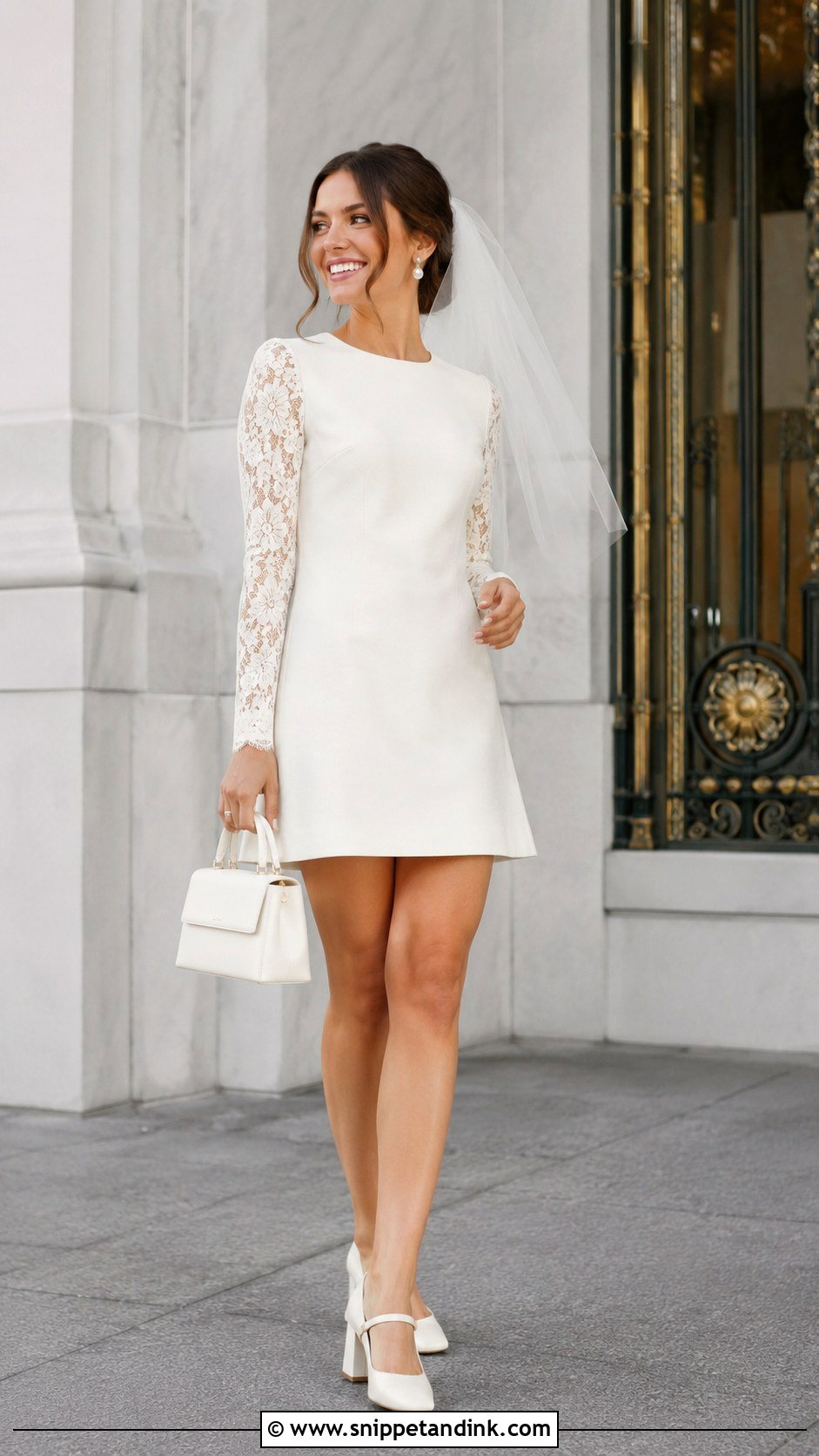
A 1960s mini wedding dress suits a courthouse ceremony, a reception change or a small wedding. A clean shift, A-line mini or long-sleeve lace mini gives the mod feel. Sit down in it before buying, since structured minis ride up further than you’d expect. Block heels, slingbacks or pointed pumps, pearl earrings and a short veil or headband complete it. Keep makeup fresh rather than heavy winged liner, or it tips into a theme party.
16. 1970s Boho Wedding Dress
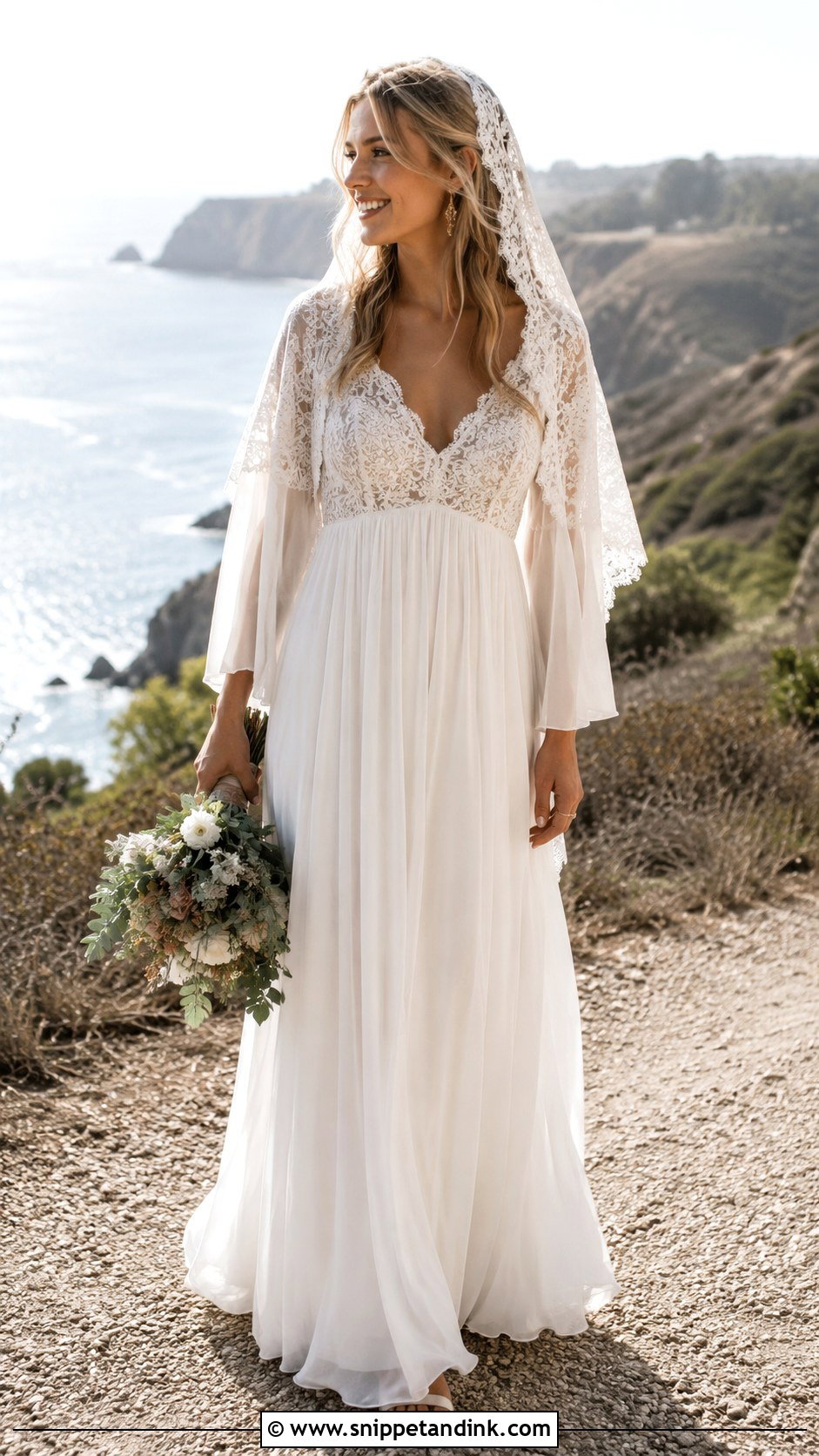
A 1970s boho dress feels loose and relaxed, with flowing sleeves, crochet-style lace, soft chiffon or an empire waist. The modern version still needs shaping at the waist or bust; without it the dress can look like a nightgown in photos. Bell sleeves drag through food, so pin them back for dinner. Soft waves, delicate earrings, low sandals and a lace veil or hair comb suit it at an outdoor, desert or beach wedding.
17. 1980s Inspired Wedding Dress
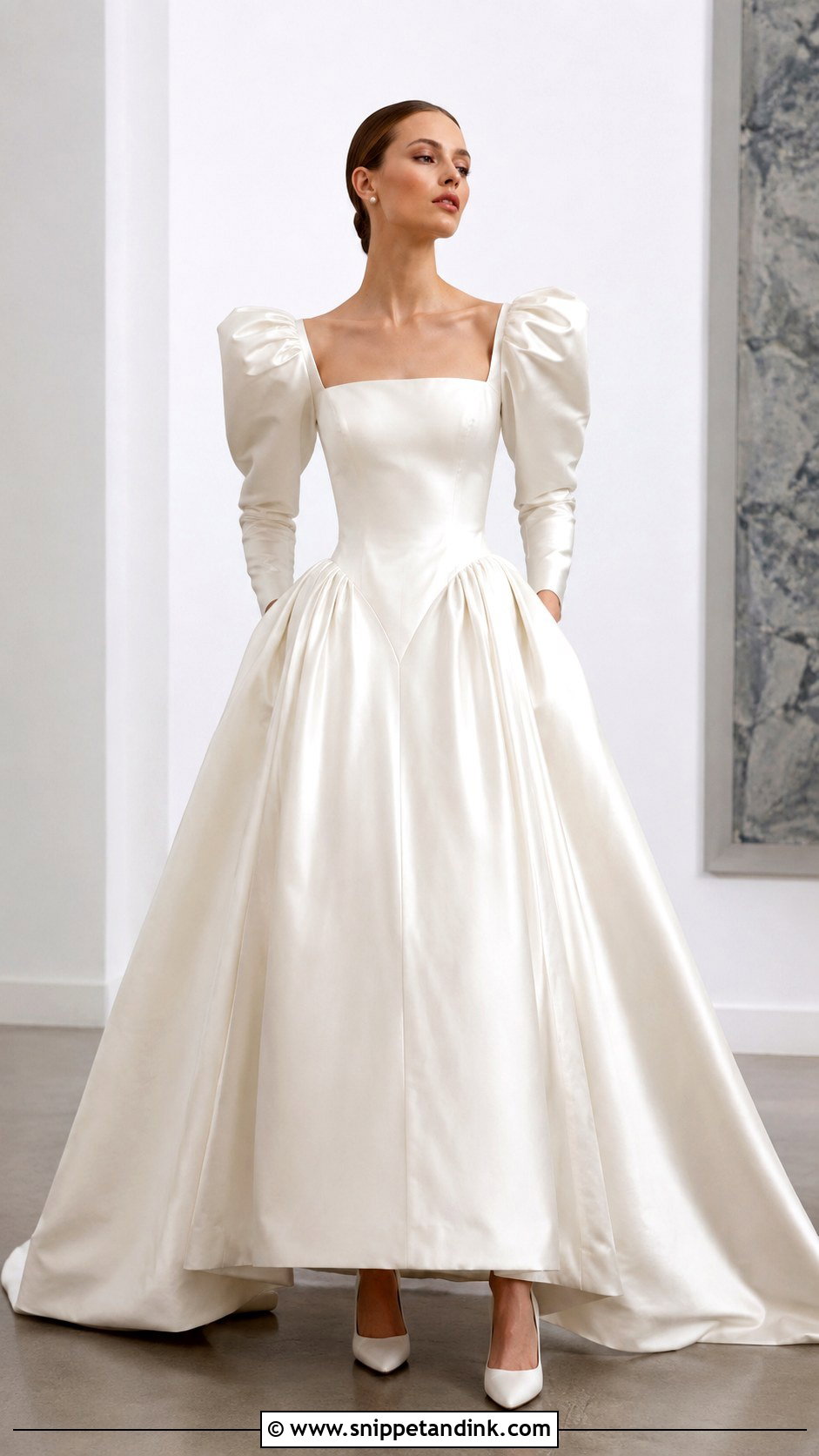
An 1980s inspired wedding dress looks current when you choose one statement and drop the rest: sculpted sleeves, a bow back or a full skirt, never all three. Satin or taffeta gives structure, and a fitted bodice keeps the shape flattering. Taffeta rustles loudly and creases sharply, which is part of its charm but worth knowing before a long seated ceremony. Simple pumps, small earrings and smooth hair calm everything down.
18. 1990s Minimal Wedding Dress
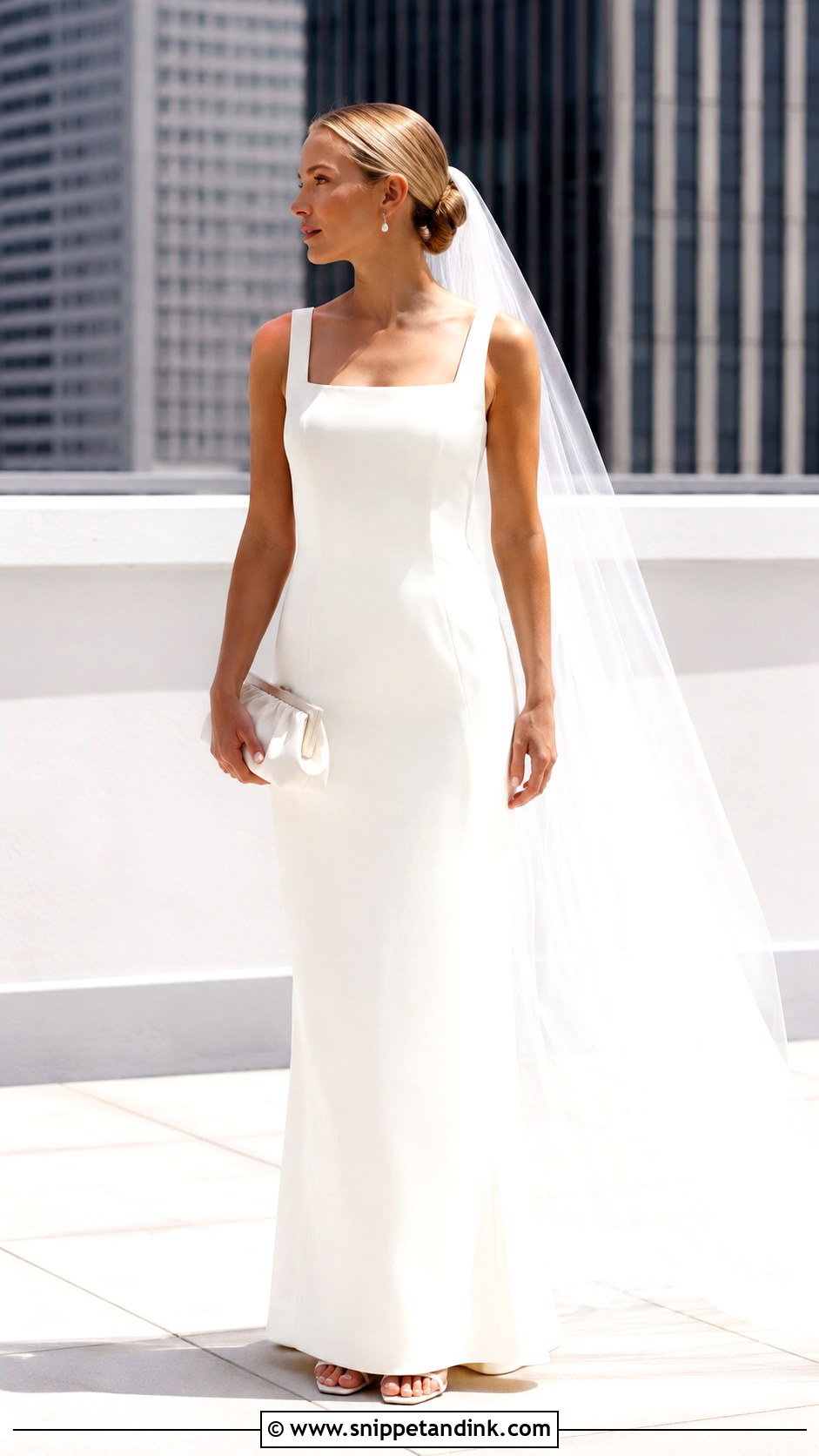
The 1990s look is vintage by subtraction. A column silhouette, square neck, spaghetti straps or clean crepe with almost no embellishment carries the reference. Because there’s nothing to hide behind, the tailoring has to be precise, especially along the side seams and hem. A low bun, barely-there sandals, a small satin clutch and a long sheer veil complete it. It suits a gallery, rooftop or small city ceremony.
19. Brocade Wedding Dress
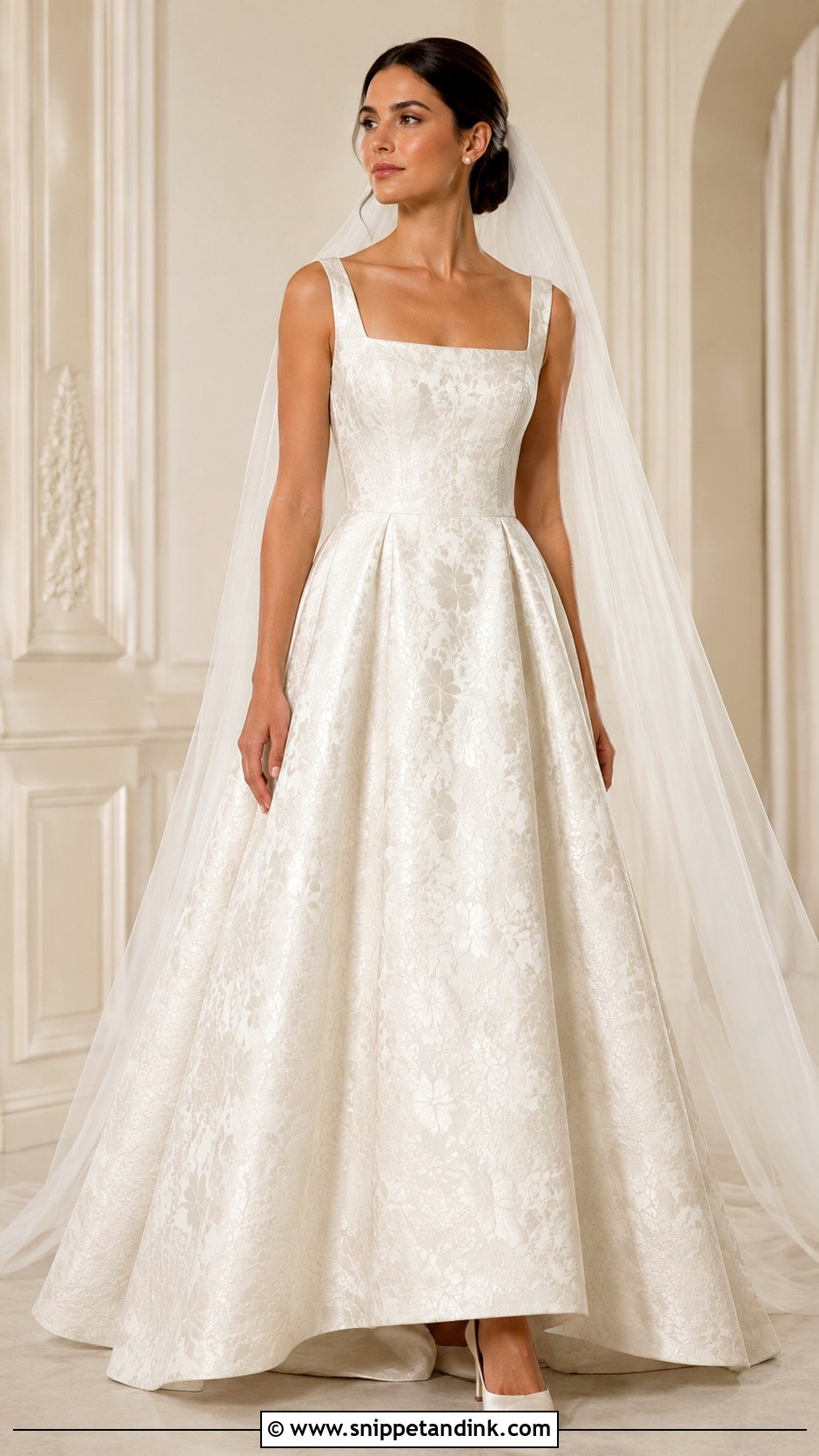
Brocade is woven, not printed, so the pattern has real texture and the fabric has body. Ivory floral brocade, damask or tone-on-tone work all give a simple A-line, column or ball gown depth. It’s heavier and stiffer than satin, so sleeves and bodices need room for movement. A square neck or strapless bodice looks current; a full skirt leans traditional. Pearl studs, satin heels and a smooth veil are enough, because the fabric already does the decorating.


20. Bow Back Wedding Dress
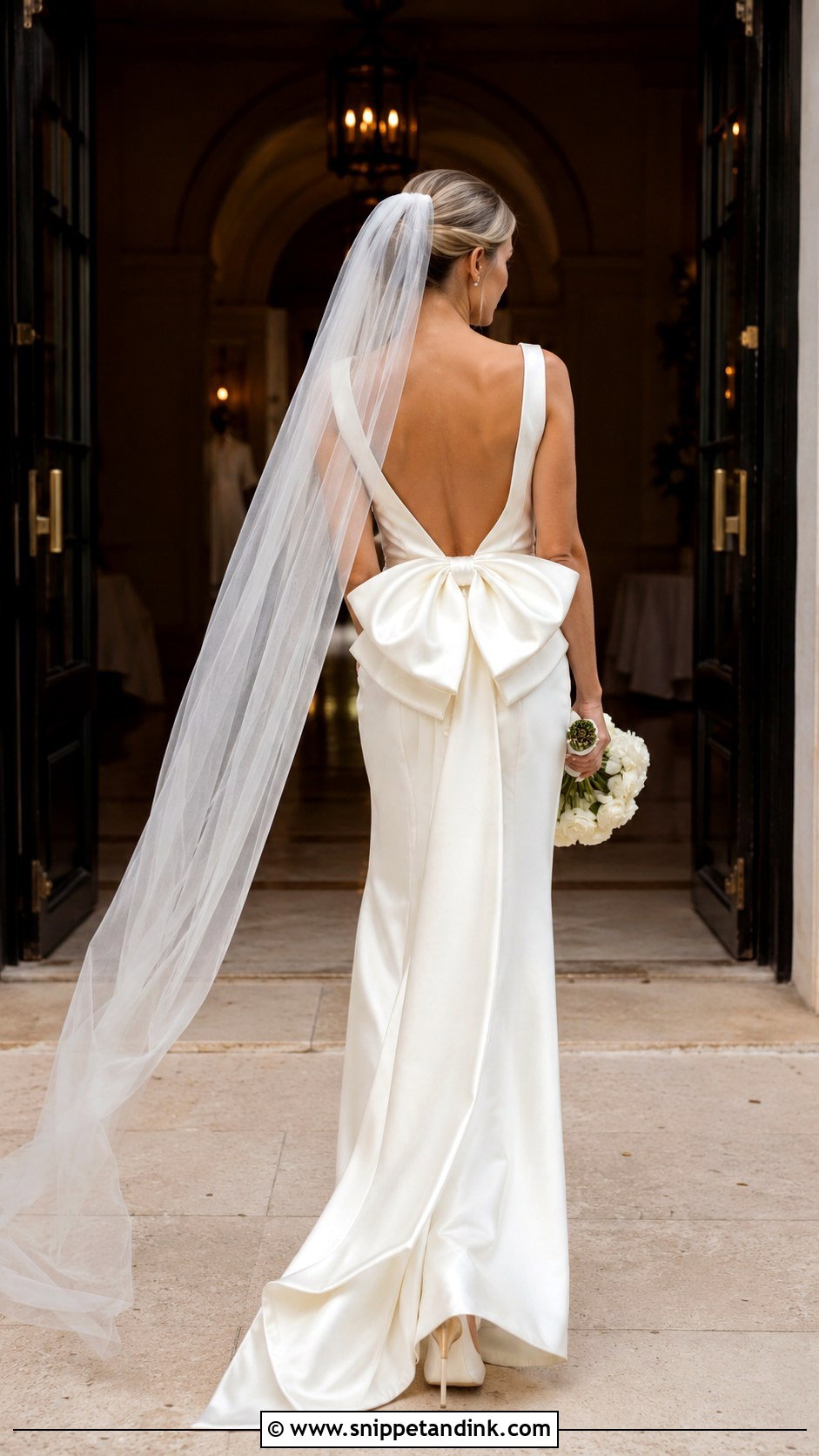
A bow at the back gives you a vintage exit and keeps the front clean. It can be oversized and sculptural, soft and trailing, or tied neatly at the waist. Bows in soft fabric flatten after hours of leaning against chairs, so a stiffened satin bow or one with interfacing holds up better. Pair it with a plain satin or crepe gown, a low back or strapless neckline and a veil you’ll take off early enough for the bow to be seen.
21. Cape Wedding Dress
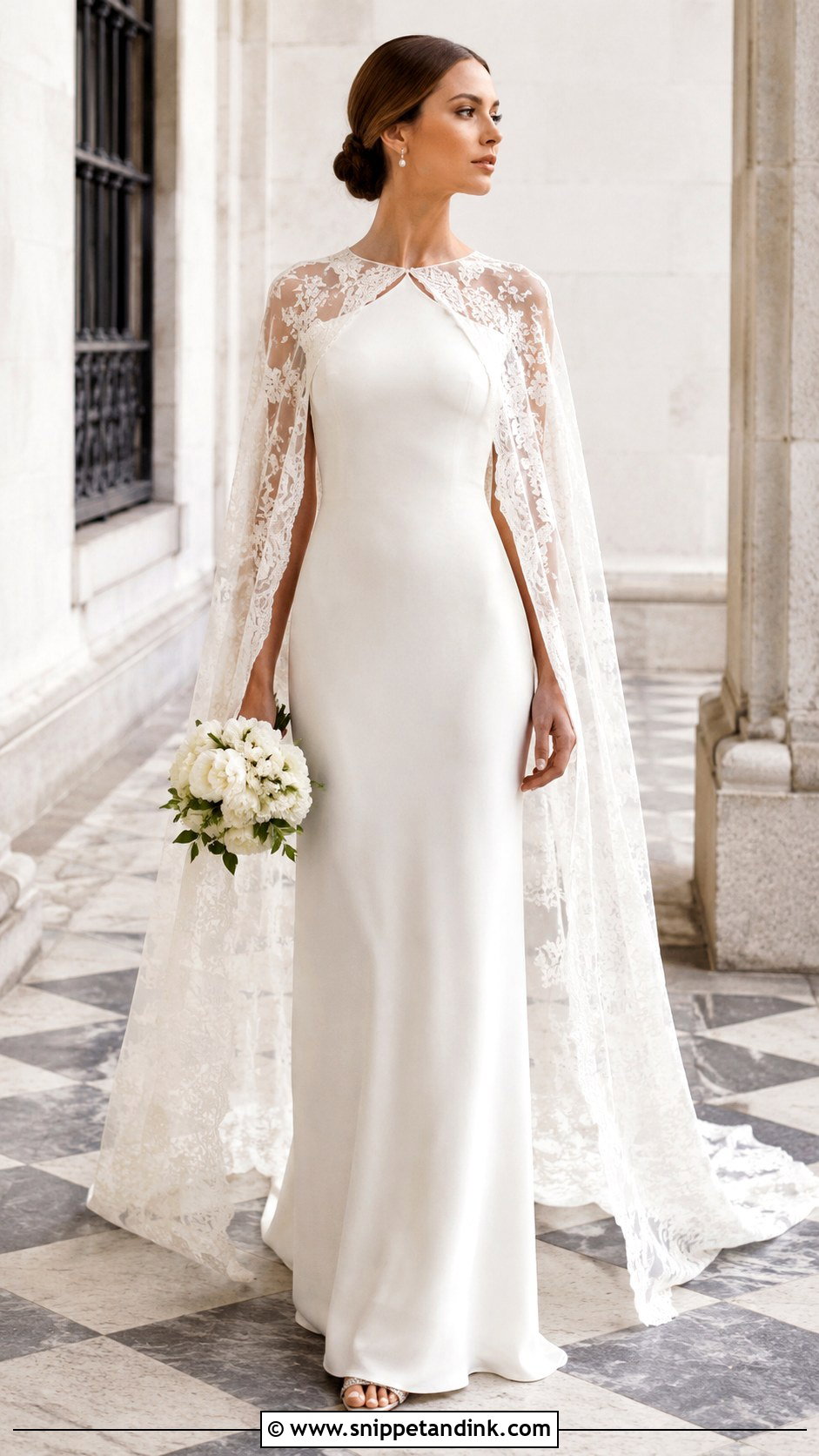
A cape gives a vintage sweep without a heavy train or ornate veil. Sheer lace feels romantic; clean crepe looks regal. Worn over a plain column, satin slip or fitted crepe, it layers easily and usually comes off after the ceremony. Ask for it to attach at the shoulder seams; a cape tied at the throat pulls the neckline back as it drags. Simple earrings, a low bun and elegant heels let it move freely.
22. Square Neck Wedding Dress
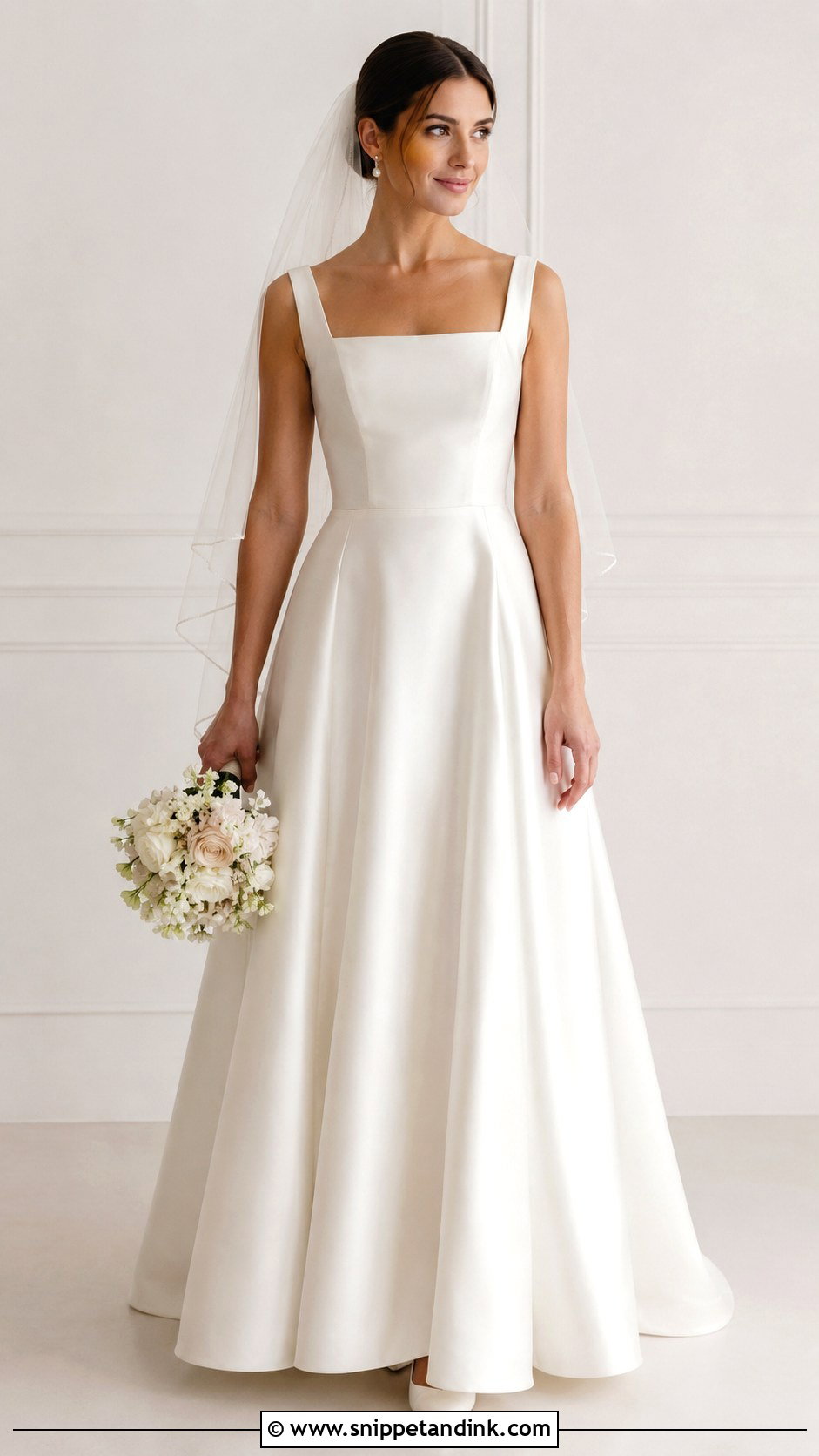
A square neck can read Renaissance, 1990s or softly vintage depending on the fabric. Satin and crepe look sharp, lace and tulle more romantic. Wide straps, short sleeves or long sheer sleeves balance it, and wide straps also make support much easier than a delicate strap does. Pearl earrings are usually enough; add a necklace only if the neckline is cut very open. Satin pumps and a fingertip veil finish it.
23. Drop Waist Wedding Dress
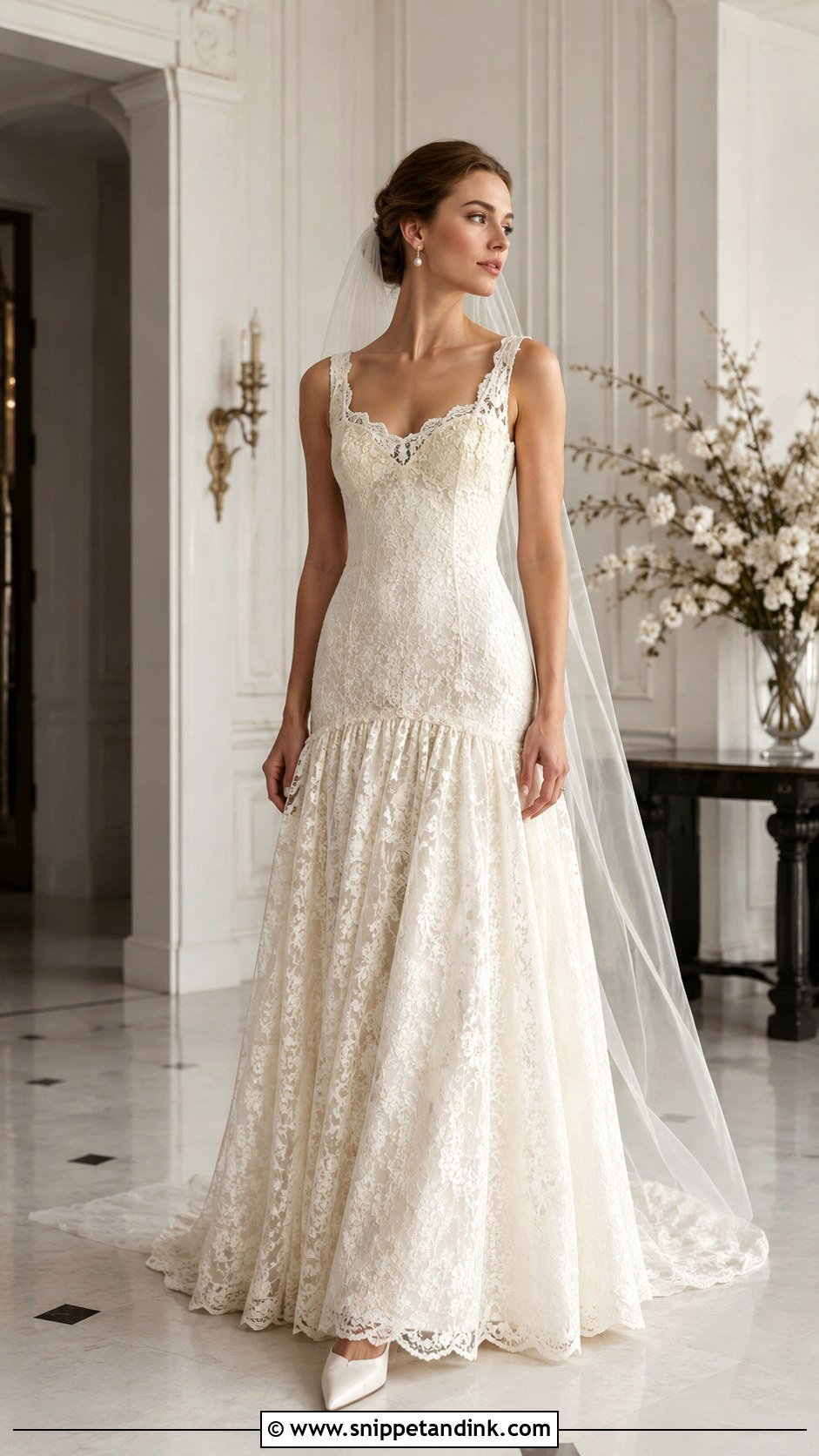
A drop waist moves the seam down to the hip, lengthening the torso. A soft version reads 1920s; a structured one looks more 1980s or couture. Lace, satin or tulle each change the feel. This shape is hard to fit, since the seam has to land at exactly the right point on your hip, and short torsos can look cut in half if it’s set too low. Have it pinned standing and sitting. A smooth veil, pearl earrings and pointed heels keep the styling quiet.
24. Short Sleeve Lace Wedding Dress
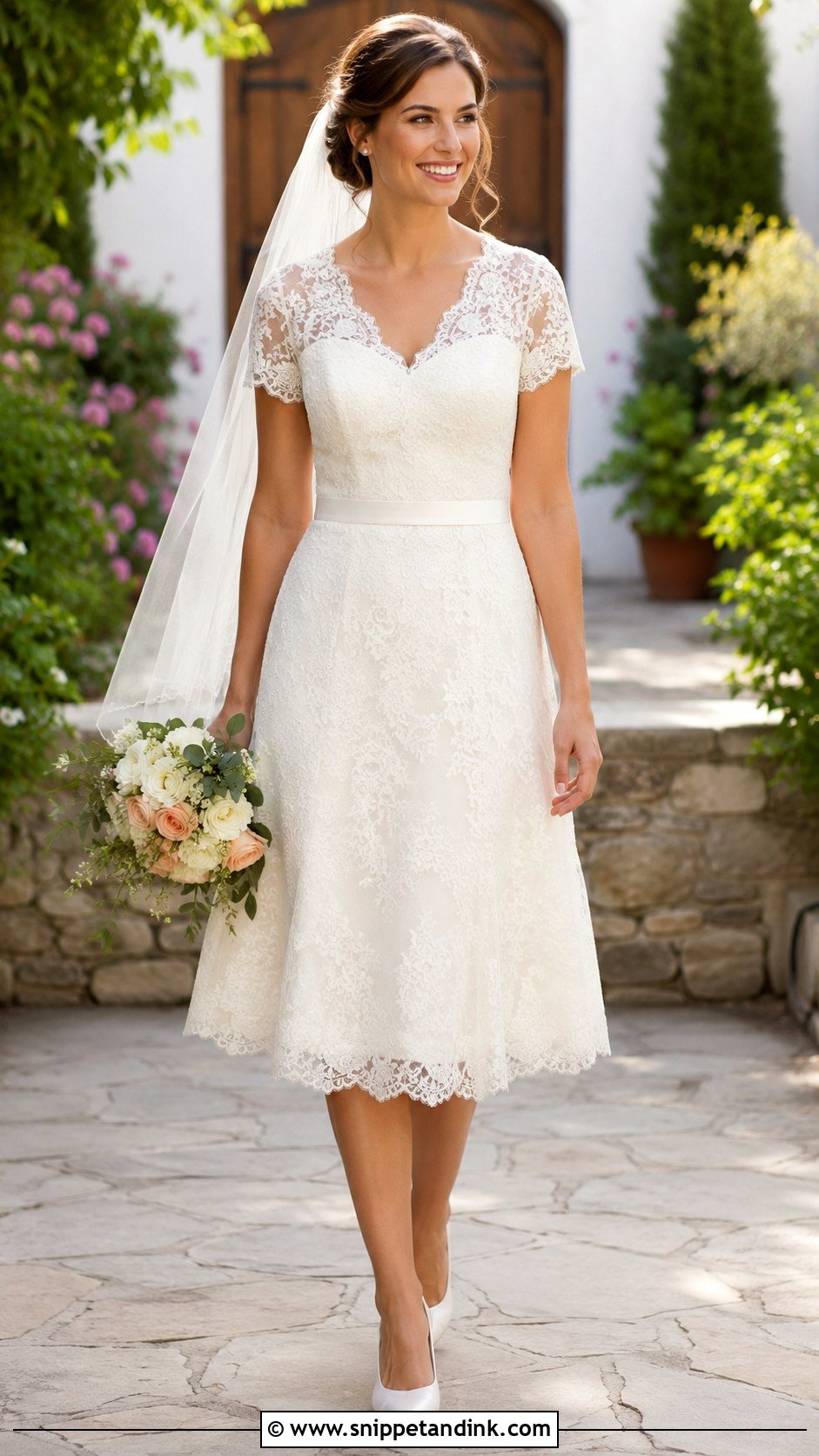
Short lace sleeves give vintage charm with less coverage and much less heat than long ones. Look for a fitted bodice, soft A-line skirt and a fine lace that doesn’t feel stiff. A scalloped neckline or covered buttons add detail. Short sleeves can cut into the upper arm if the lace has no stretch, so check the hem of the sleeve as you raise your arms. Low satin heels, pearl studs and a soft veil suit a garden wedding or daytime reception.
25. Vintage Inspired Two Piece Wedding Dress
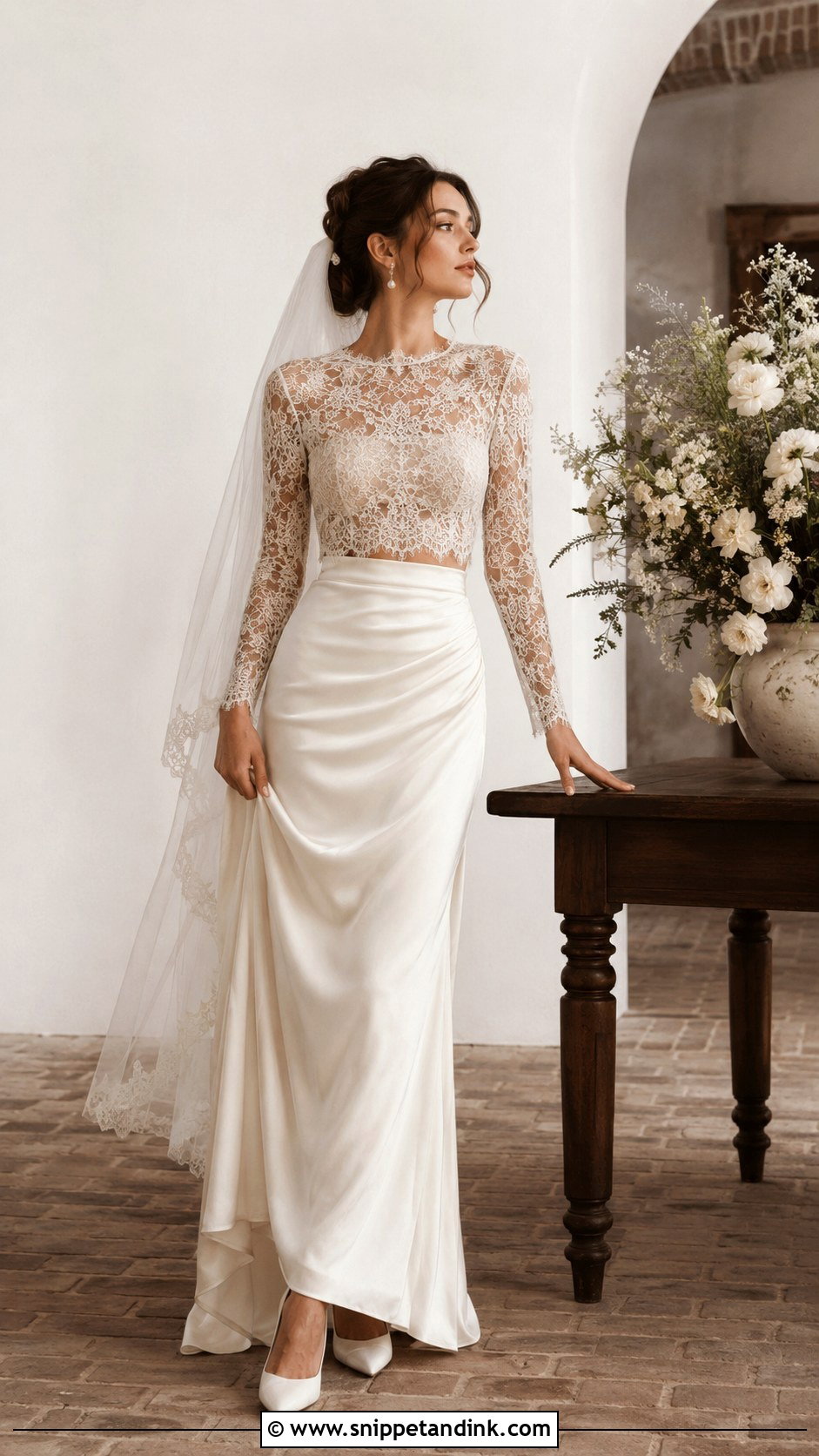
Vintage-style separates give you more control over fit. A lace long-sleeve top with a satin skirt, a corset bodice over tulle, or a cropped structured top with a high-waisted column skirt all look bridal and can be altered independently if your top and bottom are different sizes. You can also wear the skirt or top again later. Pearl earrings, sleek heels and a simple veil tie the two pieces together. It suits smaller weddings and brides who prefer a custom feel.
Hair, Shoes and Veil That Suit Each Decade
Styling decides whether a vintage dress looks modern or themed. I match the hair and accessories to the dress’s era but keep their execution current, softer than the originals and with less product.
- 1920s and Art Deco: sleek, side-parted waves or a low faux bob, a slim headpiece rather than a feathered band, and metallic heels.
- 1950s: a short veil or birdcage net, pointed pumps or slingbacks, and hair in a polished updo or soft set curls.
- 1960s: a bow or headband, a little volume at the crown, and block heels.
- 1970s: loose waves, low sandals or flats, and a long lace or plain tulle veil worn soft.
- 1990s: a low bun, minimal sandals and a long sheer veil with no edging.
Whatever the era, choose shoes you can actually stand in for hours. Older bridal shapes often show the shoe, especially at tea length, so break them in around the house well before the day. And if you’ll wear an heirloom veil or family piece, have it cleaned and checked by a specialist first, because old tulle can tear easily under a comb.
Borrow One Era, Not the Whole Costume
Vintage details look modern when you pick one era, one or two key details and a clean silhouette, then keep everything else simple. Lace, pearls, satin, corsetry, bows, capes and high necks can all feel fresh in the right proportion. Think about your venue, the season and how much you want to move, then try the dress on doing exactly that. If it still feels like you after sitting, walking and dancing in it, that’s the one.
You'll Like These Ideas:



Leave a Reply