
A Nikah outfit has to hold several things at once: modesty, your family’s traditions, your own taste and enough presence that you feel like a bride. Ivory and soft white are still the most common, but blush, sage, powder blue and gold all suit the ceremony. The shapes vary just as widely, from Anarkalis and ghararas to sarees, abayas and kaftans, so brides from many backgrounds can find something that feels like home. When I help a bride narrow it down, I ask four things first: where the ceremony is, what the weather will do, how much coverage she wants, and whether she’ll be sitting on the floor. The twenty dresses below are grouped loosely from traditional to minimal, with the fit and fabric notes I’d give at a fitting.
Mosque, Home or Hotel: The Setting Changes the Hem
The same dress can be perfectly right in a hotel ballroom and awkward in a mosque, and it usually comes down to three things: shoes, seating and coverage. I ask about the venue before I let a bride fall in love with a silhouette.
In a mosque
Shoes come off at the entrance, so a hem cut for three-inch heels will drag on the carpet once you’re barefoot. If the ceremony is in a mosque and the reception elsewhere, I hem for flats or ask for a removable bustle loop. Expect to sit on the floor in many prayer halls, which favors shararas, ghararas, abayas and kaftans over structured gowns. Arms, legs and hair are generally covered, and some mosques have specific rules about photography or where the bride sits, so ask the imam or the mosque office.
At home or in a hall
Homes are warm and crowded, which makes breathable fabric and a lighter dupatta more important than drama. A hall or hotel gives you room for a cape, a farshi train or a fuller lehenga, and you can usually keep your heels on.
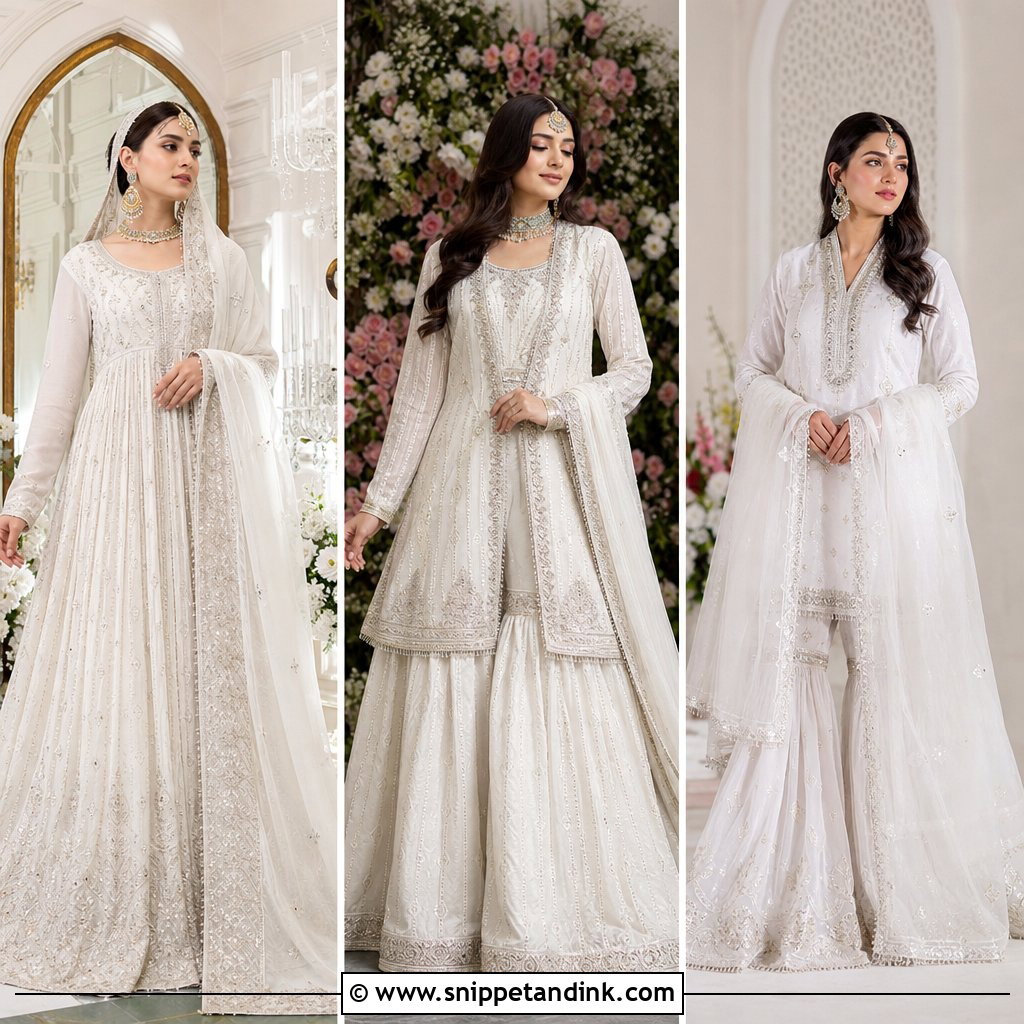
1. White Gharara Nikah Dress
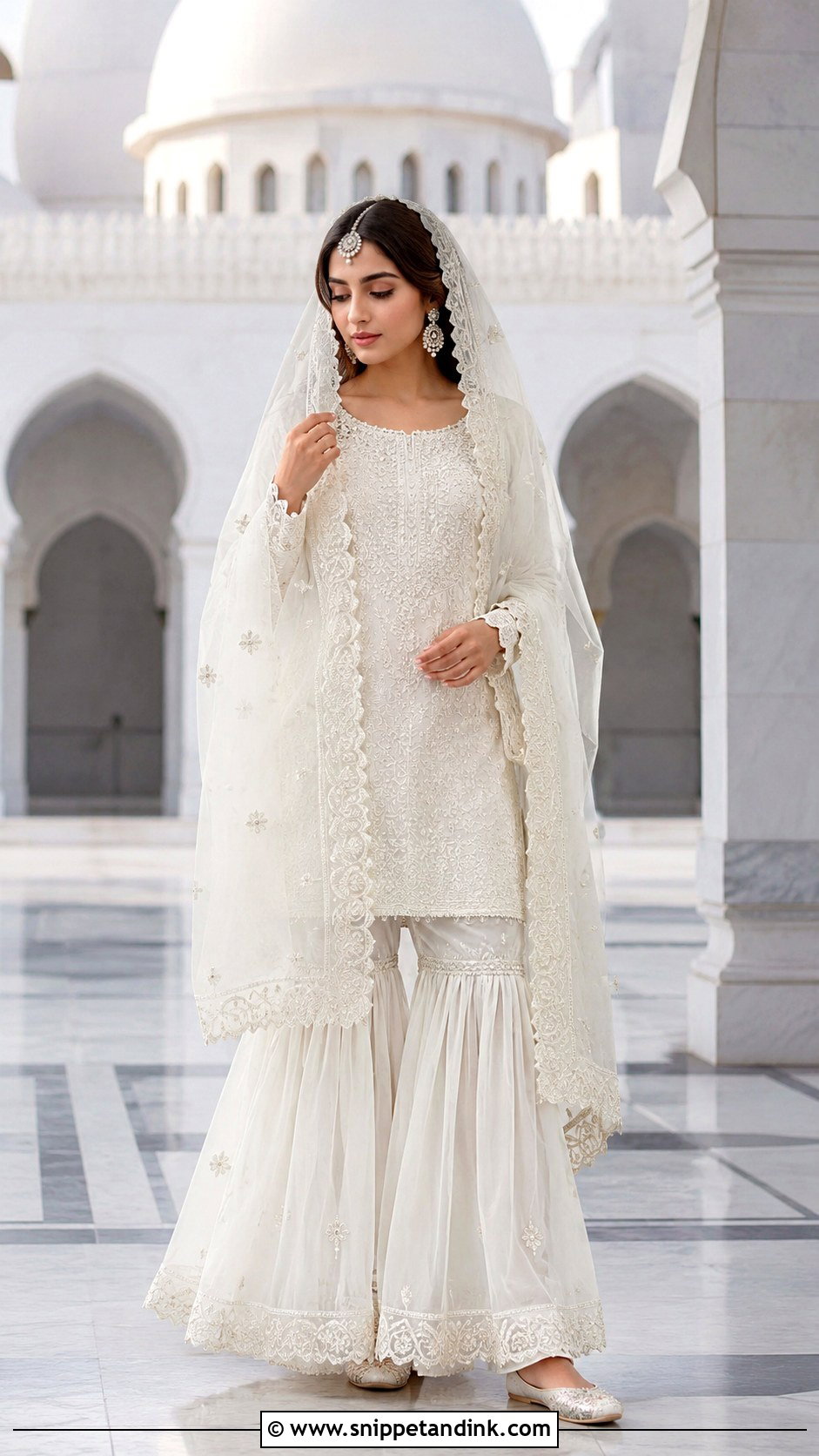
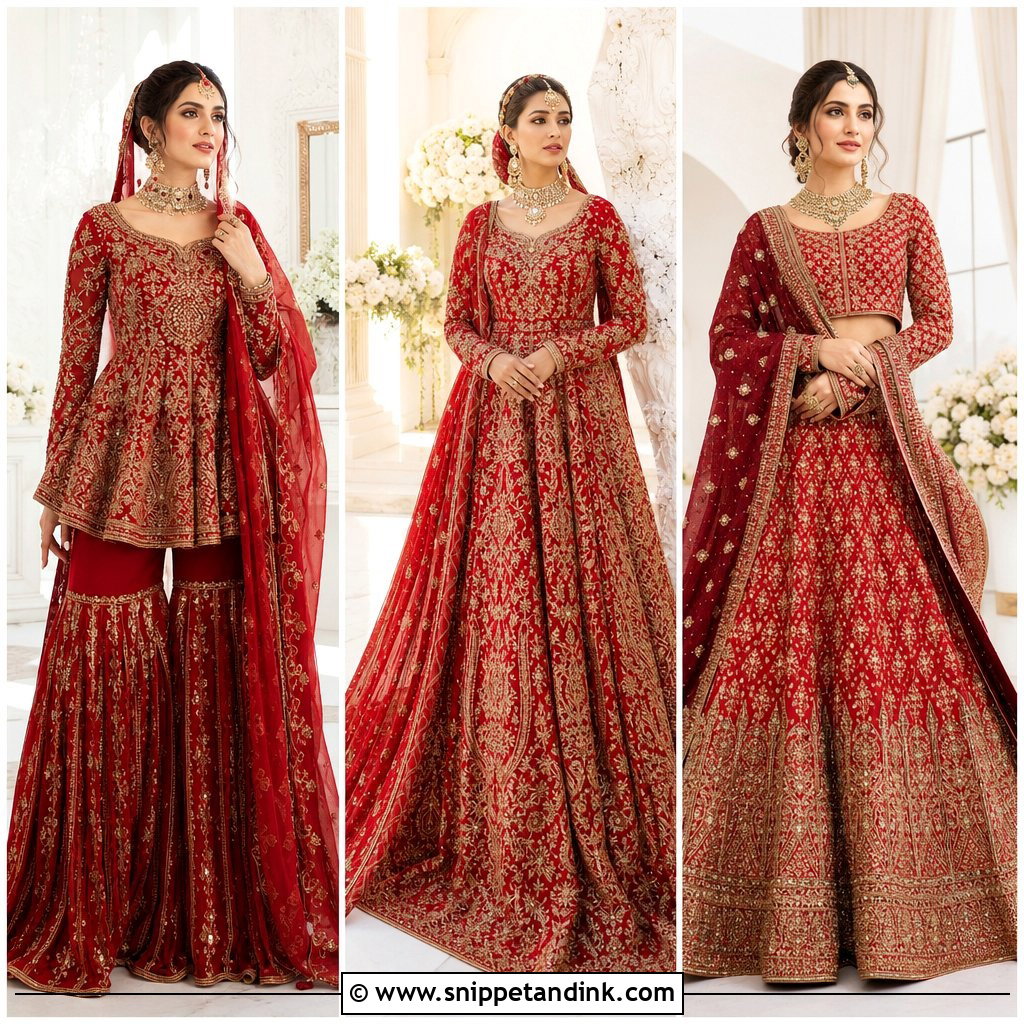
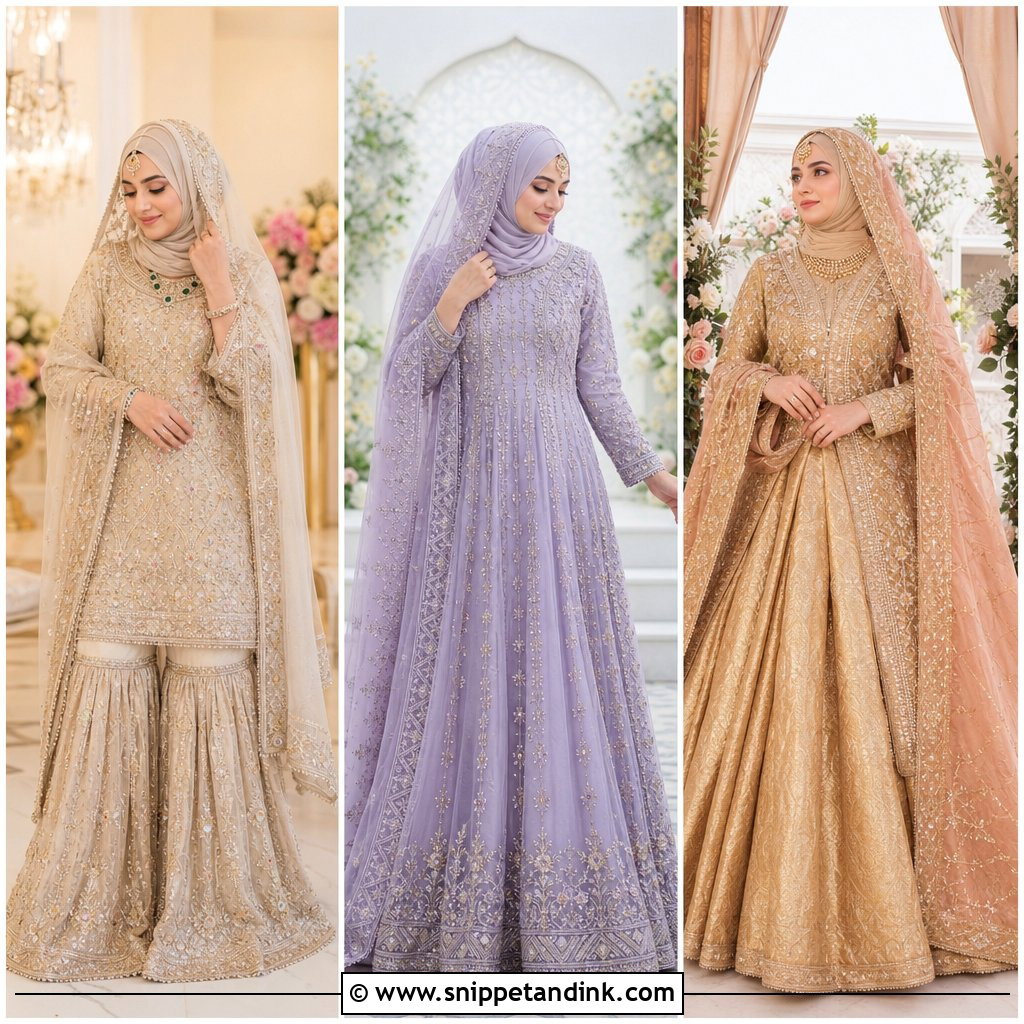
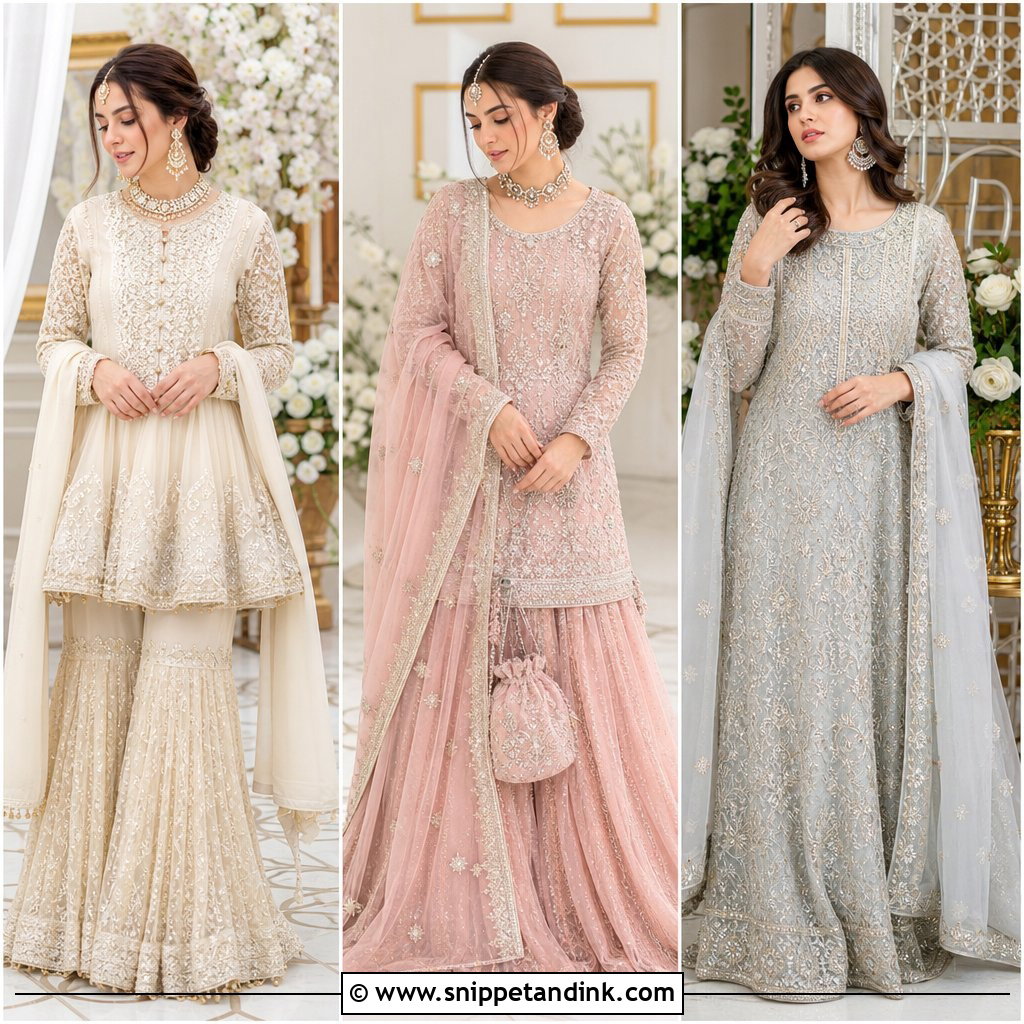
The gharara’s flare starts below the knee, so the upper half has to be neatly cut or the whole outfit looks bottom-heavy. I’d choose a long, straight kurta with full sleeves, an opaque lining and fine silver or pearl embroidery. A scalloped organza dupatta can sit over the head and fall over one shoulder. Pearl drops, a small maang tikka and ivory embroidered flats finish it, and silver reads fresher than gold against bright white. It’s the outfit I suggest most often for a home or mosque Nikah, because you can sit on a floor cushion, lean forward to sign the nikah nama and stand to greet relatives without anything bunching. Ask for a seated fitting, since the fitted thigh section is where ghararas pull.
2. Ivory Anarkali Nikah Dress
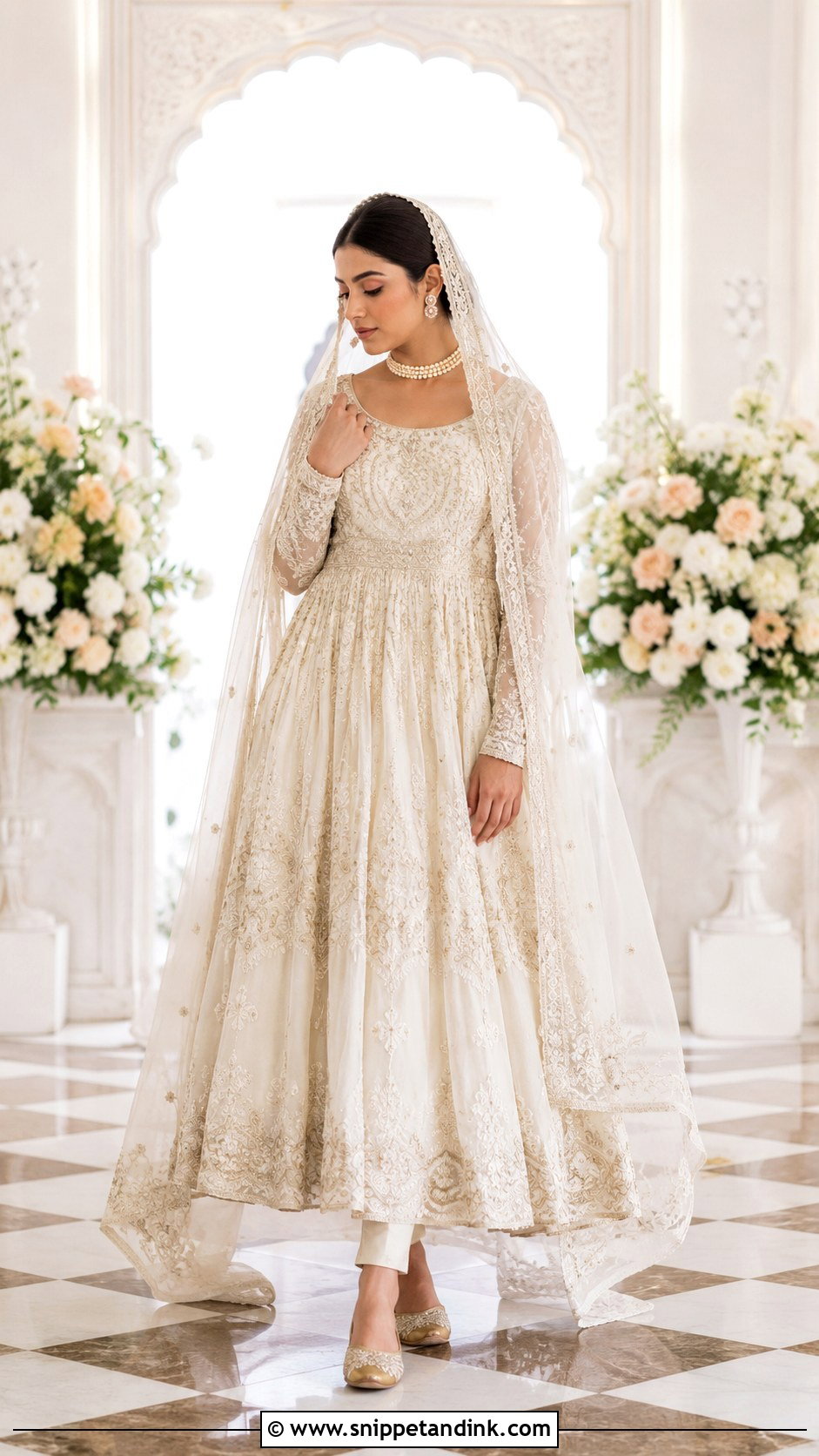
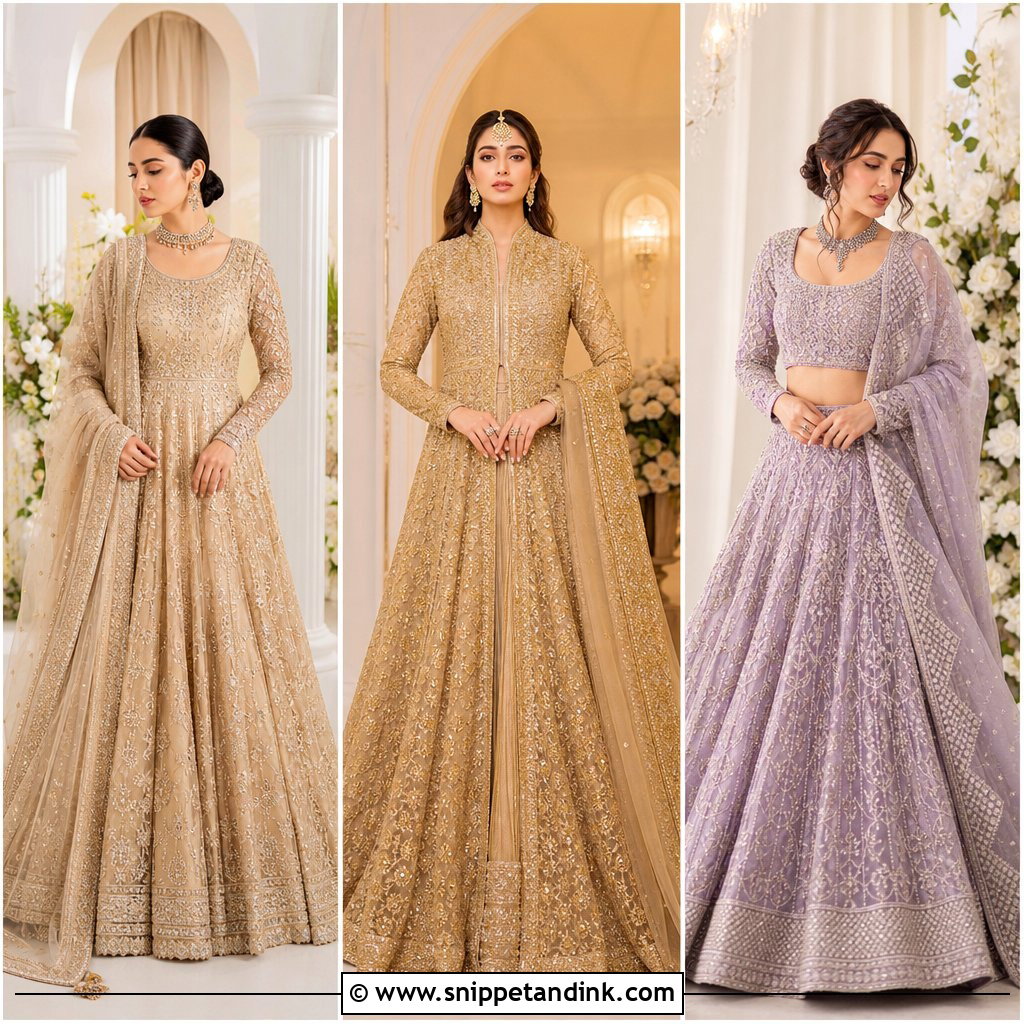
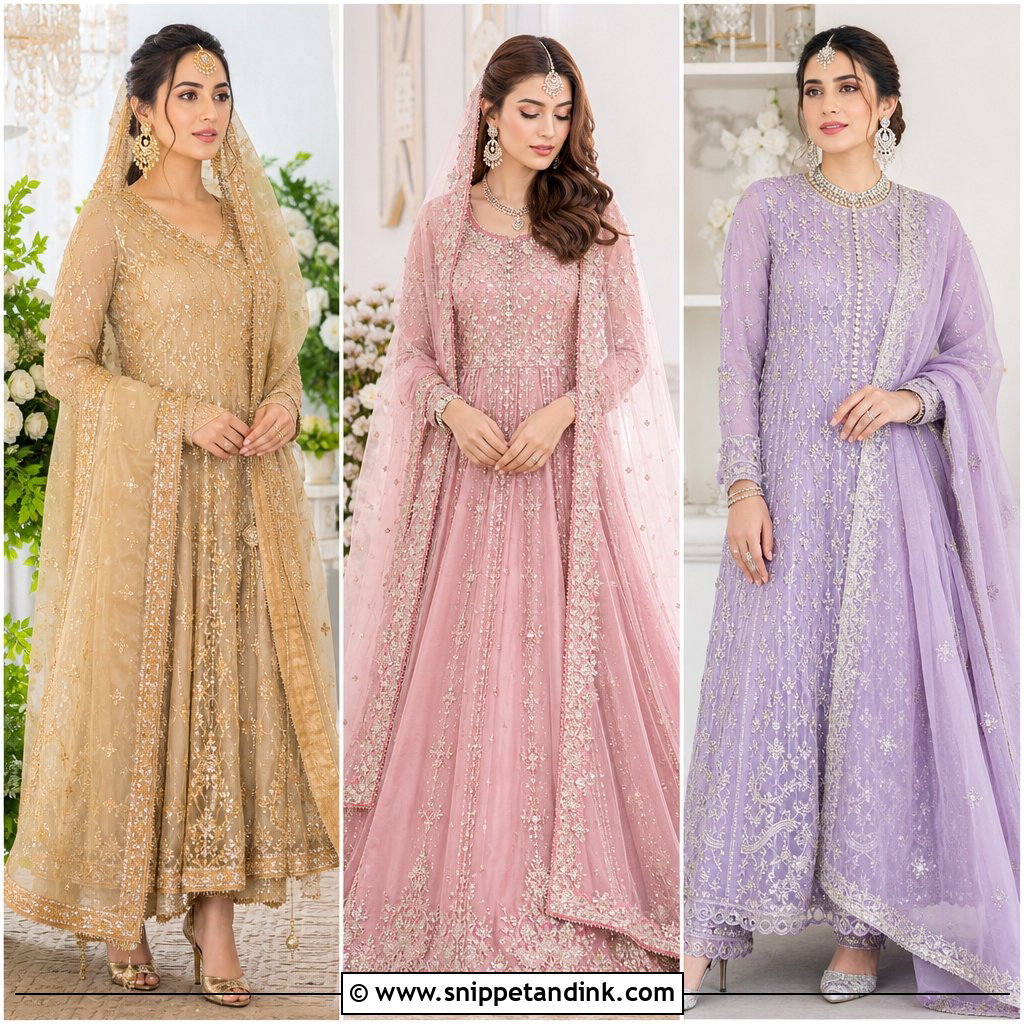
An Anarkali gives a romantic shape with full coverage, and it suits more body types than almost anything else here. Look for a fitted bodice, a softly defined waist and a floor-length skirt that opens into pleats. Full sleeves in lined chiffon or embroidered net stay light. A little gold threadwork at the neckline and cuffs is enough to make it bridal. Pair it with slim ivory trousers, pointed gold flats and a matching dupatta over the head; a small pearl choker and fine earrings add sparkle. The thing I watch at fittings is the skirt’s volume. A full circle of heavy fabric is beautiful standing but tiring to manage in a small room, so I keep it to lighter layers for an intimate ceremony.
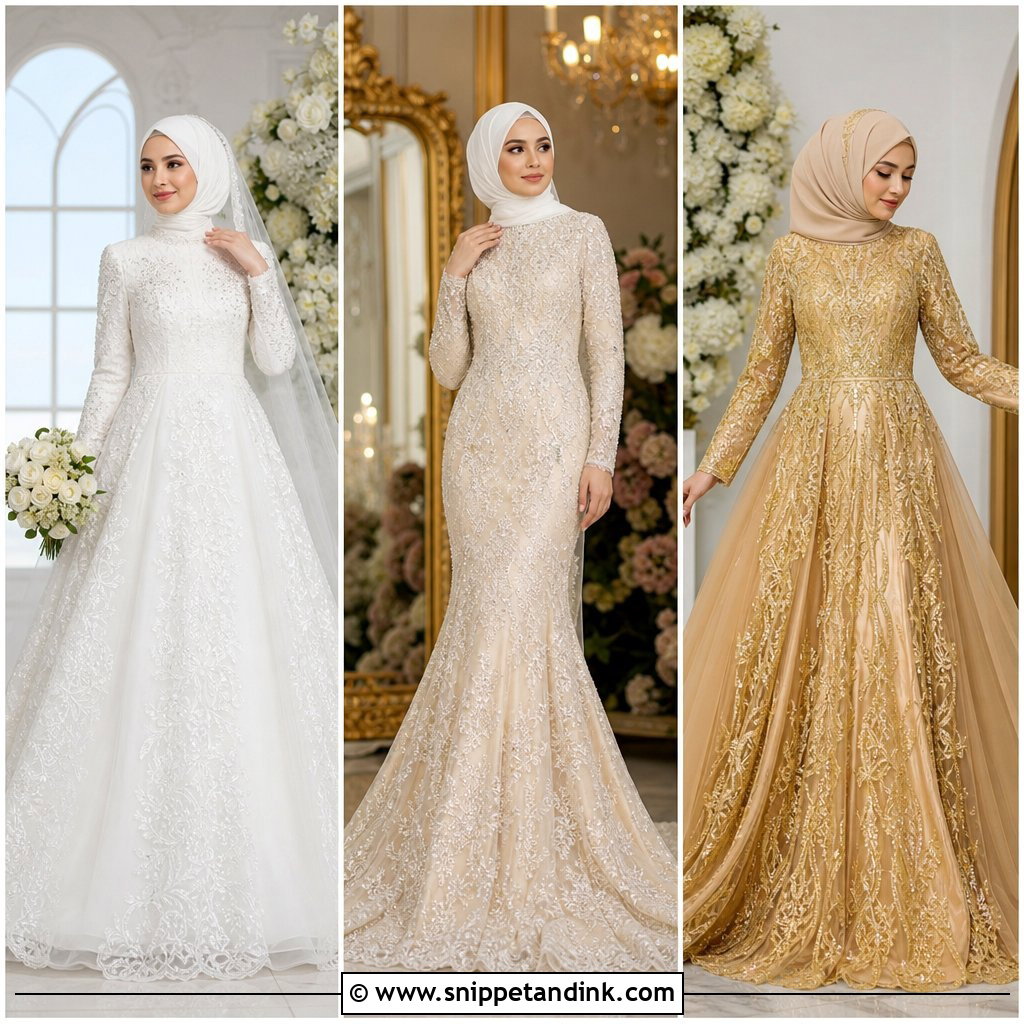
3. Pearl Embellished Nikah Gown
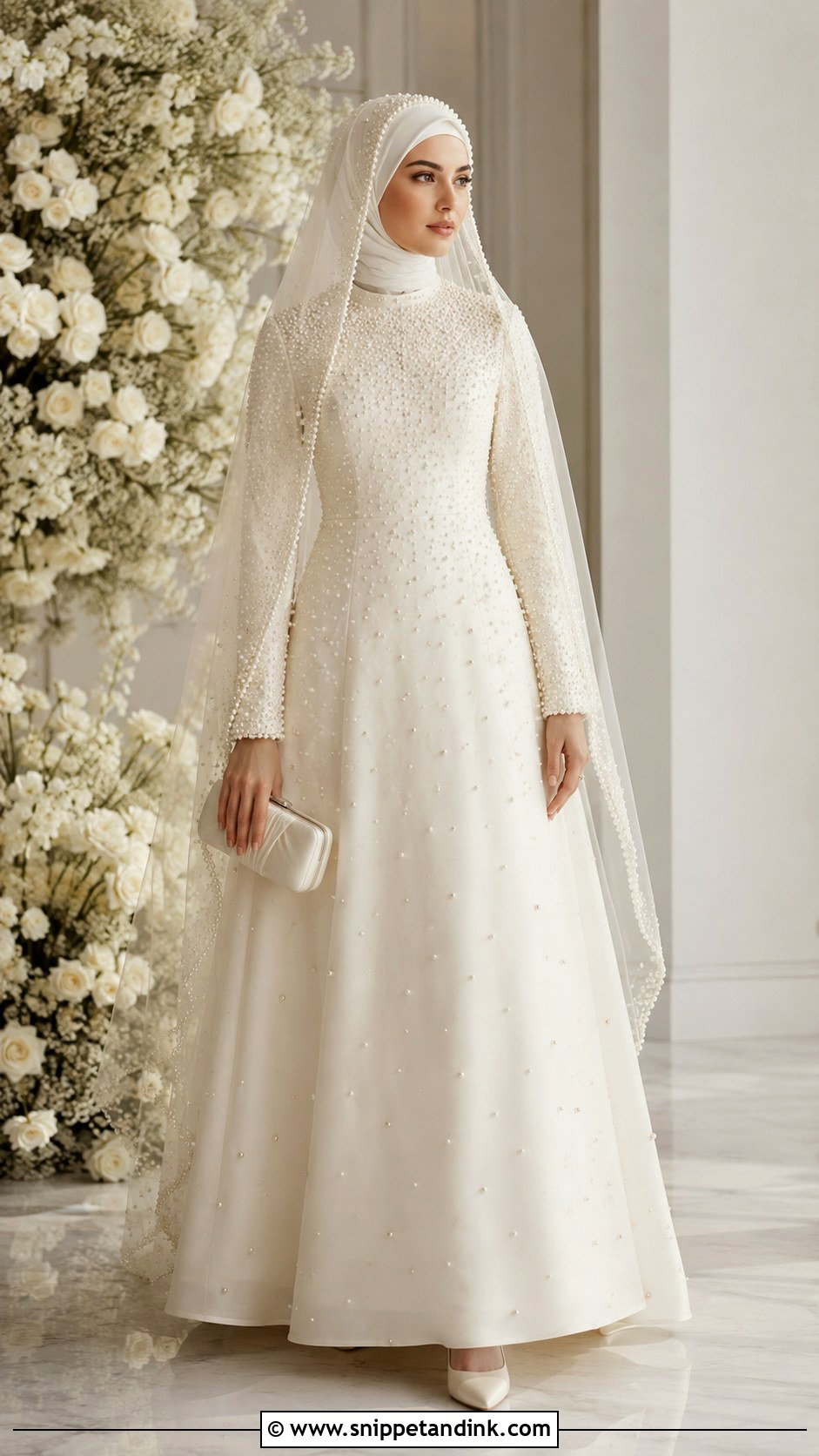
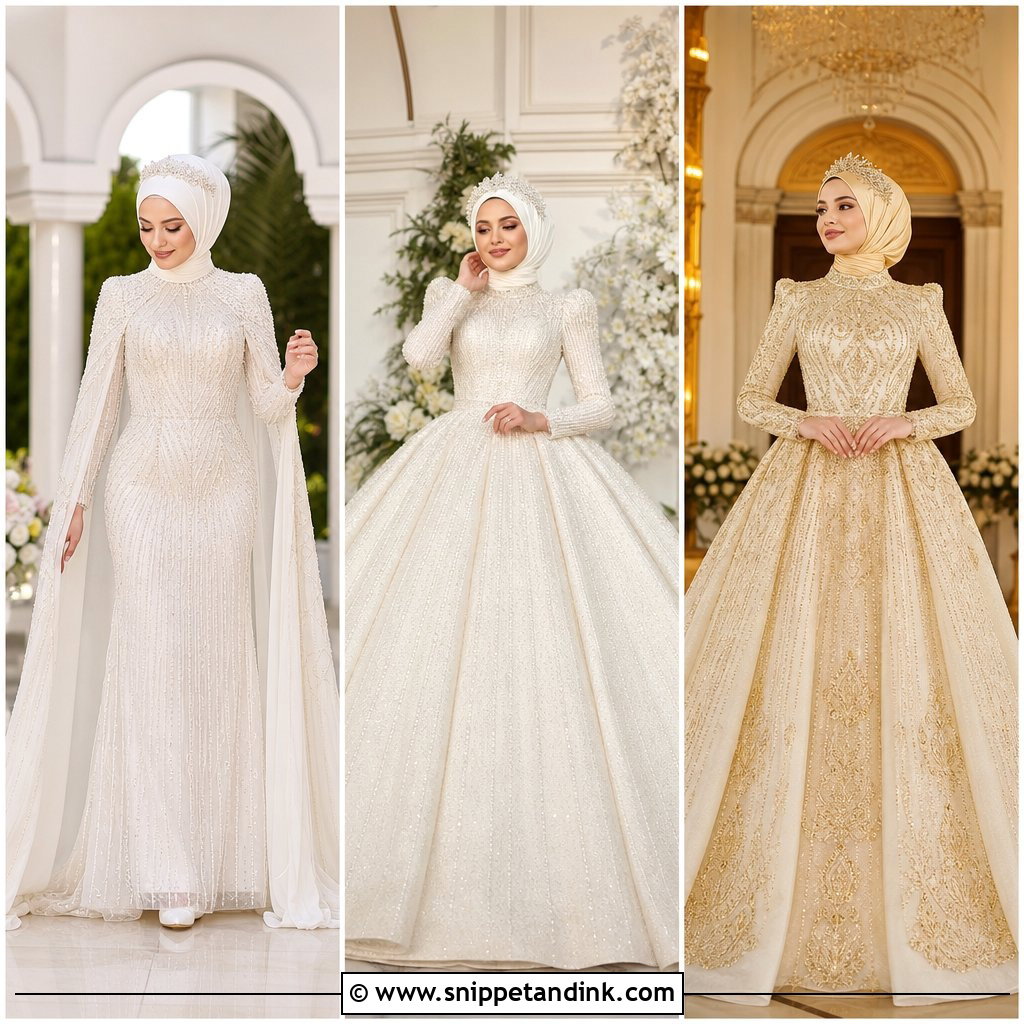
Pearls give a plain gown a quiet richness, and they catch less glare in photos than sequins do. I’d choose a high-neck gown with full sleeves and pearls scattered over the bodice, cuffs and upper skirt, rather than covering every inch; concentrated detail reads more clearly on camera. A softly gathered waist and flowing A-line keep it modest. A pearl-edged veil or hijab, closed-toe ivory heels and a satin clutch complete it, with pearl studs or a fine headpiece. Brides drawn to Western gown shapes like this one. One practical point: hand-sewn pearls loosen if they rub, so check the cuffs and under-arm seams at your final fitting and carry a few spares.
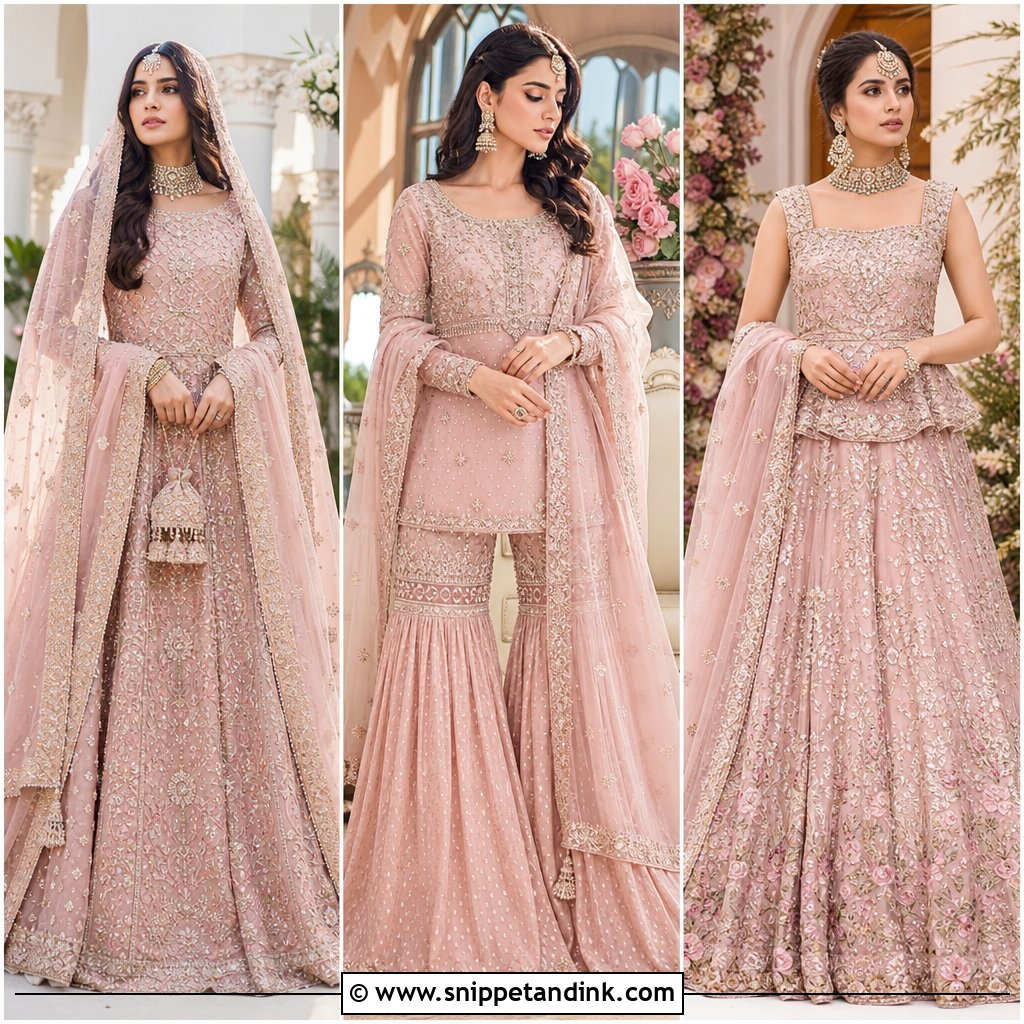
4. Blush Pink Sharara Nikah Dress
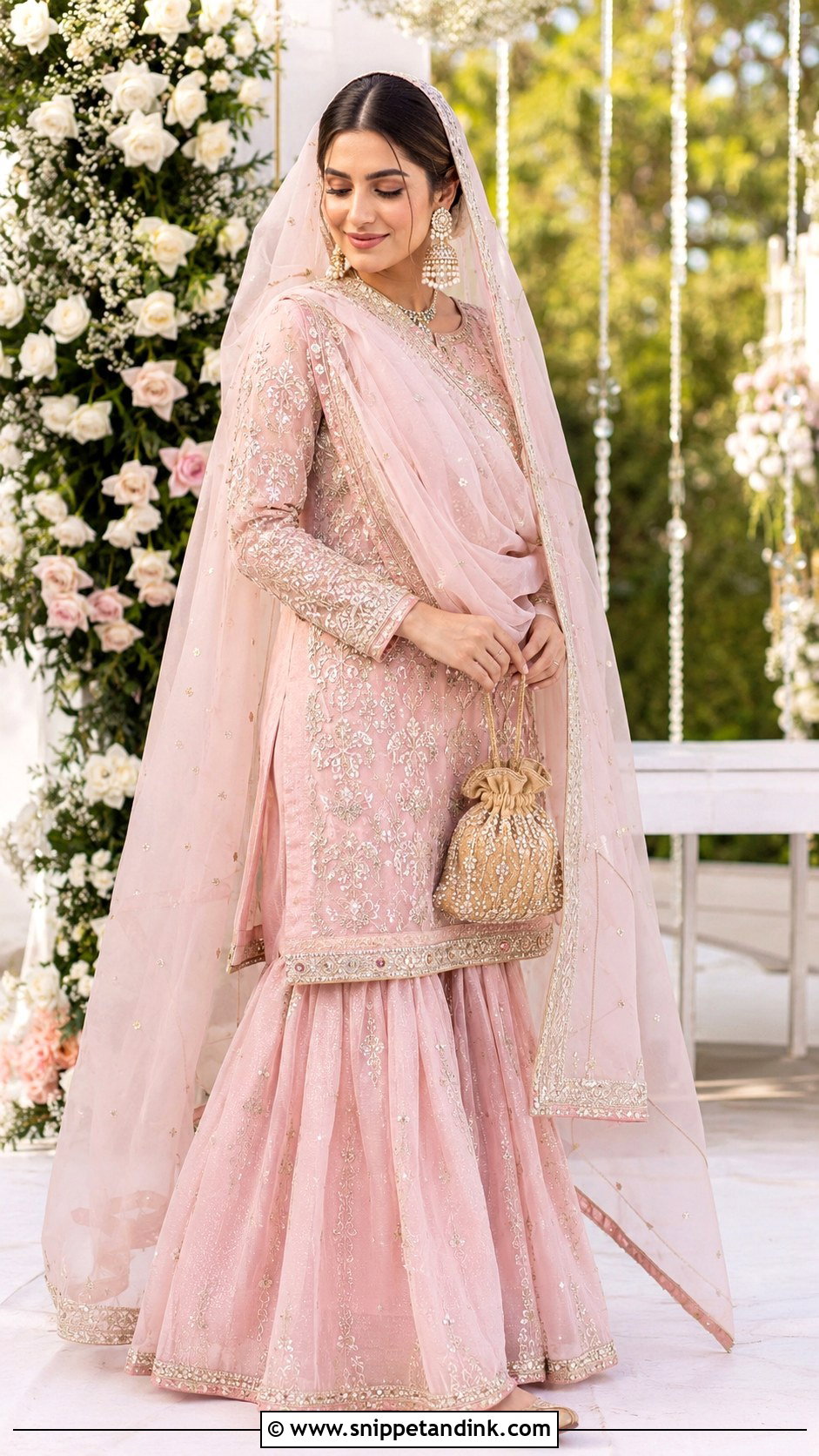
Blush is the color I suggest when a bride feels washed out in white; it puts warmth back in the face and pairs easily with gold, pearl or crystal. A knee-length embroidered kurta with full sleeves over sharara pants that widen from the waist keeps the ceremony comfortable. Pale pink can turn see-through in daylight, so a tonal lining is not optional. Vertical embroidery lengthens the line. Drape a light chiffon dupatta over the head and pin it at both shoulders so it doesn’t slide each time you turn. Champagne flats, a gold potli, pearl jhumkas and natural rosy makeup finish it. Loose shararas also help if the family gathering runs long after the vows.
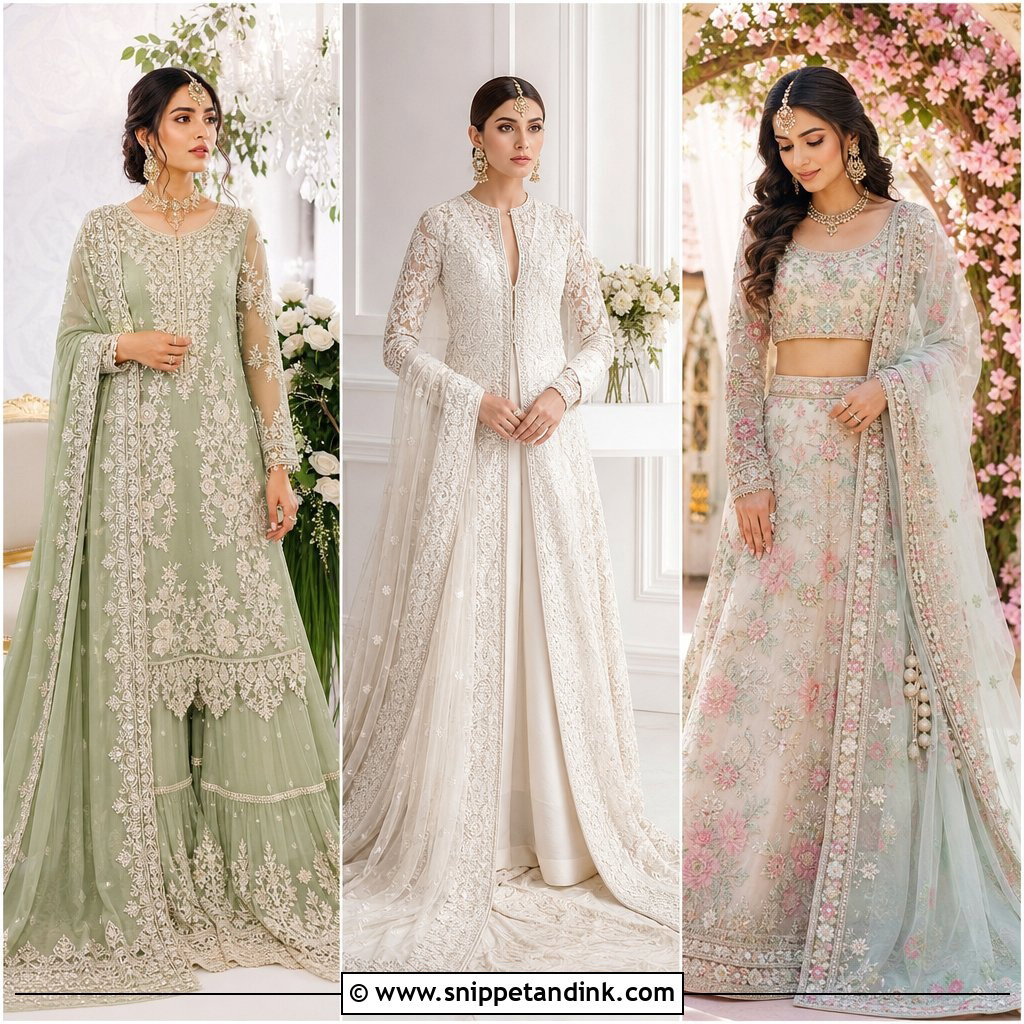
5. Gold Embroidered Nikah Lehenga
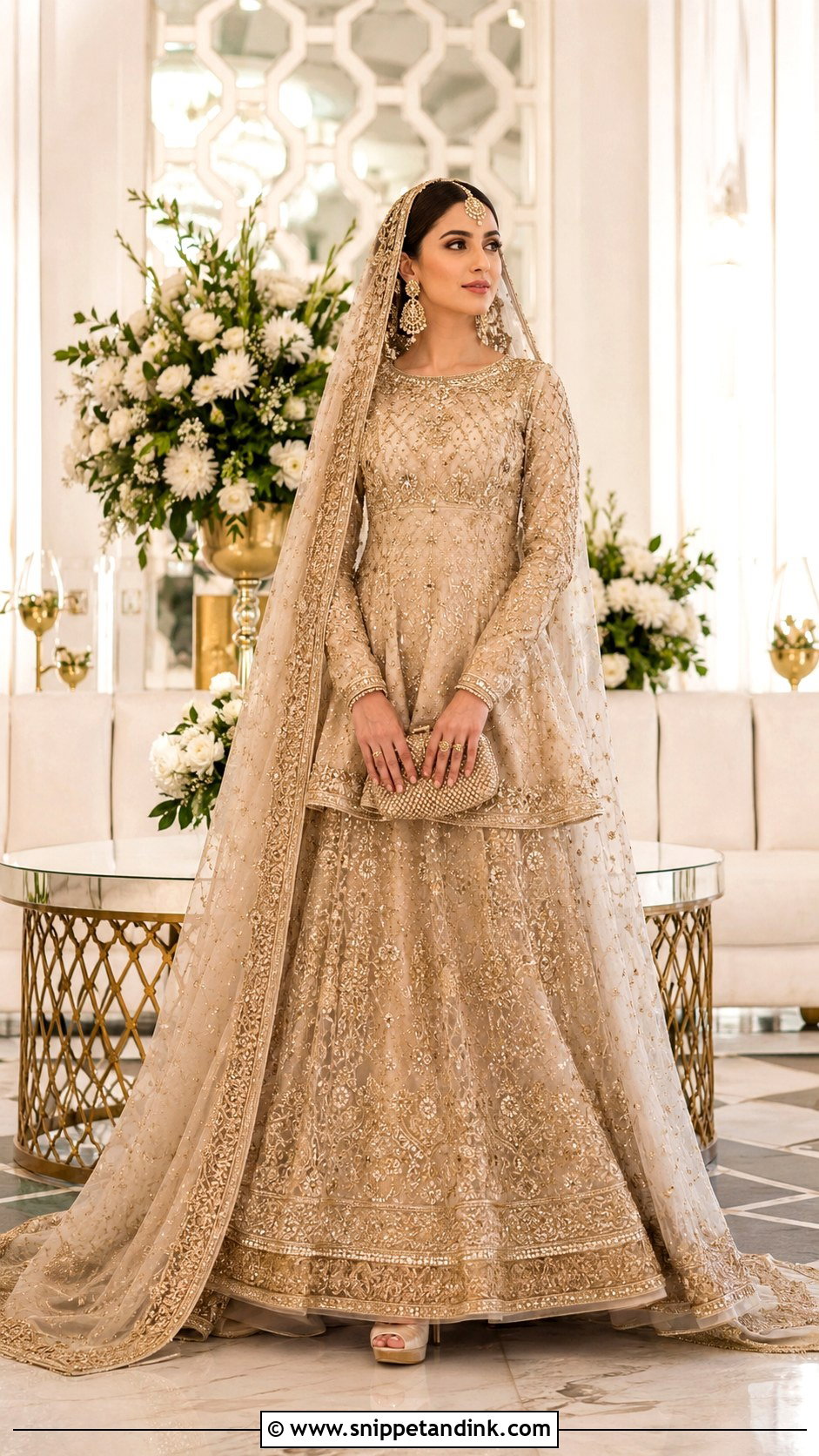
Gold embroidery can look regal at a small Nikah as long as the weight stays in check. I look for an A-line lehenga with fine zari, sequin or thread work rather than a dense, heavy skirt. Pair it with a hip-length blouse or peplum top with full sleeves, a high neck and complete midriff coverage; the longer top looks cohesive and is easier to sit in. A sheer dupatta with a generous border goes over the head, one side across the front. Champagne heels, antique gold earrings and a slim bracelet are plenty. Ivory, pale gold or soft beige bases let the embroidery show without shouting. Zari can scratch the inner arm, so I ask for the sleeve lining to be soft cotton or silk.
6. White Saree Nikah Dress
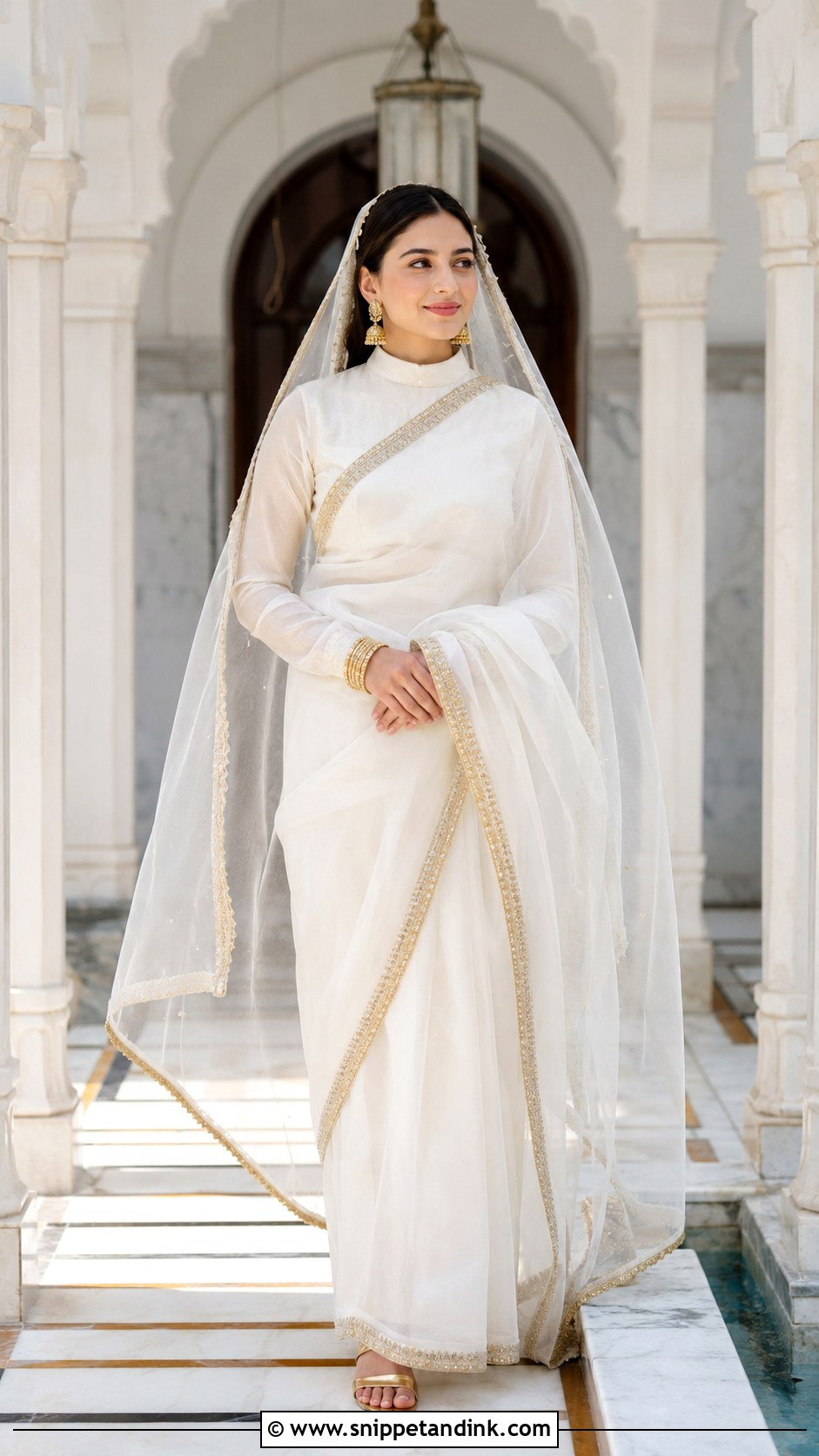
A white saree suits a bride who feels at home in South Asian draping traditions. Choose opaque silk, georgette or lined organza with a gold border, worn with a full-sleeve blouse that has a high neck, a covered back and a longer length. The draping is where it succeeds or fails. I pin the pleats at the waist and the pallu at the shoulder, and a fitted shapewear petticoat rather than a full underskirt keeps the drape smooth without bulk. A separate veil can go over the head for the ceremony. Gold jhumkas, stacked bangles and metallic sandals finish it. Its impact comes from clean lines, so resist adding layers.
7. Sage Green Nikah Anarkali
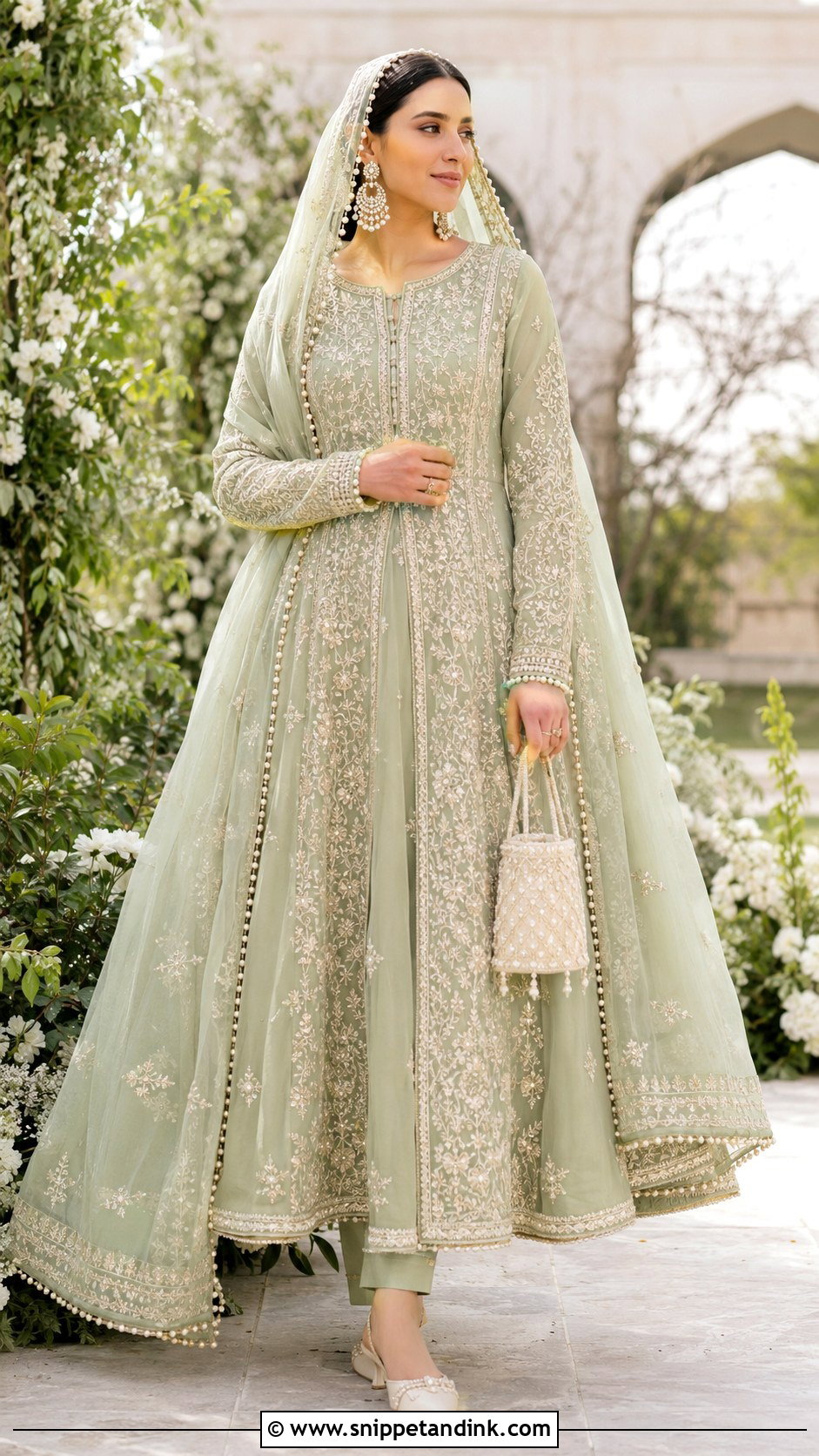
Sage is a calm alternative to white, and it settles well into a spring or garden Nikah. Build it around a floor-length Anarkali with long sleeves, a modest round neck and ivory embroidery. A slightly raised waist adds definition and lets the skirt fall easily. Straight pants in the same shade and a sheer sage dupatta with a narrow pearl border keep the palette clean. Ivory kitten heels, pearl earrings and a cream bag suit it. If you want flowers, keep them to one place, a small hairpiece or a wrist corsage. Green shifts under warm bulbs, so I compare the fabric in daylight and indoor light before ordering.
8. Cape Sleeve Nikah Gown
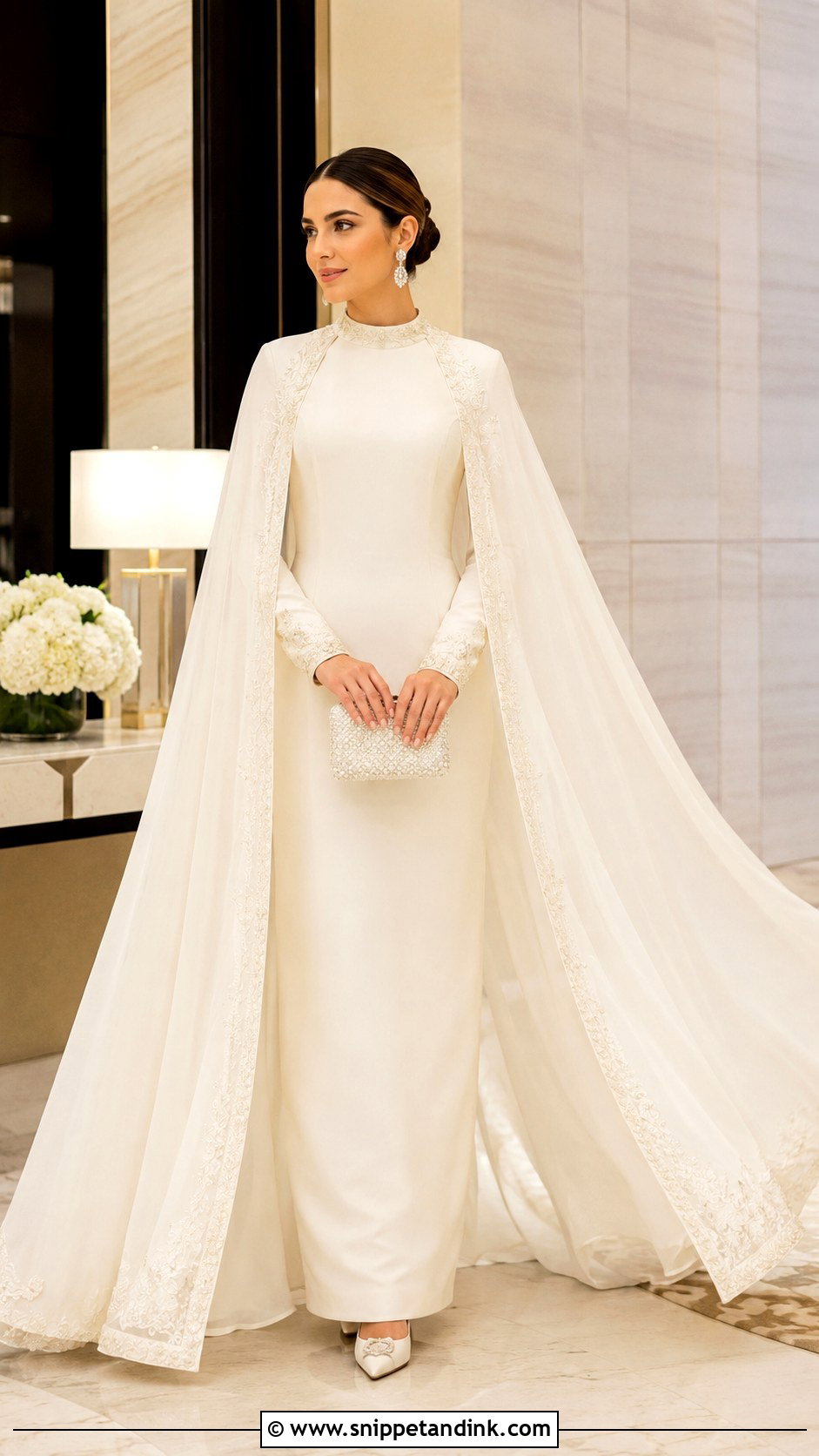
A cape sleeve gown gives drama and coverage in one piece. Choose a structured ivory or pale beige gown with an attached chiffon cape from shoulder to floor, over a dress with full sleeves, an opaque bodice and an A-line skirt. Embroidery along the cape edge frames the silhouette from behind as well as the front. Pointed ivory pumps, crystal earrings and a small beaded clutch are enough. For hijabi brides, I’d pick a smooth, light fabric that tucks flat under the cape neckline, because a bulky wrap fights the cape. Skip a big necklace. It suits a hotel, private hall or modern venue with a slightly more formal feel. Practice sitting down, as floor-length capes slide under you if you don’t sweep them aside.
9. White Abaya Nikah Dress
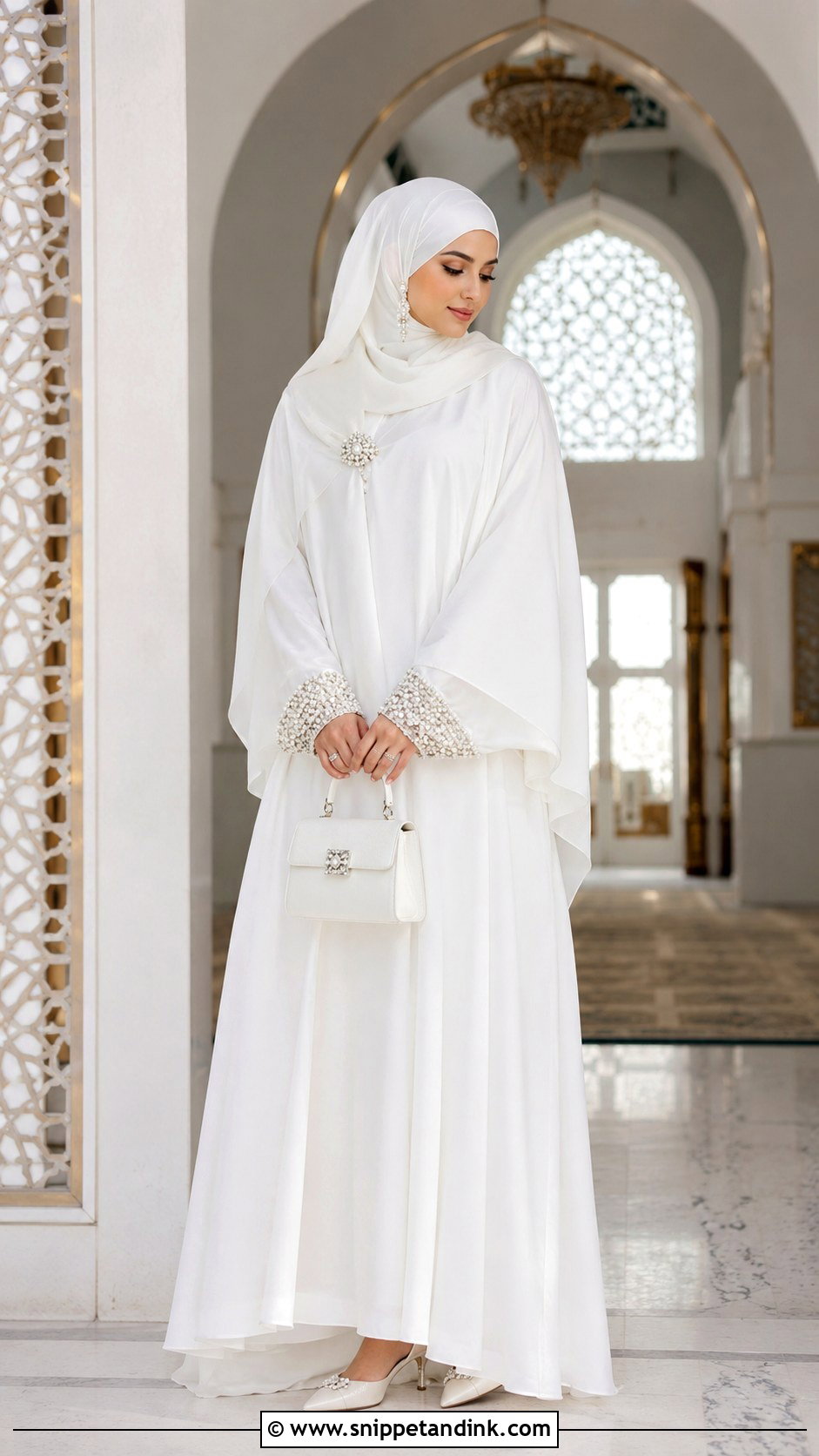
A bridal abaya relies entirely on fabric and finishing, since the shape is simple. I’d choose a closed white abaya in flowing crepe, satin or nida, with pearl embroidery around the cuffs and front panel. A gently shaped cut gives definition without clinging. Wear an opaque inner dress underneath and a white chiffon hijab with a subtle embellished edge. Pearl earrings, a crystal brooch, low ivory heels and a structured mini bag complete it. Precise tailoring matters more here than on any heavily decorated dress, because nothing hides a sleeve that’s too long or a shoulder that droops. It’s practical for a mosque ceremony and easy to wear again afterward.
10. Blue Chiffon Nikah Dress
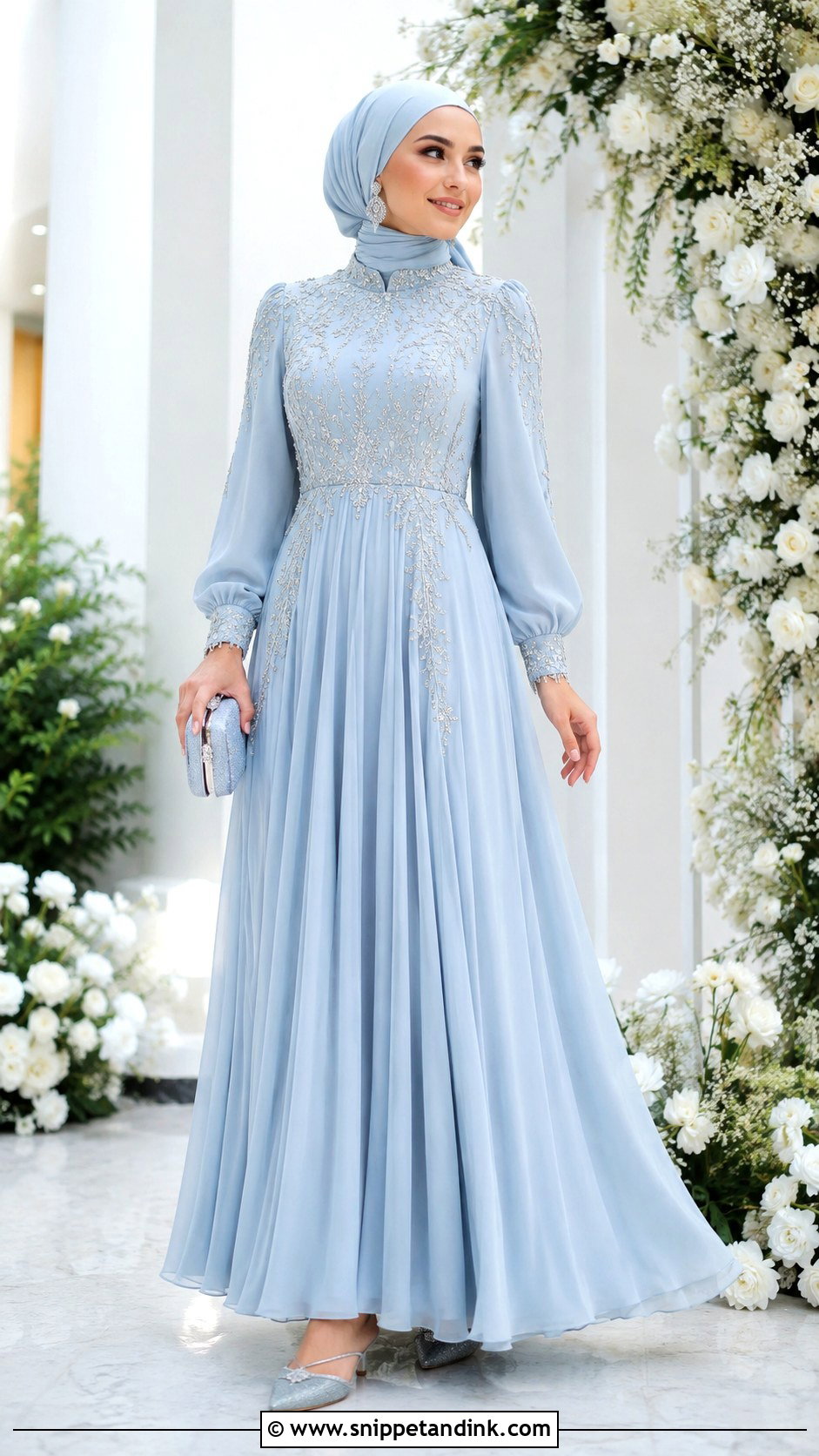
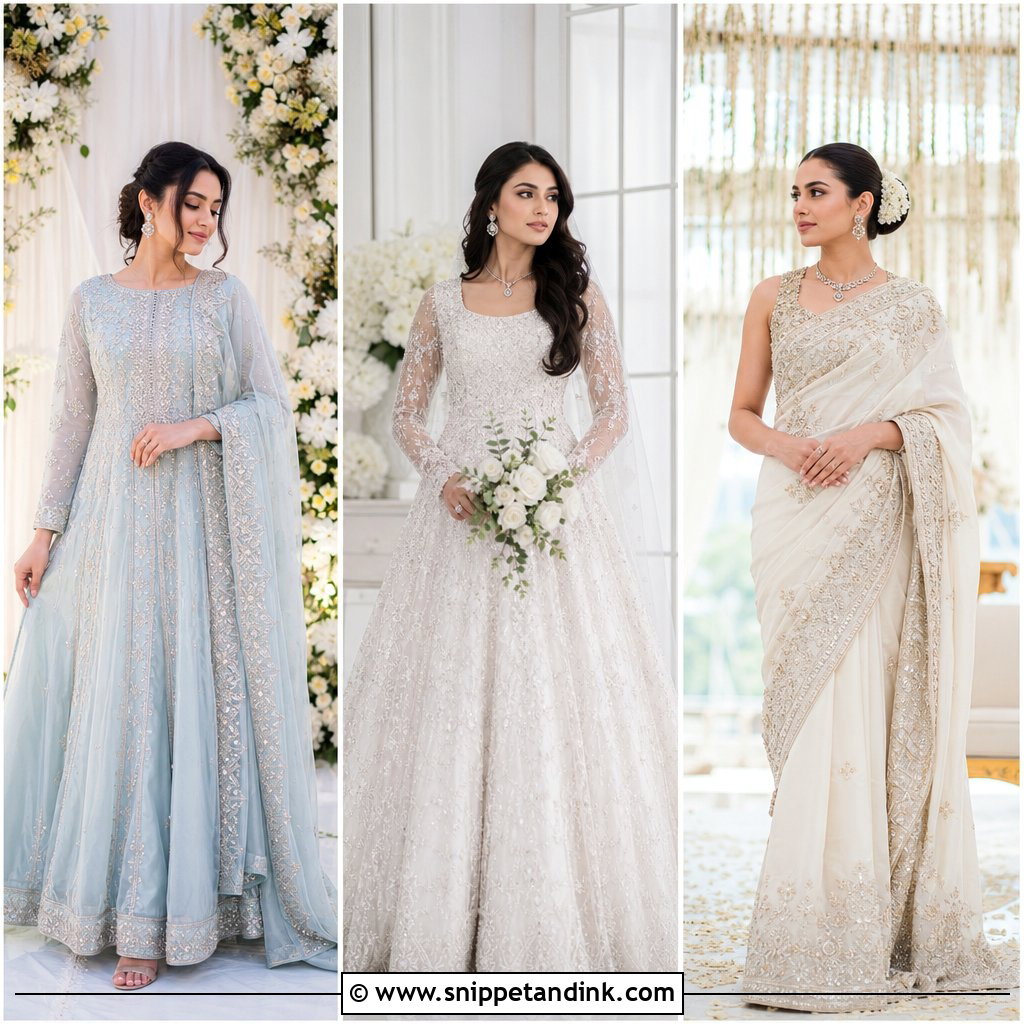
Powder blue looks gentle in daylight and holds up well indoors. A chiffon maxi with a high neck, full gathered sleeves and a softly pleated skirt keeps it airy; silver embroidery at the waist, cuffs and neckline gives it shape. Chiffon is sheer, so the whole dress must be lined in a matching color. A tonal hijab or dupatta, silver pointed flats, crystal drops and a pale blue clutch complete it. A narrow belt marks the waist if you want one. Daytime and warm-weather ceremonies suit this dress best. I’d keep the makeup fresh and cool-toned, since warm bronze makeup can look muddy against icy blue.
11. Farshi Gharara Nikah Dress
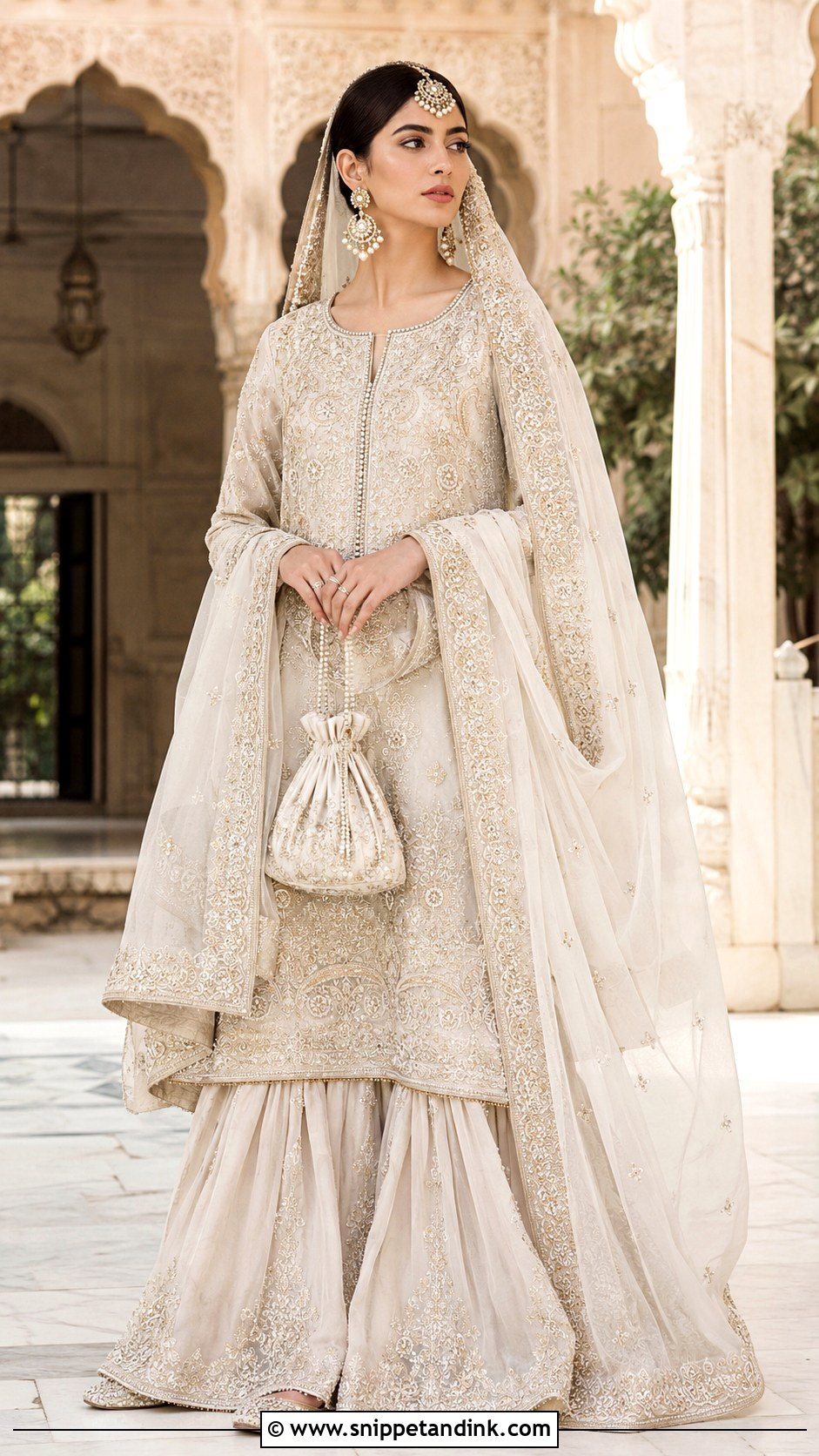
A farshi gharara is the most formal, heritage-heavy look here, with trousers that pool into a sweeping train on the floor. The long kurta should have full sleeves, a modest neck and embroidery at the borders. Ivory, cream or pale gold keeps it soft. The farshi length is beautiful and impractical in equal measure: you’ll need to lift the front to walk, and someone may need to help you with stairs. A wide dupatta over the head and across the arms completes the shape. Add a jhoomar, pearl earrings, embroidered flats and a potli, but skip a bulky necklace. I’d only recommend it where there’s space to move and a smooth floor.
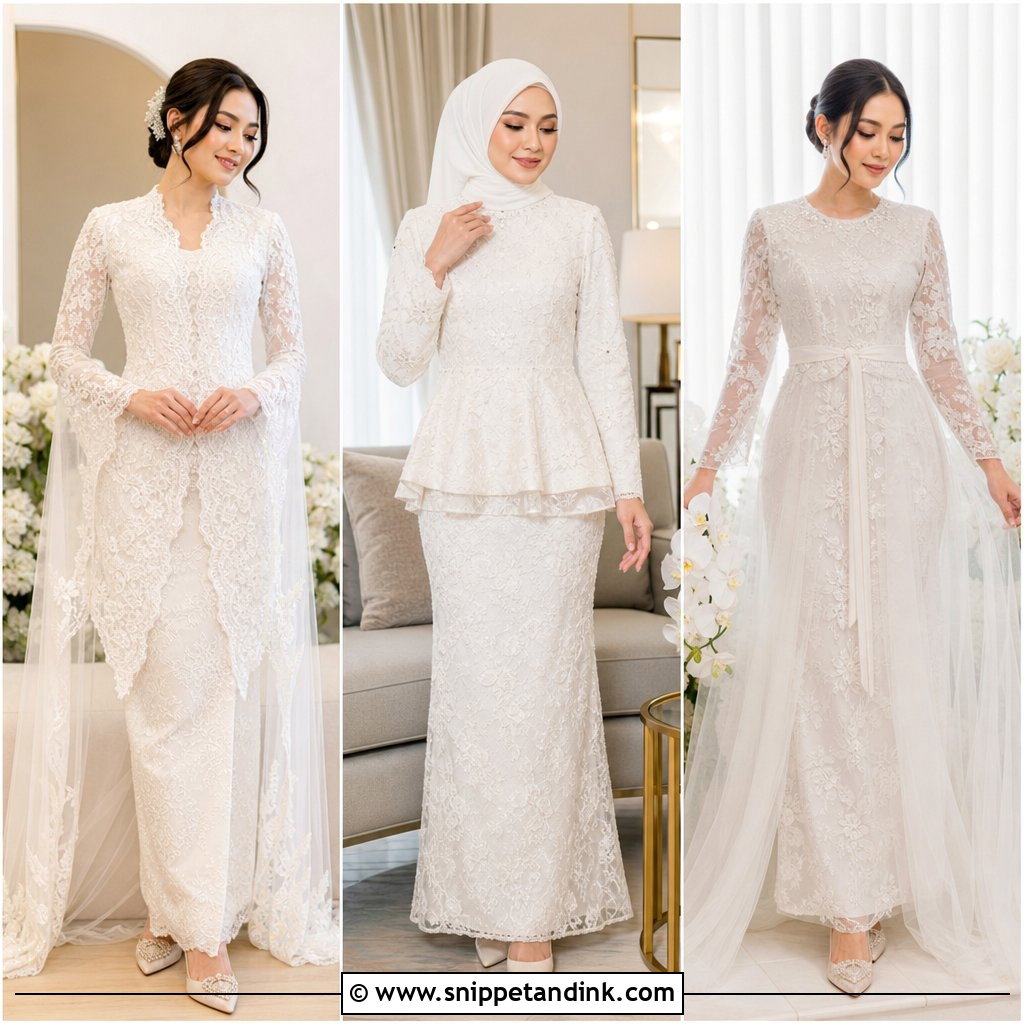
12. Lace Sleeve Nikah Gown
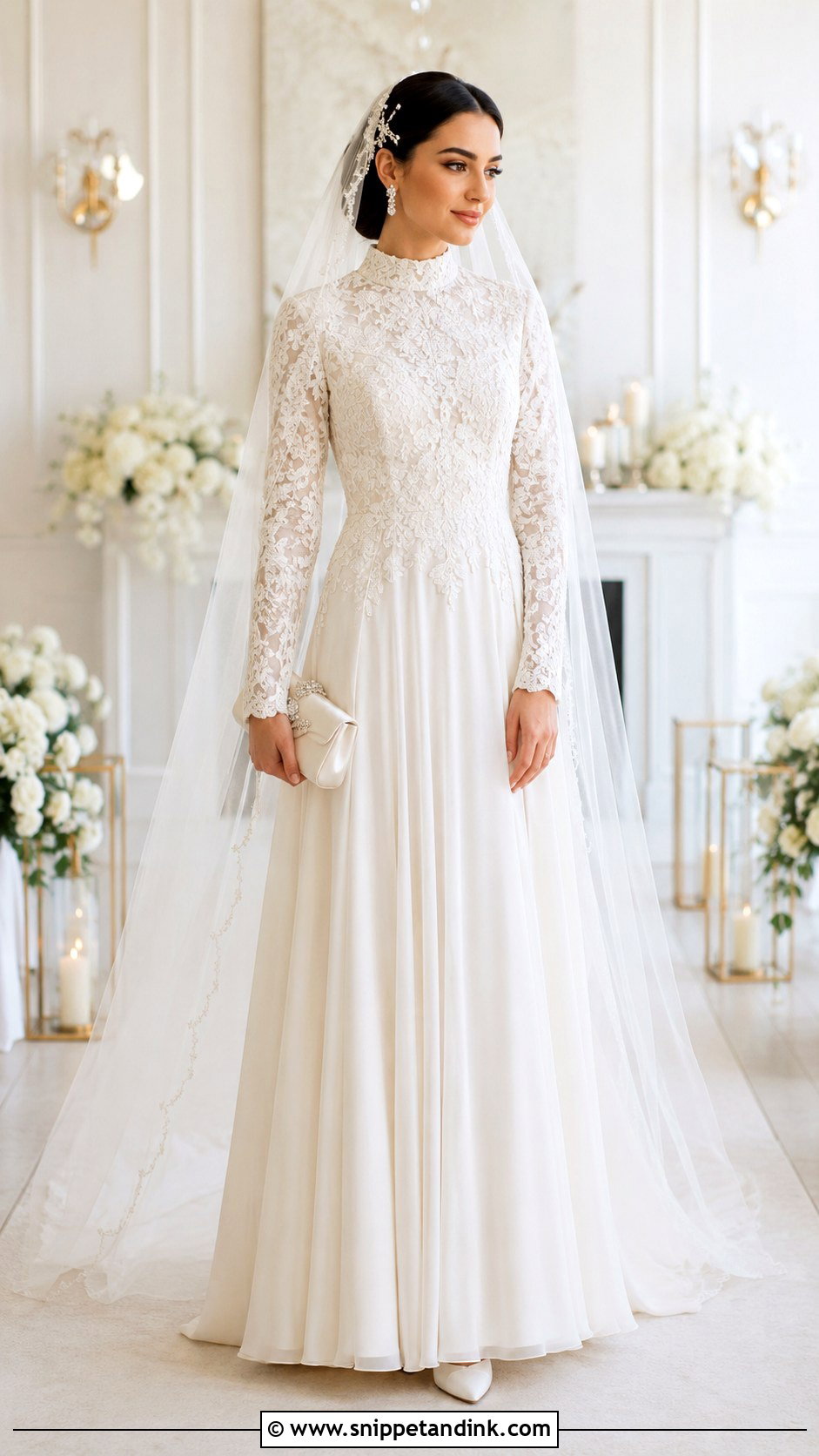
Lace sleeves add romance without dense embellishment. Start with an ivory A-line gown, a fully lined bodice, a high neck and long lace sleeves backed with sheer or opaque lining where you want coverage. Let the lace drift lightly onto the upper skirt, then fade into plain chiffon or crepe so it doesn’t look crowded. An ivory veil, pearl pins, closed-toe pumps and a satin clutch suit it; small crystal earrings catch the light. Lace snags on bracelet clasps and ring prongs, so I’d keep the wrists bare and check that the cuffs slip easily over your hands. It suits brides who like a classic gown with a modest finish.
13. Champagne Peplum Nikah Dress
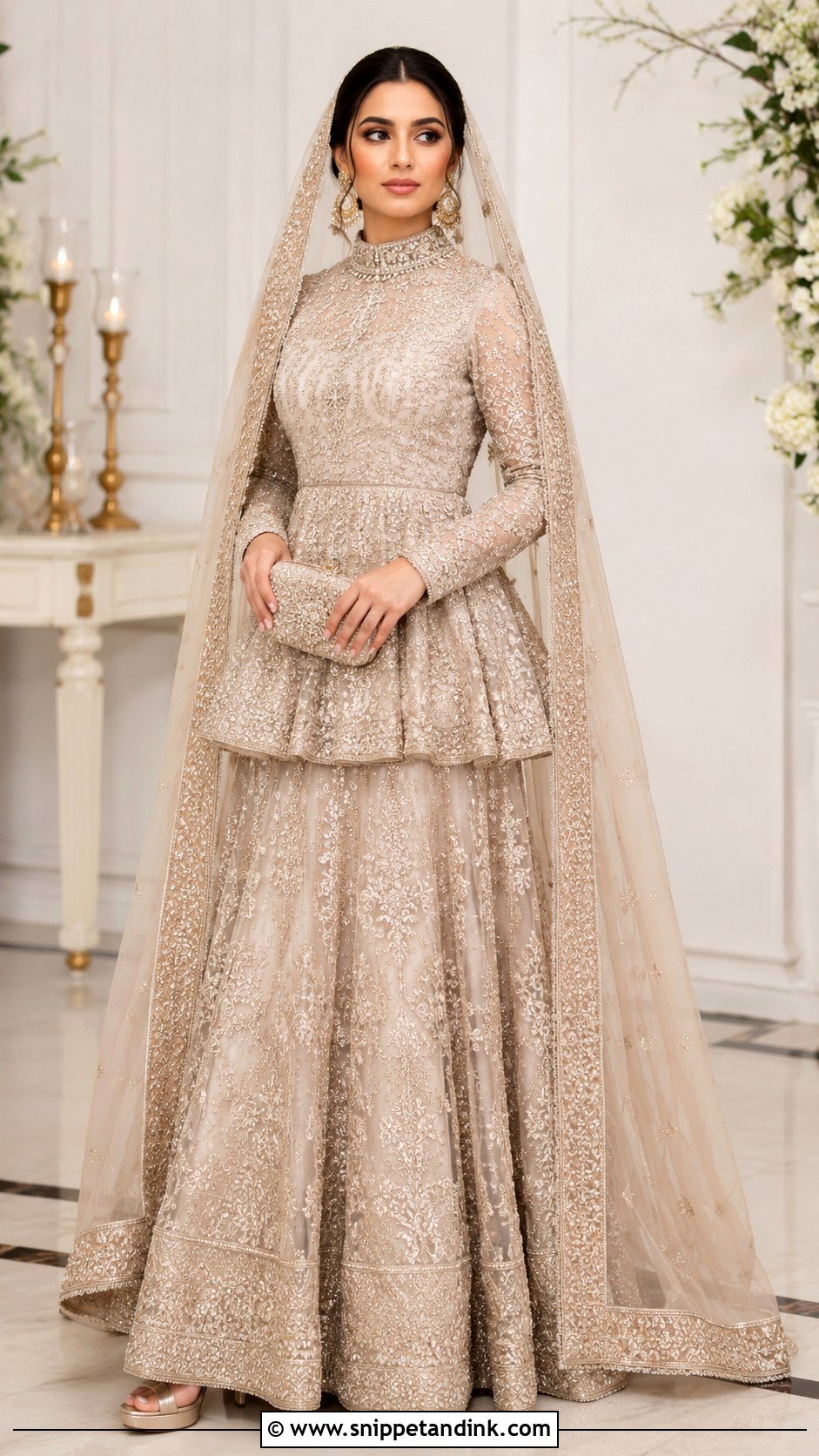
Champagne is my suggestion when pure white feels too stark against your skin. A long peplum top falling below the hip, with full sleeves, a high neck and gold-on-gold embroidery, pairs with a flared lehenga skirt or wide sharara in the same fabric. Matching color top and bottom creates one long line, and the peplum adds gentle structure at the waist. A sheer champagne dupatta with a narrow border sits over the head. Antique gold earrings, metallic block heels and a beaded clutch finish it. The embroidery can be minimal and modern or dense and traditional, so it adapts to how formal your ceremony is.
14. Floral Organza Nikah Dress
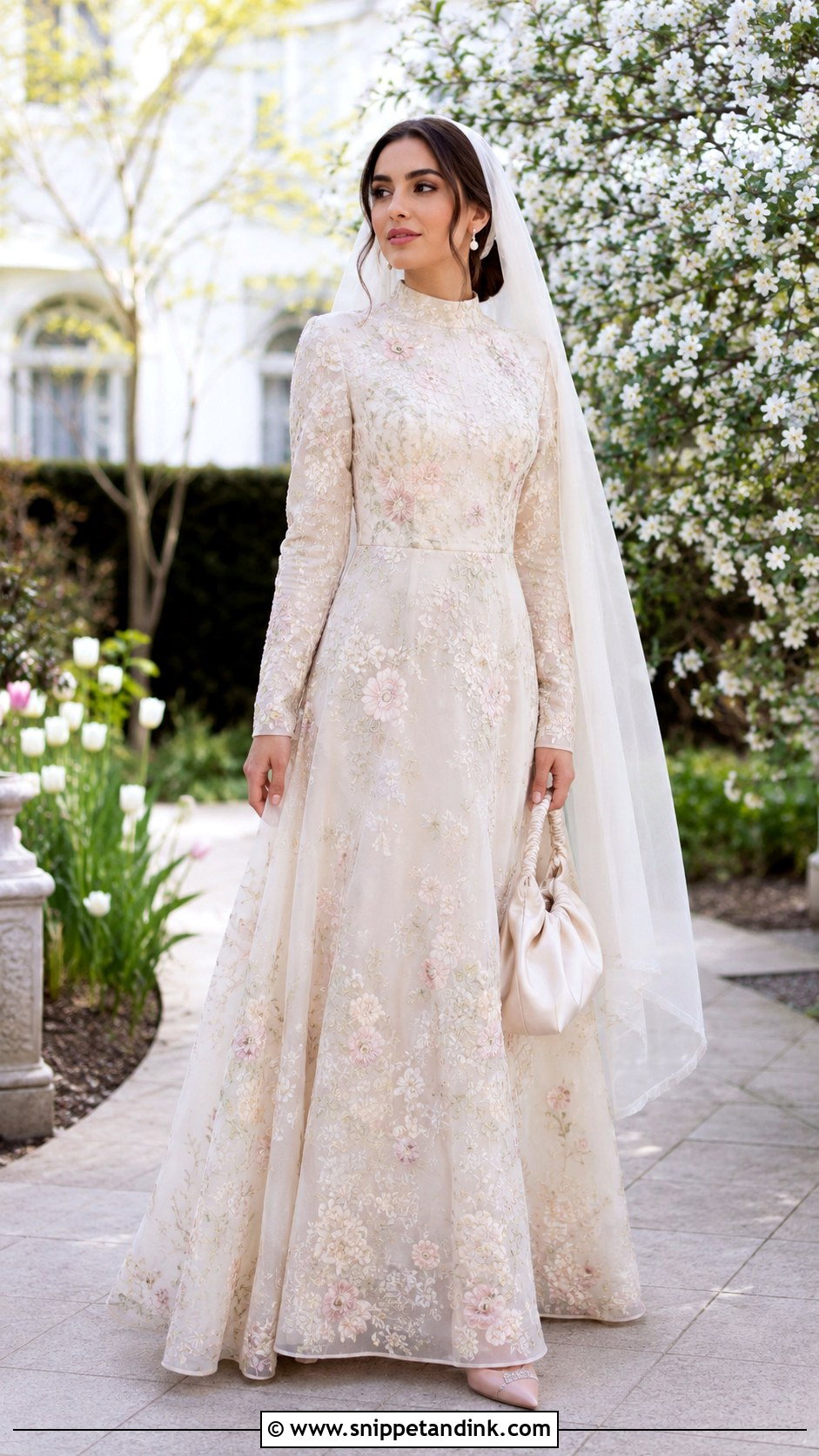
Florals can look bridal rather than casual if the motifs are embroidered, small and soft in color. I’d choose a long organza gown on an ivory, pale pink or mint base with flowers scattered over the bodice and skirt. Long lined sleeves, a raised neck and an opaque underlayer keep it modest. A fitted waist and a full but light skirt keep it from feeling heavy. Pair it with a plain chiffon veil so nothing competes with the pattern, plus pearl earrings, pastel heels and a satin bag. Spring and summer daytime ceremonies suit it. Organza creases sharply when packed, so I’d hang it and steam it the day before.
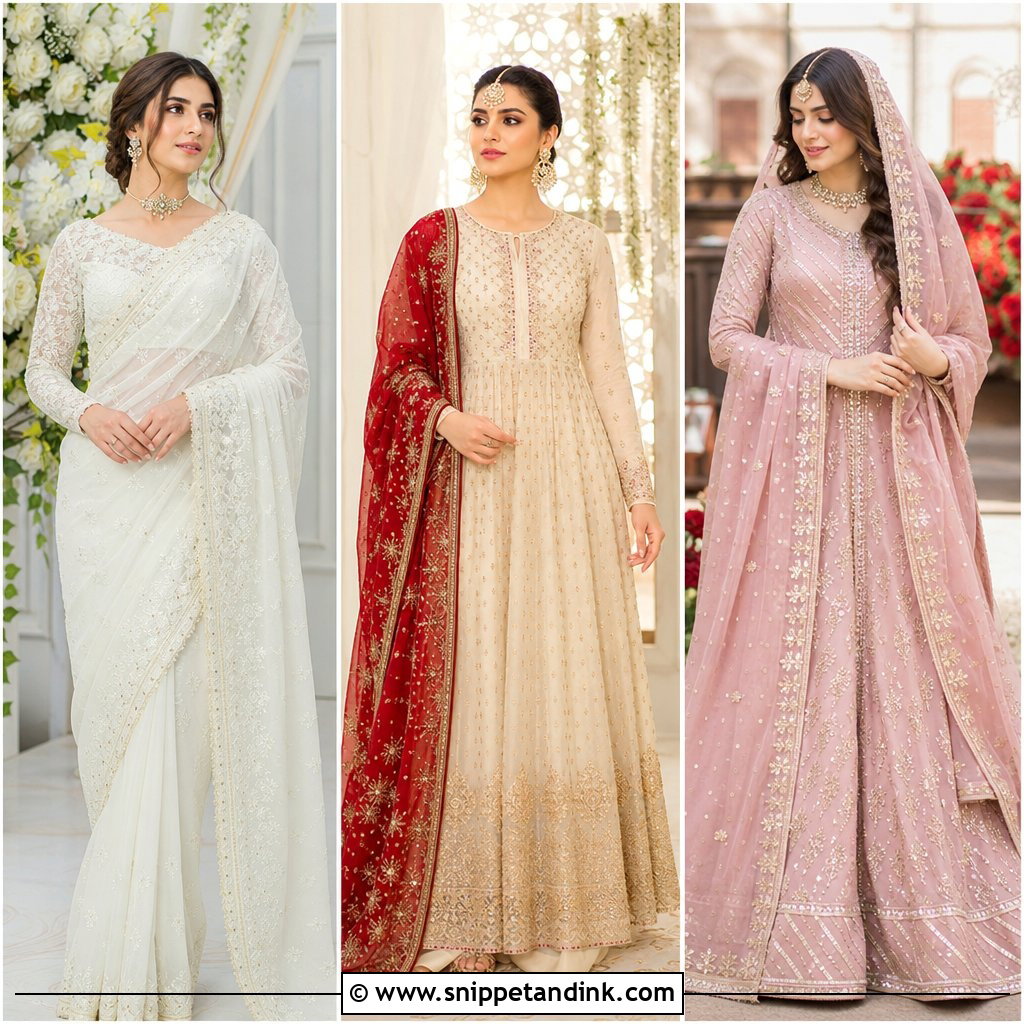
15. White Kaftan Nikah Dress
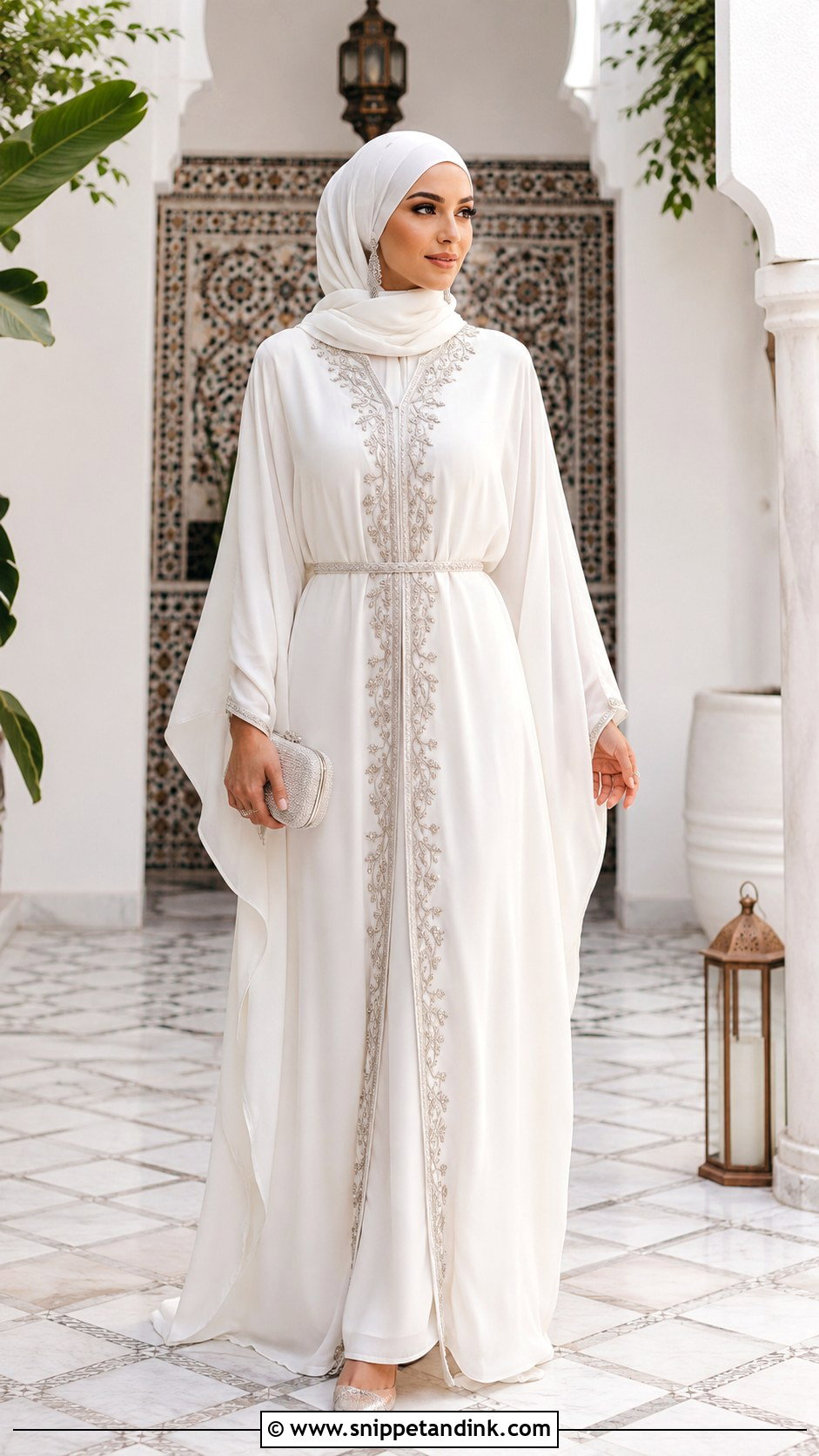
Kaftans are comfortable, cover well and let air move around you, which matters at a warm-weather Nikah. Look for a floor-length design with structured shoulders, wide sleeves and silver or gold embroidery down the center. A hidden waist tie gives shape without spoiling the flow. A light white hijab, metallic pointed flats and fine drop earrings suit it, with a small embellished clutch. If the neckline opens, add a matching modesty panel or high-neck inner layer. Wide sleeves are where I see trouble: they slide back to the elbow when you raise your hands for dua, so a fitted inner sleeve is worth asking for.
16. Velvet Nikah Gown
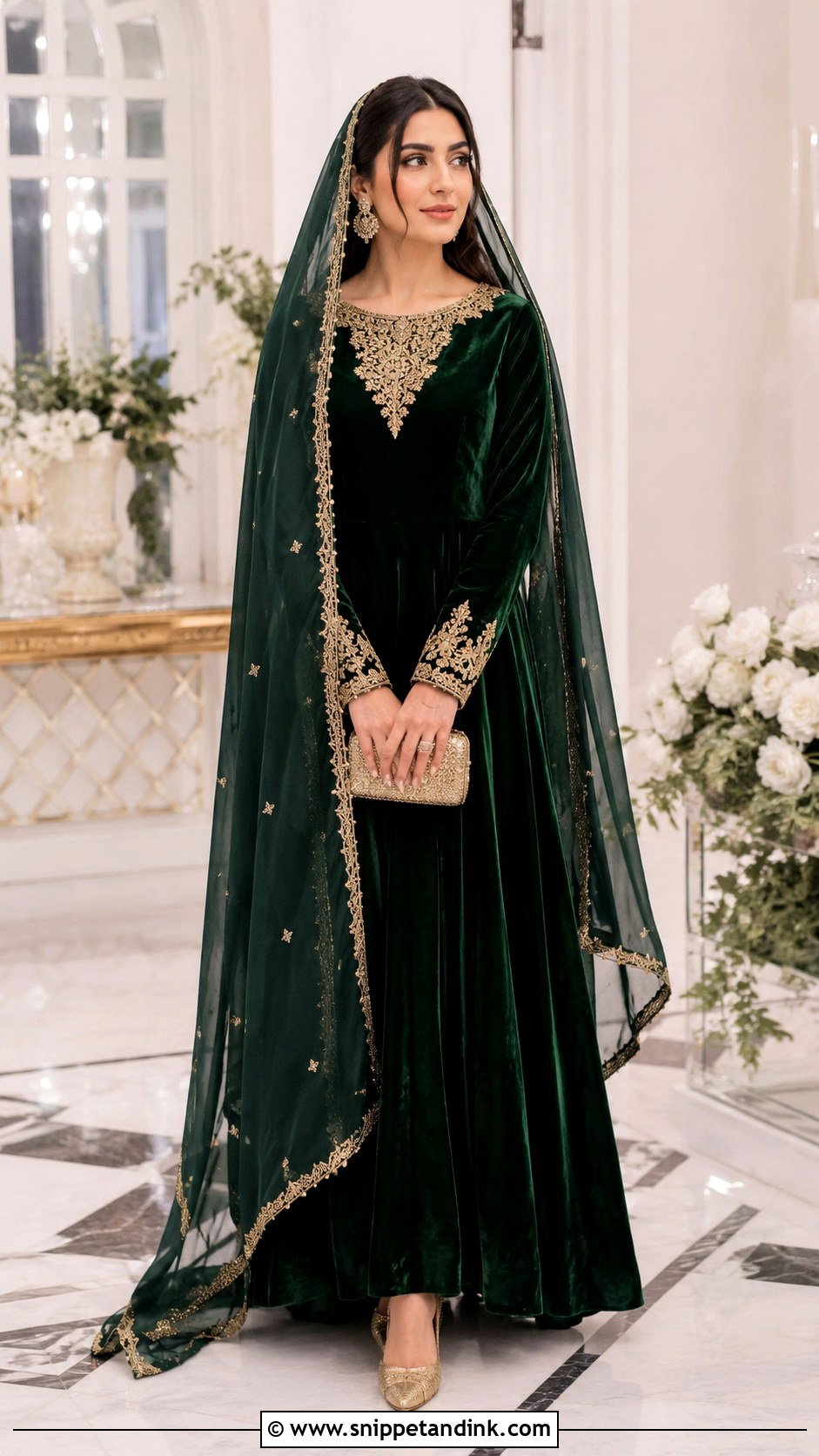
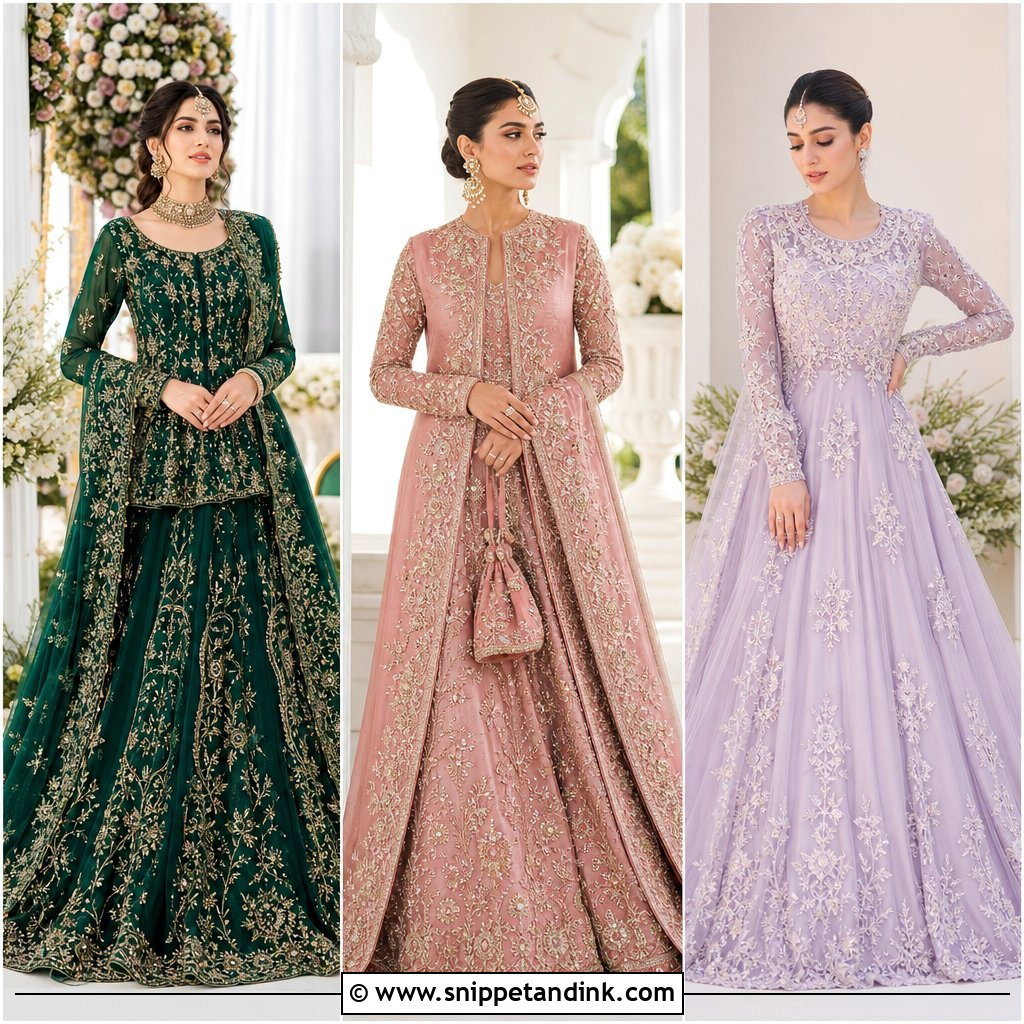
Velvet keeps you warm at a winter ceremony and looks formal straight away. Emerald, navy, burgundy or ivory all work, in an A-line or gently flared cut so the dense fabric doesn’t look bulky. Gold embroidery at the neck, waist and cuffs defines it, and a chiffon dupatta brings in a lighter texture. Closed-toe gold heels, a structured clutch and antique-style earrings finish it. Velvet traps heat, so in a heated hall I’d keep it to one layer, and a smooth satin lining helps it move. It suits an evening ceremony at home or an indoor venue. Keep a lint roller nearby, as dark velvet picks up every thread.
17. Pleated Satin Nikah Dress
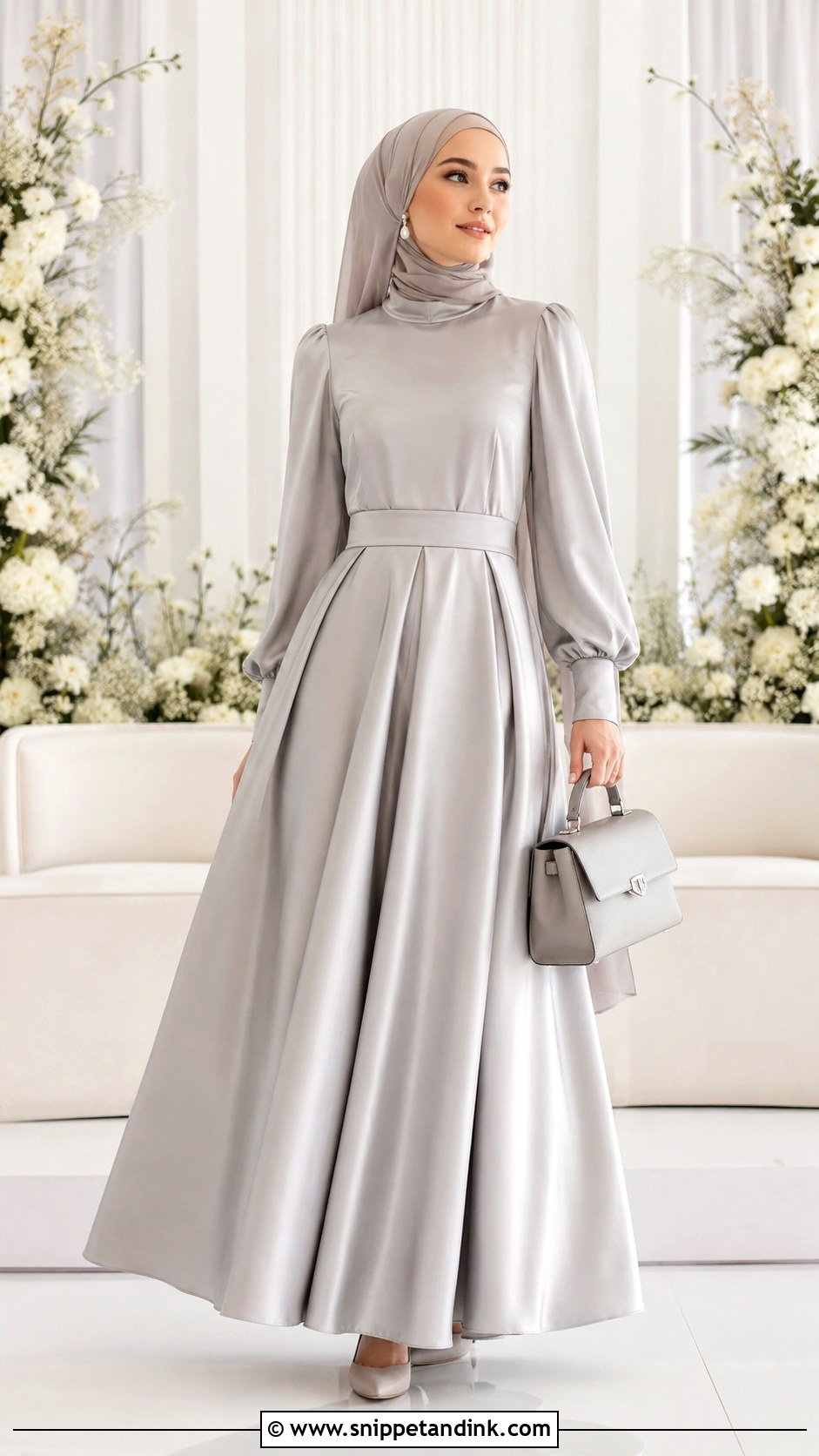
Pleated satin looks clean and modern, with movement from the pleats rather than from embroidery. I’d choose matte or low-shine satin, because high-shine reflects flash and shows creases in every photo. A high neck, fitted cuffs and long bishop sleeves give coverage, and a pleated A-line skirt adds vertical flow. Ivory, pearl gray, dusty rose or champagne all work. Add a matching belt for more waist definition. A chiffon hijab or veil softens the satin, with pearl earrings, pointed pumps and a structured bag. It suits a minimal bride who would rather see good tailoring than dense beading.
18. Embroidered Jacket Nikah Dress
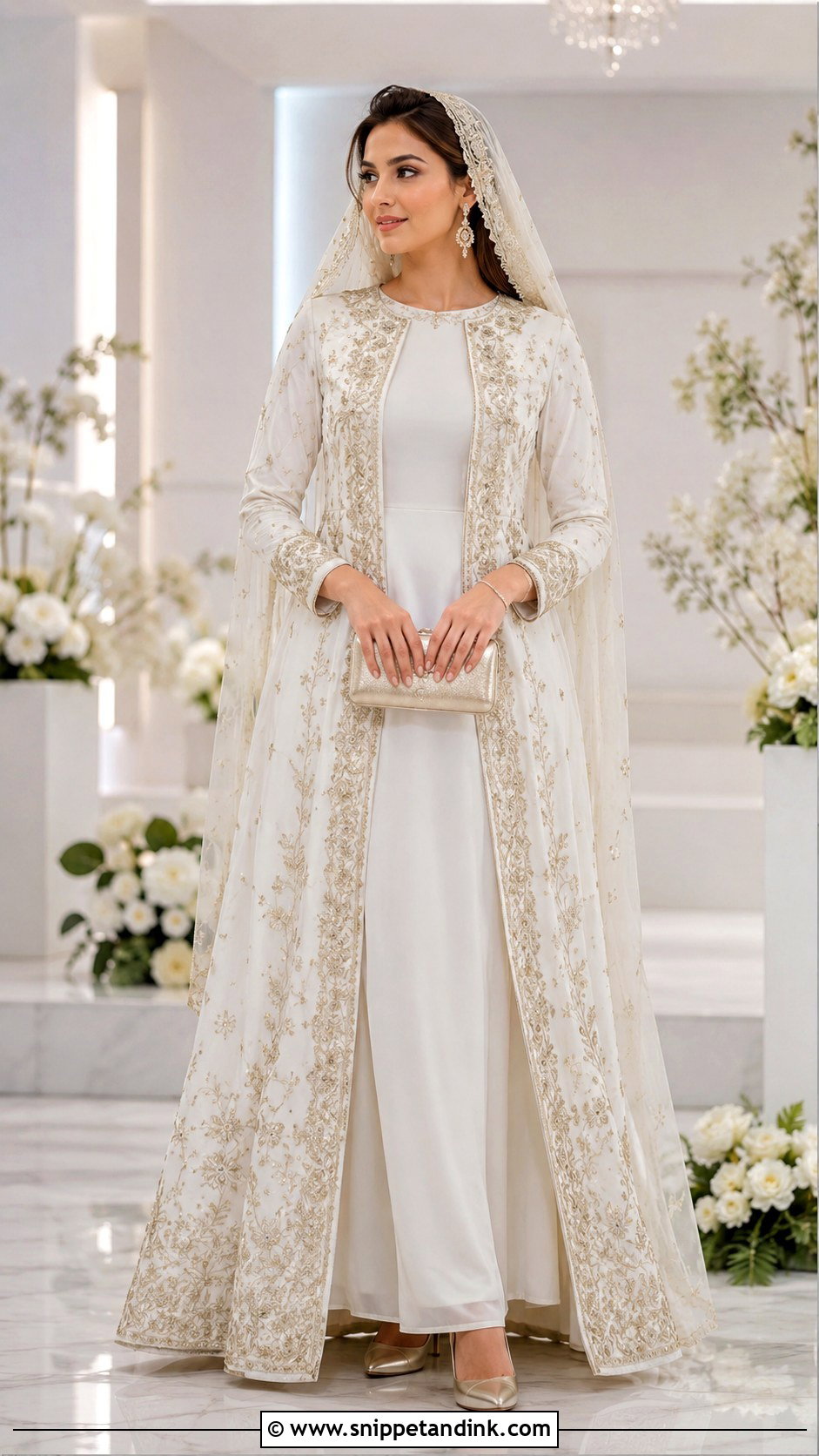
A jacket over a simple dress gives you two outfits in one, which suits a bride hoping to wear the pieces again. Begin with a plain ivory or pastel maxi with long sleeves and a high neck. Over it, a floor-length open jacket with gold threadwork, pearls or tonal embroidery should skim the body rather than grip. Leave the front open so the clean inner layer shows. A matching dupatta or neatly wrapped hijab, low metallic heels, small drop earrings and a slim bracelet finish it. You can take the jacket off for a family lunch afterward, and the dress works again later. Check the armholes of both layers together, since two sleeves stacked can feel tight.
19. Moroccan Kaftan Nikah Dress
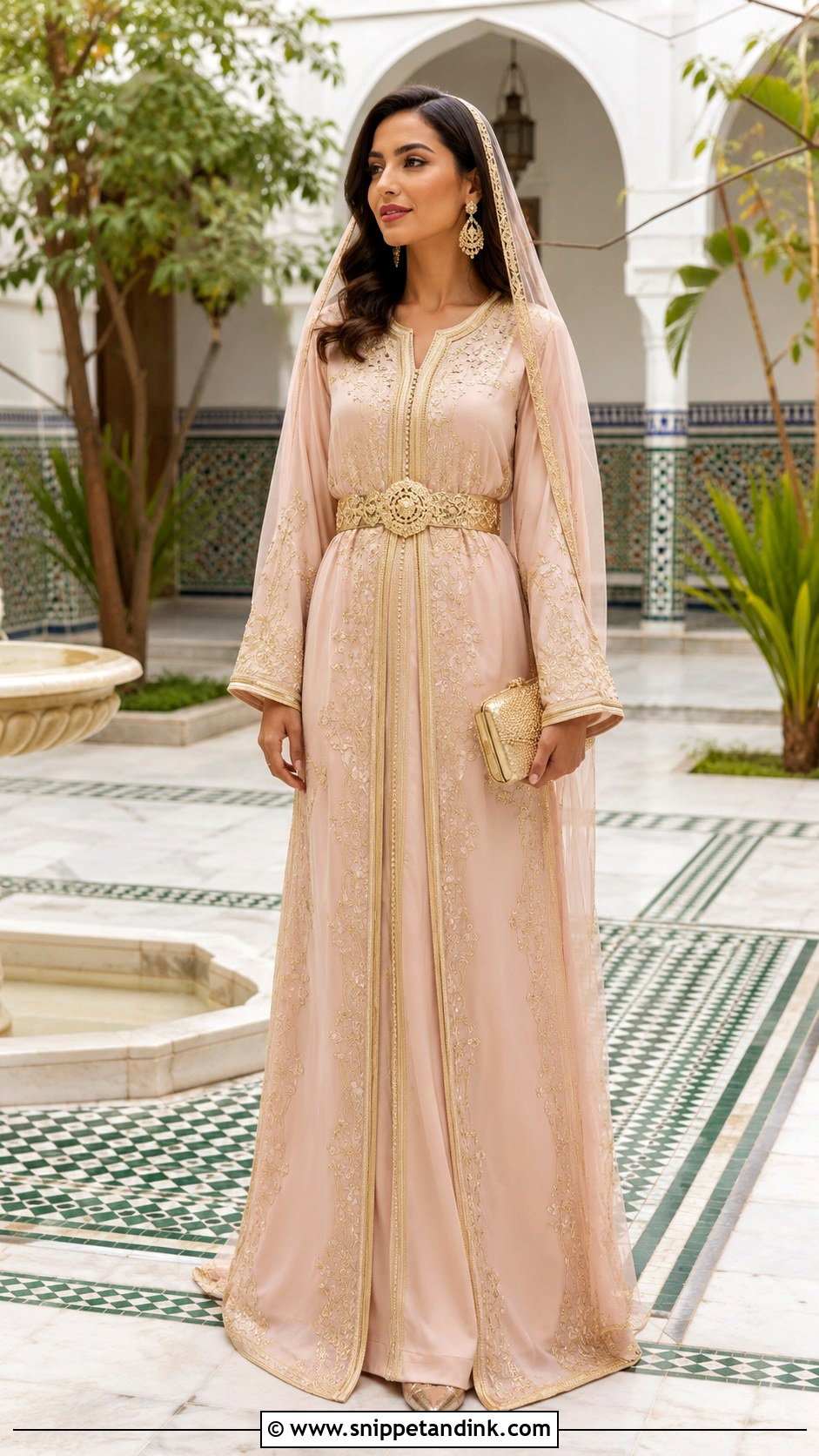
A Moroccan-inspired kaftan takes its structure from trim and tailoring. Choose a floor-length design in white, cream, blush or soft green with metallic embroidery tracing the neck, front, cuffs and hem. The traditional decorative belt defines the waist, but I’d fit it while seated, because a belt that feels right standing can dig in during a long ceremony. Long sleeves and opaque fabric cover you without extra layers. A coordinated hijab or veil, pointed metallic slippers, statement earrings and a gold clutch complete it; keep the rest restrained. Good fabric weight lets it hang straight rather than collapse.
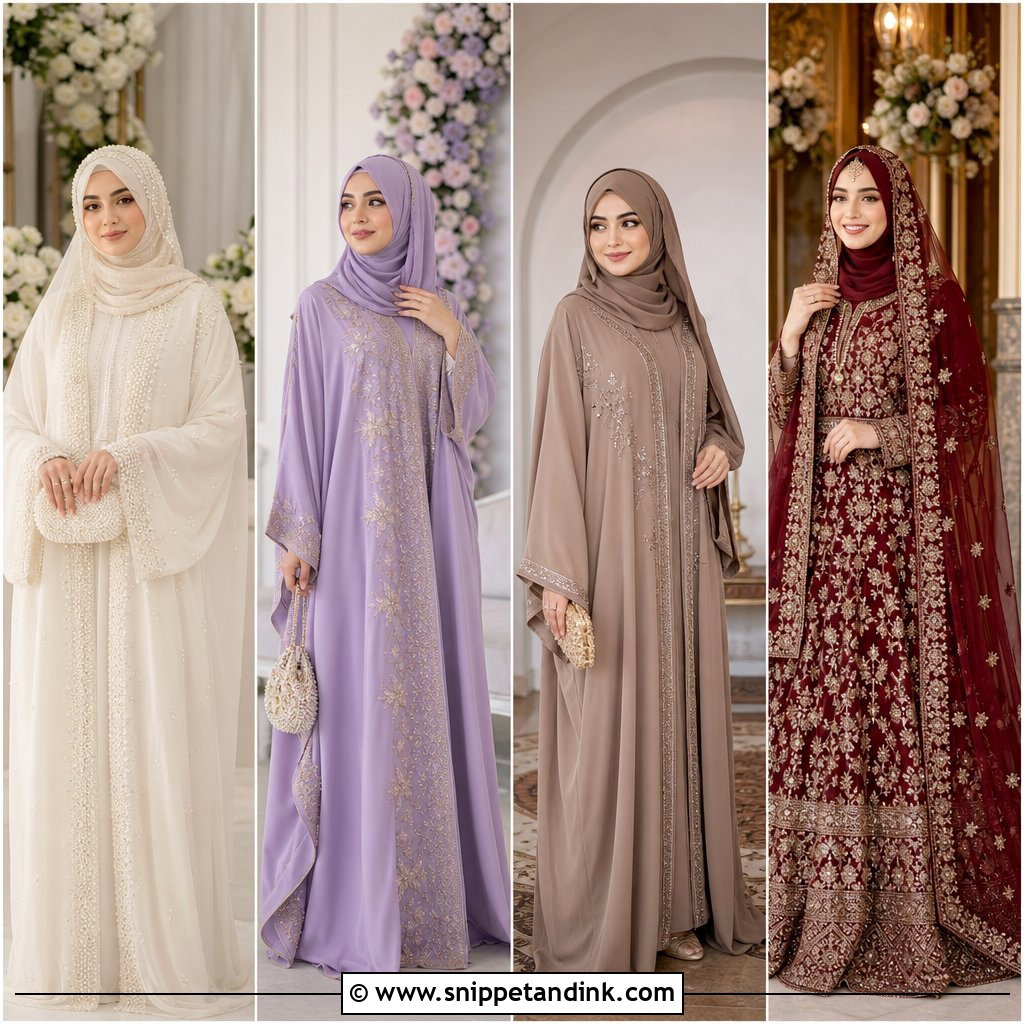
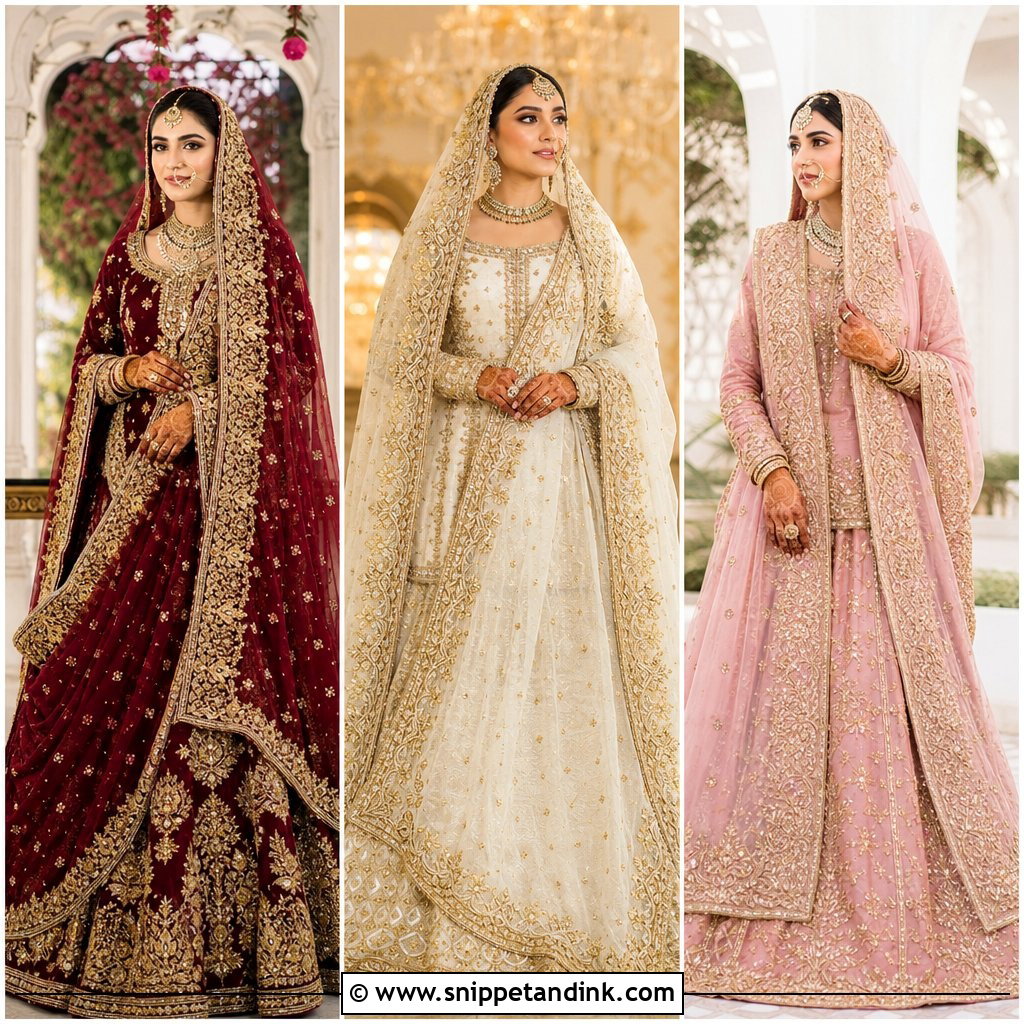
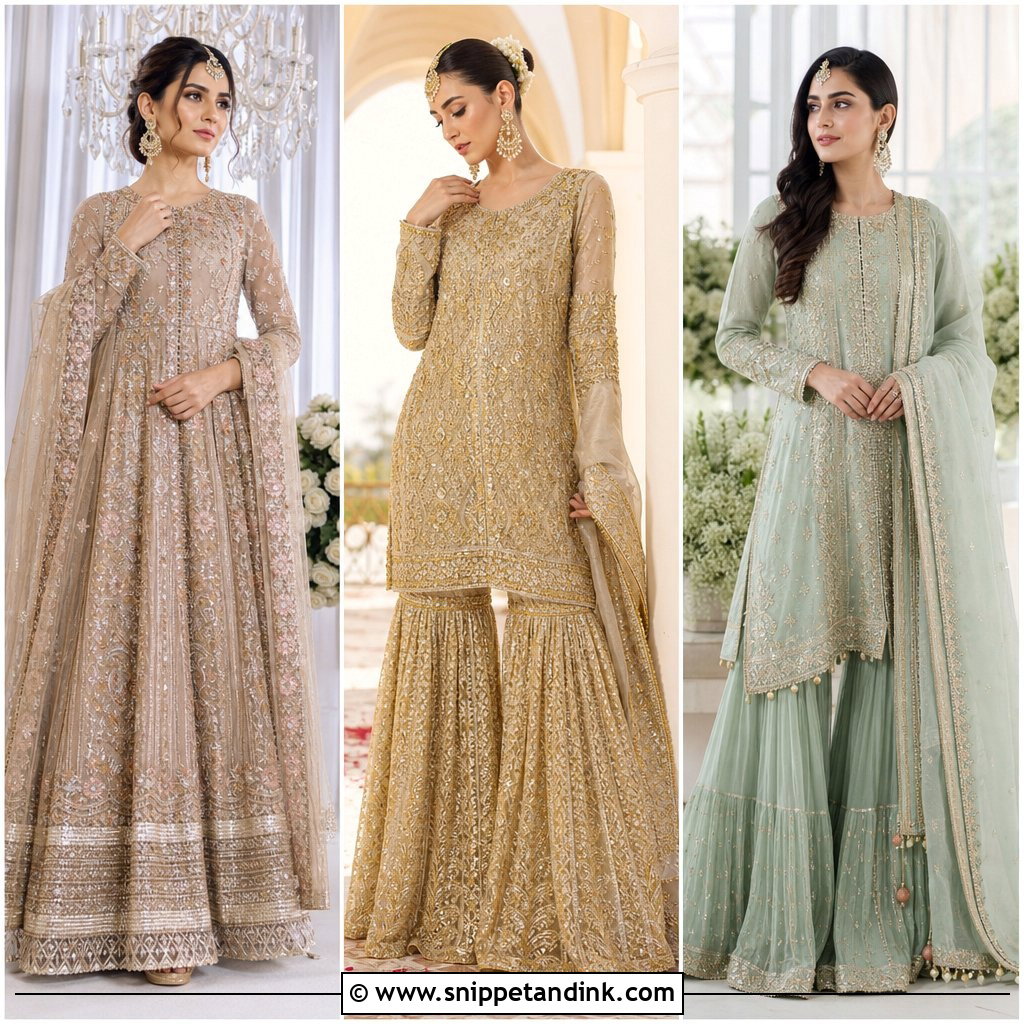
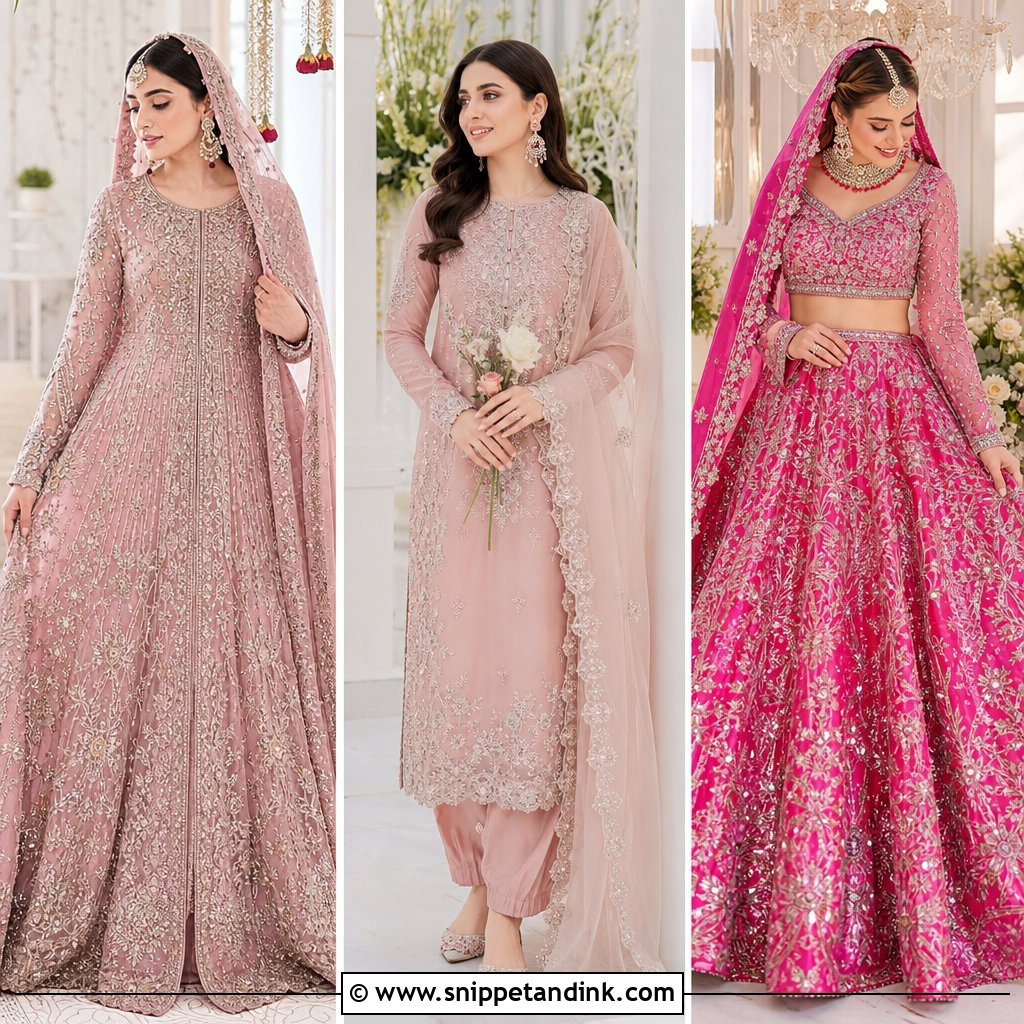
20. Minimalist White Nikah Dress
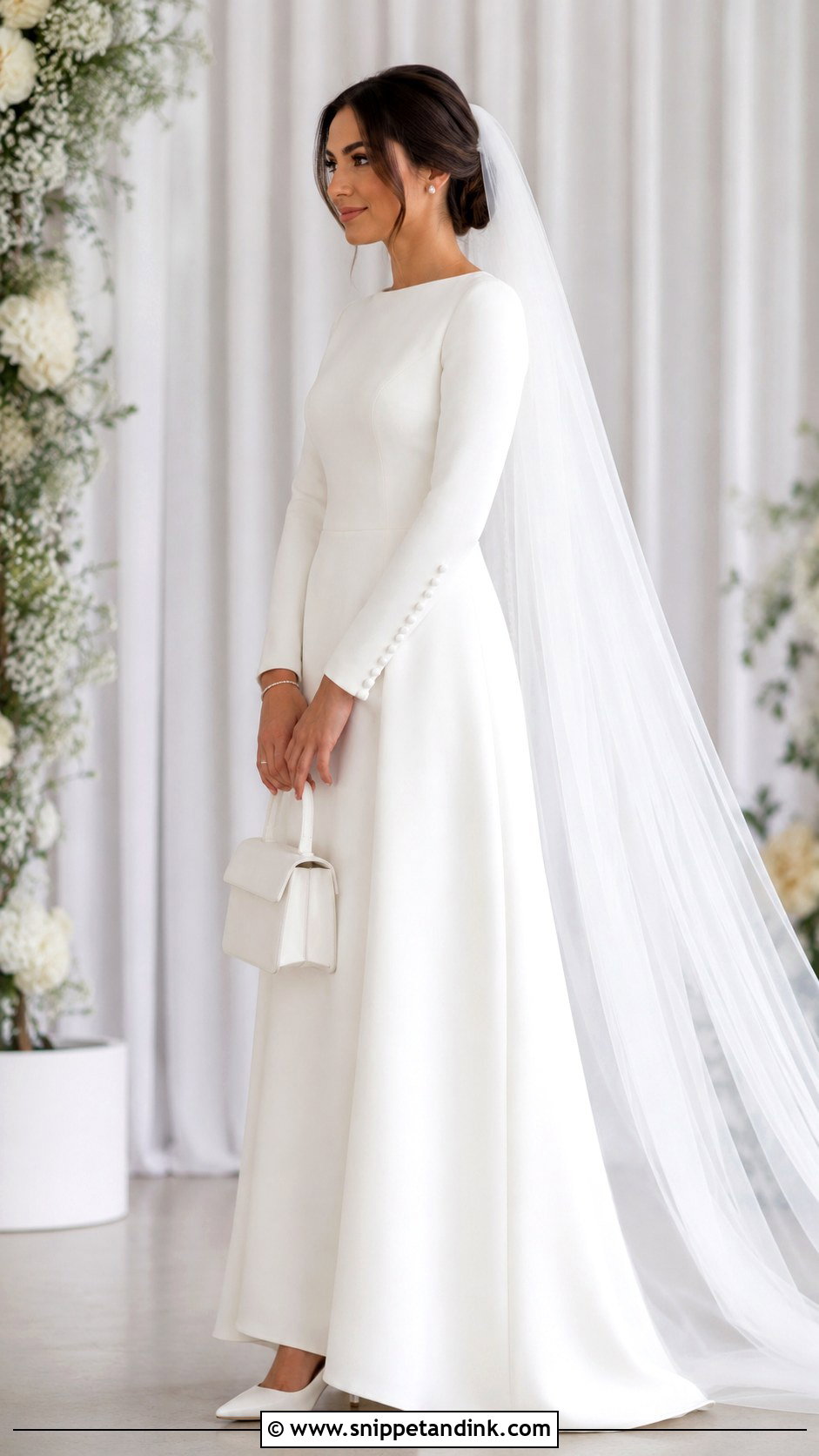
A simple white dress can be the strongest choice of all. A full-length crepe gown with a high boat neck, long sleeves and a tailored A-line skirt relies on details like covered buttons, cuff shaping or a subtle waist seam. Add a long chiffon veil or a clean white hijab. Pearl studs, a structured mini bag and low pointed heels keep it refined. With no embroidery to hide behind, alterations are everything: I check the shoulder seam sits on the shoulder, the sleeve ends at the wrist bone and the hem clears the floor in your chosen shoes. It suits a small mosque service, a civil setting or home, and leaves room for heirloom jewelry.
Pinning a Hijab or Dupatta That Stays Put Through Every Hug
Most of the fussing I see on a Nikah day is not the dress at all. It’s the head covering sliding back after the fifth relative hugs the bride. A few things make a real difference.
- Start with a fitted underscarf or bonnet in a grippy cotton. Slippery satin over slippery chiffon will always move.
- Use straight pins and small safety pins on plain areas, never through embroidery, beads or zari, which can snag or pull threads loose.
- Anchor a heavy dupatta at the crown and at both shoulders. Its weight drags it backward otherwise.
- Do a full practice at home with the actual dupatta, not a substitute, and wear it for an hour while moving around.
- Hand a spare set of pins to one person you trust, so you aren’t searching your bag mid-ceremony.
Settle with your makeup artist whether the hijab goes on before or after makeup. Putting it on afterward risks foundation on the fabric; pressing a clean tissue over the face while it goes on avoids most of the transfer.
Wear It Around the House Before the Day
A Nikah outfit should reflect your values, your culture and how you feel most yourself. Ghararas, Anarkalis, tailored gowns, abayas, sarees and kaftans can all feel bridal when the fit is right and you can move freely. Before you decide, look at the fabric in daylight and indoor light, sit and walk in it, and practice arranging the veil or dupatta. Ask the venue about any mosque-specific expectations. Then add accessories that support the dress rather than crowd it, so you can stay comfortable and present through the vows.
You'll Like These Ideas:



Leave a Reply