
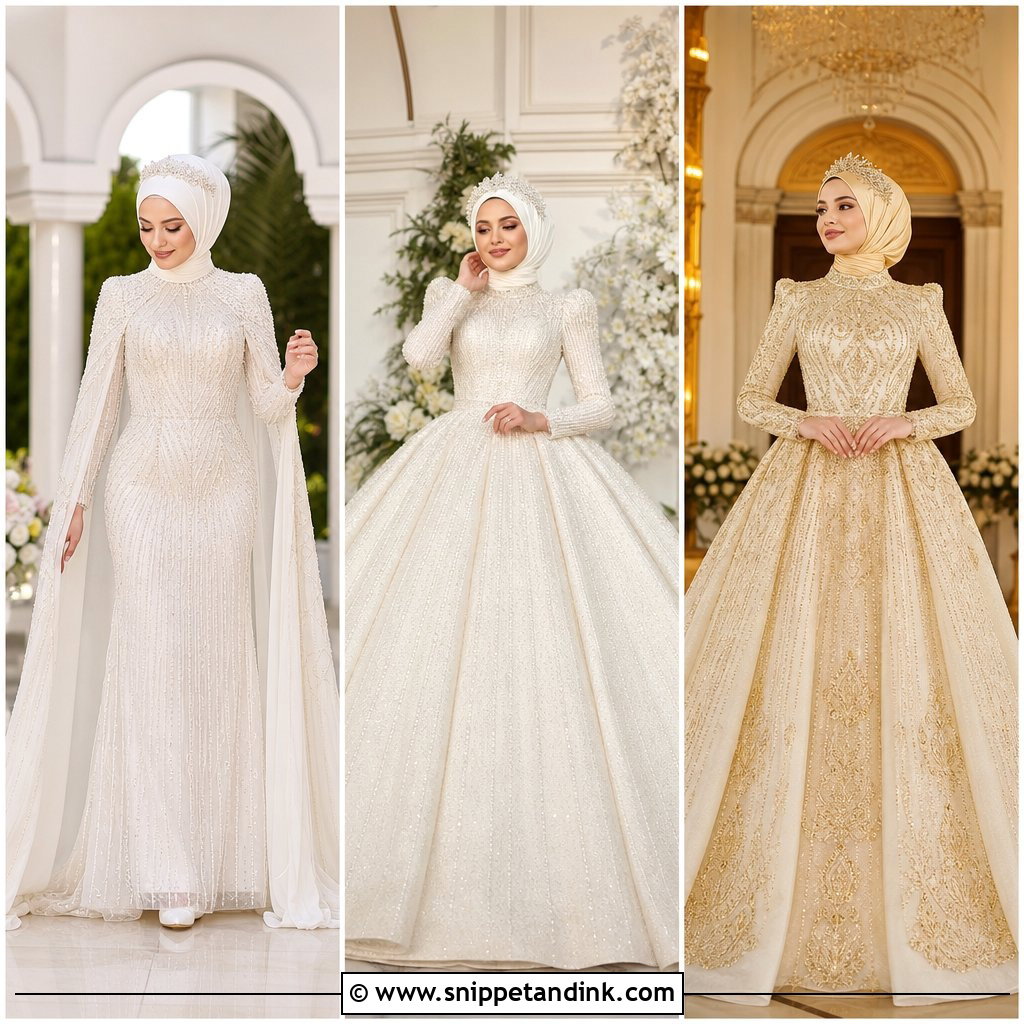
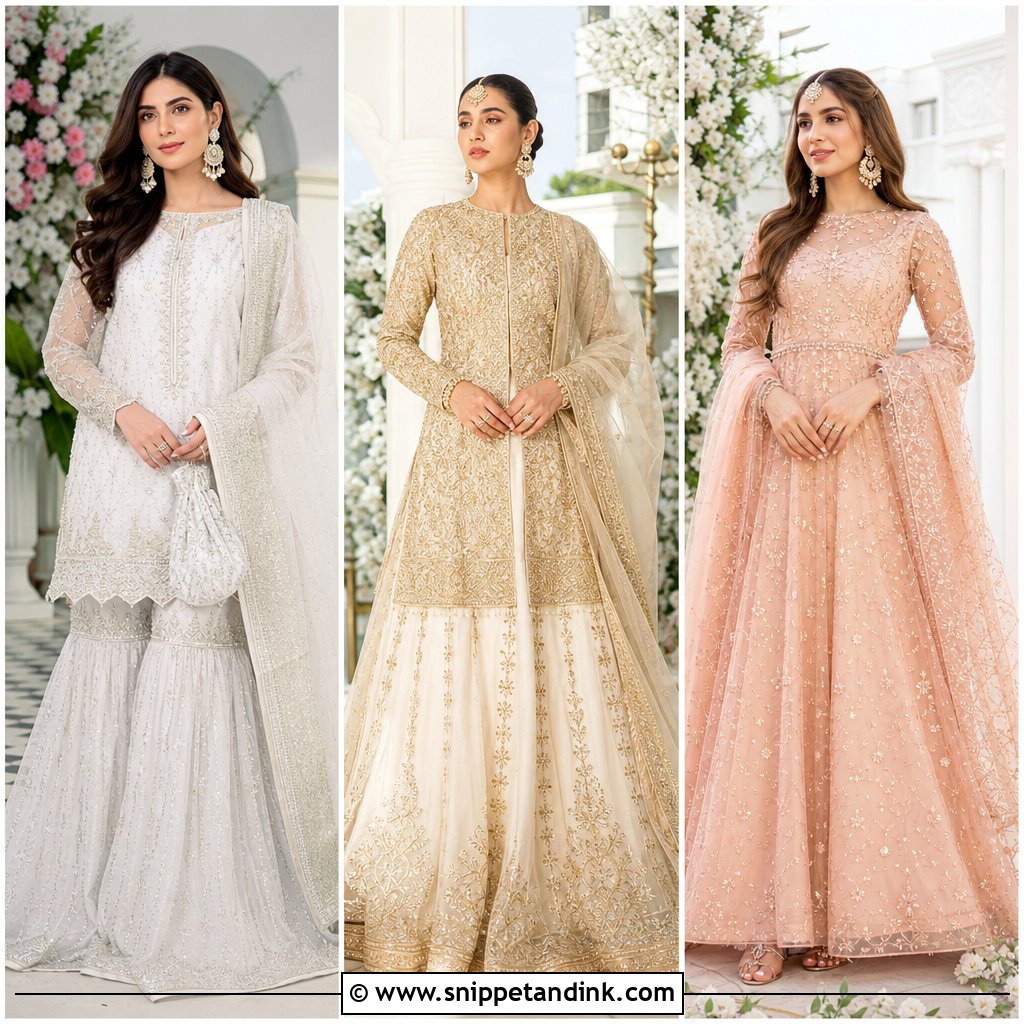
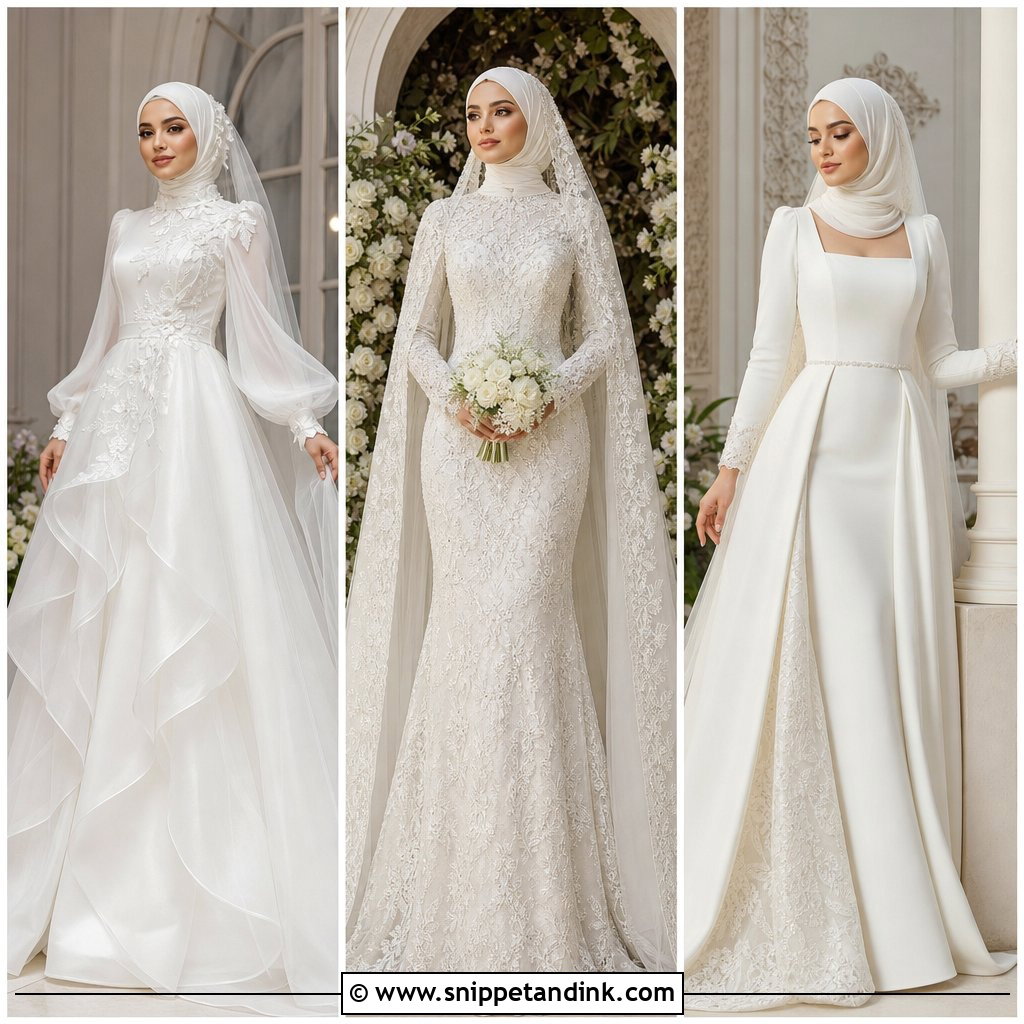
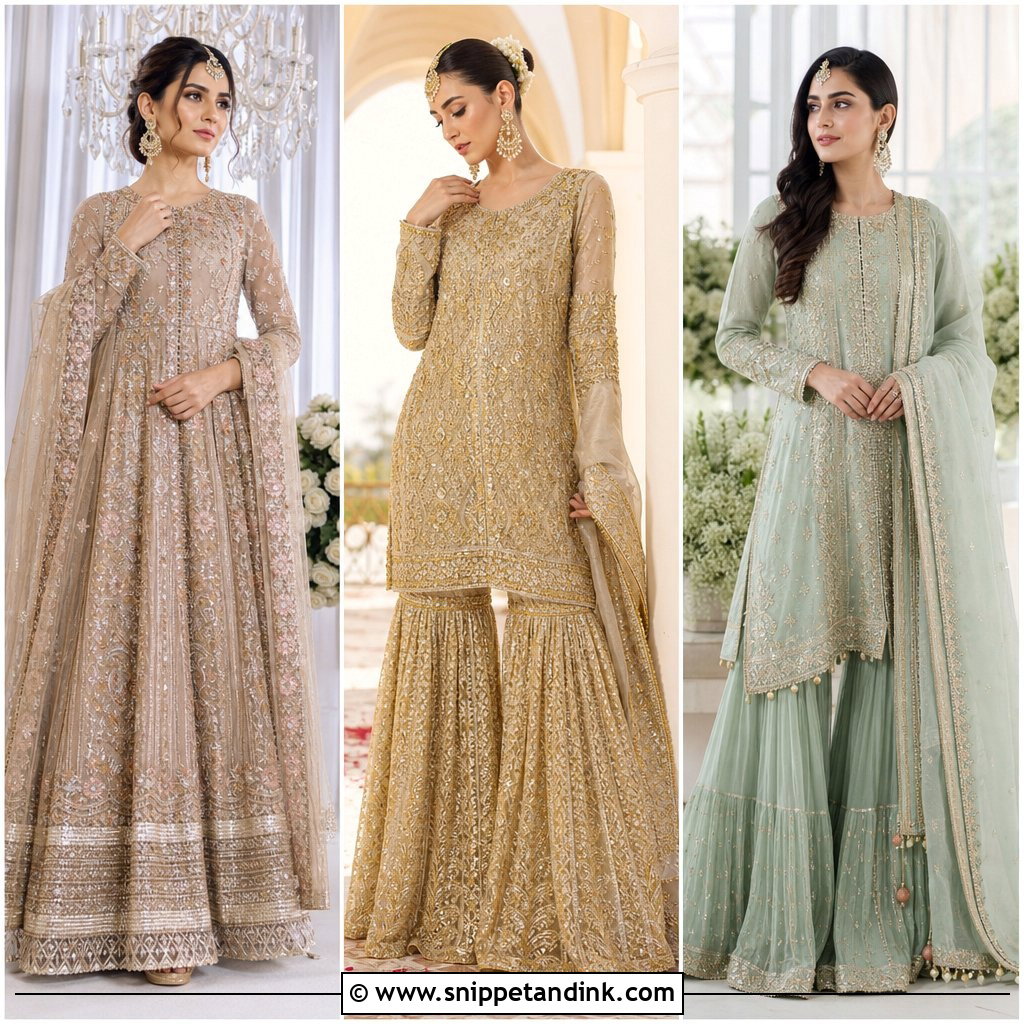
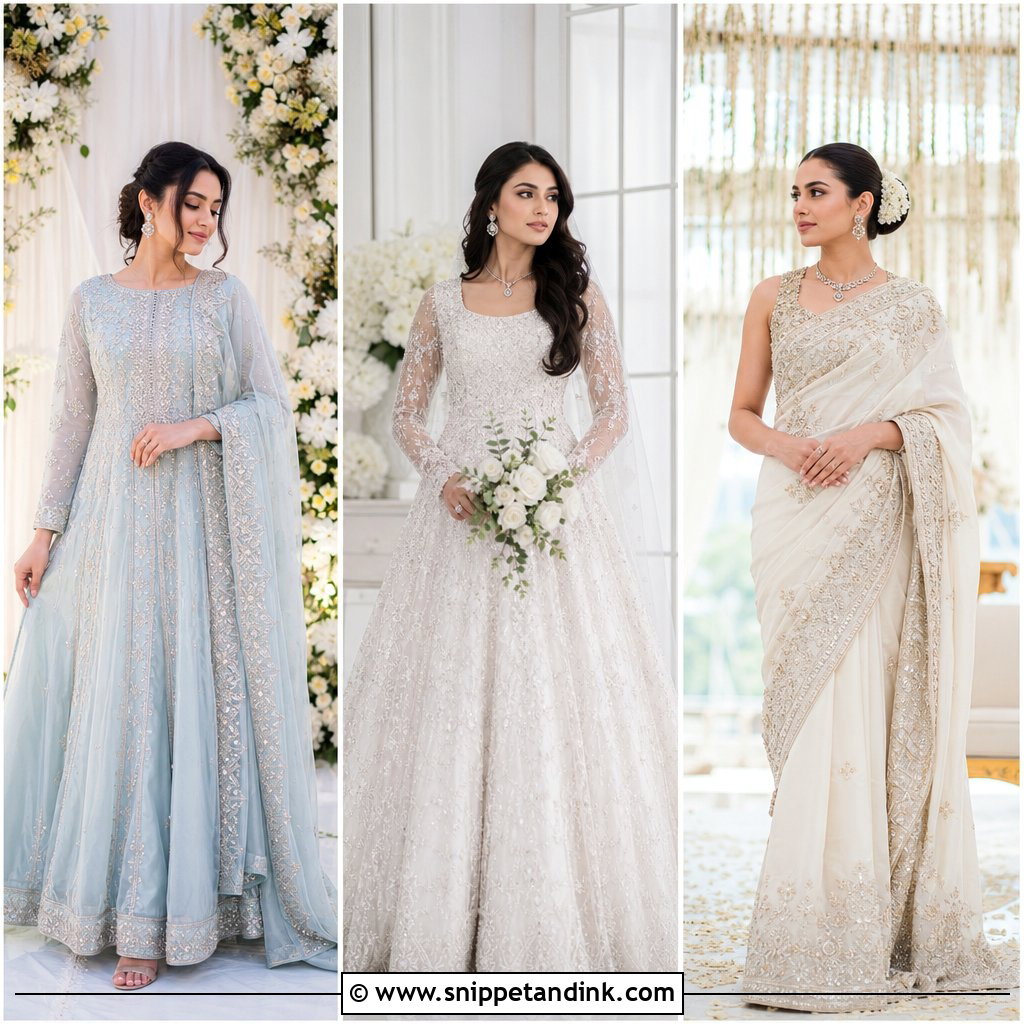
A lighter bridal outfit can still feel festive and traditional. What makes it work is a graceful silhouette, embroidery kept to the places the eye goes first, and jewellery that supports the dress instead of burying it. The looks below cover the nikkah, mehndi, baraat and walima, as well as smaller home ceremonies. Ivory and pastels, ghararas, separates you can wear again, and statement dupattas over cleaner shapes are all being chosen by brides right now. Each one is described head to toe, with jewellery and shoes, and you can shift the fabric, sleeve length, neckline or amount of work to suit your budget, your shape and your family’s customs.
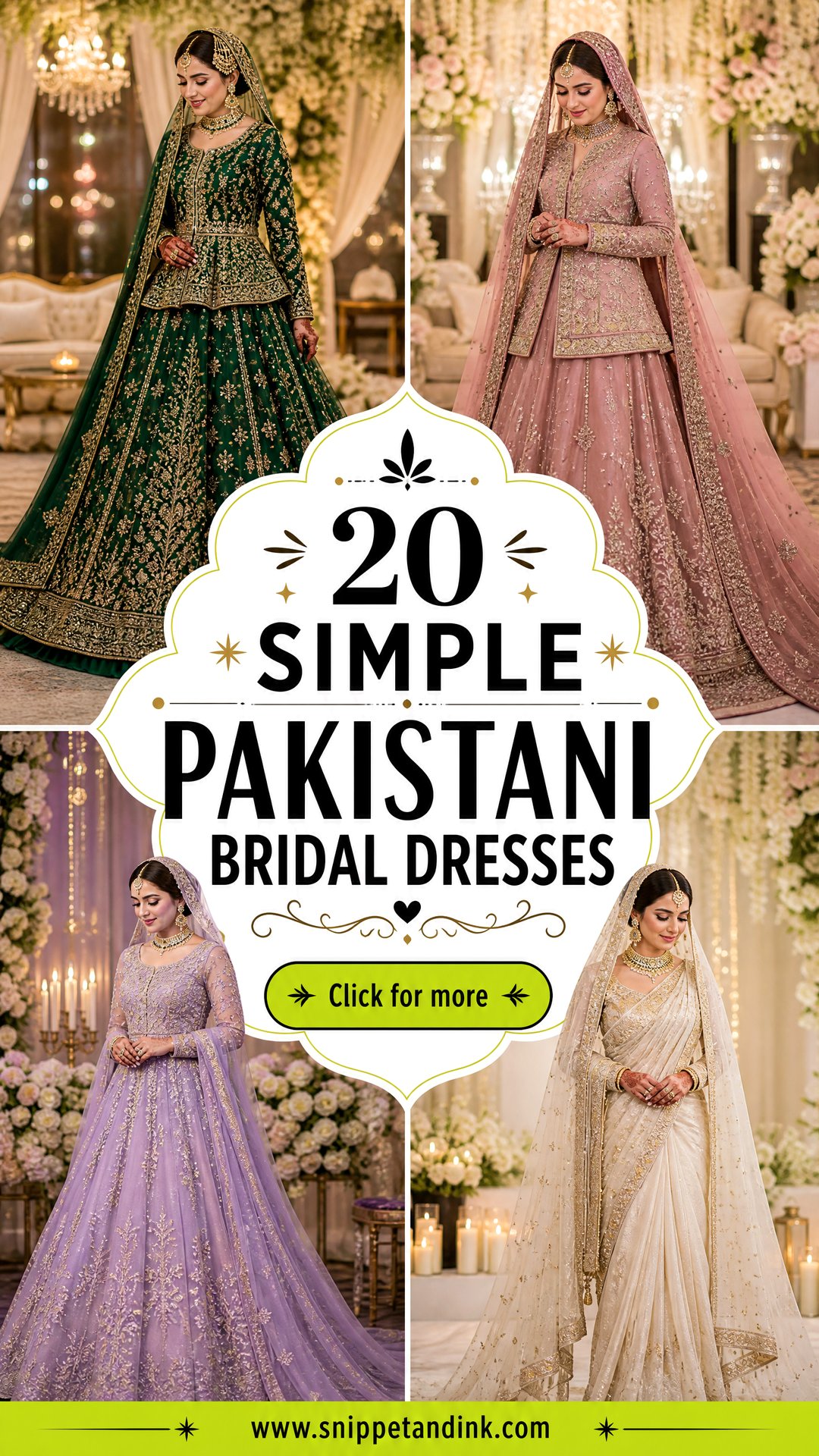
Spreading One Simple Wardrobe Across Mehndi, Nikkah, Baraat and Walima
Most brides I dress are buying for three or four functions, and the budget almost always runs out on the last one. Planning them together, rather than one at a time, is what keeps a simple wardrobe looking deliberate instead of thin.
- Mehndi: bright, washable-ish colours and shorter hems. Henna and haldi stain, so this is not the outfit to spend the most on.
- Nikkah: coverage and a dupatta that sits securely on the head while you’re seated for a long time. Ivory, white and soft pastels work well here.
- Baraat: the one outfit where most families still expect red or a deep jewel tone. Put the largest share of the budget here if you’re only buying one heavy piece.
- Walima: lighter colours and a shape you can stand and greet guests in for hours, such as a maxi, a long shirt with lehenga, or a farshi gharara.
Repeating pieces is perfectly acceptable and saves real money. A plain raw silk lehenga skirt can go under one shirt at the nikkah and another at the walima, and a statement dupatta can be reused across two functions if the photos are framed differently.
1. Ivory Pakistani Bridal Pishwas
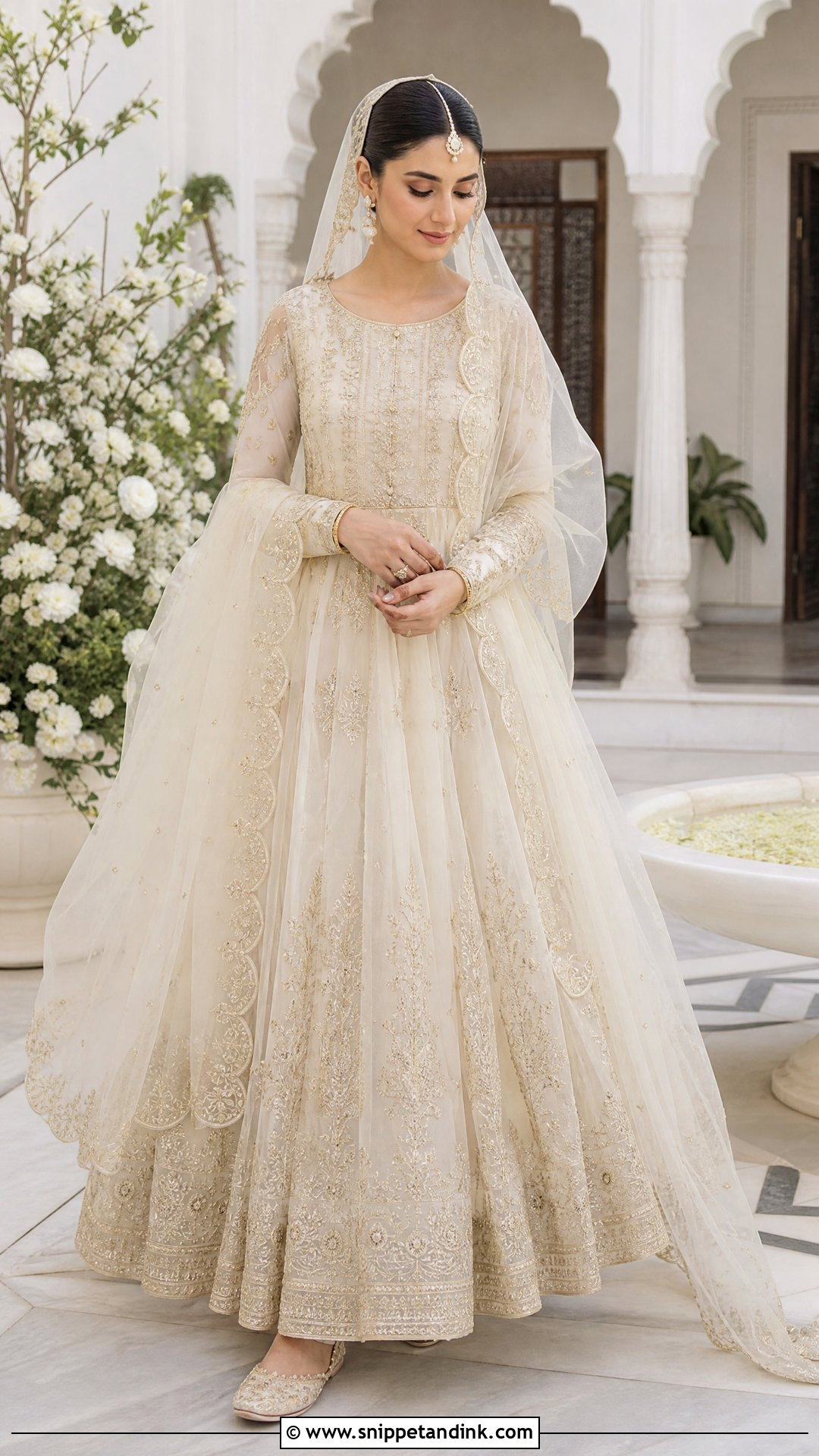
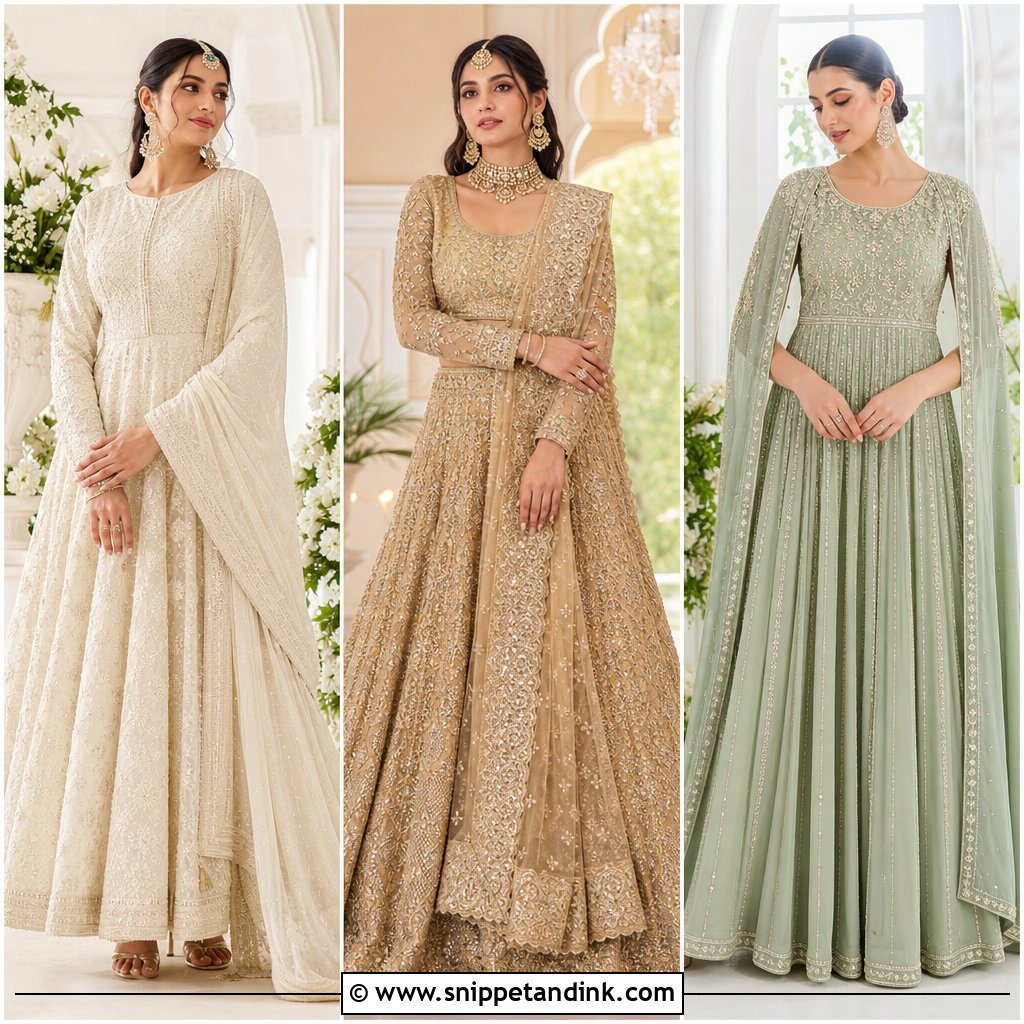
With an ivory pishwas, the movement of the fabric does the work that embroidery usually does. I like flowing organza or chiffon over a raw silk lining, which stops the sheer layer clinging to your legs when you sit. Fine gold work at the neckline, cuffs and hem is enough definition. A matching organza dupatta with a narrow scalloped edge, a small gold maang tikka, pearl drops and two slim bangles keep it light, and ivory khussas with a little beadwork finish the outfit. For a daytime nikkah at home or in a mosque, add soft makeup, a low bun and fresh white flowers. One warning: ivory organza shows every crease from the car, so steam it at the venue if you can.
2. Red Pakistani Bridal Lehenga
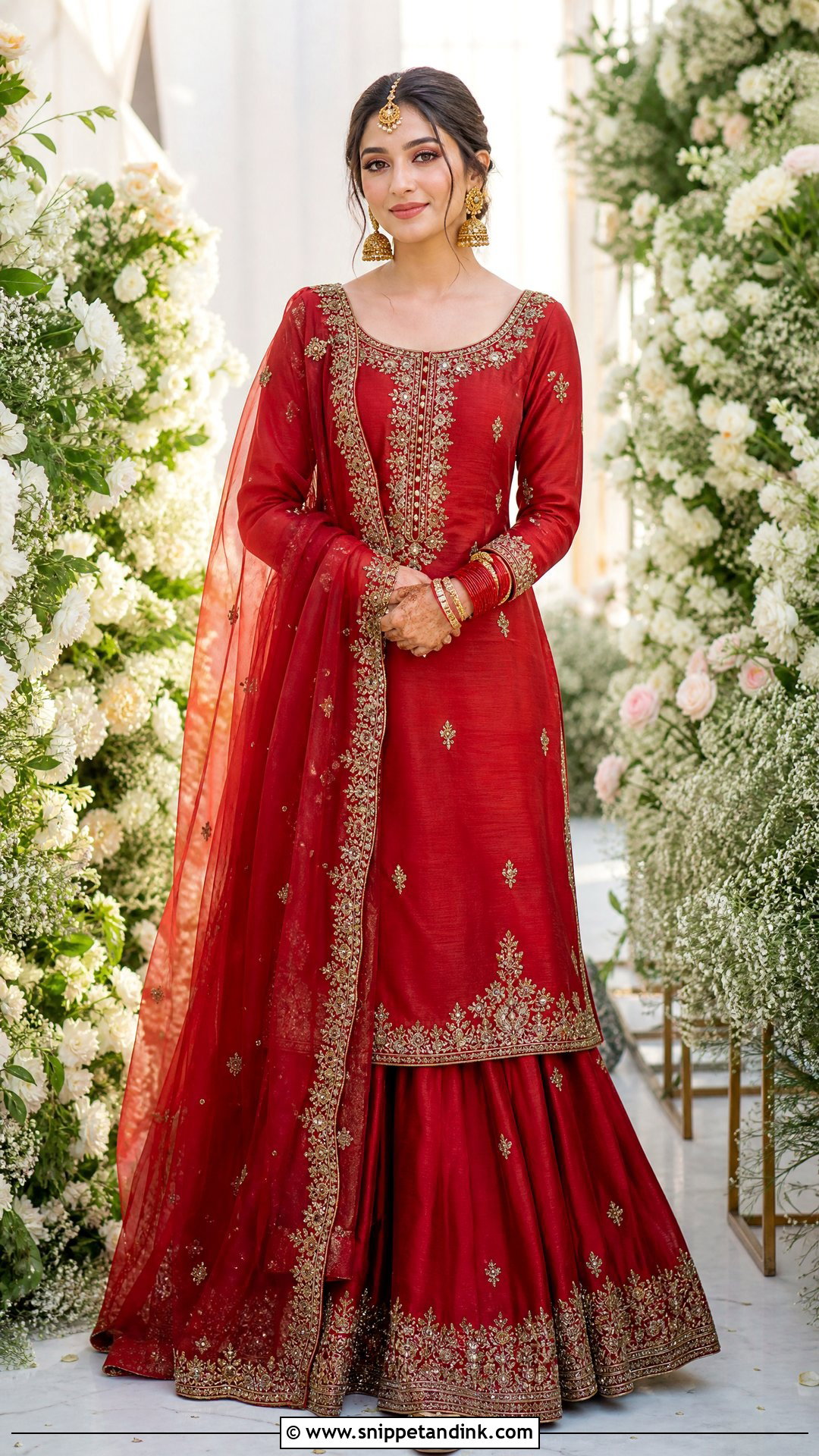
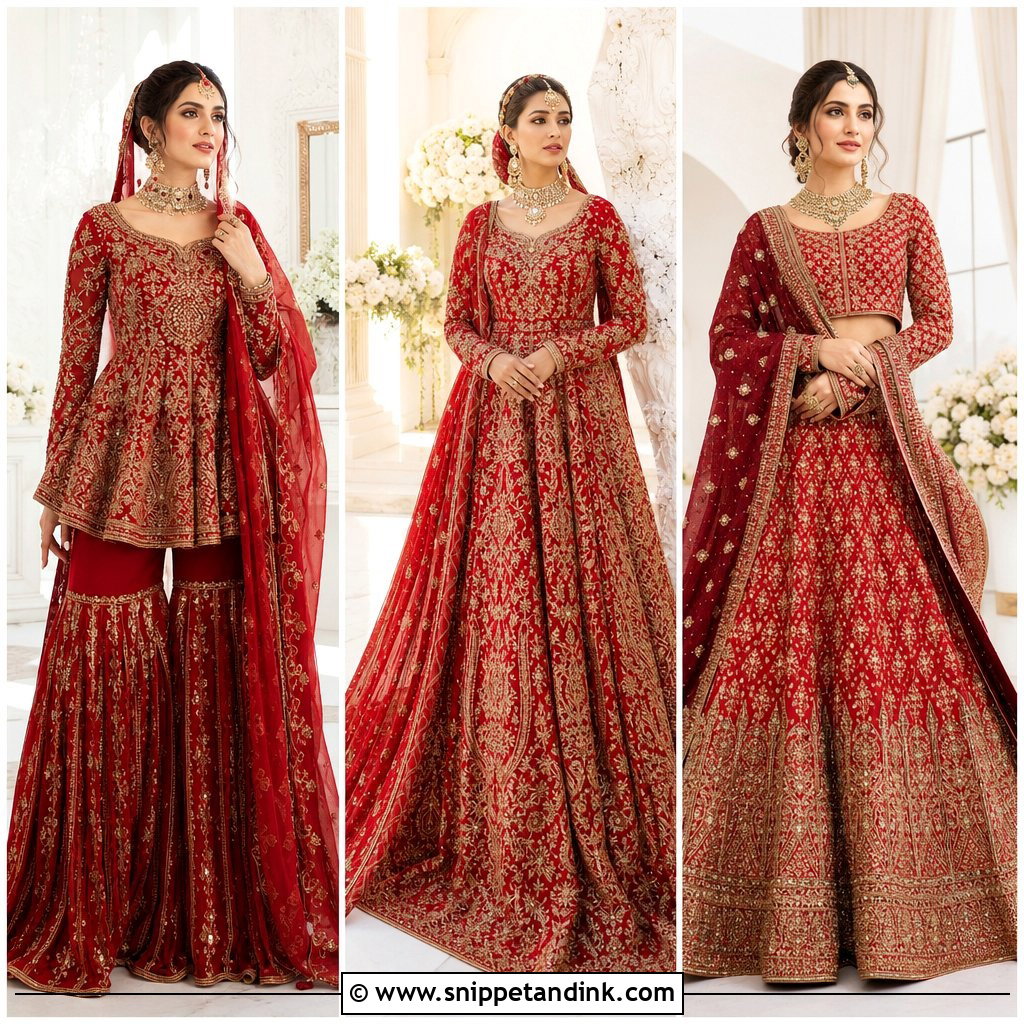
Red is still what most families picture at a baraat, and it can look simple once the work is pulled back to the border. Choose a plain raw silk skirt with a lightly embroidered hem and a fitted, hip-length kameez with fine gold threadwork at the neck and sleeves. A sheer red dupatta with a delicate kiran edge moves well and doesn’t add bulk. Gold jhumkas, a small tikka, red bangles and embroidered khussas complete it. If you want more coverage, ask for full sleeves and a higher round neck. Check the red in daylight as well as under shop lights, because some reds lean orange in outdoor photos.
3. Blush Pink Pakistani Bridal Gharara
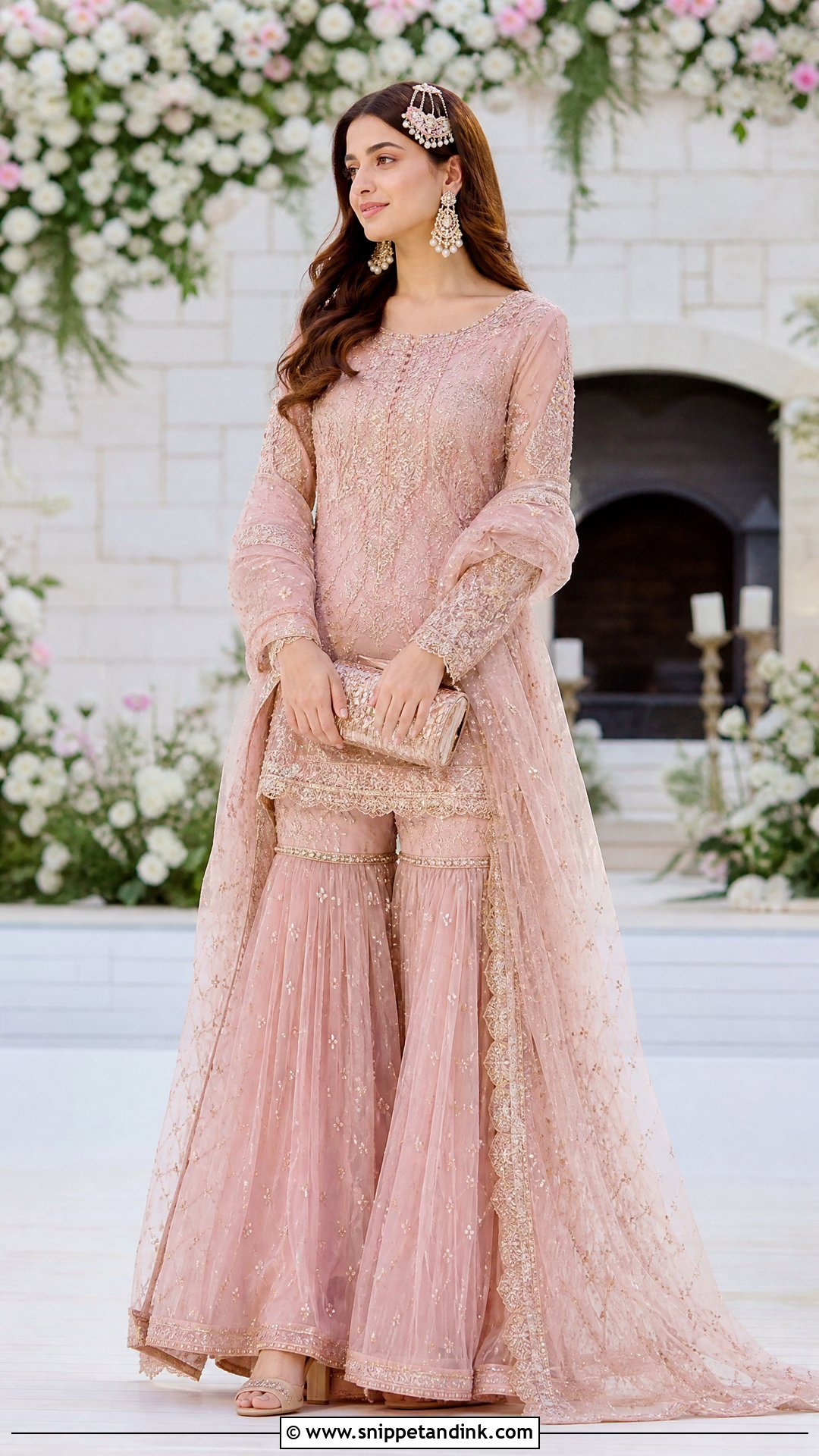
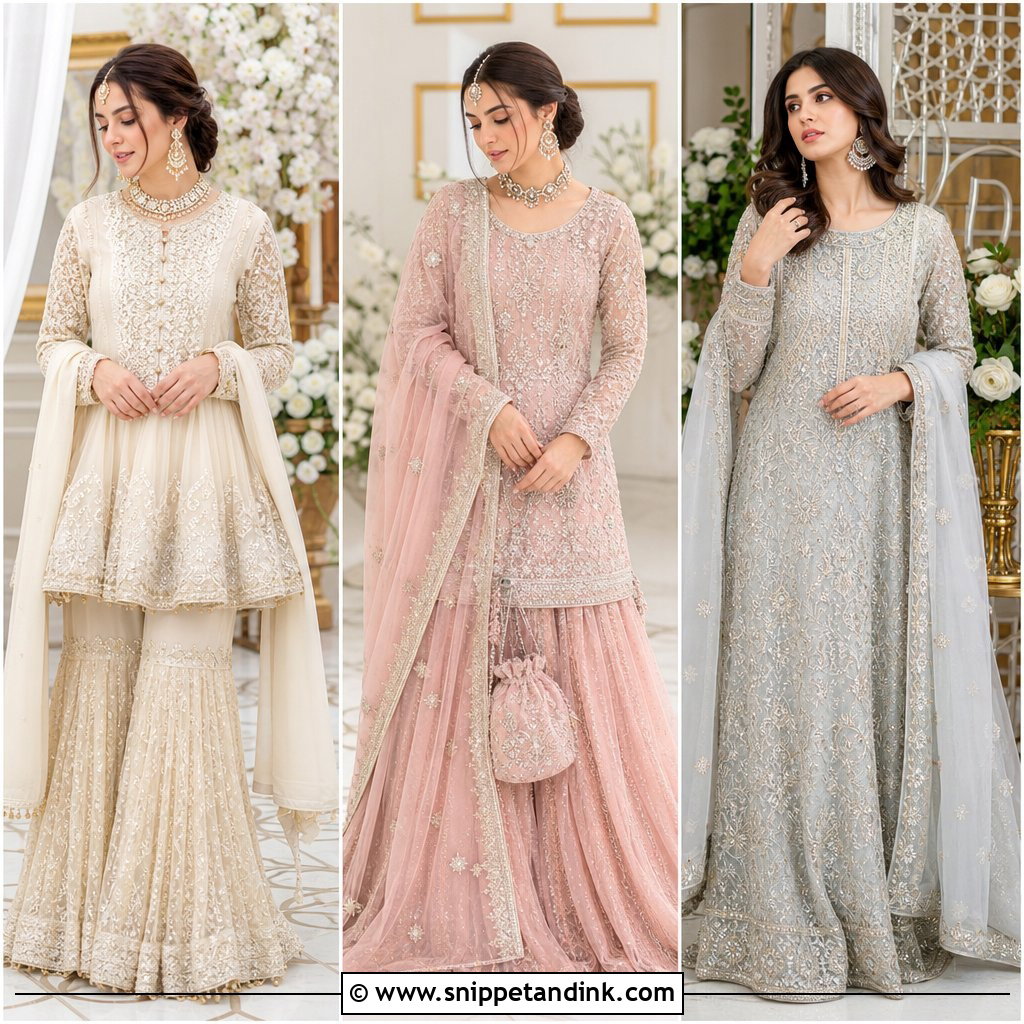
Blush softens a traditional gharara without losing any of its shape. The kurti should be short and straight, with lightly embellished cuffs and a neat neckline, so the flare below the knee stays the focus. Narrow gota or a row of pearls should mark the joint, since that seam is what makes a gharara recognisable. A sheer blush dupatta with scattered sequins, pearl earrings, a delicate passa and a small clutch keep the mood refined. Wear champagne block heels or cushioned khussas; you’ll stand for longer than you expect. Tonal embroidery suits a nikkah or a small walima. Make sure the gharara is hemmed to your actual shoes, because the flare drags when it’s even slightly long.
4. Sage Green Pakistani Bridal Sharara
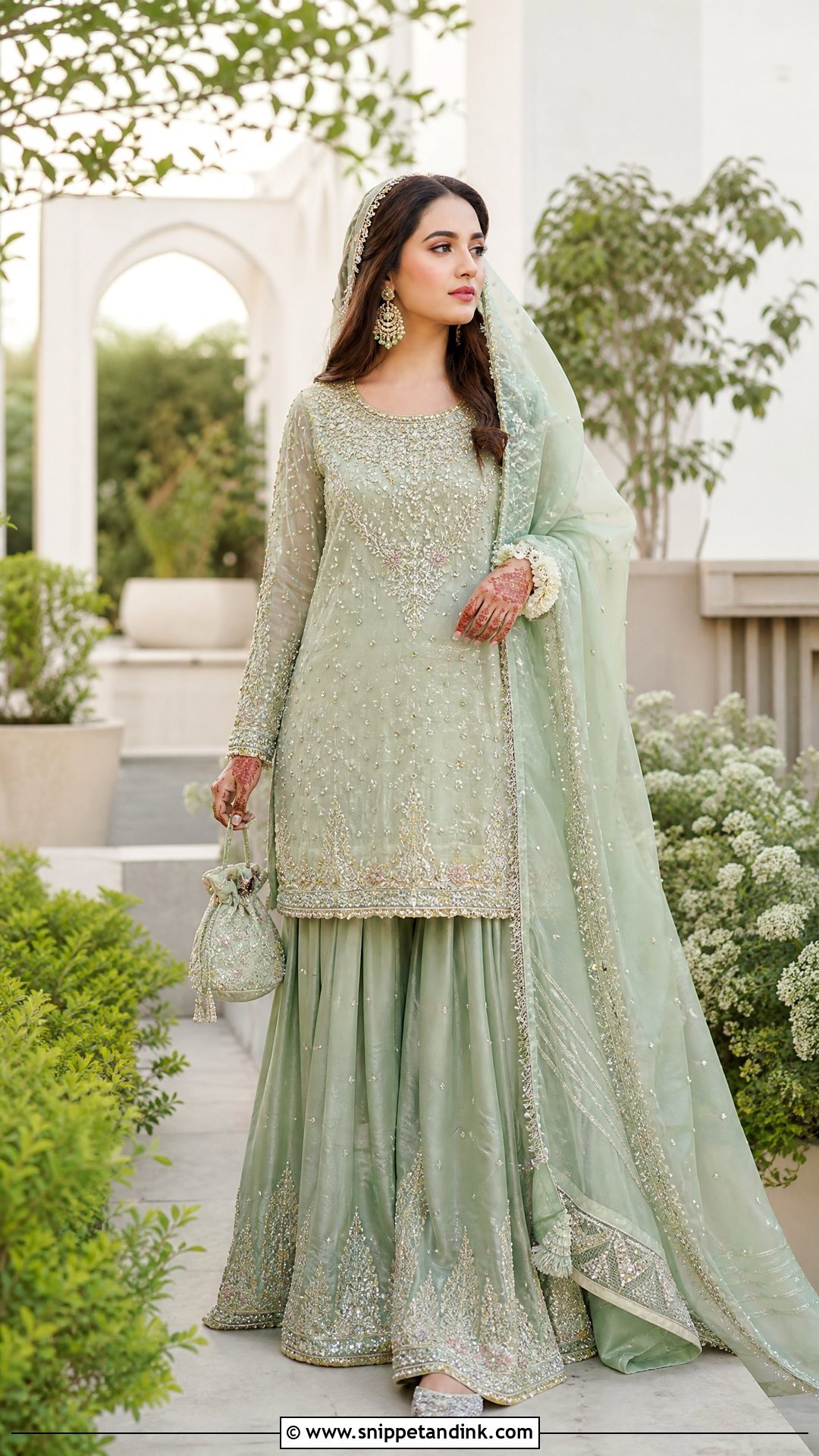
Sage is one of the easiest pastels to wear outdoors, because it doesn’t wash out in strong daylight the way pale pink can. Build the outfit around a knee-length kameez with fine silver threadwork and small pearl accents, over a softly flared sharara that moves without excess volume. A matching organza dupatta with a narrow silver border pulls the pieces together. Pearl and kundan earrings, a delicate headpiece, silver khussas and a structured potli are all you need, with rosy cheeks and a muted lip. The straight kameez balances the fuller lower half, so this shape is flattering on most figures.
5. Gold Pakistani Bridal Saree
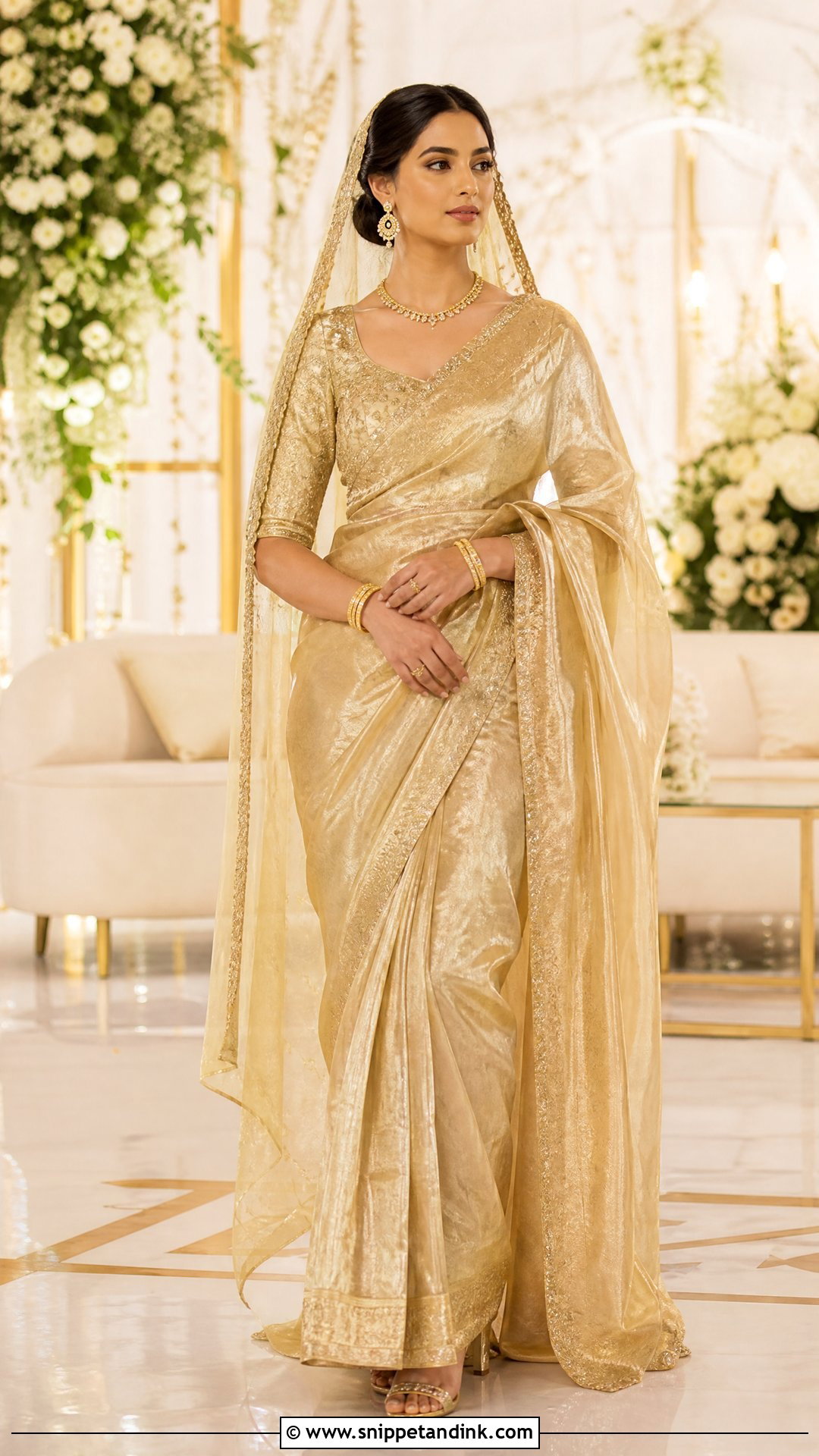
A gold saree gives bridal impact through fabric and drape, and it’s far lighter to wear than a layered lehenga. Lightweight tissue, silk or organza with a soft sheen and a restrained border is what I look for. The blouse should be structured, with elbow-length sleeves and a modest square or round neck. Pleats matter more than people think: have someone who drapes often do them, and pin them at the waist so they survive sitting. Add a sheer matching veil for the nikkah or the reception entrance. Kundan earrings, a slim necklace, gold bangles, low metallic heels and a sleek bun complete it. If you’ve never worn a saree for a full day, practise walking and climbing steps in it beforehand.
6. Maroon Pakistani Bridal Velvet Pishwas
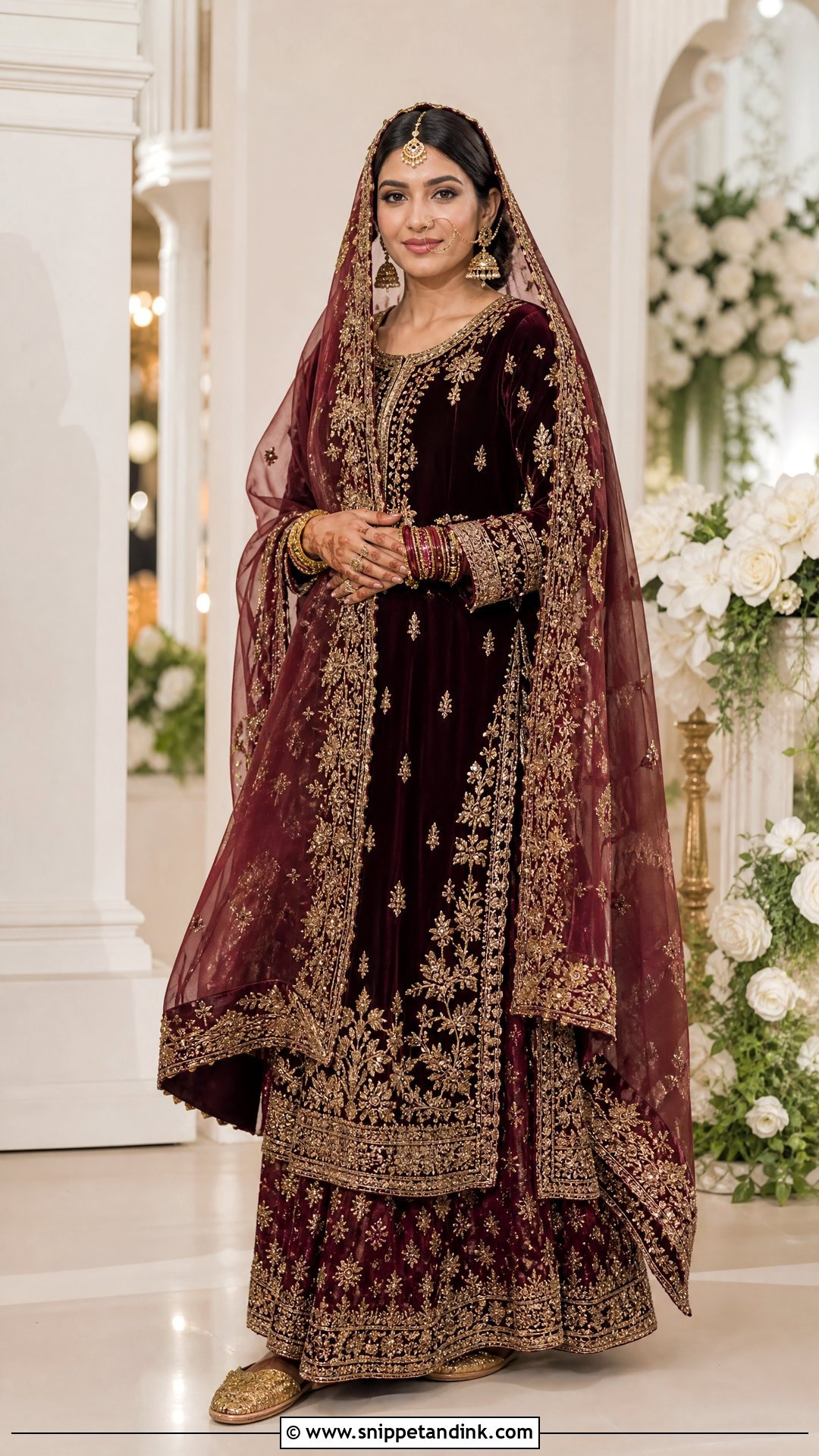
Maroon velvet belongs at winter weddings. The pile already looks rich, so keep the embroidery to the bodice, sleeve edges and hem, in antique gold threadwork rather than bright stones. Velvet is heavy and warm, which is why I pair it with a lightweight organza dupatta, draped over one shoulder or set over the head for the ceremony. Jhumkas, a small nath, stacked bangles and gold khussas complete it. A defined waist seam gives the pishwas shape while keeping coverage. Don’t plan this one for a heated indoor hall in a crowd unless the venue is well ventilated; velvet traps heat quickly.
7. Powder Blue Pakistani Bridal Lehenga
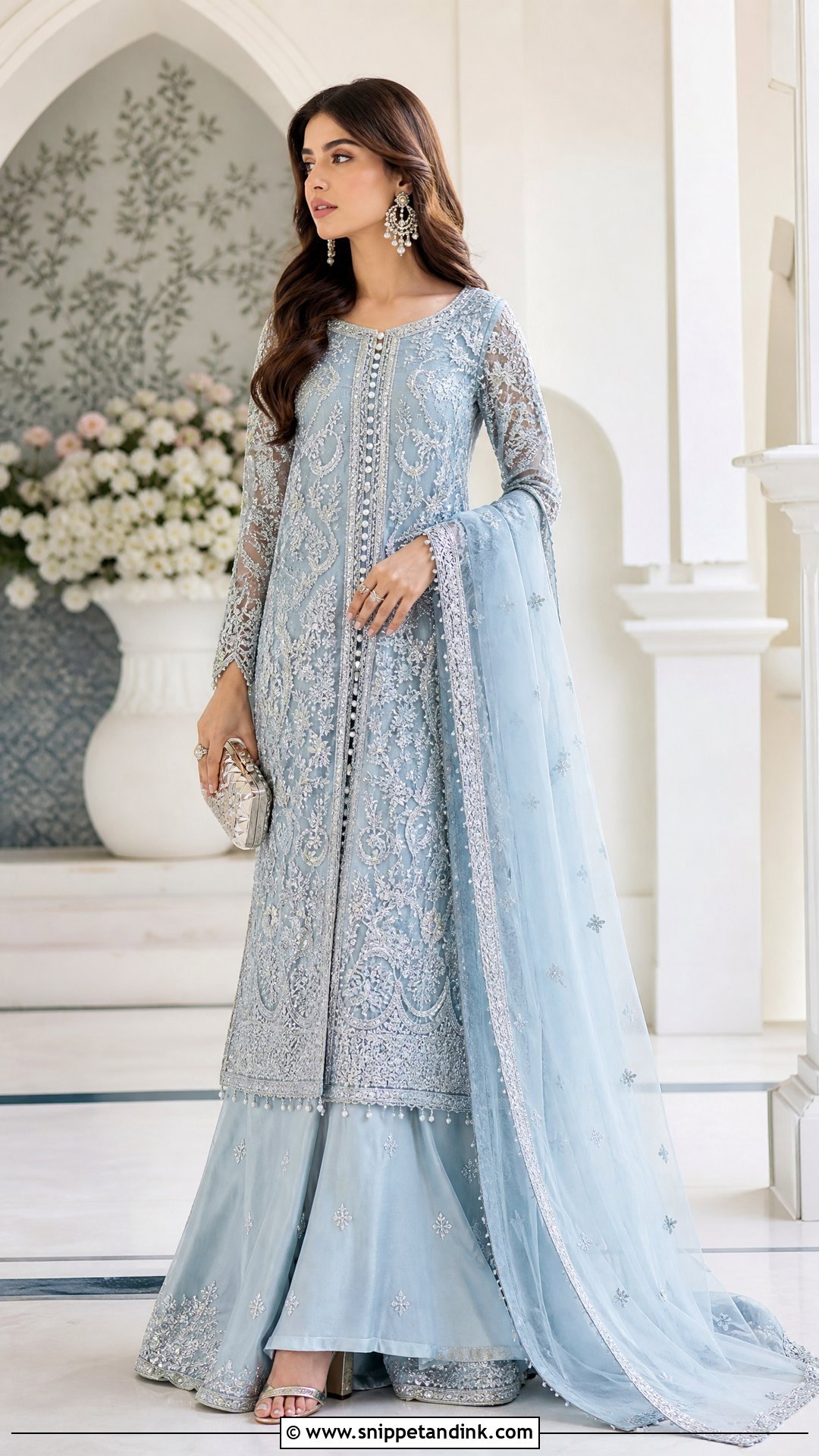
Powder blue suits a walima or daytime reception, especially for a bride who has worn red or deep colours the night before. Pair a lightly flared silk lehenga with a long straight shirt that ends around the knee, adding dimension with tonal embroidery, silver beads and a few small crystals. A sheer blue dupatta with a narrow border, silver heels, crystal earrings and a metallic clutch keep the palette cool. A side-parted bun and cool-toned makeup suit the colour. The long shirt gives you coverage and a streamlined line without a wide, layered skirt, which makes moving between tables far easier.
8. Mustard Pakistani Bridal Angrakha
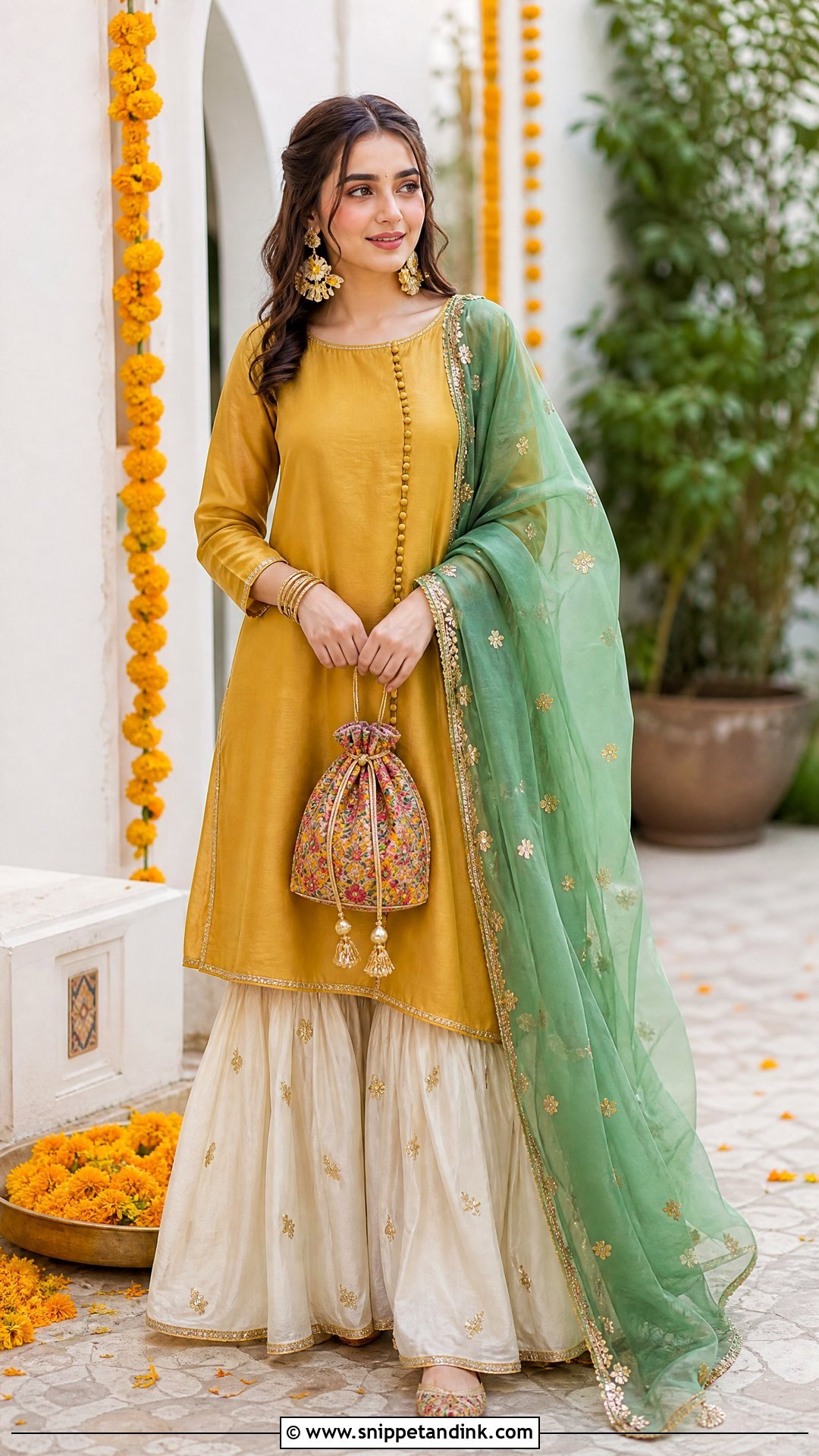
Mehndi is the function where you’ll dance, sit on the floor and get mehndi on your hands, so comfort comes first. A knee-length mustard angrakha with overlapping front panels, covered buttons and minimal gota along the edges gives you colour and movement. Balance it with an ivory gharara or wide sharara, and add a green organza dupatta for festive contrast. Floral earrings, slim gold bangles, a small potli and embroidered khussas are plenty. Ask for internal ties to define the waist; a stiff belt digs in once you’re seated. Fresh flowers in a braid or low bun finish it. Keep the dupatta pinned, because a loose one trails straight into wet henna.
9. Peach Pakistani Bridal Anarkali
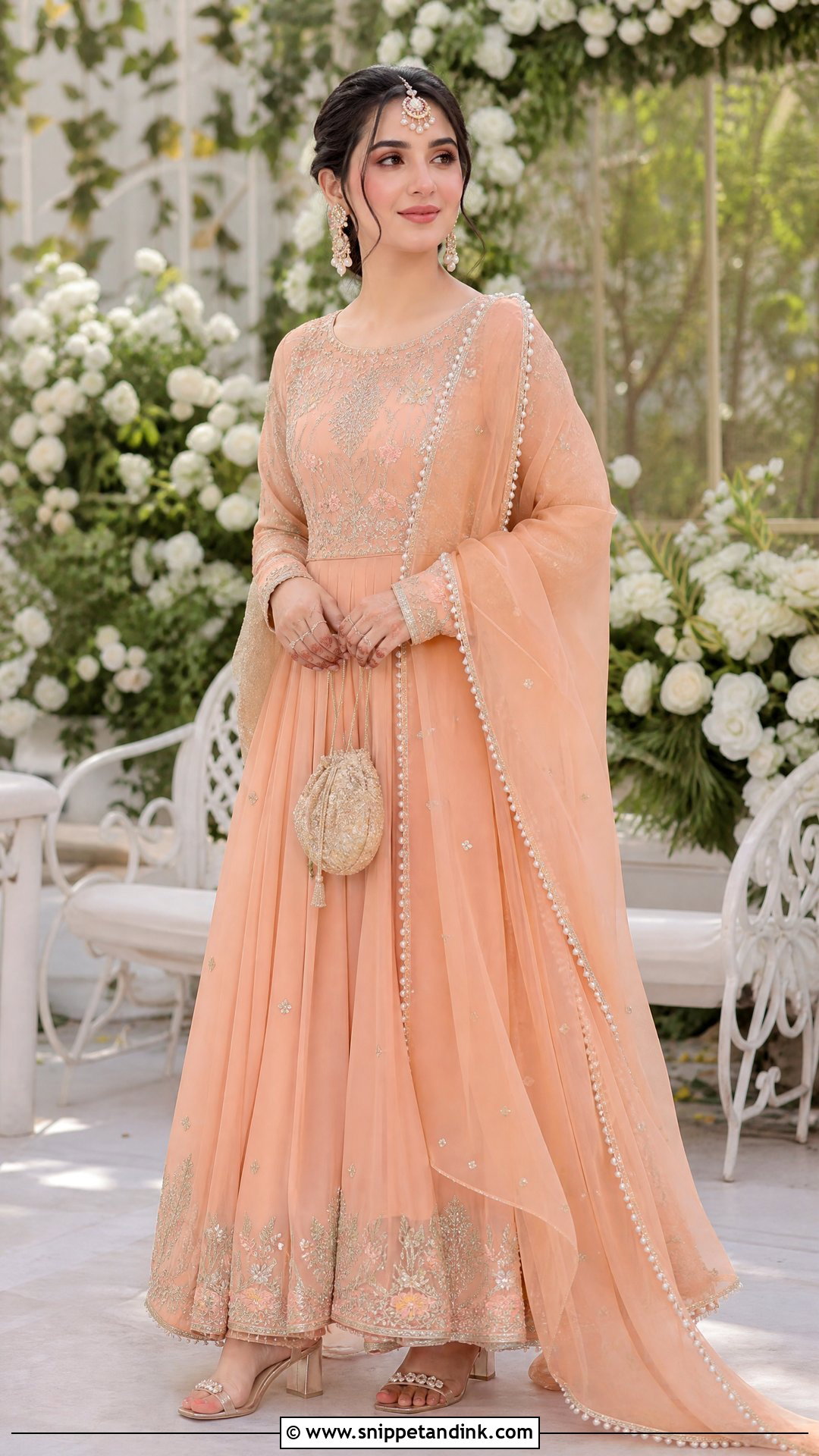
An anarkali is one flowing garment instead of separate heavy pieces, which makes it the easiest outfit here to get in and out of. In peach, choose floor-length chiffon or organza over a raw silk lining, with the embroidery focused at the neck and waist and only small scattered motifs across the skirt. A matching dupatta with a slim pearl border, champagne block heels, pearl earrings and a delicate tikka keep the colours soft. A braided bun and natural makeup stop it looking too formal. The raised waist flatters most heights. Watch the kalis on a long anarkali; if the hem is cut very wide, it catches underfoot on stairs.
10. Champagne Pakistani Bridal Maxi
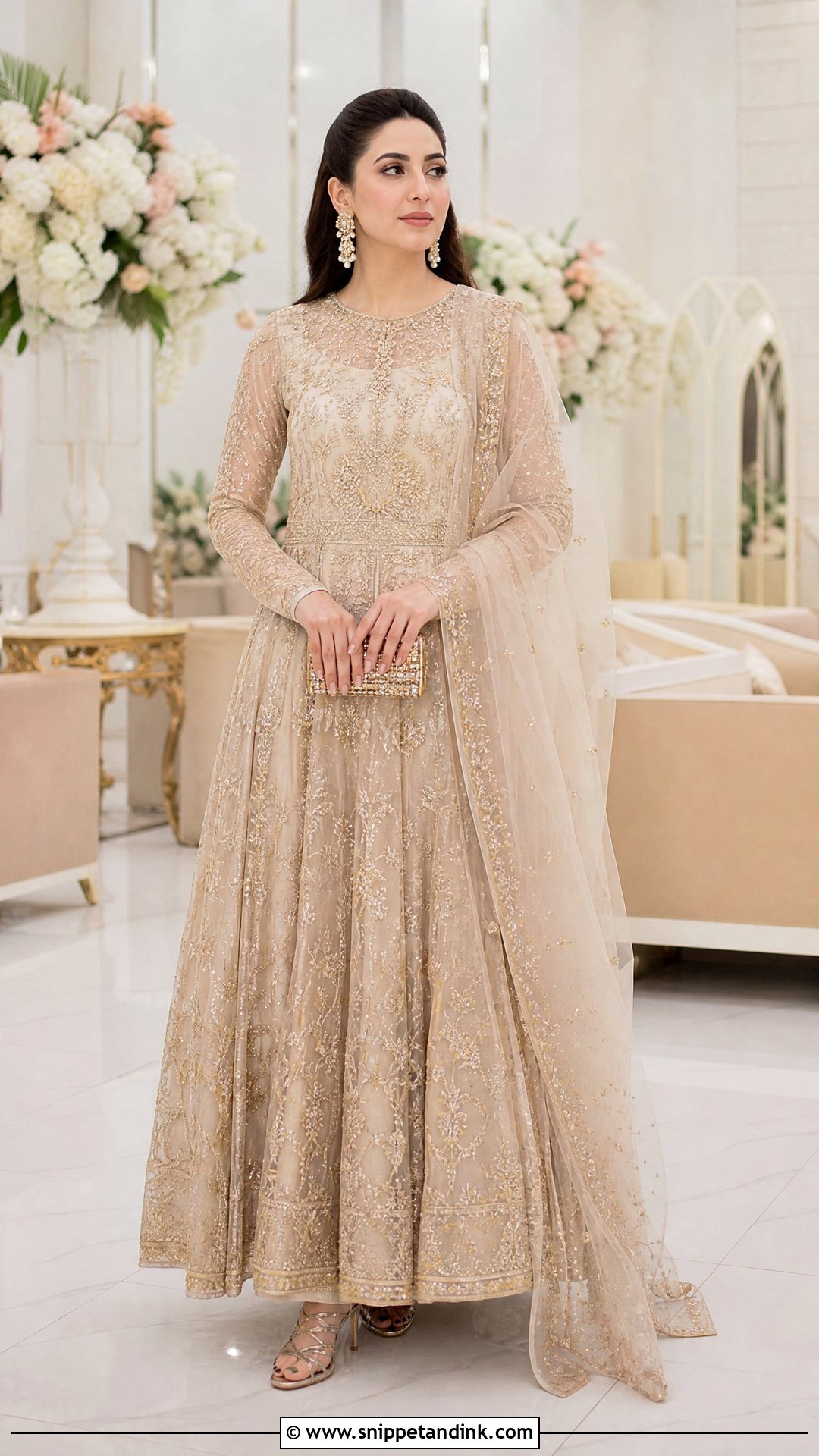
A champagne maxi is the most Western-feeling shape on this list, and it works best at a reception where you’ll be greeting a long line of guests. Look for a softly structured bodice, full or three-quarter sleeves and an A-line skirt that skims rather than balloons. Fine gold embroidery at the neckline, continued in small motifs toward the hem, and a net dupatta with matching edging bring it back to a traditional finish. Pearl and gold earrings, a small bracelet, metallic heels, a low chignon and luminous makeup suit the neutral shade. Champagne can match some skin tones too closely; hold the fabric to your face in daylight before committing.
11. Emerald Green Pakistani Bridal Peplum Lehenga
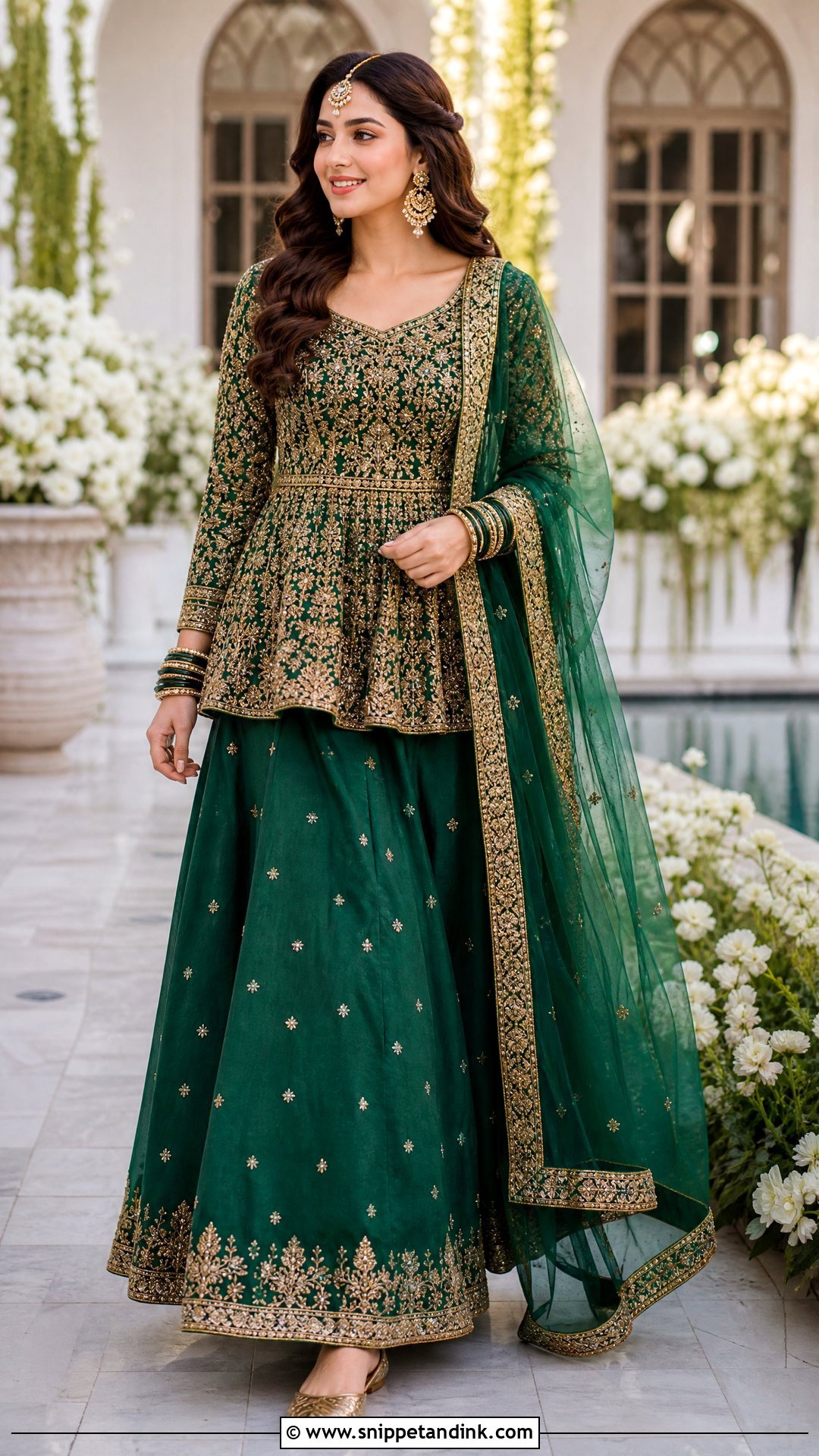
A peplum gives an emerald lehenga a defined waist without the bulk of a heavily worked choli. Pair the structured peplum top with a plain or lightly panelled raw silk skirt and keep the gold embroidery to the neckline, waist and peplum edge, leaving plenty of clean fabric showing. A sheer green dupatta over one shoulder balances the shape. Antique gold earrings, a small tikka, matching bangles and gold khussas complete it. Emerald holds up well under warm evening lighting, so it suits an evening mehndi, a formal nikkah or a small baraat. A peplum that ends too low can shorten your legs, so I usually pin it at the high hip.
12. White Pakistani Bridal Shalwar Kameez
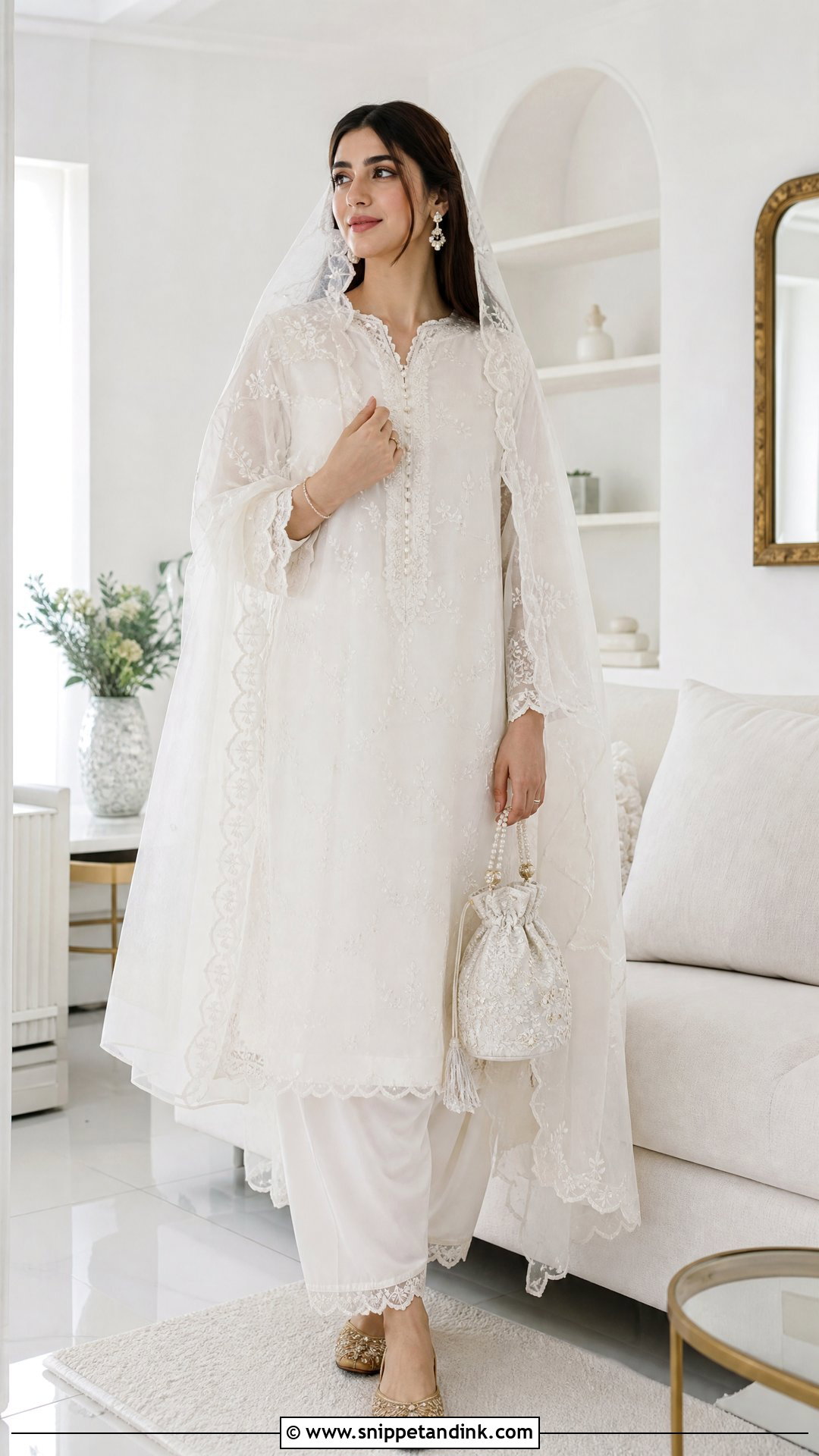
A white shalwar kameez carries a lot of meaning at a quiet nikkah, and because there’s so little decoration, the tailoring has to be exact. Choose a straight cotton-net, silk or organza kameez with delicate white threadwork and a few pearls, over a traditional shalwar or narrow trousers depending on how formal you want it. A sheer white dupatta with scalloped edges adds a ceremonial layer. Gold khussas, pearl earrings, a slim bracelet and an embroidered potli bring gentle contrast, and white flowers suit a low bun or braid. The separate pieces are easy to wear again at family events, which many brides appreciate.
13. Dusty Rose Pakistani Bridal Jacket Lehenga
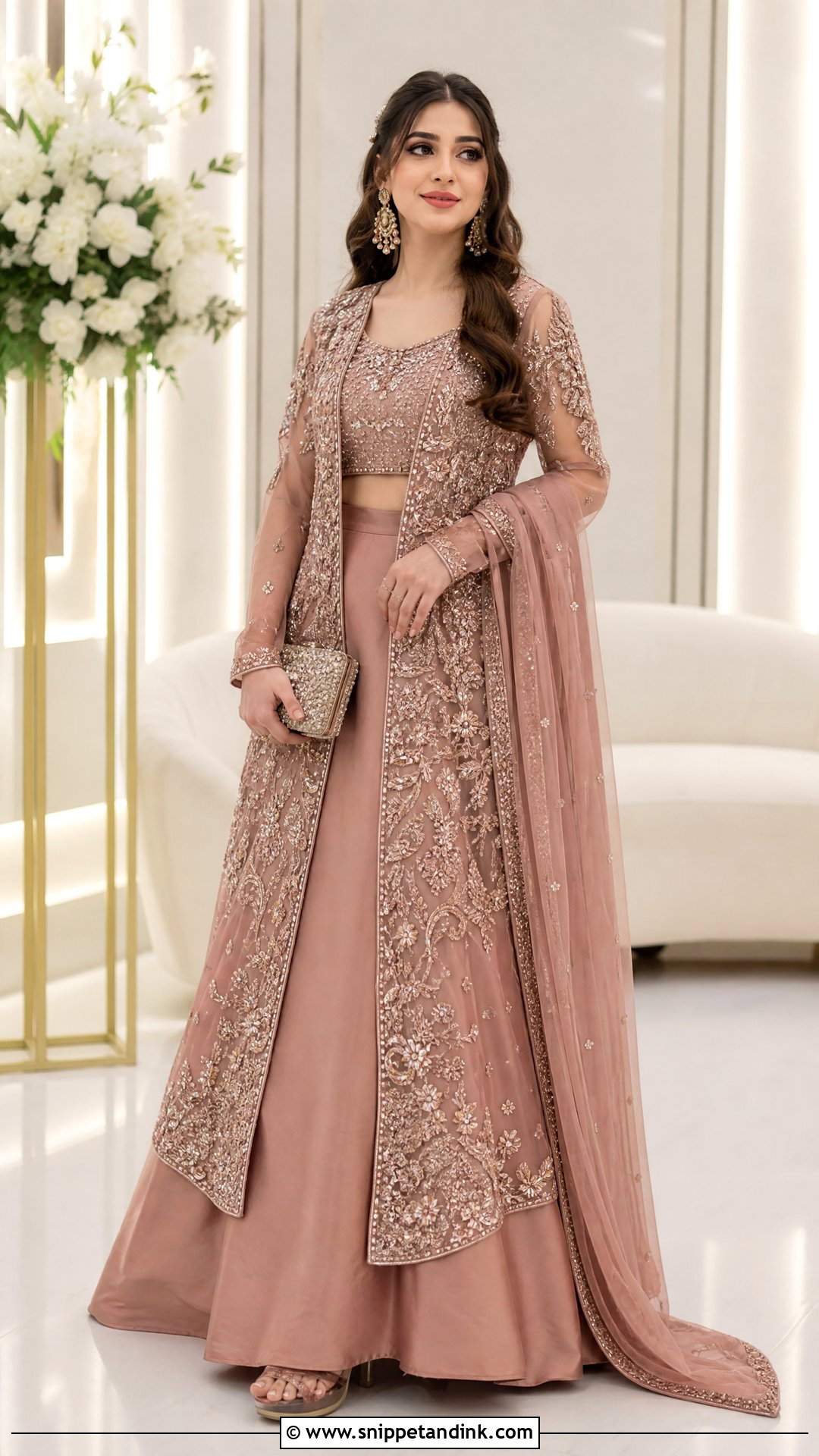
A jacket lehenga lets you skip a heavily draped dupatta while keeping full coverage. Start with a plain dusty rose silk skirt and a simple fitted blouse in the same shade, then add a long open-front organza jacket embroidered along the borders, cuffs and lower panels. The jacket creates long vertical lines, and a light dupatta can be carried over one arm if you want one. Rose-gold earrings, a small pendant, block heels and a beaded clutch suit a walima, with a sleek bun or soft waves. Keep the blouse and skirt plain, otherwise the jacket loses its role as the focus. Check that the jacket sleeves leave room to lift your arms for photos.
14. Silver Gray Pakistani Bridal Farshi Gharara
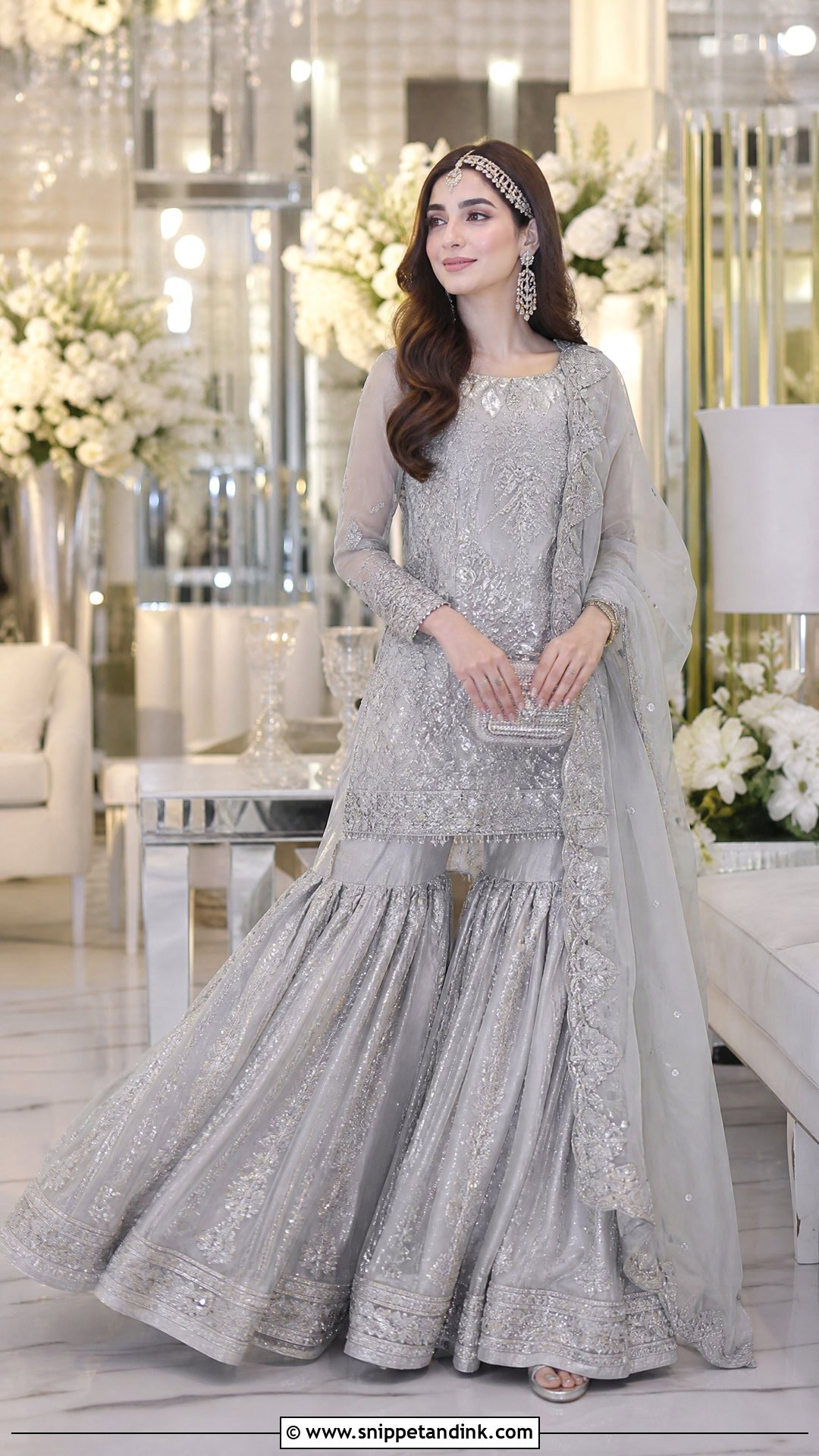
A silver gray farshi gharara has the most regal movement of anything here, because the hem spreads across the floor behind you. Pair it with a short straight kurti in silk or tissue, tonal embroidery at the neck and sleeves, and a narrow embellished band at the joint. A light gray dupatta with subtle silver edging, crystal earrings, a delicate passa, silver heels and a small clutch keep the jewellery cool and restrained. Farshi hems need careful tailoring and someone to lift the back when you walk or climb onto the stage. Indoor walimas and receptions with smooth floors suit it; grass and gravel do not.
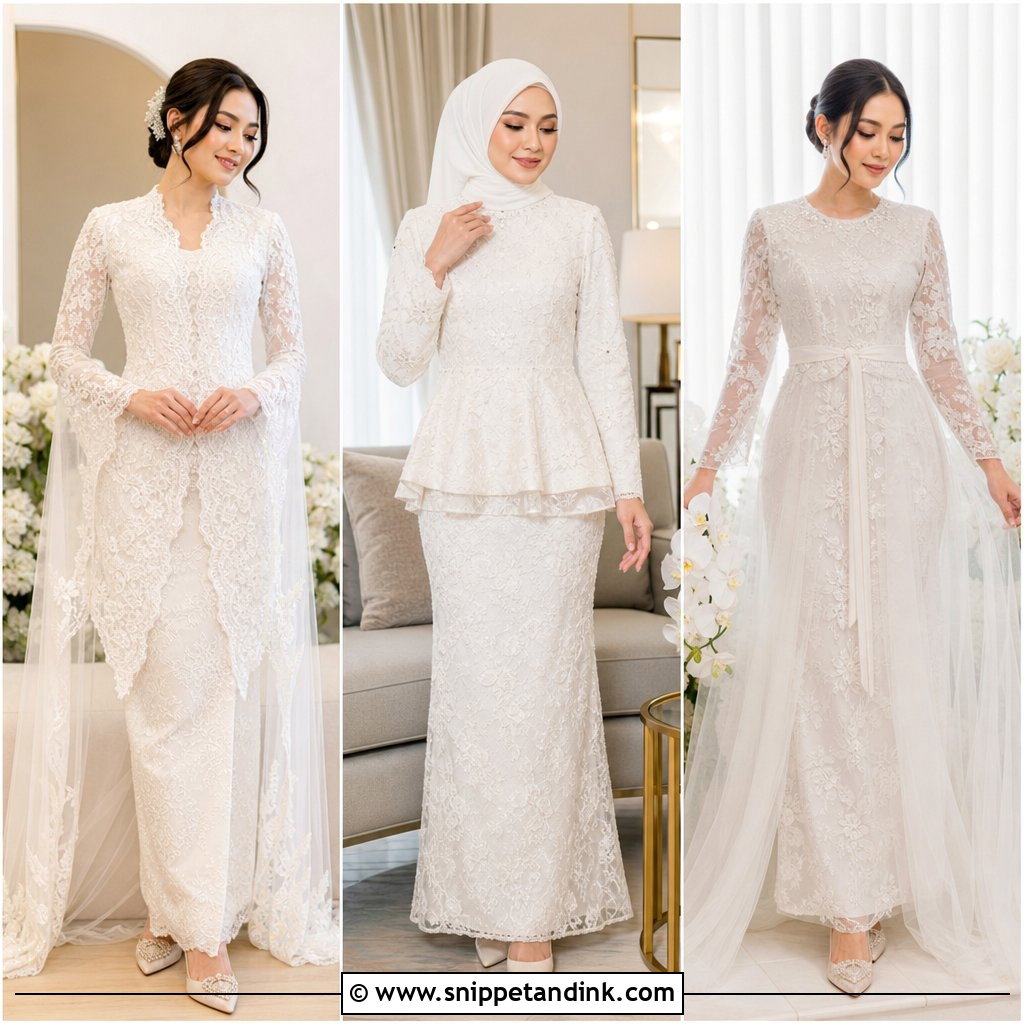
15. Rust Orange Pakistani Bridal Kalidar
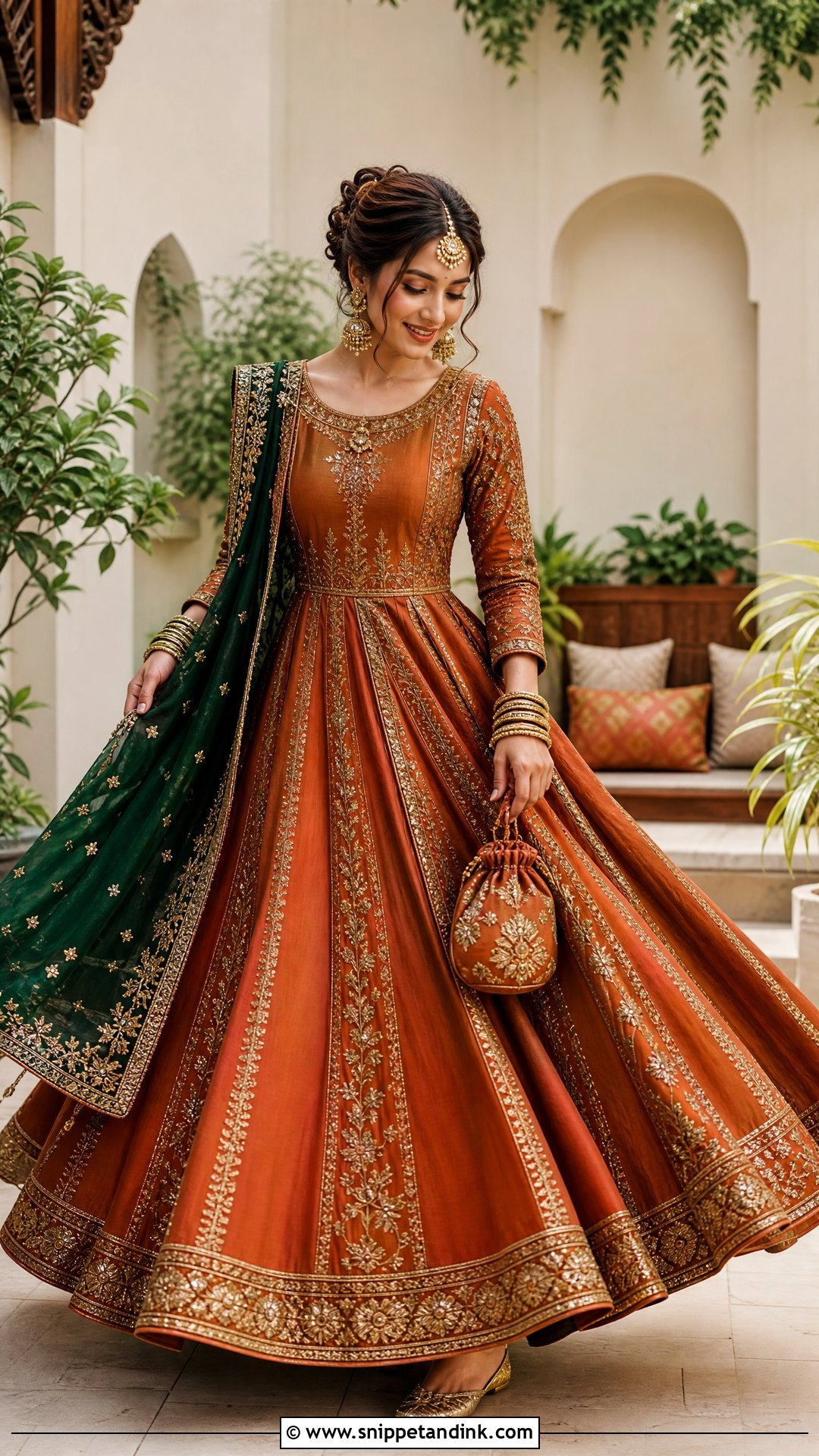
Kalidar panels flare from the bust in many long gores, giving you the movement of a lehenga with far less weight to carry. In rust orange, choose matte silk or chiffon with restrained antique gold embroidery at the neck, cuffs and hem, and add a deep green or muted gold dupatta for contrast. Antique jhumkas, stacked bangles, an embroidered potli and gold khussas suit a fall mehndi or a small evening wedding, with a loose braid threaded with flowers. Rust is warm and earthy and looks rich against plain walls or greenery. Keep the embellishment light so the panels can swing.
16. Lilac Pakistani Bridal Gown
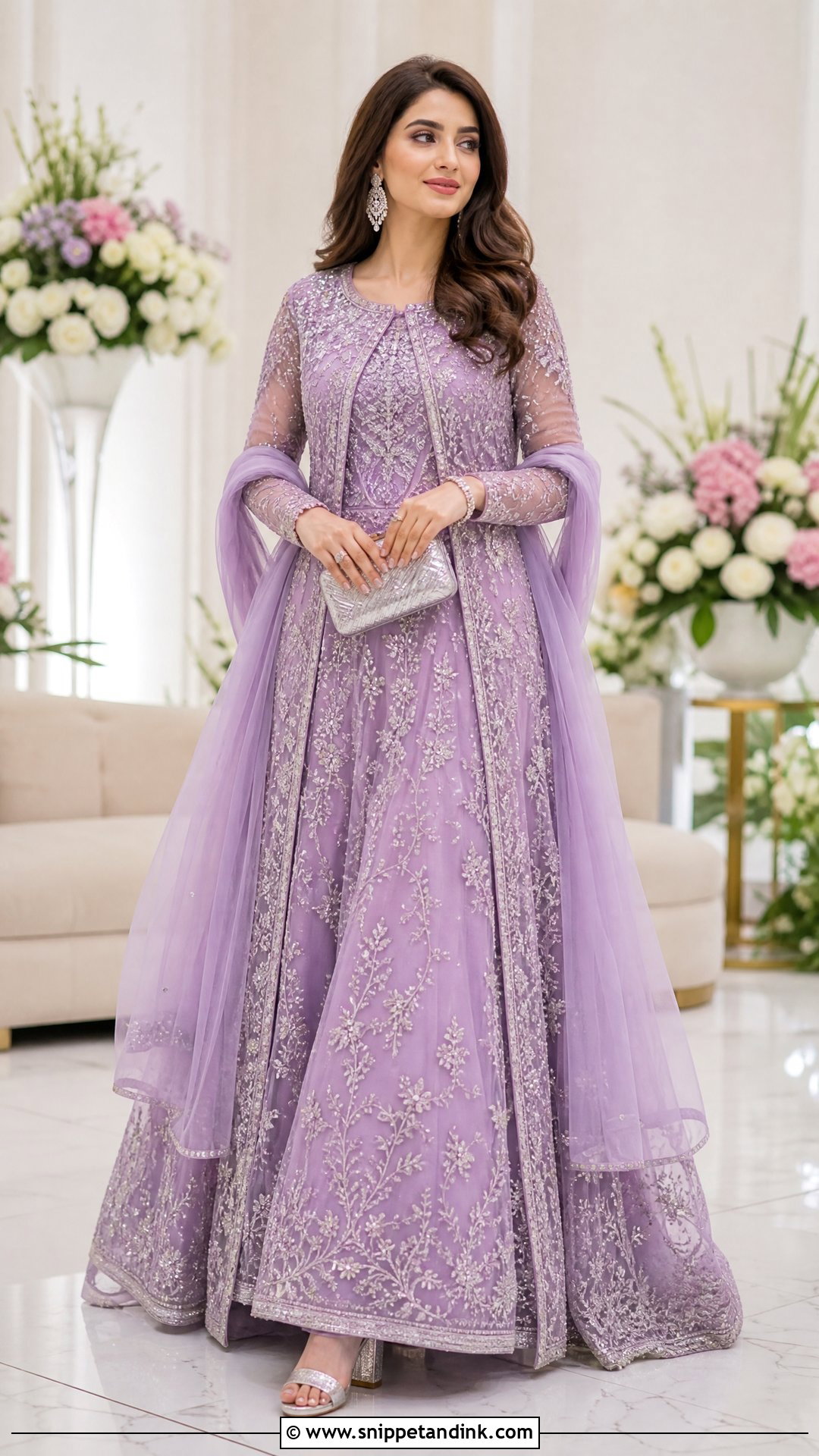
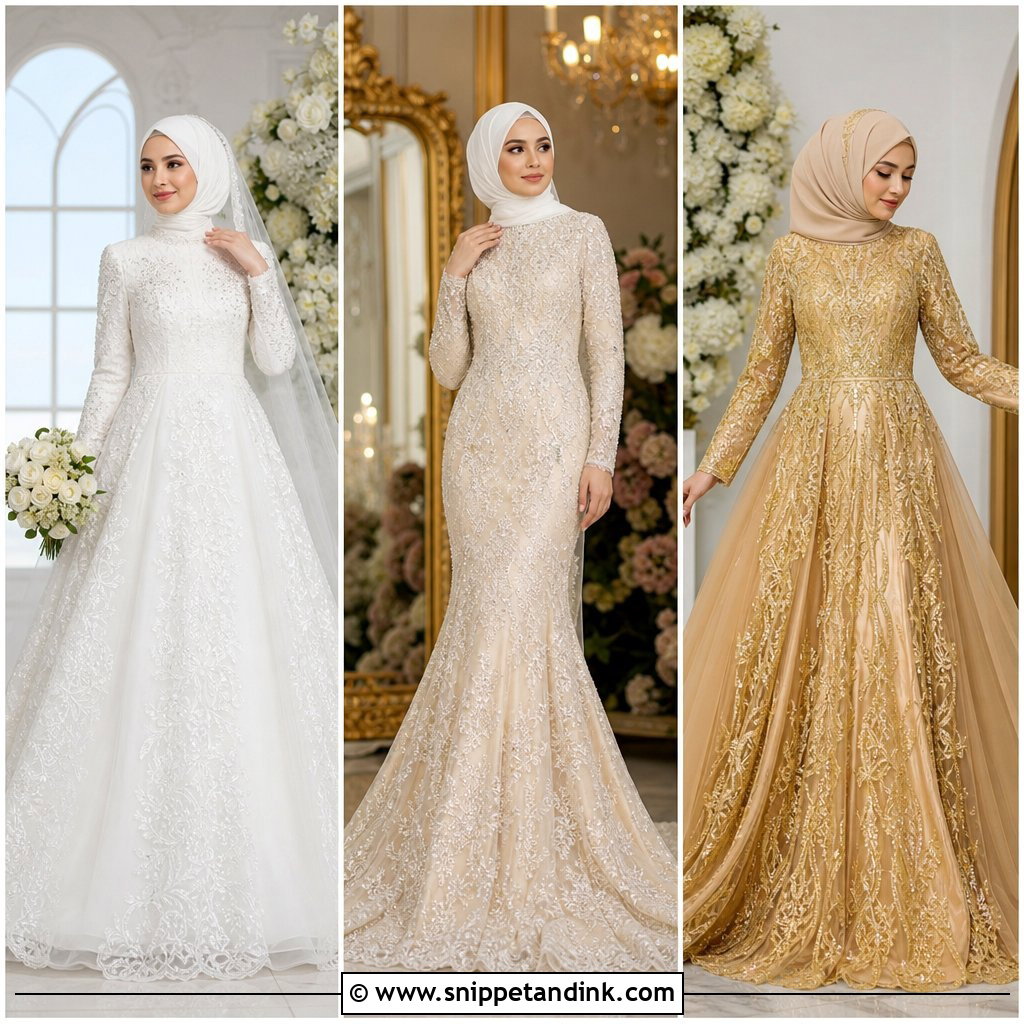
Lilac is a soft colour for a walima gown, and it pairs well with silver work. Choose an A-line or gently flared silhouette with a fitted bodice, full sleeves and delicate silver embroidery; a front-open upper layer over a matching skirt adds movement. Drape a sheer lilac dupatta over one shoulder or loosely over the head. Crystal earrings, a slim bracelet, silver block heels and a small metallic bag complete it, with cool-toned makeup and a smooth low bun. If you wear hijab, a plain chiffon scarf in a matching or slightly deeper shade sits neatly under the dupatta. Lilac can photograph bluer than it looks in person, so ask for a fabric swatch to photograph in natural light before ordering.
17. Deep Red Pakistani Bridal Sharara
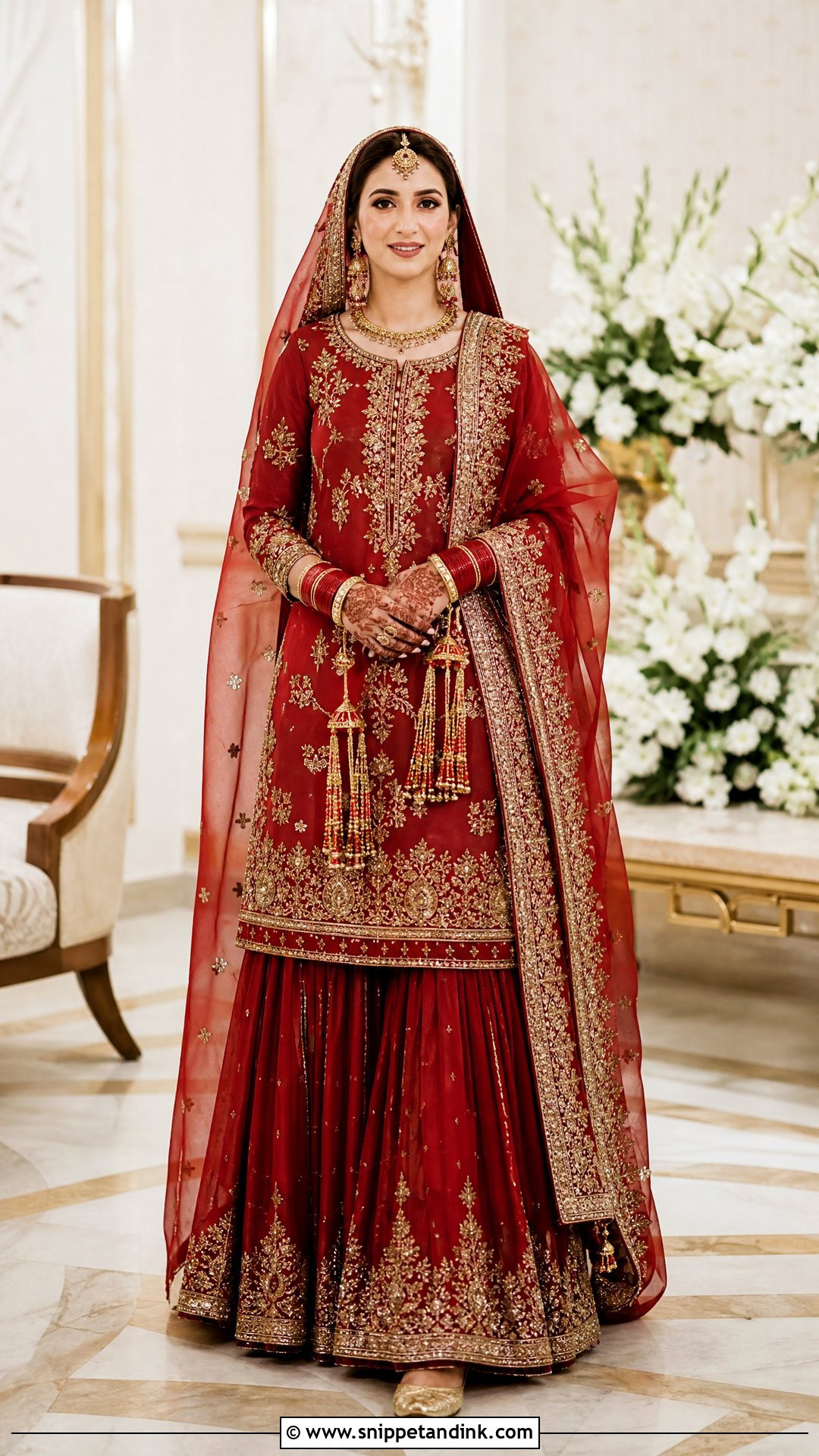
Deep red keeps the traditional bridal feel, while a straight shirt and sharara remove the weight of a structured lehenga. I’d choose a knee-length raw silk shirt with antique gold embroidery framing the neck, sleeves and side slits, over a flowing sharara with a lightly decorated hem. A sheer red dupatta with a fine gold border adds colour without weight. A classic maang tikka, medium jhumkas, red bangles and gold khussas suit a centre-parted bun. It fits a small baraat or a combined nikkah and rukhsati. Side slits should stop above the hip bone, or they’ll gape open when you sit.
18. Mint Pakistani Bridal Cape Pishwas
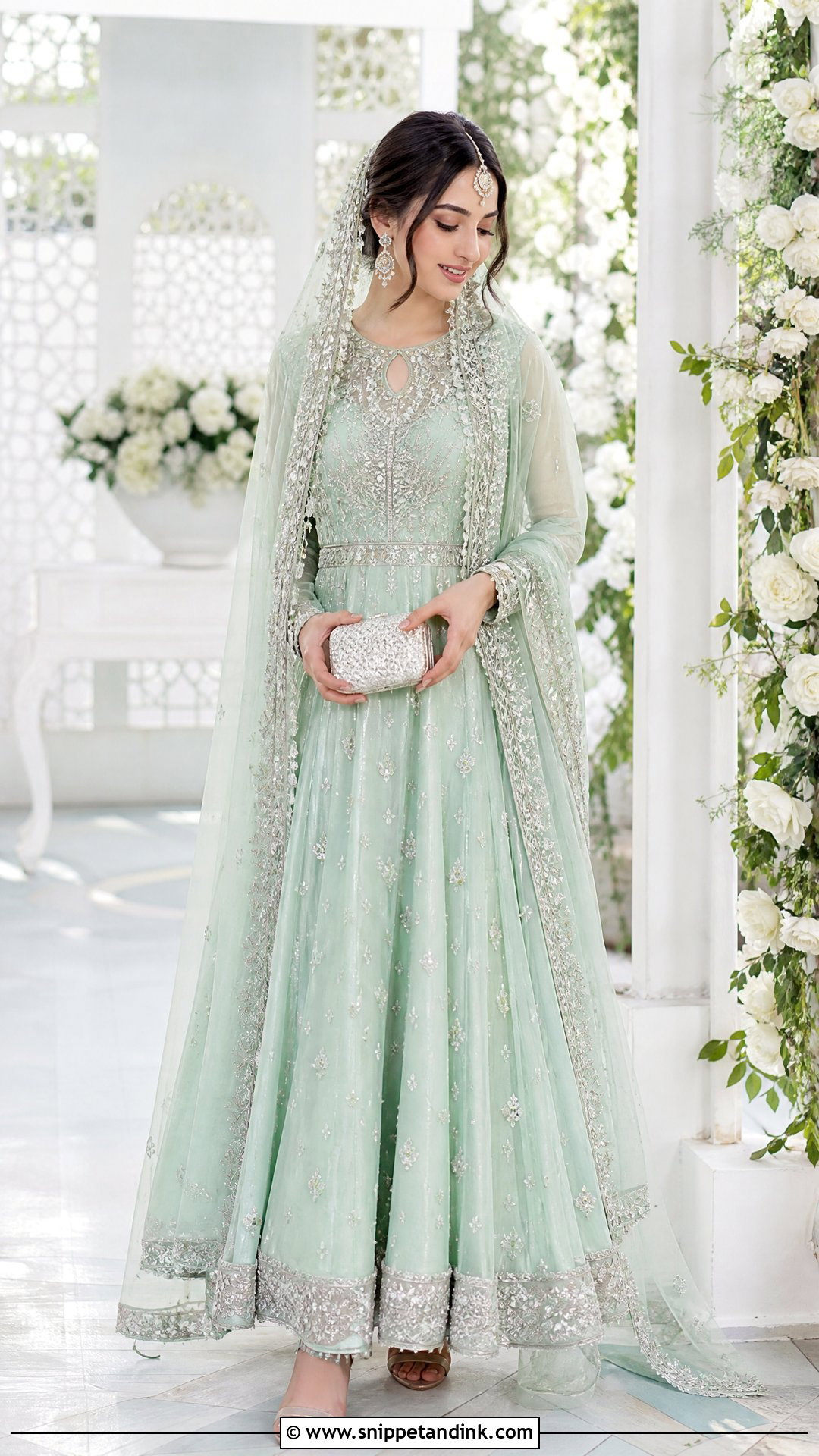
A sheer cape gives you shoulder coverage that won’t slip, which is handy for a bride who doesn’t want to keep adjusting a dupatta all day. Choose a floor-length silk or chiffon pishwas in mint with a defined waist, and layer an organza cape with delicate silver edging from the shoulders. Keep a matching light dupatta for the nikkah itself. Pearl earrings, a small silver tikka, low block heels and a compact clutch are enough, and the hair should be smooth so the cape lies flat. Ask for the cape to be stitched or snapped at the shoulder seams; capes that only hook at the neck tend to pull backward.
19. Beige Pakistani Bridal Jamawar Lehenga
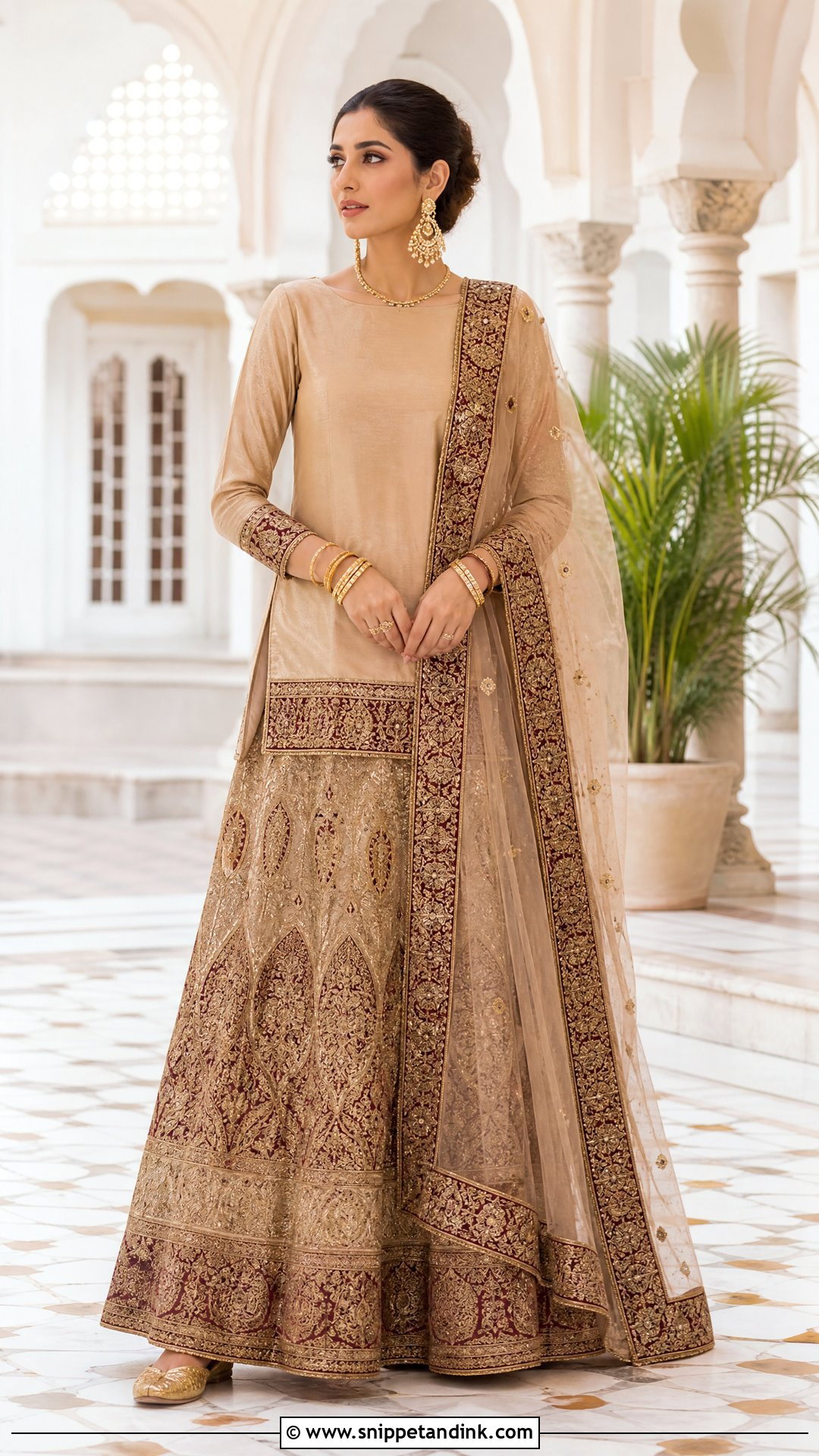
Jamawar is woven with its pattern, so a beige jamawar lehenga looks rich without a single added stone. Pair the patterned skirt with a plain silk blouse or short kameez in a coordinating neutral, and add an organza dupatta with a narrow maroon or antique gold border for contrast. Because the fabric is already busy, keep the jewellery focused: antique earrings, a slim necklace, two bangles and gold khussas, with a low centre-parted bun. It suits a nikkah, small baraat or family reception. The plain blouse and dupatta can be worn again with simpler trousers, and jamawar should be stored folded in muslin rather than hung, so the weave doesn’t stretch.
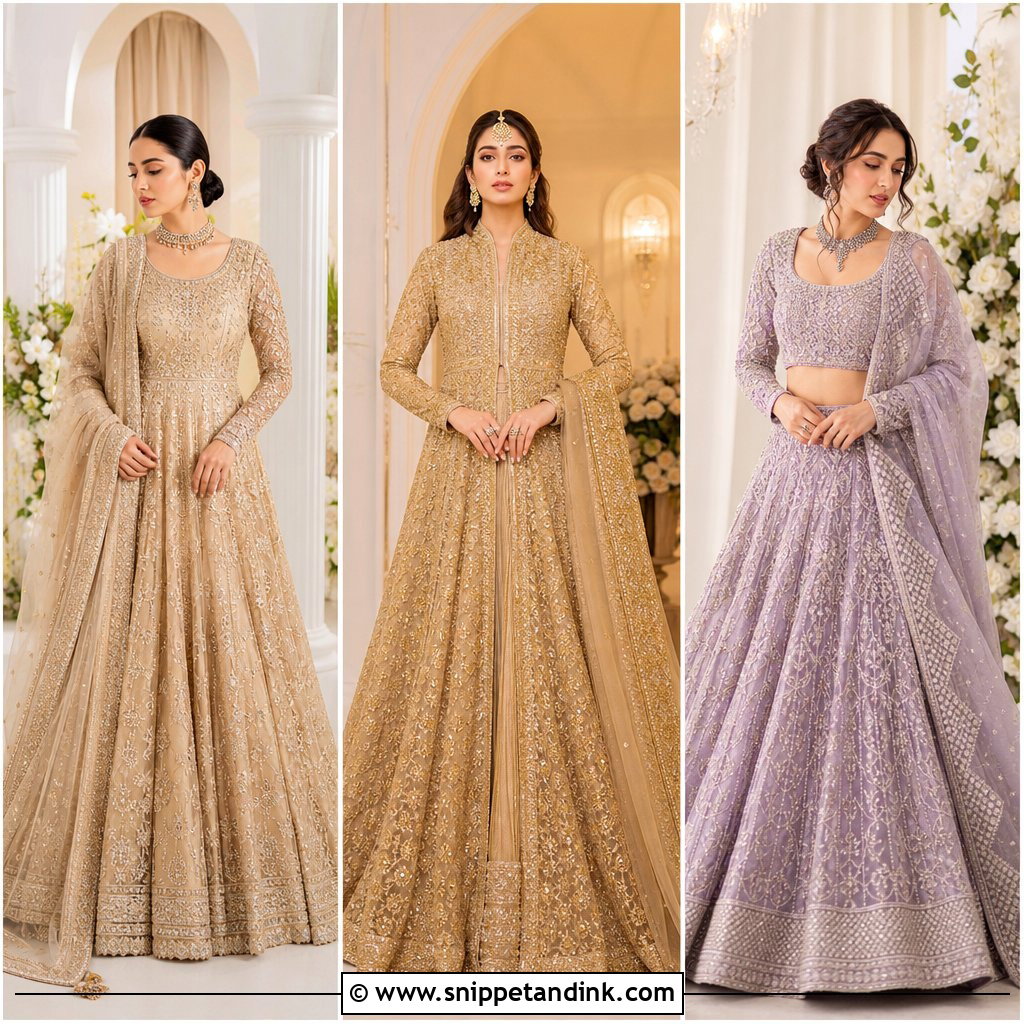
20. Ivory Pakistani Bridal Saree With Veil
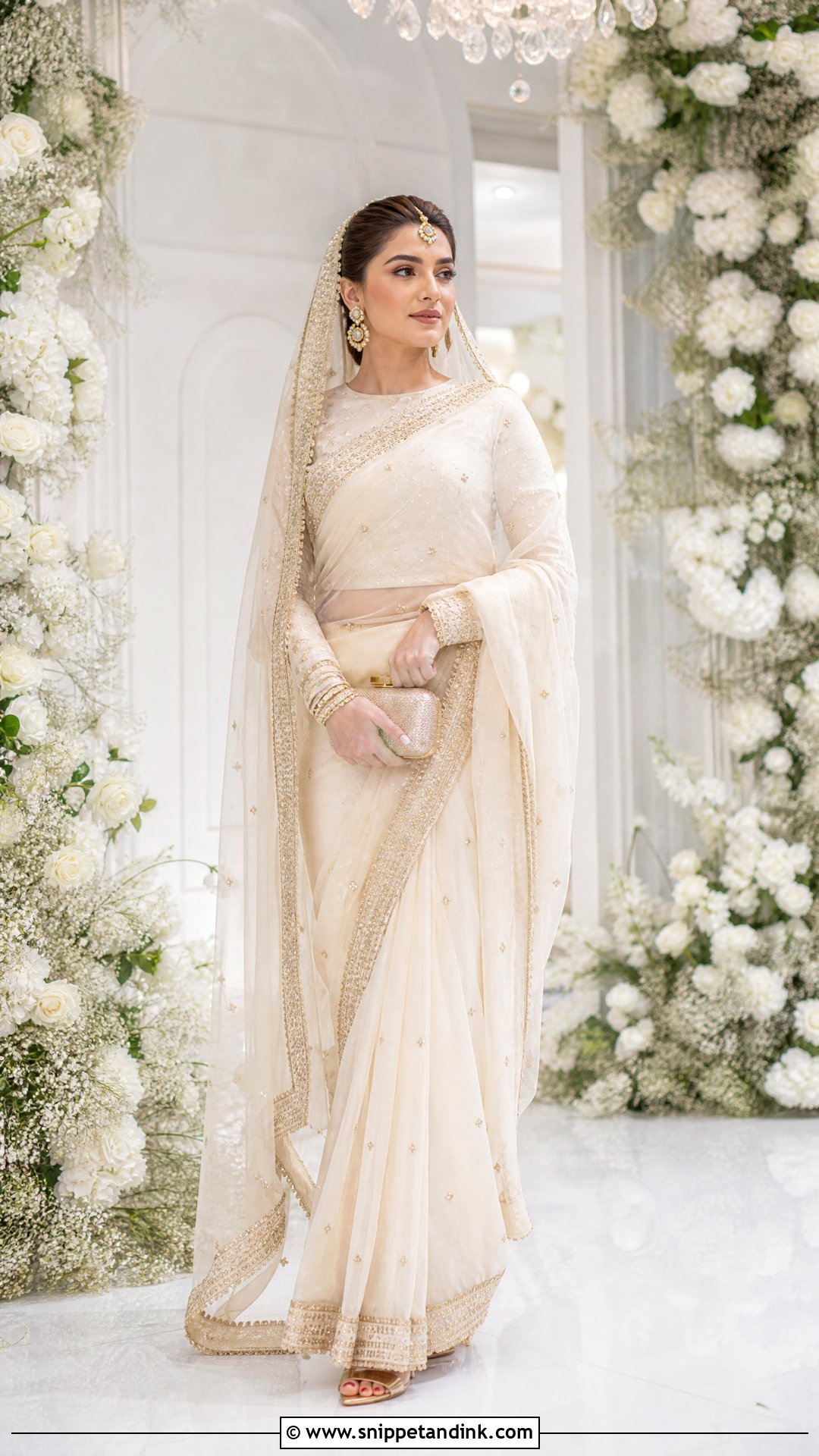
An ivory saree with a separate veil gives you simple draping and a traditional ceremonial moment in one outfit. Choose silk or organza with a fine gold border and small motifs spaced generously apart, and a modest fitted blouse with elbow-length or full sleeves. Drape the saree first, then set the sheer veil over your head for the nikkah, pinned at the crown so it doesn’t pull the pallu. Pearl and kundan earrings, a delicate tikka, gold heels and a small clutch finish it, with a minimal necklace so the blouse neckline shows. Soft makeup and a smooth bun suit it. It’s lighter than a lehenga but still formal enough for the ceremony.
Approving the Embroidery Before the Karigar Starts
Simple outfits fail in one predictable way: the embroidery comes back heavier than you pictured, because once a karigar starts work, more feels like better value. Avoiding that comes down to what you sign off on before the first stitch.
- Ask for a sample motif stitched on your actual fabric, not a photo of a different outfit.
- Mark where work stops. A sketch with the neckline, cuffs and hem shaded leaves less room for interpretation than a verbal brief.
- Fix the thread colour. Antique gold, bright gold and silver look very different on pastels.
- Book at least two fittings and leave a margin after the second. Custom hand embroidery takes weeks, and timelines vary widely between boutiques and family tailors, so confirm the delivery date in writing when you pay the deposit.
Setting a Dupatta That Stays Put Through the Nikkah
During the nikkah you’ll sit, bow your head to sign, and turn toward relatives, and a dupatta that hasn’t been set properly will slide every time. For a dupatta worn on the head, I pin it at the crown first with two crossed bobby pins anchored into a small bun or base, then add a pin behind each ear. The fabric should frame the face without touching the cheeks, or it will pick up foundation.
If you wear hijab, set the dupatta on top of a fitted underscarf, which gives the pins something to grip. Heavier dupattas with thick borders need more anchoring than sheer organza ones, so practise with the real dupatta at your hair trial rather than a lighter stand-in.
Lighter Outfits, Same Sense of Occasion
A simple bridal outfit gives up none of the tradition. Good tailoring, quality fabric, controlled embroidery and matched accessories make an understated dress feel completely bridal. Think about each function, the weather, the venue and how many hours you’ll be wearing it before you settle on a silhouette. At fittings, test the shoes, the dupatta setting, sleeve movement and how you sit. Red lehengas and velvet pishwas, ivory sarees and pastel ghararas can all be adjusted to different budgets, figures and family customs, so treat these outfits as a starting point and let your own family’s traditions shape the rest.
You'll Like These Ideas:


Leave a Reply