
A Filipino bridal look can sit anywhere between a full heritage terno and a plain gown with one quiet nod to the Filipiniana, and I think both ends are valid. Terno sleeves, piña and piña-inspired cloth, baro’t saya separates, embroidered lace and Maria Clara details all carry meaning, but they also carry weight, heat and structure that a bride has to live in for a long day. The question I ask first is never which style is prettiest. It is where you are marrying, how hot it will be, which family rites are part of the ceremony, and how much you want to move. The 25 looks below run from the most traditional to the most pared back, with my notes on how each one actually behaves once you are wearing it.
How a Terno Sleeve Should Feel at Your Fittings
The butterfly sleeve is the detail that makes a Filipiniana gown recognisable, and it is also the detail most likely to go wrong. A good sleeve is built, not just cut. The dressmaker stiffens it with interfacing, buckram or a horsehair edge so it stands up and holds its curve, then sets it high on the shoulder. When I go to a fitting, I check how the sleeve behaves before I look at anything else.
- Lift both arms to shoulder height. The sleeve should rise with you, not dig into the neck or lift the bodice off your waist.
- Look from the side. A sleeve that sits too far forward makes your shoulders look rounded in profile photos.
- Check symmetry in a mirror and in a phone photo. Hand-set sleeves can differ slightly, and a camera exaggerates it.
- Sit down. A stiff sleeve on a tight armhole can push up toward the ears when you sit at the head table.
- Match sleeve size to your frame. A petite bride usually looks better in a narrower, lower sleeve than the dramatic versions on mannequins.
Plan for at least two fittings, and three if you are having a custom terno or real piña made. Bring the shoes and undergarments you will wear to every fitting, since a strapless bra or a different heel changes how the bodice and hem sit.
1. Filipiniana Terno Wedding Dress
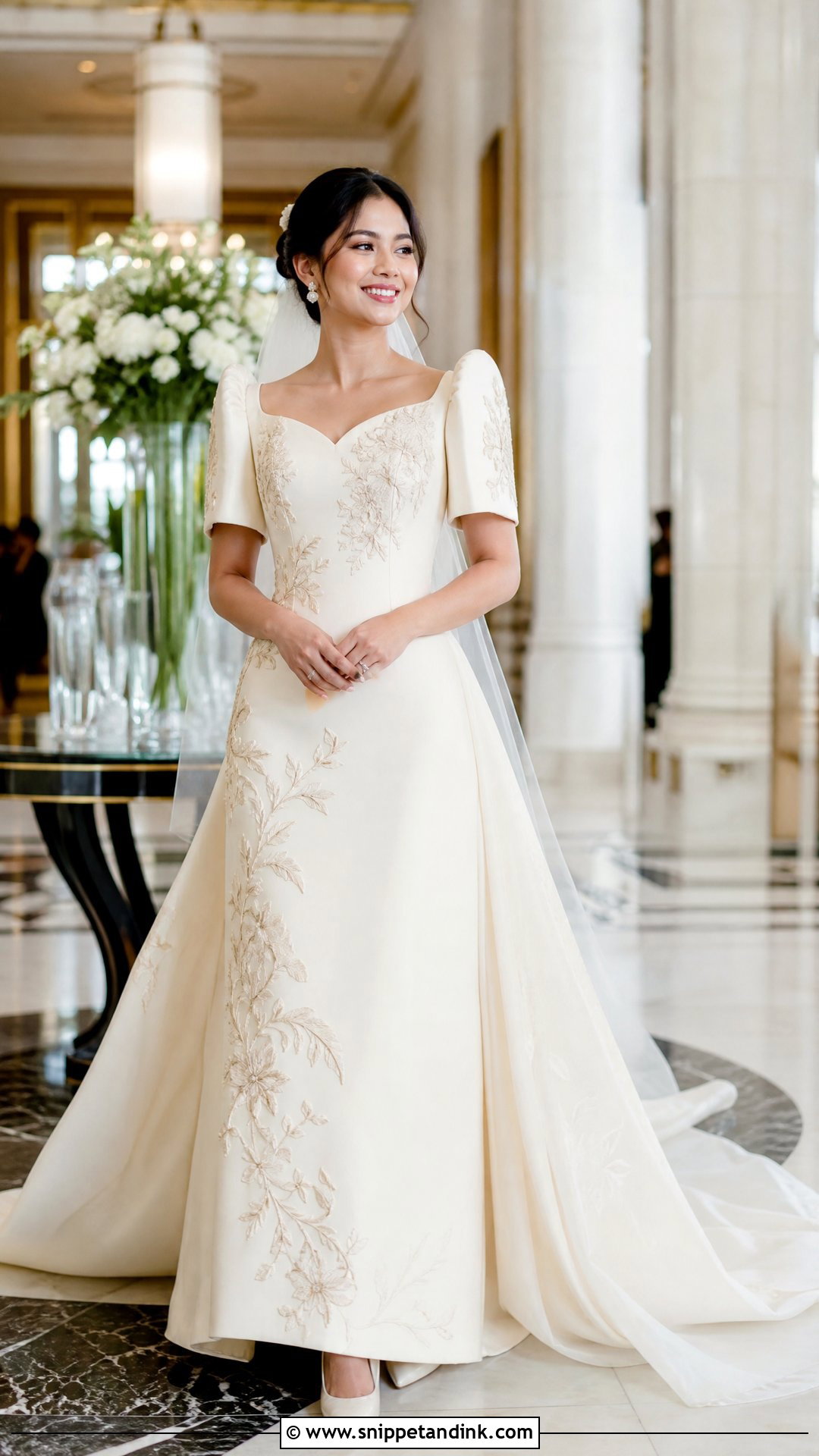
The Filipiniana terno wedding dress is the one most families picture first: butterfly sleeves, a fitted bodice and a long skirt. In ivory satin, silk organza or a piña-inspired weave it reads formal straight away. What makes or breaks it is the sleeve. A good terno sleeve is stiffened from inside and set so it stands just above the shoulder line; when it is cut too wide, it starts to look like a costume on a petite frame. I like a low bun and pearl earrings here because both stay out of the sleeve’s way. A cathedral veil suits a hotel ballroom or a big church, while a fingertip veil keeps a garden ceremony lighter.
2. Maria Clara Wedding Dress
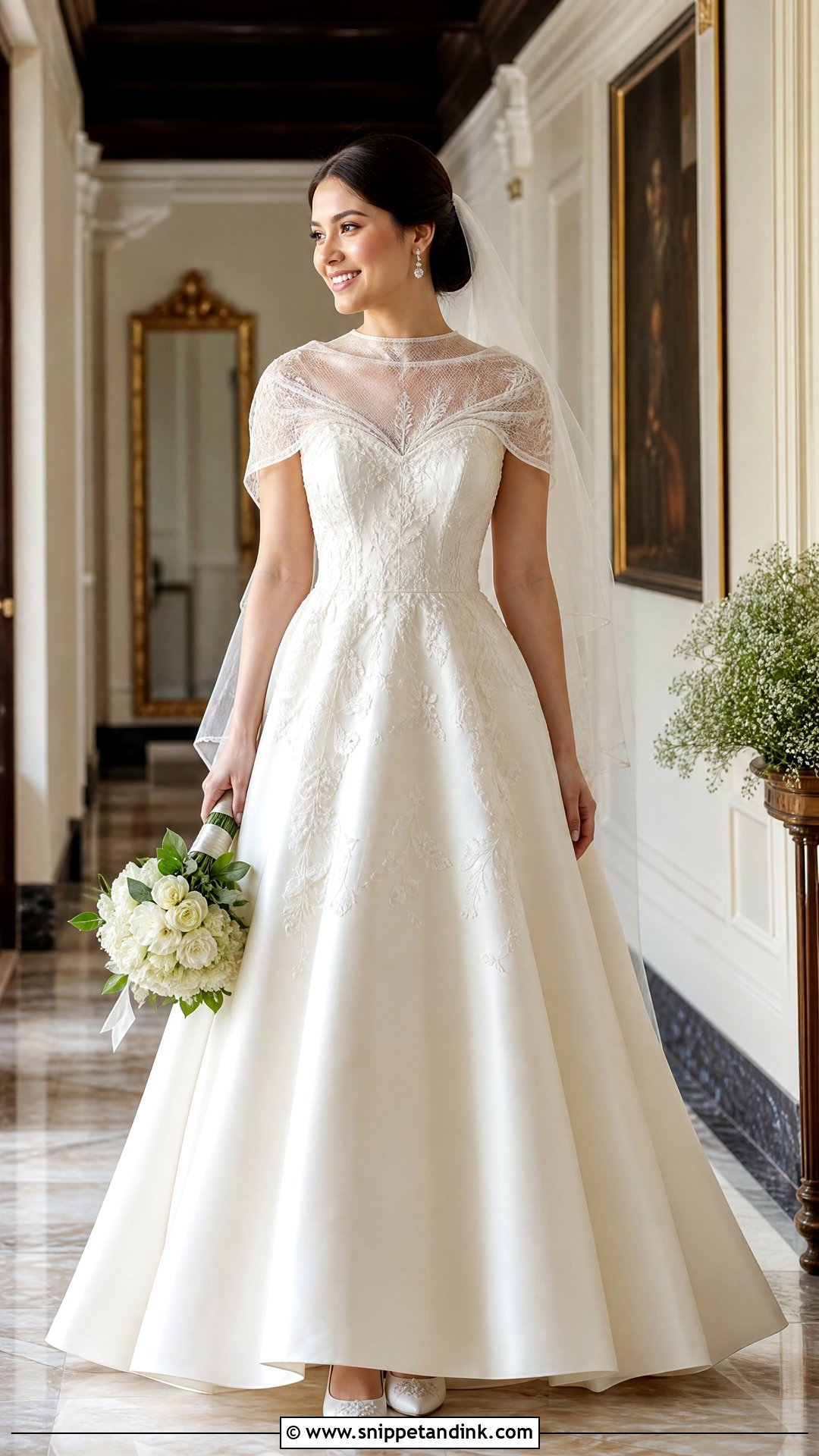
A Maria Clara wedding dress is softer than the terno. The pañuelo-style neckline, sheer sleeves and full skirt give it a modest, layered feel rather than a sculpted one. The pañuelo is the part I fuss over at fittings, because a folded scarf collar shifts when you hug people, so I ask the seamstress to tack it at two hidden points. Ivory, cream or champagne all work in photos. Wear your hair up so the neckline and sleeves stay visible, and keep jewelry to pearl drops and a fine bracelet. It belongs most naturally in a heritage church or an older indoor venue.
3. Modern Filipiniana Wedding Dress
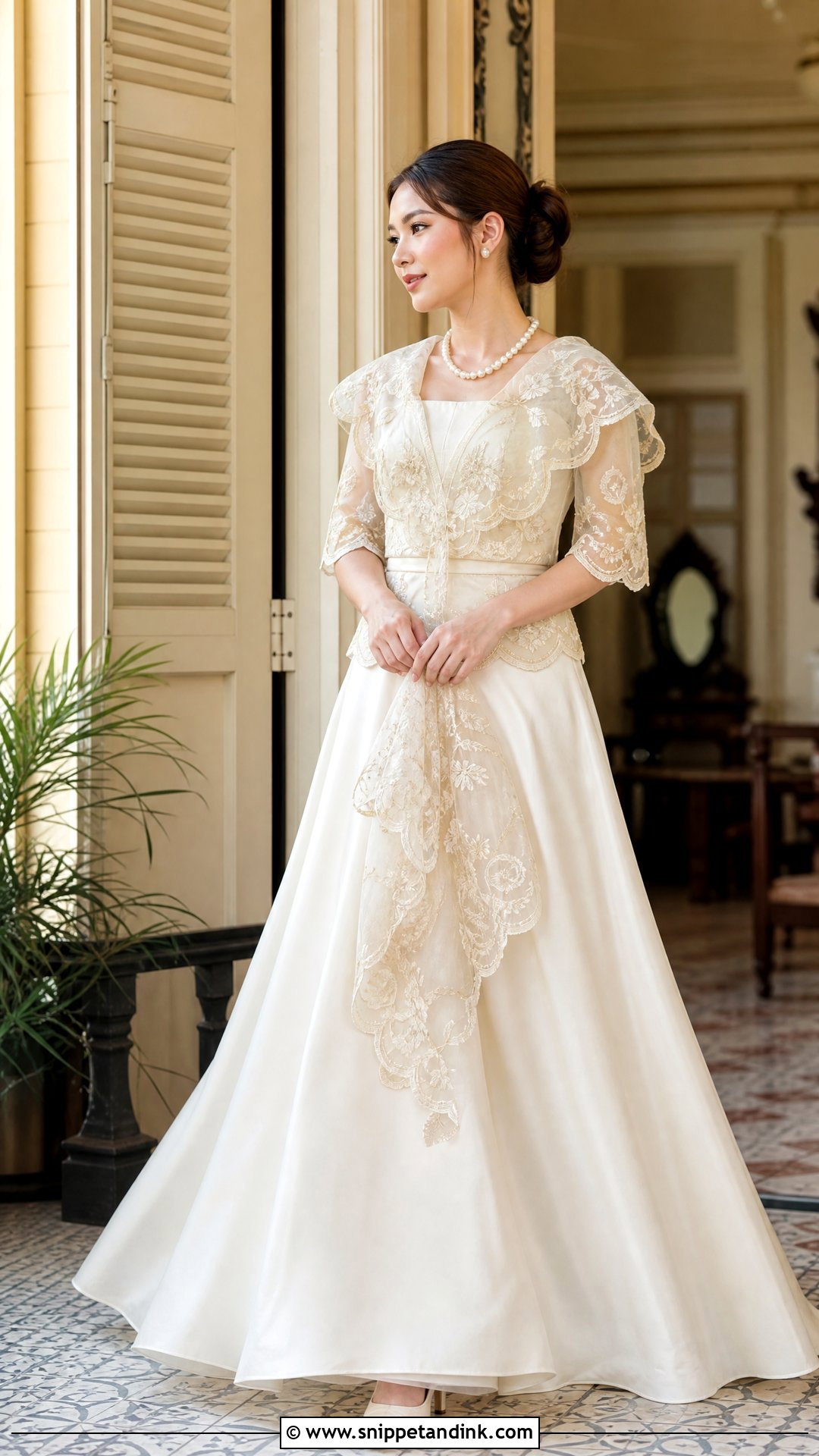
Modern Filipiniana is tradition with the decoration stripped back. The butterfly sleeve is still there, but sculpted and smaller, sitting on a smooth bodice over an A-line or column skirt, so shape and fabric carry the whole look. My caution: with so little embellishment, every flaw in fit shows. A pulled seam across the bust or a sleeve that sits unevenly is obvious in a plain gown, so budget for one more fitting than you would with a lace dress. Pearl studs, a structured clutch and a sleek bun or loose waves are enough. It suits city venues and small receptions.
4. Piña Wedding Dress
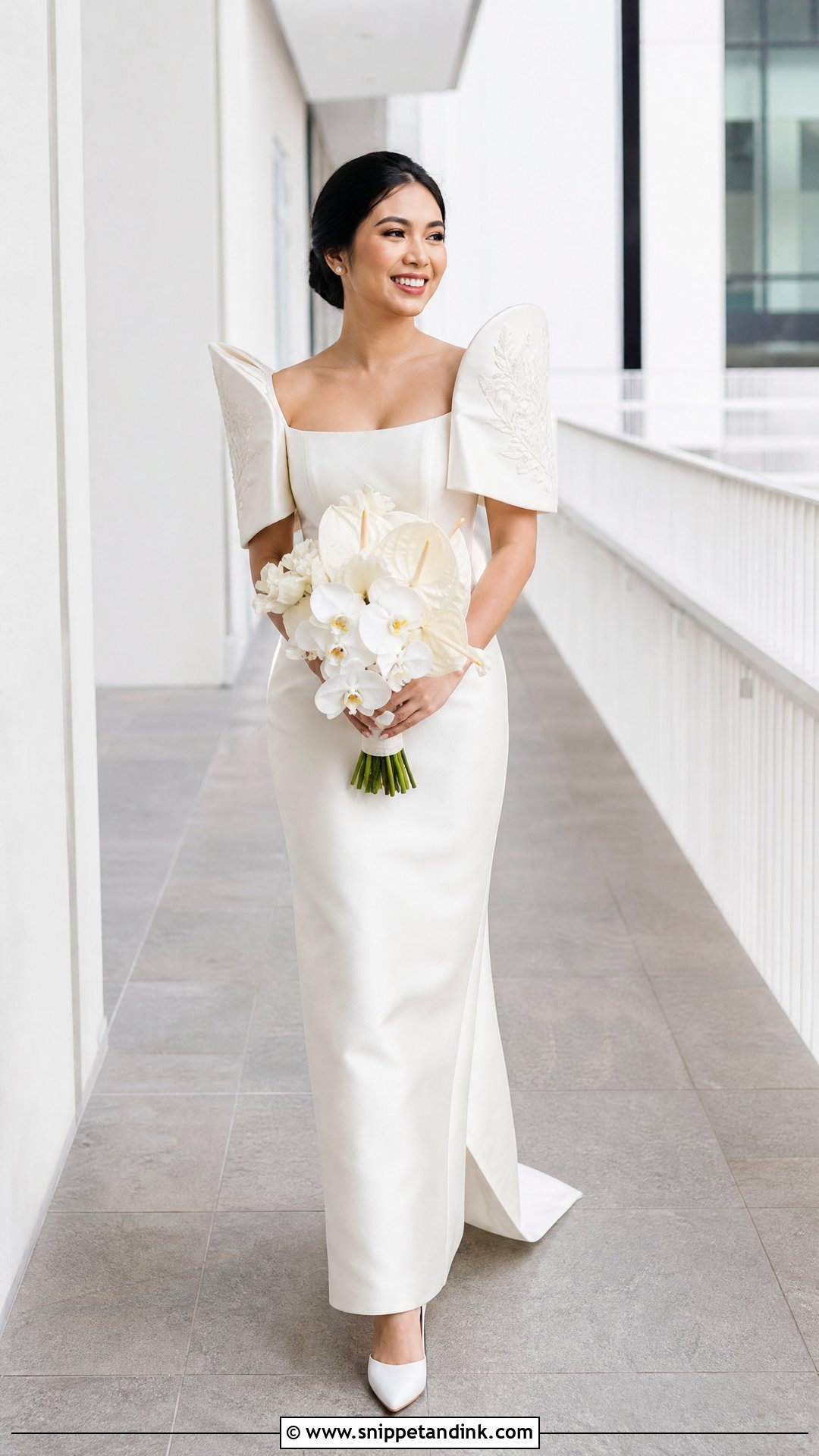
Real piña is woven from pineapple leaf fibre, and it has a sheer, slightly crisp shine that nothing synthetic quite copies. It is also delicate. It creases, it does not like to be stretched, and handwoven piña with hand embroidery takes a long time to make, so if you want the genuine cloth, start early. For the dress itself I’d choose cream or ivory with embroidered panels, butterfly sleeves and a skirt with some flow, then keep accessories minimal: pearl earrings, a thin bracelet, satin shoes. The fabric already has depth, so heavy jewelry fights it. A clean veil, or none at all, lets the weave show.
5. Baro’t Saya Wedding Dress
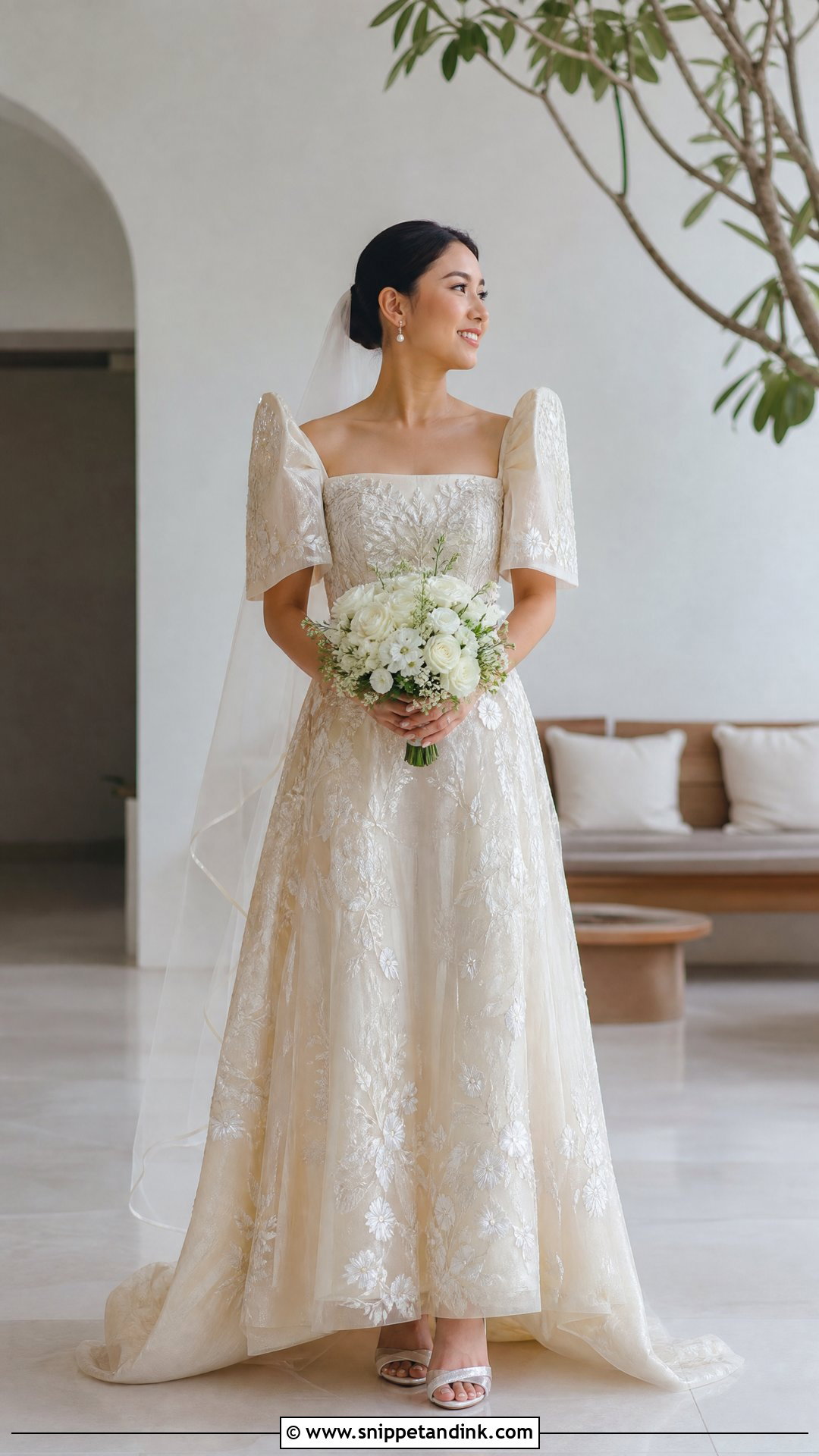
A baro’t saya wedding dress is a set of separates: a sheer blouse, a long skirt, and sometimes a pañuelo or overskirt. That structure is its practical strength. Each piece can be fitted on its own, and if your waist and bust are different sizes, two pieces solve problems a one-piece gown fights. In ivory or soft champagne with fine embroidery it looks bridal without stiffness. I pair it with pearls, low heels and a braided bun or low chignon. One thing to check: make sure the blouse is long enough that it stays tucked or covers the skirt waistband when you lift your arms to dance.
6. Lace Filipiniana Wedding Dress
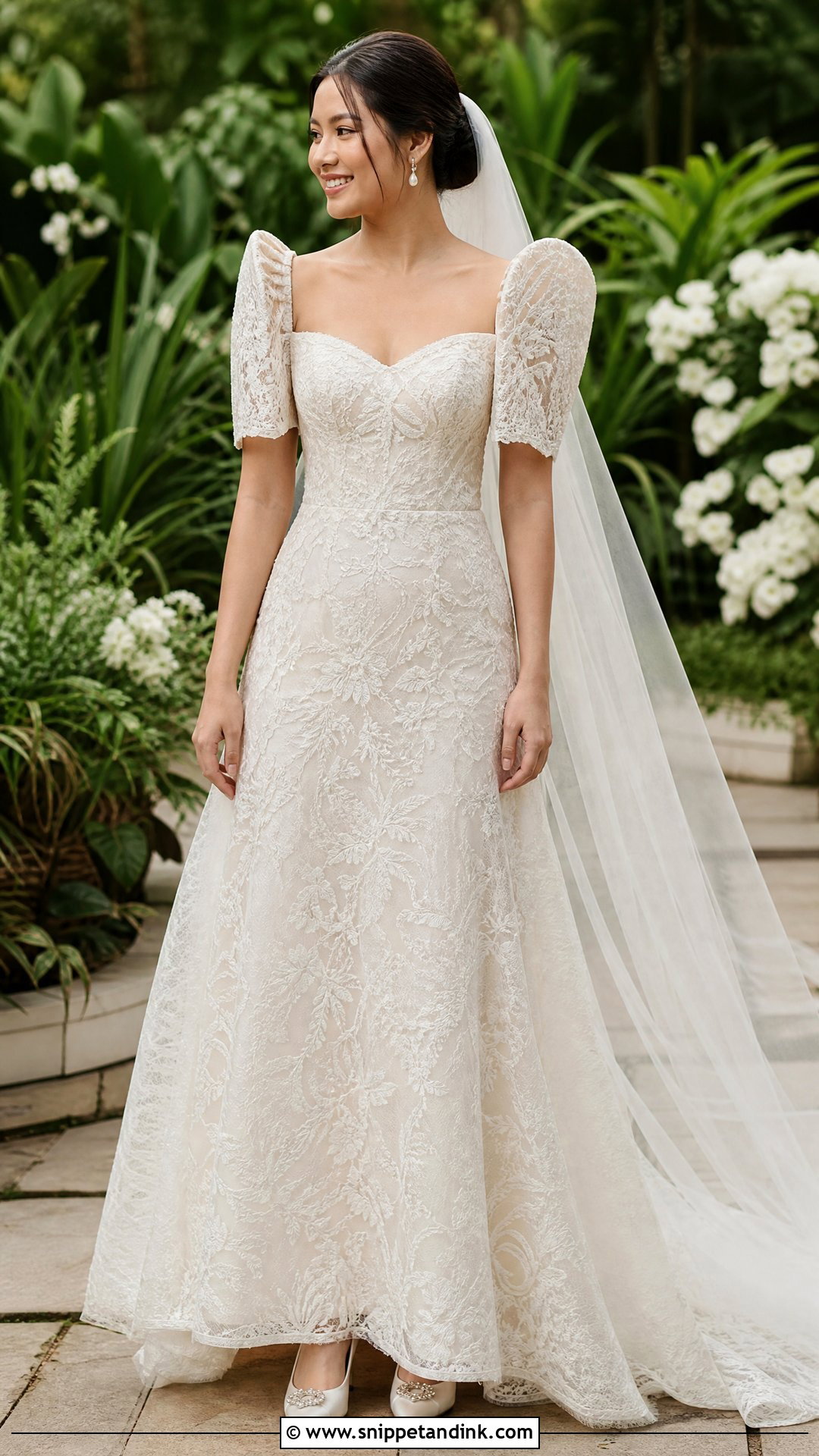
Lace on a Filipiniana gown softens the structure without losing it. The butterfly sleeves keep the cultural outline, while the lace adds texture and a more familiar bridal feel. A lace bodice over a flowing skirt is the balanced version; all-over lace is more dramatic and heavier to wear. I always ask brides to look at the lace edge on the sleeve, because a scalloped edge finishing a stiff butterfly sleeve can look fussy, while a clean bound edge lets the shape lead. Pearl earrings, a simple veil and a white or cream bouquet keep it classic.
7. Minimalist Terno Wedding Dress
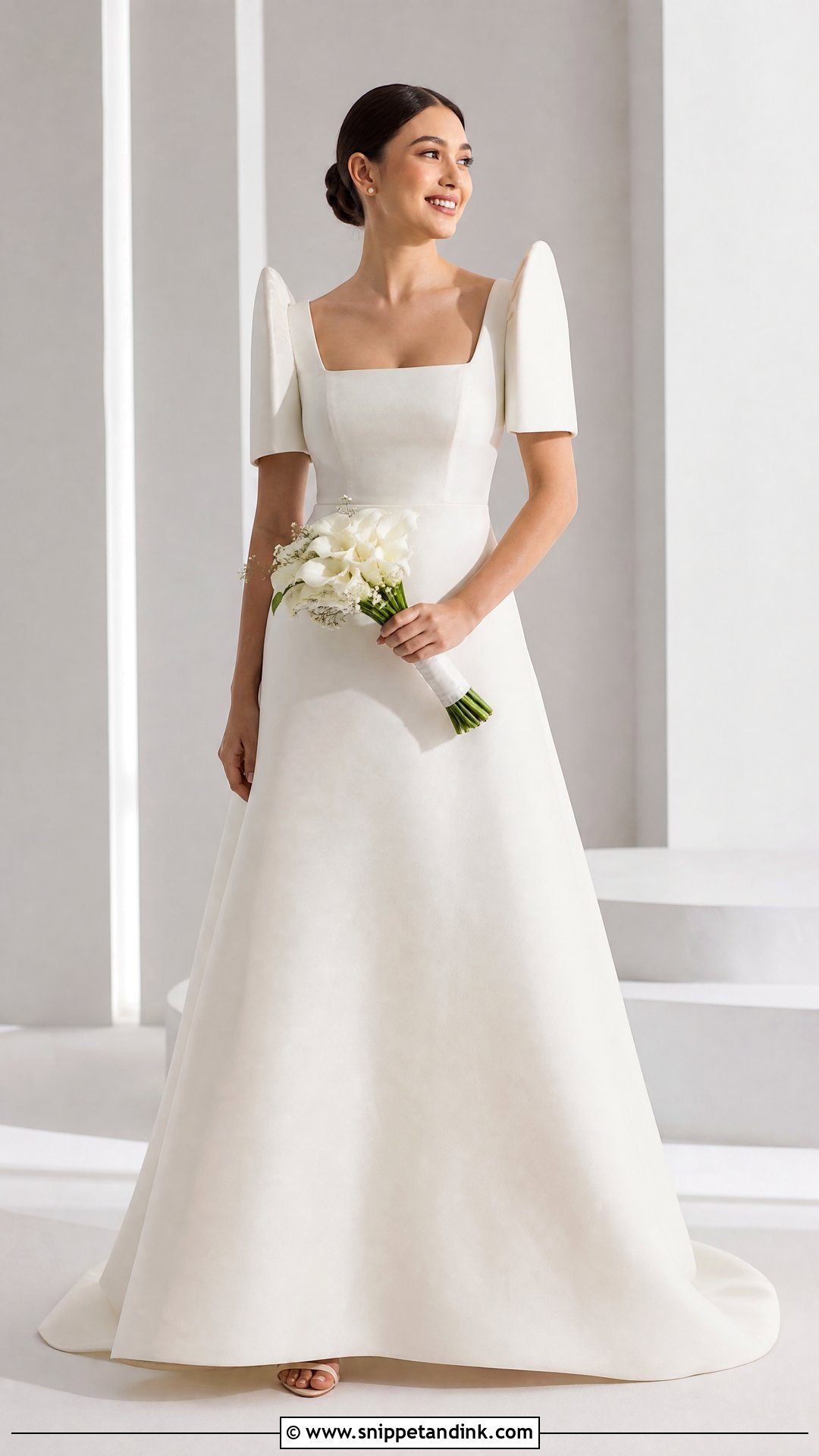
Minimalist terno is all about tailoring. No beadwork, no lace, just crisp lines, smooth fabric and structured sleeves over a straight or A-line skirt. Because the cloth is plain, I steer brides toward a fabric with some body, like mikado or heavy crepe, which holds its line through a long ceremony; thin satin shows every crease from sitting in the car. Small pearl studs, a sleek bun and a plain veil are all it needs. It fits a civil ceremony or a city wedding where a full gown would feel too much.
8. Embroidered Filipiniana Wedding Dress
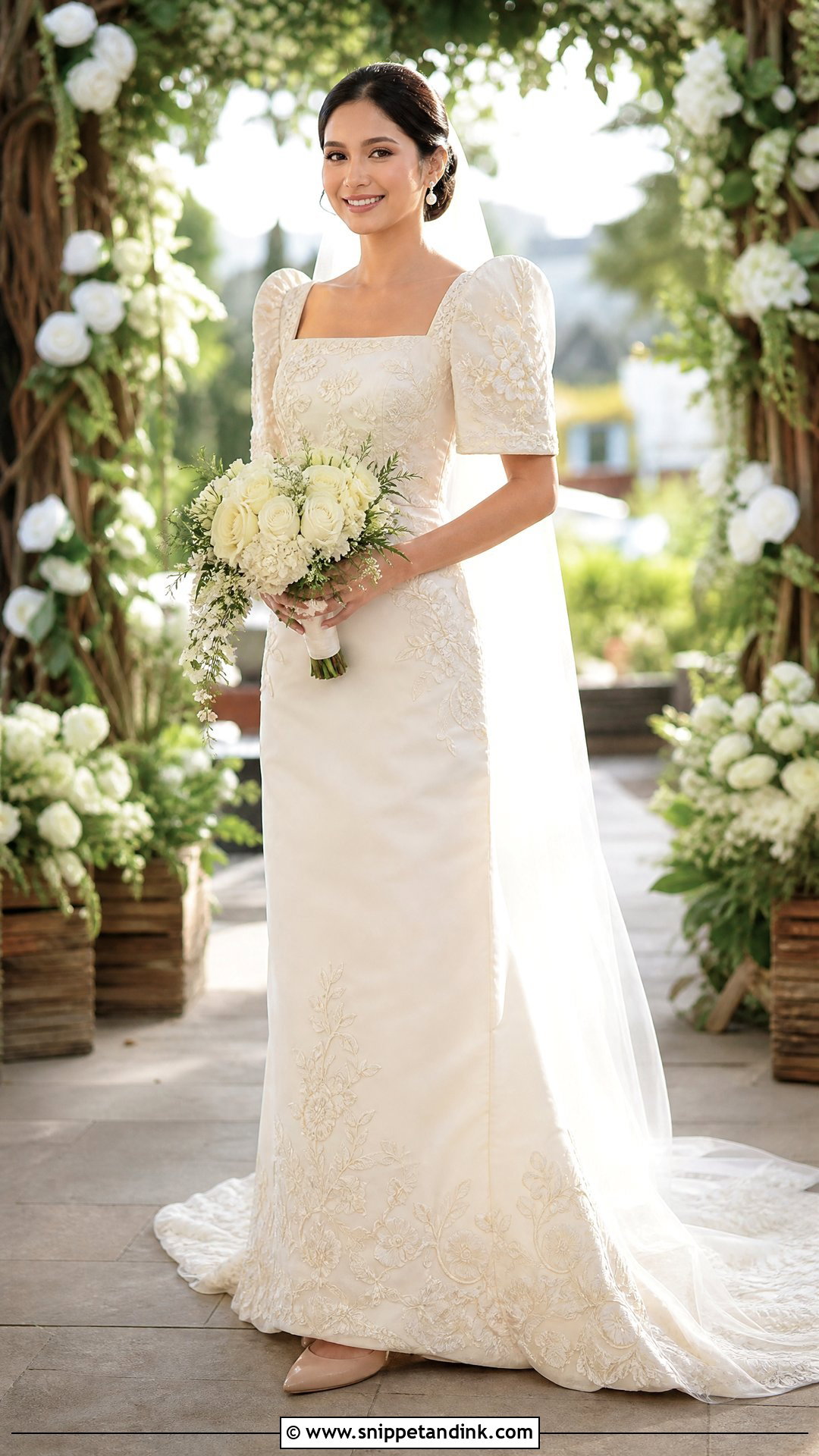
Embroidery is where I see the most overdone dresses. Floral, vine or geometric work can sit on the sleeves, bodice, hem or veil, but not on all of them at once. I’d pick one or two zones and let the rest of the gown stay quiet, so the eye knows where to land. If a family motif or a regional pattern means something to you, put it where you will see it in close-up photos, usually the sleeves or the veil edge. Keep earrings small and hair up so the neckline is clear, and choose a tulle veil light enough not to hide the work.
9. Off Shoulder Filipiniana Wedding Dress
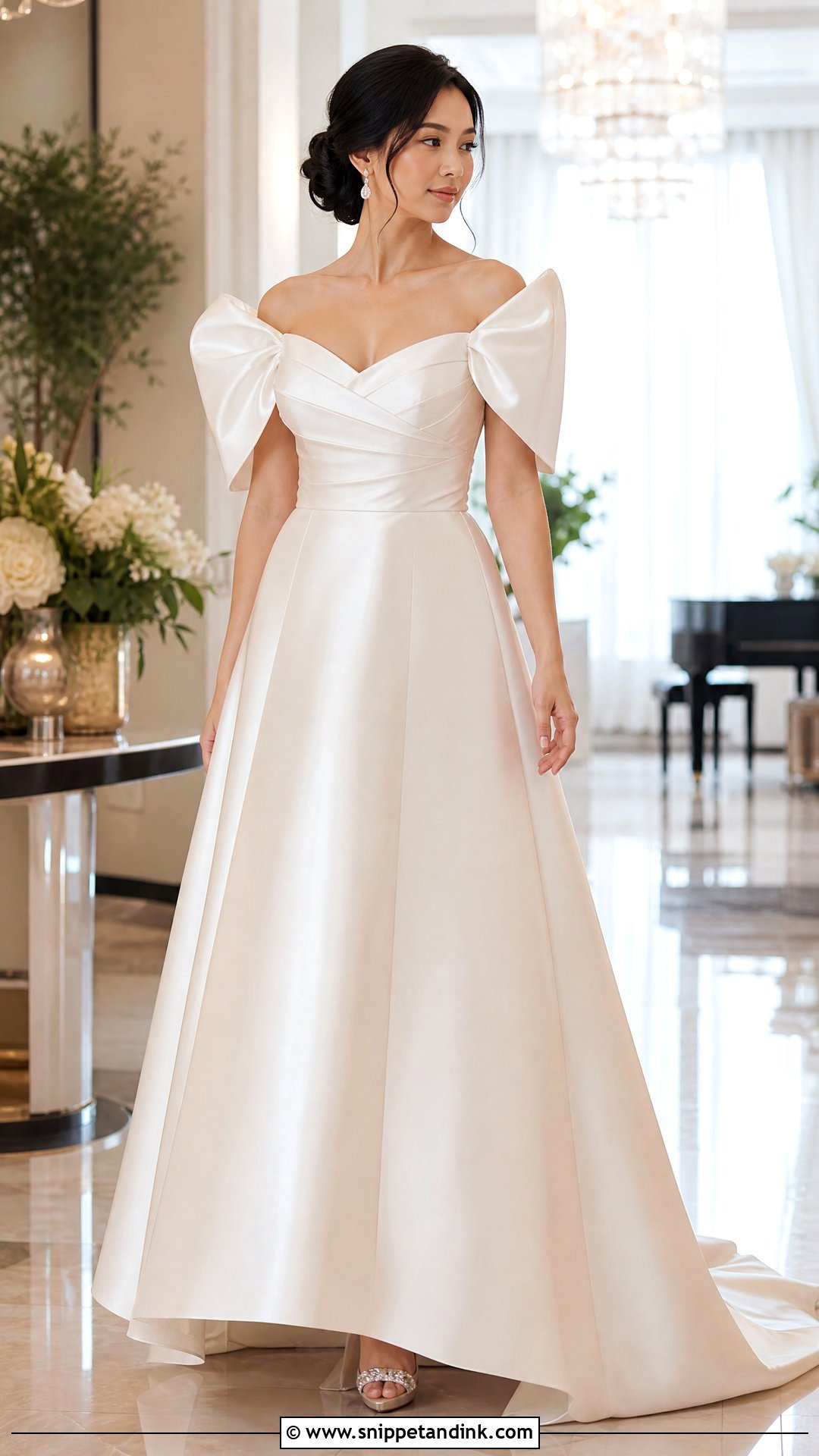
Off the shoulder and Filipiniana do not seem to go together at first, since the terno sleeve usually sits on the shoulder. The version that works keeps a butterfly or terno-inspired sleeve dropped onto the upper arm, with the neckline open above it. Satin, mikado or organza gives a polished finish. The honest drawback: dropped sleeves restrict how high you can lift your arms, which matters for the first dance and for hugging. Try a full reach at the fitting. A fitted bodice over an A-line skirt flatters most figures, and a soft updo with drop earrings finishes it.
10. Ball Gown Filipiniana Wedding Dress
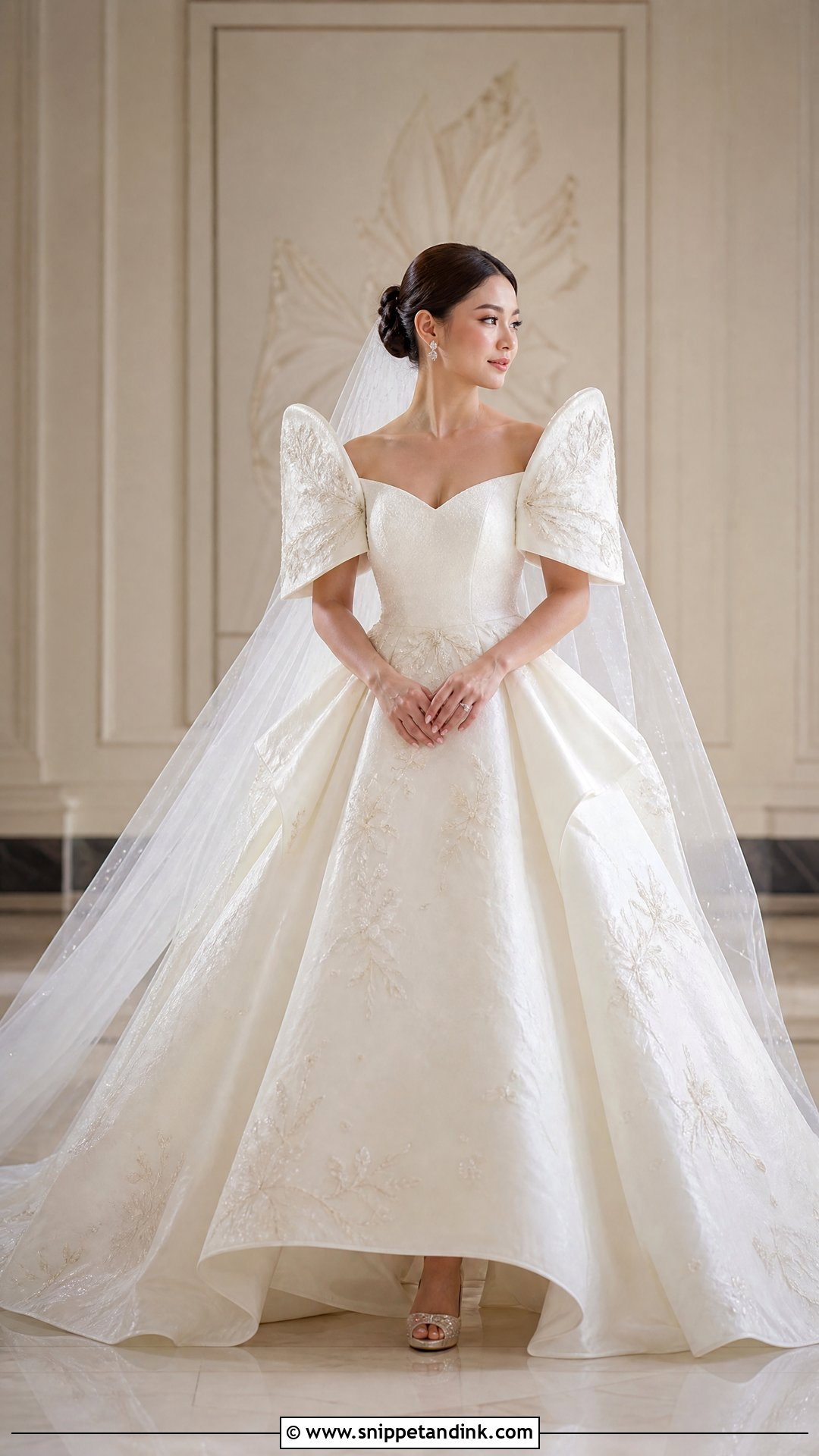
The ball gown version is for a big room and a long aisle. A structured bodice, defined waist and layered skirt in satin, tulle or organza, plus terno sleeves, gives the most volume of any look here. Volume needs balance, so I keep the neck bare or close to it and put the hair in a polished bun. A long veil and sparkling earrings suit an evening ballroom. Before committing, check the car, the church pew width and the venue’s bathroom stall, because a skirt this full needs a helper for every one of those.
11. Mermaid Filipiniana Wedding Dress
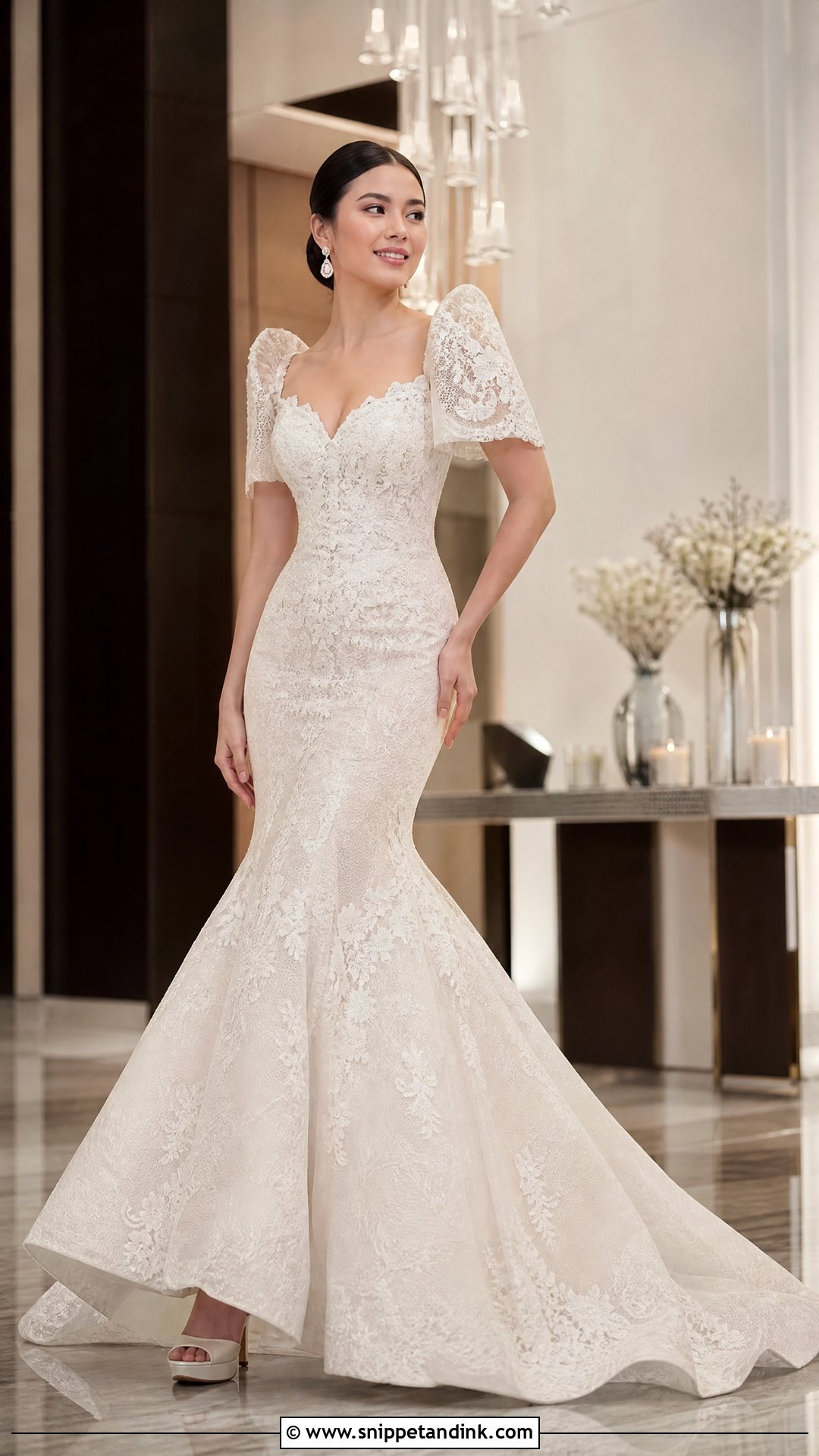
A mermaid Filipiniana wedding dress follows the body and flares near the knee, and the terno shoulder or butterfly sleeve brings in the heritage. It is the least forgiving silhouette for sitting and dancing, so I ask brides to sit down and climb a step during the fitting. If the flare starts too low, you will walk in short steps all day. Lace, satin or embroidered cloth all work. Wear the heel height you chose for the hem, since a mermaid skirt hemmed for heels drags badly in flats, and keep the hair sleek.
12. A Line Filipiniana Wedding Dress
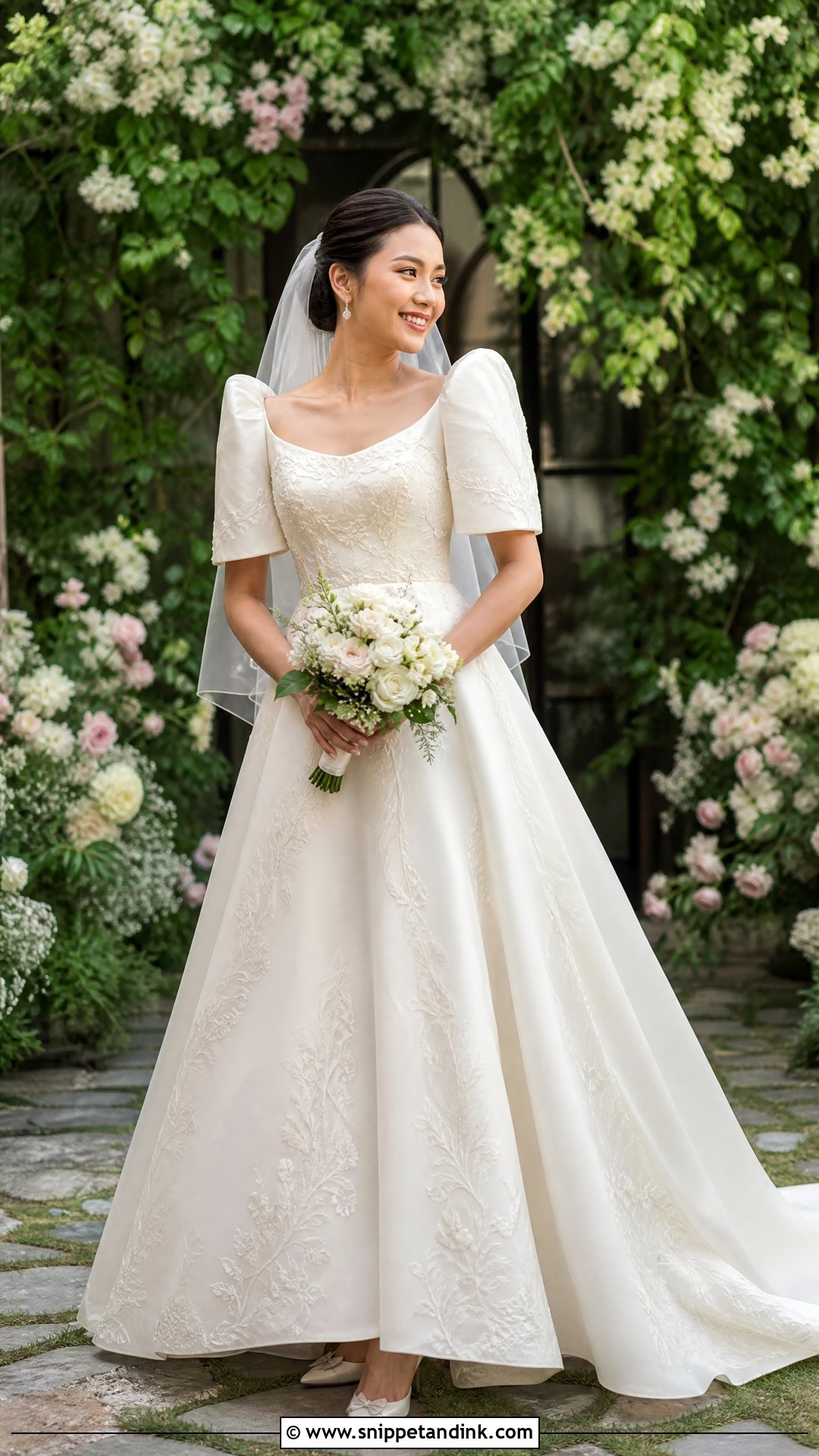
The A-line is the shape I recommend most when a bride is unsure. It defines the waist and opens gently, so it walks, dances and sits without fuss, and it photographs cleanly from the side. Butterfly sleeves, embroidery or piña-inspired texture give it the Filipino identity. Pair it with pearls, a mid-height heel and a soft veil. It suits gardens, resorts and family celebrations, and it is the easiest of these gowns to alter if your weight changes in the months before the wedding.
13. Sheer Sleeve Filipiniana Wedding Dress
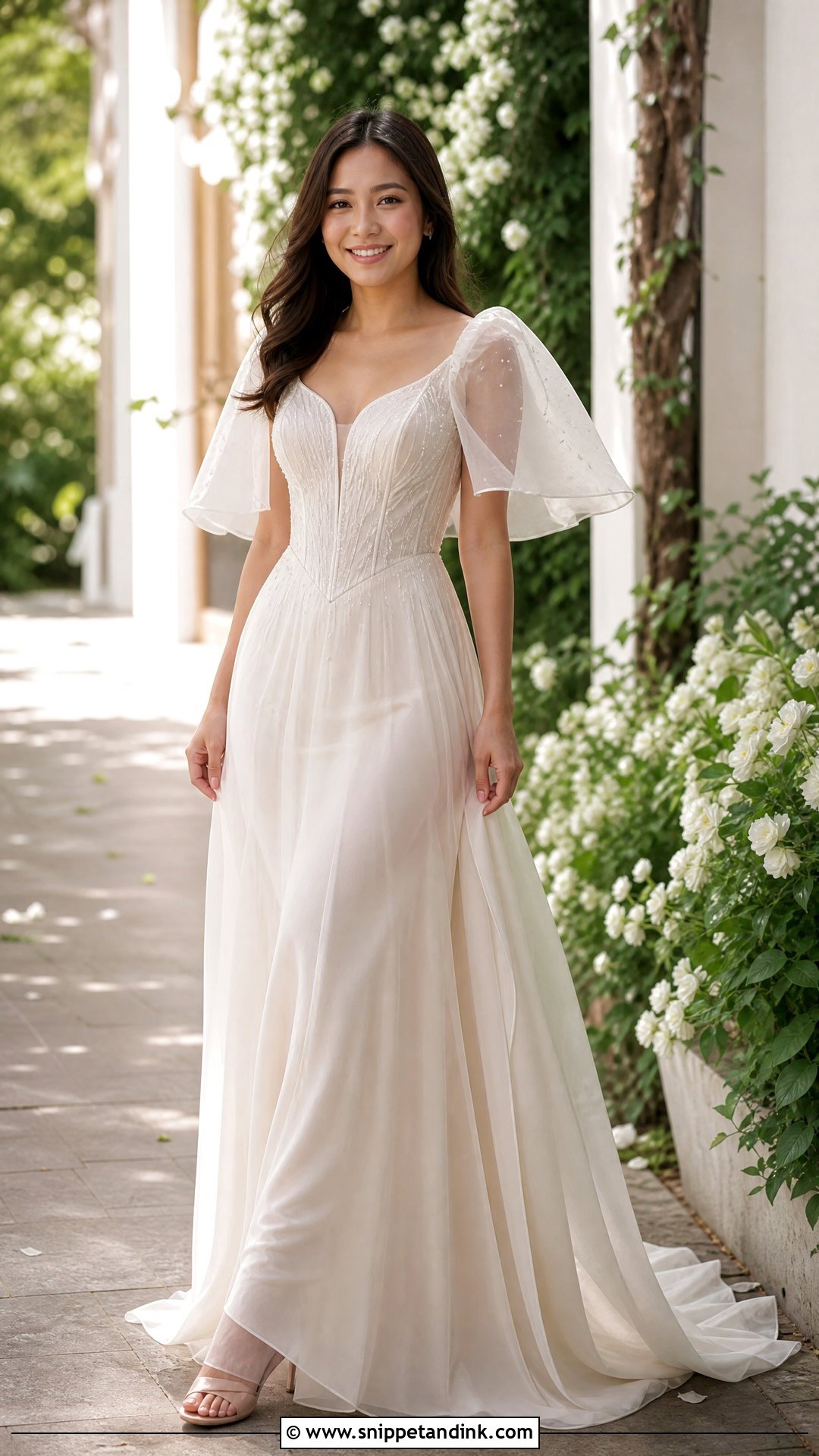
Sheer sleeves in organza, tulle or lace give the butterfly shape without the heavy, stiff look. They are cooler too, which matters in Philippine heat or any summer wedding. The catch is that sheer cloth cannot hold a tall sleeve on its own, so the dressmaker will usually add a fine stiffener or horsehair edge, and you should check it does not scratch the arm. In daylight the transparency reads very pretty in photos. Keep the rest simple: fitted bodice, flowing skirt, pearl studs, loose waves and a plain veil.
14. Beaded Terno Wedding Dress
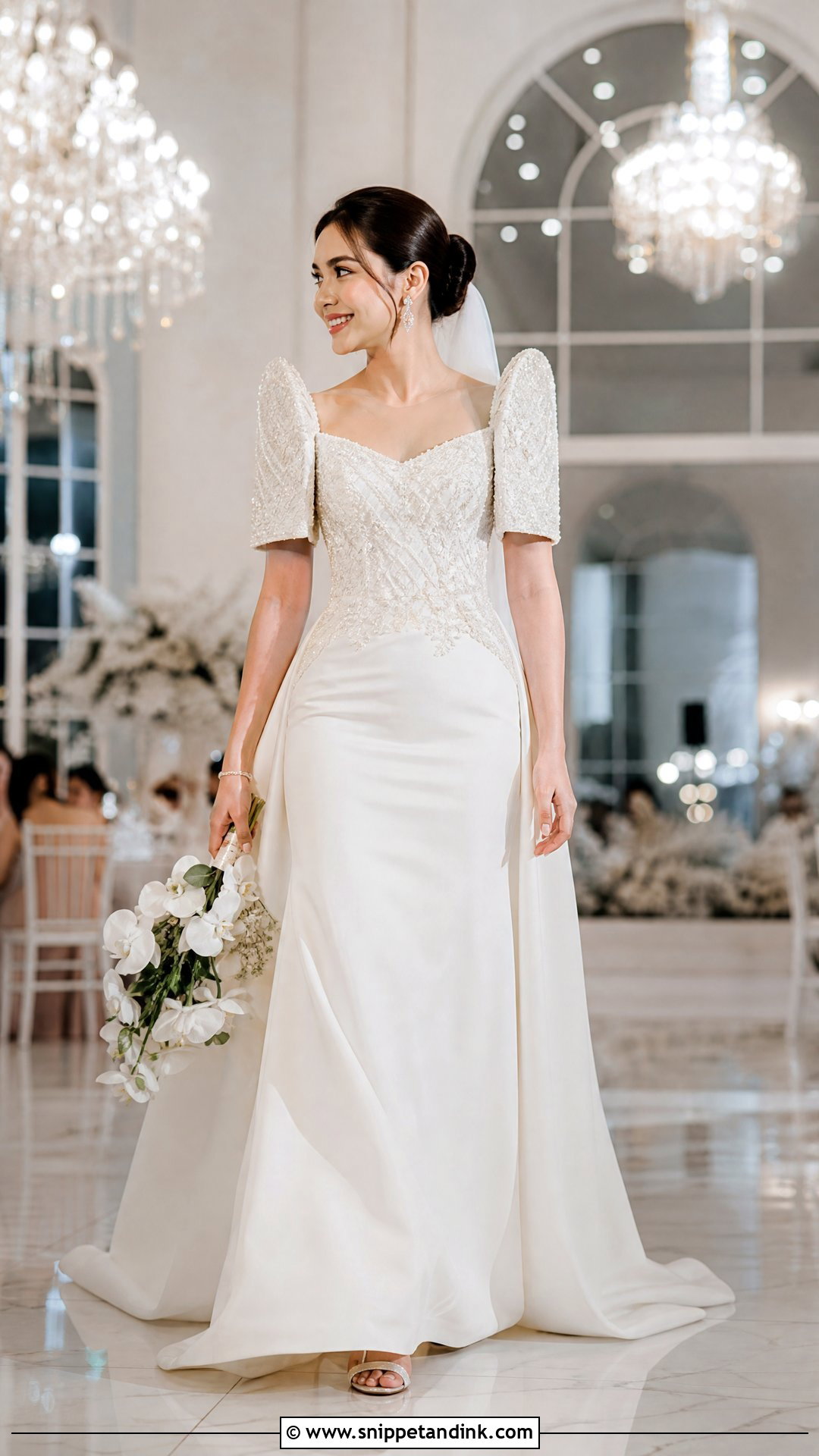
Beading catches light, which is why it belongs at evening receptions where the room is lit low and the camera relies on flash and candles. Put it on the bodice, sleeves or waistline and keep it tonal, ivory or champagne beads on an ivory gown, so it reads as shimmer rather than pattern. I warn brides about two things: beaded gowns are noticeably heavier, and loose beads snag on lace veils and on a partner’s suit buttons. Crystal earrings, a polished updo and a simple veil are plenty, since the dress already does the work.
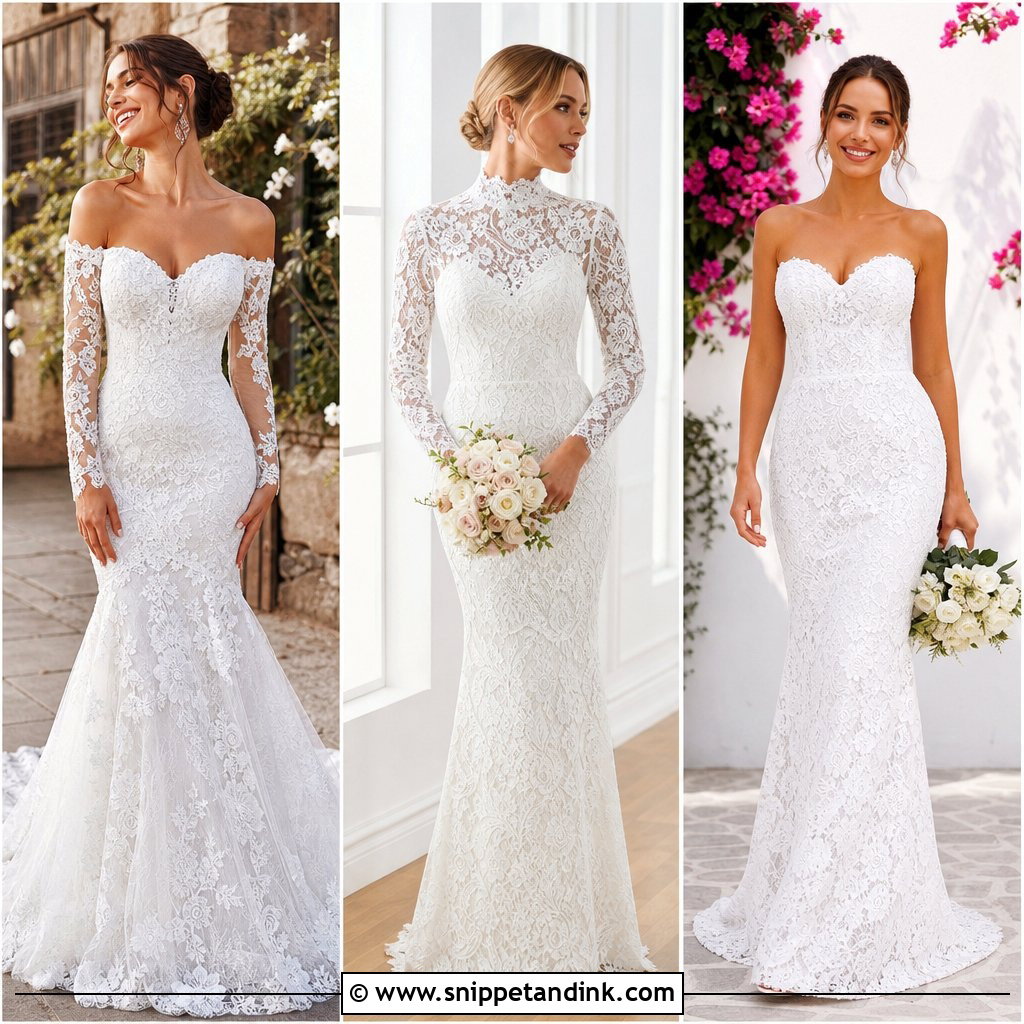
15. Civil Wedding Filipiniana Dress
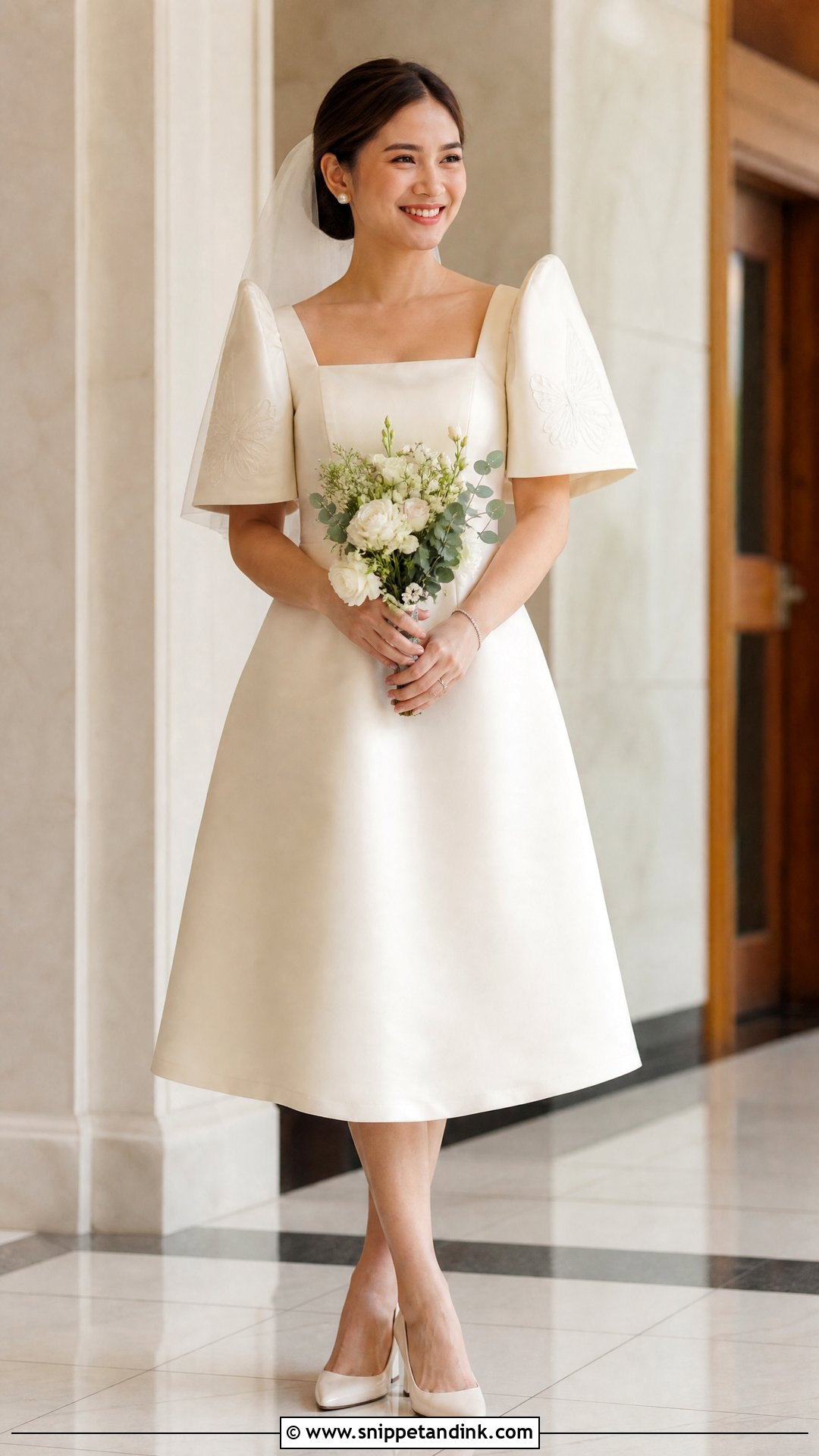
For a civil ceremony I usually suggest a knee-length, tea-length or simple midi dress with butterfly sleeves. Ivory crepe, satin or lace keeps it bridal, and the terno shape keeps it Filipino. City halls are often small and standing room, so a long train is more burden than drama there. Block heels are kinder on stone floors, and a small bouquet is easier to hold while signing. A short veil or a hair comb adds a ceremonial touch, and the outfit can carry straight on to a restaurant lunch with family.
16. Beach Filipino Wedding Dress
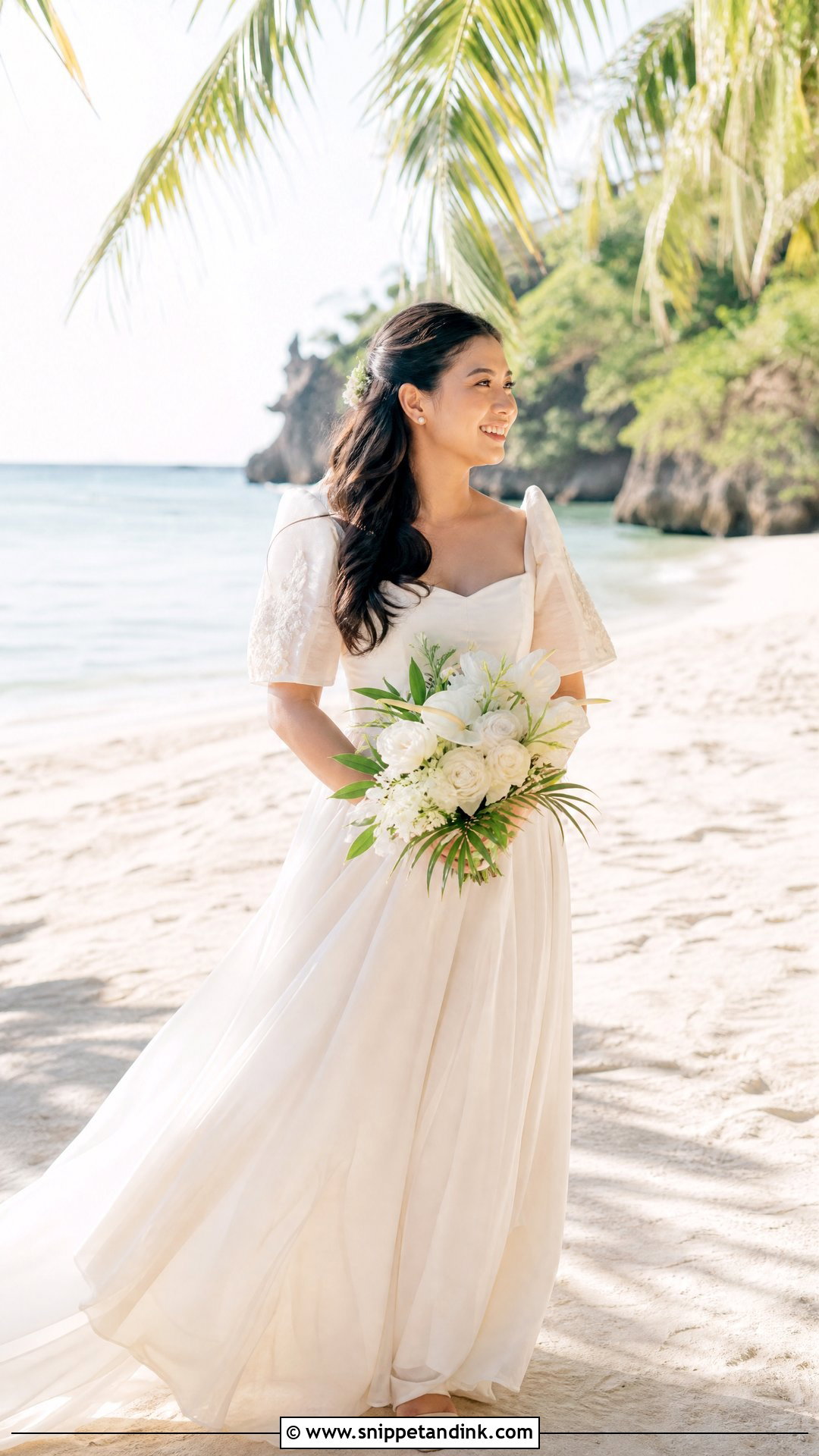
A beach Filipino wedding dress has to breathe and has to walk on sand. I’d choose a soft ivory gown with light Filipiniana sleeves and an airy skirt that moves in the breeze, and drop the train entirely, since a train on sand turns into a sandbag. Flat sandals, pearl studs and soft waves work better than a sleek bun, which wind will undo anyway. A short veil or floral hairpiece is safer than a cathedral veil near water. White tropical flowers keep the bouquet in keeping with the setting.
17. Garden Filipino Wedding Dress
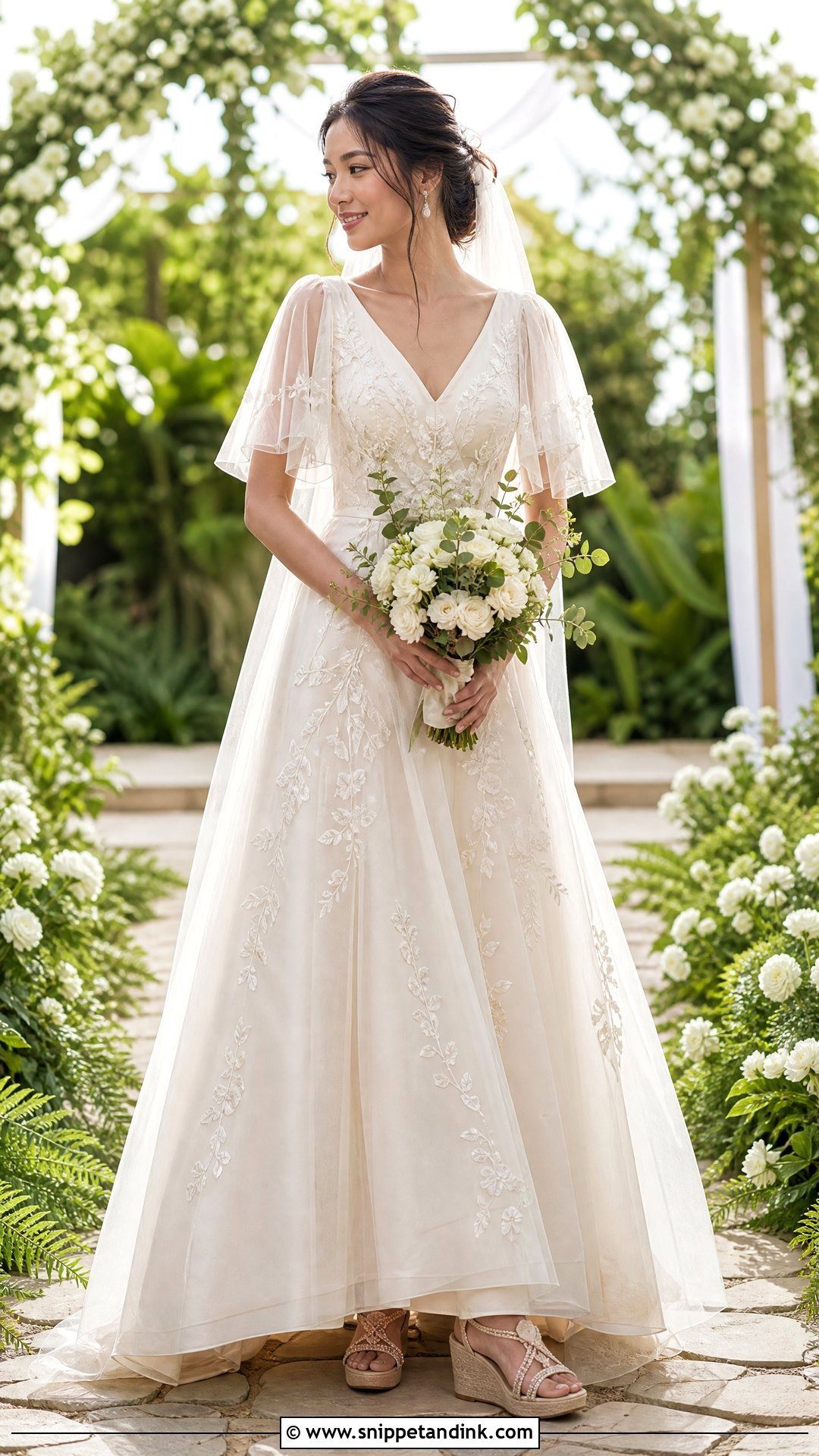
Garden ceremonies call for a gown that copes with grass and changing light. A Filipiniana-inspired dress with floral embroidery, soft lace or sheer sleeves fits the setting, and an A-line skirt glides over lawn rather than dragging through it. I’d skip stilettos, which sink into turf, in favour of block heels or dressy wedges. A loose updo, pearl earrings and a floral veil or a few delicate pins echo the garden without overdoing it. Have someone hold the hem when you walk between photo spots, as grass stains on ivory are hard to shift.
18. Champagne Filipiniana Wedding Dress
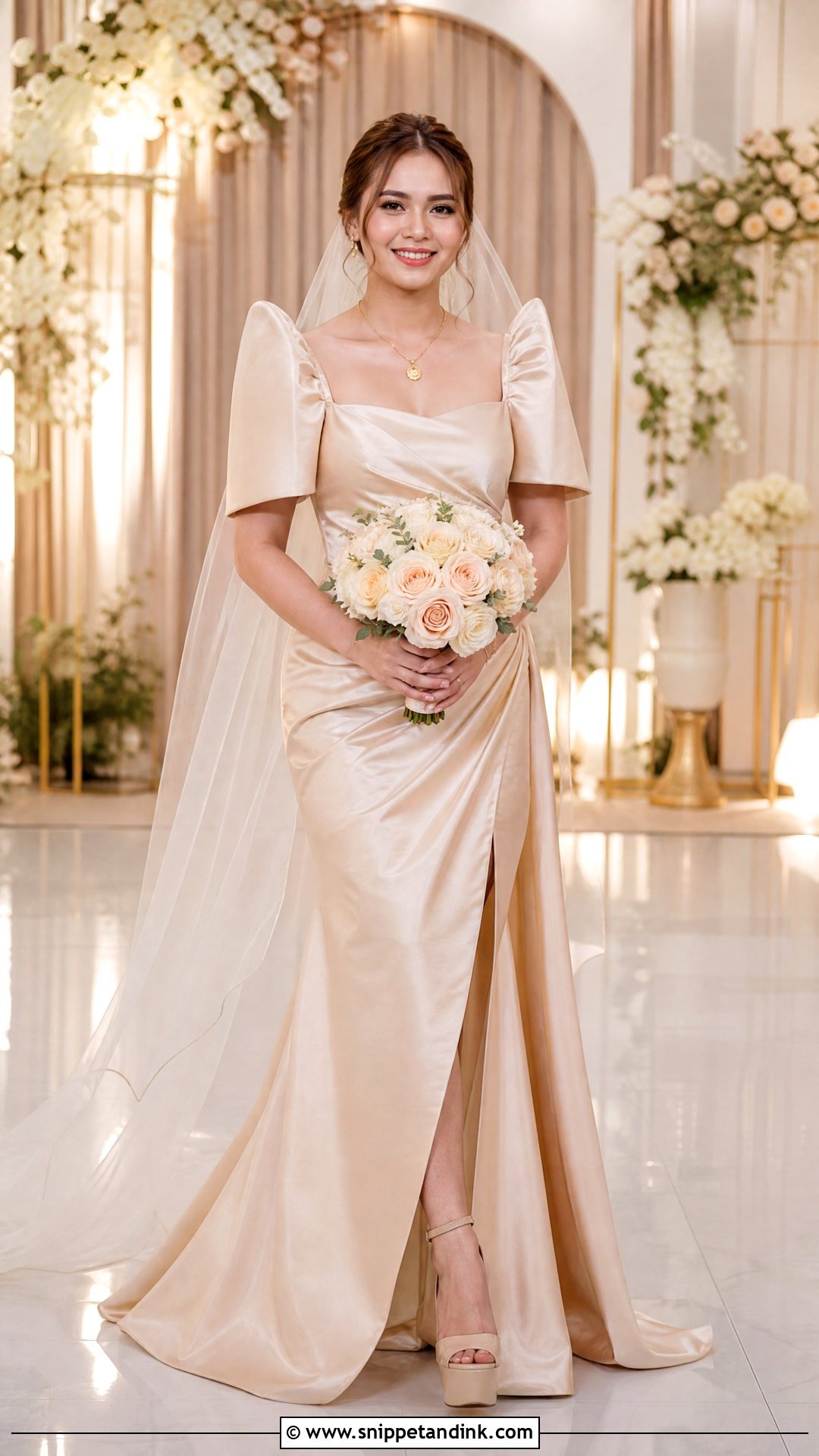
Champagne is a good alternative to bright white for brides with warm or deep skin tones, since the golden undertone sits closer to skin and looks richer on camera. A terno gown in champagne satin, lace or embroidery pairs naturally with gold jewelry and a cream bouquet. The thing I check is the veil: an ivory veil over a champagne gown can look slightly grey, so hold the two together in daylight before you buy. It suits evening weddings, hotel receptions and gardens, and it still feels formal enough for a church.
19. Ivory Terno Wedding Dress
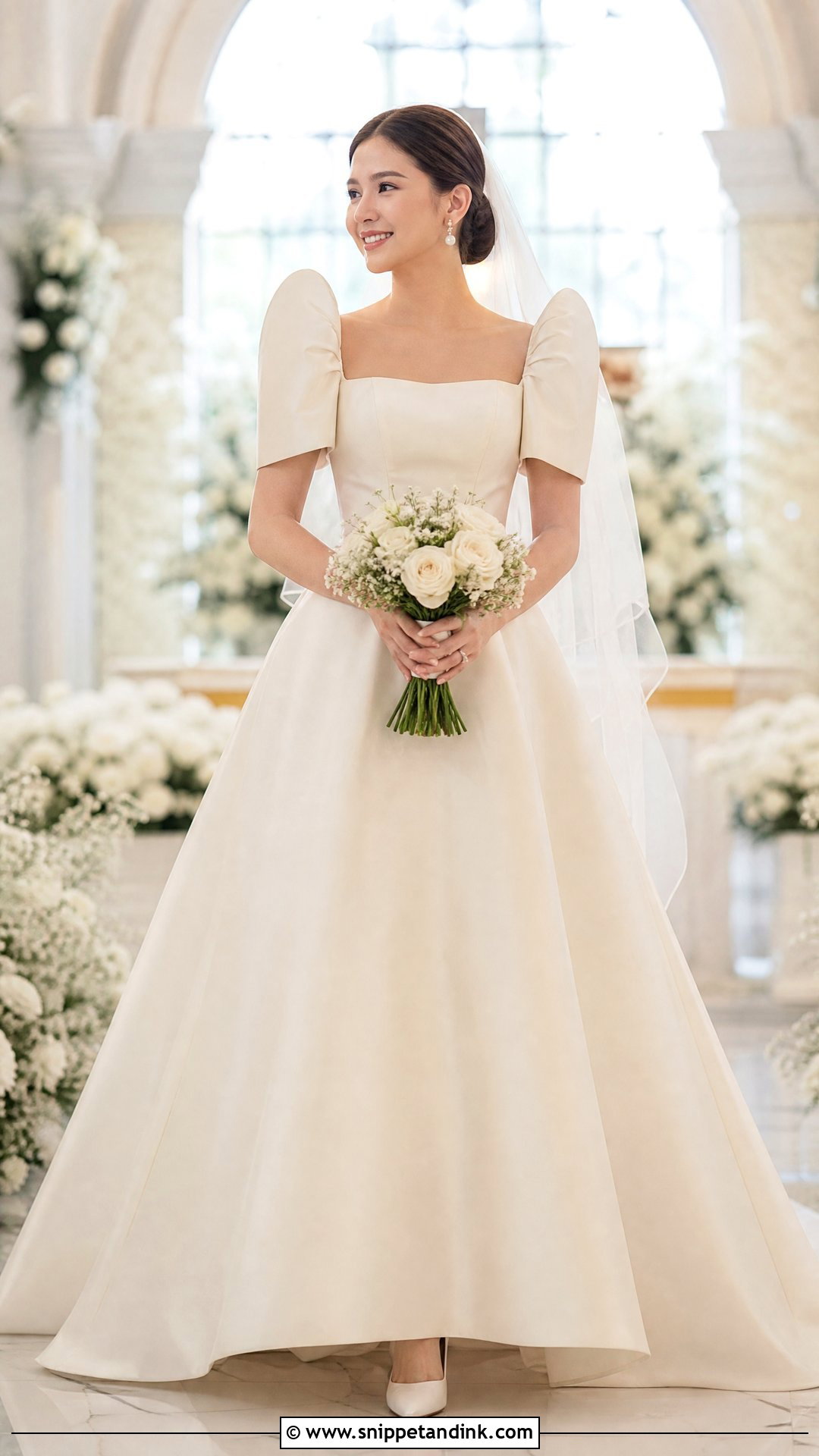
Ivory is my default recommendation over stark white for almost every bride, because pure white can look blue or flat under bright lights and outdoor sun, while ivory stays soft. A structured terno bodice with a flowing skirt is the classic shape, and you can leave it plain or add lace and embroidery depending on how detailed you want it. Pearl earrings, white or nude heels, a simple veil and a neat bouquet finish it. It works in nearly any setting, and it lets the butterfly sleeves remain the focal point.

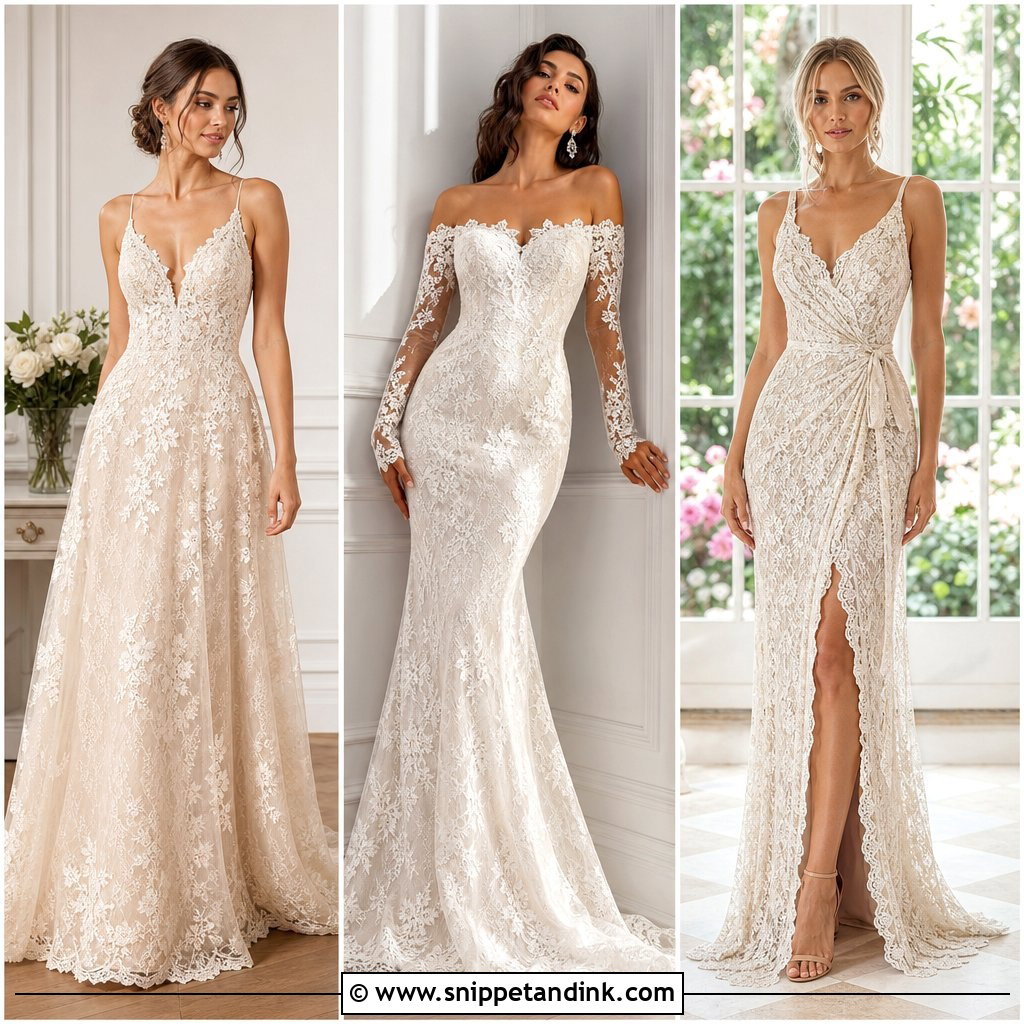
20. Two Piece Filipiniana Wedding Dress
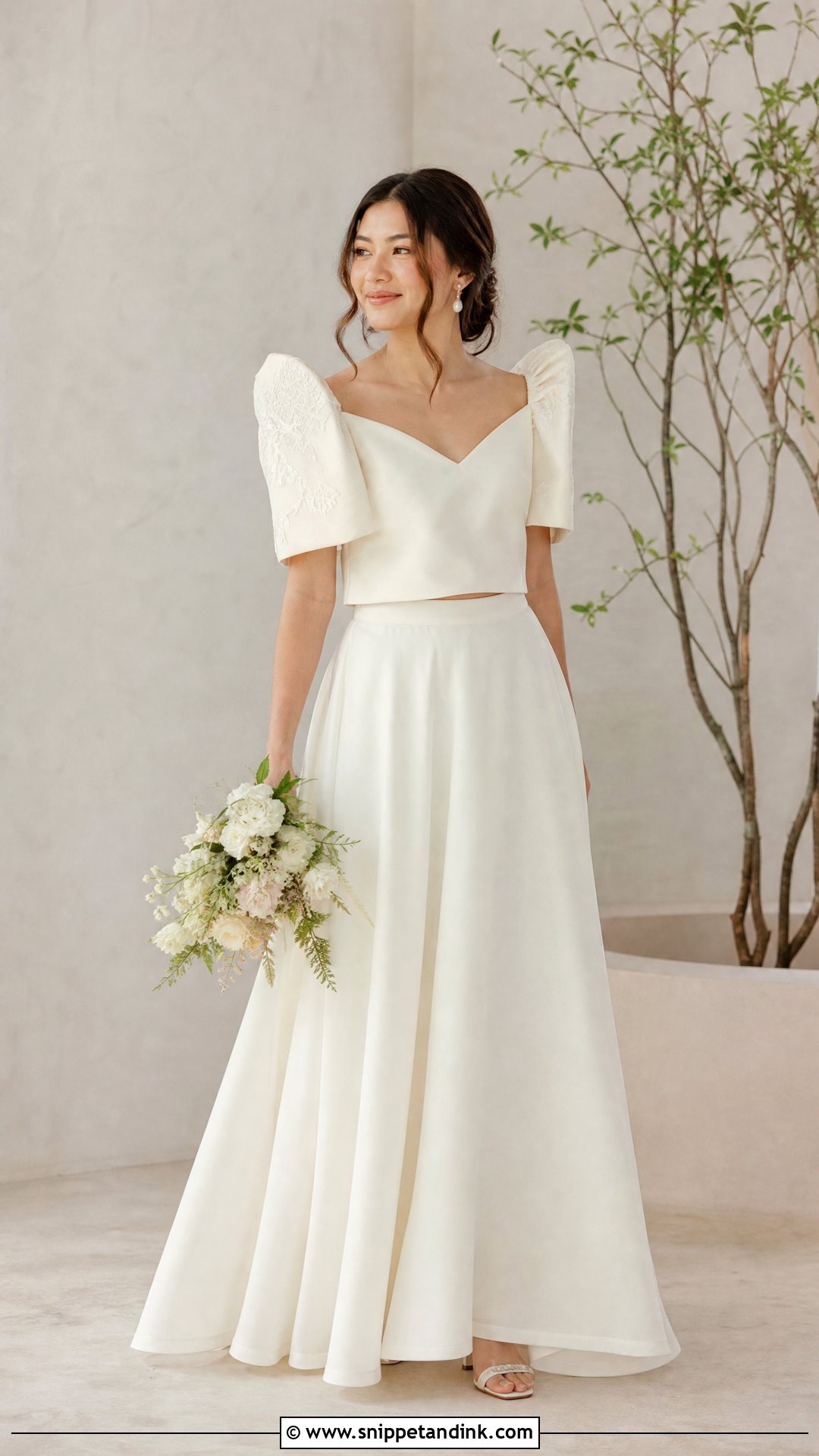
Two-piece Filipiniana separates are one of the most practical options here. A butterfly-sleeve top with a high-waisted skirt, or a baro-inspired blouse with a full bridal skirt, can be matched in ivory or mixed, organza over satin for example, for a bit of depth. Separates make alterations simpler and let you wear the top again later. The detail I always check is the gap: with the arms raised, there should be no skin showing between top and skirt unless you planned it. Pearl earrings, low heels and a soft hairstyle keep it relaxed.
21. Short Filipiniana Wedding Dress
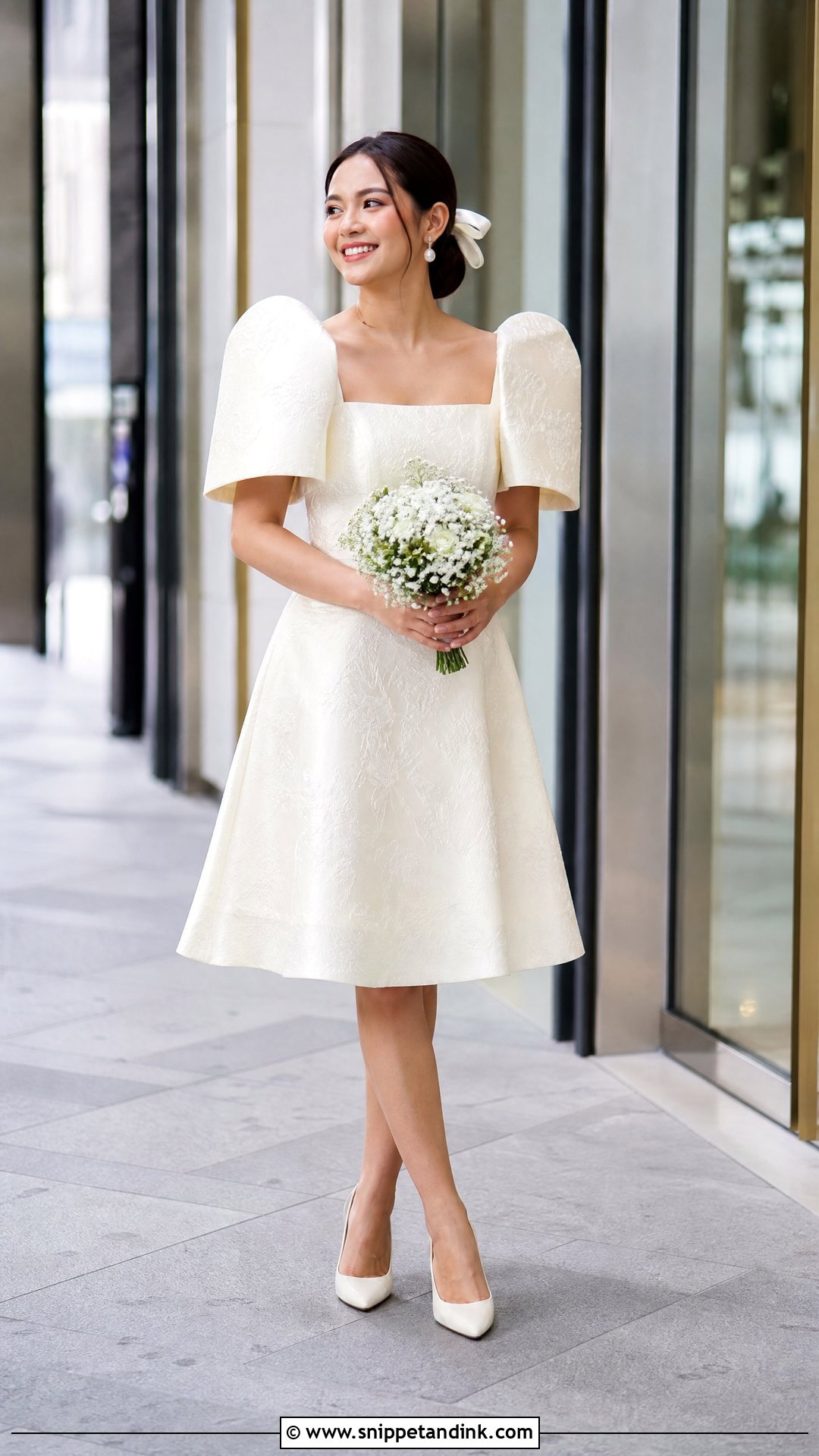
A short Filipiniana dress, mini or knee length with butterfly sleeves, is fun and easy to move in. In lace, satin or crepe it still reads bridal. It is a strong option for a civil wedding or as a second look after a formal church gown, especially if the reception involves a lot of dancing. Pointed heels lengthen the leg with a short hem, and a small bouquet keeps the proportions right. Swap the veil for a bow or a small headpiece if a long veil looks unbalanced against the shorter skirt.
22. Long Sleeve Filipiniana Wedding Dress
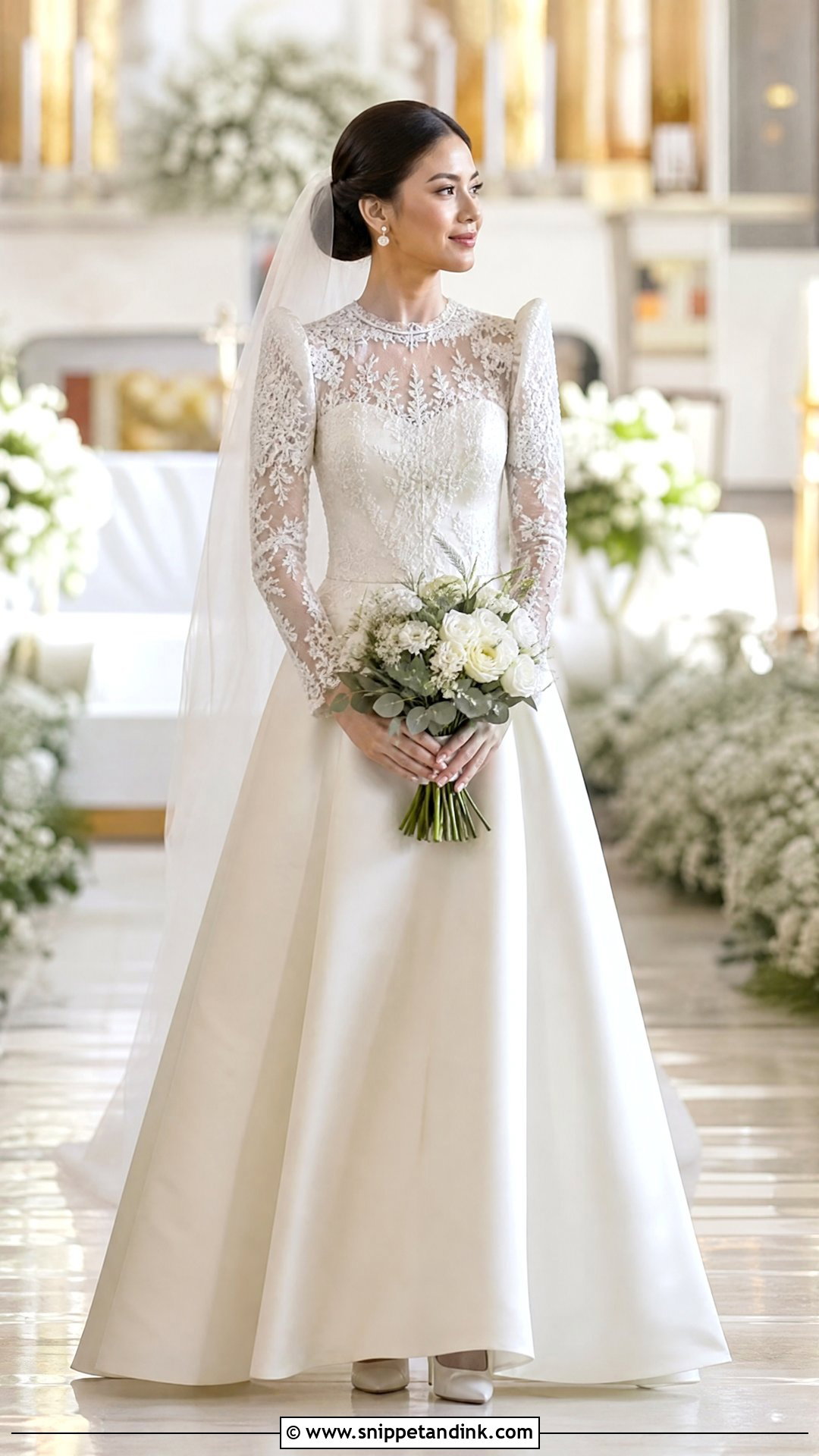
Long sleeves suit brides who want coverage, a cool-weather wedding or a conservative church. The sleeve can be sheer lace, embroidered organza or smooth cloth with a little terno structure at the shoulder. My one fitting rule: bend your elbow and reach forward, because a long sleeve cut tight through the forearm will pull the whole bodice when you hold the bouquet. An A-line or column skirt, closed-toe heels, pearl earrings and a clean bun keep it composed. Choose a long veil for a grand church and a short one for a smaller room.
23. Reception Filipiniana Wedding Dress
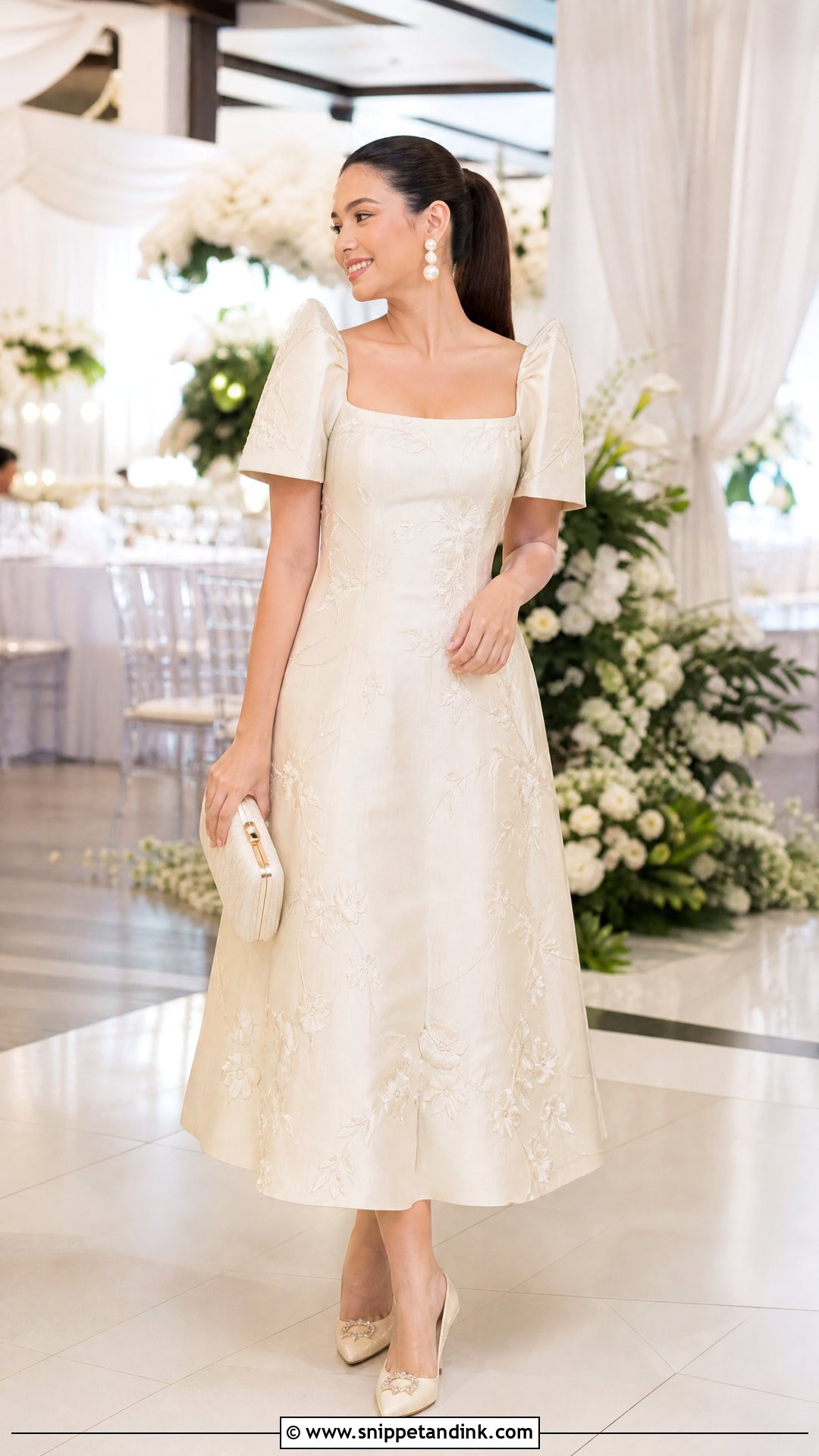
Most brides change for the reception because the ceremony gown is too heavy for hours of dancing and greeting. A tea-length terno, a slim midi gown or a soft two-piece set keeps the Filipino theme while freeing you up. Choose light fabric, smaller sleeves and a hem that clears the floor. Comfortable heels, statement earrings and a small clutch work well, and a pearl headband or sleek ponytail makes the change obvious in photos. Plan the change time with your coordinator, as it usually takes longer than people expect.
24. Plus Size Filipiniana Wedding Dress
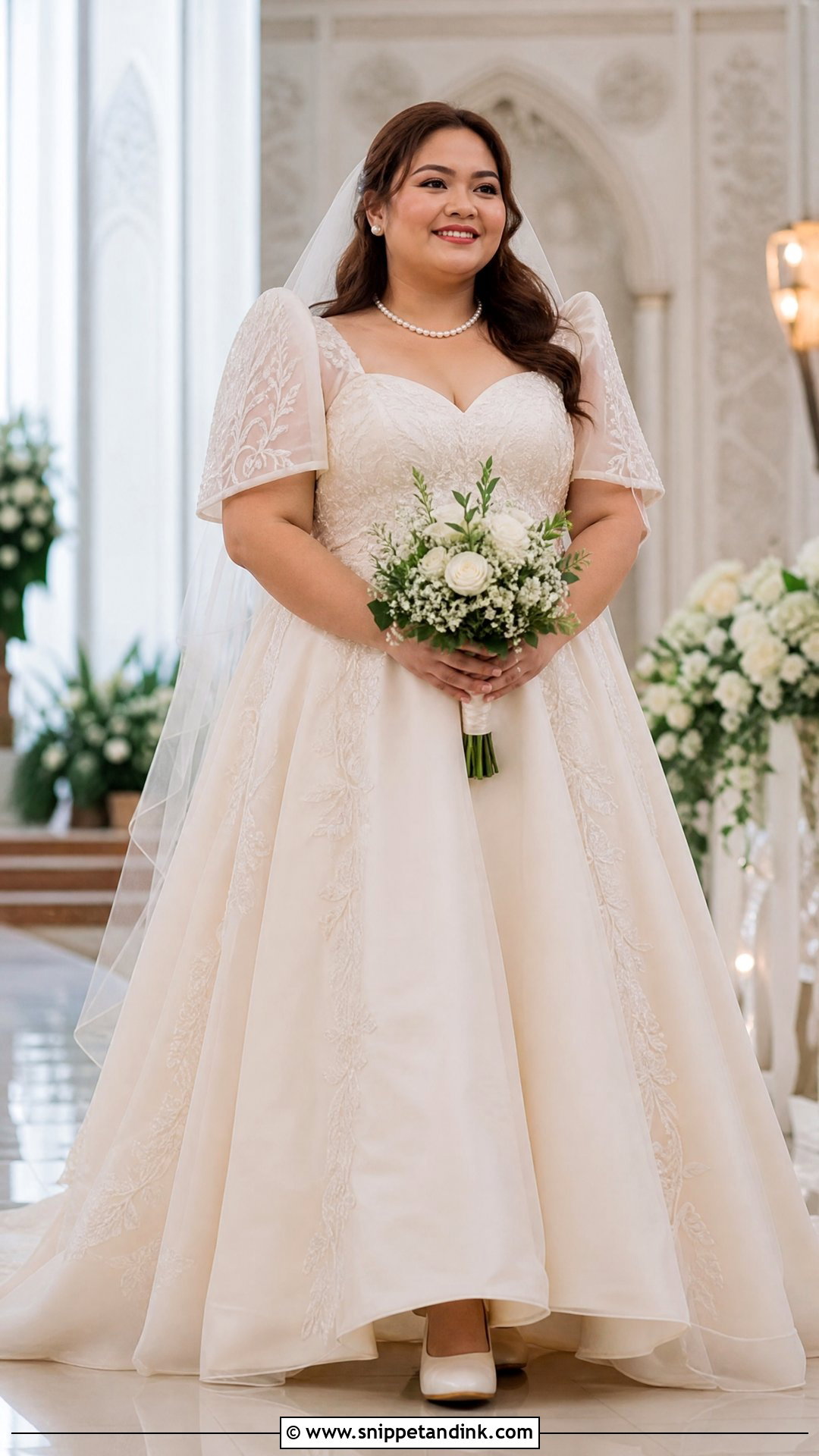
For plus-size brides, fit and support come first, then decoration. A defined waist, a well-boned bodice and an A-line or ball gown skirt create balance, and butterfly sleeves can be adjusted in width and height so they frame the shoulders instead of widening them. I prefer fabrics that hold shape without stiffness, like mikado, satin, lace or structured organza. Ask for an internal waist stay so the bodice does not slide as the day goes on. Supportive shoes and pearl jewelry finish it. The aim is tailoring that makes you comfortable and confident.
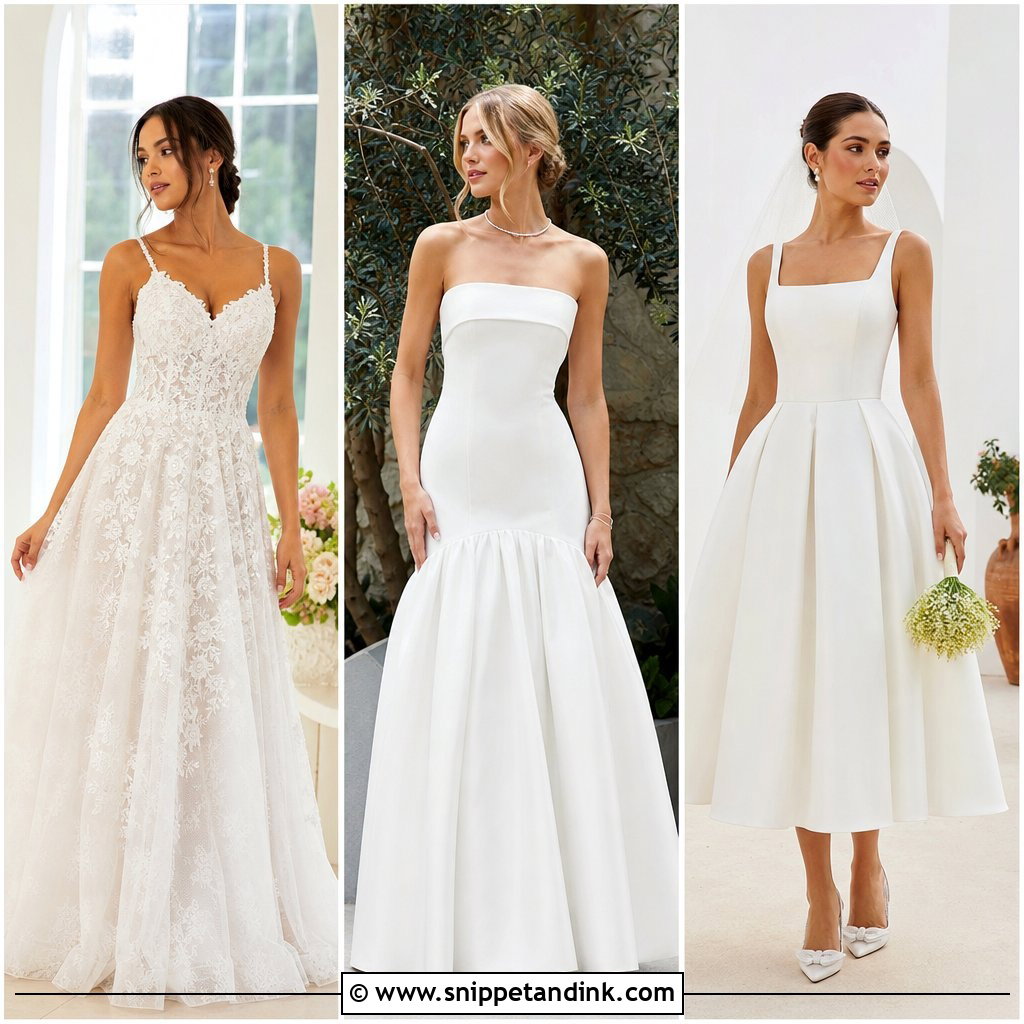


25. Simple Filipino Wedding Dress
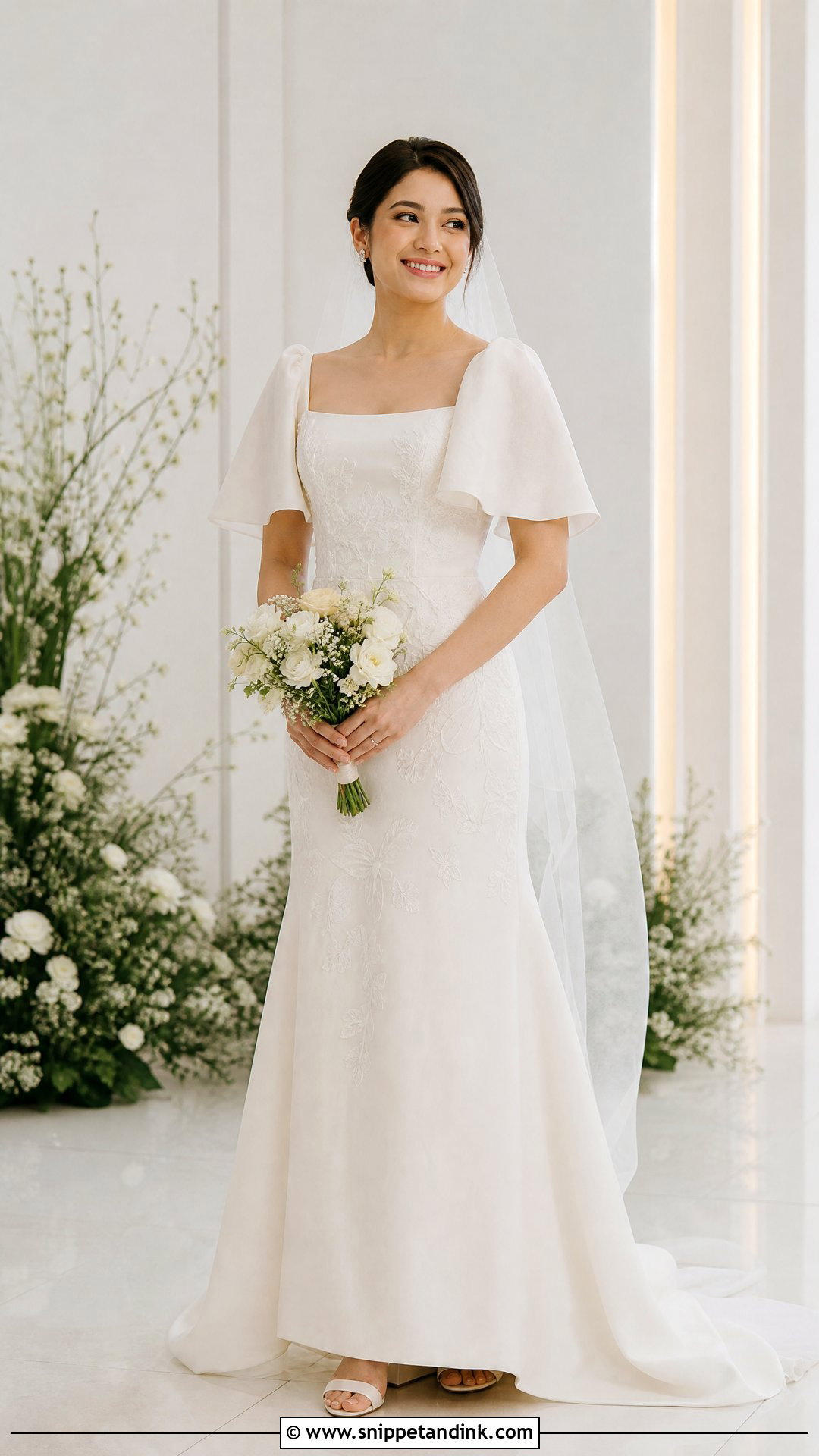
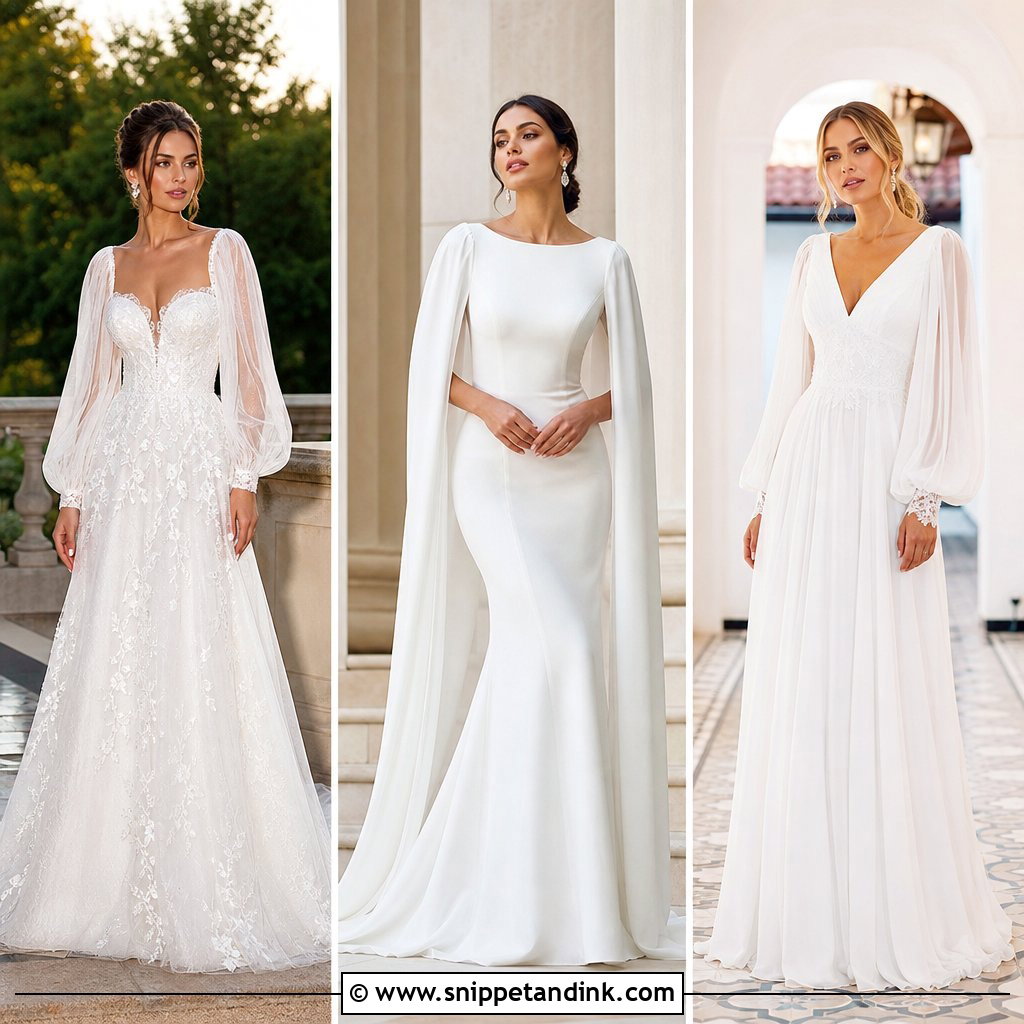
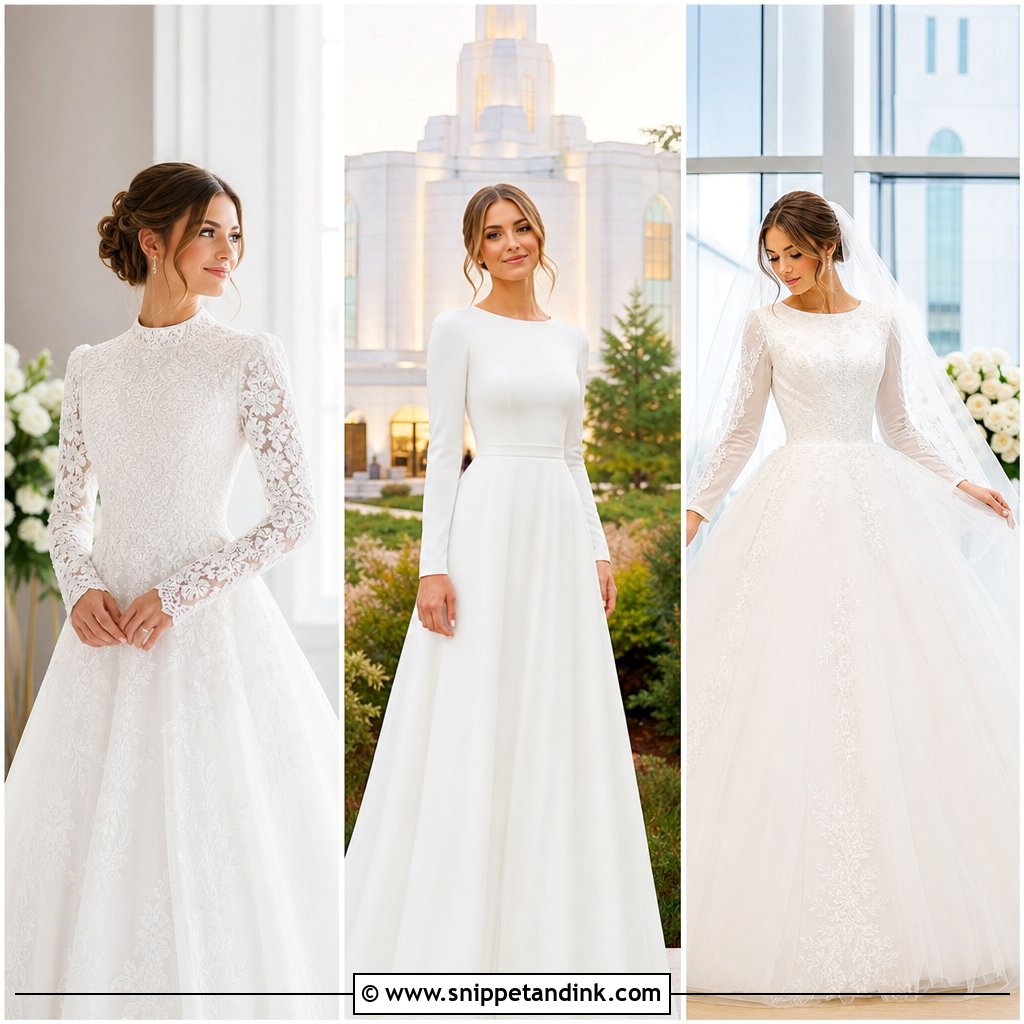
Sometimes the simplest version is the right one. A clean ivory gown with subtle butterfly sleeves, light embroidery or a baro-inspired neckline says Filipino without heavy decoration. The shape can be A-line, column or tea length depending on the venue. Pearl earrings, soft makeup, comfortable heels and a small bouquet are enough. With so little ornament, fabric quality and fit carry everything, so spend there rather than on accessories. It suits civil ceremonies, intimate weddings and minimalist receptions.
Leaving Room for the Veil and Cord Rite
In a Catholic Filipino ceremony, sponsors pin a veil over the bride’s head and the groom’s shoulders, then lay a cord in a figure of eight across both of you. I plan the dress and hair around that moment. A tall bun or a stiff tiara can push the ceremonial veil off at an awkward angle, and a crystal-heavy bodice can catch on the cord. A smooth chignon set low and a bodice without sharp beading at the shoulders let the sponsors work cleanly. If you are wearing your own bridal veil, decide with your coordinator whether it stays on or comes off before the rite, so nobody is unpinning in front of the altar.
Caring for Piña and Embroidered Gowns After the Day
Piña and hand-embroidered pieces are often meant to be kept, and they are easy to damage. I tell brides not to machine wash or iron them directly. Spot stains should go to a specialist cleaner who knows natural-fibre cloth, and the sooner the better, because food and sweat marks yellow with time.
- Store the gown flat or loosely rolled in acid-free tissue, never on a wire hanger, which stretches the shoulders and sleeves.
- Keep it in a breathable cotton bag, not plastic, which traps humidity and encourages mildew in a warm climate.
- Stuff butterfly sleeves lightly with tissue so the stiffening does not crush.
- Check it once or twice a year and refold along different lines so permanent creases do not form.
Wearing Heritage Without Losing Yourself in It
Every one of these dresses can work. The right one balances heritage, comfort and your own taste. Some brides will feel most themselves in a full terno with tall butterfly sleeves; others want just a sleeve detail on an otherwise modern gown. Weigh the venue, the heat, the family rites and how long you will be wearing it. Fabric matters more than people expect in a warm climate, so try piña, lace, satin or a two-piece in conditions close to the real day if you can. Pick the version you can move, sit and celebrate in.
You'll Like These Ideas:


Leave a Reply