
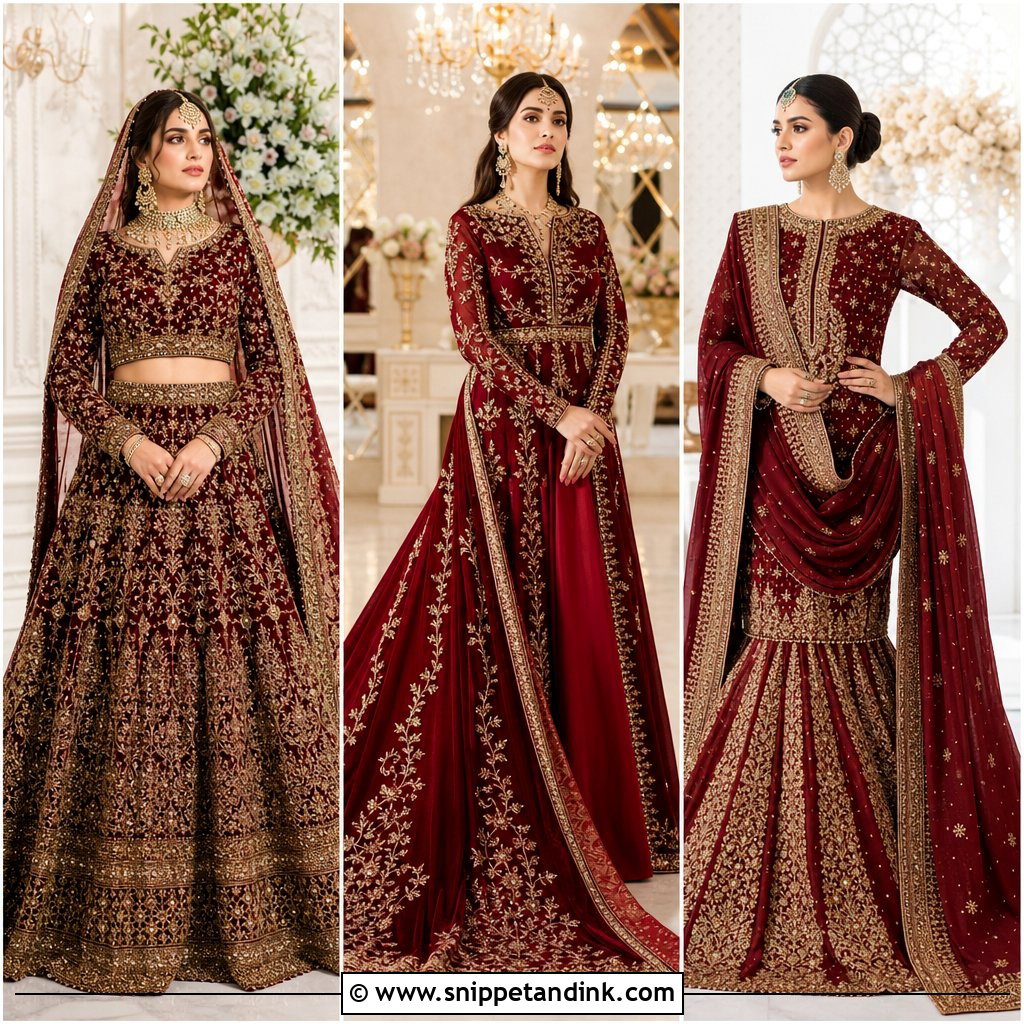
Red is still the colour most families expect at the barat, and it remains the heart of a Pakistani wedding look. The shapes have widened, though: lehengas, ghararas, pishwas, gowns and sarees all appear now, and the embroidery changes the mood as much as the cut. Antique gold reads like heritage work, silver feels cooler and more current, and tonal red thread is quiet luxury. Below are twenty complete outfits with the dupatta arrangement, jewellery and shoes I’d put with each, along with the fitting and weight notes that matter once you’re actually wearing them. Every one can shift toward a brighter red, a deep maroon or crimson, and be adjusted for your body, venue and comfort.
Handwork Takes Months, So Start With the Barat Outfit
Most of the outfits below involve hand embroidery, and zardozi, dabka and nakshi are slow. A karigar works a heavily embellished lehenga by hand over many weeks, and popular designers book up around wedding season. I tell brides to settle the barat outfit first, ideally several months ahead, and fit the mehndi and walima looks around it.
What to settle at the first meeting
- Ask to see a finished sample of the embroidery style in hand, not just photos. Real dabka and cheap machine work look alike on a phone screen.
- Ask roughly how heavy the finished lehenga will be. If you’re petite or the ceremony is long, ask for the work to be concentrated at the hem.
- Agree on fitting dates in writing, including one after the embroidery is finished, since heavy work can change how a blouse sits.
- Request spare fabric and matching thread for later adjustments to the blouse and dupatta.
If you’re ordering from Pakistan while living abroad, leave room for shipping and for a local tailor to make final alterations. Send measurements taken by a professional, not at home, and expect the blouse to need at least a little adjustment on arrival.
1. Pakistani Red And Gold Bridal Lehenga
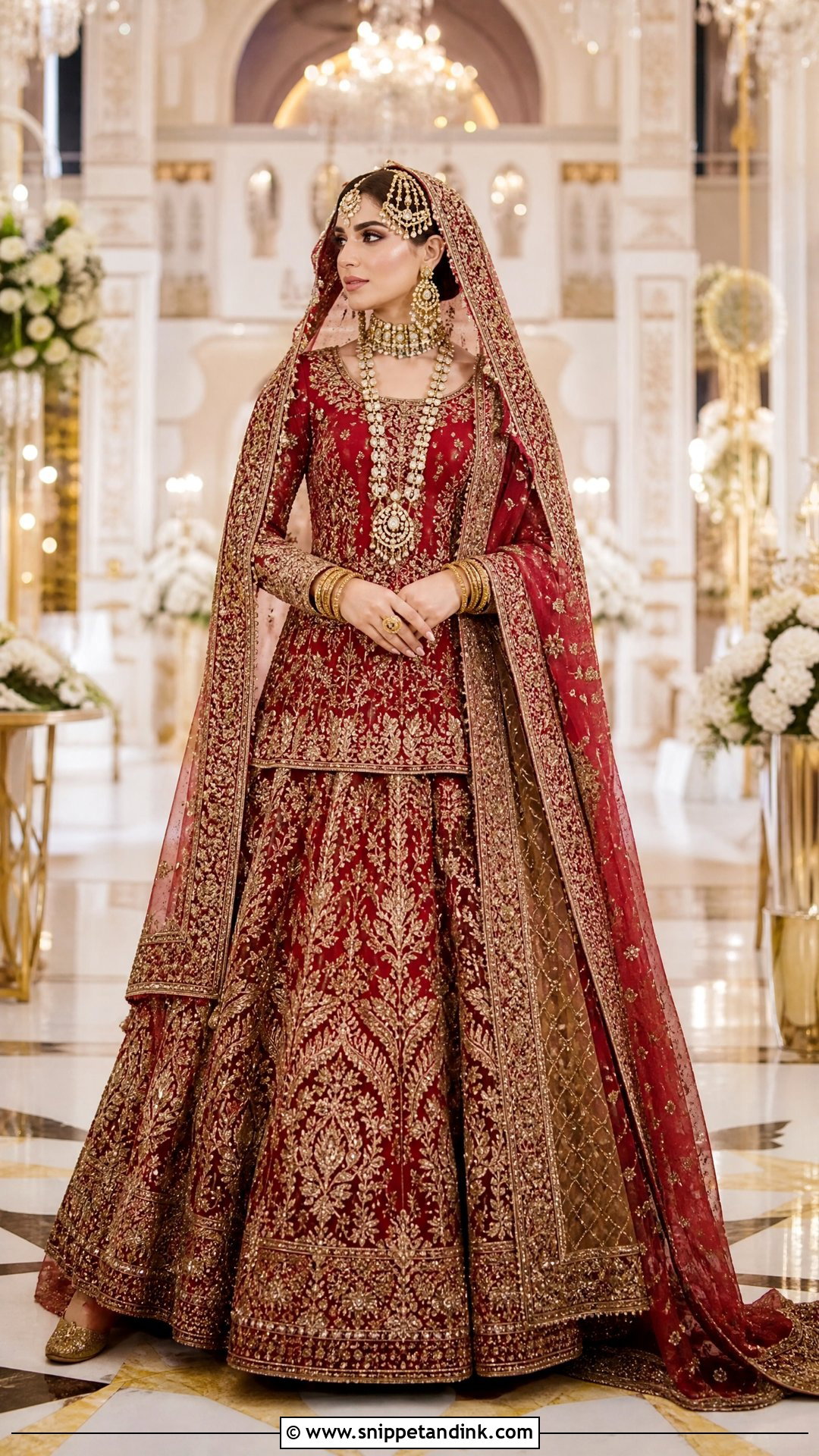
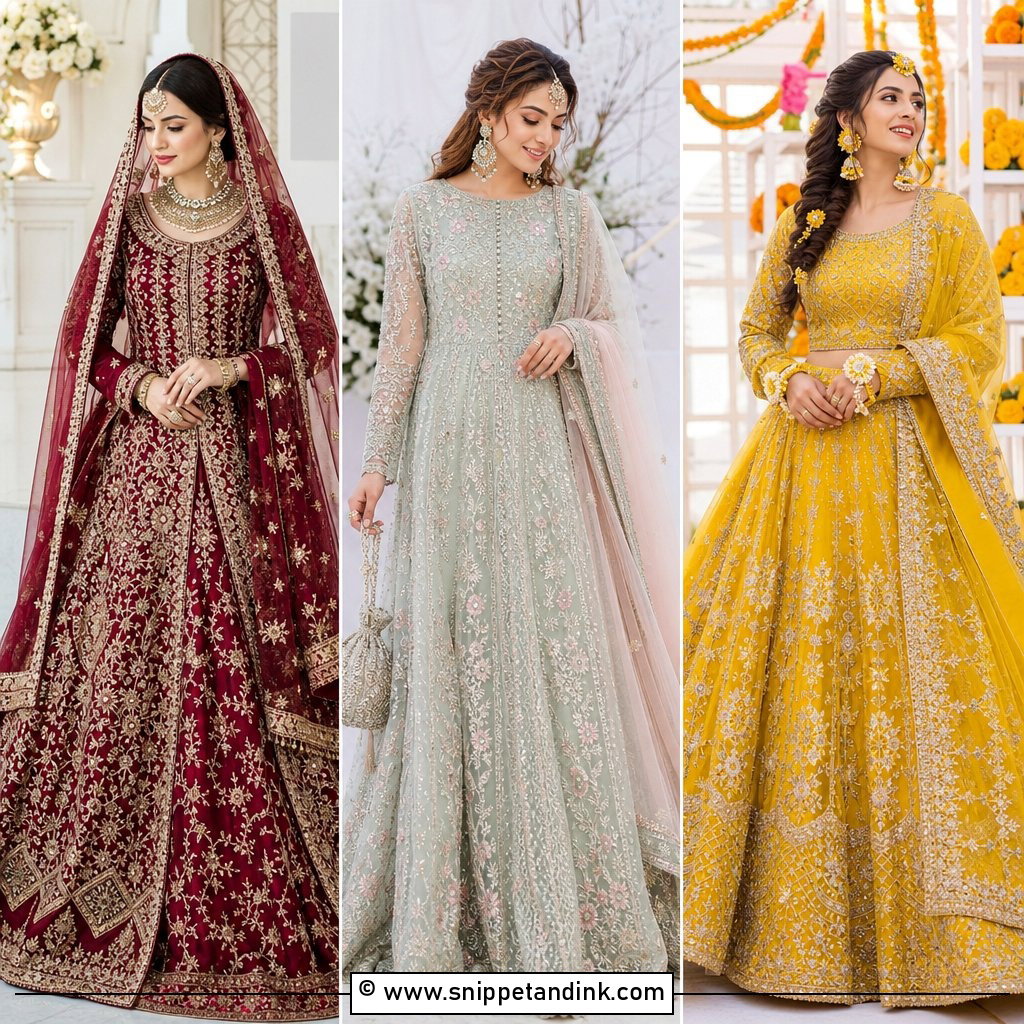
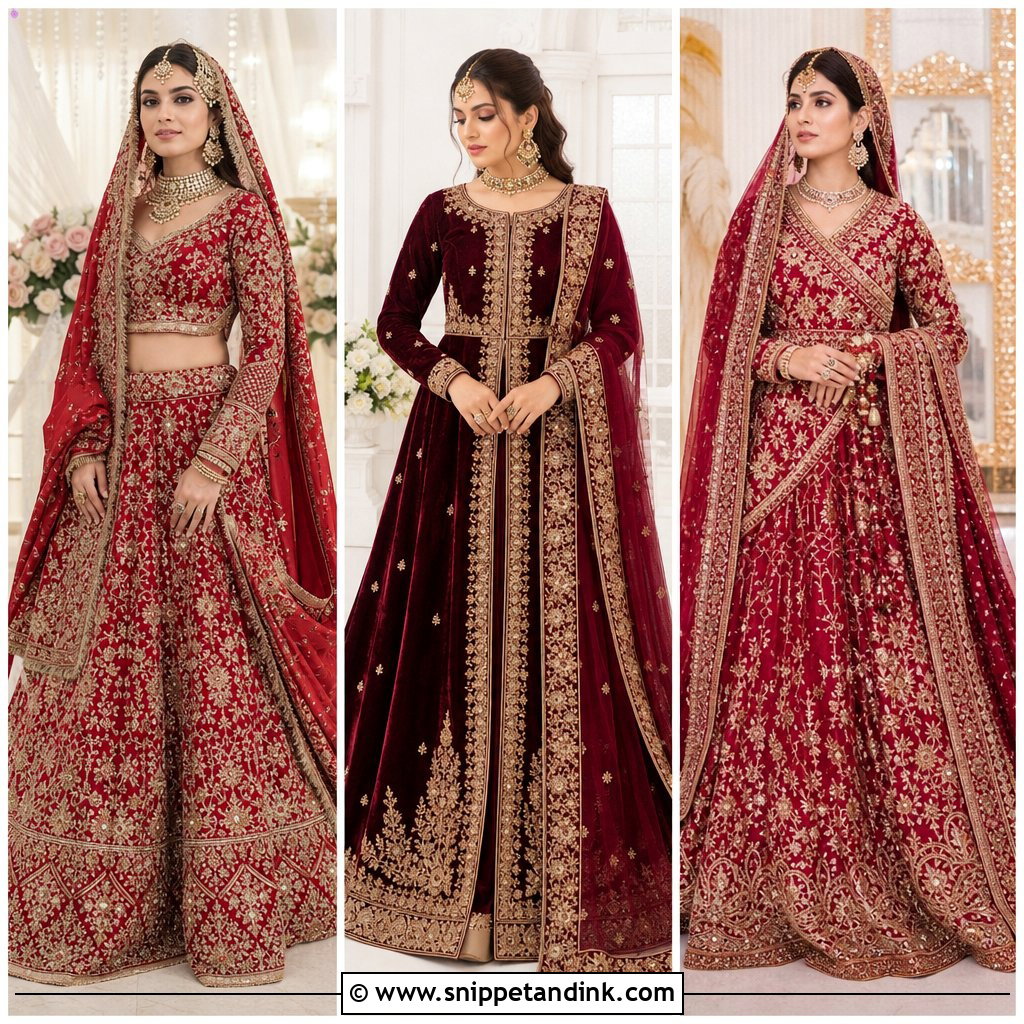
The red and gold lehenga is the outfit most Pakistani brides picture first. A structured raw silk blouse with a modest neck over a full lehenga in balanced zardozi, dabka and sequins is the classic version. I put the densest work at the hem; it gives grandeur and keeps weight low, where the skirt carries it better than the waist. A red net dupatta goes over the head and a second organza one across a shoulder. Gold khussas are comfortable and traditional. A kundan choker, long necklace, jhumkas, matha patti and bangles complete it, with bronze eyes, defined liner and a muted red lip.
2. Pakistani Maroon Velvet Bridal Lehenga
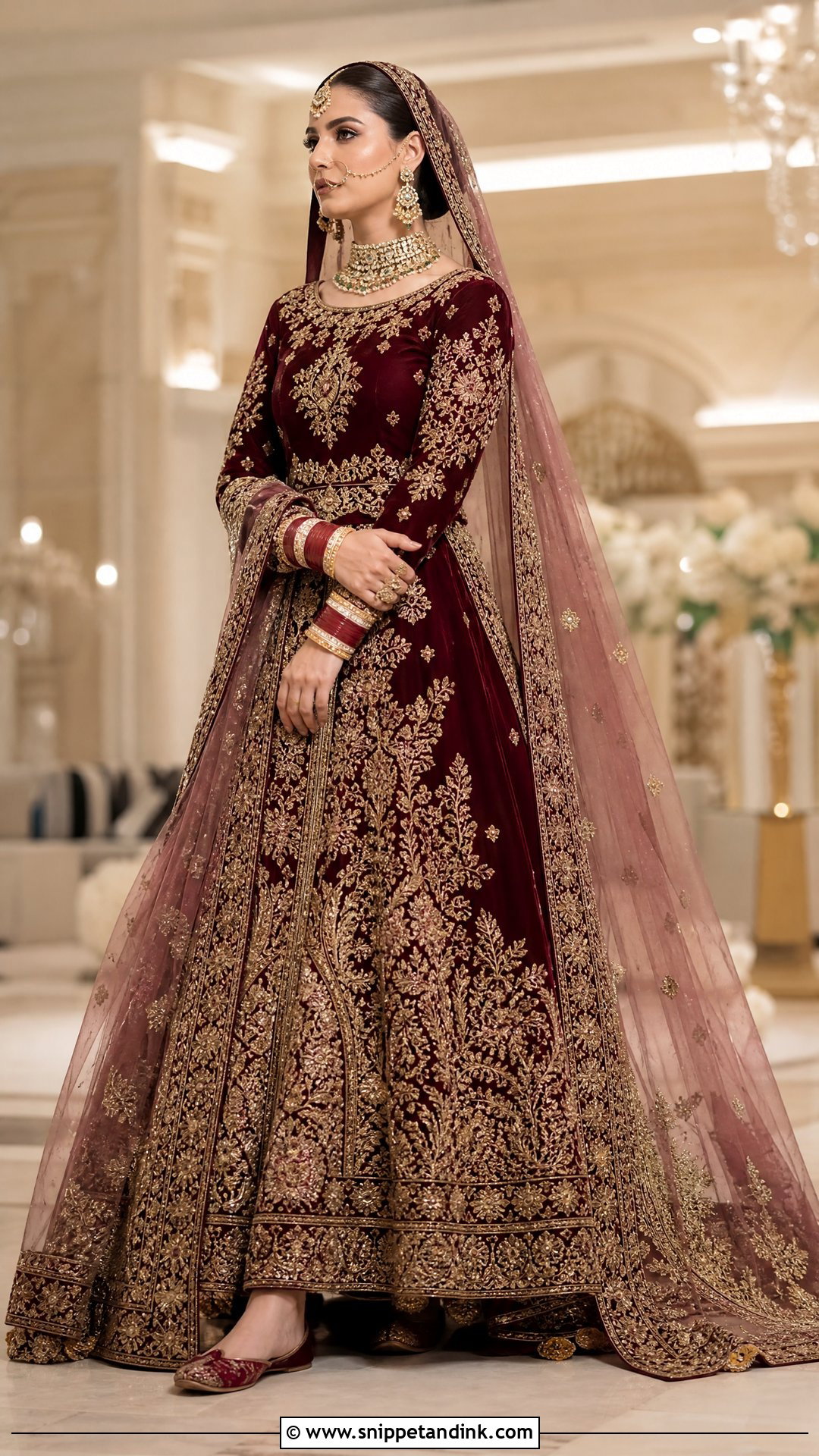
Rich maroon velvet belongs at a winter or evening function indoors. A fitted velvet blouse with full or three-quarter sleeves over a paneled lehenga with antique gold embroidery is a strong combination. Keep the work at the neckline, cuffs and skirt border so the velvet itself shows. Velvet is heavy and hot under stage lights, so the dupatta should be light net or tissue, worn over the head with a wide border framing the face. Antique gold khussas, a polki choker, matching earrings and a fine nath finish it. Warm brown eyes and a berry lip suit the depth, over a neat centre-parted bun that anchors the dupatta.
3. Pakistani Red Bridal Gharara
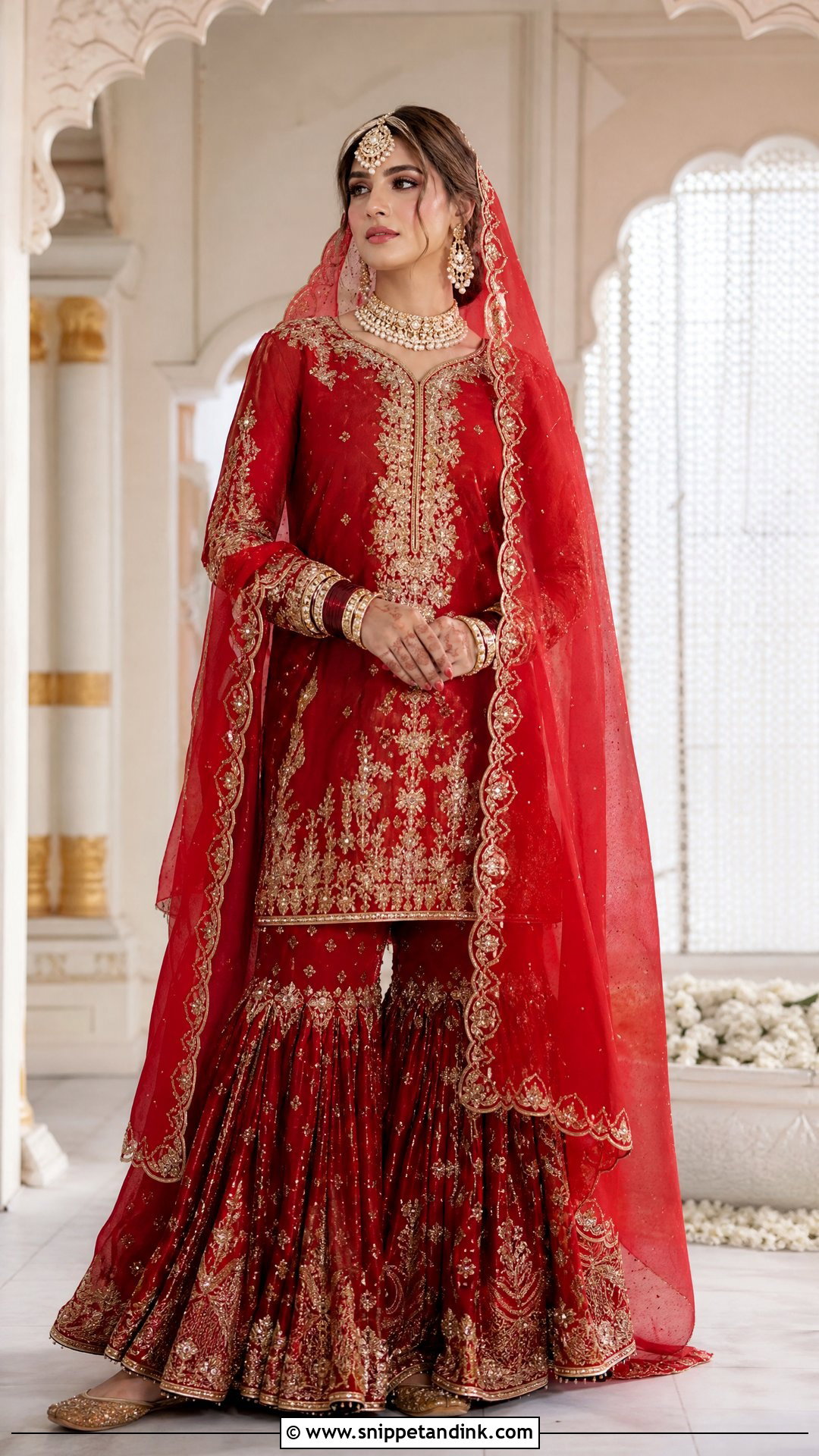
The gharara’s whole character sits in the knee joint, the gathered seam where the pants flare. If it’s placed even a little too high or low, the proportions look wrong, so I always schedule the final fitting after the shoes are chosen. A knee-length raw silk shirt over deeply flared gharara pants, with the joint highlighted in gota, kora, dabka, pearls or small florals, looks graceful and moves well. A long organza dupatta with a scalloped edge lightens it; drape it over the head with one end along the arm. Embroidered khussas, stacked bangles, a pearl and kundan necklace, chandbalis and a small tikka complete it.
4. Pakistani Crimson Bridal Sharara
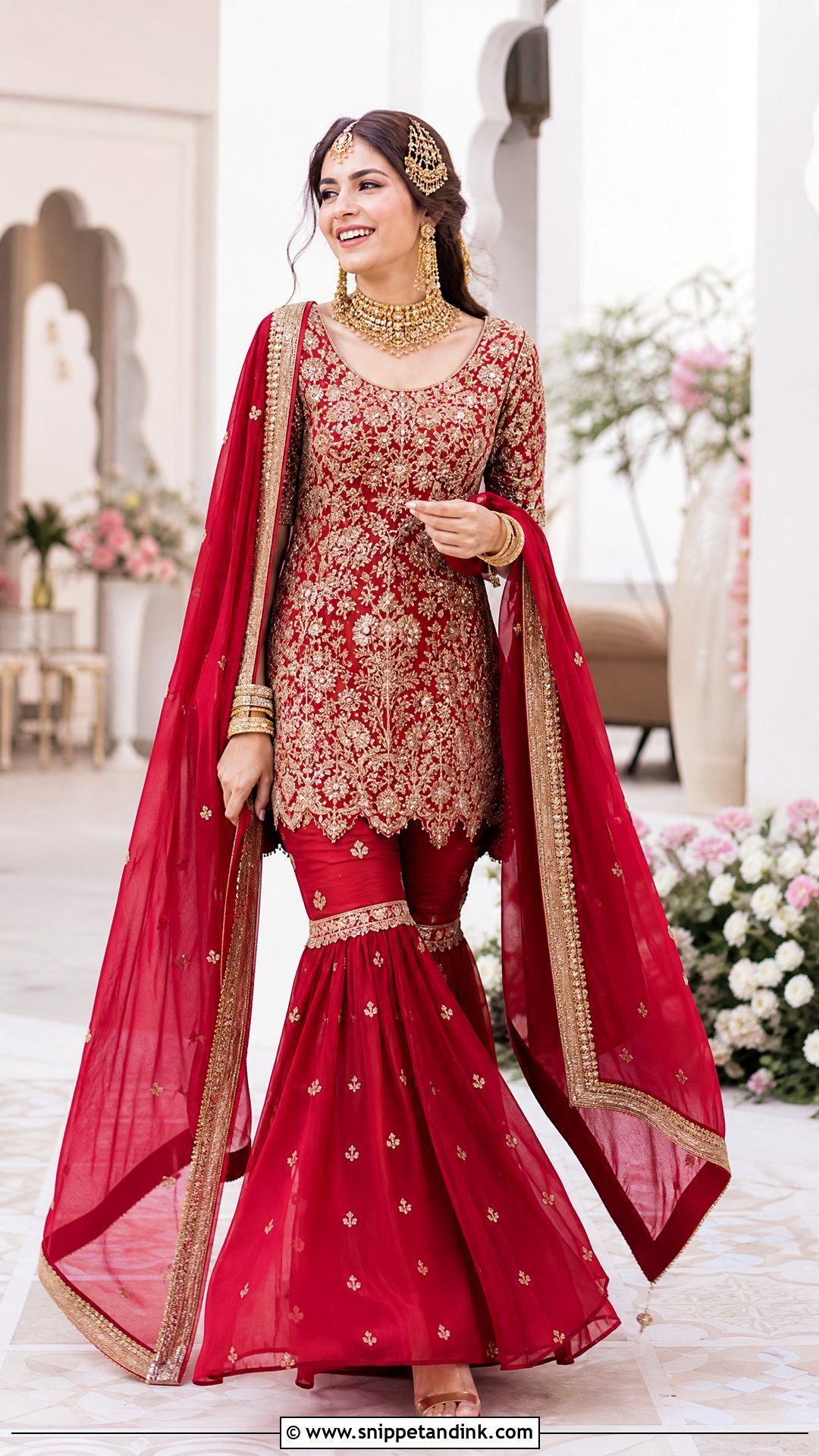
Crimson is the brightest red in this list and it brings real energy. For a sharara, a short embroidered shirt over wide flowing silk or chiffon pants works best; vertical motifs on the shirt lengthen the torso, and scattered work on the sharara keeps the lower half light. A crimson dupatta with a narrow gold border and small bootis suits it. If the neckline embroidery is intricate, drape the dupatta to the side so it stays visible. Low gold heels, a medium choker, long earrings, bangles and a fine passa are enough. Sleek, softly waved hair sits well beneath the dupatta, with peach blush and a classic red lip.
5. Pakistani Red Bridal Pishwas
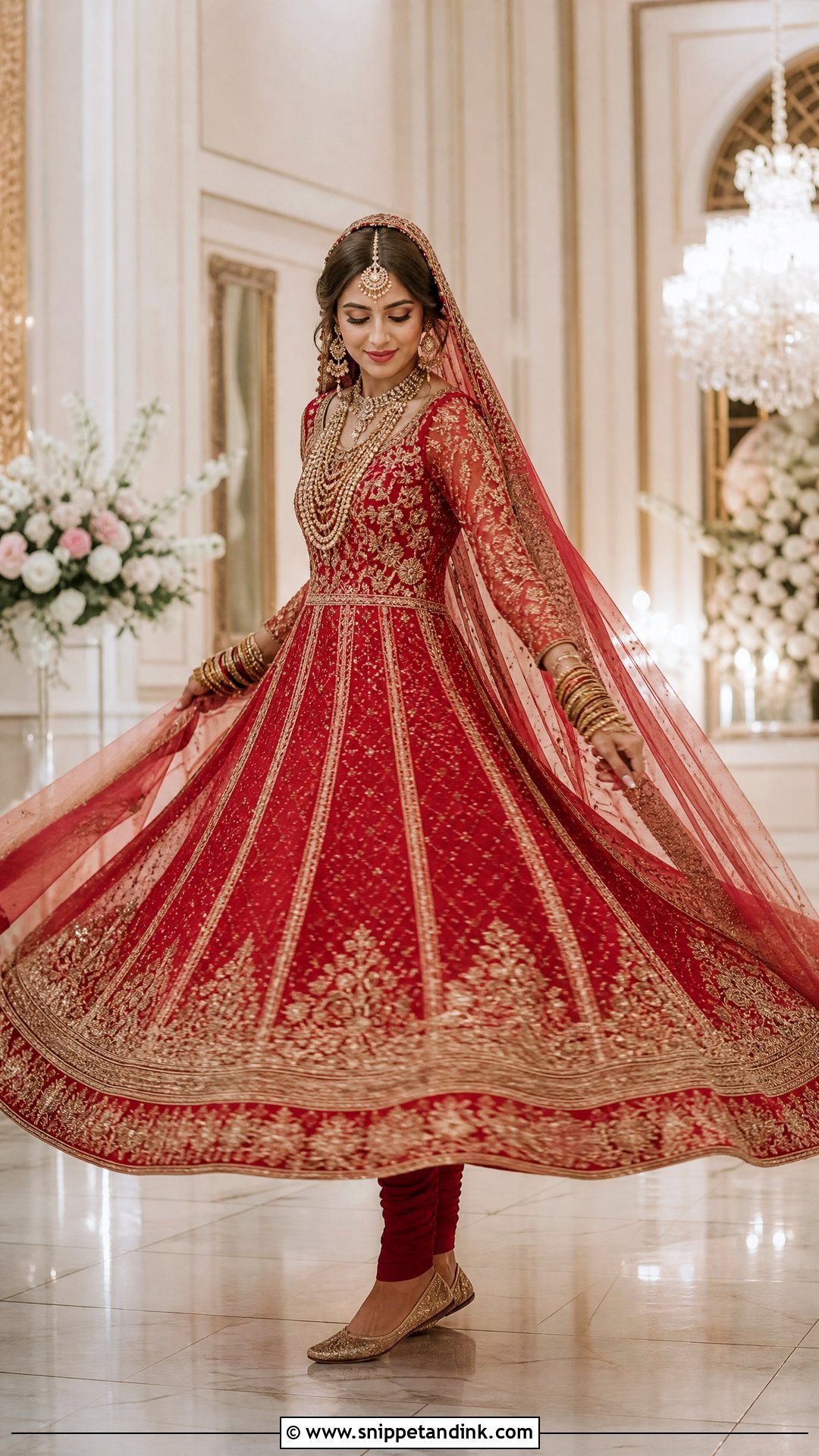
A floor-length red pishwas has a lot of skirt, which gives wonderful movement and a lot to manage. A fitted bodice and defined waist opening into many panels is the classic cut, with embroidered borders between some panels. A churidar underneath covers the legs; pointed gold flats are easier than heels under a long hem. Wear a light net dupatta over the head so its border falls evenly at the shoulders. A jhoomar, tikka, layered necklace, earrings and bangles suit the round silhouette. Tonal thread with a detailed hem is lighter than all-over work. A smooth low bun keeps the line from getting too tall.
6. Pakistani Red Farshi Gharara Bridal Dress
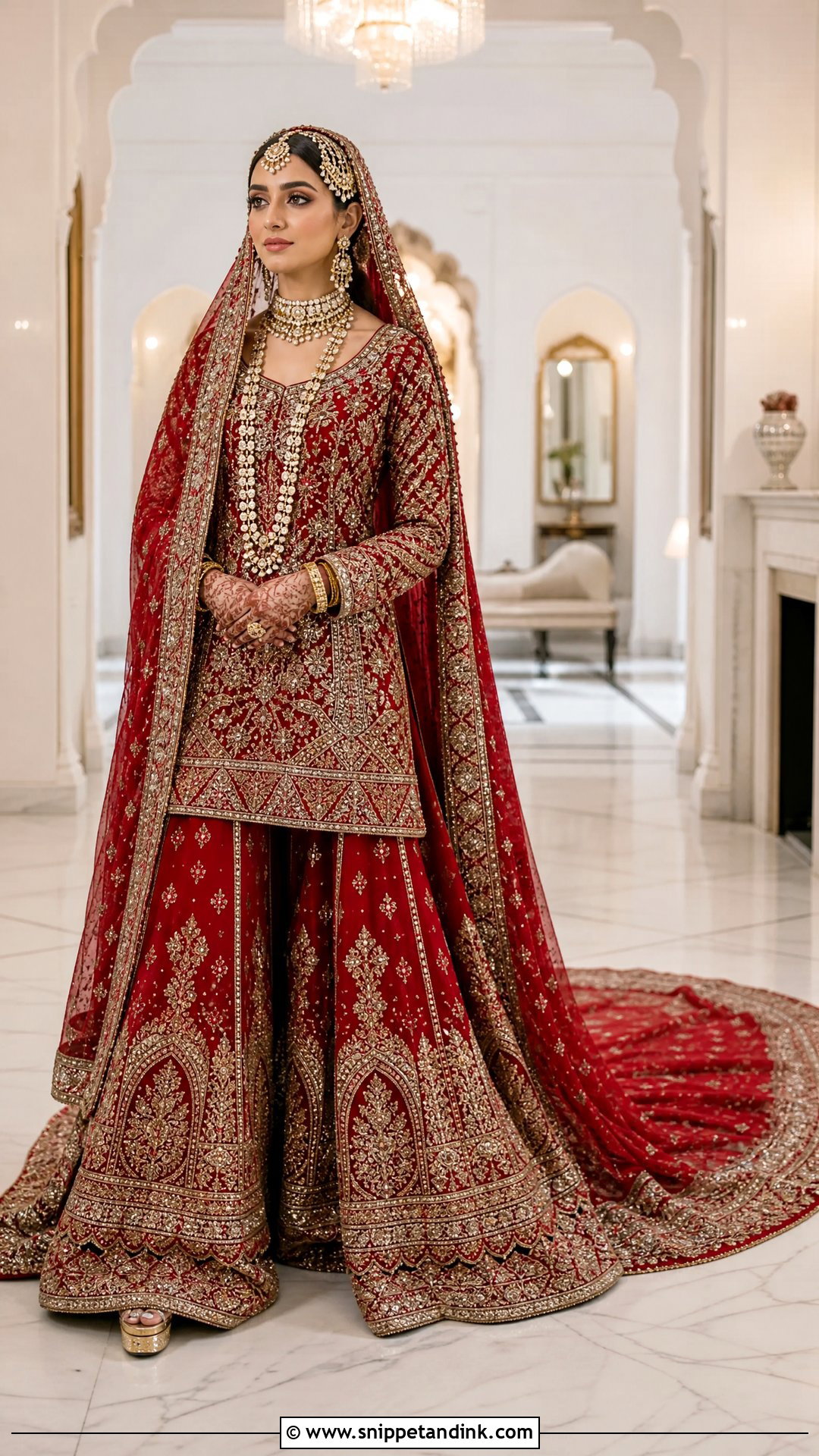
The farshi gharara is the grandest silhouette here, and the hardest to walk in. It flares from below the knee into a floor-sweeping train that you push forward with each step. A fitted long shirt with dense embroidery at the neckline, slits, cuffs and border balances it. Because the lower half is so elaborate, keep the net dupatta fine and pin it securely over the head. Platform khussas, a broad kundan choker, long mala, statement earrings and a centred matha patti complete it. Practise walking at home in the full outfit, and ask a cousin to arrange the hem for the entrance and photos. Stairs need two hands, so someone else should hold your bag.
7. Pakistani Red Long Shirt Bridal Lehenga
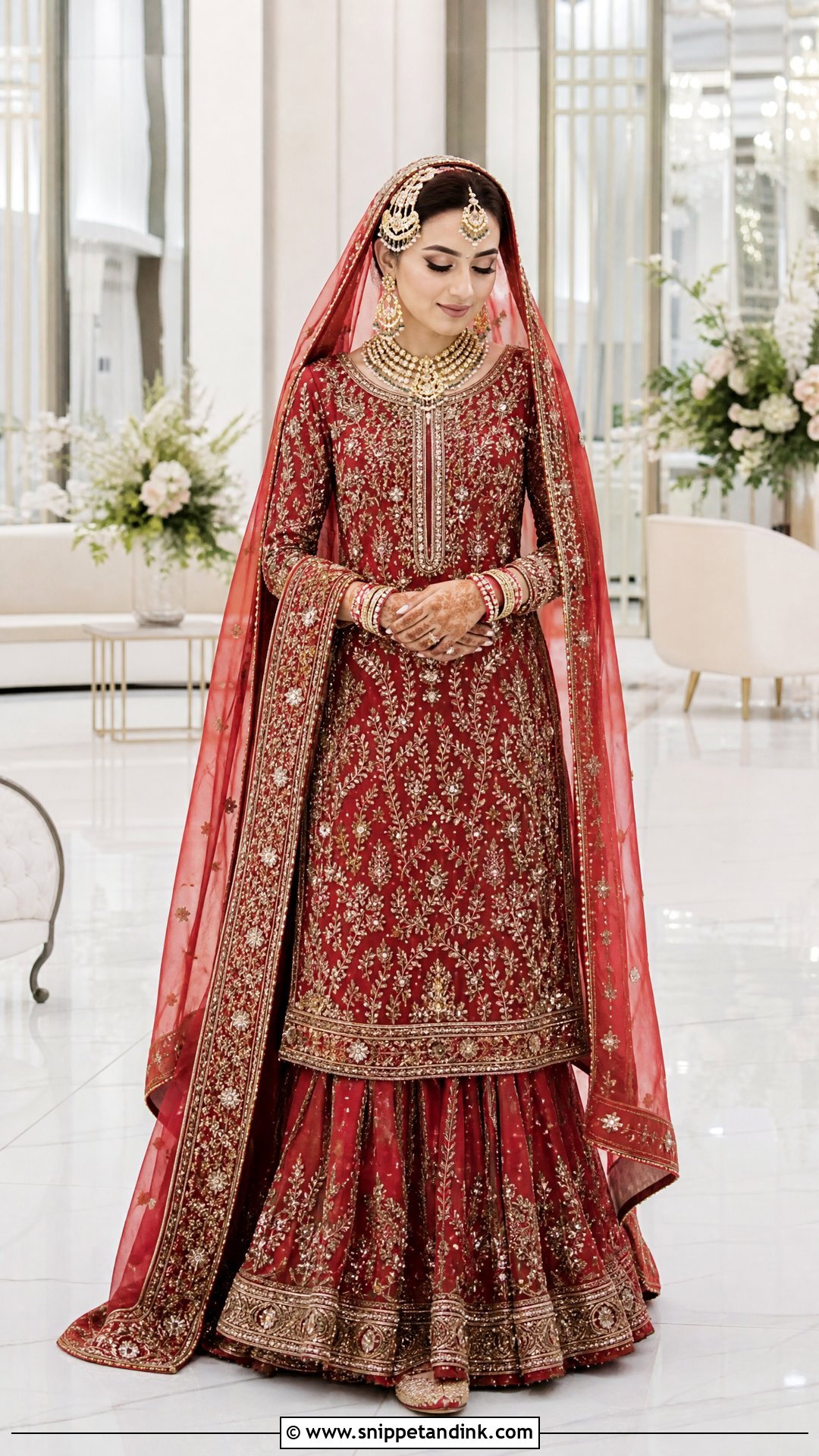
A long shirt over a coordinated lehenga gives more coverage and a longer line. The shirt should fall below the knee, with side slits placed so the embellished skirt shows when you walk. Vertical embroidery, narrow borders and a defined neckline keep the length from swallowing you. A moderately flared raw silk lehenga and pointed embroidered shoes suit it. A sheer red dupatta over the head with the other end along a forearm is my usual drape. A layered polki necklace, earrings, bangles and a small jhoomar complete it. Shirt length and slit height can be adjusted to suit almost any body. Keep makeup sculpted, with a satin red lip.
8. Pakistani Red Peplum Bridal Lehenga
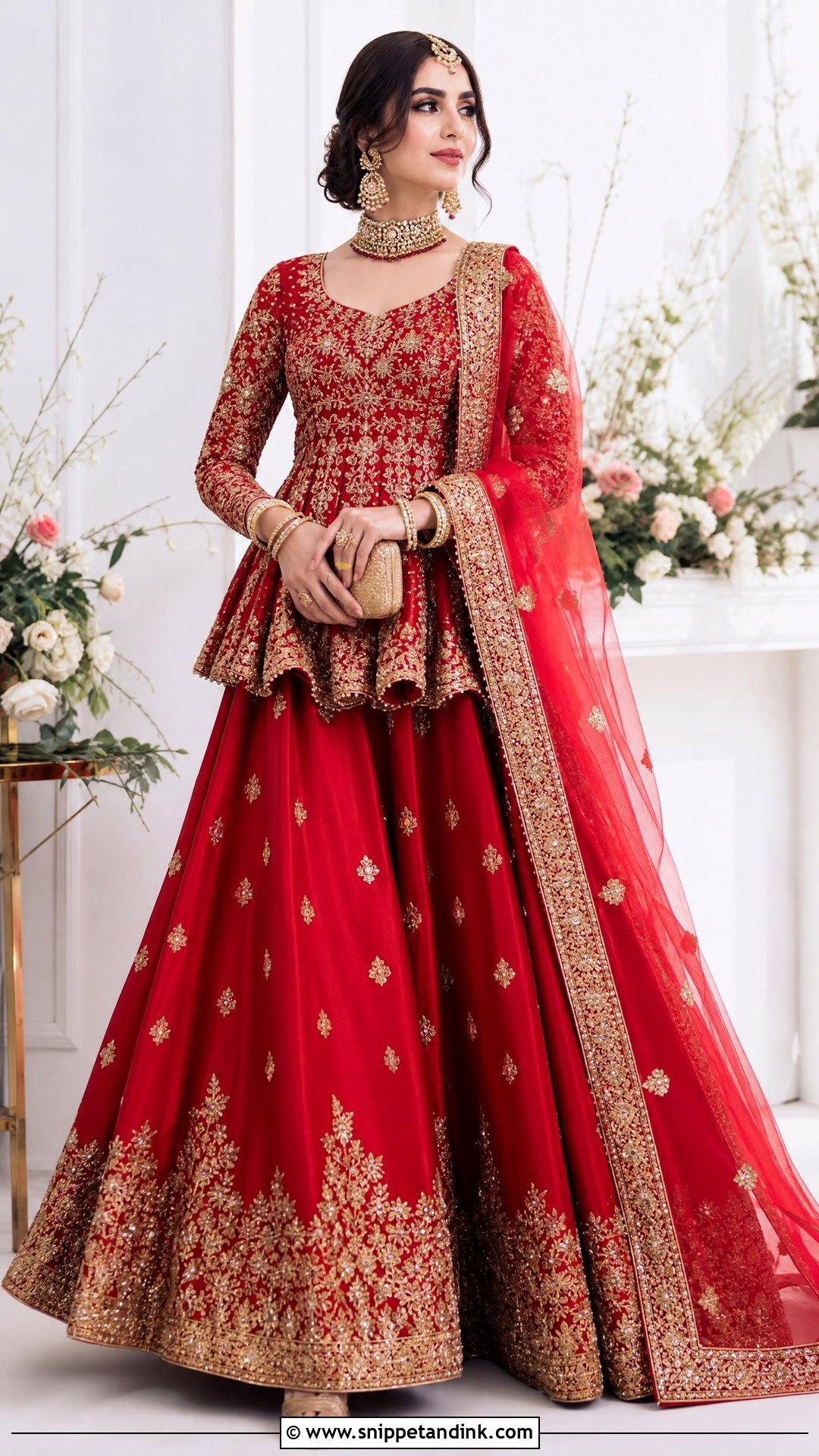
A peplum blouse gives the red lehenga a crisper, more modern shape. The flare should begin exactly at the natural waist; set it lower and it adds width at the hip, which is the opposite of what most brides want. Concentrate gold work on the peplum and keep the lehenga to spaced motifs and a broad hem border. A light net dupatta with fine edging can go over the head or be pinned to one shoulder. Gold block heels, a collar necklace, drop earrings, bangles and a small clutch are enough. A sleek bun and neutral, luminous makeup suit the clean finish.
9. Pakistani Red Angrakha Bridal Dress
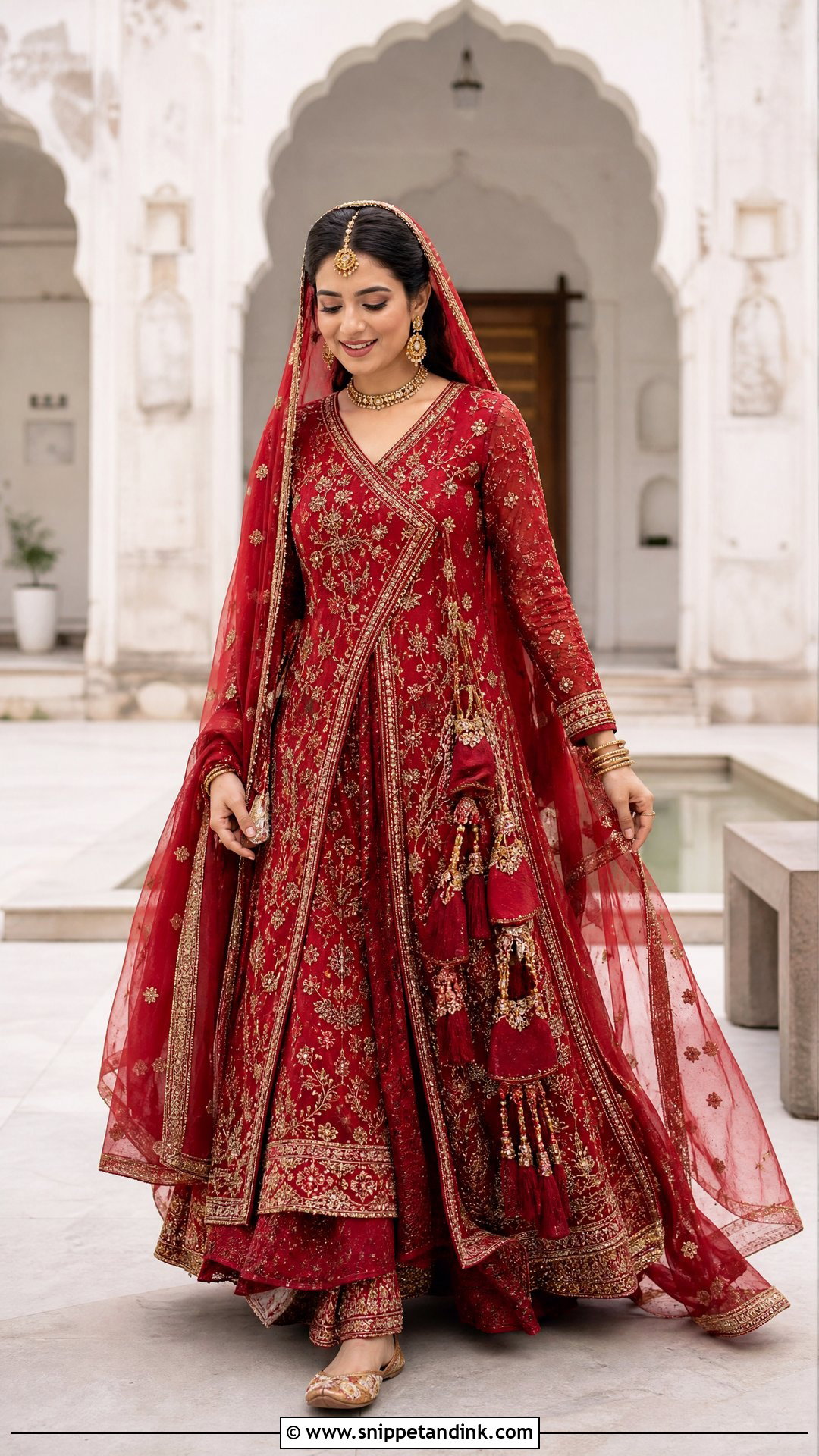
The angrakha wraps across the body, and its diagonal neckline draws the eye up to the face. That overlap is where the detail belongs: borders, tassels or handmade ties, in antique gold along the front, sleeves and hem. Raw silk or jamawar gives structure, and an organza dupatta softens it. A wrapped bodice can shift open as you move, so I ask the tailor to add a hidden hook or snap at the inner tie. Gold khussas, a shorter necklace that follows the neckline, jhumkas, a tikka and bangles complete it. A wide choker hides the diagonal, so skip it. Soft curls or a low bun sit comfortably under the dupatta.
10. Pakistani Red Bridal Gown
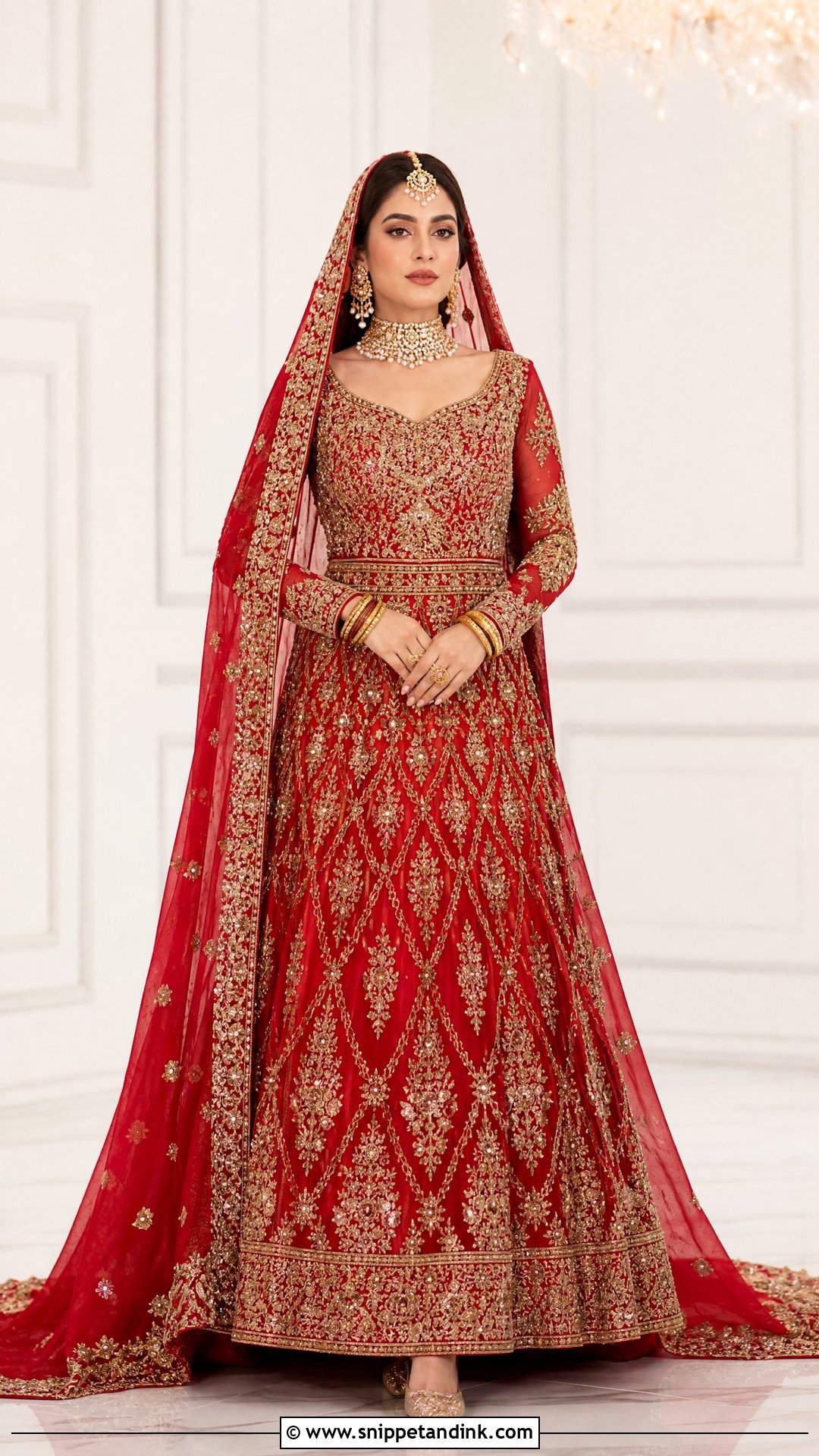
A gown is one flowing piece, so there’s no blouse gap and nothing to re-tuck between photos. Look for a fitted upper body, a defined waist and an A-line or soft flare with room to move. Gold handwork can start dense at the bodice and thin out down the skirt, which lengthens the body. Add a detachable train only if the venue has wide, clean walkways. A sheer red dupatta over the head keeps the look bridal. Closed heels, a kundan choker, long earrings, bangles and a fine headpiece complete it. The bodice is already the focal point, so I keep the jewellery restrained and the updo polished.
11. Pakistani Red Bridal Saree
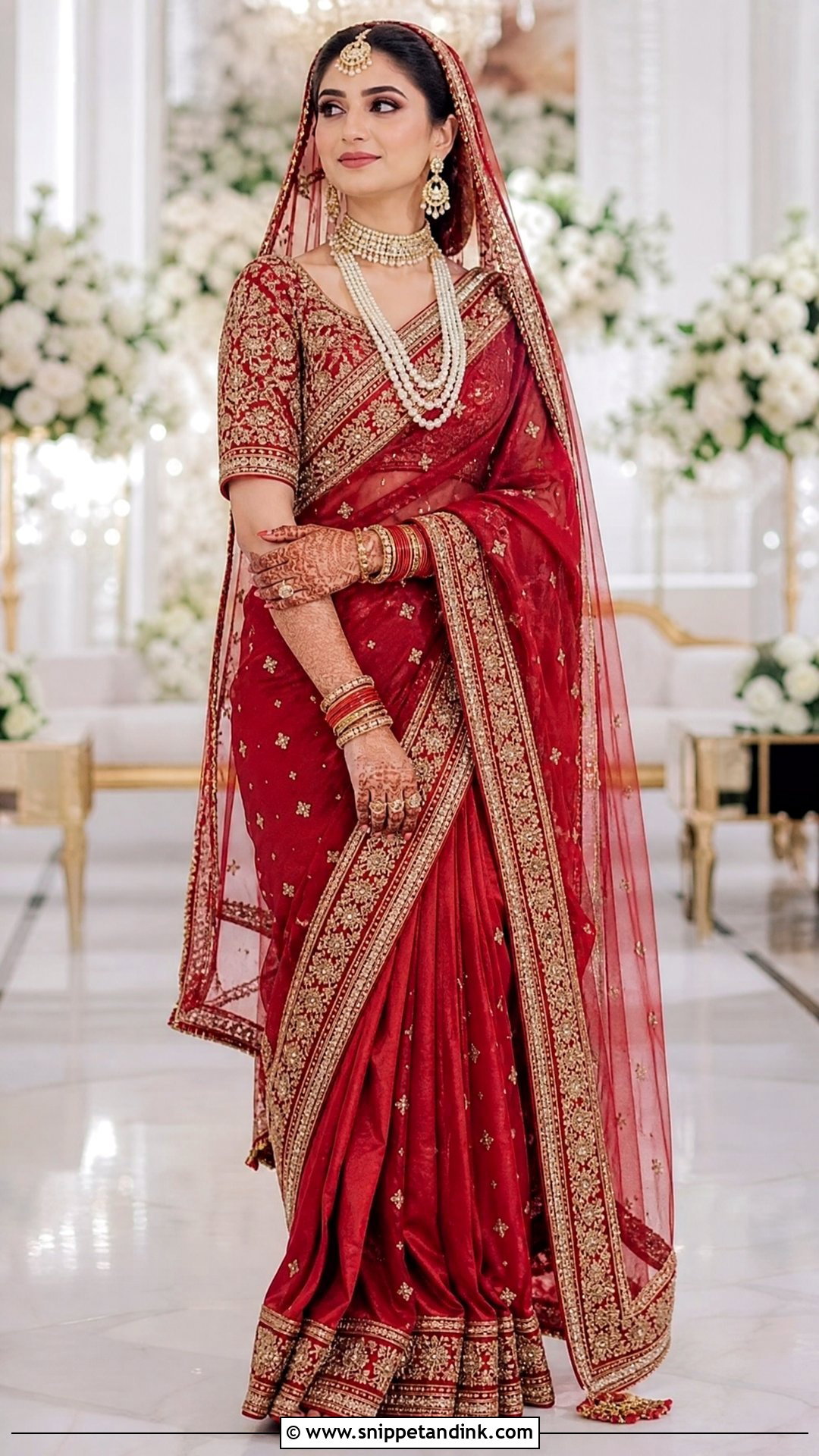
A red bridal saree lets handwork show along the border and pallu. Silk, tissue or velvet-trimmed fabric with an embellished border and scattered motifs suits a barat. A structured, modest blouse with detailed sleeves gives security. Pleats should be pinned and, ideally, stitched in place so they stay crisp; loose pleats spread and drag by the end of the ceremony. A light red veil over the head adds a traditional touch, but plan where the pallu and veil each sit so they don’t pile up on one shoulder. Low heels, a polki choker, layered pearls, statement earrings, a tikka and bangles complete it.
12. Pakistani Red Bridal Lehenga With Train
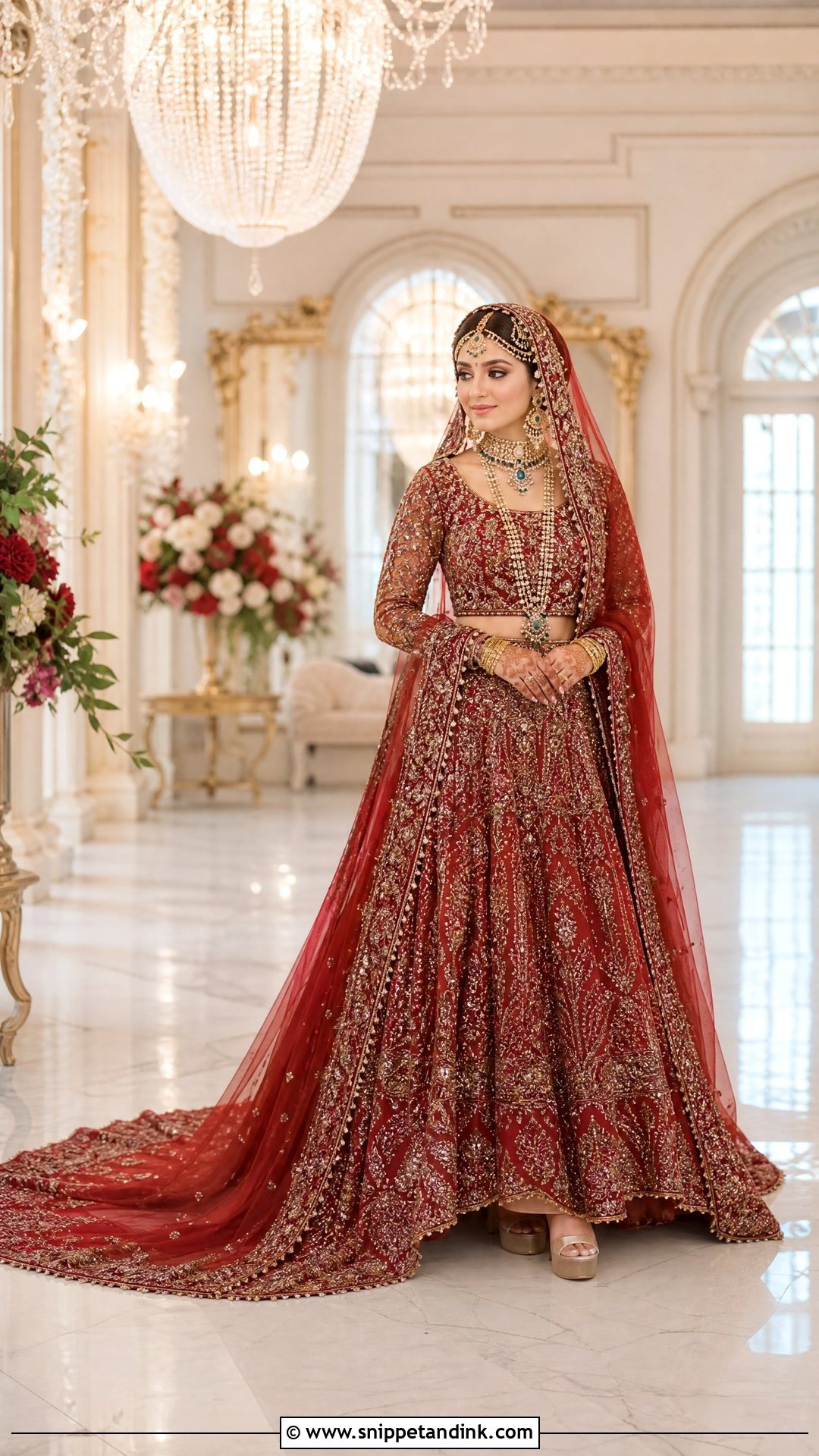
A train on a lehenga makes the entrance, but it should extend gently at the back rather than adding fabric all the way round. Heavy embroidery belongs on the hem and train; lighter front panels make walking easier. A sheer dupatta pinned over the head and across one shoulder suits it. Platform heels give height without the wobble of stilettos. A statement choker, long necklace, earrings, matha patti and bangles finish it. Before you finalise the length, walk on the venue’s floor if you can; carpet, marble and grass each behave differently. A wrist loop or hidden bustle lets you lift the train once photos are done.
13. Pakistani Red Paneled Bridal Lehenga
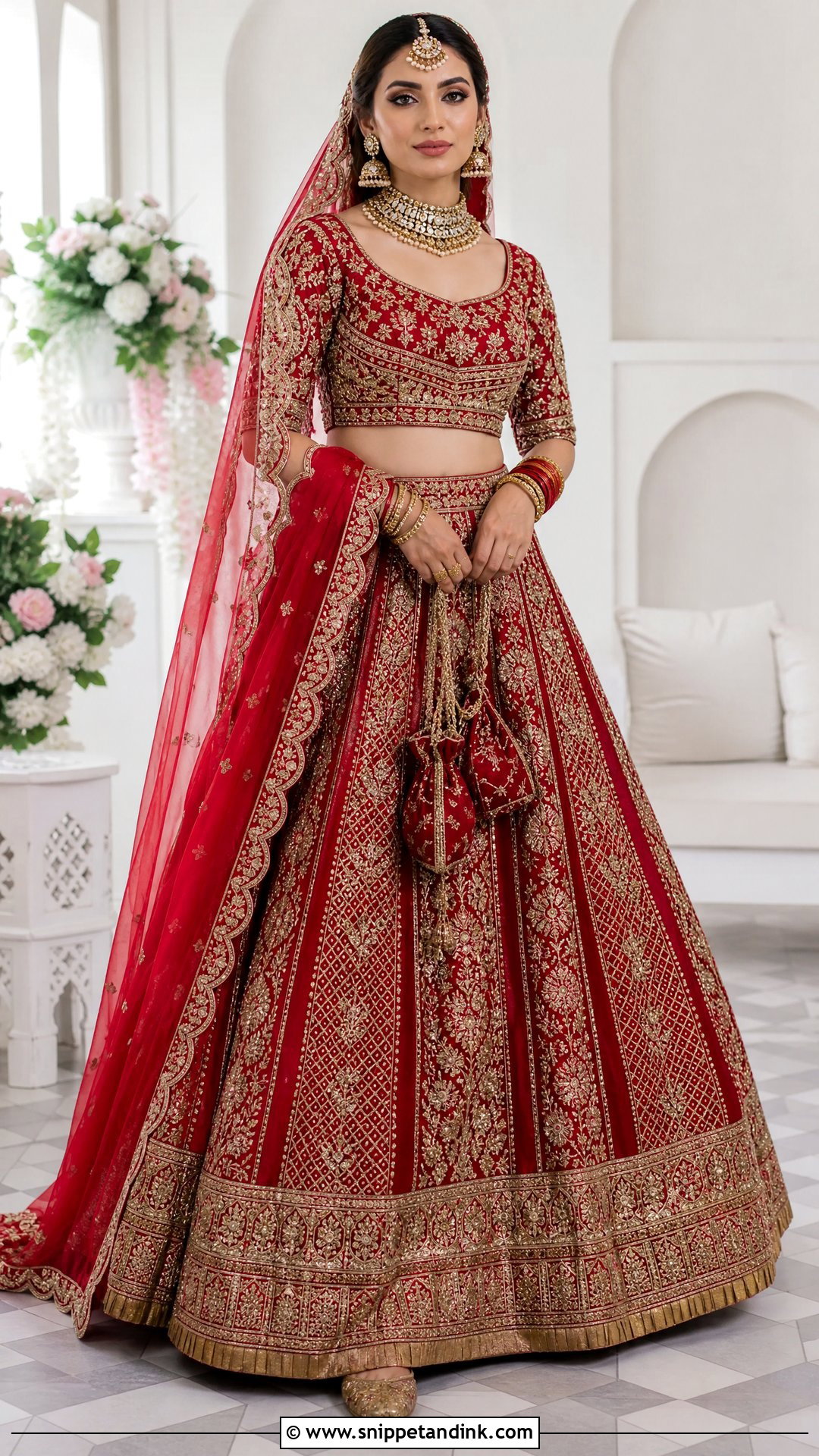
A paneled lehenga holds its fullness in a controlled way and gives each panel room for its own motif, floral, architectural or geometric, within one colour story. Heavier embroidery near the hem, reducing toward the waist, lengthens the figure. A fitted blouse and a transparent organza dupatta with a scalloped edge complete it. Gold khussas, a potli, a polki necklace, jhumkas, bangles and a small tikka are enough. Changing the number and width of panels changes the volume, so it’s easy to tailor. For a lighter outfit, ask for silk thread, sequins and pearls in place of dense metallic work on every panel.
14. Pakistani Red Bridal Dress With Velvet Shawl
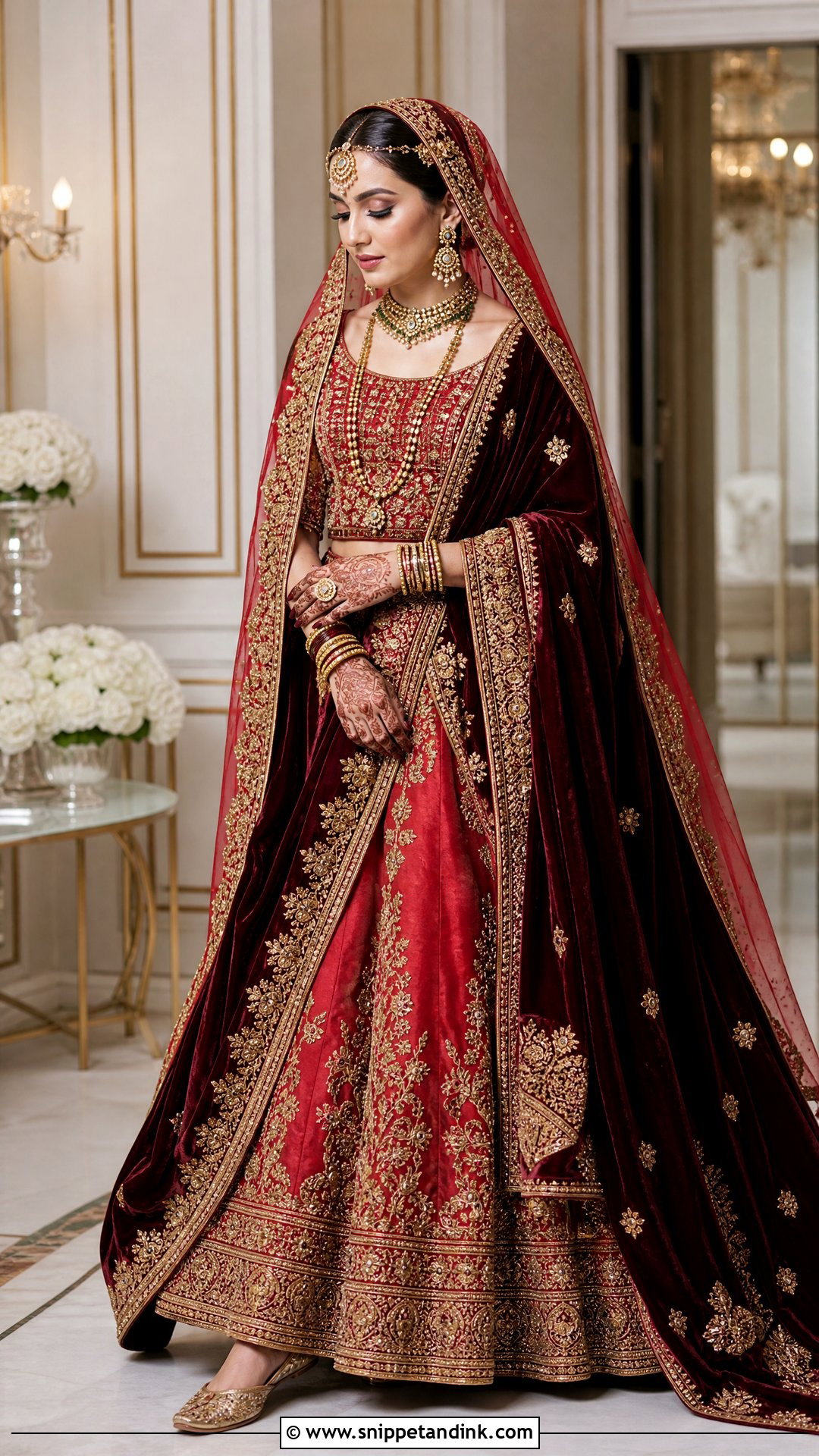
A velvet shawl over a red outfit is practical in a cold venue and looks regal. Start with a raw silk lehenga and a fitted blouse in antique gold, then add a deep red or maroon velvet shawl embroidered only around the edges so it drapes softly. The head carries a light net dupatta, while the shawl goes over the arms or one shoulder; that keeps the weight off your hairstyle, which matters more than people think. Keep blouse sleeves fitted so they don’t bunch under the shawl. Closed embroidered shoes, a traditional choker, long mala, jhumkas, matha patti and bangles complete it, with deep red lips and bronzed eyes.


15. Pakistani Red Double Dupatta Bridal Dress
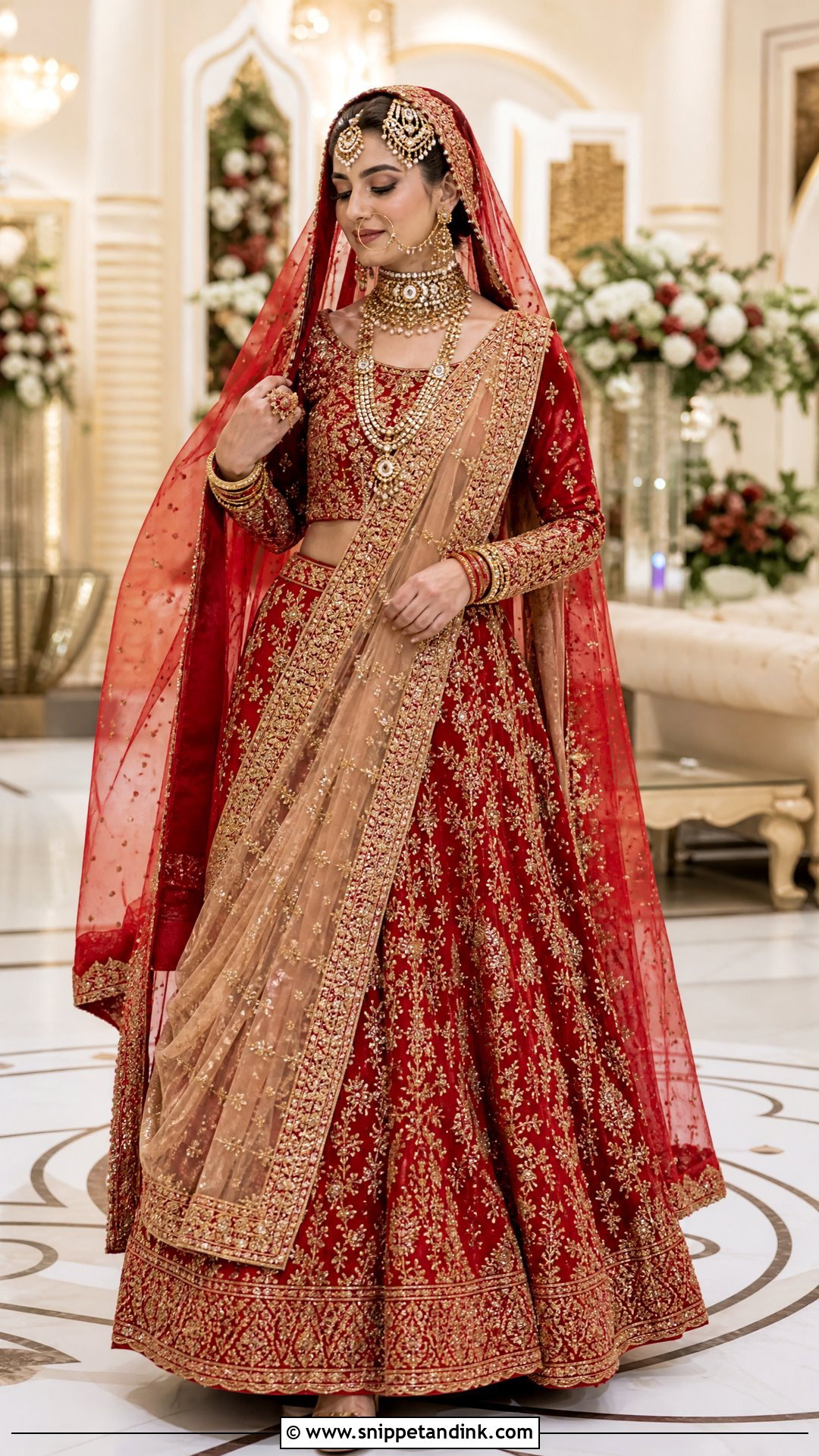
The double dupatta arrangement layers the outfit and gives it ceremony. Over a classic embroidered lehenga and fitted blouse, the head dupatta should be light net so it pins securely without pulling. The second, in organza or tissue, crosses the body diagonally so its border defines the waist. Both can be red, or the shoulder piece can bring in muted gold. Make one dupatta heavily worked and the other simple, or the combined weight drags at the shoulder. Comfortable heels, a kundan choker, long necklace, earrings, matha patti, nath and bangles complete it. I pin the two separately so one can come off without disturbing the other.
16. Pakistani Bright Red Bridal Dress With Gold Dupatta
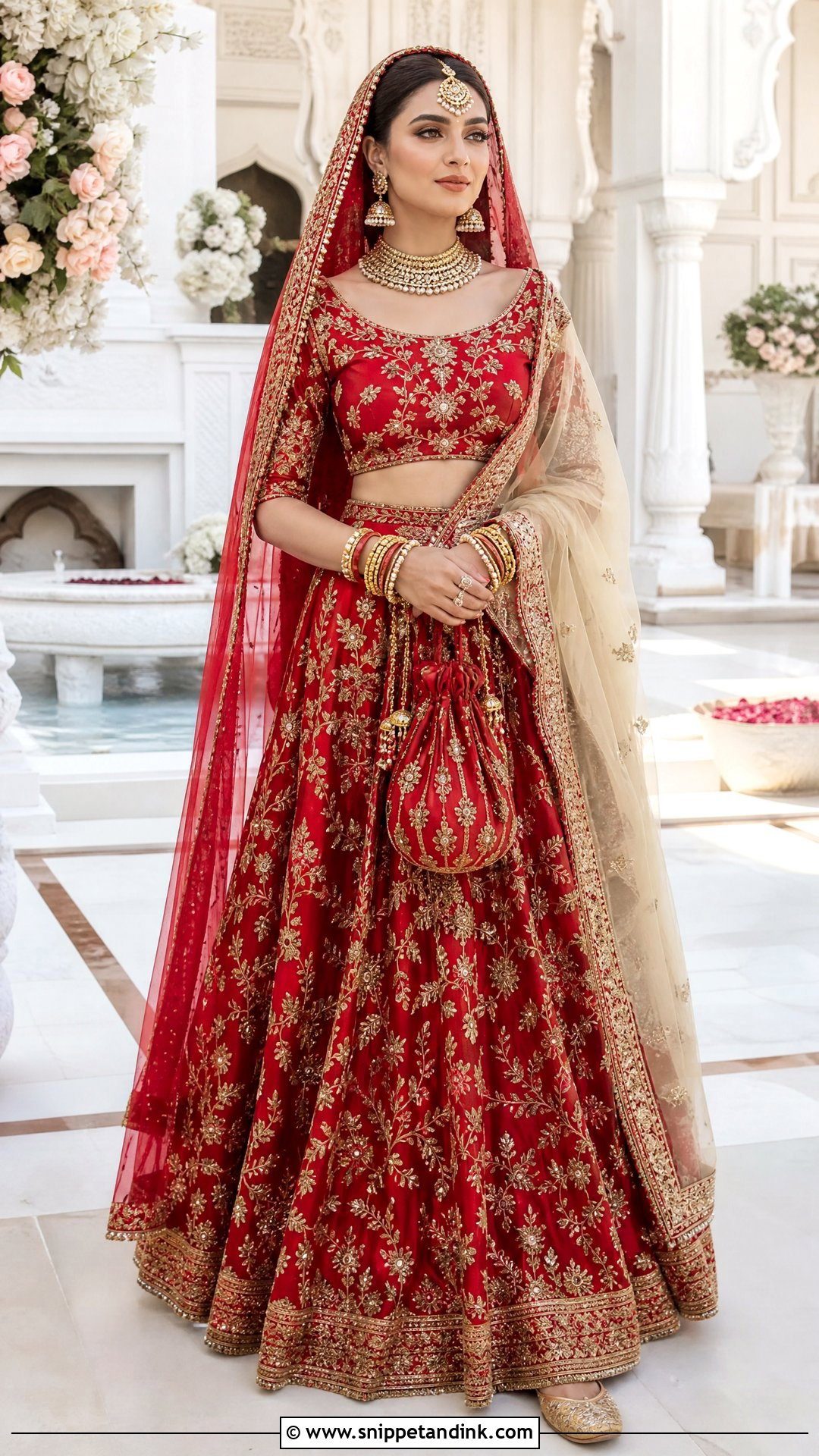
Bright red with a muted gold dupatta is a strong pairing. A red raw silk lehenga and blouse with gold floral embroidery, organised in panels or borders, keeps the red visible. A sheer red veil goes over the head, and a soft gold organza dupatta crosses one shoulder, which brightens the outfit and links it to the jewellery. Very yellow gold fabric looks harsh next to clear red; champagne, beige-gold or antique tones blend more gently. Gold khussas, a kundan choker, jhumkas, a tikka, stacked bangles and a small potli finish it, with fresh skin, defined liner and a crimson lip.
17. Pakistani Red Bridal Dress With Antique Gold Work
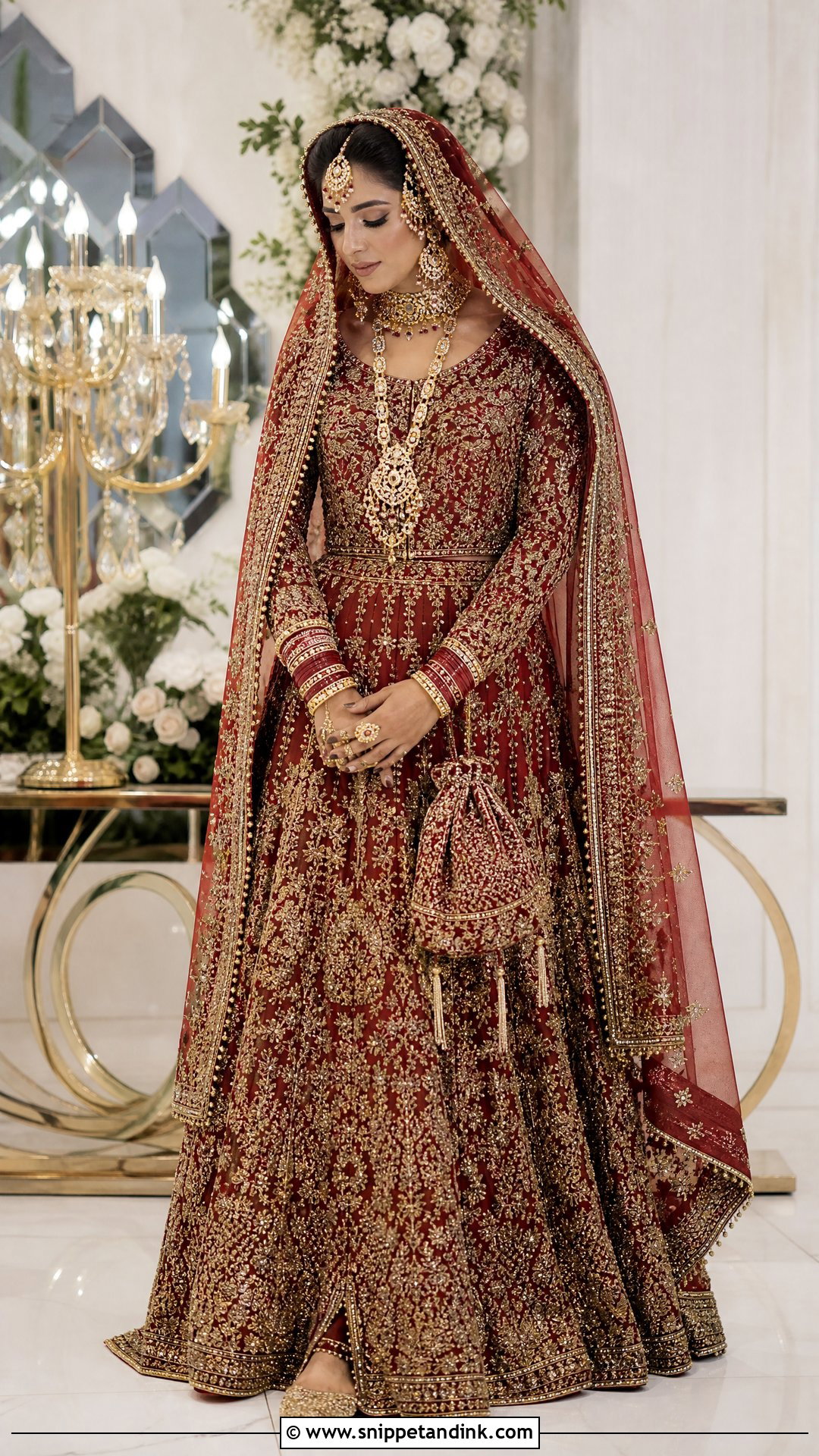
Antique gold has an aged, softer finish than bright yellow gold, and on deep red it looks like work handed down. A long blouse or fitted choli, depending on coverage, over a deep red lehenga with dabka, nakshi, pearls and muted sequins at the neckline, sleeves, panels and hem is the core. A fine net dupatta with an antique border ties it together. Bronze-gold khussas, a matching potli, polki jewellery, jhumkas, a jhoomar and textured bangles suit it. The jewellery doesn’t need to match each thread; slight differences add depth. Warm neutral eyes and a brick-red lip suit it, with hair smooth enough to hold the head jewellery securely.
18. Pakistani Red Bridal Dress With Silver Work
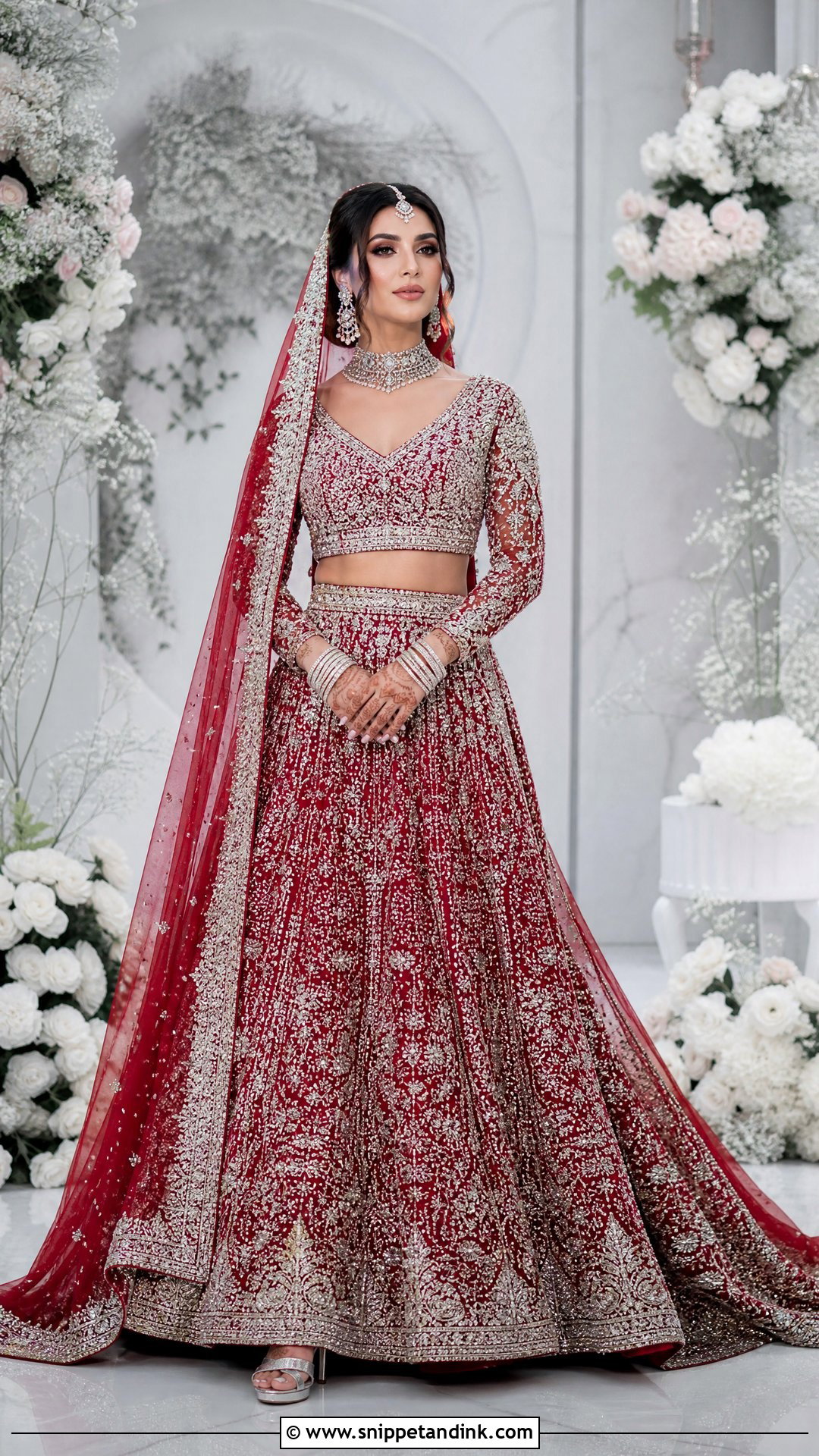
Silver is the cooler choice, and it only works with the right red. A ruby or blue-leaning red sits naturally with silver; an orange-leaning red makes silver look cheap. A fitted blouse with crystal, pearl, sequin and fine metallic detail suits it. A soft net dupatta with a narrow silver border keeps it from getting too sparkly. Silver-toned heels, diamond-style or crystal jewellery, drop earrings, a fine tikka and slim bangles complete it, with a cool pink lip and soft highlight. If family jewellery is gold and you want to wear it, add a two-tone border or clutch so the mix looks deliberate.
19. Pakistani Minimal Red Bridal Lehenga
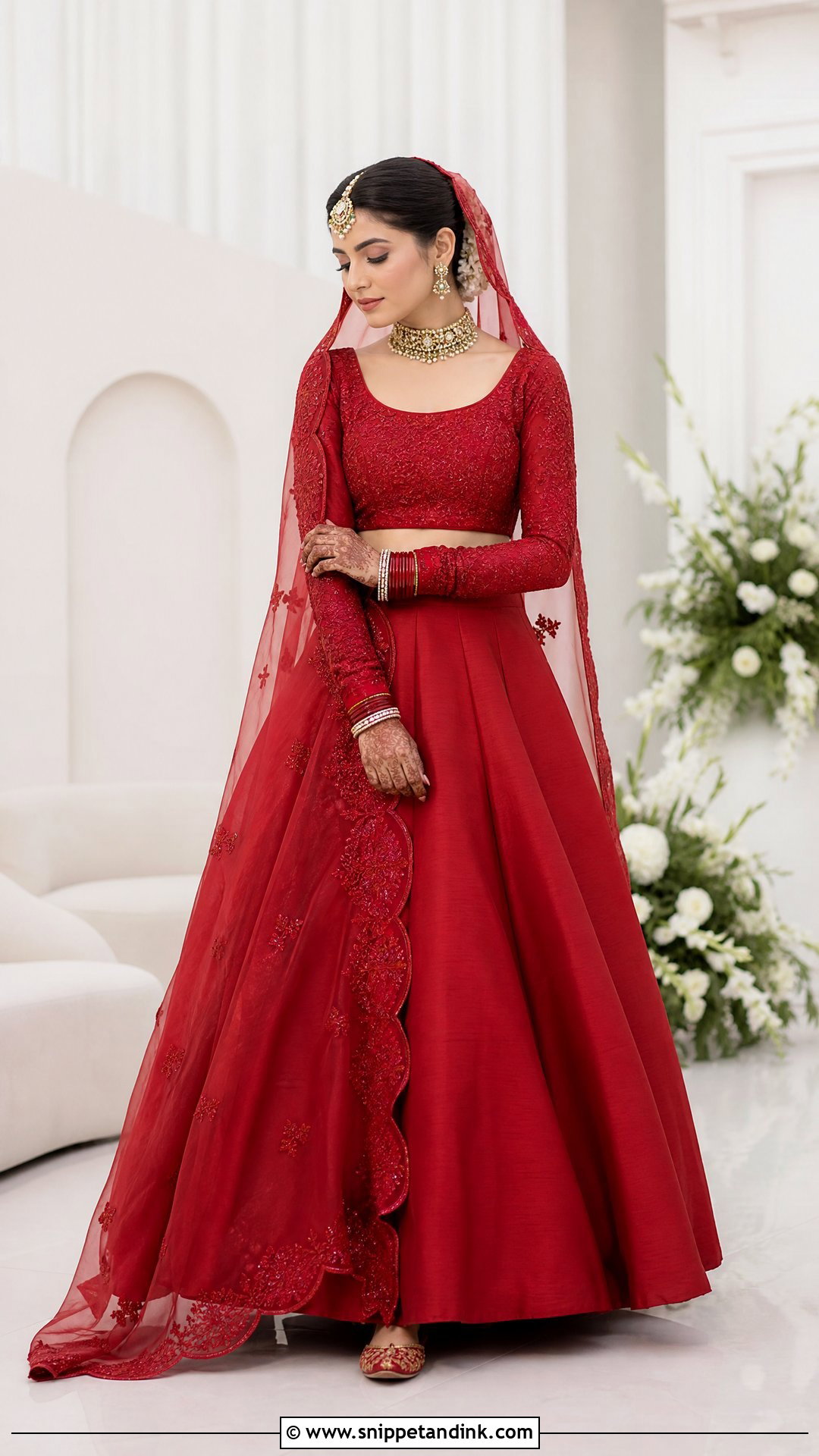
A minimal lehenga relies on fabric and tailoring instead of embellishment, so neither can be weak. Rich raw silk or structured organza in a clear red, tonal thread, small pearls and a narrow metallic border are all it needs. A clean fitted blouse and a sheer dupatta with fine scallops complete the base. Pointed khussas, one statement choker, medium earrings, a tikka and bangles are plenty. Keep hair smooth and makeup luminous, with one defined feature, liner or red lips. It’s also far lighter to wear, which I’d weigh seriously for a long ceremony or a summer wedding.


20. Pakistani Hijab Friendly Red Bridal Dress
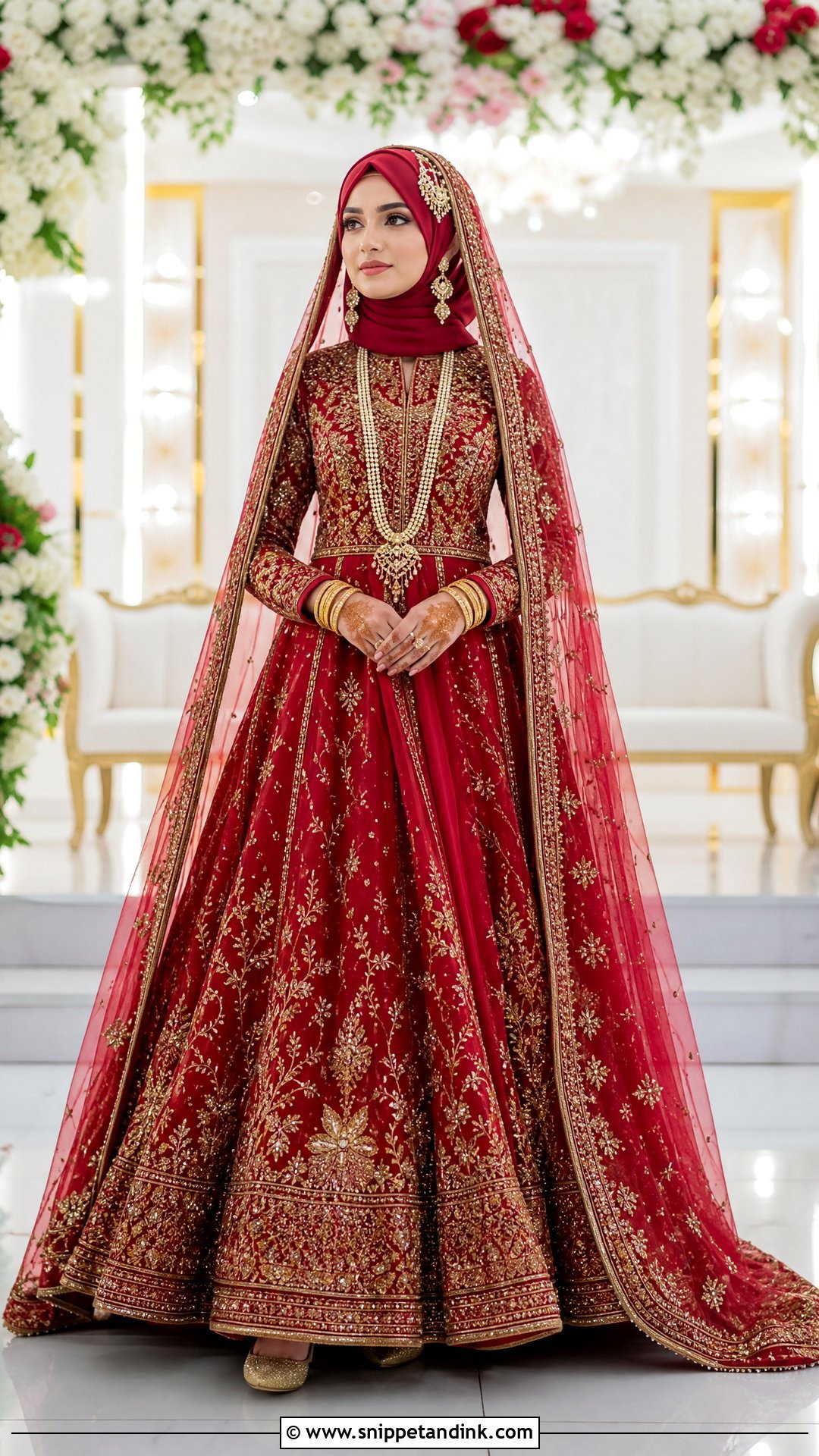
A hijab-friendly outfit gives full coverage and still looks formal and coordinated. A long-sleeved, high-neck blouse with a full lehenga or paneled skirt works well, with embroidery at the shoulders, cuffs, waist and hem so it shows without crowding the neck. Wear a smooth, lightweight red hijab, then set an embellished net dupatta over it as a veil. Pin both with hidden pins and keep heavy borders away from the forehead, where they press and slide. Low gold heels, a long mala, bangles and a jewelled brooch complete it; a necklace over the blouse sits well on a covered neckline. Do a full trial of the head arrangement before the day.
Six Hours on the Stage in a Heavy Lehenga
A barat is long, and much of it is spent sitting on a stage for photos, greeting guests who come up in a steady line. The outfit that looked best at the fitting can become exhausting by the rukhsati if nobody planned for that.
Have your dupatta pinned by someone who knows how, with pins hidden into the hair and the blouse at the shoulder, not just the head. A dupatta pinned only to the hair pulls at the scalp under its own weight and gives you a headache within hours. A few extra pins along the shoulder seam spread the load.
- Sit with the skirt spread behind you on the sofa, not bunched under you, so the embroidery doesn’t crease or catch.
- Choose one person as your helper for the day: dupatta adjustments, the washroom trip, holding the clutch and a water bottle with a straw.
- Keep a small kit with safety pins, bobby pins, blotting papers, your lipstick, painkillers and plasters for khussa rubs.
- Eat something before you’re dressed. Brides often get no real meal until after the rukhsati.
If the lehenga is very heavy, ask the tailor to add a broad, soft waistband with a hook and drawstring together. It spreads the weight around the hips and stays put better than a drawstring alone.
One Red Outfit, Built Around Your Barat
A red Pakistani bridal outfit works when the silhouette, embroidery, fabric, dupatta, jewellery, shoes and venue are planned together. The lehenga is the classic; a gharara, pishwas, saree, gown or hijab-friendly outfit can suit you better. Think honestly about weight, how far you’ll walk, the season and how the outfit will photograph. Start from the shapes here, then let your tailor adjust the details to your proportions and plans. Good tailoring and balanced jewellery will make any of these red outfits look polished and feel like yours.
You'll Like These Ideas:







Leave a Reply