
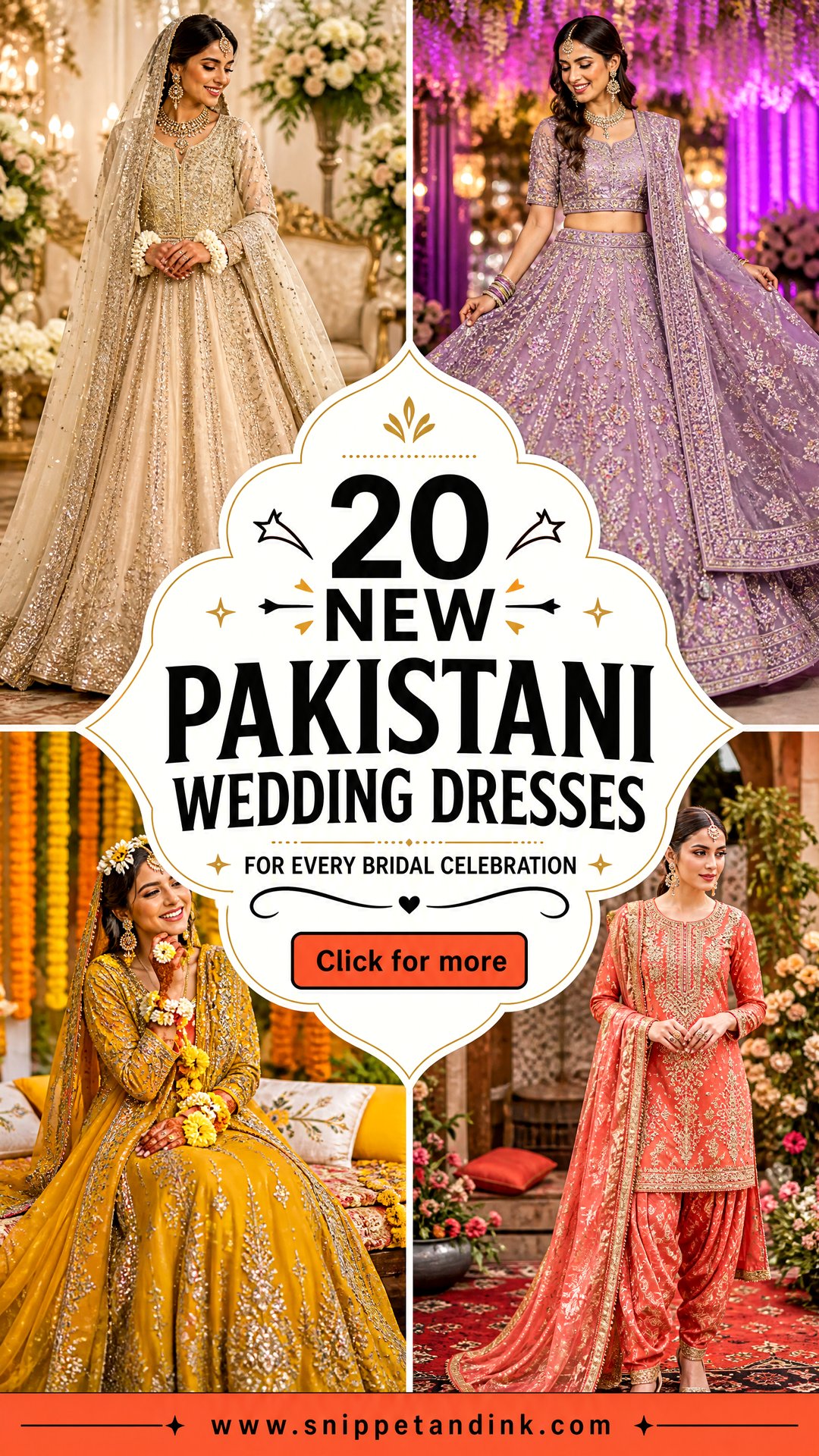
Pakistani bridal fashion has been moving toward lighter silhouettes and more personal color without dropping the handwork it’s known for. Here I’ve put together twenty outfits that could make up a whole wedding wardrobe, mehndi through walima. Red is still the anchor, but maroon, ivory, mint, peach, lavender and metallic neutrals all have a place, and ghararas, pishwas and farshi shapes have come back with cleaner tailoring. Each look comes with its dupatta, jewelry and shoes, and with the fitting or fabric detail I’d check before ordering it.
Zardozi, Dabka, Gota or Resham? Reading the Embroidery You’re Paying For
The work on a Pakistani bridal outfit decides its weight, its price and how it ages. Brides often order by look alone, so here is what the common terms in these outfits actually mean.
- Zardozi: metallic thread and wire couched onto the fabric. It’s raised, heavy and the most formal.
- Dabka and nakshi: coiled or twisted metal wire cut into small pieces and stitched down. Dabka gives a textured relief; nakshi has a finer shine.
- Gota: woven metallic ribbon cut and appliqued, often in borders. It’s lighter than zardozi and very festive.
- Resham: silk or silky thread embroidery. Light and colorful, good for mehndi.
- Marori: thread twisted and stitched to make a raised cord line, often used to outline motifs.
To tell hand embroidery from machine work, turn the panel over. Handwork has slightly uneven stitches and knots on the back, while machine work looks uniform with a continuous backing thread. Neither is wrong, but the price should match what you’re getting. Metallic work also dulls if it’s stored damp, so ask how the outfit should be wrapped.
1. Red Bridal Lehenga Pakistani Wedding Dress
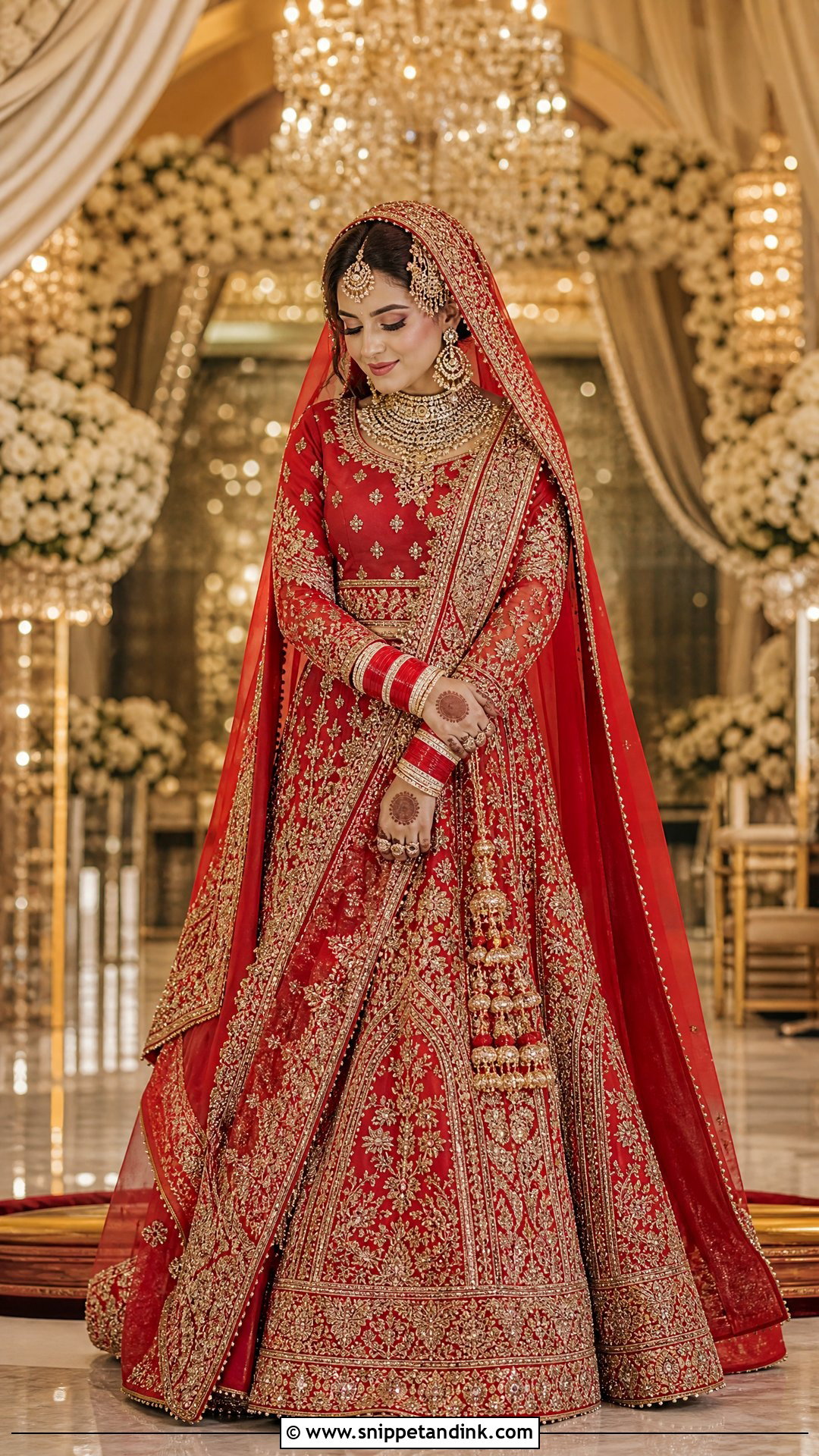
The red lehenga is still the outfit families picture for the baraat, and the embroidery is where the money goes. A structured raw silk blouse with a moderately flared lehenga in antique gold zardozi, dabka, nakshi and resham reads rich without looking crowded, especially with a scalloped border defining the hem. Wear one embroidered red dupatta over the head and a lighter net one across a shoulder. Polki, a matching tikka, red and gold bangles and embroidered khussas complete it. I keep the blouse fitted but test it seated, because you’ll spend the rukhsati and most of the photos sitting. A soft gold eye and deep rose lip let the handwork lead.
2. Maroon Farshi Lehenga Pakistani Wedding Dress
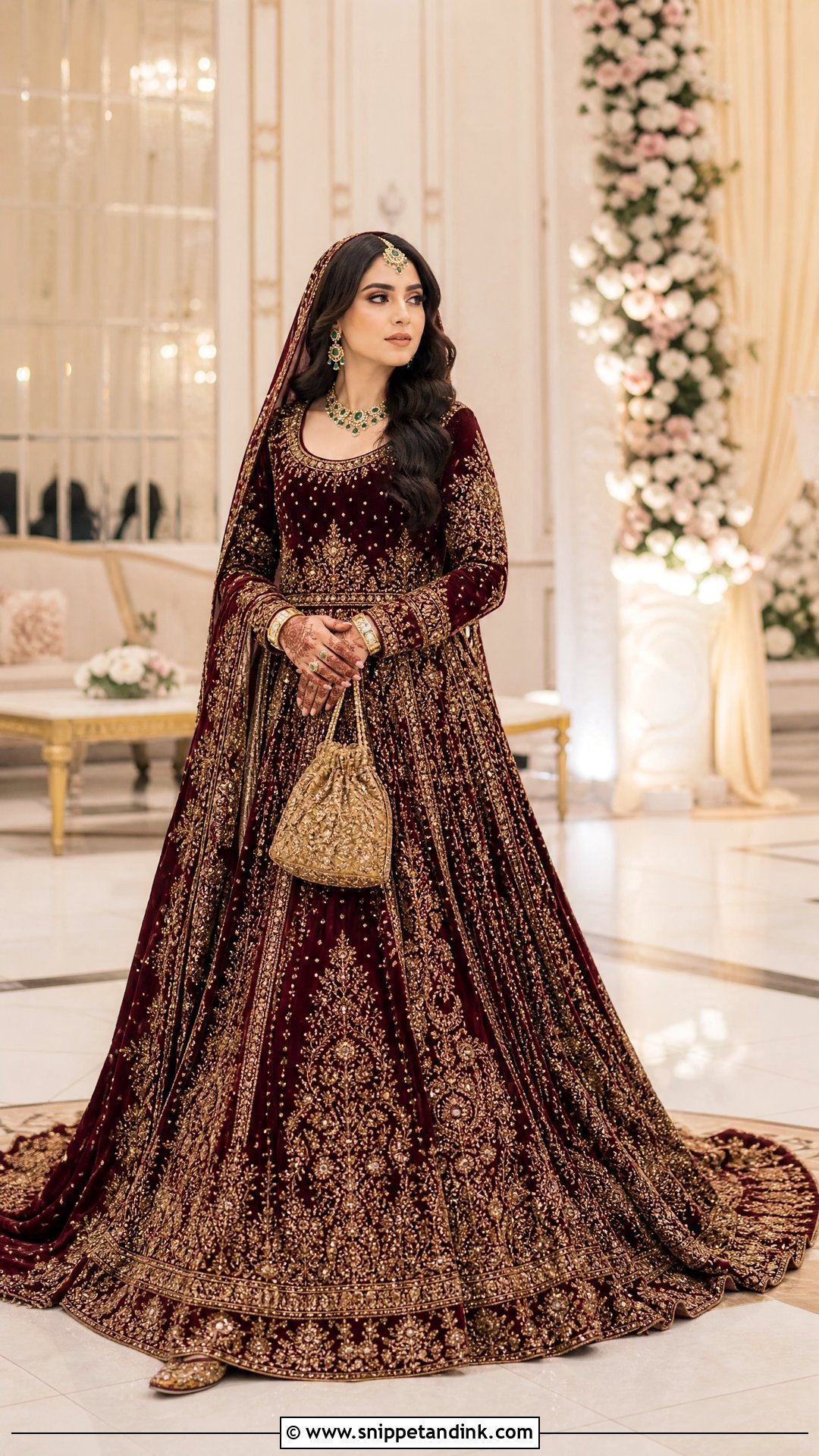
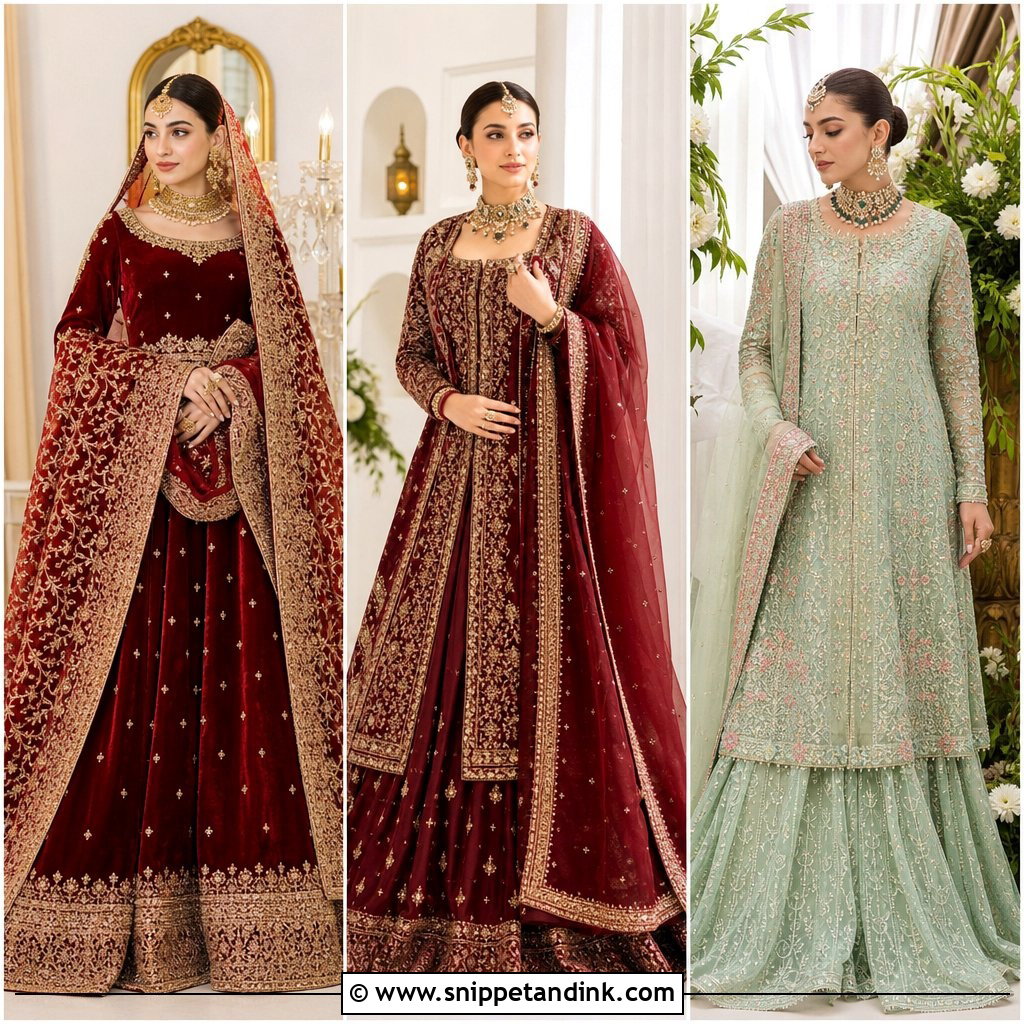
A farshi lehenga swaps volume for length: the skirt falls smoothly from the waist and pools on the floor behind you. That’s why it looks regal, and why it needs a careful hem. In maroon it’s a deeper option than bright red. A fitted velvet or raw silk blouse with antique gold work at the neckline, sleeves and waist balances it. I’d keep the dupatta long but lightly embellished so the skirt’s sweep stays visible. Emerald jewelry gives contrast; antique gold keeps things tonal. Low block-heel khussas and a small potli for portraits finish it. Tailoring is cleaner than it used to be, so a good farshi now feels traditional without heavy gathers at the waist.
3. Ivory Bridal Pishwas Pakistani Wedding Dress
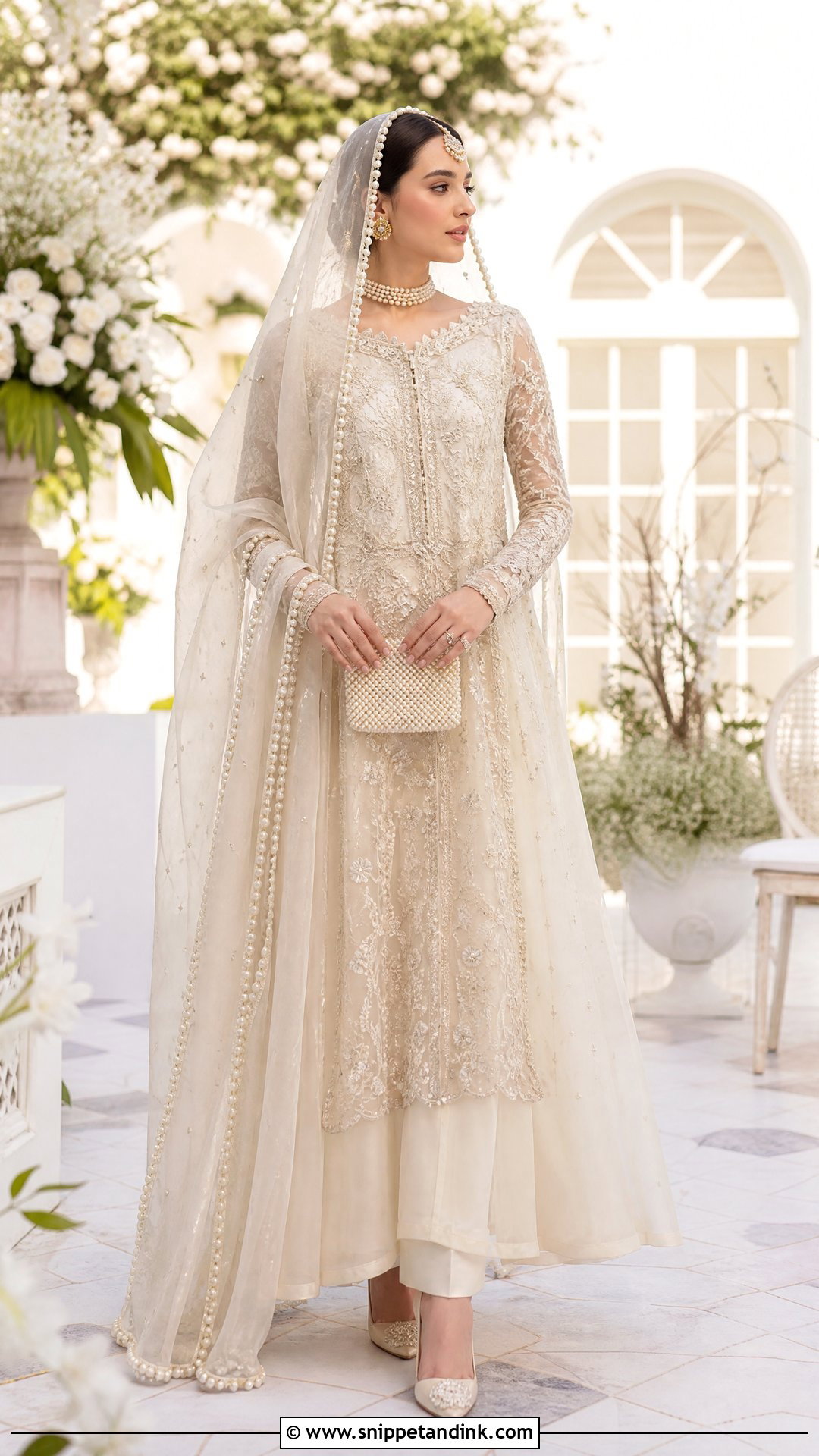
An ivory pishwas suits a daytime nikah or a small ceremony. A fitted bodice, defined waist and a full flare in organza, tissue or silk keep it light, and pearl, crystal and silver work hold that lightness while a touch of muted gold adds warmth. Wear a sheer ivory dupatta with a worked border over the head and let the rest fall behind. Pearl earrings, a fine passa and a small choker, ivory embroidered heels and a beaded clutch suit it, plus a low bun with white flowers. Organza creases sharply, so I’d hang this one from the moment it arrives and steam it on the morning.
4. Pastel Pink Gharara Pakistani Wedding Dress
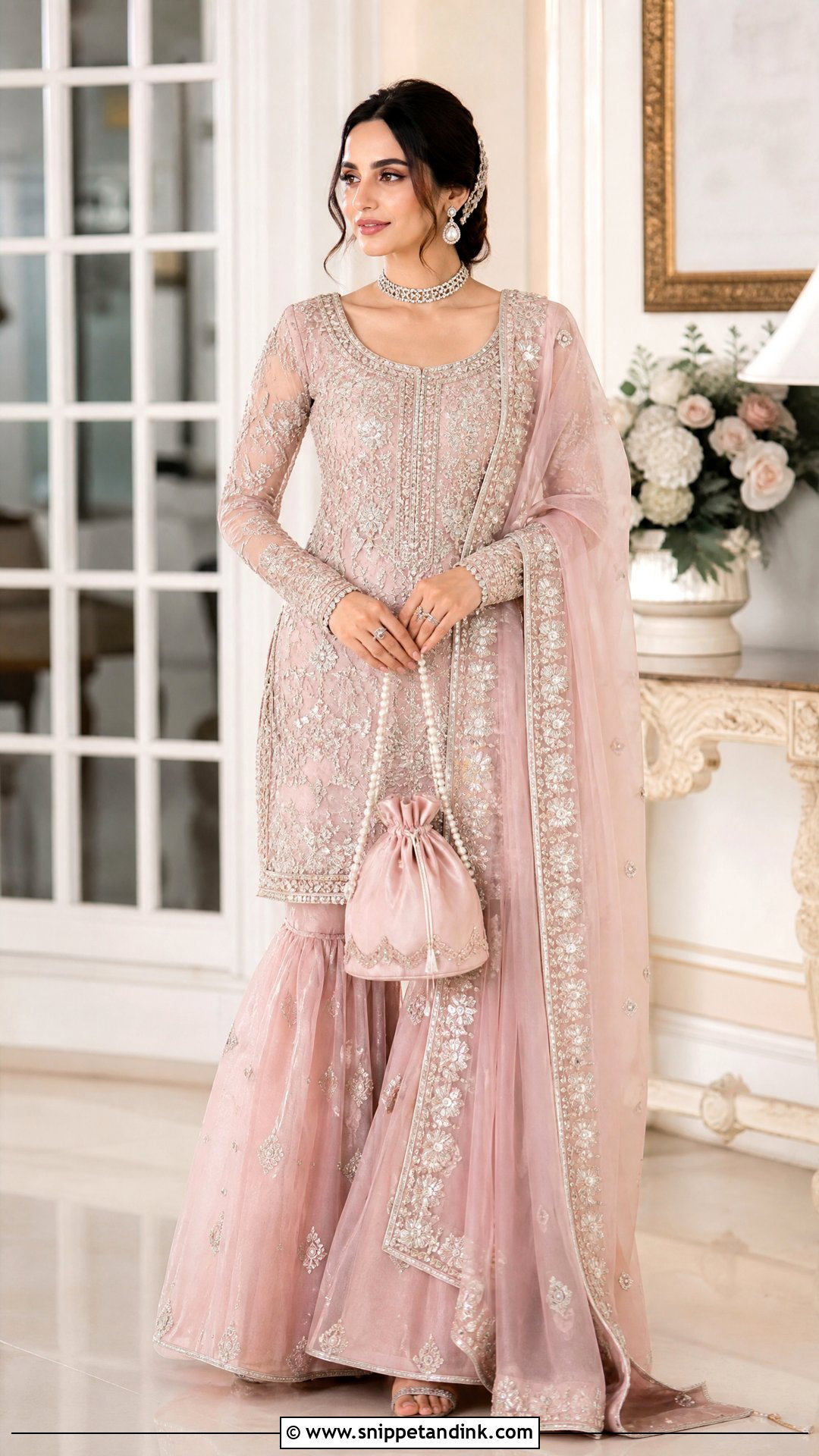
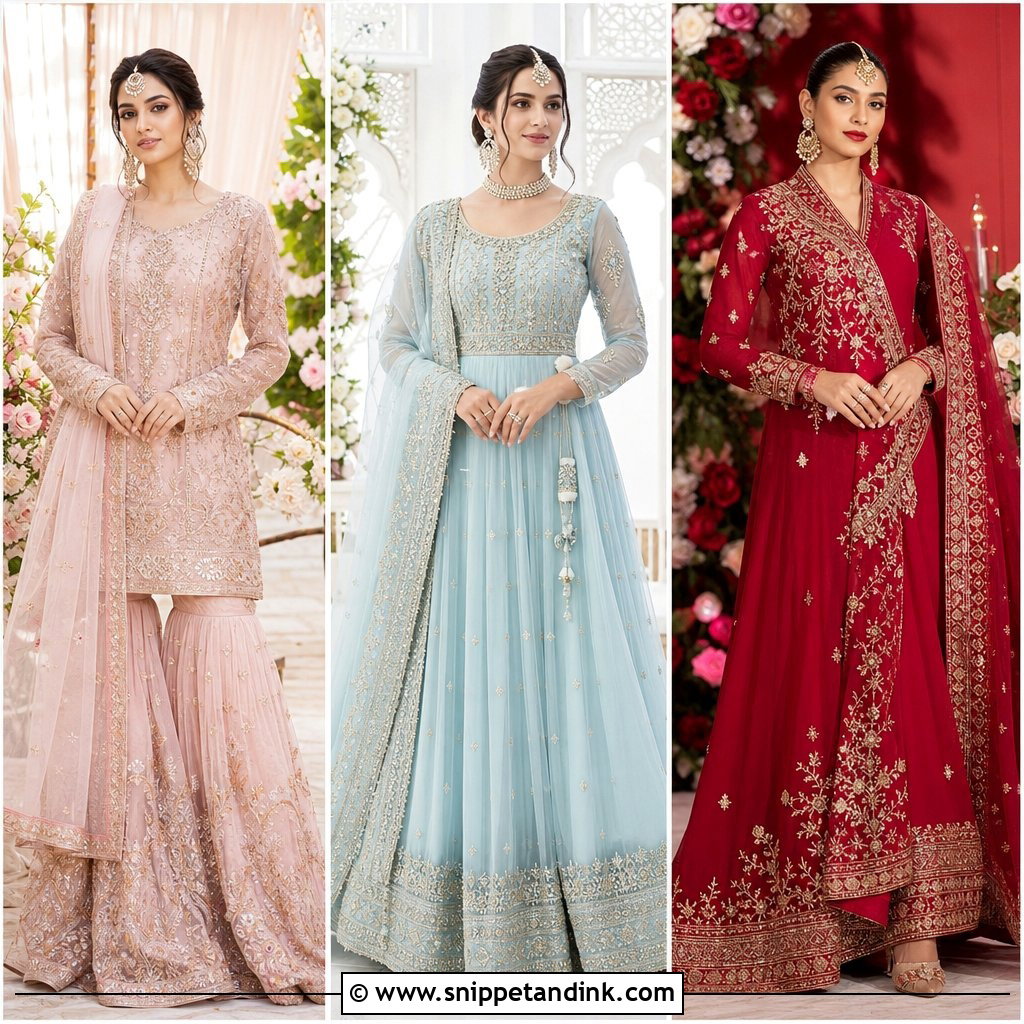
Fit makes or breaks a gharara. The leg should sit neatly above the knee and flare below it, and if the knee seam lands too high the whole outfit looks short. In soft pink it suits a nikah, engagement or daytime reception. A knee-length kameez in silver thread, pearls, sequins and a few 3D flowers carries detail without hiding the color. Keep the kameez slightly structured at the shoulders to balance the flare, which works across petite, tall, straight and curvy figures. An organza dupatta with a narrow border, a diamond-style choker, pearl drops, a fine tikka, silver heels and a blush potli complete it.
5. Emerald Green Sharara Pakistani Wedding Dress
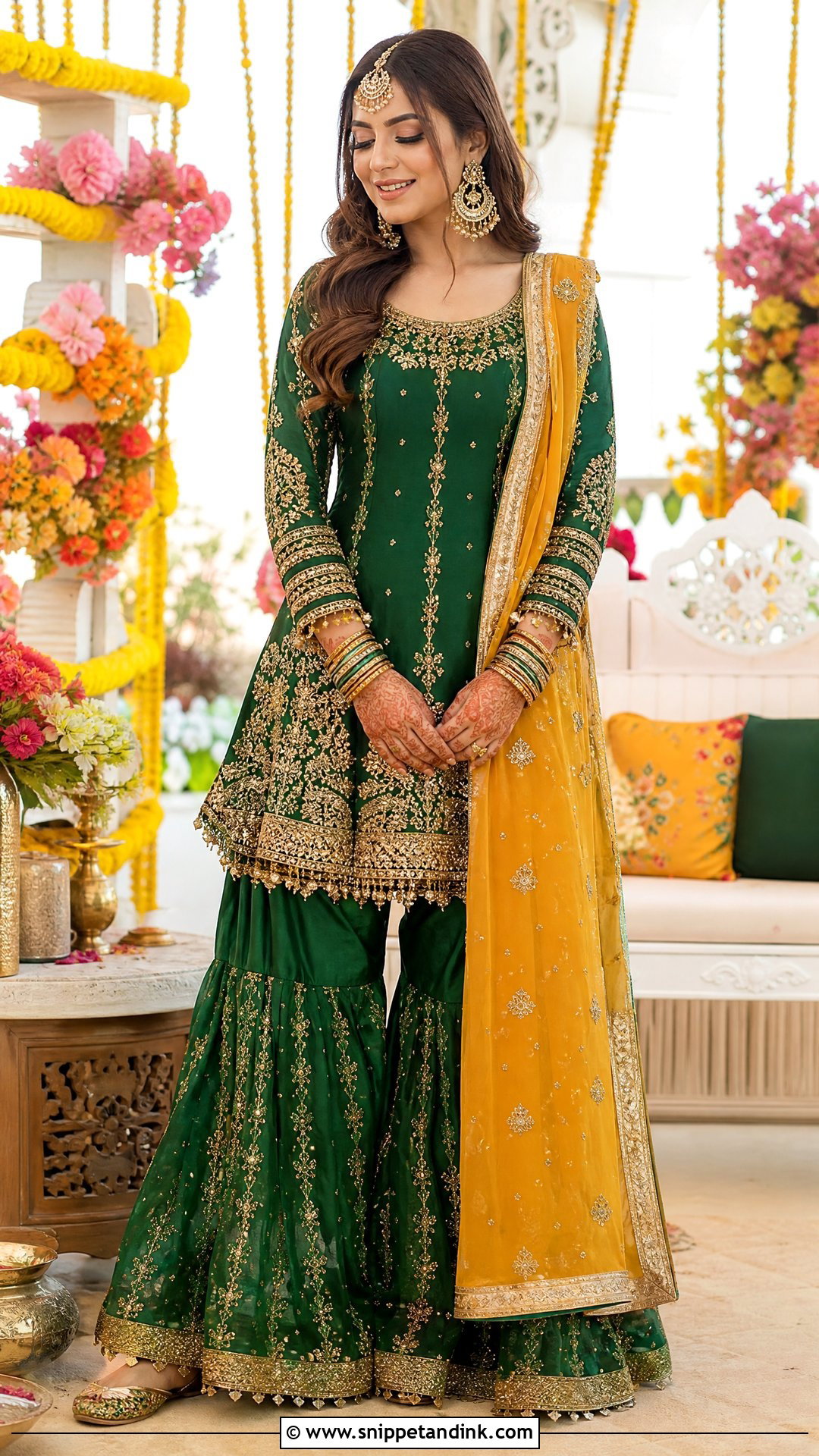
Mehndi nights mean dancing, so the first thing I ask for on an emerald sharara is an elastic or adjustable waistband. A short peplum shirt over a flowing sharara with controlled volume keeps the legs free. Antique gold, small mirrors and colored resham work best concentrated at the neckline, hem and lower legs, where they catch light when you move. A mustard, rust or muted gold dupatta deepens the green. Chandbalis, stacked bangles, a centered tikka and gold khussas suit it, and a braid with fresh flowers feels traditional. Soft bronze makeup balances the color.
6. Gold Angrakha Pakistani Wedding Dress
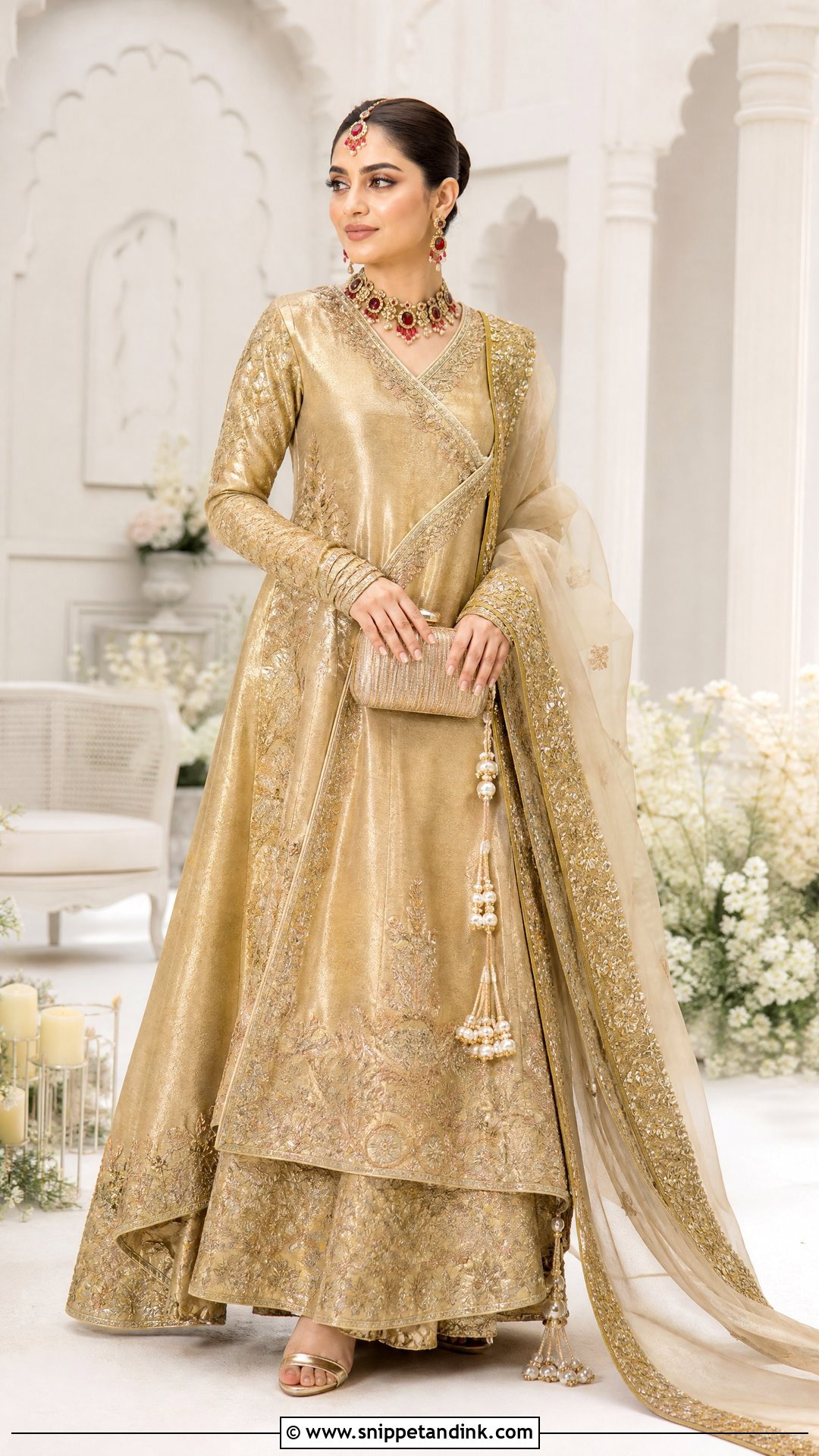
Angrakhas depend on their closures. A long kalidar angrakha in tissue, silk or light brocade needs an inner tie and a well-secured outer fastening, otherwise the crossover gapes when you sit. Antique gold work can trace the crossover neckline, waist, cuffs and hem, with pearl tassels for a little swing. Narrow trousers or a lightly flared lehenga show as the panels open. I’d drape a champagne or beige dupatta over the arms instead of the neckline so the embroidery stays visible. Ruby or emerald jewelry adds one controlled pop of color, with gold heels, a structured clutch and a sleek bun.
7. Rust Peplum Lehenga Pakistani Wedding Dress
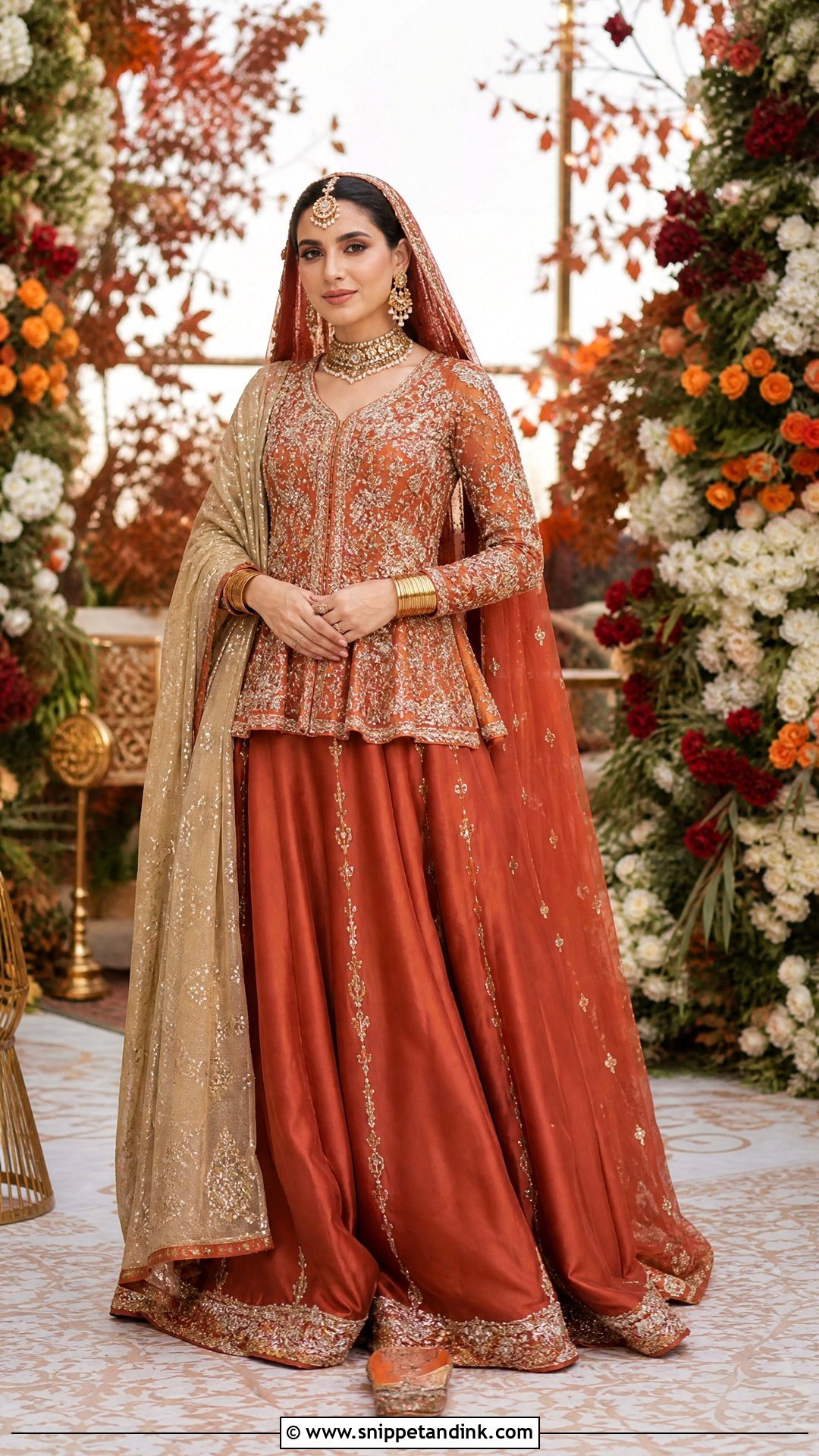
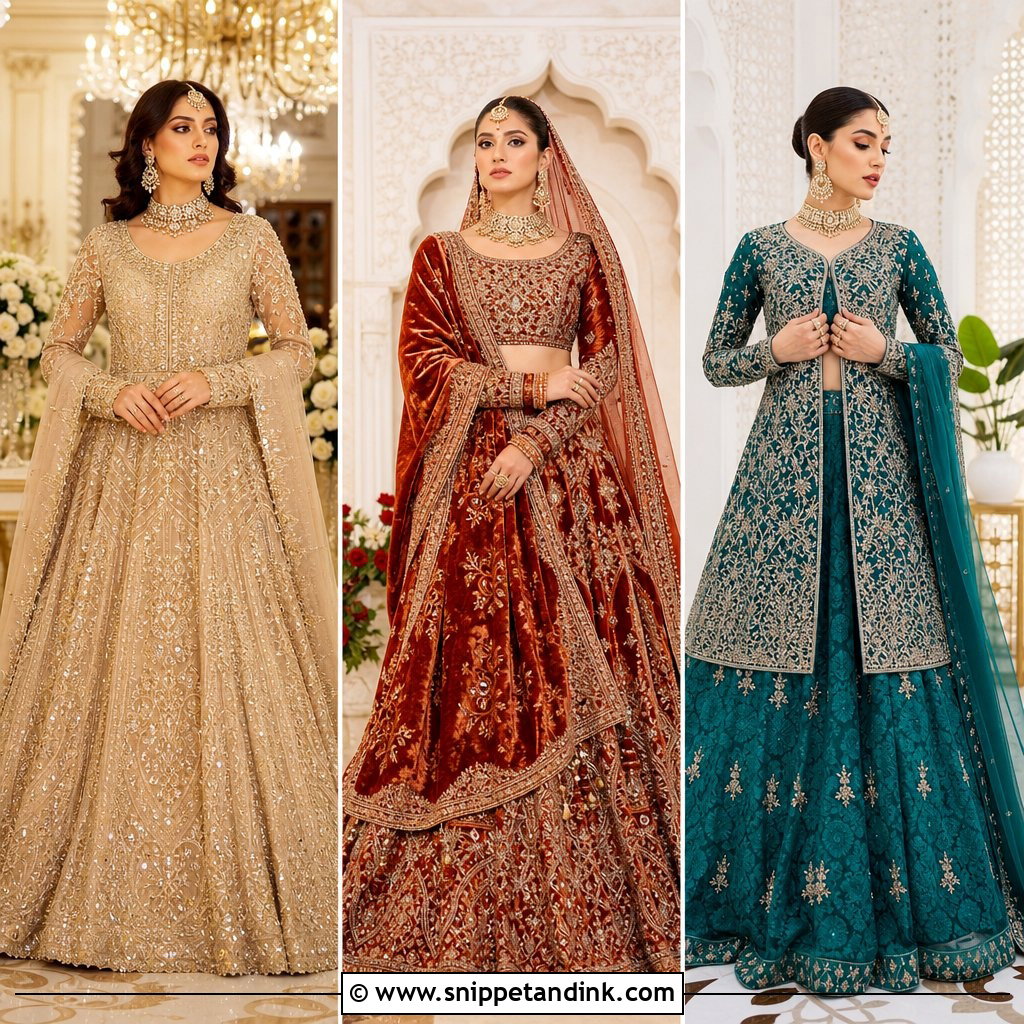
Rust is a warm choice for an autumn or evening baraat, and it’s less expected than red. A tailored peplum top over a full raw silk lehenga in the same shade, embroidered in copper, antique gold and maroon, stays coordinated. Peplum length is the detail I fuss over: on a petite bride a long peplum cuts the leg line, so we shorten it. A rust net dupatta over the head and a muted gold one across the body add formality. Antique gold, an optional statement nose ring and rust khussas complete it, with warm brown eyes and a deep rose lip.
8. Peach Anarkali Pakistani Wedding Dress
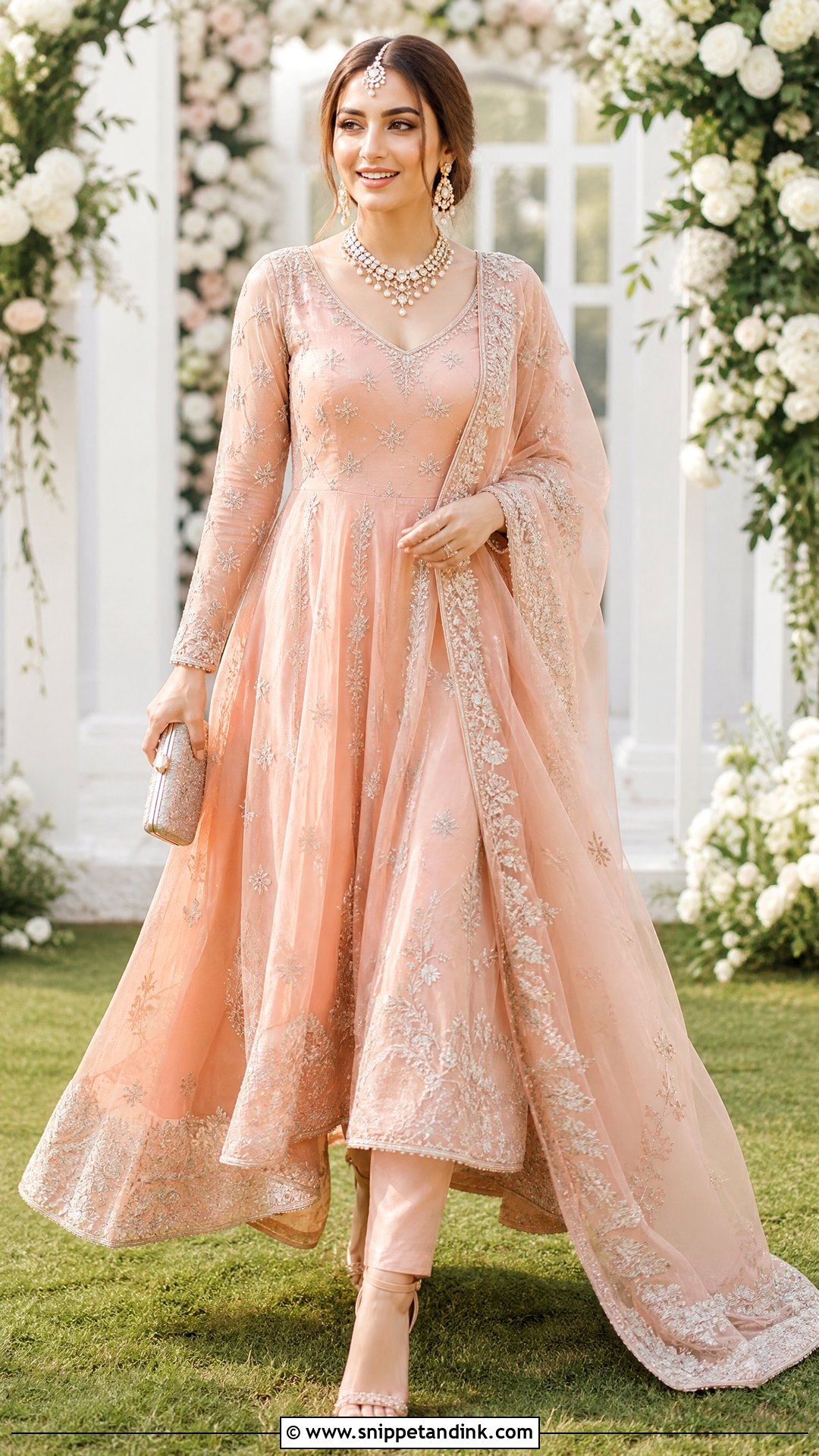
Peach Anarkalis are easy to wear for hours, which is why I suggest them for daytime engagements, nikahs and outdoor events. A fitted bodice with evenly spaced panels opening into a soft flare, worked in fine silver, pearls, clear sequins and floral applique, keeps the color fresh. Slim trousers go underneath, with a sheer dupatta in small scattered motifs. Wear the dupatta over the head for the ceremony and move it to a shoulder later. Pearl and crystal jewelry, nude heels and a small silver clutch keep accessories light. Outdoors, peach can turn orange in strong afternoon sun, so I’d photograph the swatch in daylight before committing.
9. Silver Walima Gown Pakistani Wedding Dress
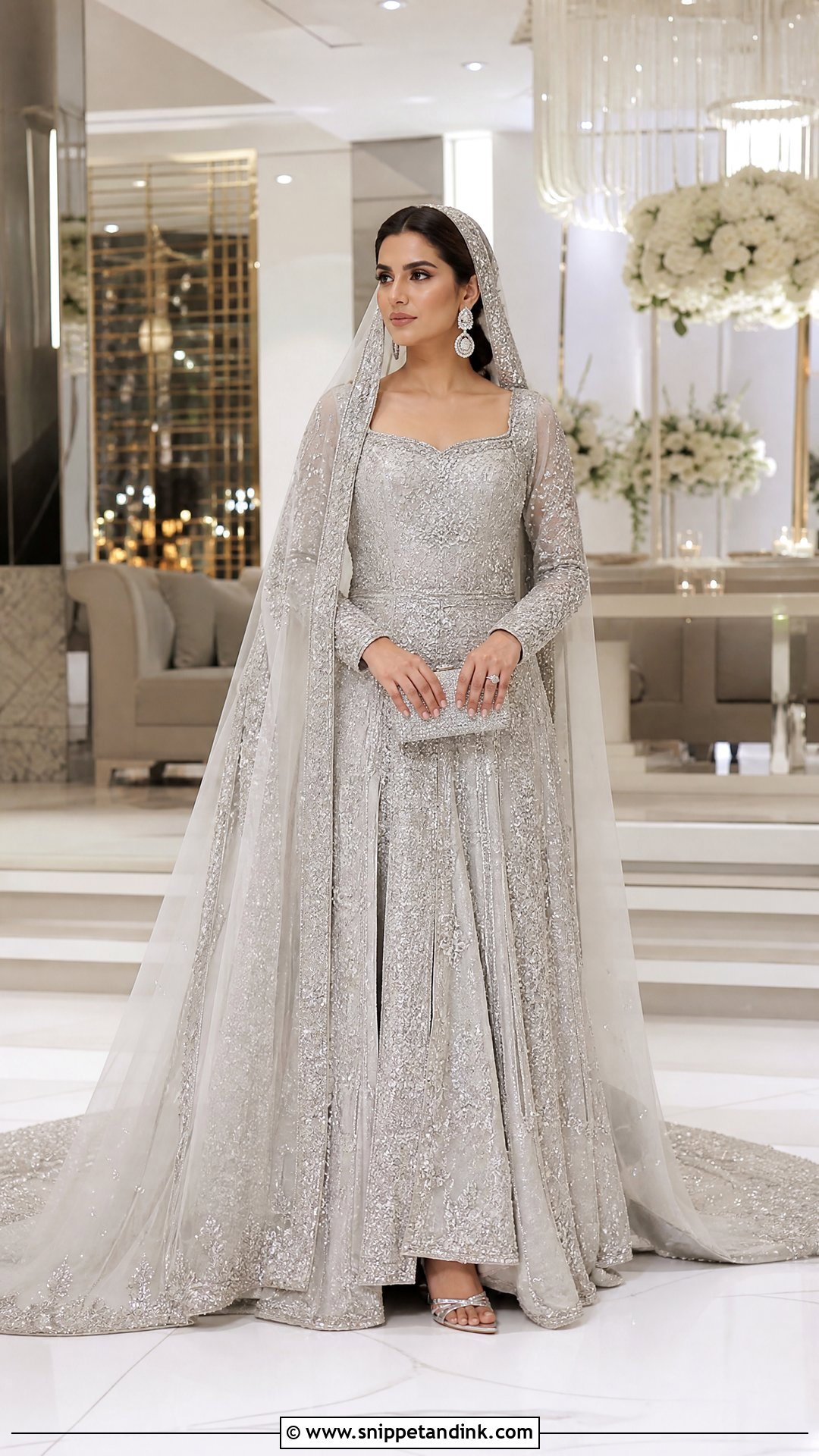
A silver walima gown looks contemporary and still carries the detail people expect from Pakistani formalwear. An A-line or softly fitted shape with a structured bodice, full sleeves and a flowing skirt works with crystal embroidery, silver thread, pearls and carefully placed sequins. A detachable train or long embroidered veil makes a good entrance, but I’d weigh it in the shop; a heavy veil drags on the hair all night. Diamond-style earrings, a sleek bracelet, silver heels and a crystal clutch suit it. For more coverage, ask for an illusion neckline, lined sleeves and a higher back. It should glow under reception lights rather than glitter.
10. Champagne Tissue Lehenga Pakistani Wedding Dress
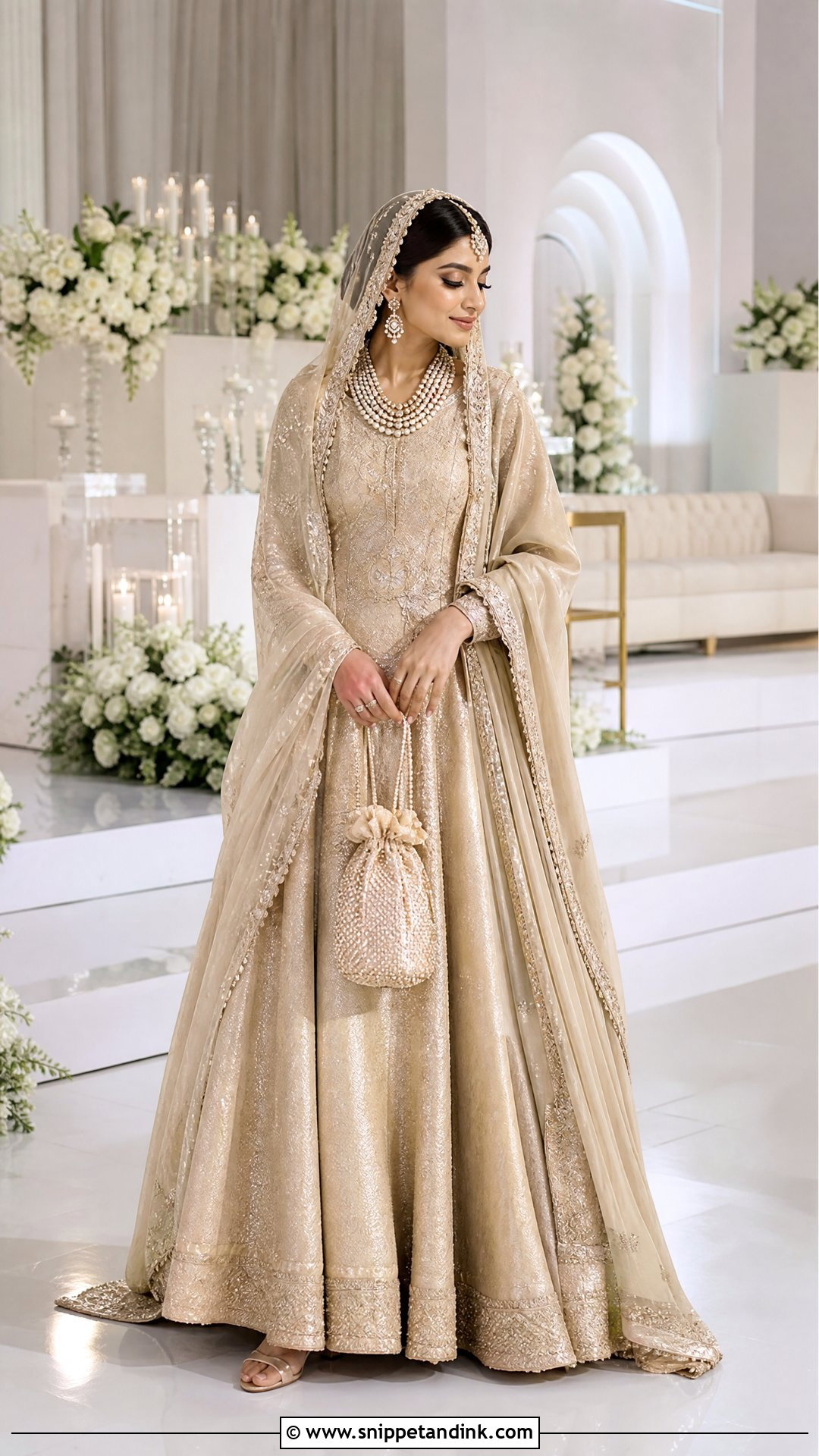
Tissue has a gentle shine and a crisp body that stands away from you. That crispness also scratches, so the blouse should be lined in soft silk and the waist and hips given a little ease. A paneled champagne lehenga with tonal work in champagne, muted gold, ivory and pale pink keeps the palette neutral and deep. A long organza dupatta with an ornate border over the head, plus a second plain one for coverage, adds little weight. Pearl jewelry with clear stones, champagne heels and a beaded potli suit a reception, with soft waves or a low bun.
11. Lavender Lehenga Choli Pakistani Wedding Dress
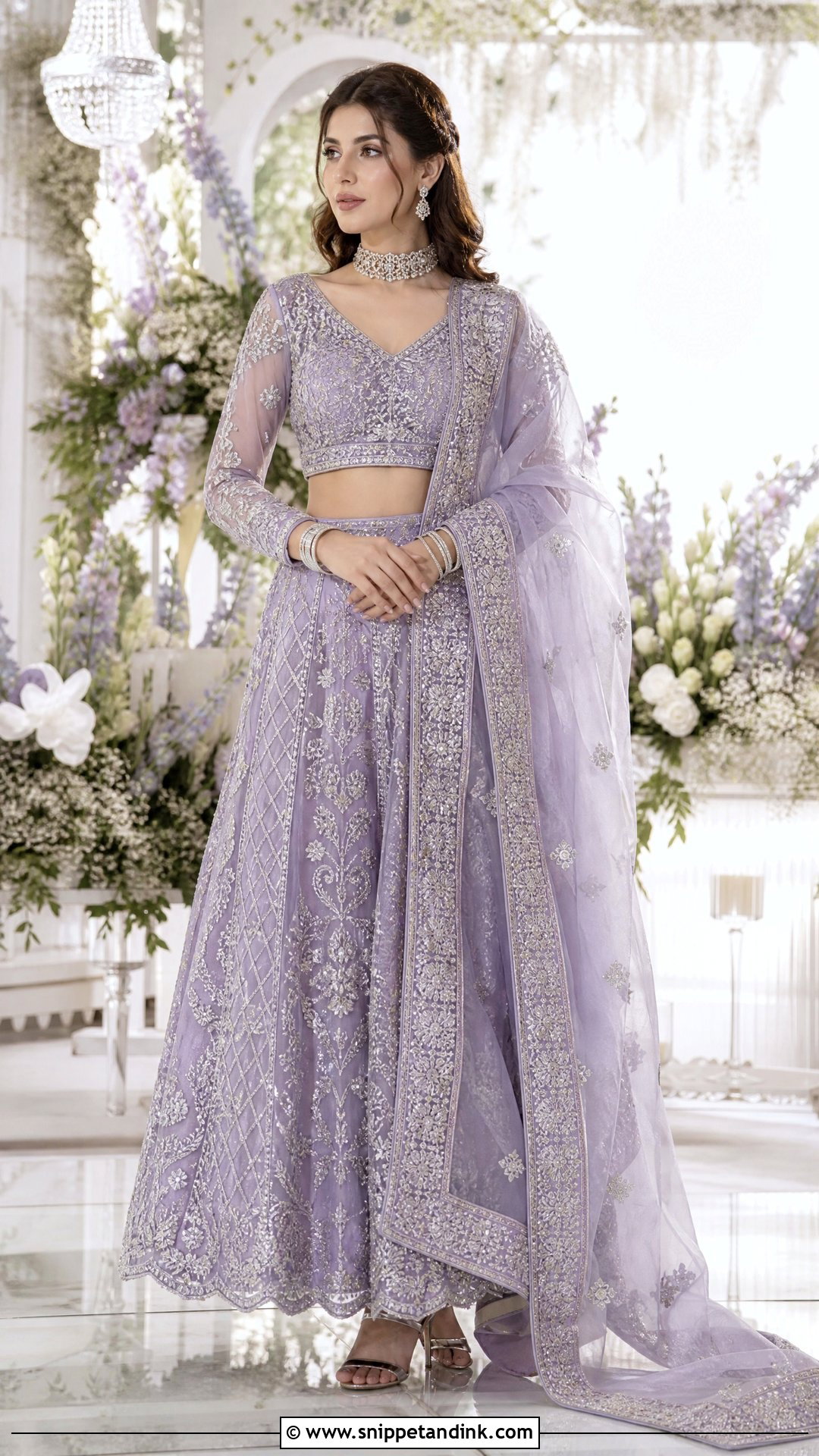
Lavender is a soft choice for a daytime walima, engagement or spring wedding. A fitted choli and a medium-volume lehenga with silver embroidery, pearls and tonal florals look balanced, and a slightly longer blouse adds coverage without changing the proportions. Drape a matching organza dupatta over the head or pin it across one shoulder. Finish the lavender palette with crystal earrings, a fine choker, silver bangles and metallic heels. Small accents of mint, blush or pale blue in the embroidery add contrast if you like it. Lavender dyes vary a lot between batches, so get the dupatta and lehenga dyed together.
12. Teal Velvet Lehenga Pakistani Wedding Dress
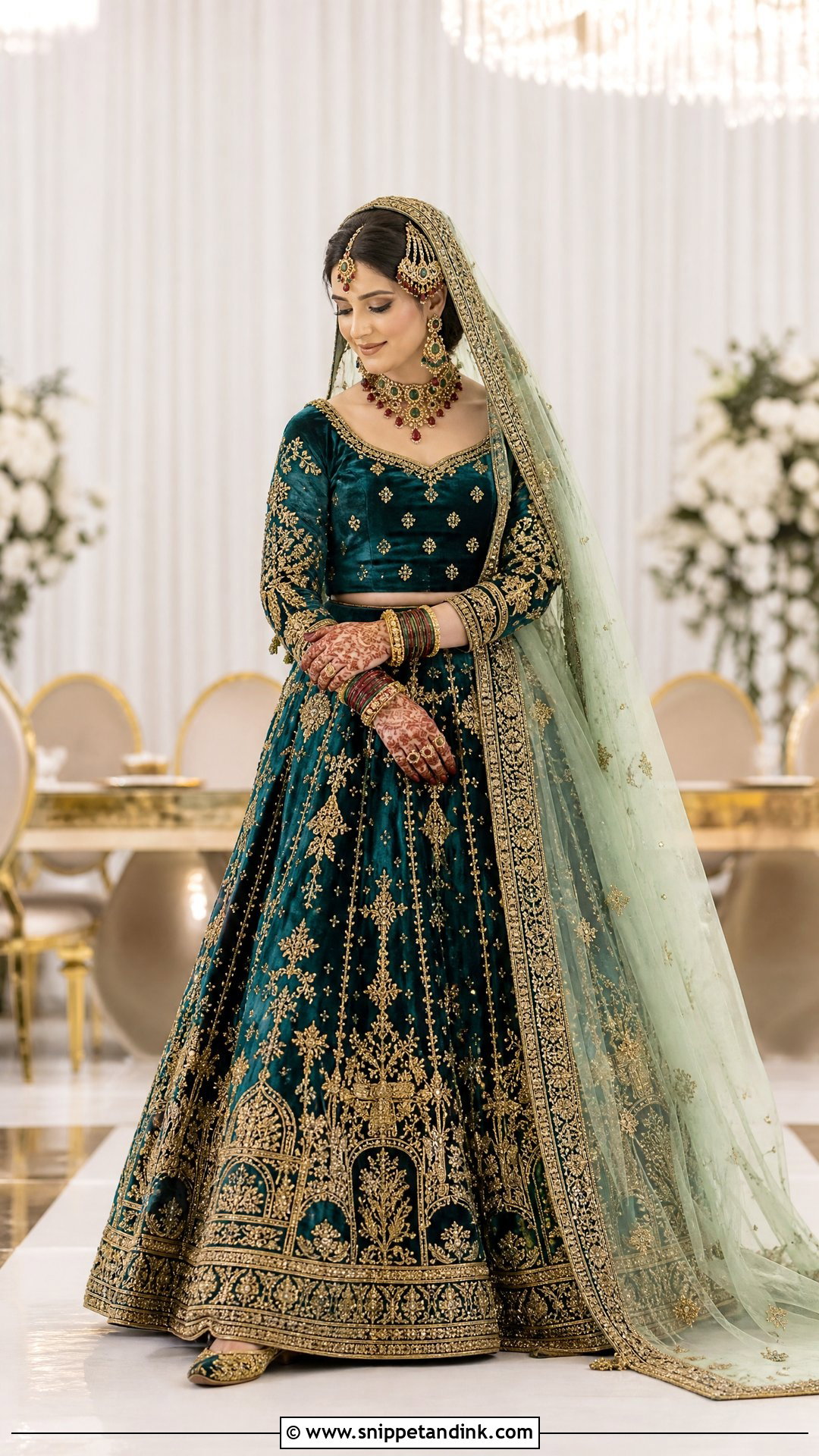
Velvet is the outfit I put cool-season brides in, and teal gives it depth. The trick is placement: embroidery around the neckline, sleeves, waist and lower border only, because velvet covered all over gets heavy and looks crowded. Antique gold dabka, marori and resham warm up the teal. A lighter net or organza dupatta in teal, gold or beige balances the weight. Antique gold with emerald or ruby, a passa and block-heel khussas suit it, plus a center-parted bun. Ask for a breathable lining and a controlled flare. Gathered velvet is hard to carry and very warm indoors.
13. White Bridal Saree Pakistani Wedding Dress
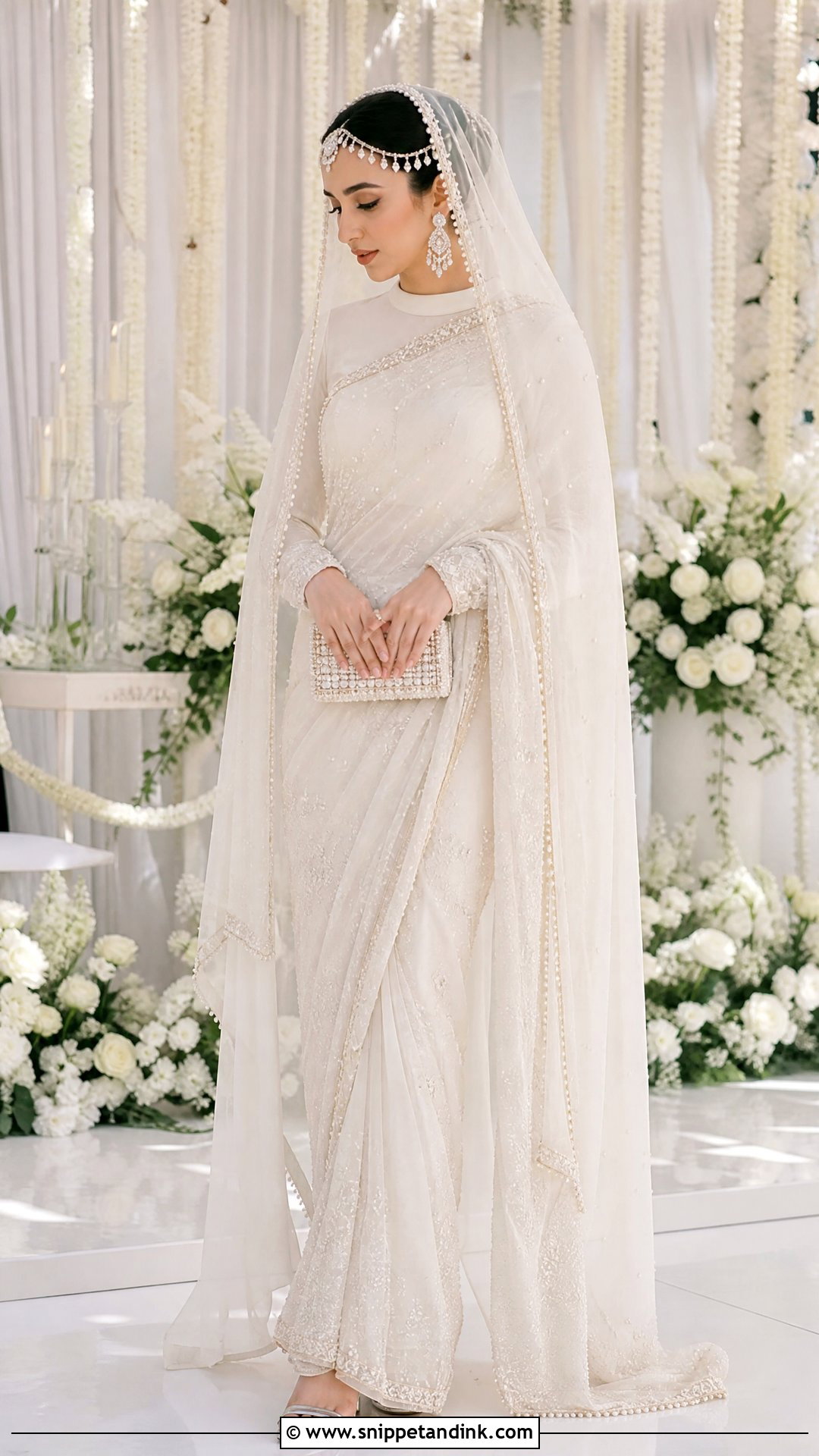
A white bridal saree feels fashion-forward for a nikah or walima. Silk, organza or tissue with pearl work, silver borders or fine white thread keeps it clean, and a fully lined blouse with long sleeves, a modest neckline and detailed cuffs keeps it formal. Pin a separate veil over the head while the pallu stays on the shoulder. Pearls, clear stones, a fine matha patti and white or silver heels suit it, and a compact clutch beats a handbag. Every pleat should be pinned, with hidden fasteners at the shoulder and waist, because a white saree shows a slipped pleat immediately.
14. Powder Blue Pishwas Pakistani Wedding Dress
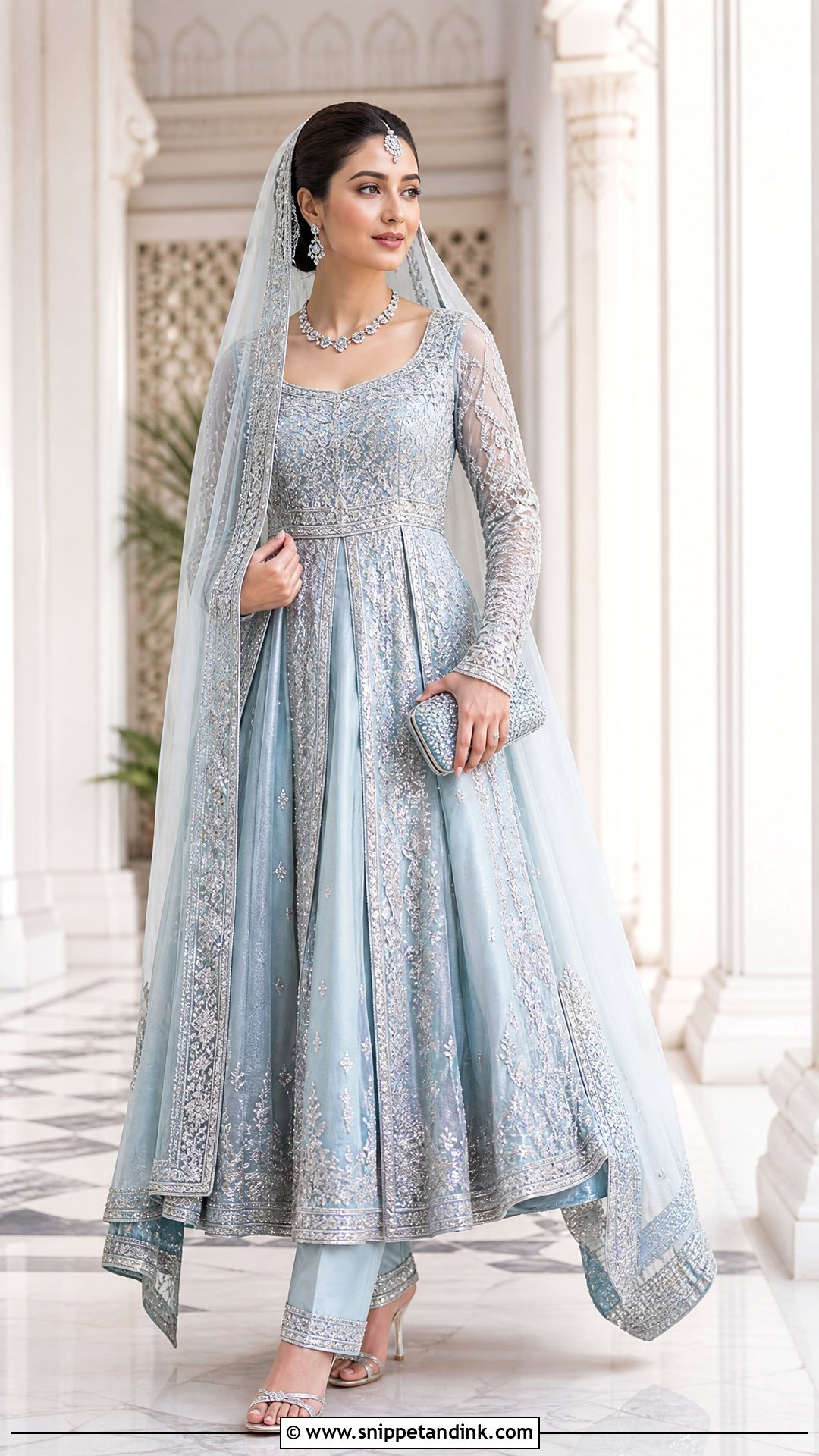
Vertical embroidery lines are the reason a long bridal pishwas in powder blue can look taller than it is. Silver zardozi, crystals, pearls and pale blue thread running down the panels draw the eye lengthwise. A fitted upper body, full sleeves and enough panels to move without bulk suit a walima. Narrow silk trousers and a sheer dupatta worn loosely over the head go with it. Clear-stone jewelry, pearl drops, silver sandals and a small beaded clutch are enough. Waist height depends on your frame: a slightly raised waist helps petite brides, while taller brides can keep a natural waist and a broader hem border.
15. Mustard Mehndi Lehenga Pakistani Wedding Dress
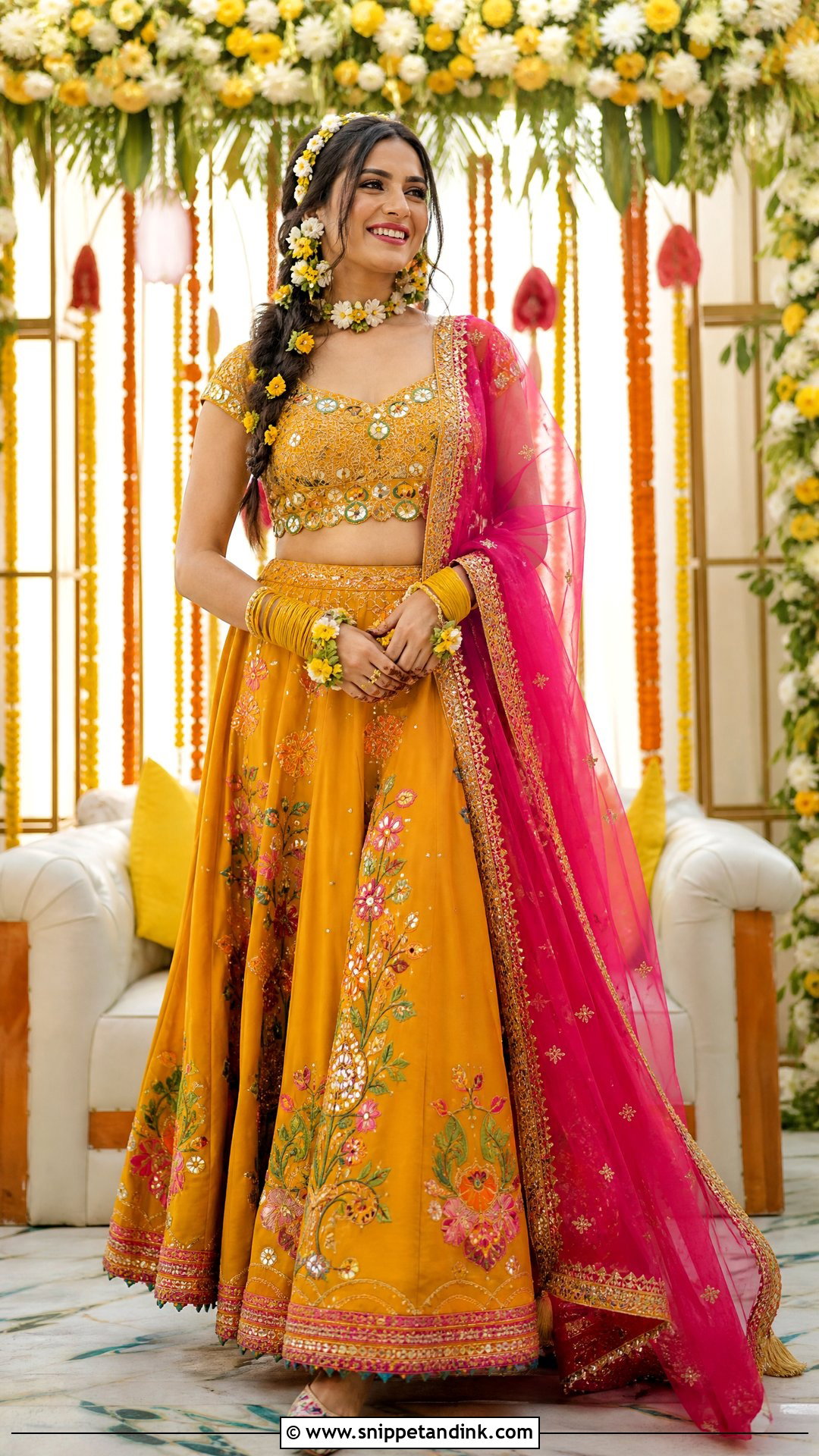
Mustard is cheerful and stands out against busy floral decor. A short embroidered blouse with a flowing lehenga in mirrors, gota, resham flowers and small geometric borders is classic mehndi. I’d bring in fuchsia, orange, green and turquoise through the embroidery rather than adding extra garments. Drape a pink or green dupatta over one shoulder and secure it at the opposite wrist so you can dance without losing it. Floral jewelry, bangles, a small tikka and flat khussas suit the night, with a flower-trimmed braid. Choose light fabric and keep the hem off the floor; mehndi floors get crowded and decorated with petals.
16. Coral Dhaka Pajama Pakistani Wedding Dress
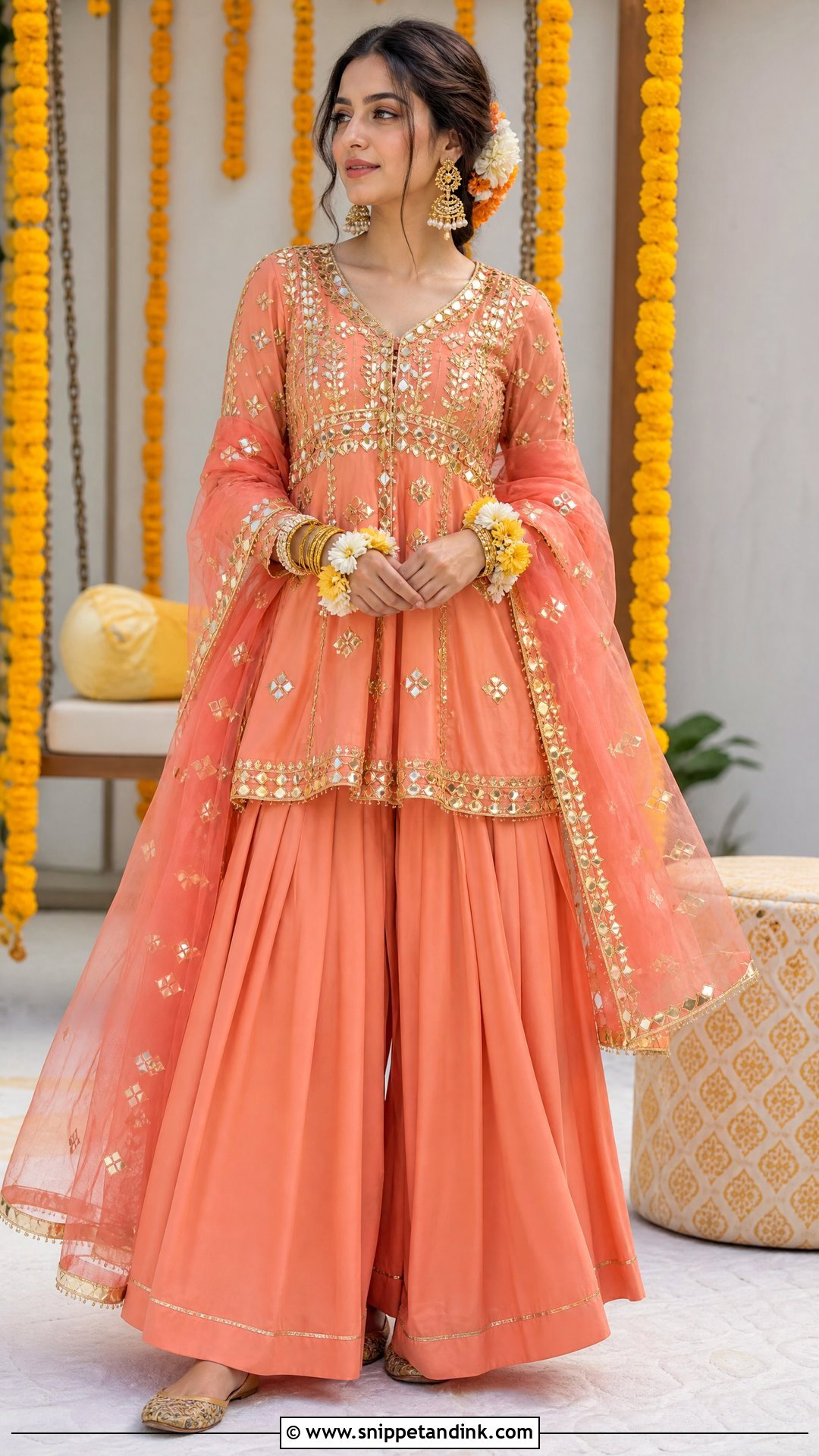
A short coral shirt over a Dhaka pajama is fun for a mayun, mehndi or small pre-wedding event. The shirt should be straight or lightly flared and end above the knee so the wide pleated pants show. Gold gota, mirrors and thread work with small pink or orange touches brighten the coral. Pin a light organza dupatta at one shoulder or wear it around the arms. Gold jhumkas, stacked bangles, a floral hair piece and metallic khussas finish it. Keep the shirt structured through the shoulders; with all that volume below, a soft shirt makes the outfit look bottom-heavy.
17. Mint Jacket Lehenga Pakistani Wedding Dress
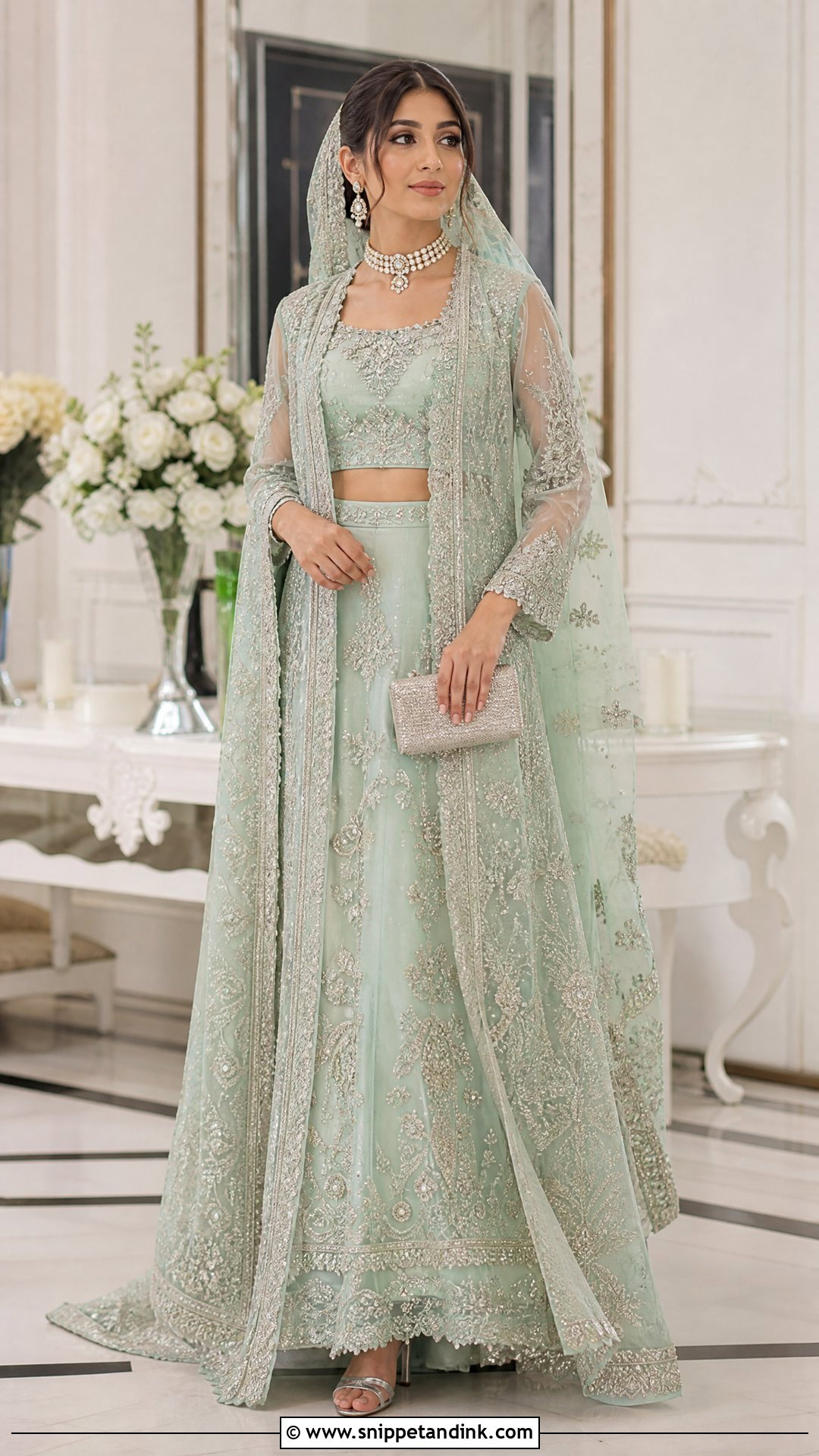
A long, sheer front-open jacket over a lehenga gives an engagement or walima a layered, modern line. A fitted inner blouse and a monochrome mint skirt sit underneath, with embroidery on the jacket’s opening, sleeves and hem in pearl, silver and pale gold. The jacket should stay open enough to show what’s beneath; if it’s cut too narrow it keeps swinging shut and you’ll hold it all night. Wear a light dupatta over the head for the ceremony, then behind the shoulders for the reception. Pearl earrings, a fine choker, silver heels, a structured mini clutch and a sleek bun suit it. The jacket also lets you adjust coverage easily.
18. Plum Bridal Maxi Pakistani Wedding Dress
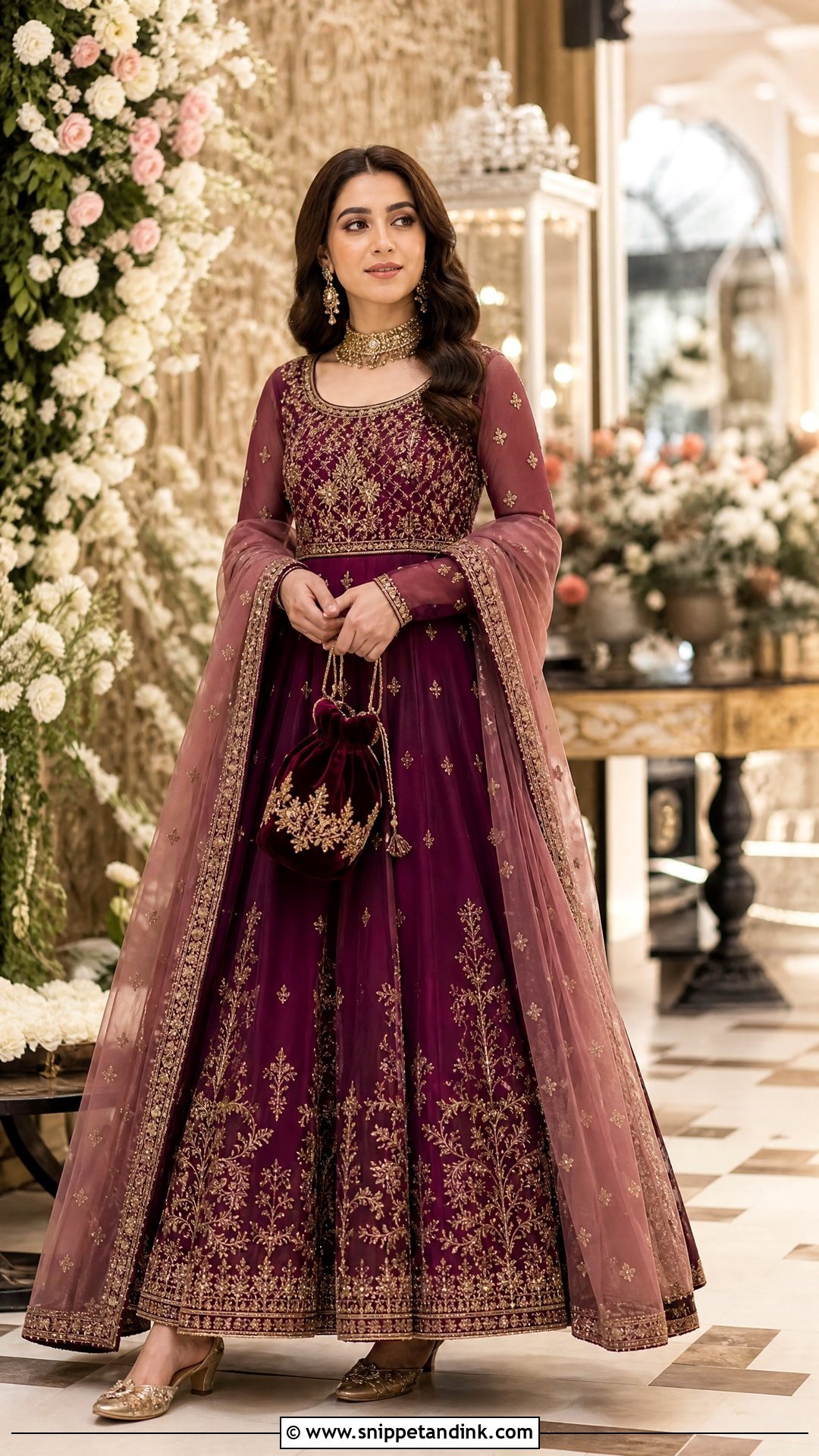
Plum is rich without being red, and a long bridal maxi in it suits an evening event. A fitted bodice, defined waist and gentle flare carry antique gold work, muted pink thread and a few crystals. An organza dupatta in plum or dusty rose with an ornate border adds softness. Antique gold earrings, a choker, matching bangles and low block heels finish it, and a velvet potli adds texture. Dark colors look heavy if the embroidery is all at the top, so I balance the neckline work with some at the hem. Soft waves and berry-toned makeup suit it.
19. Blush Farshi Shalwar Pakistani Wedding Dress
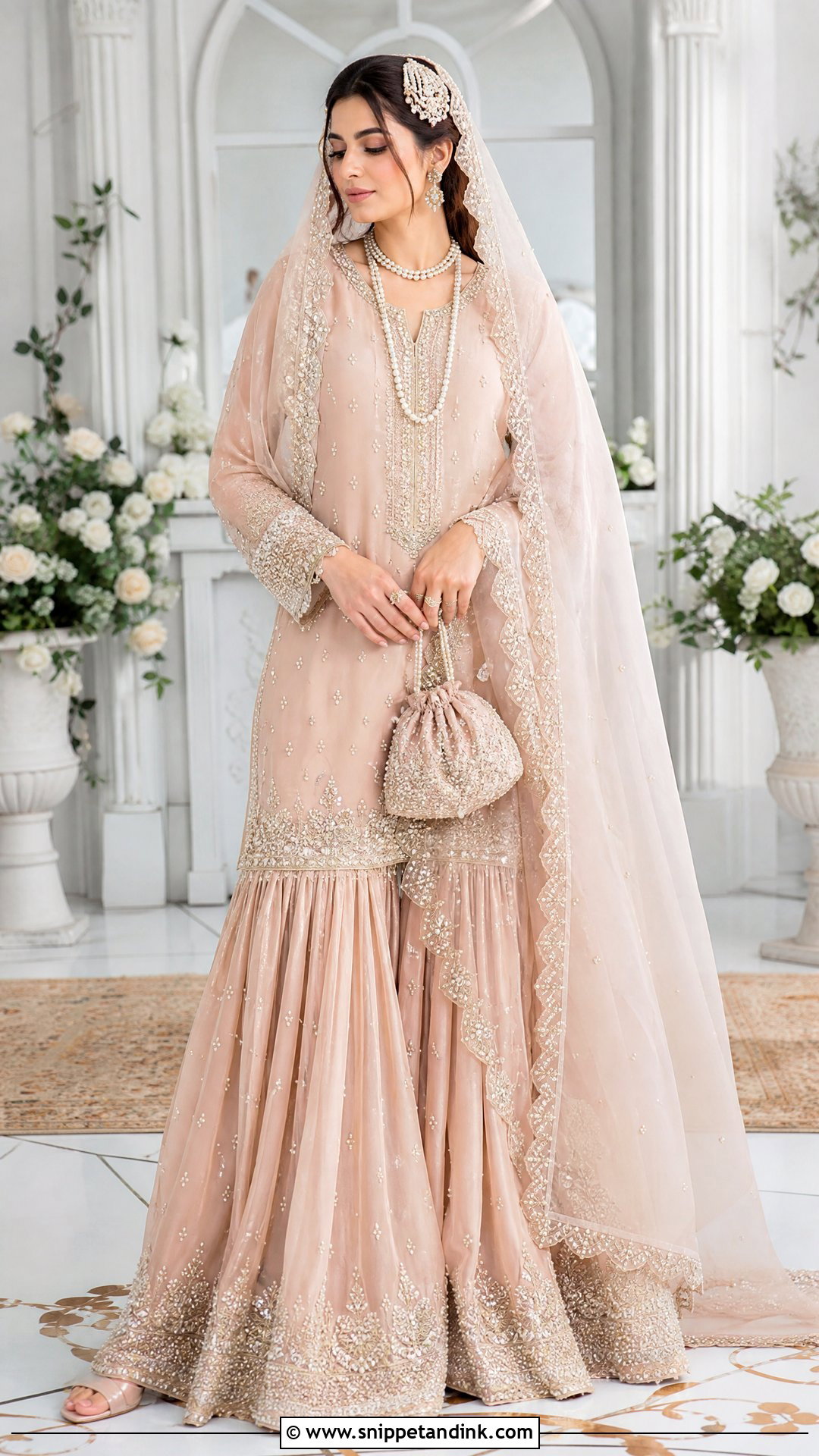
The farshi shalwar is a heritage shape that tailors have brought back with cleaner lines. The kameez falls below the knee, while the wide shalwar gathers near the ankle and spreads softly over the floor. In blush, tonal resham, pearls and silver keep the palette delicate. A sheer scalloped dupatta over the head with one side falling forward suits it, along with pearls, a small passa, blush heels and a beaded potli. Measure the farshi hem in the shoes you’ll actually wear, or you’ll trip on the first step. It looks most refined when the fabric drapes smoothly and the work is placed, not spread everywhere.

20. Deep Red Gharara Pakistani Wedding Dress
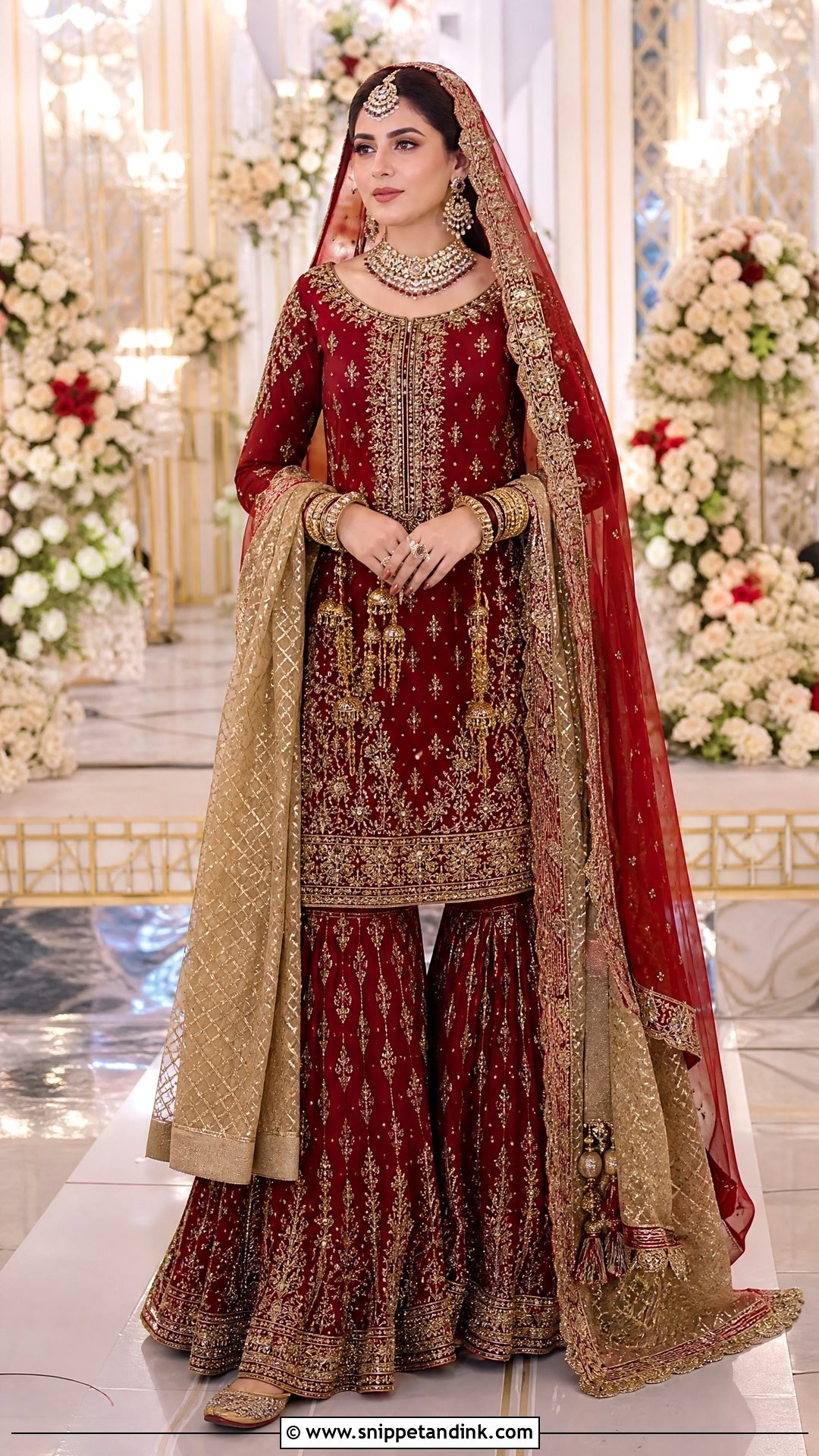
A deep red gharara closes a traditional wardrobe on a classic note. A knee-length kameez with antique gold handwork, a shaped neckline and full embroidered sleeves sits over a gharara fitted above the knee, then flaring wide with a strong gota border. Wear one red dupatta over the head and, if you like, a lighter gold one across the shoulder. Polki, a statement tikka, bangles and gold khussas, plus a low bun and red lip, keep it formal. The kameez length, knee seam and flare have to agree with each other, so do every fitting with the full outfit on.
Ordering From a Designer When You Live Abroad
Plenty of brides order from Pakistan while living elsewhere, and the outfit then arrives with no chance for a fitting. I plan for that from the start.
- Get measured by a local tailor rather than at home with a tape, and send the numbers together with photos of how you measured.
- If you have a kameez that fits you well, send it or its exact measurements as a reference.
- Ask the designer for extra seam allowance at the bust, waist and sleeves, so a local tailor can let it out.
- Agree on a dispatch date that leaves several weeks before the wedding, and use tracked shipping. Customs charges and delays vary by country.
- Find an alterations tailor near you who has worked on heavily embroidered pieces before the outfit lands.
When it arrives, try it on straight away, not the week of the wedding. Embroidered seams take longer to alter because the tailor has to unpick and re-lay the work around them.
Put On Every Layer, Shoes Included, Before the Last Fitting
Each outfit here should fit your taste, your family’s traditions, the event and how you actually want to feel in it. The collection covers everything from mustard mehndi lehengas to classic red baraat outfits and soft walima gowns, and you can shape any of them through fabric, sleeve length, embroidery density, dupatta placement and jewelry. Before final alterations, wear the whole outfit with your shoes, then sit, walk and turn in every layer. Good tailoring is what turns any of these from a picture into something you can wear all night.
You'll Like These Ideas:


Leave a Reply