
When a family asks me to help dress them for a Pakistani wedding, I ask about the calendar before I look at a single swatch: which function, what time of day, indoors or under a marquee, and how many hours everyone will be sitting on low seating. The outfits below run across the whole sequence of events, from a baraat lehenga and a nikkah gharara to mehndi shararas, walima gowns and guest suits, with Anarkalis, sarees and embroidered three-piece suits in between. I’ve styled each one from dupatta to shoes, because in this kind of dressing the accessories carry nearly as much weight as the shirt. A bride can take any of these cuts into heavy handwork and fuller proportions. A guest can wear a lighter version of the same silhouette without competing with her.
Matching Fabric Weight to Each Function
A Pakistani wedding is several events, often over several days, and each has its own temperature, seating and dress code. I plan the wardrobe as a set rather than five separate outfits, so the fabrics make sense together and nobody spends the baraat sweating in velvet chosen for a December walima.
- Mehndi and dholki: lots of floor sitting and dancing, often outdoors or in a courtyard. Georgette, light raw silk and cotton blends move and breathe. Keep mirror work and gota on the kurti, not on the parts you sit on.
- Nikkah: frequently daytime and seated for the ceremony. Organza, chiffon and lighter handwork photograph softly and stay comfortable on a sofa or stage.
- Baraat: the heaviest outfit of the week for the bride and close family. Raw silk, jamawar and velvet carry dense zardozi without sagging.
- Walima: usually more formal and often in the evening. Silver, pastels, gowns and pre-draped sarees fit the mood, and guests can step down in embroidery here.
Check the venue too. A marquee in winter can be colder than you expect, and a packed banquet hall in summer can be hotter. I’d rather add a shawl to a light outfit than ask someone to survive five hours in fabric that was wrong for the room.
1. Red Pakistani Bridal Lehenga Dress
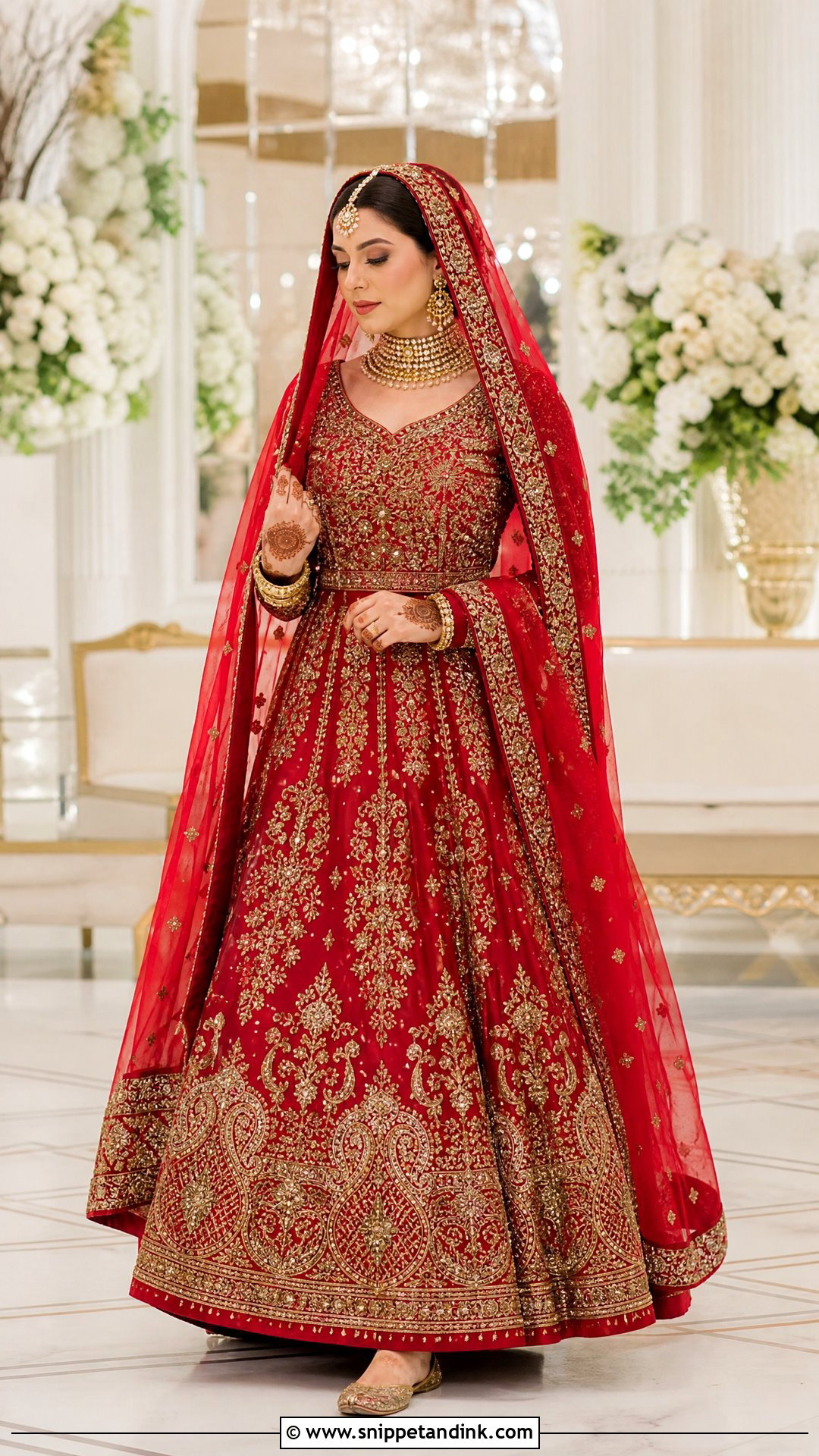
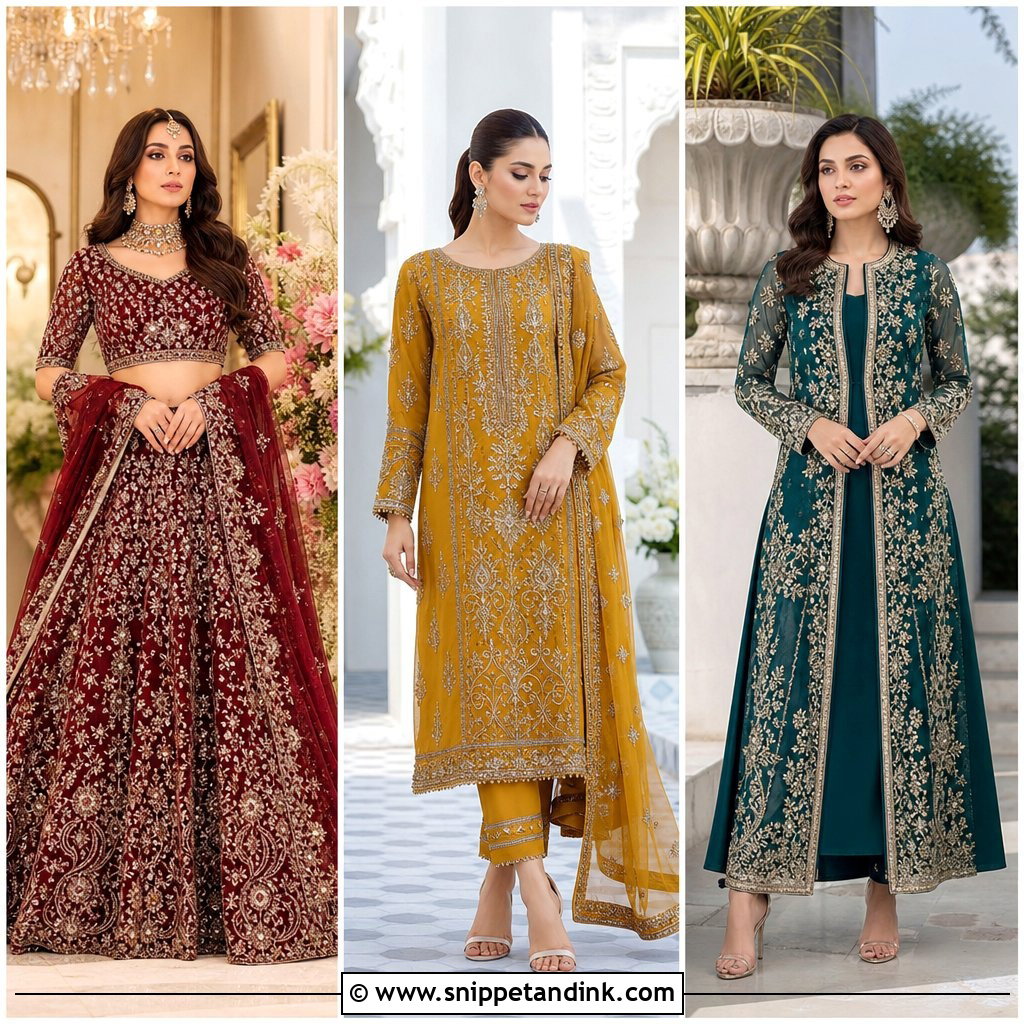
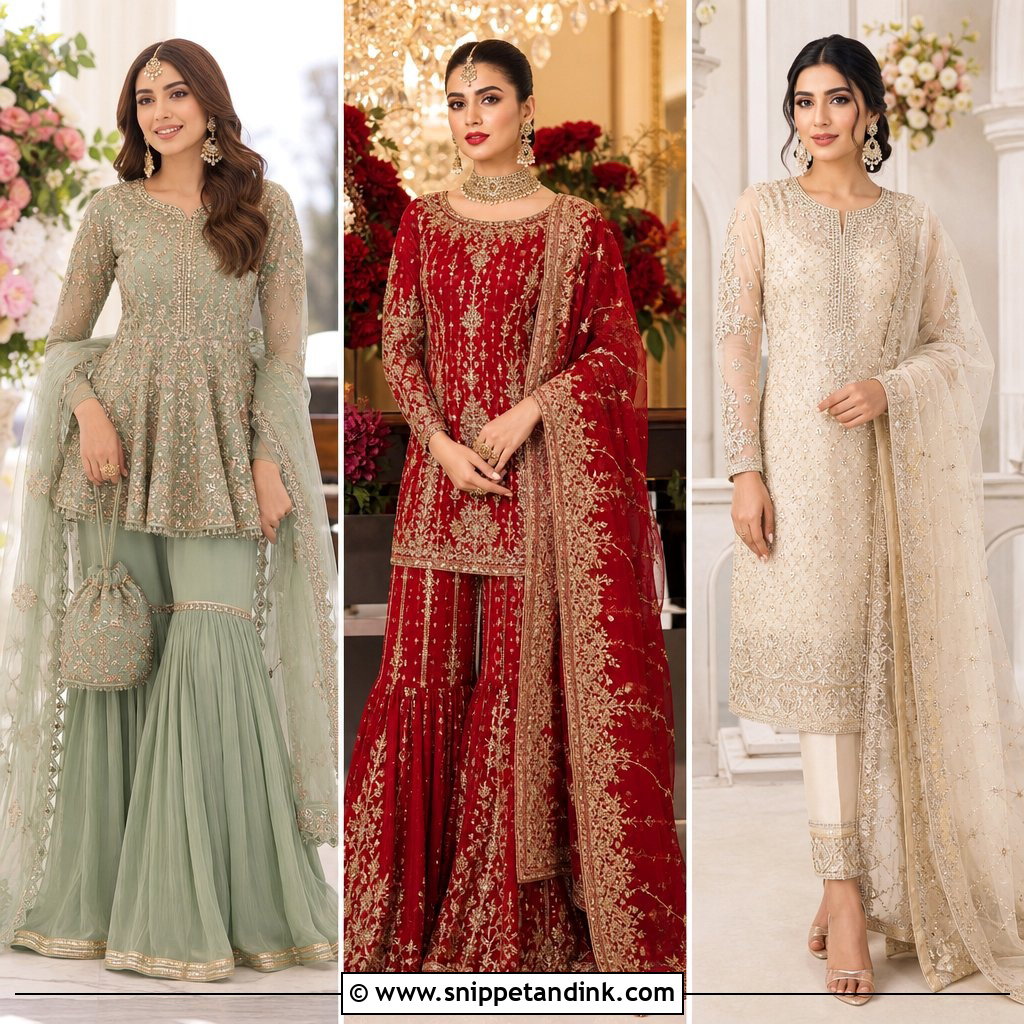
Red is still the baraat colour most families expect, and a structured raw silk lehenga carries gold zardozi, dabka, resham and pearl work without the skirt collapsing. Pair it with a fitted, modest choli with three-quarter sleeves and a neckline you can breathe in. The two-dupatta arrangement is where brides struggle on the day: the heavily bordered net one over the head and a lighter matching one across the shoulder. I anchor the head dupatta to the bun and pin through the embroidered border, never the bare net, because net tears once the weight of the zardozi starts pulling. Finish with a kundan choker, a long necklace, jhumkas, bangles, a maang tikka and gold embroidered khussas under the hem. Mixing crimson, ruby and maroon in the panels gives more depth than one flat red, and defined eyes with a matched lip keep the face from disappearing under all that gold.
2. Ivory Pakistani Nikkah Gharara Dress
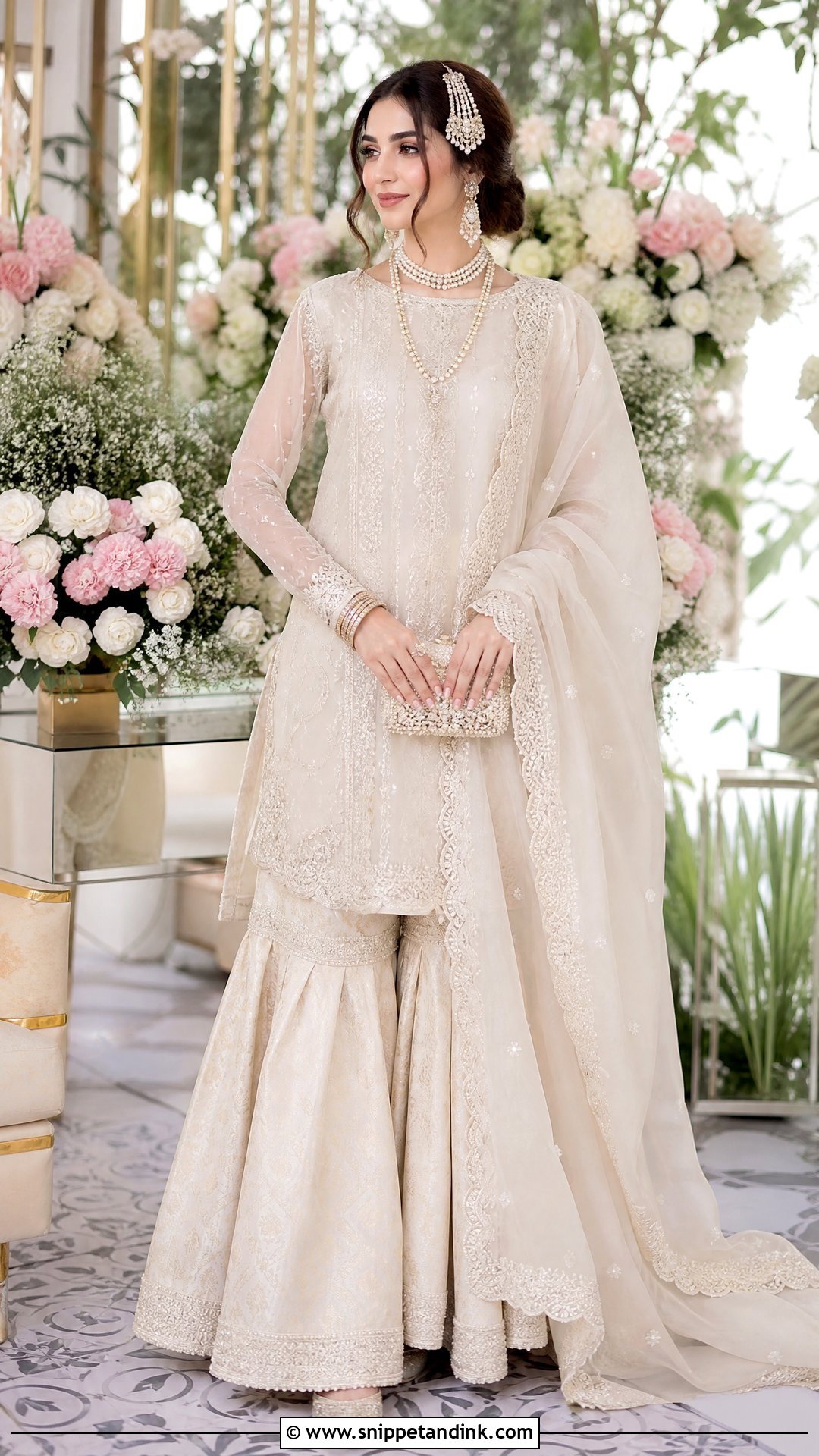
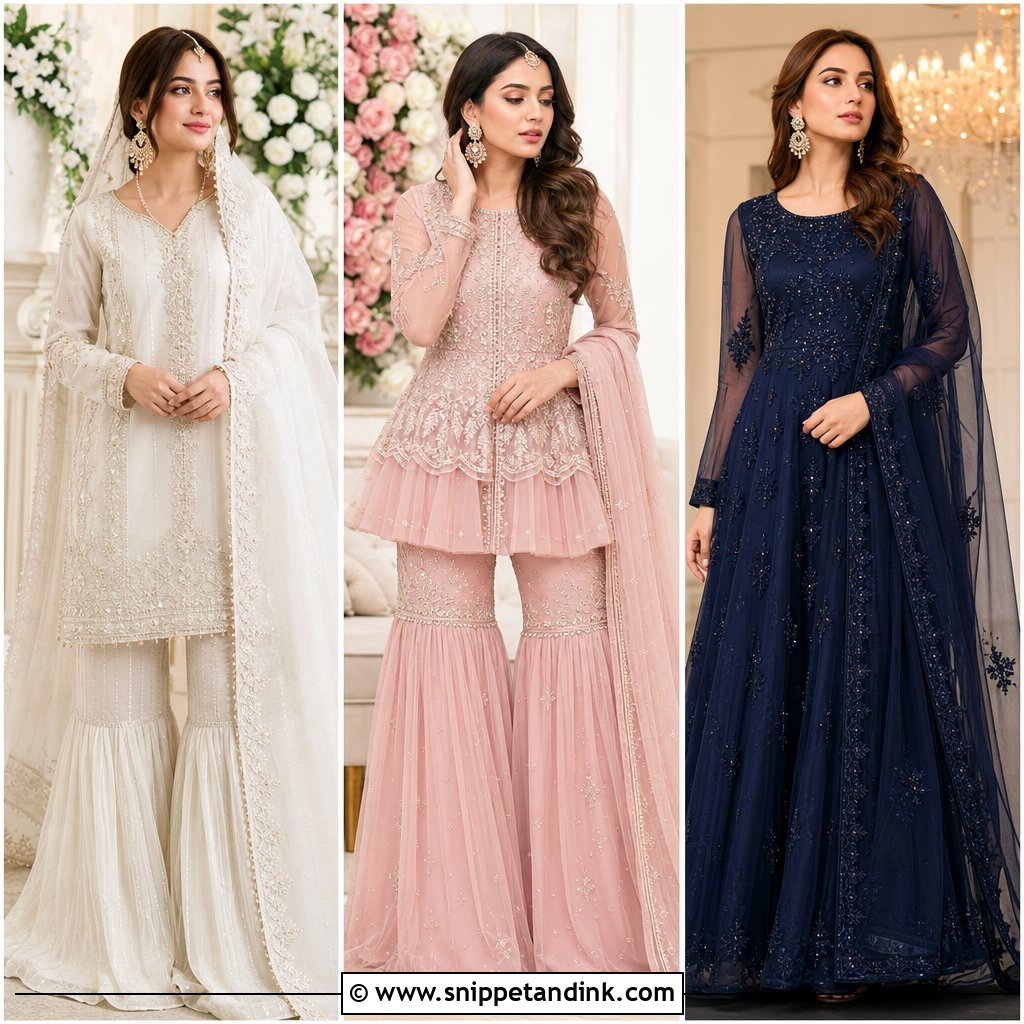
Ivory organza with pearl, sequin and silver thread work around the neckline, cuffs and hem suits a daytime nikkah well. The knee-length shirt sits over a jamawar or tissue gharara that is fitted above the knee and flares below it. The detail I check first is the gharara joint, the gathered band at the knee: it should land right on the knee while you’re wearing your actual shoes, or the flare starts too low and you shuffle instead of walking. Ivory organza also shows whatever is underneath, so ask for an ivory or skin-tone lining rather than bright white. Add a scalloped organza dupatta, pearl earrings, a small passa, silver bangles, an embellished clutch and ivory or metallic khussas. Guests should wear lighter embroidery here and check the family’s palette first, since many nikkah brides choose ivory themselves.
3. Mustard Pakistani Mehndi Sharara Dress
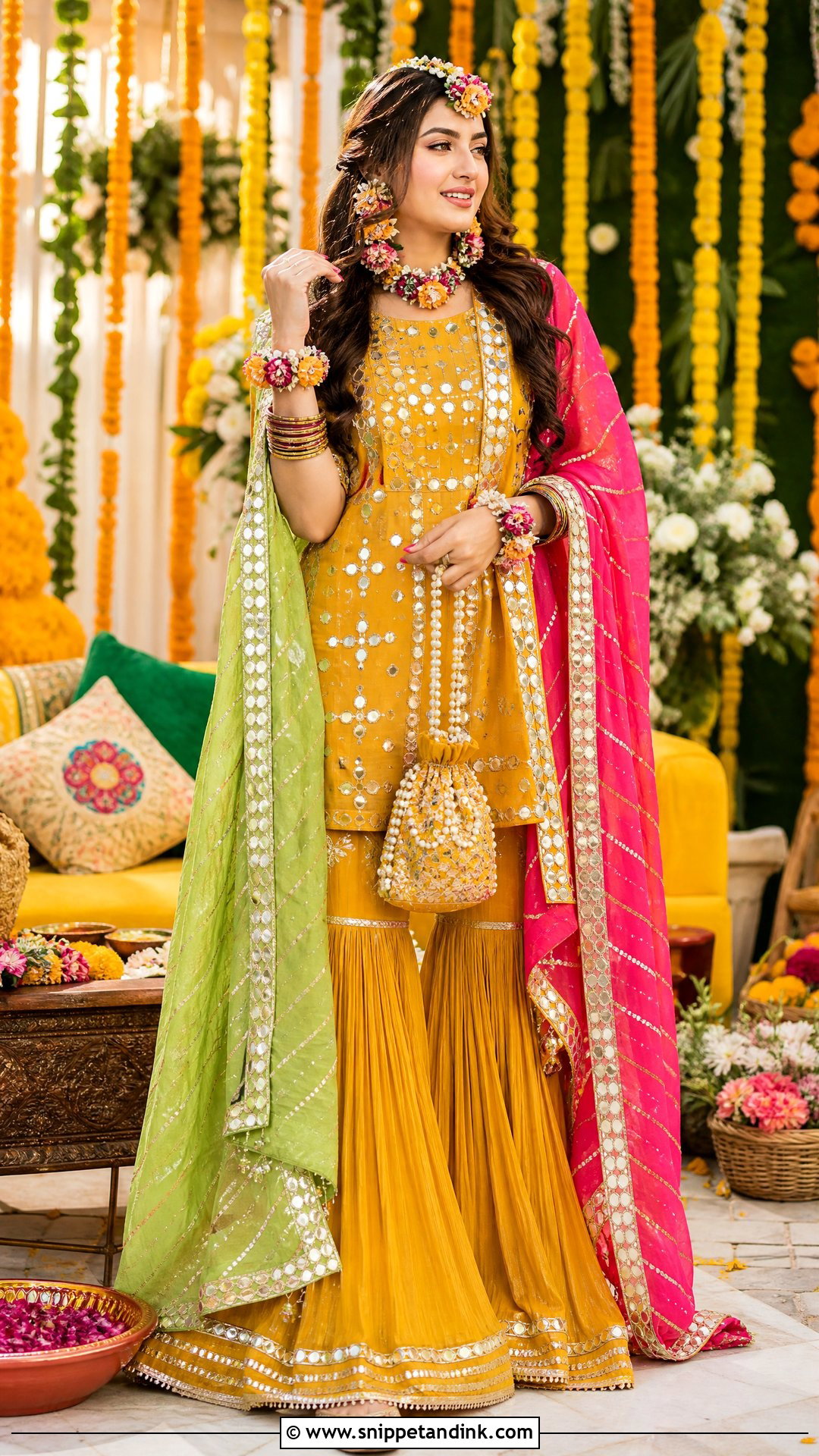
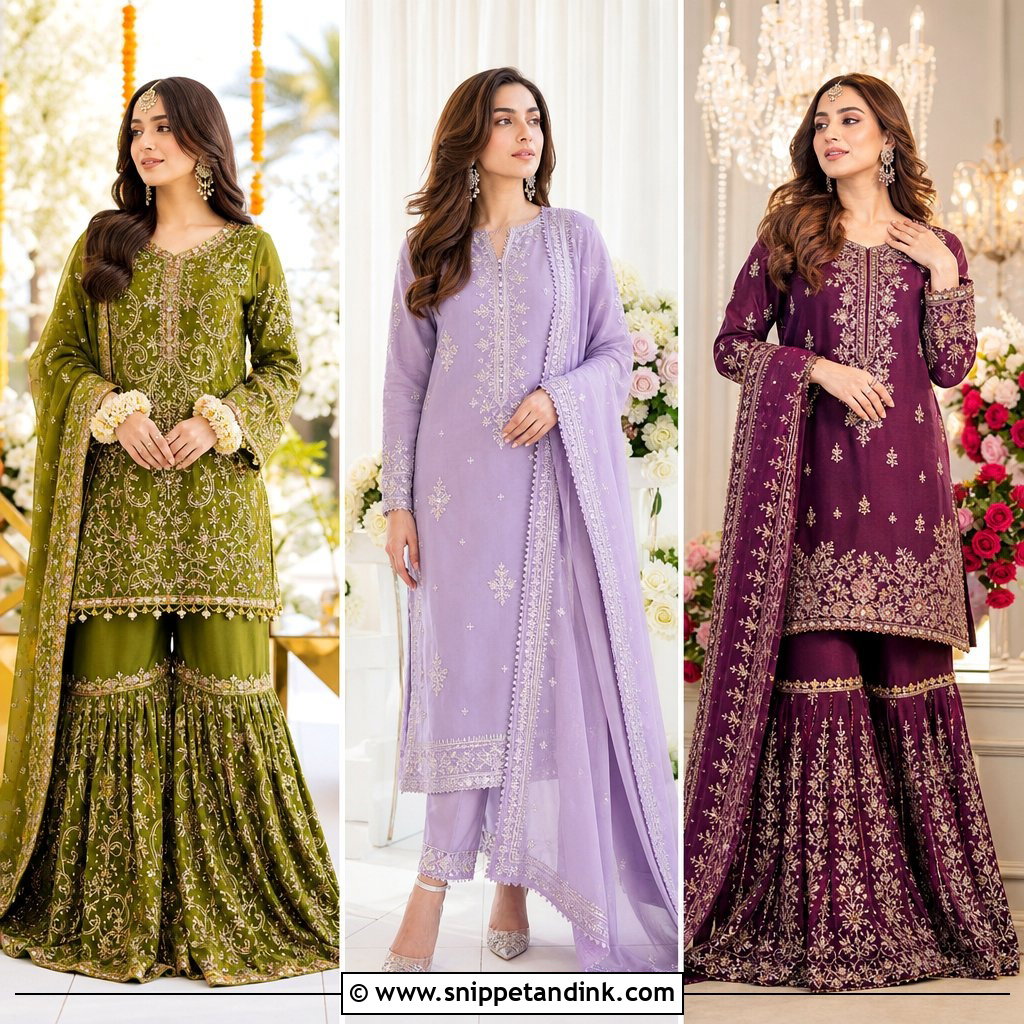
A mustard mehndi outfit is cheerful, but it’s also the colour that changes most under light. I always look at mustard fabric in daylight and again under warm bulbs, because a shade that reads golden outdoors can turn khaki under yellow fairy lights. The short kurti carries gota, mirror work, thread embroidery and small tassels along the hem, and sits over a flowing sharara in georgette or light raw silk. A green, orange or hot pink dupatta adds movement. Let one colour lead and keep the others as accents. Floral jewellery, colourful bangles, jhumkas, gold khussas and a beaded potli bag finish it, with a braid or soft waves. Make sure the sharara is cut with enough ease to sit cross-legged and dance, since that’s most of what happens at a mehndi.
4. Emerald Pakistani Velvet Lehenga Dress
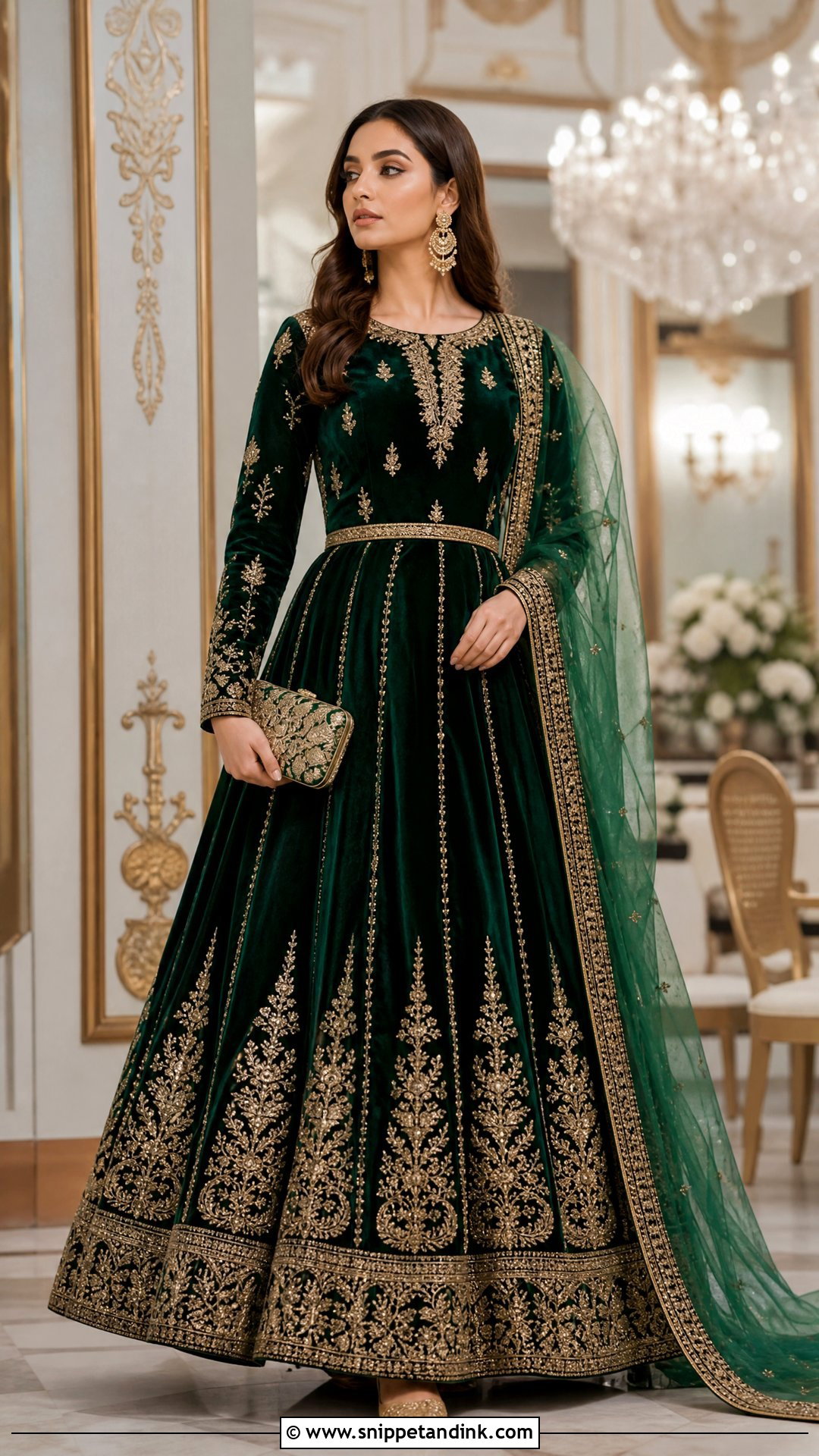
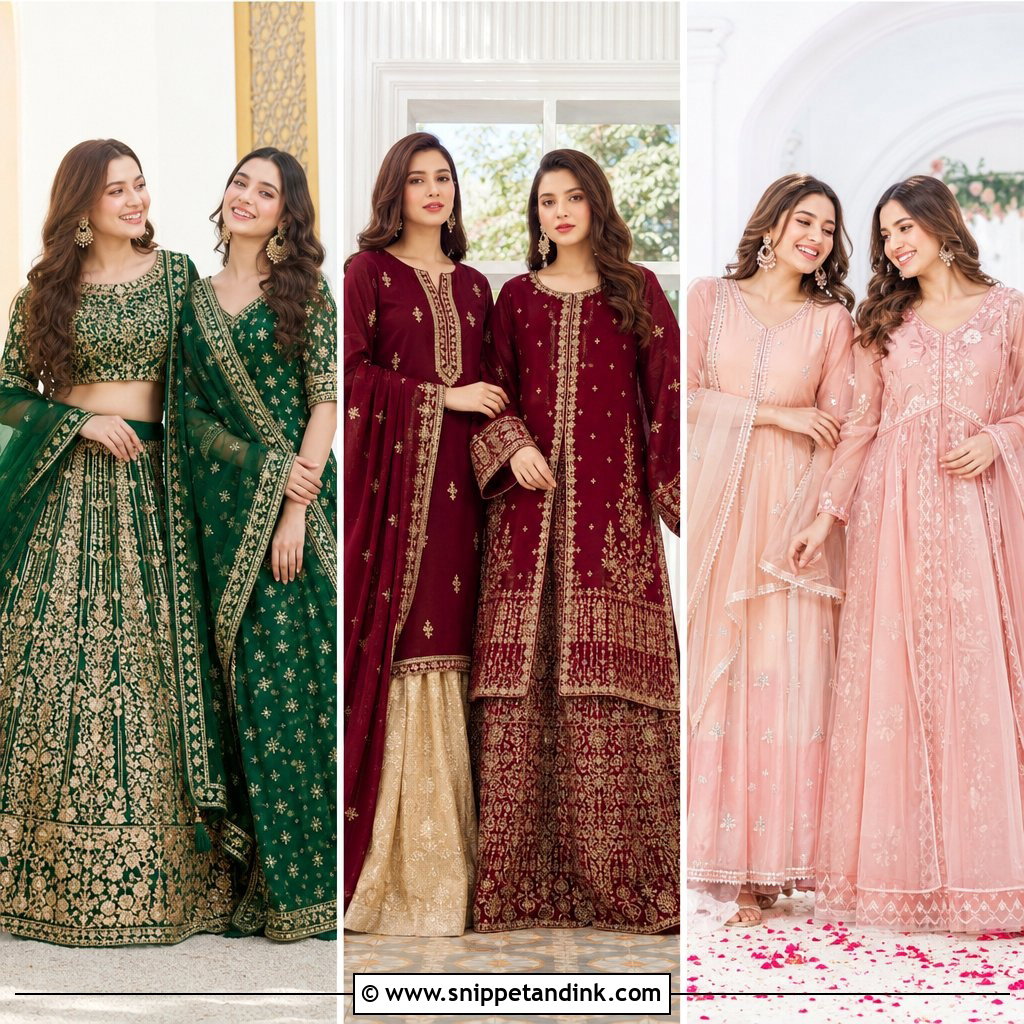
Emerald velvet earns its place at a winter reception or an evening wedding indoors. A paneled lehenga with antique gold embroidery at the waist and hem, a full-sleeved matching blouse and an organza or net dupatta keep the weight manageable. One technical point matters more than the embroidery: every velvet panel has to be cut with the pile running the same way. If one is reversed, it reads as a different shade the moment light hits it, and you can’t fix that after stitching. Velvet also marks when you sit, so I tell brides to smooth the skirt under them rather than plopping down. Antique gold jhumkas, a statement ring, an embroidered clutch and gold khussas or low block heels are enough. The fabric already has depth, so resist covering every inch in handwork, and keep the hair in a sleek bun.
5. Blush Pink Pakistani Anarkali Dress
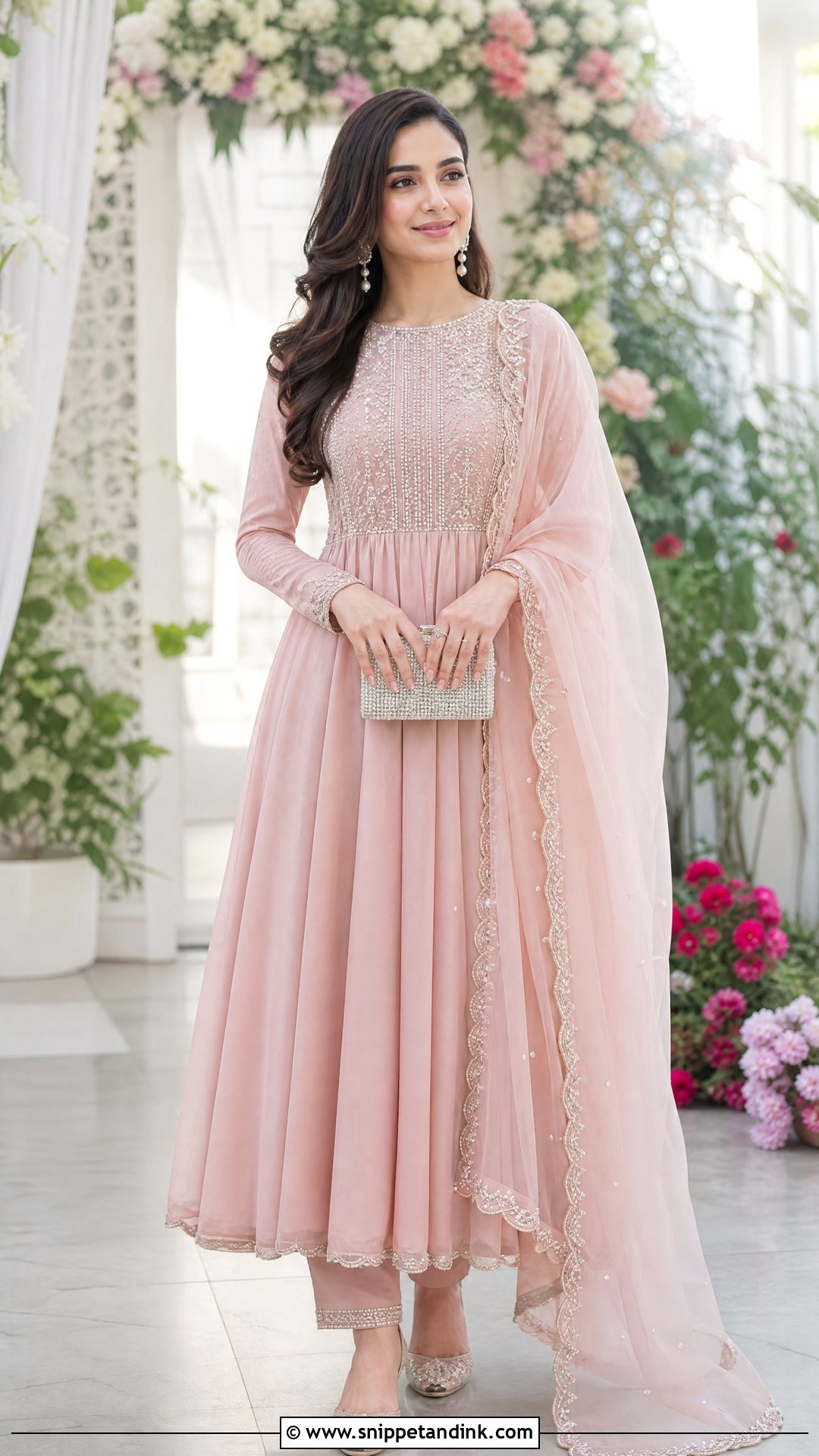
Blush Anarkalis suit a nikkah, engagement or daytime reception, and the whole effect depends on where the waist seam sits. Too low and the flare looks dropped; just at or slightly above the natural waist and the skirt falls cleanly to the floor. The number of panels decides how full that flare is, so ask the tailor how many kalis they’re cutting before you agree a price. Tonal resham, pearls and a few sequins keep the colour soft. Very pale pink can wash out against fair skin under flash, which is one reason I like tonal embroidery here: it gives the camera something to hold onto. Narrow straight pants, a sheer dupatta with a fine border, pearl drops, a delicate bracelet and a small silver clutch complete it. Embroidered flats or low heels can stay hidden under the hem. Soft curls and a rose lip are all the styling it needs.
6. Navy Pakistani Chiffon Maxi Dress
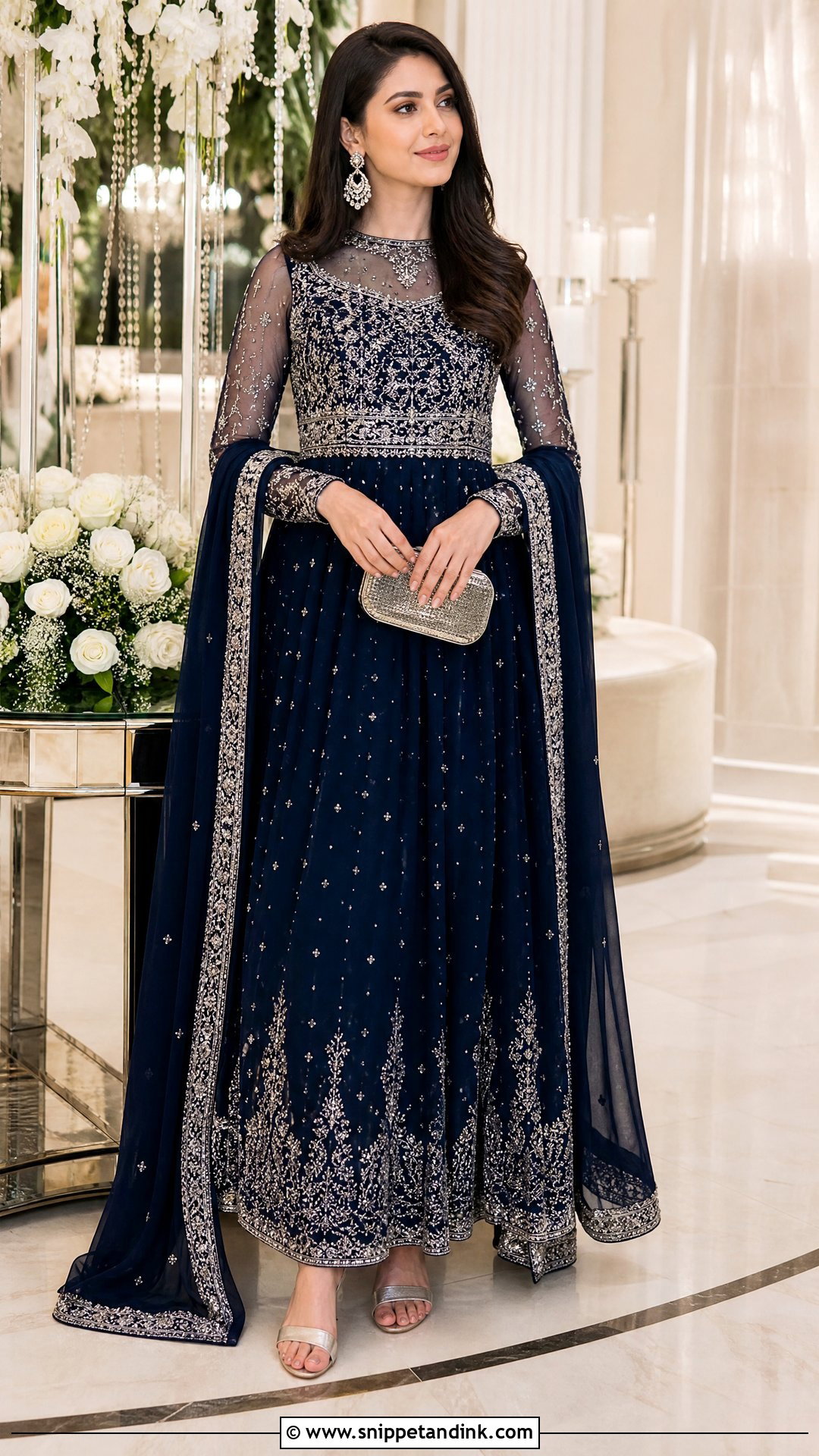
Navy chiffon under evening lights reads close to black, which is exactly why I suggest it to guests who love dark colours but aren’t sure black will be welcome. Chiffon is sheer and clingy, so the bodice must be properly lined and the waist clearly defined. Silver threadwork, crystals or scattered sequins lift the colour without crowding it. Add sheer full sleeves and a matching chiffon dupatta with a narrow embellished edge, then silver heels, a structured clutch and crystal drop earrings. If the neckline is heavily worked, skip the necklace entirely. A low bun or side-parted waves keeps it clean. Guests can wear lighter detailing; close family can choose a fuller skirt and richer embroidery.
7. Gold Pakistani Tissue Pishwas Dress
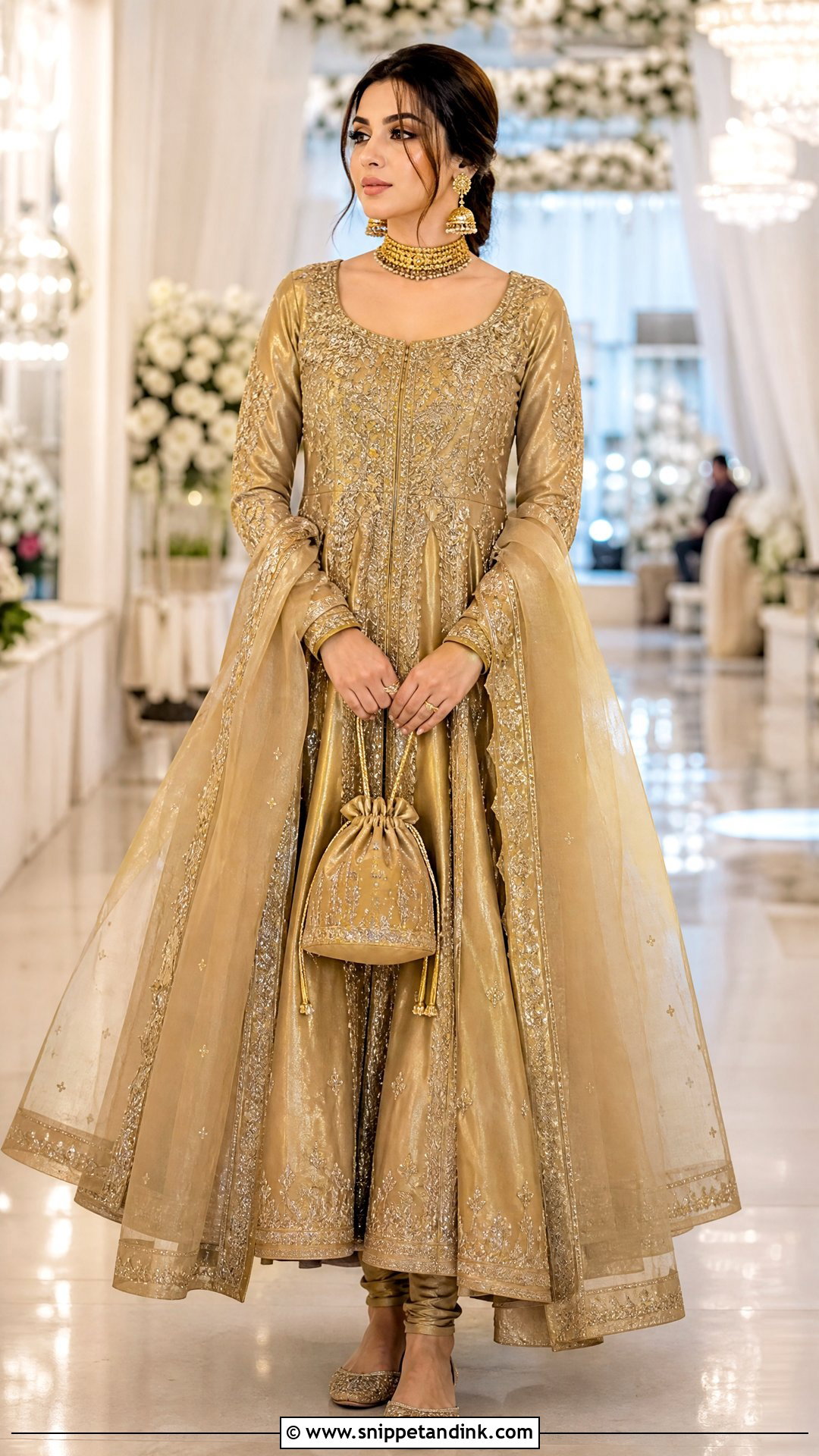
A gold tissue pishwas gives regal volume without a separate lehenga skirt. The kalidar cut uses many panels, a fitted upper body and a wide circular hem, with antique gold embroidery, bronze accents and small pearls defining the neckline and panel seams. Tissue has one drawback I always warn about: the metallic weave can be scratchy on the inner arms and underarms. Ask for the sleeves and bodice to be lined in soft cotton or silk, and steam it the day before, because tissue holds every crease. Fitted churidar, a light net dupatta over one shoulder, a traditional choker, medium jhumkas and a textured potli bag are enough. Gold khussas are more practical than tall heels under that much skirt. Mixing matte and reflective finishes keeps a single-colour outfit from looking flat, and a centre-parted bun suits receptions and formal family dinners.
8. Teal Pakistani Peplum Gharara Dress
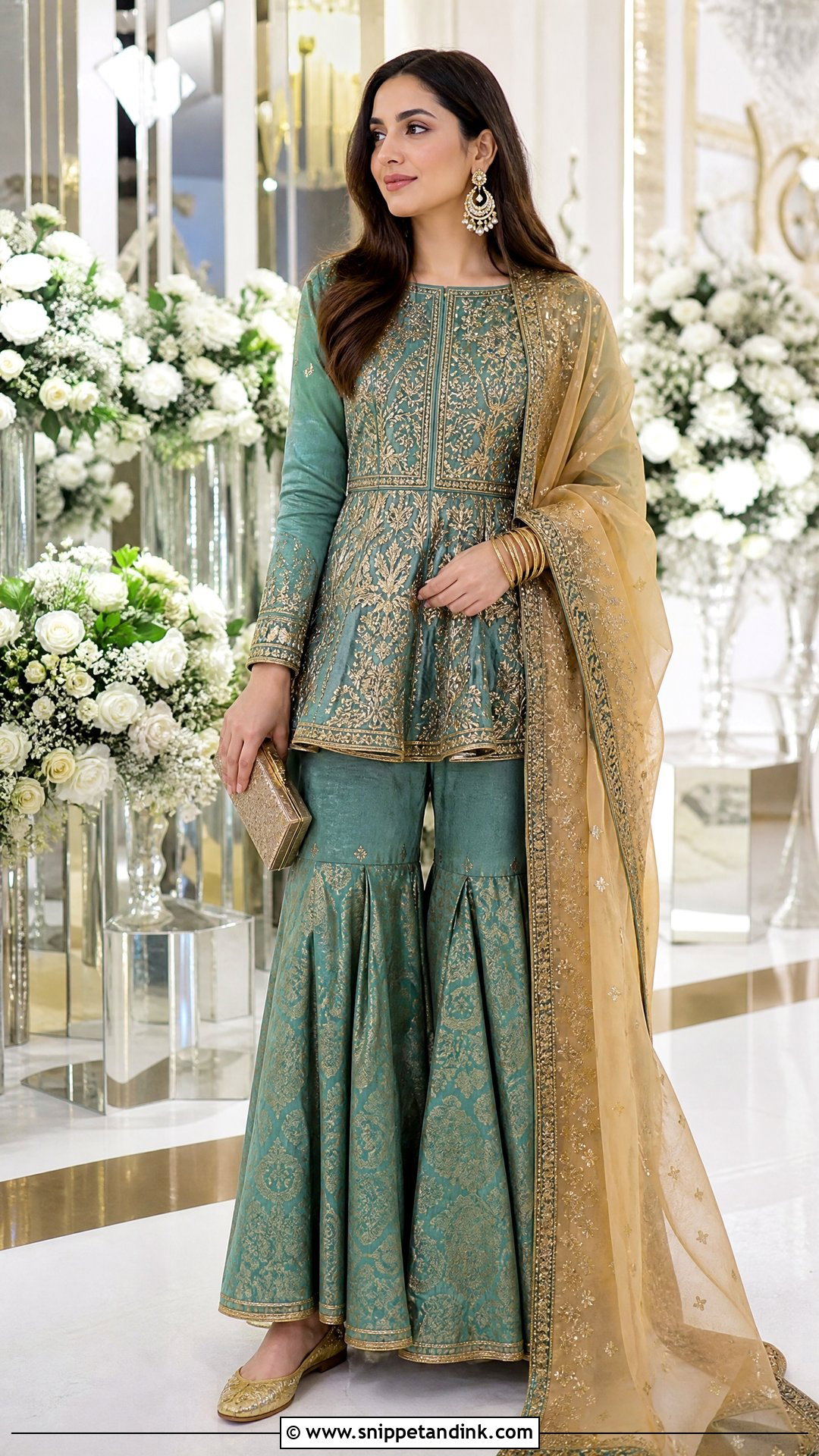
Teal peplum over a gharara gives a defined waist on top and traditional volume below. The peplum should finish around the upper hip and skim the body, not grip it, since you’ll be sitting through dinner in it. Embroidery along the neckline, waist and flared hem gives it enough presence for a baraat. With a raw silk or jamawar gharara, I check the knee joint height with the bride standing in the shoes she’ll actually wear, because a two-inch heel moves that line noticeably. An antique gold dupatta warms the cool teal. Chandbalis, stacked bangles, a box clutch and gold or teal khussas finish it. Keep jewellery controlled; the layered shape already does the talking.
9. Maroon Pakistani Farshi Gharara Dress
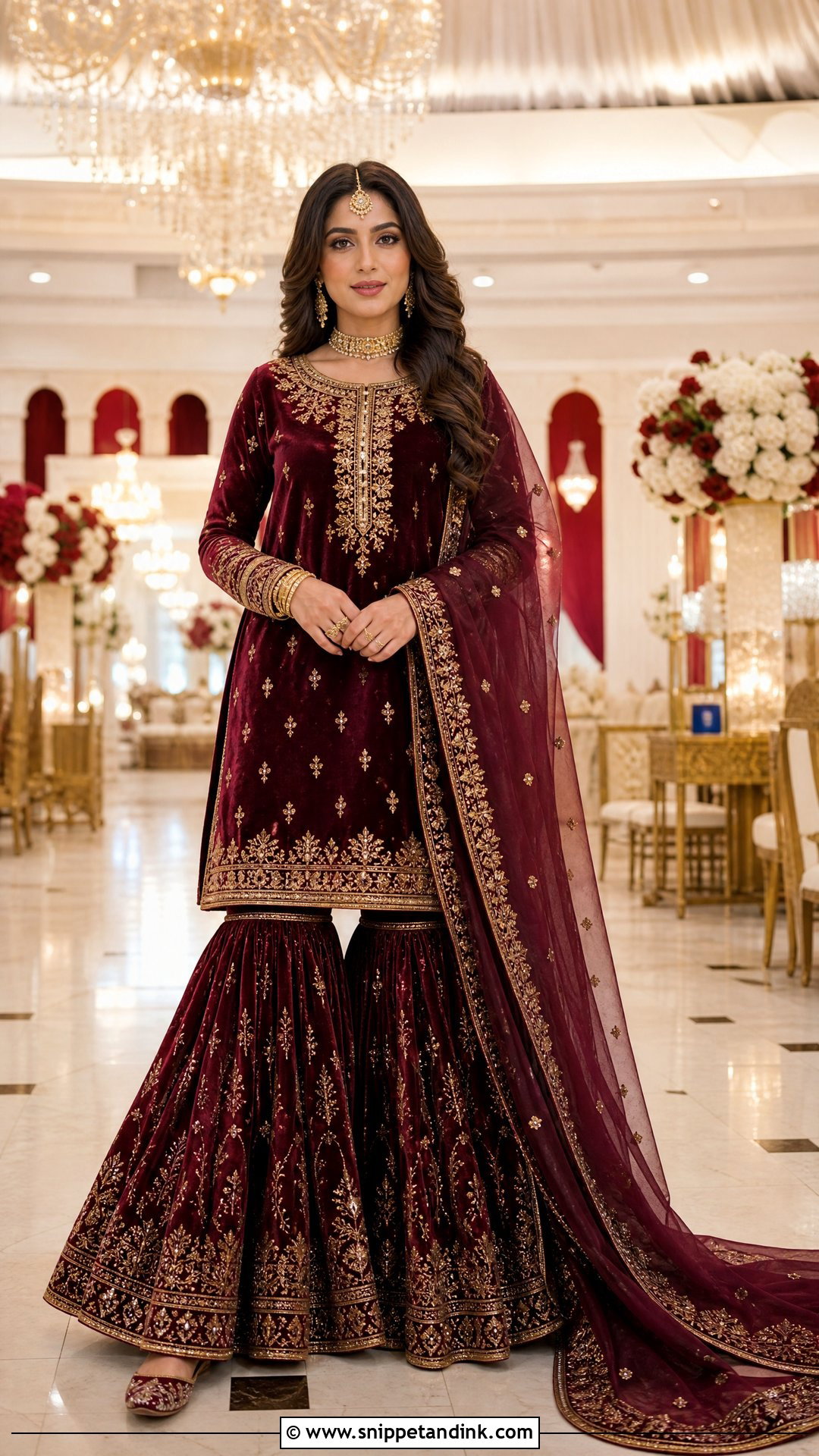
Deep maroon gives a farshi gharara the weight a formal wedding calls for. The shirt is straight or slightly fitted and knee length, in velvet, raw silk or embroidered chiffon, over an extra-wide gharara that pools around the feet. That pooling is the point, but it means someone has to help you on stairs and stage steps. I hem a farshi so it rests on the floor in front and trails slightly behind, never so long at the front that your toes catch it. Gold dabka, zari and sequin borders on the flare, a net dupatta with a broad border, a kundan necklace, studded earrings, bangles and embroidered khussas complete it. Guests can wear a simpler maroon version with quieter accessories.
10. Lilac Pakistani Organza Suit Dress
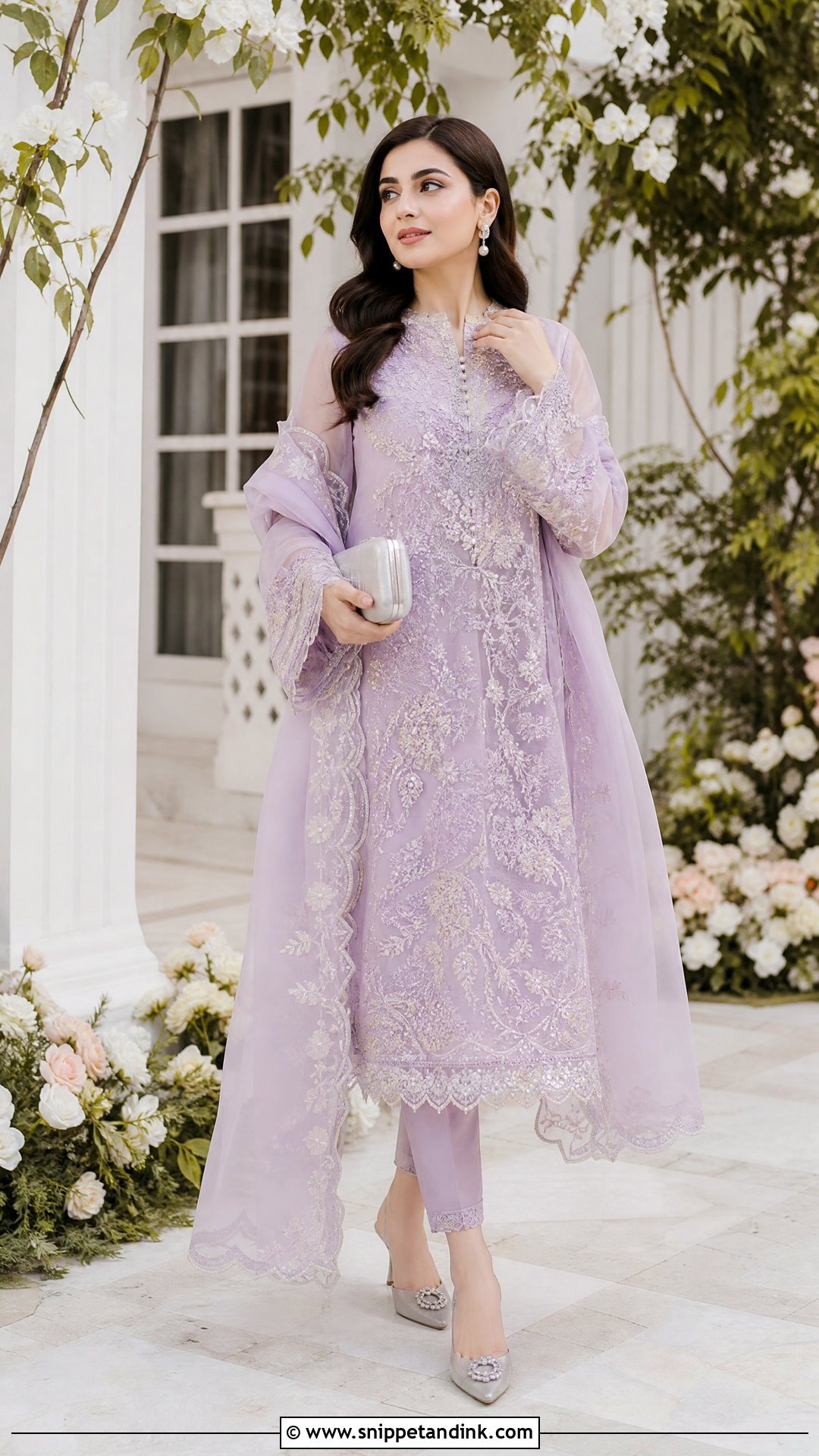
Lilac organza feels airy and polished without tipping into full formal. A long straight shirt with a lined body, sheer sleeves and floral embroidery in silver, white or tonal purple thread sits over cigarette pants. Organza holds its shape rather than clinging, which flatters most figures, but the stiff edges can scratch at the wrist and neckline, so I ask for those seams to be faced in something softer. An organza dupatta with embroidered corners or a scalloped border, silver kitten heels, pearl earrings and a satin clutch keep things delicate. Avoid strong contrasting colours; lilac looks most refined with cool metallics. A half-up style or low ponytail suits a daytime nikkah, an intimate reception or a guest appearance, and the light layers make a long day easier to wear.
11. Black And Gold Pakistani Saree Dress
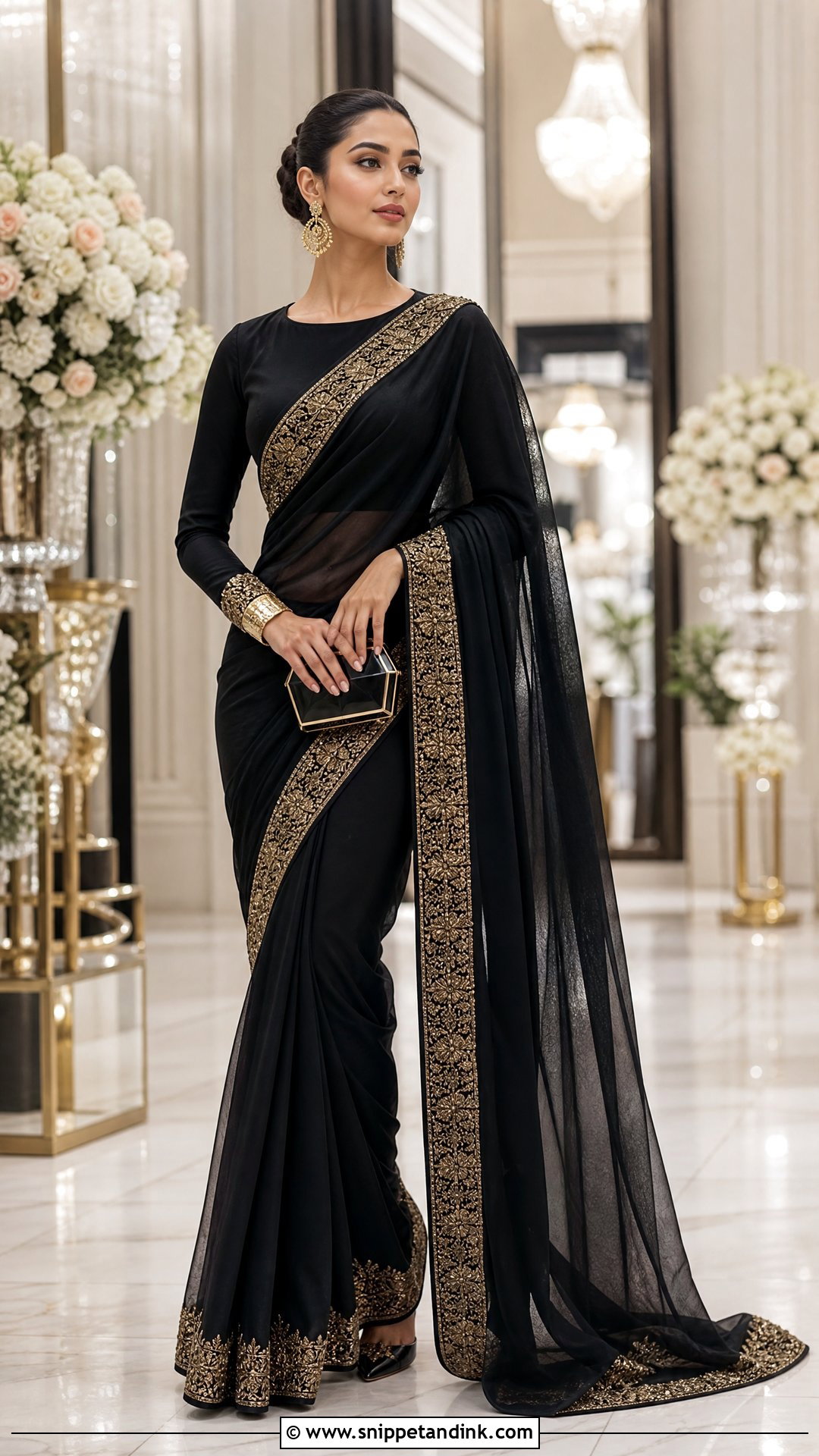
Black and gold sarees look sharp at an evening reception, but I’d always check with the hosts before wearing one, since black isn’t welcome at every family’s wedding. Choose chiffon, georgette or silk that drapes smoothly; a fabric that needs constant adjusting will annoy you by the second hour. A gold embroidered border defines the shape, and a modest blouse with full or elbow-length sleeves balances it. A longer blouse gives more midriff coverage. I pin the pleats at the waist and the pallu at the shoulder with small safety pins hidden inside the fold, which stops the drape sliding when you hug people. Gold earrings, a statement cuff, a black clutch, pointed heels to keep the hem off the floor, a sleek bun, defined eyeliner and a neutral lip finish it.
12. Silver Pakistani Pre-Draped Saree Dress
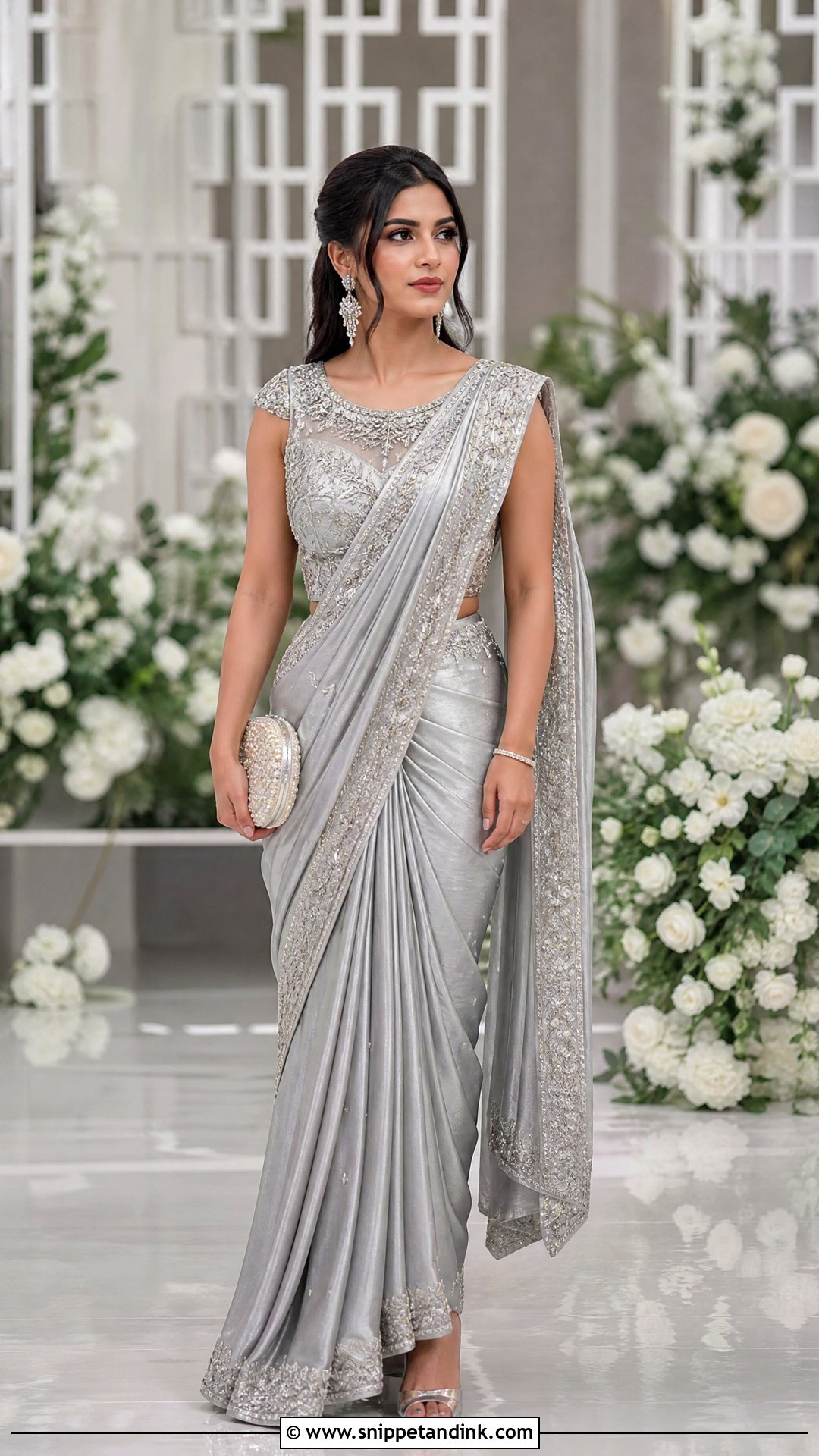
Pre-draped sarees solve the main worry guests have, which is arranging and holding a six-yard drape all evening. The pleats are stitched and the pallu is secured, so it goes on like a skirt. The catch is that the pleat length is fixed, so try it with the exact shoes you’ll wear before the tailor finishes the hem. Pick a soft metallic with light sequin work over a very reflective lamé, which can look harsh in flash. A fitted blouse with a higher neckline, structured sleeves or fine beadwork, crystal earrings, a slim bracelet and a pearl or silver clutch keep the silver cool-toned. Block heels give height with stability. A side-parted bun or polished waves suits a walima or formal reception, and a light shawl or embellished cape helps if the hall is air-conditioned.
13. Coral Pakistani Mirror Work Lehenga Dress
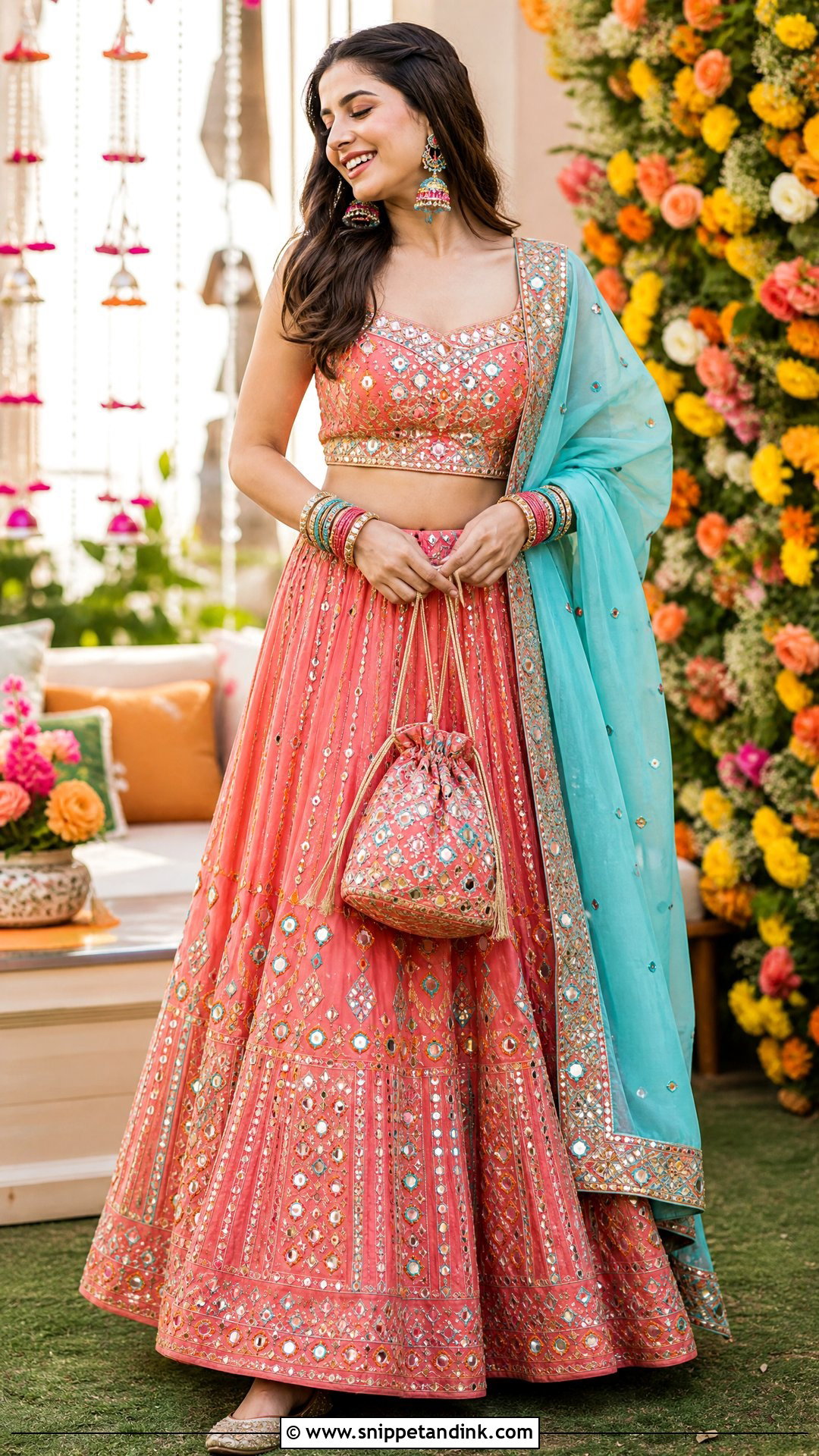
Coral with mirror work is bright and joyful at a mehndi. Real shisha mirrors are heavier than sequins and have hard edges, so a net dupatta can snag on them; I drape the dupatta clear of the heaviest mirror panels or pick a georgette one. The lehenga skirt should have embroidered panels, a secure waistband and a hem wide enough to dance in. Add a short blouse or waist-length kurti with secure sleeves. A turquoise, lime or pink dupatta brings the playful contrast mehndis are known for. Colourful jhumkas, stacked bangles, a small potli and metallic khussas finish it. Mirror work already catches every light, so skip extra rhinestones and oversized jewellery. A braided ponytail with small flowers keeps hair festive and manageable through a dholki or daytime celebration.
14. Royal Blue Pakistani Long Shirt Palazzo Dress
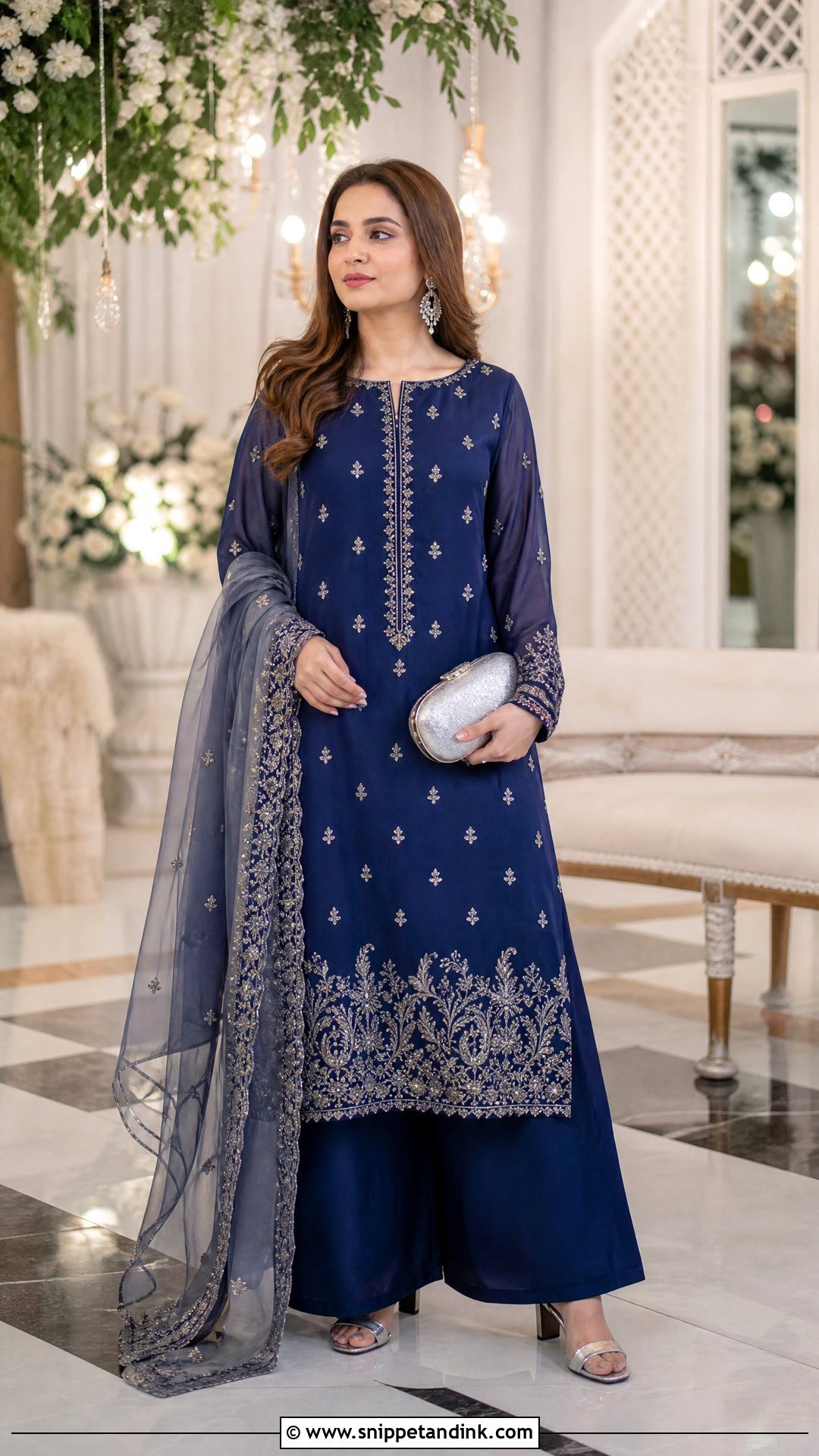
A royal blue long shirt over palazzo pants is clean and tall, and it suits a wider range of ages and shapes than most outfits here because the straight shirt balances the wide leg. Go for a calf-length shirt in chiffon or raw silk with silver embroidery along the neckline, slits, cuffs and border. The palazzos should fall smoothly and just skim the shoes. The thing I test is the side slit: sit down in the fitting, because a slit that looks modest standing can open well above the knee once you’re seated. Add a sheer blue or silver-grey dupatta, crystal earrings, a slim ring, a metallic clutch and silver block heels. A low bun or shoulder-length waves keeps attention on the colour.
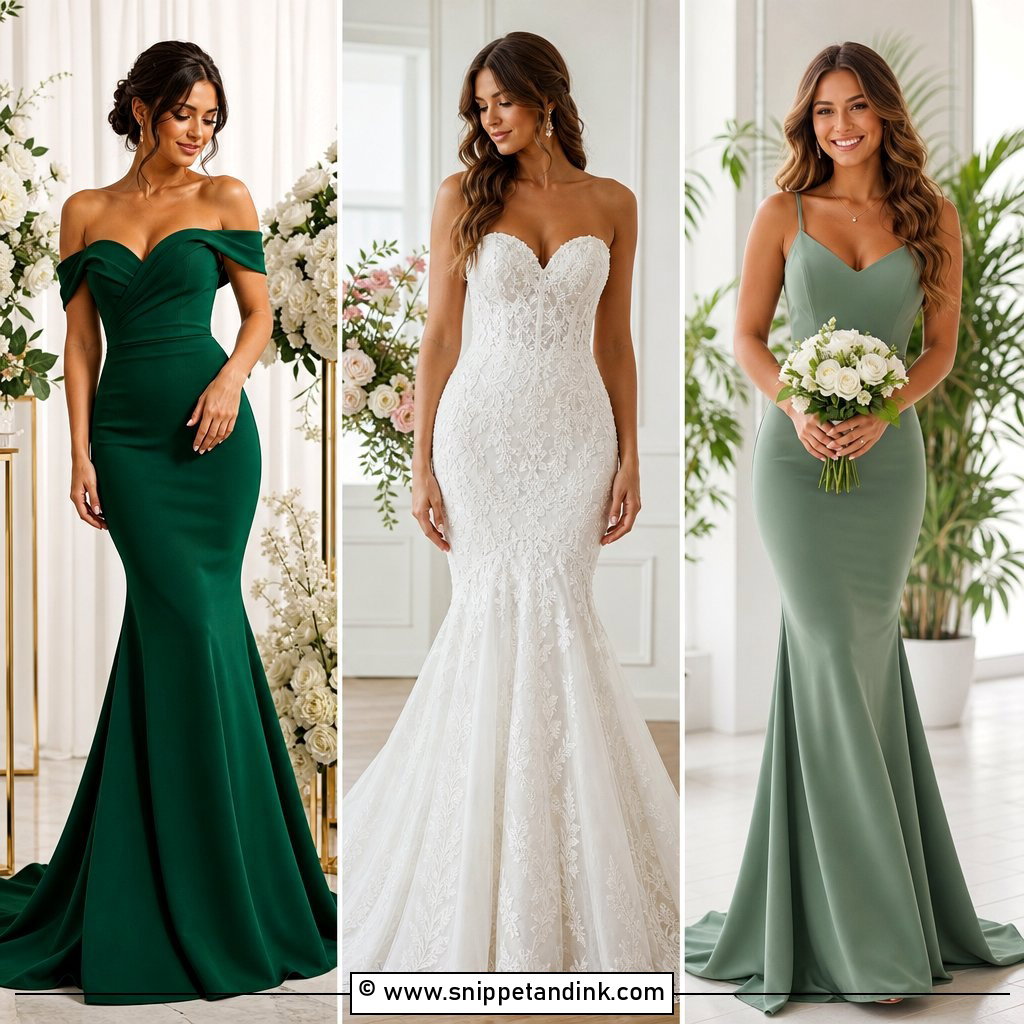
15. Mint Pakistani Jacket Pishwas Dress
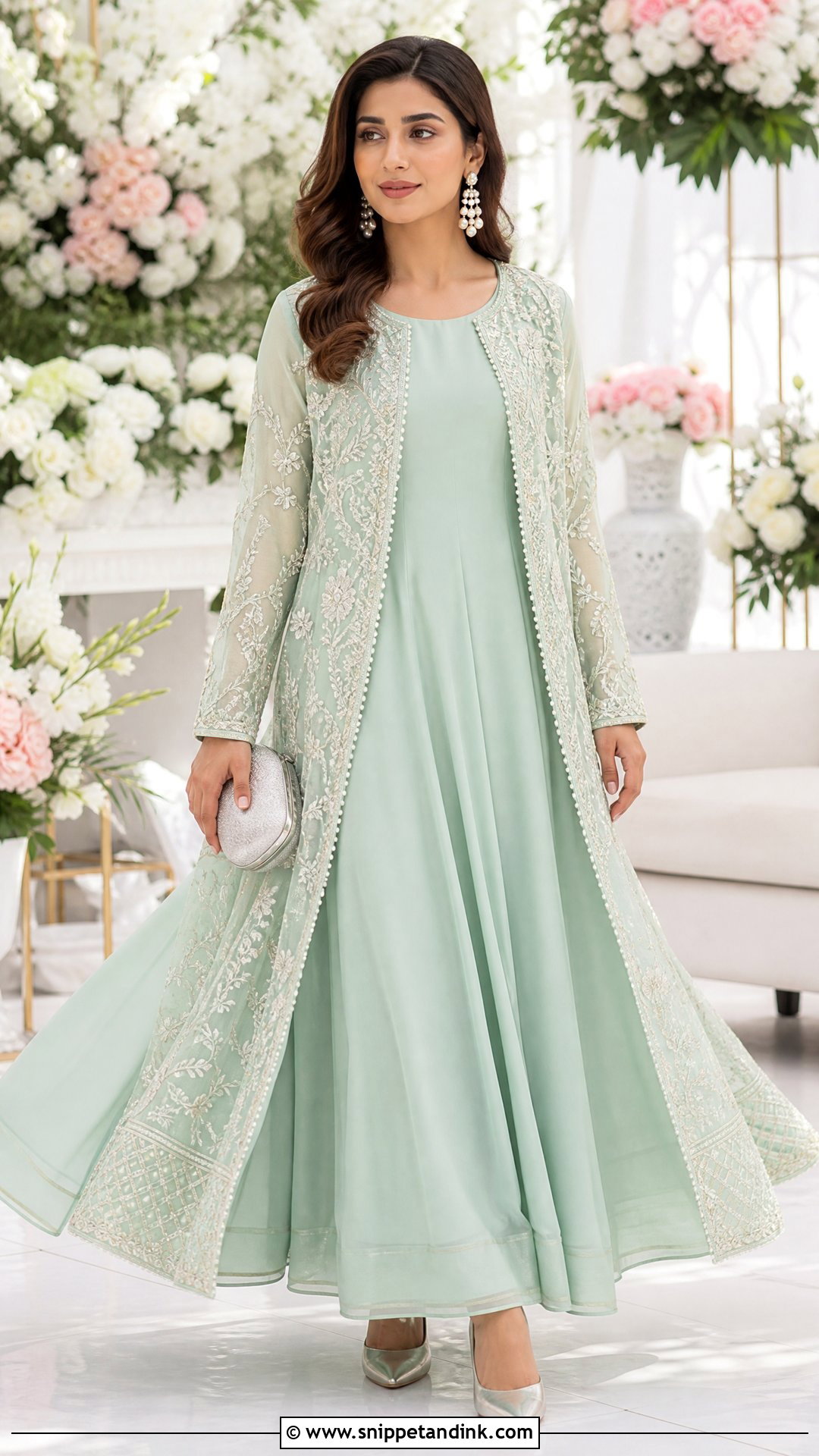
Mint feels fresh in a layered jacket and pishwas combination, especially for spring events or a daytime nikkah. Start with a sleeveless or short-sleeved floor-length pishwas with soft silver embroidery and a gently defined waist. The open organza jacket goes over it, embellished at the shoulders, cuffs and front borders, and it adds coverage while creating long vertical lines. Where most jackets go wrong is the shoulder: if the jacket’s shoulder seam sits even slightly wider than the pishwas underneath, it slides back all evening. I fit the two pieces together for that reason. Pearl earrings, a small hair accessory and a mint or silver clutch work well. Closed-toe heels look polished; embroidered flats are kinder for a long day. Skip the dupatta if the jacket gives enough cover, or add a very light one without a heavy border.
16. Plum Pakistani Velvet Kameez Izaar Dress
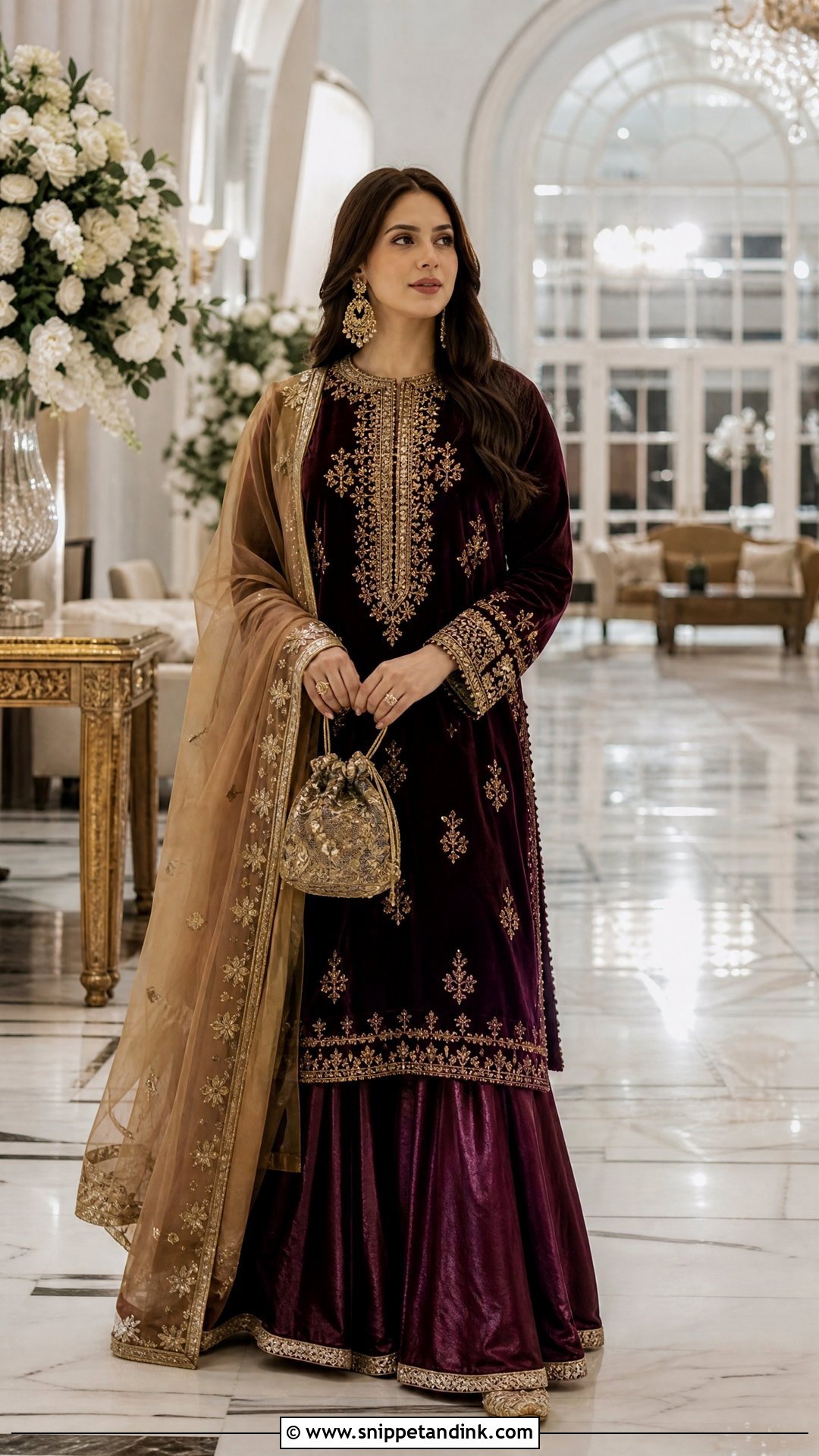
Plum velvet suits a winter baraat or an evening reception in a traditional kameez and izaar. A straight shirt with antique gold embroidery around the neckline, cuffs, side slits and hem sits over a wide-legged silk izaar, which moves well without the full flare of a sharara. Velvet is warm. Halls are often heated and crowded, so I steer people towards a lighter-weight velvet or a velvet shirt with a silk lining instead of a heavy one; heavy velvet in a packed room is miserable by dessert. A light organza dupatta in plum, beige or muted gold balances the weight. Antique earrings, a statement ring, a brocade bag and embroidered khussas finish it, with a centre-parted low bun and softly defined eyes.
17. Peach Pakistani Angarkha Frock Dress
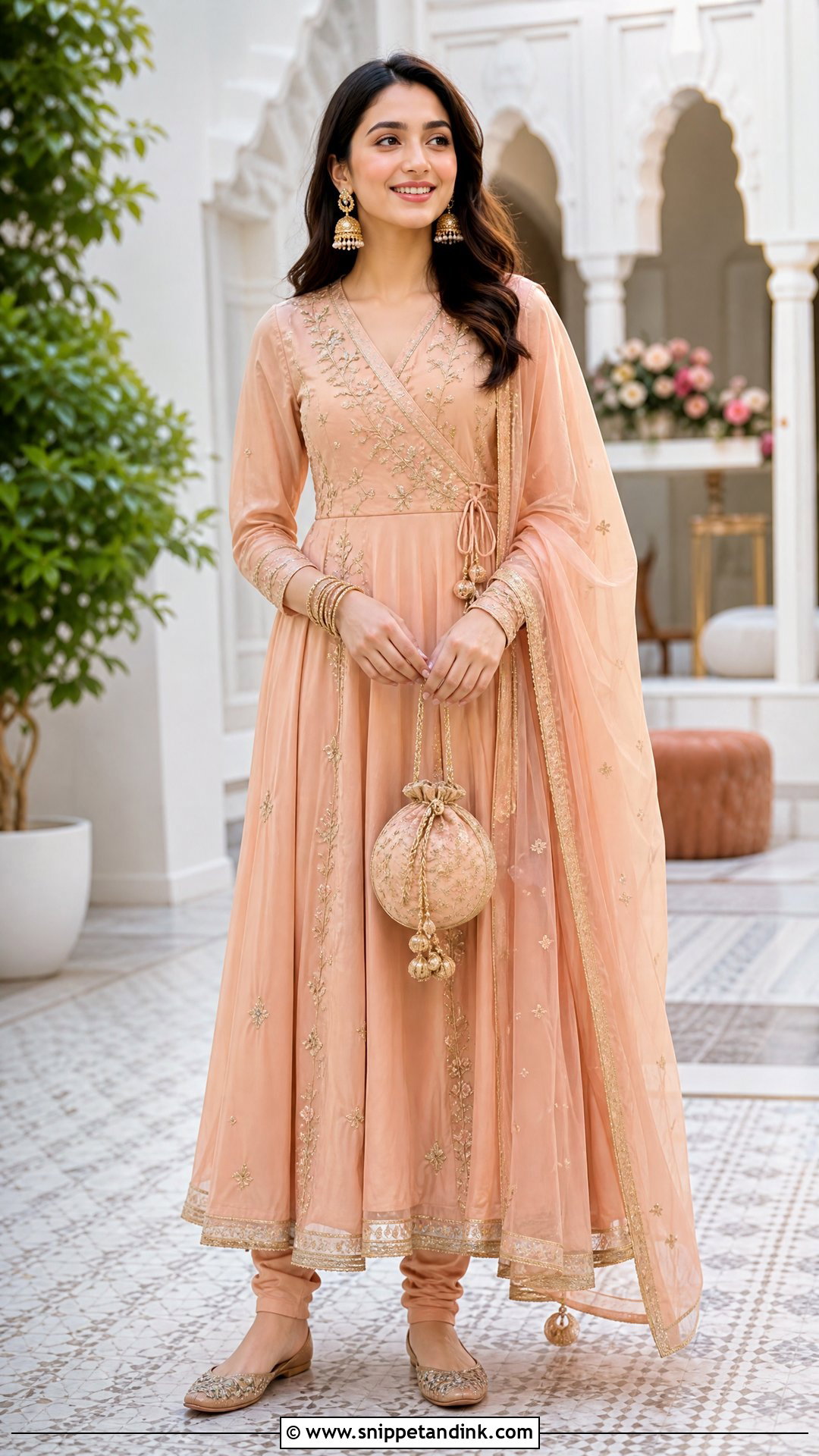
The peach angarkha frock has a wrapped bodice with an asymmetric neckline fastened by decorative tassels, then a comfortable waist and an ankle-length flare. Those tassel ties look pretty and loosen within an hour of hugging and sitting, so I always ask the tailor to add a hidden hook or press stud under the wrap. Fine gold threadwork, pearls or floral embroidery can outline the neckline and border. Wear it over fitted churidar with a light chiffon dupatta in peach or soft gold. Small jhumkas, stacked bracelets, a round potli bag and embroidered flats keep it delicate. A narrow embellished belt at the natural waist adds definition if you want it. It sits most comfortably at a daytime function or a smaller family gathering, with soft waves and peach-toned makeup.
18. Rust Pakistani Farshi Shalwar Dress
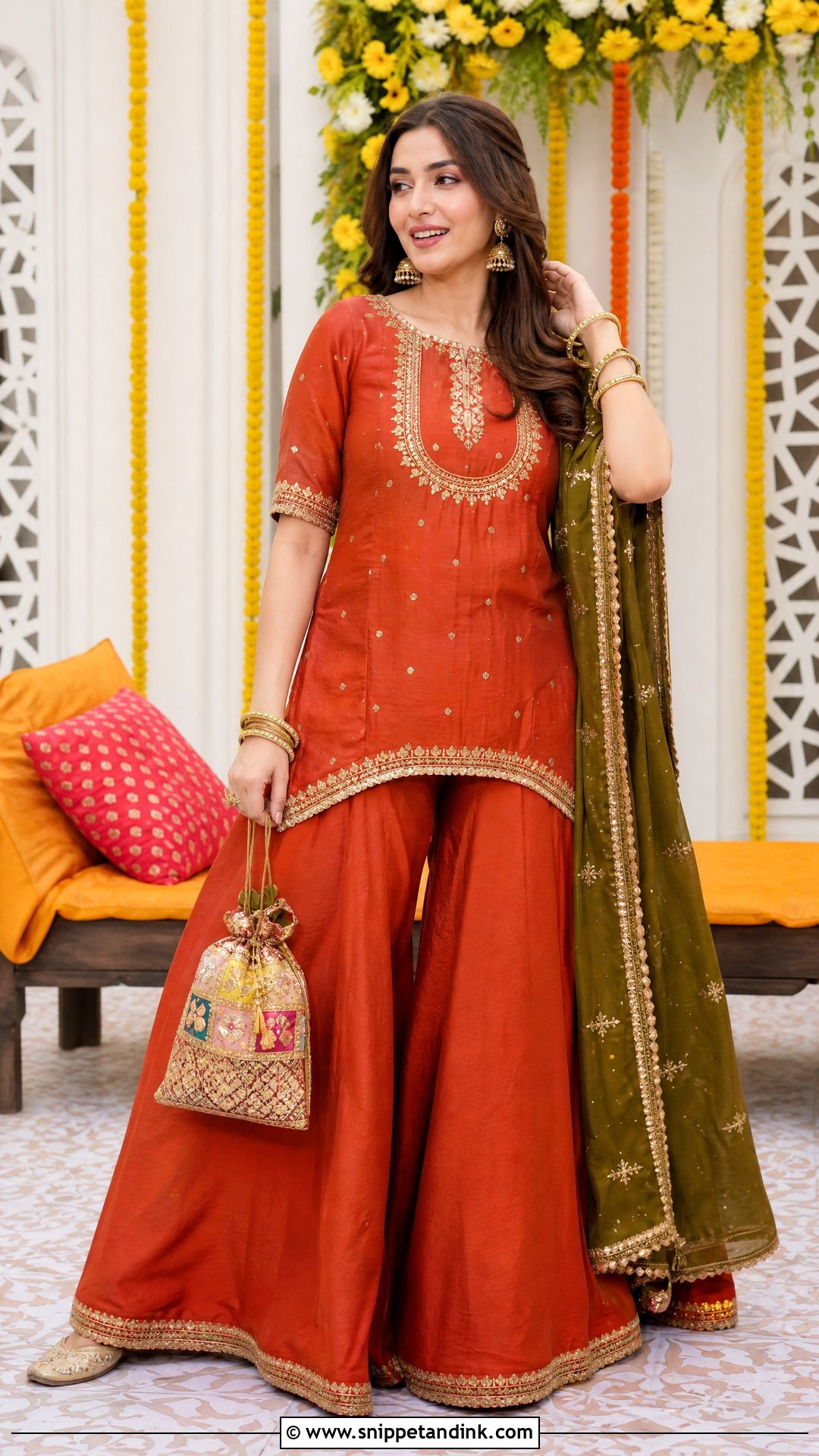
A rust farshi shalwar with a short kurti is a striking shape for a mehndi. The shalwar needs generous fabric, deep folds and a floor-skimming hem, and the kurti should stop near the upper thigh so the shape below shows. Hemming is the risky part. Excess fabric around the feet trips people on dance floors, so I mark the hem with the wearer standing in her flat khussas and take it up a little more than feels necessary. Gota, zari and colourful thread embroidery give a mehndi finish. An olive, mustard or magenta dupatta with tasselled corners, gold jhumkas, stacked bangles and a bright potli complete it. Keep the kurti fairly fitted against the wide shalwar, and wear a long braid or a relaxed ponytail.
19. Champagne Pakistani Cape Gown Dress
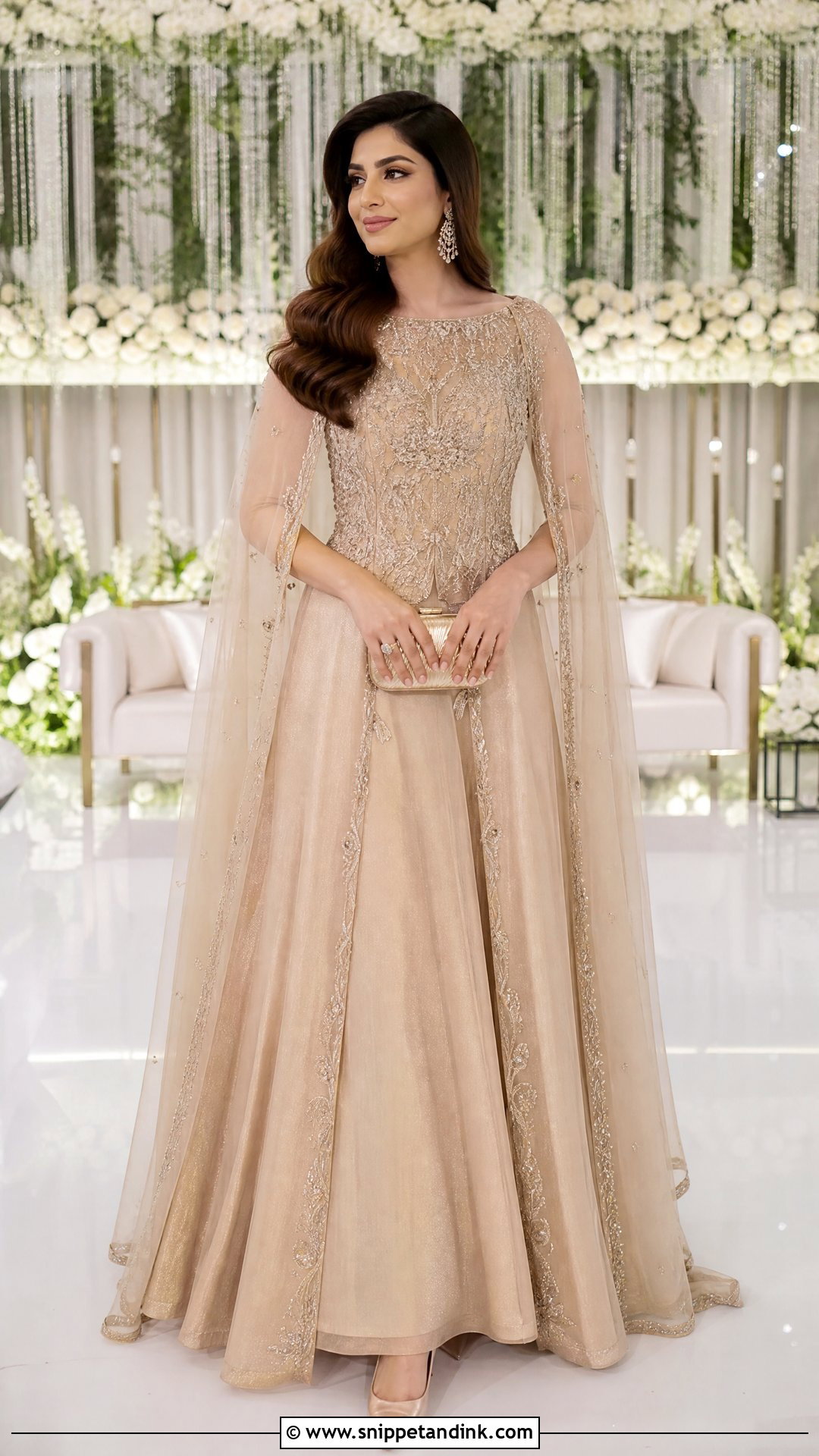
Champagne cape gowns bring a contemporary structure that works at a walima or a formal indoor reception. Choose a floor-length gown with a fitted, fully lined bodice and a softly flared skirt, and a sheer cape attached at the shoulders. Before committing, I have the client lift her arms as if hugging someone: a cape that is cut too short across the back pulls the neckline backwards every time. Embroidery at the neckline, shoulders and cape border gives it a South Asian finish. Crystal earrings, a metallic clutch and pointed champagne heels are enough; skip a heavy necklace if the work sits near the face. The shade matters more than with most colours. If champagne sits too close to your skin tone, it reads as nude in photos, so hold the swatch against your face in daylight.
20. Fuchsia Pakistani Banarsi Lehenga Dress
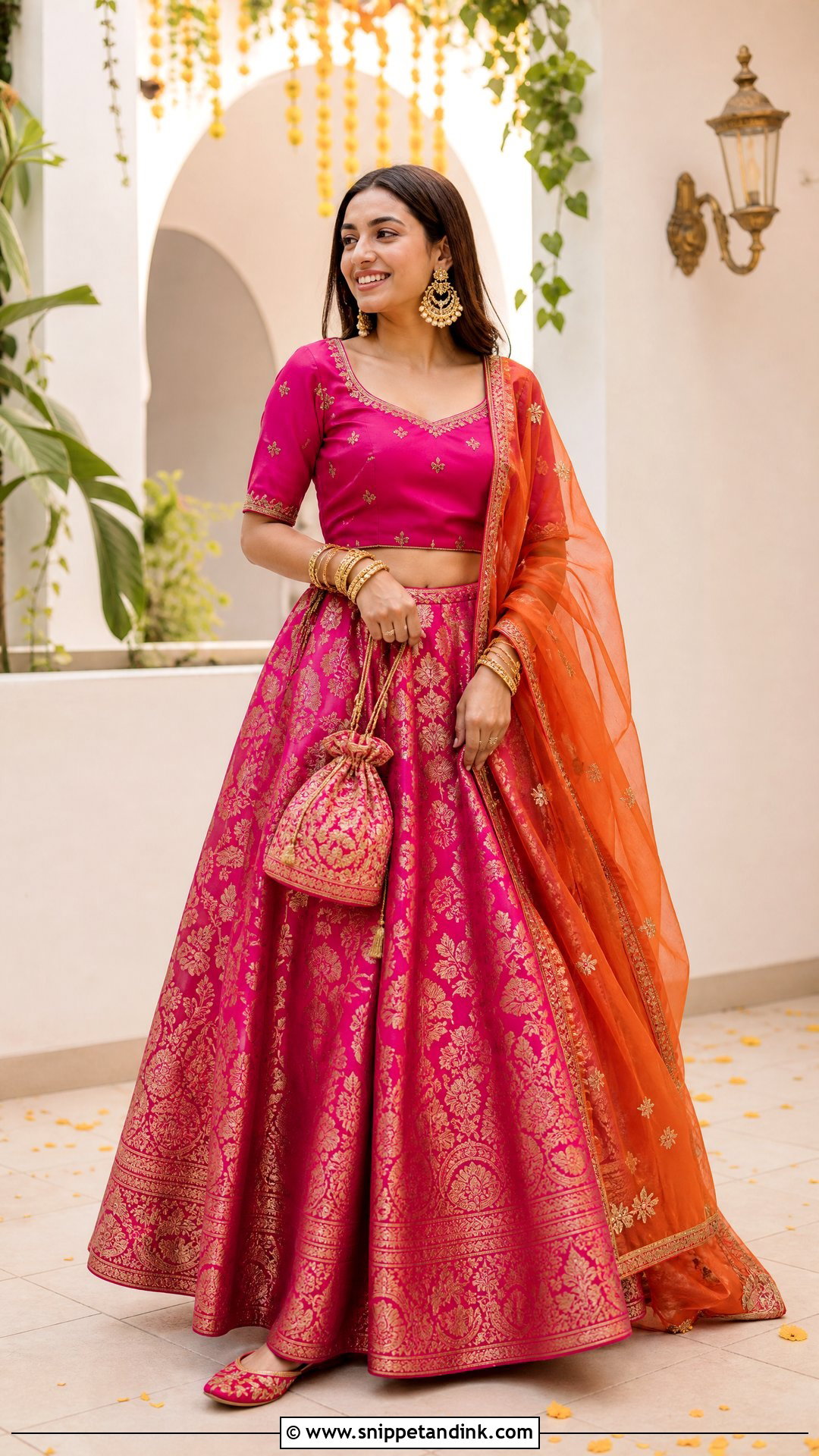
Banarsi fabric is woven with its gold motifs, not embroidered afterwards, so a fuchsia Banarsi lehenga looks rich even with very little added work. The weave also gives the skirt natural body, which saves on can-can layers. Pair it with a plain or lightly embroidered raw silk blouse and let the fabric stay the focus. A contrasting orange, green or purple organza dupatta adds a festive layer. Gold chandbalis, bangles, a drawstring potli and embroidered khussas complete it. For mehndi dancing, keep the blouse comfortably fitted with a secure neckline. A braid with small accessories suits it. I’d point bridesmaids, sisters of the bride and guests here when they want strong colour with real cultural character.
21. White And Gold Pakistani Chikankari Suit Dress
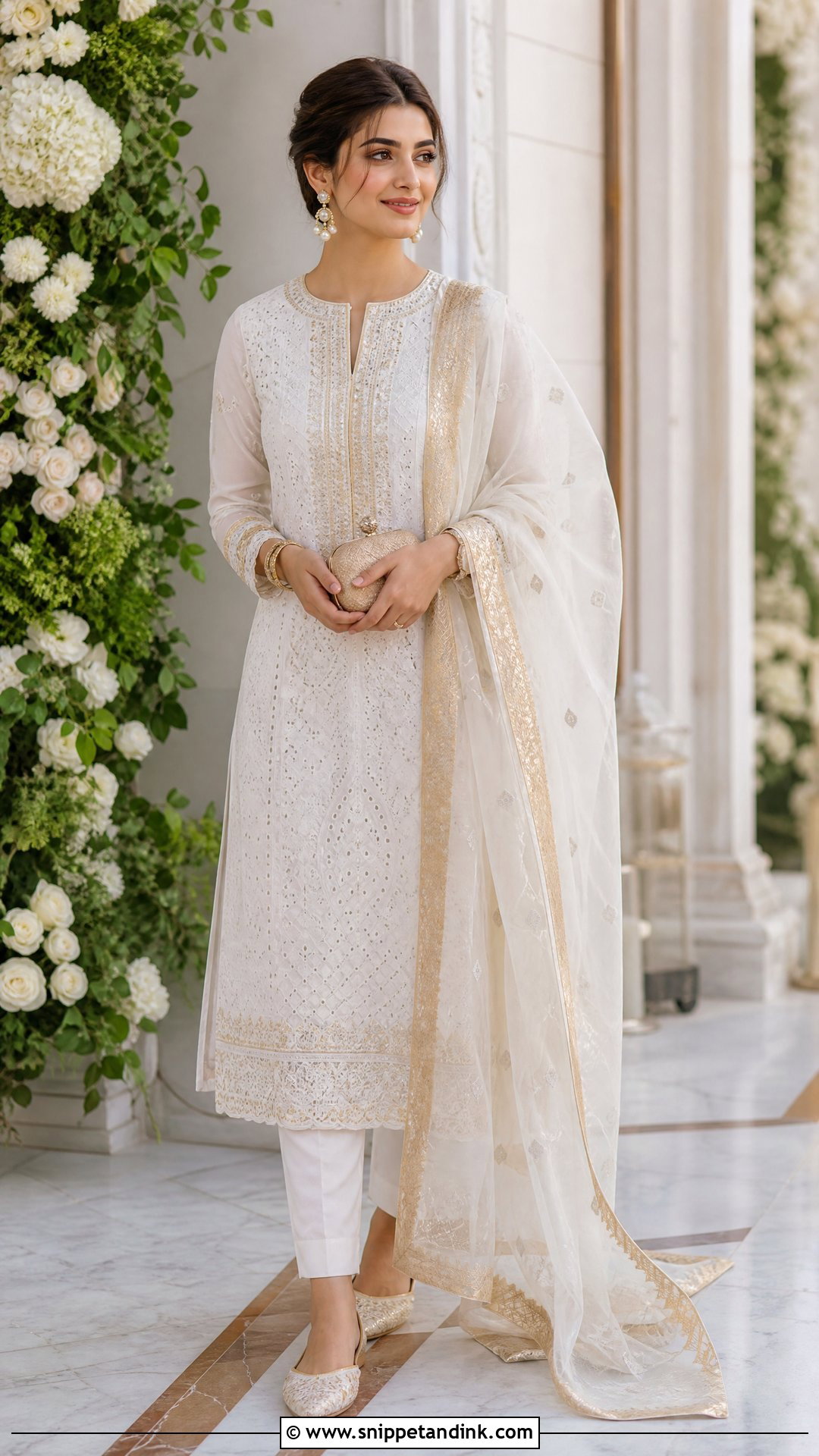
A white and gold chikankari suit is crisp and breathable at a daytime function. Chikankari is fine hand embroidery traditionally worked on light fabrics, so the shirt is sheer by nature; ask for a fully lined body while keeping the sleeves sheer to show the needlework. Straight pants, cigarette trousers or a lightly flared shalwar in matching white sit underneath, with an organza dupatta edged in a narrow gold border for wedding-level shine. Pearl earrings, slim gold bangles, a neutral clutch and ivory khussas finish it. Guests should check that white is appropriate, particularly at a nikkah where the bride may be in a similar palette. Champagne, cream or beige accents add gentle contrast, and it suits women who prefer modest coverage and restrained embellishment.
22. Olive Pakistani Front Open Gown Dress
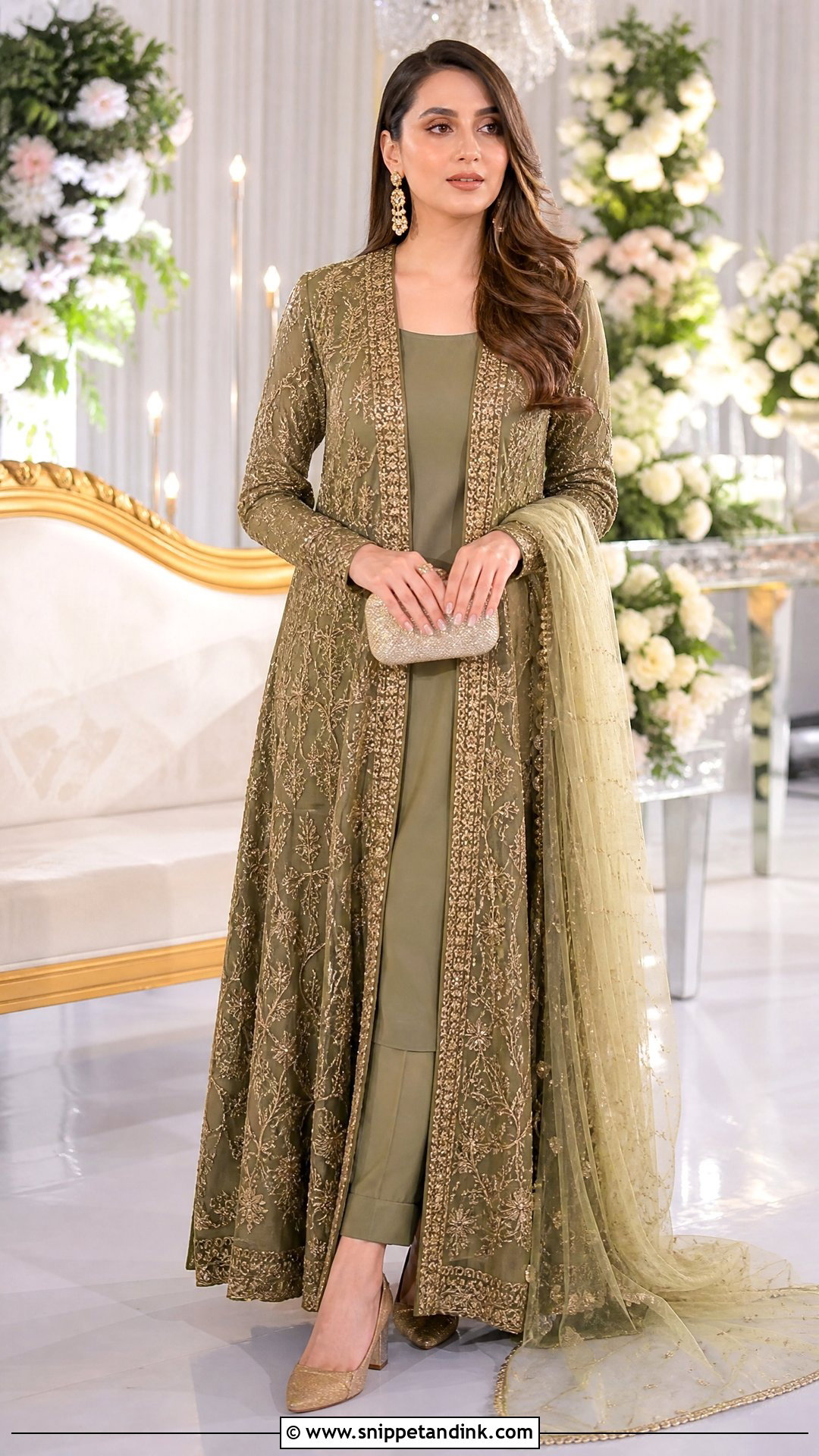
An olive front-open gown layers an embroidered outer gown over a matching inner shirt and straight trousers. The opening can start at the waist or the upper thigh; I prefer the waist for people who walk fast, because the trousers show with each step and that definition is the whole point of the cut. Antique gold threadwork and subtle sequins suit olive without making it shiny. Add a light net dupatta over one shoulder for a more traditional finish, gold drop earrings, a compact clutch and pointed block heels. Leave long trains to the bride and immediate family. A low bun and bronzed neutral makeup match the earthy colour at evening weddings and cooler-season events.
23. Turquoise Pakistani Dhoti Shalwar Dress
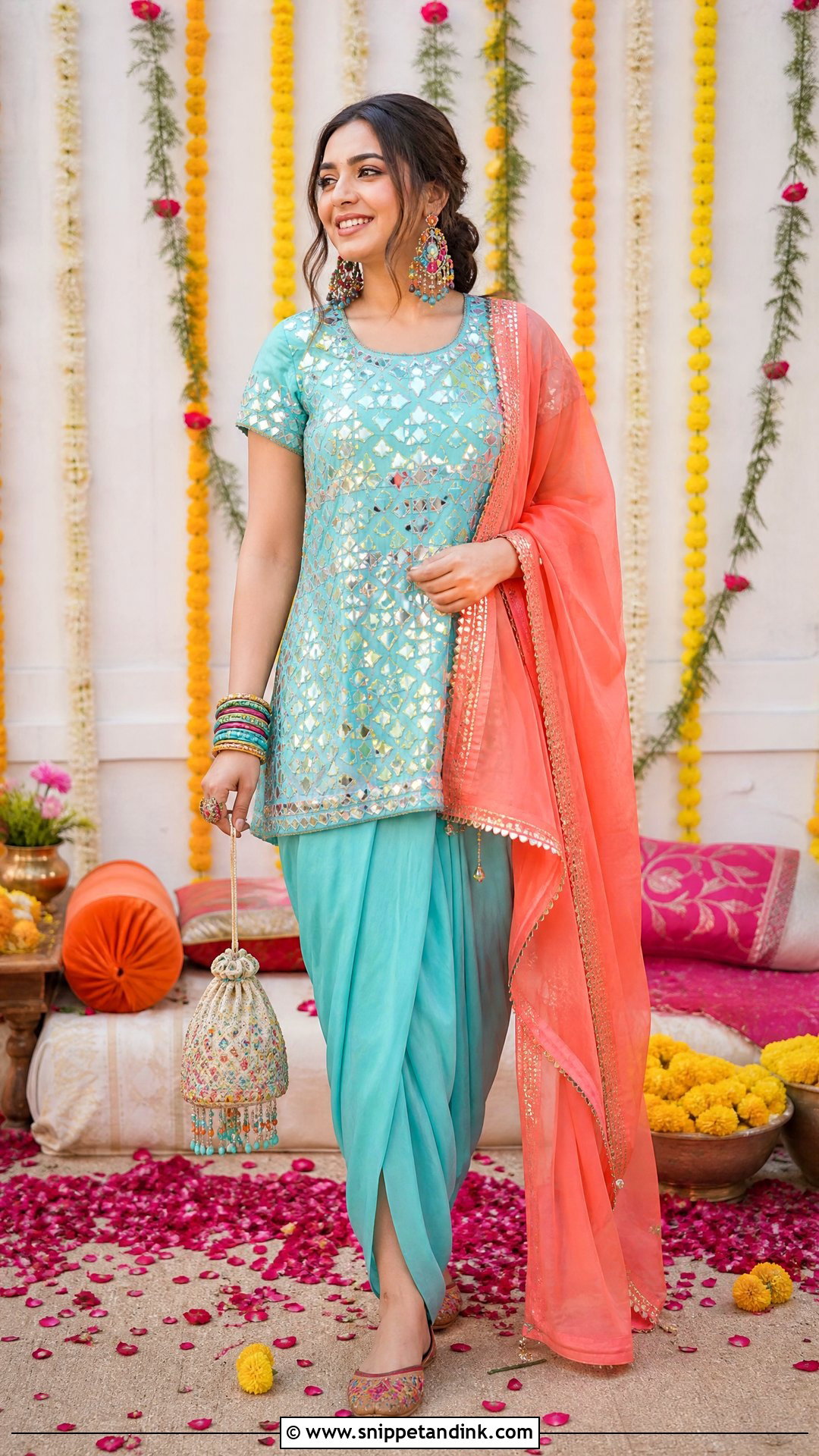
Turquoise with a draped dhoti shalwar is playful, and it’s an outfit I fit more carefully than it looks. The pleated bottom is cut with extra rise and a loose drop, so test it sitting on a floor cushion; if the rise is too short it pulls at the waist, and if the waist is loose the whole drape slips while dancing. A short structured kurti ending at the upper thigh, decorated with mirror work, gota and multicolour embroidery, makes it ready for a mehndi or dholki. Drape a coral, yellow or magenta dupatta across one shoulder so the lower shape stays visible. Colourful earrings, stacked bangles, a beaded potli and flat khussas suit it, with a high ponytail or side braid.
24. Pastel Blue Pakistani Kalidar Dress
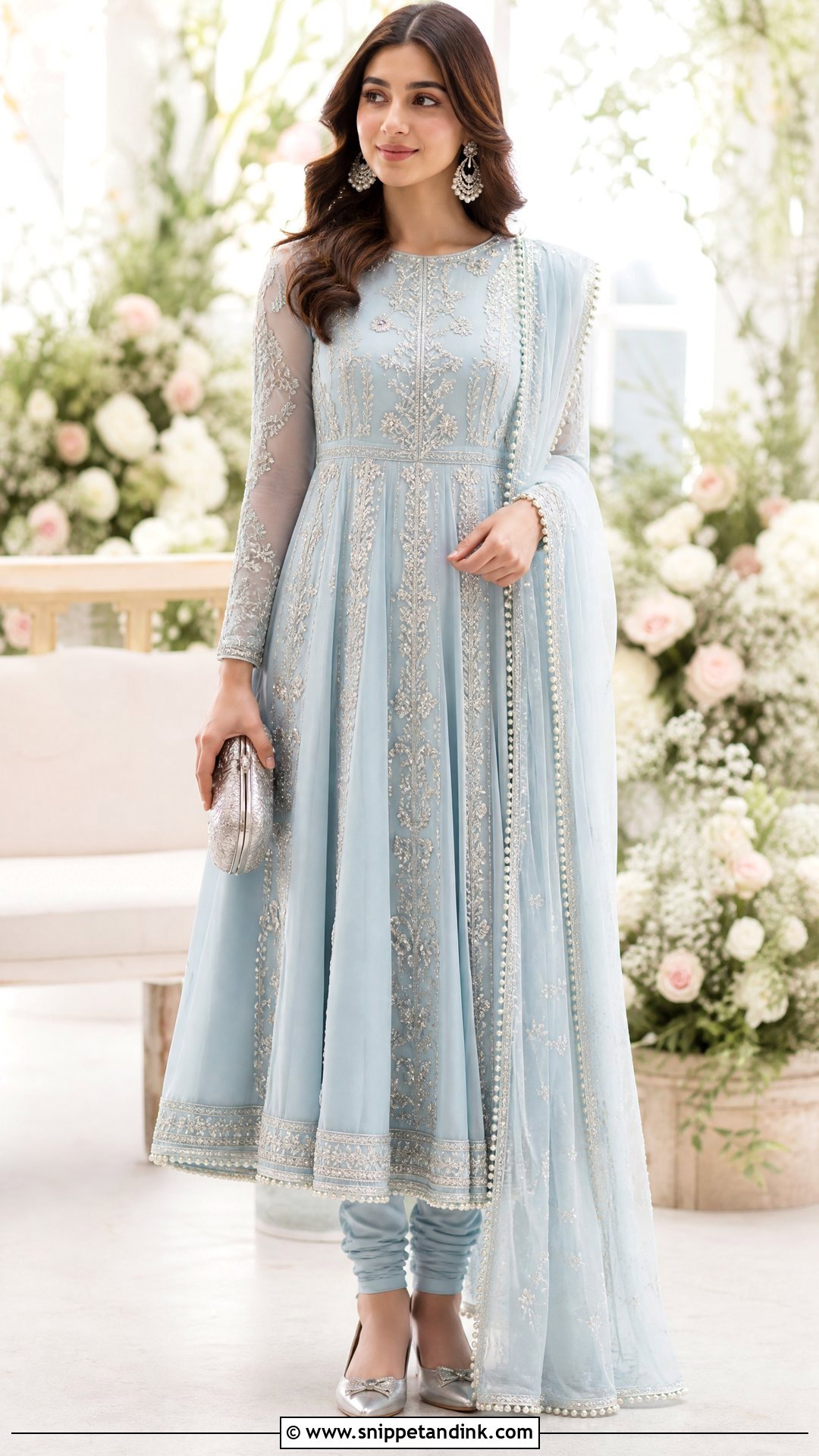
Pastel blue kalidar dresses get their movement from many flared panels, and the fullness should start just below the natural waist rather than directly under the bust. Start it too high and the dress reads as maternity wear in side-on photos. I’d go ankle or floor length, with a fitted bodice, a comfortable waist seam and silver floral embroidery between the panels. Churidar underneath and a soft net dupatta edged with pearls or fine threadwork keep it light. Crystal drops, a delicate bracelet and a small silver clutch hold the cool colour story. Low metallic heels or embroidered flats depend on the length. A half-up style and luminous makeup fit a daytime nikkah, walima, engagement or formal guest look.
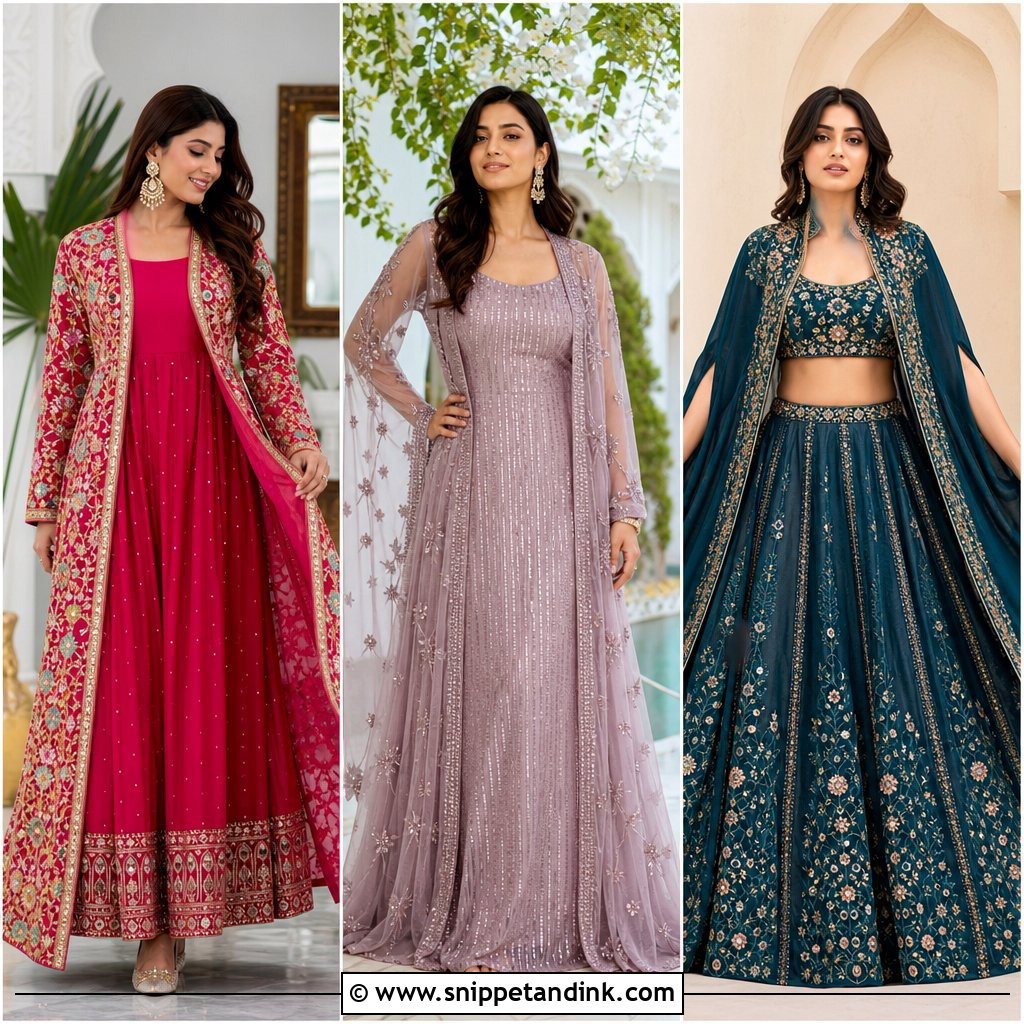

25. Magenta Pakistani Long Jacket Lehenga Dress
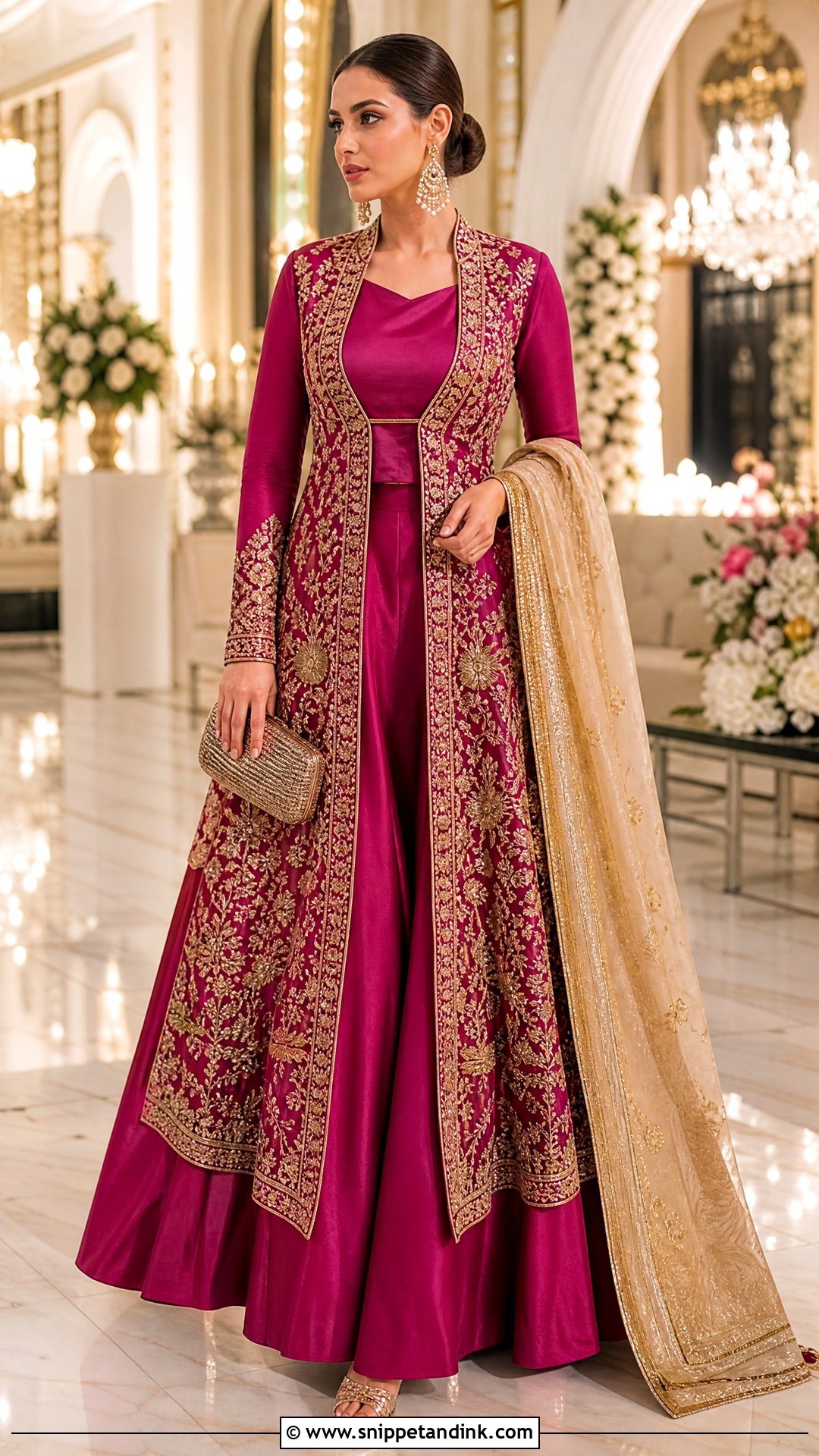
Magenta with a long jacket gives drama, coverage and strong vertical structure. The base is a moderately flared raw silk skirt with an embroidered hem and a fitted inner blouse, with a floor-length open jacket over both. Gold, bronze or multicolour threadwork decorates the jacket fronts, cuffs and lower panels. A heavily worked floor-length jacket hangs entirely from the shoulders, so the shoulder fit has to be exact, and I ask for light interfacing there so it doesn’t drag by the end of the night. Keep the blouse and skirt simple so the jacket stays the focal point; a light dupatta over one arm is optional. Statement earrings, a bold ring, a structured clutch and gold heels or khussas finish it, and a sleek bun shows off the neckline for a baraat or reception.
Stitching Timelines for Handwork Outfits, and the Fittings That Matter
Hand embroidery is slow. Dense zardozi or dabka on a bridal lehenga commonly takes months rather than weeks, and boutiques get booked up ahead of the peak winter season, so I treat three to six months as a sensible window for a bridal order and four to eight weeks for a guest outfit from a tailor. Ready-to-wear pieces still need alteration time. Every workshop is different, so ask for a written delivery date before paying the deposit.
What I check at the final fitting
- Sit, kneel and raise your arms. Necklines shift, side slits open and jackets pull at the shoulder only when you move.
- Wear the real shoes. Gharara joints, farshi hems and pre-stitched saree pleats are all set by heel height.
- Feel the inside. Tissue, organza and metallic thread can scratch, and a soft lining at the underarms and neckline is a cheap fix before delivery and an impossible one after.
- Pin the dupatta the way you’ll wear it and walk. If it slides in the trial room, it will slide on stage.
After the event, let heavy pieces air before packing them, then fold them in clean cotton or muslin with acid-free tissue in the creases. Plastic traps moisture, and that is what dulls zari and leaves marks on velvet.
One Full Try-On Before Any Function
The outfit that works is the one that suits the function and still feels comfortable when the last photograph is taken. This collection moves from lehengas and ghararas to shararas, pishwas, sarees, suits and contemporary gowns, and the same rule runs through all of them. Mehndi welcomes bright contrast; nikkahs and receptions usually suit softer or more formal colour. Brides can take on detailed handwork and volume, while guests should pick a lighter finish that won’t compete. Whatever you choose, do one full try-on with the lining, shoes and dupatta pinned, and sit down in it. That twenty minutes catches nearly every problem I’d otherwise be fixing on the wedding day.
You'll Like These Ideas:


Leave a Reply