
The cake orders I’m seeing now are more personal than they used to be. Couples want the cake to carry the mood of the whole day, so it might be vintage Lambeth piping, fruit piled on tiers, palette-knife buttercream, sculptural shapes, a small cutting cake beside a dessert table, or simply a bolder flavor inside a plain white cake. Below are thirty directions, each with notes from the baking side: what the finish needs to survive the room, which flavors hold up in it, and where I’d suggest a change before you order.
The Slicing Math Behind Two, Three or Four Tiers
The number of tiers isn’t a style choice as much as a serving one. Wedding slices are smaller than party slices, usually about 1 inch wide, 2 inches deep and as tall as the tier, so the same cake serves more at a wedding than at a birthday.
- 6-inch round: roughly 12 wedding portions
- 8-inch round: roughly 24
- 10-inch round: roughly 38
- 12-inch round: roughly 56
These are common bakery guides and vary with tier height and how generously the caterer cuts. If you want a tall cake for a small guest list, ask about a dummy tier made of foam and decorated to match; it adds height without extra cake.
At the Tasting, Eat the Filling and Frosting Together
Most tastings serve cake, fillings and frostings in separate little cups, which is useful but misleading. A tart lemon curd tastes very different once it sits between sponge and sweet buttercream. I’d always ask to try at least one assembled slice of each flavor you’re considering.
Use the appointment to settle the practical details too: the final guest count deadline, whether flowers come from your florist or the baker, the delivery window, and who cuts and serves. If anyone has a nut, dairy or gluten allergy, say so now rather than after the design is fixed, because it can change the recipe and even the stand.
1. Vintage Wedding Cake
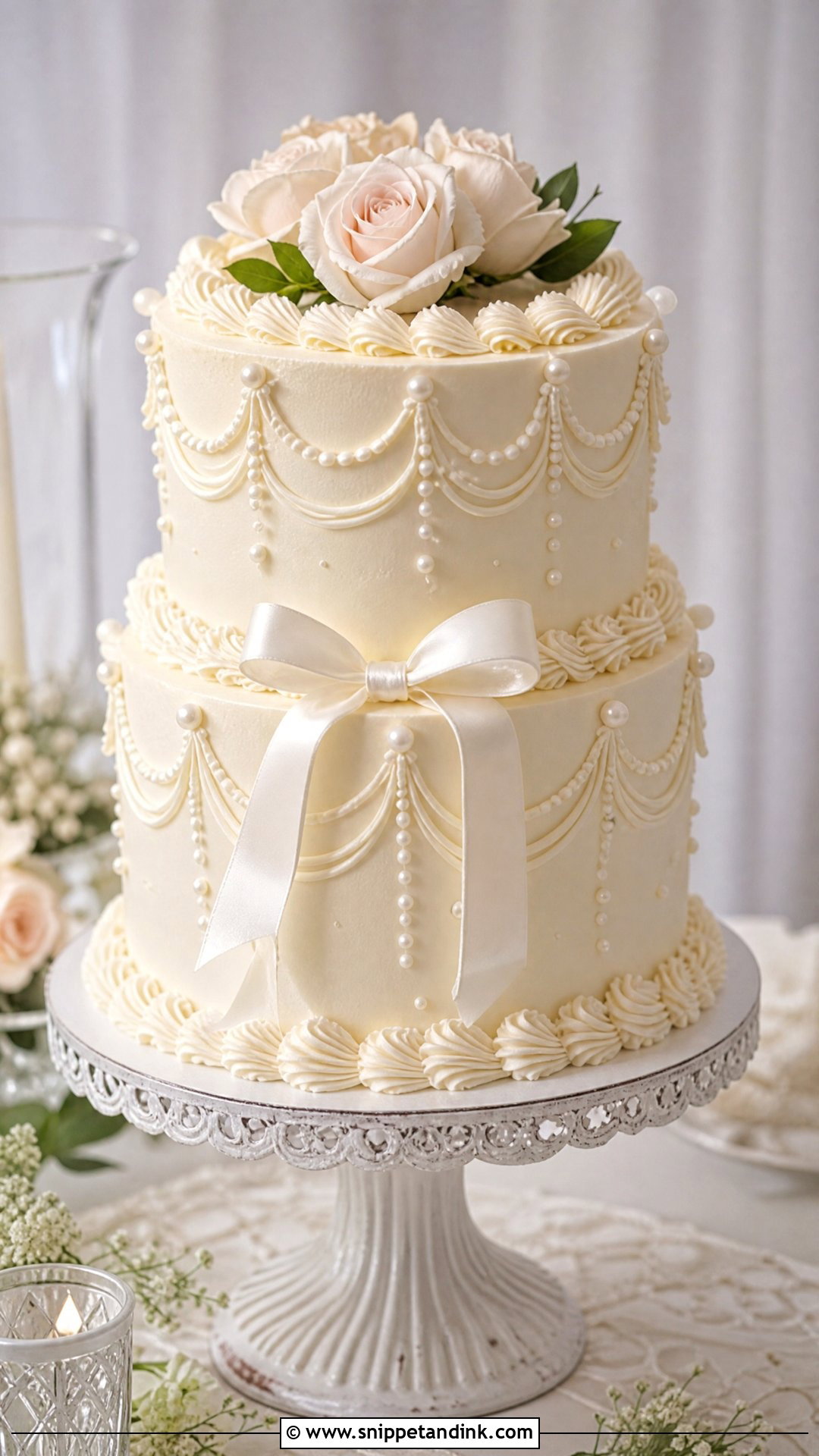
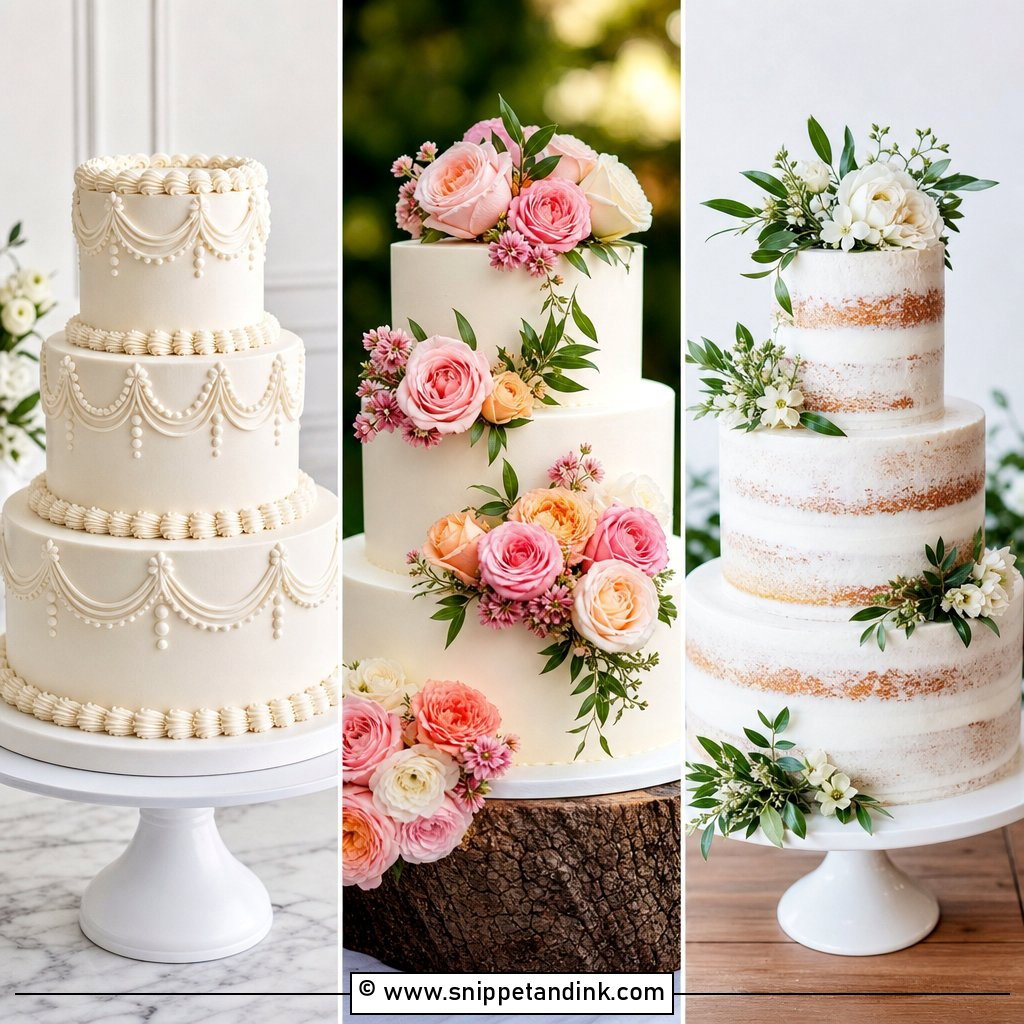
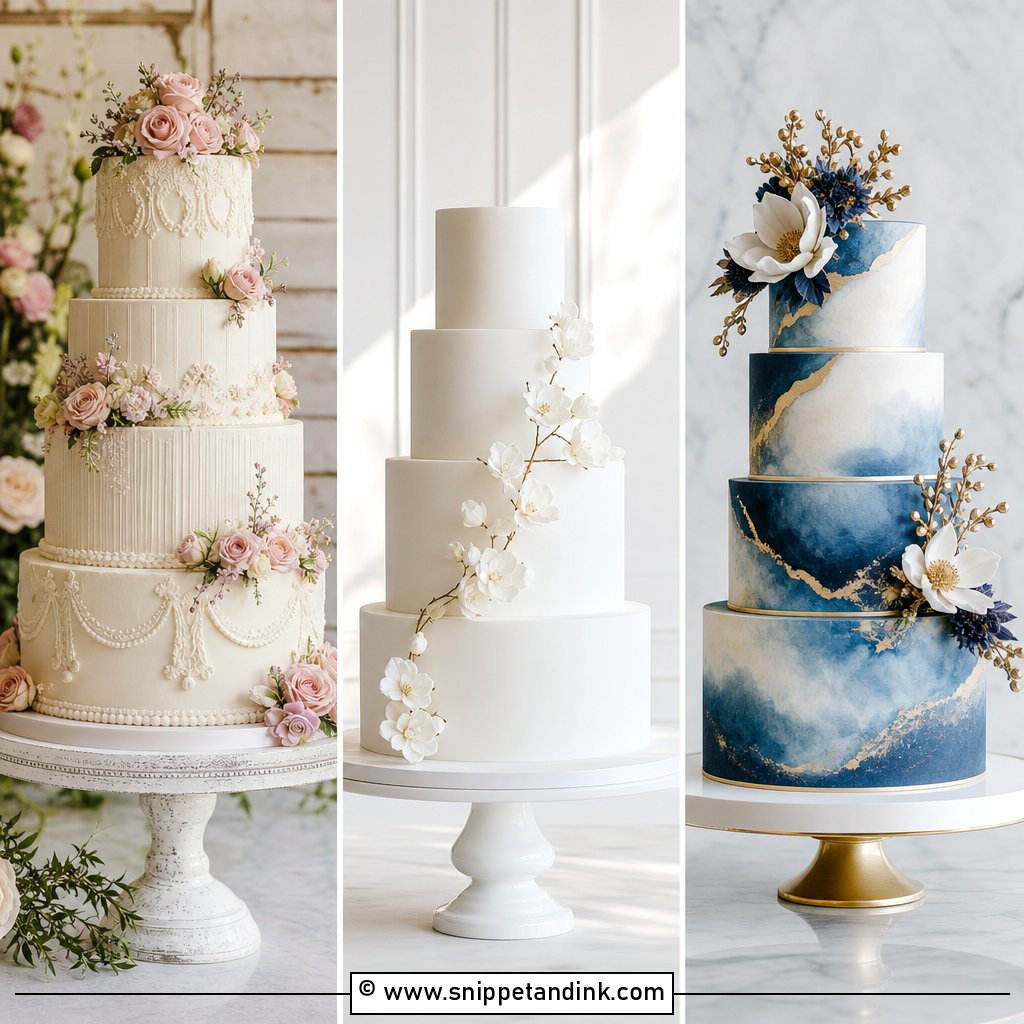
Vintage cakes lean on piping: buttercream swags, shell borders, small bows and sometimes cherries or pearls on top. The look depends on a well-chilled crumb-coated cake, because piping onto soft buttercream makes every swag droop. I keep the piping to two or three motifs so it reads detailed rather than crowded. Ivory is classic; blush, baby blue and pale yellow make it more playful. Vanilla almond, lemon and raspberry cream all suit it.
2. Lambeth Wedding Cake
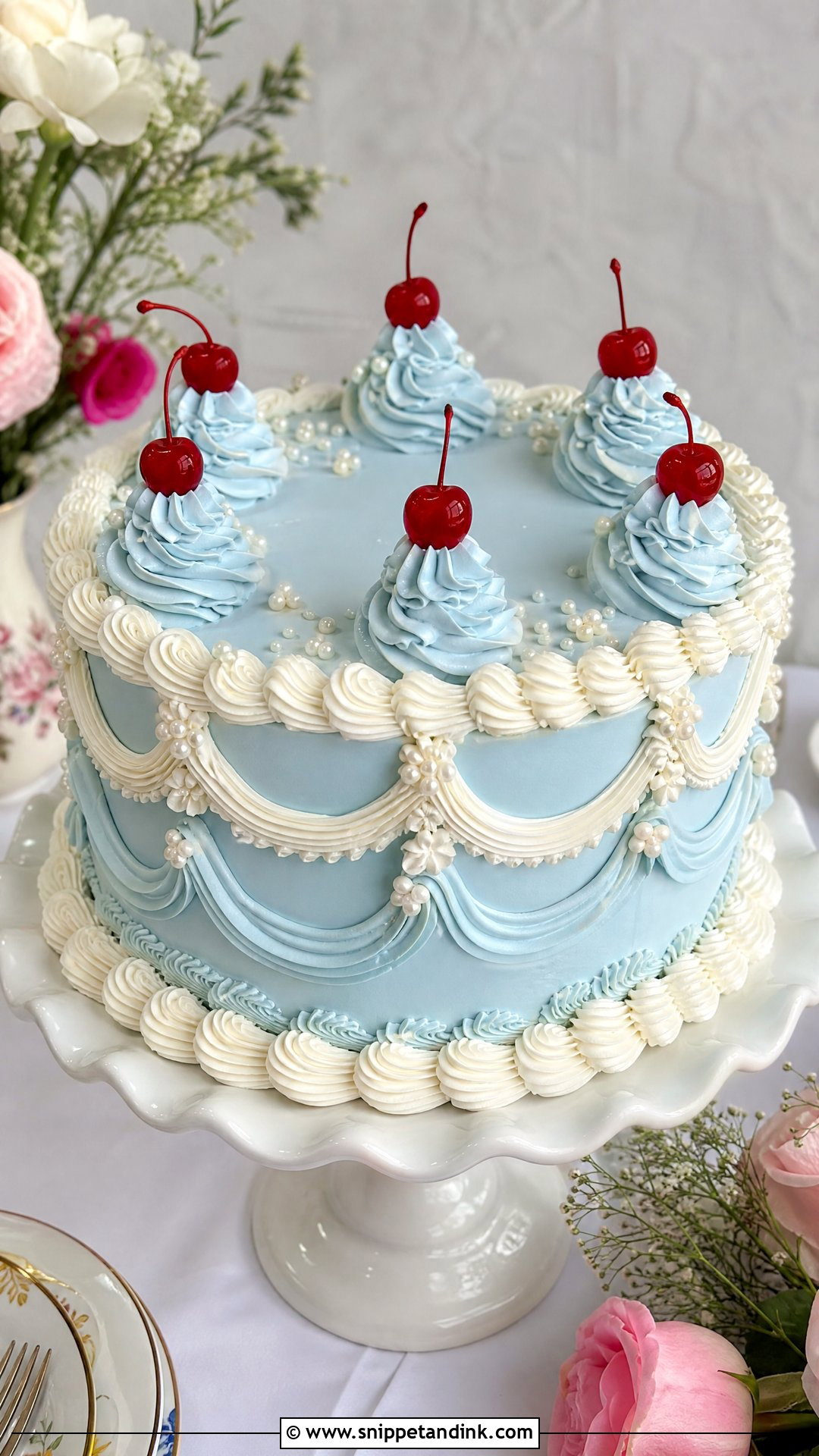
Lambeth is a specific overpiped technique, where borders are built up in layers, one piped on top of the last, so the decoration stands well out from the cake. It’s slow work and adds weight, which is why I’d usually suggest it on a single-tier cutting cake or the top tier rather than on every tier of a large cake. American buttercream, which crusts, holds those ridges far better than silky meringue buttercreams in a warm room. Pick one color story and let the piping carry it. Almond with raspberry and vanilla with salted caramel both stand up to the rich frosting.
3. Floral Wedding Cake
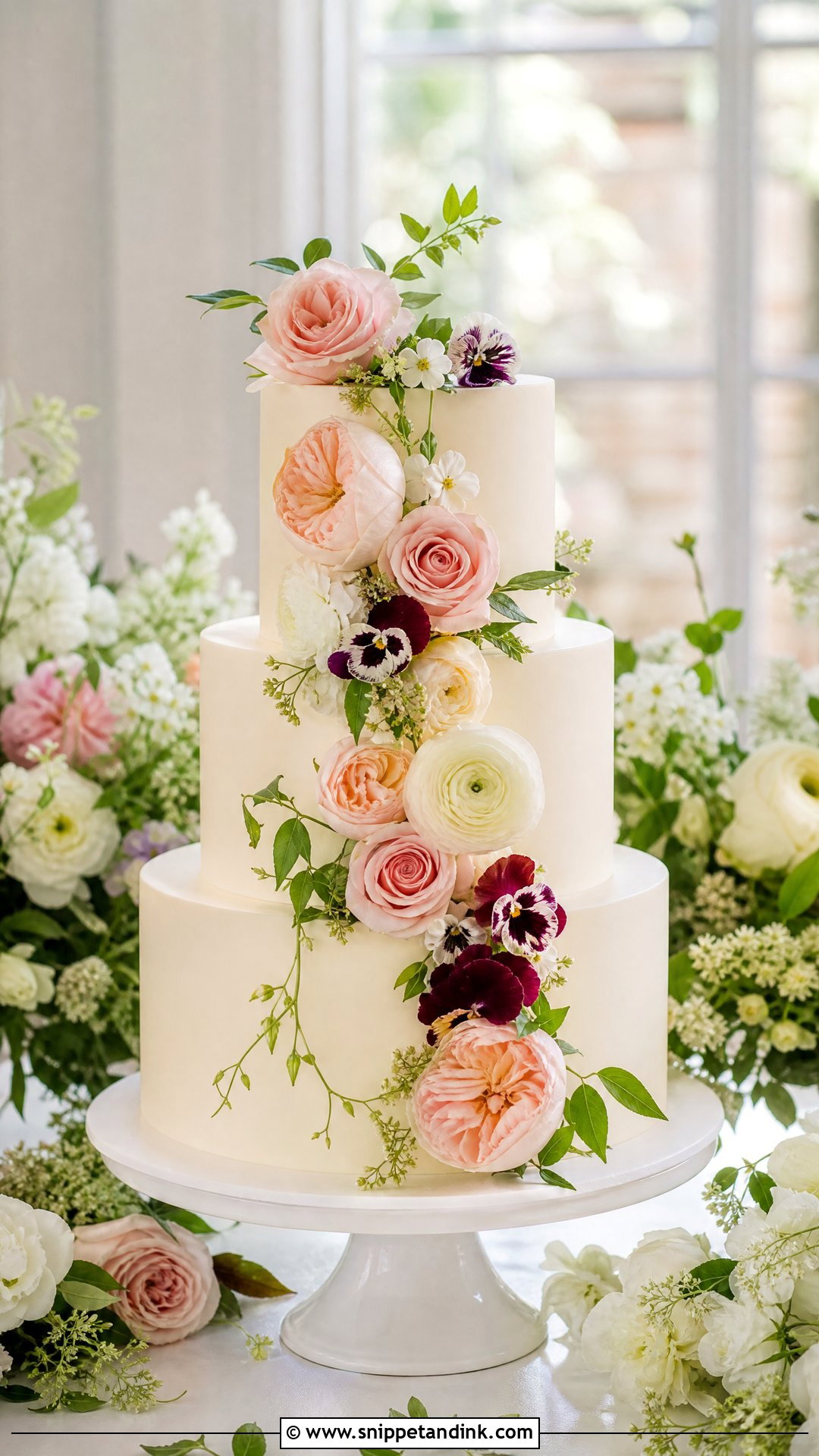
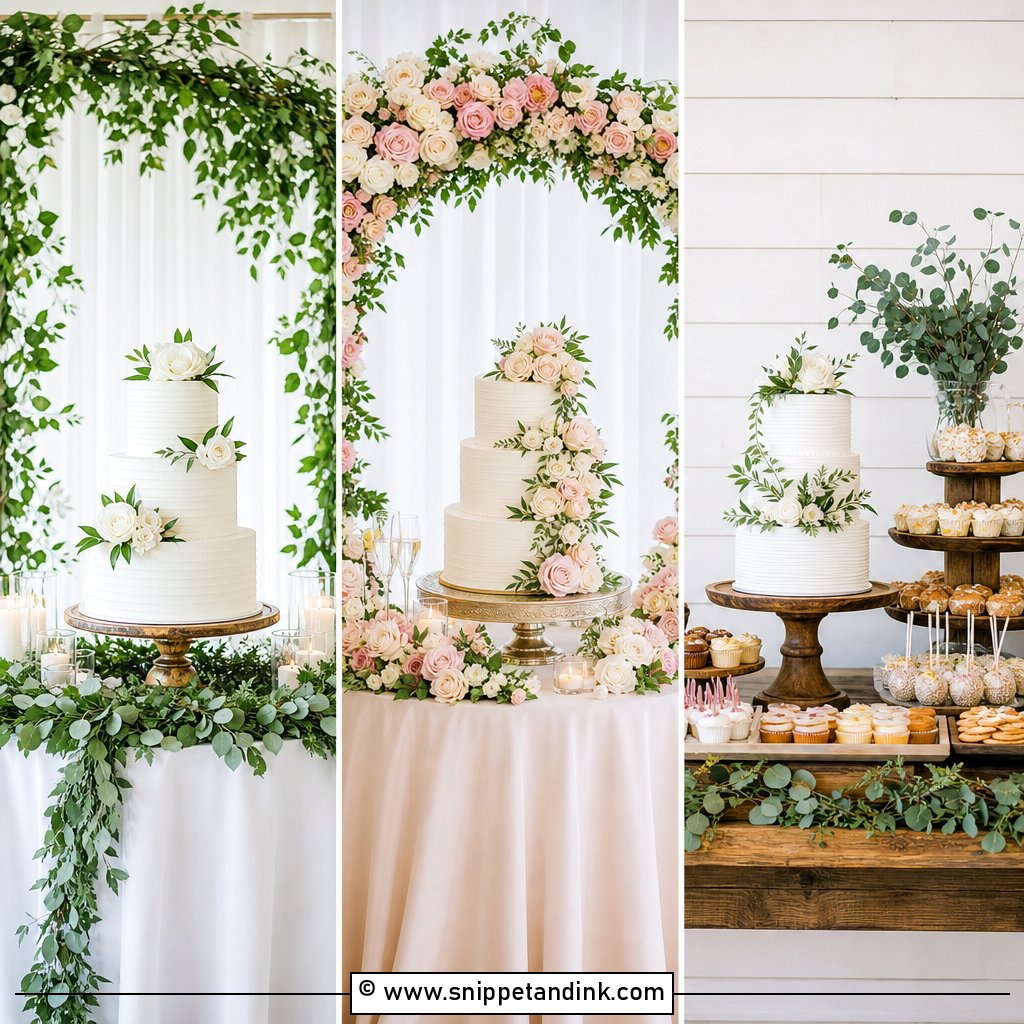
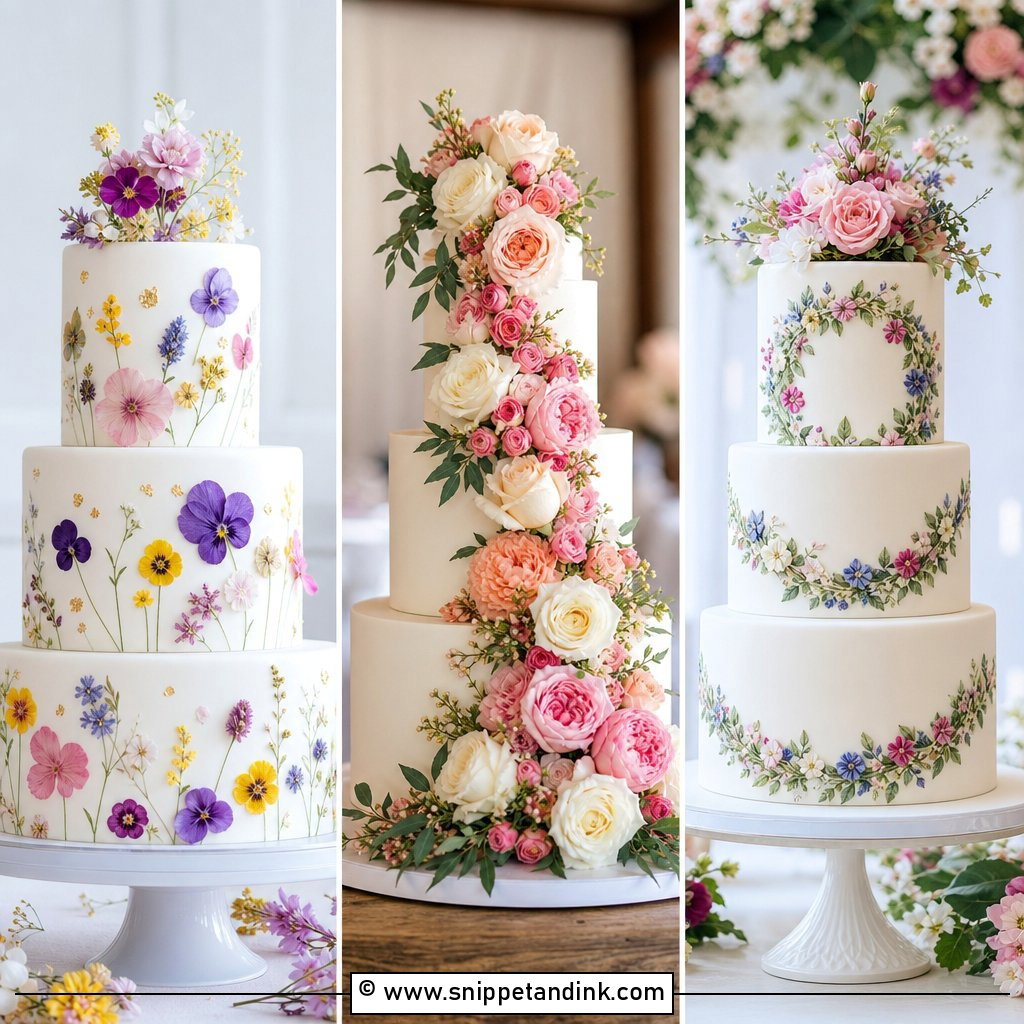
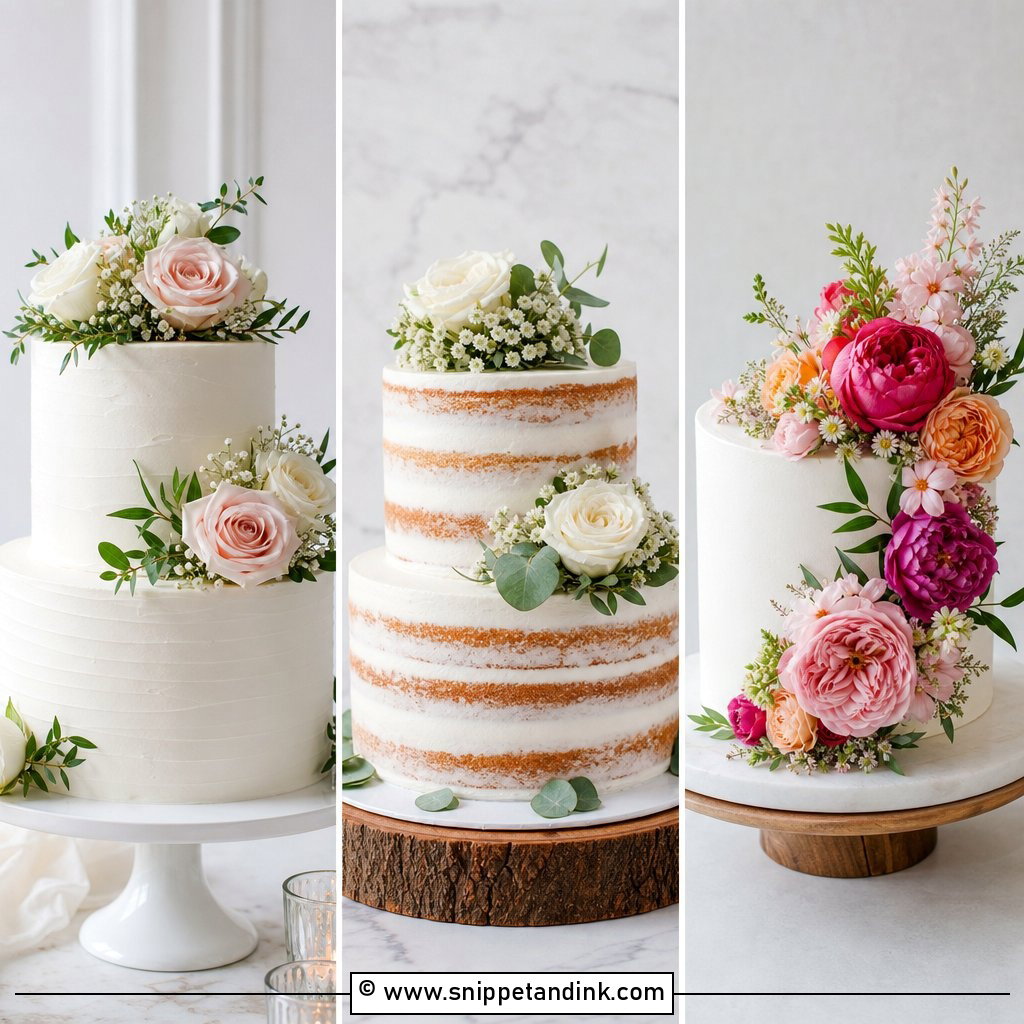
Fresh flowers make a simple cake look generous, but they’re the part I’m strictest about. Many popular wedding flowers aren’t food-safe, and some, like lily of the valley, hydrangea and foxglove, are toxic, so I only use blooms the florist confirms are pesticide-free and safe near food. Stems are wrapped in floral tape and placed into food-safe picks, never pushed straight into the cake. Roses, ranunculus and edible pansies are common choices. Keep the frosting plain if the flowers are abundant.
4. Textured Buttercream Wedding Cake
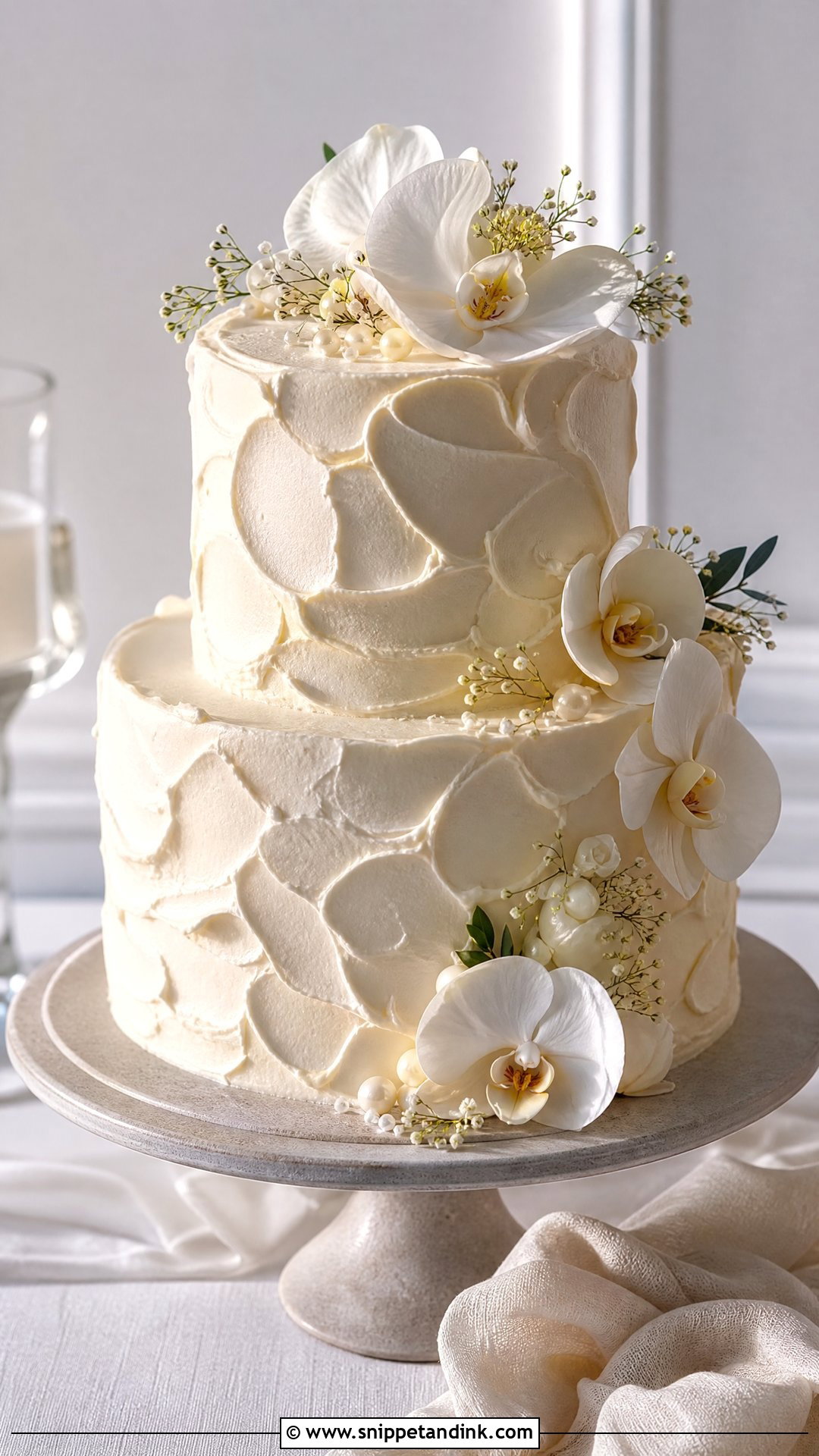
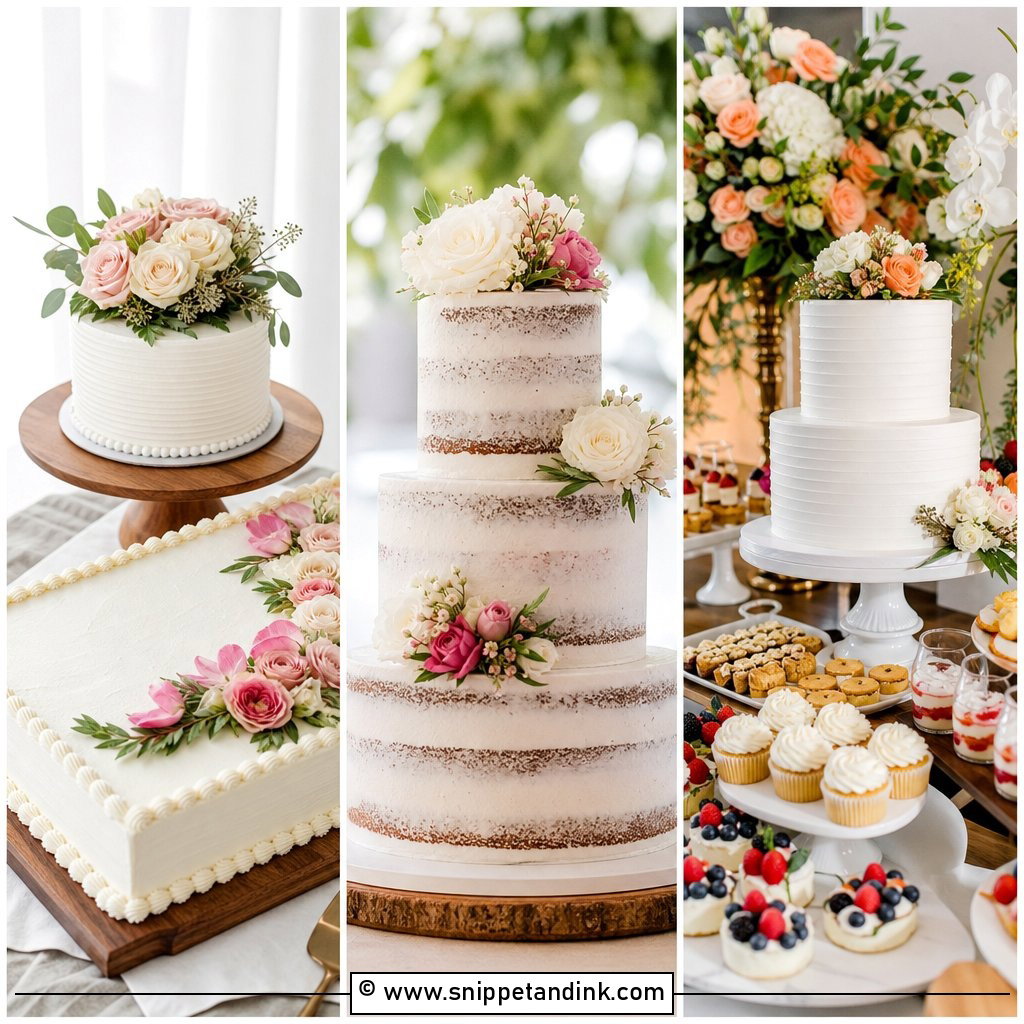
Textured buttercream hides small imperfections and photographs with depth, which is why it’s one of my most requested finishes. Palette-knife strokes, linen texture and soft ridges are all done while the final coat is still slightly soft, so the cake has to be cold underneath and the room cool. It suits barns, coastal venues and classic receptions. Pearls, fruit or a few flowers dress it up or down. Many guests prefer buttercream’s taste to fondant.
5. Pearl Wedding Cake
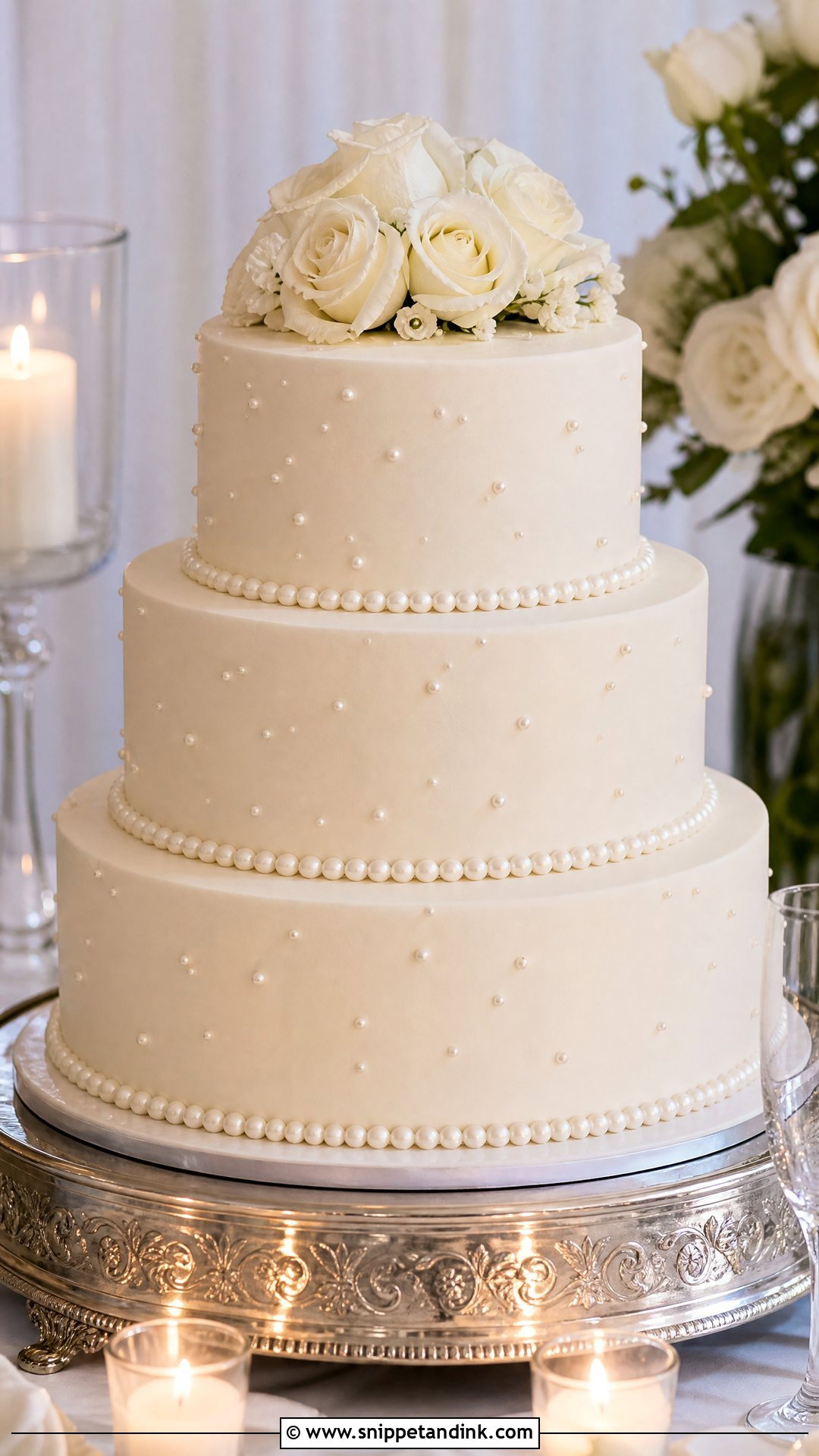
Sugar pearls can be scattered, set in borders or arranged into beaded patterns. I press them into buttercream while it’s still tacky, or attach them with a dot of royal icing on fondant; pearls added to set buttercream simply roll off. Ivory frosting suits them best. Mixing two or three pearl sizes adds depth. Vanilla bean, coconut or white chocolate raspberry keep the flavor in the same refined register.
6. Minimalist Wedding Cake
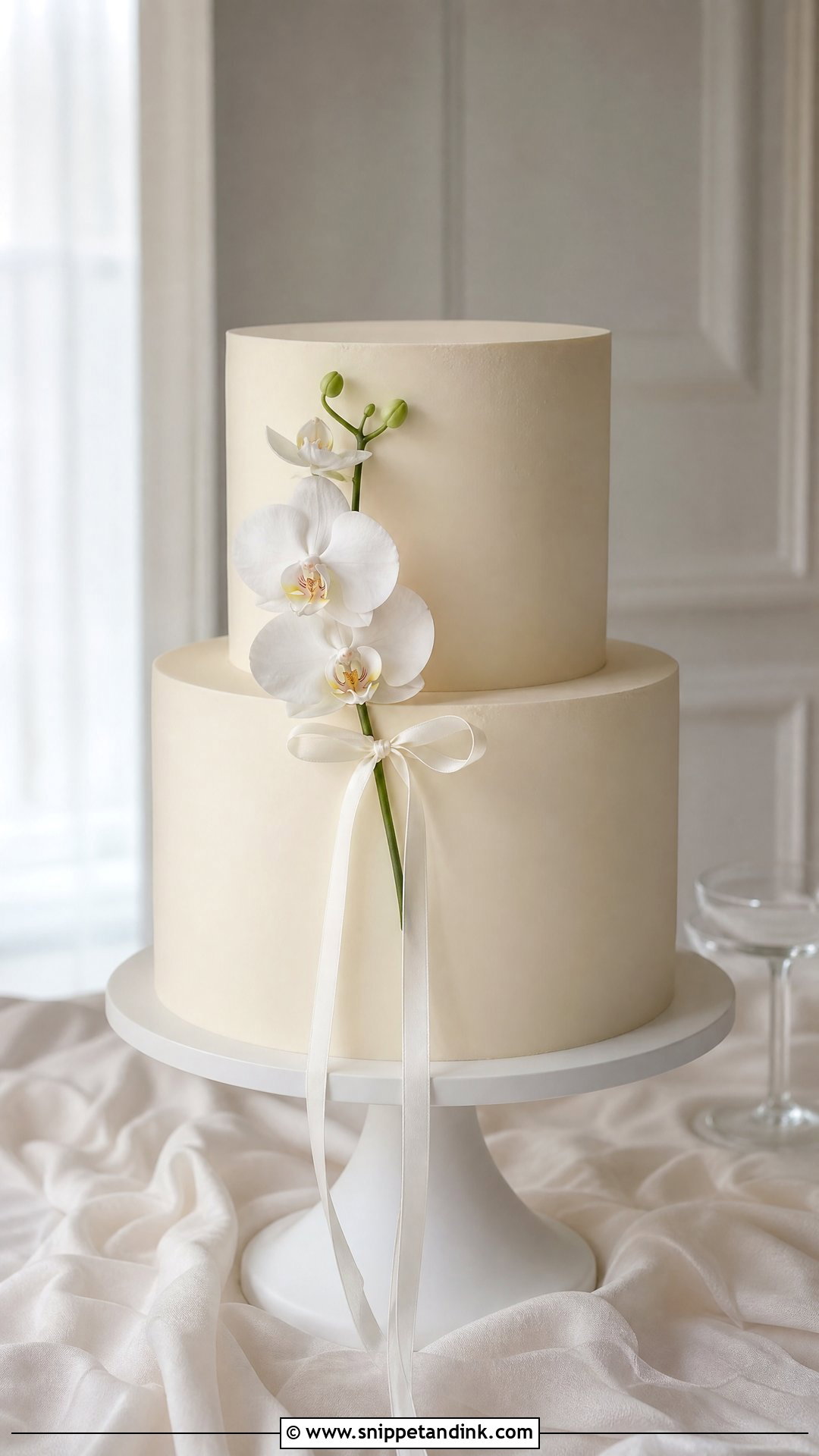
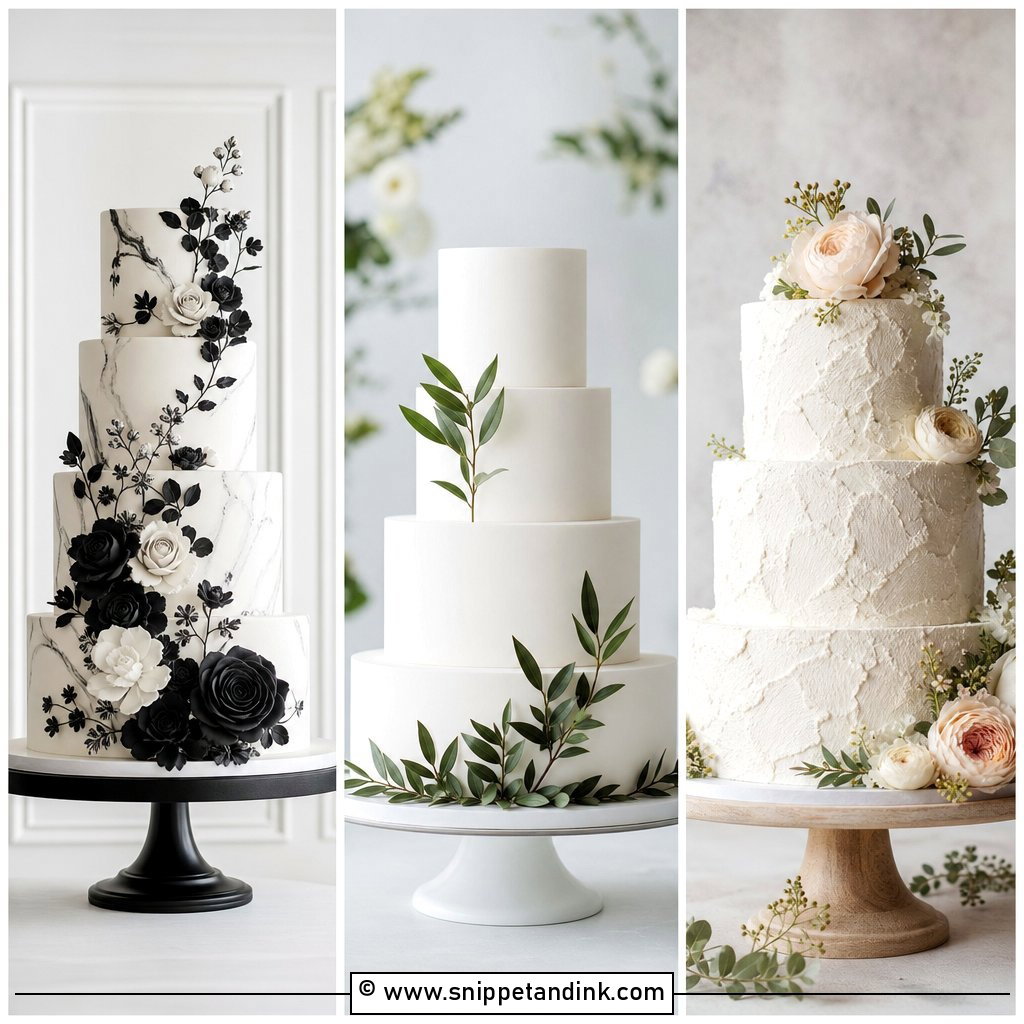
A plain cake shows everything, so sharp edges and a smooth coat matter more here than on any decorated design. I chill each tier hard before the final coat and use a heated scraper for clean lines. One detail is enough: a single flower stem, a silk ribbon or a fine piped edge. Silk ribbon should have a strip of acetate behind it, or the buttercream’s butterfat will soak through and leave grease marks. Lemon elderflower or pistachio raspberry make the inside more interesting than the outside.
7. Modern Wedding Cake
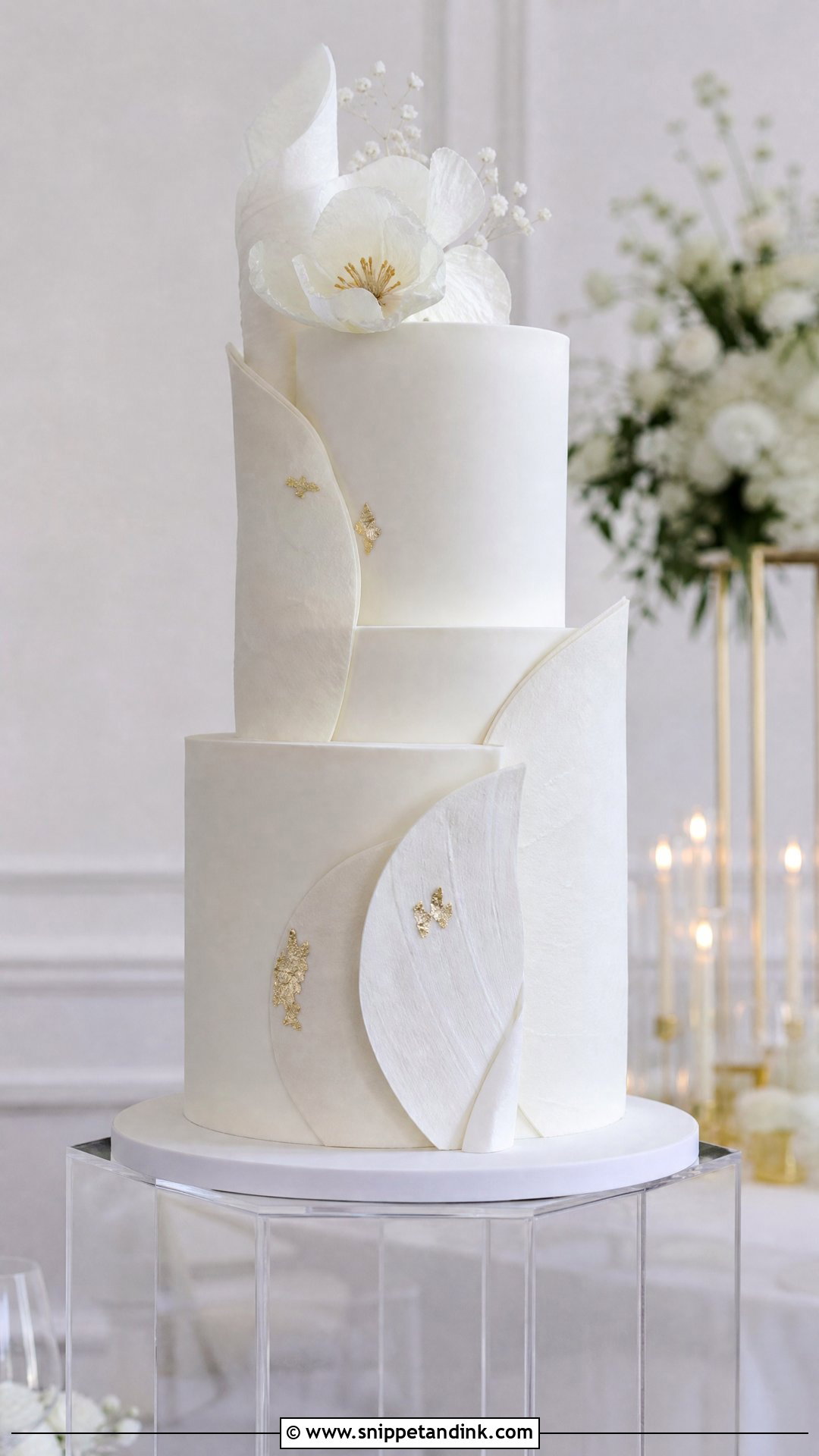
Modern cakes use sharp edges, offset tiers, curved panels, wafer paper or metallic touches. Wafer paper is lovely but reacts to humidity, curling or softening in a damp room, so for summer and outdoor weddings I’d test a sample first. Keep the palette deliberate: black and white, ivory and gold or soft clay tones. Earl Grey lemon, dark chocolate espresso and passion fruit vanilla suit the style.
8. Two Tier Wedding Cake
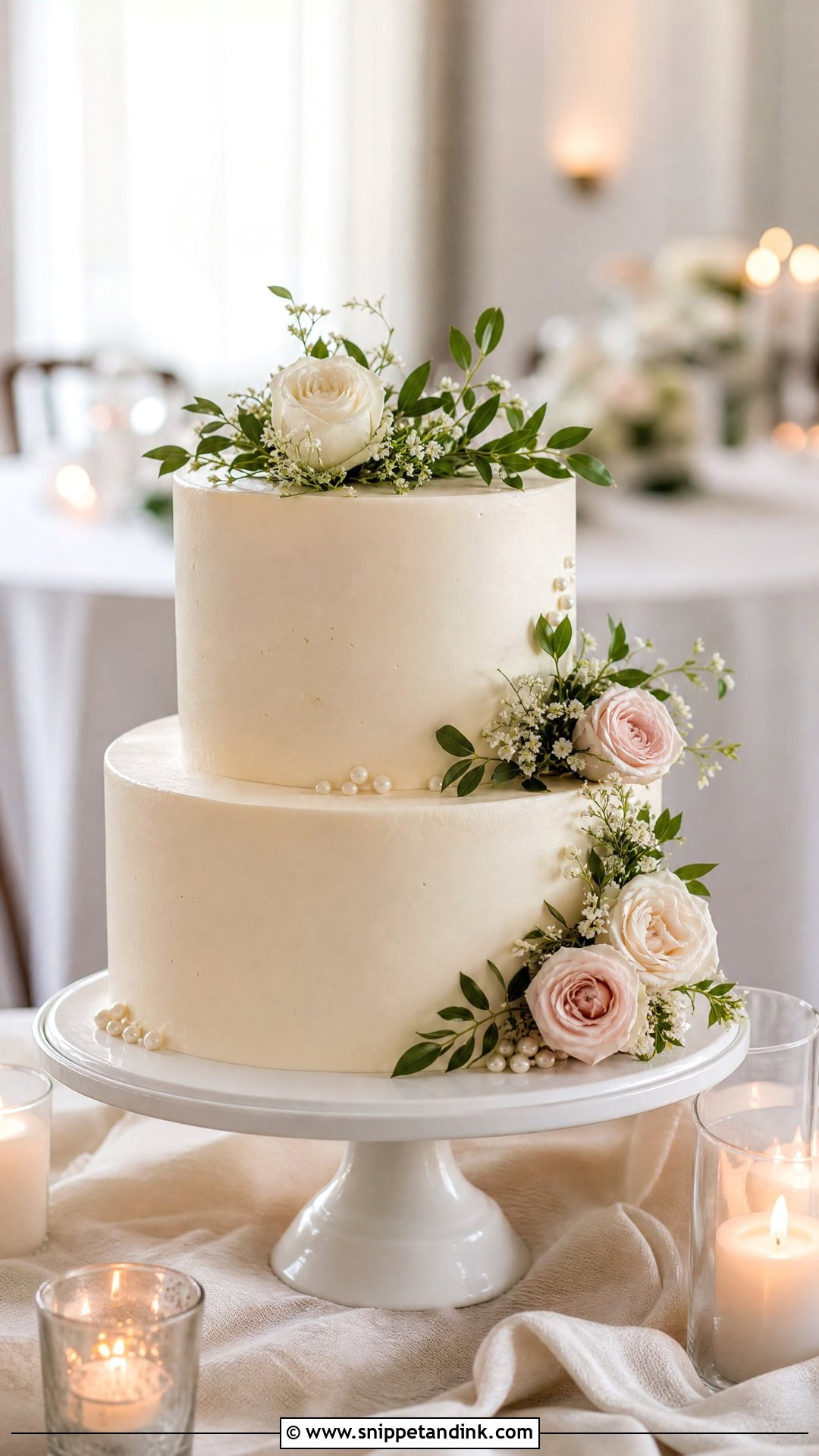
Two tiers suit smaller weddings or couples who’d rather spend on a dessert table. A typical 6-inch and 8-inch combination serves roughly 35 to 40 wedding-sized slices, though slice size changes that a lot. It still gives height for the cutting photo. Flowers, pearls, textured buttercream or fruit all work. Each tier can have its own flavor, which gives guests a choice without a bigger cake.
9. Three Tier Wedding Cake
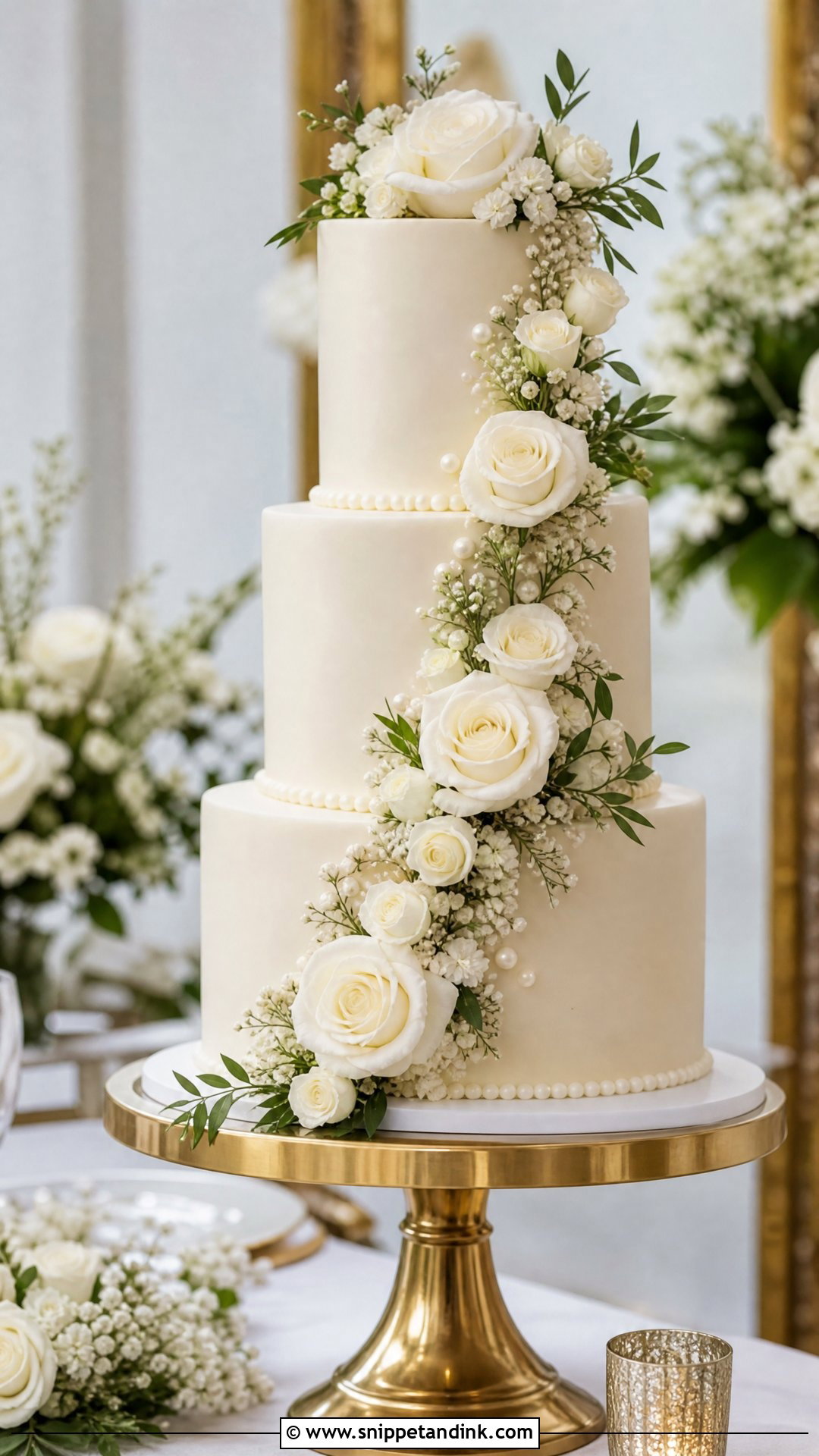
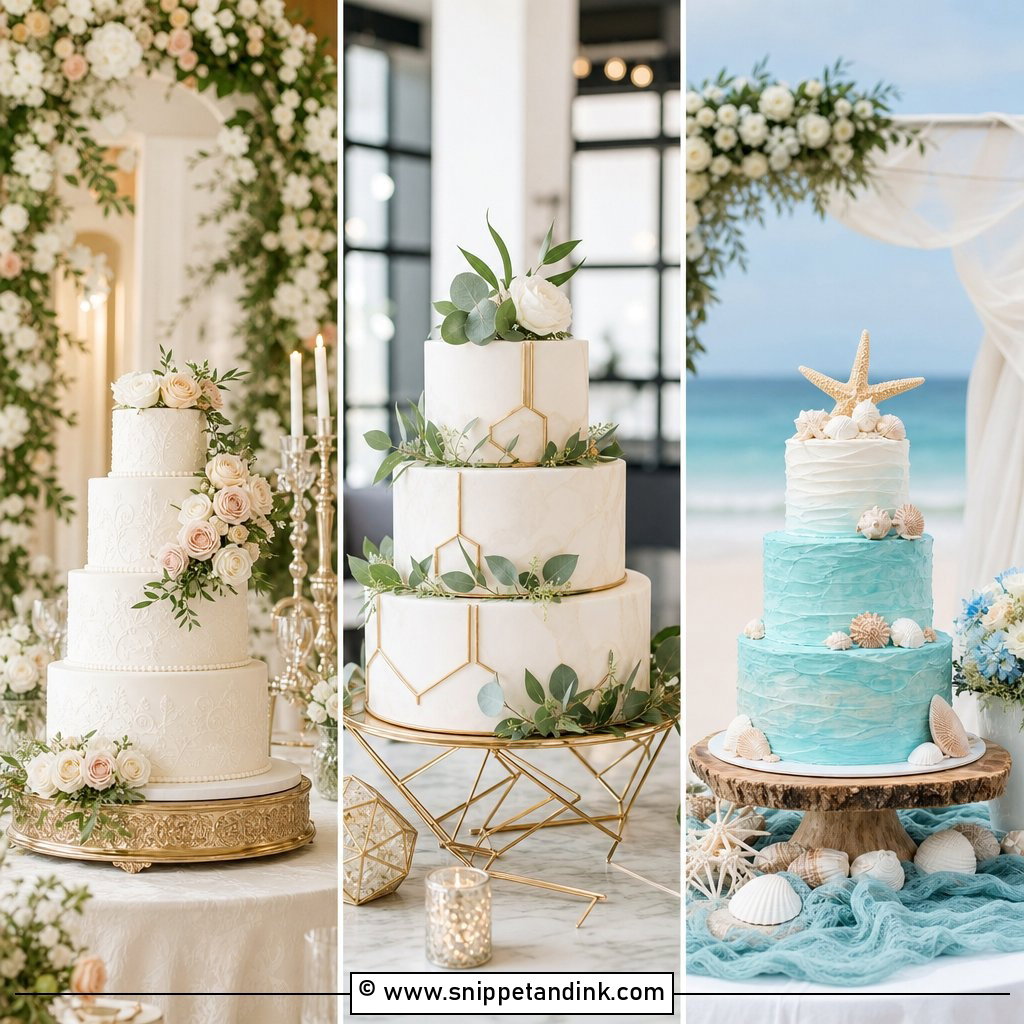
Three tiers is the classic reception centerpiece. A common 6, 8 and 10-inch stack serves around 70 to 75 wedding portions, depending on slice size. Each tier needs internal supports, usually dowels or straws and a cake board, so the weight of the upper tiers doesn’t sink into the lower ones. Different flavors per tier work well: vanilla raspberry, chocolate ganache and lemon cream make a balanced set. A sturdy stand finishes it.
10. Small Wedding Cake
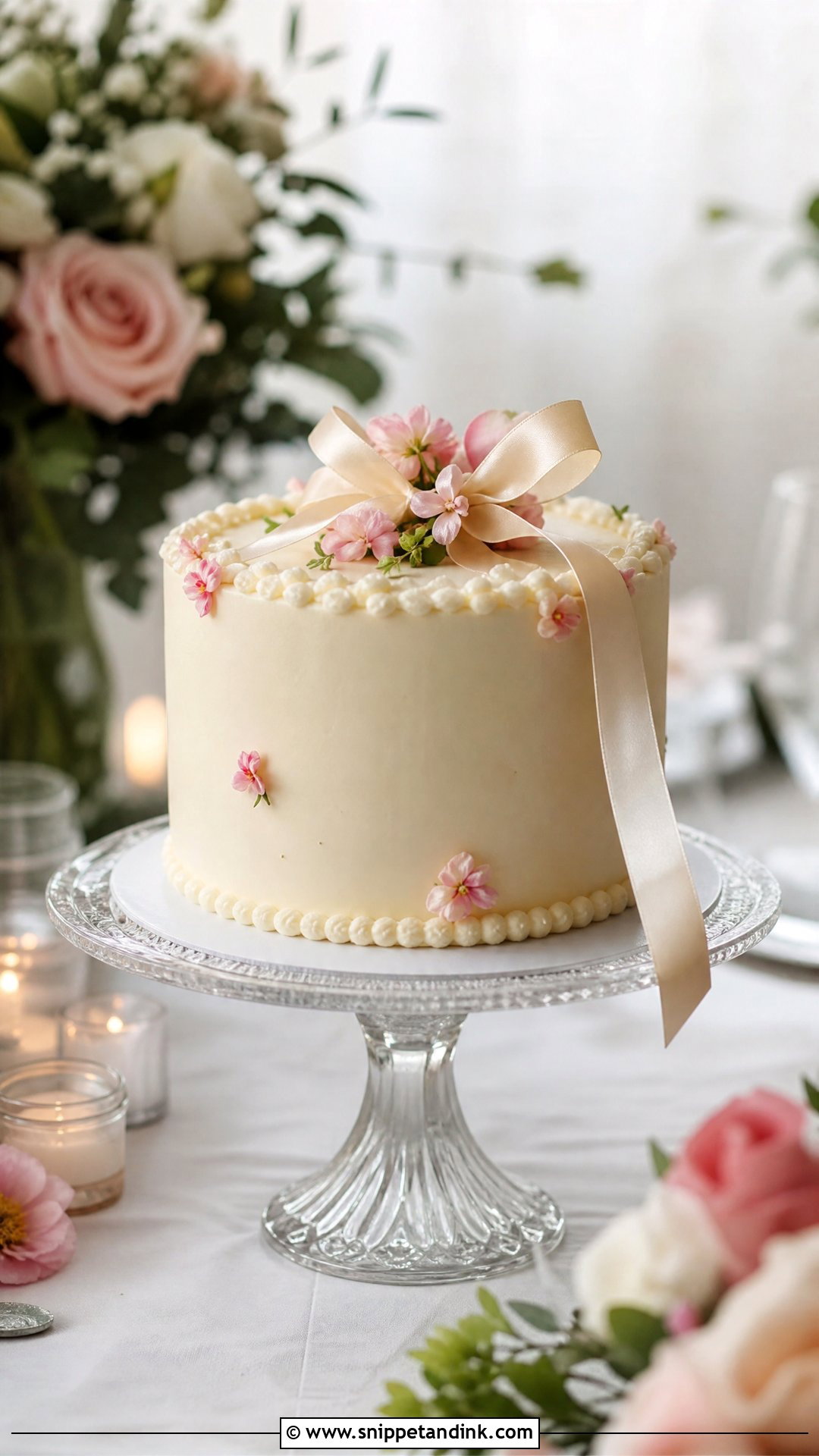
A small, single-tier cake can carry as much meaning as a large one, especially for elopements and micro weddings. Because it’s small, the budget can go on better ingredients, a premium filling or hand-piped detail. A 6-inch cake usually serves around a dozen wedding portions. Set it on a good stand with candles or flowers so the display feels finished.
11. Garden Wedding Cake
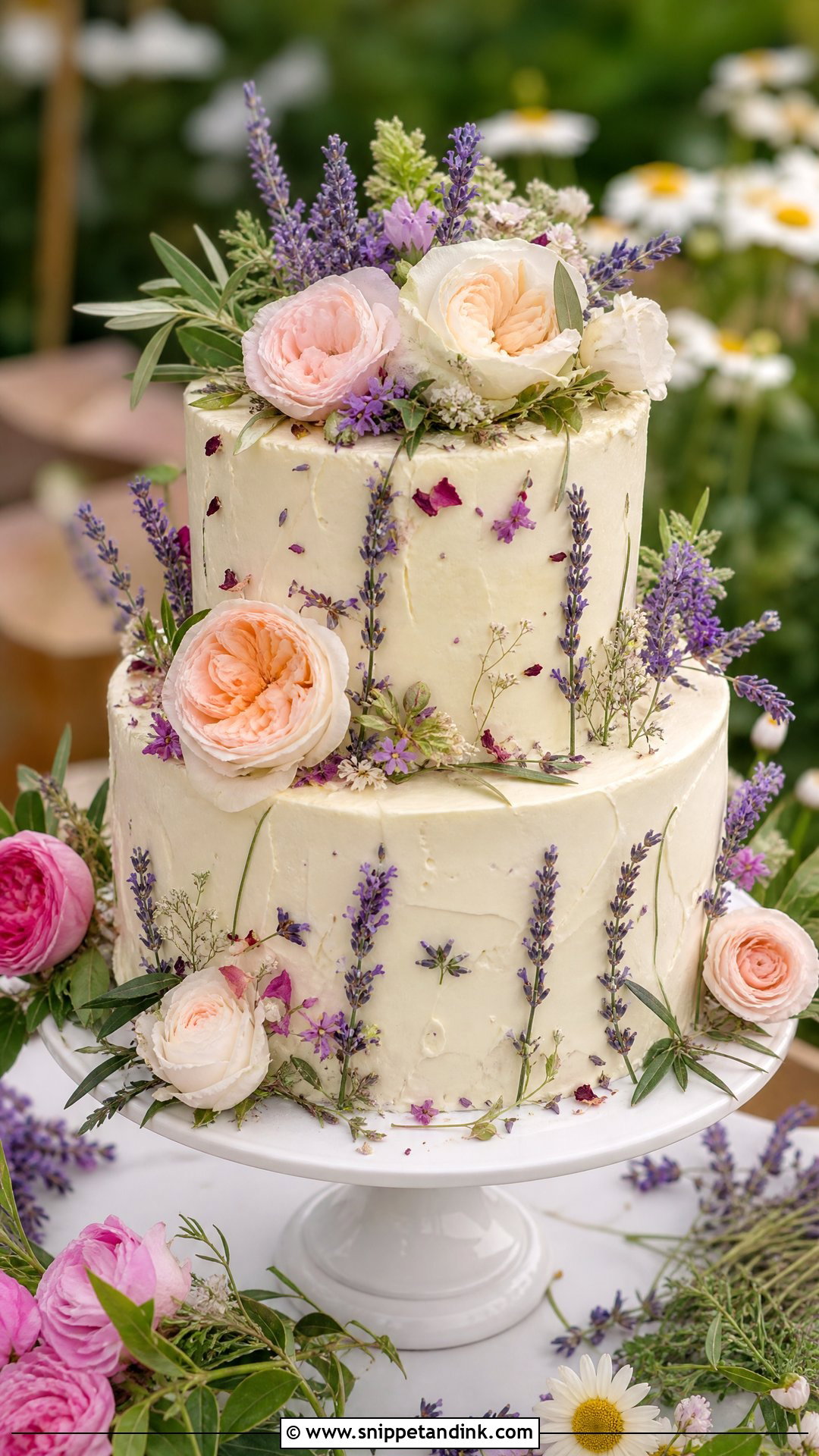
Garden cakes use soft buttercream, climbing flowers, greenery and edible petals in natural shades. Ivory, blush, lavender, sage and butter yellow suit the setting. Lemon, vanilla bean, honey and lavender flavors match it. Outdoors, buttercream softens quickly in sun, so I’d place the cake in shade and bring it out shortly before guests arrive. Keep the design airy.
12. Rustic Wedding Cake
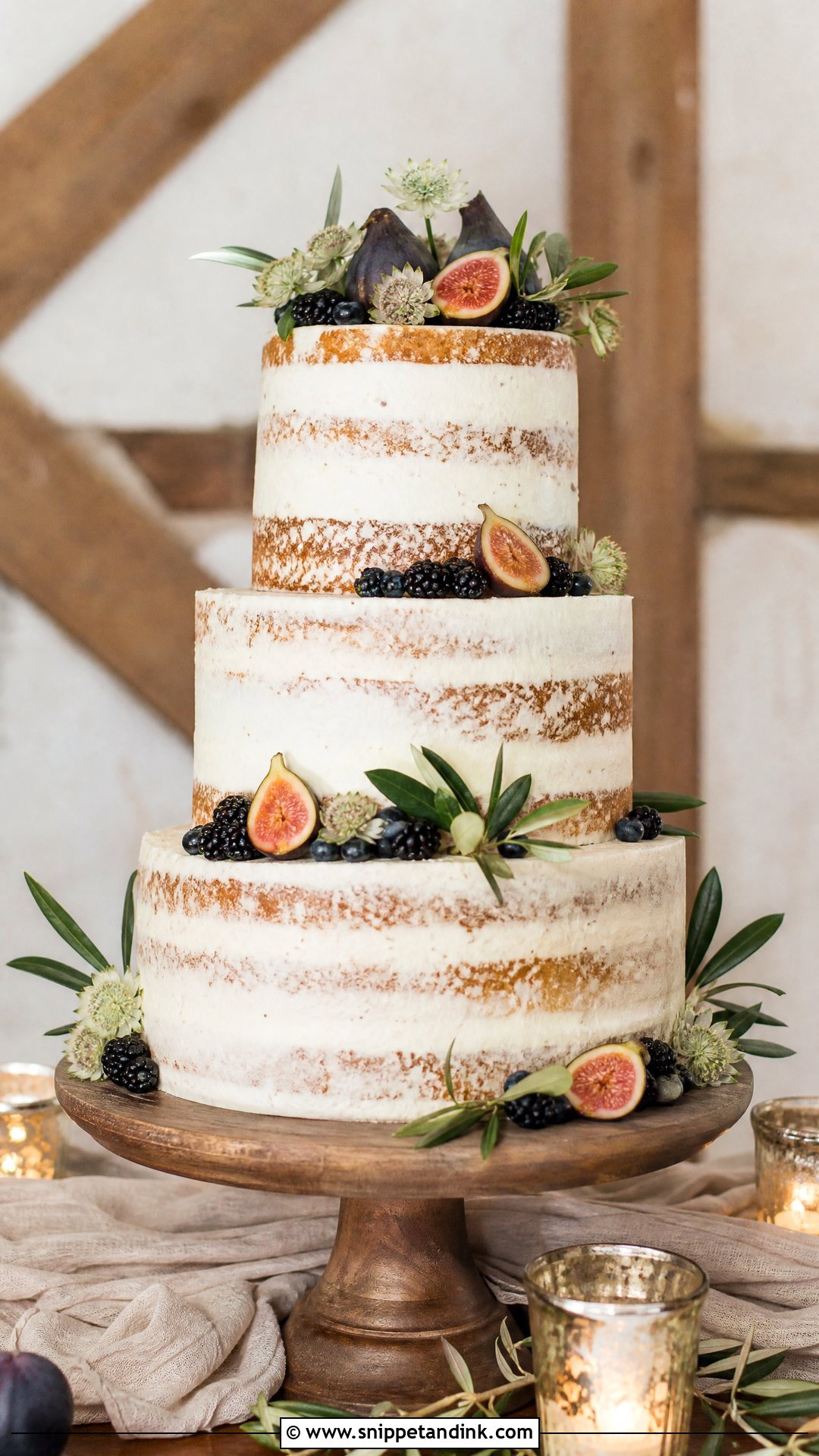
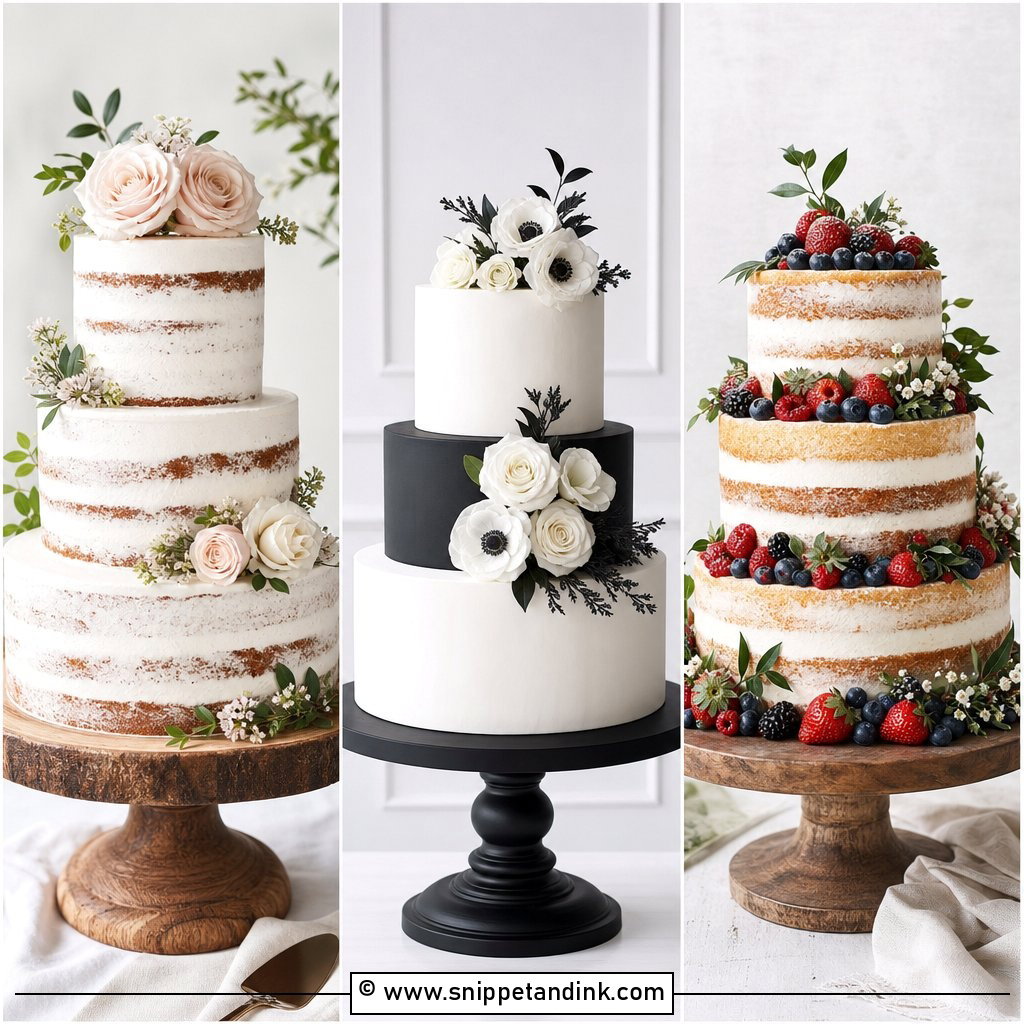
Rustic cakes often use semi-naked frosting, textured buttercream, figs, berries and greenery. A semi-naked cake has very little frosting protecting the sponge, so it dries out faster; I brush the layers with syrup and assemble as close to the event as possible. It suits barns and autumn weddings. Carrot, spice and apple caramel are good flavors. Linen and candles around the stand finish the display.
13. Beach Wedding Cake
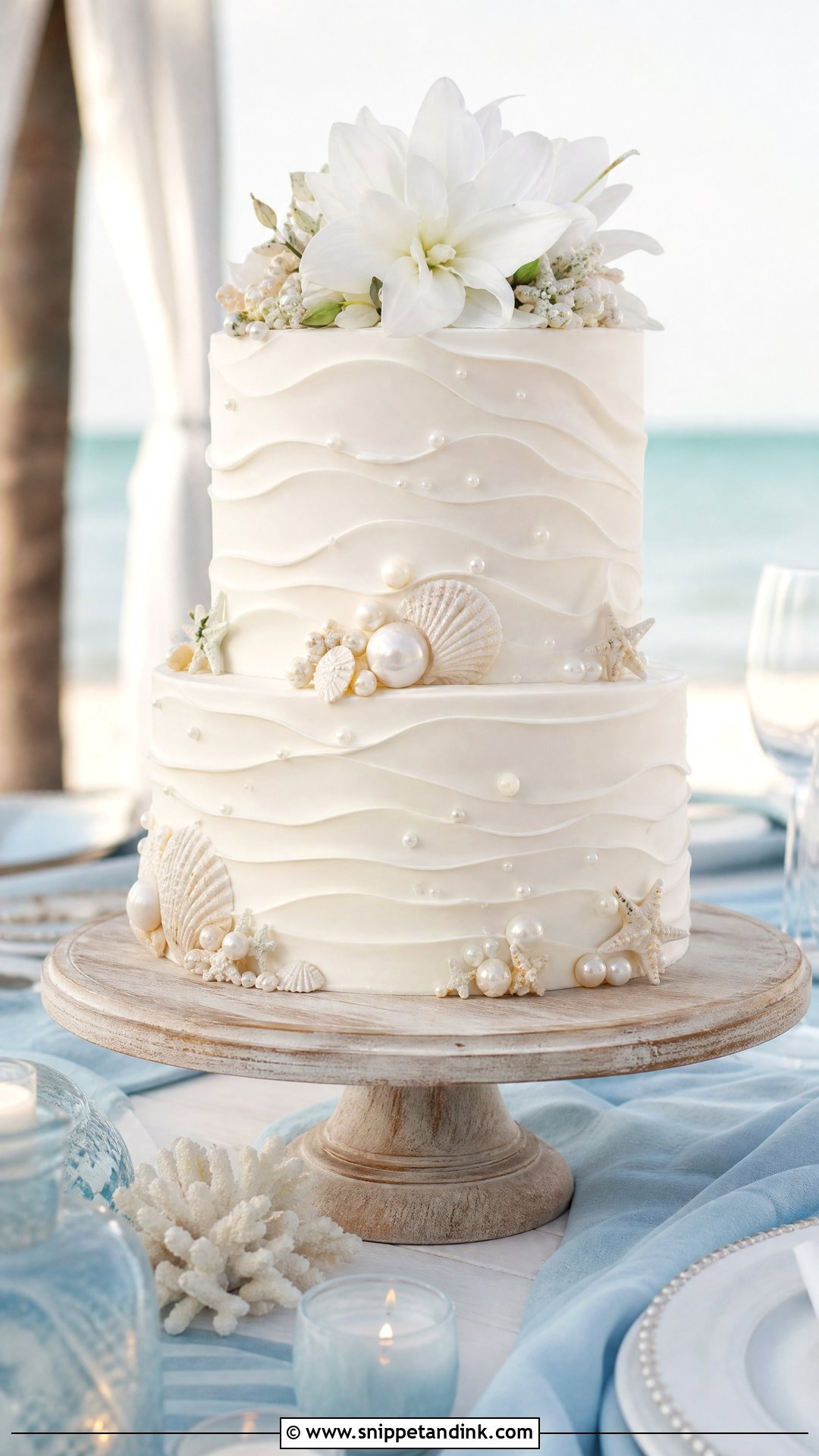
Beach cakes should feel light rather than themed. Soft white buttercream, pale blue accents and sugar shells keep it subtle. Coconut, key lime, passion fruit and mango fillings suit the setting. Heat and direct sun are the real issues on a beach: buttercream can soften and slide, so ask your baker about a more heat-stable frosting and a shaded table, and keep the cake inside until the last moment.
14. Boho Wedding Cake
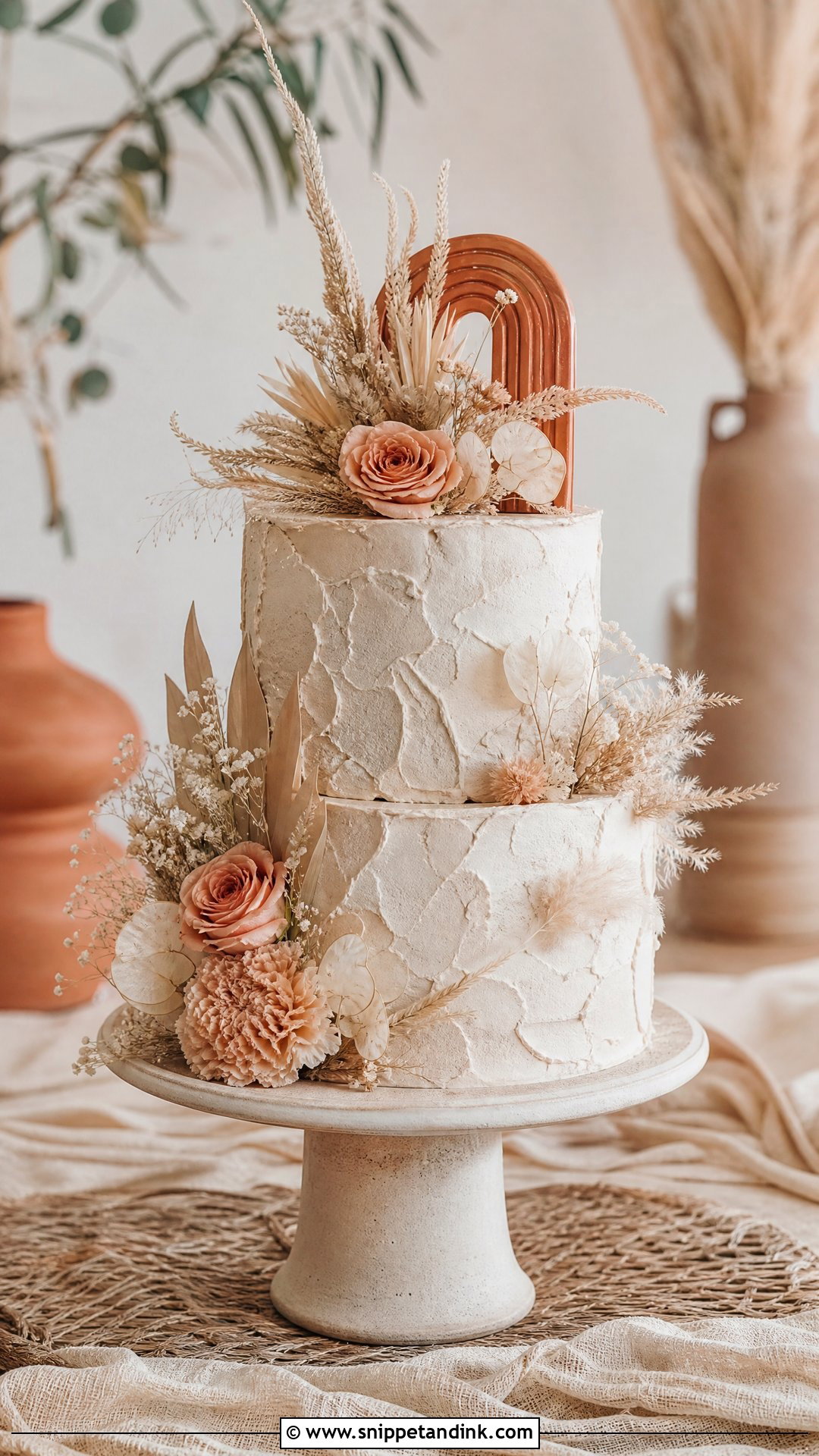
Boho cakes use dried florals, pampas, neutral colors, terracotta accents and rough buttercream. Dried flowers and pampas shed and aren’t food-safe, so I place them on a barrier or keep them on the board rather than on the frosting. Ivory, clay, caramel and muted peach photograph well. Honey almond, chai spice and chocolate hazelnut fit the mood.

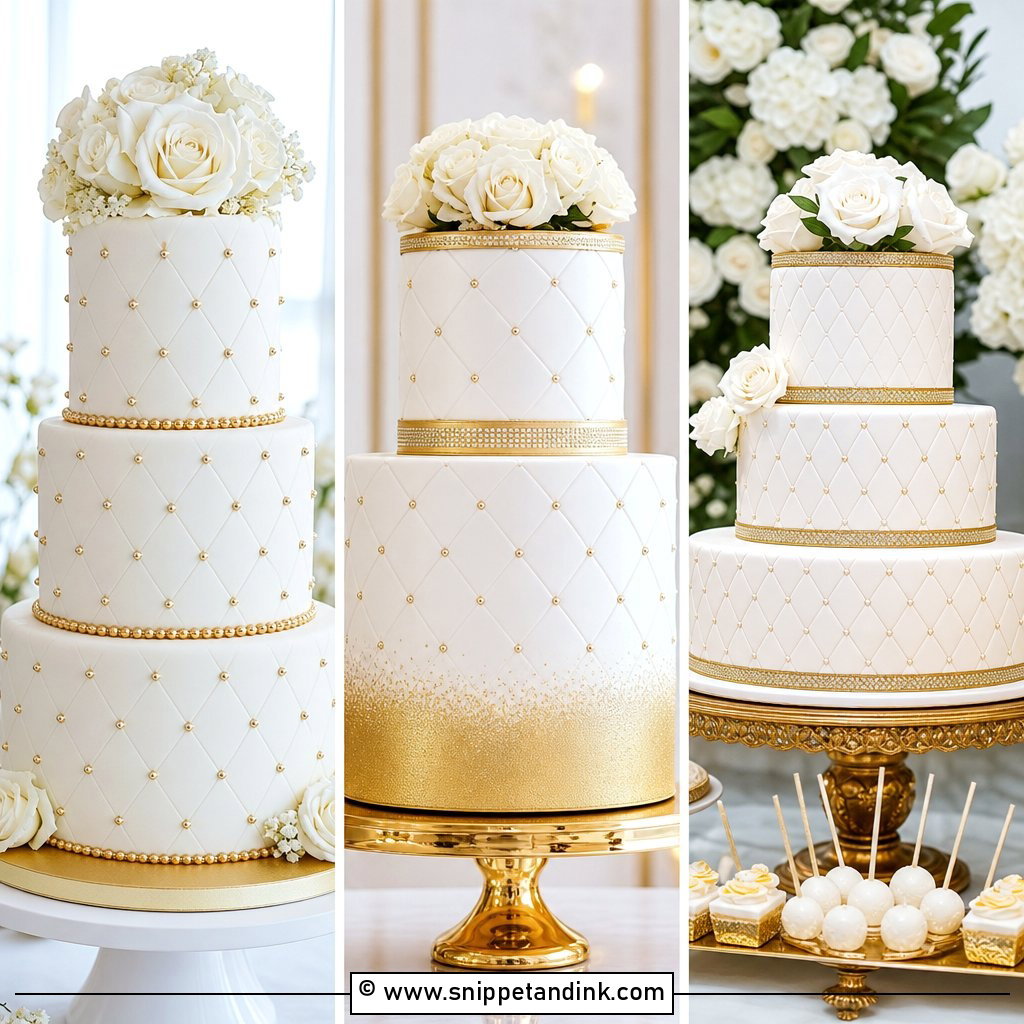
15. Black And White Wedding Cake
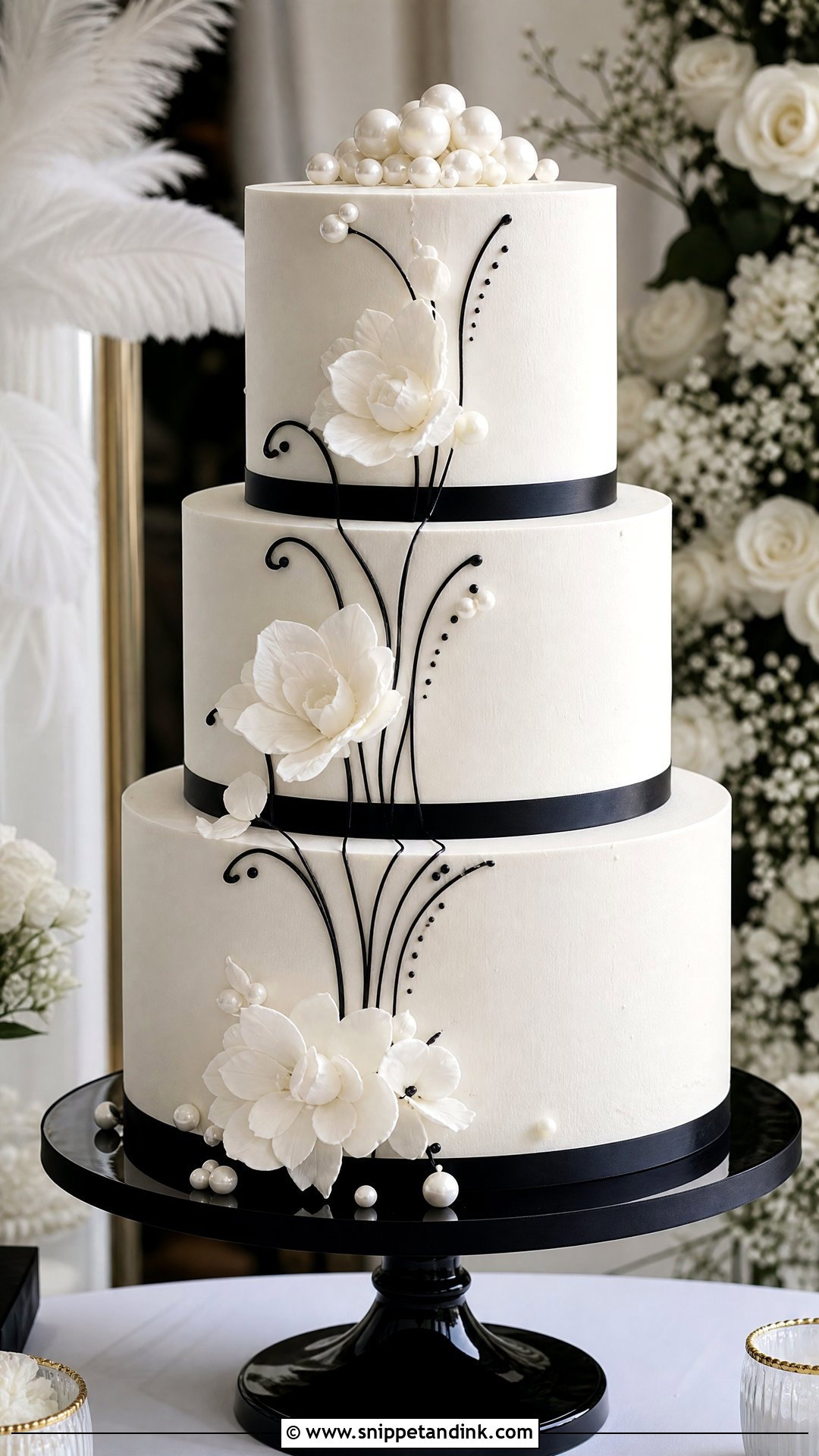
Black on a cake is striking but hard to achieve. True black buttercream needs a lot of coloring, which can taste bitter and stain teeth, so I’d suggest black as an accent: a thin ribbon, calligraphy or a single tier. Black fondant is easier to get to a deep color. Chocolate, cookies and cream and espresso suit the look. It’s a natural fit for evening and city weddings.
16. Gold Wedding Cake
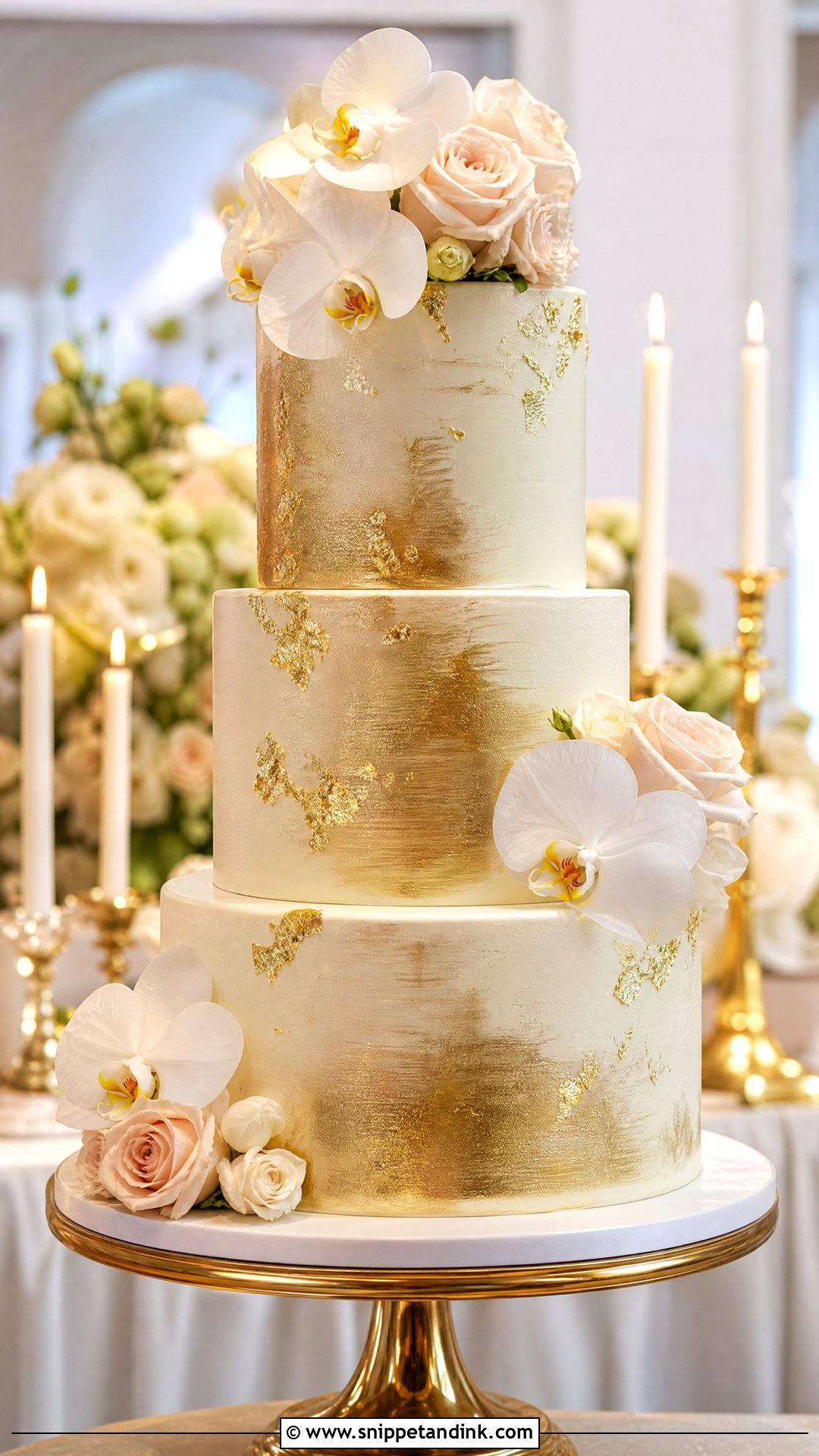
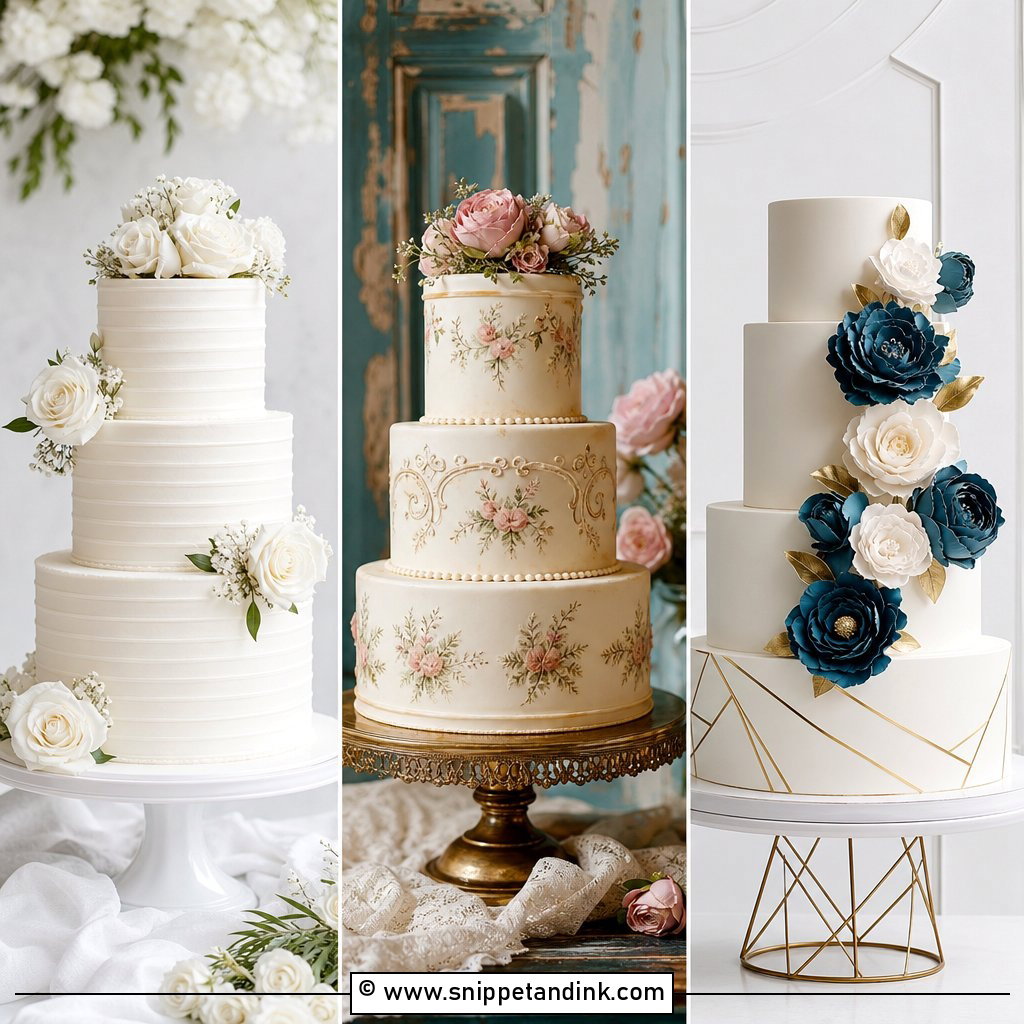
Gold leaf, painted lines or a gold stand add warmth. Gold leaf is very thin and sticks to anything, so it’s applied with tweezers or a dry brush onto chilled frosting. Use gold as a highlight unless you want drama. Make sure every metallic product used is labeled edible. Vanilla almond, caramel and honey suit the richness.
17. Blue Wedding Cake
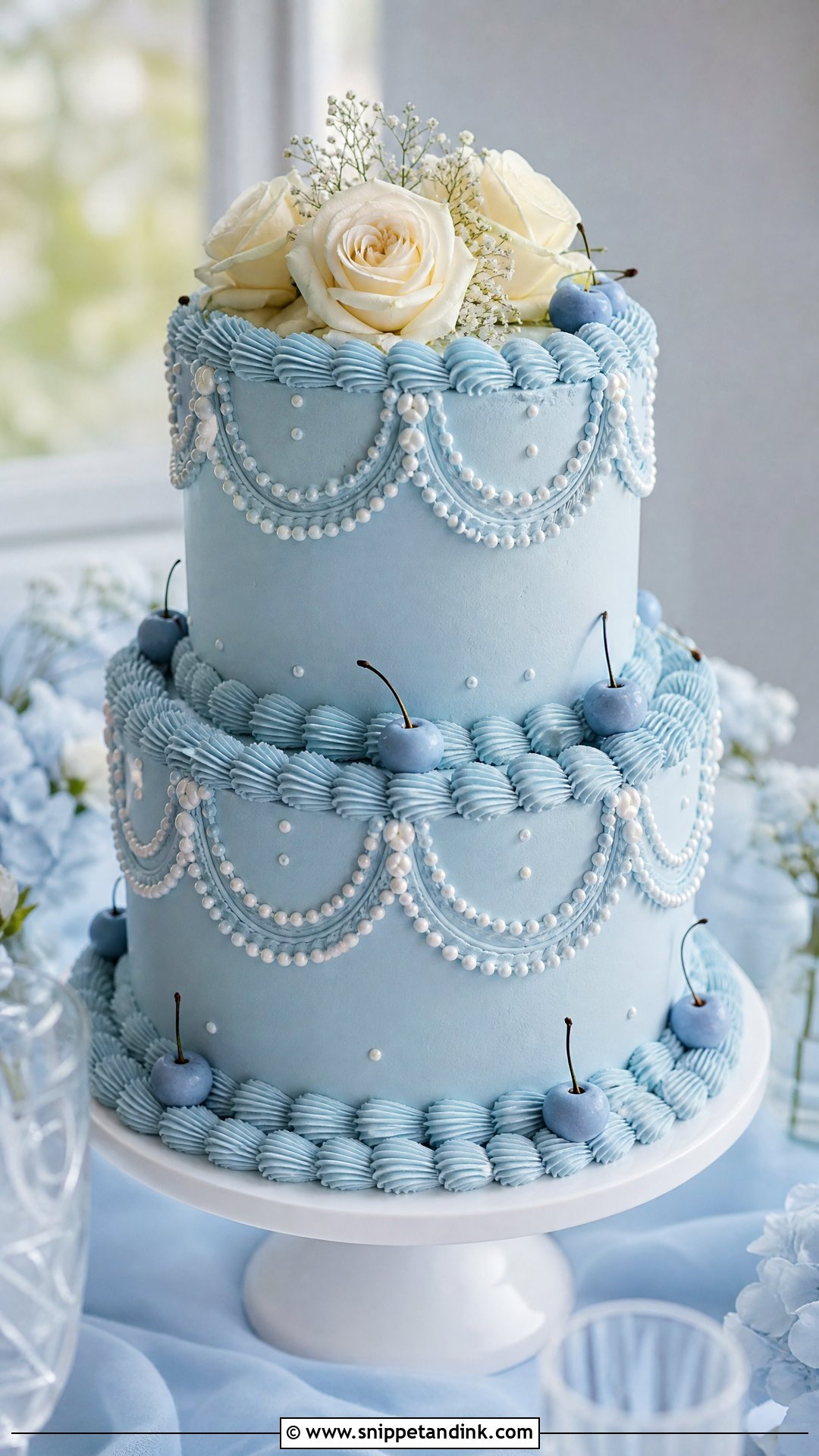
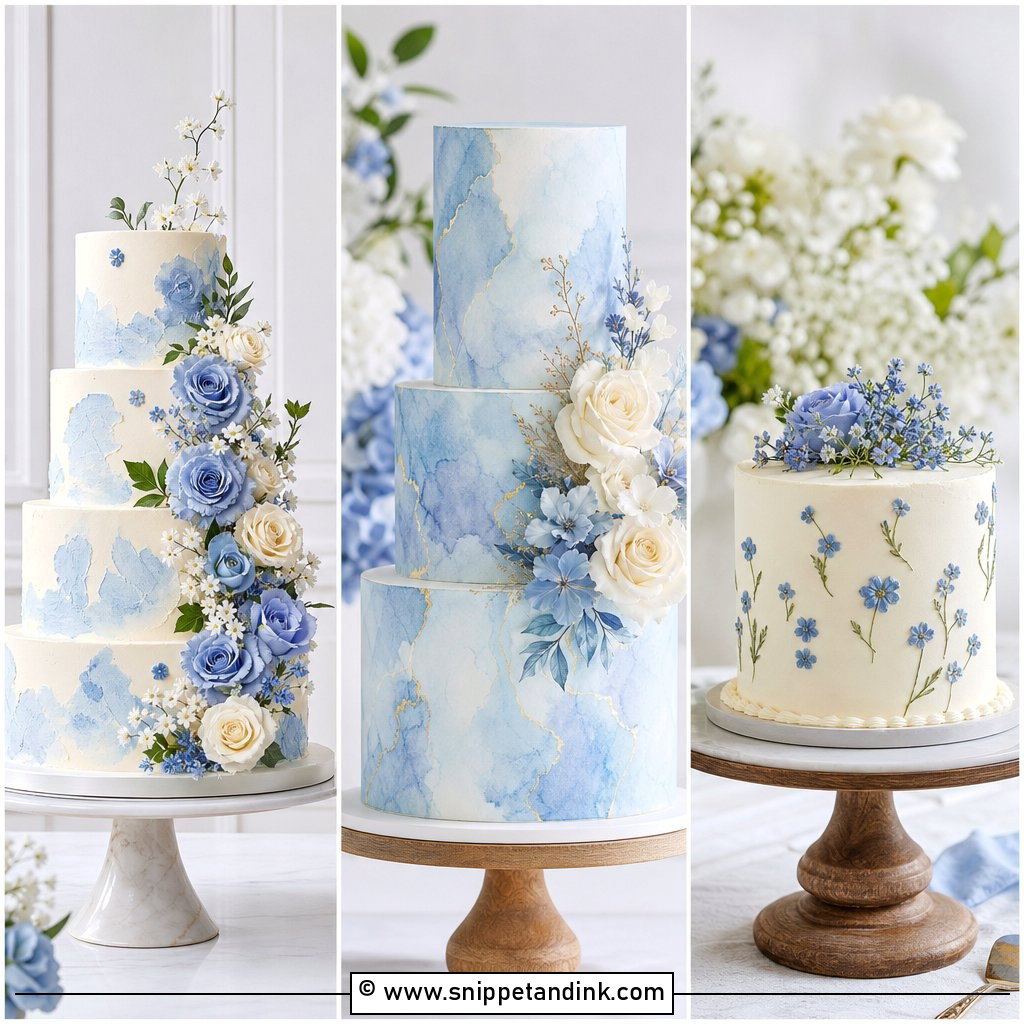
Blue ranges from pale vintage to dusty to navy. Pale blue buttercream can take on a green tint if the butter is very yellow, so I use a high-fat white butter or a touch of violet to correct it. Blue pairs with white piping, pearls, sugar flowers or silver. Vanilla, almond and blueberry lemon suit it. A baby blue Lambeth cake with cherries is a current favorite.
18. Pink Wedding Cake
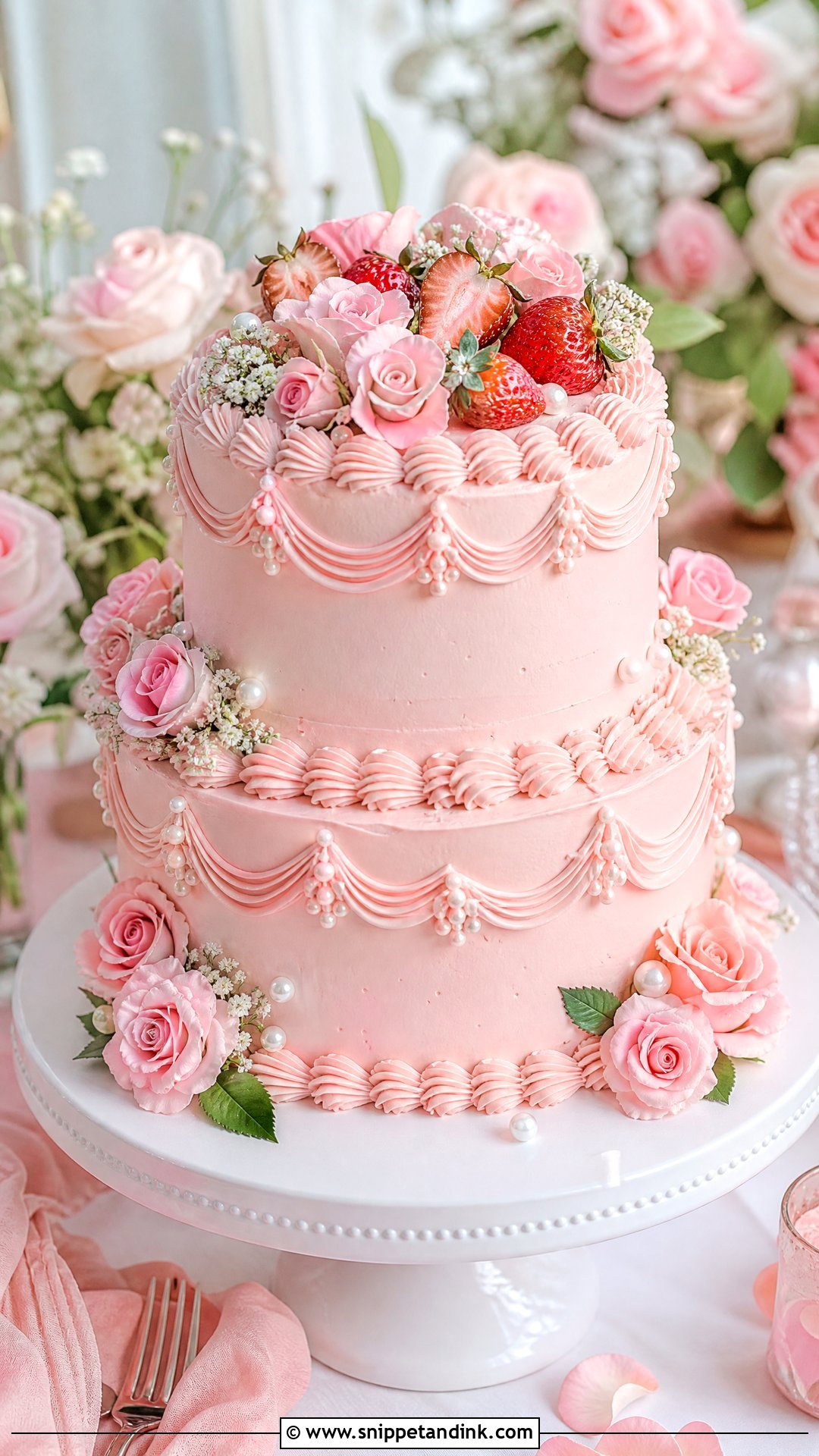
Pink can be soft blush or bright and modern. Pink buttercream can fade under strong light, so keep the cake out of direct sun. Vintage piping, roses, sugar bows and strawberries suit it. Strawberry, raspberry and rosewater fillings match the color. Choose one pink shade and repeat it in the flowers.
19. Green Wedding Cake
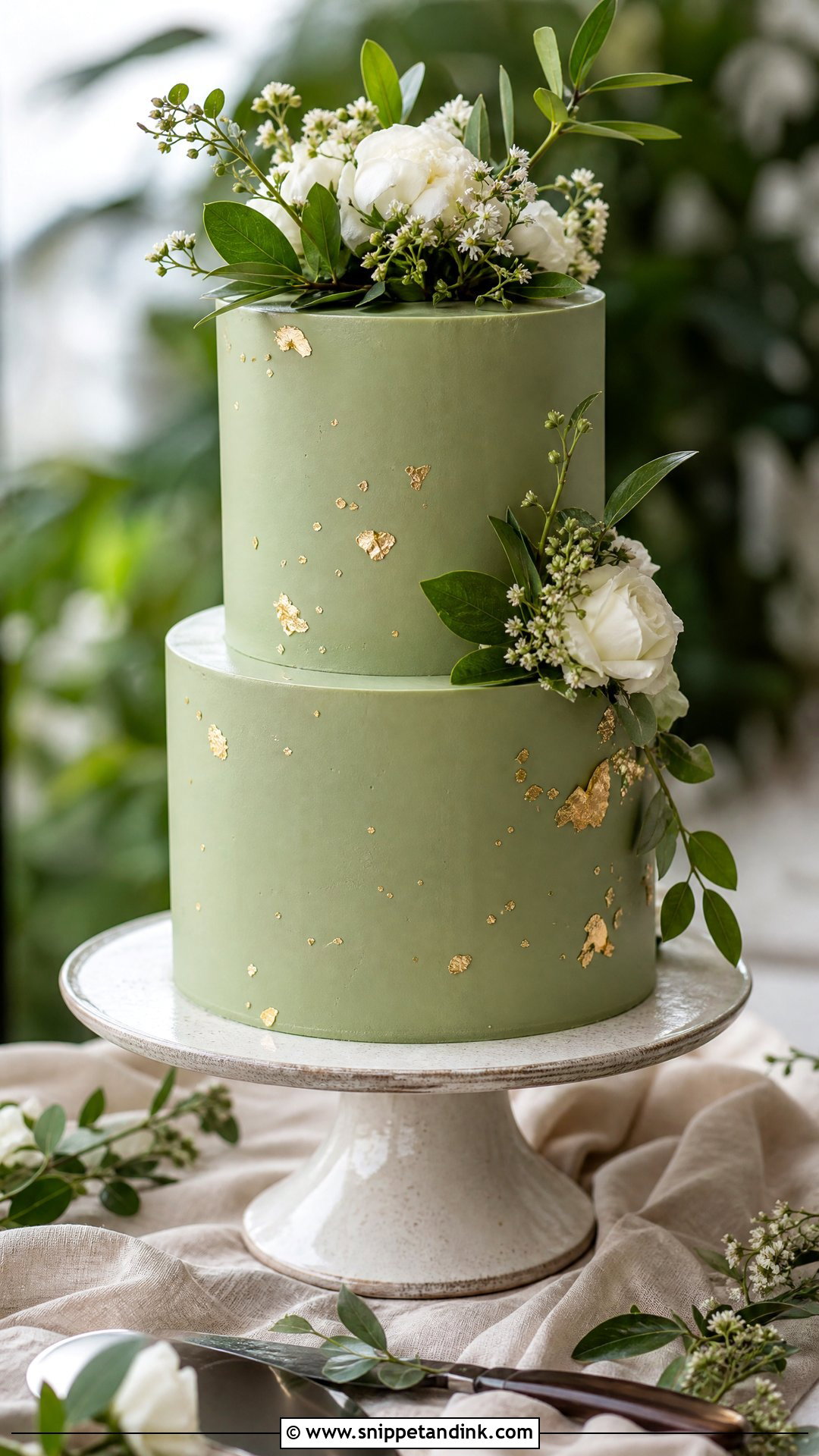
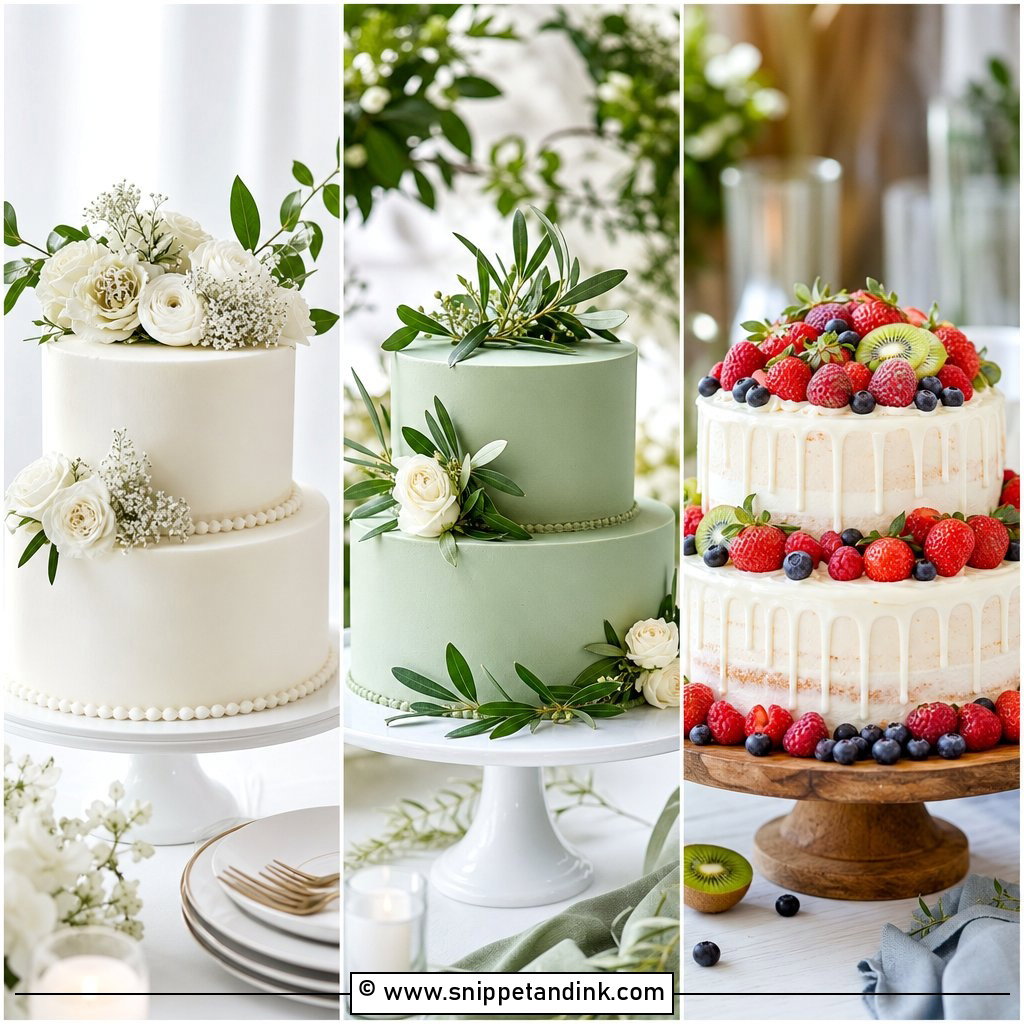
Sage is the easiest green for weddings, pairing with ivory flowers and gold. Deeper green looks formal; pastel green looks modern. Pistachio, matcha and pear are natural flavors. Natural colorings from matcha or spinach give softer, slightly muted greens that suit a garden setting. Keep decorations simple so the color leads.
20. Fruit Wedding Cake
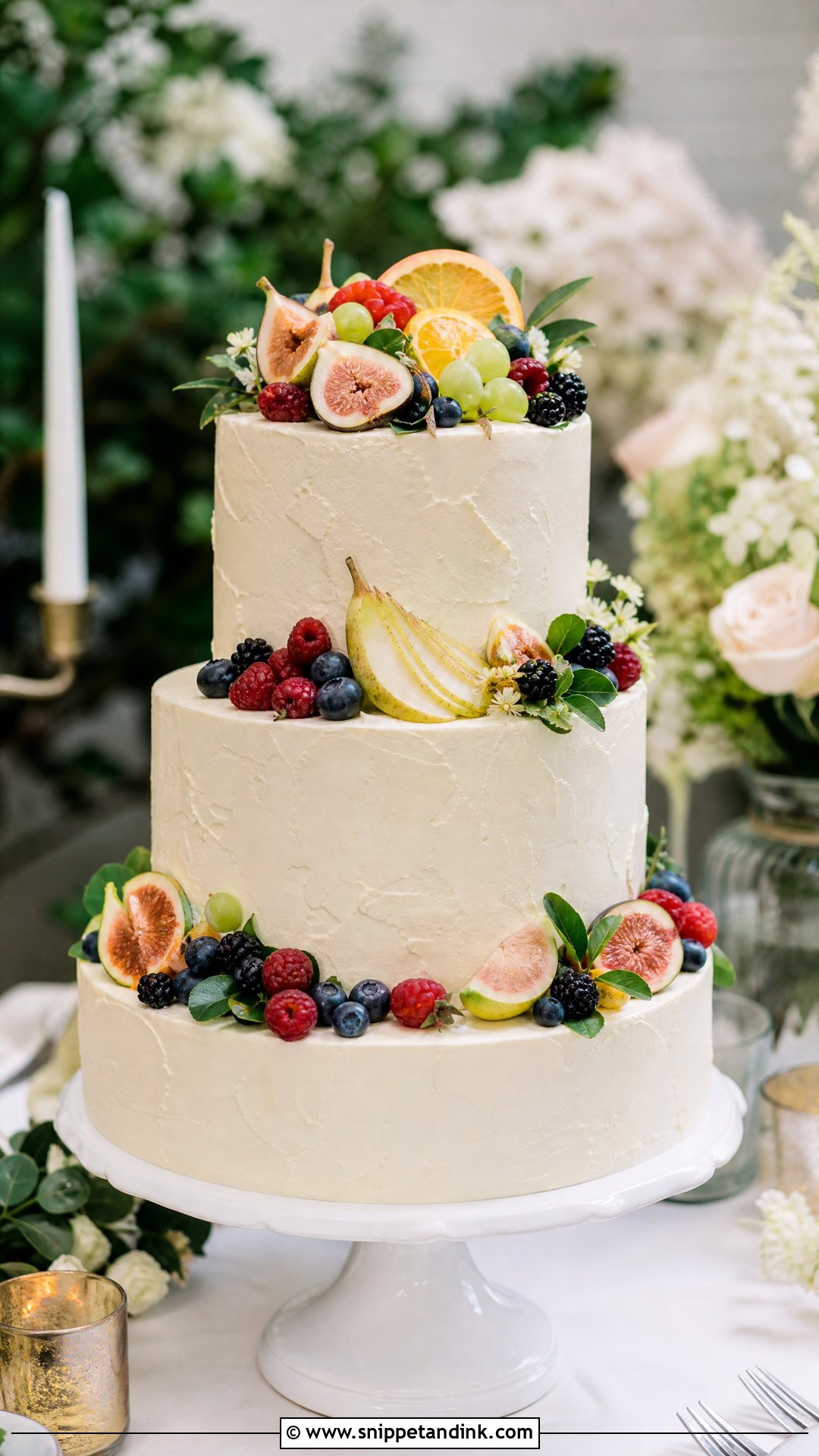
A fruit wedding cake uses berries, figs, grapes, citrus or pears on top or around the base. Cut fruit weeps juice into buttercream, so I use whole fruit where possible and add it on site, sometimes brushed with a little glaze to keep it glossy. It hints at the flavor inside. Lemon raspberry, almond pear and chocolate cherry are strong choices.
21. Berry Wedding Cake
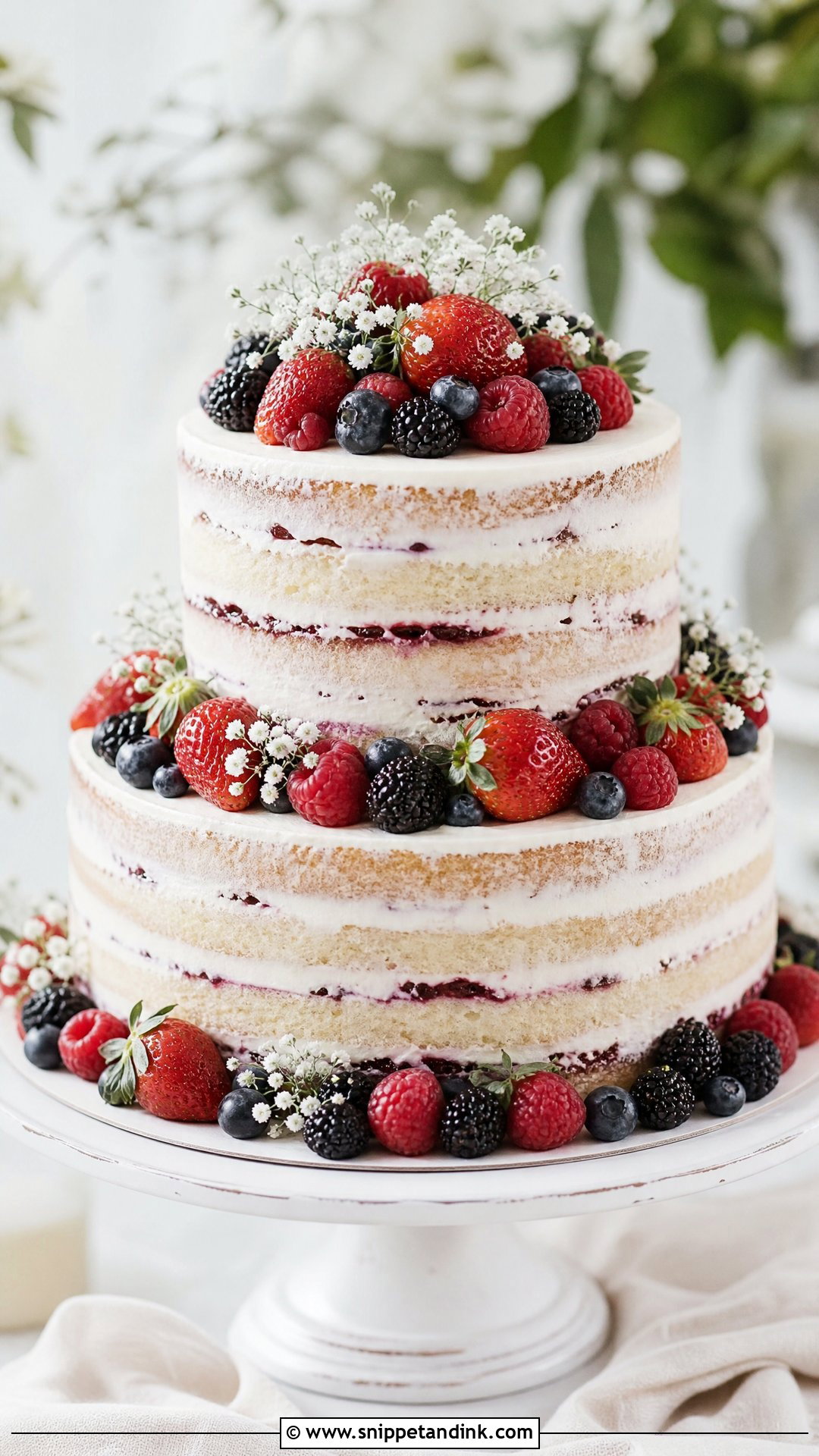
Berries look bright against white buttercream. Strawberries, raspberries, blueberries and blackberries can be arranged neatly or tumbled for a relaxed look. Berries should be washed and fully dried before they touch the cake, or they’ll bleed. Berry flavors keep the cake from feeling heavy. In summer, keep it cool and display it close to serving.
22. Cherry Wedding Cake
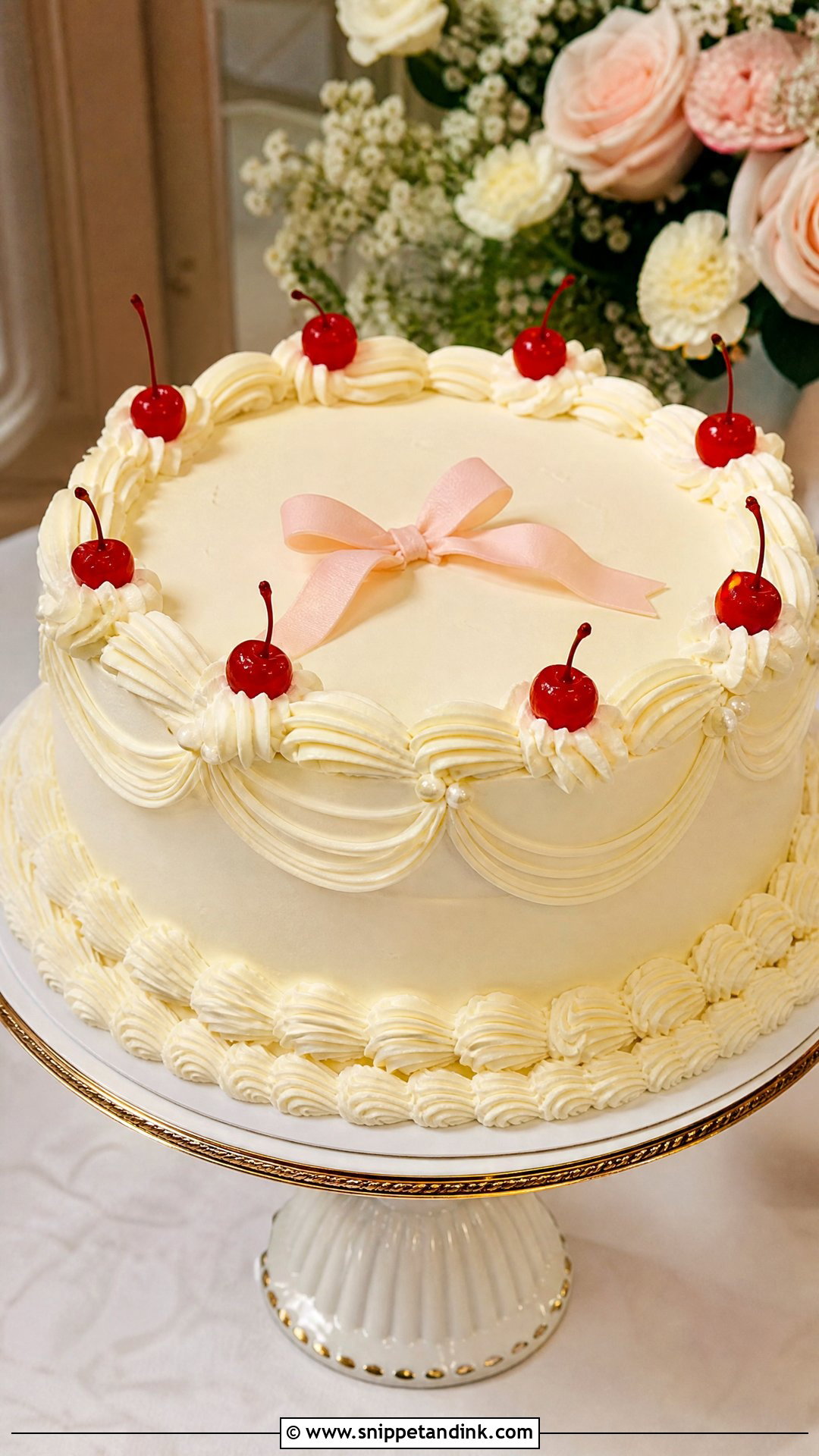
Cherries give a playful vintage feel, glossy on buttercream borders or fresh on dark chocolate. Fresh cherries with stems look best; maraschino cherries bleed red syrup into frosting unless they’re thoroughly drained and dried. Baby blue, ivory and blush suit them. Vanilla cherry, almond cherry and chocolate cherry are good flavors.
23. Chocolate Wedding Cake
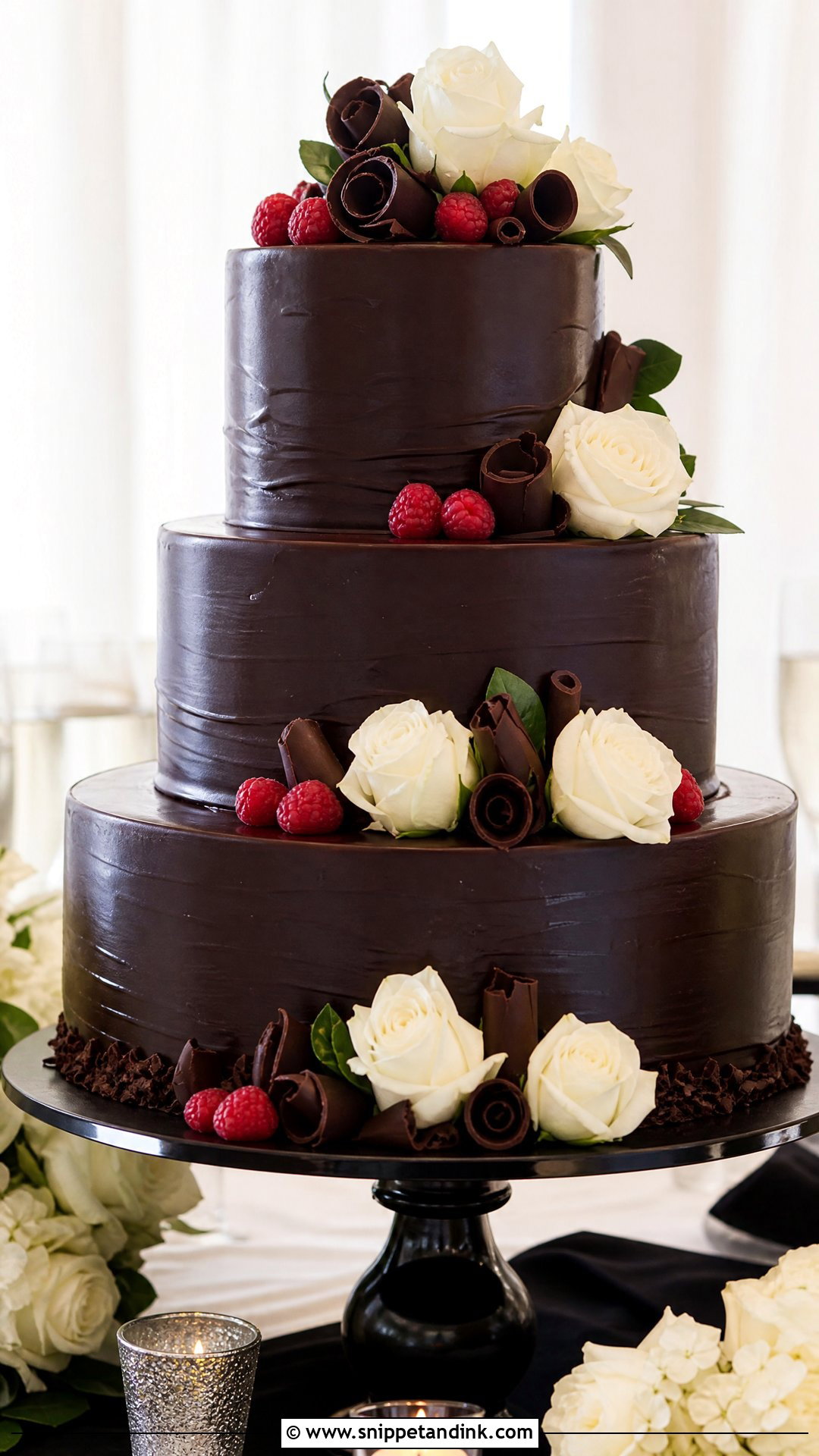
Chocolate cakes can be finished in dark ganache, mocha buttercream or ivory frosting. Ganache gives a glossy, very stable finish, which is a real advantage in a warm room compared with buttercream. Chocolate pairs well with raspberries, espresso, salted caramel and hazelnut. It suits evening receptions and cooler seasons and is a dependable guest favorite.
24. Lemon Wedding Cake
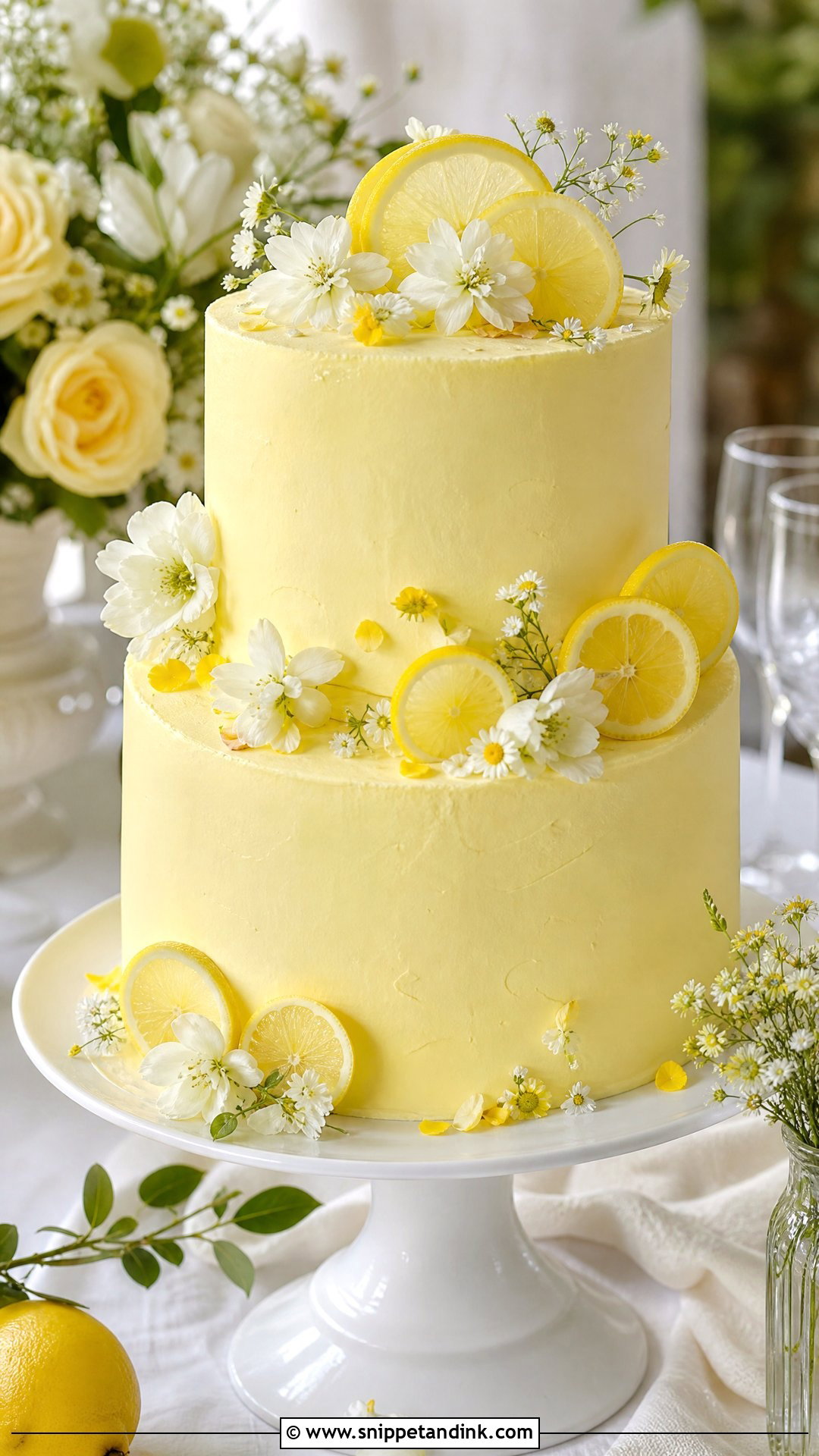
Lemon is light and bright, ideal for spring, summer and daytime weddings. It pairs with raspberry, blueberry, elderflower and honey. Lemon curd fillings are delicious but soft, so I pipe a buttercream dam around each layer to keep the curd from squeezing out under the weight of the tiers. Lemon slices on the outside should be fresh and dried, added on the day.
25. Red Velvet Wedding Cake
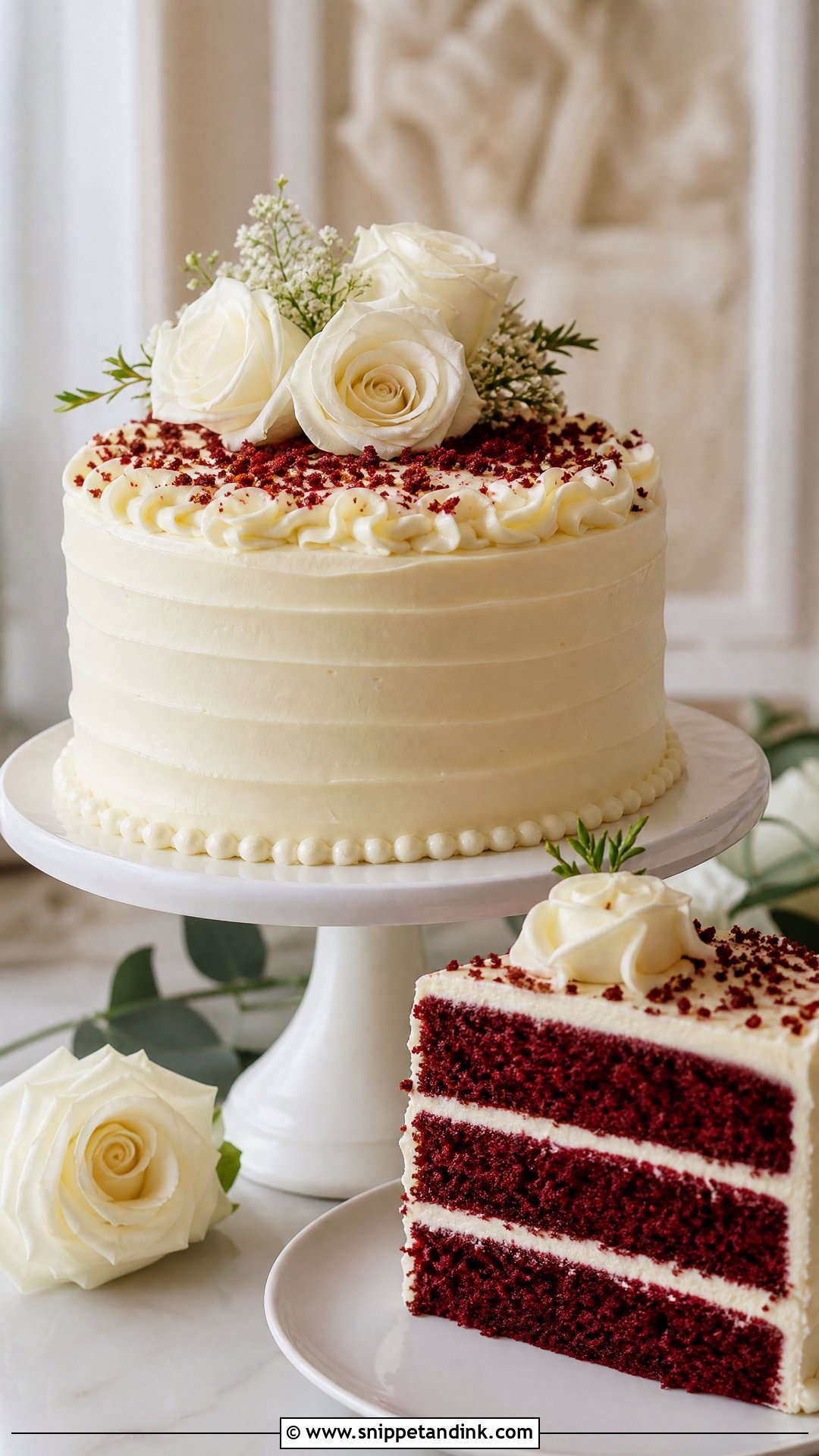
Red velvet hides its color under a white exterior until it’s cut. Cream cheese frosting is the traditional pairing, but it’s softer than buttercream and not ideal for stacking heavy tiers or for warm rooms. I often fill with cream cheese frosting and coat the outside in a more stable buttercream. Pearls, white flowers or a piped border suit it.
26. Carrot Wedding Cake
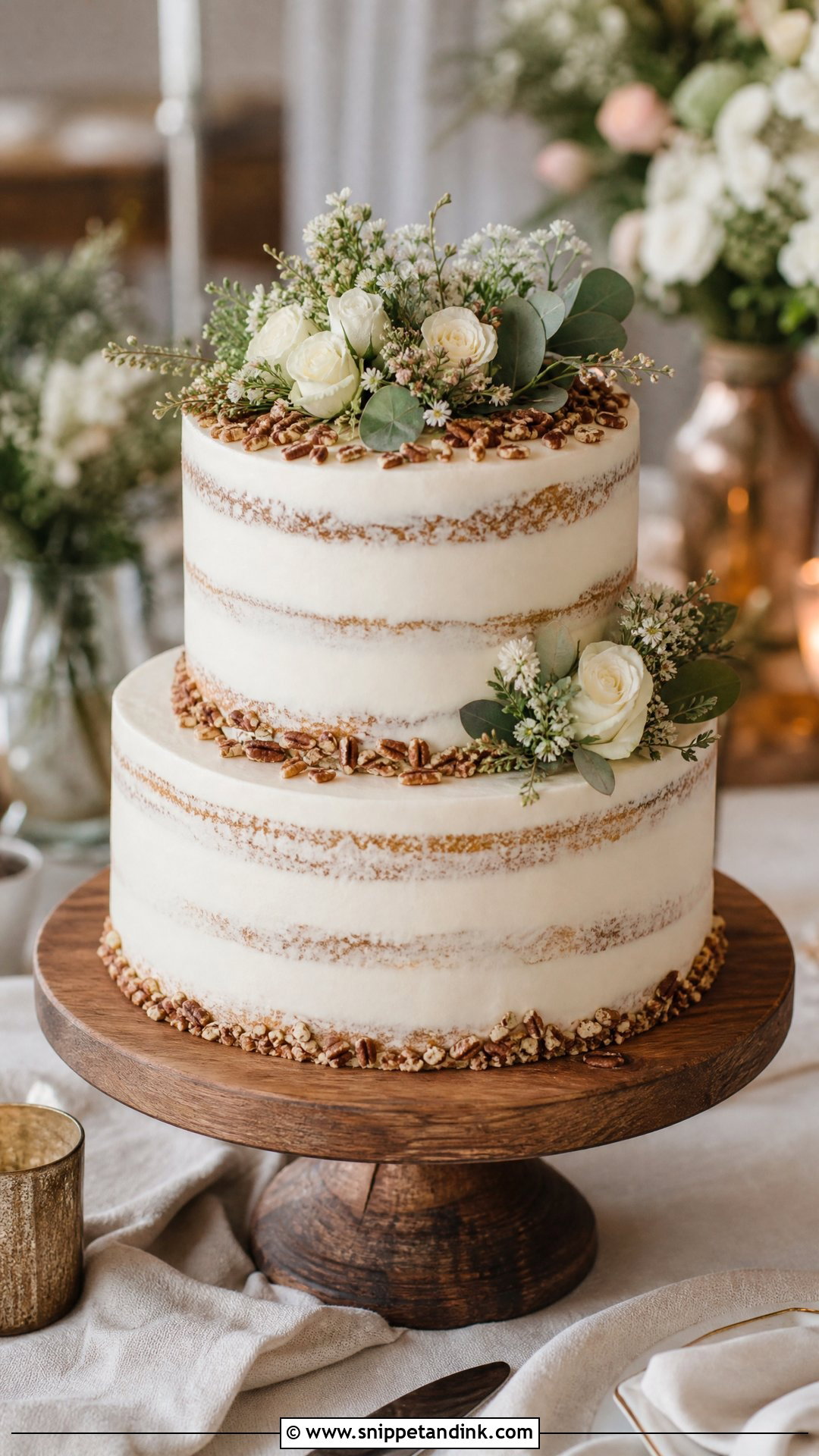
Carrot cake brings warm spice and a tender crumb. It suits autumn weddings and rustic venues. It’s a dense, moist cake, which makes it surprisingly sturdy for stacking. Smooth cream cheese frosting, chopped nuts at the base or soft piping make it wedding-ready. Mention nut allergies early, since walnuts and pecans are common in it.
27. Italian Wedding Cake
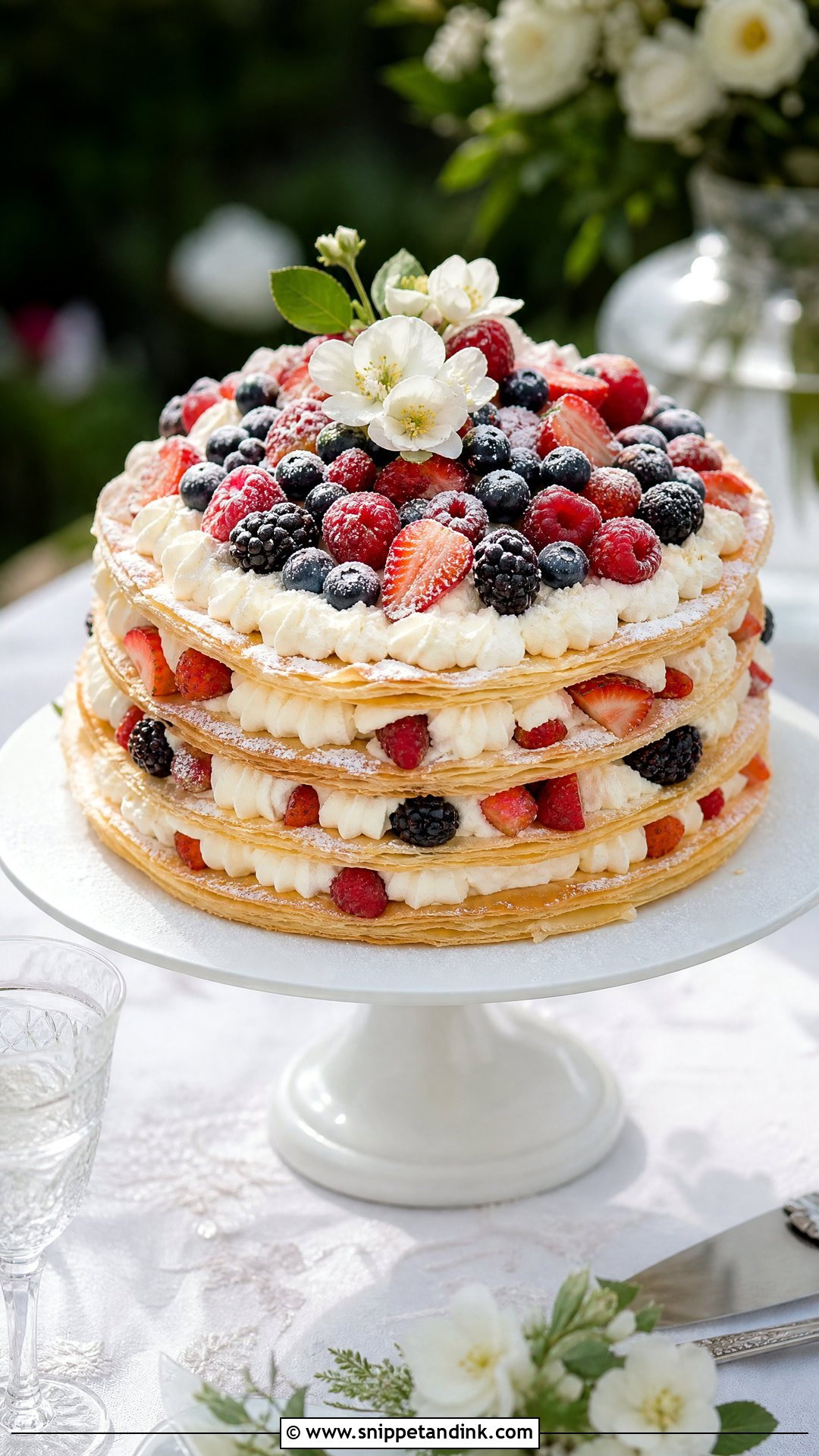
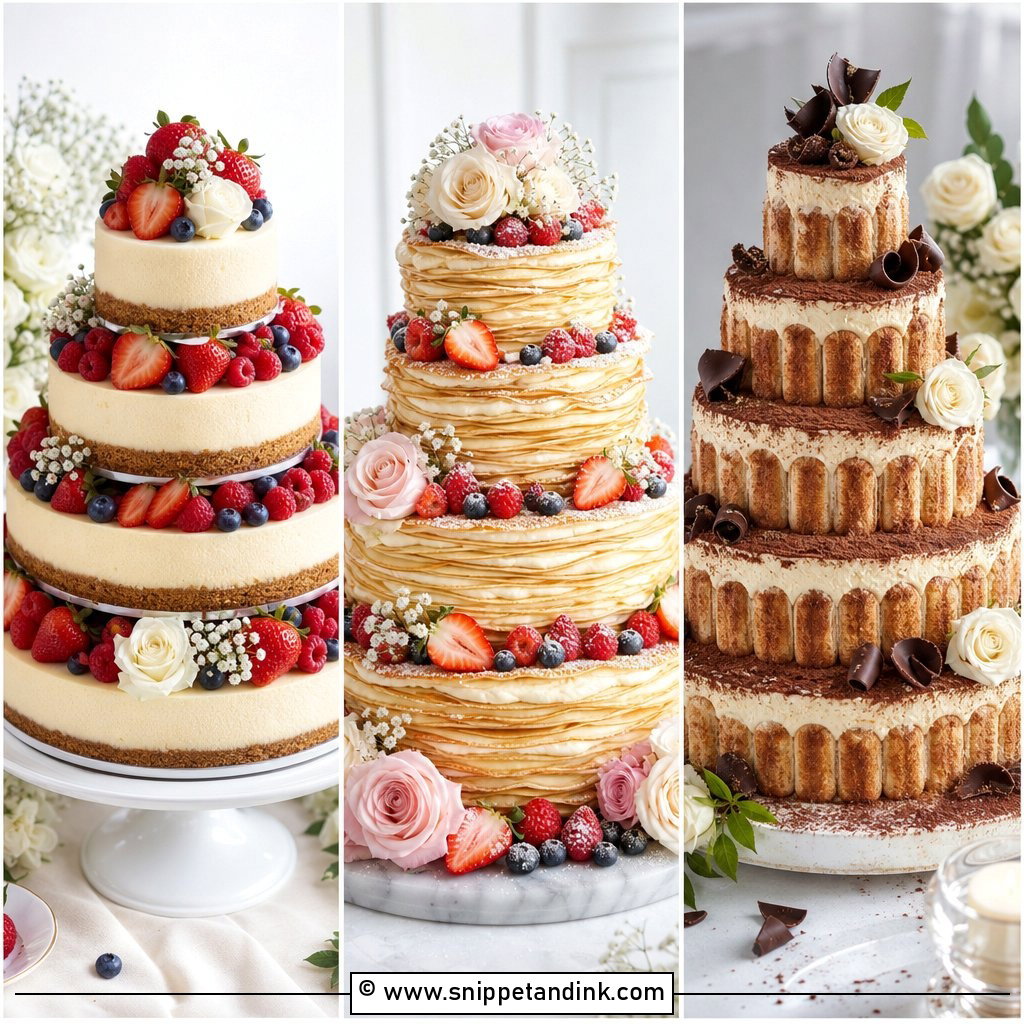
An Italian wedding cake may be millefoglie layers, sponge with pastry cream or soft cake with whipped cream and berries. These are lighter but also more fragile; pastry cream and whipped cream need refrigeration and can’t sit out for long. If you want height, ask your baker to adapt the flavors into a stable tiered version. Fruit and flowers finish it.
28. Square Wedding Cake
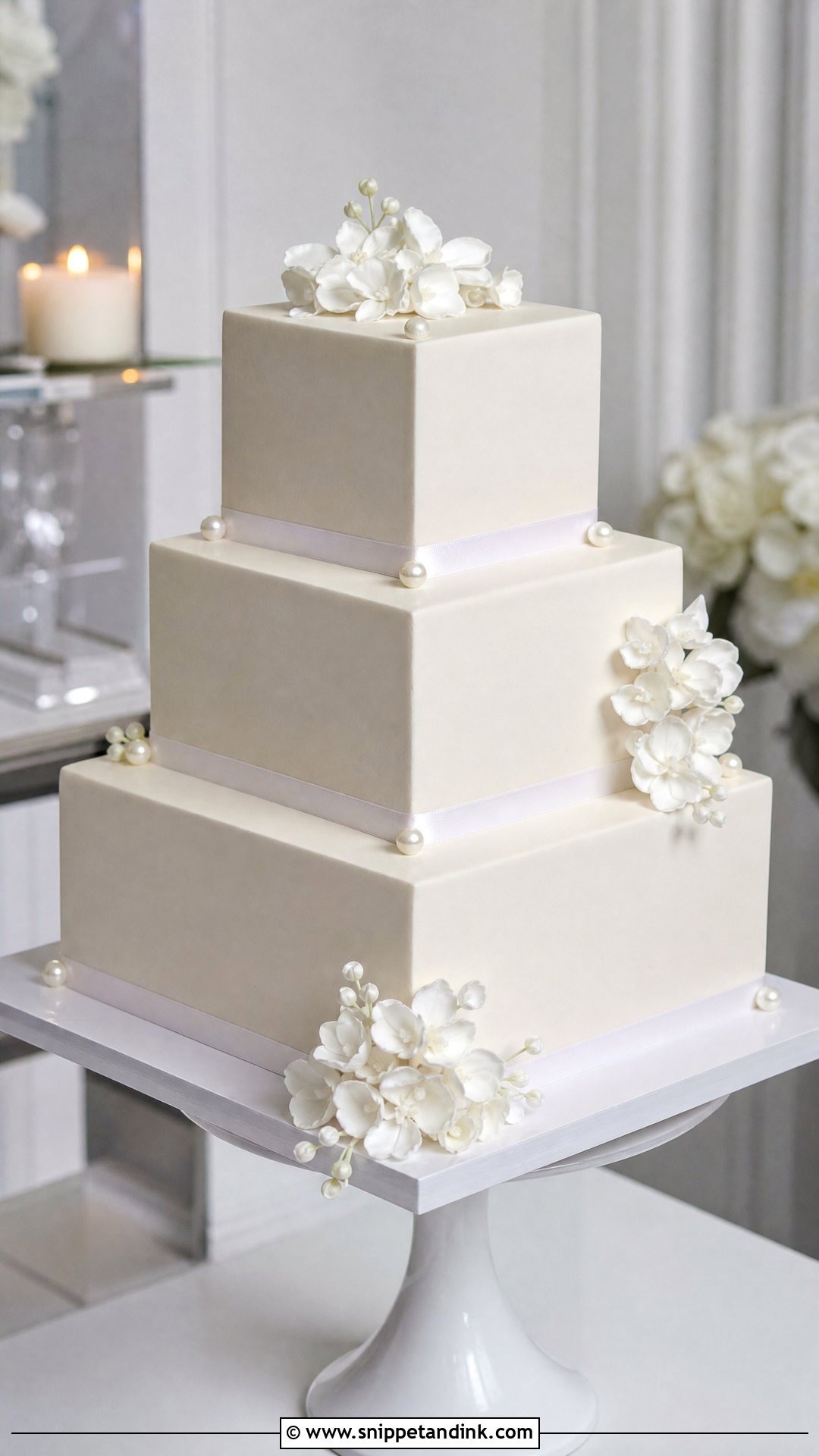
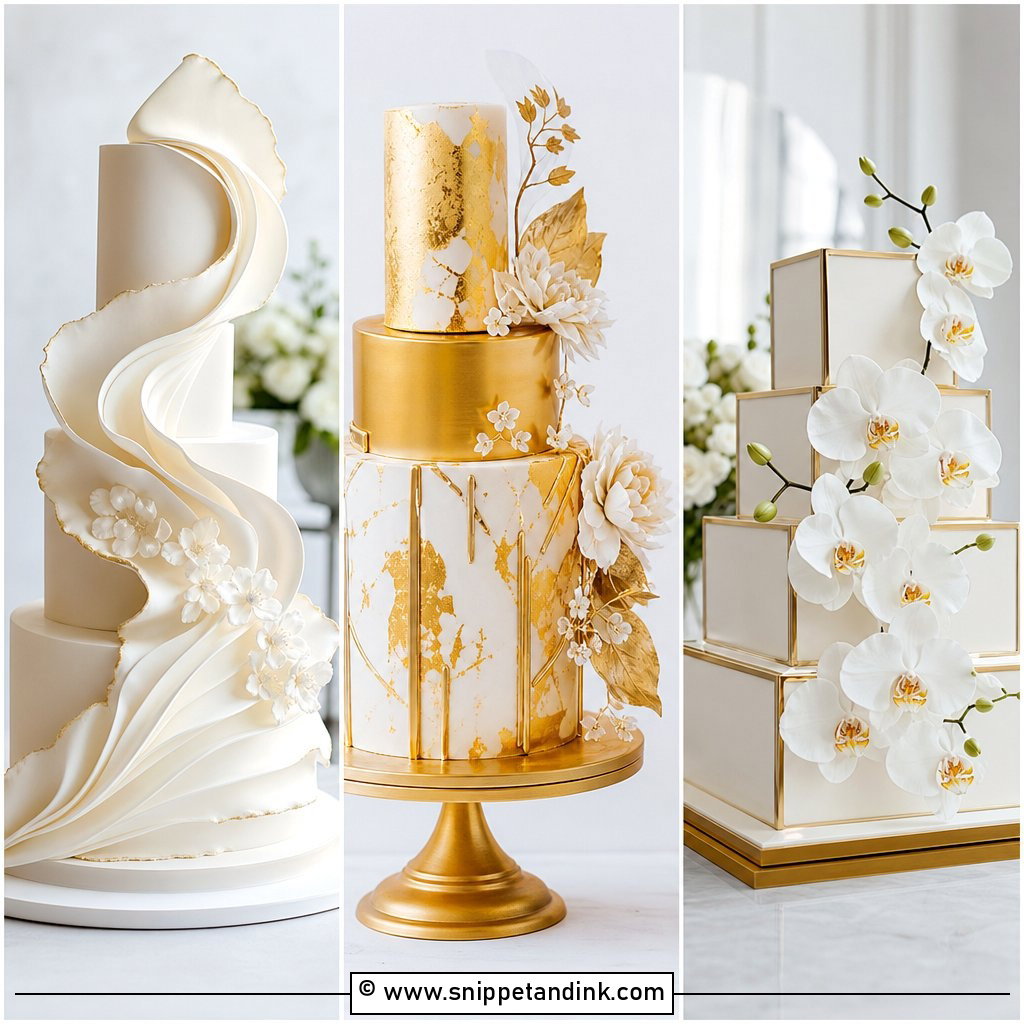
Square tiers look architectural. They’re harder to finish than round ones, since the corners need to be sharp and the sides perfectly straight. Smooth buttercream or fondant suits them. Square tiers also yield more servings than round tiers of the same width. Ribbon, sugar flowers or a minimalist finish all work.
29. Heart Wedding Cake
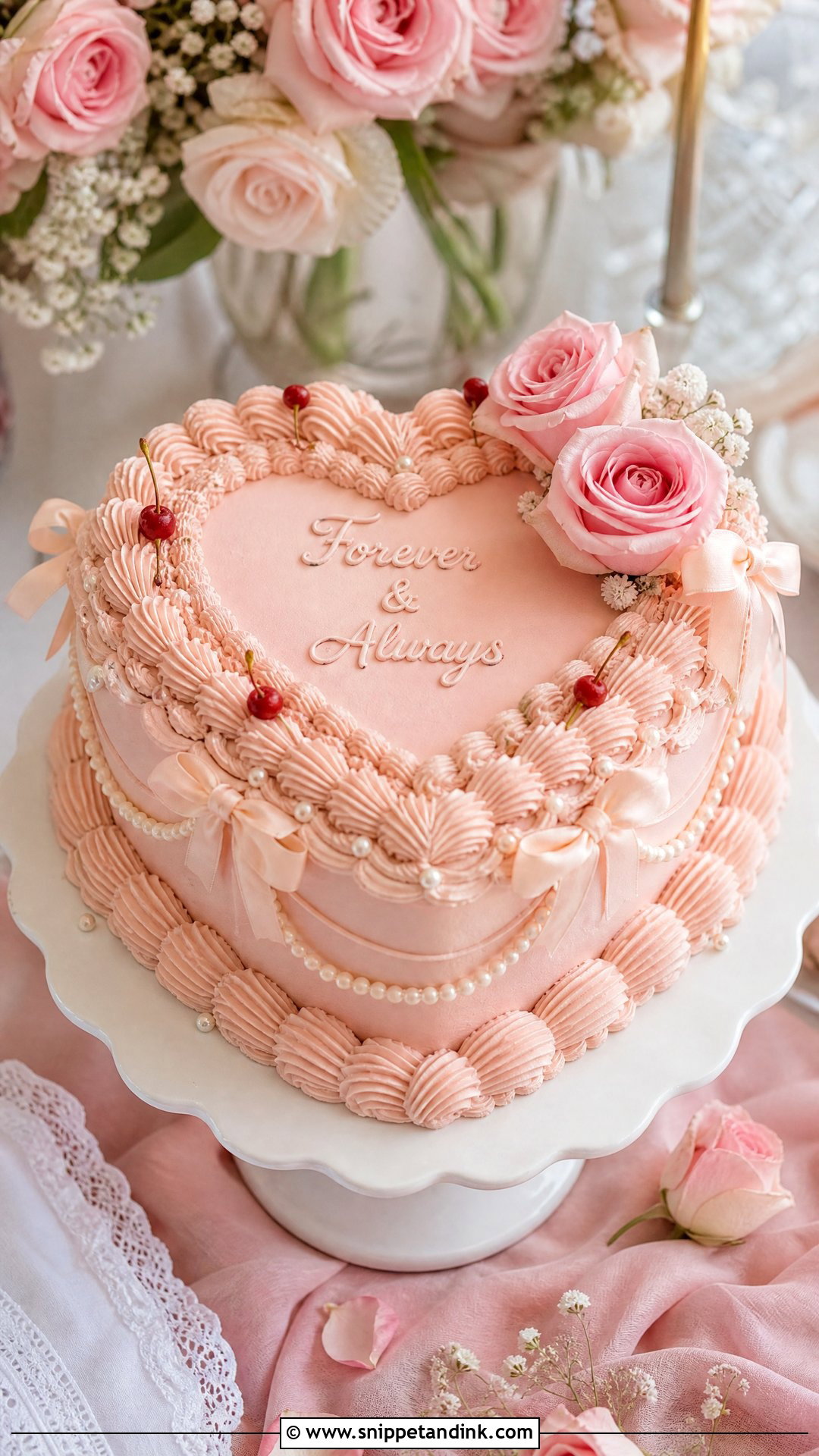
A heart wedding cake suits a small cutting cake or elopement. Piped buttercream, scalloped borders, cherries and bows give it a vintage feel. Heart shapes are carved or baked in a heart pan, and the point is the hardest area to keep sharp. Keep the piping refined and the palette limited. Vanilla almond and raspberry cream are good flavors.
30. Dessert Table Wedding Cake
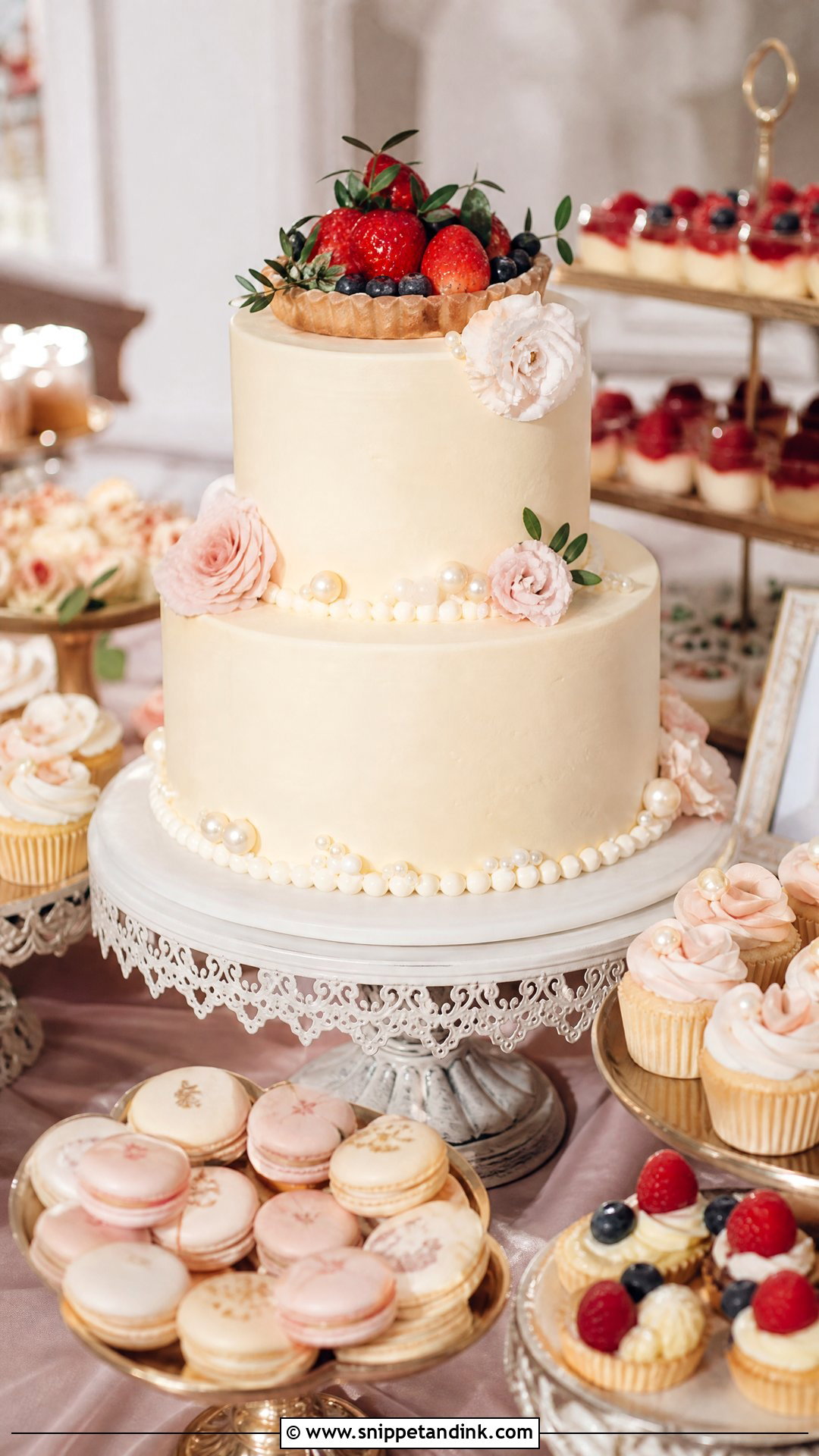
A smaller cake with a dessert table gives you the cutting photo and variety for guests. The cake can be one or two tiers, with cupcakes, macarons, cookies or tarts alongside. Connect the cake to the table through color, flowers and stands. Many couples also order a plain kitchen sheet cake in the same flavor, cut out of sight, to cover the guest count affordably.
What Heat, a Tent and a Long Drive Do to a Tiered Cake
Buttercream is mostly butter, and it starts to soften at room temperatures many summer venues easily reach. A cake that looks perfect at delivery can bulge or slide by the time it’s cut if it sits in sun or under hot lights. I always ask where the cake table will be, whether the room is air-conditioned and how long the cake will be on display.
Delivery and setup
Large cakes are usually transported in separate tiers and stacked on site, then decorated with flowers at the venue. That needs a level, sturdy table, ideally in place before the baker arrives. Keep the cake away from windows, heaters and candles.
If the room is warm
Ask about ganache under fondant, a more stable buttercream, or keeping the cake in a cool room until just before the cutting. A smaller display cake with sheet cakes in the kitchen also limits how much is exposed.
Your Cake Has to Taste Right After Dinner, Not Just Look Right
Start with the venue, season and guest count, then let the design follow. A cake that will sit in a warm tent needs a different finish from one in an air-conditioned ballroom. Book a tasting, try each filling with the frosting together, and confirm servings, delivery time and who handles setup. Then the cake does its job twice: in the photos and on the plate.
You'll Like These Ideas:




Leave a Reply