
Fresh flowers, clean tiers, vintage piping, sculptural shapes and layers built around real flavor are what I’m asked for most right now, and the cakes I enjoy making are the ones that feel like they belong to one couple. Some people still want tall white tiers with roses. Others bring me pressed flowers, pearls, painted buttercream, fruit or a single bold color. Whatever the finish, I design for three moments: how the cake reads from across the room, how it holds up for the hours it sits on display, and how it tastes once it’s cut. The twenty designs below are the ones I’d put on a planning board, with notes on how each one actually behaves.
What I Need From You Before I Sketch Anything
A photo of a cake you love is a good start, but it’s only half a brief. The same design can look right in one room and wrong in another, so the questions I ask at a consultation are mostly about the day itself.
- Guest count and servings. I size tiers by servings, not by looks. If you want height but not that many slices, ask about a dummy tier made of foam and finished to match.
- Where the cake will stand. Near a window, under a tent, beside a dance floor or in an air-conditioned ballroom. Buttercream, fresh fruit and blush coloring all react to heat and sun.
- How long it will be on display. A cake out from the ceremony until a late cutting needs a sturdier finish than one wheeled in after dinner.
- Your florist’s name. Fresh-flower designs need the two of us agreeing on stems, timing and who places them.
- Linen and color swatches. Frosting colors shift under venue lighting, and I’d rather match a fabric sample than a phone screen.
Most bakers book up months ahead for busy wedding weekends, and complex sugar work takes days to make and dry, so start the conversation early. I’d hold the tasting once the venue is confirmed; until then I’m guessing at the conditions the cake has to survive.
1. White Wedding Cake With Fresh Flowers
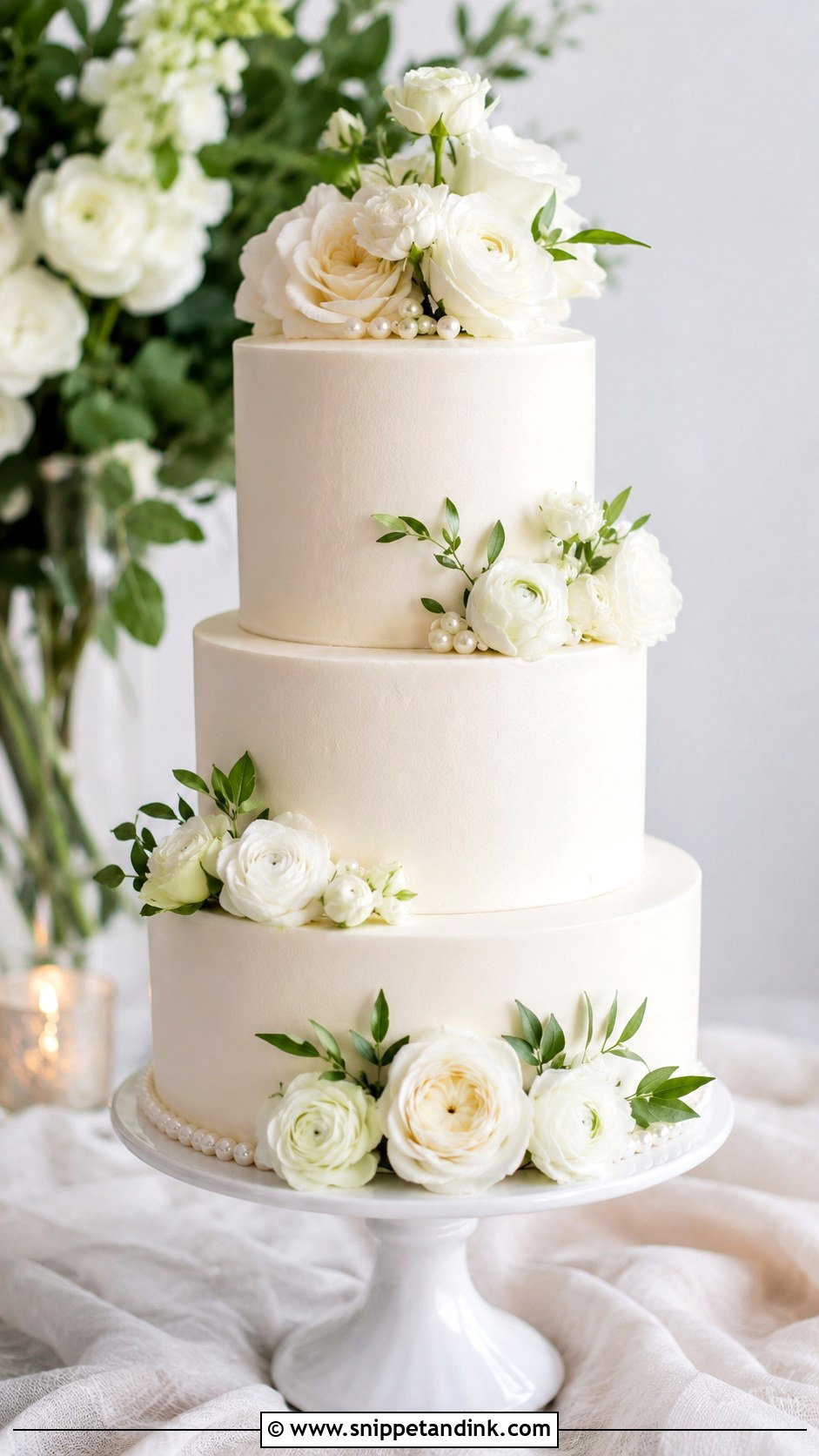
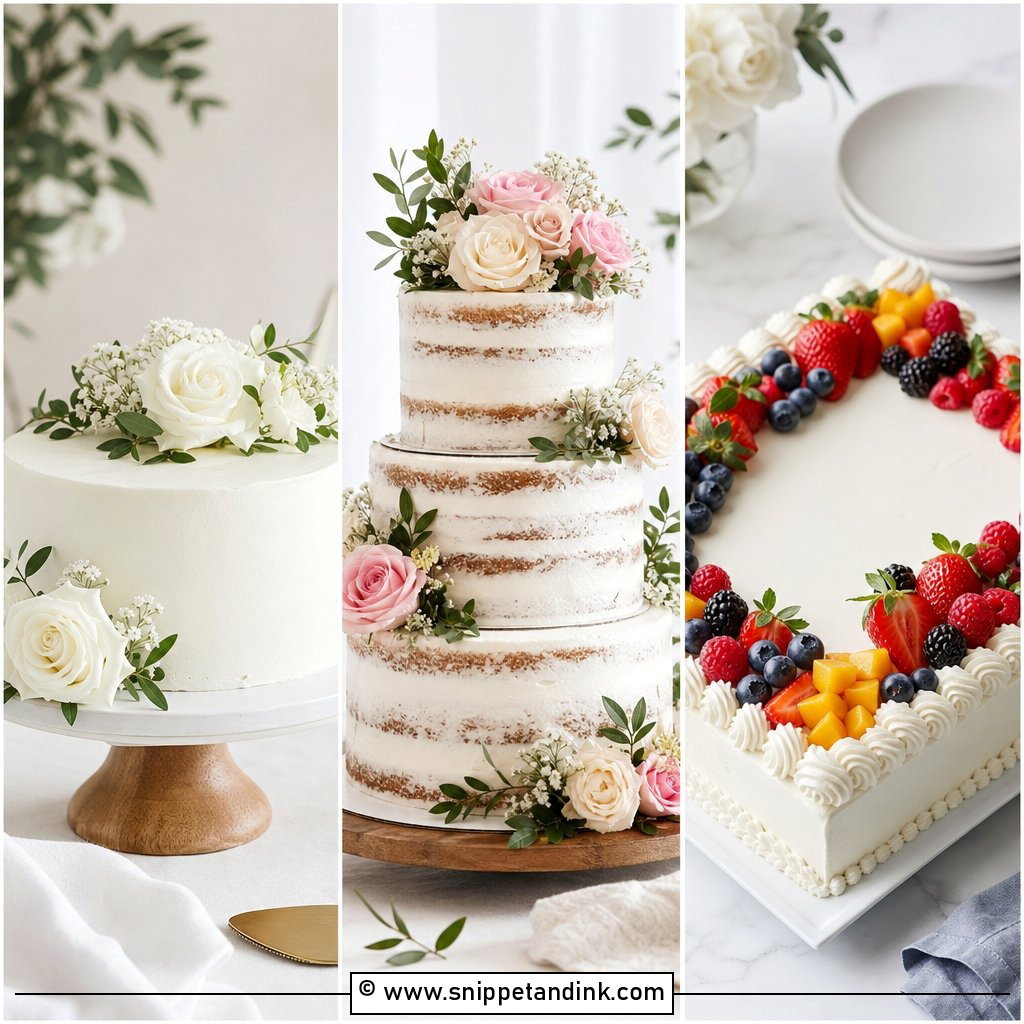
White tiers with fresh flowers have stayed popular because they match almost any palette, but the flowers are where this design succeeds or fails. I want blooms in two or three deliberate clusters rather than dotted around, and I want the florist and me talking before the wedding week. Stems get wrapped or set into food-safe picks so nothing raw touches the cake, and I avoid anything sprayed or known to be toxic. Roses, ranunculus, orchids and small greenery behave well; peonies look wonderful but drop petals fast in a warm room. If the flowers are full, keep the tiers plain. If they’re sparse, a little soft piping fills the gap.
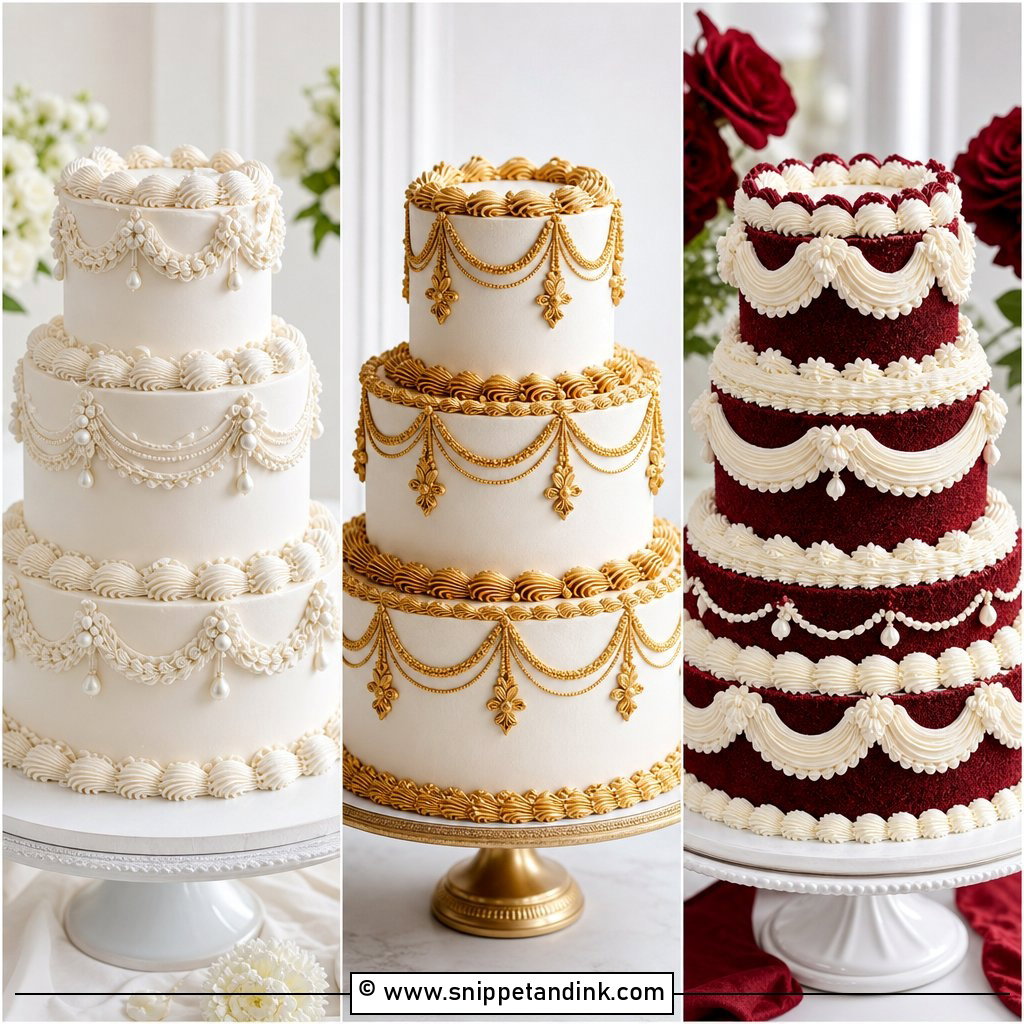
2. Vintage Wedding Cake With Piping
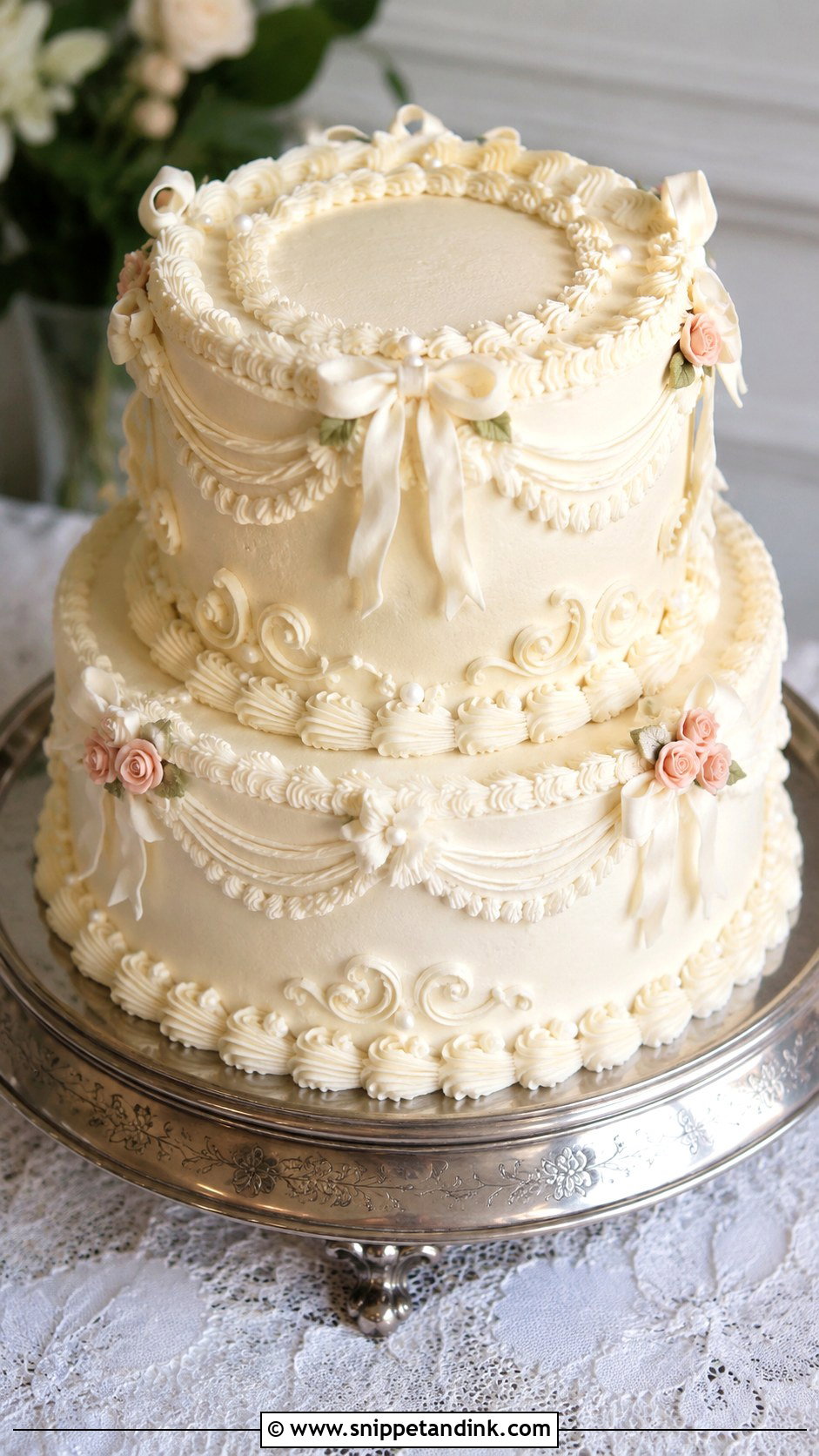
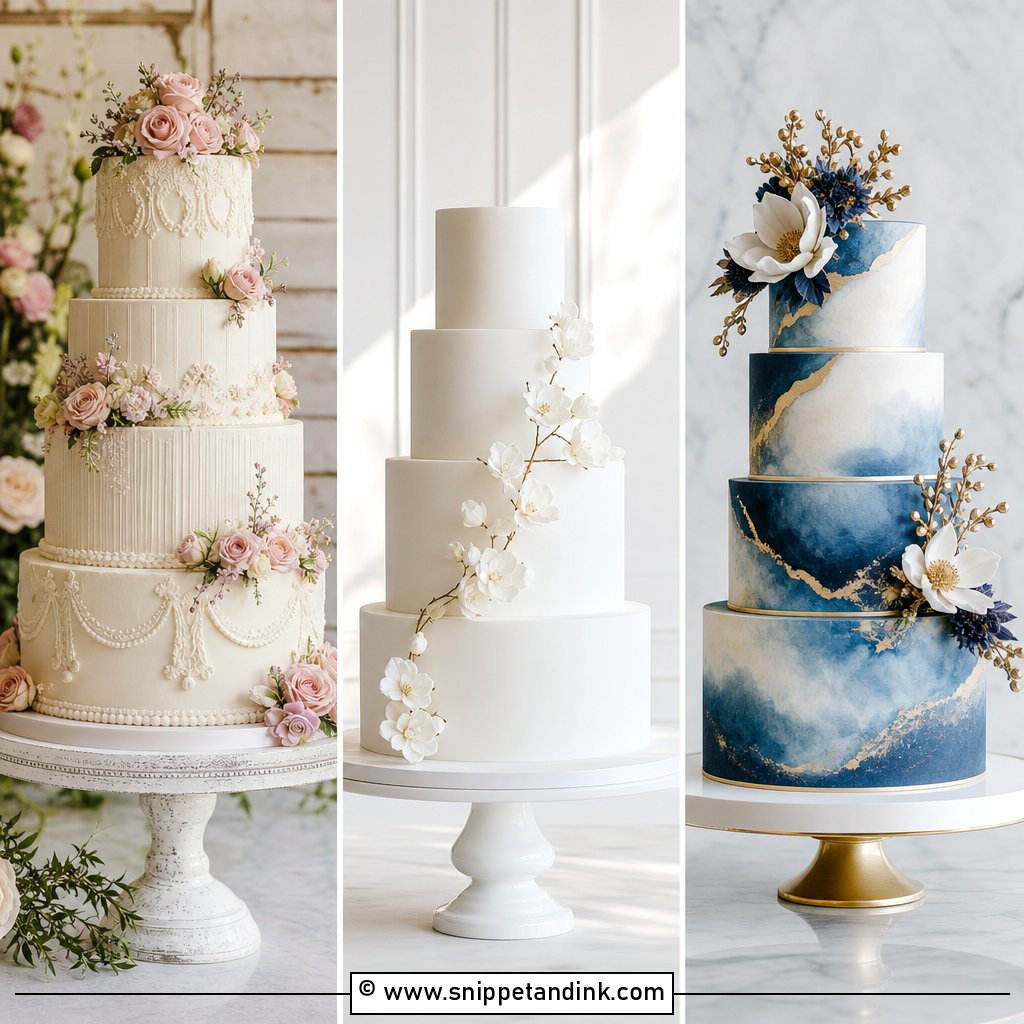
Piped vintage cakes are slow work, and that’s part of their charm. Shell borders, scrolls, swags, bows and pearl dots all go on by hand, usually in a stiff buttercream or royal icing that holds its shape. The design question I ask first is spacing: piping crammed onto every inch looks heavy, while a clear rhythm of border, gap, swag, gap makes it read as intentional. All white feels most bridal, though pale blue or champagne piping on ivory is a quiet way to add color. Budget a little more for this one, since the hours are real. It sits best on a silver stand or a porcelain pedestal.
3. Pearl Wedding Cake
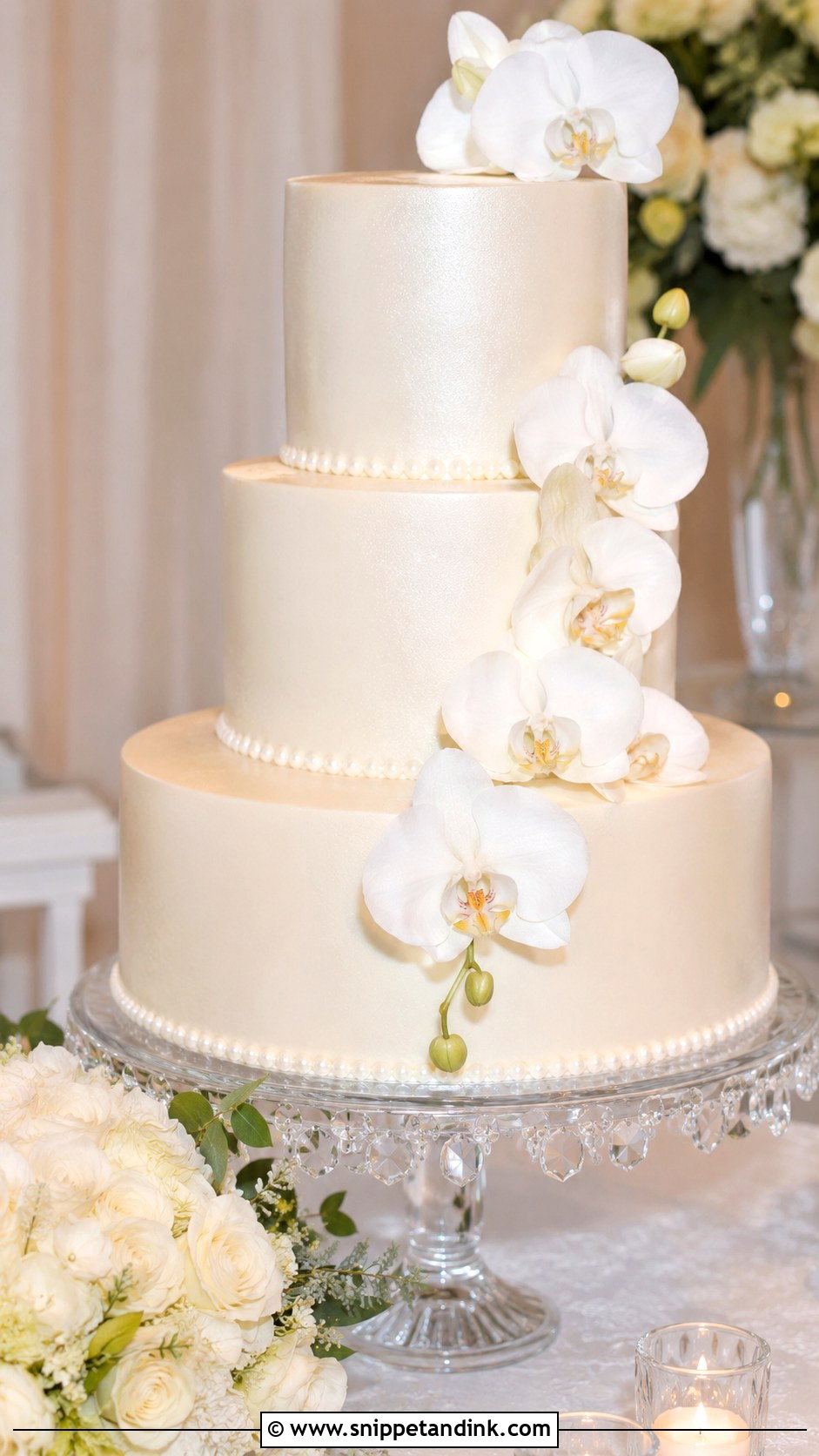
Edible pearls give a polished finish without much clutter, and they’re one of the few details I can place right up to delivery. I set them in neat rows along tier edges, cluster them around a base, or scatter them loosely like confetti. They grip ivory buttercream or satin fondant easily, though on very soft buttercream in a warm room they can slide, so I press them in a little deeper. For a modern feel I pair pearls with smooth tiers and a few white sugar flowers; for something more romantic, lace piping and soft blooms. Their sheen catches light quietly, which suits formal indoor rooms and ballrooms.
4. Pressed Flower Wedding Cake
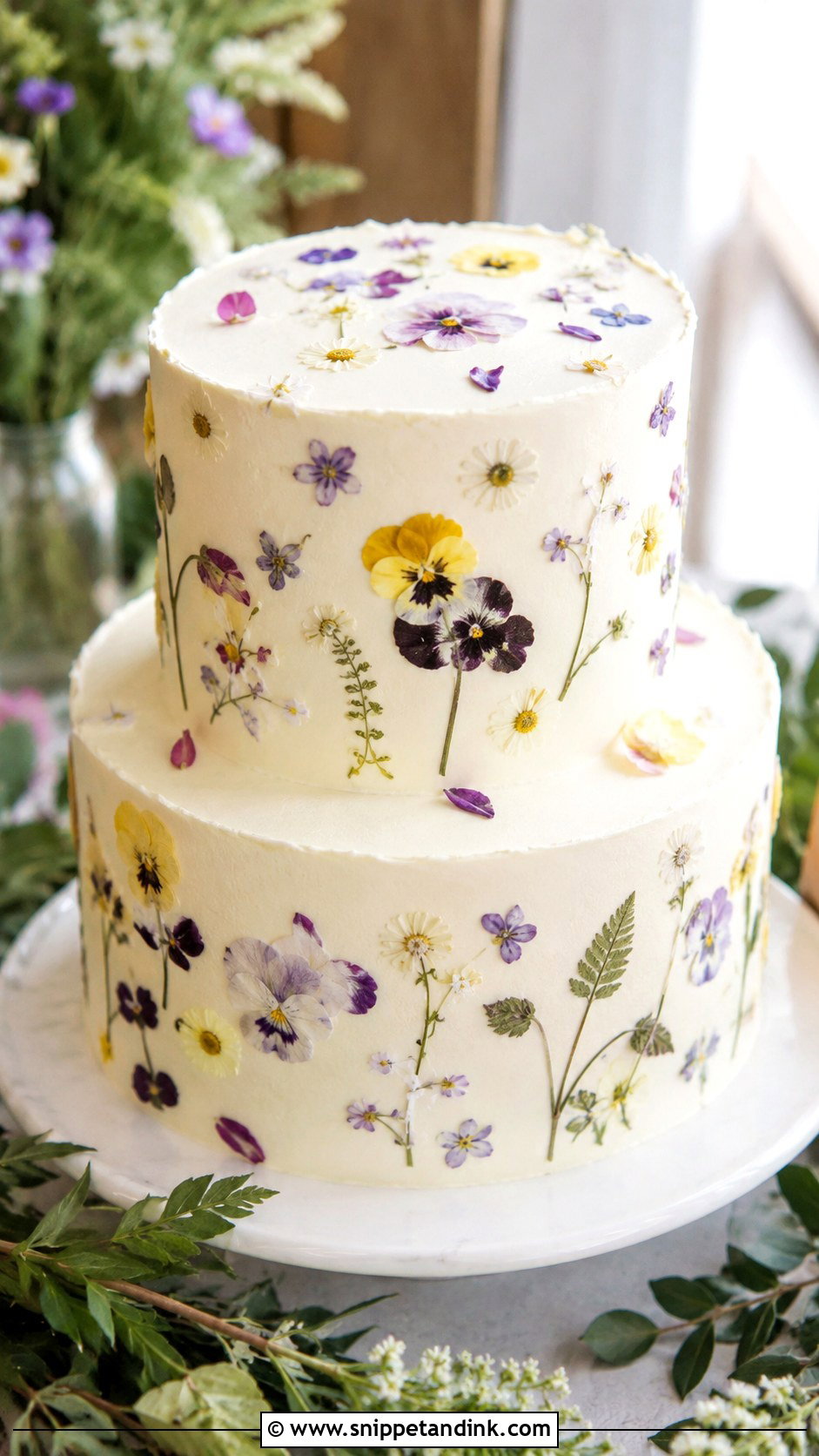
Pressed flowers are pressed flat against a smooth buttercream or a thin fondant wrap, so the background has to be clean or the pattern gets lost. I only use flowers grown as edible and unsprayed, or wafer-paper versions when the season won’t cooperate: pansies, violas, small daisies, lavender sprigs and tiny rose petals. Not every pretty flower belongs on food, and that’s a conversation to have with your baker early. Pressed petals can darken slightly once they meet moist frosting, so I apply them close to the event. Even a two-tier cake carries this design well, which makes it a good fit for smaller weddings.
5. Buttercream Wedding Cake With Texture
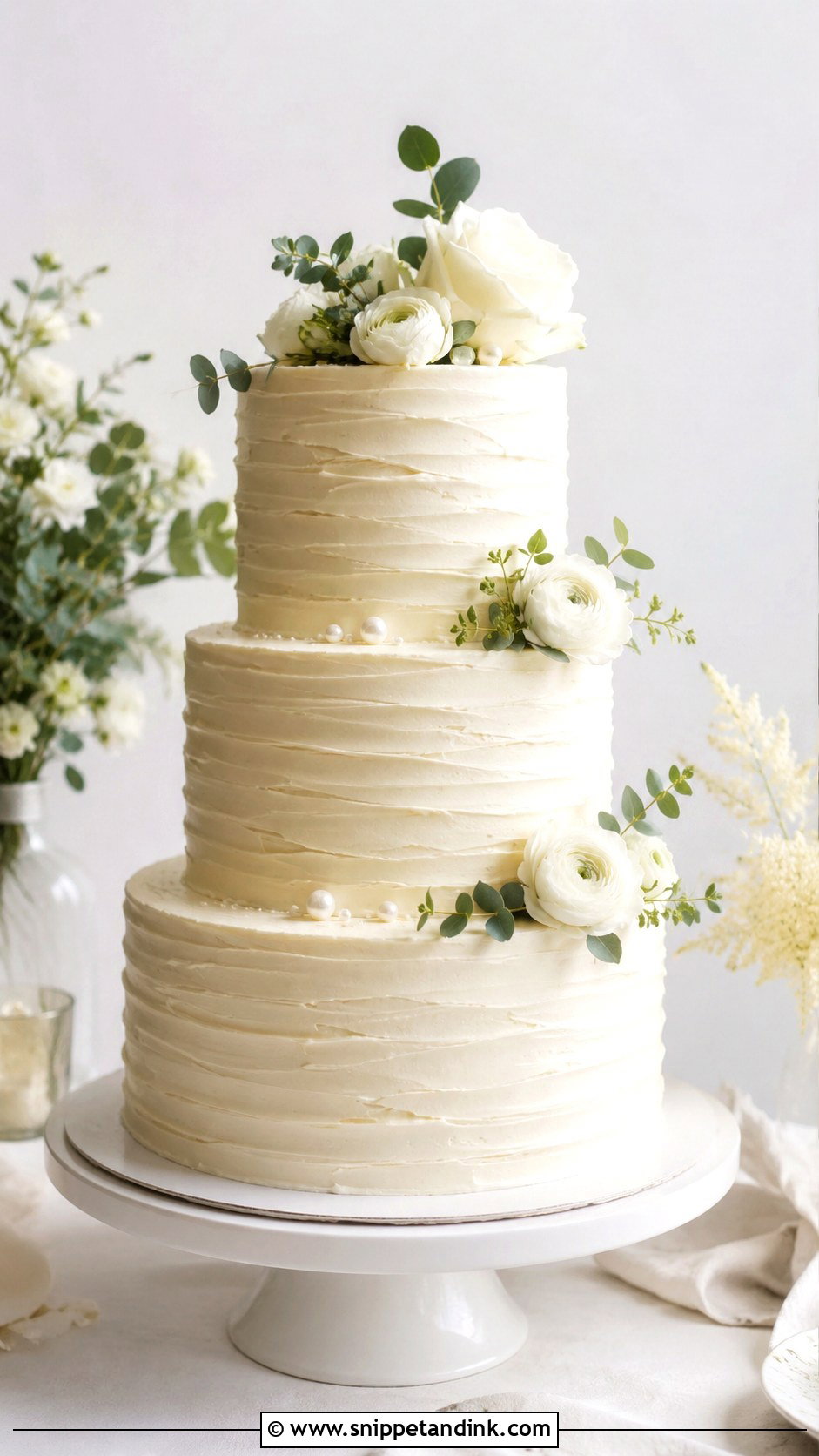
Textured buttercream is the finish I’d recommend to anyone nervous about fondant. Ridges, palette-knife strokes, horizontal combed lines or loose waves all hide small bumps that a perfectly smooth surface would show, and they read as handmade in photos. The trade-off is heat: texture softens and slumps if the cake sits in sun or a hot tent, so I keep it cool until the last moment. It takes fresh flowers, fruit, greenery or pearls easily. Ivory, cream, blush and warm white stay bridal. It suits barns, vineyards, coastal rooms and restaurants alike.
6. Minimalist Wedding Cake
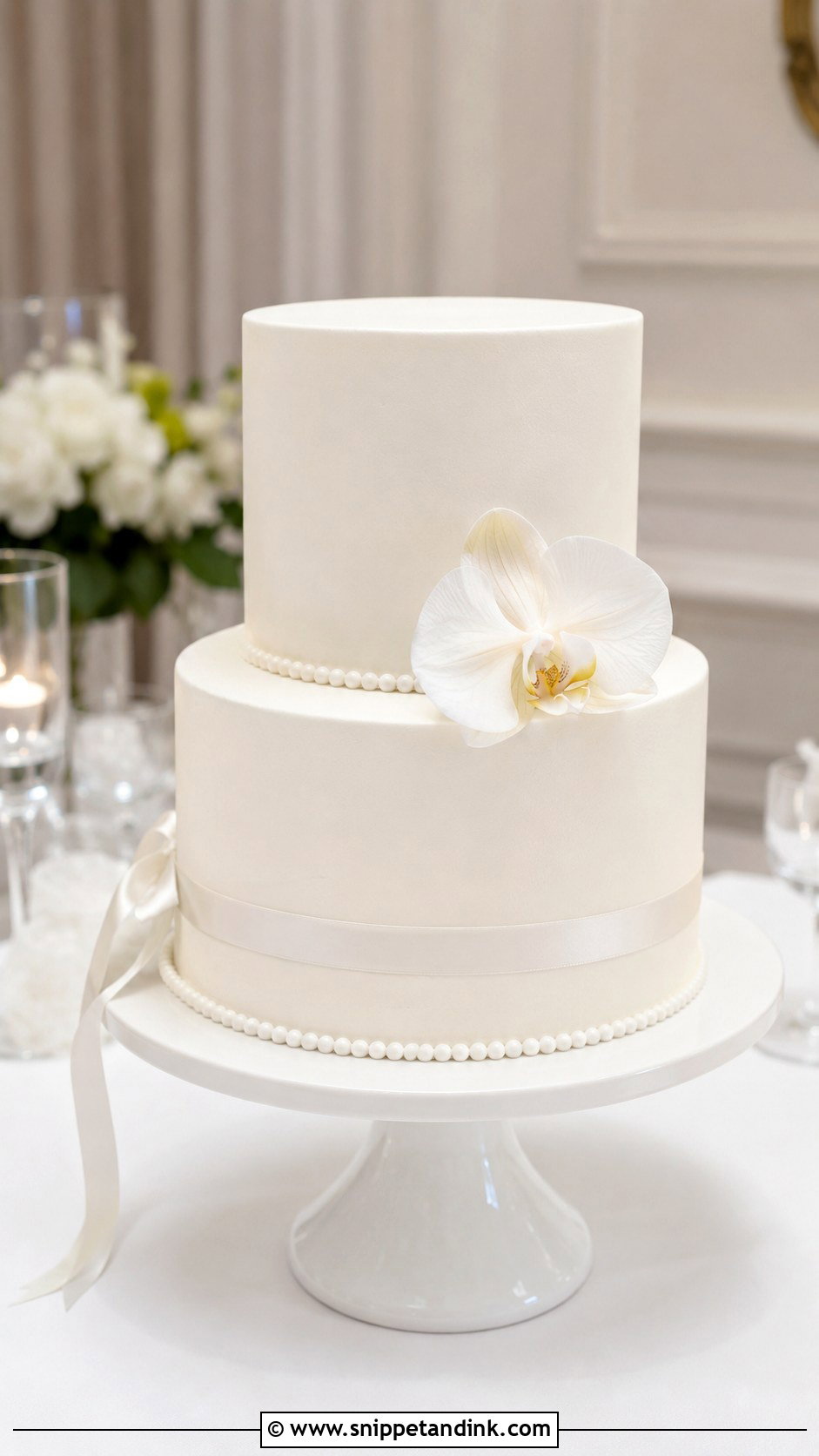
Minimalist cakes are the hardest to fake. With clean tiers, smooth frosting and one detail, every edge has to be sharp and every tier perfectly level, because there’s nothing to hide behind. That one detail might be a single orchid, a silk ribbon, a pearl border or a tiny flower cluster, and I’d pick it before deciding anything else. These suit courthouse celebrations, rooftop receptions and small dinners. Put the effort into the inside instead: vanilla bean, almond, lemon or raspberry make a plain outside feel generous once it’s sliced.
7. Floral Cascade Wedding Cake
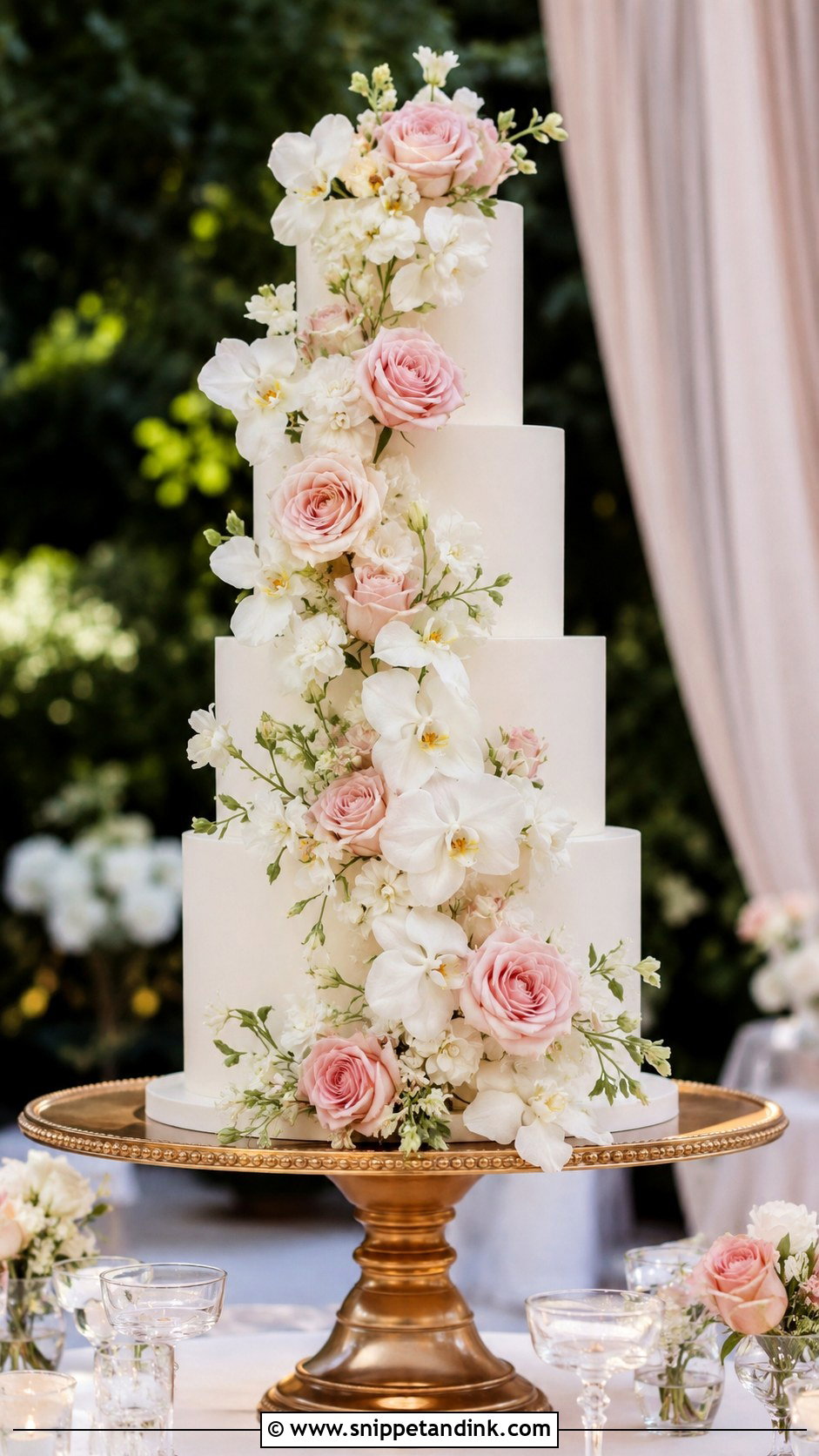
A floral cascade runs from the top tier down one side like a bouquet that’s been draped over the cake. It needs three or more tiers, because on a short cake the flowers have nowhere to travel and simply pile up. Roses, orchids, gardenias, sweet peas and trailing greenery give the best movement. I keep the frosting smooth or lightly textured so the flowers stay the focus, and I build the cascade on one face of the cake so it has a clear front for the cake-cutting photo. Ask where the table will sit before you settle on which side the flowers fall.
8. Two Tier Wedding Cake
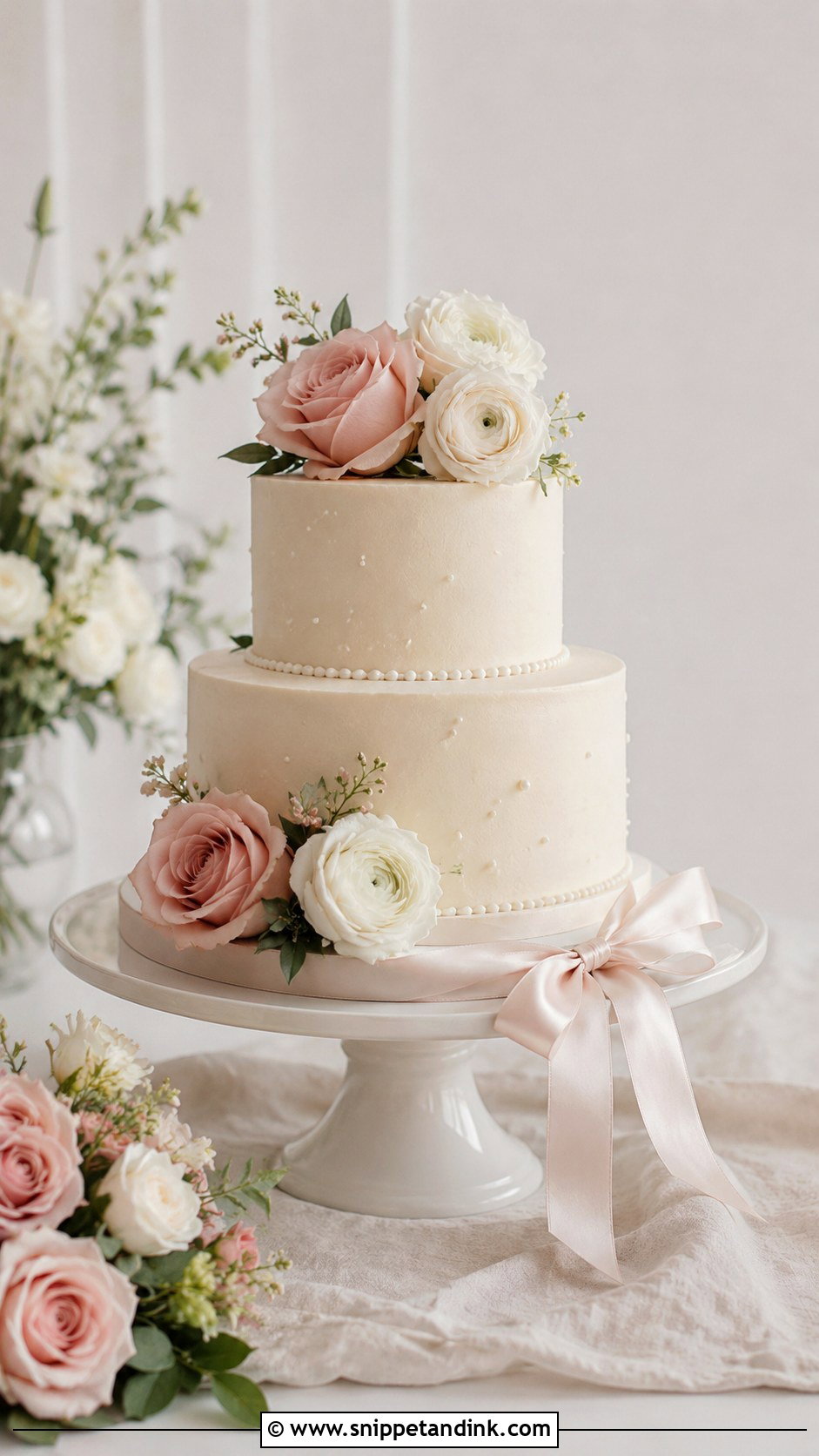
Two tiers are a sensible size for elopements and smaller weddings, and they’re easier to transport and display than a tall stack. Proportion is what makes a short cake look finished. A tall bottom tier with a shorter top reads modern; equal heights look traditional. I’d add one decoration rather than five, whether that’s fresh flowers, soft piping, pearls, pressed blooms or fruit. If your guest count outgrows two tiers, I’d rather pair it with a sheet cake kept in the kitchen than squeeze in a third tier you don’t want.
9. Three Tier Wedding Cake
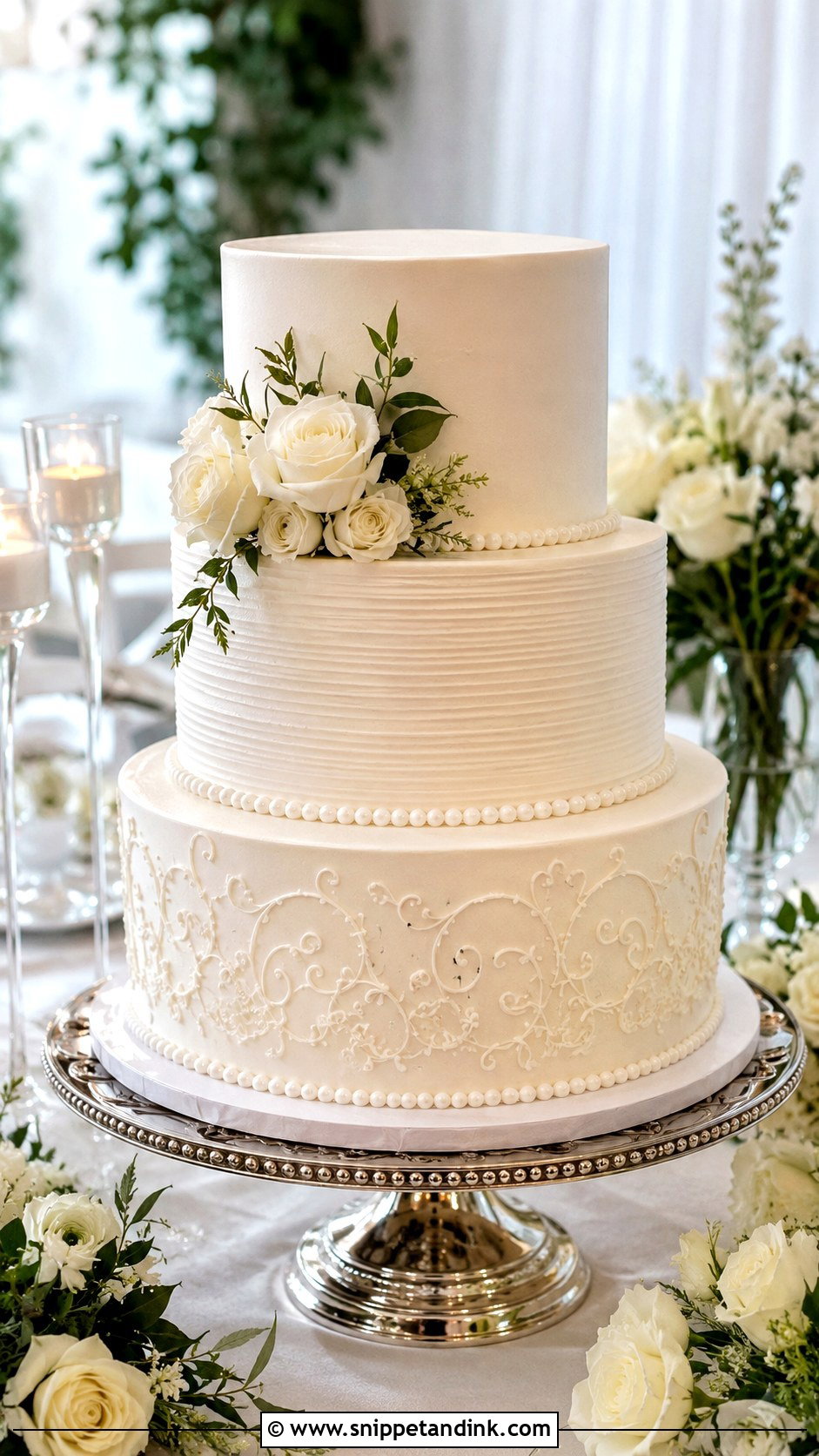
Three tiers give real height in photos while still fitting most venues and guest lists. Each tier above the base sits on its own board, supported by dowels or straws pushed into the tier below, and that internal structure is what lets me safely mix finishes. One plain tier, one textured and one floral keeps the cake interesting from every side. This is the size I’d suggest for a couple who wants a traditional cake-cutting moment without the logistics of a five-tier build.
10. Square Wedding Cake
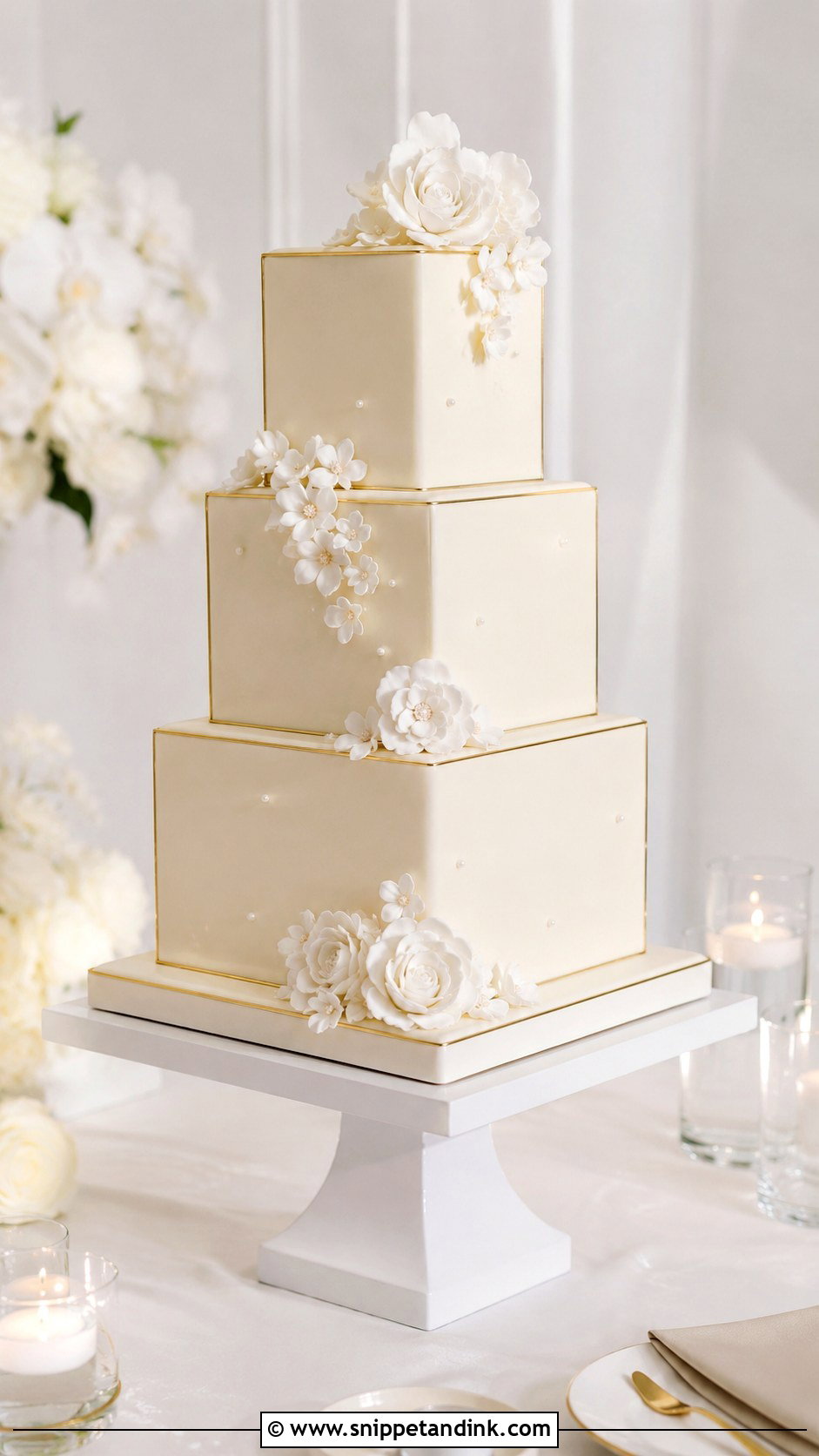
Square tiers look architectural, but they ask more of the baker. Sharp corners show every flaw, so smooth fondant is usually the safer finish; buttercream can work, though crisp corners take time and a very cold cake. I’ll stack squares evenly for a bold block, or alternate square and round tiers for contrast. Sugar flowers, metallic accents, pearls or a little greenery soften the hard lines. Square cakes also cut into neat, even slices, which caterers appreciate. They fit galleries, lofts and contemporary hotel rooms better than a rustic barn.
11. Round Wedding Cake With Roses
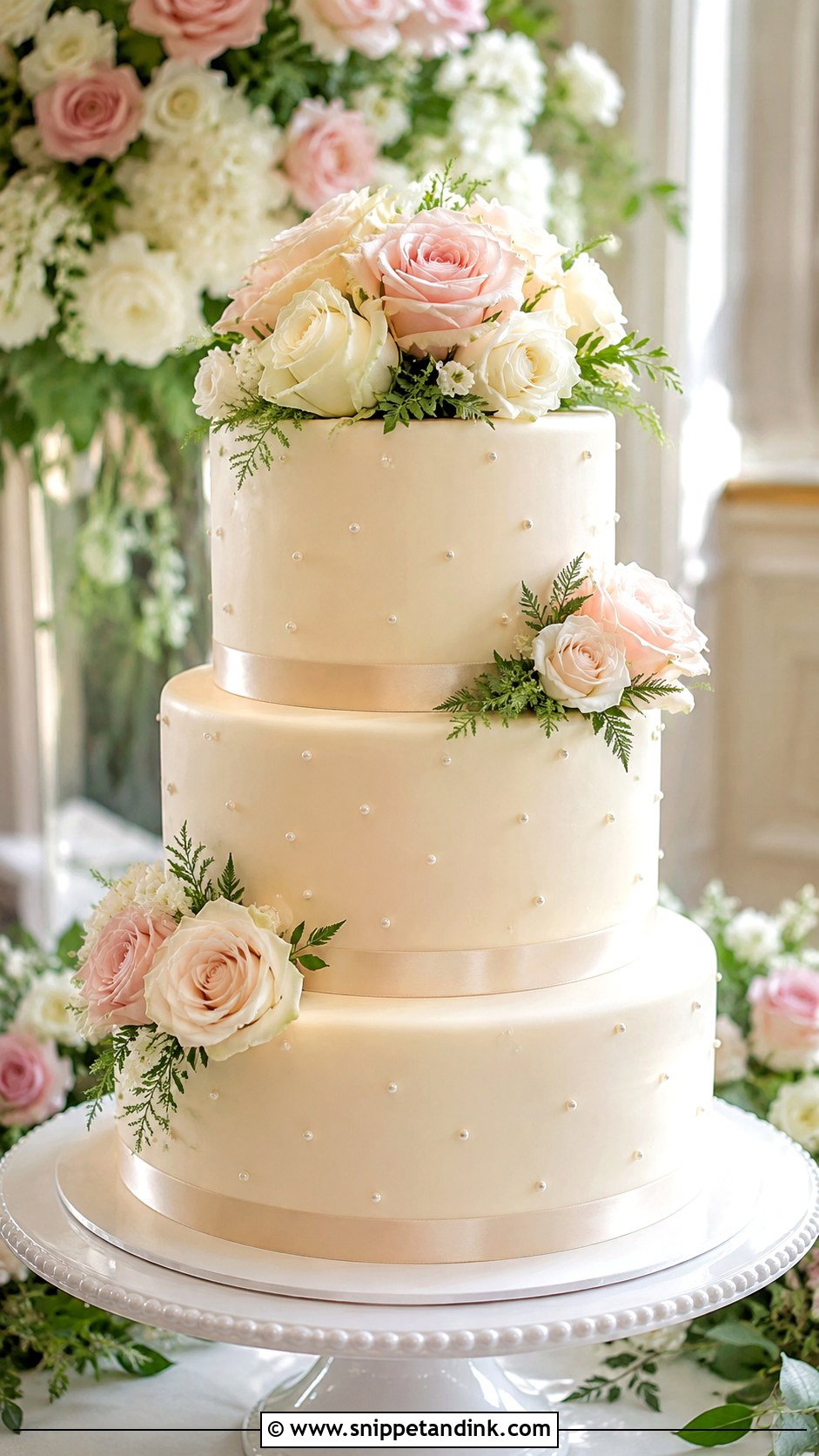
Round cakes with roses are the design most families picture when they hear wedding cake. The roses can be fresh, sugar, piped buttercream or wafer paper, and each one changes the budget and how long the cake can sit out. Piped roses are the most affordable and the most fragile in heat; sugar roses cost the most but can be kept long after the wedding. White and ivory read classic, blush reads soft, dusty pink and peach add warmth. Ribbon, gold touches or a few pearls let you personalize it without changing the shape.
12. Black And White Wedding Cake
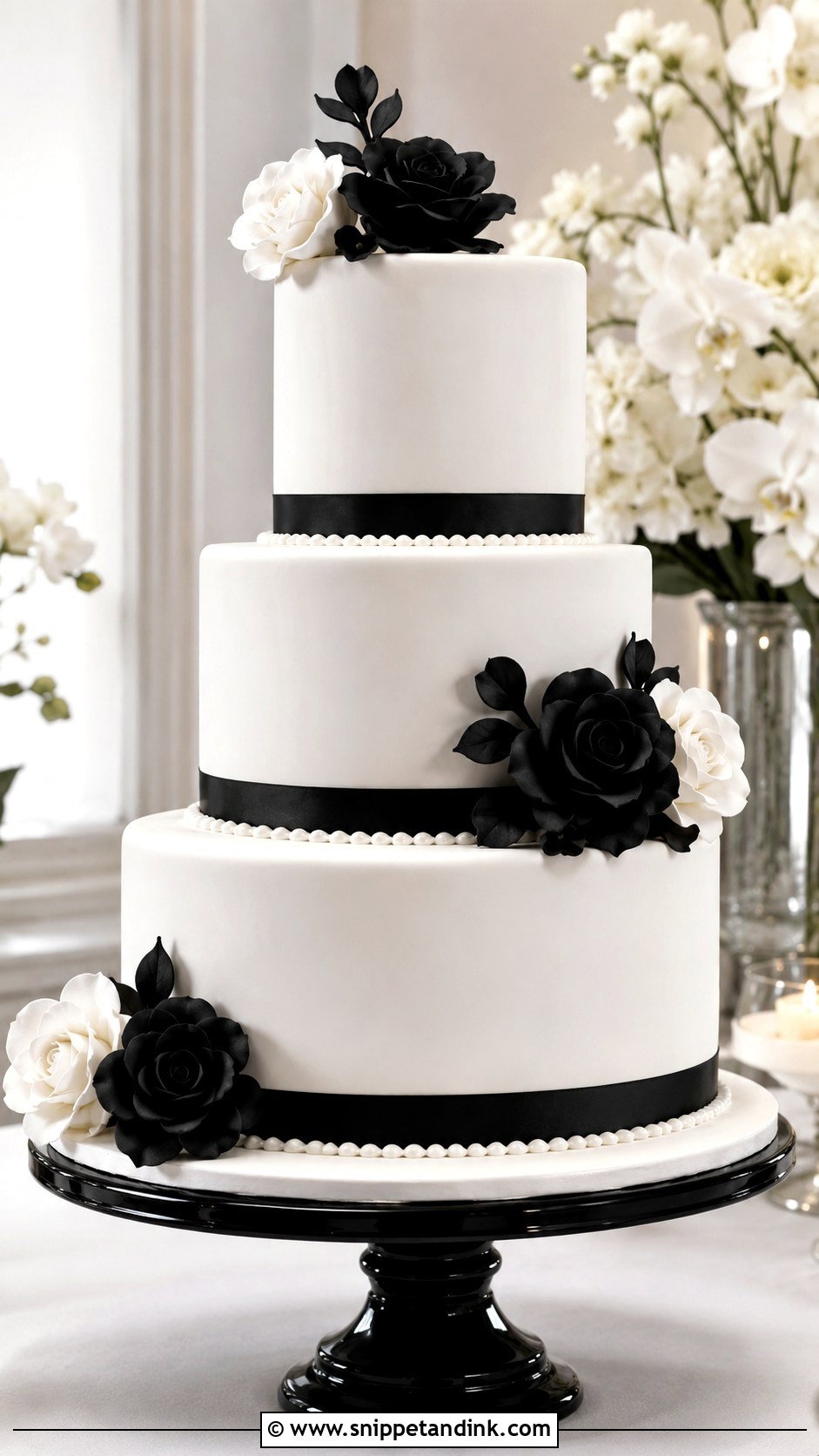
Black and white is striking, but black frosting is tricky. Getting a true black takes a lot of coloring, which can taste bitter and stain teeth, so I keep black to details: ribbon, thin piping, a few sugar flowers or a single fondant base tier. Ivory instead of bright white softens the contrast. Thin, precise black lines read elegant; heavy black areas can look harsh under flash. Formal evening receptions and black-tie weddings suit it best. Keep the table florals simple so the cake doesn’t compete.
13. Gold Wedding Cake
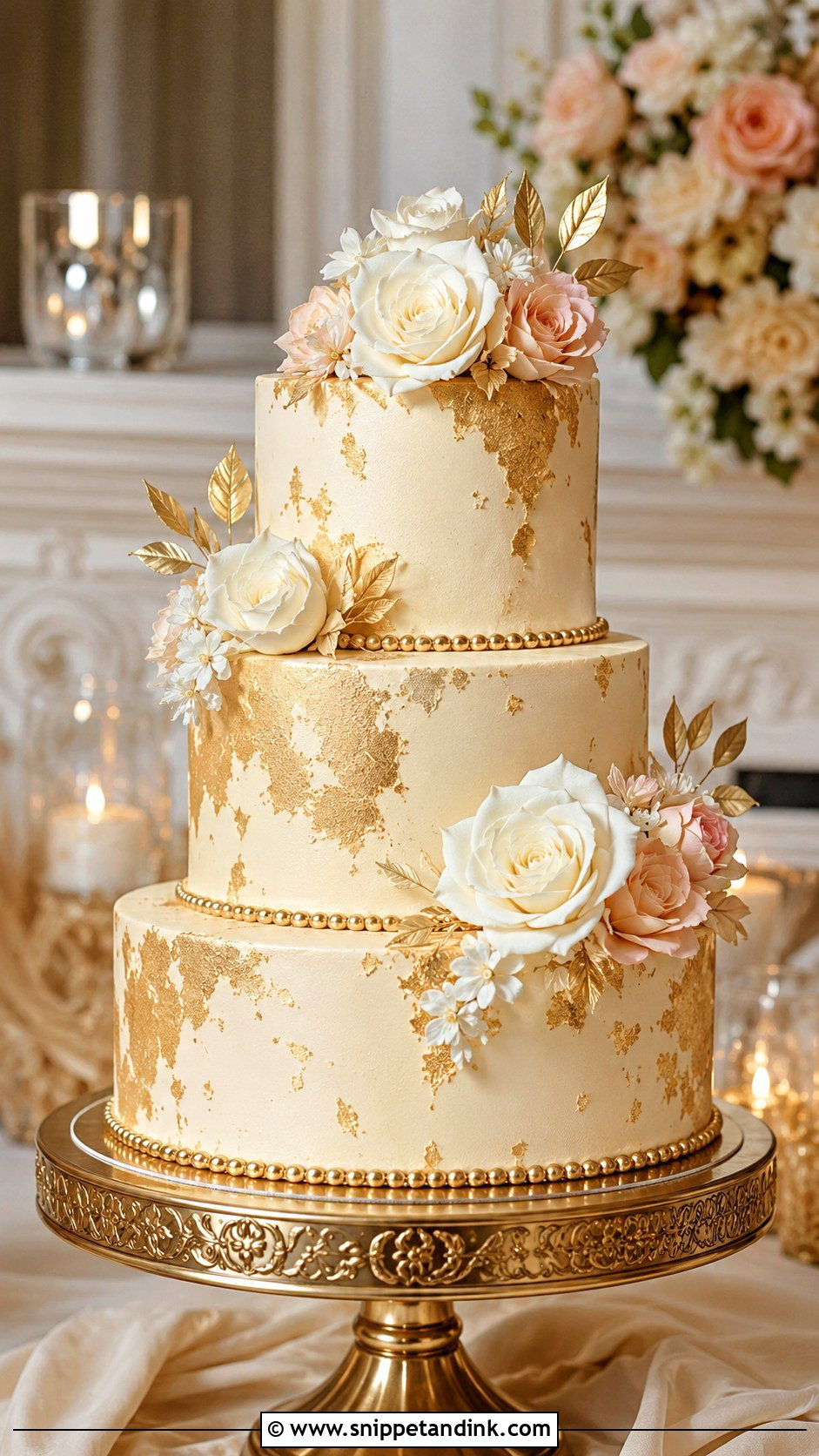
Gold works best as an accent. Edible gold leaf, painted edges, stenciled patterns, metallic pearls or one fully gilded tier all add warmth, but a whole gold cake tends to look like a prop. I pair it with ivory, champagne or blush so the shine has something calm beside it. Make sure the gold is a genuinely edible product, not a decorative luster sold only for non-food use, and ask your baker which one they use. Under candlelight, a small amount of gold leaf glows far more than you’d expect. Ballrooms and formal receptions show it off well.
14. Greenery Wedding Cake
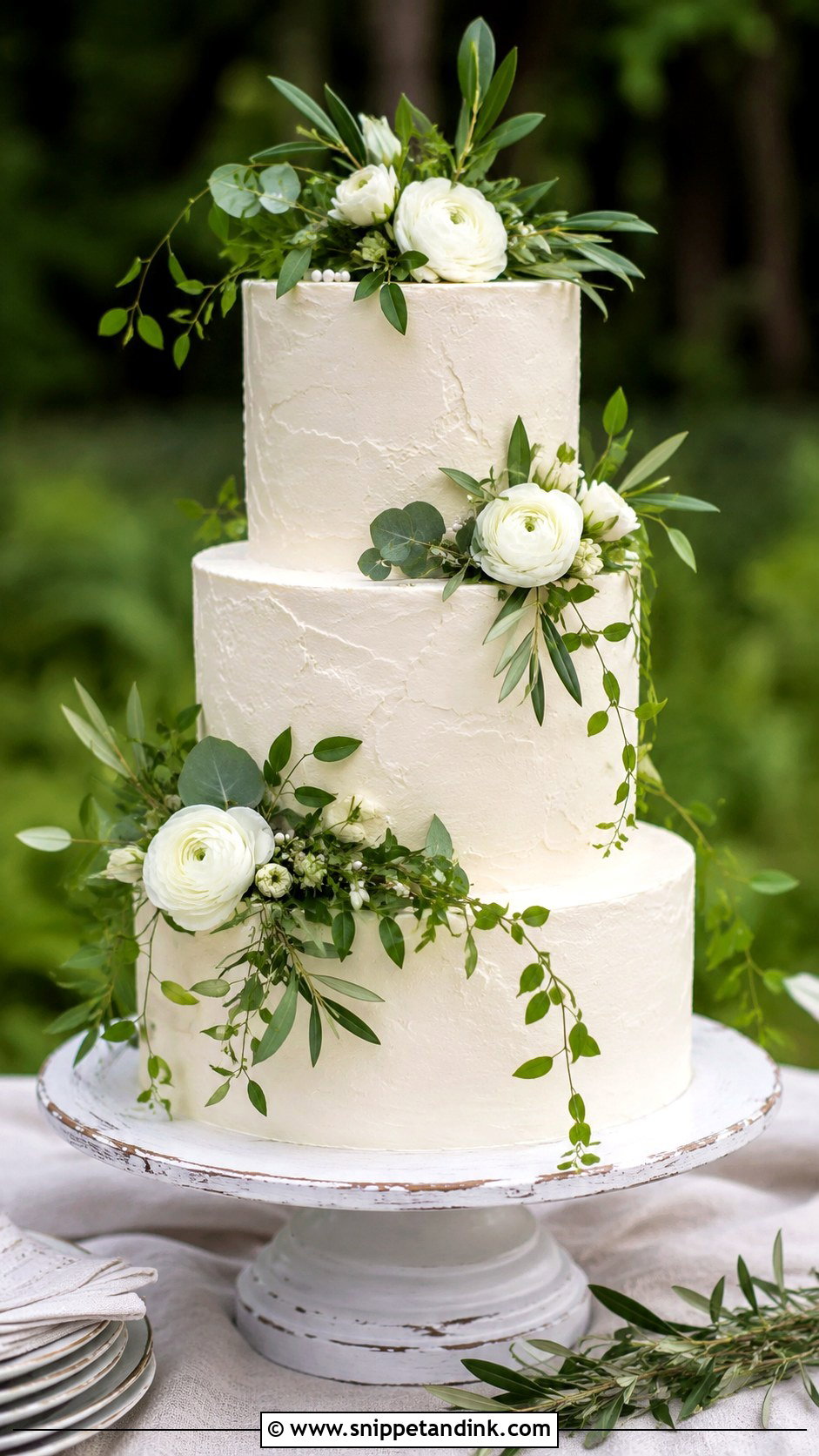
Greenery cakes rely on spacing. Eucalyptus, olive branches, ferns, rosemary and small vines can frame the tiers, but packed too tightly the cake starts to look like a hedge. I leave visible frosting between stems. Some popular greenery, including certain eucalyptus varieties, isn’t meant to touch food, so stems are wrapped or set in picks and lifted off before serving. White buttercream, ivory fondant or a light texture all work underneath. A few white flowers soften it, or leave it mostly green for a clean botanical look at an outdoor or barn venue.

15. Blue Wedding Cake
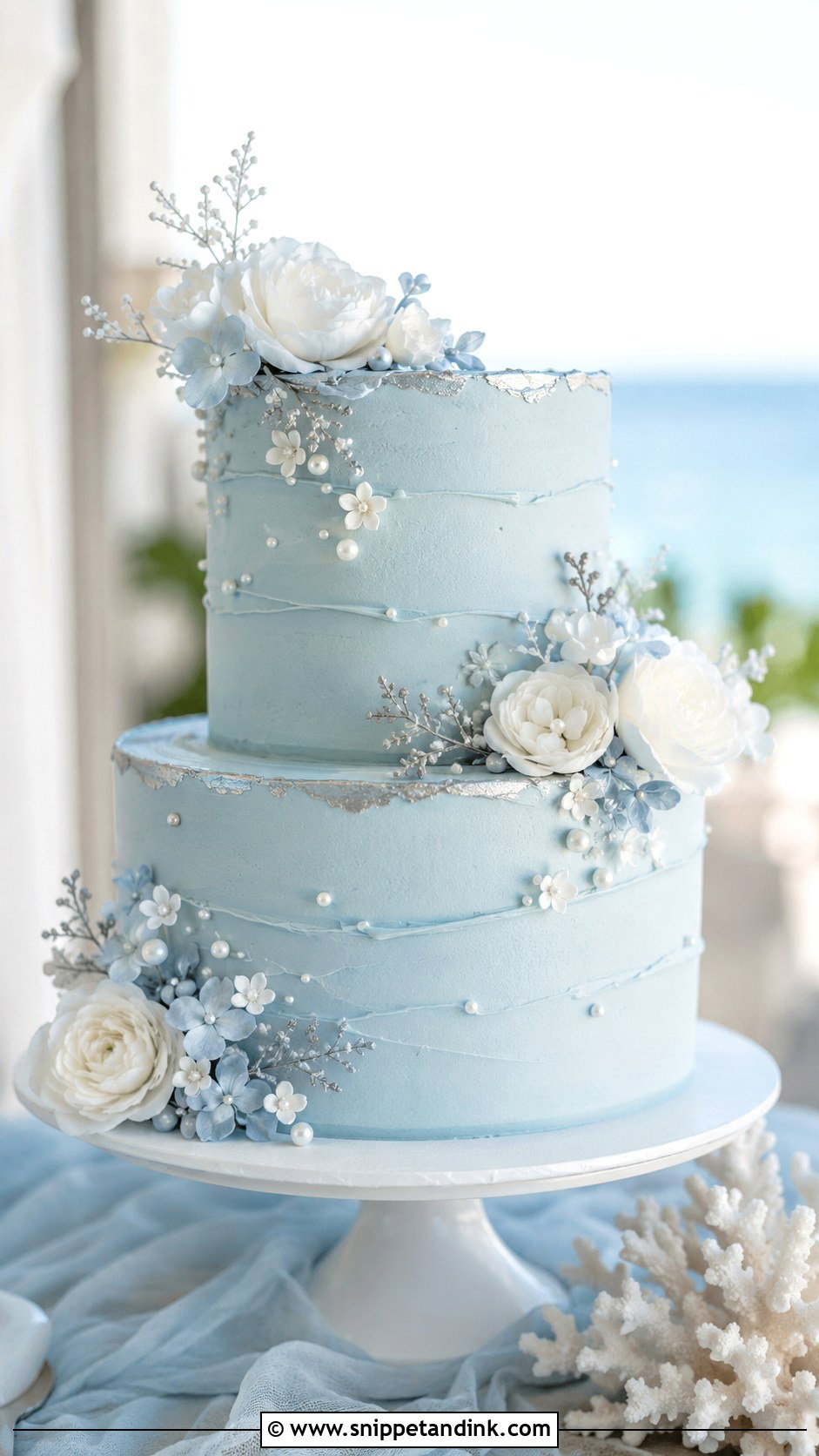
Blue frosting needs testing under the venue’s light. Pale blue can drift toward grey or green in warm evening light, so I make a sample swatch and check it beside your linens. Dusty blue, powder blue and pale slate are the easiest shades to live with, and they pair well with white flowers, pearls, silver or fine piping. For something bolder, a watercolor wash or a blue floral pattern carries the color without coating the whole cake. It suits coastal weddings and spring receptions, and it’s a sweet way to cover something blue. Set it on a white pedestal so the color has a clean frame.
16. Blush Pink Wedding Cake
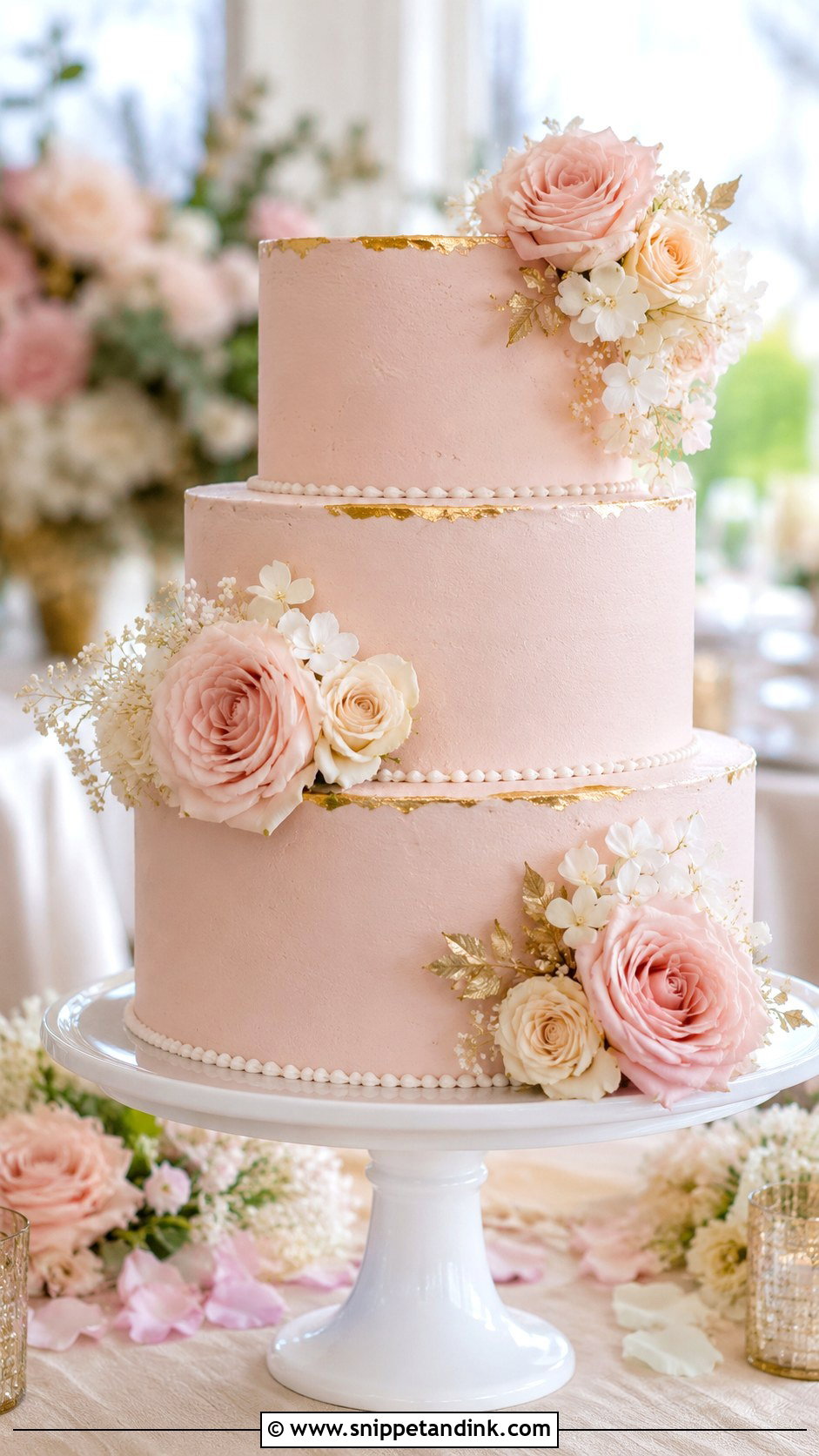
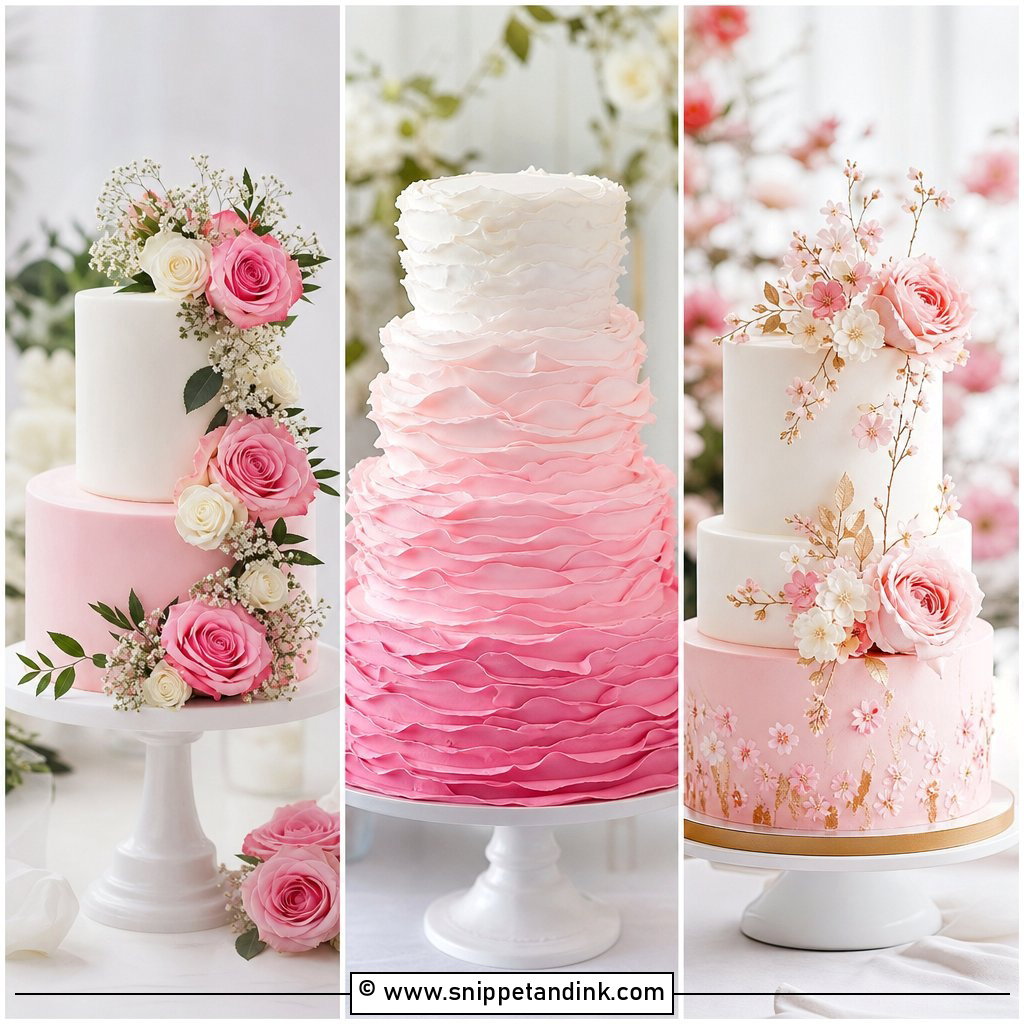
Blush is the color I mix most carefully, because a few drops too many tips it into bubblegum. It sits easily beside ivory, gold, white, champagne and greenery. It can cover the whole cake, fade in as a watercolor, or appear only in ribbons, piping or sugar flowers. A smooth blush finish reads modern; ruffles or piped details feel vintage. Keep the shade soft. Bright pinks also fade unevenly under strong light over a long display, so a cake that sits near a sunny window may come out patchy by the evening.
17. Watercolor Wedding Cake
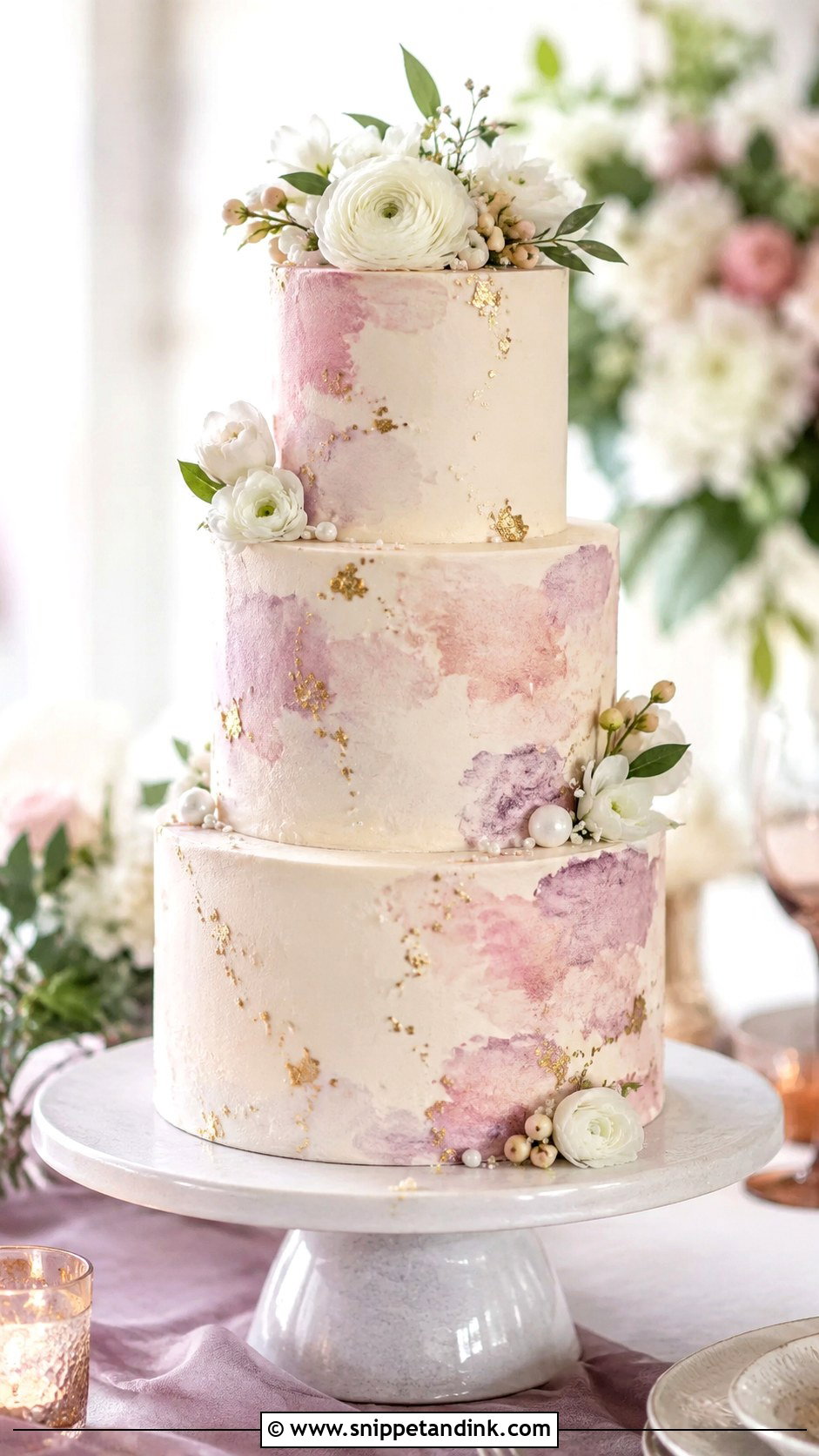
Watercolor cakes are painted or blended onto chilled buttercream with a palette knife or brush, so the color sits in soft, airy patches rather than solid blocks. Blush, lavender, blue, peach, sage and champagne are the shades I’m asked for most. The painting is the decoration, so I keep everything else light: a few flowers, a clean topper or a thin metallic edge. It’s an easy way to bring your wedding colors in without a loud cake. Garden and art-inspired receptions suit it well.
18. Marble Wedding Cake
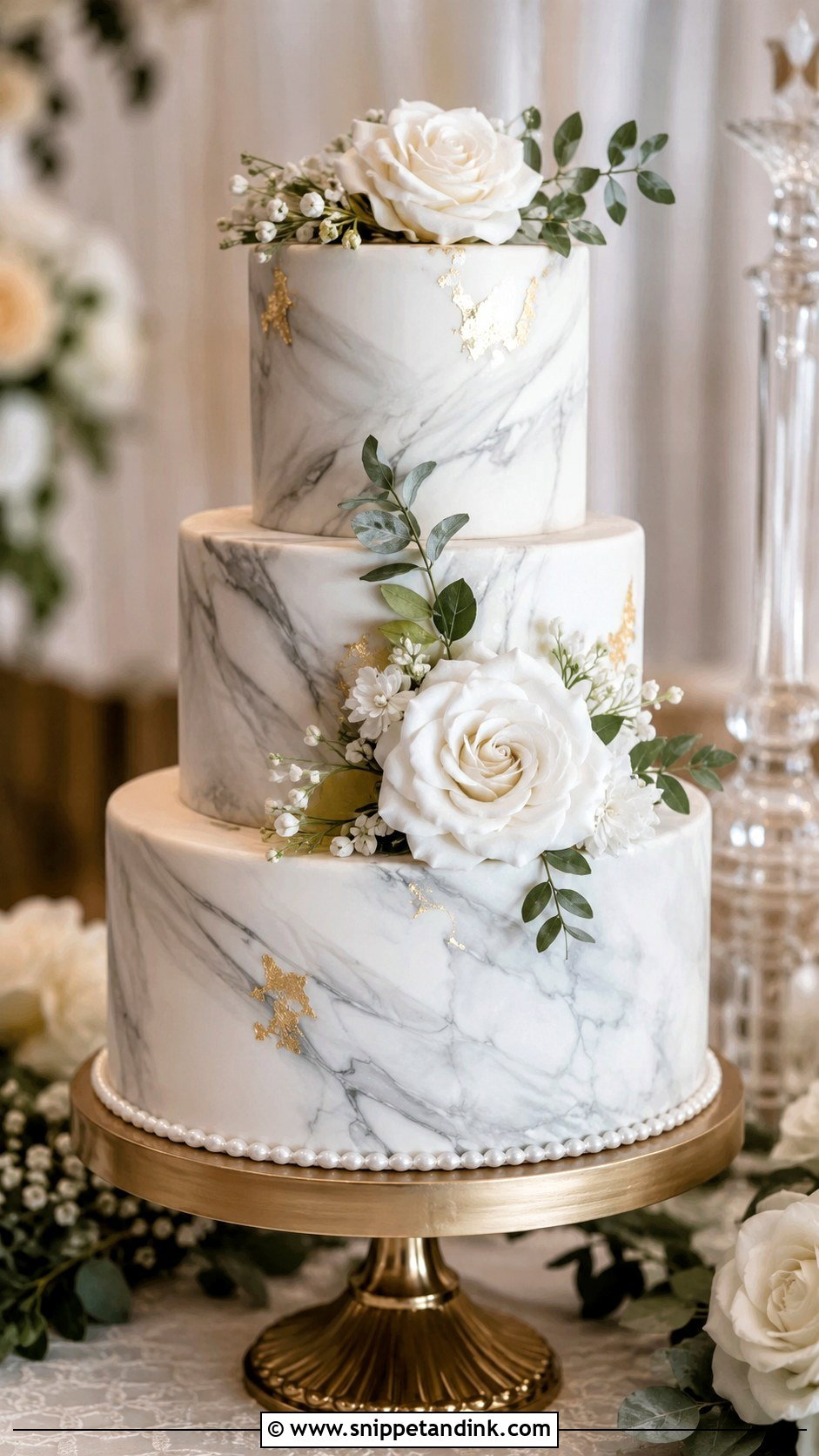
Marbling is usually done in fondant, with colored veins rolled through the paste before it’s draped over the tier, so no two cakes come out quite the same. White with grey veining is the classic; soft beige, blush, blue or green veins look gentler. Since the veining already gives the cake movement, I keep the decoration controlled: a little gold leaf, a few sugar flowers or one floral cluster. Marble suits modern venues and couples who like clean design. If you dislike fondant’s texture, ask for a thin layer over a buttercream base.
19. Sugar Flower Wedding Cake
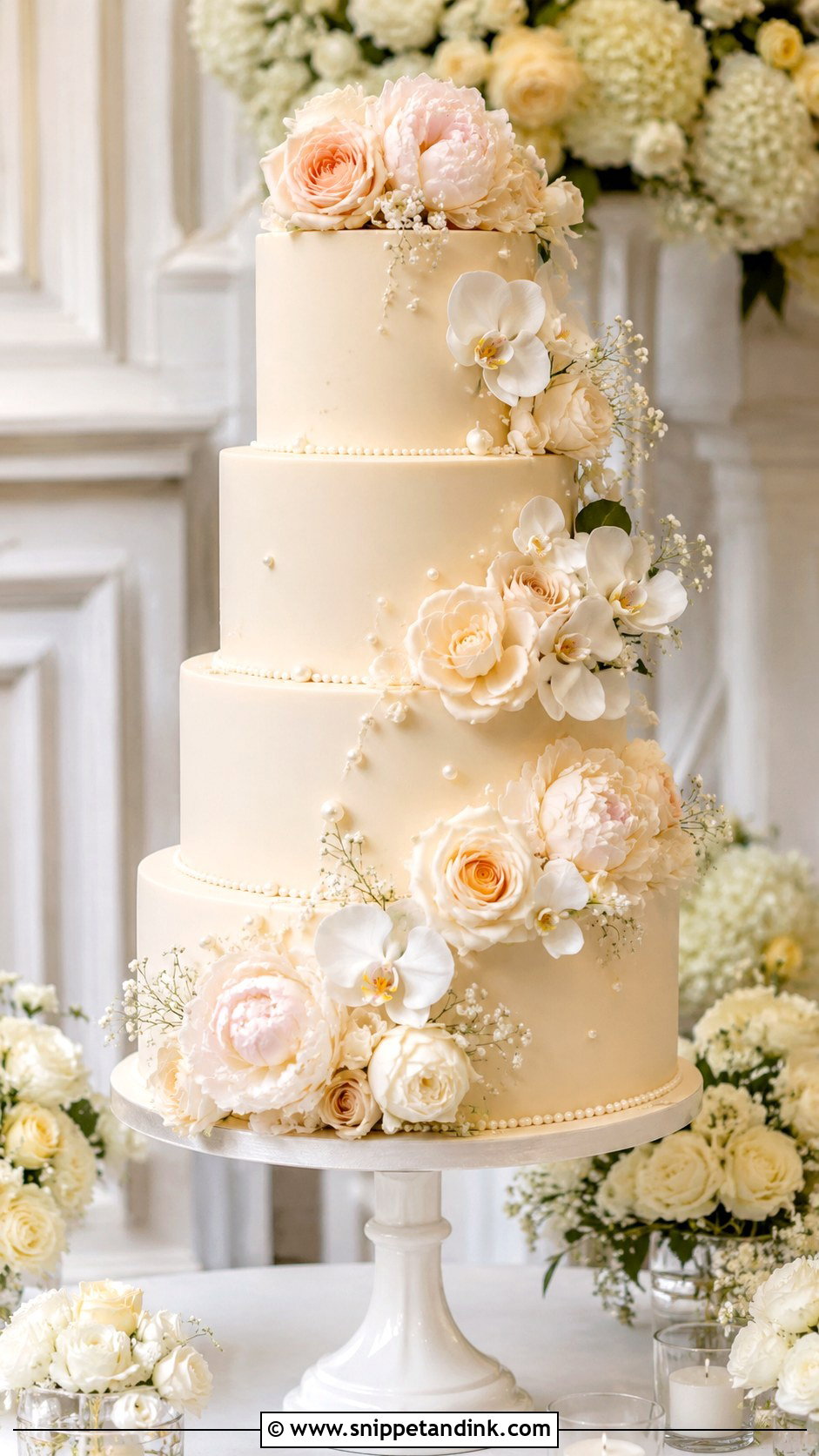
Sugar flowers are made petal by petal, wired and dried, so they need ordering well ahead and they hold their shape all day without wilting. Roses, peonies, orchids, ranunculus, lilies and small filler blooms can all be matched to your palette, and they’re my answer when the fresh flower you want is out of season or not food-safe. Humidity is their weakness; in a damp room thin petals can soften. A smooth white or ivory cake gives them the cleanest background. One large bloom or a full arrangement across several tiers both work, and many couples keep a sugar flower afterward.
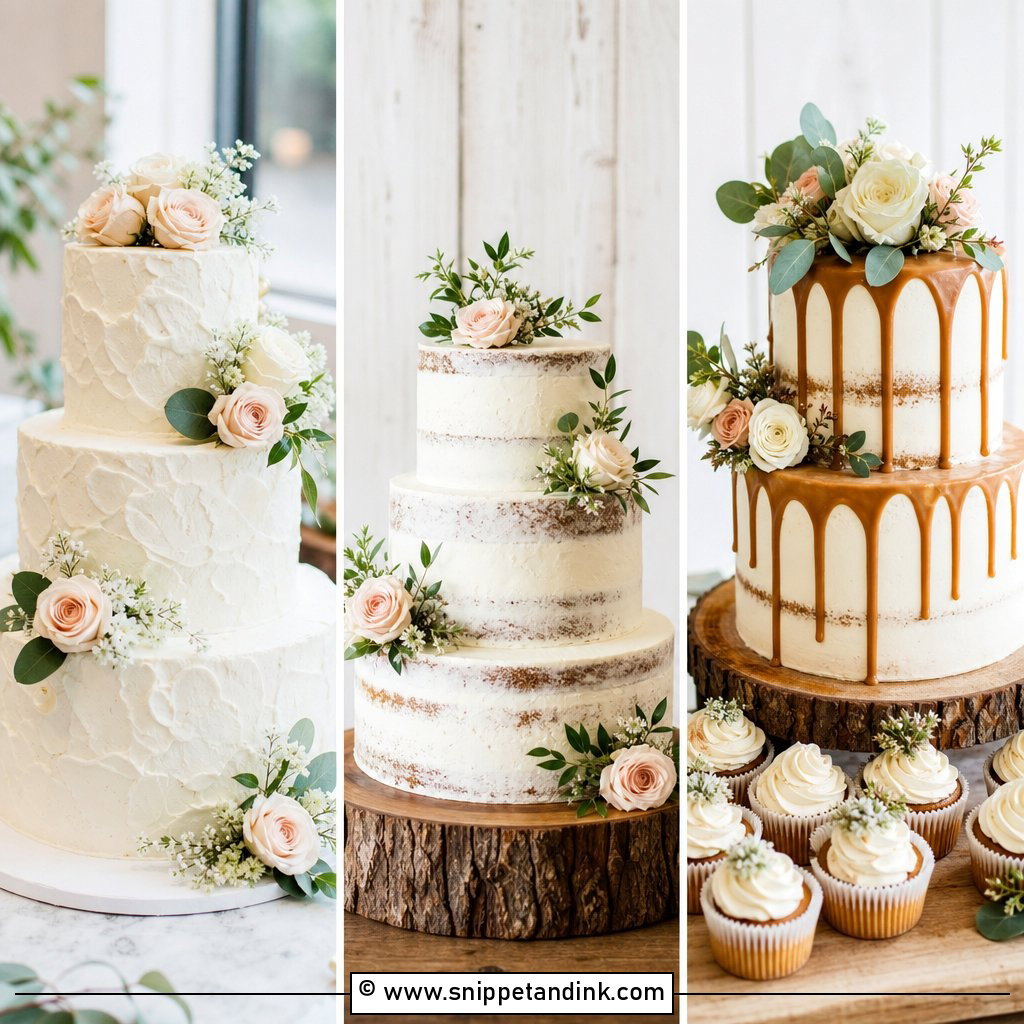


20. Fruit Wedding Cake
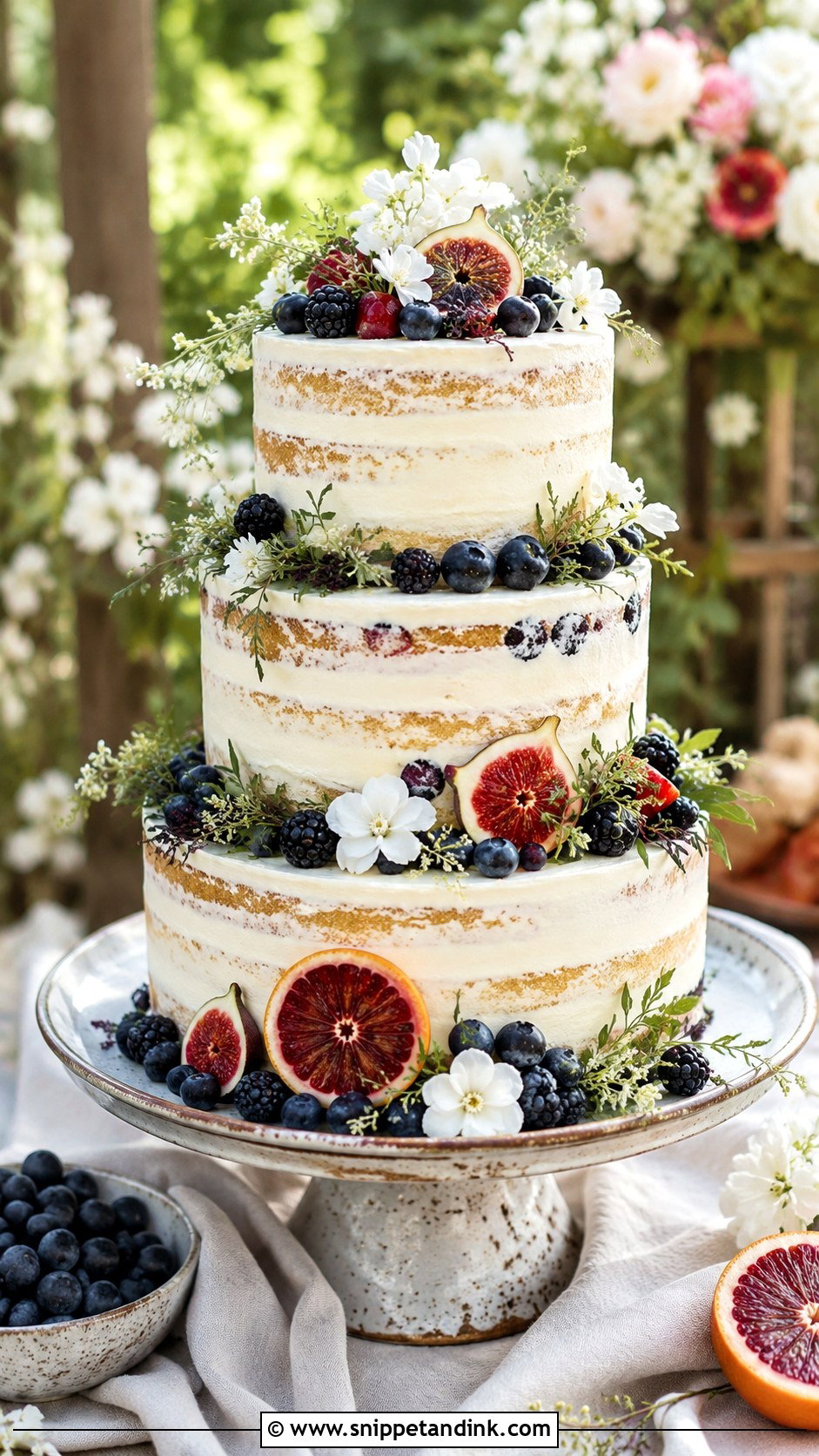
A fruit wedding cake brings natural color with very little added decoration, which is why it suits spring, summer and outdoor receptions. Berries, figs, citrus slices, cherries, grapes and stone fruit all work, though cut fruit weeps juice into frosting within a few hours. I place fruit on site, as close to serving as I can, and I avoid cut fruit on whipped cream in a warm room. Buttercream, mascarpone cream or a semi-naked finish hold fruit well. Berries on white frosting look classic; figs with greenery feel more organic.
How These Finishes Behave Between Delivery and the First Slice
Every design on this list looks perfect when it leaves my kitchen. What matters is what it looks like four hours later, after a van ride and a warm reception room. These are the things I plan around.
Heat and humidity
Buttercream starts to soften in a warm room, and textured or piped finishes lose definition first. Fondant is sturdier in heat, but a cake carried straight from a cold fridge into a humid room can form condensation, so I let it adjust gradually rather than putting it out wet. Sugar flowers droop in damp air. For a summer tent or outdoor setup, I’d lean toward fondant, sugar flowers and a shaded table.
Travel and setup
Tall cakes are often stacked on site, with the final tier, flowers and fruit added at the venue. Ask your baker whether they deliver and set up themselves. A three-tier cake isn’t something a relative should carry in a hatchback, and a table that isn’t level will show in the photos.
Cutting and serving
Fresh flowers and greenery need removing before slicing, along with dowels and boards hidden inside the tiers. Make sure your caterer knows the cake has internal supports. If you want to keep the top tier, wrap it well and freeze it within a day or so. Fruit and fresh cream tops don’t keep the way plain buttercream does.
Your Cake Belongs to the Room It Stands In
None of these designs works because of height or price alone. They work when the cake matches the rest of the day: piping in a romantic reception, a single-detail cake at a modern dinner, fruit outdoors, pearls in a polished indoor room. Before you decide, think about the venue’s lighting and temperature, the flowers, the linens, your guest count and the flavors you’d actually choose for dessert. Save the designs you keep coming back to, then bring them to a tasting and ask what your baker can adapt for your season and budget. A good cake looks right in the photos and still gets finished on every plate.
You'll Like These Ideas:









Leave a Reply