
Burgundy reads as luxury on a cake table in a way that brighter reds rarely do. It sits well in autumn and winter, in garden receptions with dark florals, and under ballroom chandeliers. The colour can cover a whole tier or arrive quietly through flowers, painted strokes, ribbon, berries or sugar petals, and that choice changes the cake more than any other. Your venue lighting, your dress and your table linens all pull it one way or another. I’ve grouped twenty approaches below, from full dark tiers to a single accent on ivory, with notes on what each asks of your baker.
One Dark Tier or Five? Deciding How Much Burgundy to Use
The biggest decision with this colour isn’t the flower or the finish. It’s how much of the cake actually turns burgundy. Each level has its own trade-offs.
Accents only
Flowers, berries, ribbon or a painted stroke on an ivory cake. This is the most forgiving option: the cake stays light in photos, the icing tastes like ordinary vanilla buttercream, and small colour differences go unnoticed.
One burgundy tier
A single dark tier, usually the bottom or middle one, gives real drama without overwhelming the table. I find this is the sweet spot for most couples who love the colour. It also keeps the amount of heavily coloured icing guests eat to a minimum.
Fully burgundy
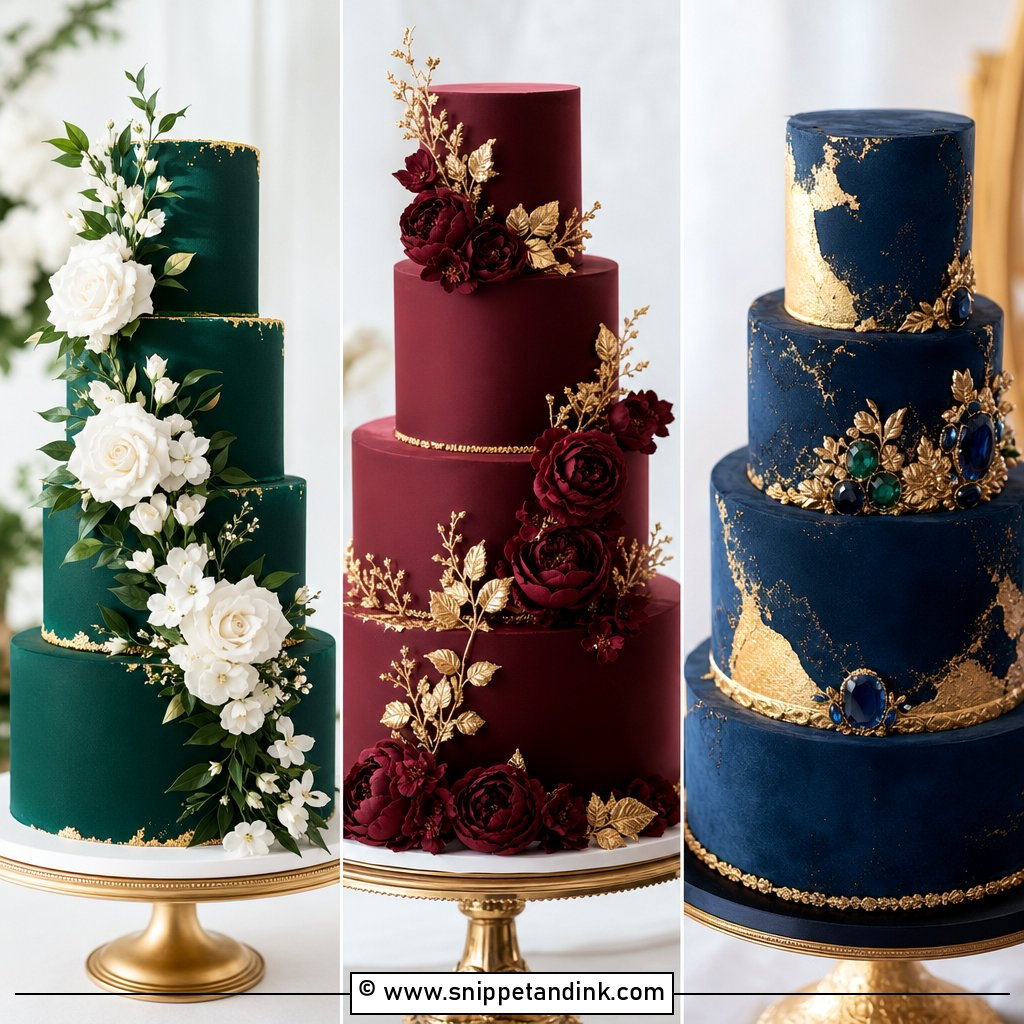
Every tier in deep red looks luxurious in a candlelit ballroom. It is also the hardest to photograph well and the most likely to stain teeth. If you go this way, fondant gives the most even colour, and the cake will need good lighting on the table to avoid looking almost black in pictures.
1. Burgundy Floral Wedding Cake
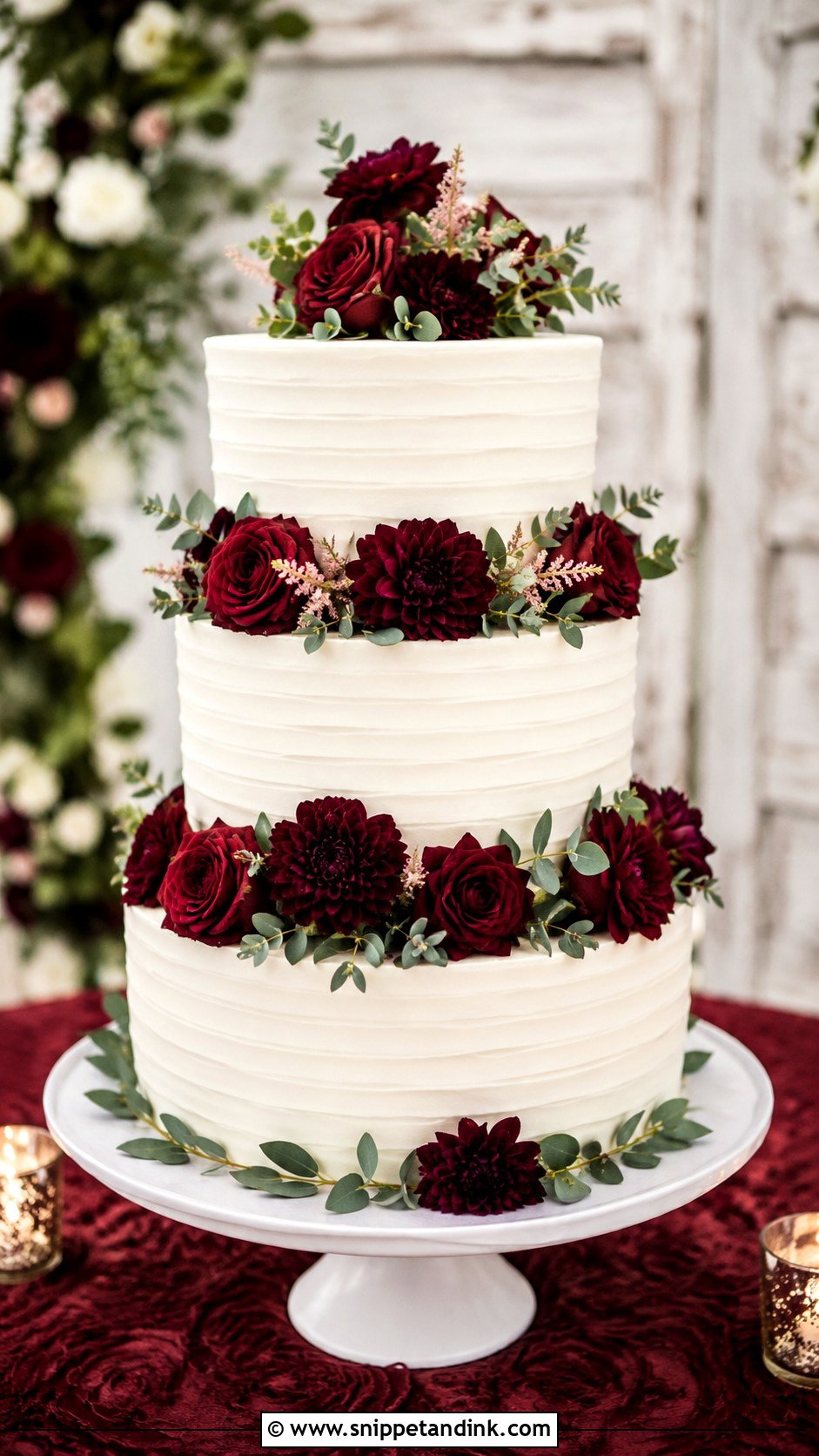
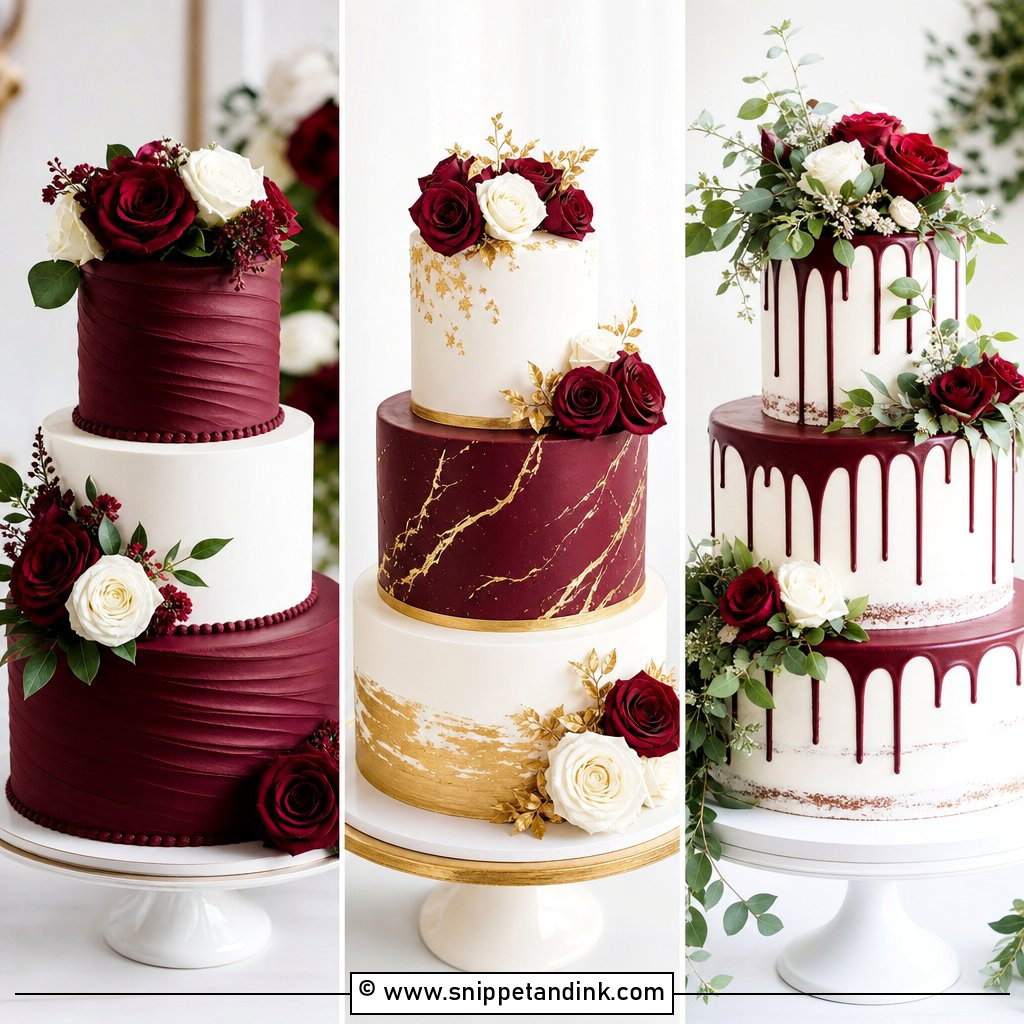
Flowers are the gentlest way to bring burgundy into your dessert table without committing a whole tier to a dark shade. I start with ivory, white or soft blush icing and add roses, dahlias, ranunculus or sugar flowers at the tier seams, which also hides the joins. Mixing in blush and cream blooms softens it; darker greenery and deep red petals push it moodier. Keep the icing smooth underneath so the flowers carry the design. When the florist supplies the blooms, I ask for them unsprayed and wrap every stem before it goes near the cake.
2. Burgundy And Gold Wedding Cake
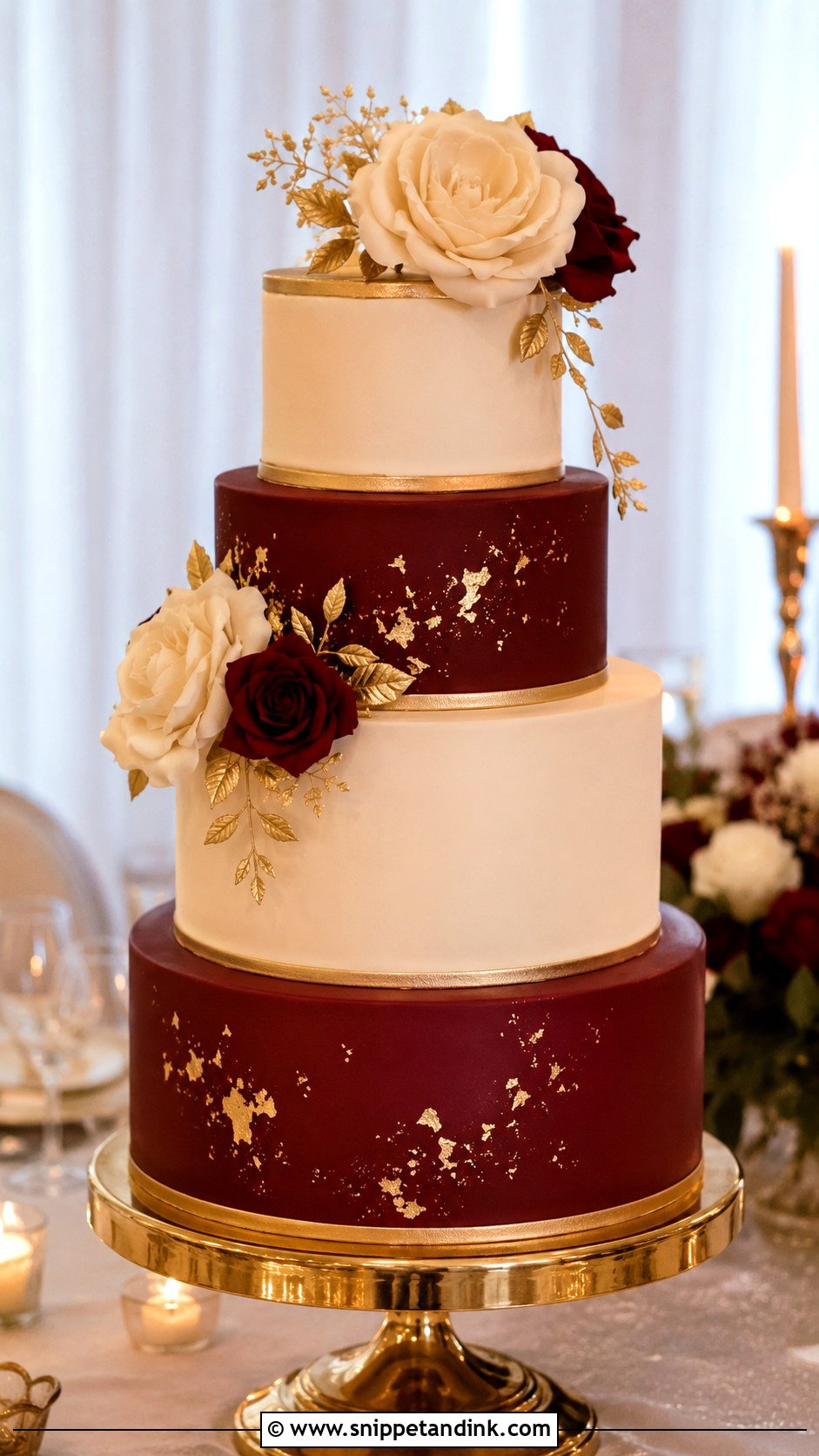
Gold makes burgundy look warmer and more formal, but only in small amounts. A burgundy tier between ivory ones, edged with a thin line of gold, is the version I find holds up best in photos. Gold leaf, brushed strokes or a narrow metallic drip suit a more modern room. A plain gold stand, candles and cream flowers nearby finish it. Too much shine turns it costume-like, and a metallic surface that is too reflective throws back camera flash, so I prefer a brushed, matte gold.
3. Burgundy Ombre Wedding Cake
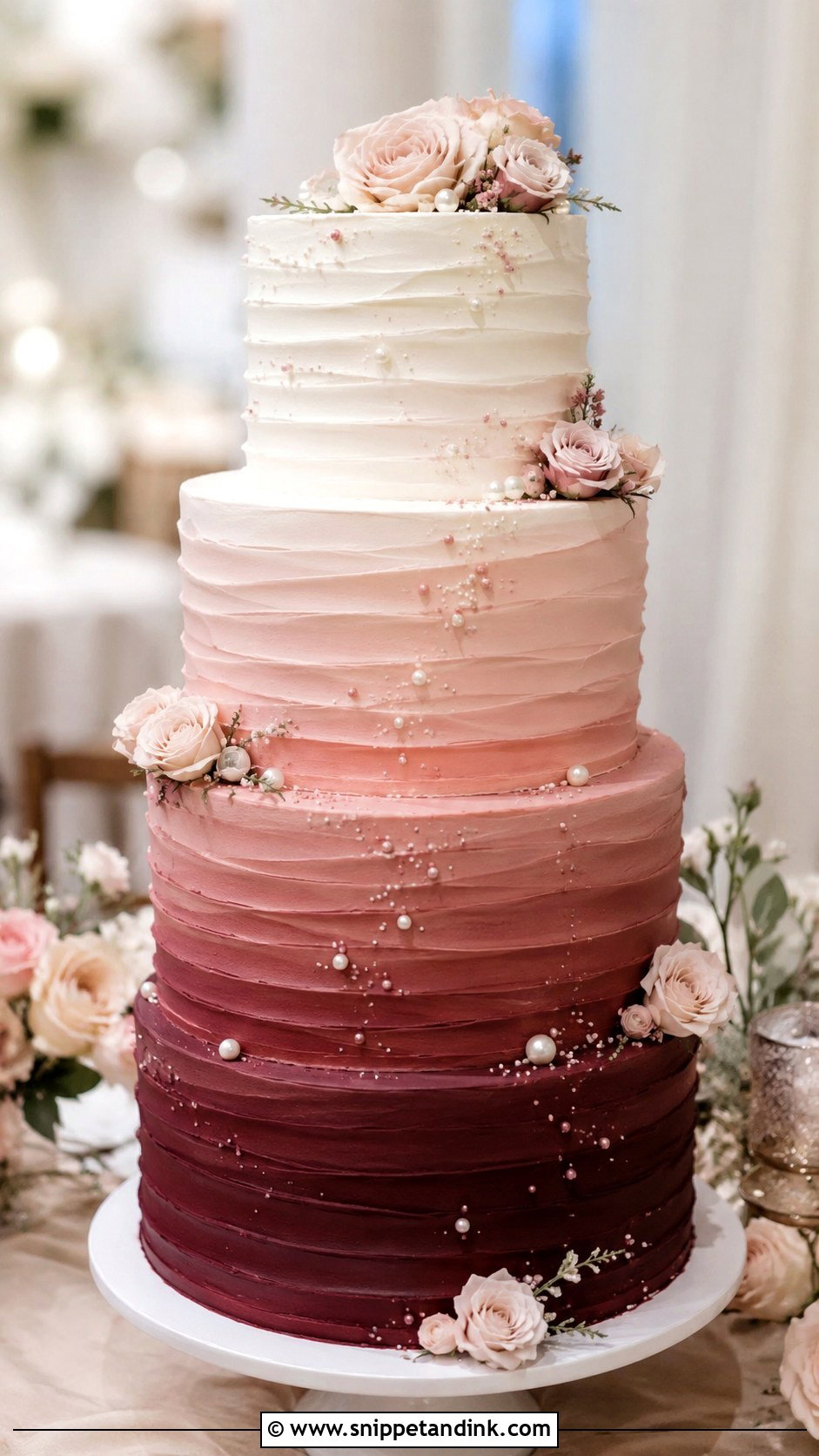
Ombre lets you have deep burgundy without a heavy cake. I take the colour from burgundy on the bottom tier through dusty rose and blush to ivory at the top. Each shade is mixed separately, and I always test them side by side on a board before icing, because steps that look even in the bowl can jump on the cake. Buttercream blends softly; fondant gives cleaner bands. A few small flowers or pearls are enough, since the gradient is the design.
4. Burgundy Drip Wedding Cake
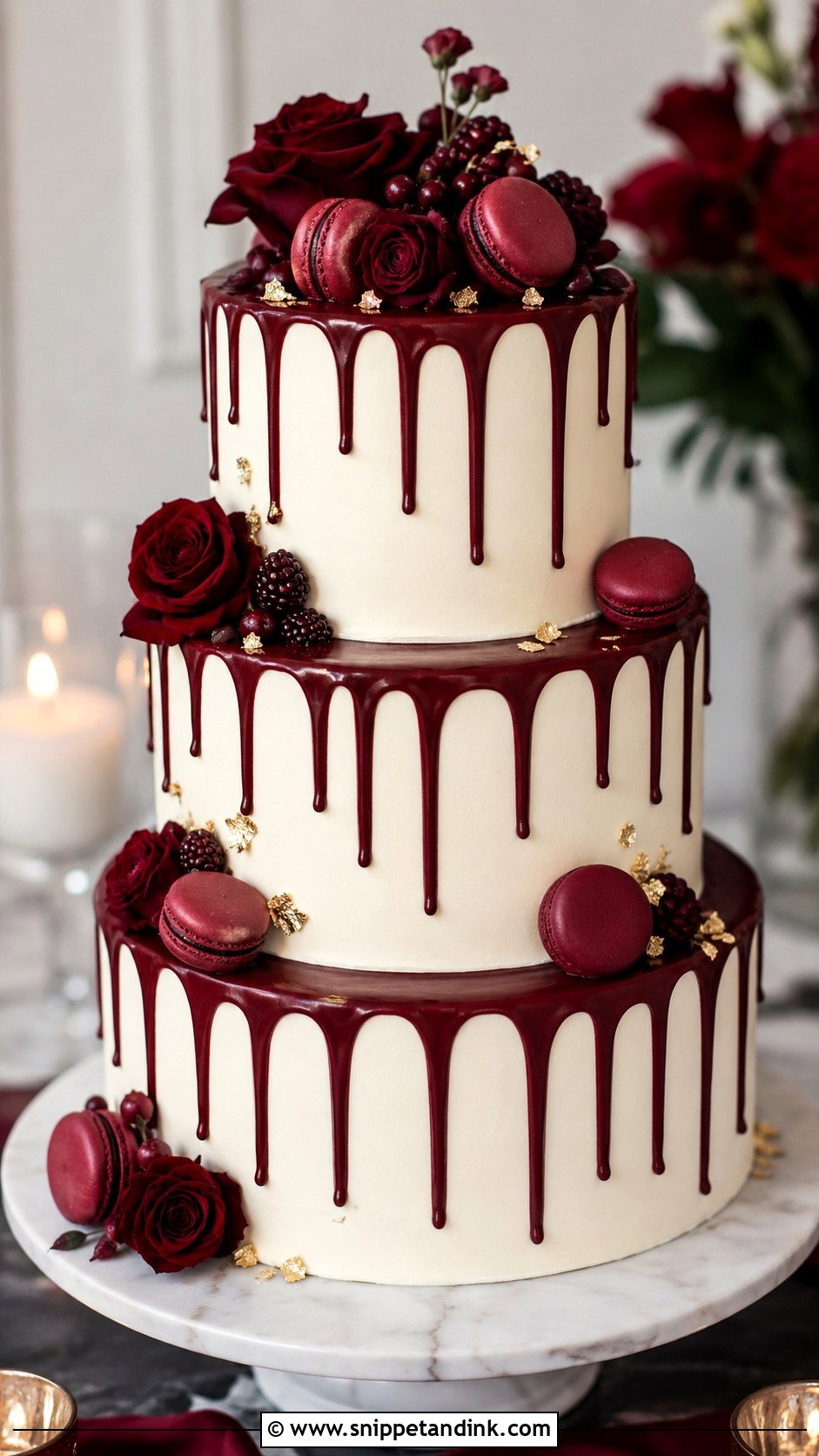
A burgundy drip wedding cake looks bold but stays neat when the drip is controlled. The base can be ivory, blush or soft champagne buttercream, with a glossy burgundy ganache drip over the edge. I test the ganache temperature on the back of the cake first; a few degrees too warm and it runs to the board. Macarons, berries, roses or gold flakes on top suit it. Ask for a set drip length, often a third of the tier, so it looks planned rather than spilled.
5. Burgundy Velvet Wedding Cake
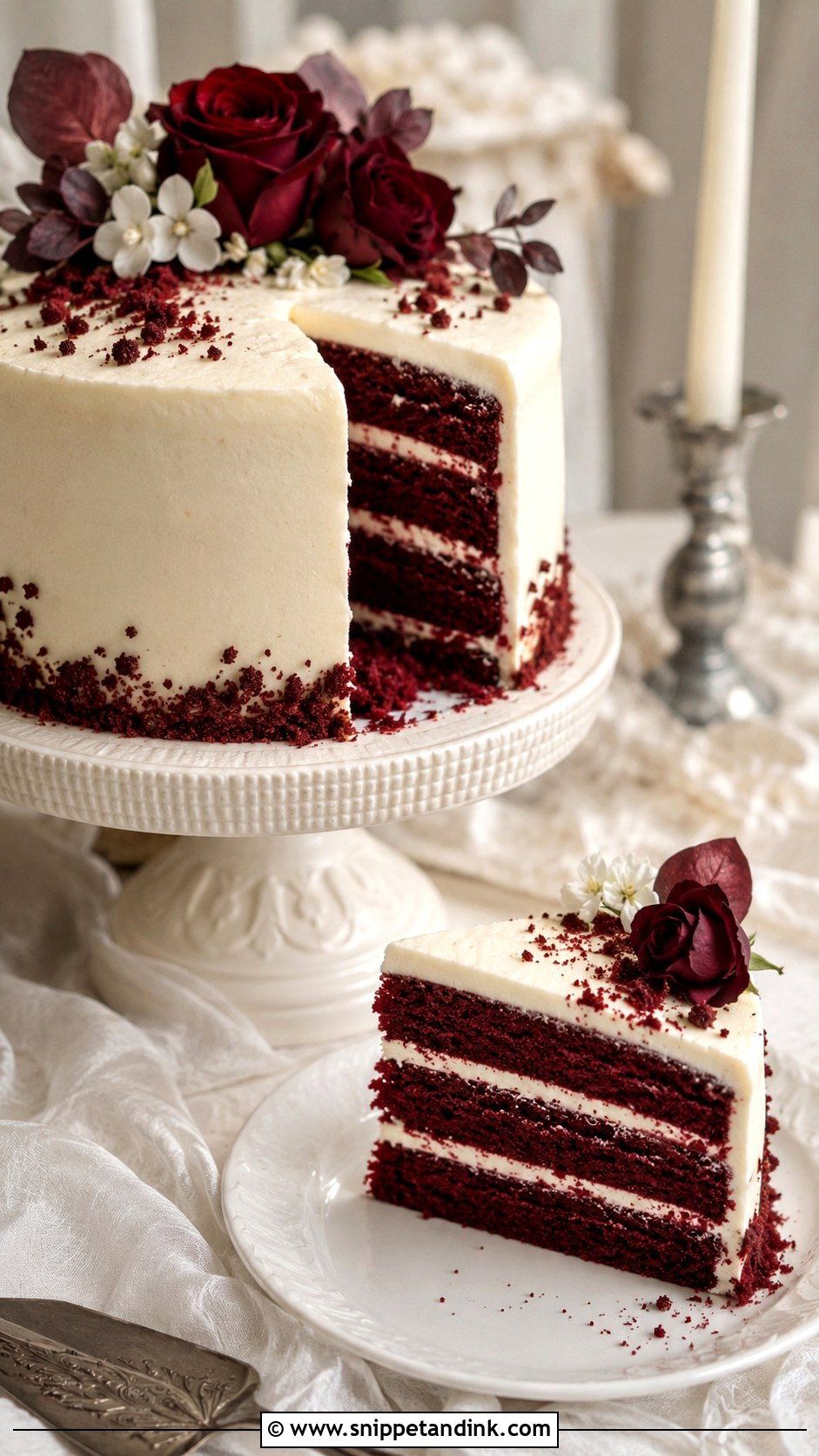
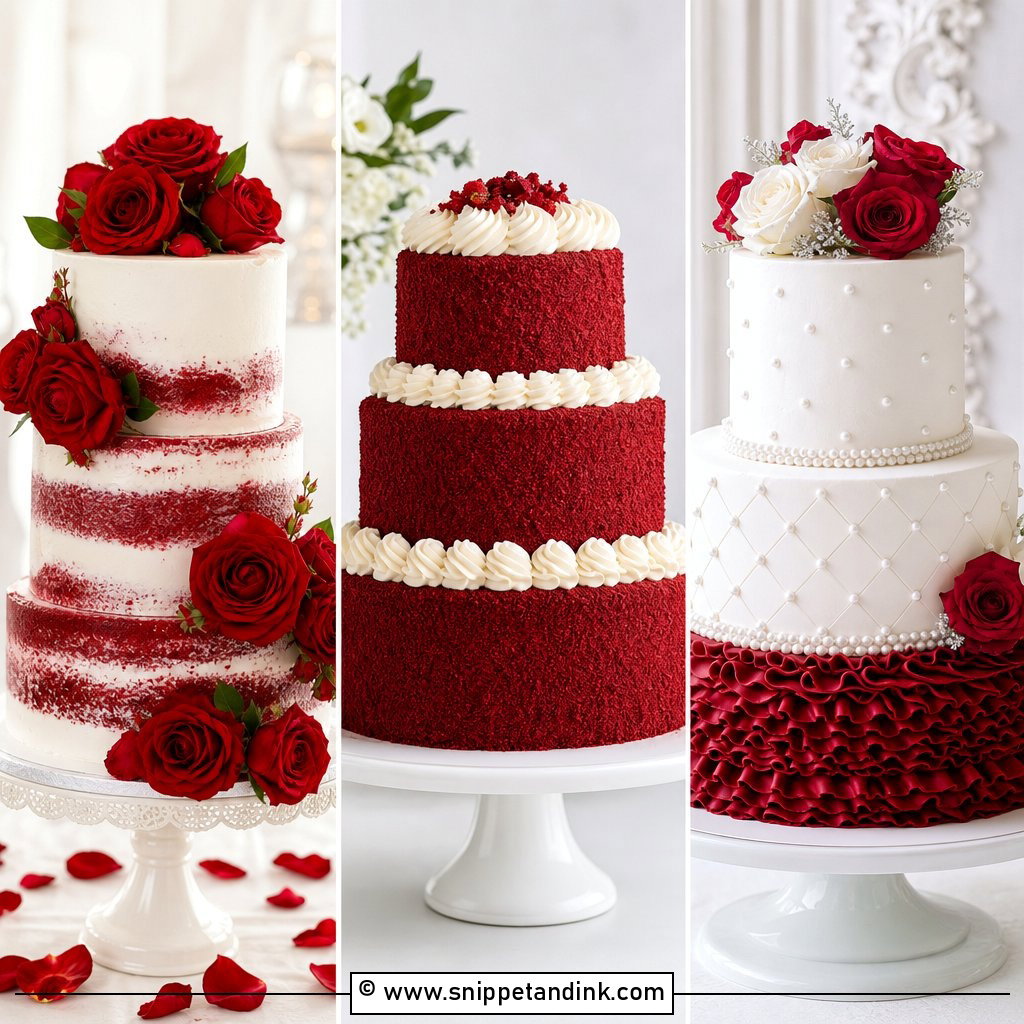
Red velvet makes the inside match the outside, and it’s the cake I suggest when a couple’s guests care as much about flavour as looks. The deep red layers pair well with cream cheese frosting or vanilla buttercream. Outside, I’ll finish it in smooth ivory with burgundy flowers, or in full burgundy buttercream for a darker look. The first slice shows that dark crumb against pale frosting. Cream cheese frosting is softer than buttercream, though, so it needs a cool room and support dowels in tall cakes, and it can’t sit out for long on a hot day.
6. Burgundy Rose Wedding Cake
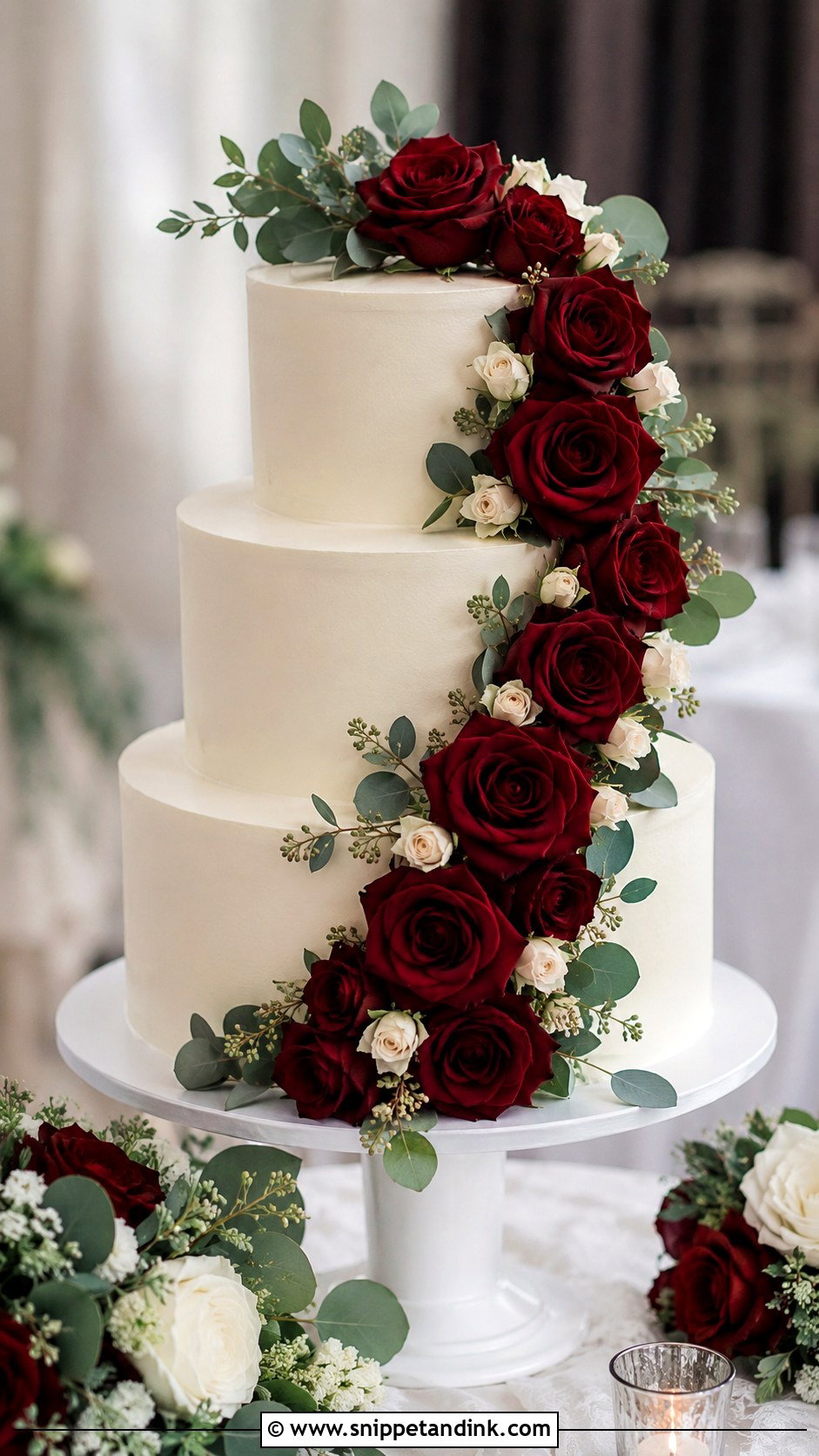
Roses feel classic on a wedding cake for obvious reasons. I’ll use fresh, sugar or piped buttercream roses depending on budget and the look you want; piped roses are the most affordable and they’re fully edible. Three ivory tiers with roses running diagonally from top to bottom look soft. A tier covered entirely in burgundy roses is dramatic and textured. Romantic evening receptions and formal weddings suit it. Mix large roses with smaller filler blooms and a little greenery rather than packing every inch.
7. Burgundy Buttercream Wedding Cake
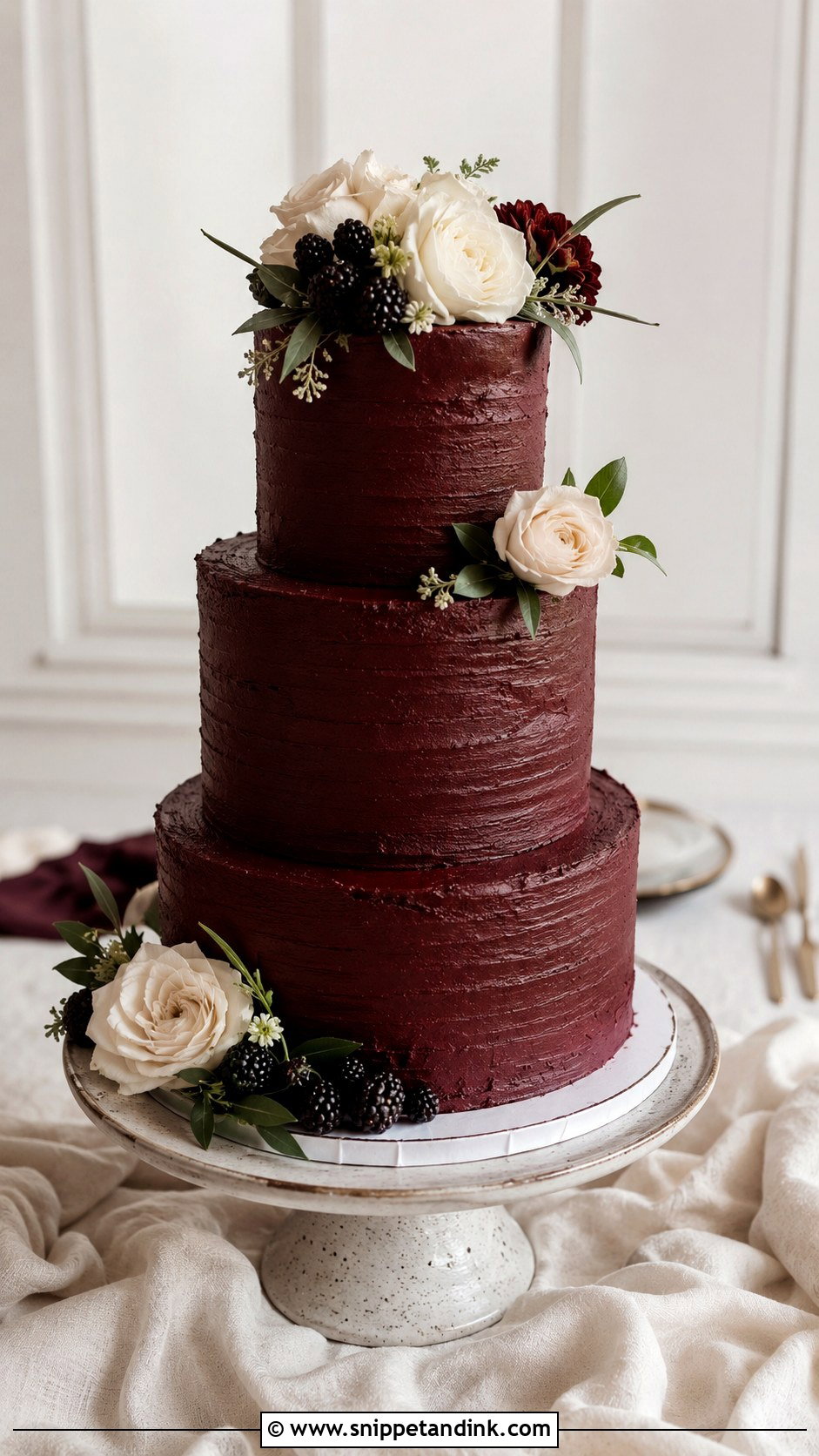
Buttercream gives a handmade, warm finish. Smooth, lightly textured or swept with palette marks, it can lean modern or rustic. A full burgundy buttercream cake looks bold on a white stand, but deep colours in buttercream take a lot of gel colouring, and too much can leave a faint bitter taste. That’s why I’ll often suggest ivory buttercream with burgundy at the base or edges. Ask for a sample in your actual shade before you approve the design, since batches vary slightly.
8. Burgundy Fondant Wedding Cake
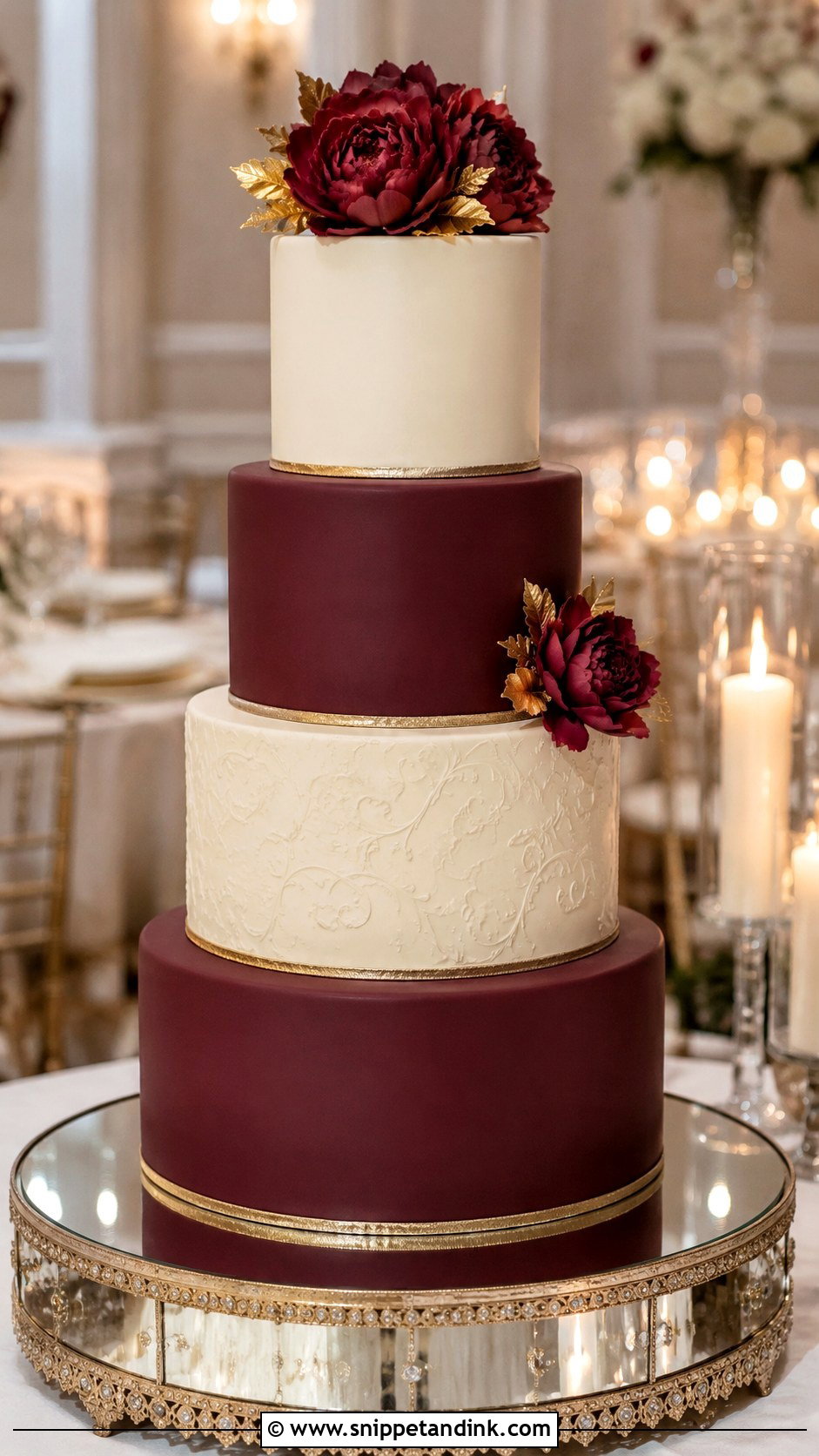
Fondant gives the sharpest finish of any style here, which suits formal venues and ballrooms. It holds deep colour evenly and keeps crisp edges in close-up photos. All-burgundy tiers look dramatic; mixing burgundy with white, ivory or blush tiers adds contrast. Plain dark fondant can look flat, so I add gold trim, sugar flowers or embossed texture. One practical note: dark fondant shows scuffs and fingerprints more than pale fondant, and condensation can leave spots if a chilled cake moves into a warm room, so I let it come up to temperature gradually.
9. Burgundy Rustic Wedding Cake
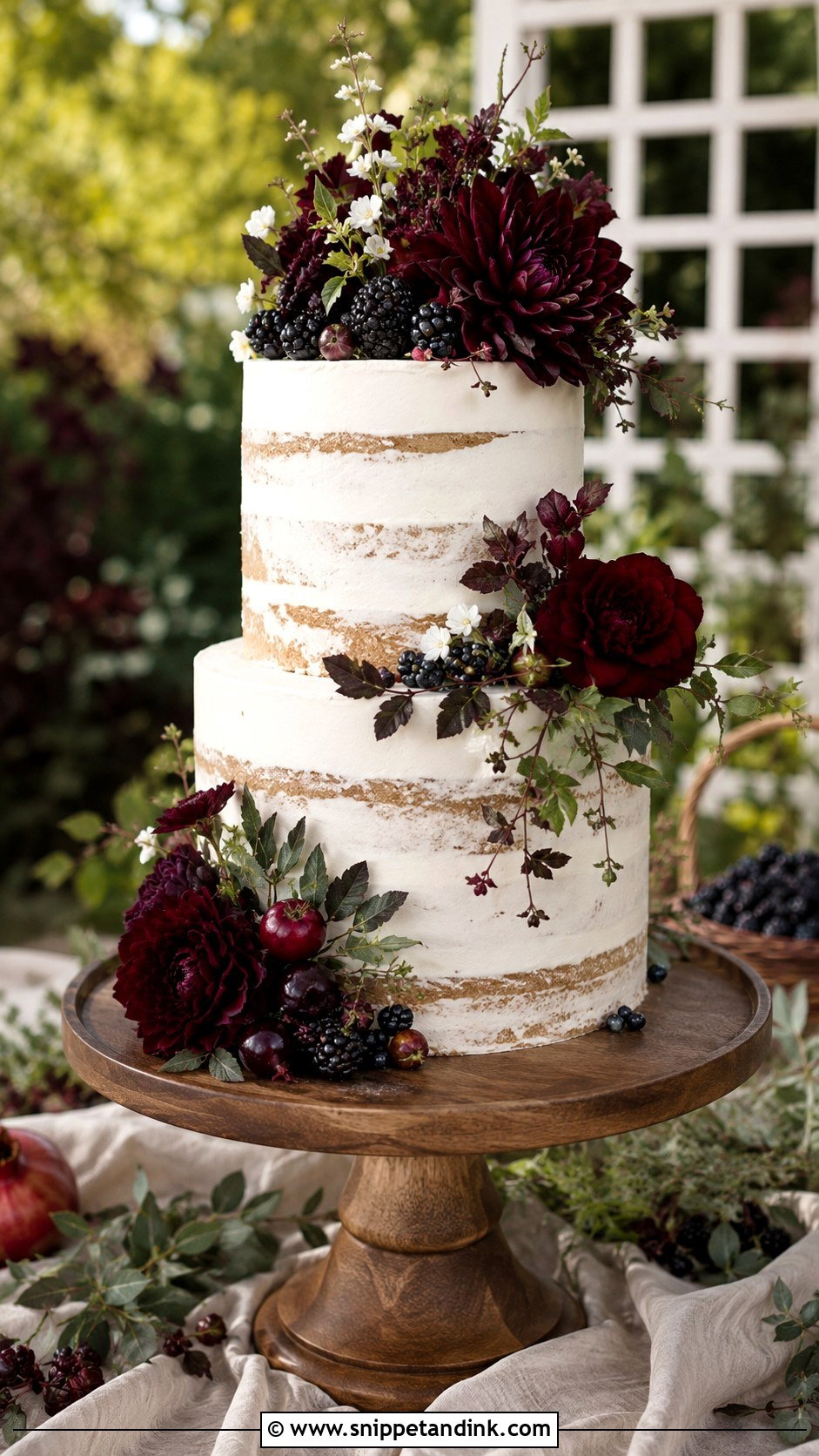
Rustic burgundy cakes belong at barns, outdoor receptions and fall celebrations. The base is usually semi-naked frosting, textured buttercream or ivory icing that lets some of the layers show. Burgundy flowers, dark berries and greenery bring the colour in. It doesn’t need to be perfect, which is half the appeal. A wooden stand, linen runner and candles make the table feel cozy. I group decorations in clusters rather than scattering them, so it looks gathered rather than messy.
10. Burgundy Modern Wedding Cake
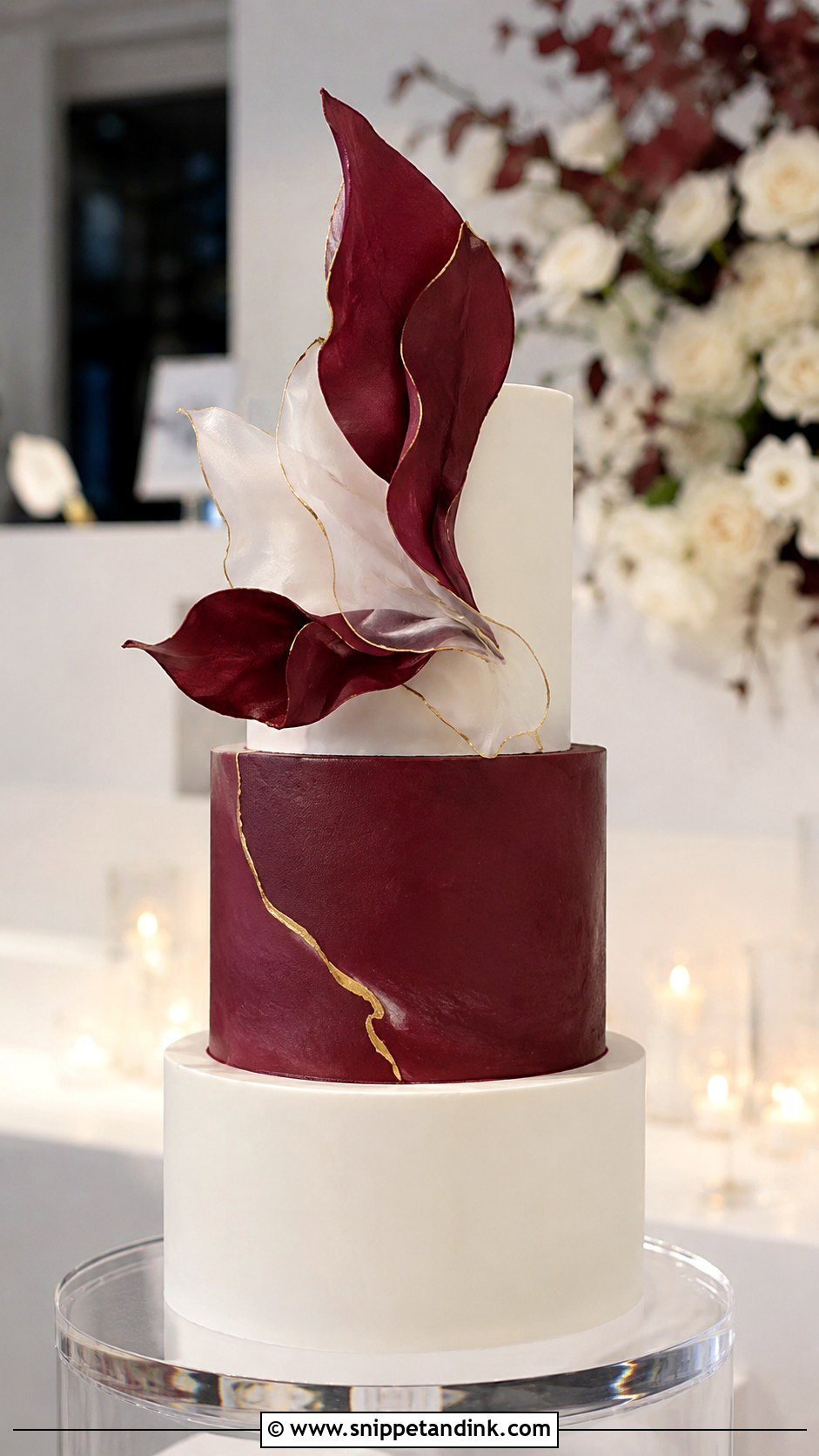
Modern burgundy cakes rely on clean lines and restraint. Picture smooth tiers, sharp edges, one burgundy section and a few sculptural flowers or abstract sugar pieces. Black accents, ivory, acrylic stands and simple gold suit it. Lofts and hotel receptions are a natural home. Sharp edges are harder to achieve on buttercream than on fondant, especially in a warm venue, so if crisp corners matter to you, ask your baker which finish they’d recommend for your season.
11. Burgundy Vintage Wedding Cake
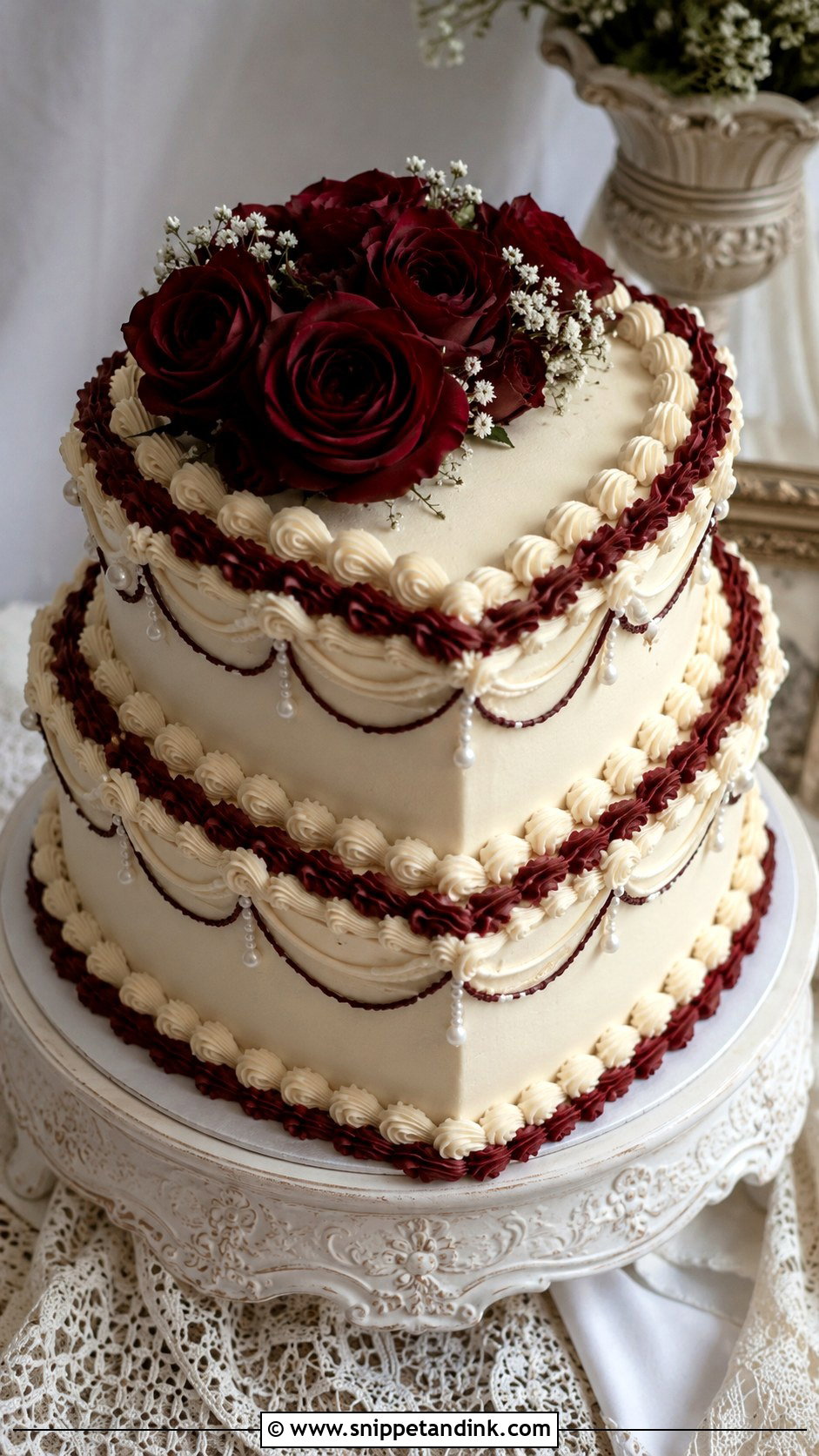
Vintage styles bring a nostalgic feel without looking dated. Lambeth piping, pearls, shell borders and heart-shaped tiers all take burgundy accents well. An ivory cake with burgundy piping, or a pale pink cake with burgundy roses and tiny pearls, suits intimate receptions and historic venues. Overpiped Lambeth work takes a long time to do neatly, and very dark piping shows every wobble, so I usually pipe the structure in ivory and add burgundy only on the outermost details.
12. Burgundy Marble Wedding Cake
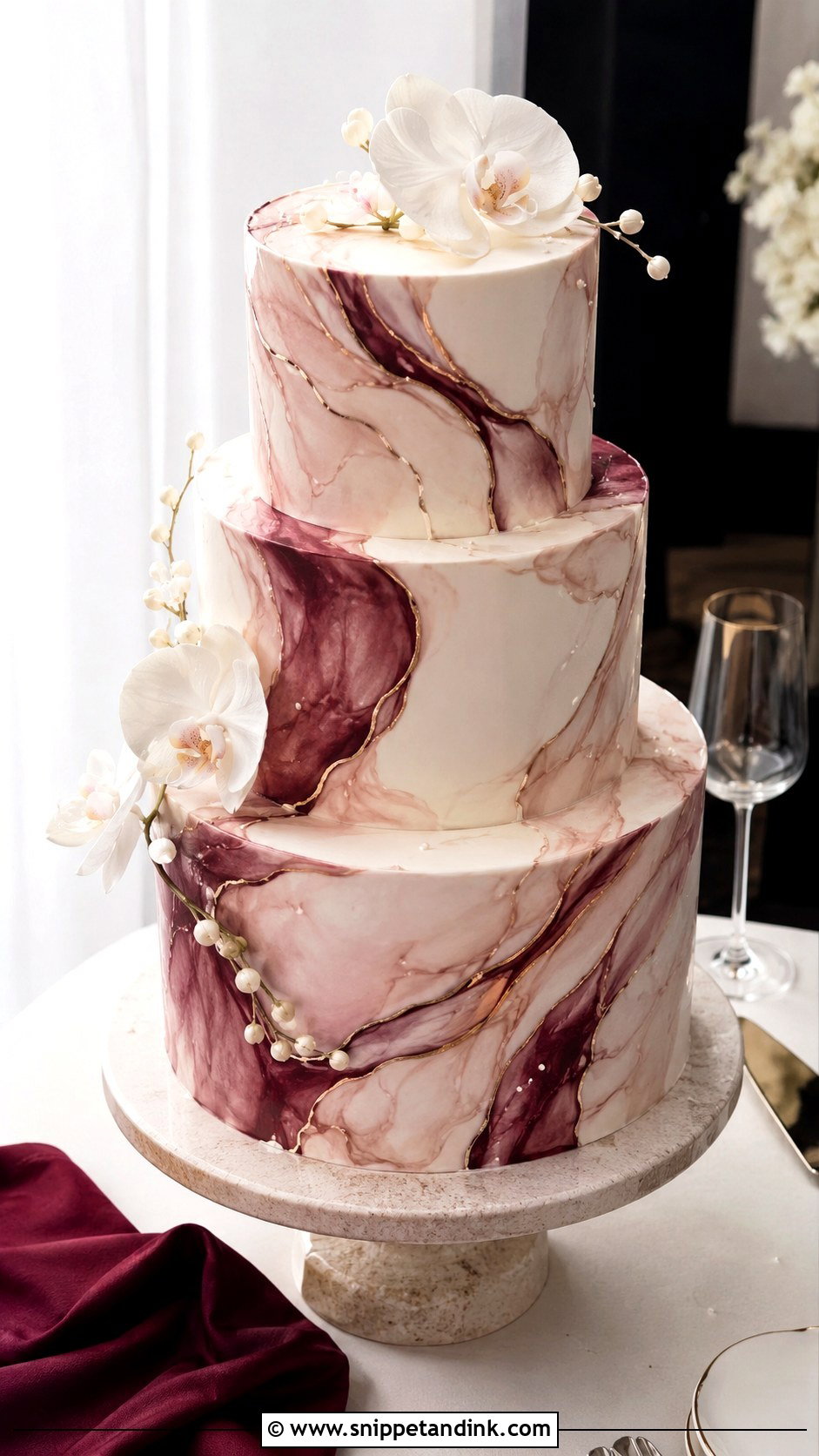
Marble gives a refined, artistic finish. The veining can blend burgundy with ivory, blush, grey or taupe across smooth fondant tiers, and it looks best delicate rather than heavy. Gold edging, white sugar orchids or a small flower cluster finish it. It suits modern venues and weddings with stone, velvet or moody florals. Since every marbled sheet comes out differently, I’d treat a sample photo as the mood, not an exact pattern.
13. Burgundy Watercolor Wedding Cake
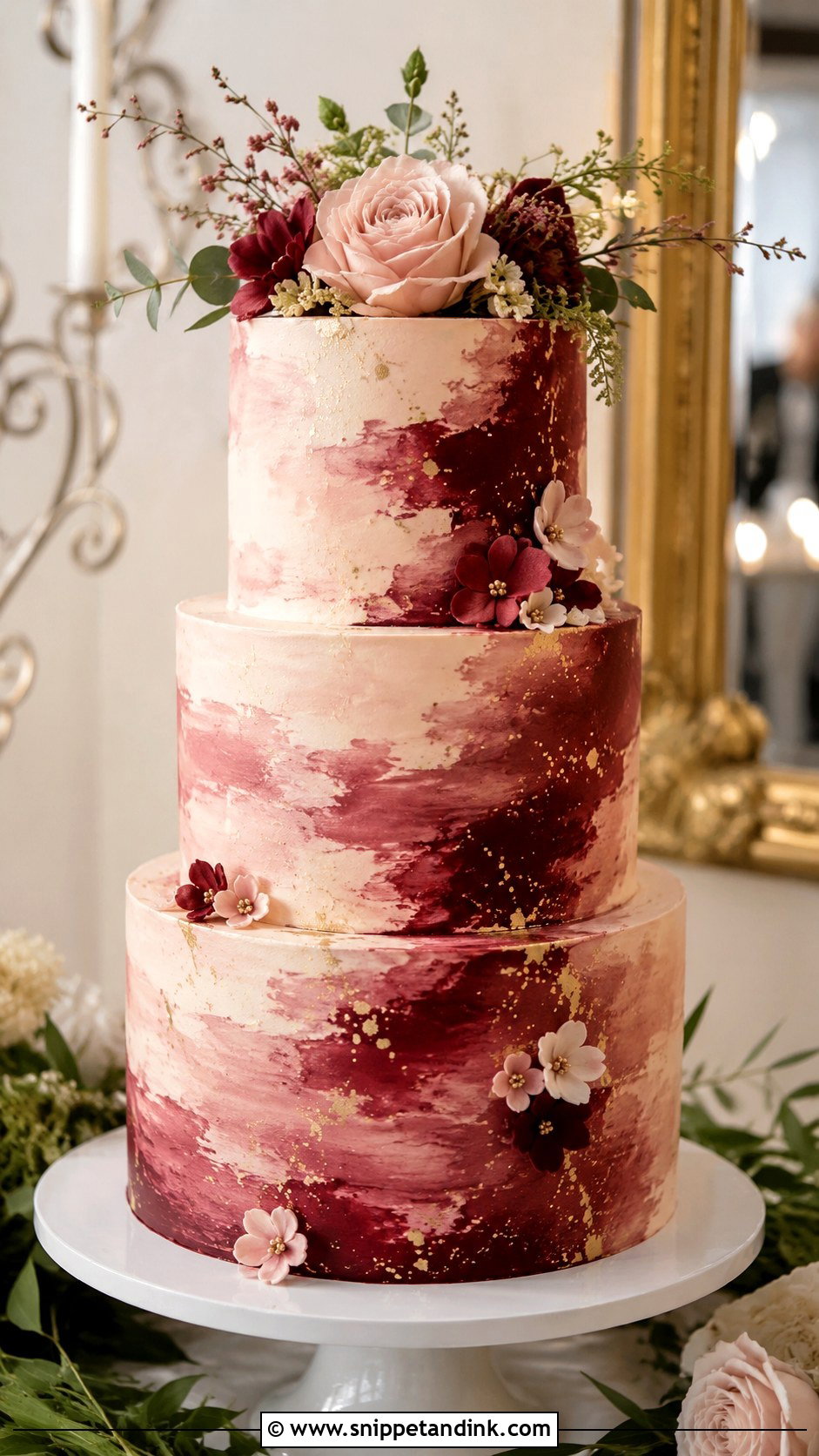
Watercolour suits couples who want burgundy but not a solid wall of it. I paint layered washes of burgundy, blush, mauve and ivory over smooth buttercream or fondant, building colour slowly. It can stay light and airy or go deeper and moodier. Keep decorations to a few sugar flowers, soft greenery or gold specks so the painting stays visible. On buttercream, the surface needs to be well chilled before painting or the brush drags it.
14. Burgundy Lace Wedding Cake
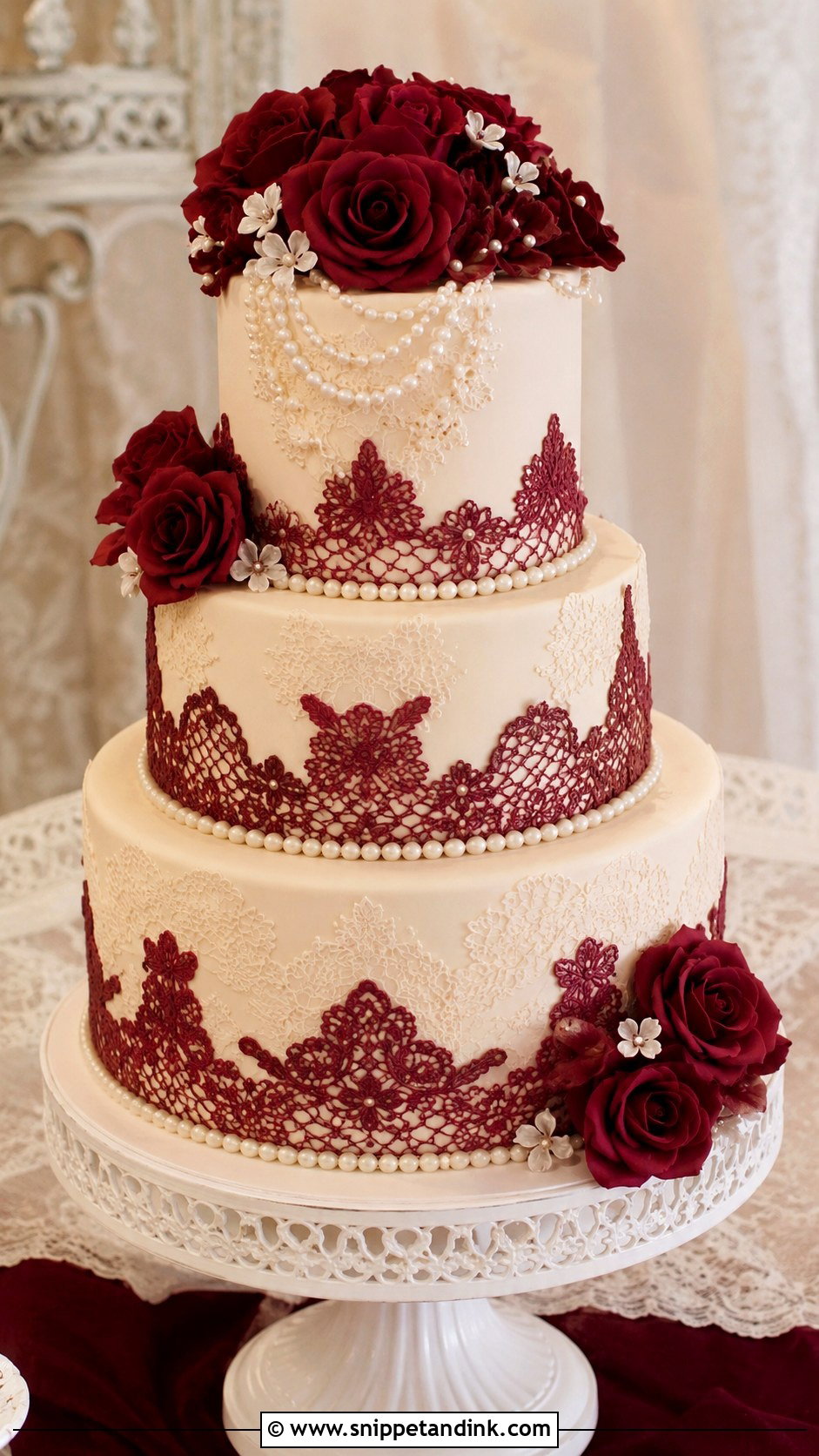
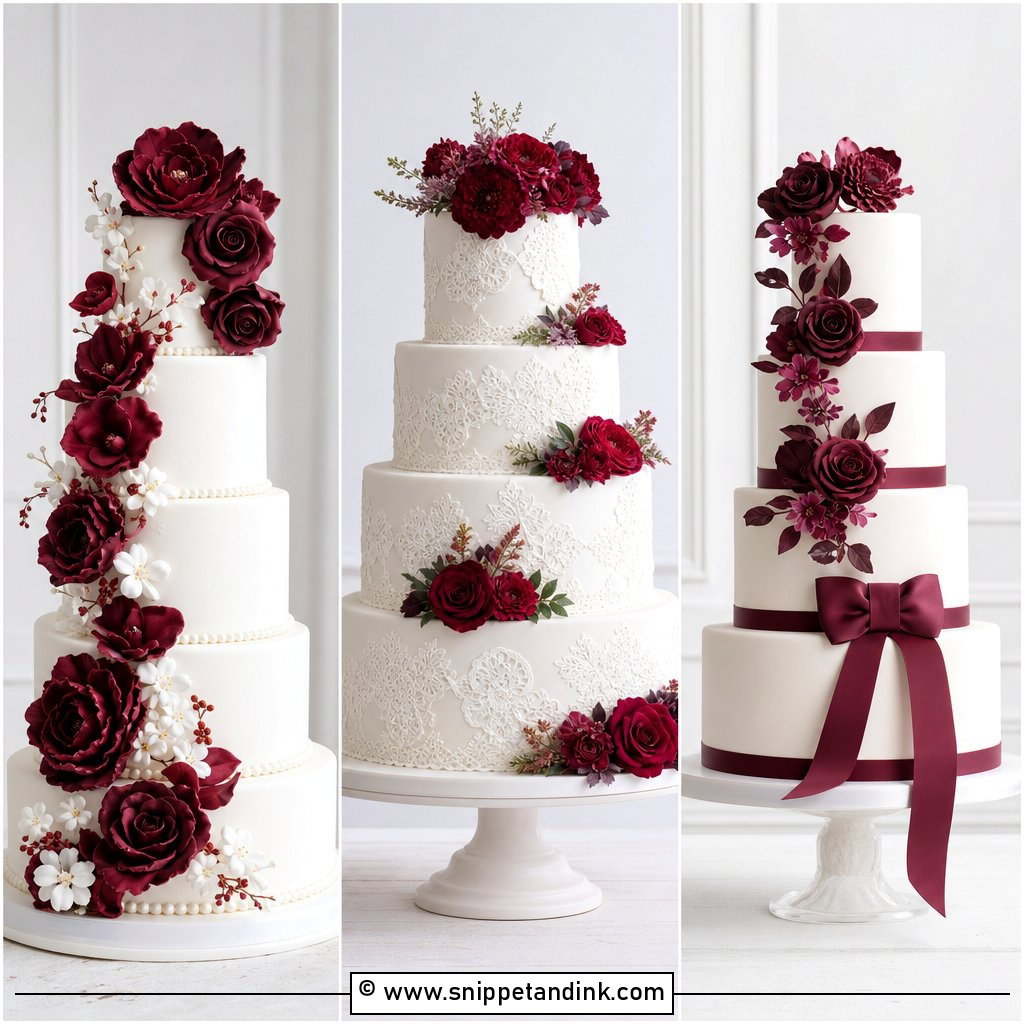
Lace adds detail that people notice up close. It can be fondant, edible lace sheets, piped icing or a painted pattern over ivory or blush tiers, with burgundy flowers or burgundy lace adding depth. It’s lovely with gowns that have lace sleeves or embroidered veils; bring a photo of the pattern and a baker can echo it. Choose one lace pattern rather than mixing several. Edible lace is sensitive to humidity, so in a damp venue it can soften and lose its crisp edge.

15. Burgundy Semi Naked Wedding Cake
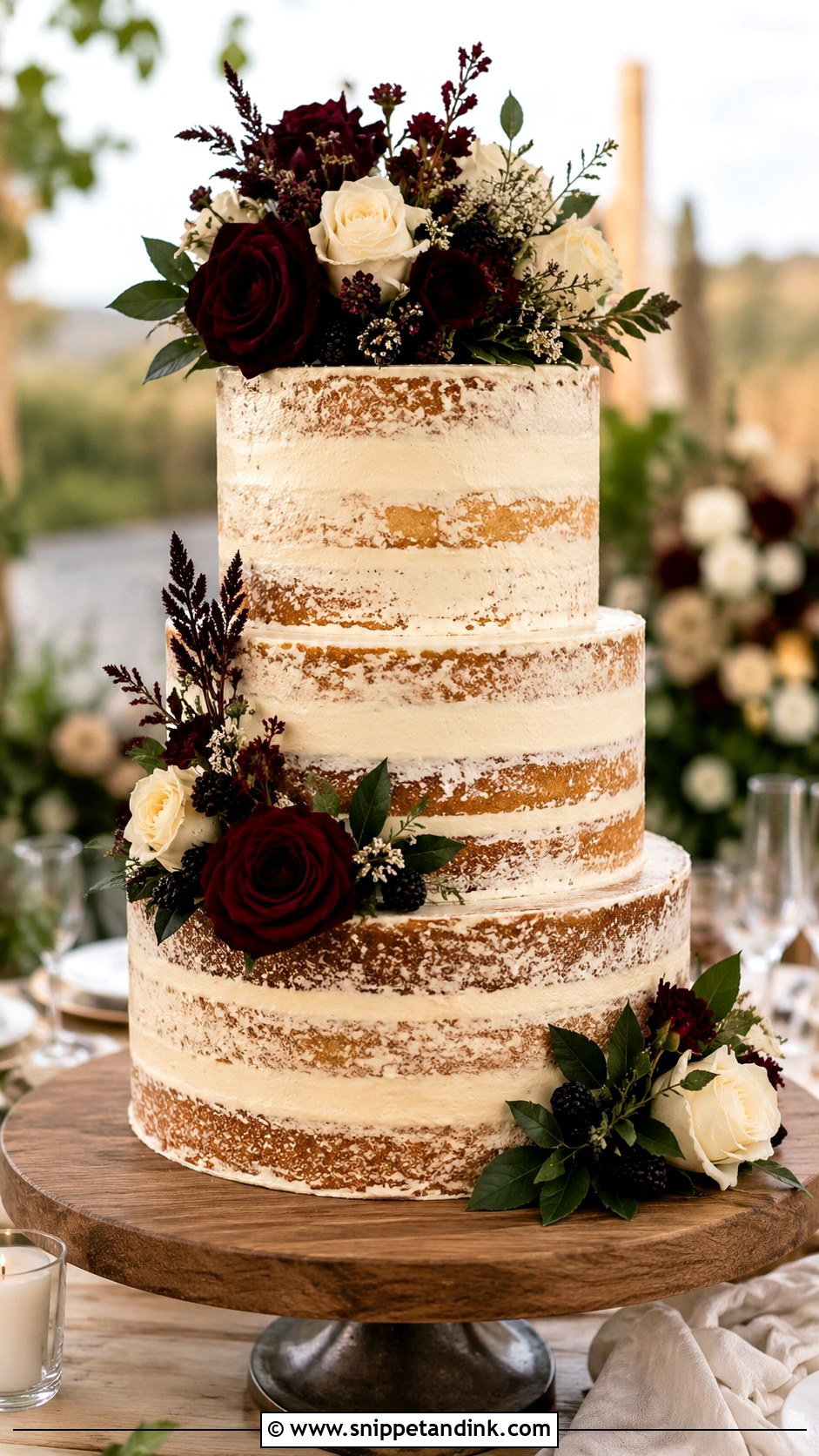
Semi-naked cakes feel relaxed. A thin scrape of frosting lets the layers show through, and burgundy flowers and berries bring in the colour. Outdoor weddings, fall receptions and farm venues suit them. Vanilla, spice, almond or red velvet layers all work. Blooms look best at the top and down one side. The thin frosting means the sponge dries faster, so these cakes are best assembled and decorated as close to the wedding as possible, and kept out of direct sun.
16. Burgundy Geometric Wedding Cake
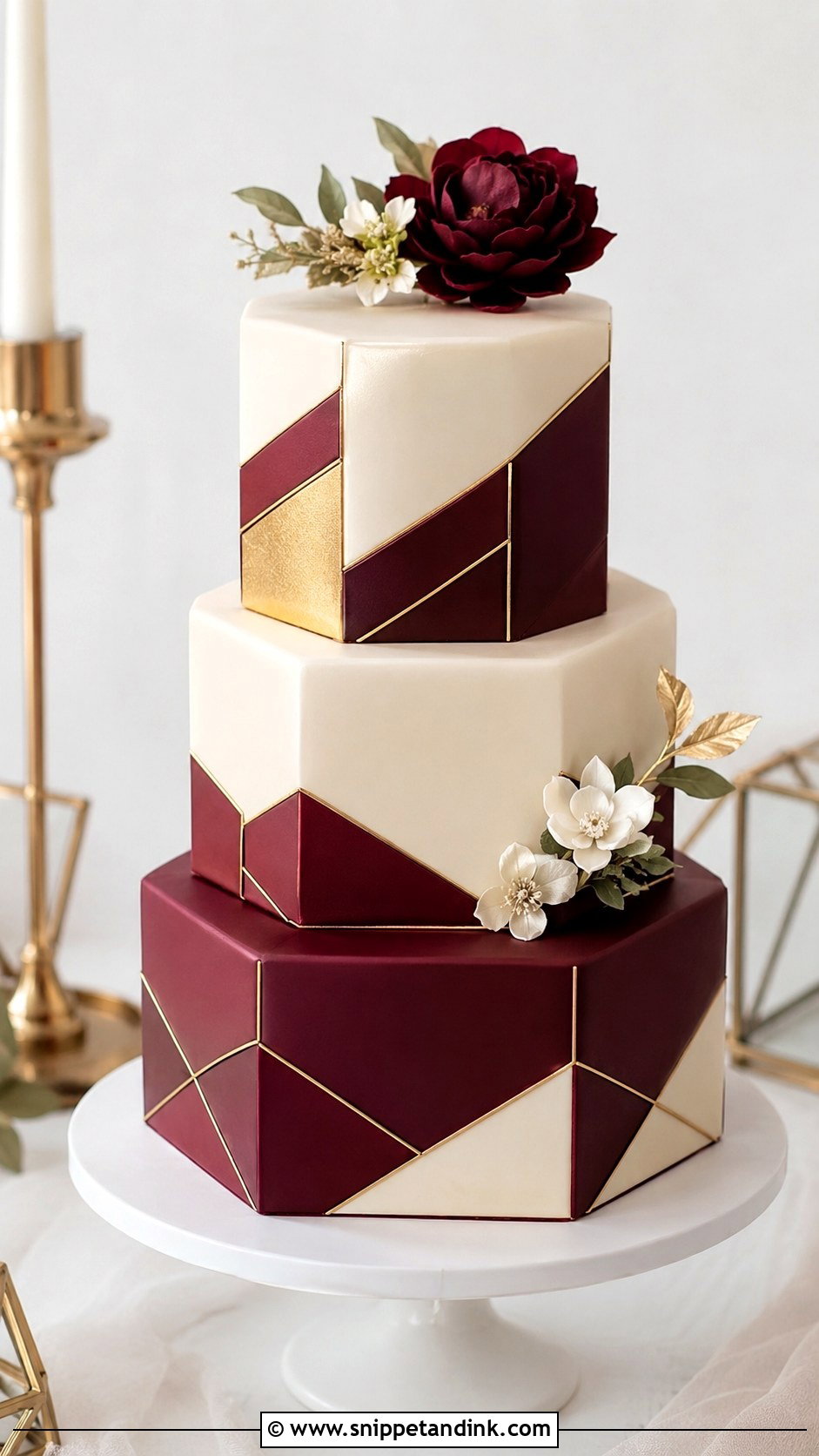
A burgundy geometric wedding cake stands out through shape. Hexagon tiers, sharp fondant panels, metallic line work and colour blocking all suit it, and burgundy with ivory, blush, black or gold makes the shapes clear. Keep flowers minimal so they don’t hide the structure. It suits modern venues and city weddings. Hexagon and angled tiers need careful internal support, so make sure your baker has built stacked geometric cakes before.
17. Burgundy Black Wedding Cake
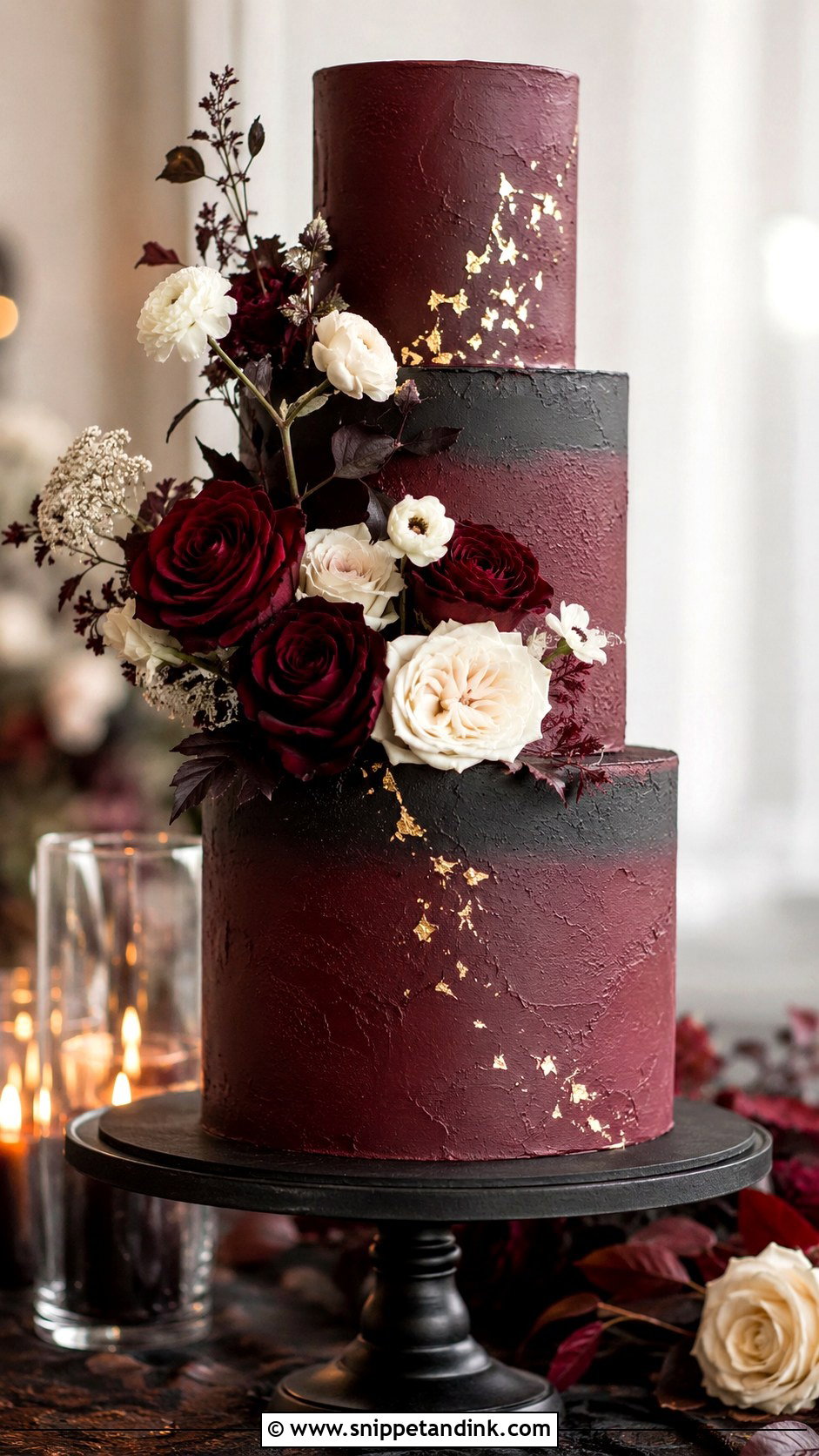
Burgundy and black make a moody, dramatic cake, and the trick is balance because both colours are heavy. A black base tier with burgundy flowers, or a burgundy tier with black accents and ivory details, keeps it from looking like a block of darkness. Matte finishes and small gold touches help. Candlelight around the cake makes the burgundy visible; under dim lighting, both colours can merge in photos. Black icing is also strongly pigmented and stains teeth, so I keep it on non-eaten surfaces where I can.
18. Burgundy Blush Wedding Cake
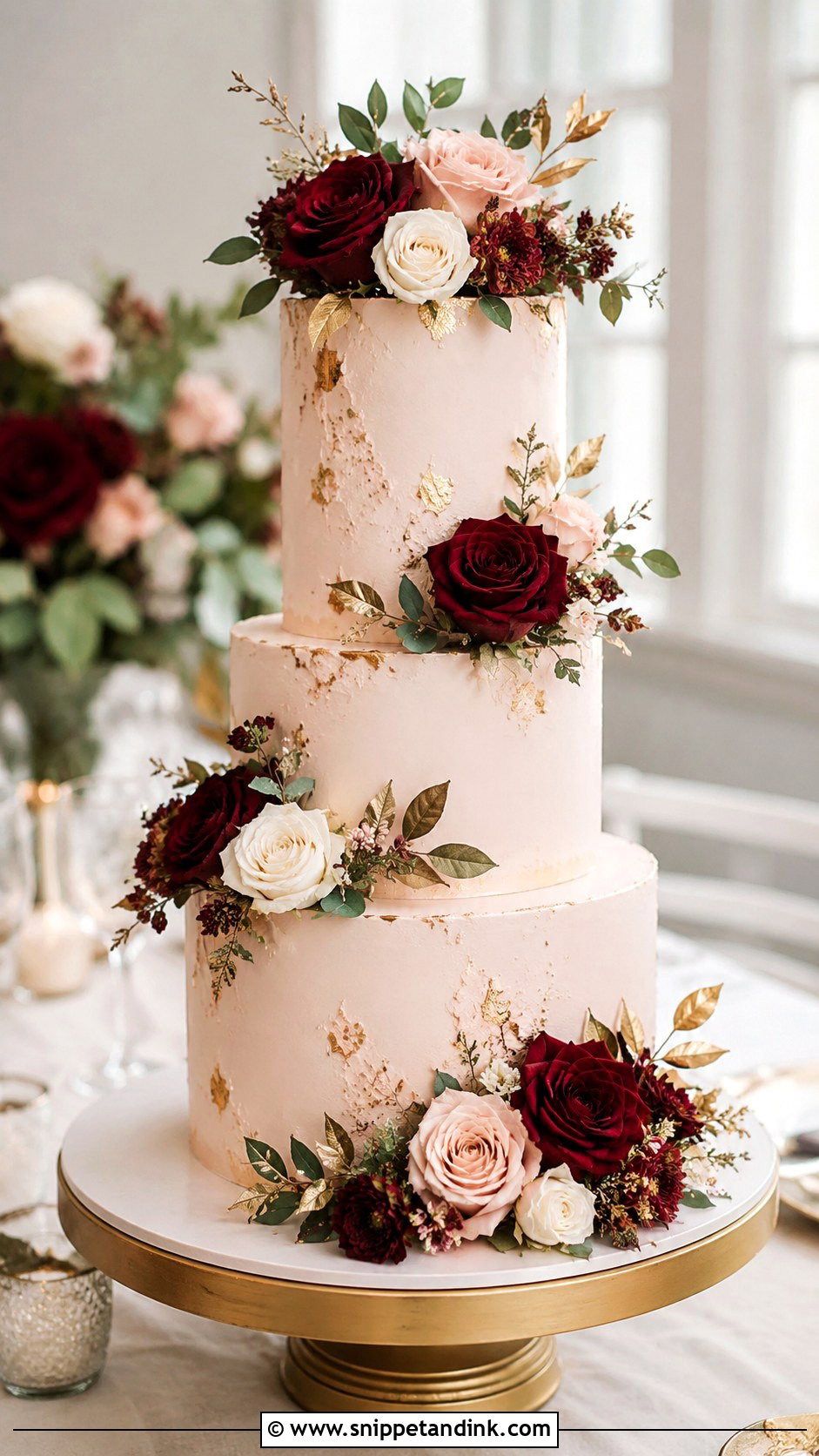
Blush and burgundy balance each other: blush lightens the burgundy, and burgundy gives blush depth. Blush buttercream tiers with burgundy roses, or ivory tiers with both, suit spring through fall and indoor weddings. Gold adds warmth; greenery makes it feel like a garden. I treat burgundy as the focal colour and blush as the background, so neither fights for attention.
19. Burgundy Cascading Flower Wedding Cake
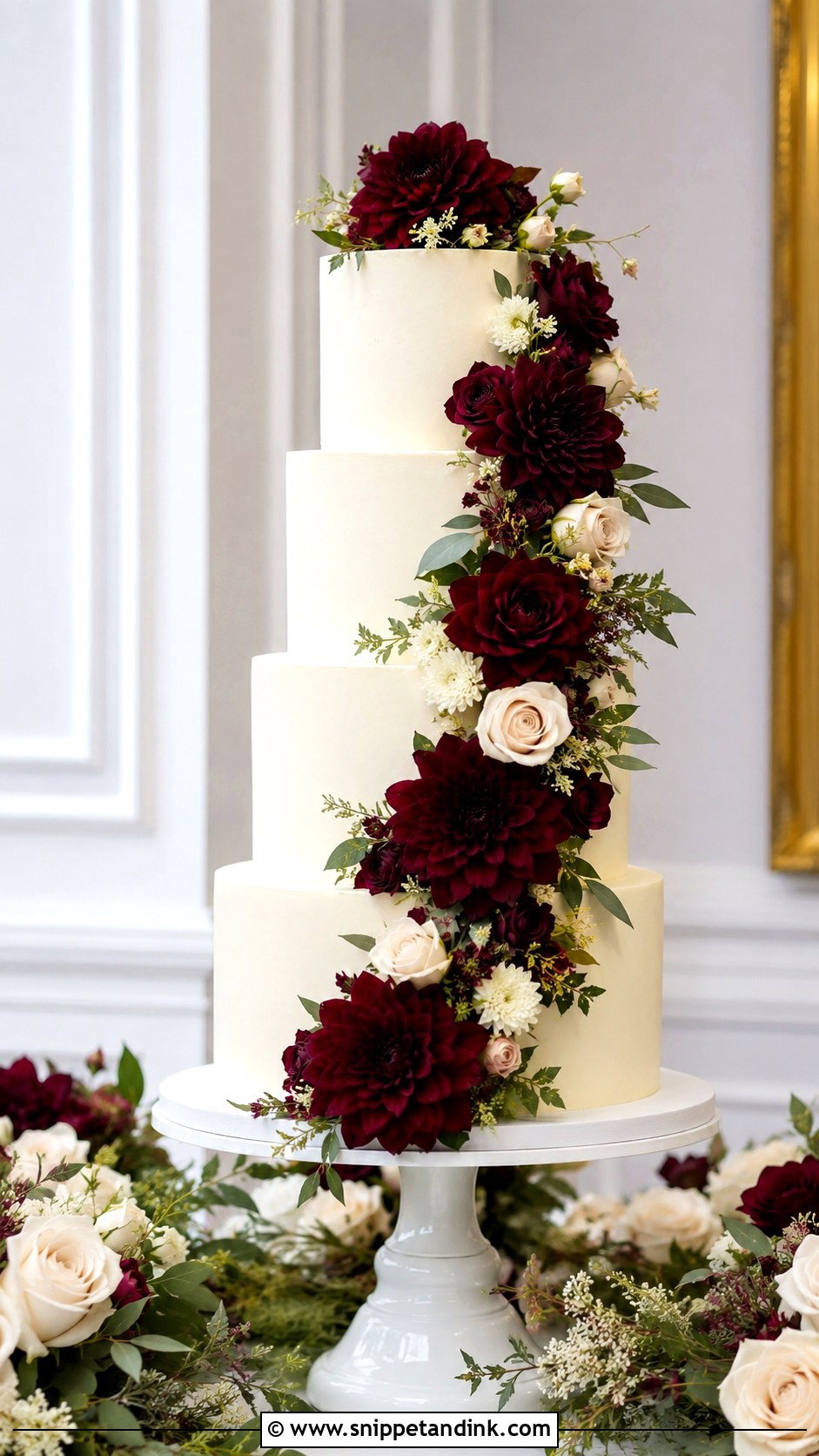
A burgundy cascading flower wedding cake is a centrepiece from every side. Flowers flow from the top tier down and around, which works best on tall cakes where the cascade has room. Burgundy roses, dahlias, peonies or sugar flowers mixed with ivory blooms and greenery give contrast. Keep the icing smooth and ivory. A heavy fresh cascade needs to be anchored into the cake with food-safe picks, and I place it at the venue rather than transport it attached.

20. Burgundy Minimalist Wedding Cake
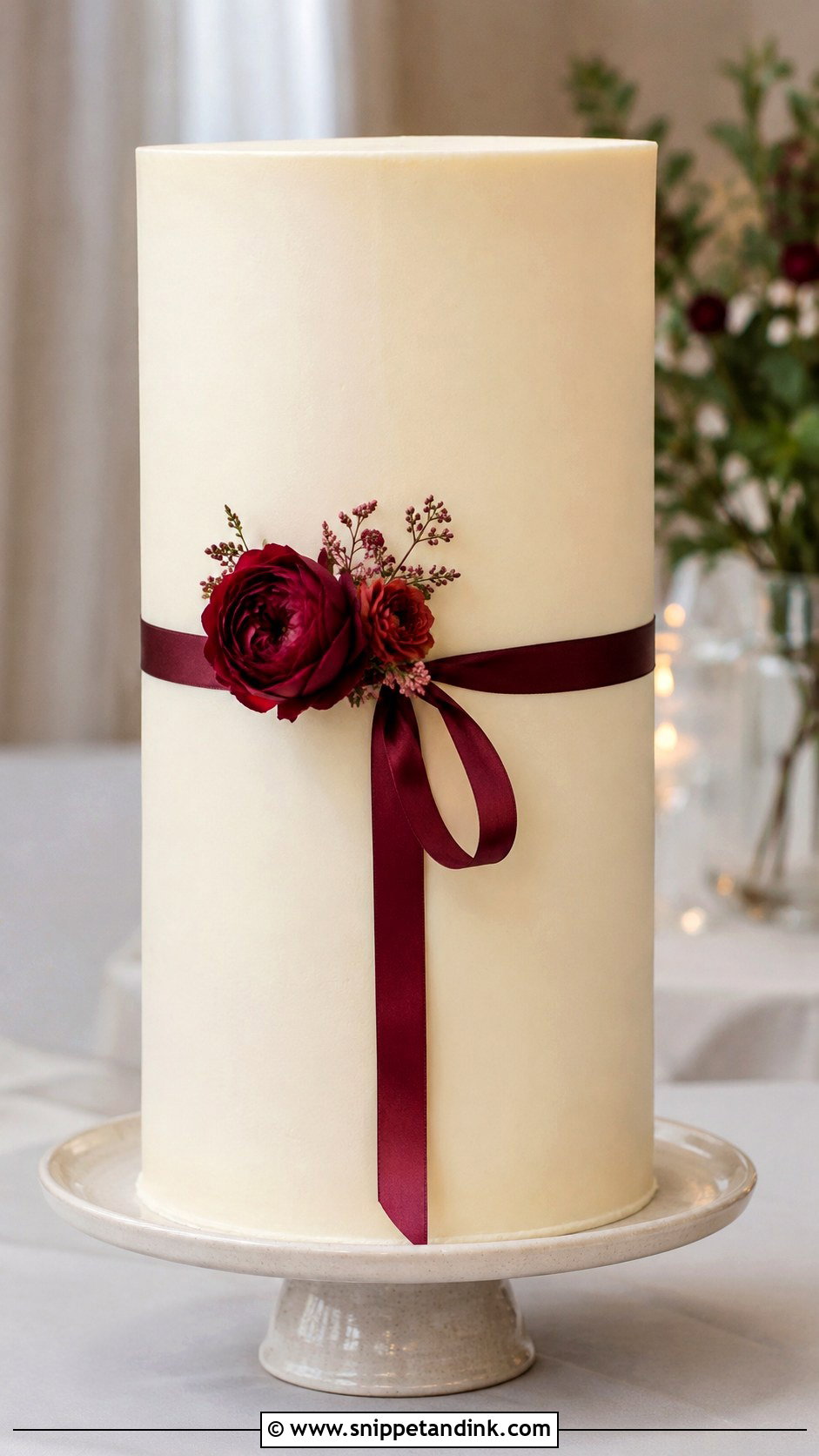
A minimalist burgundy cake relies on precision. A smooth ivory or soft beige cake with one burgundy ribbon, one flower cluster or a single painted accent is enough. The shape can be round, square or a little taller than standard for a modern look. Smooth icing, neat placement and a good stand matter more than extra decoration. Minimal cakes show every imperfection, so this is the style where a baker’s finishing skill shows most clearly.
Dark Icing Meets the Plate
Once a burgundy cake is cut, a few things happen that couples rarely think about. None are deal-breakers, but they’re worth planning for.
- Teeth and tongues. Heavily coloured buttercream can tint mouths for a while. If you’re doing posed photos after the cake cutting, keep the darkest icing away from the slices you’ll be eating on camera.
- Clean slices. Dark icing smears across pale sponge. Caterers usually cut with a long knife dipped in hot water and wiped between each slice, and a chilled cake cuts far more cleanly than a warm one.
- Plate and linen stains. Burgundy icing on a white tablecloth is hard to lift. A cake table with a darker runner or a cake board larger than the bottom tier saves the linen.
- Portion count. A burgundy accent cake can be smaller if a sheet cake in the kitchen makes up the rest of the servings, which also keeps colouring costs down.
A quick conversation between your baker and caterer about cutting and serving covers almost all of this, and it’s easy to add to the final details call.
Test the Shade Under Your Own Reception Lighting
Burgundy can move between soft romance and real drama with small design changes. Flowers keep it classic, gold makes it formal, ombre softens it, and modern shapes make it fresh. Look at your venue lighting, linens, bouquet colours and how dark you want the cake to read in photos. Bring your baker clear inspiration and a fabric swatch, then ask what will work with your frosting, season and cake size. A full burgundy tier and a few rich accents can both look luxurious when the shade is right.
You'll Like These Ideas:







Leave a Reply