
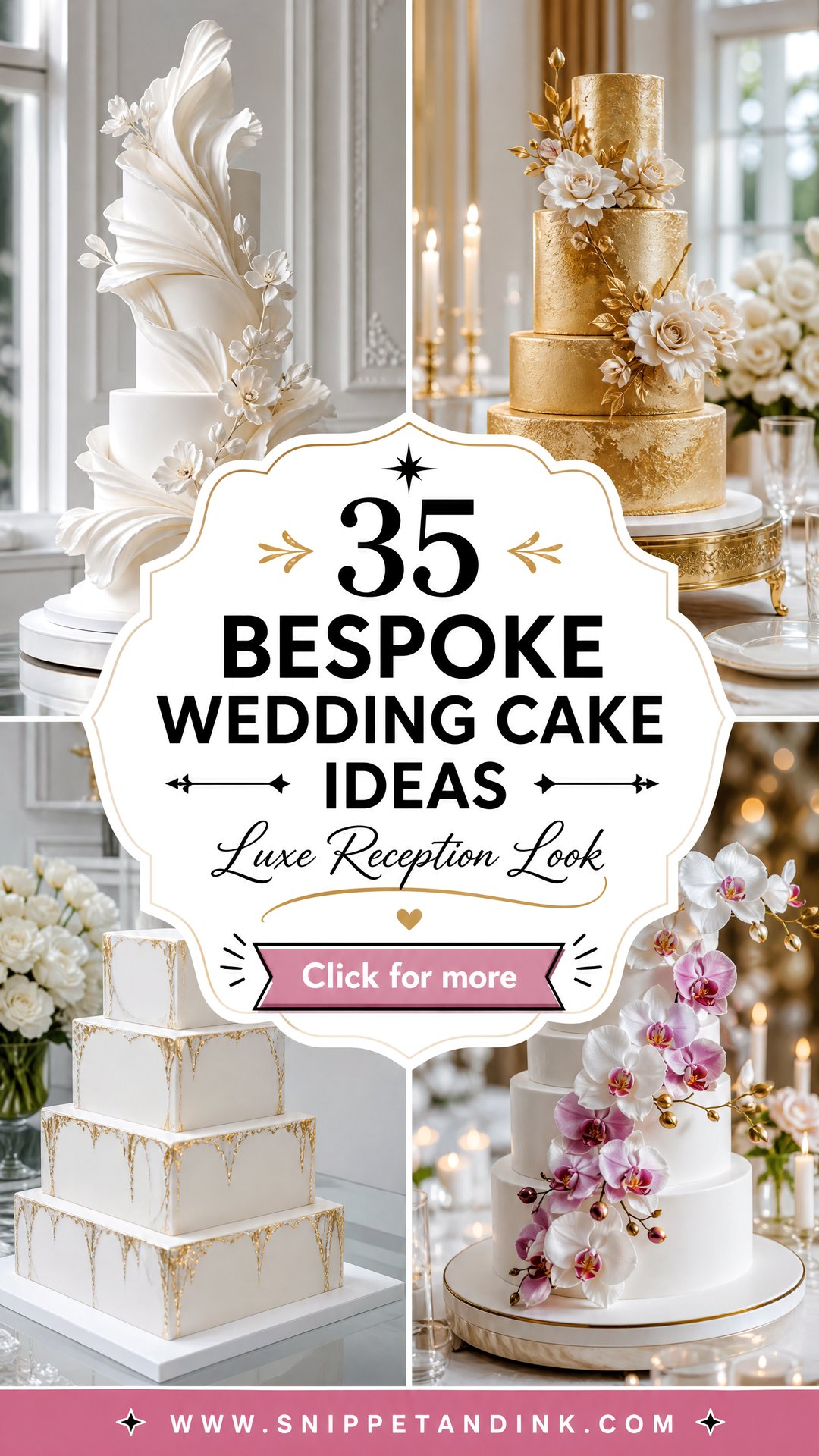
A custom cake earns its place when it could only belong to one wedding: the flowers on it came from the bouquet, the lettering matches the invitations, the flavour is the one the couple argued about at the tasting. That’s the part I enjoy designing. Couples now ask me for hand-painted details, sculpted tiers, fruit, vintage piping, monograms and textures pulled from the venue itself. Below are 35 directions I’d happily build, each with the practical detail I’d want you to know before you fall for it.
Six Months Out: How a Custom Cake Commission Actually Runs
Custom work books up early, especially for summer Saturdays, so I’d contact a designer six months or more ahead, earlier if you want sugar flowers or sculpted tiers. The order of things usually goes like this:
- First conversation: date, venue, guest count and a rough budget. Bring the florist’s palette, your invitation and a photo of the dress detail you love.
- Tasting: two to four flavours, and this is where you decide whether you want buttercream or fondant, because it changes what’s possible on the outside.
- Sketch and quote: I draw the design to scale with tier sizes and portions.
- Final numbers: confirm guest count and delivery details a few weeks before the date.
On portions, a standard wedding slice is a narrow finger of cake, much smaller than a dessert wedge. If you’re serving a plated dessert as well, you can order fewer portions than guests. A dummy tier made of styrofoam and iced like the rest will add height without adding cake, though it saves less than people hope, since the decorating work is the same.
1. Bespoke Floral Wedding Cake
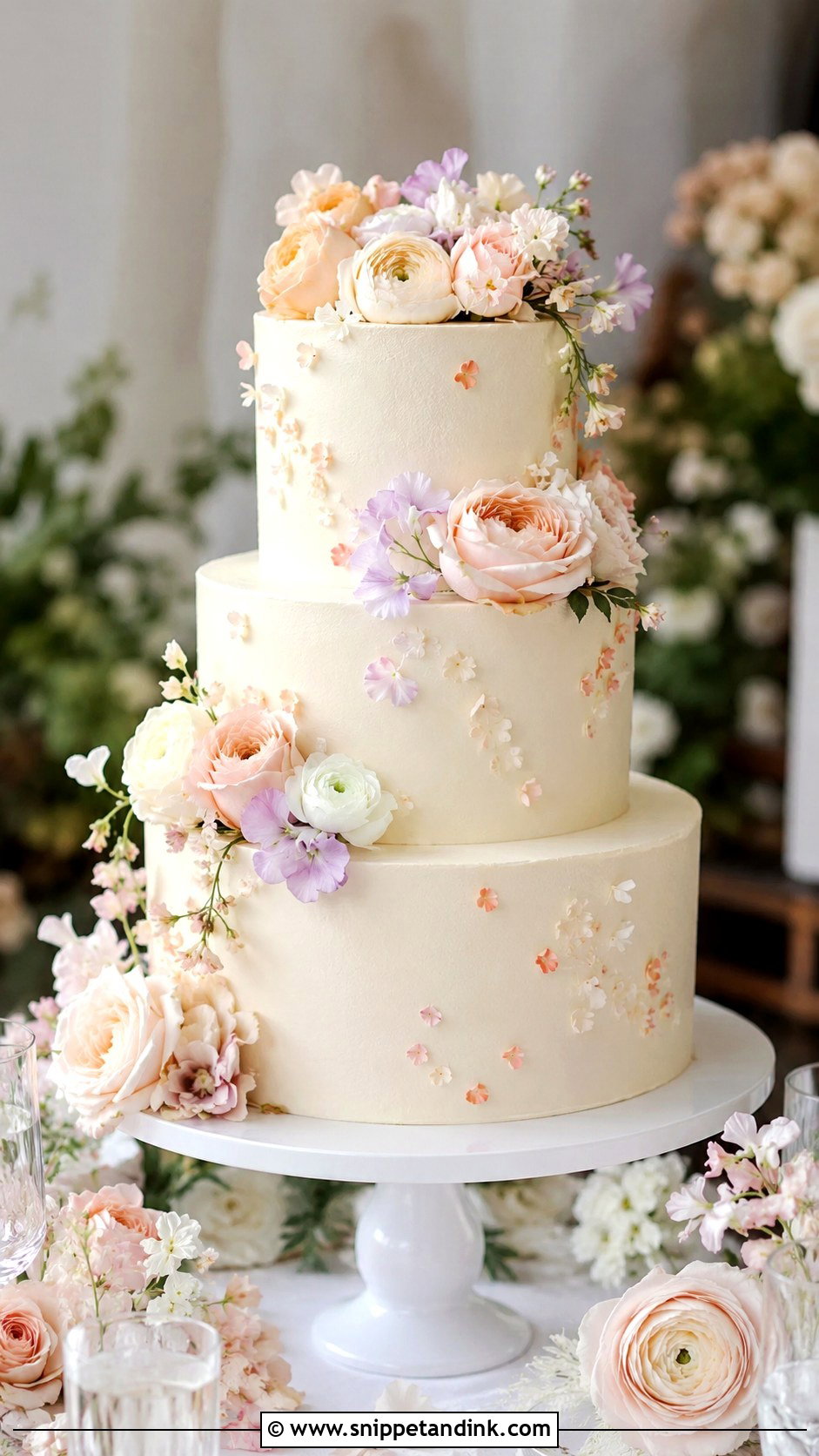
When a couple asks for florals, the first thing I request is the florist’s recipe card, not a mood board. Matching the actual palette from the bouquet and arch is what makes the cake look like part of the room rather than a separate purchase. I like ivory buttercream with blush roses and ranunculus, and if you want sweet peas, I make those in sugar, because the real ones aren’t safe on food. One sugar copy of a meaningful bloom, like the flower from the proposal, is a quiet personal touch.
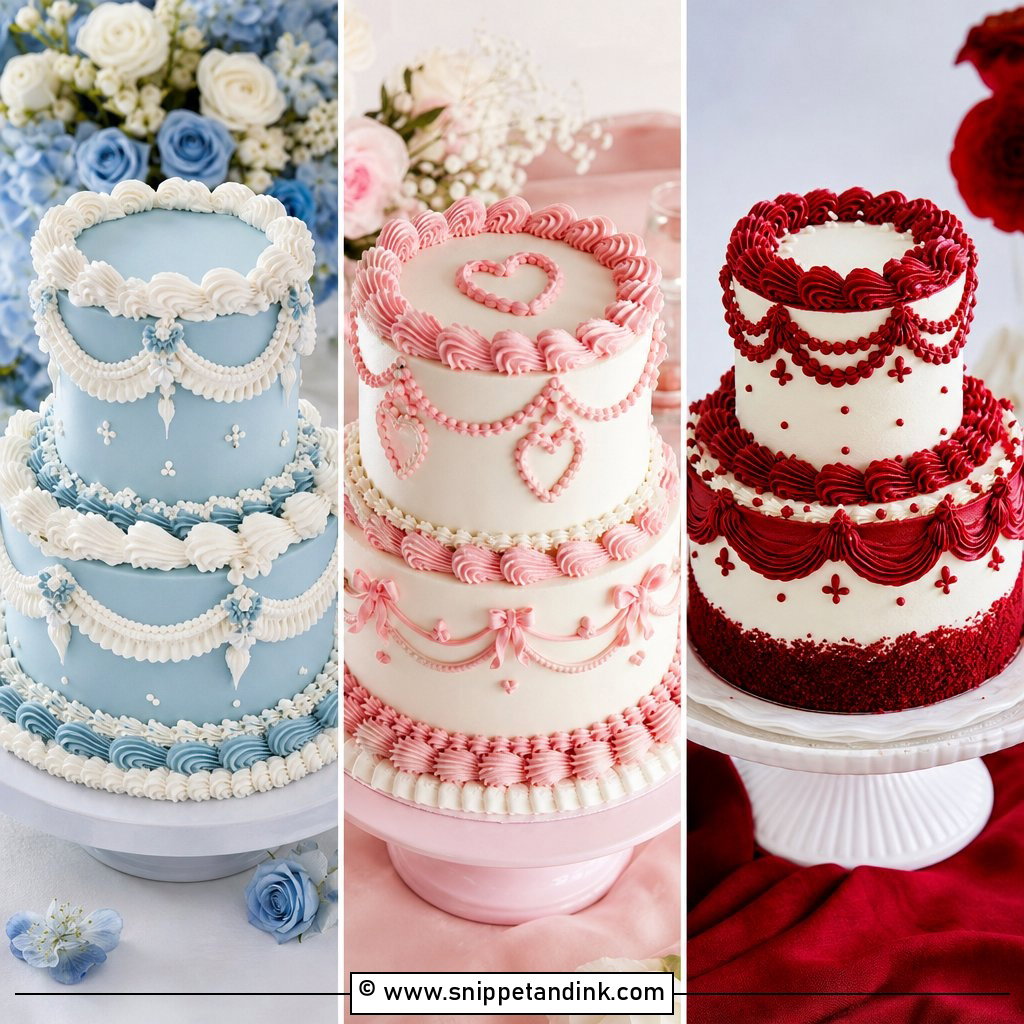
2. Bespoke Vintage Wedding Cake
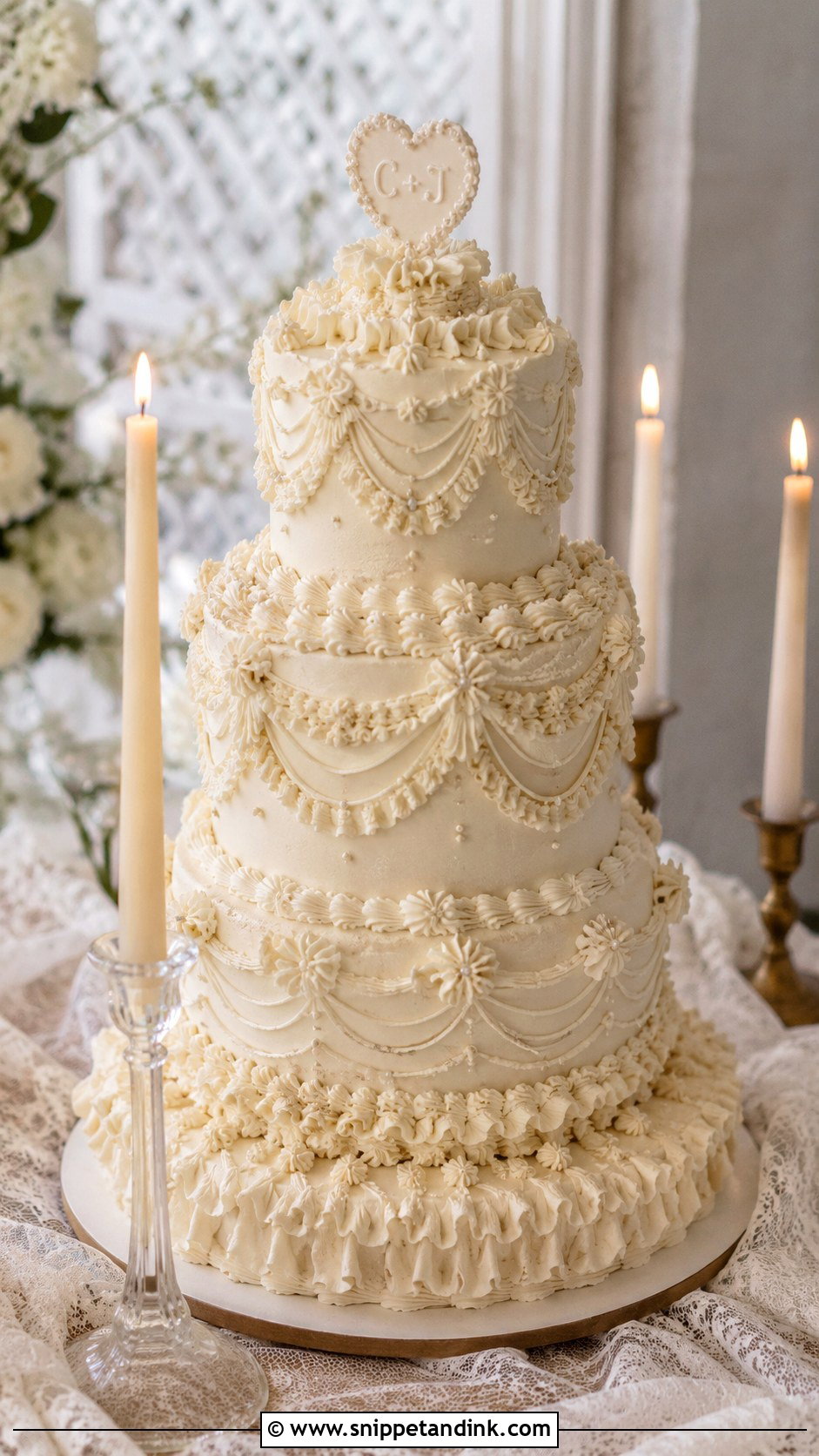
Vintage piping is skill you can see: shell borders, ruffled edges, swags and tiny pearl dots, all done by hand in buttercream. What keeps it from looking dated is proportion, so I make the tiers taller and leave the top tier cleaner than the base. Ivory, champagne, pale pink or powder blue all suit it. Bear in mind that intricate piping softens in warm rooms, so I’d keep this one indoors at an estate or hotel rather than in a summer tent.
3. Bespoke Minimalist Wedding Cake
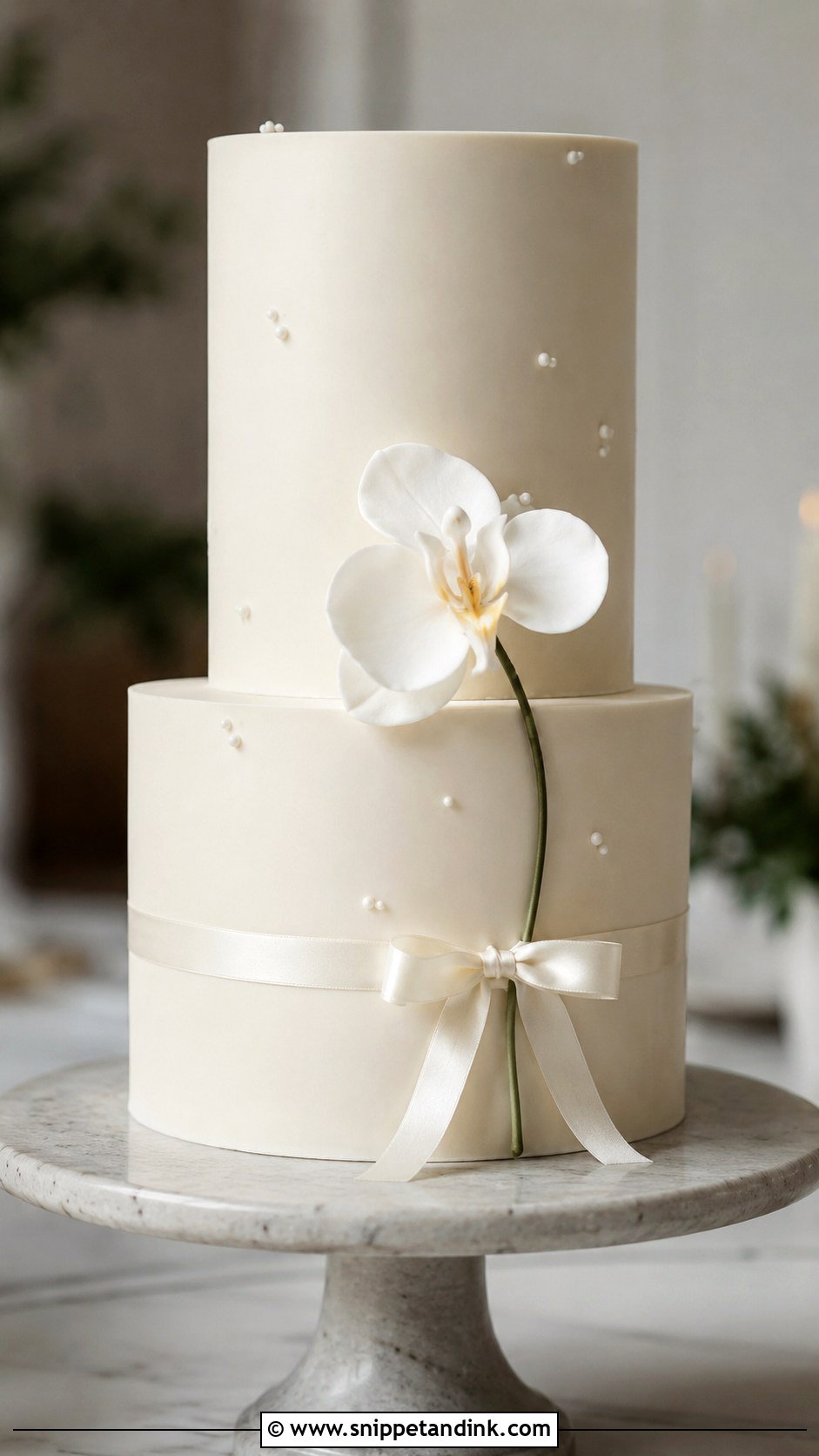
Minimal cakes are harder than they look, because a smooth buttercream finish with razor-sharp edges leaves nowhere to hide a dent. I put my effort into proportion: a tall two-tier, square tiers, or one off-centre sculptural sugar flower or a small spray of orchids. A single silk ribbon is enough decoration. If your venue is plain and modern, this is the direction I’d steer you toward.
4. Bespoke Pearl Wedding Cake
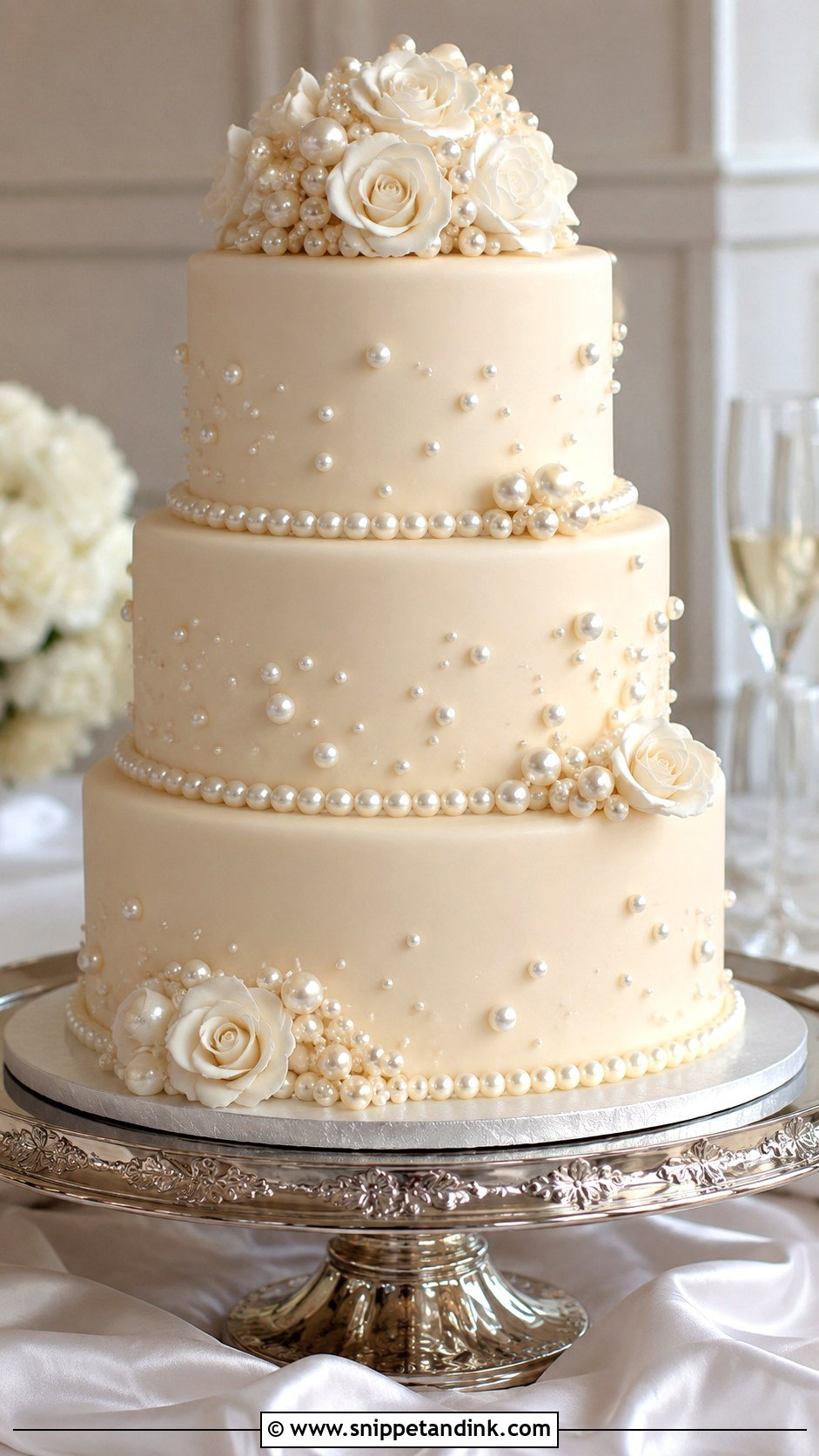
Pearls can be tiny piped dots, edible sugar pearls in clusters, or a dense border at the base of each tier. I keep them concentrated in one band per tier, otherwise the whole cake starts to look beaded and busy. Edible pearls are hard little sweets, so I warn couples they’re crunchy if you bite one. A nice detail: matching the pearl size to the bride’s earrings or hair pins.
5. Bespoke Monogram Wedding Cake
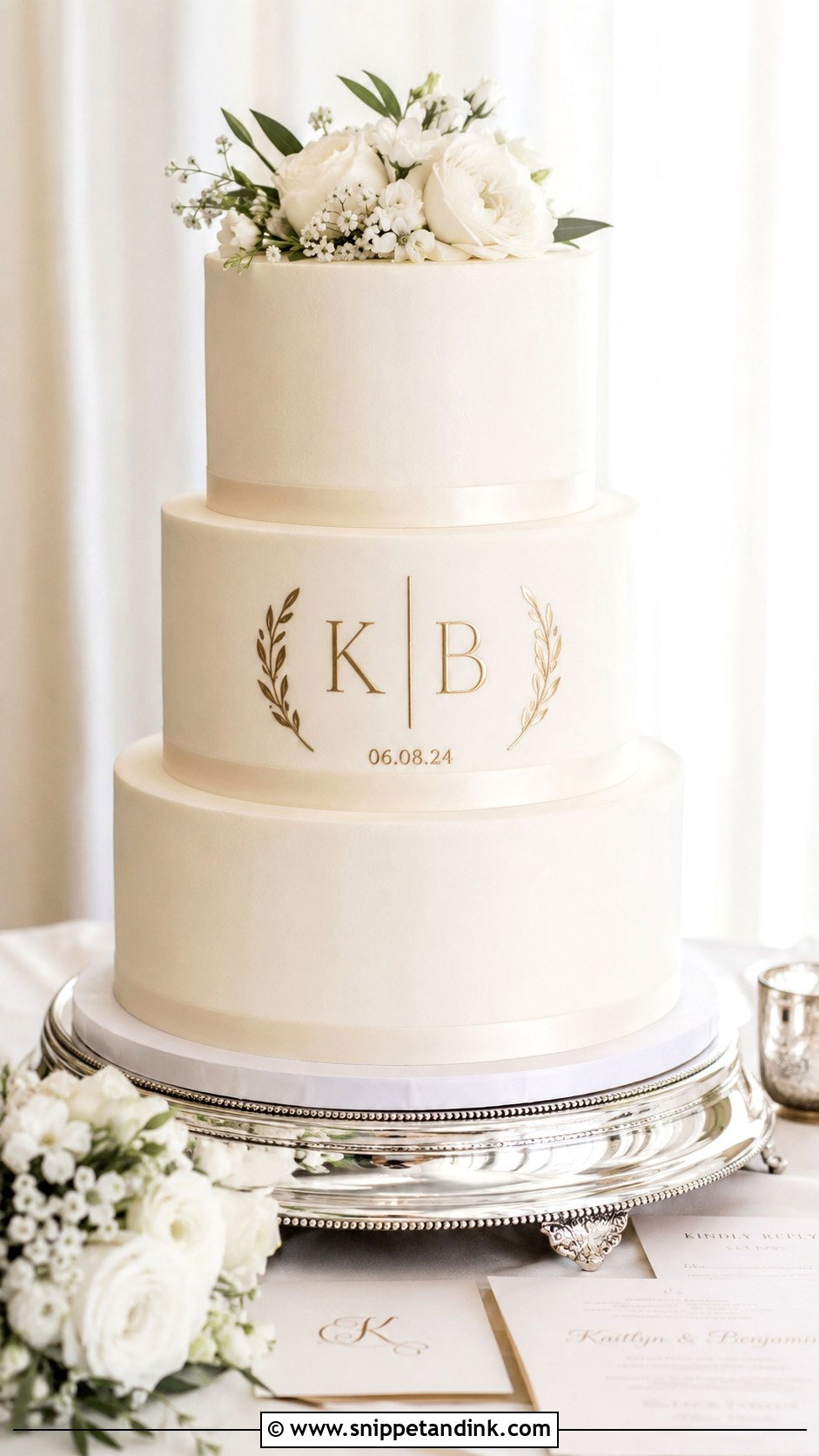
A monogram can be piped, pressed into fondant, painted in edible gold or cut as a topper. I copy the lettering straight from the invitation file so the typeface is identical, which is the difference between “personalised” and “close enough”. Everything else on the cake should calm down around it: subtle texture, a clean ribbon, centred lettering. It suits black-tie hotel receptions especially well.
6. Bespoke Hand Painted Wedding Cake
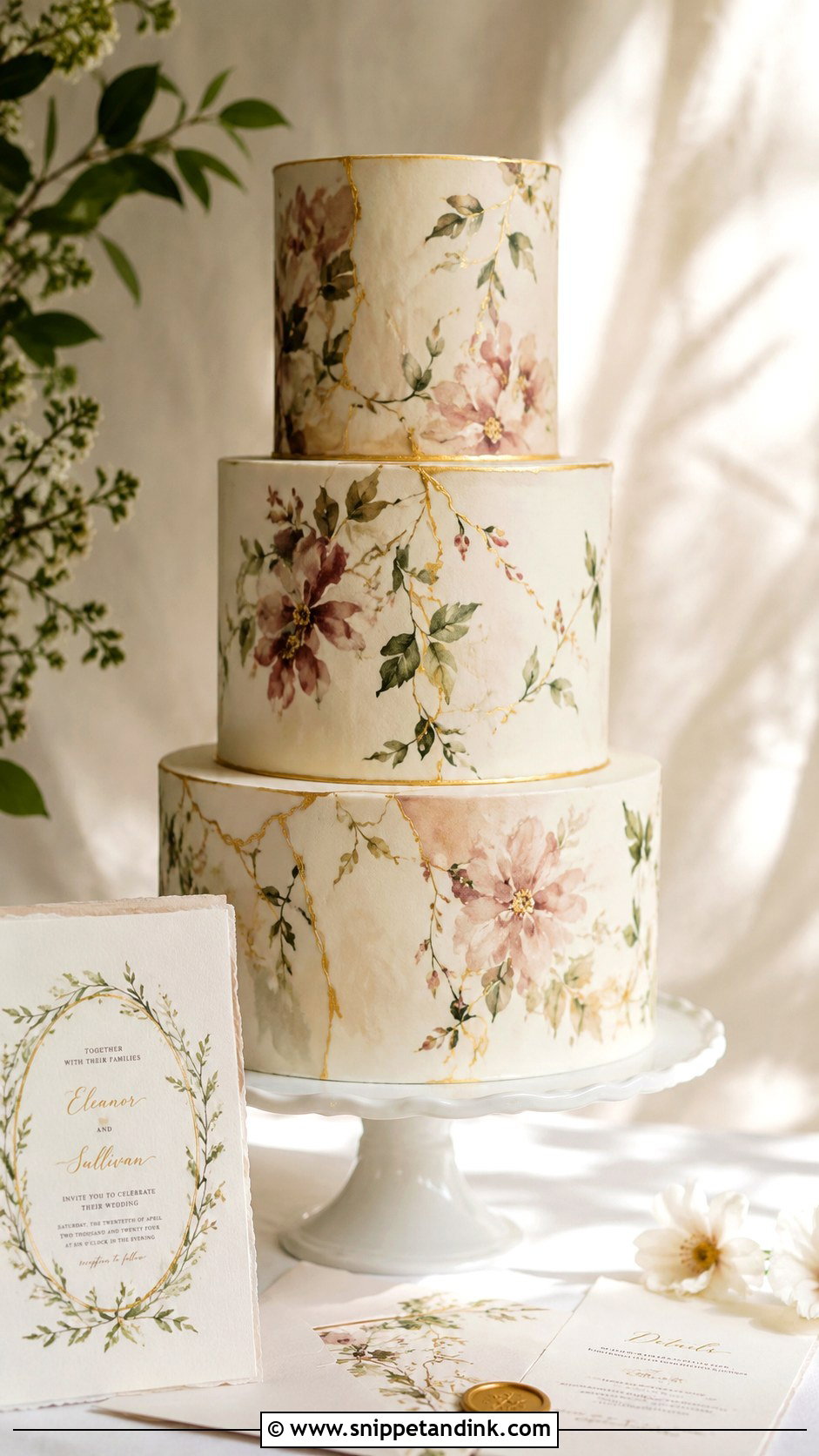
Hand-painted cakes are done with edible colours thinned with alcohol or lemon extract, painted onto fondant or a firm, chilled buttercream. Watercolour florals, vines, abstract strokes, even a sketch of the venue are all possible. The surface has to be dry and cool before I start, so painted designs need extra time in the schedule. Pulling one motif from your invitation suite ties the cake to the stationery without copying it.
7. Bespoke Sculptural Wedding Cake
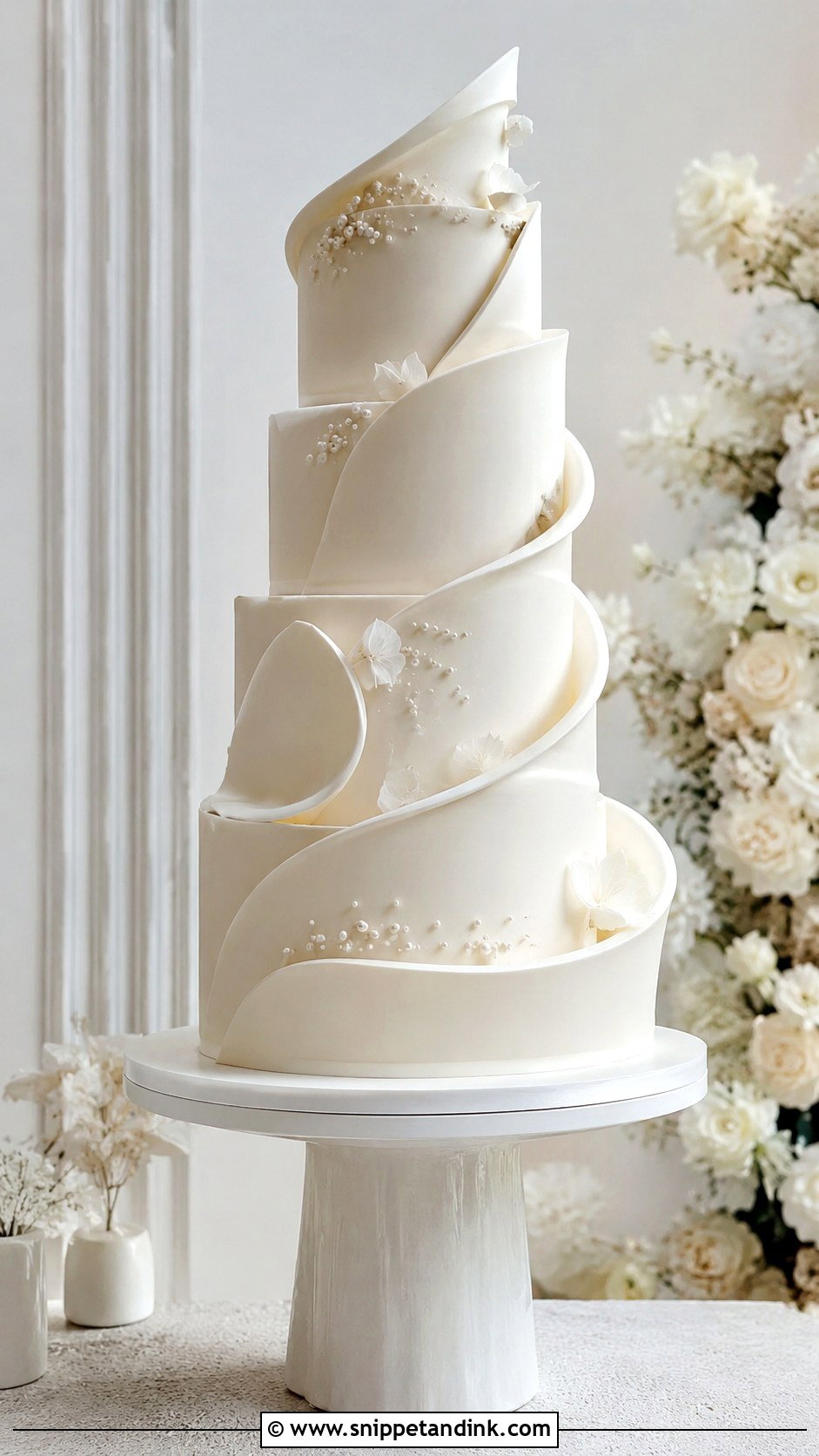
Sculpted cakes use curved tiers, wave shapes, offset stacking and carved texture so the form does the decorating. I’d only take on an extreme shape with a solid internal structure: dowels, boards and sometimes a central rod, because a leaning tier is a real risk with uneven weight. White chocolate panels or smooth fondant show the lines best. I often borrow a shape from the venue, an arch or a staircase curve.
8. Bespoke Garden Wedding Cake
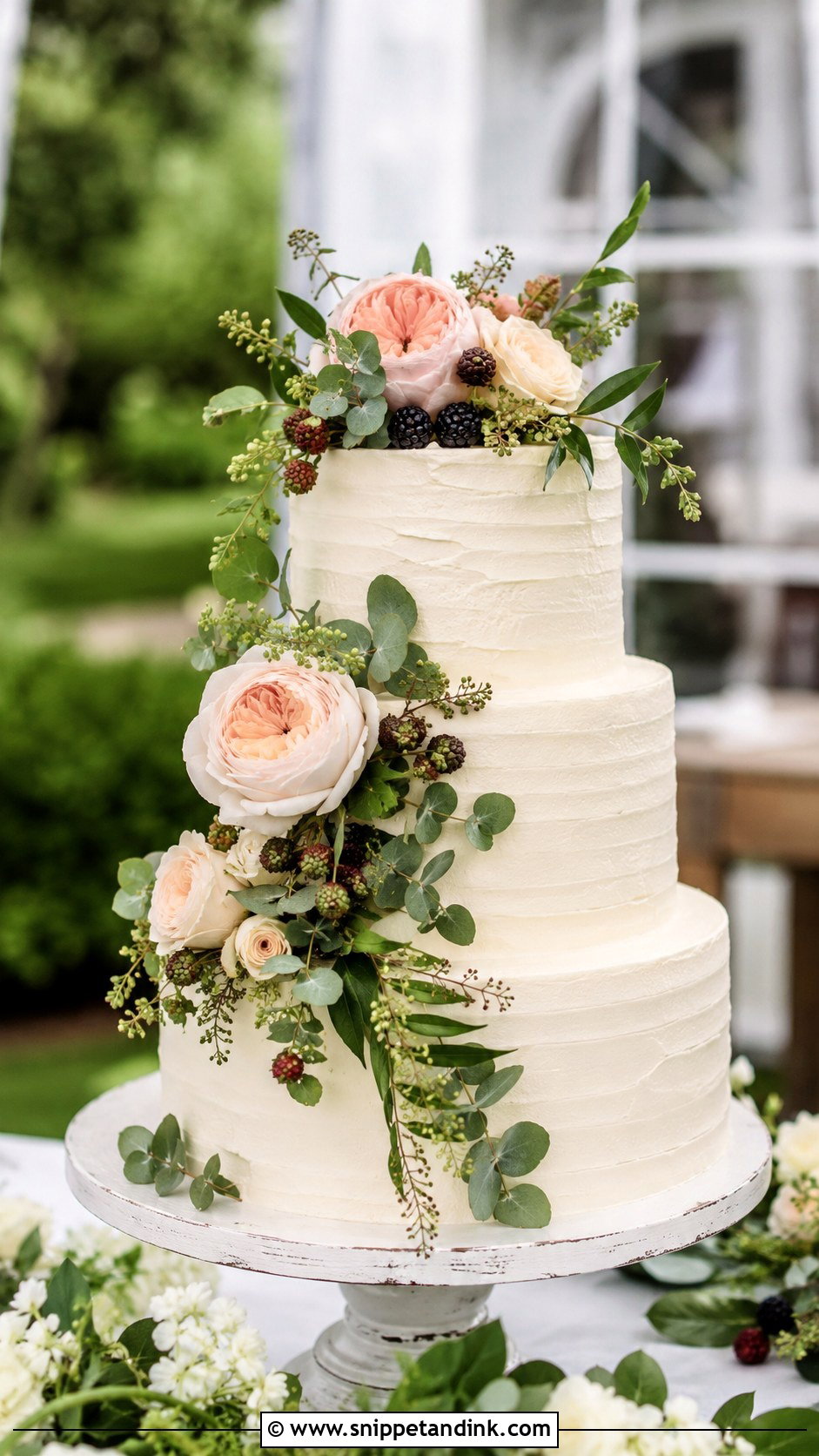
Garden cakes look as though the flowers grew up the tiers: cascading blooms, trailing greenery, herbs, berries. Airy placement is what sells it; packed flowers look heavy. If you love herbs on cake, lavender, rosemary and mint are edible, but they wilt in sun within hours, so I add them as late as I can. Textured ivory buttercream keeps the base relaxed.
9. Bespoke Black And White Wedding Cake
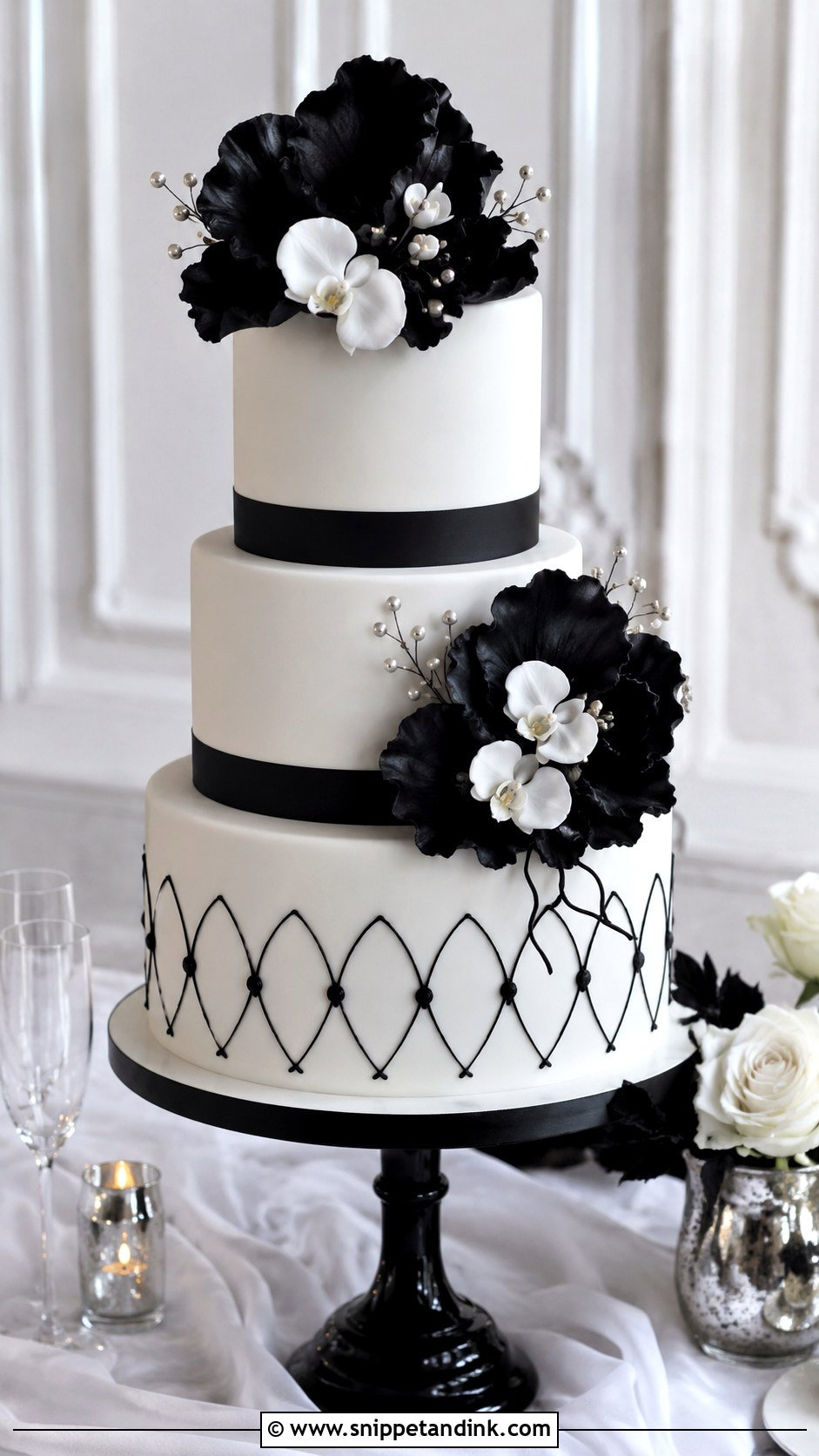
Black and white is graphic and very sharp in photos, from a classic white cake with black ribbon to painted black detail, stripes or black sugar flowers. A word on black icing: getting true black takes a lot of colouring, which can stain teeth and taste bitter, so I keep black to accents and sugar work rather than covering whole tiers in it. Softening it with white orchids or pearls keeps it bridal.
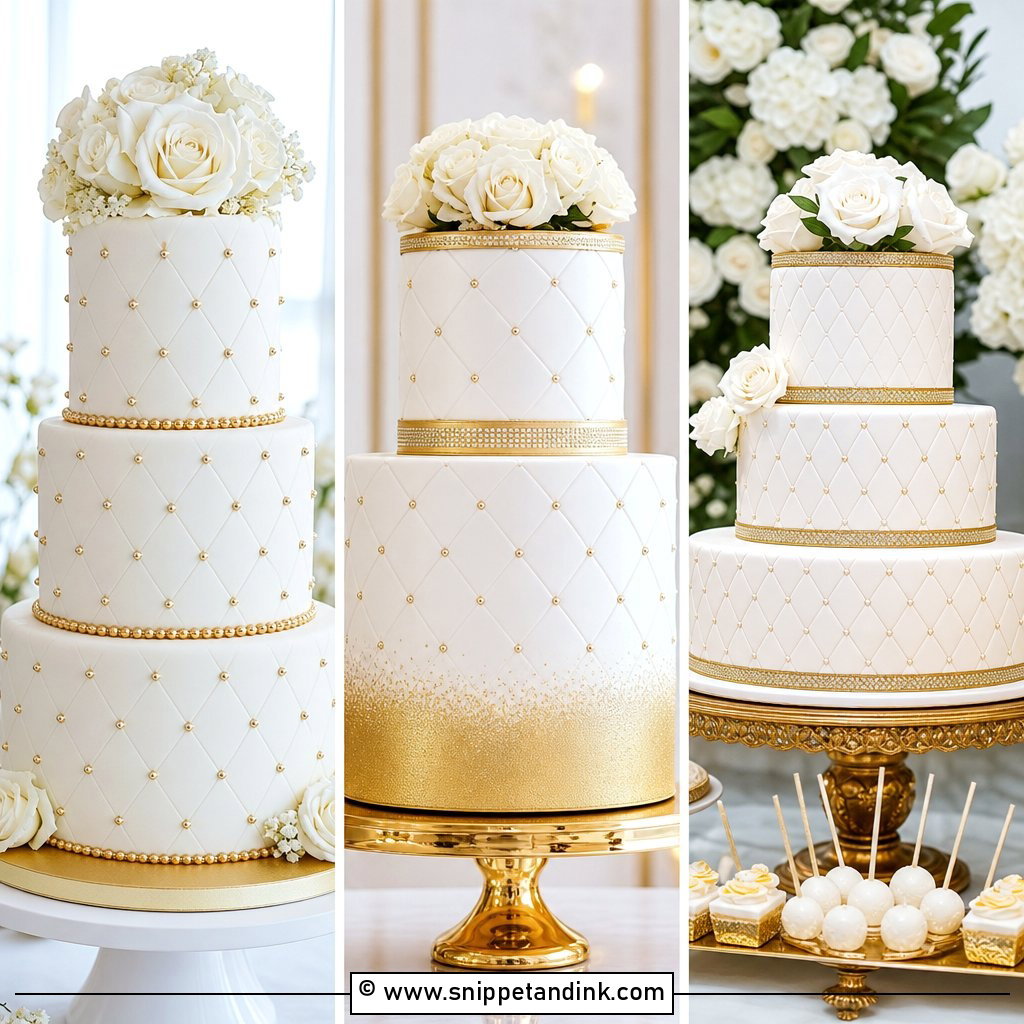
10. Bespoke Gold Wedding Cake
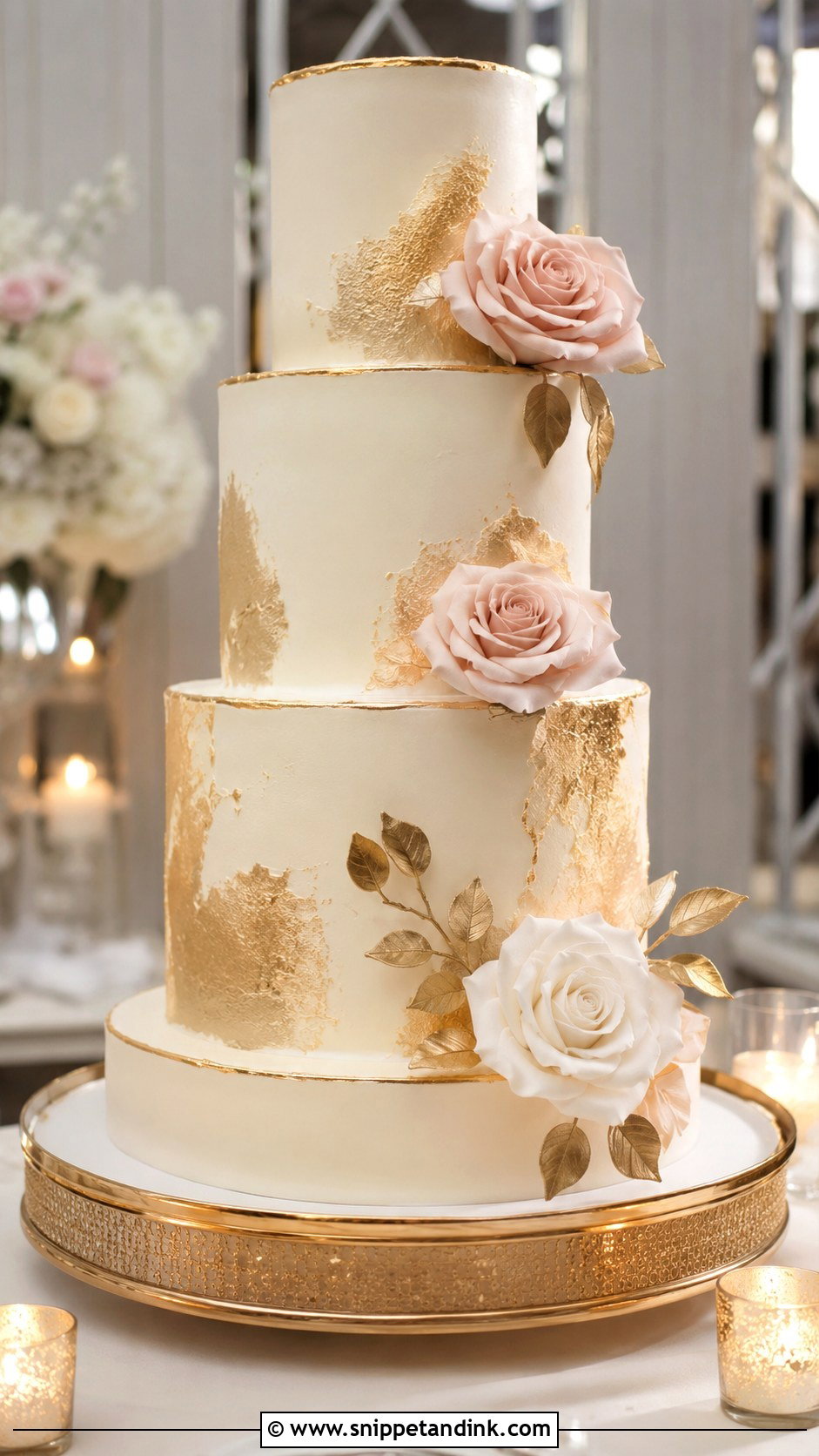
Gold leaf and edible metallic paint give warmth under candlelight. I use leaf for broken, textured gold and paint for thin crisp lines and lettering. Too much gold flattens in photos and turns brassy, so I’d keep it to edges, a band or a monogram on an ivory, blush or champagne base. Matching the tone to your flatware or invitation foil is a small detail people notice.
11. Bespoke Buttercream Wedding Cake
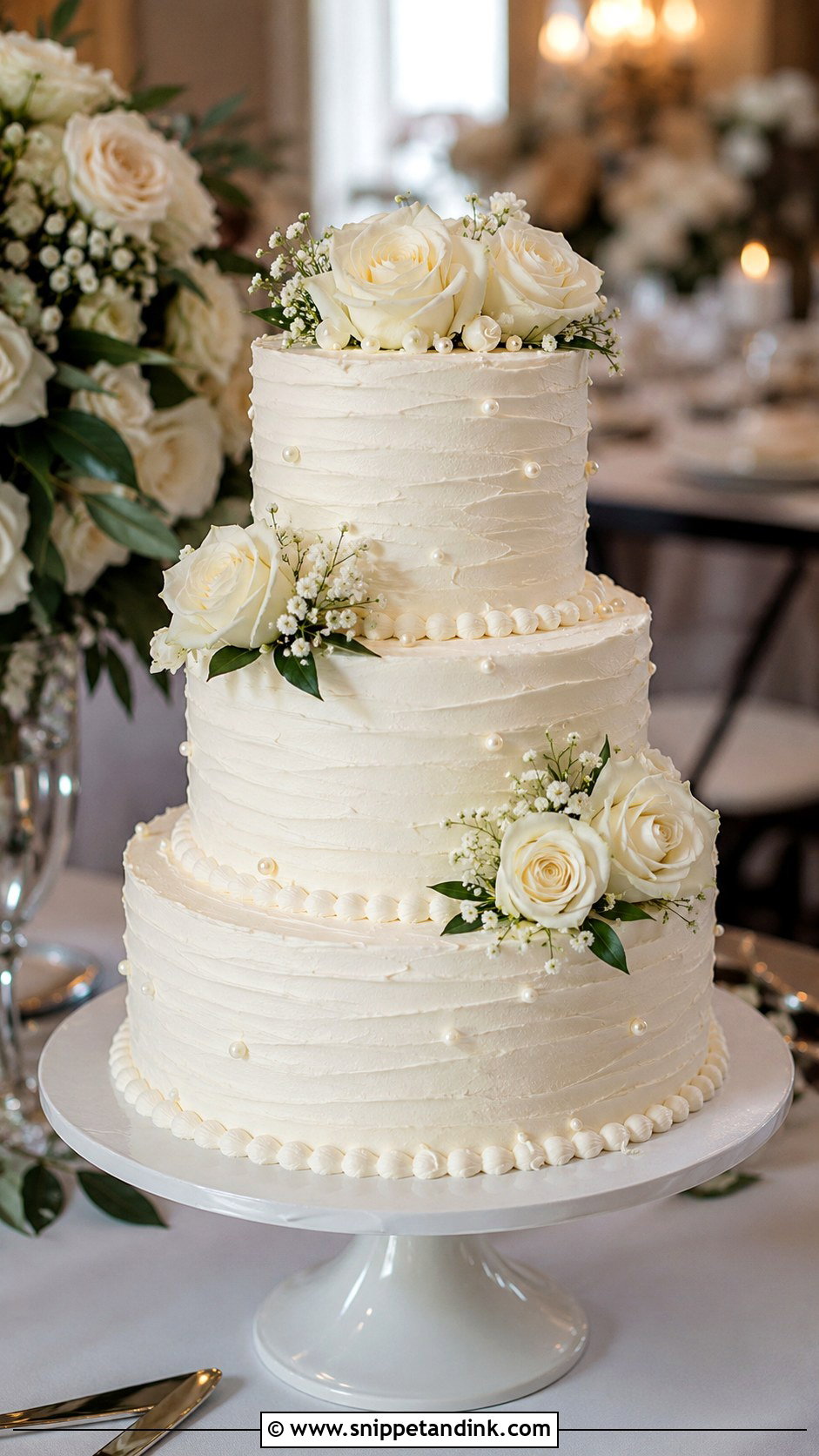
Buttercream is what most couples actually want to eat, and it can be finished smooth, ridged, ruffled, piped or swept with a palette knife. Horizontal lines feel relaxed; a smooth coat with crisp edges feels modern. The trade-off is temperature. Buttercream starts to soften once a room gets warm, so for a hot outdoor reception I either use a more stable recipe or ask for the cake to be kept in the shade.
12. Bespoke Fondant Wedding Cake
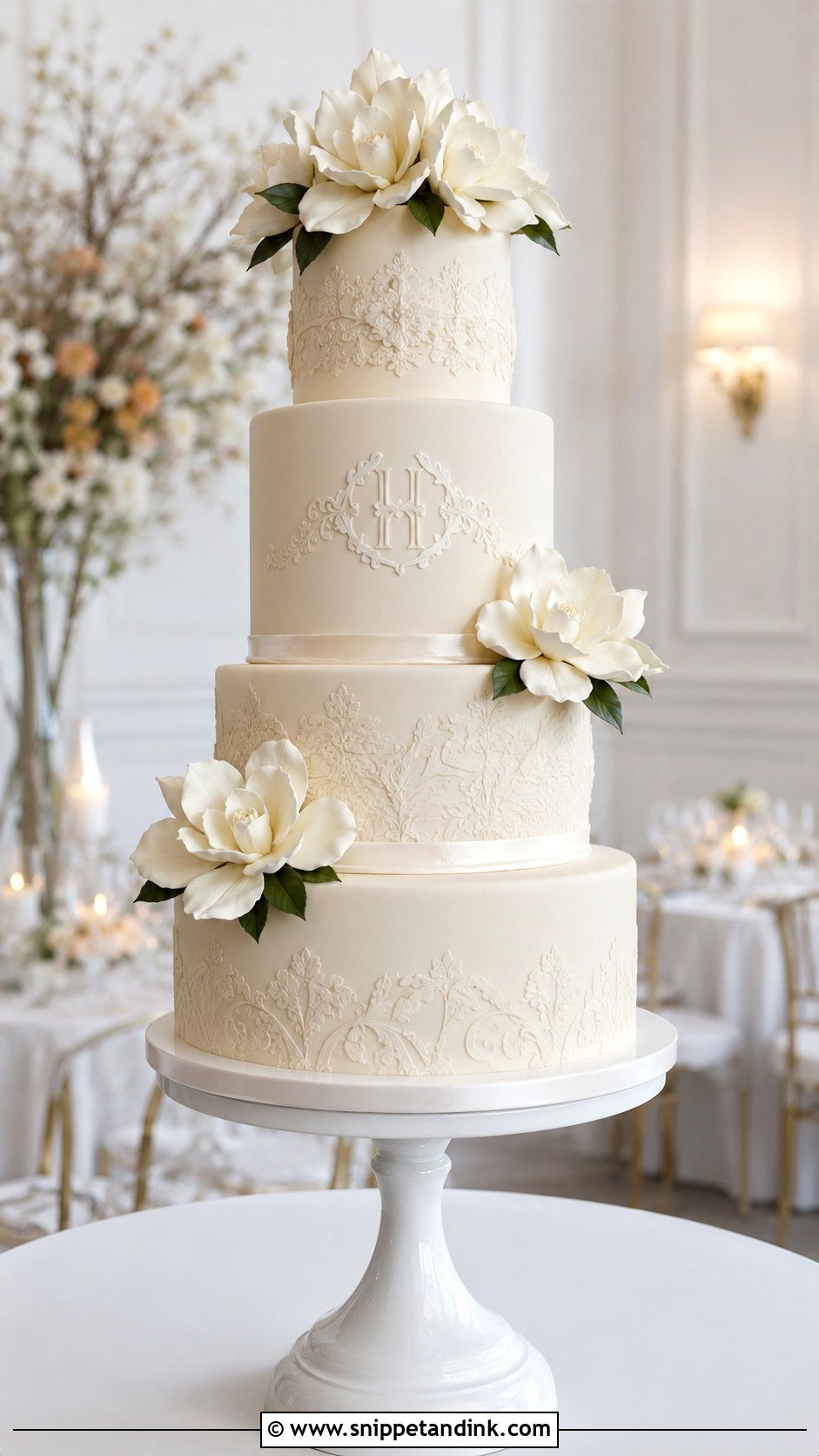
Fondant gives the flawless surface for embossing, painting, metallic work and sharp sculpted shapes, and it holds up better in warm rooms than buttercream does. Plenty of people peel it off their slice, which I’m fine with; underneath there’s usually buttercream anyway. Where fondant shines is matching something precise, like the lace on a gown or the pattern on your stationery. Sugar flowers or soft piping keep it from looking stiff.
13. Bespoke Lace Wedding Cake
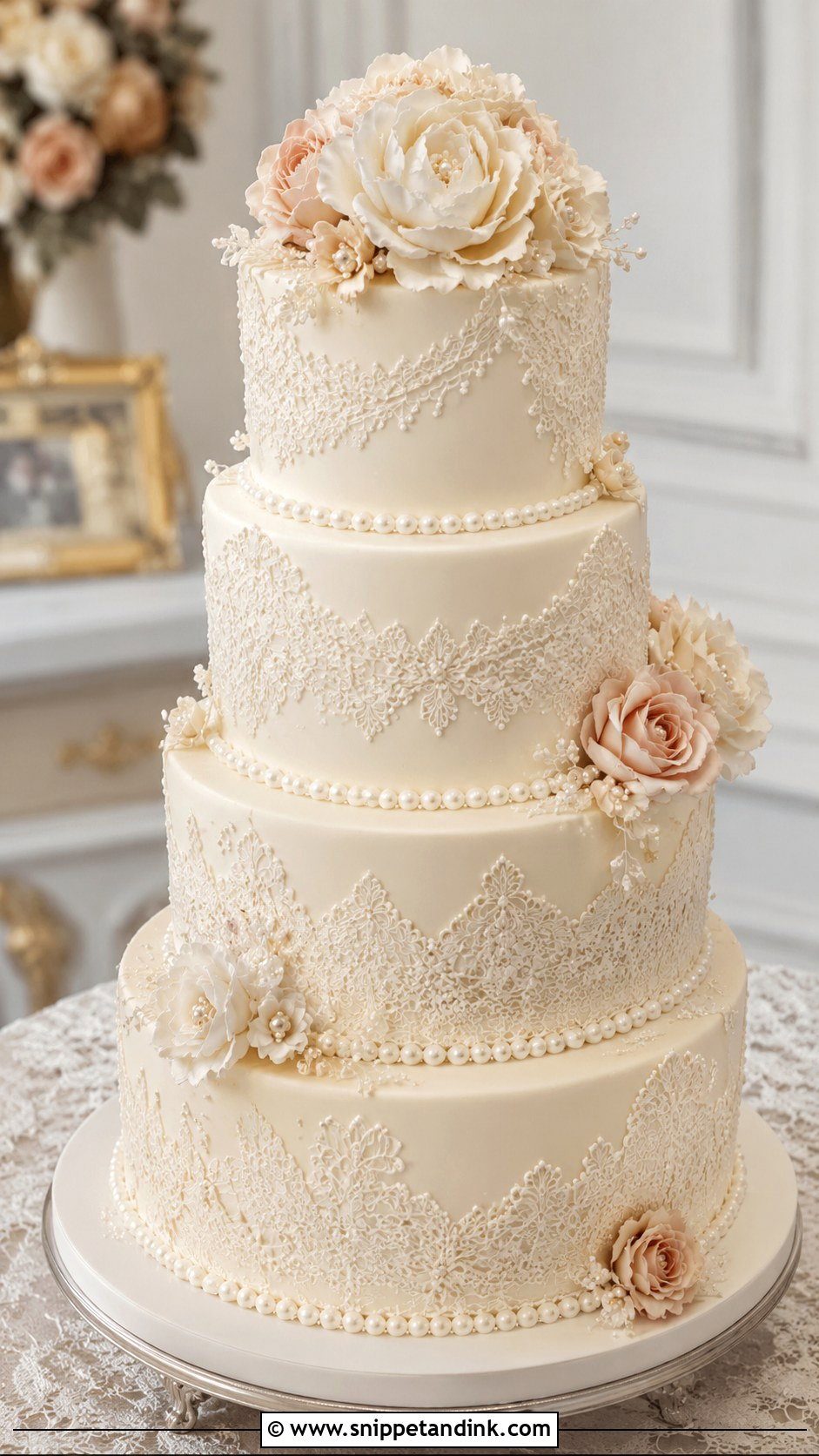
Lace can be piped by hand, pressed with a mould, stencilled with royal icing or laid on as sugar appliqué. I ask for a close photo of the gown’s lace and pick one repeating motif rather than copying the whole fabric, which would look busy at cake scale. Ivory or champagne shows lace best. Leave the lace visible; piling flowers on top defeats the point.
14. Bespoke Bow Wedding Cake
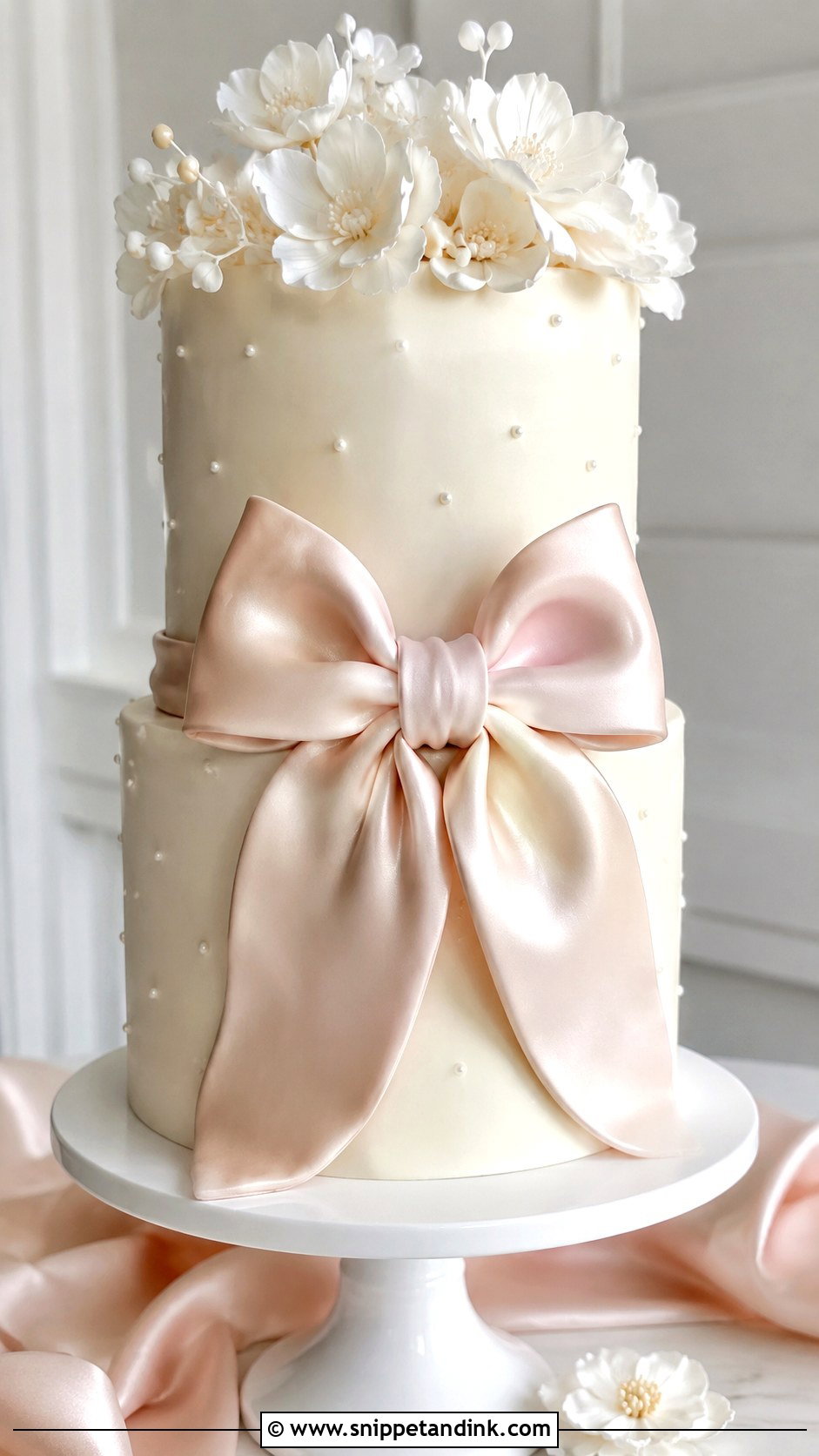
A sugar bow can sit on one tier, wrap a middle tier or perch on top as an oversized topper. One big bow on a plain white cake reads fashion; small bows on every tier feel softer. Large bows are made days ahead so they can dry stiff, and in humid weather they can droop, so I support the loops internally. Matching the colour to the bouquet ribbon is an easy win.
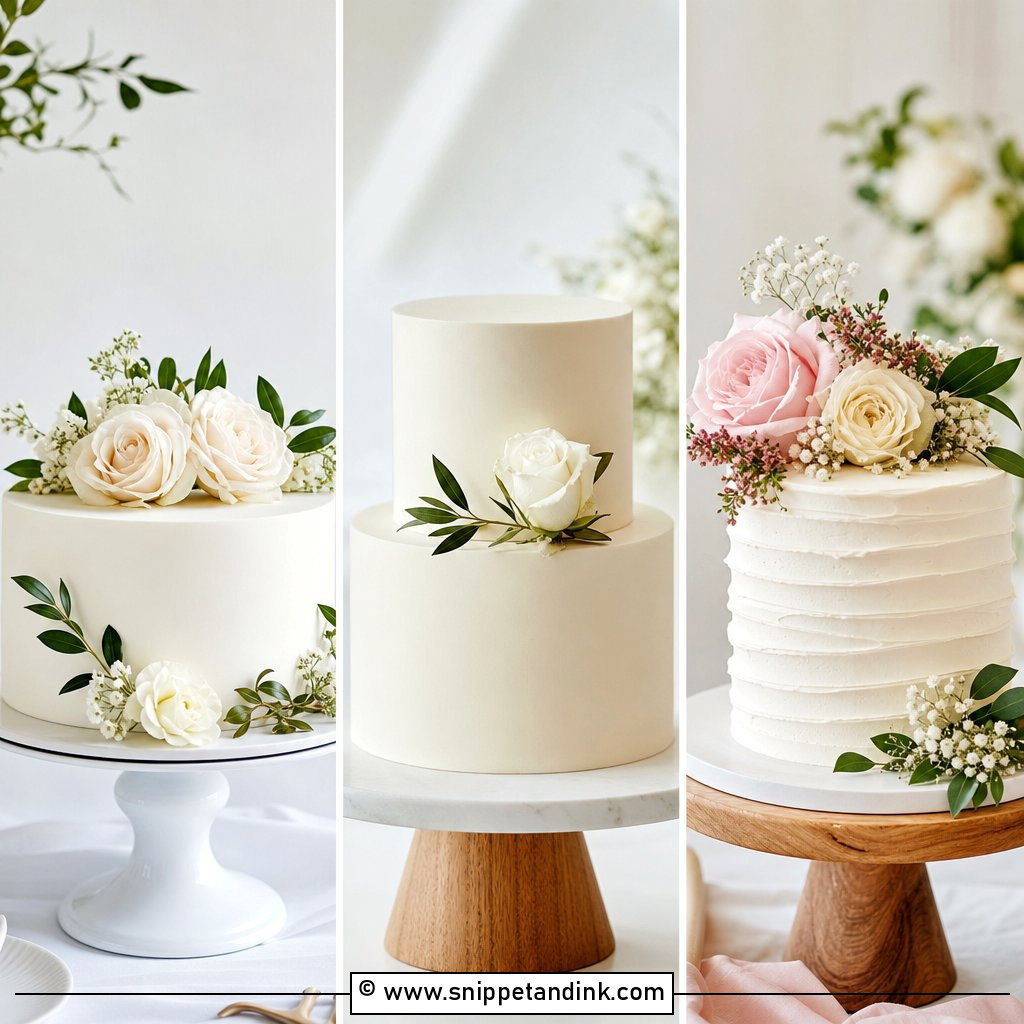
15. Bespoke Blue Wedding Cake
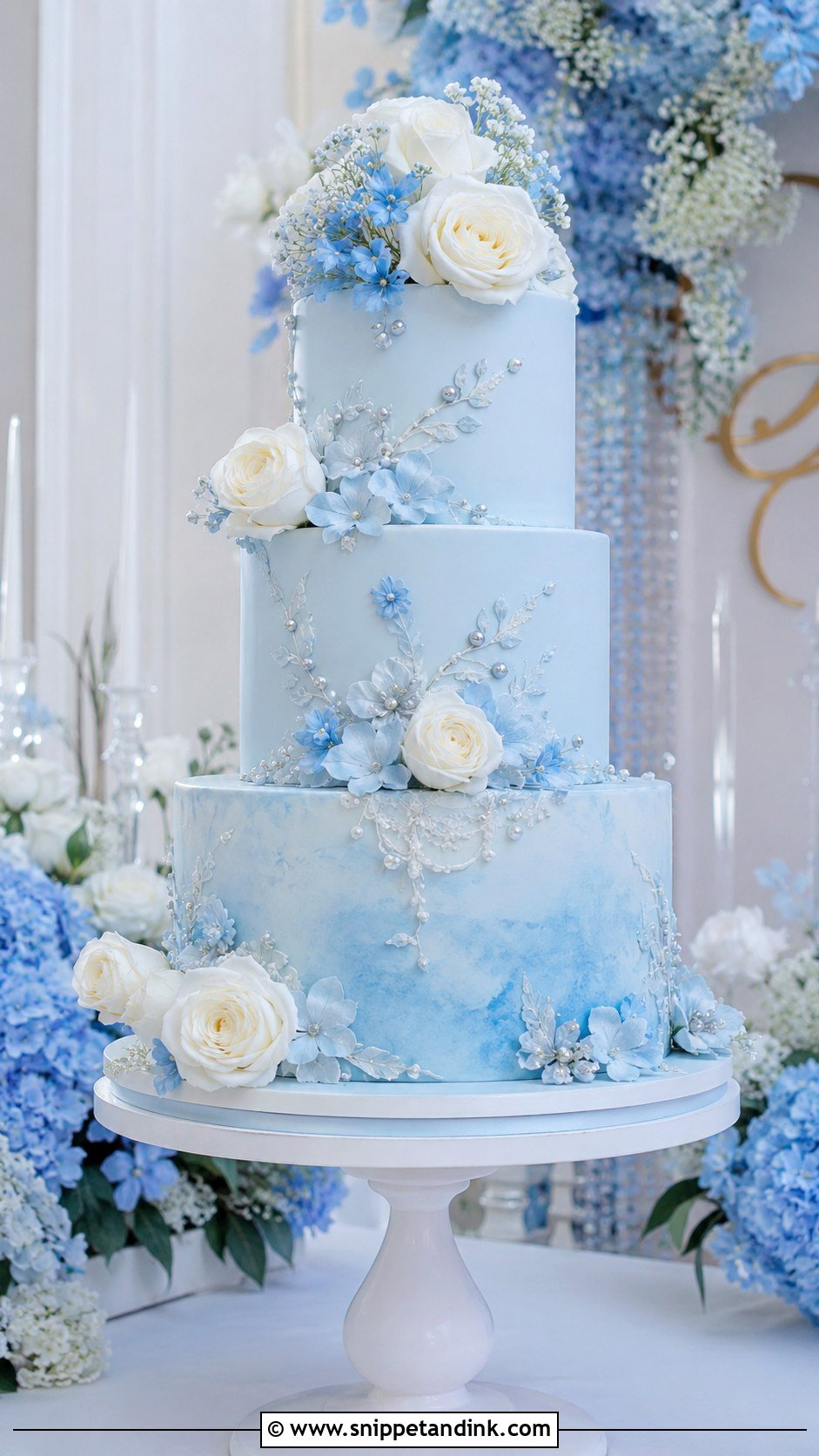
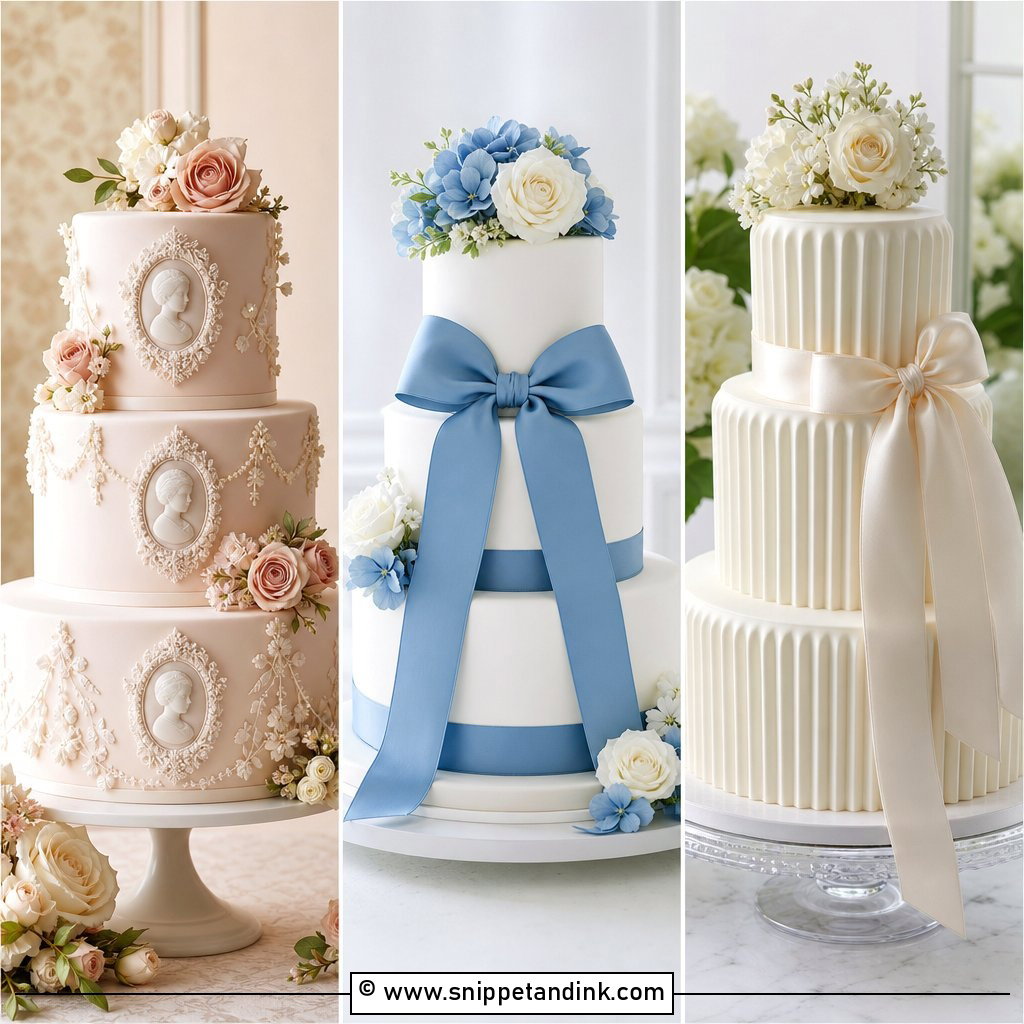
Blue is the colour I’m most careful with on cake, because pale blue can drift grey or slightly green under warm reception lights. I test it on a sample next to your actual linens. Soft blue with white flowers and silver reads calm; deep navy with ivory and gold suits evening. Texture or watercolour shading looks more intentional than a flat block of colour, and lemon or blueberry inside is a nice wink at the outside.
16. Bespoke Pink Wedding Cake
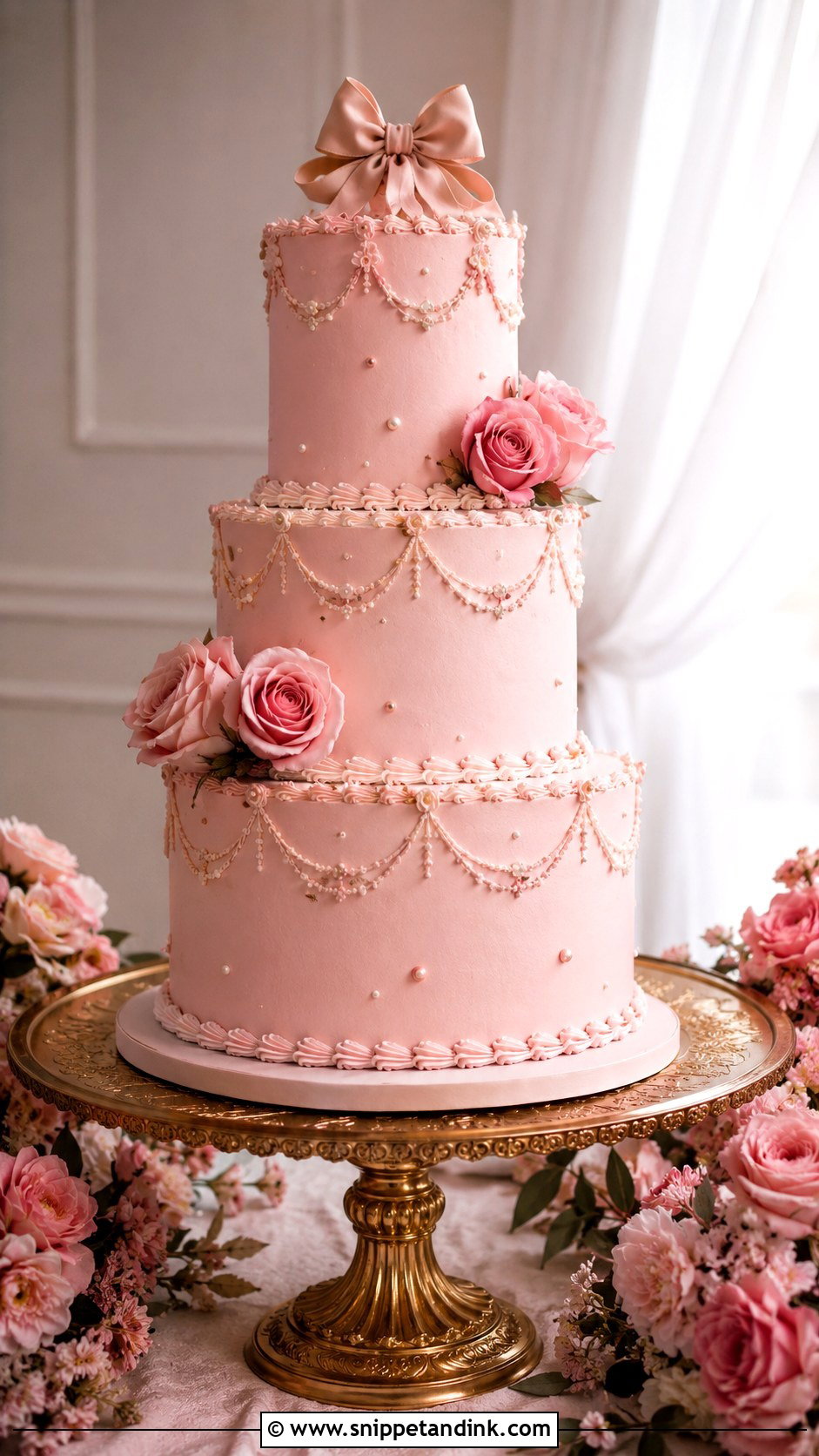
Shade is everything with pink. Blush is classic, dusty rose reads grown-up and bright pink is pure fashion. I take the exact tone from a petal or a bridesmaid fabric swatch rather than a phone screen, since screens lie about pinks. Roses, peonies, bows and vintage piping all pair with it. Keep the display simple and the finish smooth so it never tips into a child’s birthday cake.
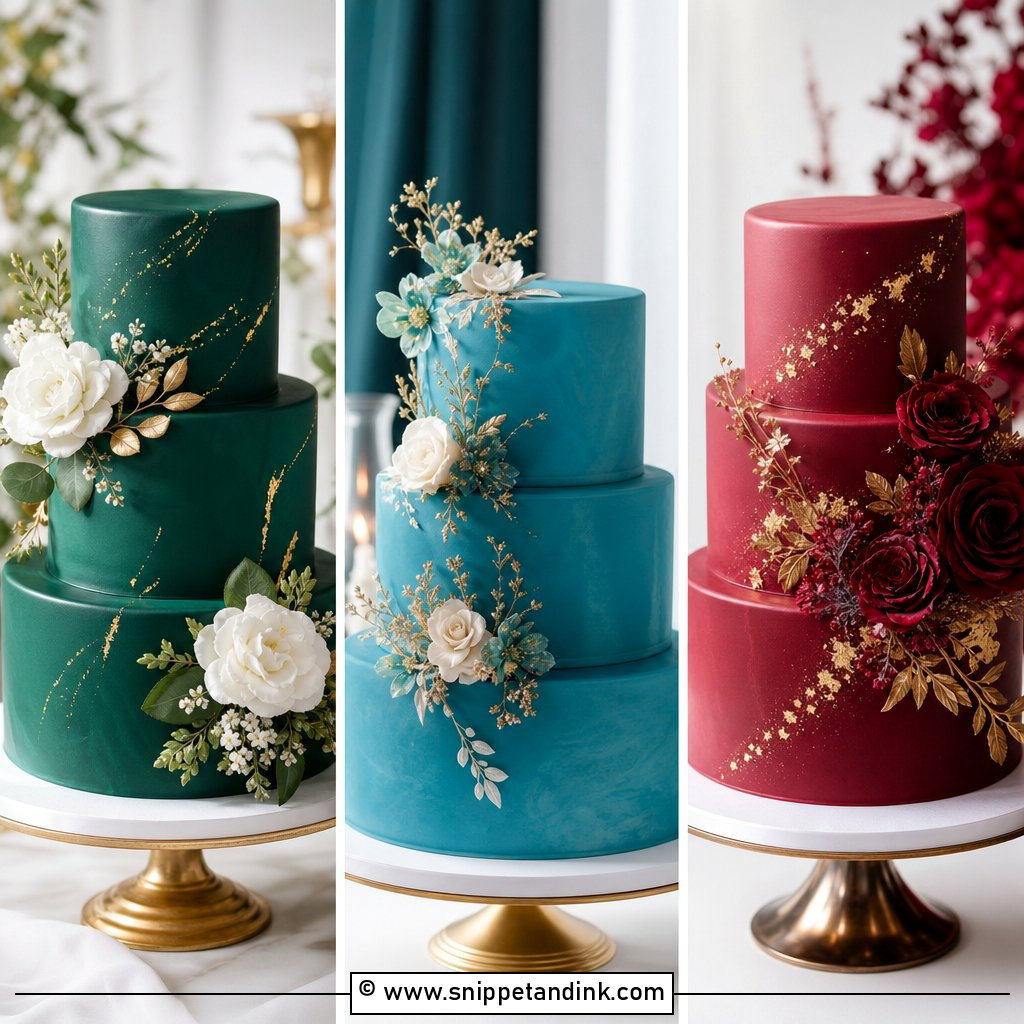
17. Bespoke Green Wedding Cake
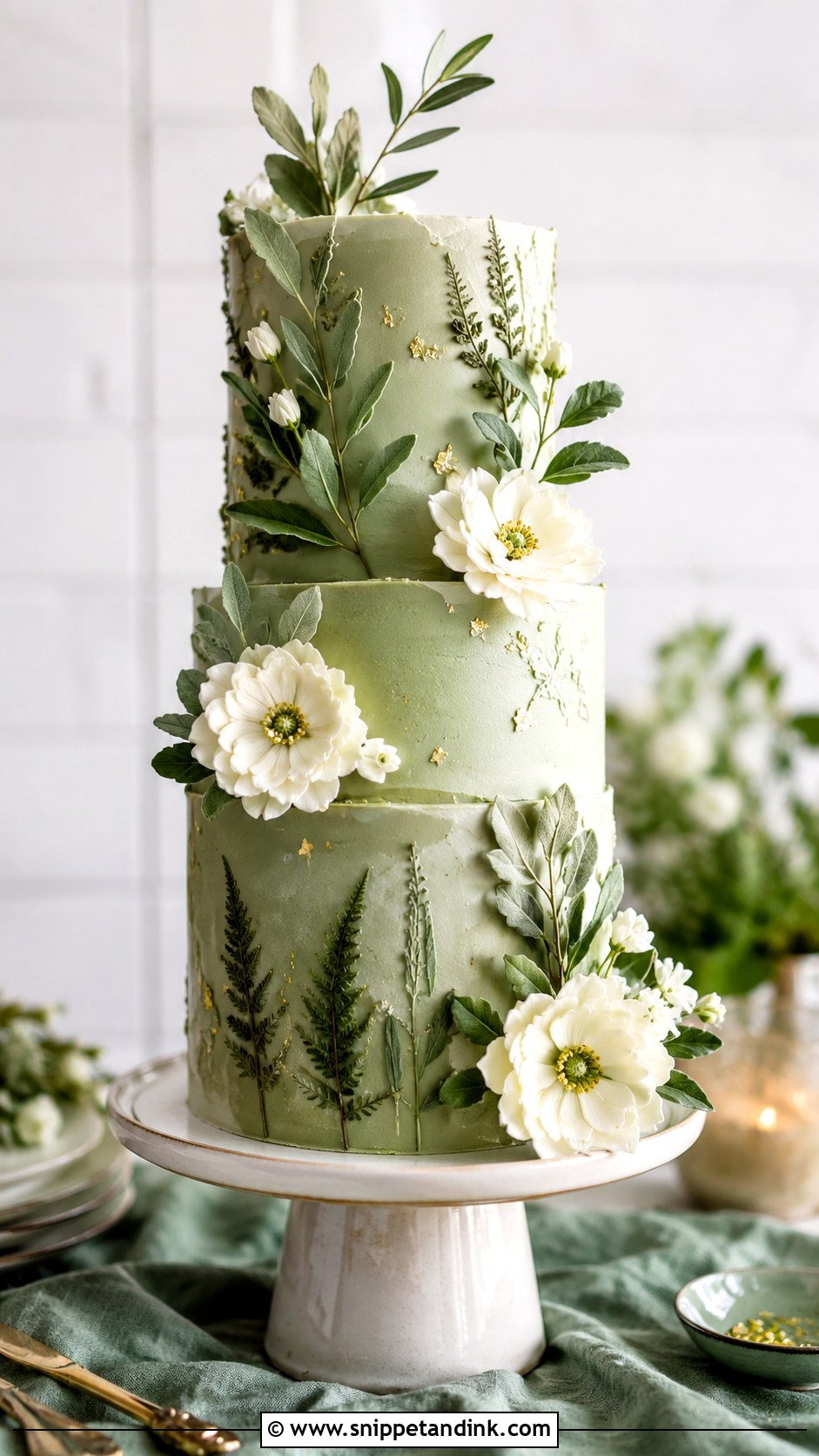
Green covers a lot of ground: Sage, olive, and eucalyptus green are the shades I’m asked for most, usually with ivory flowers and a little gold. It can be a full fondant colour, a watercolour wash, piped leaves or a tinted buttercream. Natural greens from matcha or pistachio fade toward khaki, so for a precise shade I use colouring and save those flavours for the inside, where they taste wonderful.
18. Bespoke Ombre Wedding Cake
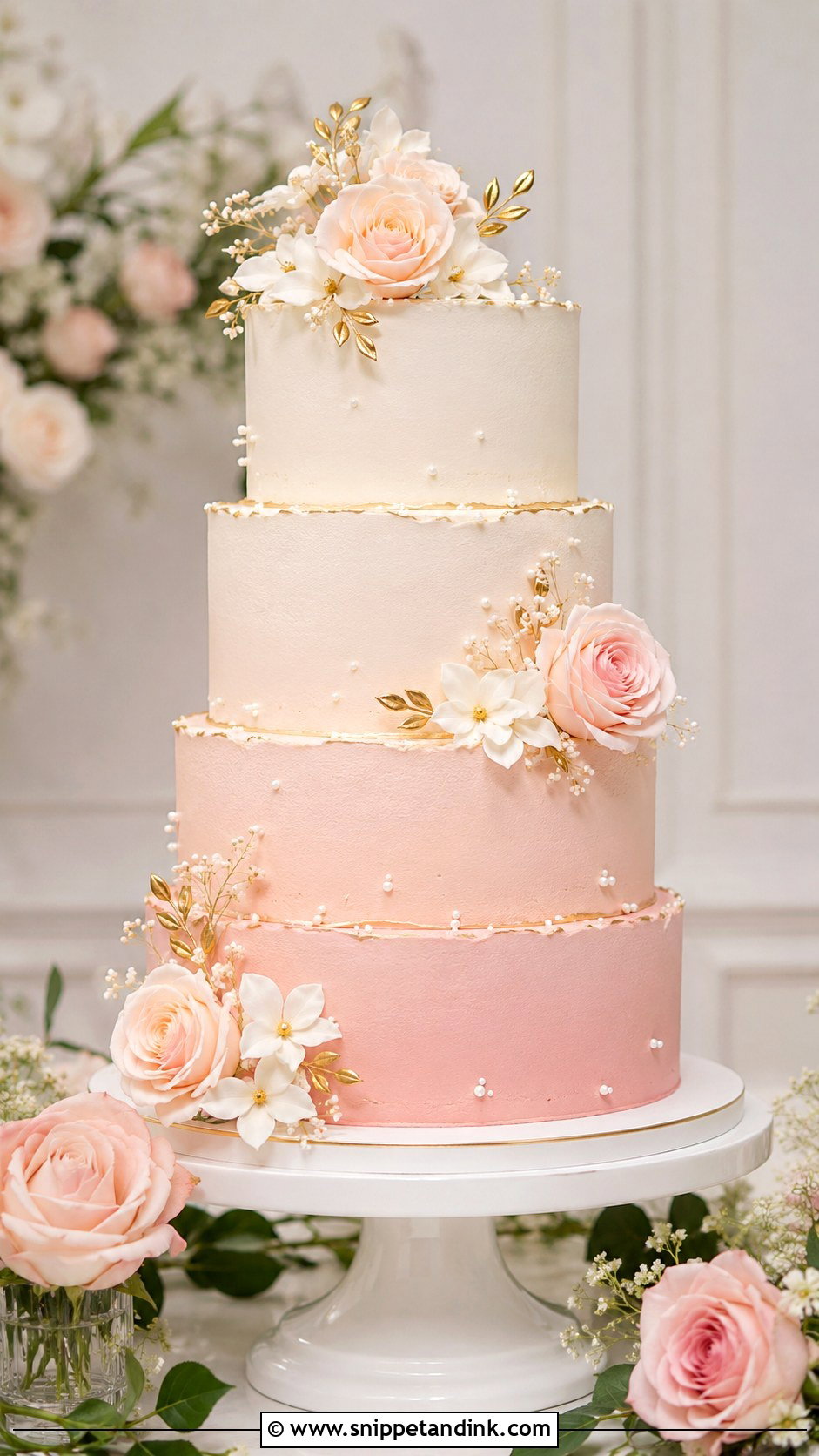
An ombre runs one colour into another across the tiers: ivory to blush, white to blue, cream to peach. The blend has to be gradual, and on a tiered cake I plan the shade for each tier separately so the jump between them doesn’t look like a stripe. Pull the two end colours from your flowers or a sunset palette. Keep decoration light so the gradient stays the feature.
19. Bespoke Textured Wedding Cake
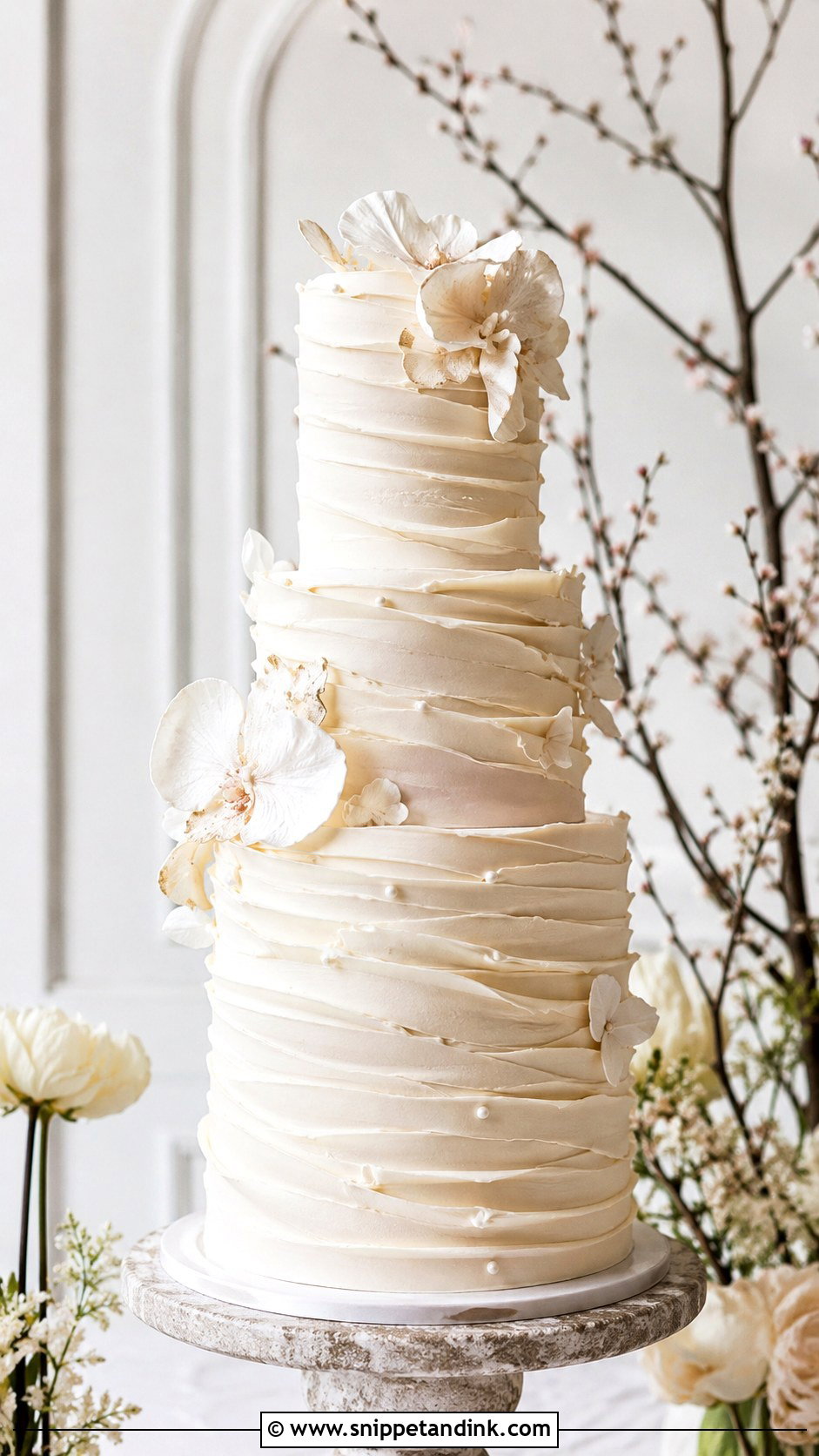
Texture gives depth without colour: buttercream waves, a plaster-like finish, pleats, quilted fondant, palette-knife strokes. Side light from a window or candles picks up every ridge, which makes texture cakes a favourite with photographers. I like matching it to a material in the day: pleats from the gown, waves for a coast, a rough stone finish for an old building. Hold back on flowers or the texture disappears.

20. Bespoke Watercolor Wedding Cake
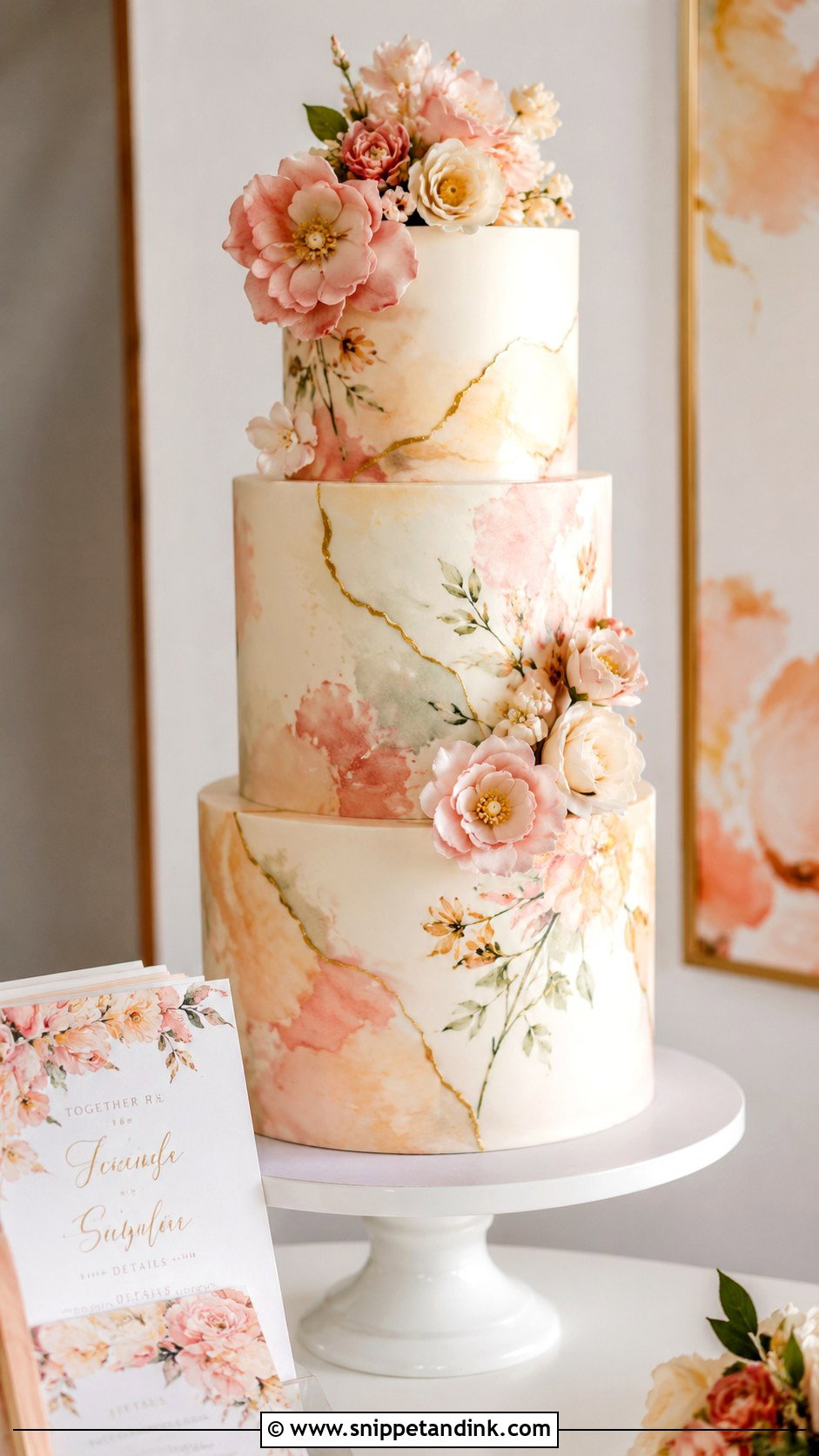
A watercolour finish is painted in thin, layered washes of edible colour, so it gives colour without looking loud. Blush, lavender, peach or warm neutrals suit it, with fine gold lines or a few sugar flowers on top. The base needs to be fondant or very firm chilled buttercream, otherwise the paint pools. Ask me to use the colours from your invitations and the cake will tie in quietly.
21. Bespoke Marble Wedding Cake
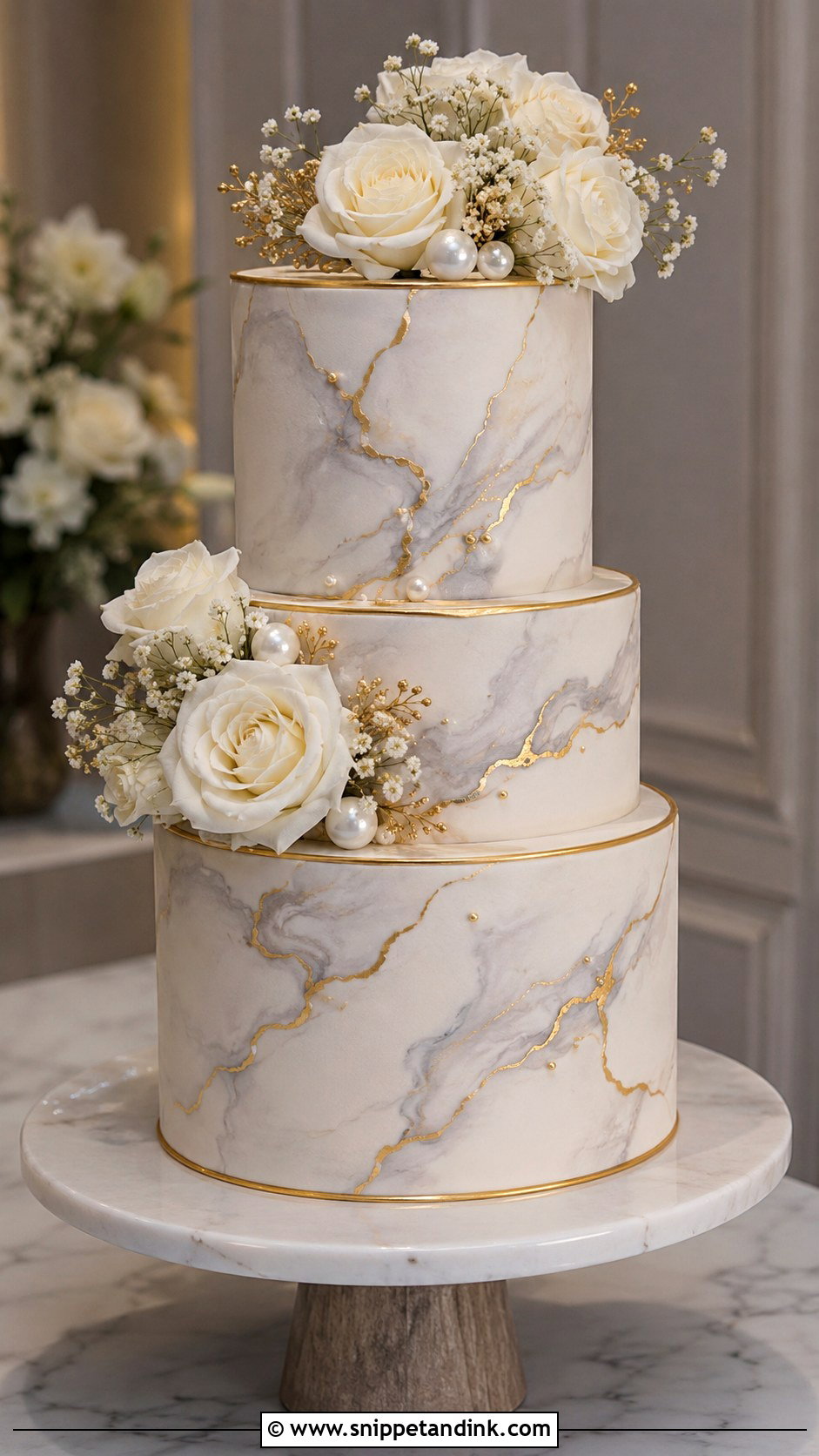
Marble is made by twisting coloured fondant into the white before rolling, or by painting veins on afterwards. Twisted marble looks more natural; painted veins are more controllable. Soft grey, warm beige, blush, green or black veining can all work, often with a gold edge. If the venue has real marble, I’ll take a photo of it and copy the vein direction.
22. Bespoke Square Wedding Cake
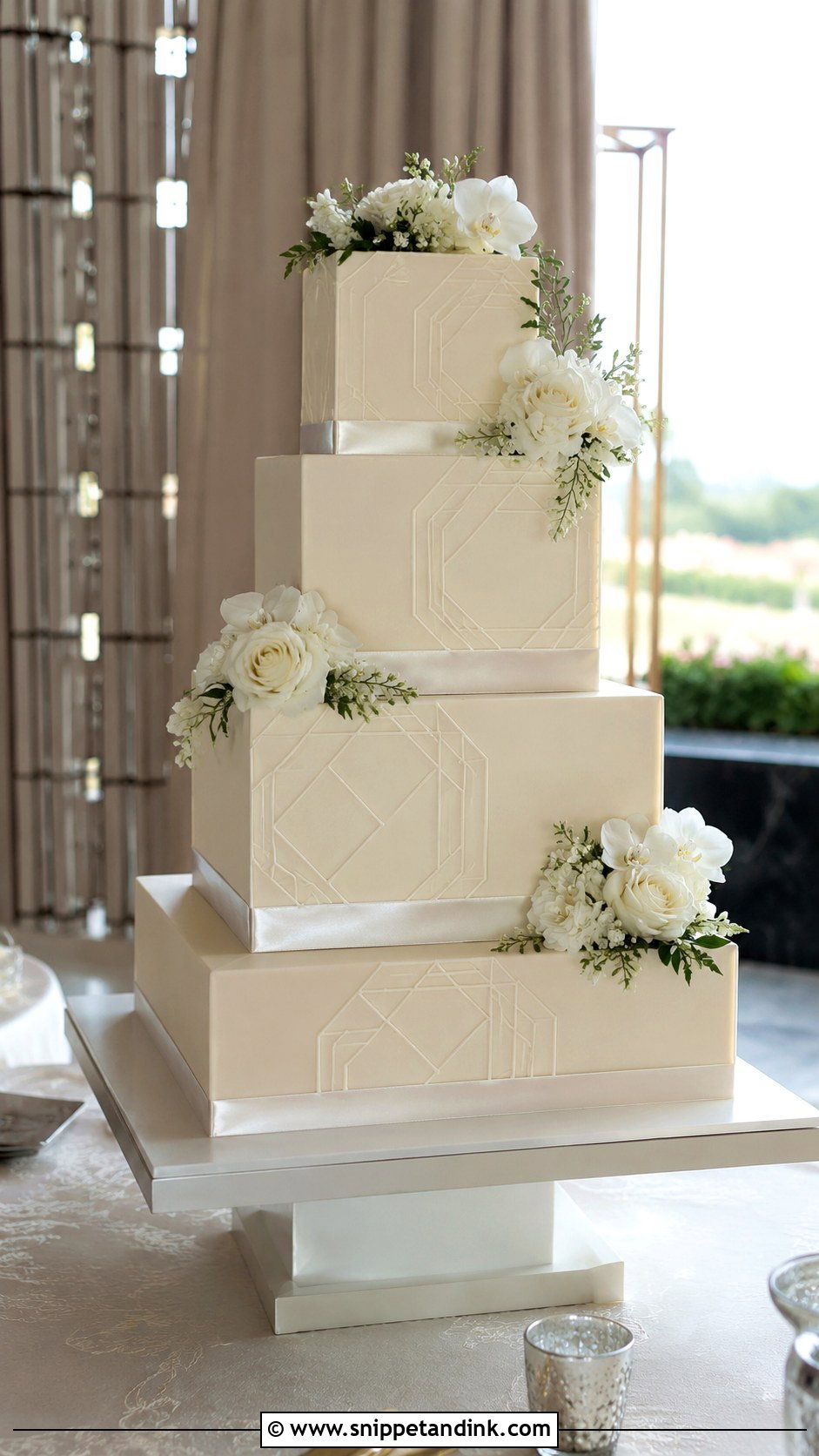
Square tiers look architectural, with strong lines that suit hotels, museums and lofts. They’re less forgiving to make: every corner has to be sharp, and they’re heavier per tier than rounds of the same width. Ribbon borders, a monogram or geometric detail suit them. A few flowers on one corner soften the shape, and stacking tiers at different heights makes it more dramatic.
23. Bespoke Tiered Wedding Cake
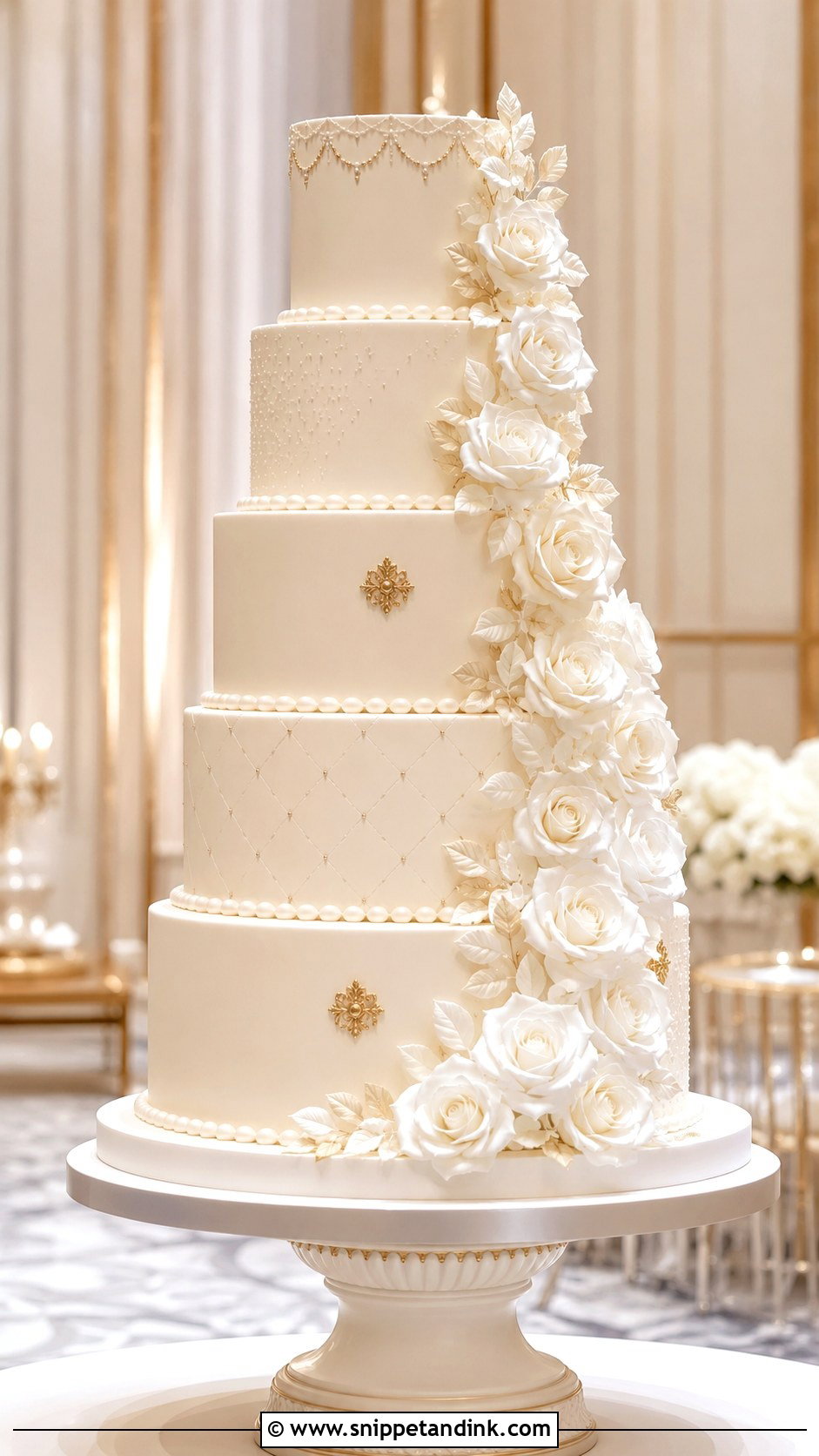
The tiered cake is still the centre of the cake-cutting moment, so I start by matching the height to the room. Three tiers suit most venues; four or five only make sense in a big ballroom with a high ceiling. Each tier can carry its own flavour, which keeps guests happy. One repeated detail across all tiers, like a pearl border or the same flower, holds it together.
24. Bespoke Single Tier Wedding Cake
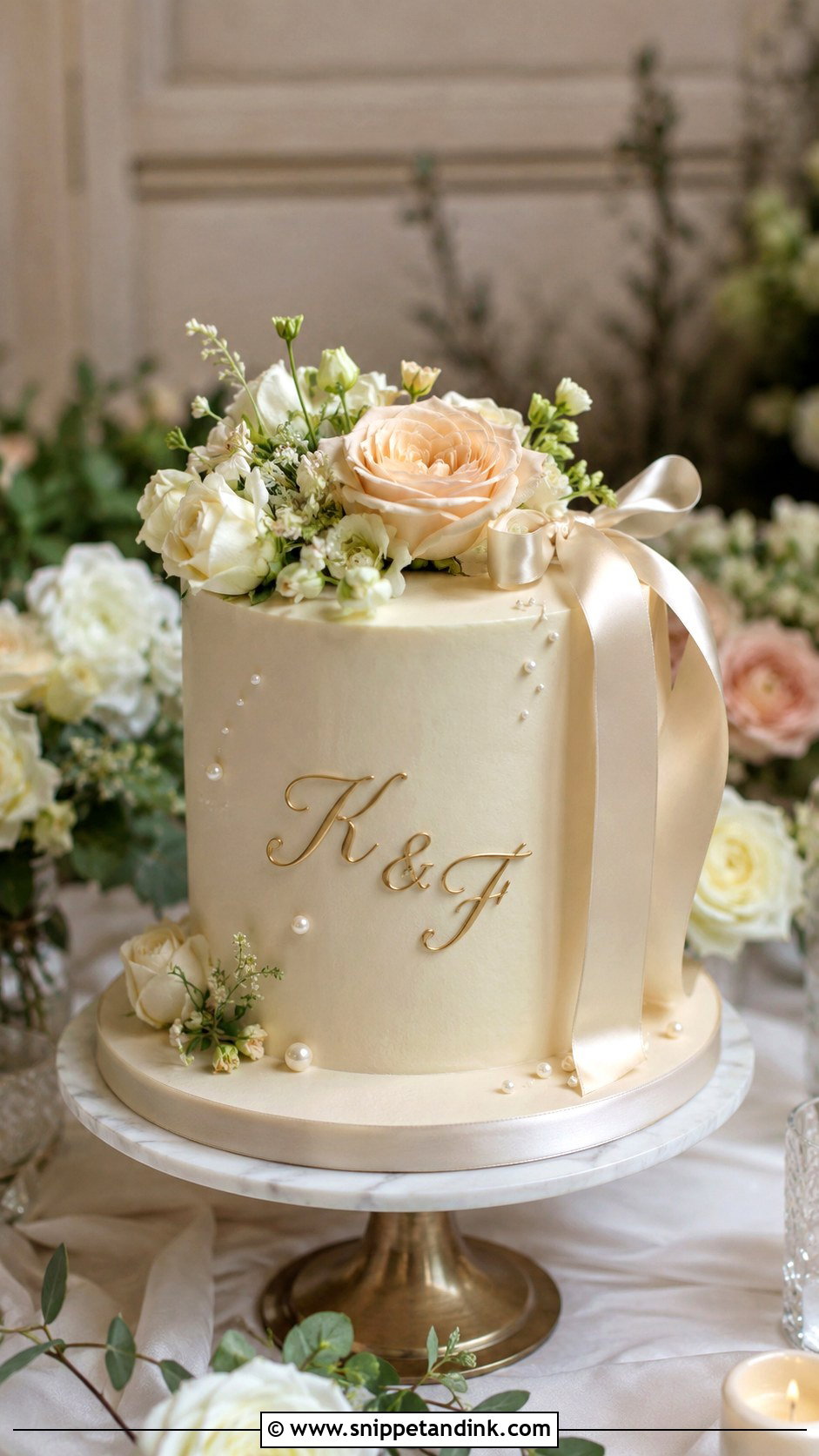
Small weddings and elopements don’t need a small idea. A single tall tier, usually two layers stacked with a board between, looks much grander than a short wide one. Buttercream texture, a few fresh flowers, a monogram plaque or a bold bow are enough. It also sits well on a dessert table with cookies or mini cakes. Put the budget into the flavour you love most.
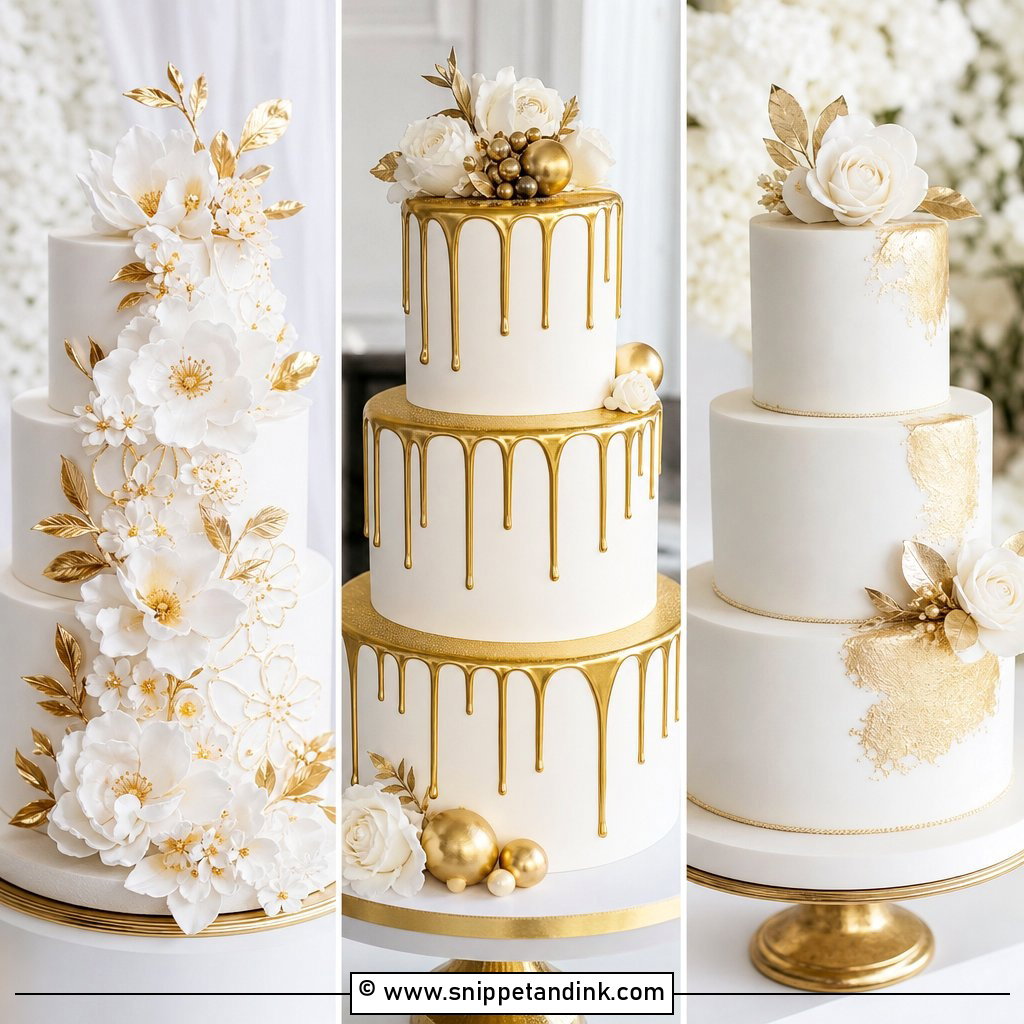

25. Bespoke Mini Wedding Cakes
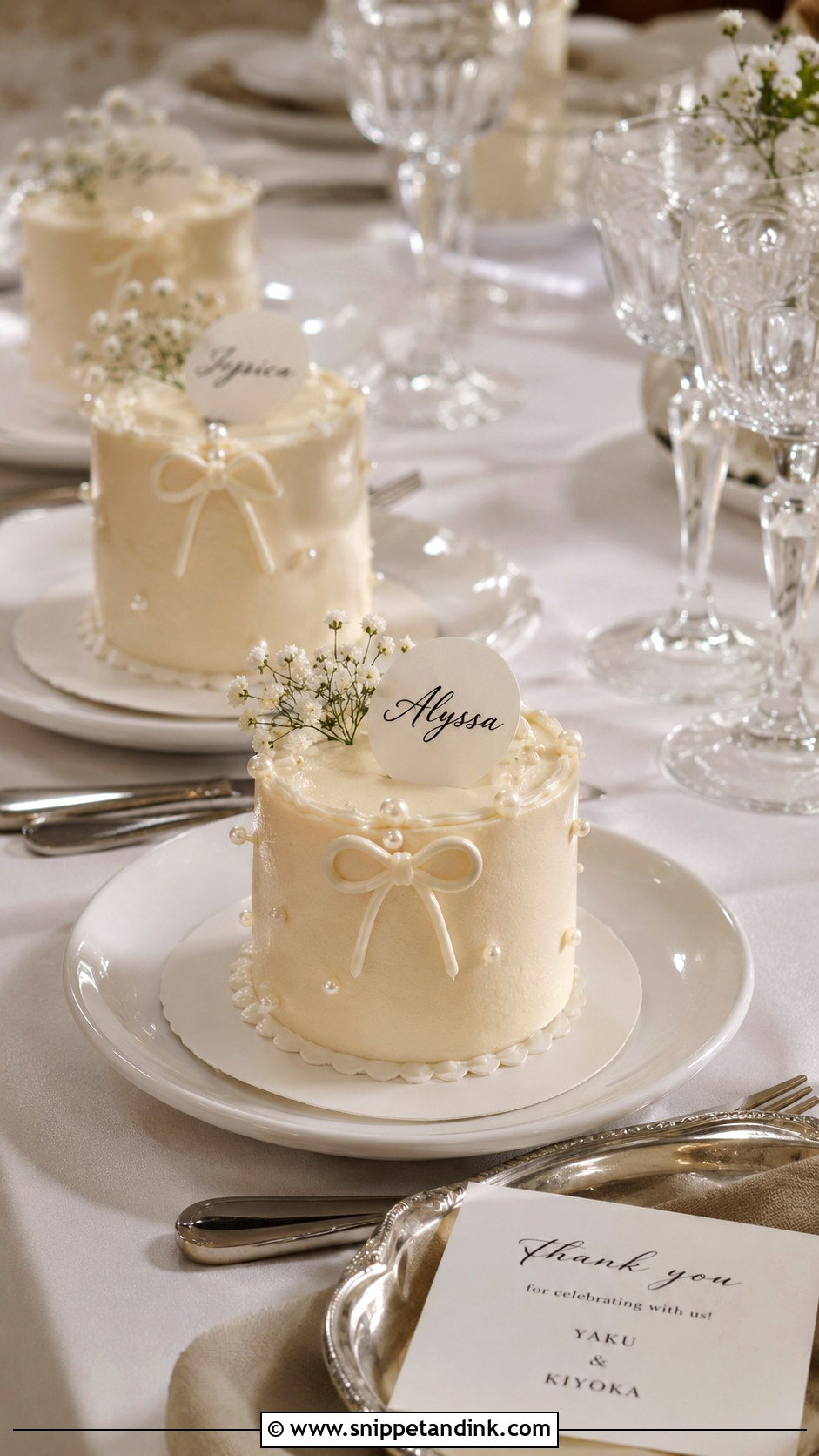
Individual cakes look charming at each place setting and remove the cutting and plating queue. They are labour-heavy, though: every one is filled, coated and finished by hand, so they often cost more per guest than slices from a tiered cake. Smooth buttercream with a tiny bow, edible flowers or a monogram keeps them consistent. Different flavours per table is a fun twist if the style stays the same.
26. Bespoke Dessert Table Wedding Cake
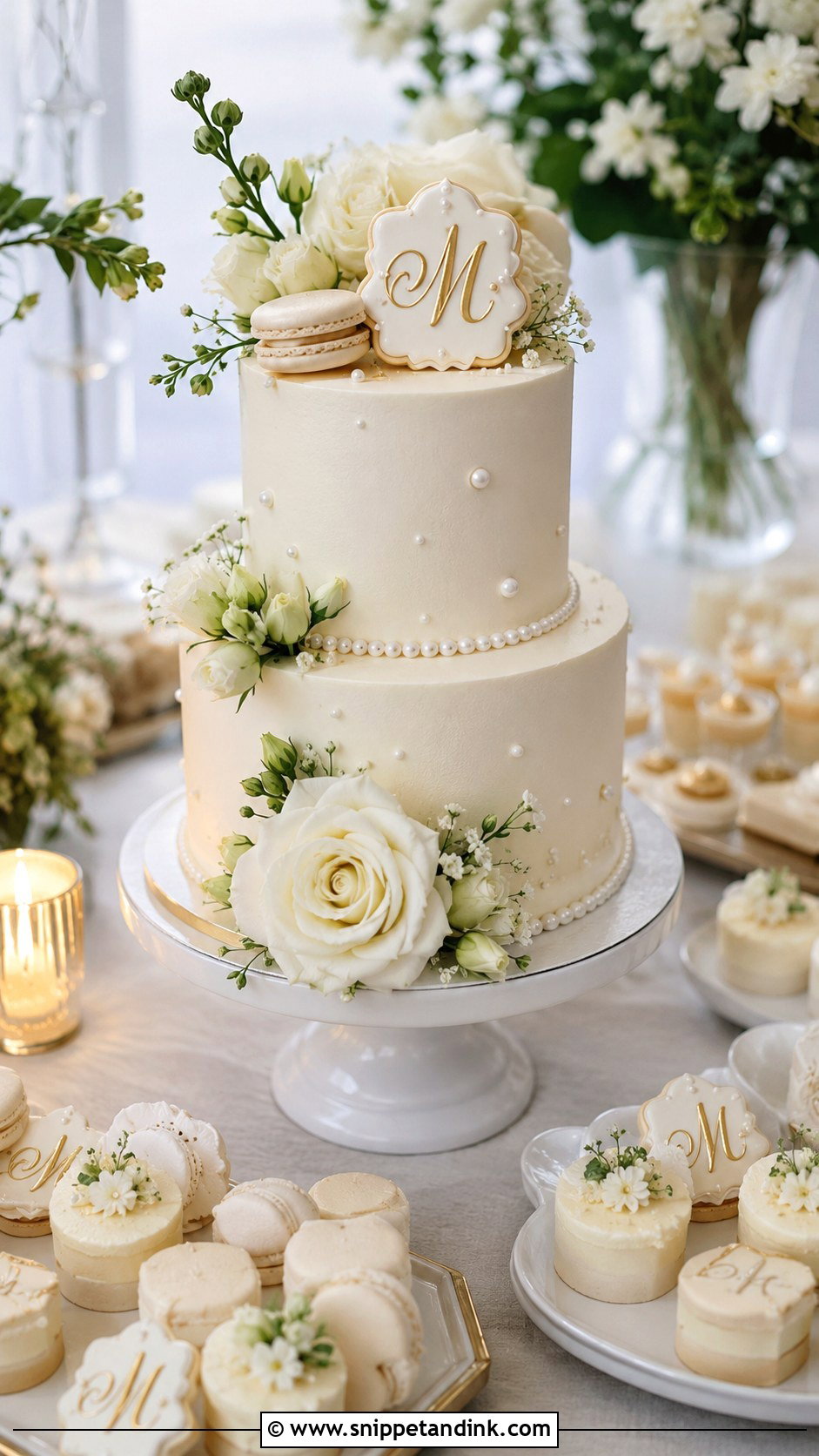
A dessert table wedding cake setup puts the main cake at the centre and builds out with mini cakes, cupcakes, macarons or cookies in the same palette. It gives guests variety and you a photo backdrop. The cake still needs to be the tallest or most detailed piece, so I use a raised stand. Repeat the same colours and serving pieces across the table so it looks planned rather than collected.
27. Bespoke Pressed Flower Wedding Cake
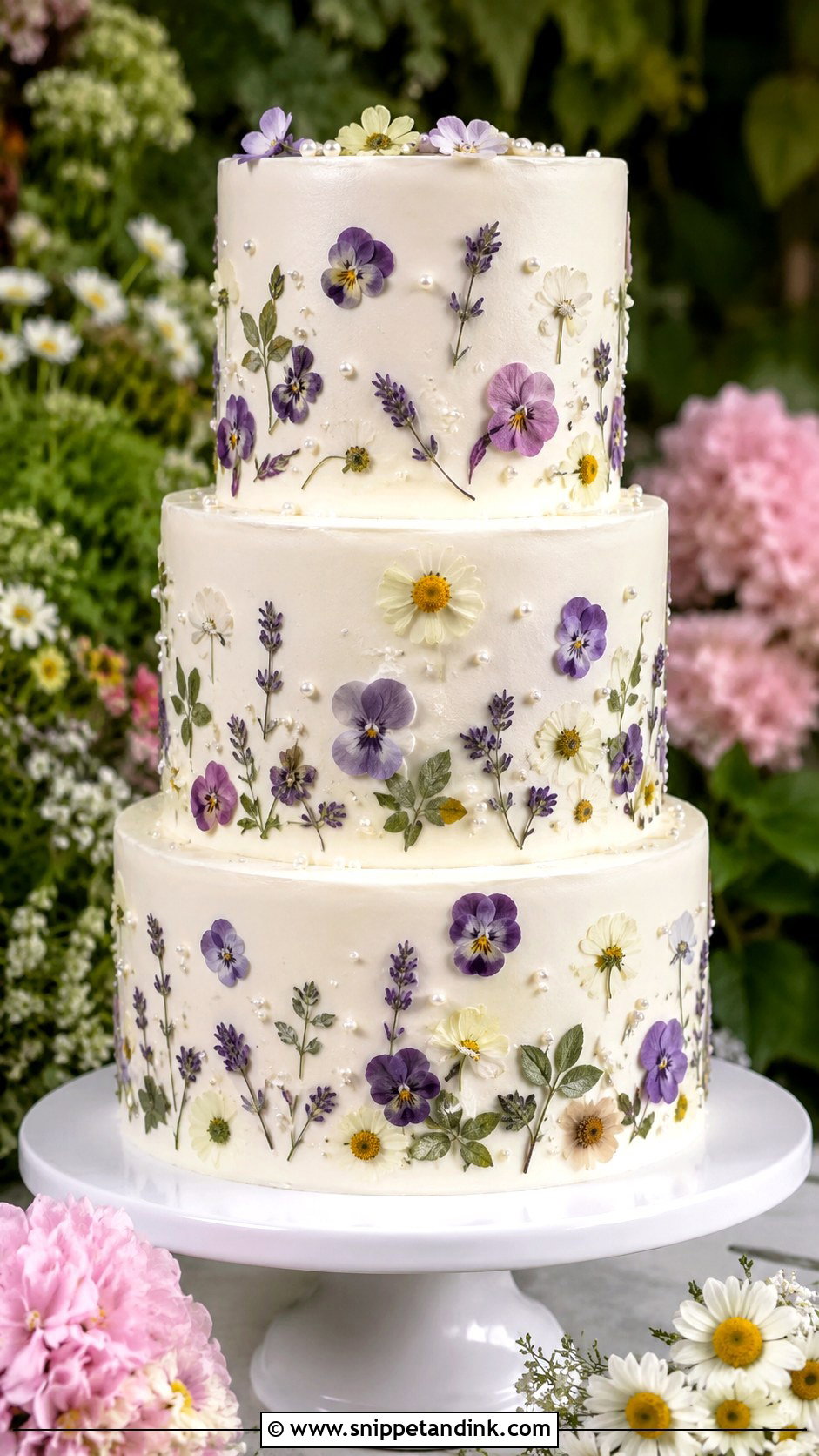
Pressed edible flowers lie flat against smooth buttercream or fondant, which gives a light botanical look. They’re pressed weeks ahead and, because they’re so thin, they can darken or curl if they sit on damp buttercream too long, so I apply them close to delivery. Pansies, violas and cornflowers press well. Keep the base simple so each flower reads clearly.
28. Bespoke Fruit Wedding Cake
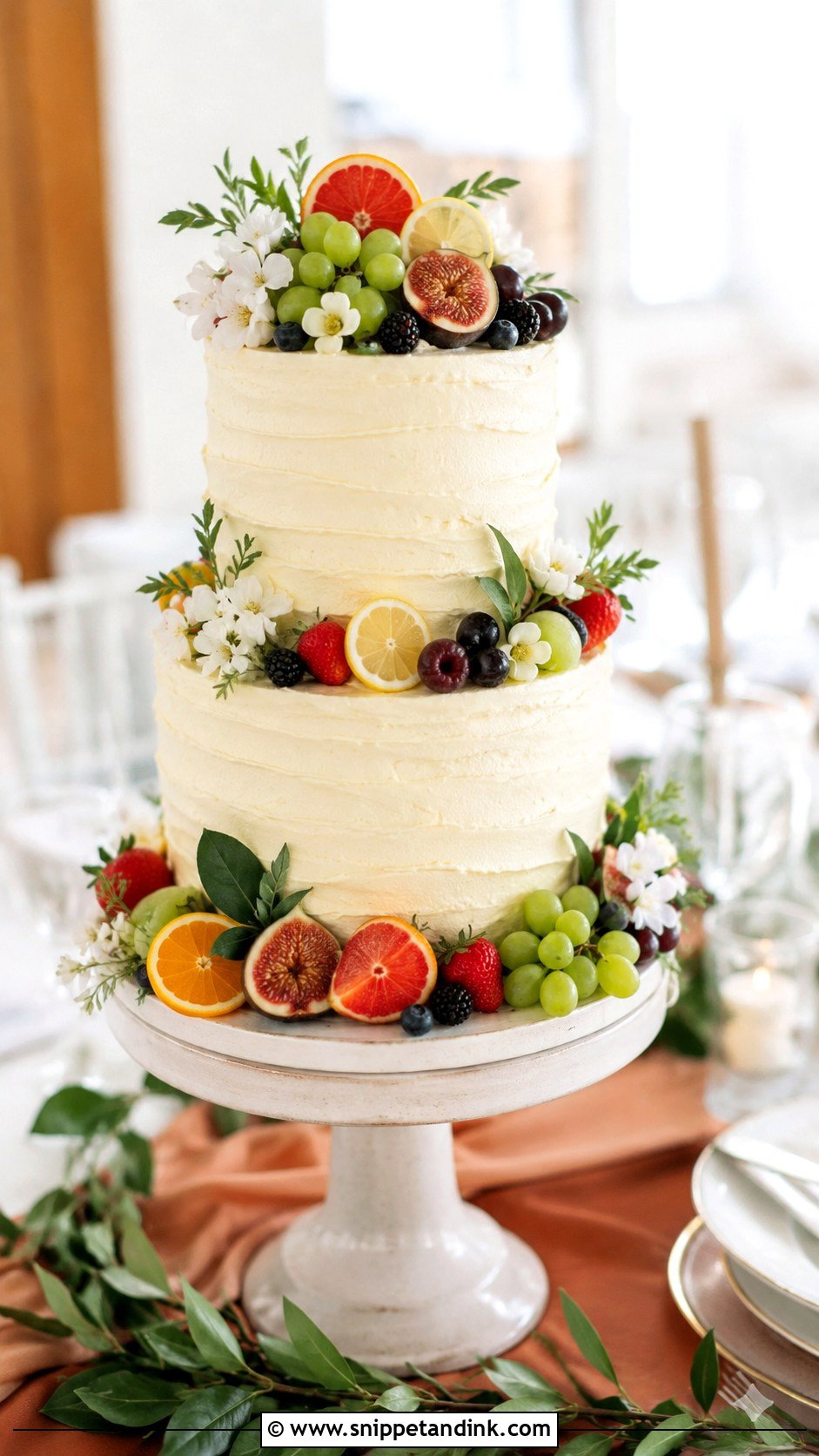
Fruit brings colour without sugar work: figs, pears, citrus slices, berries, grapes, cherries. Cut fruit weeps juice and browns, so I use whole or halved fruit where possible, brush it with a light glaze and add it on site. Placing it between tiers or around the base works better than piling it on top. The flavour pairing should follow: almond with figs, lemon with berries, vanilla with citrus.
29. Bespoke Orchid Wedding Cake
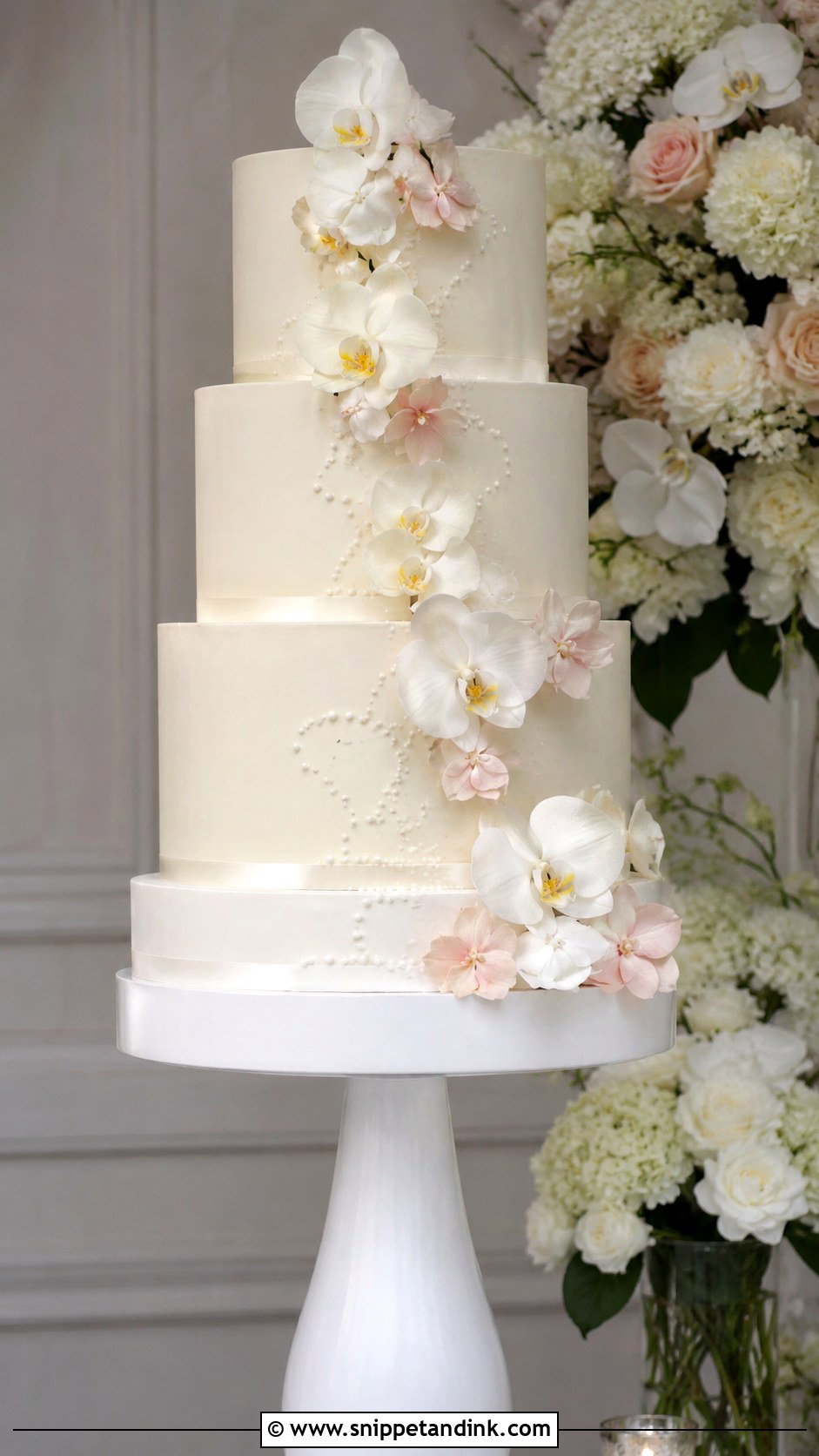
Orchids have such a strong shape that one spray can make a plain cake look high-end. White on ivory is classic; blush, peach or pale purple adds soft colour. Real orchids need their stems wrapped and kept off the icing, while sugar orchids avoid the issue completely and won’t wilt under lights. I prefer one clean cascade or a single dramatic spray to blooms dotted everywhere.
30. Bespoke Sugar Flower Wedding Cake
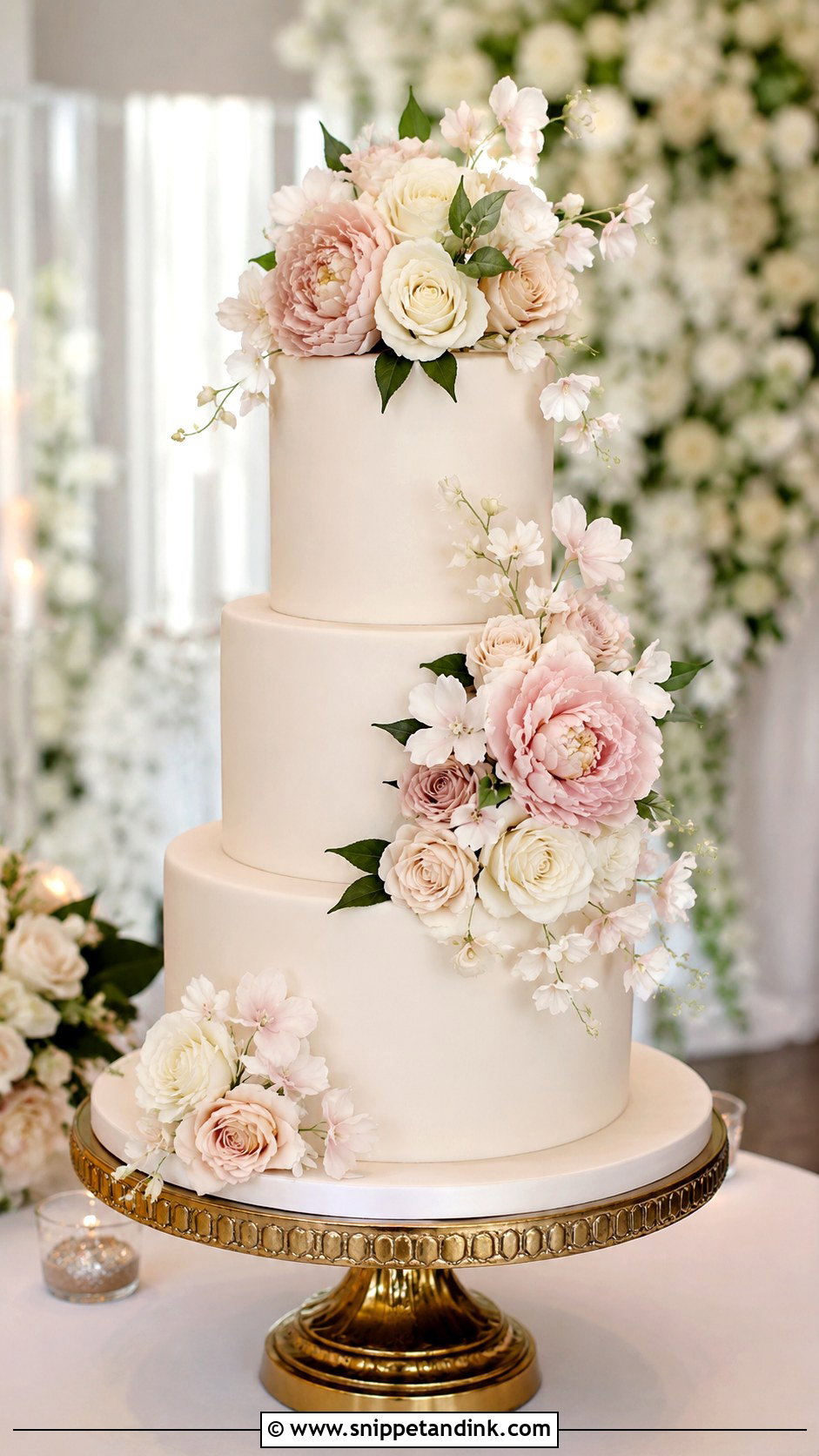
Sugar flowers are made petal by petal, wired, dusted and left to dry, and a full set for a large cake can take days of work, so they need to be ordered well ahead. Their big advantage is control: any flower, any season, any colour, and nothing toxic or wilting near the food. Roses, peonies and gardenias are favourites. I can recreate your bouquet or build one large statement bloom as the focal point, and the bloom keeps as a memento afterwards.
31. Bespoke Ruffle Wedding Cake
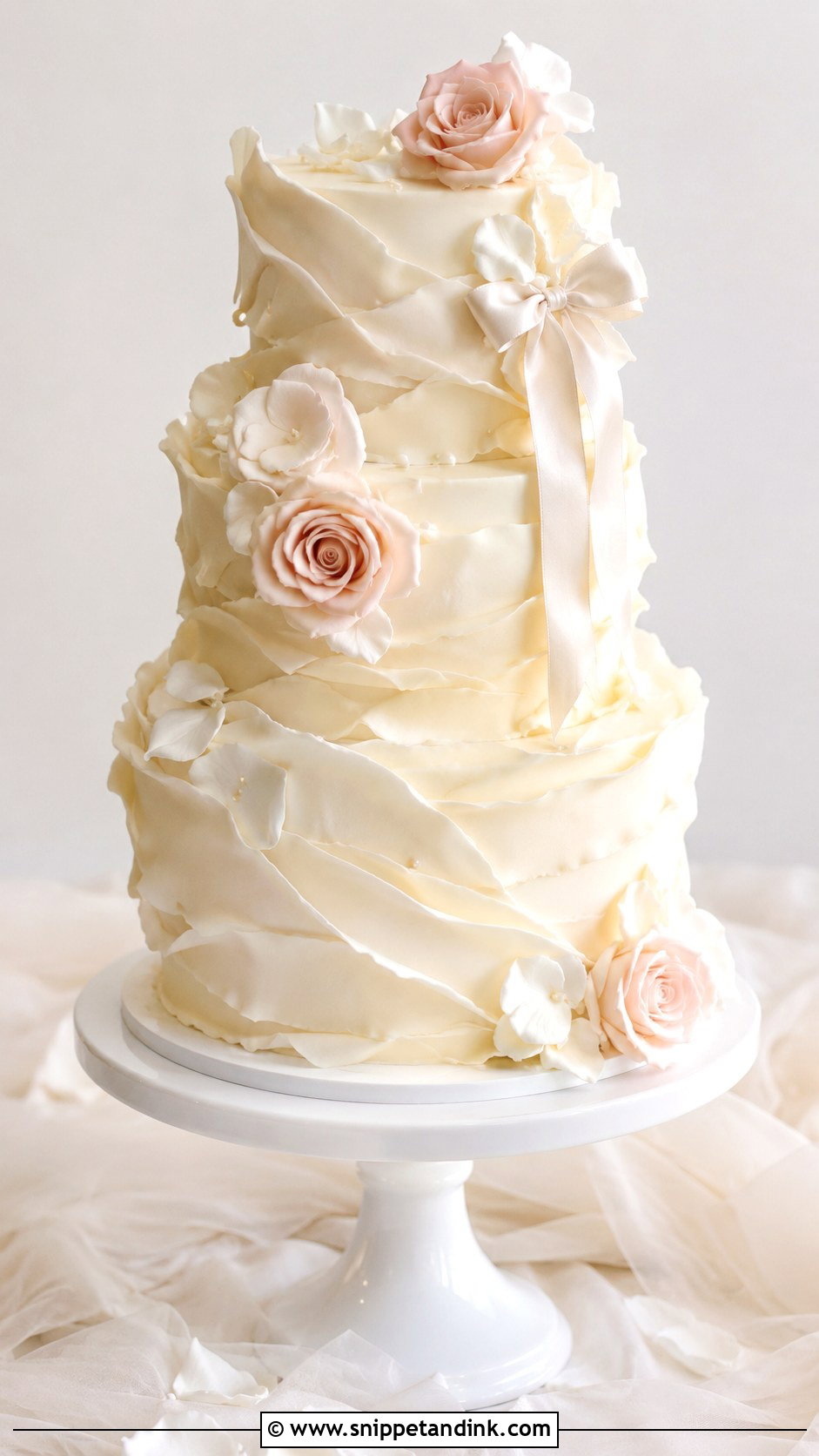
Ruffles bring movement, made from fondant, buttercream, wafer paper or sugar paste. Wafer paper gives the lightest, most fabric-like edge but it reacts to humidity, so I avoid it for steamy summer venues. Full coverage is dramatic; a single ruffled tier between plain ones is more modern. I often borrow the texture from the dress, whether that’s soft tulle, pleated fabric or layered organza.
32. Bespoke Coastal Wedding Cake
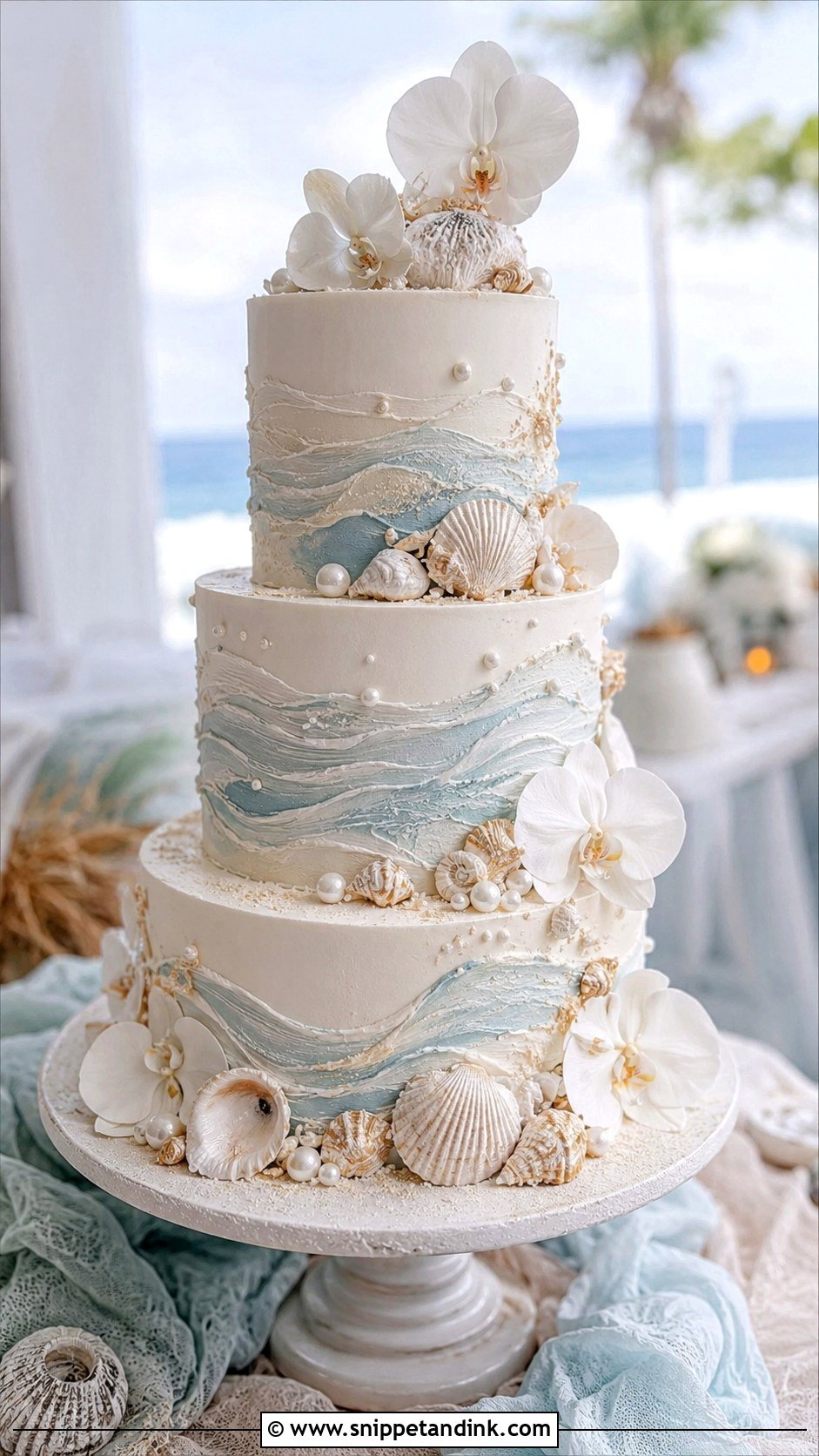
Seaside cakes go wrong when they become themed. Soft white buttercream, pale blue watercolor, pearls and gentle wave texture suggest the coast without a bucket of sugar shells. Salt air and humidity are hard on buttercream, so I plan for a cool, shaded spot and a short display time. Lemon, coconut or passion fruit inside keeps the flavour light.
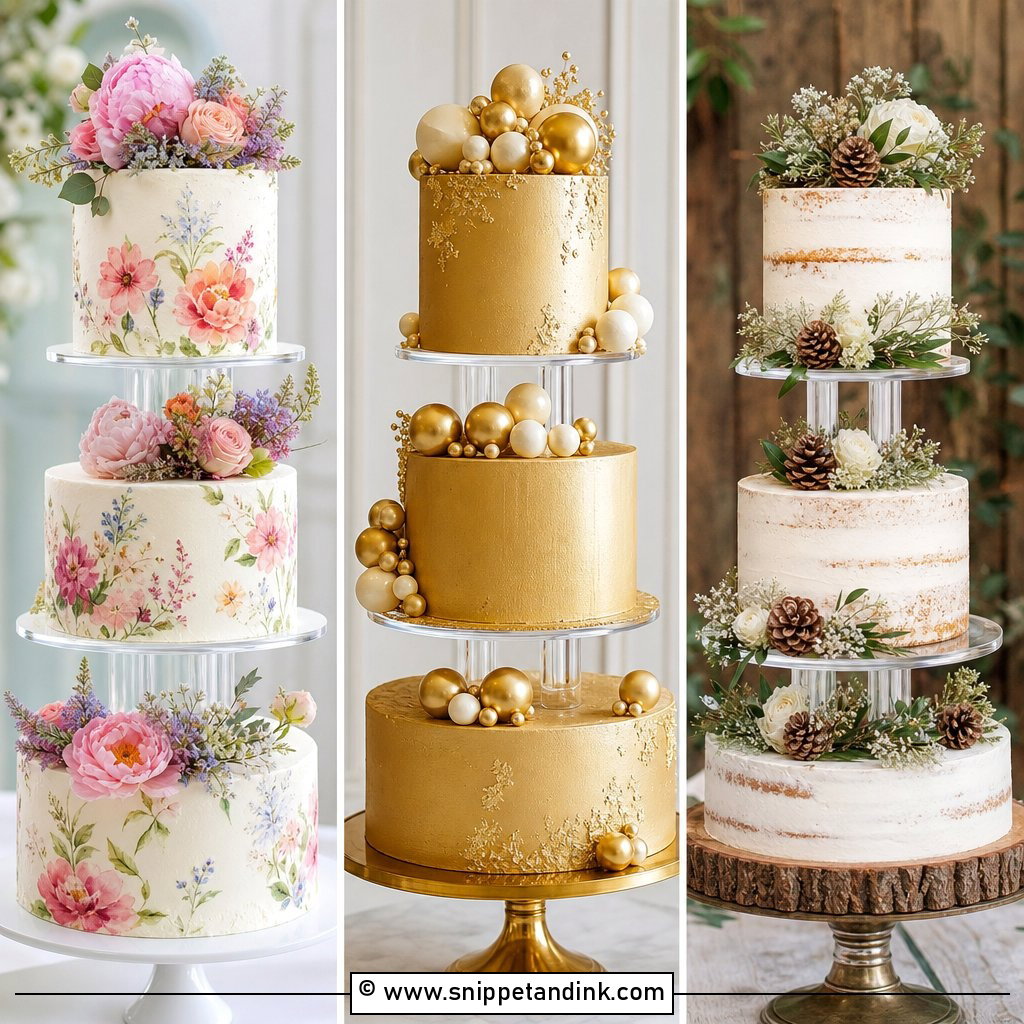
33. Bespoke Rustic Wedding Cake
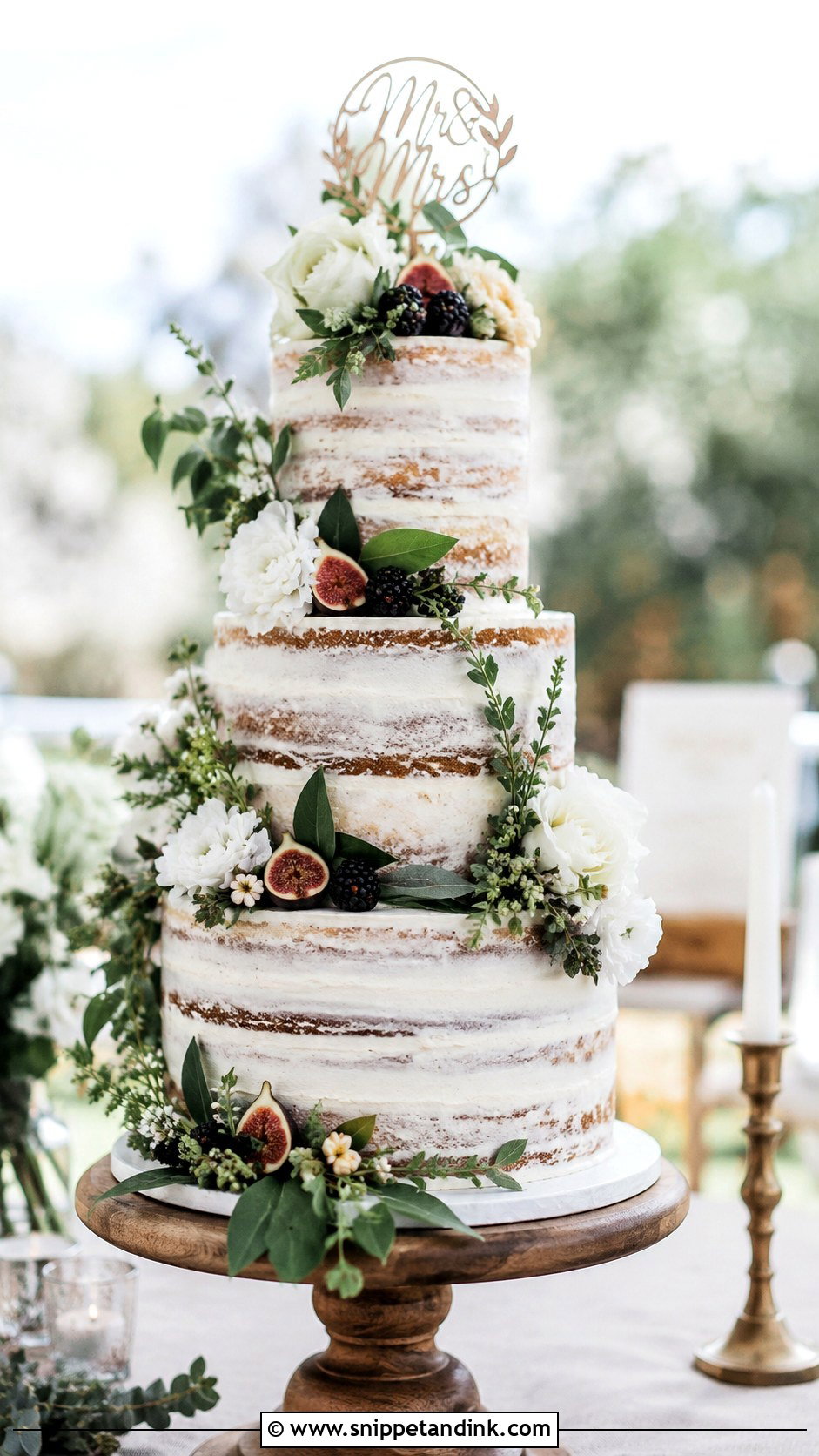
Rustic cakes rely on textured buttercream, semi-naked sides, flowers, greenery and fruit, often on a timber stand. The danger is looking unfinished, so I still keep edges level and florals balanced. A semi-naked cake dries out faster than a fully coated one because the sponge is exposed, so I bake and assemble it as close to the day as I can. Barns and countryside receptions suit it; vanilla, carrot, almond or lemon suit the mood.
34. Bespoke Black Wedding Cake
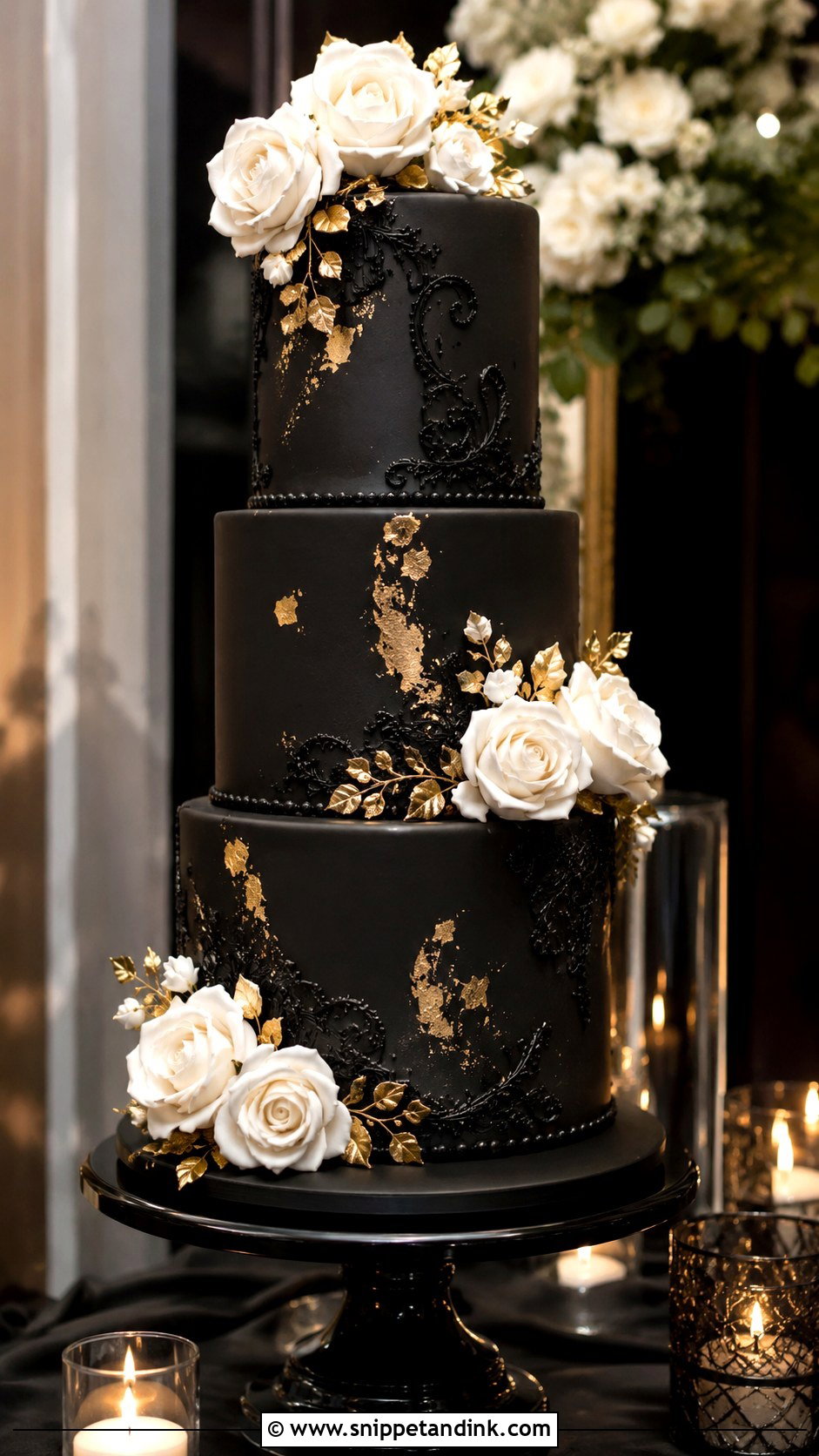
A black cake is a confident choice for an evening reception. Matte black fondant or charcoal buttercream sets off white flowers, gold or pearls. As with any black icing, it takes heavy colouring, so I often make the cake dark grey and let the lighting push it toward black. Clean shapes and precise decoration keep it sleek; sugar roses or delicate piping keep it romantic.
35. Bespoke Cake Meadow Wedding Cake
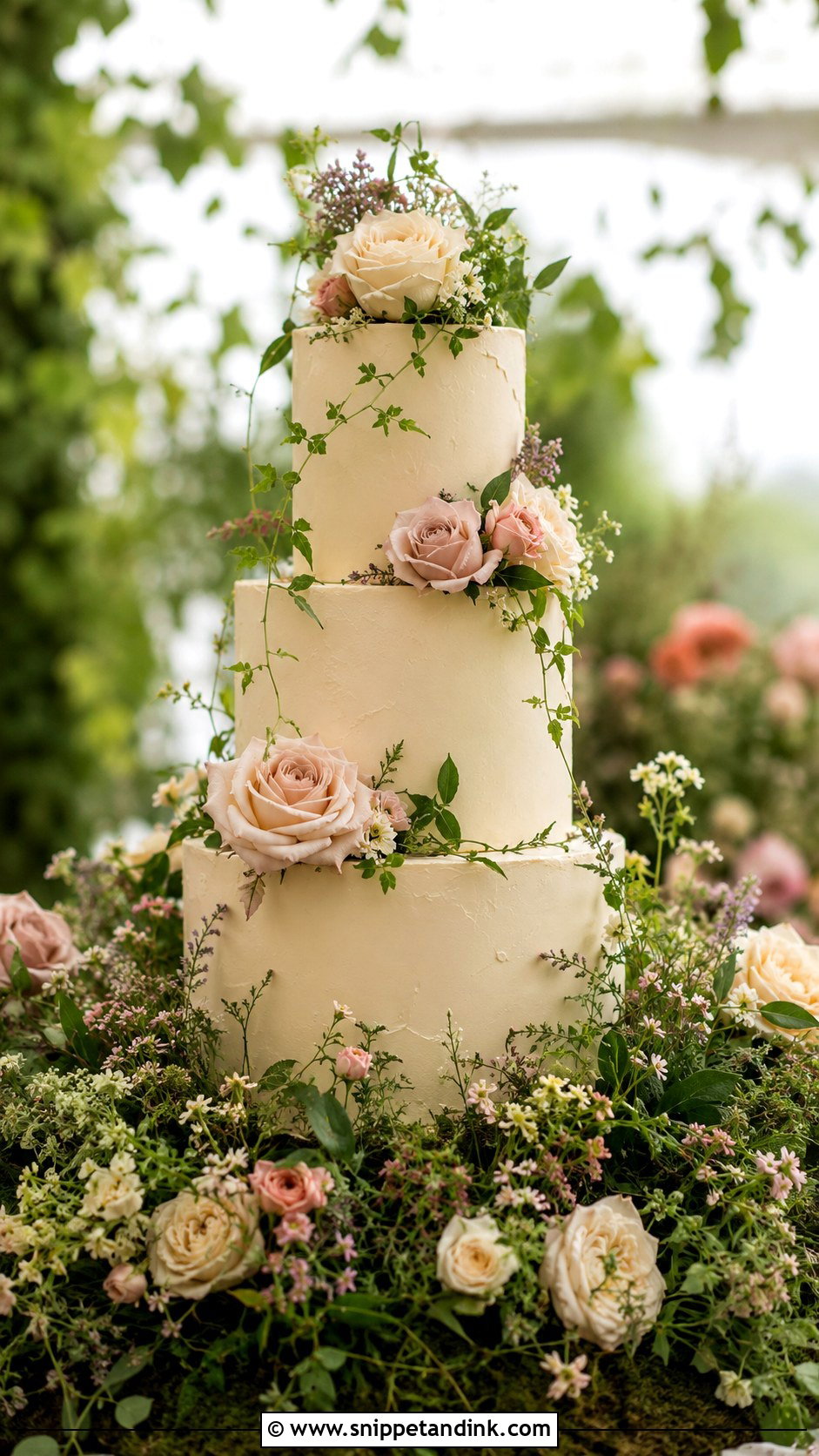
A cake meadow surrounds the base with flowers and greenery so the cake seems to rise out of a garden. The cake can stay simple, smooth or lightly textured, and the arrangement does the work. This needs coordination: the florist and I agree on a stand height and a clear zone around the base so stems don’t touch the icing. Reusing aisle or centrepiece flowers keeps the cost sensible.
Real Flowers Belong Near the Icing, Not In It
Fresh flowers are lovely on a cake, but they come from a florist, not a food supplier, and many are sprayed. I ask for unsprayed stems where possible and I never push a raw stem into the cake. Stems get wrapped in floral tape or set in food-safe posy picks first. Some popular wedding flowers are toxic and shouldn’t touch cake at all; sweet peas, hydrangea, lily of the valley and foxglove are on my list to copy in sugar instead.
Getting Buttercream Through a Warm Reception
Most cake disasters I hear about are temperature problems, not baking problems. A few things I plan for on every delivery:
- The cake table goes away from windows, heaters, uplighting and the dance floor.
- Tall cakes are stacked on site and supported with dowels and boards in every tier.
- Fondant moved from a cold van into a humid room can bead with condensation. Leave it alone and it dries; wiping it leaves marks.
- Outdoor receptions get the cake last: shade, short display time, and a cut that happens before the sun moves round.
Ask your venue whether there’s fridge space for the top tier if you’d like to save it. Wrapped tightly and frozen, it keeps far better than leaving it in the box on a hotel shelf.
Start From the Detail Only You Would Choose
The cakes I remember aren’t the tallest or the most expensive. They’re the ones where something on them had a reason to be there: a monogram from the invitations, a flower from the proposal, a colour lifted from the dress, a flavour from a first date. Pick that one detail first, then let the shape, finish and size follow from your venue and guest count. Bring it to your tasting and build the rest of the cake around it.
You'll Like These Ideas:








Leave a Reply