
Dressing for a Sikh wedding starts with the floor, not the colour. At an Anand Karaj, everyone removes their shoes, covers their head and sits on the floor of the gurdwara, often for an hour or more, and the bride walks four rounds around the Guru Granth Sahib. Every outfit I style for these mornings is built around that: bottoms you can sit cross-legged in, a dupatta that stays put, and a blouse you won’t adjust in front of the sangat. After that, the choices open up to Punjabi suits, lehengas, anarkalis, shararas, sarees and reception gowns. Below are 25 outfits for brides, bridesmaids, family and guests, with the practical notes I’d give each of them.
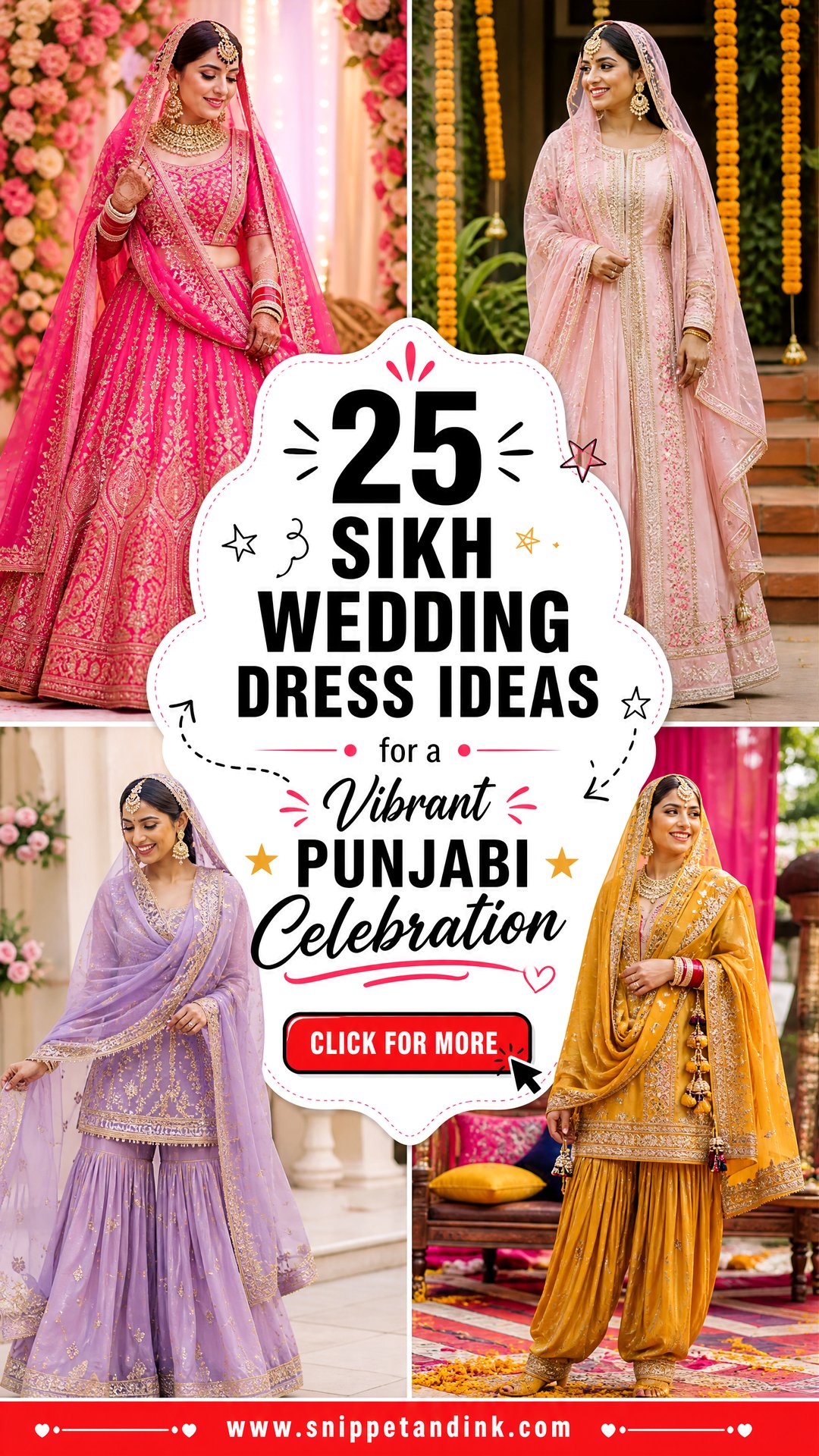
Walking the Four Laavan Rounds in a Bridal Lehenga
During the laavan, the bride walks clockwise around the Guru Granth Sahib four times, holding the palla, the scarf that connects her to the groom. Family members often walk beside her to guide her. She’s barefoot, she’s moving while the hymns are sung, and she sits down again between each round. An outfit that looked right in the trial room can trip her here.
What I check at the final fitting
- Hem length without shoes. Lehengas are usually hemmed for heels, so the bride ends up treading on the front edge barefoot. Ask the tailor to set the front hem with you standing flat.
- Can she stand up from the floor unaided, holding the palla in one hand? A very heavy skirt makes that hard.
- The head dupatta should be pinned at the crown and behind each ear, with extra pins on the shoulder, so it stays on when she bends to sit.
- Kaleere and choora shouldn’t catch on the dupatta. A light layer of tape on any sharp edge of the kaleere helps.
I always ask the bride to rehearse sitting down and getting up four times in the full outfit, including the dupatta. It takes five minutes and catches most problems.
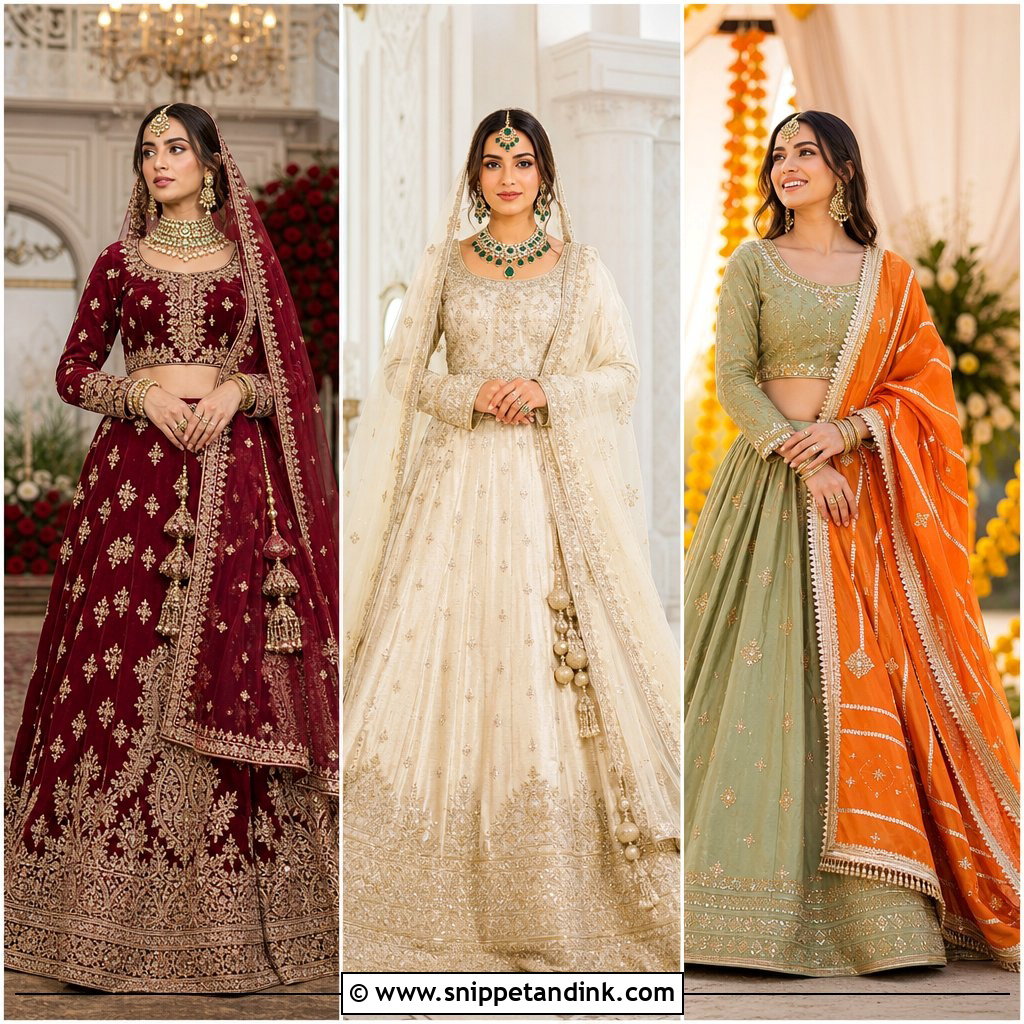
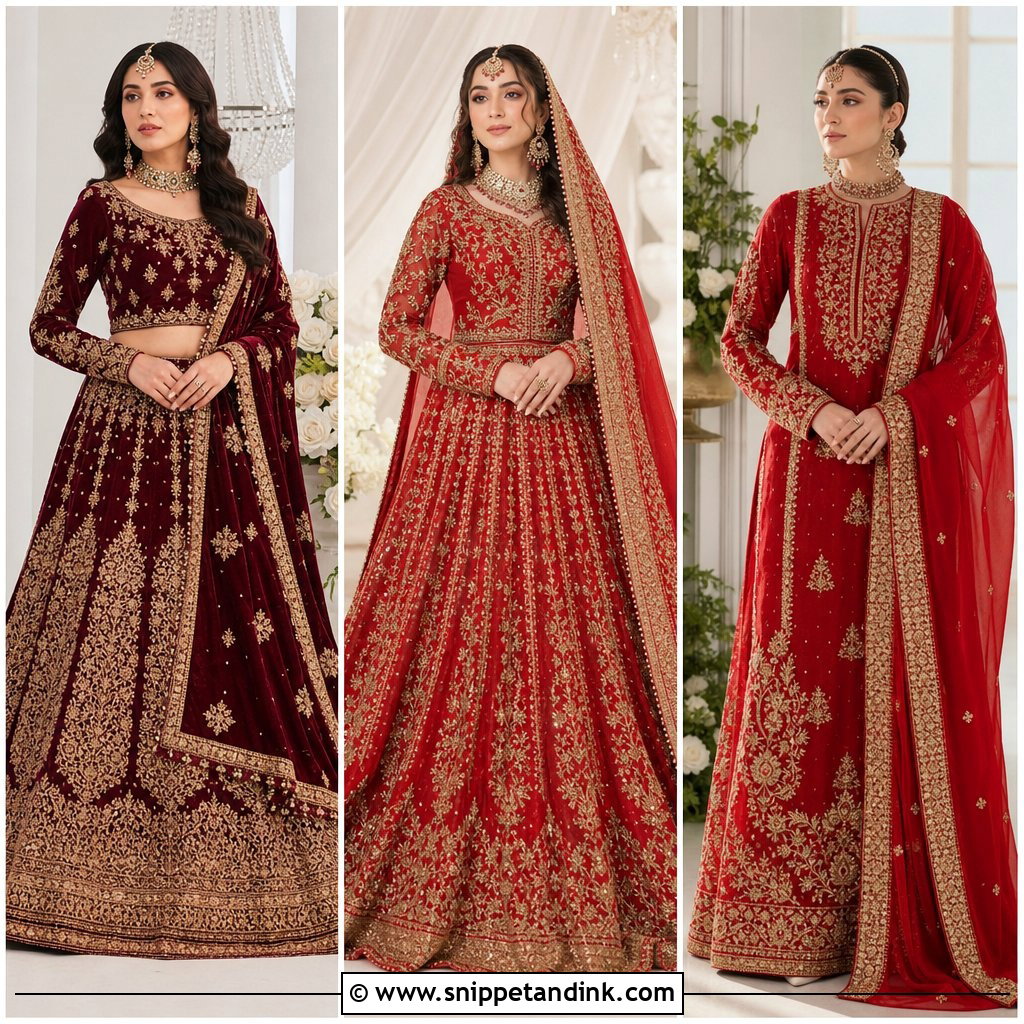
1. Red Sikh Bridal Lehenga
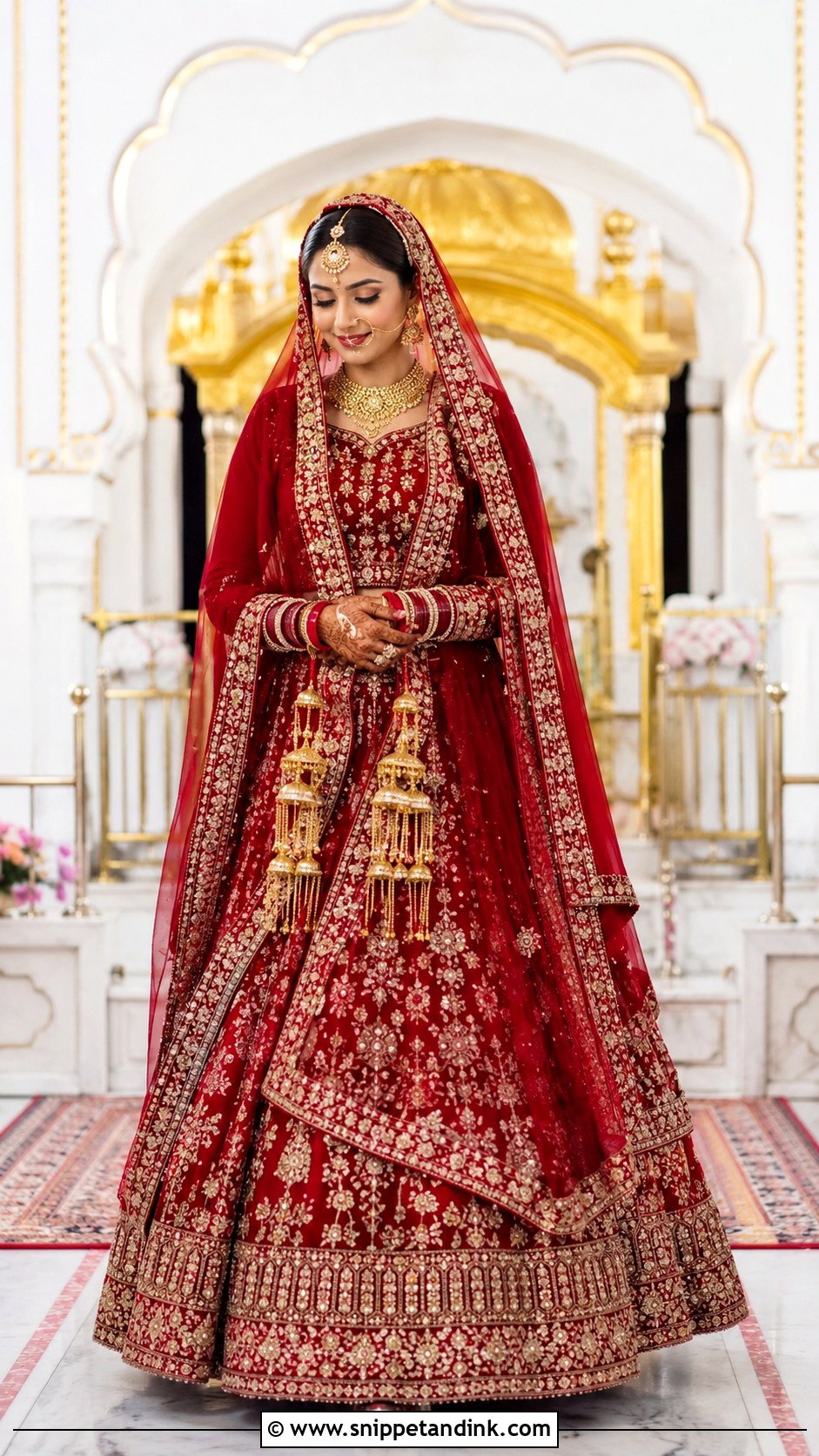
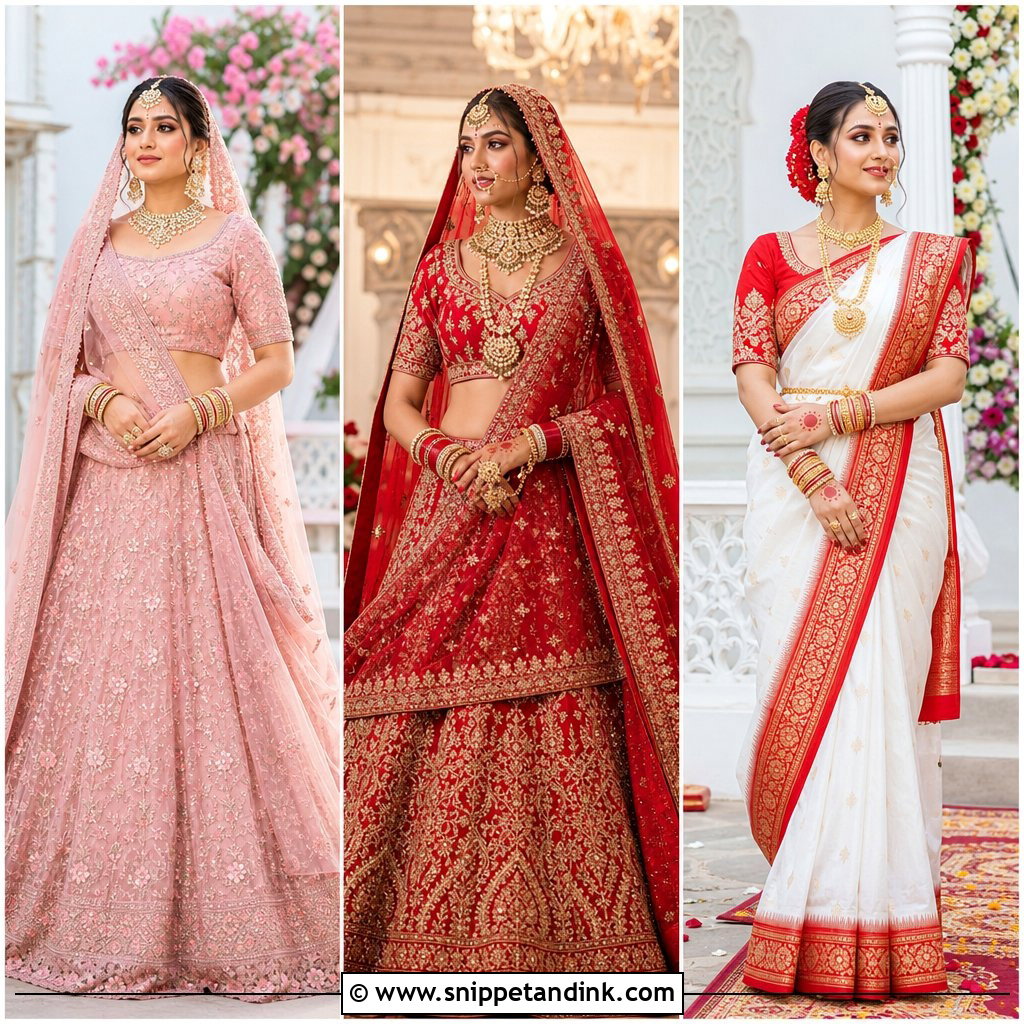
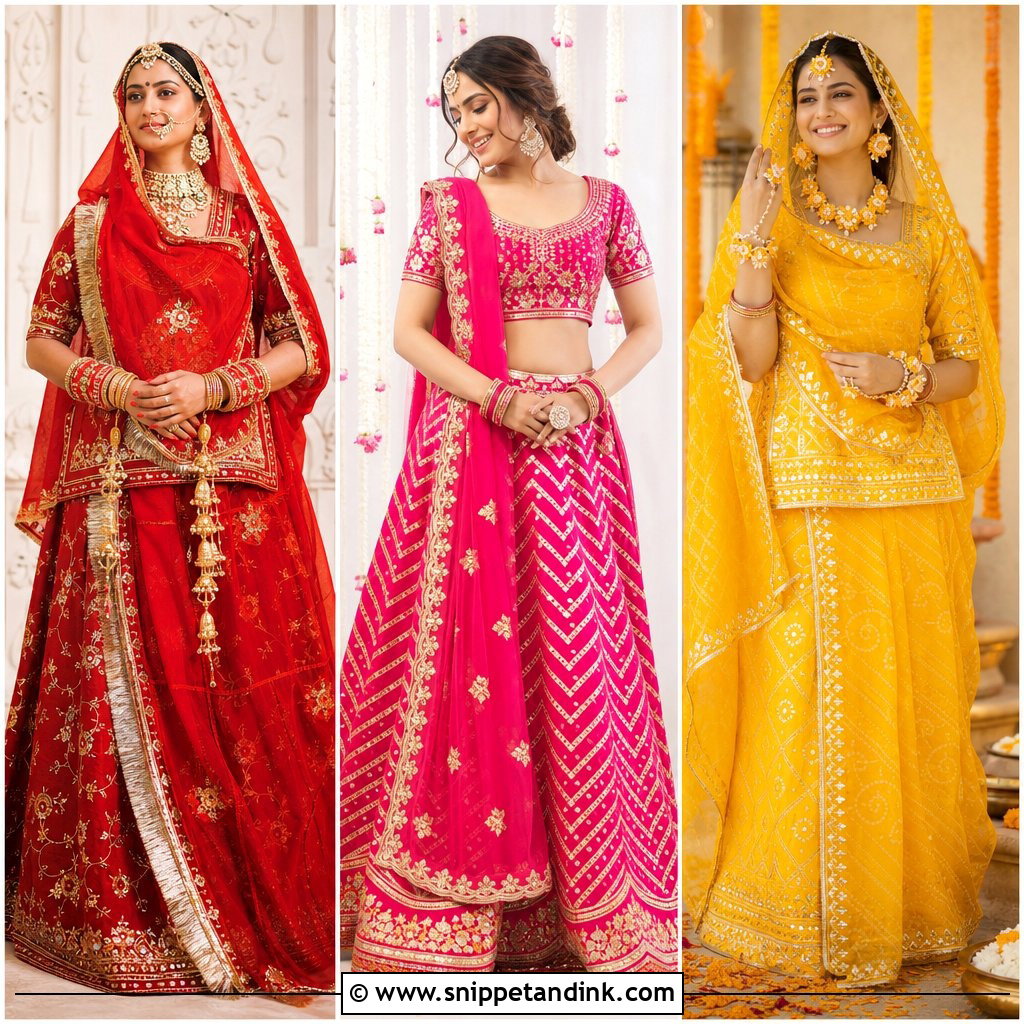
Red is still the colour most Sikh brides choose for the Anand Karaj, and a full lehenga carries it well. Zari, zardozi, threadwork or mirror details give the skirt weight and shine. Keep the blouse modest and secure, because you’ll be sitting with your arms in your lap for a long time. A heavy dupatta goes over the head and a lighter second one can drape across the shoulder. Gold jewelry, a passa, choora, kaleere and embroidered juttis finish it. Before the day, ask your tailor to check the skirt weight; some fully worked lehengas pass several kilos, and that’s tiring on a waist for hours.
2. Maroon Sikh Bridal Suit
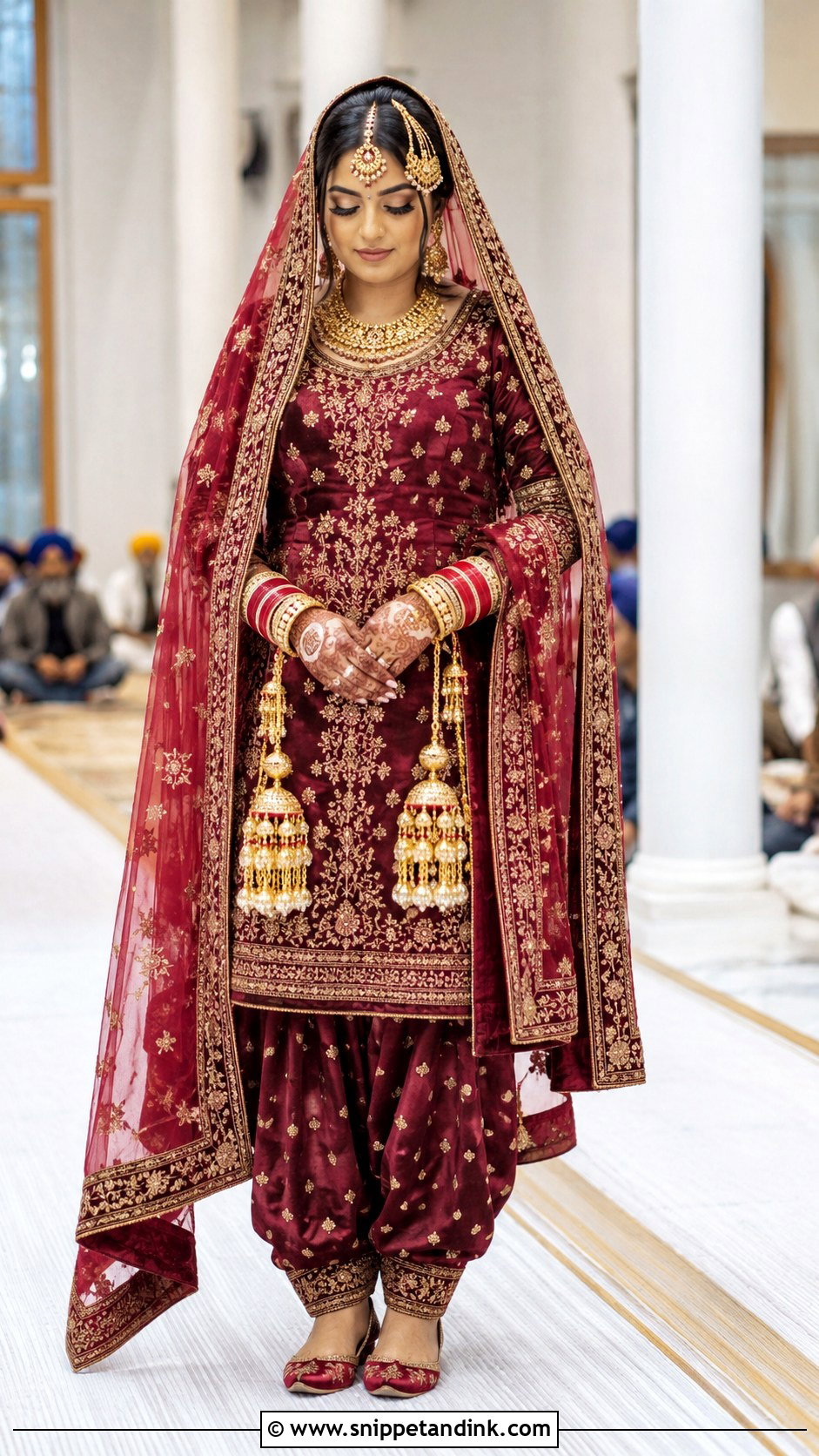
Plenty of brides prefer Punjabi dressing to a lehenga, and a maroon Sikh bridal suit keeps that tradition with ease. A long embroidered kameez over a Patiala salwar, churidar or straight pants is the most comfortable bridal option for floor seating. Silk, raw silk, brocade or velvet make it formal. The dupatta does the bridal work here, so choose one with a heavy border that frames the face. Maroon reads rich under the warm lighting of most gurdwara halls without turning orange in photos the way some bright reds do.
3. Pink Sikh Bridal Lehenga
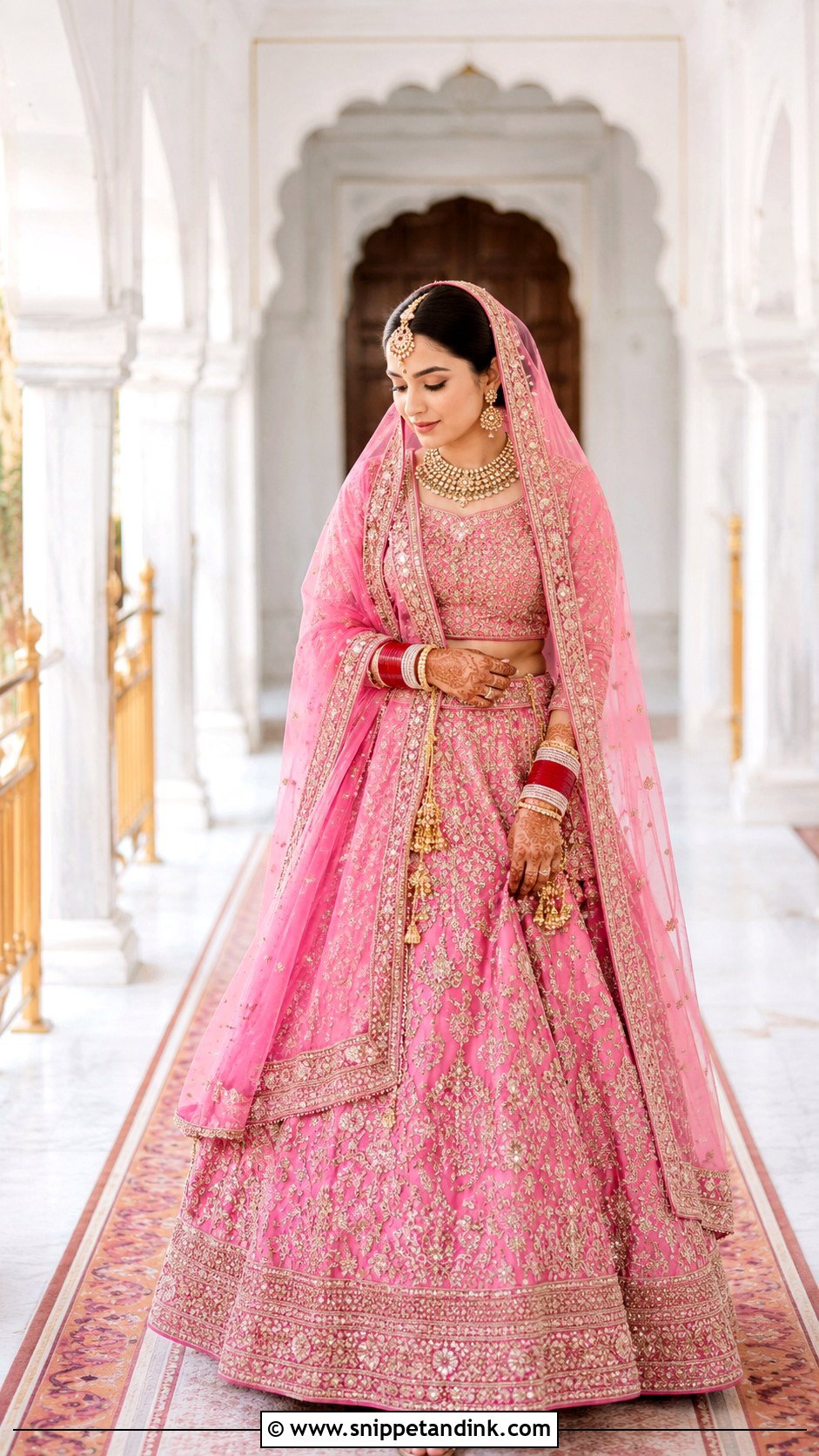
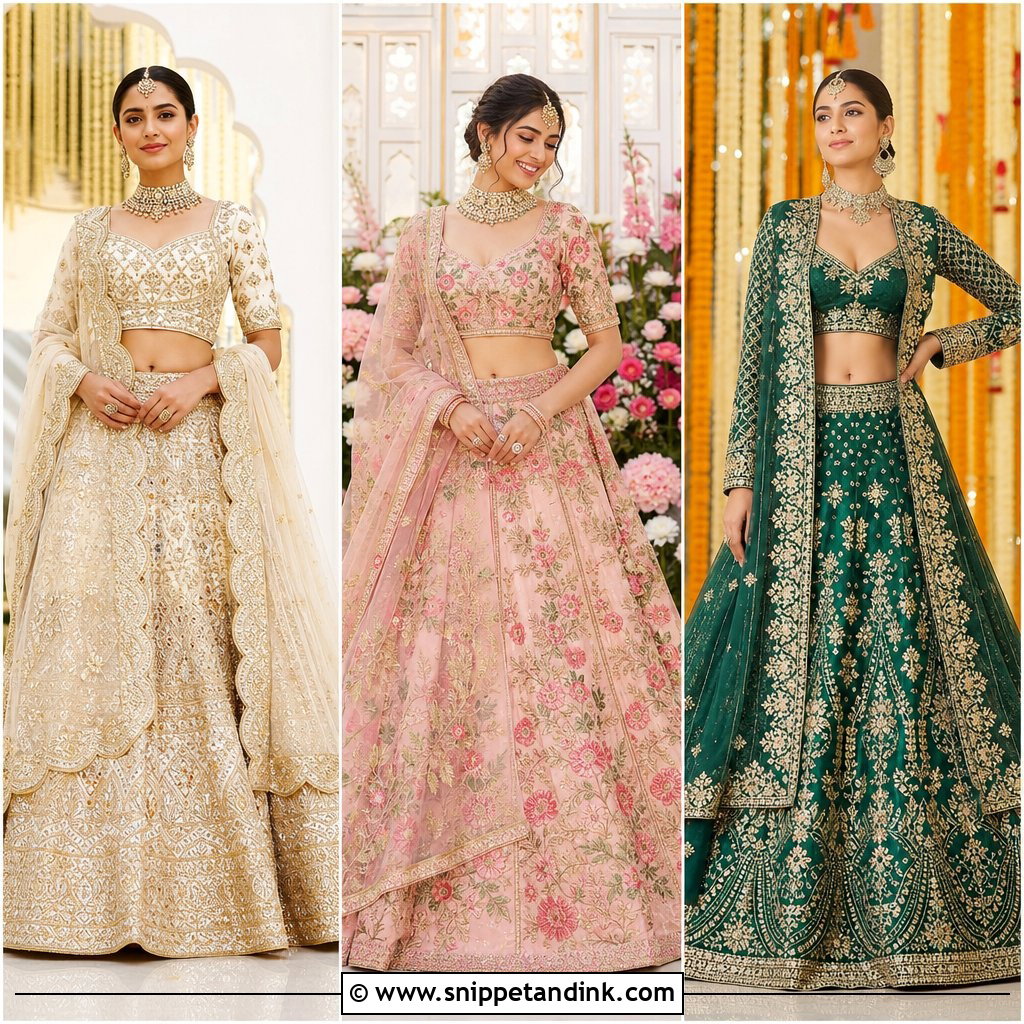
Pink keeps a bridal outfit festive while softening it. Rani pink with gold embroidery is bold; blush with pearl or sequin work is quieter and suits a daytime ceremony. The head dupatta needs enough weight to stay in place, yet a heavily worked one in a pale shade shows every pin, so I use matching coloured pins. Polki jewelry and embroidered juttis complete it. Hold blush fabric against your face in daylight before ordering; very pale pinks can wash out warm skin tones.
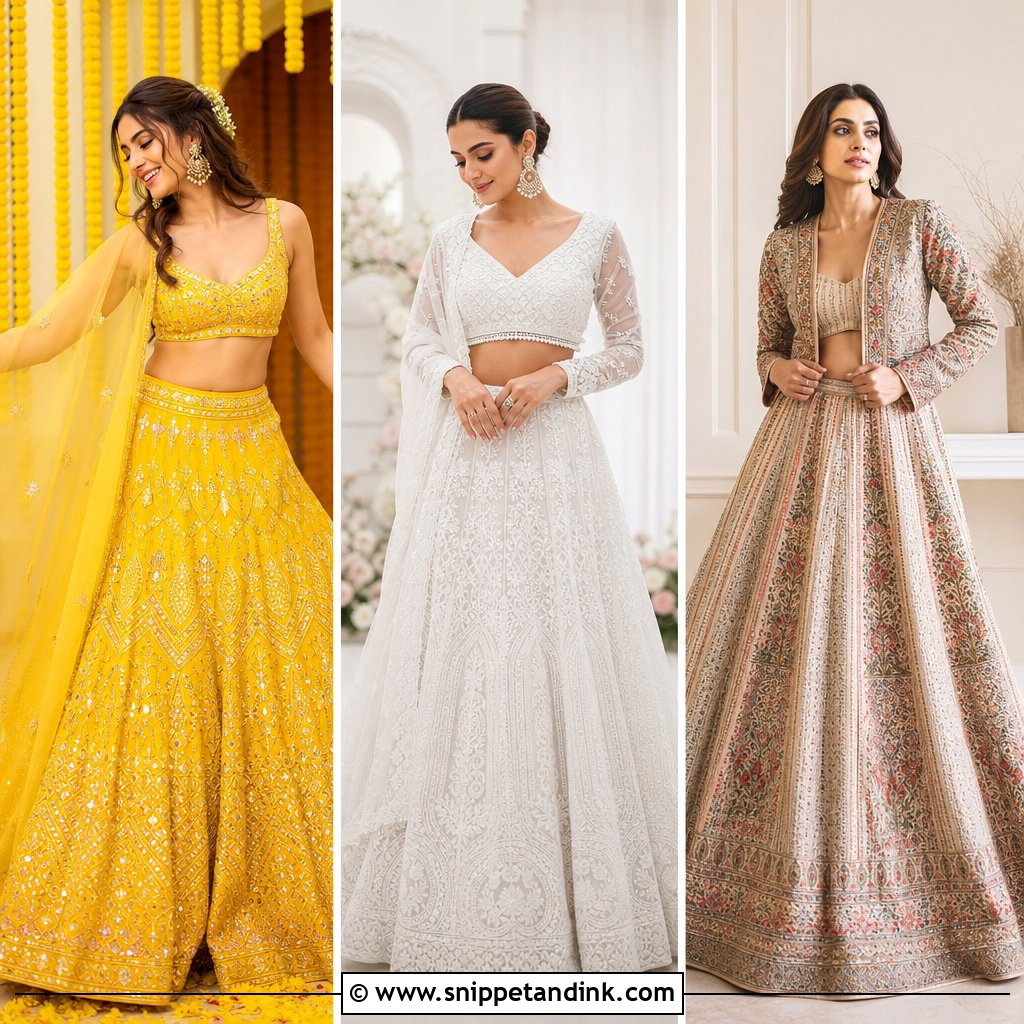
4. Ivory Sikh Wedding Lehenga
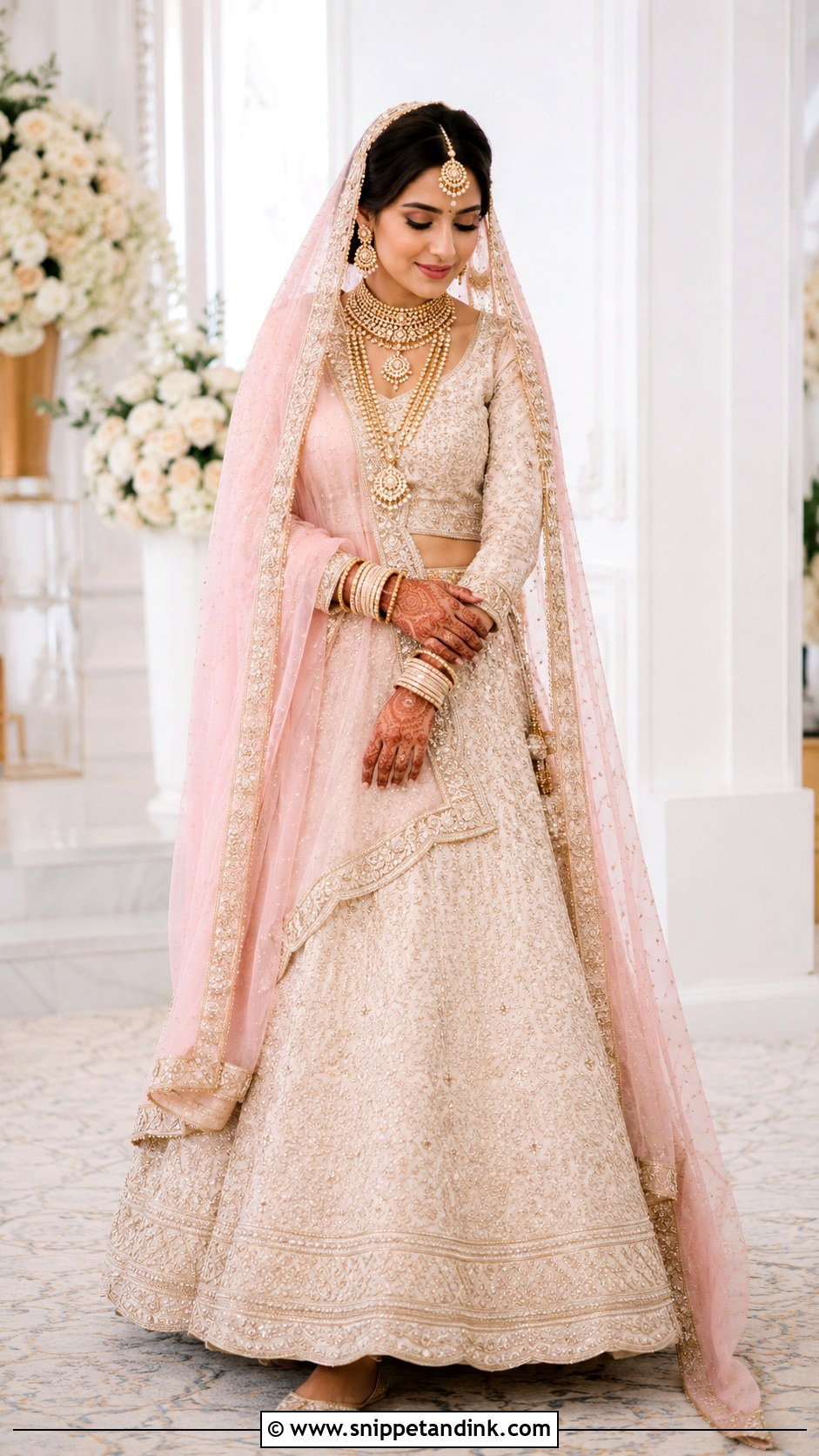
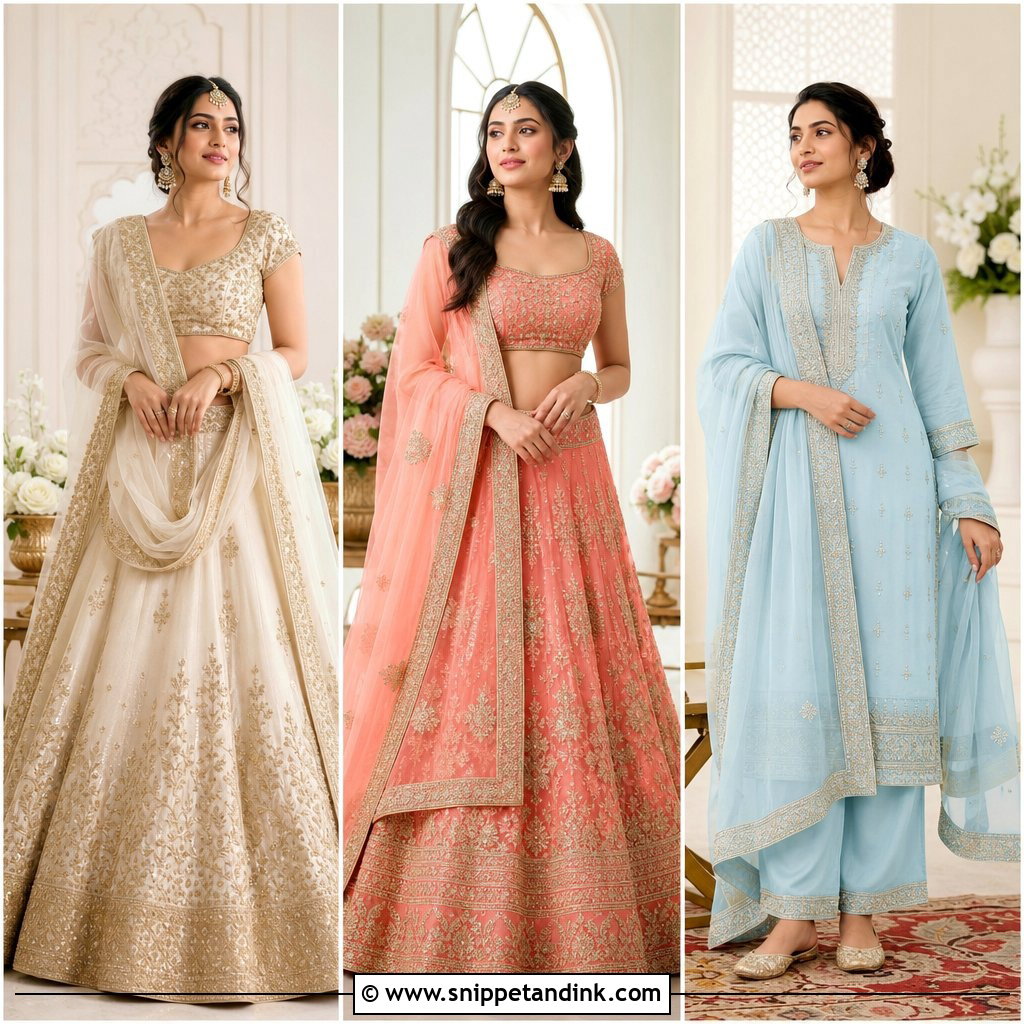
Ivory with gold, champagne or pastel embroidery looks refined, but talk to the family first. Some households avoid white and near-white for wedding ceremonies, and ivory works only when everyone is comfortable with it. Colour helps: a contrasting dupatta in peach, pink, sage or maroon, or a coloured border, keeps it festive. A covered blouse, layered necklaces and soft gold accessories finish the look, with juttis or low block heels for the reception. Ivory shows floor marks quickly, so keep a lighter-weight hem.
5. Punjabi Salwar Kameez For Sikh Wedding
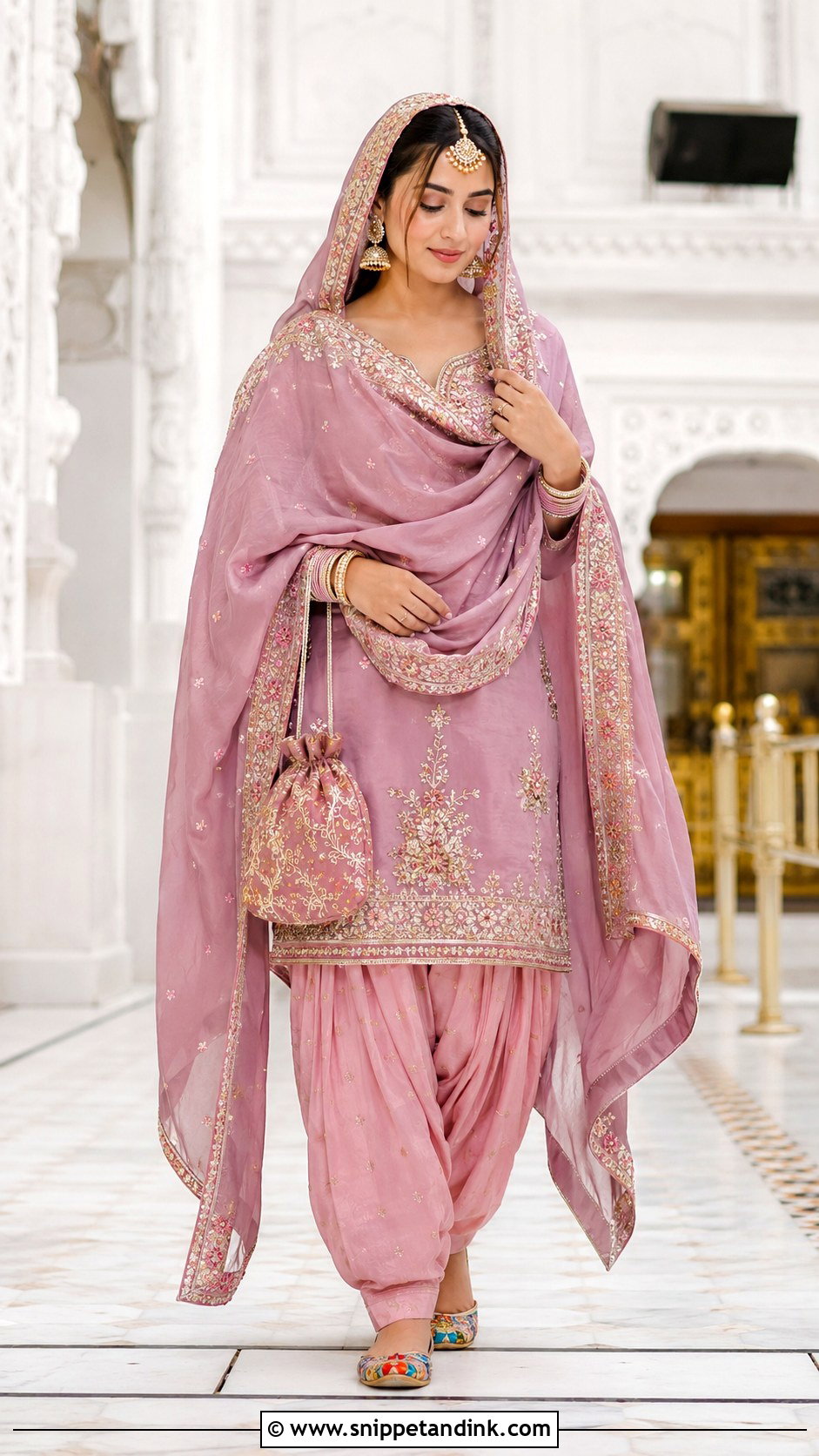
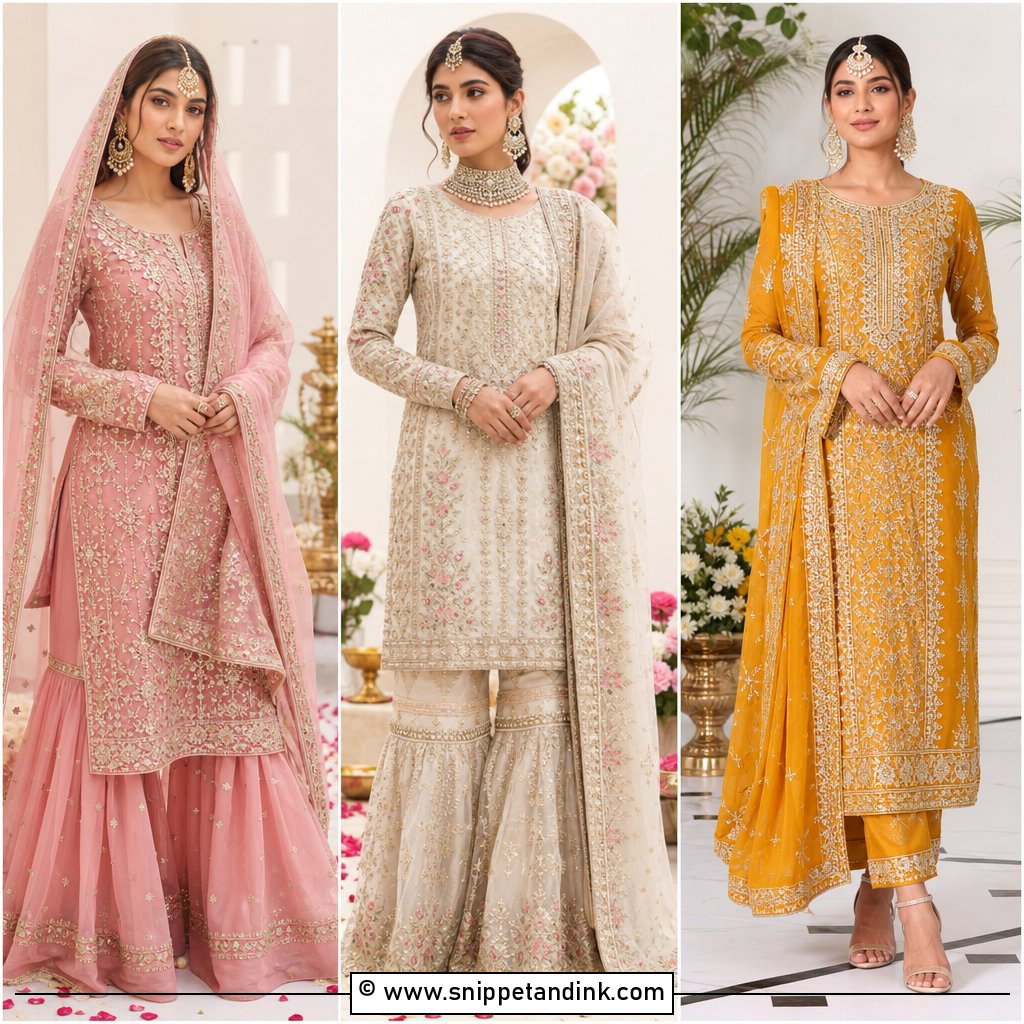
The salwar kameez is the outfit I’d recommend to any guest unsure what to wear. It’s modest, comfortable and built for sitting. A silk or georgette kameez with embroidery at the neckline, sleeves and hem dresses it up; a traditional or Patiala salwar keeps you mobile. Guests wear lighter versions and brides heavier, richer ones. Choose a dupatta at least two metres long so it covers your head and still drapes properly. Juttis, bangles, earrings and a small potli bag complete it.
6. Anarkali Suit For Sikh Wedding
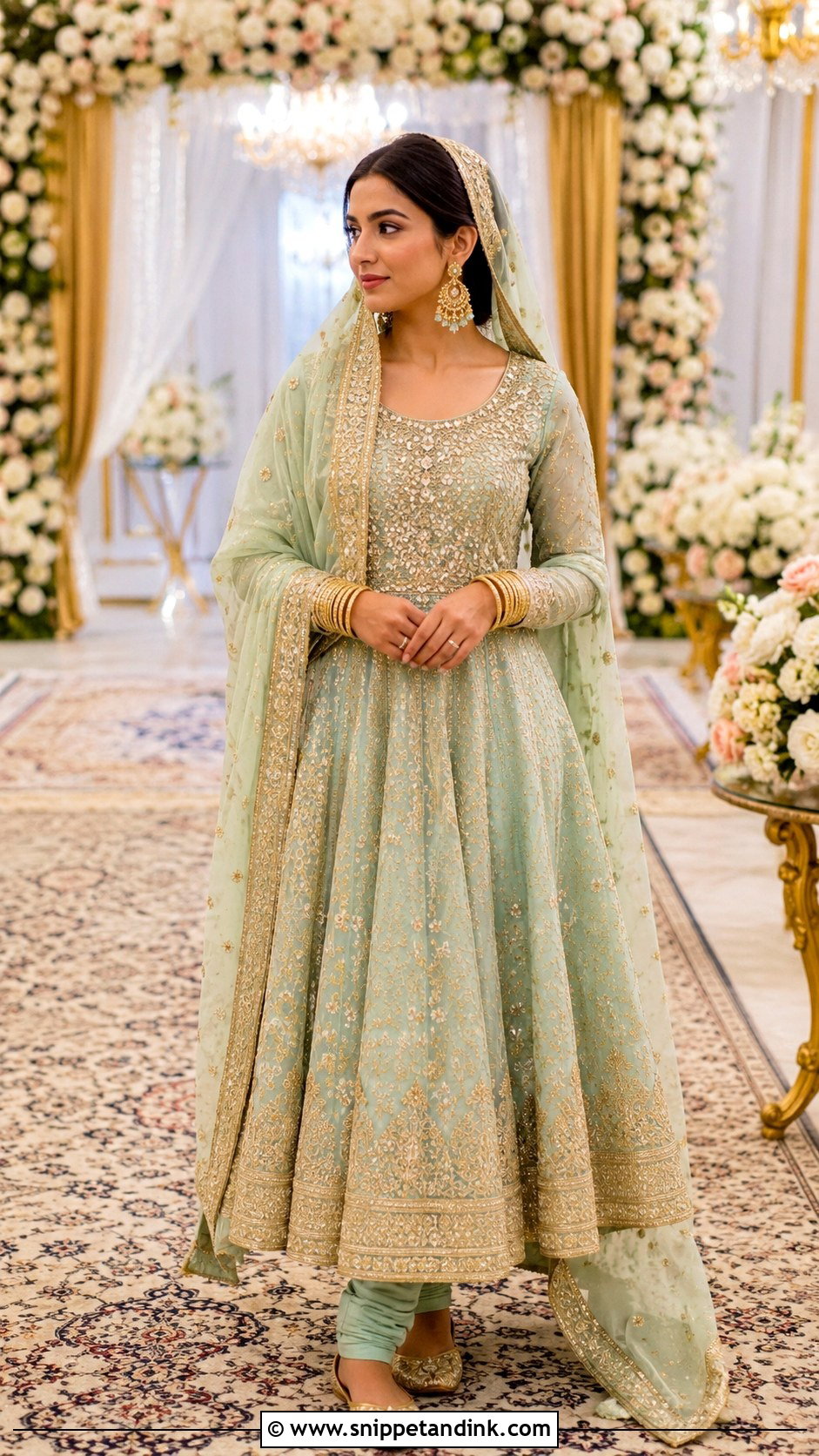
An anarkali gives you flare and movement without a lehenga’s weight. Pick a full-length or ankle-length style with sleeves and a dupatta for head covering. The thing to watch is volume: a very full anarkali pools around you when you sit on the floor, so practise sitting in it and sweeping the skirt to one side. Net, silk, georgette and organza suit guests, sisters and cousins; brides can go heavier. Churidar pants, embellished juttis and a structured clutch finish it.
7. Sharara Suit For Sikh Wedding
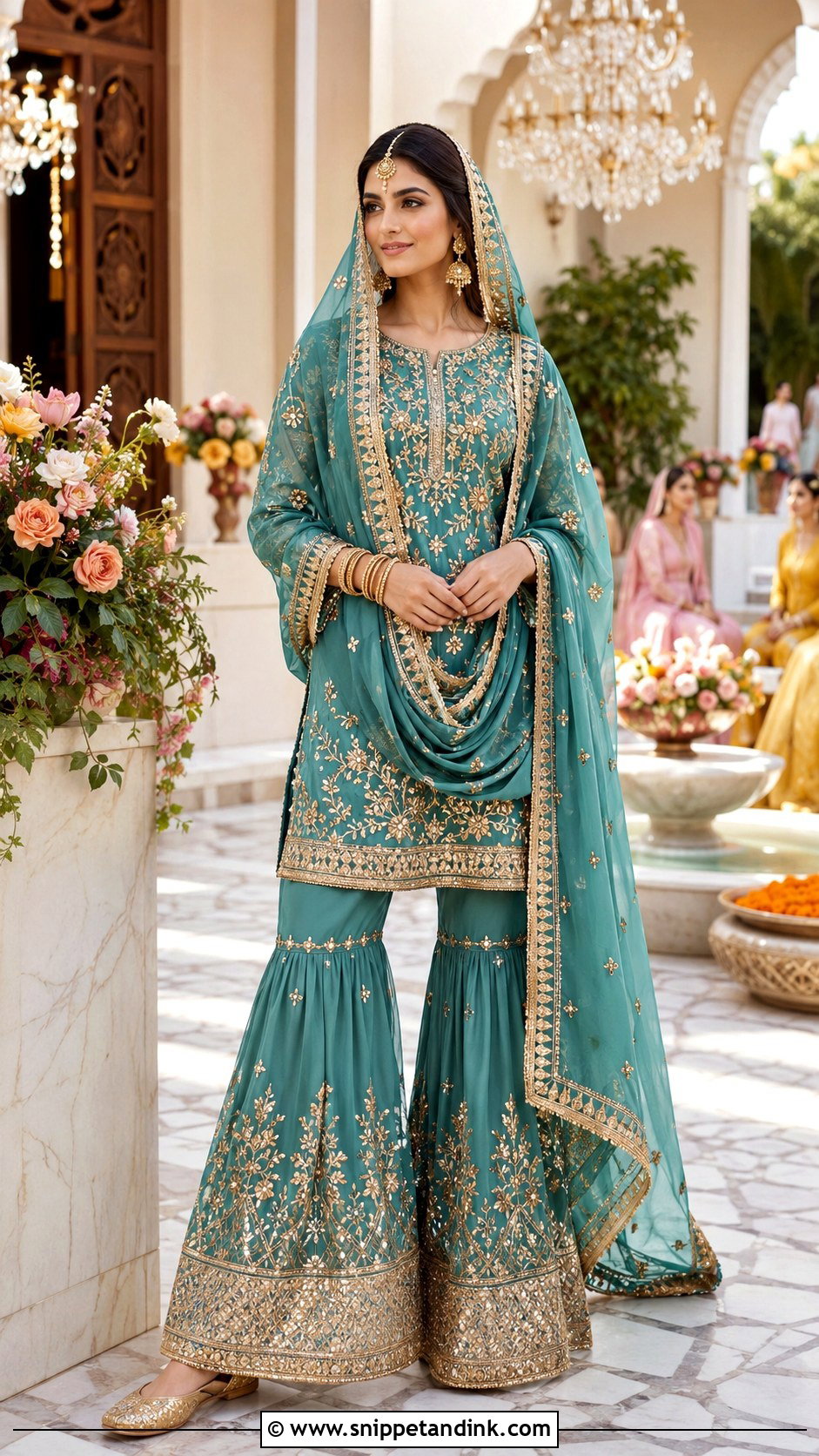
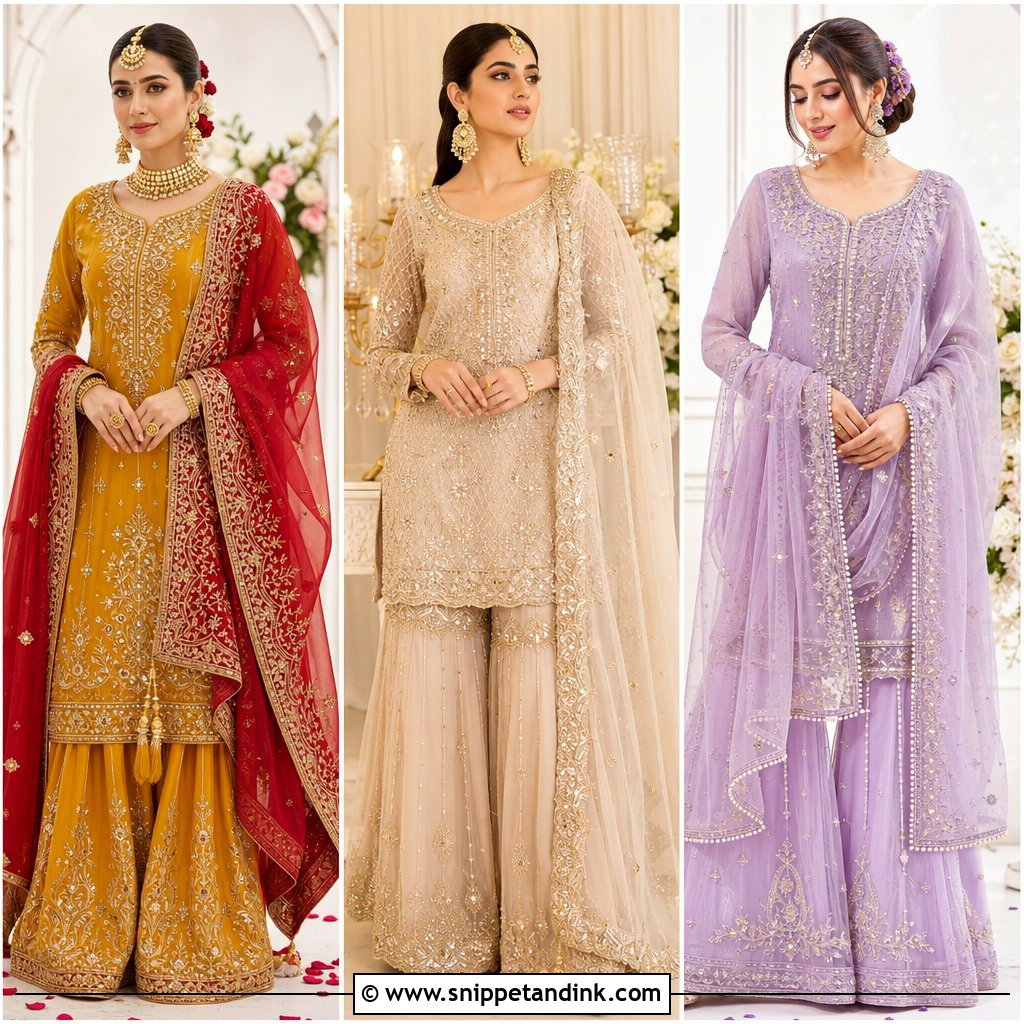
Shararas look dramatic but are easier to manage than a full lehenga, because each leg moves on its own. Pair a short or mid-length embroidered kurta with a flared sharara and matching dupatta. Deep red, maroon, pink or rust with heavy work suits a bride; pastels, emerald, navy or mustard suit guests without competing. Statement earrings, bangles and juttis keep it balanced. Choose a dupatta wide enough to cover your head properly at the gurdwara while sitting neatly on the shoulders.
8. Gharara Suit For Sikh Wedding
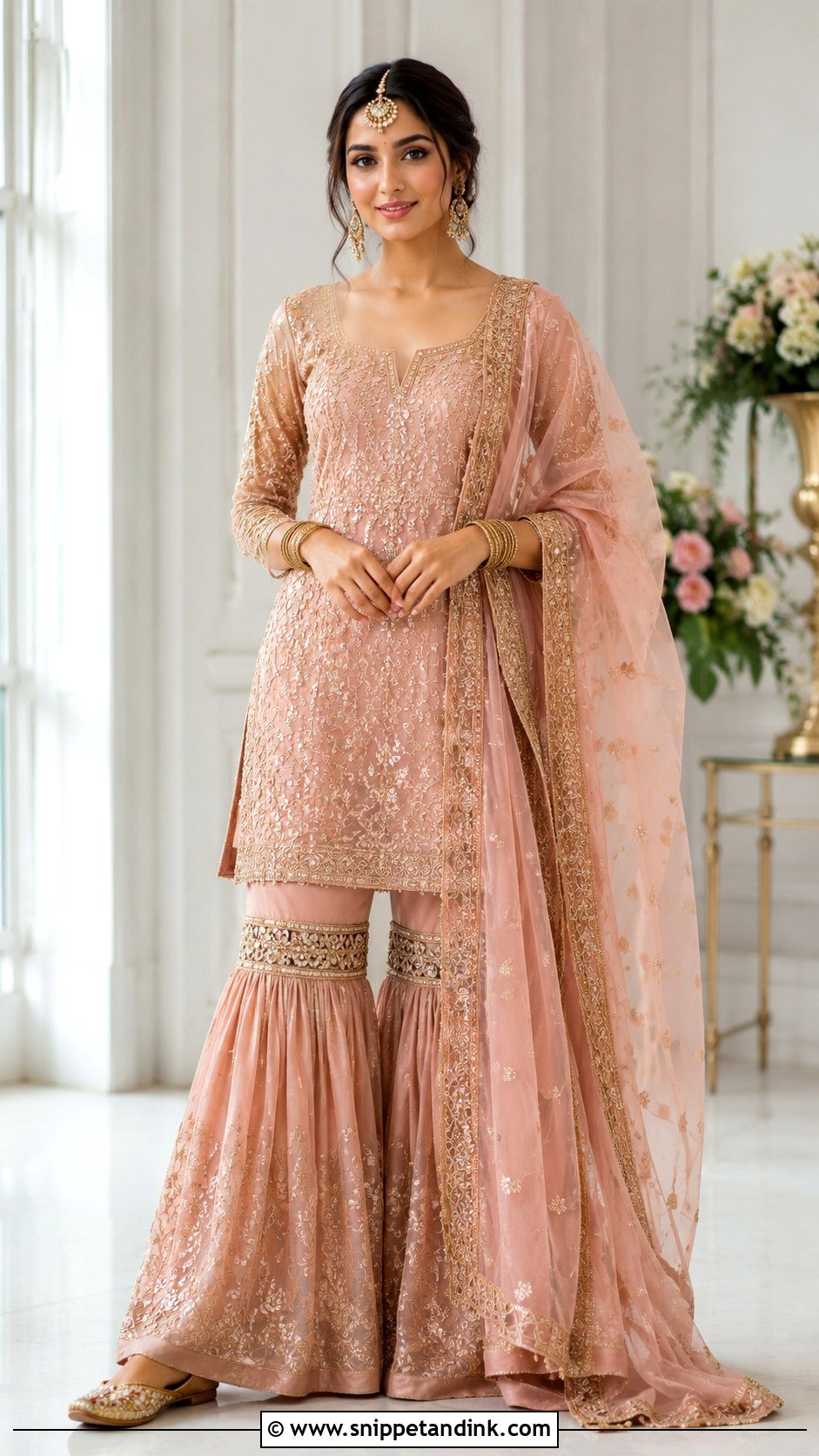
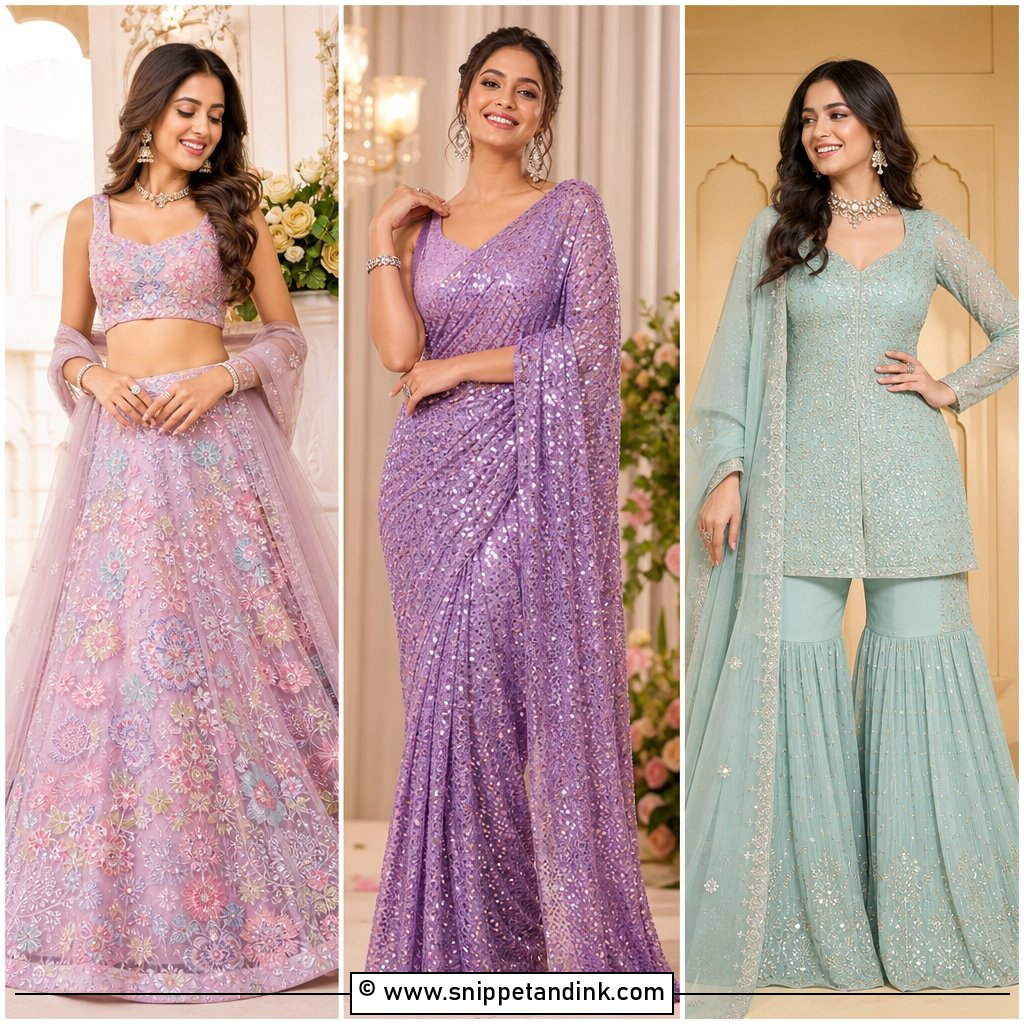
A gharara is fitted to the knee and flares below, joined by an embroidered band, so it has a vintage shape that photographs well. For a Sikh ceremony I’d pick a longer kurta for coverage, and a short kurta for family events. Embroidered borders at the knee, hem and dupatta add richness. Soft gold, rose, teal, plum and maroon all suit it. Jhumkas, a fine tikka and embellished juttis finish it. The fabric matters: a stiff gharara sticks out awkwardly when you sit, so choose one with drape.
9. Patiala Suit For Sikh Wedding
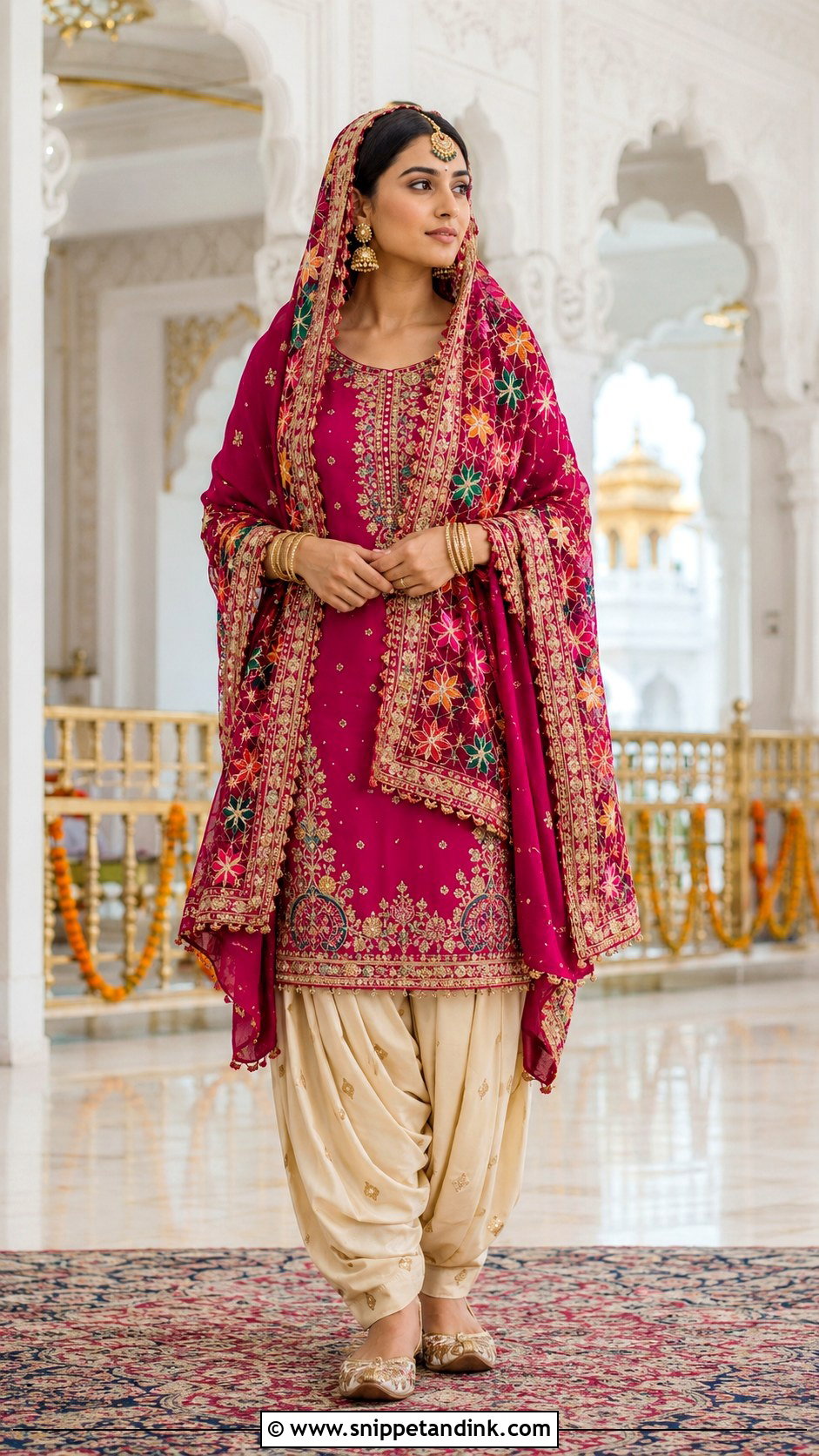
The Patiala suit is Punjab’s own outfit, and it sits naturally at a Sikh wedding. The deep pleats of the salwar give you room to sit cross-legged without strain. Brides wear richer silk versions with dense embroidery, choora and a statement dupatta; guests can choose lighter prints, phulkari details or soft threadwork. Patiala salwars use a lot of fabric, so a heavy silk version gets warm in summer; cotton silk is cooler. Juttis, bangles and a neat dupatta over the head complete it.
10. Phulkari Suit For Sikh Wedding
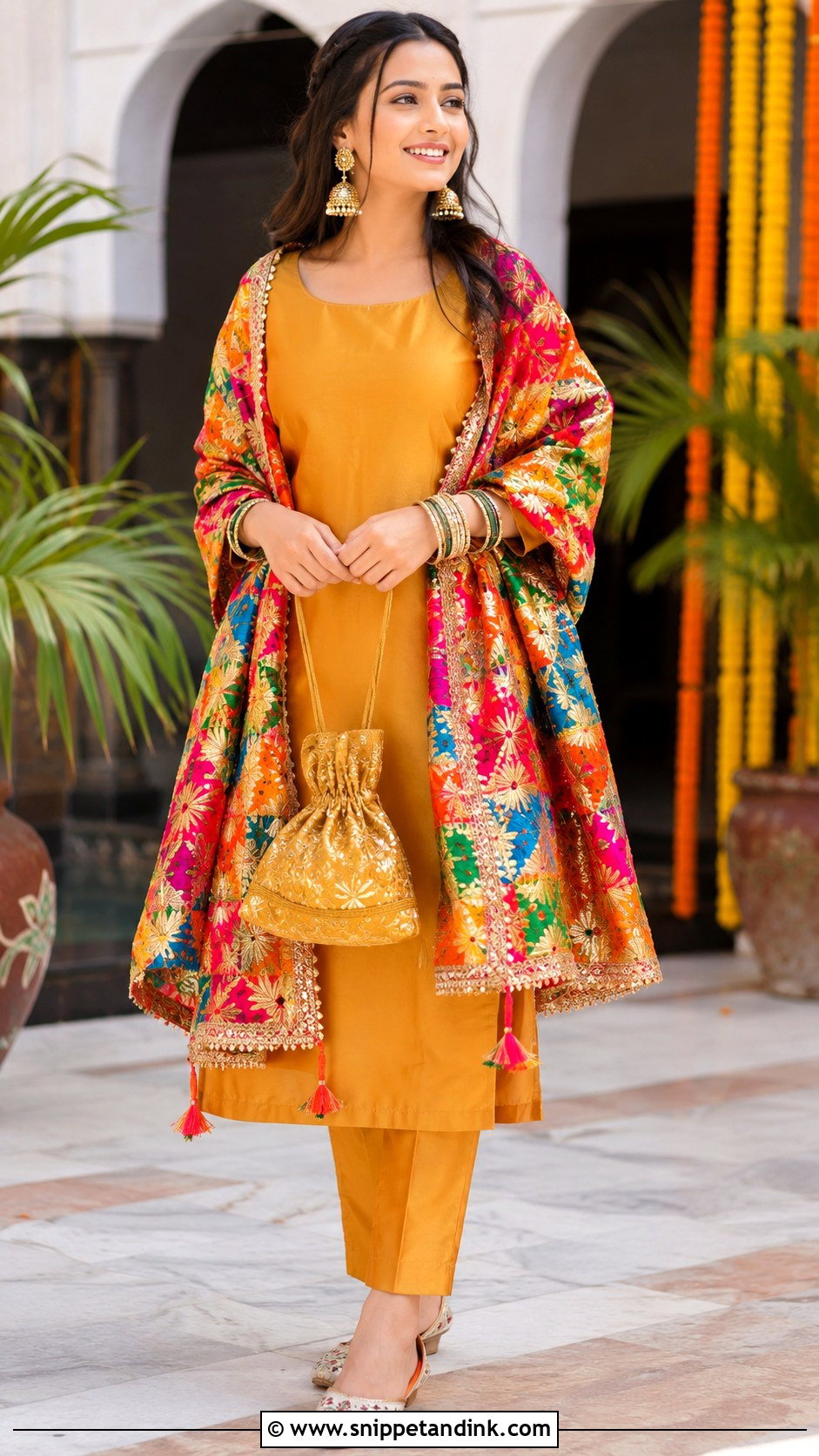
A phulkari suit carries Punjab’s best-known embroidery tradition: bright floral threadwork, traditionally darned in silk floss on the back of the cloth. It’s at home at the mehndi, sangeet or a daytime ceremony. A plain silk or cotton-silk kurta with a vibrant phulkari dupatta is the simplest version; a fully embroidered suit is more festive. Straight pants, salwar or Patiala bottoms all work. Keep jewelry modest so the stitching leads. Hand phulkari is precious, so dry clean it and fold it with tissue between the layers.
11. Silk Saree For Sikh Wedding
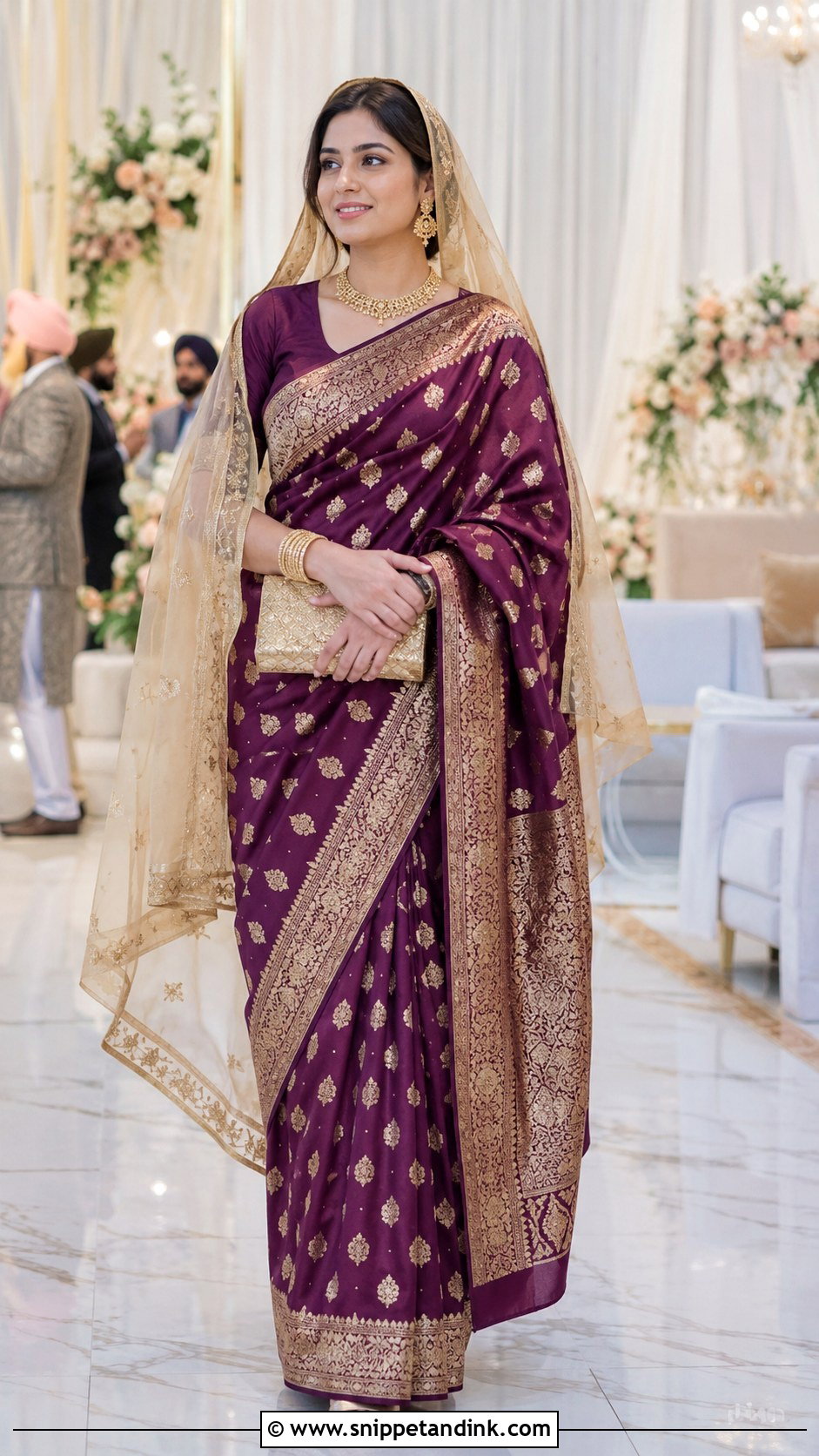
Mothers, aunts and older guests often prefer a saree, and silk drapes beautifully for a gurdwara. Banarasi, tissue or soft silk in jewel tones or warm metallics all suit. Make sure the blouse covers comfortably and the pallu is pinned so it doesn’t slide when you sit. A pallu rarely stays on the head through a whole ceremony, so carry a separate matching scarf. Temple jewelry, bangles and low heels or embellished flats complete it, and it moves straight into the reception.
12. Banarasi Lehenga For Sikh Wedding
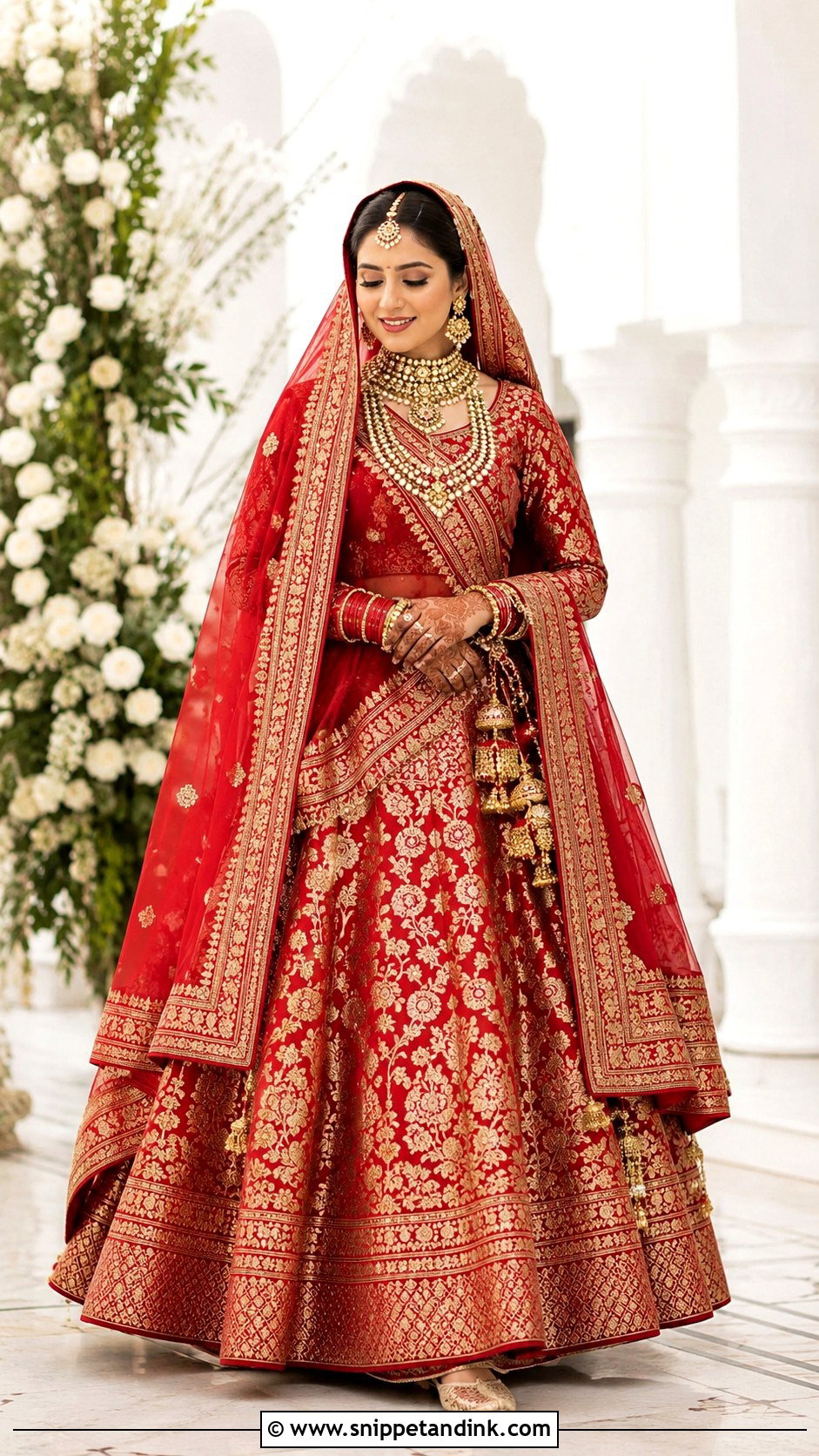
Banarasi lehengas get their richness from the weave itself, with gold or silver zari woven into the silk, so they look festive without heavy surface work. Red, maroon, magenta or rust with a matching dupatta suit a bride; teal, lavender, gold or green suit guests. A modest blouse, layered necklace, statement earrings and juttis are enough. The brocade motifs show well in morning ceremonies and family portraits. True Banarasi silk is heavy, so allow for that when choosing the blouse fabric and support.
13. Velvet Lehenga For Sikh Wedding
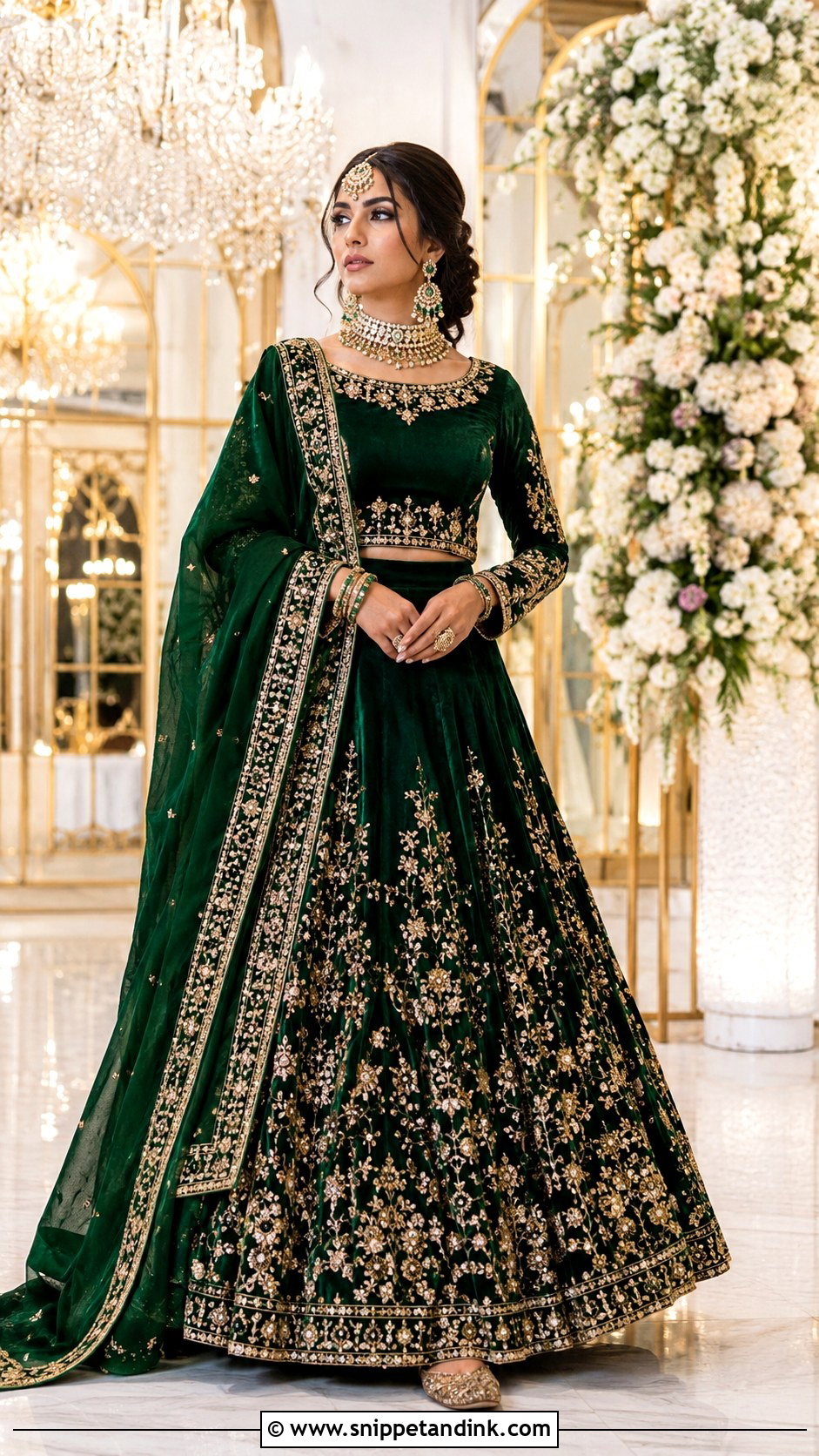
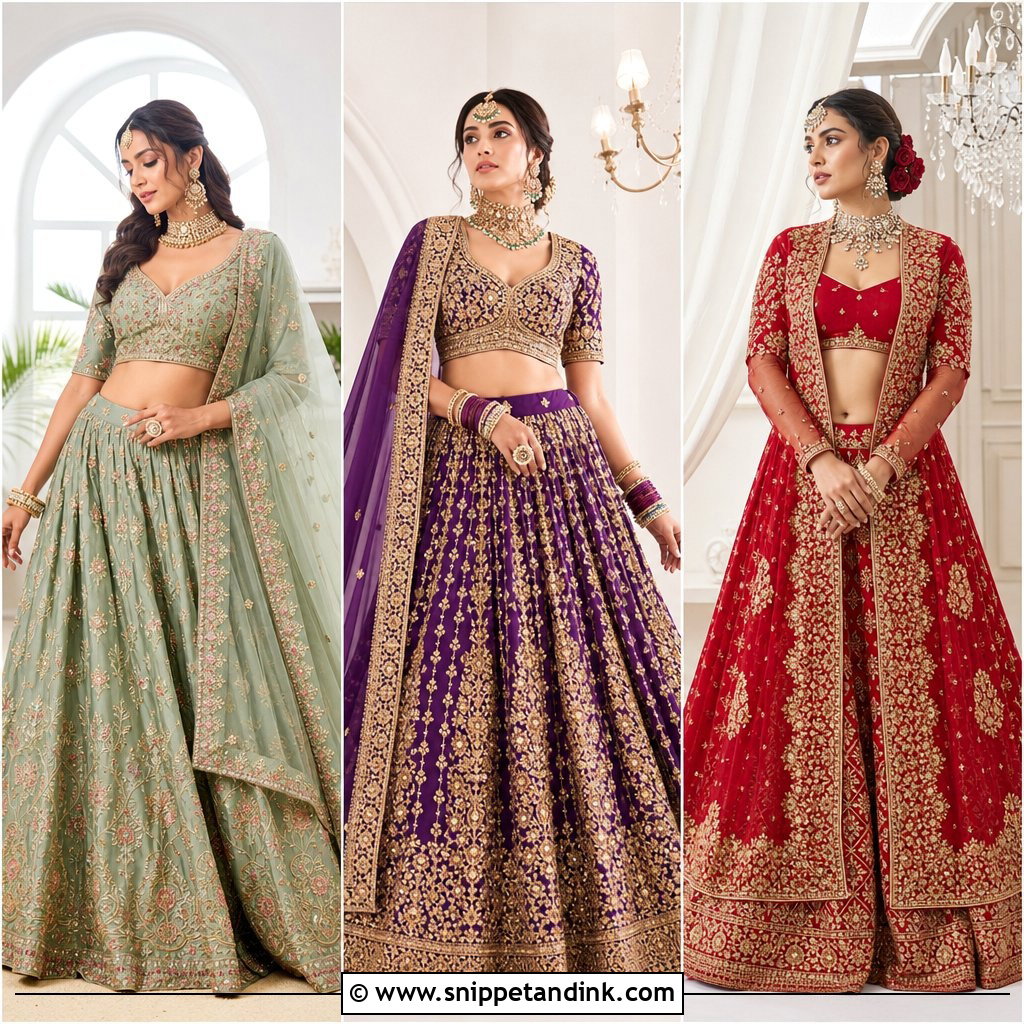
Velvet is a winter fabric, ideal for a cold-season Anand Karaj or an evening reception. It looks rich even with little embroidery, and deep maroon, emerald, navy, plum and wine all suit it. For the ceremony, choose a blouse with sleeves and a dupatta that sits securely over the head; velvet is slippery against a georgette dupatta, so pin it. Save a styled drape, belt or heavier jewelry for the reception. Velvet adds weight, so comfortable juttis are a must, with a sleek bun, passa and choker.
14. Pastel Lehenga For Sikh Wedding
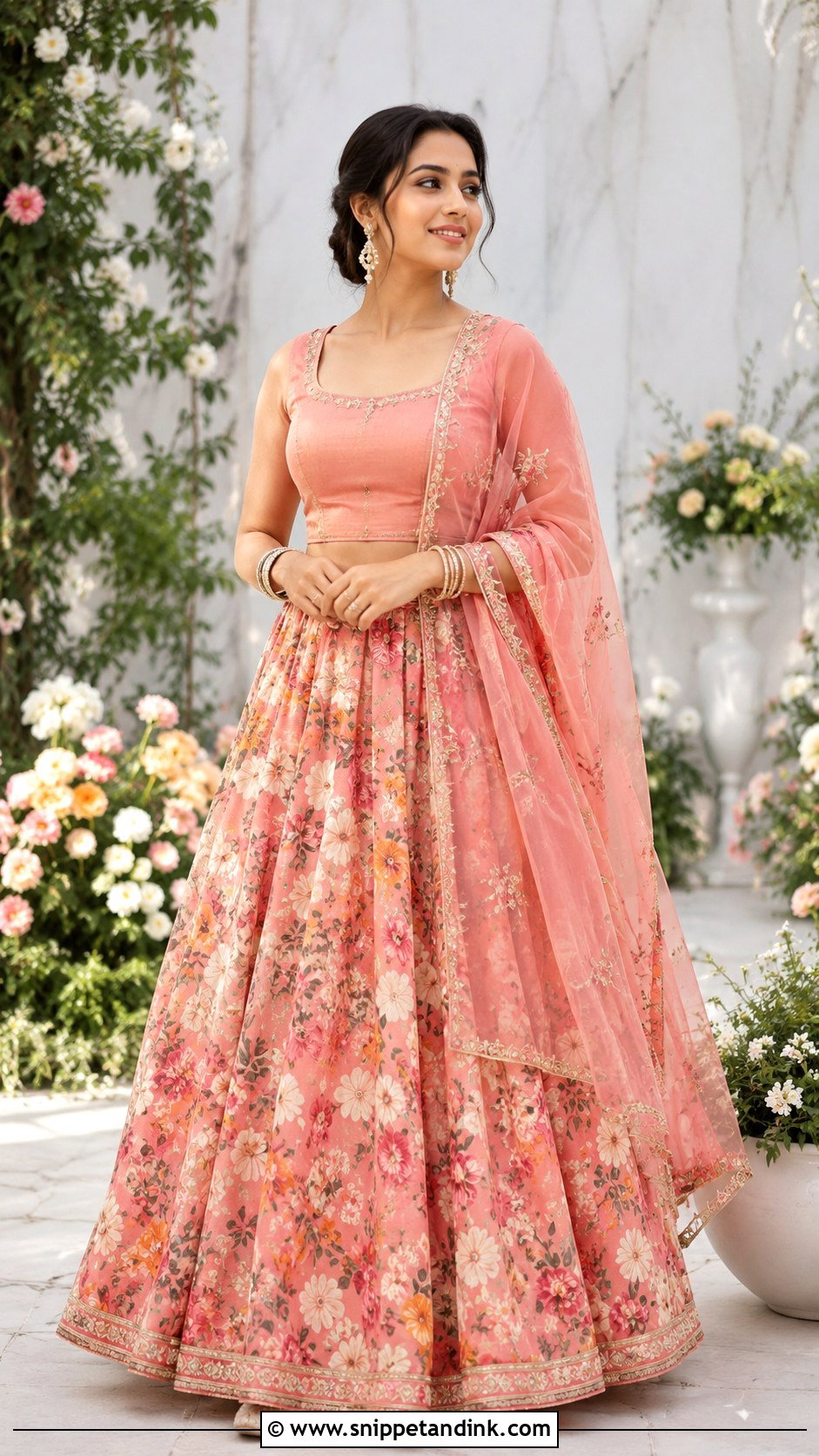
Pastels suit a spring or summer daytime wedding and photograph clearly in natural light: powder blue, mint, peach, lilac, blush and sage. A plain pastel looks underdressed at a Sikh wedding, so the embroidery has to work, whether gold, silver, pearls, sequins or tone-on-tone thread. Add statement earrings, bangles and a detailed dupatta border. Bridesmaids and sisters can coordinate in pastels with different jewelry. Brides can go formal with heavier work.
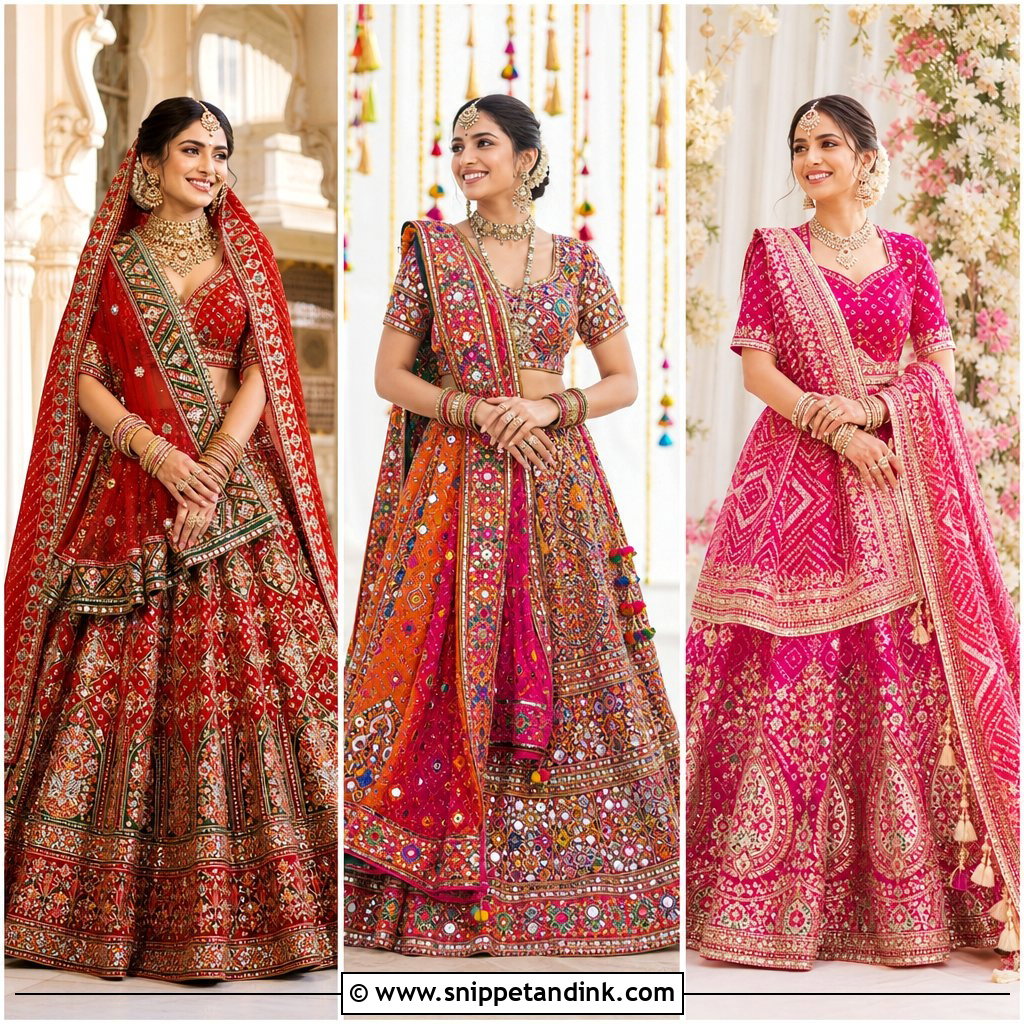
15. Floral Lehenga For Sikh Wedding
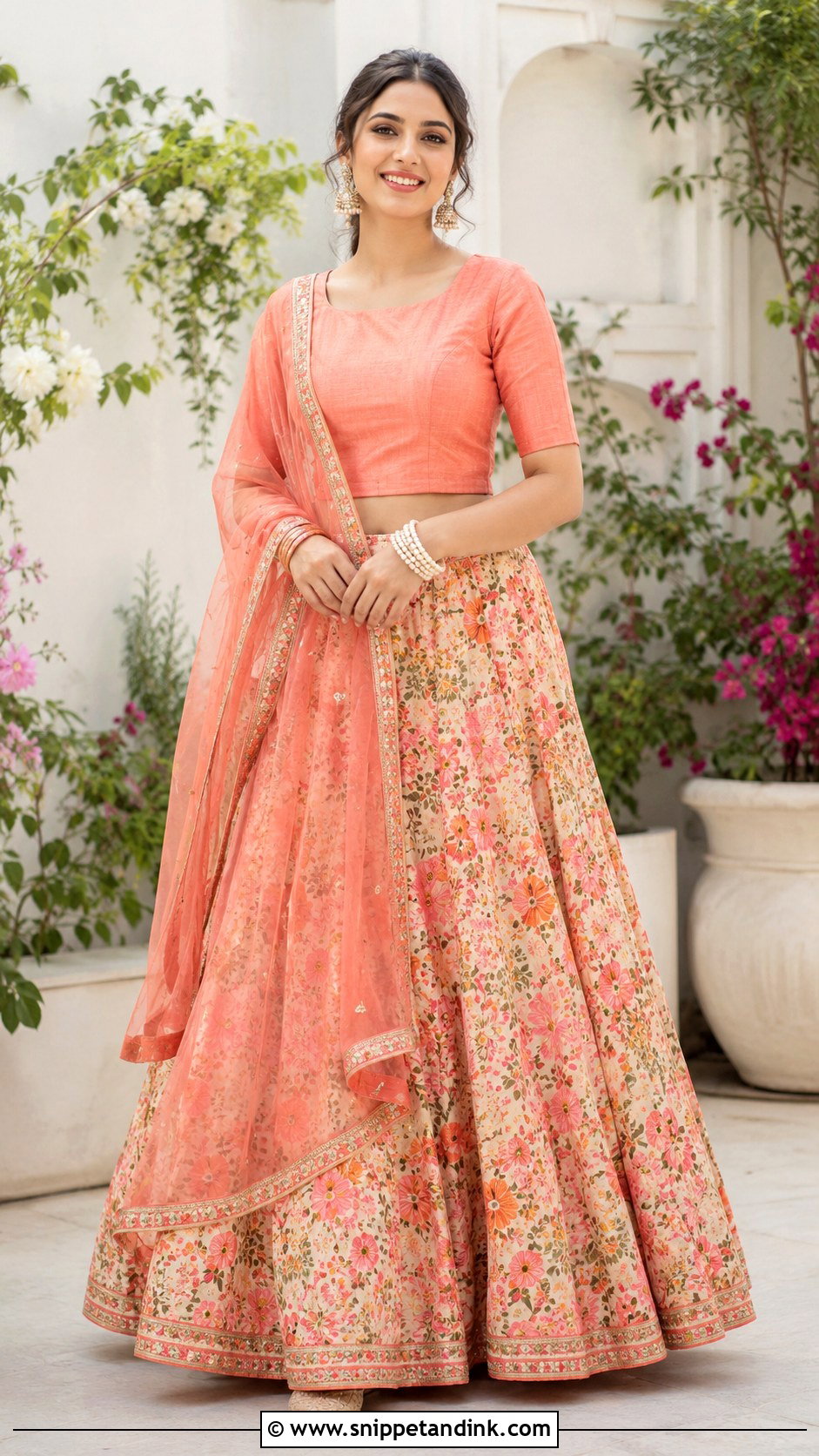
Florals suit pre-wedding events, summer ceremonies and guests who want something lighter. Printed florals feel relaxed; embroidered ones are formal. Organza, silk, georgette or chiffon keep the skirt moving. Pair it with a modest blouse and a dupatta that can cover the head at the gurdwara. Coral, sage, pink, yellow and sky blue suit daytime. Pearl earrings, soft bangles and neutral juttis or sandals. Light printed lehengas are easy to dance in at a sangeet, which heavy bridal pieces never are.
16. Organza Saree For Sikh Wedding
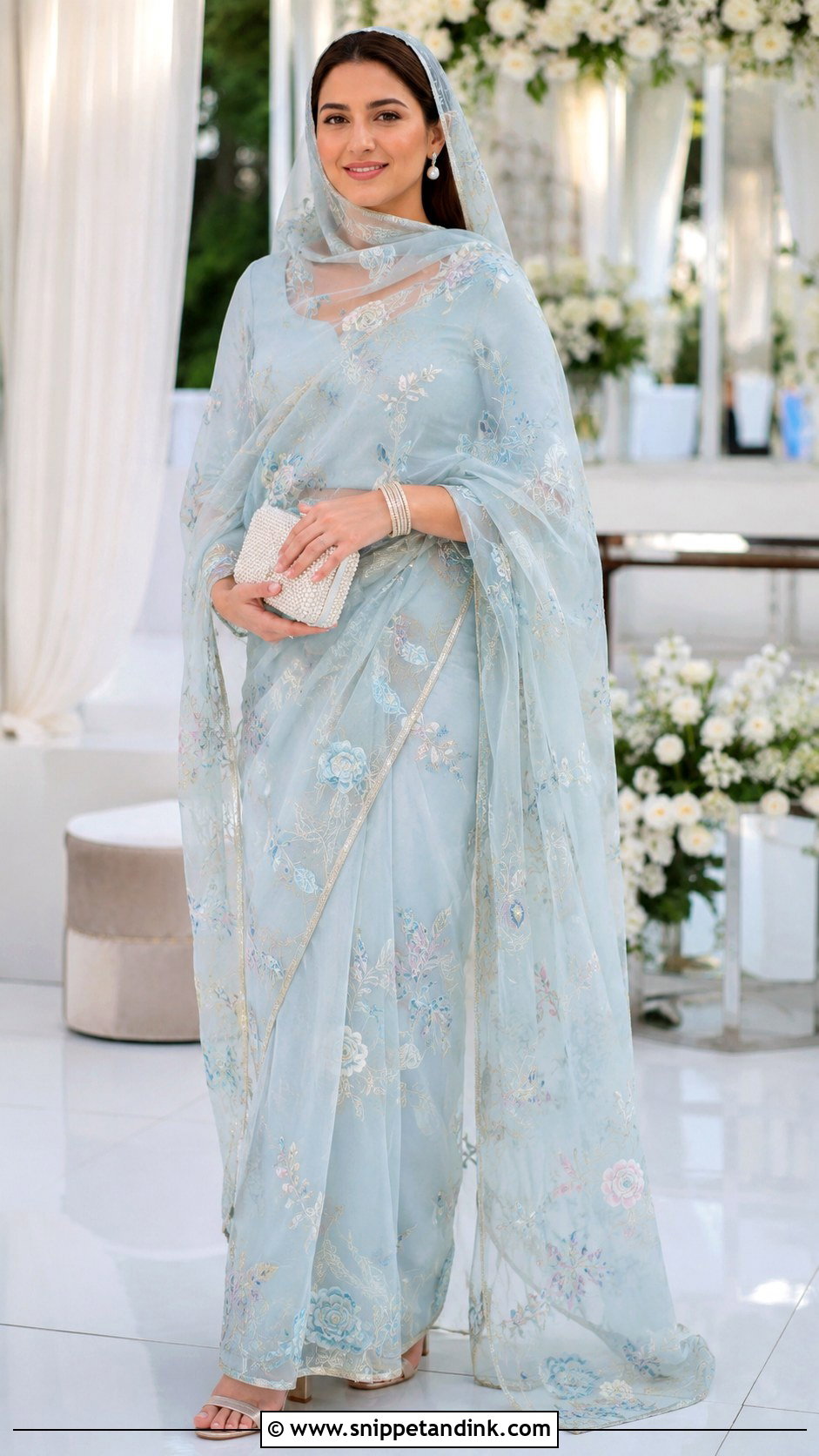
An organza saree is a light, modern choice for a Sikh wedding guest or family member. Its crisp texture holds pleats well in photos. Embroidered borders, floral prints or fine sequins keep it festive. Organza is sheer, so a well-lined blouse and a matching petticoat are essential, and the blouse should stay modest for the gurdwara. Bring a separate scarf if the pallu won’t stay on your head. Delicate jewelry, a sleek clutch and low heels suit summer daytime events.
17. Chikankari Suit For Sikh Wedding
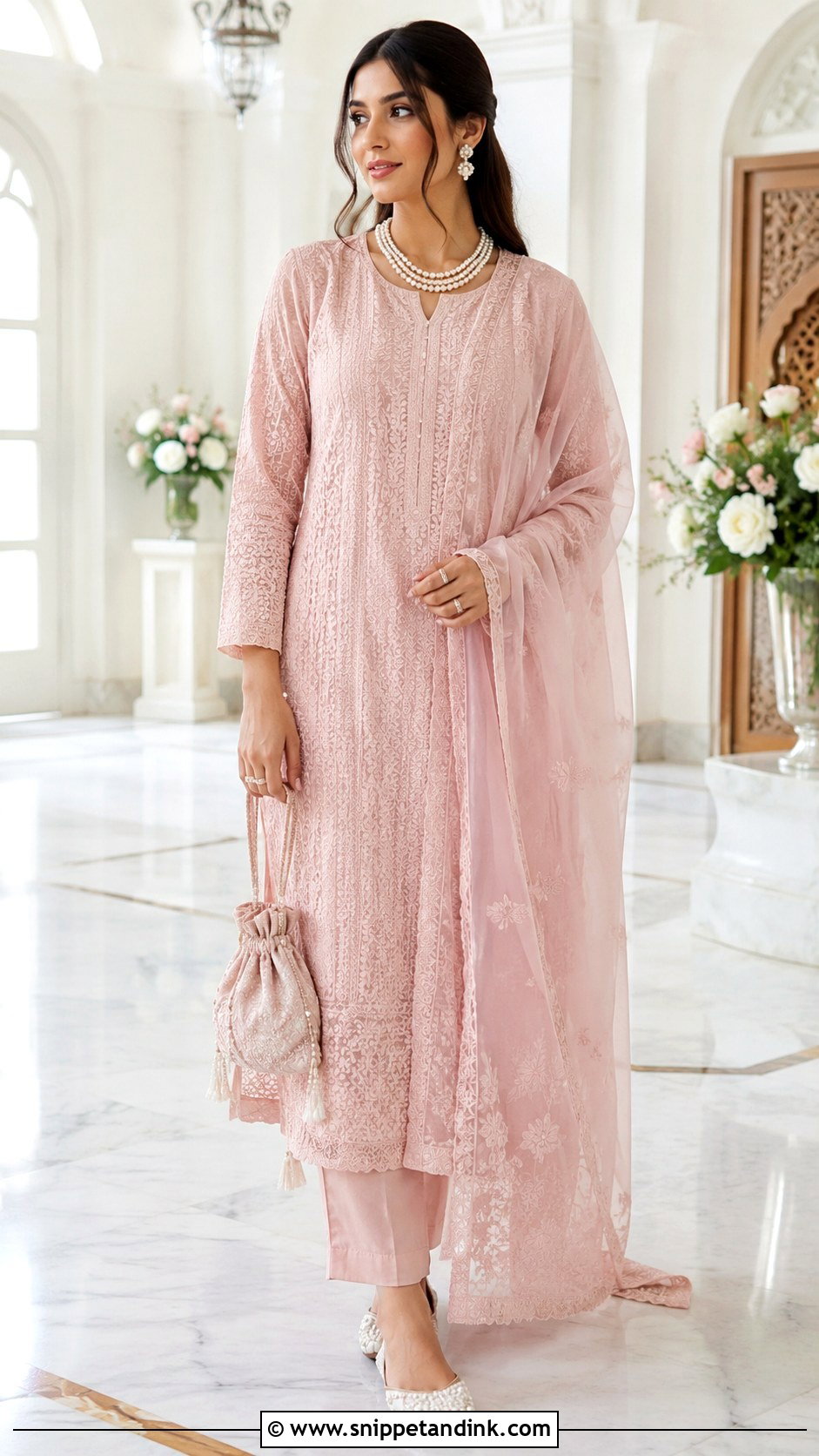
Chikankari, the fine white-thread embroidery from Lucknow, is breathable and suits summer weddings and daytime events. A long kurta with straight pants or palazzos and a matching dupatta looks polished without being overdressed. White and ivory are common, but for a wedding I’d lean toward peach, mint, blush or powder blue, or navy and wine for something formal. Most chikankari is worked on fine cotton or georgette, so check it’s lined for the Anand Karaj. Pearl jewelry, juttis and a potli bag finish it.
18. Palazzo Suit For Sikh Wedding
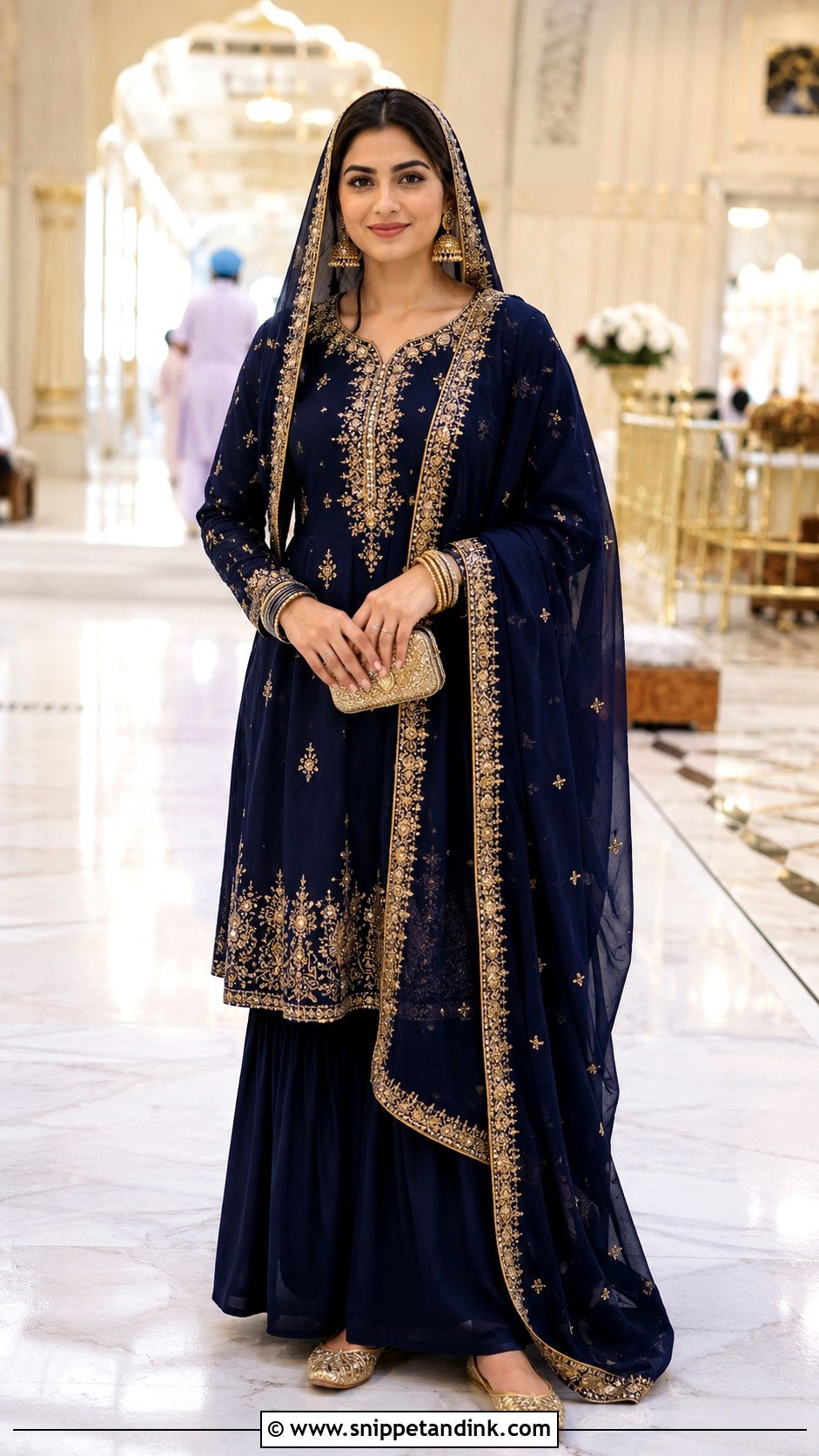
Palazzos give guests room to move while the kurta keeps things modest. A long embroidered kurta suits the ceremony; a shorter one over flowing palazzos suits pre-wedding functions. Wide pants spread neatly when you sit on the floor, which is why many guests prefer them to fitted churidars. A matching dupatta is essential at the gurdwara. Jewel tones, pastels and soft metallics work by time of day, with earrings, bangles, juttis and a small handbag.
19. Jacket Lehenga For Sikh Wedding
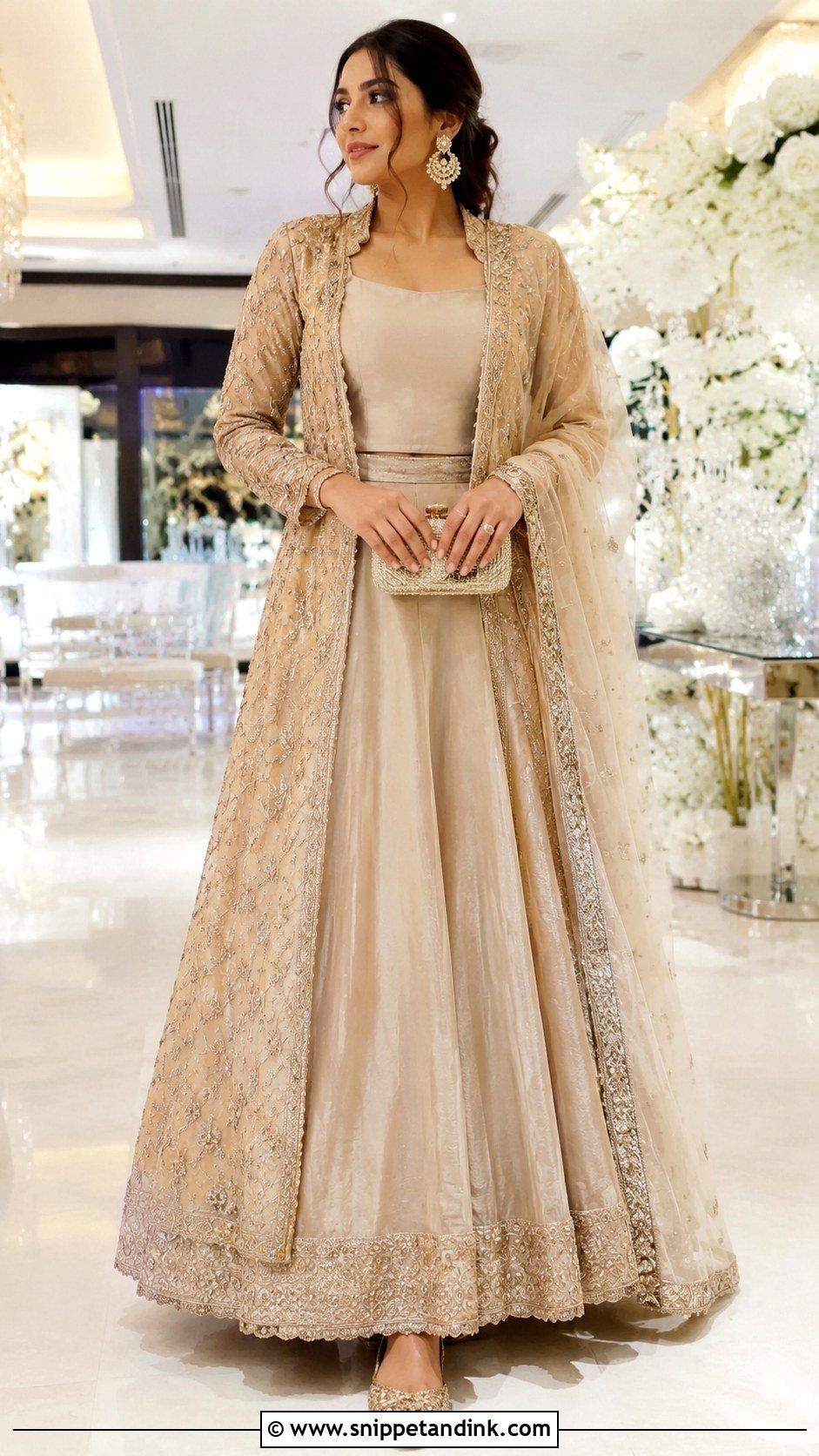
A long jacket over a lehenga adds coverage and structure, and the vertical line flatters most figures. Wear an embroidered jacket over a skirt and blouse, or open it over a simple inner top for a cleaner look. Long jackets bunch when you sit on the floor, so I’d save this for the reception or a family dinner and bring a dupatta if you wear it to the ceremony. Statement earrings, sleek hair and embellished heels or juttis complete it.

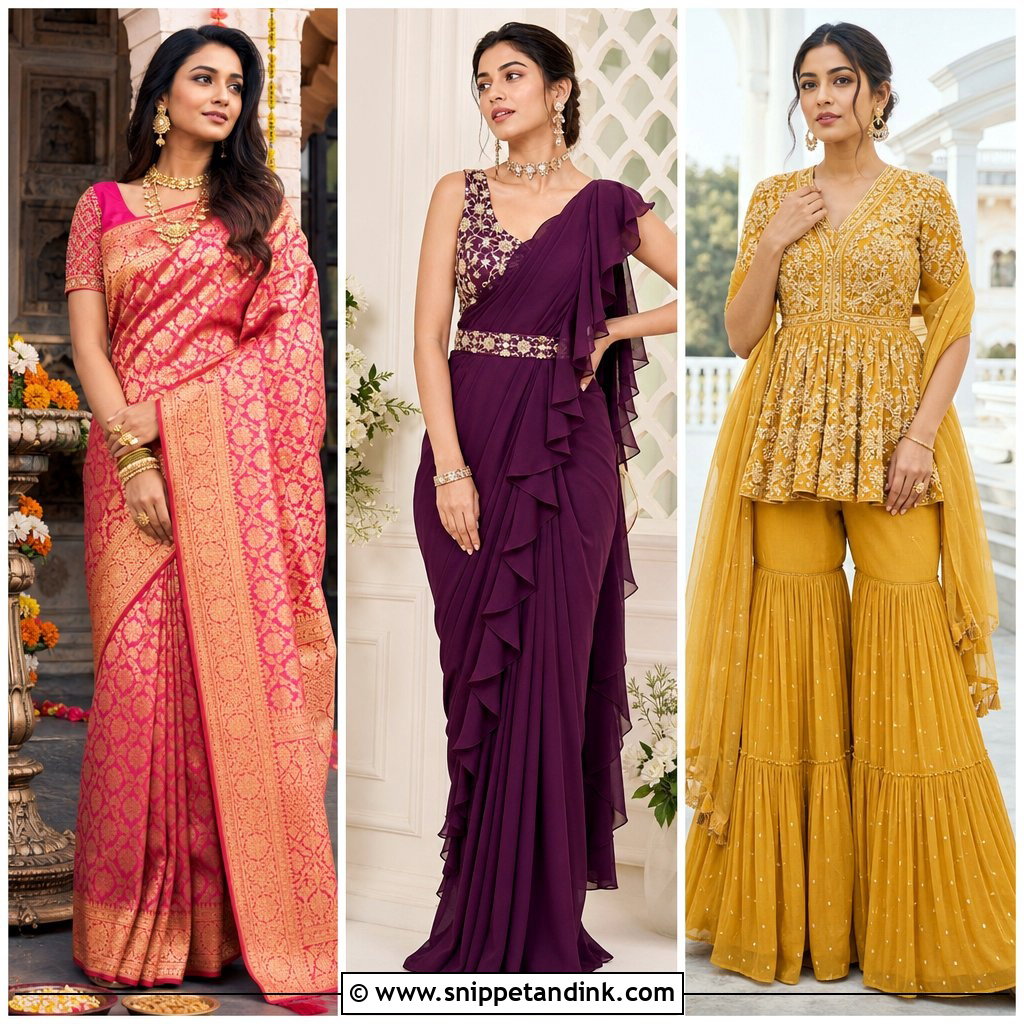
20. Indo Western Gown For Sikh Wedding Reception
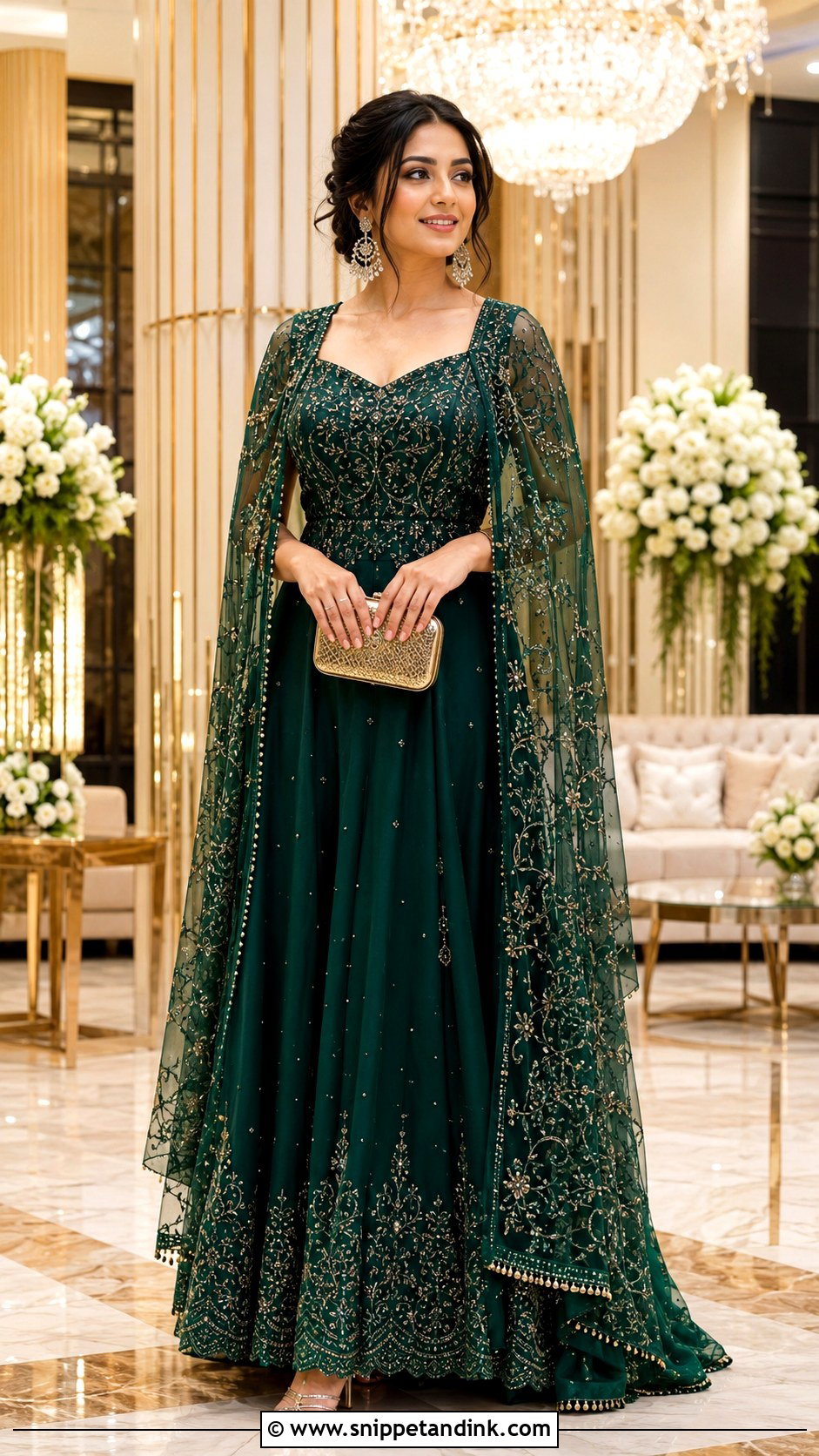
Once the religious ceremony is over, a reception is the place for an Indo-western gown. Indian embroidery, cape sleeves, a draped dupatta effect or a structured bodice over a flowing skirt all work. Emerald, navy, burgundy and champagne look good for evening. Statement earrings, a clutch and metallic heels keep it festive. If the reception involves bhangra, and most do, choose a gown with a loose hem; a fitted mermaid skirt stops you dancing.
21. Bridesmaid Lehenga For Sikh Wedding
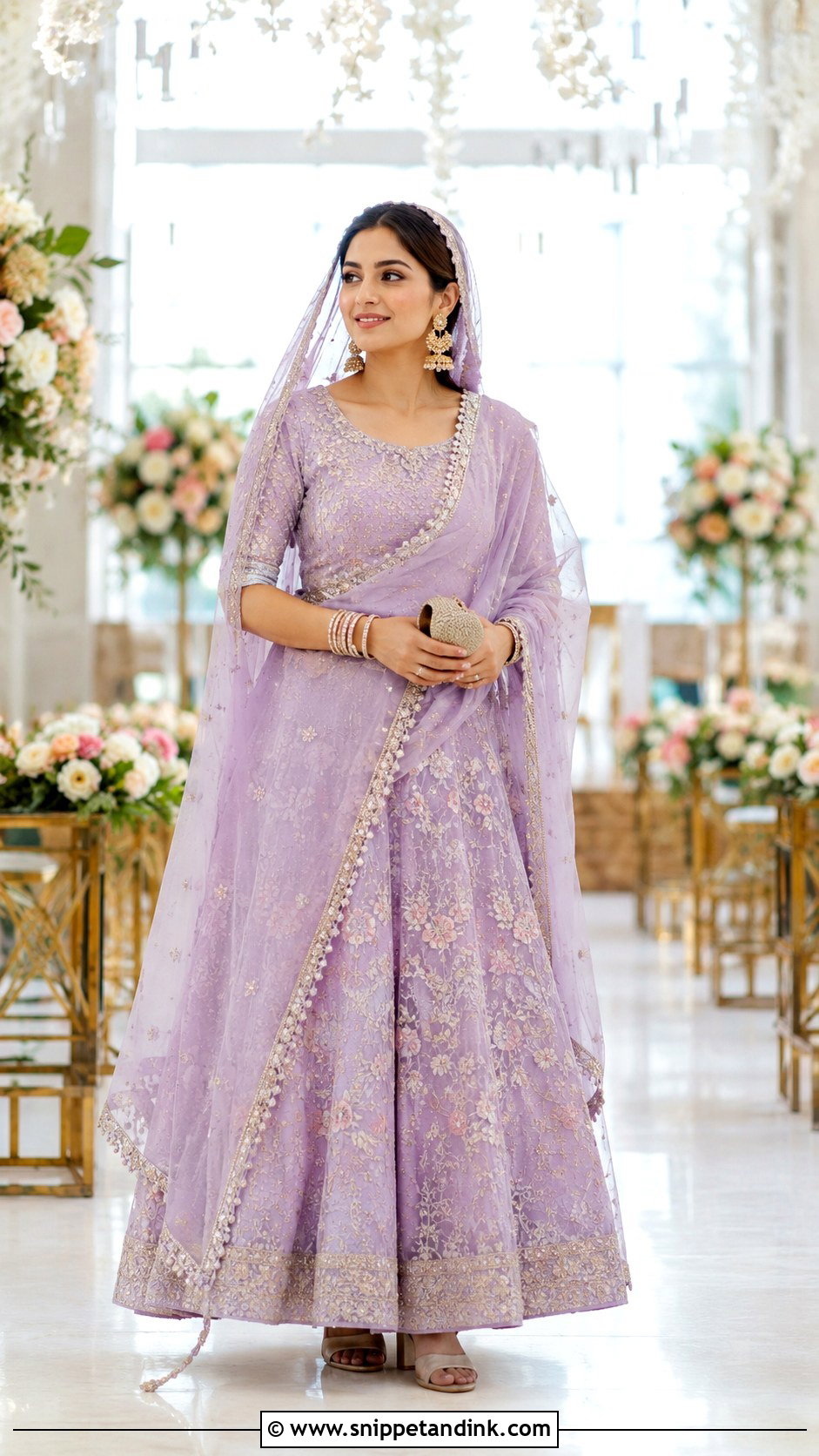
Bridesmaids support the bride, so the lehenga should coordinate without looking bridal: no deep reds or heavy bridal work. Pastels, jewel tones or agreed family colours suit. A lightweight lehenga with embroidery on the border, blouse and dupatta is usually enough, and lighter fabrics matter when you’re running errands for the bride all day. The dupatta should pin easily and cover the head during the Anand Karaj. Jhumkas, bangles and a fine necklace, with juttis or block heels.
22. Mother Of The Bride Suit For Sikh Wedding
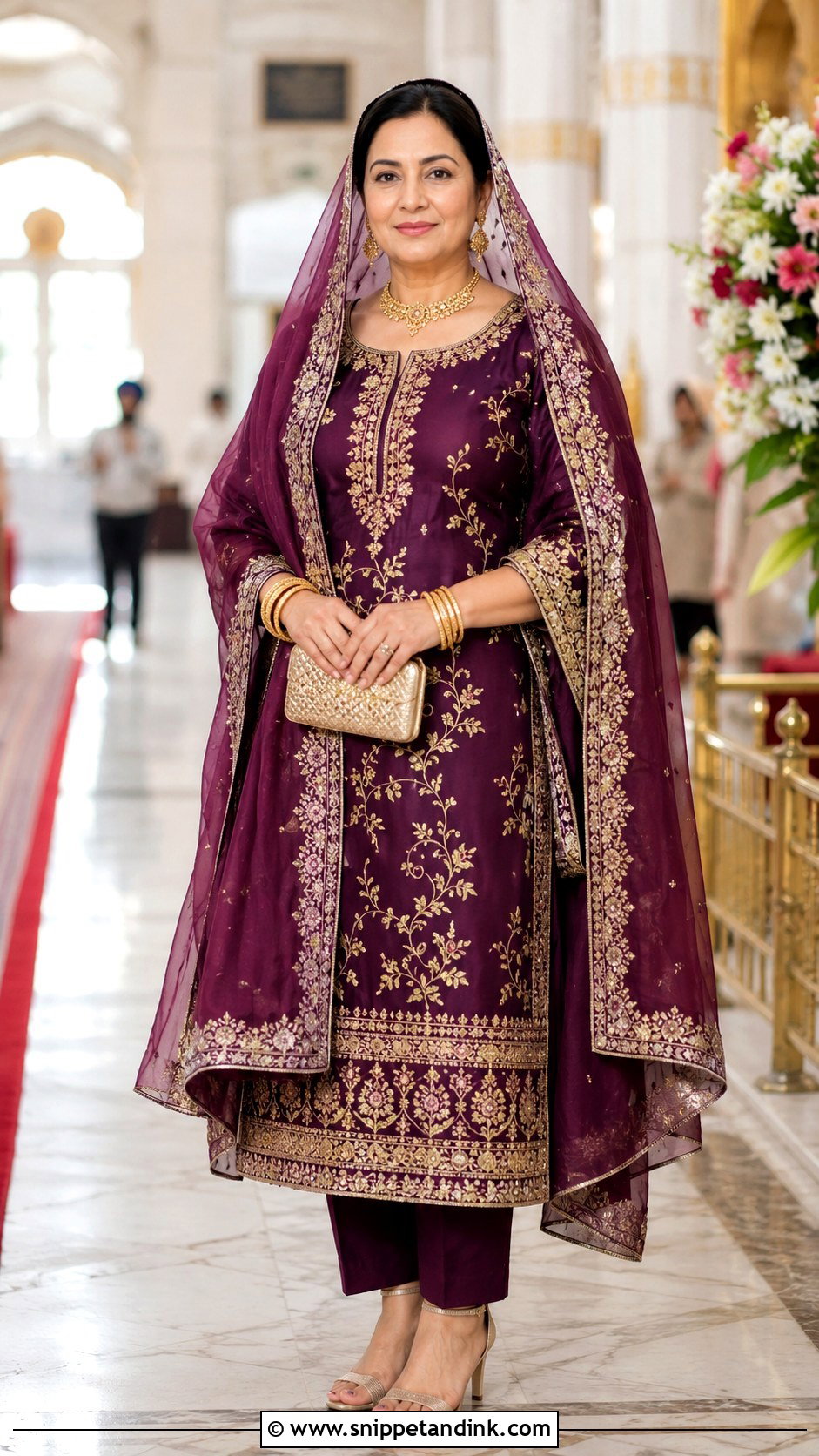
The mother of the bride spends the day greeting guests, joining rituals and standing in photos, so her outfit must be comfortable as well as dignified. A silk salwar suit, long anarkali or embroidered straight suit works well in the gurdwara. Deep jewel tones, soft gold, rose, teal, plum and maroon are good choices. A dupatta with a rich border frames the face and covers the head. Flats, low heels or juttis, with a necklace set, bangles and earrings. Matching-colour safety pins in her bag will save several dupattas through the day.
23. Sister Of The Bride Sharara For Sikh Wedding
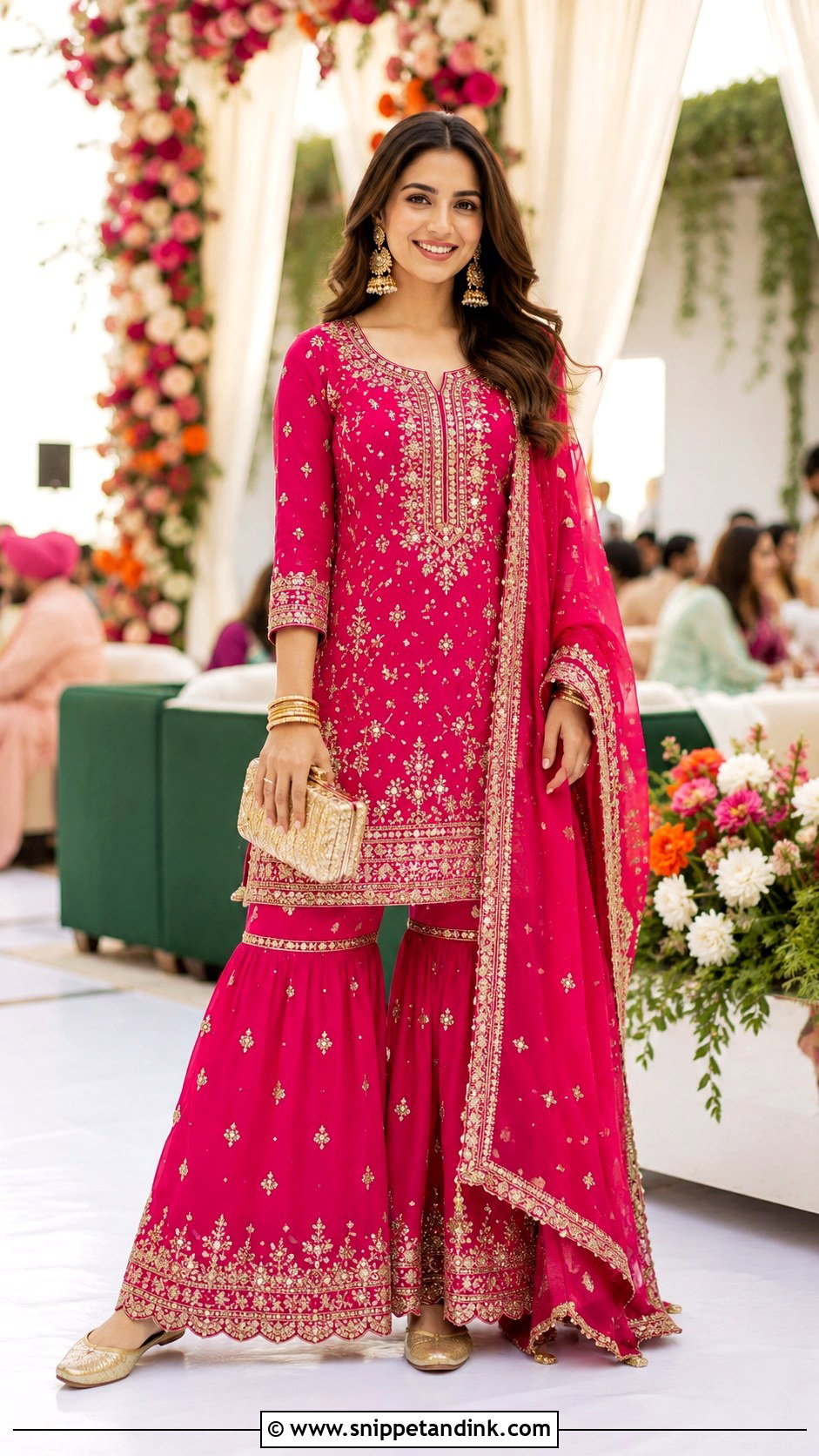
A sister of the bride sharara can stand out a little more than a guest outfit while staying clearly not bridal. Emerald, fuchsia, champagne, cobalt or deep rose with rich embroidery suit it. A short kurta feels youthful; a longer one is more modest for the ceremony. Pin the dupatta neatly for the gurdwara, then restyle it for photos. Statement earrings, bangles and a sleek clutch. Sisters spend the day helping the bride, so the sharara needs to be light enough to move quickly.
24. Wedding Guest Salwar Suit For Sikh Wedding
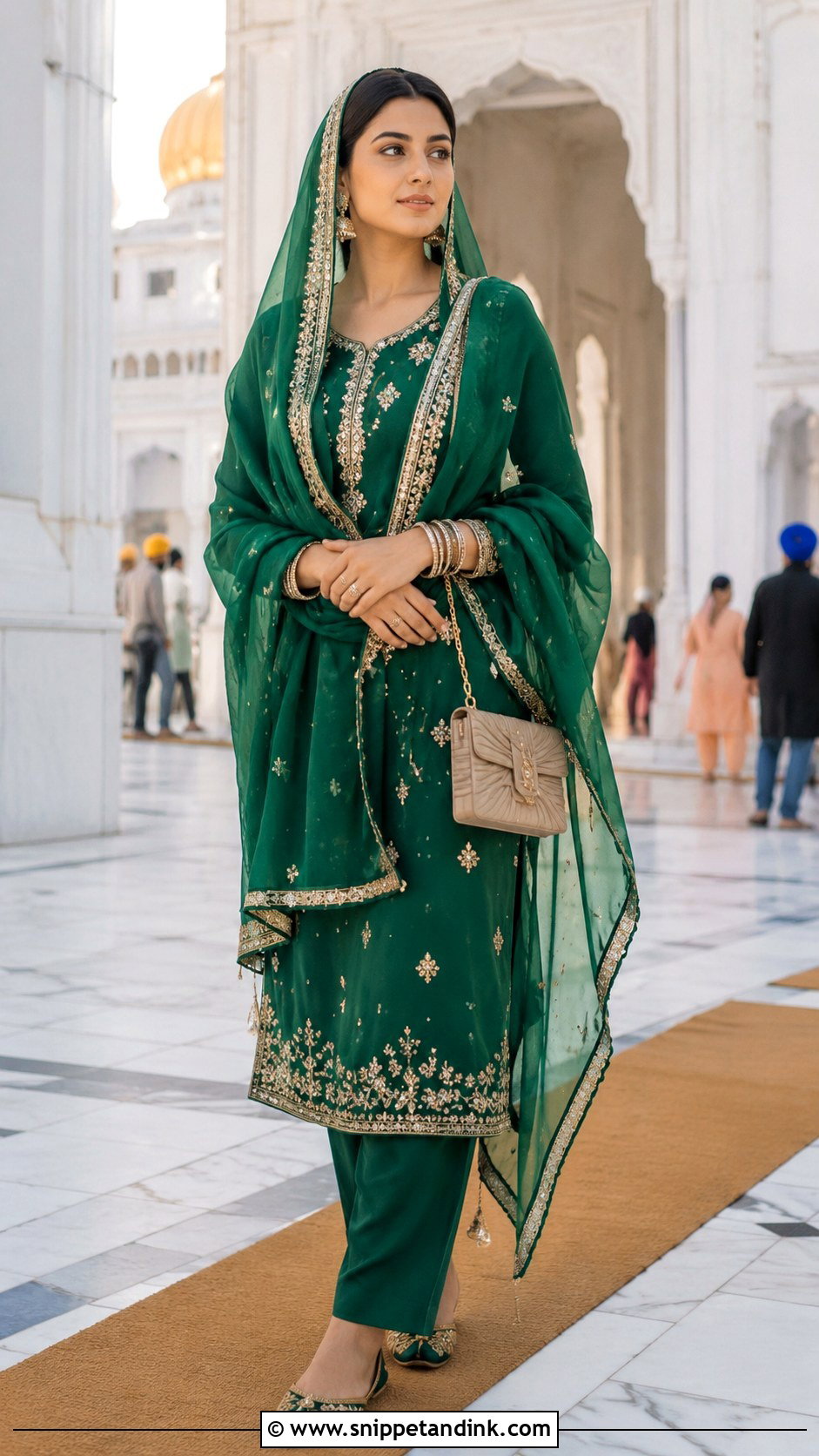
A wedding guest salwar suit is the safest choice for a Sikh wedding, with coverage and comfort for floor seating. Silk, georgette, cotton silk or crepe in a festive but not heavy style. Embroidery at the neckline, sleeves and dupatta border is enough dressiness. Teal, mustard, lavender, rose, navy and emerald suit; avoid anything tight, short or sheer. Juttis, jhumkas or small earrings, bangles and a crossbody or clutch complete it.
25. Reception Lehenga For Sikh Wedding
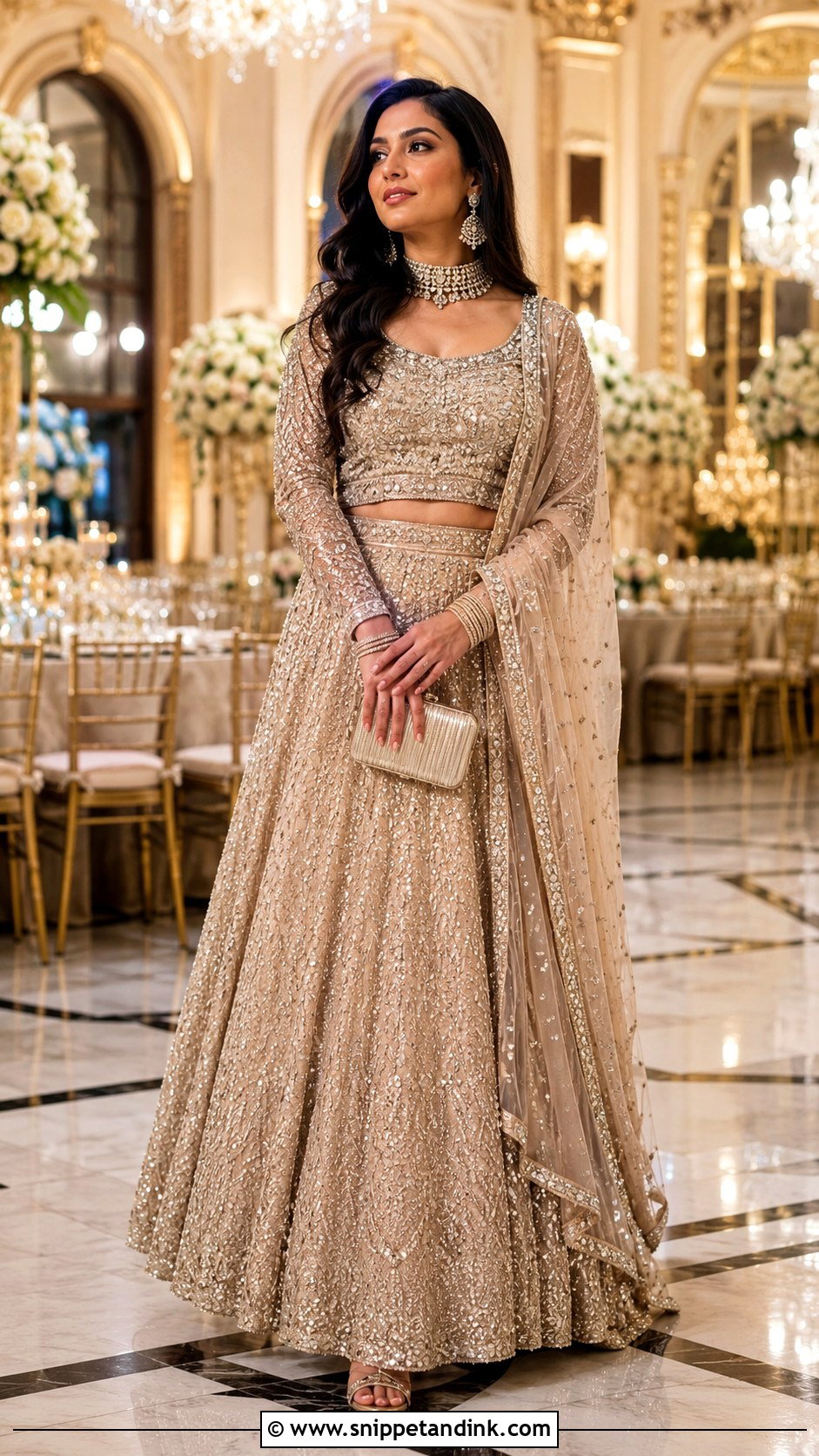
The reception is where you can dress for the dance floor rather than the gurdwara. Sequins, metallic embroidery, mirror work and deeper colours all suit evening light. Brides often choose champagne, gold, emerald, silver or deep red; guests wear lighter embellished versions. A modern blouse, flowing skirt and styled dupatta make a polished evening outfit. Heels if you’re comfortable, embellished flats if you plan to dance. Jewelry can be bolder than at the ceremony, like a choker, chandelier earrings or stacked bangles. Sequinned lehengas are heavy too, so try a few dance steps at the last fitting.
Socks, Scarves and Floor Seating: A Guest at the Gurdwara
If you’ve never attended a Sikh ceremony, a few practical details shape what you should wear.
- Everyone covers their head inside the darbar hall, men included. Bring your own scarf or rumal, though most gurdwaras keep spares at the door.
- Shoes come off at the entrance. Clean socks or a fresh pedicure are worth thinking about, and slip-on shoes save time.
- You’ll sit on the carpeted floor, usually with men and women on opposite sides. Short or tight skirts make that very awkward; trousers, salwars and full skirts work best.
- Langar, the communal meal, is often served sitting on the floor too, so plan for a second long sit.
- Ceremonies usually begin in the morning, so very heavy evening fabrics and dramatic sequins feel out of place before the reception.
Bring a small bag with safety pins, a spare scarf and a pair of socks. You’ll probably end up lending at least one of them.
From the Gurdwara Floor to the Reception Dance Floor
A Sikh wedding outfit works when it respects the ceremony first and expresses you second. For the Anand Karaj, that means modest shapes, comfortable bottoms, a secure dupatta and clothes you can sit in. Receptions and pre-wedding events are where sparkle, lighter fabrics and modern cuts come in. Brides may choose red, maroon, pink or pastel; guests have salwar suits, anarkalis, shararas, lehengas and sarees. Dress for the morning first, then plan the change.
You'll Like These Ideas:





Leave a Reply