
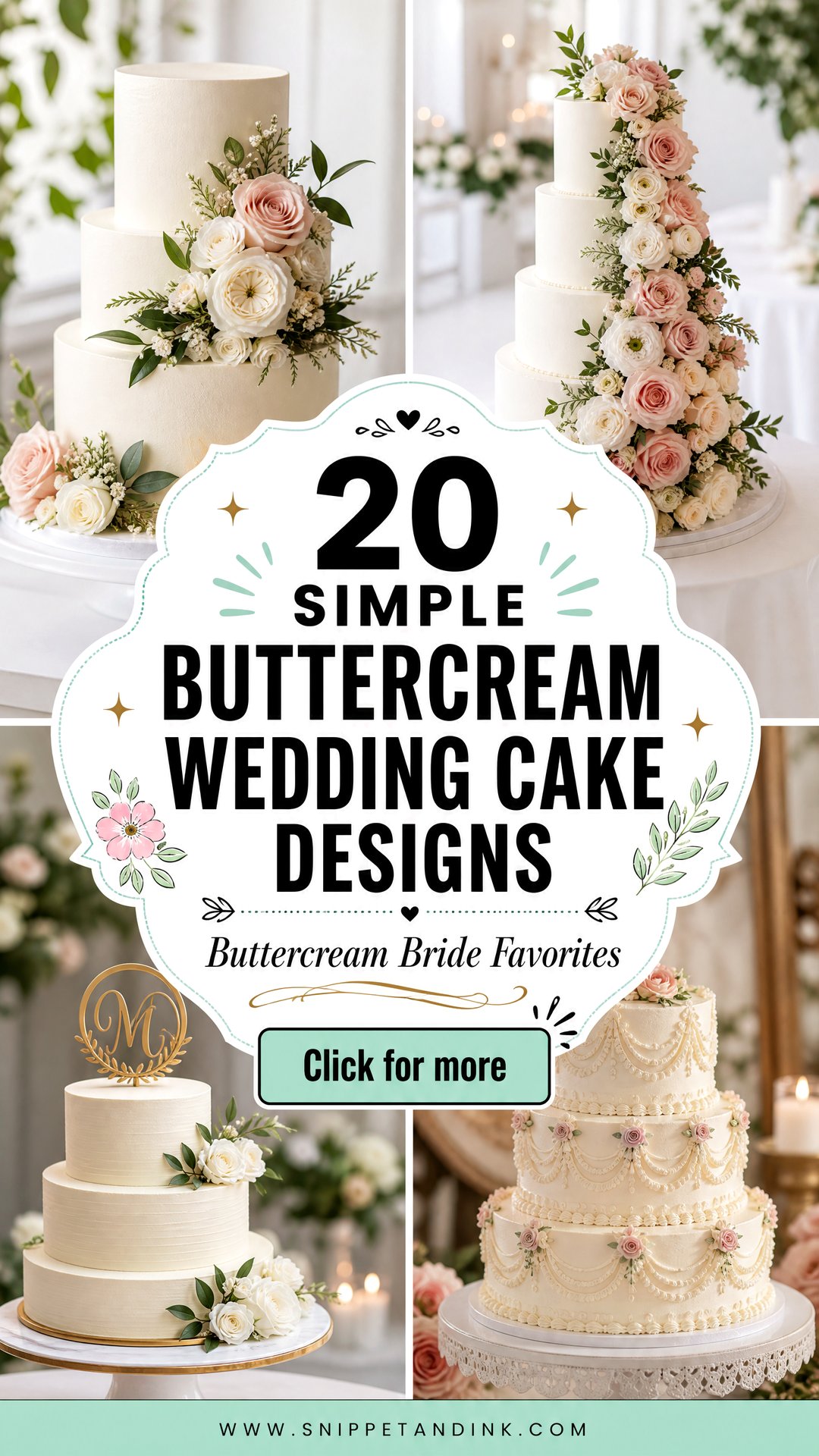
Buttercream is the finish I’d choose for most weddings. It tastes better than fondant, it takes texture, piping, fresh flowers and fruit equally well, and a soft swirl and a sharp, smooth edge both come out of the same bowl. The trade-off is heat: buttercream softens where fondant wouldn’t, so a design has to suit the venue as well as the mood board. With that in mind, here are 20 Simple Buttercream Wedding Cake Designs, with notes on how each one is made and where it holds up best.
Which Buttercream Is Under That Smooth Finish?
Couples often ask for buttercream as if it were one thing. It isn’t, and the type matters more than the decoration once a cake leaves the fridge. These are the ones I’m asked about most:
- American buttercream is butter and powdered sugar. It’s very sweet, pipes crisp borders and forms a slight crust, which helps in transport, but it can taste heavy on a large slice.
- Swiss meringue buttercream is whipped egg whites and sugar with butter. It’s silky and less sweet, and it smooths to a sharp edge, but it softens sooner in a warm room.
- Italian meringue buttercream is made with hot sugar syrup. It’s a little more stable than Swiss and just as smooth.
- Ermine, a cooked flour buttercream, is light and not too sweet, though it isn’t the best choice for heavy piping.
For a warm venue with a long stretch before the cutting, I lean toward Italian meringue or a crusting American base. In an air-conditioned ballroom, Swiss meringue gives the cleanest edge and the nicest slice.
All butter-based icings take on an ivory tone, so a true bright white usually needs a little shortening or whitener added. I’d rather a couple accept ivory than lose flavor chasing white.
1. Smooth Buttercream Wedding Cake With Fresh Flowers
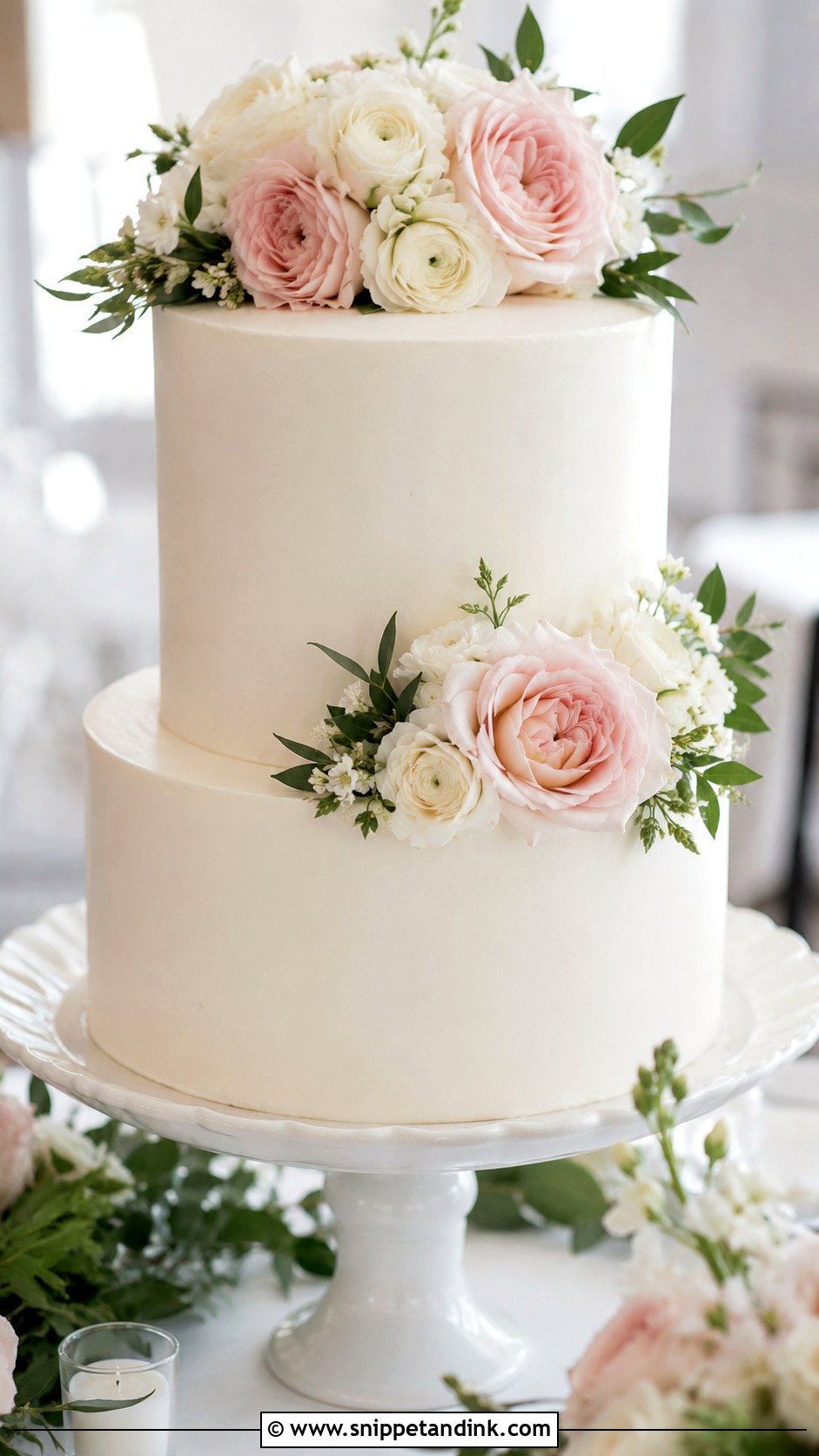
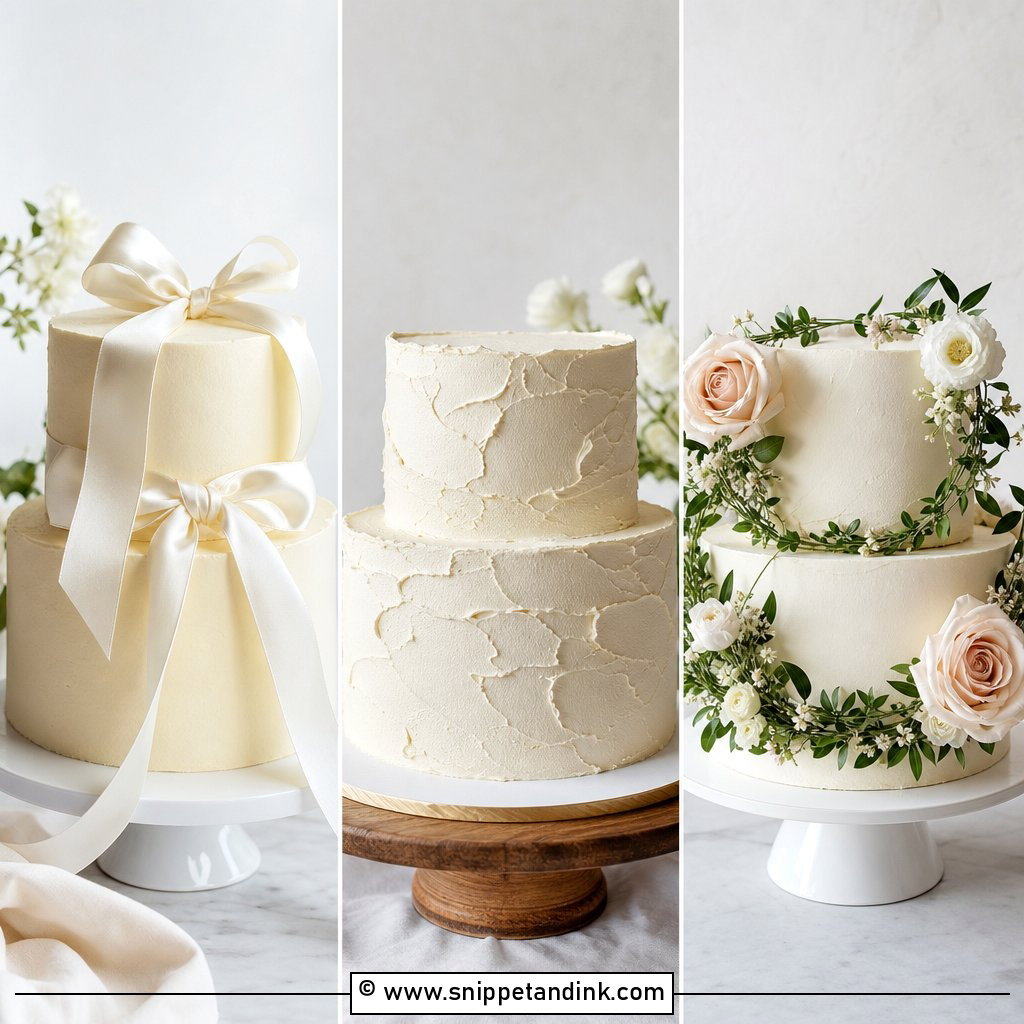
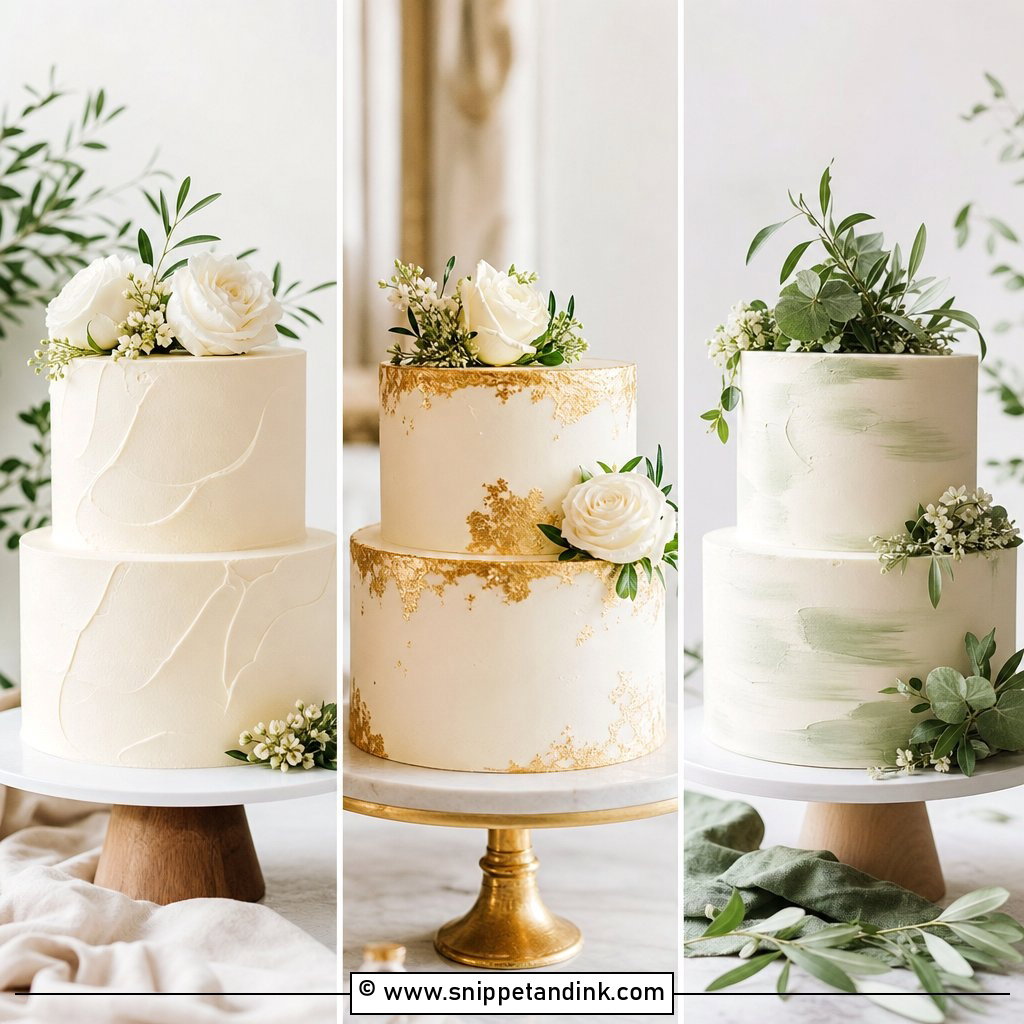
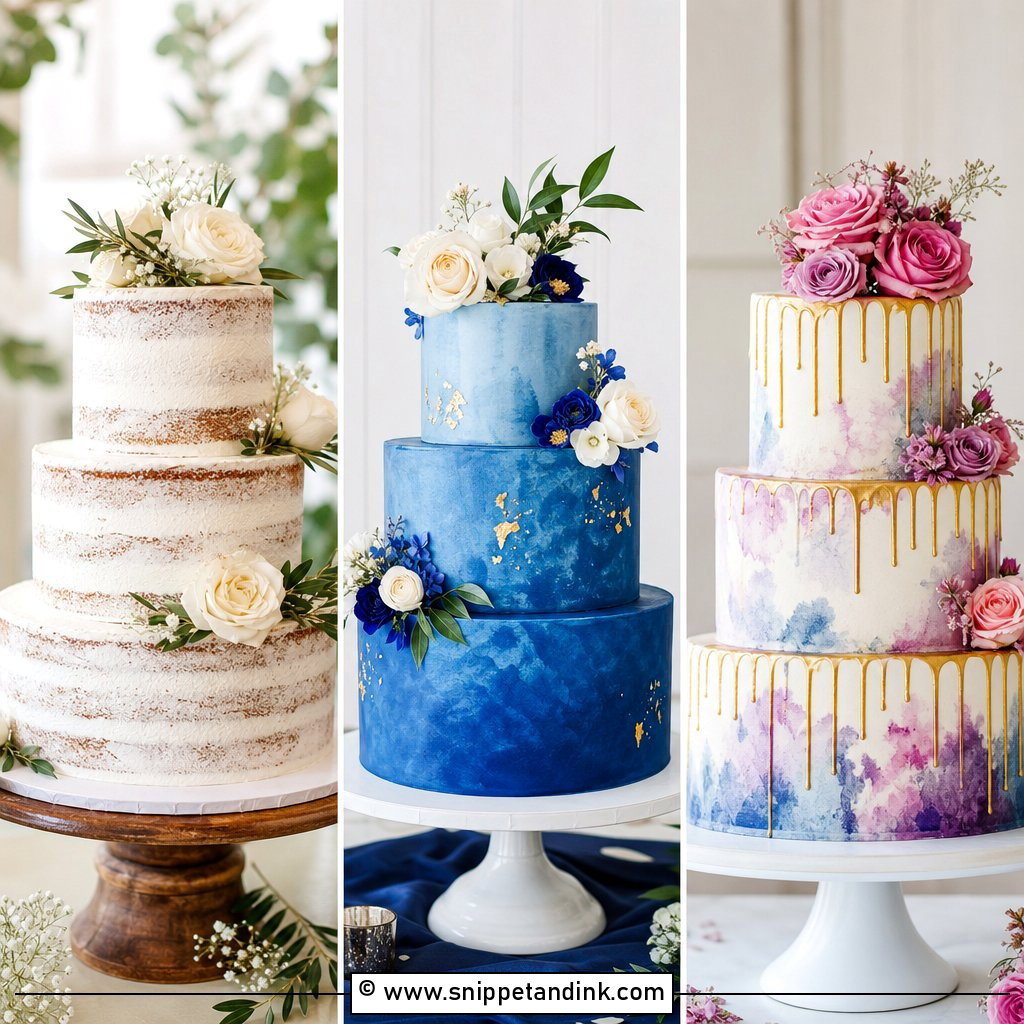
Fresh flowers on smooth buttercream need a clean, cold surface. I chill the finished tiers so the icing firms, then add the flowers on site as late as I can, with every stem wrapped in floral tape or set into a food-safe pick so nothing touches the cake directly. Ivory reads warmer than pure white beside most blooms. Roses, ranunculus and peonies are the usual choices. Less works better here: a cluster on top and a smaller one at the bottom tier looks more considered than flowers on every surface, and it ties the cake to the bouquets.
2. Textured Buttercream Wedding Cake With Greenery
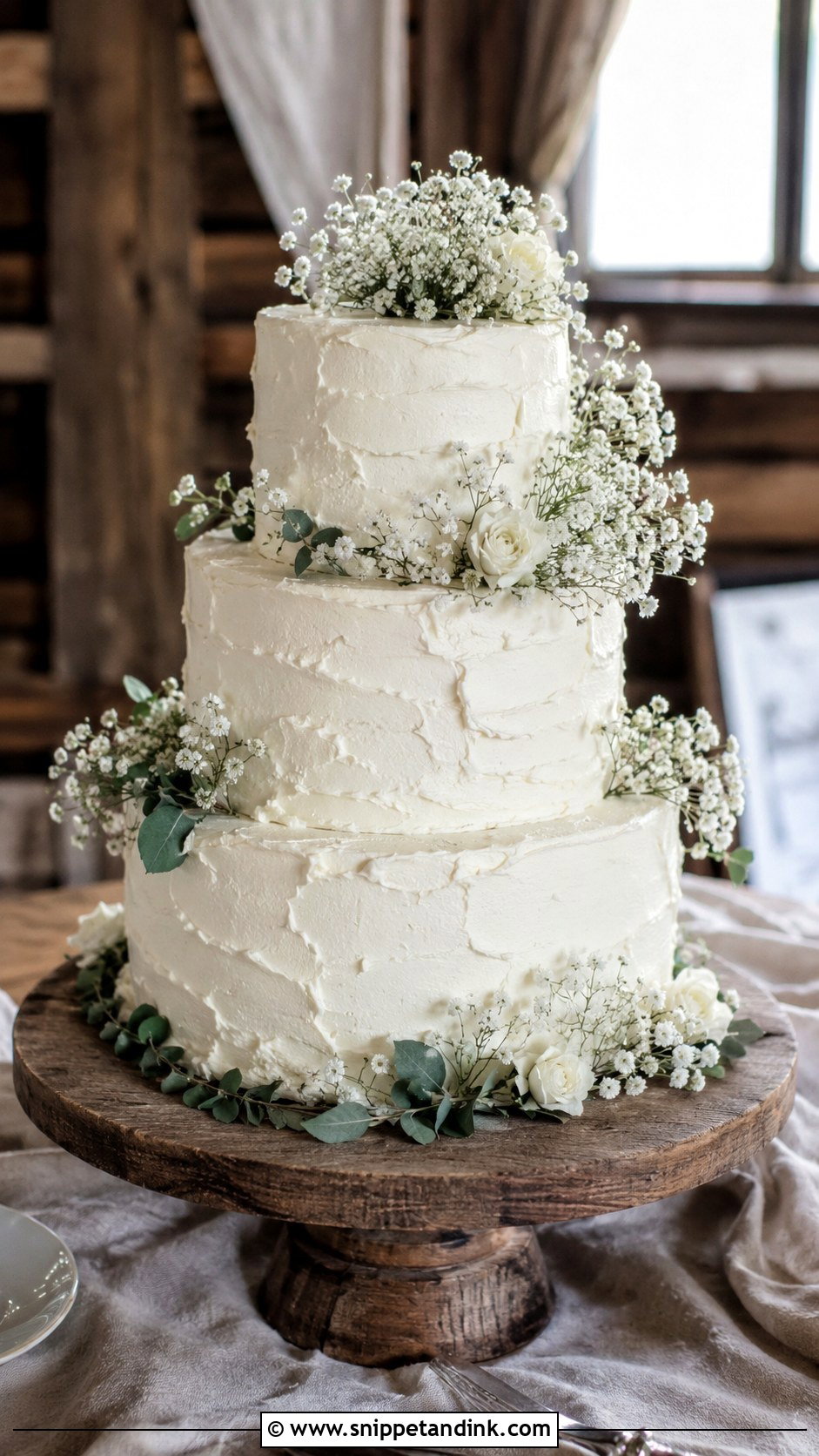
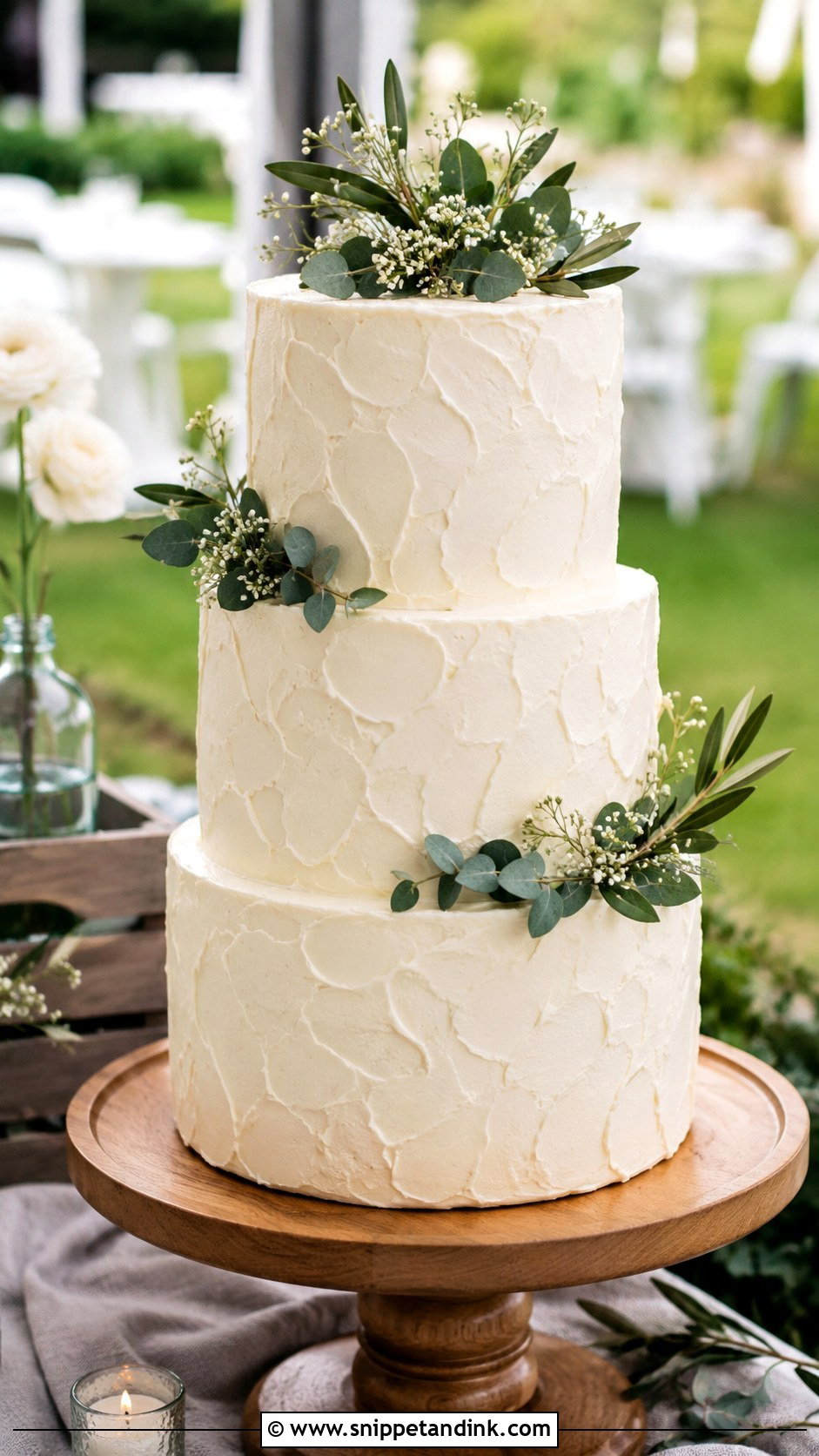
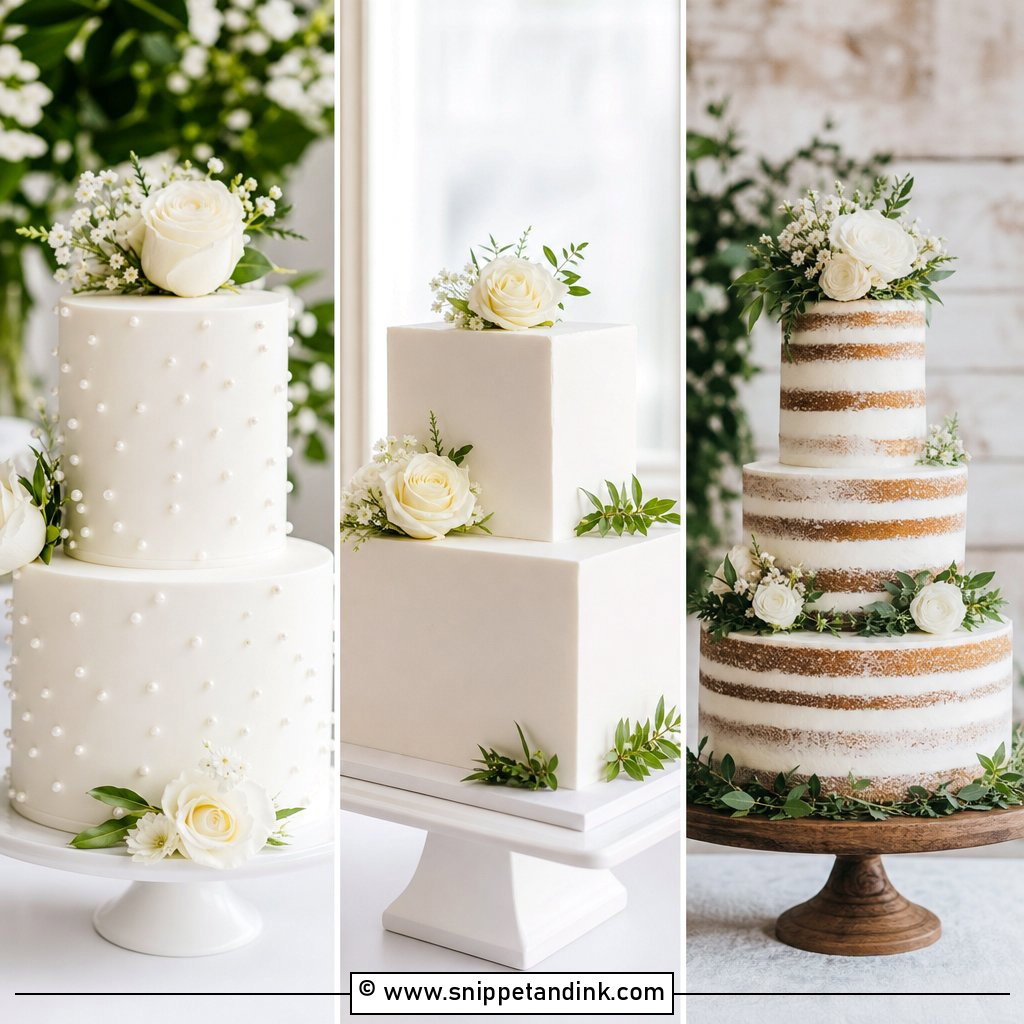
This texture comes from an offset spatula pressed in and pulled away while the buttercream is still soft, so no two cakes come out quite alike. That handmade finish suits barns, vineyards and outdoor weddings. For greenery I like eucalyptus, olive and rosemary; I wash and dry it and wrap the cut ends before it goes anywhere near the icing. Keep the palette to ivory, sage and muted green. A textured surface also hides small knocks from transport, which is a quiet advantage on a hot day.
3. Two Tier Buttercream Wedding Cake With Roses
Two tiers usually serve a small wedding, somewhere around thirty to fifty guests depending on the tier sizes and layer height, and they travel far more safely than a tall cake. I give each tier a smooth or lightly textured coat, then run roses in a diagonal line from the top tier toward the base, which makes a short cake look taller. White roses read traditional, blush romantic, dusty pink modern. Display it on a white stand, a wood pedestal or a plain ceramic plate.
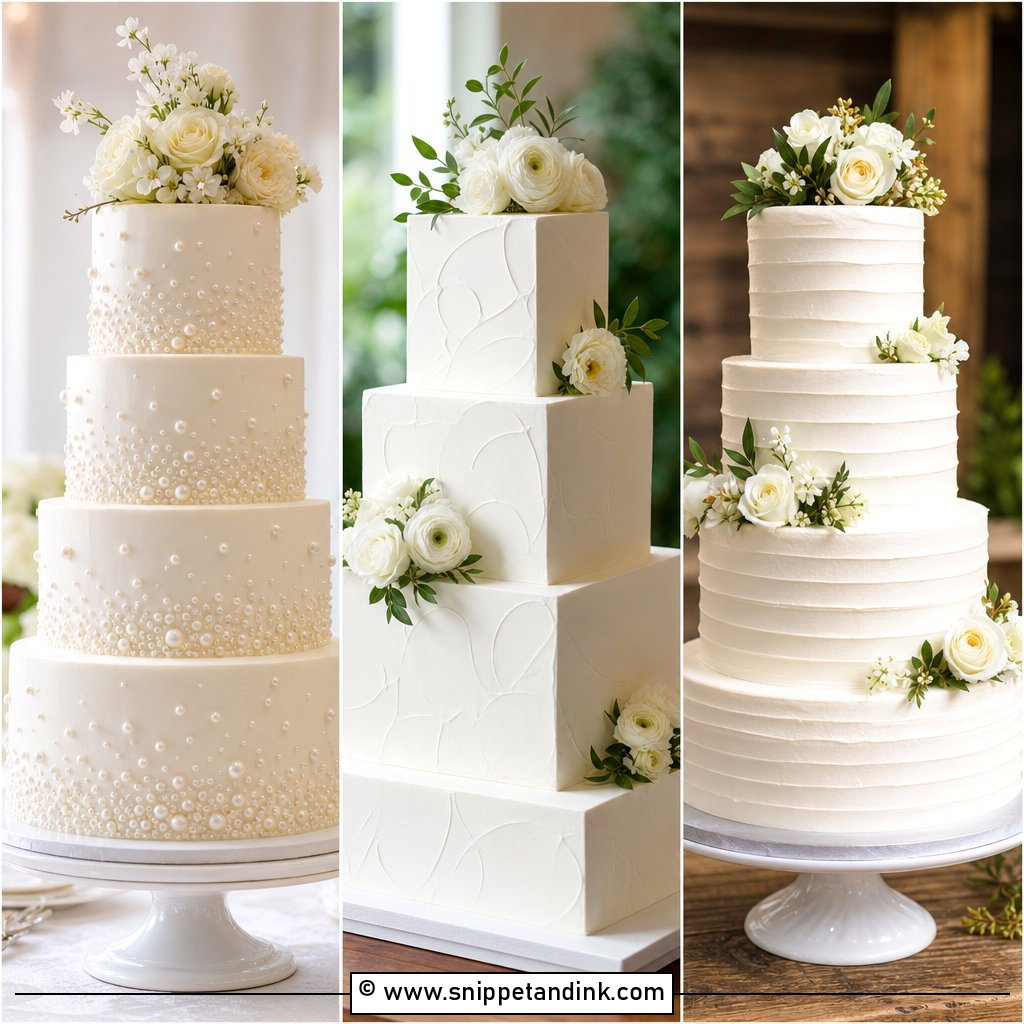
4. Three Tier Buttercream Wedding Cake With Pearl Border
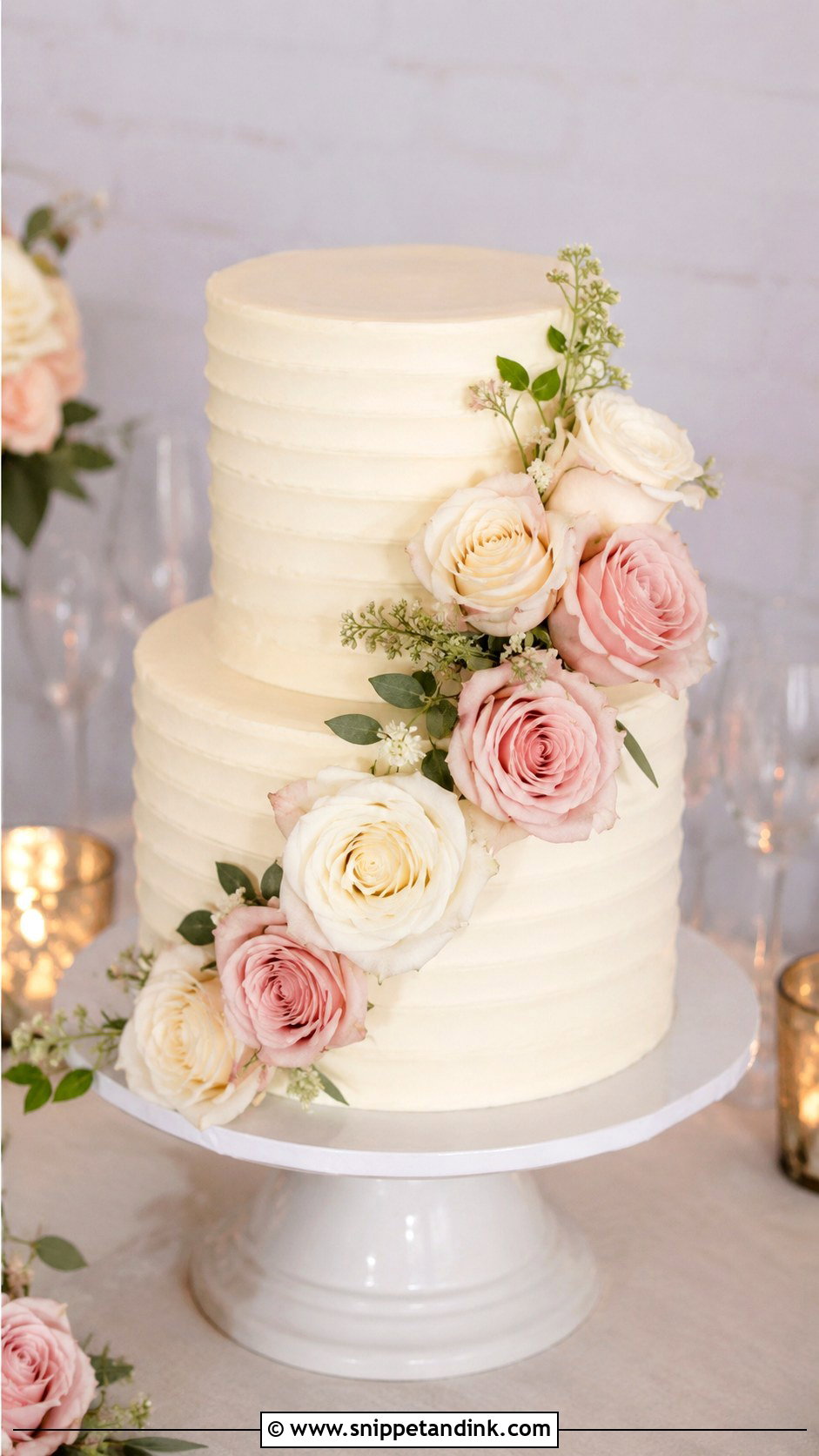
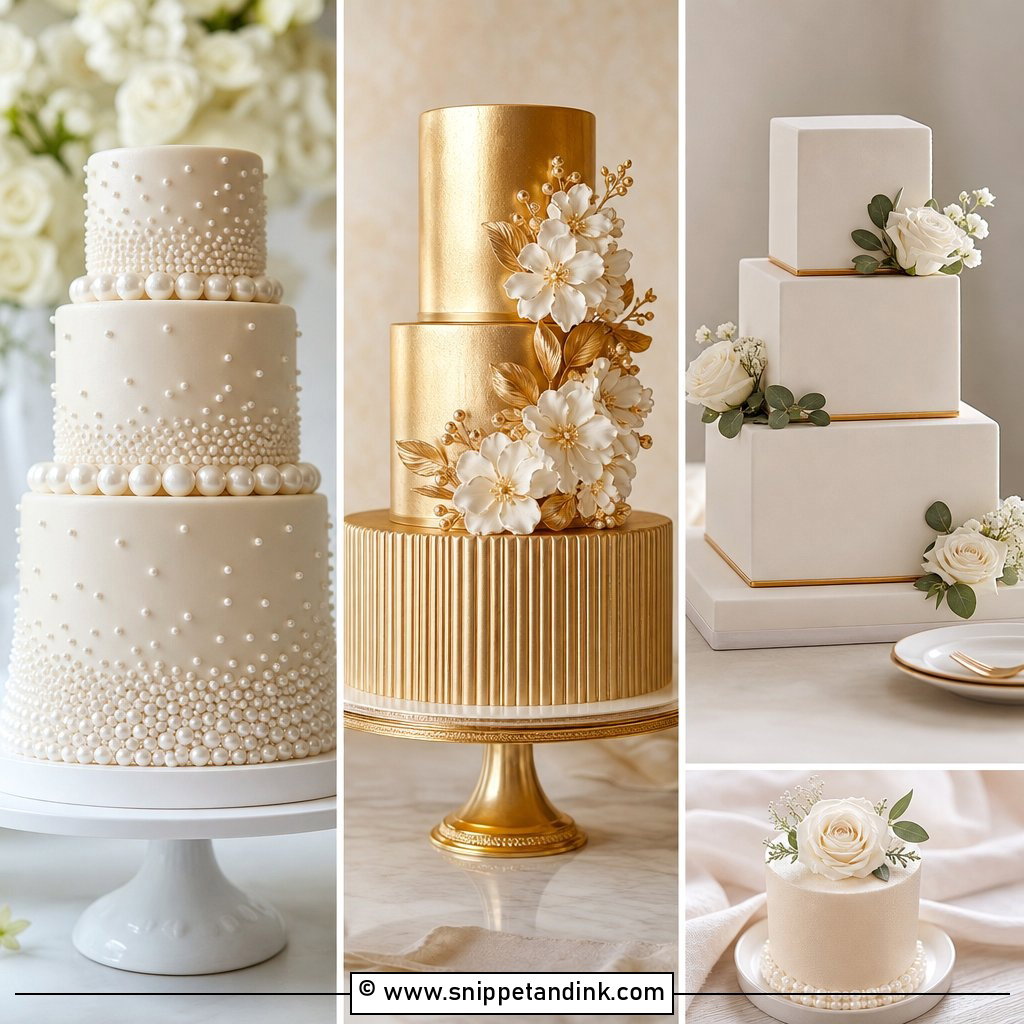
Buttercream pearls are piped with a round tip, one bead at a time, using even pressure and a quick release; I then tap each little point down with a damp fingertip. Around the base of each tier they hide the seam where cake meets board, which is why borders exist in the first place. Keep the cake white, or add a few tiny flowers. Ask to see even, delicate piping at the tasting, so you know the bead size before it goes around three tiers. Ballrooms and traditional receptions suit it.
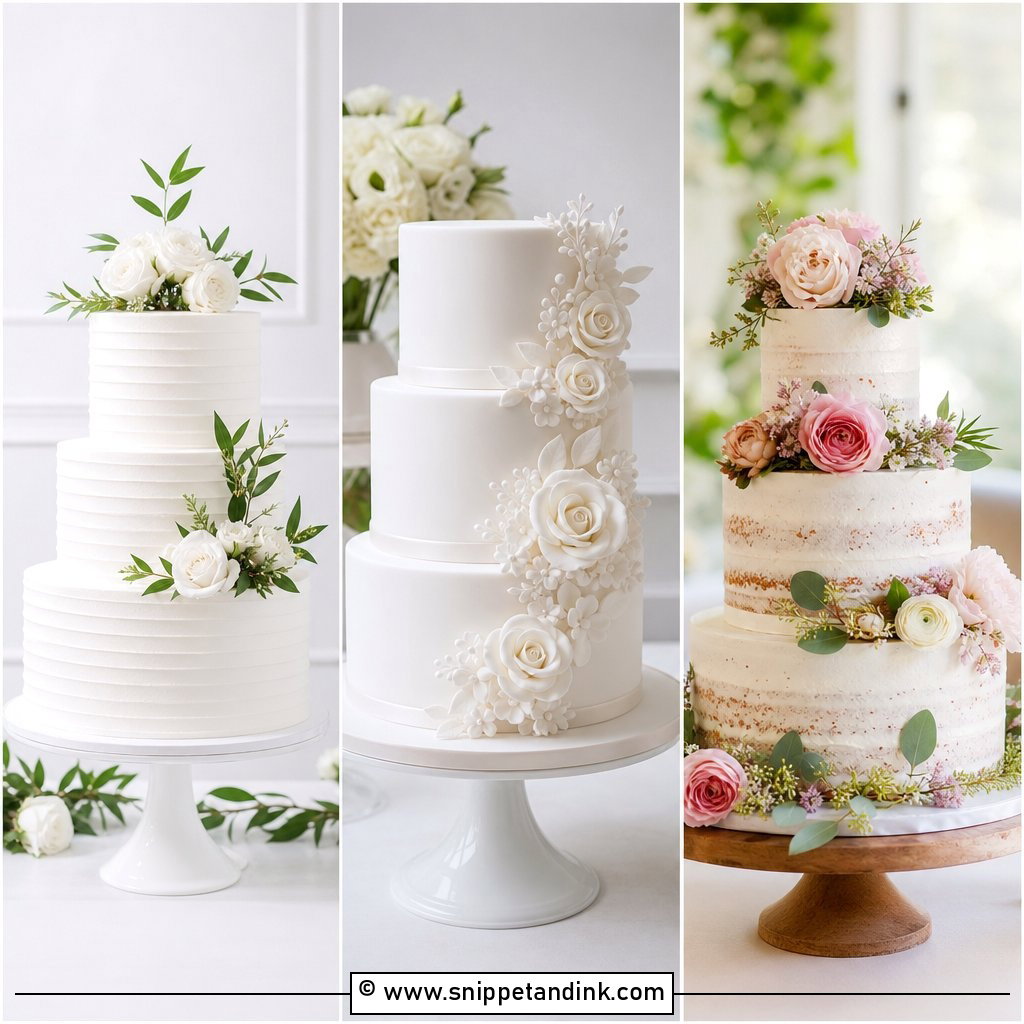
5. Semi Naked Buttercream Wedding Cake With Berries
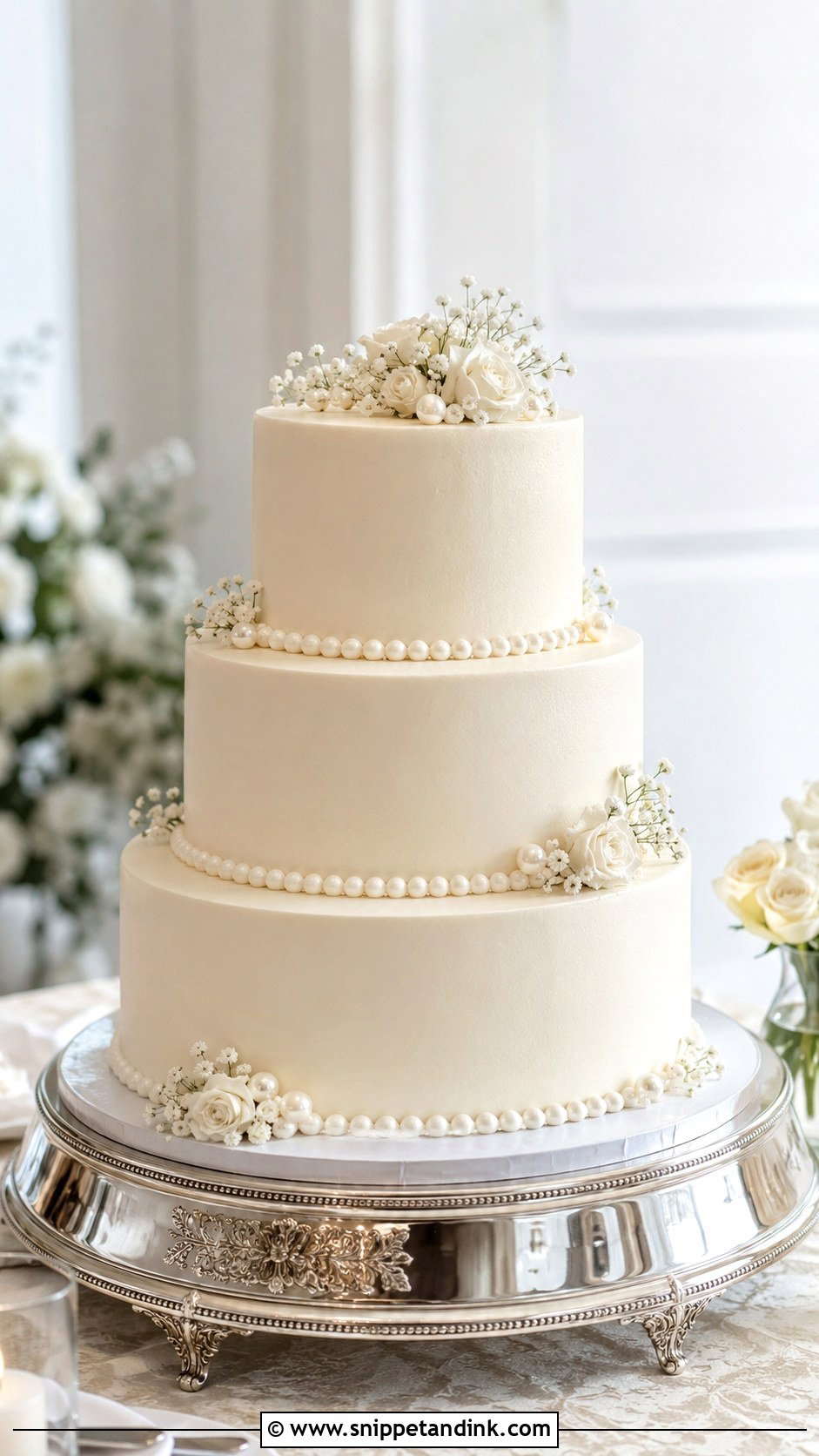
A semi naked cake has only a thin scraped coat, so the sponge is exposed to the air. I’d never leave one uncovered for hours before a reception, because the visible cake dries at the edges, and I assemble as close to serving as the schedule allows. Strawberries, blueberries, raspberries and blackberries add the color. I add them on site and keep them whole where possible, since cut strawberries weep juice into the icing within an hour or two. A dusting of powdered sugar or a few flowers finishes it for summer, brunch and backyard weddings.
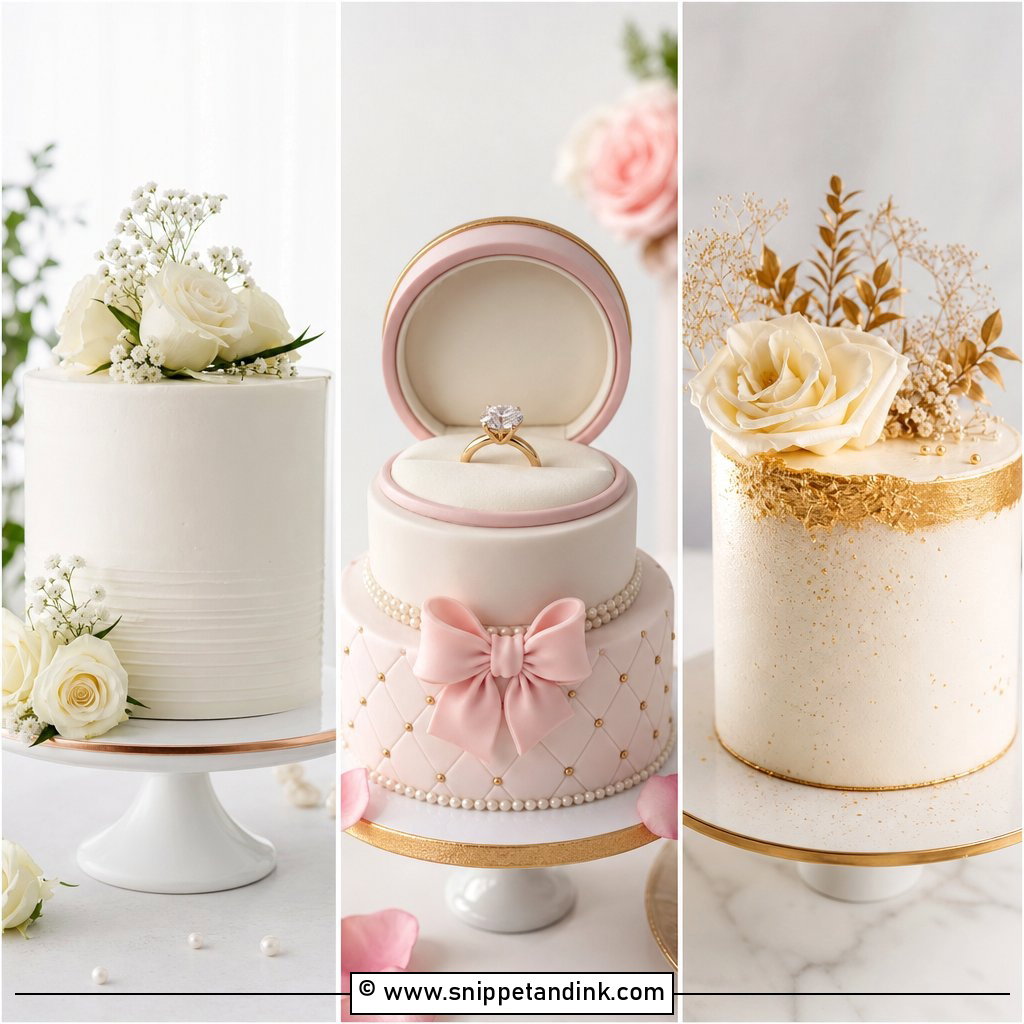
6. White Buttercream Wedding Cake With Gold Leaf
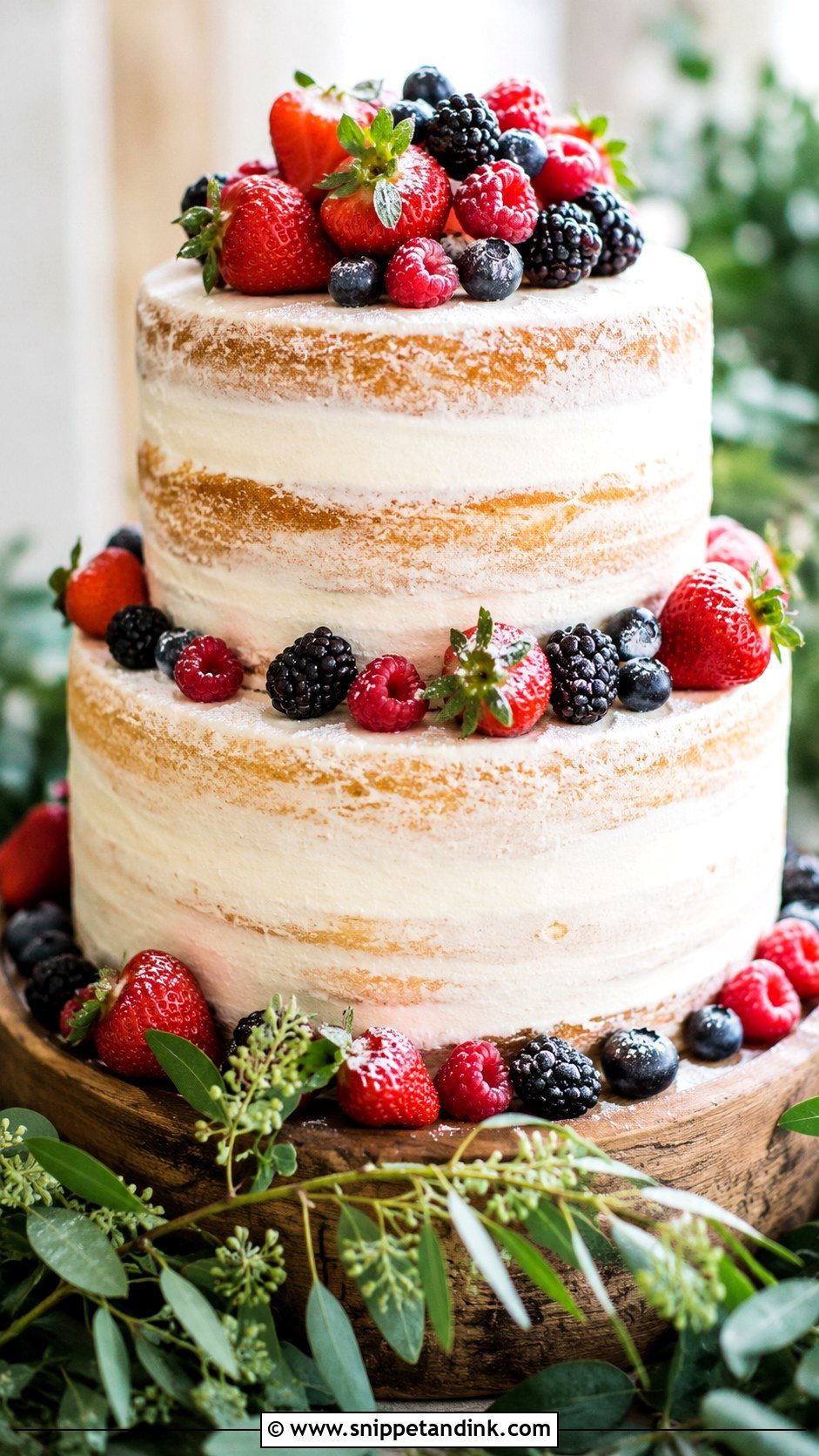
Edible gold leaf is so thin it lifts off with a breath, so I apply it with a soft dry brush or tweezers onto chilled, smooth buttercream that still has a slight tack. Use it sparingly; a few flakes on one side of each tier is plenty. At an evening reception it catches candlelight better than any piping. Make sure it is sold as edible gold, not craft leaf. Leave the rest of the cake minimal, or add one small flower cluster for black-tie and modern weddings.
7. Rustic Buttercream Wedding Cake With Baby’s Breath
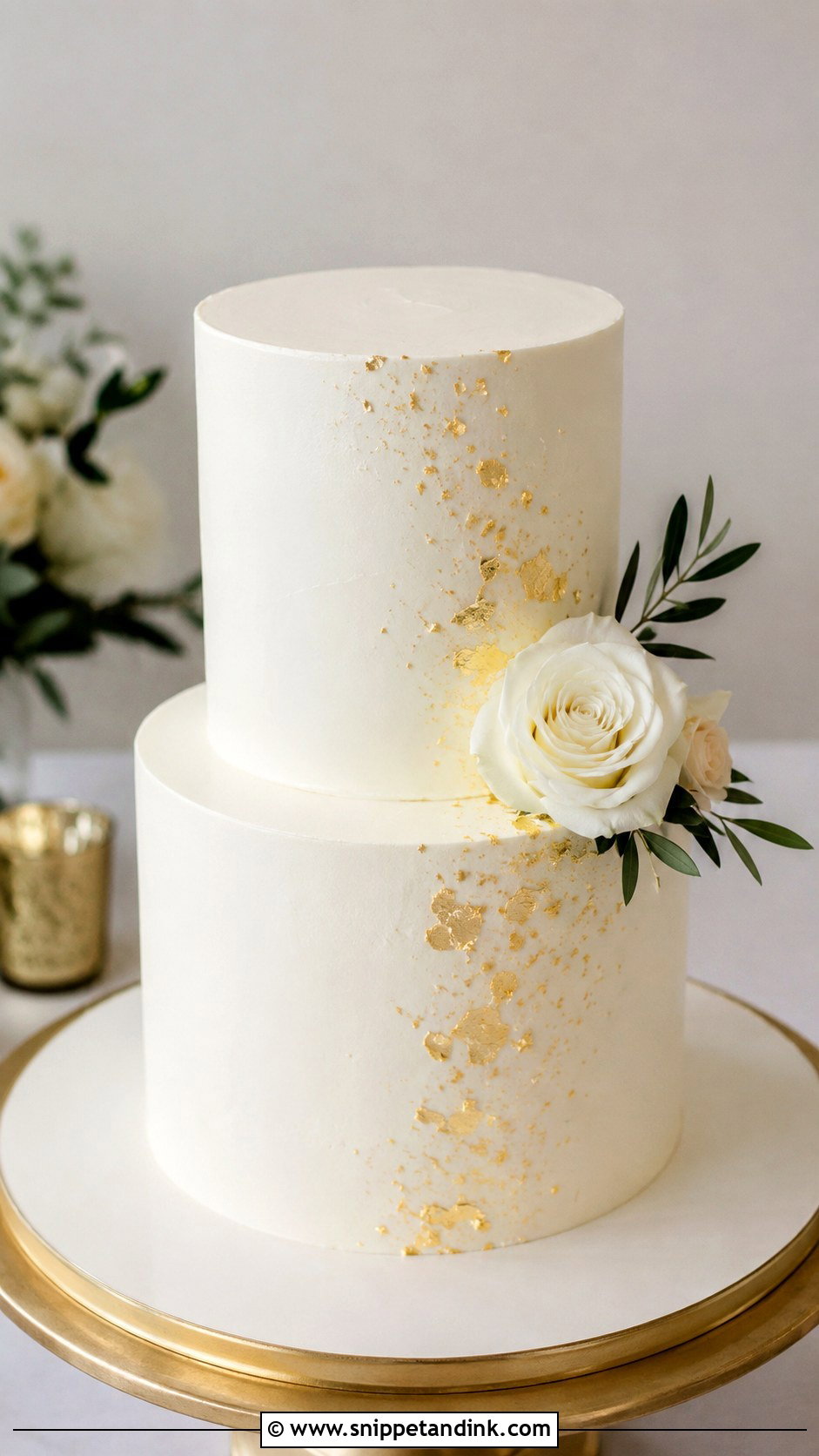
Baby’s breath is inexpensive and airy, and it’s one flower I never push straight into the icing. Gypsophila is mildly toxic, so every bunch is wrapped in floral tape or set on a barrier before it sits on the cake. With that handled, it looks sweet tucked around lightly swirled tiers at barns, farmhouse venues and small chapels. Ivory buttercream gives a warmer feel than bright white here. Keep the bunches small and loose.
8. Minimal Buttercream Wedding Cake With Single Flower
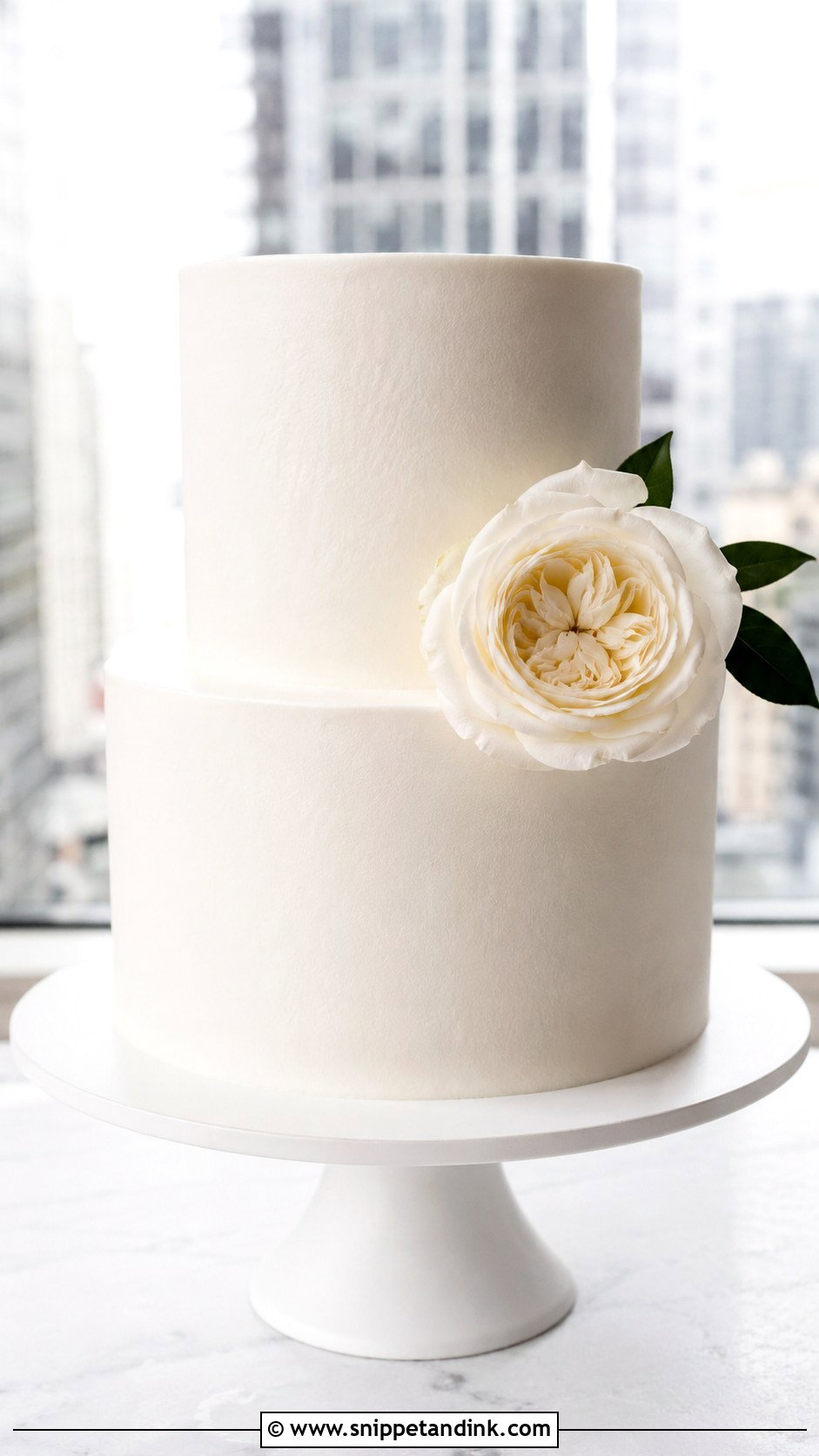
Restraint is harder than it looks. With one bloom on a plain cake, every flaw in the buttercream shows, so I spend longer on the final coat, finishing the edges with a warmed bench scraper. A garden rose, peony, dahlia, or orchid becomes the whole design. Pick a flower that holds up out of water for several hours; a blown peony can droop before the cutting. Small weddings, city venues and elopements suit this, on a plain stand.
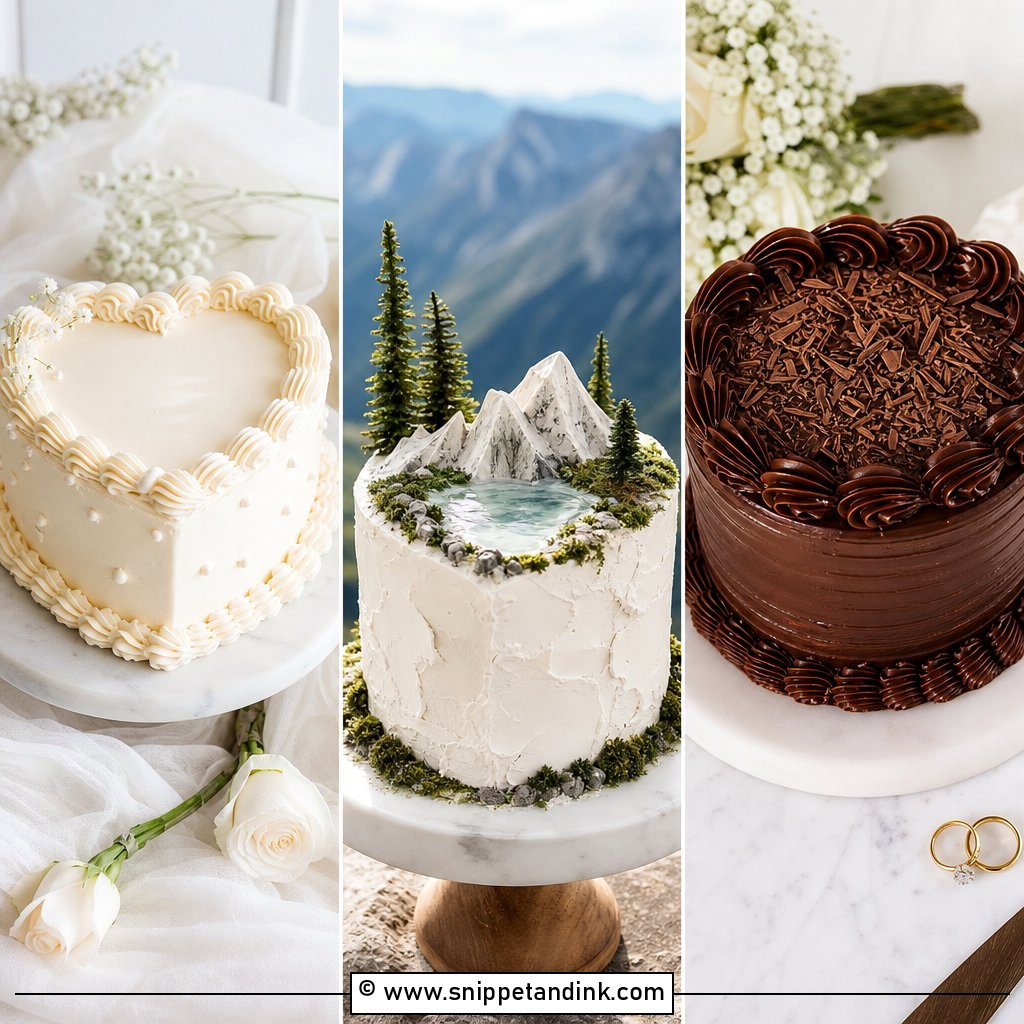
9. Buttercream Wedding Cake With Piped Shell Border
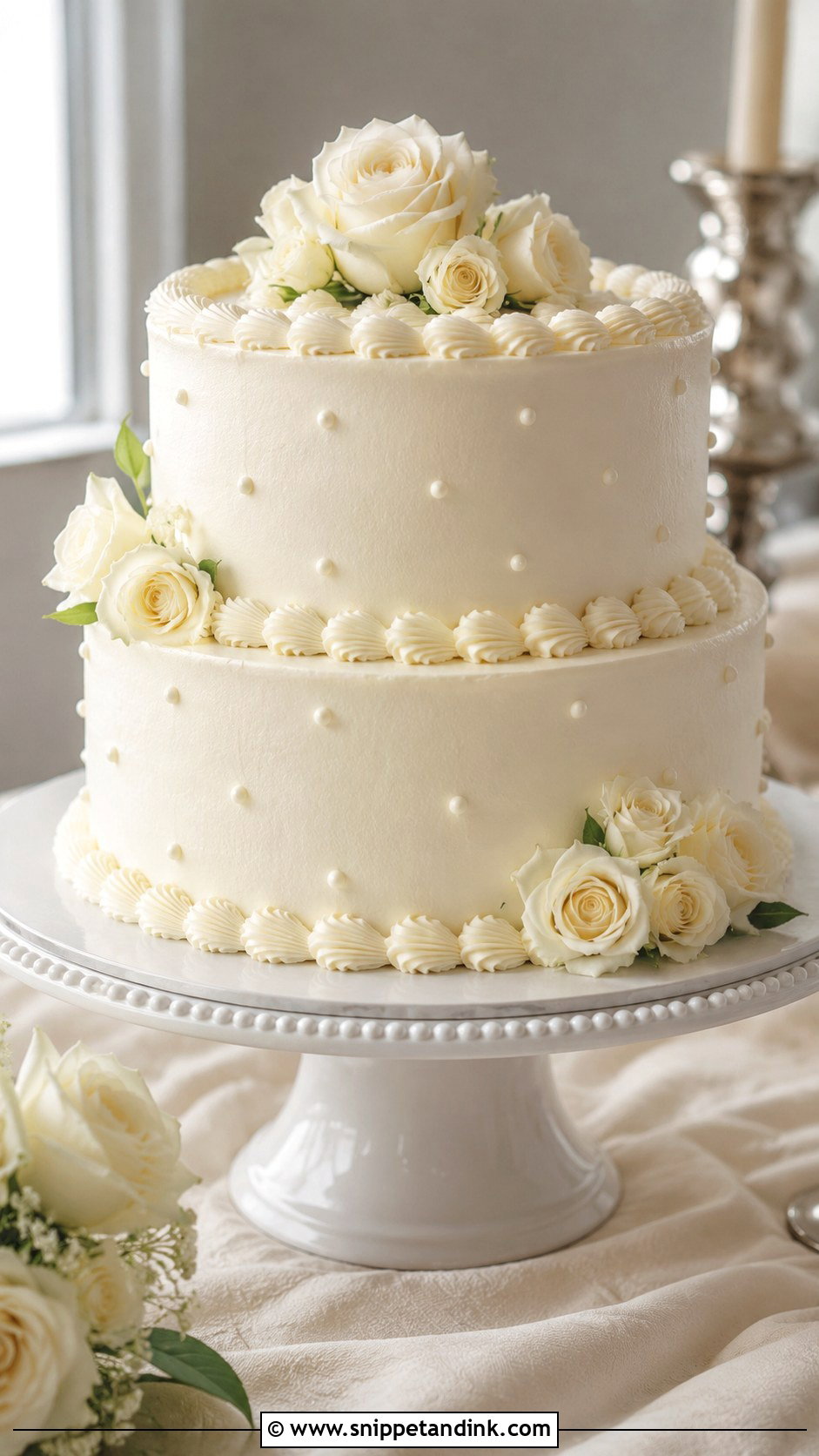
Shell borders are the most traditional piping there is, made with a star tip in a push, ease and pull rhythm. Practically, they cover the seam between tier and board, so they earn their place as much as they decorate. Around each tier they give a soft vintage outline, and white cake with ivory shells is the classic pairing. Add a few flowers, pearls or sprigs of greenery if you like, but keep the sides plain so the piping stays the feature.
10. Buttercream Wedding Cake With Vertical Texture
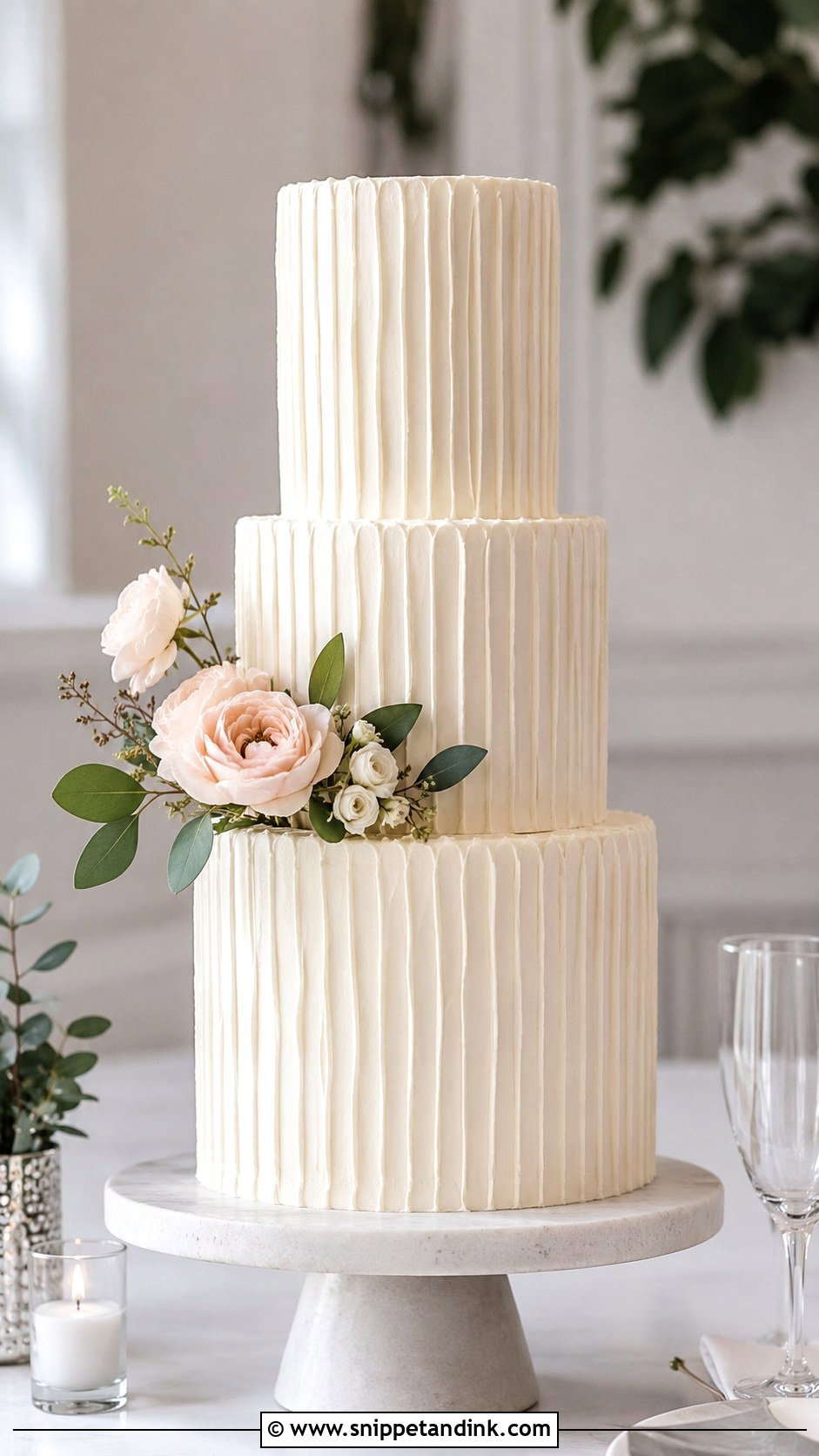
Vertical lines are harder to make than horizontal ones, because the cake can’t simply spin on a turntable against a comb. I pull a textured scraper or spatula tip upward in strips from the base, and chill between tiers so I don’t drag the lines I’ve already made. The effect makes a cake look taller. White, ivory and champagne all suit it, and the ridges catch side lighting well in photos. Add a small cluster or leave it bare.
11. Buttercream Wedding Cake With Horizontal Ridges
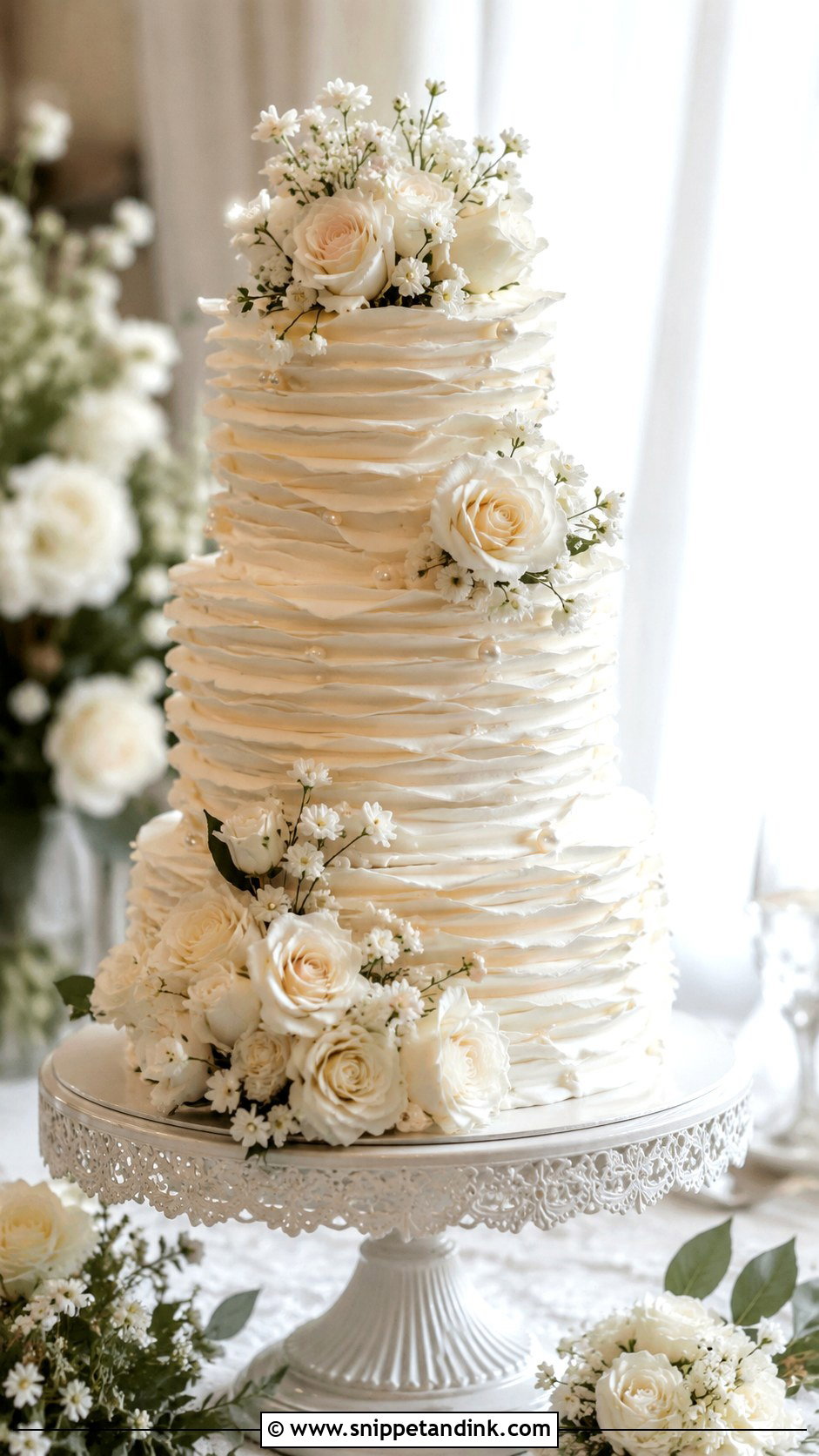
Horizontal ridges are made by holding a comb scraper still while the turntable spins, so they come out quicker and more even than vertical lines. The texture lets a cake look finished with very little decoration. Ask for crisp, even ridges for a formal room, or softer, uneven lines for something relaxed. Greenery pushes it rustic and roses push it classic. In warm air, slight softening is far less obvious on a ridged face than on a smooth one, which I like for summer receptions.
12. Buttercream Wedding Cake With Floral Cascade
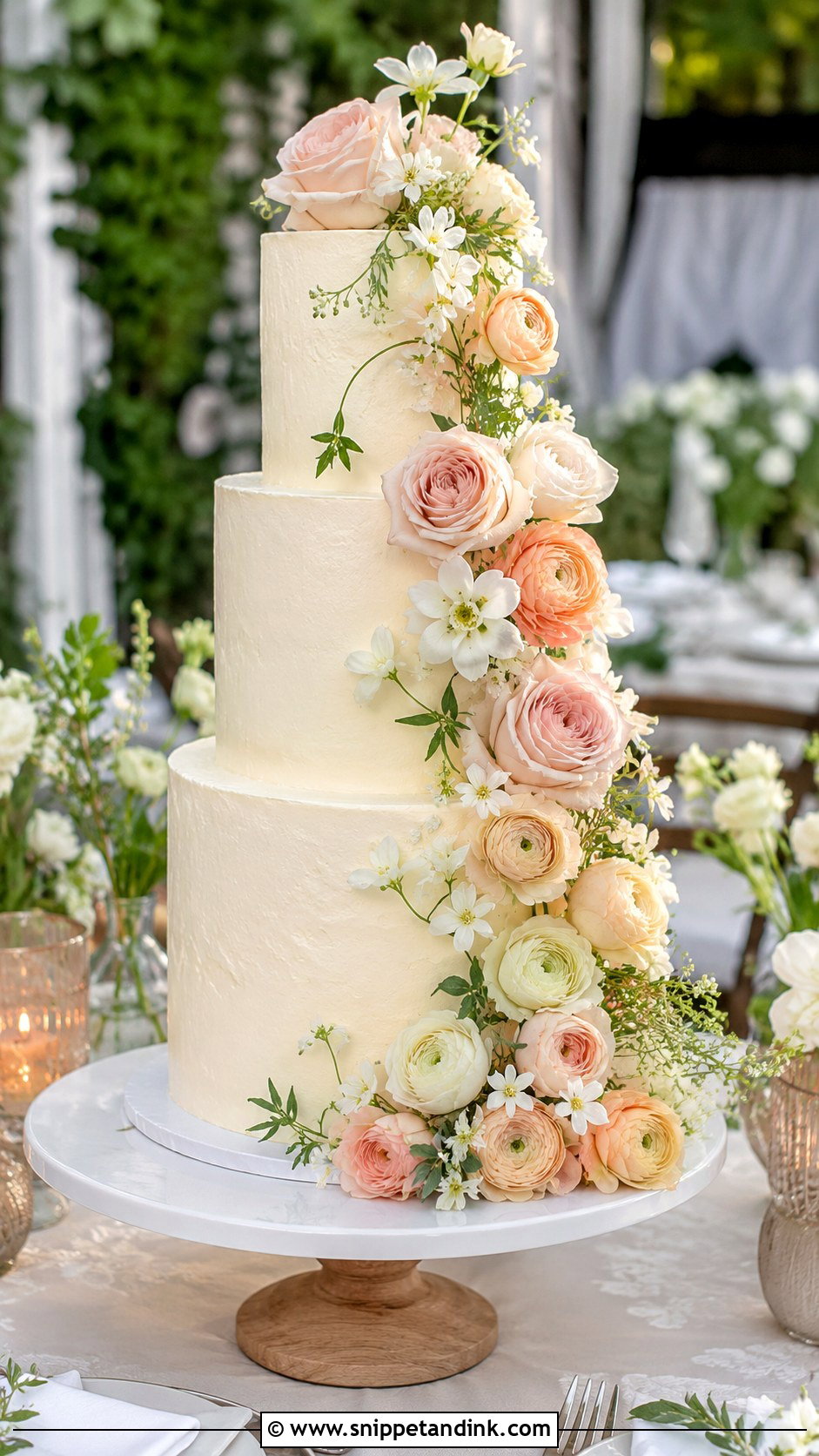
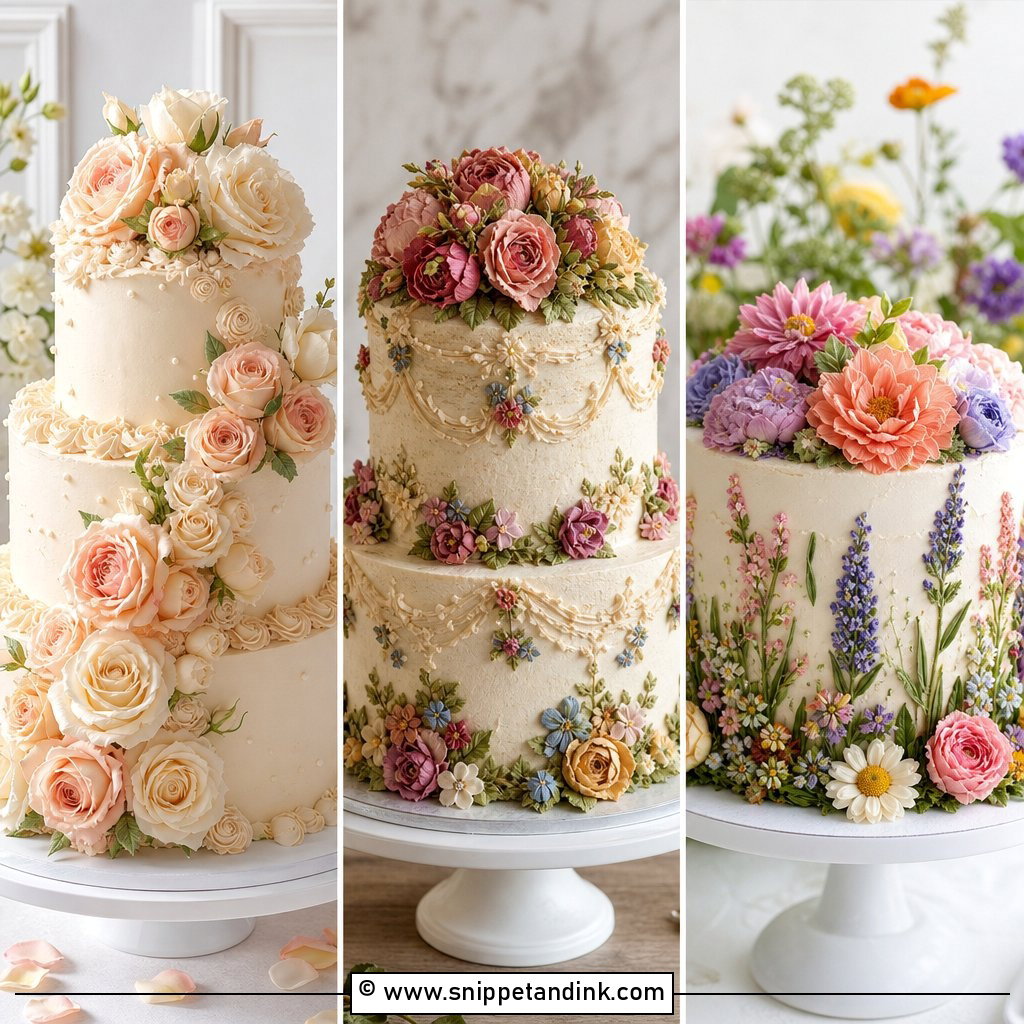
A cascade needs planning with the florist, not a box of leftover stems. Heavier blooms have to sit on picks so they don’t drag the buttercream down as it softens, and I mark the line on the chilled cake before a single flower goes on. Arranged in a flowing curve down the tiers, the flowers make the cake look taller without complicated piping. Echo the bouquet in blush, cream, peach or dusty mauve, but stop well short of covering everything. Gardens, estates and romantic receptions are where it fits.
13. Buttercream Wedding Cake With Fresh Fruit
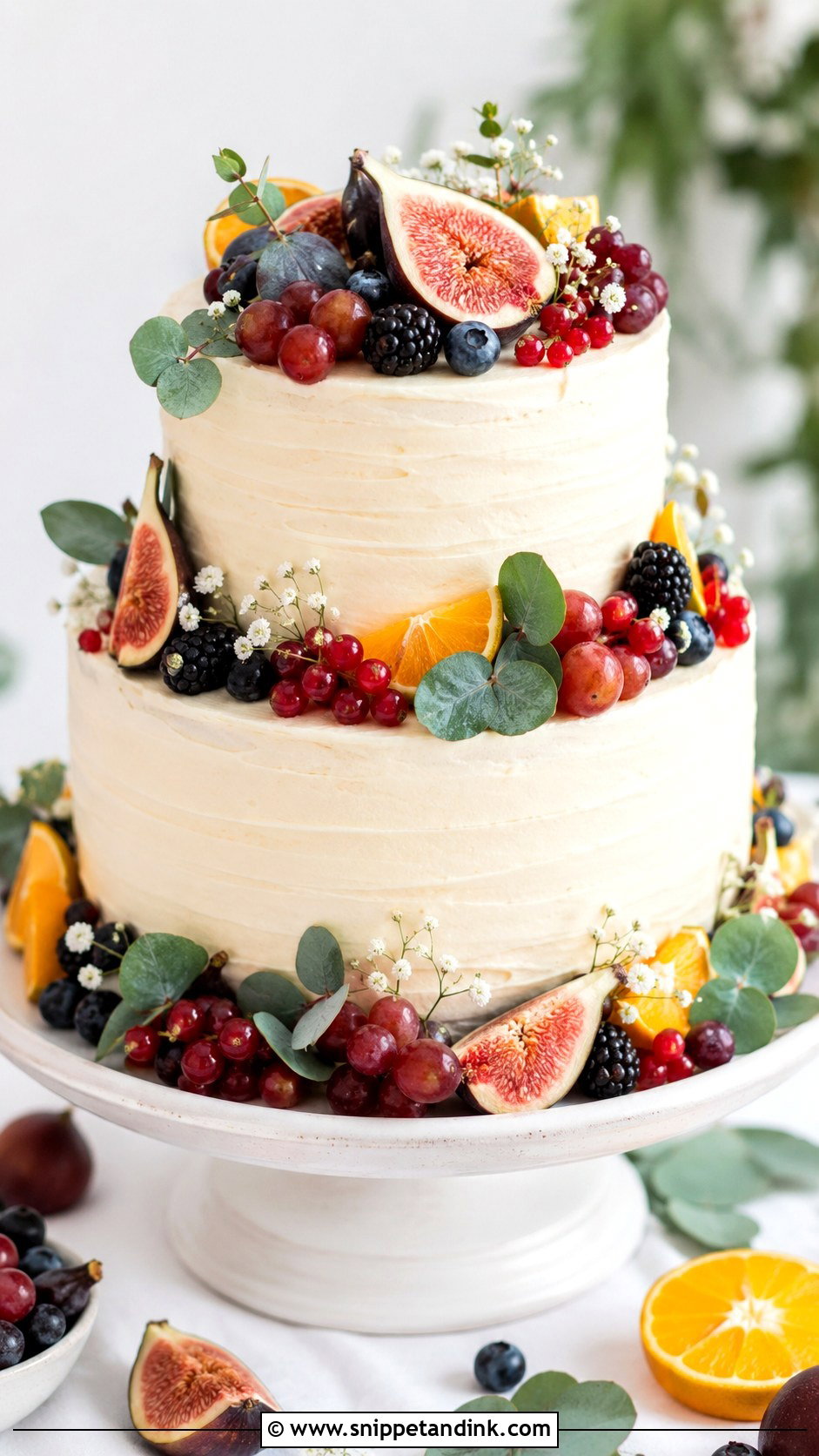
Fruit changes more over a few hours than any other decoration. Cut citrus and strawberries weep, sliced pears brown, and loose grapes roll. I use whole or halved fruit where I can, such as figs, berries, cherries and small grape clusters, and brush any cut surfaces with a thin glaze so they hold. Smooth or lightly textured buttercream keeps the fruit looking clean, and a few leaves soften the arrangement. Wood, stone and ceramic stands suit it, and the fruit hints at the flavors inside.
14. Buttercream Wedding Cake With Small Piped Flowers
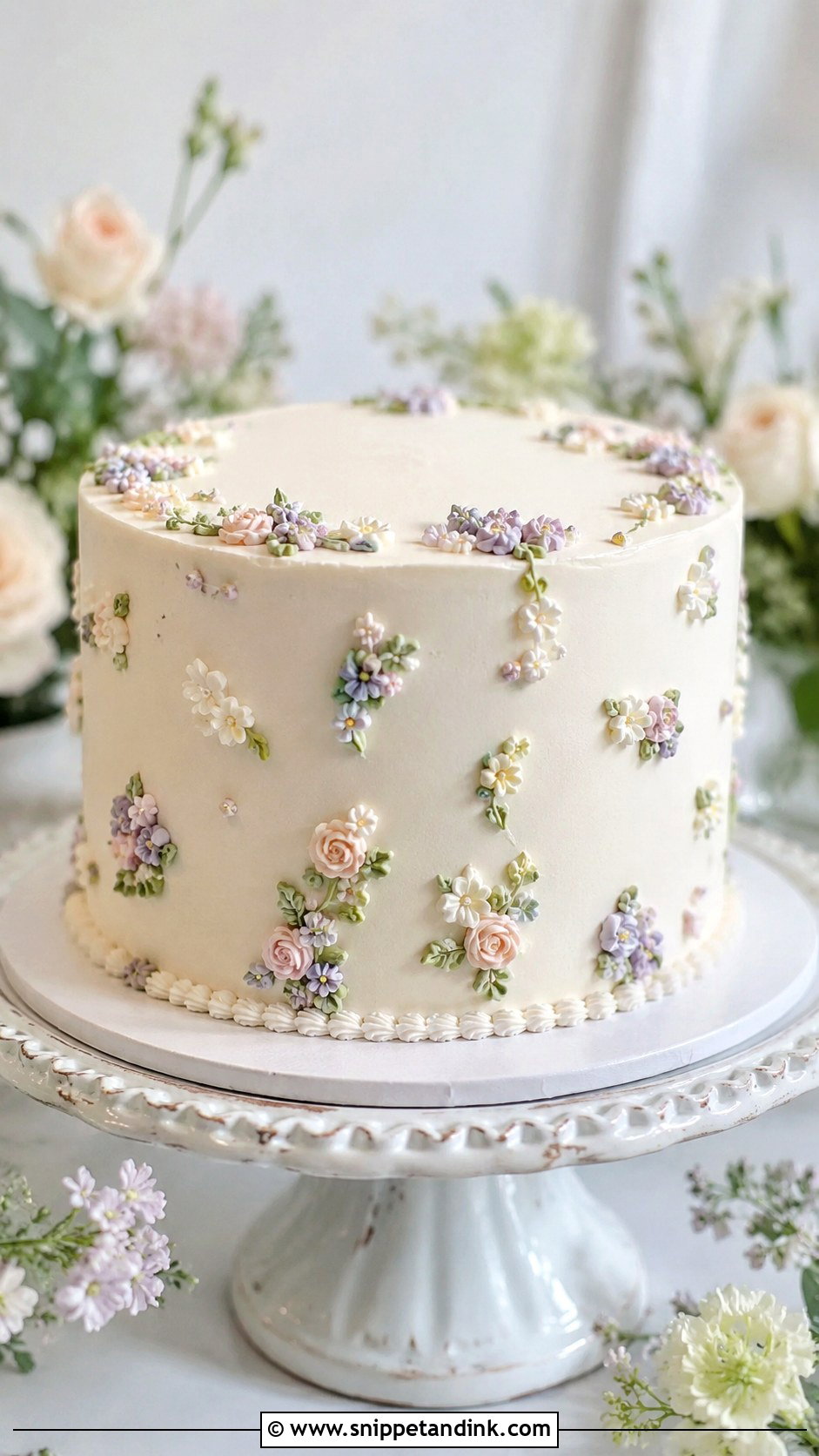
Piped buttercream flowers give couples florals without fresh stems. I pipe the tiny blossoms directly onto the cake, while larger roses are piped onto squares of parchment, chilled firm and then placed. They can be tinted to any palette, from white to blush, lavender or pale blue. Small flowers survive delivery much better than big ones. Keep the background plain so the blossoms don’t crowd, and the handmade charm suits garden, cottage and indoor celebrations.



15. Buttercream Wedding Cake With Monogram Topper
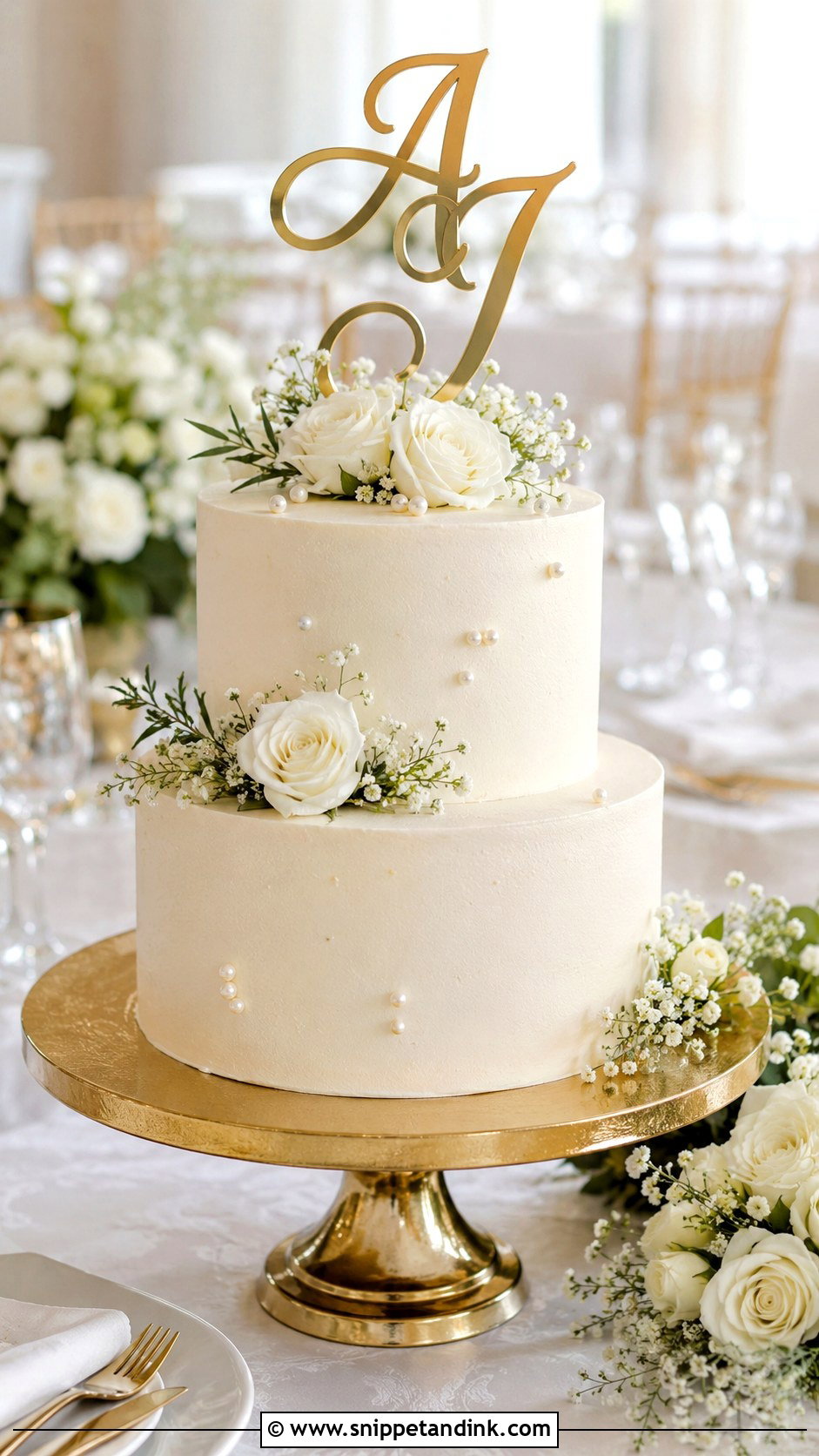
A monogram topper personalizes a plain cake with almost no extra cake work. The cake itself stays simple, with smooth buttercream or a clean border, and the couple’s initials sit on top. Acrylic, wood, metal and white toppers all work. Before delivery I check the topper’s spikes: they should be food-safe and long enough to sit firm, because a short spike wobbles in soft buttercream. Gold or pearl finishes feel formal, wood feels rustic. Add flowers only if they support the topper.
16. Buttercream Wedding Cake With Ribbon Detail
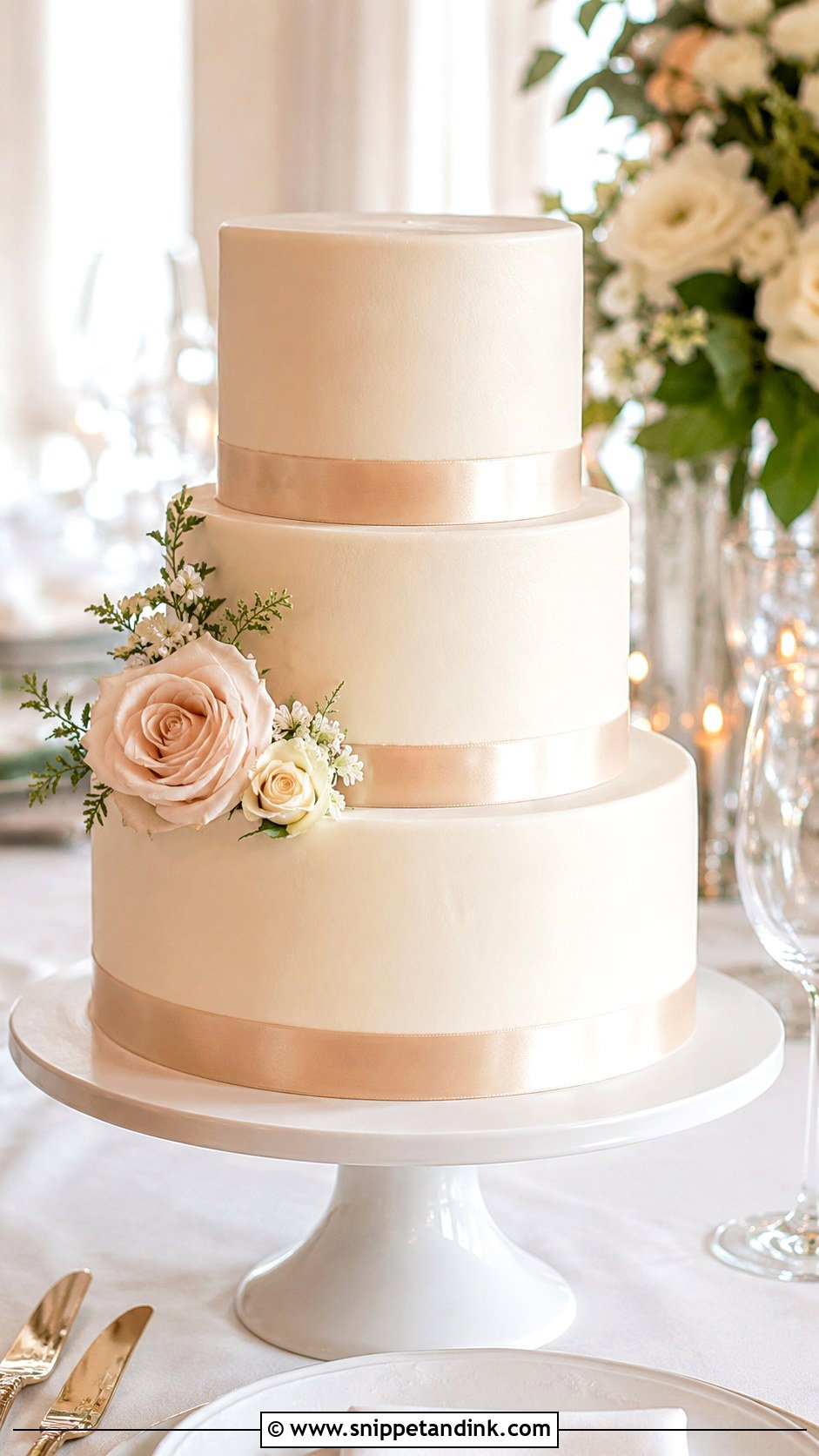
Real ribbon on buttercream needs a barrier. Butter seeps into satin and leaves a greasy stripe, so I back the ribbon with a strip of parchment or clear tape before wrapping it around the base of each tier. A piped ribbon effect avoids the problem entirely. Ivory icing with champagne, blush, dusty blue or sage ribbon ties the cake into the palette. Keep it fitted and smooth so it doesn’t wrinkle. Classic, hotel and formal garden weddings suit it.
17. Buttercream Wedding Cake With Ruffle Texture
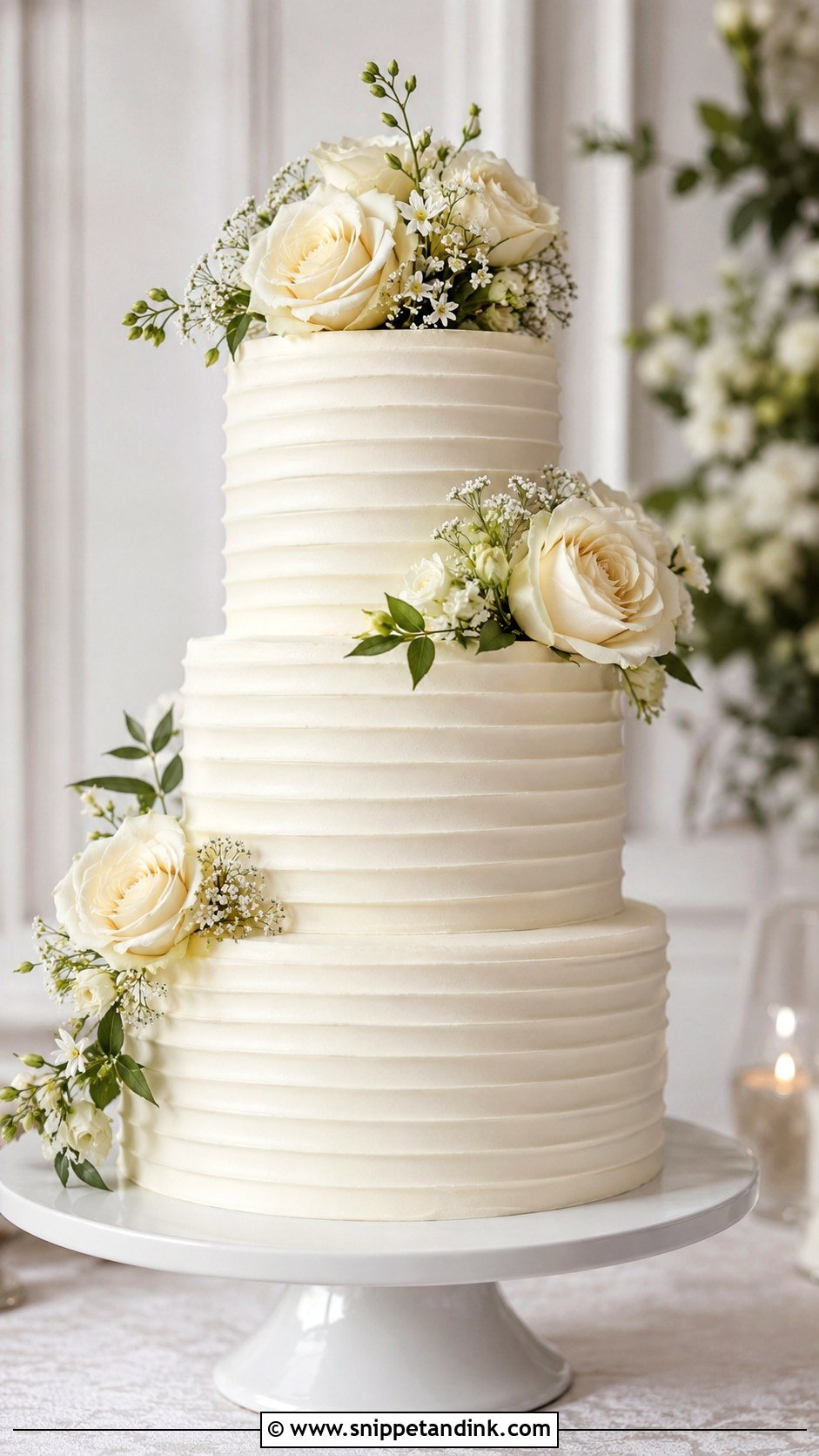
Ruffles are piped with a petal tip held at an angle, row upon row, and they take more buttercream and more hours than most finishes, which is reflected in the quote. Keep them light and neutral. I often ruffle just one tier as an accent and keep the others smooth. They’re fragile in heat and in the back of a van, so I’d avoid them for a summer outdoor reception. White or ivory lets the texture do the work, with a few flowers on top.
18. Buttercream Wedding Cake With Ombre Finish
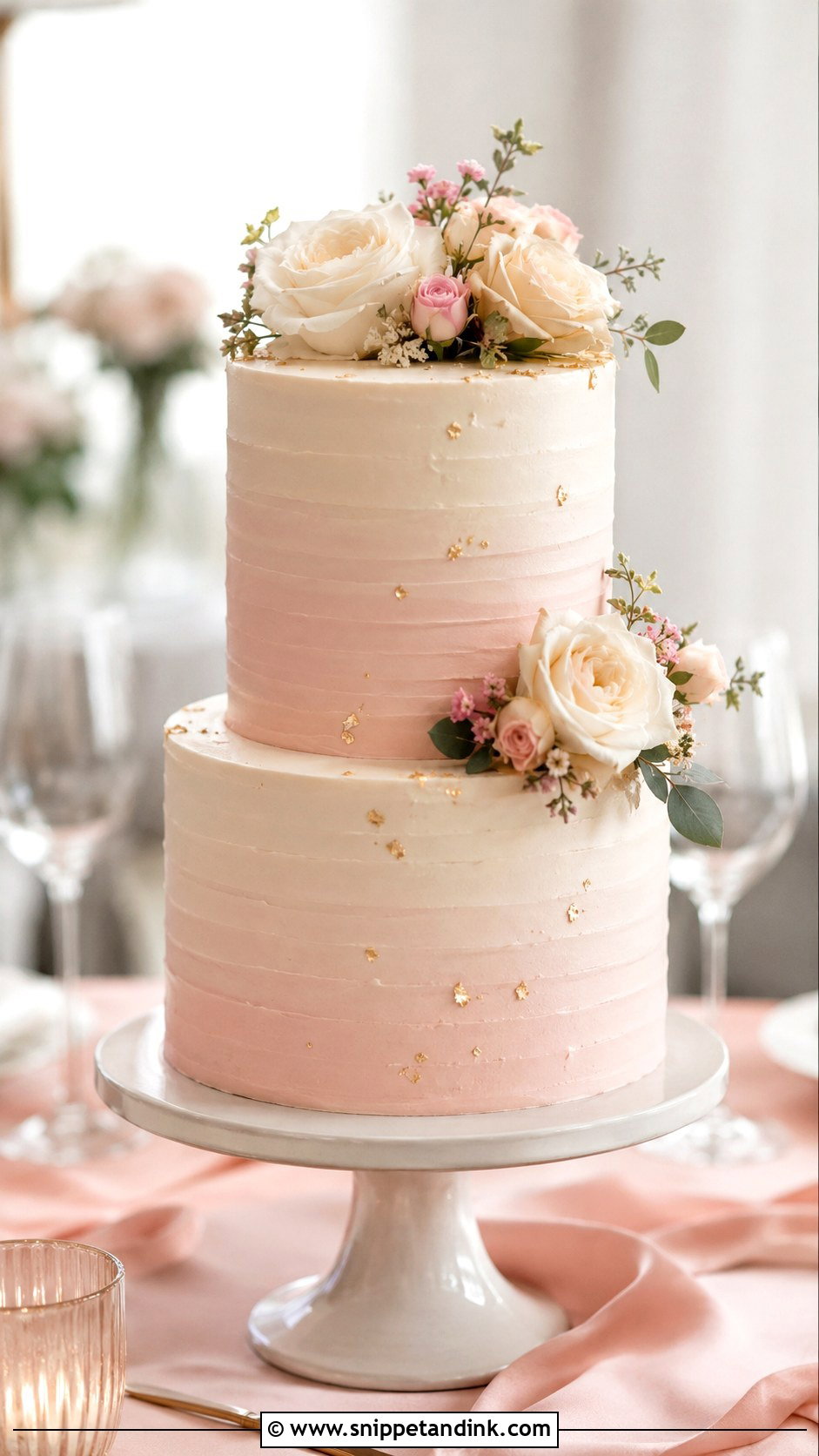
Ombre buttercream is made by tinting three or four batches of icing in steps and blending the bands together with a scraper. Gentle fades work best: white to blush, ivory to champagne, cream to pale sage. I mix every shade before I start, because matching a color halfway through a cake is close to impossible. A smooth ombre suits modern weddings; a textured one suits relaxed ones. Keep toppings minimal so the fade stays visible.
19. Buttercream Wedding Cake With Dried Flowers
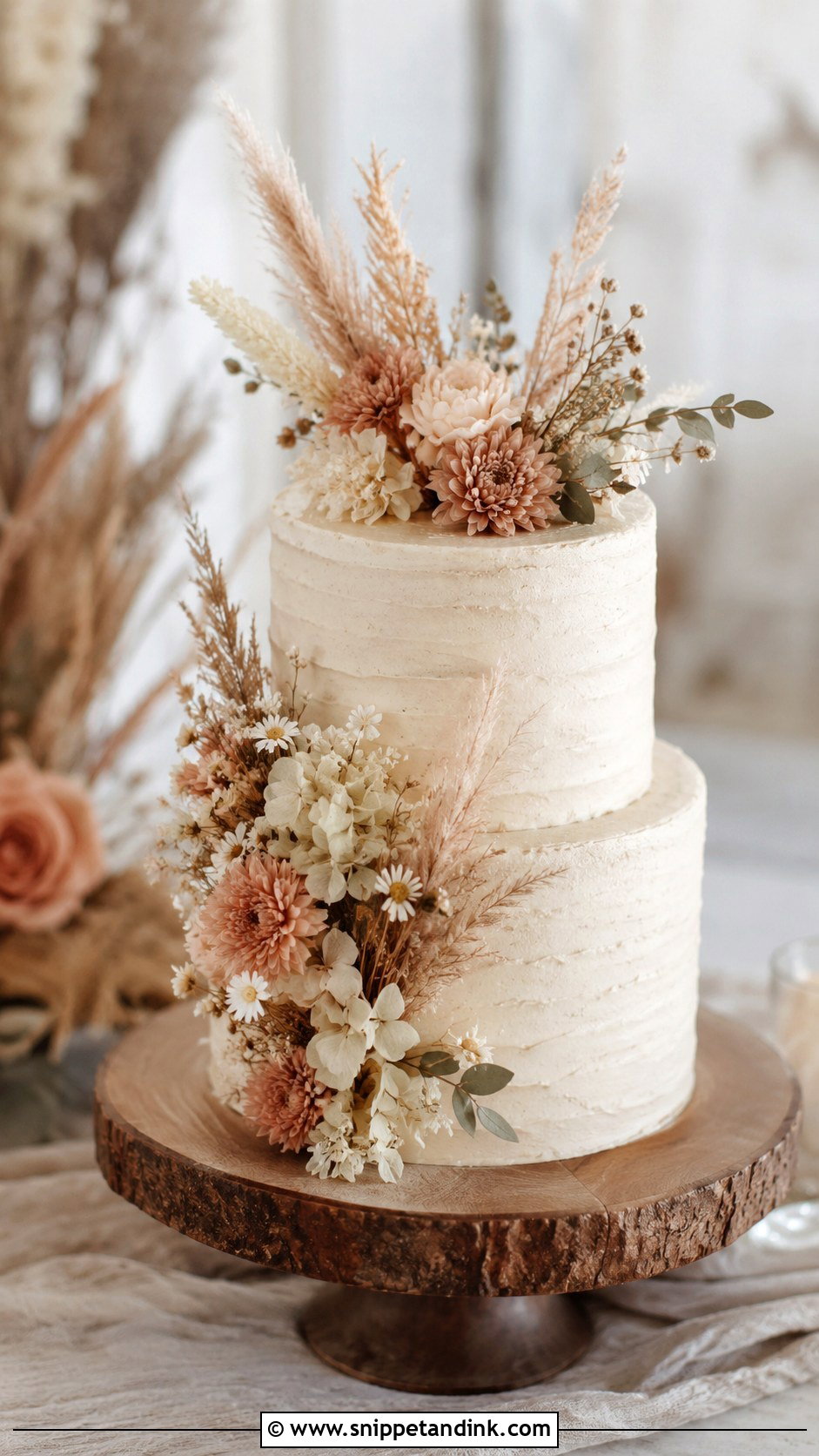
Dried flowers are handy because they don’t wilt in heat, but many are treated with preservatives or dyes, so I keep them on a barrier rather than pressing them into the icing. Dried blooms, grasses and pressed floral accents give a warm organic look for boho, fall and outdoor weddings, in beige, cream, blush, rust or muted yellow. They look busy fast, so a small crescent or one top cluster is enough. Linen and wood decor suit the earthy finish.
20. Buttercream Wedding Cake With Vintage Piping
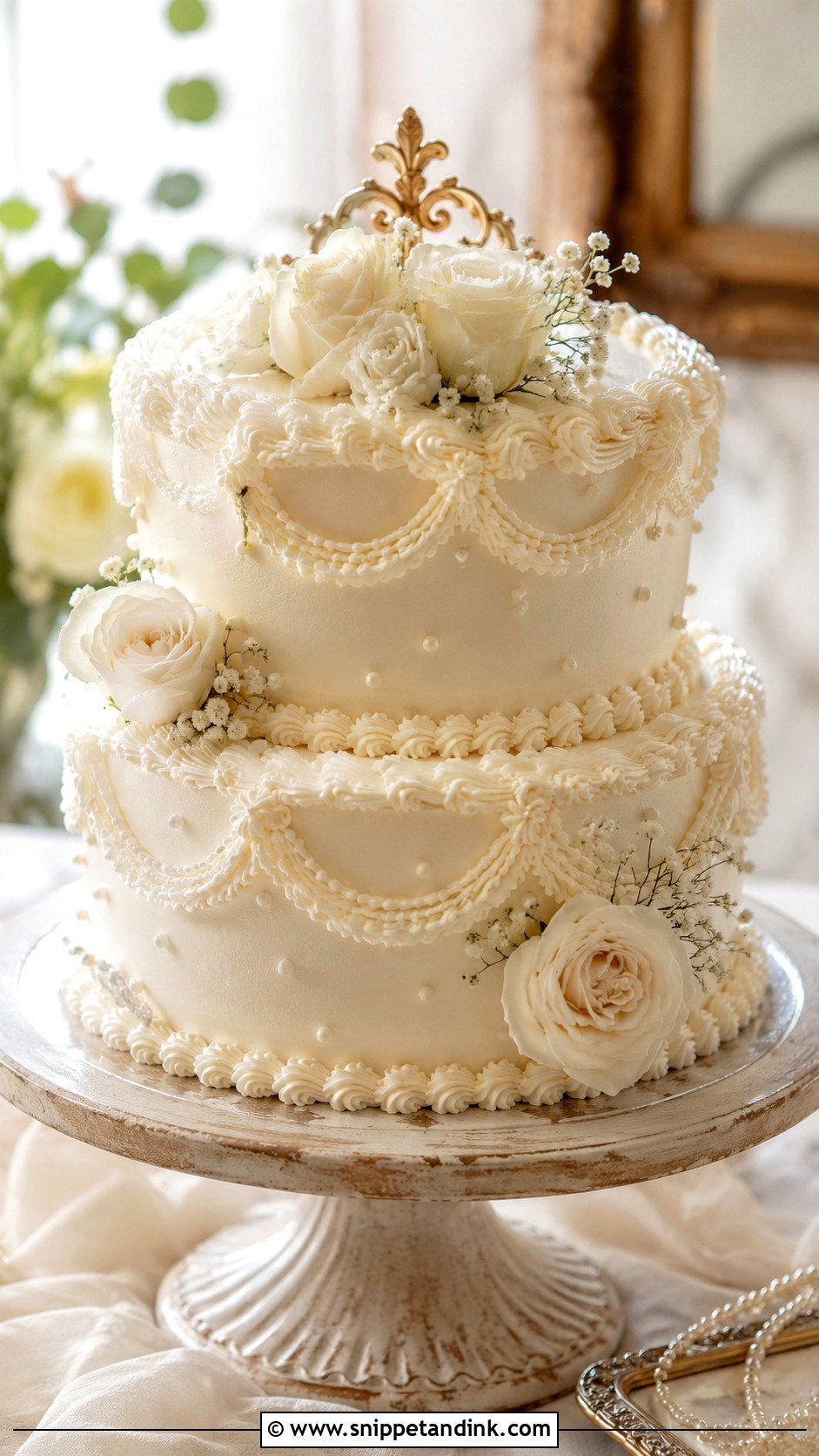
Vintage piping, with its scallops, swags, dots and over-piped borders, is the most labour-heavy design on this list and the one where a baker’s skill shows most. I pipe it onto a well-chilled cake so the layered work doesn’t sag while I build it. White is classic; pale pink, ivory or champagne feel more romantic. Leave open space between details or it reads cluttered. Cherries look casual for most weddings, and flowers, pearls or a clean topper sit better.
Getting a Buttercream Cake Through a Summer Reception
Buttercream starts to slump once the room gets properly warm, and direct sun will soften a tier within minutes. I deliver tiers chilled, assemble on site, and ask venues to place the cake table away from windows, heaters, candles and the dance floor lights. Outdoors, the cake stays inside until shortly before the cutting, or under real shade with air moving around it.
Flowers and greenery that shouldn’t touch icing
- Baby’s breath, hydrangea, lily of the valley and many lilies: keep them off the cake or fully barriered.
- Florist stock is often sprayed, so I ask for pesticide-free flowers wherever they’ll sit near cake.
- Every stem gets wrapped in floral tape or set into a food-safe pick, without exception.
Fillings matter in heat too. Fresh whipped cream and custard need to stay refrigerated, so for an outdoor afternoon I steer couples toward jams, ganache and buttercream-based fillings that can sit safely at room temperature for the length of the reception.
A Plain Cake Can Still Be the Right Cake
Buttercream suits nearly every wedding because one medium can be smooth, textured, piped or dressed with flowers and fruit. When I plan a design, I start with the venue and the season, since they decide how firm the buttercream needs to be, and only then look at the palette and guest count. A small two-tier cake with a clean finish and a few considered details looks just as special as a tall display. Rustic or modern, the cakes that look best on the day are the ones designed around where they will stand.
You'll Like These Ideas:






Leave a Reply