
Most couples arrive at a cake consultation with a camera roll of twenty screenshots and no idea which ones can actually live together on one cake. That is fine. The styles below are the ones I’m asked about most, and for each I’ve added what happens to it in a real reception room: how it holds in a warm tent, what it costs in hours of piping, and who I’d quietly talk out of it. Read them with your venue, your guest count and your favorite flavor in mind, because those three things decide more about your cake than any trend does.
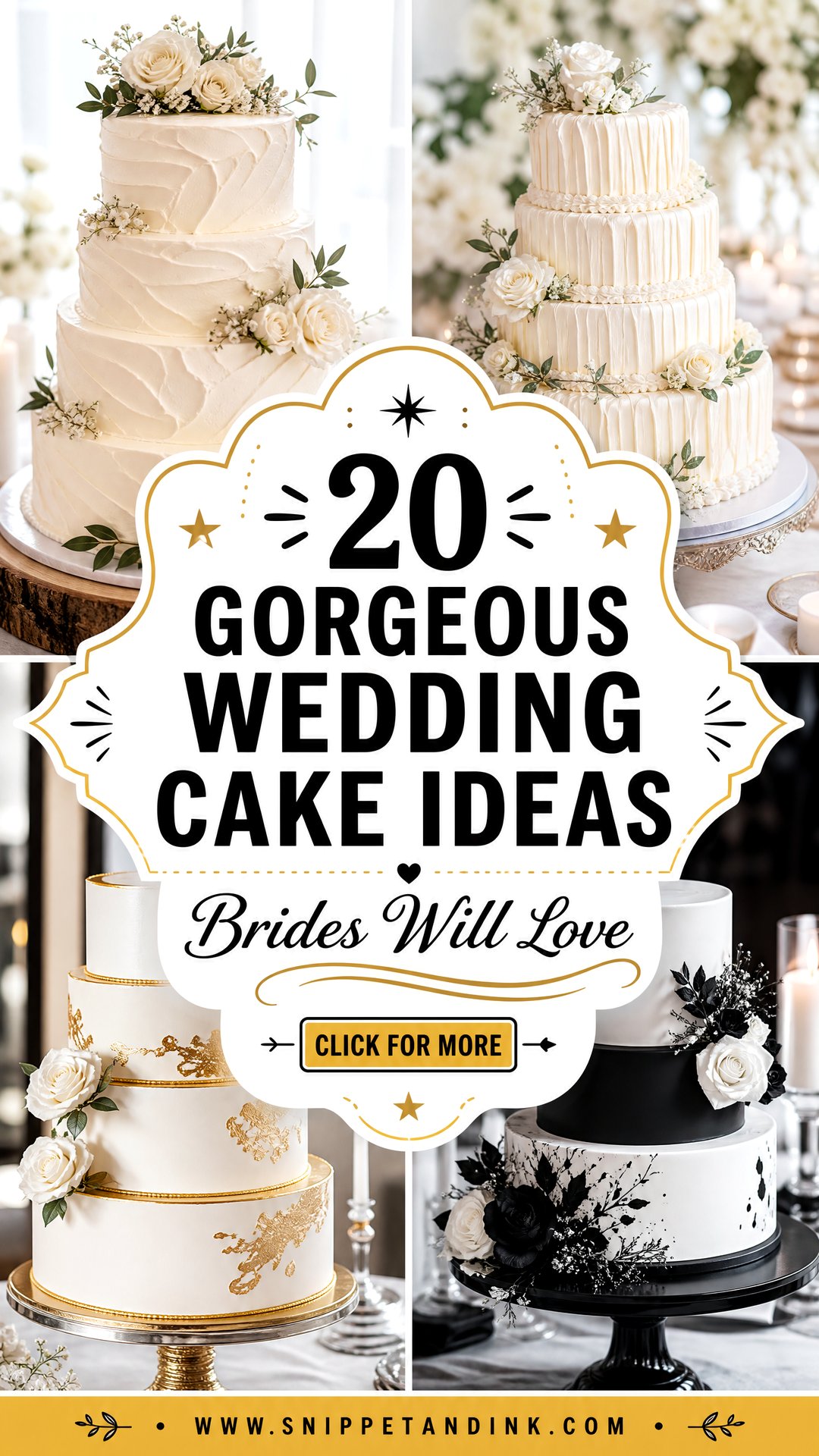
Briefing Your Baker When You Like Ten of These
The first thing I do at a consultation is ask how many people are eating cake. Most bakers price and plan by the serving, and a standard wedding slice is small, roughly an inch wide and two inches across, so a three tier round feeds fewer guests than people expect. If there’s a dessert table or a plated dessert, you need fewer cake portions, which frees budget for finish work.
Next, pick the one technique you care about most. Lambeth piping, sugar flowers and hand-painted watercolor are each a day of labor on their own. Ask for all three and you’re paying for three cakes’ worth of work on one, and they’ll compete visually anyway.
- Bring your venue details: indoor or outdoor, air conditioning, how long the cake will be on display before cutting.
- Say who is supplying fresh flowers, so the baker and florist can agree on safe blooms and who places them.
- Book a tasting and decide fillings first. A cream or fresh fruit filling changes how long the cake can sit out.
- Ask what’s included in delivery and setup, and whether a cake stand is rented or needs to come back.
Popular bakers fill their weekends months ahead, especially in peak season, so I’d start these conversations about six months out and lock the design a few weeks before the date.
1. White Tiered Wedding Cake
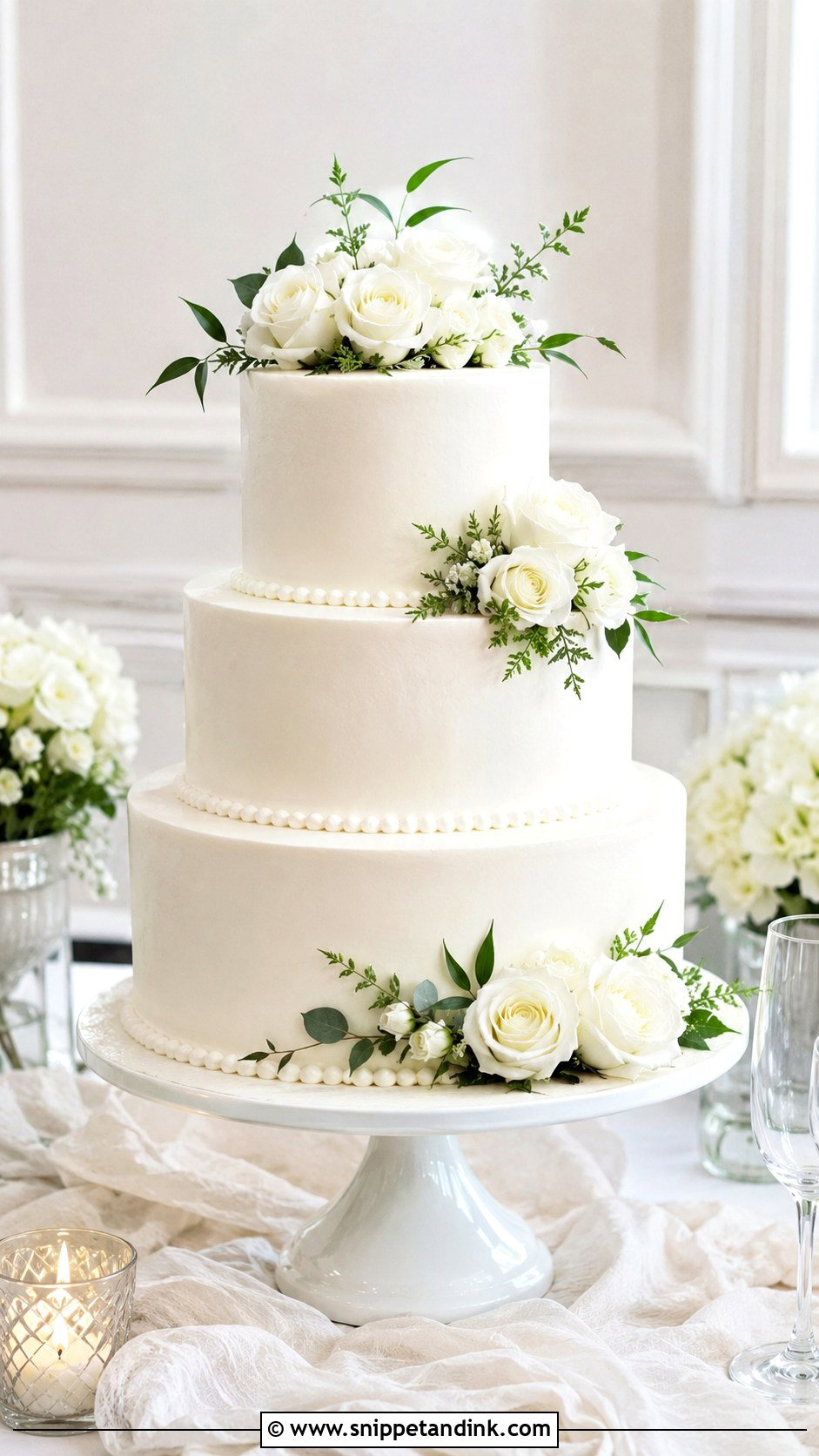
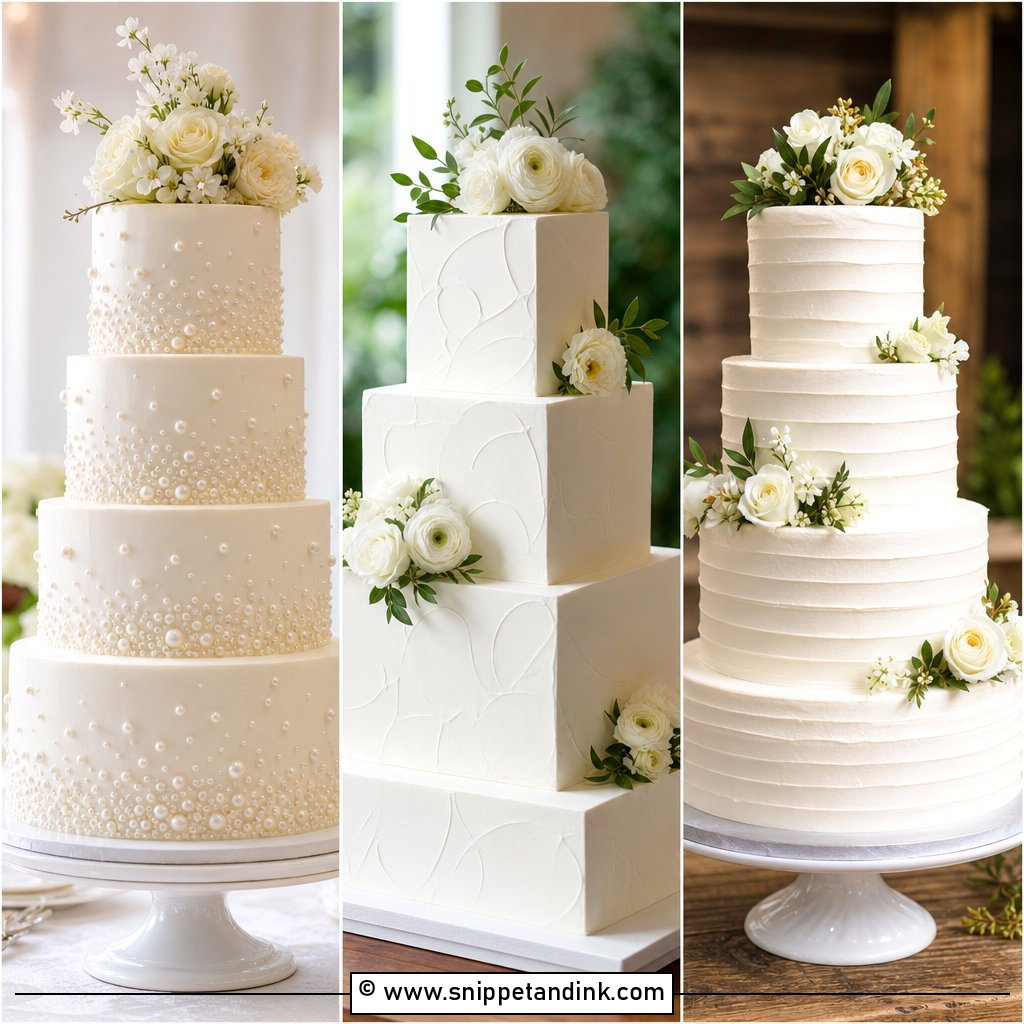
Plain white tiers are harder than they look, because there is nothing to hide behind. Every bulge in the buttercream and every tier that sits a millimeter off center shows. I always ask a couple for one detail that carries the cake, a band of pearl piping or a few garden roses at one tier join, rather than five small ones. Vanilla bean, almond, lemon and champagne-style sponges all suit it. Keep the stand plain and let the height do the work.
2. Vintage Lambeth Wedding Cake
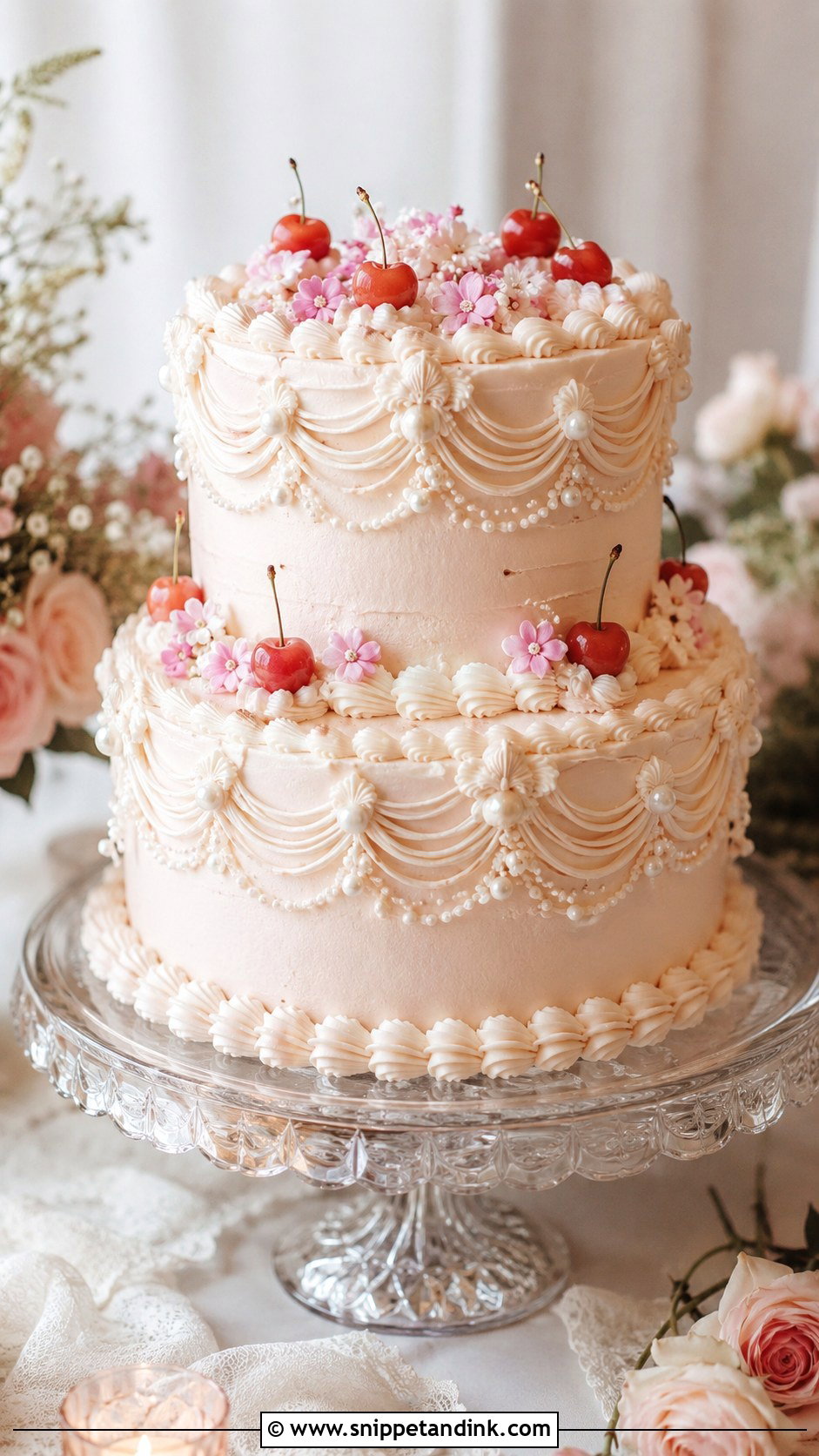
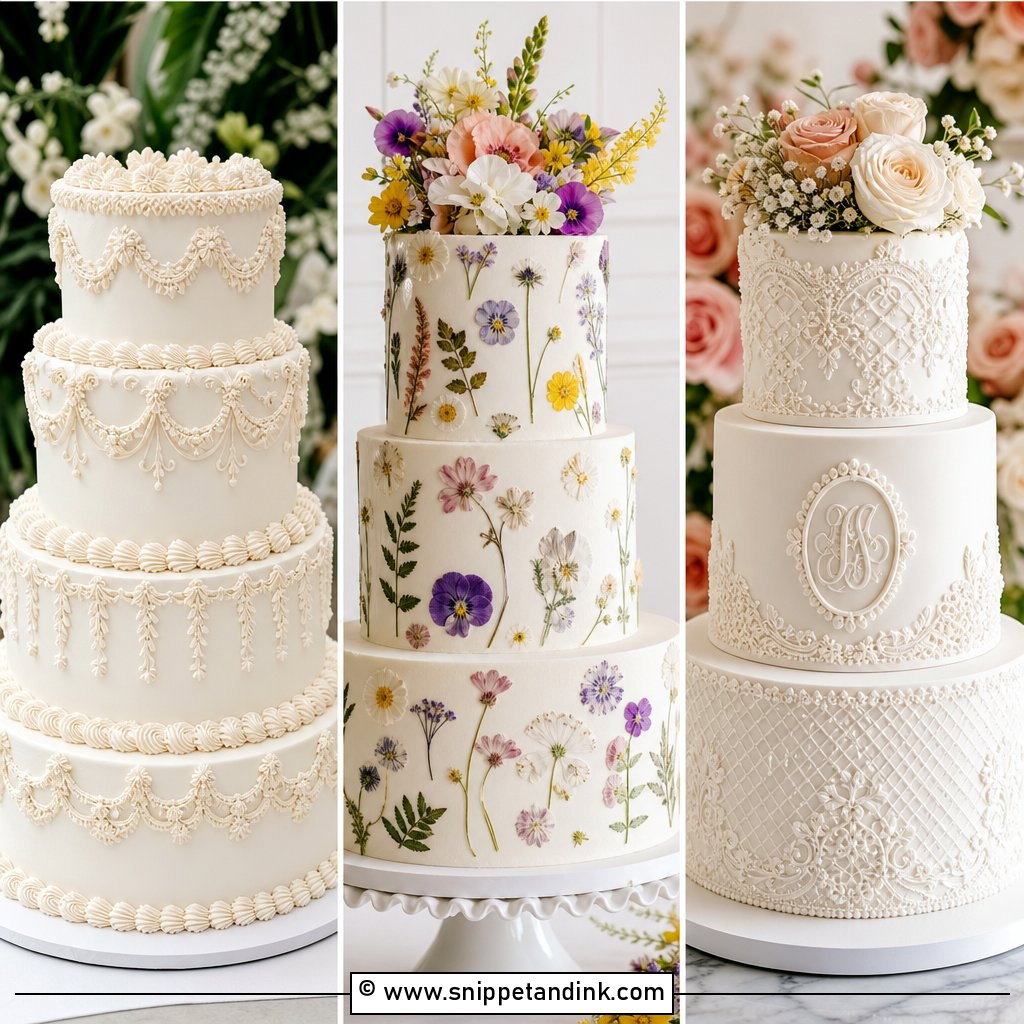
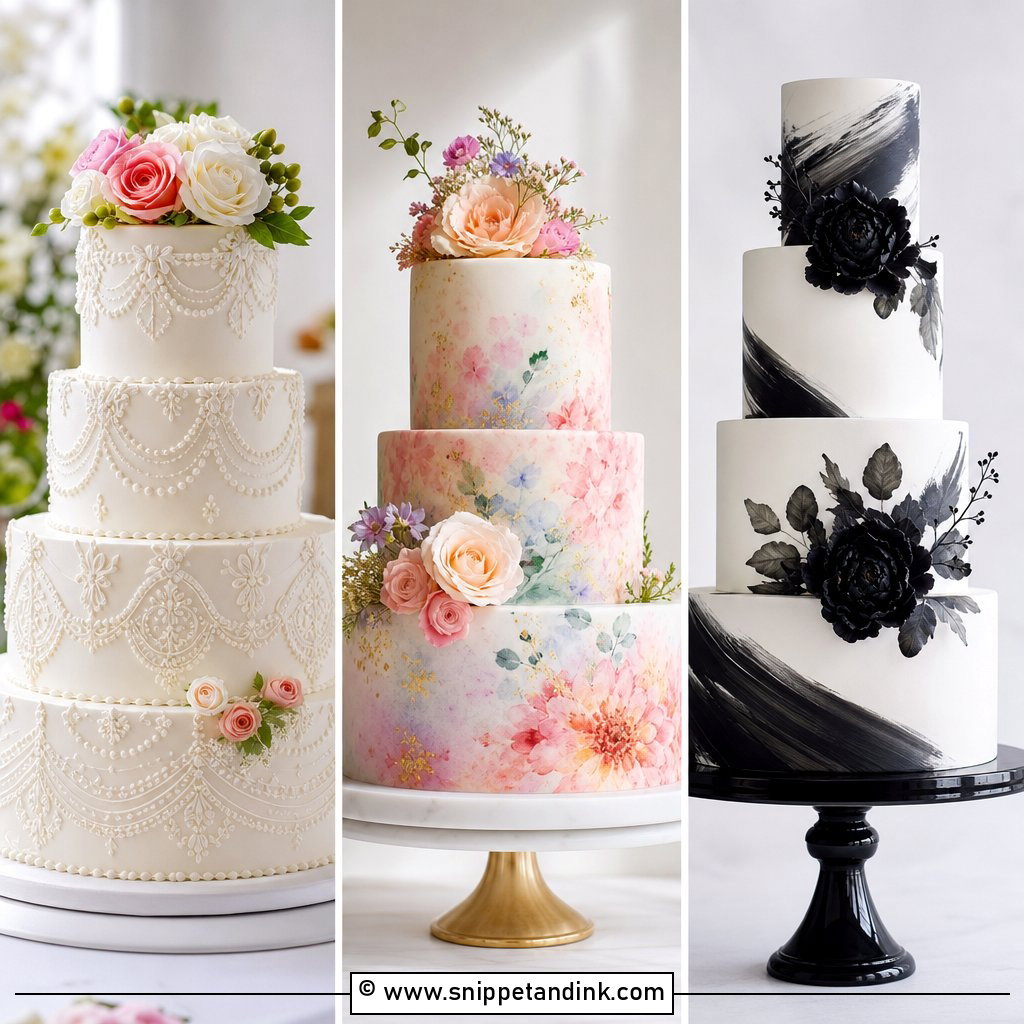
A vintage Lambeth wedding cake is built from overpiping: one line of icing laid on top of another until the shells, swags and scrolls stand out from the cake like lace. It is slow work, and a fully piped three tier can take most of a day at the bag, so expect that in the quote. I pipe it in a firm buttercream so it holds its ridges, which also means it needs a cool room. White, blush, baby blue and butter yellow all read well. A heart-shaped single tier with cherries and bows gives you the retro look at a fraction of the piping time.
3. Floral Wedding Cake
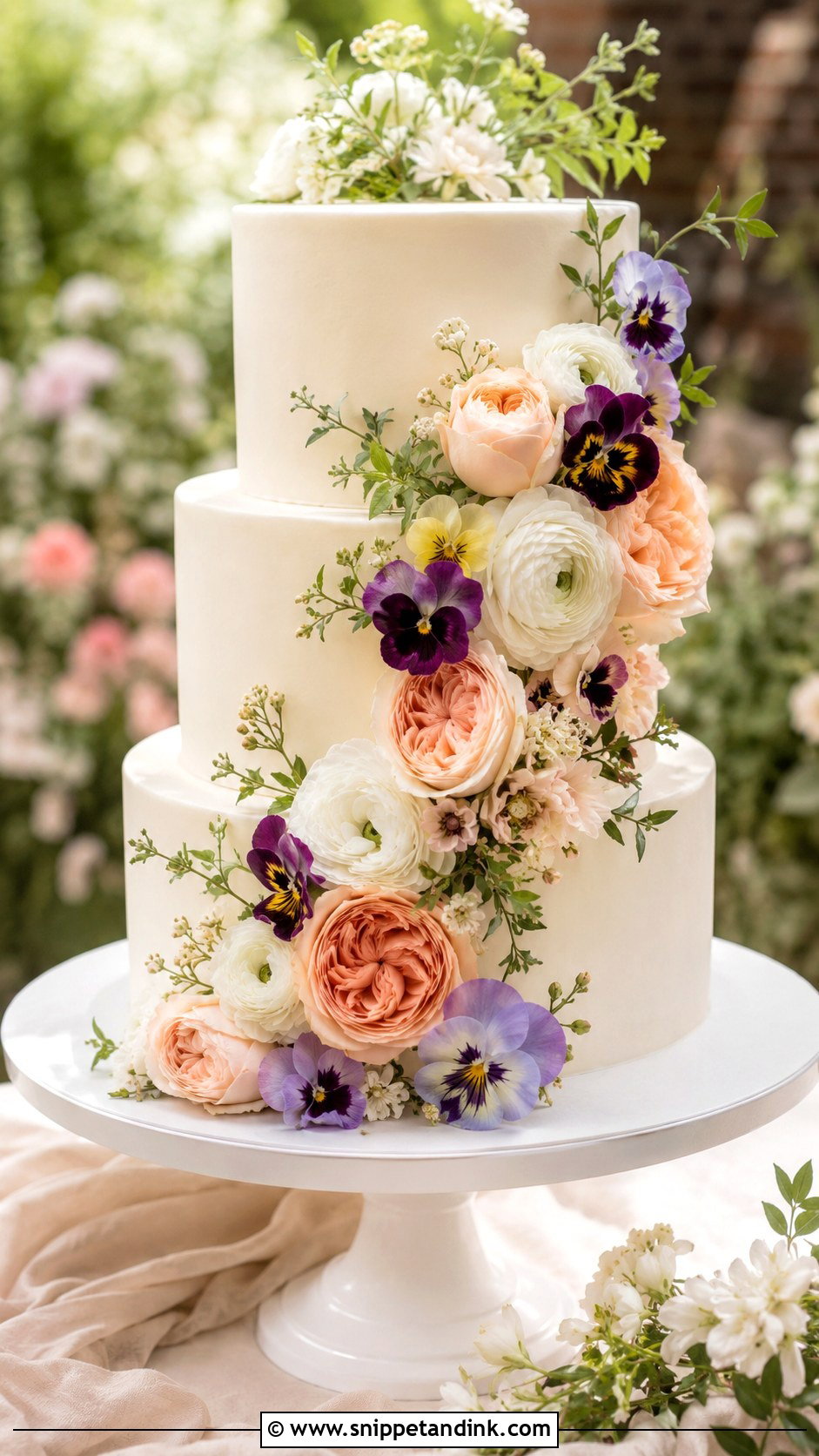
Fresh flowers tie a cake to the bouquet and tables better than anything I can make in sugar. The catch is food safety, and I won’t push a raw stem into sponge. Stems get wrapped in floral tape and set into straws or picks, and some popular blooms, hydrangea and lily of the valley among them, shouldn’t touch the cake at all. Roses, ranunculus, orchids and edible pansies are the usual safe list, but your florist and baker should agree on it in writing. Small clusters at one or two tiers look more deliberate than a cake buried in petals.
4. Textured Buttercream Wedding Cake
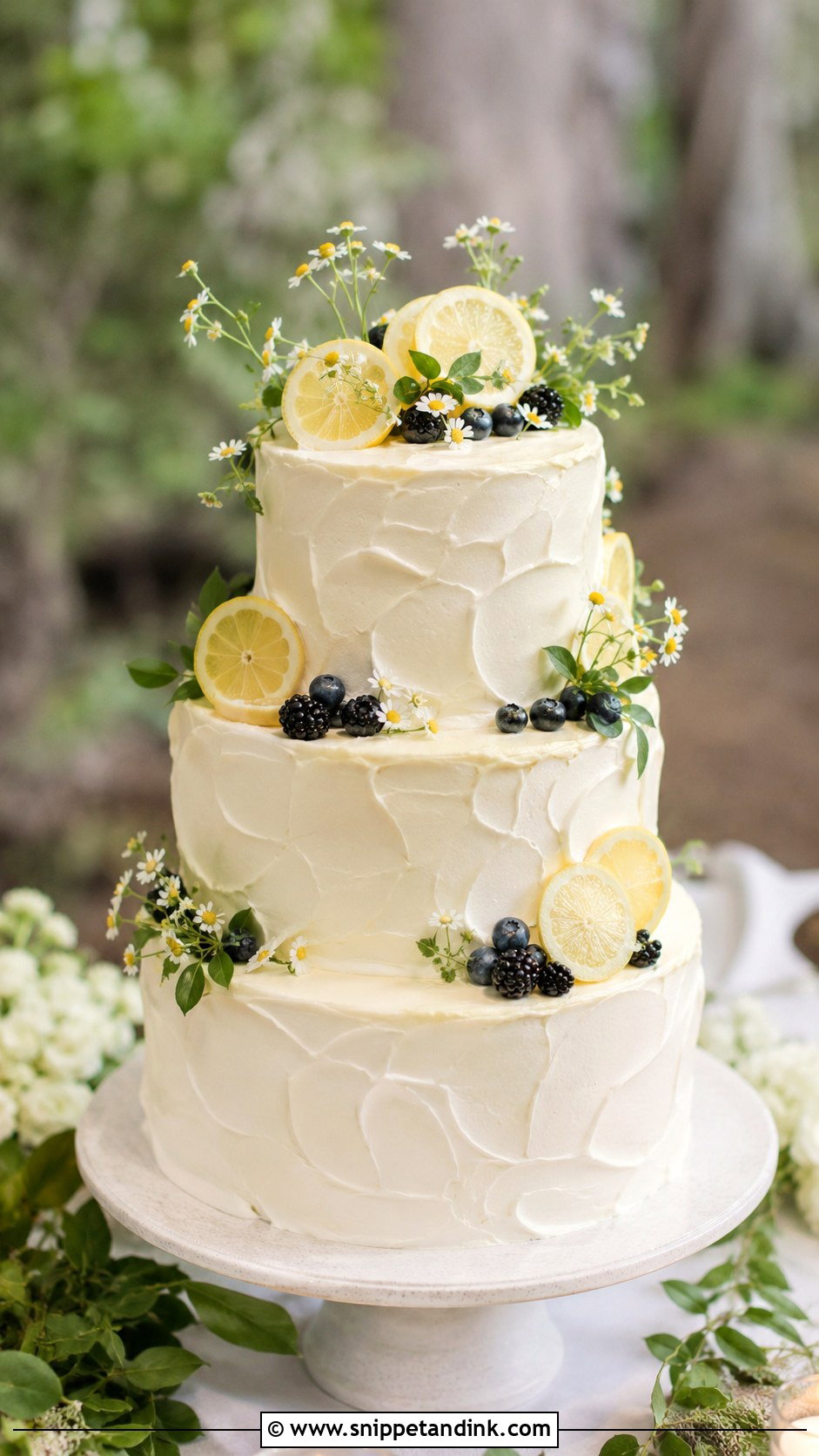
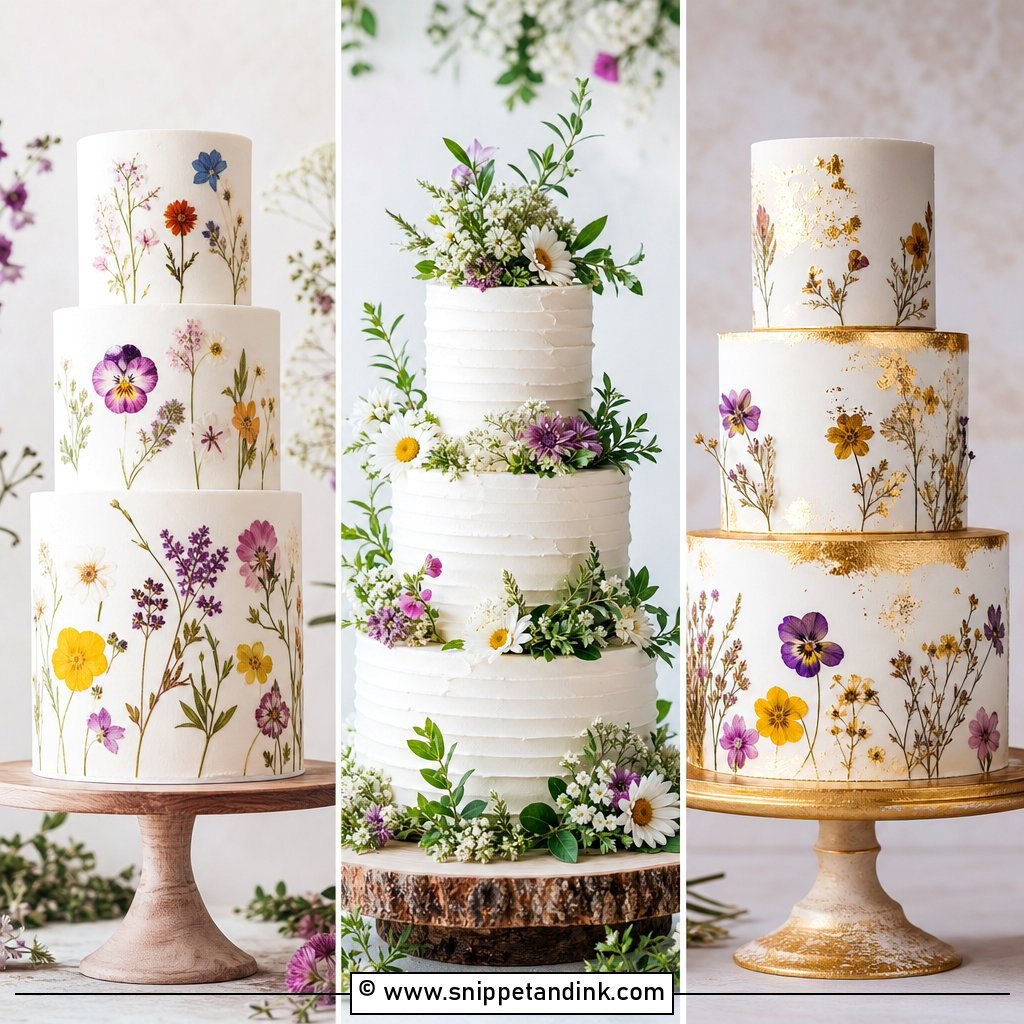
Textured buttercream is my honest recommendation for anyone nervous about a summer date. Palette-knife strokes, ridges and stucco finishes don’t show the small dents that come from a bumpy delivery, so the cake arrives looking the way it left my kitchen. It sits well beside greenery, citrus slices, berries or a plain gold topper. Under it, vanilla, lemon, almond and raspberry all hold up. It suits a barn, a beach or a minimalist loft equally, which is rare.
5. Pearl Wedding Cake
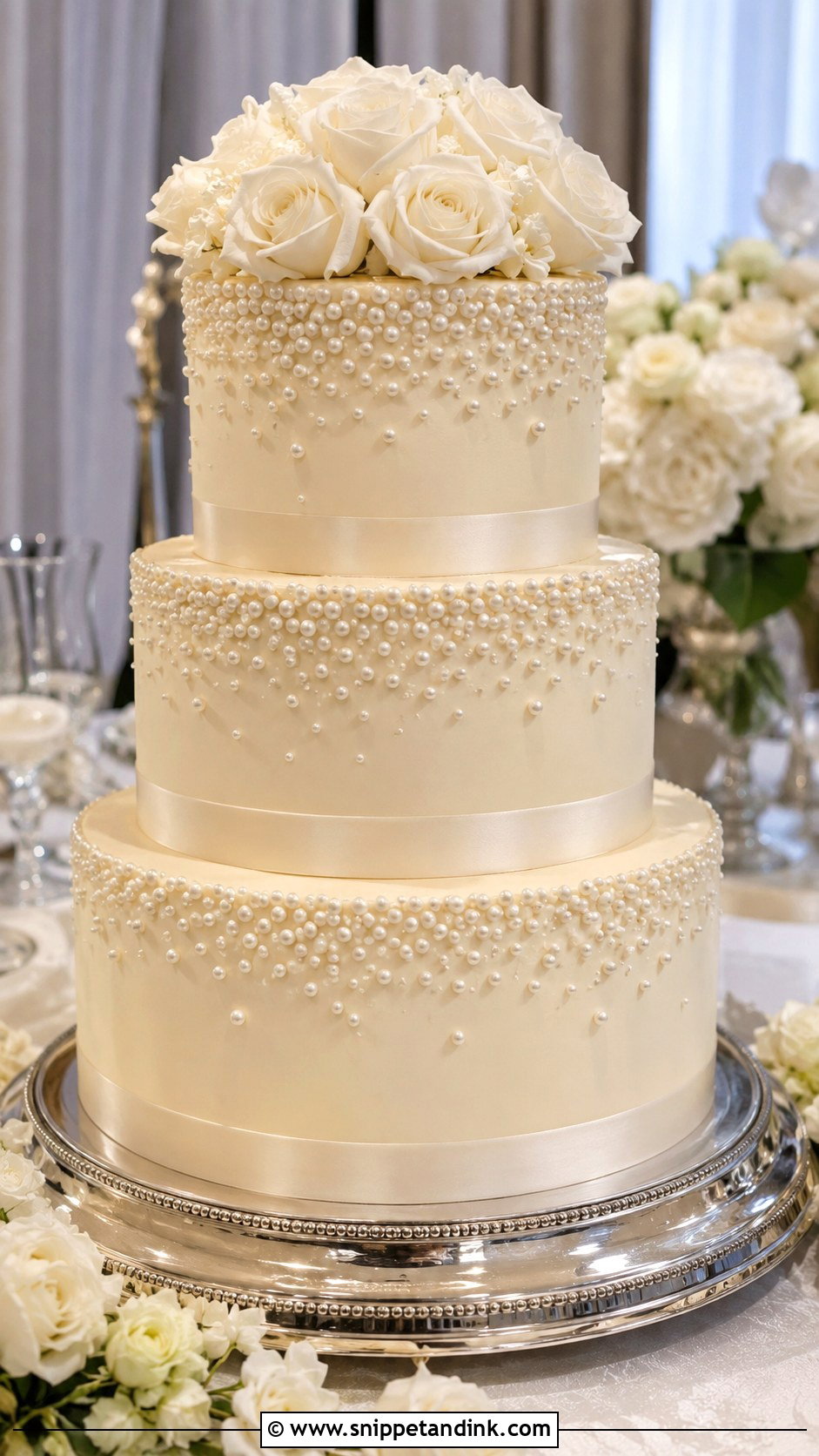
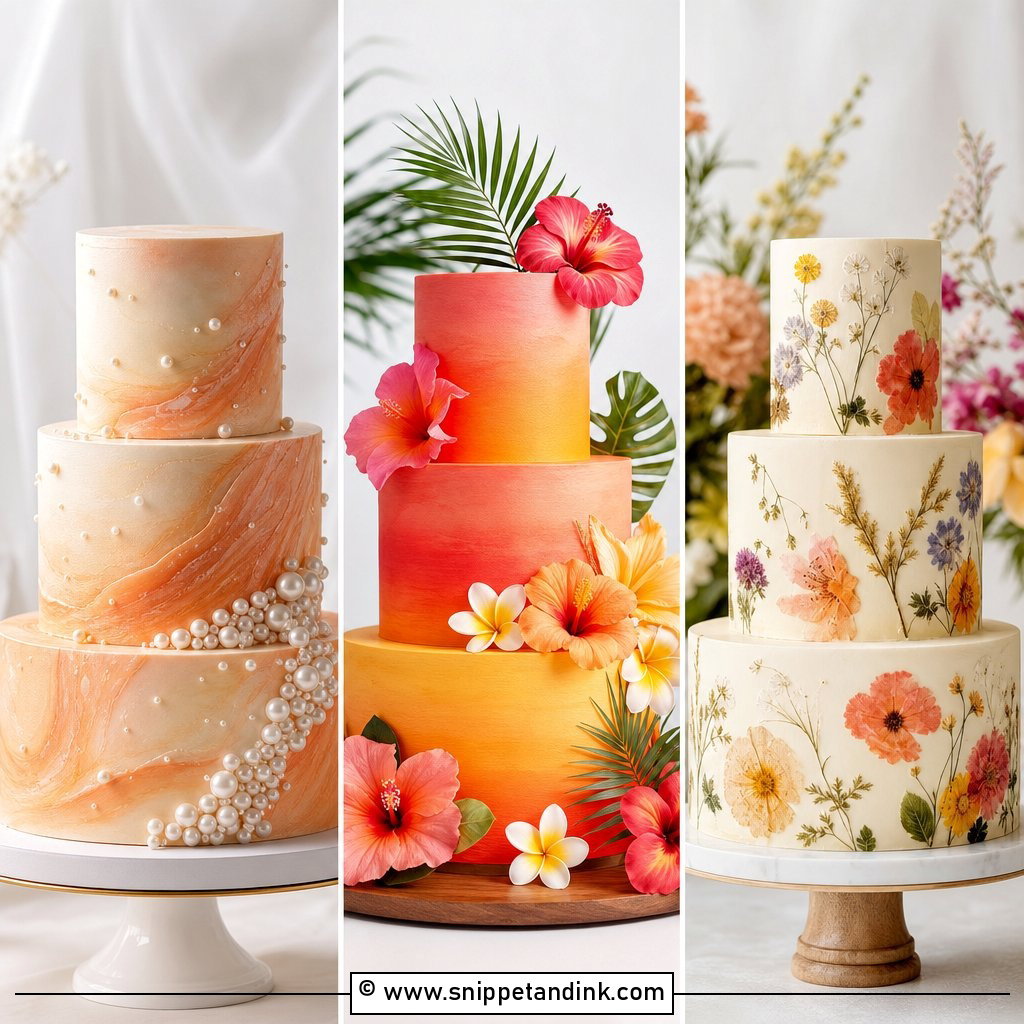
Pearls come in two kinds, and it matters. Hard sugar dragees give that crisp shine but are tough on teeth, so on a cake people will eat I often switch to soft fondant pearls rolled by hand and dusted with pearl shimmer. Scattered sparsely, they read modern. Set in rows over piped swags, they turn vintage fast. White, ivory, champagne and blush bases all suit them, and vanilla bean, almond, coconut or white chocolate raspberry sit nicely underneath.
6. Bow Wedding Cake
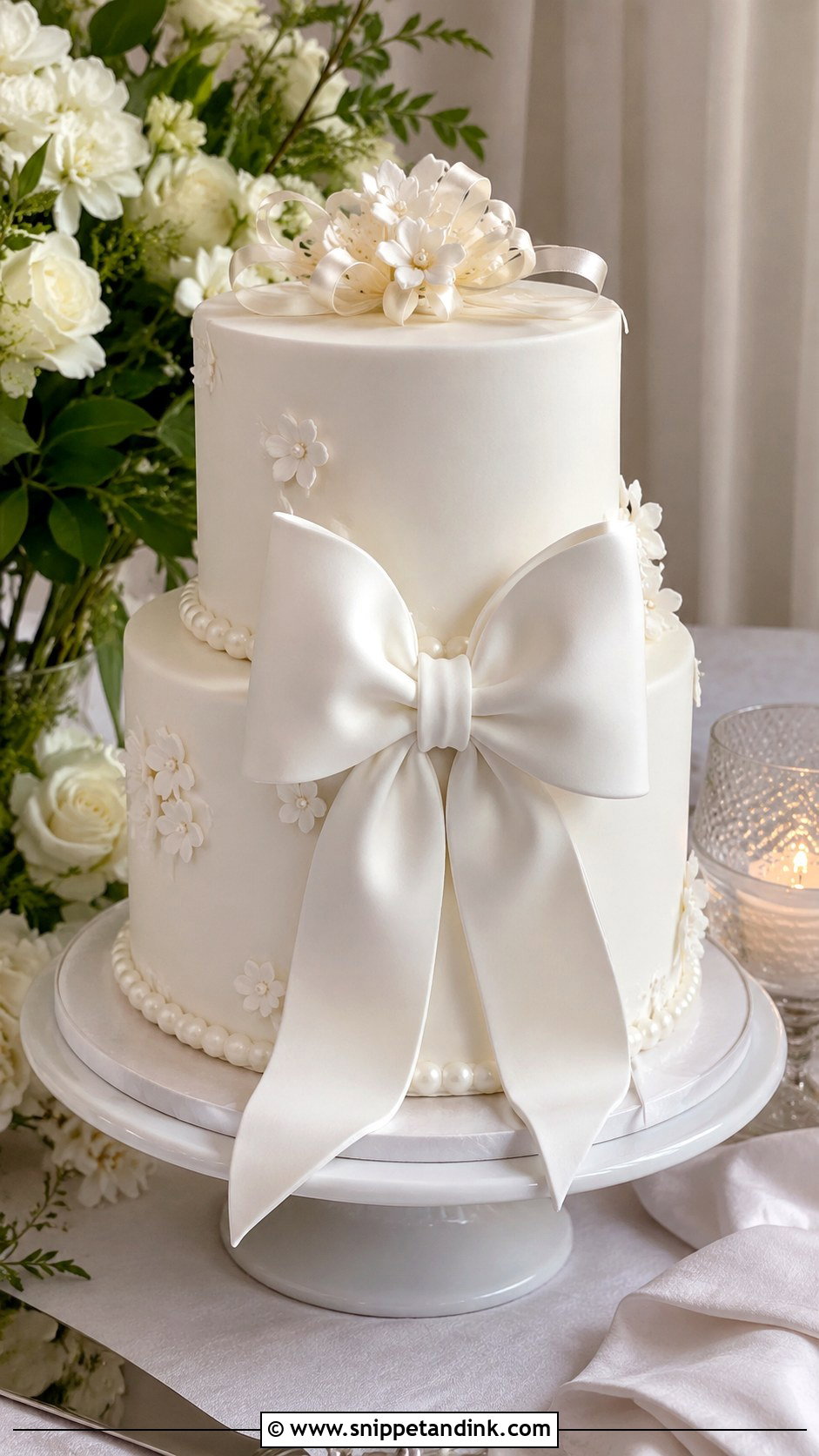
A bow cake borrows straight from the dress, and the material decides how it behaves. Fondant bows need to dry for a few days with tissue tucked inside the loops so they don’t collapse, which is why I make them first. Real silk ribbon is quicker but soaks up butter from the frosting and spots, so I back it with a strip of acetate or fondant. One oversized bow on a clean white cake looks editorial; a small bow on every tier looks sweeter and older. Vanilla, almond and lemon sponges keep the flavor as tidy as the finish.
7. Heart Shaped Wedding Cake
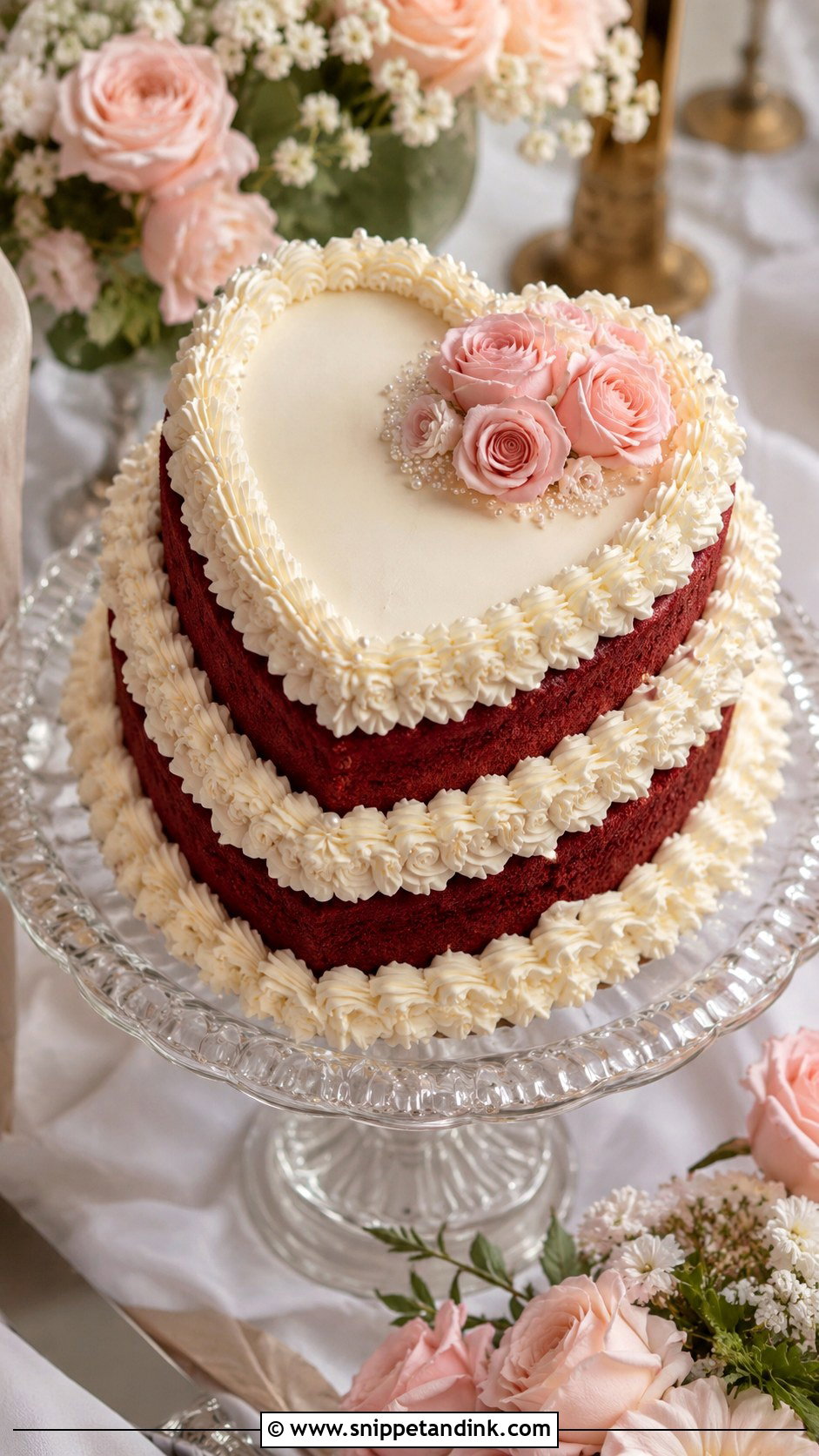
A heart shaped wedding cake is instantly readable in a photo from across the room, which is half its appeal. Stacked hearts need careful doweling because the point of each tier has less cake under it than a round would, so I keep the tiers fewer and shallower. Ruffled borders, cherries, pearls and pastel frosting suit it, and pale blue or butter yellow feel fresher than the expected blush. Red velvet, vanilla raspberry and strawberry cream match the mood inside.
8. Italian Wedding Cake
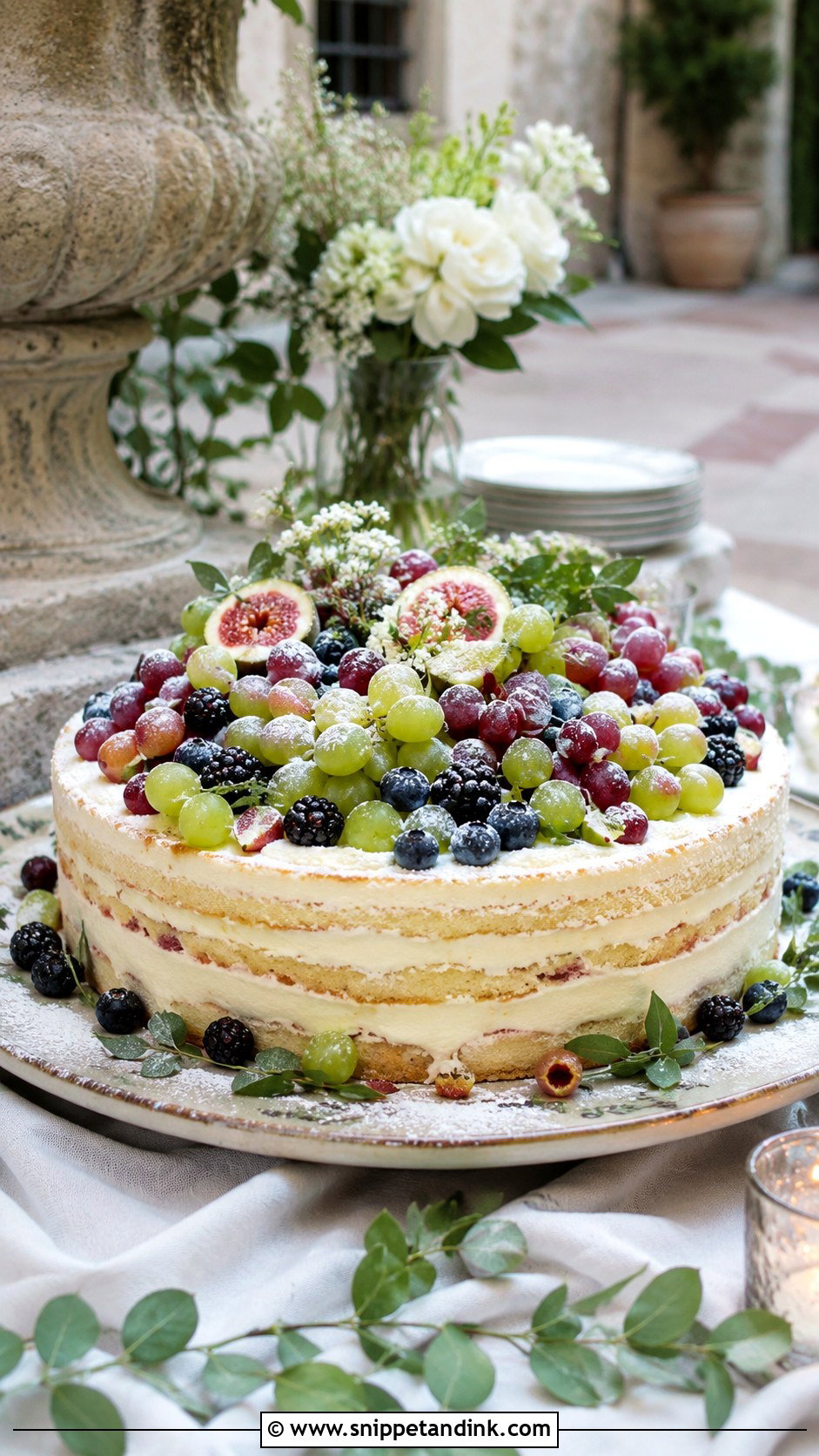
An Italian wedding cake usually sits low and wide, with layers of sponge and cream, fresh berries or citrus, and a dusting of powdered sugar. Because it’s filled with real cream, it has to stay chilled until close to serving, so I’d only recommend it where the caterer has fridge space and the cake isn’t on display for hours. Done right, guests treat it as dessert rather than decoration. Figs, grapes and berries piled on top look generous without much styling.
9. Rectangular Wedding Cake
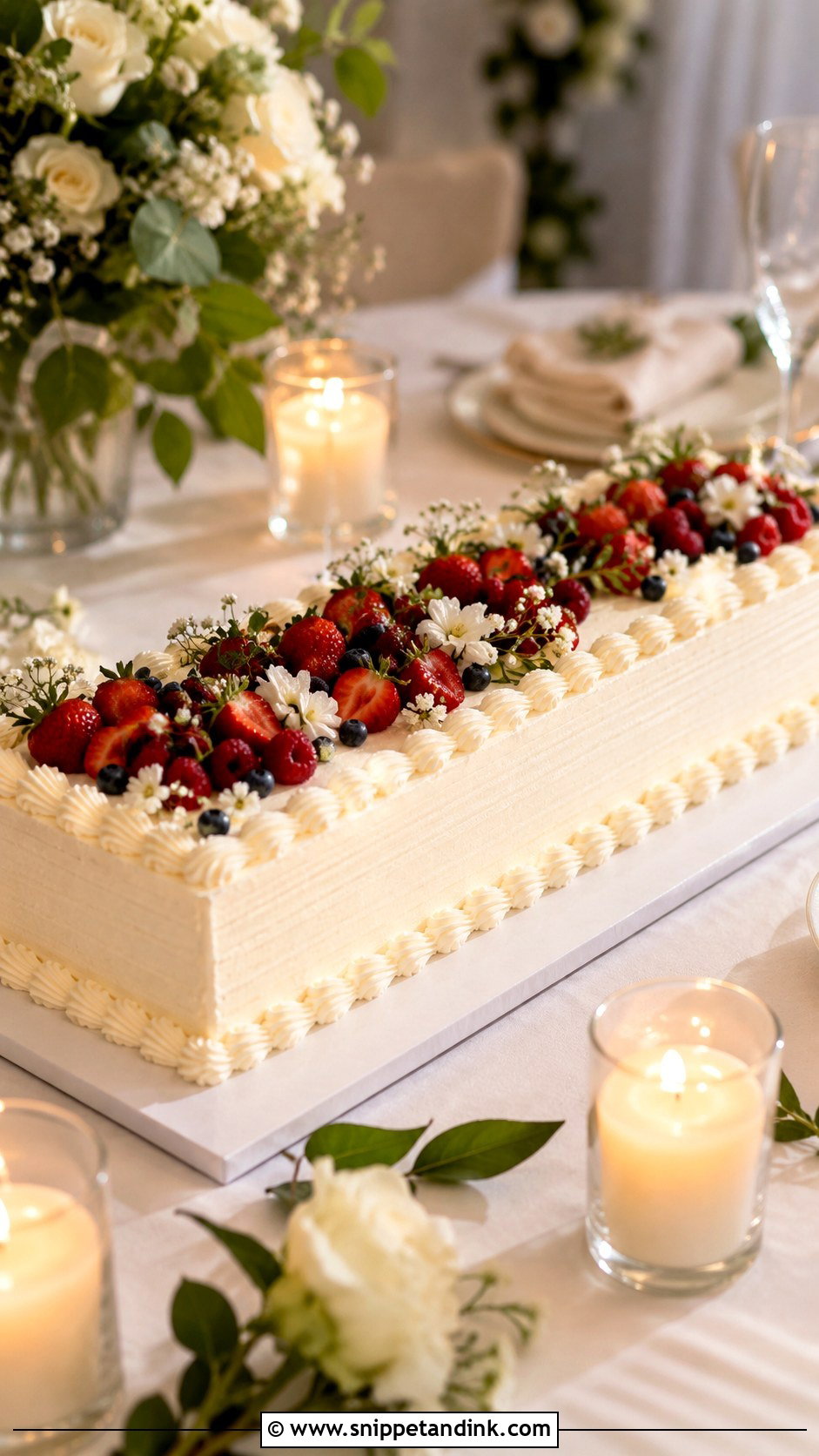
A rectangular wedding cake stretches along a table instead of climbing up, and structurally it’s one of the easiest cakes I build: no stacking, no hidden dowels carrying weight. It also cuts into neat, even portions, so larger weddings get more servings per hour of work. Piped borders, a monogram, fruit or flowers along the length all suit it. Put it on a linen runner with candles so it reads as part of the table rather than a slab of sheet cake.
10. Pressed Flower Wedding Cake
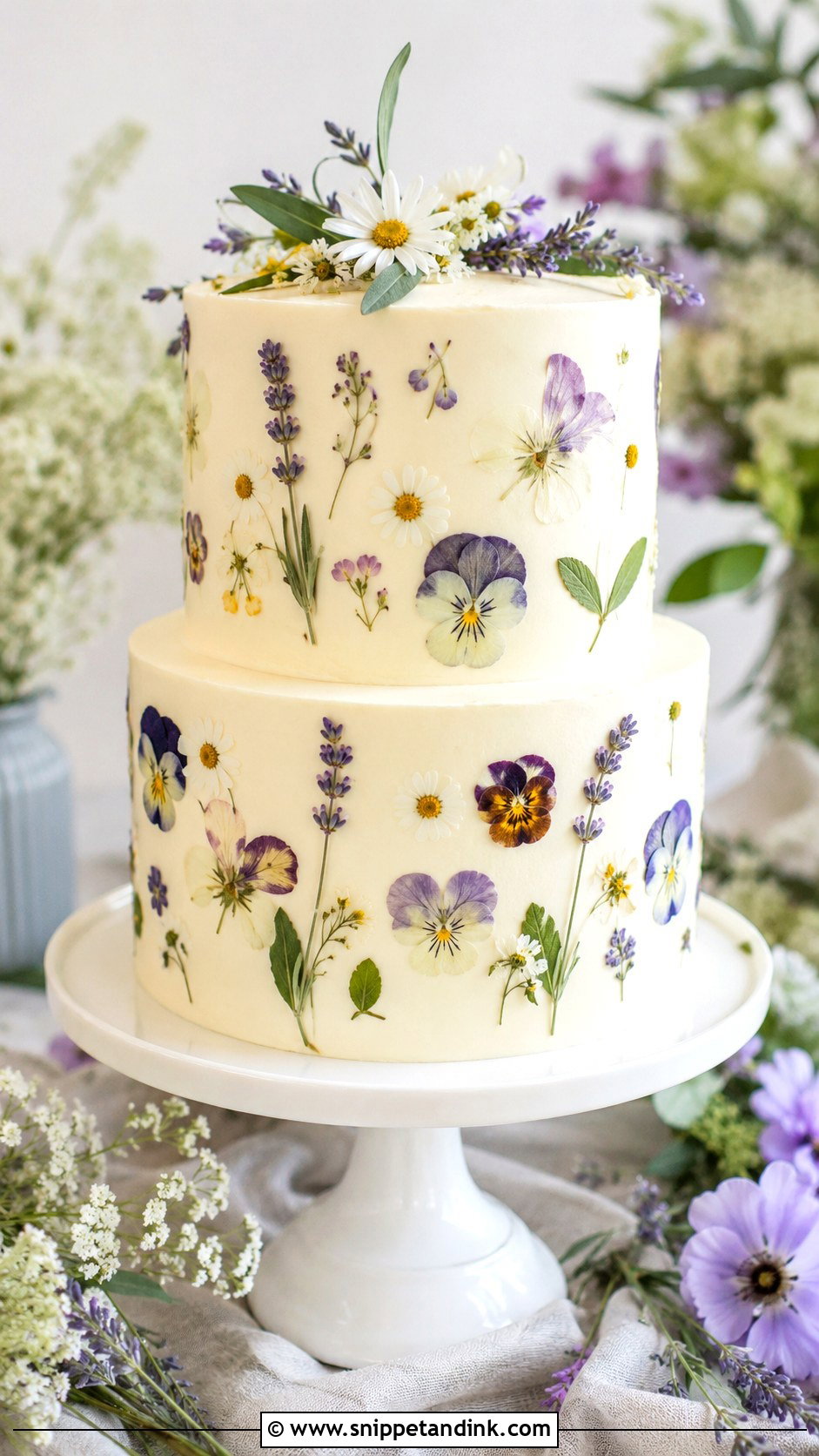
Pressed flowers have to be edible from the start, not just pretty. I press violas, pansies and small leaves flat for several days, then lay them onto a smooth ivory base with a thin brush of piping gel so they cling without wrinkling. Pastel blooms read romantic and bright ones read cheerful. Lemon, honey, lavender and berry flavors all match the garden feel. Be aware the petals can darken slightly against buttercream over a long day, so this one prefers a cool room.
11. Watercolor Wedding Cake
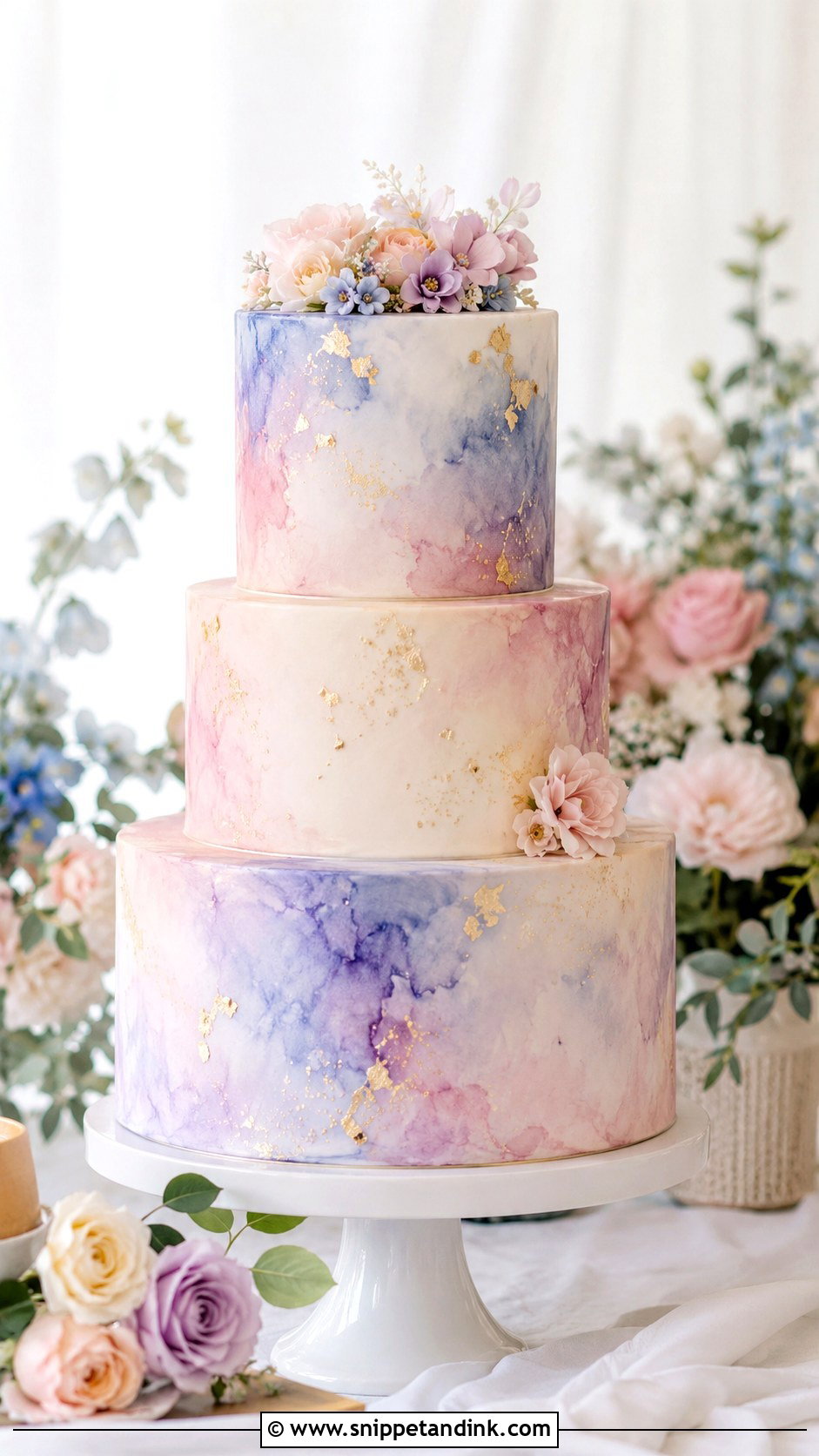
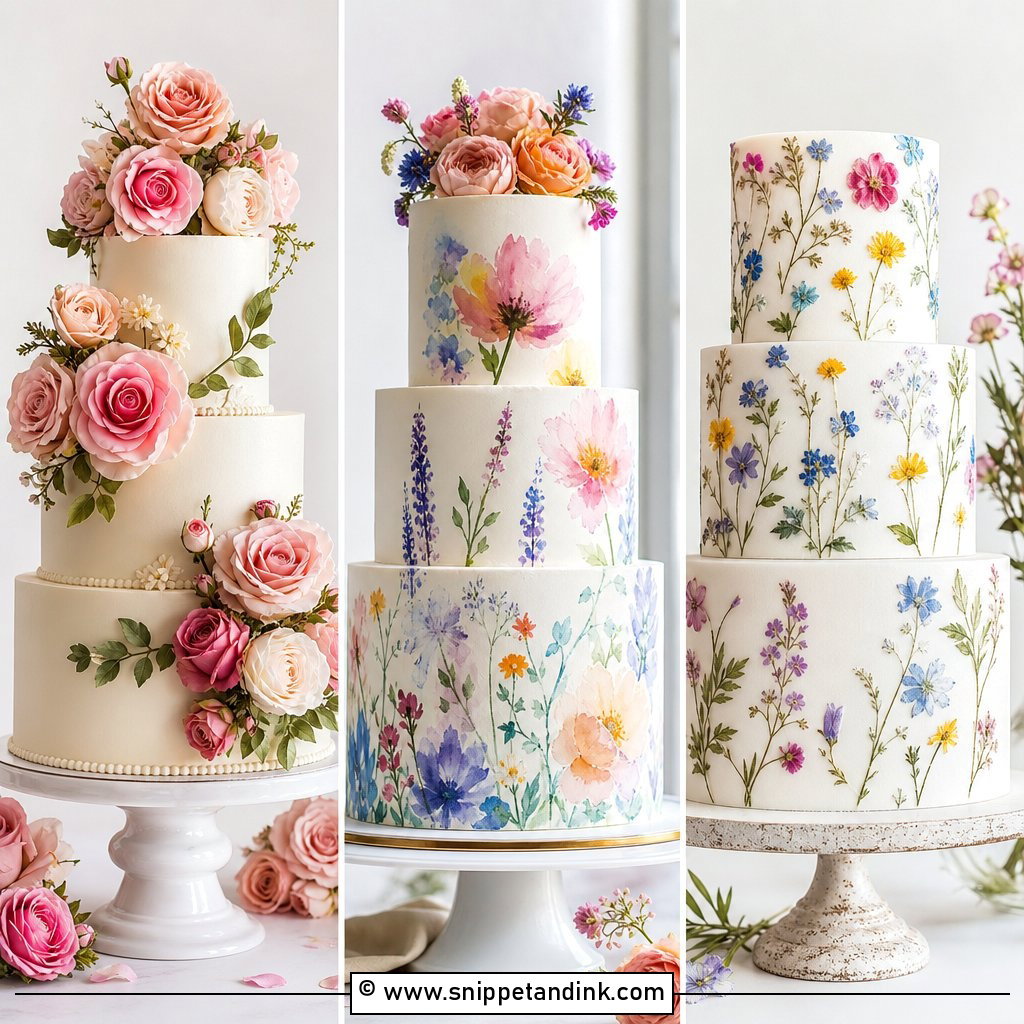
Watercolor finishes are done by dragging small amounts of tinted buttercream around the cake with a scraper until the colors bleed into each other. Every cake comes out a little different, so I’d only suggest it to couples happy with that. Blush, blue, lavender, peach and sage all wash well; deep colors turn muddy where they meet. Match the palette to your invitations or bridesmaids. Lemon blueberry, vanilla raspberry and almond cream keep it light.
12. Gold Accent Wedding Cake
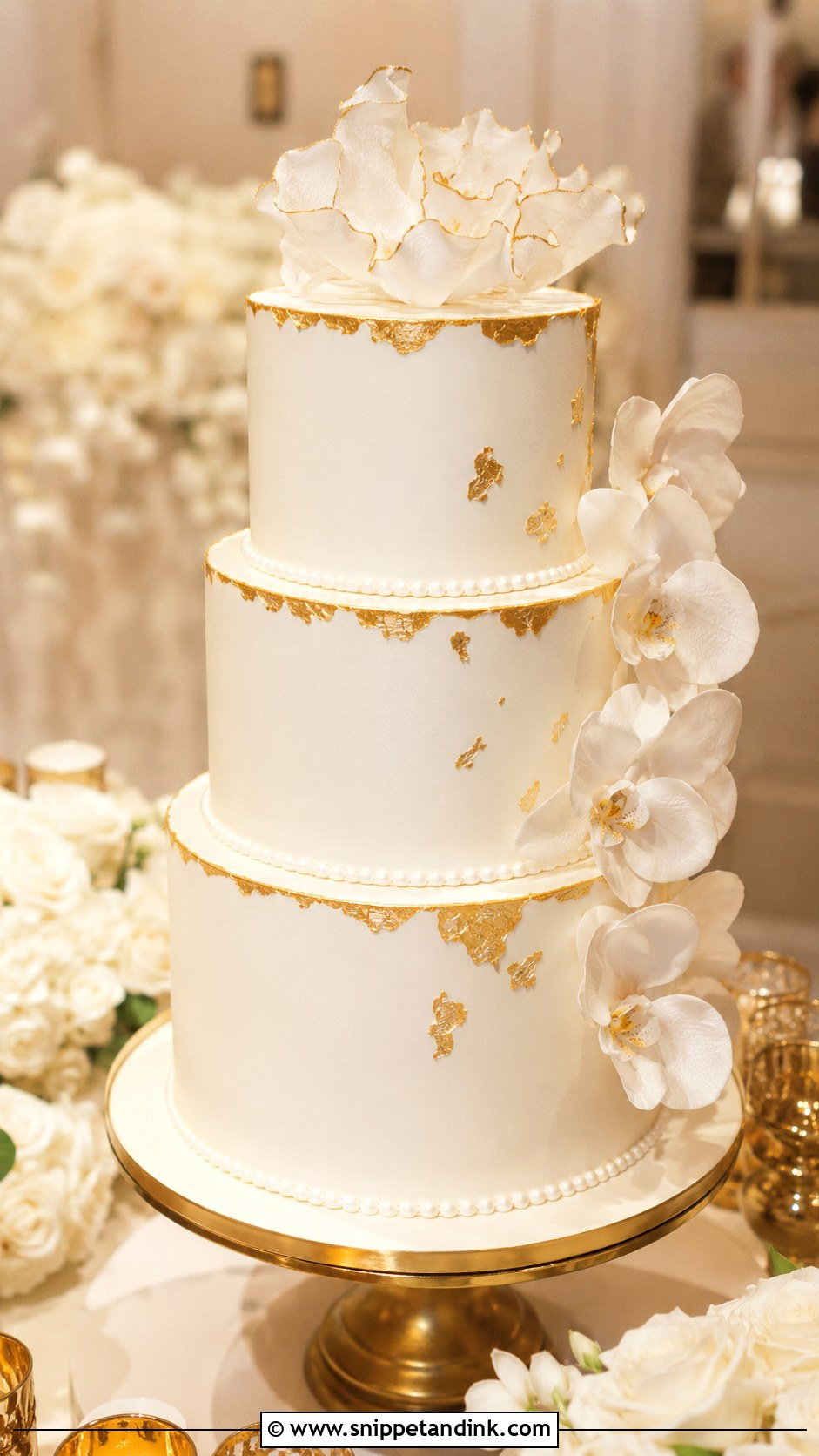
Gold is where restraint pays off. Real edible gold leaf, a thin painted edge or a gold monogram reads expensive; a cake covered in metallic paint reads like a trophy. One thing I always check is the product, because some craft lusters are labeled non-toxic but are not meant to be eaten, and I only use ones made for food. Gold pairs with smooth buttercream, fondant or marble, and rich flavors like chocolate, caramel or almond hold their own against it.
13. Marble Wedding Cake
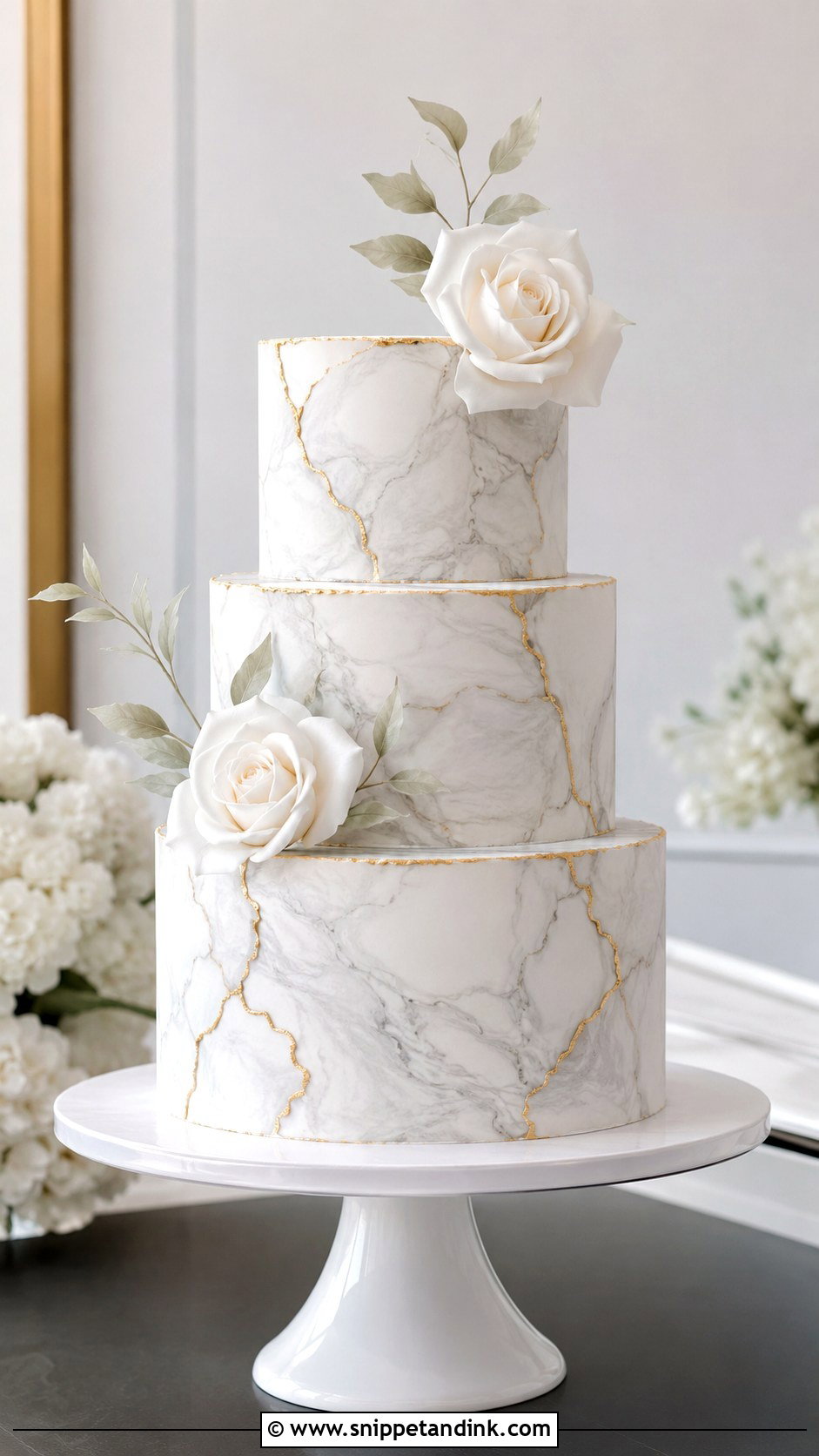
Marble is twisted into fondant by folding colored and white paste together and rolling it out before the streaks blur, so the pattern is one-of-a-kind. Subtle white and gray suits a gallery venue, blush and ivory softens it, black and gold makes it dramatic. On buttercream I build marble with a scraper instead, and it comes out softer. Keep the toppers minimal. Vanilla bean, dark chocolate, salted caramel and espresso buttercream suit the modern look.
14. Rustic Wedding Cake
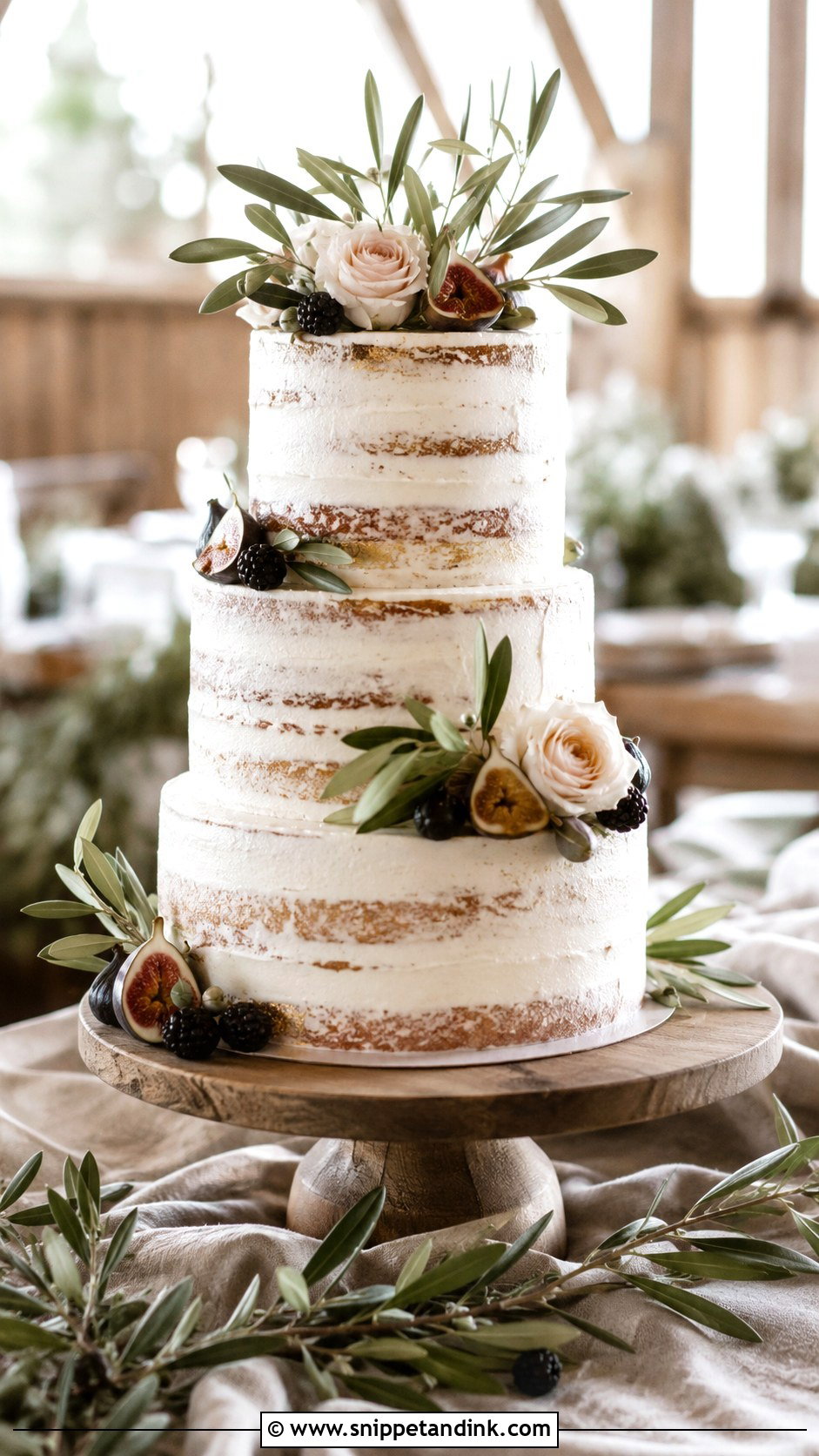
Most rustic cakes are semi-naked, with the sponge showing through a thin scrape of frosting. That exposed sponge dries out faster than a fully iced cake, so I brush the layers with syrup and assemble as late as I can. Greenery, figs, berries and a wooden stand do the rest. Carrot, spice, vanilla berry, lemon and chocolate ganache fit barns, vineyards and lodges. A few olive branches or blush roses stop it from looking like a casual party cake.
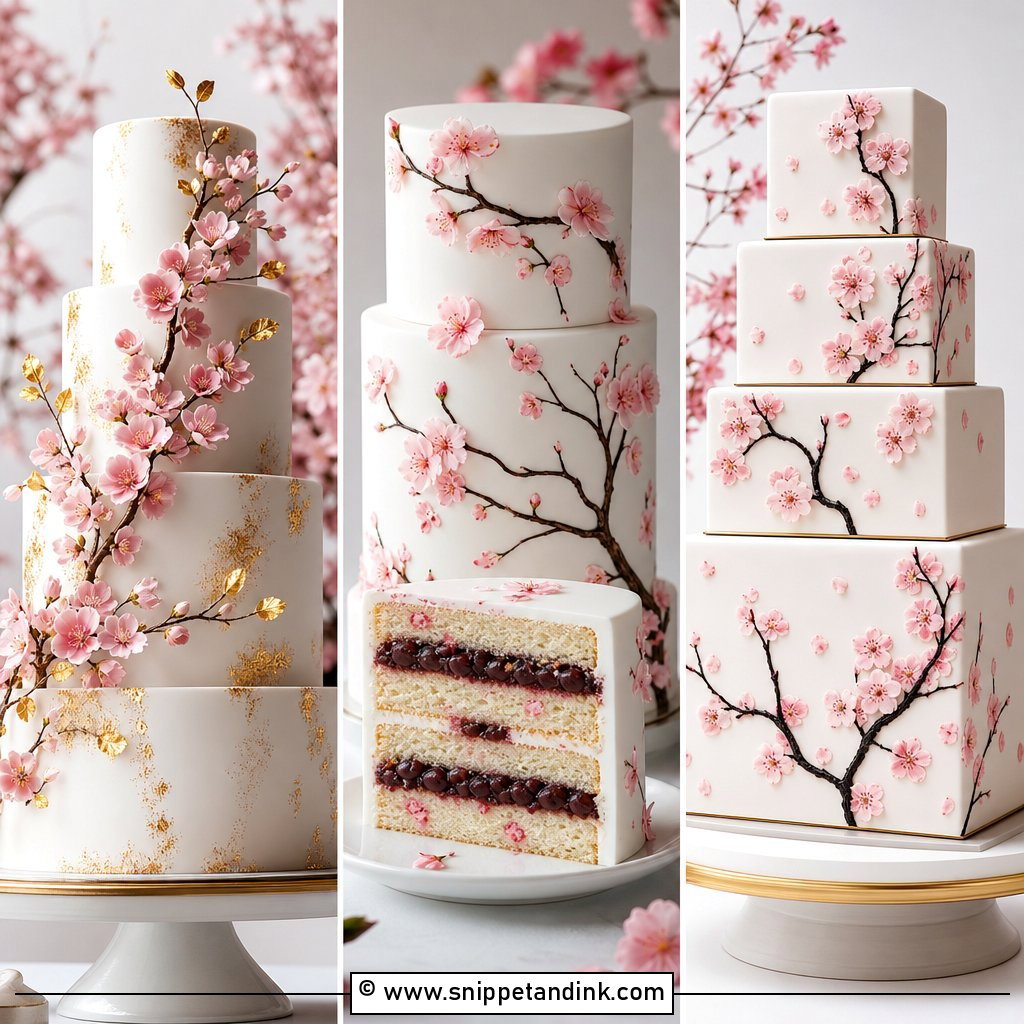

15. Minimalist Wedding Cake
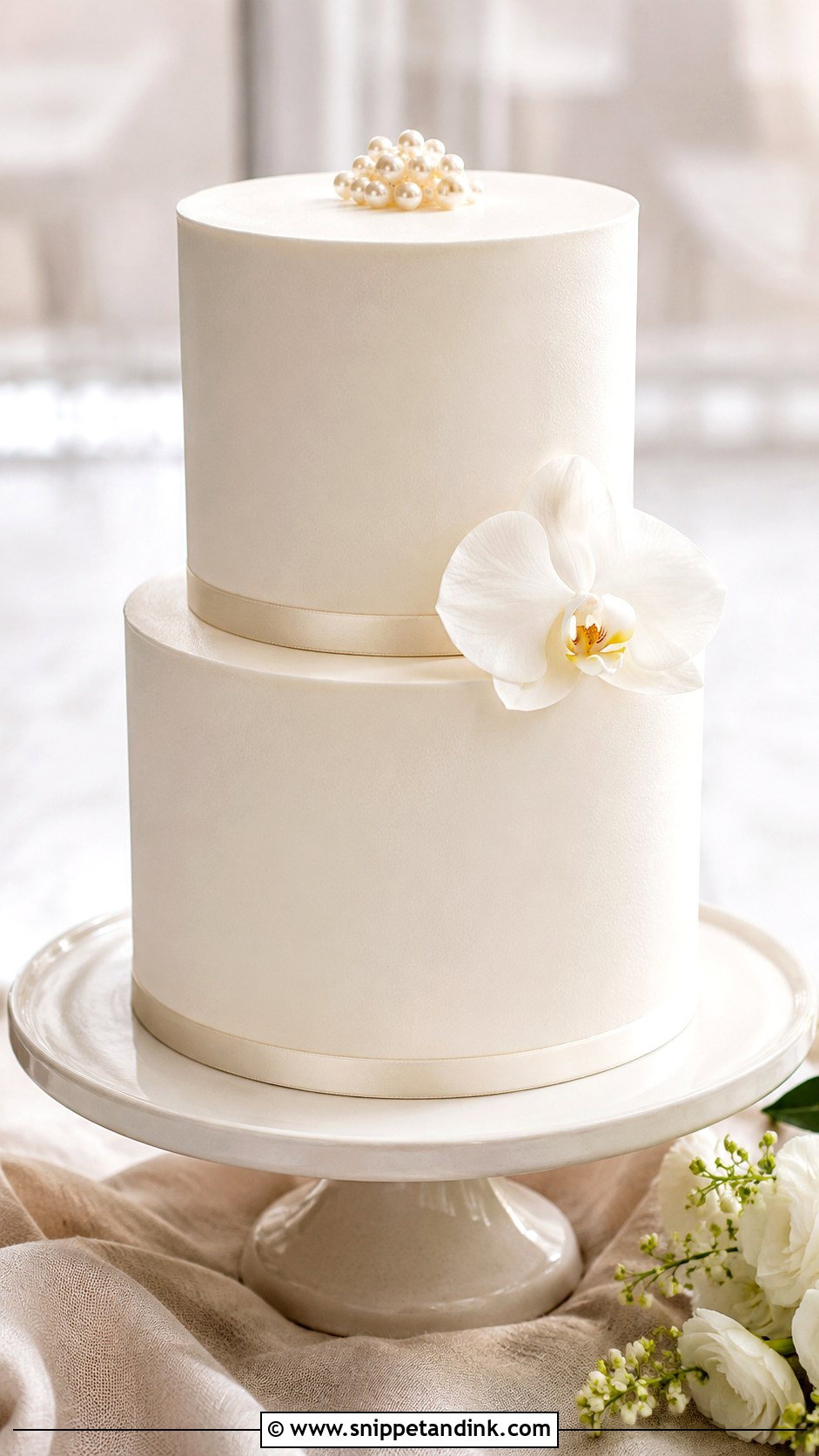
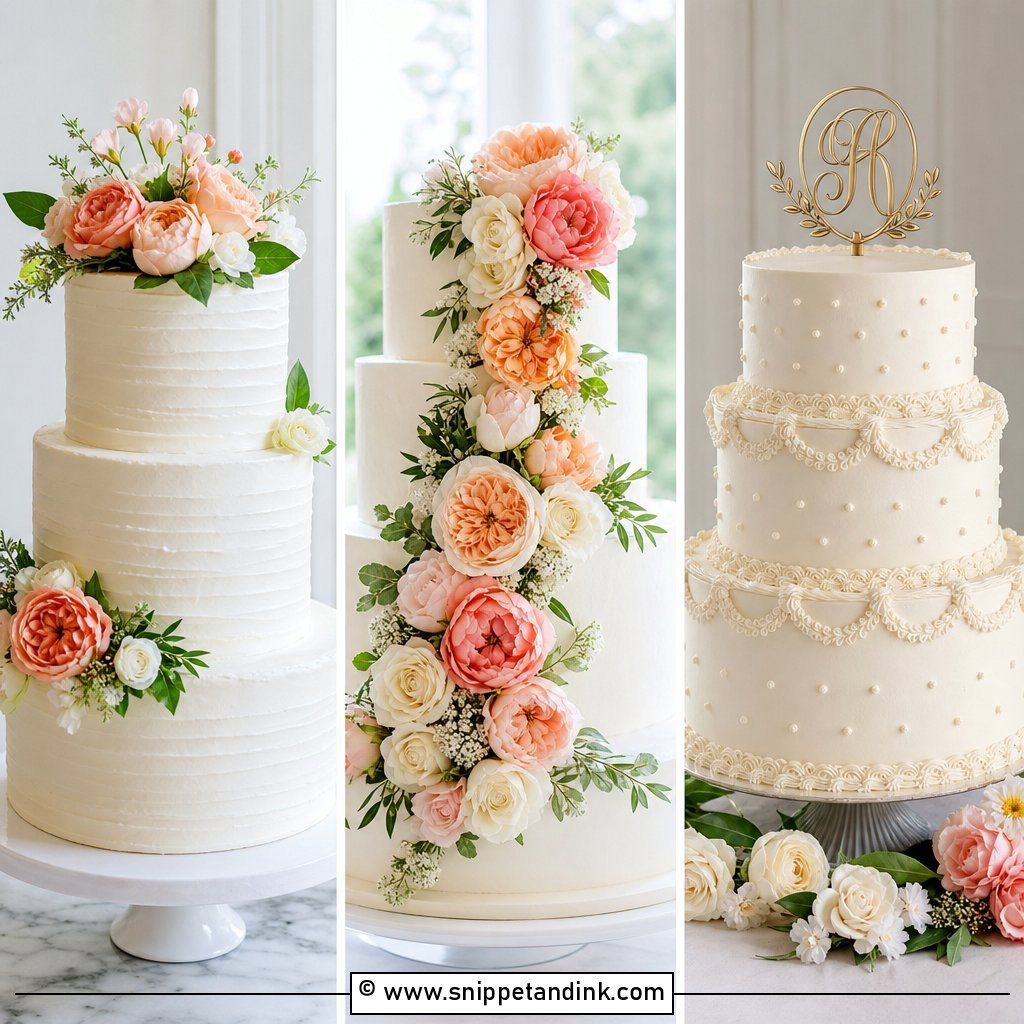
A minimalist cake is the most exposed thing I make. With one flower or one ribbon on two smooth tiers, crisp edges are the whole design, and that precision takes extra chilling and scraping time. It suits modern décor and neutral palettes. I’d hesitate on a very hot outdoor day, because a smooth buttercream finish is the first to show softening. Vanilla bean, almond, coconut or lemon cake keep it understated.
16. Black And White Wedding Cake
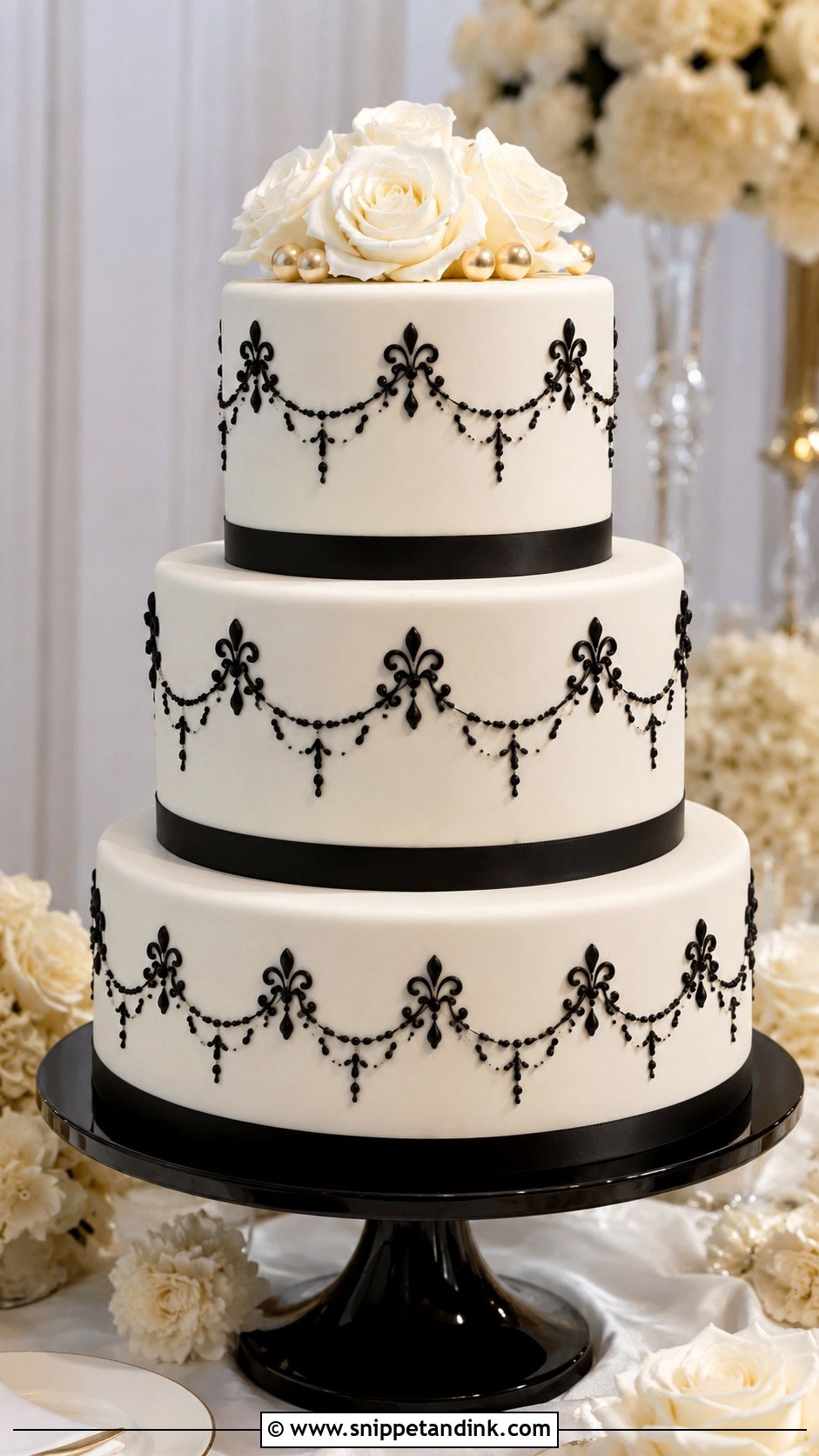
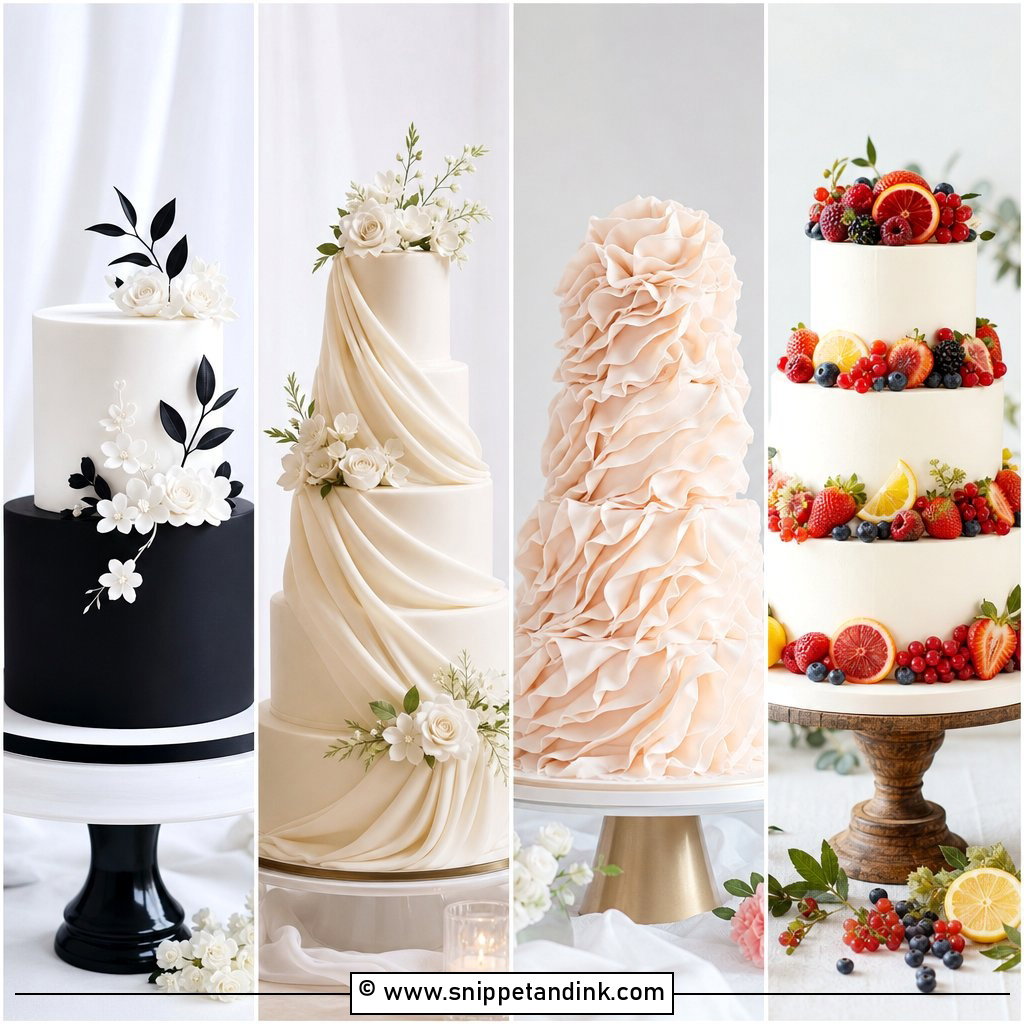
Black frosting takes a lot of coloring to get properly dark, which can stain mouths and taste bitter, so I usually do the black in fondant, black cocoa buttercream, or as piped and painted accents on white. A single black bottom tier or a black ribbon band gives the contrast without the downside. It looks right at black tie and art deco venues. White roses, pearls or gold soften it. Dark chocolate, cookies and cream and espresso sponges suit the palette.
17. Fruit Topped Wedding Cake
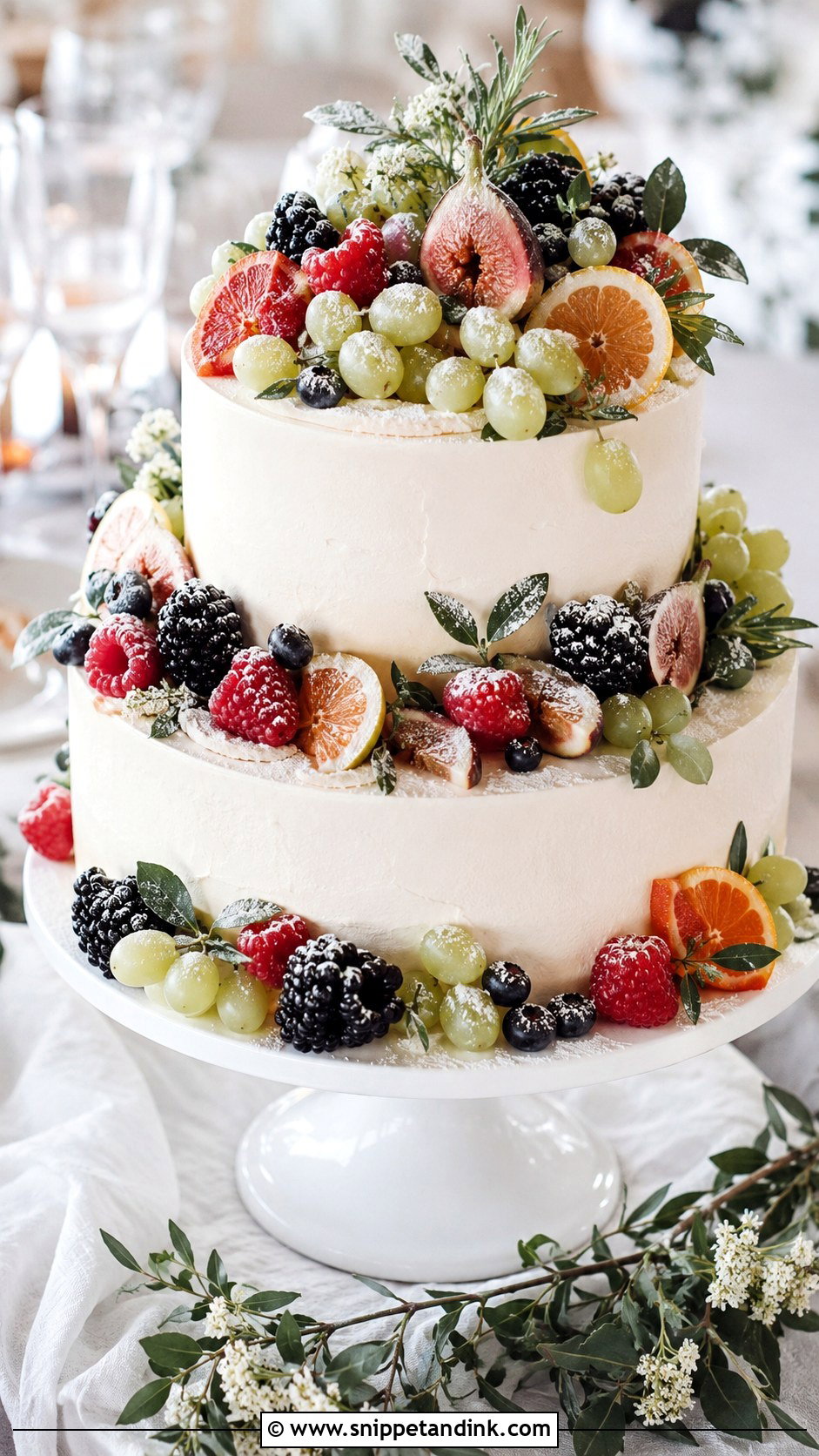
Fruit is decoration that tells guests what they’re about to eat. Whole berries, figs, cherries and grapes hold up for hours; cut citrus and sliced pears weep juice onto frosting, so I add those at the venue or glaze them first. Clusters on white buttercream look classic, and a wide single tier piled with fruit feels more current. Lemon, almond, pistachio and berry cream are natural matches. Warm-weather weddings suit it best.
18. Sugar Flower Wedding Cake
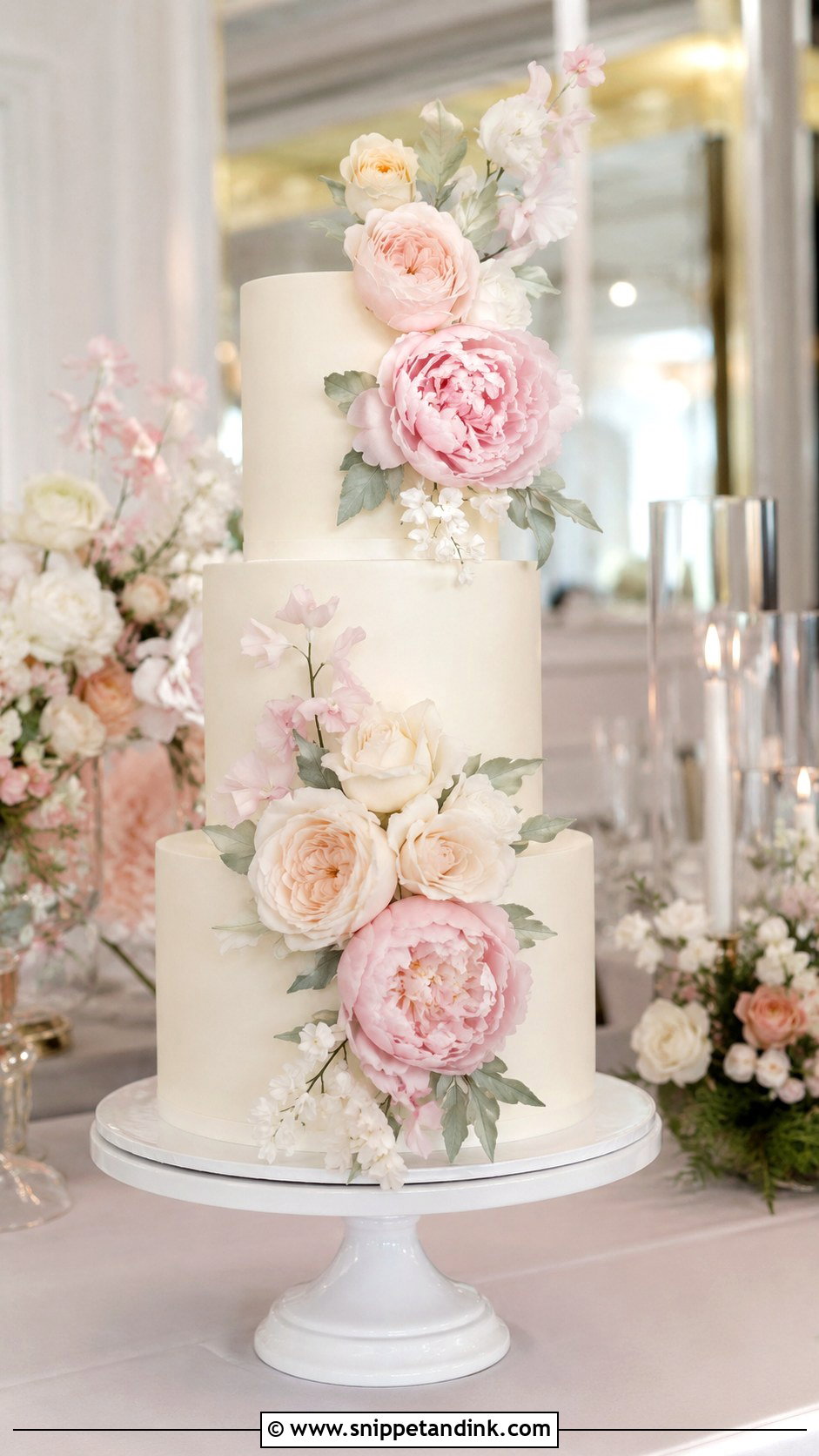
Sugar flowers give you exact control: a peony in October, a rose dyed to match the bridesmaid dresses, a bloom copied from the lace on the gown. Each one is wired and built petal by petal, and a full cascade can take days, so book early and expect the cost to reflect it. Roses, orchids, peonies, sweet peas and ranunculus all translate well. Kept dry and away from sunlight, the flowers can be saved as a keepsake, which is a nice bonus for the effort.
19. Small Wedding Cake
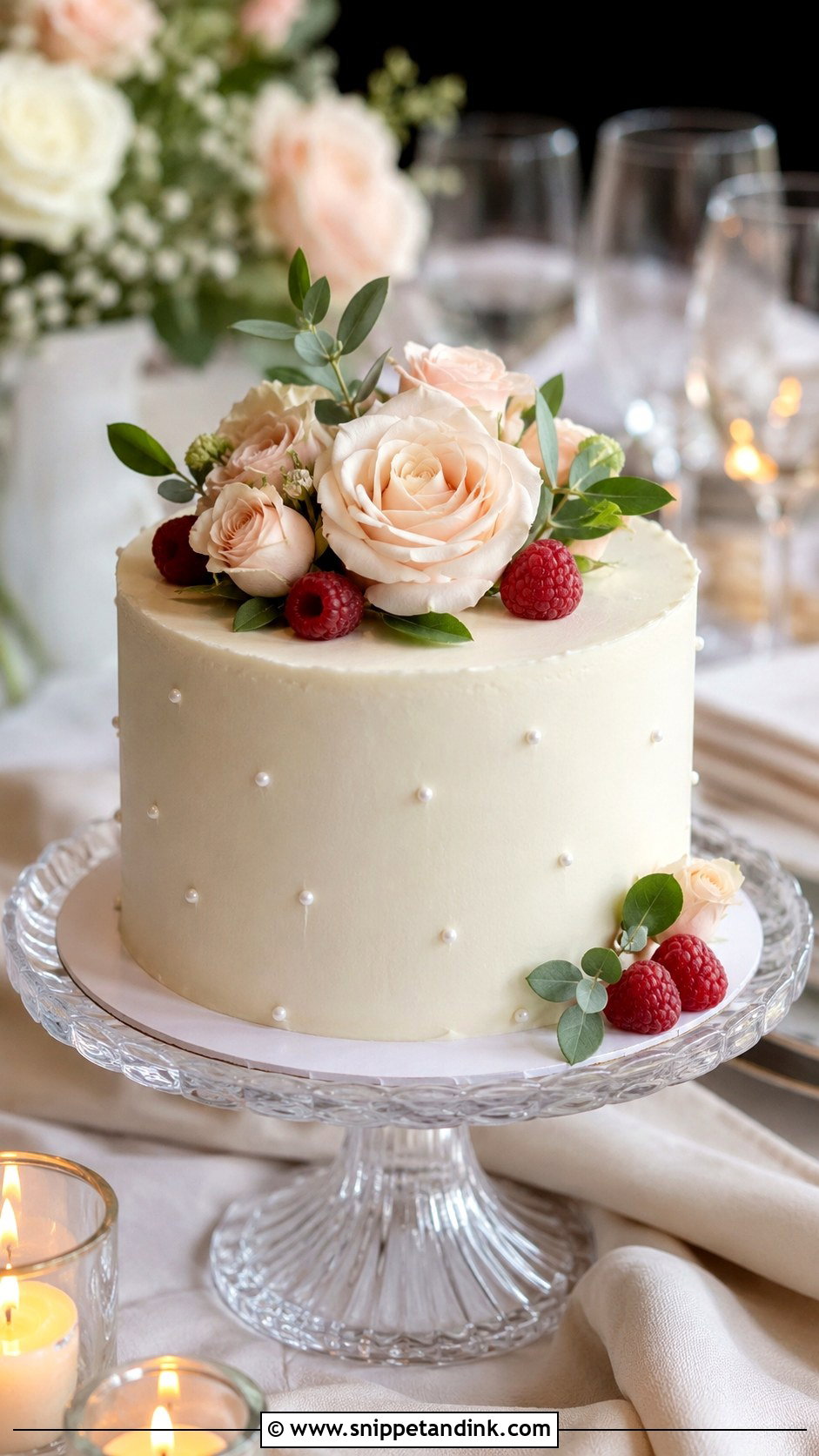
A small wedding cake suits elopements, courthouse ceremonies and couples serving other desserts. With one or two tiers, the budget usually stretches to finer work, so this is where I’d put hand piping, sugar flowers or a special stand. Lemon raspberry, chocolate ganache, almond and vanilla bean with a memorable filling all suit it. Give it its own small table with candles and linen so it doesn’t get lost in the room.
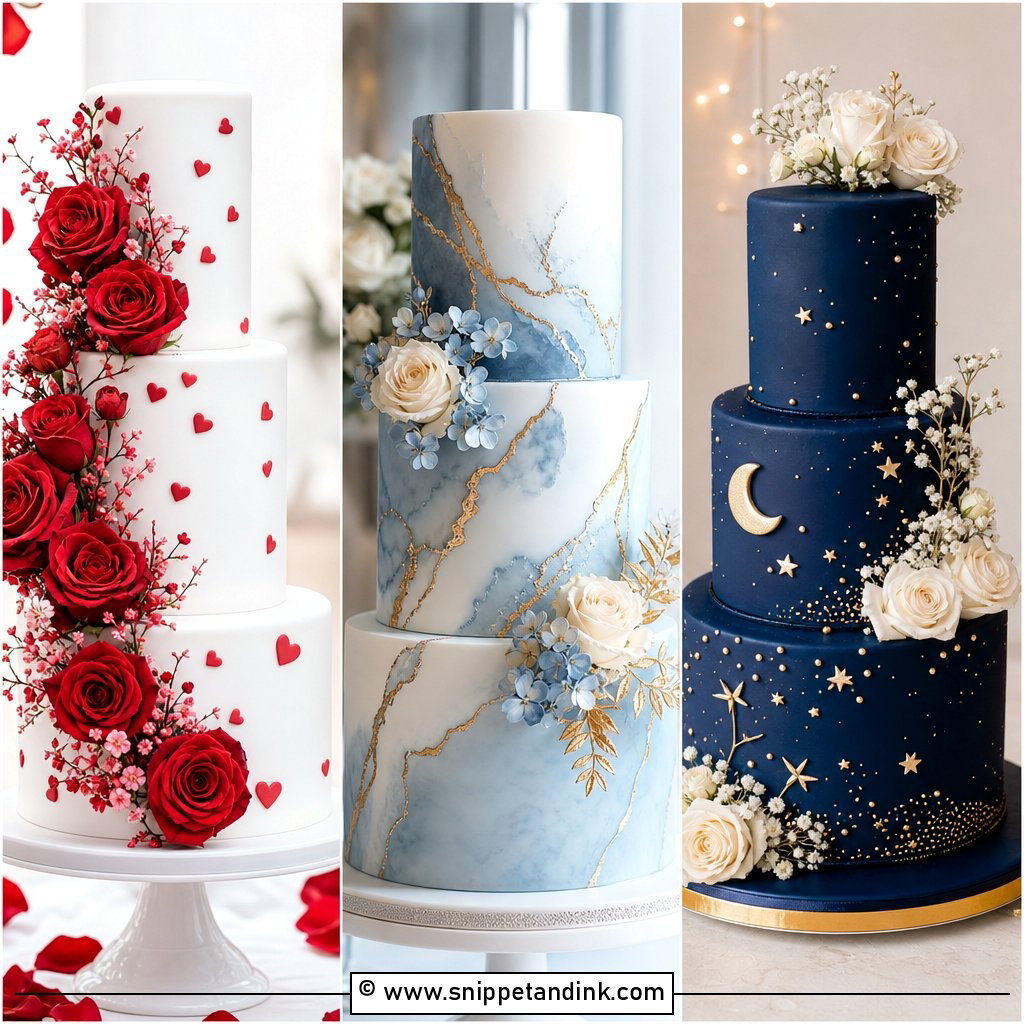
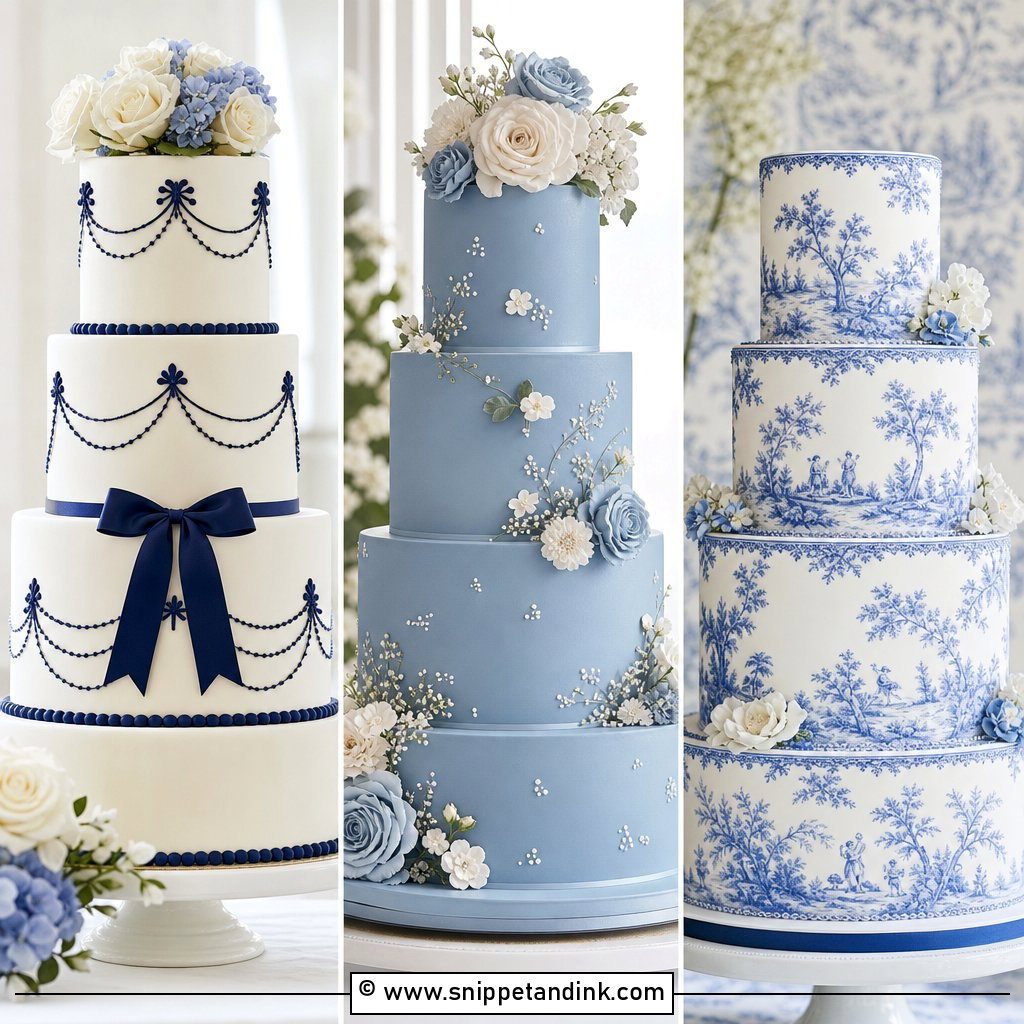

20. Dessert Table Wedding Cake
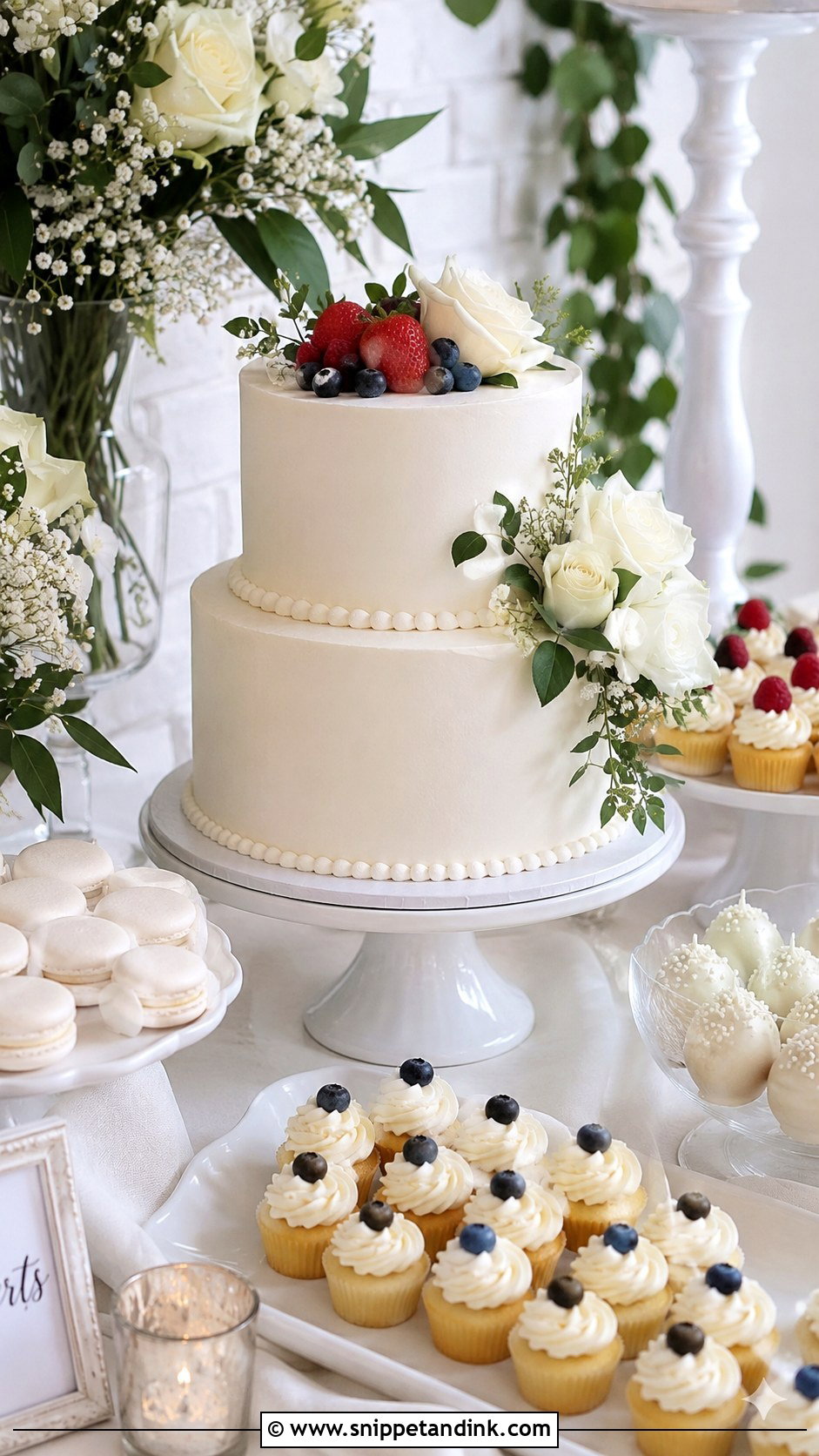
A dessert table wedding cake means a modest cutting cake surrounded by cupcakes, macarons, cookies or mini tarts in matching flavors. For large weddings it keeps the cake’s structure simple while feeding everyone. I connect the pieces through one shared color, flower or stand style, otherwise the table looks like a bake sale. A two-tier buttercream cake is usually enough to anchor it, and the smaller sweets should support the cake, not fight it.
How These Finishes Cope With Heat, Travel and a Long Reception
Every cake on this list behaves differently once it leaves a cool kitchen. I plan the finish around the room, not the other way round.
Buttercream in warm rooms
Butter-based frostings start to soften in a warm room, and smooth finishes show it first. Textured, semi-naked and fruit-topped cakes forgive a little slump. In a summer tent, I’d ask the planner to keep the cake inside until shortly before the cutting, out of direct sun.
Fondant and condensation
Fondant handles heat better but hates moisture. Carried from a fridge into a humid room, it beads with condensation and the colors can streak, which matters most on black, marble and painted cakes. Letting it come up to room temperature in its box helps.
Delivery and the last half hour
Tall stacked cakes are usually delivered as separate tiers and assembled on site, and that’s when fresh flowers, cut fruit and ribbons go on. If your venue has a strict access window, tell your baker early, because rushed assembly is when tiers lean and piping gets knocked.
One Technique Per Cake Usually Wins
Wedding cakes are far more flexible than the tall white tower people picture. A classic white tier, a vintage heart, textured buttercream or a fruit-filled Italian cake can each carry a reception if it suits the room. When you bring your screenshots to a consultation, circle the one detail you love in each, the piping, the fruit, the bow, so your baker can build one cake around it rather than stitching five together. Then spend real attention on flavor, because that’s what guests remember.
One last thing I’d ask before you book anyone: taste the actual cake, not just the frosting sample. A finish can be copied from a photo; good sponge and balanced fillings can’t.
You'll Like These Ideas:








Leave a Reply