
Two tiers suit intimate weddings, courthouse celebrations, garden receptions and dessert tables where the cake still has to anchor the photos. Buttercream is the finish I’d choose for most of them. It tastes better than fondant, and it takes everything from smooth ivory to vintage piping, pearls, flowers, bows and ruffles. Pick the look that fits your venue and season, then take it to your baker or your tasting. Each of the twenty ideas below comes with what I’d want you to know before ordering it.
Not Every Buttercream Is the Same Recipe
Couples often order “buttercream” without knowing that bakers mean quite different things by it. The recipe decides how sweet the cake tastes, how white it can look and how it copes with a warm room, so it’s worth asking which one your baker uses.
- American: butter beaten with powdered sugar. The sweetest, it forms a light crust and holds piping well in mild warmth.
- Swiss meringue: egg whites and sugar warmed together, whipped, then butter added. Silky, less sweet and very smooth, but it softens sooner in heat.
- Italian meringue: hot sugar syrup poured into whipped whites before the butter. Similar to Swiss and slightly sturdier.
- French: made with egg yolks. Rich and yellowish, so it’s more often a filling than an outside coat.
- Ermine: a cooked milk and flour base whipped with butter. Light and not too sweet, but soft.
Many bakers mix and match, filling with a silky meringue buttercream and coating the outside with something firmer. Some add a little shortening for hot weather, which helps the cake hold but makes it taste less buttery. None of these is wrong; the right one depends on your flavor preference and your venue.
1. 2 Tier Buttercream Wedding Cake With Fresh Flowers
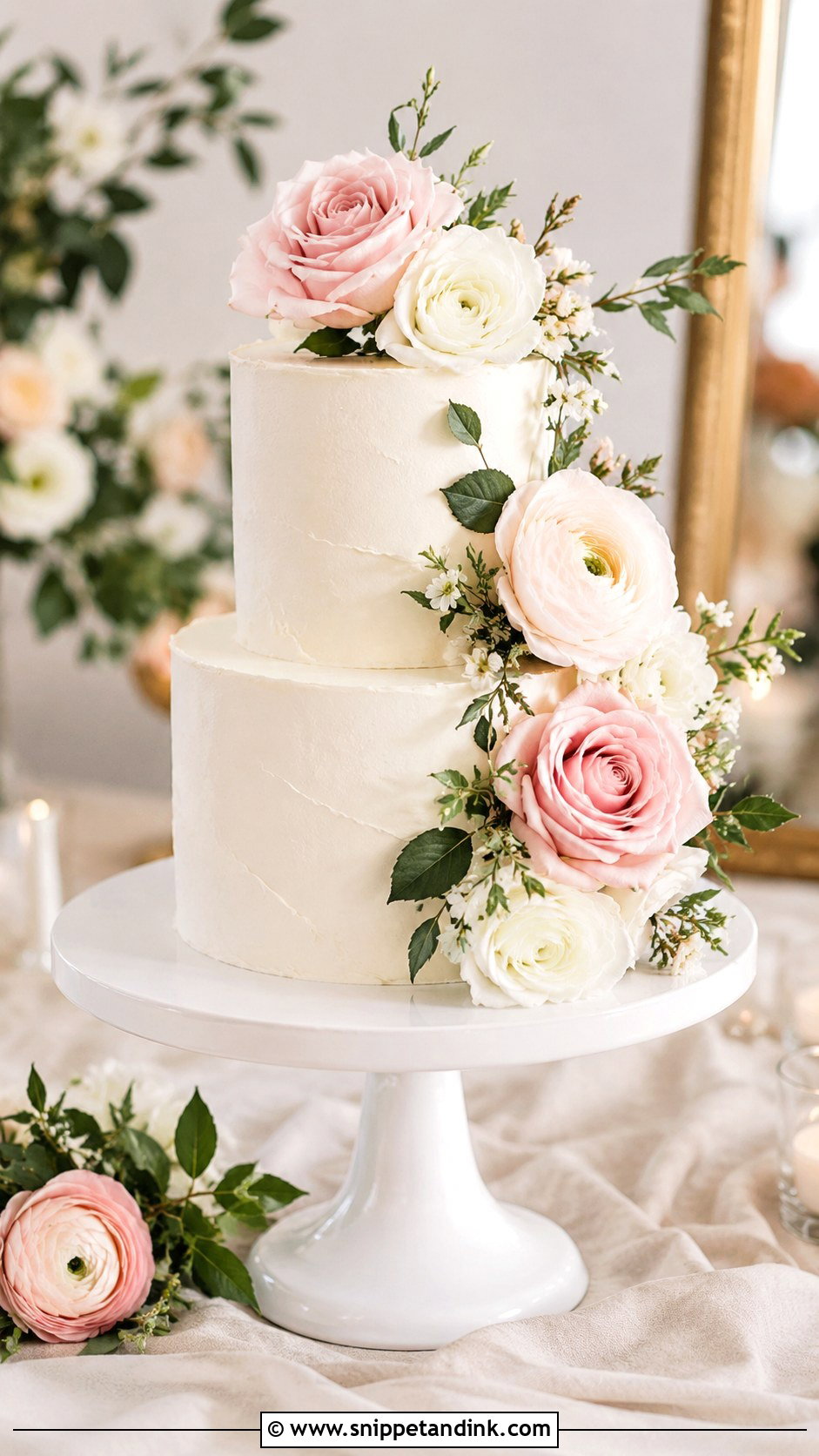
Fresh flowers fill out a small cake fast, and the mistake I see most often is covering too much of it. Ask for smooth ivory buttercream on both tiers and a cascade that follows the cake’s curve, with plenty of bare frosting left showing. Garden roses, ranunculus, spray roses and a little greenery give a high-end look. Buttercream is too soft to hold a stem pushed straight in, so I set picks first and slide the stems into them; that also means everything lifts out cleanly before cutting. Garden, spring and ballroom weddings all suit it.
2. 2 Tier Buttercream Wedding Cake With Vintage Piping
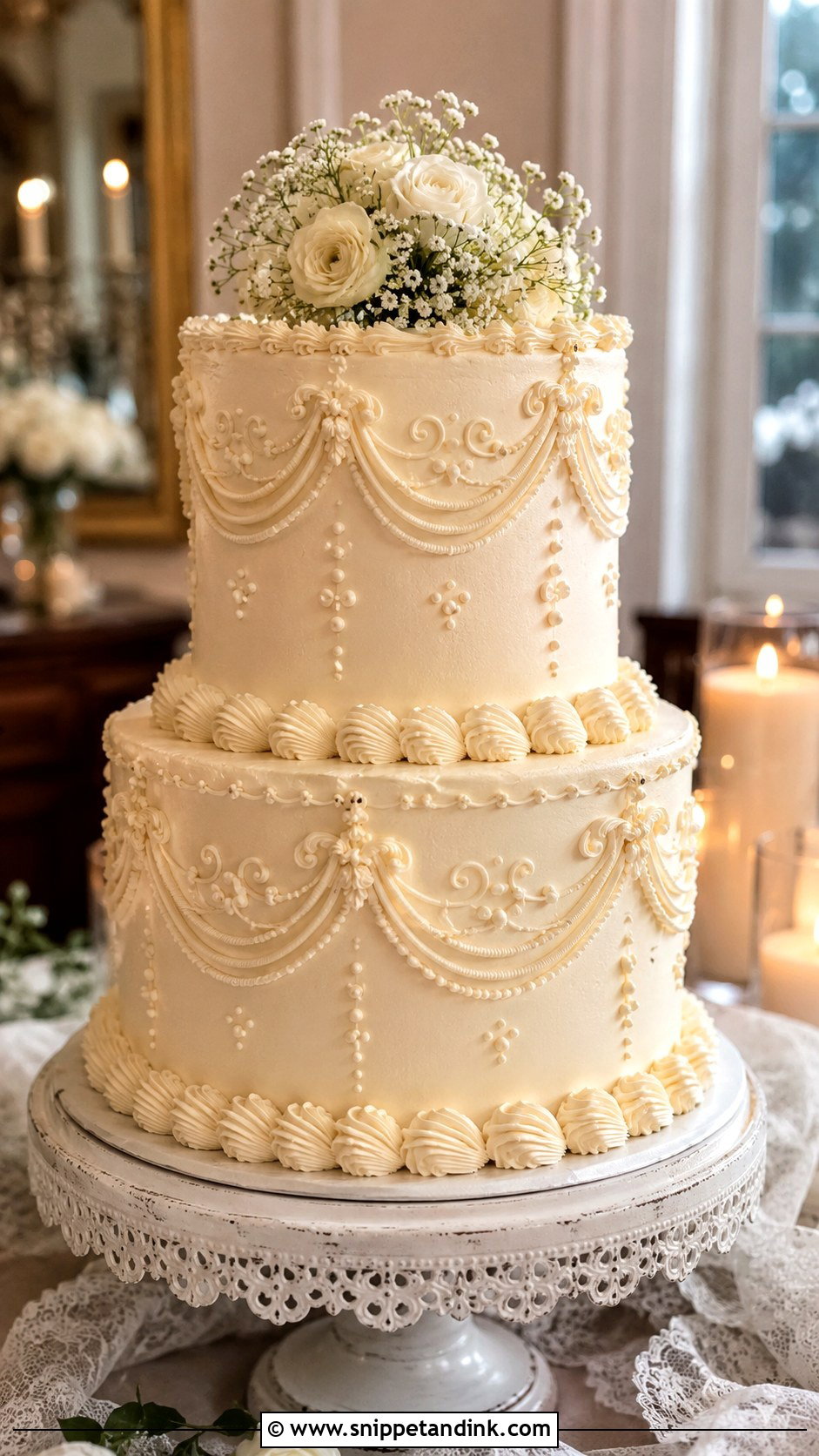
Vintage piping gives two tiers instant character: shell borders, swags, tiny dots, soft scrolls and layered trim. Keep the palette white, ivory or blush and it reads fresh rather than dated. The piping should frame each tier, not bury it. Buttercream piping is a race against warm hands, so I swap bags often; once the heat of a palm softens the mix, the ridges blur. A small floral topper or a few pearls is all it needs beside lace linens and candlelight.
3. 2 Tier Buttercream Wedding Cake With Pearl Details
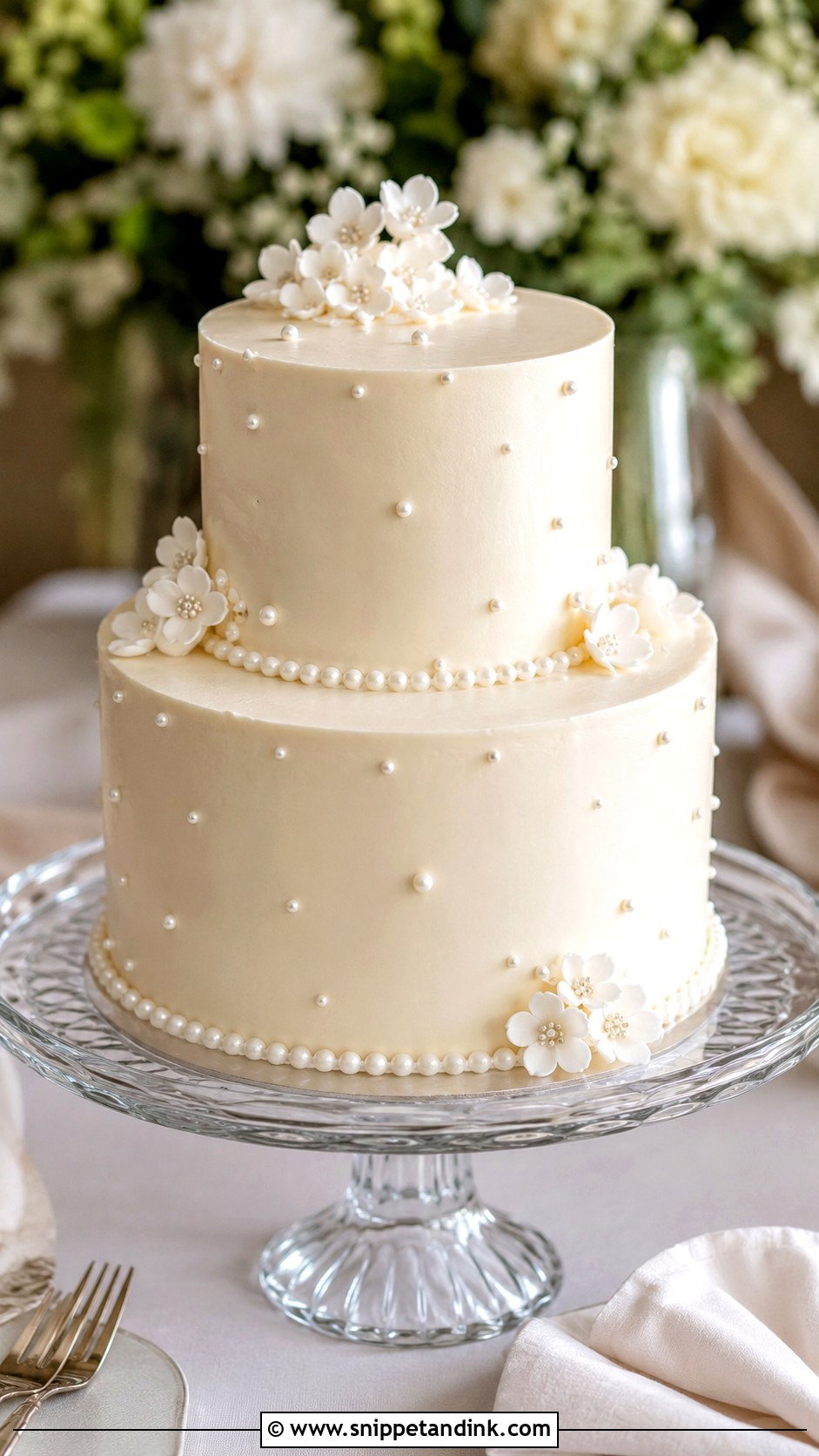
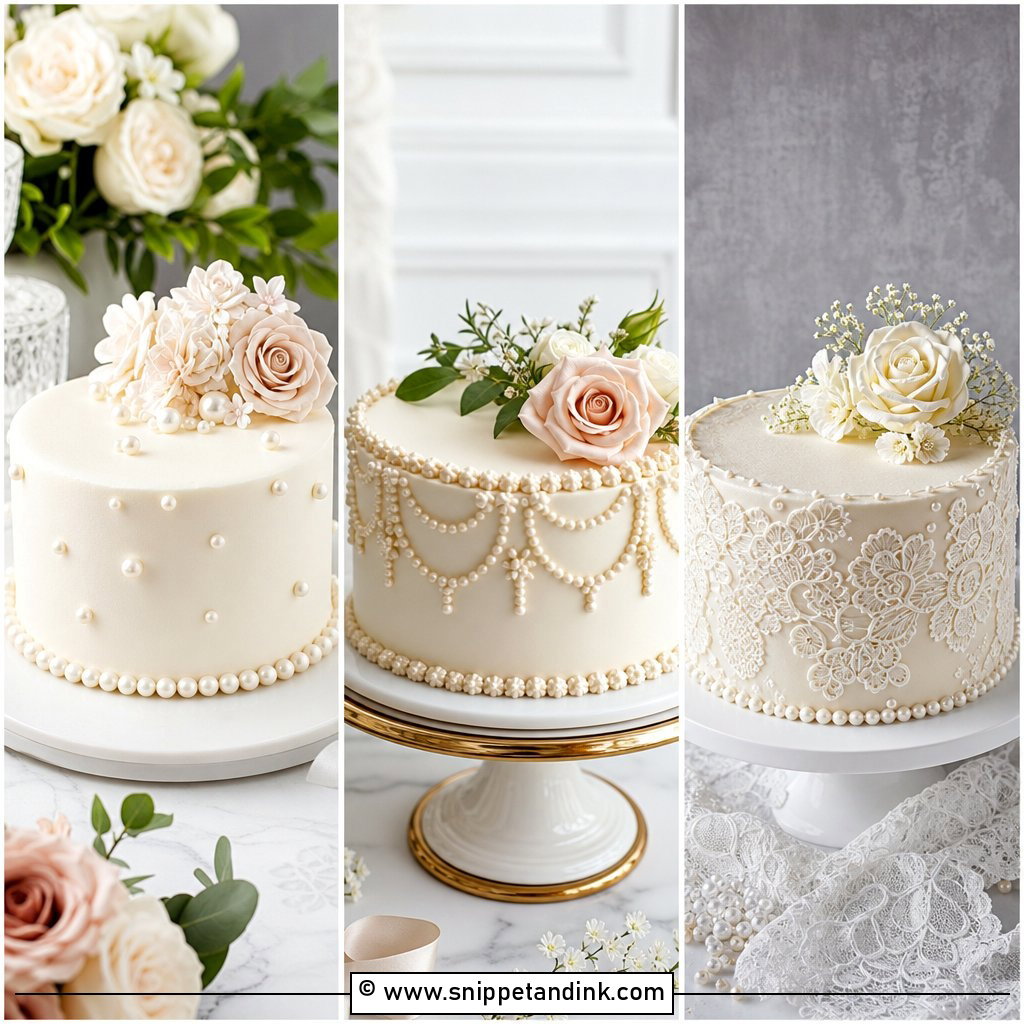
Pearls add texture without clutter. They can run along the borders, scatter lightly across the tiers or sit in clean vertical lines for a tailored look. Placed while the buttercream is still soft, they settle in slightly and stay put; once the frosting has crusted or chilled, each one needs a tiny dab of piping gel. Ivory buttercream feels warm and bridal, and a faint champagne tint gives a glow. With a satin gown and white flowers, a white or glass stand in natural light shows them best.
4. 2 Tier Buttercream Wedding Cake With Buttercream Flowers
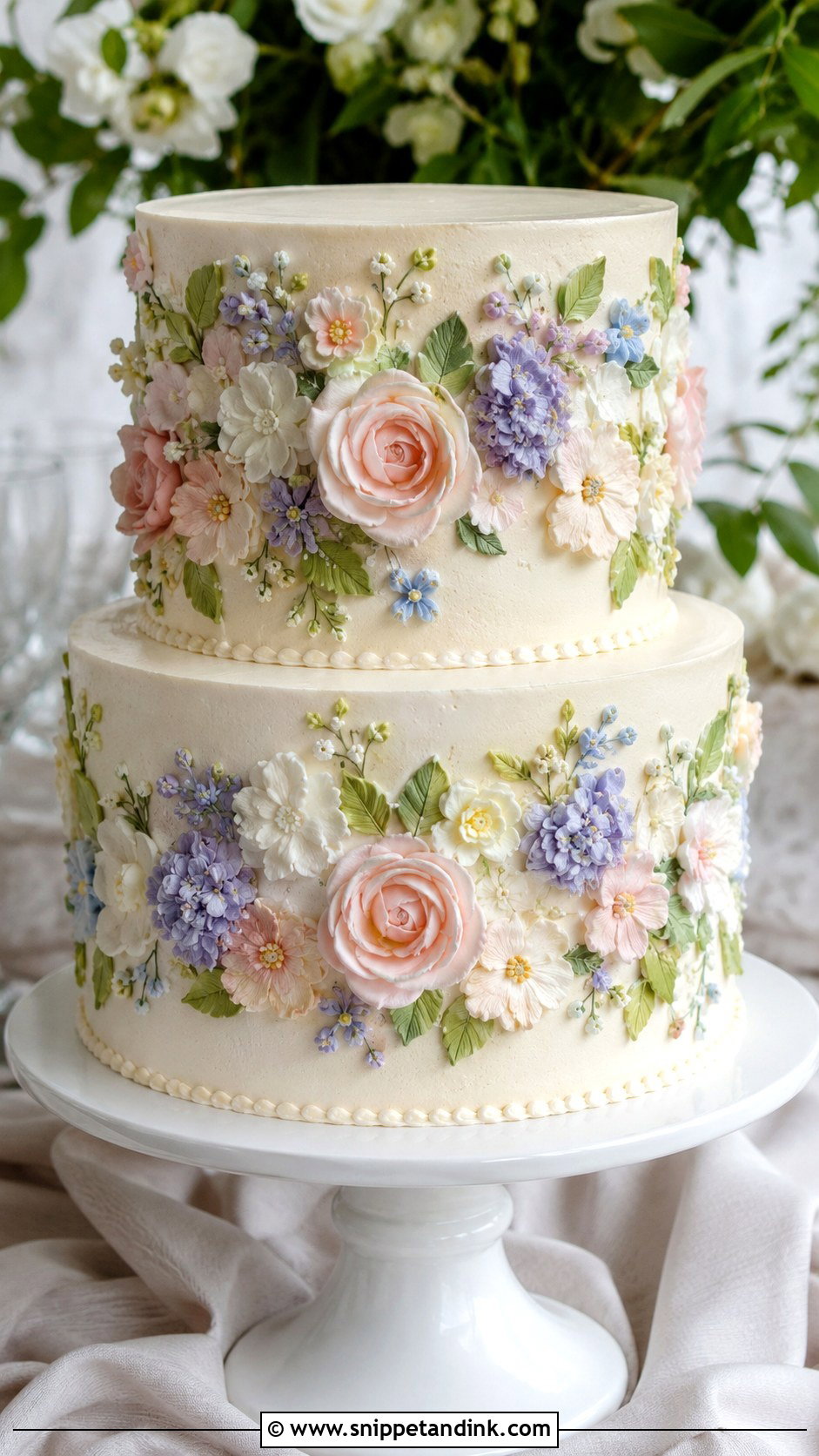
Here every bloom is piped, so the whole cake can be eaten. Roses, peonies, blossoms, leaves and fillers each use a different tip, and the bigger flowers are usually piped ahead on a flower nail, chilled hard, then arranged around the tiers. The recipe changes the petals: meringue buttercream gives softer, silkier flowers, while a sweeter American-style mix gives crisper petals that hold up better in warmth. Pastels suit spring, dusty mauve feels romantic, and white-on-white looks refined. Piped flowers add real dimension in photos.
5. 2 Tier Buttercream Wedding Cake With Gold Accents
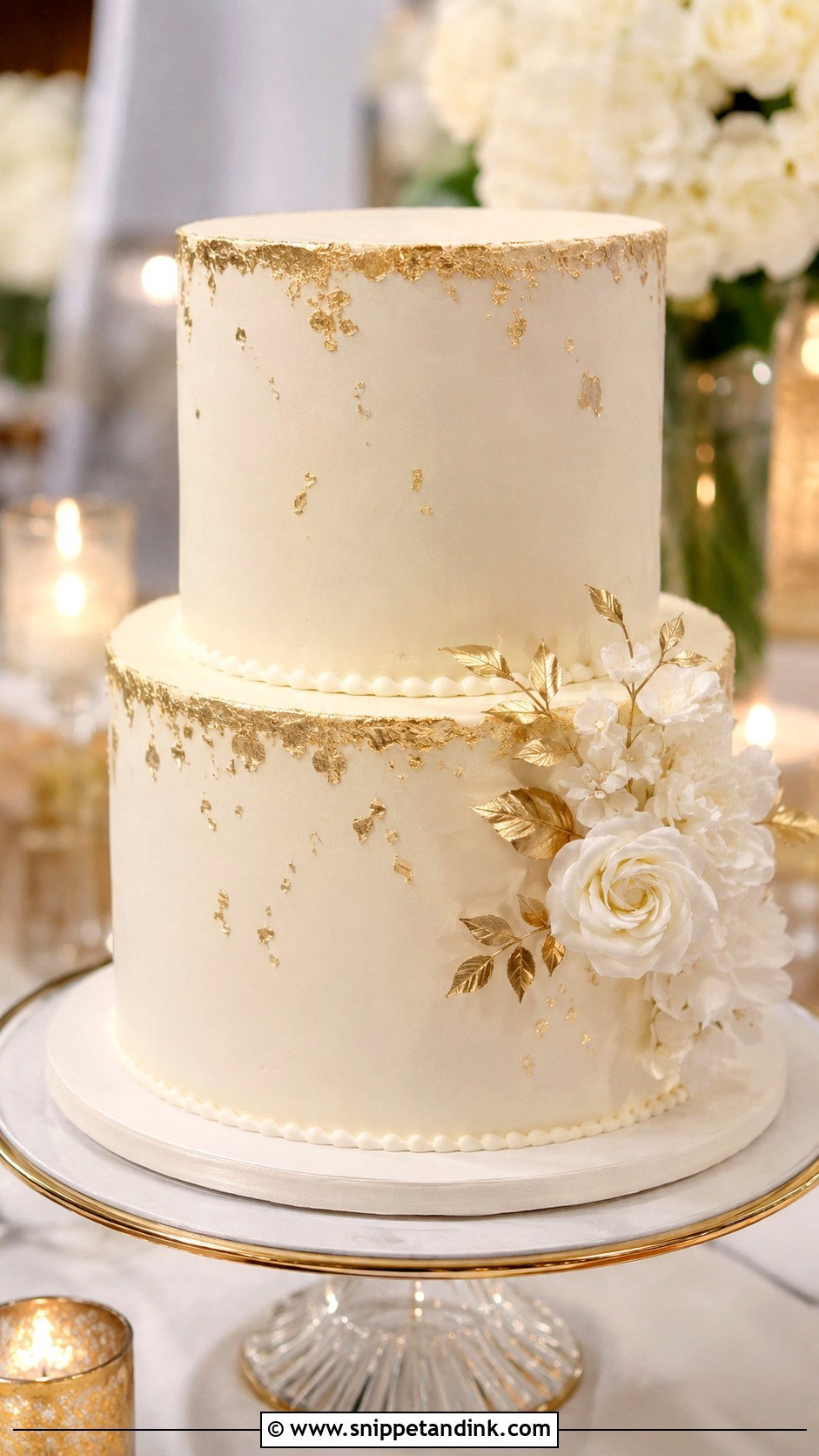
Gold behaves differently on buttercream than on fondant. Leaf can’t be smoothed flat over a soft surface, so I lay it in torn flakes and let it crinkle, which honestly suits a buttercream cake better. A painted gold rim needs a chilled, crusted edge to paint on, or the brush drags frosting with it. A smooth ivory, white or warm vanilla base shows the metal clearly. A few white flowers or sugar petals add detail. Chandeliers and warm evening lighting make the gold glow, so keep the amount light.
6. 2 Tier Buttercream Wedding Cake With Ruffles
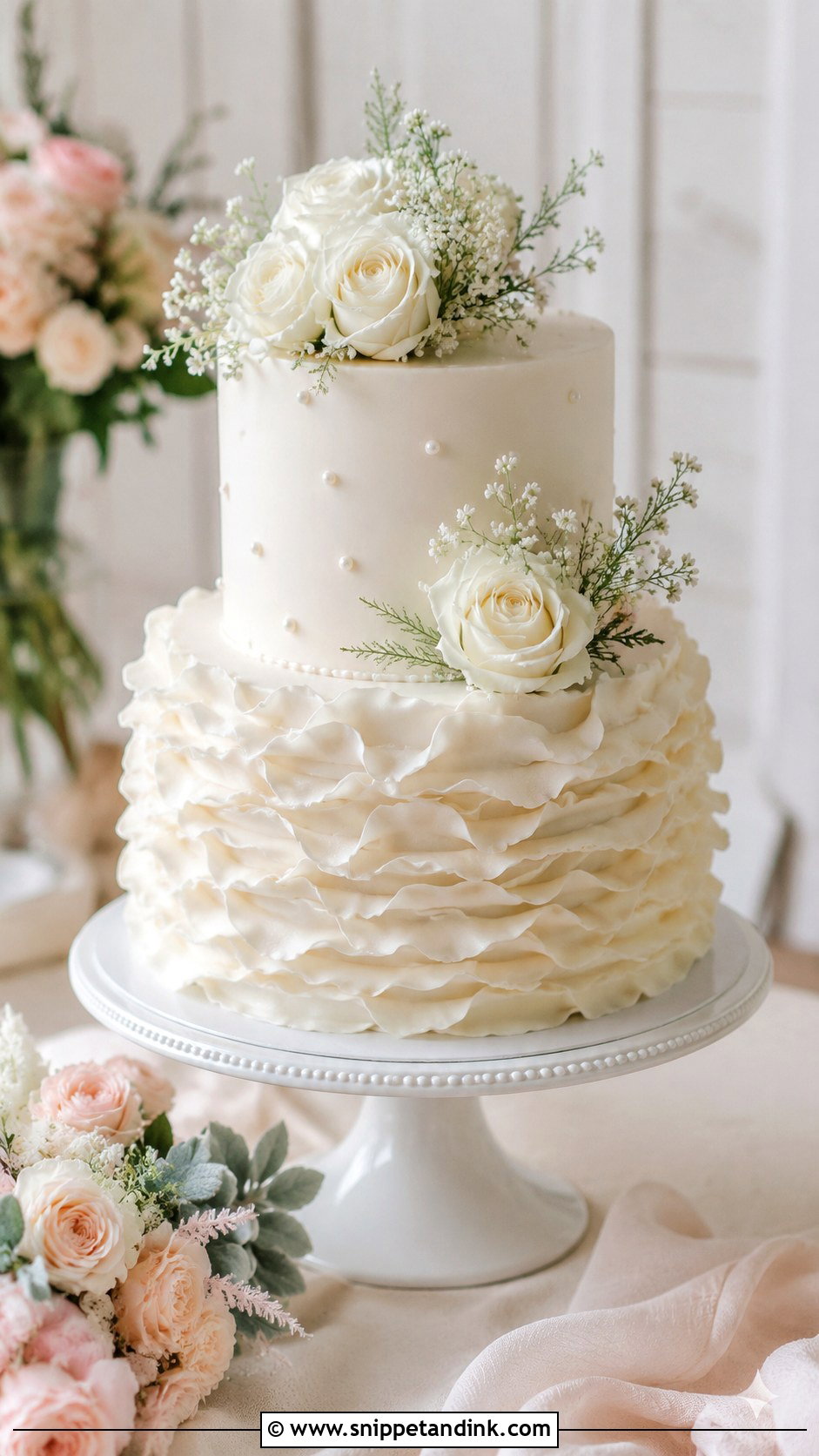
Ruffles look like fabric, which is why they suit a flowing gown. The bottom tier can be ruffled under a smooth top tier, or both can carry gentle waves. I pipe them with a petal tip held at an angle, row by row from the bottom up, and a full tier takes a good while. Those thin edges are the first thing to soften in a warm room, so a ruffled cake needs a cool spot. White and ivory are the safest colors, with blush, pale blue or champagne as gentle alternatives. Keep extra decoration minimal.
7. 2 Tier Buttercream Wedding Cake With Ribbon
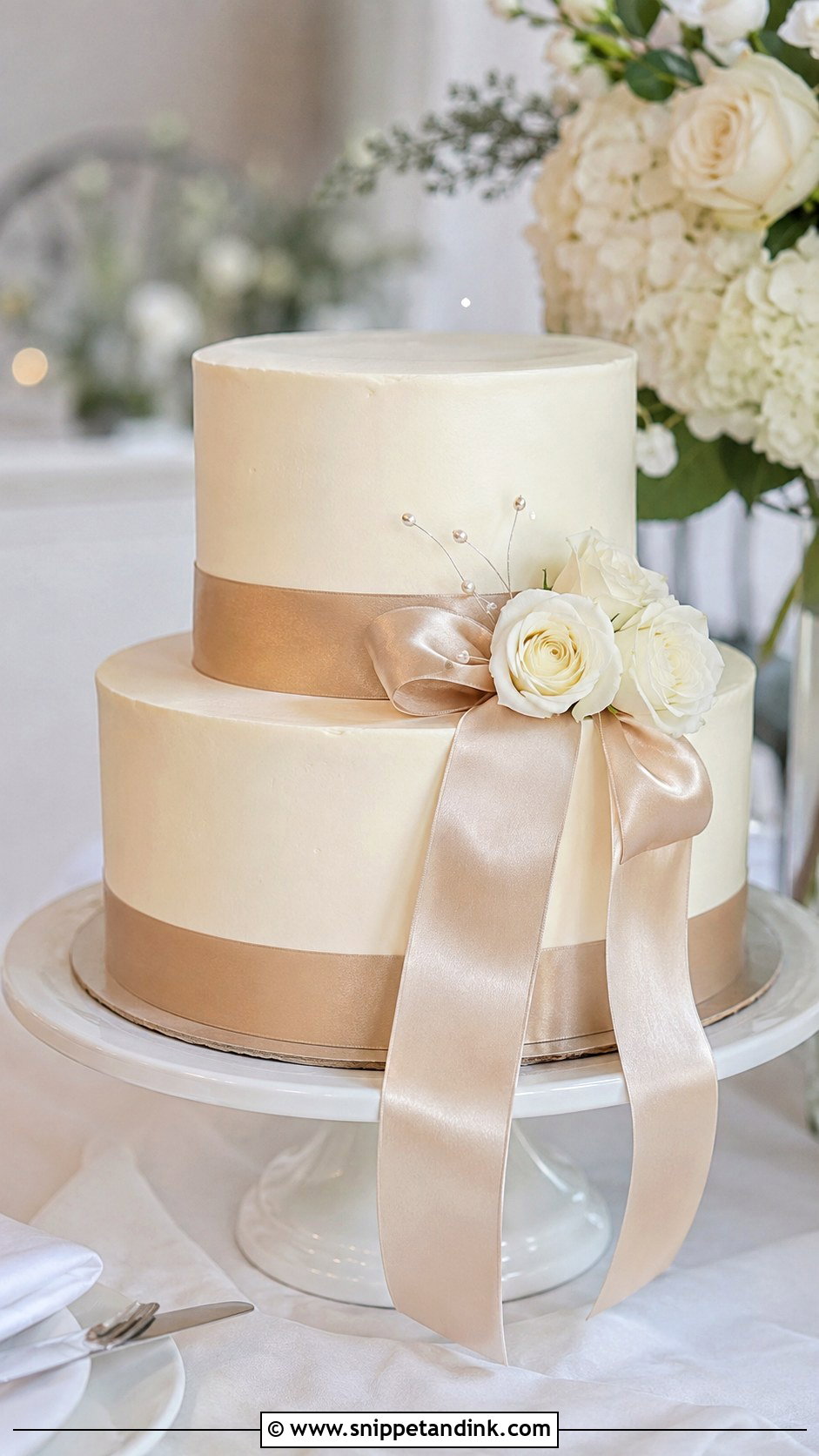
A ribbon detail gives each tier a tailored edge. Real satin ribbon looks crisp, but buttercream is greasy, so I back it with a strip of acetate or clear tape to stop butter staining through. A piped buttercream ribbon avoids that problem and can be eaten. White with champagne ribbon is classic; blush, sage or dusty blue ties into a palette. I’d skip the pearl-headed pins sometimes used to fasten ribbon, though, because a pin left in a slice is a real hazard. A small floral cluster or bow finishes it.
8. 2 Tier Buttercream Wedding Cake With Bow
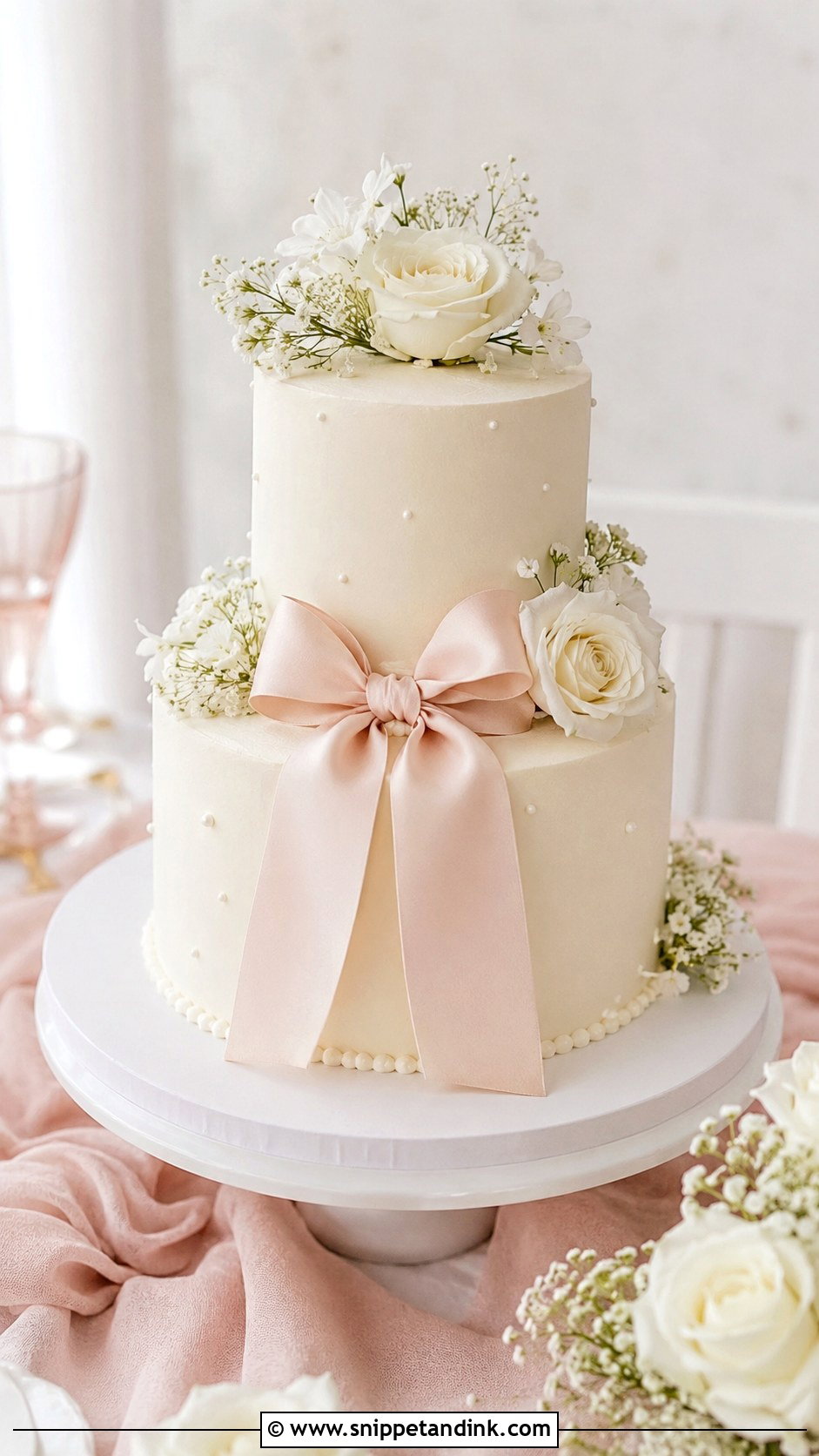
A bow can be buttercream, sugar paste, silk ribbon or fabric. Sugar paste bows need a day or two to dry, propped open with tissue in the loops, or they flatten under their own weight. Fabric and silk bows shouldn’t touch frosting directly, so I set them on a small disc of acetate. One large bow at the base of the top tier feels modern; several small ones around the tiers feel vintage. Keep the cake smooth so the bow stands out. Ivory buttercream with a blush or white bow suits a pastel palette.
9. 2 Tier Buttercream Wedding Cake With Smooth Finish
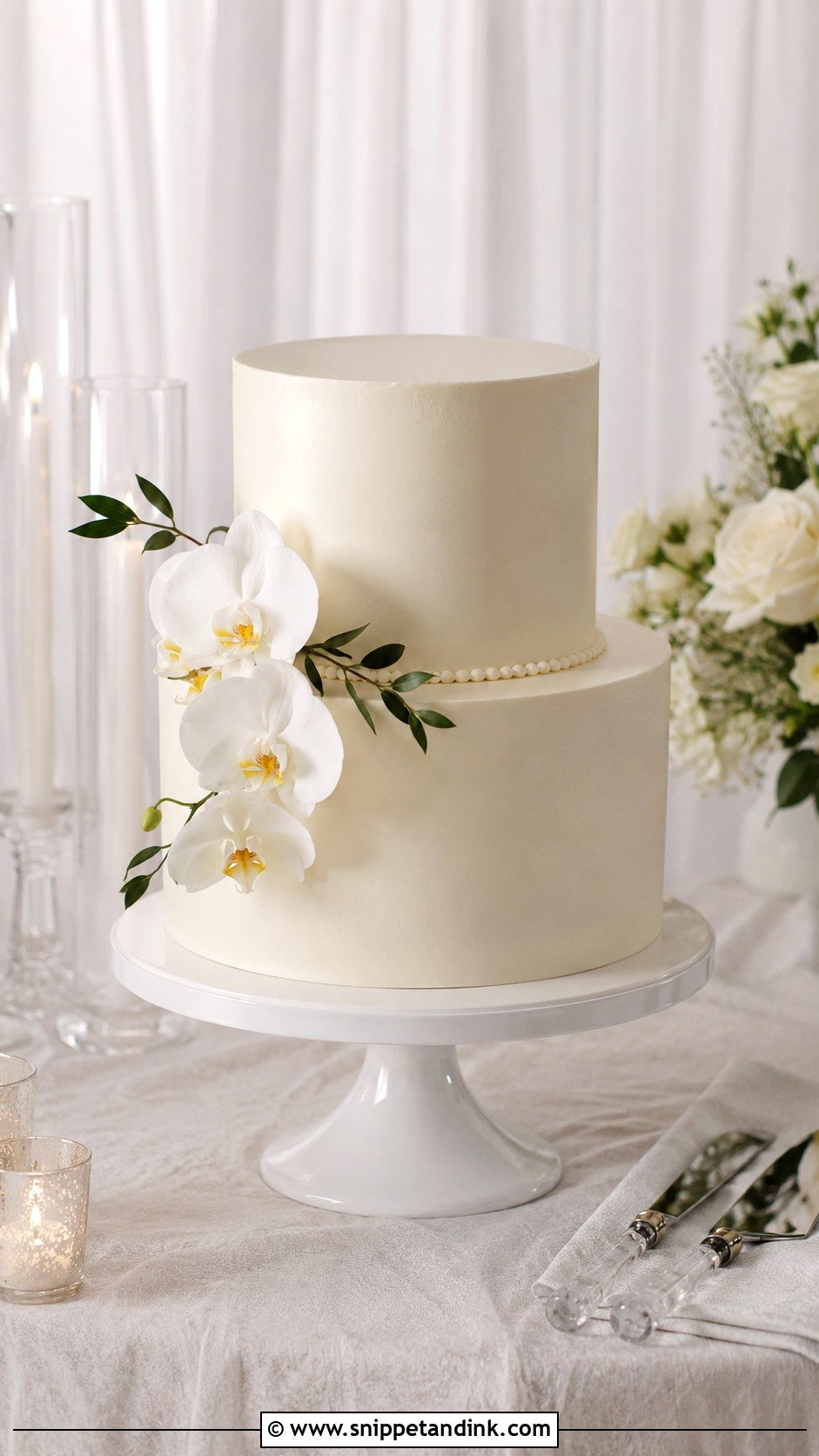
A smooth finish shows a baker’s skill more than anything else on this list. Sharp edges and even frosting come from chilling, scraping and chilling again. Choose it if your decor already has plenty going on, with flowers, candles or bold linens. Ask for smooth ivory, a small cluster of blooms and a good stand, plus perhaps a tiny piped border at the base, which also hides the line of the cake board. It usually costs less than a heavily decorated cake because it takes fewer hours, yet it looks polished almost anywhere.
10. 2 Tier Buttercream Wedding Cake With Textured Frosting
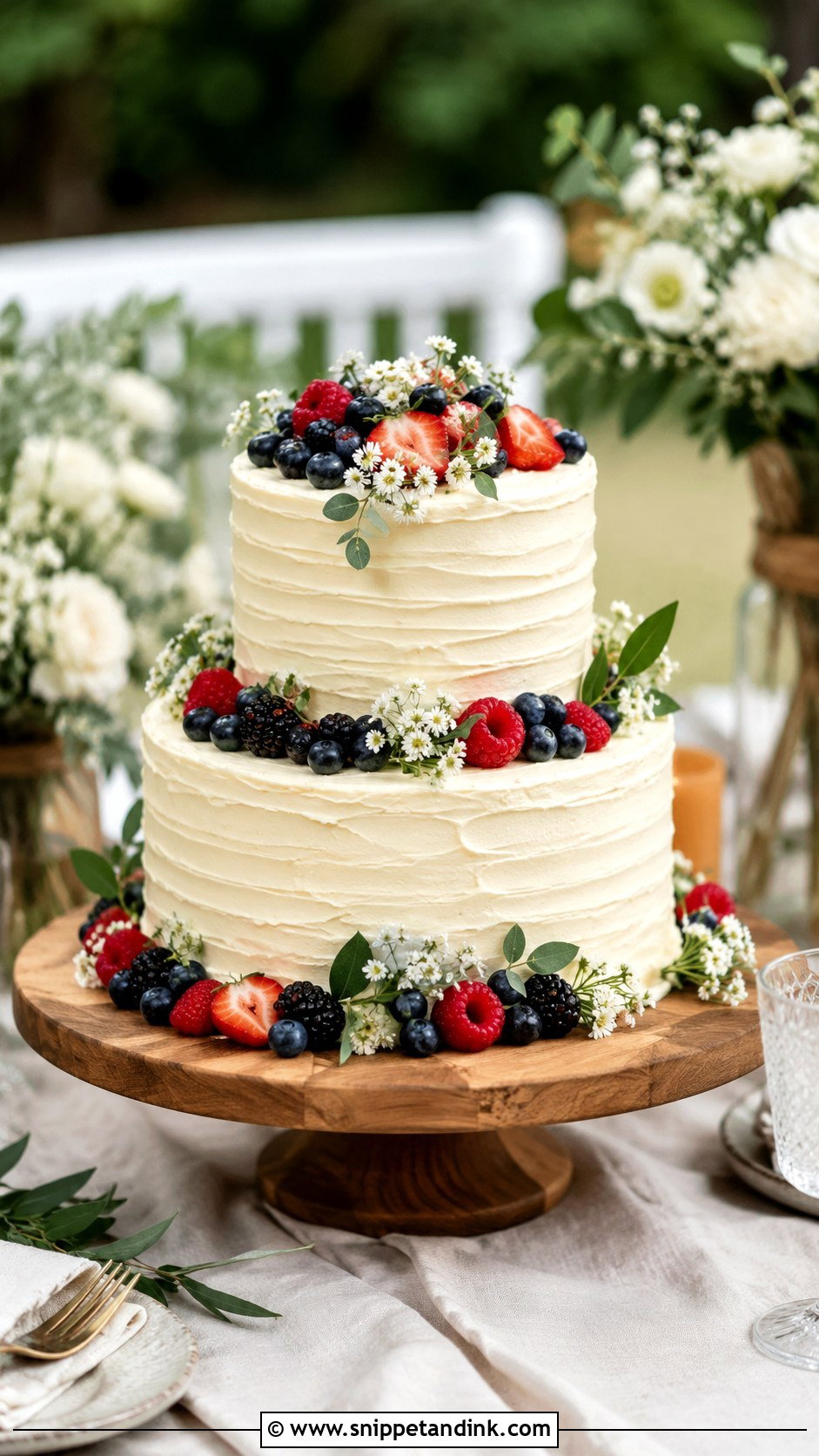
Texture forgives. Spatula marks, horizontal ridges from a comb scraper, loose swoops or soft waves all hide the small dents a cake picks up on the road, which is why I suggest it for barn and outdoor venues down rough tracks. Light catches the ridges from every angle and gives a small cake depth. Fresh flowers, greenery, fruit or a few pearls suit the mood. Keep the color soft so the texture stays the feature.
11. 2 Tier Buttercream Wedding Cake With Cascading Flowers
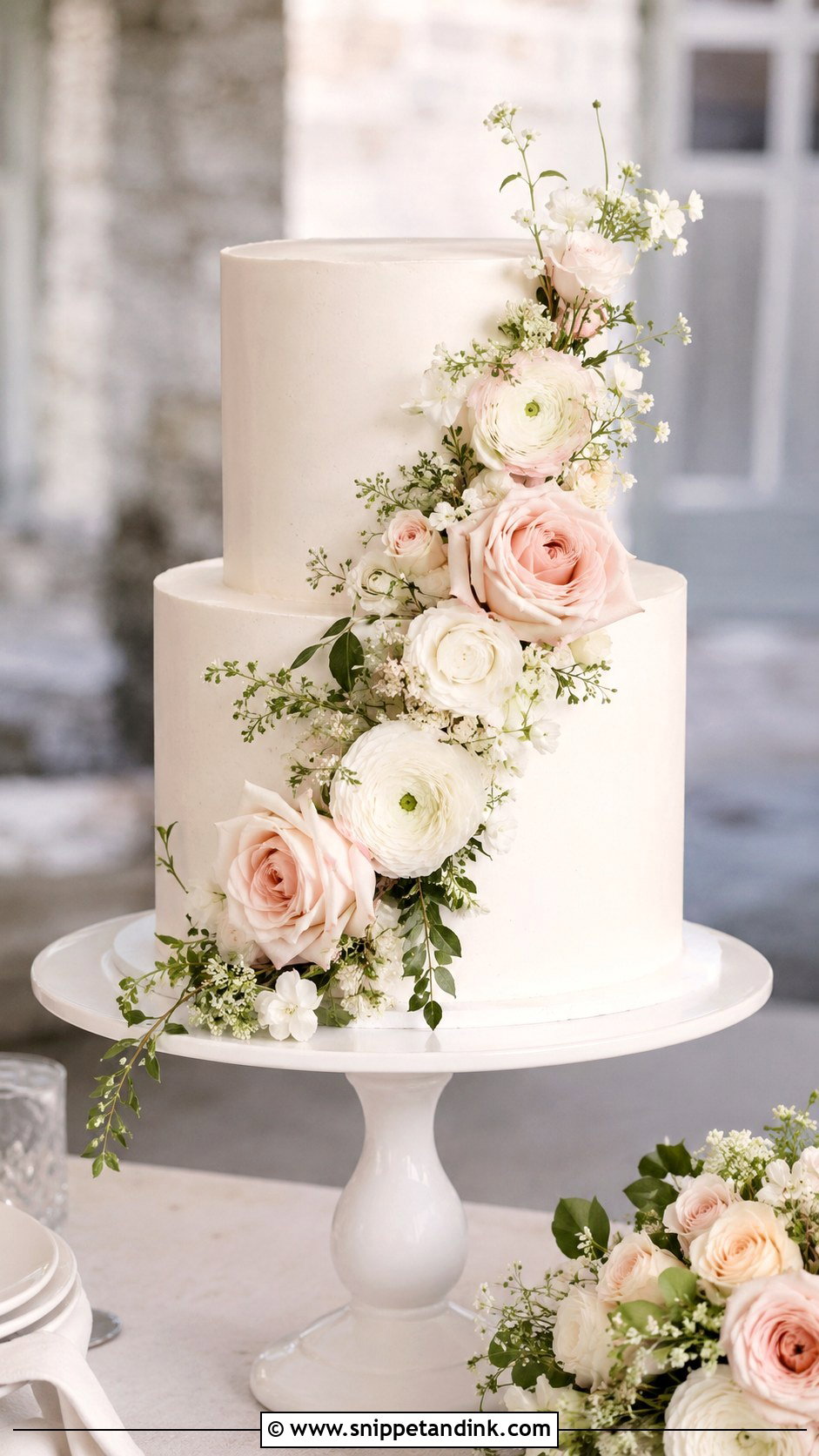
A cascade makes two tiers look taller. The flowers start on the top tier and trail diagonally down the side, pulling the eye with them. Mix large blooms, smaller blossoms and light greenery for a natural flow. All the weight sits on one side, so I anchor the heaviest heads on the firmer top tier and taper to lighter stems near the bottom, where they don’t drag on soft frosting. Keep the buttercream smooth or lightly textured, and match the colors to the bouquet.
12. 2 Tier Buttercream Wedding Cake With Baby Blue Piping
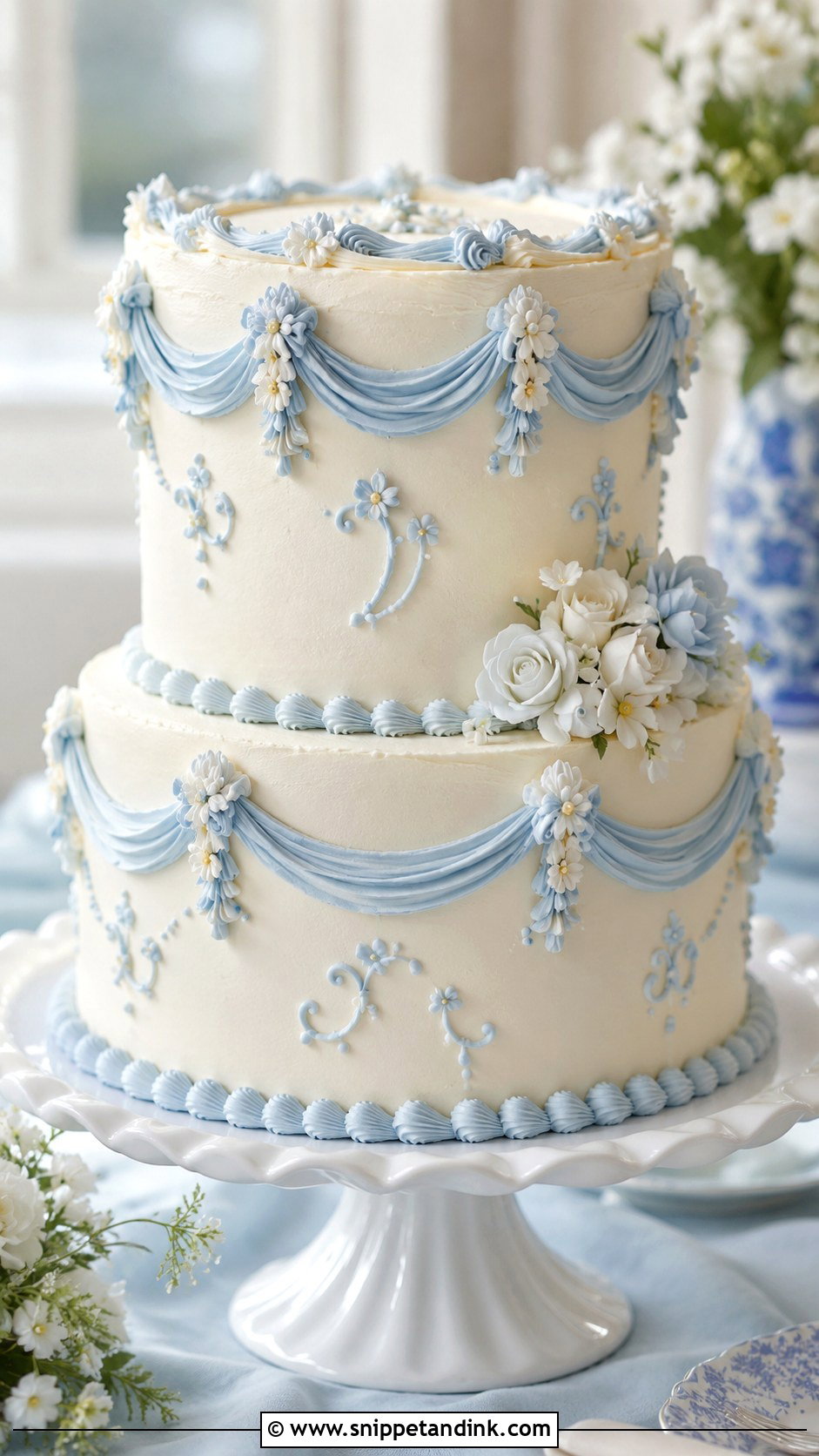
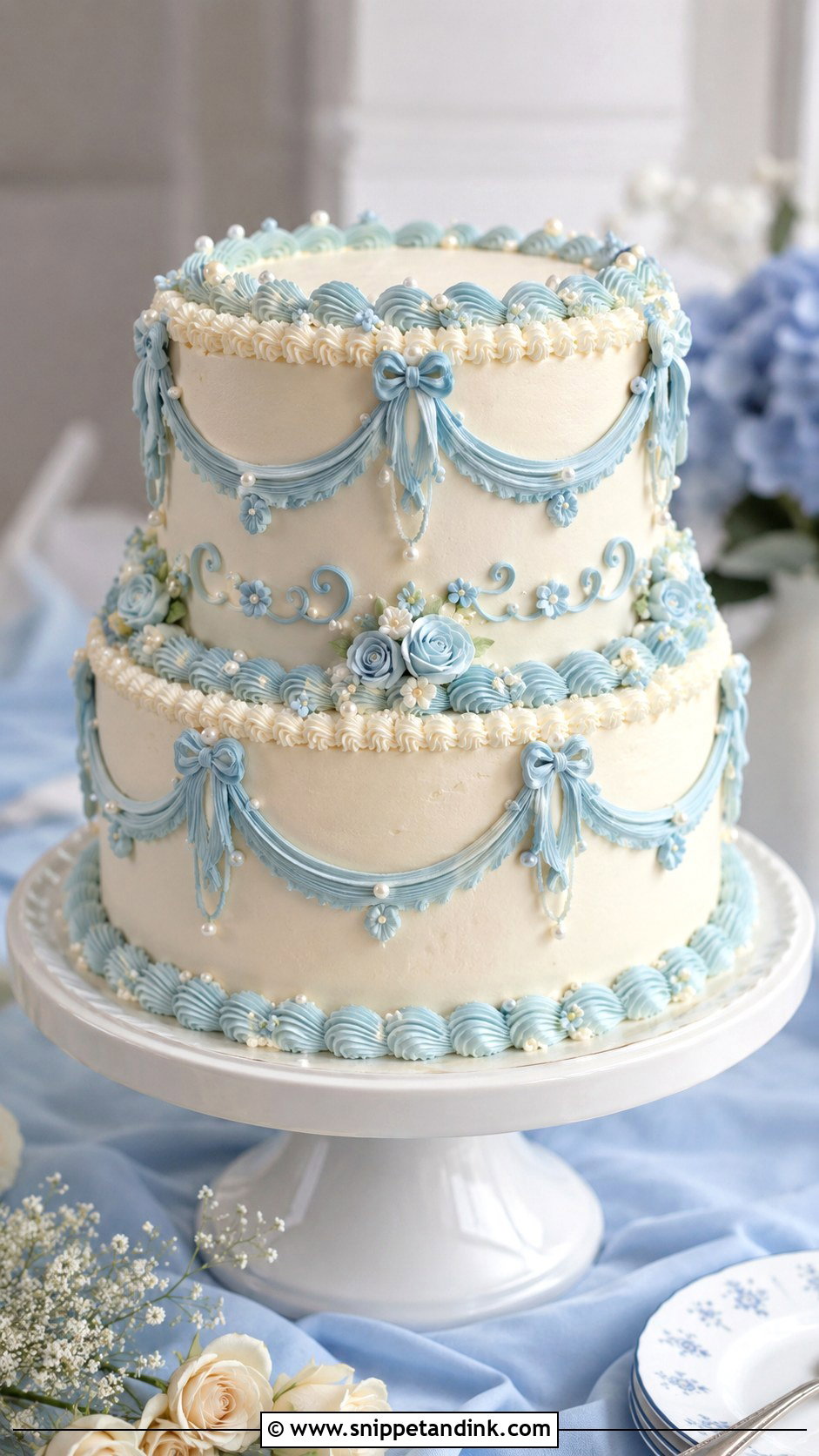
Pale blue piping on an ivory or white base gives a vintage feel without much color. It can appear in borders, swags, rosettes or fine scrolls. I pipe colored details onto a chilled, set base, because soft white frosting can pick up a faint blue halo around each line. It suits a spring wedding or a coastal venue with pale flowers. White pearls, tiny bows or a few sugar flowers complete it. Keep the piping neat and evenly spaced, and it reads bridal rather than nursery.
13. 2 Tier Buttercream Wedding Cake With Blush Flowers
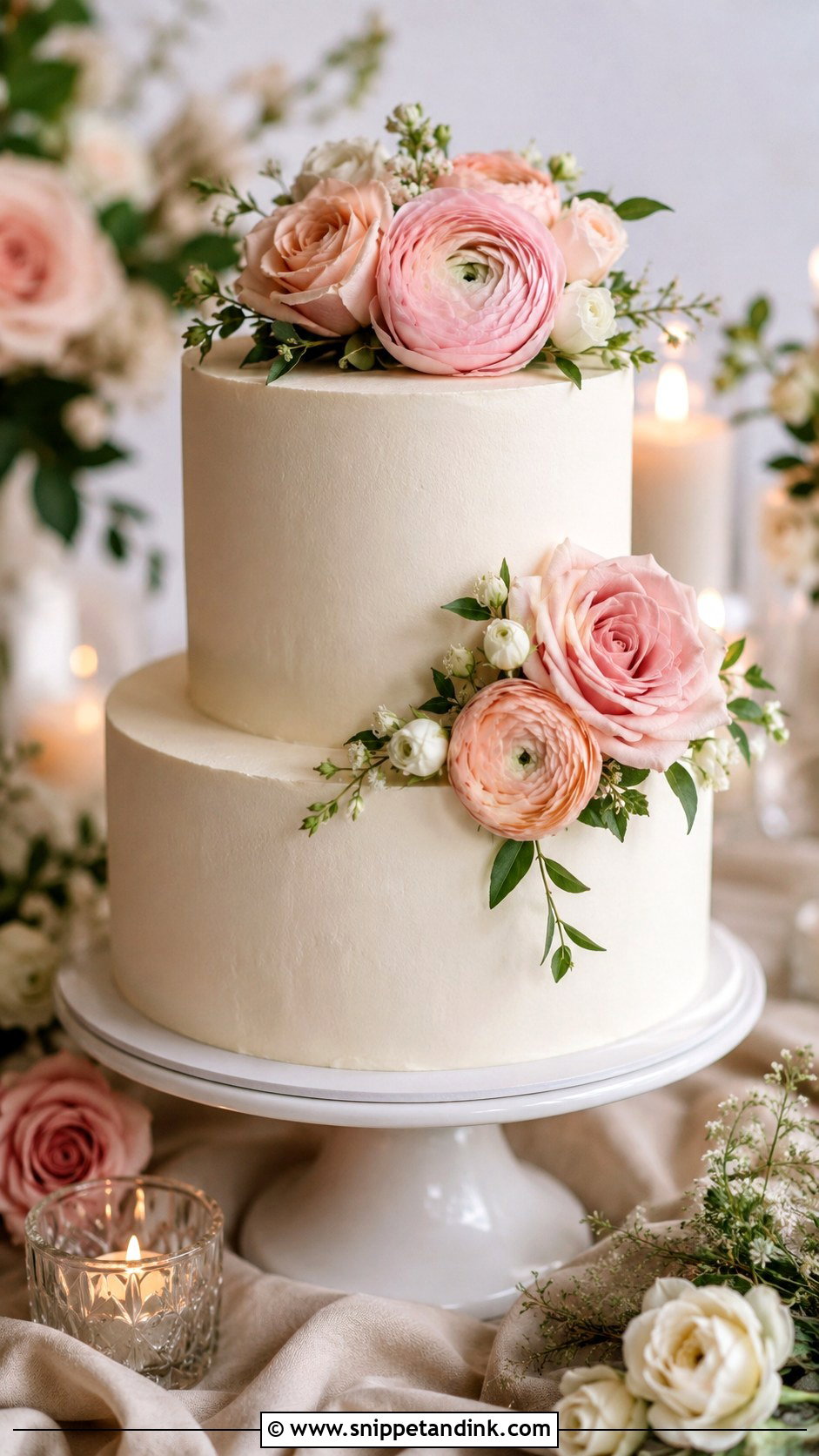
Blush flowers flatter almost every setting. On buttercream they can sit as a small cluster, a diagonal cascade or a loose garden-style ring around the tiers. Ivory frosting keeps it soft, and a few deeper pink accents add depth. If your bouquet includes roses, peonies, or ranunculus, repeat just one of them on the cake rather than all three; a single repeated flower ties the two together more clearly. Some greenery and a few closed buds keep it looking fresh.
14. 2 Tier Buttercream Wedding Cake With Sage Green Details
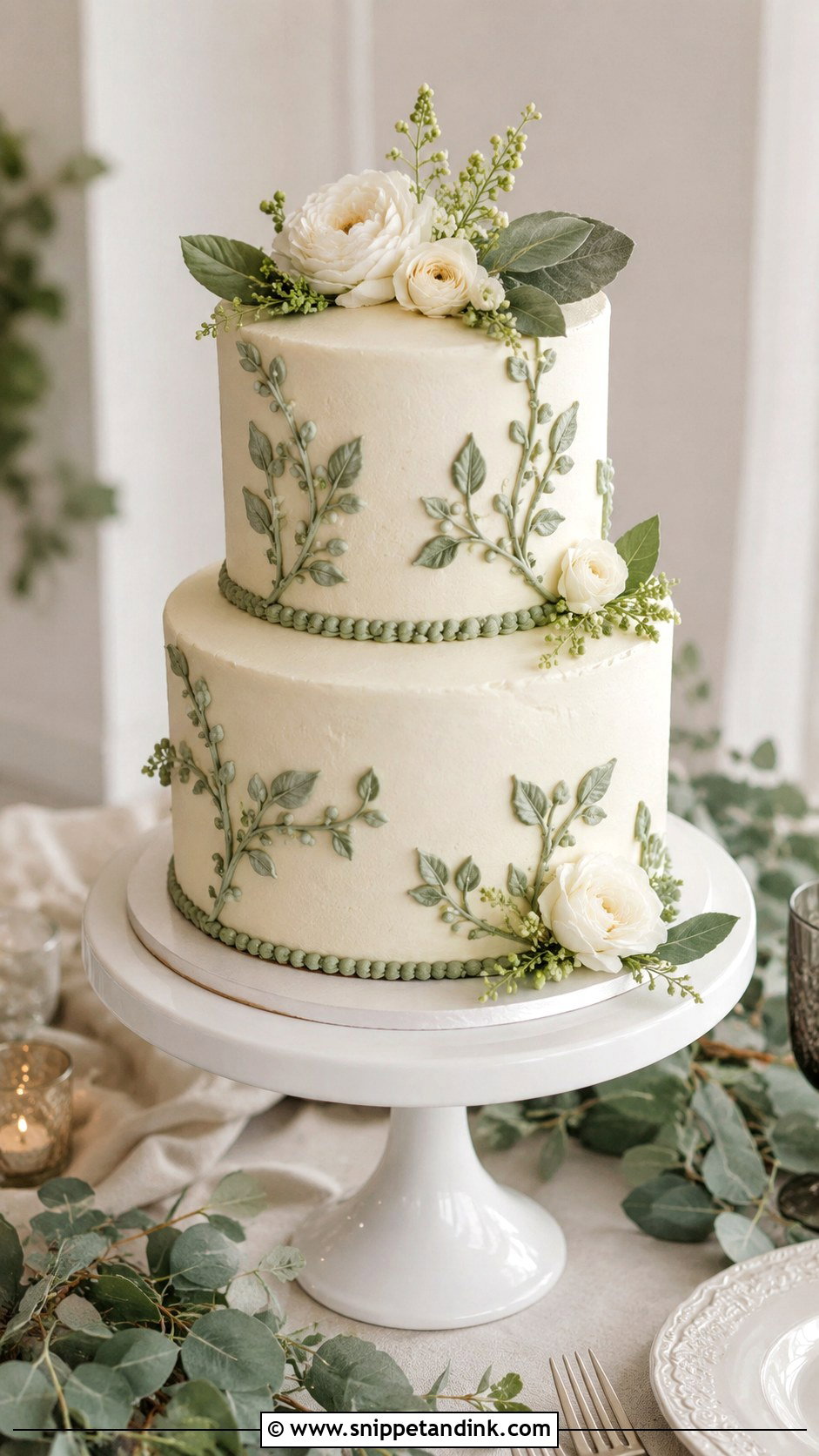
Sage green details can be piped leaves, a watercolor finish, narrow borders or a band around each tier. Sage is a muted shade and easy to overshoot, so I tone the green down with the smallest touch of black and test it on a white plate before it goes near the cake. Ivory frosting and white flowers keep it clean. Piped leaves give the eucalyptus look without putting real eucalyptus on the frosting. It sits naturally in a garden setting or a neutral palette.

15. 2 Tier Buttercream Wedding Cake With Fruit
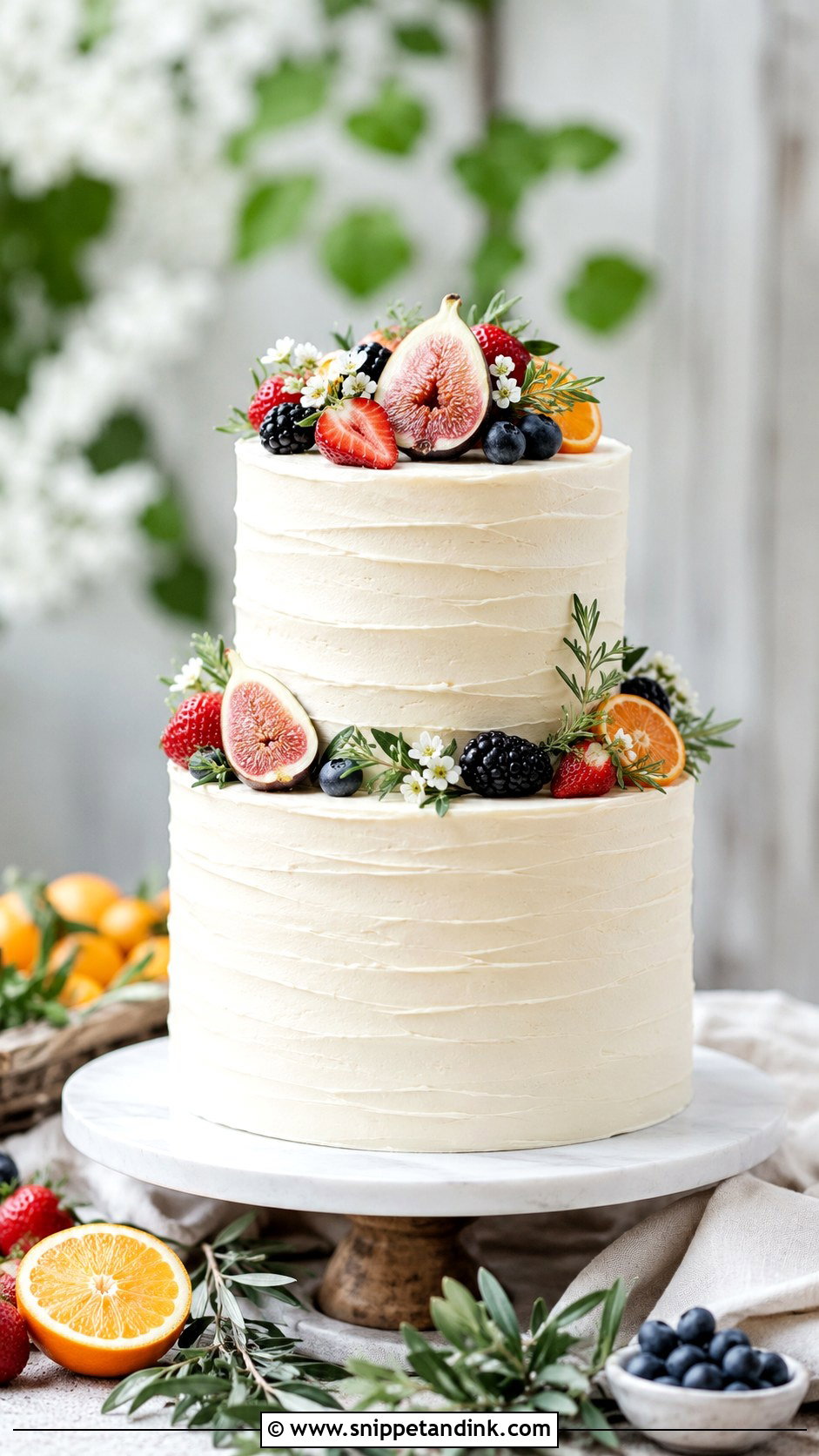
Berries, figs, citrus slices, pears and grapes can all work, chosen by season and palette. Pears and apples brown once cut, so I use them whole or brush the cut faces with lemon juice. A lightly textured buttercream suits fruit better than a sharp formal finish. Place it with intent: a top cluster and a smaller accent on the side. A few flowers or herbs make it look styled. It belongs at a summer, brunch or farm reception.
16. 2 Tier Buttercream Wedding Cake With Floral Wreath
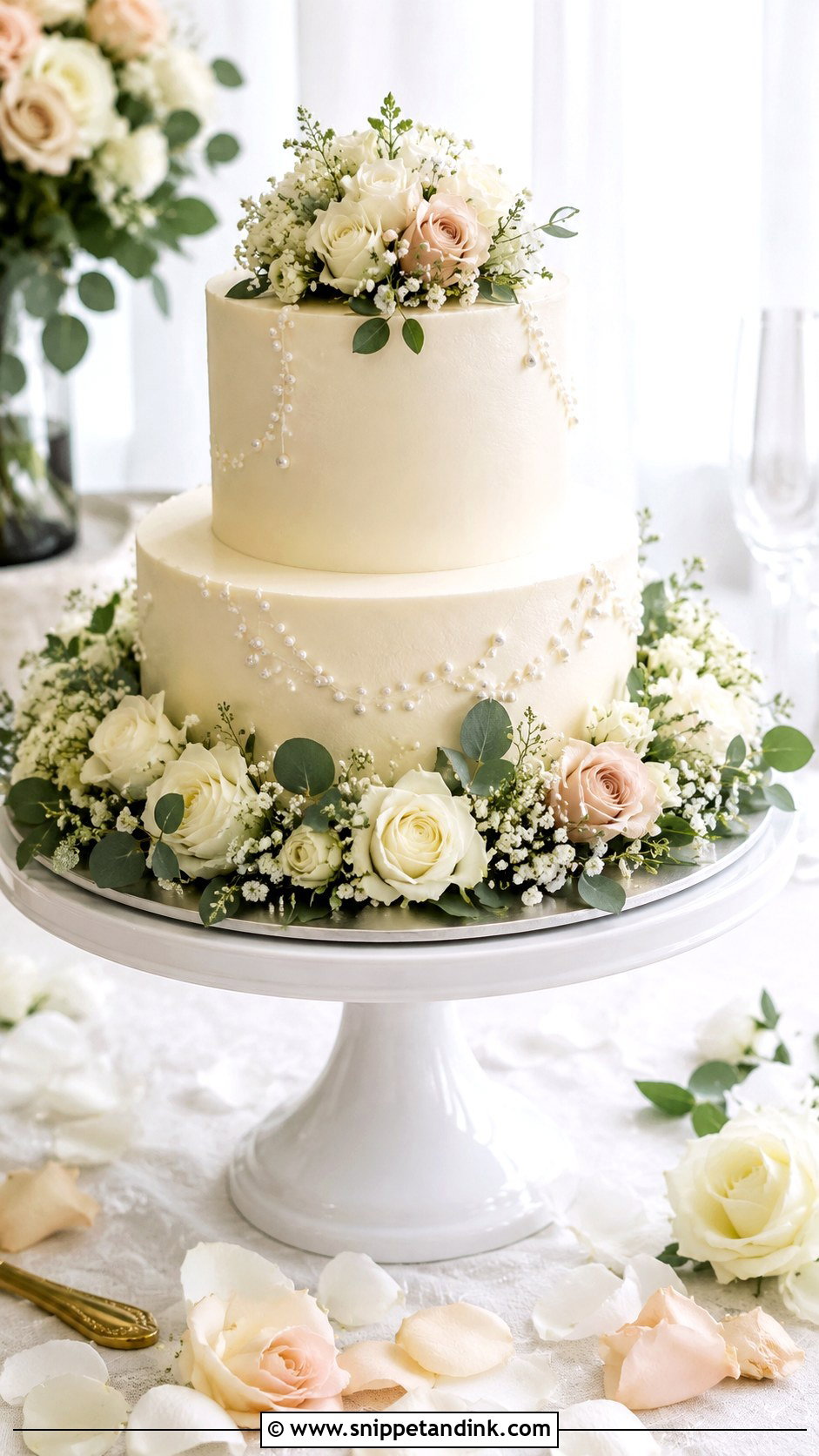
A wreath frames the cake in a more organized way than a cascade. It can sit around the base of the bottom tier, wrap the join between tiers or crown the top. The base wreath is the easiest version, since it rests on the board rather than in the cake and nothing pierces the frosting. Use small blooms, greenery and soft fillers so it doesn’t swamp the tiers. Smooth ivory buttercream keeps it clean, and a plain pedestal with candles or petals around it completes the picture.
17. 2 Tier Buttercream Wedding Cake With Minimal Flowers
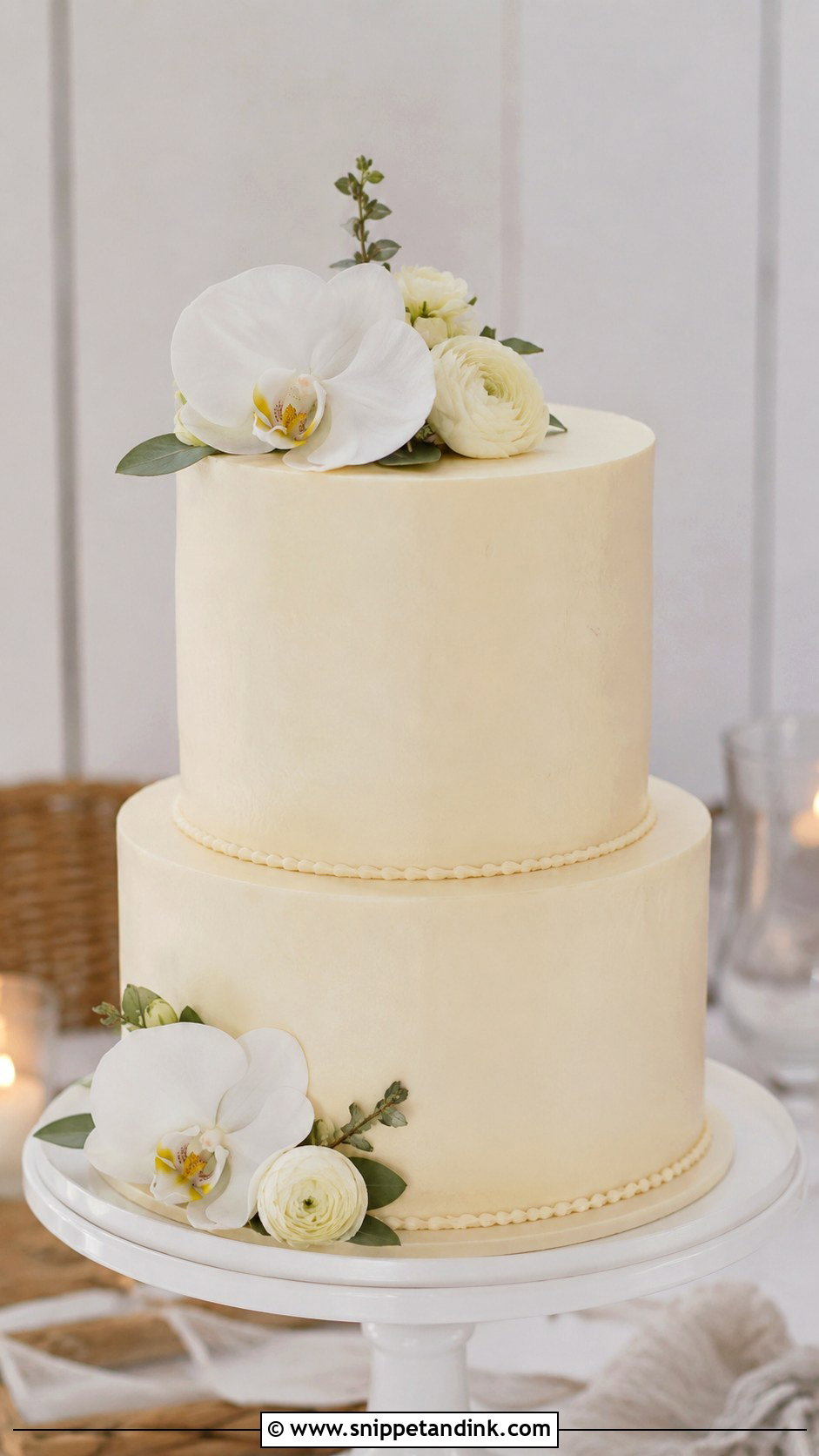
One small cluster on top, another near the base, and the rest of the cake left open. With so few flowers, each one has to be flawless, so I ask the florist for a few spares to choose from on the day. White orchids, single roses, small ranunculus or tiny blossoms all suit it. The design fits city weddings, restaurant receptions and courthouse celebrations, where a big arrangement would feel out of scale. A sleek stand finishes it.
18. 2 Tier Buttercream Wedding Cake With Lace Piping
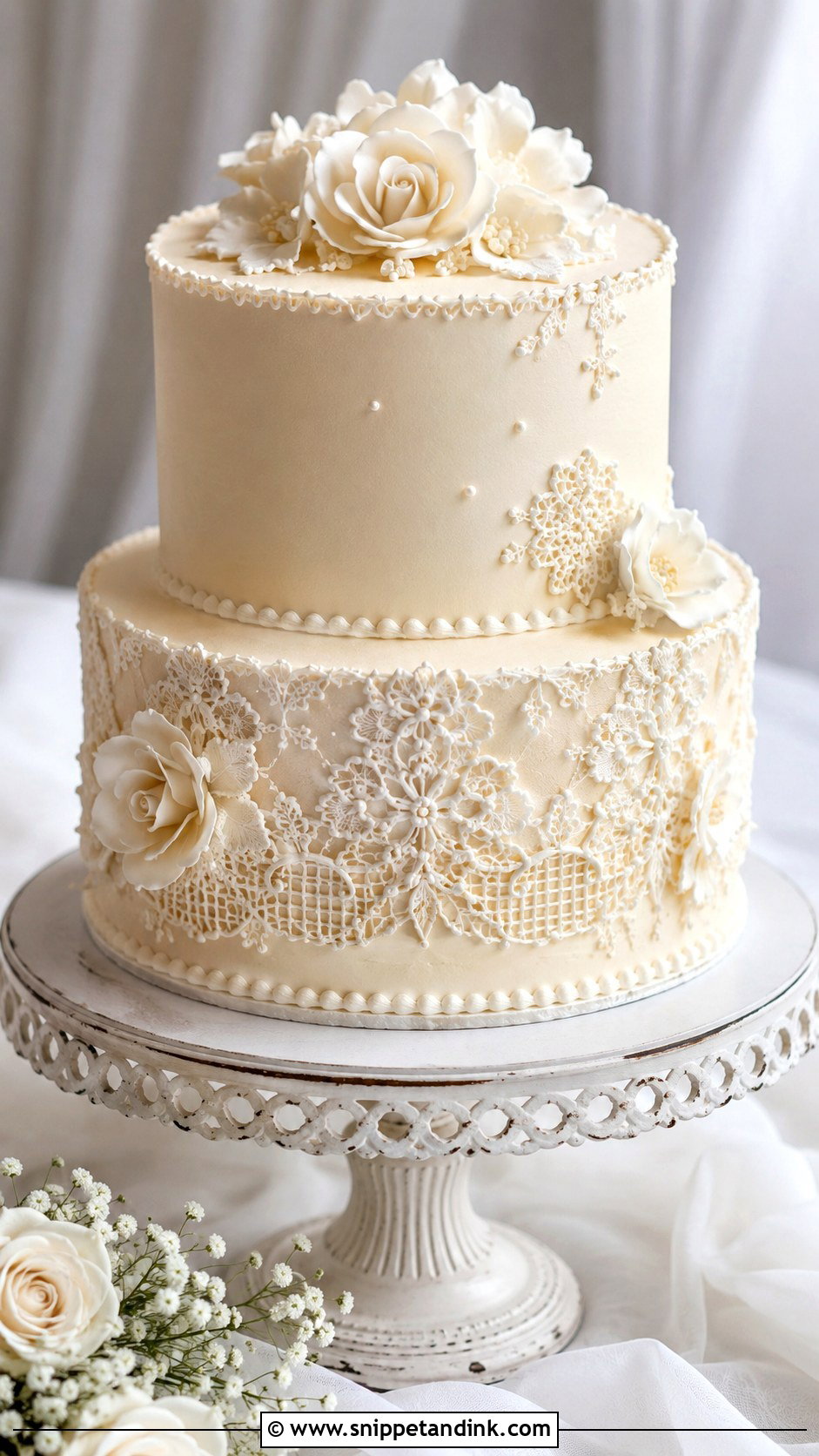
Lace piping is fine work: small loops, dots and floral shapes piped with a narrow round tip over smooth buttercream. The base has to be chilled firm, or the tip drags through it. If your dress has lace sleeves or an embroidered veil, bring a close-up photo of the lace and I’ll copy its motif, which ties the cake to the dress more than any color could. White-on-white is classic; ivory on a champagne base gives gentle contrast. Lace on one tier with the other smooth keeps the balance.
19. 2 Tier Buttercream Wedding Cake With Small Topper
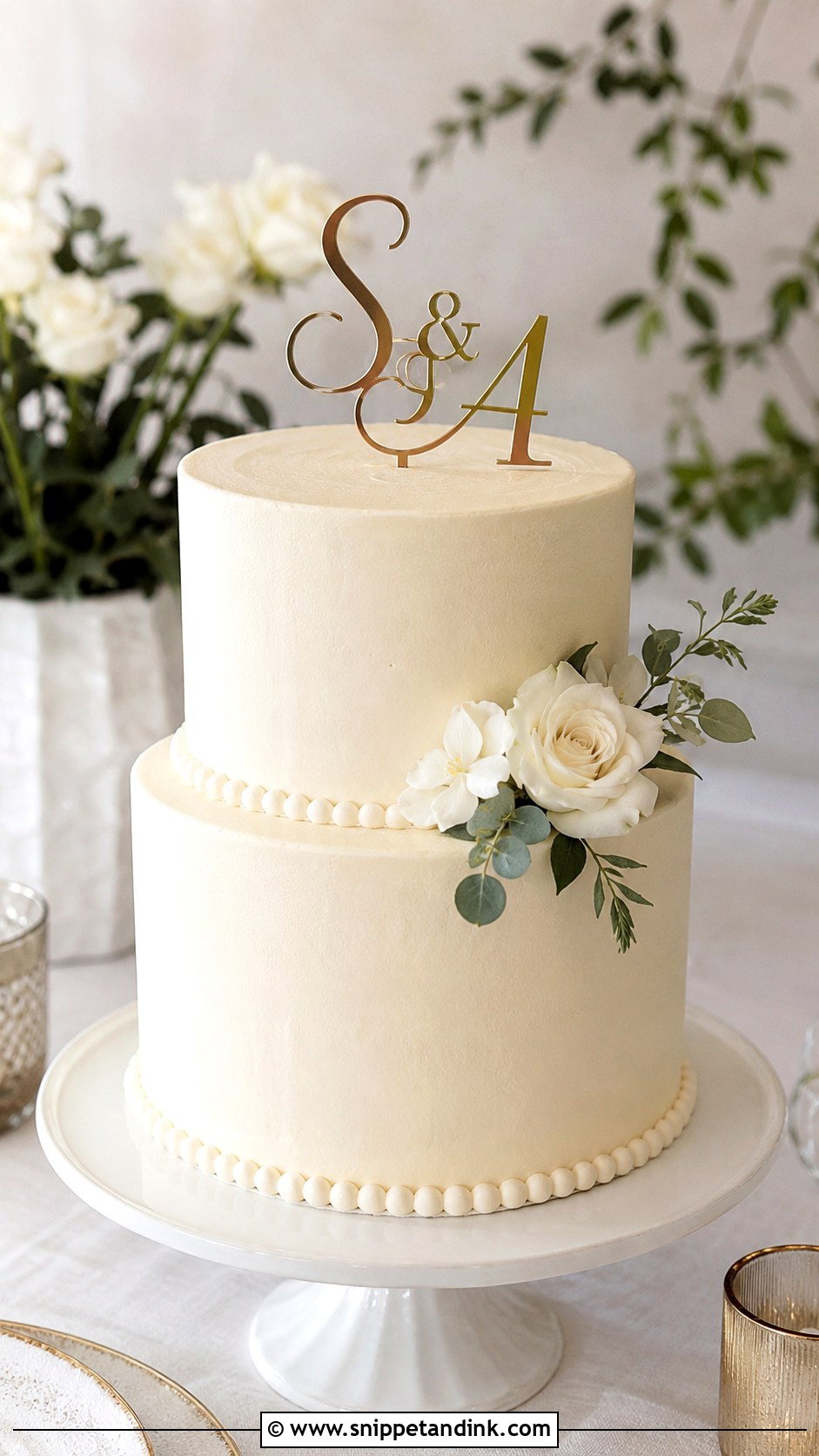
A small topper adds personality without taking over. A simple monogram, acrylic name topper, floral topper or script piece can all work. Buttercream is soft, so the topper’s stakes should go into straws pushed into the top tier, or it will lean by the end of the night. Size it to the top tier so it doesn’t dwarf the cake. A few flowers or pearls around its base hide the stake holes and make it look settled.


20. 2 Tier Buttercream Wedding Cake With White Roses
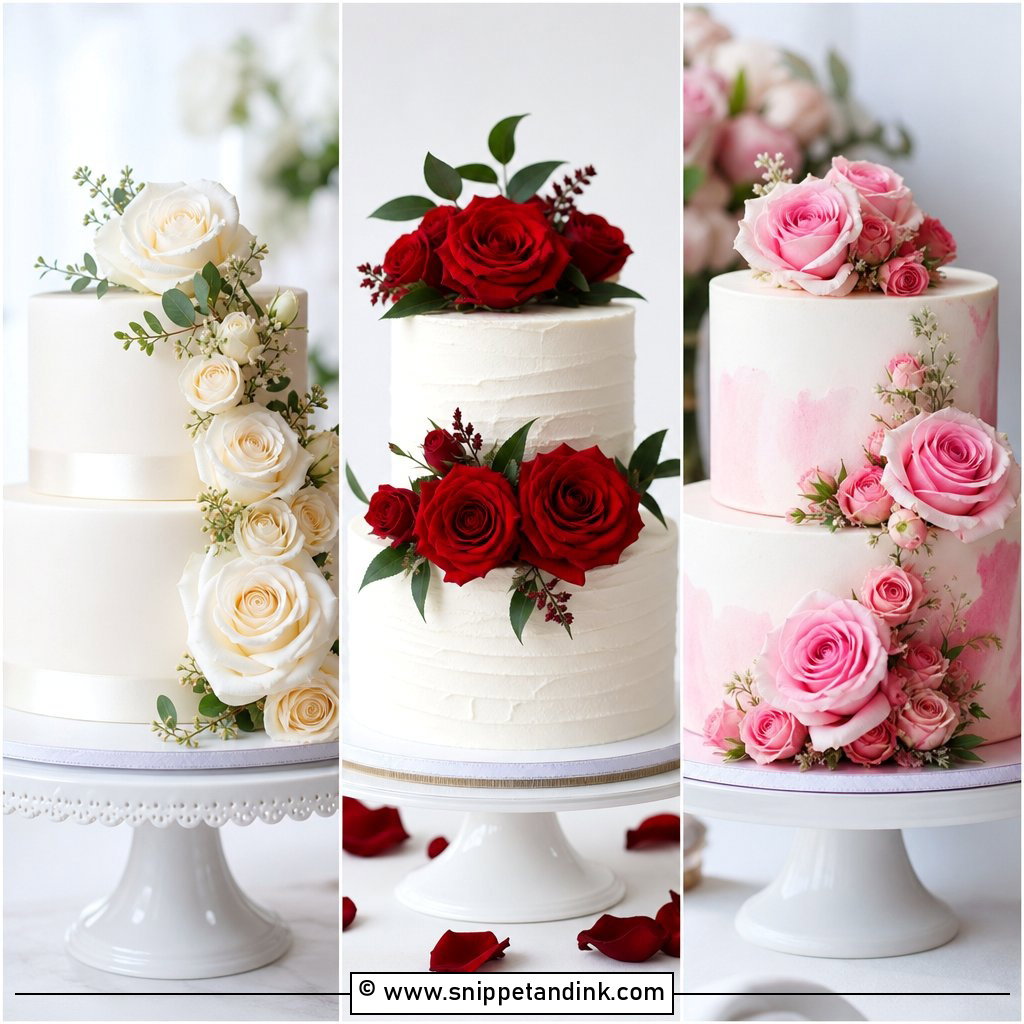
White roses go with any palette. They can sit in a small top cluster, a side cascade or a ring at the base, with a few green leaves for contrast or kept all white for a formal look. White petals show every bruise and brown edge, so the roses stay in water until the last moment and I remove the outer guard petals before placing them. Churches, gardens, ballrooms and tents all suit it. The rose shapes add softness without distracting from the plain buttercream.
How Long a Buttercream Cake Can Sit Out
In a cool, air-conditioned room, a buttercream cake is comfortable on display for several hours. In a warm room it starts to soften, and in direct sun it can slump surprisingly quickly. Marquees and tents trap heat during the afternoon, so a cake that looked fine at delivery can be struggling by the speeches.
Signs it’s getting too warm
- A greasy shine appearing on a matte surface.
- Sharp piping edges rounding off.
- Pearls or flowers starting to slide.
- A slight bulge around the bottom of either tier.
If you notice any of these, ask the venue to move the cake somewhere cooler until cutting rather than waiting. Set the cake table away from windows, heaters and the dance floor lights, and agree a delivery time with your baker that’s as close to the reception as the venue allows. Fillings matter too: custard, cream cheese and whipped cream need to stay cold, so if your cake will be out for a long stretch, choose a jam, curd or buttercream filling instead.
Is Buttercream Right for Your Venue?
A two-tier buttercream cake can carry as much feeling as a tall one when each detail is chosen on purpose. Smooth reads classic, texture relaxed, piping nostalgic, and flowers soften almost anything. Before you book, ask your baker which recipe they’d use for your venue, how they handle fresh flowers, when they’ll deliver and set up, and how long the cake can sit out. Their answers will tell you as much as the tasting does.
You'll Like These Ideas:








Leave a Reply