
Western cakes are some of my favorite commissions, partly because the venues are so honest: a barn with the doors open, a ranch lawn, a desert terrace at sunset. The cake has to look like it belongs there and still read as a wedding cake. Most of the designs I make in this style start from a calm ivory base and borrow one or two details from the setting, such as cowhide patterns, tooled leather, rope, wildflowers, pampas or a flash of turquoise. Here are thirty versions, with what I’d watch for on each, since outdoor and rural venues are harder on cakes than a hotel ballroom.
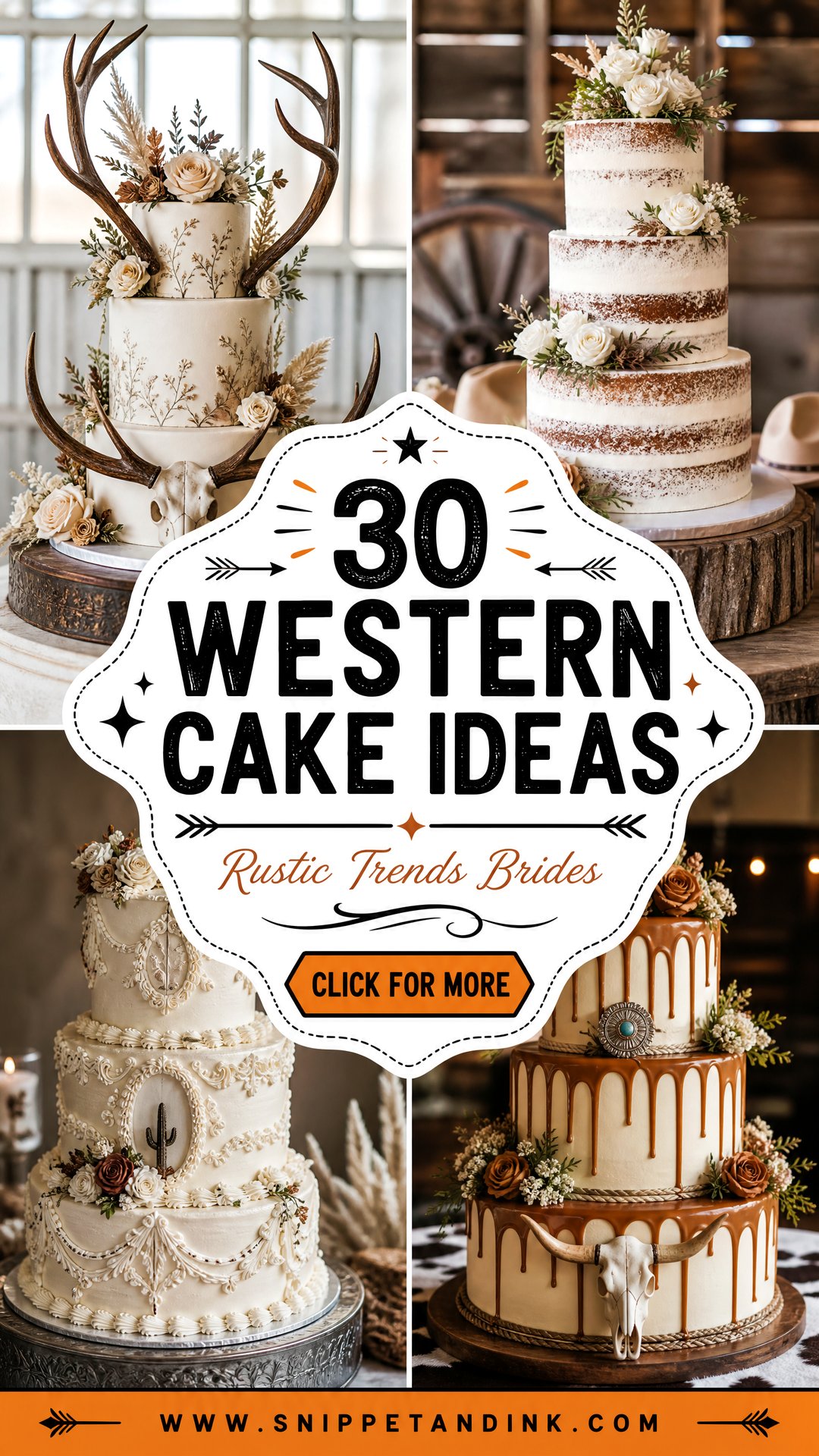
One Western Detail, Then Stop
The most common western cake I’m asked to fix is one with everything on it: cowhide, rope, a hat, boots, sunflowers and a horseshoe. Each detail is fine. Together they look like a party prop. When a couple comes to me for this style, I ask them to pick one hero detail and, at most, one supporting one.
- Look at what you’ll actually be wearing and using. If the groom wears a hat and the bride wears boots, one of those belongs on the cake.
- Choose the hero: a pattern (cowhide, tooled leather, woodgrain), an object (boots, hat, horseshoe, antlers) or a plant (succulents, sunflowers, pampas).
- Keep the remaining tiers plain ivory or soft cream, so the hero has room.
- Bring photos of your venue, invitation and flowers to the tasting. Colors like terracotta, denim and turquoise are mixed by eye, and I match them better with the real thing in front of me.
Sculpted pieces such as sugar boots, hats and leather panels are made days or weeks ahead so they can dry hard. If one of them is your hero, confirm the design early rather than in the final fortnight.
1. Rustic Western Wedding Cake
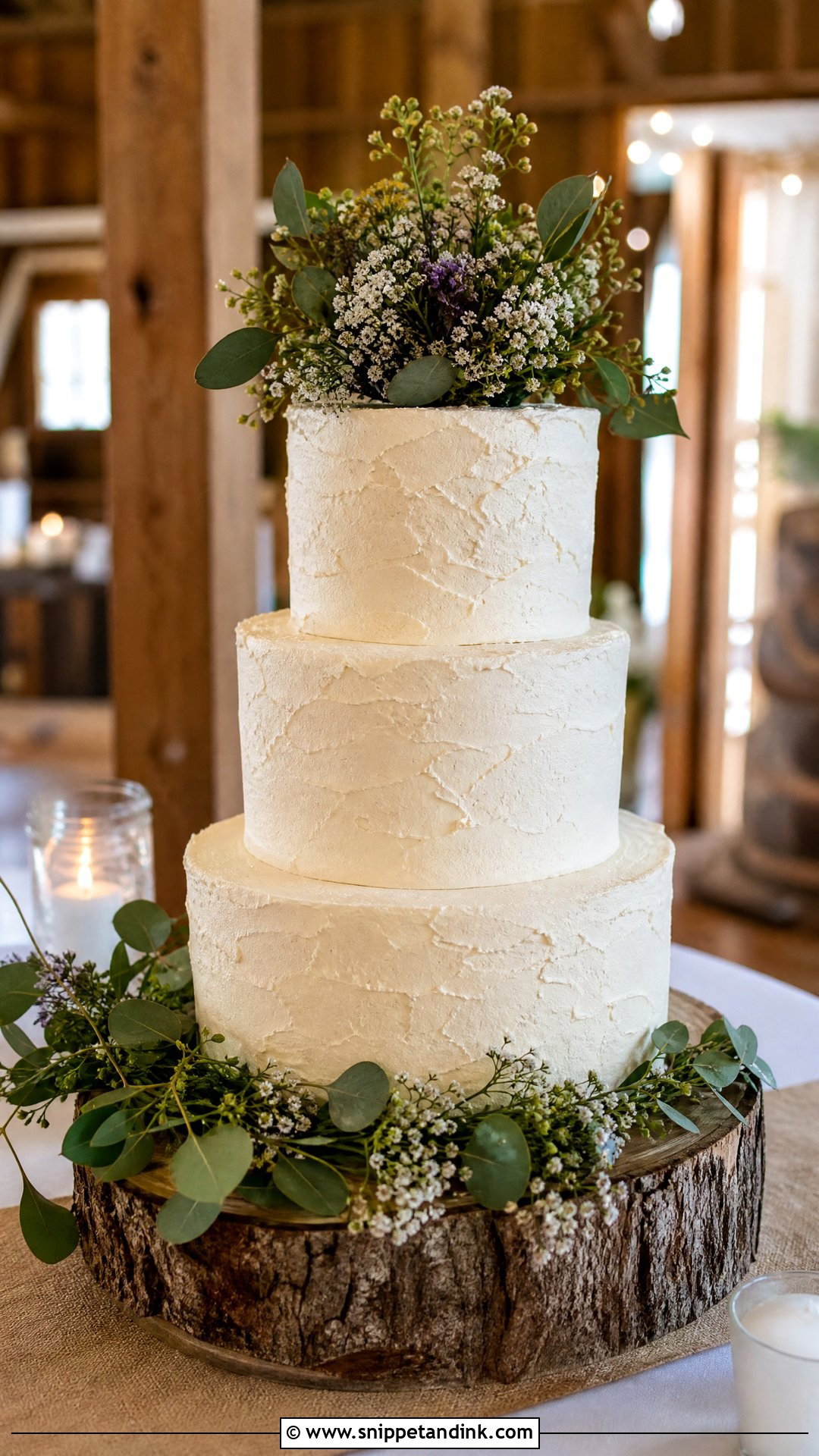
Start here if you’re unsure. Ivory buttercream with a soft, slightly uneven finish sits on a natural wood cake stand, and small clusters of wildflowers, baby’s breath or dried grasses do the rest. Two or three tiers give enough height without tipping into formal. Vanilla bean, almond, honey and brown butter all suit the setting. I keep the palette in cream, tan, sage and dusty peach so it sits comfortably beside barn wood, lace and denim. Have the wood stand sealed or lined with a food-safe board, because raw wood can mark the base of the cake.
2. Cowhide Wedding Cake
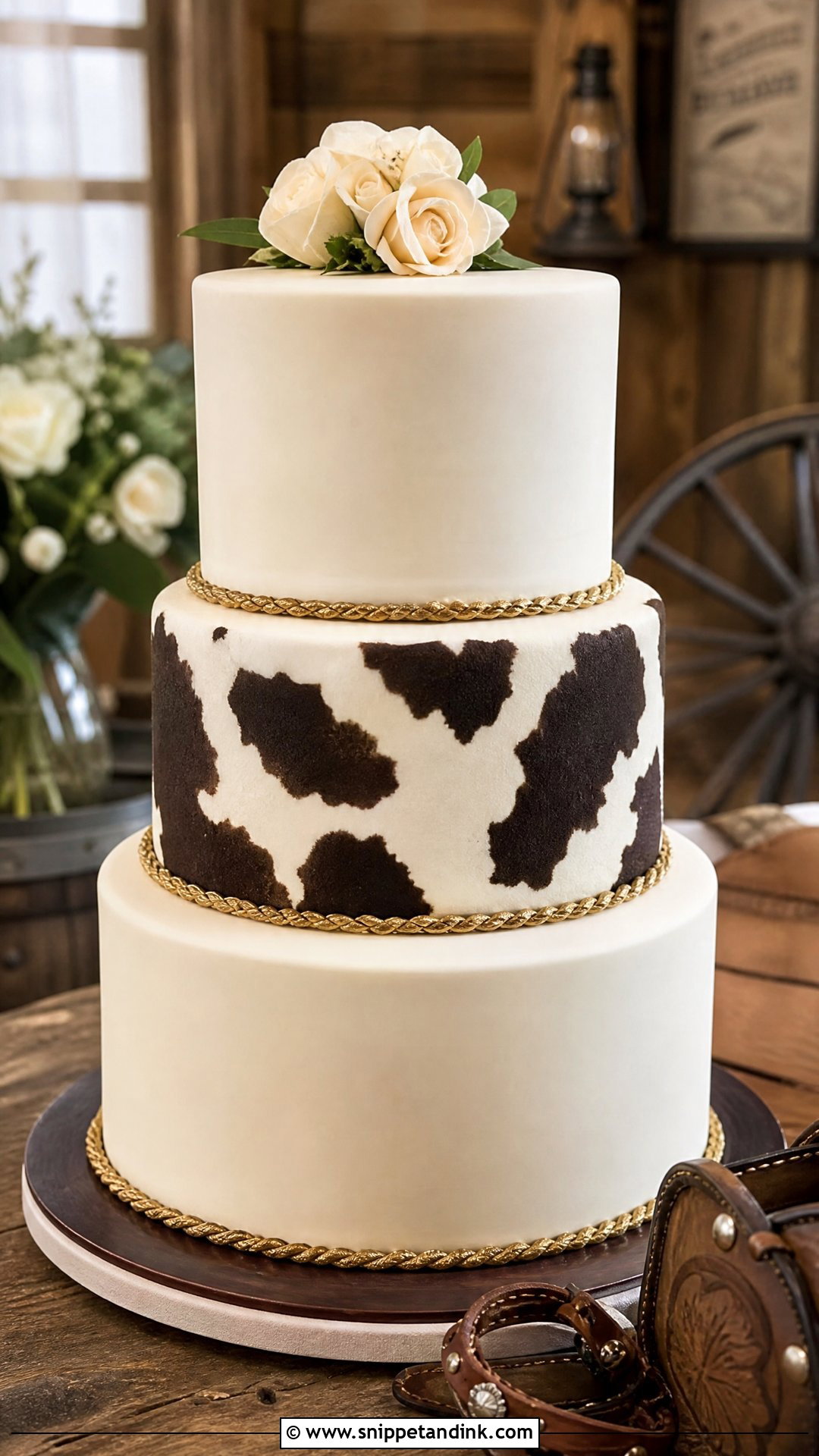
Cowhide goes costume very quickly. My answer is one patterned tier between smooth ivory tiers, never the whole cake. I cut the spots from thin fondant and lay them on freehand, keeping them irregular, because evenly spaced spots look like a cartoon cow. Brown and white hide is softer than black and white and sits well with caramel, mocha and chocolate tones. A thin rope border or a small floral cluster is enough to finish it for a ranch reception or a country glam party.
3. Western Wedding Cake With Cowboy Boots
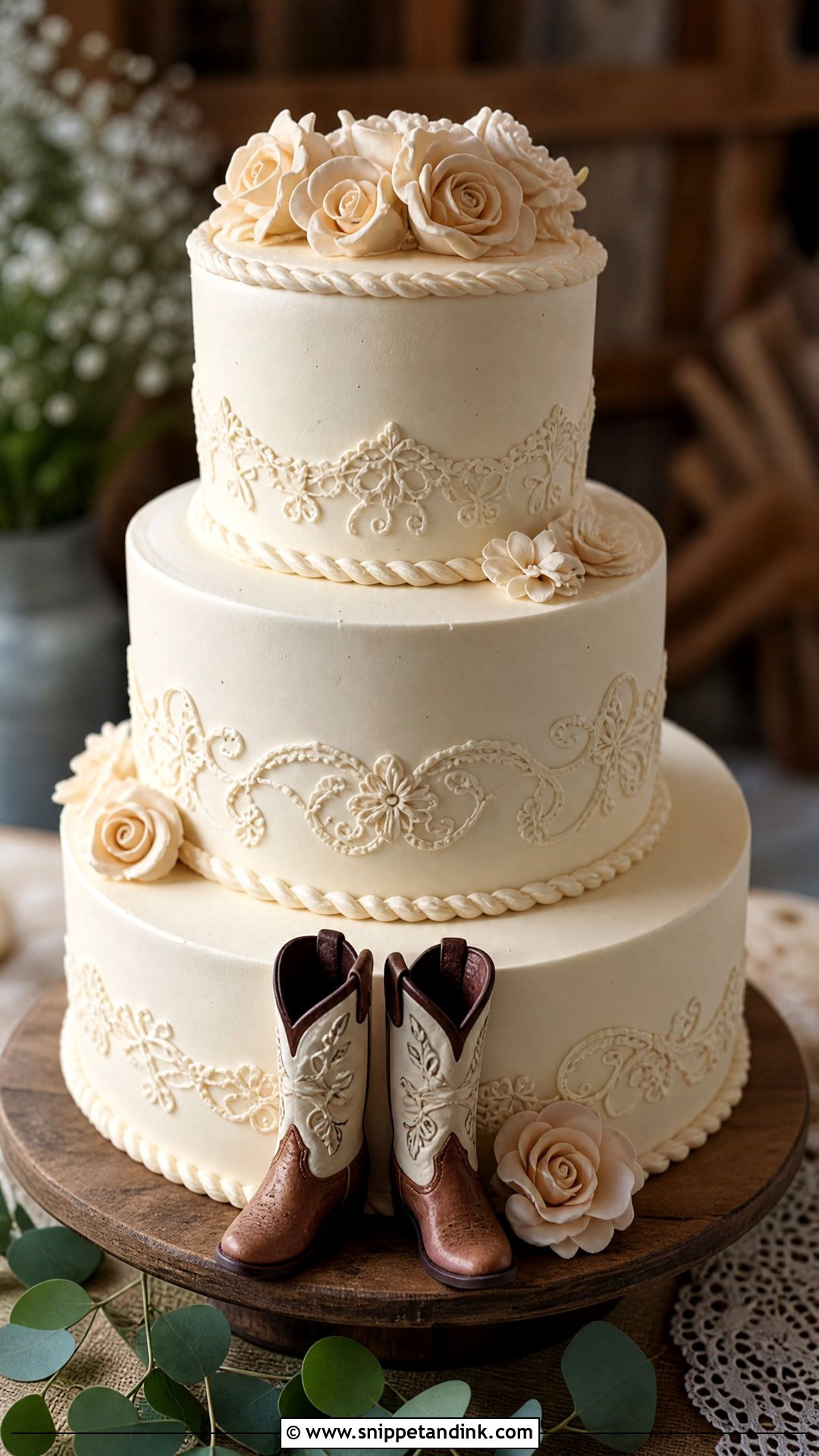
Boots should look like a detail you notice second. Mini sugar boots on the top tier, or a small pair set beside the bottom tier, keep the cake bridal. A boot topper the size of a real child’s shoe takes over every photo. Modeled sugar boots also need time to dry hard, so this element has to be ordered well ahead. Pair them with smooth ivory buttercream, a little lace piping and warm flowers. They mean the most when the couple is actually wearing boots that day.
4. Western Wedding Cake With Cowboy Hat
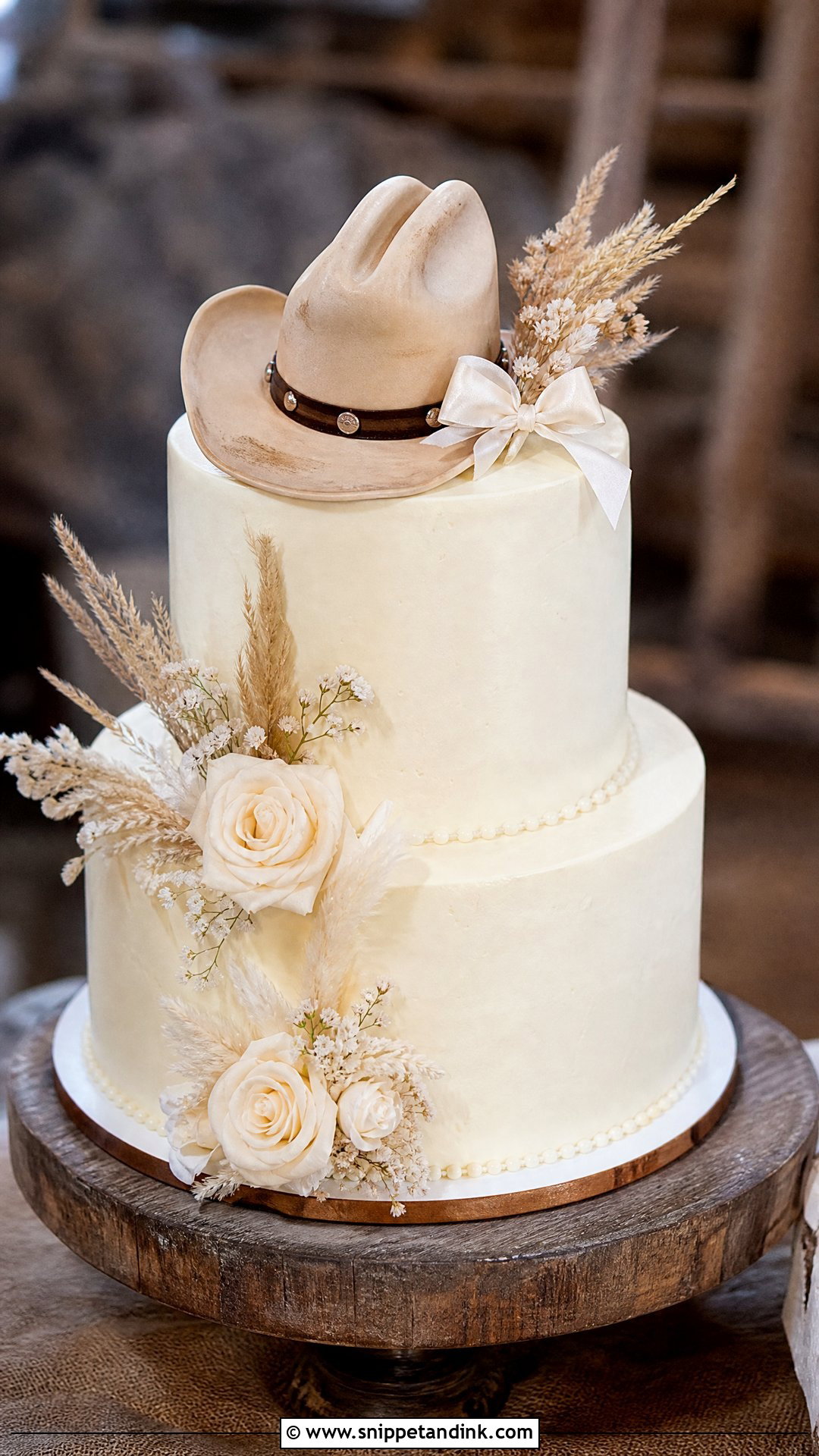
The hat is the piece I’m most cautious about. A small sculpted topper in white, tan or chocolate brown reads as wedding; a large hat resting over the whole top tier hides the cake and looks like a birthday. Sugar or gum paste hats are fragile, so I make a spare brim when I can. Set it with a few fresh flowers or dried grasses, or a small sugar bow that nods to a veil. Buttercream, fondant and semi-naked finishes all support it.
5. Western Wedding Cake With Horseshoe
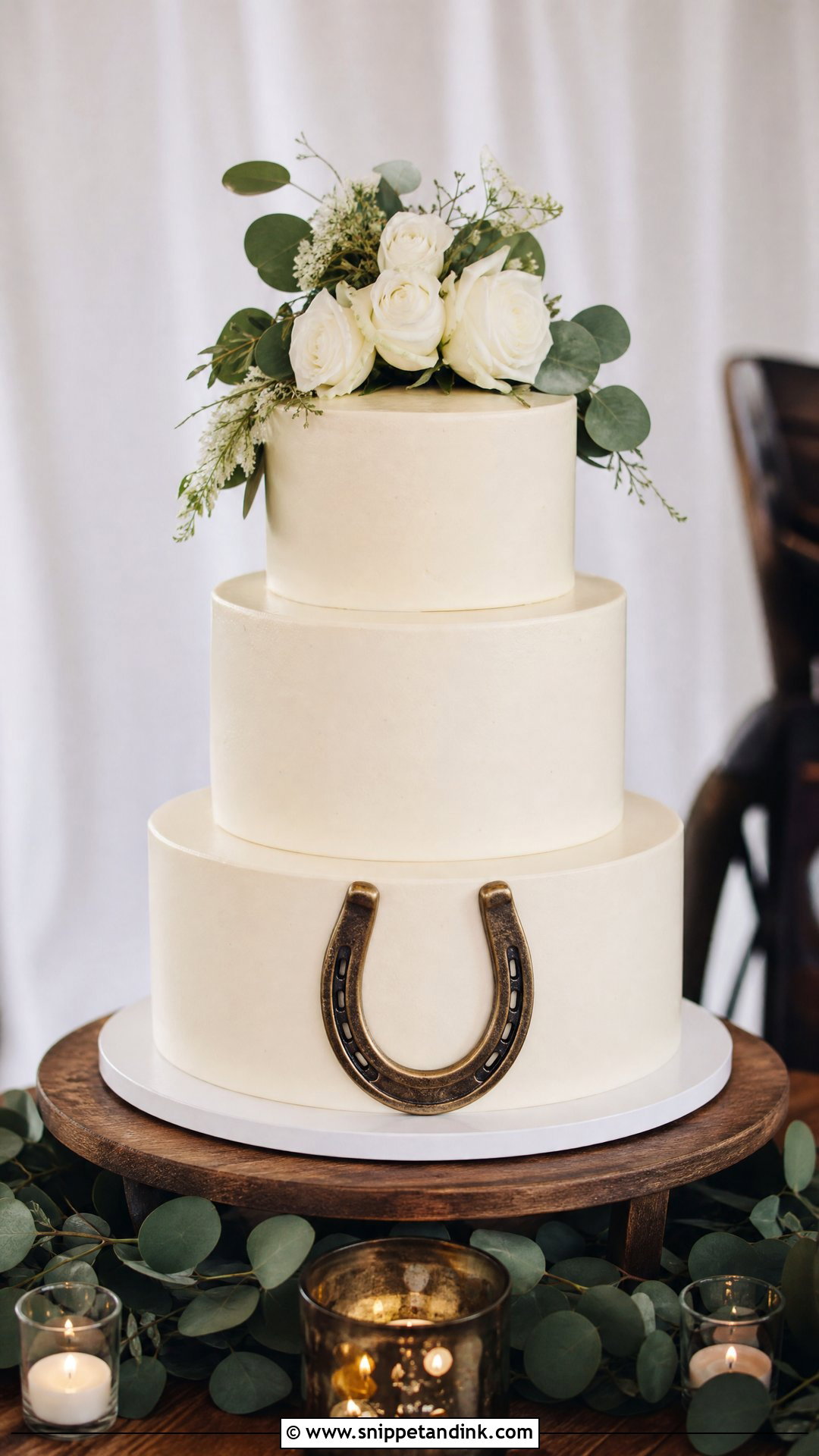
This is the subtle option. One metallic horseshoe on the front of a tier, a small horseshoe topper, or a line of piped horseshoes around the base all bring in the tradition of luck without much else. Gold, bronze, silver or aged copper can match the palette. If the horseshoe is a real metal one, it never touches the icing directly; I mount it on a fondant plaque or a food-safe backing. Smooth ivory frosting and clean tier shapes keep it bridal, and a wooden stand with candles and greenery around the base suits it.
6. Western Wedding Cake With Rope Border
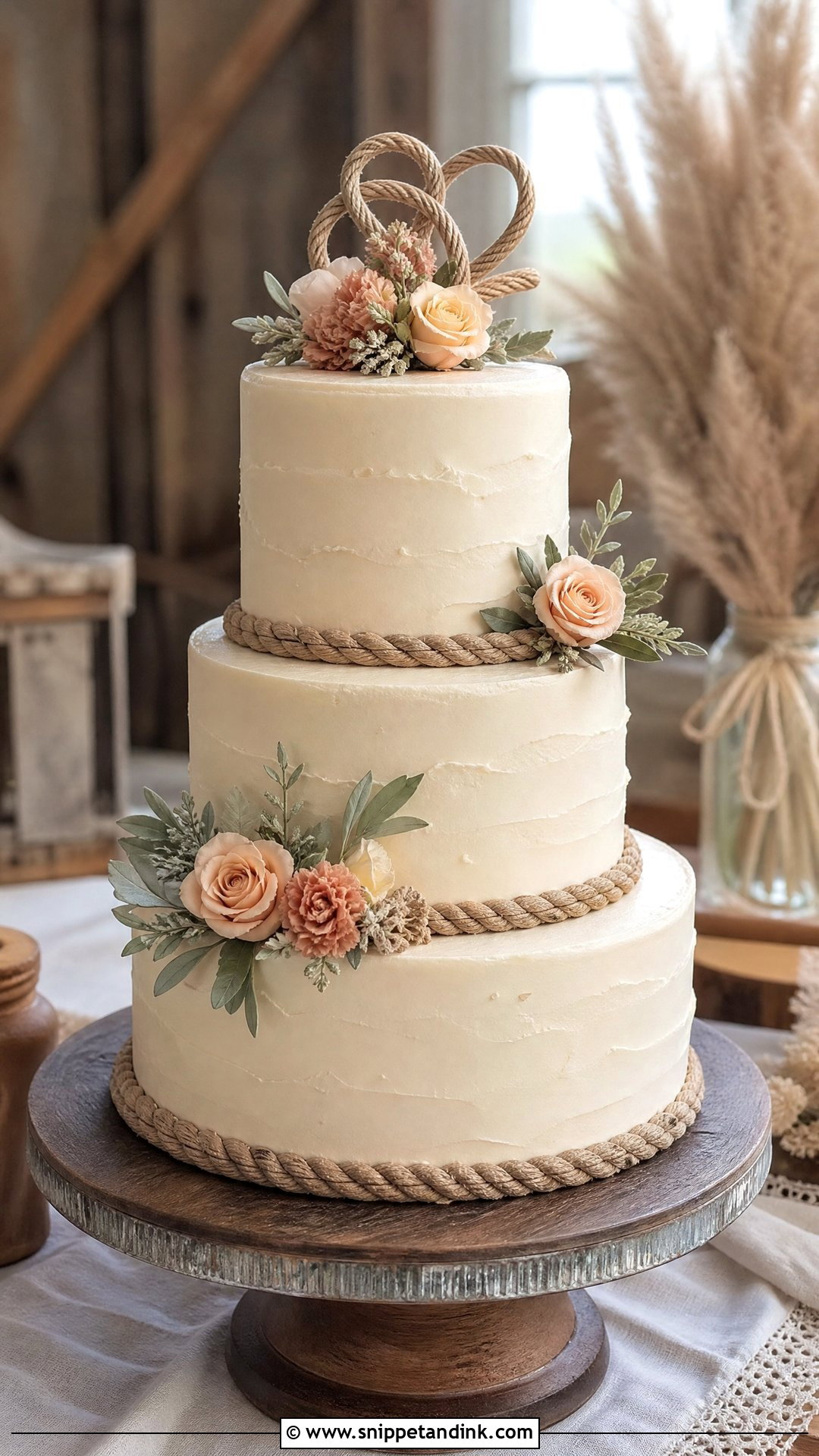
Rope is the easiest way into a western cake. I pipe it in buttercream with a star tip in two passes, or roll two thin fondant strands and twist them, and edible gold dust can dress it up. Fondant rope holds better on a warm day. Use it at the base of every tier or on just one statement tier, with smooth ivory icing and simple flowers. The twist throws small shadows, so it shows up in photos better than a flat ribbon would.
7. Western Wedding Cake With Tooled Leather
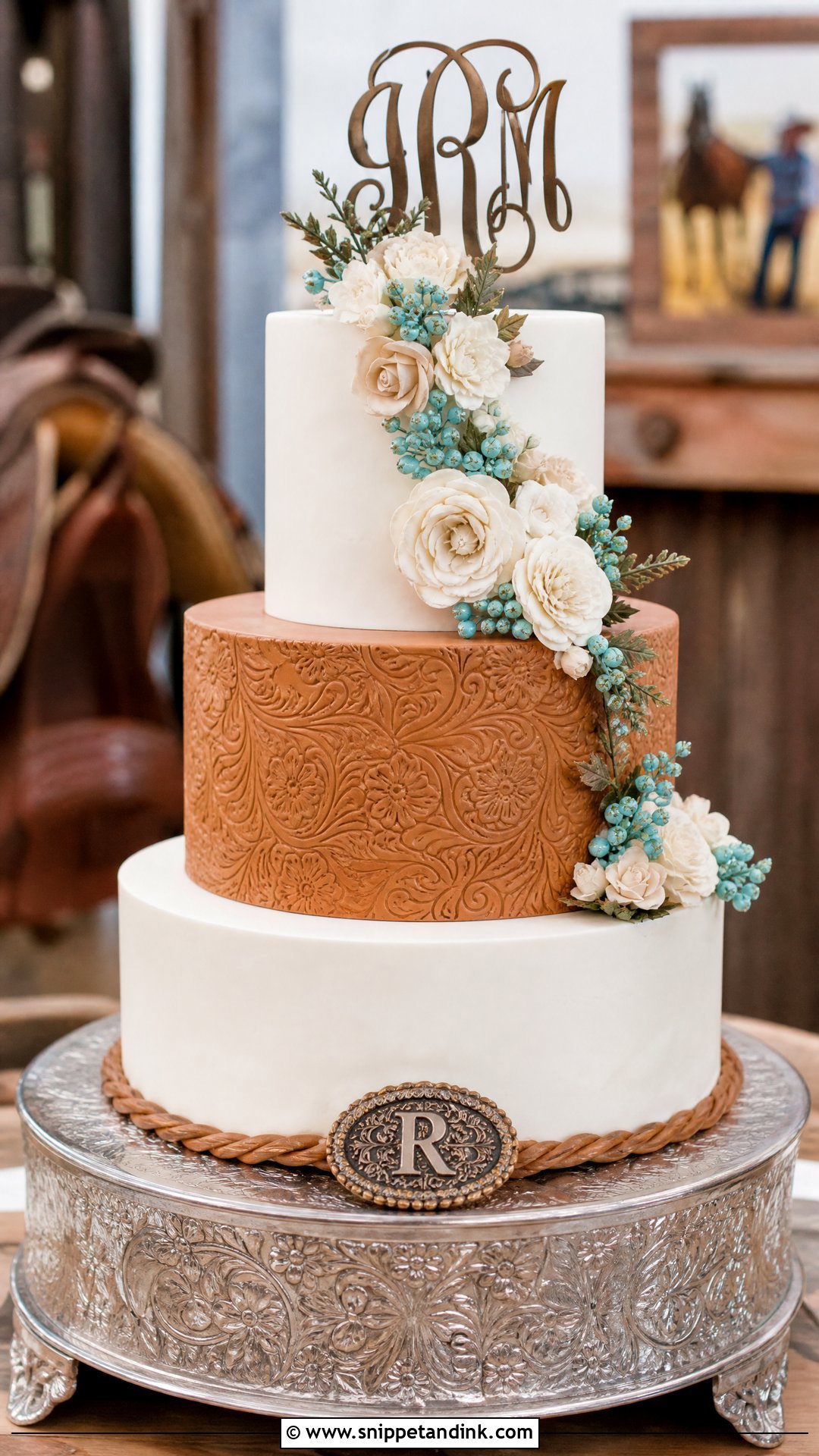
Tooled leather is the design that takes the longest. The pattern is pressed into fondant panels with textured mats or carved by hand with modeling tools, then painted in layers of brown, tan and copper so the recesses look darker, the way real saddle leather does. It’s a lot of work for a single tier, so I balance it with plain ivory tiers. A few sugar flowers, turquoise accents or a bronze monogram add personality. Couples who already own good boots and belts tend to love it.
8. Western Wedding Cake With Turquoise
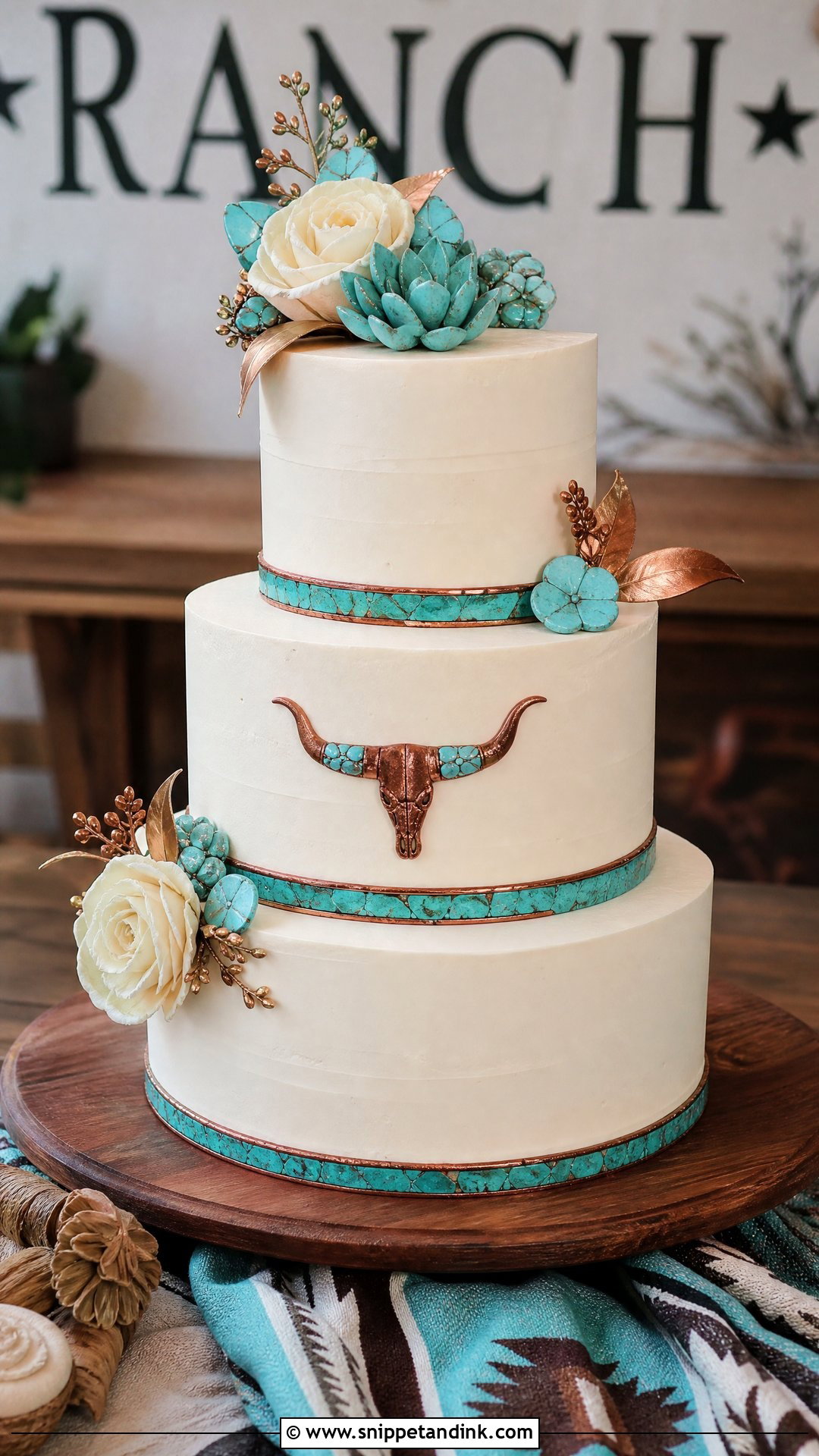
Treat turquoise like jewelry: a few sugar stones, painted trim, small beads, or a thin band around one tier. A whole turquoise tier usually looks busy and can read as a beach cake. I make the stones from isomalt or tinted fondant, sometimes with a fine brown matrix line painted through them so they look like real stone. Ivory, sand, copper, terracotta and chocolate brown sit well beside it, with smooth buttercream and desert flowers, for a desert venue or a western boho palette.
9. Western Wedding Cake With Succulents
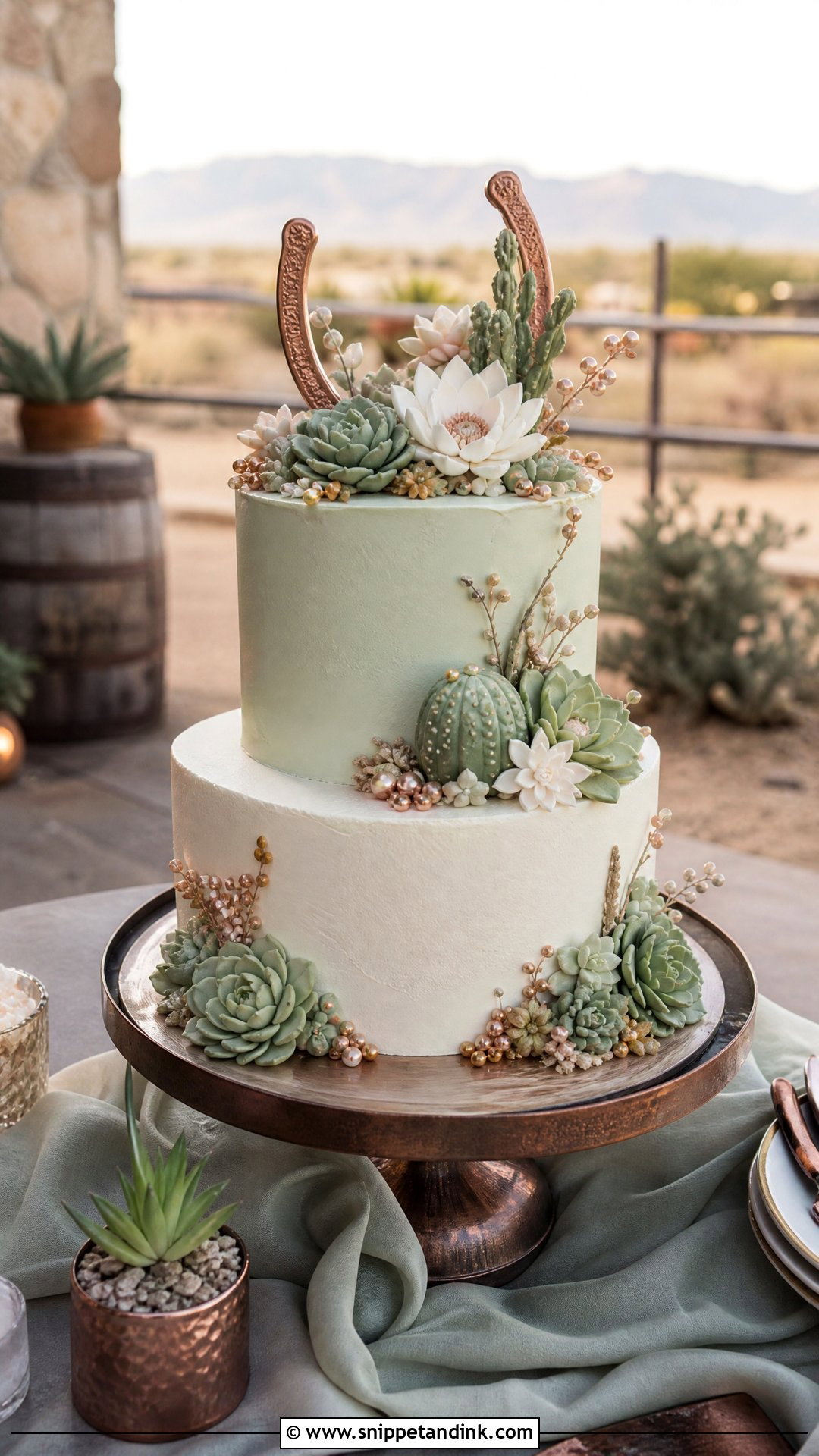
Sugar succulents are my default for this one. Real succulents can be used with barriers, but many common varieties aren’t food-safe and their cut stems ooze sap, so I’d rather pipe or model them, which also lets me control the color. They sit naturally on ivory buttercream, terracotta frosting or semi-naked tiers, joined by small cactus flowers, dried grasses or copper accents. Honey vanilla, lemon, pistachio and brown butter fit the earthy mood.
10. Western Wedding Cake With Pampas Grass
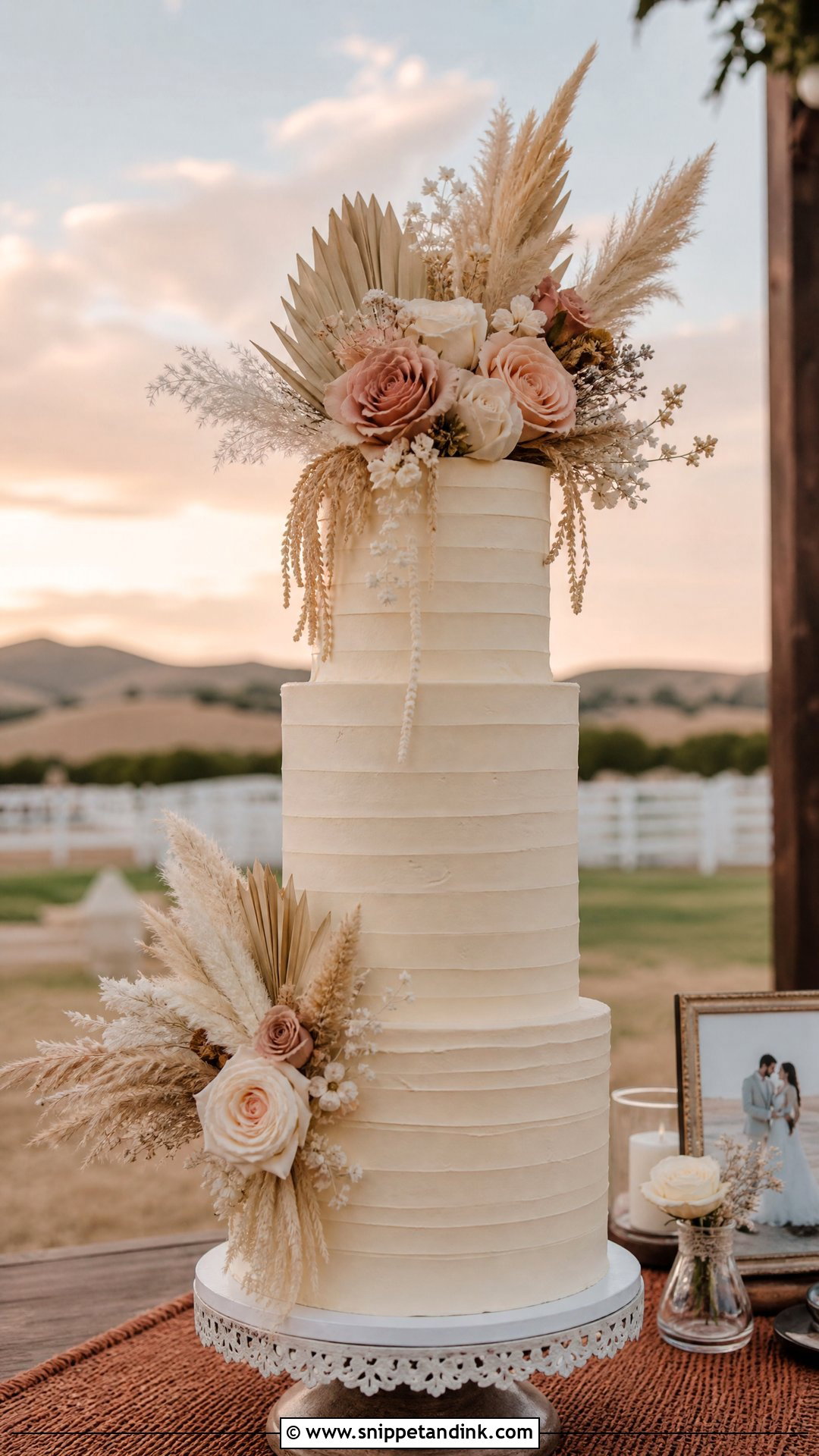
Pampas adds height and soft movement, especially next to dried palms, roses and neutral flowers. It sheds, though, and the fine fluff ends up in the icing. I ask the florist to spray it with a fixing spray well away from the cake, then insert the stems into wrapped picks, never straight into the sponge. Small clusters work better than covering every tier. Warm ivory, beige, champagne and dusty blush suit it on smooth or lightly textured buttercream, and it belongs at sunset ranch weddings and outdoor receptions.
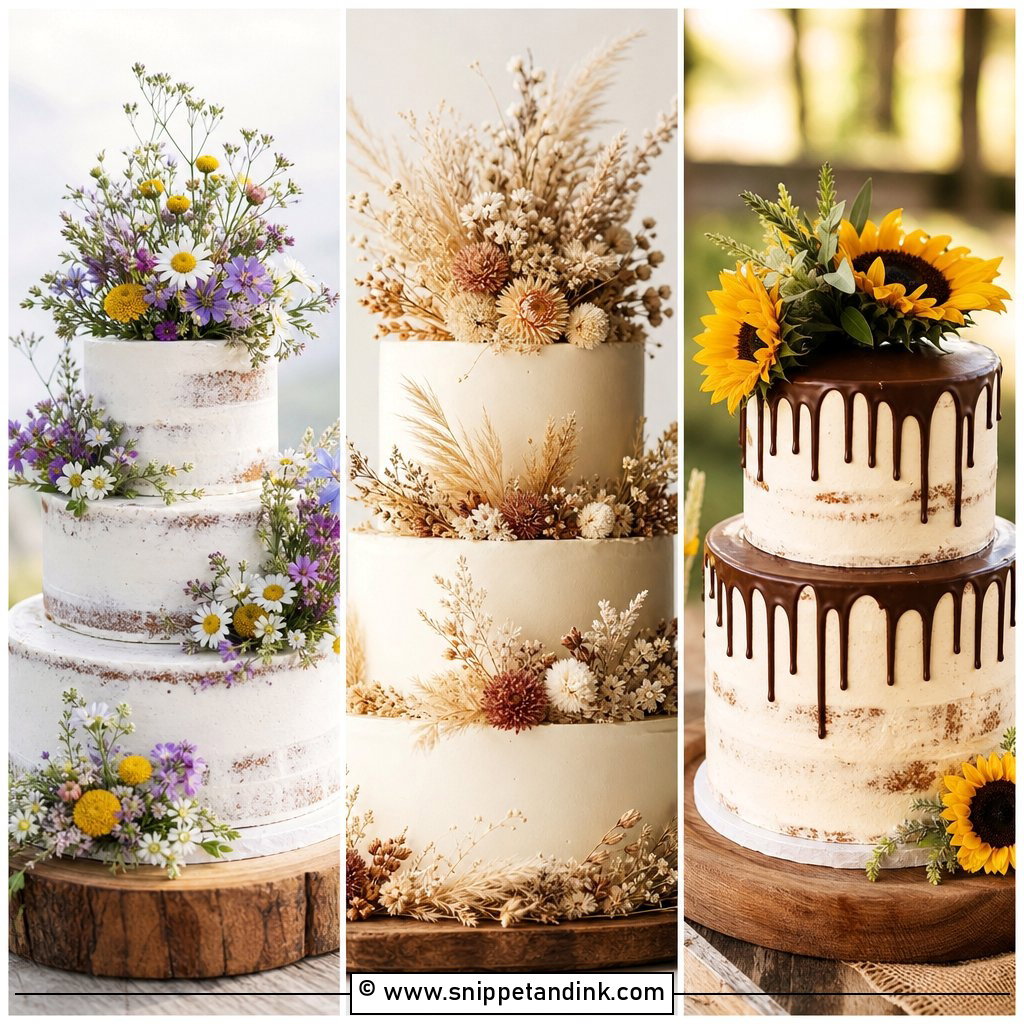
11. Western Wedding Cake With Wildflowers
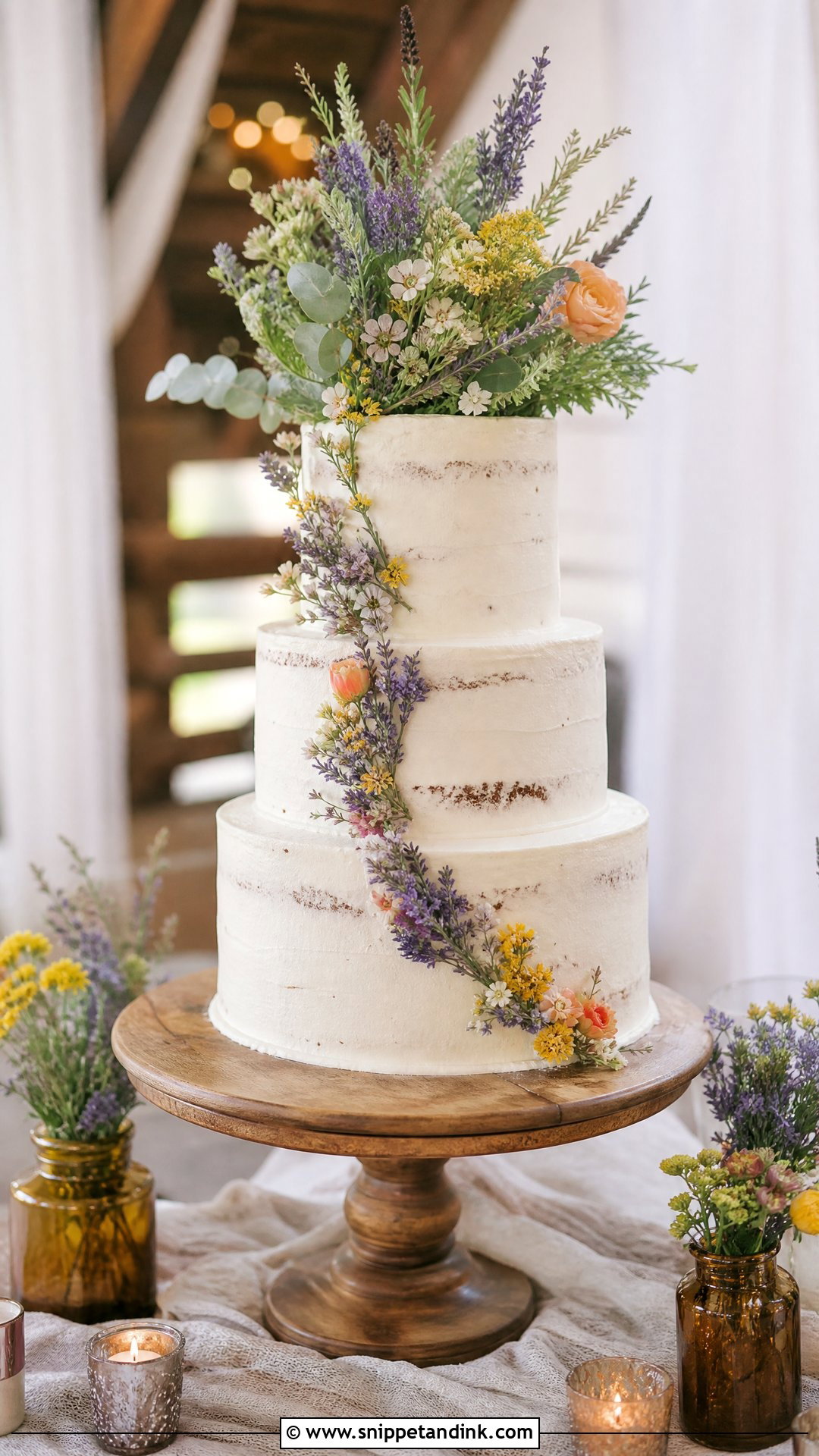
Wildflowers are lovely and tricky. Many field flowers wilt within an hour out of water, so for a cake I use sturdier small blooms such as waxflower, chamomile or spray roses, or I pipe them. White, yellow, lavender, dusty pink and peach suit spring through early fall. I’d scatter them loosely or run one diagonal trail; they should look gathered, not arranged. The base can be smooth ivory buttercream, semi-naked or lightly textured, for meadow ceremonies and ranch receptions alike.
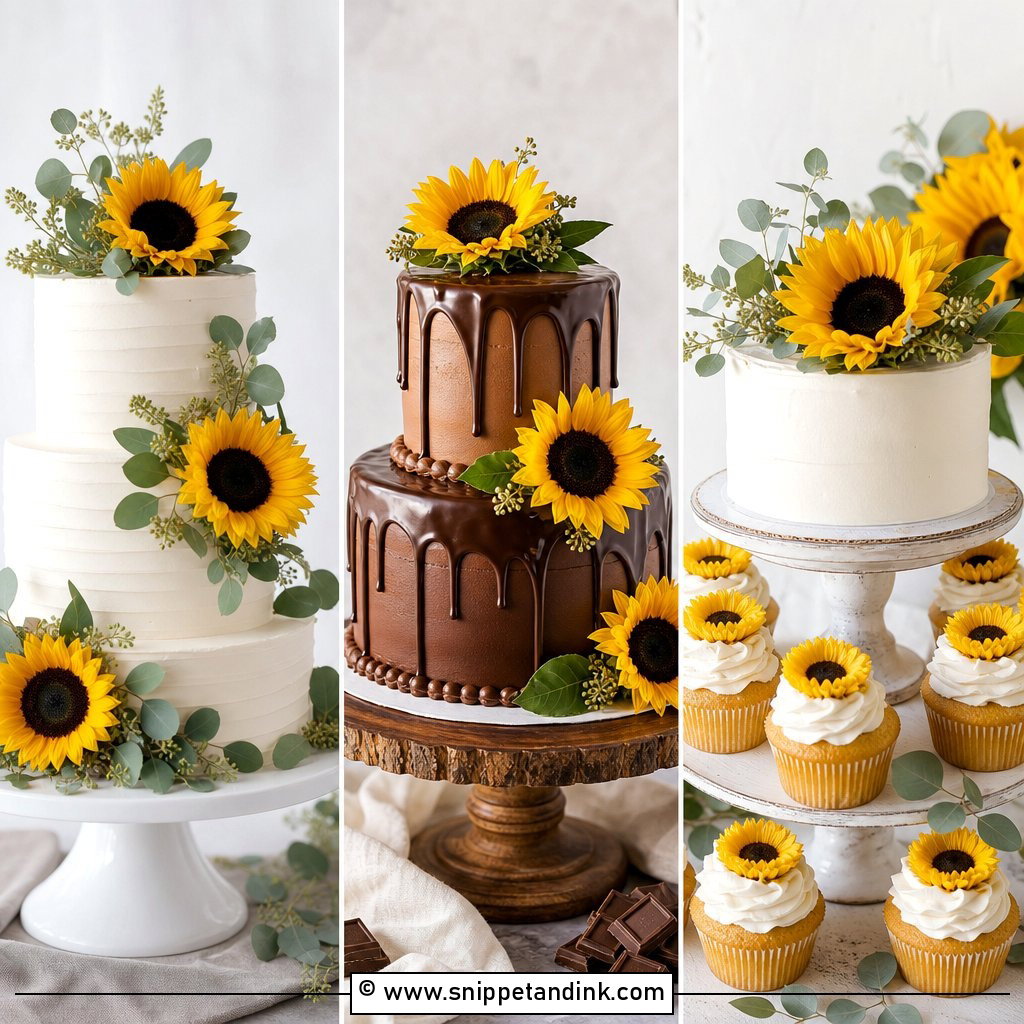
12. Western Wedding Cake With Sunflowers
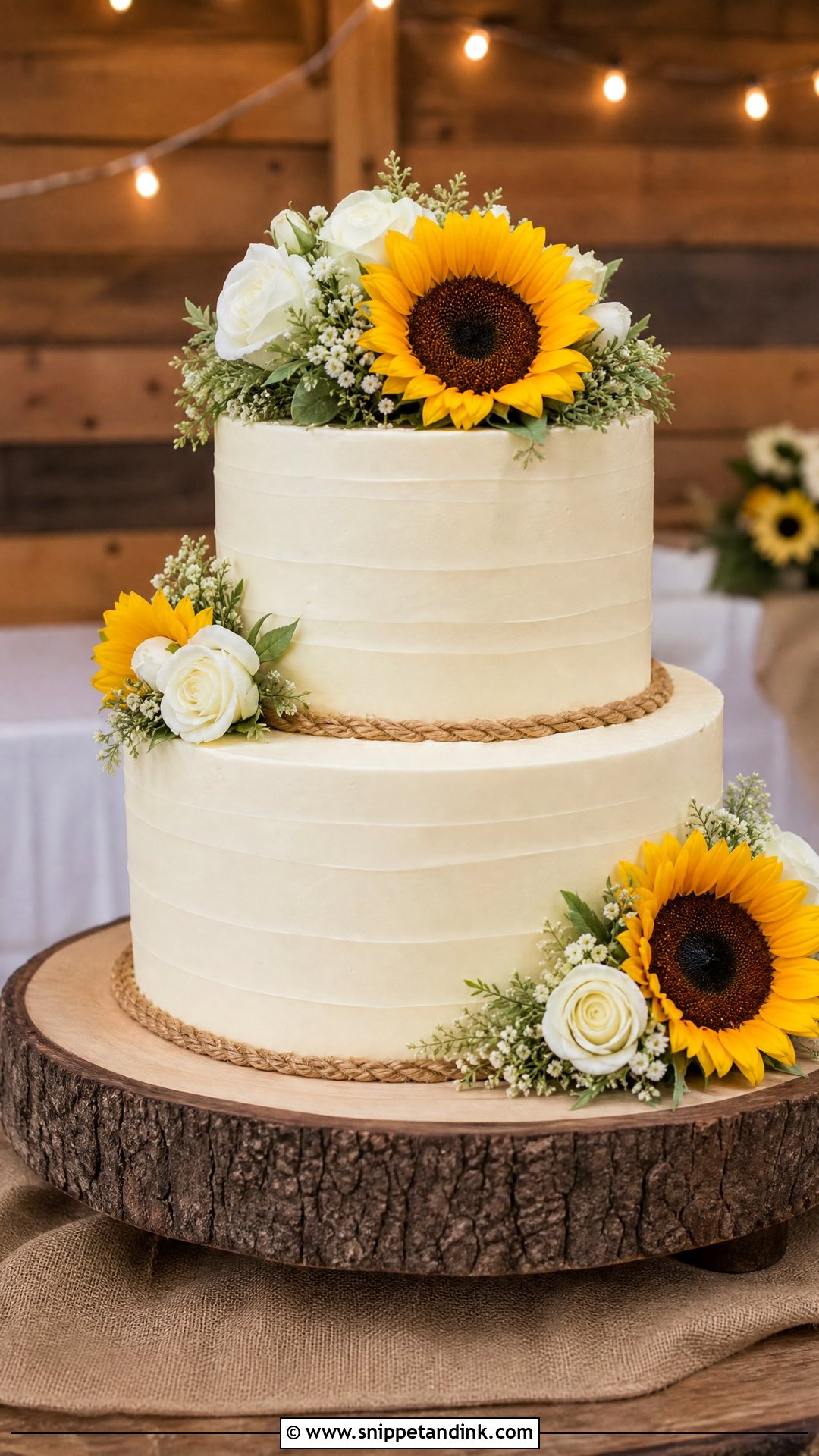
Big sunflowers are heavy and their faces dominate, so on a western wedding cake with sunflowers I either use smaller varieties or mix a few large heads with white roses, greenery and baby’s breath. Ivory buttercream calms the yellow. Their thick stems leak, so they need wrapping before they go anywhere near the cake. A wood stand, burlap ribbon or rope border finishes the barn look for late summer and early fall. Vanilla, lemon, honey, carrot and spice cake are all good matches.
13. Western Wedding Cake With Cactus
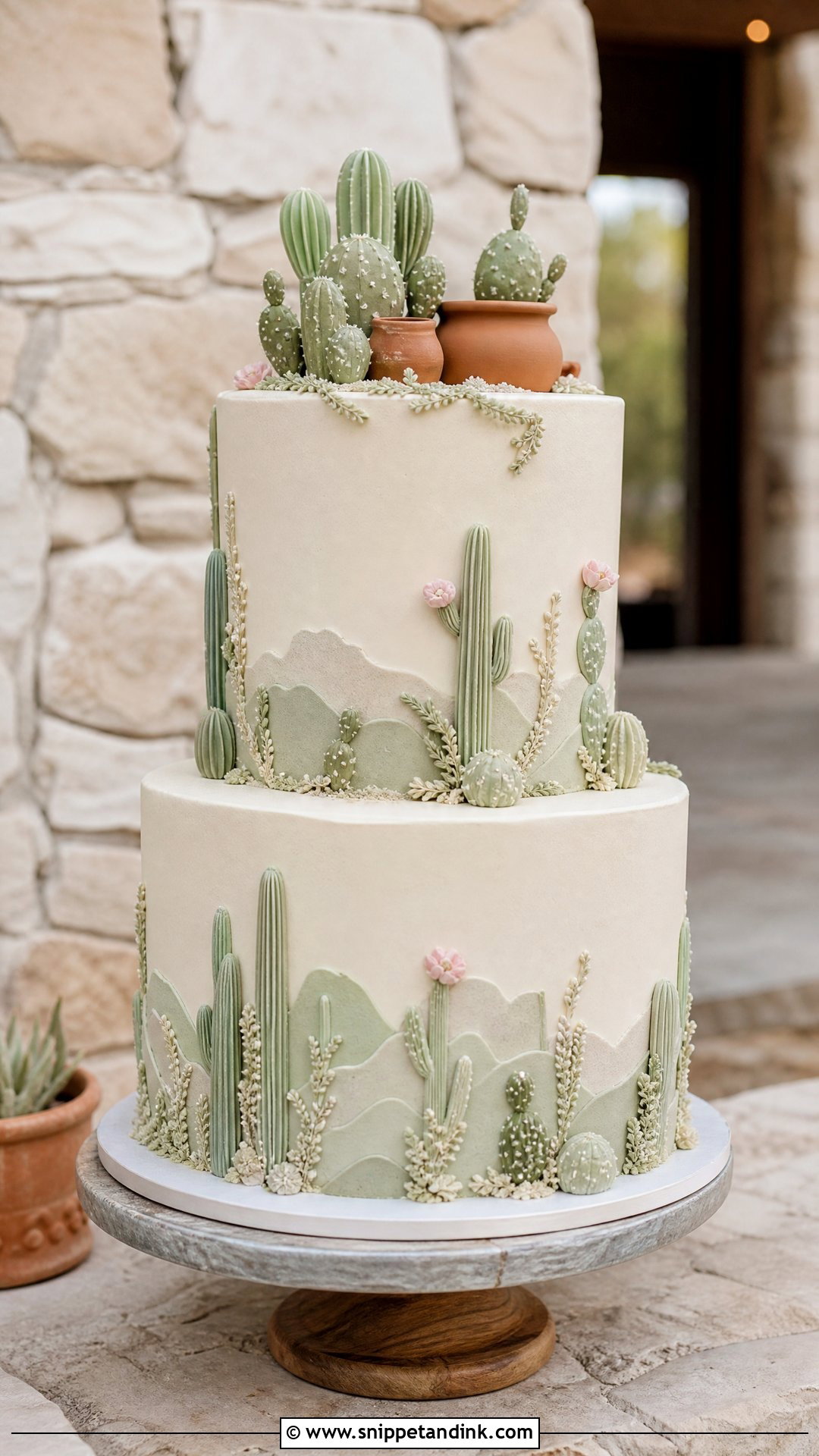
Cactus suits a desert wedding, and scale decides whether it reads playful or elegant. Small sugar cacti, painted silhouettes or piped cactus textures stay refined; a large sculpted cactus turns it into a party cake. Ivory, sage, sand, terracotta and blush tones keep the palette warm, and a few tiny sugar flowers soften the spines. Lemon, vanilla, almond, pistachio and chocolate all pair well, especially at adobe venues or open desert ceremonies.
14. Western Wedding Cake With Antlers
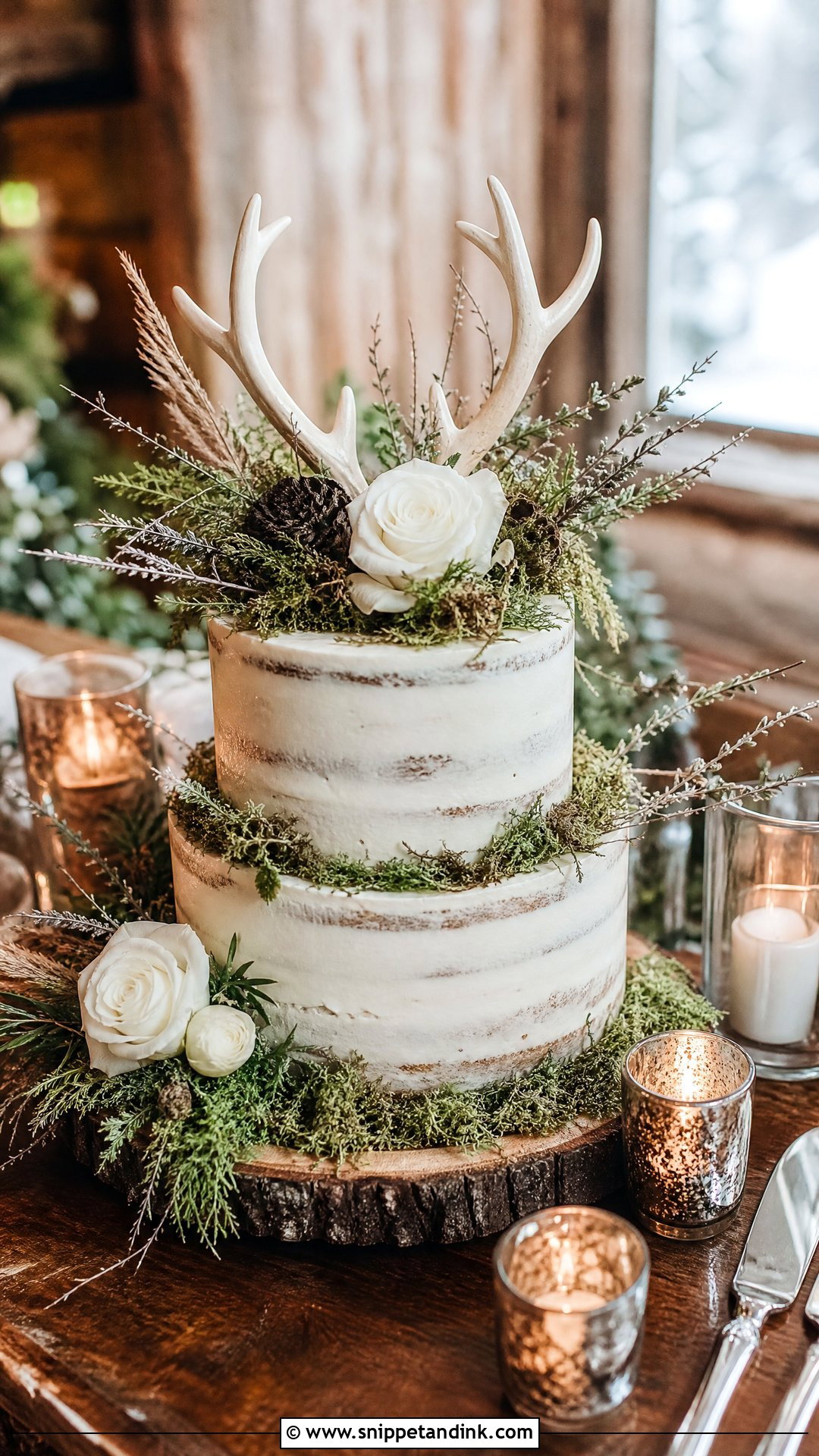
Antlers can look refined if they’re small and placed on the top tier with greenery, white roses or dried flowers. Real antlers should not touch the cake at all; I’d use sugar or resin pieces on a backing, or have the real ones set beside the stand. Lodge weddings, mountain ranches and fall receptions suit this style. Smooth buttercream, semi-naked frosting or woodgrain fondant work underneath, in ivory, brown, moss green and champagne.
15. Western Wedding Cake With Burlap And Lace
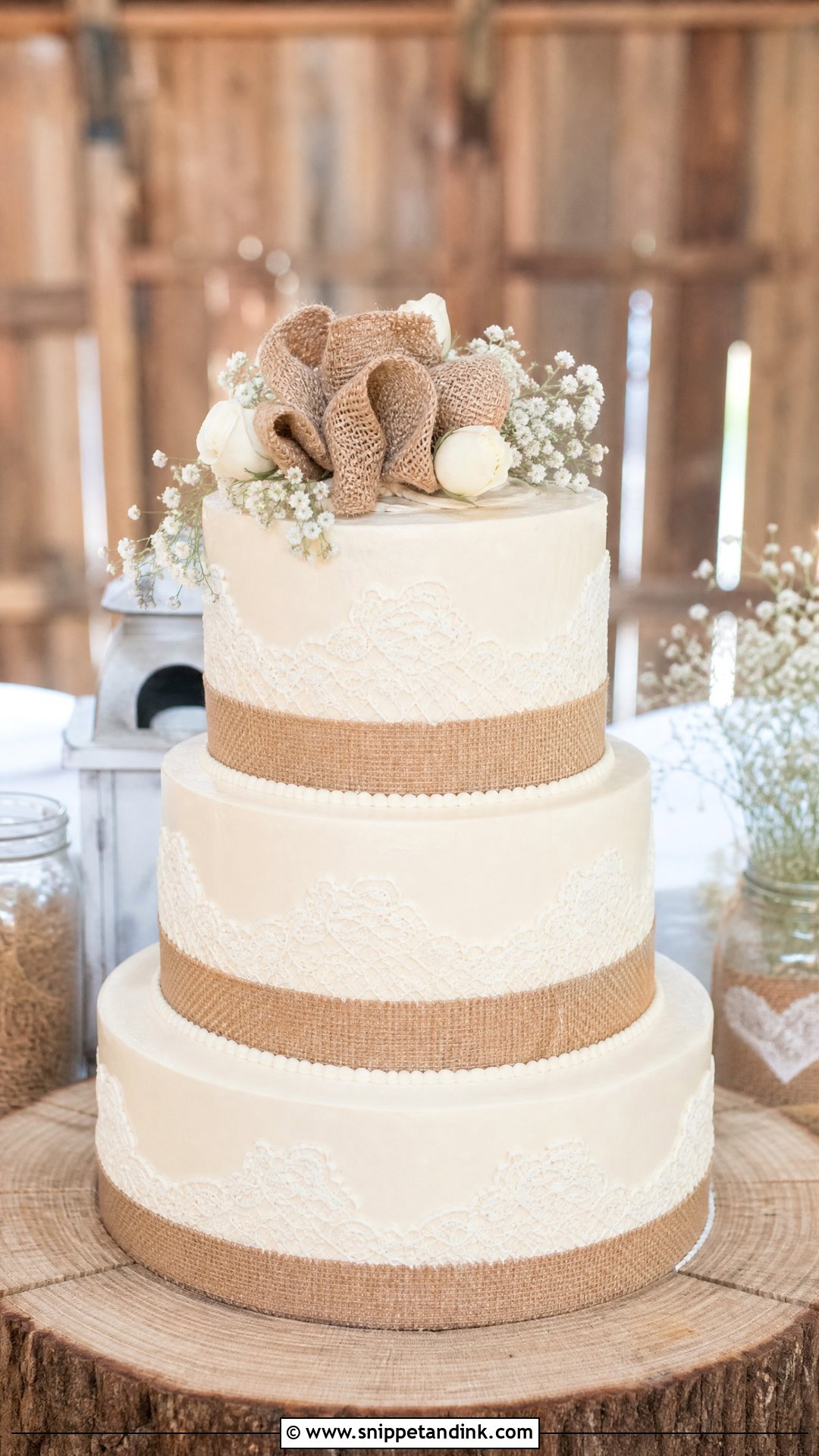
Burlap and lace together go heavy fast, so I use each once: a burlap-textured fondant band on one tier, and lace piping or lace-patterned fondant on another. Real burlap shouldn’t be wrapped directly around a cake, since it sheds fibers and soaks up butter, which is why the textured fondant version exists. Ivory buttercream, white roses, baby’s breath or small green clusters keep it soft. Vanilla almond, butter pecan, carrot and spice suit barns, backyards and small chapels.
16. Western Wedding Cake With Denim Blue
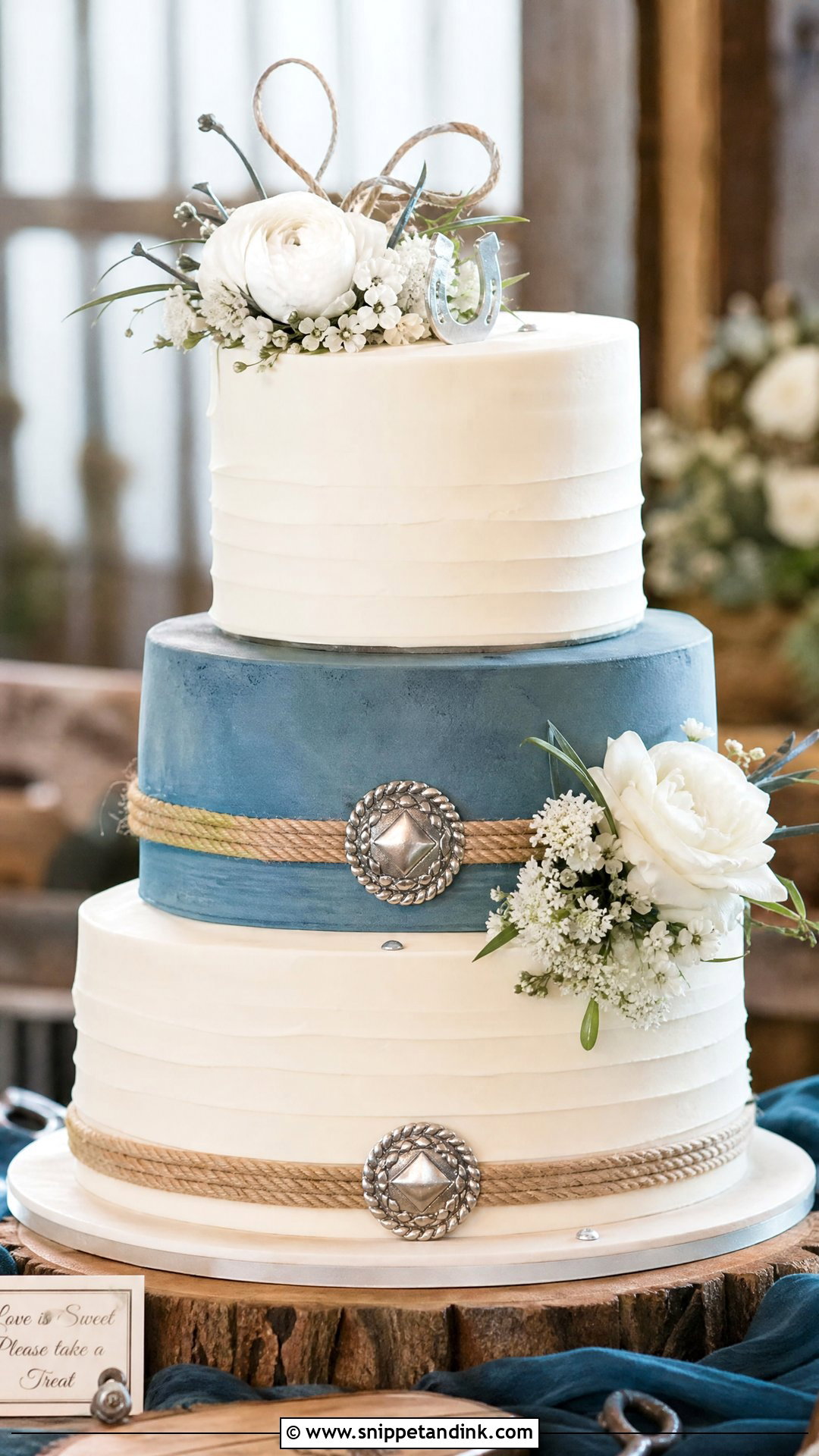
Denim blue is a nice route for couples who want country without going fully rustic. Soft blue frosting, a fondant band pressed with a fabric texture, or brushed blue paint can mimic denim. Butter tints blue toward green, so I mix this shade on a very white base. Ivory tiers, tan rope and white flowers keep it wedding-appropriate, and dusty rose, copper, sage and cream all pair with it. Vanilla bean, blueberry lemon, almond or brown sugar cake suit the relaxed mood.
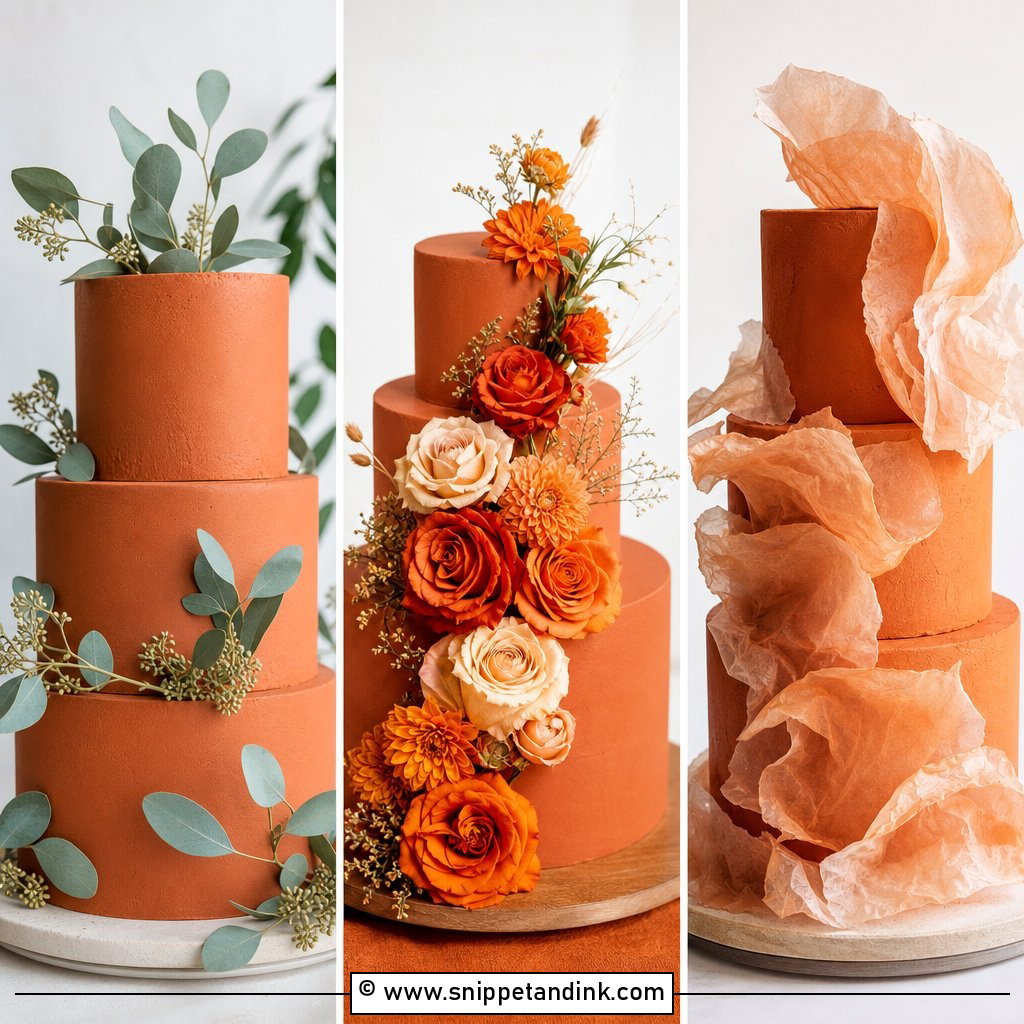
17. Western Wedding Cake With Terracotta
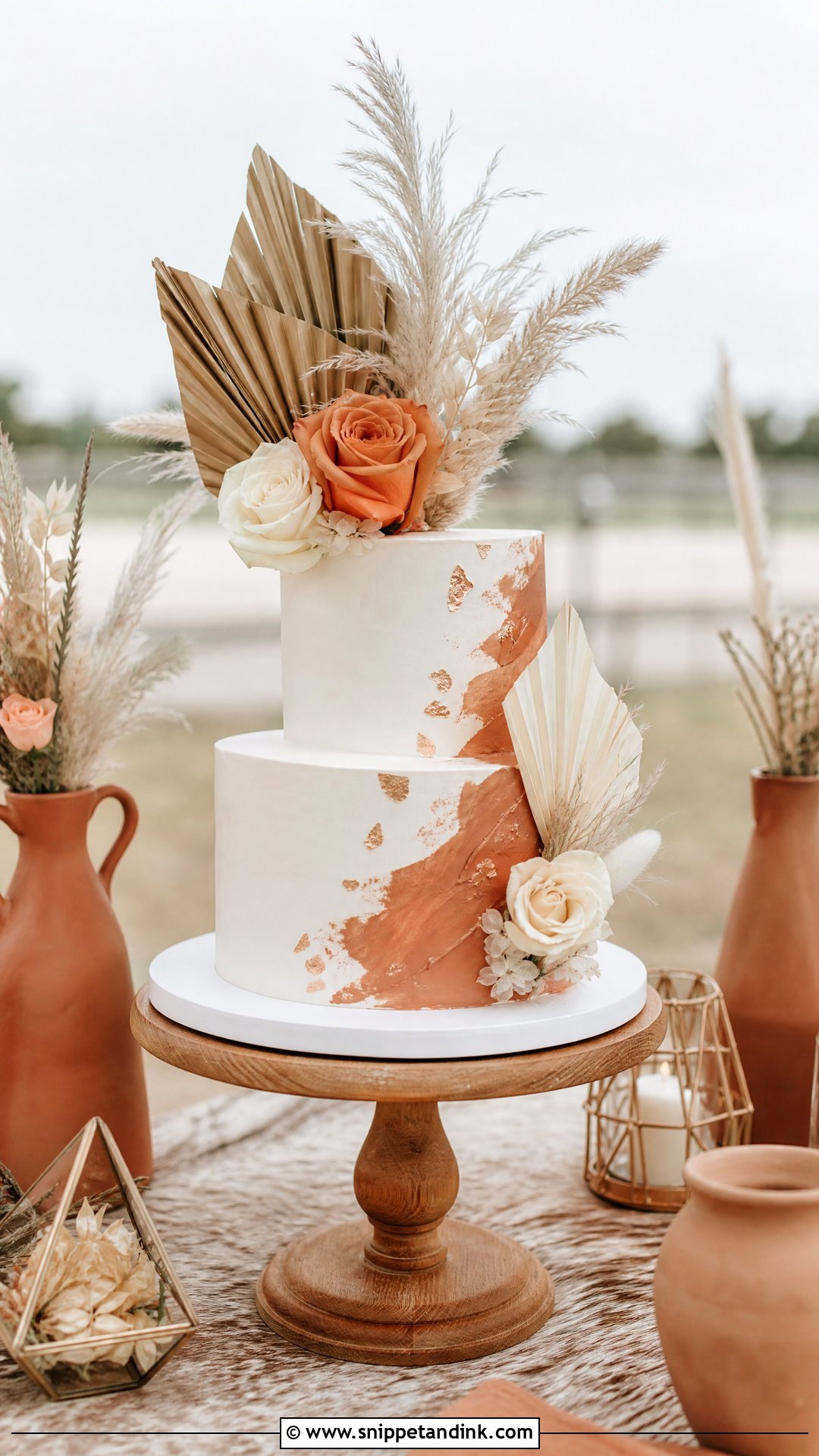
Terracotta works as one statement tier or as painted accents on ivory buttercream. Getting that clay color usually means blending orange, brown and a touch of pink rather than one gel, and I always test it under daylight. A western wedding cake with terracotta sits naturally with pampas, dried palms, roses, copper and sage, and the shade echoes canyon walls in sunset photos. Two or three tiers is enough. Orange blossom, cinnamon vanilla, honey and brown butter suit the warm palette.
18. Western Wedding Cake With Copper
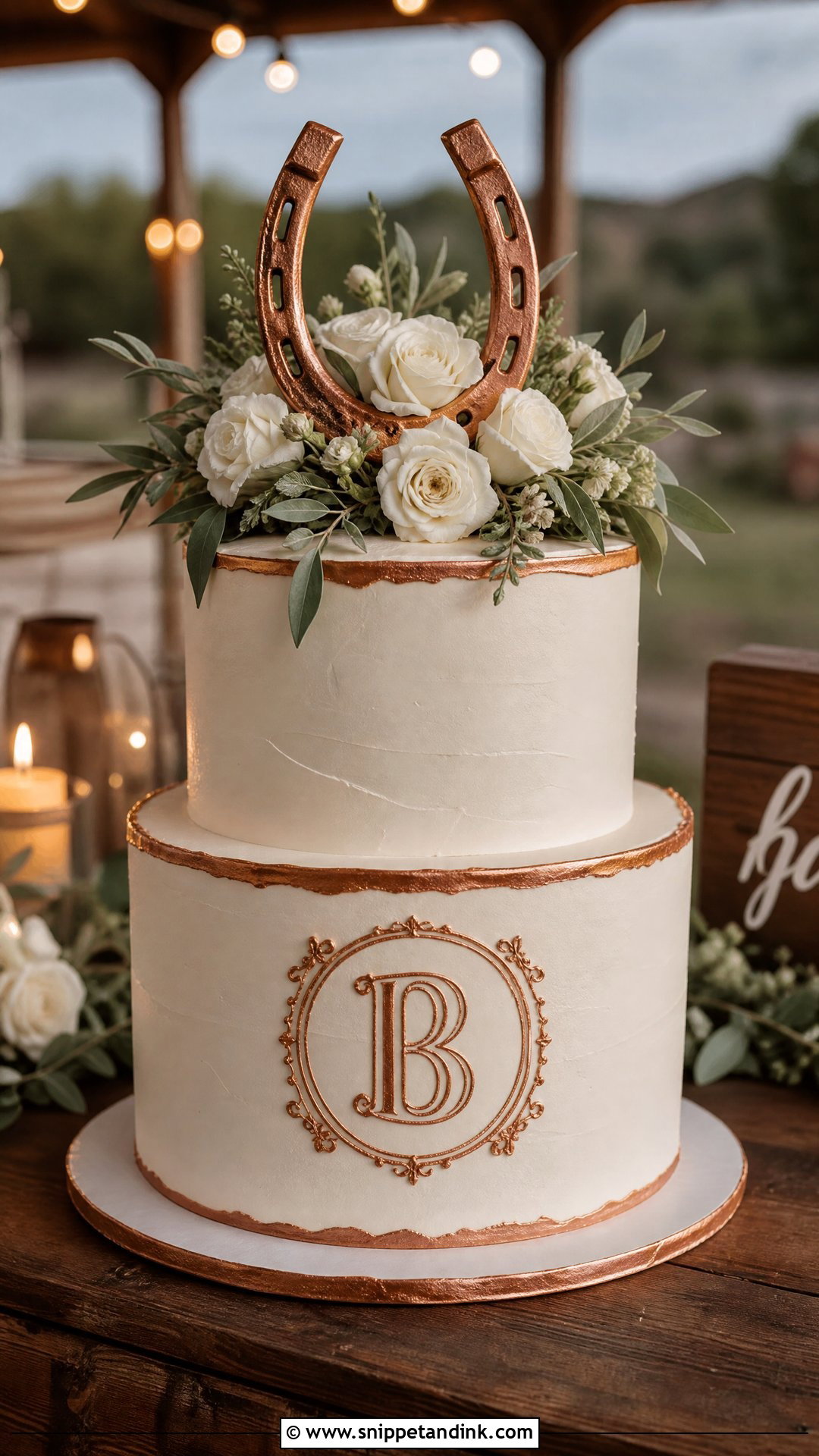
Copper needs restraint more than any other accent here. A painted edge, a thin band, a monogram or a copper horseshoe is enough; a full metallic drip on every tier gets shiny and loud. I mix copper luster dust with a little alcohol and paint it on, and I check that the product is labeled edible, not just non-toxic. Ivory, mocha, terracotta, sage and dusty blue all suit it. It comes alive in candlelight, which makes it a good pick for evening ranch receptions, paired with chocolate, caramel, brown butter or spice.
19. Western Wedding Cake With Woodgrain
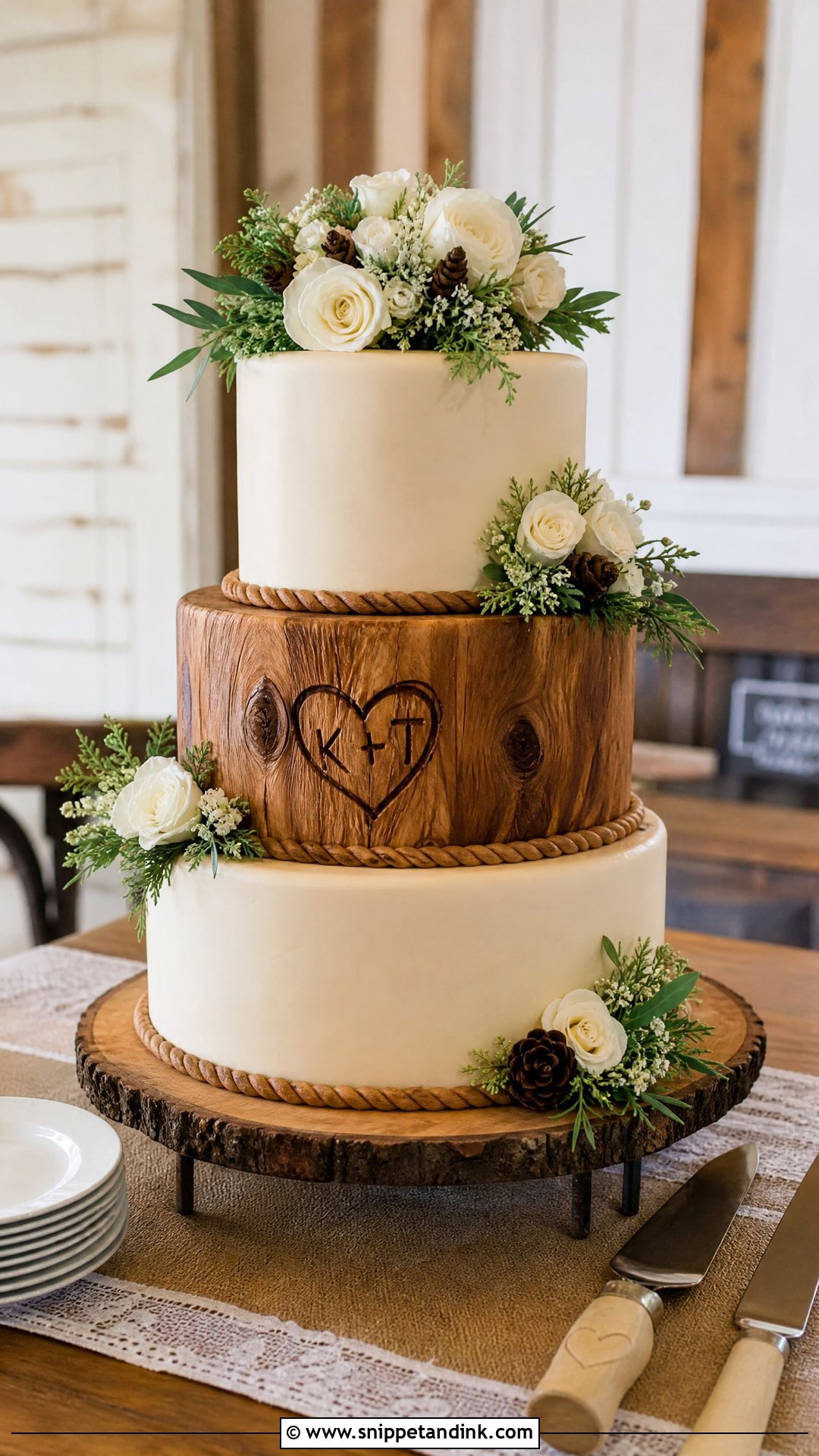
Woodgrain links the cake to barn beams and fence posts. I make it with a woodgrain veining tool pressed into fondant, then dry-brush brown tones into the grooves; buttercream versions are combed and painted. Keep it to one tier and pair it with ivory or cream tiers, white flowers, greenery or a rope trim. A real wood stand underneath strengthens the effect. Fall weddings and lodge venues suit it best.



20. Western Wedding Cake With Naked Tiers
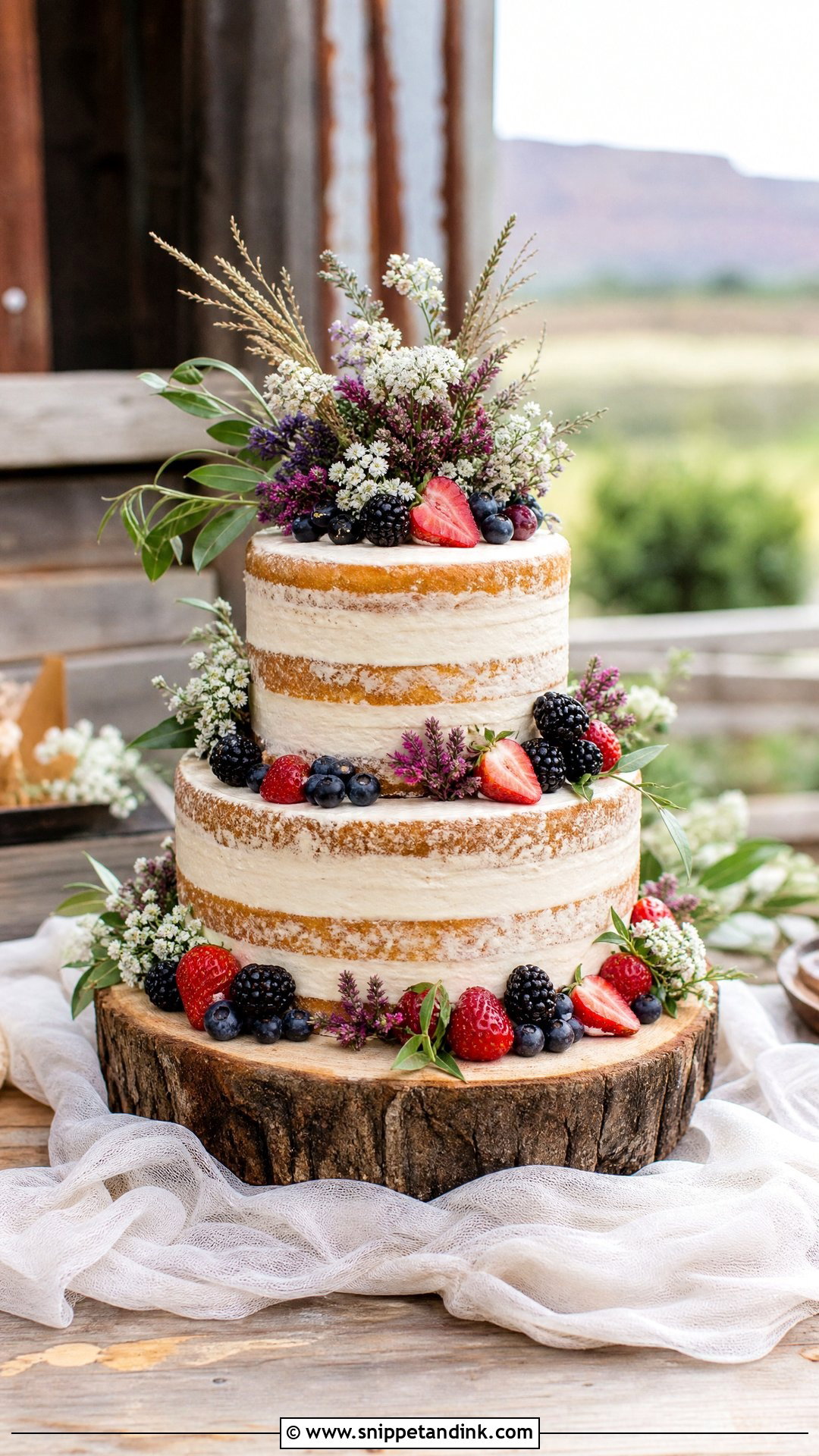
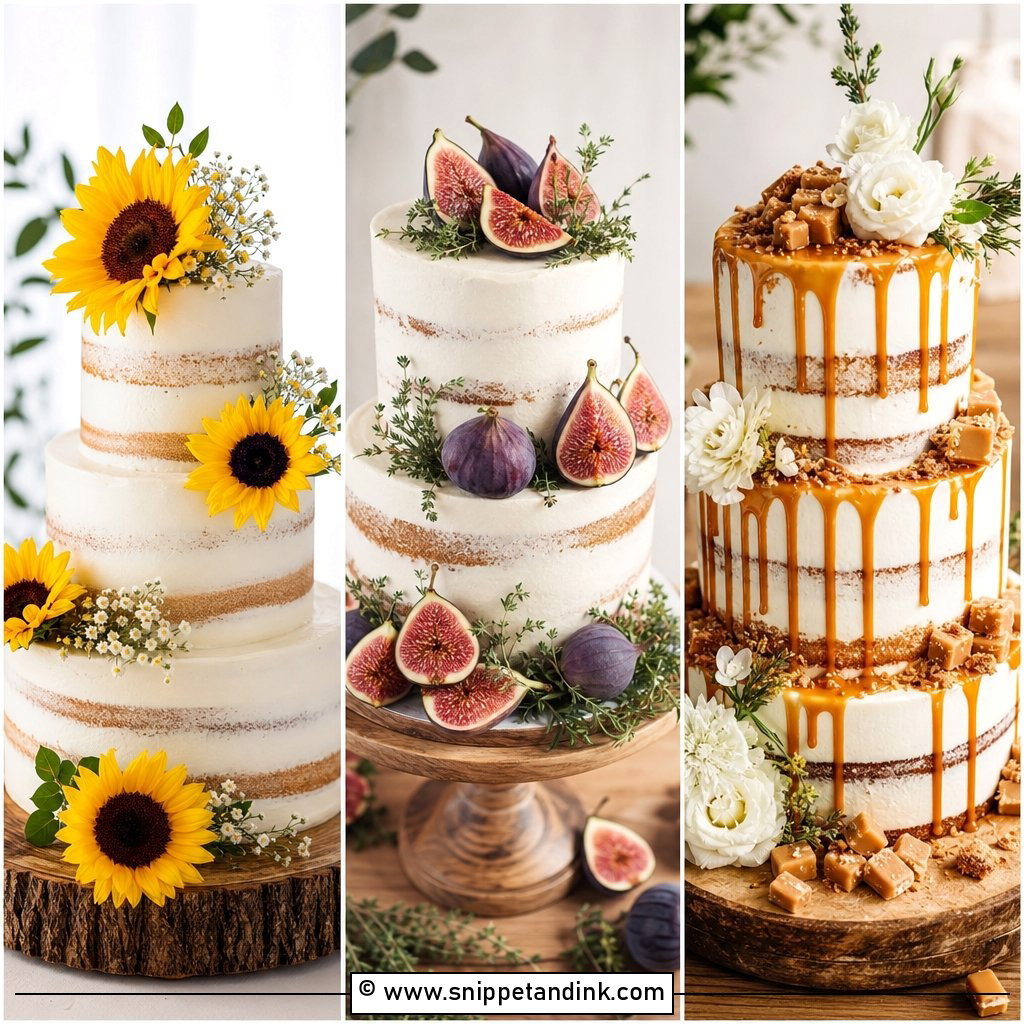
Naked tiers have barely any frosting, so the sponge is exposed to the air. That’s the honest drawback: in a barn on a dry, warm afternoon, the edges can start drying within a couple of hours. I syrup every layer, wrap the tiers until the last possible moment, and set the cake out close to when guests arrive. The bake also has to be very even, because every layer is on show. Flowers, berries, greenery or dried grasses tucked between tiers finish it. Vanilla, almond, carrot, spice and lemon work well.
21. Western Wedding Cake With Semi Naked Frosting
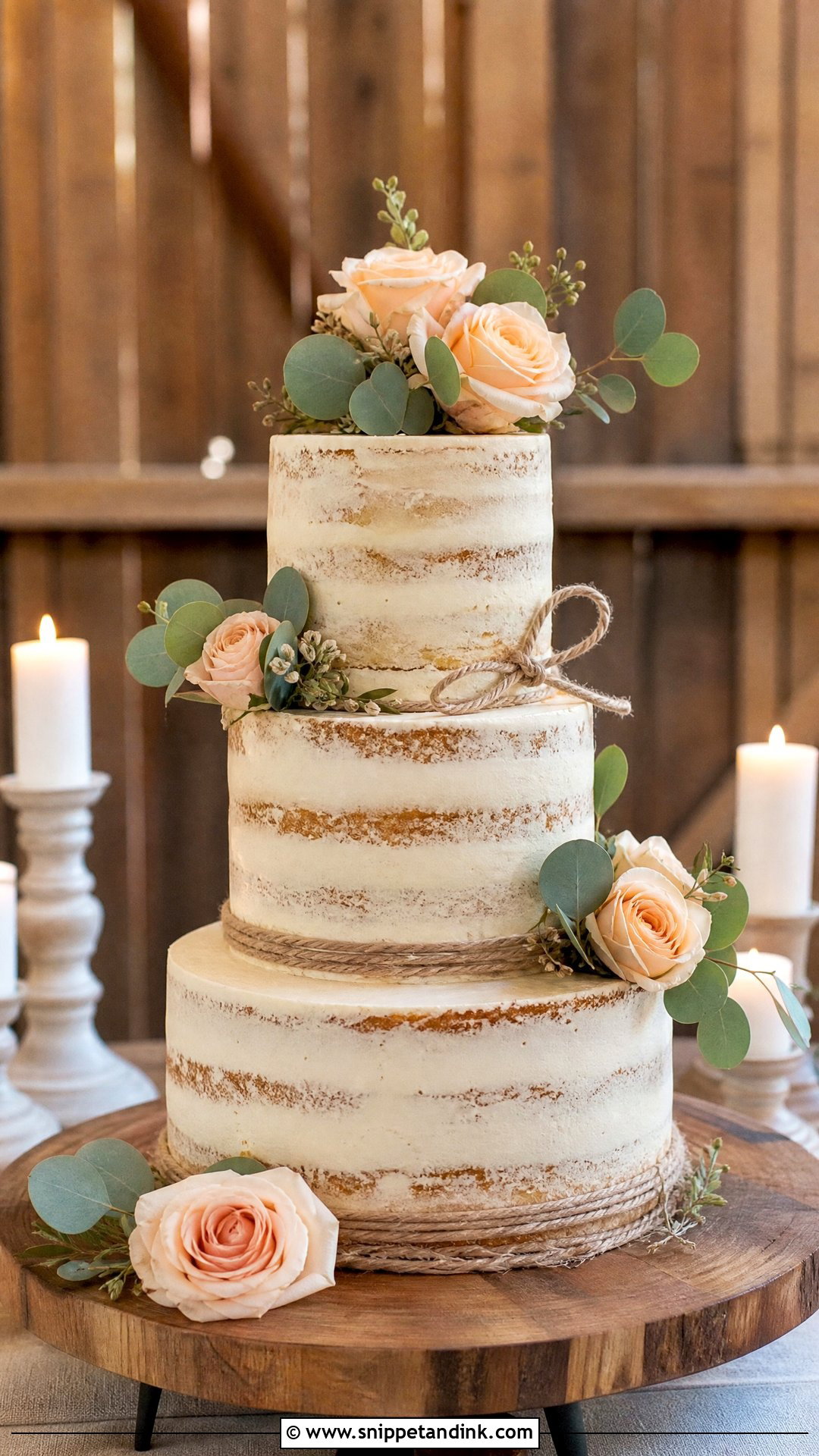
Semi-naked gives a bit more cover than naked and holds up longer on display, which is why I steer most outdoor western weddings toward it. The thin scraped coat still shows the layers and pairs with almost every detail on this list: flowers, greenery, wood stands, rope or a cowhide accent. Use ivory or cream frosting and a few natural decorations rather than covering the cake. Vanilla, chocolate, spice, red velvet and lemon layers all look good through the scrape.
22. Western Wedding Cake With Buttercream Texture
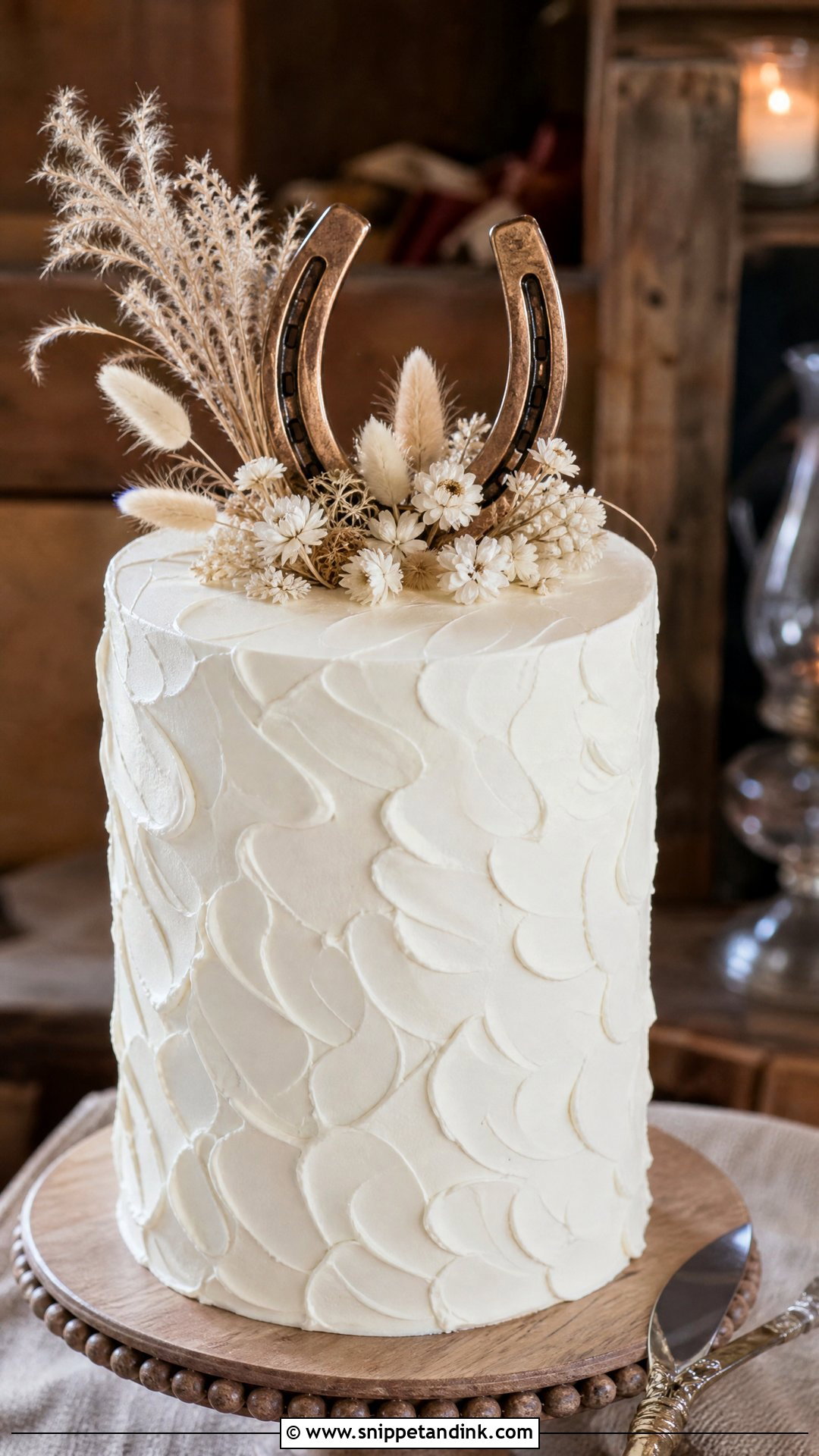
Swoops, ridges, palette strokes or a stucco finish make the cake look handmade, and texture hides small travel bumps on a long rural drive. Keep it in ivory, cream, taupe or pale beige and add one western accent, a horseshoe or a rope border, with a few florals or dried grasses. Many guests prefer buttercream to thick fondant, so this finish tends to get eaten rather than left on plates.
23. Western Wedding Cake With Vintage Piping
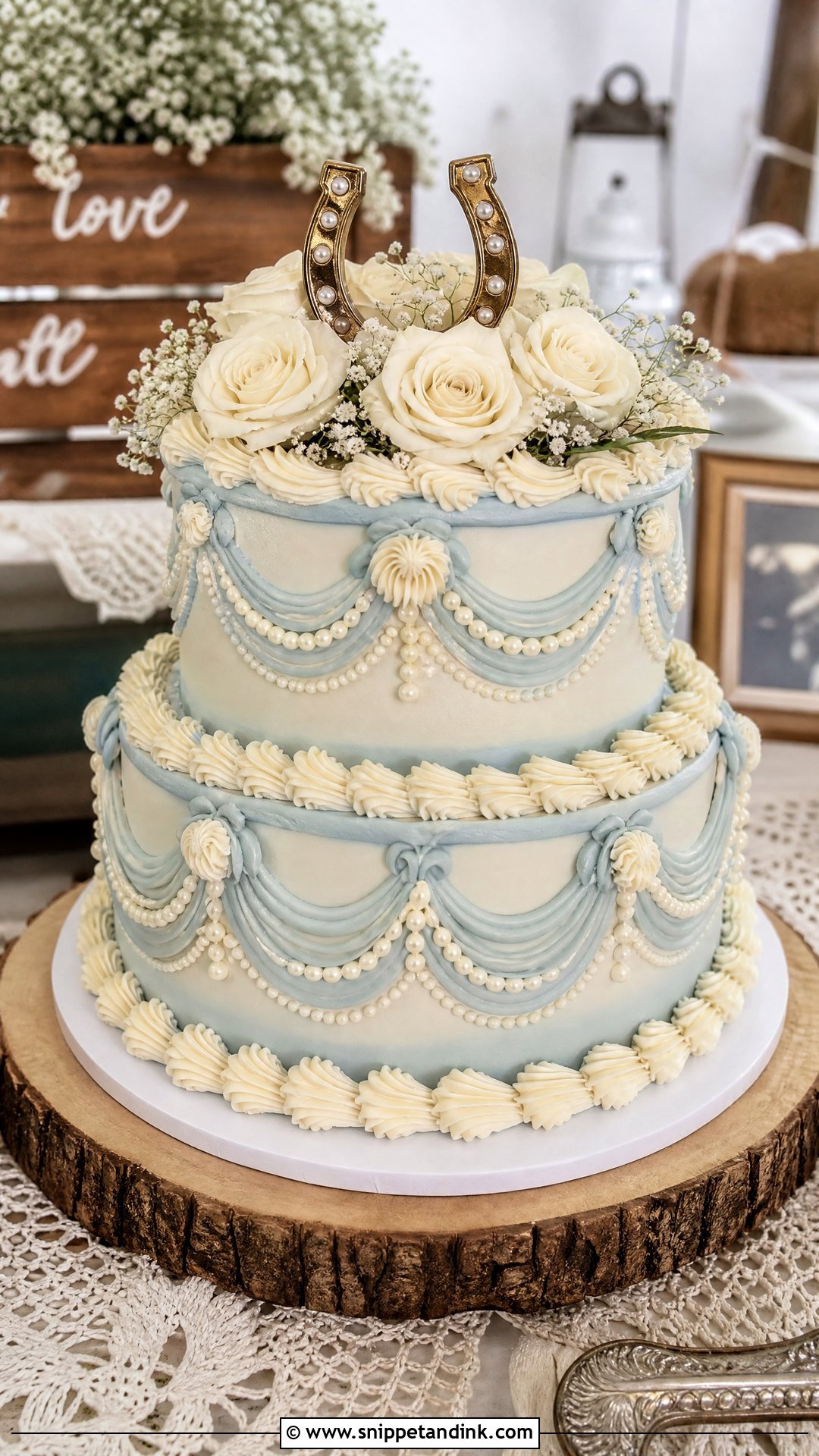
Lambeth-style swags, shell borders, pearls and ruffles look unexpected in western colors such as ivory, dusty blue, caramel or sage. I tie the piping back to the theme with one small piece: a horseshoe topper, a tiny boot charm or a floral cluster. One or two tiers can carry this as well as a tall cake, since the piping fills the surface. Almond, vanilla bean, strawberry and butter pecan suit the nostalgic feel. Keep it out of direct heat, because dense piping softens.
24. Western Wedding Cake With Floral Cascade
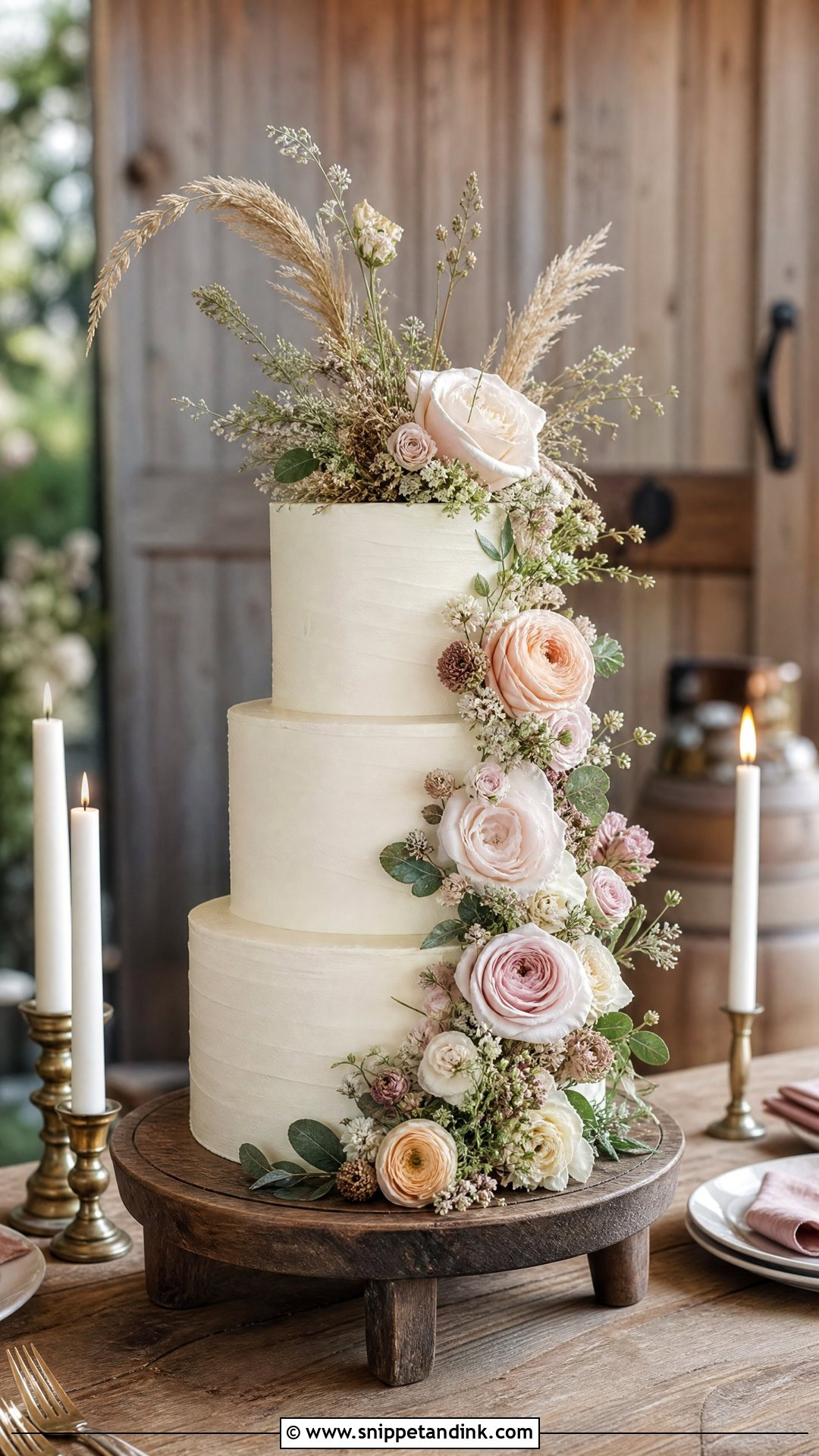
A cascade gives a western cake a centerpiece moment, with flowers running from the top tier down one side. Roses, ranunculus, sturdy wildflowers, dried grasses and greenery tie it to the setting. The flowers are the weight-bearing problem: a full fresh cascade is heavy, so I anchor it on picks pushed into the internal dowels. Keep the frosting simple, ivory, semi-naked or light tan texture, and set it on a wood stand with low candles nearby.
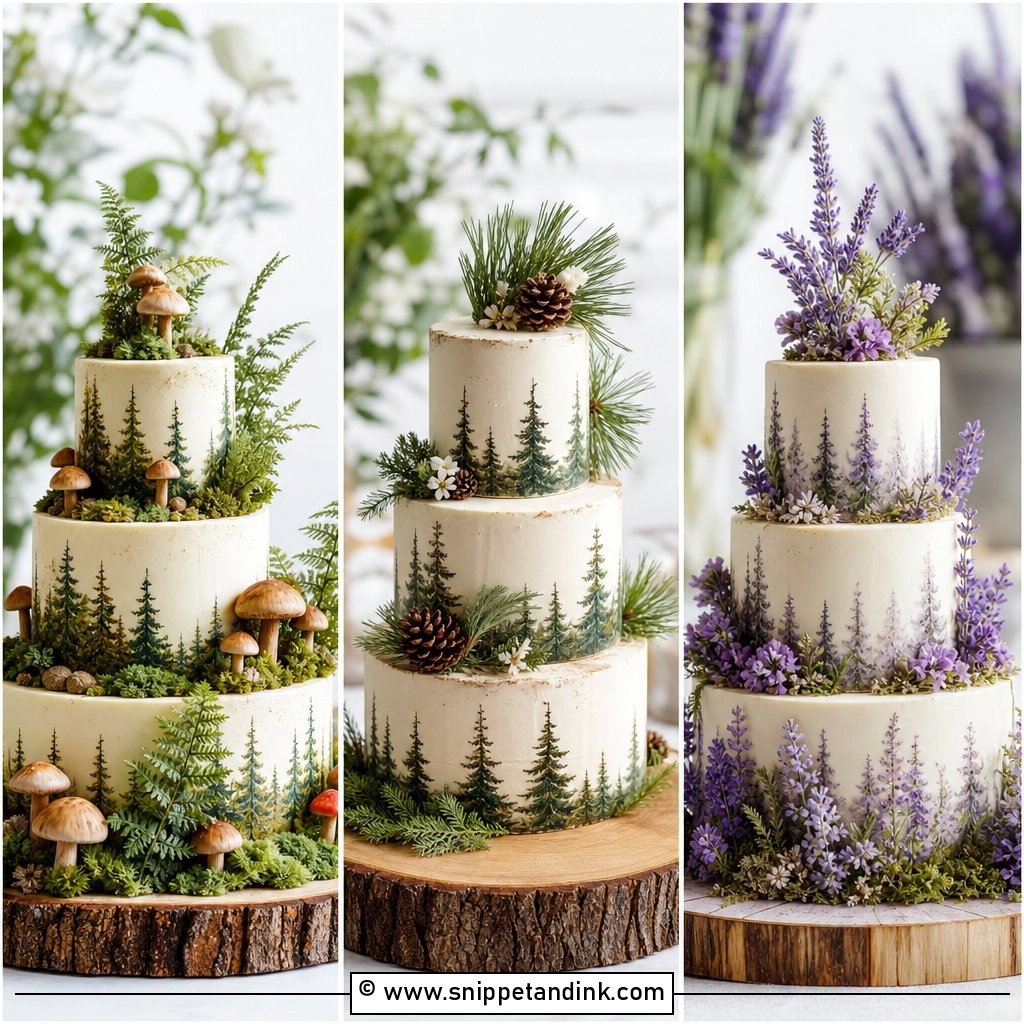

25. Western Wedding Cake With Black And White
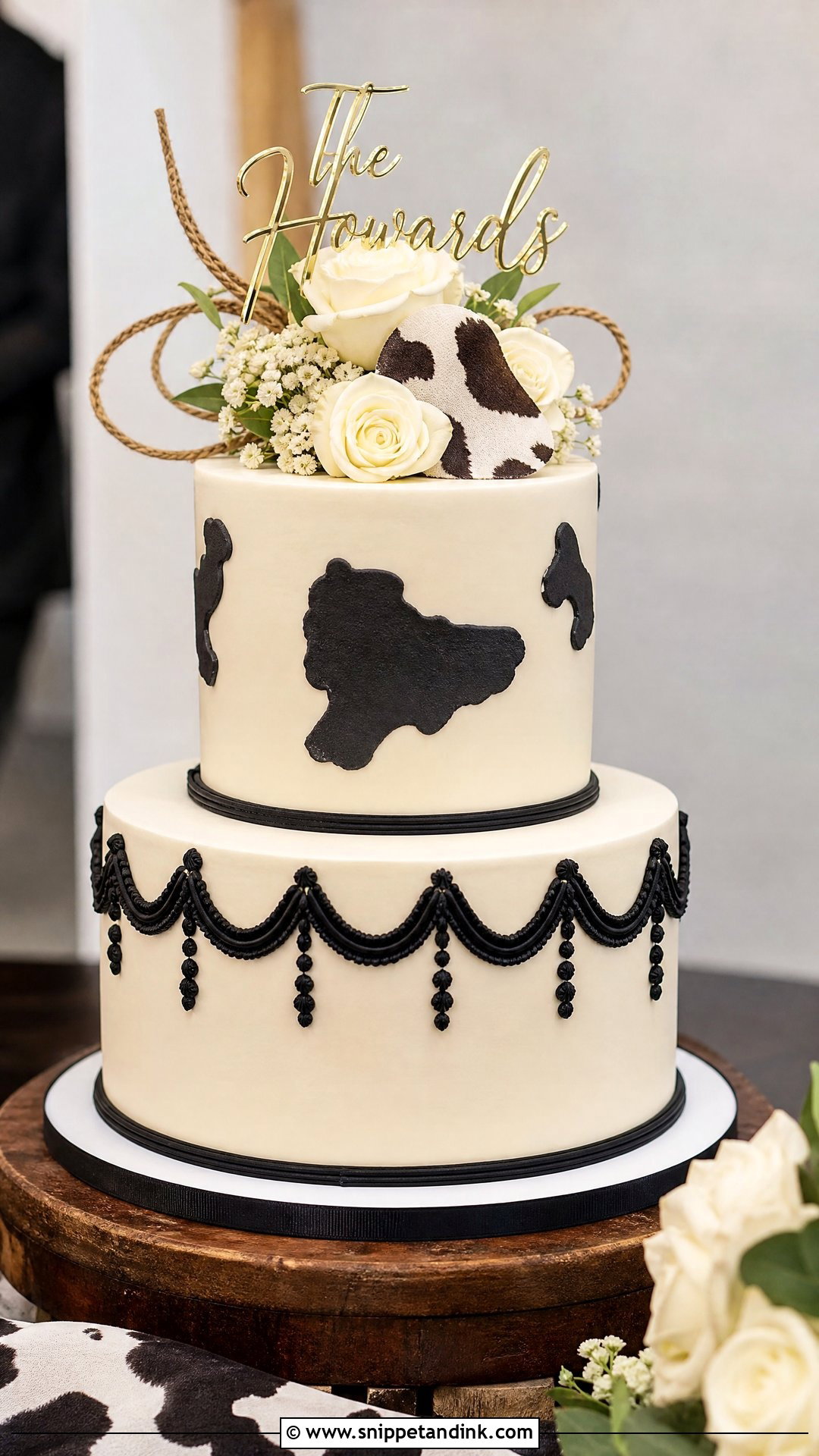
Black and white is the sharpest western look. Cowhide print, black ribbon, black piping or a simple black topper on white buttercream all create the contrast. I’d keep the black to details, because large black-iced areas need heavy coloring that stains mouths. Soft flowers, gold accents or warm wood stop it from looking harsh. It suits upscale ranch weddings and black-tie country receptions, with chocolate, vanilla, cookies and cream or mocha inside.
26. Western Wedding Cake With Brown Sugar
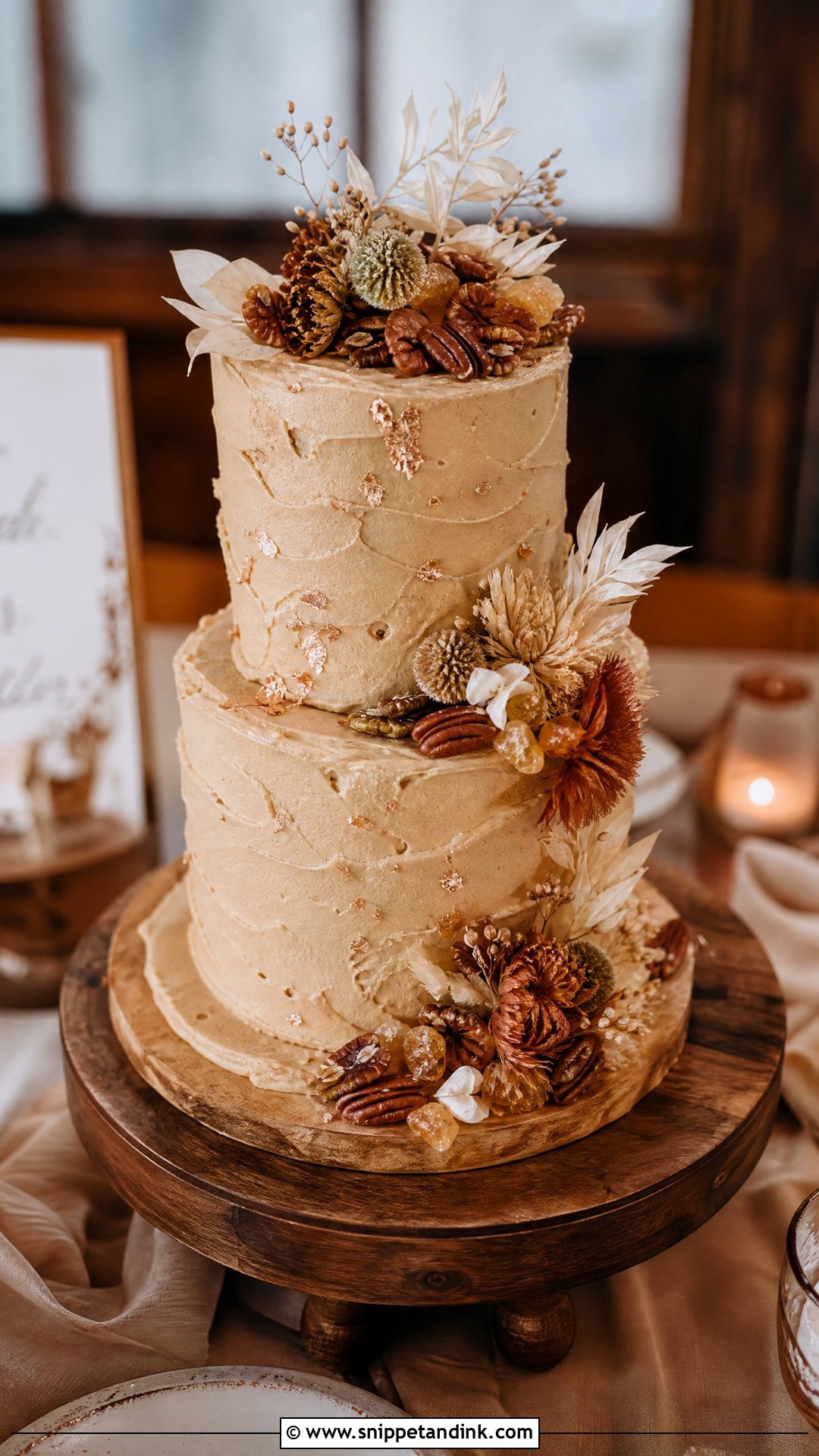
This one is about flavor first. Brown sugar sponge with caramel buttercream tastes deeper and slightly toffee-like compared with plain vanilla, and it holds moisture well. Outside, ivory frosting with soft rustic texture is enough, plus copper details, toasted pecans, dried flowers or a light caramel drip. Vanilla, cinnamon, alcohol-free caramel, apple, pear and pecan all pair with it, and it belongs at a fall barn reception. If anyone at the wedding has a nut allergy, I leave the pecans off the outside and label the cake.
27. Western Wedding Cake With Caramel Drip
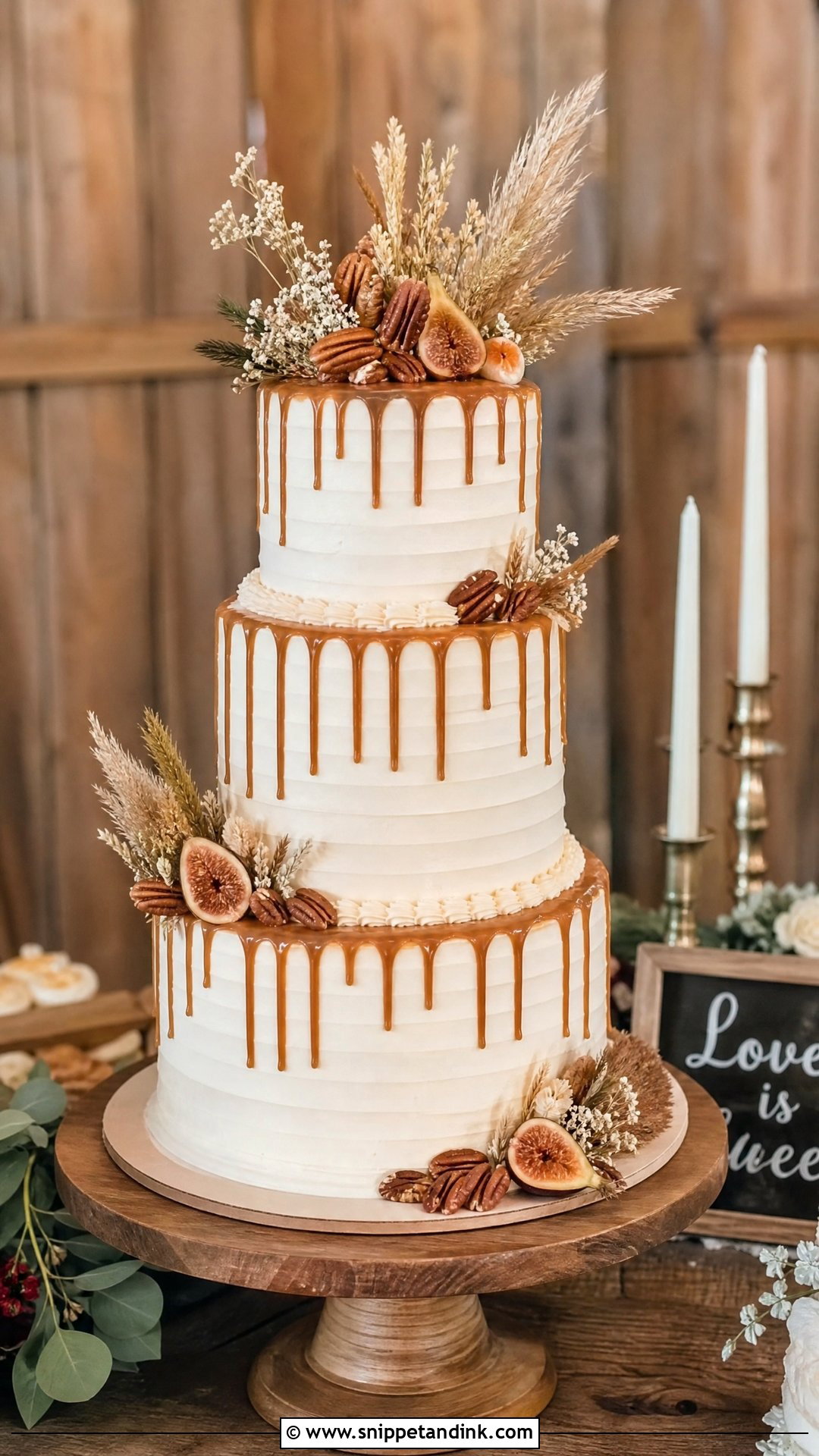
Caramel drips are temperature-sensitive. Too warm and the caramel runs to the board; too cool and it sits in fat blobs. I drip onto a chilled cake and test one drip at the back first. Keep the drips neat so the cake still reads bridal, over an ivory buttercream base, and finish with pecans, figs, small flowers or dried grasses. On a hot day outdoors, I’d skip it. Vanilla, chocolate, spice, apple, banana and brown butter are good flavor matches for autumn and evening receptions.
28. Western Wedding Cake With Chocolate Ganache
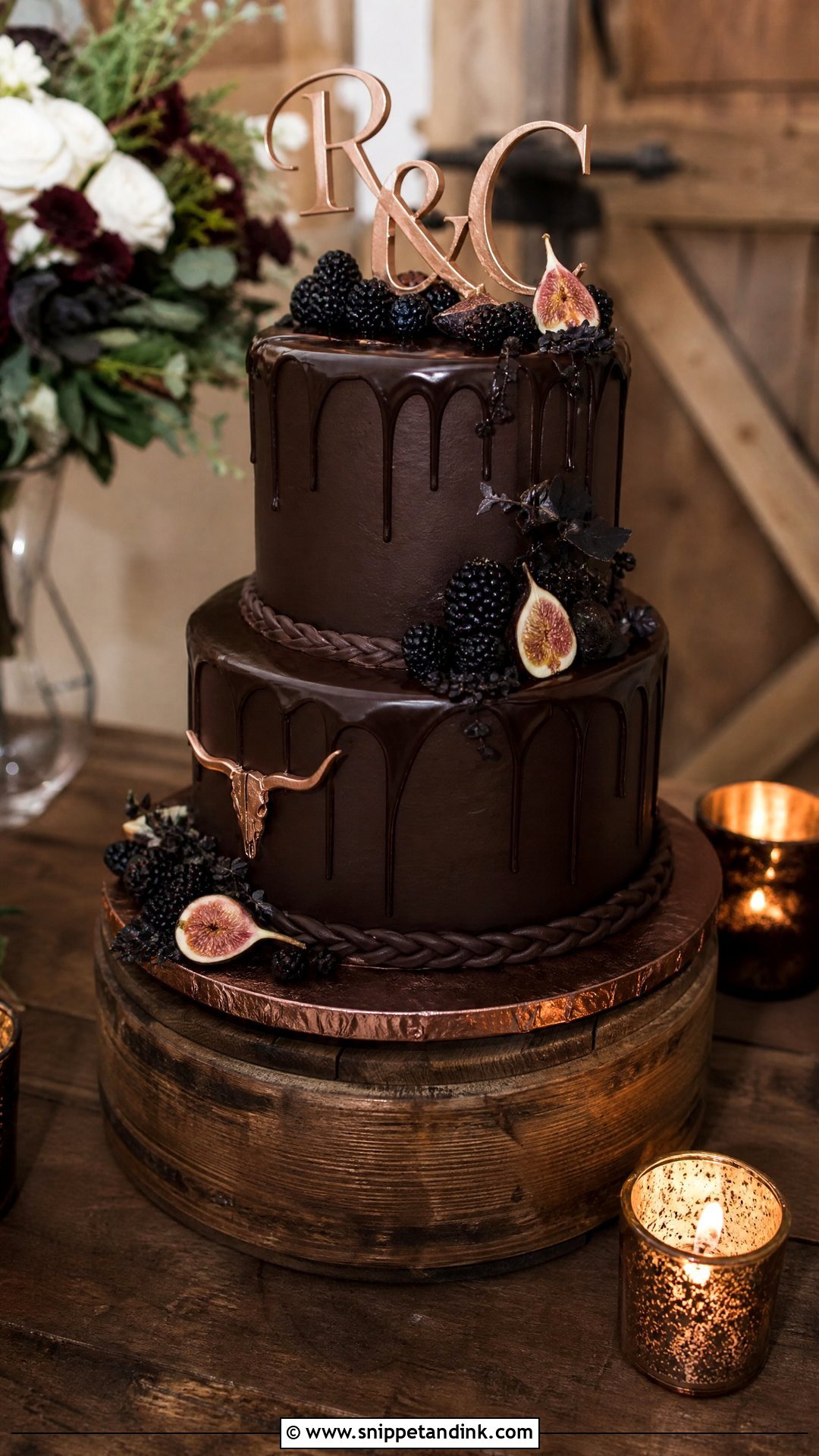
Ganache is my favorite finish for a warm venue, because a firm chocolate shell holds its shape far better than buttercream. Dark chocolate gives depth and a soft sheen. Copper accents, dried grasses, blackberries, figs or a subtle rope border keep it western, and one cowhide tier makes a strong contrast. It suits fall and winter weddings, evening receptions and couples who’d rather have bold chocolate than vanilla, displayed on a dark wood stand in candlelight.
29. Western Wedding Cake With Red Velvet
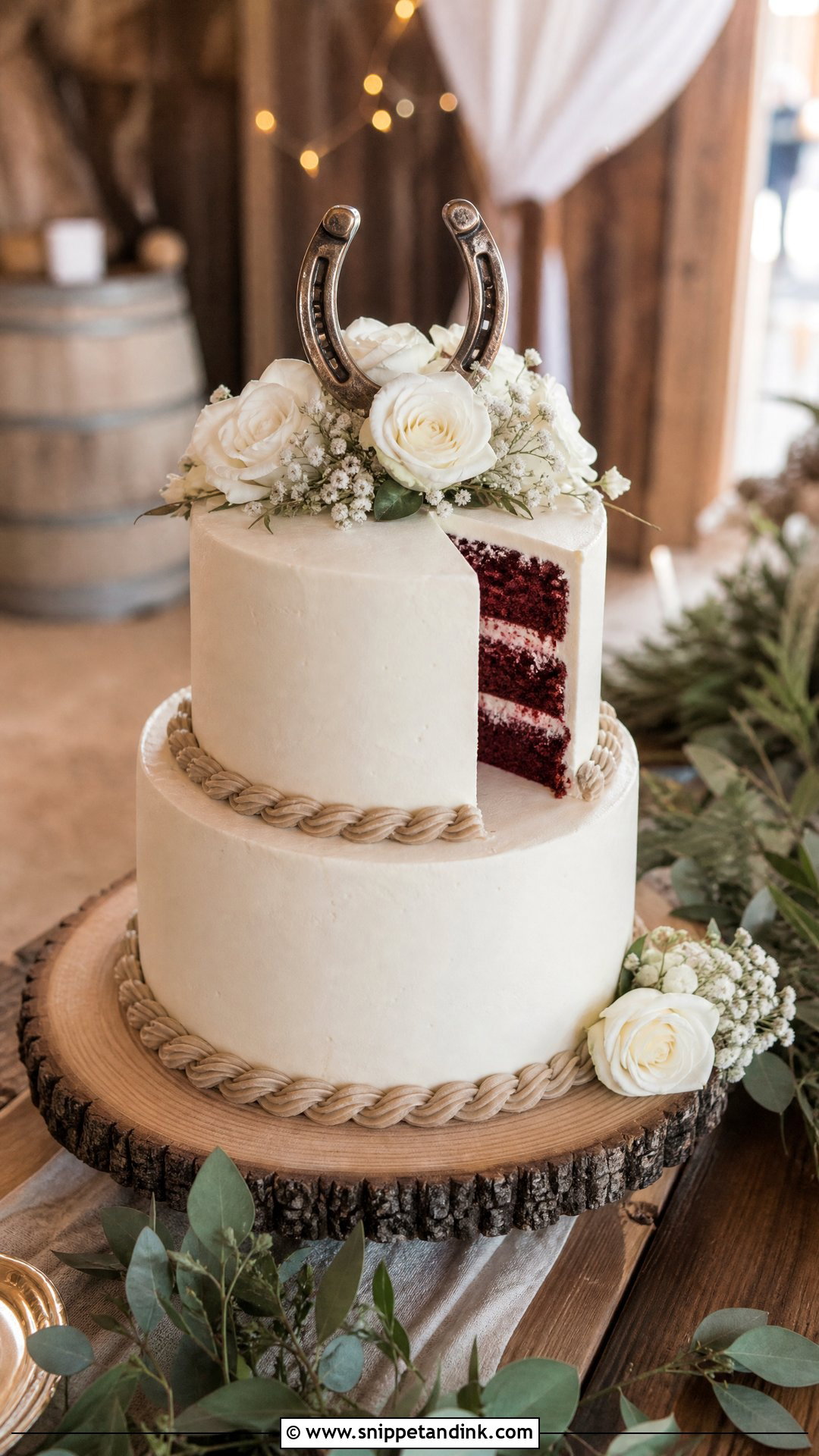
Red velvet is the surprise inside. The outside stays bridal with ivory cream cheese frosting, soft texture and western touches like rope trim, roses or a small horseshoe, then the deep red crumb shows when it’s cut. Cream cheese frosting is softer than buttercream and needs refrigeration, so I either use a firmer cream cheese buttercream or keep the display time short. The cocoa, vanilla and tangy frosting is a flavor most guests already like.
30. Western Wedding Cake With Dessert Table
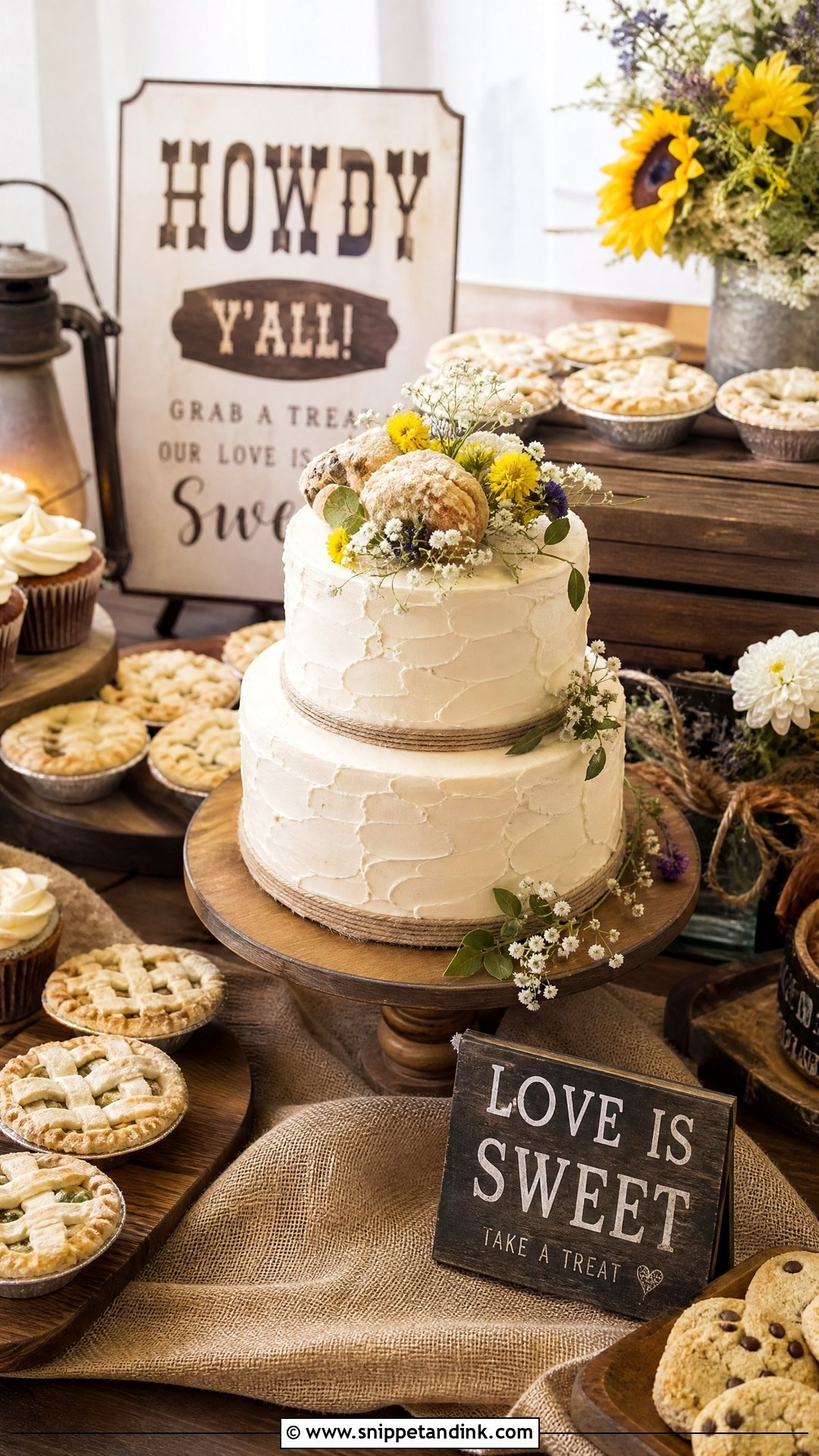
Large ranch weddings are where this setup earns its place: a smaller western cutting cake in the center, surrounded by mini pies, cupcakes, cookies, cake jars or dessert shooters. The main cake no longer has to feed everyone, so it can be smaller and more detailed. Tie the table together with matching colors, wood trays, linen, flowers and a sign or two. Rope trim, wildflowers, cowhide or textured buttercream all work on the centerpiece, and dessert table styling gives guests more choice.
Getting a Tiered Cake Down a Ranch Road
Ranches, barns and desert venues are often at the end of gravel or dirt roads, with no kitchen and no air conditioning. A cake that would be fine in a hotel needs extra planning here.
The drive
Bumpy roads are the main reason I deliver tiers in separate boxes and stack on site. A stacked cake that bounces for miles can crack at the joins or shift off its dowels. Ask your venue how long the last unpaved stretch is, and pass that on to your baker.
The barn
Barns heat up through the afternoon and often have uneven floors. I bring a level and shims for the cake table and ask for a spot away from open doors and direct sun. Find out whether there’s a fridge or a cool room on site, even a small one, because it lets me finish the cake cold.
The bugs
Open doors and sugar attract flies and wasps, especially near caramel, fruit and honey. A clear cake dome or mesh cover until guests arrive, and fans near the table, help more than anything sprayed nearby, which should never go near food anyway.
Let the Venue Pick Your Western Details
Start from your venue. A ranch suits cowhide, rope and woodgrain; a desert terrace suits terracotta, succulents and turquoise; a barn suits semi-naked frosting, wildflowers and burlap with lace. Whatever you choose, the cake should look like a wedding cake first, with the western detail layered on top. Get the base right for the heat and the drive, add one or two details from the setting, and the photos will take care of themselves.
You'll Like These Ideas:





Leave a Reply