
The single white gown is still around, but it’s no longer the only route. In fittings now I see lace next to drop waists, sculptural shapes, bows, pearls, minis, tea-length hems, colored gowns, sharp suiting and vintage pieces. What makes a dress feel special is how well it suits the venue, your body and the way you move, not how unusual it is. Below are 25 bridal looks, each styled head to toe, with the details I’d check before you commit to any of them.
Ordering Nine Months Out, Fitting in the Final Eight Weeks
Unusual dresses often take longer than standard bridal gowns, because coloured fabric, suiting or a made-to-order design may not be in stock. These are the rough timings I work to, though every shop and designer differs, so always ask.
- Start trying on nine to twelve months before the wedding. Made-to-order gowns commonly take four to six months to arrive.
- Book the first alteration fitting around eight to ten weeks before the wedding, with your shoes and underwear.
- Expect two or three fittings. Gowns with corsetry, beading or a bustle need more.
- Have the final fitting one to two weeks out, and bring whoever will help you dress and bustle on the day.
Vintage and heirloom dresses need extra time for cleaning and repair. Suits and jumpsuits can usually be bought and tailored faster, but don’t leave tailoring to the last month; good tailors get busy in wedding season.
One more thing I insist on: put every date in writing when you order, including the expected delivery week and the shop policy on late arrivals.
1. Lace Wedding Dress With Veil
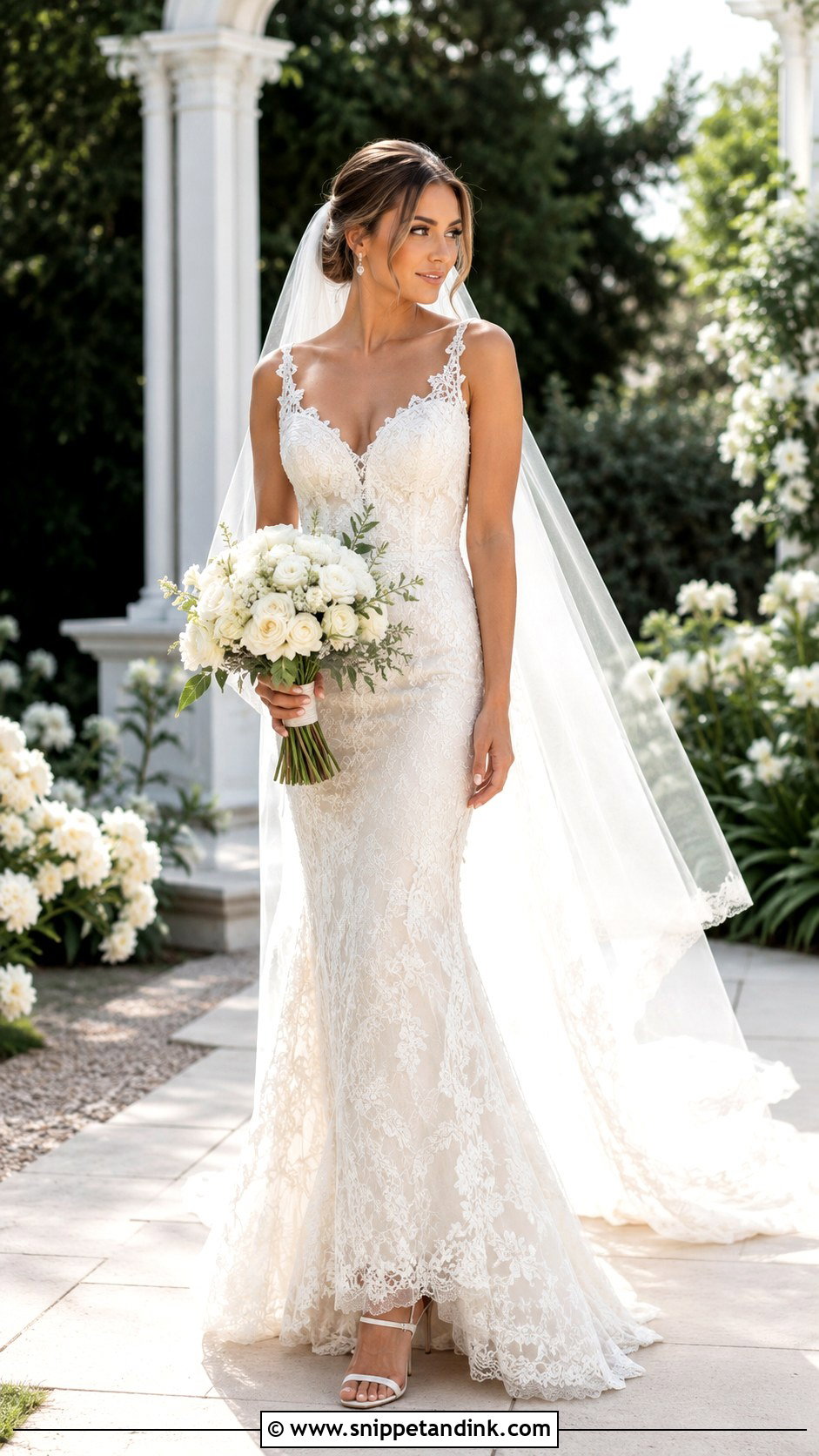
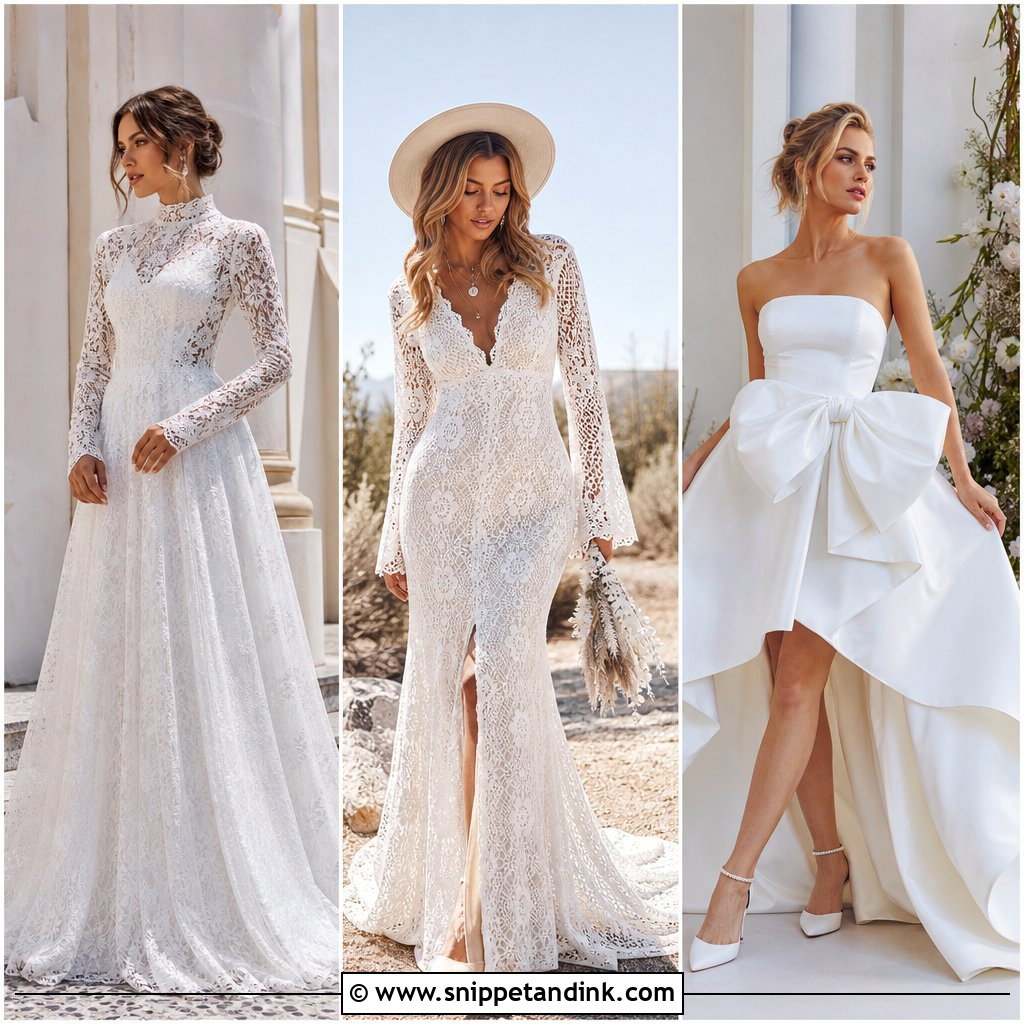
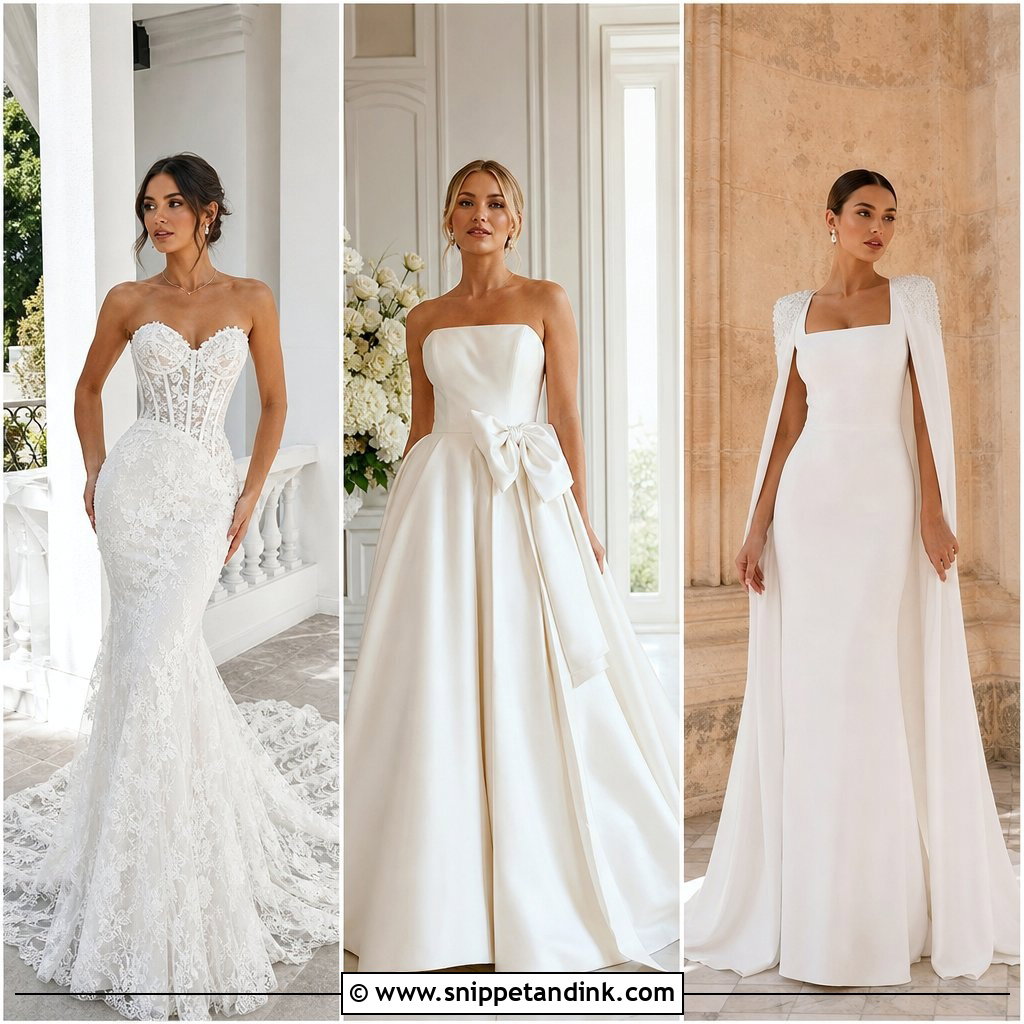
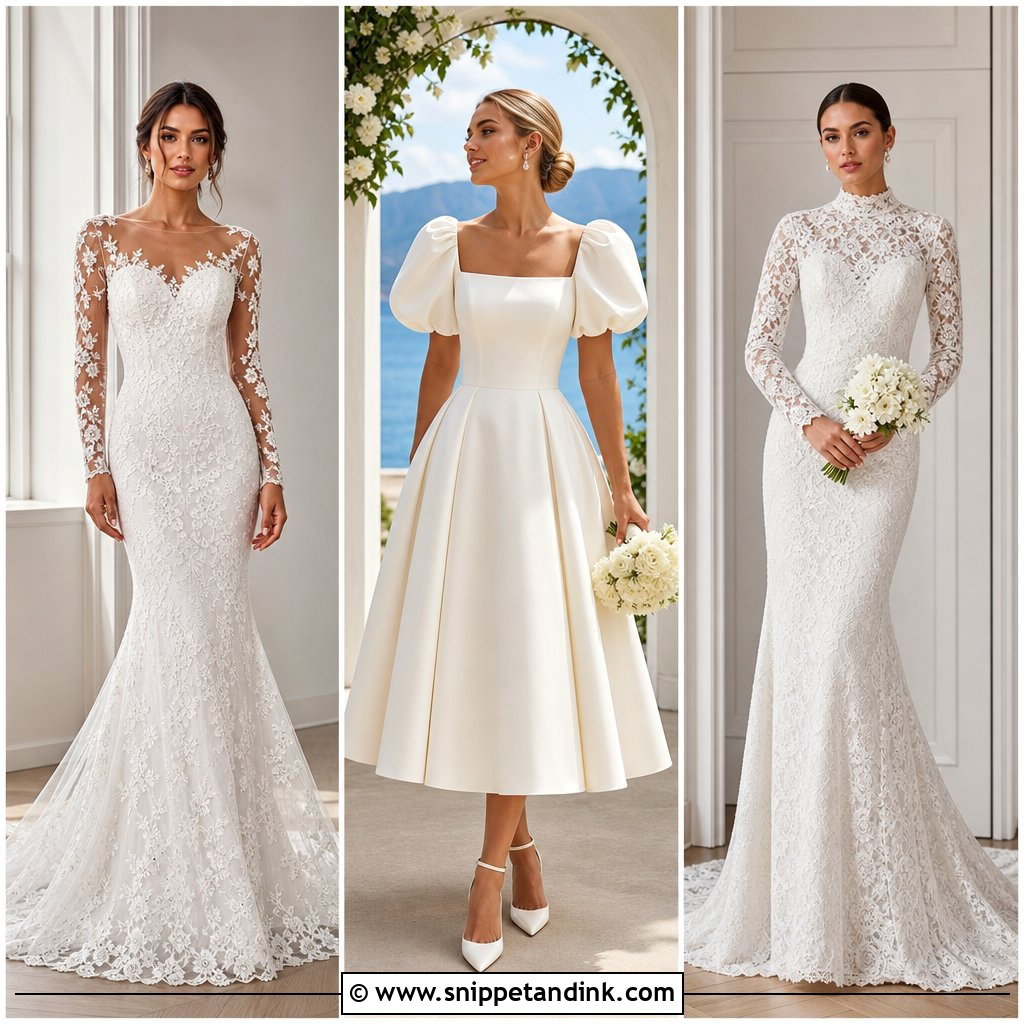
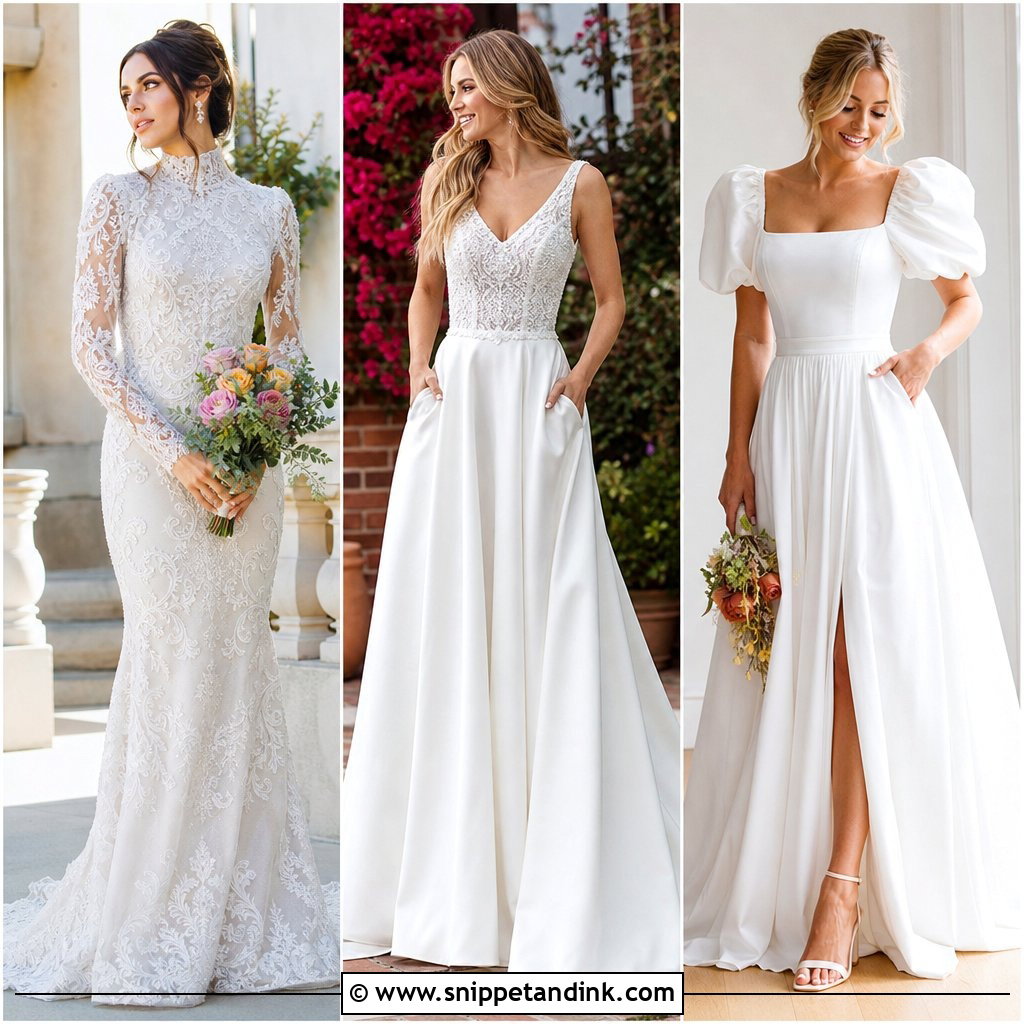
Lace is the safest romantic choice, and the veil decides how traditional it reads. A fitted lace gown, a lace A-line or a long-sleeve design changes the amount of coverage; a soft cathedral veil makes it classic, a fingertip veil keeps it easy to move in. I’d match the veil edge to the lace weight: heavy lace with a plain tulle veil, fine lace with a lightly edged one. Pearl earrings, a delicate bracelet and satin heels let the lace lead. White, cream or blush flowers finish it, at gardens, estates or indoors.
2. Satin Ball Gown Wedding Dress
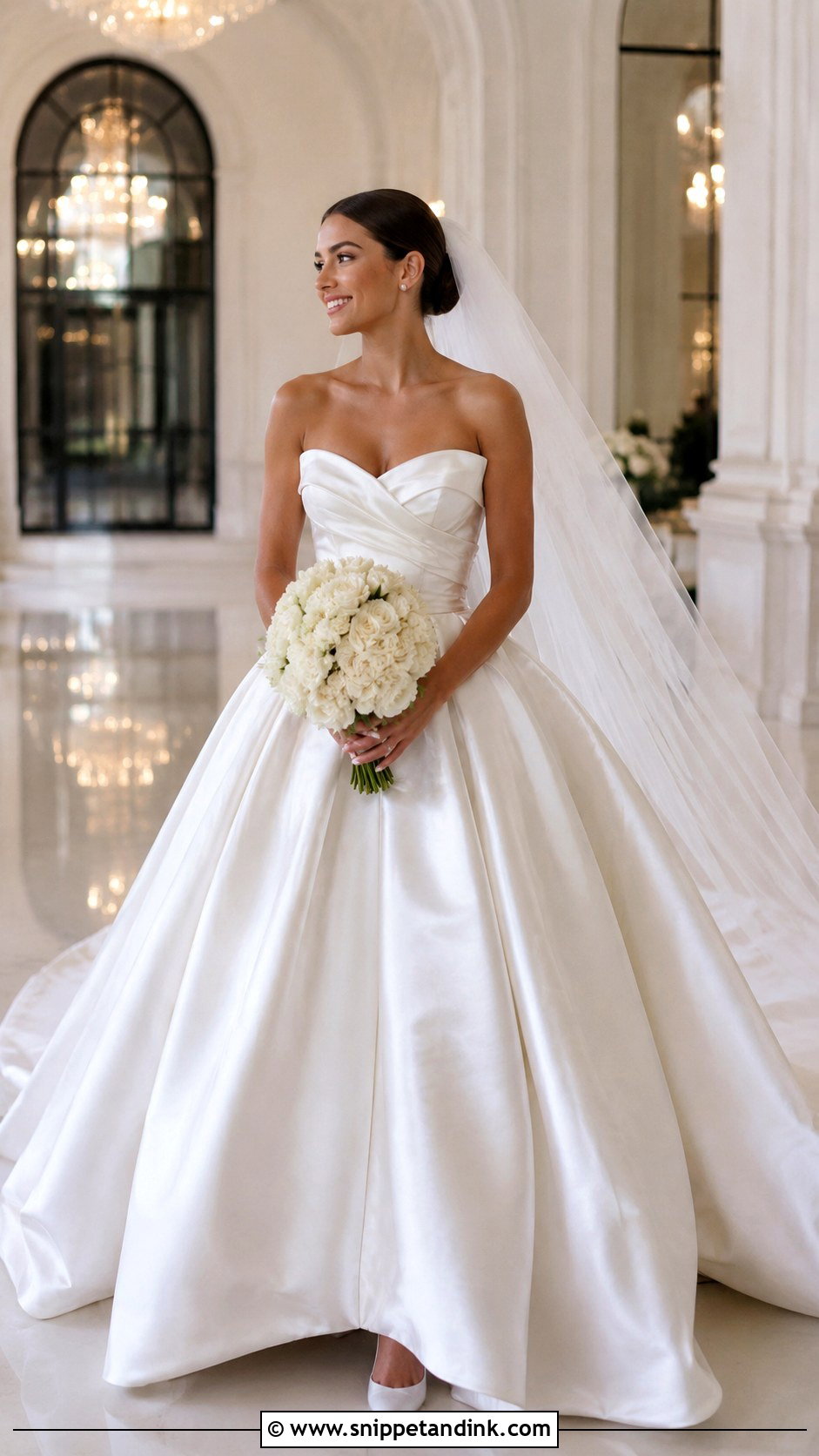
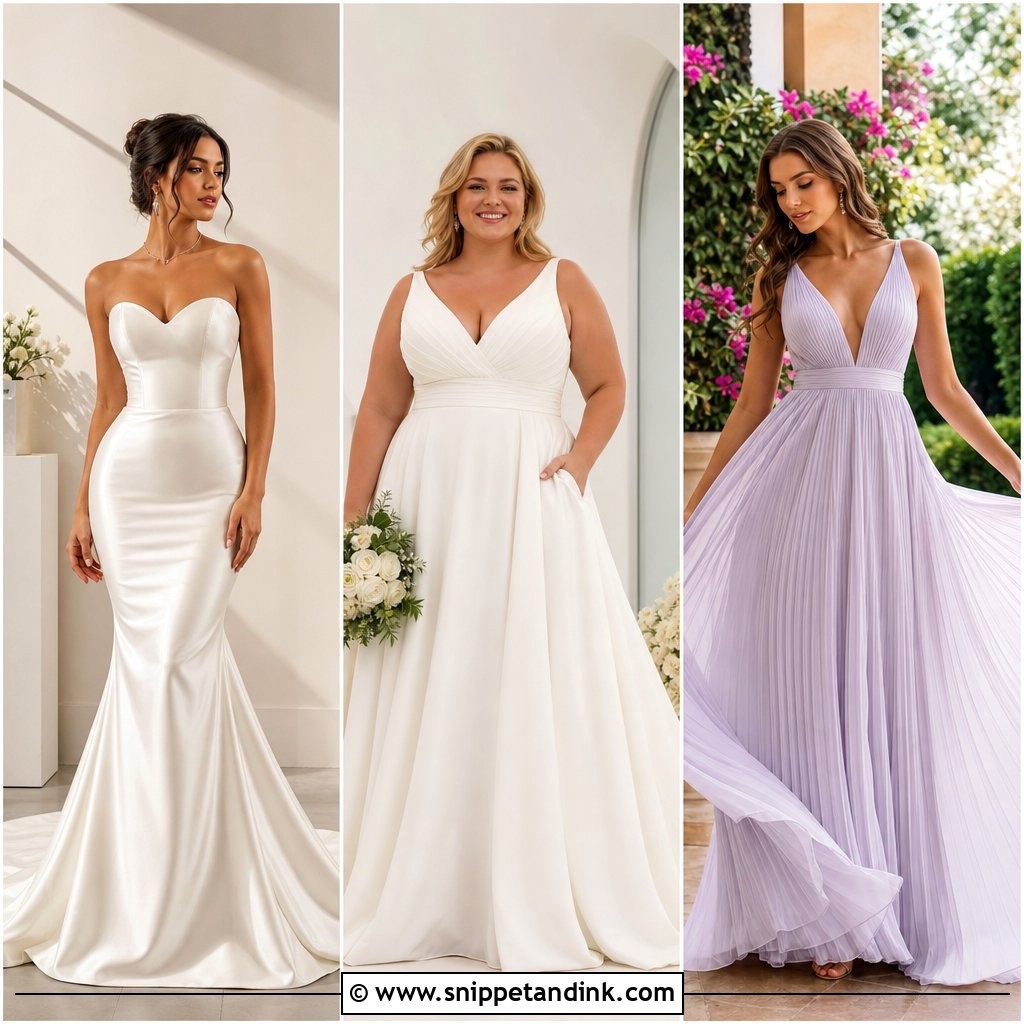
Satin ball gowns get their drama from shape alone. The fabric reflects light, so it reads clean in photos inside or out. A structured bodice, a clean neckline and a full skirt make it regal, whether strapless, square-neck or off-shoulder. Pointed satin pumps, a long veil and small pearl or diamond-style drops are all it needs. Keep the bouquet in proportion to the skirt; an oversized one makes the whole look heavy. Heavy satin creases badly in a car, so I’d steam it once you arrive and carry the train in for the trip.
3. Off Shoulder Wedding Dress With Gloves
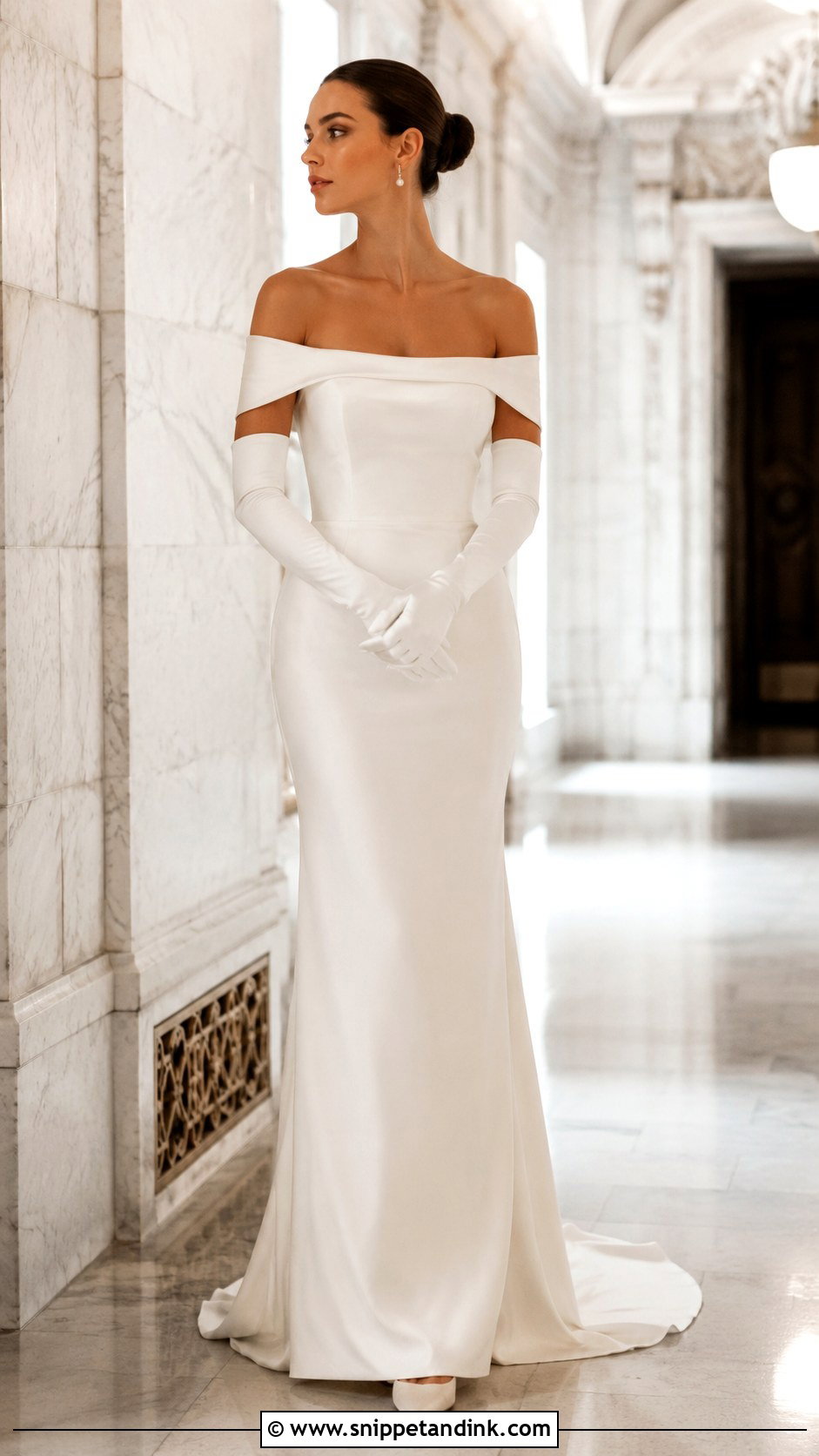
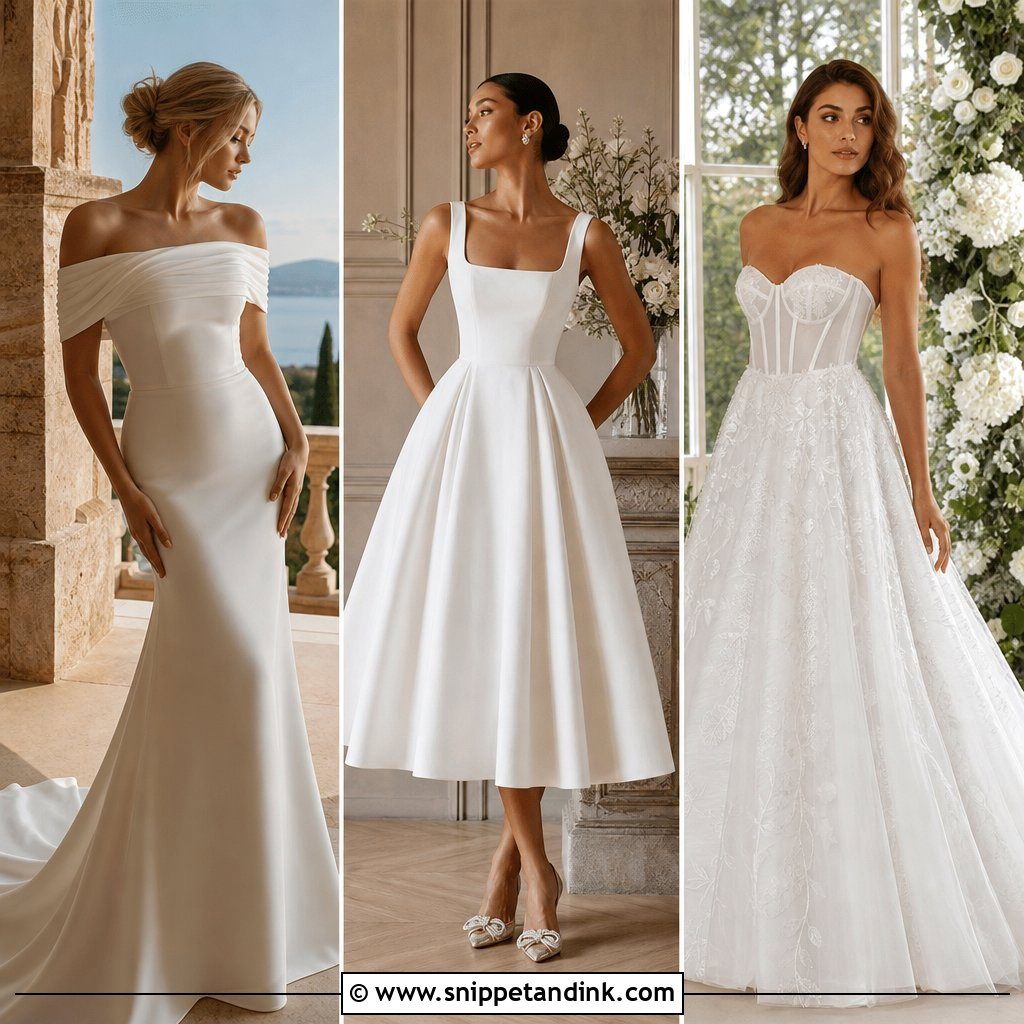
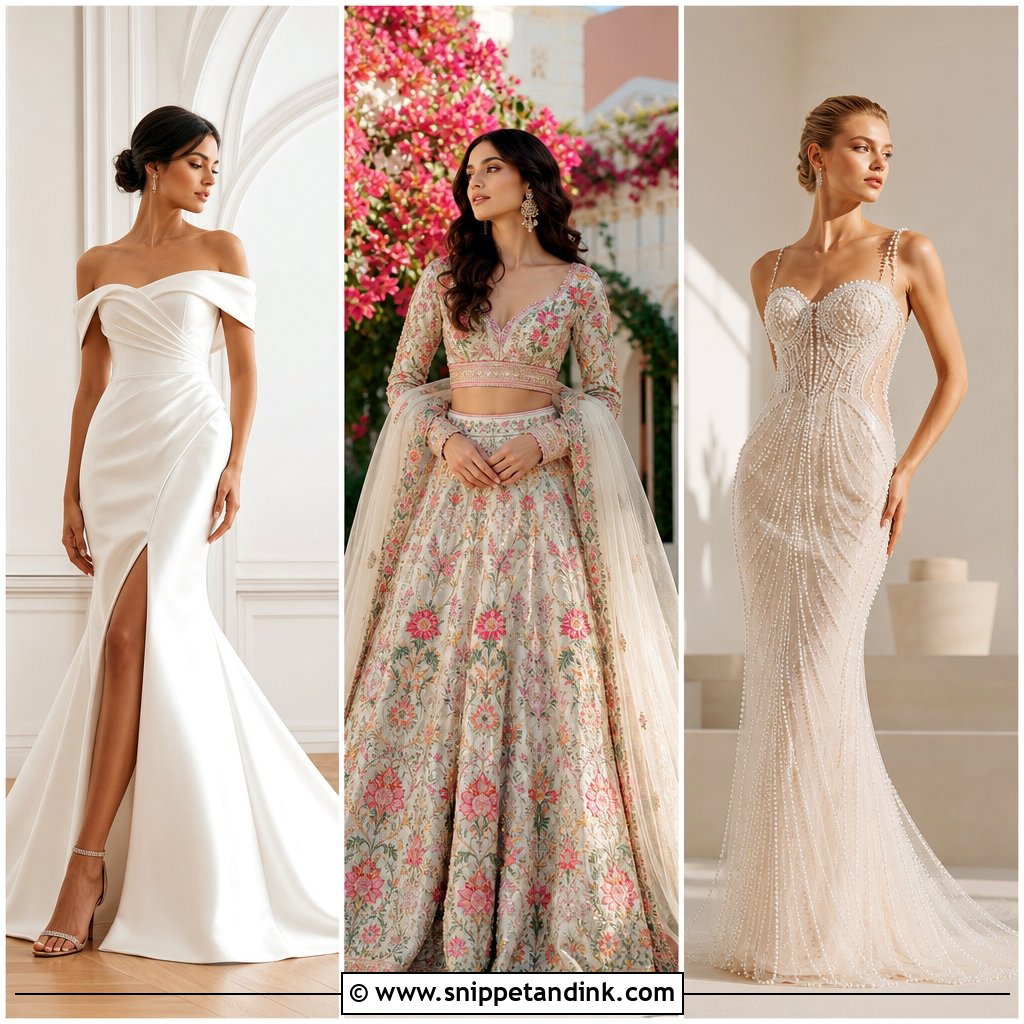
Gloves change an off-shoulder dress from romantic to fashion. Fitted satin, crepe or mikado gives a clean shape; lace or tulle with light appliqué softens it. Opera-length gloves feel formal, wrist-length ones lighter and more playful. Pearl drops, a simple veil and pointed heels finish it, with soft waves, a low bun or a sleek updo. Plan when the gloves come off: you’ll want bare hands for the ring exchange, so either slip off the left glove or choose fingerless styles. Museums, grand hotels and evening weddings suit it.
4. Floral Applique Wedding Dress
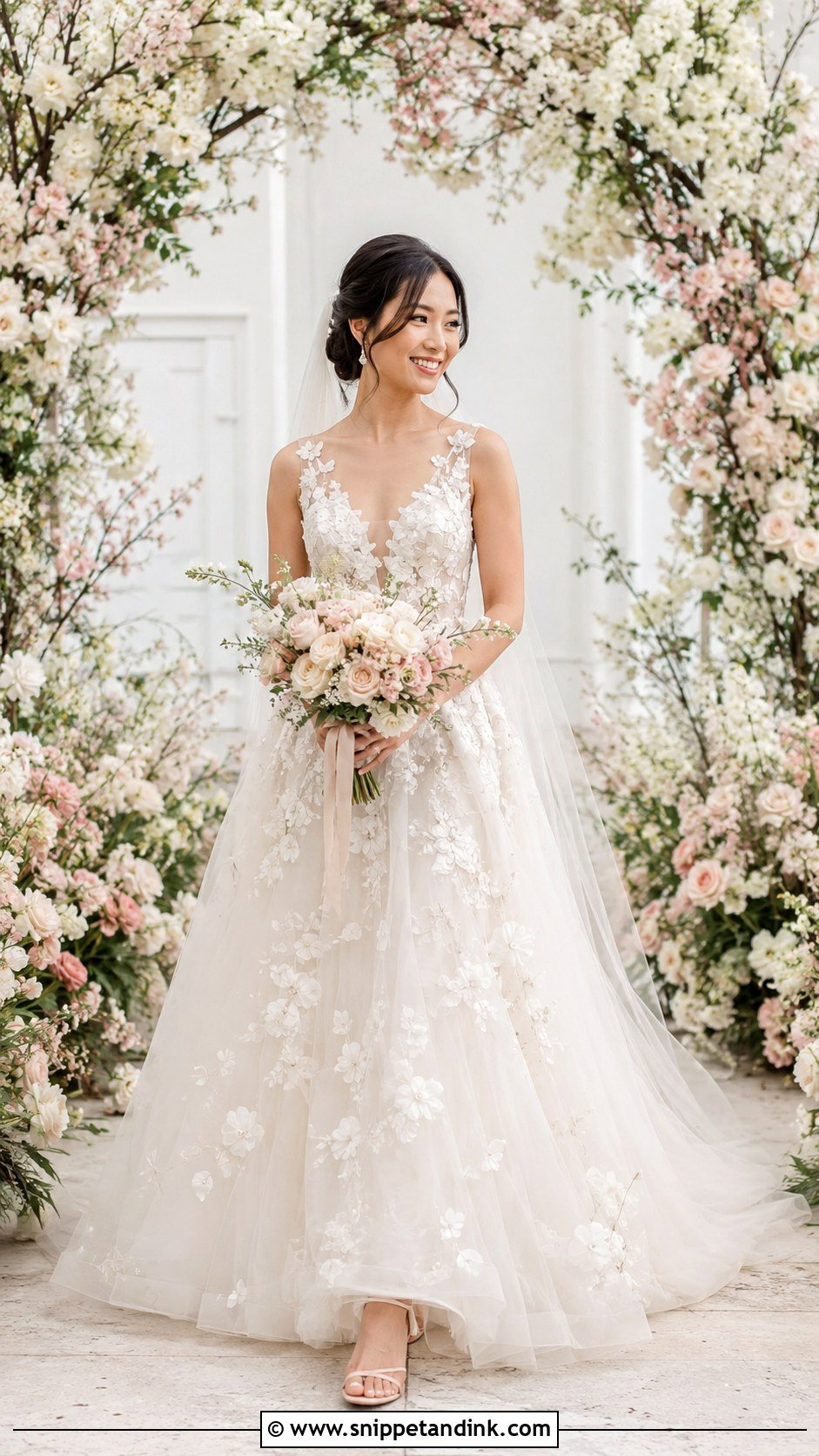
Appliqué flowers add texture you can see from every angle. Scattered blooms read soft; raised 3D flowers look couture. A sheer overlay with embroidered flowers feels dreamy. Barely-there heels, pearl studs and a soft veil or floral hairpins are enough, and I’d stop there. Raised petals snag on veils and crush when you sit, so I check that each one is stitched firmly at the base before the wedding. Spring weddings, gardens and outdoor portraits suit it best.
5. Drop Waist Wedding Dress
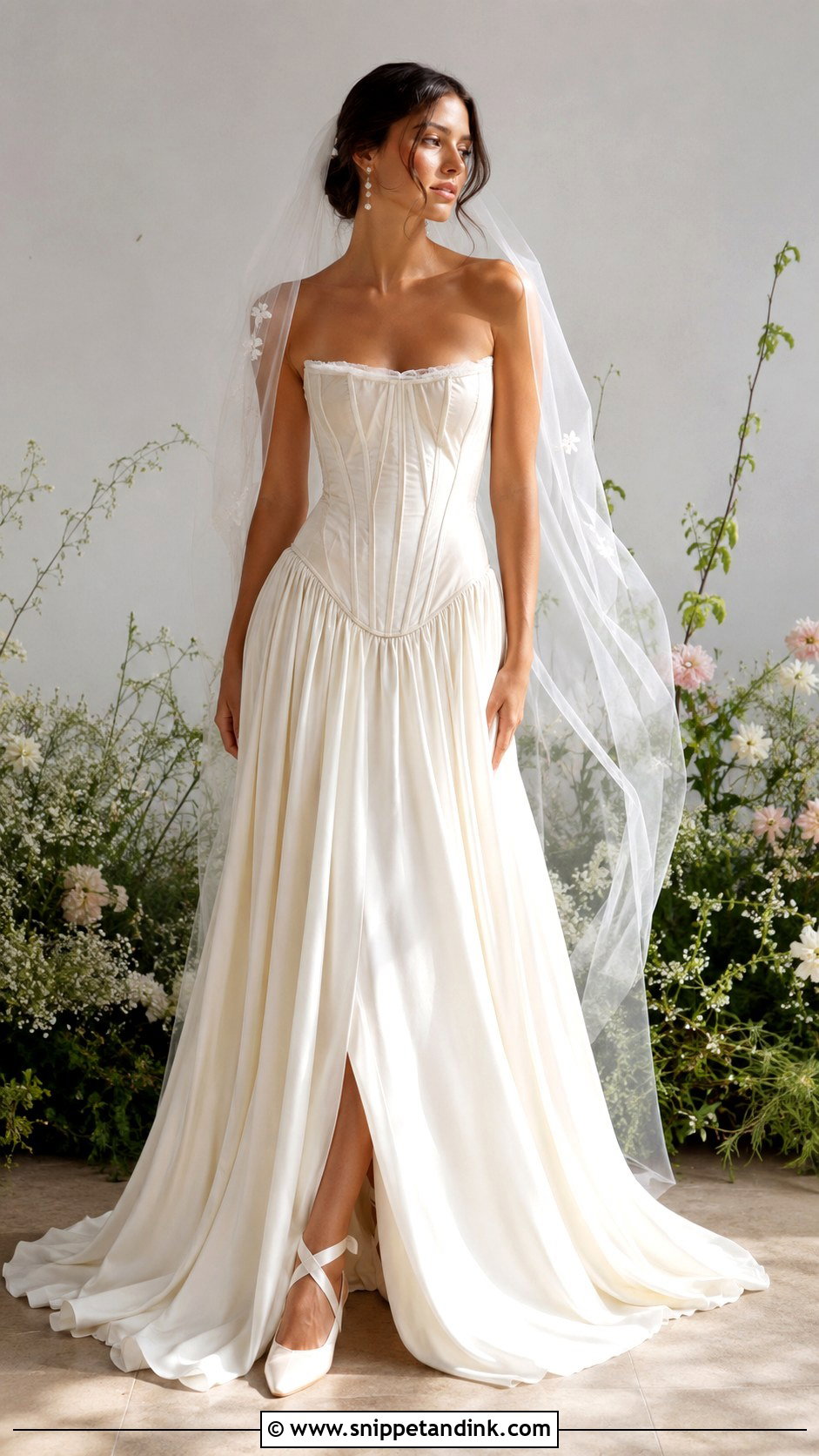
Drop waists sit lower than the natural waist before the skirt flares, which lengthens the torso and gives a vintage feel with a modern edge. A corseted drop waist is structured; a draped one moves more. Ballet-inspired shoes, a simple veil and a neat updo suit it, and oversized accessories don’t. Placement is everything: too low and it shortens the legs. I’d steer very petite brides toward a gentler drop. It suits romantic fashion, editorial photos and anyone tired of the A-line.
6. Pearl Wedding Dress With Simple Accessories
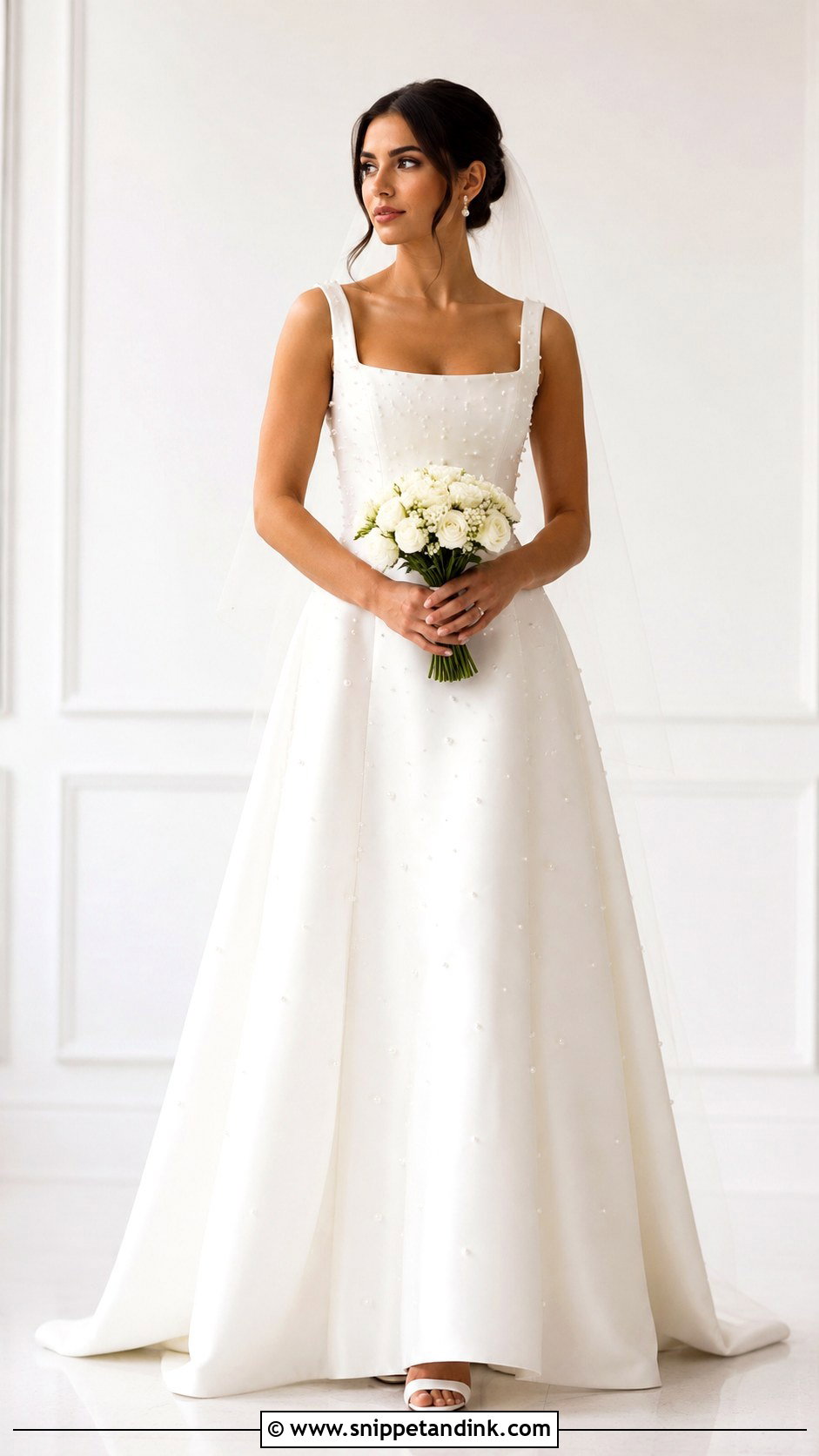
Pearls give a soft shine that never looks harsh. Tiny scattered pearls are delicate; allover beading is glamorous. I’d keep accessories clean: pearl earrings, a satin clutch, white or ivory heels and a plain veil. If the gown has a high neck or pearl straps, skip the necklace. Pearls look best in close-ups because they catch light gently. Hand-sewn pearls do come loose, so I check the threads at the final fitting and pack a needle and matching thread.
7. Long Sleeve Wedding Dress
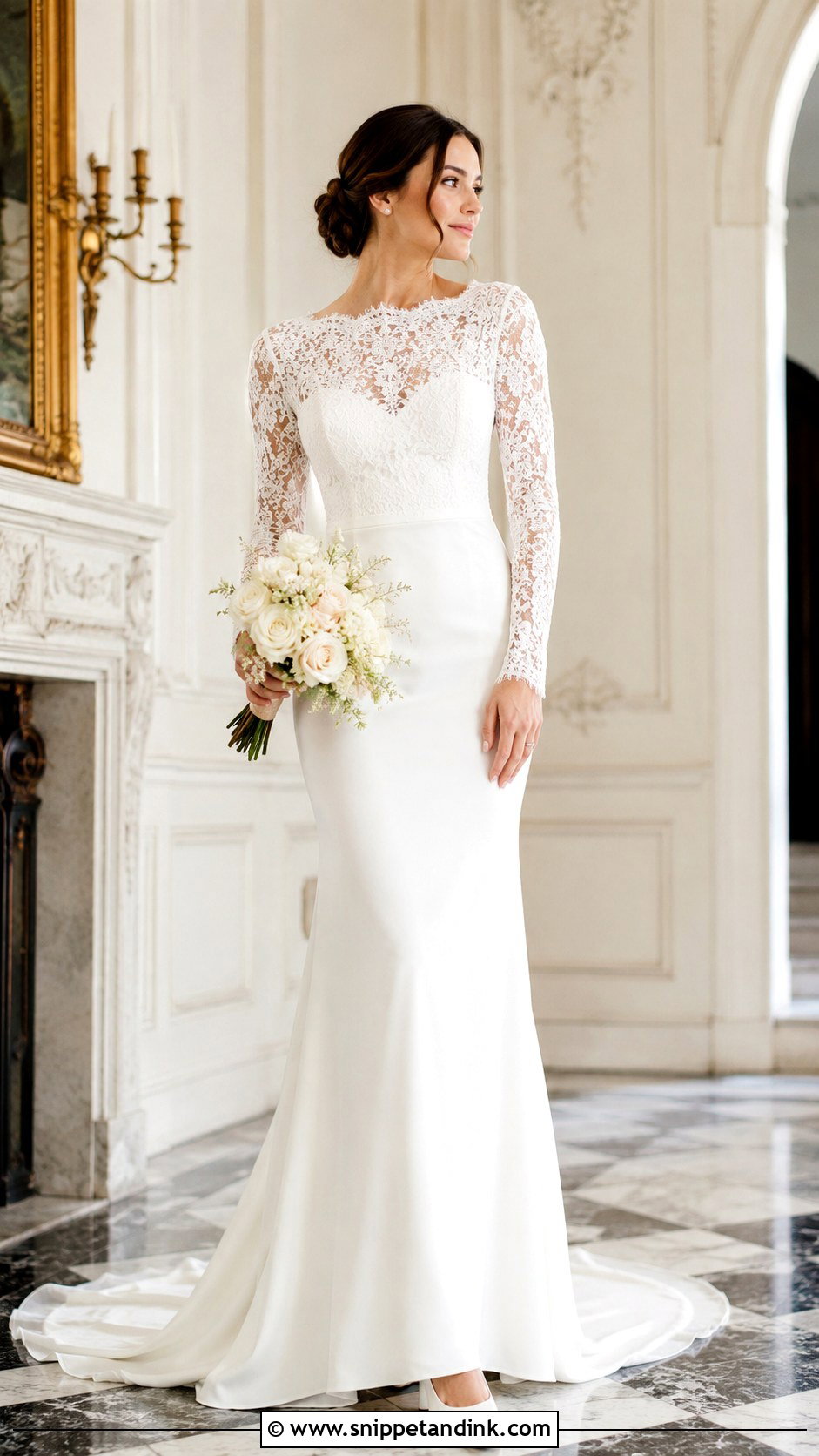
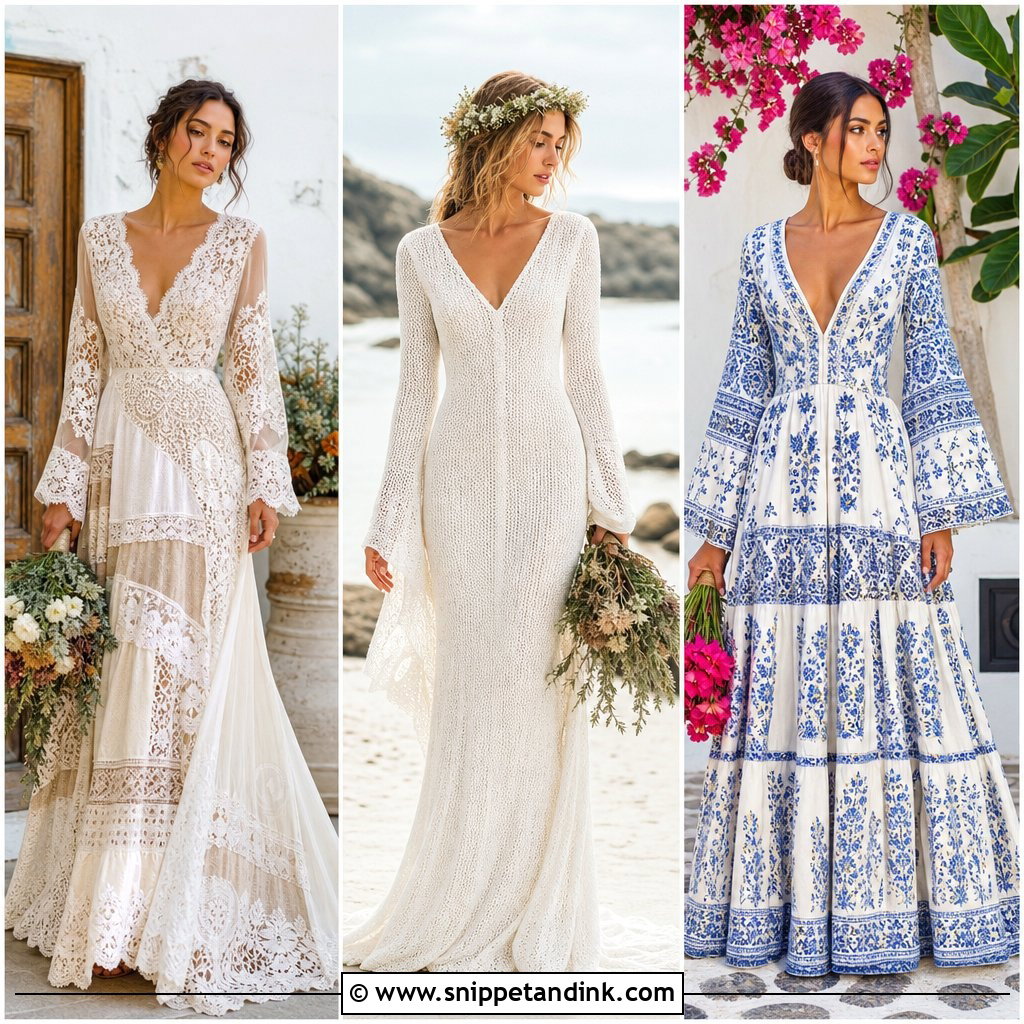
Sleeves change the whole mood of a dress. Lace sleeves are romantic, fitted crepe sleeves sleek, sheer tulle soft. To keep a long-sleeved gown from feeling heavy, pair it with an open back, a clean skirt or a defined waist. A low bun, small earrings and comfortable heels suit it, and a long veil makes it more formal. The fitting point I care about is the armhole: if it’s cut too low, raising your arms lifts the whole bodice. Fall, winter and classic indoor ceremonies suit it.
8. Tea Length Wedding Dress
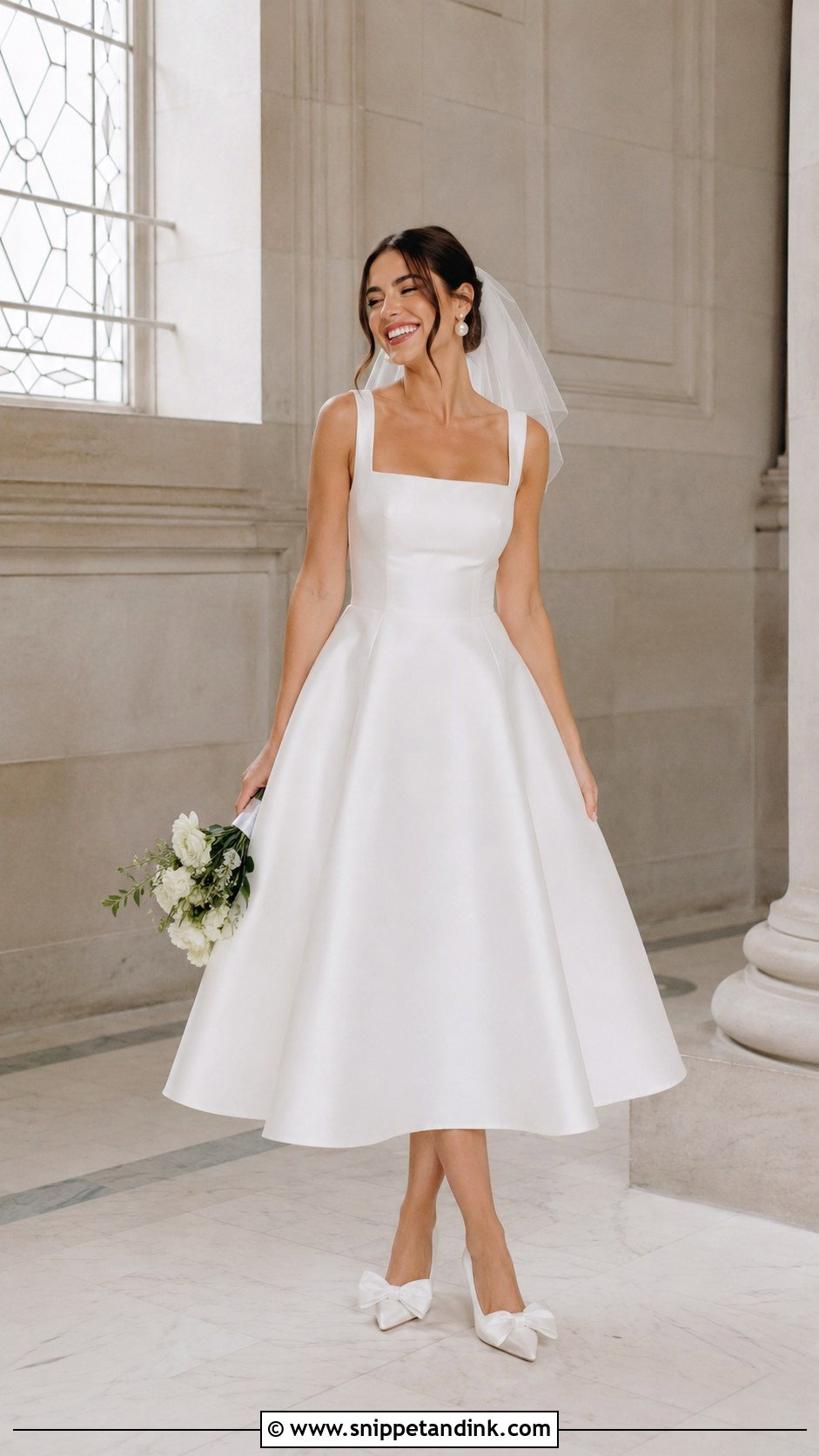
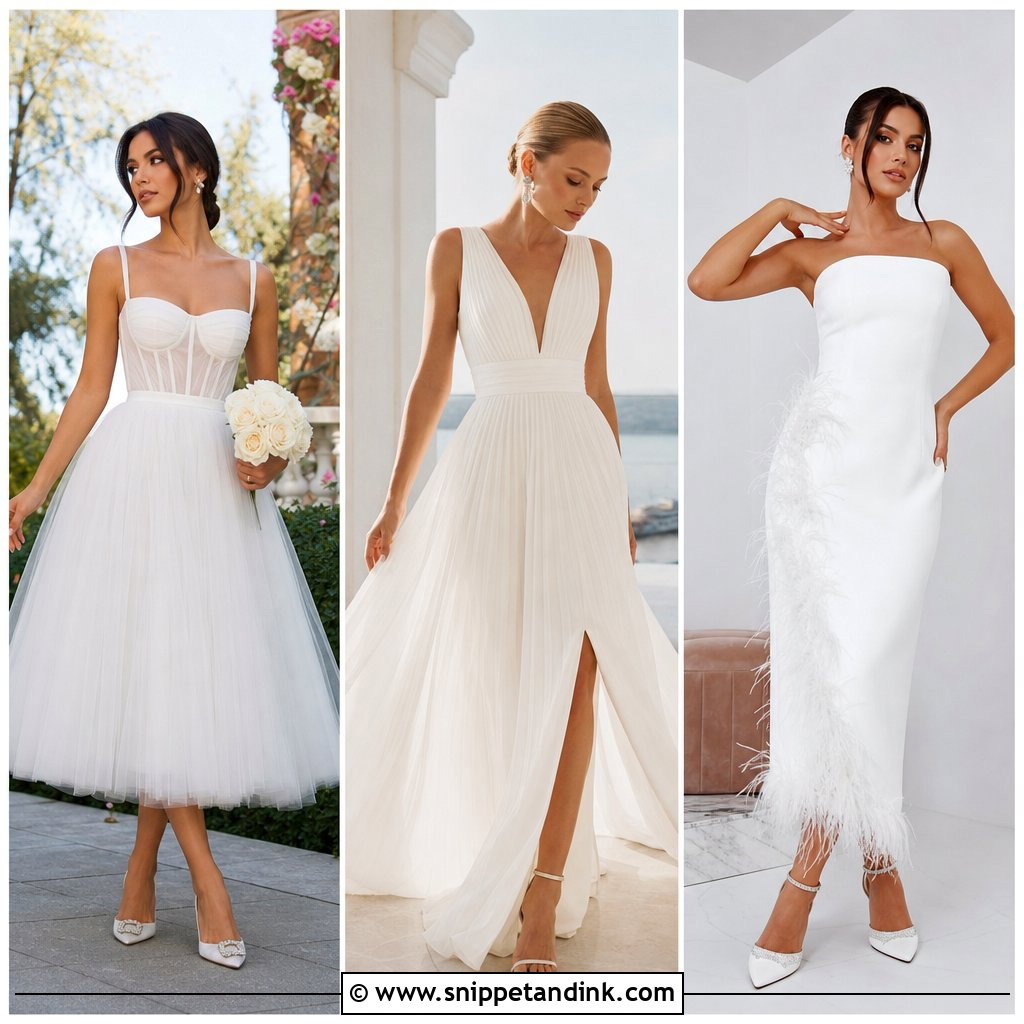
Tea length ends between the knee and ankle, so your shoes become part of the outfit. Bow heels, embellished pumps or sleek slingbacks all make it look intentional. A fitted bodice and flared skirt feel vintage; a minimal tea-length dress feels modern. Short gloves, pearl earrings or a small veil add personality. There’s no hem to drag on grass or a dance floor, which is why I suggest it for courthouse ceremonies, brunch weddings and outdoor receptions. Break your shoes in, since everyone will see them.
9. Minimalist Slip Wedding Dress
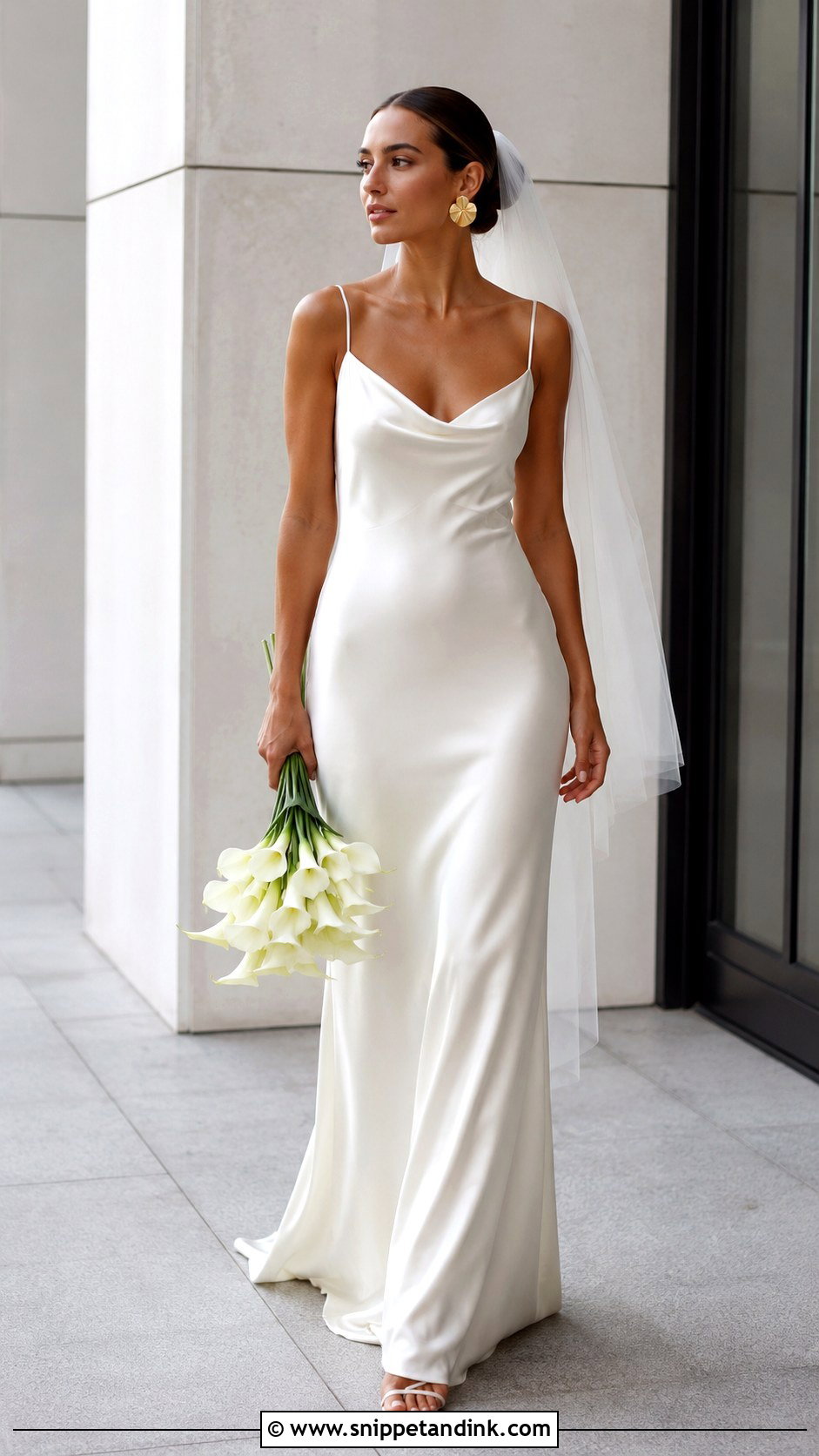
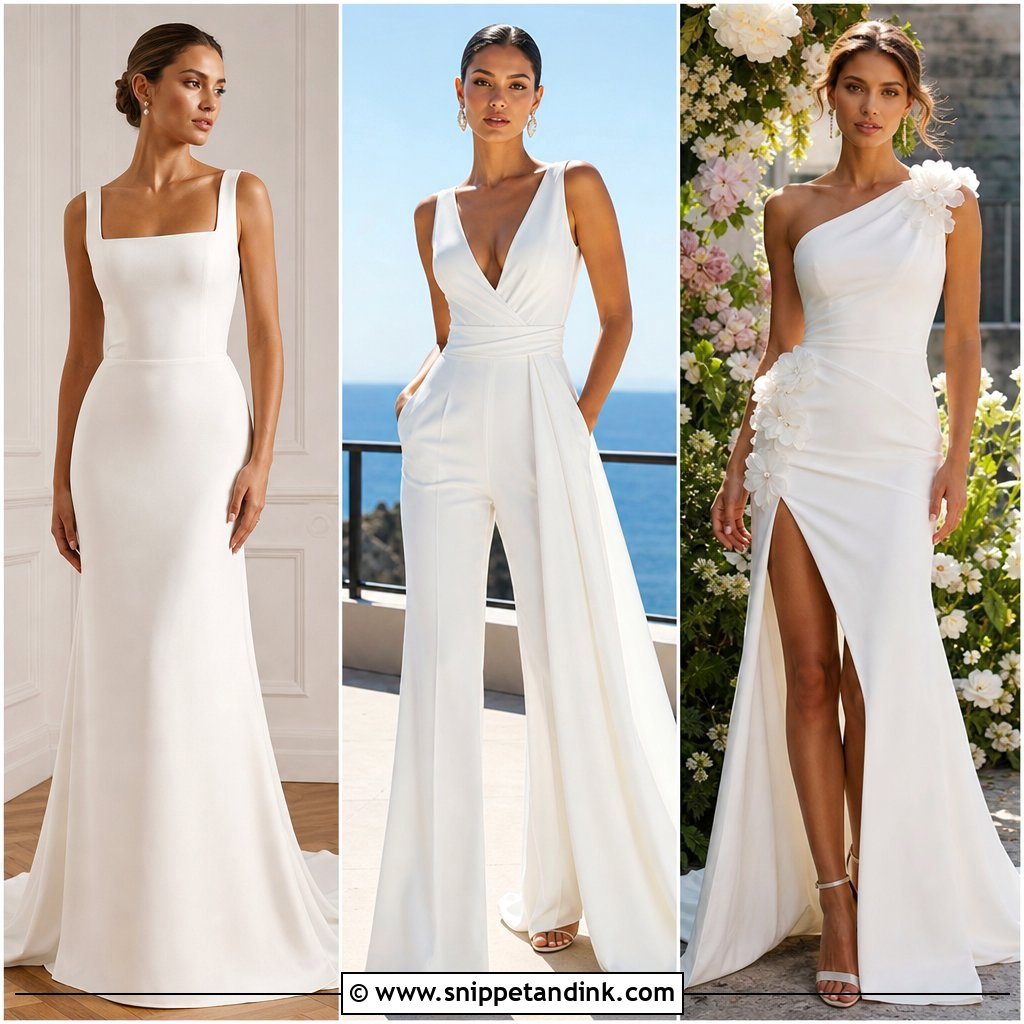
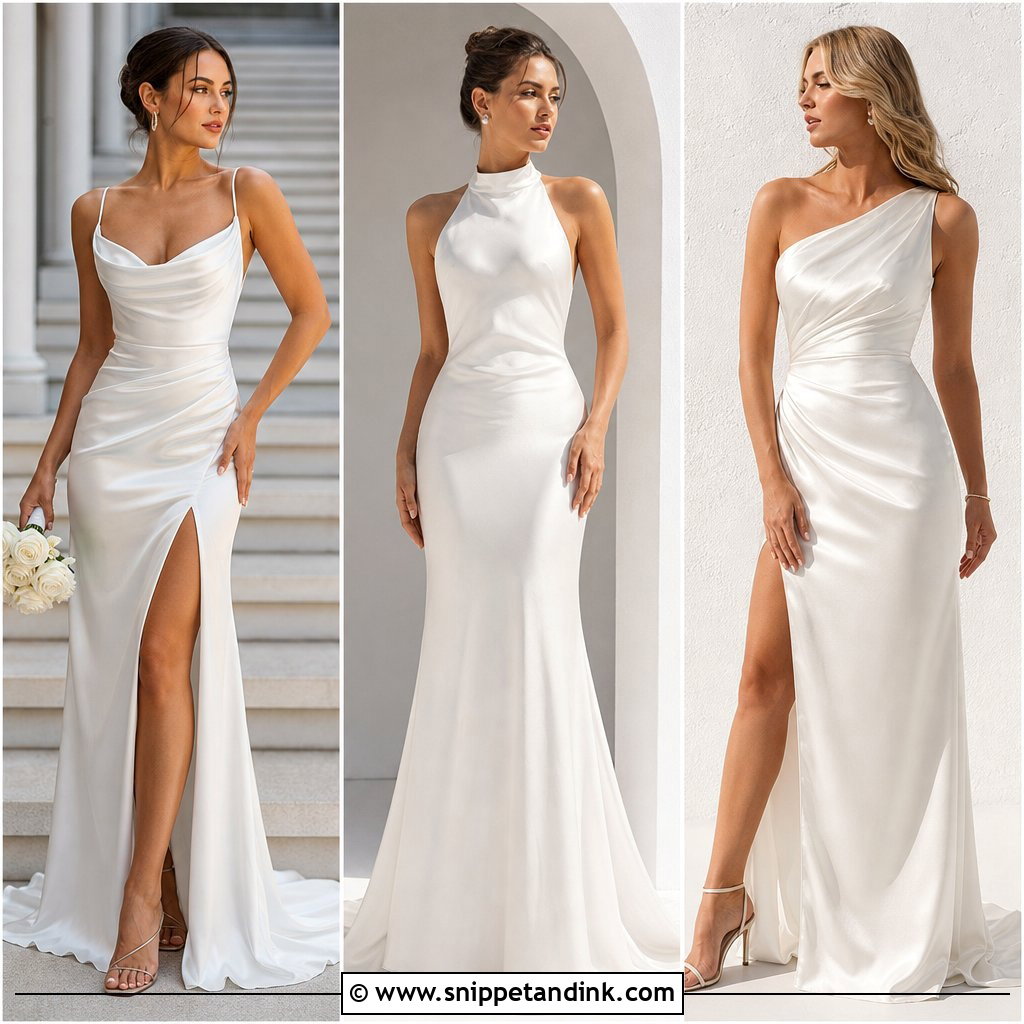
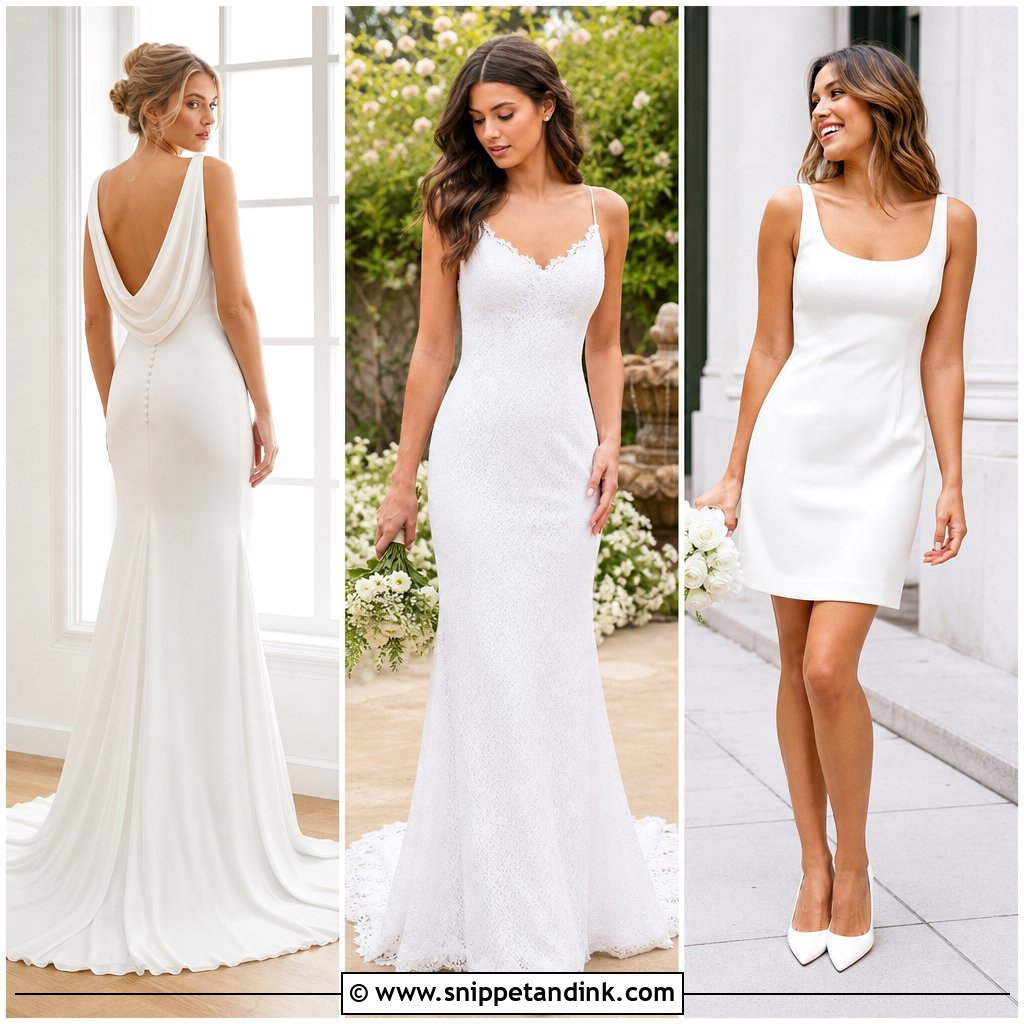
A slip dress hides nothing, so fabric and fit carry it. Quality satin, silk or crepe should drape over the body without pulling. Cowl, scoop and straight necklines each give a different feel. Strappy heels, a clean veil and sculptural earrings finish it. I fit slips with the exact underwear or shapewear the bride will wear, because bias-cut satin shows every line. Smooth, not tight. Modern venues, city weddings and beach ceremonies suit it.
10. Corset Wedding Dress With Full Skirt
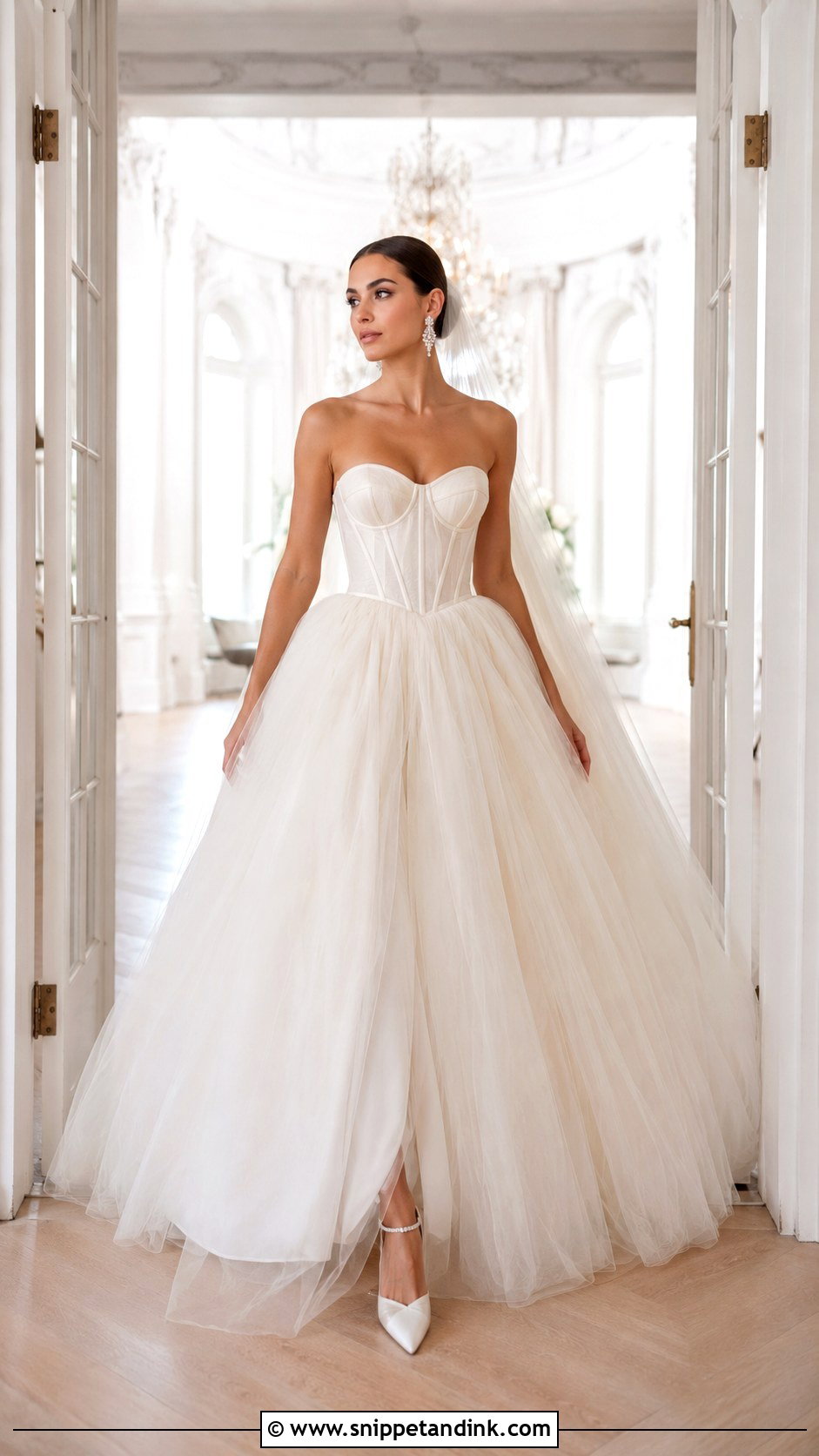
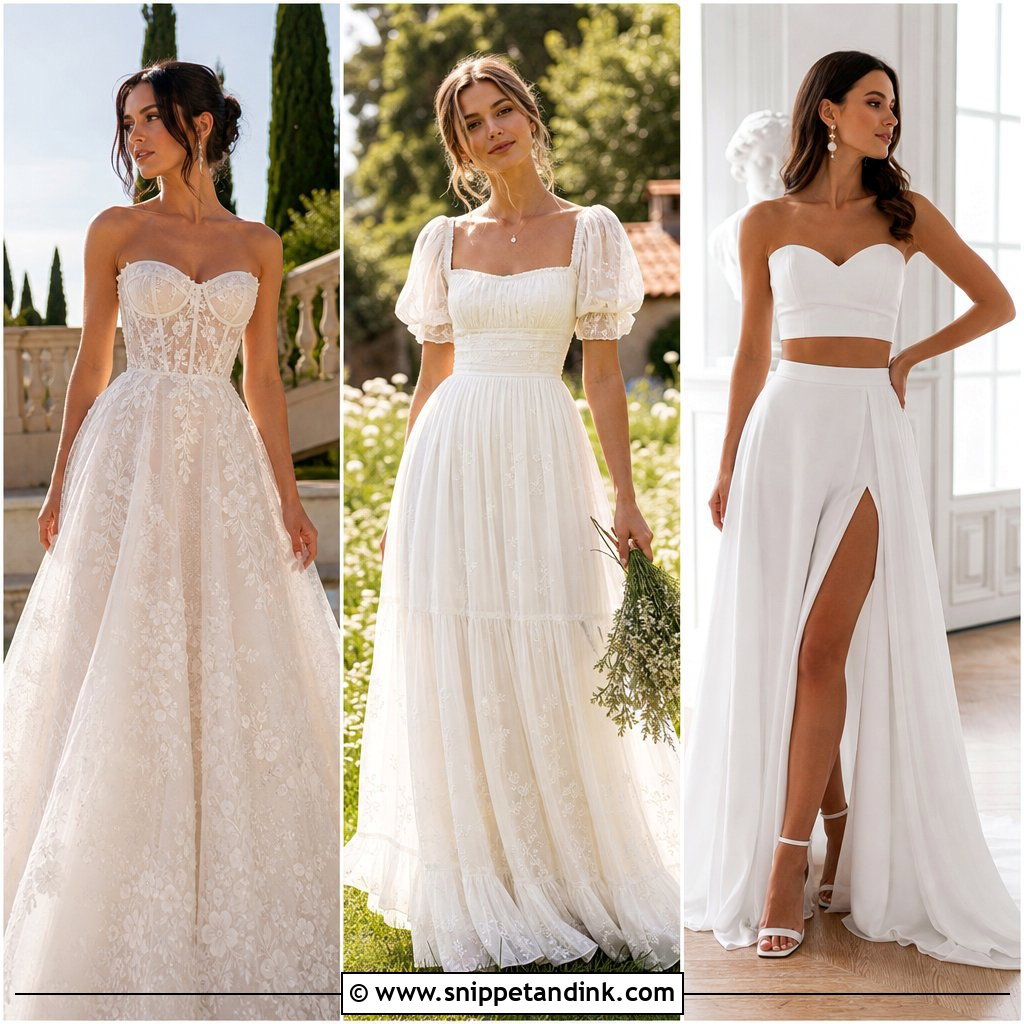
A corset bodice with a full skirt gives the most defined bridal outline there is. Exposed boning looks fashion-led; covered boning classic. Tulle is romantic, satin or mikado formal. A long veil, pointed heels and small jewelry keep the neckline clean. I always ask a bride to sit, breathe deeply and lift her arms in it; a corset that pinches at the fitting will hurt by the speeches. It’s built for grand entrances and formal portraits.
11. Bow Back Wedding Dress
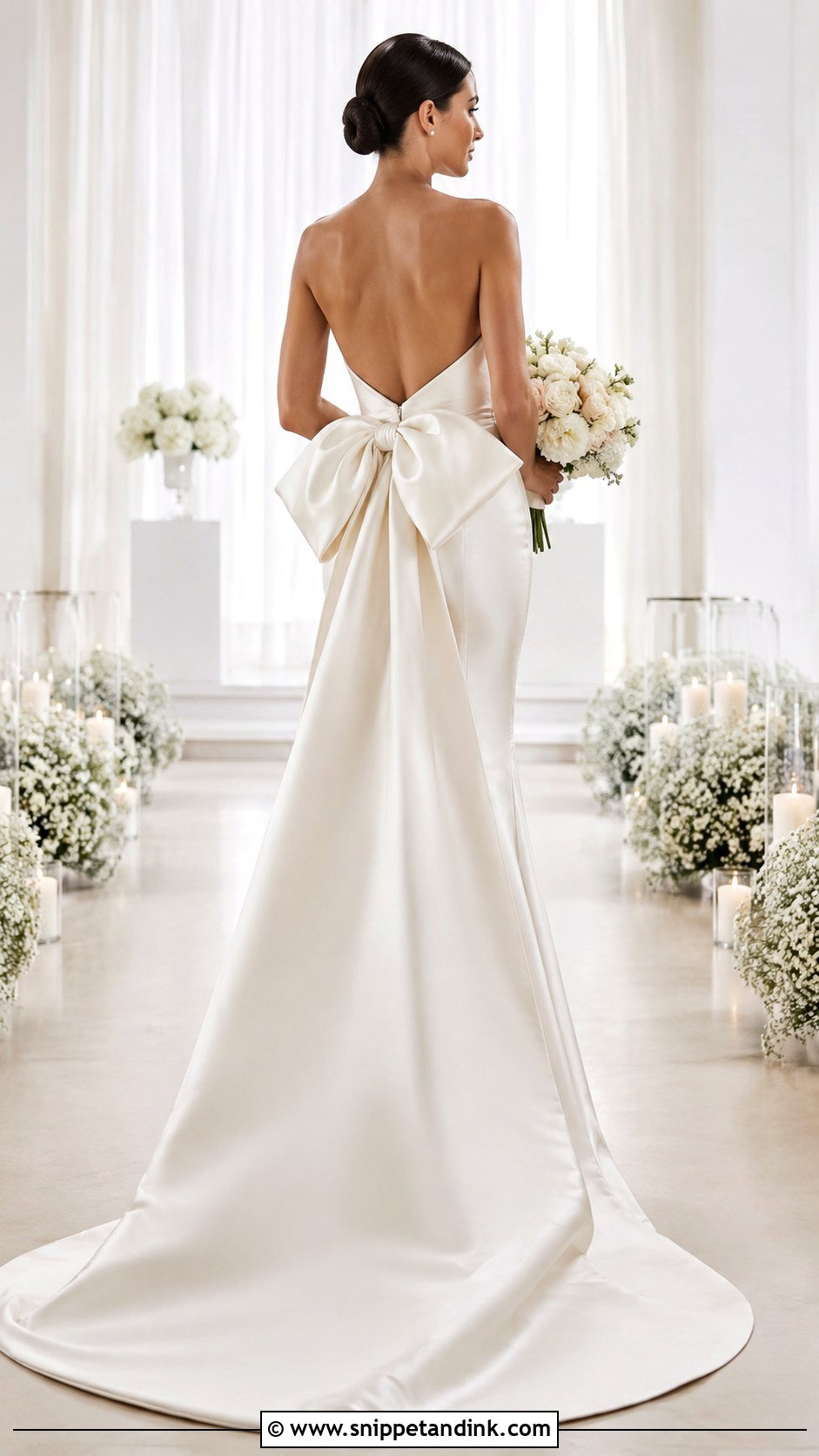
Guests spend the ceremony looking at your back, which makes a bow back worth considering. Oversized bows are dramatic; slim ones delicate. Clean satin with a large bow looks modern, lace with a soft bow romantic. Keep the front plain if the bow is the feature. A smooth updo, small earrings and classic heels suit it. Chapel or fingertip veils work, but I’d set the comb so the veil falls beside or below the bow rather than flattening it. Bows crush when you sit, so plump them by hand before the exit.
12. Square Neck Wedding Dress
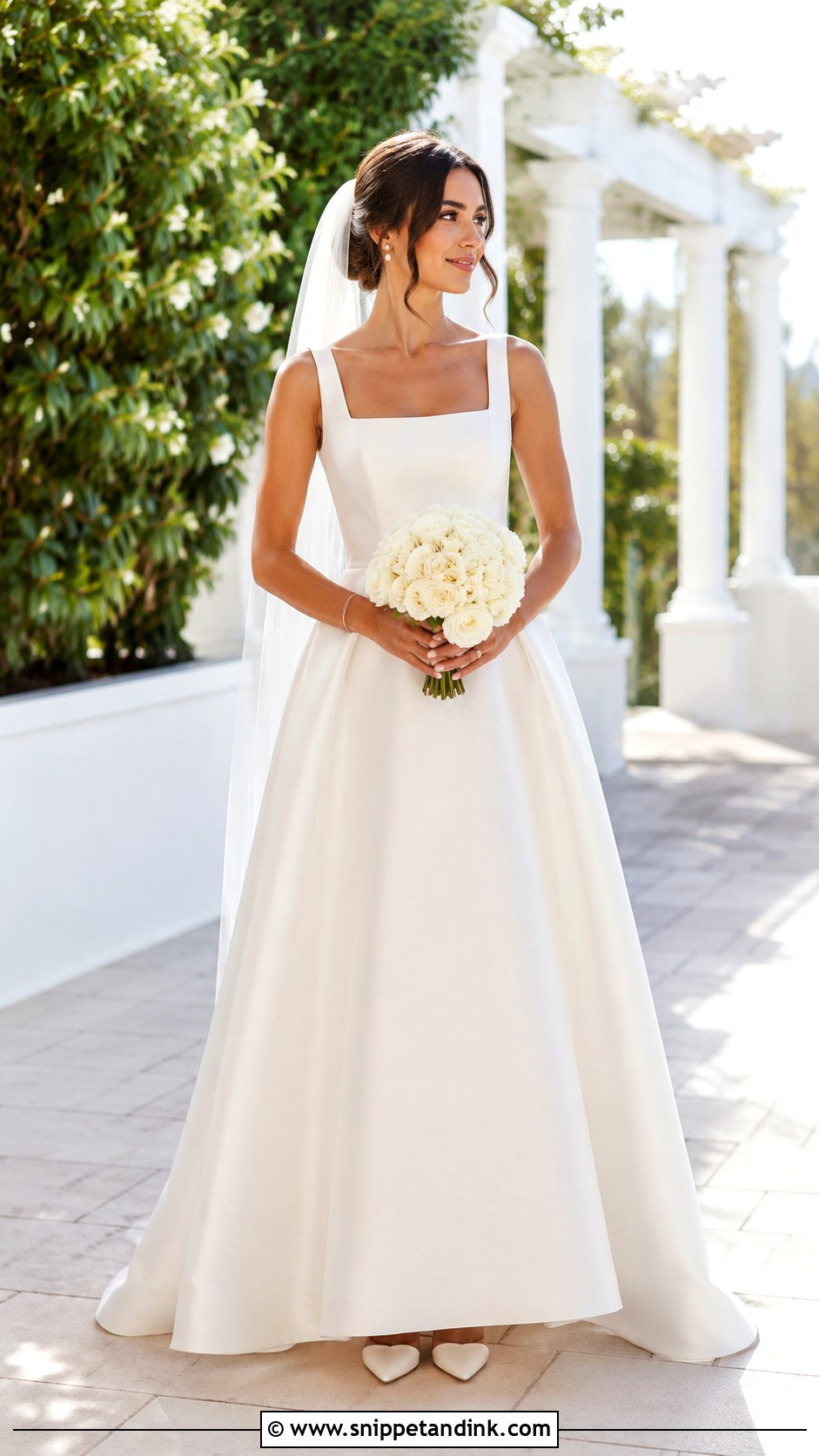
Square necklines frame the chest and shoulders without being trendy or plain, and they suit fitted gowns, A-lines and ball gowns alike. Thick straps support a fuller bust; thin ones feel lighter. A simple pendant, pearl studs or nothing at the neck all suit it. A soft veil, pointed pumps and a structured bouquet balance the clean lines. Check the corners when you lean forward; gaping there is common and easy for a seamstress to fix. Gardens to formal halls, it fits anywhere.
13. A Line Wedding Dress With Train
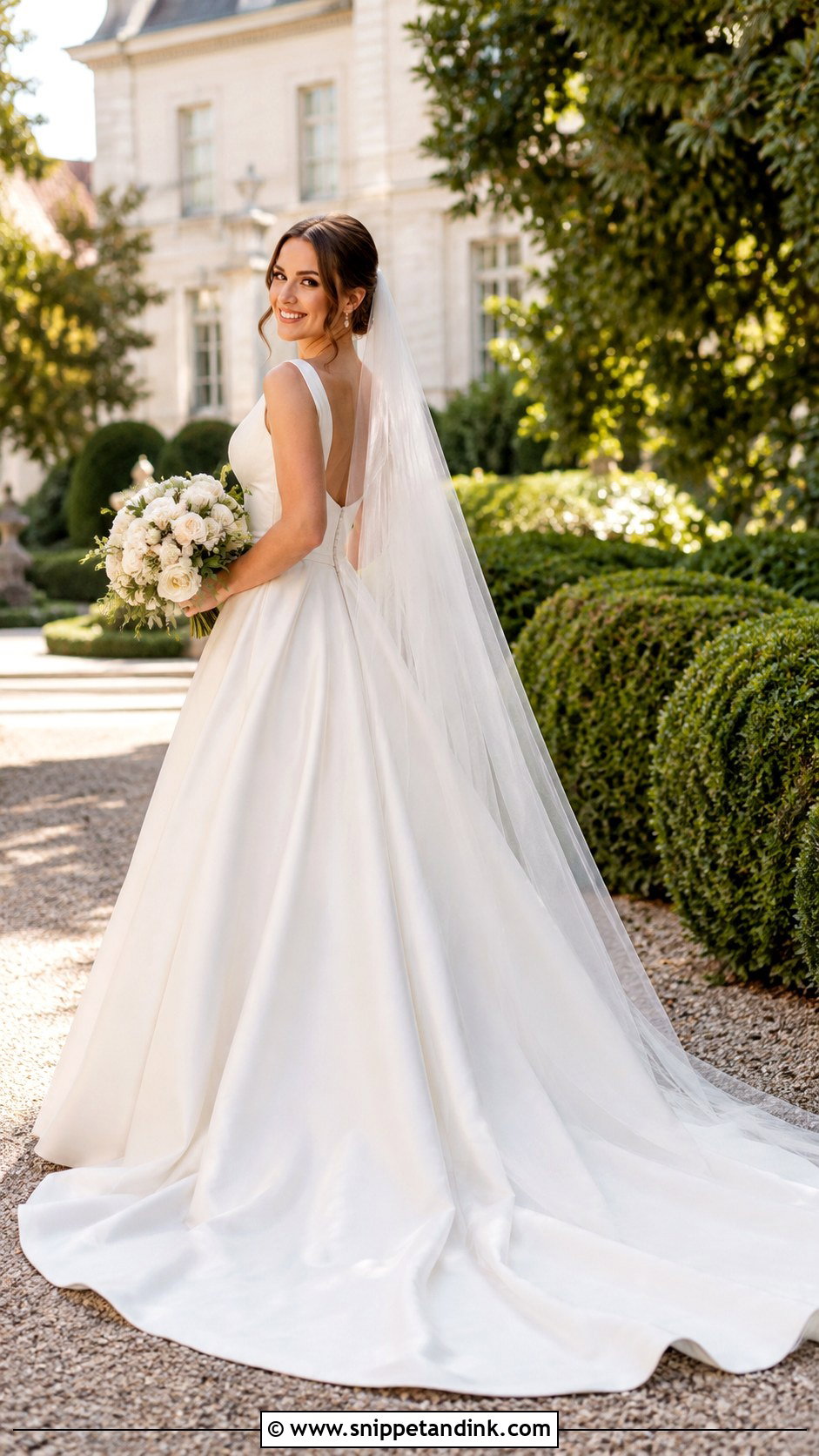
An A-line with a train flatters nearly every figure: a fitted bodice, a skirt that flows away from the body, and drama behind you without the weight of a ball gown. Lace, satin, tulle or crepe all work. Medium heels, a veil that matches the train length and classic jewelry finish it. The train needs a bustle for the reception; I ask the seamstress to show whoever will bustle you how it works at the last fitting, and to take photos. It’s the gown I suggest when a bride wants comfort and proportion above all.
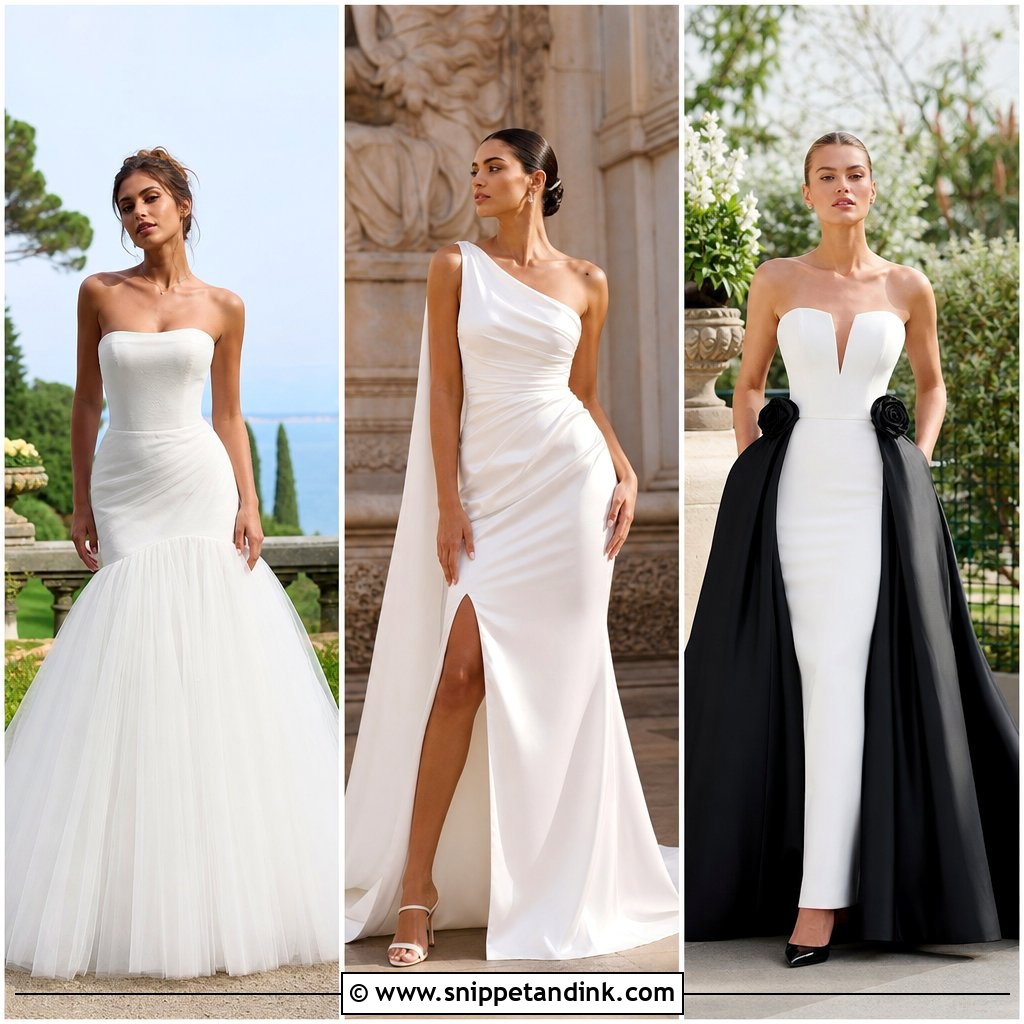
14. Mermaid Wedding Dress With Overskirt
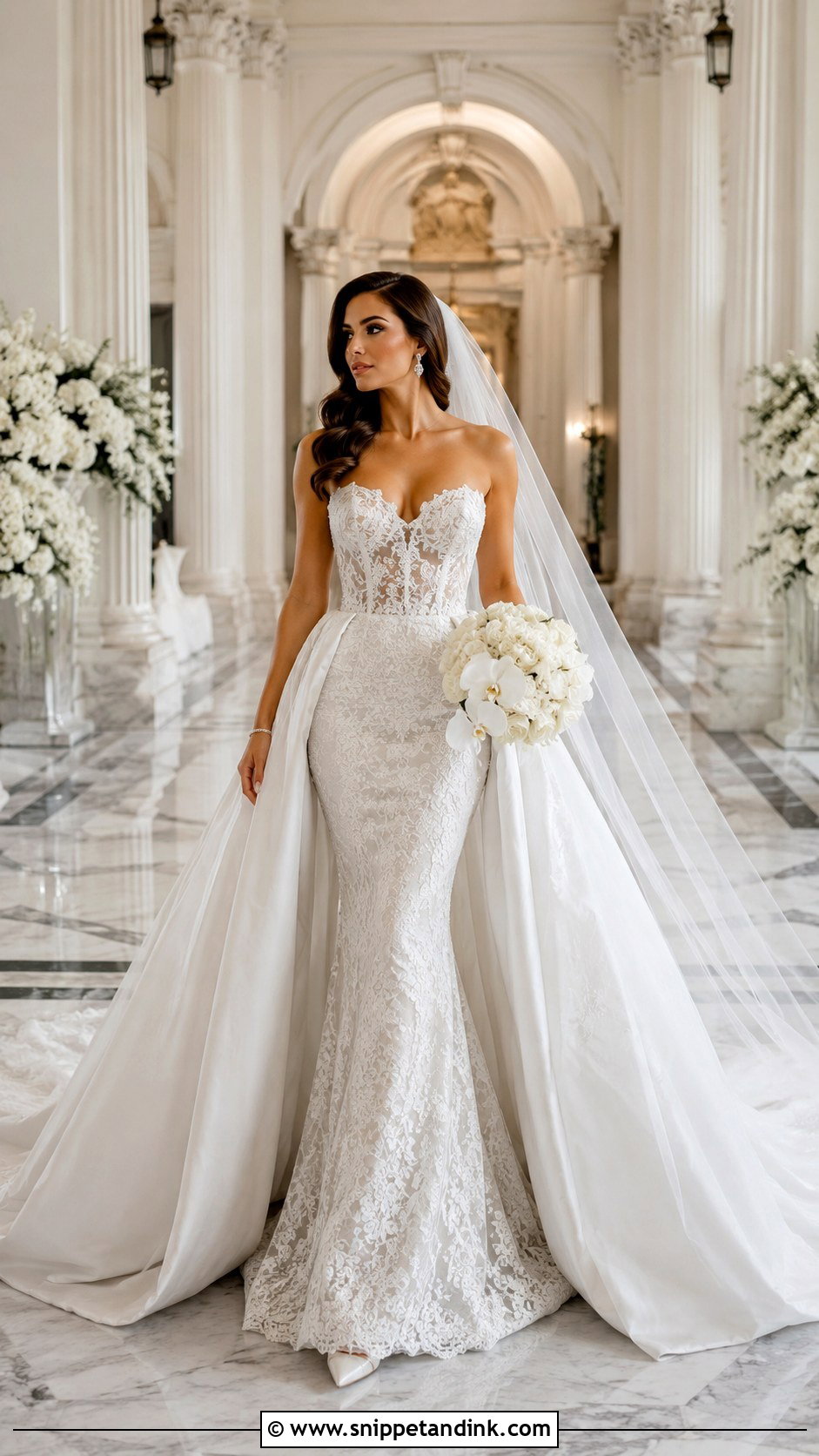
Two looks, one dress. A fitted mermaid base gives a bold shape, and a removable overskirt adds drama for the aisle. After portraits, the overskirt comes off and you can move. Lace reads romantic, crepe modern. A long veil, crystal earrings and pointed heels suit it. Overskirts usually attach with hooks or snaps at the waist; practise removing it with your helper, because it takes longer than people expect. It suits anyone torn between a fitted gown and a grand entrance.
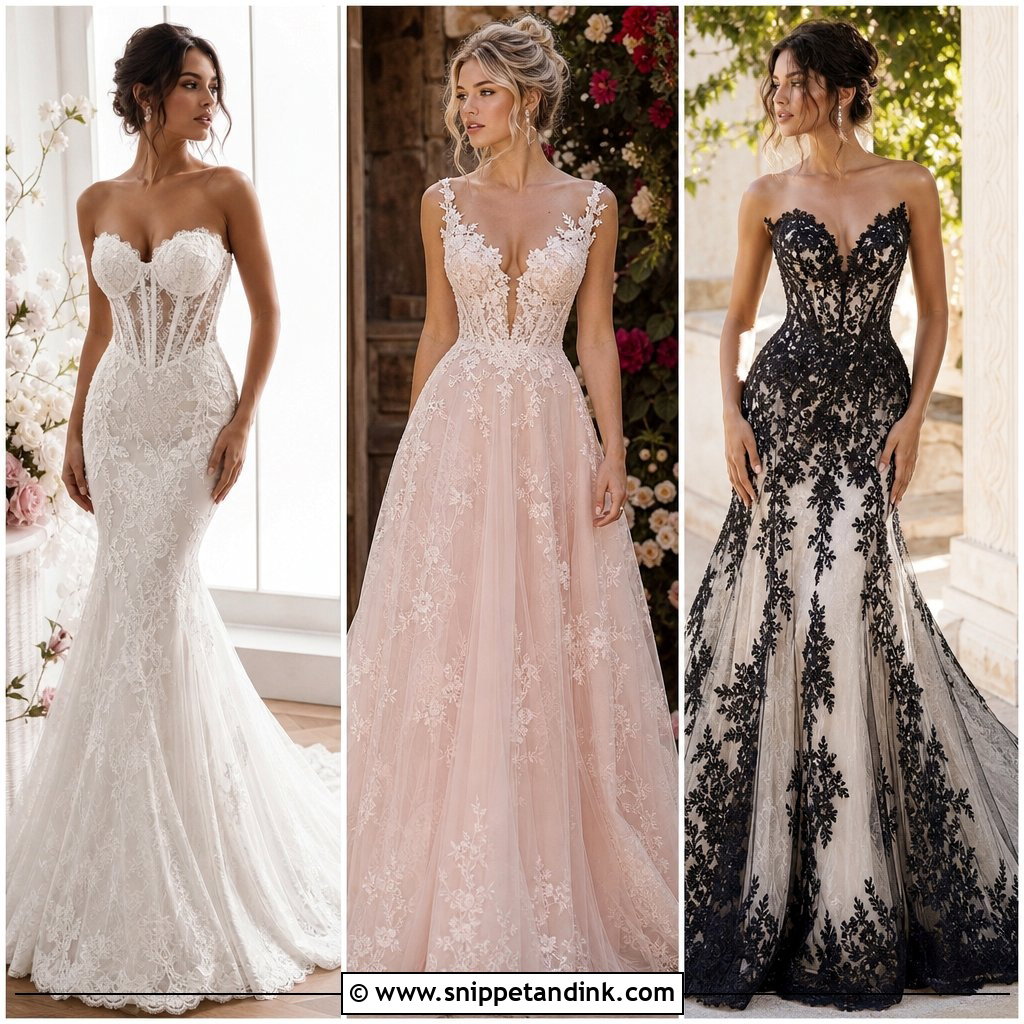
15. Sheer Sleeve Wedding Dress
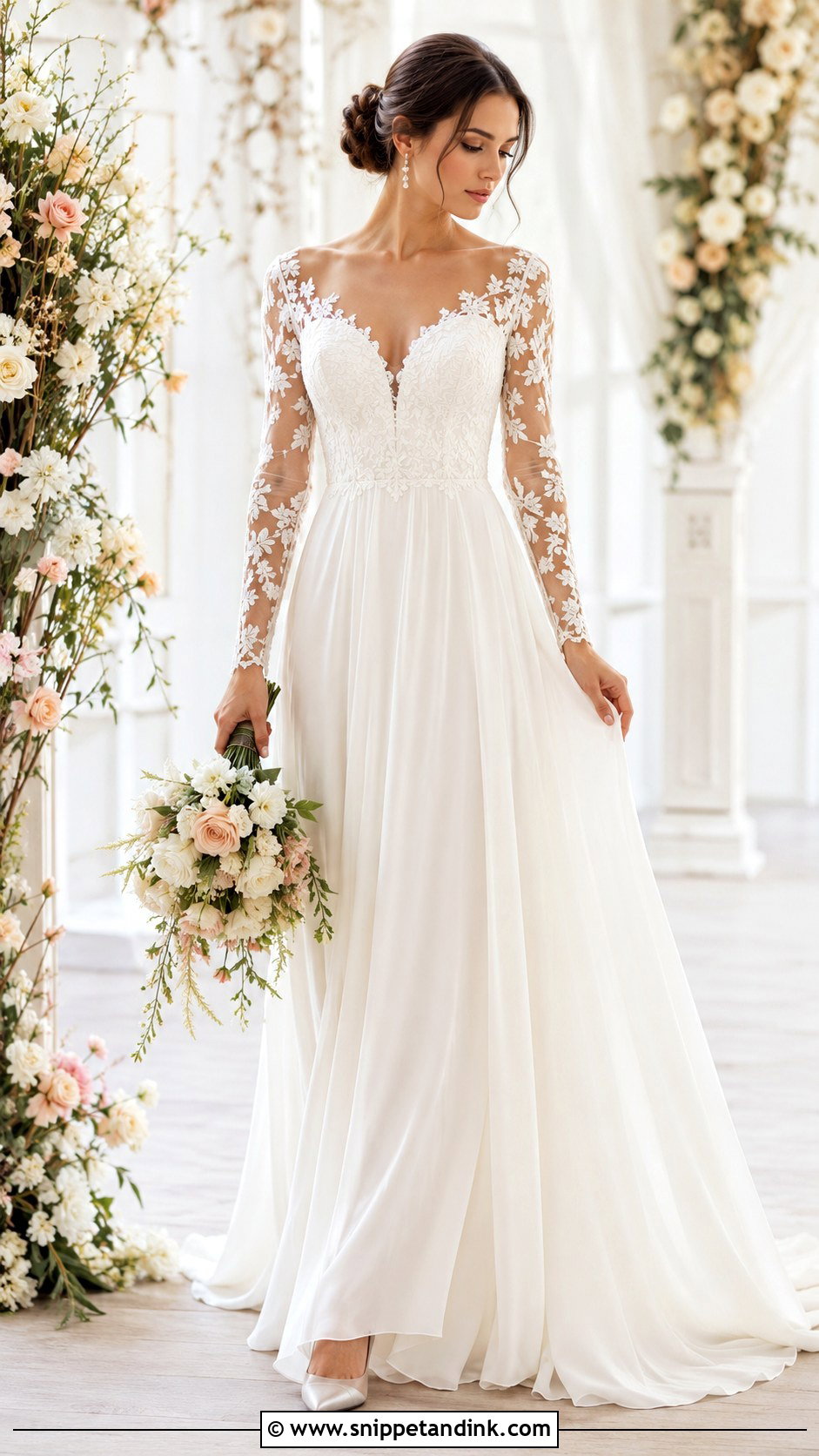
Sheer sleeves cover without weight. Plain tulle, dotted fabric, lace and floral embroidery each give a different feel, and they move well in close-ups. Fitted gowns, A-lines and ball gowns all take them. If the sleeves are detailed, skip bracelets. A low bun, delicate earrings and classic heels finish it. Illusion fabric can scratch under the arm, so check the inside seams. It suits spring, fall and cool evening ceremonies, and it sits neatly between strapless and full sleeves.
16. Short Wedding Dress With Statement Shoes
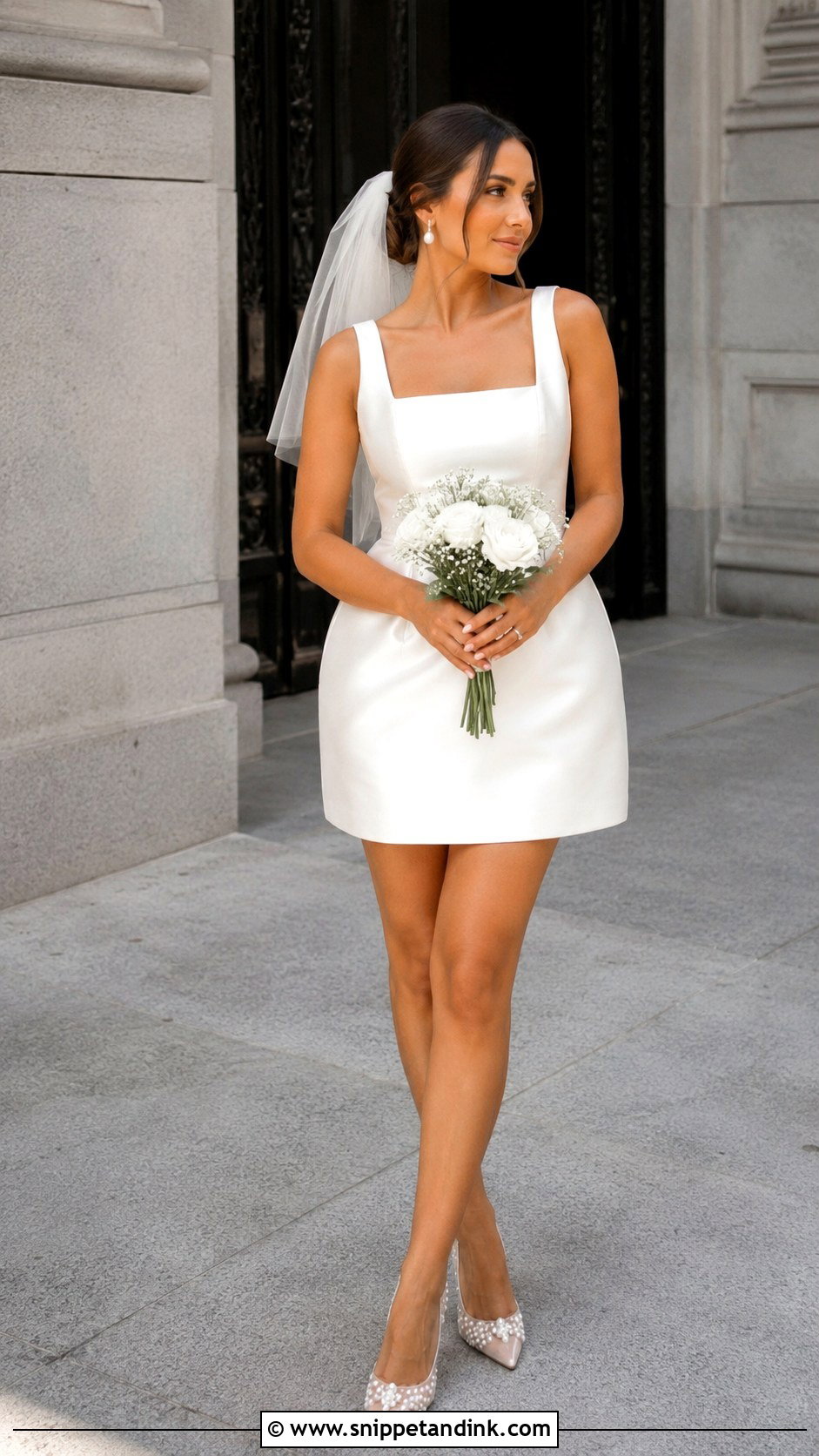
Short dresses look styled rather than casual when the structure is right. A structured mini, a feather-trimmed hem, a satin shift or short lace all work. With legs on show, the shoes matter: bows, pearls, crystals or sleek platforms. A short veil, pearl earrings and a small bouquet keep it bridal. Sit and bend in it at the fitting, since minis ride up. Courthouse weddings, after-parties and destination ceremonies suit it, and you can dance all night.
17. Colored Wedding Dress In Blush
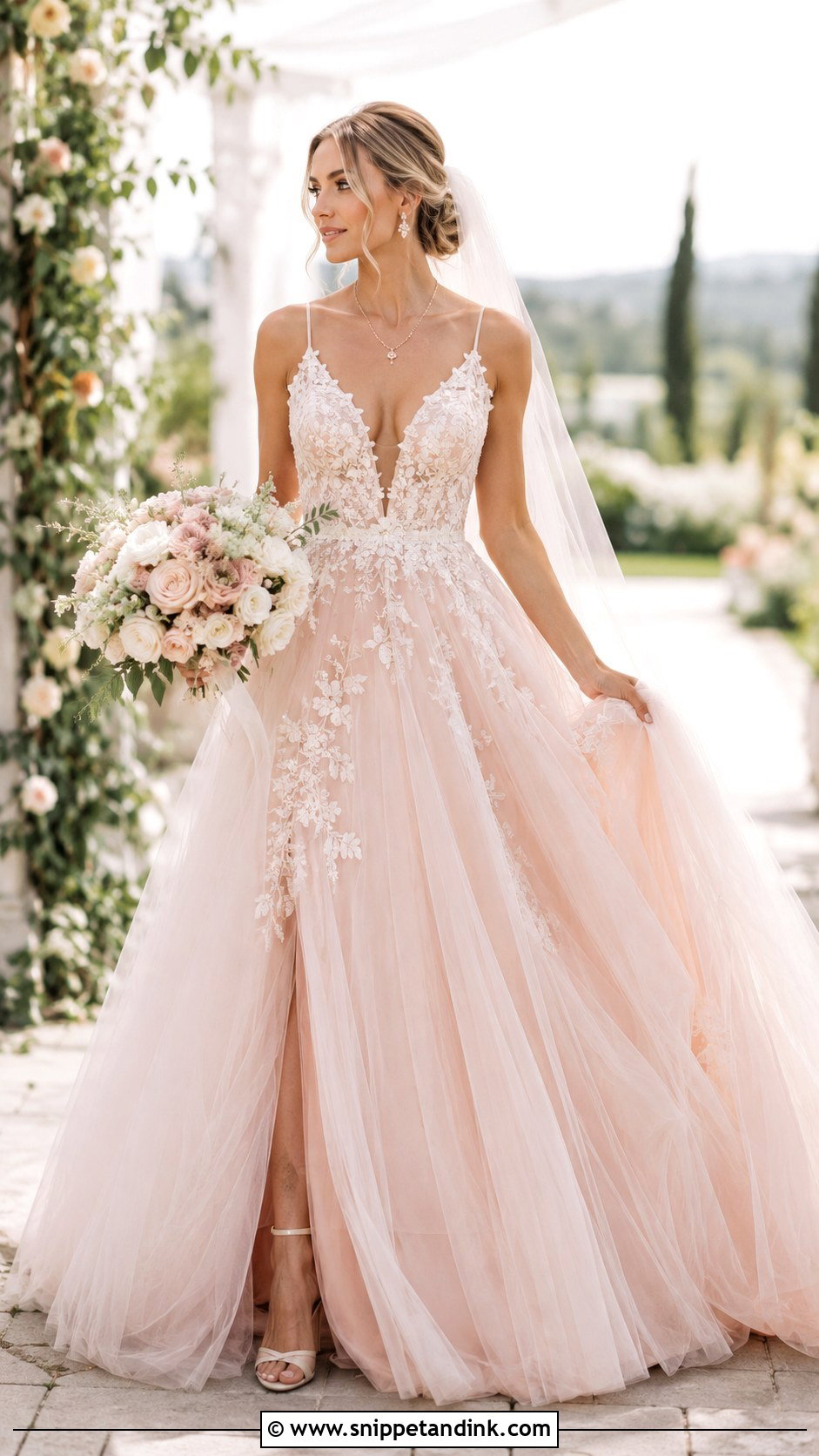
Blush ranges from pale pink to warm champagne, and the right shade depends on your skin. Cool pinks suit fair, pink-toned skin; warmer blush flatters olive and deeper tones. It works well with tulle, floral appliqué, lace and layered skirts. Ivory heels, rose-gold jewelry and a bouquet of cream, blush and greenery suit it. A veil in matching blush or soft ivory both work. Keep makeup fresh and natural. I always check blush against the skin in daylight before ordering, since some shades look nude in photos.
18. Blue Wedding Dress With Silver Jewelry
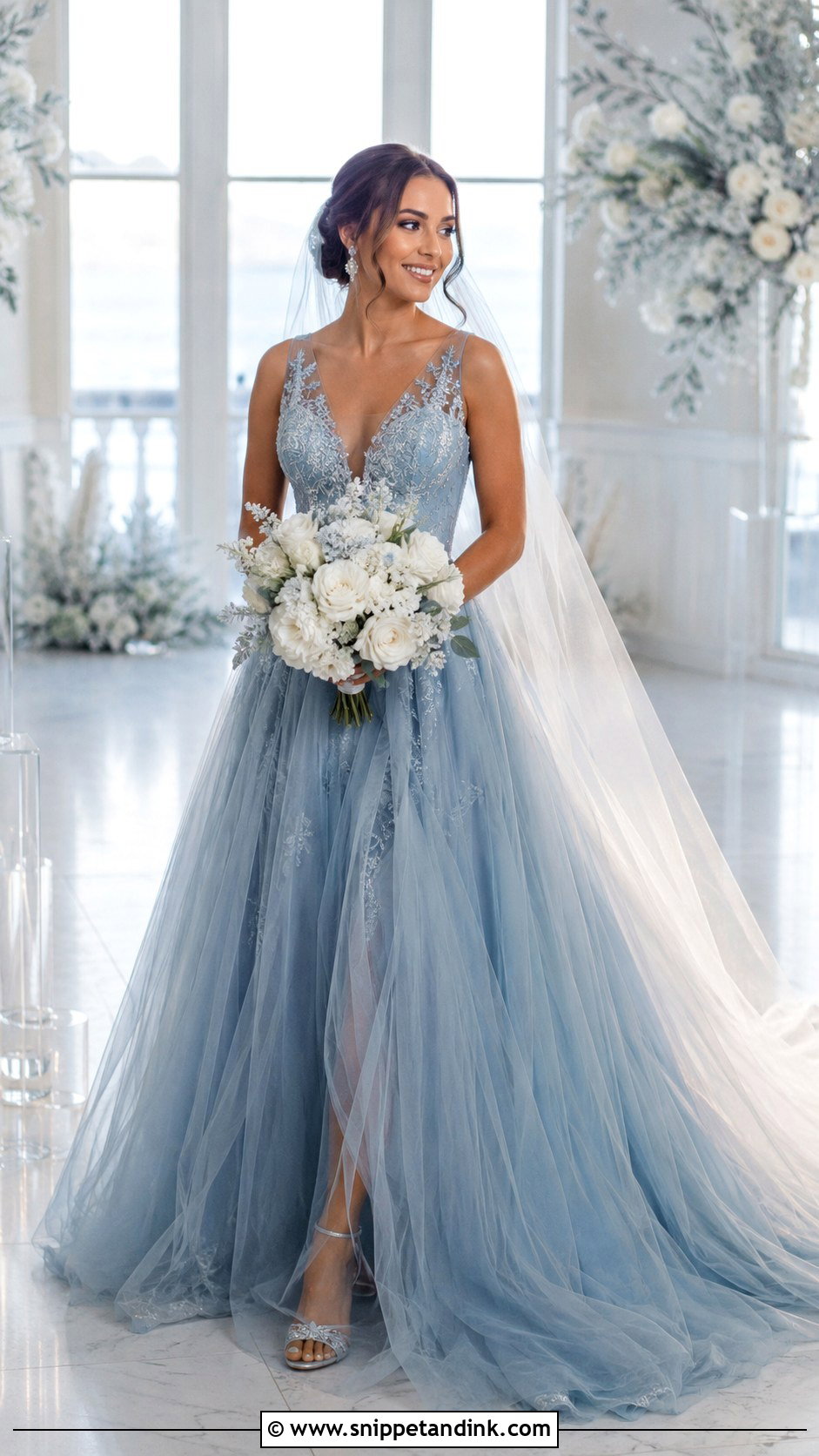
Pale blue is a quiet way to add colour. Icy blue tulle, blue-grey satin or a delicate blue floral print all work, and silver jewelry suits the cool tone. White or metallic heels keep it polished. A sheer ivory veil softens the colour for the ceremony, and a blue hair ribbon adds a playful note. Cool blue can drain warm or sallow skin, so I’d try it in daylight before deciding. Winter weddings, coastal venues and modern ballrooms suit it.
19. Vintage Wedding Dress With Modern Heels
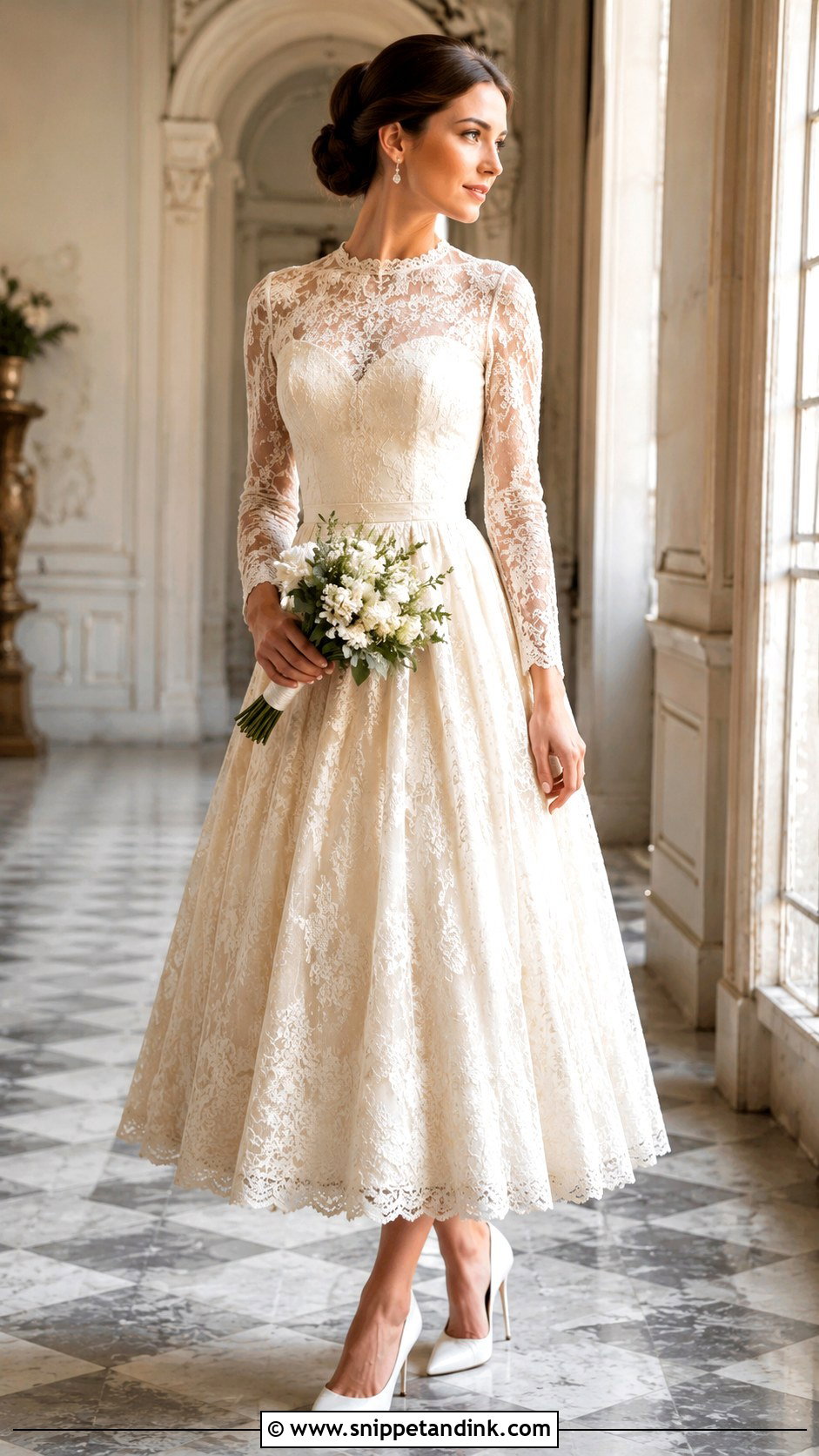
A vintage gown carries history, whether it’s an heirloom, a restored lace dress or a vintage-inspired design. To keep it current, I pair it with modern heels, clean jewelry and fresh hair: a sleek bun, simple waves or a polished ponytail. If the dress has high lace, puff sleeves or ornate beading, keep accessories light. Genuine vintage fabric can be fragile at the seams, underarms and hem, so I’d have it checked by a specialist months ahead. It suits sentimental brides and anyone who’d rather rewear than buy new.
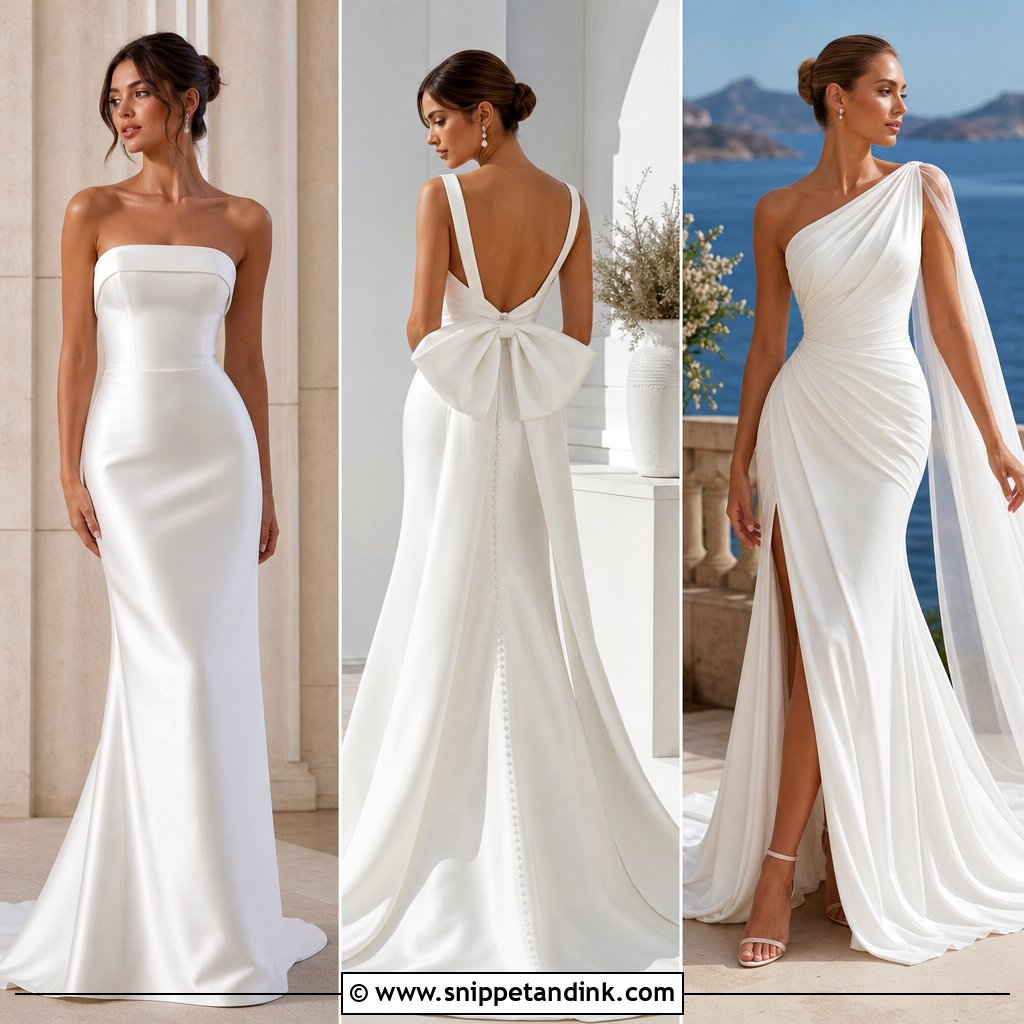


20. Two Piece Wedding Dress Set
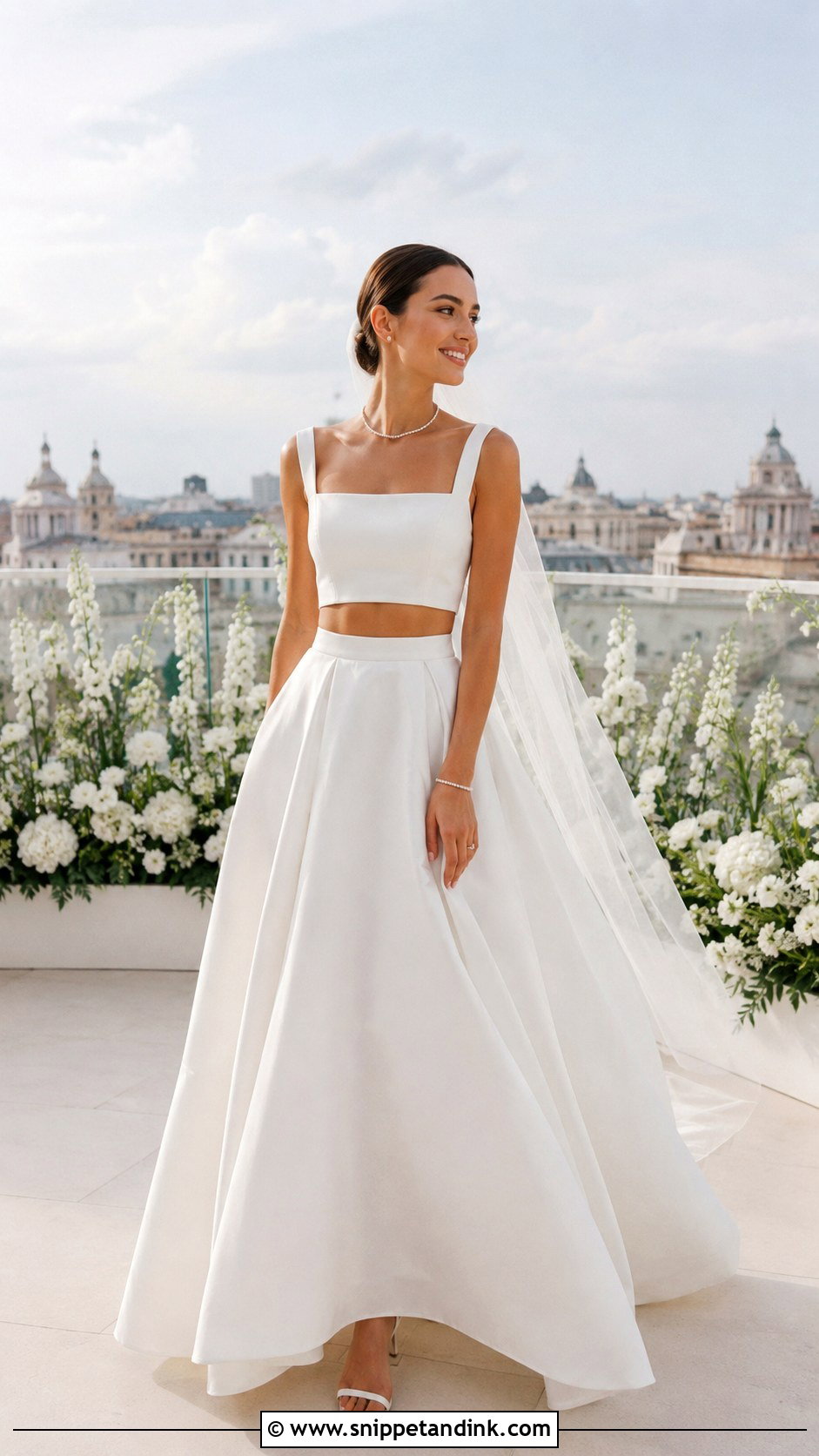
Two-piece sets give a small break at the waist that adds interest without embellishment. A structured crop top with a full skirt, a lace top with satin, or a fitted bodice with a high-waisted column skirt all work. Sleek heels, a simple veil and minimal jewelry keep it elegant. Raise your arms at the fitting to see how much midriff shows. The pieces can often be worn again separately. Destination weddings, modern venues and rooftop ceremonies suit it.
21. Bridal Jumpsuit With Veil
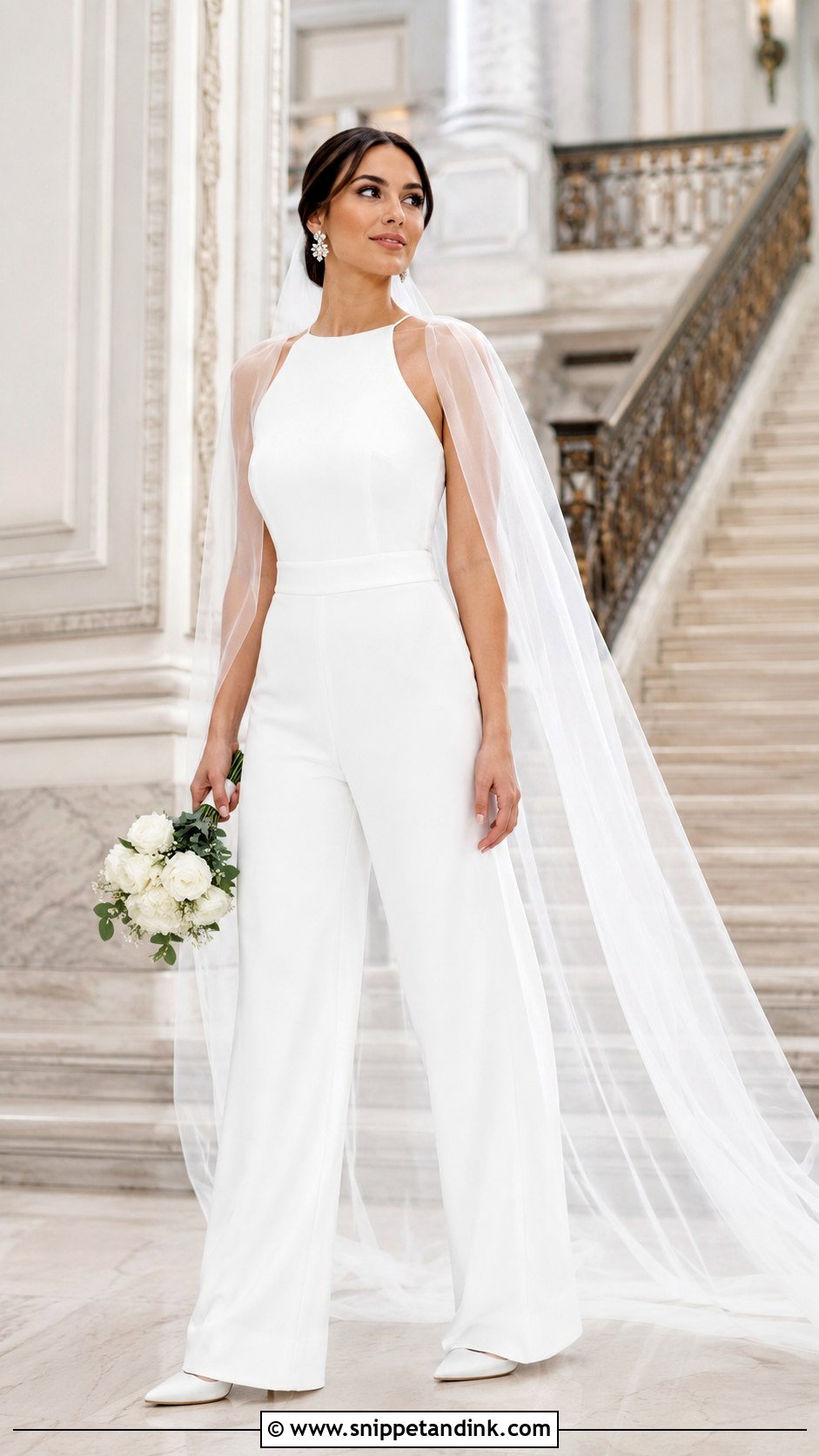
A bridal jumpsuit is for the bride who has never felt like herself in a gown. Wide legs, a fitted waist and a strong neckline in crepe, satin or structured fabric hold their shape. A veil makes it ceremonial; a cape veil adds drama. Pointed pumps, statement earrings and a small bouquet finish it. Check the rise when you sit; a short rise is uncomfortable for hours. Courthouse weddings, civil ceremonies and reception changes suit it.
22. Bridal Suit With Lace Top
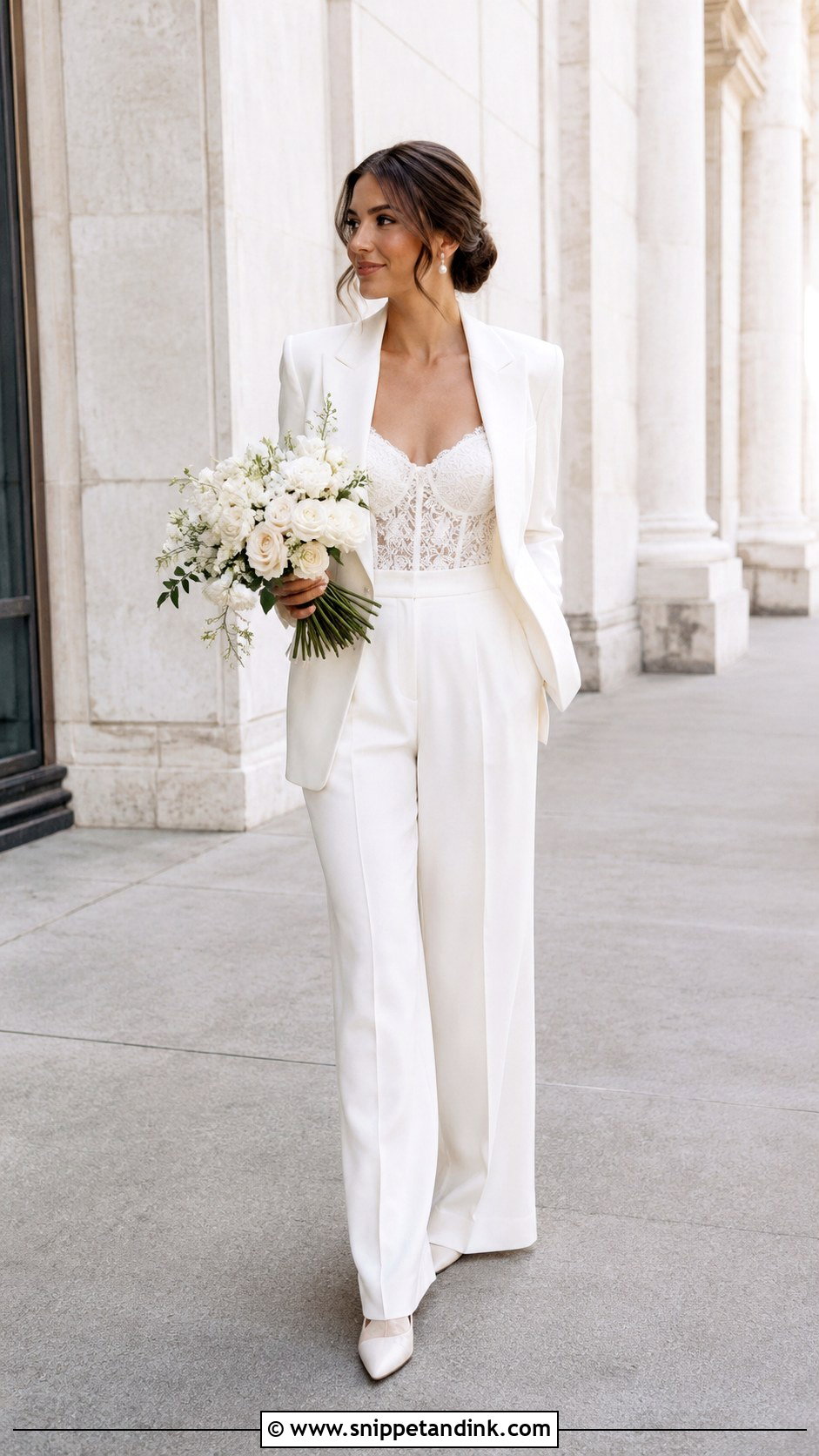
A suit with a lace top blends tailoring with something softer underneath. White or ivory trousers and a matching blazer over a lace camisole or bodysuit is the idea. Wide-leg trousers look elegant, slim ones sharp. Pointed heels, pearl earrings and a structured bouquet suit it, with a short veil or headband to make it ceremonial. Have the blazer tailored at the shoulders; off-the-rack shoulders are the giveaway. City weddings, courthouses, rehearsal dinners and anyone who prefers polished separates will like it.
23. Cape Wedding Dress
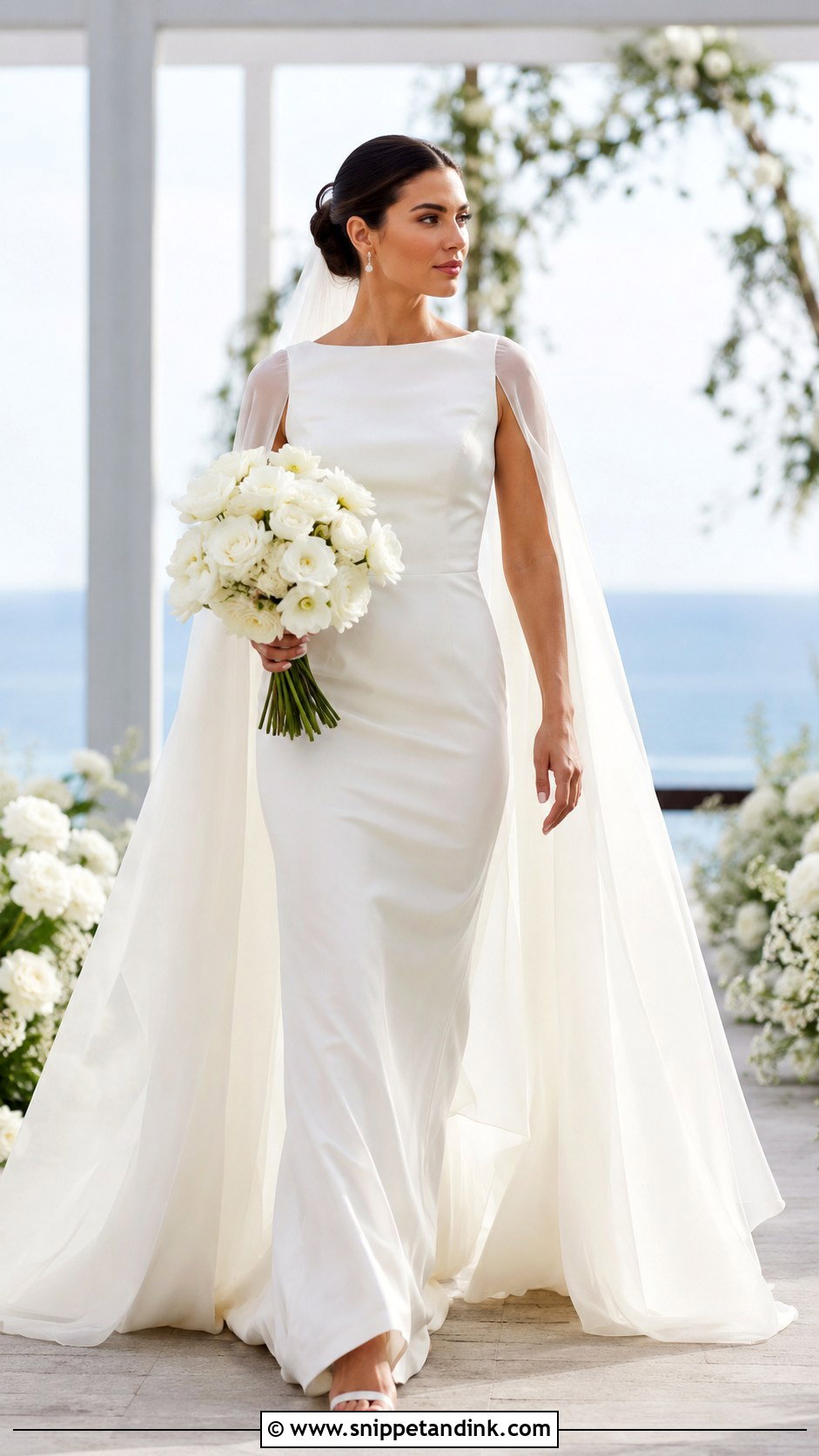
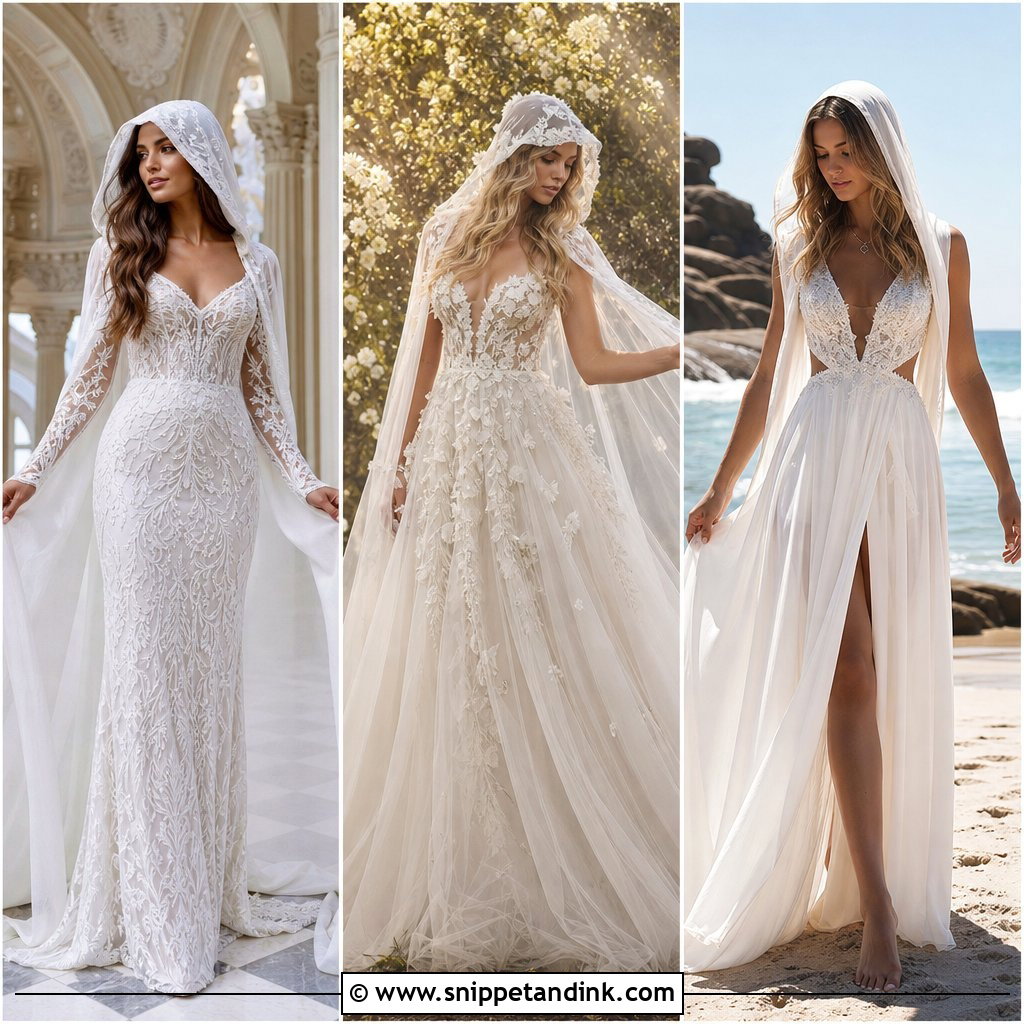
A cape replaces the veil and moves as you walk. It can attach at the shoulders, neckline or back. Sheer tulle floats; satin or crepe looks architectural. A simple fitted dress keeps the balance. Sleek heels, small earrings and clean hair let the cape do the work. Heavy capes pull the neckline back, so I’d ask for hidden snaps rather than a single hook. Modern venues and outdoor ceremonies suit it, and it reads well from the side and back as you walk.
24. Feather Trim Wedding Dress
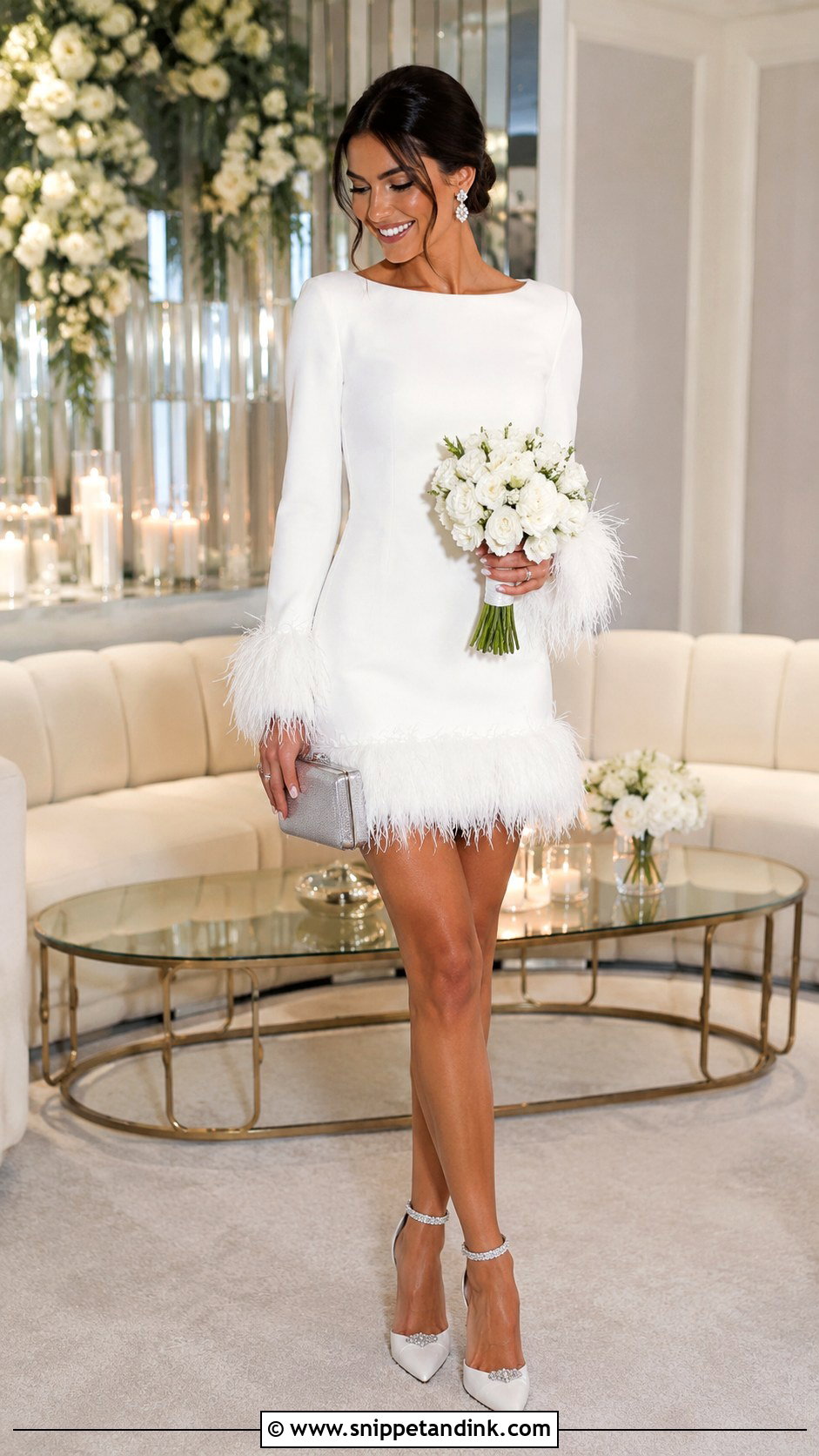
Feathers are playful and catch every bit of movement. They can trim the hem, cuffs, neckline or detachable sleeves; I’d choose one feather detail rather than covering the outfit. A fitted feather-trimmed mini suits a reception change; a long gown with feather cuffs is more formal. Sleek heels, crystal earrings and a small clutch finish it, with a simple bouquet. Feathers shed and flatten in humidity and rain, so keep a spare hair dryer on cool nearby to fluff them back up.

25. High Low Wedding Dress
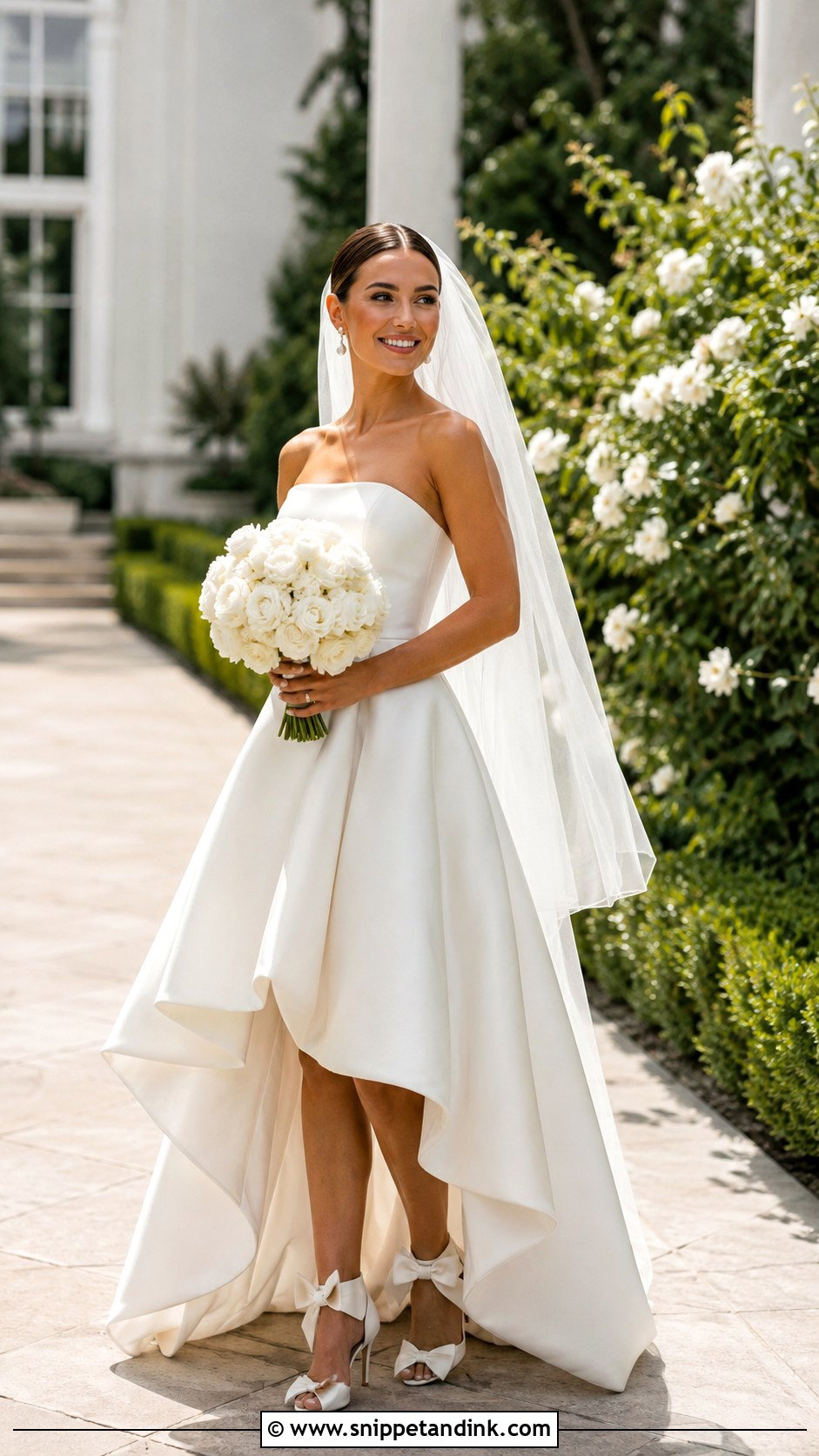
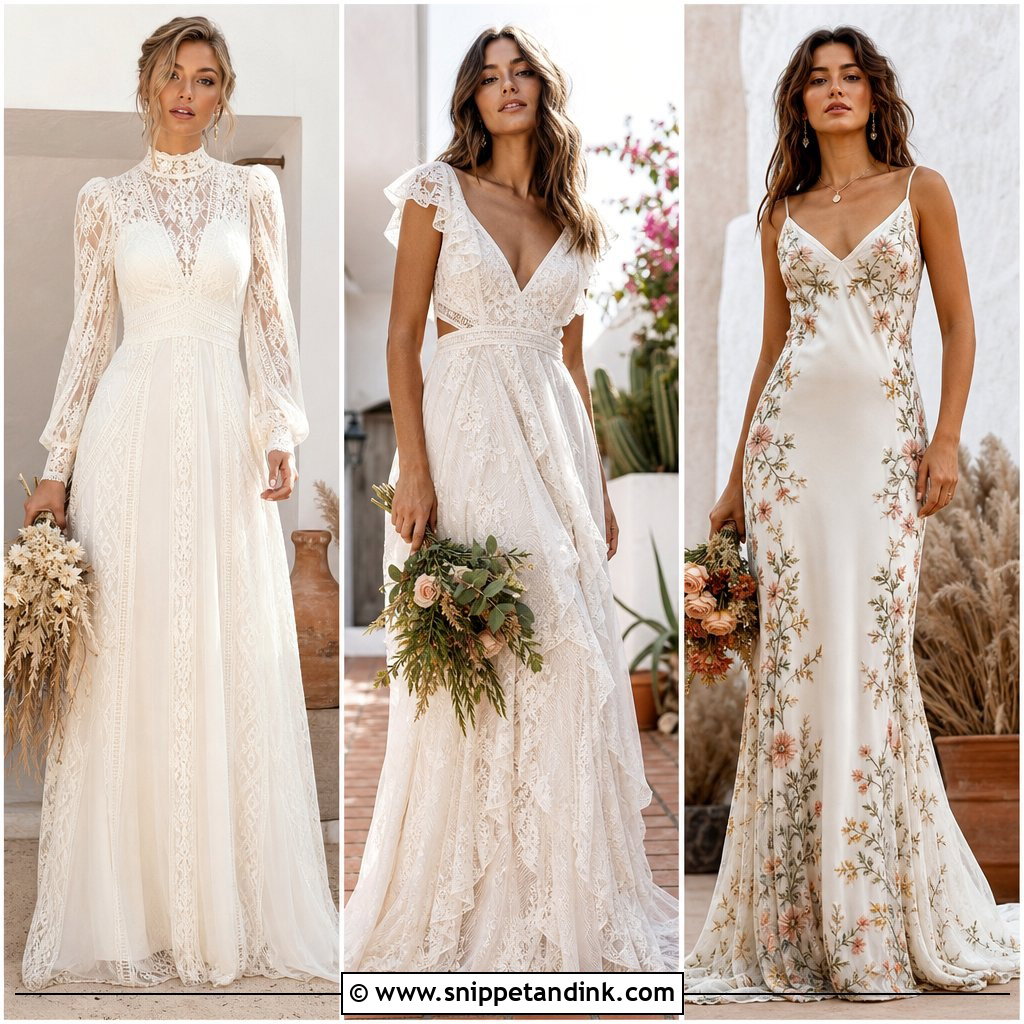
A high-low hem is shorter in front for movement and longer at the back for drama. It shows off your shoes while still feeling like a gown, so statement heels earn their place. Structured satin reads modern, tulle softer. A simple veil, pearl earrings and a neat bouquet finish it. I’d check the front length against your heel height; an inch can make the difference between graceful and awkward. Outdoor and warm-weather weddings suit it.
When the Family Pictured a Long White Gown
A blush dress, a jumpsuit or a mini can surprise relatives who expected something traditional. I’ve found it helps to show the outfit early, in photos or at a fitting, so nobody sees it for the first time as you walk in.
Check the ceremony venue too. Some churches and religious venues expect covered shoulders or a longer hem. A detachable sleeve, a shawl or a cape lets you meet that for the ceremony and remove it afterward. If one side of the family is more traditional, a classic gown for the ceremony and a short or colourful look for the reception often keeps everyone happy without you giving anything up.
Colour, length and the photographs
Think about the photos you will keep. A coloured gown changes how flowers, bridesmaid dresses and even the cake look beside you, so I share a fabric swatch with the florist and whoever is dressing the bridal party. A short dress or suit needs a little more planning for posed family shots, too; a longer veil or a cape for the ceremony portraits gives you the formal frame without changing the outfit you love.
Does It Feel Like You at Every Hour of the Day?
Each of these looks is a different route to feeling like yourself on the day. Some brides want lace, pearls and a long veil; others are happier in a jumpsuit, a suit, a short dress or a soft colour. I’d think about your venue, season, comfort and how you want to move, and decide on accessories early, because shoes, veils, gloves, jewelry and hair can change a dress completely. Pick the outfit that is practical and personal, and the rest follows.
You'll Like These Ideas:




Leave a Reply