
A V neckline on an A-line skirt is the pairing I reach for most often when a bride walks into a fitting with no idea where to start. The open V draws one long line from collarbone to waist, and the skirt widens from there, so the eye reads a single continuous shape instead of stopping at the hips. Below are twenty versions of that pairing in lace, satin, chiffon, crepe and tulle, each styled the way I would dress it for a real ceremony, with notes on sleeves, train, veil, shoes and flowers. A few suit a ballroom, others a beach or a courthouse, and some honestly work better for certain figures than others. I’ll say so where it matters.
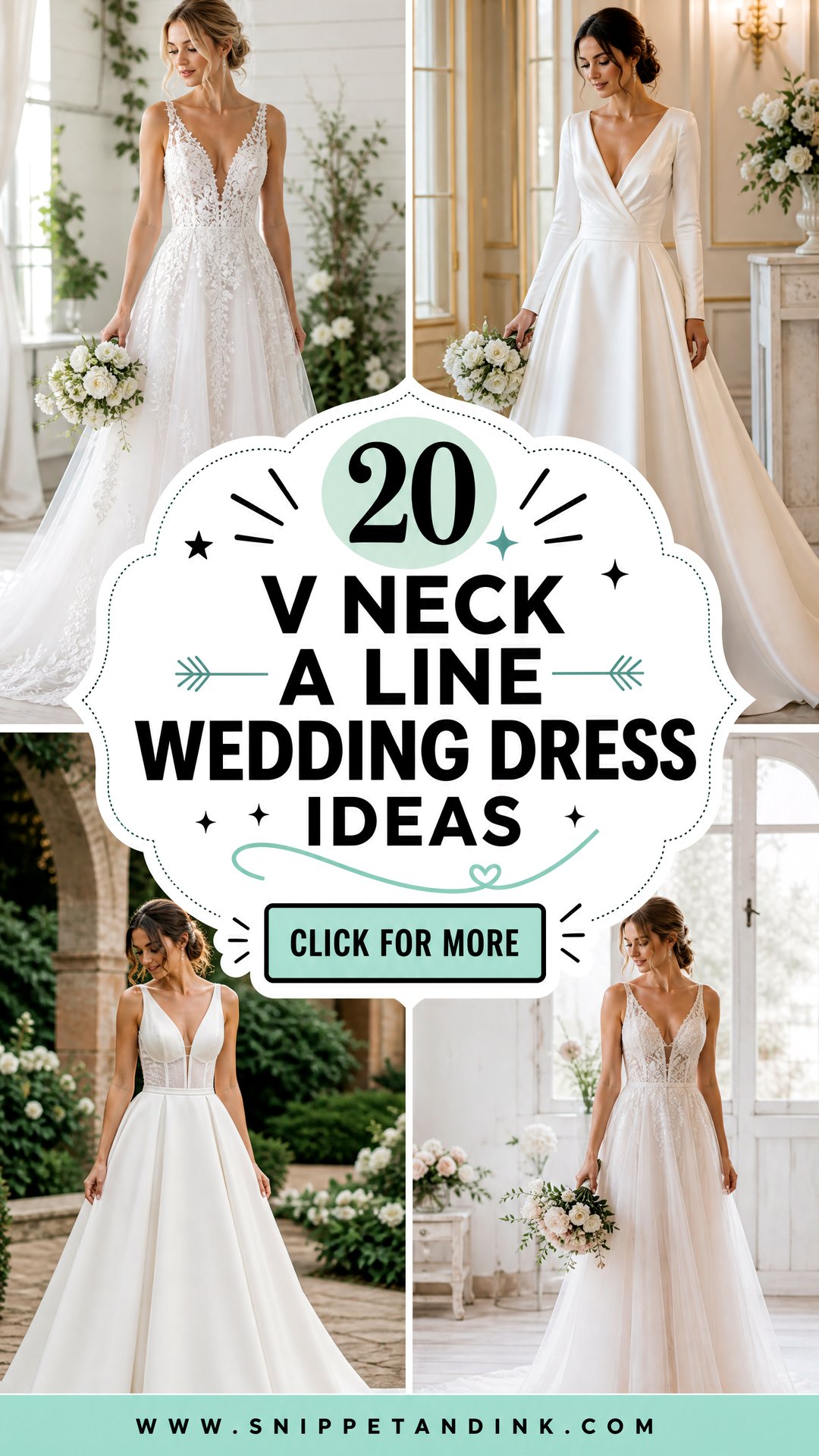
How Deep a V Your Bodice Can Actually Hold
The depth of a V neck runs from the shoulder point down to where the two sides meet, and the depth that suits you depends on your bust and how much support the bodice has built in. When I fit this neckline I check whether the edges lie flat against the skin, then whether they stay flat when the bride bends forward. Only after that do we talk about what she’ll wear underneath, because her everyday bra almost never works.
Reading a sample that isn’t your size
Shop samples come in one size and get clipped to fit, so a plunge that looks dramatic on the hanger may sit much lower or higher on you. Ask the consultant to clip the back until the bodice is snug, then judge the V. If the edges still stand away from your chest, the cut isn’t drafted for your frame, and no amount of tape will hold it for a whole day.
What goes underneath a V
- Sewn-in cups are the most reliable choice for a deep V; a seamstress stitches them into the lining so nothing slides.
- A low-plunge bra only suits a medium V, so bring the dress and check the center of the bra stays hidden when you lean.
- Fashion tape keeps an edge flat but won’t hold a neckline up. Test it on your skin a week ahead, since some adhesives irritate.
- An illusion mesh panel can usually be added at alterations if the gown you love is cut deeper than you’re comfortable with.
1. Lace V Neck A Line Wedding Dress
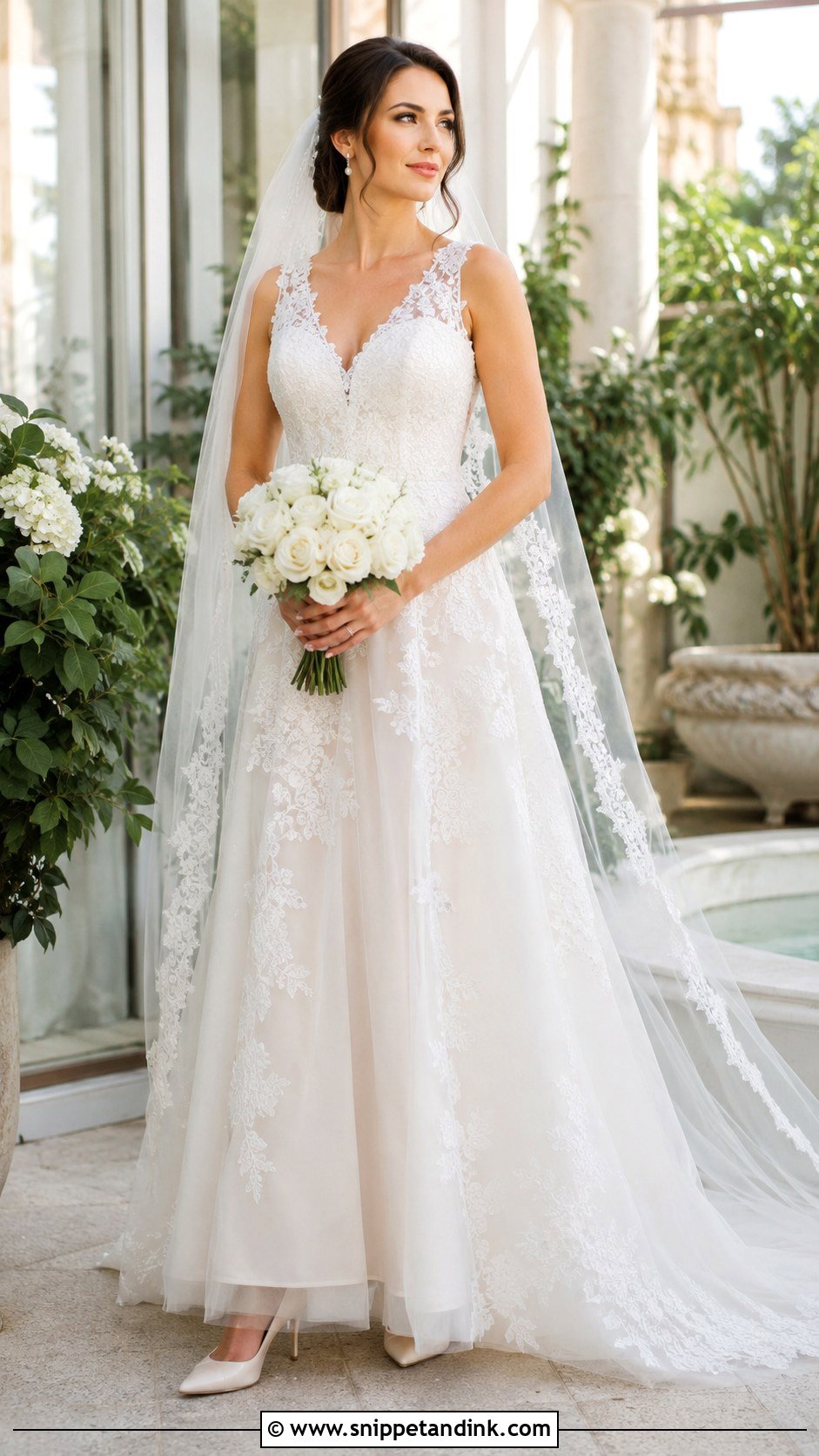
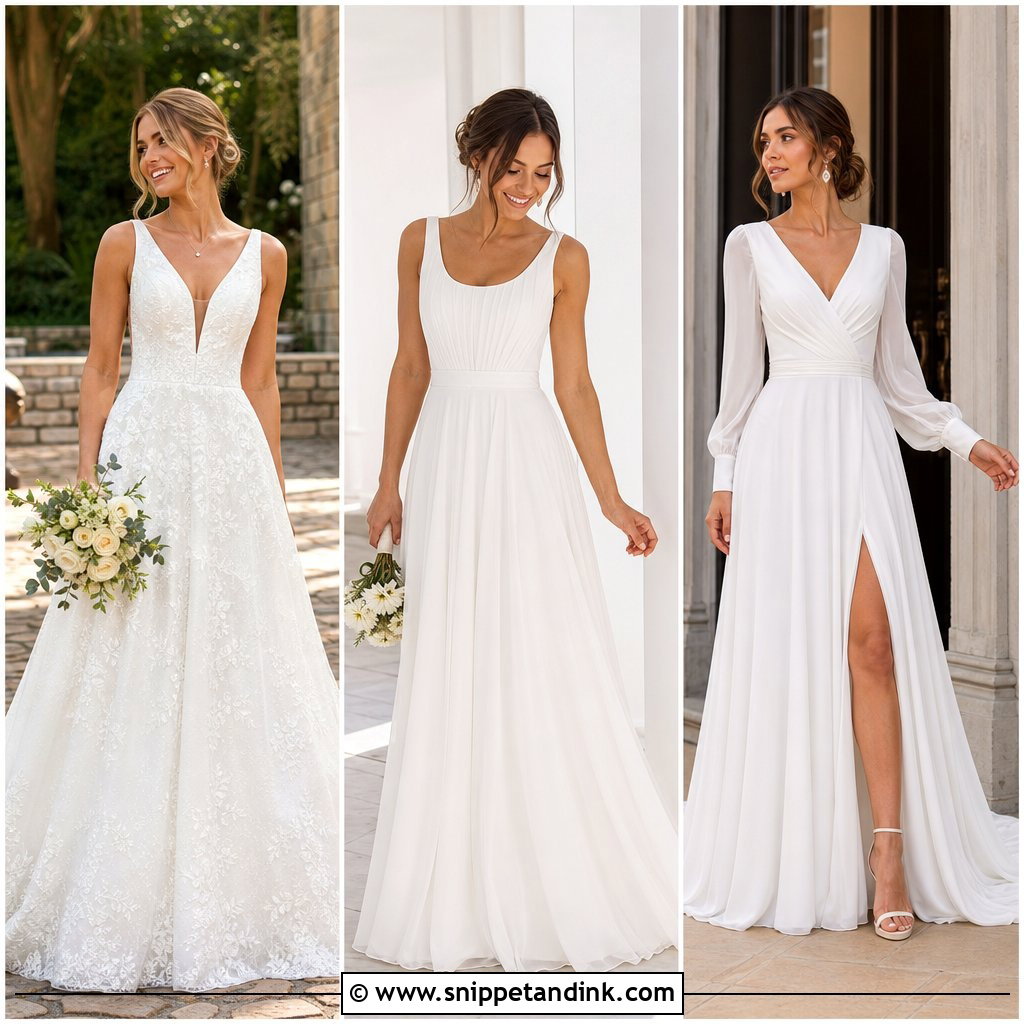
Lace does most of the work here, so the gown doesn’t need beading on top. The placement I look for is appliqué that’s dense across the bodice and thins out as it travels down the skirt; when the lace is just as heavy at the hem, the dress looks bottom-heavy in photos. I also push brides toward wide straps over spaghetti straps with lace, because a weighty lace bodice drags thin straps off the shoulder by the reception. A fingertip veil edged in matching lace, pearl drops and pointed ivory pumps finish it, with a loose low bun that keeps the V clear. Keep the bouquet small, white roses and a little greenery, so it doesn’t fight the lace pattern at waist height.
2. Satin Long Sleeve V Neck A Line Wedding Dress
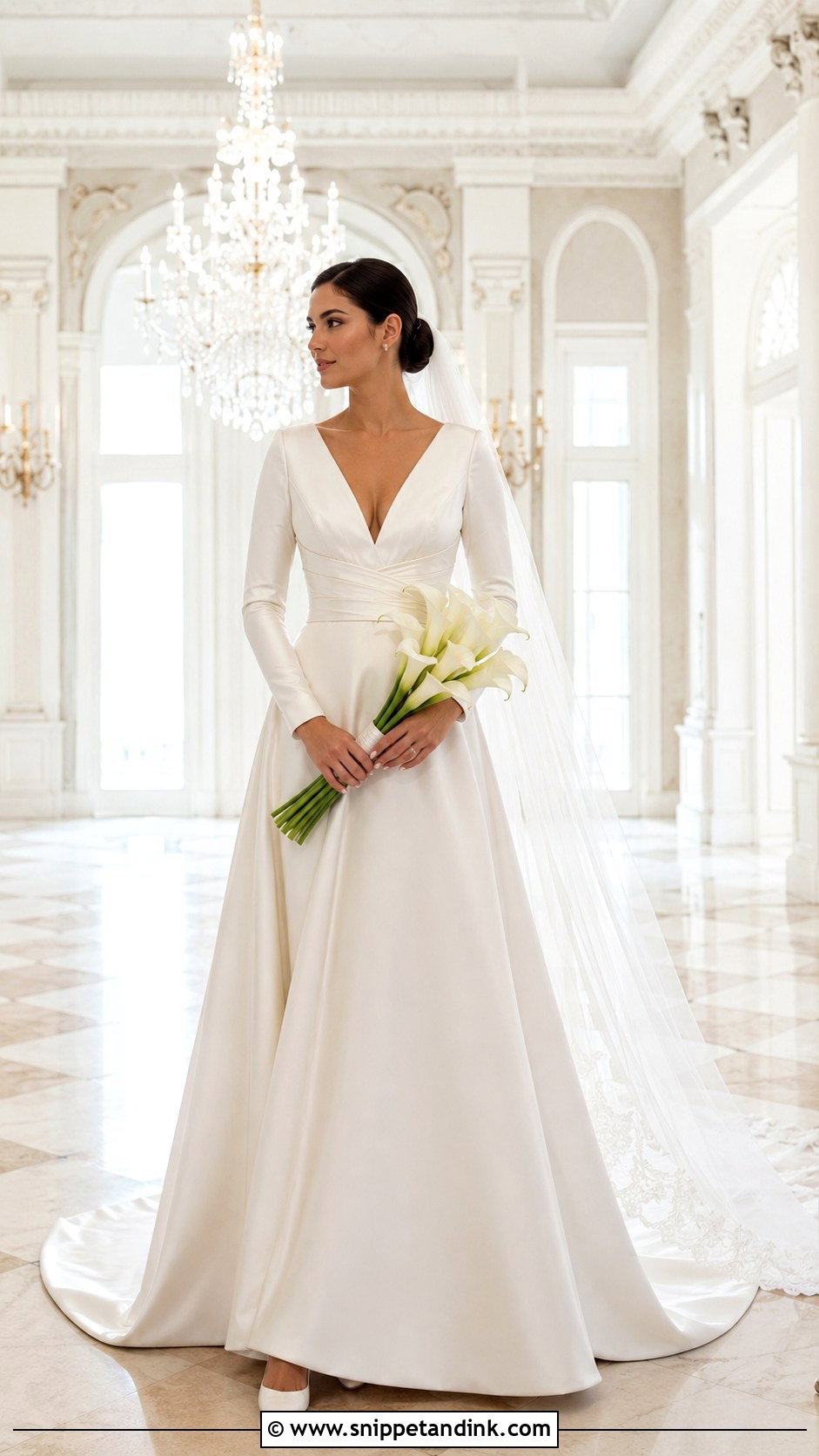
Satin shows every seam and every wrinkle, which is why I only recommend it in this cut to brides prepared for careful tailoring. Look for gentle waist seaming and a skirt with enough body to hold its shape without a stiff petticoat. Fitted sleeves need a little ease at the elbow; a satin sleeve cut too close pulls the shoulder seam forward every time you lift your arm to hug someone. Covered buttons at the cuffs and back, a medium V, a plain cathedral veil, crystal studs and satin pointed heels keep it formal. Add a neat chignon and calla lilies or roses with very little greenery. It belongs in a grand ballroom or an evening indoor venue, not a hot afternoon garden.
3. Chiffon V Neck A Line Beach Wedding Dress
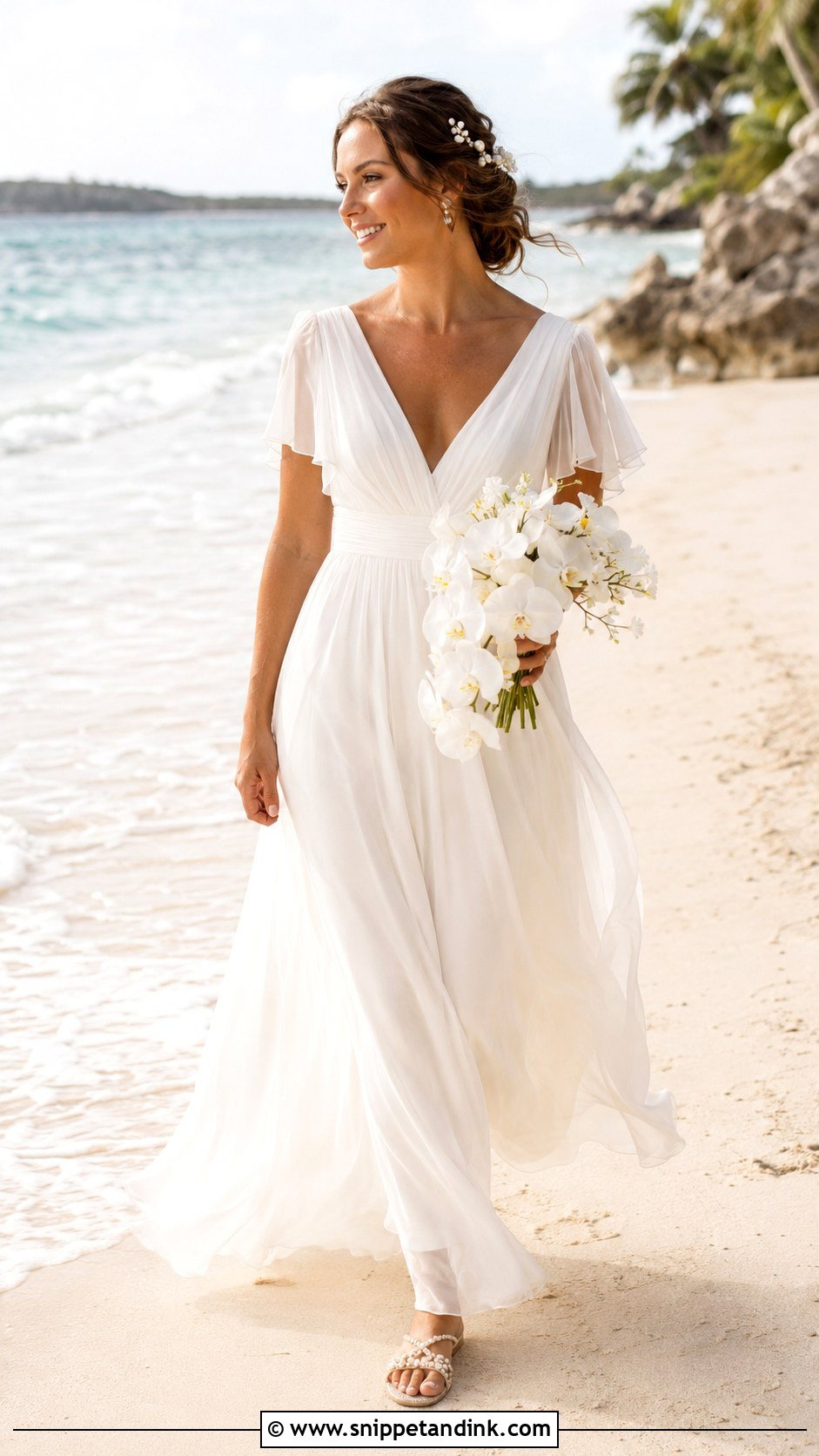
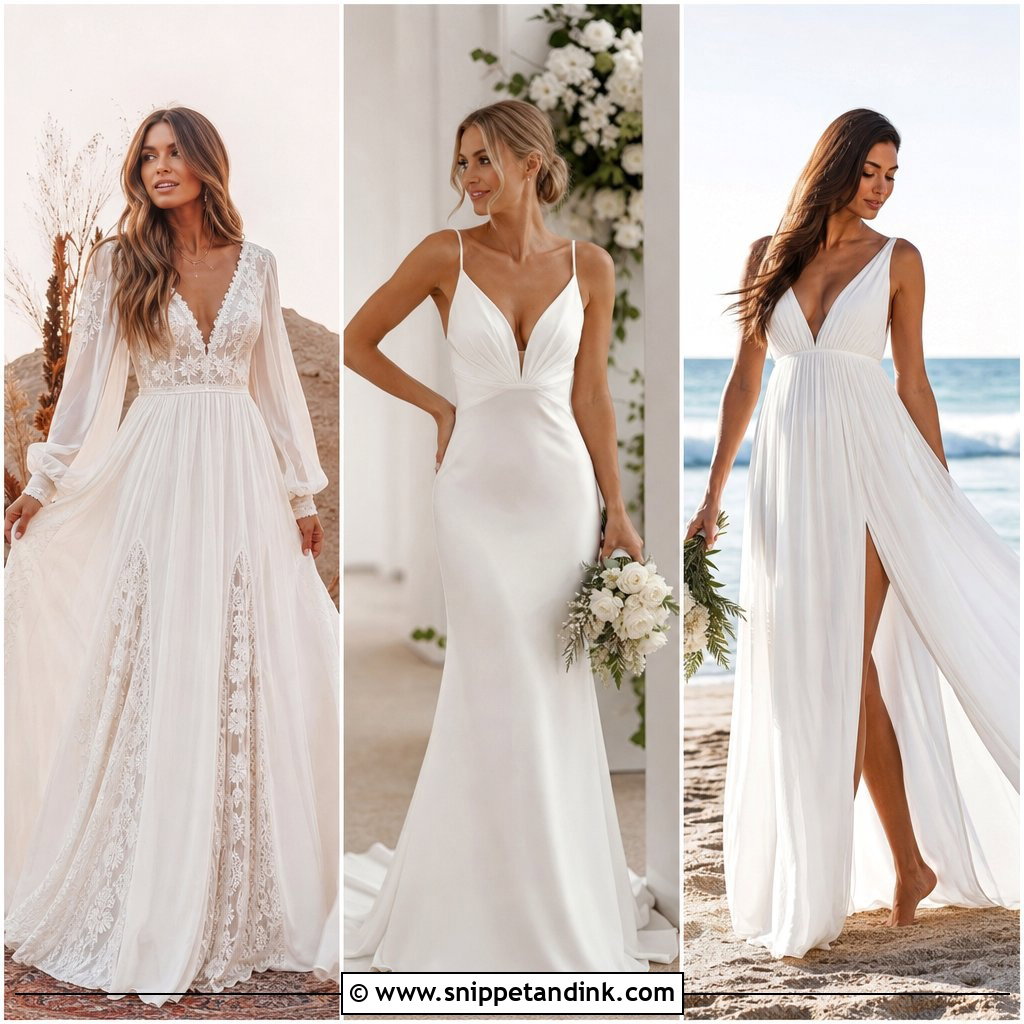
Chiffon is the fabric I suggest most for sand and sea air, because it moves with the wind instead of fighting it. The catch is that unlined chiffon turns sheer in strong backlight, so check that the skirt is lined and the bodice has enough boning to stay put in a breeze. Delicate straps or short flutter sleeves keep the top half light. Skip the long train. A sweep-length hem glides over sand; a train collects it. Pearl hairpins, small hoops, flat embellished sandals and a loose braided updo keep it relaxed, and a simple handful of white orchids is enough. Anything oversized looks heavy next to chiffon.
4. Mikado Deep V Neck A Line Wedding Dress
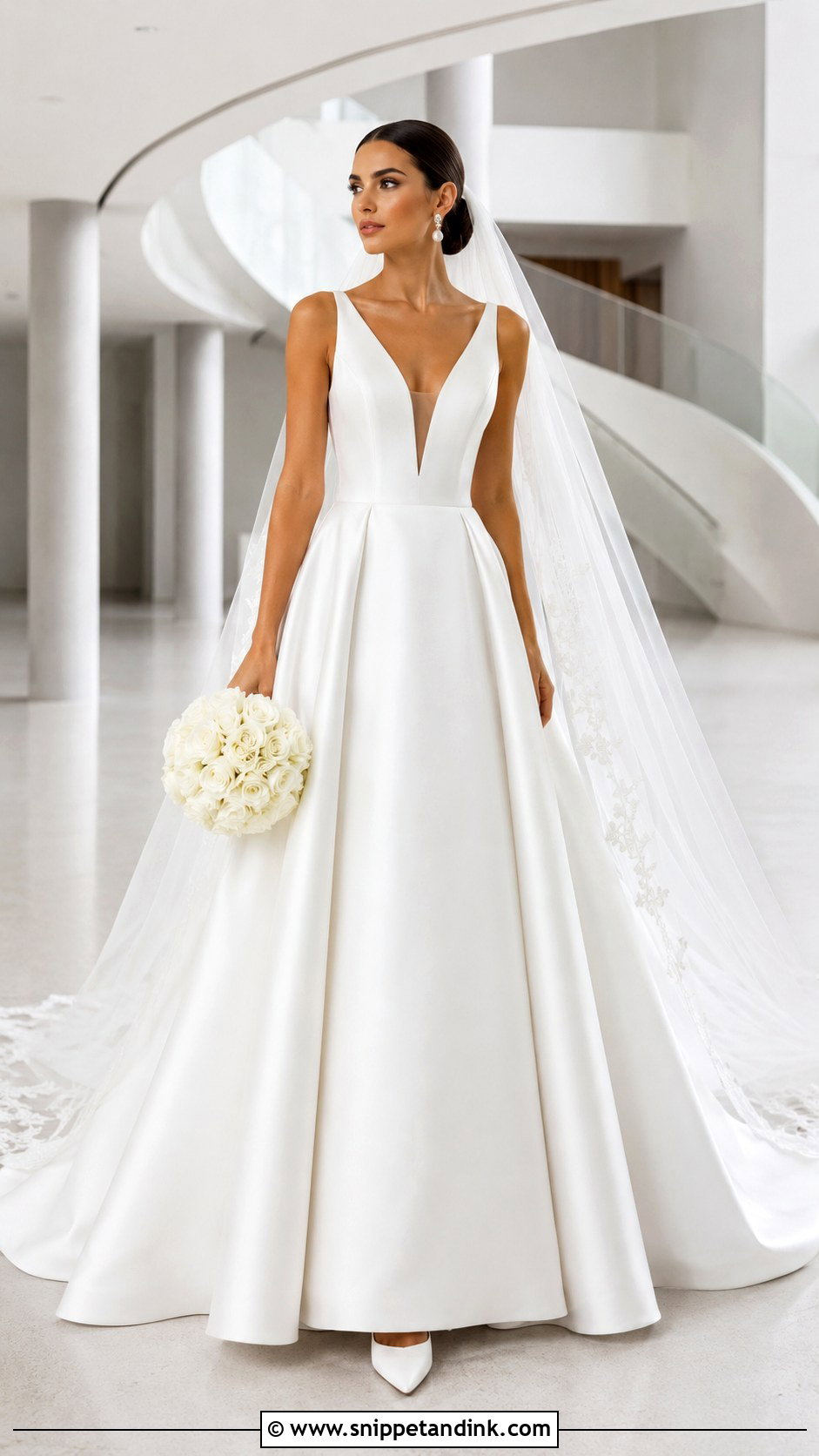
Mikado is a stiff, slightly lustrous fabric, and it gives you crisp architectural structure that softer fabrics can’t. That stiffness is exactly why a deep V works in it: the edge holds its line instead of collapsing. Even so, I want discreet illusion mesh or built-in cups plus firm side panels behind any plunge, with broad straps and a defined natural waist to anchor it. A sleek low ponytail, sculptural pearl earrings, pointed satin heels and a plain chapel veil are all it needs, with a rounded bouquet of short-stemmed white roses. Mikado skirts are heavy, so ask whether there’s a waist stay inside; that ribbon carries the weight so the bodice doesn’t sag by evening.
5. Beaded Tulle V Neck A Line Wedding Dress
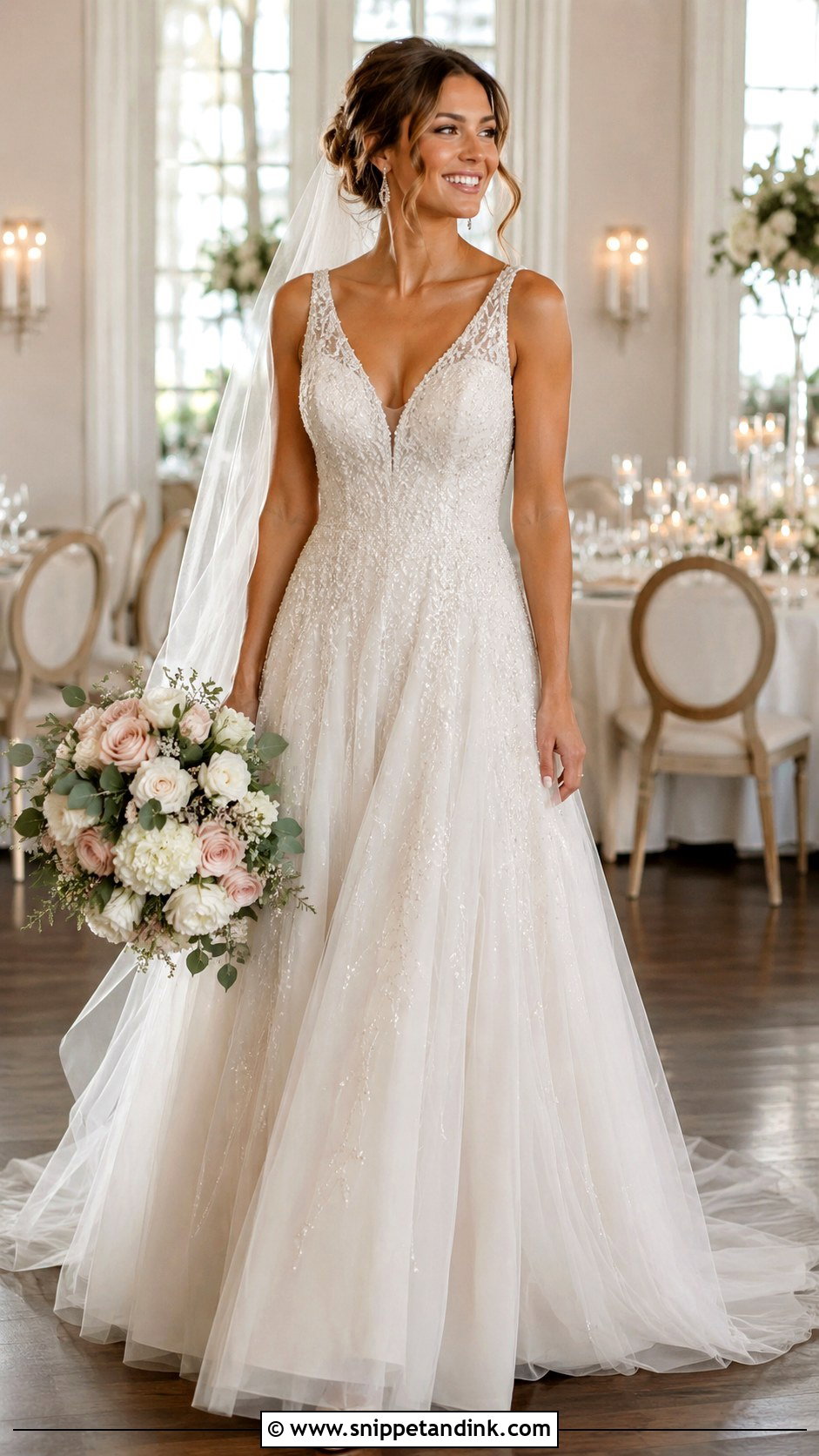
Beaded tulle catches light as you move, so it reads well from a bright ceremony right through to dim reception lighting. I look for fine beading concentrated on the bodice that scatters lightly into the upper skirt; beads all the way down add real weight and make tulle droop. Several soft tulle layers give volume and still feel airy. A plain raw-edge veil is the right partner, since a beaded veil edge tends to snag on a beaded bodice. Crystal drops, metallic ivory heels, soft waves pinned behind one ear and ranunculus with pale blush roses finish it. Skip the necklace. It breaks the line of the V and competes with the beadwork.
6. Minimalist Crepe V Neck A Line Wedding Dress
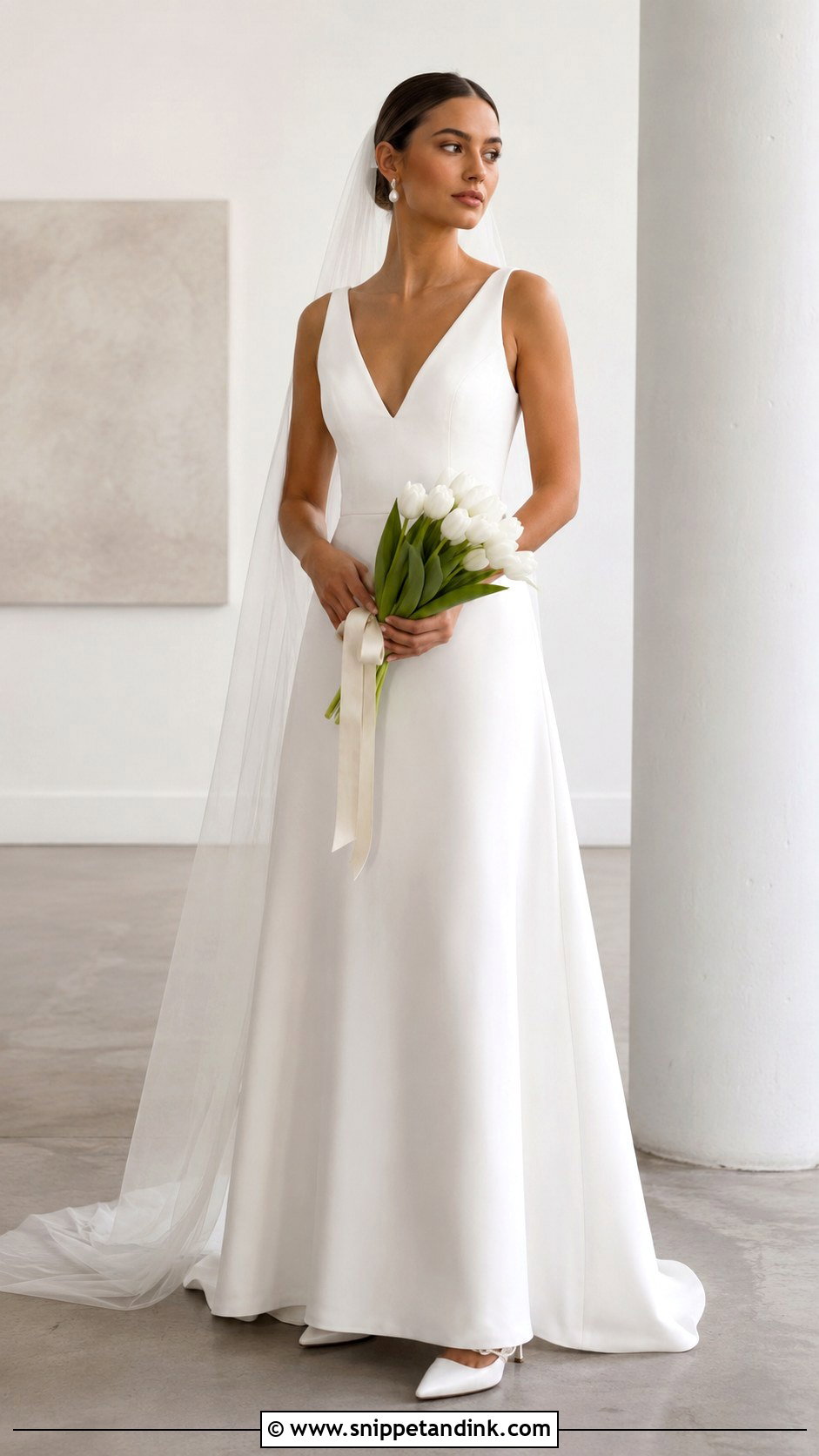
Crepe hides nothing. With no lace or beading to distract, every fitting adjustment shows, so I tell brides choosing this style to put tailoring at the top of the budget. Look for wide straps, subtle princess seams and a medium V, with a skirt that skims the hips before it flares. A long plain veil, gold or pearl earrings and pointed slingbacks suit it, and a low center-parted bun supports the streamlined aesthetic. White tulips tied with smooth ivory ribbon are the right amount of detail, and covered buttons down the back are the one extra I’d allow. Crepe also clings to the edges of shapewear, so try it on over the exact underwear you’ll wear.
7. Cap Sleeve V Neck A Line Wedding Dress
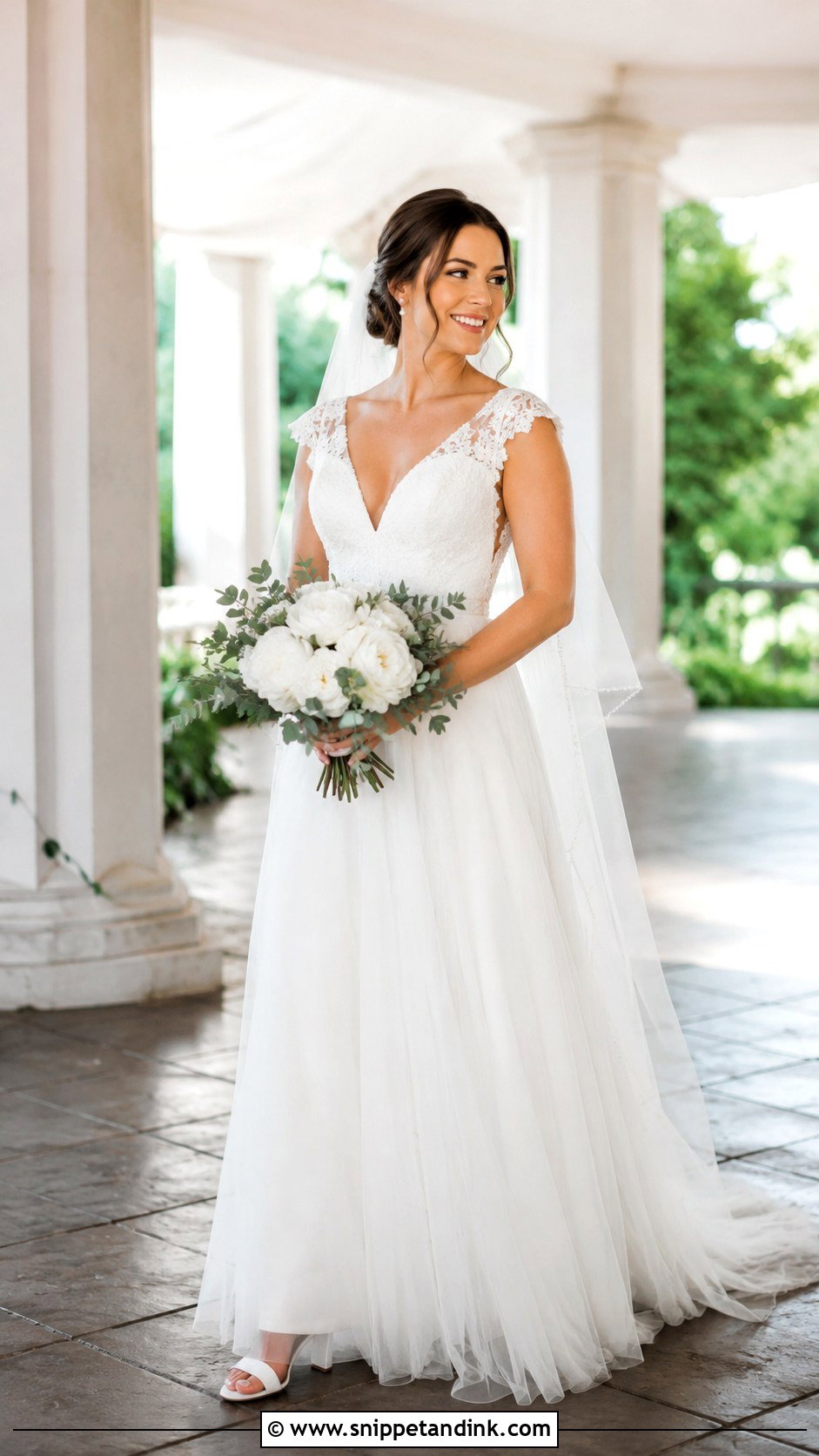
Cap sleeves give a little shoulder coverage without the arm-lift problem of a full sleeve. The ones I trust are lace or embroidered caps that join smoothly into a structured bodice and stop well above the bicep; once a cap creeps down the arm, it cuts in whenever you raise it. A soft tulle skirt with scattered appliqués carries the detail downward. Pair it with a shoulder-length veil, pearl studs and ivory block heels, and a textured low bun with a few loose pieces by the face. Peonies and eucalyptus suit it. I’d steer you away from this one if your shoulders are broad, because the cap sits right at the widest point.
8. Floral Embroidered V Neck A Line Wedding Dress
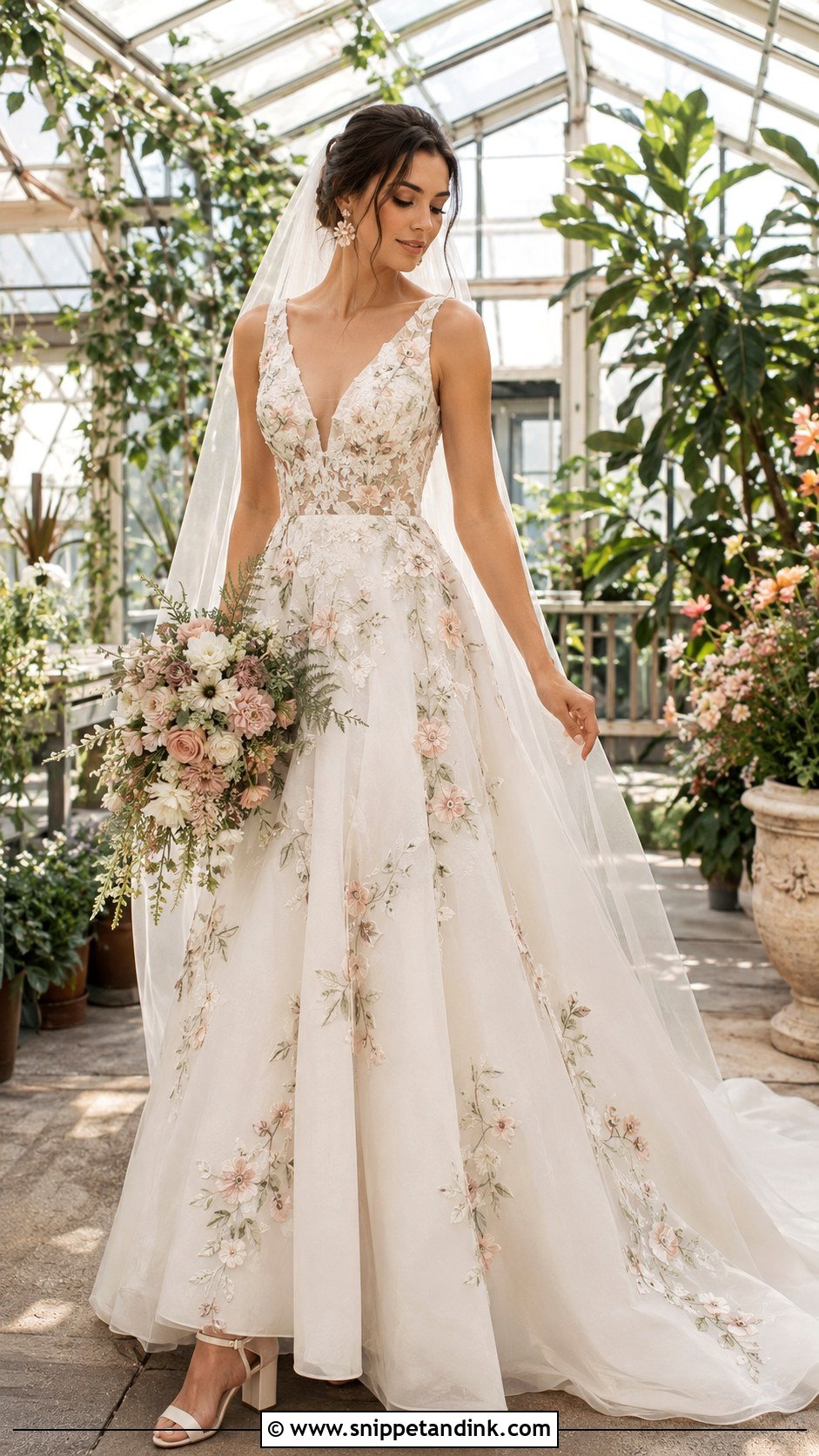
Embroidered flowers have a depth that flat lace doesn’t, which gives this gown more personality up close. I prefer the appliqués concentrated at the neckline, waist and upper skirt, leaving open tulle toward the hem so it never looks busy. White-on-white is the safe classic. Pale blush, blue or green thread gives a garden feel, though colored embroidery is harder to match later with shoes and veil. Keep the skirt fluid, and add a plain fingertip veil, floral studs, ankle-strap heels and soft waves or a loose updo. For the bouquet, repeat one or two colors from the gown rather than chasing every shade; flowers rarely match thread exactly, and trying makes both look off. A greenhouse or garden ceremony is its natural home.
9. Illusion V Neck A Line Wedding Dress
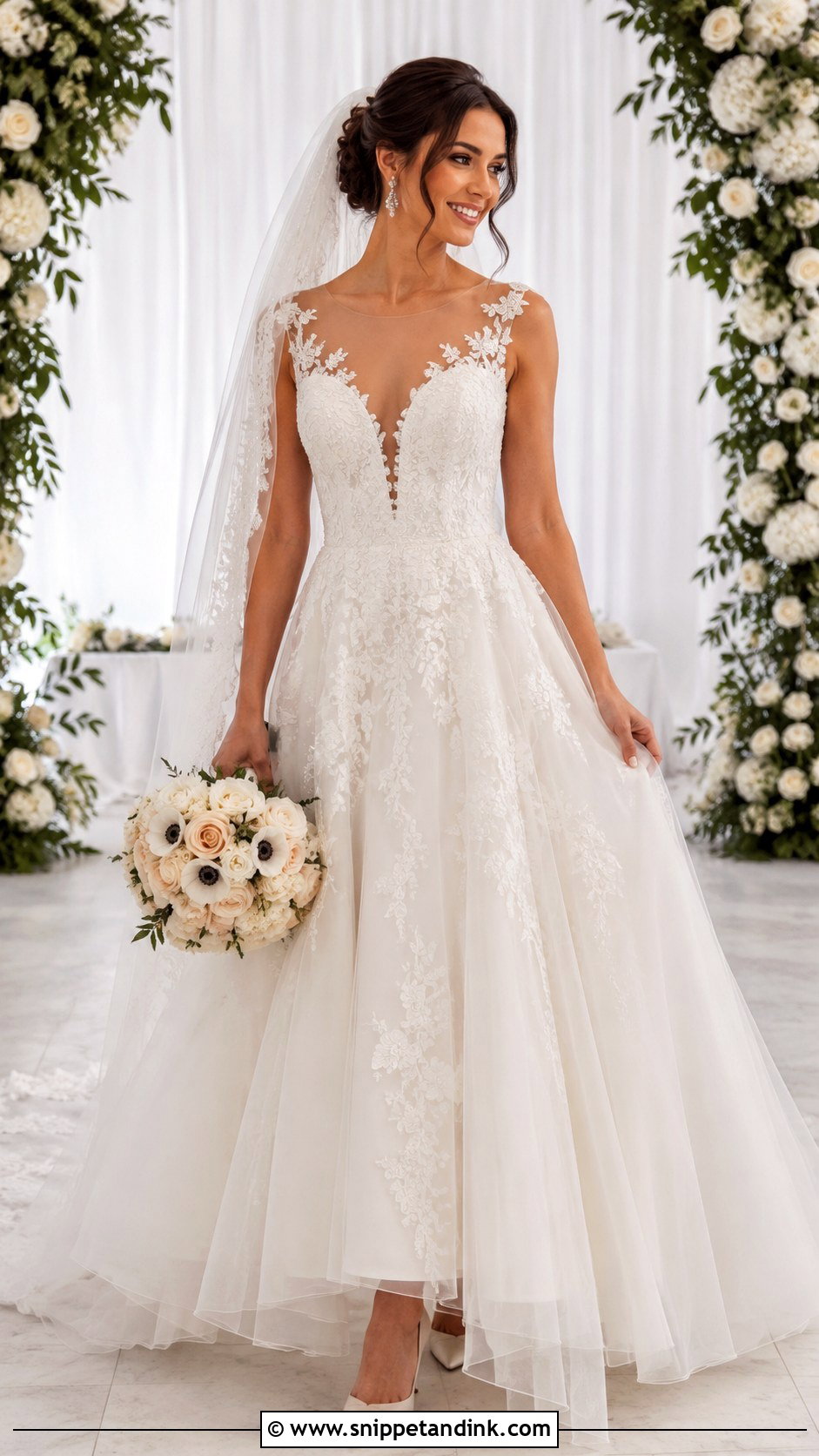
An illusion V neck gives the look of a plunge while the mesh does the supporting. Mesh color matters more than anything else here. I hold the swatch against the bride’s chest in daylight and again under warm indoor light, because a shade that vanishes in one can turn grey or pink in the other. Lace appliqués or beadwork framing the V hide the joins, and a softly layered skirt balances the detailed bodice. A chapel veil, crystal earrings, pointed ivory heels and a smooth low bun suit it; loose hair catches on appliqué edges all day. White roses, anemones and a little greenery finish it.
10. Pearl V Neck A Line Wedding Dress
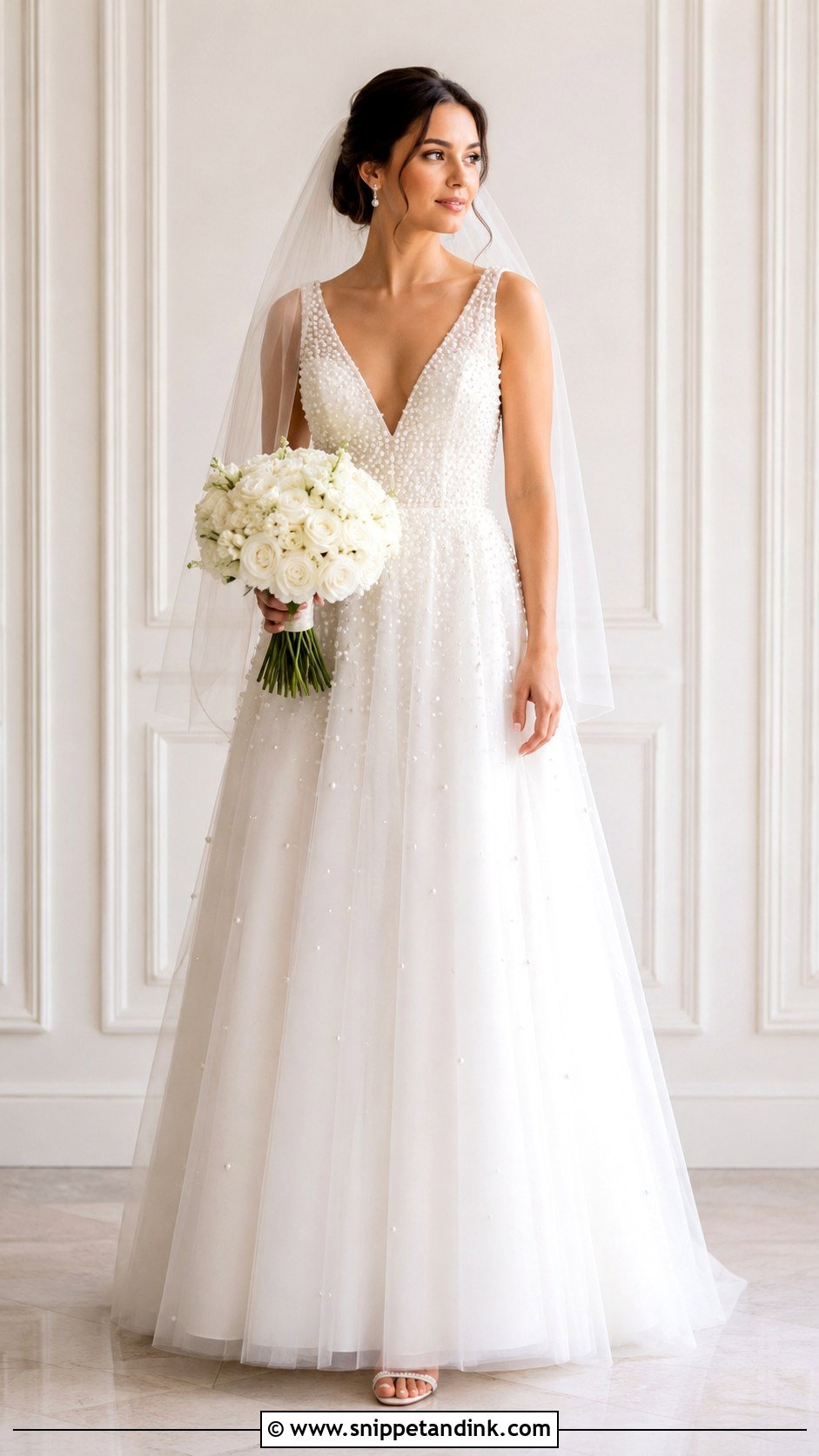
Pearls add texture without the hard sparkle of crystals, and they wear better in daylight. I look for pearls clustered on the bodice that space out further down a tulle or organza skirt; pearls scattered evenly from top to hem look like polka dots from across a room. Wide straps and a clear waist balance the weight. Pearl drop earrings, a plain sheer veil and satin heels with a small pearl detail are plenty, with a polished bun or soft half-up style and white roses wrapped in ivory ribbon. Leave off the necklace and the pearl hairpiece. Once pearls turn up in four places, nothing reads as the focus. Ask, too, whether the pearls are sewn or glued, since glued ones pop off far more easily during a long day.
11. Boho Long Sleeve V Neck A Line Wedding Dress
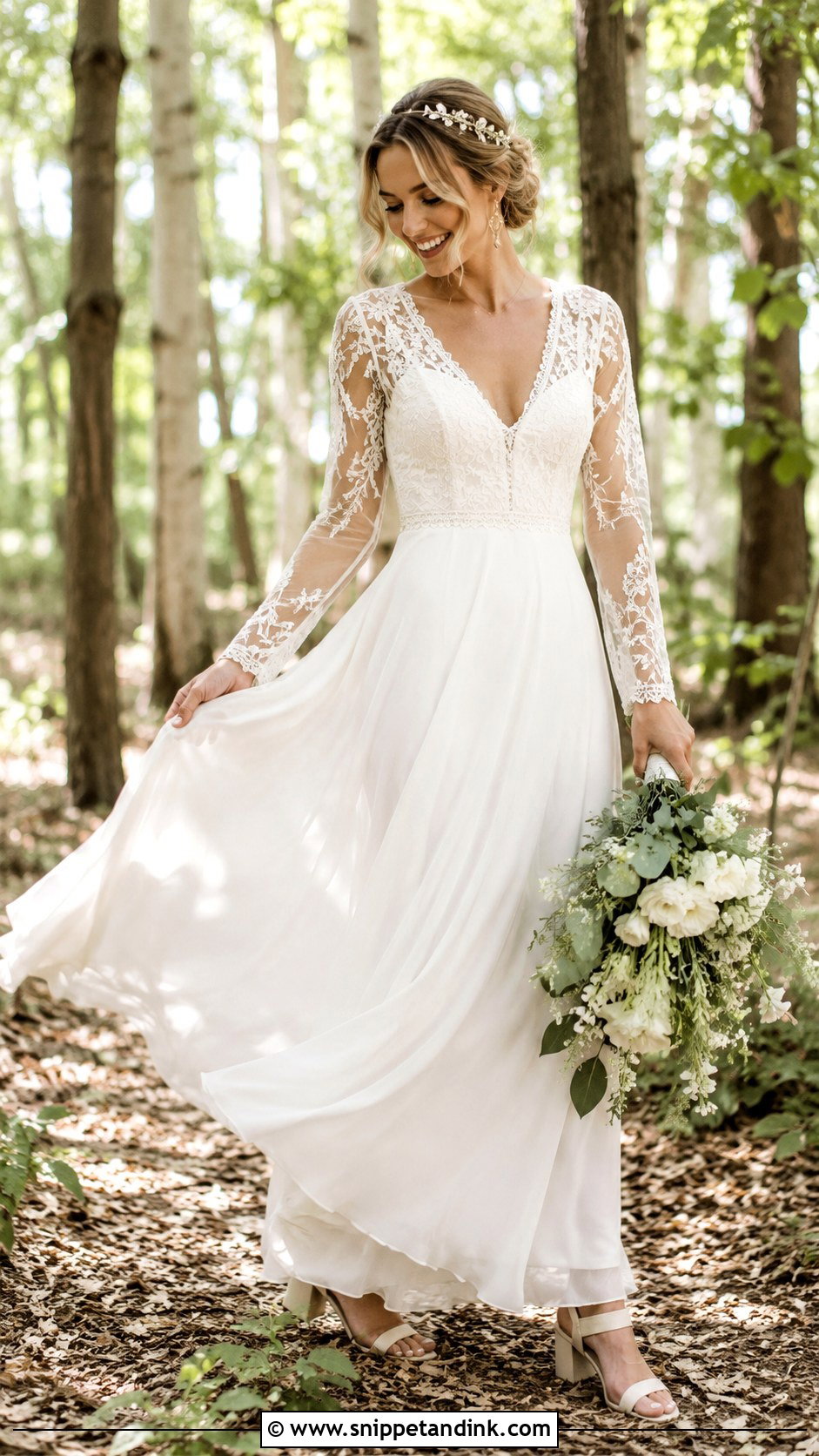
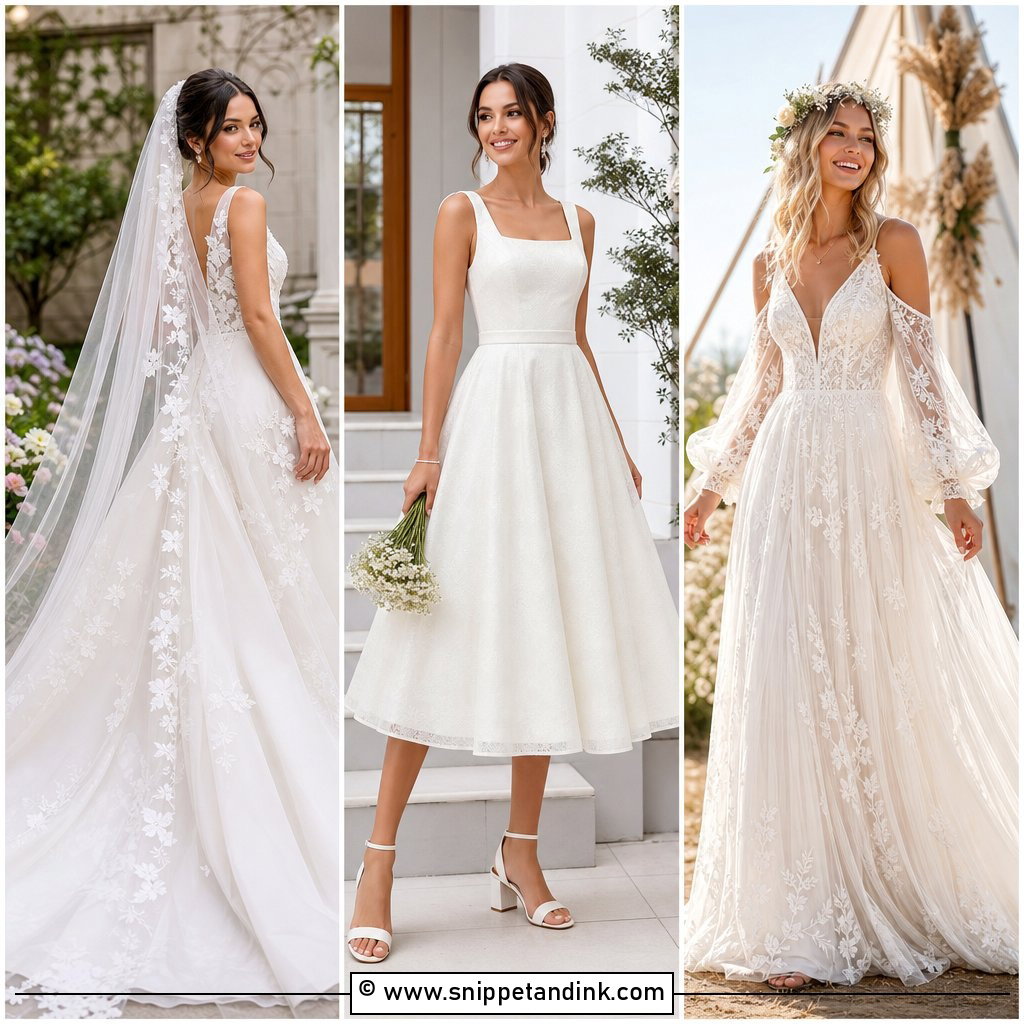
Lace sleeves over a chiffon or tulle skirt make this the relaxed sister of the satin long-sleeve gown above. Lightweight is the key word: heavy lace sleeves get hot fast at an outdoor summer wedding. A softly lined bodice and a skirt that falls naturally from the waist suit woodland and rustic venues, especially in a botanical lace. A floor-length veil or a fine hair vine, small gold earrings and ivory block-heel sandals keep it grounded. Loose waves or a low textured braid go with an unstructured bouquet trailing a few leaves. Keep the train short and skip the stiff underskirt, because the whole point is a dress that moves when you walk on grass.
12. Tea Length V Neck A Line Wedding Dress
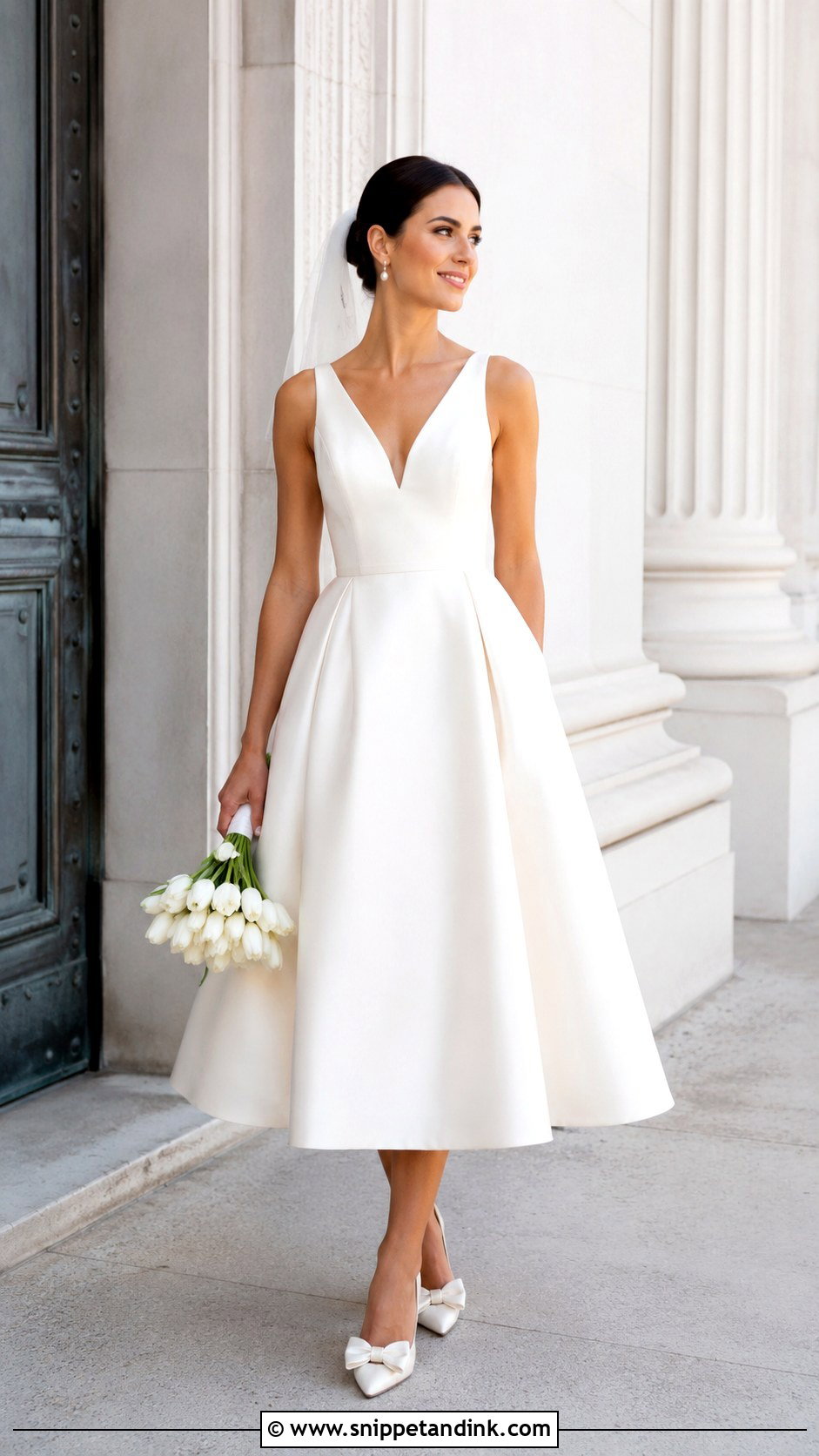
Tea length is the most practical gown on this list, and I like it for courthouse ceremonies and small dinners. The hem lands somewhere between knee and ankle, and that exact point is worth testing in the mirror; just below the widest part of the calf is usually the most flattering place for it. Structured satin, mikado or lace with a defined waist keeps the A-line crisp. Your shoes are on show all day, so they become part of the outfit, and pointed pumps or bow heels are worth spending on here. A short veil, pearl earrings, white tulips and a sleek bun or curled bob finish it. Ask for pockets. At this length they’re genuinely useful.
13. Cathedral Train V Neck A Line Wedding Dress
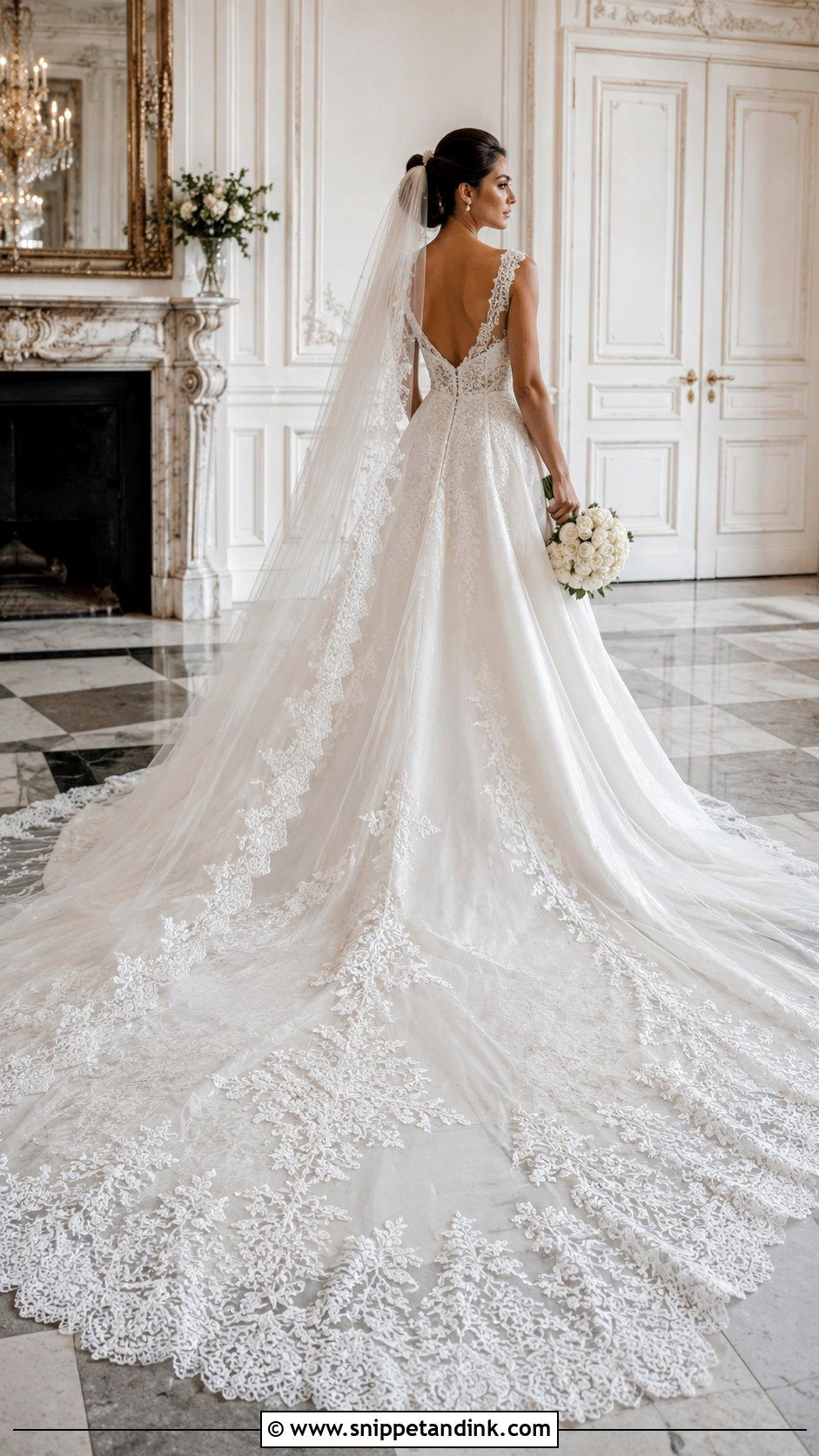
A cathedral train needs a long aisle and a venue that can show it off; in a small room it just piles up behind you. The bodice should run into a smooth skirt before the train extends. Lace appliqués at the hem stress the length, while plain satin looks cleaner and more architectural. Pair it with a cathedral veil cut slightly longer than the train so the layers read as one. Crystal studs, closed-toe satin pumps, a secure low chignon and calla lilies or a structured rose bouquet match the formality. The bustle is the part brides forget. Ask for a sturdy one at alterations and have whoever will fasten it practice beforehand, because a train this long can have a dozen or more hook points.
14. Low V Back A Line Wedding Dress
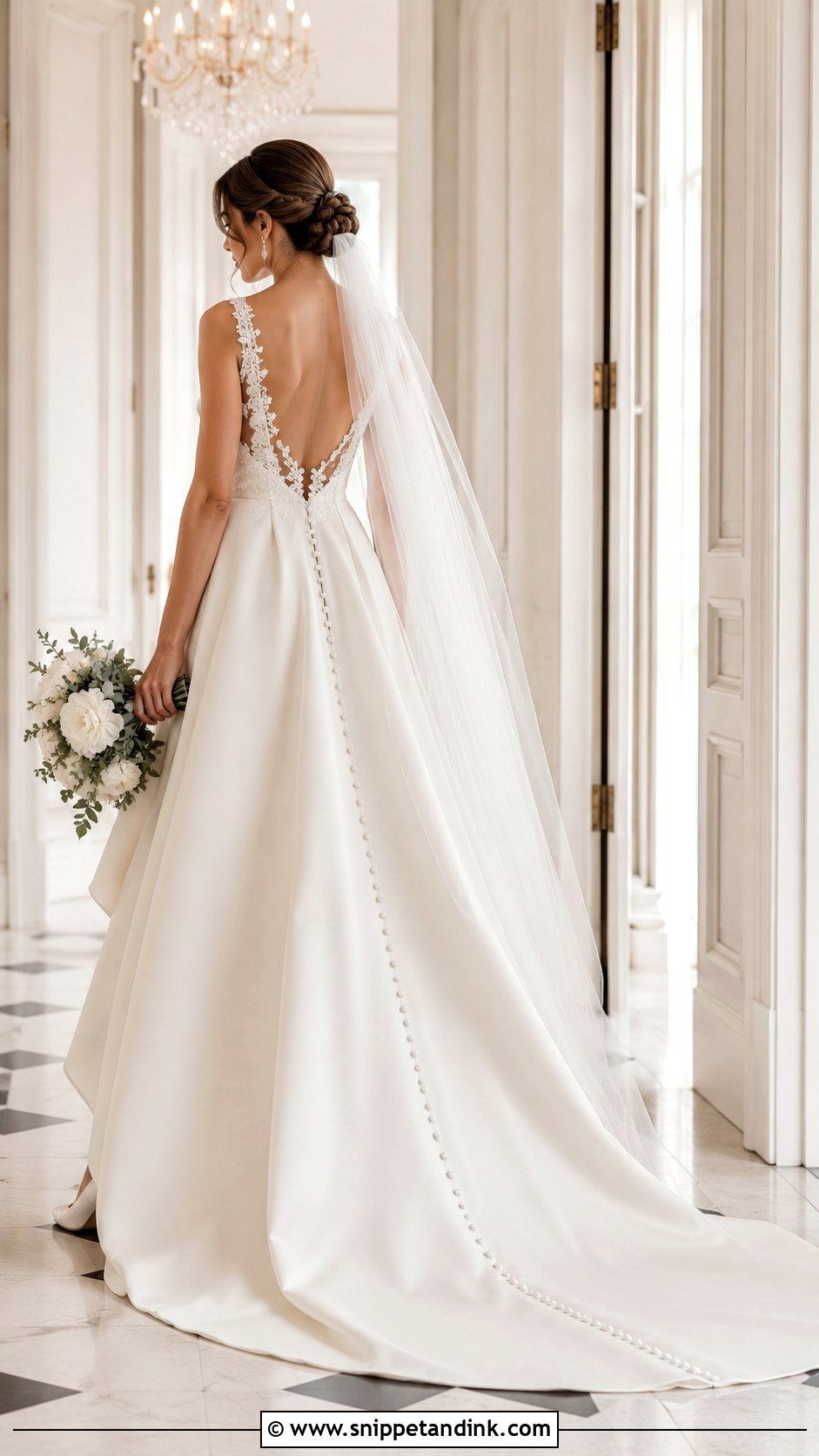
Guests spend the whole ceremony looking at your back, so a low V back earns its place. Keep the front neckline moderate so the two V shapes don’t fight each other, and frame the back with lace, buttons or narrow satin edging. Fit decides whether this works. The bodice has to grip at the waist and shoulders, or the back gapes the moment you lean forward. A chapel train shows it off at a manageable length. Set the veil comb below the hairstyle so the sheer layer falls over the back rather than hiding it, and choose a low side bun or braided updo. Delicate drops and pointed heels are enough; a bulky necklace or heavily trimmed veil would pull focus.
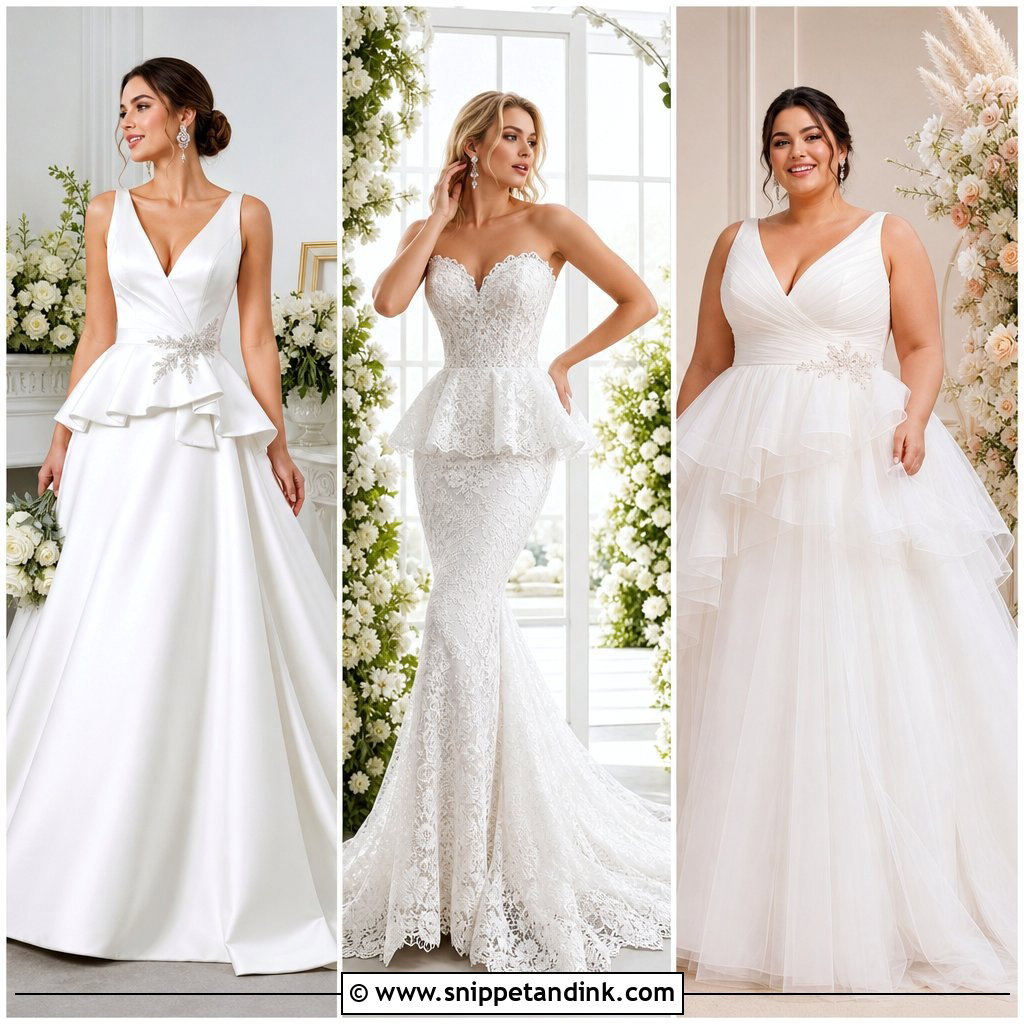
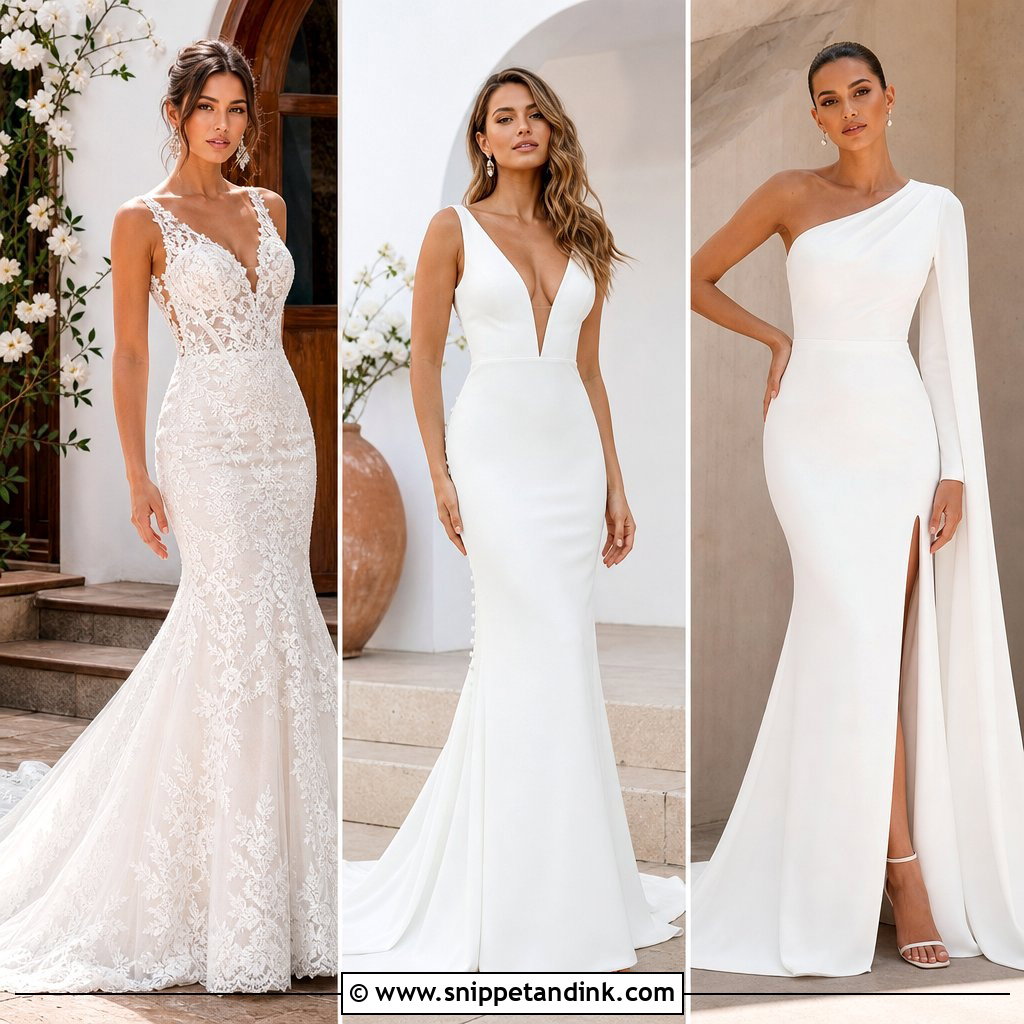
15. Basque Waist V Neck A Line Wedding Dress
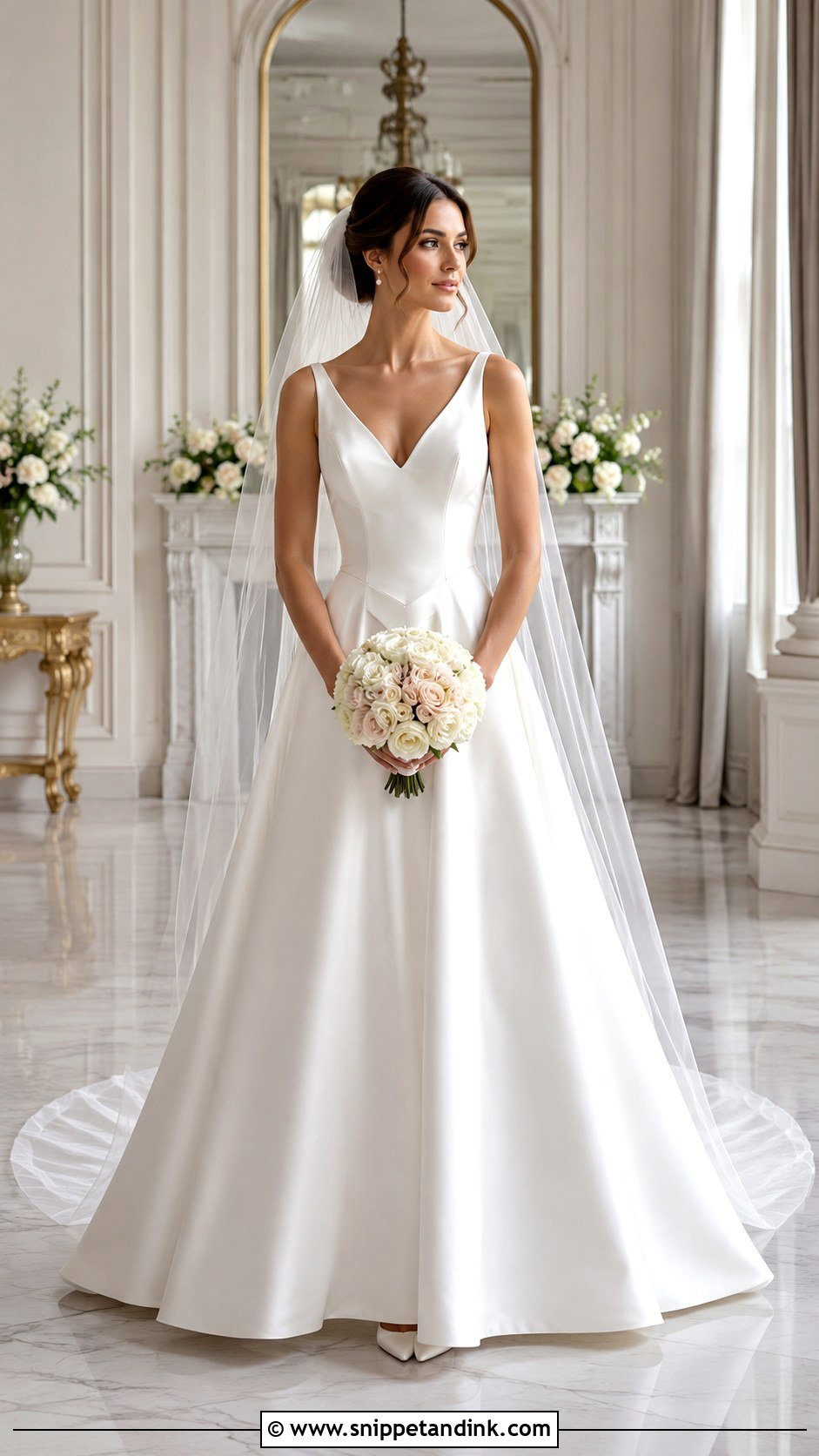
A basque waist dips into a soft point below the natural waistline, which lengthens the torso and sculpts the change from bodice to skirt. It looks sharpest in structured satin or mikado, though lace gives a softer version. A medium V repeats the point of the waist, so the bodice reads as two matching angles. A plain chapel veil, pearl drops, closed-toe heels and a smooth bun keep attention on the construction, with a rounded bouquet of garden roses. This is a style where I’d insist on an experienced seamstress: the point must sit dead center and stay flat when you sit, or it pushes into the stomach and looks crooked.
16. Plus Size V Neck A Line Wedding Dress
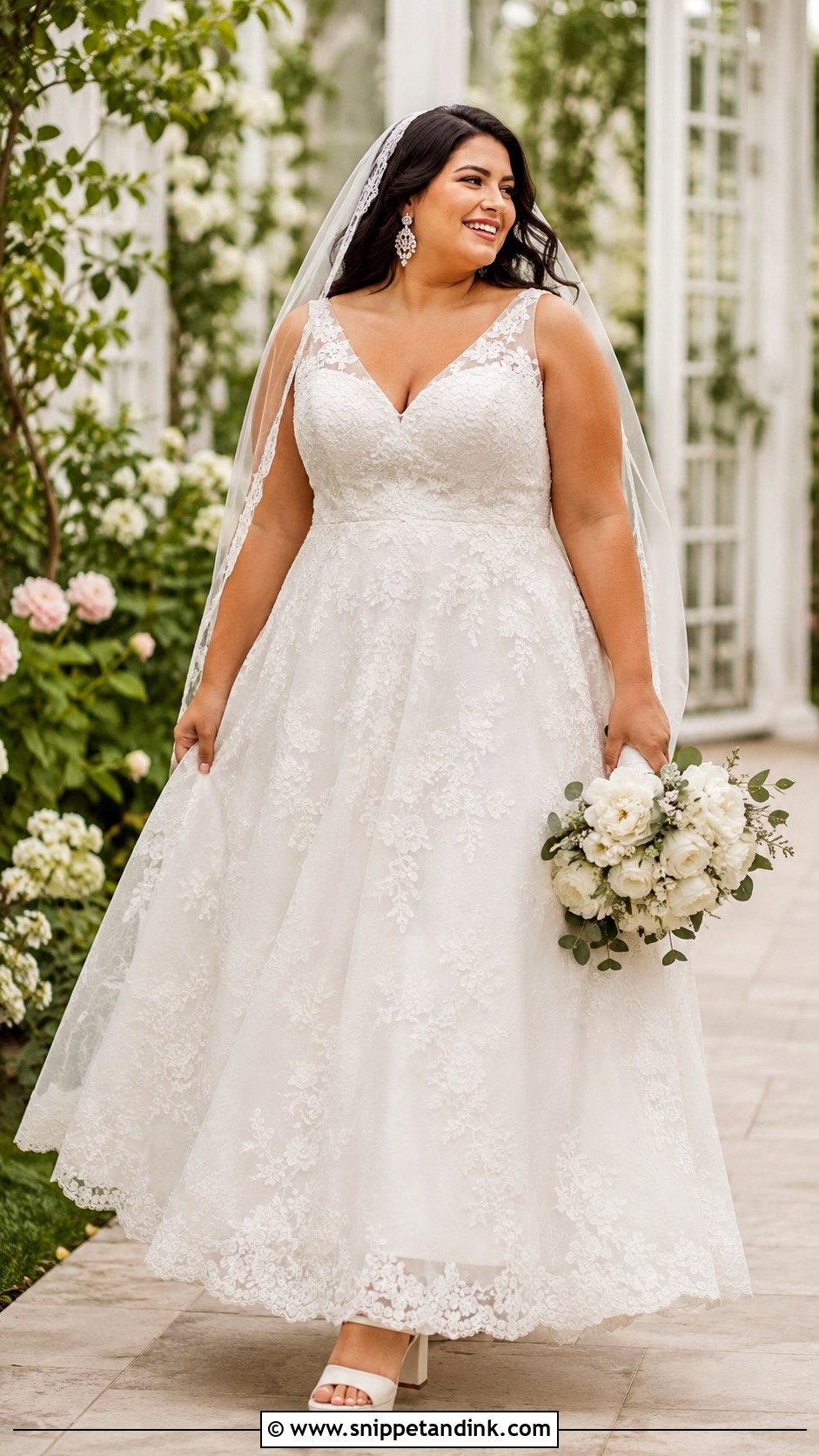
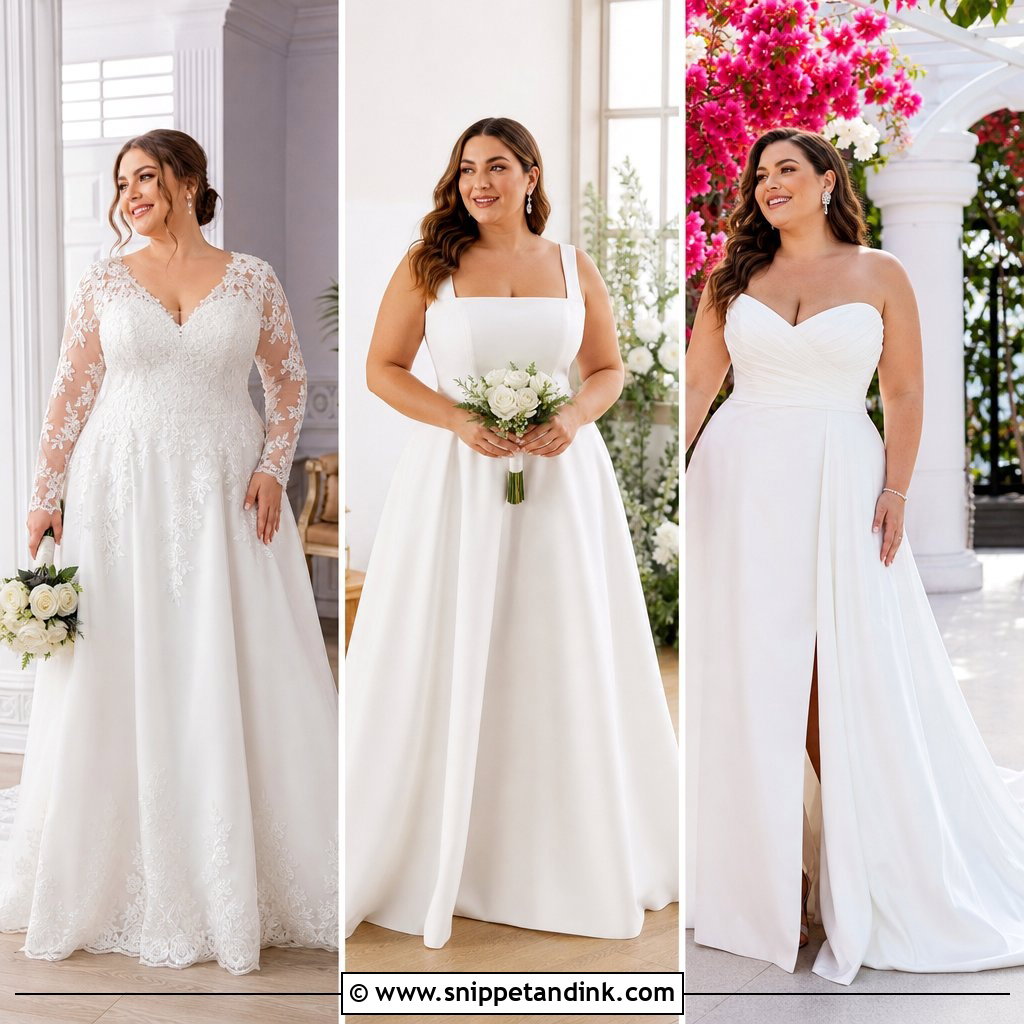
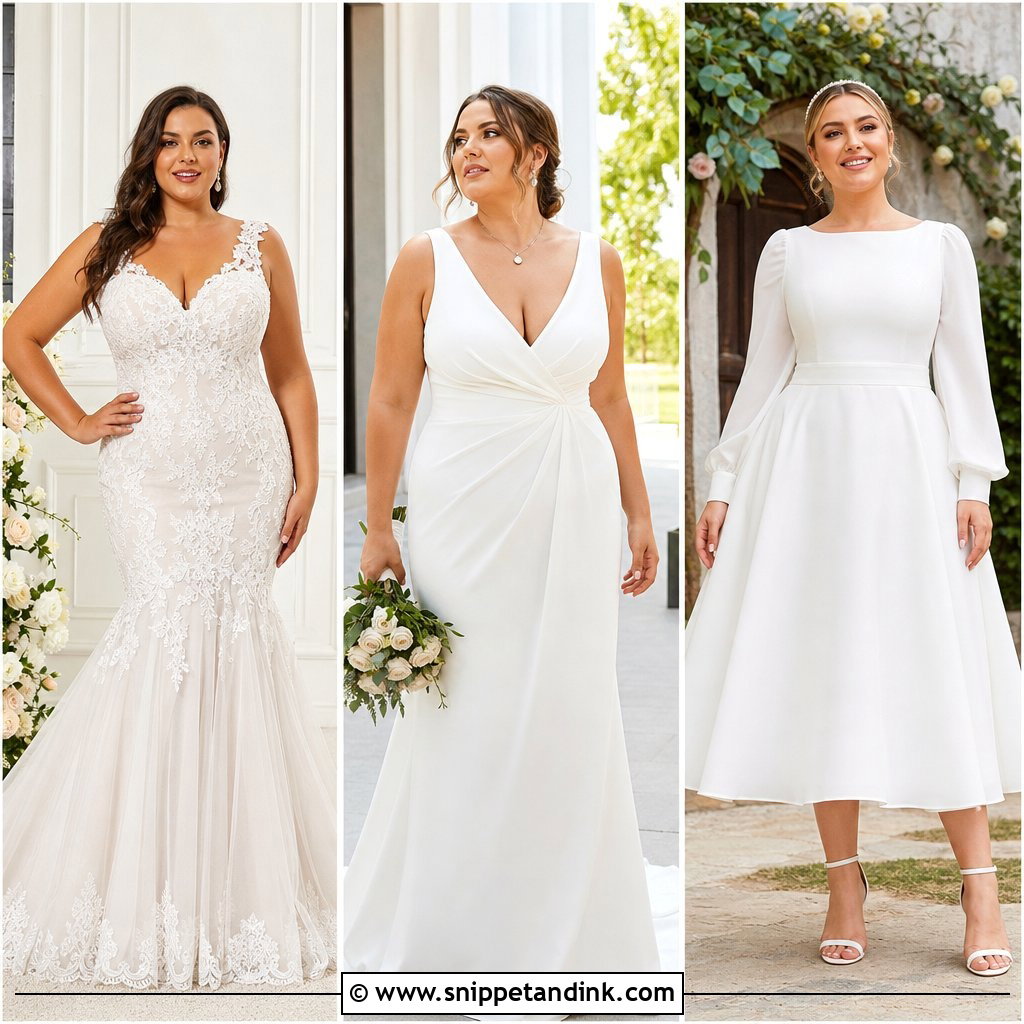
Support is my first conversation with a plus-size bride trying a V neck, before fabric or lace. Wide straps, built-in cups, a supportive lining and structured side seams let the V stay open without anything shifting. The depth can be raised or lowered at alterations, so don’t rule out a gown because the sample plunges too far. A skirt starting at the natural waist gives balance, and soft satin, tulle or lace drapes better than stiff fabric. A fingertip veil, statement earrings and cushioned block heels work well, with a half-up style and a bouquet sized to the skirt. Bridal sizing usually runs smaller than everyday clothing, so order by your measurements and ignore the number on the label.
17. Petite V Neck A Line Wedding Dress
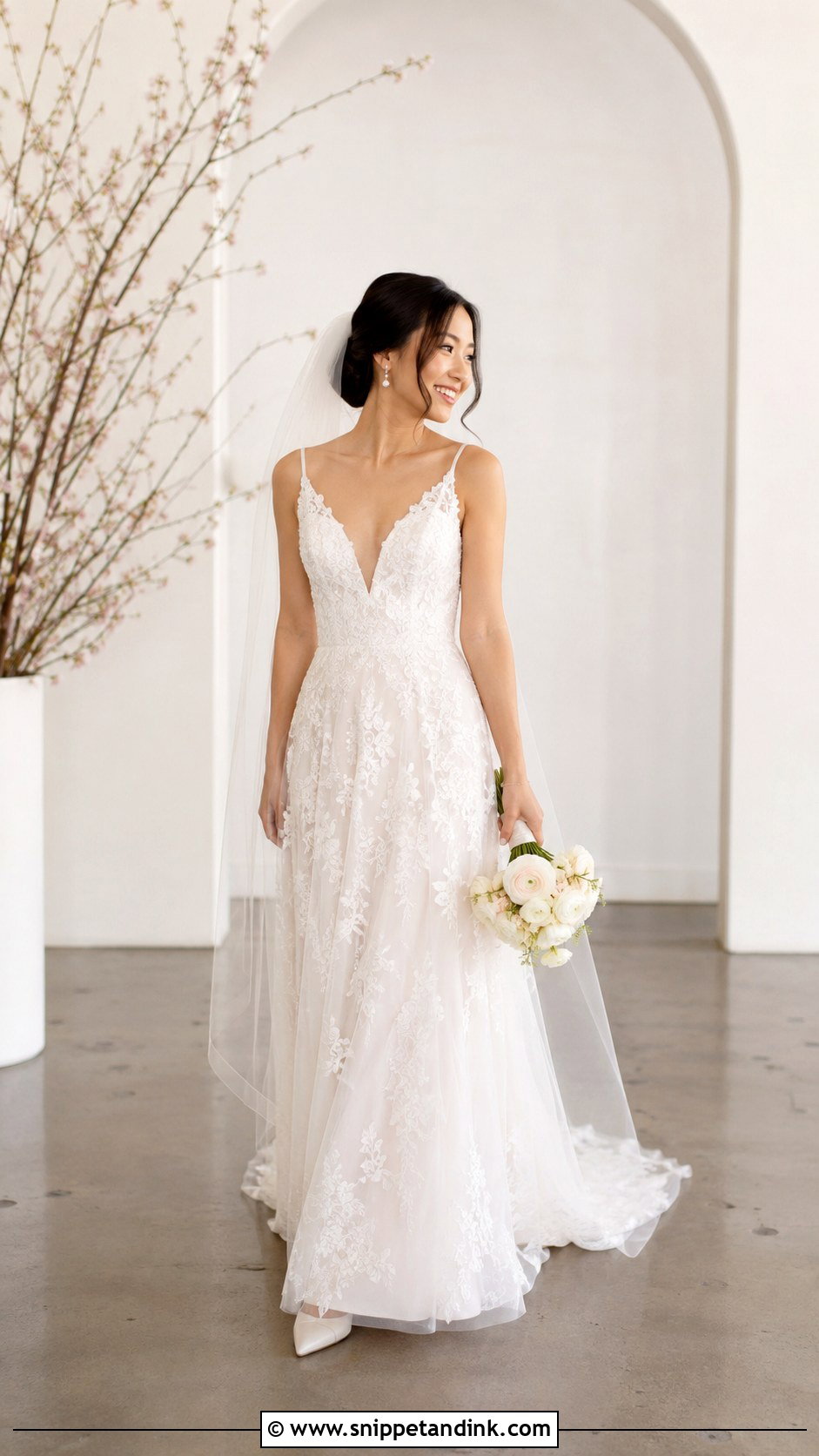
On a shorter frame, scale is the whole game. A narrower A-line skirt, a defined waist and a V kept in proportion to a shorter bodice stop the gown from swallowing you. Smaller lace motifs and fine straps help, while a very wide hem or heavy train pulls the eye down. Pointed-toe heels, small drops, a slim fingertip veil and a higher bun add a little height and keep the neckline clear, and ranunculus or tulips in a compact bouquet suit the scale. Here’s what petite brides are rarely told: the bodice may need shortening as well as the hem. Otherwise the waist sits low and the appliqués land in the wrong places.
18. Modest V Neck A Line Wedding Dress
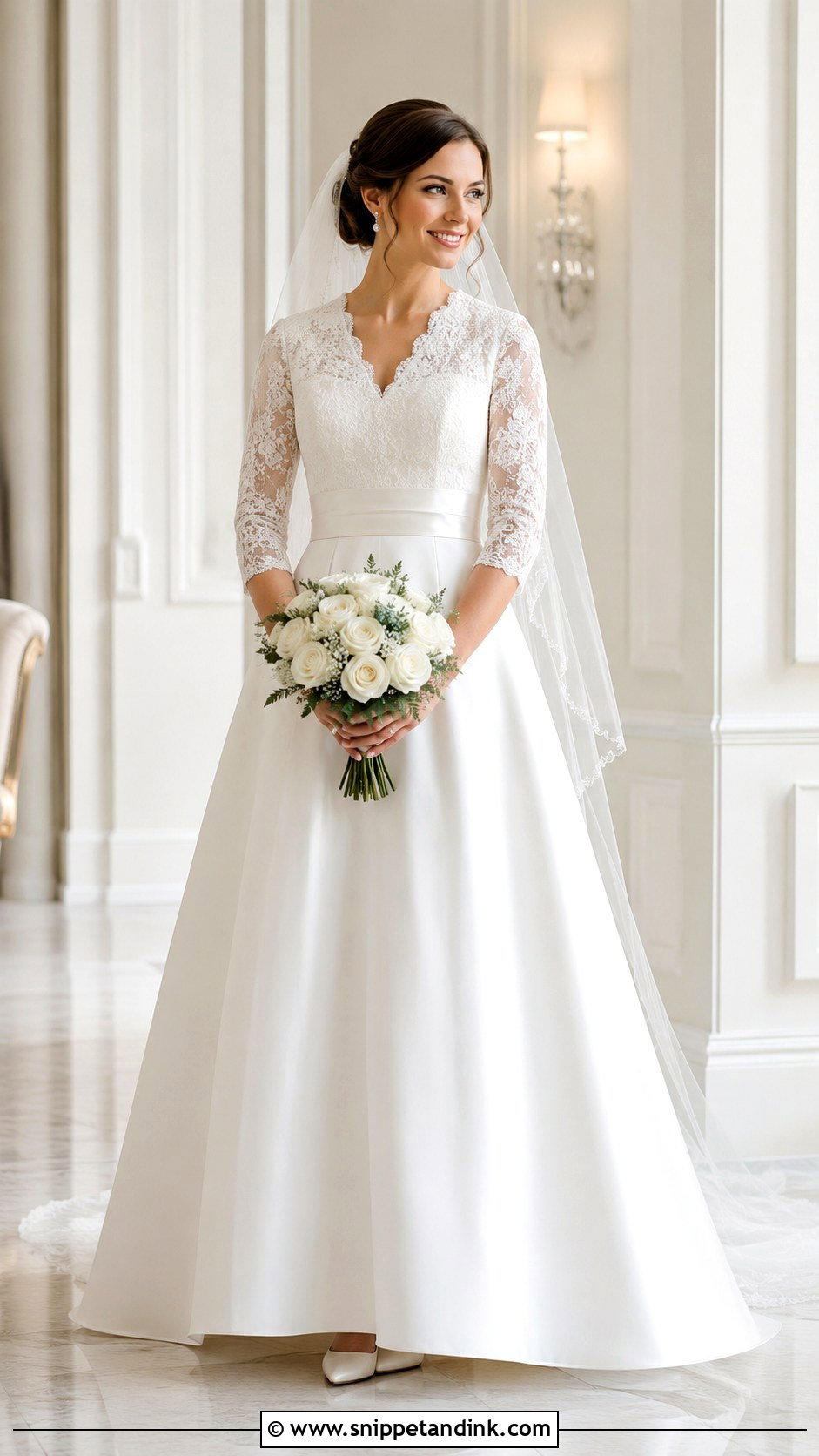
A higher V that ends above the bust, paired with three-quarter or full sleeves, keeps the shape of the neckline while giving real coverage. Matte satin, chiffon and lined lace all work, and a defined waist with a gently widening skirt stops the gown from feeling heavy. If sleeves are being added to a sleeveless sample, ask whether the bodice lace can be matched; lace that doesn’t quite match on added sleeves is a common giveaway. A chapel veil, pearl earrings, closed-toe ivory pumps and a low bun or neat waves suit most venues, with white roses and soft greenery. Covered buttons along the sleeves or back add detail without uncovering anything.
19. Slit V Neck A Line Wedding Dress
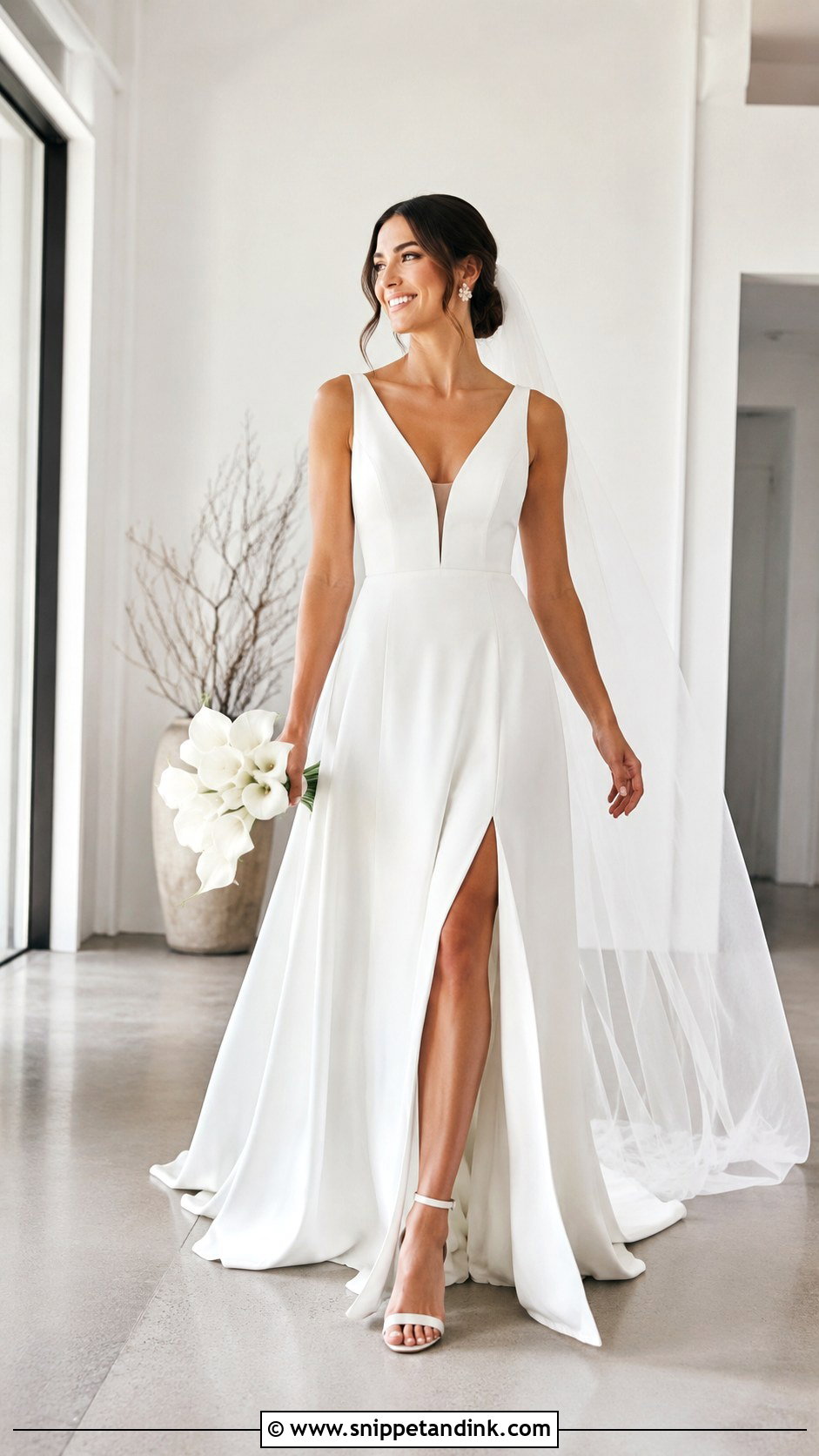
A slit makes an A-line feel modern, but placement is unforgiving. I want a controlled side slit that opens as you walk and closes when you stand still. Smooth crepe, chiffon or lightweight satin fall cleanly around the leg; stiffer fabrics flap open. Balance it with wide straps and a medium neckline. Your ankle-strap heels will show every time the slit opens, so pick them with care, then add small statement earrings and a plain floor-length veil. Loose waves or a sleek ponytail go well with a narrow bouquet of calla lilies. At your fitting, climb a step and sit down, because a slit that looked modest standing often rides much higher once you’re seated.
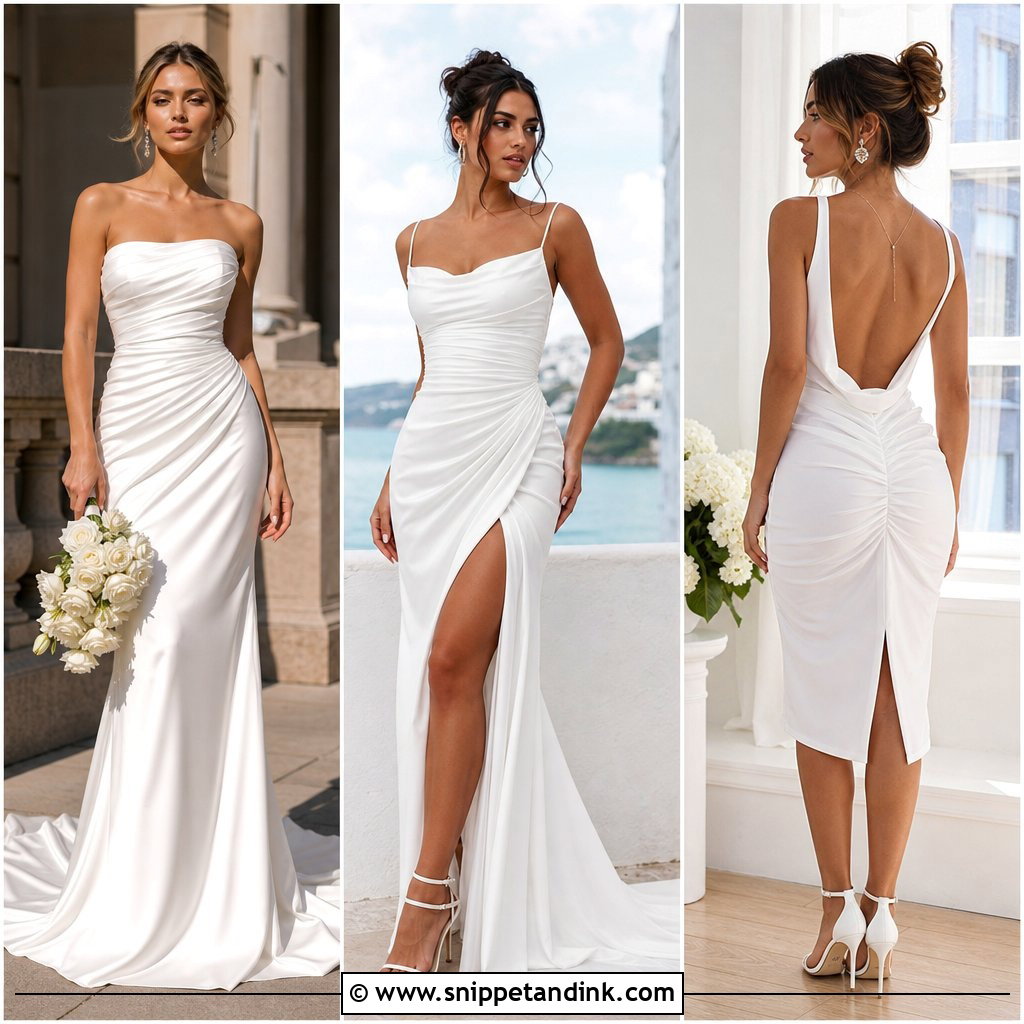


20. Detachable Overskirt V Neck A Line Wedding Dress
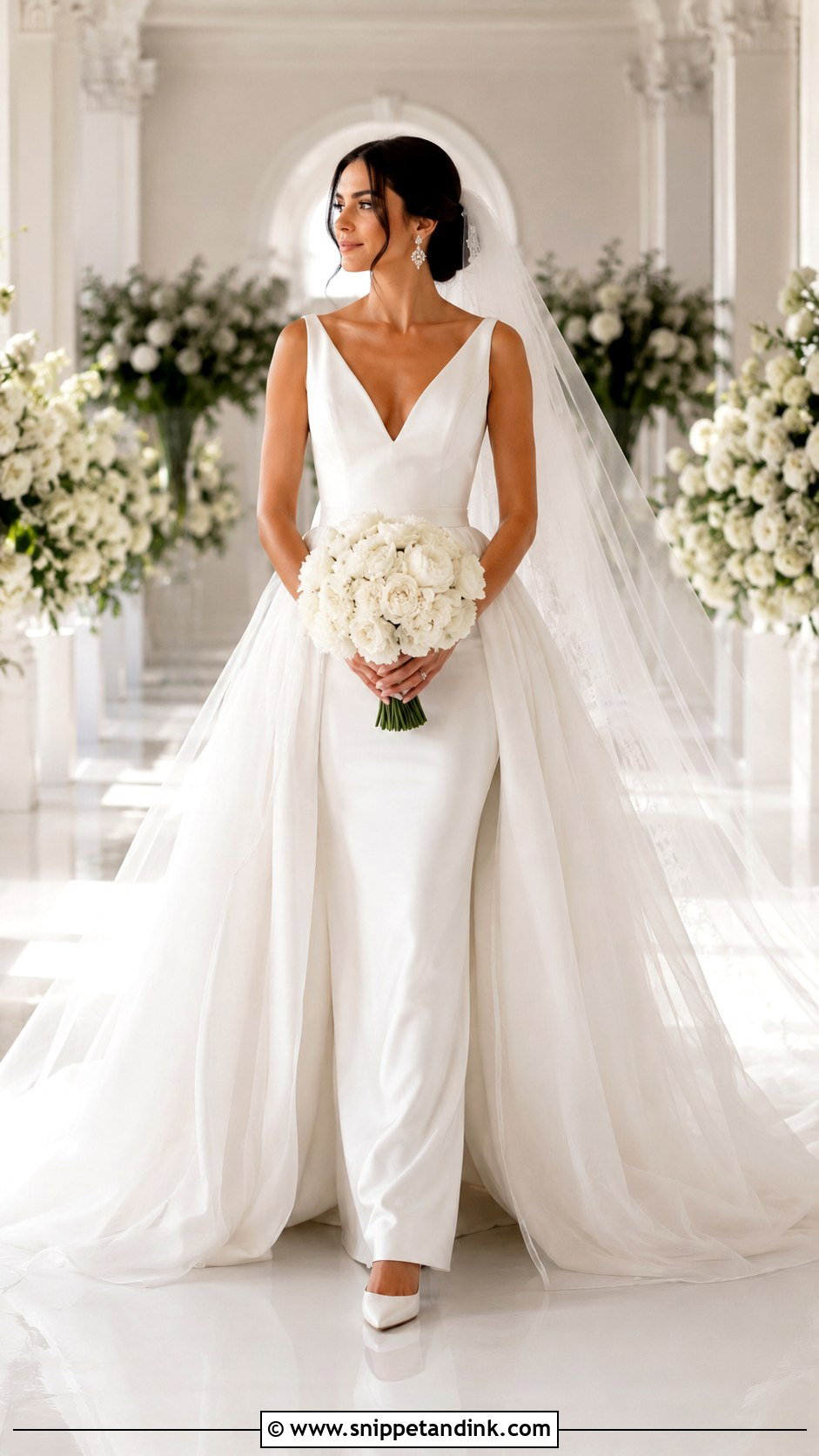
An overskirt gives you two looks without a second dress. The base is a fitted V-neck gown in crepe, lace or satin, and a lightweight tulle or organza overskirt adds volume for the ceremony. Unclip it for the reception and you have a slimmer skirt that’s far easier to dance in. Wear a cathedral veil, crystal earrings and pointed satin heels for the vows, then swap the veil for a pearl comb later; a structured white bouquet works with both versions. The waistband is where these go wrong. Check that it sits flat with no ridge showing through, and that the closures are hooks or snaps a bridesmaid can undo in a minute without tugging the gown underneath.
Where a V Neck Shifts Once the Dancing Starts
The fitting room shows you a bride standing still. The wedding shows you one in motion, and a V neckline reacts to that more than a sweetheart or a high neck does. Straps slide outward as you raise your arms, the edges gape when you lean in to sign the register or hug a shorter relative, and the point of the V can drift off center if the bodice twists on your waist.
Most of this gets solved at the final fitting, not on the day. Ask for strap anchors, small fabric loops with a snap that hold a bra strap in place, or a strip of silicone gripper inside wide straps. If an edge stands proud when you bend, the seamstress can take the neckline in a few millimeters. Then dance in the dress at that last appointment. A whole song, not a gentle sway.
One more thing an open V does: it shows the chest and collarbones in every flash photo. Ask your makeup artist to set that area with the same powder as your face, otherwise the difference in tone between face and chest becomes very obvious in pictures.
What your maid of honor should carry
- Double-sided fashion tape, already cut into short strips
- Ivory thread with a needle threaded in advance
- Safety pins in two sizes, in case a bustle loop snaps
- Blotting papers for shine on the chest as well as the face
Sit, Reach and Hug in It Before You Say Yes
Any of these gowns can work, but only if it fits the way you actually move. Start with fabric, the depth of the V, sleeves and skirt volume, then treat venue, season, shoes and veil as one outfit rather than separate purchases. In the fitting room, sit, walk, raise both arms and hug whoever came with you. If the neckline shifts or a strap slides, a good seamstress can usually correct it at the strap, waist or hem, and a bustle can be added later. The dress worth buying is the one you stop adjusting after ten minutes.
You'll Like These Ideas:


Leave a Reply