
Wearing white to your haldi is a bold choice, and a smart one. Ivory, pearl and off-white give turmeric, marigolds and flower jewellery a clean background, so every streak of yellow shows up in the photos. The catch is that haldi is a messy, sitting-on-the-floor, laughing ritual, and white clothes show all of it. When I style a haldi look, comfort and washability come before embroidery. Below are 25 outfits, from lehengas and sarees to shararas, anarkalis, co-ords and Indo-western sets, with notes on how each one handles the paste.

Wet Turmeric on White Cloth: Fabric Decisions to Make First
Haldi paste is turmeric mixed with oil, water, milk or gram flour, and its colour comes from curcumin, a dye that grips natural fibres fast. White shows that dye more than any other colour. So before I look at embroidery, I look at three things: whether the fabric washes, whether it turns sheer when wet, and whether it’s lined.
- Cotton, mulmul and linen can go in a gentle wash, so stains are easier to treat. Silk, organza and chanderi usually need specialist dry cleaning.
- Hold the fabric up to a window and wet a corner if the shop allows. Thin white cotton and georgette become see-through, and you will be splashed.
- Ask for a full lining in a skin-tone fabric. A nude lining hides more than a white one.
- Avoid heavy zari or zardozi on the lower half. Metal thread and dense embroidery trap paste and are the hardest areas to clean.
Some brides want the stains as a keepsake. If that’s you, choose cotton and let it happen. If you plan to wear the outfit again, pick separates or a washable fabric and wear an old dupatta during the ritual itself.
1. White Haldi Lehenga With Floral Dupatta
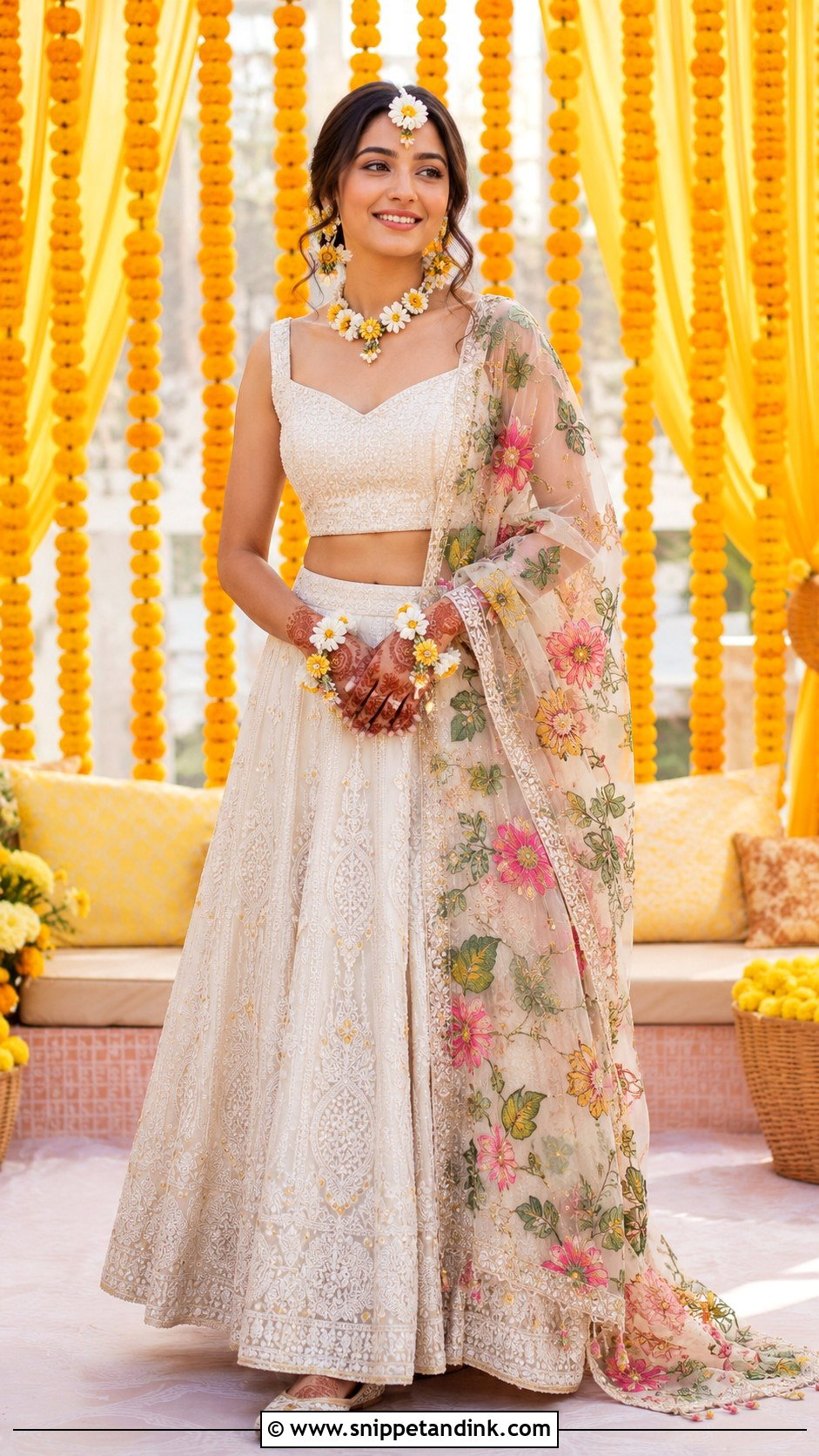
A white haldi lehenga with a floral dupatta is the look most brides picture first. Cotton silk, organza or georgette keeps it light, with small mirror work, gota or thread embroidery rather than heavy zardozi that will hold turmeric in every stitch. A yellow, pink or multicolour floral dupatta brings in the colour. I keep the blouse short-sleeved or sleeveless, because sleeves are the first thing to get smeared when relatives reach for your arms. Fresh flower jewellery, soft curls, few bangles and flat juttis finish it.
2. White Haldi Saree With Yellow Border
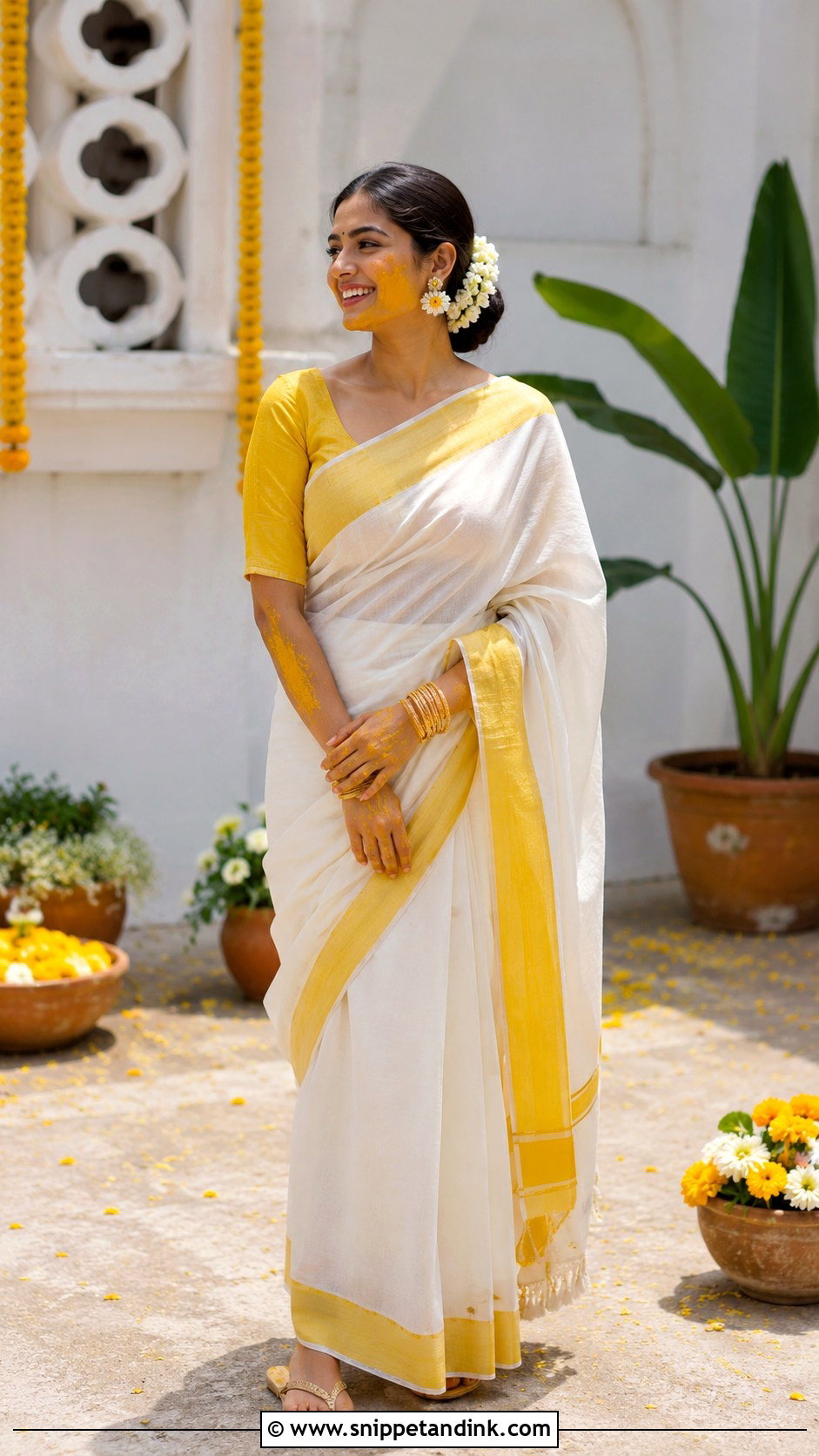
A white haldi saree with a yellow border is the traditional answer and still one of my favourites. Cotton, linen, chiffon or organza work, with a lemon, mustard or marigold border, and either a matching yellow blouse or white with yellow piping. If you’ll be sitting on a low stool or the floor, ask for a pre-stitched drape or have your pleats pinned in three places; loose pleats slip open the moment you cross your legs. A neat bun with gajra, floral earrings and a few bangles is all it needs.
3. White Haldi Sharara Set With Mirror Work
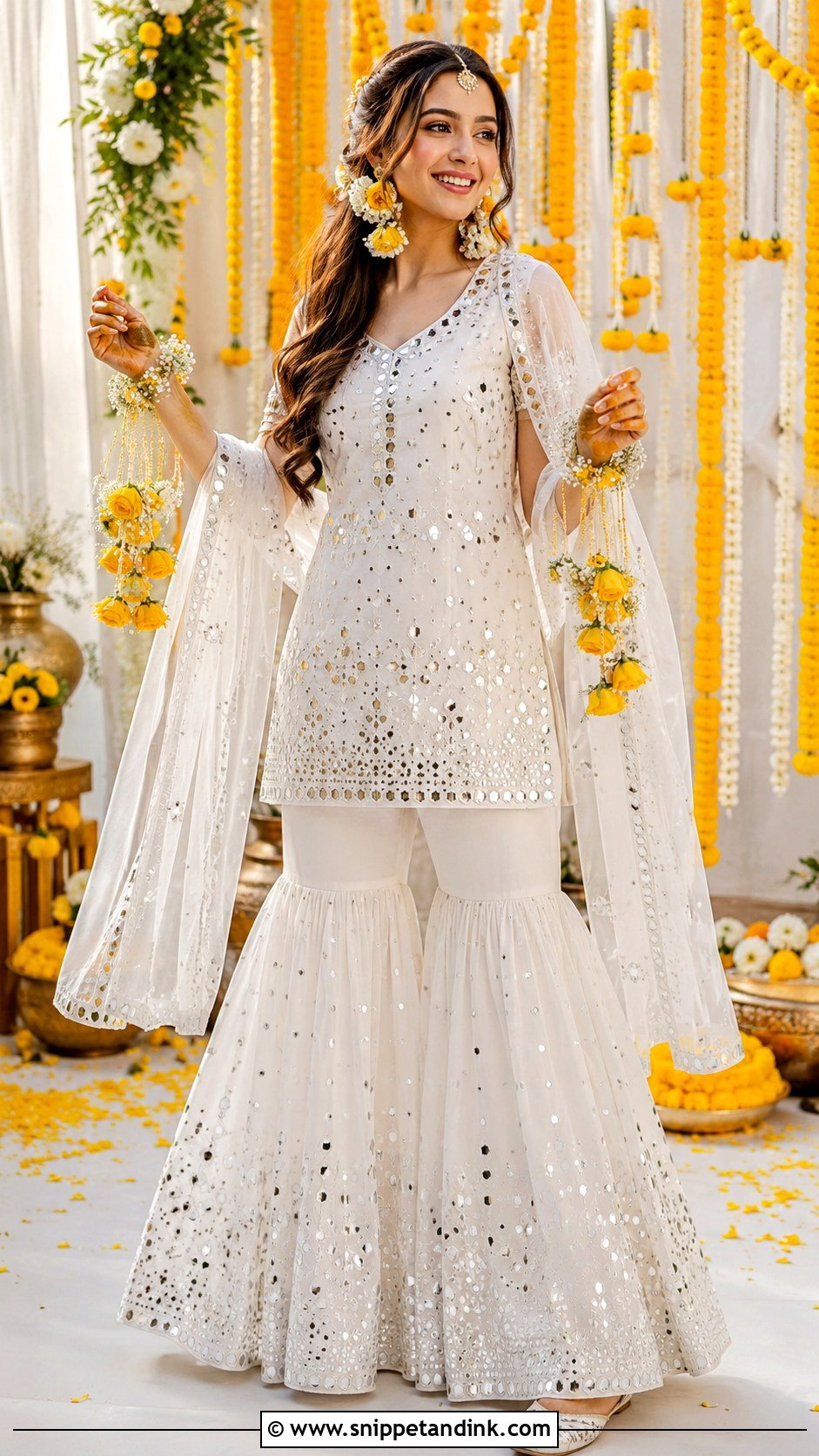
For the bride who wants to dance at her own haldi, a sharara set is the easiest outfit to move in. Short kurti, flared sharara pants and a light dupatta. Mirror work flashes in sunlight, so a plain white base still looks festive. Keep the heavy work off the sleeves and lower hem; those are the areas that touch turmeric bowls and wet floors first, and stains set fastest in dense embroidery. Floral kaleere, a maang tikka and embroidered juttis complete it.
4. White Haldi Anarkali Suit With Floral Jewelry
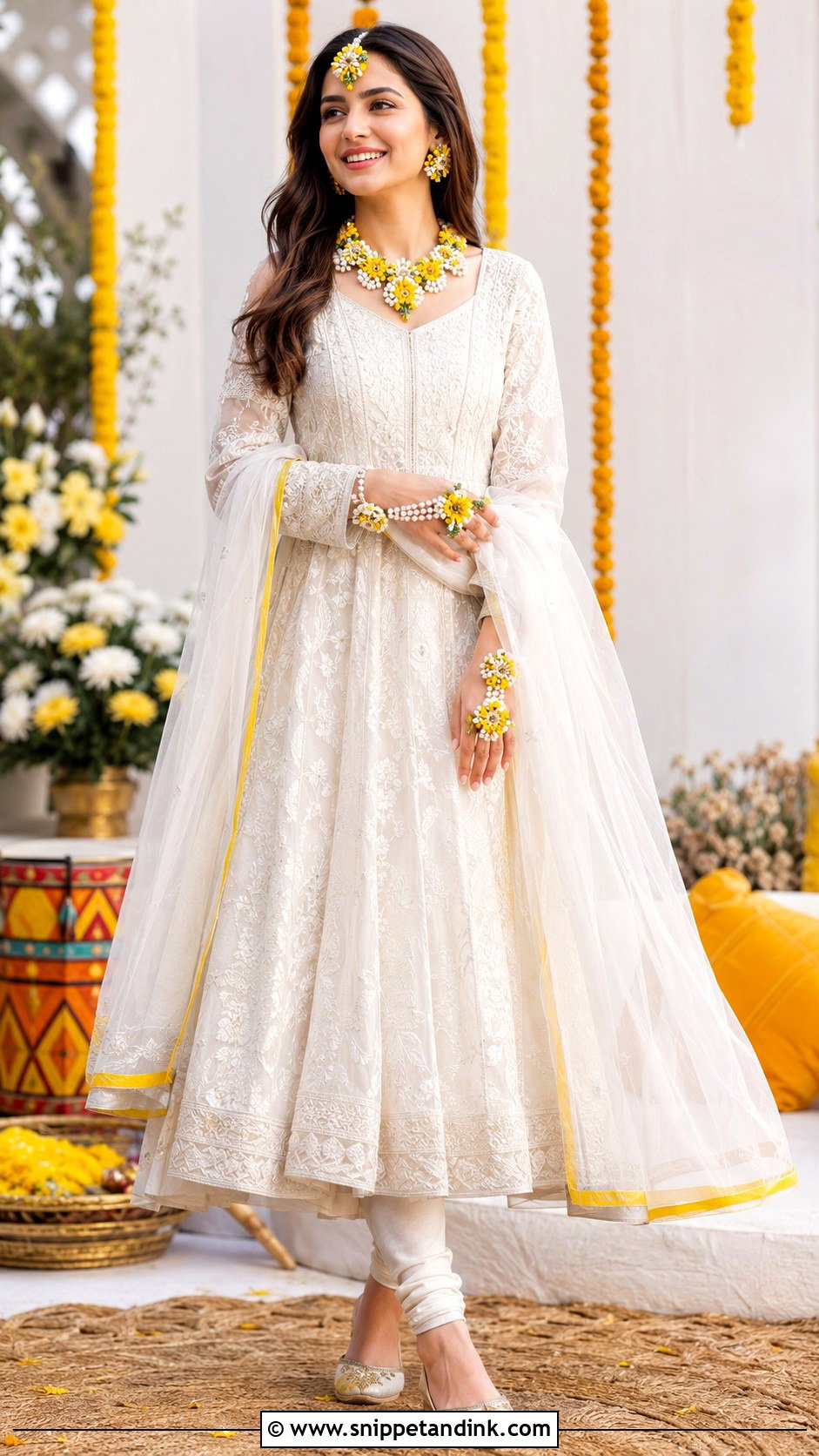
An anarkali gives coverage and movement in one piece, and the flare looks lovely when you walk or sit with the skirt spread around you. Georgette, cotton or chanderi with light lace or thread work keeps it breathable. A sheer dupatta with yellow edging makes it more festive. I’d pair it with a fresh flower set: necklace, earrings, haath phool and maang tikka. Makeup stays fresh, peachy cheeks and a soft lip, since the paste will cover your cheeks anyway.
5. White Haldi Kurta Palazzo Set
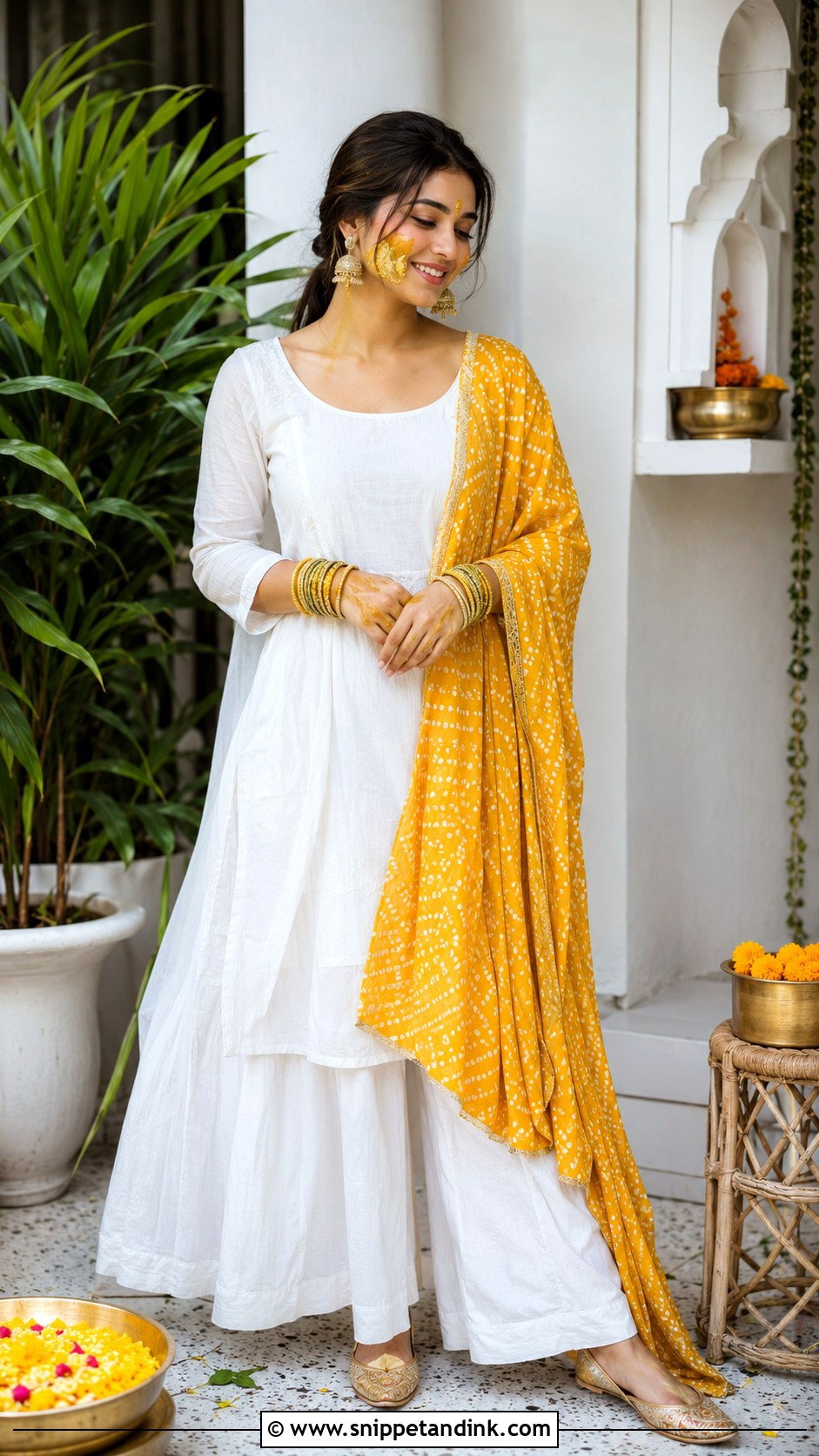
Kurta and palazzo is the understated option, and honestly the most practical outfit on this list. A straight or A-line kurta with wide palazzos in cotton, mulmul or linen breathes in heat. Bring in colour with a yellow bandhani dupatta, gota dupatta or floral print. You can sit, stand and bend without fixing layers. Jhumkas, stacked bangles and flat sandals or juttis keep it bridal for an intimate ceremony at home.
6. White Haldi Chikankari Lehenga
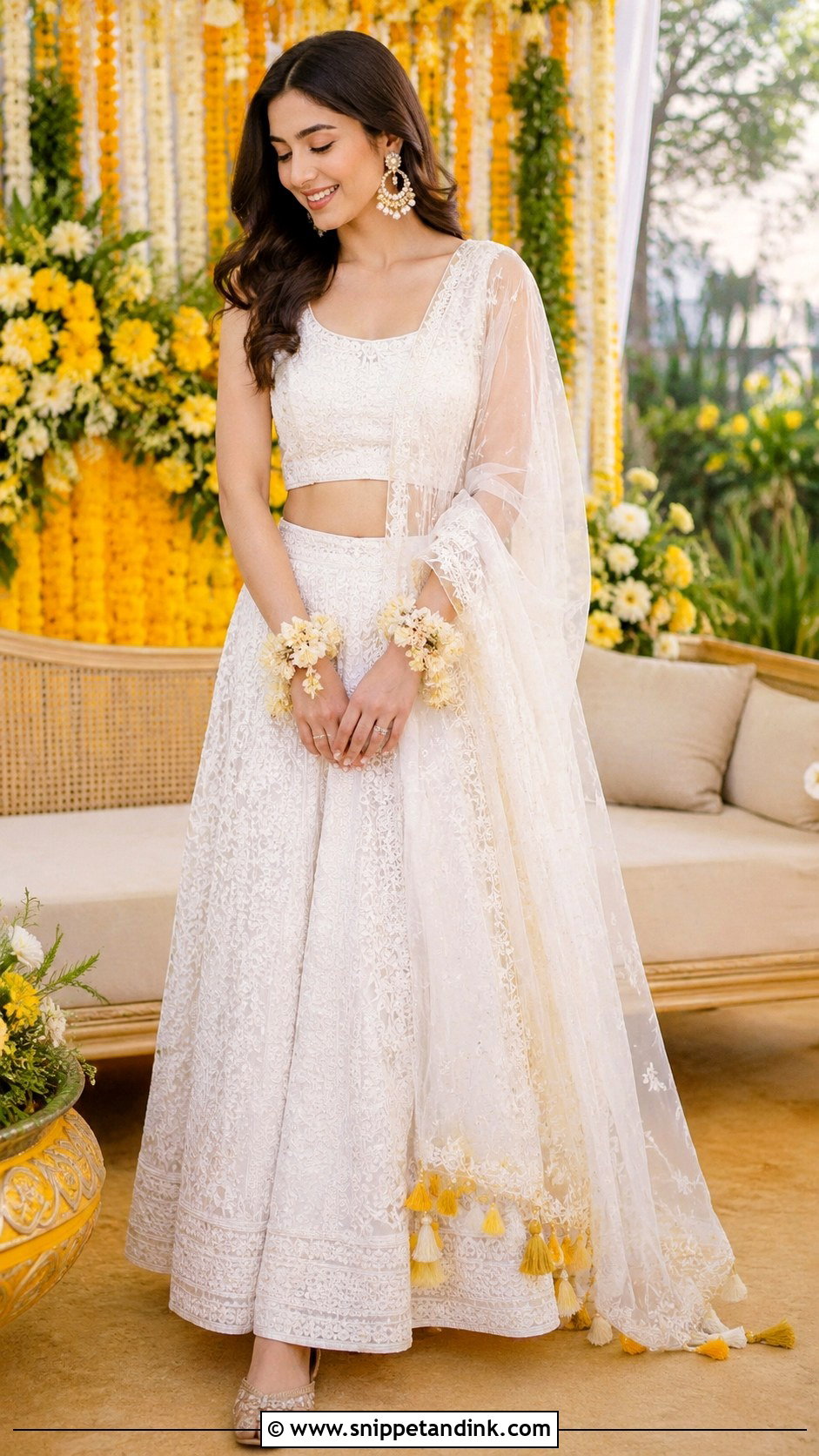
Chikankari is hand embroidery worked on fine fabric, and its texture looks refined in daylight without feeling overdone. Choose ivory or white with a matching blouse and a light dupatta, then add yellow tassels, a marigold belt or flower jewellery to tie it to the ceremony. Keep the skirt airy rather than full, because a heavy can-can makes sitting cross-legged awkward. One warning from experience: chikankari on fine cotton turns slightly sheer when wet, so a lining matters. Pearl earrings, a small bindi and gold juttis finish it.
7. White Haldi Organza Saree With Floral Blouse
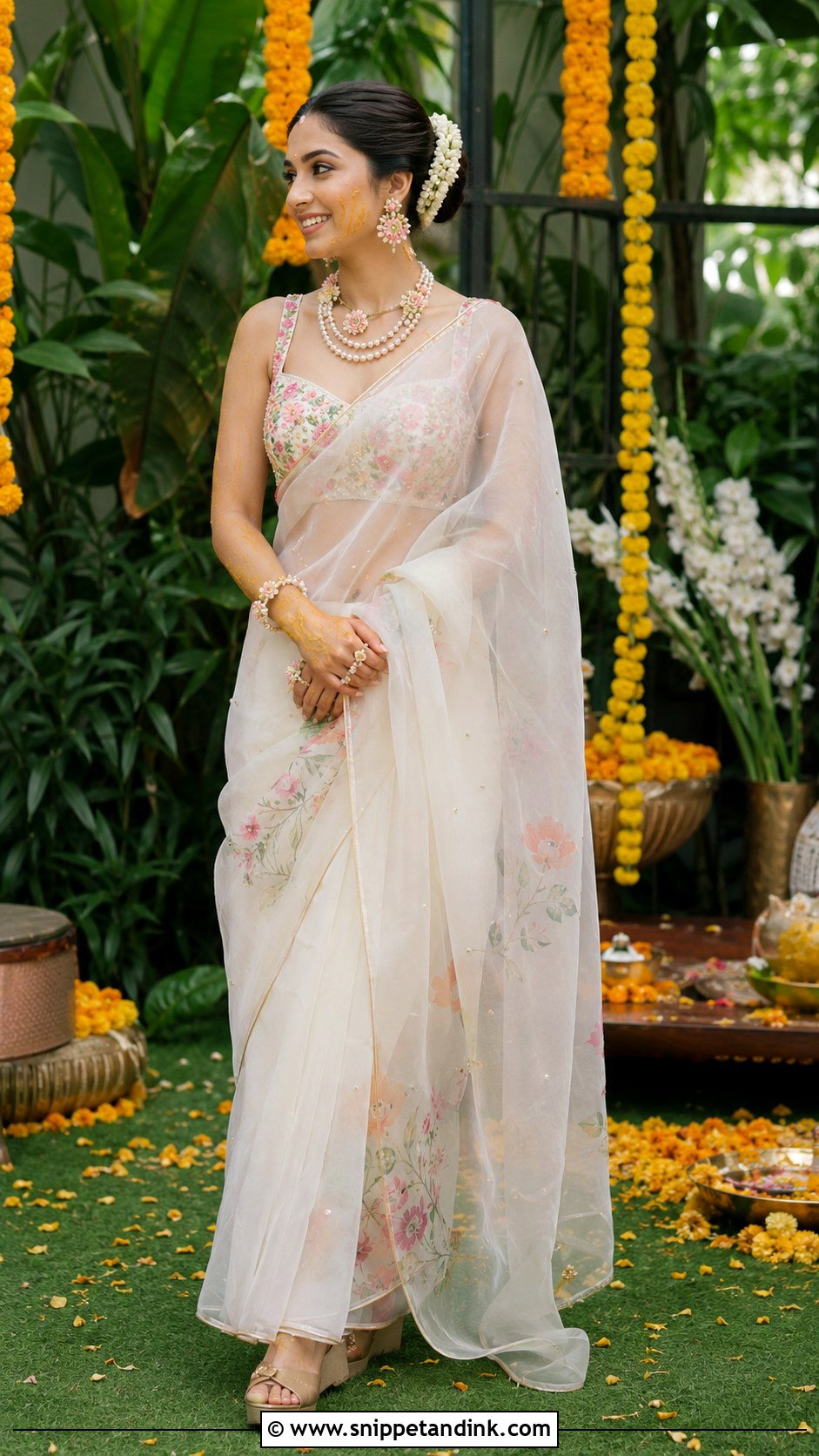
Organza holds its shape, which means a plain white organza saree looks crisp even with minimal styling. Pick one with a thin gota border and pair it with a yellow, pink or pastel floral blouse. The contrast keeps white the main colour while adding cheer. The fabric’s weakness is that it creases sharply and turmeric sits on its surface; a quick blot usually lifts it better than on cotton. Pearl jewellery mixed with fresh flowers, a sleek bun with gajra and wedges suit a terrace or garden haldi.
8. White Haldi Gharara Set With Dupatta
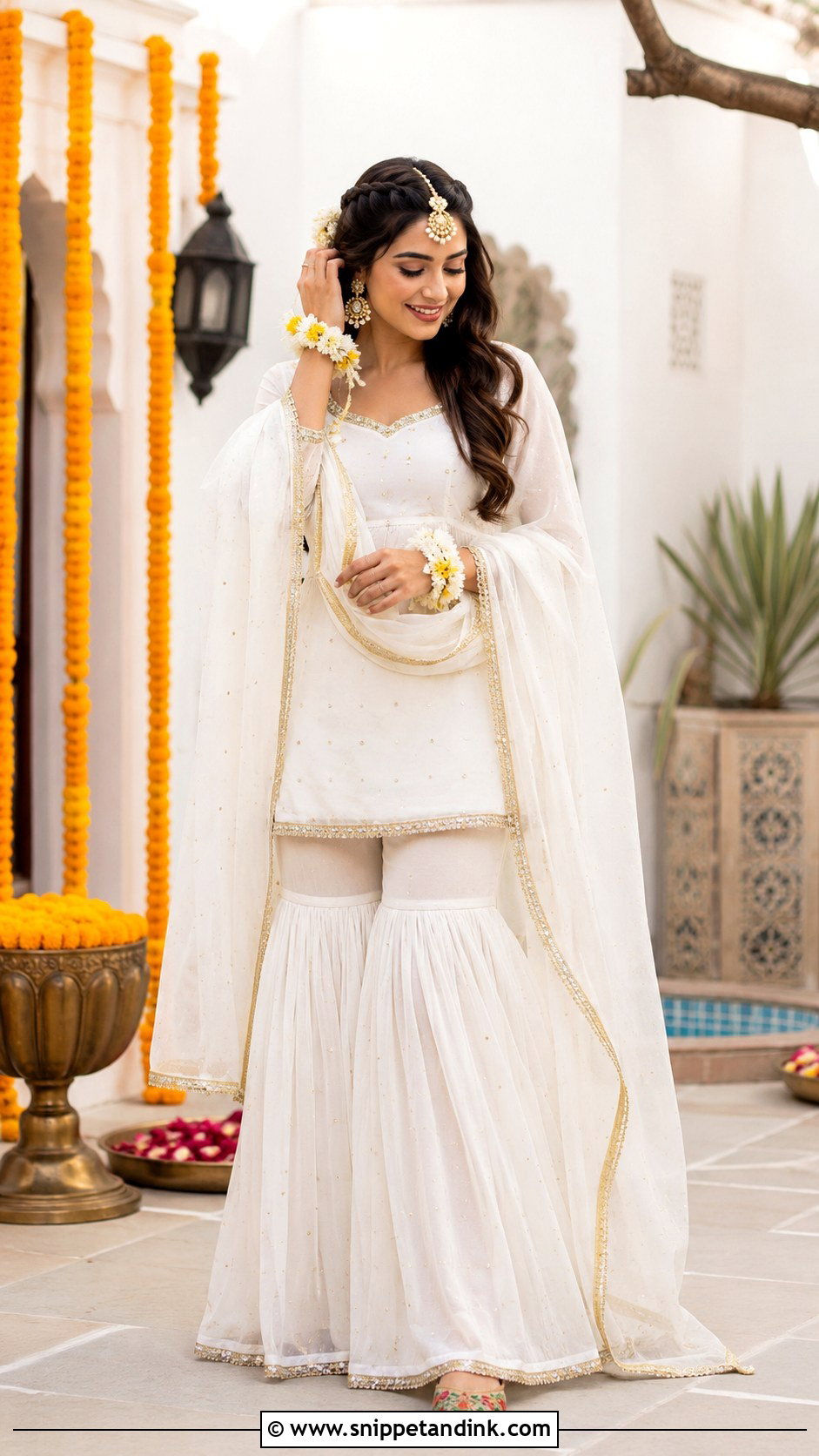
The gharara has that fitted knee band and flared bottom that reads instantly traditional in photos, especially for North Indian and Pakistani-inspired pre-wedding looks. White short kurti, matching gharara and a dupatta with gota or yellow embroidery. Choose georgette, cotton silk or crepe so the extra fabric in the pants doesn’t weigh you down. Passa-style jewellery, floral bangles and embroidered juttis complete it. I check the knee band at fittings by asking the bride to sit cross-legged; too tight and it cuts in.
9. White Haldi Co Ord Set With Cape
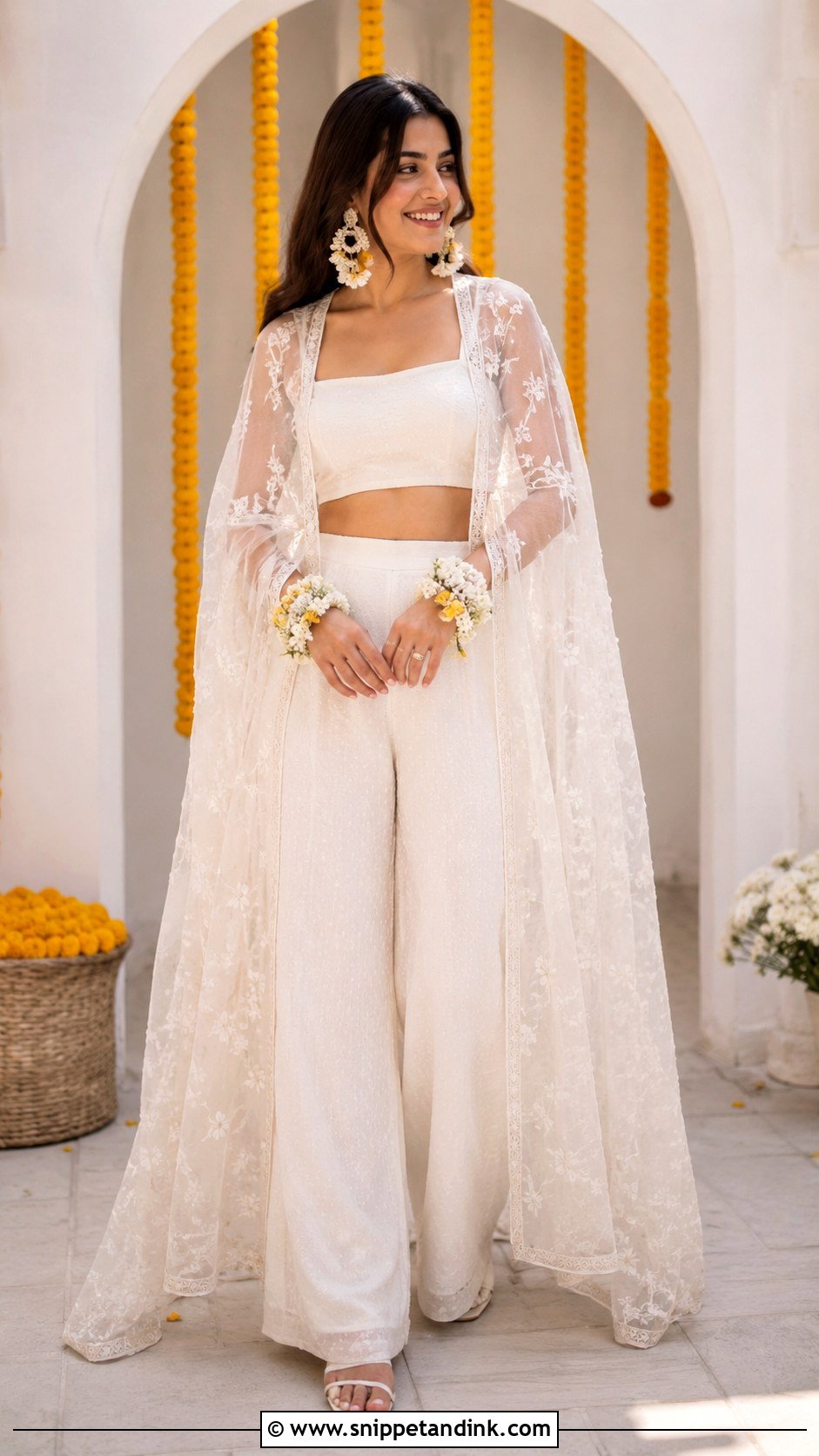
A co-ord with a sheer cape is the outfit I suggest to brides who know they’ll wear the pieces again. A crop top and wide-leg pants or a skirt set, layered with a cape in floral embroidery, mirror work or yellow tassels. Separates can be worn later on their own, which makes the stain risk easier to accept. Statement earrings, floral bracelets and sleek sandals finish it.
10. White Haldi Lehenga With Marigold Jewelry
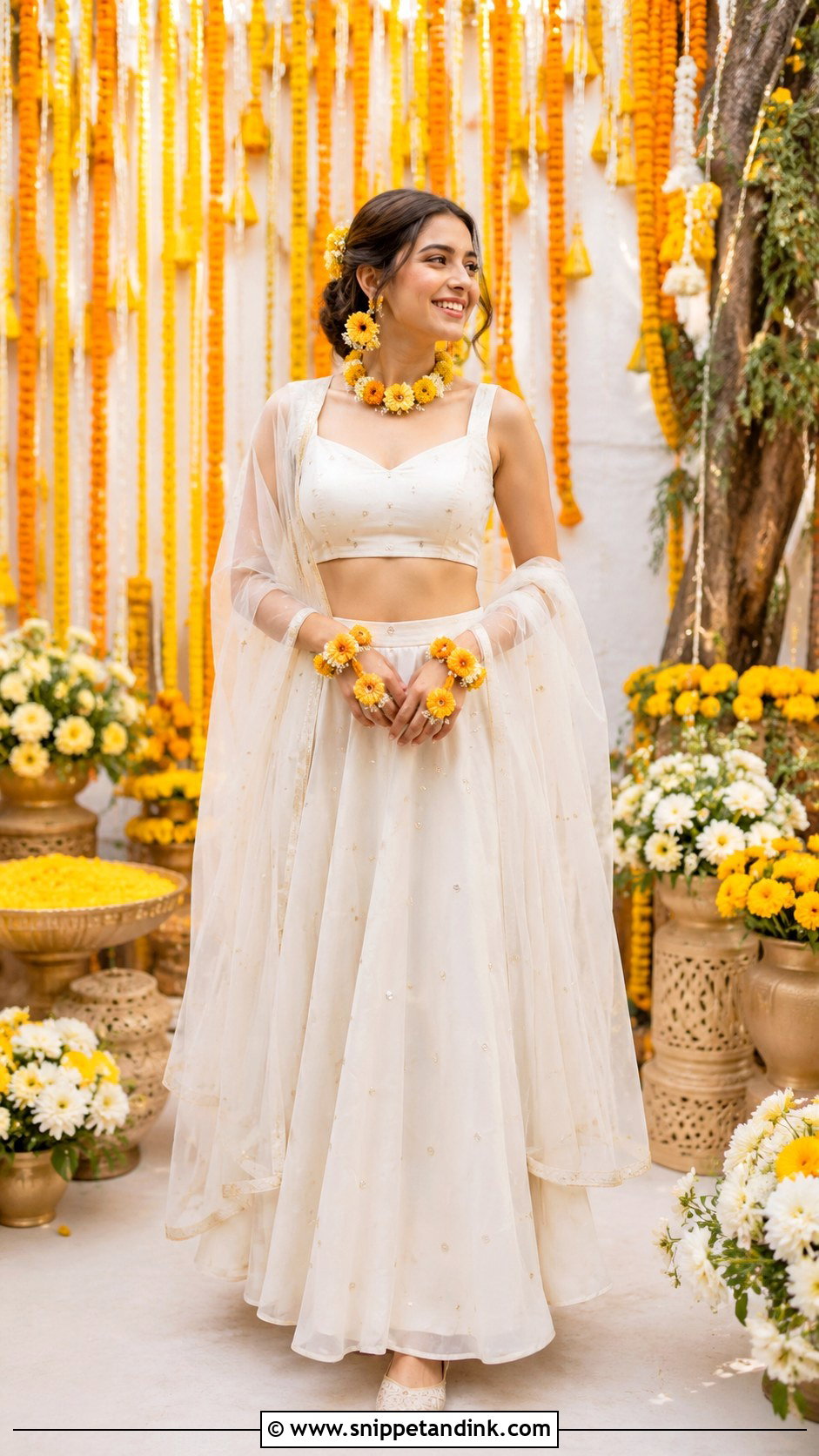
Here the outfit stays quiet so the flowers can do the talking. A plain white lehenga with minimal embroidery, a fitted blouse and a light dupatta, then a marigold necklace, earrings, haath phool and hair pieces. Orange and yellow against white is about as bright as a haldi photo gets. Marigold jewellery wilts in heat within a few hours, so I ask the florist to deliver it as late as possible and keep it in a cool room until you dress. Keep makeup glowing, with a soft golden eye.
11. White Haldi Dhoti Saree Outfit
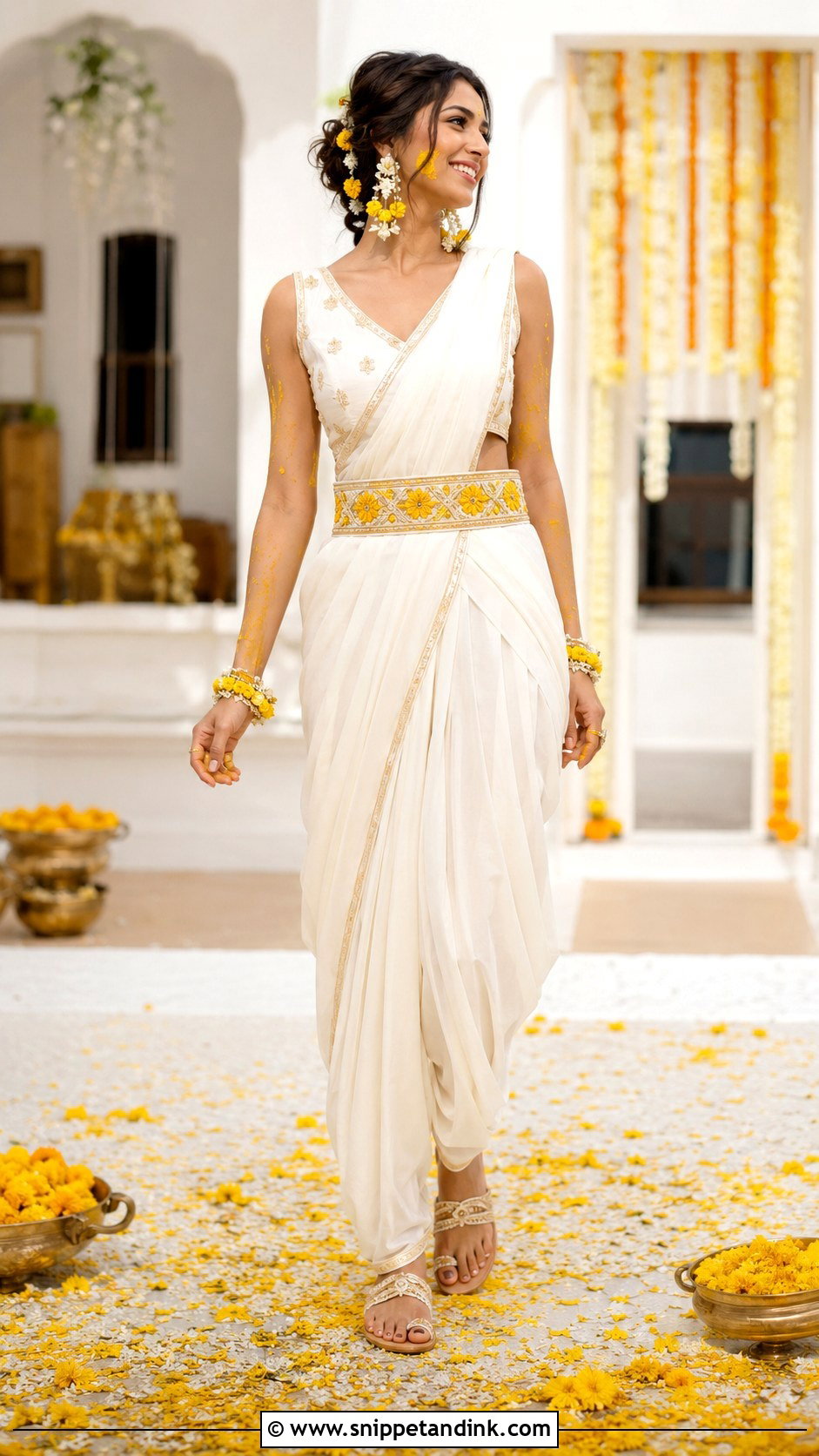
A pre-draped dhoti saree has the grace of a drape with the freedom of trousers, which matters at a haldi where you’re getting up and down constantly. Pair it with a structured blouse or crop top, and add a yellow embroidered belt to define the waist and hold the drape. Floral earrings, bangles and flats finish it. It suits brides who expect to be pulled into dances and candid photos.
12. White Haldi Skirt And Peplum Top
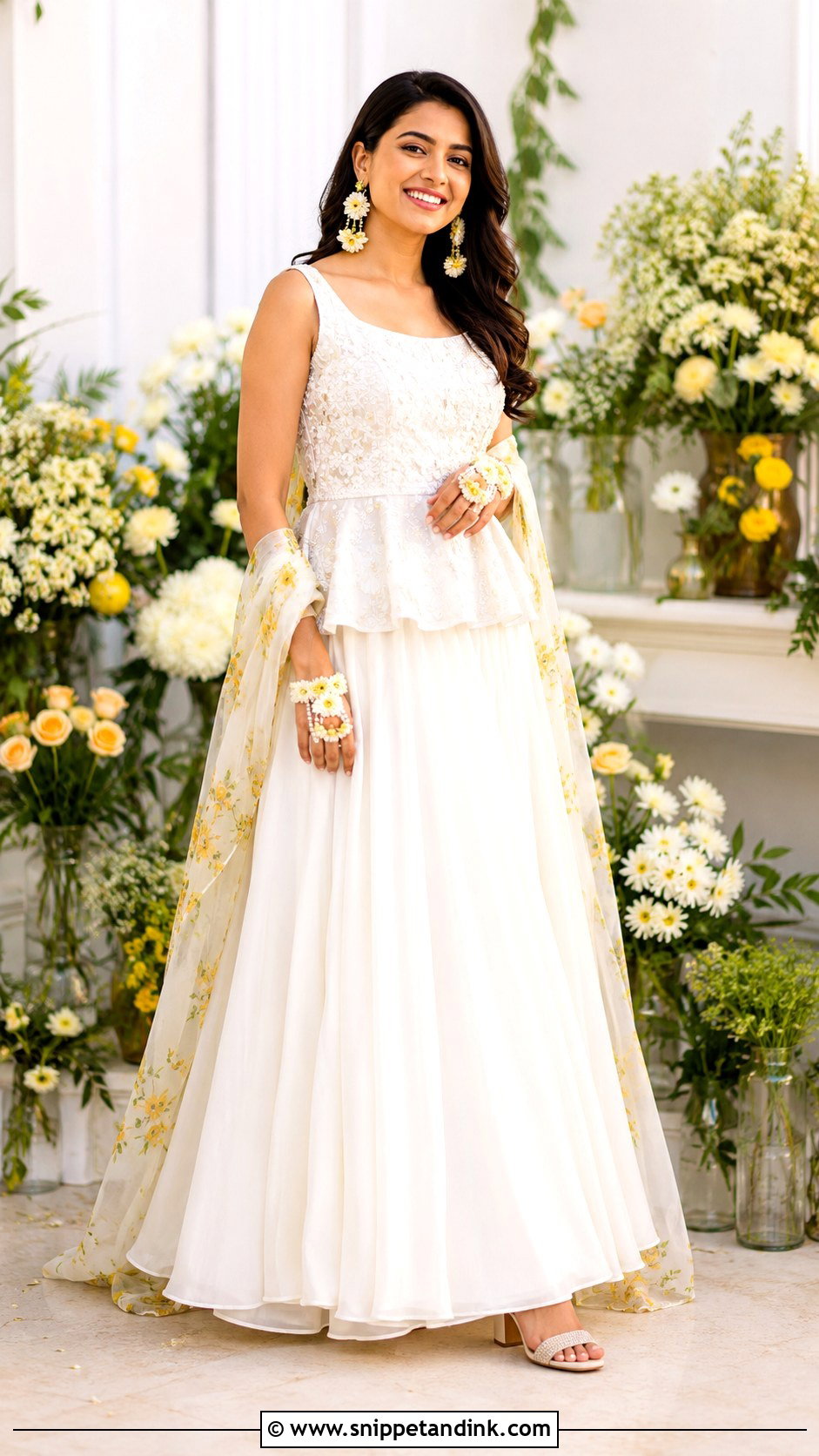
A peplum top over a skirt gives the shape of a lehenga without the weight. The peplum marks the waist and covers the midriff, which some brides prefer when they’re bending forward for the ritual. Light embroidery, mirror detail or lace trims make it bridal, and a yellow or floral dupatta adds tradition. Fresh flower jewellery, soft waves and juttis or block heels suit it.
13. White Haldi Cotton Saree With Gajra
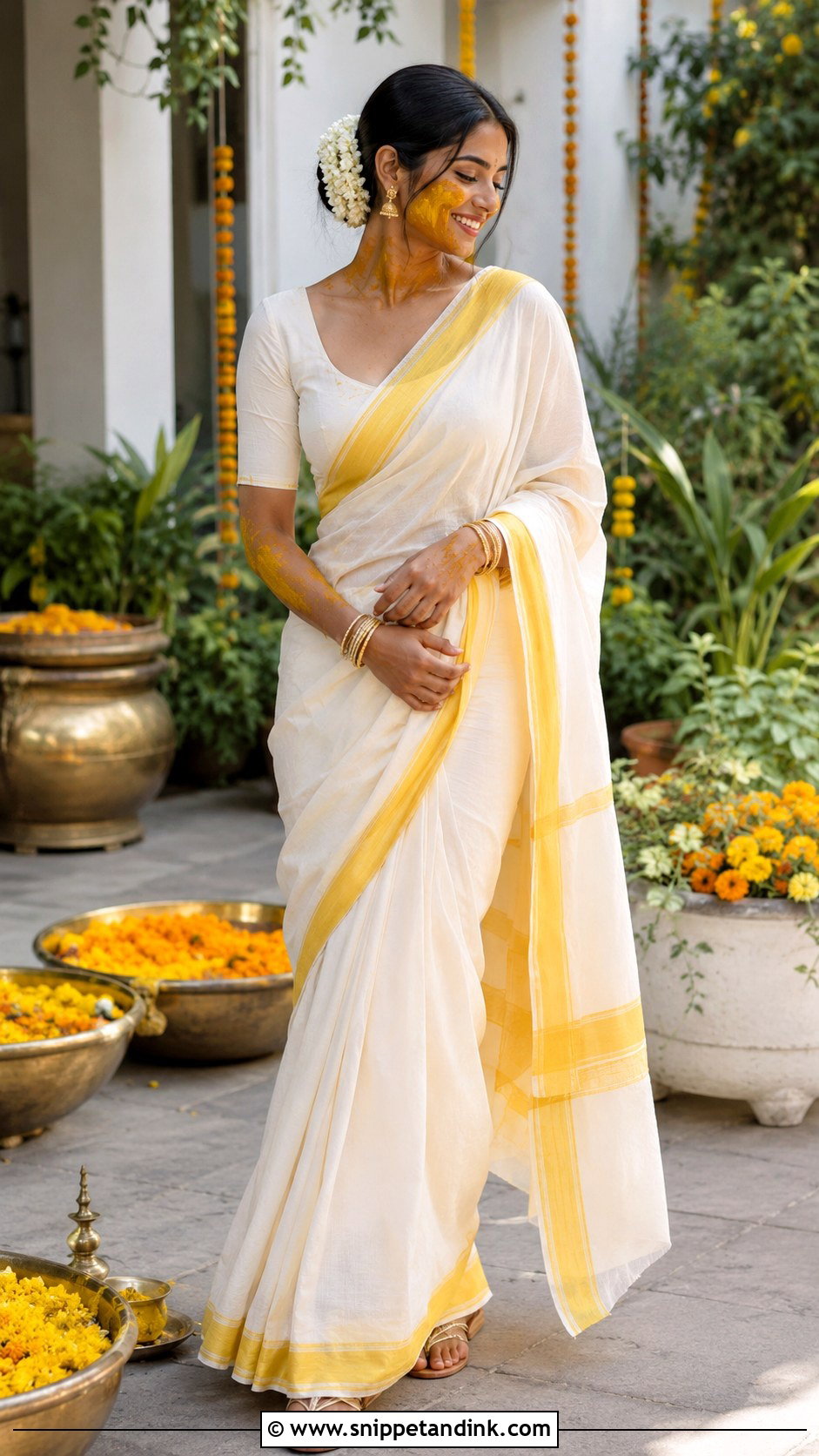
A white cotton saree has a simplicity I find moving, particularly for a morning ritual at home. Choose one with a yellow, gold or green border and pair it with a fitted yellow or ivory blouse. A low bun wrapped in gajra makes it bridal without heavy jewellery. Cotton breathes in heat and washes well, which matters more than anything for turmeric. Small gold earrings, glass bangles and flat sandals keep it light.
14. White Haldi Lehenga With Yellow Blouse
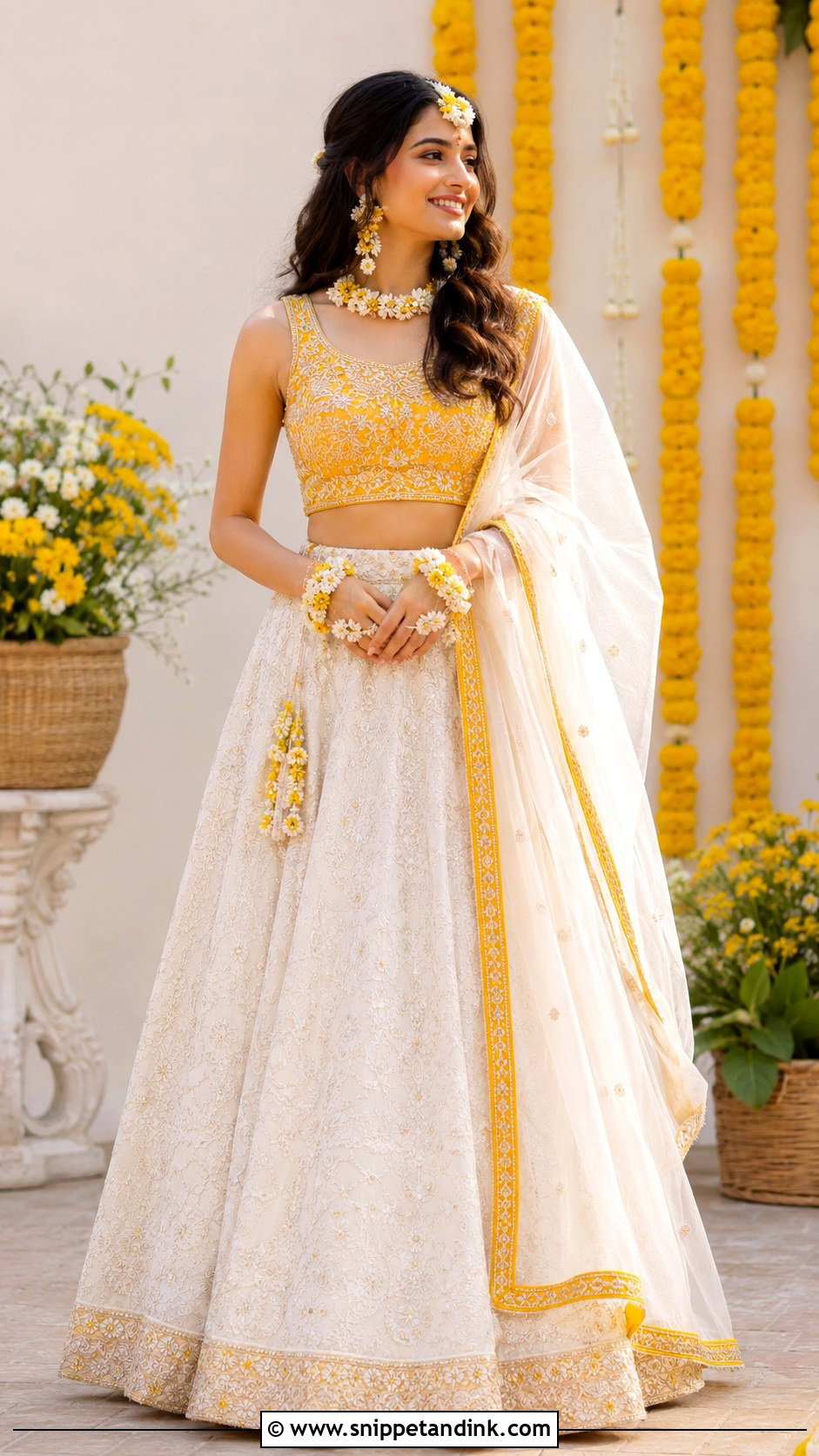
A yellow blouse with a white lehenga is a neat compromise when family expects yellow and you want white. The skirt keeps the clean background, the blouse sits near your face and warms your skin tone in photos. Gota, mirror work or chikankari suit the skirt. A sheer white dupatta with yellow edging and yellow-and-white flower jewellery ties the two together.
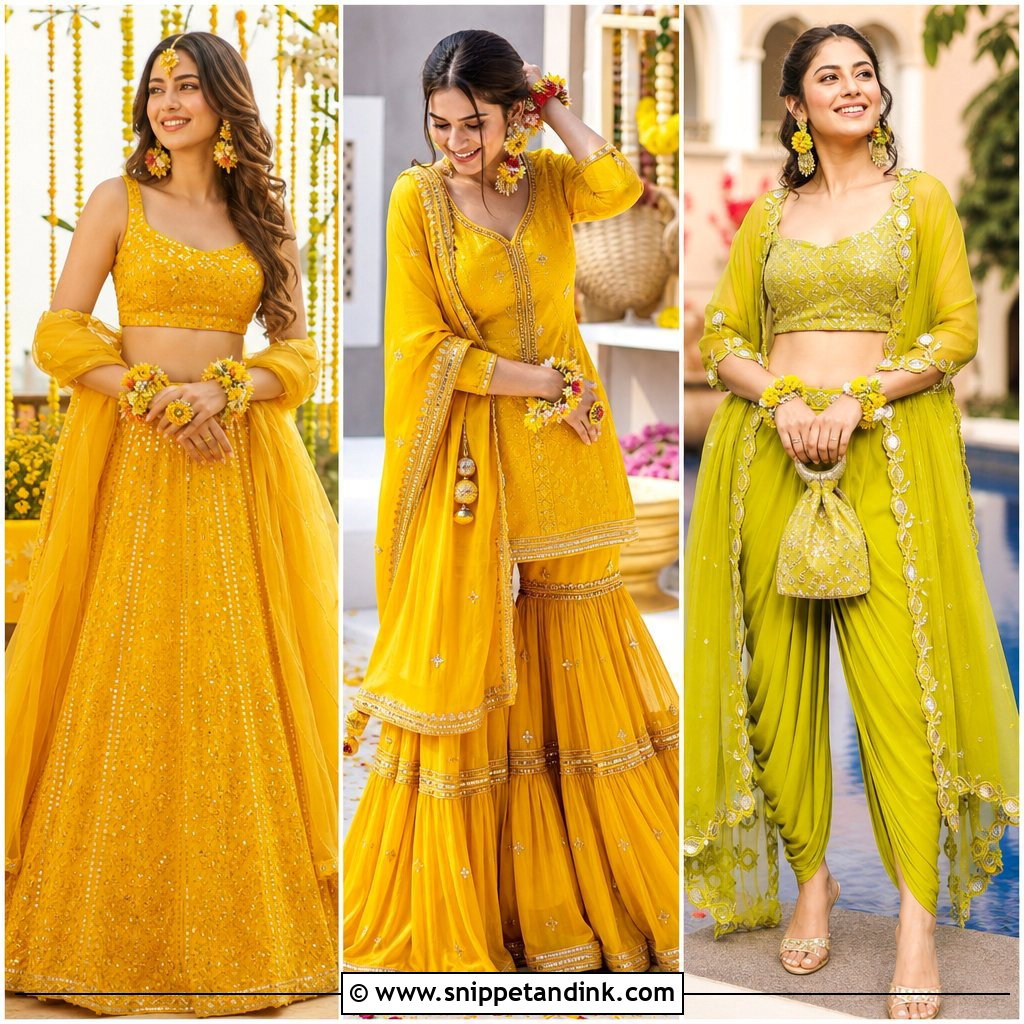

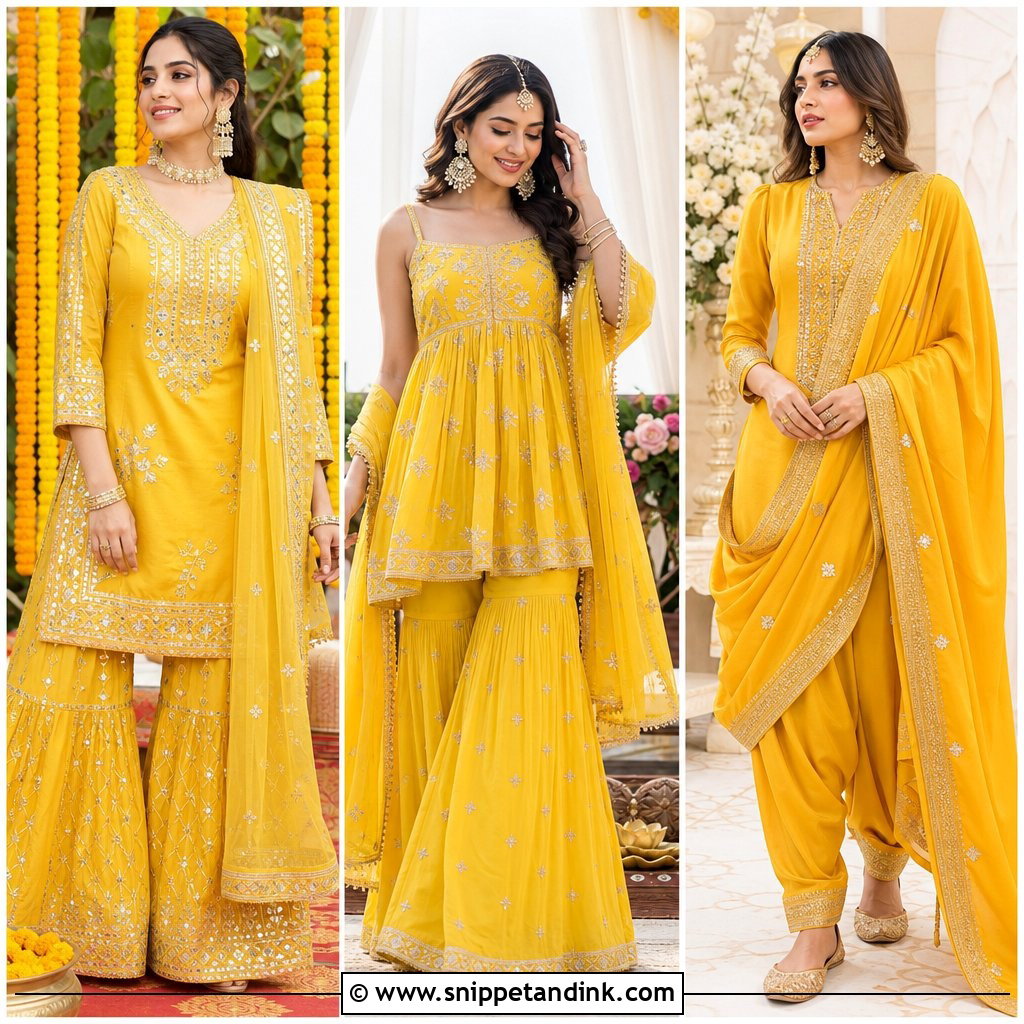
15. White Haldi Anarkali With Yellow Dupatta
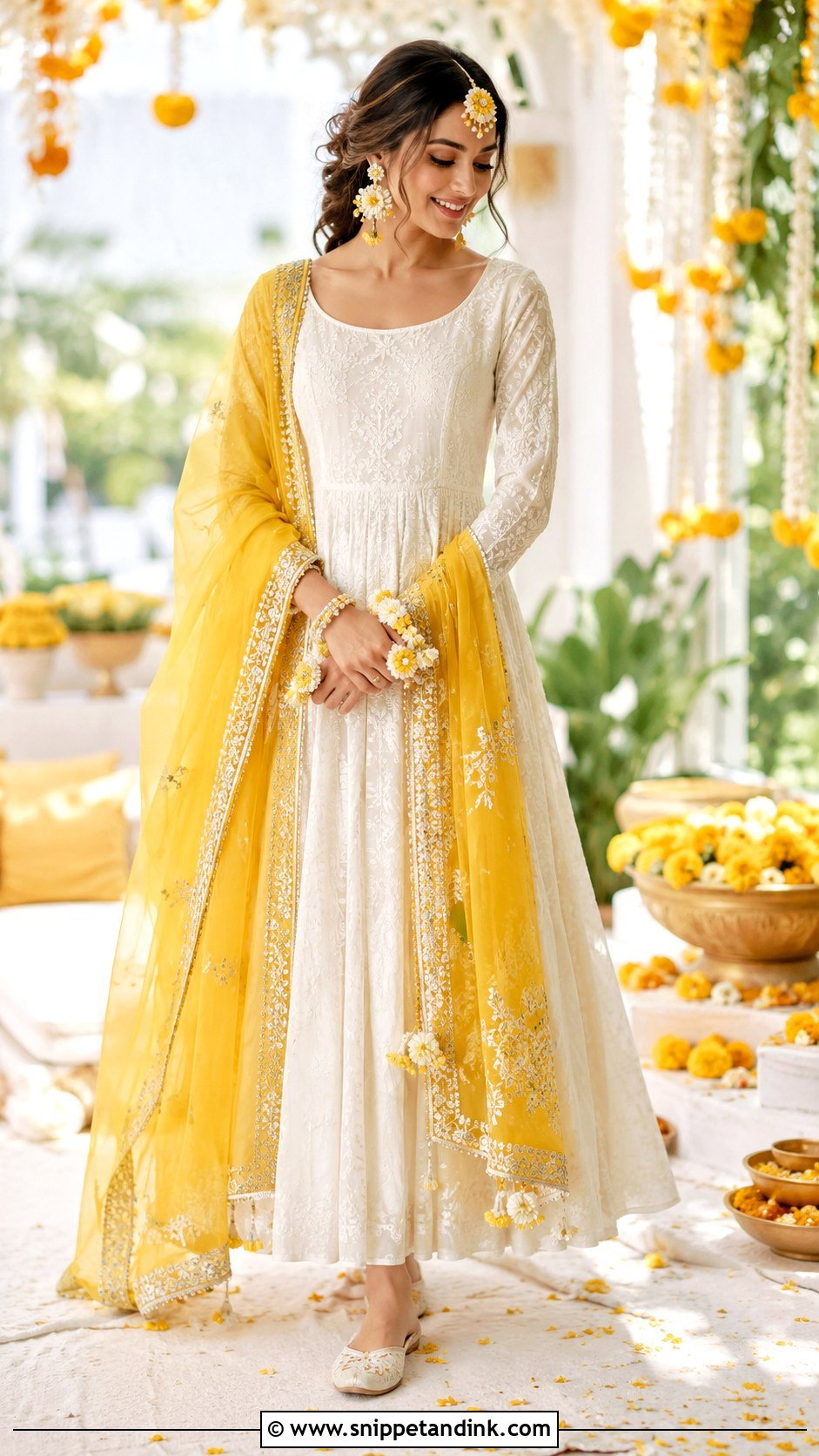
Choosing the dupatta shade is where this outfit gets its mood: lemon reads fresh, mustard reads earthy and marigold reads festive. The anarkali itself can be white with light thread work, small sequins or gota borders. A floral maang tikka, jhumkas and simple bangles complete it. I like this as a one-outfit answer for a haldi that runs straight into portraits, because it handles both sitting and standing well.
16. White Haldi Ruffle Saree Outfit
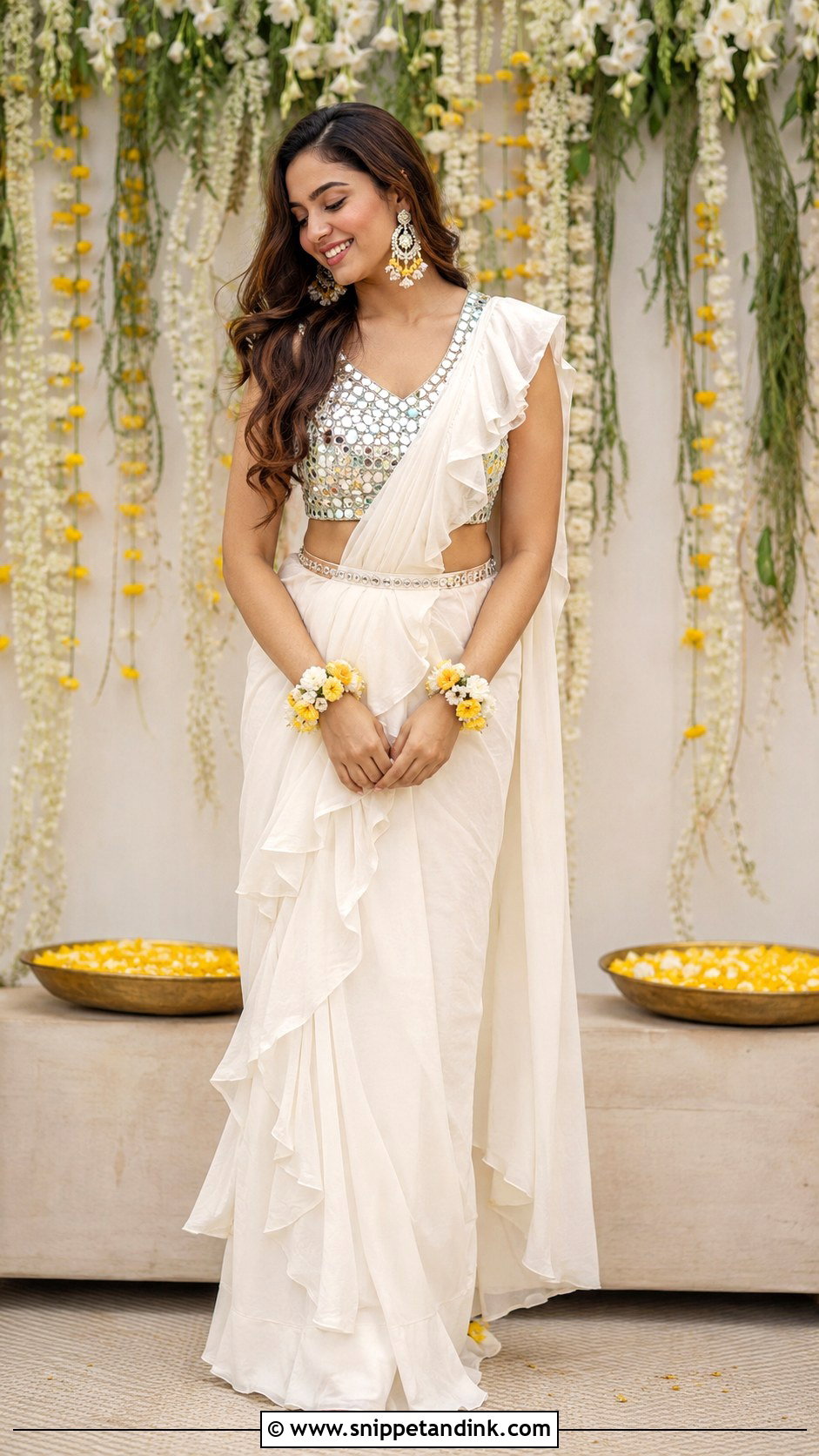
Ruffles bring movement, so candid shots look lively even when you’re standing still. Go pre-draped; a hand-draped ruffle saree needs adjusting every time you sit. A sleeveless, mirror-work or floral blouse suits it, and a slim belt holds the drape in place. Ruffle edges trap paste, so I’d keep the ruffles to the pallu rather than the whole skirt if you’re worried about cleaning. Statement earrings, floral bangles and soft waves finish it.
17. White Haldi Short Kurti With Lehenga Skirt
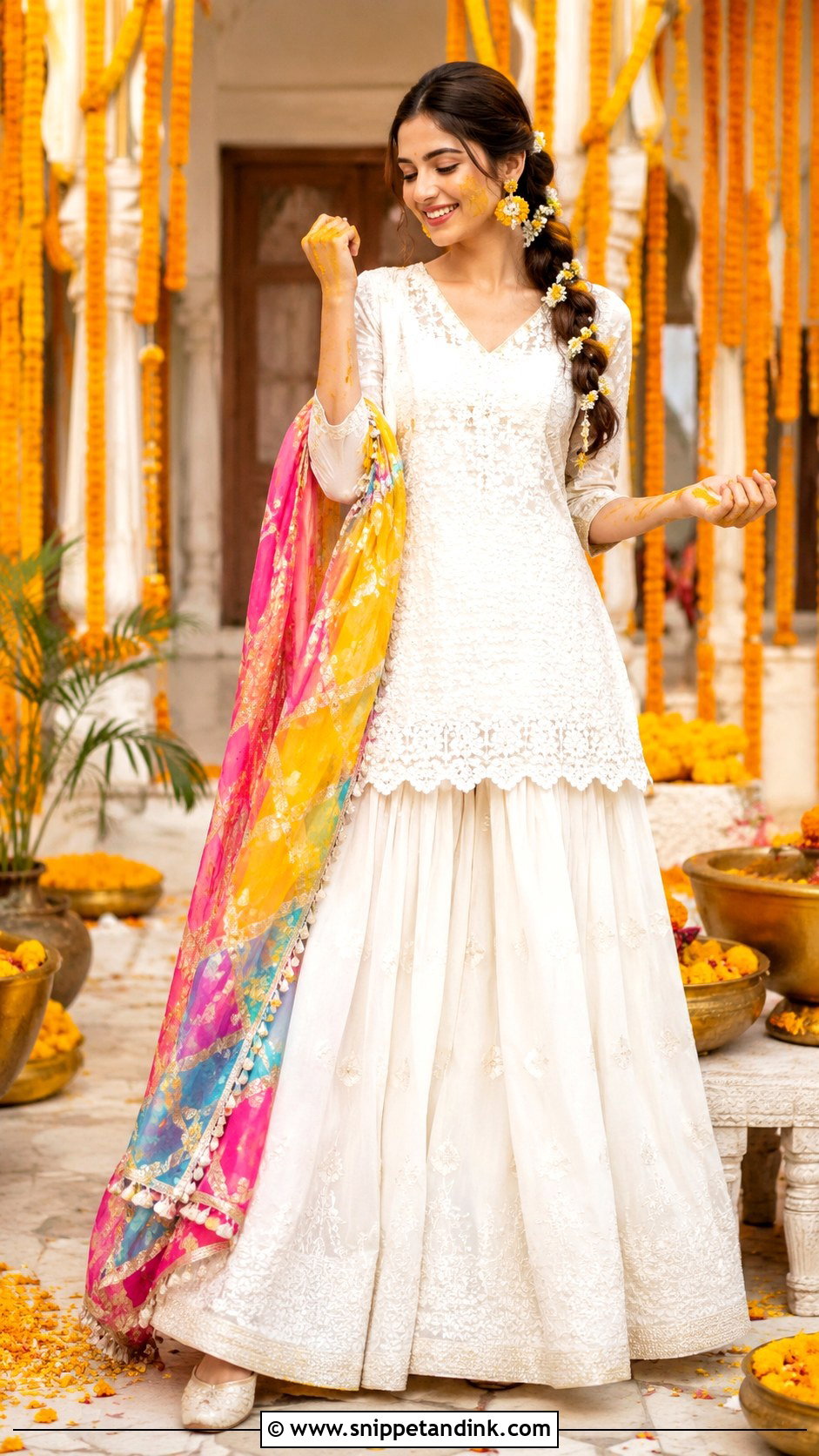
A short kurti over a lehenga skirt gives you volume below and freedom above. The embroidered kurti sits loosely at the waist and arms, so you can reach, hug and sit comfortably. Pair it with a flared white skirt and a colourful dupatta with yellow tassels or mirror borders. A loose braid tucked with small blooms holds up better than open curls once the paste and water start flying. Juttis and flower earrings finish it.
18. White Haldi Maxi Dress With Indian Jewelry
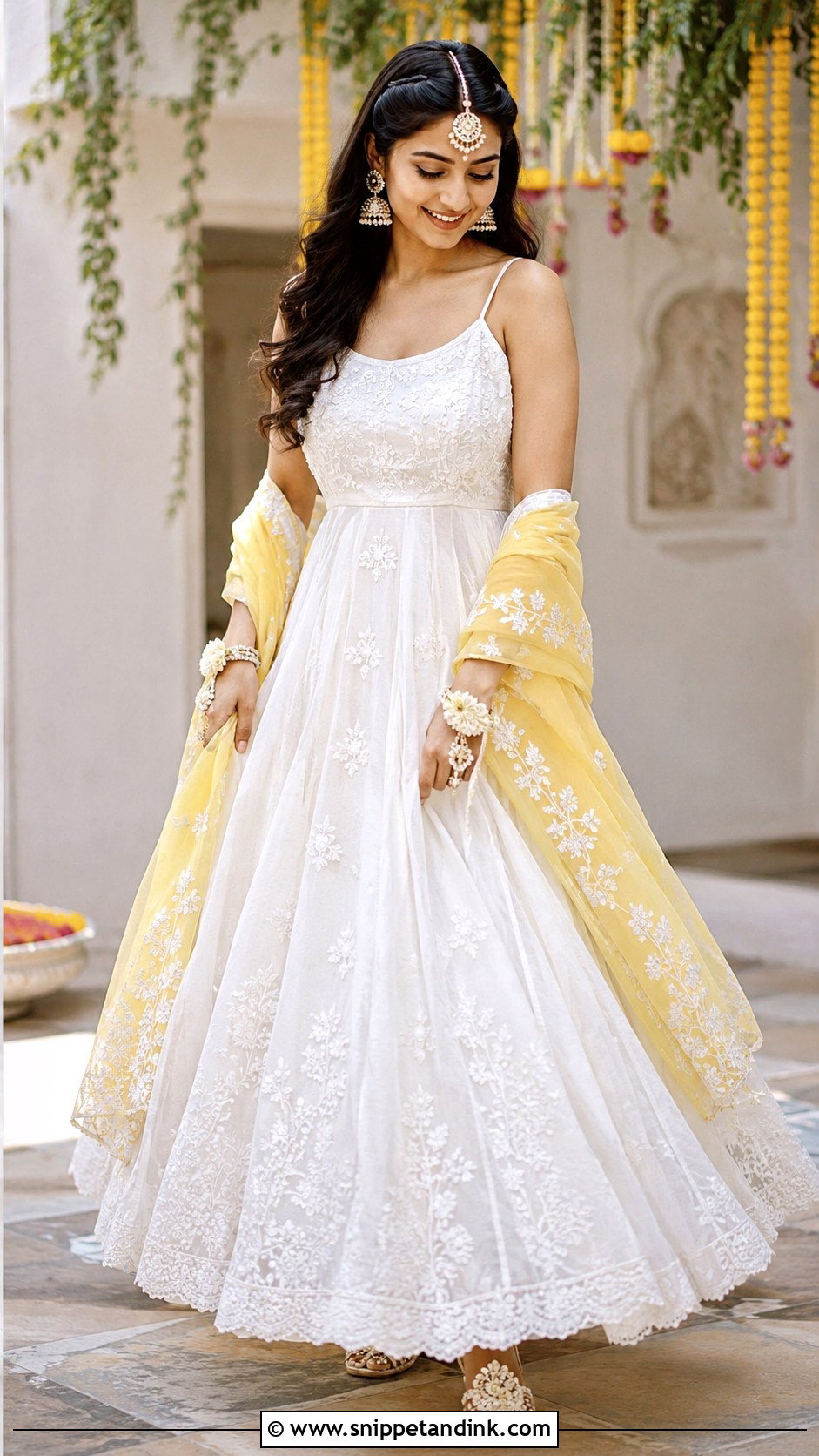
A white maxi with Indian jewellery is the Indo-western route for beach, backyard or destination ceremonies. Choose cotton, muslin or a georgette maxi dress with light embroidery or tiers. Jhumkas, maang tikka, bangles or a floral haath phool bring it into the wedding, and a yellow dupatta keeps elders happy if the family prefers tradition. Check it against light before the day; a single-layer white maxi can be see-through in strong sun. Flats or embroidered sandals finish it.
19. White Haldi Saree With Mirror Work Blouse
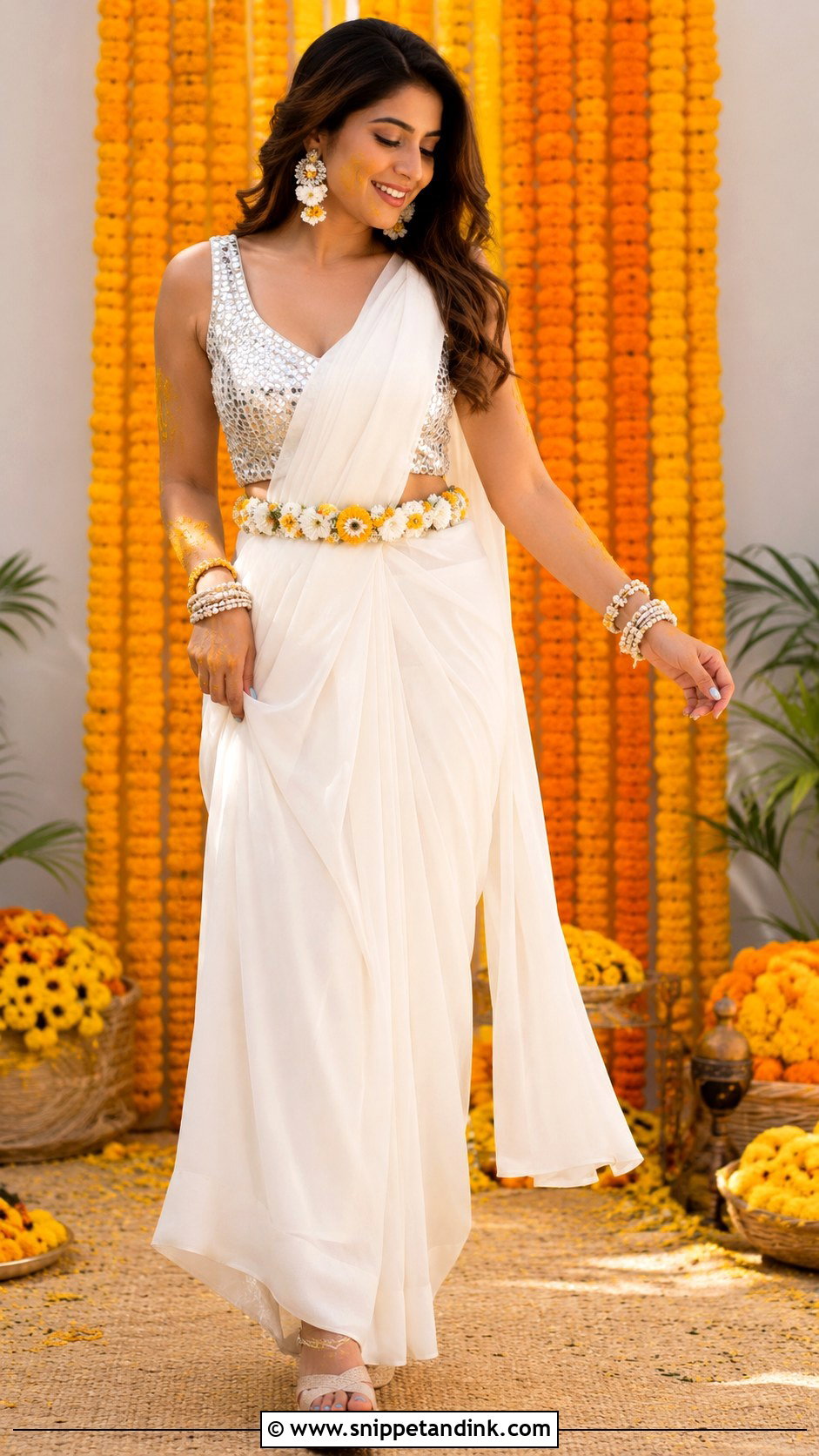
When the blouse carries the sparkle, the saree can stay plain. Pick white chiffon, georgette or organza and pair it with a yellow, ivory or silver mirror blouse. A floral belt or waist chain keeps the drape secure. Earrings, bangles and maybe a small maang tikka are enough. Mirror work is stitched around small glass pieces, so turmeric tends to sit on the glass and wipe off, while the thread around it stains.

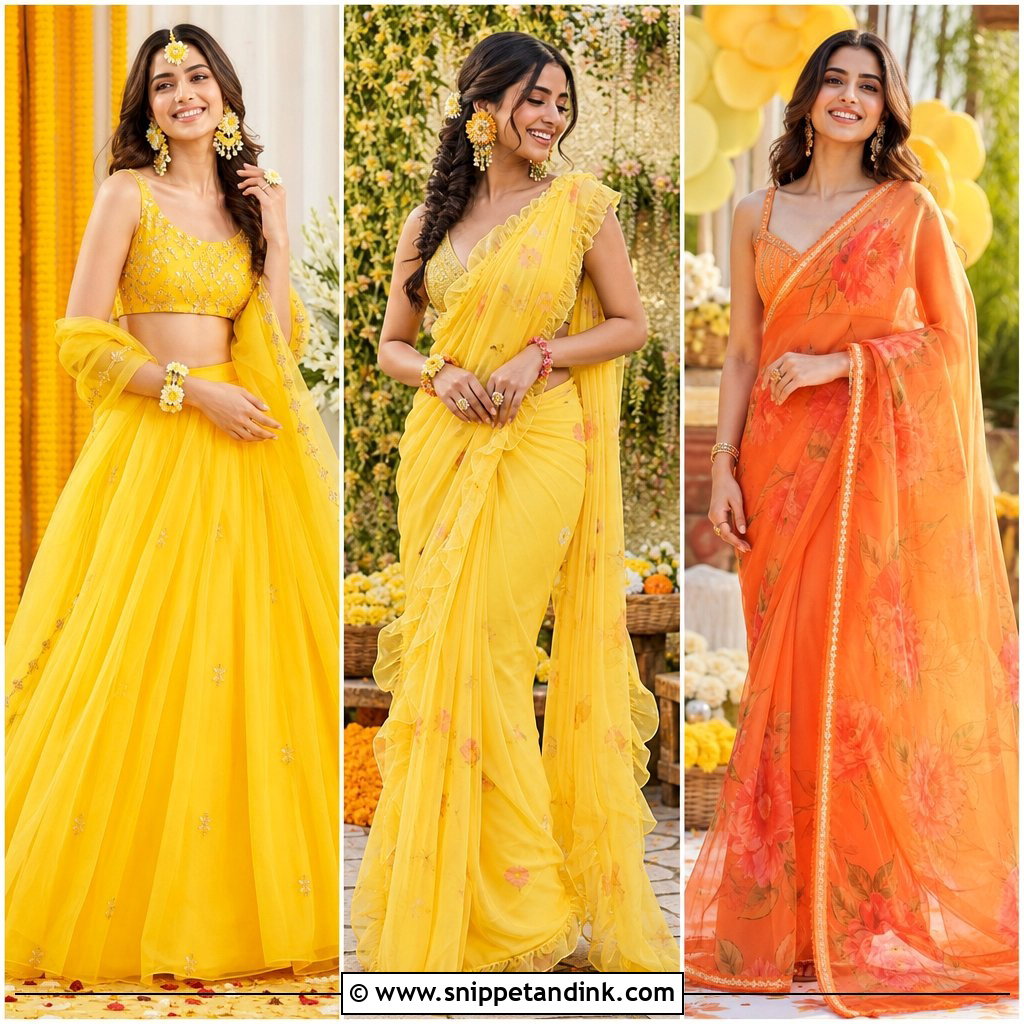
20. White Haldi Palazzo Suit With Gota Work
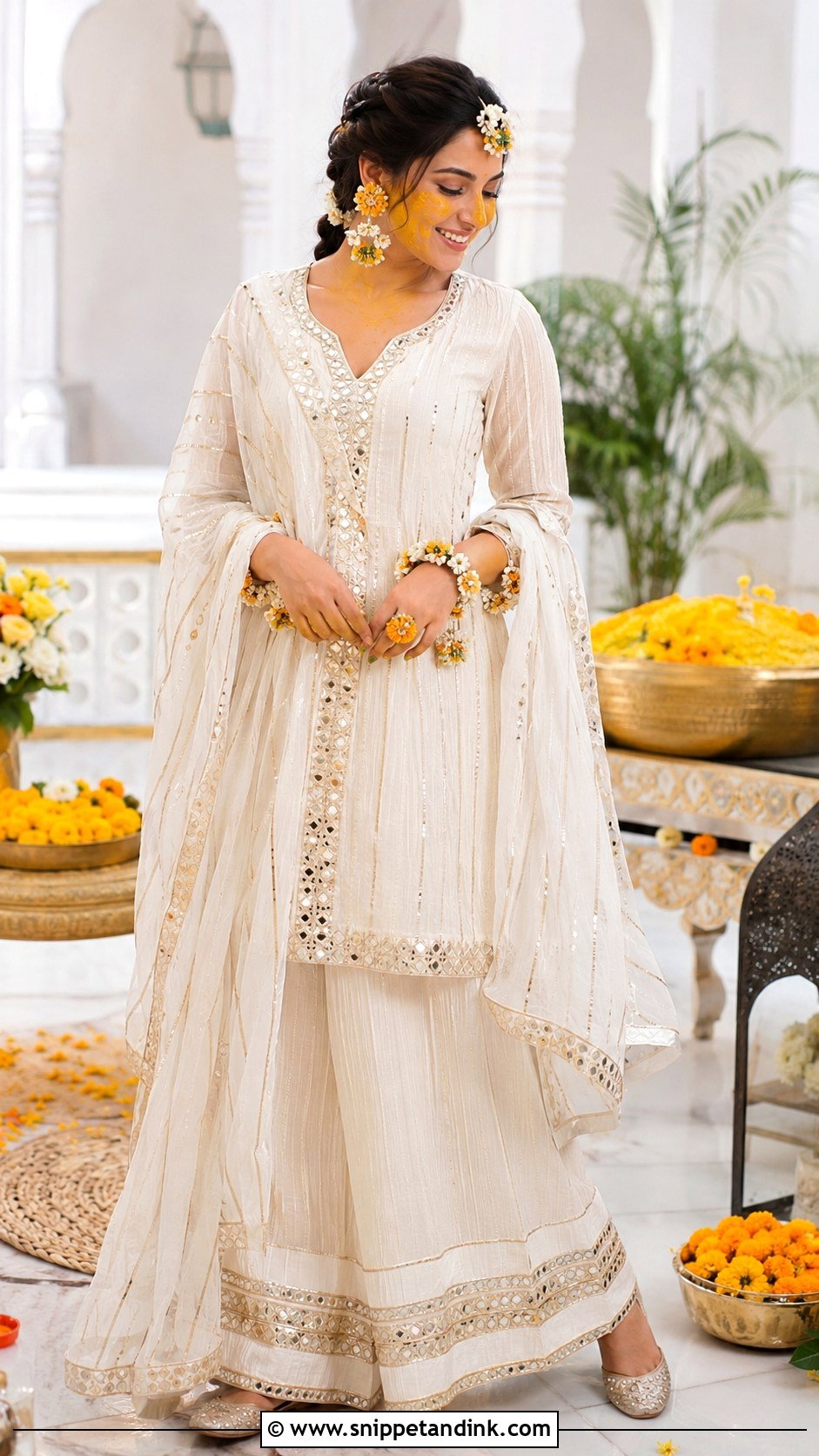
Gota is a woven metallic ribbon that catches daylight, which is why a simple palazzo suit looks festive the moment it’s added. A straight kurta or short kurti, wide palazzos and a matching dupatta, with yellow gota, scalloped edges or mirror trims. It’s a strong pick for a long outdoor haldi. Floral jewellery, juttis and soft makeup complete it. Gota can tarnish if it stays damp, so dry the outfit flat and quickly afterward.
21. White Haldi Lehenga With Pastel Floral Print
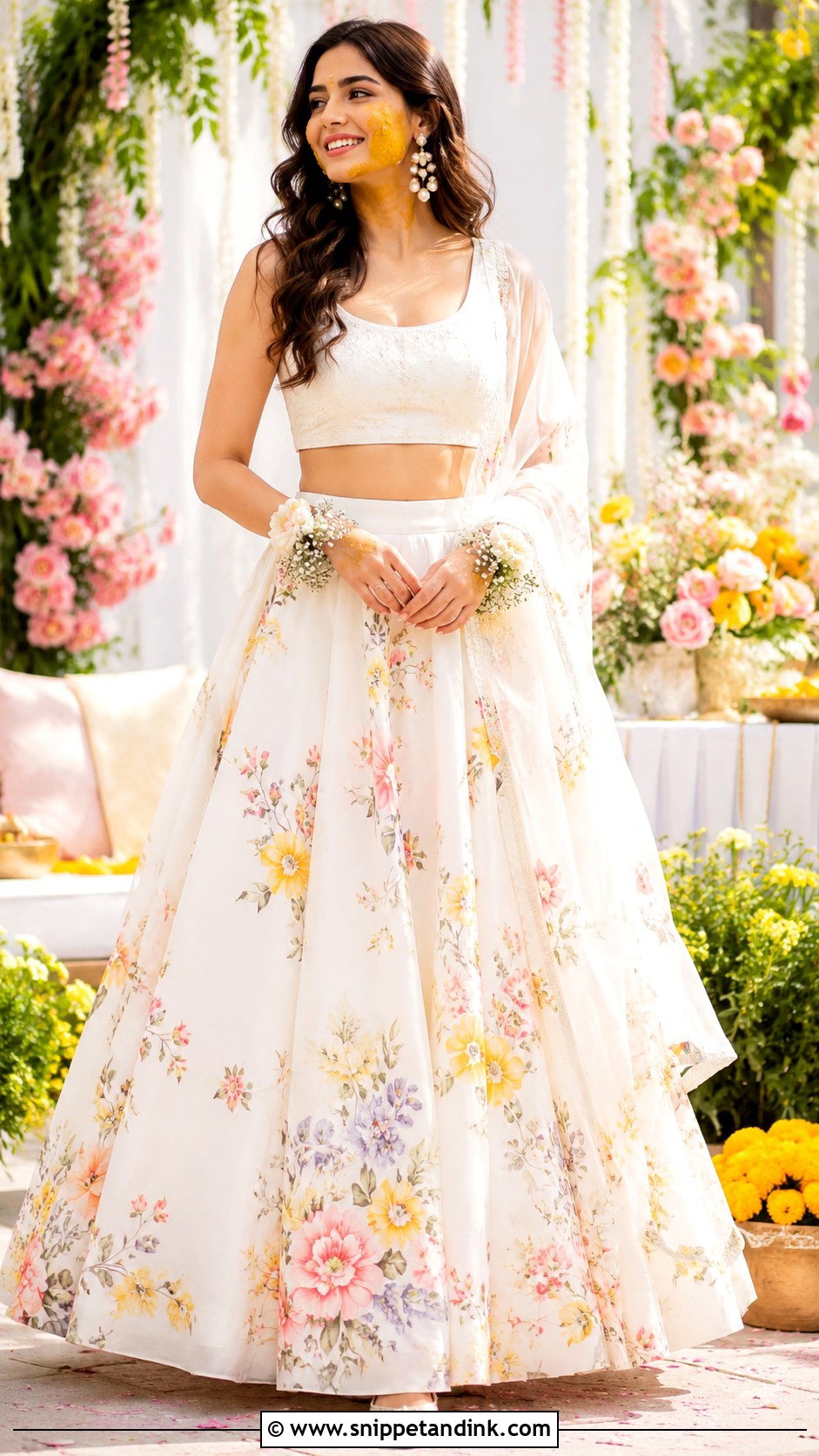
Pastel florals soften the look for a bride who doesn’t want sharp contrast. Look for a white or ivory base printed with blush, peach, mint, lavender or yellow flowers; the print hides small turmeric marks better than plain white. Pair it with a simple blouse and light dupatta so the print leads. Pearl earrings, floral bangles and soft curls finish it for outdoor photos.
22. White Haldi Jacket Lehenga Outfit
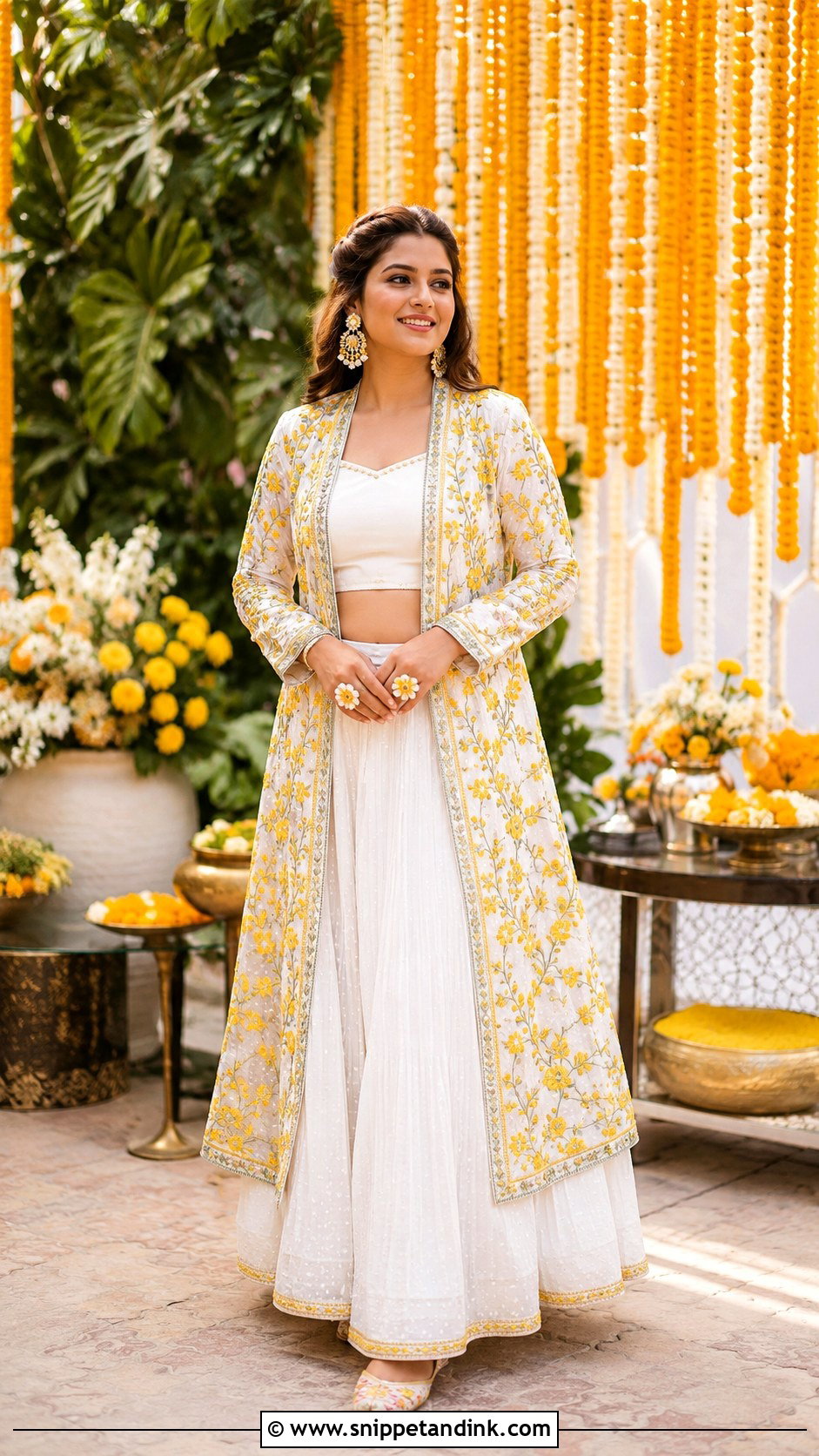
A jacket replaces the dupatta, which is one less thing slipping off your shoulder during the ritual. Wear a simple white lehenga and blouse with a long embroidered jacket or a short cape-style one in yellow thread, mirror or floral work. It gives arm coverage while looking current. The jacket moves when you walk and can come off once the paste starts, keeping the most detailed piece clean. Statement earrings, floral rings and embroidered flats suit it.
23. White Haldi Angrakha Suit With Juttis
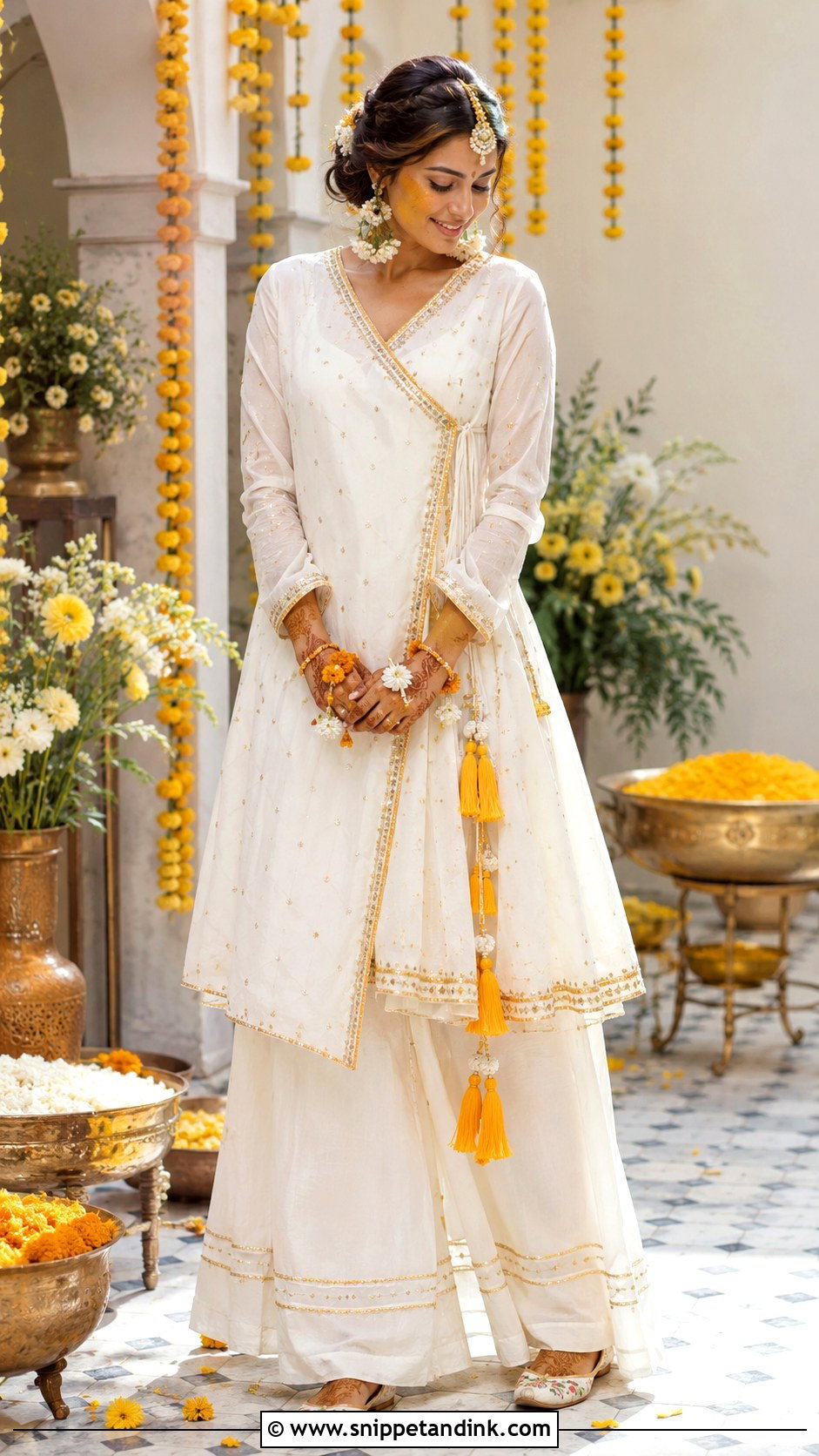
The angrakha’s diagonal wrap and side tie make a flattering neckline that feels distinctly traditional. Pair a white angrakha kurta with flared pants, palazzos or a skirt bottom, and add yellow tassels, gota lace or small mirrors. I check that the ties are stitched firmly, since wrap closures loosen when you’re hugged repeatedly. Embroidered juttis, floral earrings and a simple maang tikka complete it.
24. White Haldi Lehenga With Pearl Jewelry
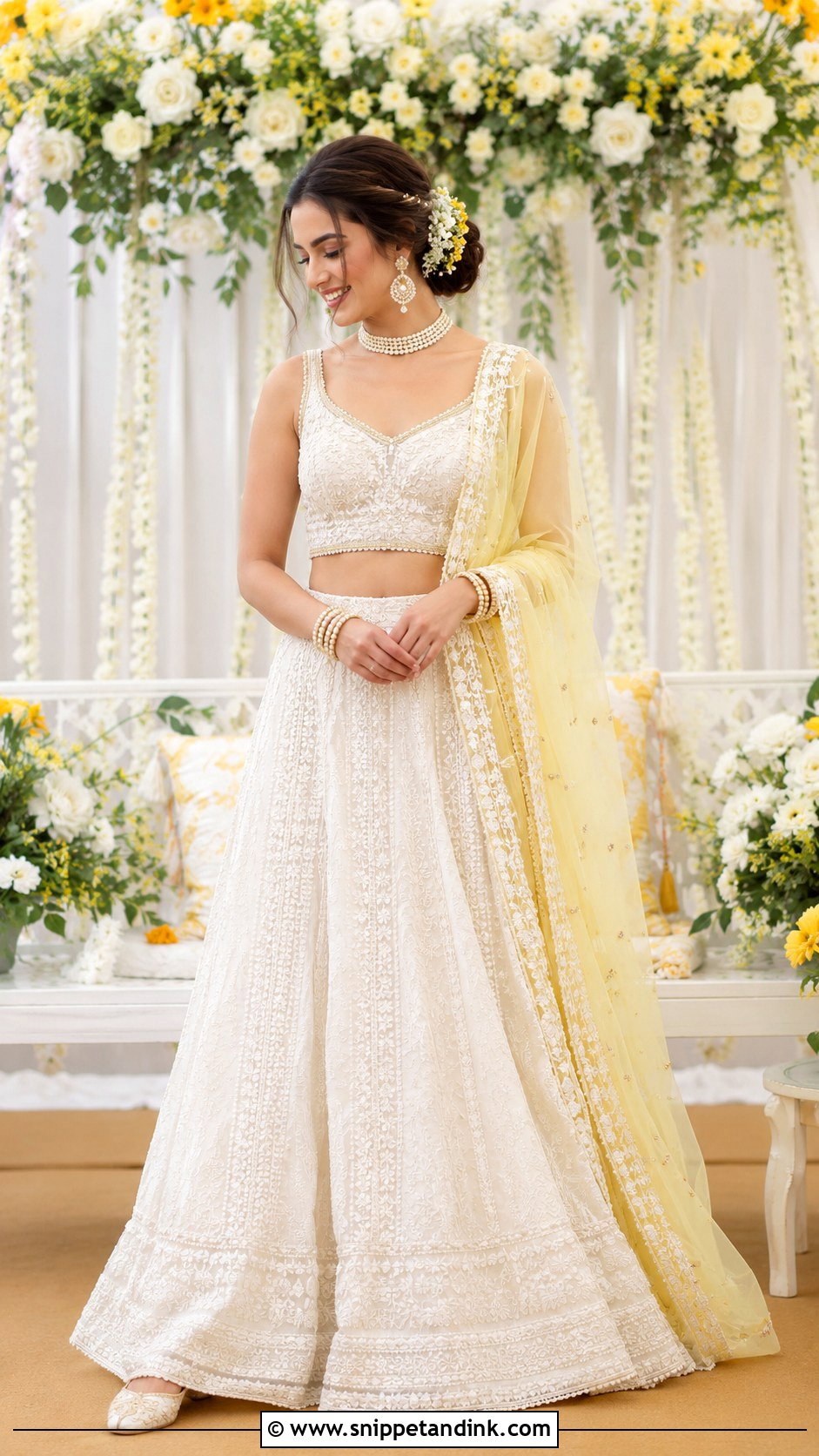
Pearls sit naturally with white, giving a clean finish that still reads special. Choose a lehenga with light embroidery, lace or small sequins, and add a pearl choker, earrings, bangles and a hair piece. Real pearls are porous and turmeric can tint them, so wear faux pearls for the ritual itself or take the real ones off before the paste. A yellow dupatta or marigold hair pins ties the look to haldi.


25. White Haldi Indo Western Skirt Set
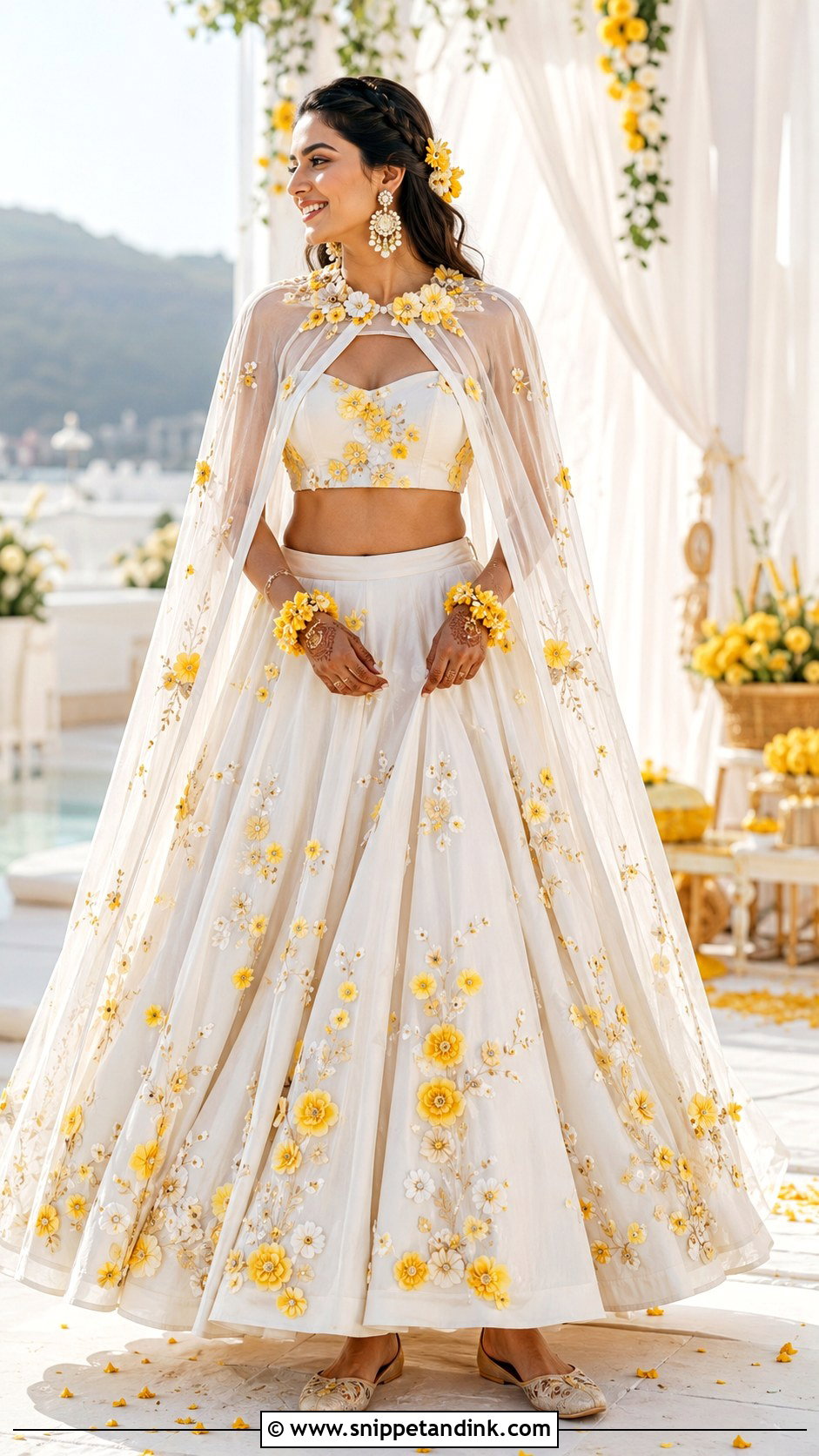
A white Indo-western skirt set suits destination and poolside haldis. A flared skirt with a crop top, corset blouse or wrap blouse, plus a light cape, dupatta or shrug for coverage. Yellow embroidery, floral applique or mirror details connect it to the ceremony. Statement earrings, floral bangles and comfortable heels or juttis finish it. A corset blouse needs to be fitted for sitting; I have brides kneel at the fitting to check it doesn’t dig in.
The Hour After the Haldi: Getting the Yellow Out
What you do in the first hour decides how much of the stain stays. I ask a bridesmaid or cousin to take charge of the outfit while the bride showers, because no one remembers it once the next function starts.
- Scrape off the dry paste gently with a blunt knife. Don’t rub, which pushes it deeper.
- Rinse the back of the stain under cold running water. Hot water sets turmeric.
- Work a little liquid dish soap into cotton or linen and leave it for twenty minutes before washing.
- Dry washable pieces in direct sunlight. Curcumin fades in sunlight, and a day or two outdoors often lifts what washing didn’t.
- Send silk, organza and heavily embroidered pieces to a dry cleaner within a couple of days, and tell them it’s turmeric.
Don’t panic if soap or baking soda turns the stain reddish brown for a moment. Turmeric changes colour in alkaline conditions; it rinses back to yellow and keeps fading. What I’d never use on white embroidery is chlorine bleach, which yellows silk and can eat through metallic thread.
White, Yellow and a Bride Who Can Still Sit Cross-Legged
A white haldi outfit lets turmeric, marigolds and family moments show clearly in every photo. A saree is graceful, a lehenga bridal, a sharara festive and a co-ord current. Whatever you pick, choose breathable fabric, a drape that stays put, flat shoes and jewellery that won’t catch. Then let yourself get messy, because that’s the whole point of the morning.
You'll Like These Ideas:



Leave a Reply