
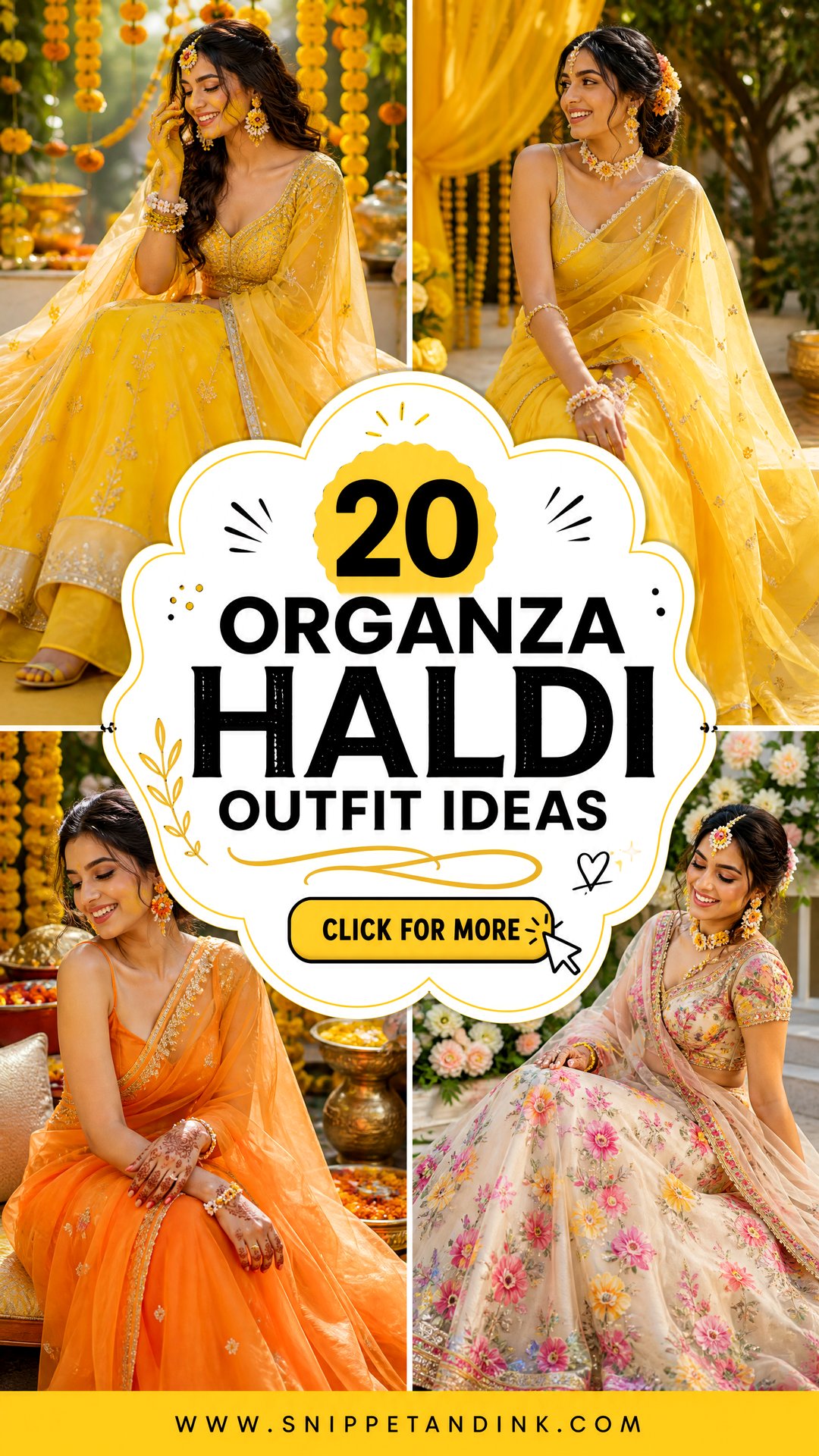
Organza has become one of the most requested fabrics for haldi, and I understand why. It gives an outfit shape and a little lift without needing heavy embroidery, so a simple piece still looks dressed. It works in sarees, lehengas, shararas, kurta sets and fusion separates. Yellow is the classic Haldi color, but marigold, lime, orange, white, pink and pastel mixes all look fresh at a daytime function. Floral prints, contrasting blouses and easy sharara shapes are what I’m seeing most. Whatever you pick, keep the drape secure, the embellishment light and the shoes flat enough to sit on the floor in. The looks below cover the bride, bridesmaids, sisters and guests, each styled in full.
Is Organza Too Hot for a Noon Haldi?
Organza looks airy, and the outer layer is airy. The problem is usually what’s sewn beneath it. Because organza is sheer, nearly every outfit has a lining, and many readymade pieces use a synthetic lining that traps heat against the skin. At an outdoor haldi in summer, that hidden layer is what leaves you wilting by the second hour.
When I’m styling a daytime haldi, I check these before anything else:
- Ask what the lining is. Cotton, mul or a cotton blend breathes; polyester shantoon and satin linings don’t. Many tailors will swap a lining if asked early.
- Prefer sleeveless or short sleeves on the blouse. Sheer long sleeves look cool but hold warmth once lined.
- Check the timing. A morning haldi is far easier in organza than one at noon under direct sun.
- Keep the dupatta light. Two layers of organza across the chest double the heat.
Stand in the sun before you buy
Organza turns more transparent with strong light behind it. Step outside, or stand in front of a bright window, and have someone take a photo of you from the front. If the lining stops short or is too thin, you’ll see it there, and it’s much easier to fix at the tailor than on the day.
1. Yellow Organza Saree Haldi Outfit
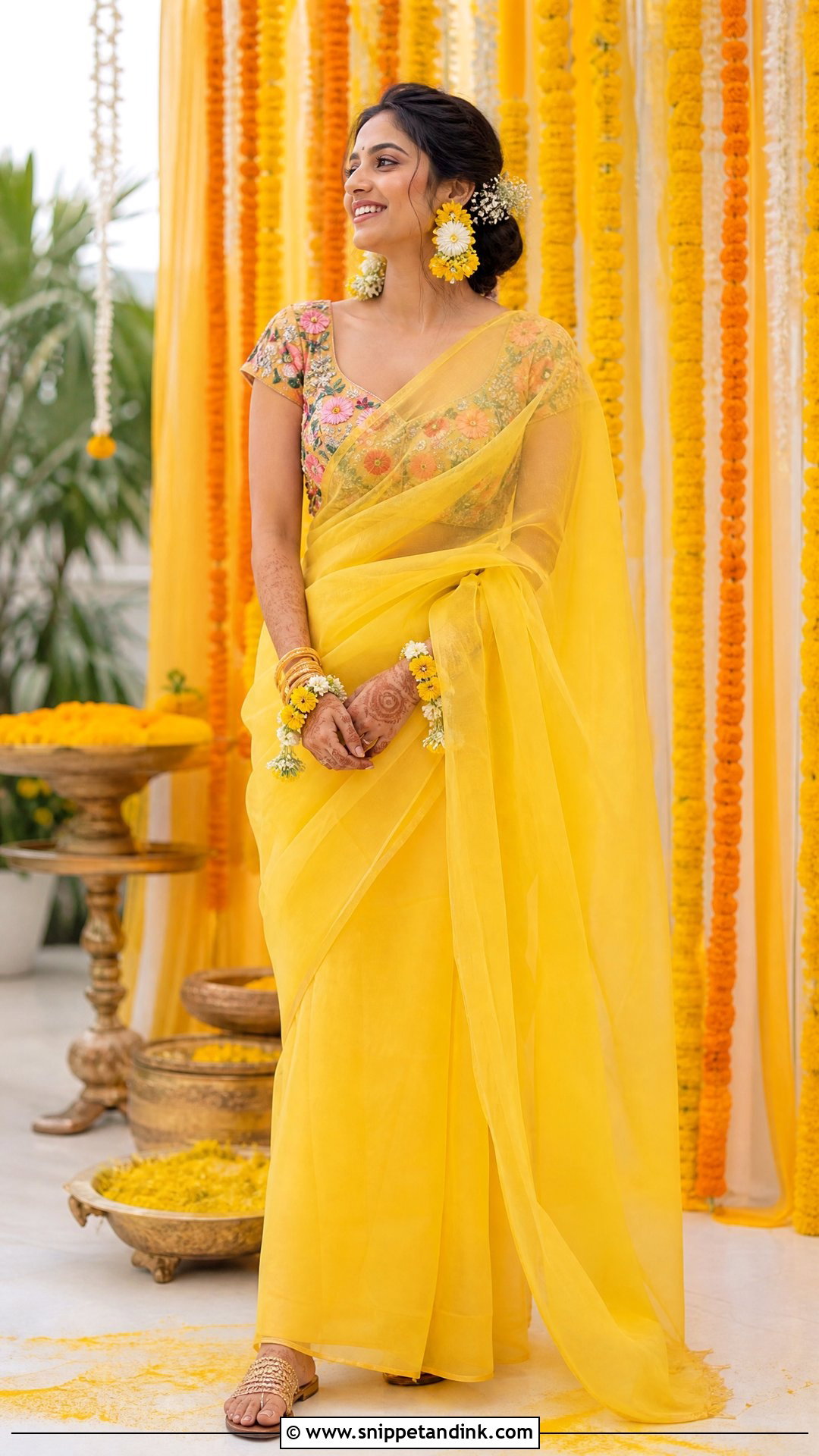
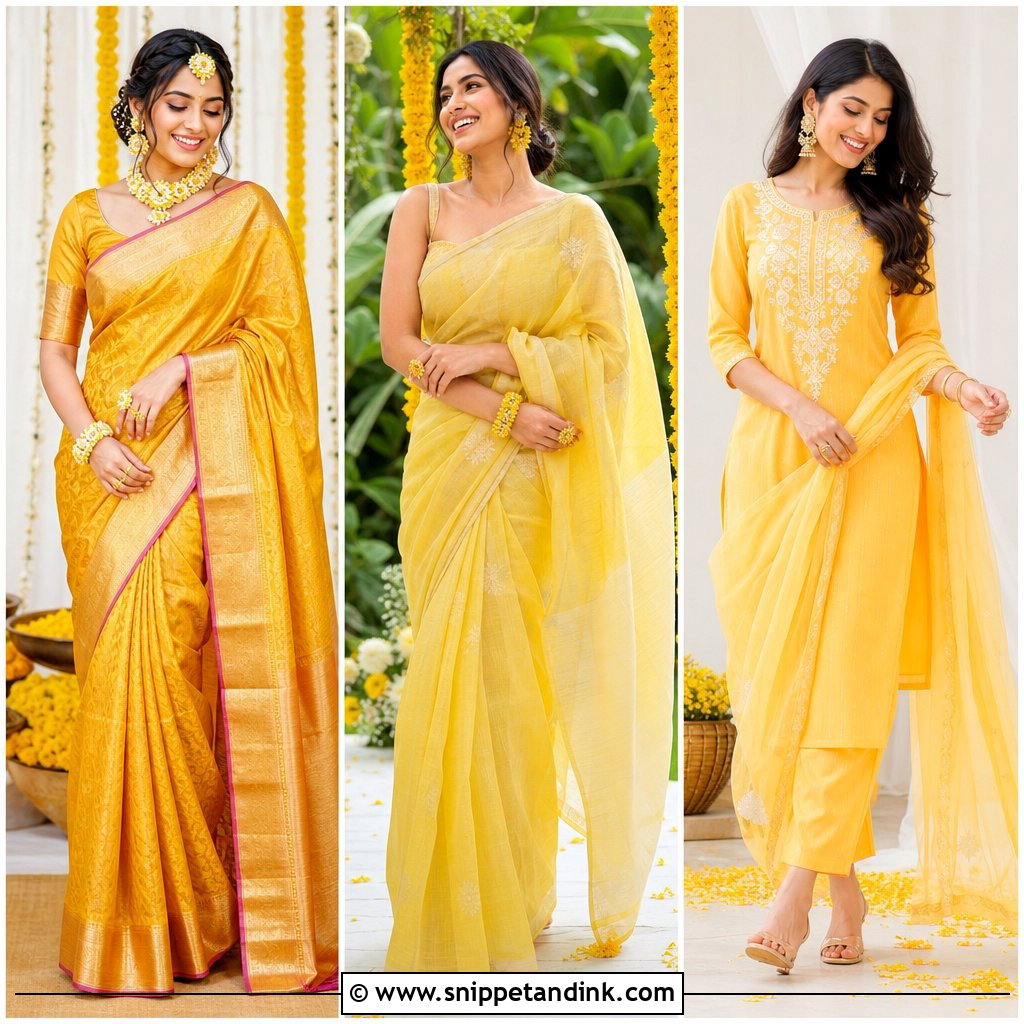
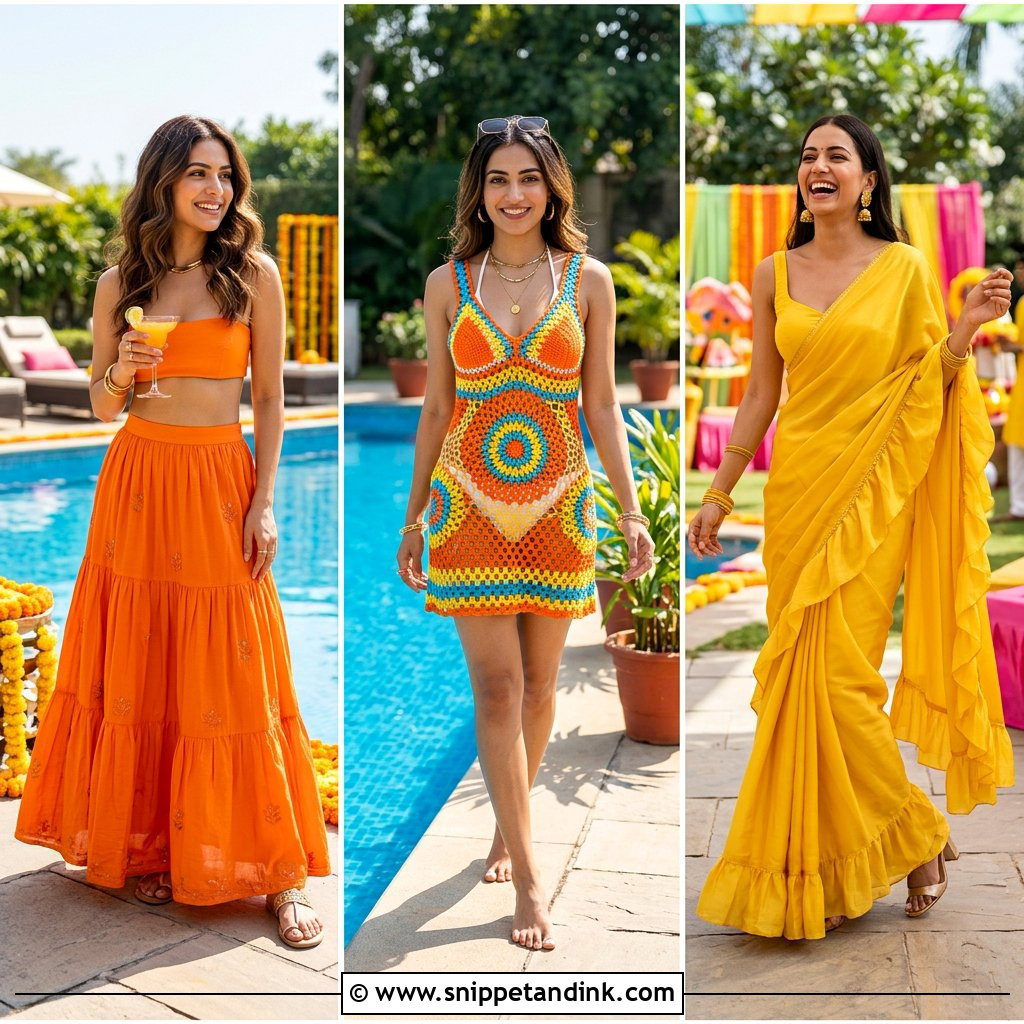
A yellow organza saree with a slim embroidered border is the simplest classic here. Lemon, sunflower and marigold all suit it. I’d pair it with a fitted floral blouse with short sleeves or a supportive square neck. Organza wants to puff, so the pleats need pressing and pinning at the waist; let the pallu stay open and airy. Floral earrings, fine bangles, a small potli and metallic flat sandals finish it, with a low bun and fresh flowers. If the family is generous with the paste, pin the pallu at both shoulder and waist. It suits a bride who wants tradition without weight.
2. Yellow Organza Lehenga Haldi Outfit
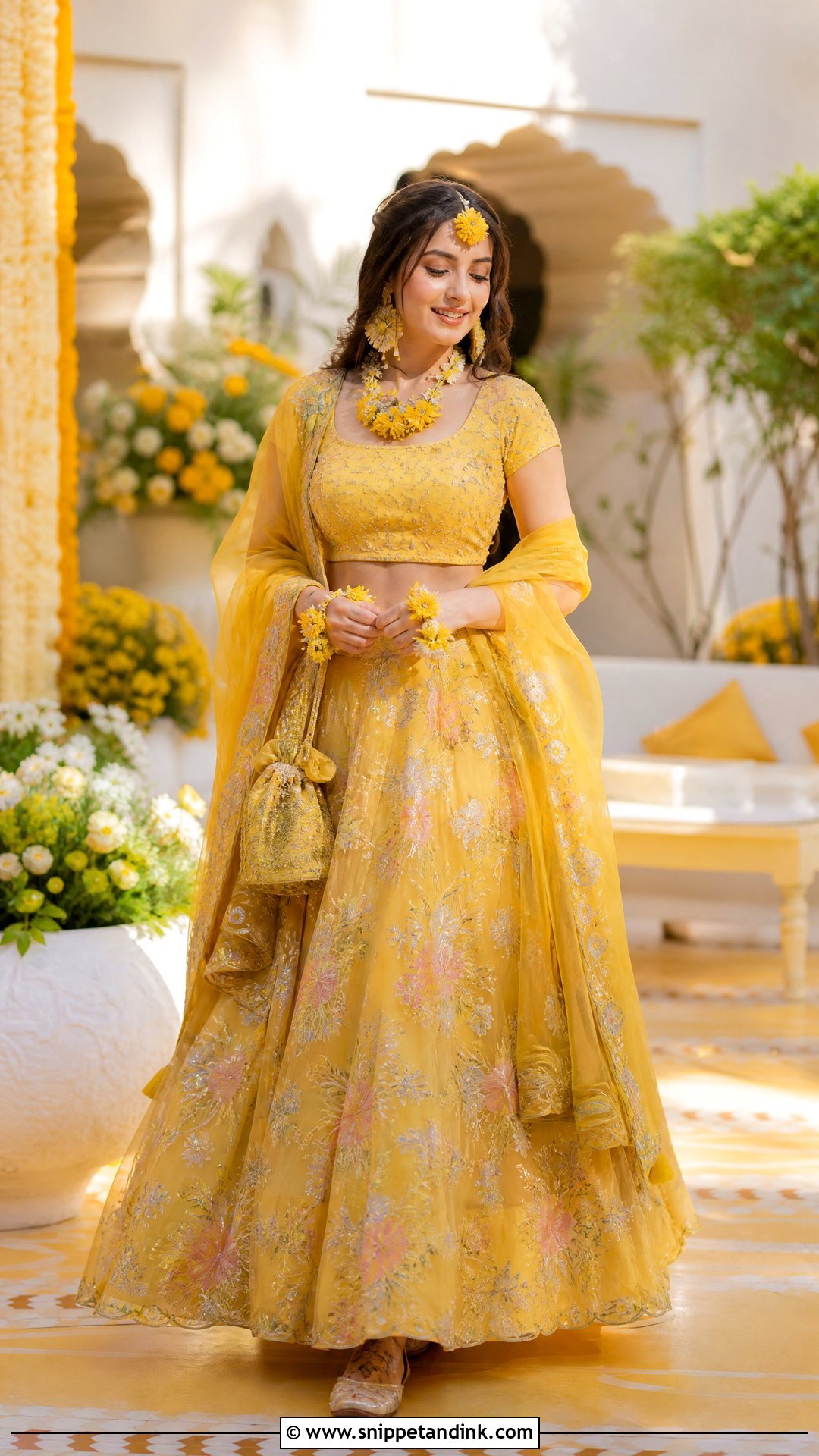
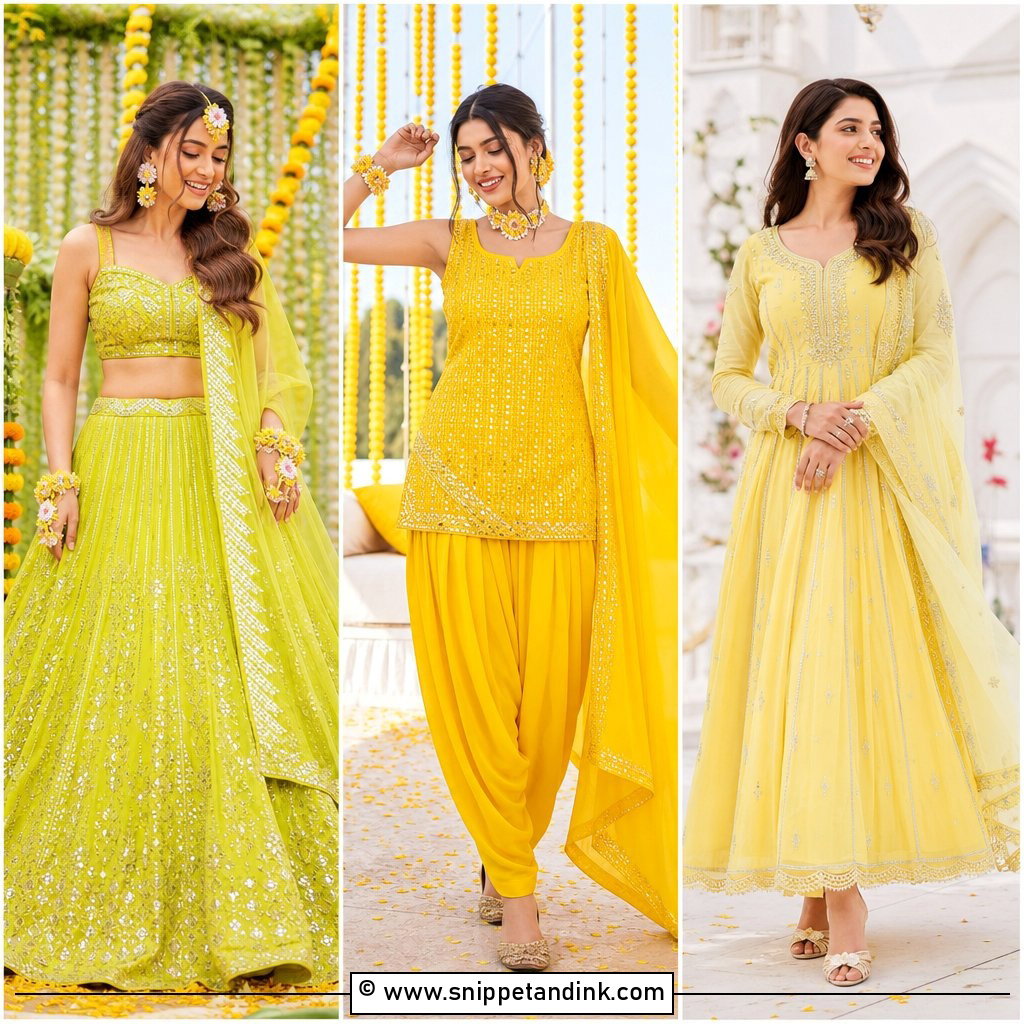
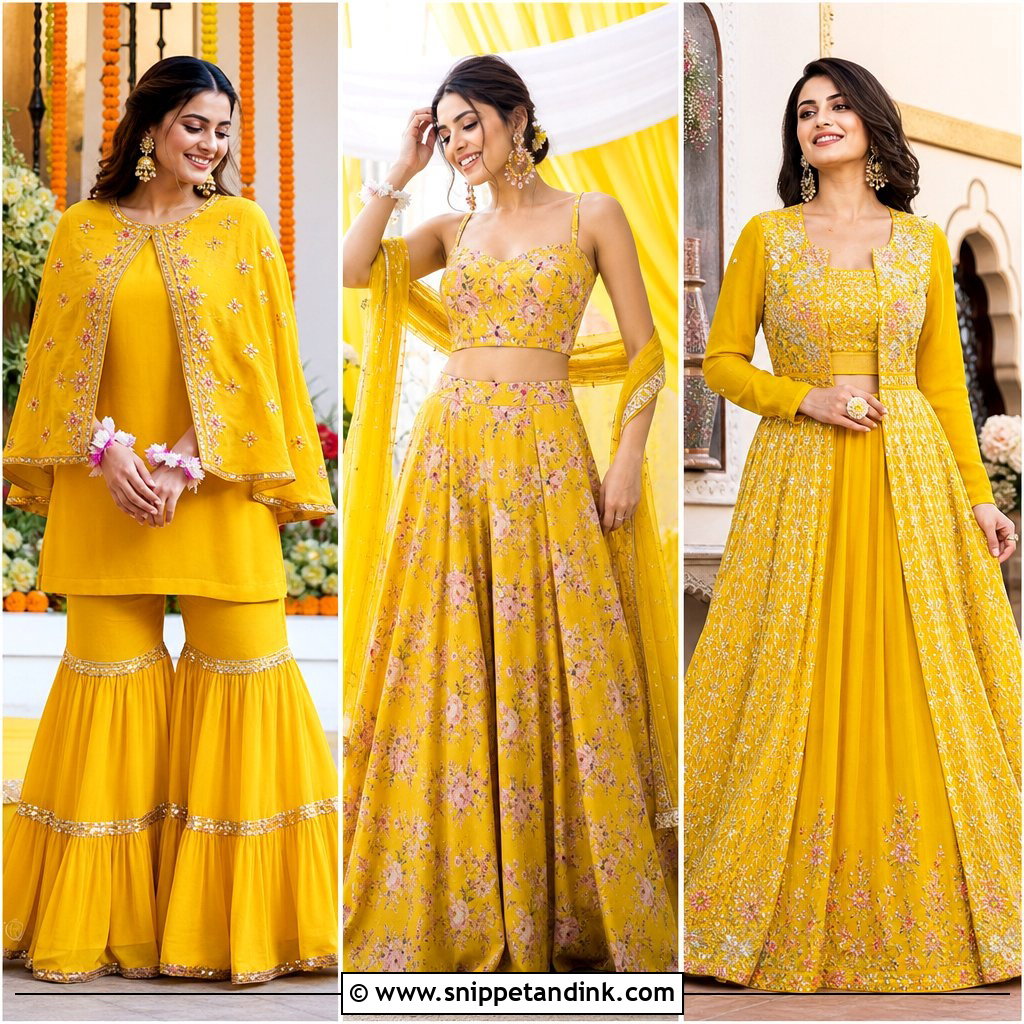
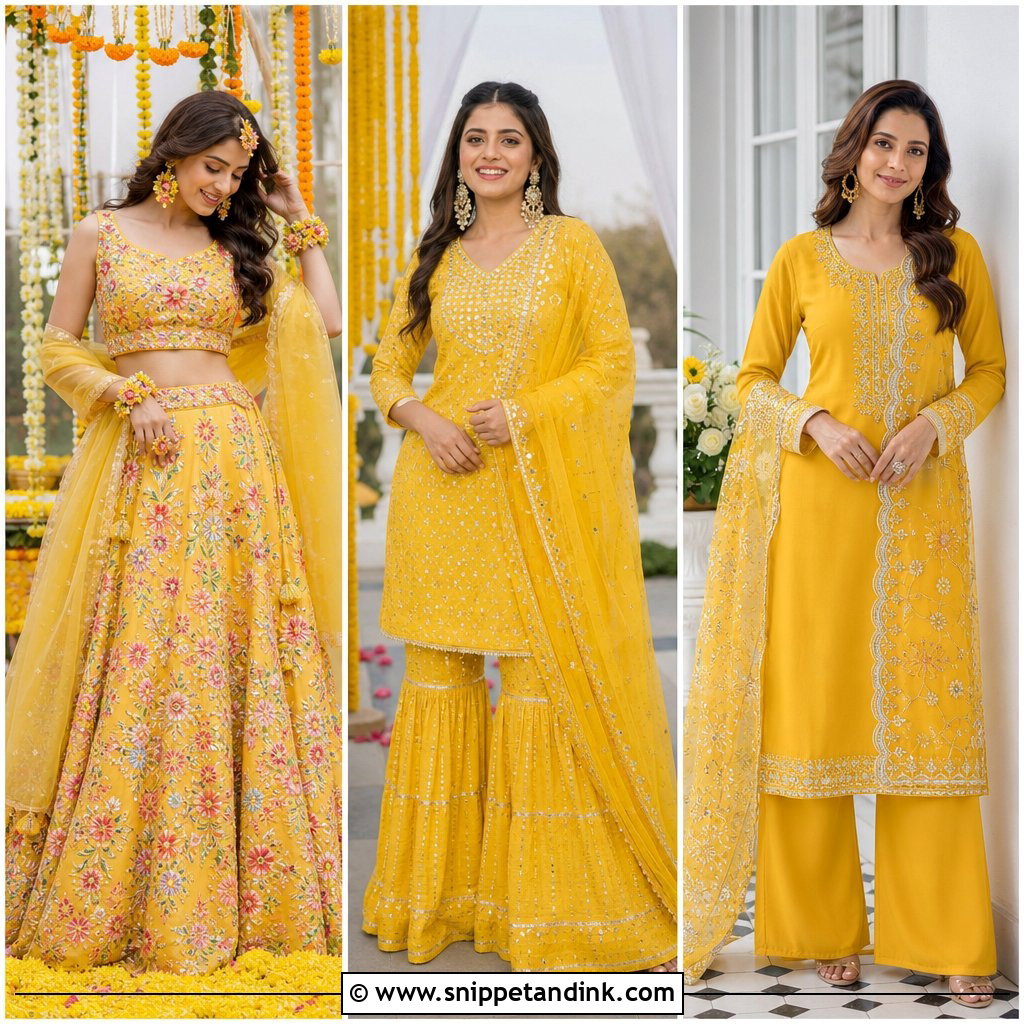
Yellow organza lehengas move well, and they’re cheerful without any effort. A light flared skirt with scattered floral embroidery, a few sequins or a gota border is enough decoration. Choose a structured sleeveless choli or a short-sleeve blouse with real support, since you’ll be hugged, pulled into dances and photographed from every side. Pin a matching organza dupatta across one shoulder or loop it over both arms. Floral jewellery, comfortable juttis and an embroidered potli complete it. The one thing I steer brides away from is a stiff can-can underneath; you’ll be sitting on a low patla, and a rigid underskirt pops up in front of you.
3. Organza Sharara Haldi Outfit
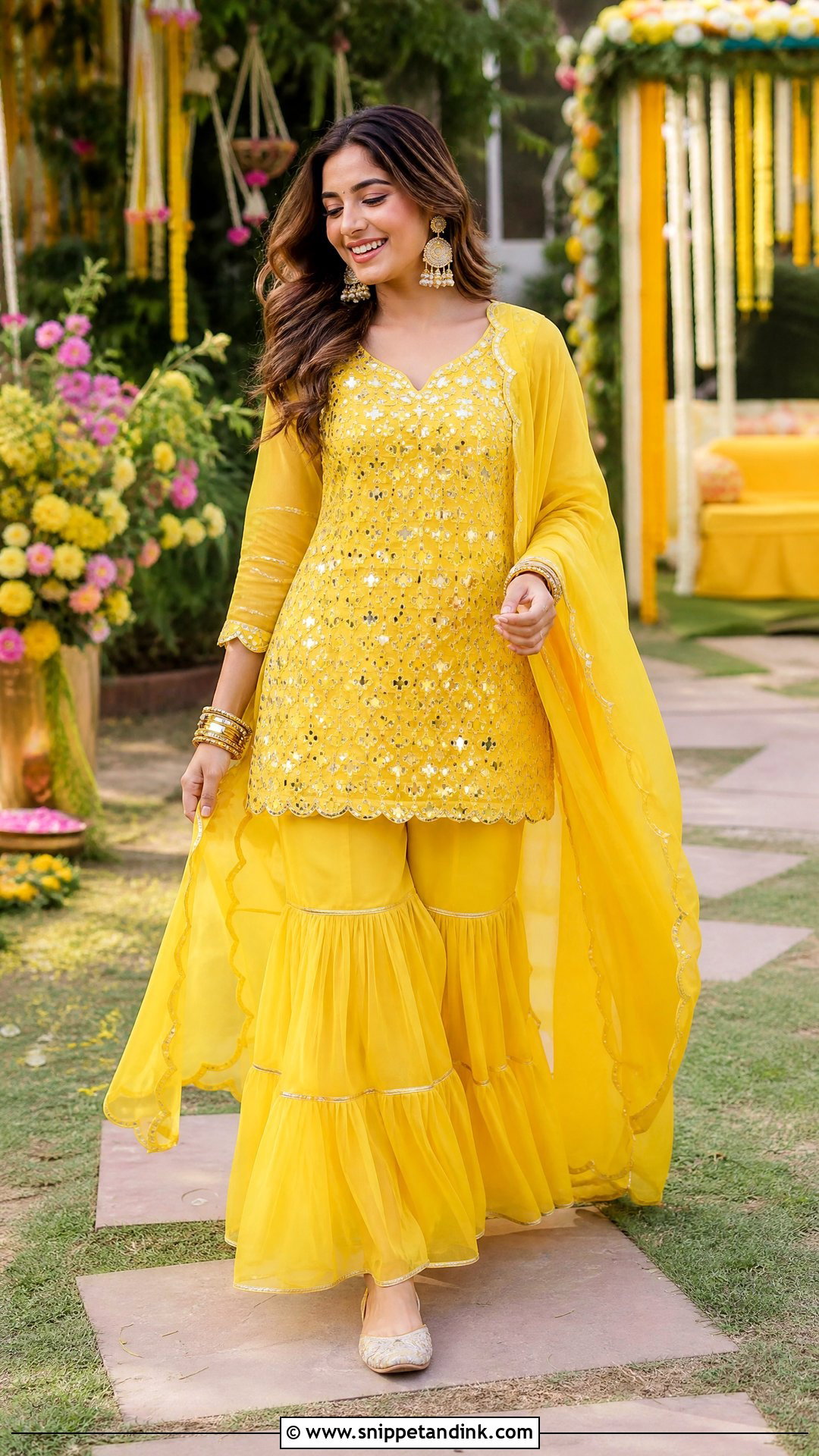
Do you want the swing of a flared outfit without a full lehenga? A sharara set gives it. Wide tiered pants under a short yellow kurti with a bit of mirror work or floral embroidery is the shape. Keep the dupatta narrow, scalloped and pinned, so it doesn’t drag in the turmeric bowl. Statement jhumkas, stacked bangles and embroidered juttis are plenty. The kurti should stop at the waist or upper hip so the flare shows. It’s a good pick for bridesmaids, sisters, and wedding guests who mean to dance. A braided ponytail with small flowers stays put through all of it.
4. Organza Anarkali Haldi Outfit
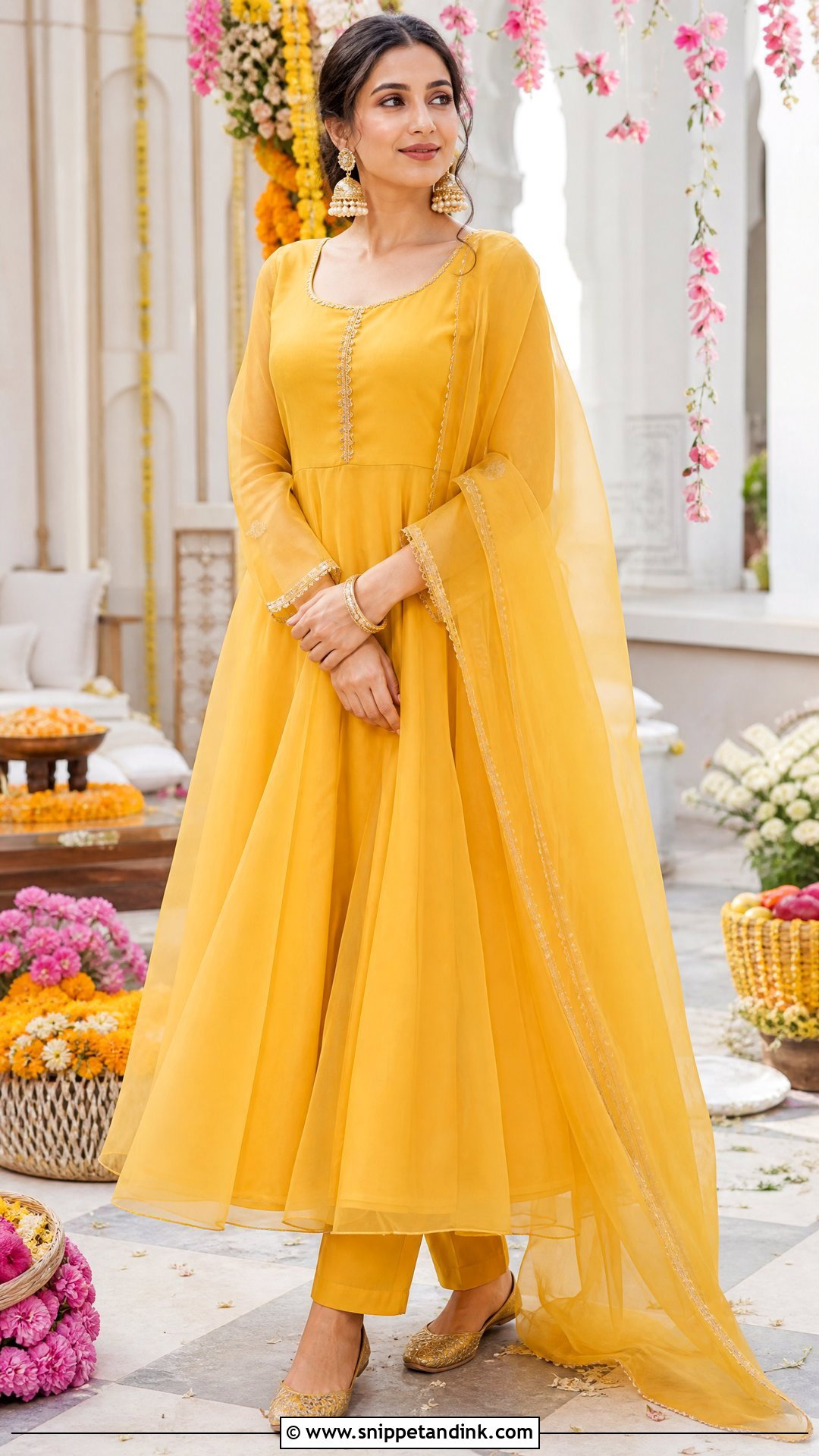
An organza Anarkali looks traditional without feeling stiff. Look for sunshine yellow or mustard with an opaque lining under the sheer outer layer; organza alone is see-through in sunlight. A fitted bodice into a soft flare defines the waist and still lets you move. Narrow pants, a matching dupatta and cushioned gold juttis complete it. Small pearls, gota edging or a little thread embroidery add enough detail. Medium jhumkas and a few slim bangles are all the jewellery it needs. On petite frames I go for a moderate flare and a shorter hem; taller women can carry the full floor length. A neat low ponytail keeps it current.
5. Organza Kurta Palazzo Haldi Outfit
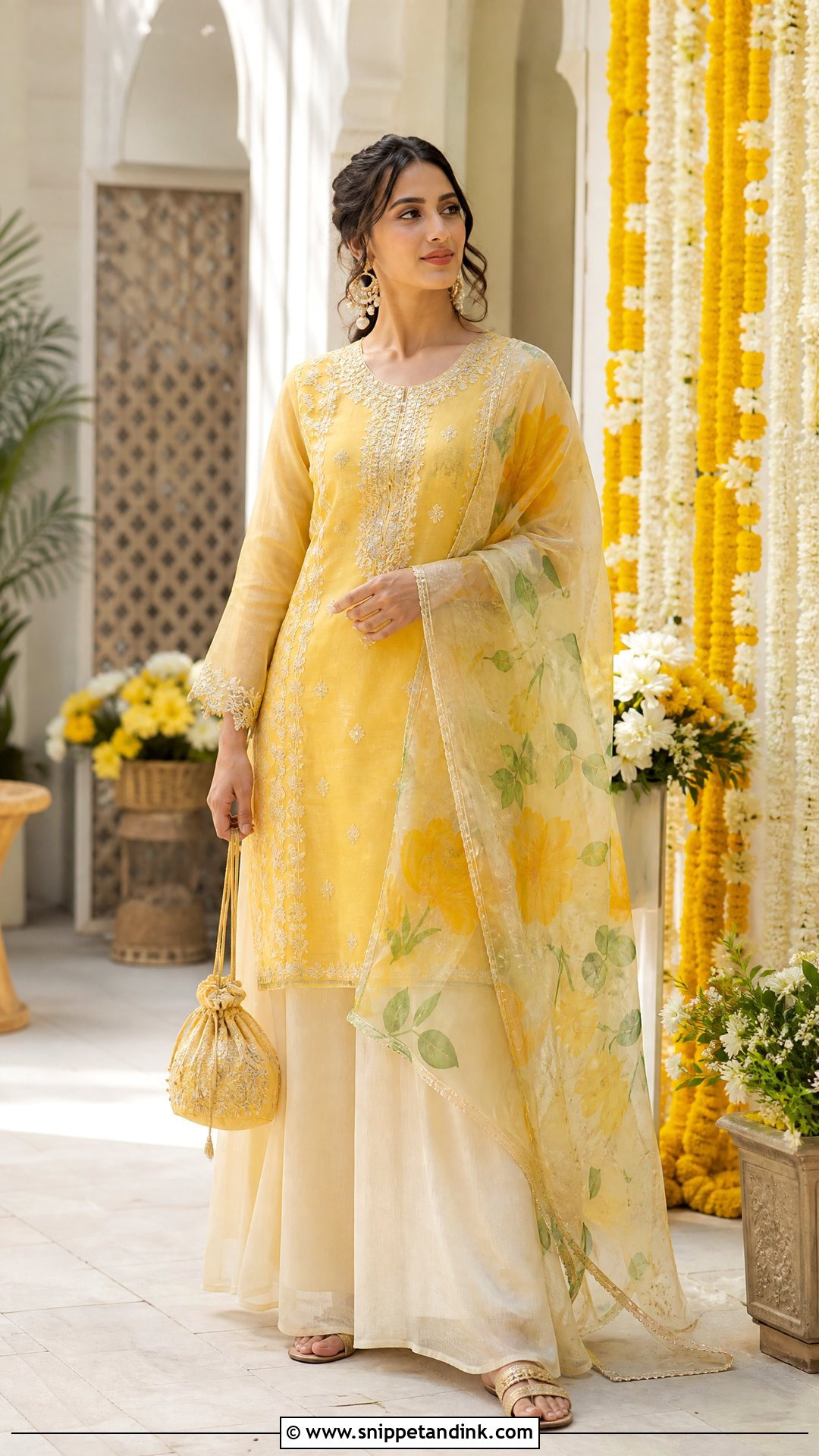
Kurta and palazzo is the most relaxed set on this list. A straight or slightly flared yellow organza kurta with a full lining, side slits and small florals, over high-waisted palazzos in satin, crepe or soft cotton silk, is easy to sit in and easy to walk in. A sheer dupatta can bring in a brighter border or a contrasting print. Flat sandals, pearl drops and a small potli finish it, with soft waves or a low bun and one flower. Family members tend to like this one because the kurta and pants can both be worn again separately.
6. Organza Cape Dhoti Haldi Outfit
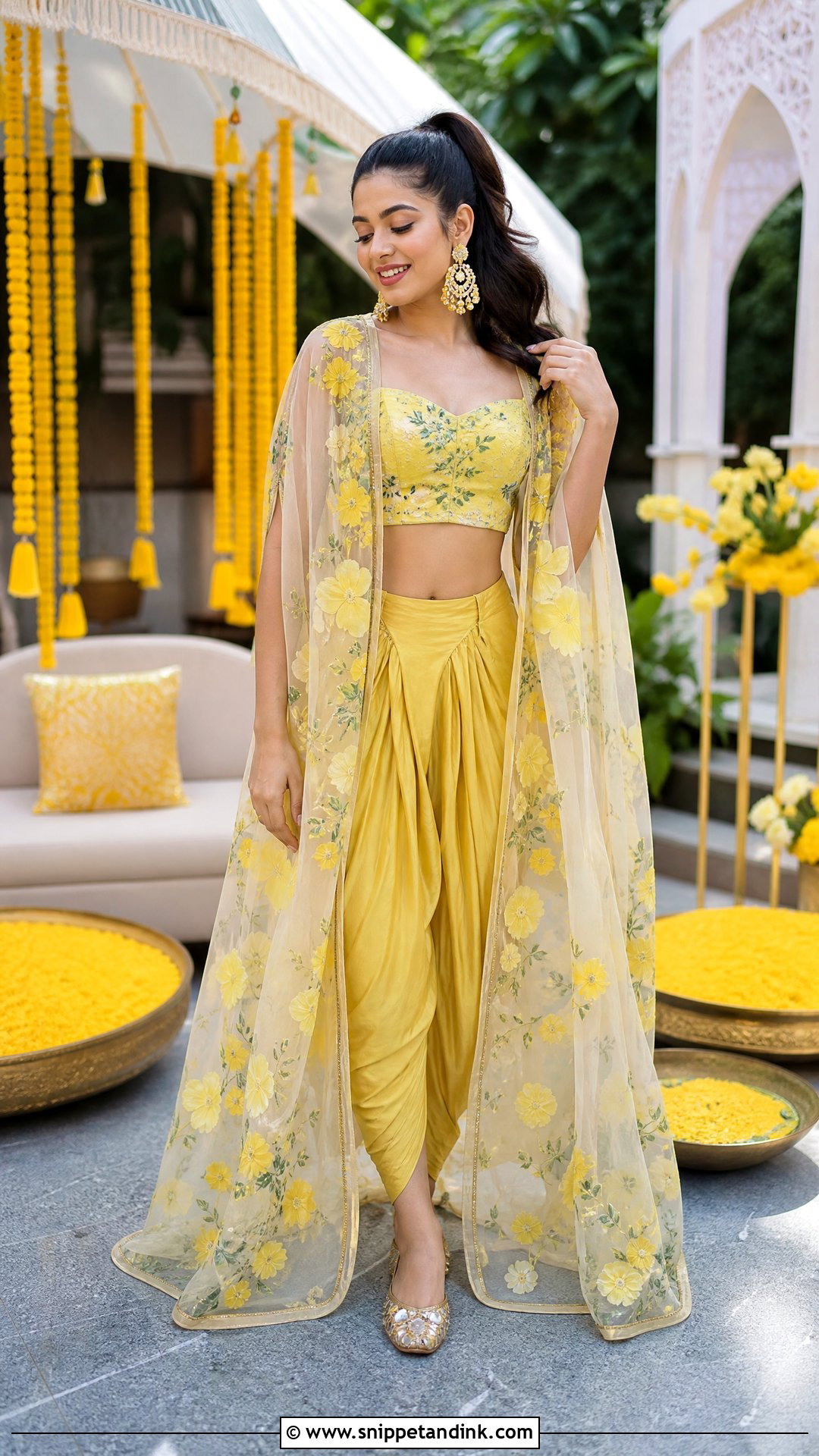
Adding a sheer cape is how a plain dhoti set becomes a modern Haldi outfit. Tapered yellow dhoti pants with a fitted crop top in the same shade make the base. Choose the cape length by your height: knee-length on shorter frames, ankle-length on taller ones. Floral appliqué, pearl edging or a little mirror work makes it stand out. Gold flats, statement earrings and a single sleek bracelet are enough. The cape replaces the dupatta, which frees your hands. I’d ask for snaps or a hidden hook at each shoulder so it doesn’t slide back. A high ponytail or bun keeps the neckline clean.
7. Pre-Draped Organza Saree Haldi Outfit
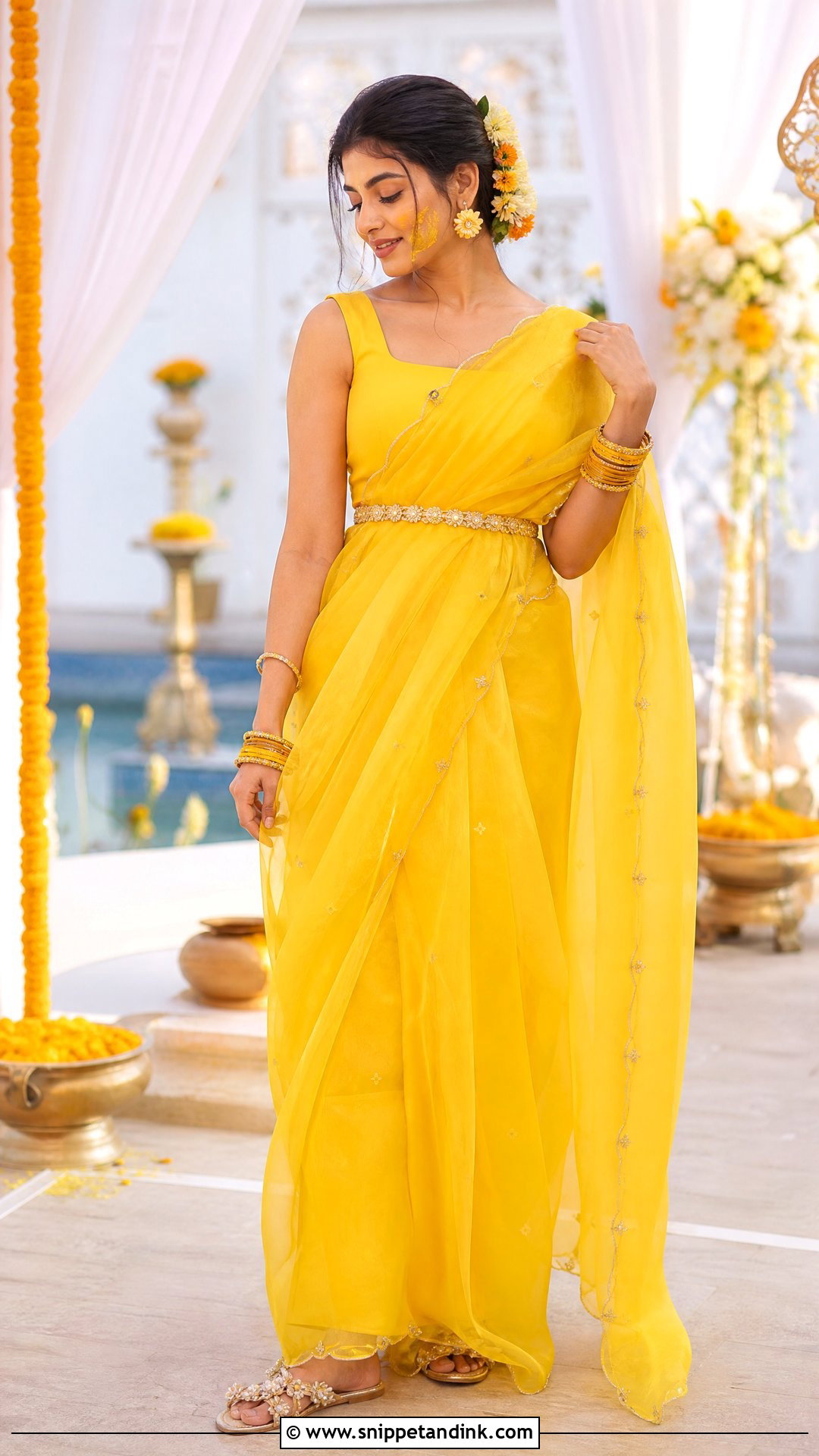
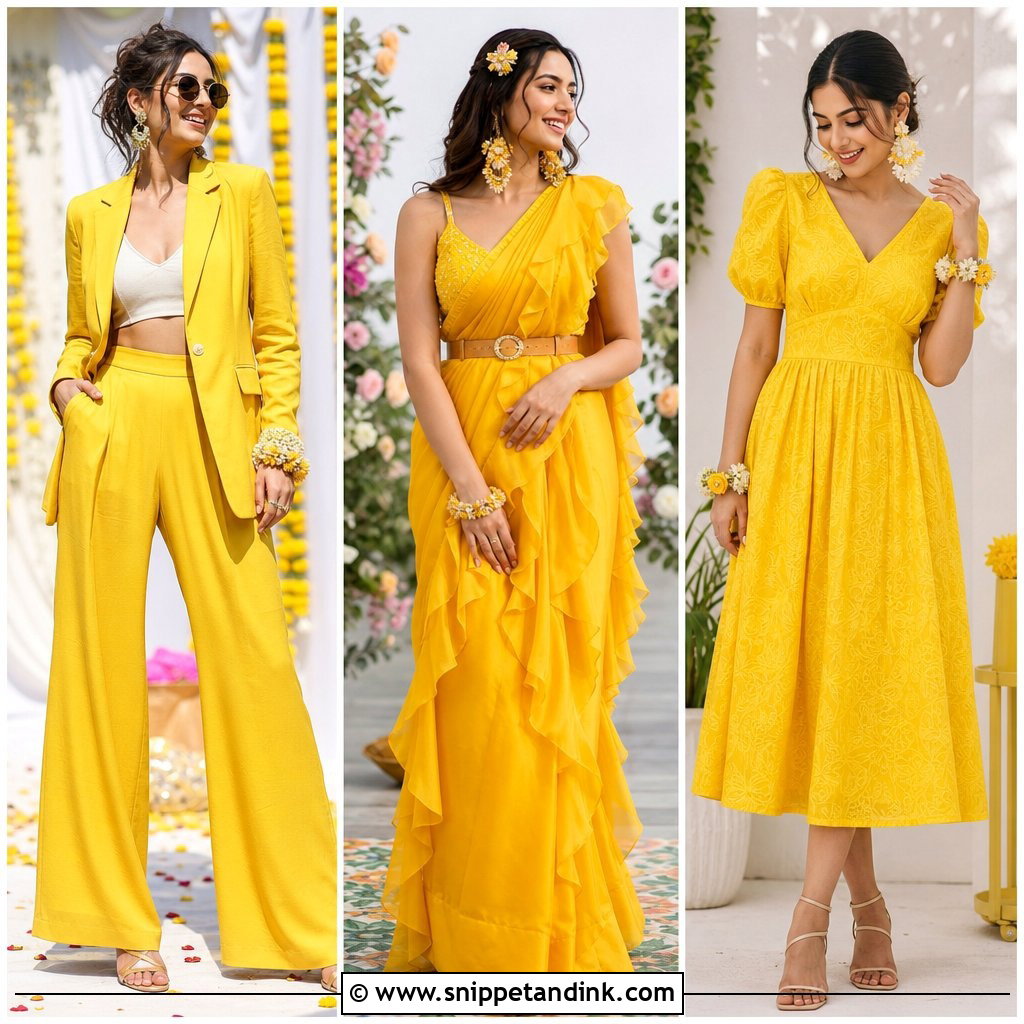
A pre-draped organza saree solves the biggest problem with organza sarees: the pleats won’t stay flat. Stitched pleats and an attached pallu mean you can dance without re-tucking. A fitted blouse with a sweetheart, square or modest halter neck works. A thin embroidered belt holds the drape and shapes the waist. Floral studs, layered bangles and block heels or decorated flats finish it. Put the blouse embroidery near the neckline, where the pallu won’t cover it. A sleek braid, low bun or half-up style suits it. Even with stitching, I still add a couple of discreet pins at the shoulder and waist before the ceremony starts.
8. White Organza Lehenga Haldi Outfit
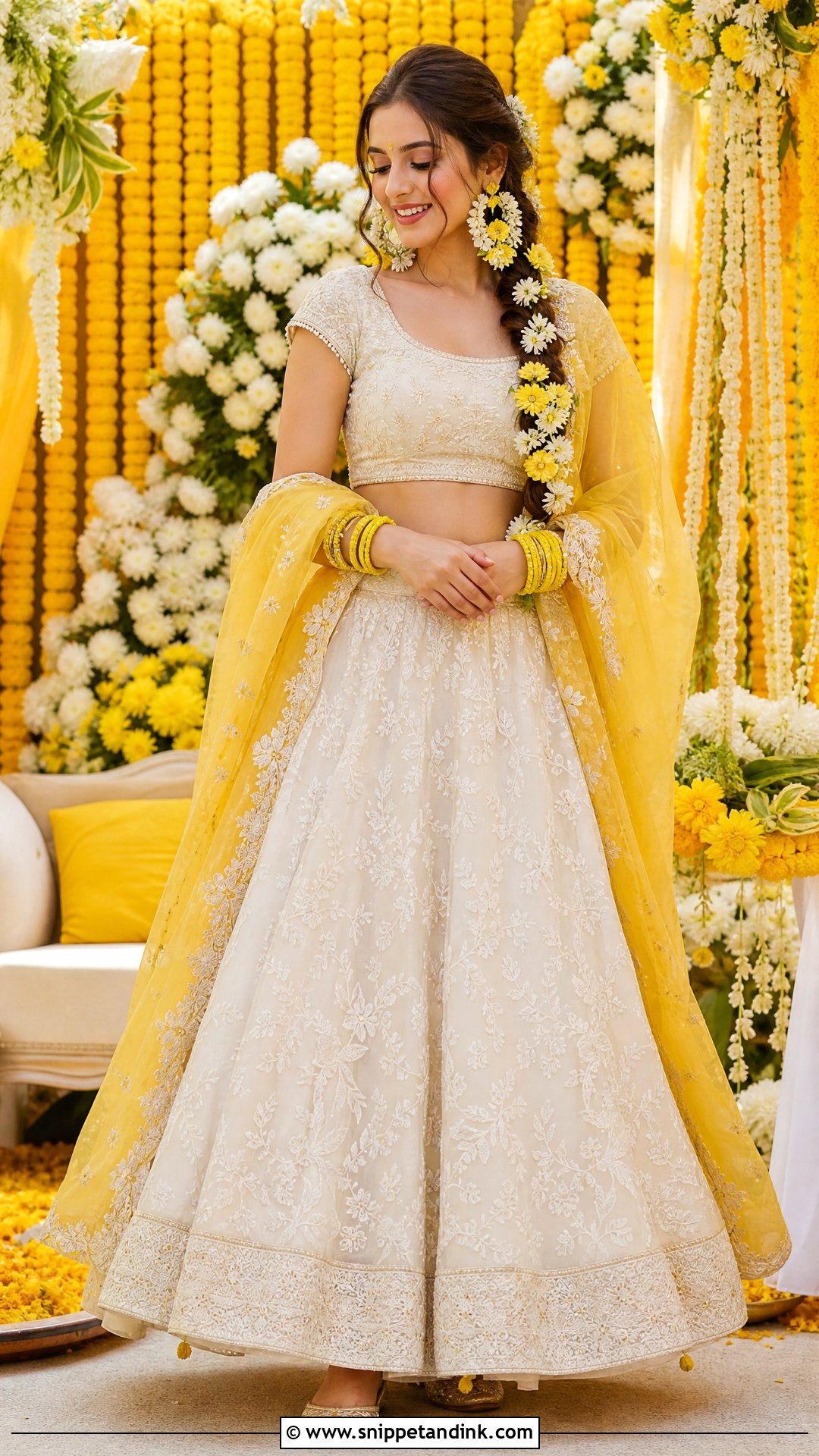
White organza makes yellow flowers, gold embroidery and the turmeric itself stand out sharply. An ivory or soft-white skirt with a comfortable lining and small motifs, a matching blouse and a marigold-yellow dupatta give a strong contrast. Floral earrings, yellow bangles and gold juttis tie the colours together. Be honest with yourself about this one: turmeric on white organza won’t come out completely. Wear it if you’re happy for the stains to be part of the memory, or plan to change afterwards. Skip any train. A braid woven with yellow flowers finishes it, and it’s a good choice for a bride tired of all-yellow.
9. Mustard Organza Gharara Haldi Outfit
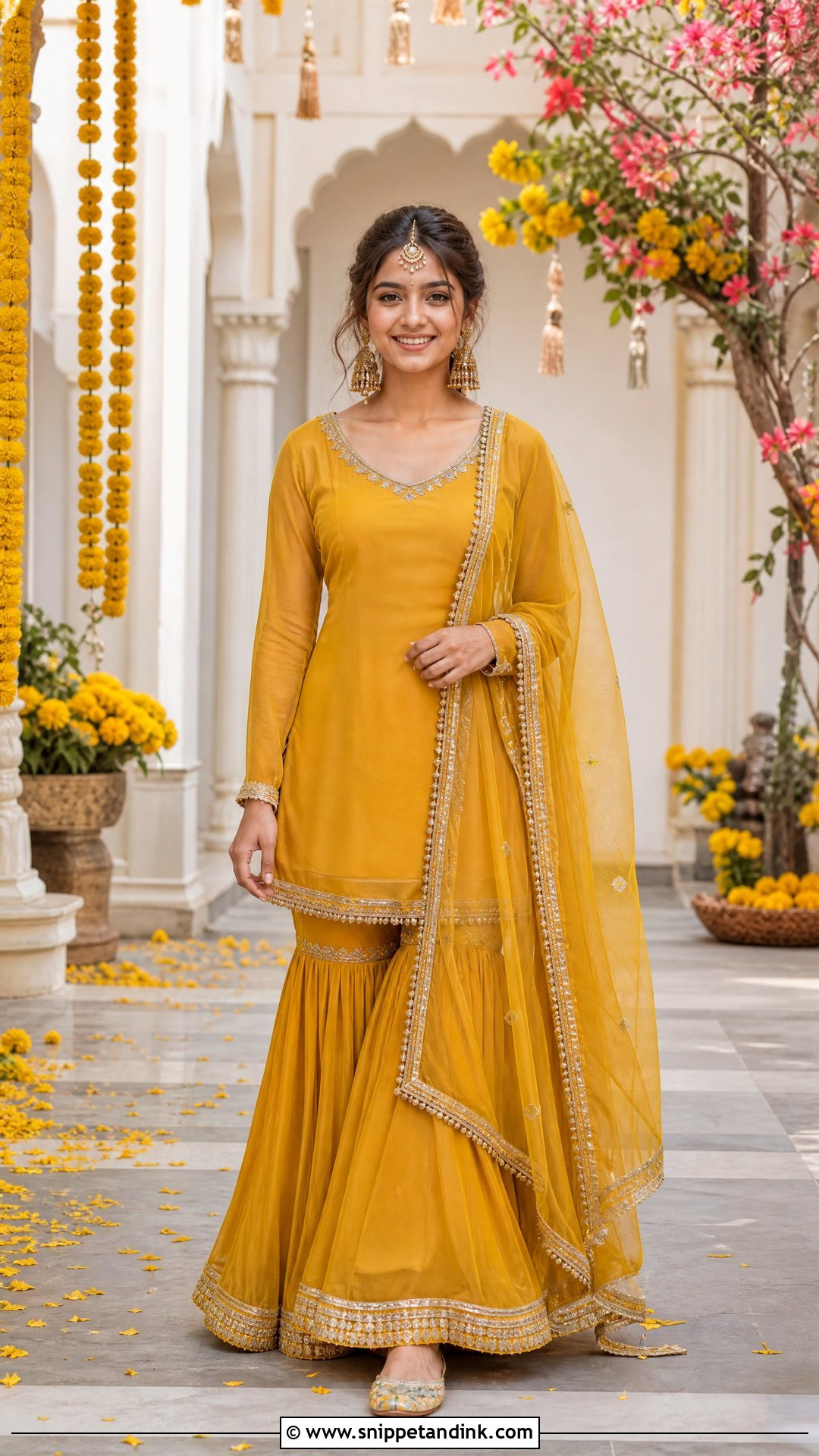
Mustard reads deeper and more traditional than bright yellow, and it holds its own against busy marigold decor. A short organza kurti over a gharara with a defined knee seam and flared lower legs is the shape. Small gold motifs or narrow gota borders mark the lines without adding weight. Drape a sheer mustard dupatta over one shoulder so the kurti front stays visible. Antique gold earrings, a matching tikka and embroidered juttis complete it. Keep the kurti fitted but comfortable; the gharara supplies all the volume. A centre-parted low bun or soft braid with small white flowers gives a clean contrast.
10. Orange Organza Saree Haldi Outfit
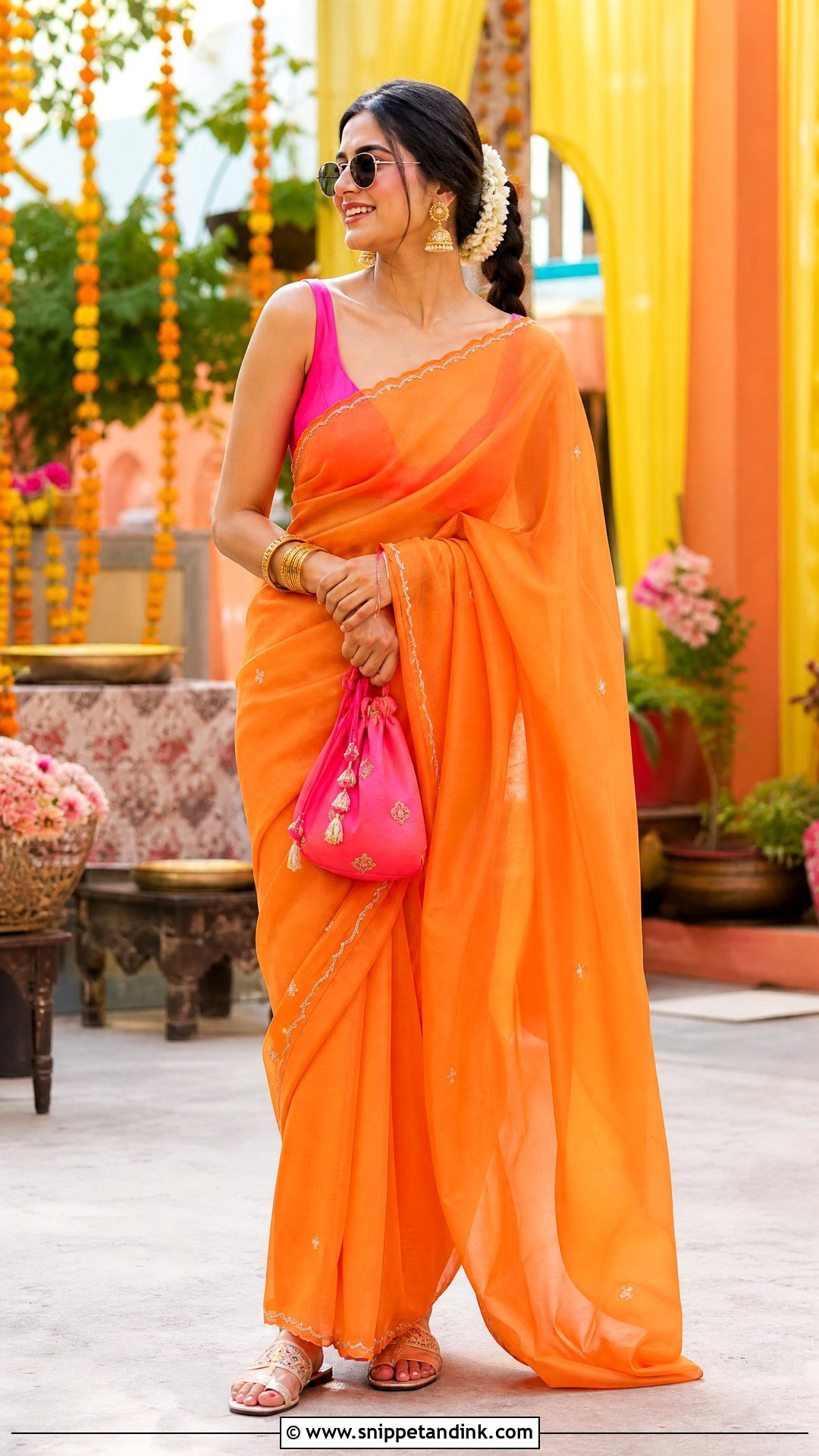
Orange is the easiest swap if you’d rather not wear yellow. A tangerine or marigold-orange organza saree with a fine gold border is the base. A hot-pink blouse makes it lively; cream or gold calms it down. Press the pleats and pin the pallu at the shoulder. Gold jhumkas, slim bangles and flat embroidered sandals finish it, and a pink potli repeats the blouse colour. With that much colour contrast, keep the blouse design simple. Soft waves, a low braid or a bun with pink flowers all work. Brides and close family can both wear this one.
11. Lime Green Organza Lehenga Haldi Outfit
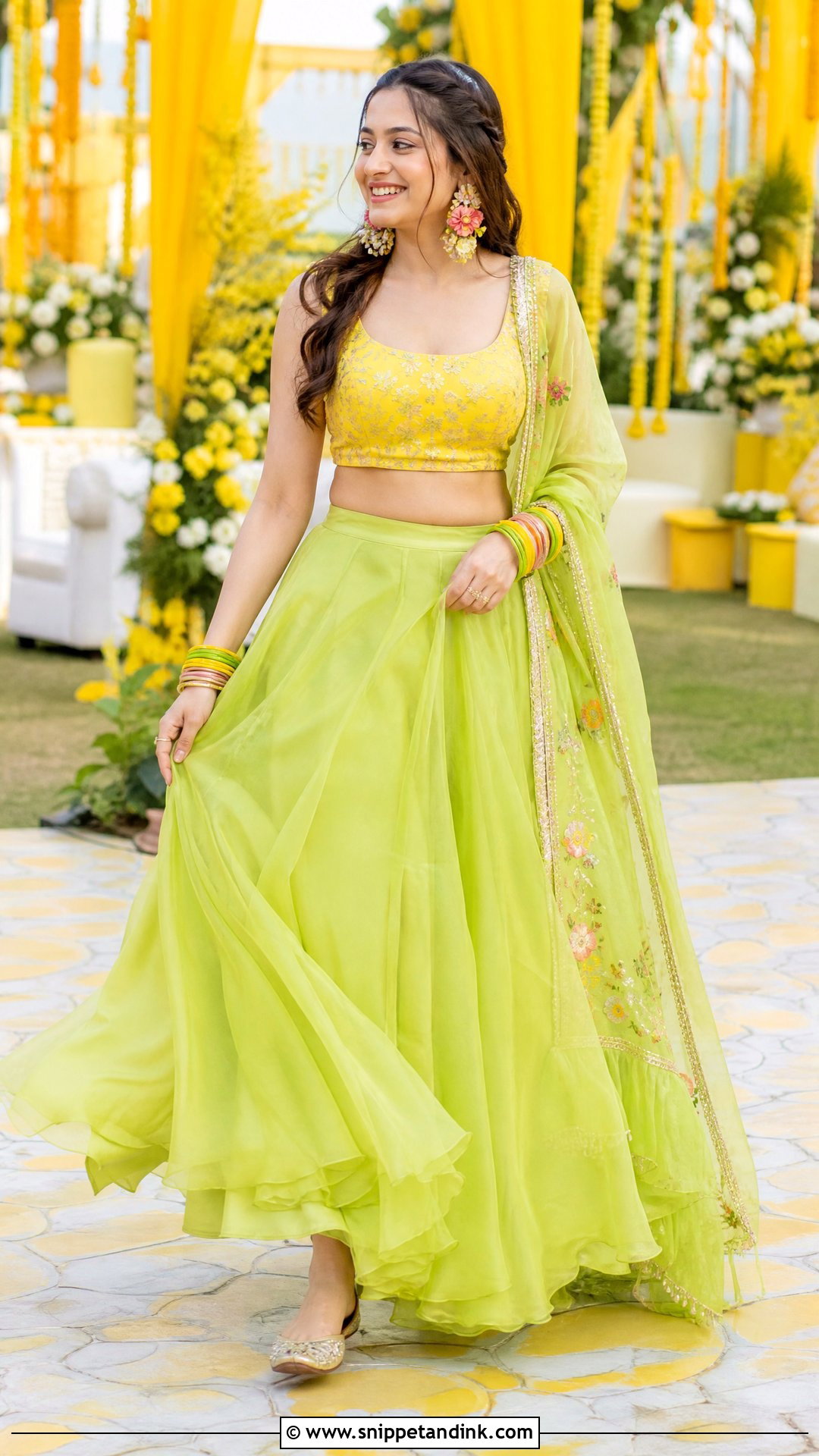
Lime green looks fresh at a garden haldi and sits naturally next to yellow. A light skirt with floral threadwork or a narrow mirror border, a lemon-yellow crop top and a sheer lime or yellow dupatta pinned diagonally make the look. Floral earrings, colourful bangles and metallic juttis finish it. Keep heavy can-can out of the skirt so you can sit easily. A braided ponytail stays tidy outdoors. Bridesmaids and sisters often choose lime when there’s a yellow dress code, because it coordinates with everyone else without being the same shade. One check: lime can make very fair or olive skin look sallow, so hold it to your face in daylight first.
12. Floral Organza Lehenga Haldi Outfit
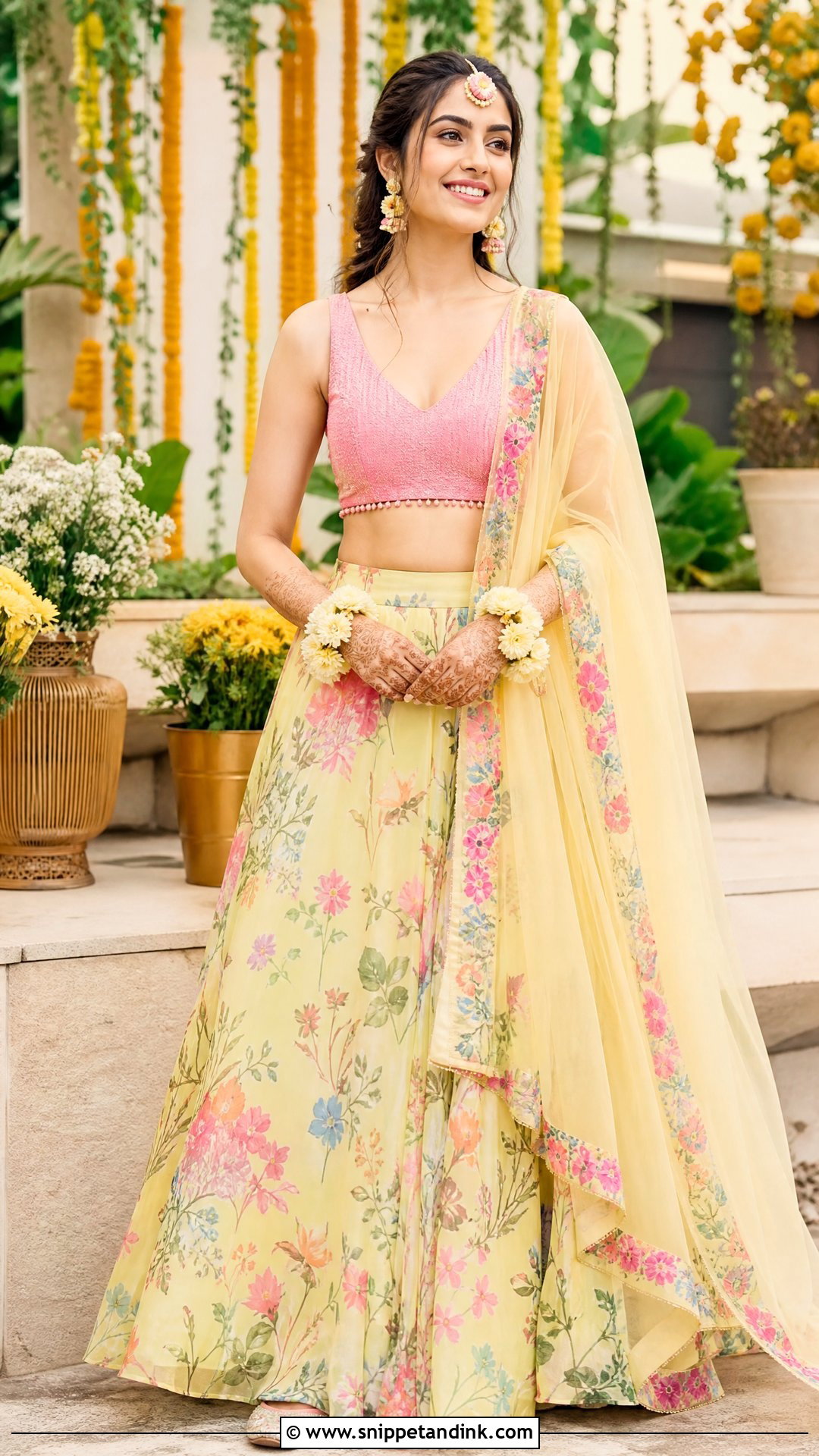
Floral printed organza suits a daytime haldi better than almost anything. Pick a white, yellow, or pale peach base with medium botanical prints; tiny prints blur in photos and huge ones overwhelm. Pair it with a solid blouse in one colour from the print, and a plain dupatta with a printed border to rest the eye. Pearl earrings, flower bangles and neutral juttis finish it. A bride can add a floral tikka; guests should keep accessories smaller. The blouse needs a secure neckline and comfortable straps. A soft updo or side braid suits the print. Printed organza also hides small turmeric marks well.
13. Layered Organza Saree Haldi Outfit
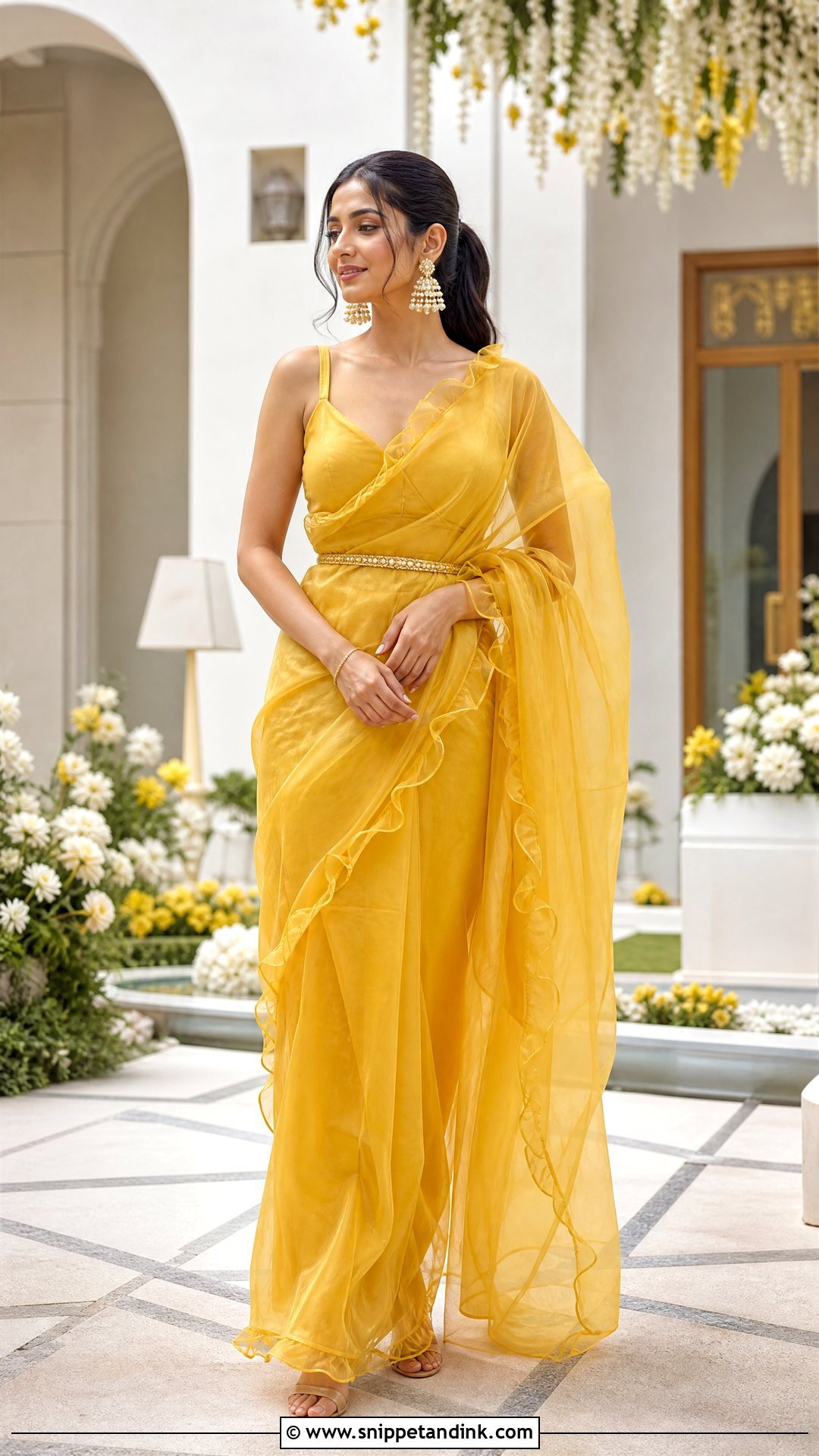
Layered organza sarees have a ruffled or scalloped edge that gives the drape a softer outline. Choose a gentle ruffle, not several oversized tiers. A plain fitted blouse keeps the border in focus, and a slim belt holds the layers in place at the waist. Pearl jhumkas, a simple bracelet and neutral block heels finish it. Never stack a busy blouse, a big necklace and a dramatic border together; pick one. A smooth ponytail or pinned waves completes it. Wet ruffles collapse and turmeric sits in the folds, so this saree is better for guests or a bride with limited contact with the paste.
14. Organza Jacket Palazzo Haldi Outfit
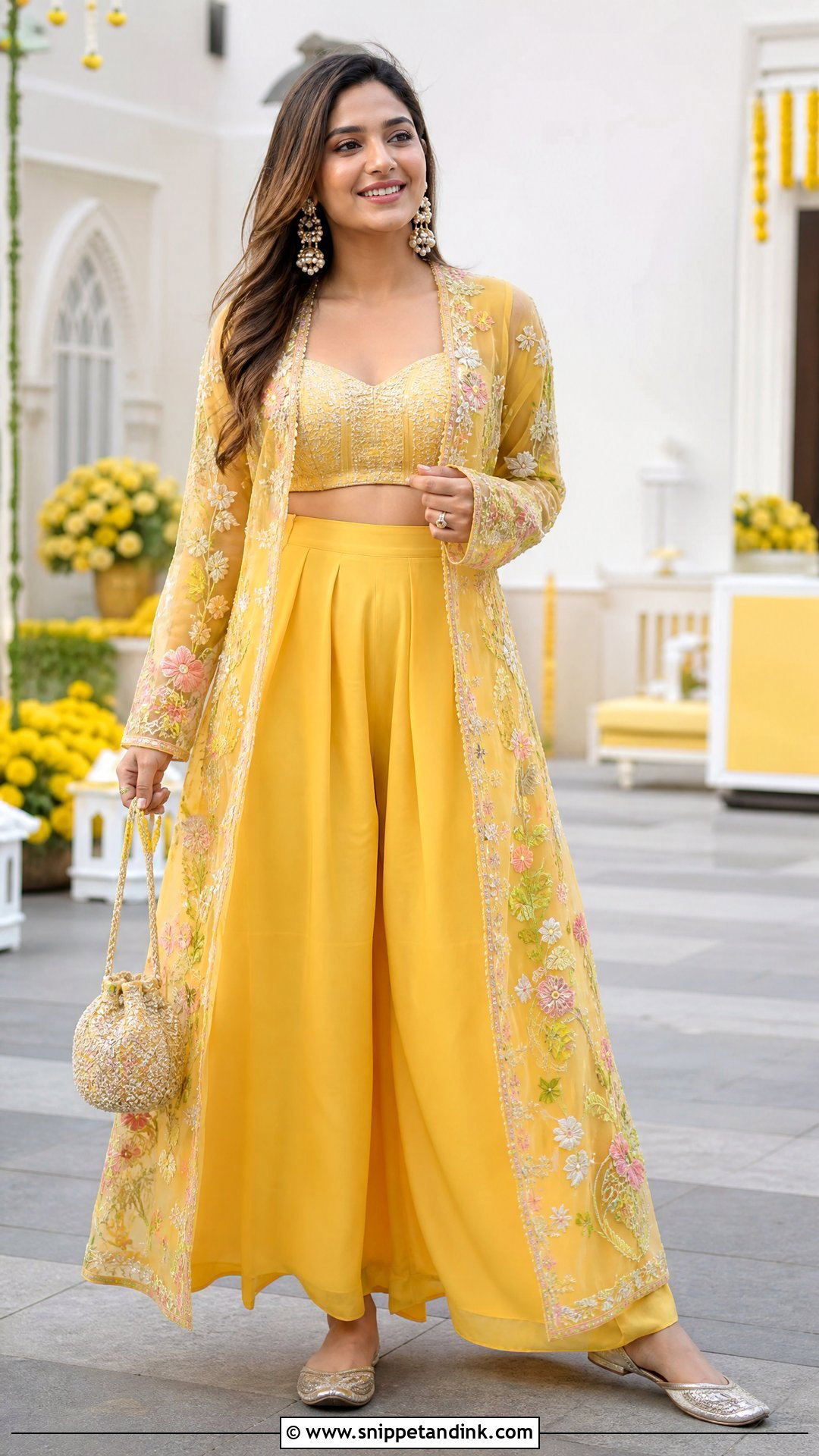
A long organza jacket over separates gives you a dressed look with pieces you’ll wear again. Start with high-waisted yellow palazzo pants and a fitted sleeveless top. Layer a sheer jacket with floral embroidery, scalloped edges or small mirrors, worn open to create long vertical lines. Metallic flats, shoulder-grazing earrings and a small potli finish it. Skip the dupatta; the jacket does the job. Choose a jacket ending between calf and ankle depending on height; it should clear the floor when you sit. A sleek low bun or straight ponytail keeps the shape modern.
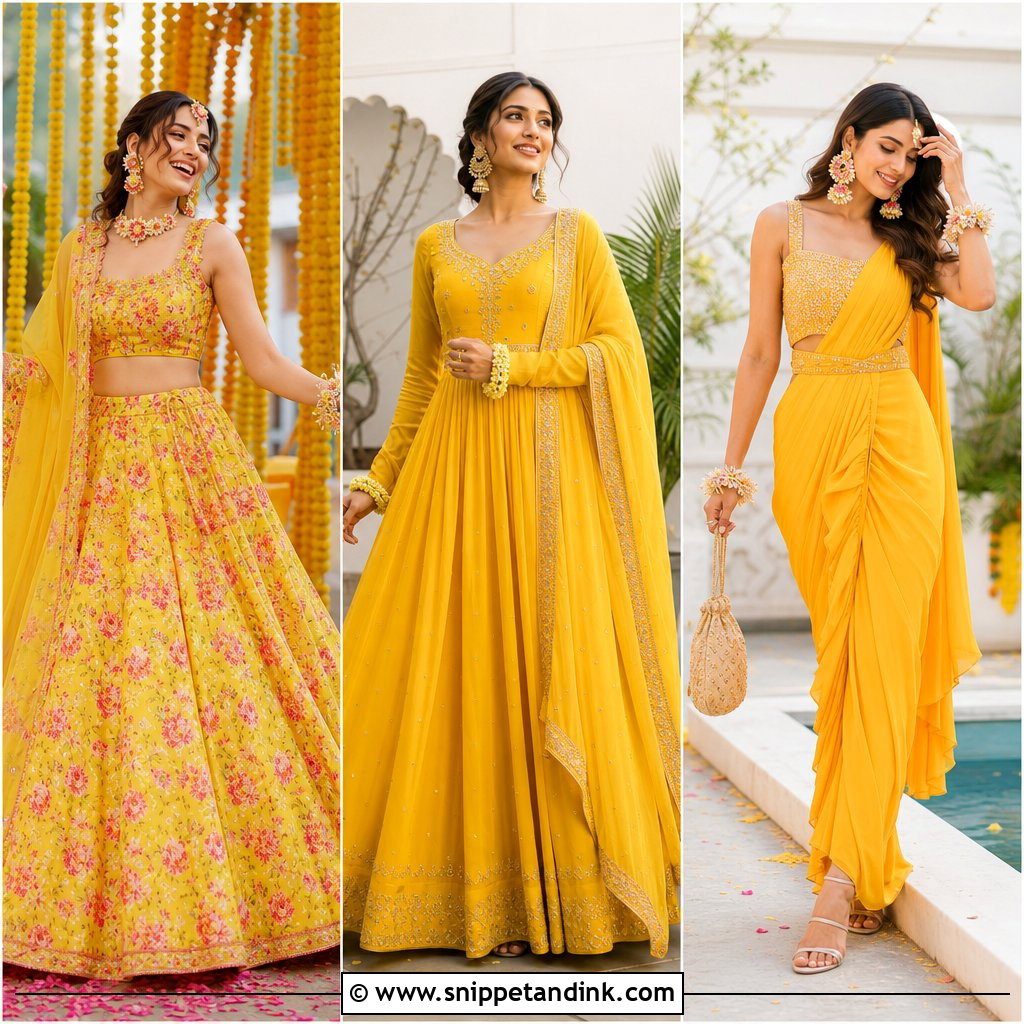

15. Asymmetrical Organza Kurta Sharara Haldi Outfit
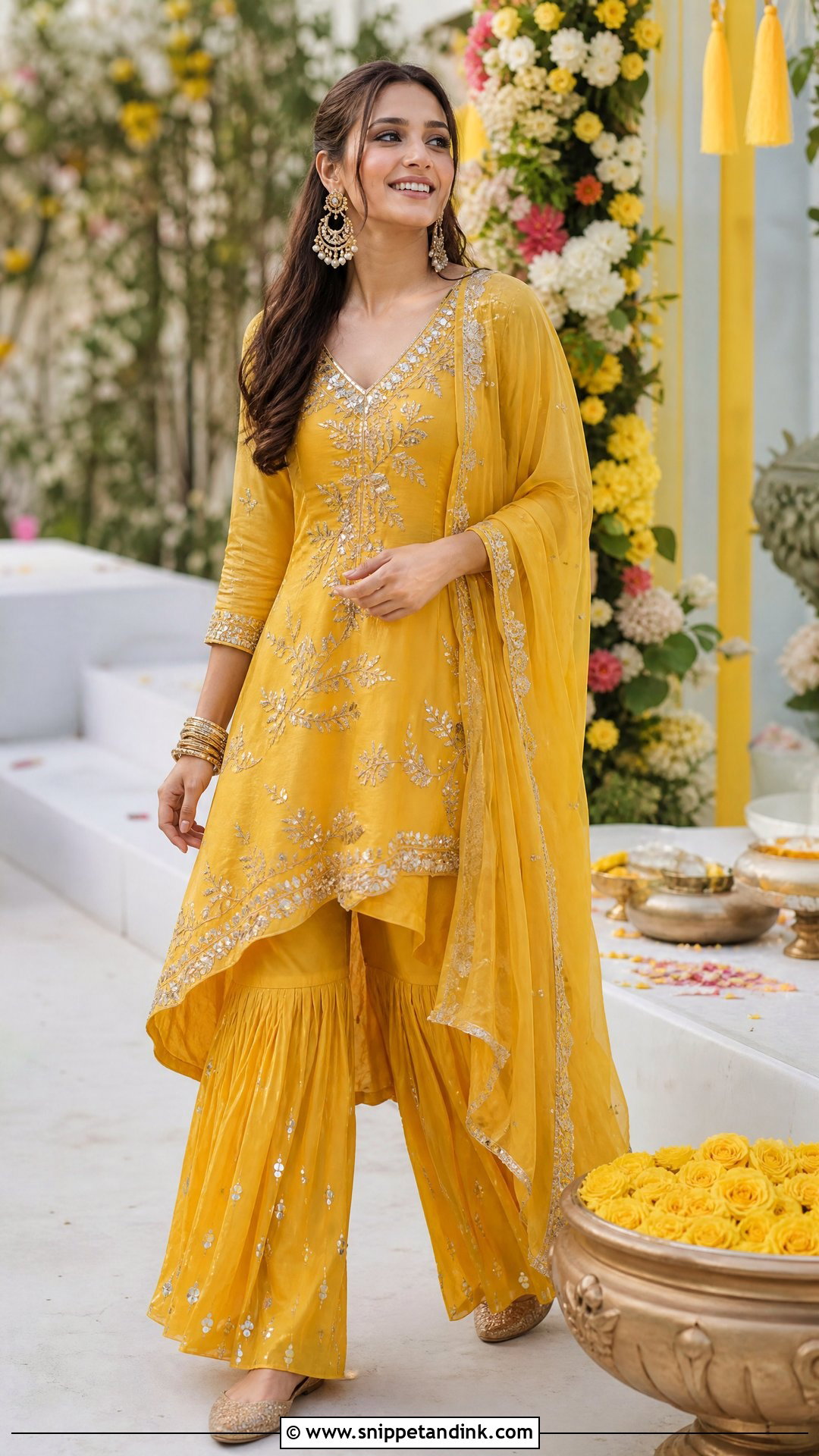
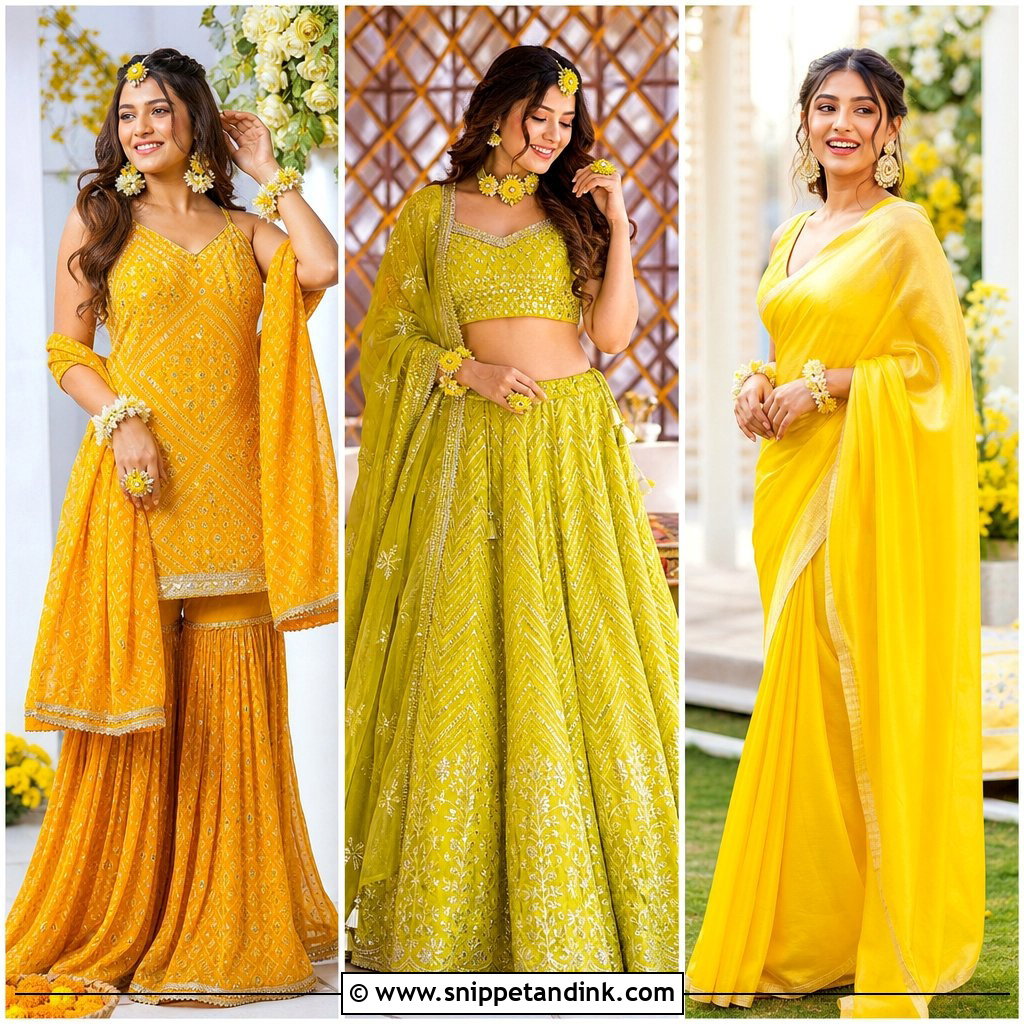
A high-low organza kurta over a sharara gives movement that a straight hem can’t. A fitted yellow kurta, short in front and longer behind, shows off the sharara. Fine threadwork at the neckline or cuffs is enough, since the cut is already the feature. Wear a light dupatta over one shoulder or none at all. Chandbalis, stacked bangles and pointed juttis finish it. I’d insist on a soft lining in the kurta; unlined organza scratches and is too sheer for most families’ comfort. A half-up style or textured ponytail suits the shape. It’s a good bridesmaid option that still feels traditional.
16. Organza Kaftan Haldi Outfit
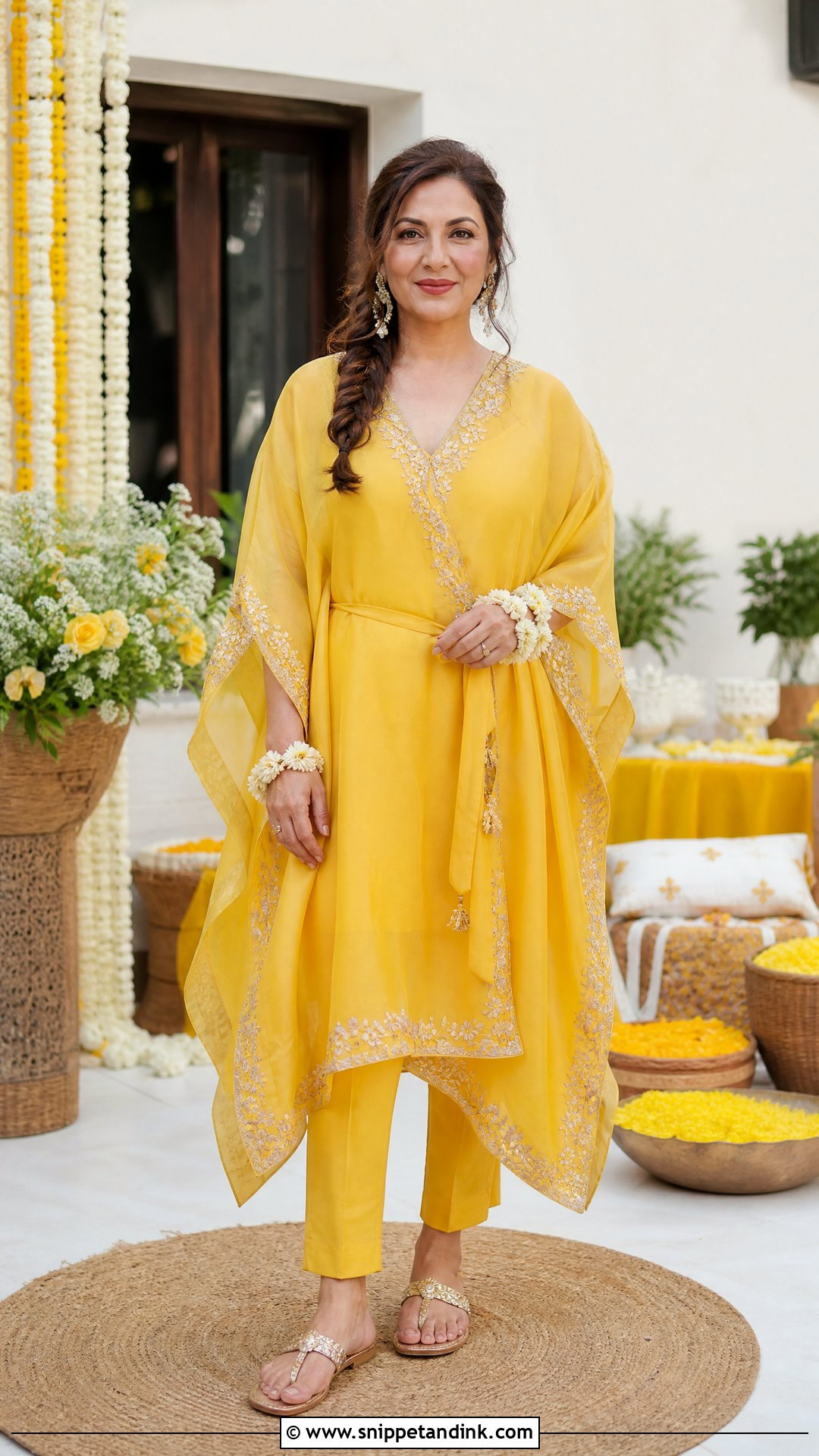
An organza kaftan is the comfort choice for a small haldi at home. A yellow or mango kaftan with a light lining, a defined waist and flowing sleeves, worn over cigarette pants or narrow palazzos, makes a complete outfit rather than a nightdress. Embroidery at the neck and sleeve edges is enough. Flat sandals, statement earrings and a single ring finish it. A fabric tie or slim belt gives the waist shape. Keep the hem above the ankle so it doesn’t drag. A loose braid or low ponytail completes it. It’s forgiving on most bodies and ages, though wide sleeves dip into the paste bowl, so push them back during the ritual.
17. Chikankari Suit With Organza Dupatta Haldi Outfit
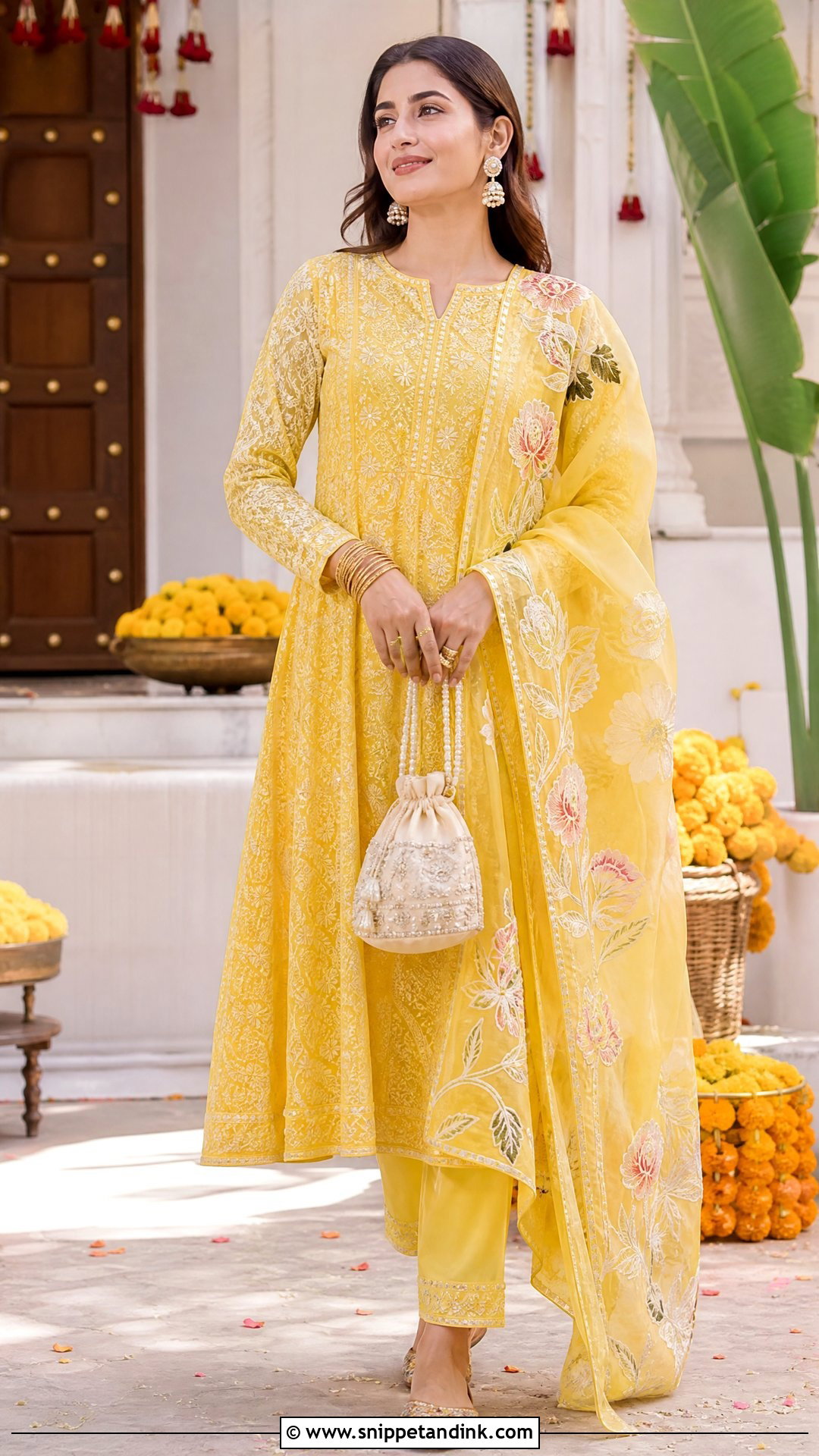
For a quieter look, pair a yellow chikankari suit with a sheer organza dupatta. An A-line kurta and straight pants in cotton or cotton silk keep you cool, and the organza dupatta adds a bit of structure the cotton lacks. Drape it over one shoulder, or pin both ends behind the arms to keep your hands free. Pearl jhumkas, gold bangles, a small potli and juttis finish it. The mix of soft chikan texture and crisp organza looks detailed but stays light. Choose a lined bodice and roomy sleeves for a long day. Mothers and relatives often like it, and a low bun with fresh flowers suits it.
18. Organza Skirt Long Kurta Haldi Outfit
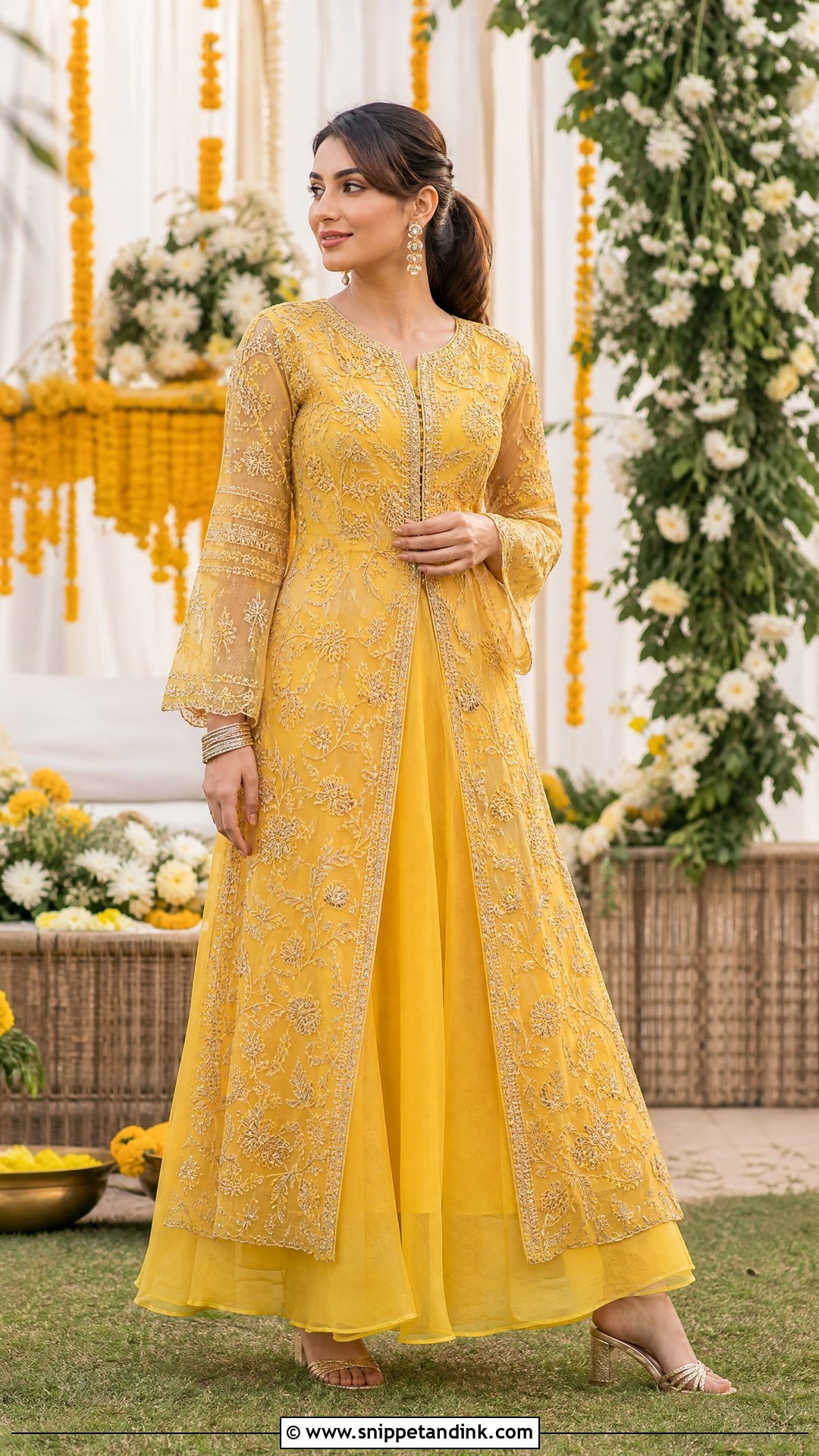
An organza skirt under a long kurta gives a layered outfit with more coverage than a lehenga. A plain yellow skirt with a front-slit kurta in floral embroidery or small mirrors is the base. Start the slit around the knee so the skirt shows. A dupatta is optional; the long kurta already has structure. Drop earrings, a few bangles and low block heels finish it. The skirt waistband should be flat, with a side zip rather than a drawstring, so there’s no bulk under the kurta. A side-parted low ponytail matches the long lines. Keep the skirt ankle-length so it never touches the floor.
19. Organza Cape Palazzo Haldi Outfit
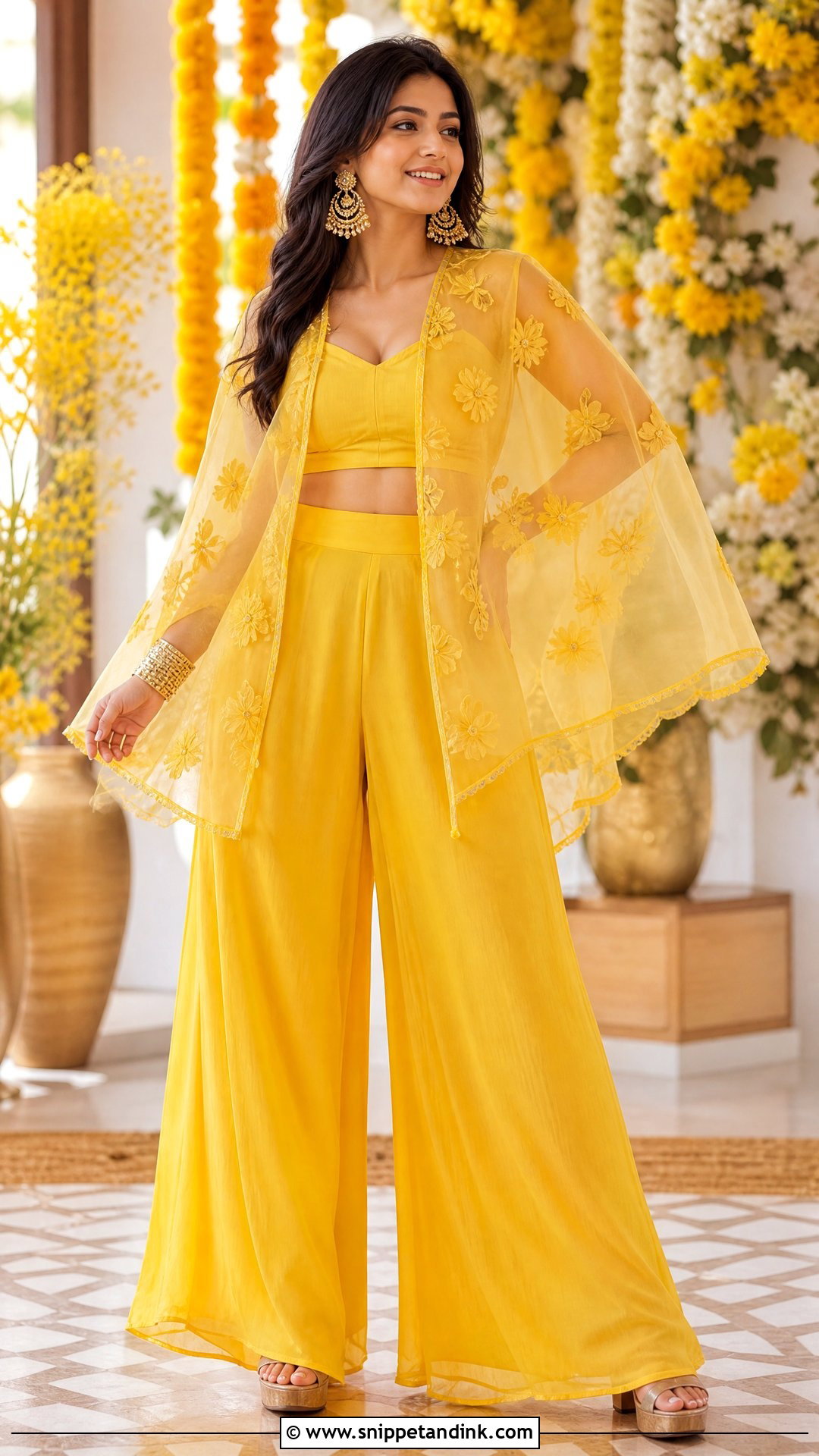
Here a circular organza cape sits over wide-leg yellow palazzos and a fitted crop top or waist-length blouse. Choose a cape ending at the hips or knees. Floral appliqué round the neckline frames the face; a plain cape looks sleeker. Gold hoops or chandbalis, a cuff and comfortable platform sandals are enough. The cape is the statement, so no dupatta and no big necklace. High-waisted pants give better coverage under sheer fabric. Finish with a polished ponytail or smooth bun. It’s very practical for dancing and moving between guests, and the cape lifts nicely when you spin.

20. Plus Size Organza Anarkali Haldi Outfit
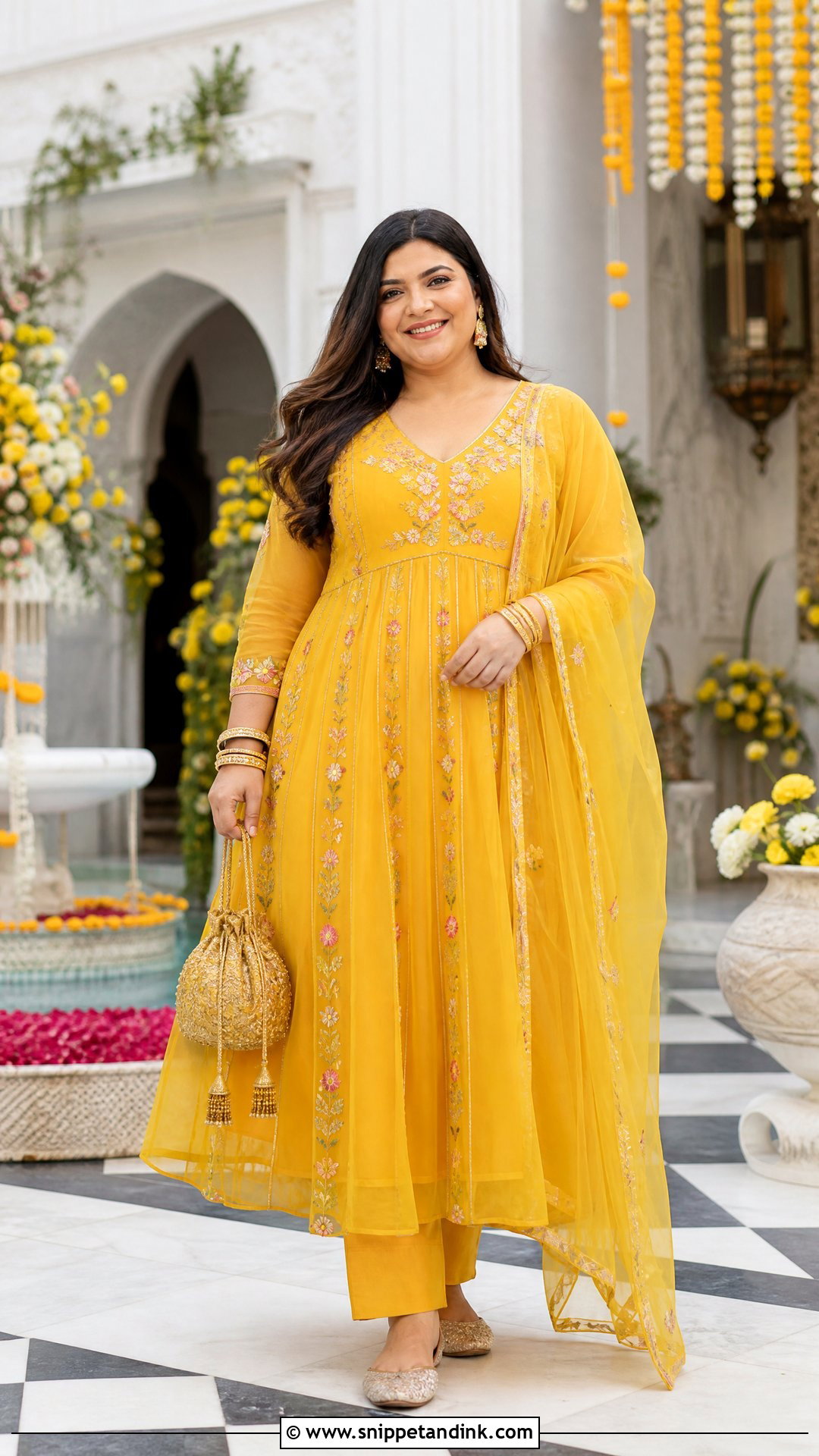
A well-made organza Anarkali is one of the most comfortable haldi outfits for plus-size women. The details that matter: an opaque inner layer, a gently fitted bodice, and a flare starting at the natural waist rather than under the bust. Vertical embroidery or evenly spaced motifs keep it clean. Straight pants, an organza dupatta and cushioned gold or beige juttis complete it. Drape the dupatta vertically over one shoulder rather than across the chest; it lengthens the line. Supportive sleeves, a secure neckline and a waist with some give let you move freely. Medium earrings, bangles and a structured potli finish it, with a low bun or side-swept style.
Bride, Sisters, Guests: Who Wears Which Yellow
At most haldis, almost everyone arrives in yellow. That’s lovely in group photos until the bride disappears into it. A little planning keeps her clearly at the centre without making anyone feel policed.
- The bride picks first, and tells close family her shade and fabric. If she’s in marigold organza, sisters can choose lemon, lime or white with yellow accents.
- Give the bride the most surface detail: a floral tikka, haath phool or the only lehenga in the room. Guests can keep to simpler sets and smaller jewellery.
- Sisters and bridesmaids look coordinated in one colour family with different silhouettes, rather than identical outfits. It photographs as a group but still looks personal.
- Mothers often prefer chikankari or kurta sets with an organza dupatta, which ties them to the theme in a fabric they’re comfortable in for hours.
If you’re a guest, the simplest courtesy is to ask what the bride is wearing and avoid an exact match. Nobody minds a second yellow; an identical one is awkward.
Let the Ritual Decide the Silhouette
Organza covers traditional, modern and fusion haldi looks, and it suits most body types once the lining and cut are right. Start from what you’ll actually be doing: sitting for the paste, dancing, moving between relatives. Sarees feel classic; shararas, palazzos, kaftans and cape sets let you move more. Yellow is always right, but orange, lime, white, mustard and florals work just as well. Keep heavy work to one area, and pin wherever organza wants to slide. Comfortable shoes, practical draping and light jewellery mean you’ll spend the morning enjoying it instead of adjusting things.
You'll Like These Ideas:







Leave a Reply