
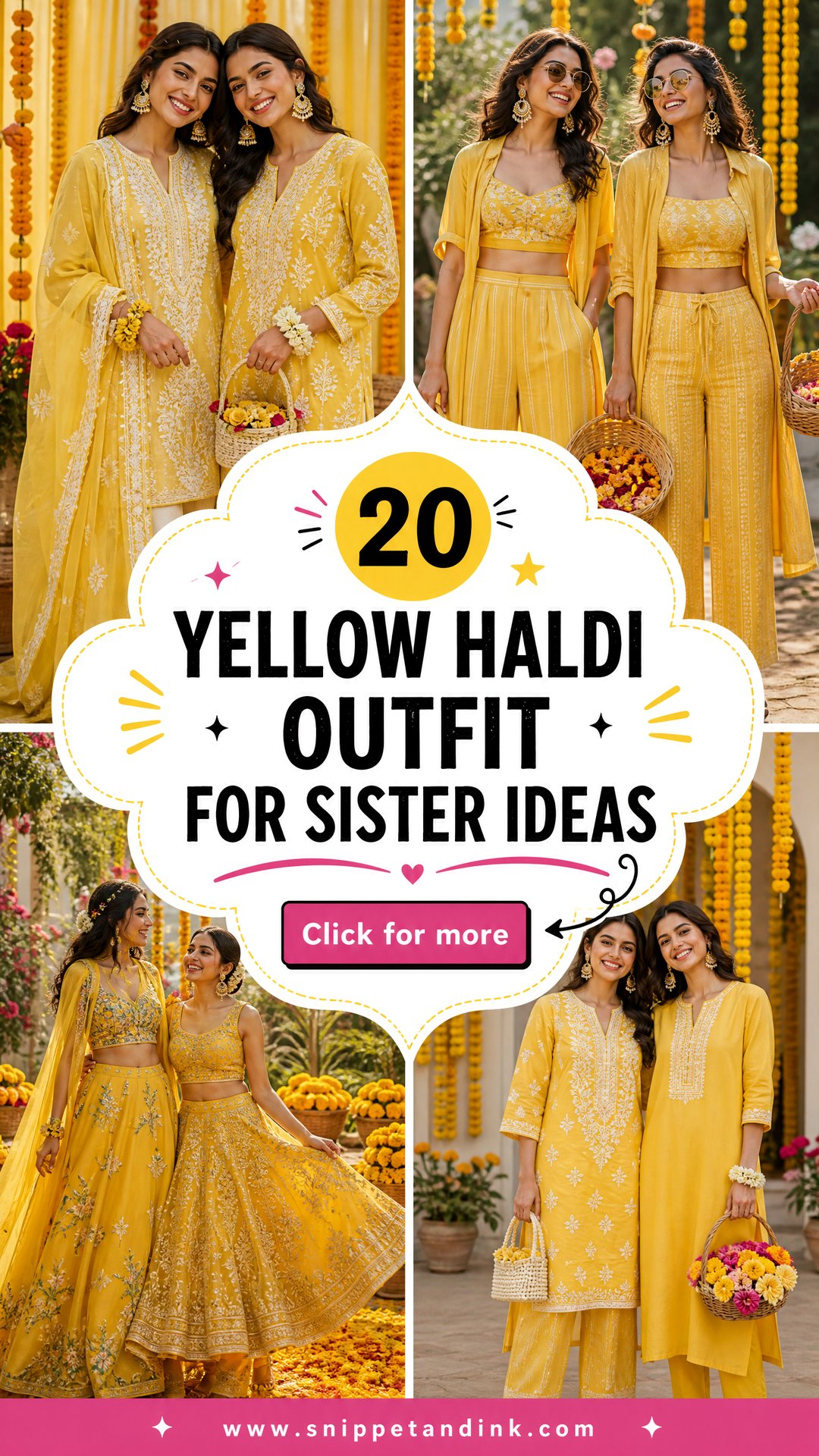
The bride’s sister has the busiest Haldi of anyone except the bride. You’re greeting aunts, carrying the paste bowl, lining people up for photos, then dancing in the middle of the crowd, and you still want to look special without stepping on the bride’s moment. When I dress sisters, those jobs come first: an outfit has to let you crouch, reach and move quickly, with a dupatta that stays pinned and shoes you can slip off. Below are twenty yellow options, lehengas, shararas, sarees, Anarkalis, co-ords and draped Indo-Western looks, with light fabric and manageable embellishment, plus the jewellery and hair I’d pair with each.
Agree on Shades With the Bride Before You Shop
The most common sister problem I see at Haldi fittings isn’t fit, it’s arriving in exactly the bride’s shade with more embroidery than hers. A five-minute conversation avoids it.
- Ask what yellow she’s wearing and stay a clear step away: if she’s in bright marigold, go mustard, lemon or a print; if she’s in pale lemon, go deeper.
- Keep your embellishment lighter than hers. Mirror work, gota and floral jewellery are fine; heavy bridal-style dupattas and a full set of floral jewellery are her territory.
- Ask if the family is coordinating. Some brides want all siblings in one colour story, others prefer everyone in their own yellow.
- Check whether there’s a group dance. If so, try your outfit at a rehearsal before you commit.
Then build in the practical bits. A potli with a deep pocket holds safety pins, tissues, the bride’s lipstick and your phone. Flat shoes you can slip off at the ritual area. And sleeves or straps that stay put when you lift your arms, because someone always needs a hand.
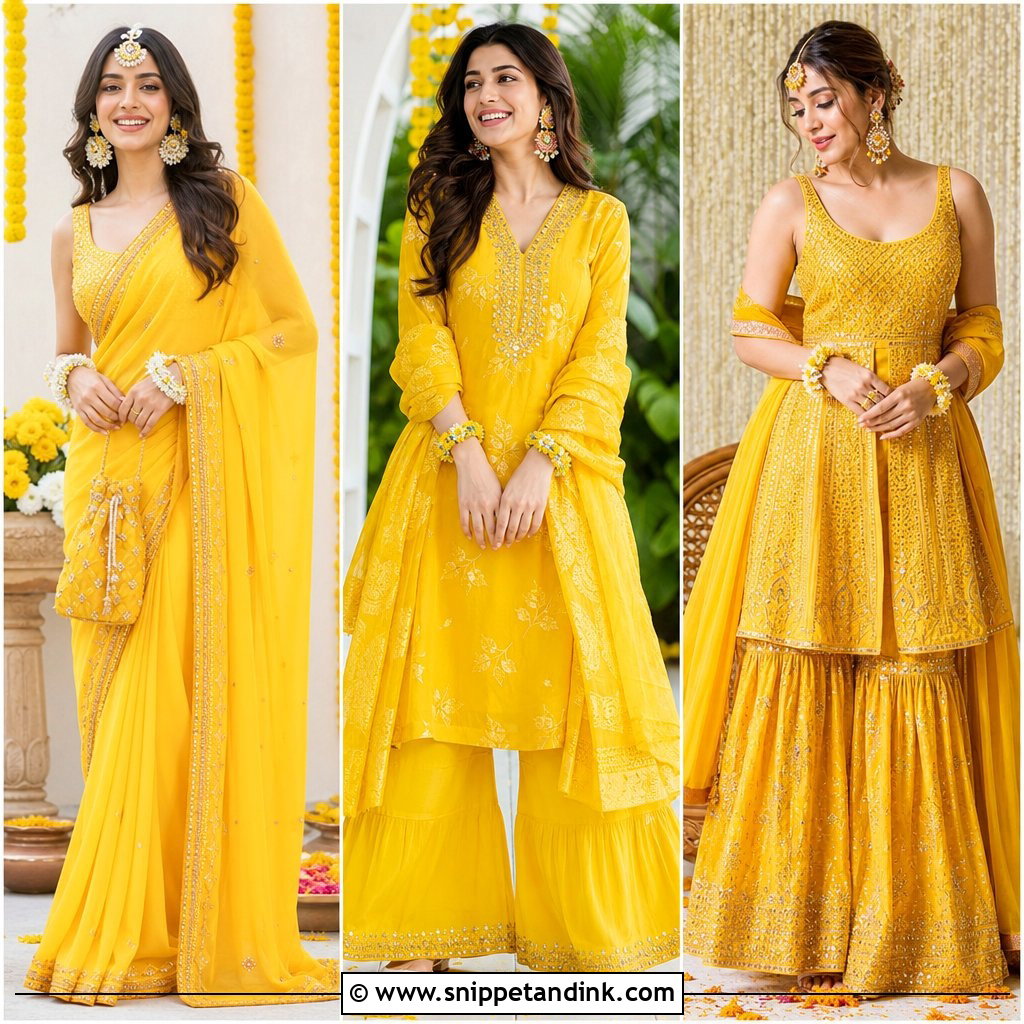
1. Yellow Floral Lehenga Outfit
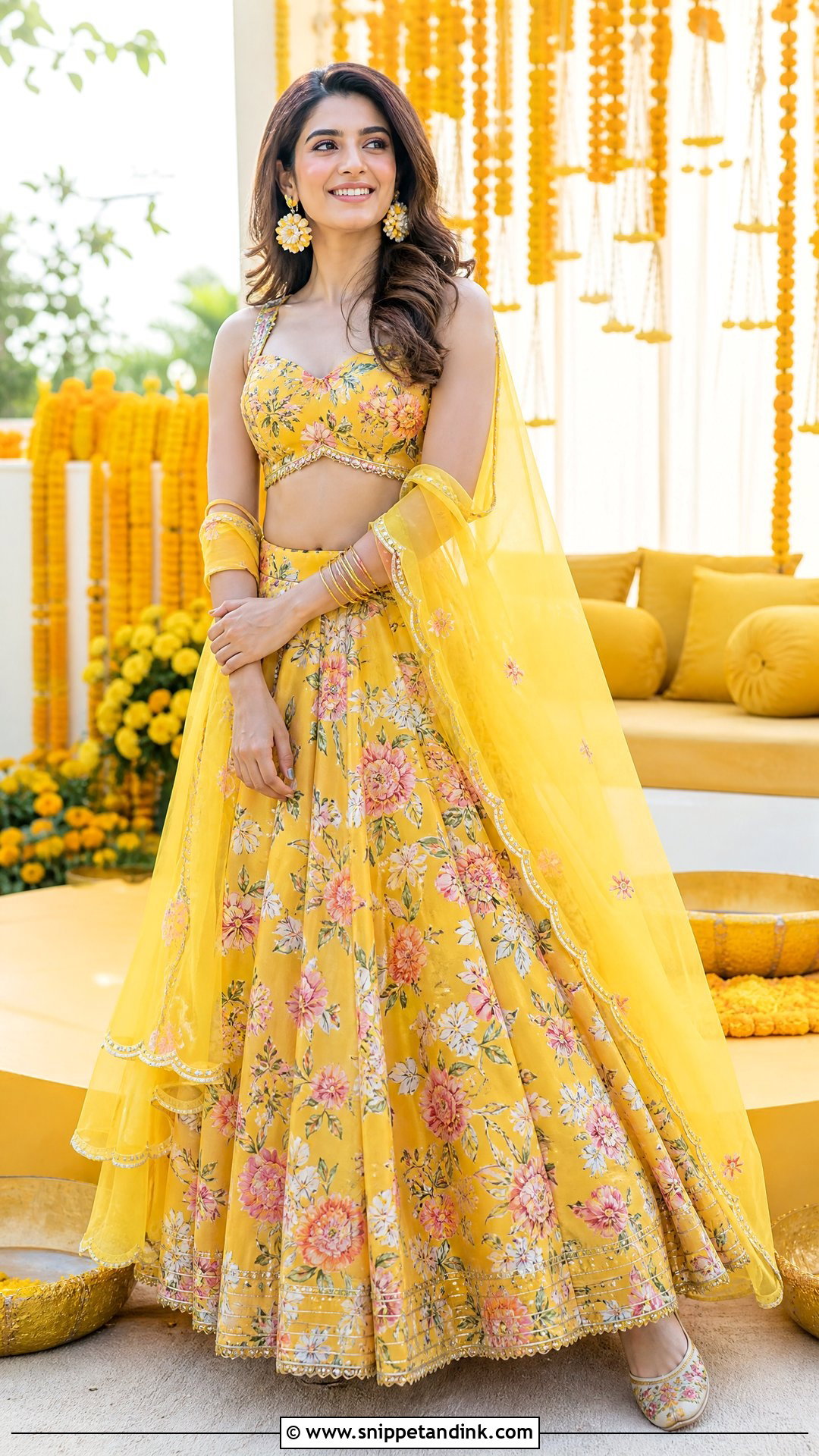
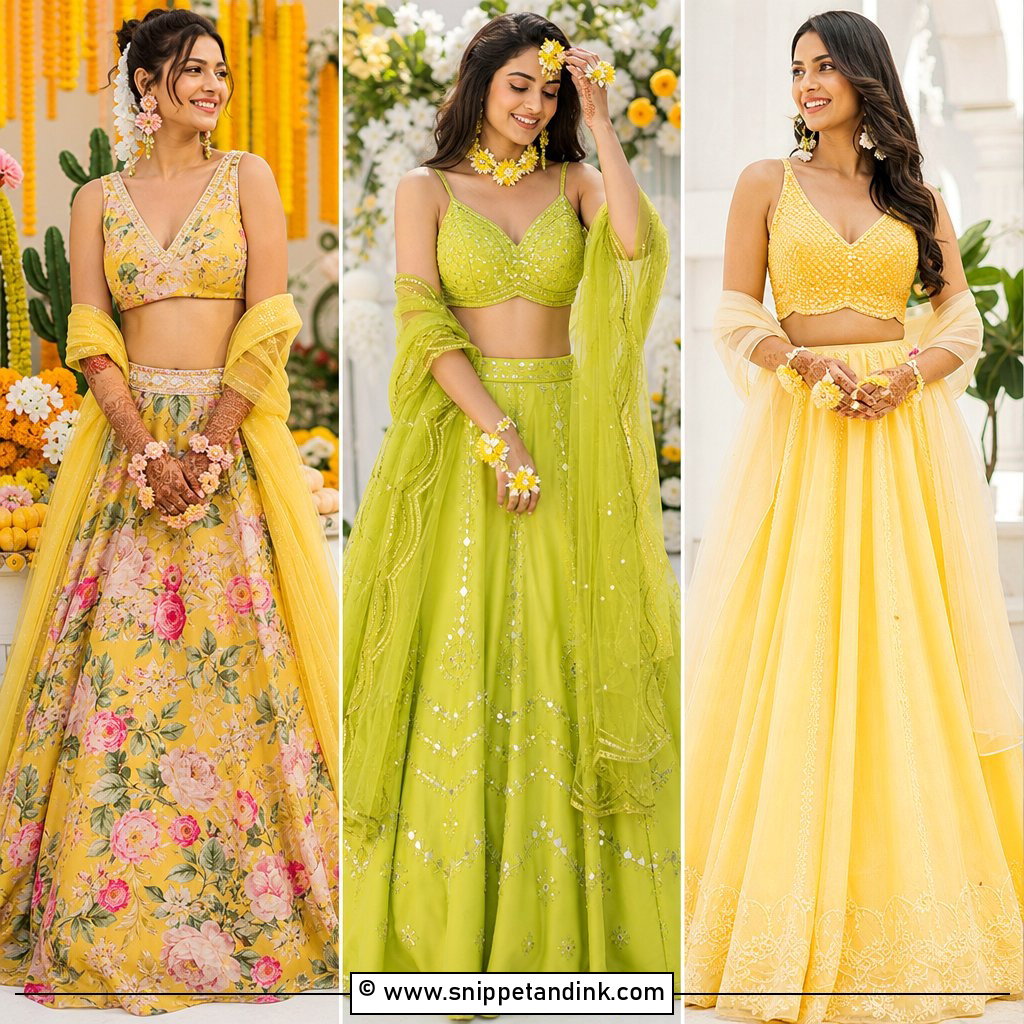
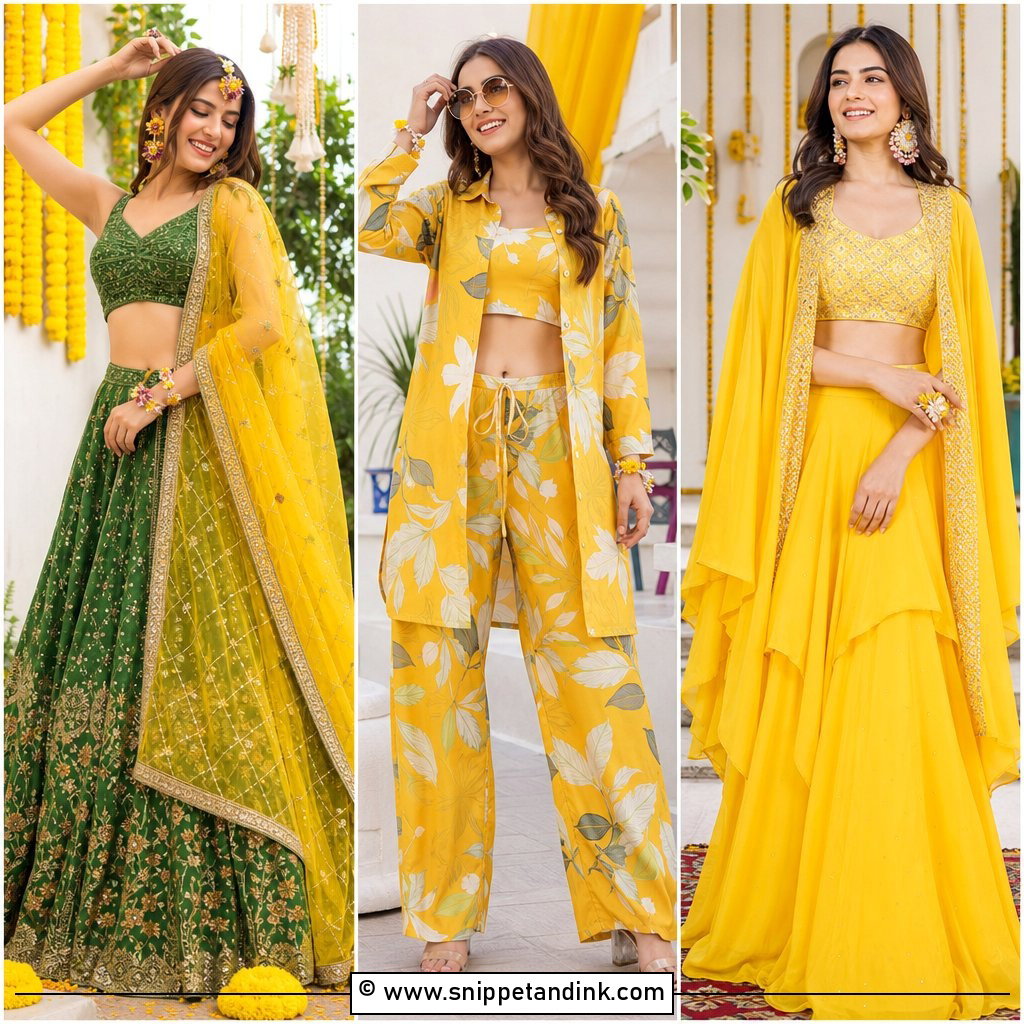
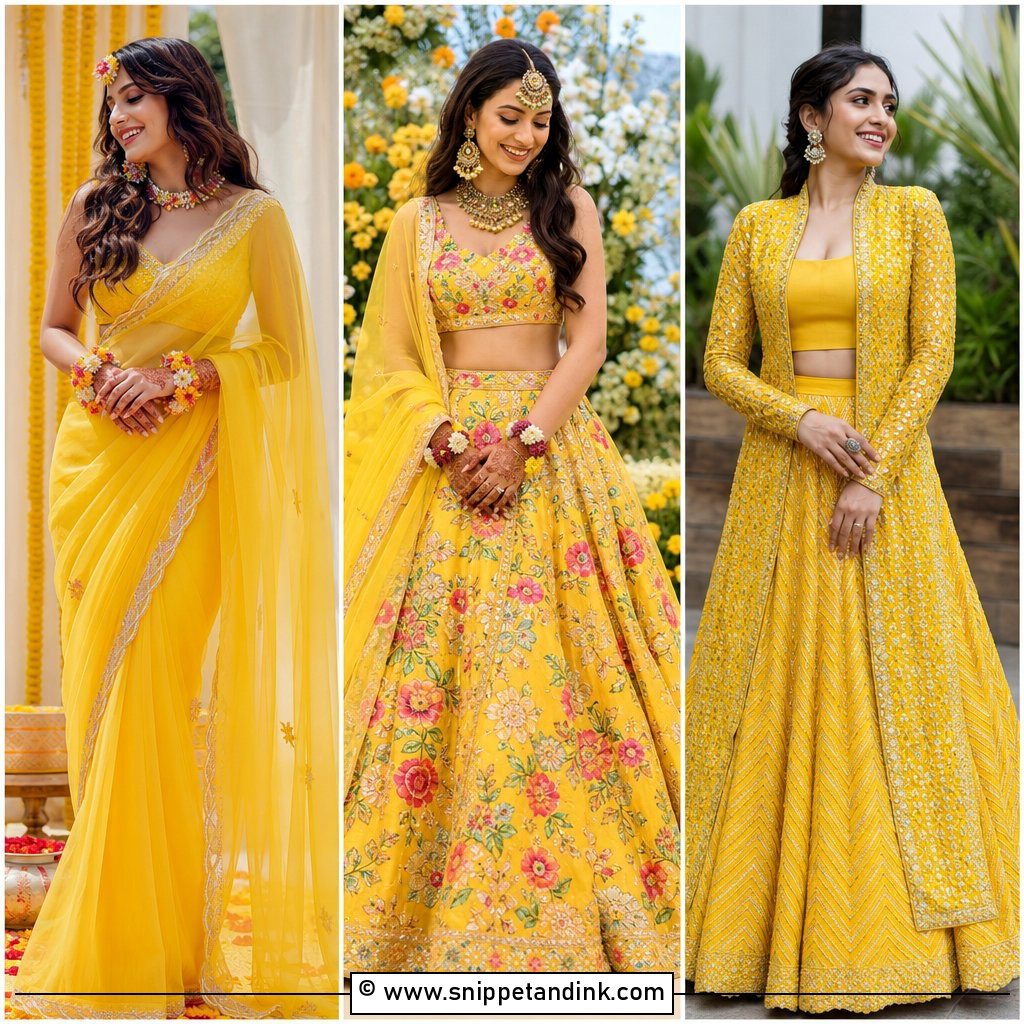
Florals are the sister’s friend at a Haldi: a lightweight printed lehenga hides turmeric splashes that would show on plain silk. Pink, orange, green or white flowers on yellow, a fitted blouse with sleeves that don’t slip when you lift your arms, and a soft chiffon dupatta. Since the print already carries plenty, skip the heavy necklace and wear floral earrings and slim bangles. Embroidered juttis, loose waves or a low ponytail. Against marigold decor in full daylight, it looks right without trying.
2. Mustard Yellow Sharara Outfit
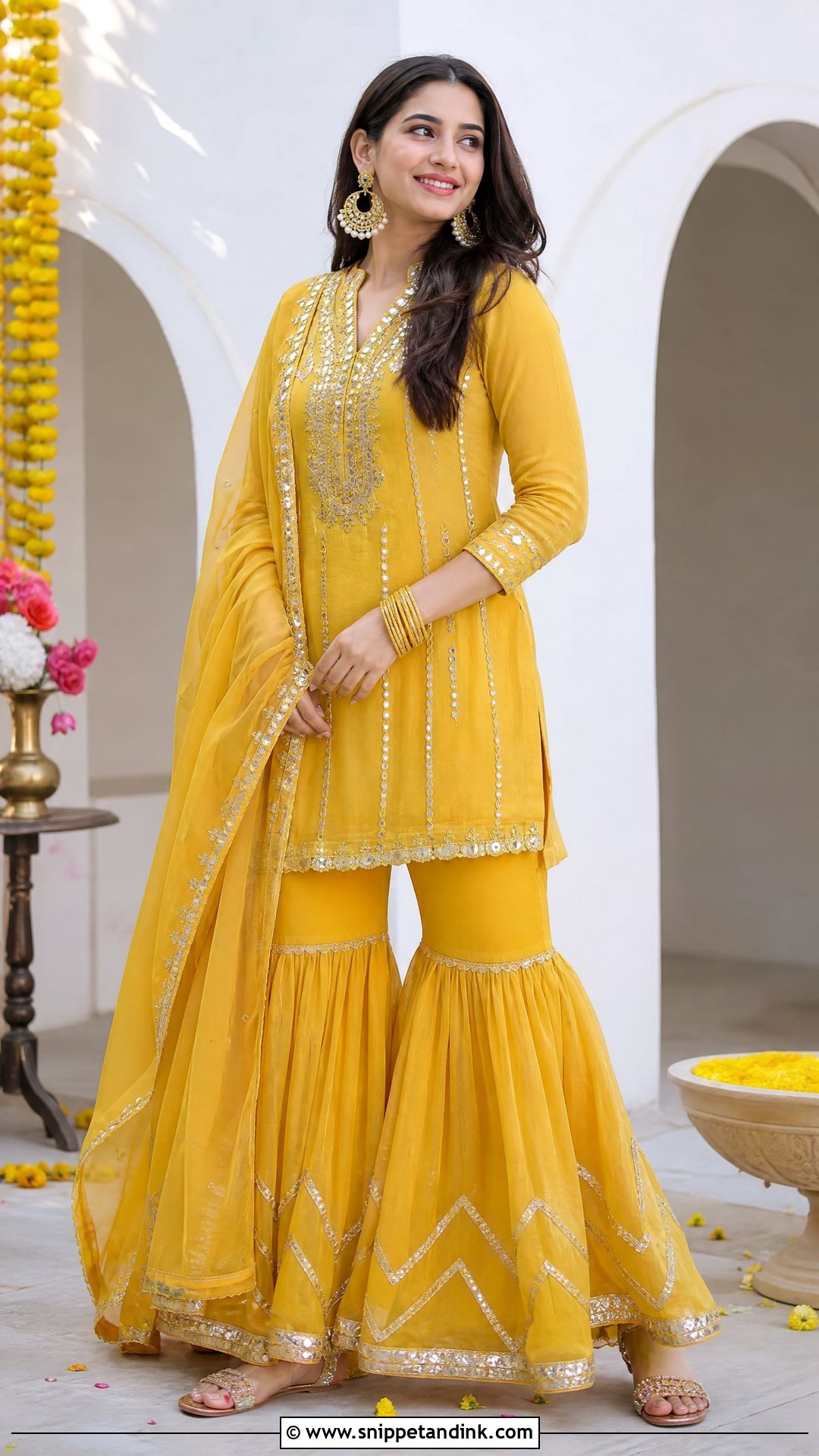
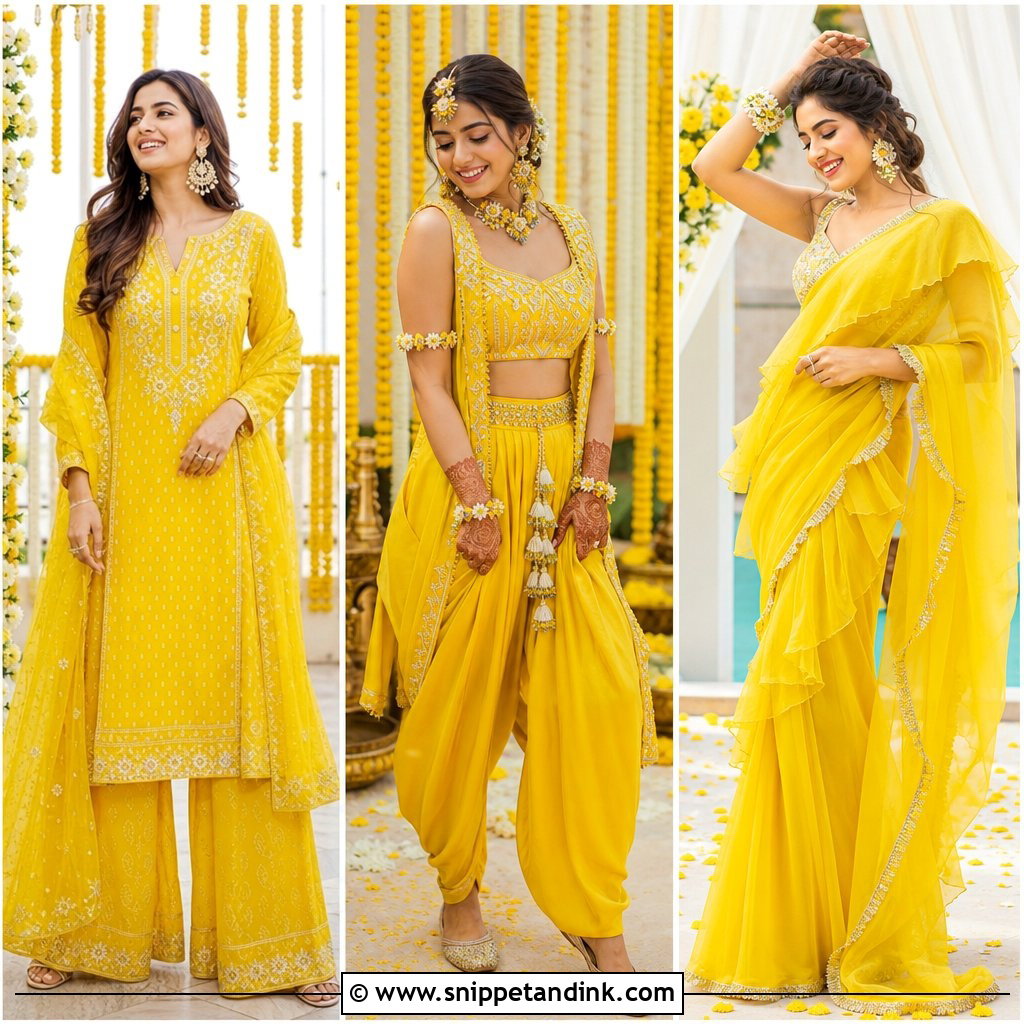
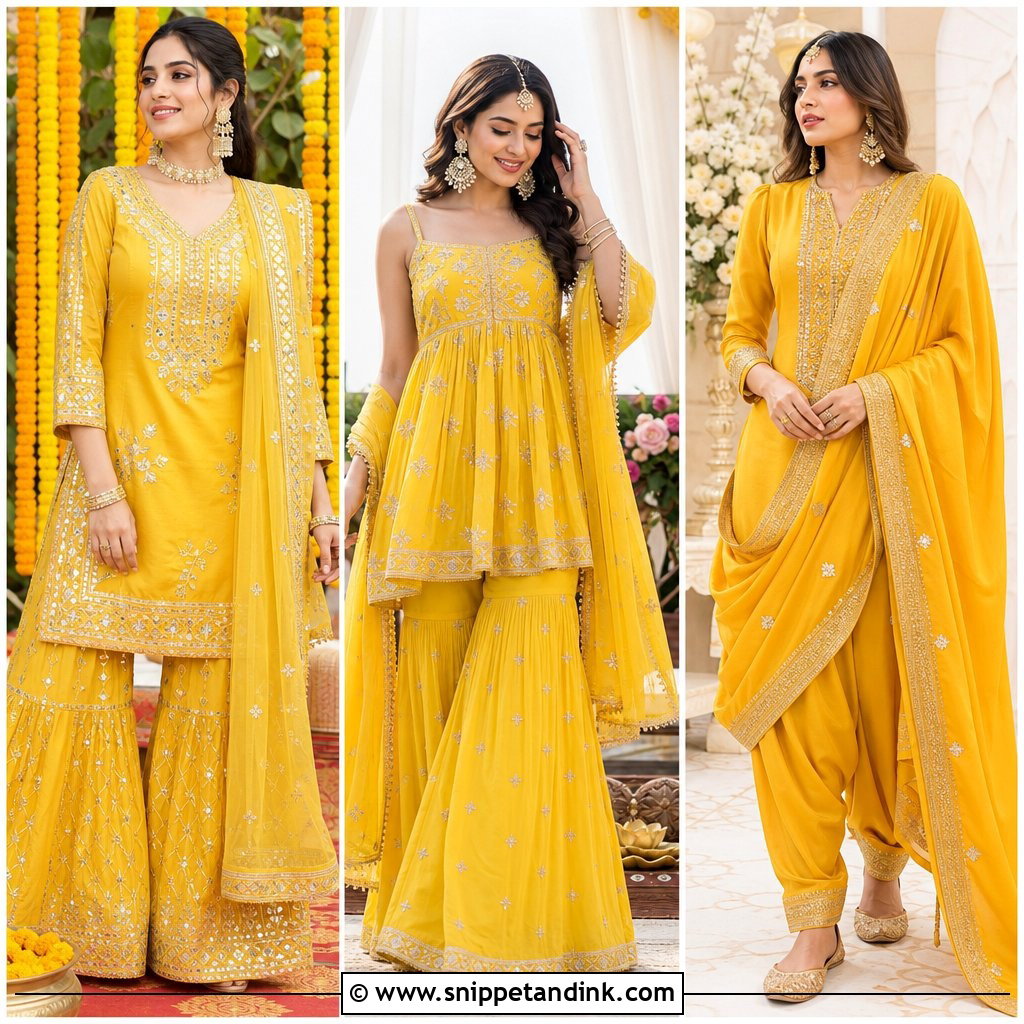
Want something that swings when you dance? Mustard sharara sets are my answer for the sister who’ll be in the choreographed number. The deeper shade photographs richly and sits well with gold. A short kurta with gota, mirror or thread work over flared sharara pants, and a light matching dupatta pinned at the shoulder. Chandbalis, stacked bangles and flat embellished sandals. I always ask for the sharara flare to start at the knee, not mid-thigh, so you can climb stage steps without gathering fabric in your hands.
3. Yellow Anarkali Suit Outfit
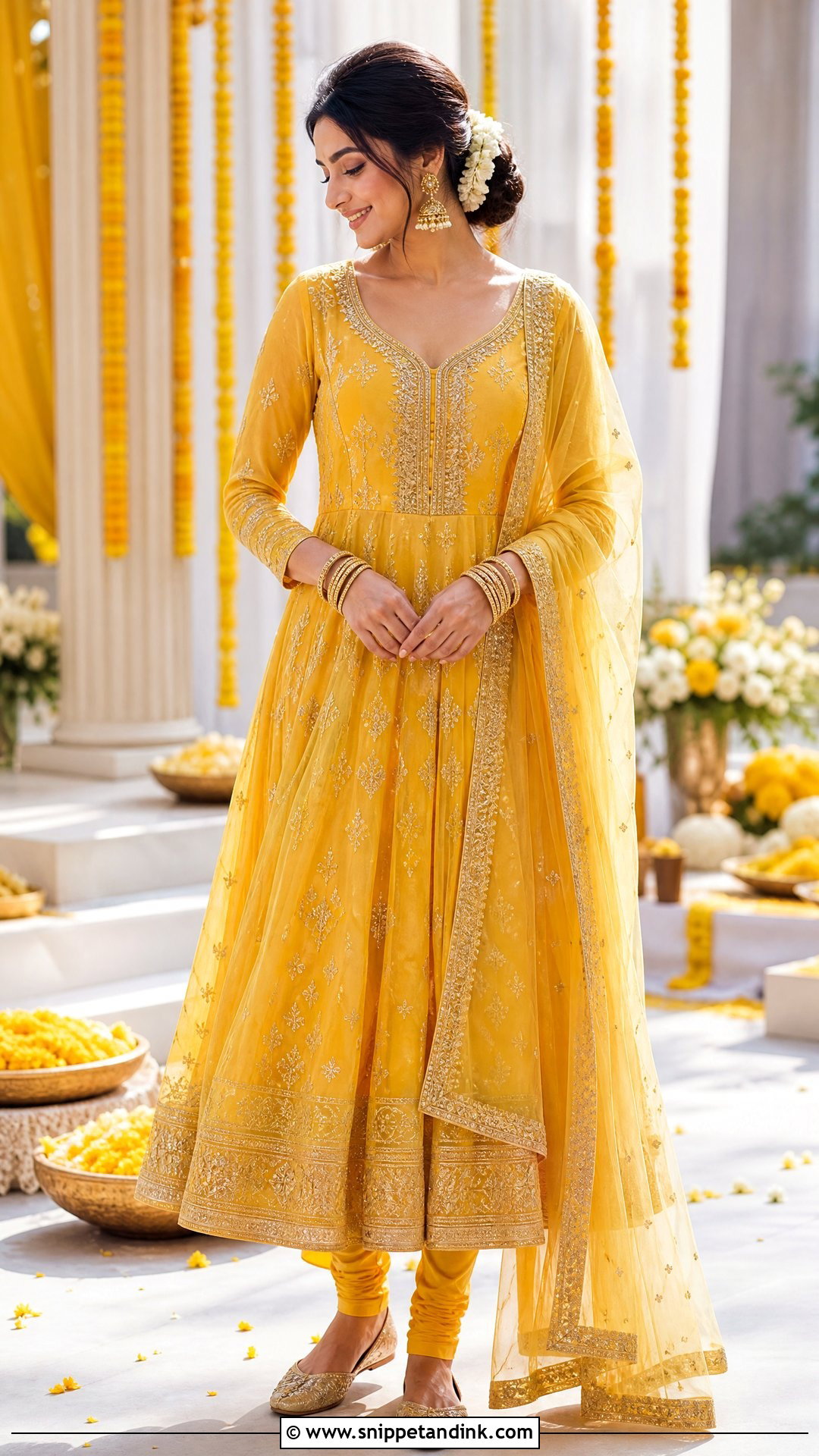
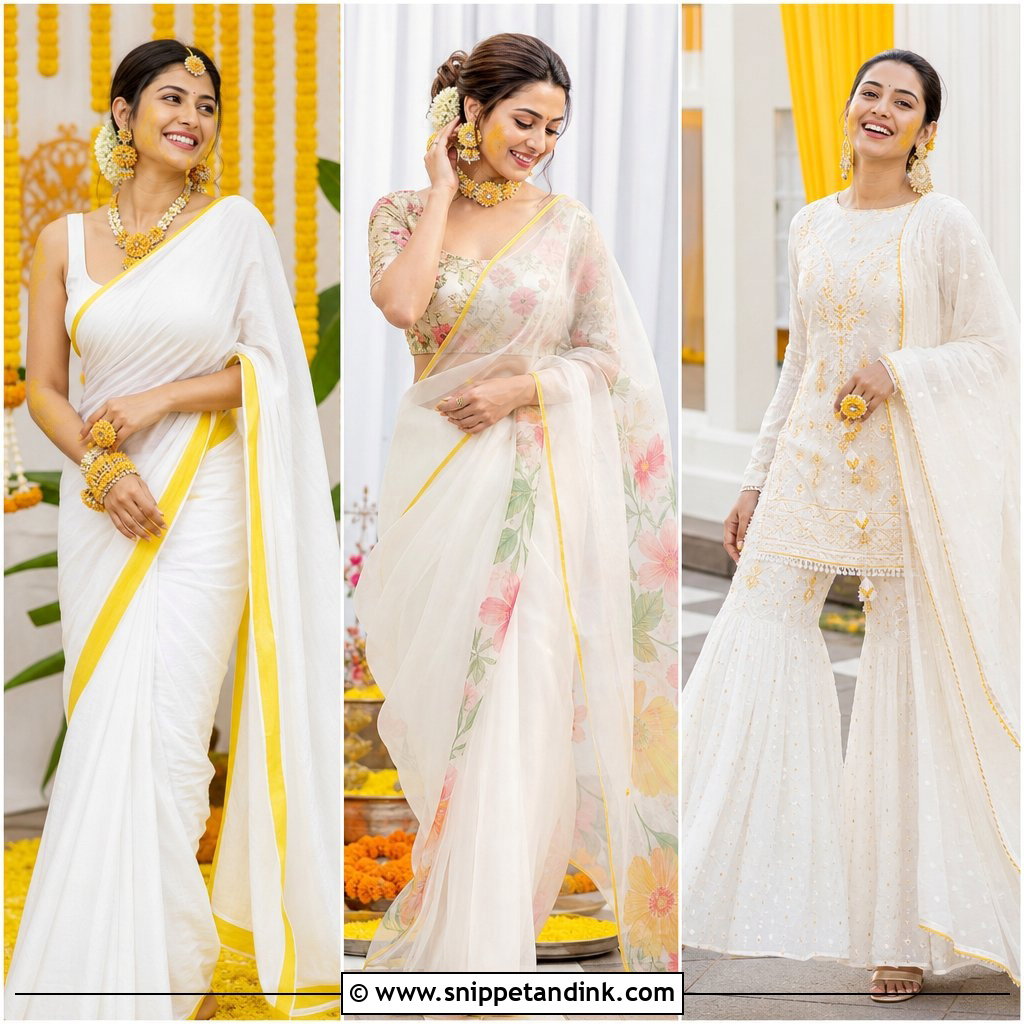
An Anarkali is graceful and forgiving on a long morning. In calf or ankle length, with light embroidery at the neck, sleeves or hem, it lets you walk and sit without fuss; fitted churidar underneath keeps the legs covered when you kneel. A sheer dupatta with a narrow gold border, jhumkas, metallic bangles and gold juttis. A low bun with fresh white flowers reads traditional without tipping into bridal. Cotton-silk or georgette keeps its shape in warmth better than pure cotton, which wilts by midday.
4. Yellow Organza Saree Outfit
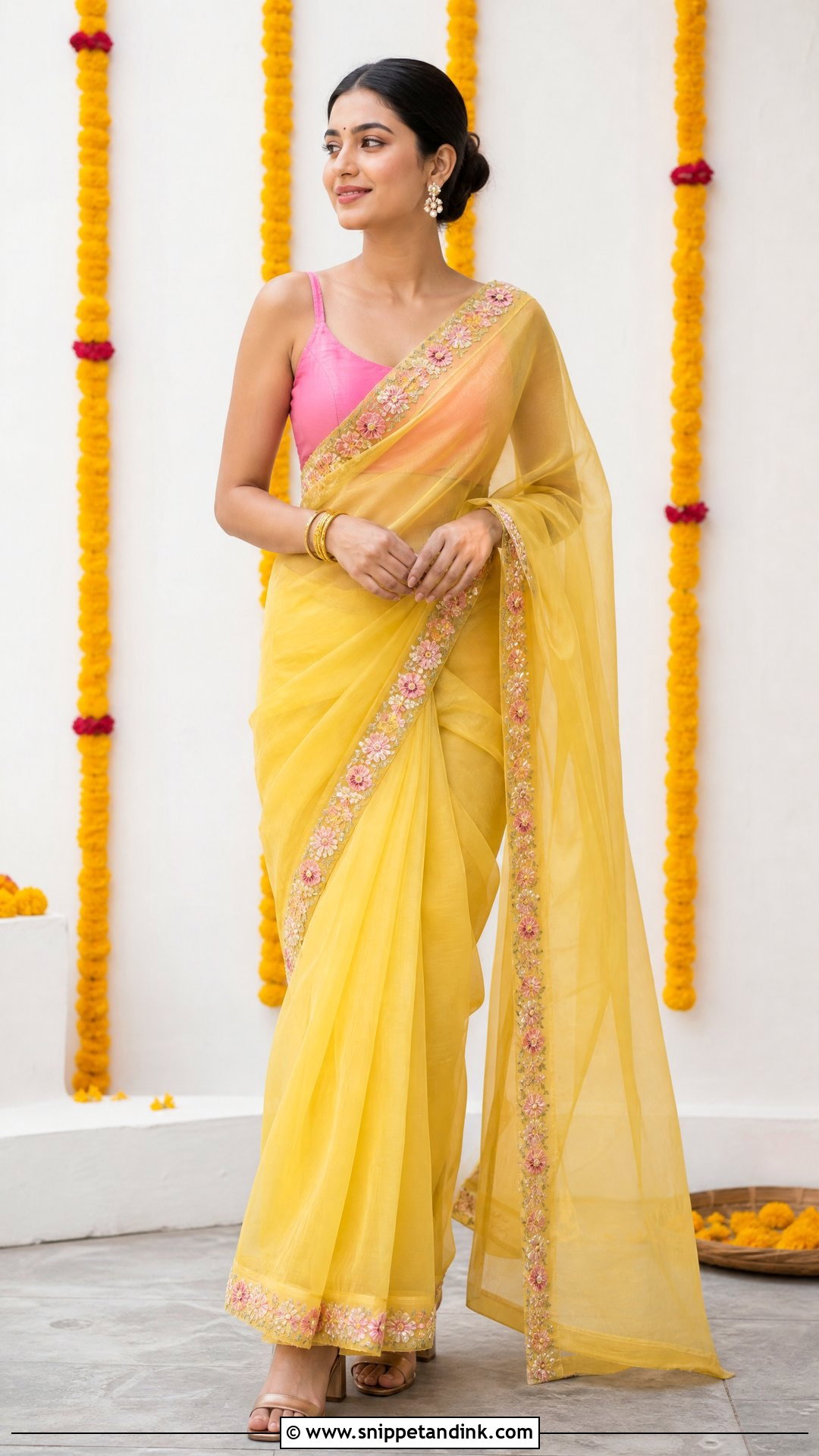
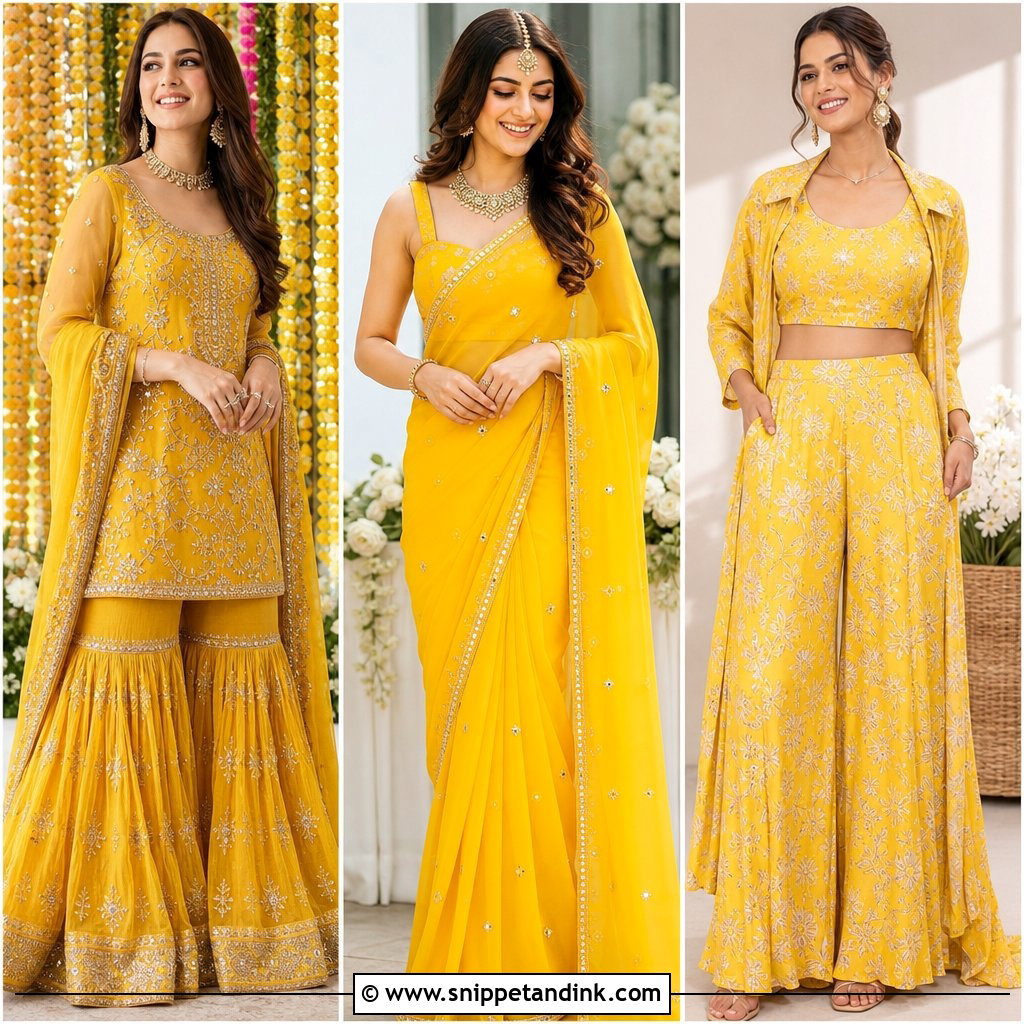
Organza sarees look crisp and light, but they need anchoring. The pleats spring open if they aren’t pinned, and the pallu slides off the shoulder the first time you bend to help the bride. I pin both before you leave the room. A plain or softly embroidered saree with a floral border, and a blouse in matching yellow, pink or green. Because organza adds volume, keep the blouse simple and jewellery small: pearl earrings, a little bindi, gold bangles. Low block heels and a sleek bun.
5. Yellow Palazzo Suit Outfit
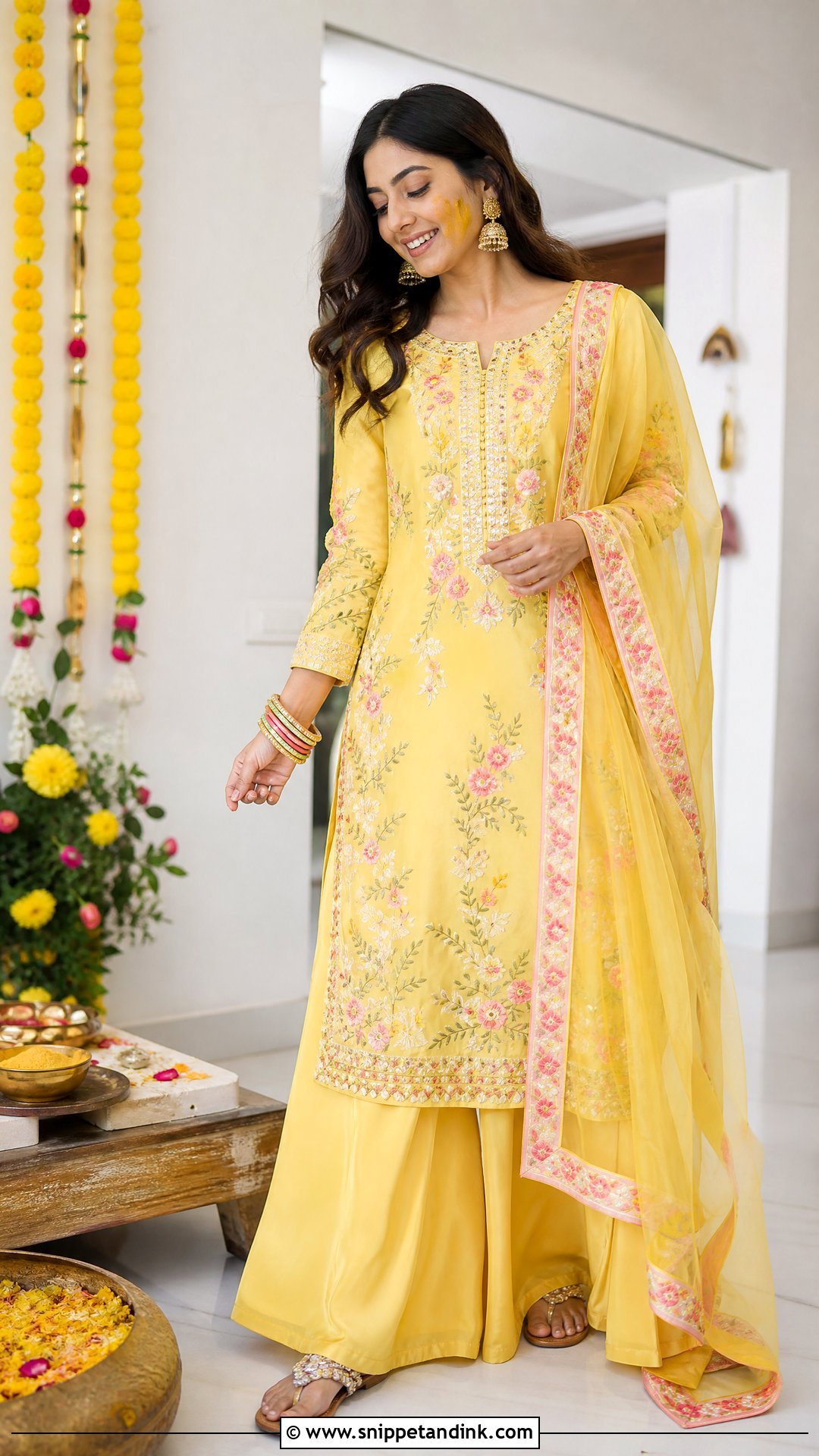
Small home Haldis call for something festive but not dressed up, and a yellow palazzo suit gets that balance right. A straight or slightly flared kurta with small mirrors, prints or an embroidered neckline, matching wide-leg palazzos, and a chiffon or organza dupatta with a contrasting border. Medium earrings, colourful bangles, flat sandals, a side braid. Palazzos are the easiest bottoms to sit cross-legged in, and they never ride up, which matters when you’re on the floor next to the bride for an hour.
6. Yellow Gharara Suit Outfit
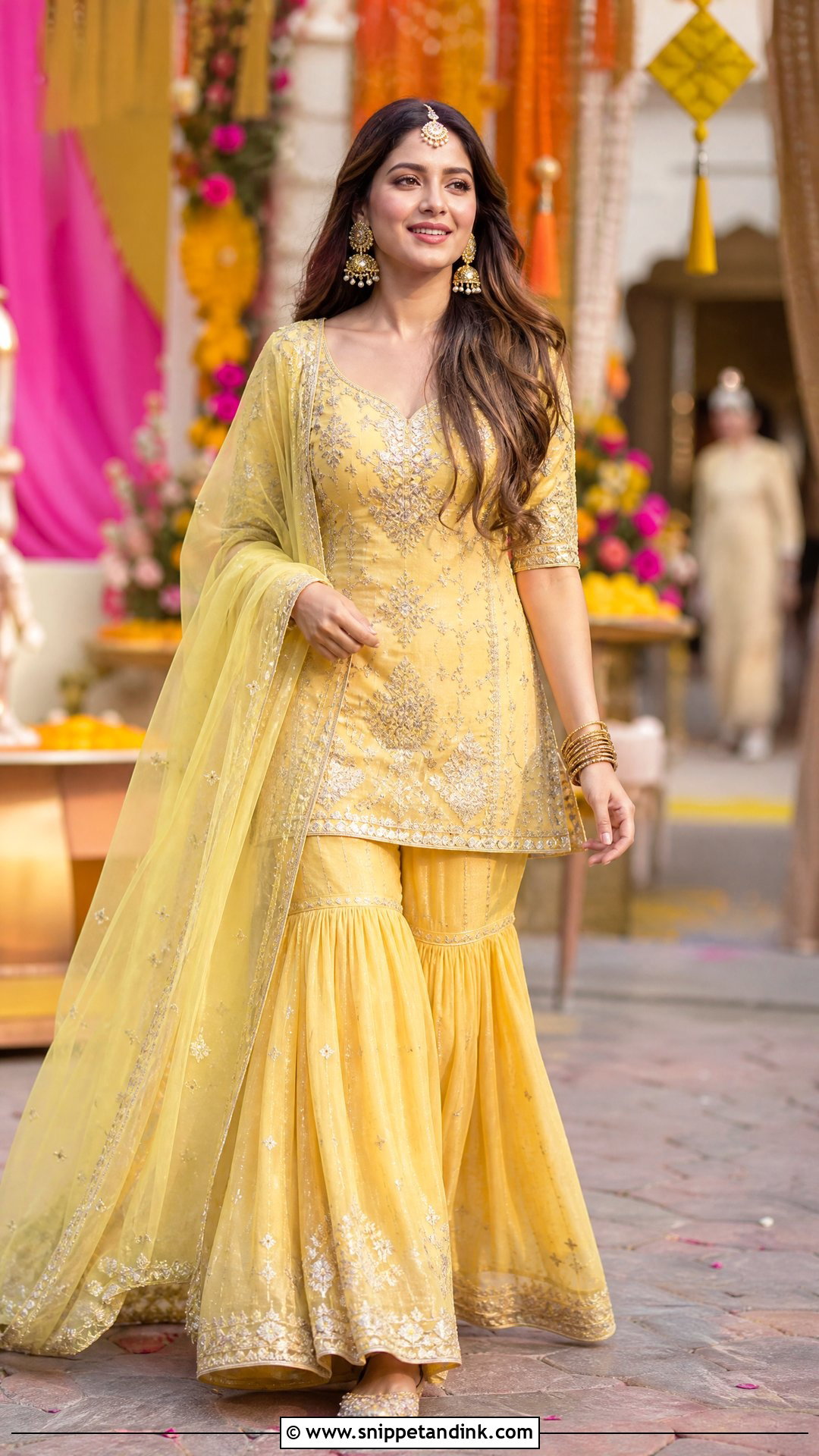
Ghararas look like shararas until you notice the joint at the knee, where the flare is gathered and usually trimmed. That seam is where I place the detail: a band of zari, gota or mirror work there draws the eye and gives the outfit its shape without making it heavy. A short fitted kurti, a soft net or chiffon dupatta pinned over one shoulder, a small maang tikka, statement earrings and juttis. Keep the neck bare. The flare looks wonderful in walking shots; practise on stairs, because ghararas catch under the heel more than palazzos do.
7. Yellow Chikankari Kurta Set Outfit
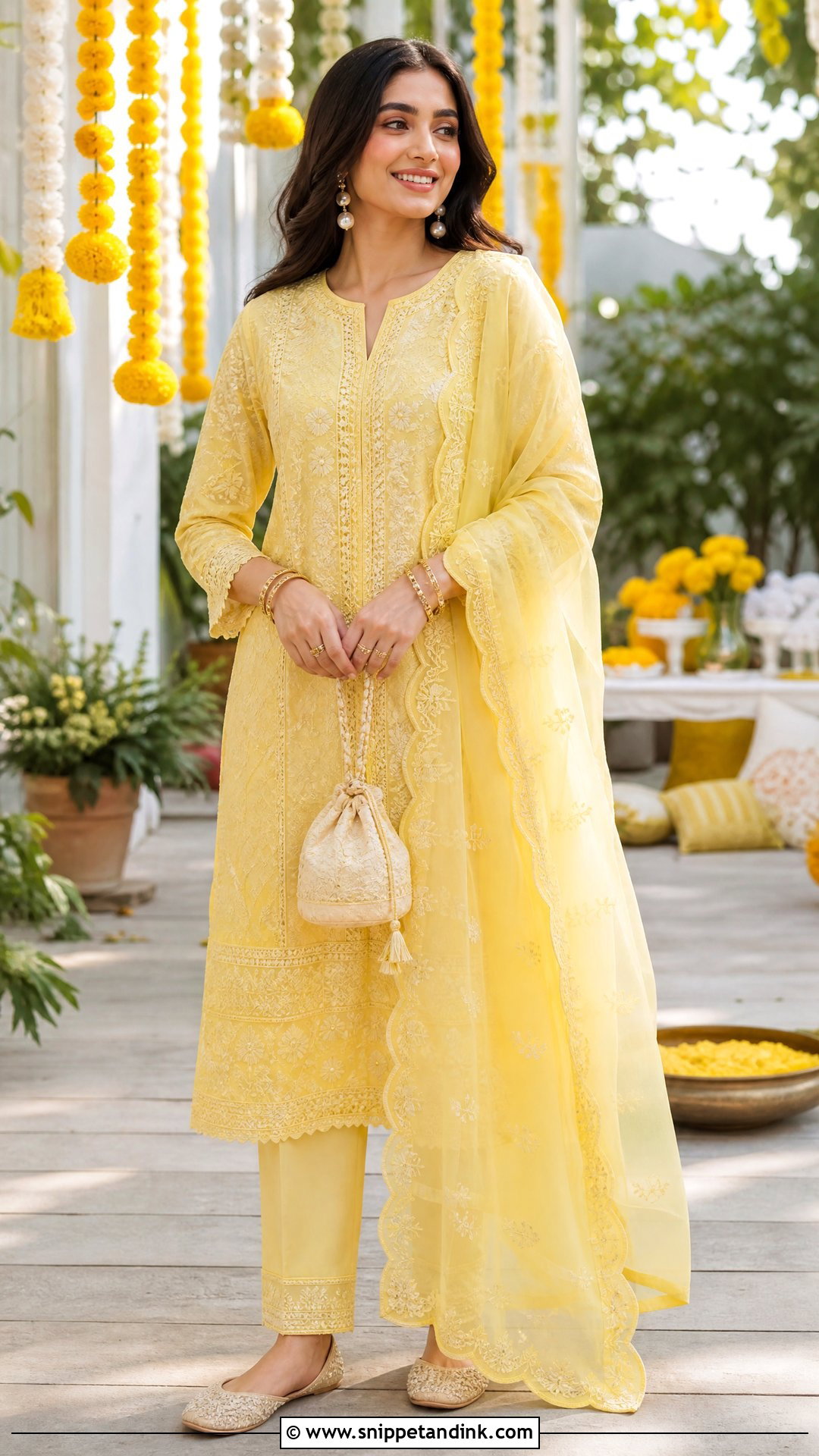
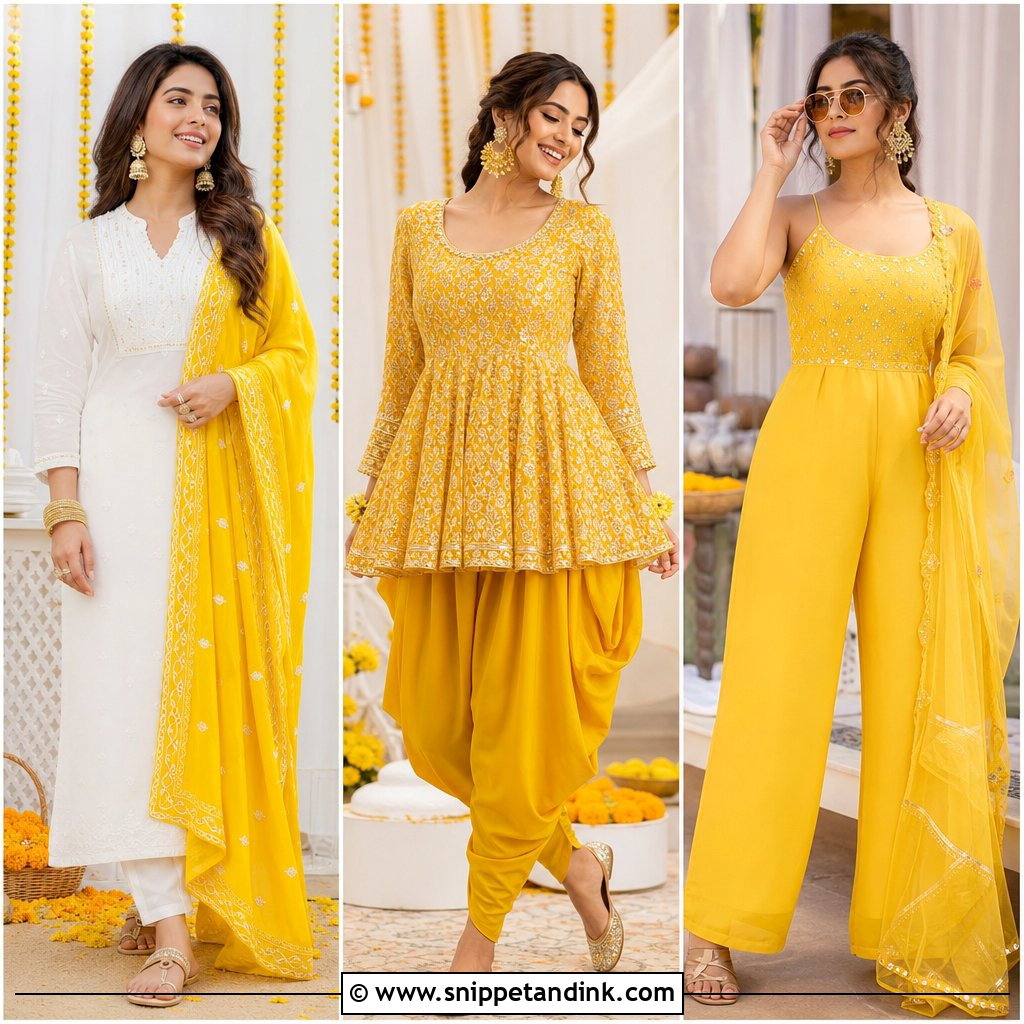
Not every sister wants sparkle. A yellow chikankari kurta set suits someone who likes clean lines and quiet detail. Tonal shadow work on a breathable kurta, straight pants or soft palazzos, and a dupatta with a scalloped or lightly sequinned edge. Pearl drops, a few gold bangles and cream juttis. A low ponytail with face-framing strands. Real chikan is delicate, so I’d remind you that turmeric is very hard to lift from fine white thread; keep the dupatta off your lap when the paste comes out.
8. Yellow Co-Ord Set Outfit
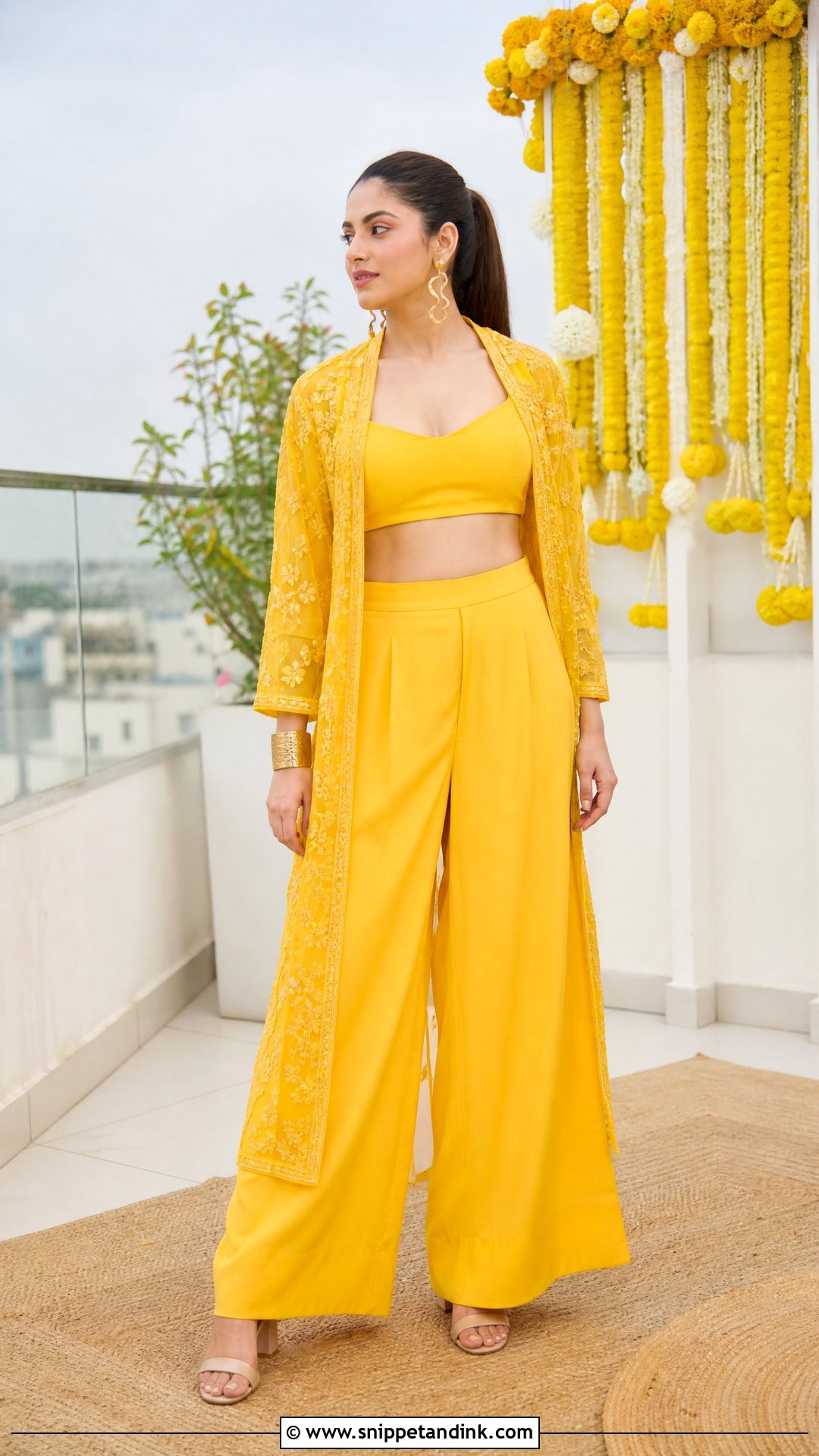
A yellow co-ord set is a modern alternative, and practical, since the separates move independently and you can wear them again. A matching crop top and wide-leg pants with a long embroidered jacket or light cape for coverage. Sculptural gold earrings, a cuff, and neutral block heels or embellished flats. The fitting question I ask: does the top stay put when you reach across to apply paste? Secure straps or sleeves are a must. It fits rooftop, poolside or modern-venue Haldis better than a family courtyard.
9. Yellow Dhoti Pant Outfit
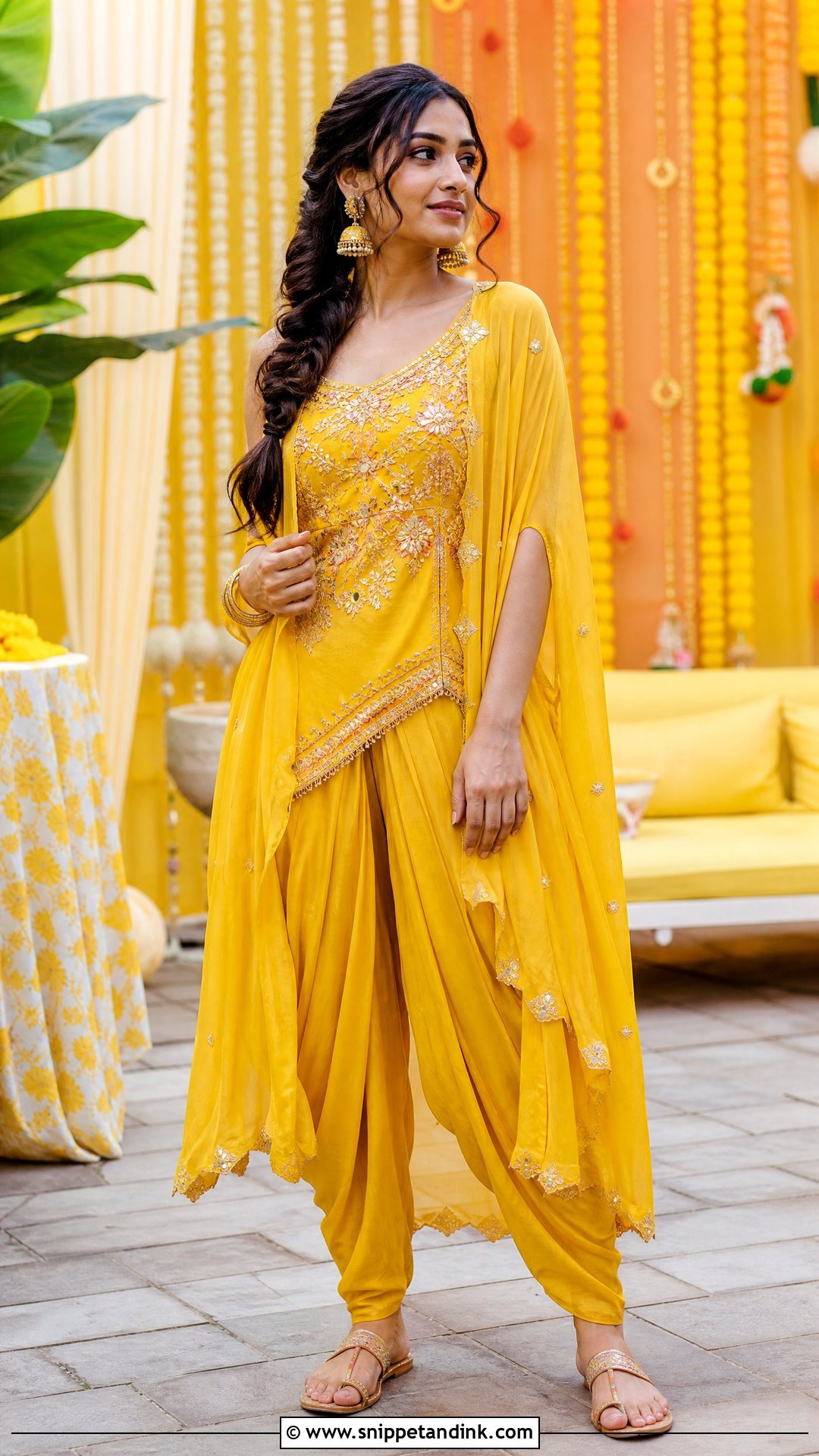
Dhoti pants have a playful, energetic shape and give you full freedom to squat, kneel and dance. Pair them with an asymmetric kurta, a fitted peplum or a short embroidered blouse, and swap the dupatta for a light cape if you want fewer layers. Statement earrings and a stack of slim bangles are enough. Kolhapuris or juttis. The pleating is what separates a good dhoti from a sloppy one: ask for neat stitched pleats that end above the ankle, because long loose drapes trip you on stairs.
10. Yellow Cape Lehenga Outfit
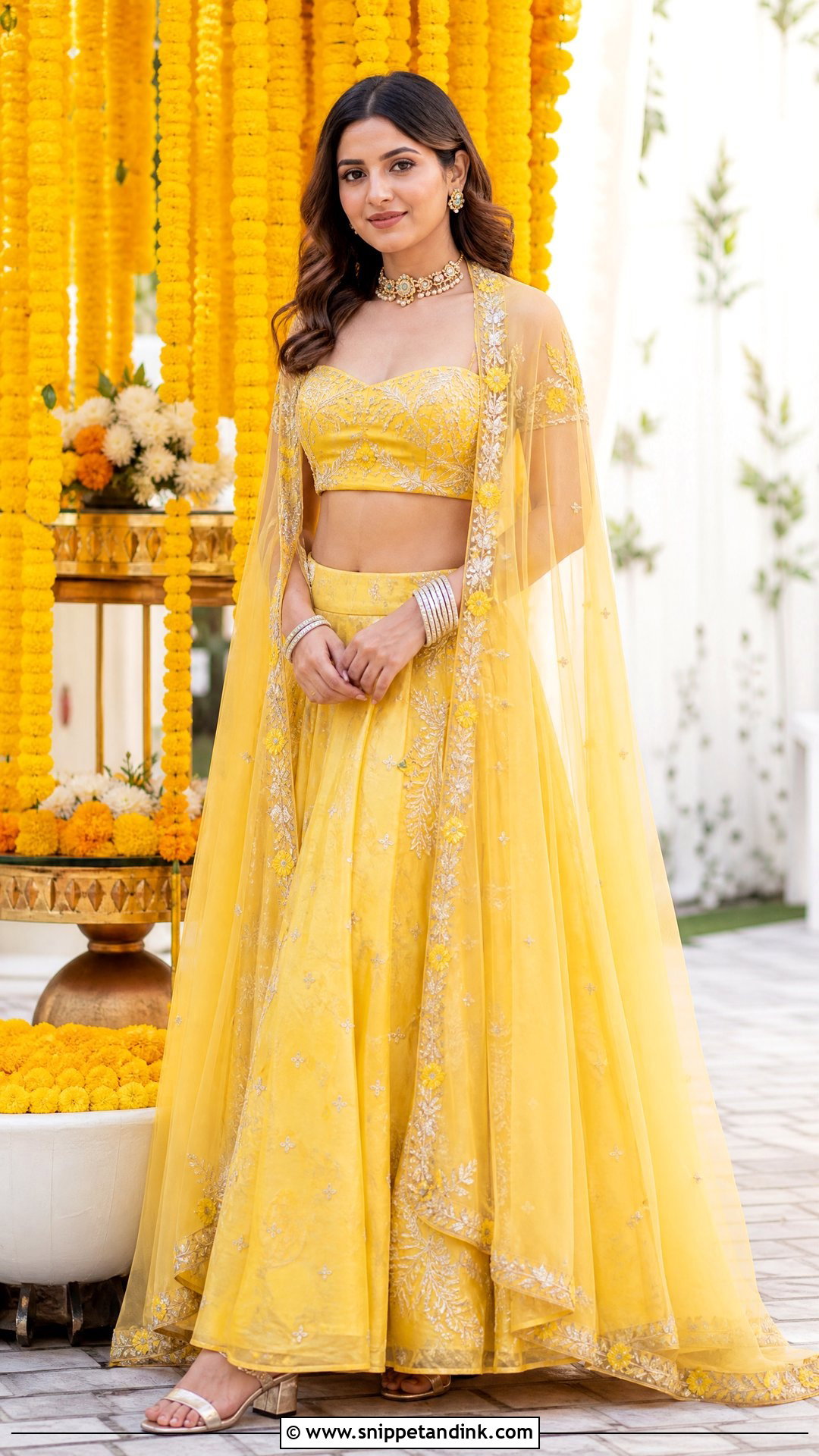
A yellow cape lehenga gives you the volume of a full skirt with no dupatta to keep catching. A lightly embroidered lehenga and fitted blouse with a sheer cape from the shoulders or neck. Floral embroidery or mirrors on the cape show up well in family photographs. A choker, small earrings and low block heels; soft curls or a low ponytail. I keep the skirt light and the cape short enough not to drag, and I make sure the overall work stays a clear step below the bride’s.
11. Yellow Peplum Sharara Outfit
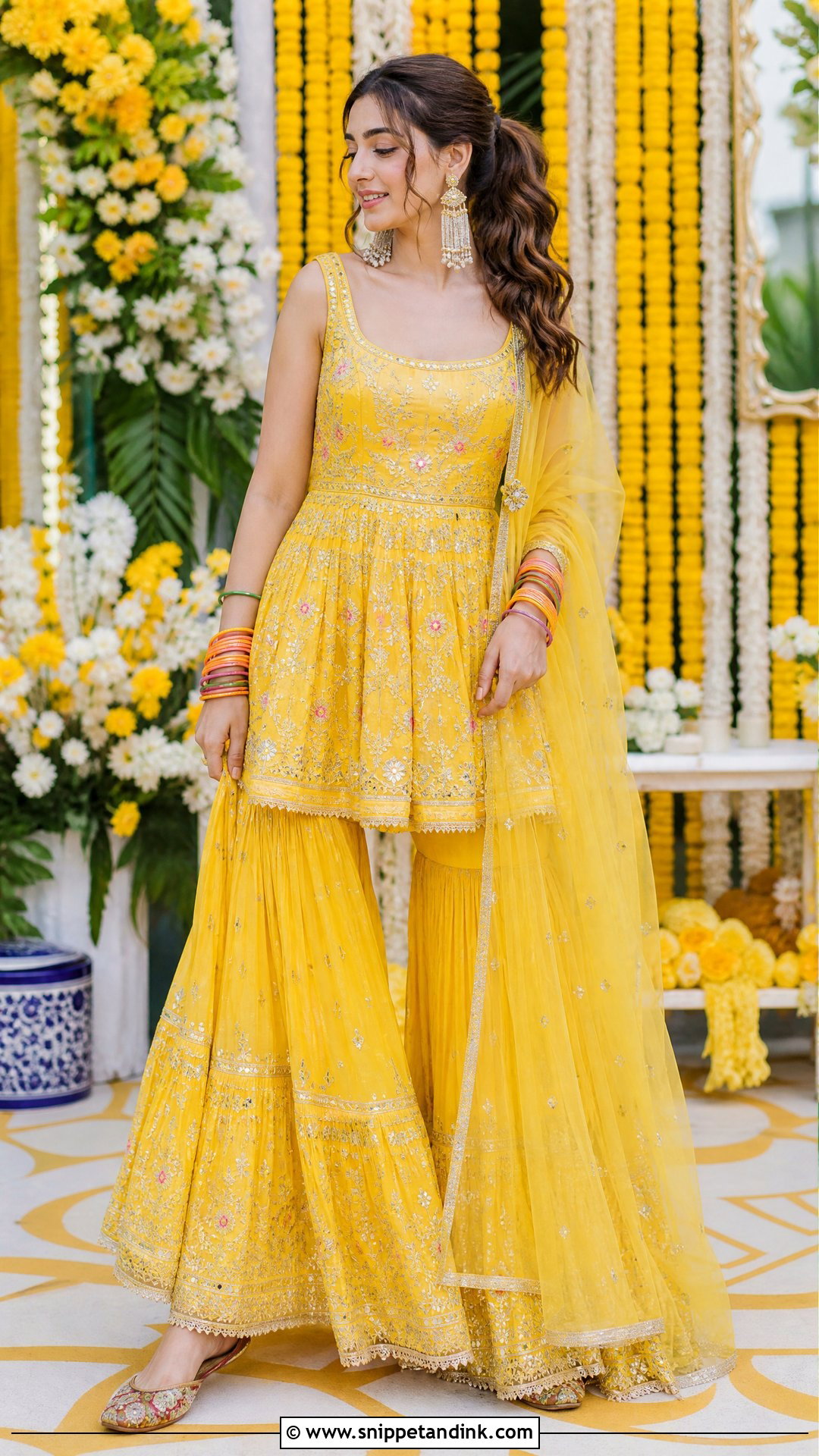
Peplums solve the problem of a sharara kurta swallowing your waist. The fitted top with embroidered neck, cuffs or peplum edge does the shaping; keep the pants plain so the silhouette doesn’t get heavy. The dupatta can drape over one arm or pin behind the shoulders. Long earrings, colourful bangles, pointed juttis. With the waist already marked, skip any belt and keep the neck light. It holds up through dancing, group photos and running errands for the bride.
12. Yellow Bandhani Saree Outfit
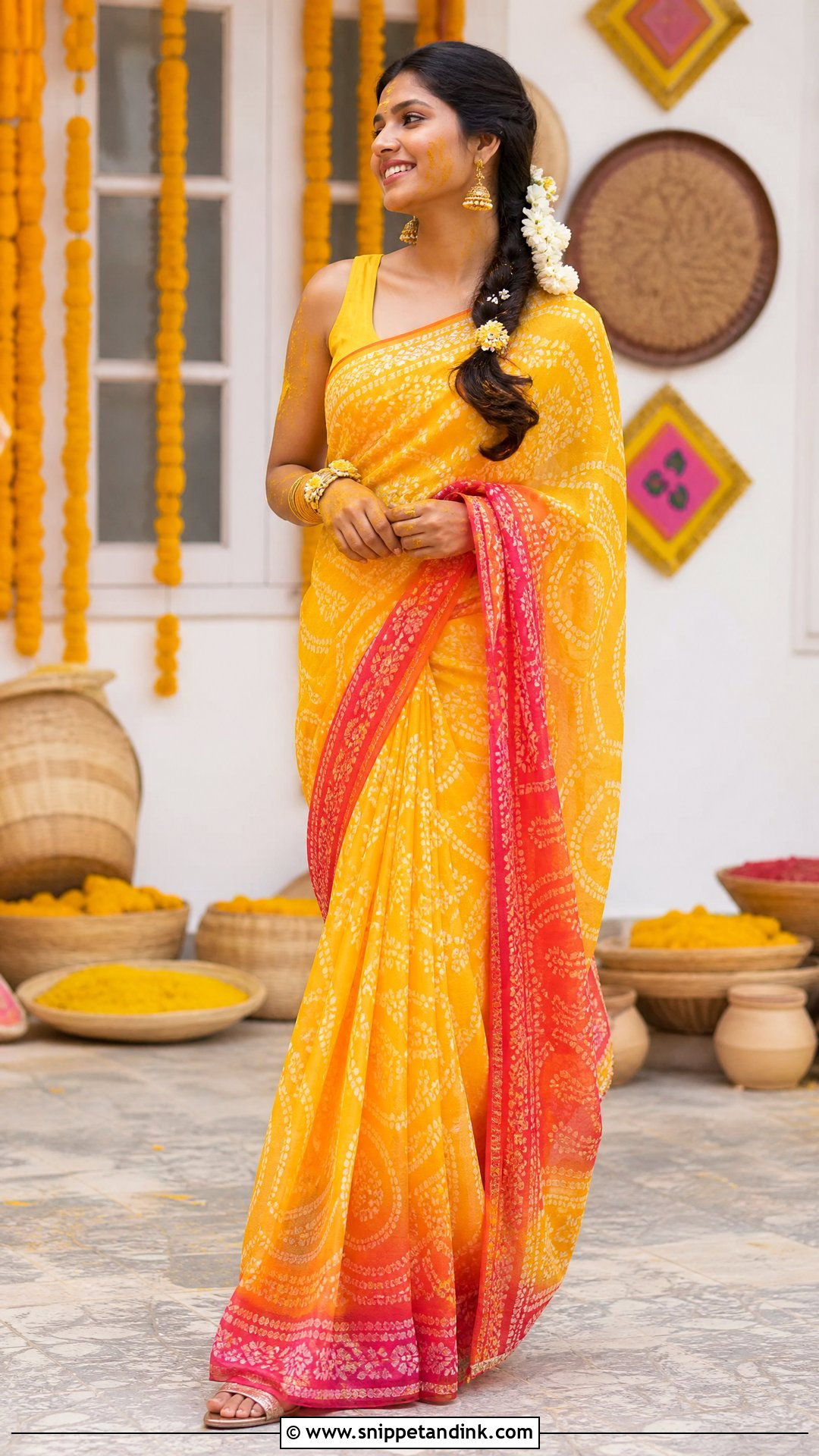
Bandhani is one of the oldest Haldi textiles, and the tiny tie-dye dots in red, pink, orange or green carry a lot of colour. In a lightweight saree it drapes softly and, helpfully, disguises splashes. A plain fitted blouse keeps the pattern in charge. Pin at the waist and the shoulder if you’ll be helping with rituals. Oxidised silver for a relaxed look, gold jhumkas for something classic. Juttis or low wedges, and a braid with tiny flowers or a neat bun.
13. Yellow Mirror Work Lehenga Outfit
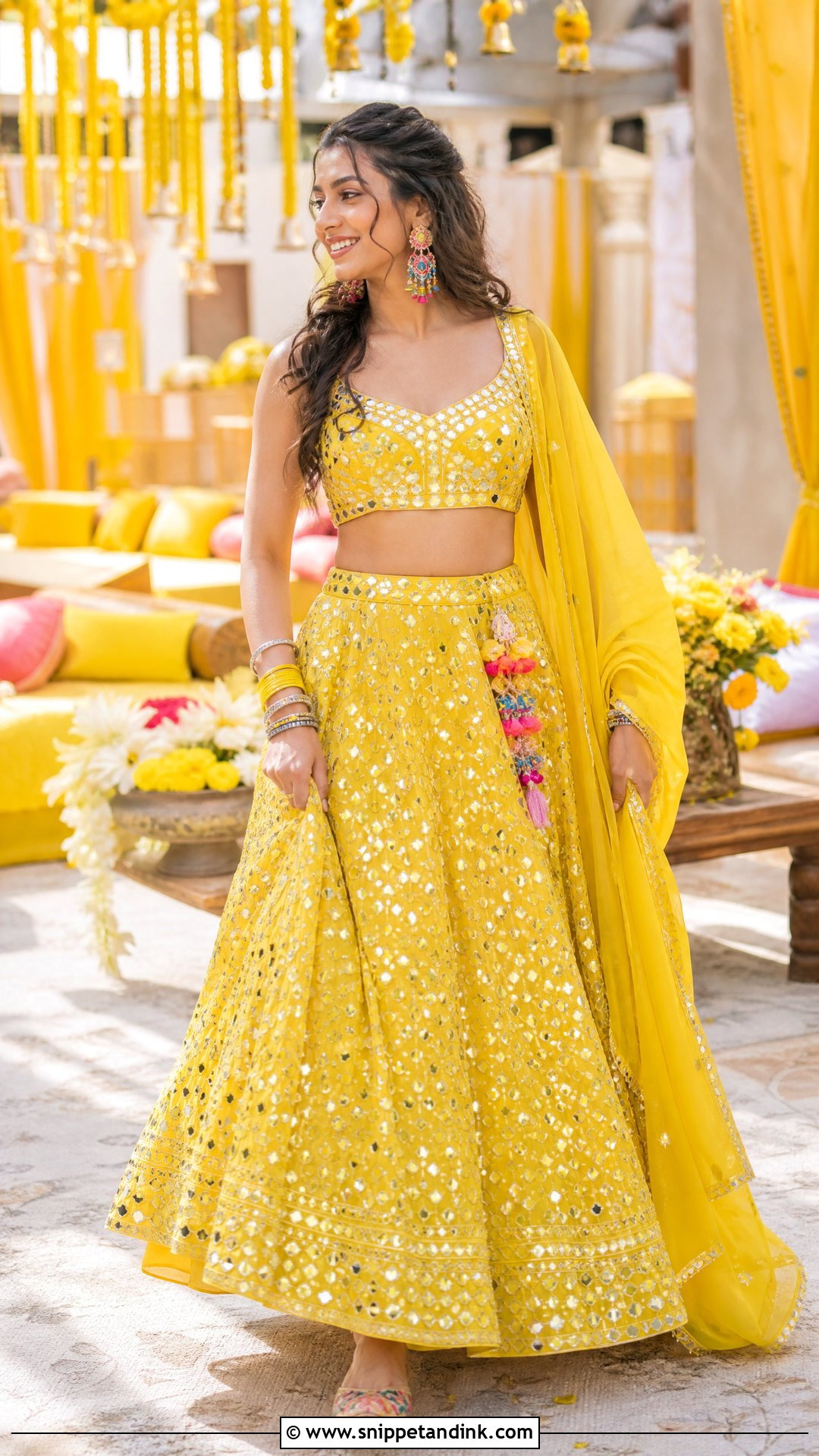
Mirror work catches sun brilliantly, which is why a mirror lehenga suits outdoor daytime Haldis. I’d choose a light skirt with evenly spaced mirrors, a coordinated blouse and a plain chiffon dupatta so the whole thing doesn’t turn into a disco ball. Colourful earrings, simple bangles, flat juttis. Half-up hair with soft curls. Before the day, run your hand over every mirror: a loose one or a sharp edge scratches you, and it can snag the bride’s outfit when you hug her.
14. Yellow Jacket Palazzo Outfit
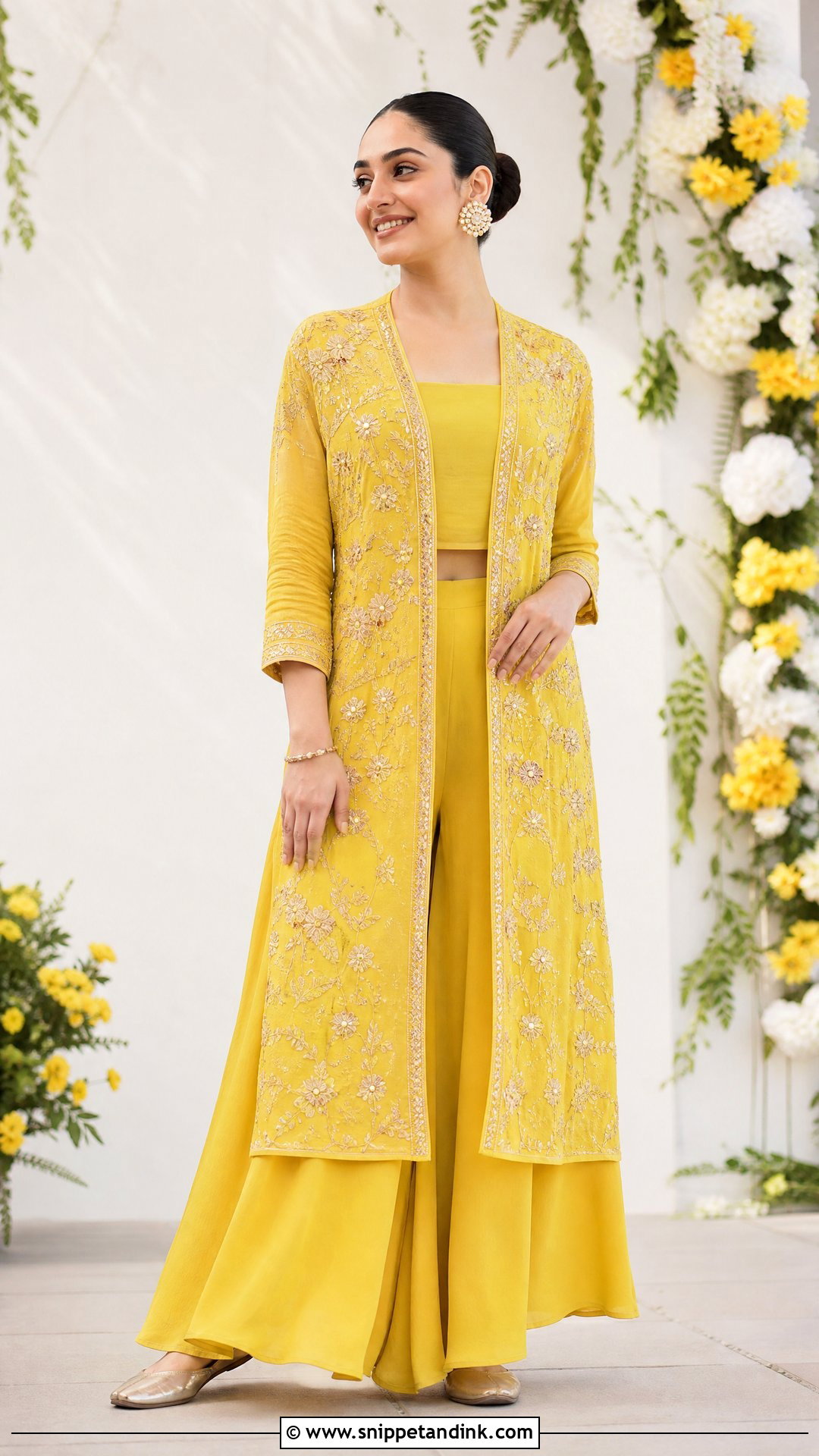
Long jackets give strong vertical lines and modest coverage without a dupatta. Choose an embroidered or printed jacket that ends below the knee, over a fitted inner top and fluid palazzos; bulk under the jacket ruins the line. Wear it open for a relaxed look or fasten at the waist for shape. Statement studs, a fine bracelet, metallic flats and a sleek bun. It carries you from the ceremony to lunch to the dancing, and you can take the jacket off if the afternoon gets hot.
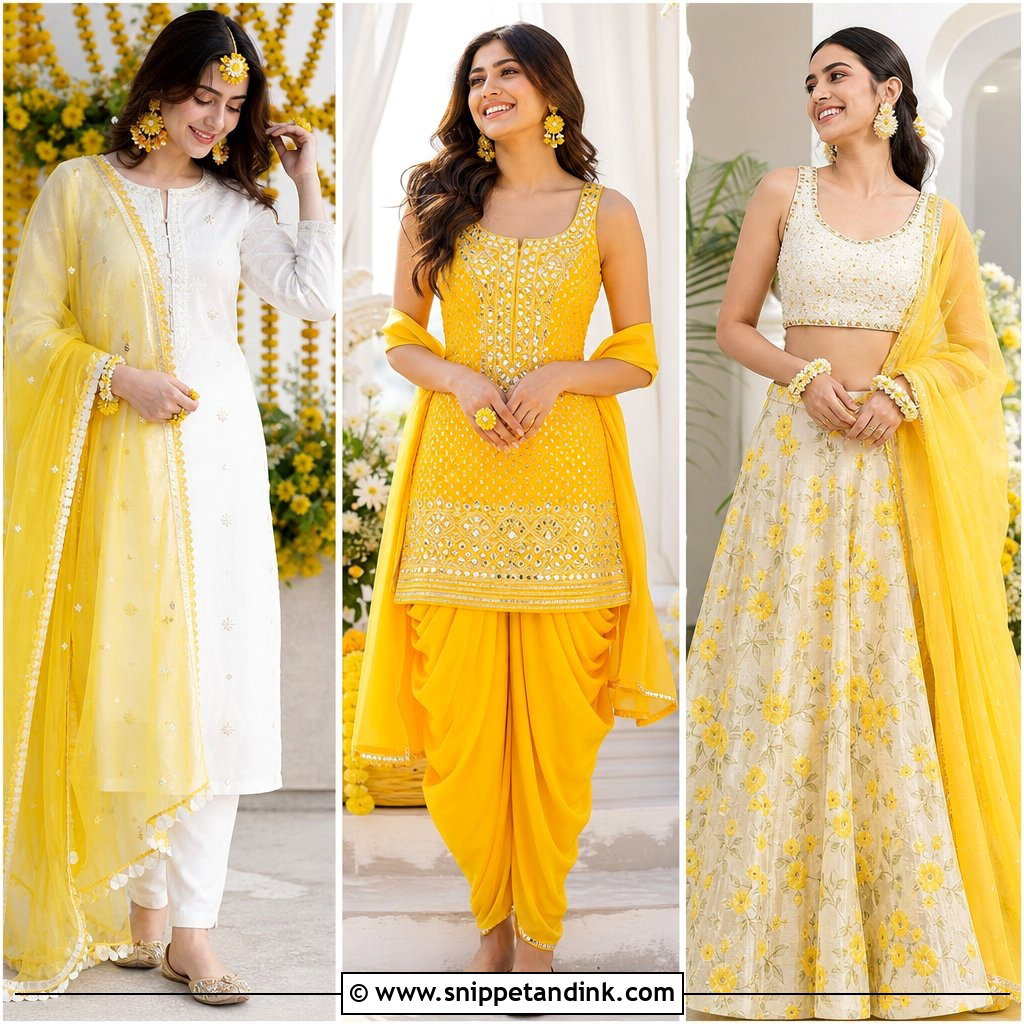
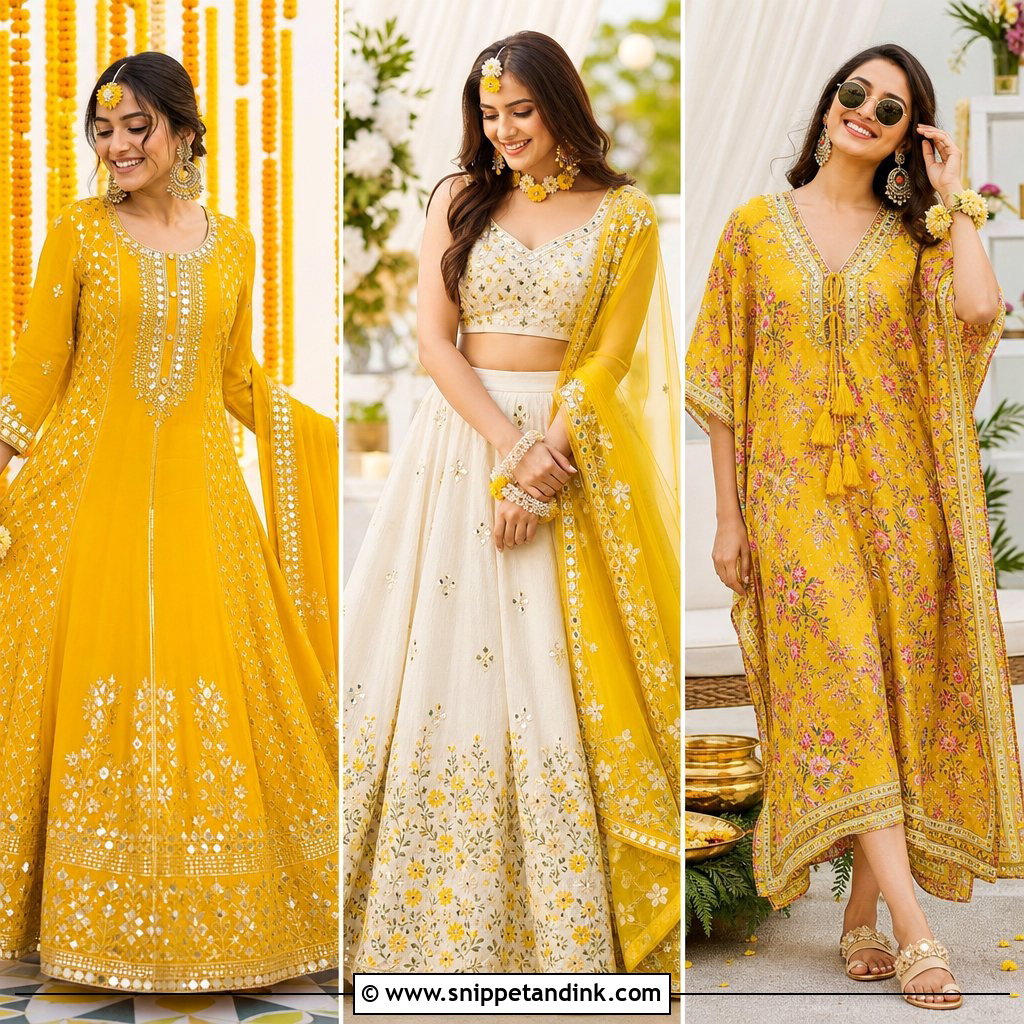
15. Yellow Patiala Suit Outfit
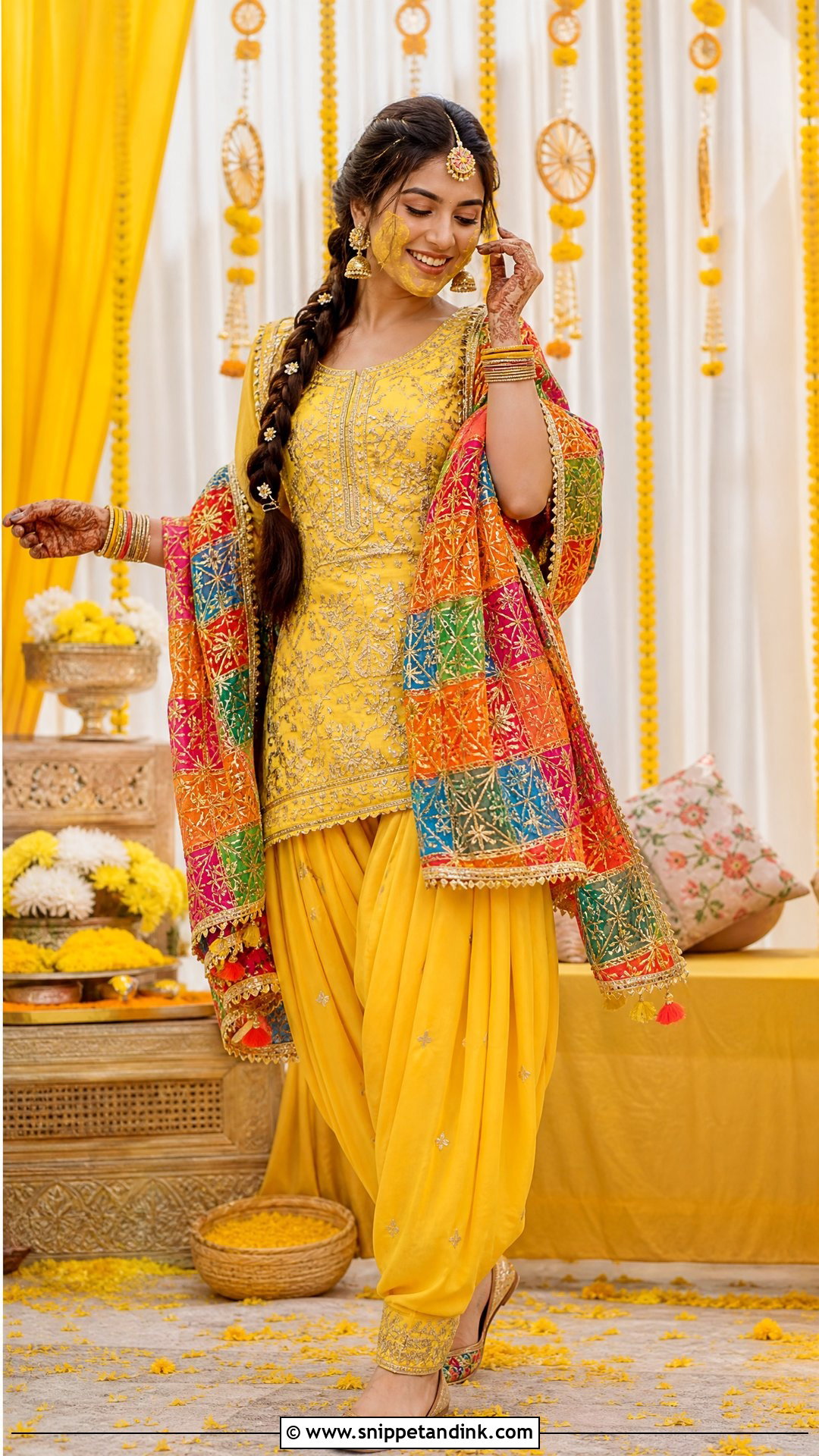
A yellow Patiala suit brings Punjabi energy to the morning, especially if there’ll be dhol and giddha. Full pleated Patiala salwar with a short kurti so the folds stay visible, and a phulkari dupatta in pink, orange, green or multicolour as the star. Traditional jhumkas, glass bangles and embroidered juttis. Keep the kurti embroidery moderate so the phulkari leads. The many pleats mean a lot of fabric at the hip, so if you’re petite ask for a slightly reduced width.
16. Yellow Pre-Draped Saree Outfit
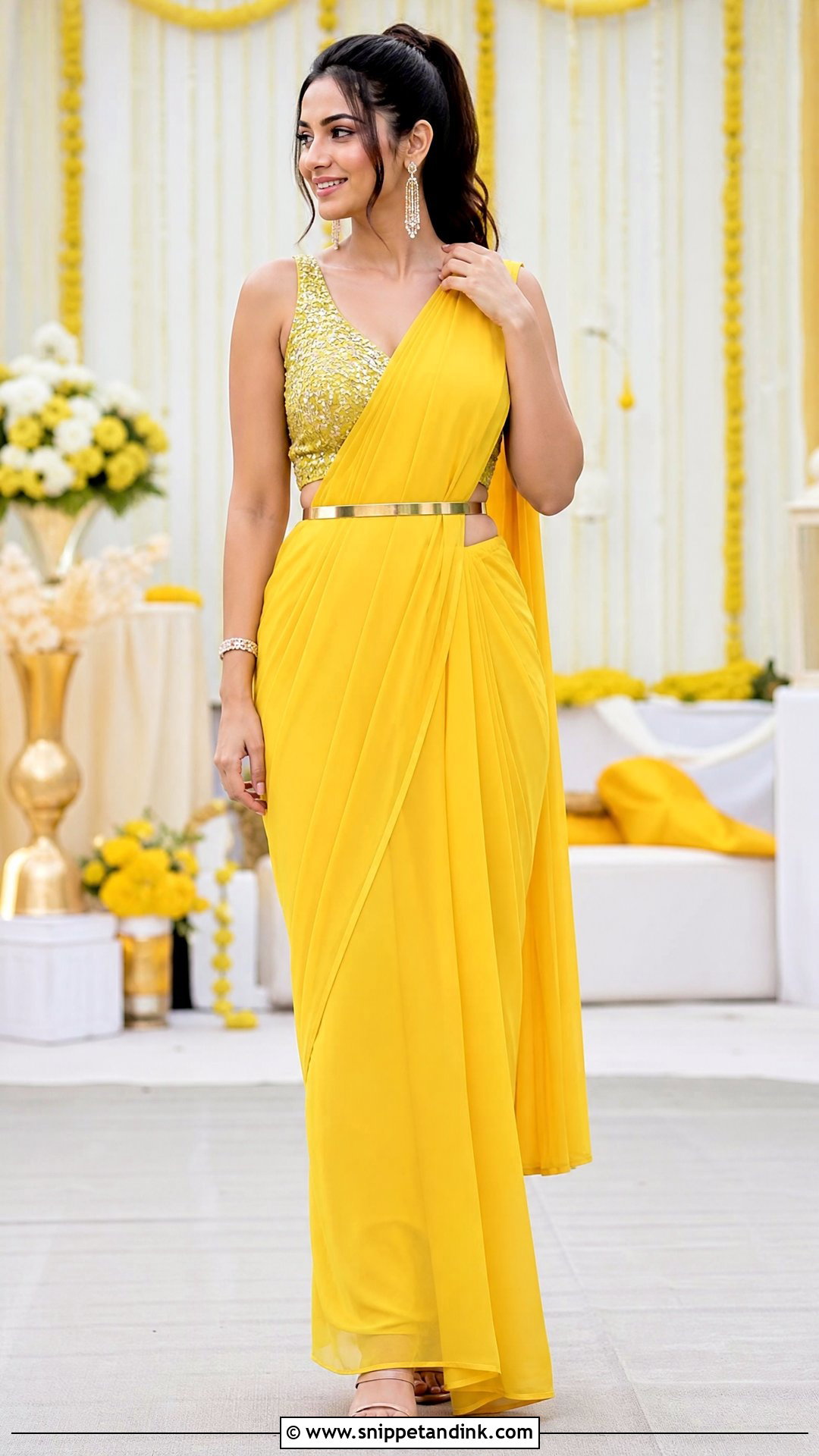
Pre-draped sarees are the sister’s shortcut: stitched pleats and a fixed pallu mean the saree look without a single re-tuck all morning. A fitted blouse with subtle sequins, floral embroidery or an asymmetric neckline; a slim waist belt adds definition and holds everything in place. Drop earrings, a delicate bracelet, low heels or dressy flats, and a sleek bun or ponytail. Check the hem length with your actual shoes on, since a trailing edge picks up paste and petals instantly.
17. Yellow Skirt And Crop Top Outfit
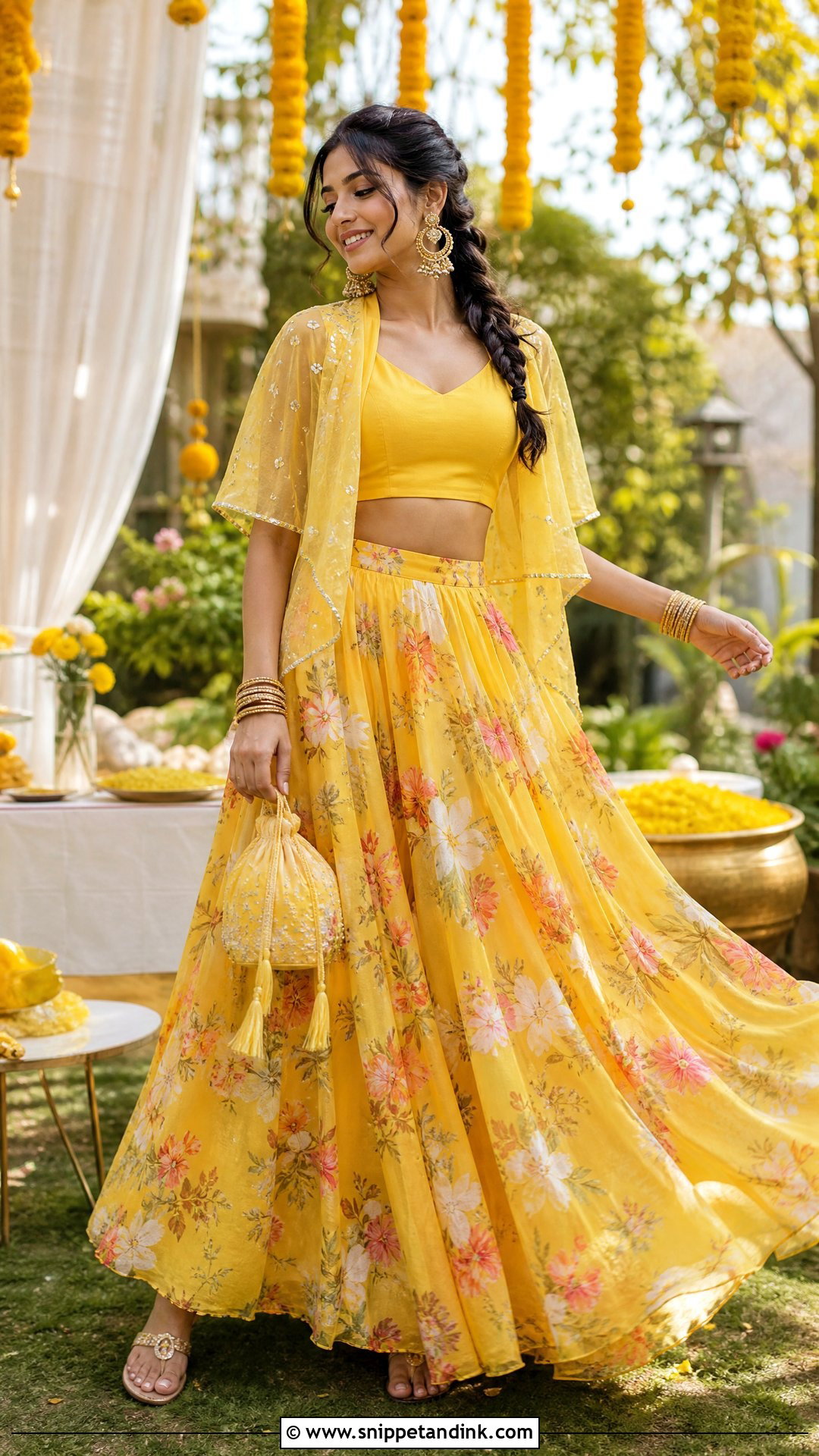
Skirt and crop top sets are the easiest to personalise, and you can rewear the pieces separately. A printed, tiered or lightly embroidered skirt balanced by a solid fitted top, with a short cape, sheer dupatta or cropped jacket if you want more coverage. Hoop jhumkas, slim bangles, a small potli and comfortable sandals. A braided ponytail controls hair better than loose waves once the dancing starts. Keep the skirt off the floor so it doesn’t collect stains. Garden Haldis are its natural setting.
18. Yellow Kaftan Set Outfit
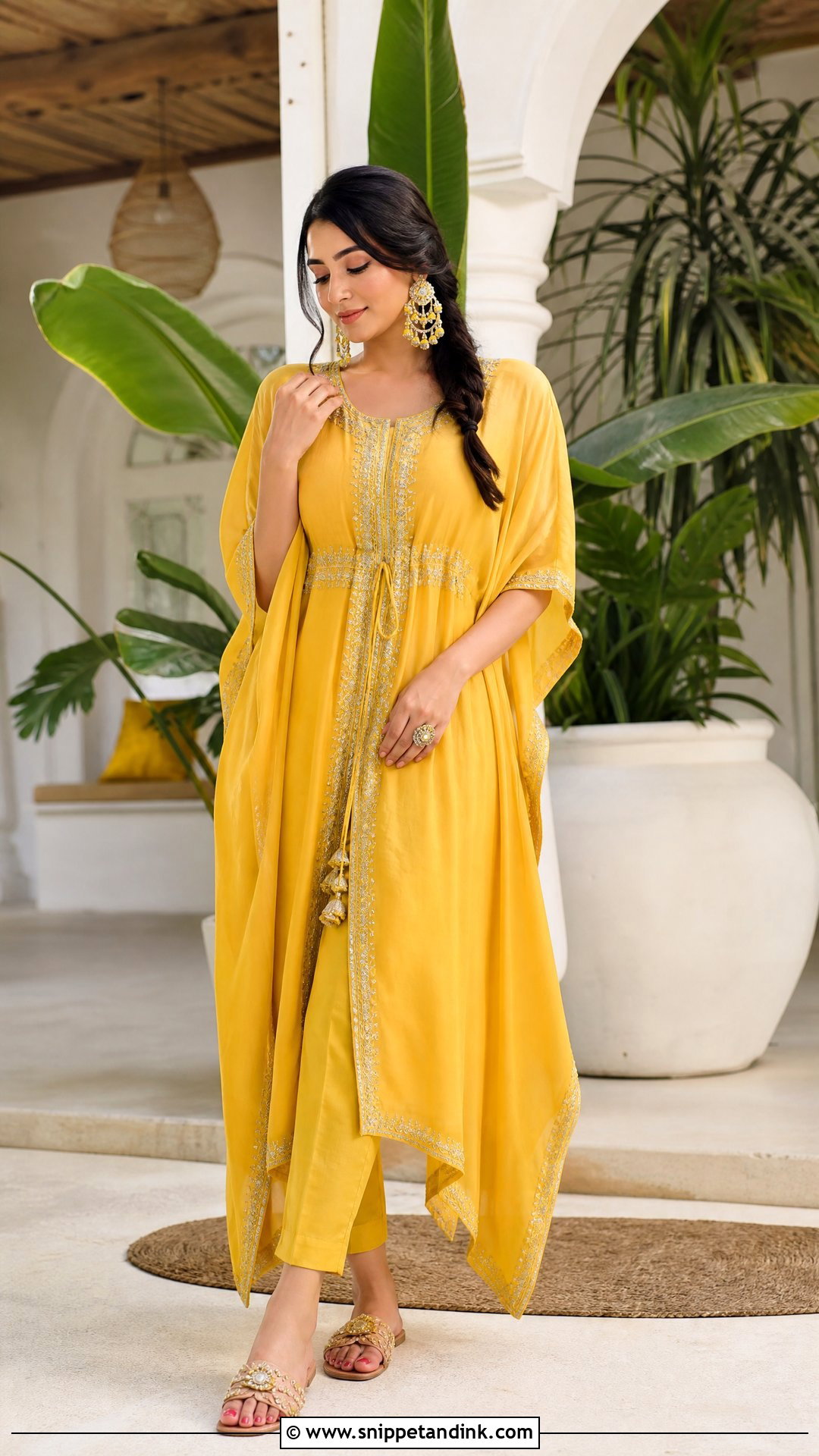
Kaftans are pure comfort, but a shapeless one looks like loungewear in photos. I look for a knee or calf-length kaftan with a drawstring, belt or gathered waist, and an embellished neckline or border. Narrow pants, straight trousers or palazzos underneath. Oversized earrings, a statement ring and embellished flats. A smooth ponytail or loose side braid. It’s my suggestion for destination Haldis and hot-weather home functions, when moving quickly and staying cool matter more than structure.
19. Yellow Kurta And Straight Pants Outfit
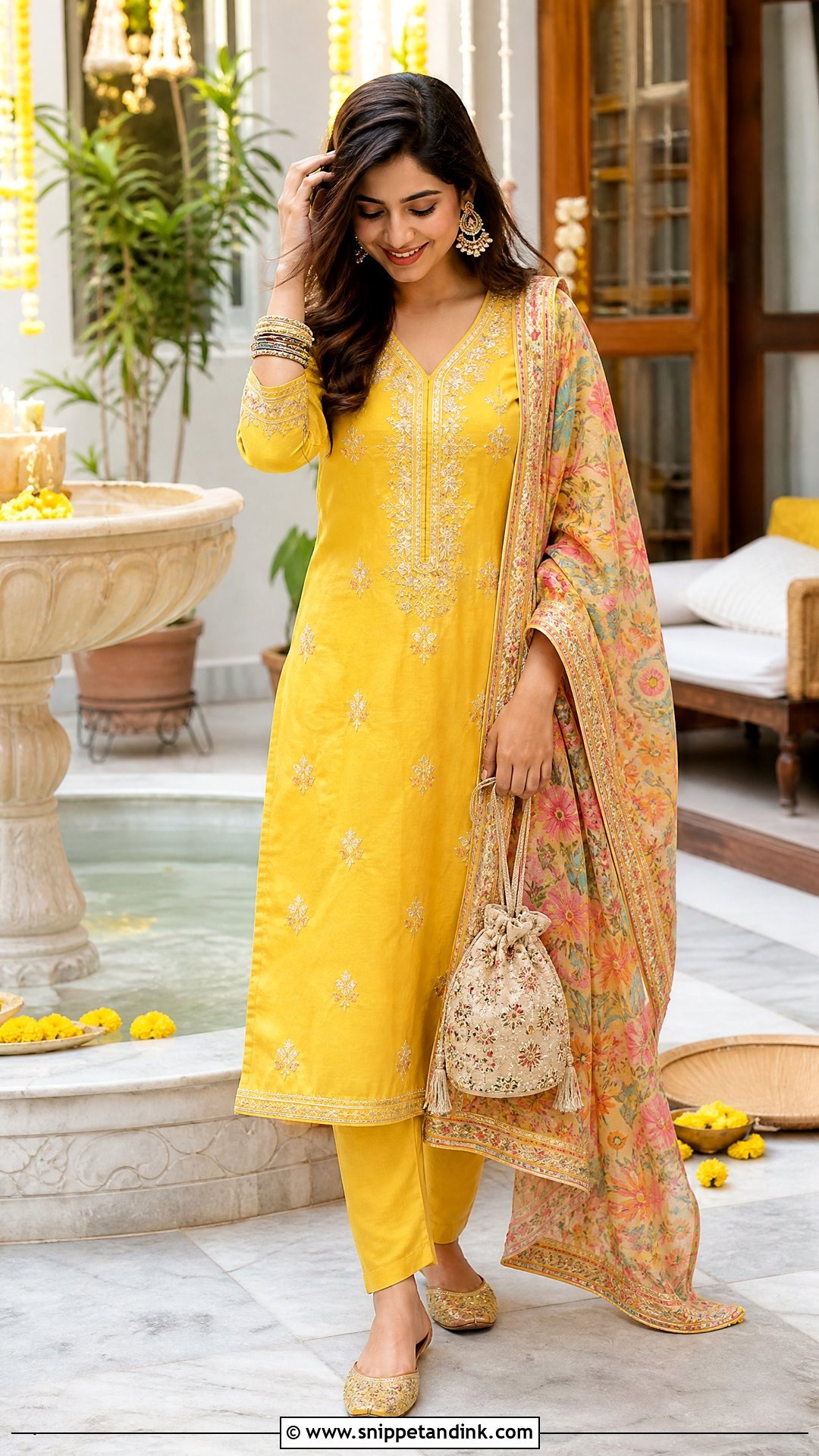
Sometimes the plainest outfit turns out to be the most useful. A knee-length kurta with a side slit, light embroidery at the neck or sleeves, ankle-length straight pants and a printed dupatta for colour. Small chandbalis, stacked bangles, juttis and a compact potli. A neat ponytail or low bun. This is what I’d put on the sister who is really running the day, organising guests and handing the bride things. Choose sturdy cotton or a blend over delicate silk, since you’ll be within arm’s reach of the paste all morning.

20. Yellow Jumpsuit With Dupatta Outfit
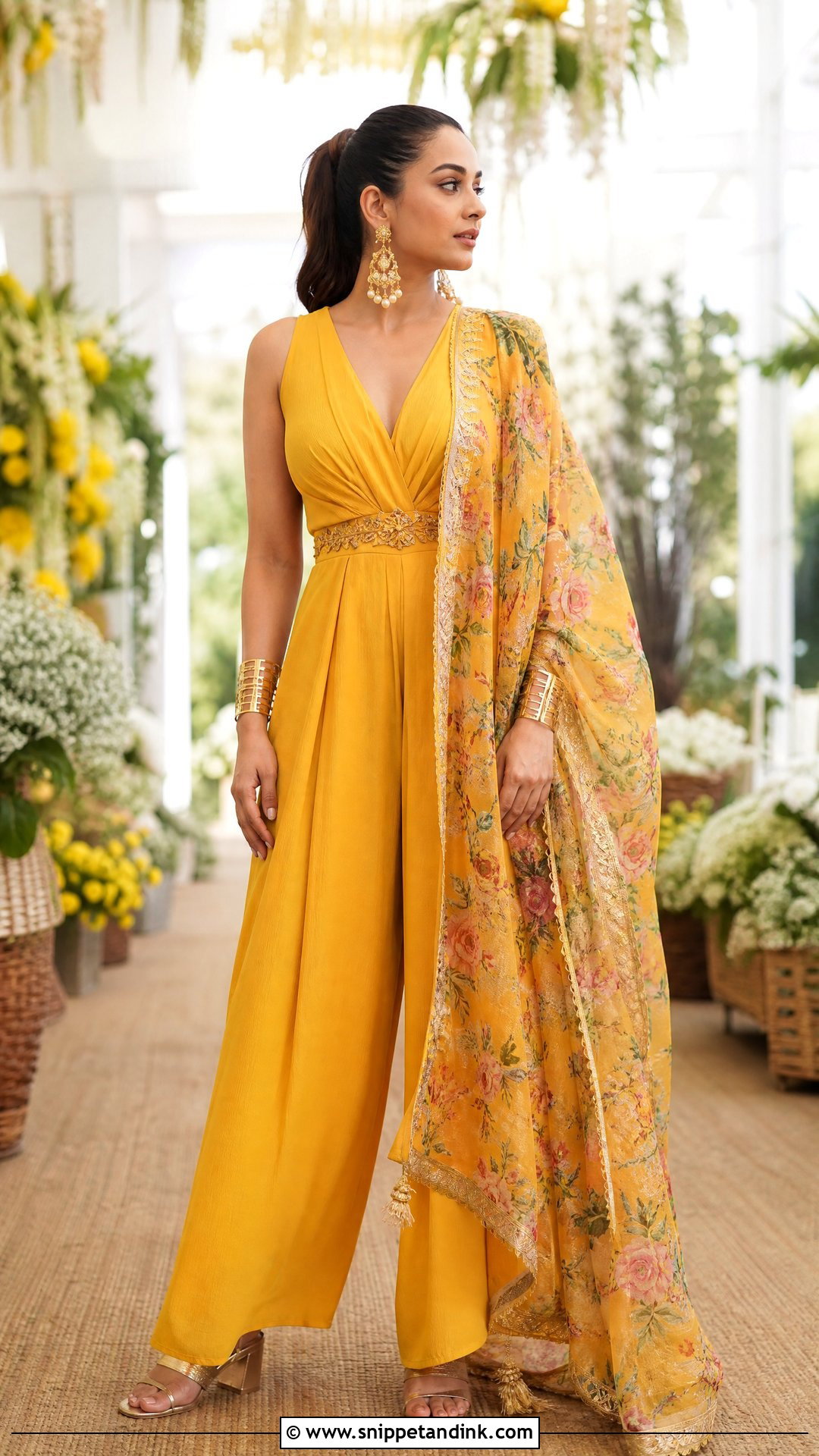
A jumpsuit with a dupatta is the boldest option here, and for the right sister it makes a fun modern haldi outfit. A wide-leg cut with a defined waist and a comfortable fitted bodice, then an embroidered or printed dupatta over one shoulder to bring in tradition. Add a metallic belt only if the waist needs it. Statement earrings, gold cuffs and low block heels. The practical catch: bathroom trips. Try it on and time yourself before you commit to it for a five-hour event.
Coordinating a Group of Sisters and Cousins
When several sisters and cousins dress together, identical outfits look like a uniform and flatter only one body type. I prefer one shared element with freedom elsewhere: the same yellow family in different cuts, or different yellows with the same print or the same dupatta. A row of girls in sharara, Anarkali, saree and co-ord, all in tones of marigold, photographs as a group without anyone looking costumed.
The Quick Change Between Haldi and the Next Function
Many families hold the Haldi in the morning and the mehndi or a lunch the same day, so sisters often have under an hour to change. Turmeric tints skin as well as fabric, and it stays longer on dry skin.
- Before the ceremony, put a light layer of coconut oil or moisturiser on exposed skin and hairline. The paste wipes away more easily from oiled skin.
- Afterwards, wipe off the bulk with a damp cloth, then wash with a mild cleanser. A paste of gram flour and milk or yogurt helps lift the yellow tint from the face and hands.
- Don’t scrub hard; red, irritated skin looks worse in photos than a faint yellow glow, which fades within a day or so.
- Have the next outfit pressed and laid out in advance, and bag the Haldi outfit straight away so the paste doesn’t transfer.
Your Sister in the Centre, You Right Beside Her
A sister’s Haldi outfit has to be festive, feel like you, and survive a very active morning. The ideas above run from classic sarees and swinging shararas to light lehengas, practical kurta sets and Indo-Western cuts. Pick the one you can sit, crouch, dance and help in without fixing anything. Lemon, marigold and mustard each suit different complexions and settings, so test yours in daylight. Keep embellishment manageable, pin the dupatta, wear flats or low heels, and talk to the bride first so your yellow sits comfortably next to hers.
You'll Like These Ideas:






Leave a Reply