
A haldi is bright, emotional and gloriously messy, and close family are in the thick of it: applying paste, dancing to the dhol, posing for a dozen group photos. That’s why family outfits need to be easy to wear first and coordinated second. Yellow is still the anchor, but families now build palettes around ivory, mustard, marigold, lime and floral prints, with mirror work or gota as the shared detail. For a daytime function, cotton, georgette, organza, linen, chanderi and soft silk all cope with the heat. Below are coordinated looks for mothers, fathers, siblings, couples, kids and whole groups.
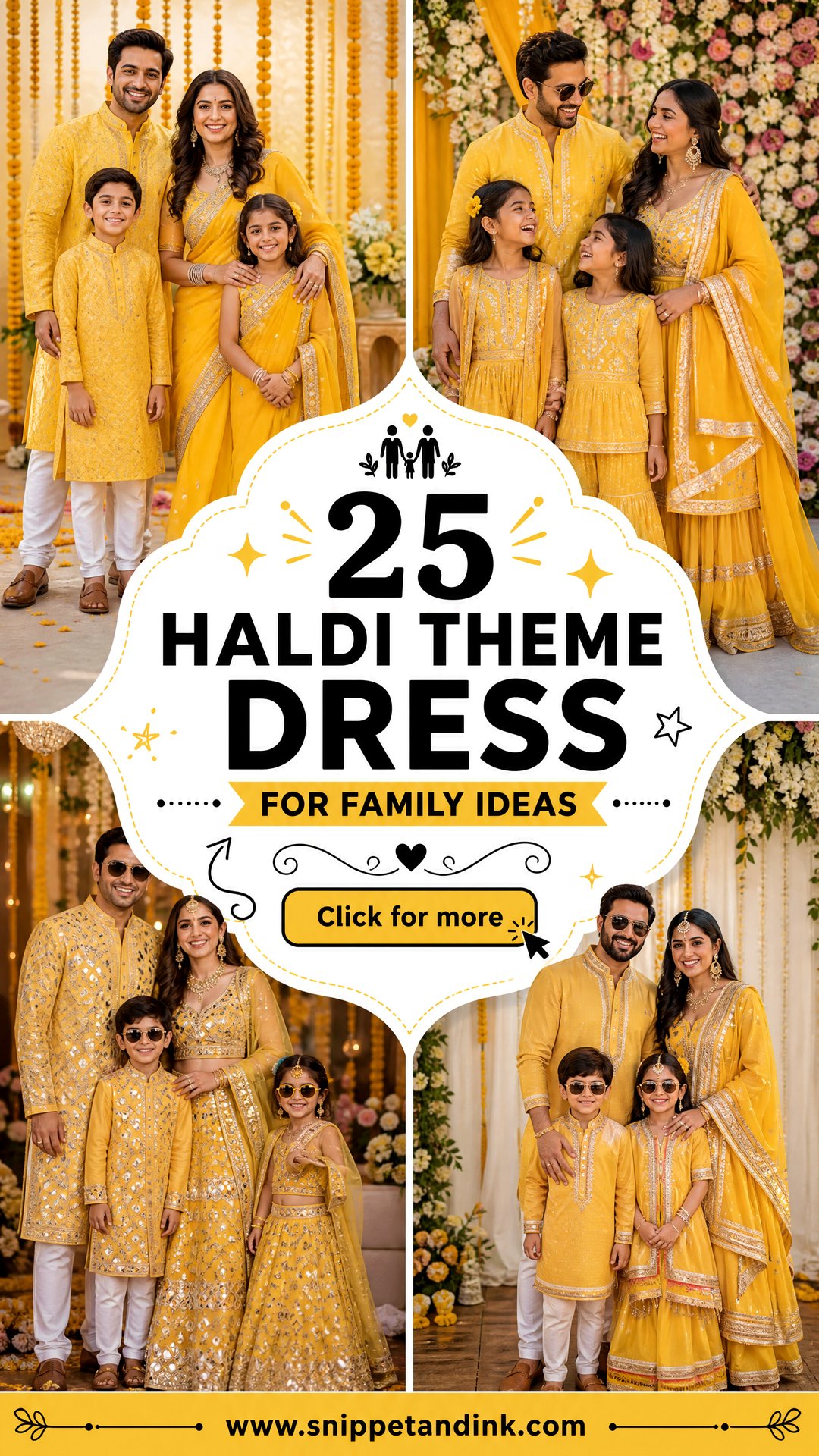
Setting a Family Palette Without Putting Everyone in Uniform
Family coordination falls apart in the group chat, not at the tailor. Twenty relatives each interpret “yellow” differently, and you find out on the morning itself. Here’s the order I work through with families so the theme holds together:
- Start from the bride’s outfit. The family palette sits a shade deeper or lighter than hers, never the identical color.
- Choose two colors and one shared detail, such as gota, mirror work or a single print. More than that and nobody can follow it.
- Assign by closeness. Parents and siblings take the main color; aunts, uncles and cousins wear it as an accent through a dupatta, stole or jacket.
- Share real fabric photos taken in daylight. Screens shift colors, and “mustard” on one phone is “mango” on another.
- Work back from the date. Stitched outfits can take several weeks, longer in peak wedding season, and ready-made pieces still need time for alterations.
Not everyone wants to buy something new, and nobody should have to. A relative who wears an existing ivory kurta with a borrowed yellow stole is still on theme. I’d rather have a family that looks connected and relaxed than one where half the people resent the dress code.
1. Haldi Yellow Saree And Kurta Family Outfit
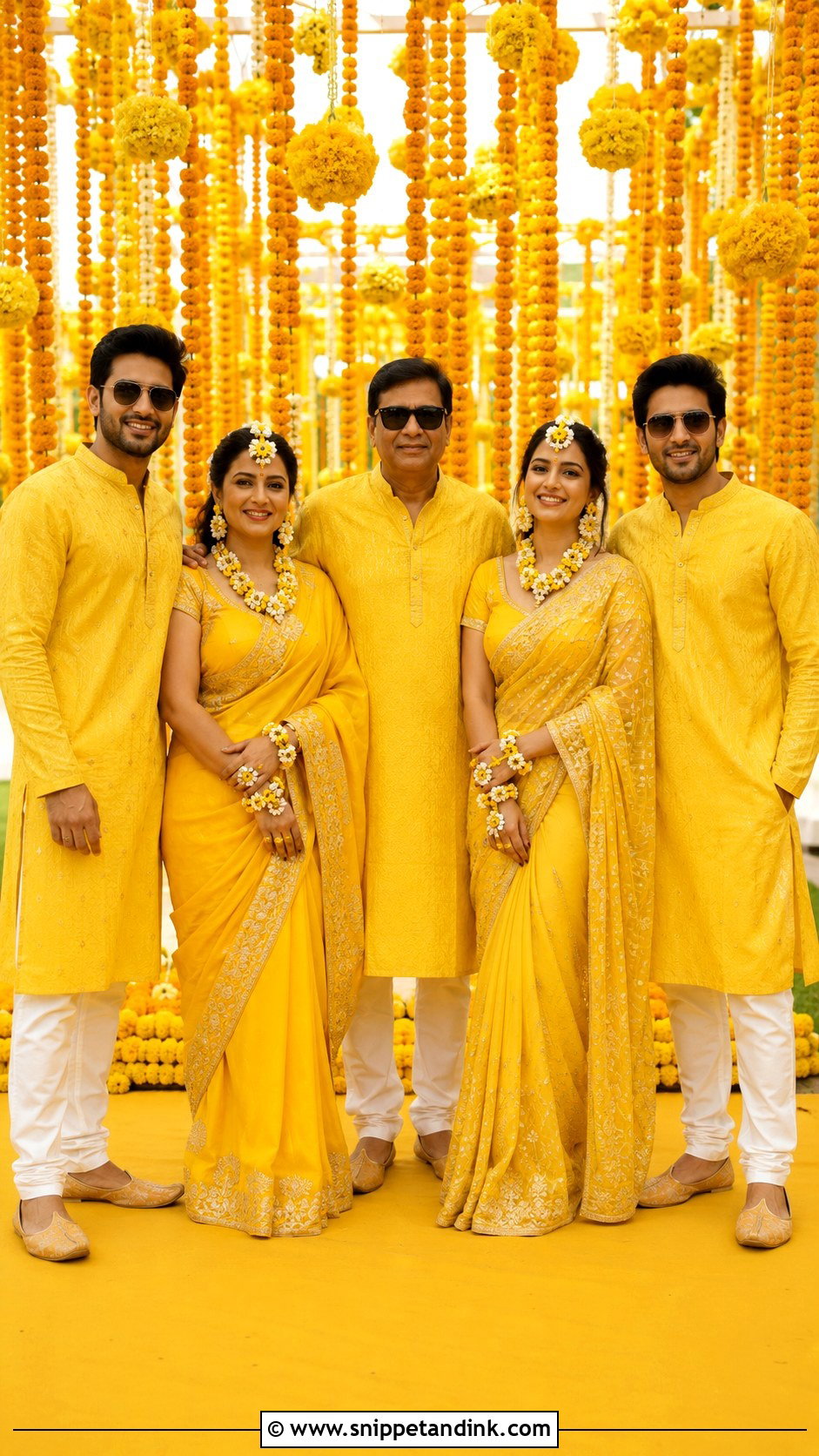
Sarees for the women and kurtas for the men is the simplest family theme I set, because most people already own half of it. Women wear lemon, marigold or mustard sarees in cotton silk, georgette, organza or chanderi, with blouse sleeves chosen for comfort rather than to match. Men wear yellow kurtas, white churidars and tan juttis. When I brief a family, the men get one rule: keep the kurta within a shade of the sarees rather than trying to match exactly. Ten identical yellows in a row look flat in a group photo, while a few related tones give it depth.
2. Haldi White And Yellow Family Outfit
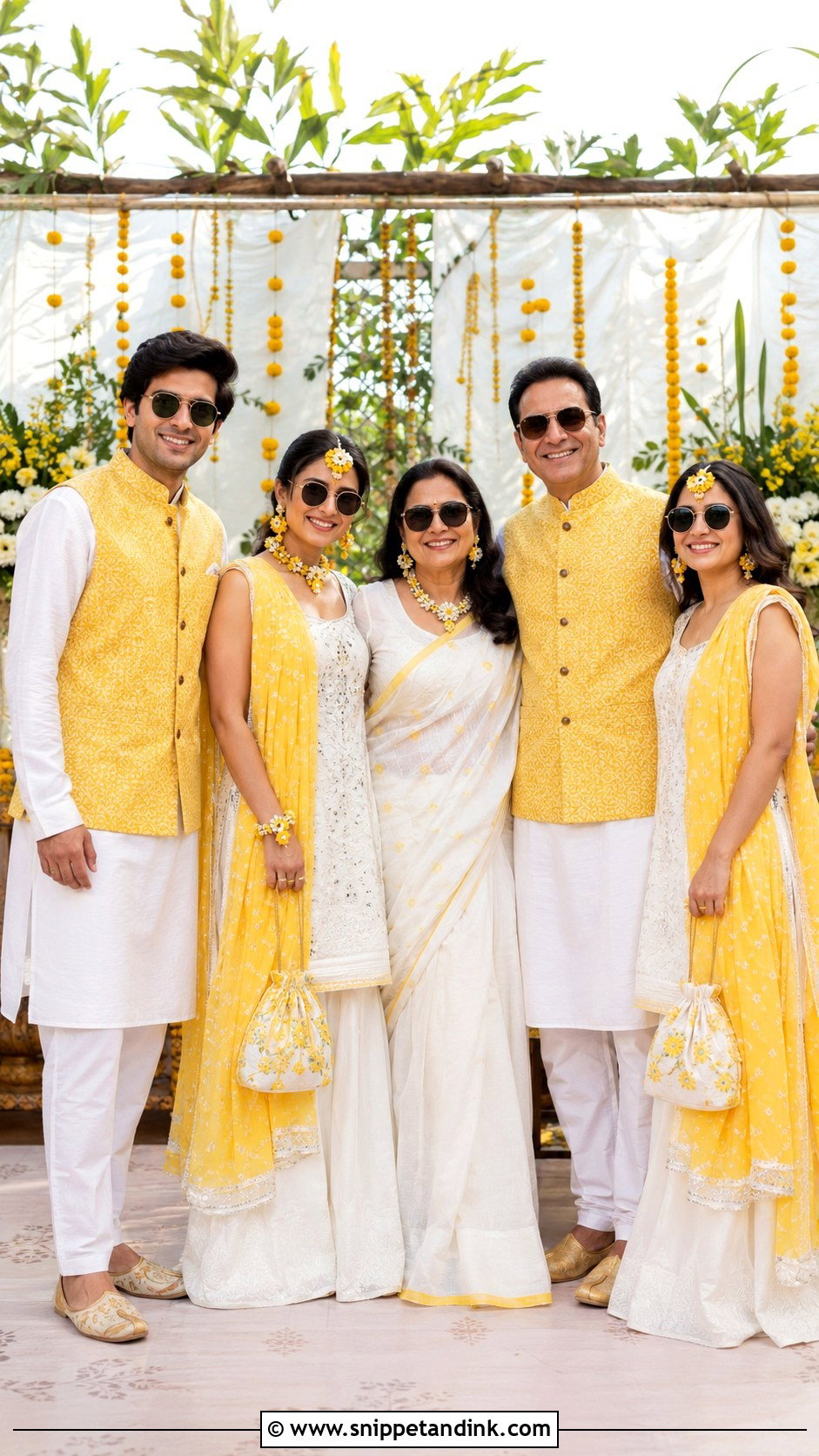
White and yellow photographs cleanly, but I only suggest it to families who’ll stay a step back from the paste. Women wear white sarees, shararas or Anarkalis with yellow borders or dupattas; men wear white kurtas with yellow Nehru jackets or printed stoles. Whoever applies the haldi will be marked within minutes. So either dress the bride’s parents and siblings in yellow and the wider family in white, or take the white portraits before the ritual begins. Pearl earrings and kolhapuris keep it light.
3. Haldi Mustard Lehenga And Kurta Outfit
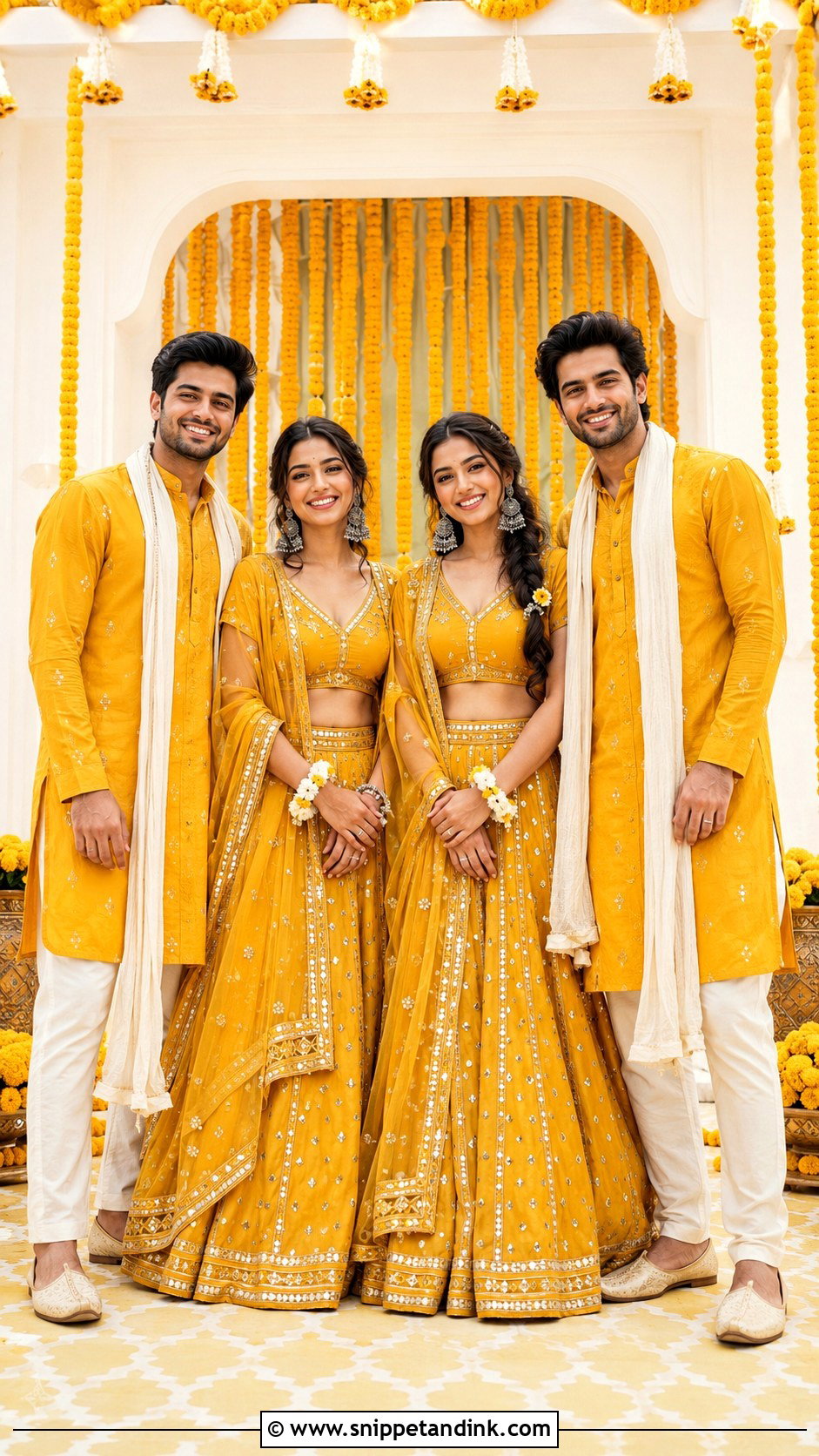
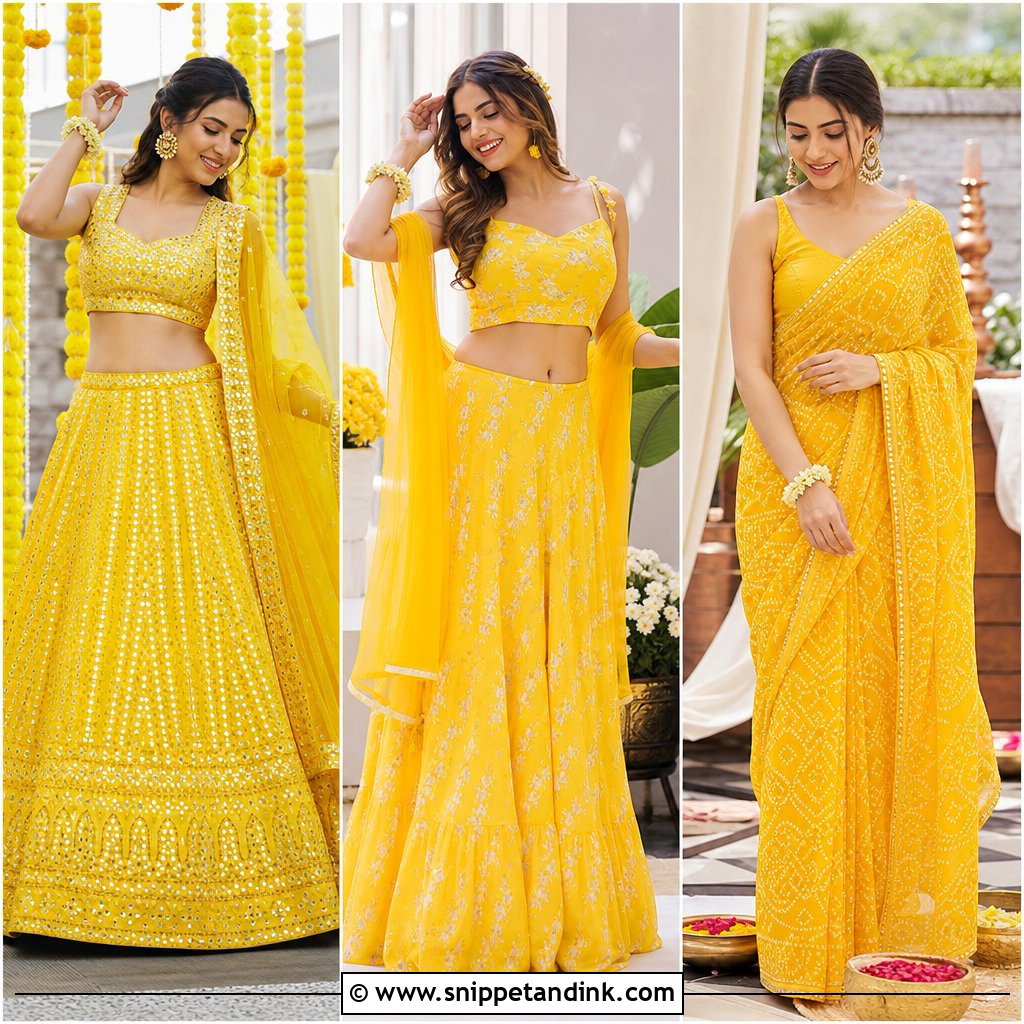
Mustard reads a little more grown-up than bright yellow, which makes it a good palette when aunts and older cousins outnumber the teenagers. A mustard lehenga with gota patti or mirror work suits sisters and young aunts, with a short blouse and a dupatta light enough to forget about. Men pair mustard kurtas with ivory or beige churidars. In late-afternoon light mustard turns golden, so when the schedule allows, I put the big family photos in that window.
4. Haldi Floral Saree And Kurta Outfit
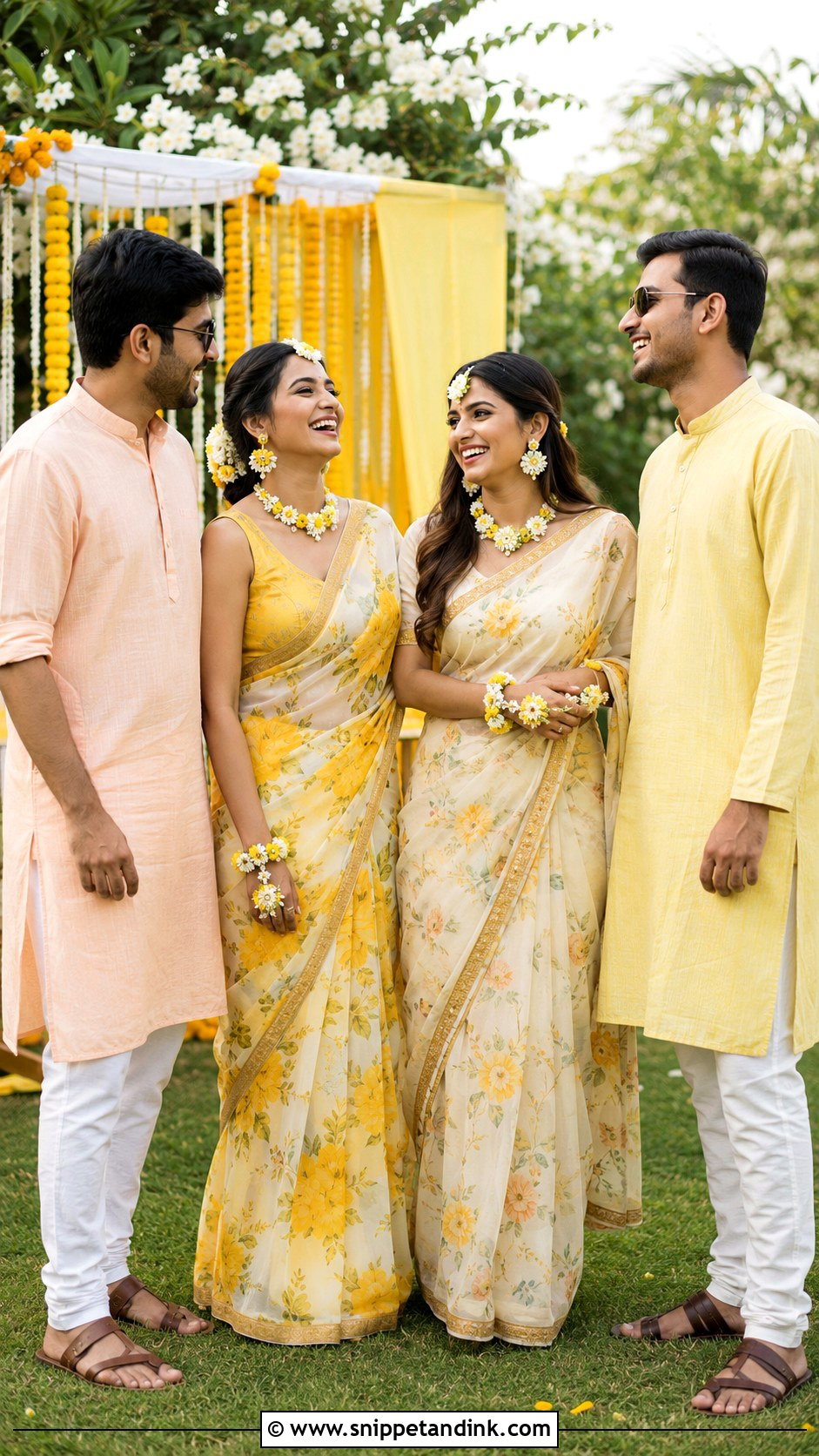
Floral prints suit a relaxed lawn or poolside haldi far better than a formal one. Women wear yellow, ivory, peach or green floral sarees, and the men wear solid kurtas in one color lifted from the print: lemon, sage or cream. That last step is what makes it look planned. With a print-based theme, I ask one person to post a daylight photo of the actual saree in the family group first, so the men match a real shade instead of guessing from memory. Open hair, fresh flowers and flat sandals finish the women’s looks.
5. Haldi Anarkali Suit Family Outfit
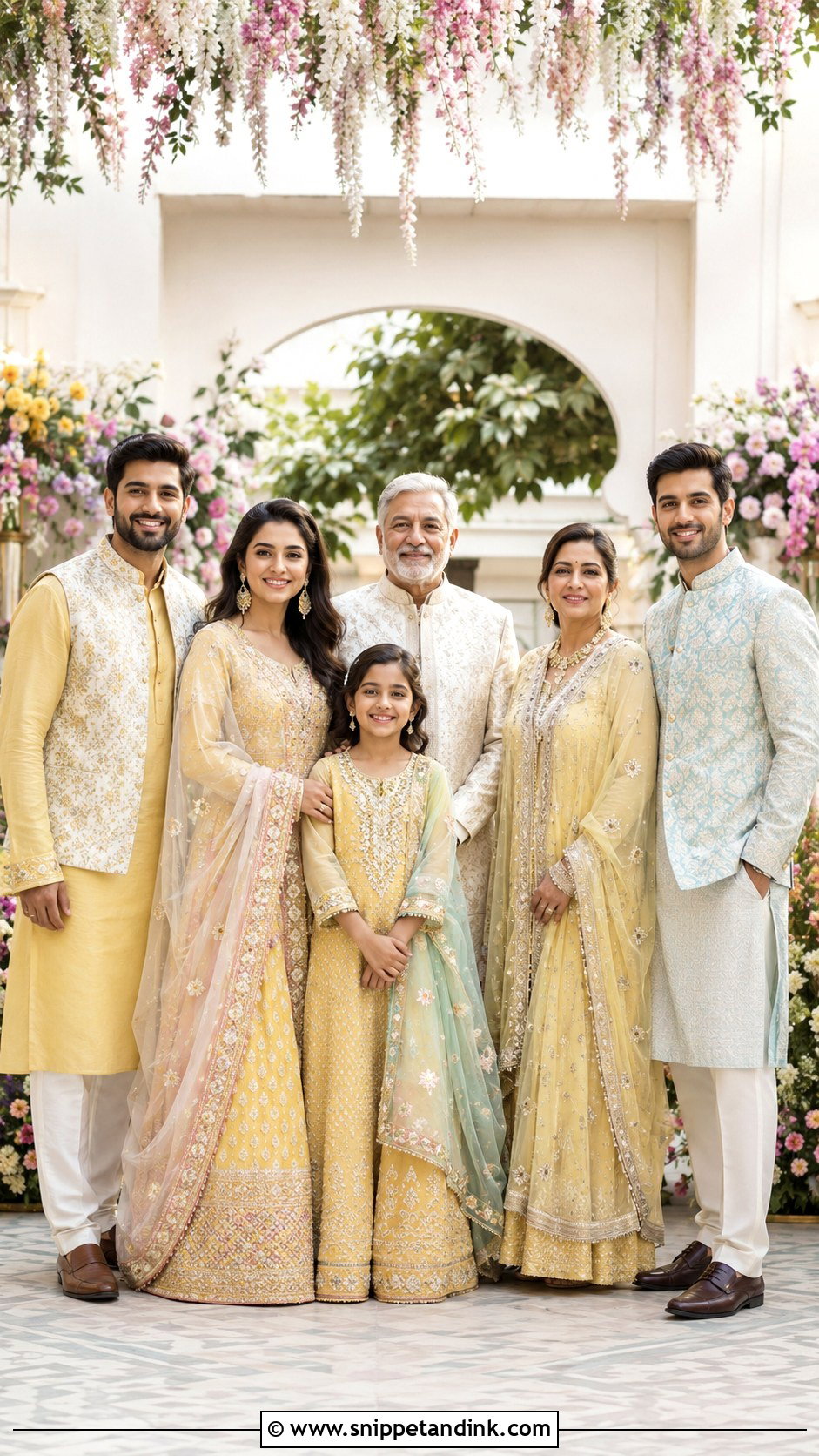
Anarkalis are what I suggest when a family spans every age and body type, because the flare skims rather than clings. Mothers, sisters and cousins wear yellow, ivory, mango or pastel Anarkalis in cotton, georgette or chanderi, each choosing her own shade within one color family. Men wear coordinated kurtas with straight pants and embroidered Nehru jackets. A practical check: floor-length Anarkalis should be hemmed for the shoes that will actually be worn, or older relatives catch the hem on steps and raised seating platforms.
6. Haldi Sharara Suit Family Outfit
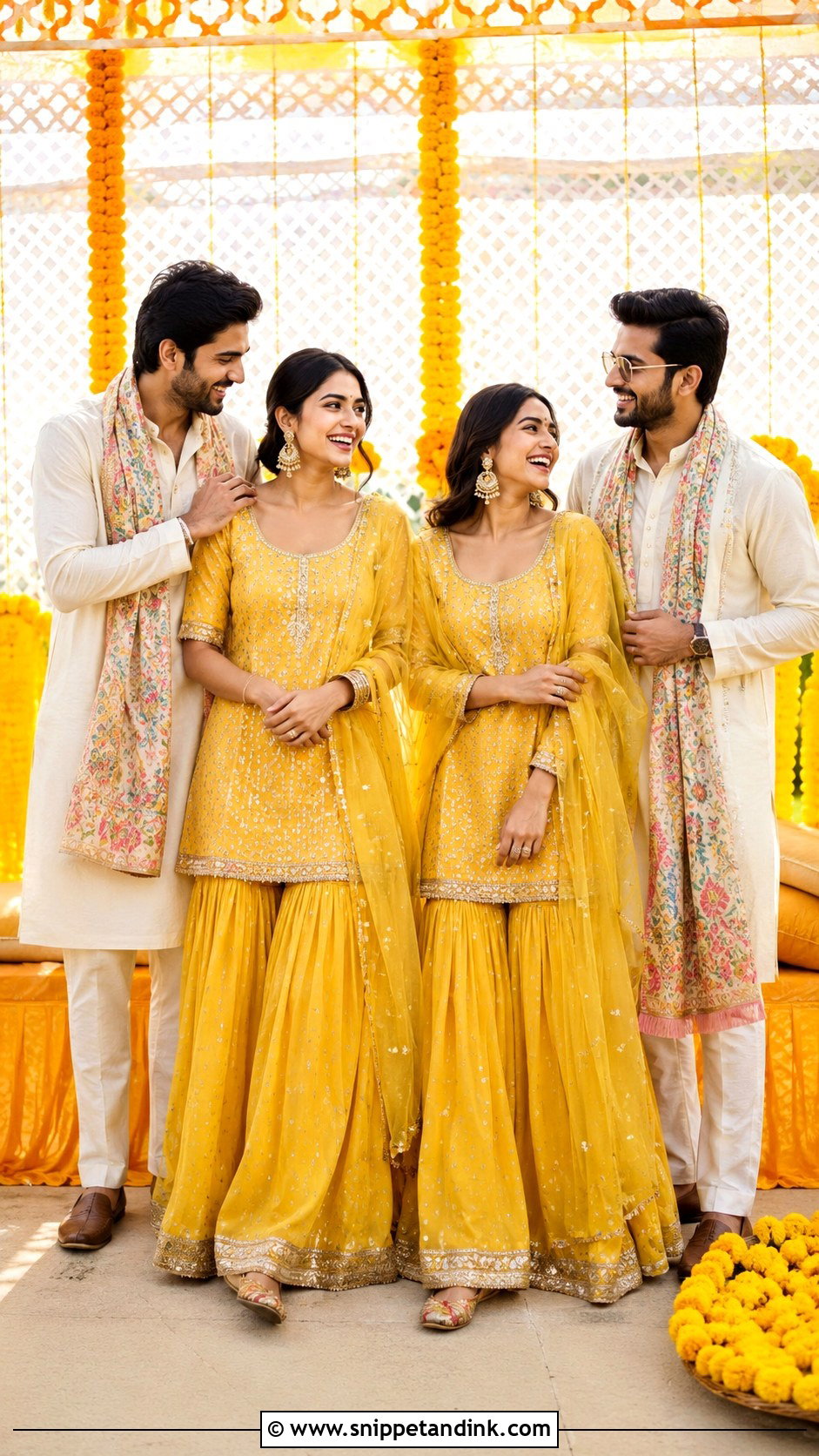
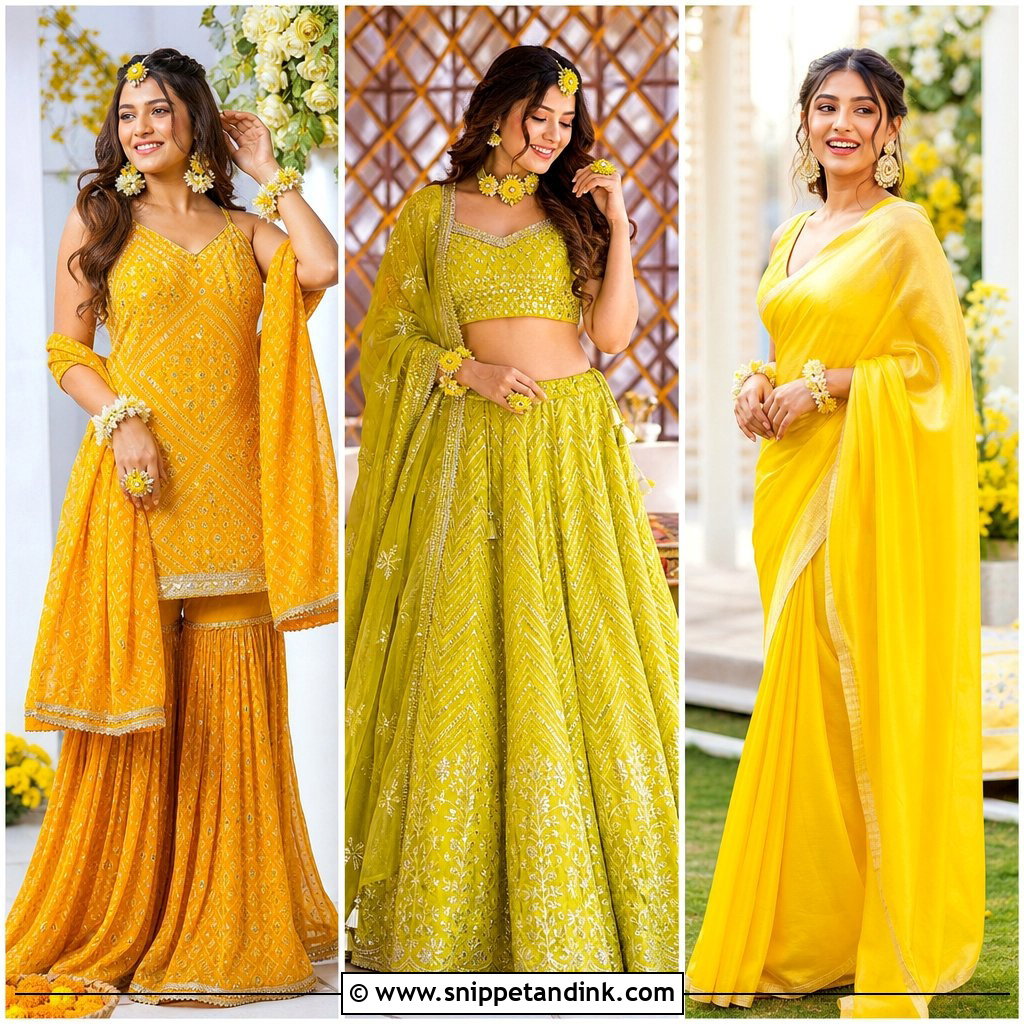
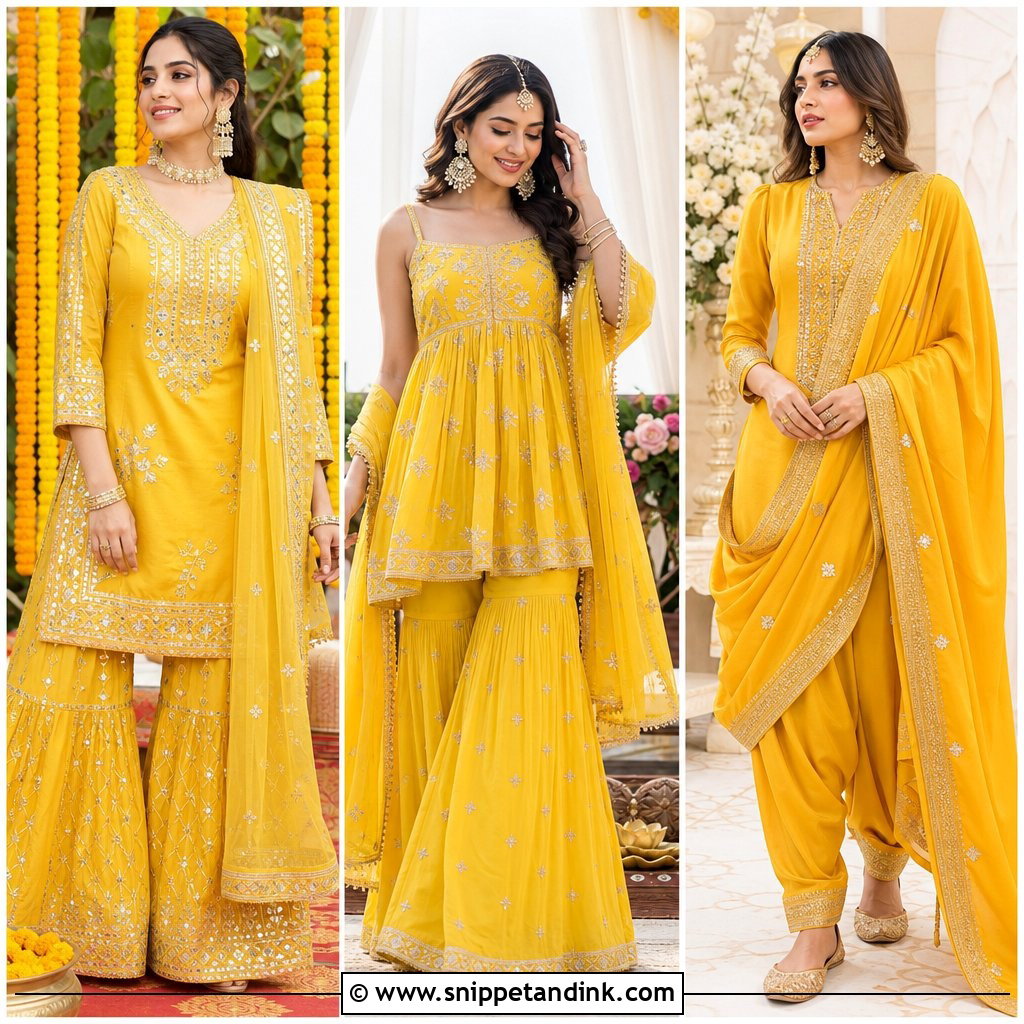
Shararas are for the dancers. Sisters, cousins and younger relatives in short kurtis with flared sharara pants, in yellow, mustard, ivory or florals, move freely through the dhol and any choreographed number. The men balance them with simple kurtas, printed stoles and juttis. The flare works on petite and plus-size relatives alike. I’d skip heavy borders for an outdoor ceremony, since a weighted hem drags through grass and spilled paste.
7. Haldi Palazzo Suit Family Outfit
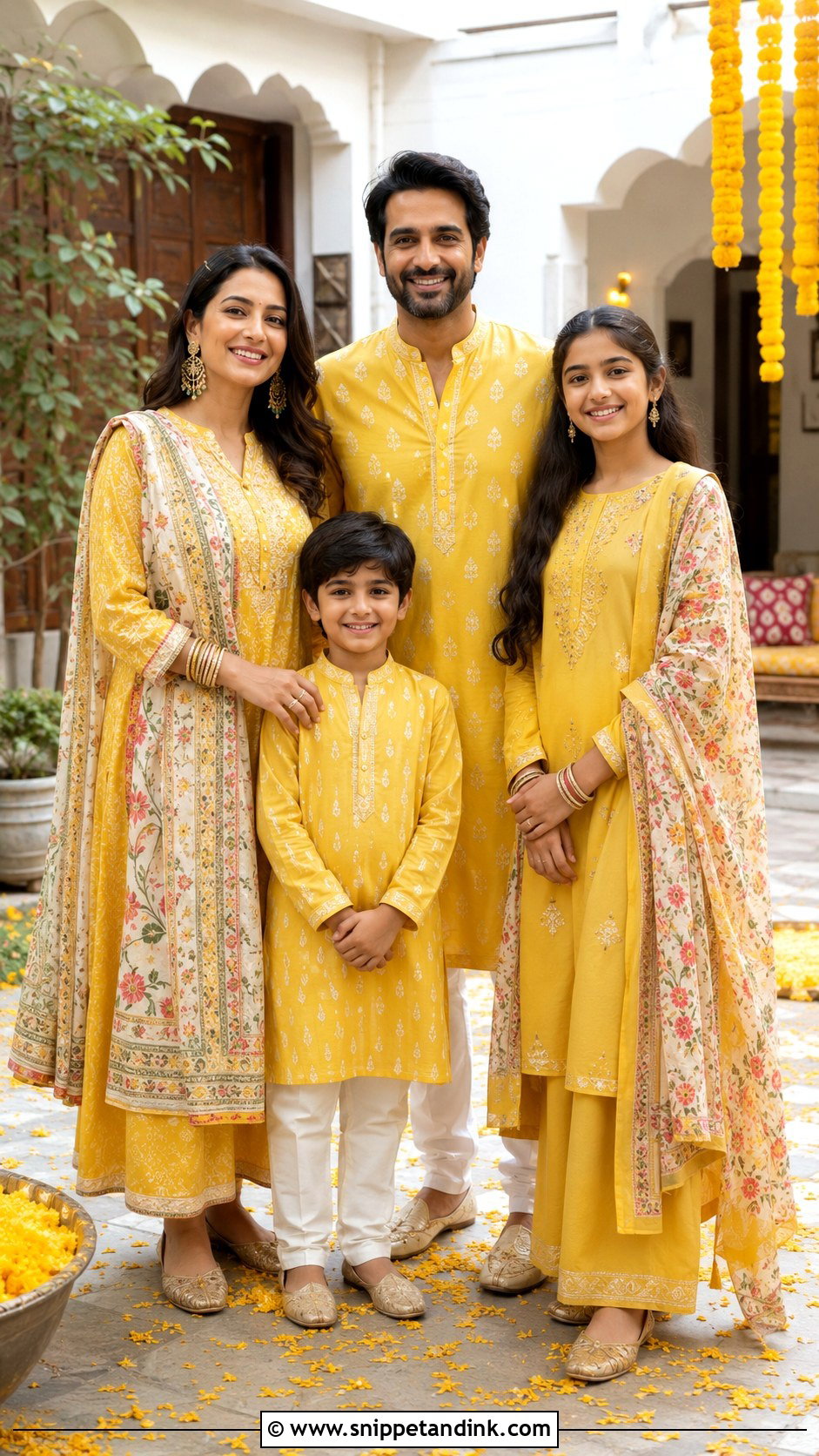
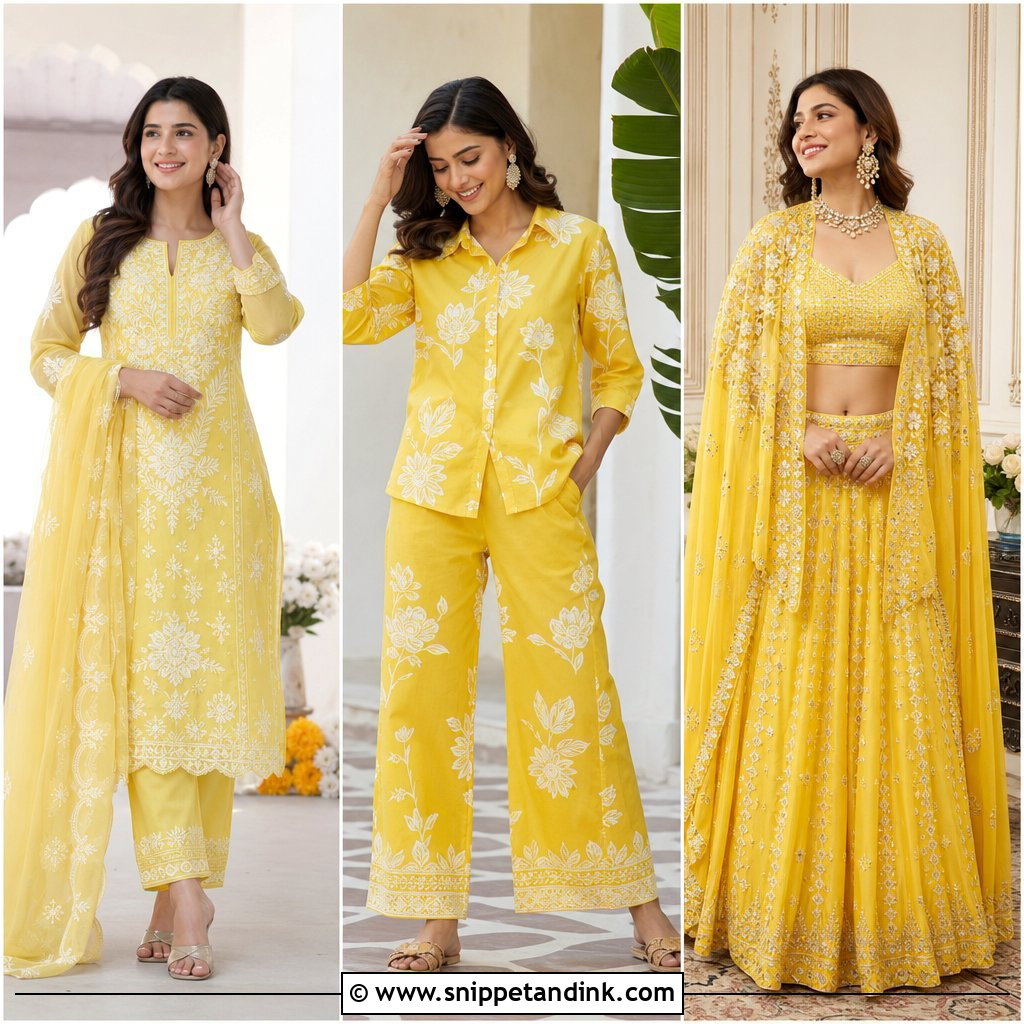
Palazzo suits go to the relatives who’ll be working: serving, carrying the haldi bowls, keeping children out of trouble. A yellow kurta, wide palazzos and a printed dupatta breathe in the heat and never need adjusting. Mirror work, gota lace or small florals dress them up enough. Men match with simple cotton kurtas and white trousers. A low bun with fresh flowers keeps hair off the neck on a warm day.
8. Haldi Chikankari Kurta Family Outfit
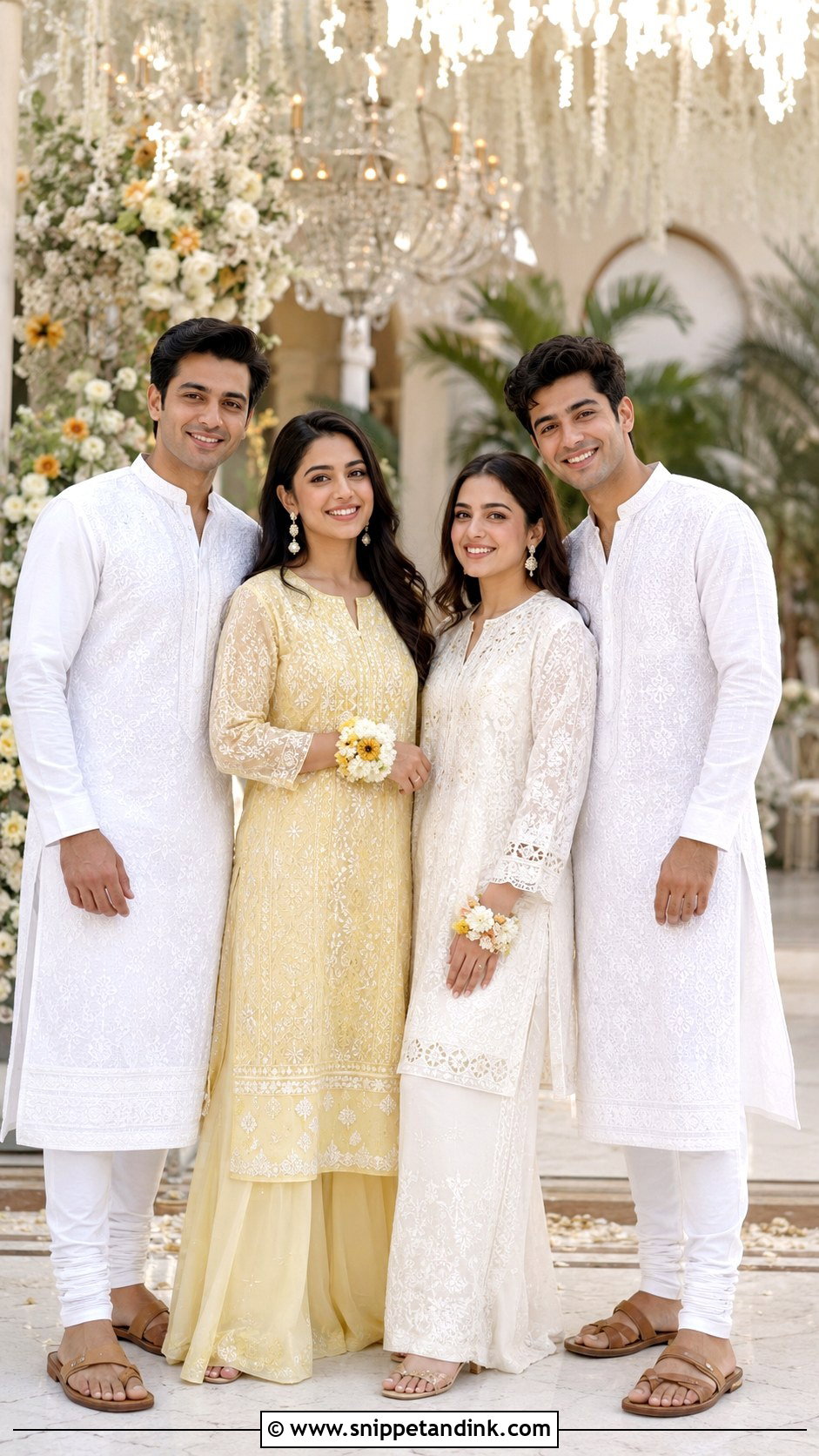
Chikankari is the quiet option, and some families genuinely want quiet. Women wear yellow or ivory chikankari kurtas with palazzos, straight pants or shararas; men wear white or pale yellow chikankari kurtas with churidars. For the group photo I mix yellow, ivory and pale green so it reads coordinated without looking like a uniform. Fine white-on-white thread work shows turmeric badly, though, so the people sitting closest to the couple should take the yellow versions.
9. Haldi Mirror Work Lehenga Family Outfit
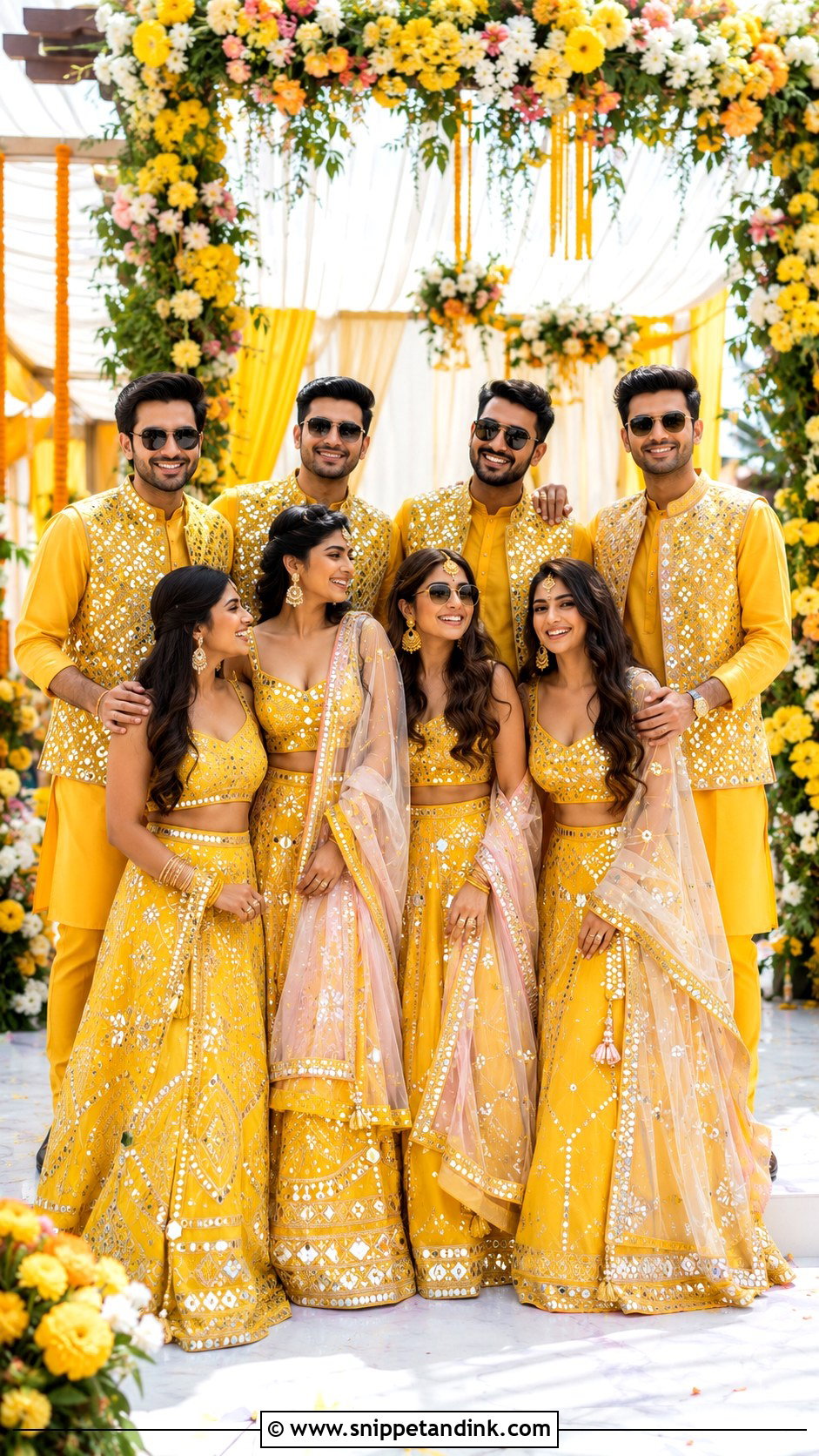
Mirror work suits families with a dance performance planned, because every move catches the light. Sisters and young relatives wear yellow or lime lehengas with mirror work blouses, and the men add mirror work Nehru jackets or embroidered stoles over solid kurtas. Mirrors add weight quickly, so for daytime I ask for small, scattered mirrors on light fabric rather than dense panels. Keep makeup dewy rather than shimmery; the outfits already supply the sparkle.
10. Haldi Gota Patti Suit Family Outfit
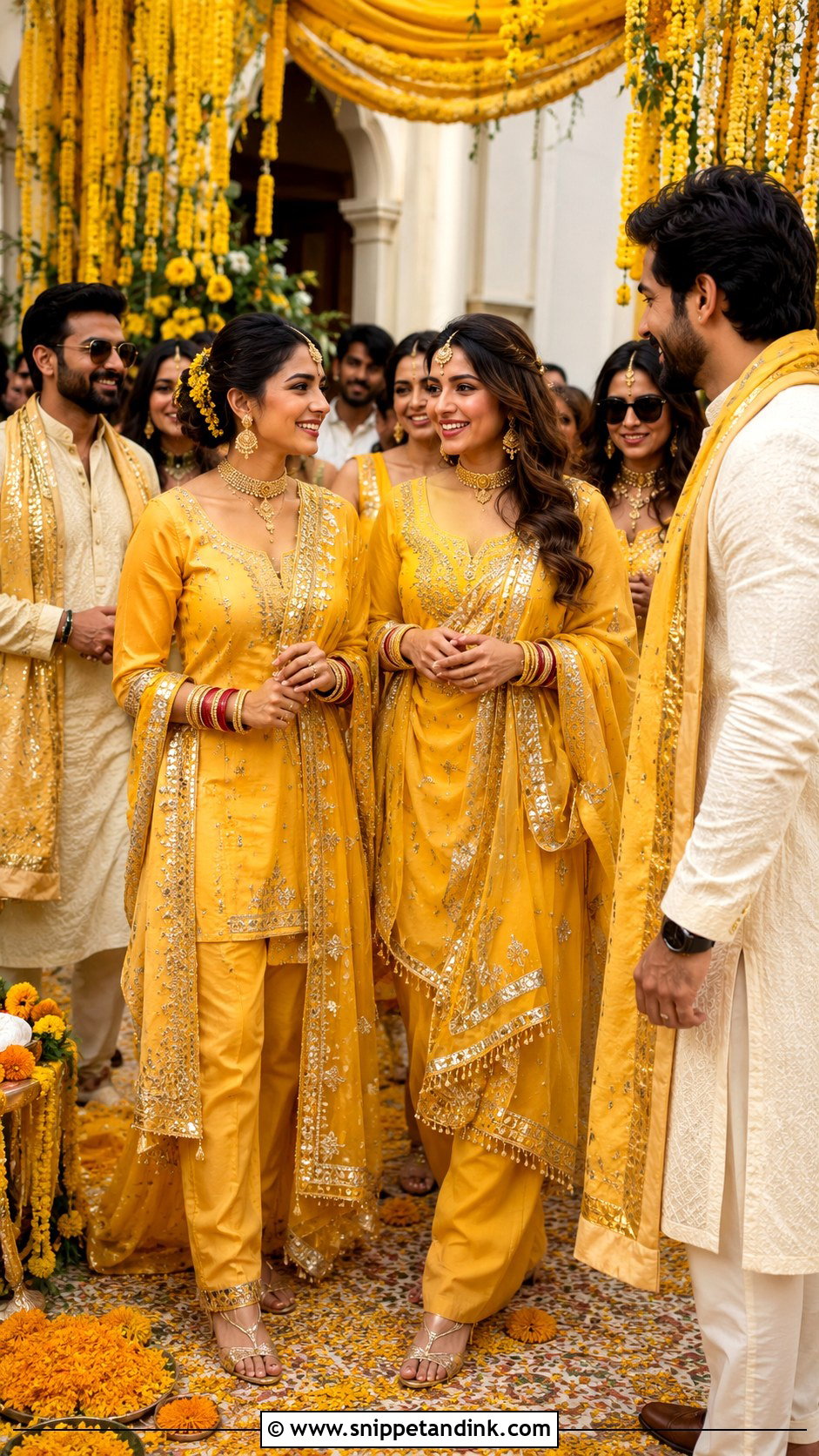
Gota patti, the appliqué of metallic ribbon cut into leaves and flowers, is the detail I use most often to tie a large family together. Women wear gota suits in yellow, mango, ivory or marigold. Mothers and aunts usually prefer longer kurtas, while sisters and cousins choose peplums, shararas or straight suits. The men get gota-trimmed stoles. Because gota is much lighter than dense metal-thread embroidery, it looks rich without the heat, and it sits naturally with Rajasthani-style decor of brass, marigolds and floor seating.
11. Haldi Marigold Lehenga Family Outfit
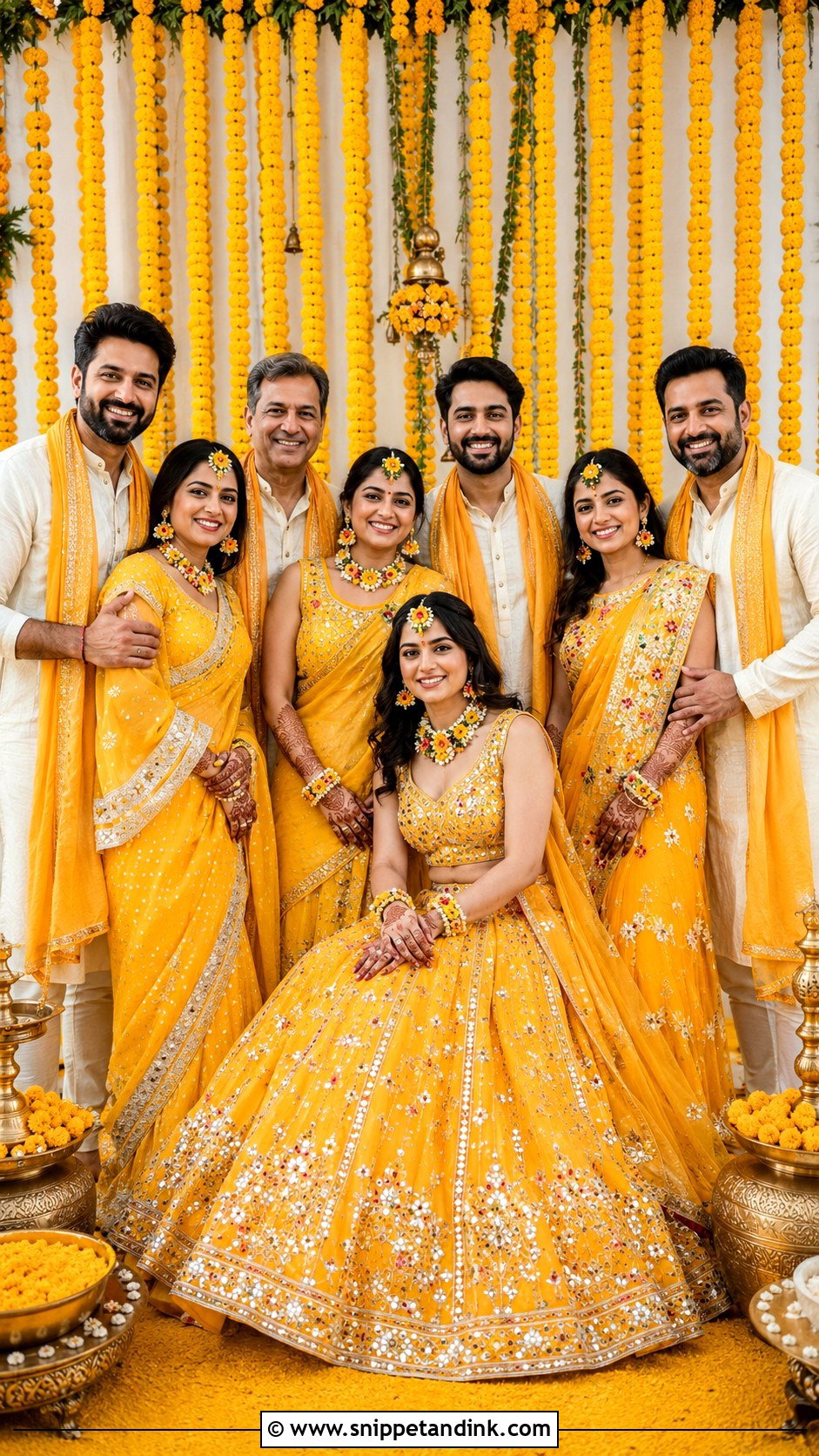
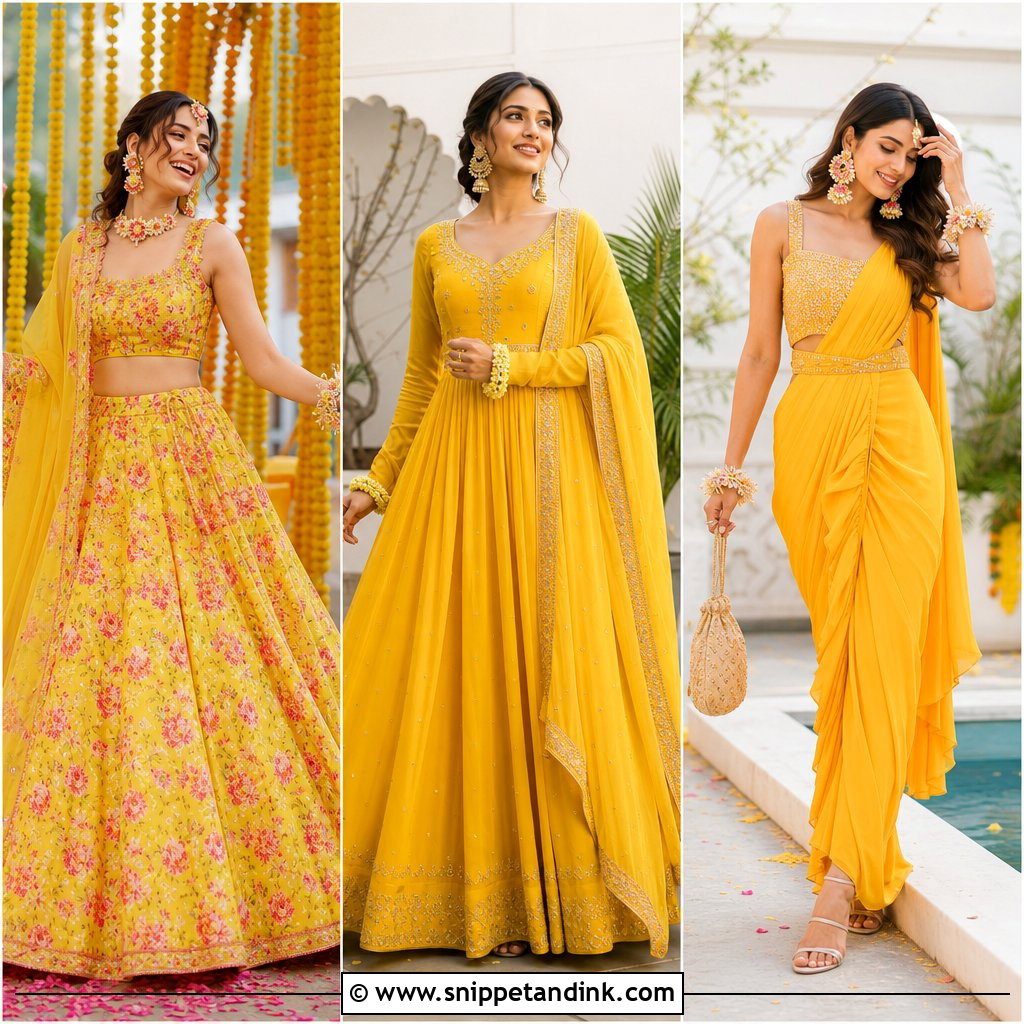
Marigold is the most traditional haldi yellow, and it glows in daylight next to the flower decor. A marigold lehenga with a simple blouse and a sheer dupatta suits sisters, cousins and the bride’s close family. Mothers can wear marigold sarees or Anarkalis, and the men cream kurtas with marigold stoles, jackets or pocket squares. I prefer marigold as an accent across the family rather than head to toe on everyone, which keeps the bride standing out in her own photos.
12. Haldi Lime Green And Yellow Family Outfit
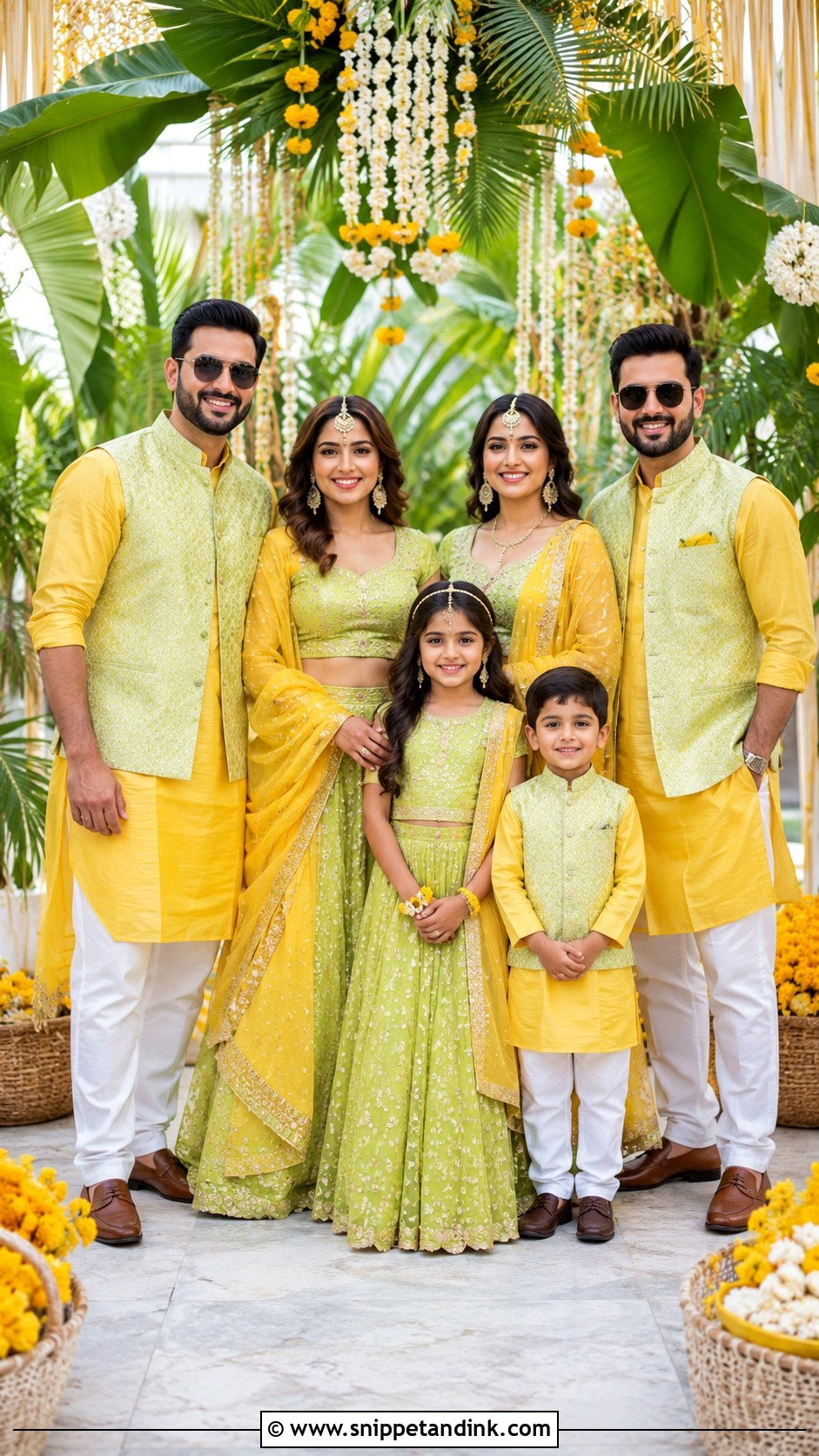
Lime and yellow is a younger palette, and it’s the one I’d pick for a garden or tropical haldi with plenty of greenery around. Women wear lime lehengas, sarees or shararas with yellow dupattas; men wear yellow kurtas with lime stoles or pale green Nehru jackets. Kids can join in lime kurta sets or yellow frocks. Watch the shade, because lime runs from soft pistachio to neon. The neon end can throw a green tint onto faces in close portraits, so I steer families toward the softer end.
13. Haldi Pastel Yellow Family Outfit
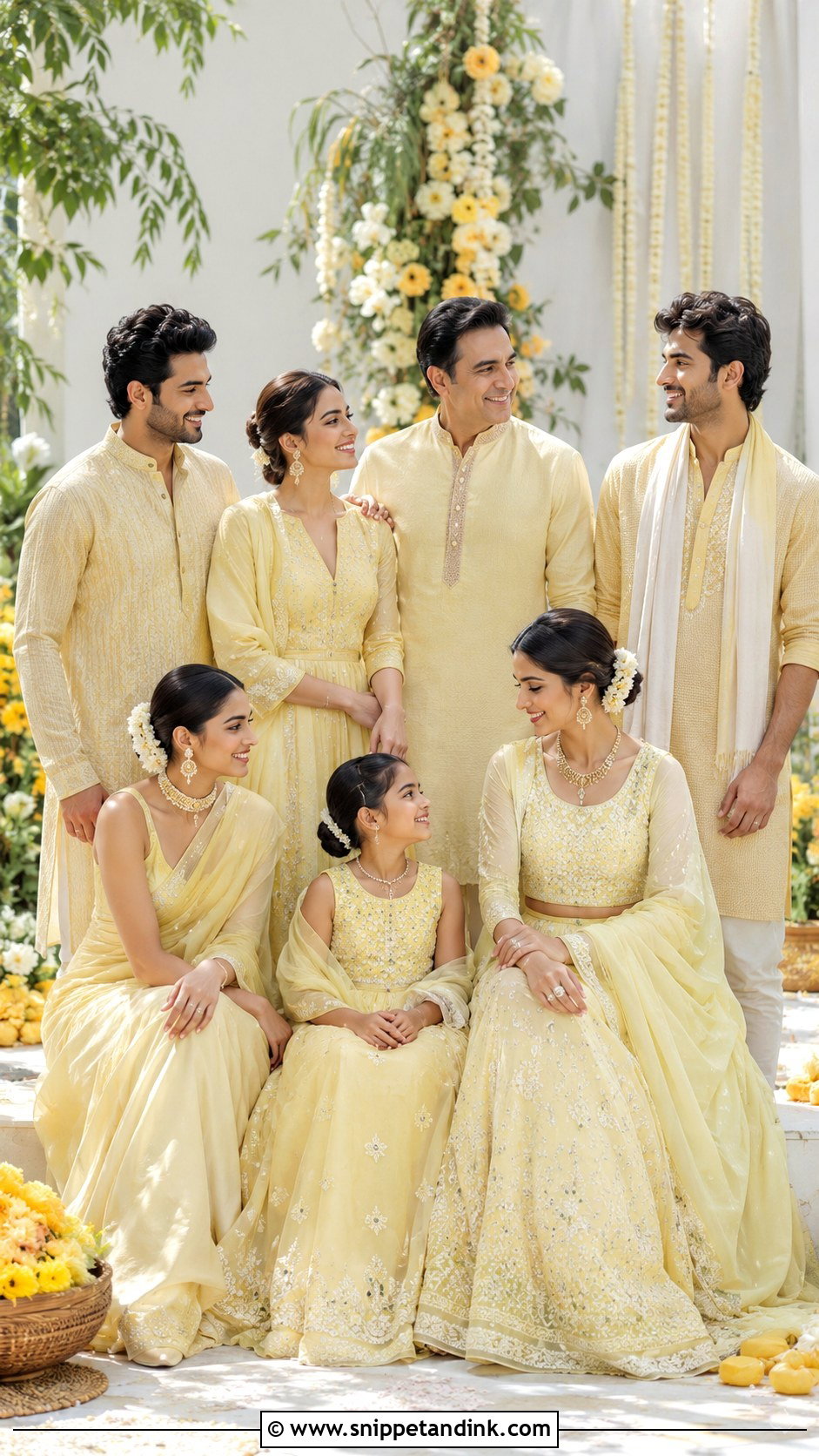
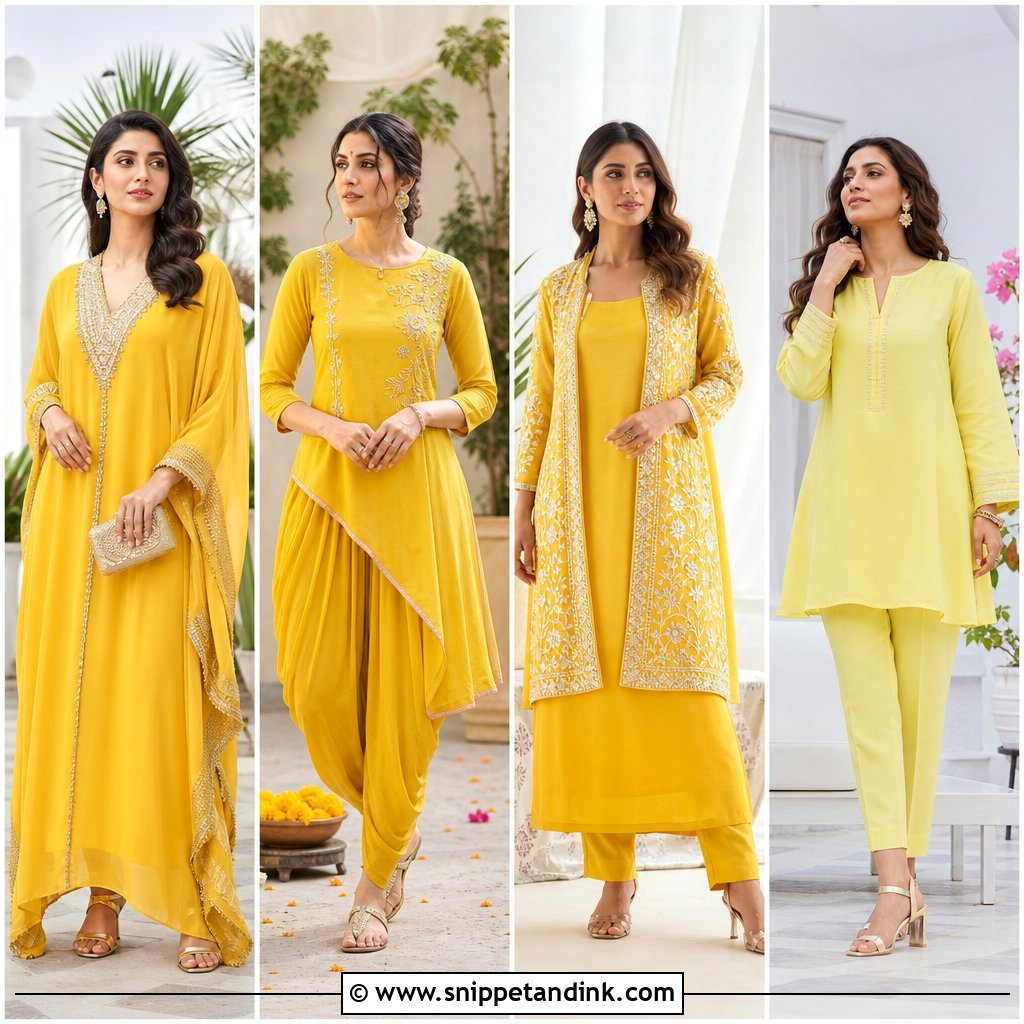
Pastel yellow suits a morning haldi at home, or a family with many older relatives, since the color is calm and kind to most skin tones. Women can pick sarees, lehengas, Anarkalis or palazzo suits, and men pale yellow kurtas with ivory pants and beige juttis. On its own, pastel yellow can look washed out under strong sun. I always add one accent: white, peach or sage green. Organza, georgette, cotton silk and linen keep it airy.
14. Haldi Orange And Yellow Family Outfit
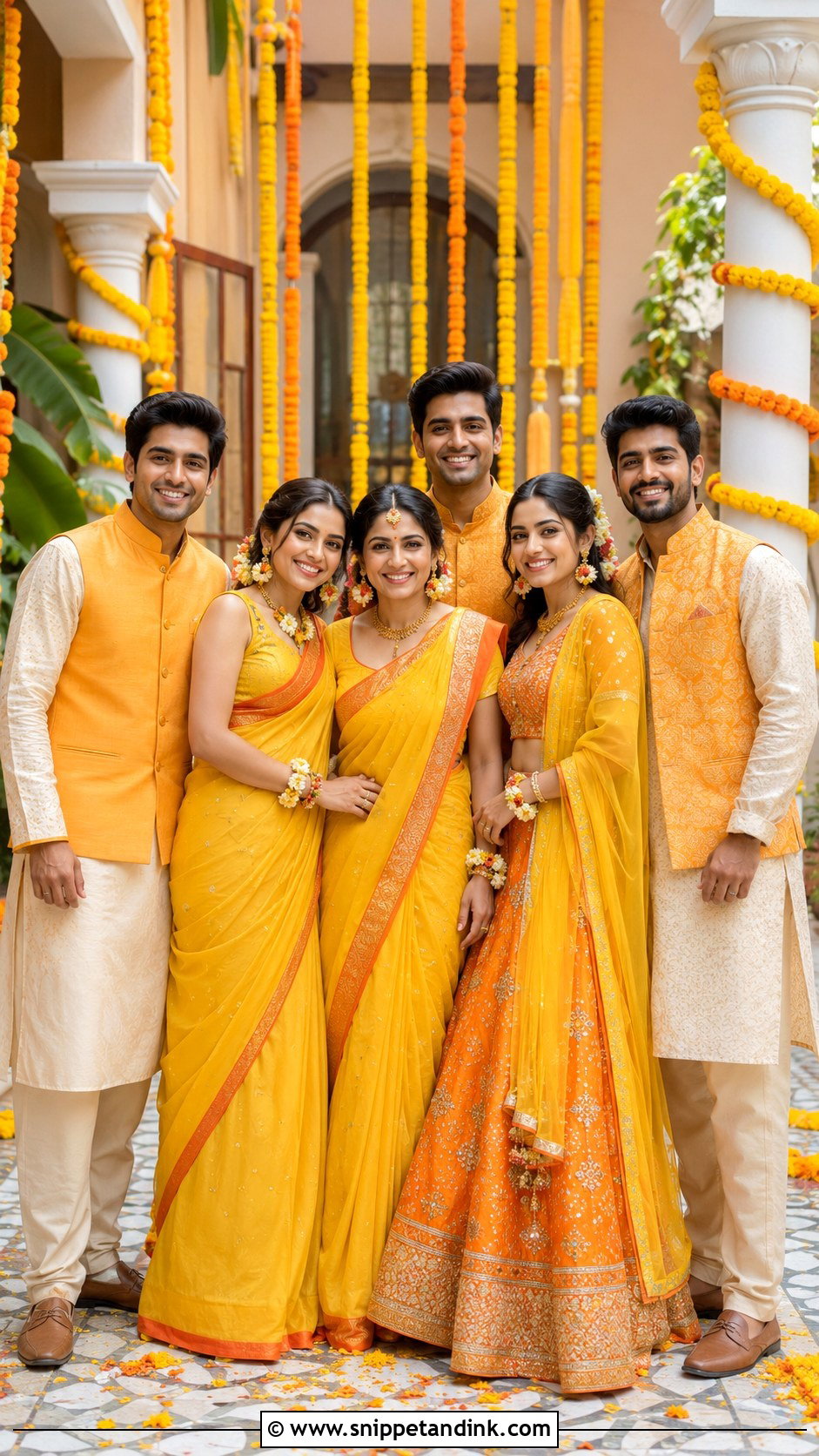
Orange and yellow is the boldest family palette and the most traditional in feel. Women wear yellow sarees with orange borders, orange lehengas with yellow dupattas, or printed suits mixing both; men wear saffron, mustard or yellow kurtas with cream pants. With this much color, the jewelry has to stay simple. It sits naturally with marigold decor, brass plates and bright cushions. If the bride is wearing yellow, I suggest the family lean orange so she doesn’t disappear among them.


15. Haldi Cotton Kurta Family Outfit
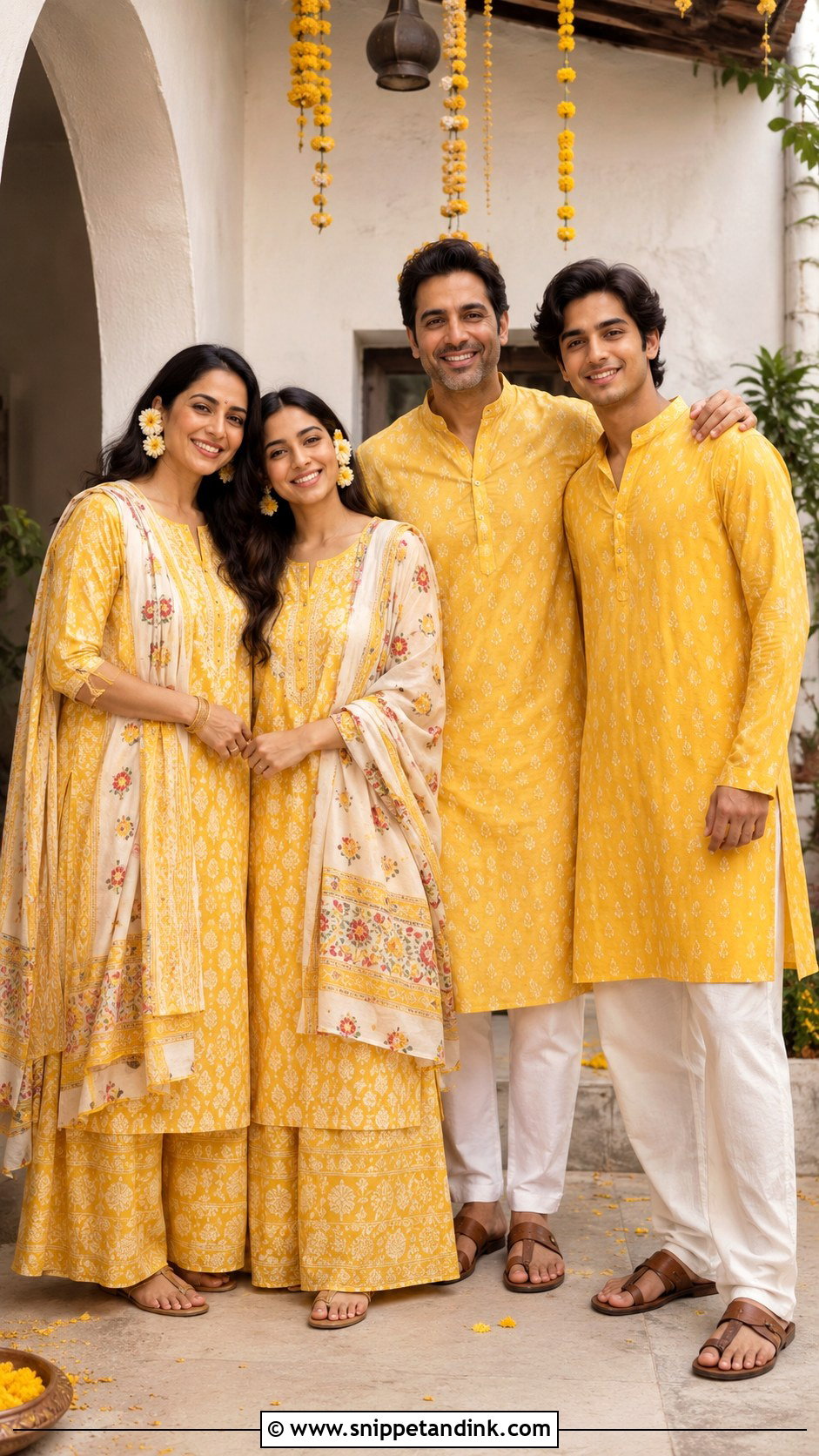
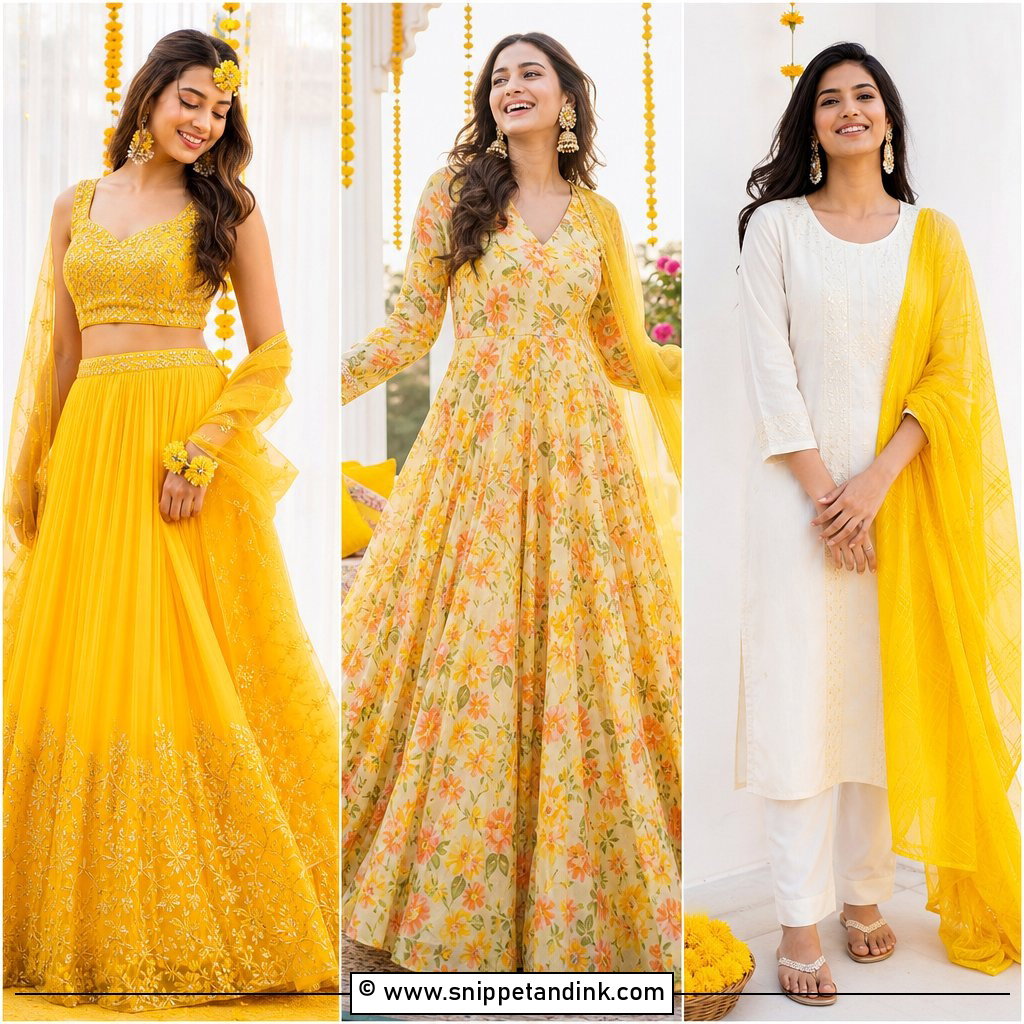
Cotton kurtas are what a family wears when everyone is actually doing the haldi rather than watching it. Women choose cotton kurta sets with palazzos, straight pants or printed dupattas, and men cotton kurtas with pajamas, churidars or linen trousers. Block prints in yellow, white or mustard keep it festive. Cotton handles floor seating, dancing and a splash of paste, and it goes in the wash afterward. For a summer home function, this is my default.
16. Haldi Linen Kurta And Saree Outfit
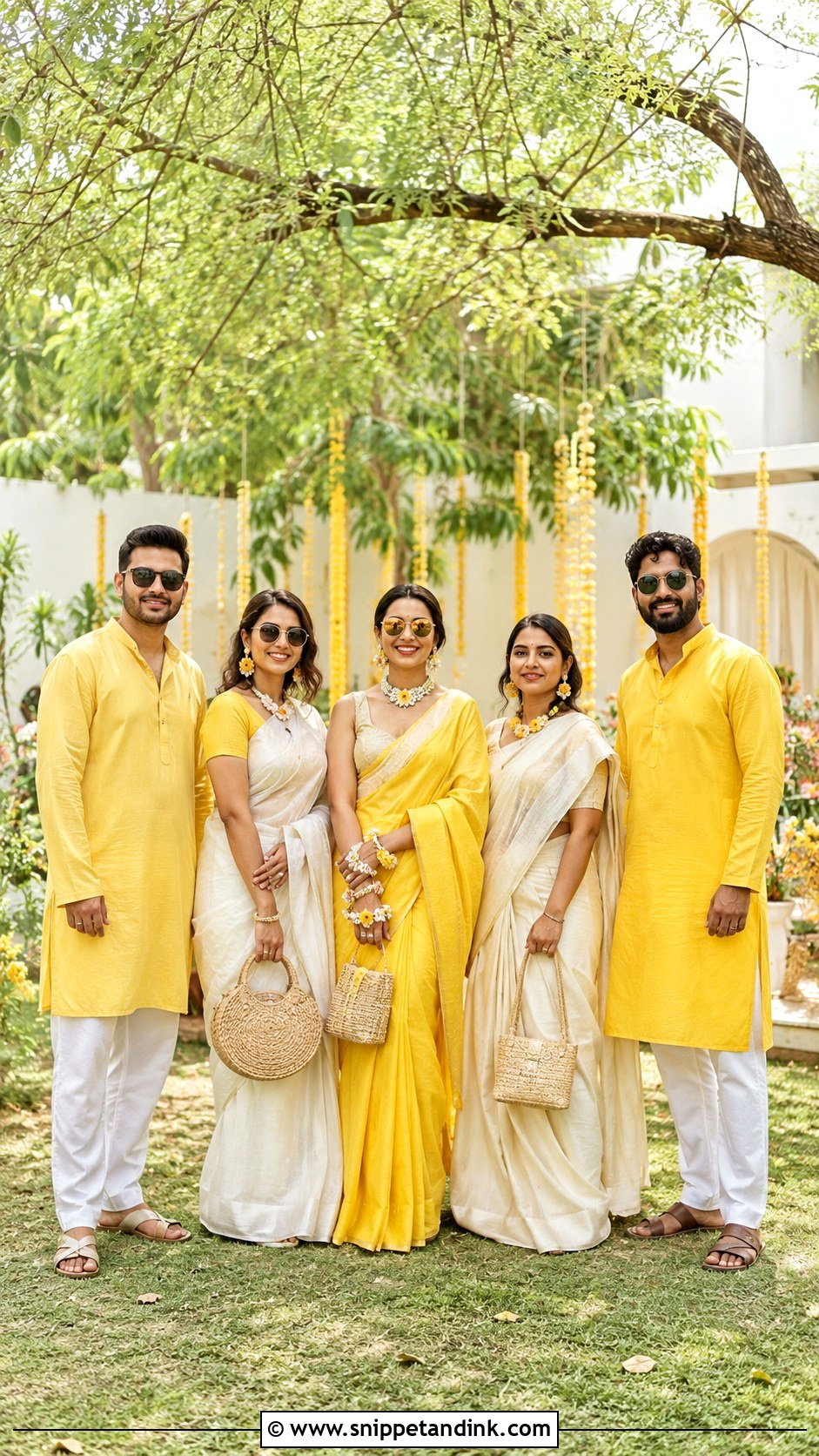
Linen suits families with understated taste and a hot outdoor venue. Women wear linen sarees in yellow, ivory, mustard or florals; men wear linen kurtas with white pants and leather sandals. Be ready for creases. Linen wrinkles as soon as you sit, which most people accept as part of its character, but if the family wants crisp portraits, take them before the ceremony starts. Subtle printed dupattas or stoles connect the solid pieces.
17. Haldi Indo Western Family Outfit
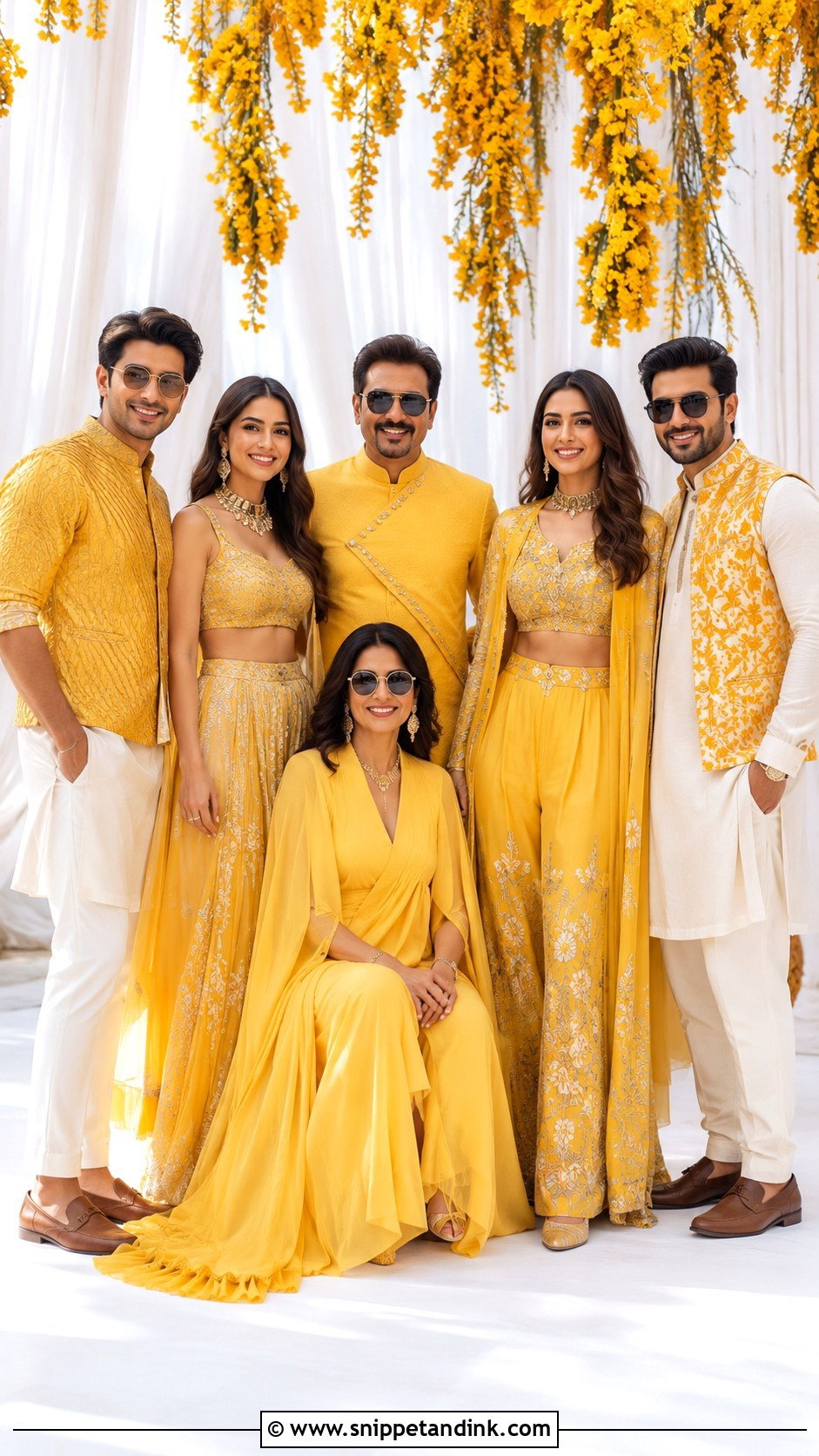
Indo-western dressing suits younger families and city weddings. Women can wear crop tops with palazzo pants, cape sets, draped skirts or dhoti pants in yellow and ivory tones, and men asymmetric kurtas, short jackets or kurta-trouser sets. The risk is that everyone’s idea of modern looks different. Keep the palette tight, two colors at most, so ten different silhouettes still read as one theme. Statement earrings and metallic flats suit the mood.
18. Haldi Dhoti Kurta Family Outfit
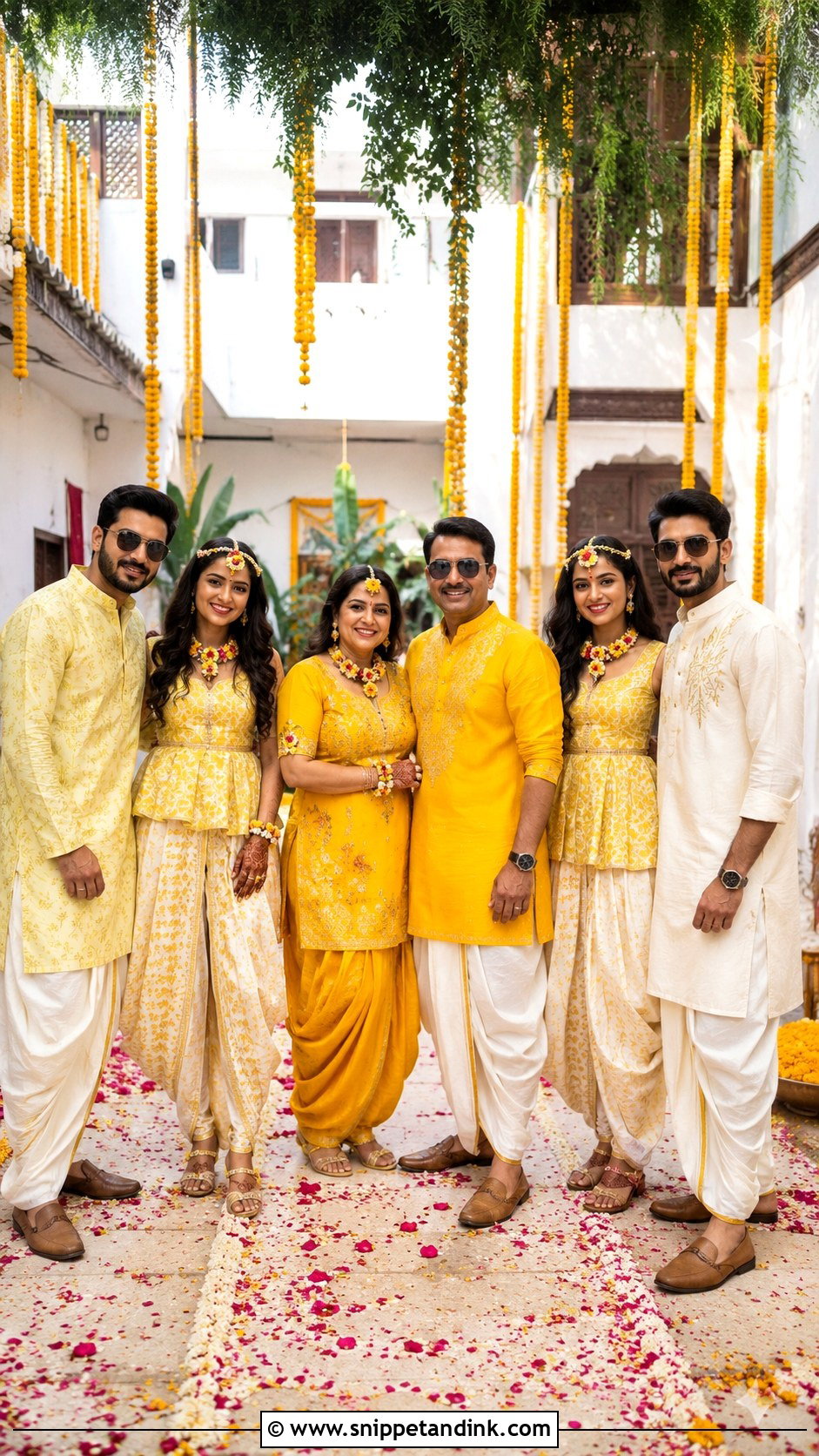
Dhoti kurtas suit the men who’ll sit cross-legged through the rituals and then dance. Yellow, ivory or mustard kurtas go with dhoti pants and juttis, and women can coordinate in dhoti-style sets, peplum tops with dhoti pants or draped tunics. Mini dhoti kurta sets on little boys always get a reaction. I recommend pre-draped dhoti pants for anyone who has never tied one, because a hand-tied dhoti loosening halfway through the dancing is a real risk.
19. Haldi Nehru Jacket Family Outfit
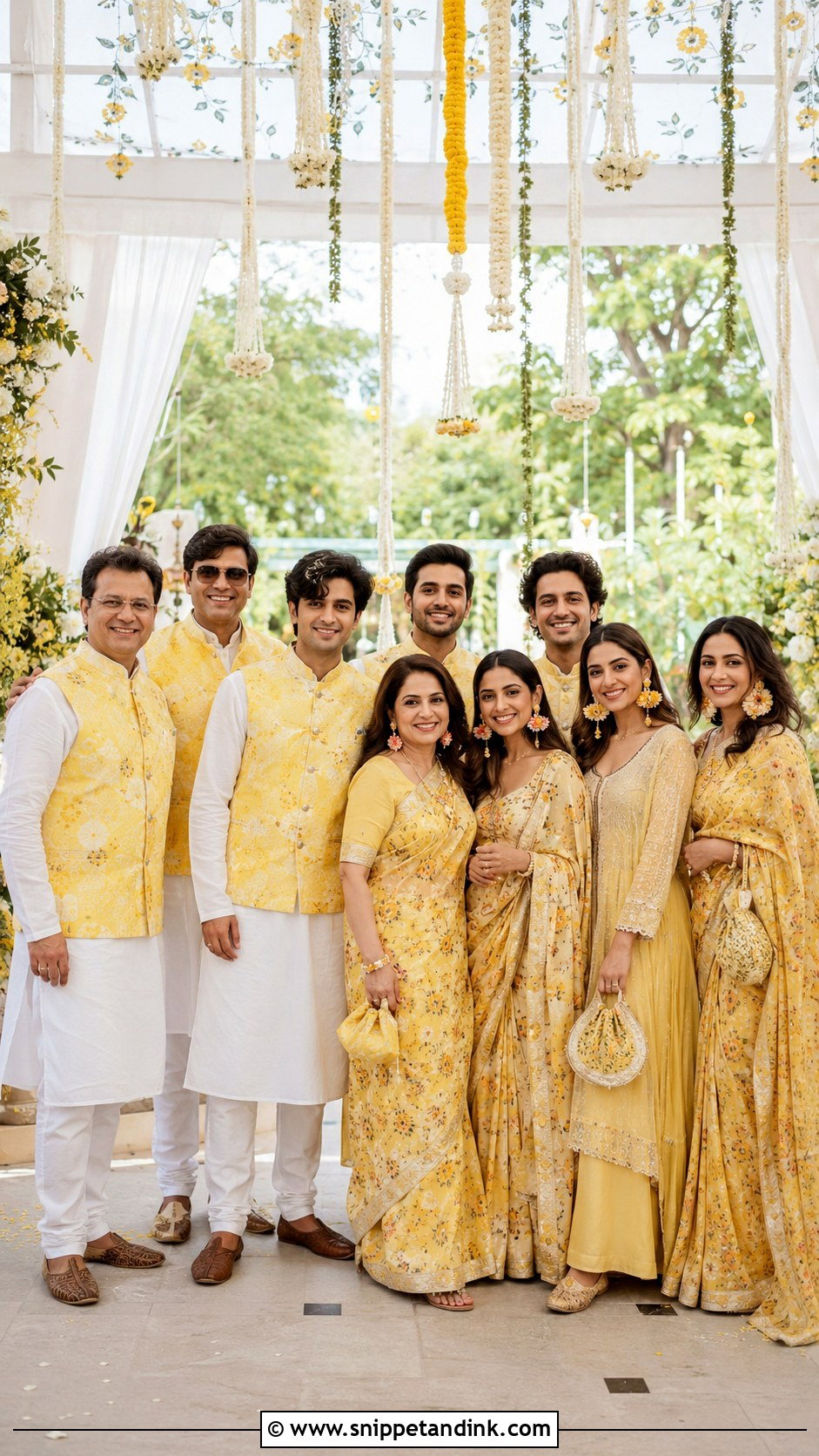
Nehru jackets are the quickest way to make the men look finished. Fathers, brothers, uncles and cousins wear white or yellow kurtas with printed, embroidered, or solid Nehru jackets, and the women pick up a shade from the jacket print in their sarees, shararas or Anarkalis. If the jackets are being stitched to match, order them early. Tailors get busy in wedding season, and a jacket that pulls across the chest looks worse than no jacket. Churidars and juttis complete it.
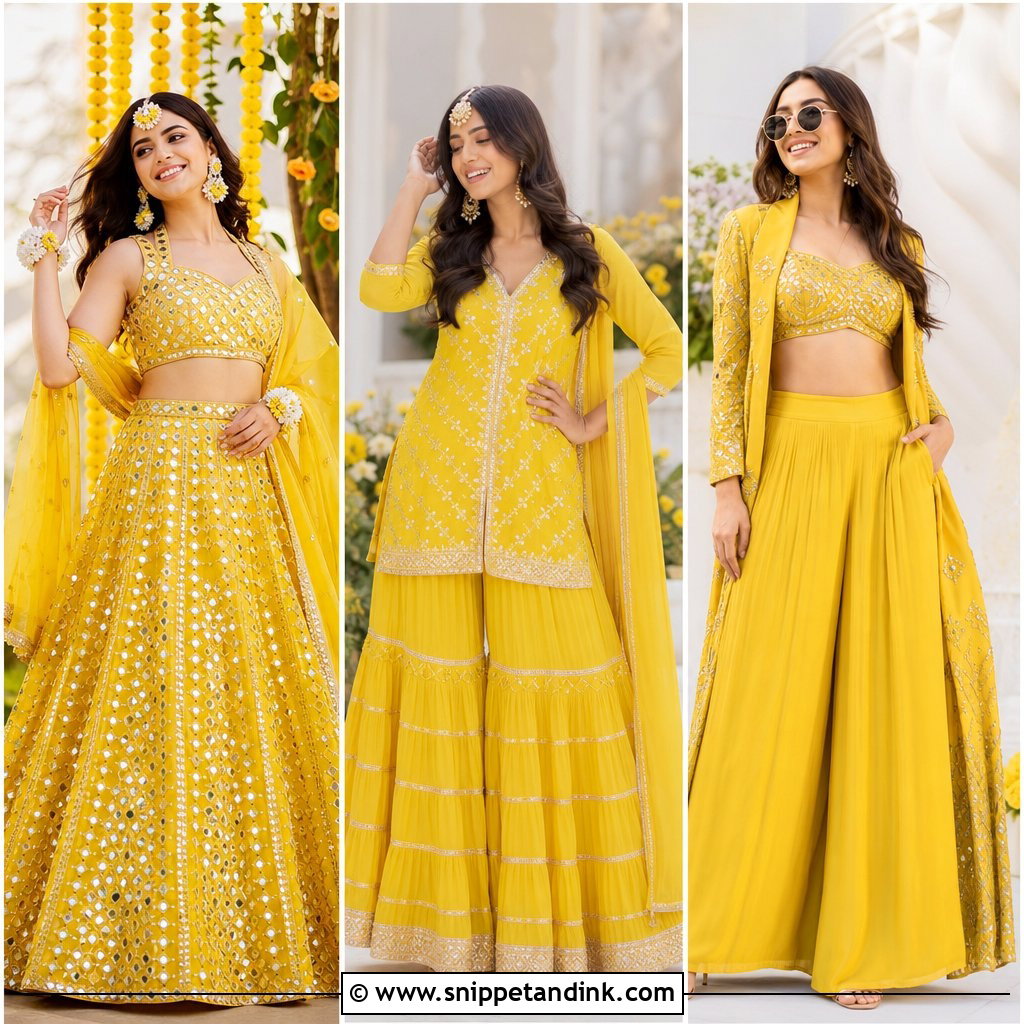
20. Haldi Sibling Matching Outfit
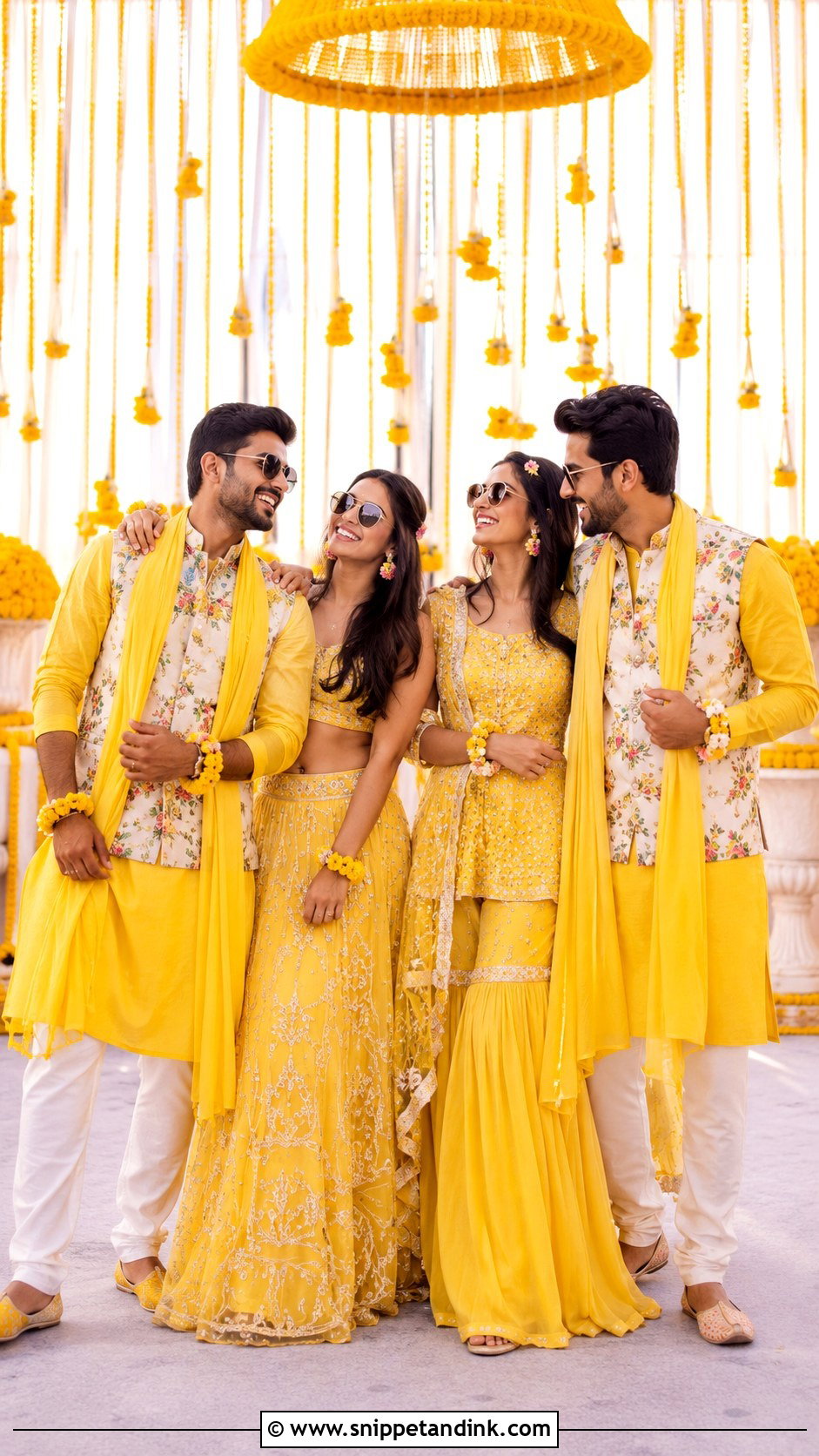
Siblings don’t need identical outfits, just one shared detail: mirror work, a particular print or the same marigold yellow. Sisters can wear coordinated lehengas, shararas or sarees in yellow and ivory, and brothers matching kurtas with stoles or pocket squares cut from the same fabric. Matching sunglasses make for fun candids. The bride’s siblings are usually the busiest people at the haldi, running errands and herding guests, so comfort matters more than drama here.
21. Haldi Mother Of The Bride Saree Outfit
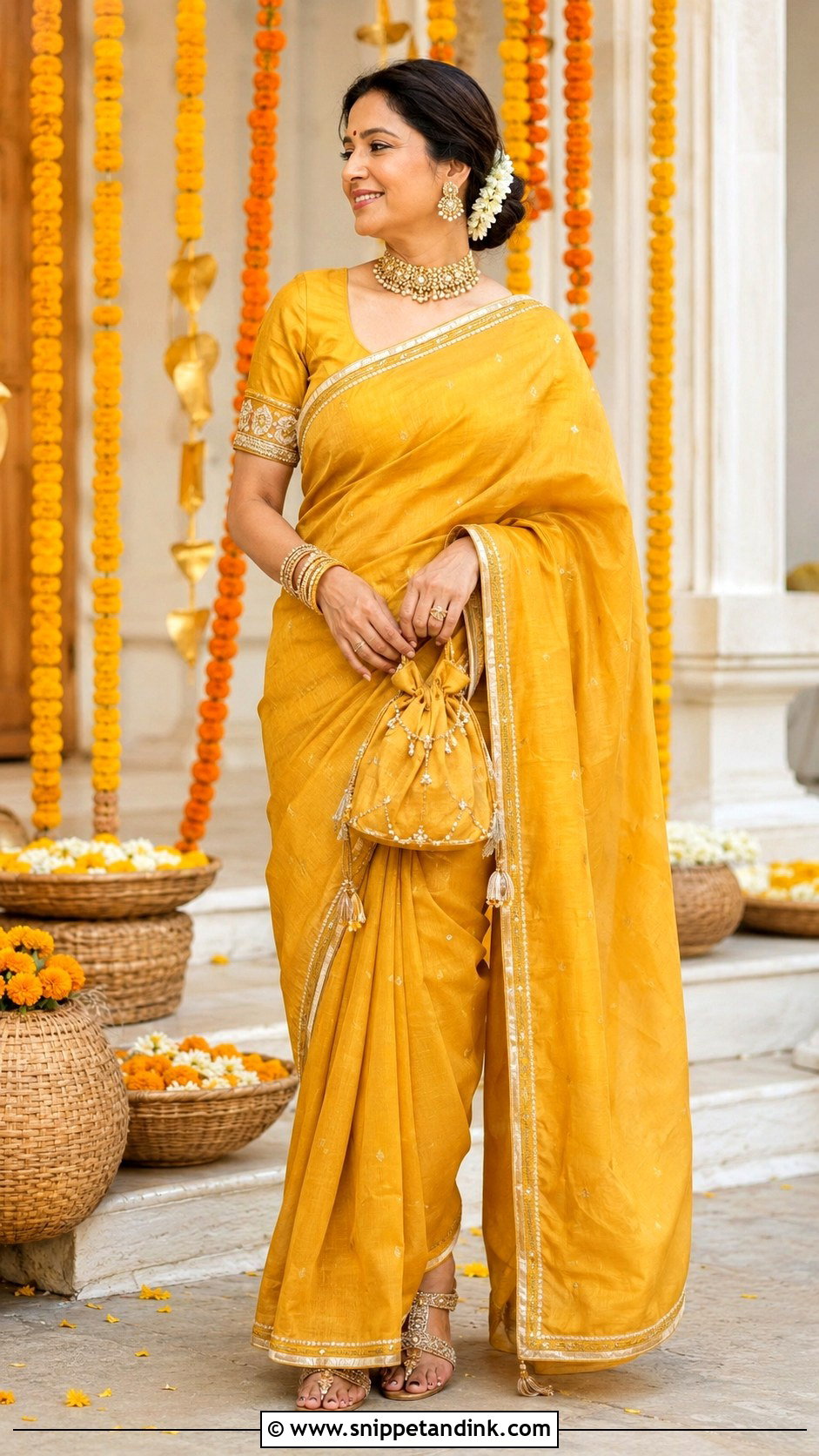
The mother of the bride is on her feet greeting people for most of the haldi, so I dress her for stamina first. A yellow, mustard, ivory or orange saree in silk cotton, chanderi, organza or georgette, with light zari, gota or a floral border, gives richness without weight. Her blouse must let her raise her arms comfortably, since she’ll be applying paste and giving blessings. Add comfortable sandals, gold jewelry and a neat bun with flowers. A potli holds her phone and the spare safety pins everyone will come asking for.
22. Haldi Father Of The Bride Kurta Outfit
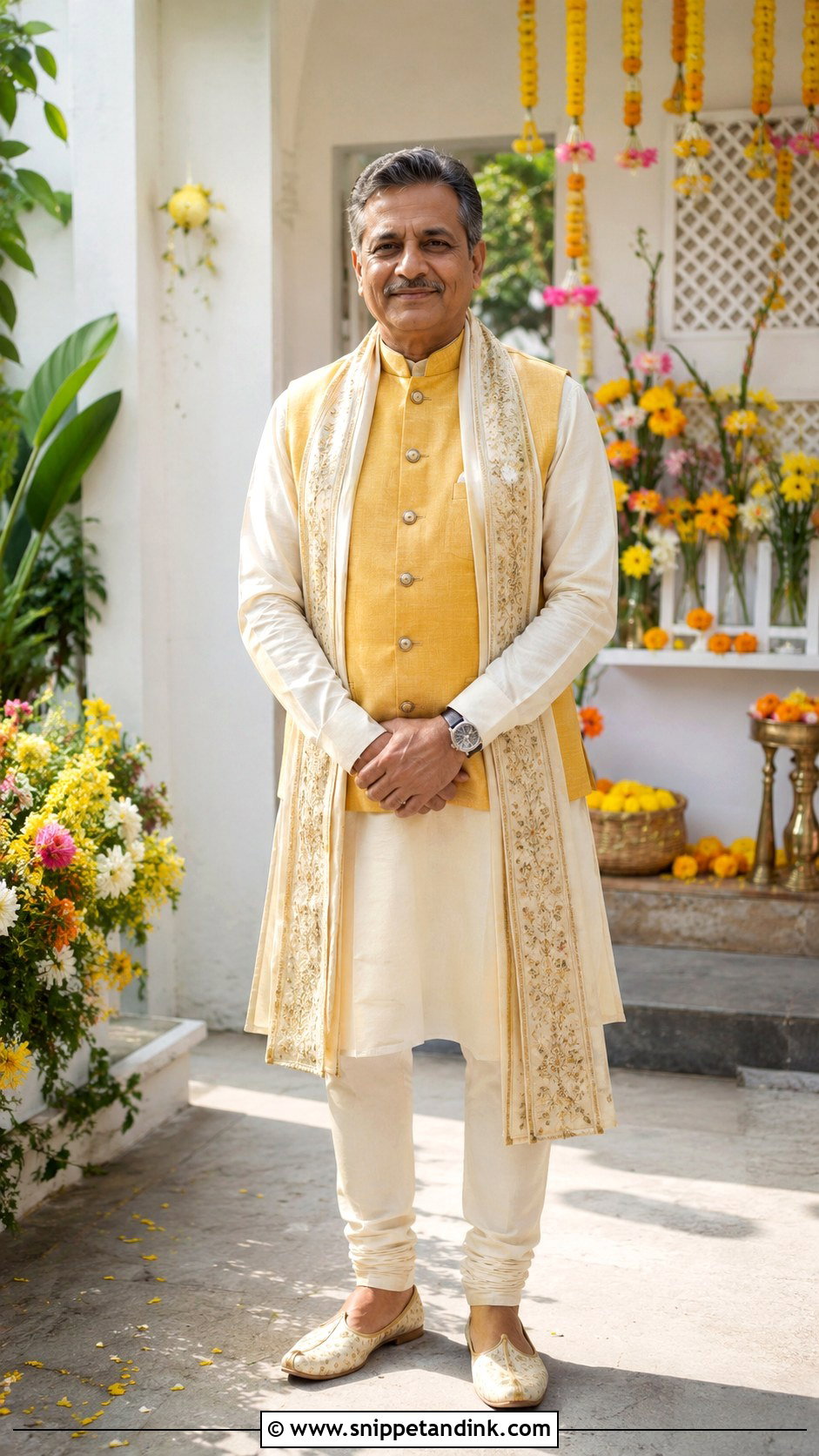
The father of the bride looks dignified in a well-fitted kurta set: cream, yellow, mustard or white with churidars. A Nehru jacket, embroidered stole or printed waistcoat adds the haldi touch, and lightweight silk, cotton, linen or jacquard handle the heat. If the family has a theme, his jacket or stole can pick up the mother’s saree color. I remind fathers to check kurta length at the fitting while seated, because a kurta that rides up looks unfinished in the sitting-down ritual photos.
23. Haldi Kids Matching Family Outfit
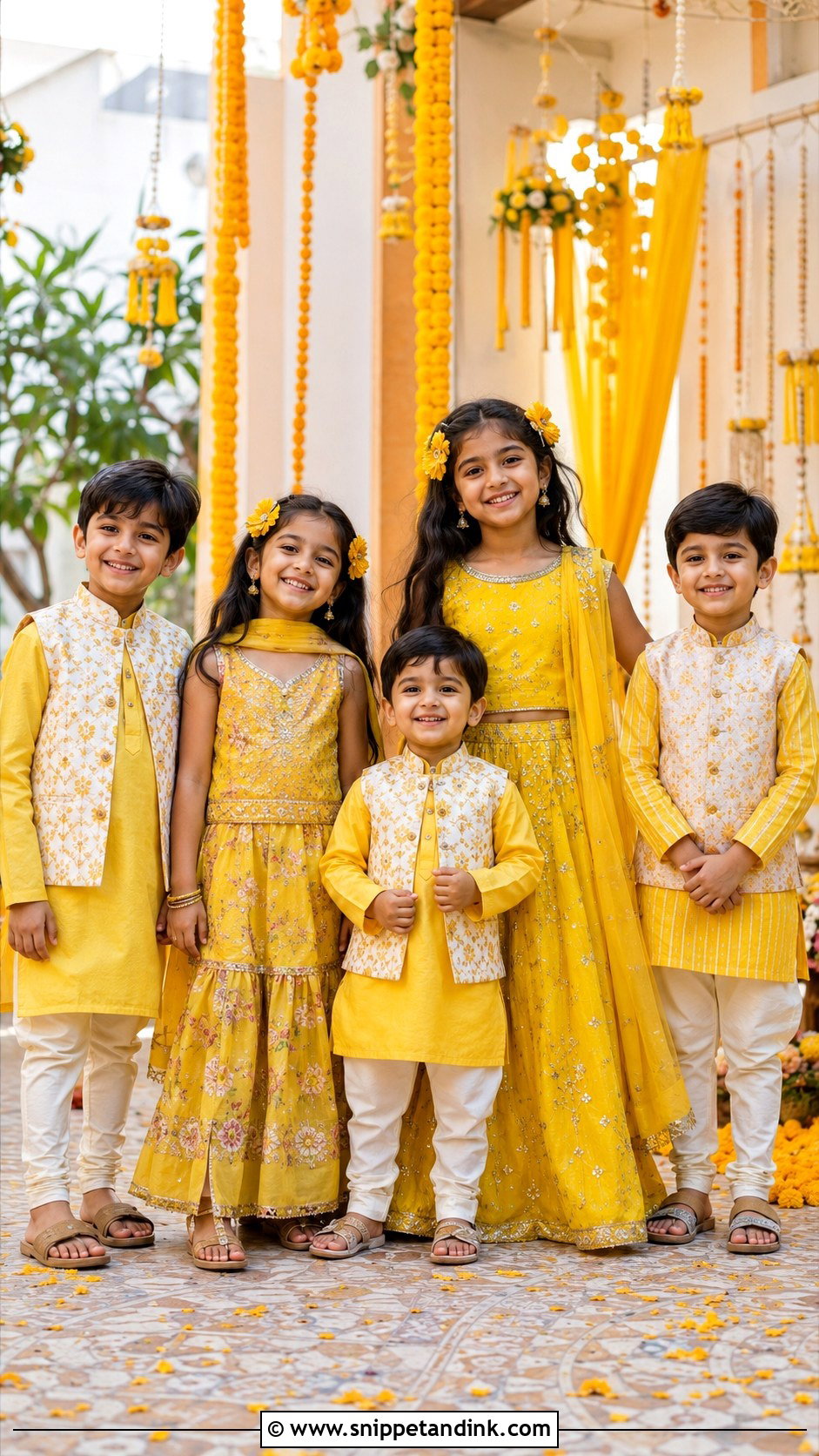
Kids’ Haldi outfits have one job: let them play. Girls can wear yellow lehengas, frocks, shararas or kurta-palazzo sets with soft linings, and boys kurta pajamas, dhoti kurtas or mini Nehru jacket sets. Scratchy embroidery, back zips and tight churidars make for an unhappy child within the hour. Tie them to the family through color or a small accessory, not a full copy of the adults’ outfits. And pack a spare set, because children and turmeric paste always find each other.
24. Haldi Couple Coordinated Family Outfit
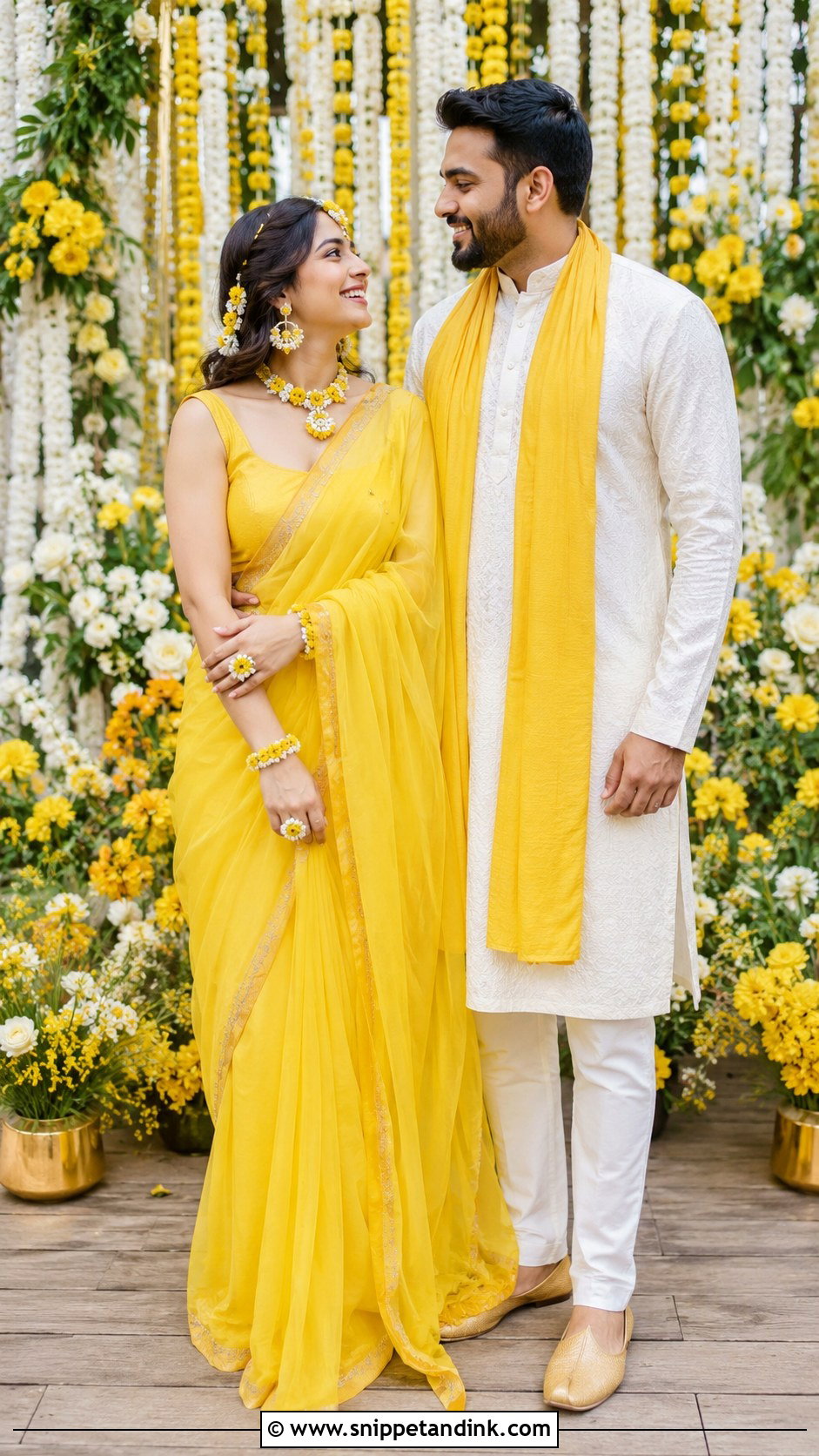
A coordinated couple outfit suits married siblings, parents or cousins. One partner wears a yellow saree, lehenga or suit and the other an ivory kurta with a matching yellow stole or jacket. Another route is the same print in her dupatta and his Nehru jacket, which links them without matching head to toe. Breathable fabric and comfortable shoes matter for both. When several couples follow the same color story, the family photo looks organized without anyone feeling costumed.
25. Haldi Full Family Coordinated Outfit
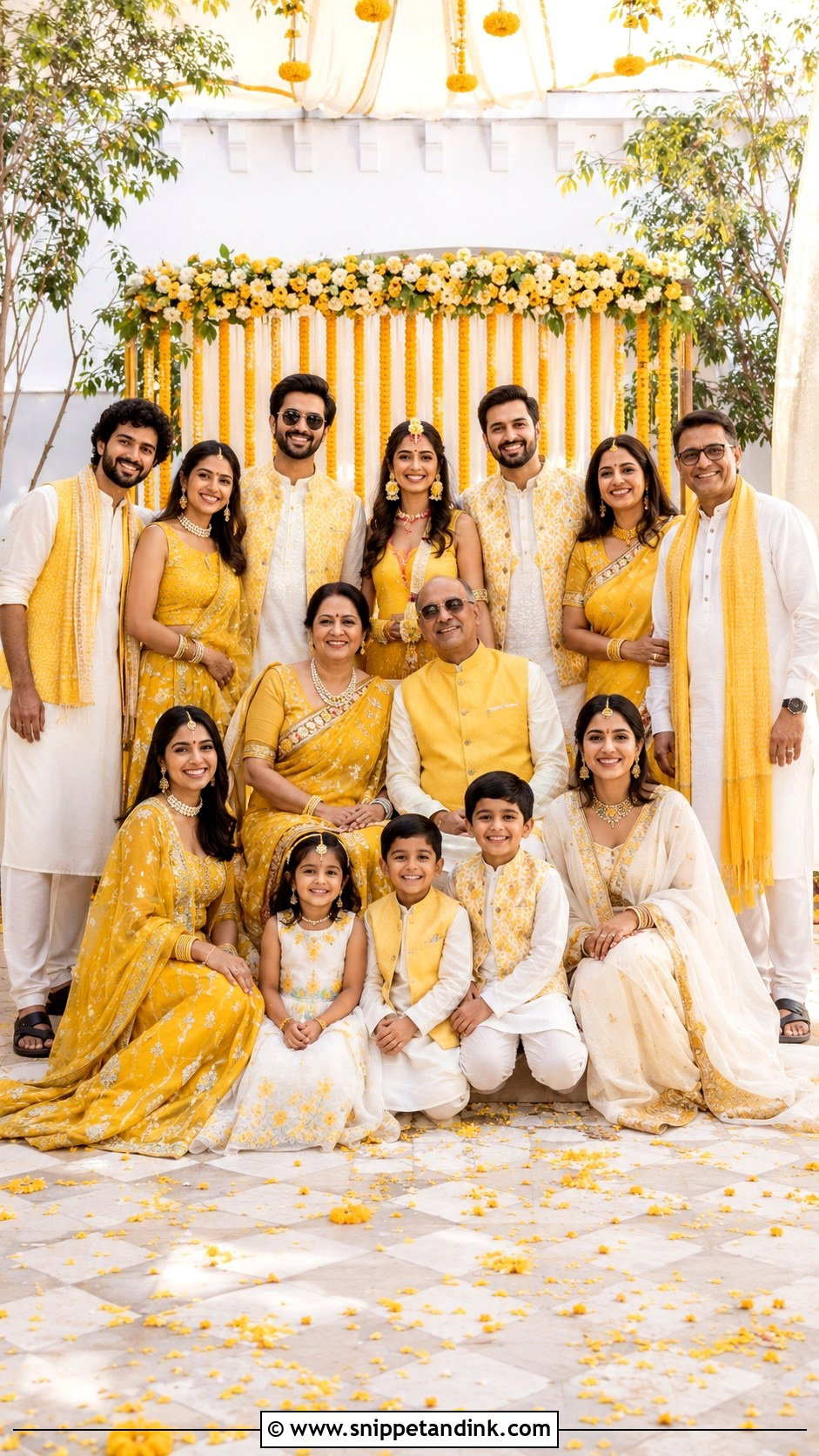
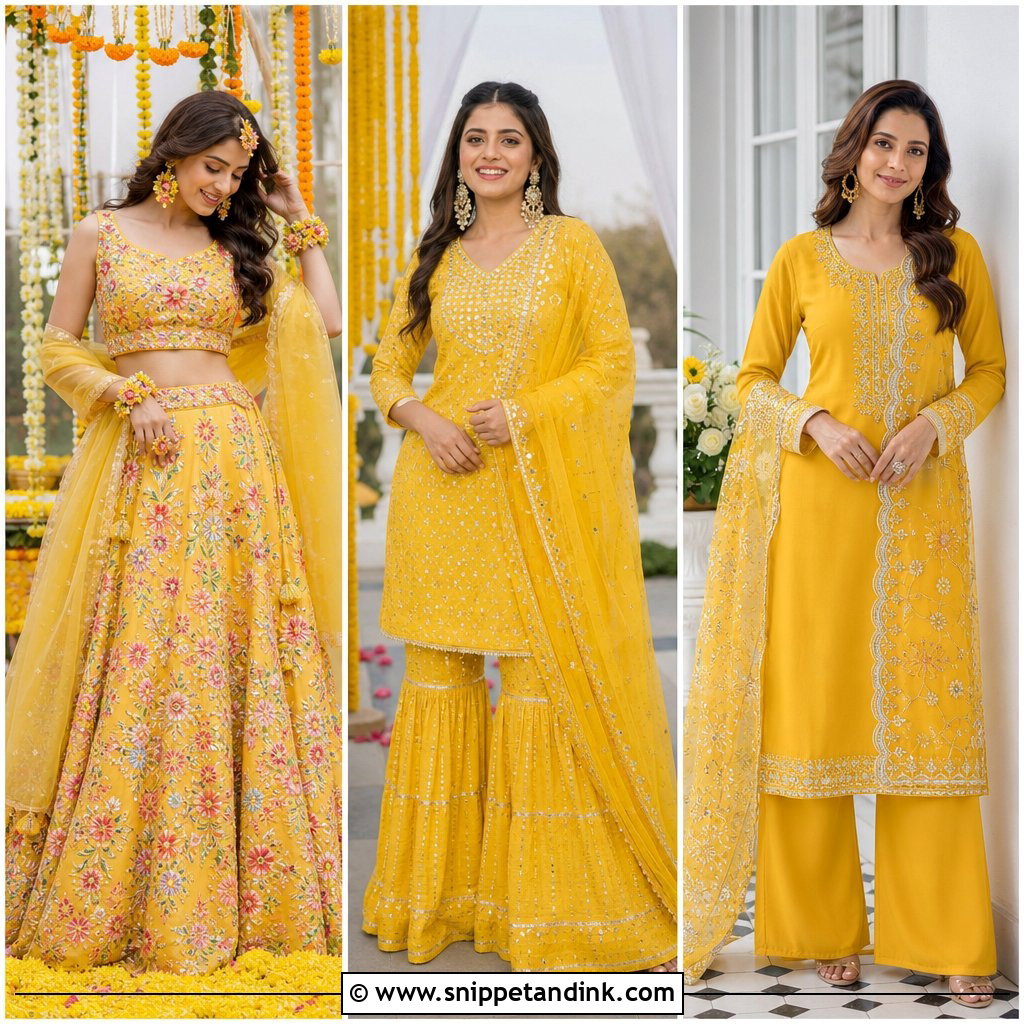
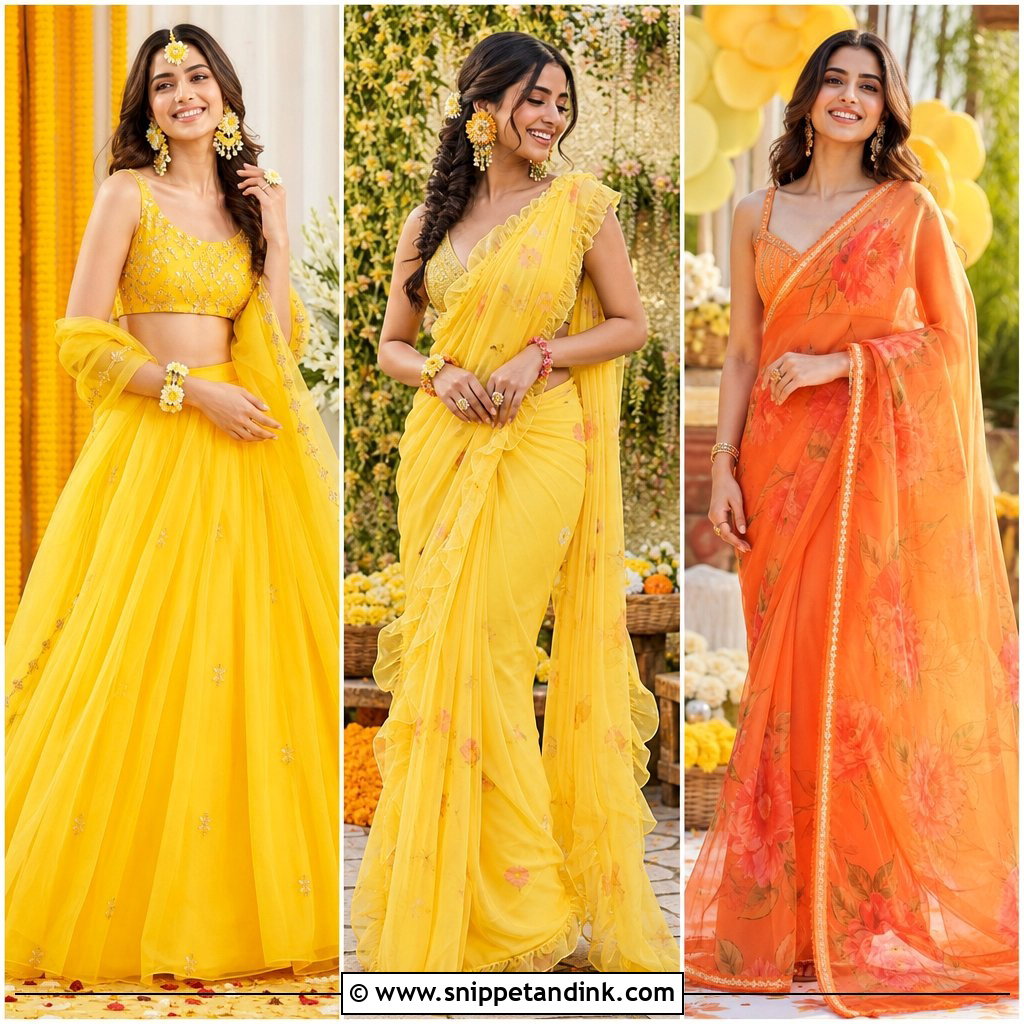
A full family palette makes the biggest impact in photos, and the rule I give every family is harmony, not uniformity. Pick one main palette, such as yellow and white, marigold and ivory, or lime and mustard. Women choose their own silhouettes, men wear kurtas, jackets or stoles in matching tones, and children wear softer, simpler versions. Large families find this far easier to follow than a strict dress code, because each person dresses for their own age, shape and comfort.
Take the Family Portrait Before Anyone Touches the Paste
Once the haldi starts, faces, hands and clothes turn yellow fast, and the coordinated look you planned for weeks lasts about ten minutes. I schedule the formal family group shot first, while everyone is clean and the light is good, then let the ritual get as messy as it likes. The candid yellow-smeared photos afterward are often the favourites anyway.
Grandparents and older relatives
Keep chairs nearby rather than expecting floor seating, and steer them away from heavy silks in midday heat. A light shawl in the family palette is useful if the function runs into a cooler evening, and it still looks coordinated in photos.
Small children
Dress them in the theme for the portrait, then let a parent swap them into a spare set in the same color once the paste comes out. Pack wipes and a small towel in the same bag. Turmeric on a toddler’s outfit is guaranteed, so plan for it instead of trying to prevent it.
Is Your Family Dressed to Join In, or Only to Pose?
A family haldi theme is more than everyone turning up in yellow. It works when the colors connect, the fabrics breathe and every person can do their part in the ritual without fussing with their clothes. Sarees and kurtas, shararas, lehengas, linen sets and Indo-western pieces can all share one photo if they share a palette or a detail. Settle the colors early, let people pick their own shapes, and keep the bride’s outfit the brightest thing in the room.
You'll Like These Ideas:




Leave a Reply