
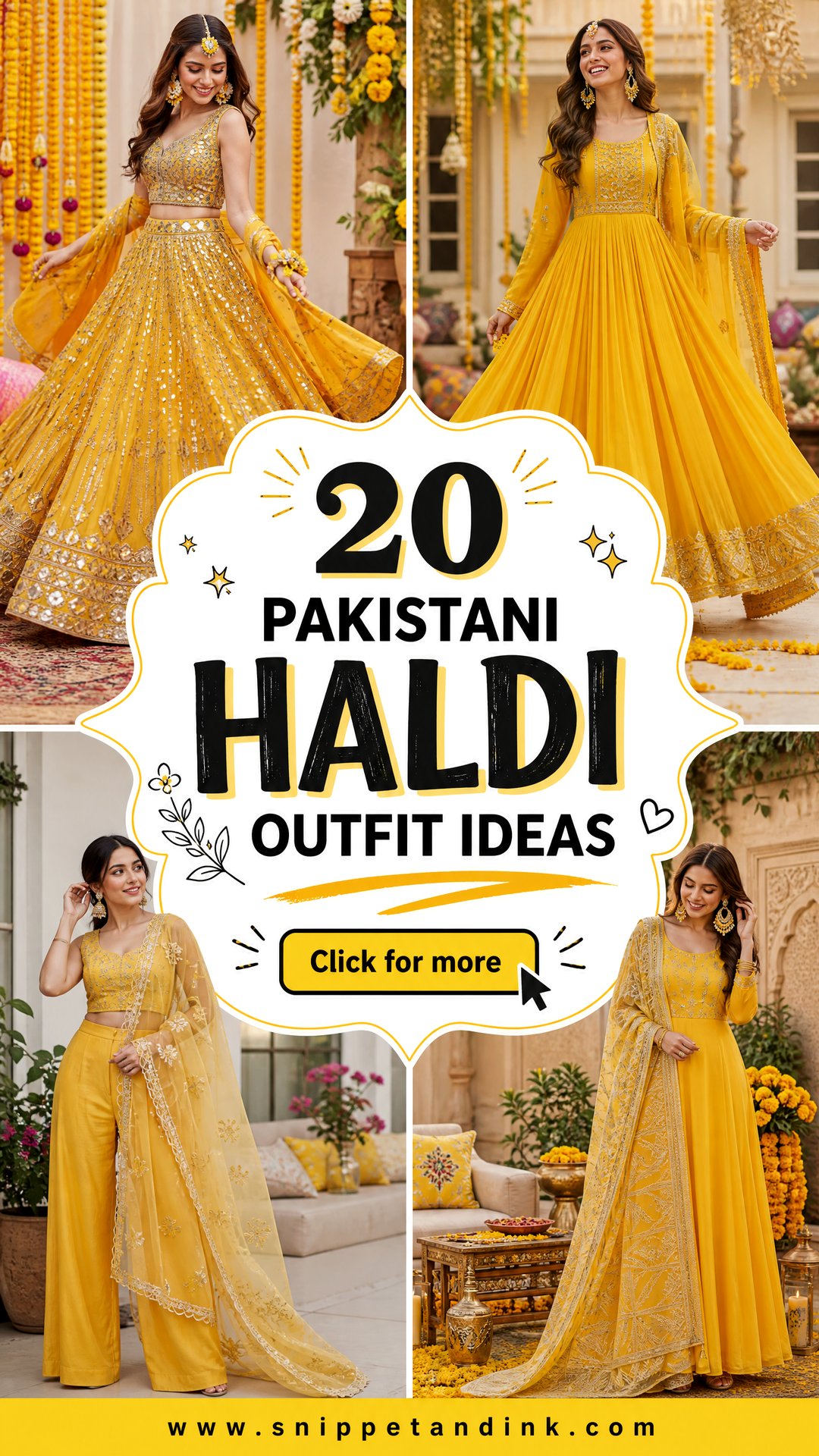
Yellow is the obvious color for a haldi, but the shade, the fabric and the cut matter far more than people think. A lemon that glows on one cousin turns another one sallow, and a beautiful organza set can be miserable at an outdoor noon ceremony. The outfits below cover the shapes I see most at Pakistani pre-wedding events: shararas, ghararas, lehengas, Anarkalis and lighter kurta sets, plus a few fusion options. Alongside the classic yellows you’ll find orange, green, pink and ivory used as partners. Each look comes with shoes, jewelry and dupatta notes, and I’ve flagged where a choice suits the bride, a sister or a guest.
Which Yellow Actually Suits Your Skin
Yellow is one of the hardest colors to wear close to the face. In bright sun it also reflects upward, so a strong lemon can cast a faint yellow tint under the chin in photographs. Before anyone buys a haldi outfit, I hold fabric swatches under their face in daylight, not shop lighting.
- Warm or golden undertones: marigold, mustard and saffron look rich; pale lemon can look washed out.
- Cool or pink undertones: soft lemon and buttery yellows are kinder; deep mustard can make skin look gray.
- Deep complexions: bright, saturated yellows and turmeric shades glow; dusty pastel yellows can look chalky.
- Unsure: wear yellow on the bottom and put a pink, green or ivory kameez or dupatta near your face.
Makeup helps too. A warmer blush and a lip with some depth keep the face from being overwhelmed by a large block of yellow.
1. Yellow Gharara Pakistani Haldi Outfit
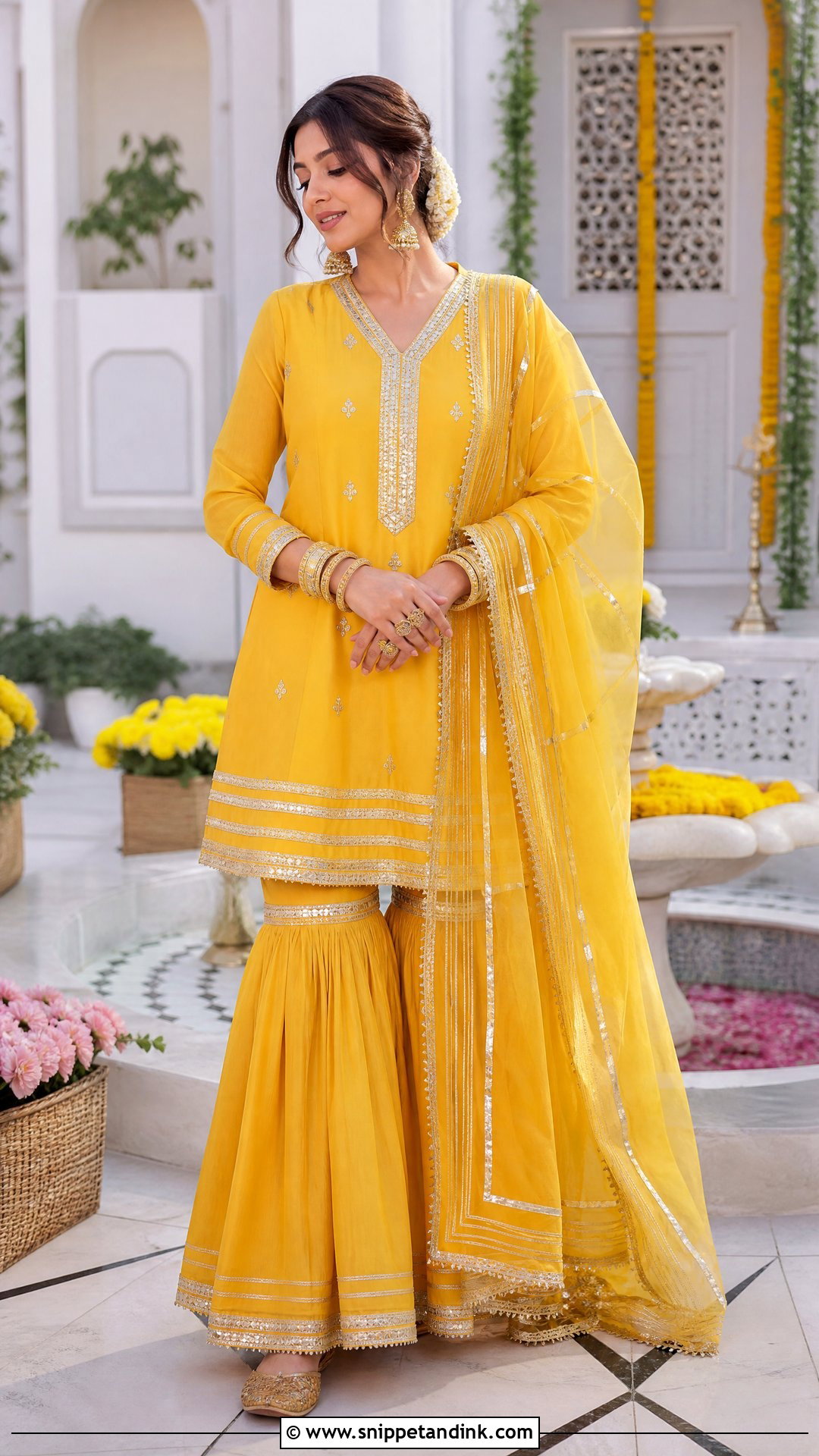
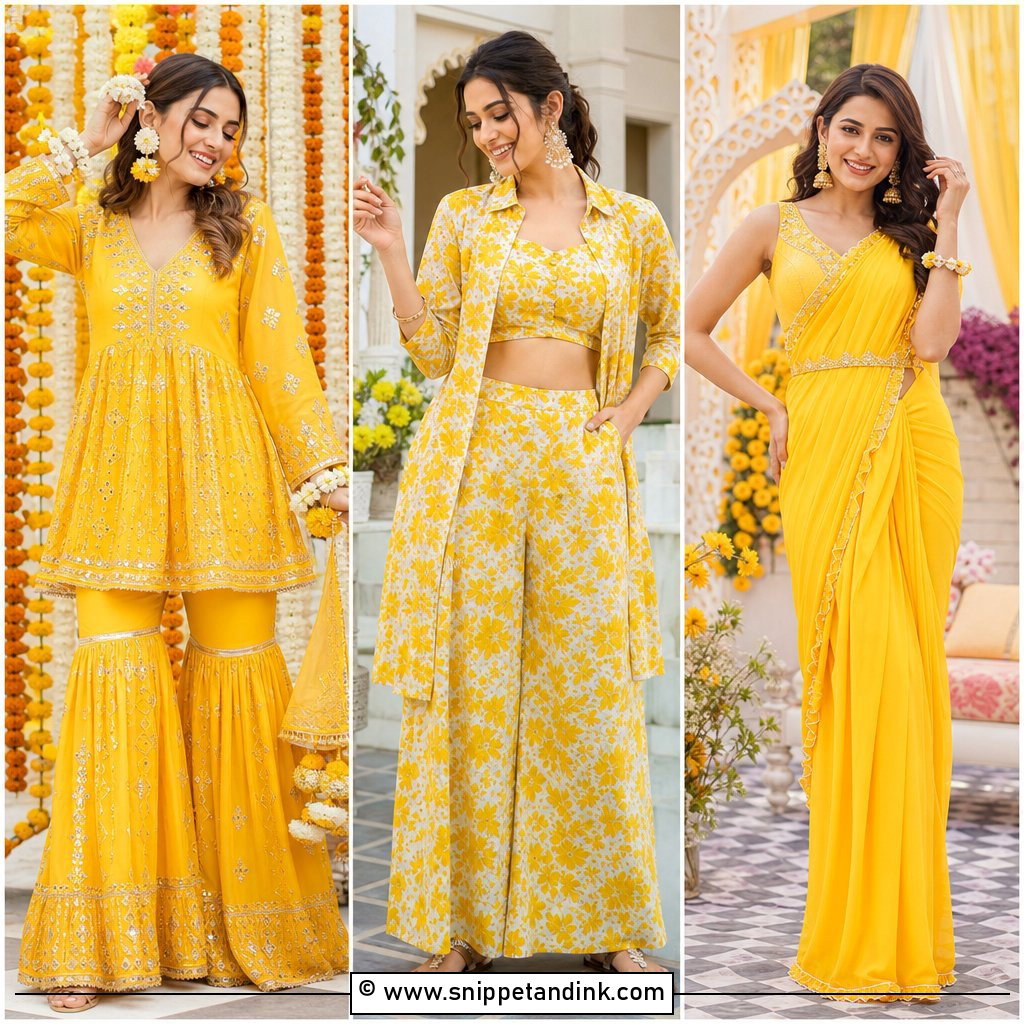
A traditional yellow gharara is the classic haldi silhouette, and the joint where the gharara flares is the detail I look at first. That seam, usually just below the knee, is traditionally covered with a band of gota; if it’s placed too high, the flare starts at the thigh and the shape looks dumpy. Choose a short kameez in cotton silk or light organza with gota at the neckline and sleeves, and a sheer dupatta with a narrow kiran edge. Gold khussas and small jhumkas finish it. Brides can add a floral maang tikka. Soft waves or a loose braid keep it young.
2. Mustard Sharara Pakistani Haldi Outfit
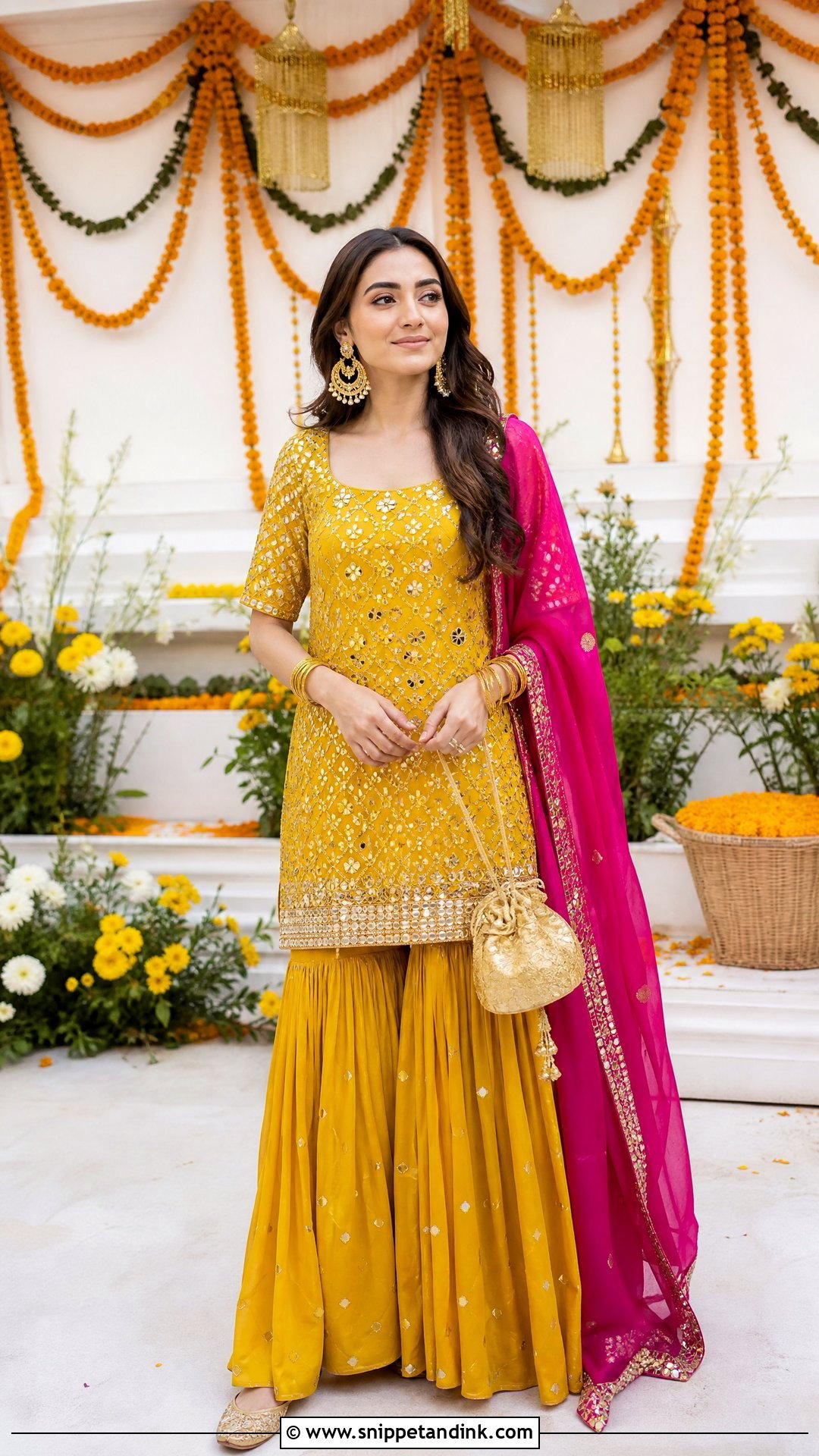
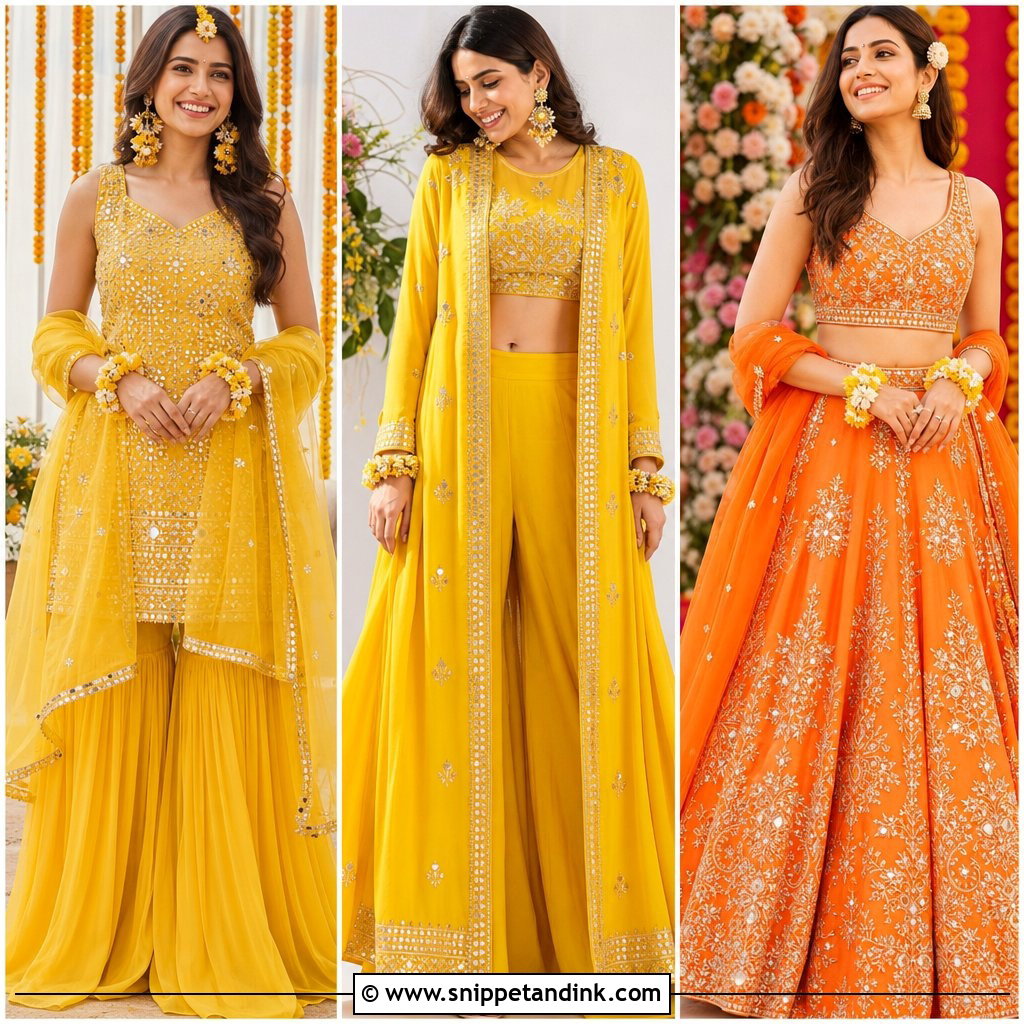
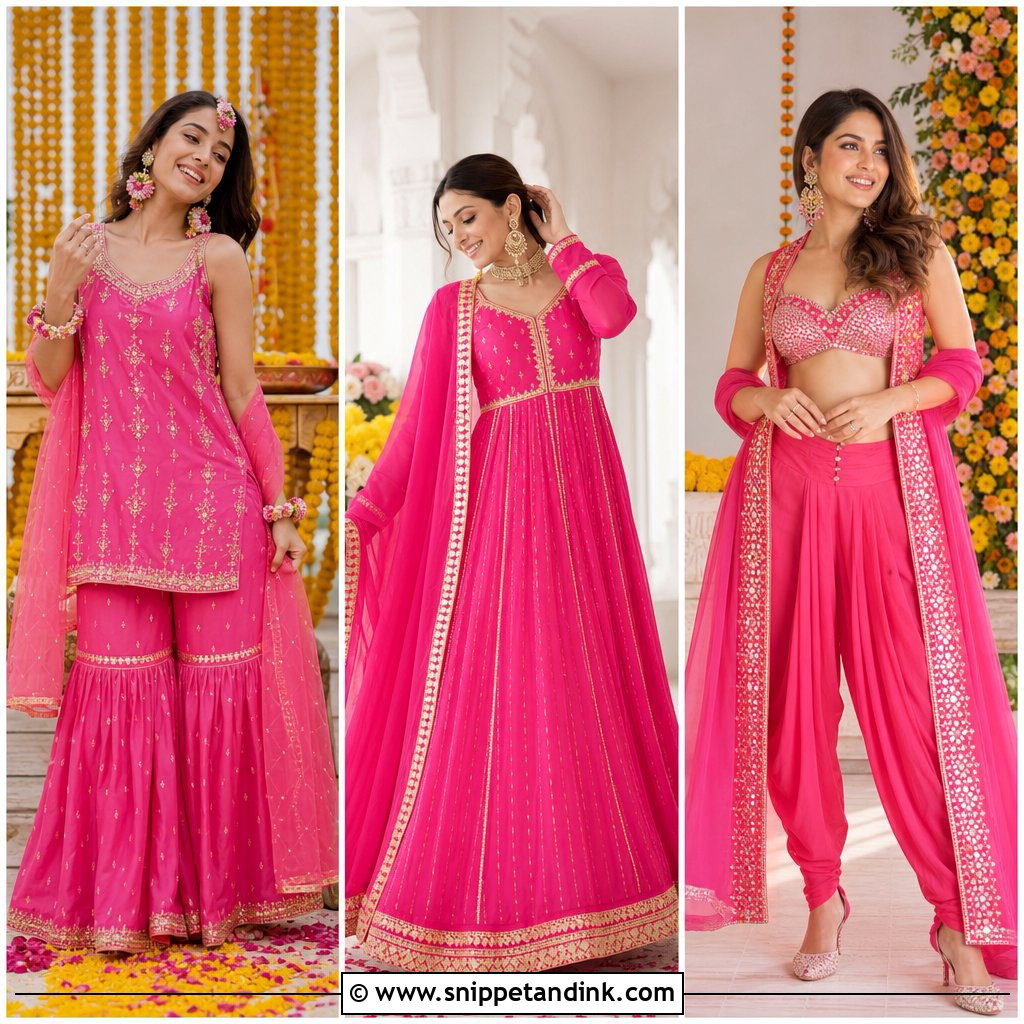
Mustard reads richer than lemon in bright daylight, and it doesn’t compete with the bride the way a vivid yellow can. Build around a short embroidered kurti and a sharara with wide, easy legs. Small mirror or gota motifs give enough detail for the camera. A magenta dupatta is my favorite partner for mustard; rust is quieter. Gold juttis and a compact potli keep the accessories light. Kundan studs or medium chandbalis are better than a big necklace at a daytime event. Bridesmaids can tuck fresh flowers into a low bun.
3. Yellow Lehenga Choli Pakistani Haldi Outfit
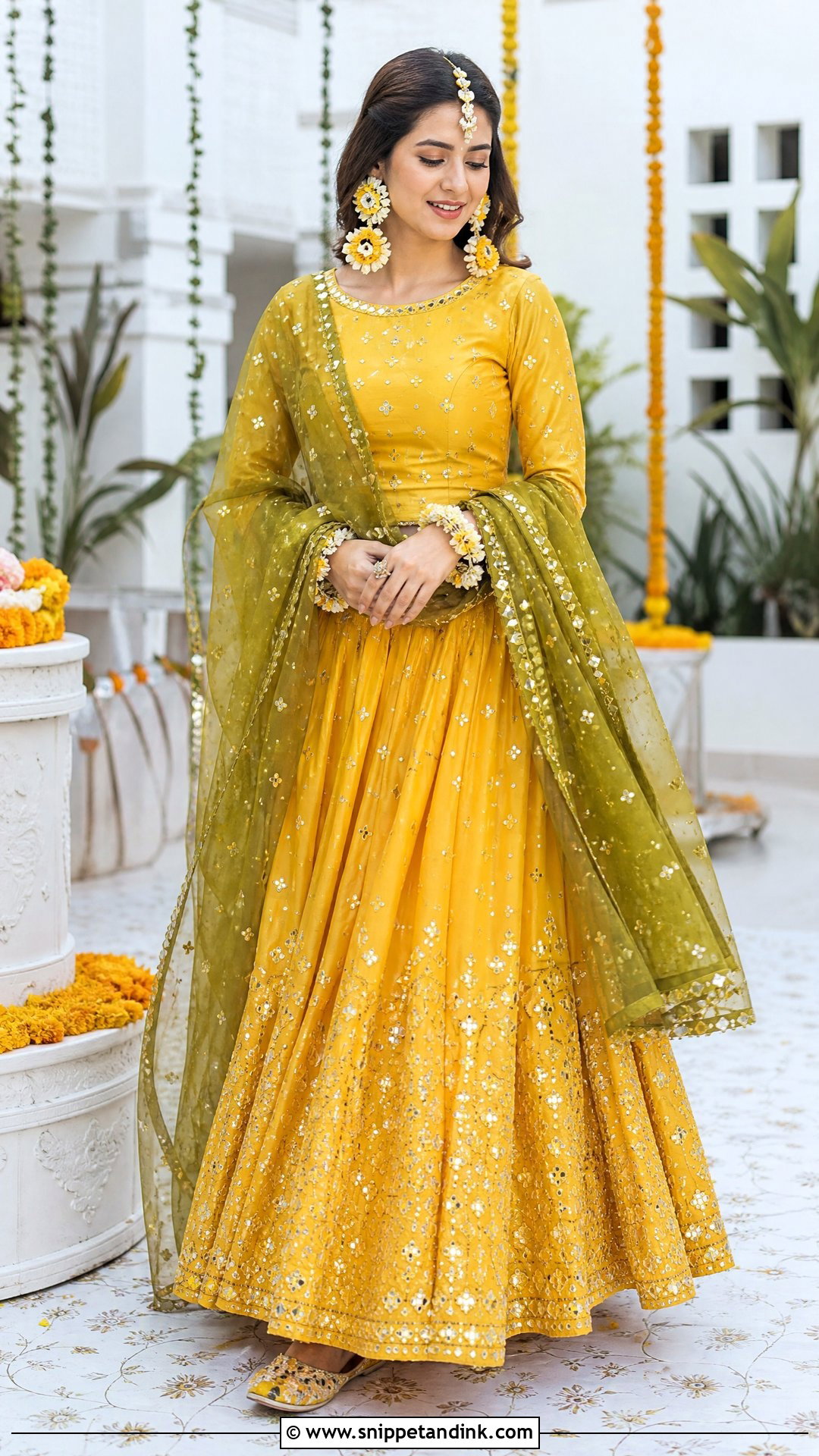
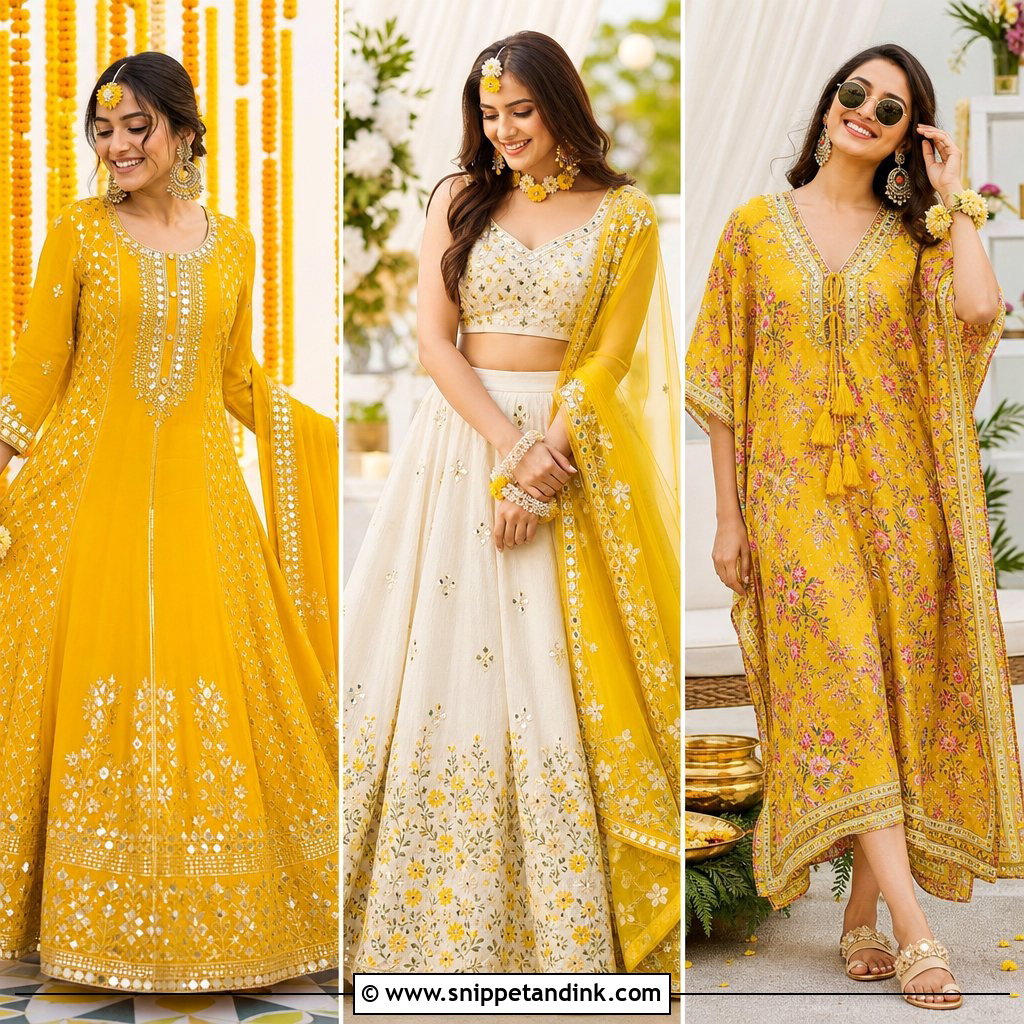
A yellow lehenga choli is the easiest way for a bride to look celebratory without the weight of her wedding lehenga. Keep the skirt light, with scattered mirrors or narrow gota panels, and the choli modest with short sleeves. If the skirt has a can-can underneath, ask for a removable one; for floor seating, a soft single lining is much easier. A green, pink or orange dupatta gives the contrast. I’d wear embellished khussas rather than heels for any outdoor ritual on grass. A braided ponytail stays controlled when people start throwing petals.
4. White Kurta With Yellow Dupatta Haldi Outfit
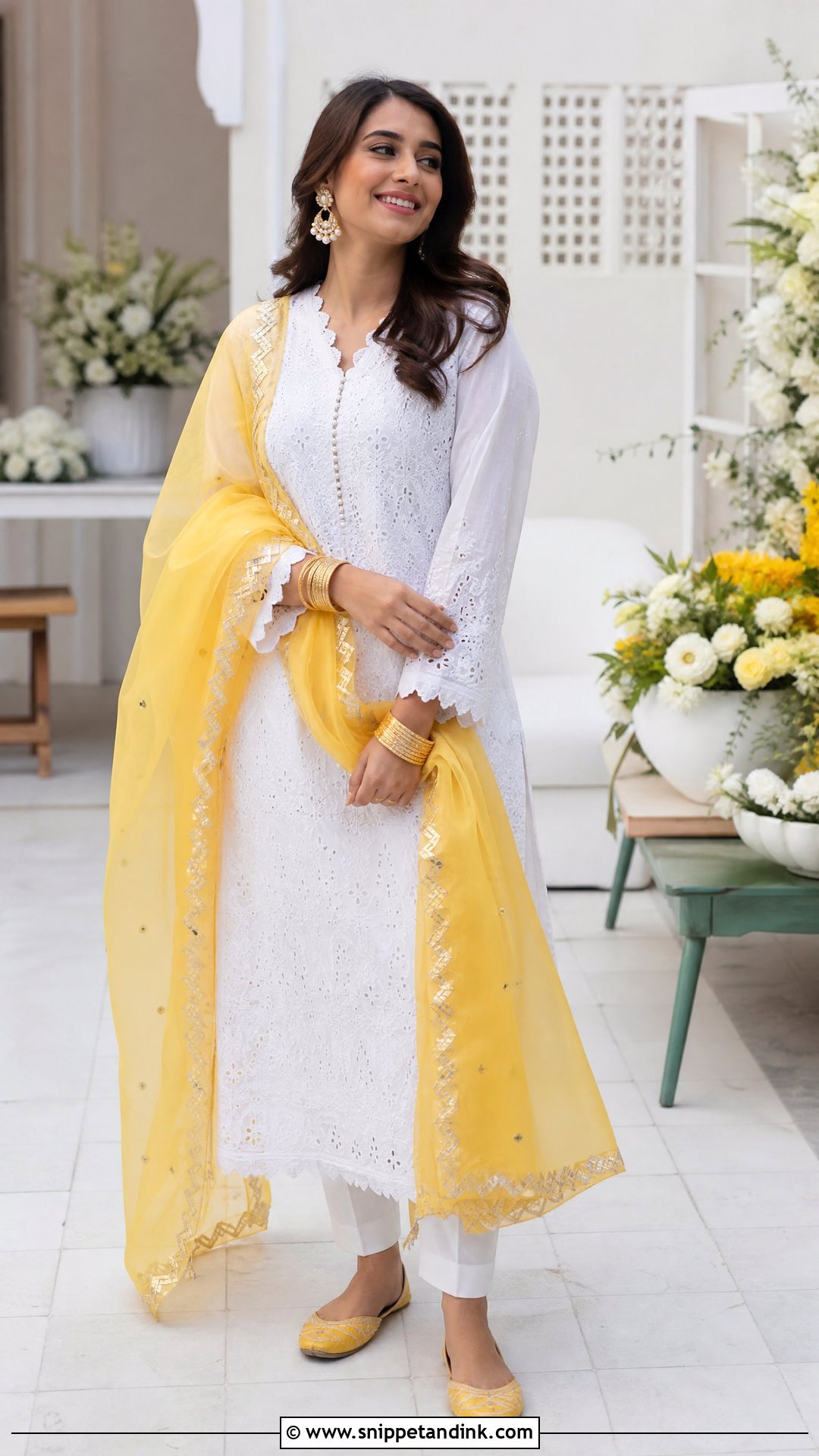
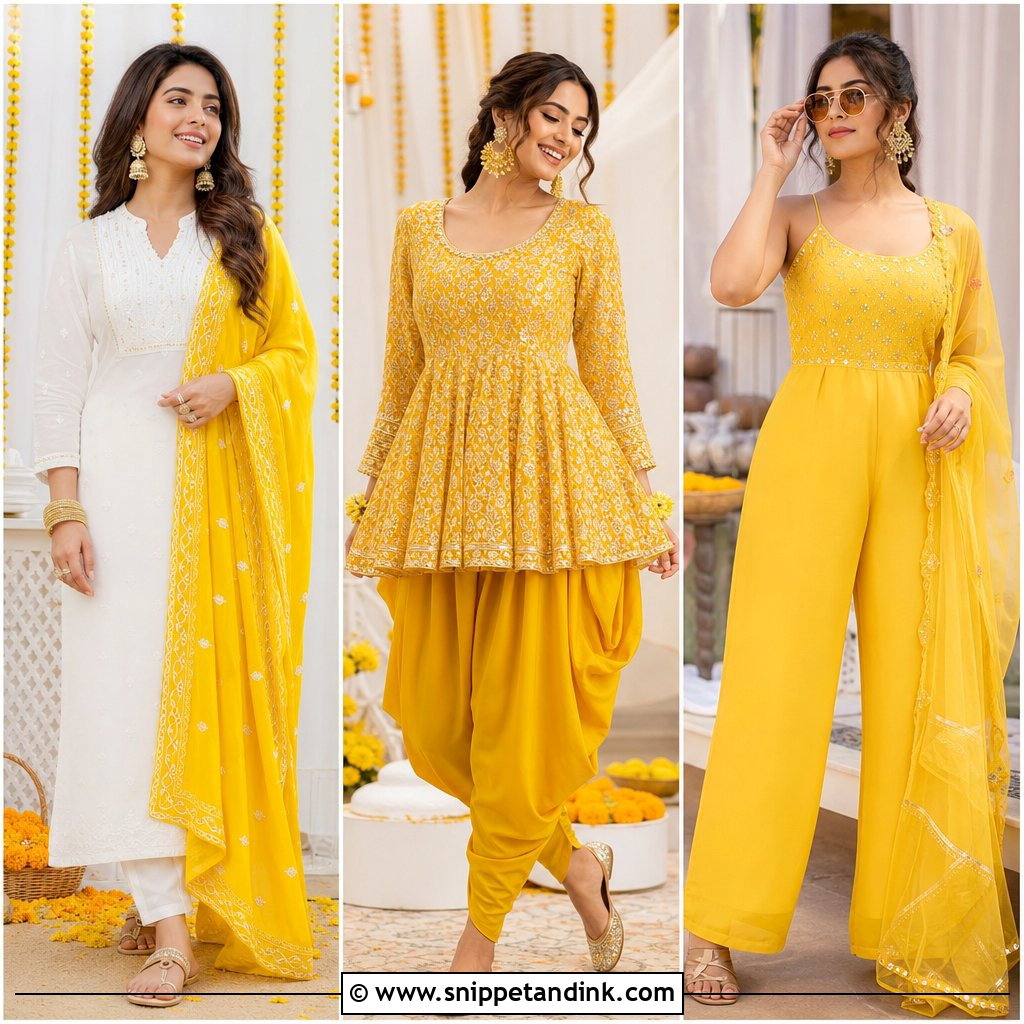
White and yellow is the quiet guest option, and it looks fresh. Pair a straight white chikankari or embroidered kurta with white cigarette pants, then bring the color in through a bright yellow organza dupatta with gota or pom-poms. Yellow khussas connect the top and bottom. One stack of gold and yellow bangles is plenty. Be honest about where you’ll stand, though. Pale fabric shows every turmeric fingerprint, so this outfit is for guests who’ll watch the ritual, not take part in it. A sleek ponytail suits the minimal look.
5. Yellow Anarkali Pakistani Haldi Outfit
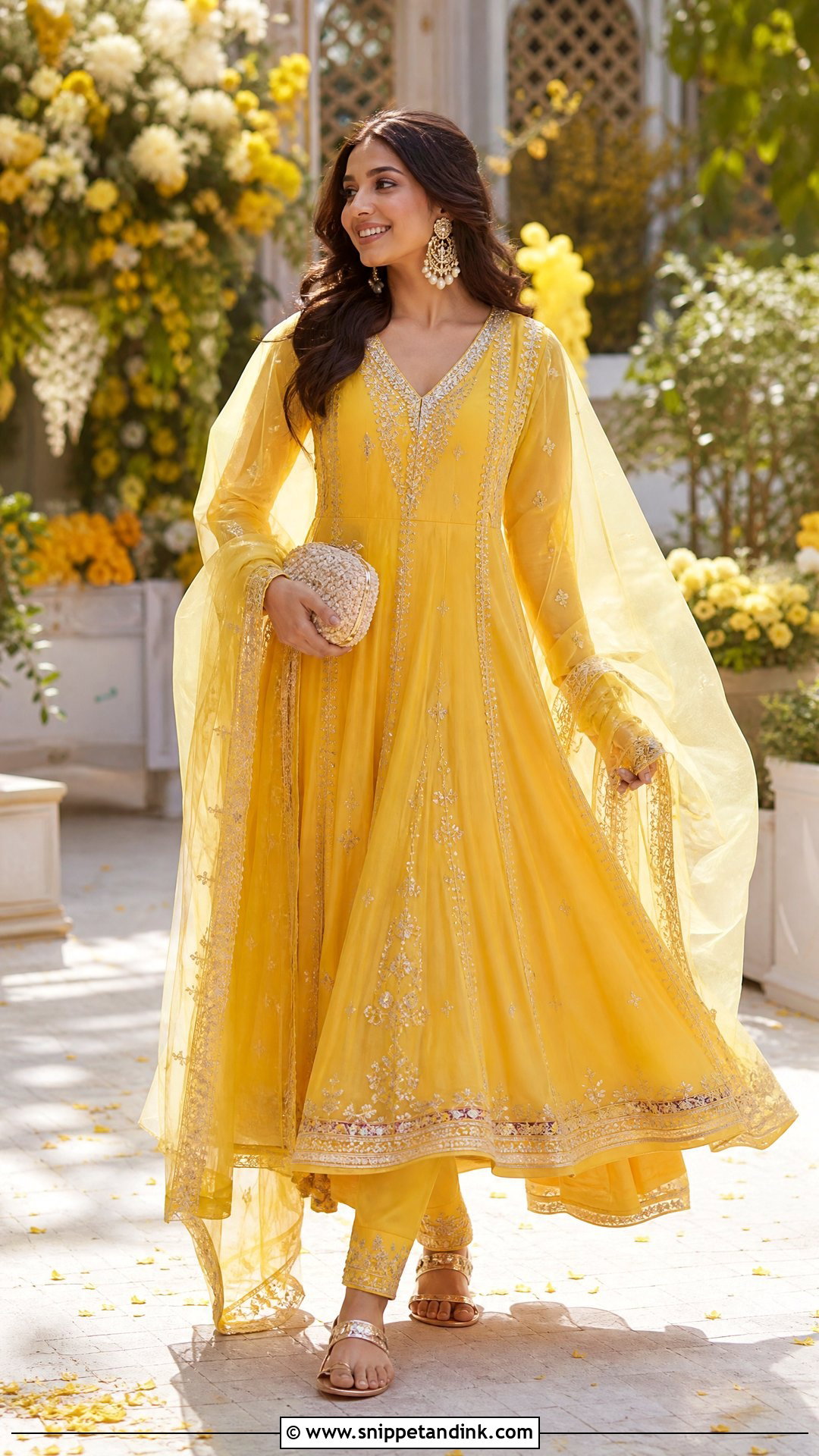
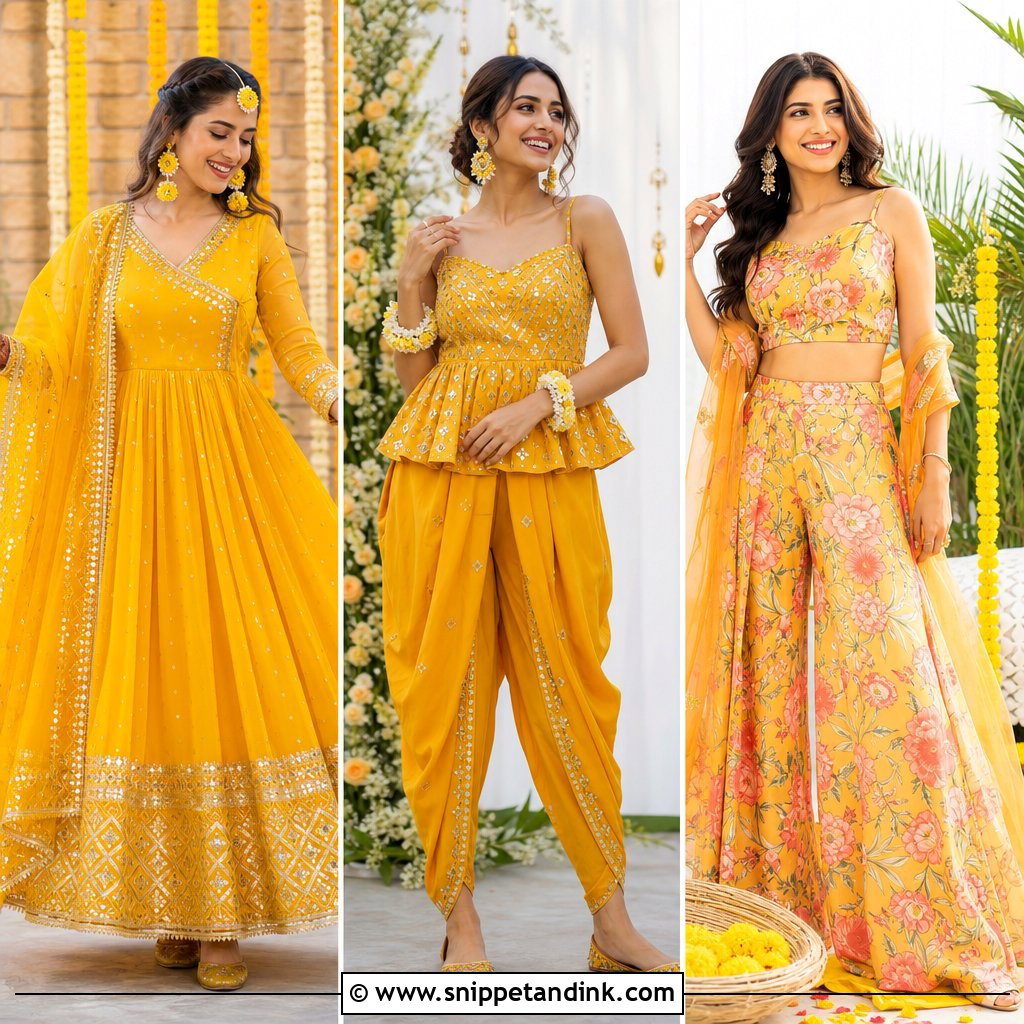
A yellow Anarkali swings beautifully when you walk, which is the whole appeal at a daytime haldi. The fabric decides how comfortable it is: cotton net and lawn breathe, while georgette and chiffon flow more but trap heat under a lining. In midday sun I’d pick lawn or cotton net. A fitted bodice and gentle flare cover well, with narrow trousers underneath and a soft organza dupatta. Gota edging or tiny mirrors can trace the neckline and hem. Gold flats and pearl jhumkas finish it. A low bun with flowers reads bridal; loose curls read guest.
6. Orange Angrakha Pakistani Haldi Outfit
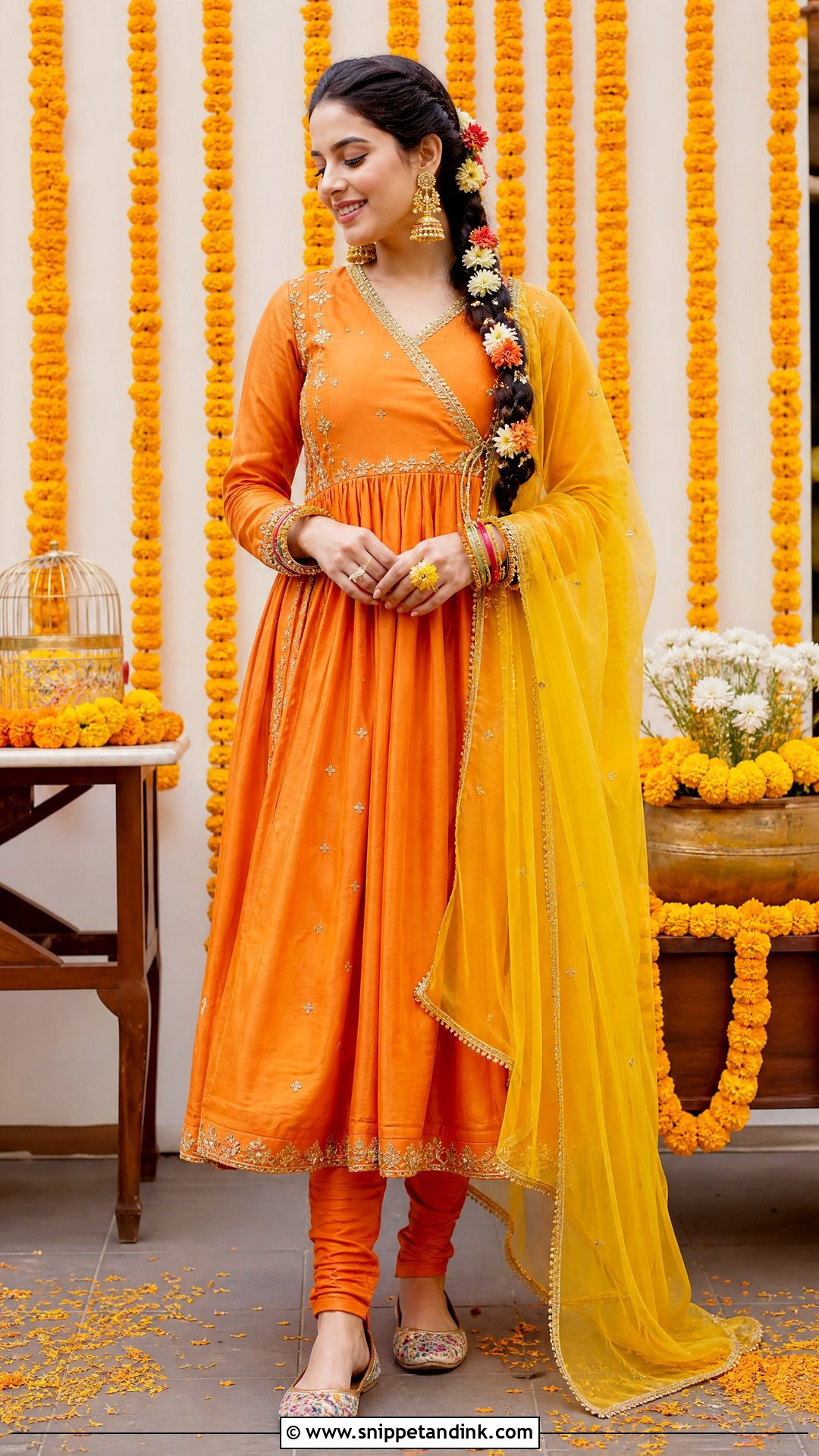
Orange is a welcome break from all the yellow, and it still belongs at a haldi. An angrakha frock with a wrapped bodice and a side tie looks traditional, and contrasting pink piping along the overlap gives it a crisp edge. Wear it over matching straight pants with a yellow dupatta, so the ceremony color is still there. Orange can clash with a heavily yellow stage backdrop in photos, so if you know the decor, check that the two shades sit well together. Embroidered khussas and gold jhumkas finish it. It’s a smart choice for sisters who want to stand out a little.
7. Peplum Kurti With Sharara Haldi Outfit
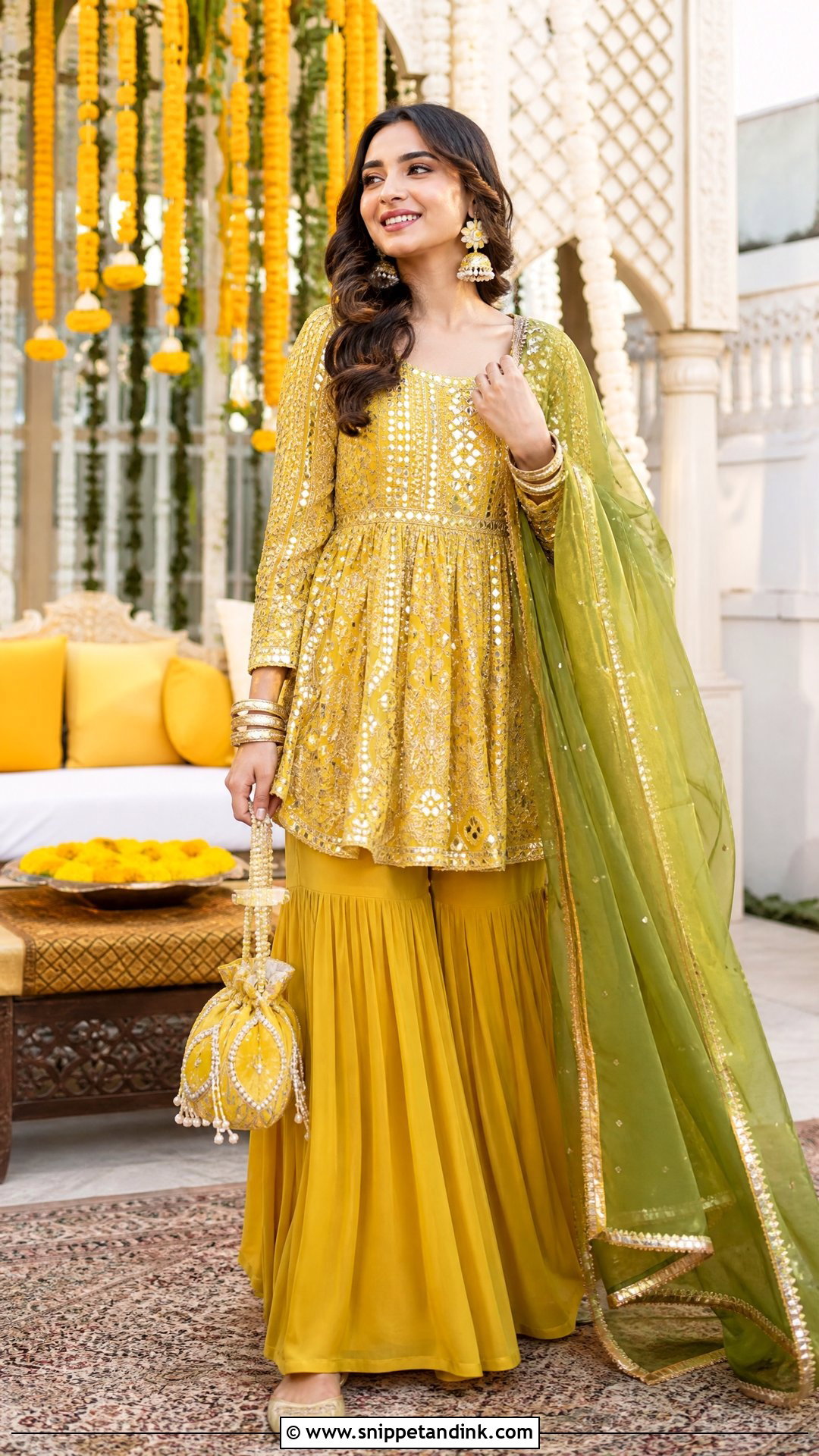
A peplum kurti and sharara combine a defined waist with a lot of movement below it. Put the decoration on the peplum, with mirrors or gota lines, and keep the sharara plain; two busy halves fight each other. A sheer green dupatta with yellow tassels adds contrast. Flat juttis and a potli on the wrist keep your hands free. Peplums flatter many shapes when the flare starts at the natural waist, but if you’re short-waisted, a slightly longer peplum looks more balanced. Side-swept curls or a high ponytail freshen it.
8. Floral Lehenga Pakistani Haldi Outfit
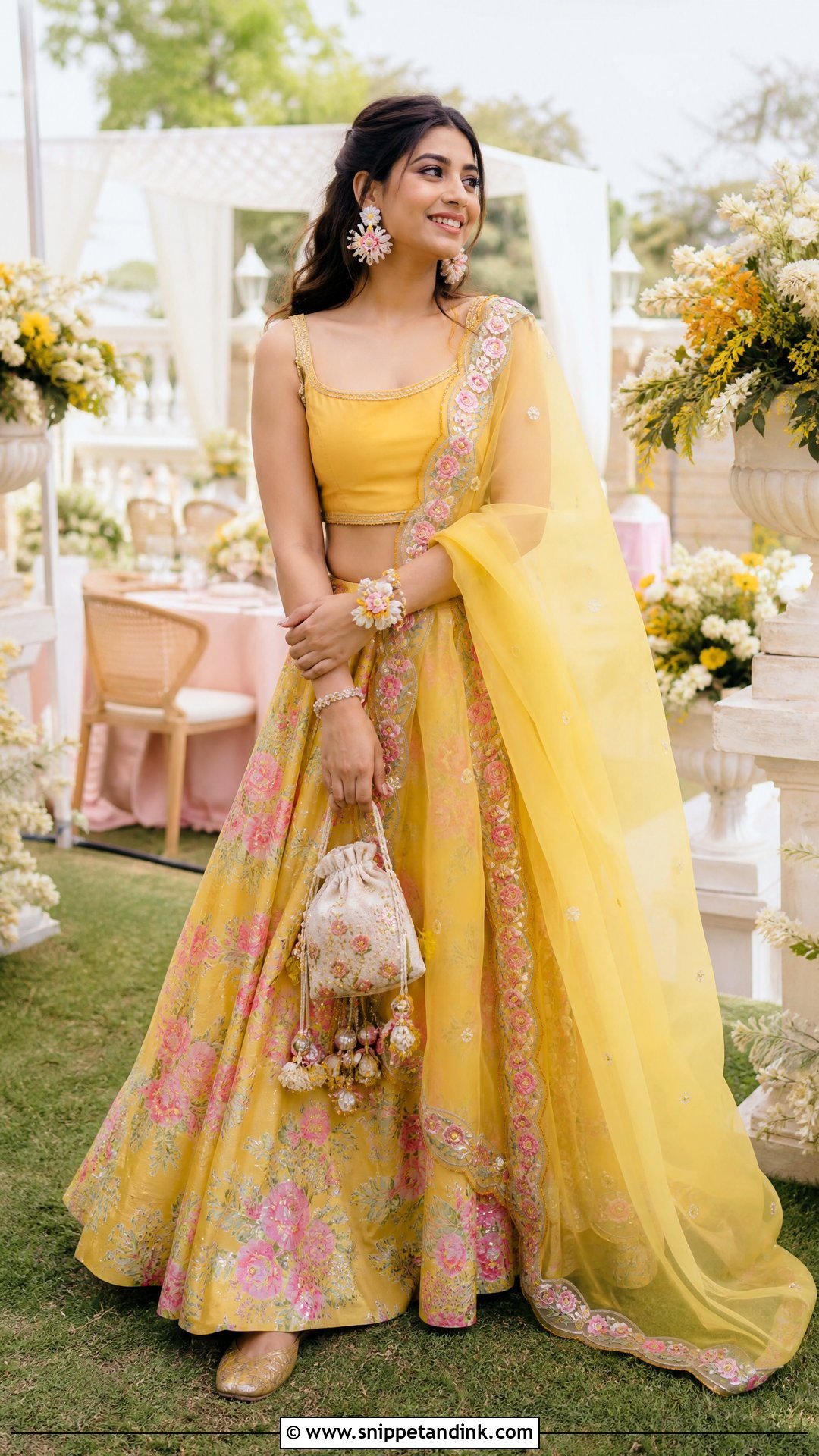
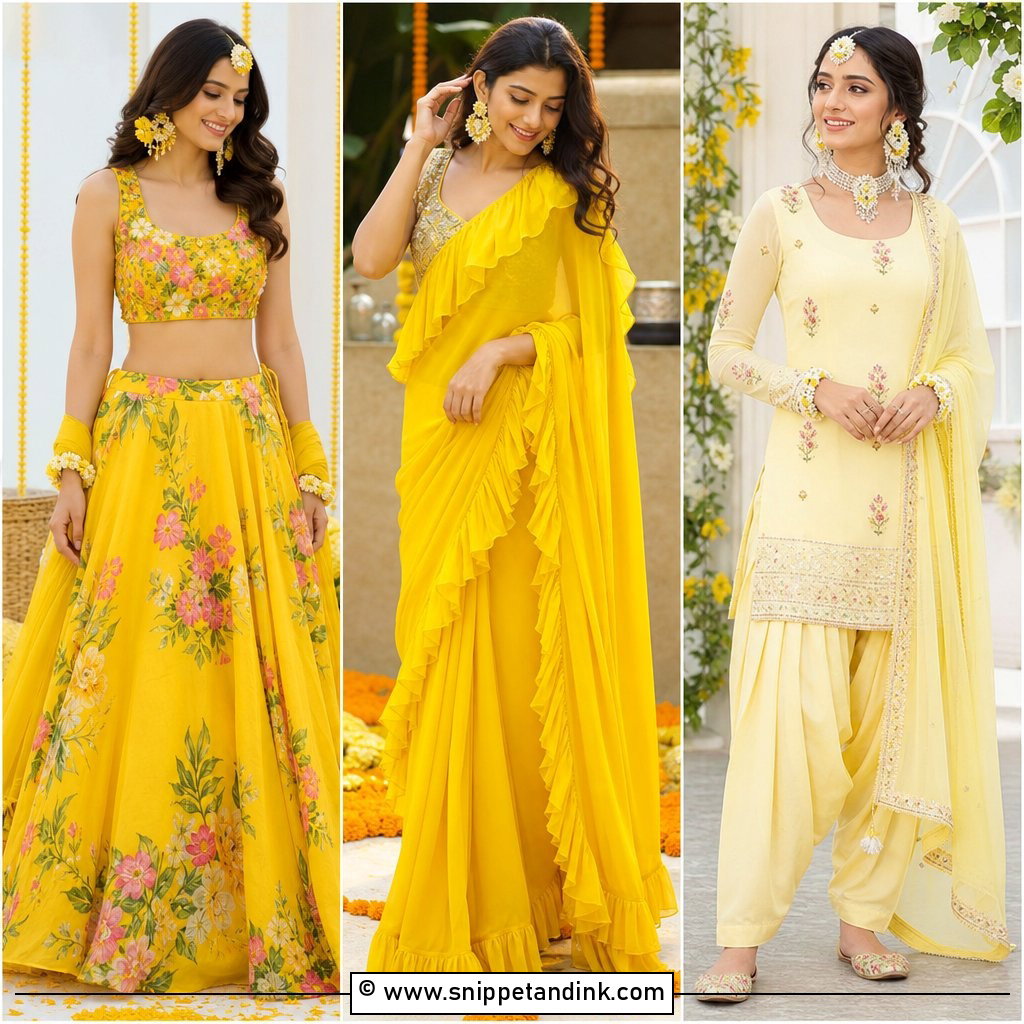
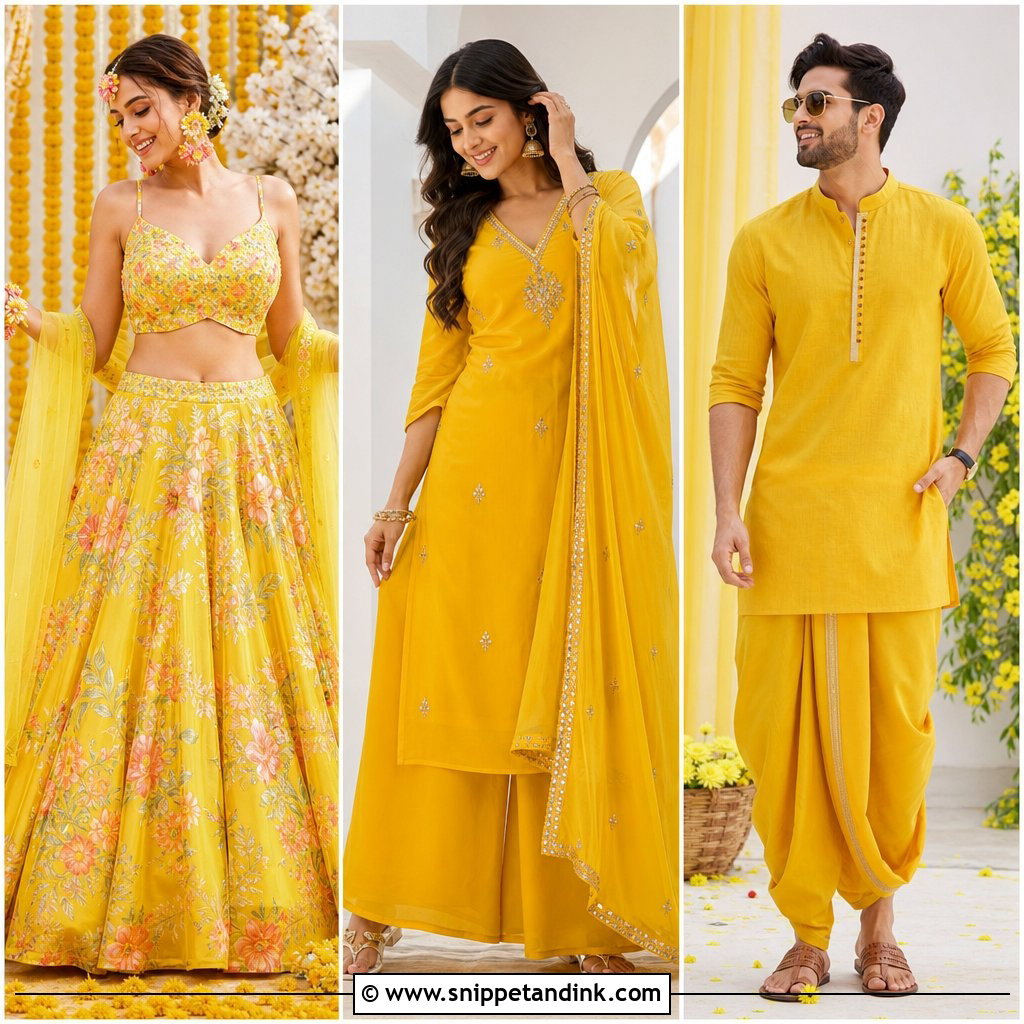
A floral lehenga brings in several colors at once while keeping the cheerful mood. Choose a light yellow, ivory or pastel skirt with pink, orange and green flowers and a plain yellow blouse so the print leads. A soft organza dupatta with a slim edge covers without hiding the pattern. I’d choose a medium flare over layered volume for warm weather; heavy layers hold heat against your legs for hours. Neutral khussas and floral studs keep it simple. Brides can add flower jewelry at the wrists, and a half-up style with soft waves fits the daytime mood.
9. Yellow Chikankari Kurta Haldi Outfit
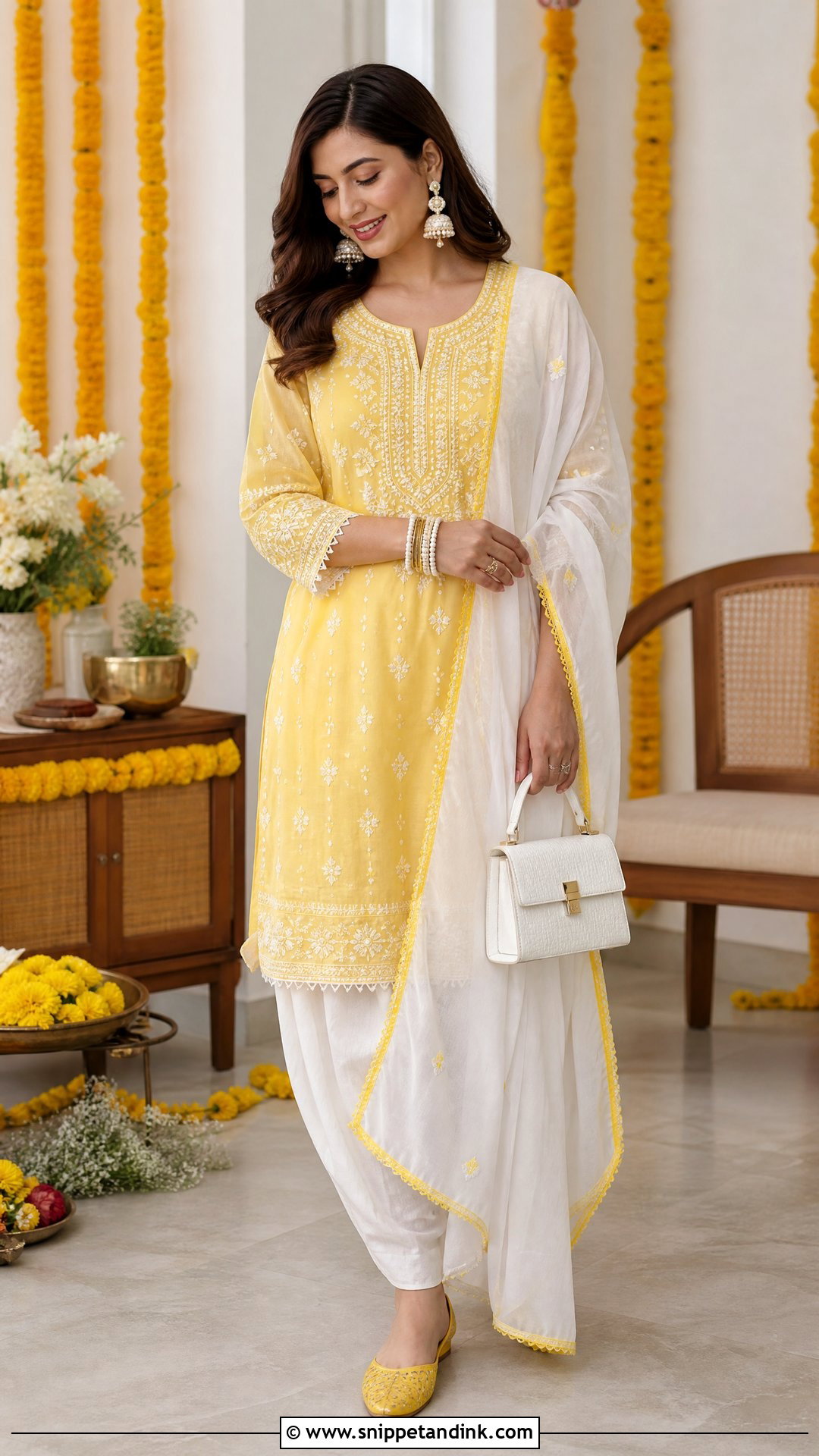
Chikankari gives a plain yellow kurta texture without weight. Choose a knee-length kurta in soft cotton or georgette with white trousers, tulip pants or a narrow shalwar. Real hand chikankari has slightly irregular stitches and visible shadow work through the fabric; machine versions look flatter, which is fine but worth knowing when you compare prices. A white organza dupatta with yellow edging, yellow khussas and pearl jhumkas finish it. This is the outfit I suggest to guests who want something they’ll wear again long after the wedding.
10. Yellow Pishwas Pakistani Haldi Outfit
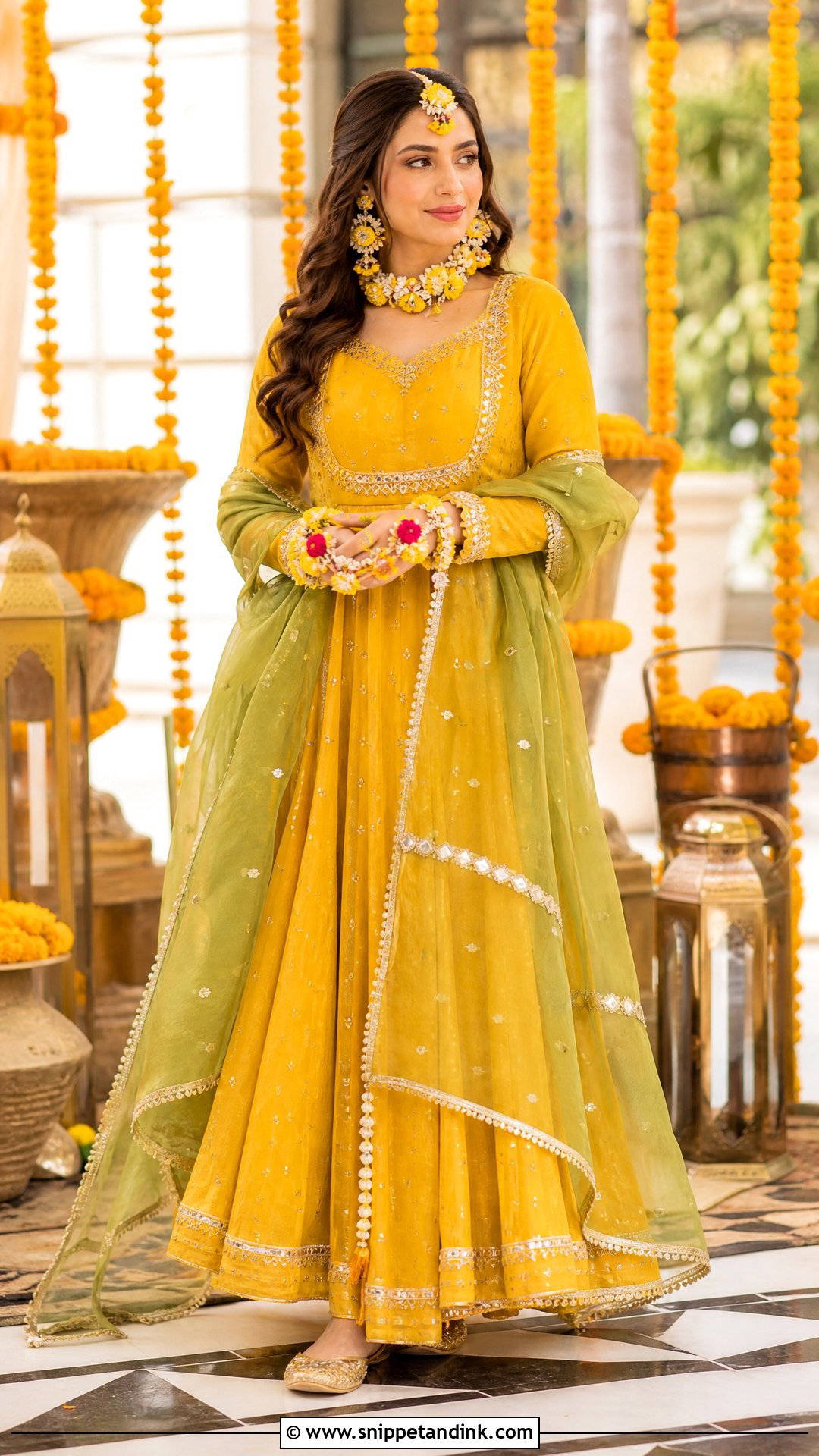
For the bride who wants a regal haldi, a yellow pishwas does it without the stiffness of a wedding lehenga. The full circular skirt is what makes it photograph so well when you turn. Choose lightweight fabric for that skirt, because a circle cut uses a great deal of material and gets heavy fast in silk. Fine gota lines or small mirrors can mark the panels. Drape a sheer orange or green dupatta over one shoulder. Gold khussas, a floral necklace and a small floral maang tikka suit the occasion. Keep the sleeves fitted so they stay clean during the ritual.
11. Short Kurti With Dhoti Shalwar Haldi Outfit
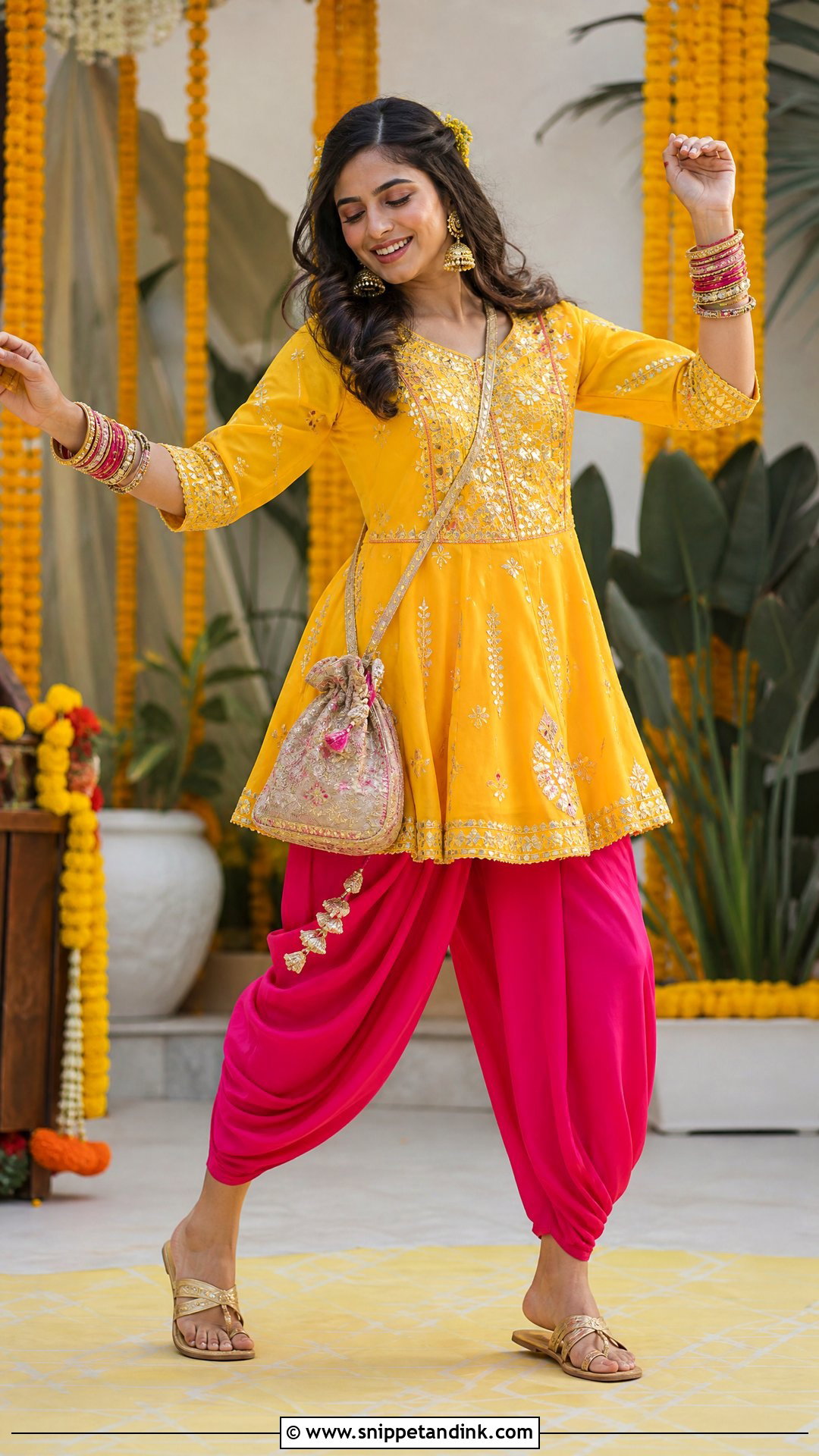
A short kurti with a dhoti shalwar is playful and young, and it’s the outfit I see most on the cousins who’ll dance for hours. Pick a bright yellow kurti with a simple fitted shape and colorful embroidery, then a white, orange or hot pink dhoti shalwar for contrast. Skip the dupatta unless you want extra coverage. Embroidered flats, chunky jhumkas and a crossbody potli keep your hands free. Check that the dhoti drape is stitched, not hand-tied, if you’ll be moving a lot. A high braid suits the shorter shape.
12. Green Kurta With Yellow Sharara Haldi Outfit
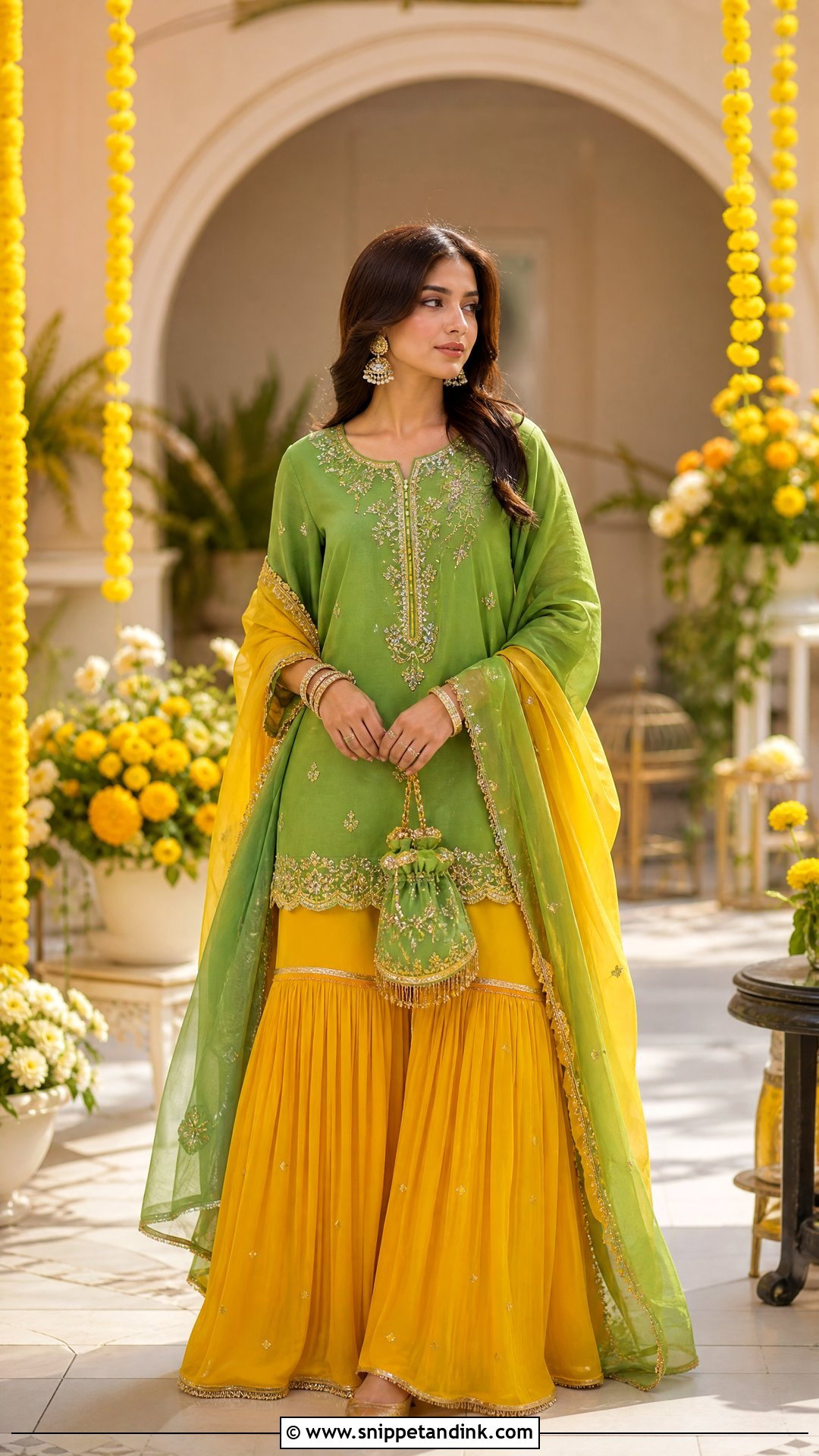
Green and yellow look lively against marigold decor and photograph well outdoors. Start with a short emerald, lime or parrot-green kurta with restrained gold embroidery over a flowing yellow sharara. A sheer dupatta using both colors pulls it together. Lime is the trickiest of those greens; it’s harsh on cooler skin tones, while emerald suits almost everyone. Gold khussas and a matching potli avoid adding a third color. Soft curls, a fishtail braid or a neat bun complete the look. Guests should keep the embroidery lighter than the bride’s.
13. Pink Kameez With Yellow Gharara Haldi Outfit
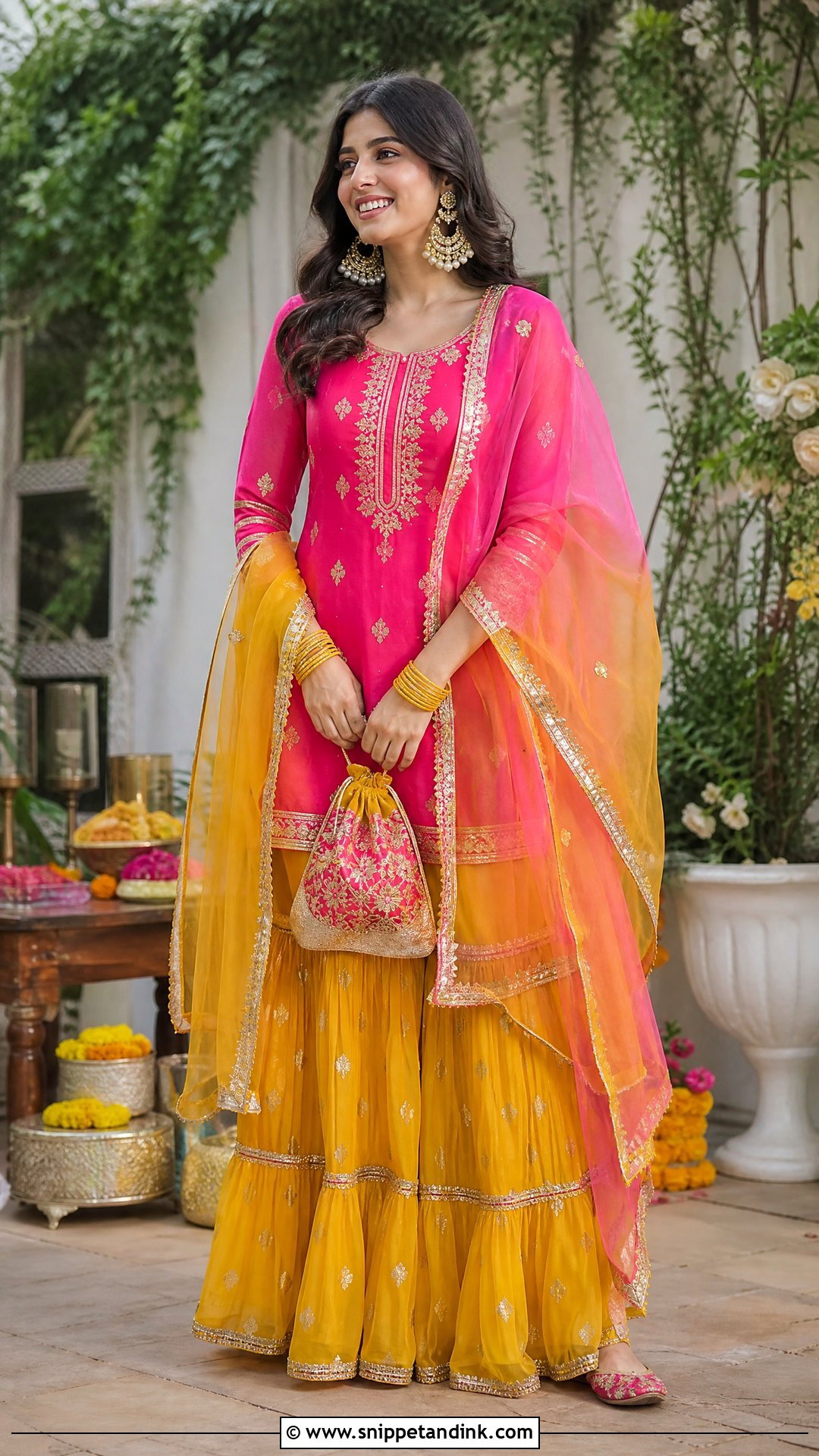
Pink softens a yellow gharara and gives sisters of the bride a way to stand out without wearing a fully yellow set. Choose a short kameez in blush, fuchsia or hot pink with gota at the neckline and hem. Match the pink intensity to your coloring: fuchsia and hot pink suit deeper complexions, while blush can disappear on very fair skin next to bright yellow. A two-tone organza dupatta links the colors. Beaded khussas, pearl-and-kundan earrings and yellow bangles finish it. A braided bun with a few flowers stays secure all afternoon.
14. Yellow Kalidar Frock Haldi Outfit
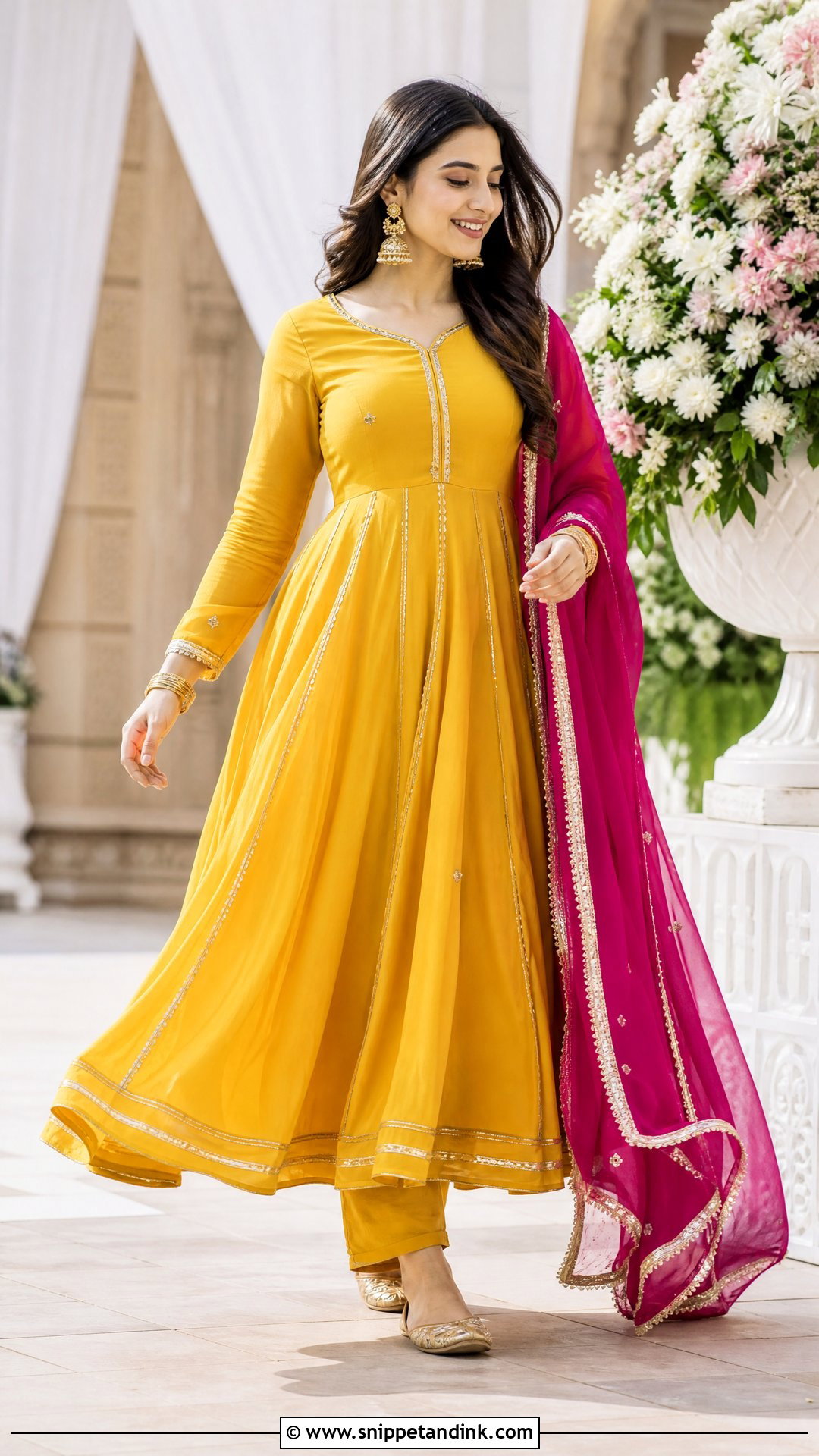
A kalidar frock gives you volume without managing separate skirt pieces. Choose calf or ankle length in cotton silk, chiffon or soft georgette, and let narrow gota borders outline each panel so the skirt looks defined when it moves. Calf length is easier for outdoor events where the hem would otherwise collect grass and petals. Fitted trousers or a churidar go underneath with a magenta dupatta. Keep the bodice comfortable rather than tight for a long afternoon. Gold juttis and dome jhumkas complete it, and it works across age groups.
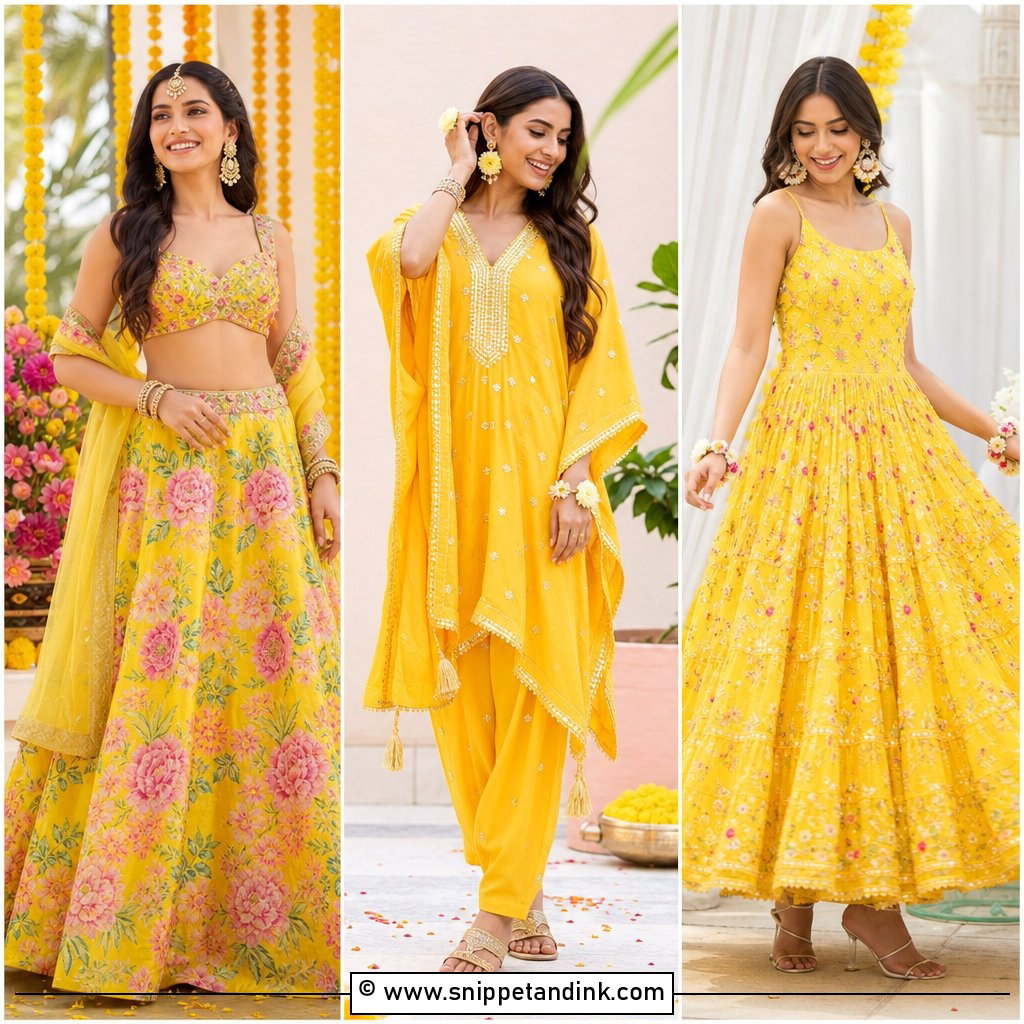

15. Mustard Kurta With Farshi Gharara Haldi Outfit
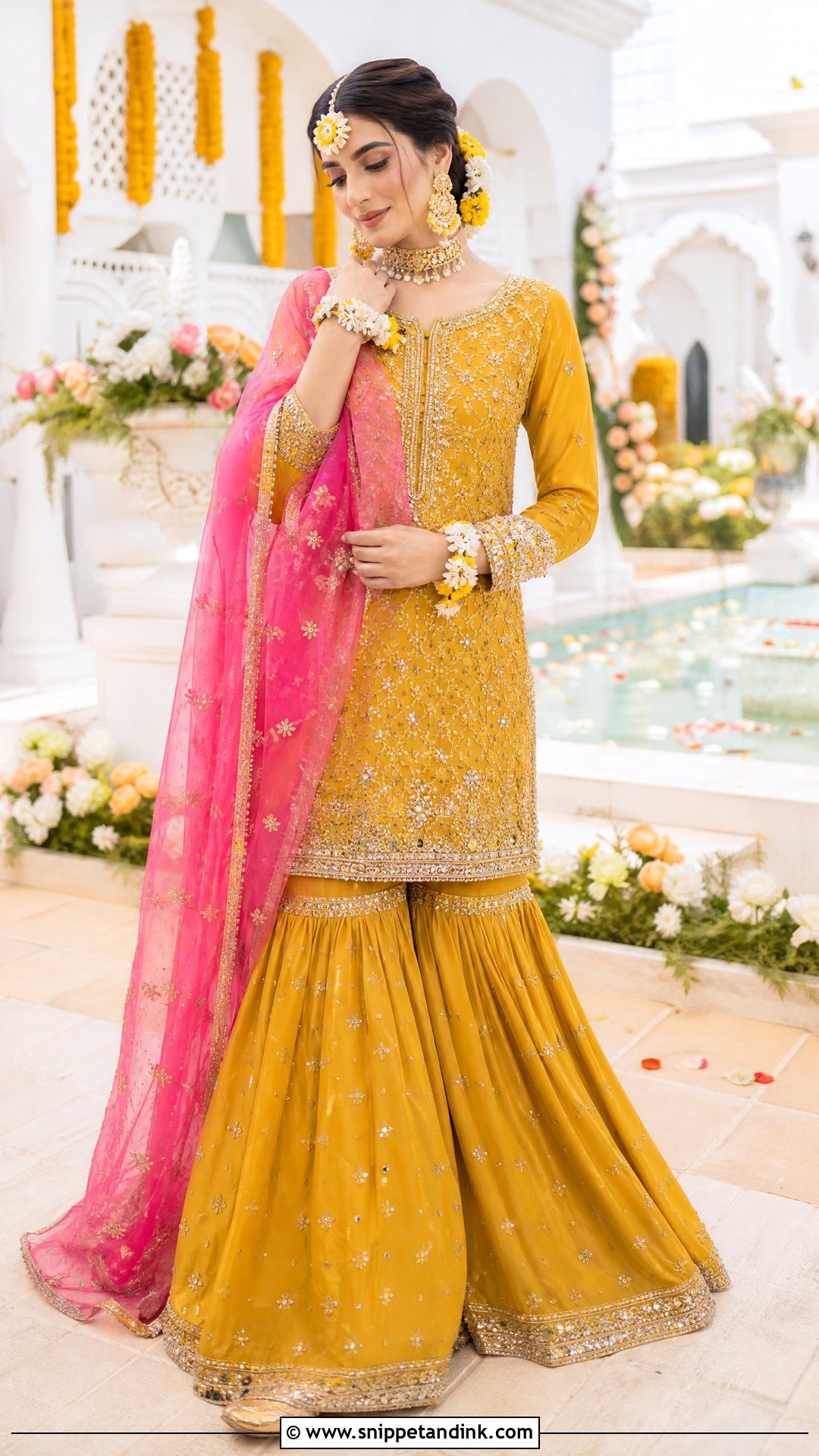
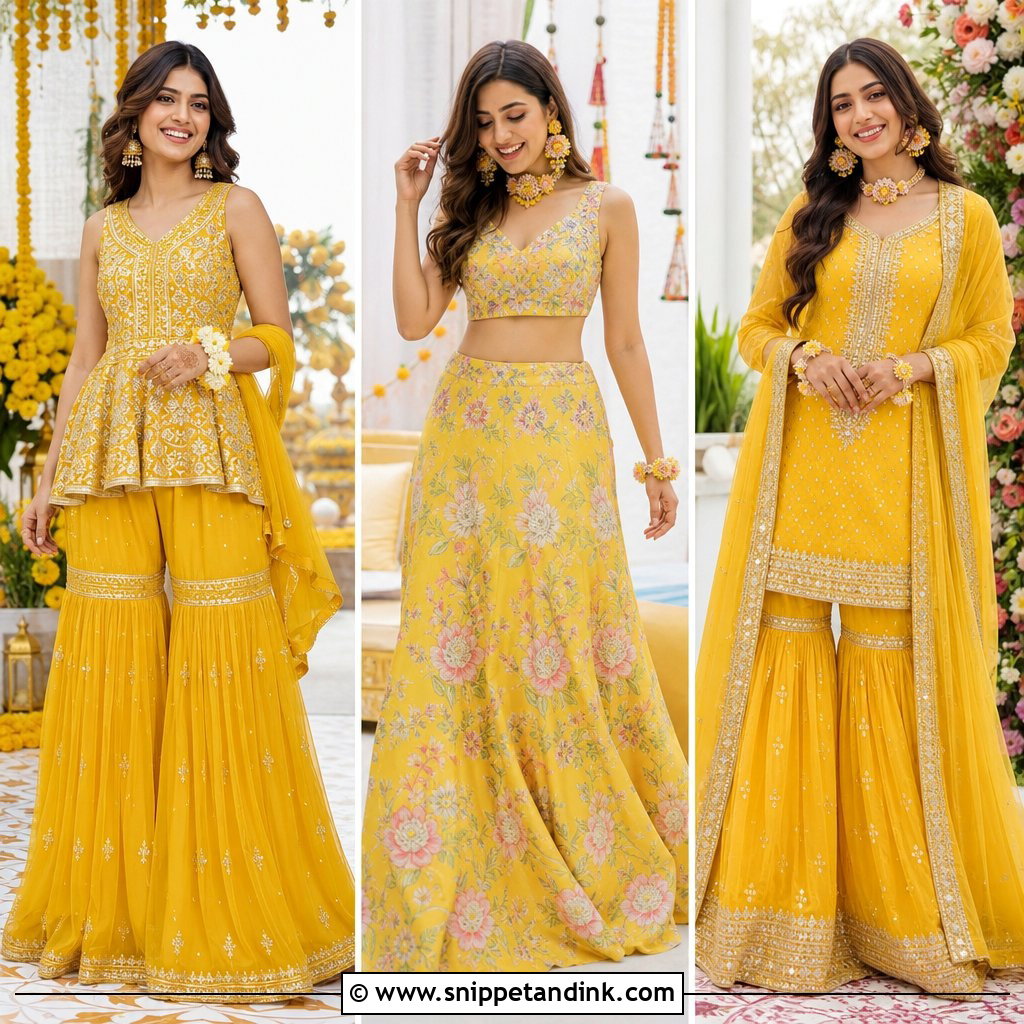
Pairing a mustard kurta with a farshi gharara is a bride’s entrance outfit. Choose a short, structured kurta with gota or fine dabka-style work, and a farshi in a fabric that drapes smoothly so the extended hem spreads instead of bunching. A red, rust or deep pink dupatta gives rich contrast. Farshi hems sweep the floor, which at a haldi means they sweep up turmeric and petals too, so plan for cleaning afterward. Practice walking in low khussas before the day. A gold choker and floral maang tikka suit it. This look belongs to the bride or immediate family.
16. Yellow Tulip Shalwar Suit Haldi Outfit
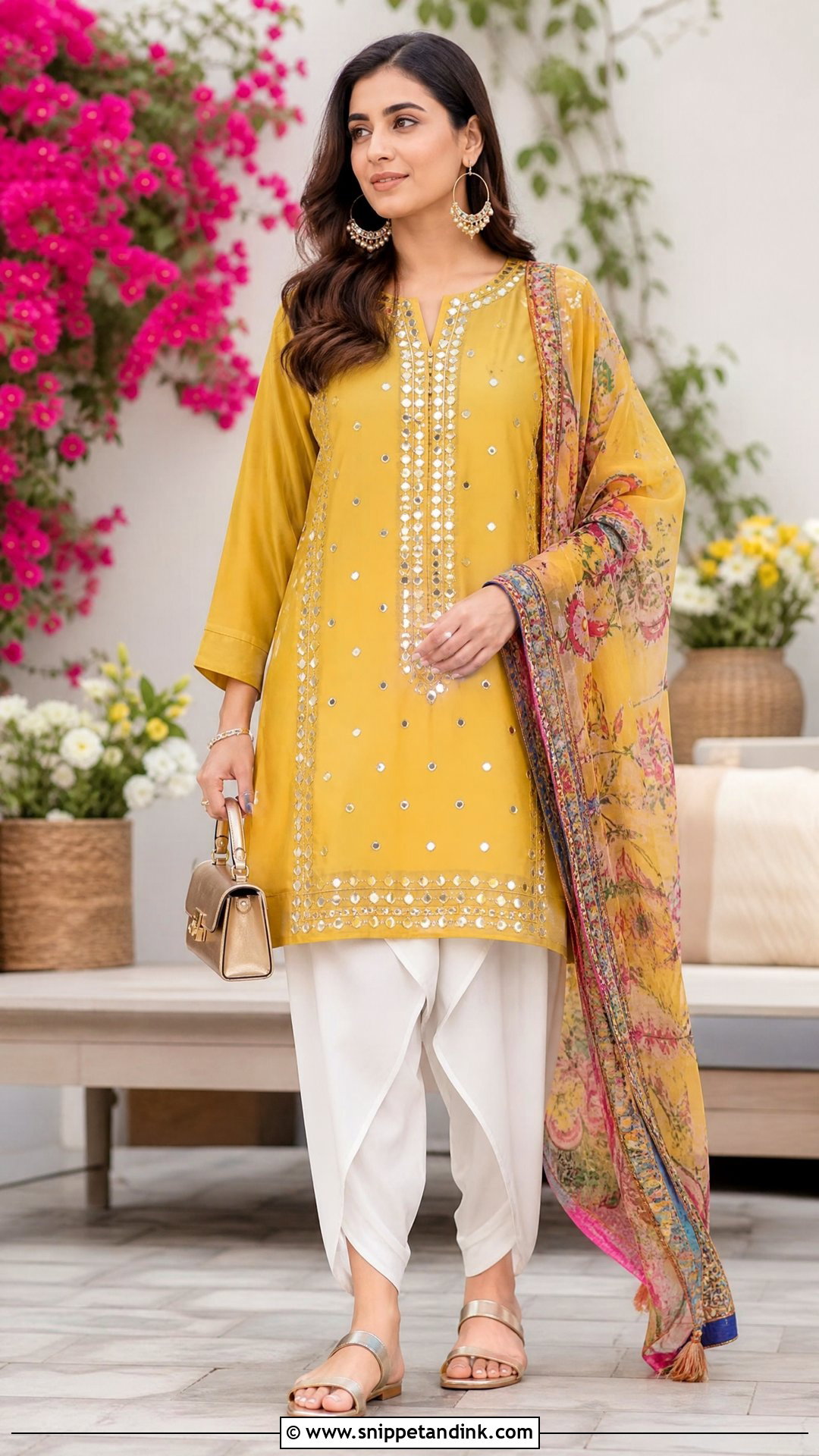
Tulip pants have an overlapping front panel that gives a straight kurta a neat, current shape. Pair a straight yellow kurta ending above the knee with tulip pants in yellow or white, so the overlap shows. Small mirror details at the cuffs and neck add festivity. Tulip pants are tailored, not loose, so they’re comfortable for walking but less so for sitting cross-legged; if your role involves floor seating, a regular shalwar is kinder. A printed dupatta with pink and green touches, metallic flats and a small handbag finish it. It suits guests helping behind the scenes.
17. Yellow Saree Pakistani Haldi Outfit
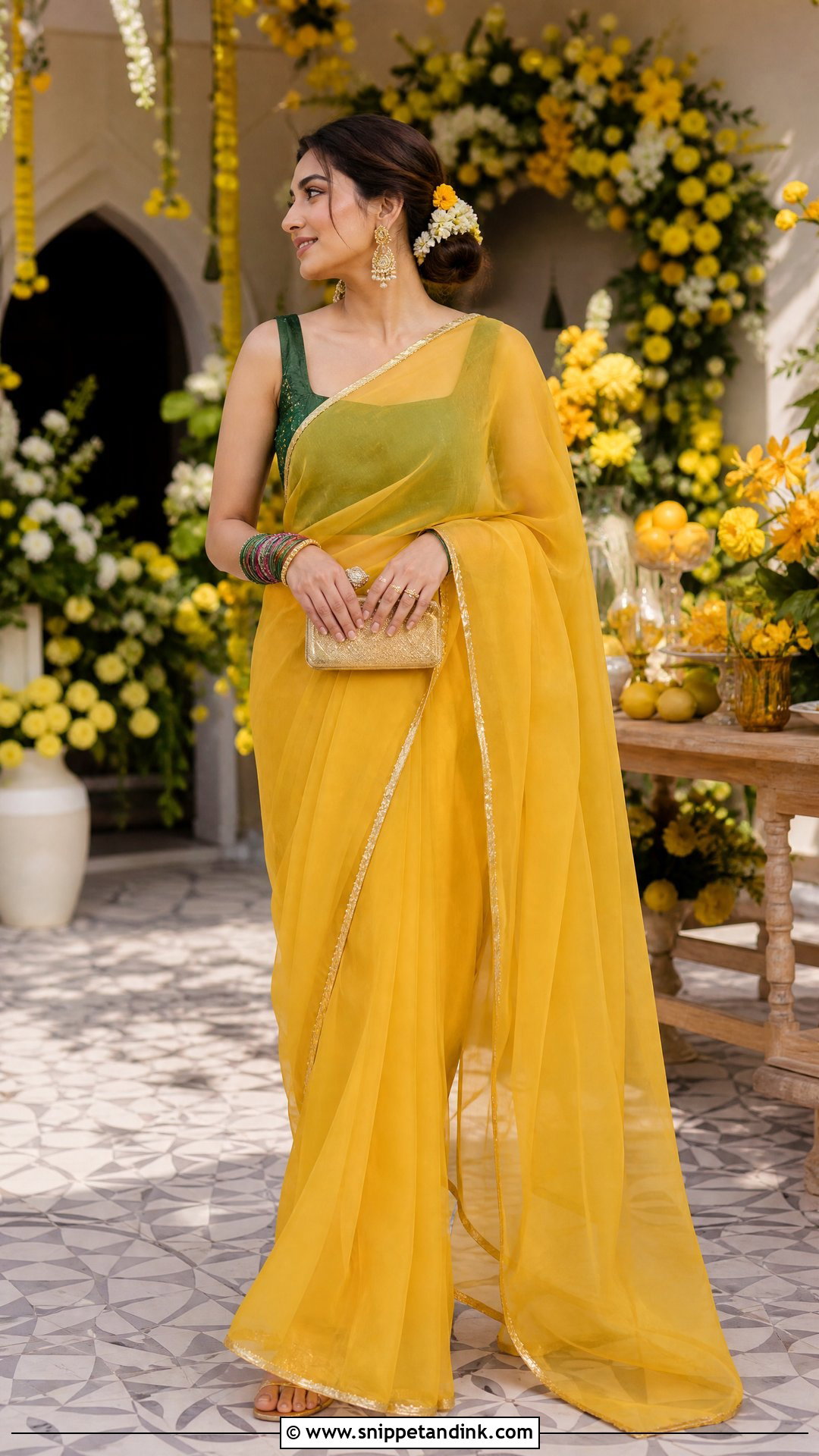
A light yellow saree works well for mothers, married sisters and guests who enjoy draping. Choose organza, chiffon or georgette, never a heavy embellished fabric. Pair it with a fitted blouse in yellow, green or pink with secure sleeves. A narrow gota border is enough decoration. Organza holds its pleats crisply but is slippery, so I use more pins on organza than on chiffon. Low block heels or embellished sandals should show beneath the hem. Gold earrings and colorful bangles finish it. A low bun with white flowers looks classic.
18. Yellow Co-Ord Set With Organza Dupatta
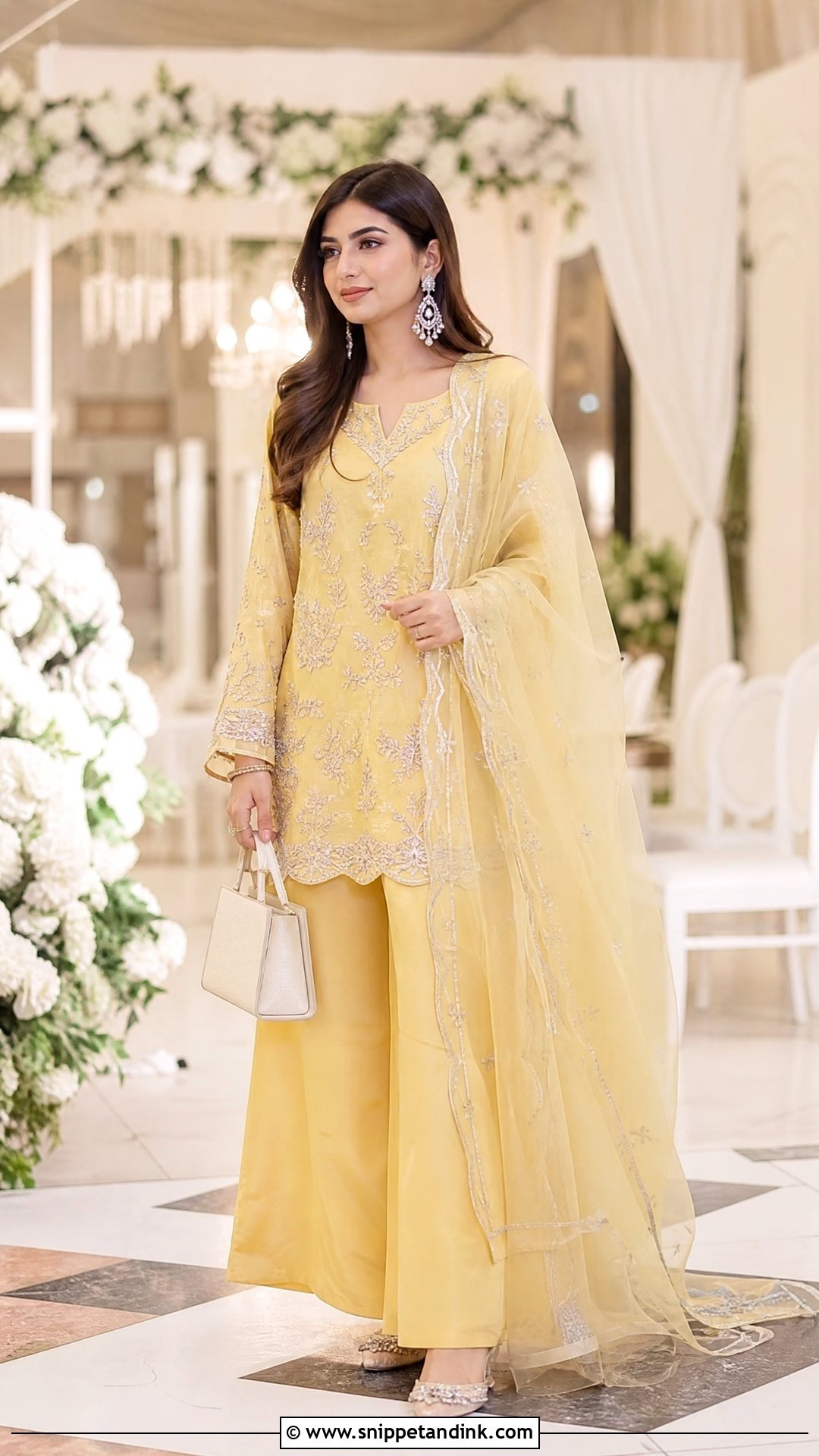
A matching co-ord set is the practical choice for guests traveling to the event or managing small children. A relaxed yellow tunic over straight or wide-leg trousers in the same fabric needs no ironing skills and packs flat. Embroidered cuffs or scalloped hems make it festive. Add a sheer organza dupatta in a lighter yellow or ivory for traditional softness. Embroidered mules, statement earrings and a compact top-handle bag finish it. Keep embellishment modest so you’ll wear the pieces again at lunches and family events.
19. Yellow Velvet Waistcoat With Kurta Shalwar
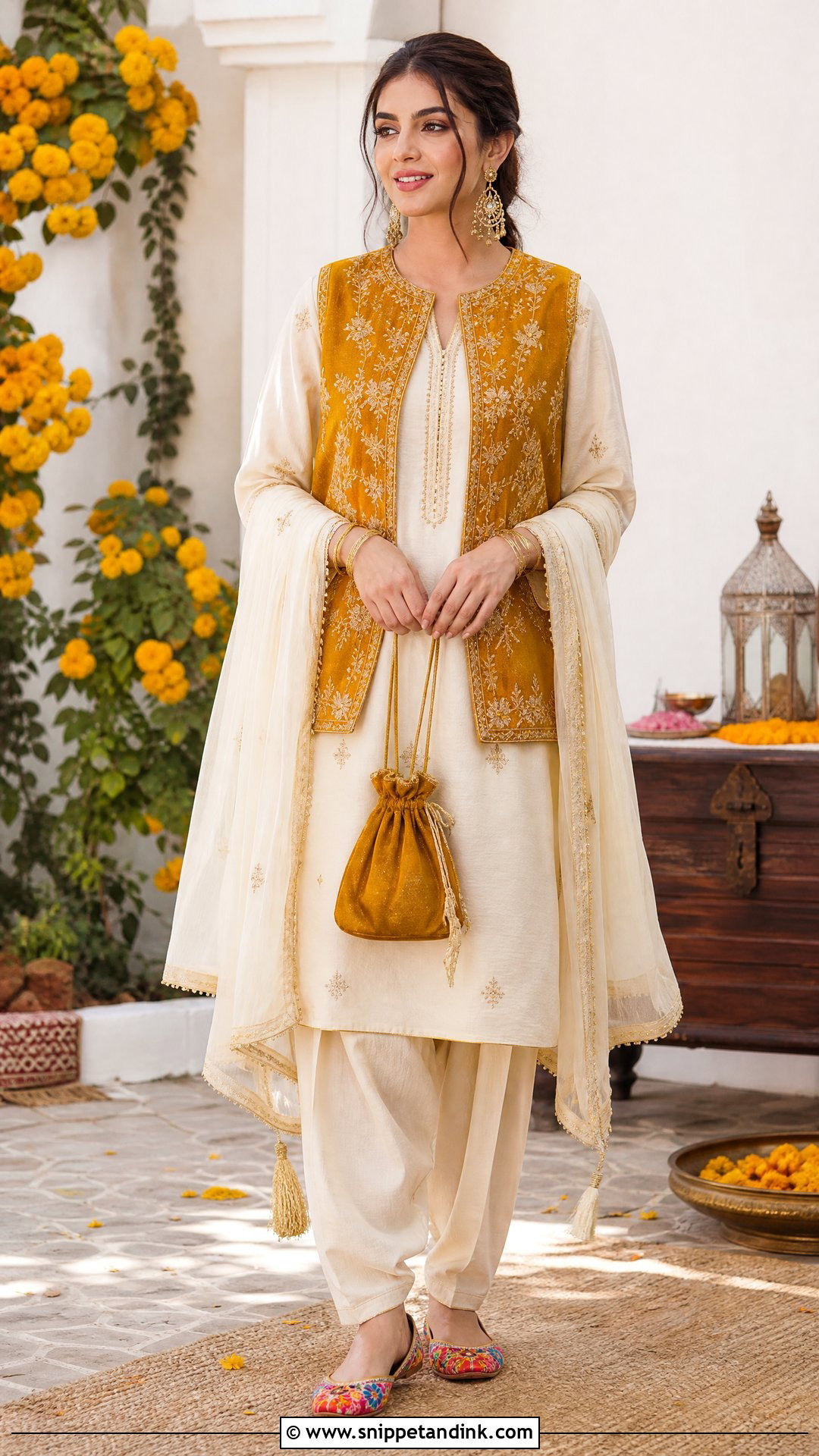
A waistcoat over a plain kurta shalwar is my favorite answer for a winter or evening haldi. Start with an ivory or pale yellow kurta and matching shalwar, then add a mustard velvet waistcoat with thread embroidery, mirrors or a little gold trim. The waistcoat gives warmth where you need it, across the chest and back, while your arms stay free. Keep the velvet to the waistcoat only, or the outfit gets heavy. A light chiffon dupatta over one arm, embroidered khussas and a fabric potli finish it. Loose waves or a braided ponytail keep it relaxed.



20. Yellow Maxi Dress With Pakistani Dupatta
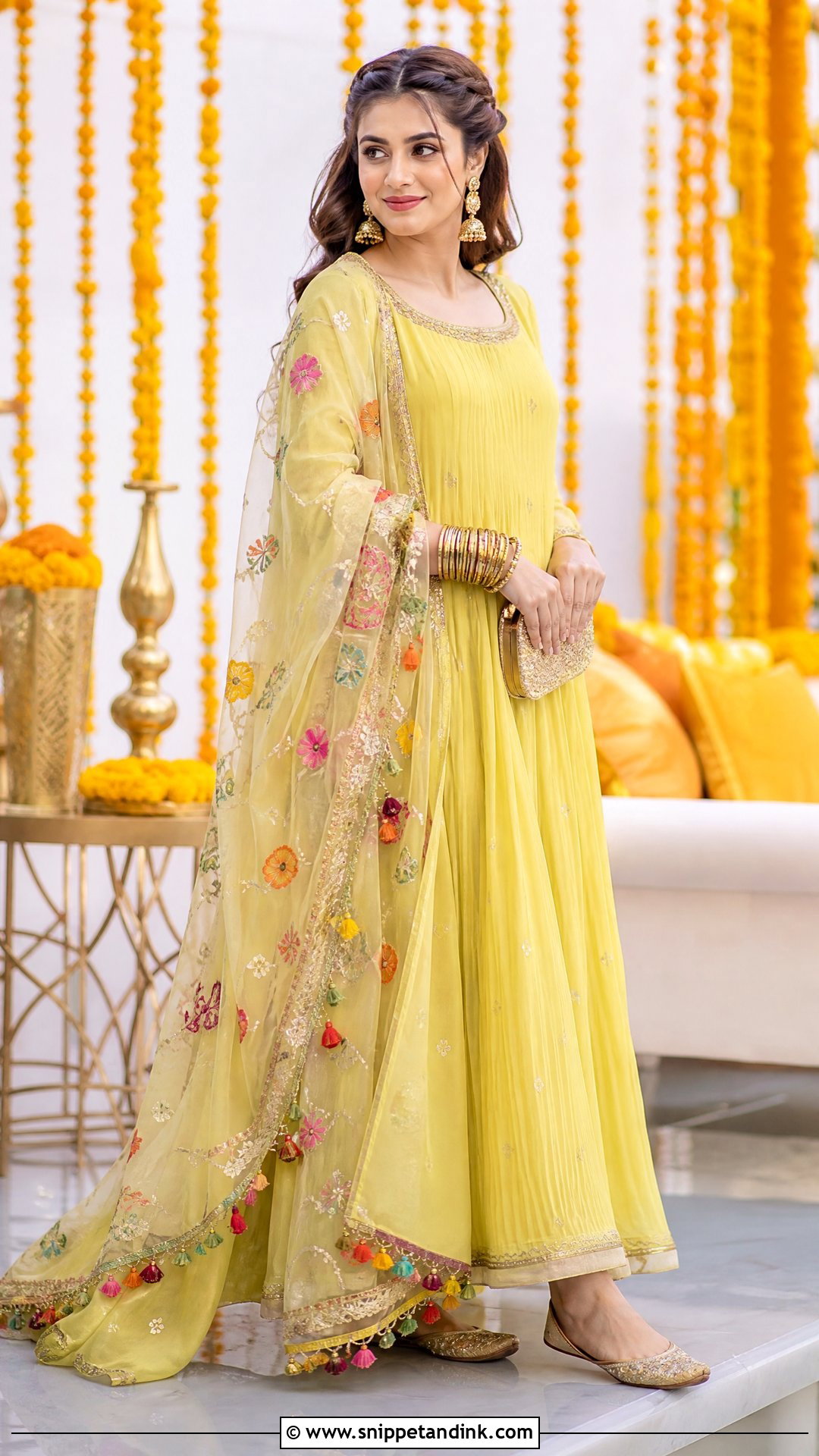
A yellow maxi dress becomes a proper haldi outfit once traditional accessories are added. Choose a modest dress with full or elbow-length sleeves, a defined waist and an ankle-grazing hem, then add a Pakistani organza dupatta with gota or tassels. Gold khussas do more than anything else to make a western dress feel at home at the event. Jhumkas and stacked bangles add detail. Carry a small embroidered clutch, not an everyday bag. It suits guests who prefer dresses, as long as the fabric breathes and the skirt isn’t too full to sit in.
Dye Bleed, Sweat and Heels on Grass
Most haldis happen in the day, often outside, and the heat causes problems a showroom never reveals. Cheaply dyed yellow and orange fabric can bleed onto damp skin and onto a white shalwar. I test new outfits by pressing a damp white cloth onto the inside of a seam; if color transfers, wash the piece once in cold water before the event, or wear a lining between it and your skin.
Sweat shows quickly on silk and raw silk, especially under the arms. Dress shields, the small adhesive pads that stick inside the armhole, are cheap and save an expensive kameez. Lawn, cotton net and chikankari cotton handle heat best of everything on this list.
Then there’s the ground. Stiletto and slim block heels sink into lawns, so flat khussas or wide heels are the safer bet for any garden haldi. Carry a pair of flats anyway; the floor seating, the dancing and the photographs on uneven ground add up.
Planning a Haldi Outfit for Its Second Life
Haldi outfits are worn for an afternoon, so I encourage clients to buy with the next year in mind. A plain-ish kurta and trousers can go to Eid lunches; a separate dupatta can refresh an old suit; a co-ord can be split into two wardrobe pieces. Heavy one-off pieces like a farshi gharara make sense for the bride. For everyone else, choosing items that work alone stretches the money much further.
The Haldi Look That Still Feels Like You
Comfort and color carry a haldi outfit further than embellishment does. Ghararas, pishwas, co-ords, shararas and simple kurta sets all work once the fabric suits the weather and the dupatta is secure. Yellow stays the base, but pink, orange, green, mustard and ivory make the outfit personal. Think about the venue, the weather, the family’s dress expectations and your role before deciding how much decoration you need. Low khussas, light jewelry and hair that stays up will let you enjoy the event. A full bridal look or a reusable guest outfit can both feel right, as long as it’s planned from head to toe.
You'll Like These Ideas:





Leave a Reply