
A gap between tiers changes how a cake reads from across a room. Put a spacer in and the same three tiers suddenly stand taller, look lighter and seem more bespoke, yet you are not paying for a single extra slice. I build these with clear acrylic, floral rings, metal frames, old-fashioned pillars and fully floating stands, and each one asks something different of the cake above it. That open band is also where I can tuck flowers, candles, pearls or initials. Below are twenty spacer cakes, with what I watch for when I make each one.
What Holds a Spacer Cake Up
The spacer is mostly for looks; the supports hidden inside the cake do the real work. Every tier sits on its own cake board, and under each board is a ring of dowels pushed into the tier below so the sponge never takes the load. The spacer then rests on that board, and the next tier on top of it. For taller or floating designs I add a central rod through the whole stack.
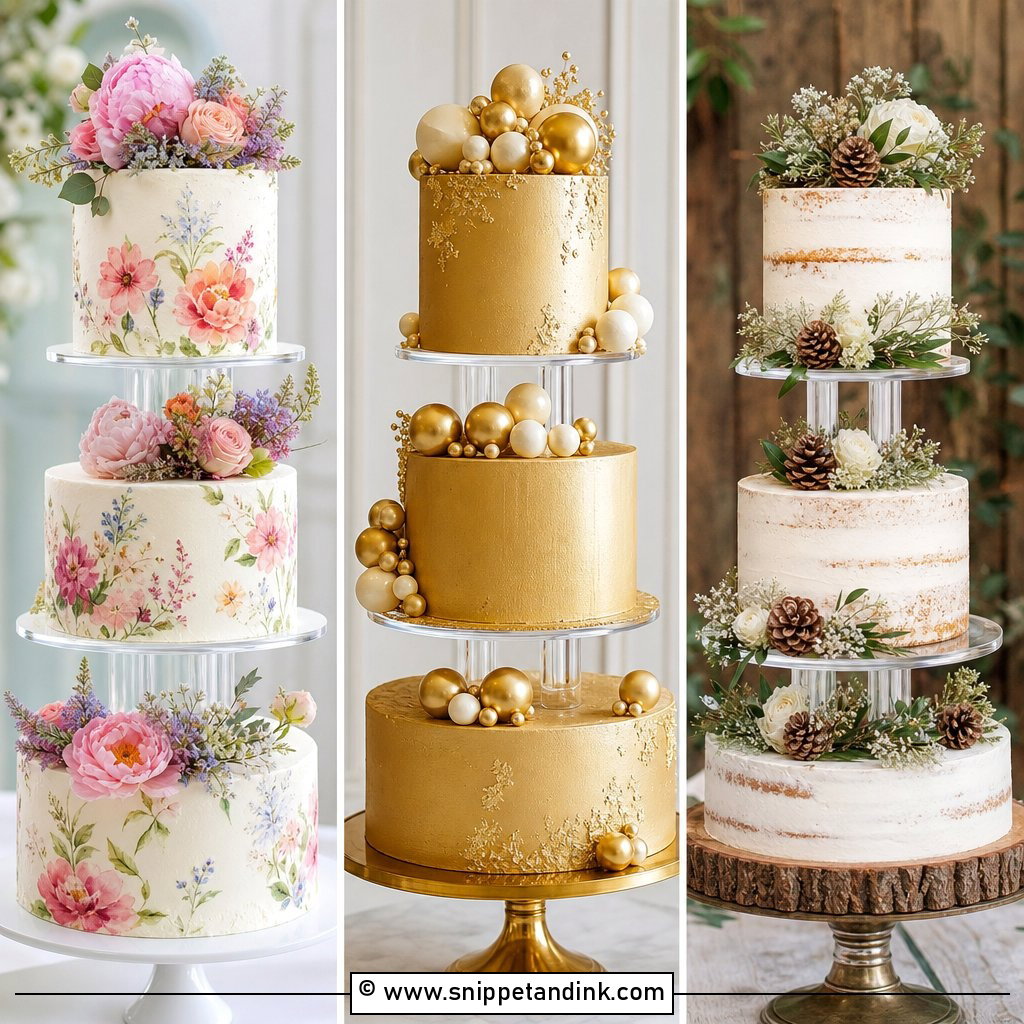
That matters to you for two reasons. First, the servings come only from the cake tiers, so a spacer adds height without changing your slice count. Second, a spacer cake almost always travels in pieces and is assembled at the venue, so your baker needs a table that is level, out of direct sun and ready when they arrive.
- Clear acrylic is light and easy to carry, but shows every smudge, so it is wiped and assembled on site.
- Floral rings need a separate board and a sealed foam or water source so stems never touch the cake.
- Metal frames are heavy and need a sturdy base board under the bottom tier.
- Hidden-rod floating stands are the most demanding and should be planned before the design is final.
1. Acrylic Spacer Wedding Cake
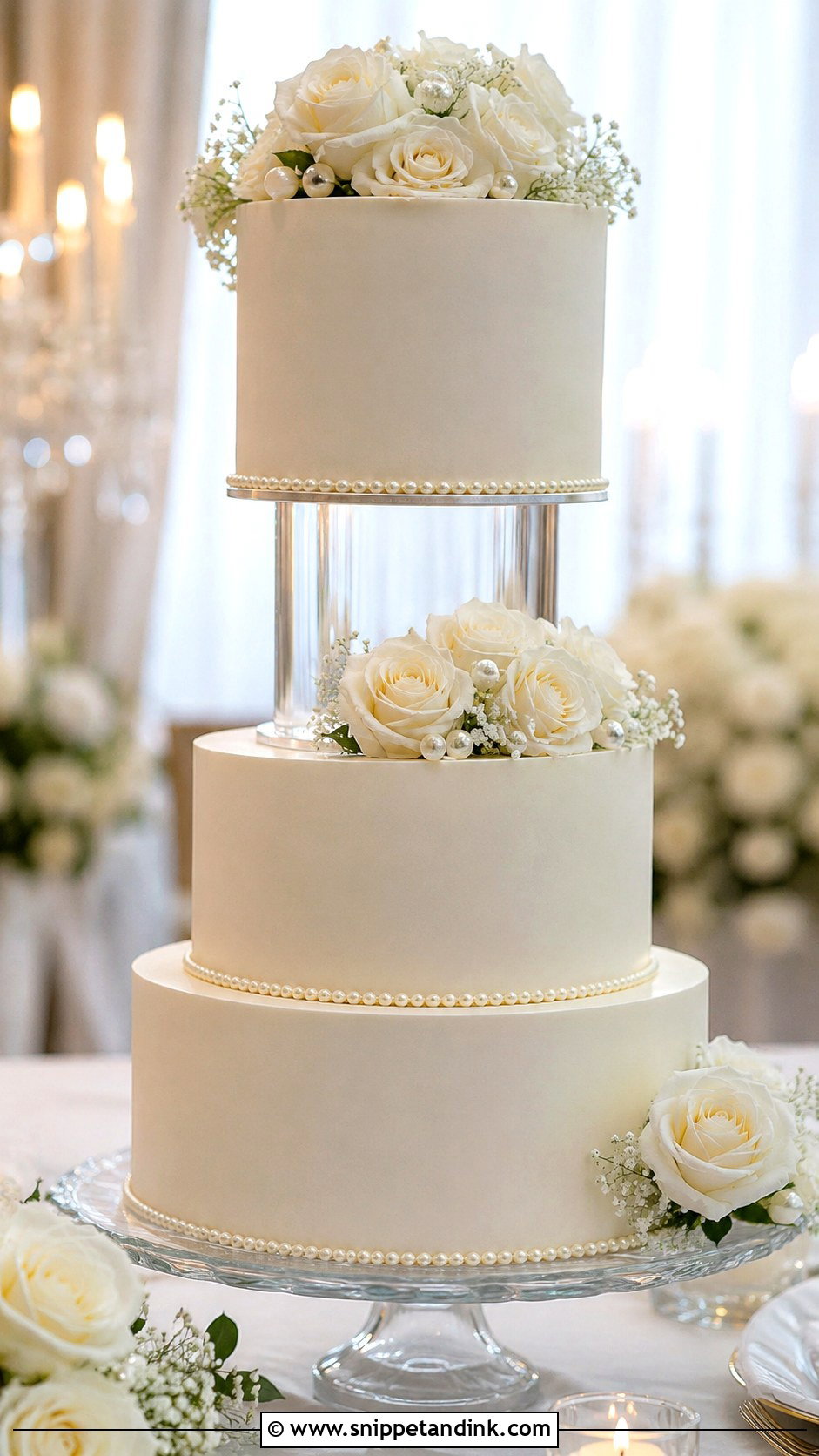
Acrylic is the spacer I reach for most, because a clear cylinder gives the tiers a clean floating effect without adding any visual weight. The width matters more than people expect. I size the acrylic about two inches narrower than the tier sitting on it, so the cake board overhangs slightly and hides the join. Left empty it looks very modern; filled with pressed or silk flowers or a string of micro lights, it becomes the focal point.
2. Floral Spacer Wedding Cake
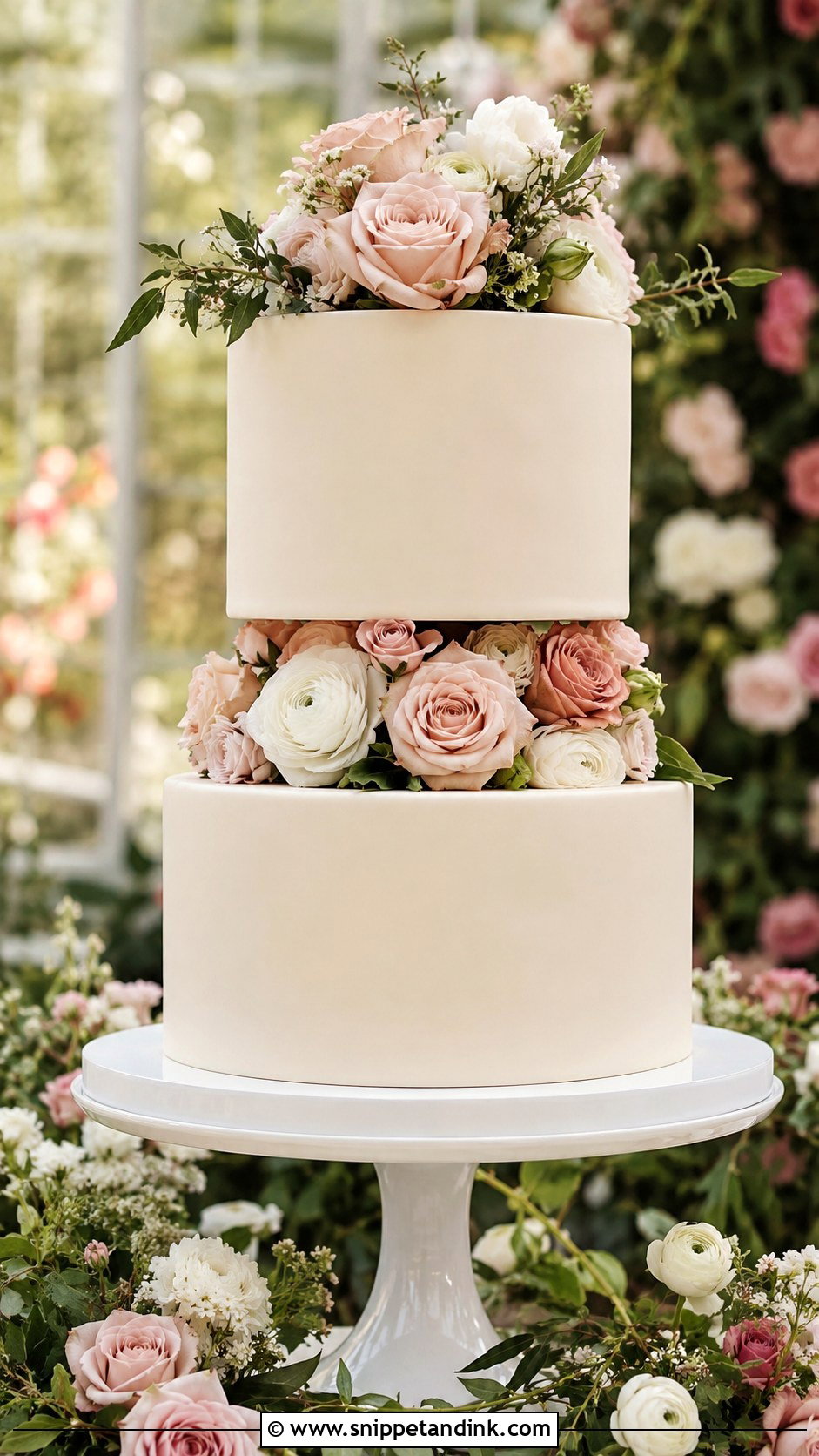
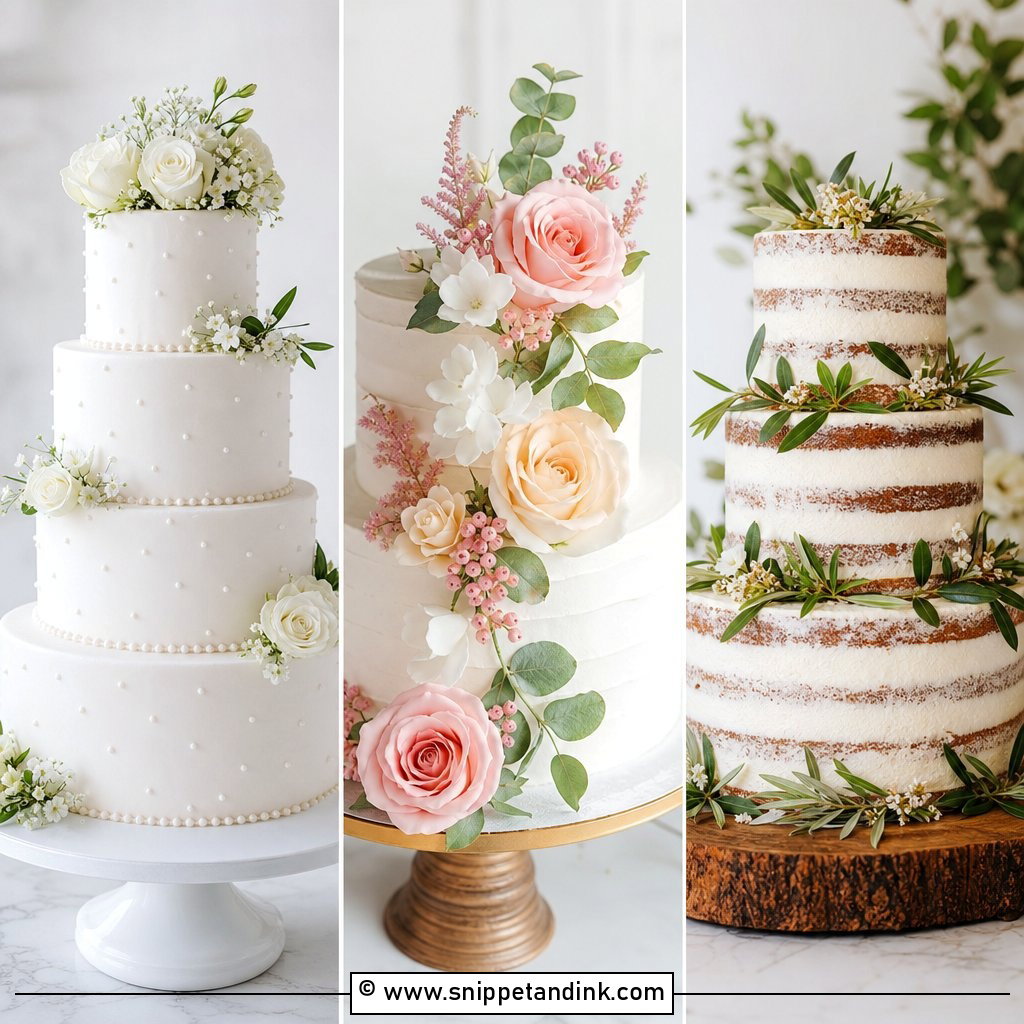
Here the spacer stops being hardware and turns into part of the floral design. I never press stems straight into the cake for this one. The roses, ranunculus or orchids go into a ring of floral foam or a clear holder that sits on its own board, so no sap or water touches the sponge. Give the tiers a quiet finish, plain buttercream or ivory fondant, and repeat two or three blooms at the base so the eye travels the full height.
3. Gold Spacer Wedding Cake
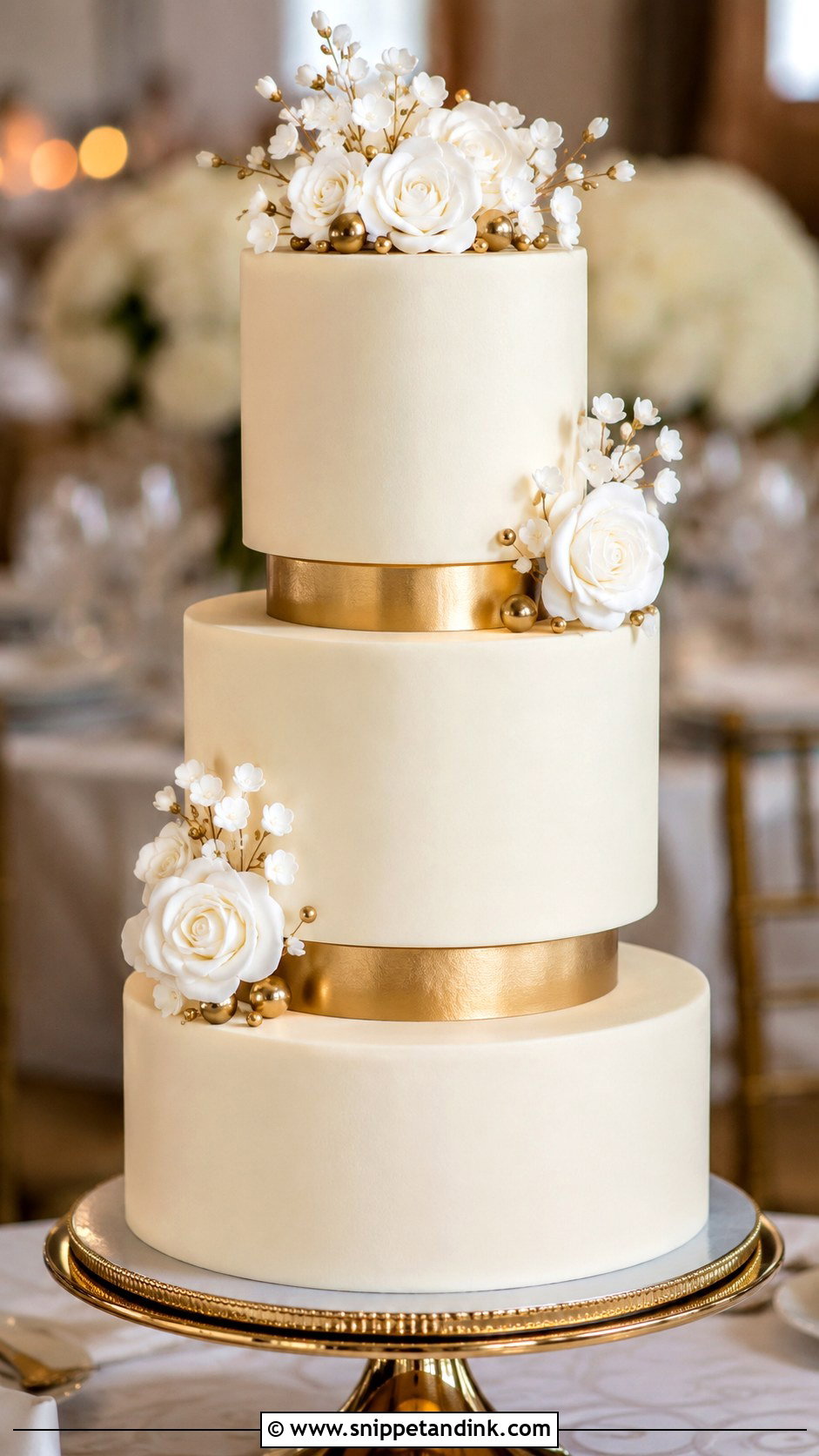
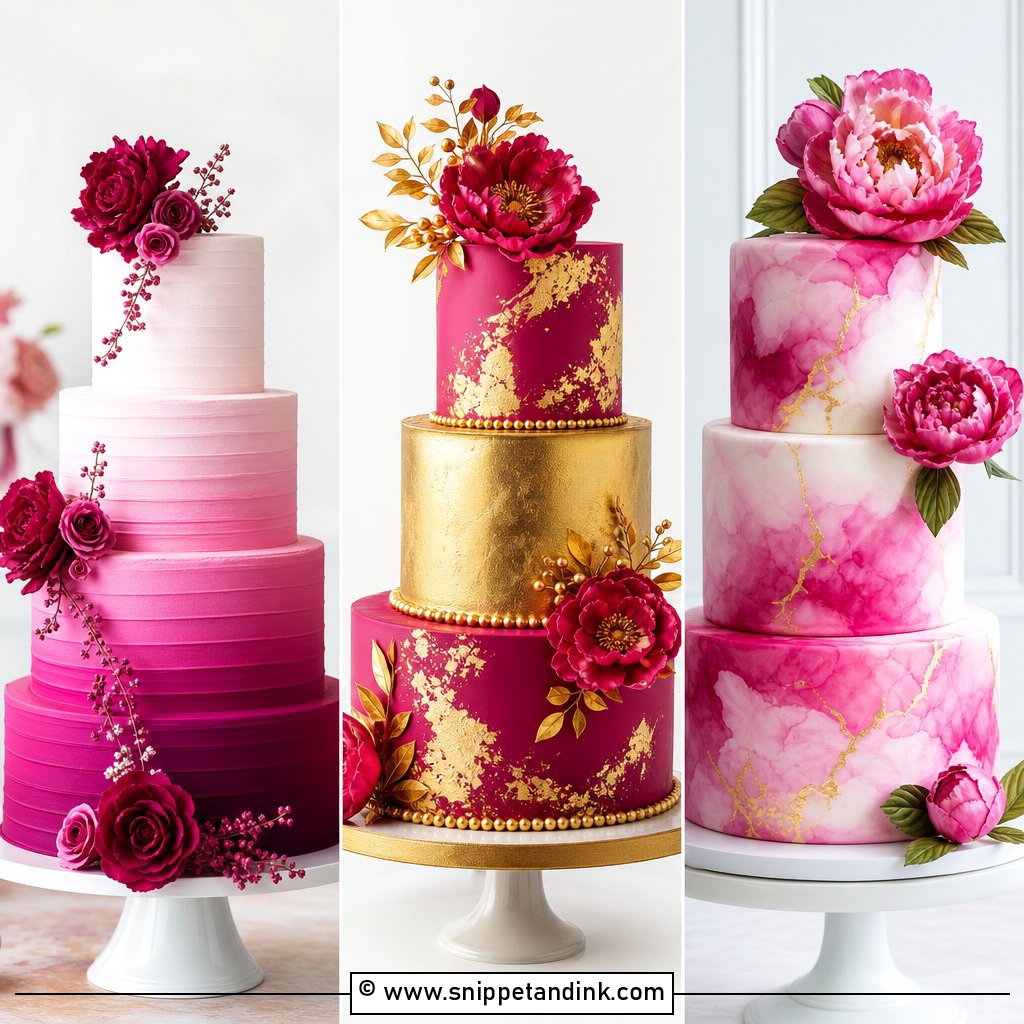
Gold works best as a thin line, not a block. A slim brushed ring or a geometric frame between ivory tiers catches candlelight at an evening reception in a way painted gold leaf on the cake itself rarely does. I’d steer you away from pairing a gold spacer with heavy gold piping on every tier; the cake starts to look like a trophy. One gold element, one cluster of white sugar flowers and clean edges is plenty.
4. Clear Tier Wedding Cake
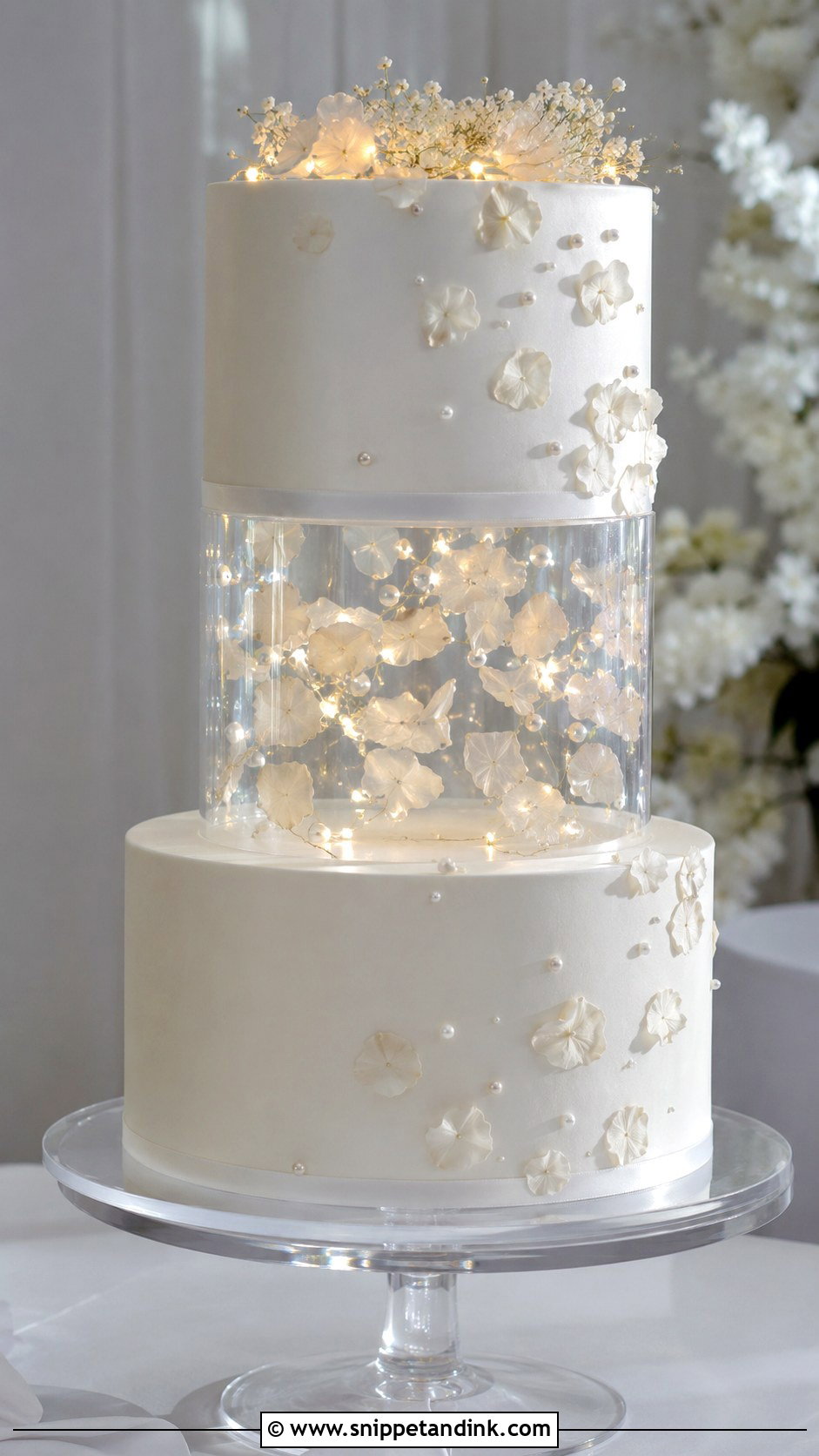
A clear tier is a dummy layer of acrylic that sits between two real cakes, so the top section seems to hover. It is one of the easiest spacers to transport, since the acrylic is light and the cake above it rests on its own board and dowels. You can leave it bare or fill it with dried petals, pearls or tiny butterflies. The one thing I insist on is very smooth frosting on the tier below, because the clear walls magnify every ripple behind them.
5. Floating Wedding Cake With Spacers
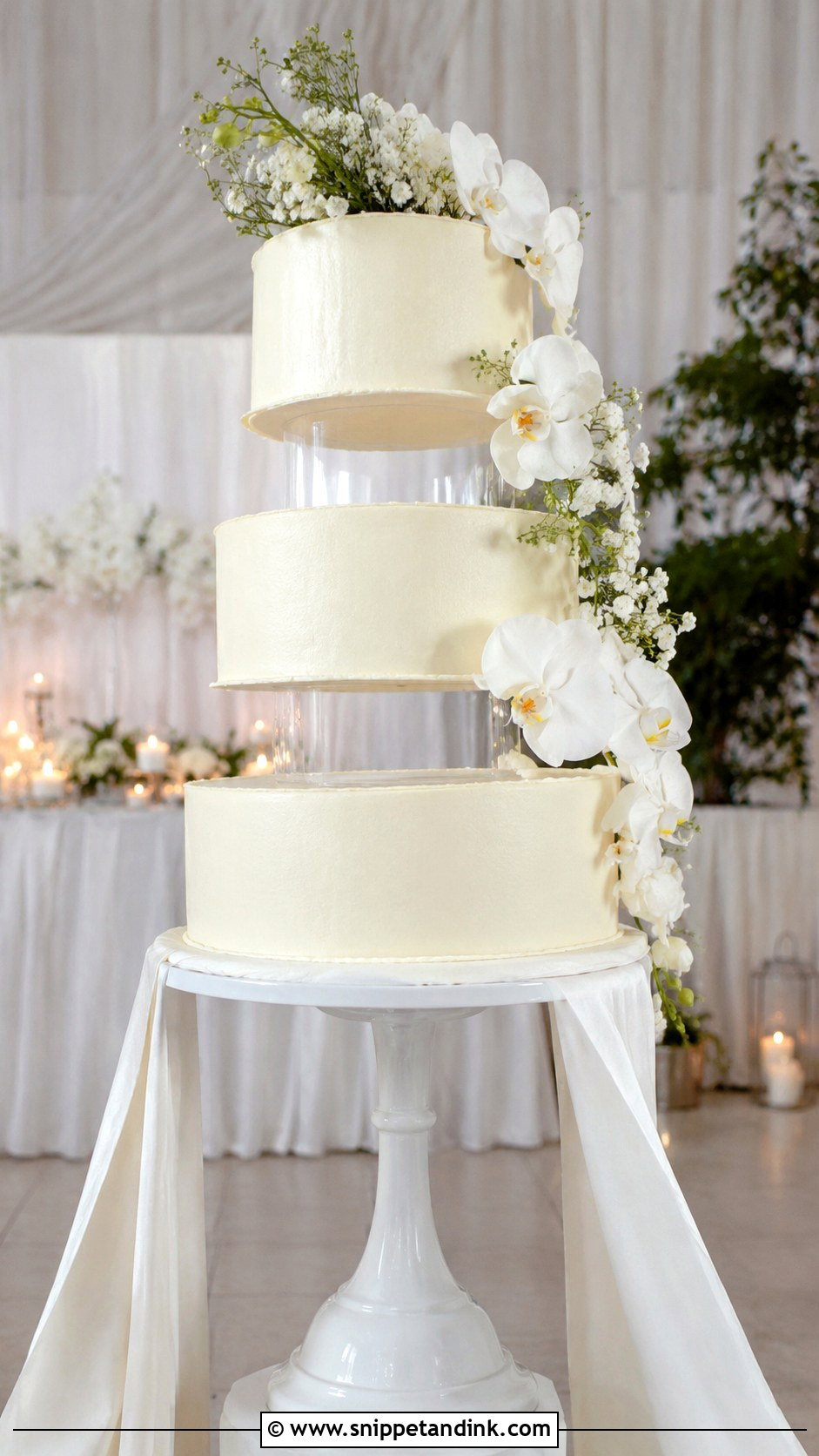
Floating cakes look like they defy gravity, and the trick is almost always a central steel or threaded rod running through every tier from a heavy base plate. That rod is what lets me leave real open space between layers. This is not a design for a first-time home baker or a cake that has to travel two hours on country roads; the structure has to be planned before anyone bakes. Keep the decoration restrained so the open space stays the feature, which is exactly what makes a floating spacer cake stop people at the reception.
6. Pillar Spacer Wedding Cake
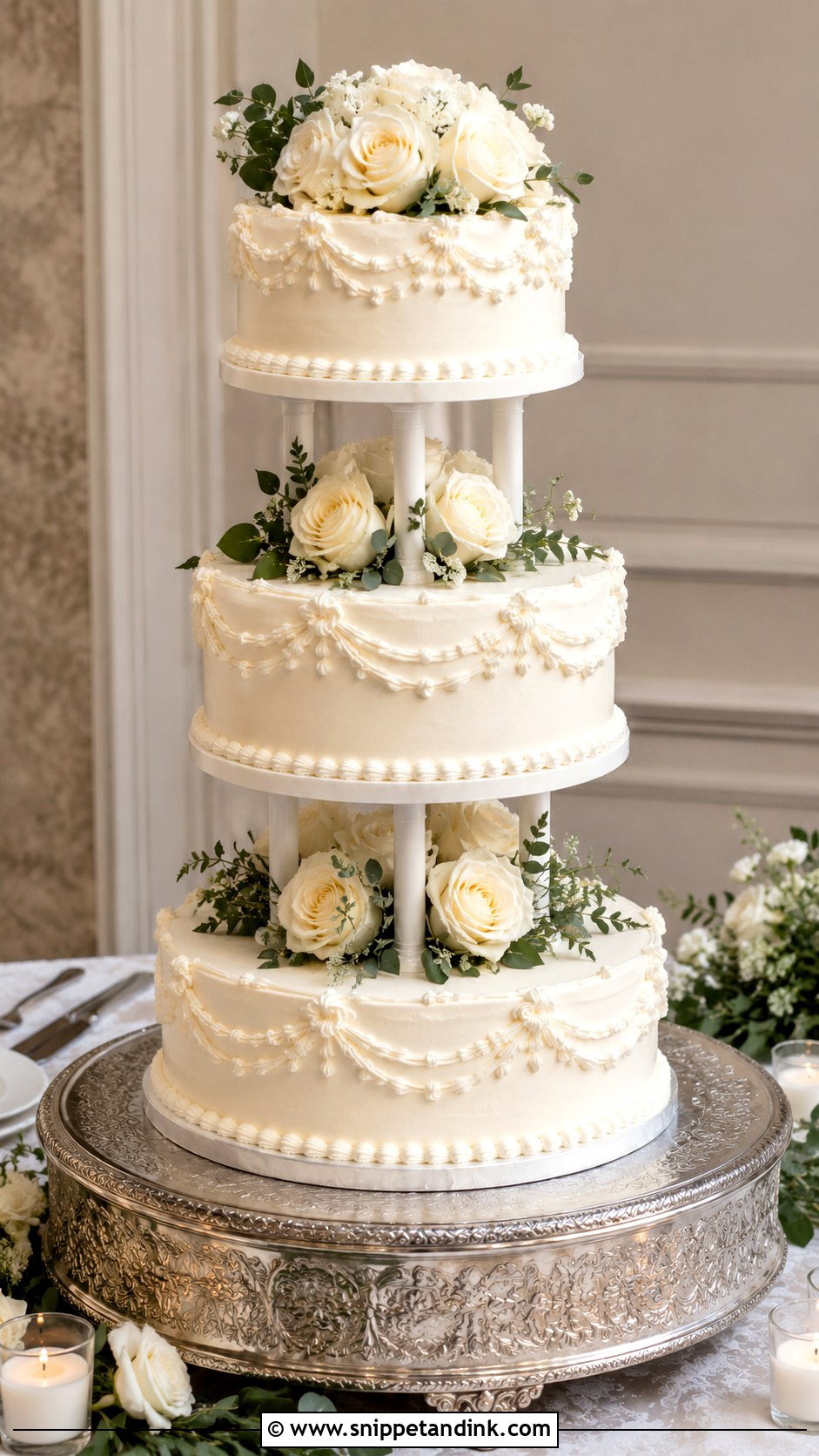
Pillars are the original spacer, and they still earn their place. The classic plaster pillars rest on separator plates with dowels underneath, so each tier is fully supported on its own. What dates them is thickness. I swap the chunky Grecian columns for slim clear or white rods, fill the gaps with a few ivory roses and suddenly the cake belongs to this decade. Spacing has to be even on all sides, or the cake looks like it is leaning even when it isn’t.
7. Modern Wedding Cake With Spacers
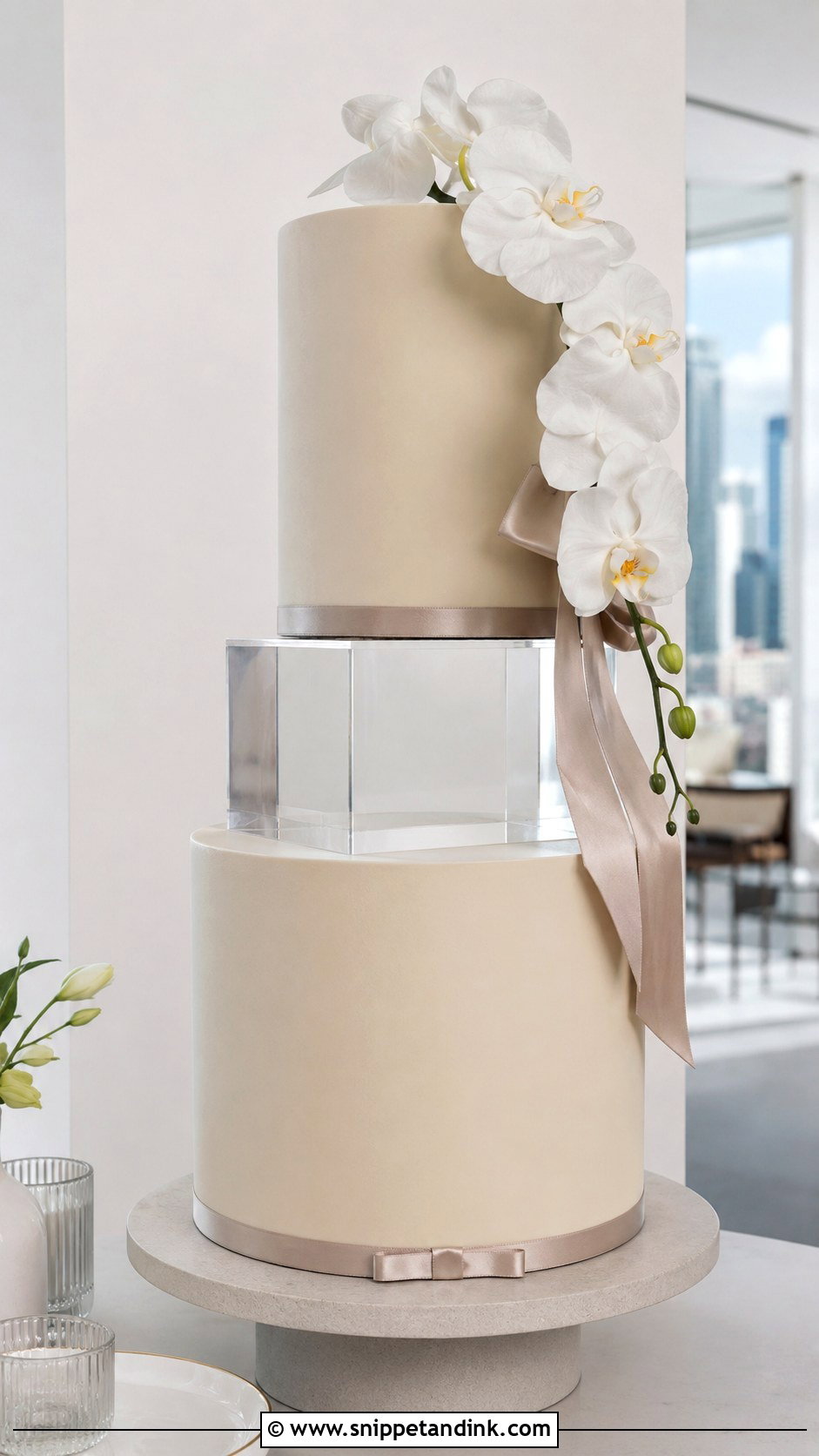
Clean geometry is the whole point here. Square acrylic blocks, an open metal frame or a crisp round separator under smooth white or stone-colored tiers can look like a piece of sculpture. I limit these cakes to one bold gesture, a single orchid stem or a sharp fondant ridge, and resist the urge to add a second. Set it on a plain stand against a calm wall; a busy backdrop undoes the minimalism in photos.
8. Rustic Wedding Cake With Spacers
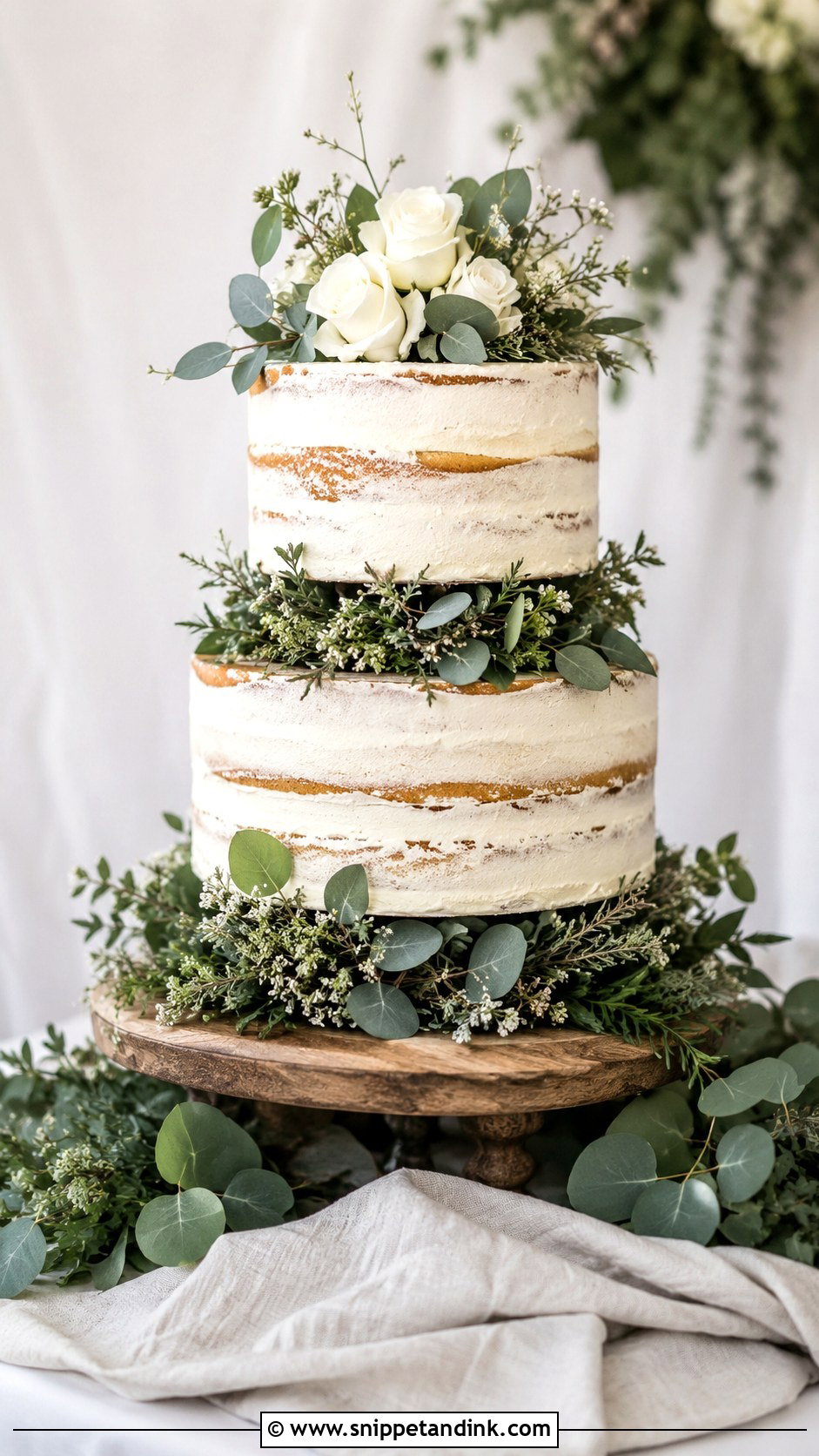
Semi-naked buttercream is the natural match for a rustic wedding cake with spacers, and it is also the finish I worry about most. A thin scraped coat dries out faster than a full coat, so I assemble it as late as possible and keep it out of direct sun. A wood-look stand or a clear tier stuffed with eucalyptus suits barns and tents. Rustic should still mean neat edges and level tiers, never crumbs and a lopsided top.
9. Pearl Spacer Wedding Cake
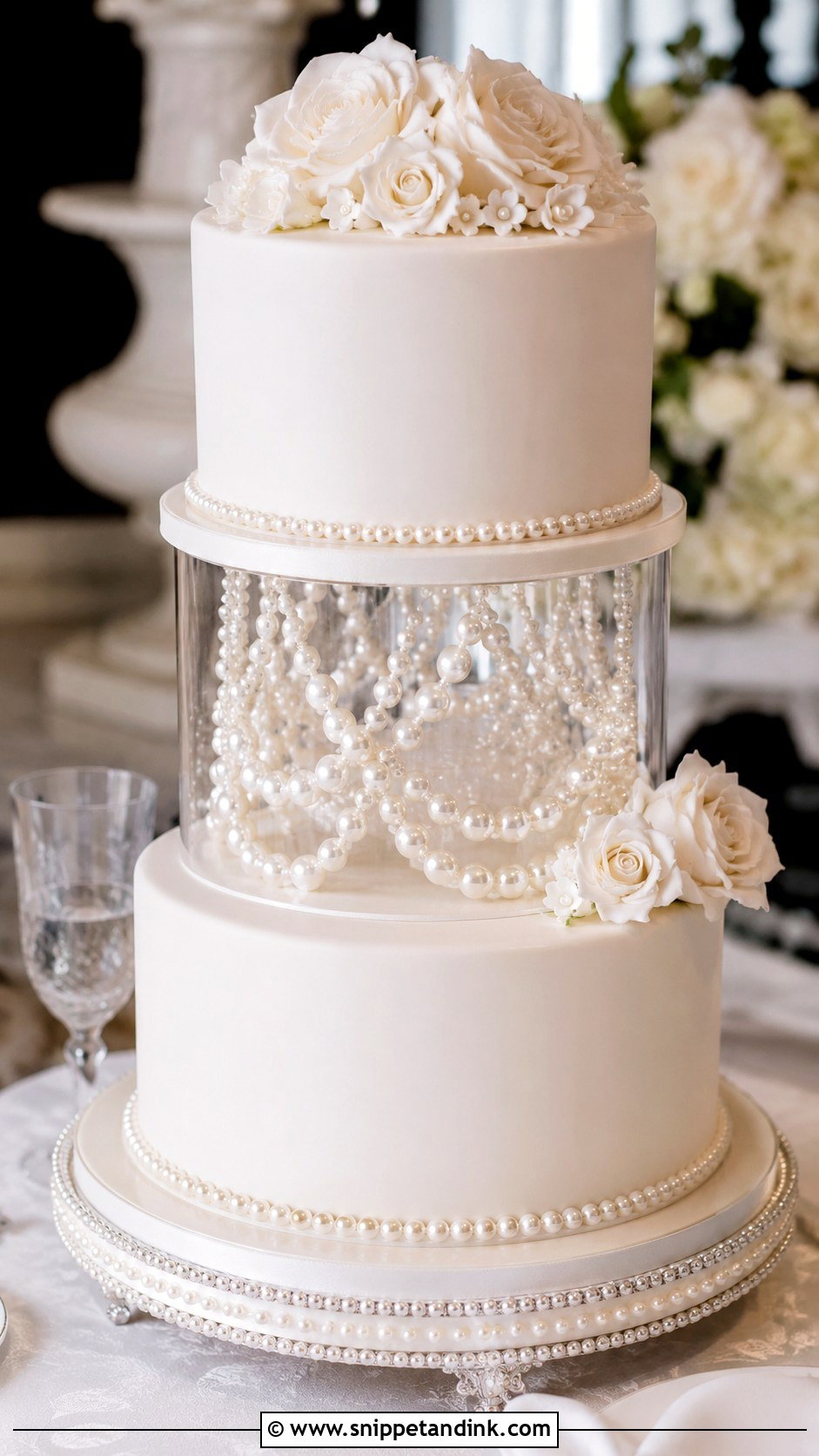
Pearls look best when they live in one place. I usually fill the spacer with strands or line its rim, then repeat a small cluster on the top tier and leave the rest bare. Sugar pearls are edible but soften in humidity, so for an outdoor summer reception I’d choose non-edible pearls inside the spacer, kept away from anything guests will eat. The effect is quiet sparkle without metallic shine.
10. Square Spacer Wedding Cake
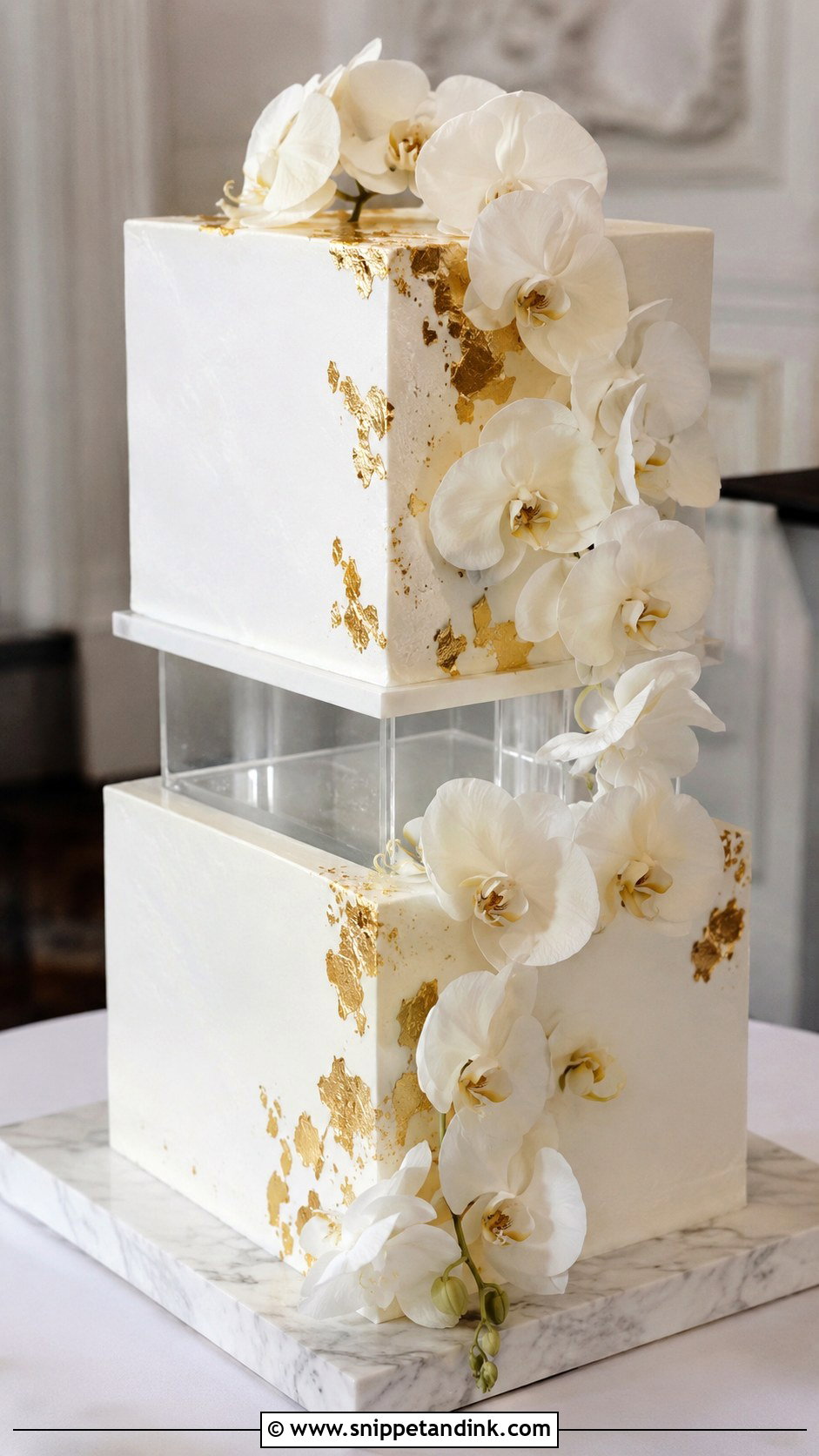
Square tiers are harder to cover than round ones, and a square spacer shows every flaw because your eye follows the straight lines. Getting sharp corners in fondant or buttercream takes time, so expect this design to take more hours on the cake itself. Line the spacer corners up exactly with the cake corners; even a few degrees of twist looks wrong. A single cascade of orchids through the open section softens all those right angles.
11. Round Spacer Wedding Cake
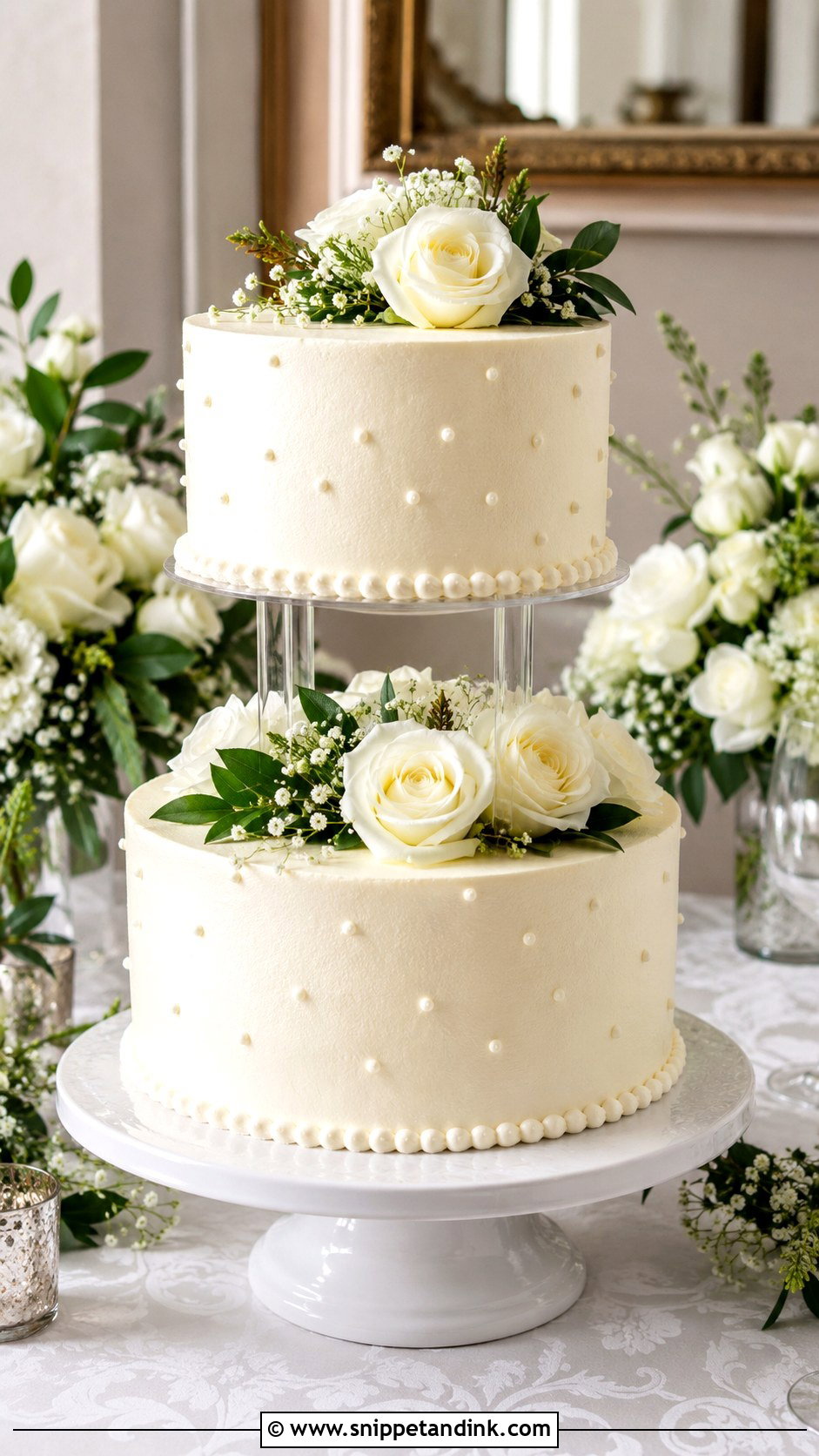
Round tiers forgive a lot, which is why this is the shape I suggest when a couple can’t decide. Any spacer suits them, acrylic for the floating look, a floral ring for a garden feel, a metal frame for something sharper. Because round cakes look the same from every side, they work well on a table in the middle of the room where guests walk all the way around. Keep the top tier dead center and choose a stand wide enough to support the whole base board.
12. Greenery Spacer Wedding Cake
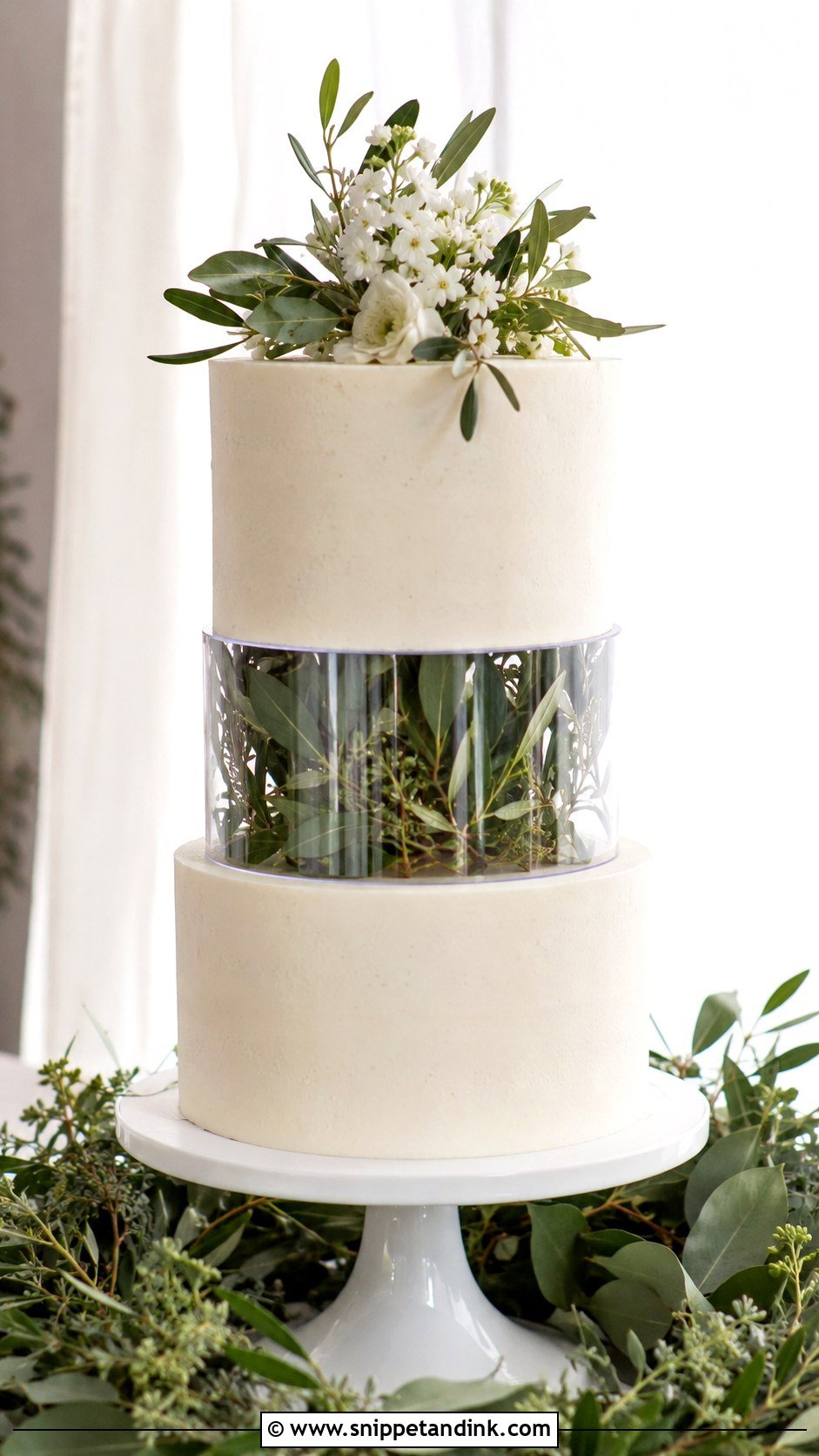
Greenery looks harmless, but some popular foliage is not food safe, and eucalyptus is one I never let touch frosting. I wrap stems in floral tape or keep them in a sealed ring inside the spacer, and I agree with the florist in advance who supplies what. Olive branches and ferns give a softer, looser outline than eucalyptus. White or ivory frosting keeps the whole thing bright, and a handful of white blooms stops it looking like a hedge.
13. Rose Spacer Wedding Cake
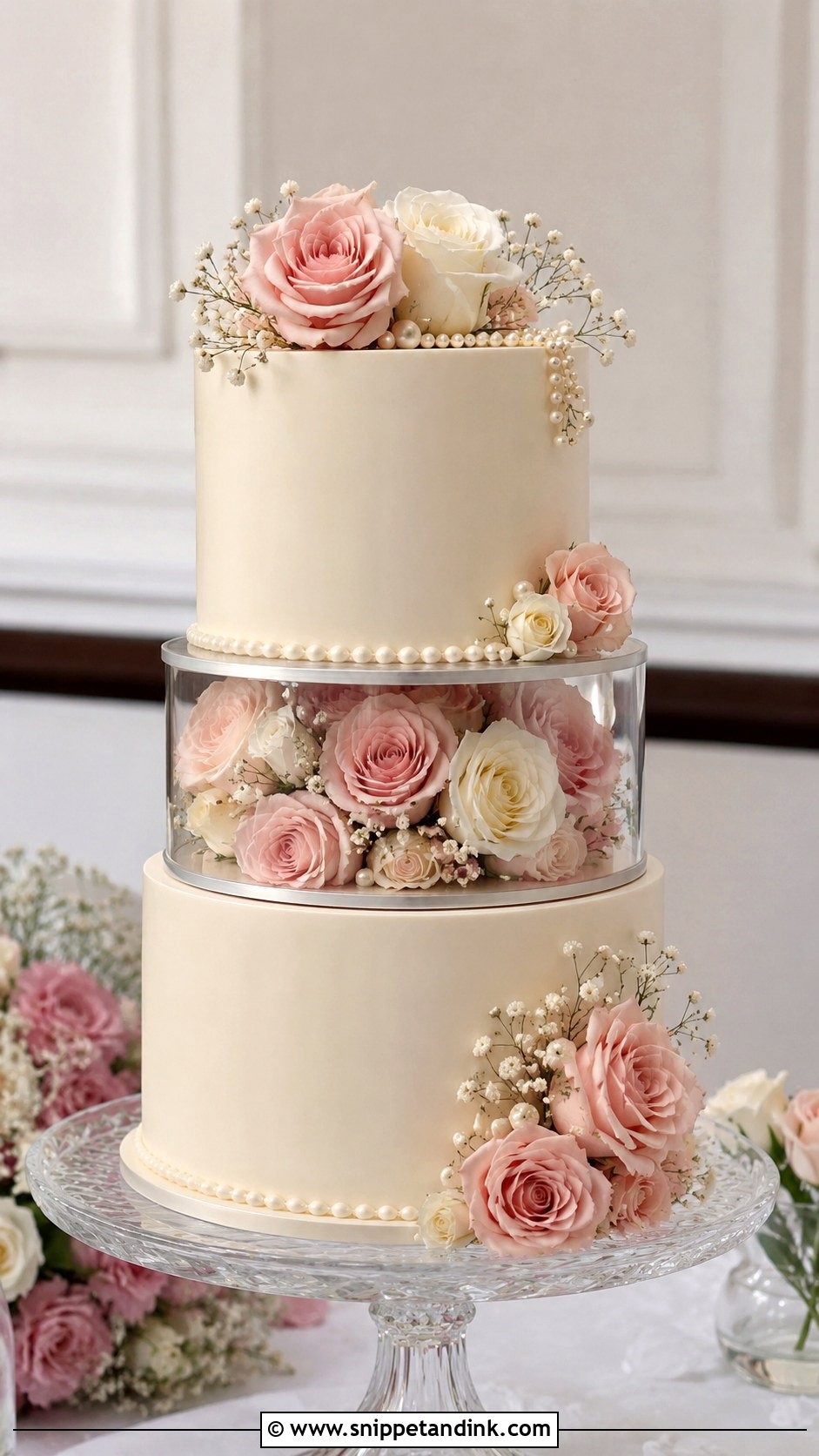
Roses are forgiving to arrange and come in nearly every shade, so they are the flower I see most in spacers. A full ring reads classic; a few clustered heads read modern; a cascade linking tiers adds movement but needs more stems than you’d guess. Open roses drop petals by late evening, so I place them as close to serving time as the schedule allows. Keep piping minimal because the roses already carry the detail.
14. Orchid Spacer Wedding Cake
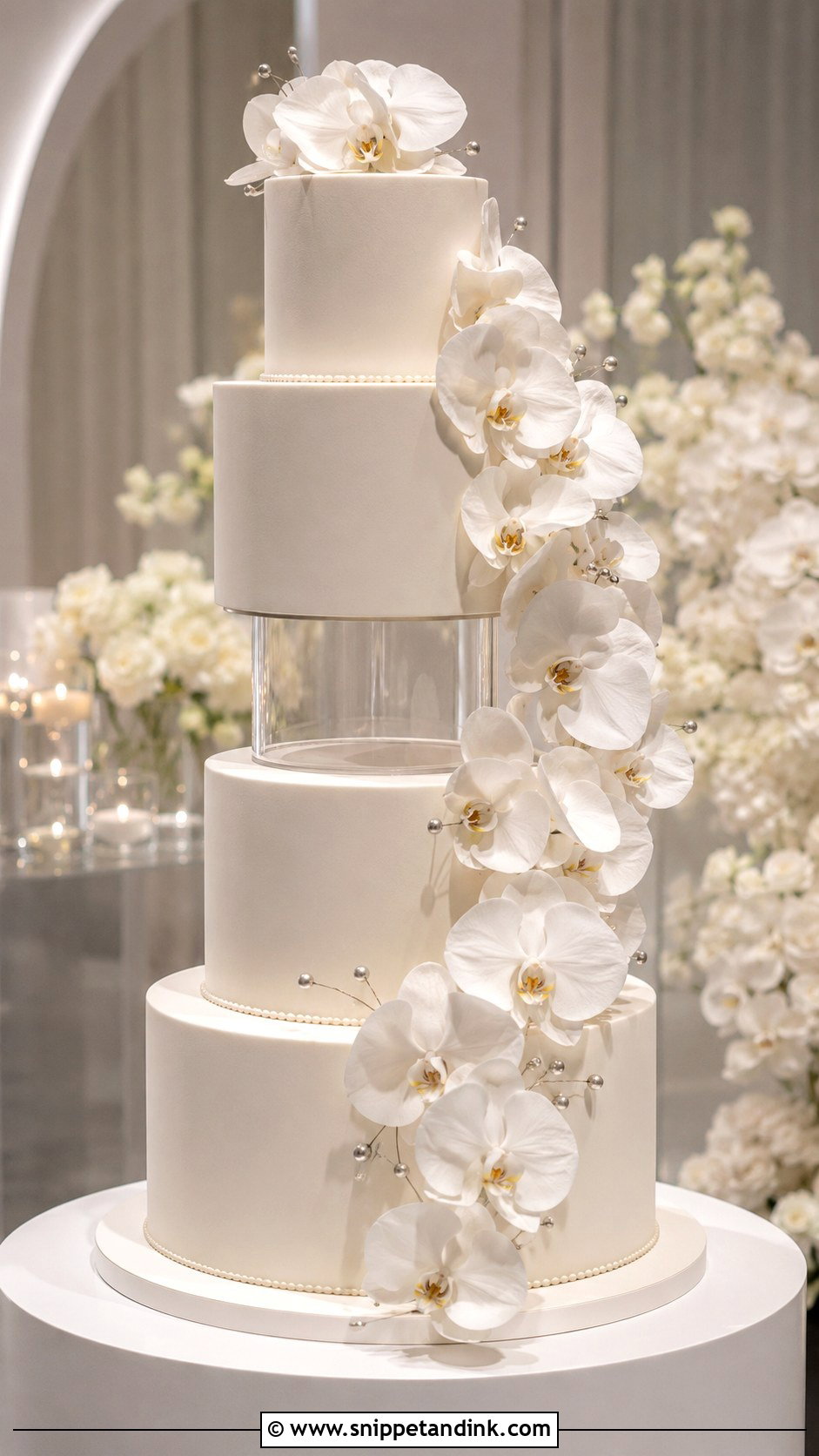
Orchids hold up better out of water than most wedding flowers, which makes them a practical choice for a spacer cake that will sit out for hours. Their long arching stems look right threaded through a clear spacer, and that shape pulls the eye upward on an orchid spacer wedding cake. White phalaenopsis on sharp-edged fondant is my usual pairing for hotel ballrooms. You need very few extras; one spray is enough.

15. Butterfly Spacer Wedding Cake
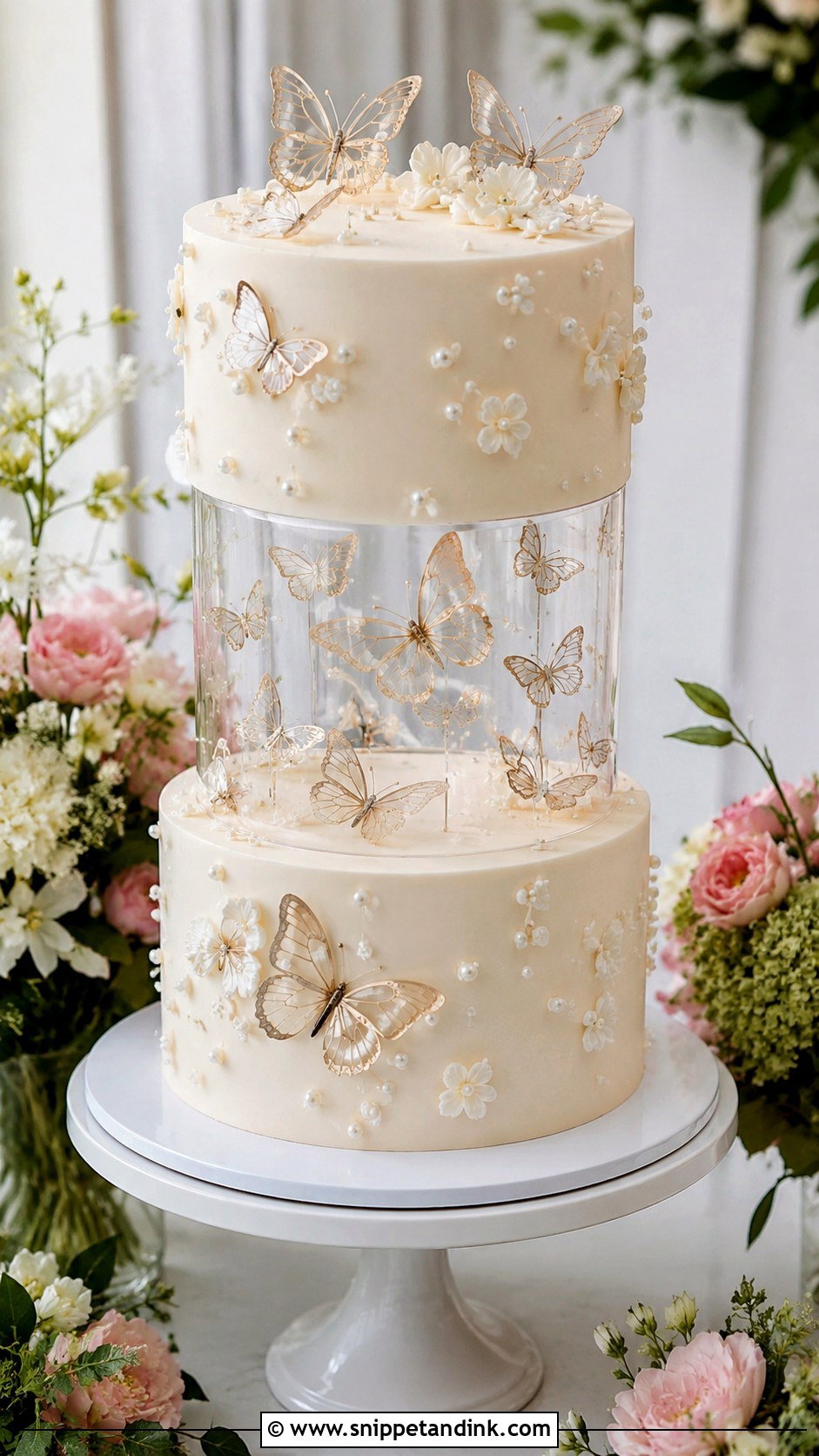
Butterflies can tip into a children’s party look fast, so the materials matter. I use wafer paper or translucent acetate wings in white and pearl, never bright printed ones, and cluster most of them around the spacer so they seem to drift between tiers. Wafer paper curls in humid air, which is useful for movement but means I add them on site. Keep the tiers smooth and the palette pale.
16. Monogram Spacer Wedding Cake
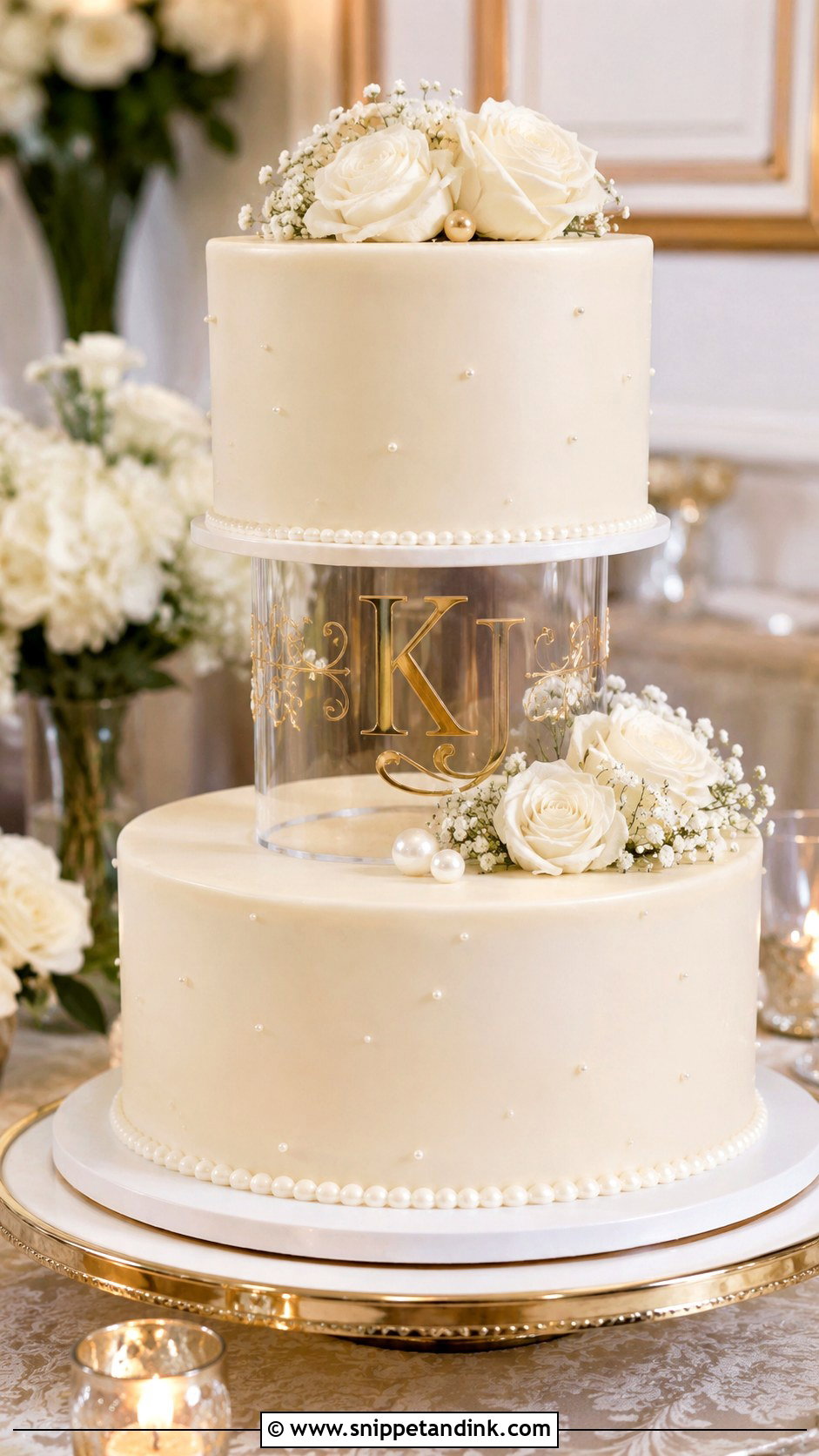
Engraved acrylic is the cleanest way to put the couple’s initials on a cake without piping letters onto frosting. A laser-cut panel or a frosted disc inside the spacer can carry two initials or a single new surname letter. Order it early, since custom acrylic often comes from a separate supplier with its own lead time. Plain frosting around it keeps the lettering readable from the back of the room, and a few small flowers soften the edges.
17. Minimalist Spacer Wedding Cake
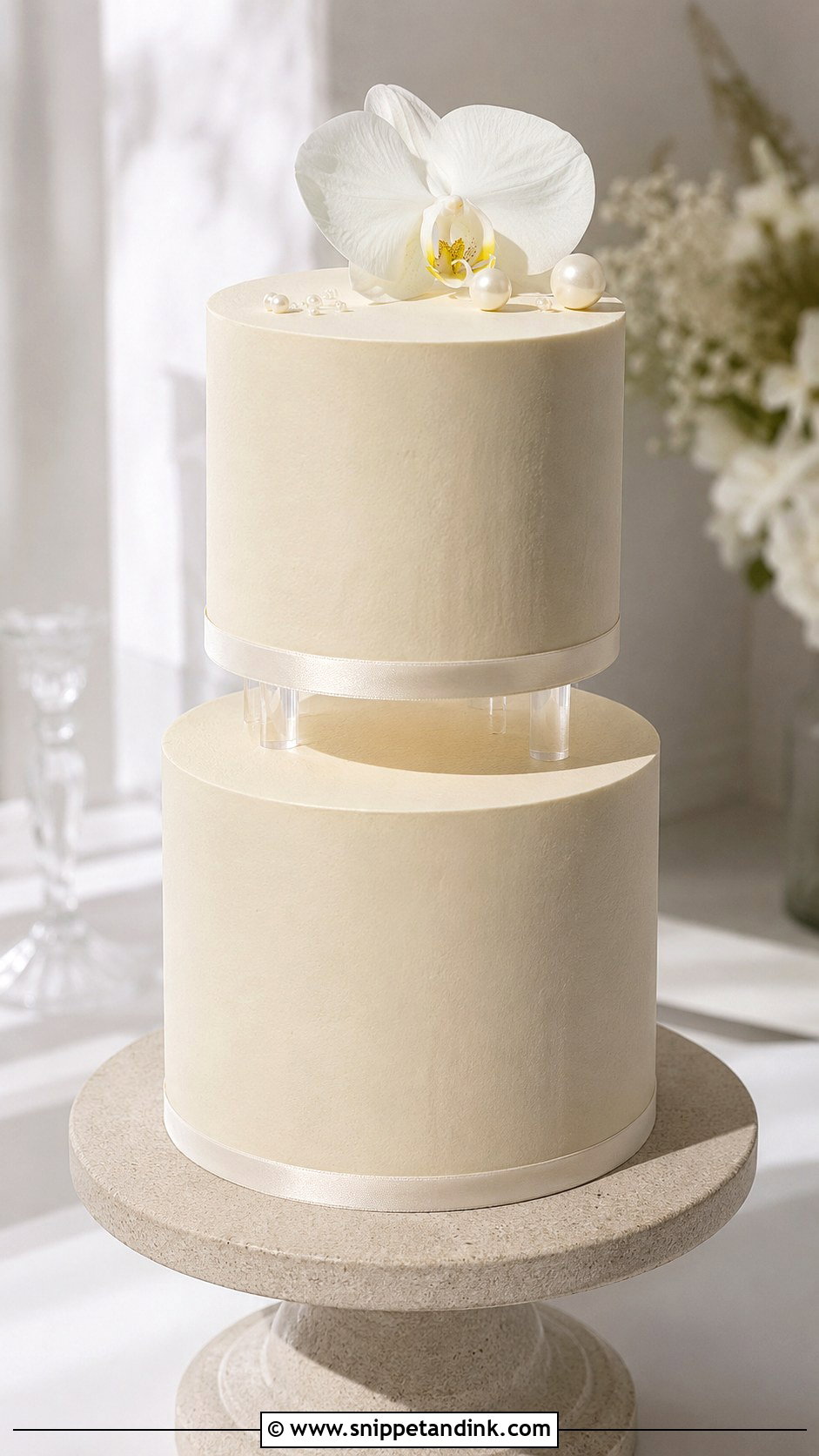
Minimal cakes hide nothing. With one spacer, one flower and a narrow palette of ivory or taupe, any dent, bulge or off-center tier is the first thing a guest sees. I spend most of the time on these cakes chilling and re-smoothing the finish rather than decorating. If you choose this look, ask your baker to show you photos of plain cakes they’ve made, not decorated ones.
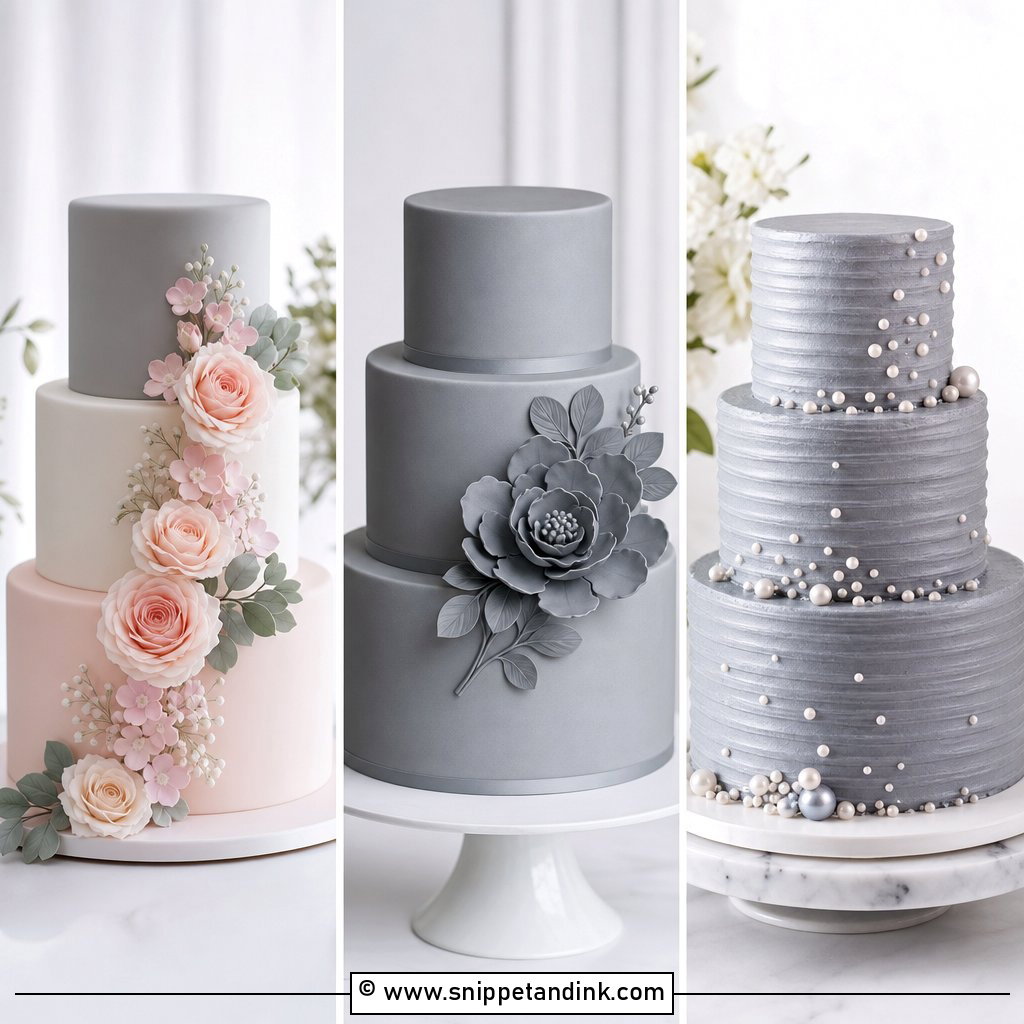
18. Blush Wedding Cake With Spacers
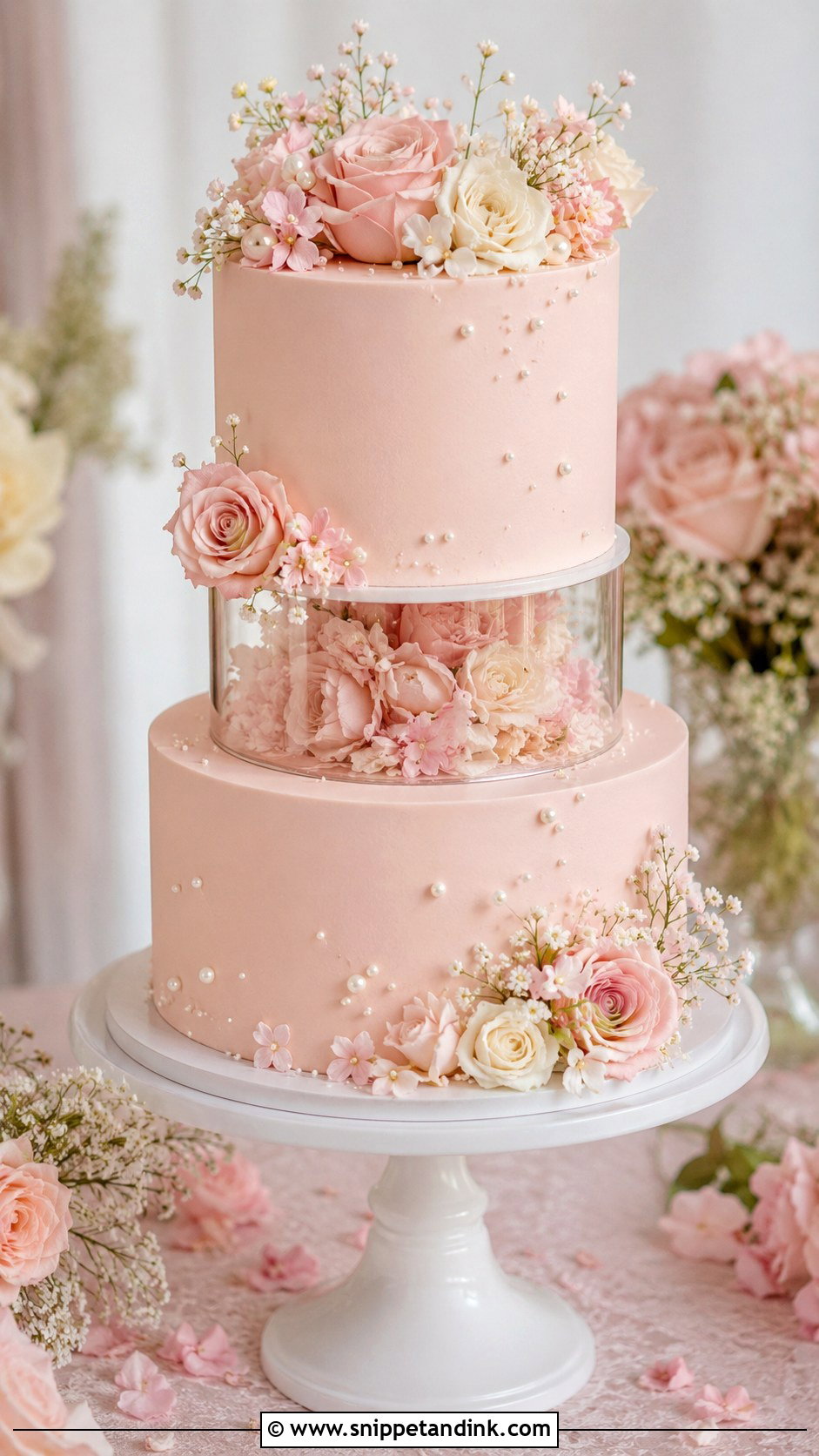
Blush is where I see the most color disappointments, because pale pink can turn peach or grey under warm reception lighting. I mix a sample and photograph it under the venue’s kind of light before committing. A clear spacer of blush roses or dried petals sitting between ivory tiers is easier to get right than an all-pink cake. A little greenery or gold keeps it from tasting too sweet to the eye.
19. Black And White Spacer Wedding Cake
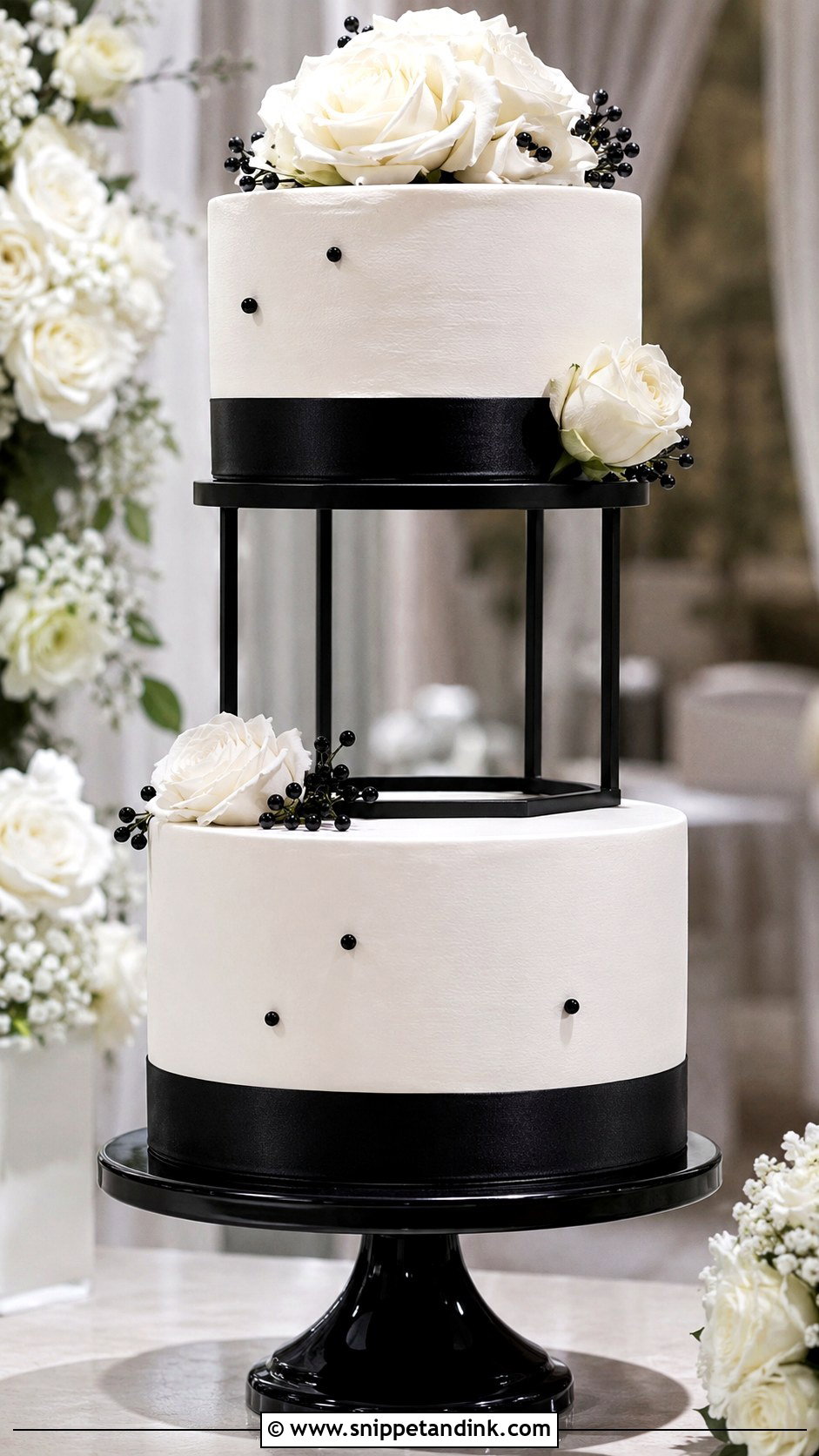
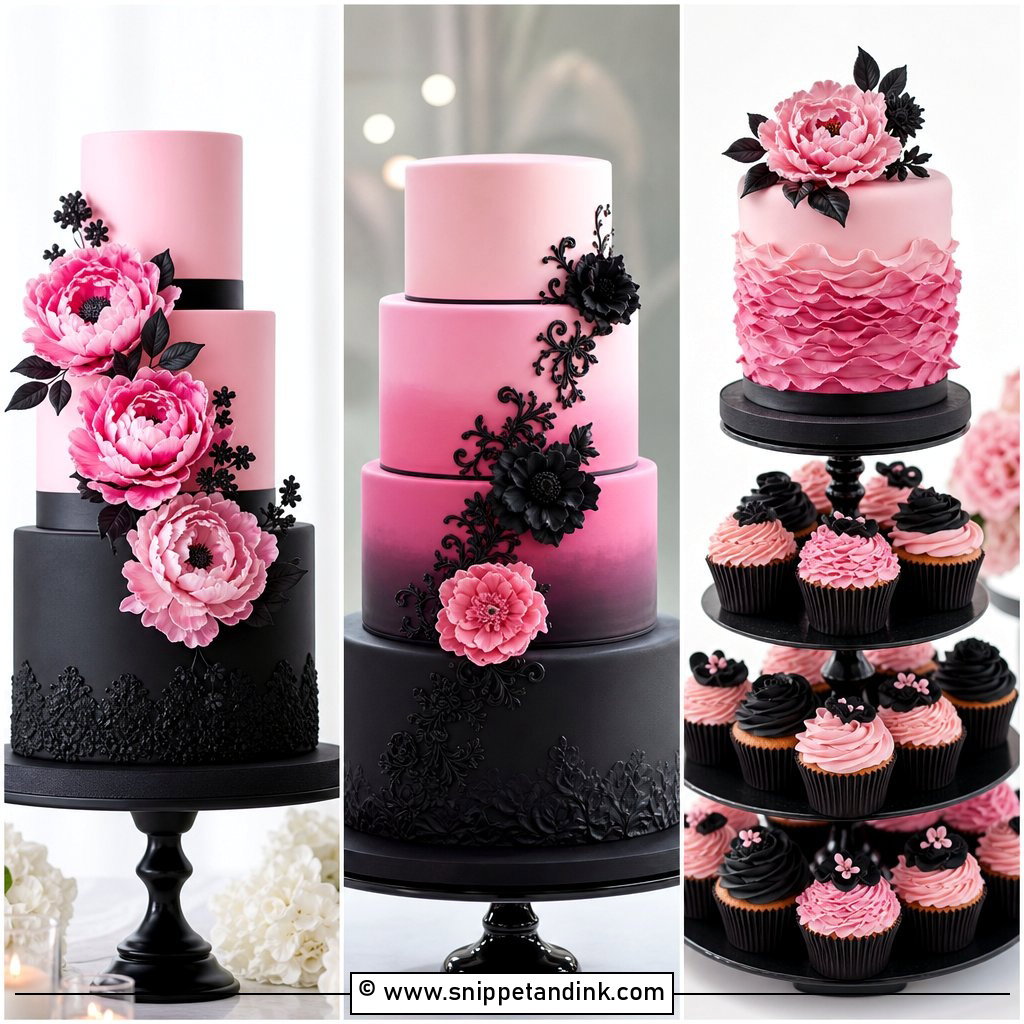
Black on a wedding cake works when it draws lines, not when it covers surfaces. A black metal spacer, a black ribbon band or a few dark-centered white anemones gives crisp contrast against white tiers. Large areas of black fondant or buttercream take a lot of food coloring, which can taste bitter and stain teeth, so I keep it to accents. Sharp edges matter even more here, since contrast exaggerates any wobble.

20. Tall Wedding Cake With Spacers
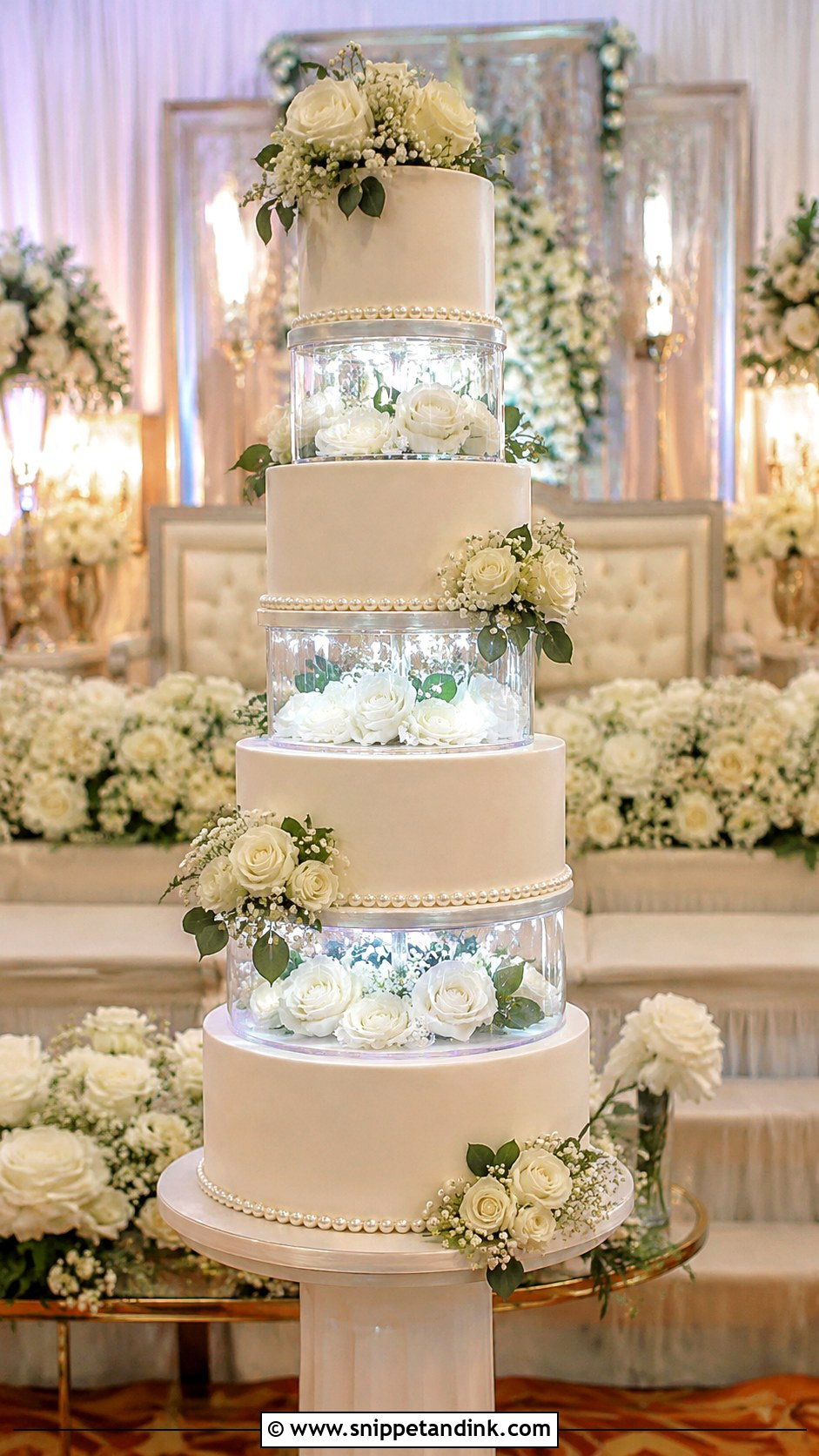
Height comes cheap with spacers: four tiers with two separators can stand taller than six stacked tiers while feeding fewer guests. That makes a tall spacer cake a good answer for a large hall where the cake has to be seen from the back tables. It also adds risk, because each extra level raises the center of gravity. I’d only trust a baker who regularly builds tall tiered cakes and can explain their support system to you in plain words.
Fresh Flowers in the Gap Need a Plan
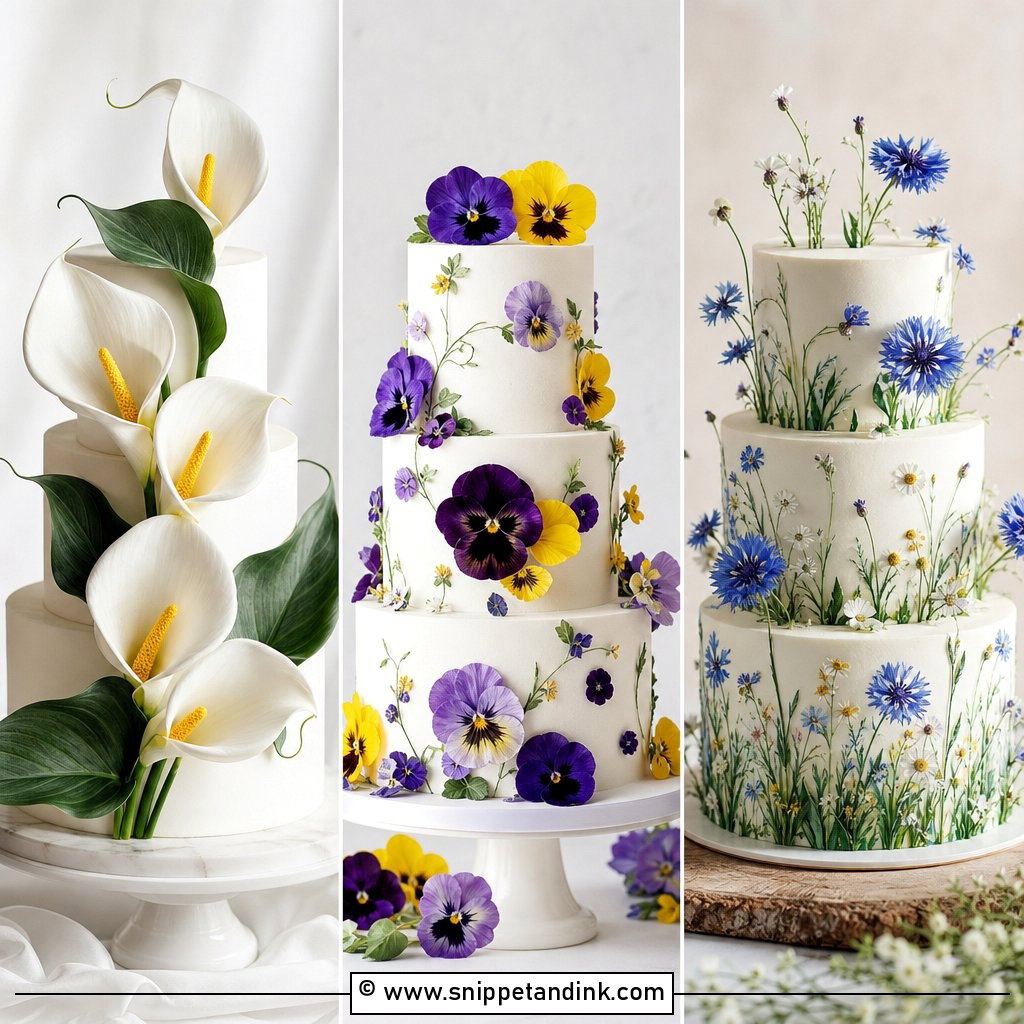
The open band between tiers is the most tempting spot for fresh flowers, and it is also where food safety slips. Plenty of wedding flowers are not edible and some, like hydrangea, lily of the valley and certain foliage, are actively toxic. Stems should never go straight into sponge or frosting.
My routine is simple. The florist supplies pesticide-free blooms, I wrap any stem that touches the cake in floral tape or set it in a food-safe pick, and the bulk of the arrangement lives in the spacer itself on its own board. Decide early who places them, because the florist and baker often arrive at different times.
Assembly Day at the Venue
Spacer cakes are built where they will be cut. I bring the tiers chilled in separate boxes, the spacers wrapped, and a kit with spare dowels, piping bags and a level. Assembly usually takes thirty to forty-five minutes, longer if fresh flowers go in.
- Confirm the cake table is solid, level and not under a heater, window or uplighter.
- Tell the venue roughly when the baker arrives so the room is open and the table dressed.
- Leave the cake alone once it is built; moving a spacer cake even a few feet risks the joins.
- Agree who removes the spacer and flowers before cutting, since the caterer will need to lift tiers off.
In a hot room buttercream softens long before fondant does, so ask how long your chosen finish can stand out and plan the cake cutting earlier if it is a summer afternoon.
Which Spacer Suits Your Cake Table
A spacer is the cheapest way I know to add presence to a cake, since you are buying height rather than servings. Start from the room: a clear spacer for a minimal venue, flowers for a garden, metal for a black-tie night. Then ask your baker three questions, how the tiers are supported, who supplies the flowers in the gap, and whether the cake travels assembled. Get those answers and the look you saved will stand up all evening.
You'll Like These Ideas:






Leave a Reply