
A rainbow cake in pastels gets color into the reception without the cake shouting over everything else. Blush, butter yellow, mint, lavender, peach and powder blue can go into the buttercream, the fondant, the sugar flowers, a painted wash or the sponge itself, and each method behaves differently once it leaves my kitchen. That’s the part most inspiration photos skip. The designs below work for garden parties, spring and summer receptions and modern ballrooms alike, and the best of them look like a wedding cake first and a rainbow second. I’ve added notes on what each technique needs, where it struggles, and which ones I’d steer you away from in certain venues.
Why Pastel Blue Can Turn Green on a Butter Cake
Pastels are harder than bright colors because there’s so little pigment that the base shows through. Buttercream made with real butter is pale yellow, and a drop of blue on yellow makes mint, not powder blue. When a couple wants true blue and lavender, I whiten the buttercream first or use a frosting with less butter, and I tint lavender with a touch more pink than you’d expect, since purples drift toward grey.
Light changes everything as well. Pink and purple tints can fade if the cake sits in strong sunlight or near a bright window, and warm reception lighting pushes blues toward grey and greens toward yellow. If your cake will sit under candles or warm bulbs, ask to see a sample under similar light before you sign off on the palette.
Send your baker a swatch, not a word
Mint, sage, seafoam and pistachio mean different things to every person. A fabric sample from a bridesmaid dress, a paint chip or a printed invitation lets your baker color-match by eye. Decide too how many colors you want: six reads as a full rainbow on four tiers, but on a two-tier cake I usually suggest three or four, so each color has room.
1. Pastel Rainbow Ombre Wedding Cake
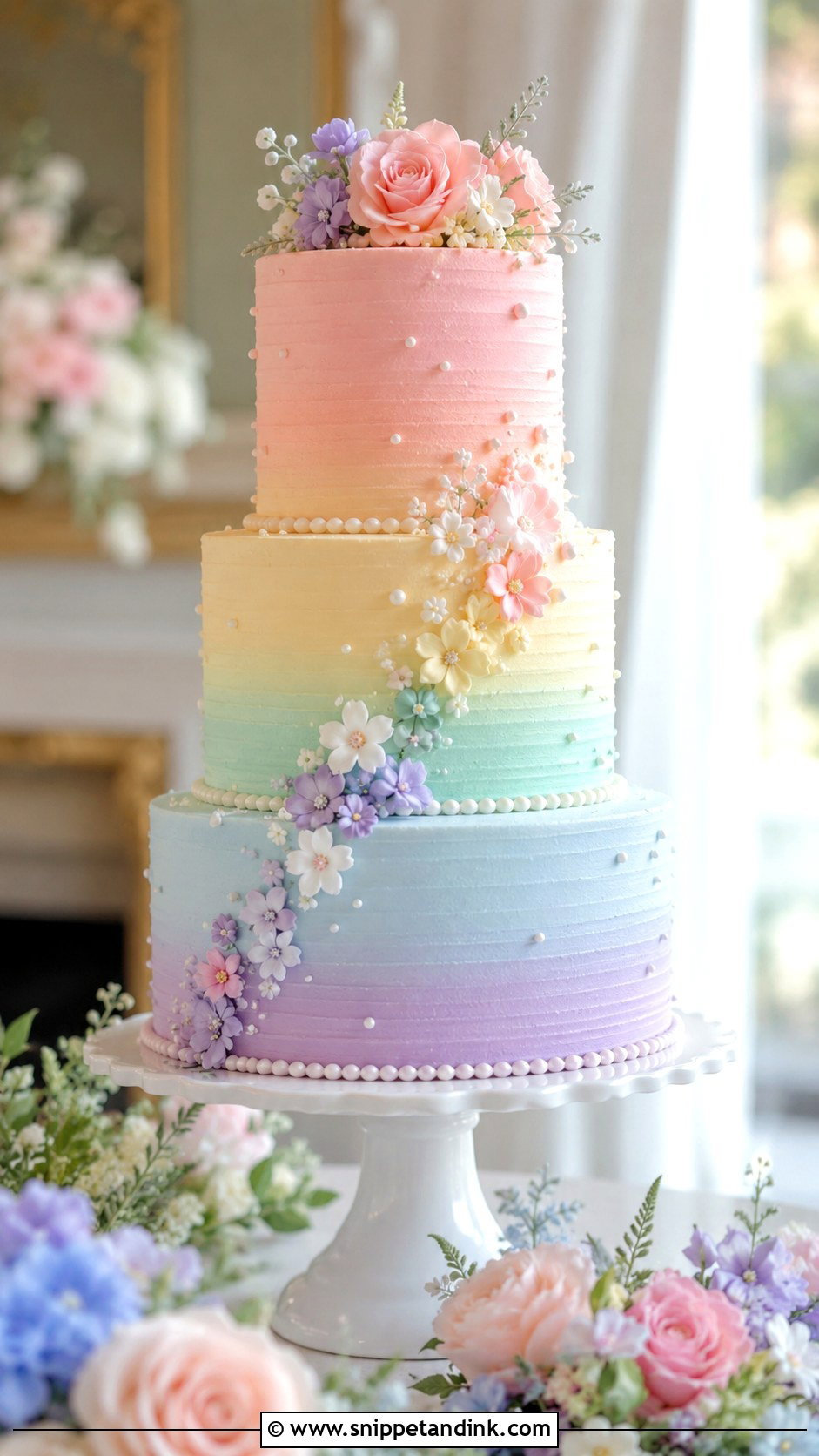
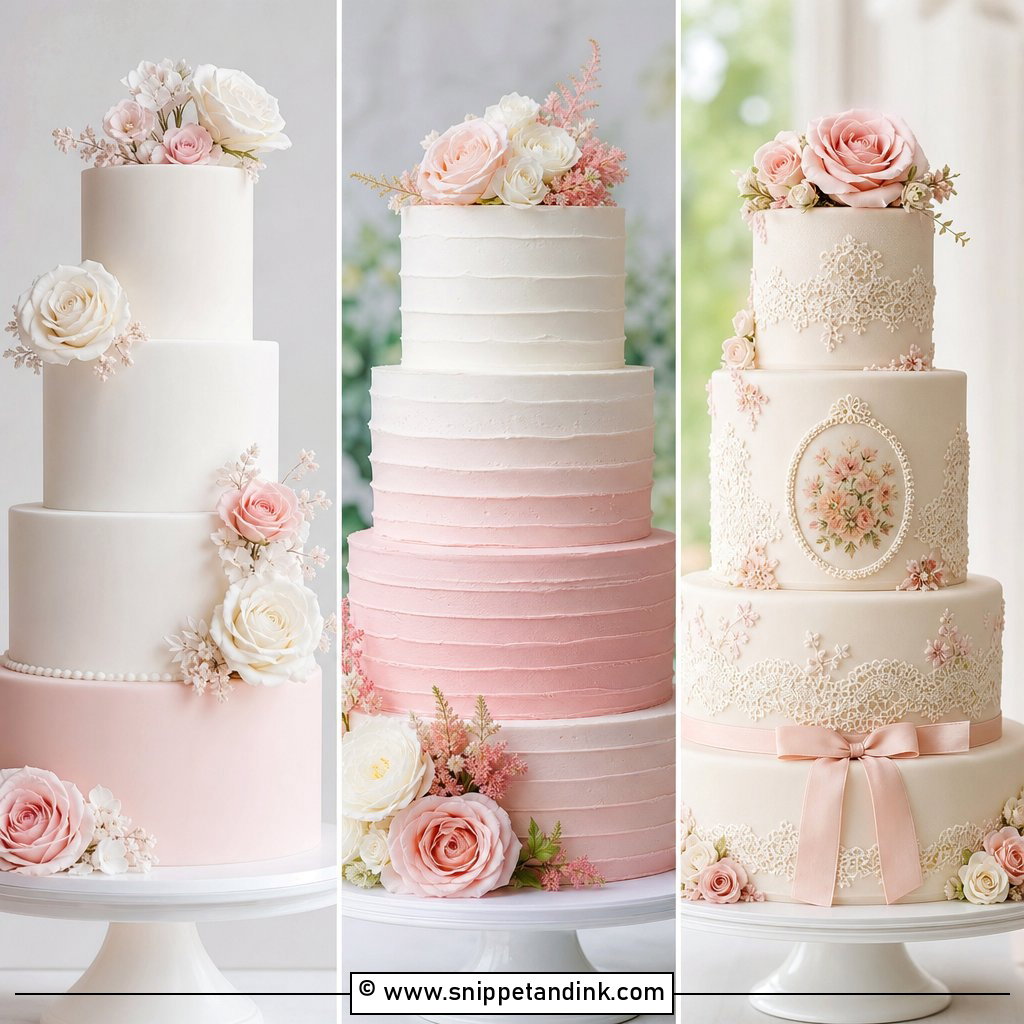
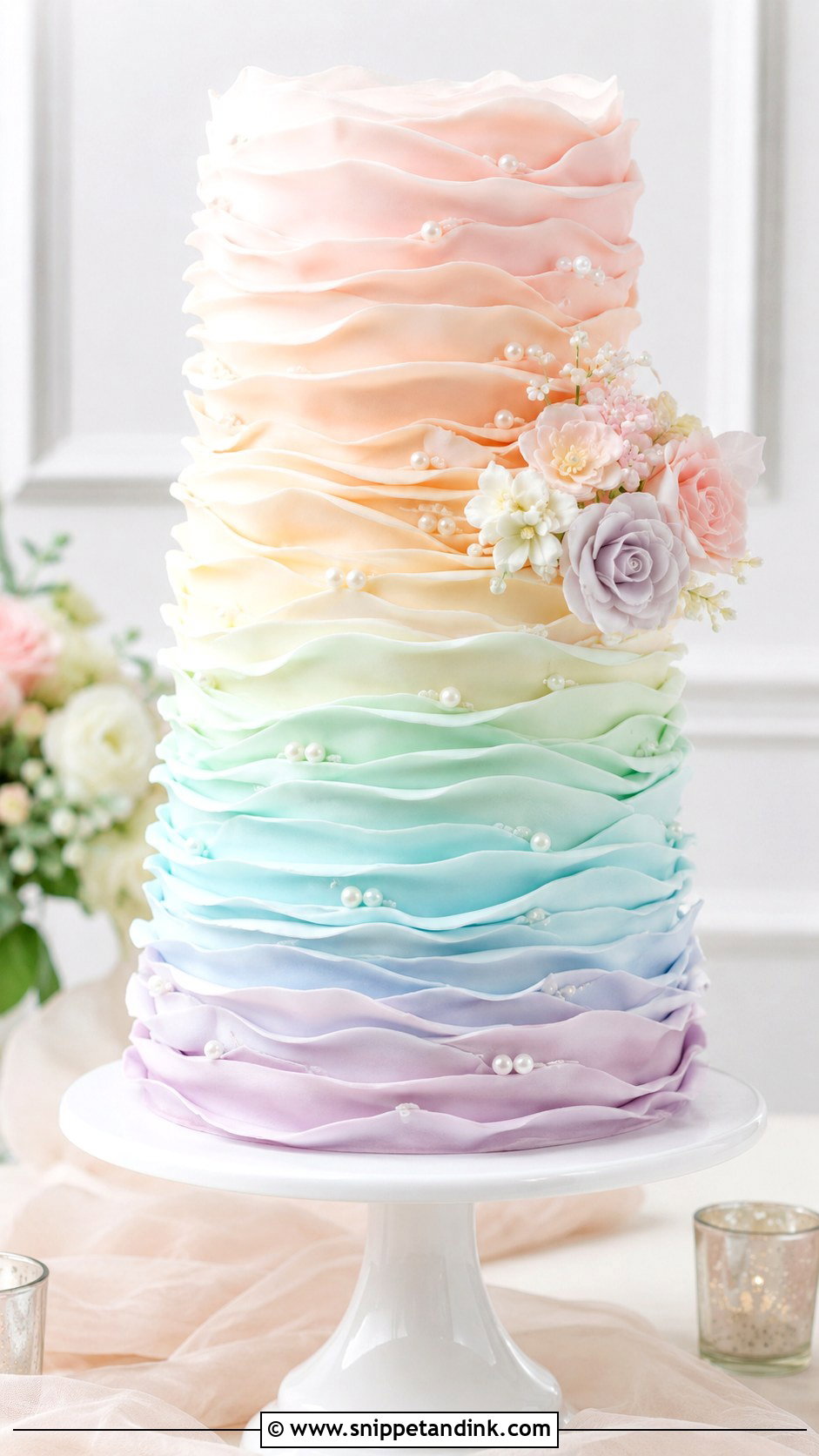
Ombre is the gentlest way into rainbow, with each tier fading from blush through peach, butter yellow, mint and powder blue to lavender. It needs height to read properly, so I suggest a tall three-tier or a four-tier cake where the gradient has room. With only two tiers you’re forced to skip colors and the fade turns into blocks. Smooth buttercream gives a softer finish, fondant a crisper, more formal one. I keep the decoration spare, with pearl details, a few tiny sugar flowers or one floral cluster, because the color is already doing the work.
2. Pastel Rainbow Watercolor Wedding Cake
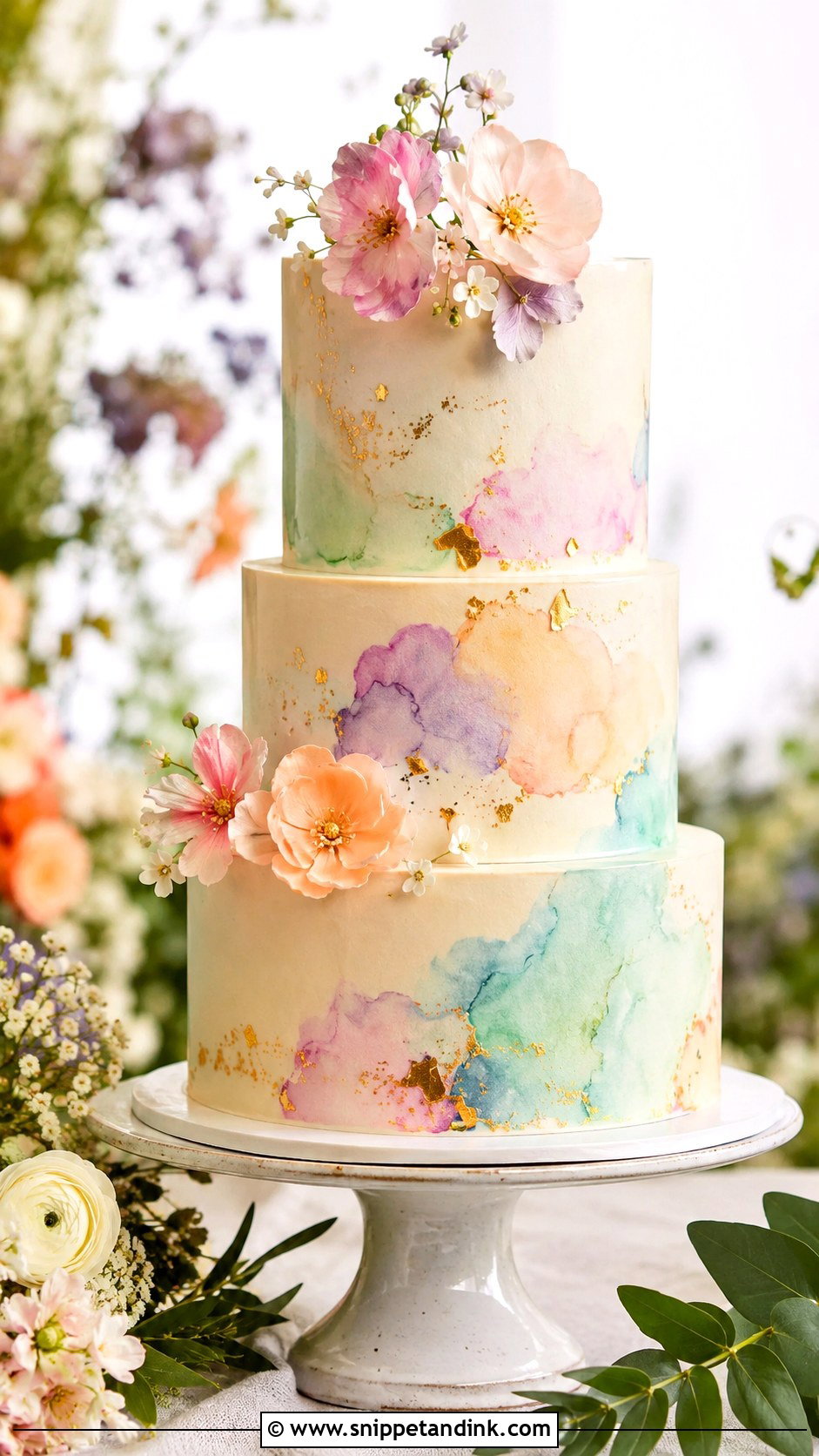
For a watercolor finish I dilute gel color and brush thin layers over white fondant or a well-chilled buttercream, letting the shades bleed into each other the way paint does on paper. Buttercream has to be cold and firm for this, or the brush drags the surface. Lavender, blue, mint, peach and pink work best moving unevenly around the tiers rather than in neat bands. A little edible gold leaf adds warmth, but too much makes it heavy. Pair it with fresh blooms or sugar flowers in matching tones. Creative couples and art-inspired weddings are where it fits best.
3. Pastel Rainbow Tiered Wedding Cake
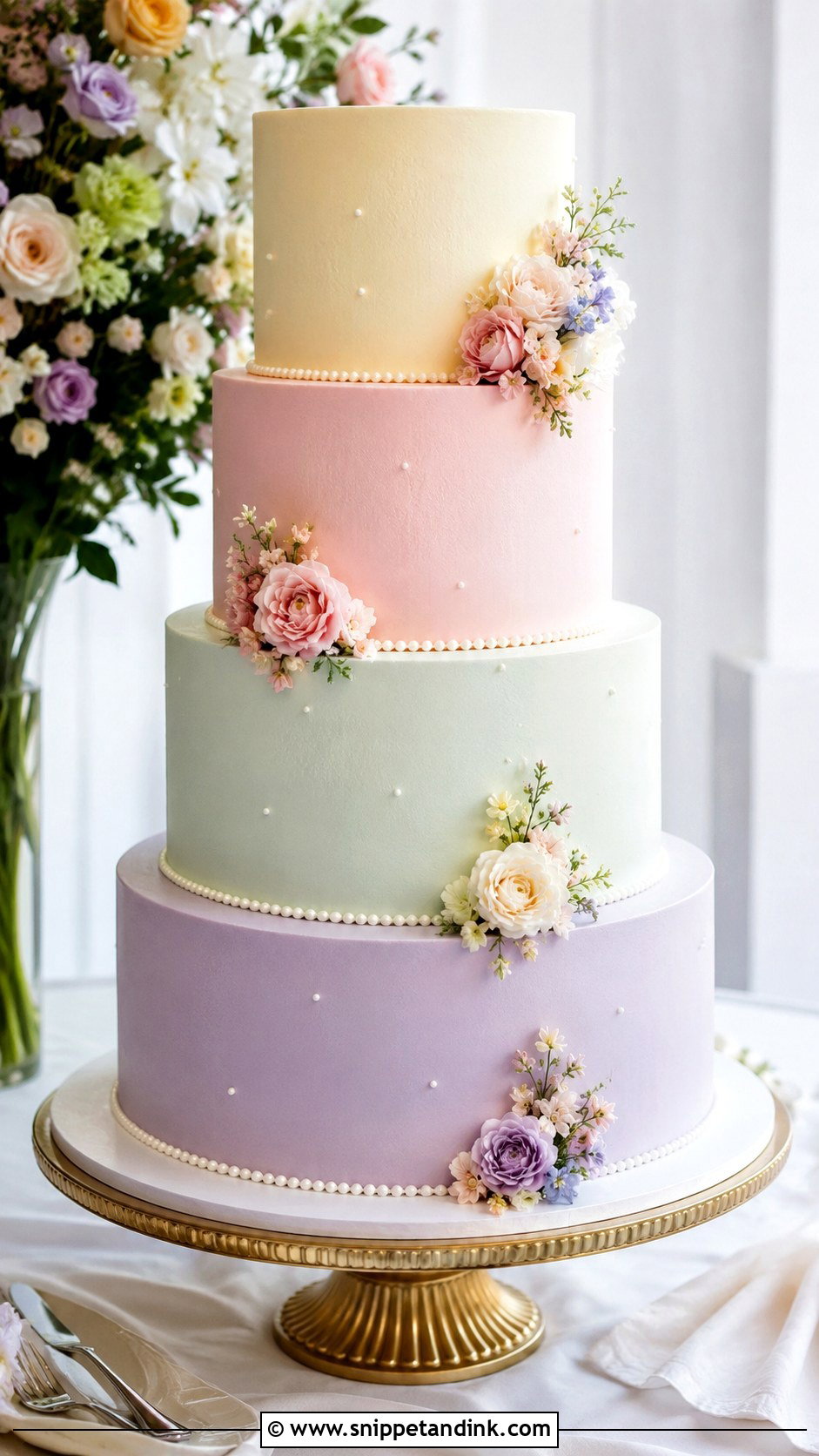
Giving each tier its own pastel (pink at the base, yellow in the middle, lavender or blue at the top) keeps a classic tiered shape with a happier palette. The risk is that it looks like three separate cakes. I tie the tiers together with one repeated detail, such as a pearl border, pressed flowers or a fine piped line, and insist on clean edges throughout. Height gives it presence at larger weddings, and it sits well on a white, gold or clear acrylic stand.
4. Pastel Rainbow Buttercream Wedding Cake
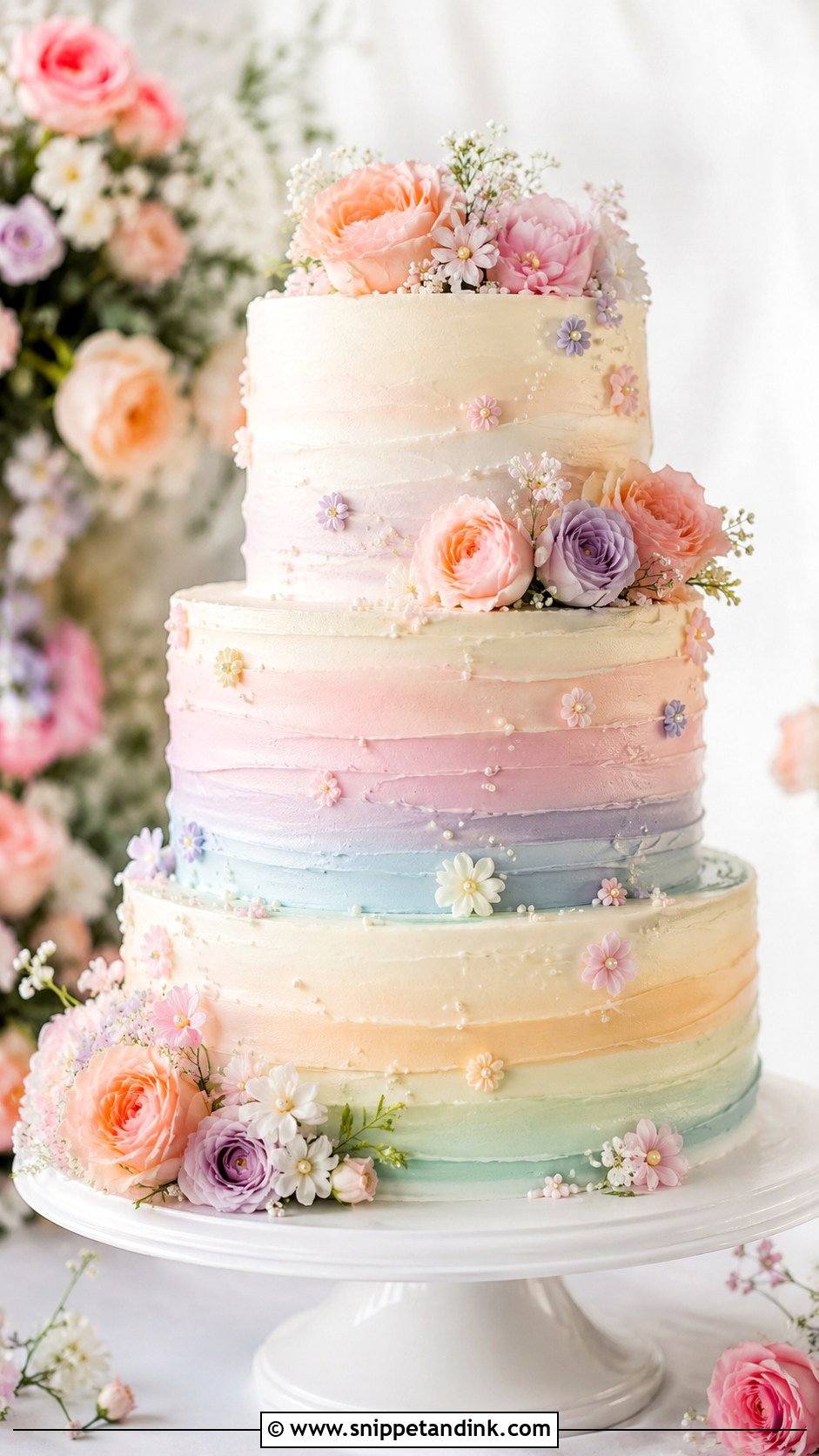
Buttercream gives a softer, handmade finish, smooth, lightly textured or swept with a palette knife. Pastels stay pastel in buttercream only if you add color sparingly, because tints deepen as the frosting sits; I mix a shade lighter than the target and let it develop for a few hours before I judge it. It suits couples who want color without the formality of fondant, with fresh flowers, small piped blossoms or a pearl border. Vanilla, almond, lemon and strawberry are all light enough to match the look. One caution for outdoor summer receptions: buttercream softens in heat, so keep the cake out of direct sun.
5. Pastel Rainbow Fondant Wedding Cake
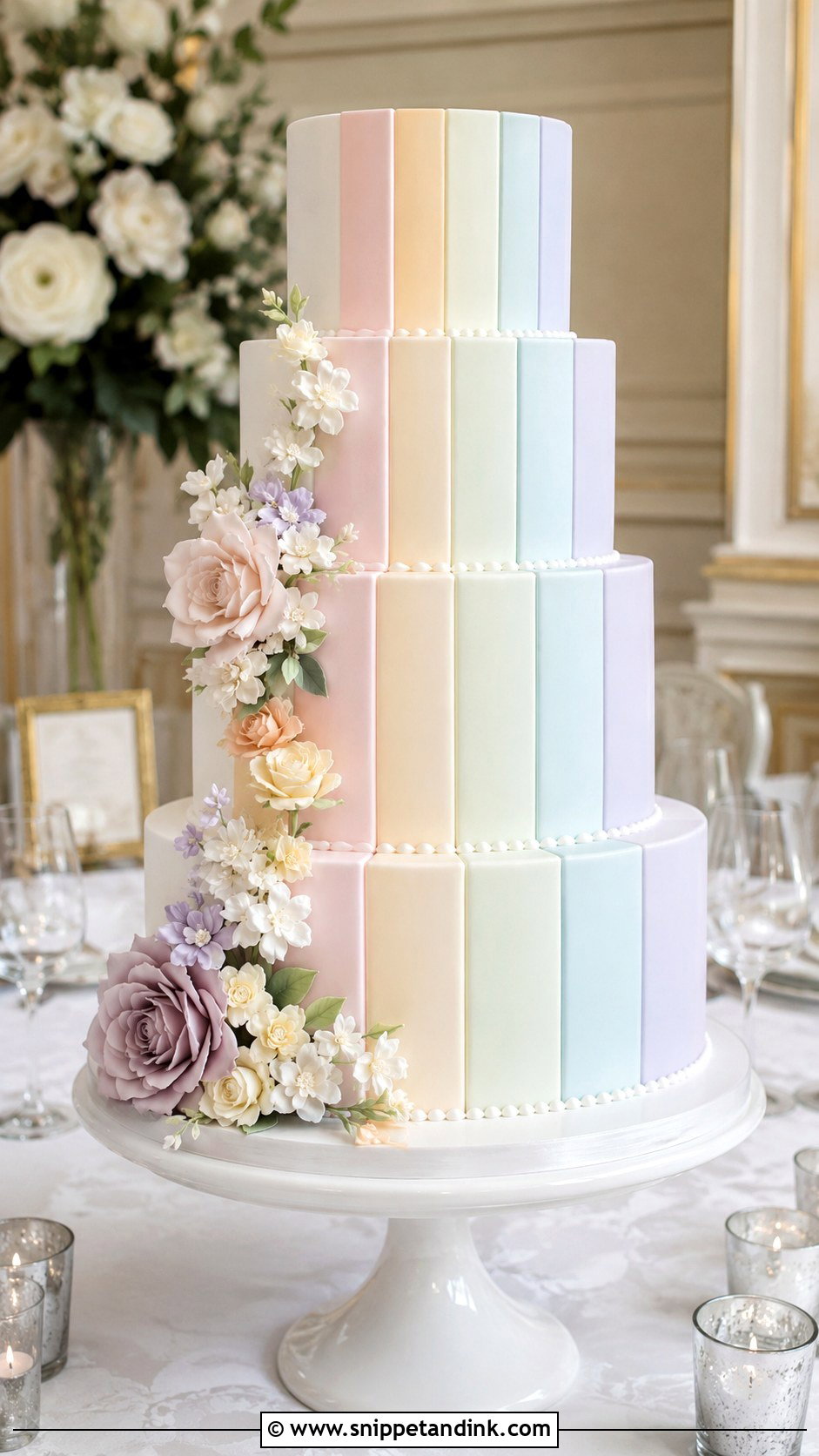
Fondant is what I use when a couple wants sharp edges, flat color blocks or detailed painting. Tiers can be wrapped in pale rainbow shades, or I cover them in white and add pastel panels, arches or watercolor accents on top. Sugar flowers sit well against fondant’s smooth surface. Edit the decoration, since a heavily trimmed fondant cake starts to look stiff. It suits ballroom weddings and hotel receptions with air-conditioning. Avoid moving it straight from a fridge into a warm humid room, though, because condensation forms on the surface and can make colors streak.
6. Pastel Rainbow Floral Wedding Cake
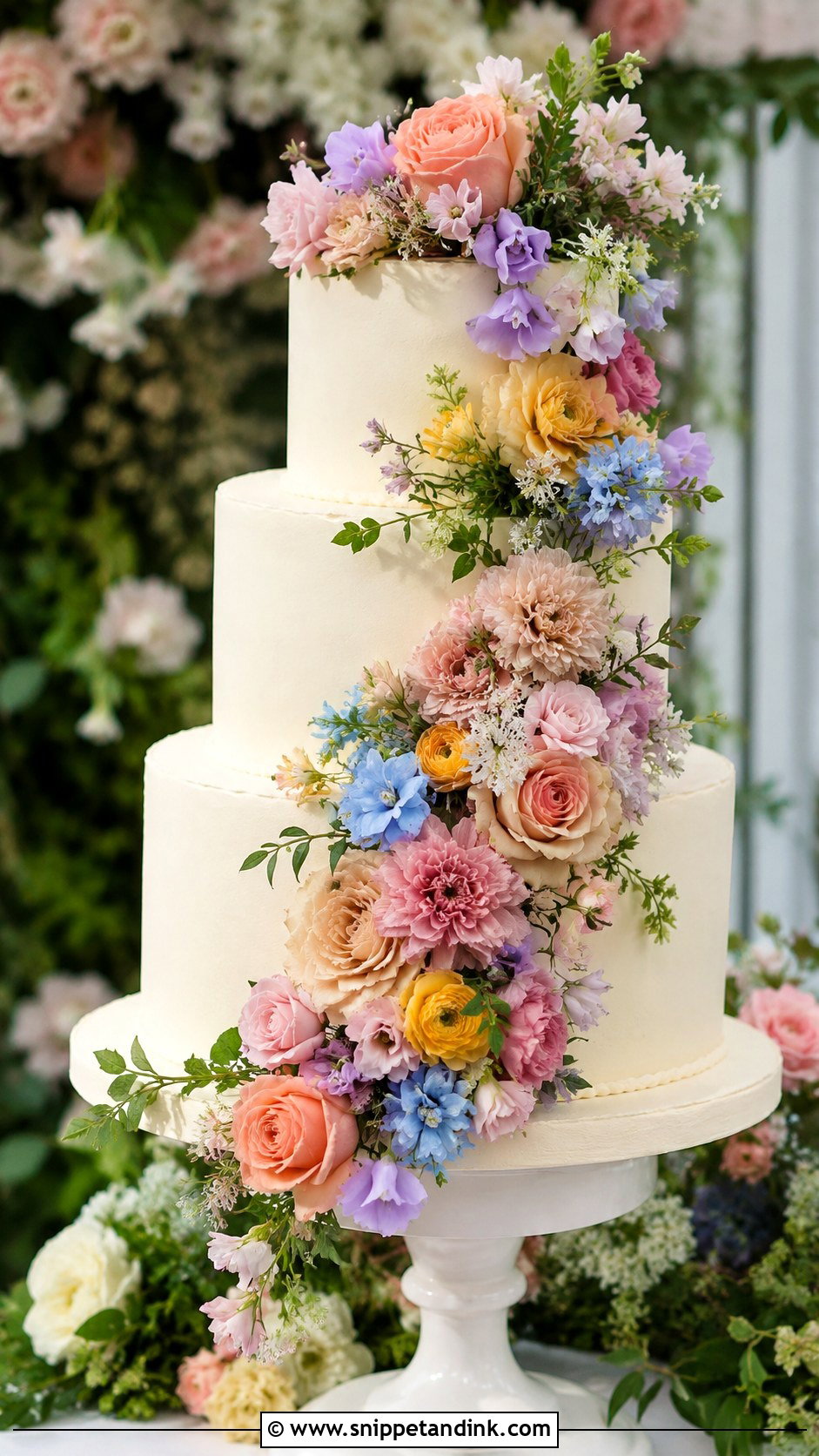
Here the cake stays white or ivory and the flowers carry the rainbow: blush roses, peach ranunculus, yellow blooms, mint greenery, blue hydrangea and lavender sweet peas. A cascading floral arrangement down one side adds height and movement. Sugar flowers let me hit exact colors and are fully edible. Fresh flowers look more natural, but they need to come from a pesticide-free source, have their stems wrapped, and some, hydrangea included, shouldn’t sit directly on the cake. Ask your baker and florist to work out together which blooms go where. Spring and summer weddings suit it best, and it’s the easiest cake to match to your bouquet.
7. Pastel Rainbow Pressed Flower Wedding Cake
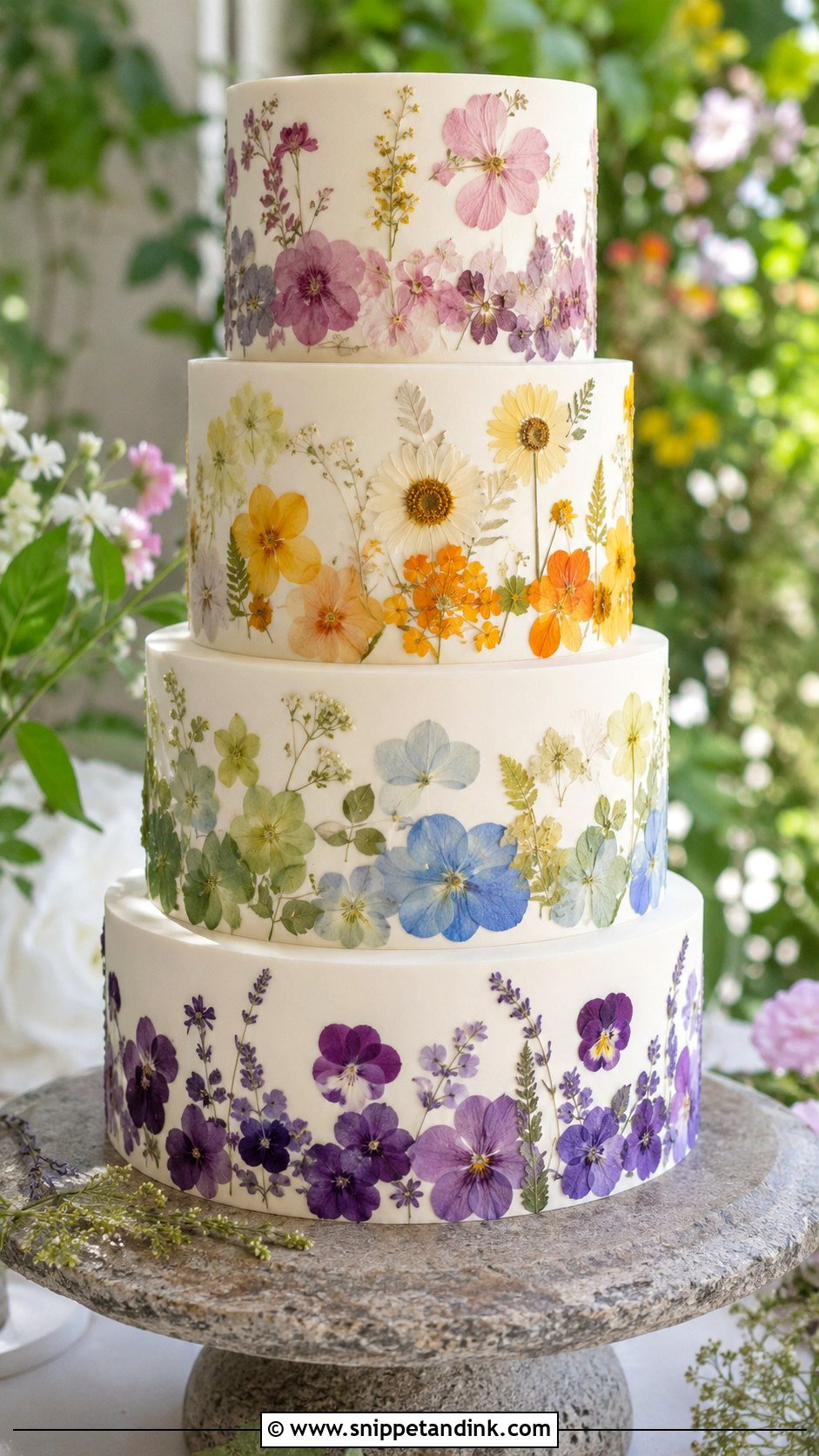
Pressed edible flowers give a delicate, organic look when they’re laid in soft bands of pink, yellow, blue, lavender and peach across smooth buttercream. I press them onto the frosting gently with a clean brush the day of assembly; done too early, they can wilt or discolor where they touch moist buttercream. A white or ivory base gives the clearest contrast. Garden weddings, backyard receptions and wildflower themes suit it. Every flower must be a food-safe edible variety, which narrows the colors available, so be ready to adjust the palette to what actually grows.
8. Pastel Rainbow Drip Wedding Cake
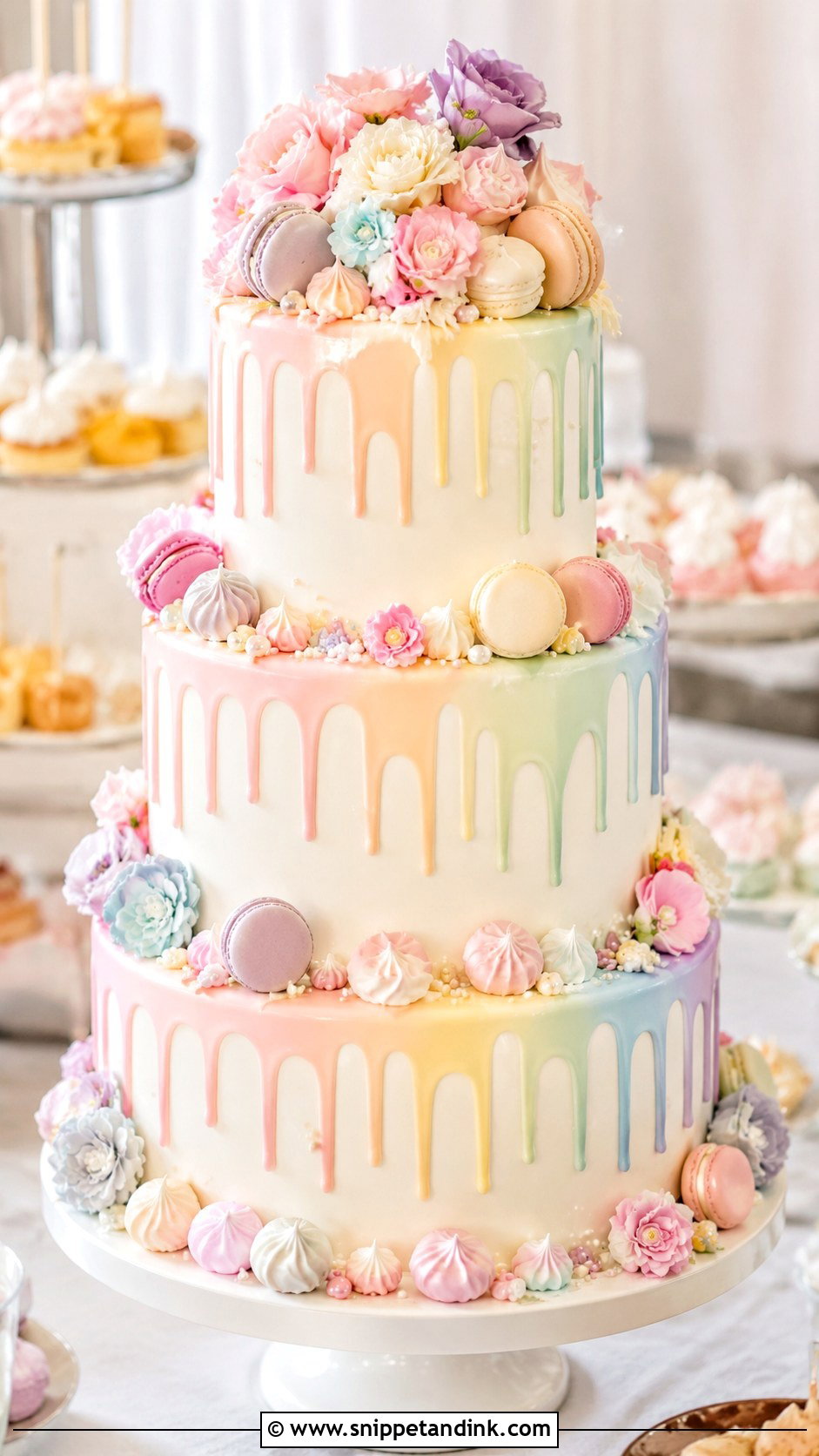
Drips can look polished when they’re soft and controlled. I start with a white or pale buttercream cake and pipe thin drips of tinted white chocolate ganache in blush, peach, yellow, mint, blue and lavender, spaced rather than all the way round. Temperature is everything: ganache that’s too warm runs to the board, and too cool it stops in stubby blobs. Top it with macarons, meringues, sugar flowers or pastel pearls. Couples who want something fun on the cake table without bold color like this one, and it suits modern weddings and dessert bars.
9. Pastel Rainbow Sprinkle Wedding Cake
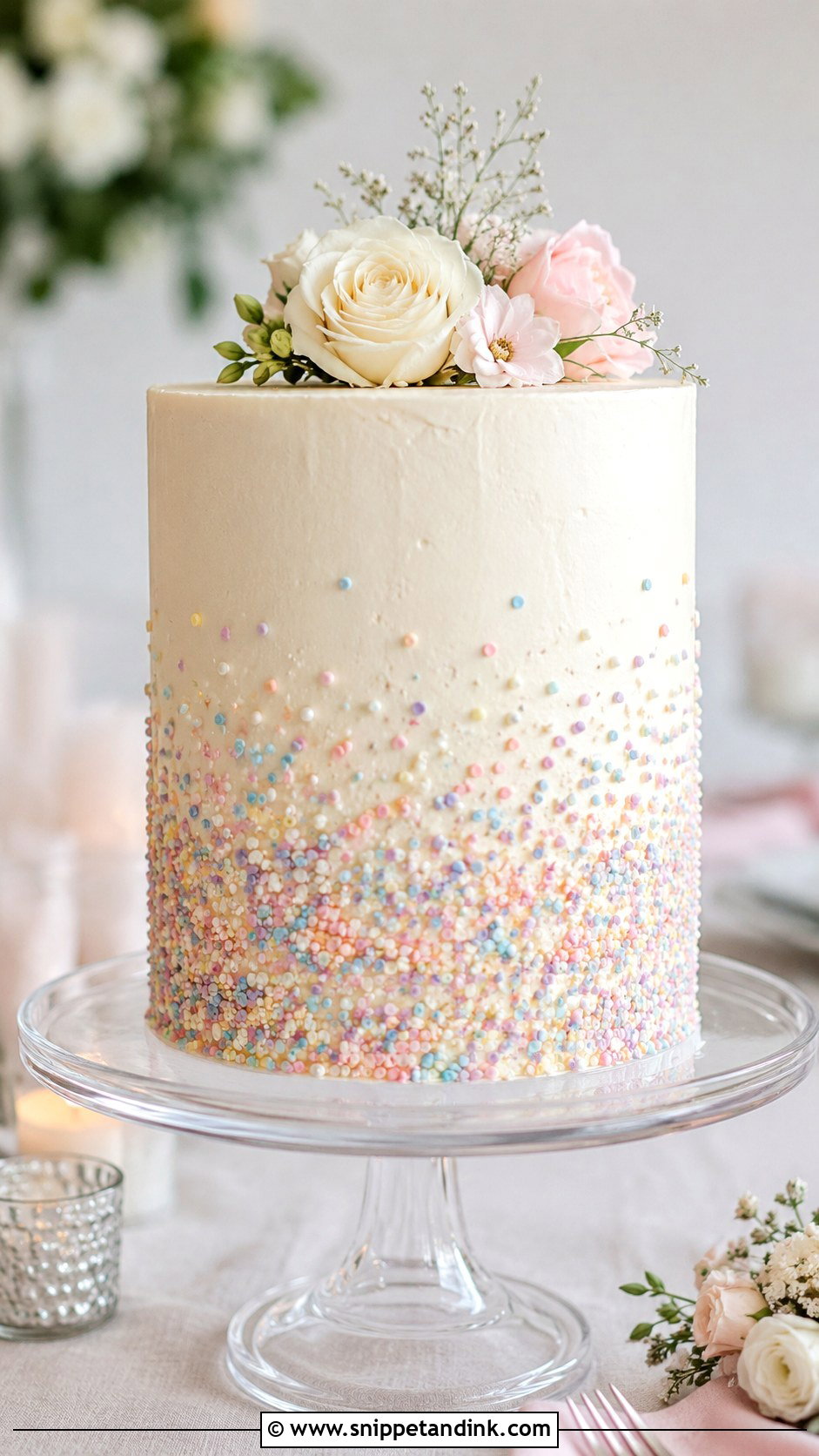
Sprinkles read as a birthday cake unless you choose them carefully, so I use tiny pastel confetti, pearl sprinkles or matte sugar dots instead of bright jimmies. They can cover the bottom tier, fade upward in an ombre, or sit in neat bands. Apply them close to serving time if you can: some sprinkles bleed color into moist buttercream after several hours and leave little halos. A smooth white base keeps it fresh, and a simple floral topper or white chocolate shards add height. It brings a touch of nostalgia to a relaxed reception.
10. Pastel Rainbow Macaron Wedding Cake
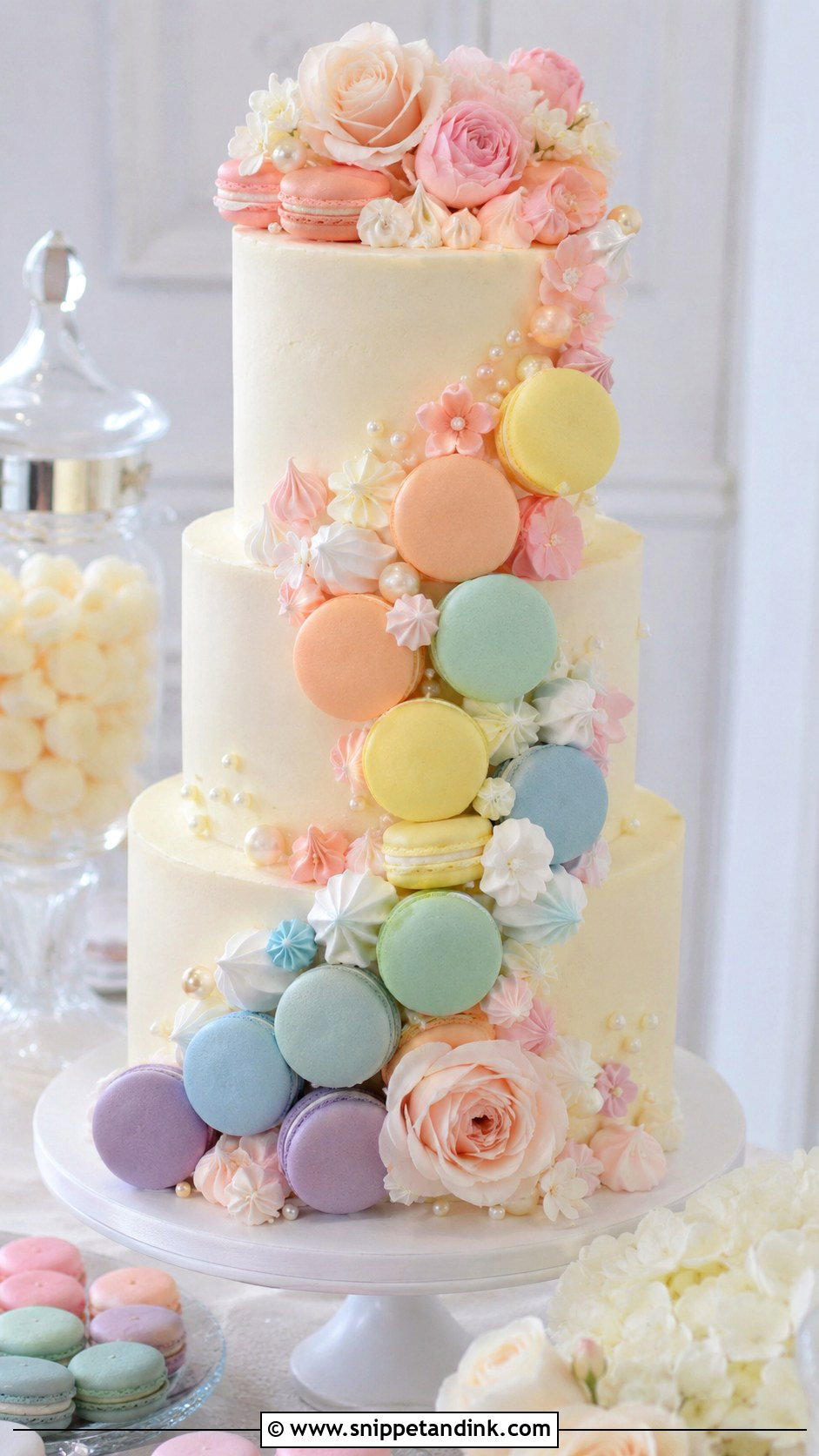
Macarons double as decoration and dessert. The cake stays simple in white buttercream or pale fondant, and macarons in pink, peach, lemon, mint, blue and lavender cascade down the tiers, ring the base or crown the top with flowers and meringues. Humidity is their enemy, so I attach them on site with a dot of ganache rather than letting them sit against buttercream for hours, which softens the shells. Match flavors to colors, such as vanilla bean, raspberry, lemon, pistachio and lavender honey, so the palette carries through to the taste.
11. Pastel Rainbow Floral Cascade Wedding Cake
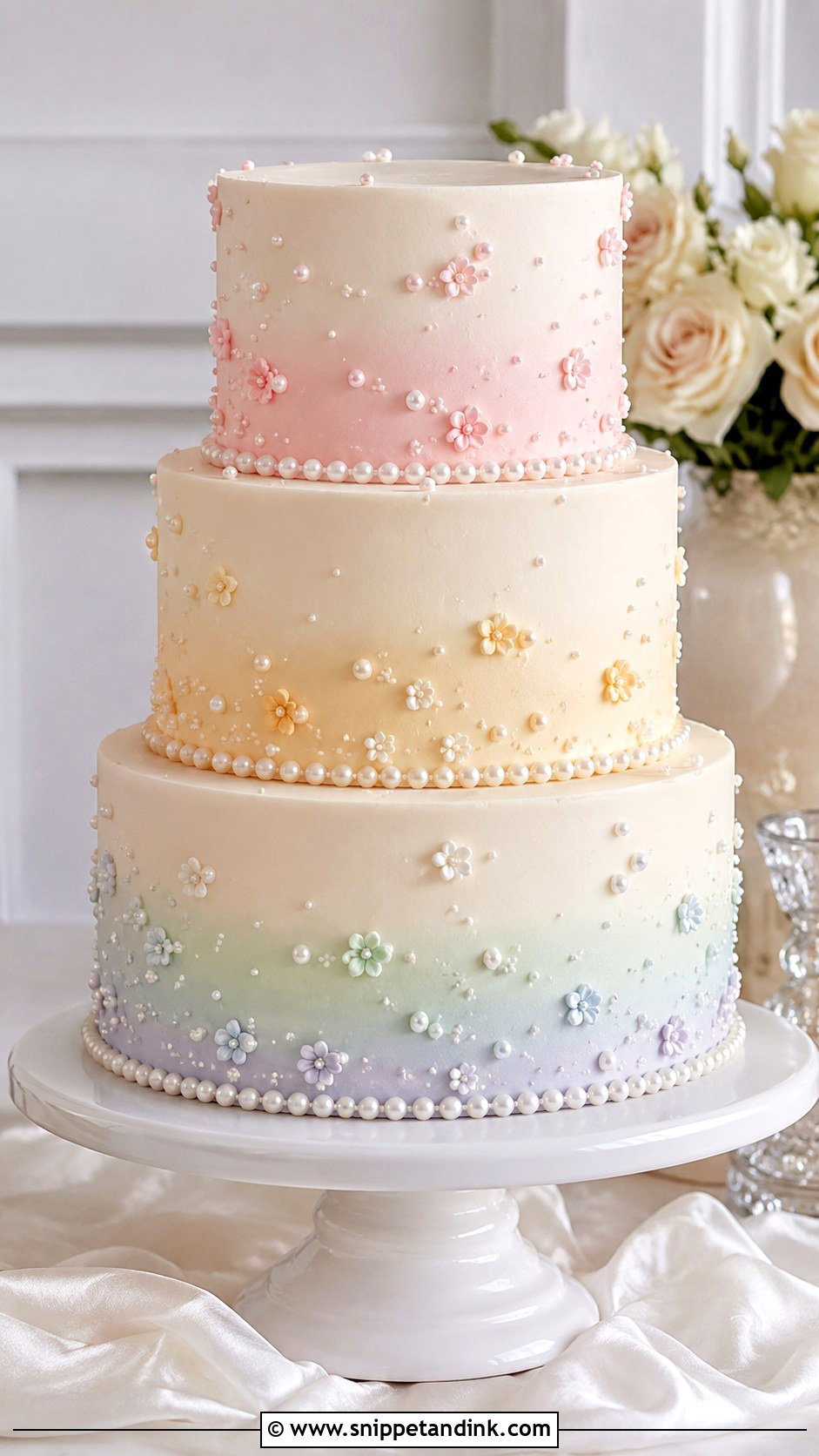
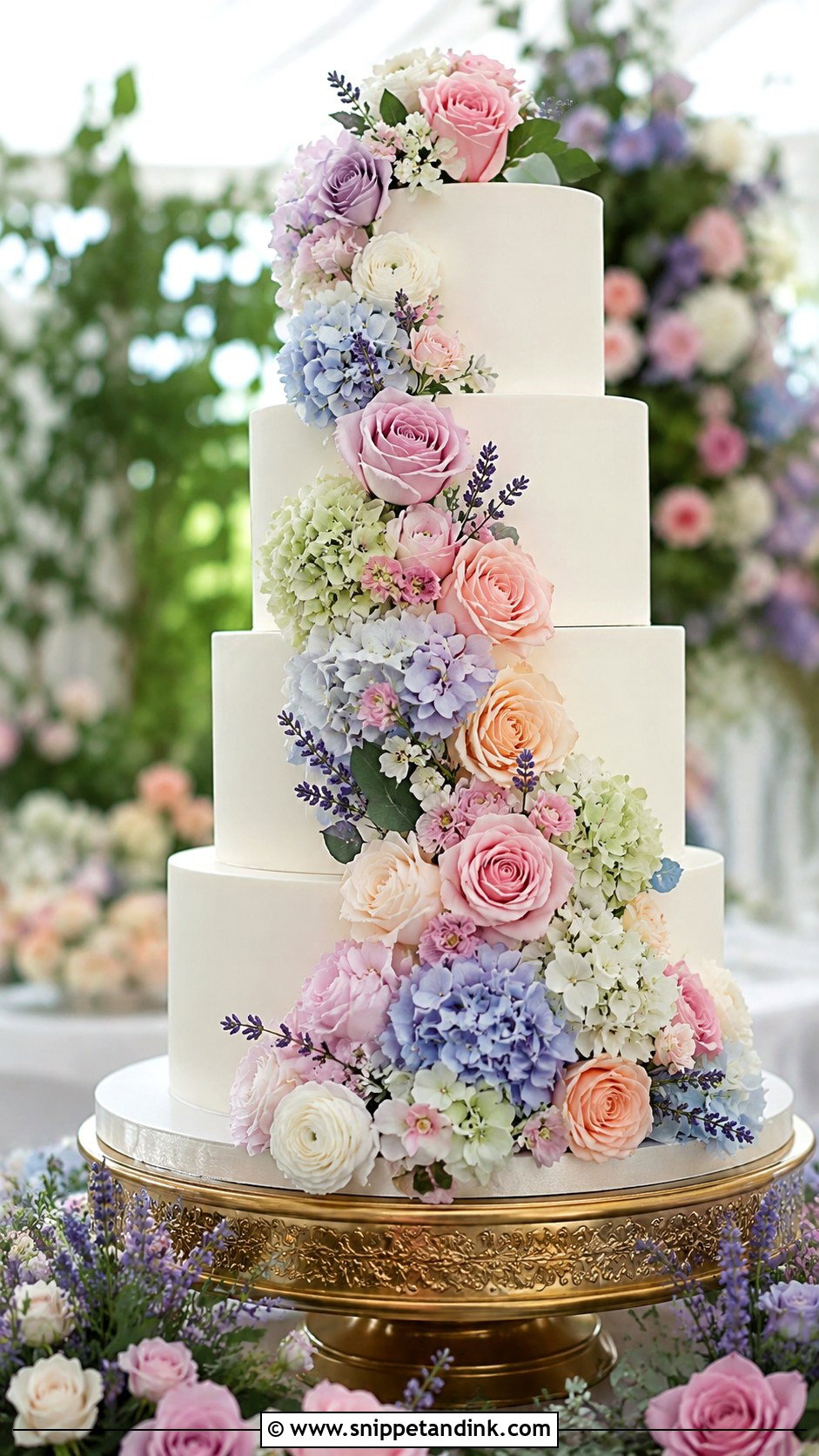
A floral cascade makes the cake the centerpiece of the room. The base stays white, ivory or a very pale ombre, while blooms run from the top tier down: blush and peach at the top, then yellow, mint greenery, blue and lavender toward the bottom. It needs at least three tiers, because the flowers need space to fall. Color comes from decoration rather than frosting, which makes it a safe choice if you’re nervous about tinted icing. The cascade is built at the venue, so plan for your florist or baker to have time and table access before guests arrive.
12. Pastel Rainbow Pearl Wedding Cake
Pearls bring a bridal finish to color. Small edible pearls can be scattered over tinted tiers, run along borders or placed in patterns, over soft tier colors, watercolor washes or pale stripes. I place them with tweezers while the buttercream is still slightly tacky, otherwise they roll off. For a more modern look, ask for uneven clusters instead of rows. Ivory buttercream, vanilla sponge and almond filling all suit it. It’s the most traditional cake here, which makes it a good compromise when one of you wants color and the other wants classic.
13. Pastel Rainbow Ruffle Wedding Cake
Ruffles look like fabric, layered around each tier and moving from pink to peach, yellow, mint, blue and lavender. They’re thin, so in buttercream they’re piped with a petal tip and in fondant each strip is thinned and frilled by hand, which makes this one of the more time-consuming designs. Pale colors keep it airy; stronger shades make the ruffles look heavy. A tall tiered shape gives the texture the most impact, finished with simple flowers, pearl accents or a clean topper. Expect it to cost more than a smooth cake of the same size because of the labor.
14. Pastel Rainbow Lambeth Wedding Cake
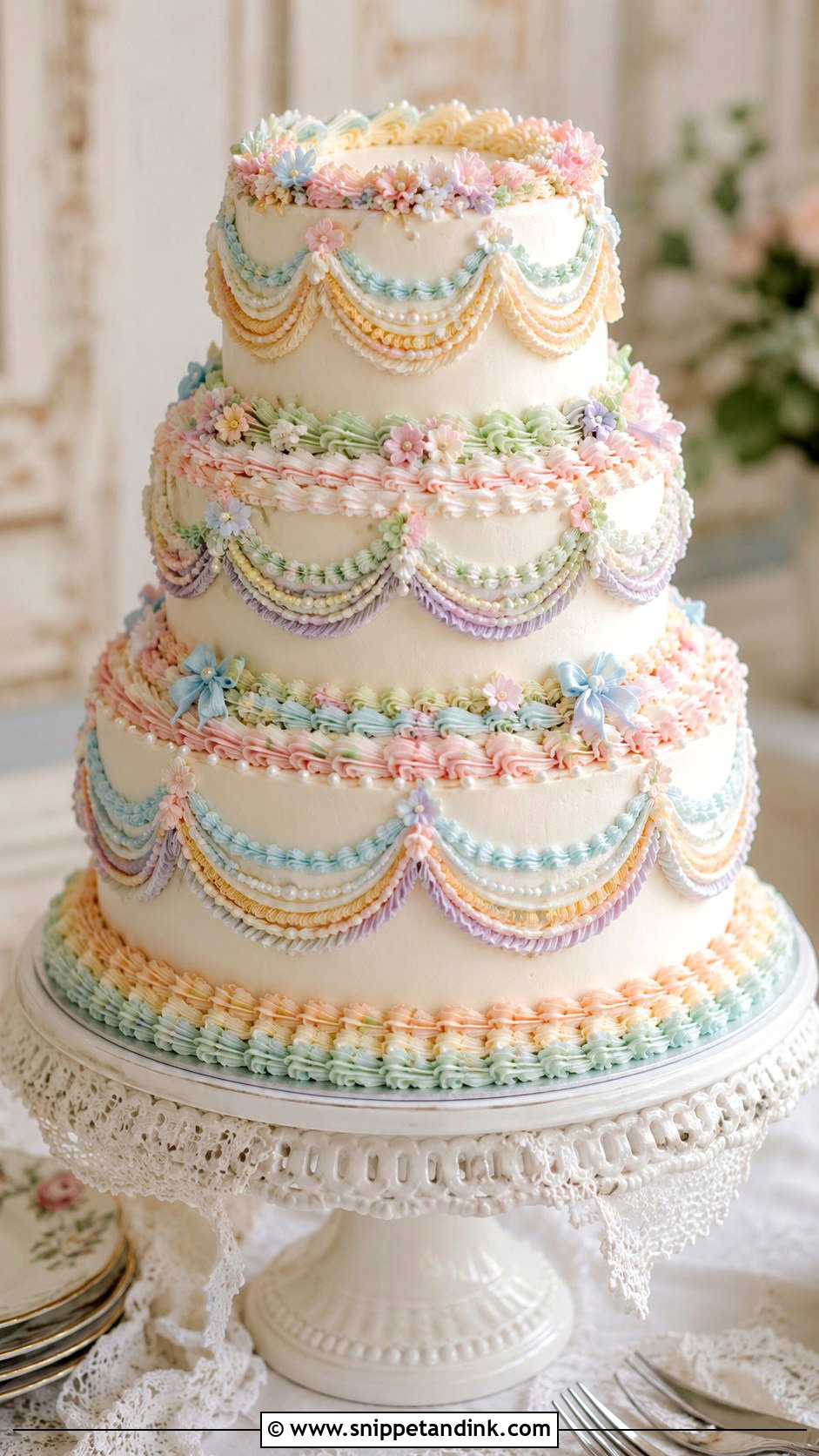
Lambeth is the over-piped English style, built from layered buttercream borders, shells and swags, and it suits anyone who loves vintage piping but wants pastels instead of all white. Each tier can be its own shade, or the piping itself can carry the rainbow over a white base, in blush, pale yellow, mint, blue and lavender. Swap the traditional cherries for pearls, mini sugar flowers or tiny bows. I pipe Lambeth in a stiff buttercream so the borders hold their shape, which means it handles warm rooms better than a soft frosting would. It’s nostalgic and detailed, and the piping casts lovely shadows in photos.
15. Pastel Rainbow Sheet Wedding Cake
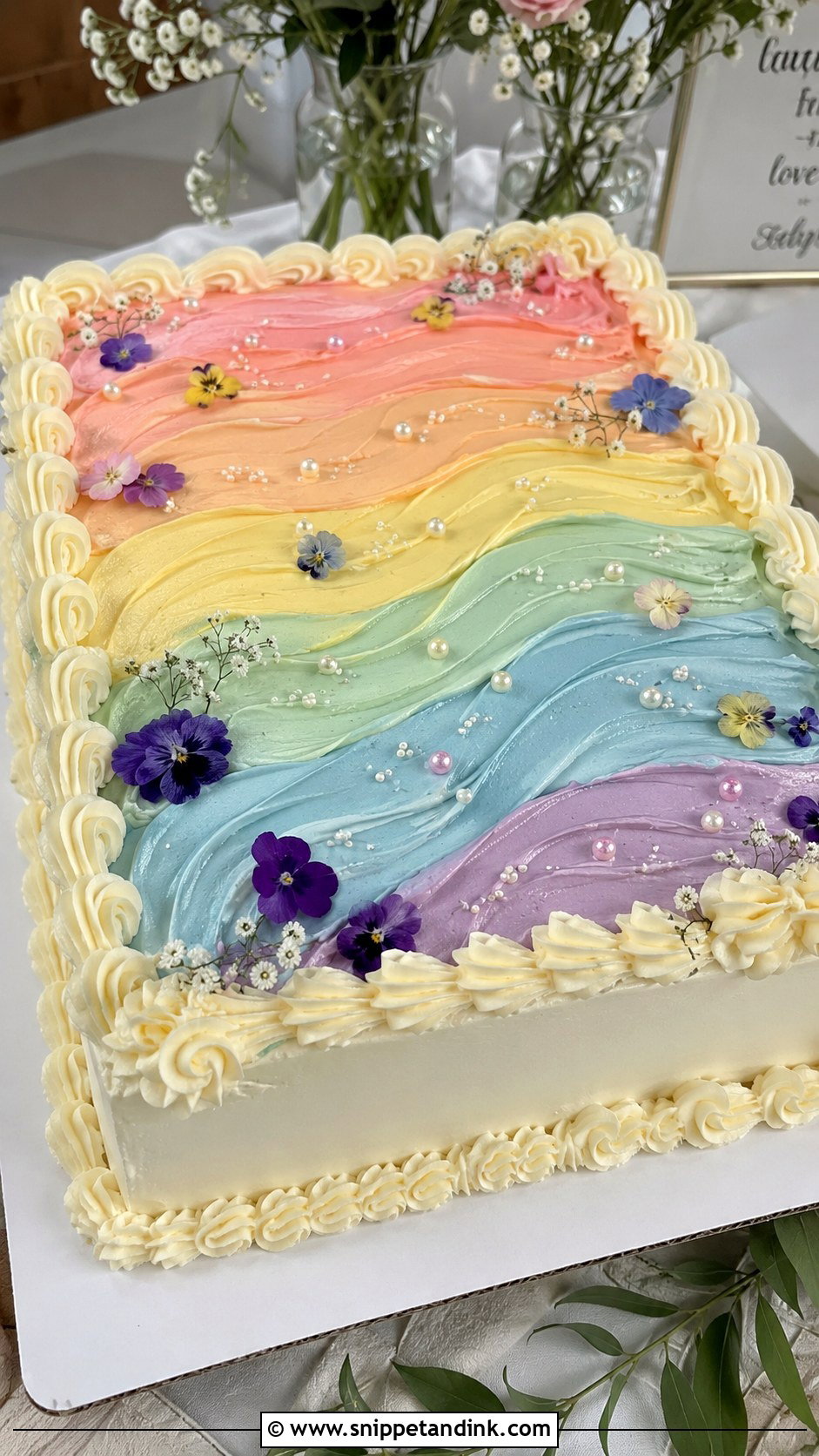
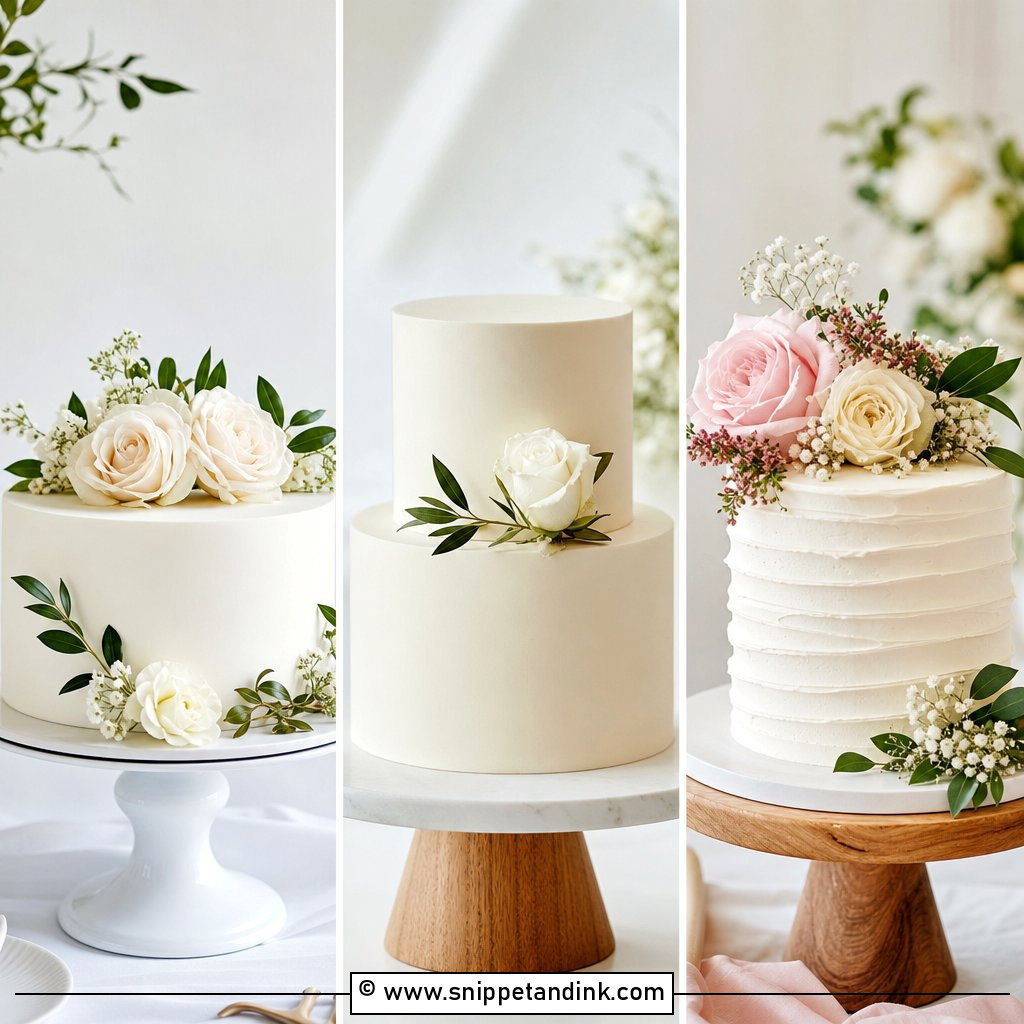
A pastel rainbow sheet wedding cake is the practical choice for feeding a crowd. It can stand alone on the dessert table or sit in the kitchen behind a smaller display cake, which is a common way to keep costs down. The wide top gives room for pastel waves, piped rosettes, pressed flowers or sprinkle borders, and it takes a watercolor or ombre finish well. It’s also far quicker to slice and serve than a stacked cake. A bright white base keeps it looking like a wedding cake. Casual receptions, brunch weddings and backyard parties suit it.
16. Pastel Rainbow Mini Wedding Cake
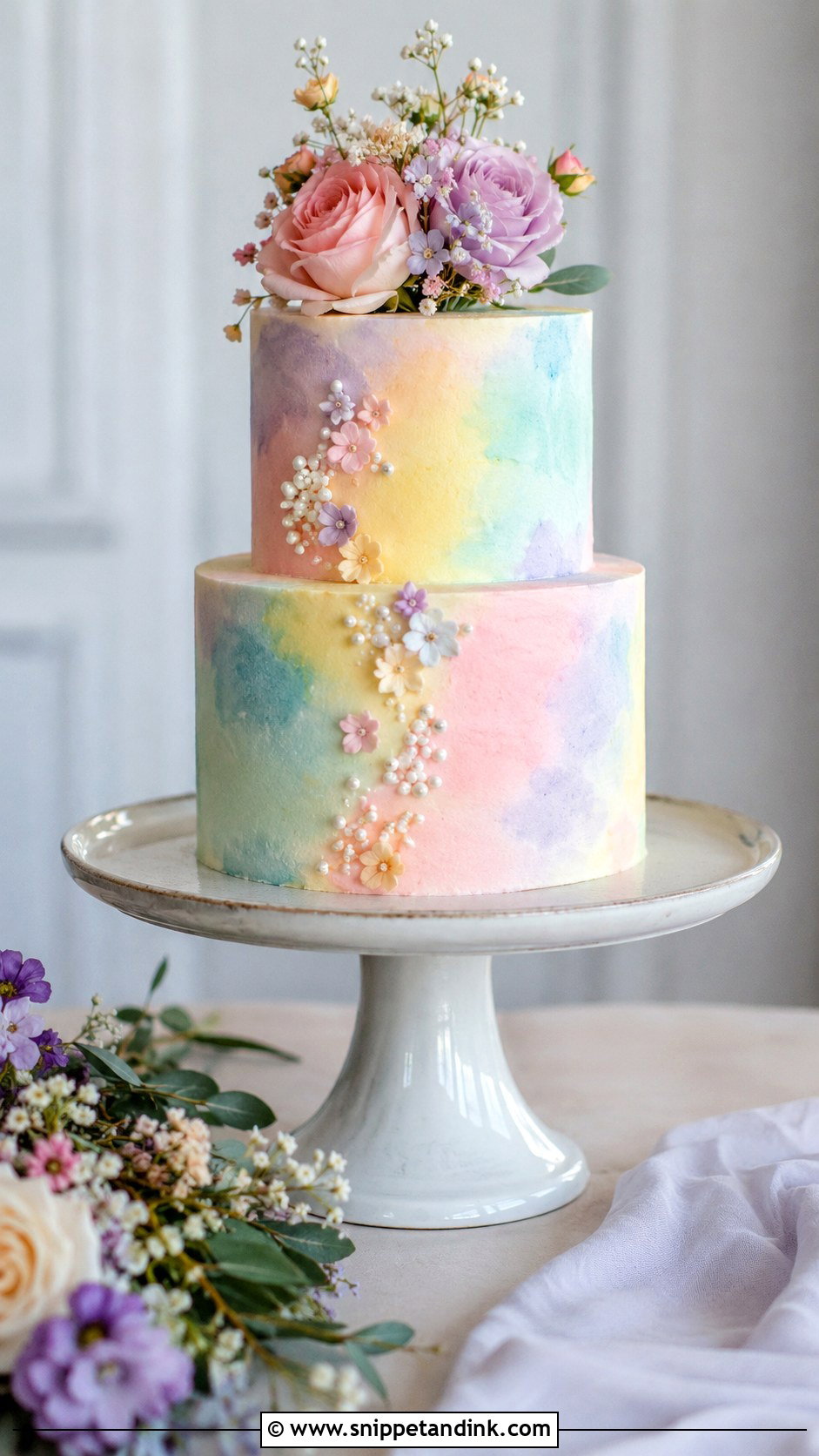
Small cakes are for elopements, intimate receptions or the sweetheart table. A two-tier or tall single tier still makes an impression if the color is thoughtful: soft stripes, watercolor buttercream or tiny piped flowers. With less surface, every detail shows, so keep it precise and uncrowded, finished with a few pearls, a floral topper or a clean acrylic charm. If you’re serving other desserts, a small cake for the cutting moment is plenty. It feels personal without the size of a traditional cake.
17. Pastel Rainbow Cupcake Wedding Cake
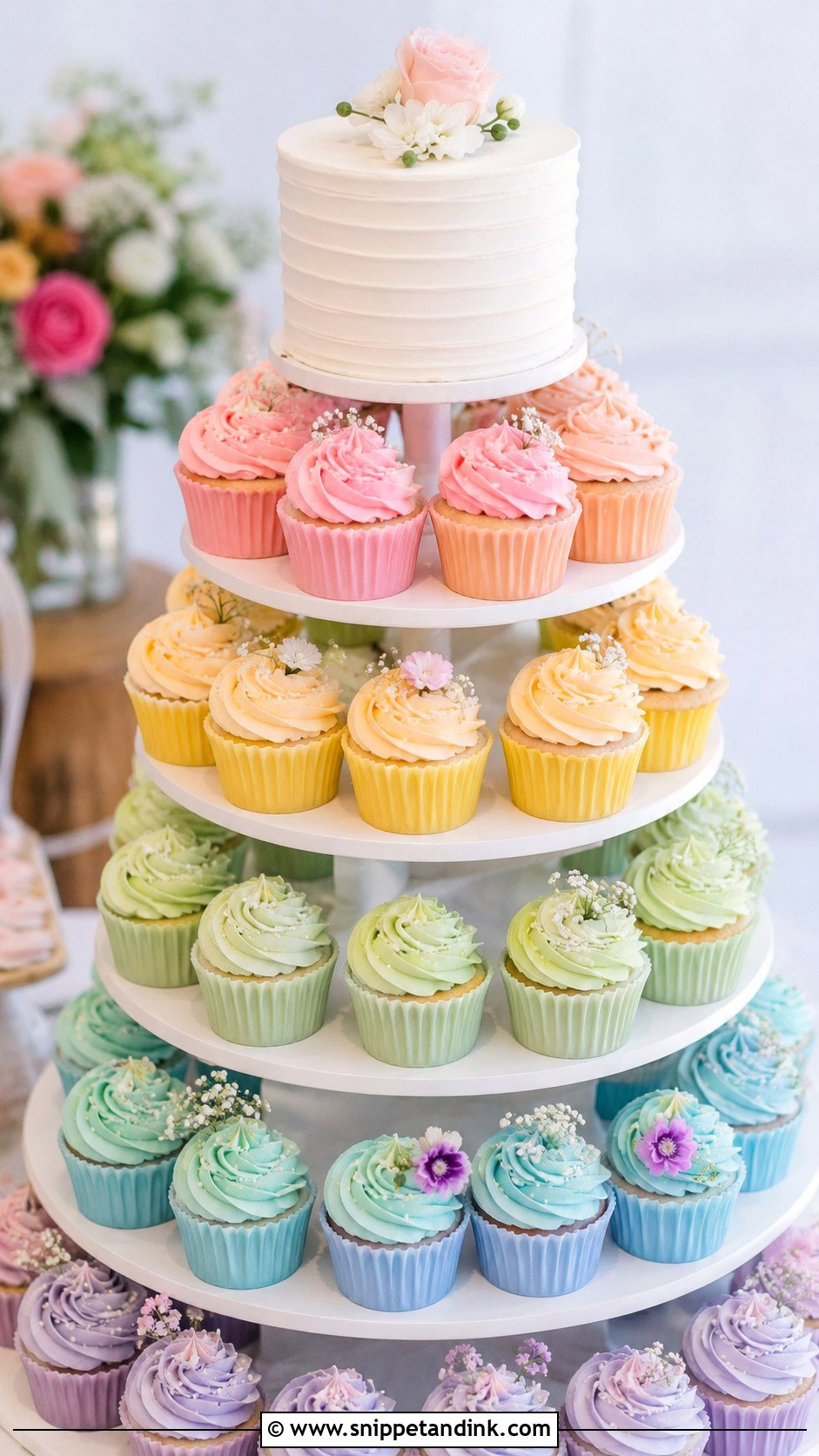
Cupcakes make serving easy and still give you a display. Arrange them on a tiered stand in rainbow order, each topped with a different pastel buttercream shade, and put a small cutting cake at the top for the moment with the knife. Flavors can match the colors: vanilla, lemon, strawberry, pistachio and lavender. Pearl sprinkles, mini flowers or soft swirls keep them looking like wedding cupcakes. The catch is that a tall stand of cupcakes is less stable than a stacked cake, so have it assembled on the table where it will stay, not carried across the room. Guests help themselves and nobody waits for slices.
18. Pastel Rainbow Naked Wedding Cake
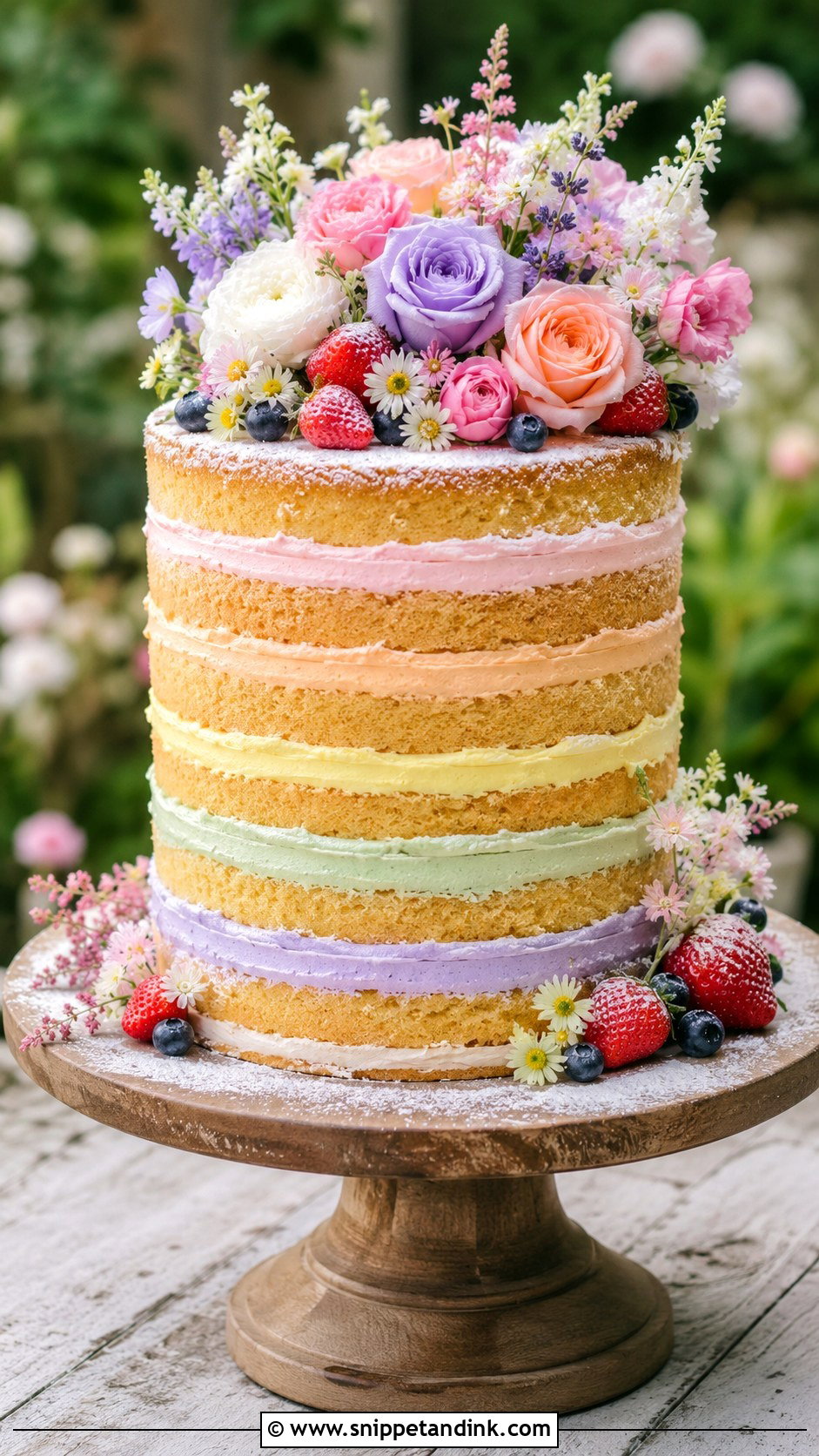
A naked cake carries the rainbow quietly, through pastel sponge layers, tinted fillings or a soft rainbow of flowers, while the exposed edges keep it rustic. The trade-off is drying: with no frosting to seal it, sponge exposed to air for hours goes stale at the edges, so I brush the layers with syrup and assemble it as close to the reception as possible. Vanilla sponge, lemon curd, berry filling and almond cake all suit it. Finish with pale fruit, edible flowers or a light dusting of powdered sugar. Garden weddings, barns and outdoor receptions are its natural home.
19. Pastel Rainbow Semi Naked Wedding Cake
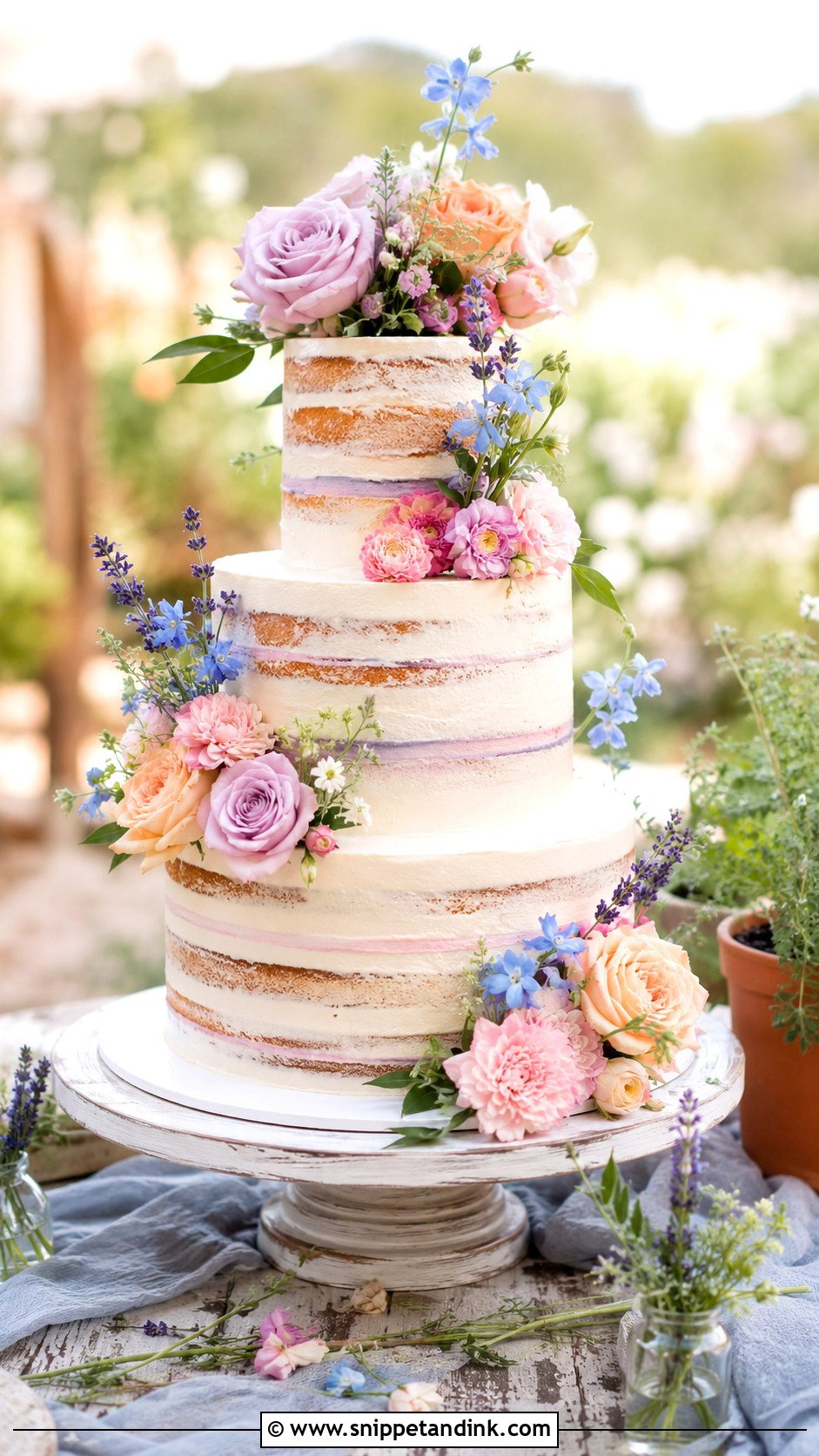
Semi-naked sits between rustic and clean: a thin scrape of buttercream lets the layers show through while pastel accents add color. The rainbow can live in the filling, the flowers or a gentle ombre on the outside. Fresh flowers tucked between tiers suit it especially well. Because the frosting is thin, it protects the sponge better than a fully naked cake but still dries faster than a fully frosted one. Keep the shades soft and it reads as romantic rather than playful. Spring weddings and outdoor receptions suit it, and it’s easy to personalize.

20. Pastel Rainbow Geode Wedding Cake
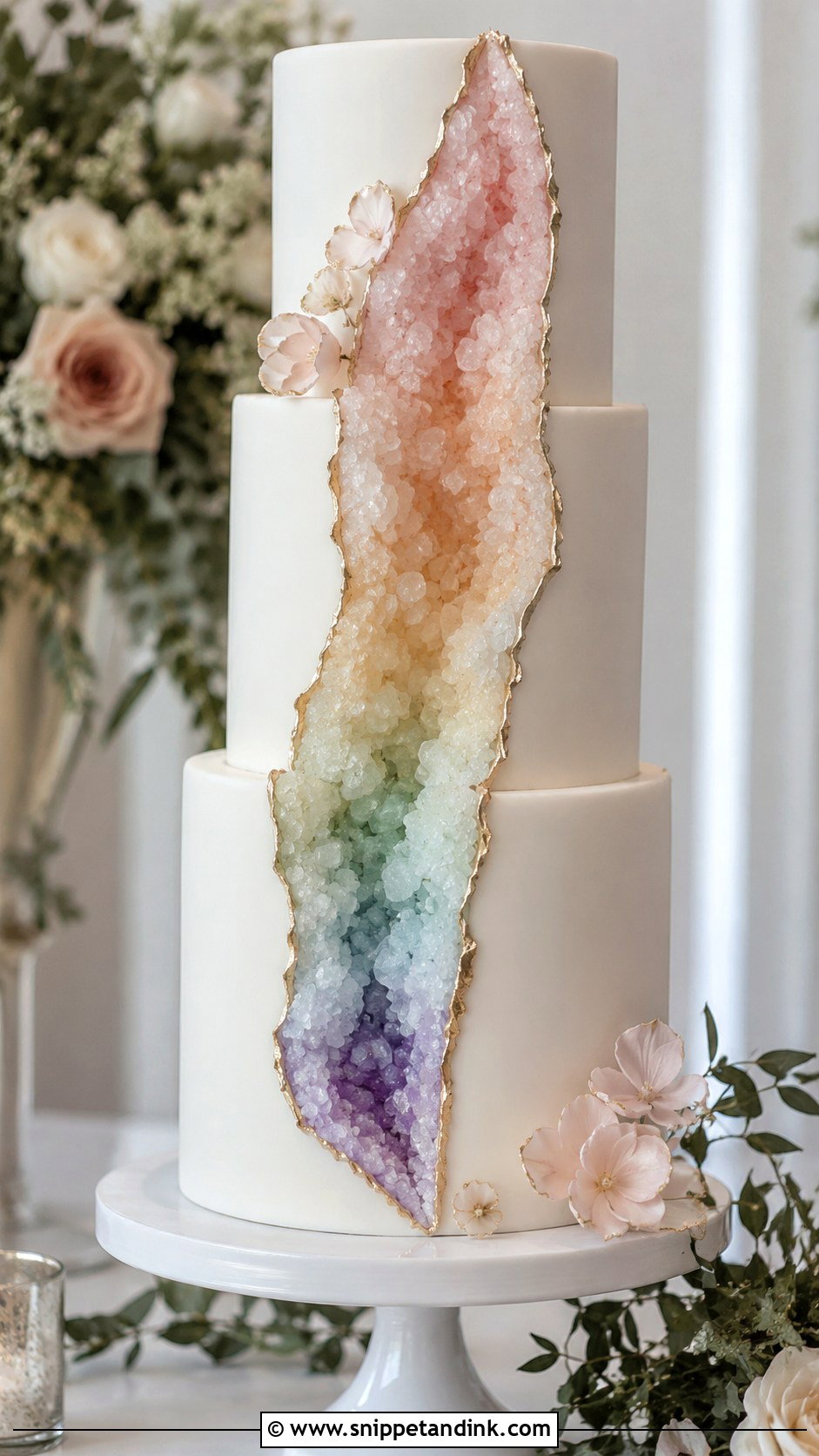
Geode cakes are usually dark and dramatic, but in pastels they turn soft and artistic. Candy crystals or rock sugar in pale pink, peach, mint, blue and lavender fill a carved cavity down one side of a smooth white or ivory cake, edged with edible silver or gold. It needs fondant or very firm buttercream so the carved edge holds clean. Sugar crystals and isomalt can turn sticky and cloudy in humidity, so this is a cake I’d keep indoors. It’s the most unexpected design here and very much a statement.
21. Pastel Rainbow Marble Wedding Cake
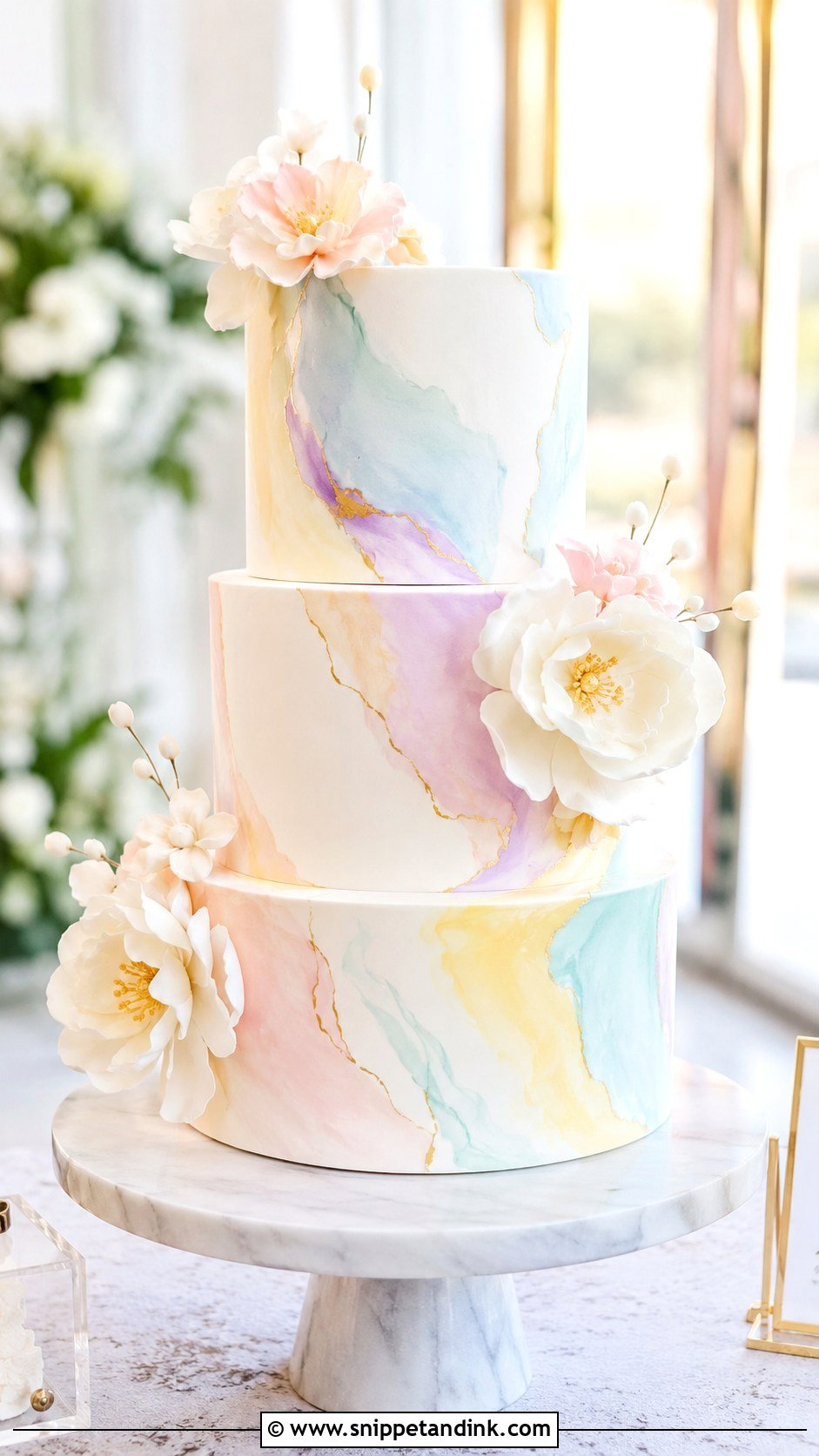
Marbling streaks soft pink, yellow, mint, blue and lavender through fondant or buttercream like polished stone. It looks most refined when most of the cake stays white and the marble sits on one or two tiers only. I marble fondant by twisting and folding colored pieces together, and I stop well before the colors fully blend, because over-kneaded marble turns into a muddy beige. Thin gold lines, sugar flowers or clear acrylic accents finish it. Every side has a different pattern, which suits modern venues, galleries and ballrooms.
22. Pastel Rainbow Painted Flower Wedding Cake
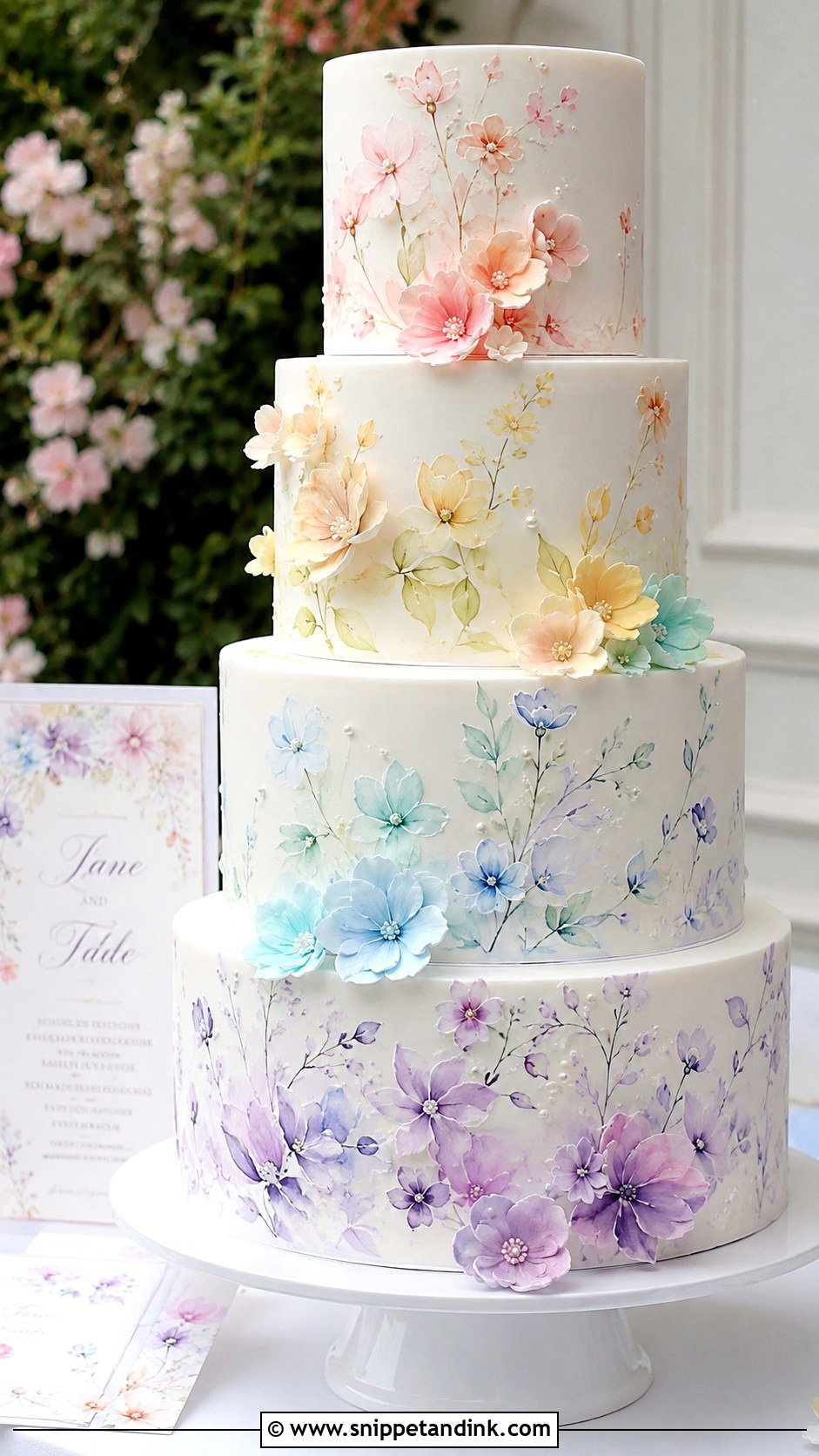
Hand-painted flowers stay flat on the surface rather than standing up as sugar blooms. I paint directly onto fondant or very smooth, chilled buttercream with edible paints, one flower for each shade: blush roses, yellow daisies, mint leaves, blue blossoms and lavender sprigs. The flat surface makes it a natural partner for watercolor invitations, so bring your stationery to the consultation and I can echo its motifs. Keep the tiers plain so the painting stands out. Painting takes time, so book early and expect it to be priced as custom work.
23. Pastel Rainbow Arch Wedding Cake
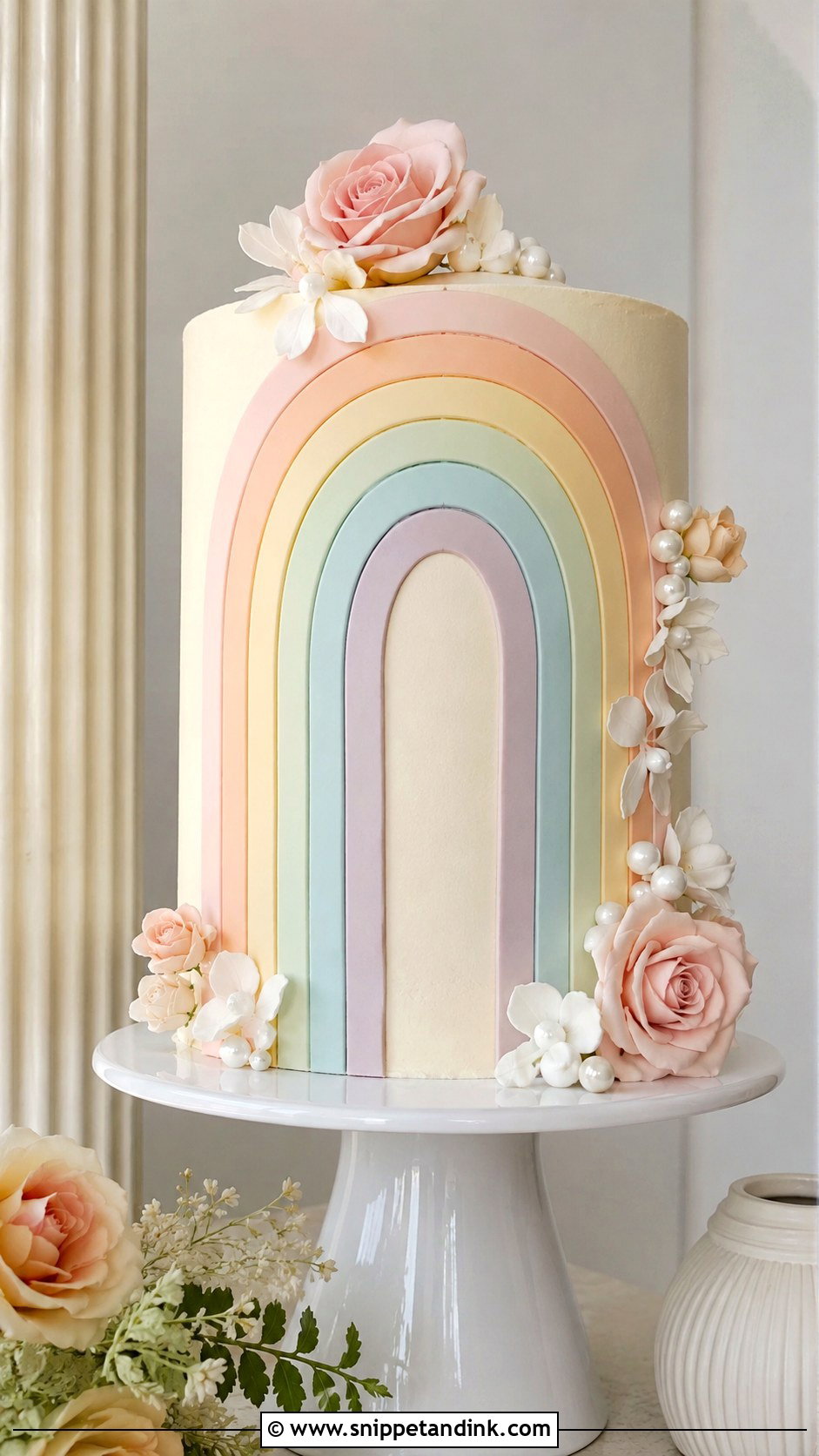
Arches bring a modern shape: curved panels, arch-shaped fondant pieces or a tall rounded silhouette instead of standard round tiers. The rainbow can appear as layered arches across the front, a little like a modern invitation suite. Minimal flowers, pearl details or a simple pedestal keep the shape in focus, and the palette should stay muted. Sculpted shapes need internal support, so this design costs more and has to be planned well ahead of the date. Contemporary weddings and gallery venues suit it.
24. Pastel Rainbow Heart Wedding Cake
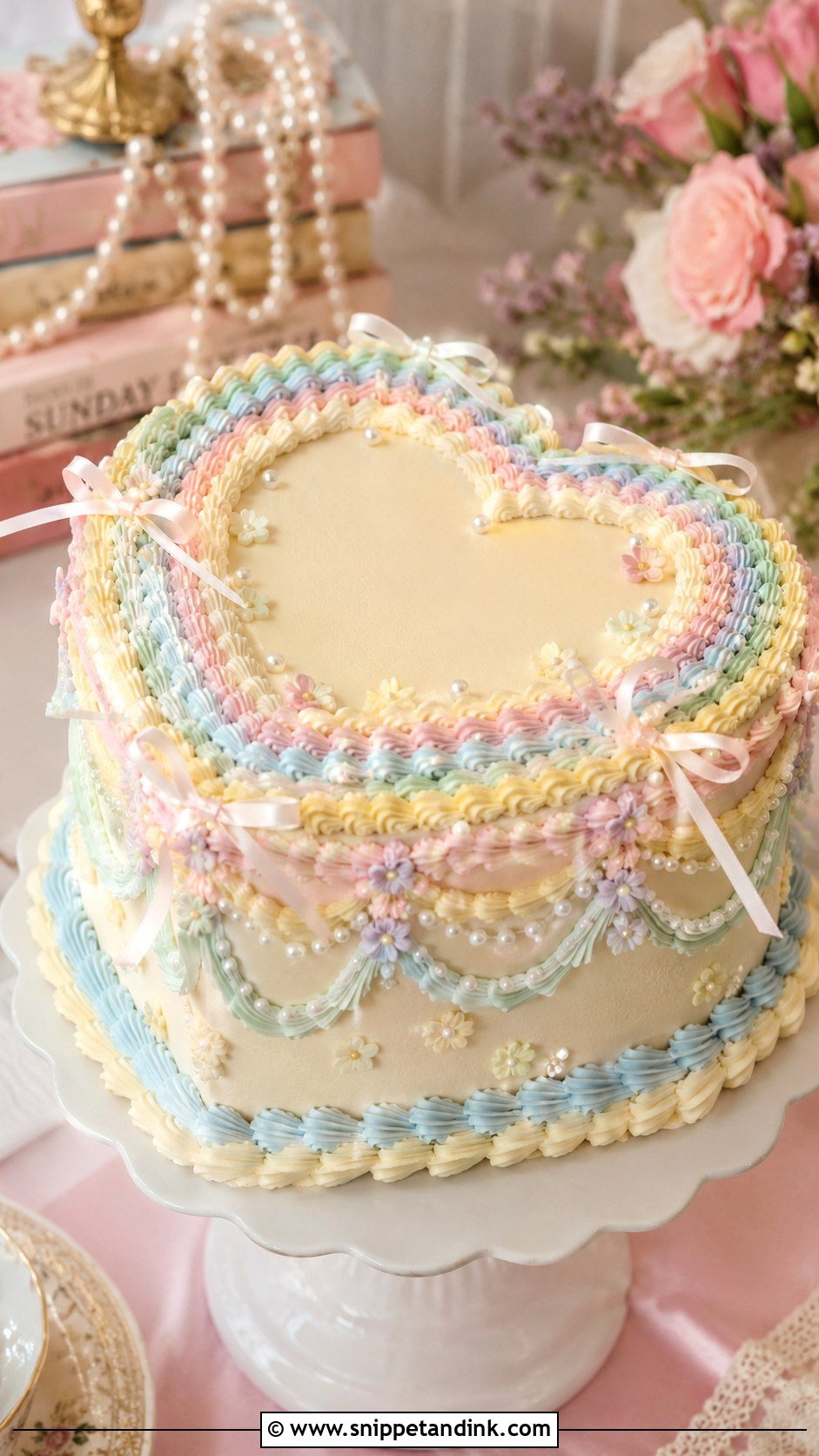
Heart-shaped cakes have come back with the vintage piping trend, and in soft colors they look sweet rather than kitsch. One large heart suits a small reception; several heart tiers work for a bigger one. I pipe the borders in pale pink, yellow, mint, blue and lavender and finish with pearls, tiny bows or sugar flowers. Hearts are awkward to slice evenly, so tell your caterer in advance, or add a sheet cake in the kitchen to make serving simpler. Couples who like retro detail tend to love it, and it’s at its best in close-up photos.

25. Pastel Rainbow Layer Wedding Cake
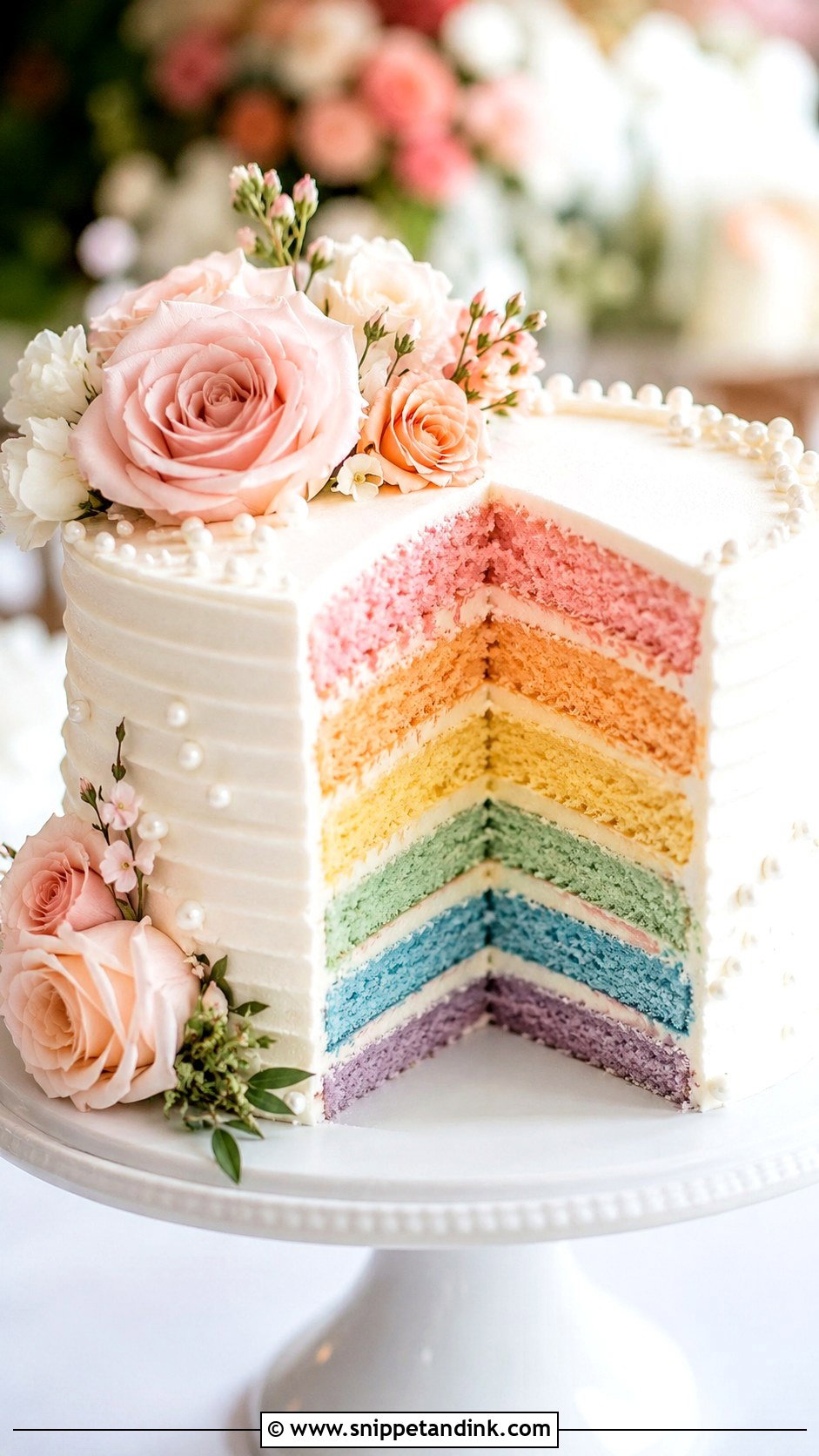
Hidden rainbow layers keep the surprise for the first slice. The outside stays simple in white buttercream, soft flowers or a pale ombre, while inside there’s pink, peach, yellow, mint, blue and lavender sponge. Each layer is baked separately, and pastel sponge needs a lower oven and careful timing, because browned edges turn the colors muddy where they show. Pair it with vanilla bean, almond, lemon or berry fillings to keep the flavor light. The plain exterior matches any wedding style, so it looks classic on the table and then delights everyone when it’s cut.
Getting a Pastel Cake Through a Warm Summer Reception
Pastel cakes are popular in spring and summer, which is exactly when heat and humidity cause trouble. Buttercream starts to soften in a warm room and slumps in direct sun. Fondant holds its shape better, but a cake moved from a cold van into a humid room can sweat. Macarons go soft, sugar crystals turn tacky, and fresh flowers wilt quickly against a warm cake.
- Put the cake table in shade and away from windows, heaters, and the dance floor lighting rig.
- Ask whether your baker delivers tiers stacked or assembles on site. Taller cakes and cascades are usually finished at the venue.
- Check that the venue has a cool place to hold the cake if the reception runs late.
- If the ceremony is outdoors, keep the cake inside until the reception room is ready.
- Have your venue confirm the cake table is level and sturdy before the cake arrives.
Fresh flowers that are safe on a cake
Florist flowers are often sprayed, so any fresh bloom that touches the cake should be grown without pesticides, have its stem wrapped in floral tape or fitted into a pick, and sit on a small barrier rather than directly in the frosting. Some popular wedding flowers aren’t safe near food at all. Let your baker and florist agree on the list between them, and keep the decorative flowers off the slices that are served.
Settle on One Direction, Then Let the Colors Follow
Pastel rainbow cakes sit between classic bridal style and outright color. They can be romantic, modern, vintage and piped, or playful with sprinkles and macarons, but the cakes that work pick one clear direction and let the palette support it. Smooth buttercream, fondant, pressed flowers, pearls, watercolor and hidden layers each give the idea a different personality. Formal or rustic, intimate or large, there’s a version that will fit your reception. Start with the venue and the season, then choose the technique, and the colors will look the way you imagined when the cake is wheeled out.
You'll Like These Ideas:




Leave a Reply