
Pretty is the easy part. A wedding cake also has to stand upright for hours, survive a car journey and cut cleanly when the room is loud and the caterer is in a hurry. Almost every collapse I’ve been asked to rescue came down to the same few things: soft sponge carrying weight it was never meant to, a loose filling, a missing board, or flowers pushed straight into a tier with nothing underneath. Get the structure right and you can decorate in any direction, from heavy vintage piping to fruit, tall barrels, separated tiers or a long low cake. The tips below are organised by cake style, so find yours and read the support notes first. Here are 20 Wedding Cake Assembly
A Countdown for Building the Cake Yourself
Home bakers usually get into trouble because everything lands on the last day. Spread the work out and every stage gets a proper chill. This is roughly how I’d schedule a stacked cake for a Saturday wedding.
- Two to three weeks before: bake the sponges, cool them completely, wrap them tightly and freeze. Do a test stack of one small tier to check your recipe holds up.
- Wednesday: thaw the sponges in their wrapping, make the buttercream or ganache, and cut your boards to size.
- Thursday: level, fill and crumb coat each tier, then chill overnight.
- Friday: final coat, chill again, then insert and trim the dowels for each supporting tier.
- Saturday: stack at the venue if you can, add piping touch-ups, then flowers and fruit last.
To trim dowels, I push one in, mark it level with the frosting, pull it out and cut every dowel in that tier to the same length. Uneven dowels are the most common reason a tier tips.
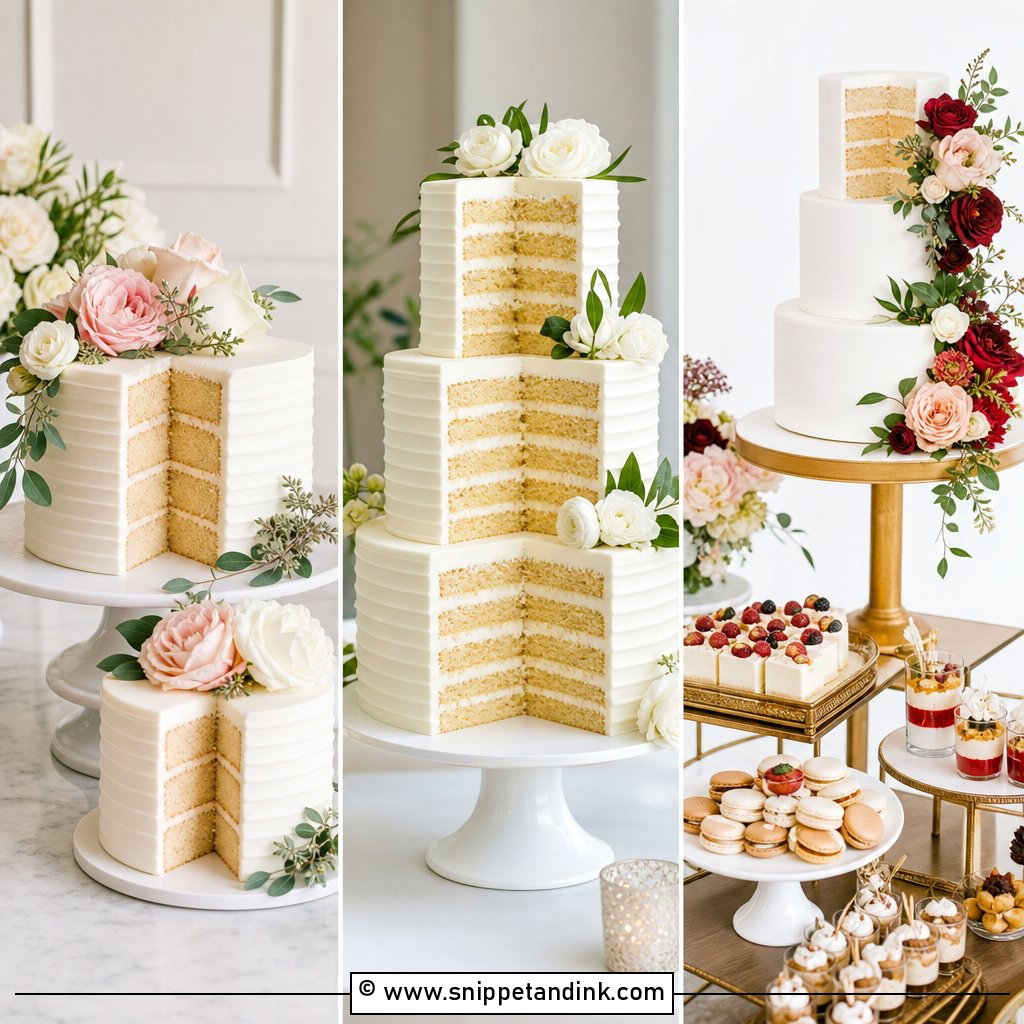
1. Three Tier Buttercream Wedding Cake
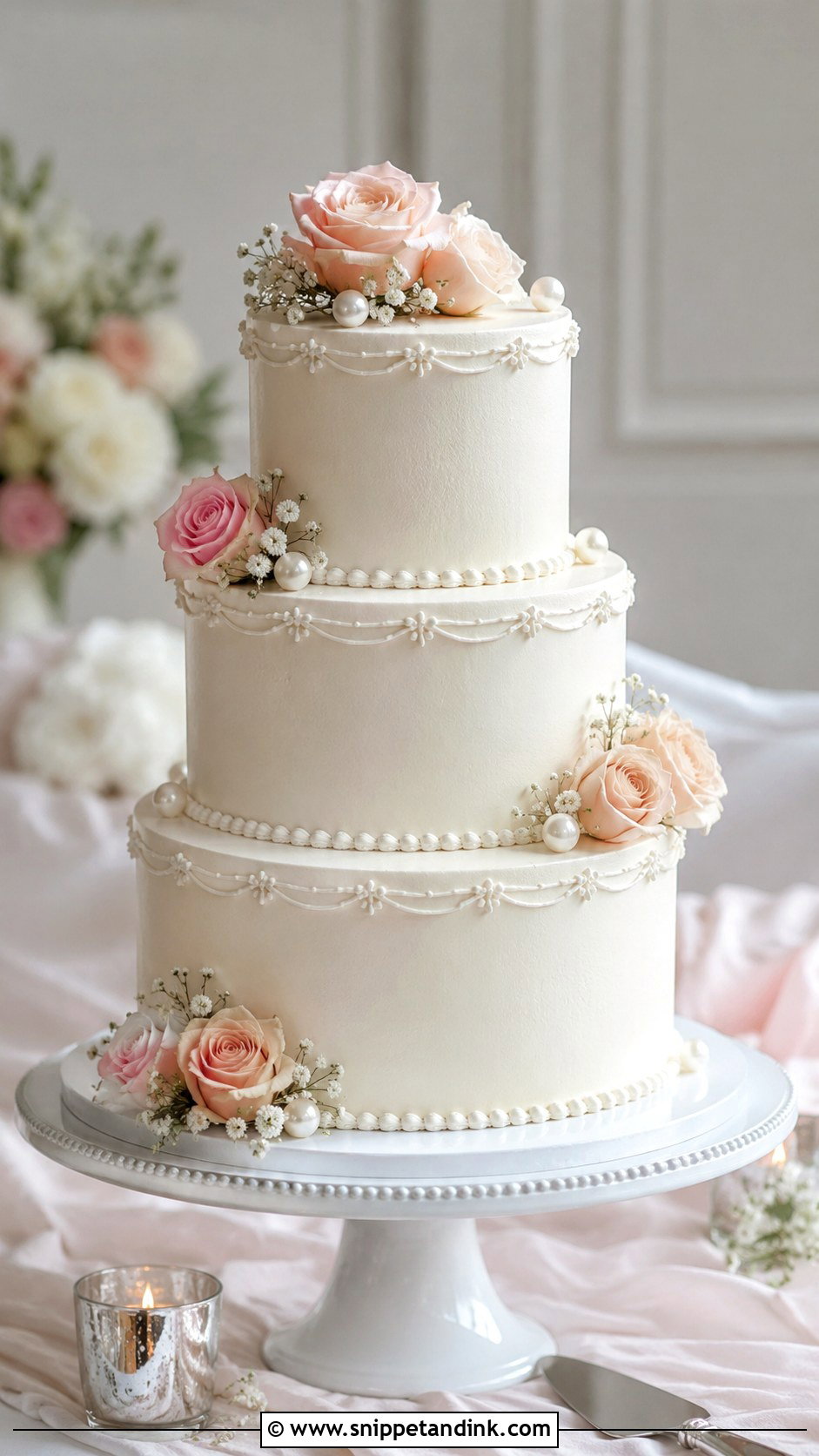
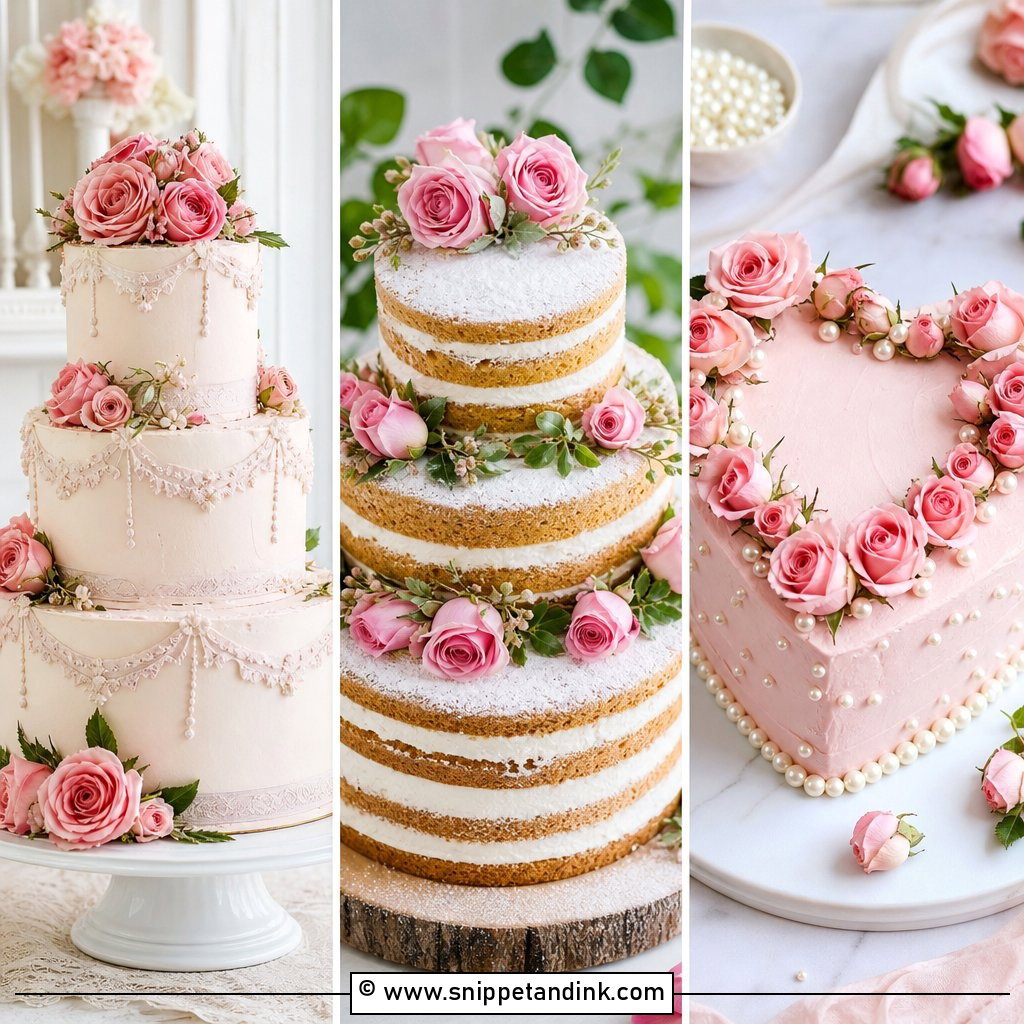
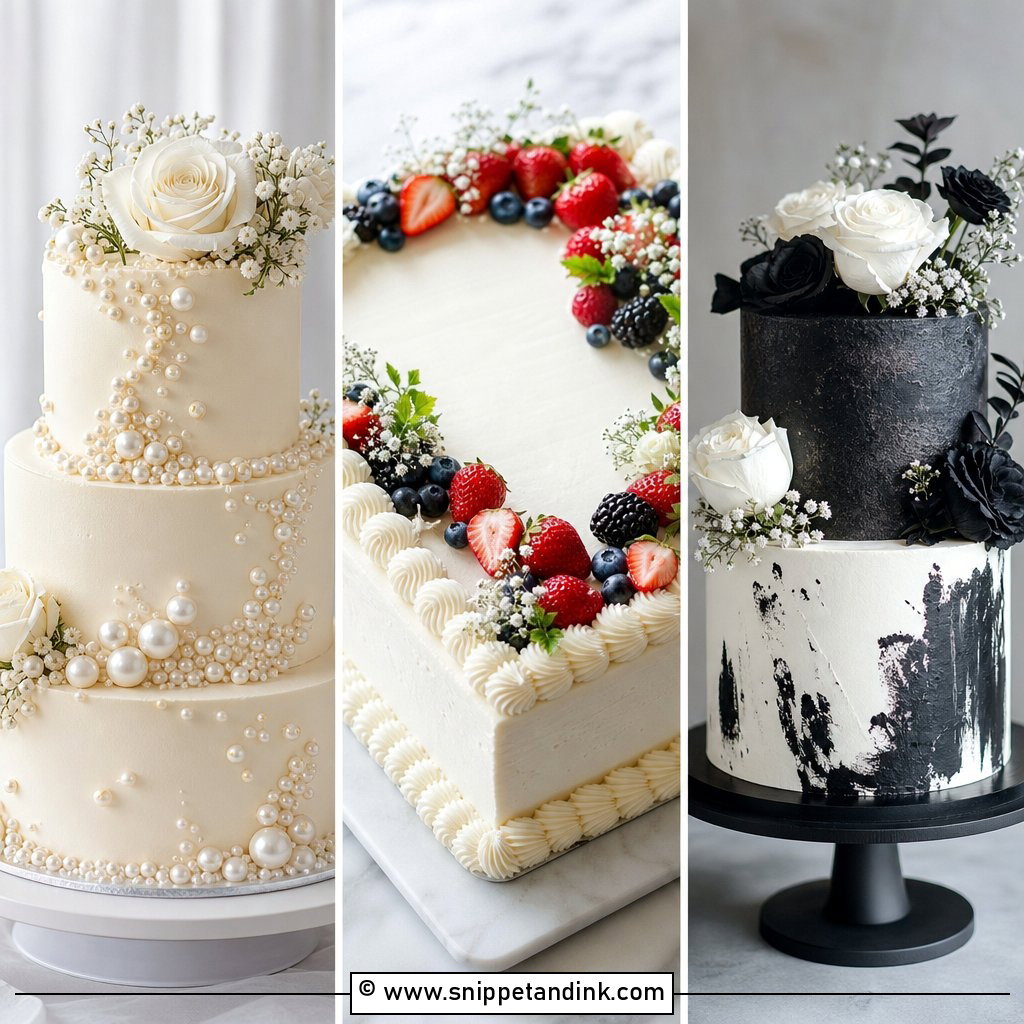
Three tiers is the format I’d teach anyone first. Each tier sits on its own thin board, and the two lower tiers get a ring of dowels set just inside where the tier above will land, so the weight goes down through the supports rather than squashing the sponge. American, Swiss and Italian buttercreams all chill firm enough to stack. My one rule for the filling: pipe a stiff ring of buttercream around the edge of each layer before adding anything soft, or it squeezes out under the weight and leaves a bulge. Finish with a smooth coat, a little piping and fresh flowers set in picks or on wrapped stems.
2. Two Tier Wedding Cake
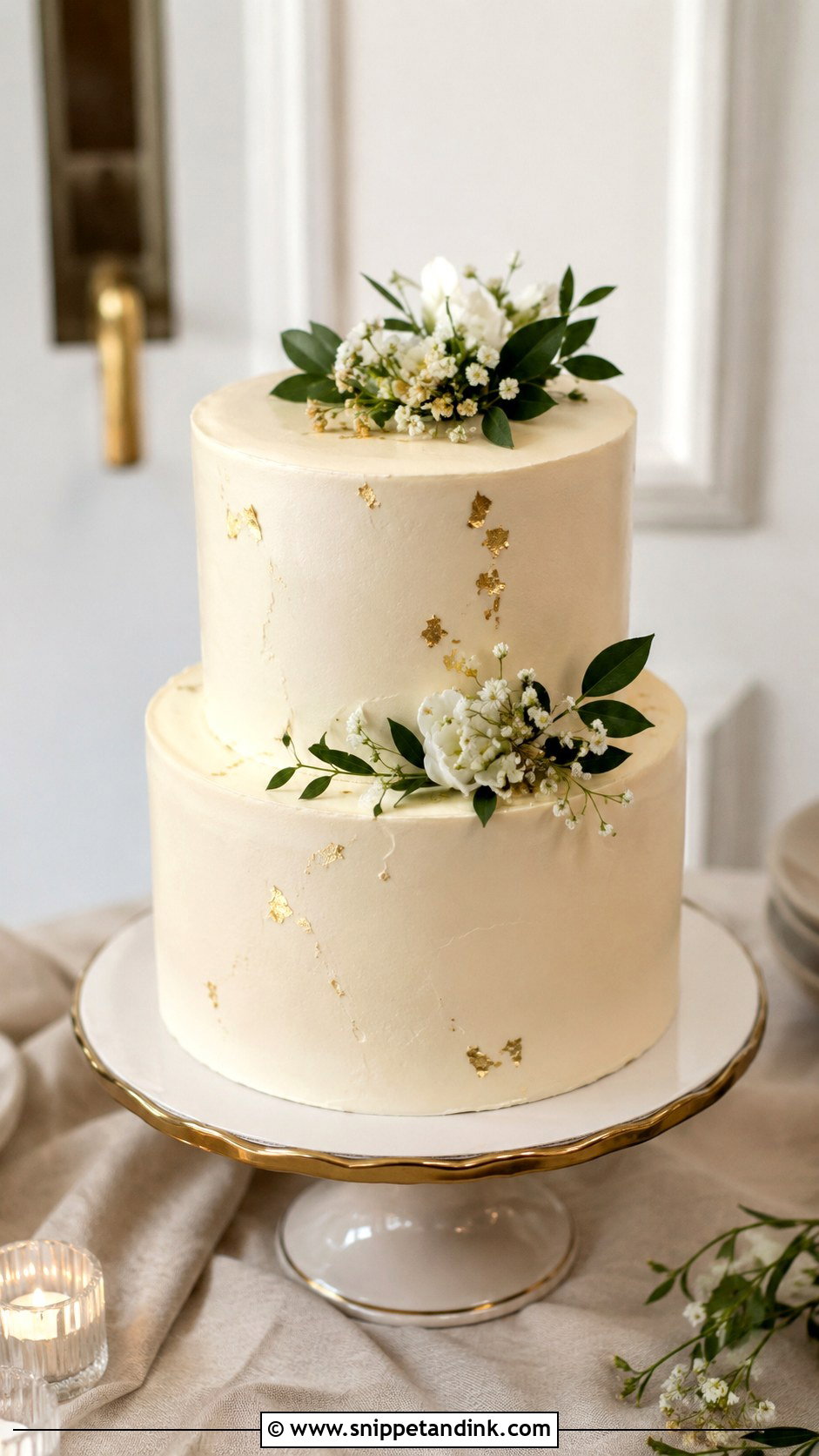
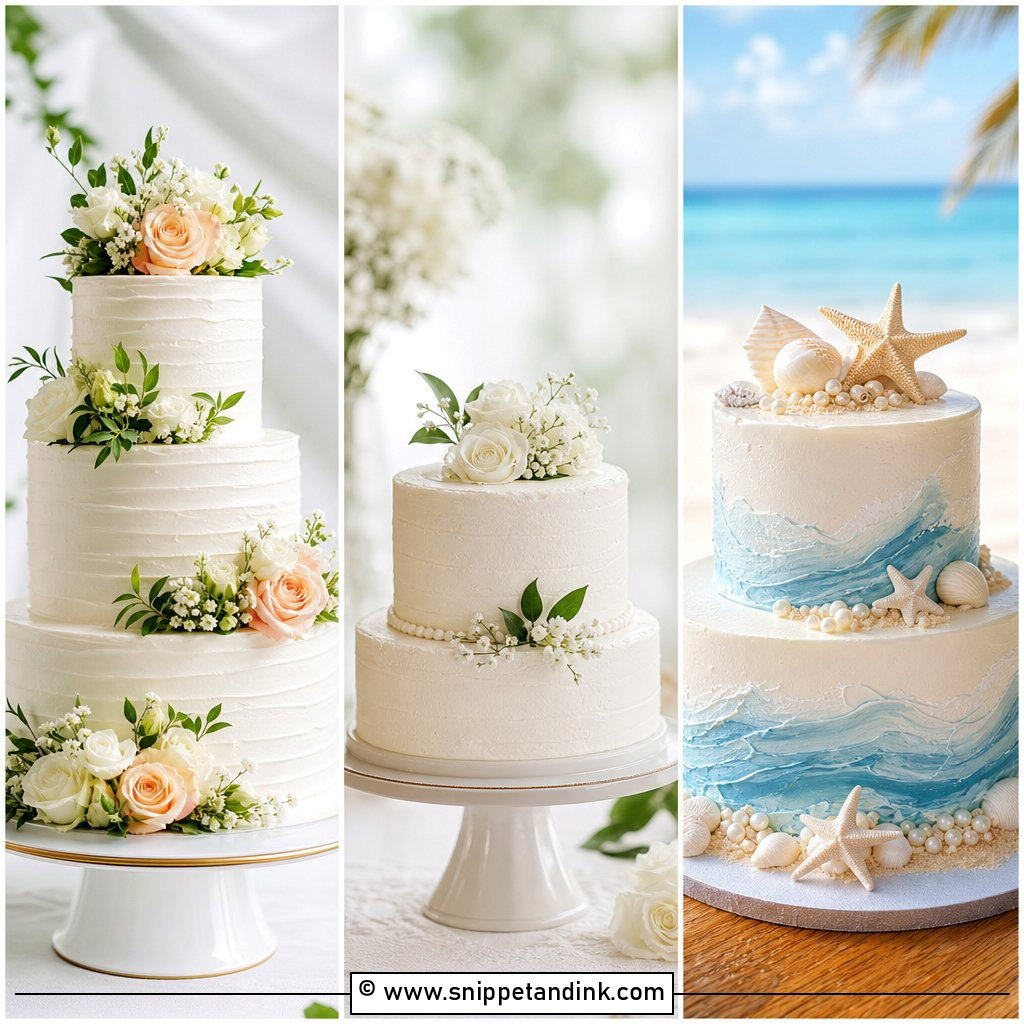
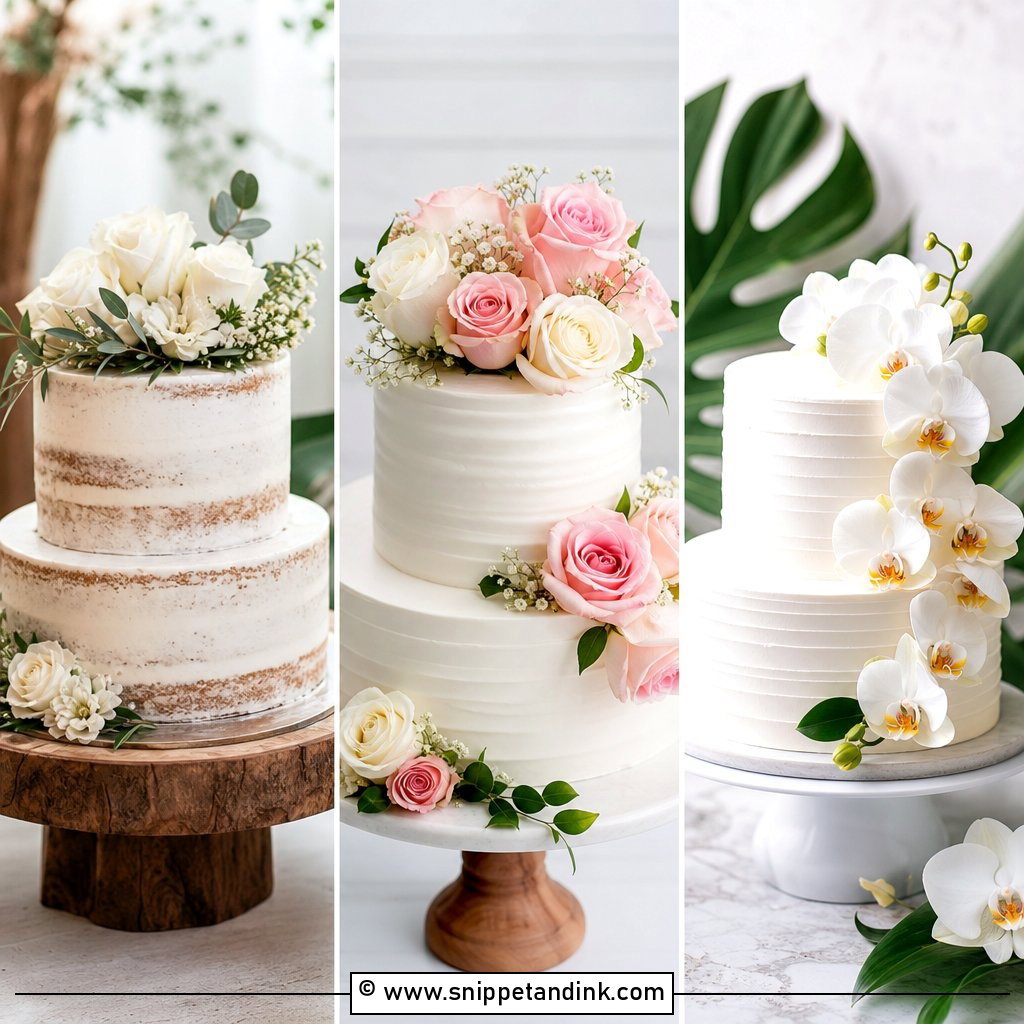
Small doesn’t mean you can skip support. A two-tier cake suits elopements and smaller receptions, often with a sheet cake in the kitchen to make up the servings. The bottom tier goes on a thick cake drum, the top tier on its own board, and the lower tier gets dowels or wide plastic supports before you set the top cake down. If it travels already stacked, I add one sharpened centre dowel driven through both tiers and into the drum, which stops the top sliding on a corner. Smooth white buttercream, a cluster of flowers, a few pearls or a small topper is all the decoration it needs.
3. Four Tier Wedding Cake
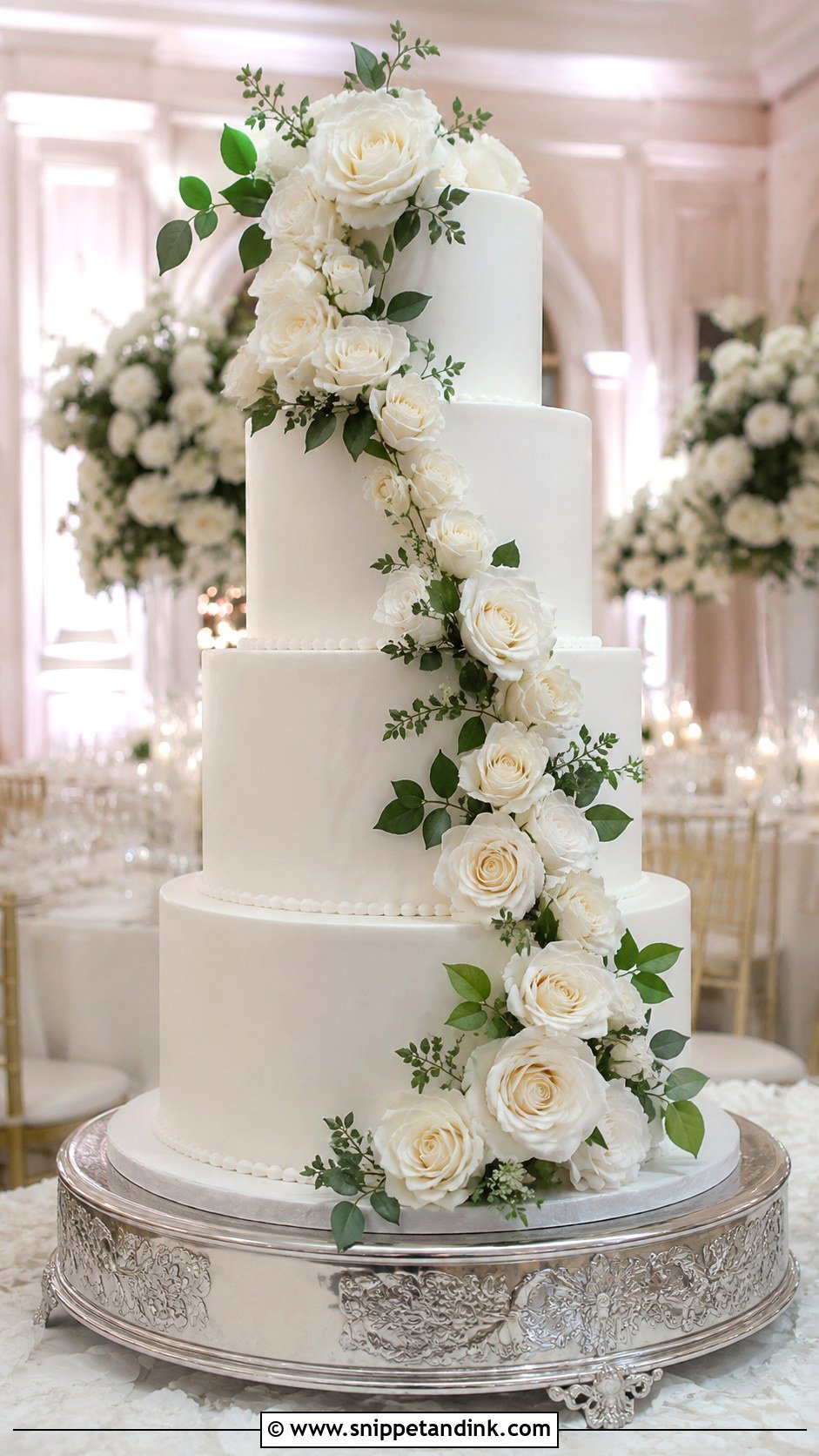
With four tiers, small errors multiply. A tier that leans a few millimetres at the bottom is visibly off by the top. Each tier must be fully chilled, level and on a sturdy board, and the lower tiers need more dowels than you’d guess, since they’re carrying three cakes’ worth of weight. I don’t drive these assembled. The tiers travel boxed separately and I stack them at the venue on the actual table, with a central rod or a commercial support system keeping everything aligned. Ballrooms and big marquees suit the height. Keep decoration to cascading flowers, soft piping or ribbon bands so it doesn’t get top-heavy.
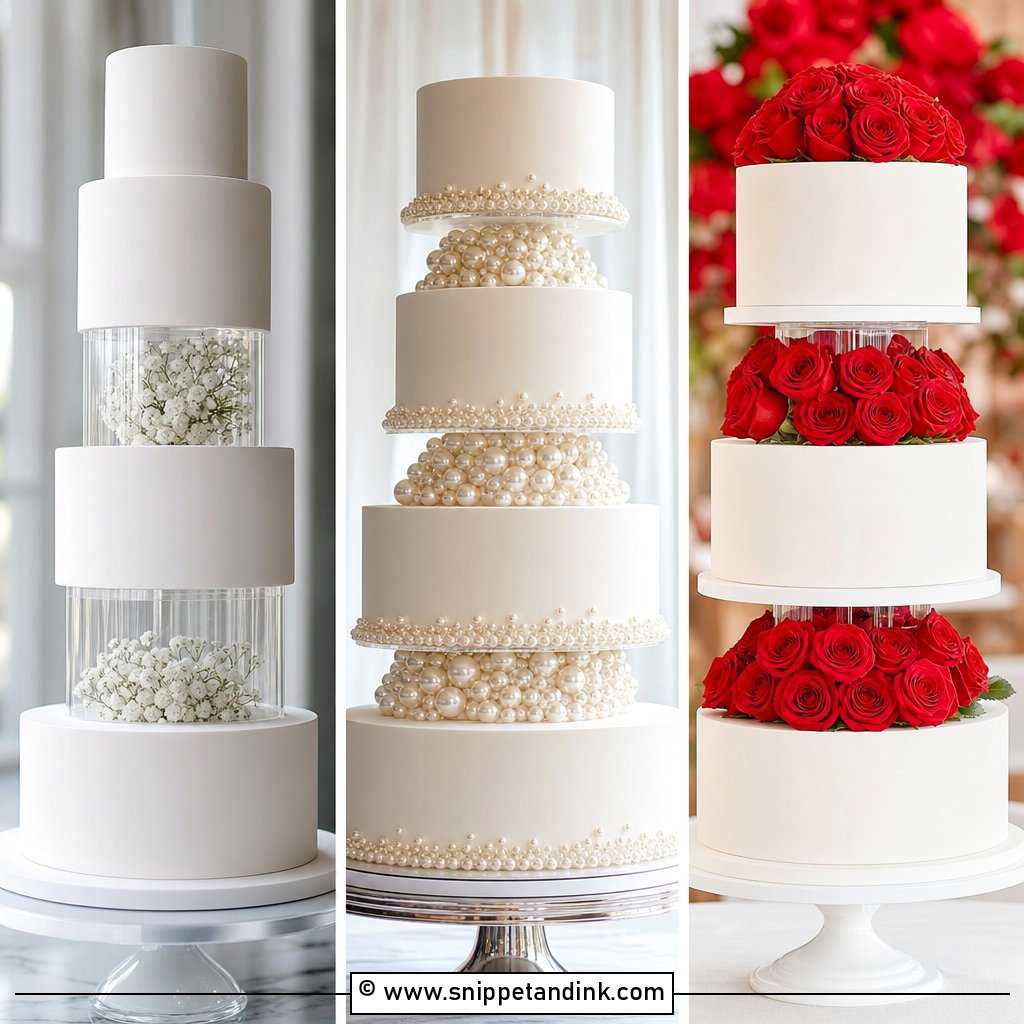
4. Tall Wedding Cake With Spacers
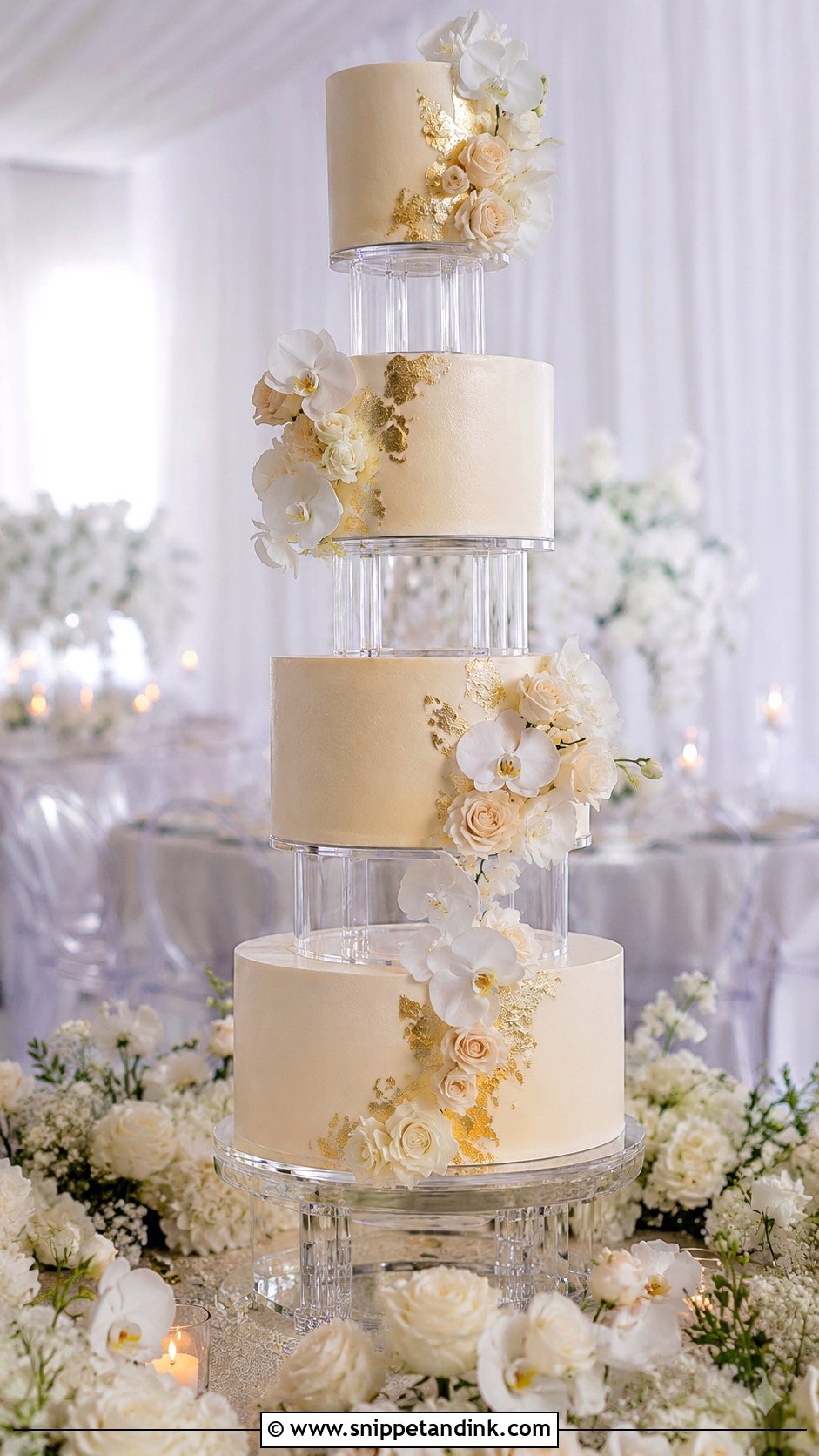
Spacers let you build height without baking more cake. Decorative spacers, acrylic plates and pillar systems leave gaps between tiers, and each gap needs a level plate sized to the tier on top of it. The common slip is a plate that’s slightly smaller than the cake, so the tier edge hangs off and cracks. I measure the boards, not the cakes, when ordering separators. Clear columns, floating flowers or a metallic spacer all look airy on white buttercream. Heavier flowers go on the plates, never pushed into the cake.
5. Vintage Lambeth Wedding Cake
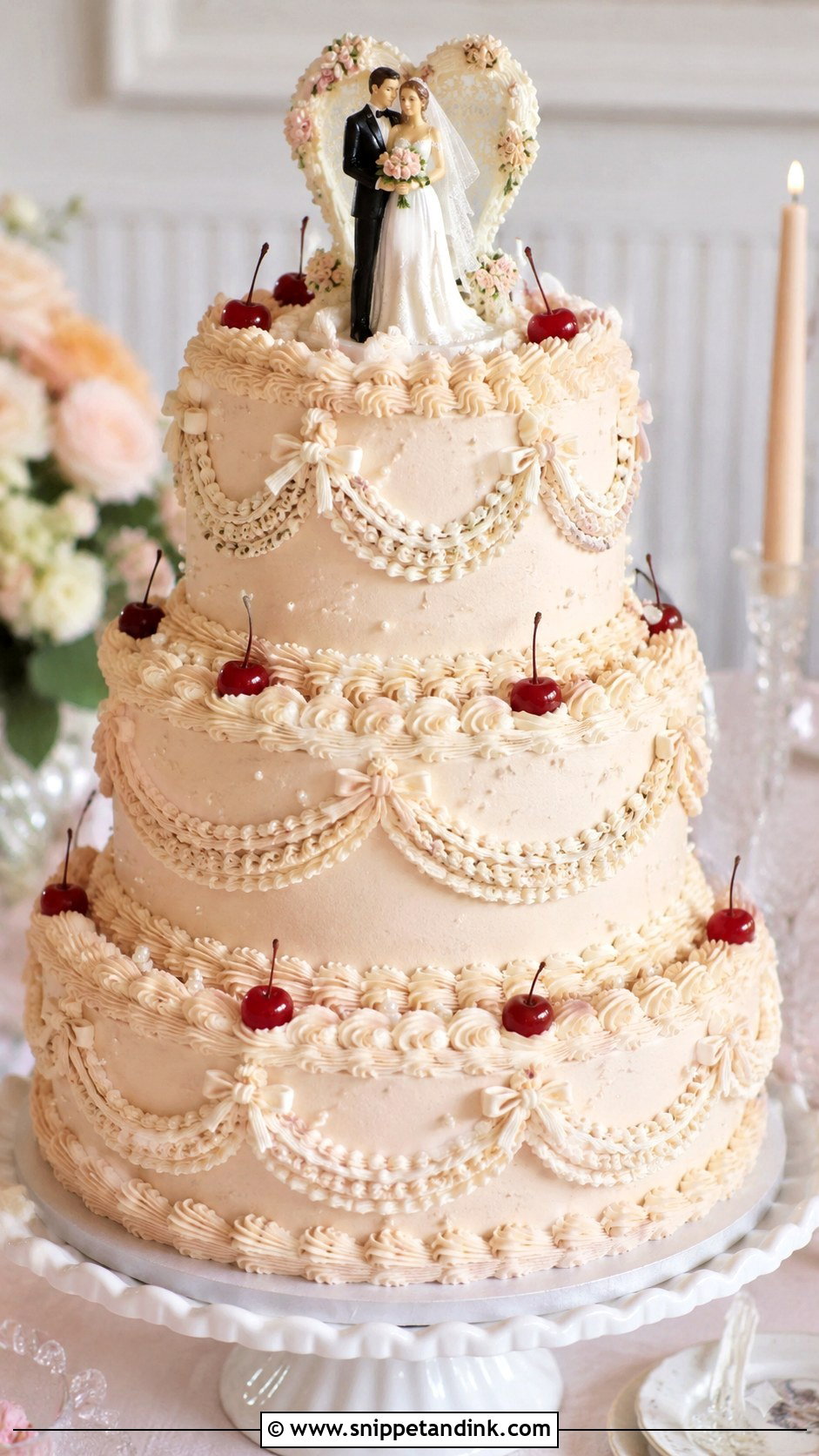
Lambeth piping is heavy, so I treat this as a building job before it’s a decorating one. The piped borders, swags, shells, pearls and ruffles go on only after the cake is stacked, doweled and chilled hard, because piping on a soft surface smudges and slides. Stiffen the buttercream for the piping bag, or use royal icing for the finest details, and the ridges stay crisp. Ivory, blush, pale blue and champagne suit the old-bakery feel. Finish with a small topper, a few cherries, bows or pearl accents.
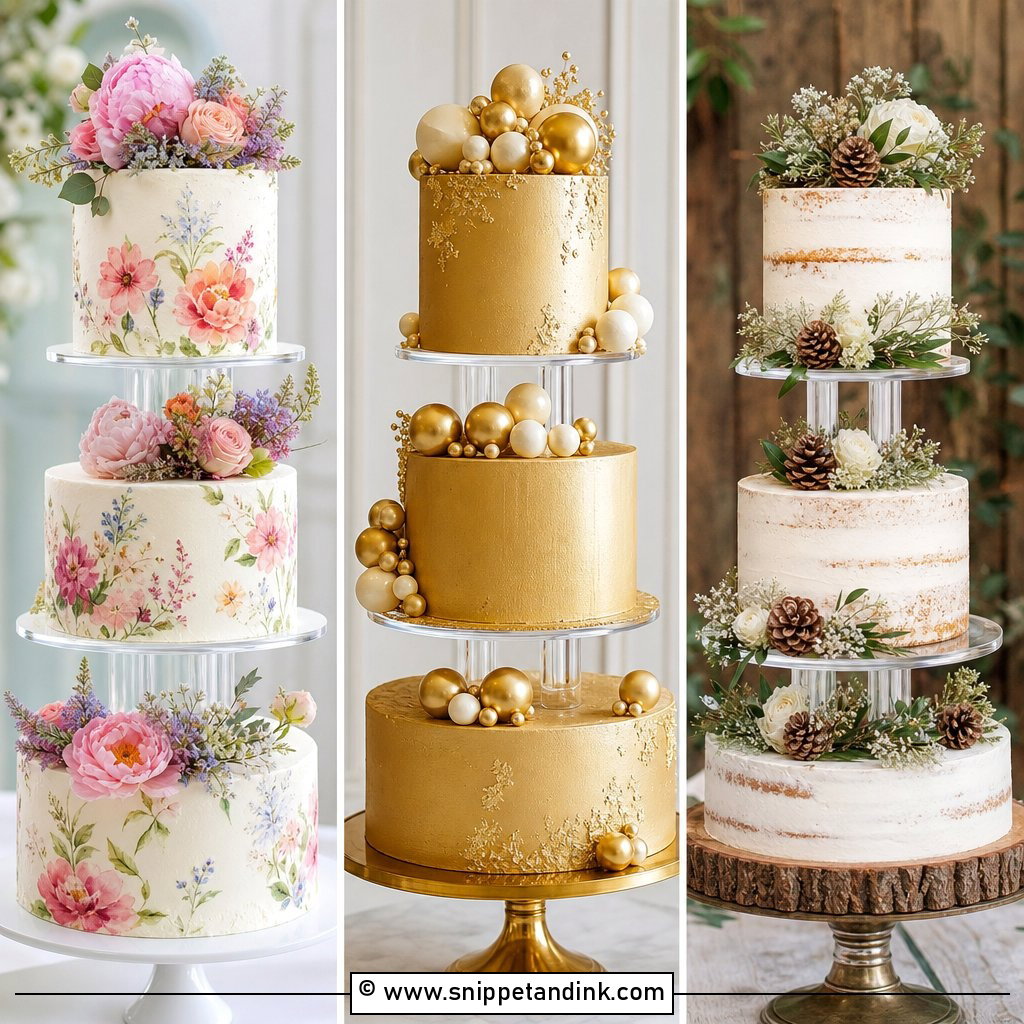
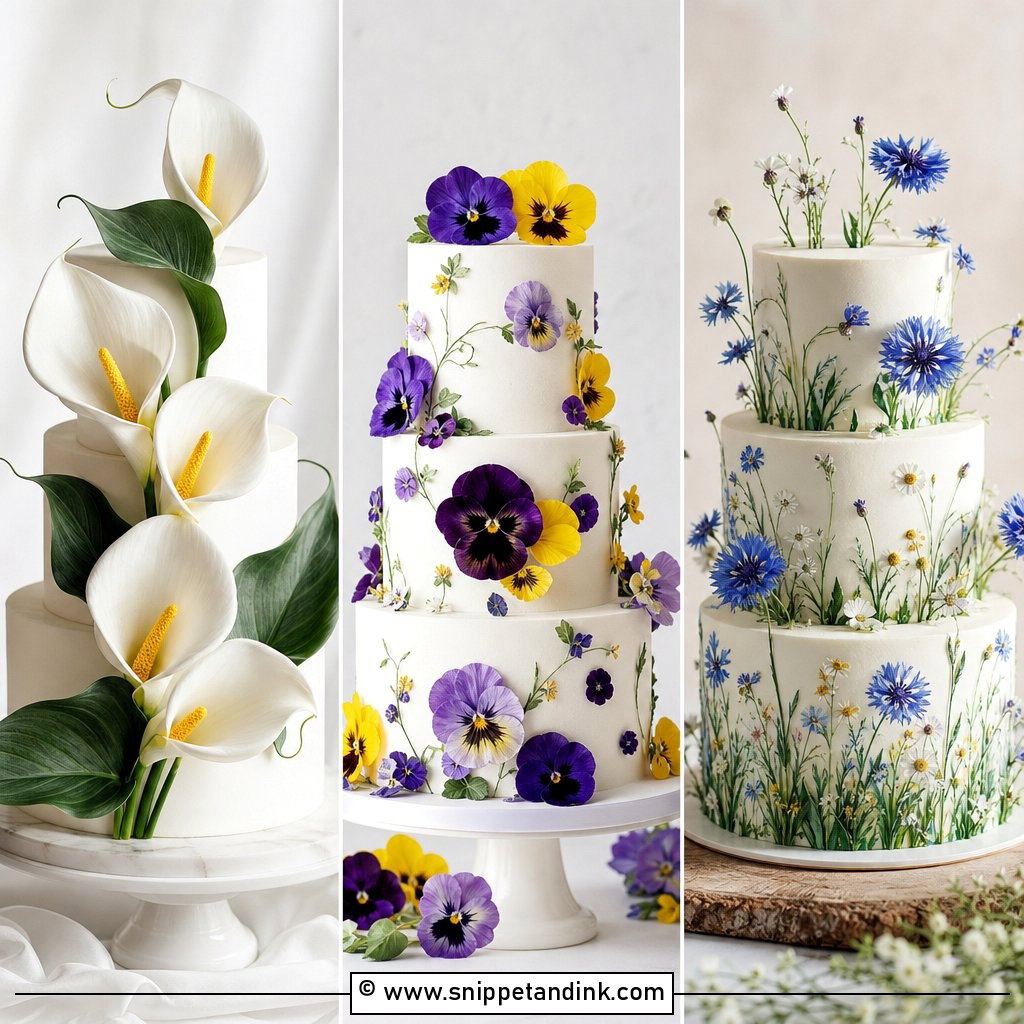
6. Floral Wedding Cake
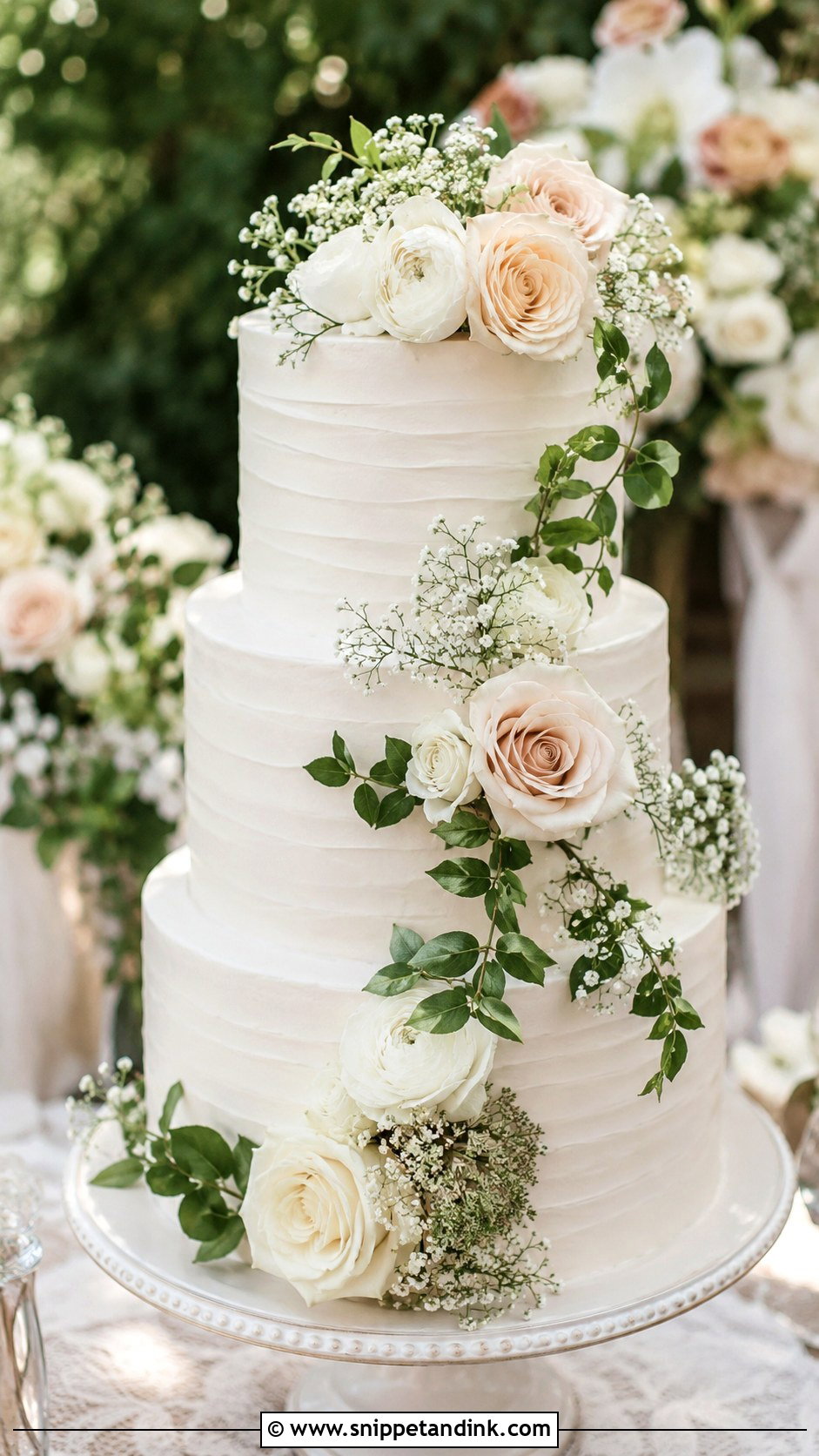
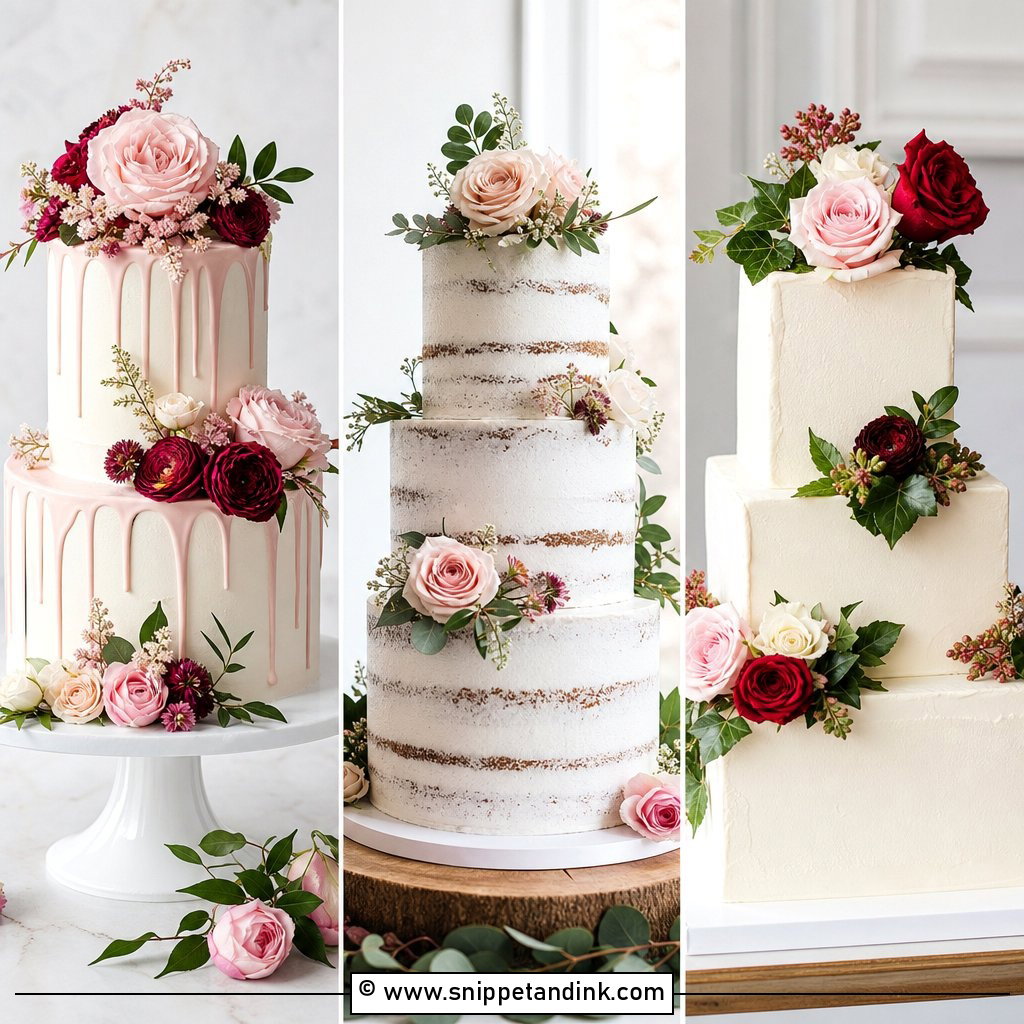
I stack first, then plan the flowers around the finished shape so they follow the curve of the tiers instead of fighting it. Fresh stems should never go straight into sponge unless they’re food-safe and prepared for it. Floral picks, taped stems, a slip of acetate or a small disc of fondant under each bloom keeps sap and moisture off the frosting. Light flowers can sit on the upper tiers; big heads belong near the base or on separator plates where there’s support. Smooth buttercream, ivory fondant and loose greenery give a garden look.
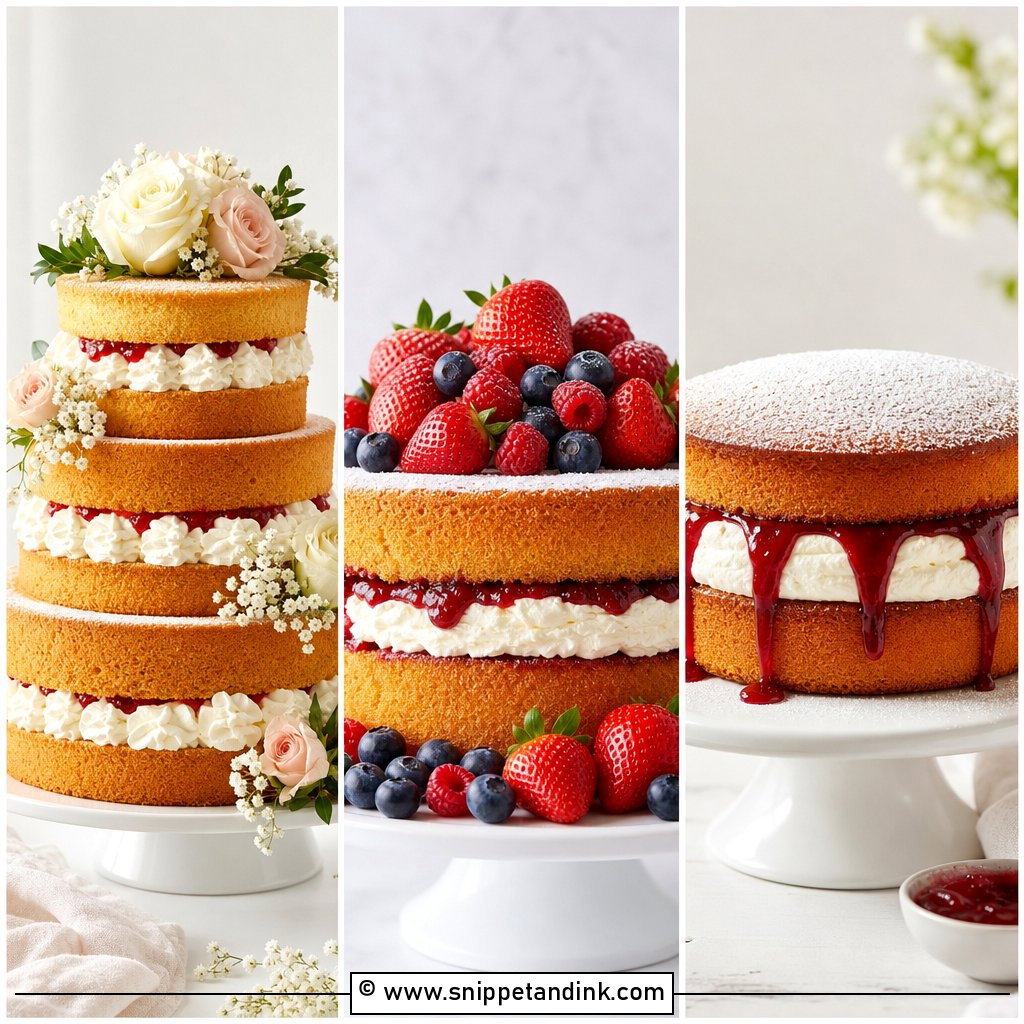
7. Naked Wedding Cake
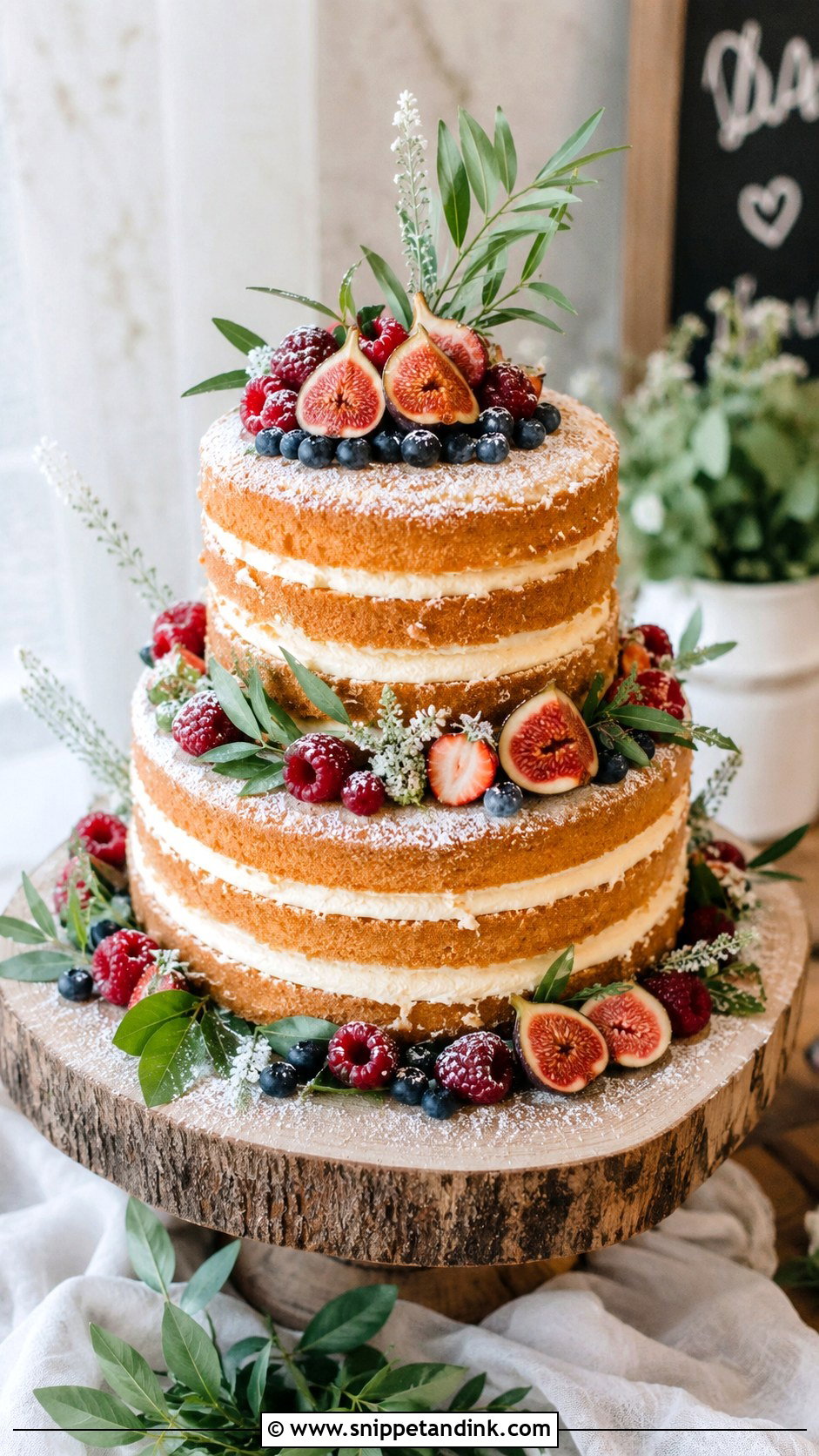
There’s nowhere to hide on a naked cake. Every uneven layer, every gap in the filling, shows. I trim each sponge flat with a long serrated knife, pipe a buttercream dam around anything soft like jam or curd, and chill each tier properly before stacking. Exposed sponge also dries faster, so a light brush of syrup on each layer matters more here than on an iced cake. It’s still a stacked cake, which means dowels in every supporting tier, however casual it looks. Vanilla, almond, lemon and spice cakes suit the style, with berries, figs, greenery or a dusting of icing sugar.
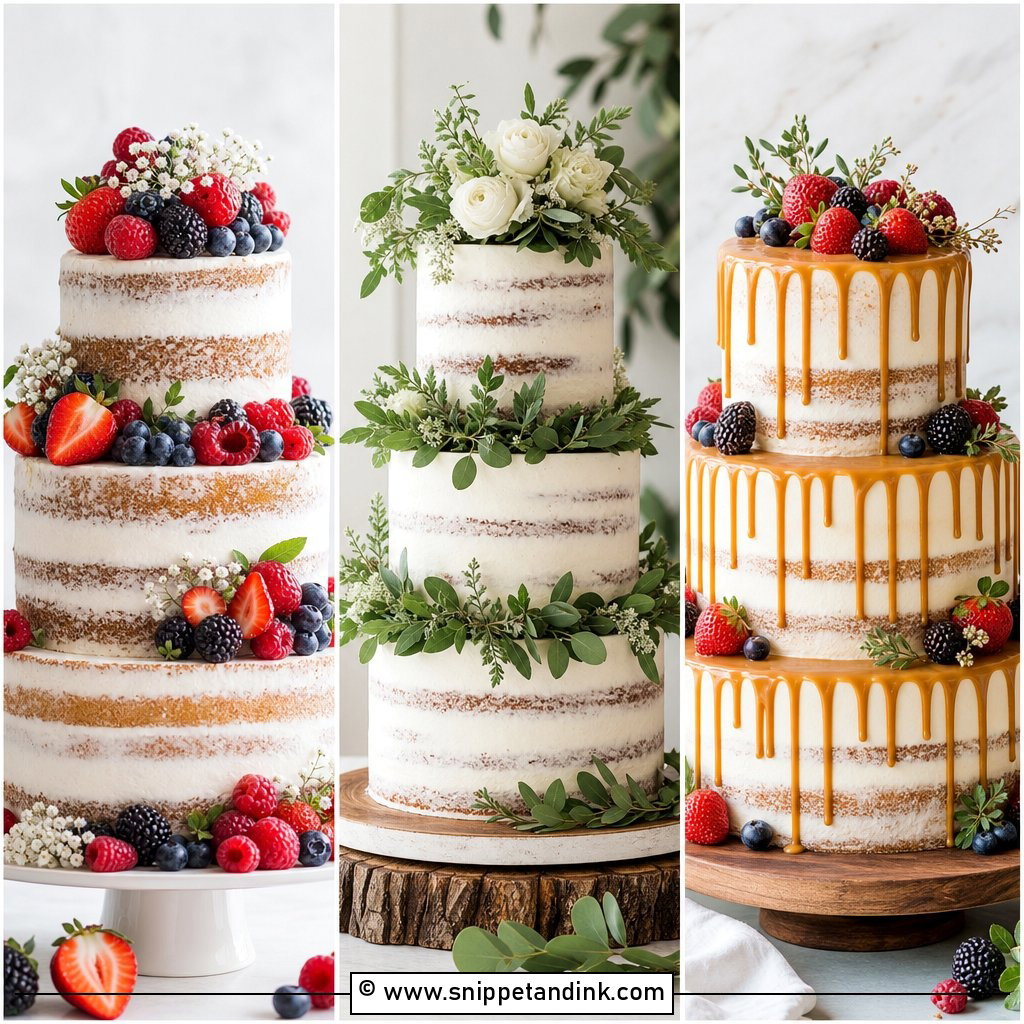
8. Semi Naked Wedding Cake
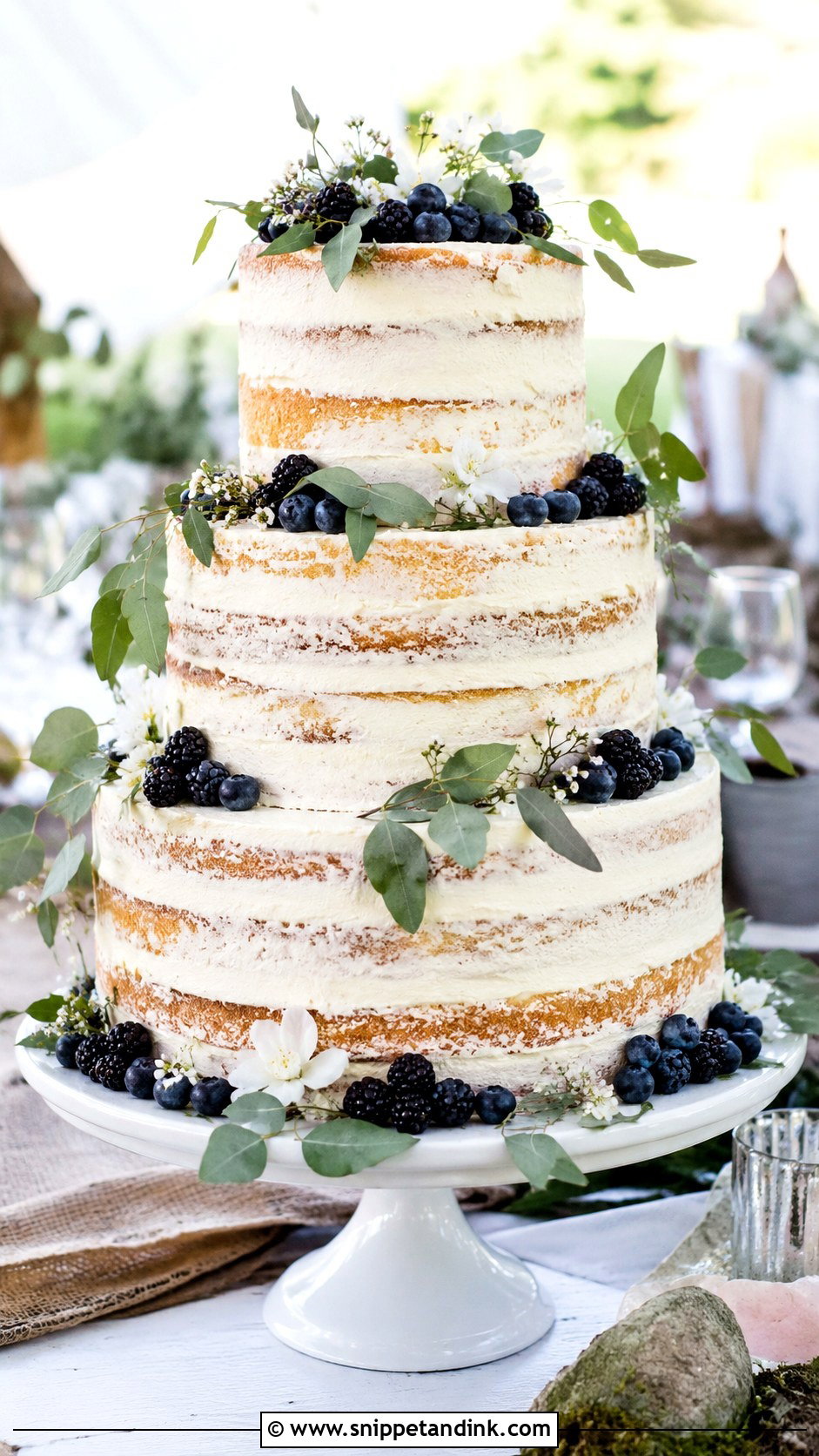
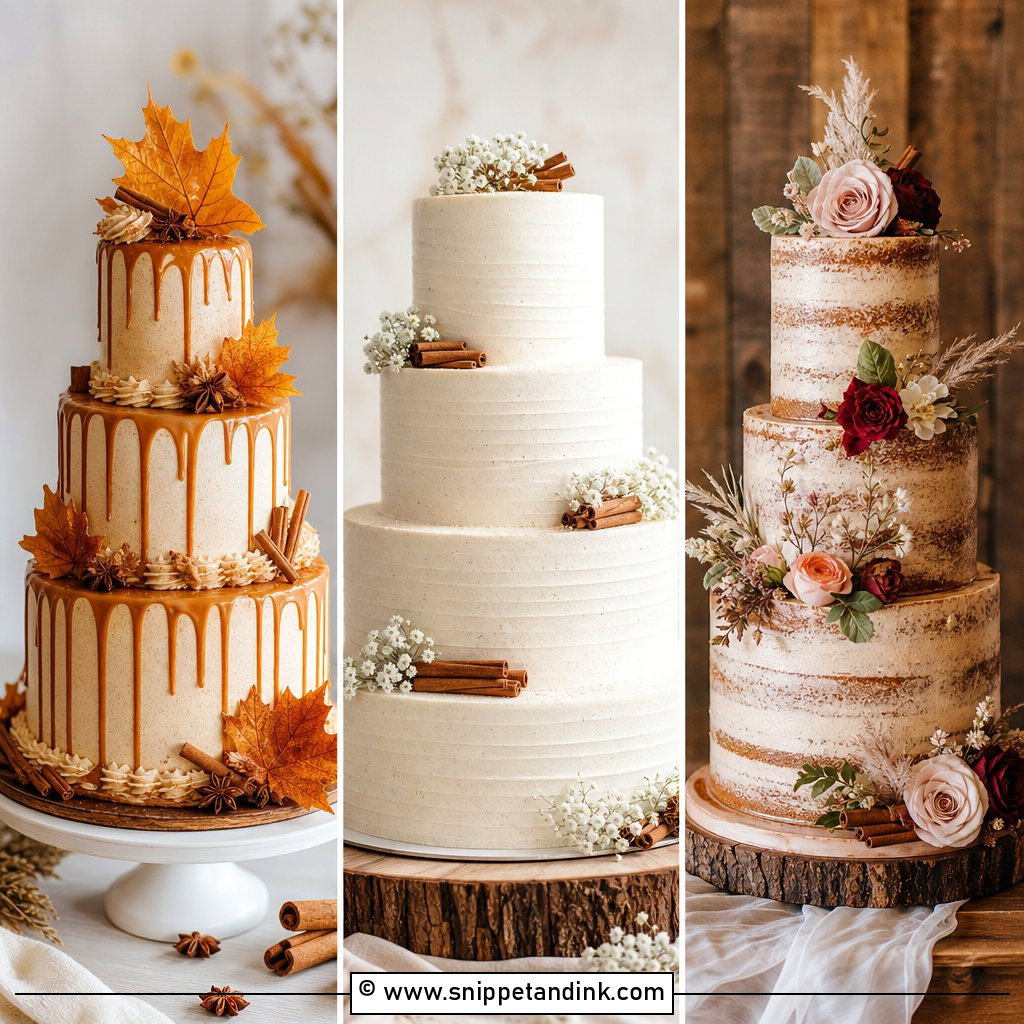
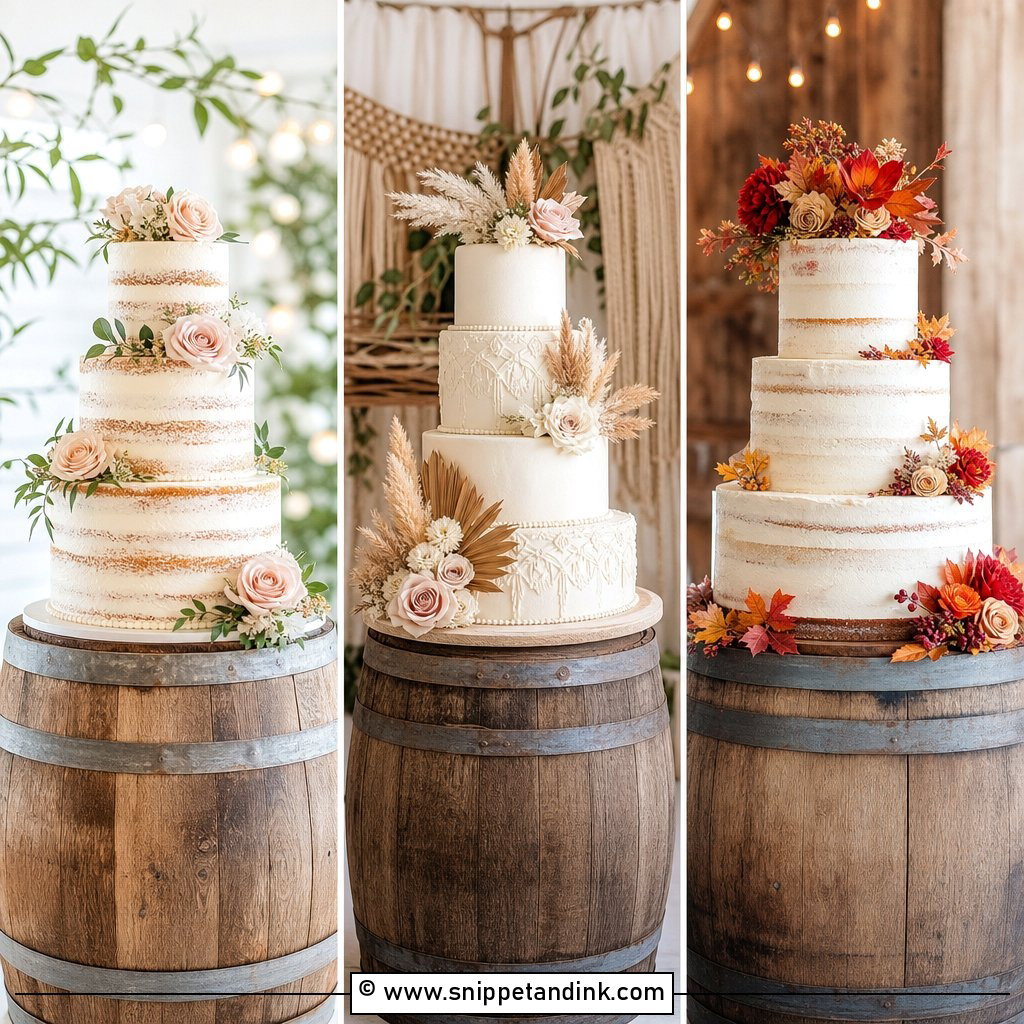
Semi-naked is my usual suggestion for couples who want the rustic look and a bit more insurance. The build is identical to a fully iced tier; only the final coat gets scraped thin so the sponge peeks through. That extra frosting holds moisture in and gives the tiers a little more grip when stacked. Chill, board and dowel every supporting tier. It works at barns, vineyards and garden parties, provided the frosting can cope with the room, which means checking the forecast before deciding on Swiss meringue in August. Berries, pressed greenery, small flowers or caramel tones finish it.
9. Fondant Wedding Cake
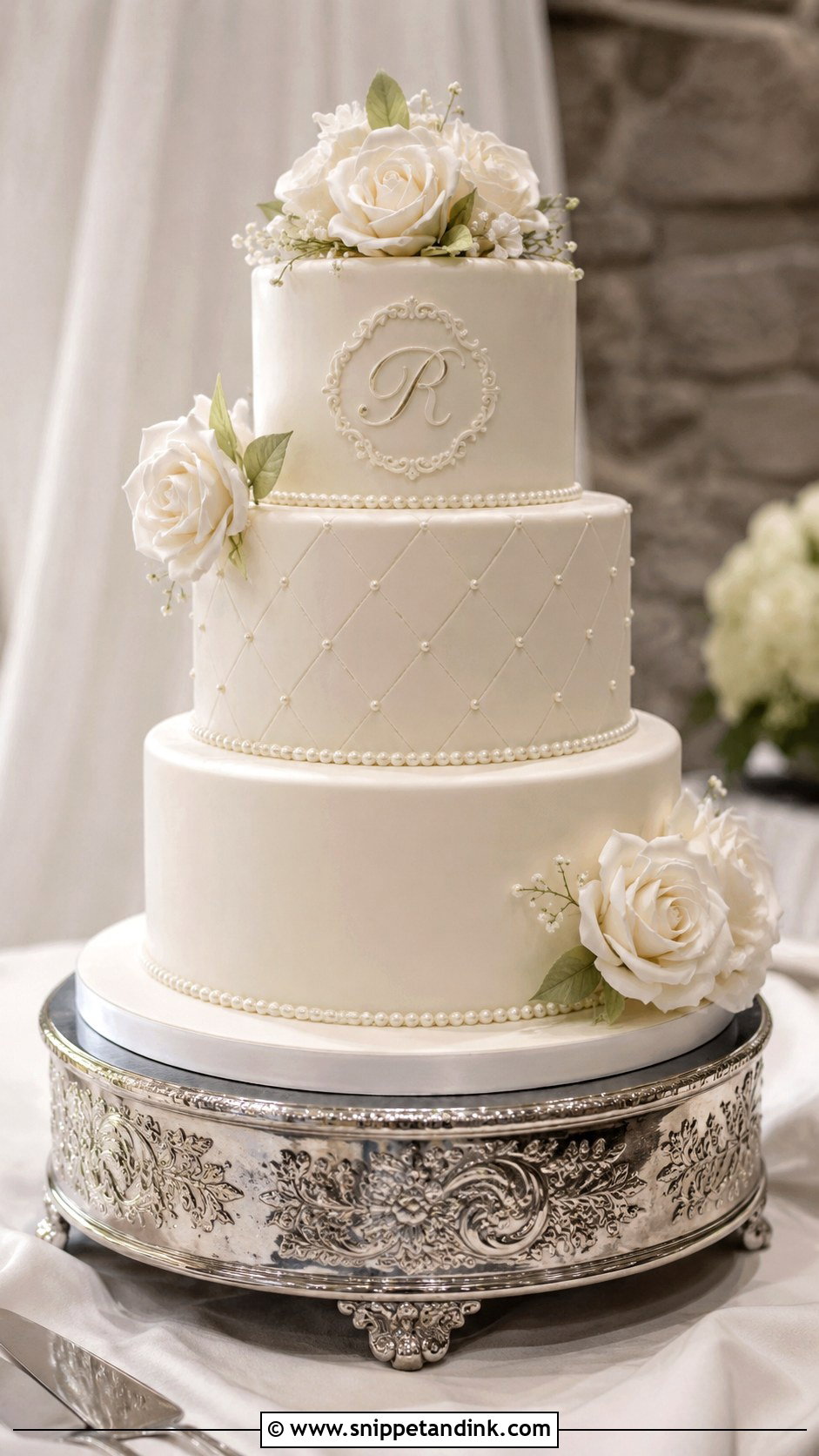
A fondant wedding cake gives the sharpest edges, but the sharpness actually comes from underneath. I cover each tier in a firm layer of ganache or buttercream, chill it until it’s solid, then lay the fondant over. Each tier is covered separately on its own board before stacking. Never drag a fondant tier into position. Lift it with a palette knife under the board and lower it straight down, because fondant scuffs at the slightest slide. Monograms, sugar flowers, quilting, lace texture and metallic paint all sit well on it, and bright rooms show off the finish.
10. Square Wedding Cake
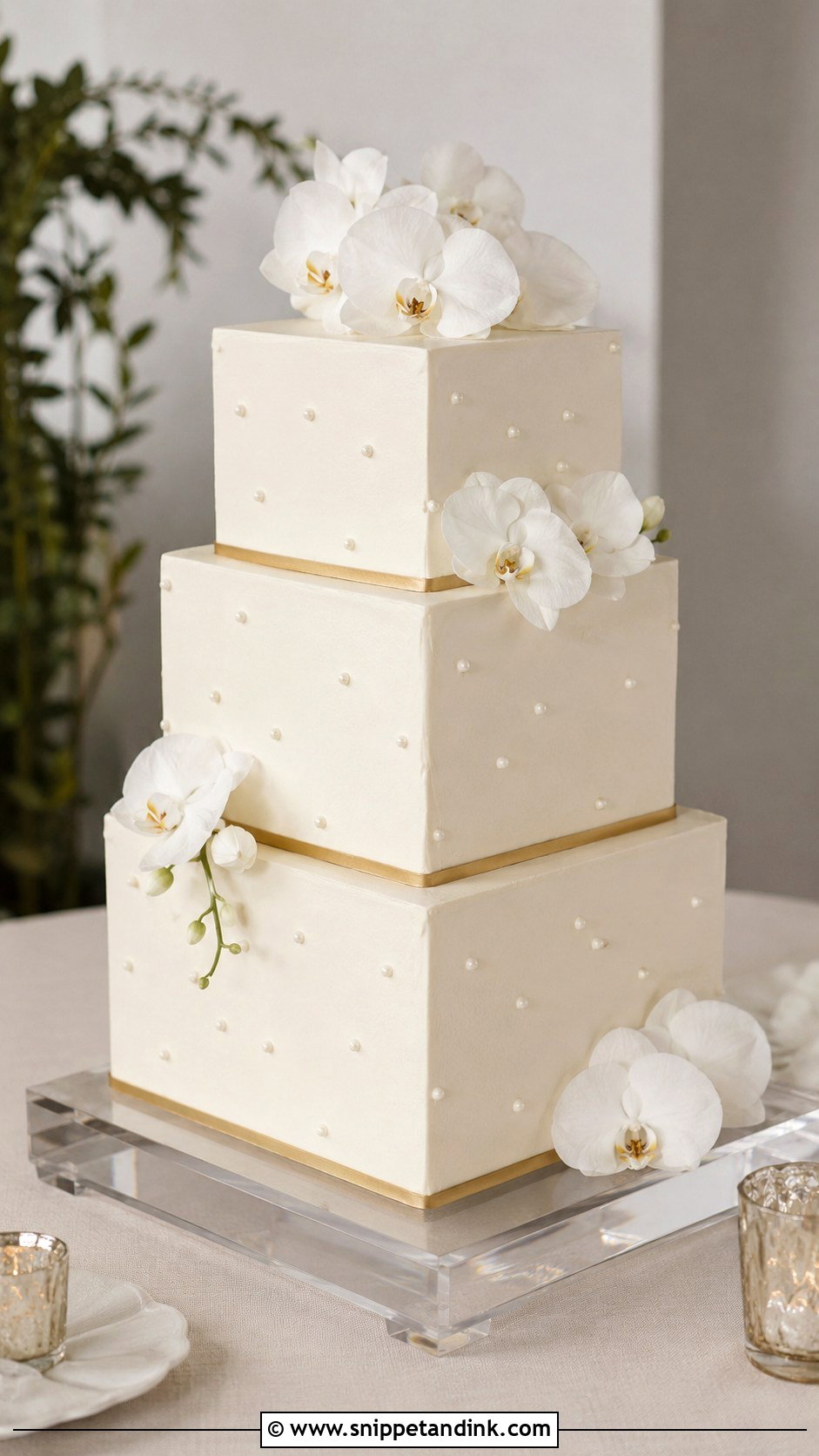
Square tiers punish anything uneven, because corners exaggerate it. Use square boards cut to match each tier exactly, then fill, crumb coat, chill and frost with straight sides, using a bench scraper against a square guide if you have one. Dowels go evenly inside the footprint of the tier above, the same as with rounds. When I stack, I line up the corners by eye from two sides, not one; a tier that’s square from the front can be twisted from the end of the table. Smooth and plain, or with sharp piping, ribbon, sugar flowers or textured buttercream, it suits modern ballrooms.
11. Round Wedding Cake
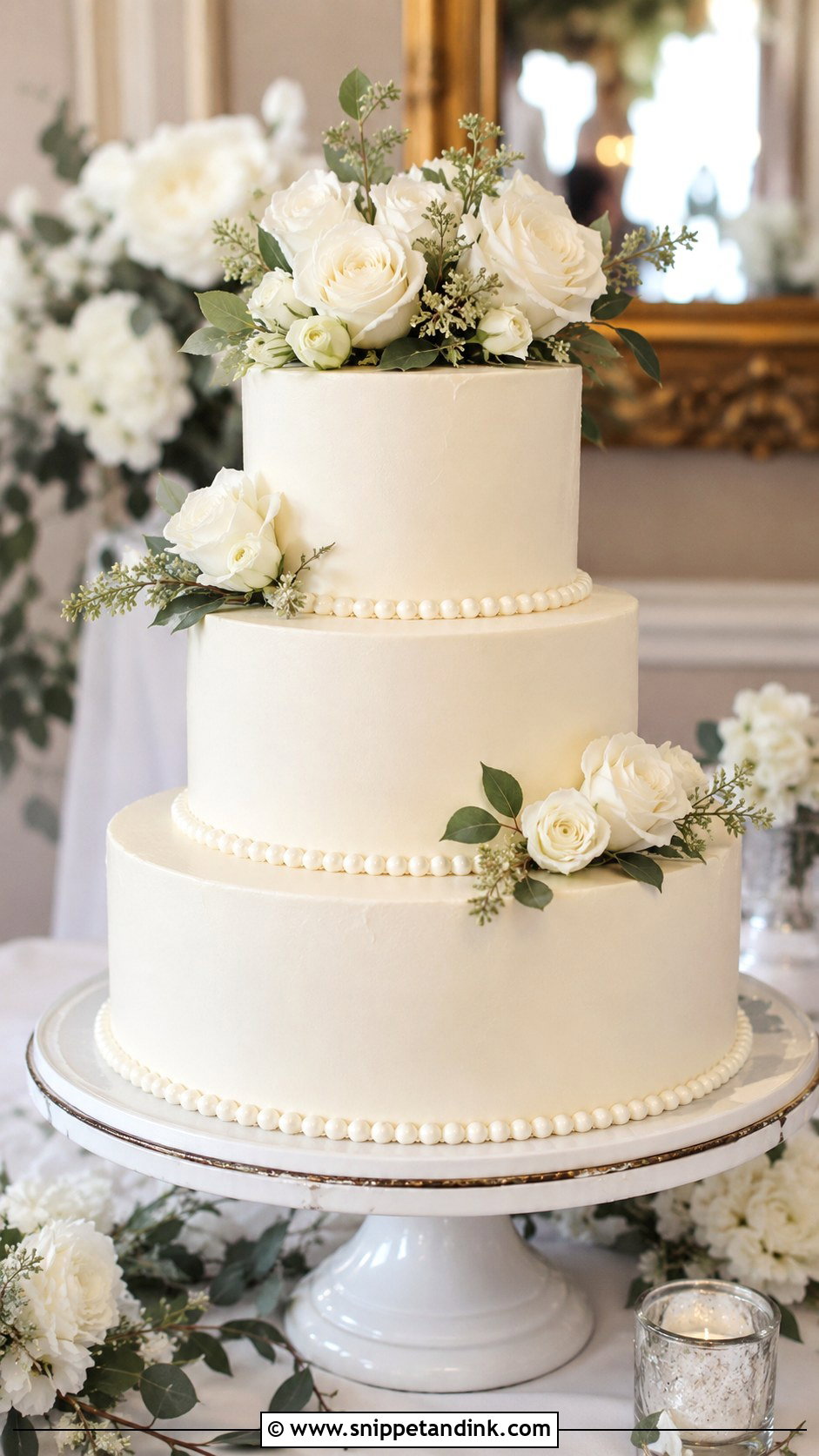
Round tiers are the most forgiving shape to frost and centre, which is why I’d steer a first-time home baker here. Use a sturdy drum for the base, a board under each tier and dowels in every supporting tier. Before inserting supports, I lightly press the next board onto the frosting to leave a ring mark, then place the dowels just inside it. Almost every finish works on rounds, from smooth buttercream to fondant, ruffles and cascades. For good proportions, pick tier sizes that step down evenly, such as 10-inch, 8-inch and 6-inch rounds.
12. Long Wedding Sheet Cake
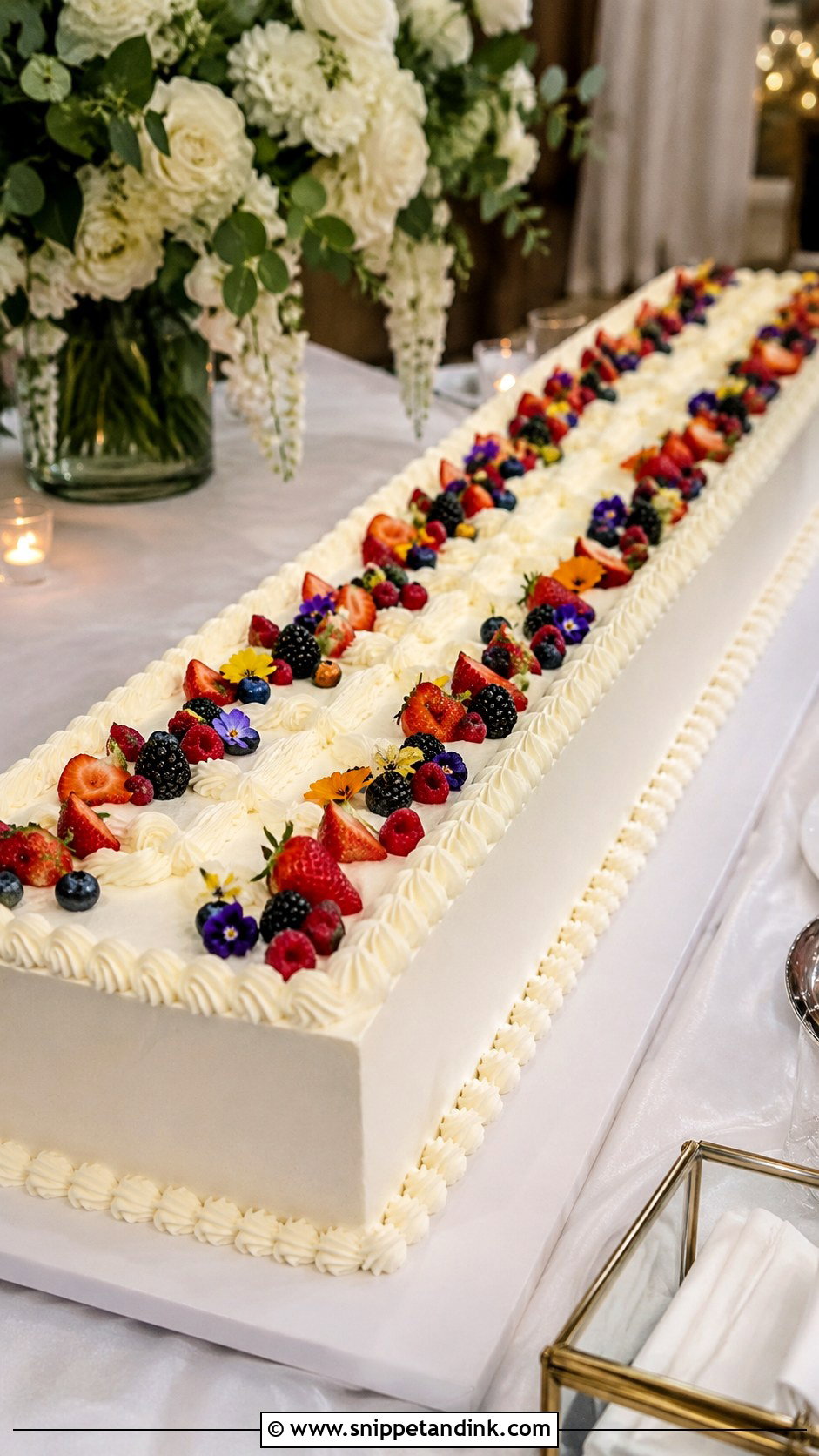
A long wedding sheet cake skips stacking entirely, and the challenge moves to the board. Long thin boards flex when you lift them, and that flex cracks the icing down the middle, so I build these on a rigid board or a sheet of foam core with a drum underneath, and carry it with two people. Chilled sponge layers, a stable filling and a smooth buttercream coat keep the long sides straight. Top it with fruit, flowers, piped borders or one design that runs the length. It serves a crowd quickly, since the caterer just cuts a grid.
13. Wedding Cake With Sugar Flowers
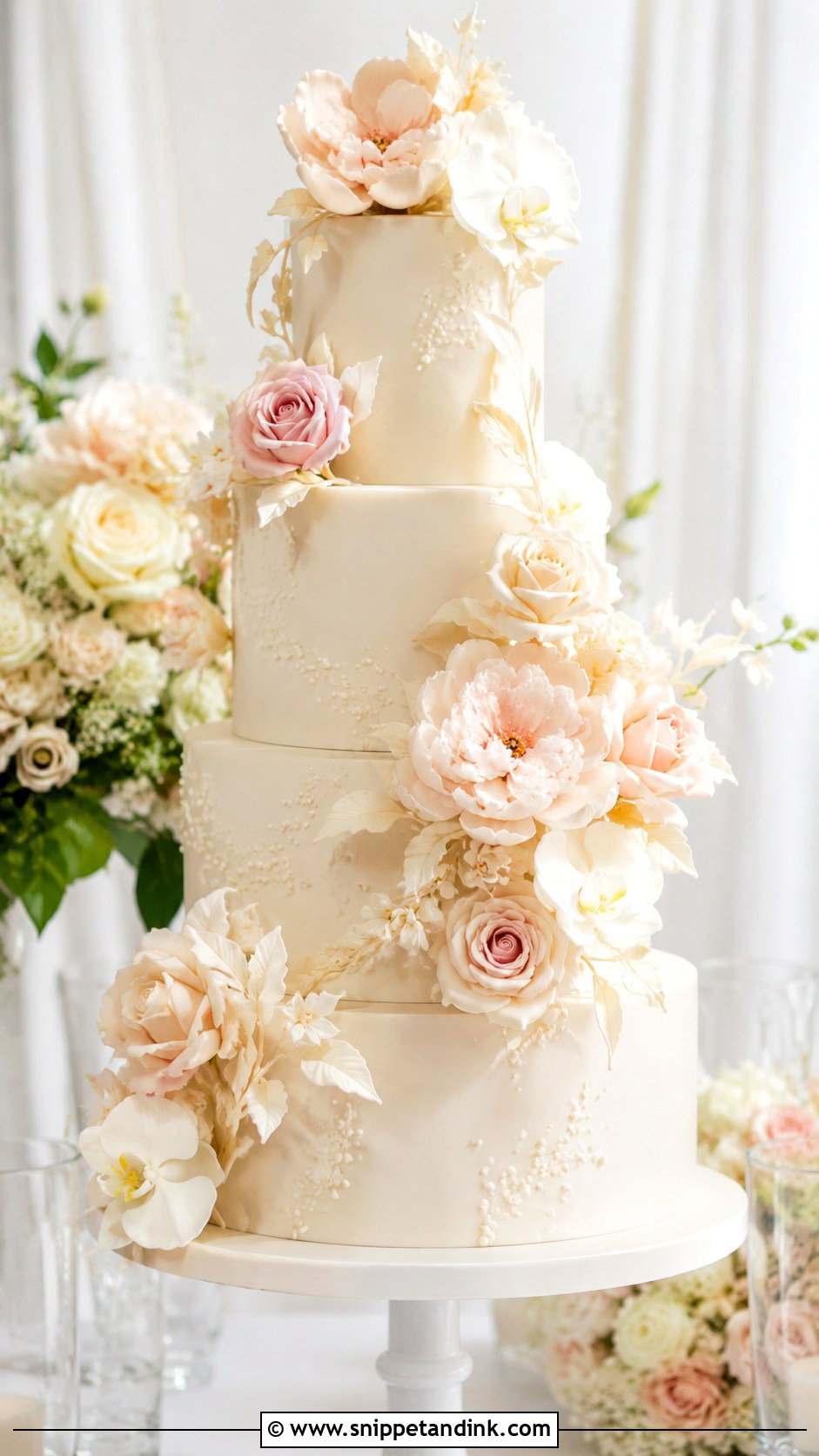
Sugar flowers avoid the safety questions that come with fresh stems, but they’re fragile and they go on last. I stack and chill the cake completely, then place the blooms, heaviest ones over the dowels or at the base of a tier where there’s support beneath. A dab of royal icing or stiff buttercream holds each one, and wired flowers go into a flower pick, never straight into the sponge. Smooth fondant, ivory buttercream or a soft texture all show them off. Sugar roses, peonies, orchids and ranunculus will last through the reception and can be kept afterwards if they stay dry.
14. Wedding Cake With Fresh Fruit
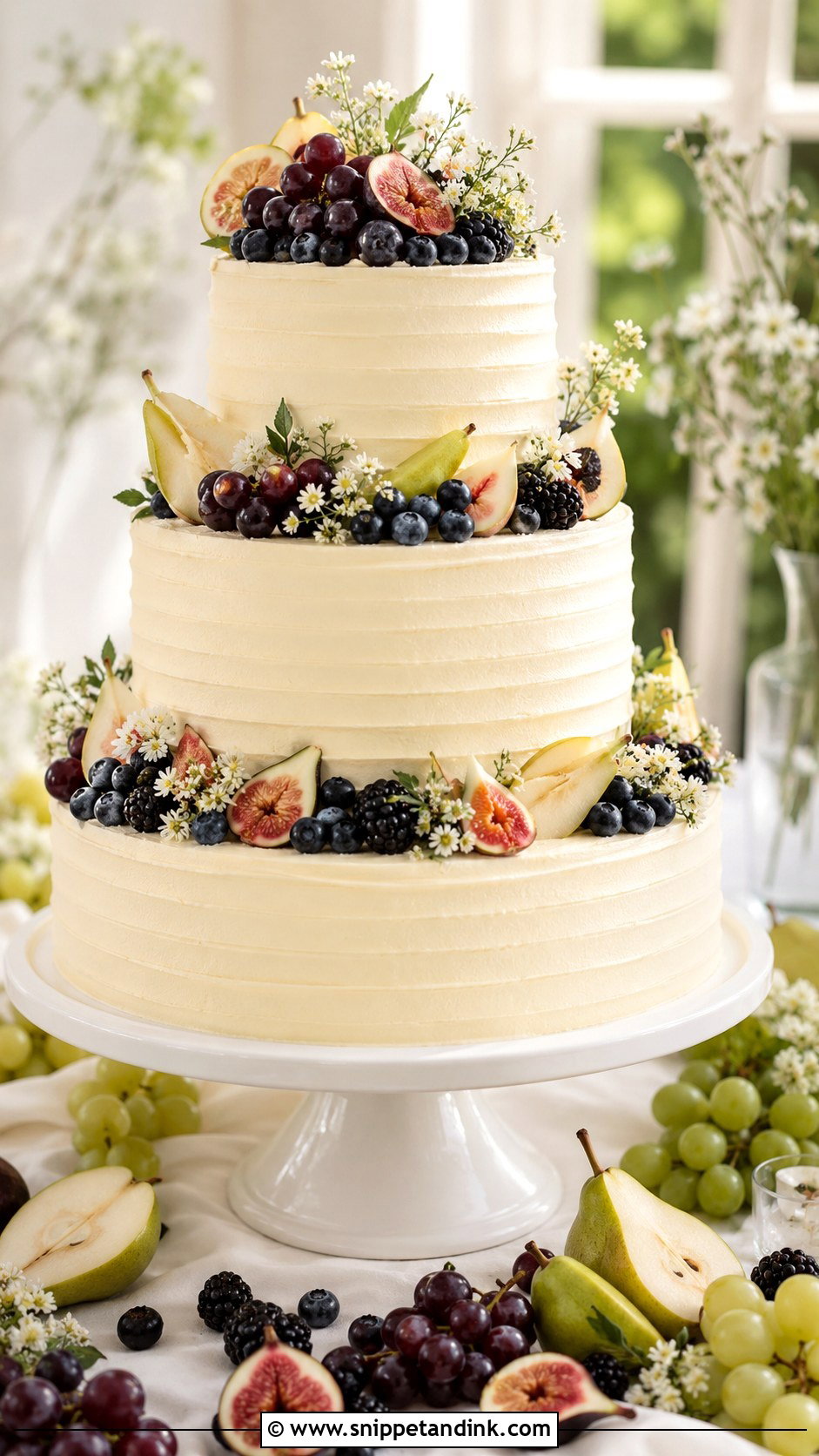
Fruit is the last thing on, and the timing matters. Cut fruit starts to weep within hours and bleeds colour into the frosting, so I add it as close to the reception as I can, after the cake is stacked and supported. Berries, grapes, figs, pears, citrus and cherries can go around tier edges or on top. Pat juicy fruit dry first, and a thin glaze slows the weeping. Buttercream and ganache handle fruit well. Cream cheese frosting does too, but it needs to stay chilled until close to service. Spring and summer gardens, and brunch weddings, suit it.
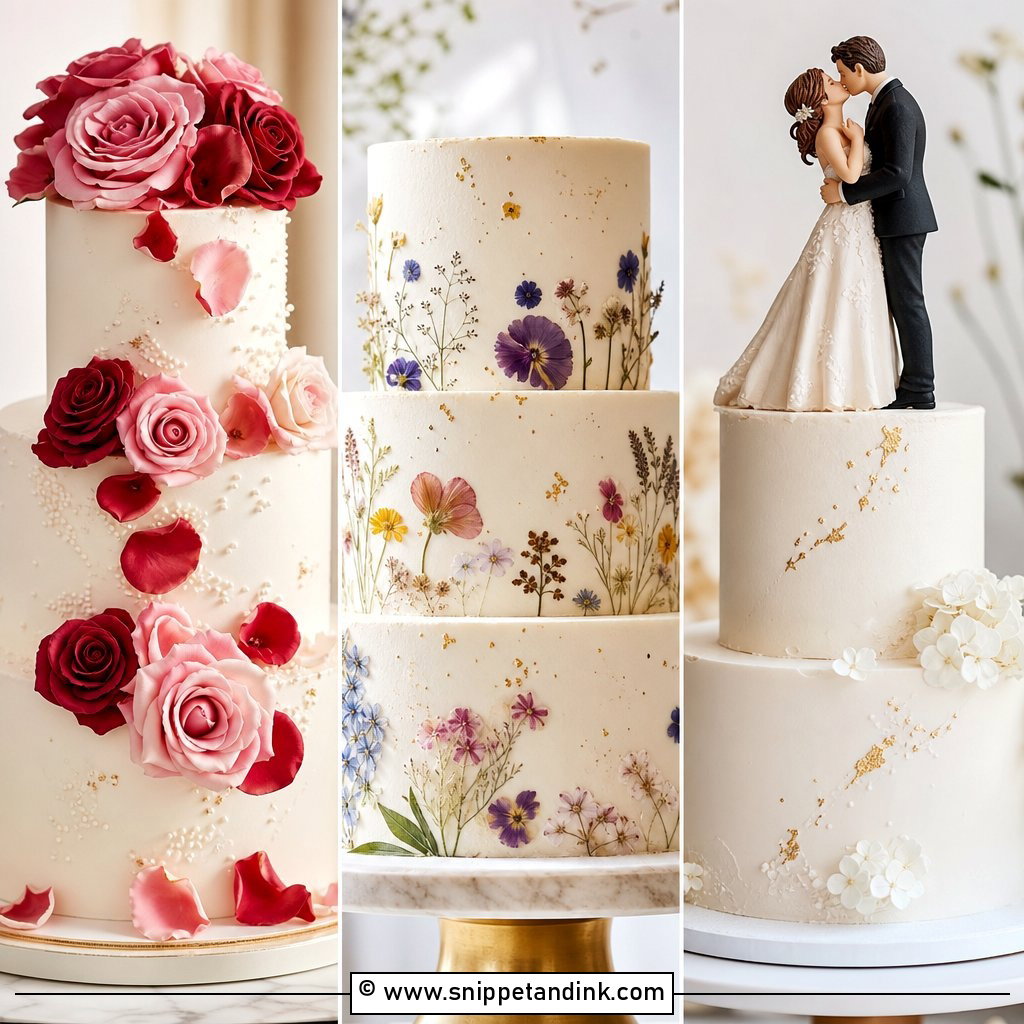
15. Wedding Cake With Ganache
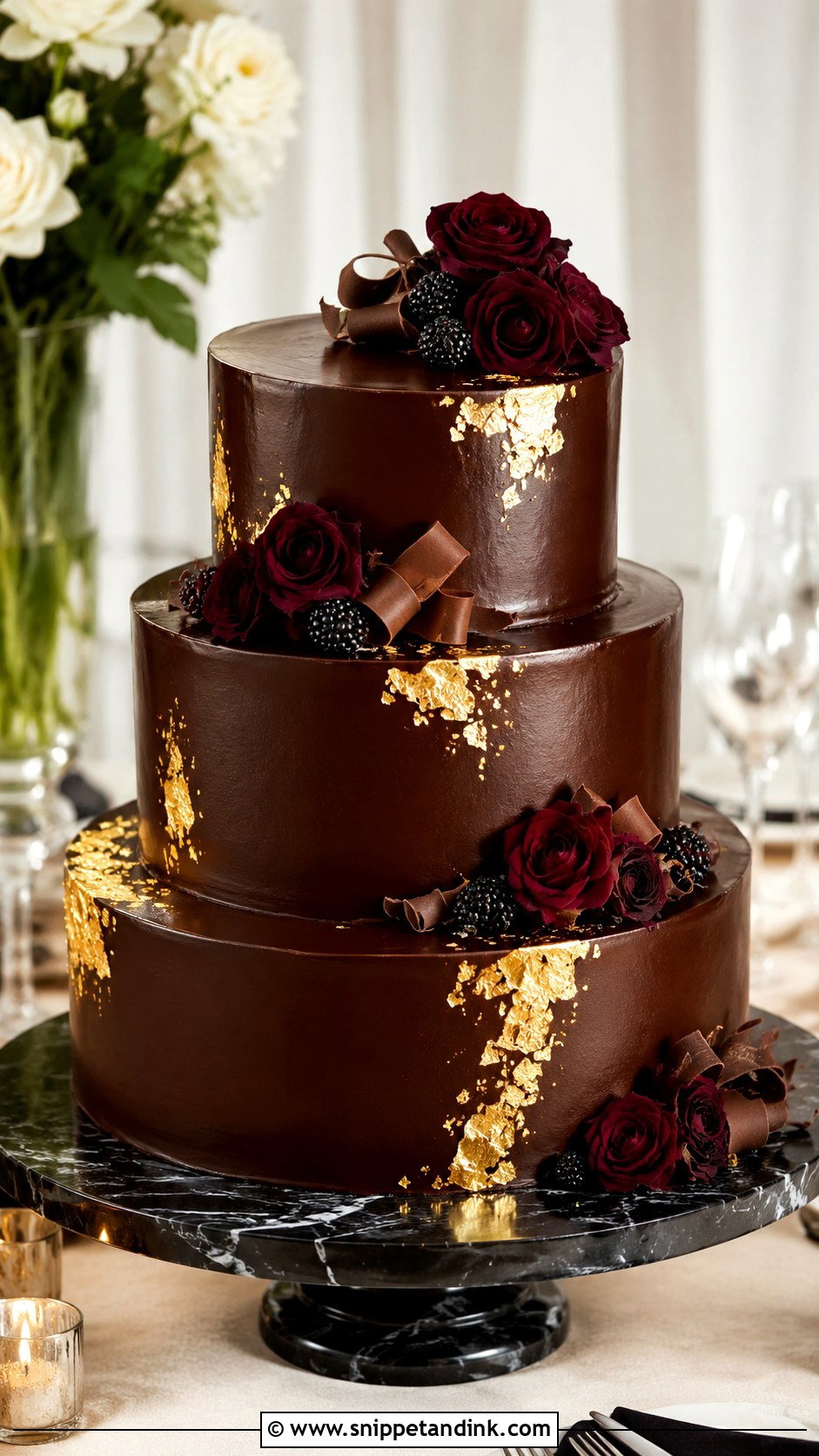
Ganache is my go-to under fondant and for sharp edges, because it sets hard when chilled and holds that shape well at room temperature. For coating, I use a richer chocolate-to-cream ratio than for a drip, and white chocolate needs even more chocolate than dark to set firm. Fill, coat and let each tier set before stacking. Ganache is strong, but it is not structure, so boards and dowels are still required. Dark chocolate looks dramatic, white chocolate reads bridal, milk chocolate sits in between. Roses, gold leaf, curls, berries or minimal piping all suit it.
16. Wedding Cake With Cream Cheese Frosting
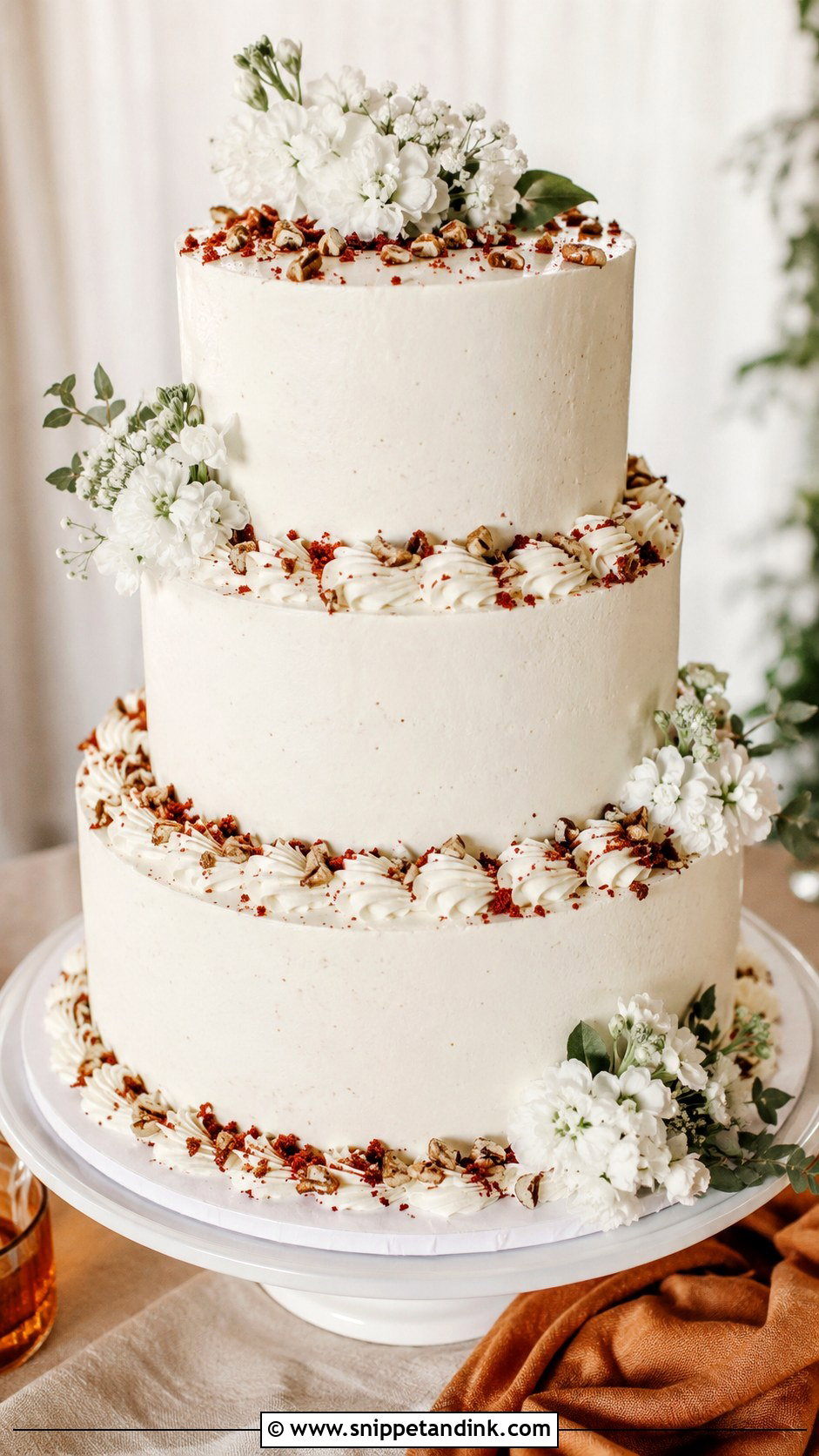
Cream cheese frosting tastes wonderful and is the softest thing on this list. Pair it with a sturdy sponge like red velvet, carrot, spice or hummingbird, and keep every tier cold until stacking. I use a firmer recipe with more butter for wedding cakes, pipe a strong dam between layers and never add a loose filling. Boards and dowels in every weight-bearing tier. It’s a dairy-heavy frosting that shouldn’t sit warm for hours, so I’d only recommend it for an air-conditioned room with the cake cut fairly early. Soft swirls, chopped nuts, simple flowers or fruit finish it.
17. Wedding Cake With Pillars
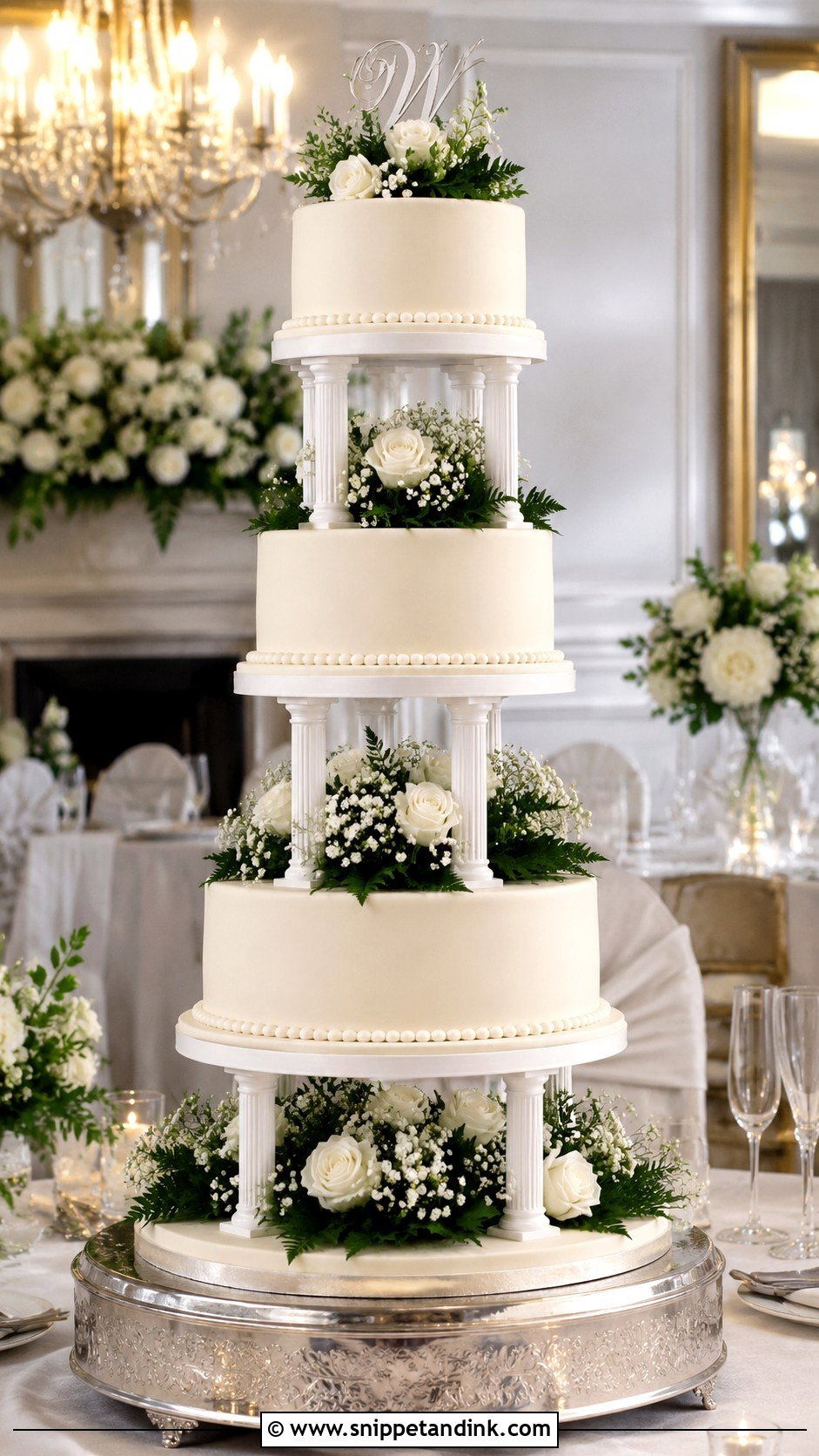
Pillars give that grand, separated look, with each tier standing on its own plate instead of resting on the cake below. The plates and pillars must match your tier sizes, and everything depends on the base being dead level, so I check the table itself with a small level before I build, because venue tables are often slightly off. Each tier still needs a flat top and a board. The gaps make room for flowers or greenery between tiers and let each one show clearly in photos. White buttercream, fondant, pearl borders and floral rings suit it.
18. Small Wedding Cake
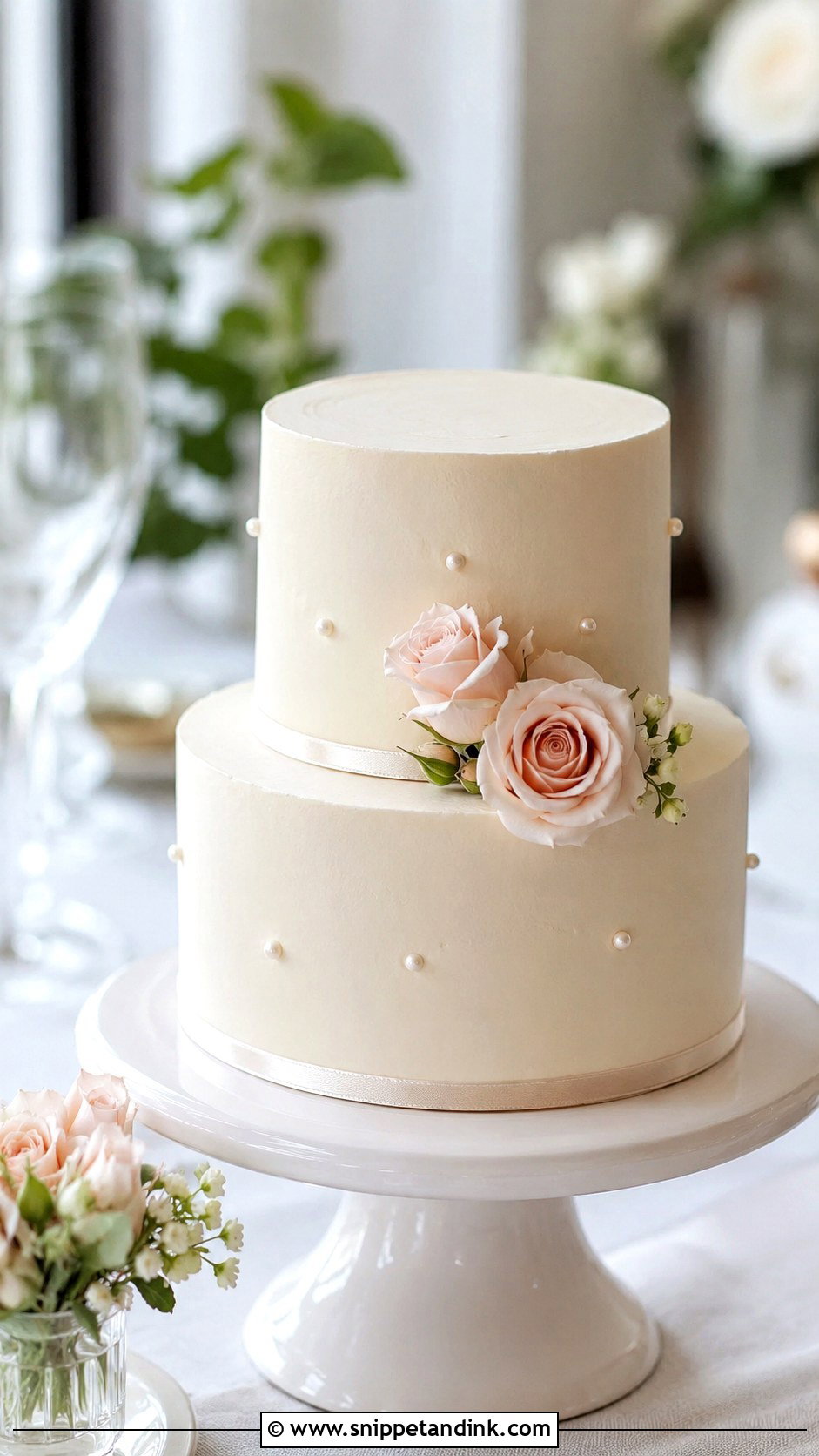
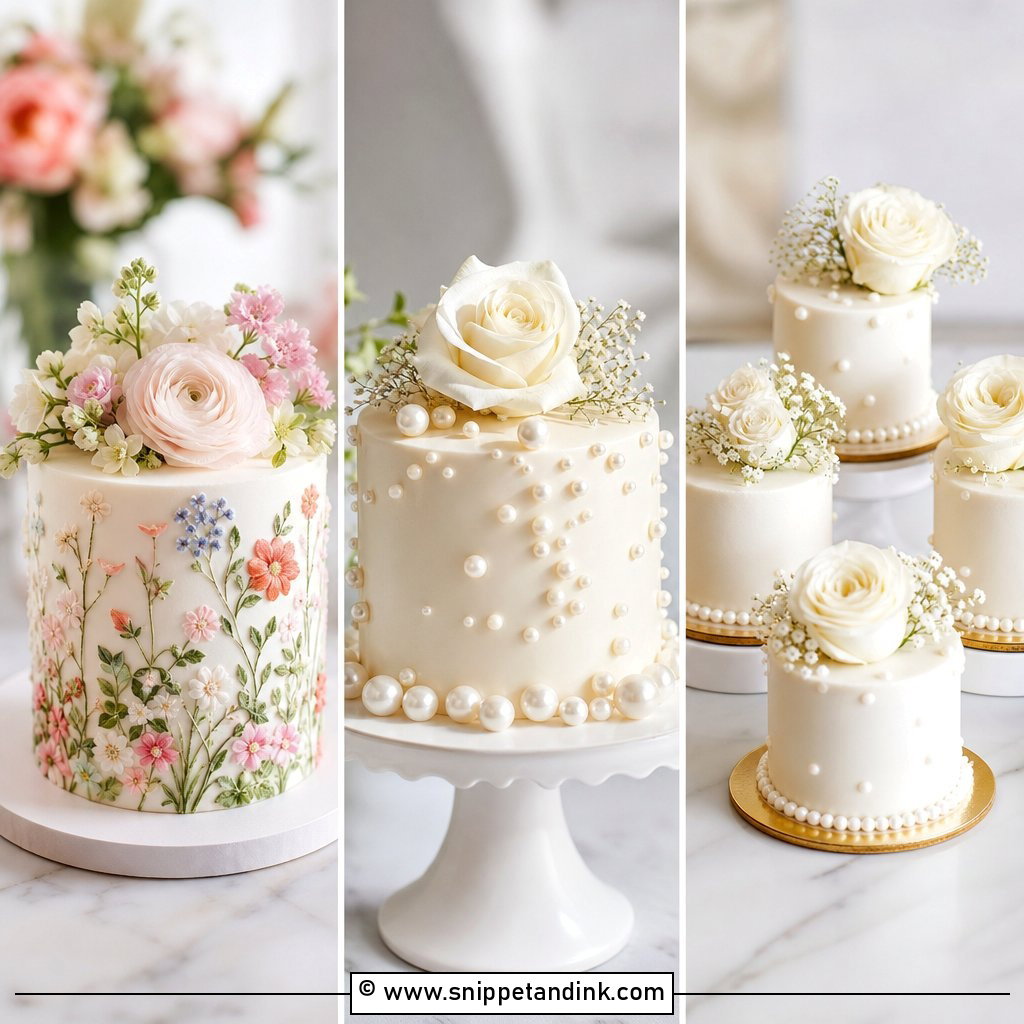
Even a small stacked cake needs a board under the top tier and dowels in the lower one, and this is the step people skip most when the cake looks too small to need it. One or two tiers covers the cutting moment when other desserts are being served. Keep the filling firm and chill the cake before moving it anywhere. With less cake to look at, the details carry everything: a smooth finish, one floral cluster, a ribbon edge or some fine piping. Courthouse weddings, garden parties and intimate dinners suit it.
19. Rustic Wedding Cake
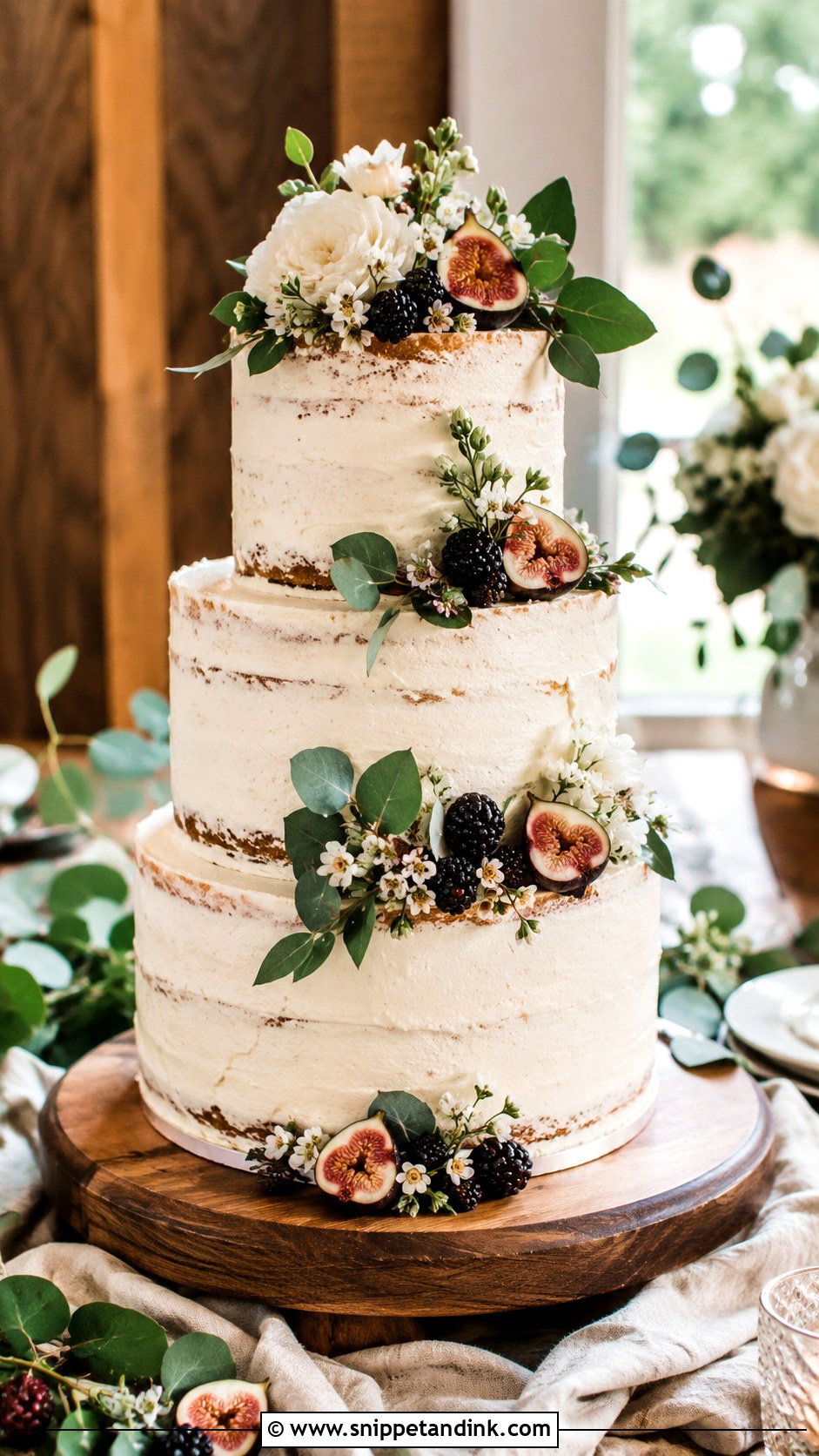
Relaxed on the outside, engineered on the inside. A rustic cake still needs level layers, a stable filling, boards and dowels for stacked tiers. The finish can be textured buttercream, semi-naked or a loose spatula swoop. Natural decorations go on after stacking, greenery, berries, figs or small flowers, with stems wrapped or set in picks and nothing heavy perched on an unsupported edge. A wooden stand, linen cloth and warm lighting finish it for barns, gardens and outdoor receptions.
20. Modern Minimalist Wedding Cake
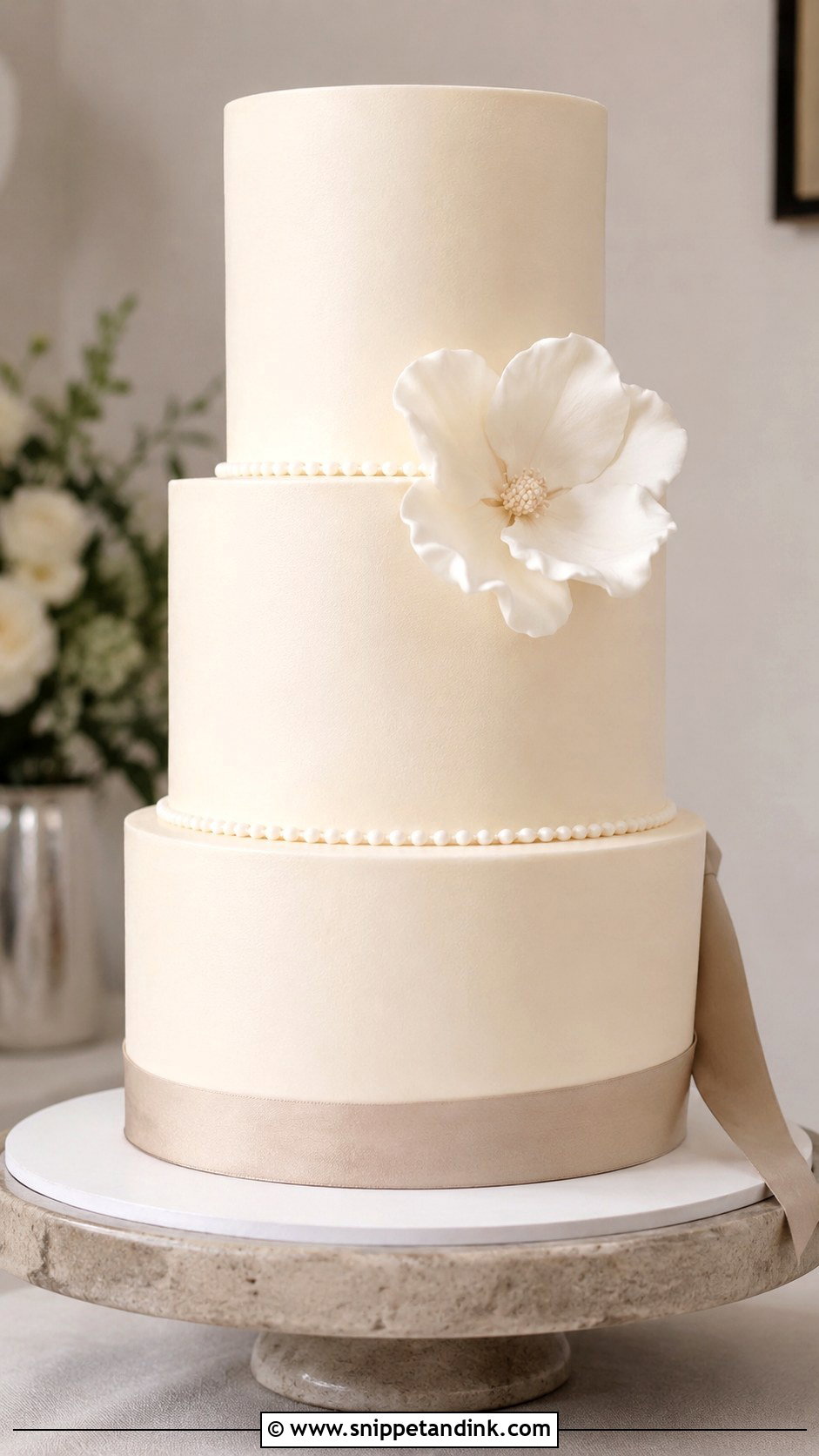
A cake this plain only looks calm when the build is precise. Every cake layer levelled, a smooth crumb coat, a proper chill, careful dowel placement, then a sharp buttercream or fondant finish. With nothing to cover a tilt, I check each tier with a small spirit level before stacking the next one. Decoration stays to one element: a sugar flower, a soft ribbon, a small pearl border or a single curved line in the texture. White, ivory, taupe and pale blush are the usual palette, and galleries, rooftops and restaurant receptions suit the clean shape.
The Car Ride Is Where Most Tiers Crack
A cake that stands perfectly in the kitchen can still arrive damaged. Car seats slope backwards, so I put boxed tiers on a flat surface, the floor of the passenger footwell or a level boot, on a rubber non-slip mat. Run the air conditioning before the cake goes in, drive gently around corners and don’t stop for errands on the way.
Chilled cakes travel better than room-temperature ones, but a cold fondant tier carried into a humid room will bead with condensation. Leave it boxed for a while once you arrive so it can warm slowly, and don’t wipe the moisture off, since that smears the finish.
A Repair Kit Small Enough for the Passenger Seat
I never arrive without a small box of fixes. Most venue damage is minor, a scuff, a crack at a corner, a petal that snapped, and it takes two minutes to repair if you have the tools with you.
- A piping bag of matching buttercream or royal icing, plus a spare tip.
- A small offset spatula and a bench scraper.
- Spare dowels, a centre rod and a small saw or pruning shears.
- Extra flowers, berries or decorations to cover a mark you can’t smooth out.
- Paper towels, a damp cloth and a small spirit level.
The Three Things I Never Skip on a Stacked Cake
If you remember nothing else: level tiers, a support under every tier that carries weight, and a filling firm enough to stack. The prettiest cake can still fail without those. Size the cake honestly, pick a frosting that suits the room’s temperature, and put boards and dowels in every supporting tier. Delicate decoration goes on last, once the cake is cold, stable and on its table. Vintage, rustic, floral, minimal or tall, good structure is what keeps it standing from the first guest photo to the last slice.
You'll Like These Ideas:


Leave a Reply