
Butterflies and flowers belong together on a cake for the same reason they belong together in a garden: the flowers give you shape, the butterflies give you movement. Most of the cakes I’m asked for now mix edible blooms, wafer paper butterflies, pressed petals, sugar flowers and a bit of vintage piping. The theme sits happily in a ballroom, a garden marquee or a pastel spring reception. What separates a good one from a cluttered one is restraint. I place each butterfly as though it has just landed, never in rows. Here are twenty versions, and what I’d watch for in each.
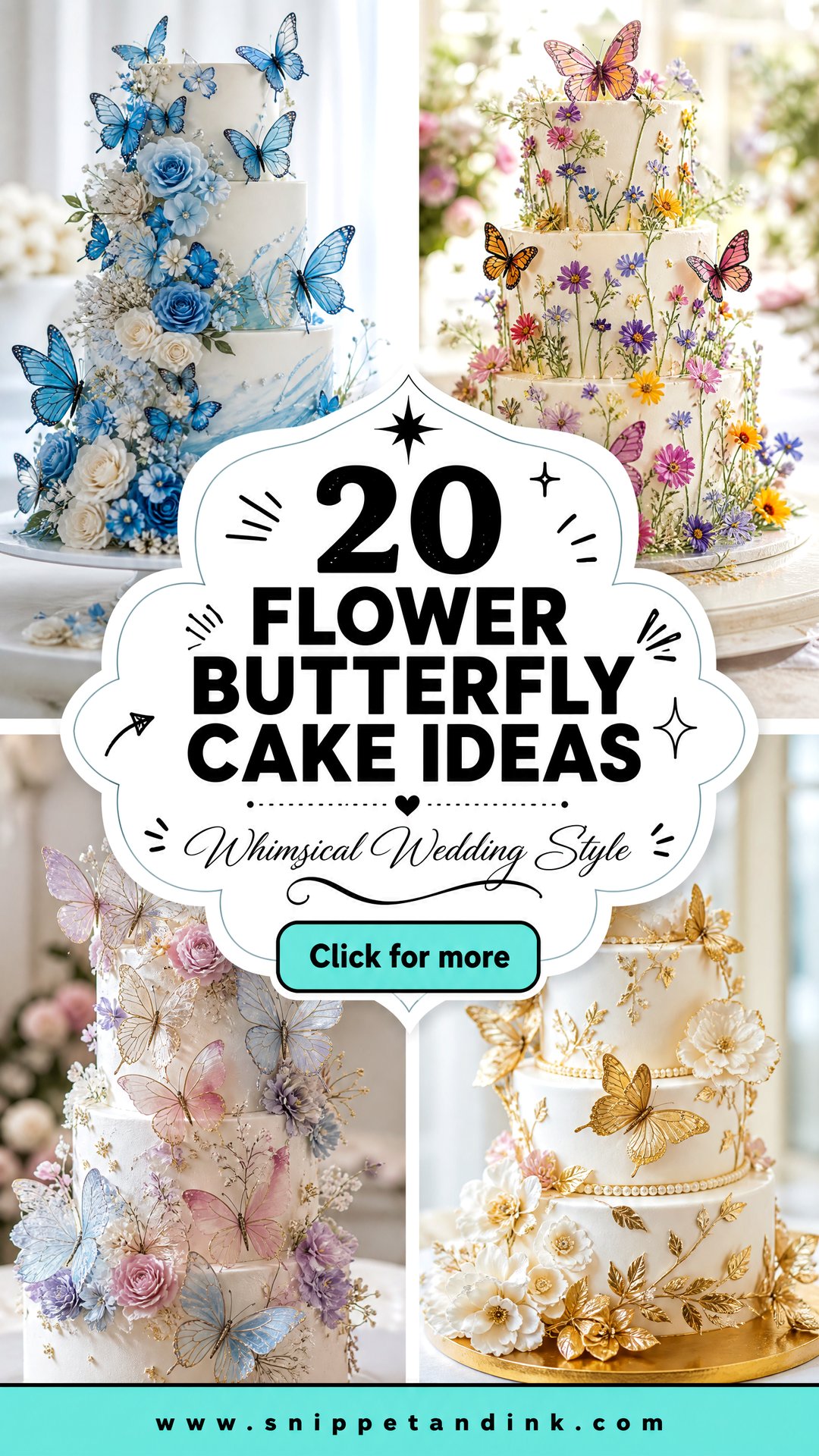
What Are the Butterflies Actually Made Of?
When a couple brings me a butterfly cake photo, the first thing I work out is the wing material, because it changes how early I make them, how they travel and how long they survive on the table.
Wafer paper
Thin, edible sheets made mostly of starch. It’s the lightest option and can be printed with edible ink or hand-painted, so it gives the most realistic wings. Its enemy is moisture. Humid air makes it limp, and direct contact with soft buttercream dissolves it, so I attach each one with a dab of melted chocolate or royal icing.
Gelatin and isomalt
Gelatin sheets painted with colour give you translucent, glassy wings, and isomalt does something similar with a harder finish. Both look delicate in photos. Isomalt is the sturdier of the two in a warm room, though either can soften if it sits in sun.
Chocolate and gum paste
Chocolate butterflies are piped onto acetate and set inside a folded card so the wings stay raised. They taste better than anything else here but melt early in heat. Gum paste is the toughest, though thicker and heavier, so I use it where a butterfly sits flat on a tier rather than perching on a petal.
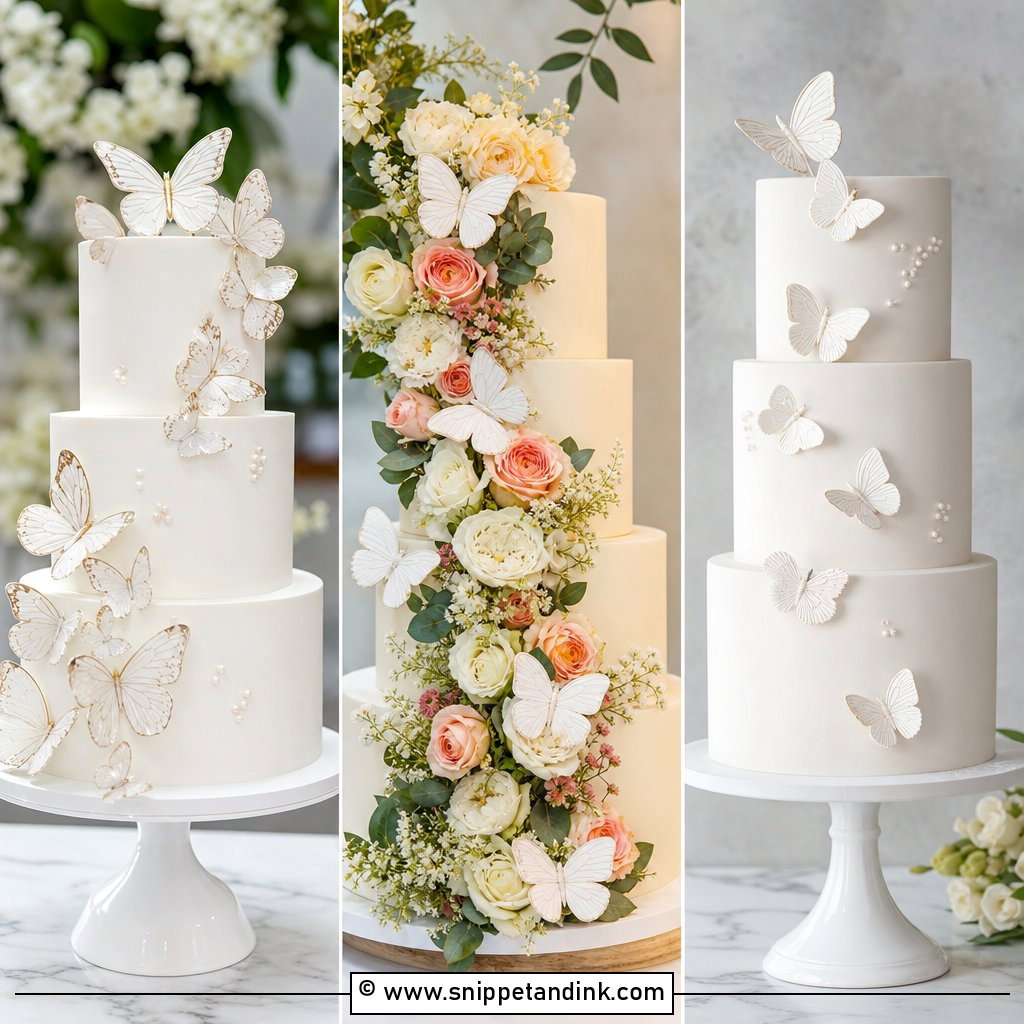
1. White Flower Butterfly Wedding Cake
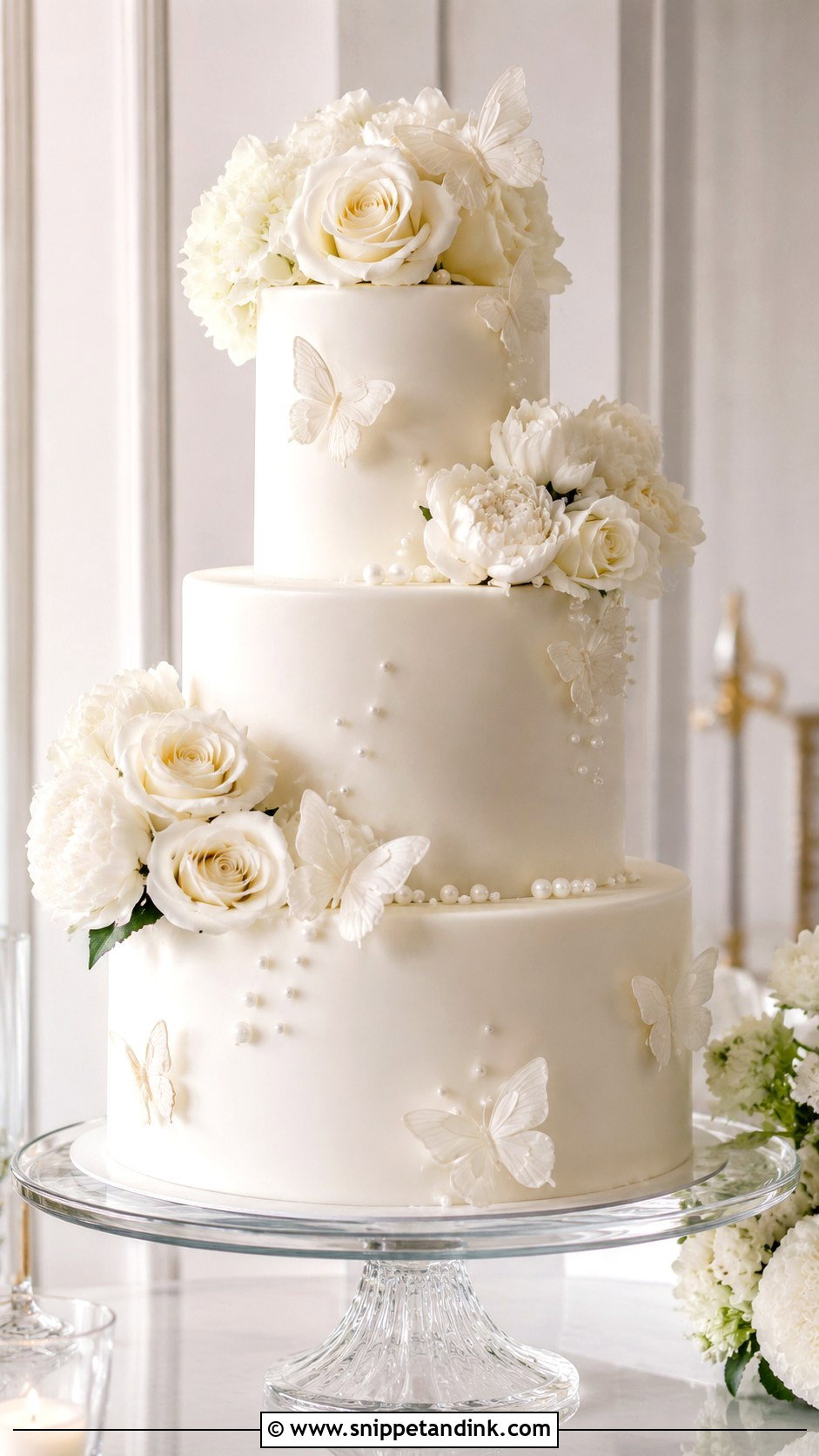
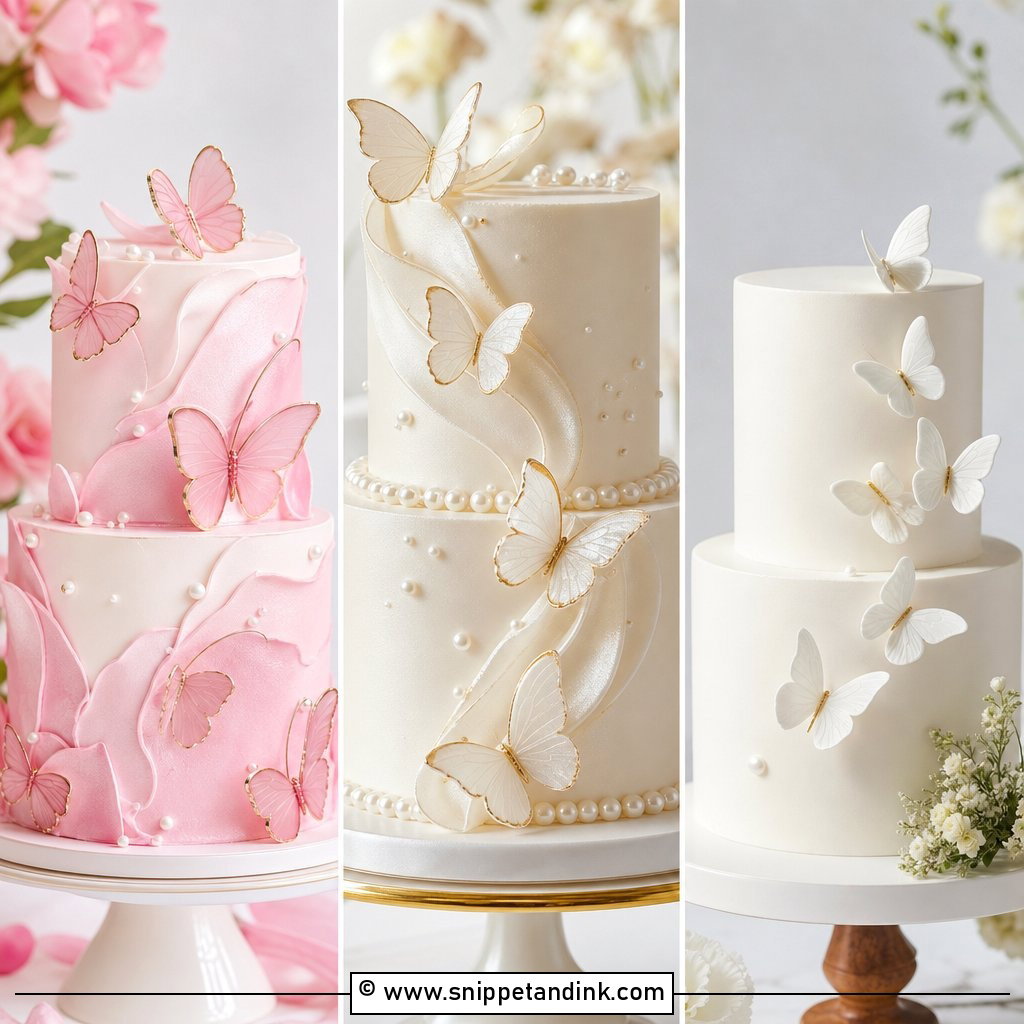
White on white is where I’d start anyone unsure about the theme. A clean base gives the flowers and butterflies room, so smooth fondant or soft buttercream with white roses, peonies, orchids or sugar blossoms is enough. I let a few small wafer butterflies sit beside the flower clusters and one or two climb upward toward the top tier. Because nothing competes on colour, the wing shapes need to be crisp, so I cut them cleanly and shape them a day ahead. It matches almost any dress, bouquet or room.
2. Pink Flower Butterfly Wedding Cake
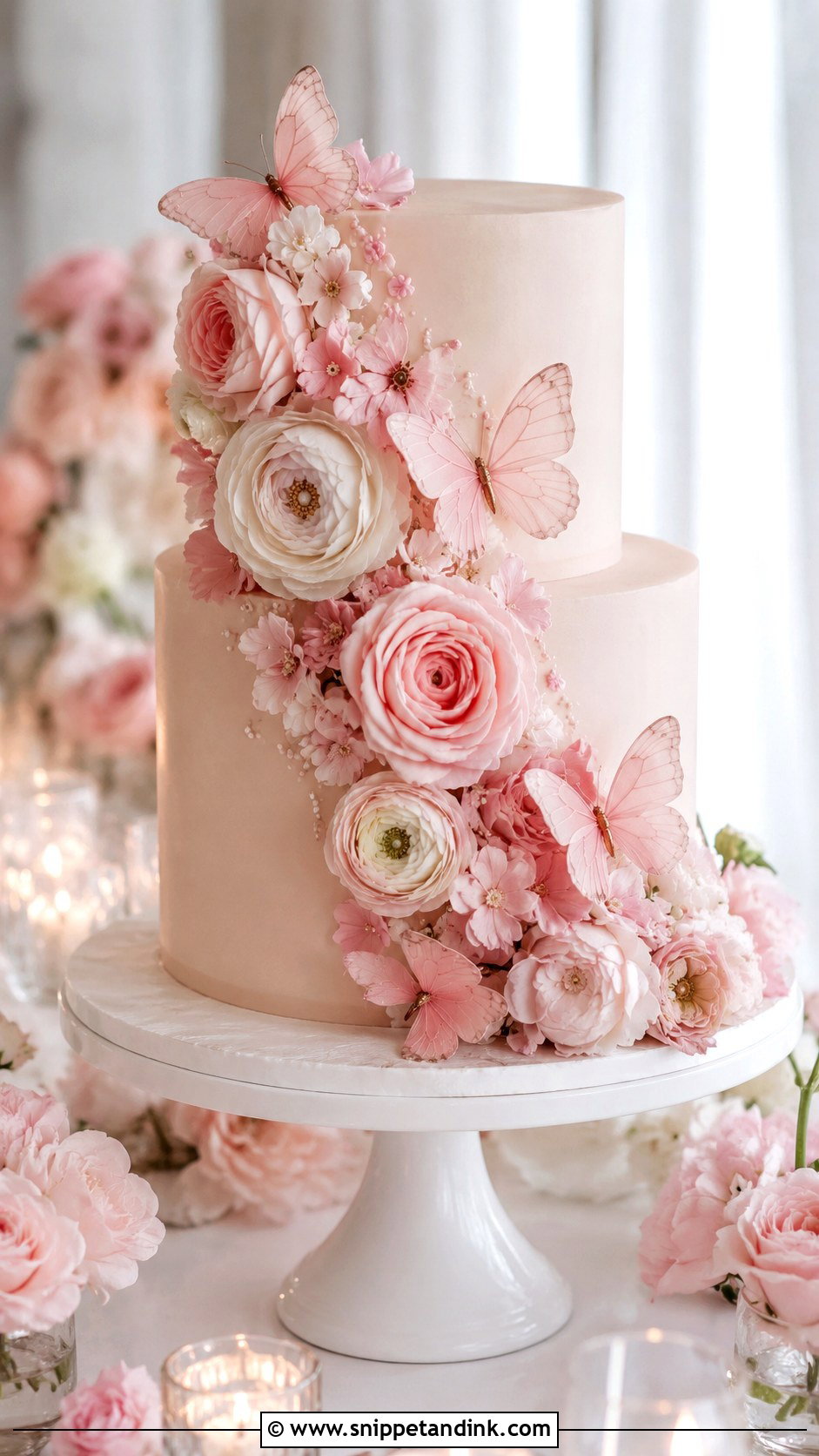
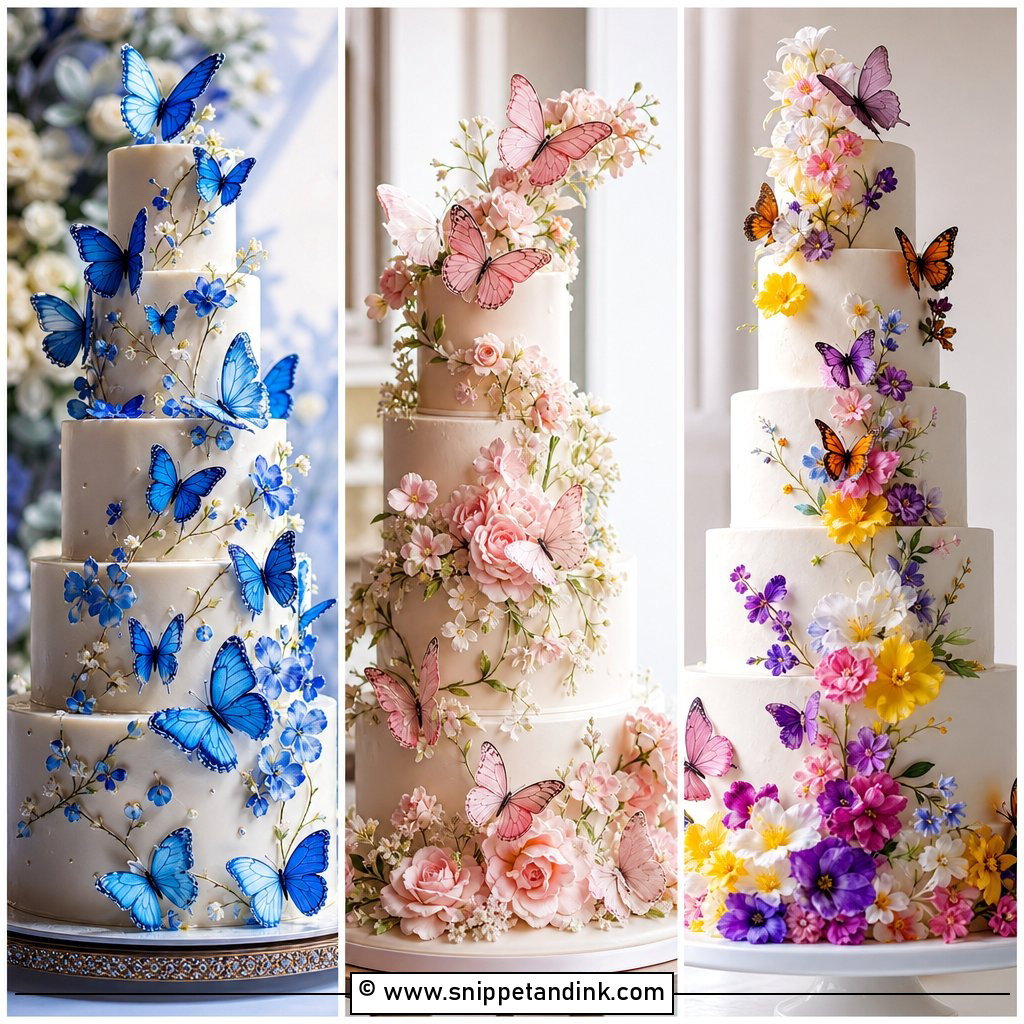
Pink is the colour most couples arrive with, and the shade matters more than the quantity. Pale blush, dusty rose and soft mauve stay warm without turning sugary. I’ll put sugar roses, ranunculus and cherry blossoms on an ivory or pink buttercream base, with tiny butterflies tinted to match. My favourite modern version runs the flowers diagonally across the tiers and leaves the rest of the cake bare. Pink buttercream does fade a little under strong daylight, so for an outdoor reception I tint it slightly deeper than the target.
3. Blue Flower Butterfly Wedding Cake
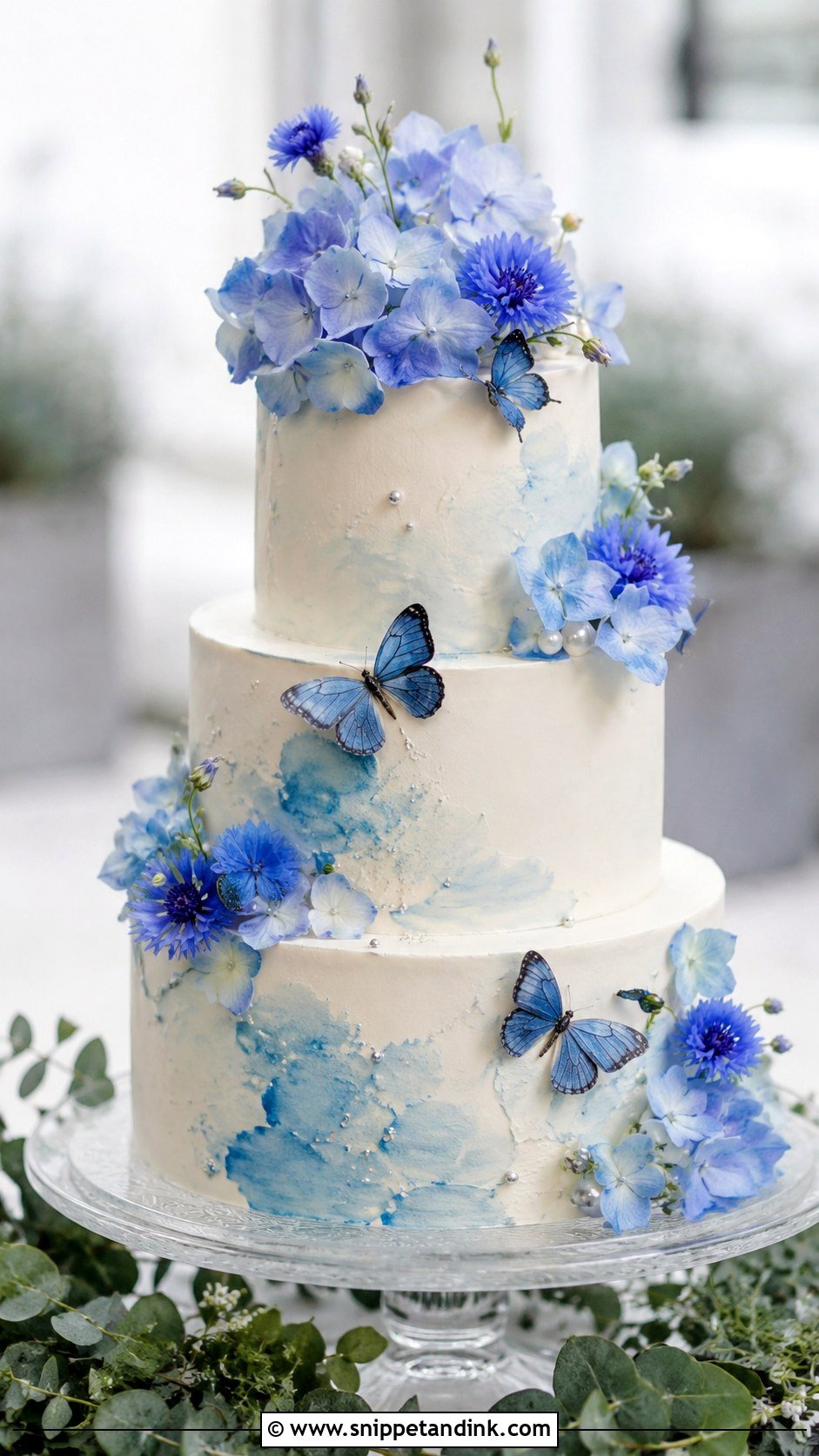
Blue surprises people, and it’s calmer than you’d expect. An ivory cake with a pale blue watercolour wash, sugar hydrangeas, forget-me-nots, cornflowers or anemones, and blue and white butterflies keeps it airy. Silver pearls or white sugar dots add a little finish. Most blue flowers aren’t safe to sit on icing fresh, so I usually make them in sugar. It suits coastal venues and garden ceremonies well, and the cool tones read clearly against white linen and greenery.
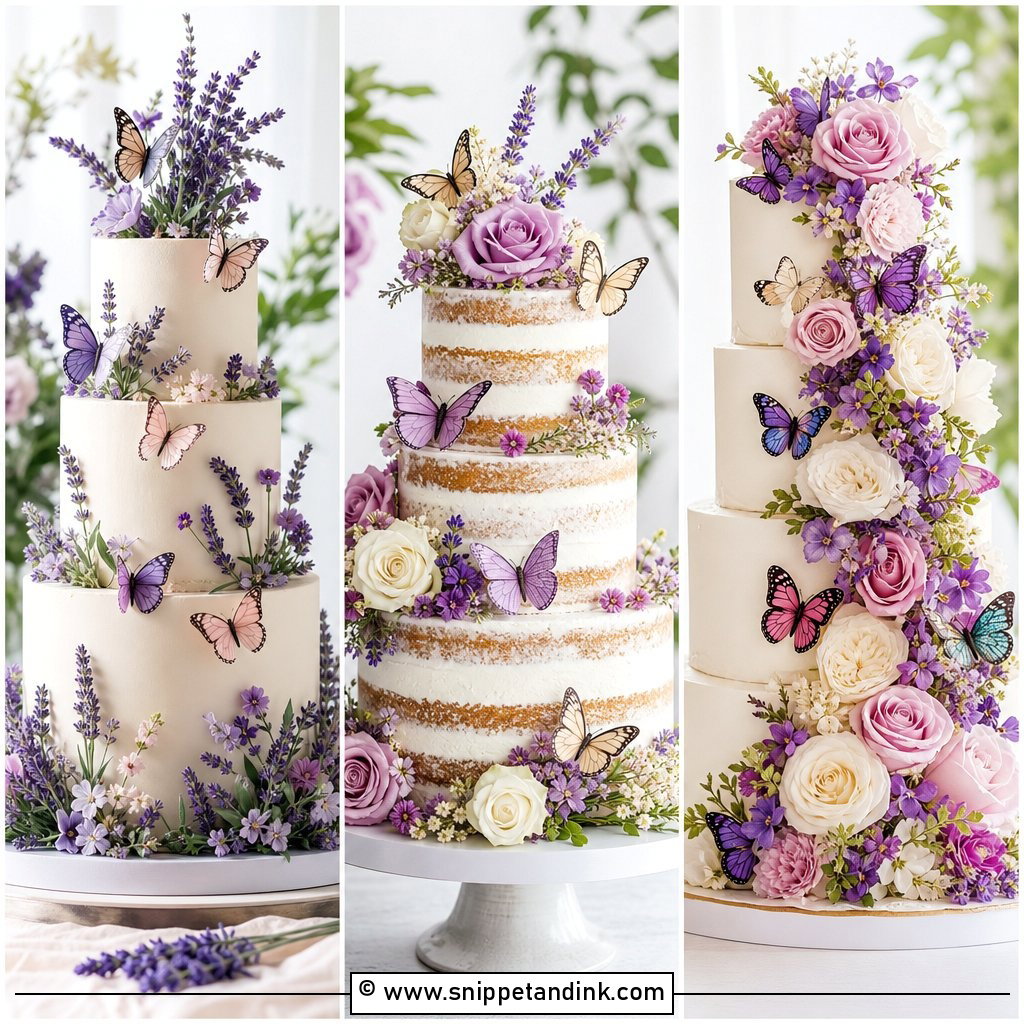
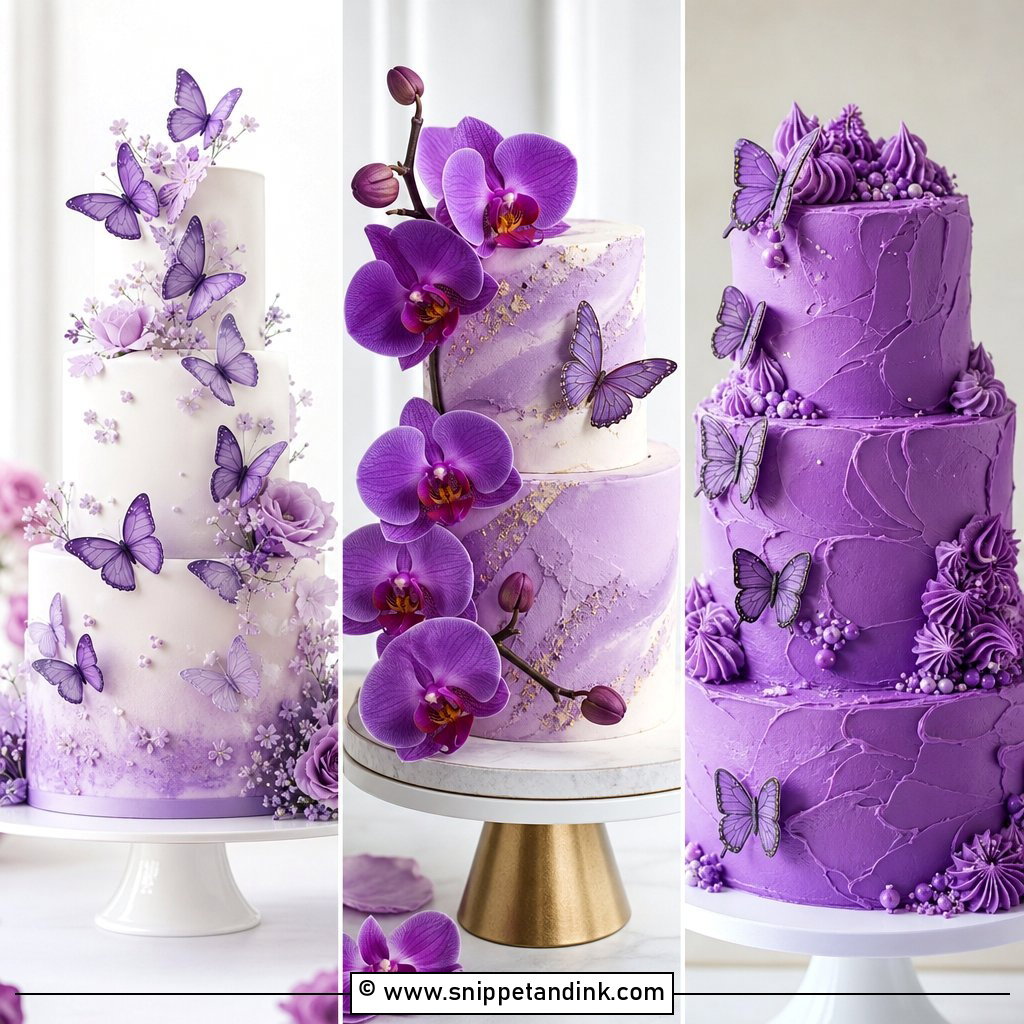
4. Purple Flower Butterfly Wedding Cake
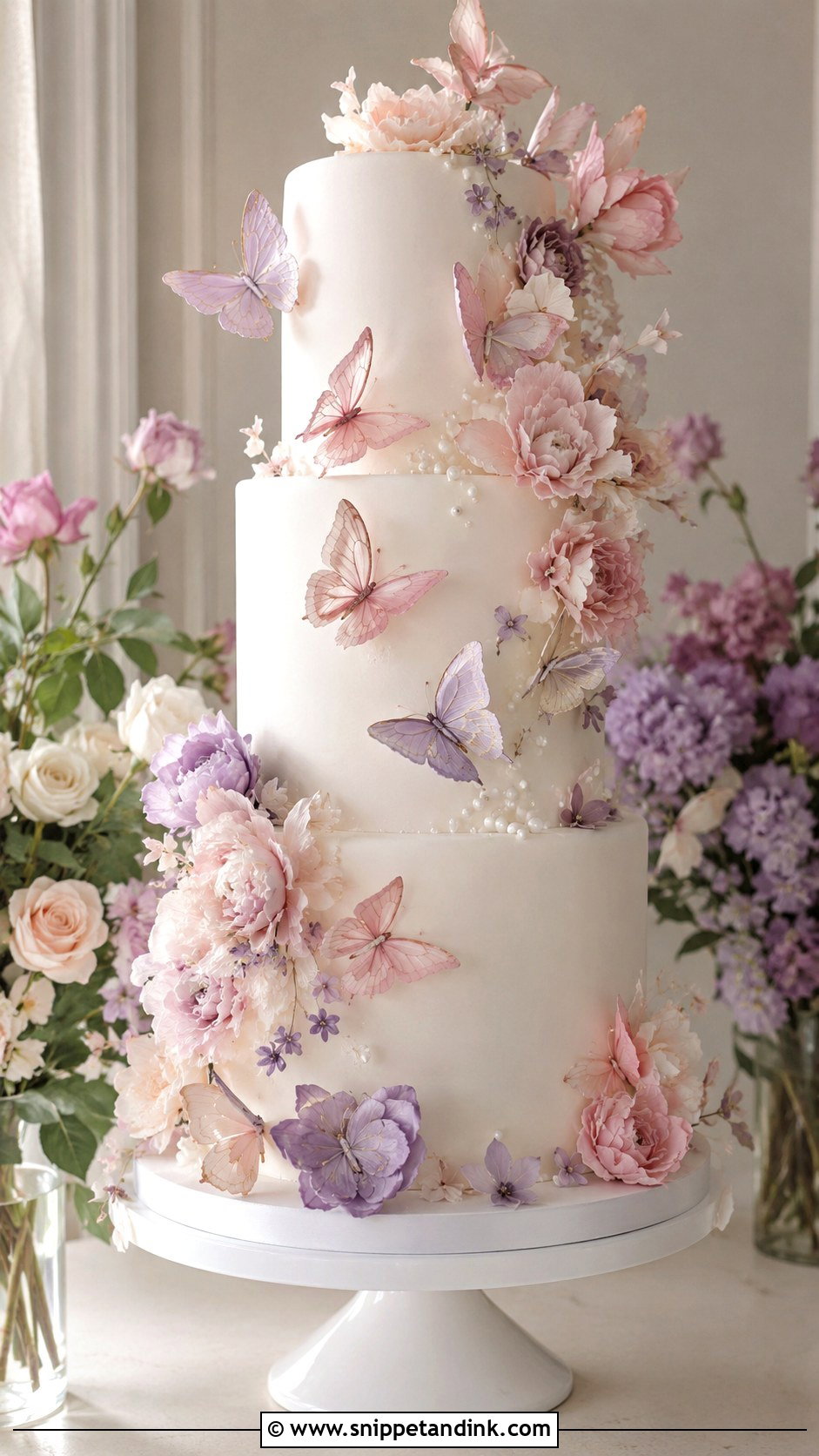
Purple shifts mood with the shade: lilac and lavender are delicate, plum and violet feel formal. For a soft version I start with white or pale lavender buttercream, add lilac blooms, lavender sprigs, sugar violets or purple orchids, then scatter butterflies in two or three purple tones. Evening weddings can take deeper plum accents. Gold details, a clear stand and candlelight all suit it. I’d keep the darkest purple to the flowers and butterflies rather than the icing, since deep purple buttercream stains teeth and tongues.
5. Wildflower Butterfly Wedding Cake
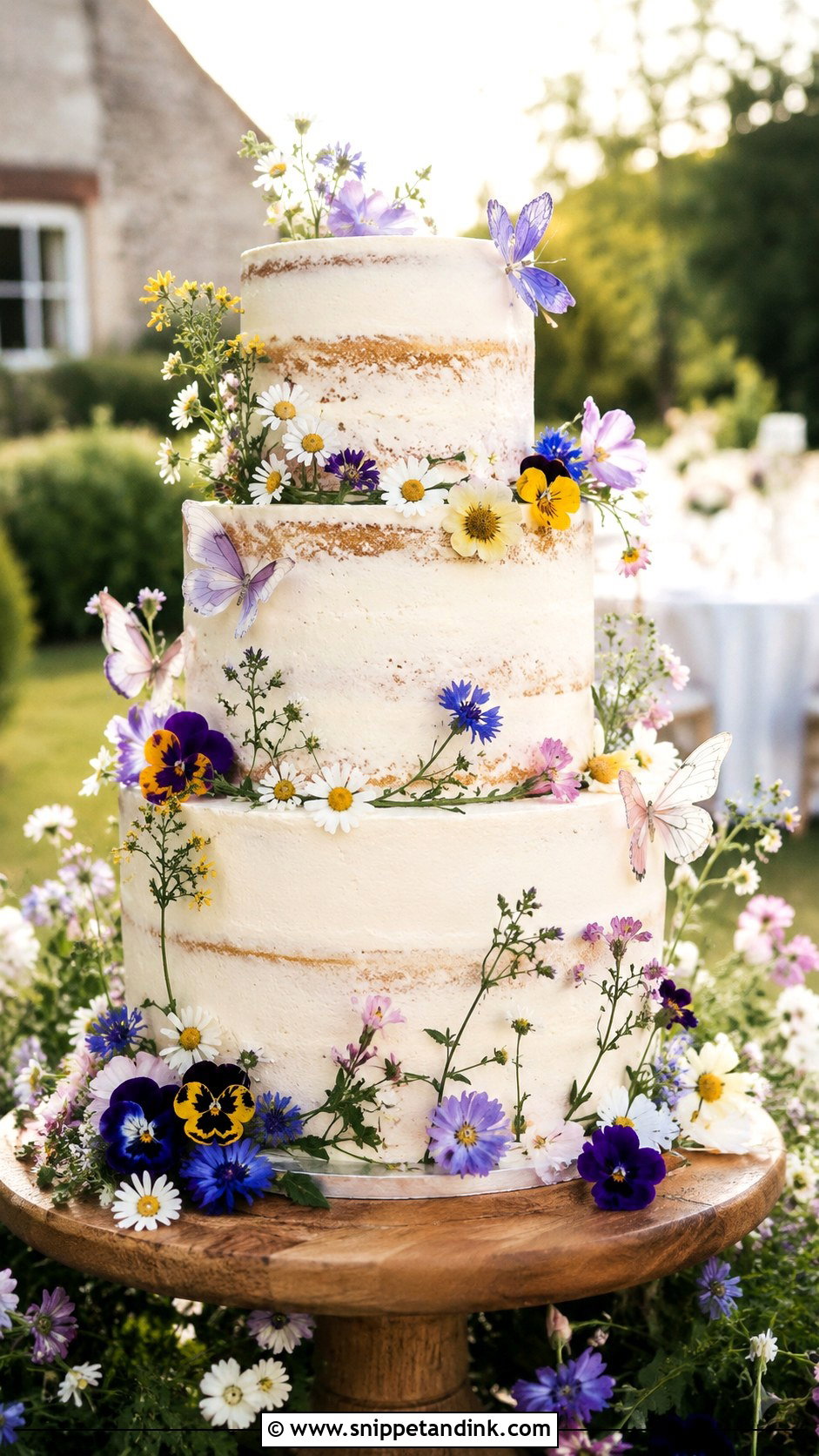
A wildflower butterfly wedding cake trades big formal blooms for a scatter of small ones: edible flowers, sugar daisies, pressed pansies, cornflowers and tiny greenery. I place the butterflies as if they’re crossing a meadow, a couple resting on the sides, one near the top. A semi-naked buttercream finish keeps it handmade. Outdoors, this one needs the most care with timing, because small fresh flowers and exposed sponge both dry out in sun. Backyards, barns and spring weddings are where it belongs.
6. Pressed Flower Butterfly Wedding Cake
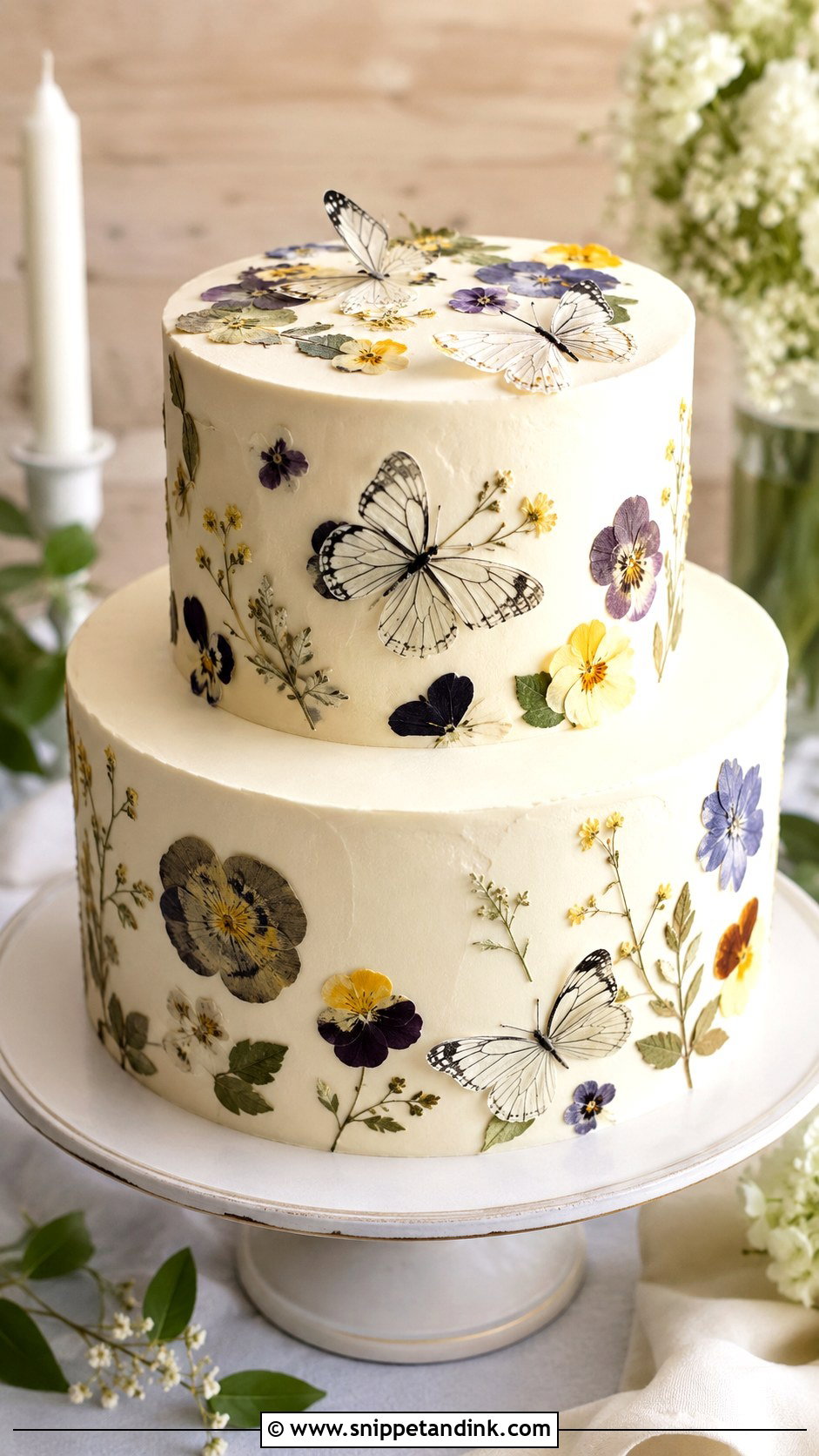
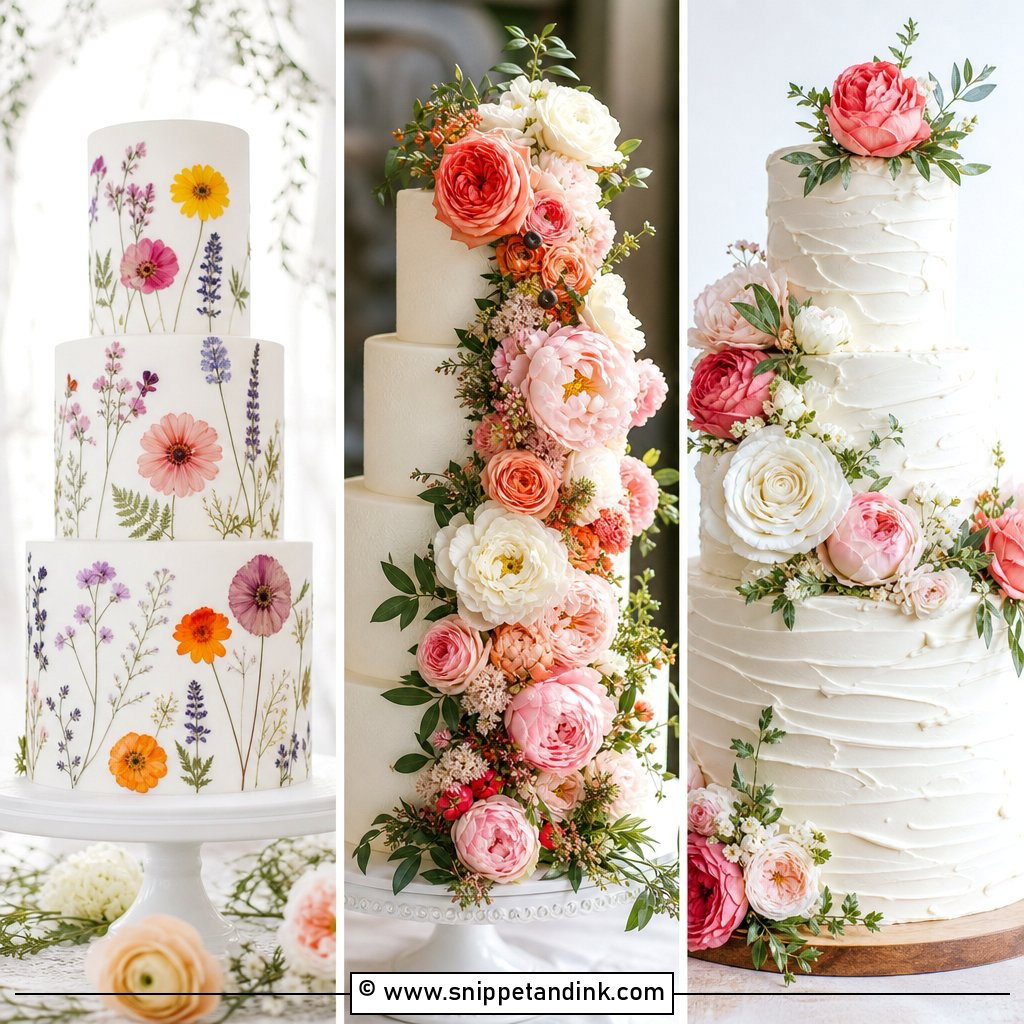
Pressed flowers sit flat against the frosting, so the cake reads like a botanical print. Pansies, violas, calendula petals and small edible leaves pressed onto smooth white buttercream make a soft pattern around each tier. I keep the butterflies here flat or only slightly lifted so they don’t fight the two-dimensional look. Pressing takes a couple of weeks, which is why I need to know about this design early. It suits intimate weddings, where guests stand close enough to notice the veins in each petal.
7. Sugar Flower Butterfly Wedding Cake
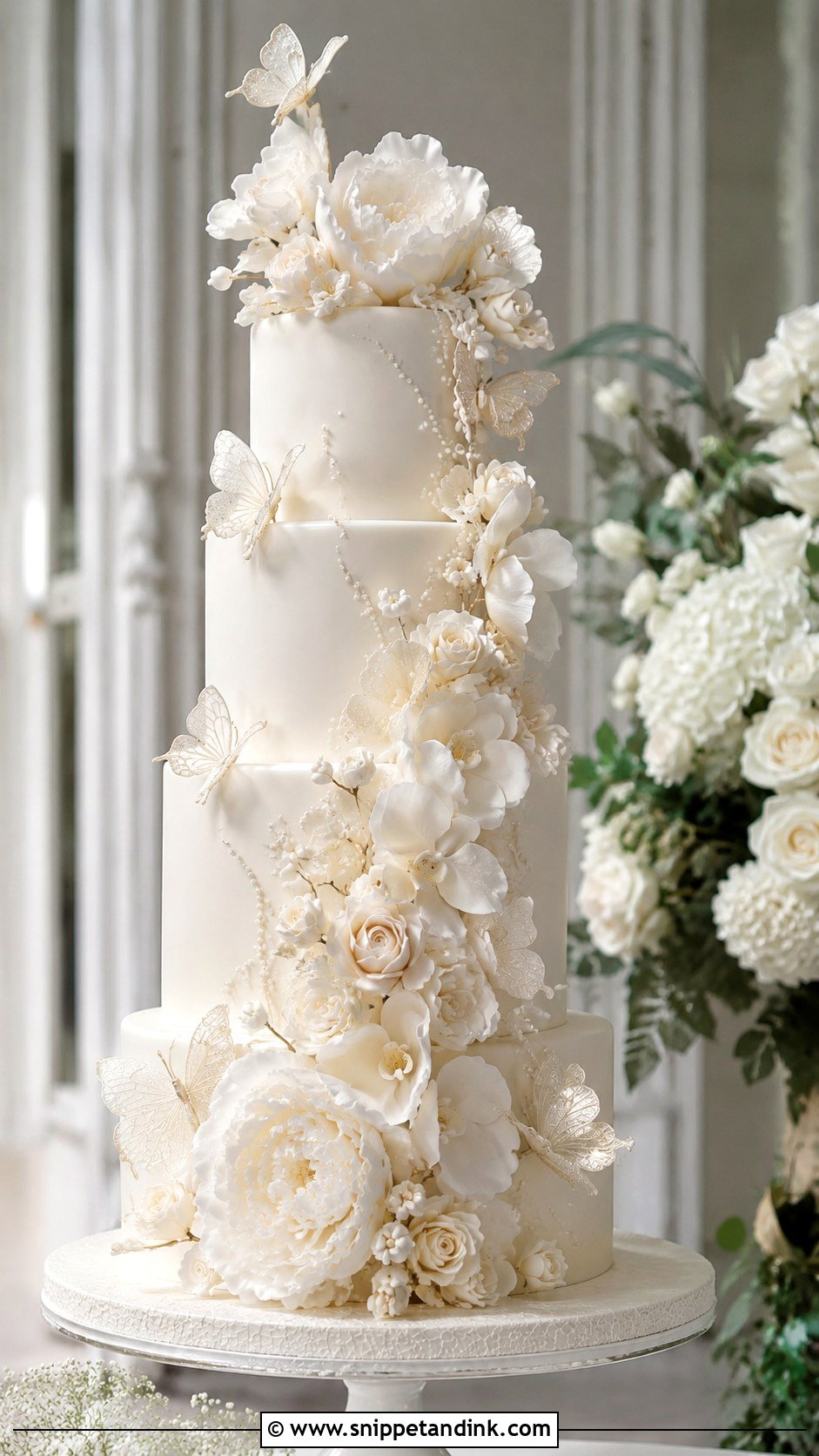
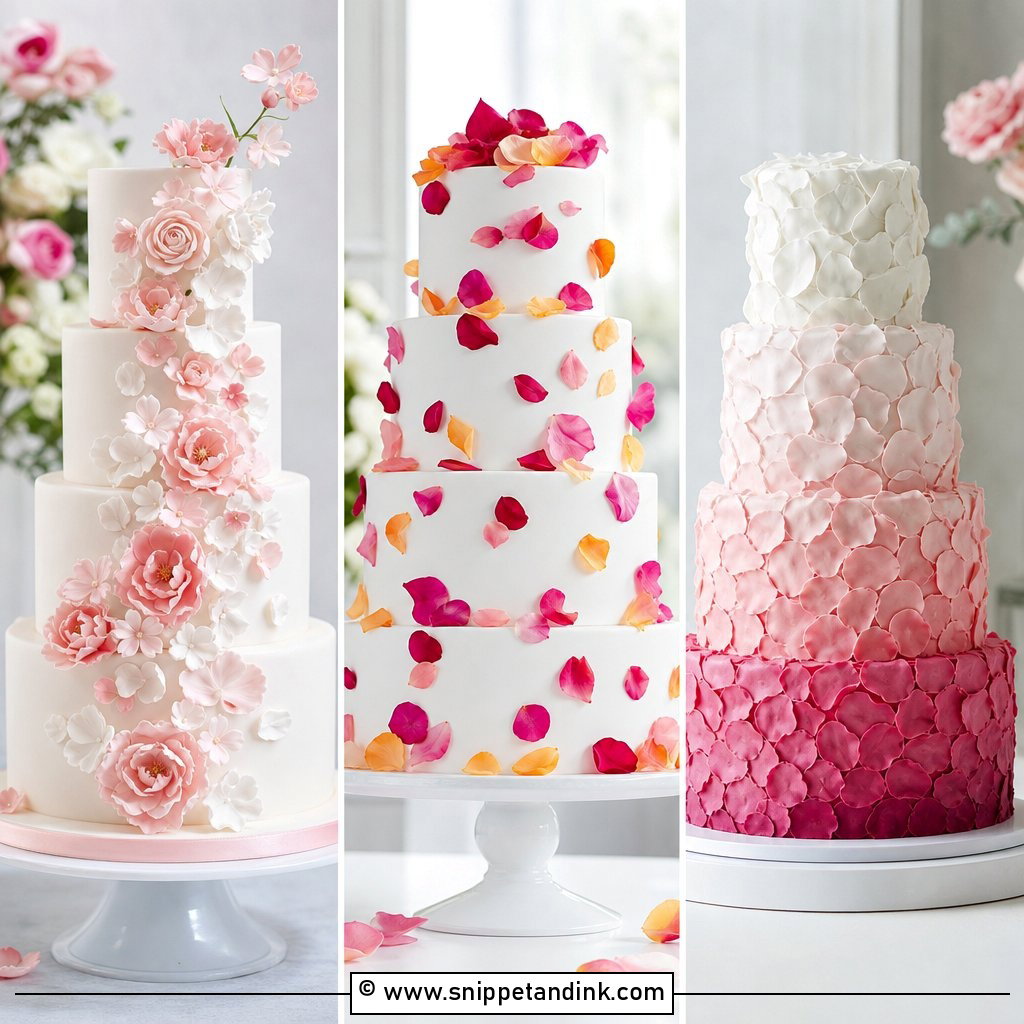
Sugar flowers don’t wilt, so they hold their shape from the ceremony to the last dance. I can make roses, peonies, orchids, ranunculus or sweet peas, and match them to the bouquet colour exactly, including flowers like sweet pea that I’d never put on a cake fresh. The butterflies can be wafer paper, gum paste or thin fondant; gum paste ones are sturdier but heavier, so they need to sit rather than perch. A smooth, plain finish lets the sugar work carry the cake. Formal receptions suit it best, and it needs the longest lead time of anything here.
8. Buttercream Flower Butterfly Wedding Cake
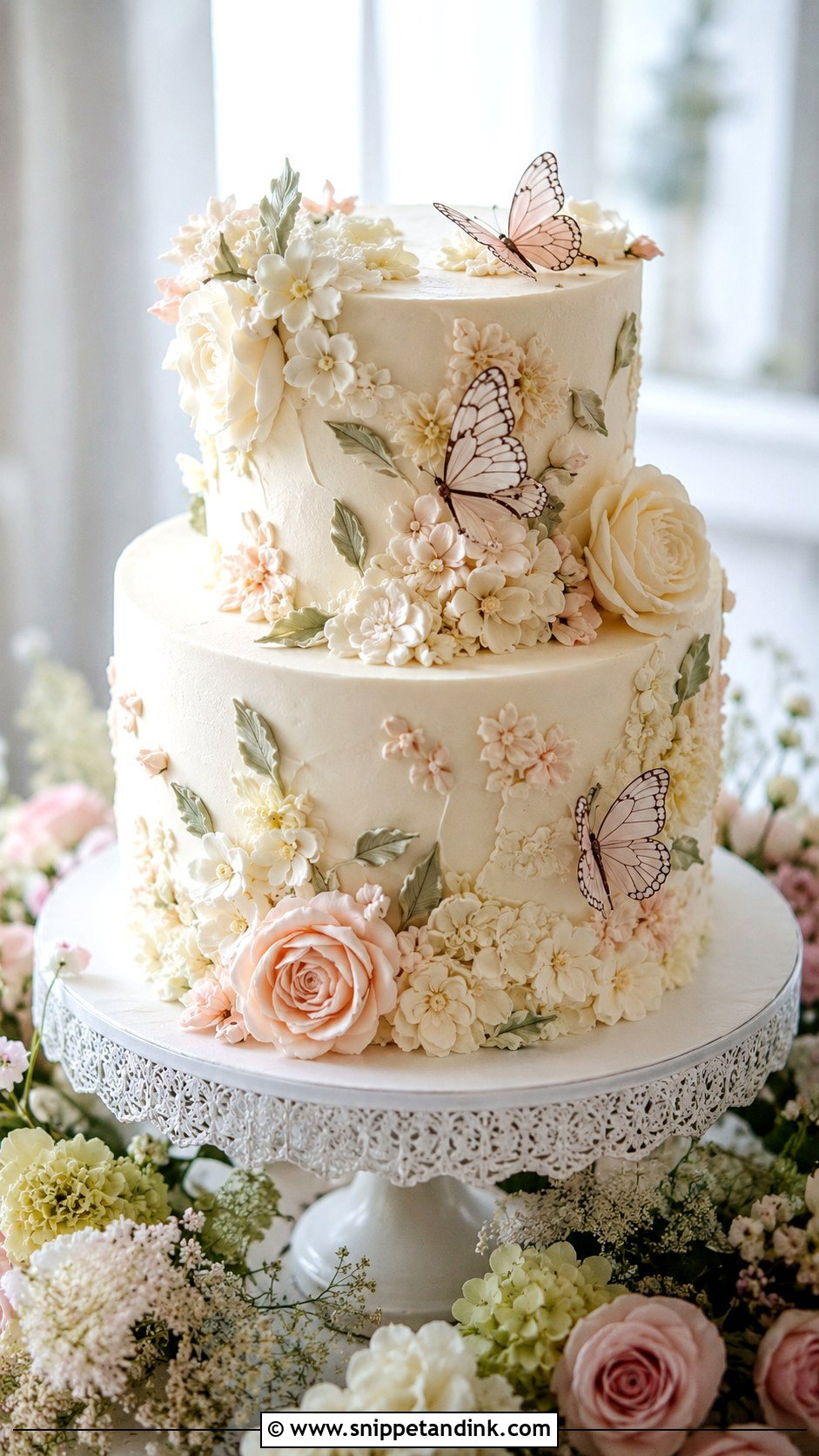
Piped flowers give you a soft, textured garden with nothing to remove before cutting. I pipe roses, hydrangea florets, blossoms and leaves in the wedding colours, then set wafer paper butterflies in the gaps between clusters so they look like they’re settling. The trap is moisture: wafer paper sitting directly on fresh buttercream softens and curls within a few hours, so I let the buttercream crust first or slip a tiny disc of chocolate under each one. Kept simple, it reads homely and rustic; with fine piping it looks formal.
9. Wafer Paper Butterfly Flower Wedding Cake
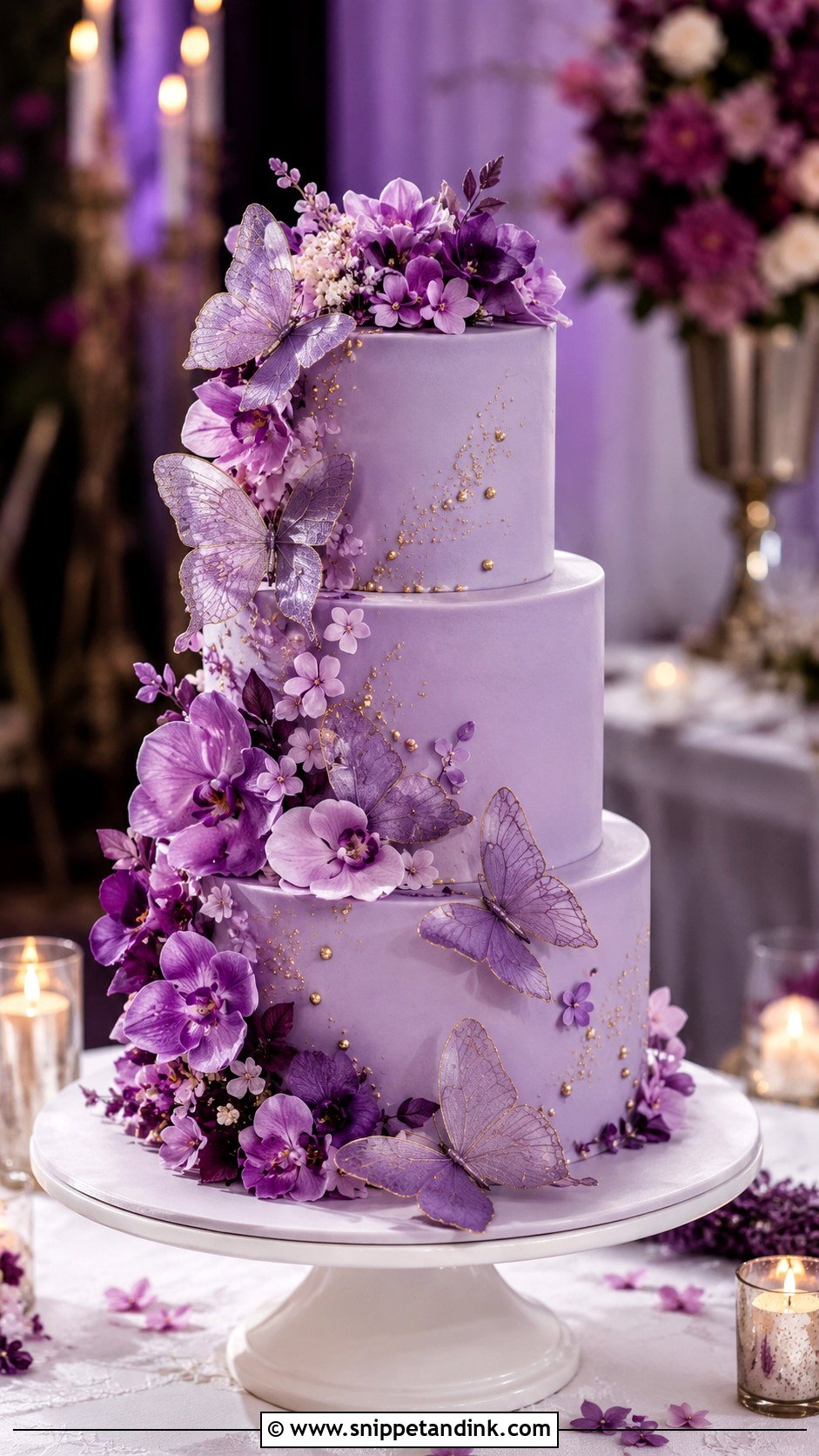
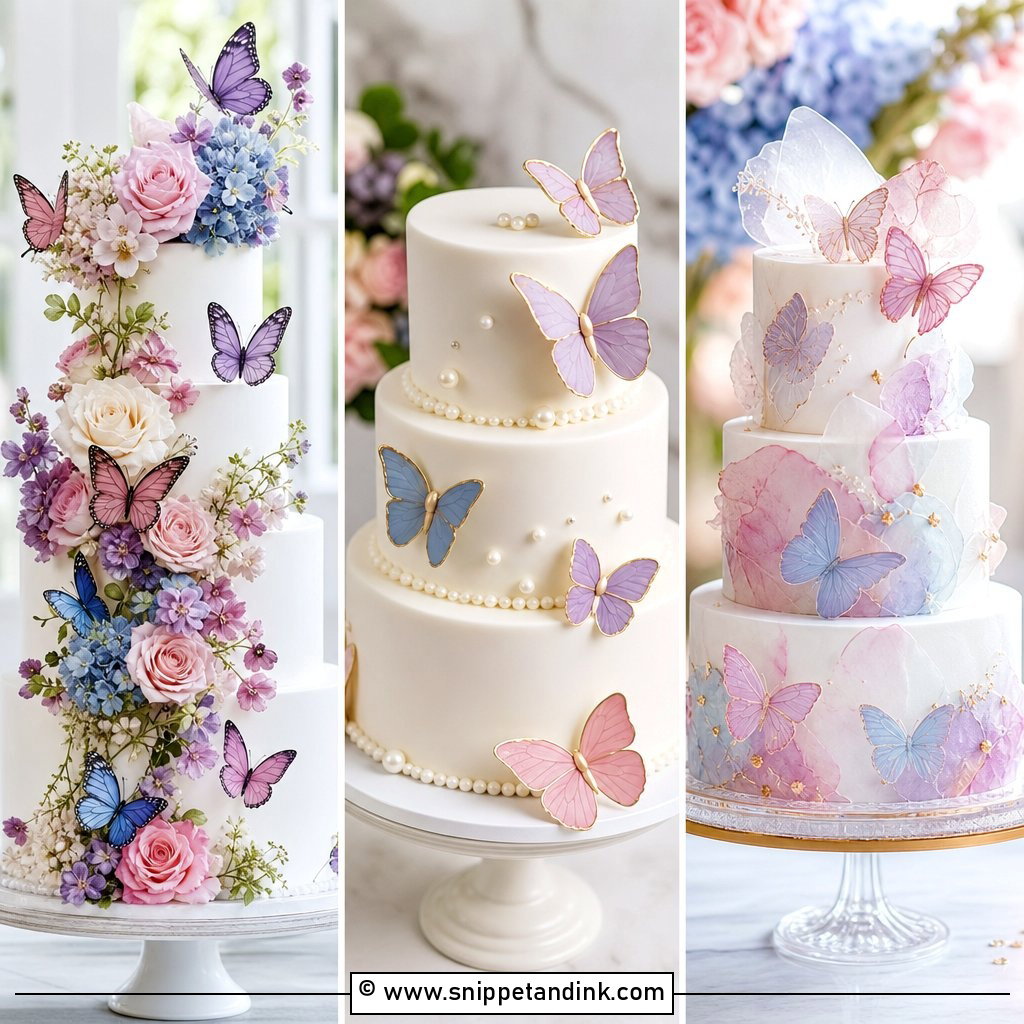
Wafer paper is the lightest material I use, which is exactly why it’s so good for butterflies: the wings can lift off the cake without dragging it down. A wafer paper butterfly flower wedding cake looks best on smooth buttercream or fondant with flowers in loose clusters. I fold each butterfly along the body and dry it over a crease so the wings hold an open V, which gives you shadow and depth in photos. Wafer paper flowers, sugar flowers or safe fresh blooms all pair with it. Ivory, blush, lavender and pale blue keep it gentle.
10. Watercolor Flower Butterfly Wedding Cake
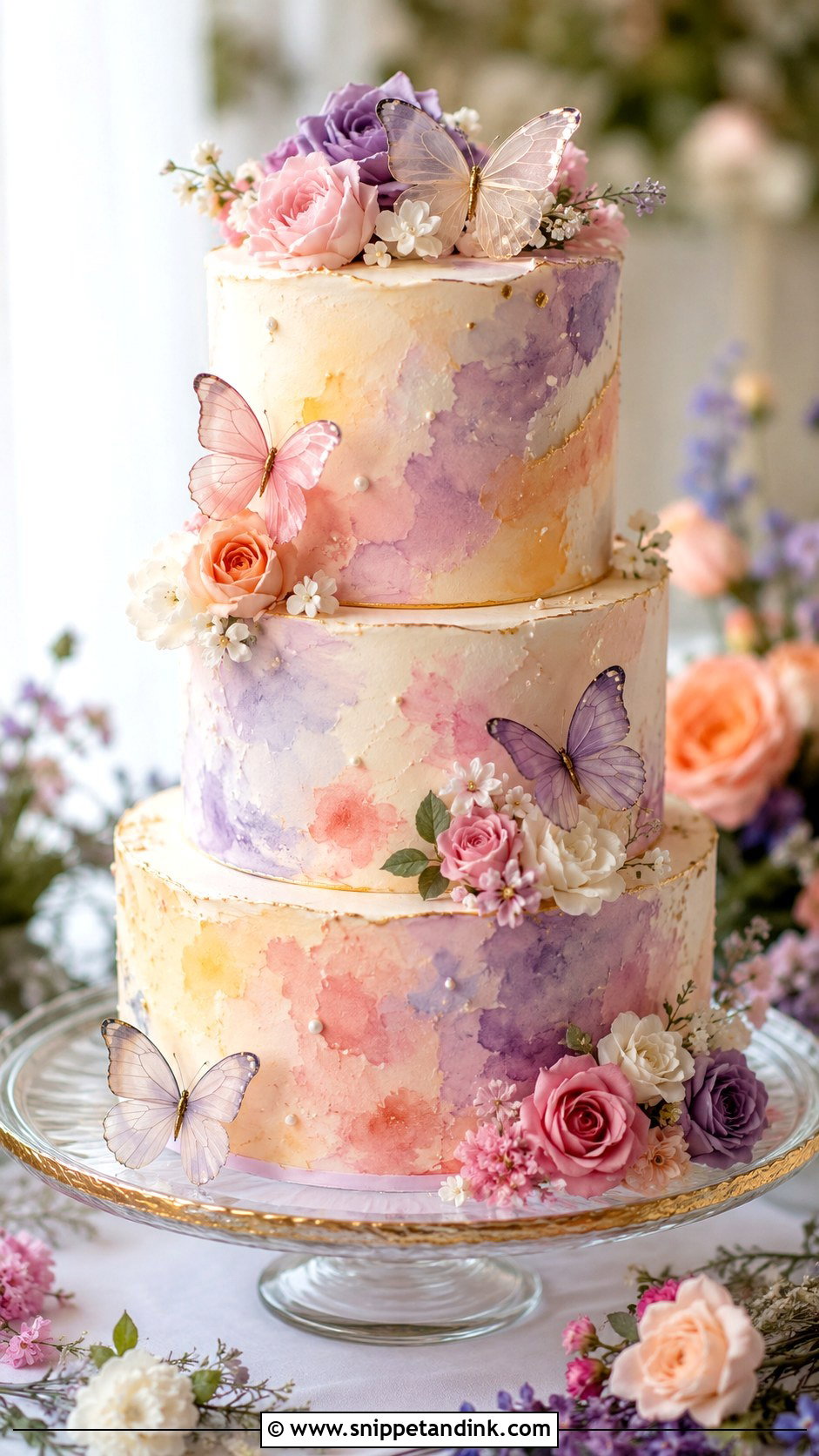
For a watercolour background I brush diluted colour onto the frosting in pale washes of pink, blue, lavender, peach or sage. The flowers then pick up those colours, and butterflies go on last, very lightly, around the tiers. The skill is in letting the colour look like it drifted there rather than being planned. Fondant takes the paint evenly; buttercream gives a softer, more blurred effect that I actually prefer here. It suits spring and summer weddings with loose florals and soft fabric in the room.
11. Garden Flower Butterfly Wedding Cake
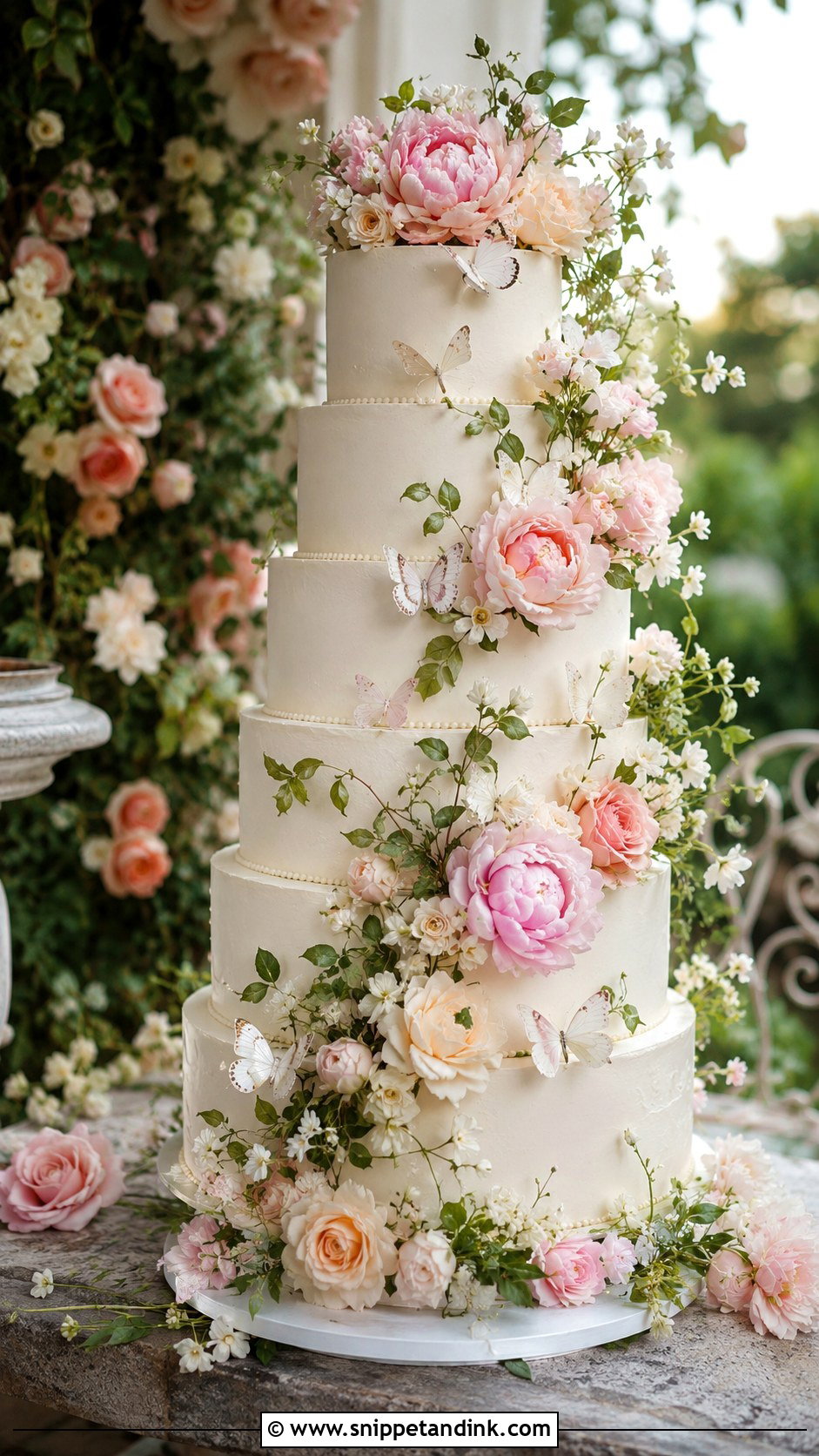
Think of this one as a planted border: layered flowers, soft greenery and a trail of butterflies across the tiers. Roses, peonies, ranunculus and small fillers work well; sweet peas I’d only use in sugar. A white or ivory base lets the flowers set the colour story. I keep the butterflies small and put a few near the top for height. It belongs at greenhouses, courtyards and outdoor ceremonies where the room is already full of fresh arrangements, and I’ll ask the florist for a stem or two so the cake and centrepieces match.
12. Vintage Flower Butterfly Wedding Cake
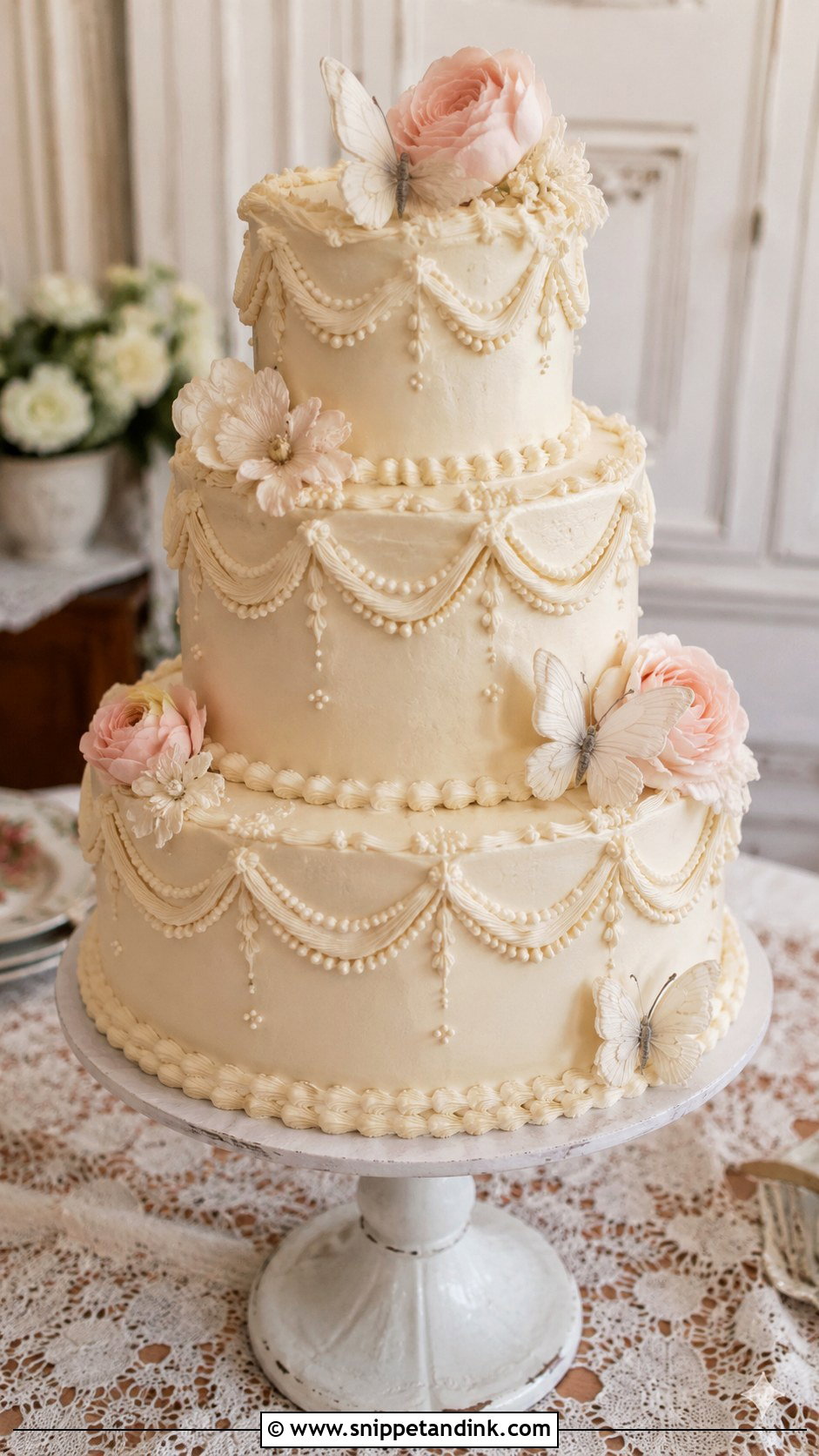
Vintage piping is back: shell borders, pearl dots, ruffles and buttercream swags on every tier. Between those borders I add small sugar flowers in blush, ivory or pastels and slip butterflies into the spaces. Round tiers with a smooth base work best because swags need an even curve to hang from. The difficulty is knowing when to stop. Piping, flowers and butterflies are three layers of detail, so I keep the colours soft and leave some plain icing on each tier. Tea-style receptions and classic venues are its home.
13. Gold Flower Butterfly Wedding Cake
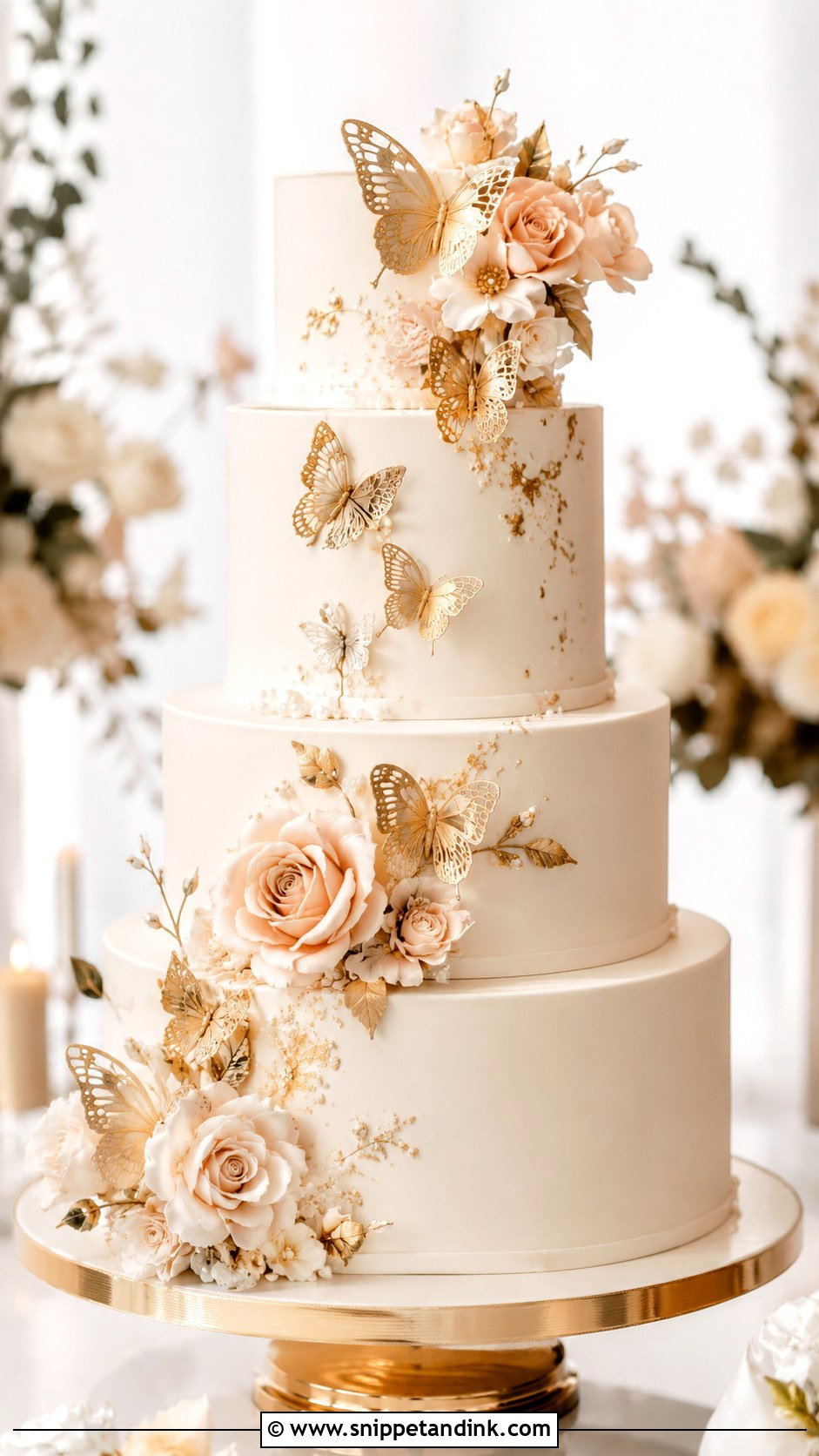
Gold works as an accent, not a coat. I start from ivory or white, then add gold leaf, a painted edge or small metallic dots, with flowers in cream, blush, champagne or soft peach and butterflies painted with edible gold lustre. Wafer butterflies take the paint well if it’s mixed with a little alcohol rather than water, which would buckle the paper. Too much gold reads cheap in flash photos, so I cap it at one or two places per tier. Evening weddings and hotel ballrooms suit it.
14. Greenery Flower Butterfly Wedding Cake
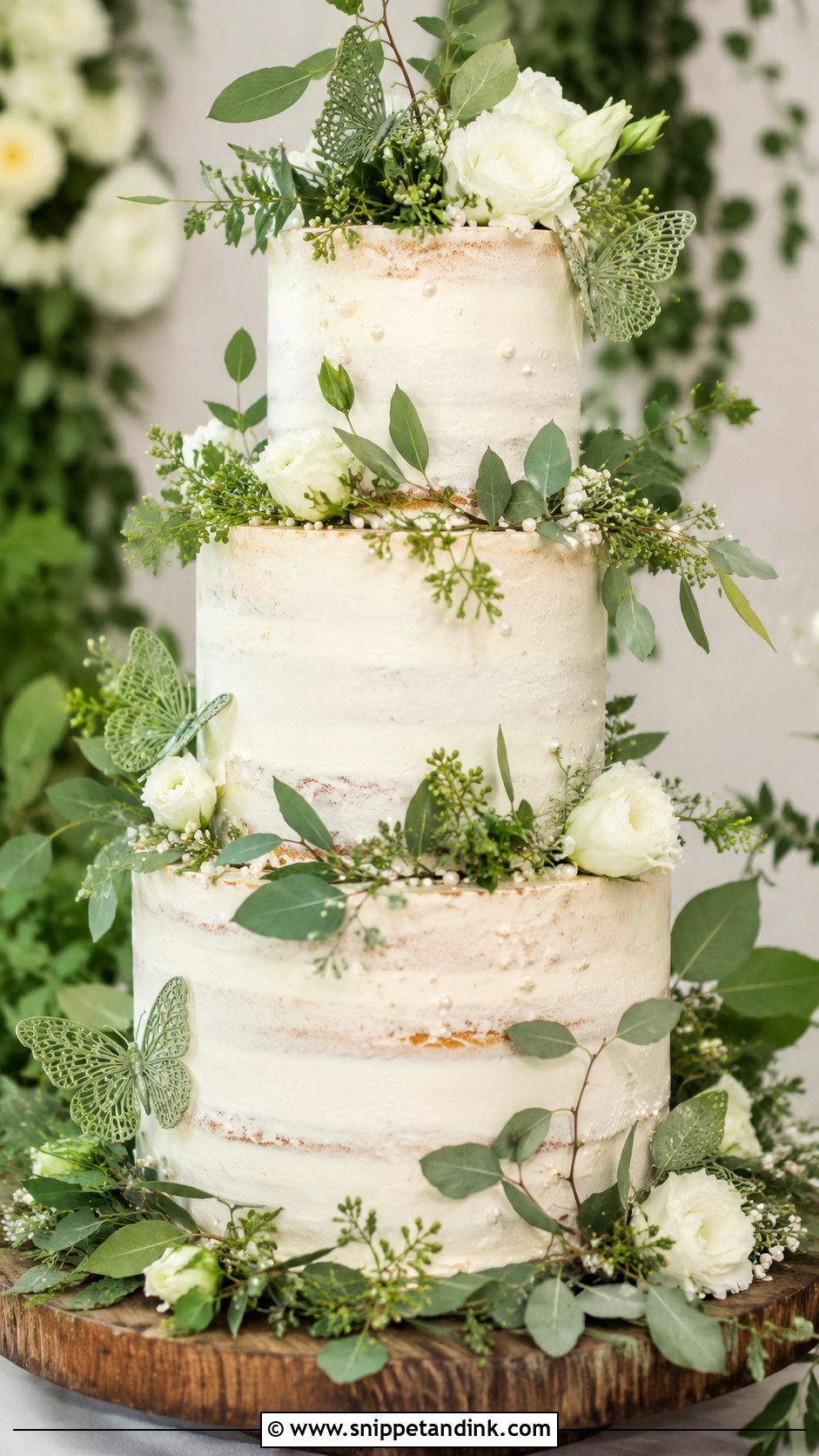
Greenery gives the theme an outdoors feel without a lot of colour. Eucalyptus, olive leaves, sugar fern fronds or herb-style foliage go with white flowers, and the butterflies stay white, sage, pale yellow or soft blue. Real eucalyptus is not food-safe, so on the cake itself I use sugar leaves or wrap the stems fully. A semi-naked or smooth ivory buttercream base suits it. It looks most at home on a wooden stand or a stone table, with candles and simple arrangements around it.

15. Orchid Flower Butterfly Wedding Cake
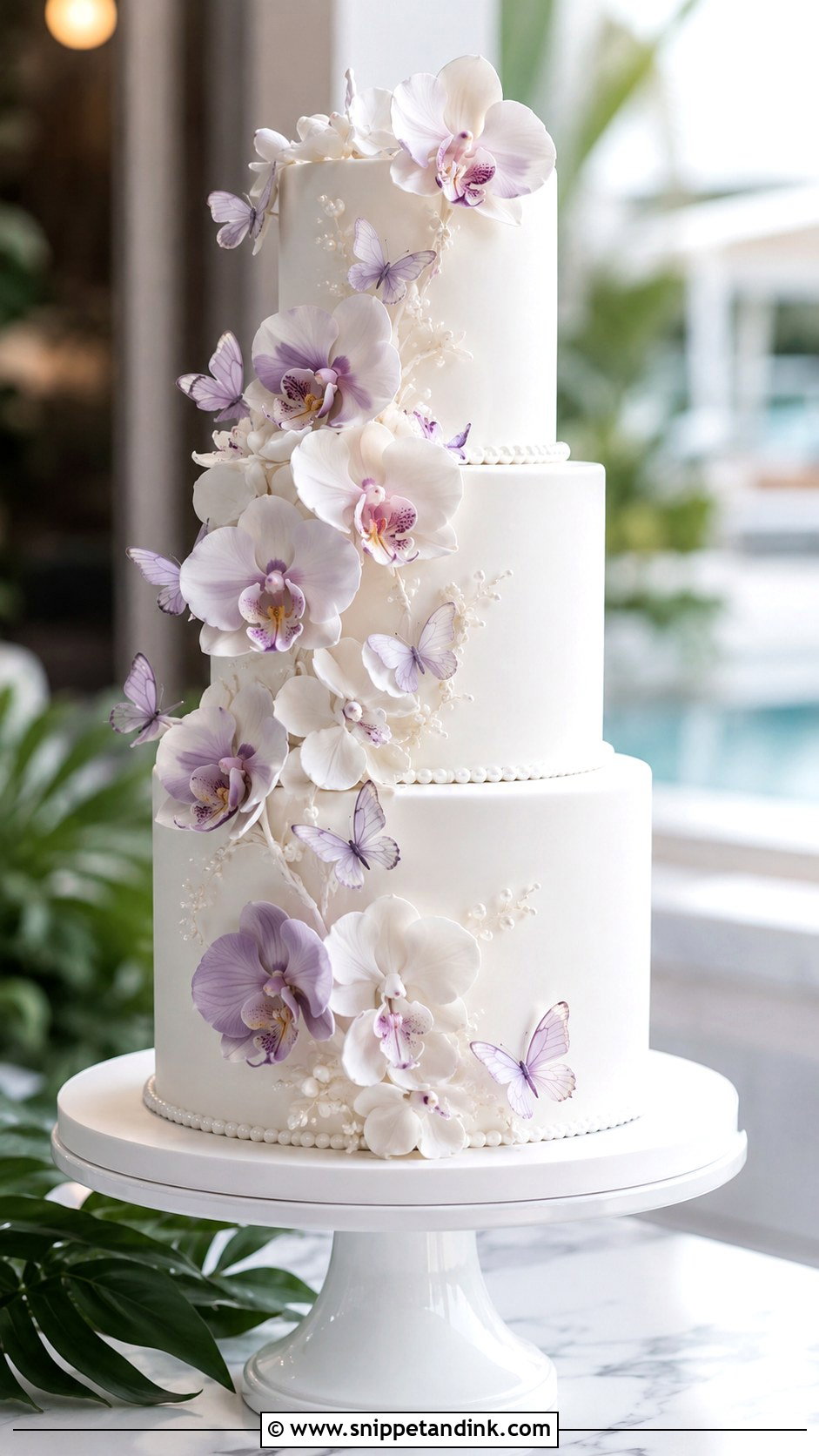
Orchids and butterflies share the same long, flowing lines, so they sit together naturally. On smooth white fondant or buttercream I run cascading sugar orchids in white, blush, lavender or pale peach, and let the butterflies follow the same path so the design reads top to bottom. Sugar orchids are fragile at the lip, so I wire and place them on site. Formal and tropical venues suit it. Orchids already carry the cake, so beyond a few pearls or a touch of gold, I add nothing.
16. Rose Flower Butterfly Wedding Cake
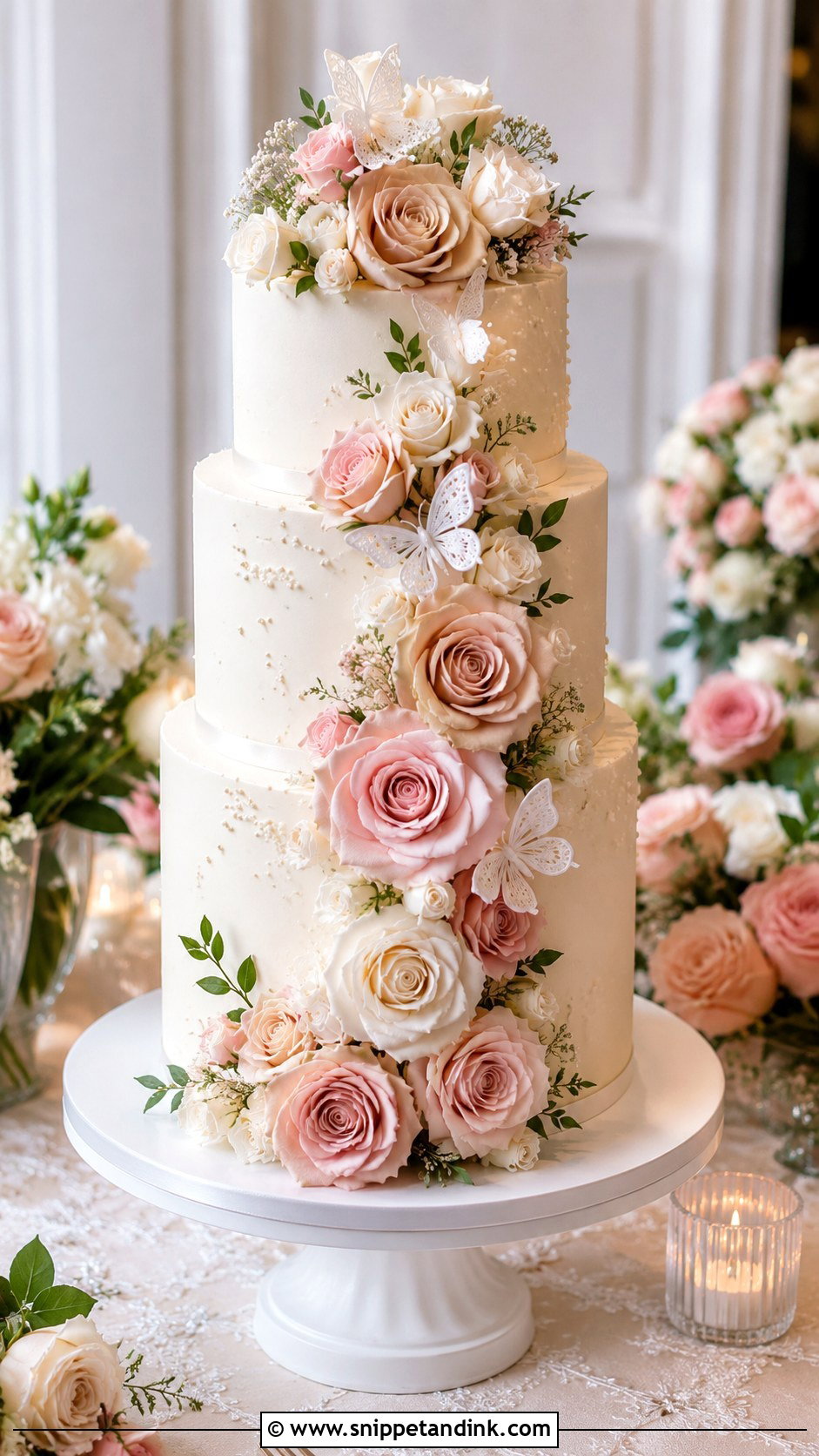
Roses are the safest flower in this whole list, and they can be fresh, sugar or piped. Ivory, blush, champagne and dusty pink keep the look soft. I set them around the base of each tier or run a gentle cascade down the front, and tuck the butterflies close to the roses instead of scattering them, which is what keeps the cake from looking busy. If the roses are fresh, I’ll check with the florist that they’re unsprayed or keep every stem in a pick. Lace linens and pearl accents finish the table.
17. Daisy Flower Butterfly Wedding Cake
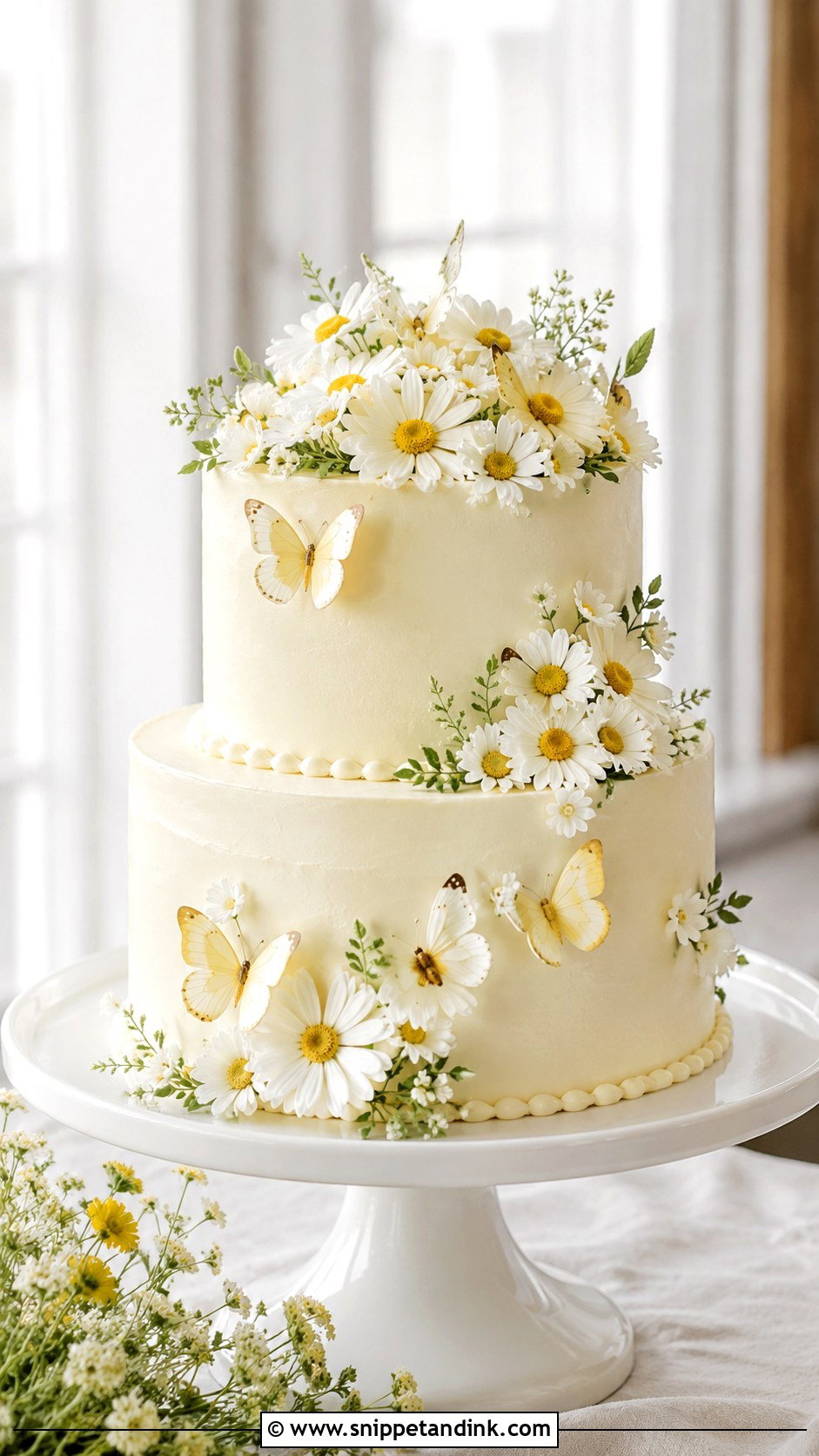
A daisy flower butterfly wedding cake is the most cheerful cake on this page. White daisies with yellow centres on ivory buttercream, with pale yellow, white or soft blue butterflies, keep it bright without looking like a child’s birthday, as long as the daisies are placed in tidy rings rather than scattered at random. A semi-naked finish or soft piped borders both suit it. Fresh daisies are edible but wilt fast in heat, so on a hot afternoon I’d switch to sugar or piped versions. Picnic receptions and meadow settings are where it shines.
18. Peach Flower Butterfly Wedding Cake
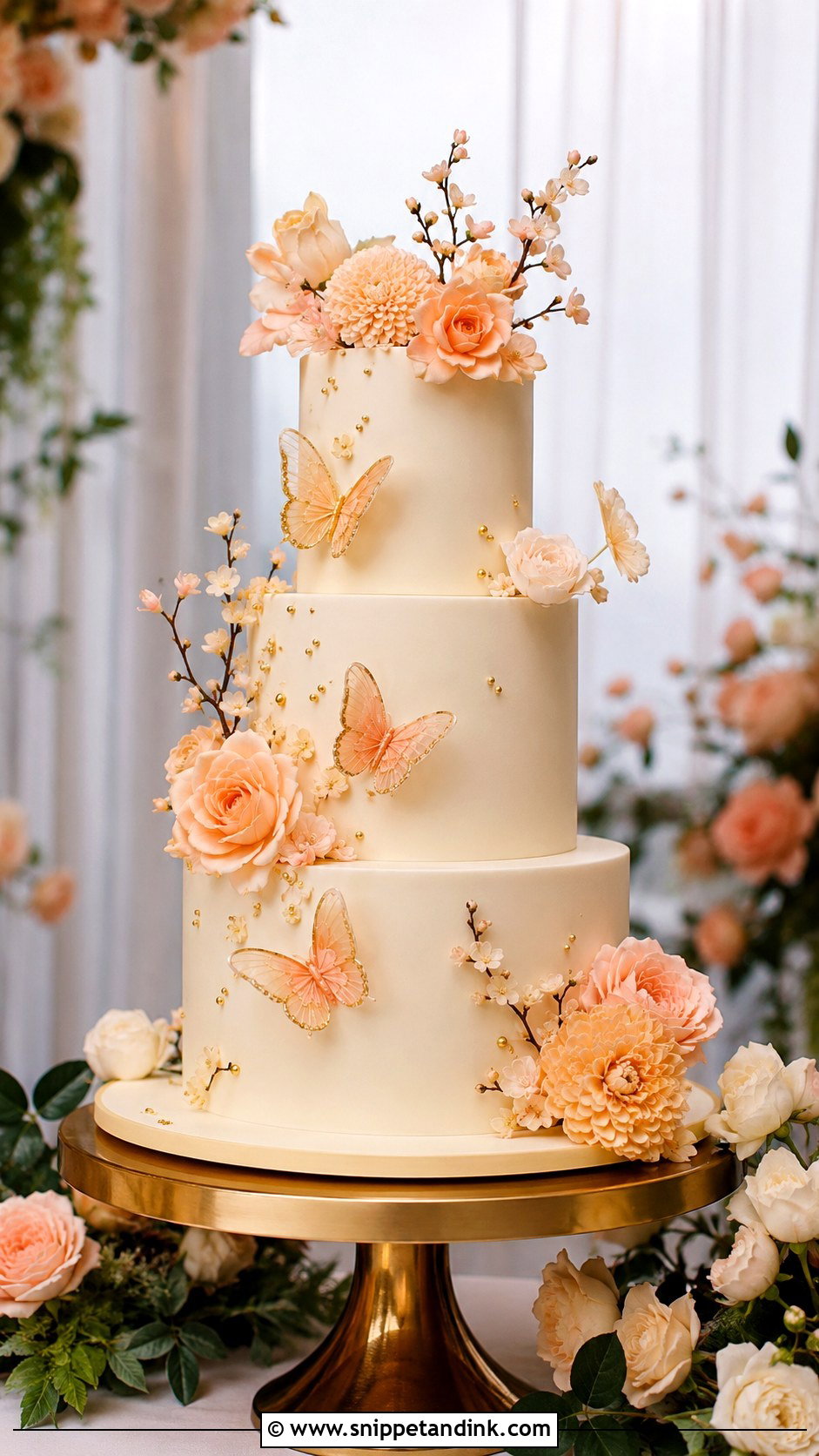
Peach is warm, and it gets along easily with ivory, cream, coral and pale pink. I’ll pair smooth buttercream with peach roses, ranunculus, dahlias or sugar blossoms, then add butterflies in peach, white and champagne. It sits well at late spring and summer weddings. Peach dahlias have a lot of petals that bruise when handled, so if they’re fresh I’ll ask for them a day early and keep them cool. Clean frosting, a gold stand and soft greenery are all it needs.
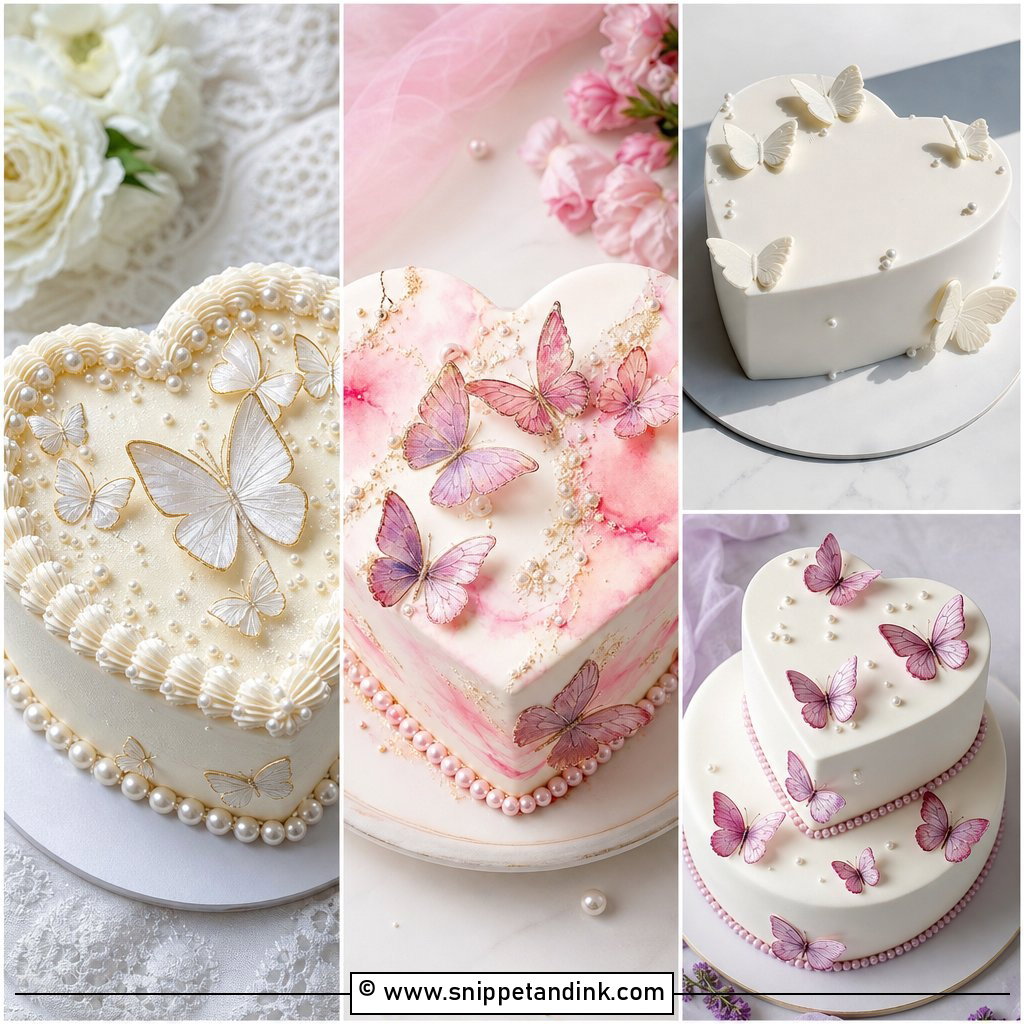
19. Butterfly Shaped Flower Wedding Cake
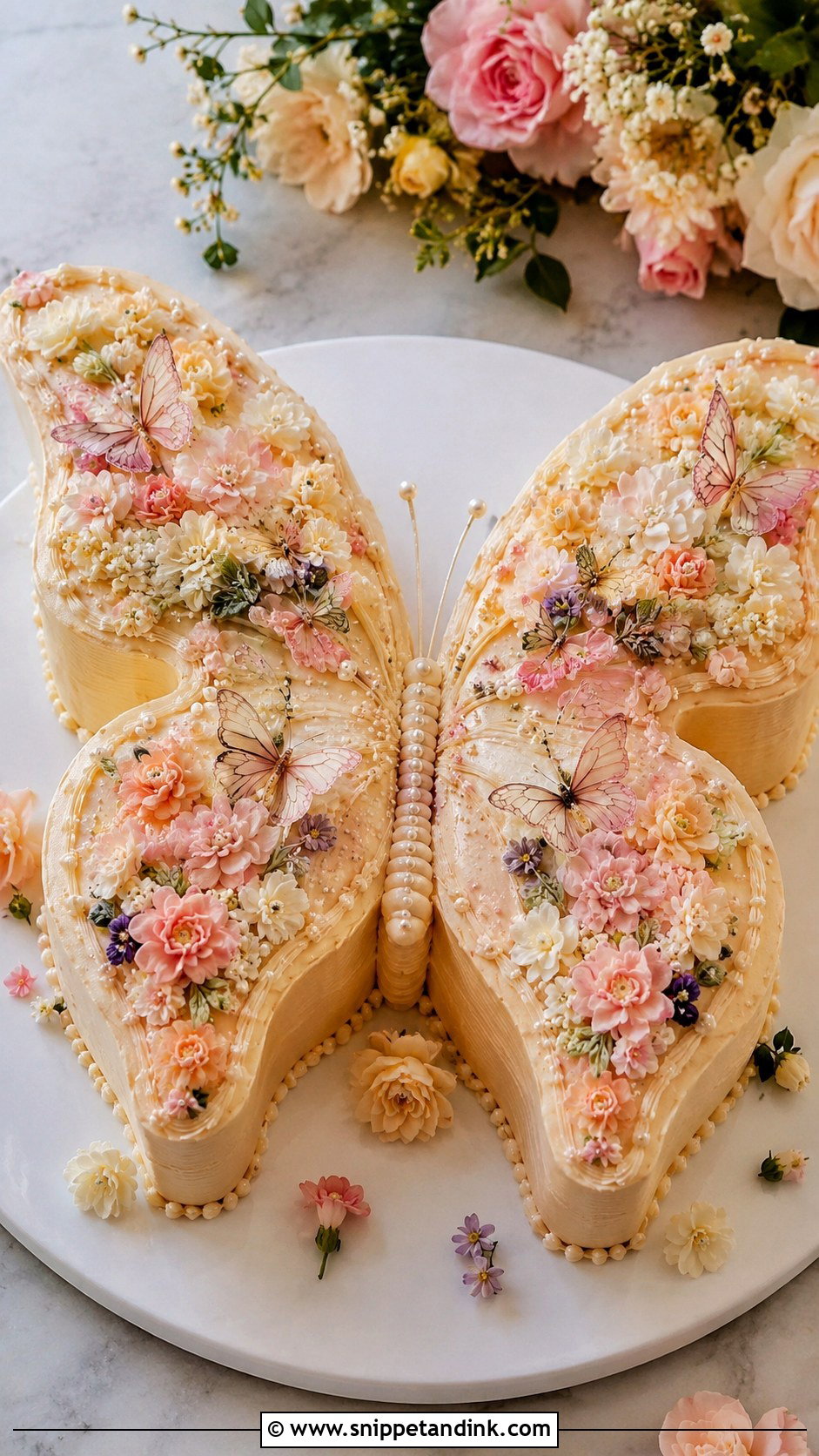
A butterfly shaped cake is carved, or assembled from two wing sections and a centre body. I cover it in smooth buttercream, then decorate the wings with edible flowers, sugar petals and colour patterns. Ivory, blush, lavender, peach and pale yellow keep it soft. Carved cakes need a firm sponge, a pound-cake style crumb rather than a light chiffon, or the wings lose their edge. It also serves fewer people than its size suggests because of the cut-away shape, so for a big guest list I’d add a kitchen cake. Smaller receptions and display tables show the shape best.

20. Tiered Flower Butterfly Wedding Cake
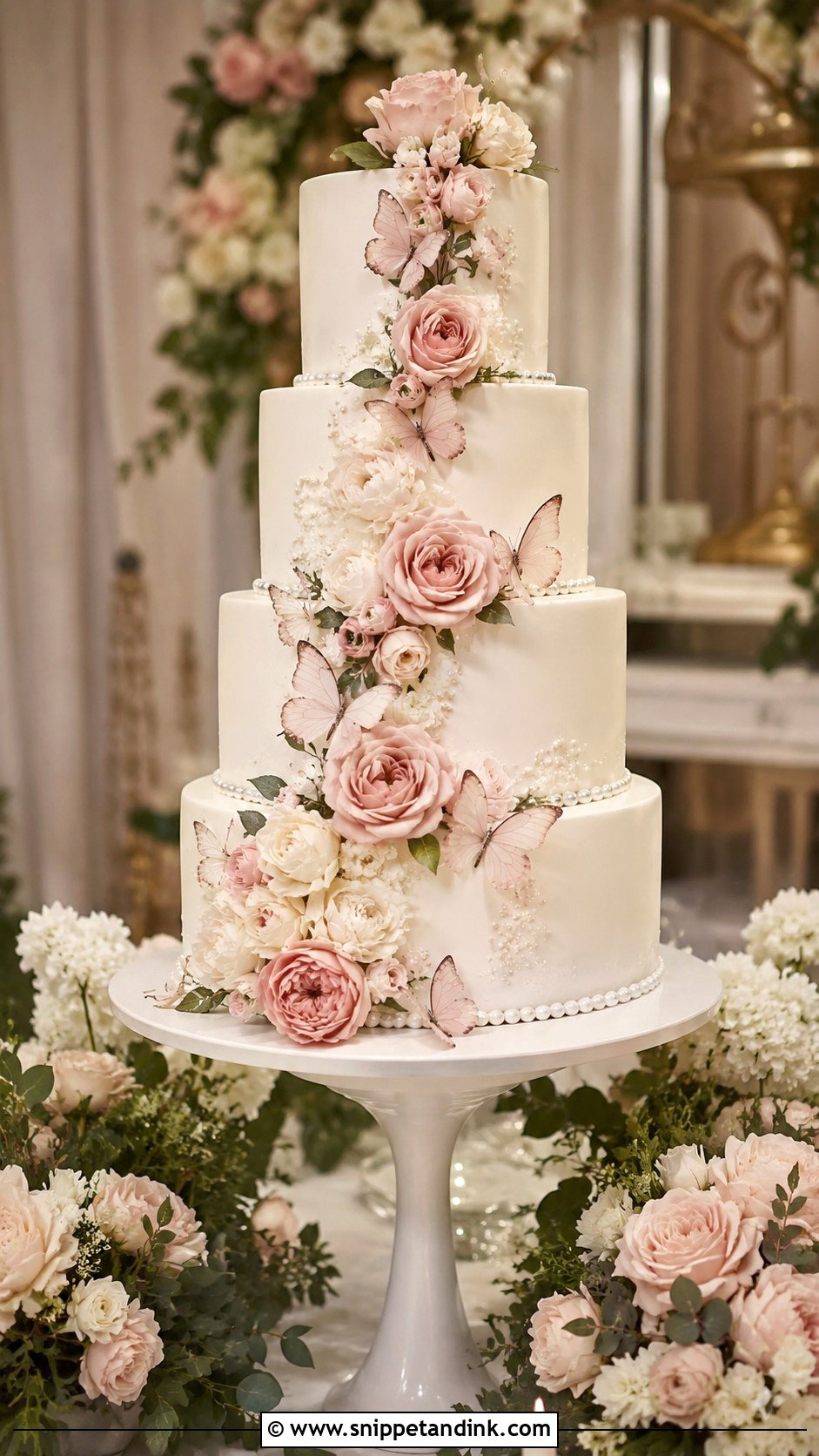
Tiers give you height for a full cascade: flowers from the top tier to the bottom, and butterflies following the same line so they seem to drift through the blooms. Two tiers keep it simple; four or five make it grand. Every tier above the base needs internal dowels and a board, and on a tall cake I’ll often stack on site rather than transport it assembled. Flowers, colours and butterfly size can all be scaled to the room, which is why this is the version I build most for full receptions.
Wings, Weather and the Walk to the Cake Table
Butterflies are usually the last thing I put on, and the first thing to suffer if the day runs hot or damp. This is the order I work in:
- I make the butterflies at least a few days ahead and store them in an airtight box with a sachet of silica gel, never in the fridge.
- The cake travels without them. They go into a separate rigid box and are placed at the venue once the tiers are stacked.
- I count them before I start. Odd numbers in small groups, usually three to seven per tier, look natural. Twenty identical ones in a ring look like wallpaper.
- The cake stays out of the fridge after butterflies go on. Condensation from a cold cake meeting a warm room will flatten wafer paper in minutes.
- For a humid outdoor reception I’ll swap wafer paper for gelatin or isomalt, or keep a set of spare butterflies in the box for touch-ups.
If your planner is handling the cake table, let them know the butterflies are fragile and shouldn’t be moved once placed. Most breakages I see happen when someone shifts the cake a few inches for a photo.
Flowers Do the Building, Butterflies Do the Moving
These cakes work because the flowers and the butterflies do different jobs. The flowers give the cake its shape, whether that’s white roses, a watercolour wash, wildflowers or a tall cascade. The butterflies are accents, a few of them, placed where they’d naturally land. Keep to one clear palette, make sure every decoration is either edible or properly prepared, and pick a frosting that can handle your venue’s temperature. Formal, rustic or tiny, the theme adapts once those three things are settled.
You'll Like These Ideas:




Leave a Reply