
Modest bridal wear has never offered more choice. For many Muslim brides, though, the gown is only part of the decision. The hijab, the sleeves, the neckline, the veil, the shoes and how it all behaves over a ten-hour day matter just as much. I treat it as one outfit from the crown of the hijab to the hem. The thirty looks below run from satin and lace gowns to embroidered abayas, kaftans, cape gowns and pastel colours, with notes on fit, lining and how each holds up through the nikah, the photos and the walima.
Adding Sleeves and Lining to a Gown That Isn’t Modest Yet
Many brides fall for a gown with a sweetheart neckline or sheer sleeves and assume it’s off the table. It usually isn’t. A good bridal seamstress can add coverage, but it takes planning, and I start that conversation at the first appointment rather than the last.
- Ask the shop whether matching fabric or lace can be ordered from the designer. Sleeves and neckline panels look built-in only when the fabric matches.
- Replace skin-tone illusion mesh with lining in the dress colour. Nude mesh reads as bare skin in most photos.
- Allow for two or three fittings, and start alterations around two to three months before the wedding. Adding sleeves is more work than a hem.
- Wear your hijab style to every fitting. A high neckline sits differently once fabric is wrapped under the chin.
If a gown would need its whole bodice rebuilt, I’d usually suggest a different dress. Heavy alterations cost more than brides expect, and the result can look patched.
1. White Islamic Wedding Dress With Hijab
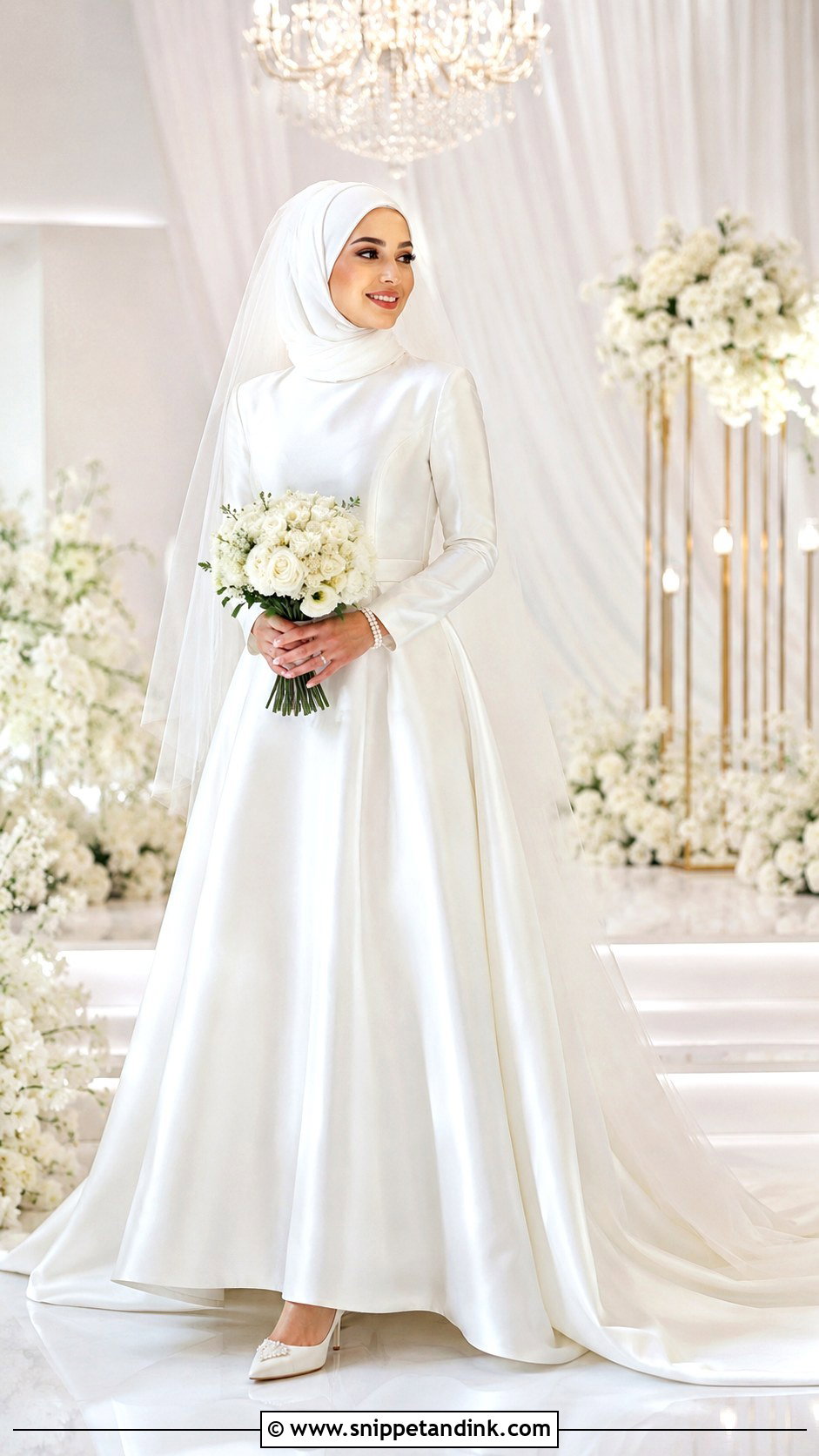
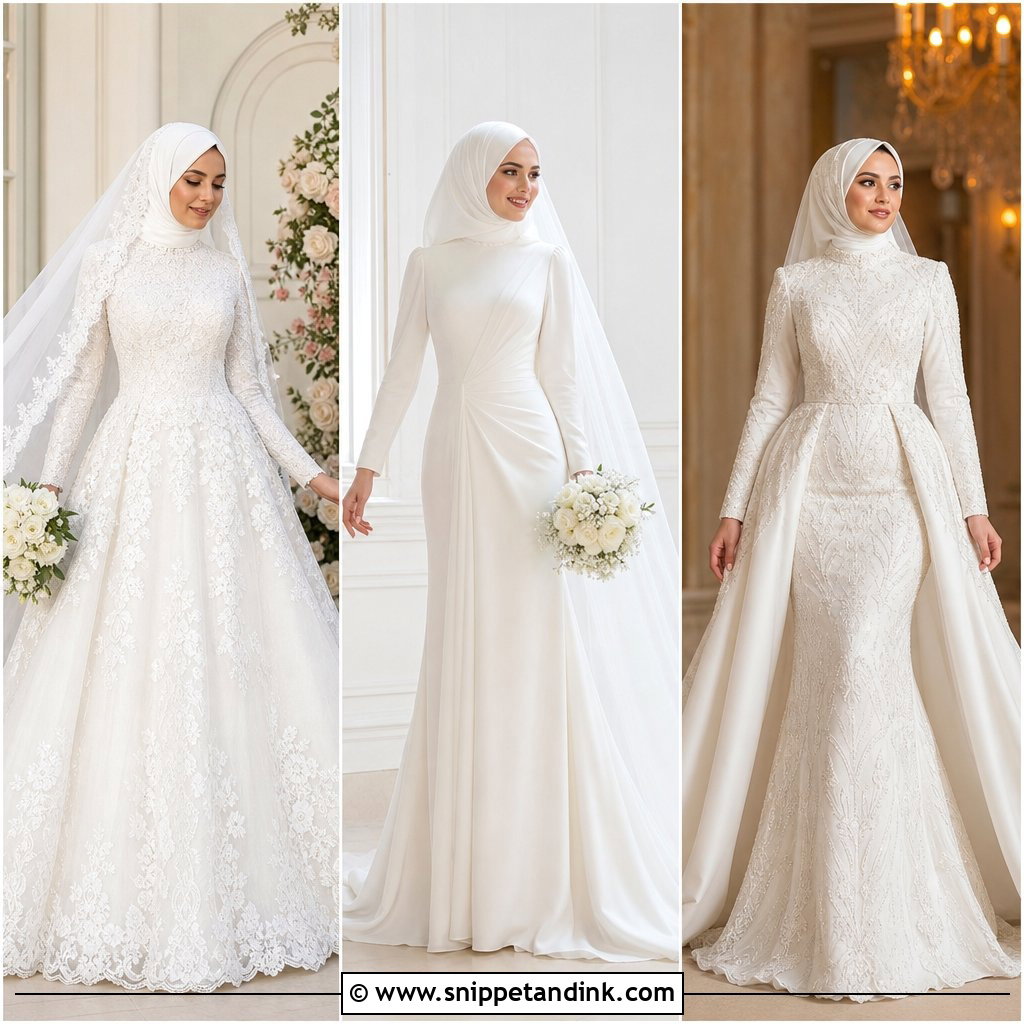
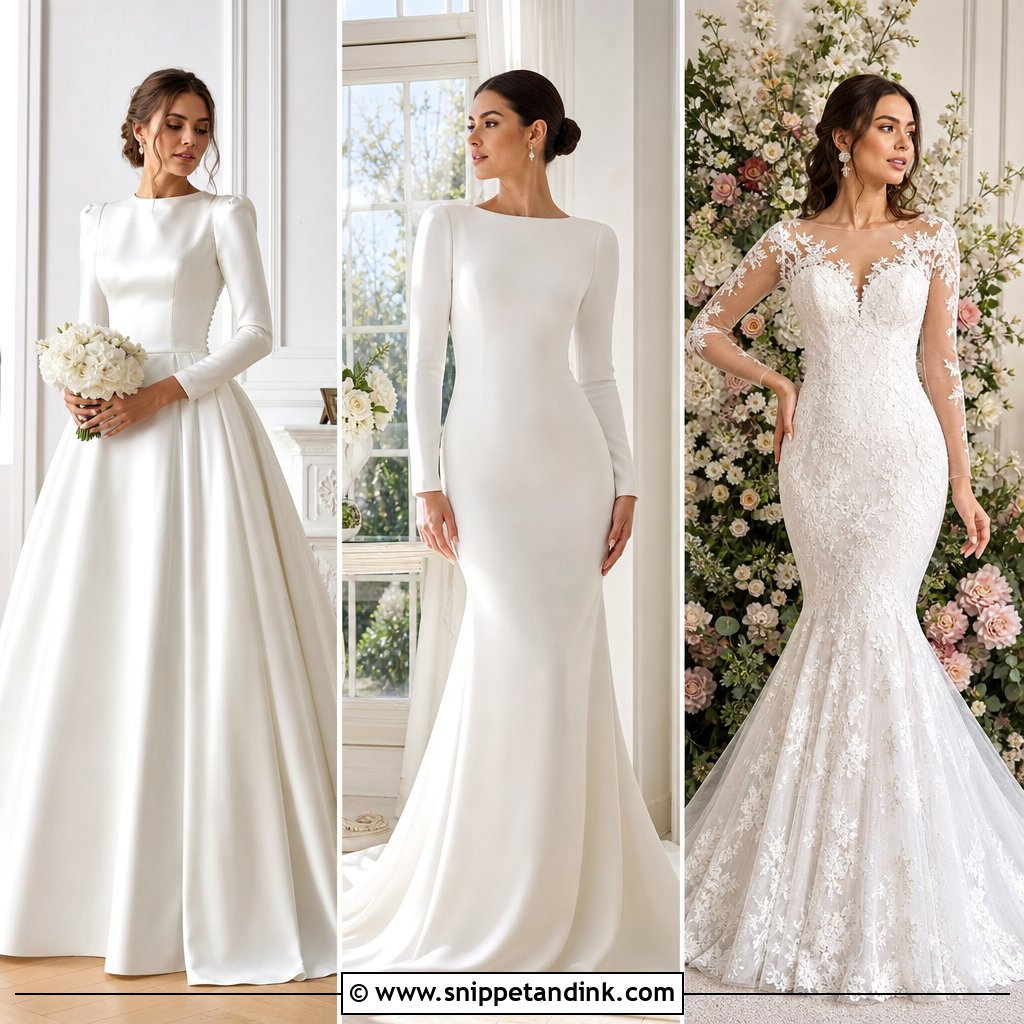
White with a matching hijab is the starting point for most brides I dress. A long-sleeve gown with a high neckline, a lined bodice and a full skirt covers well from every angle, including when you sit. Satin gives a clean finish; lace sleeves or pearl beading add detail without weight. I wrap a chiffon or silk hijab first and set the veil over it, so the veil can move without dragging the hijab off the hairline. Closed-toe ivory heels and a pearl bracelet are enough. Ballrooms and hotel venues suit it.
2. Lace Islamic Wedding Dress With Long Sleeves
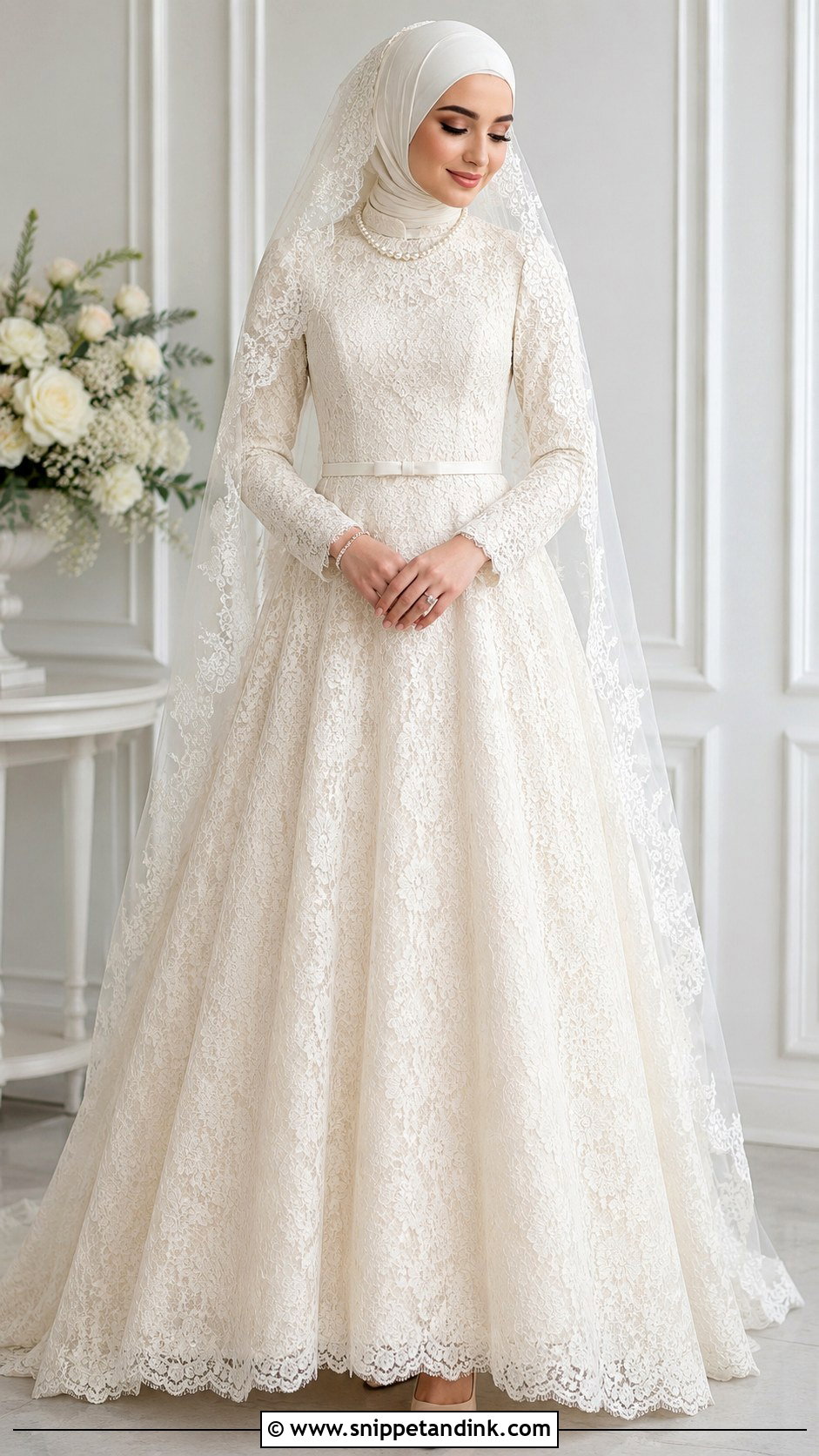
Lace only stays modest when it’s fully lined. Many lace gowns use skin-tone mesh behind the sleeves, which reads as bare arm in photos; I ask the shop for lining in the gown’s own colour instead. Look for a high neckline, a fitted waist and an A-line skirt. A matching hijab in ivory or soft white keeps it cohesive, and a lace-trimmed veil works if the dress has floral embroidery. Keep jewellery to pearl studs and wear nude or ivory pumps.
3. Satin Islamic Wedding Dress With Veil
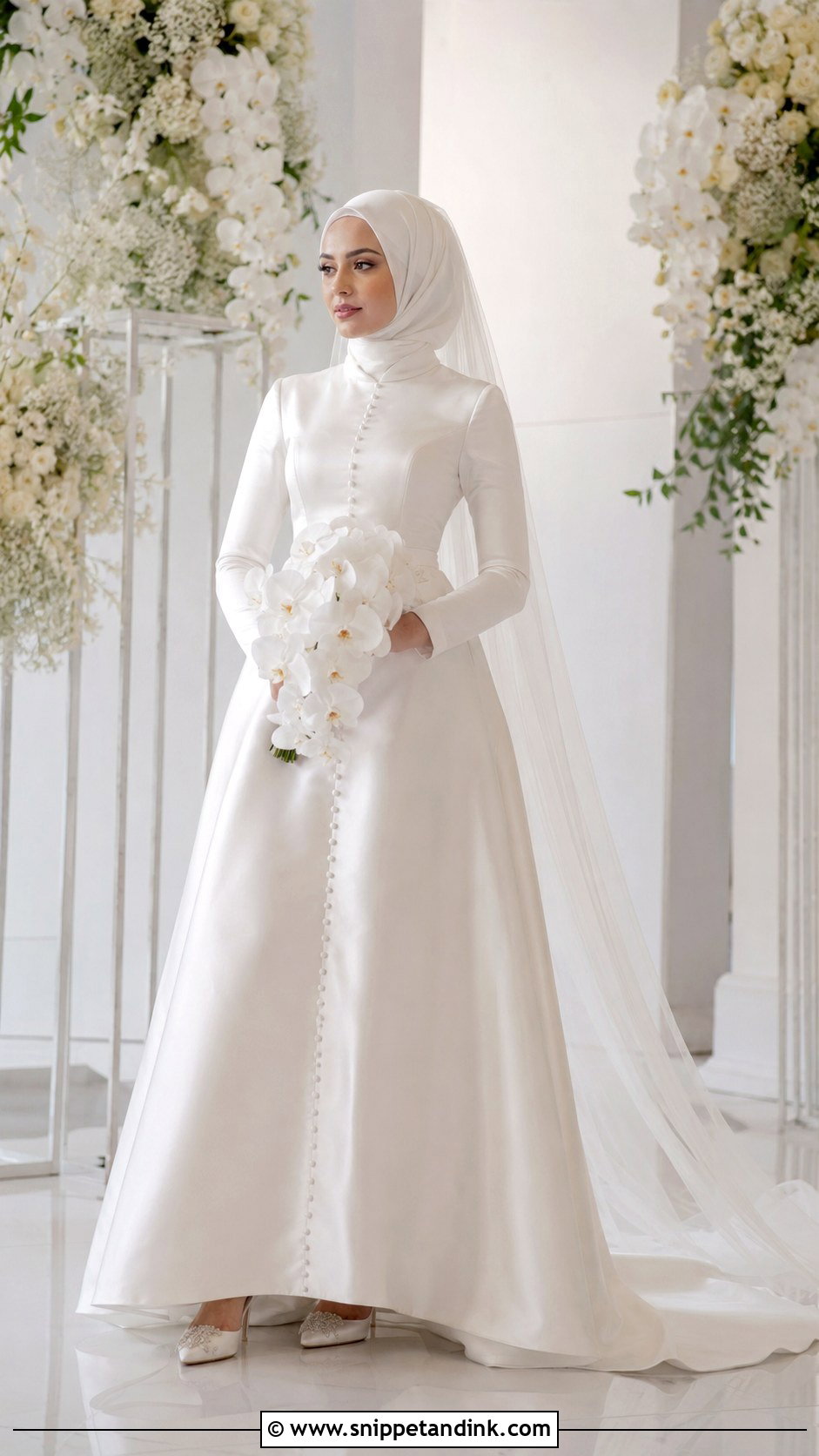
Satin does the work on its own: it catches light, holds structure and looks finished without embellishment. A long-sleeve gown with a high neck, covered buttons and a structured waist suits it. Match the hijab exactly or choose chiffon in the same shade. A cathedral veil adds drama, though it adds weight at the crown too, so I anchor it with a comb into a firm underscarf. White roses or orchids in a structured bouquet suit the clean lines.
4. Ball Gown Islamic Wedding Dress With Hijab
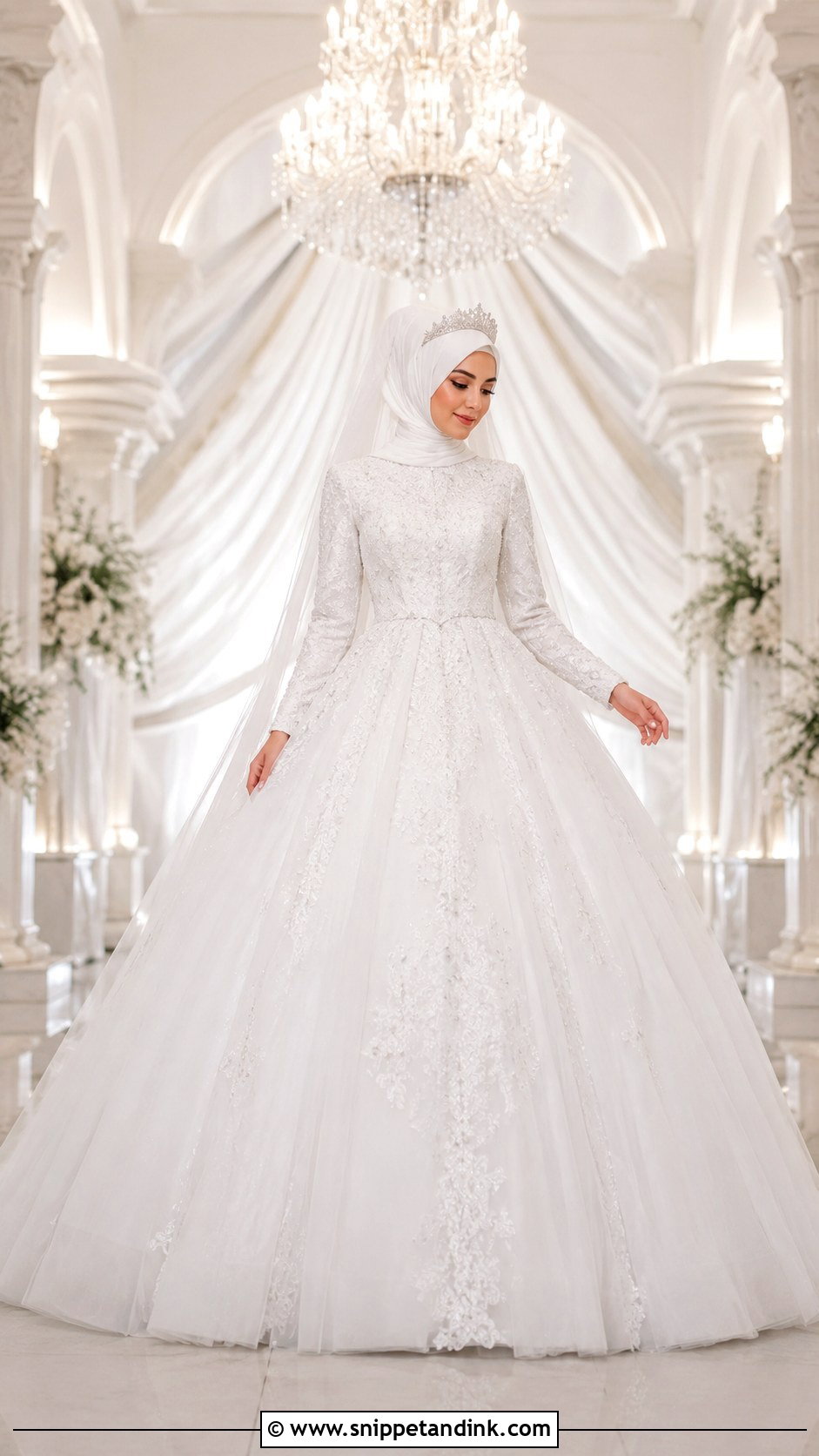
Ball gowns make an entrance. Tulle, organza or mikado gives volume; mikado holds its shape best and creases least. Balance the skirt with a modest bodice, long sleeves and a high neckline, and keep the waist defined. A long veil over the crown and a tiara or pearl headpiece suit the scale. Platform heels help with the hem length, since nobody will see them. One warning: big skirts are hard to manage in a car and a narrow aisle, so check the venue doors and the car before committing.
5. A Line Islamic Wedding Dress With Hijab
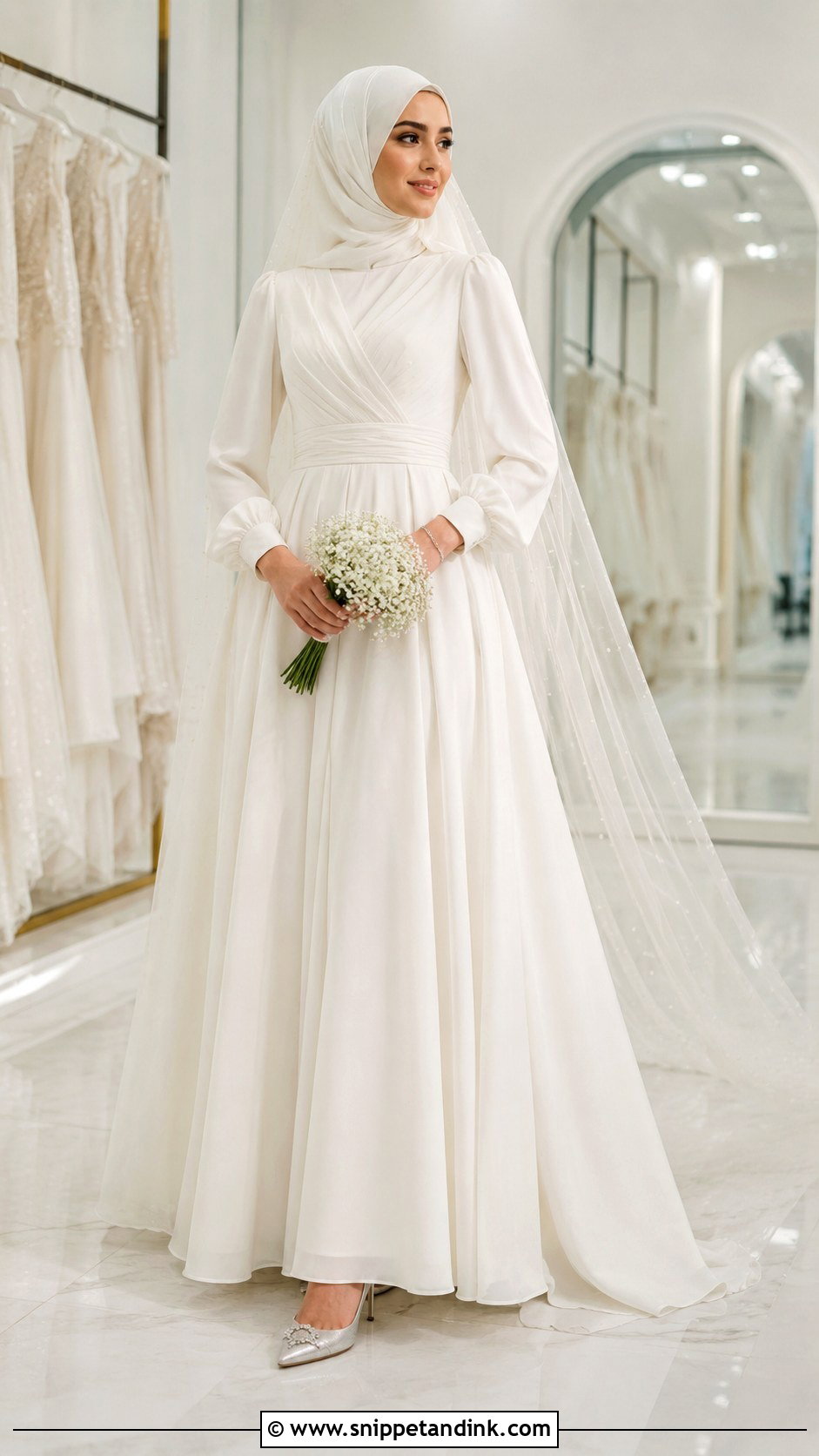
A-line is the shape I suggest most often because it suits almost every body and lets you move freely. It fits at the bodice and falls away from the waist. Choose long sleeves, a high neckline, soft lining and a skirt that moves. A chiffon hijab keeps it light; a pearl veil adds bridal detail. Silver or ivory heels and subtle jewellery finish it. It works at a small family wedding and a large hall alike.
6. Simple Islamic Wedding Dress With Hijab
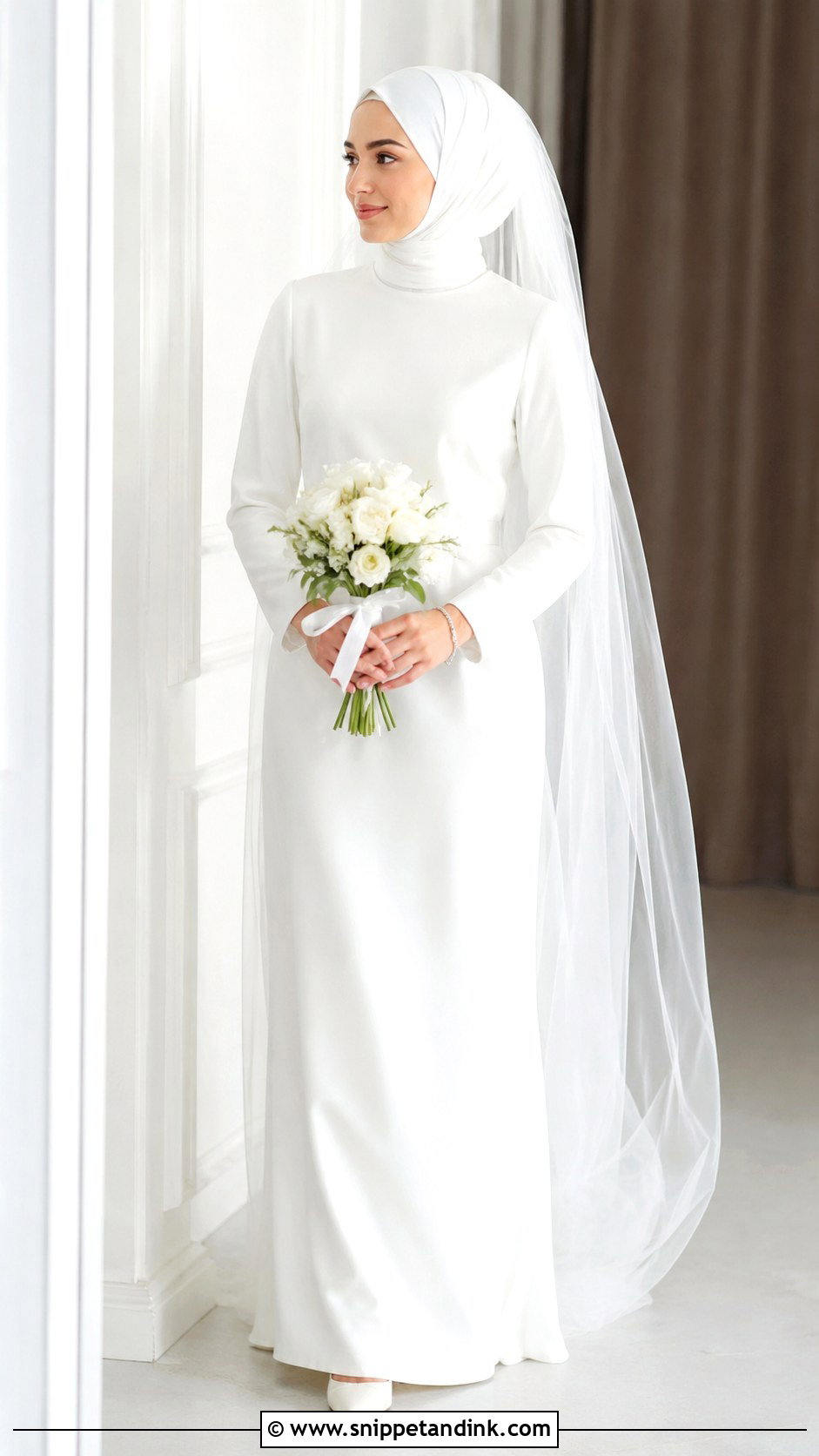
Plain gowns rely on fit, so this is where I’d spend money on tailoring rather than fabric. A crepe or matte satin gown with long sleeves, a high neck and a straight or A-line skirt looks fresh. The hijab can match exactly or sit one shade softer for gentle contrast. A plain veil, pointed heels and a small bouquet complete it. Minimal pearl earrings or a slim bracelet are plenty. Civil ceremonies and intimate weddings suit this look.
7. Embroidered Islamic Wedding Dress With Hijab
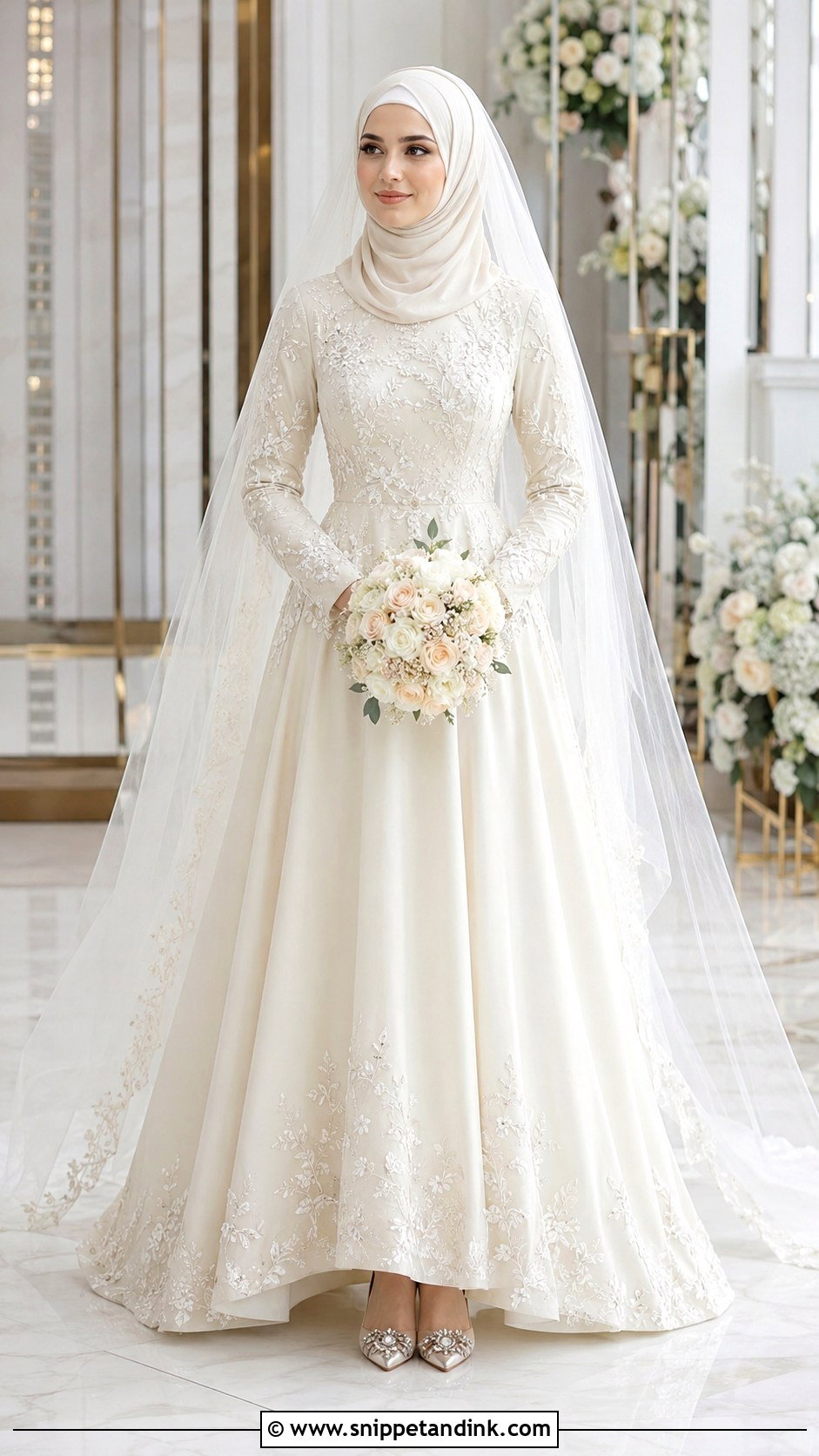
Embroidery gives a modest gown personality. Place it on the sleeves, bodice, hem or veil; floral work feels romantic, geometric patterns more contemporary. If the embroidery sits on tulle or mesh, the gown must be lined underneath, or the gaps between motifs show skin. A plain hijab keeps attention on the stitching. I match jewellery to the thread: soft gold with ivory embroidery, silver with cooler white. Coordinate the bouquet colours with the work and the outfit reads as one.
8. Beaded Islamic Wedding Dress With Hijab
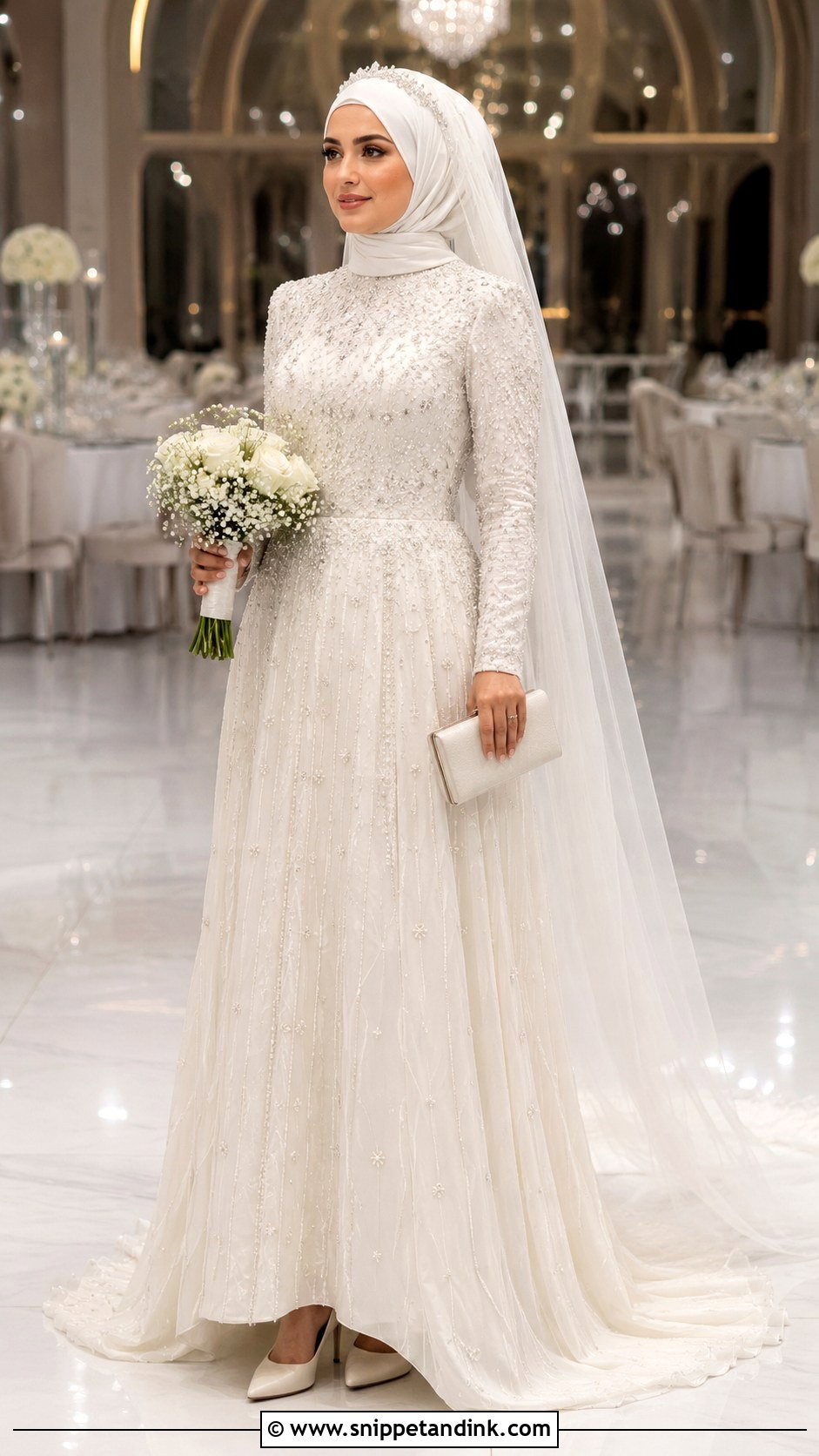
Beading suits evening weddings, because tiny pearls, crystals or sequins catch the venue lighting. Look for long sleeves, a lined bodice and a high neckline so no extra layers are needed. Beading has weight; a heavily beaded sleeve can pull a lightweight bodice out of shape, so I check the shoulder seams at the fitting. Since the dress sparkles, keep the hijab smooth: plain chiffon with a soft veil. Sleek heels and a small satin clutch finish it.
9. Pearl Islamic Wedding Dress With Hijab
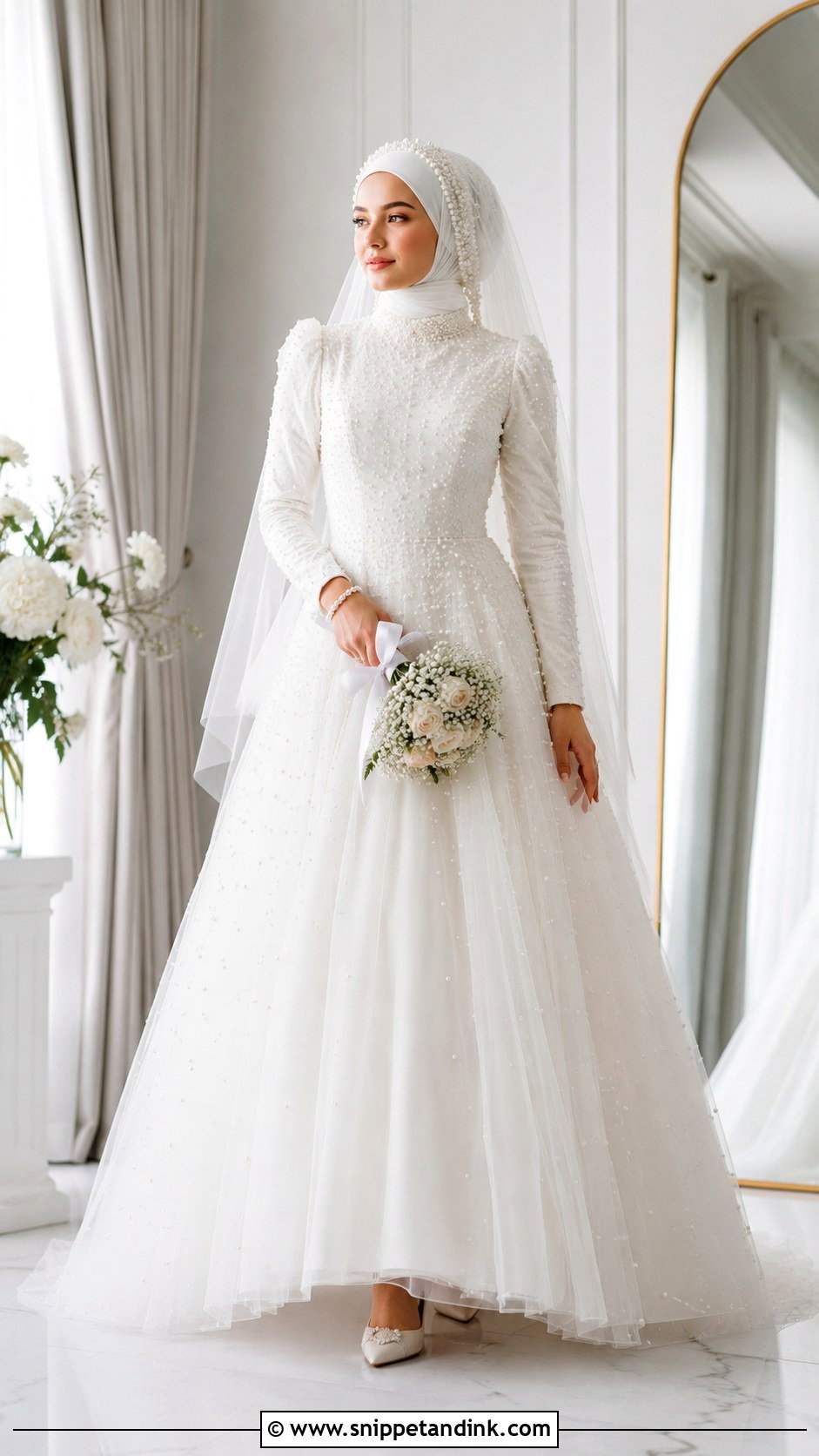
Pearls feel soft and bridal, and they don’t throw harsh glints in flash photography the way crystals can. Scattered pearls across the sleeves, bodice or veil look delicate on tulle, chiffon or satin. Keep the silhouette modest so the pearls enhance it rather than crowd it. A pearl-edged hijab or veil ties it together; pearl drop earrings or a bracelet stay in the same family. I check that pearls are sewn rather than glued, as glued ones drop off through the day.
10. Cape Islamic Wedding Dress With Hijab
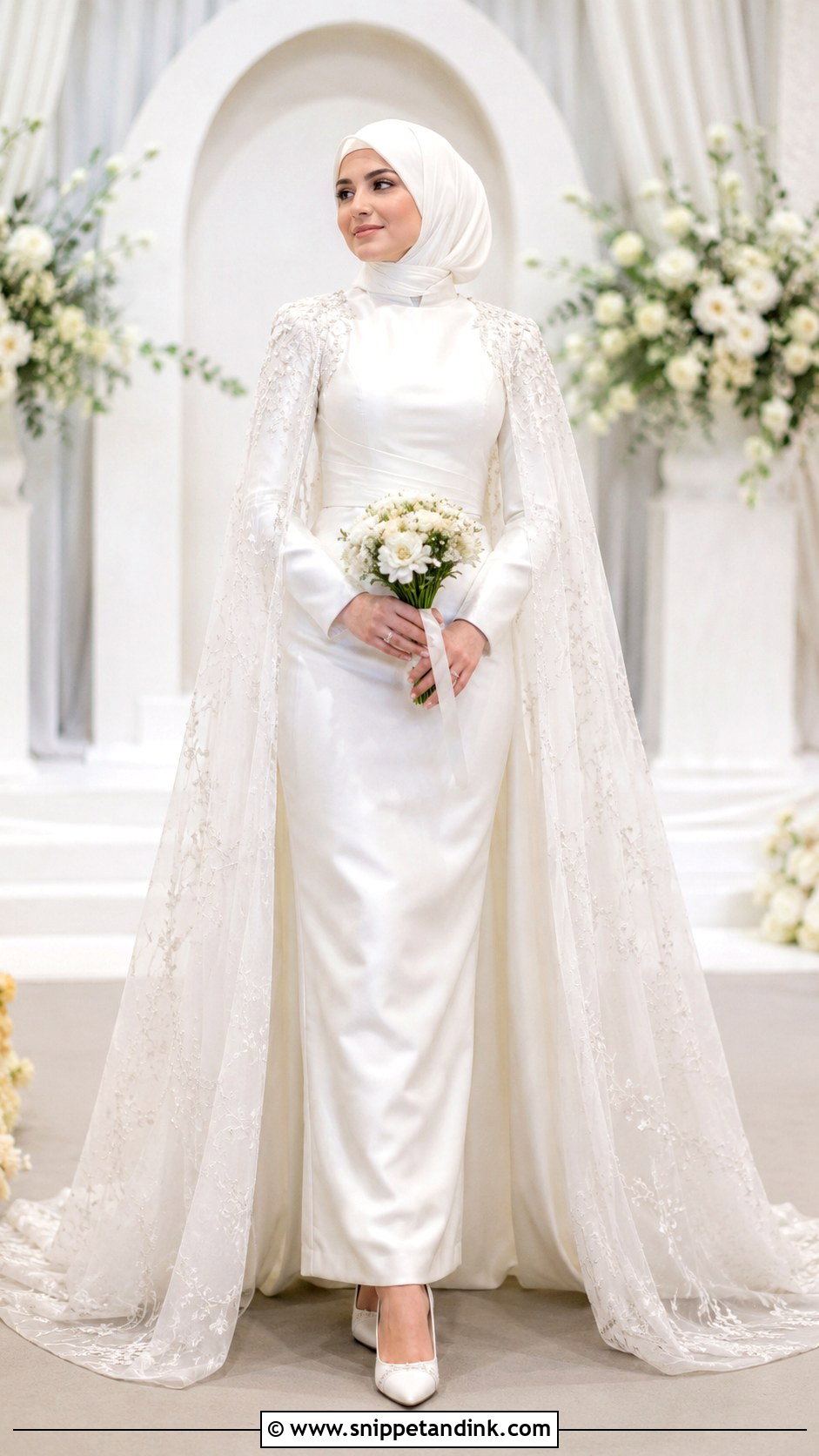
A cape Islamic wedding dress adds coverage and movement without bulky layers. The cape can attach at the shoulders or fall from the neckline over a simple gown. I like a sheer or embroidered cape over a satin, crepe or lace dress. Tuck a smooth hijab neatly under the cape at the neck so the line stays clean. Capes catch the air as you walk, which gives the photographer lovely back and side shots during the ceremony. Keep jewellery minimal.
11. Abaya Islamic Wedding Dress With Hijab
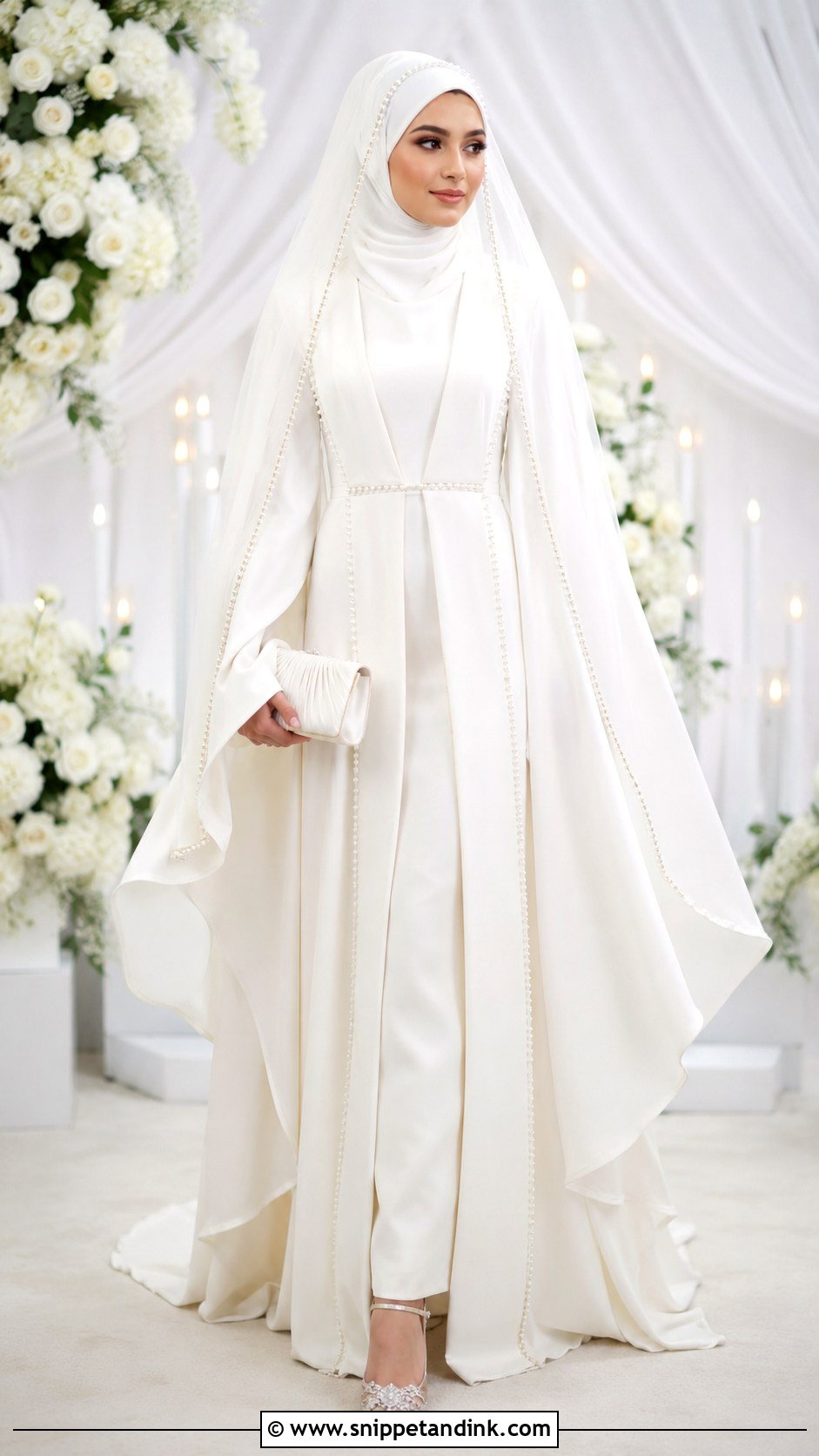
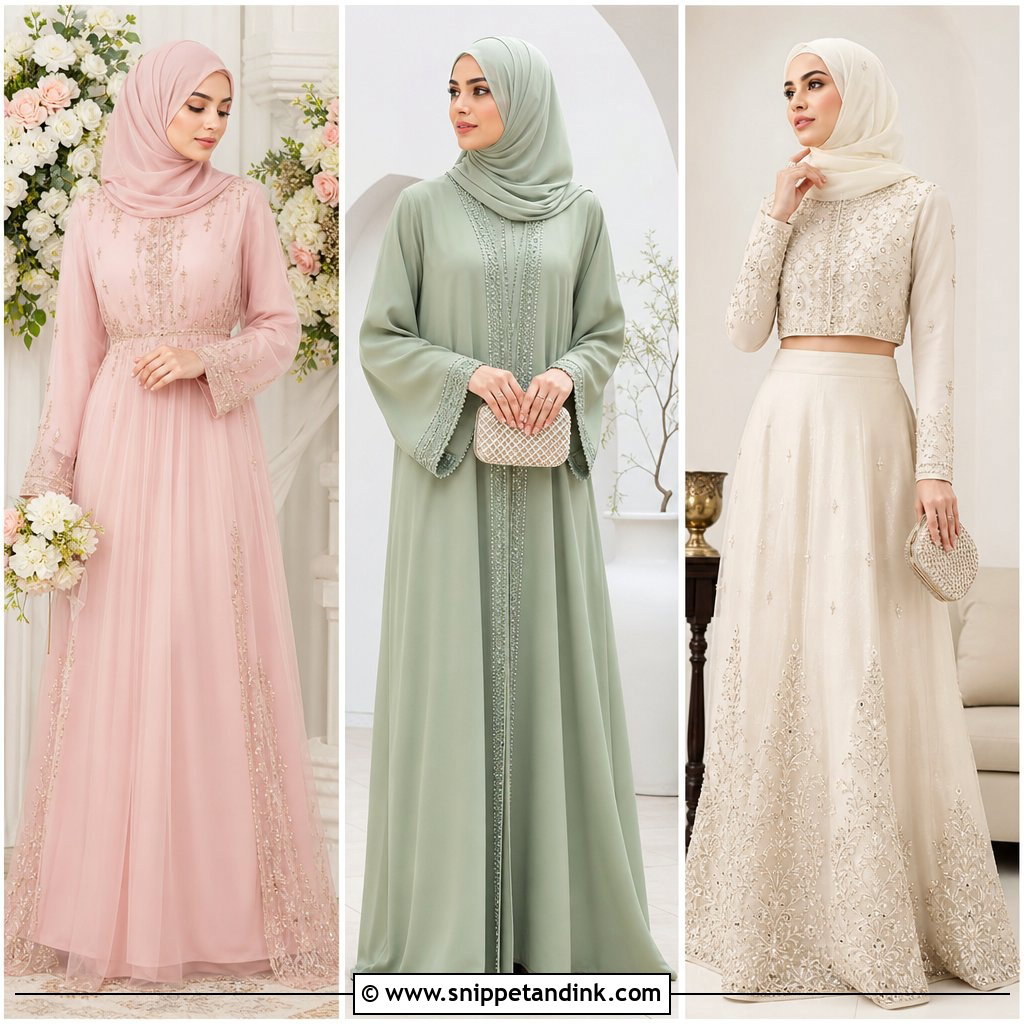
Bridal abayas range from flowing open cuts with wide sleeves to closed versions with pearl trim, embroidery or fine beading. White, ivory, champagne and soft gold all read bridal. I always put a fitted inner dress underneath an open abaya, so it can move without the bride holding it closed. Wrap a matching hijab neatly around the face and add a veil for a more traditional look. Embellished heels finish it. It suits a nikah, a family celebration or a bride who prefers relaxed coverage.
12. Kaftan Islamic Wedding Dress With Hijab
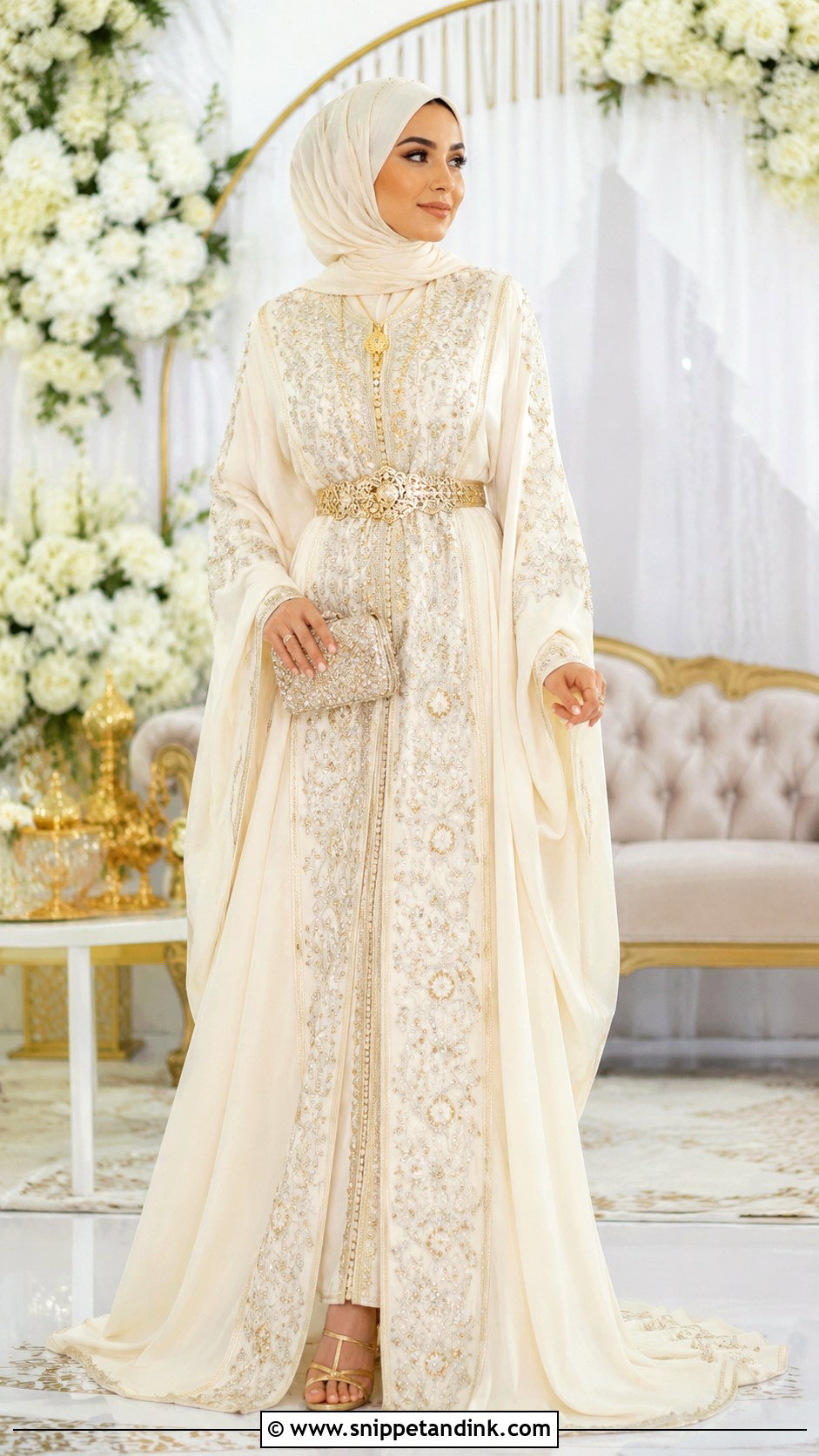
Kaftans give flow and comfort with cultural detail: rich embroidery, metallic threadwork, beaded belts and graceful sleeves. The shape is modest by nature, and a defined waist makes it bridal. Ivory, cream, blush or gold all suit. A soft hijab in the same colour family balances it. The belt is often heavy on a bridal kaftan, so I have brides sit in it at the fitting; a stiff belt can dig in once you’re seated for dinner. It fits Moroccan, Middle Eastern, South Asian or fusion celebrations.
13. Pakistani Islamic Wedding Dress With Hijab
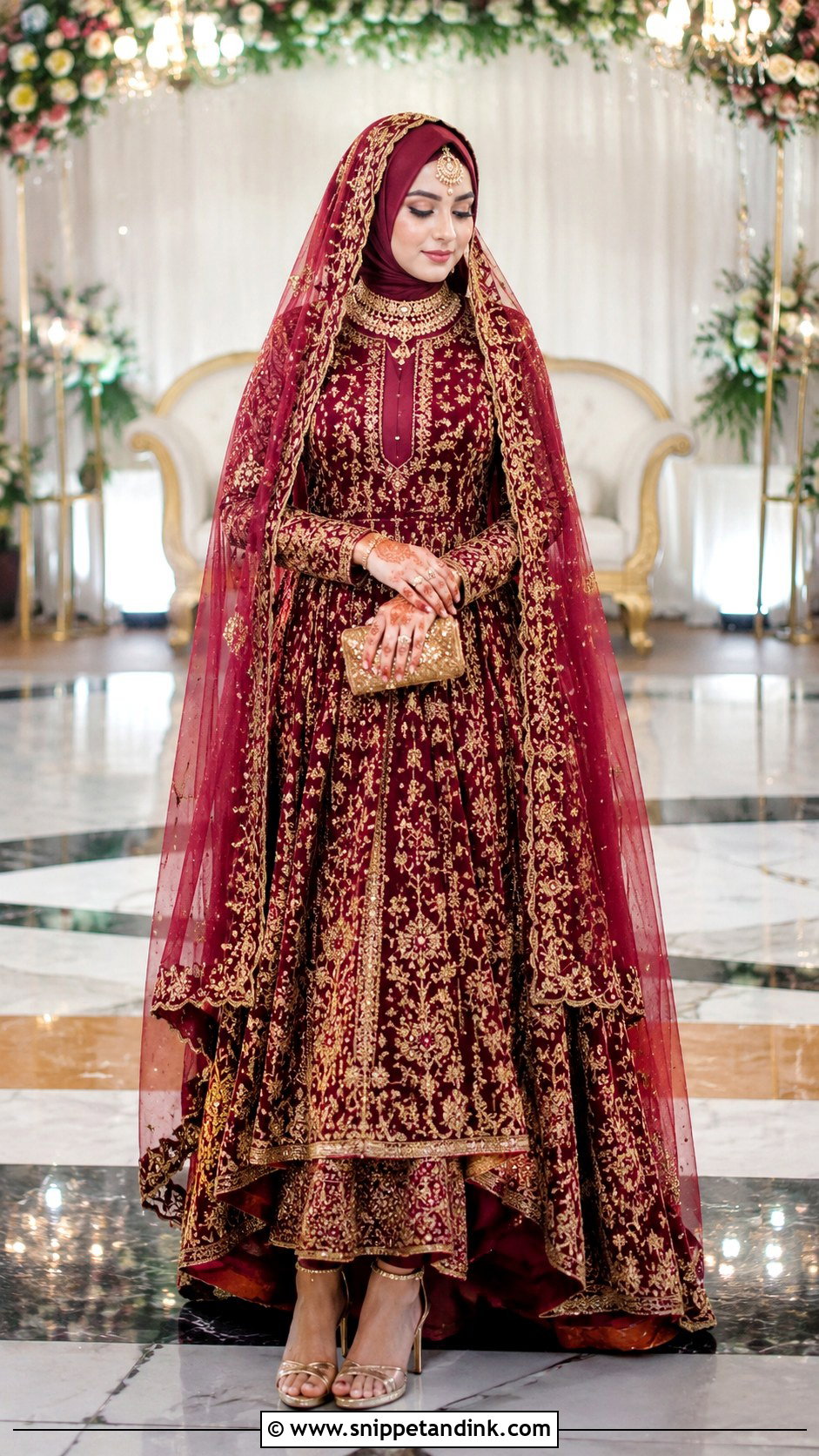
Pakistani bridal wear is rich and colourful. A long gown, a lehenga with a long modest top or a heavily embroidered maxi are all common, often in red, maroon, ivory, champagne or blush. Keep sleeves long, the neckline high and the dupatta or veil lined. Style the hijab under the dupatta so it stays covered when the dupatta shifts. Heavy embroidery weighs a lot, and a full bridal lehenga can be tiring by the walima; I’d plan a lighter outfit for whichever event runs longest. Gold jewellery and embellished heels suit.
14. Turkish Islamic Wedding Dress With Hijab
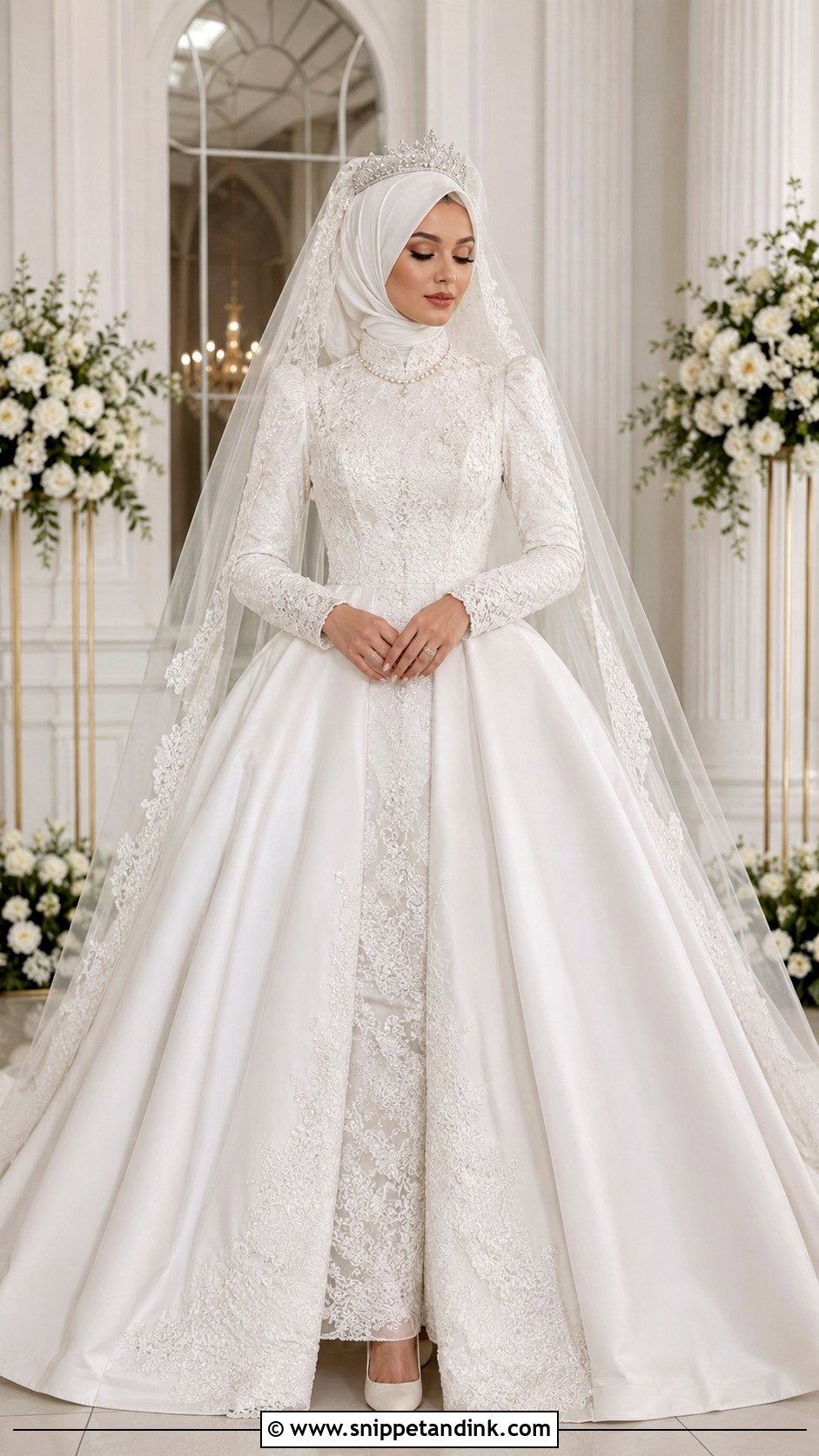
A Turkish Islamic wedding dress tends toward structured bodices, long sleeves, high necklines, dramatic skirts and carefully placed lace. A smooth satin or chiffon hijab sits under a crown, tiara or veil. White or ivory with a long train gives a regal look; lace sleeves and a lighter A-line soften it. The hijab style here is usually high and rounded at the crown, which gives the tiara a solid base. Pearl jewellery and closed-toe heels finish it.
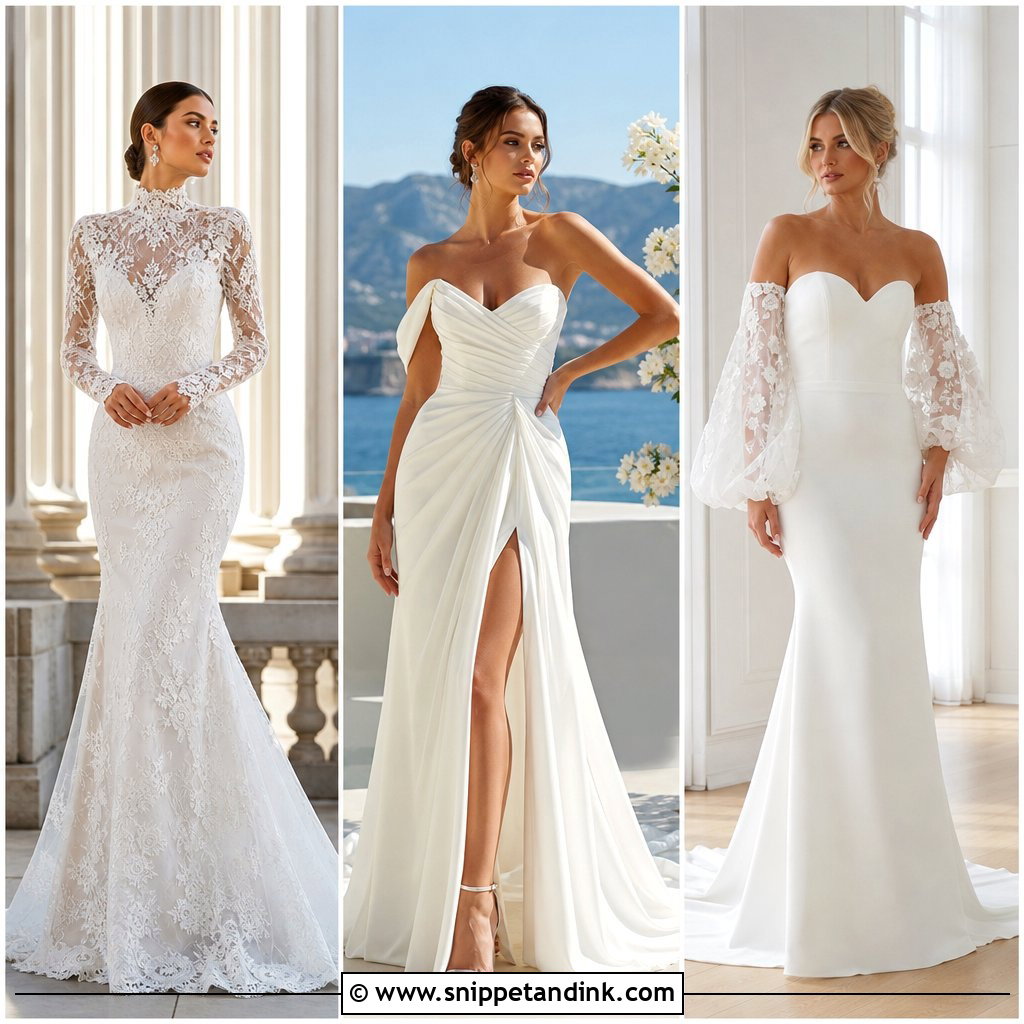
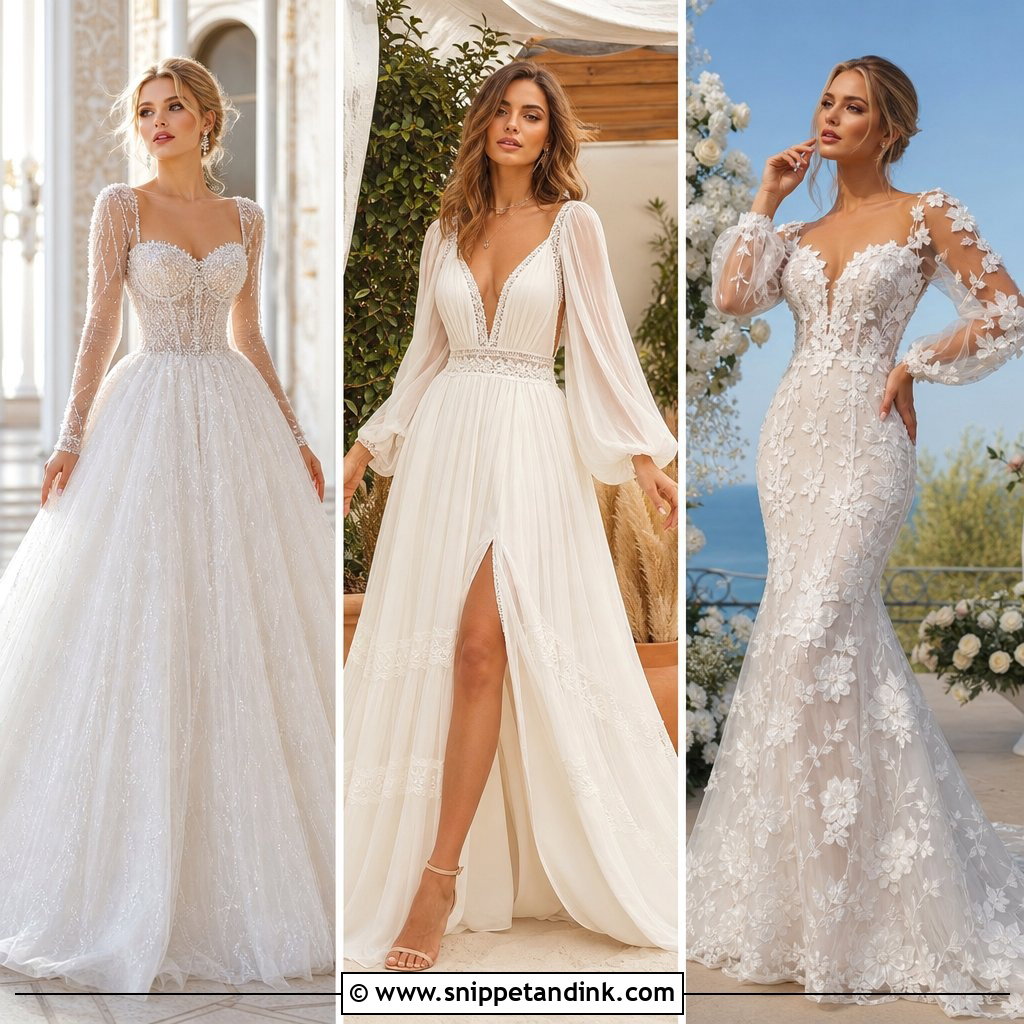
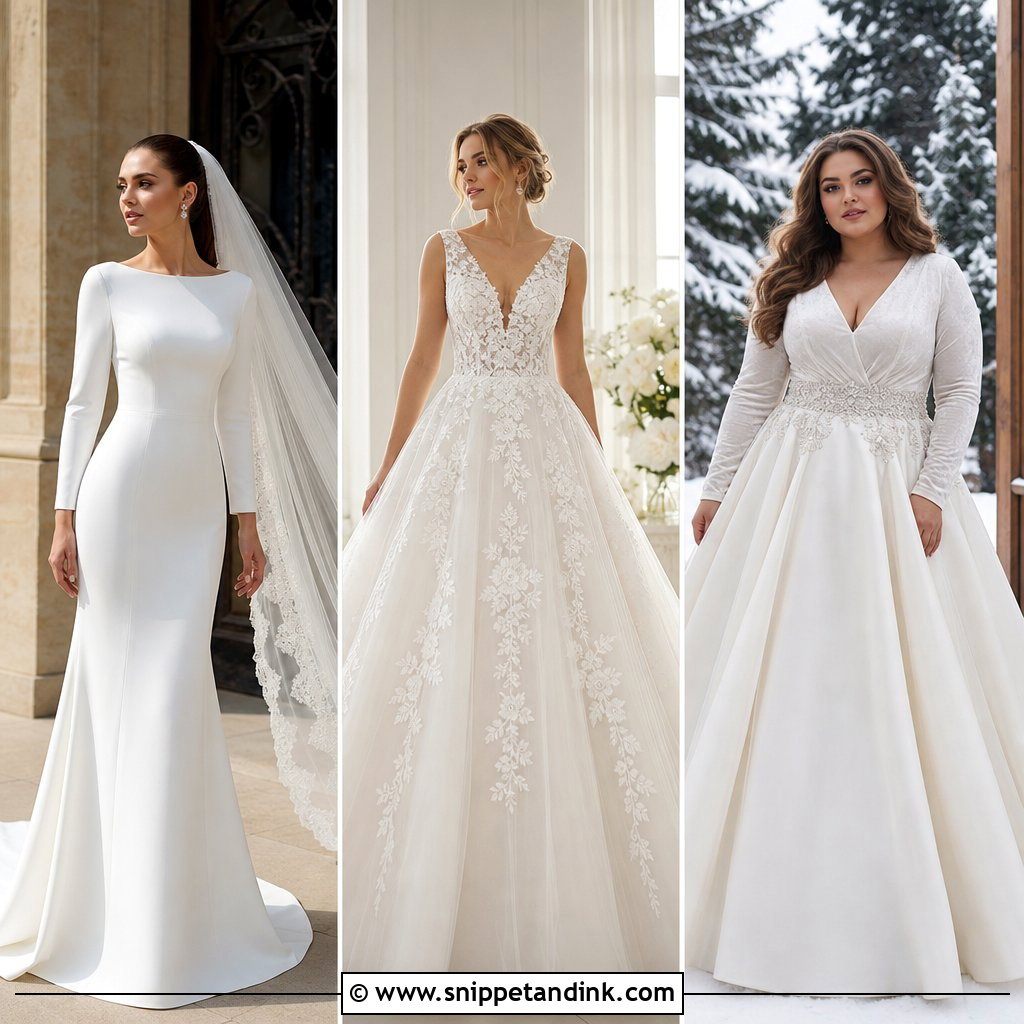
15. Moroccan Islamic Wedding Dress With Hijab
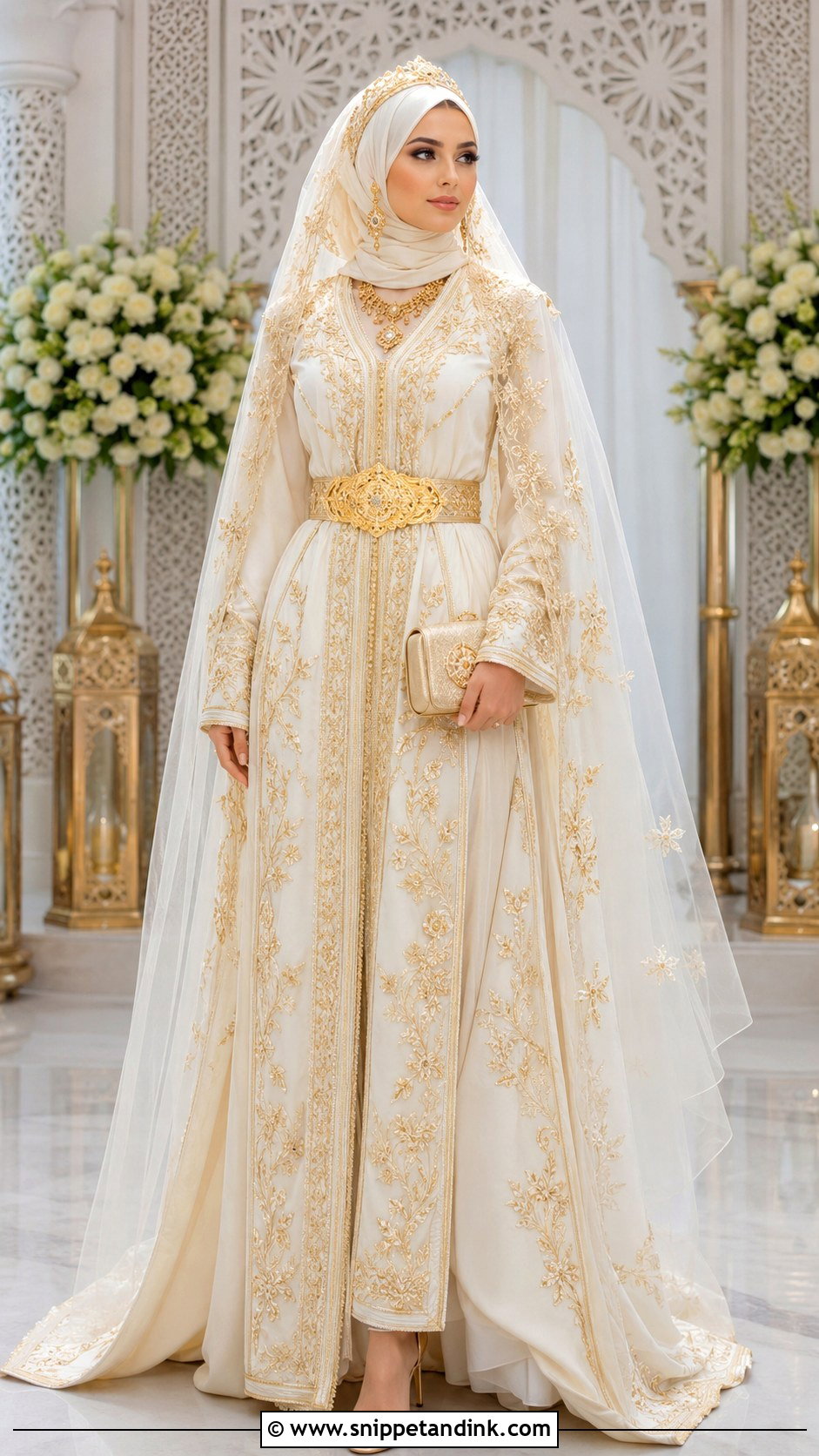
A Moroccan Islamic wedding dress usually means a bridal kaftan or takchita, with rich embroidery, a defined belt and fabrics like silk, brocade or velvet. White, emerald, gold, ivory and deep red all work. Pair it with a matching hijab and a soft veil draped over the shoulders. Moroccan weddings traditionally involve several outfit changes through the night, so I’d plan the hijab style to stay put through a quick change. Gold heels and ornate jewellery complete it.
16. Indian Islamic Wedding Dress With Hijab
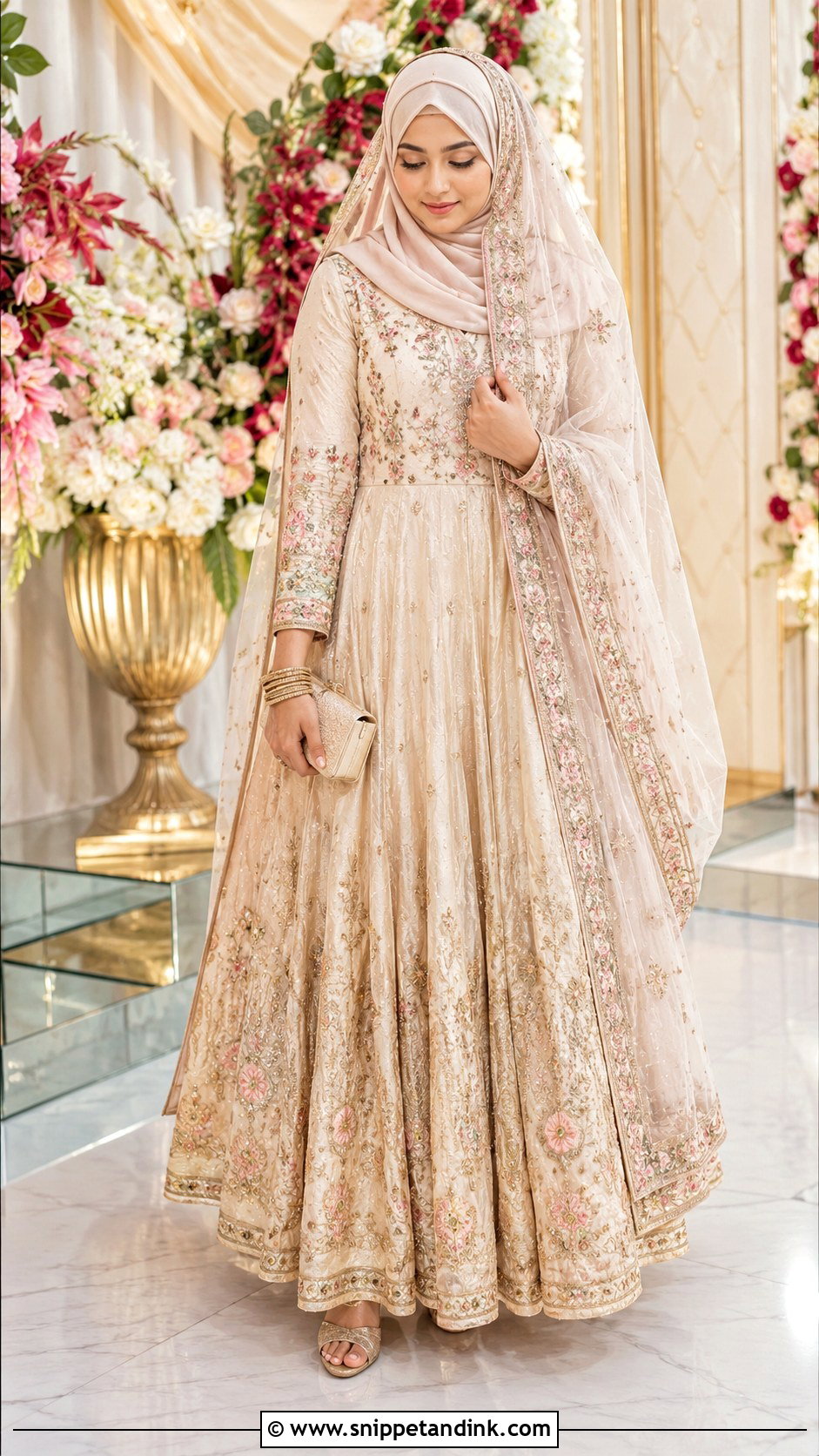
An Indian Islamic wedding dress might be a long-sleeve anarkali gown, a modest lehenga set or an embroidered maxi. Silk, georgette, velvet or organza with a high neckline and full lining work well. The hijab can match the dupatta or sit beneath it. Colours run from ivory and blush to red, emerald and gold. Georgette is my pick for a warm venue, because it breathes and drapes without clinging. Bangles and embellished heels finish it.
17. Gold Islamic Wedding Dress With Hijab
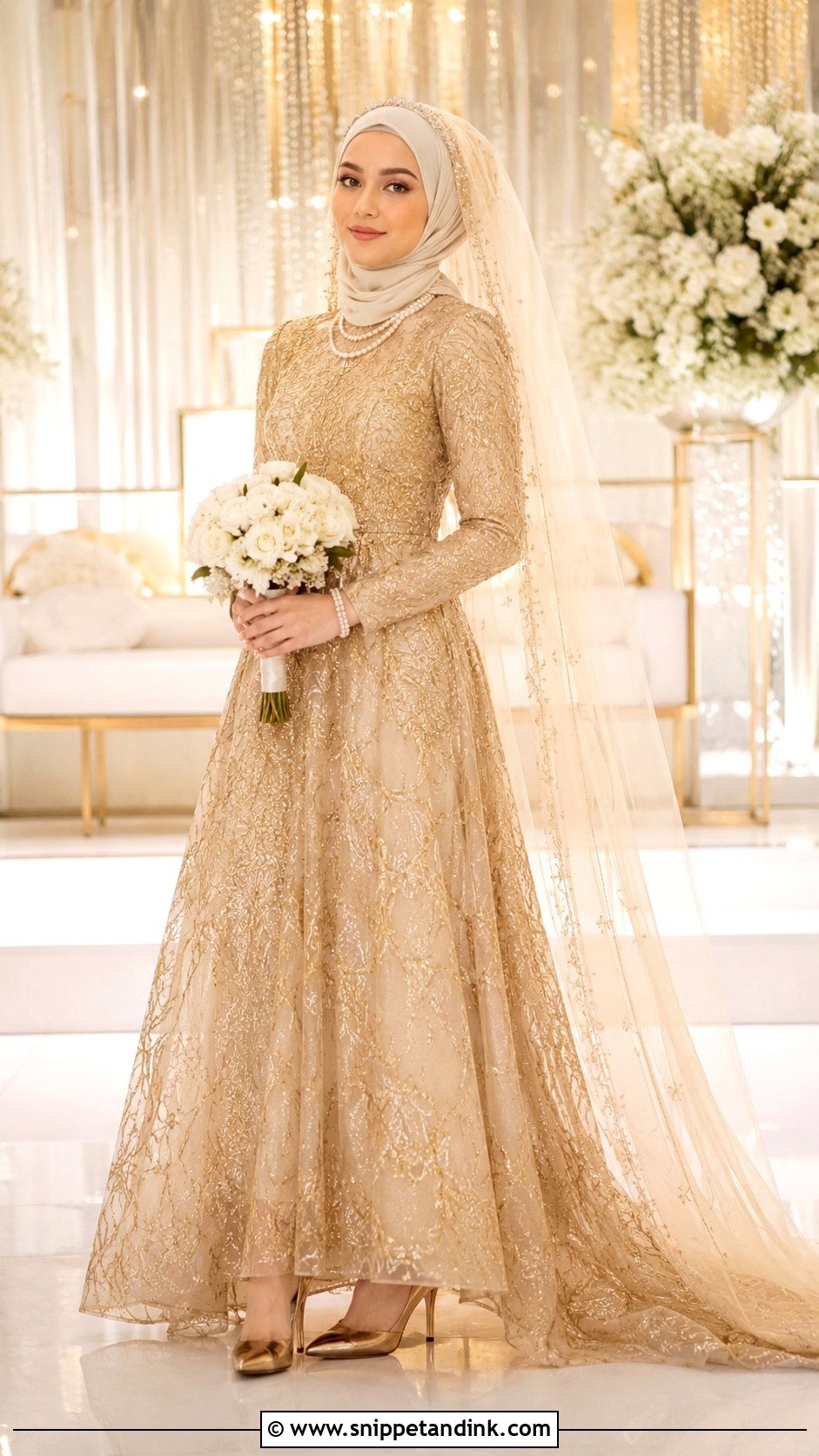
Gold suits a bride who wants something warmer than white. Champagne gold is subtle; deep gold embroidery is richer. Keep it modest with long sleeves, a high neckline and a flowing skirt. A cream, beige or matching gold hijab avoids a harsh line at the face. Gold reflects warm light strongly, so I’d ask the photographer to test a few frames in the reception lighting. Pearl jewellery and gold heels suit evening receptions and cultural celebrations.
18. Champagne Islamic Wedding Dress With Hijab
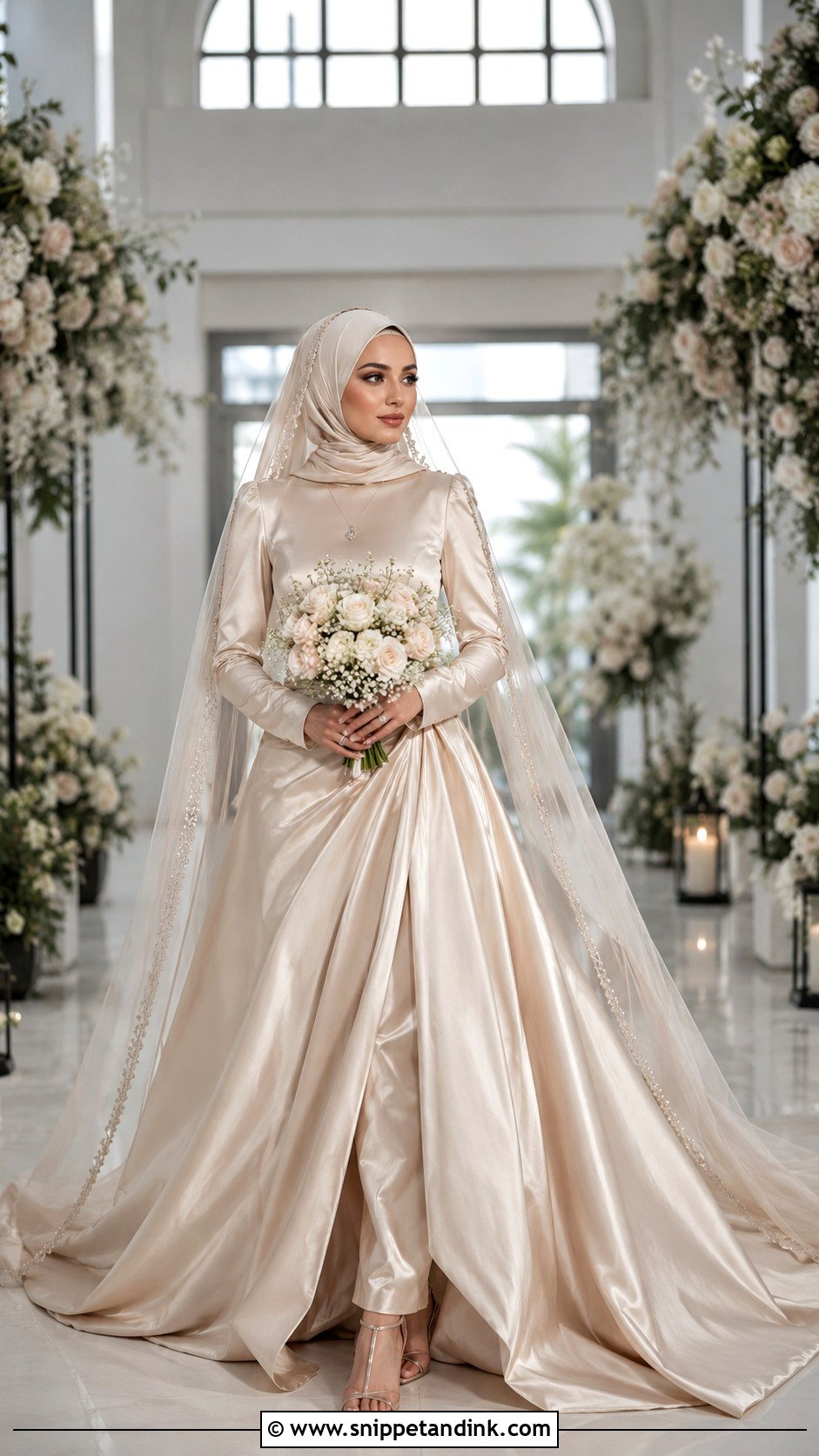
Champagne sits warmer than white and suits most skin tones, which is why I suggest it to brides who find white too stark. Satin, tulle, lace or beaded fabric set the formality. A matching champagne hijab gives a smooth, expensive finish. The balance rule I use: a detailed dress gets a plain veil; a simple dress gets a pearl-trimmed one. Nude or metallic heels and a soft bouquet complete it.
19. Blush Islamic Wedding Dress With Hijab
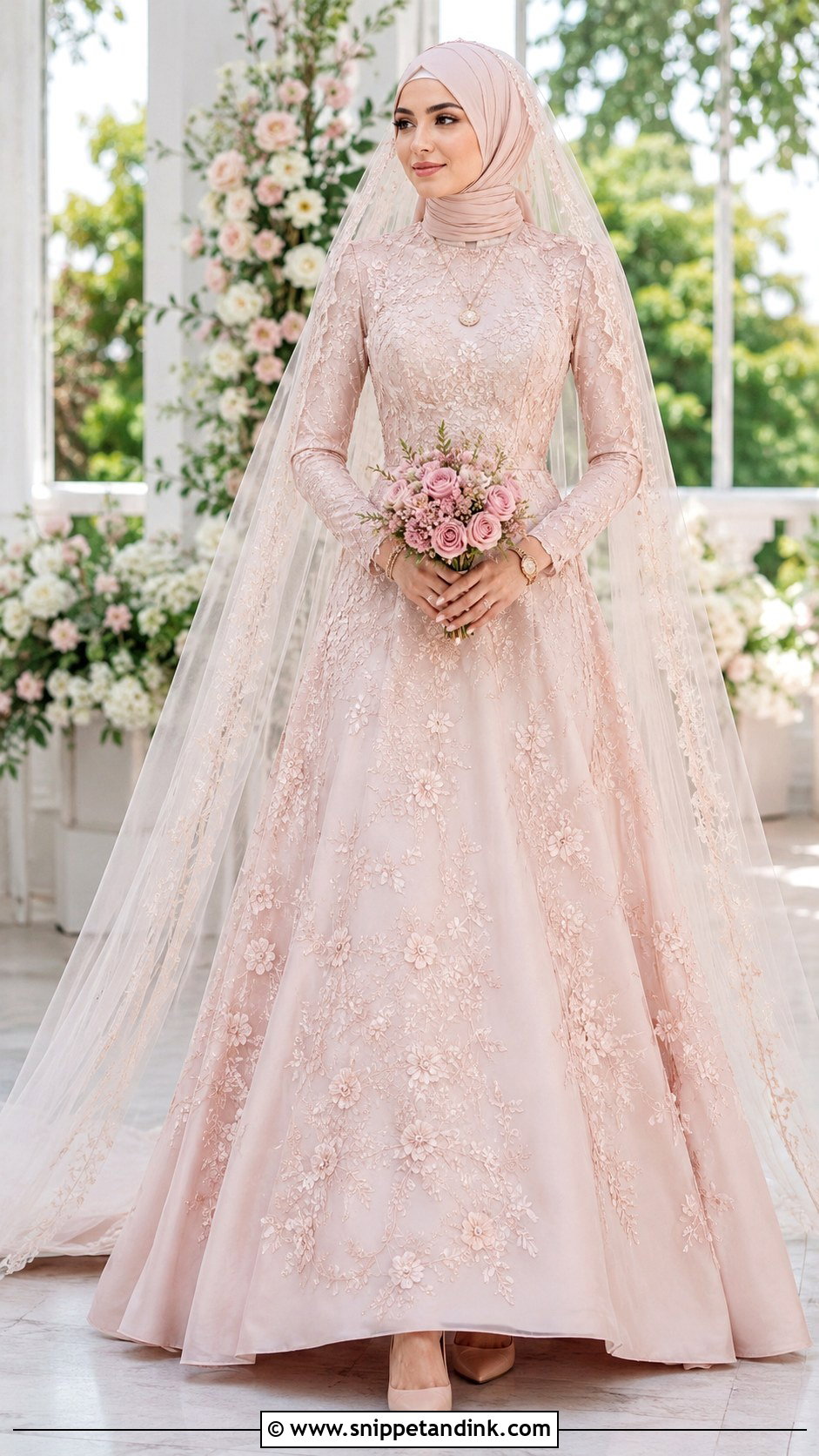
Blush is the gentlest alternative to white and ivory. Floral embroidery, lace or light beading make it feminine. A matching blush hijab keeps it cohesive; an ivory veil makes it read more bridal. Rose-gold jewellery and pale pink flowers suit the colour. Blush varies a lot between dye lots, so if you’re buying the hijab separately, take a fabric swatch from the dress to the shop. Spring weddings and garden venues suit it.
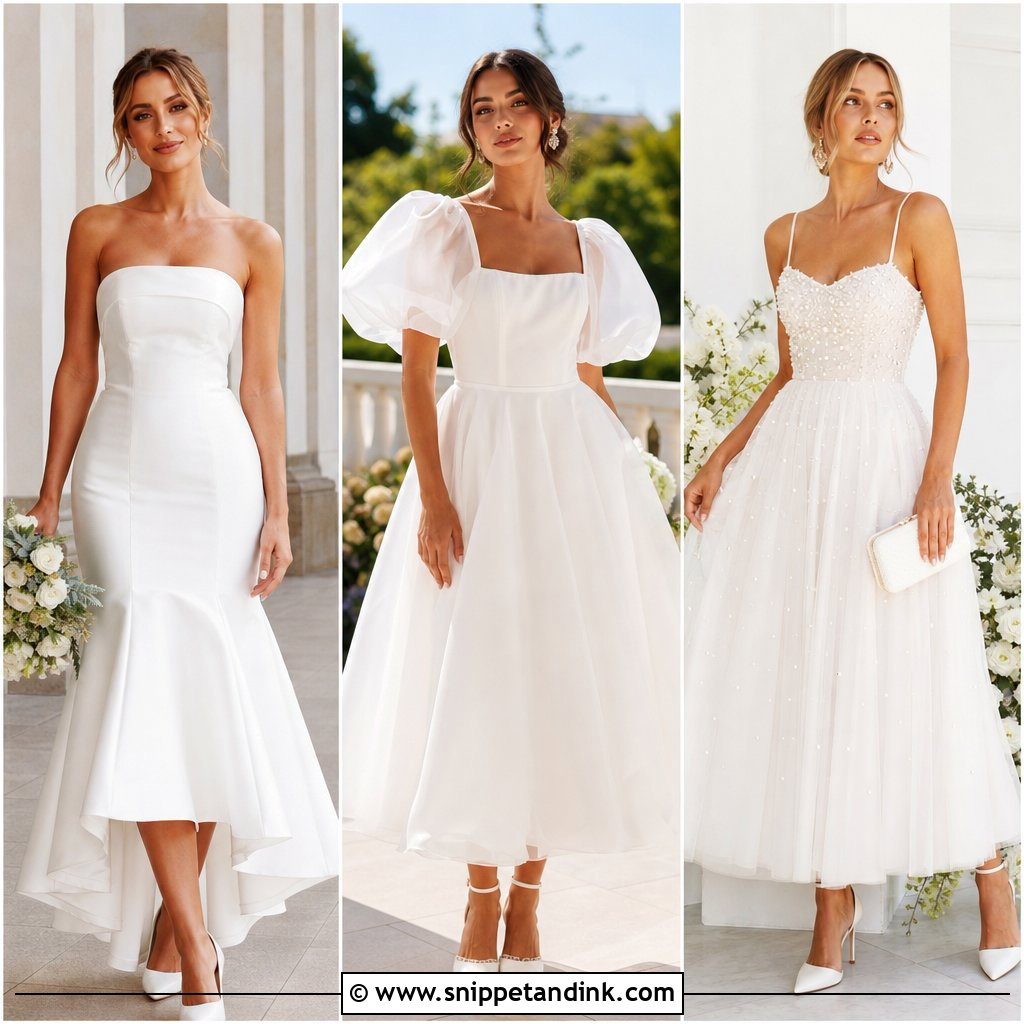


20. Green Islamic Wedding Dress With Hijab
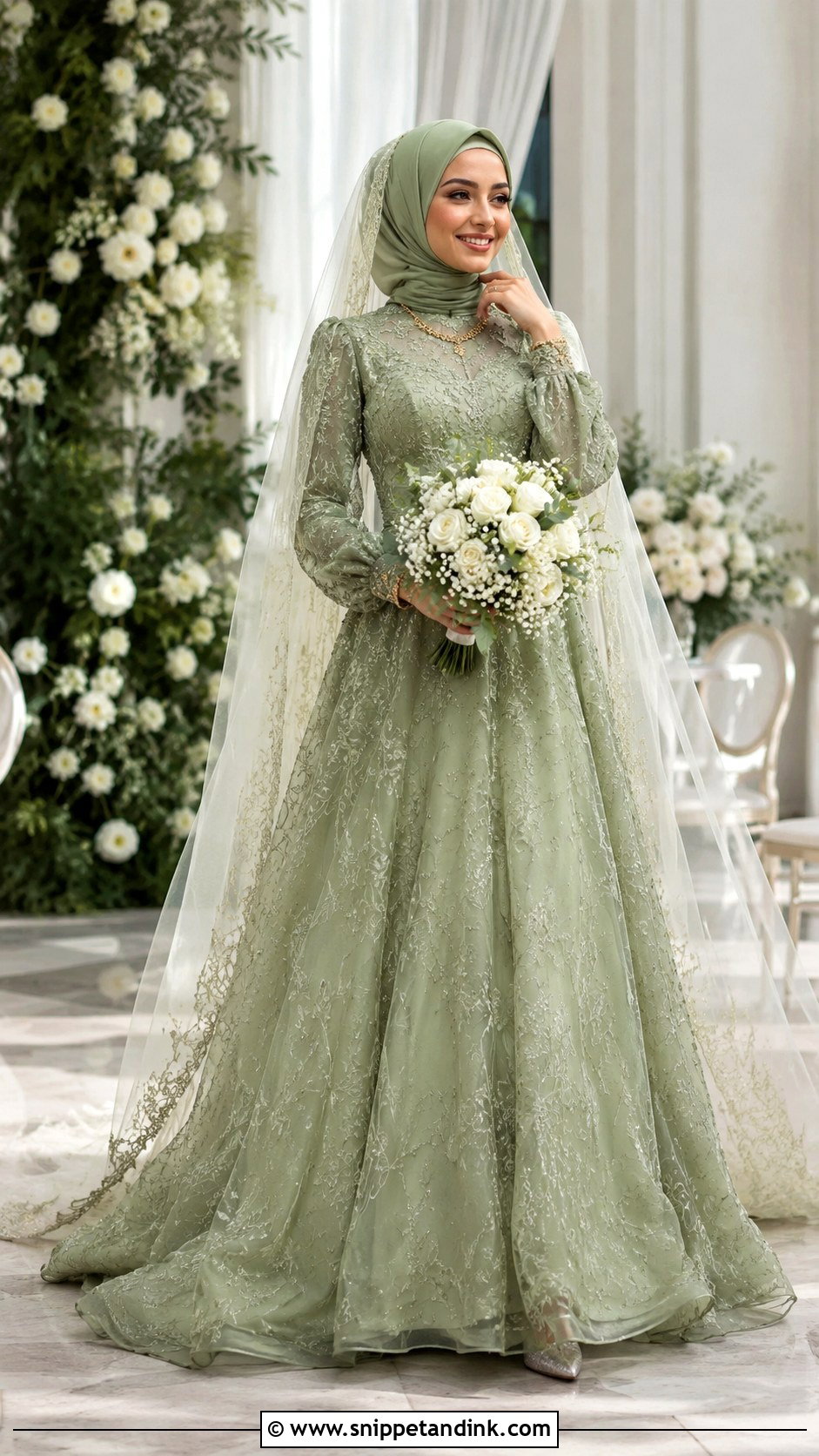
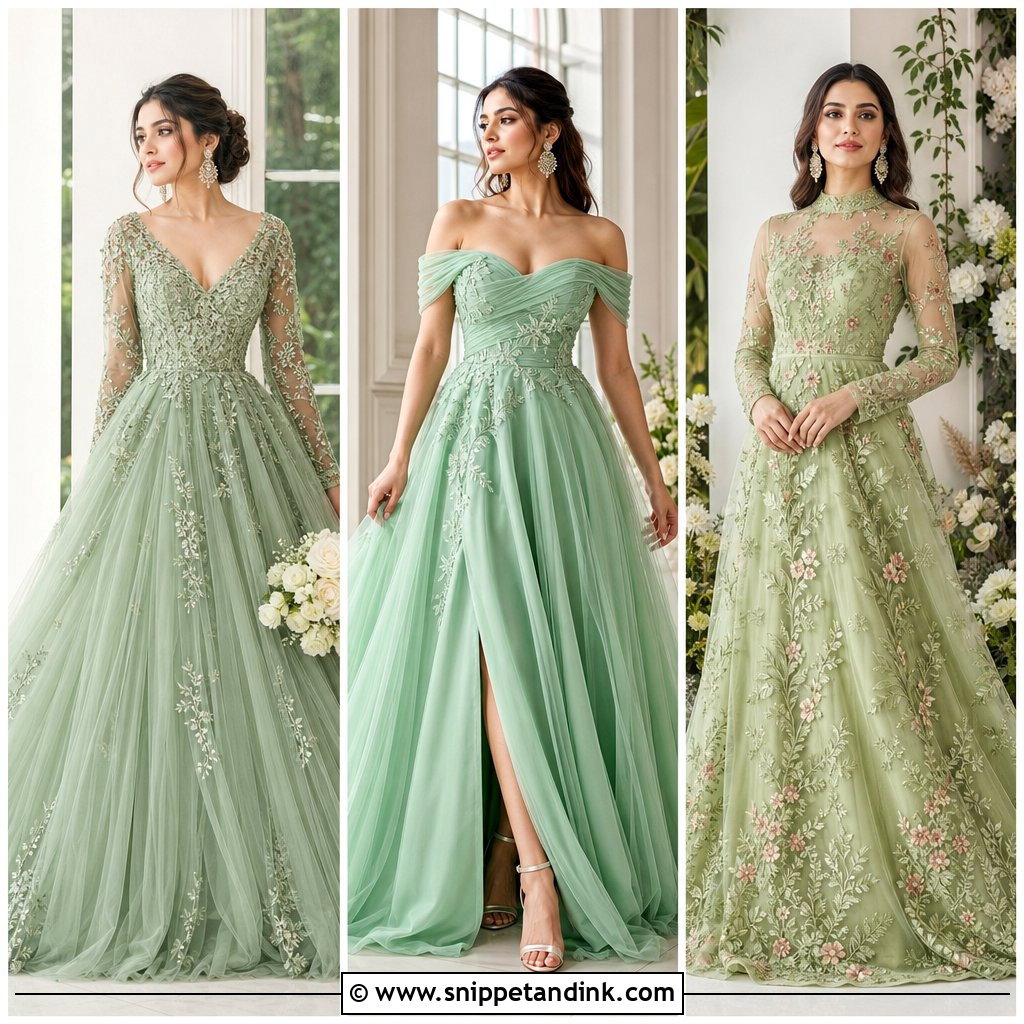
Green carries meaning for many Muslim families, and it photographs well indoors and out. Sage gives a gentle look; emerald a regal one. Choose long sleeves, a high neckline and elegant draping or embroidery. If the dress is deep green, I’d soften it with an ivory or champagne hijab rather than matching it, which keeps the face from looking shadowed. Gold jewellery, metallic heels and white florals add contrast.
21. Red Islamic Wedding Dress With Hijab
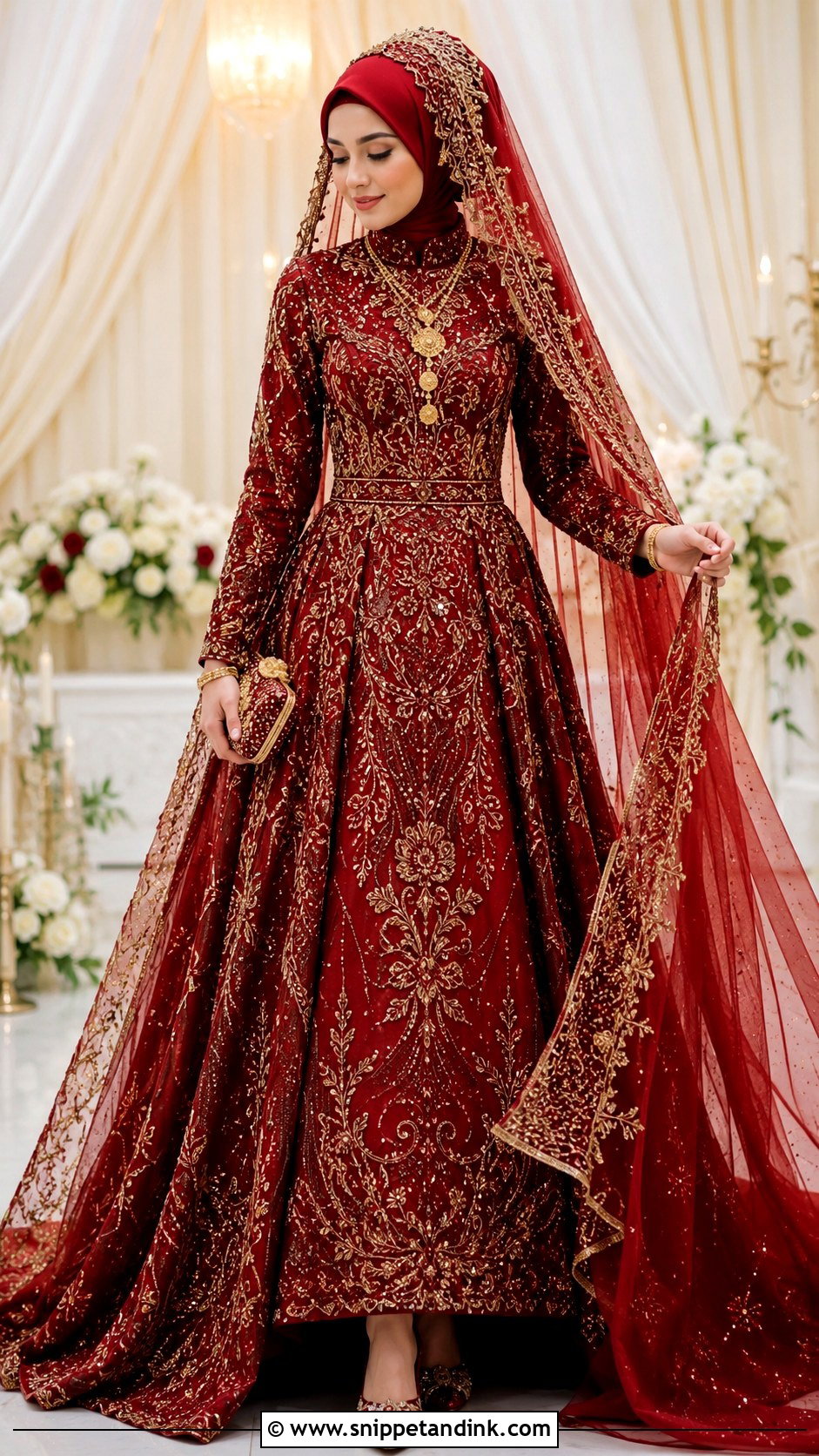
Red is the celebratory bridal colour in many South Asian and Arab traditions. Keep it elegant with long sleeves, a high neckline and balanced embellishment; gold thread or beadwork makes it bridal. A matching red hijab is a strong look, while a gold or ivory veil adds contrast. Red dye can transfer onto a pale hijab or skin if the fabric gets damp, so in a hot venue I’d use a hijab colour that won’t show it. Gold jewellery finishes it.
22. Navy Islamic Wedding Dress With Hijab
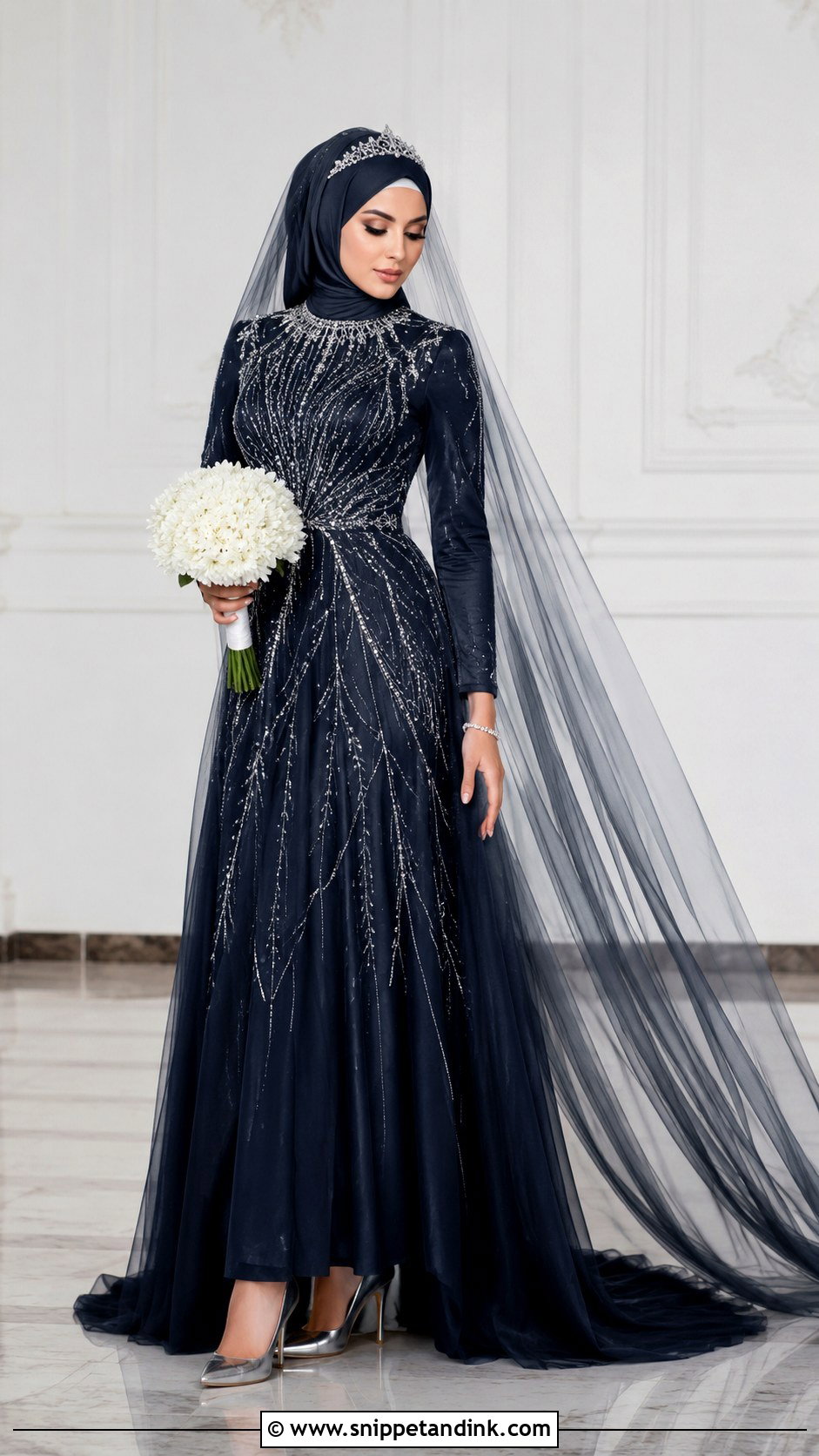
Navy is formal without the intensity of black, and it suits silver, pearl and crystal detail. Choose a long-sleeve gown with a high neckline, full lining and a flowing skirt; beaded sleeves or embroidered cuffs add bridal detail. A navy hijab keeps the line unbroken, while a silver veil or soft grey scarf adds depth. Navy looks richest in the evening and in winter, when warm lighting brings out the blue. A white bouquet gives it contrast.
23. Modest Mermaid Islamic Wedding Dress With Hijab
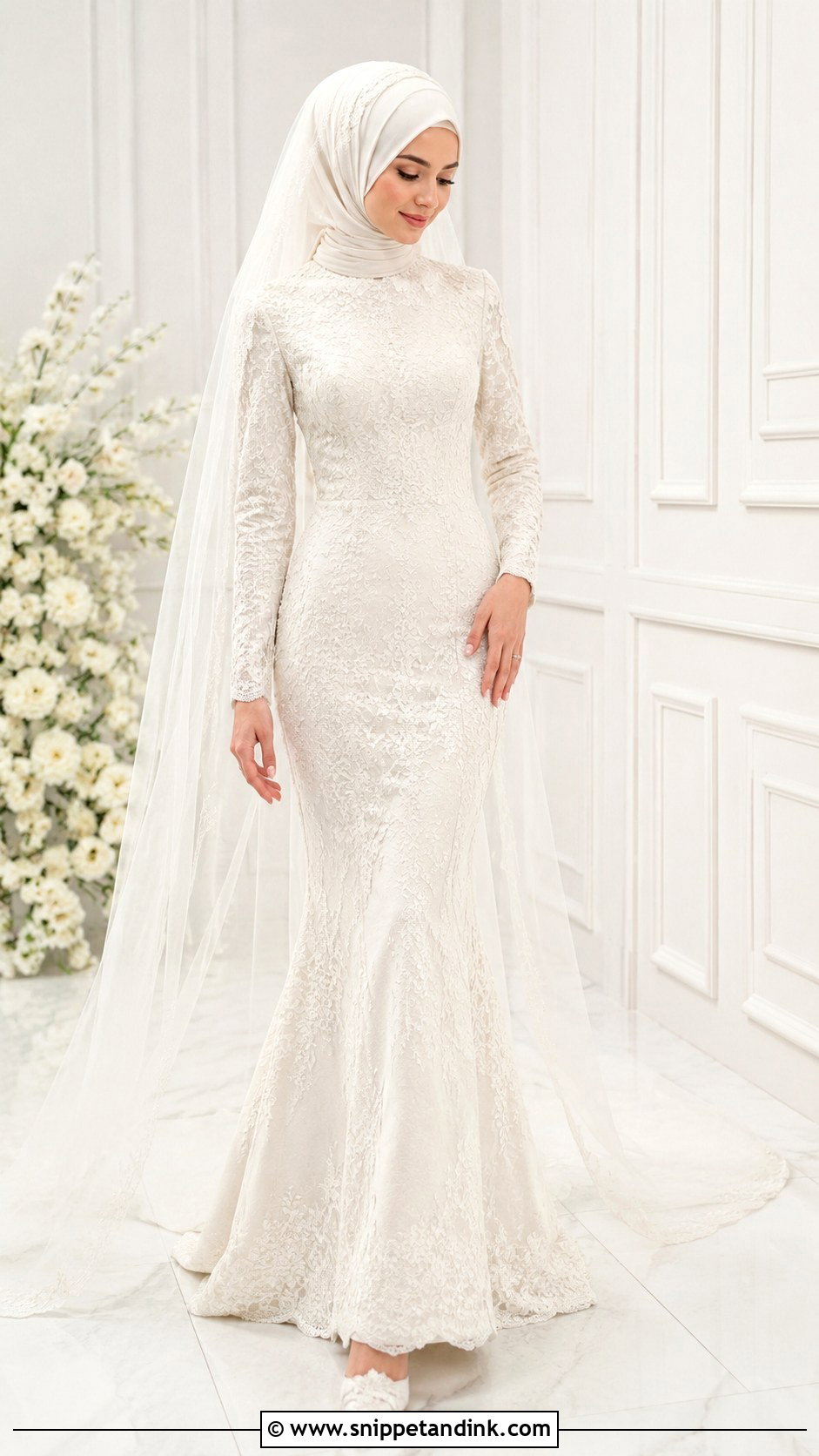
Mermaid shapes can be modest if the gown skims rather than grips. Look for a lined dress with long sleeves, a high neckline and a flare that starts at or below the knee; a flare that starts mid-thigh makes sitting and stairs difficult. Lace or crepe suits the shape. A simple hijab balances the fitted line, and a long veil softens it. I’d test sitting and climbing a step at every fitting with this one.
24. Princess Islamic Wedding Dress With Hijab
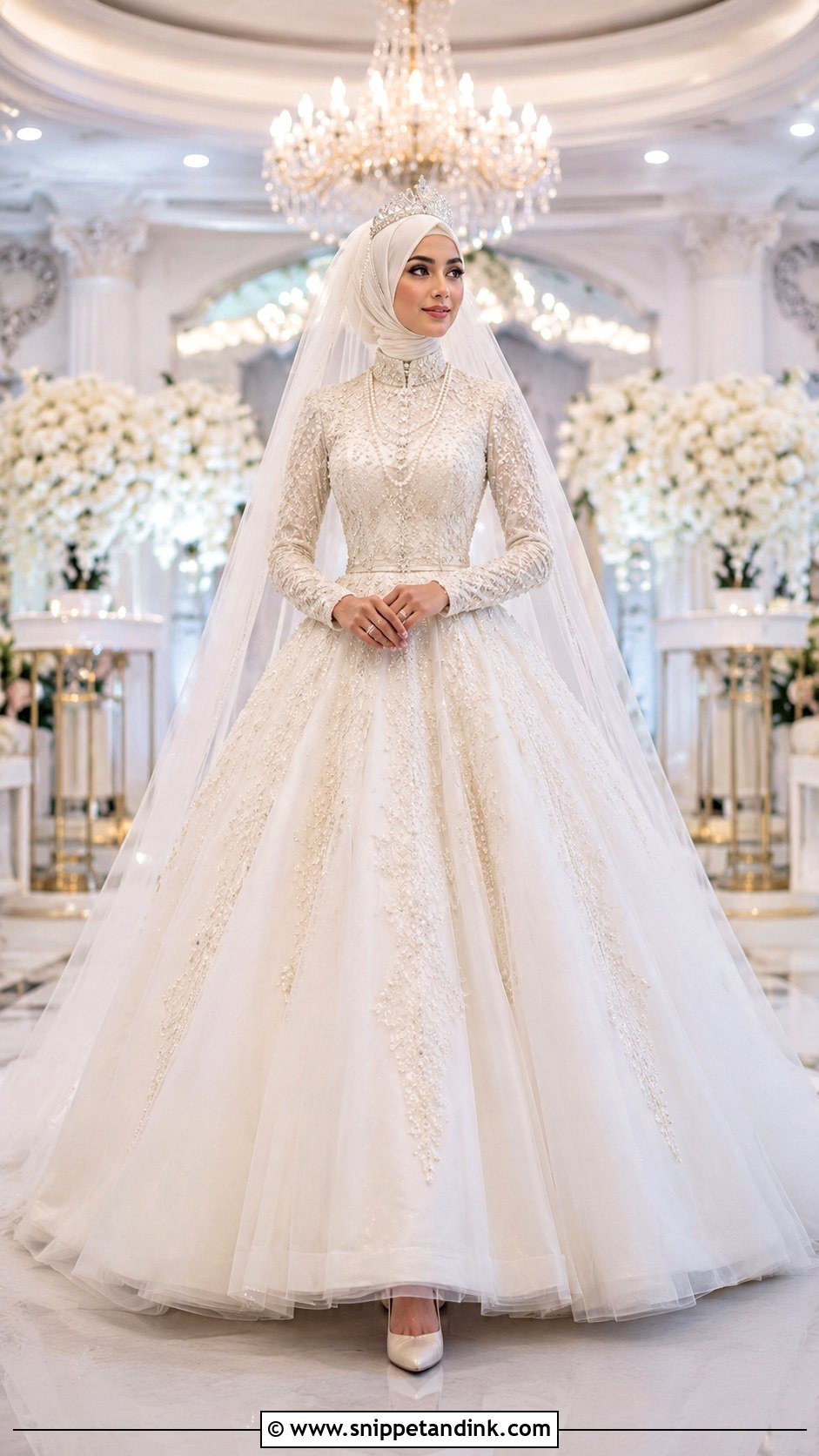
A princess gown means a full skirt, fitted bodice, long sleeves and a high neckline in tulle, lace or organza, with beading for sparkle. A structured hijab under a tiara or crown completes the effect. Choose a long veil that falls over the back of the gown for dramatic photos. A full tulle skirt is warm to wear, so I’d plan a cool room for getting ready and a fan for the photo session. Closed-toe heels and pearl jewellery finish it. Large, formal weddings suit it.

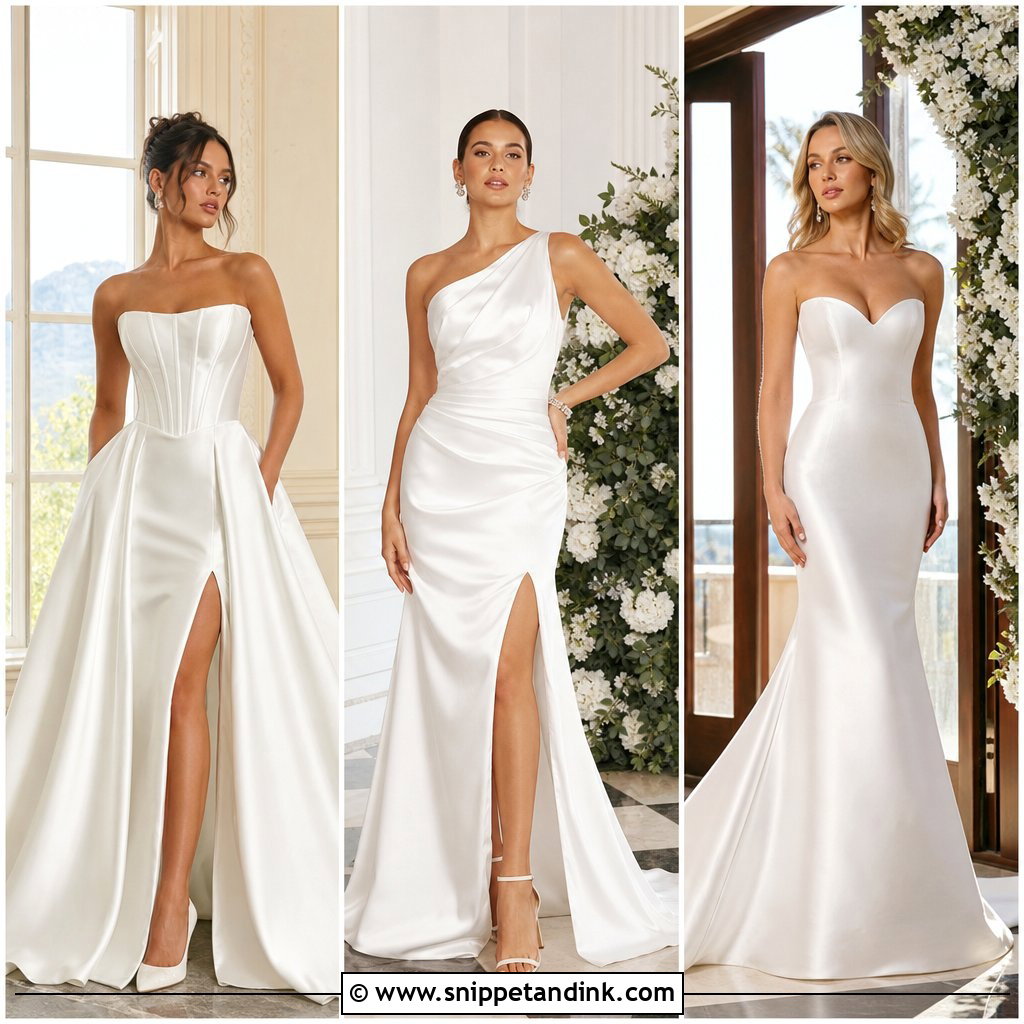
25. Minimalist Islamic Wedding Dress With Hijab
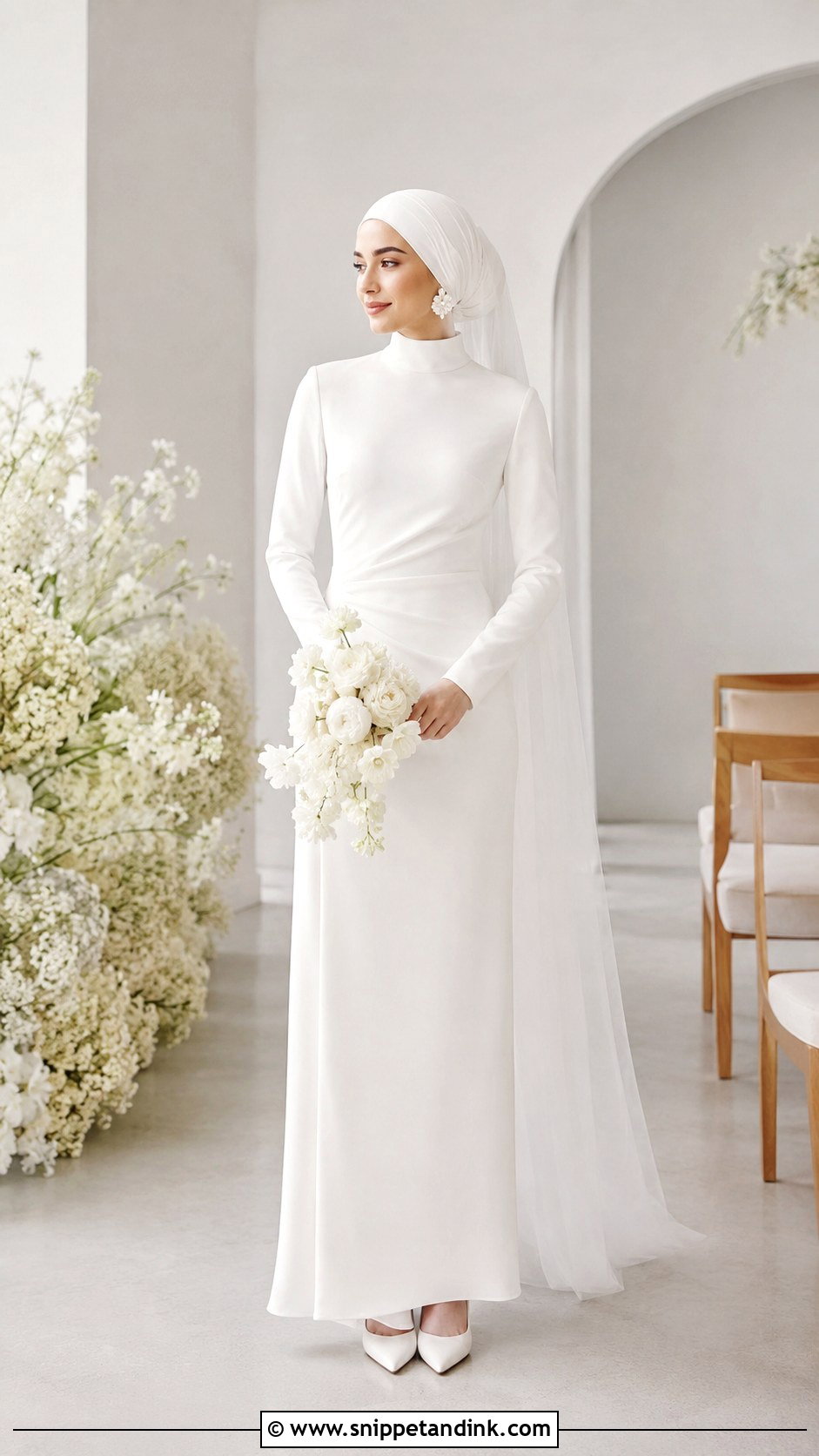
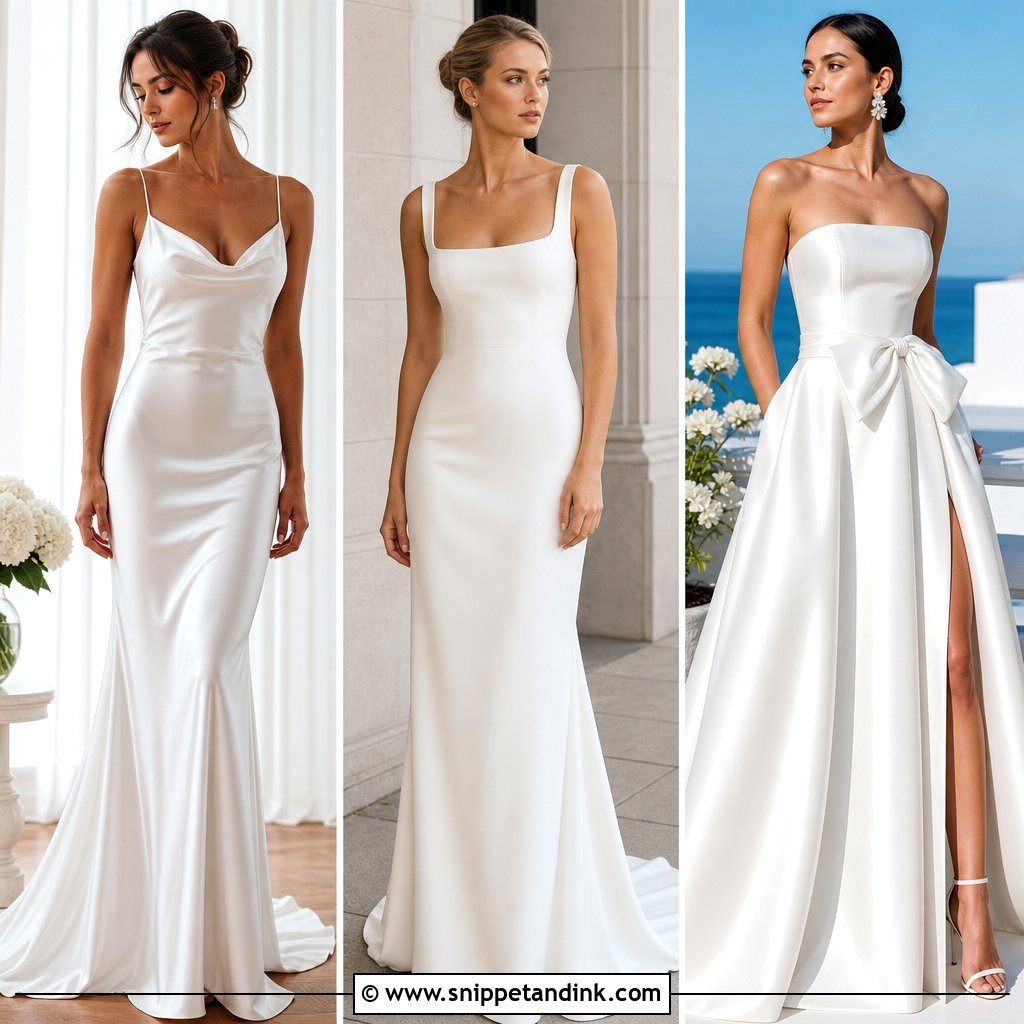
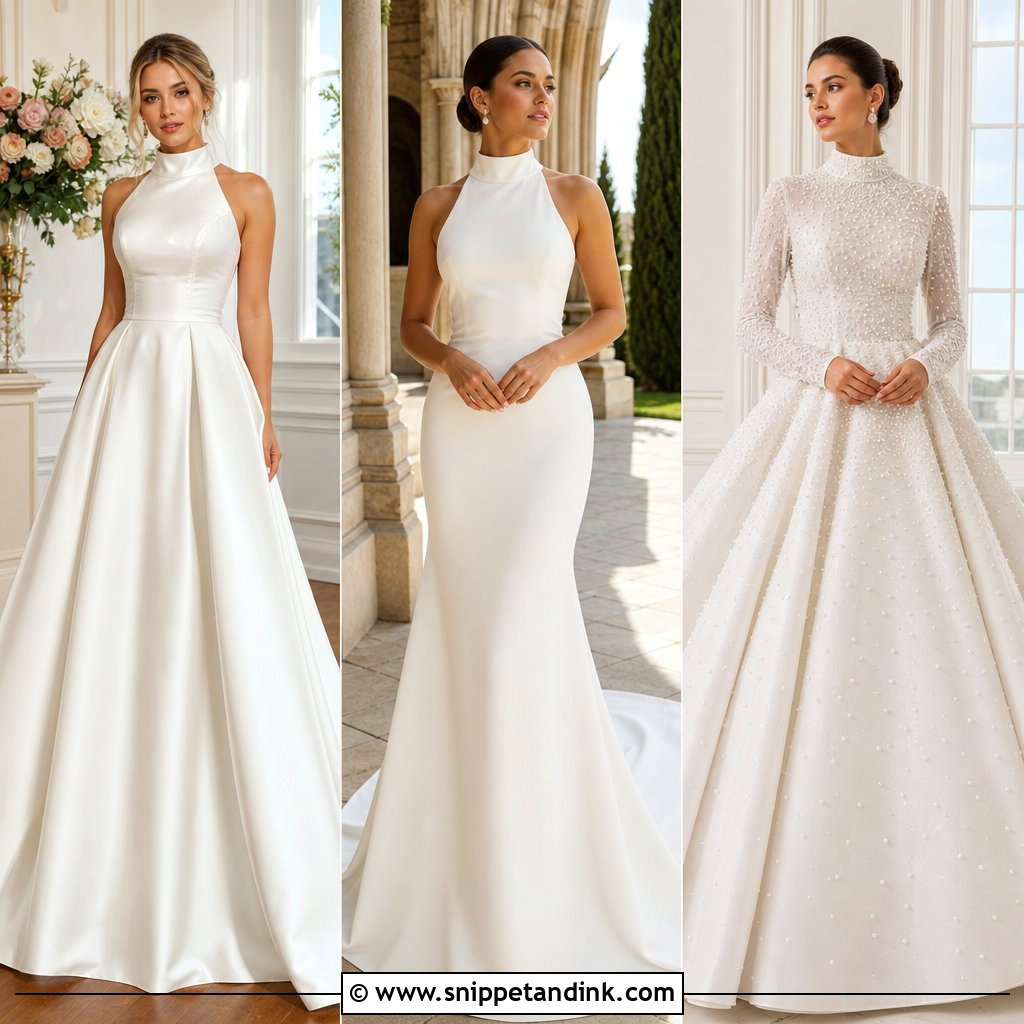
Minimalist gowns are about clean shape. Crepe, satin or mikado with long sleeves, a high neckline and very little embellishment depend on fit and fabric. A matching hijab gives one smooth line from head to toe. Add a plain veil, sculptural earrings and pointed heels. With nothing to distract, every wrinkle shows, so I steam a minimalist gown on the morning and keep the bride standing until the portraits are done.
26. Vintage Islamic Wedding Dress With Hijab
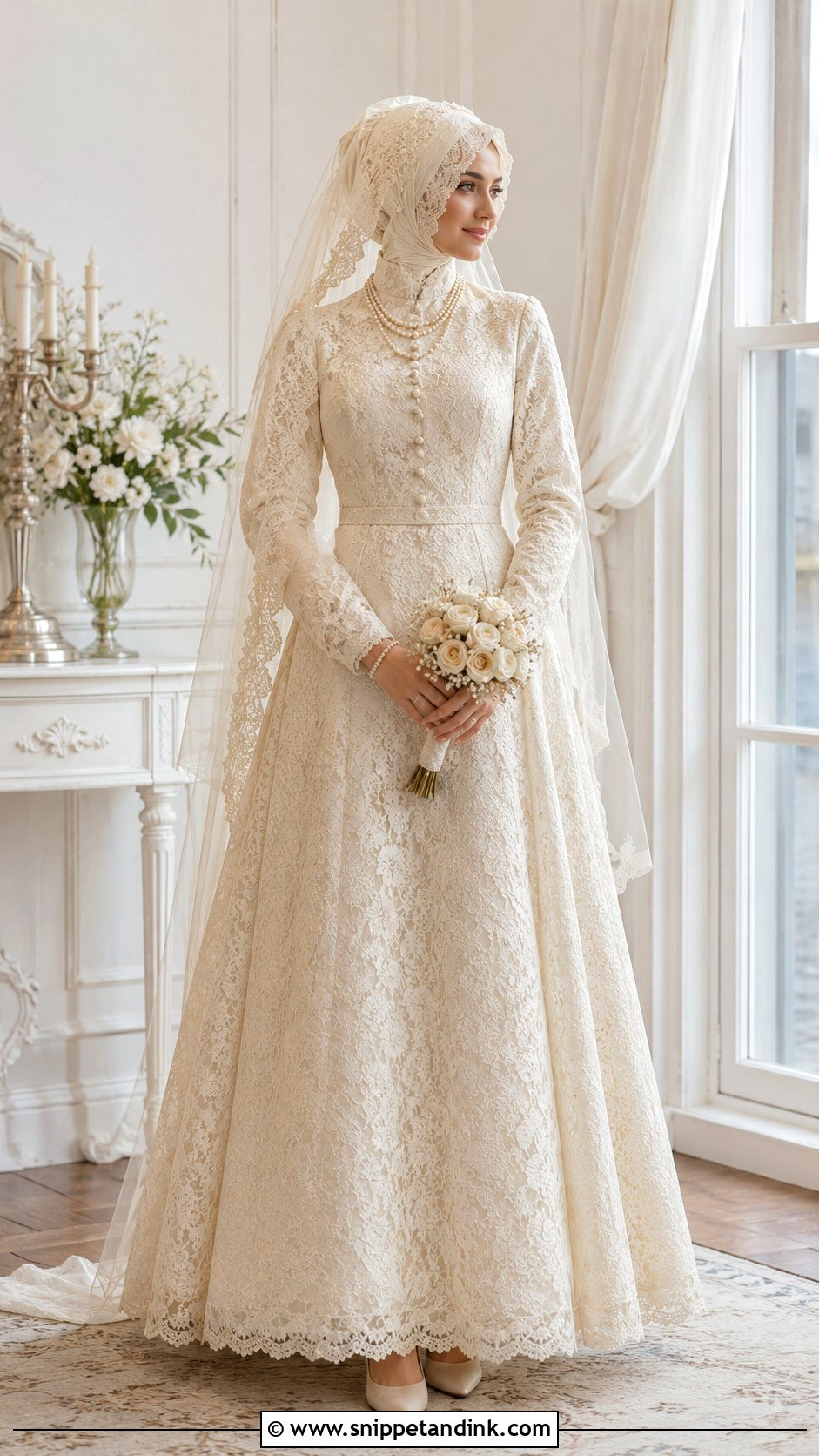
A vintage-style gown suits lace sleeves, covered buttons, high collars and soft pleats. Ivory or cream often suits the mood better than bright white. A lace-edged hijab or veil adds to it without looking costume-like. A-line and empire waists work well. If you’re wearing a real heirloom dress, have it assessed early: old fabric can be fragile, and adding sleeves or lining to it takes skilled hands and time. Pearl jewellery and low heels keep it delicate.
27. Boho Islamic Wedding Dress With Hijab
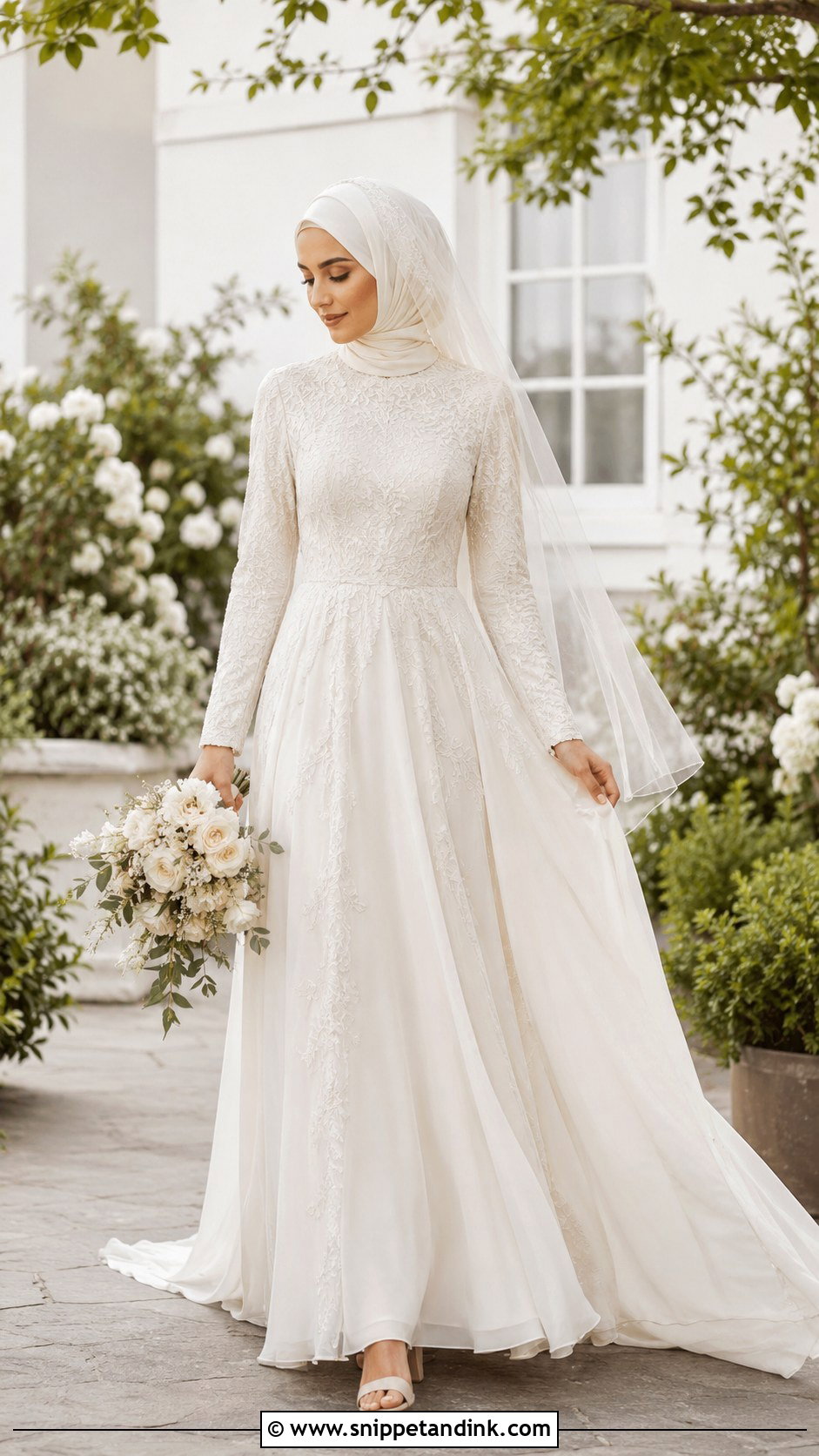
Boho brides want natural drape and easy movement. A long-sleeve lace or chiffon gown with a high neckline and flowing skirt fits the mood. A lightweight chiffon hijab in ivory, cream or soft beige suits it. Outdoor ceremonies mean wind, and chiffon hijabs catch it, so I pin a little more firmly at the back for this look. Block heels handle grass. A loose bouquet with greenery and neutral flowers finishes it.
28. Sequin Islamic Wedding Dress With Hijab
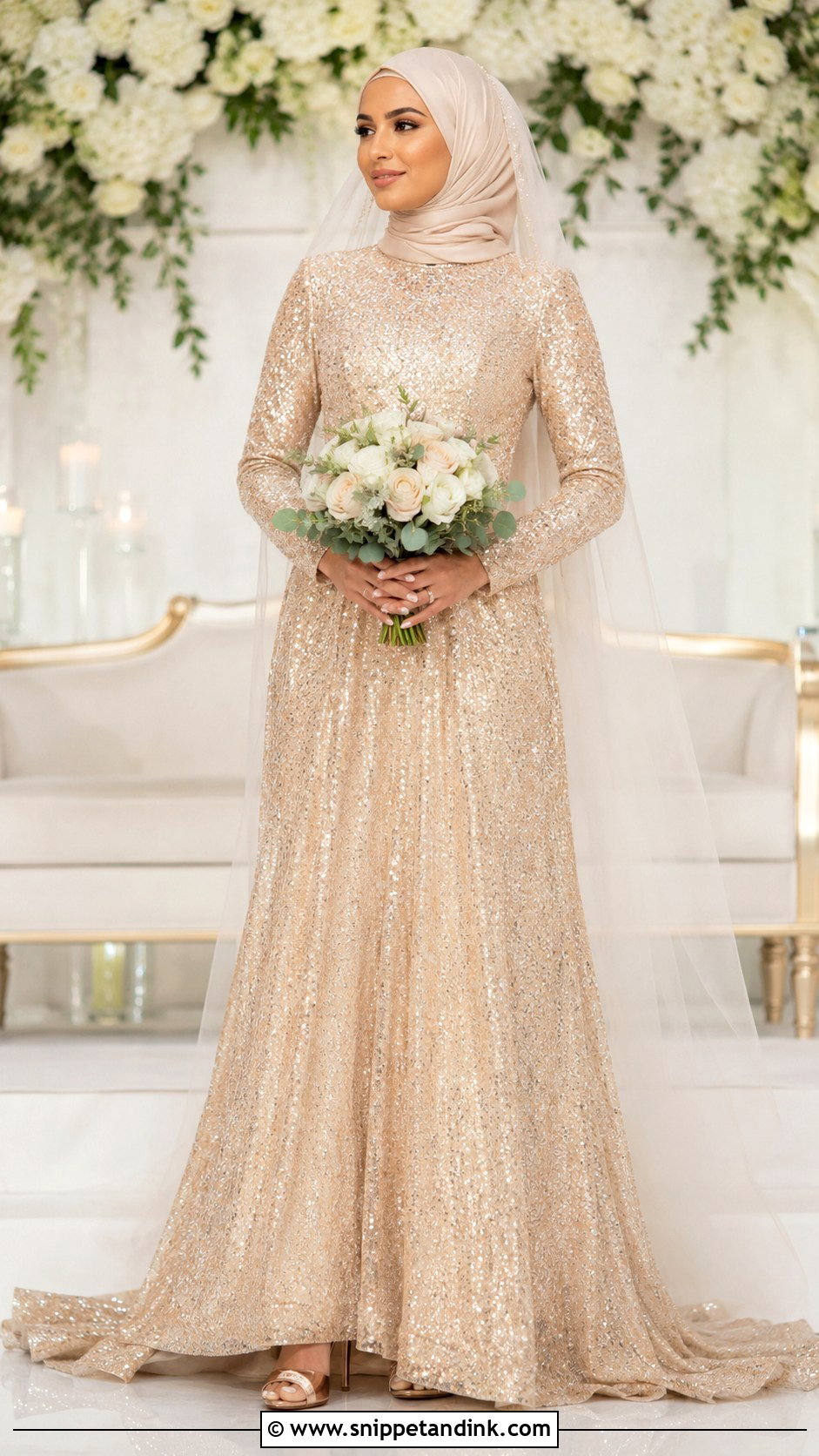
Sequins bring shine, and smaller ones look more refined than large discs. Choose a fully lined long-sleeve gown with a high neckline. An all-over sequin dress needs a plain hijab and simple veil, or the face gets lost. Sequins scratch skin at the inner arm and can snag a chiffon hijab, so check the inside seams and keep the hijab clear of the shoulders. Silver, champagne and ivory feel bridal. Evening receptions suit it.
29. Two Piece Islamic Wedding Dress With Hijab
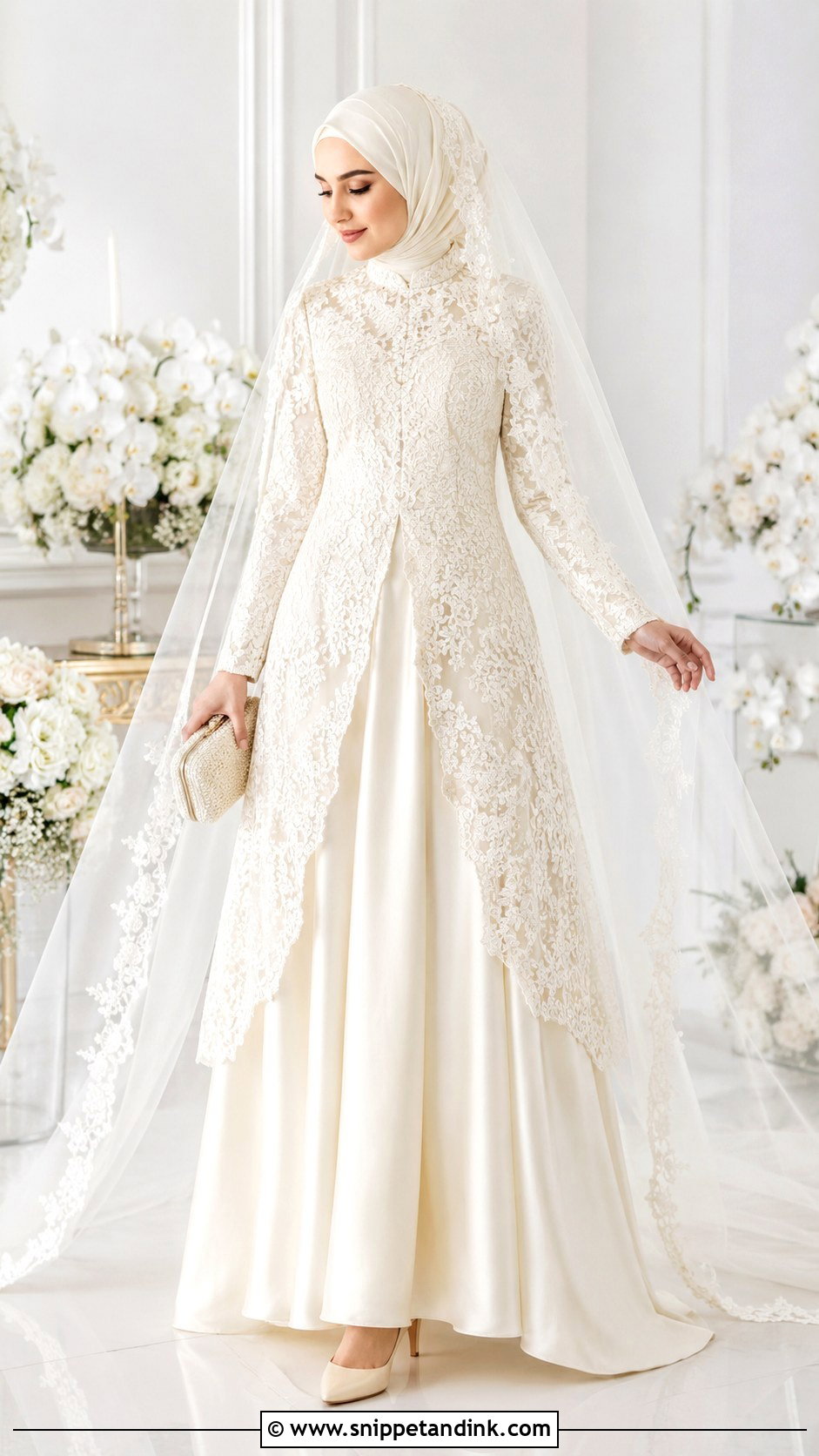
A two piece Islamic wedding dress pairs a long tunic-style top with full sleeves and a high neckline with a flowing skirt. The pieces must overlap well so nothing shows when you sit, lift your arms or greet guests. Satin, lace or embroidered fabric makes the set bridal. Separates make sizing easier when your top and bottom measurements differ. A matching hijab and veil complete it.
30. Plus Size Islamic Wedding Dress With Hijab
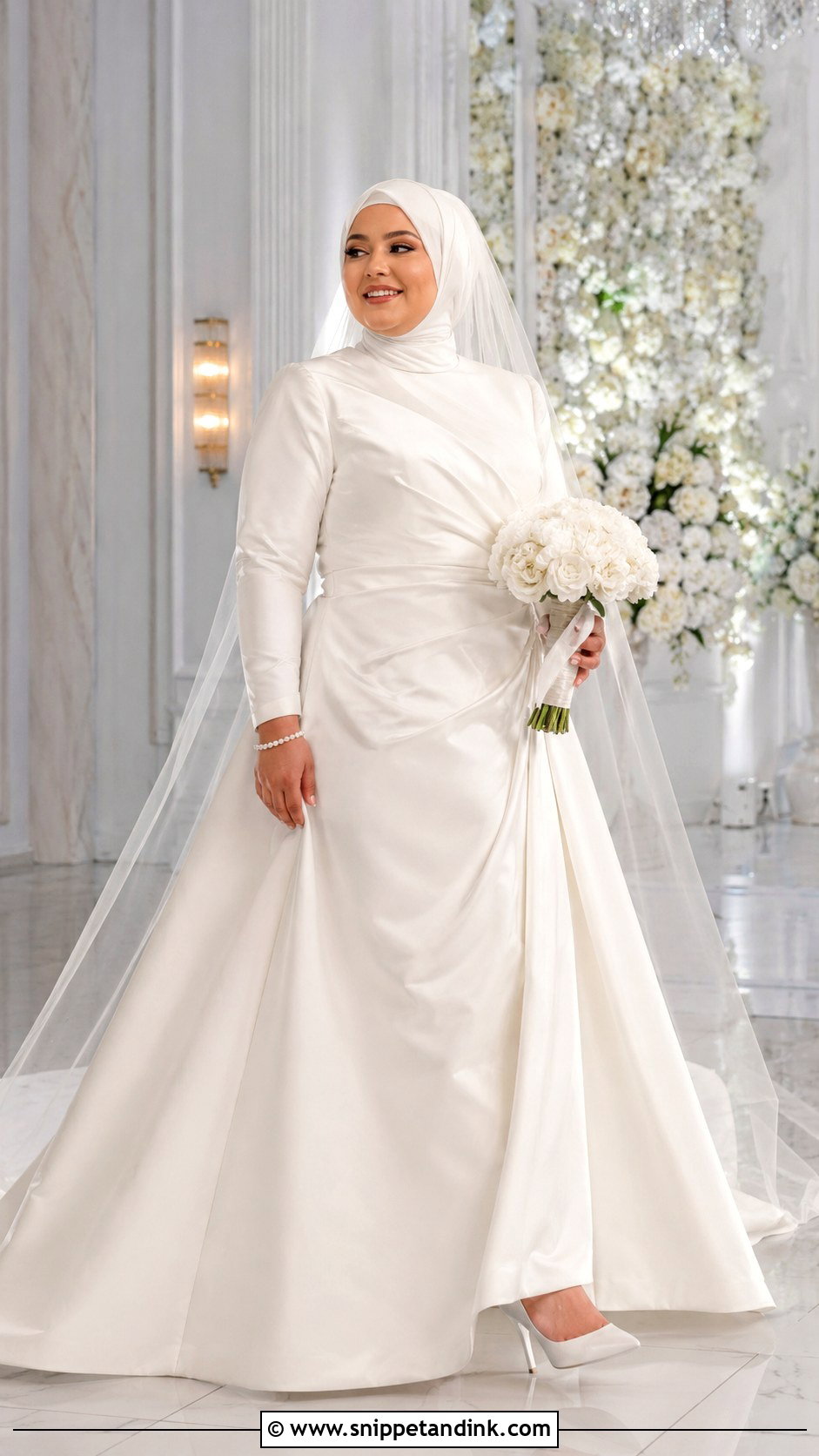
Fabric that drapes smoothly and a lining that supports rather than restricts matter at any size, and they matter more in plus sizes because cheap linings bunch and ride up. A-line gowns, empire waists, soft ball gowns and structured kaftans all suit. Sleeves should allow you to raise your arms; a high neckline shouldn’t feel tight when you swallow. I’d have the hijab frame the face softly to balance the volume of the dress. Supportive underlayers and comfortable heels let you move with confidence all day.
Seating a Veil and Tiara on Top of a Hijab
A veil on loose hair grips with a comb. On a hijab, the comb has only fabric to hold, so the base matters. I build a firm crown with an underscarf, sometimes with a little volume pinned in, and slide the veil comb into that rather than into the outer silk.
Long veils pull backwards with their own weight. A cathedral veil over chiffon can tug the hijab off the forehead within an hour, so I add two pins through the comb’s teeth into the underscarf. Tiaras sit better on a rounded, slightly raised hijab style than on a flat wrap. Try both at your hair and hijab trial, and walk around the room in them for a few minutes.
Makeup Marks, Stains and Storing the Dress Afterwards
Modest gowns pick up foundation at the neckline and inside the hijab, because fabric sits against the face all day. Setting powder and a blotting sheet before dressing help. After the wedding, take the gown to a specialist cleaner within a few weeks; sugar from drinks is invisible at first and yellows with time. Store it flat in an acid-free box, away from plastic bags, and keep the hijab and veil with it so the set stays together.
From the Nikah to the Last Walima Photo
The right modest gown is the one that keeps you covered, comfortable and recognisably yourself from the nikah through the last photo of the walima. Satin, lace, an abaya or a bold cultural colour can all be right. What makes the difference is the full outfit: coverage, fabric, how the hijab and veil sit together, sleeve comfort and shoe height. Try it on, sit in it and raise your arms in it. If it passes those, it will see you through the day.
You'll Like These Ideas:





Leave a Reply