
A modest bridal look asks more of a dress than most gowns ever face. It has to cover fully, hold up through a nikah where you may sit on the floor or pray, survive hours of embraces from relatives, and still look bridal in every photo. When I style a bride in a high neck and long sleeves, the hijab is part of the dress from the first fitting, not an accessory added on the morning. Below are the looks I see brides return to most often, from pearl hijab gowns and lace abayas to capes, kaftans, takchitas and quiet crepe nikah dresses, with what each one needs to work in real life.
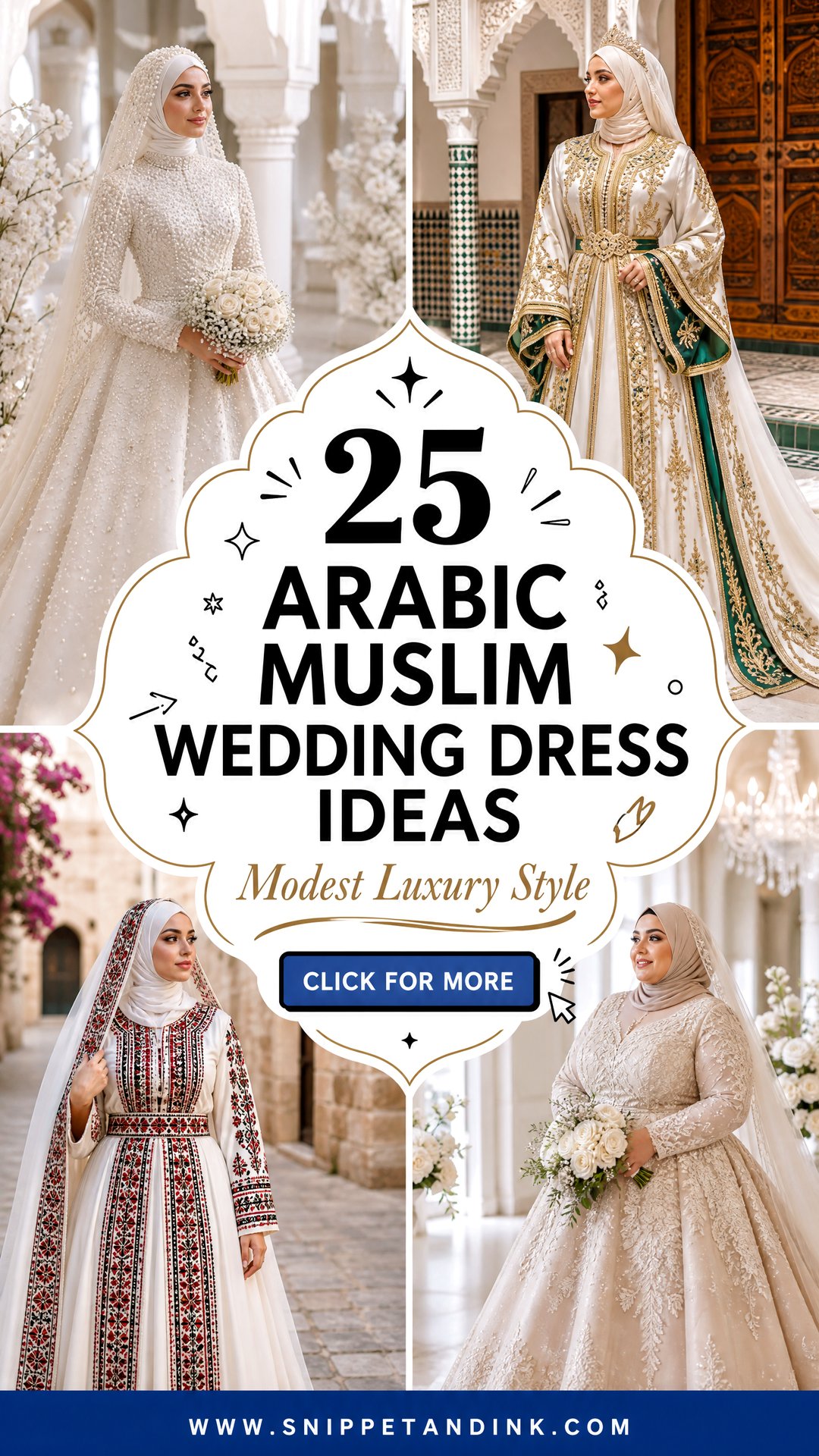
Testing a Modest Gown Through Prayer, Floor Seating and Long Embraces
A dress can look perfect standing in front of a fitting room mirror and still fail on the day. The moments that expose a modest gown are the ones nobody models in a shop: kneeling for prayer, sitting cross-legged on a floor cushion at a home nikah, raising both arms to hug an aunt, bending to greet an elderly relative. I run every bride through these at the second fitting, wearing the hijab she plans to use.
- Arms up: lift both hands above your head. Sleeves should stay at the wrist bone and the bodice shouldn’t pull up at the back.
- Kneel and rise: a fitted skirt that won’t let you kneel needs a godet or slit lining added, or a different shape for the nikah.
- Flash test: have someone take a photo with flash on a phone. Any lace or chiffon that turns see-through needs more lining.
- Neckline check: sit for ten minutes. If the collar rises into your chin or gapes at the hijab, the alteration is at the shoulder, not the neck.
Leave at least eight weeks between ordering and the final fitting for made-to-measure or imported gowns, because lining changes and sleeve alterations on lace take longer than hem work.
1. White Lace Arabic Muslim Wedding Dress
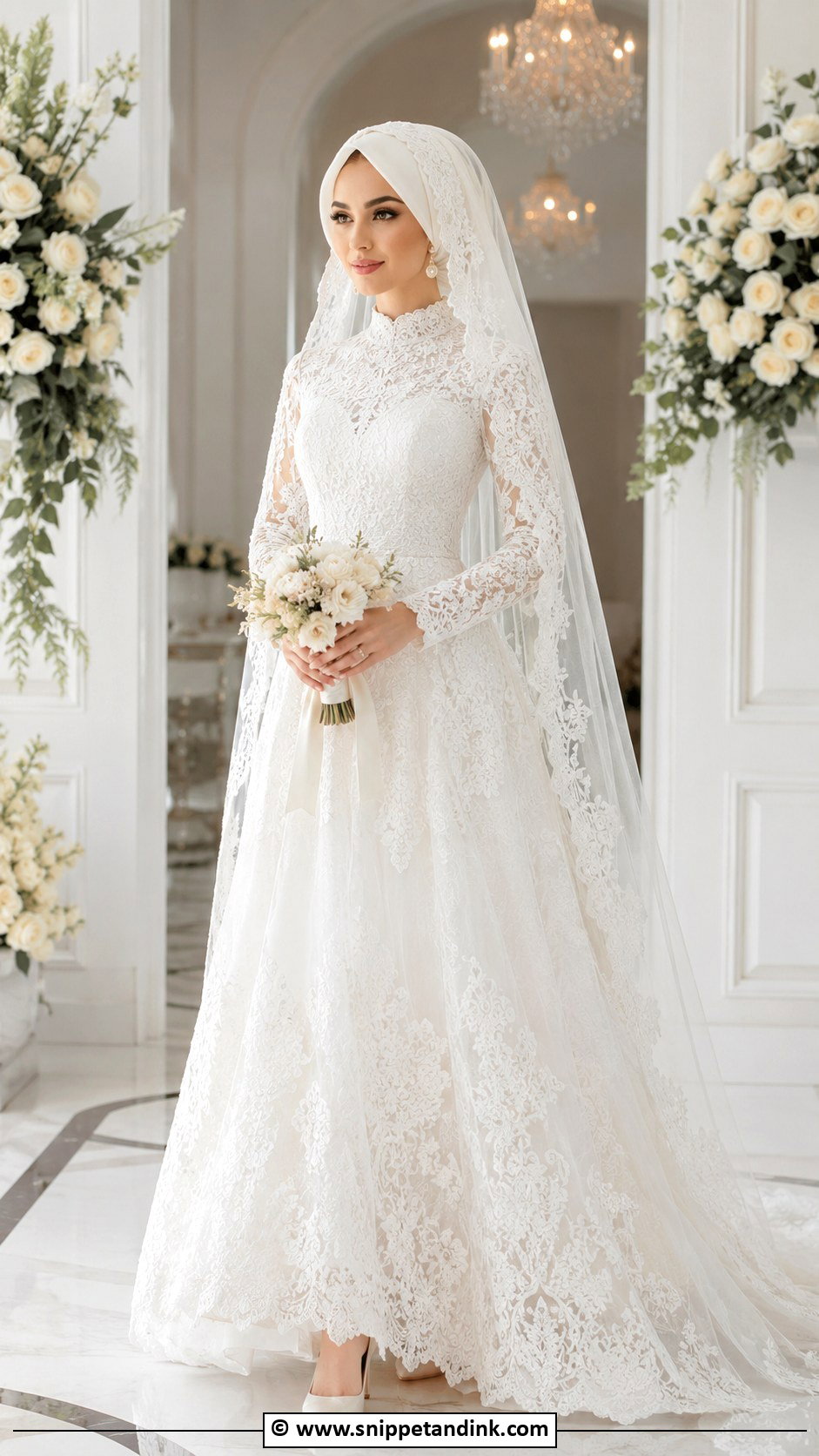
White lace is the look most brides picture first, and its success depends on the lining more than the lace. I always ask for a full lining in a skin-matched or white crepe right down to the cuffs, because unlined lace sleeves show the arm under flash even when they look opaque in the mirror. Pair it with a white hijab in the same tone as the lace, since a slightly bluer white makes ivory lace look dingy beside it. A lace-edged veil, pearl earrings worn over or under the scarf, and ivory pointed heels are all it needs. Ballroom and hotel nikahs suit it best.
2. Pearl Hijab Arabic Muslim Wedding Dress
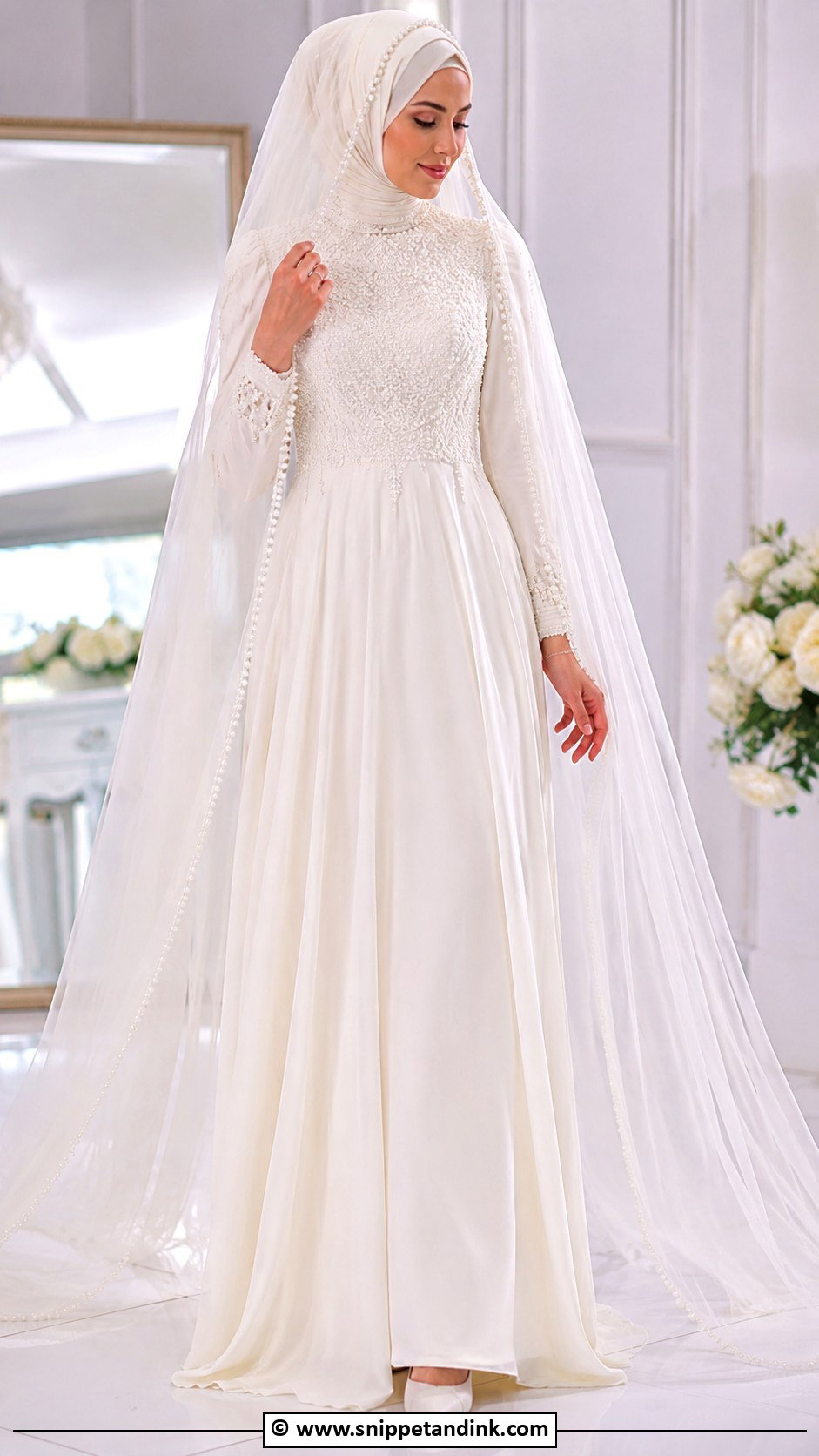
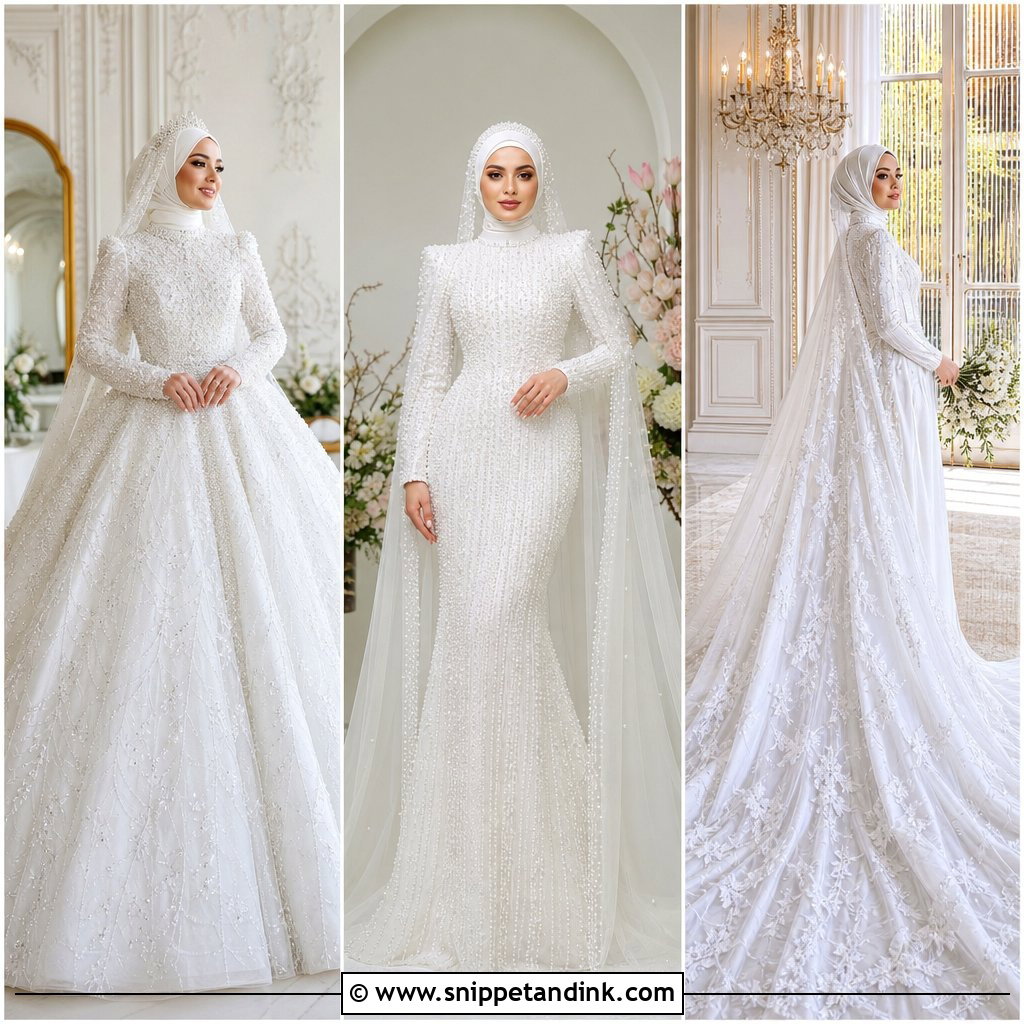
Pearl beading reflects light softly instead of throwing sparkle, which is why it reads so well on camera. The detail I check is weight: pearls sewn densely across a chiffon bodice can drag the neckline forward by the end of the night, so I prefer them concentrated at the cuffs, waist and a band across the yoke. A satin or smooth chiffon hijab sits flat under a pearl-trimmed veil, while a crinkled jersey one will show every pin. Keep earrings small and let the beading carry the look, with ivory or champagne closed-toe heels.
3. Satin Ball Gown Arabic Muslim Wedding Dress
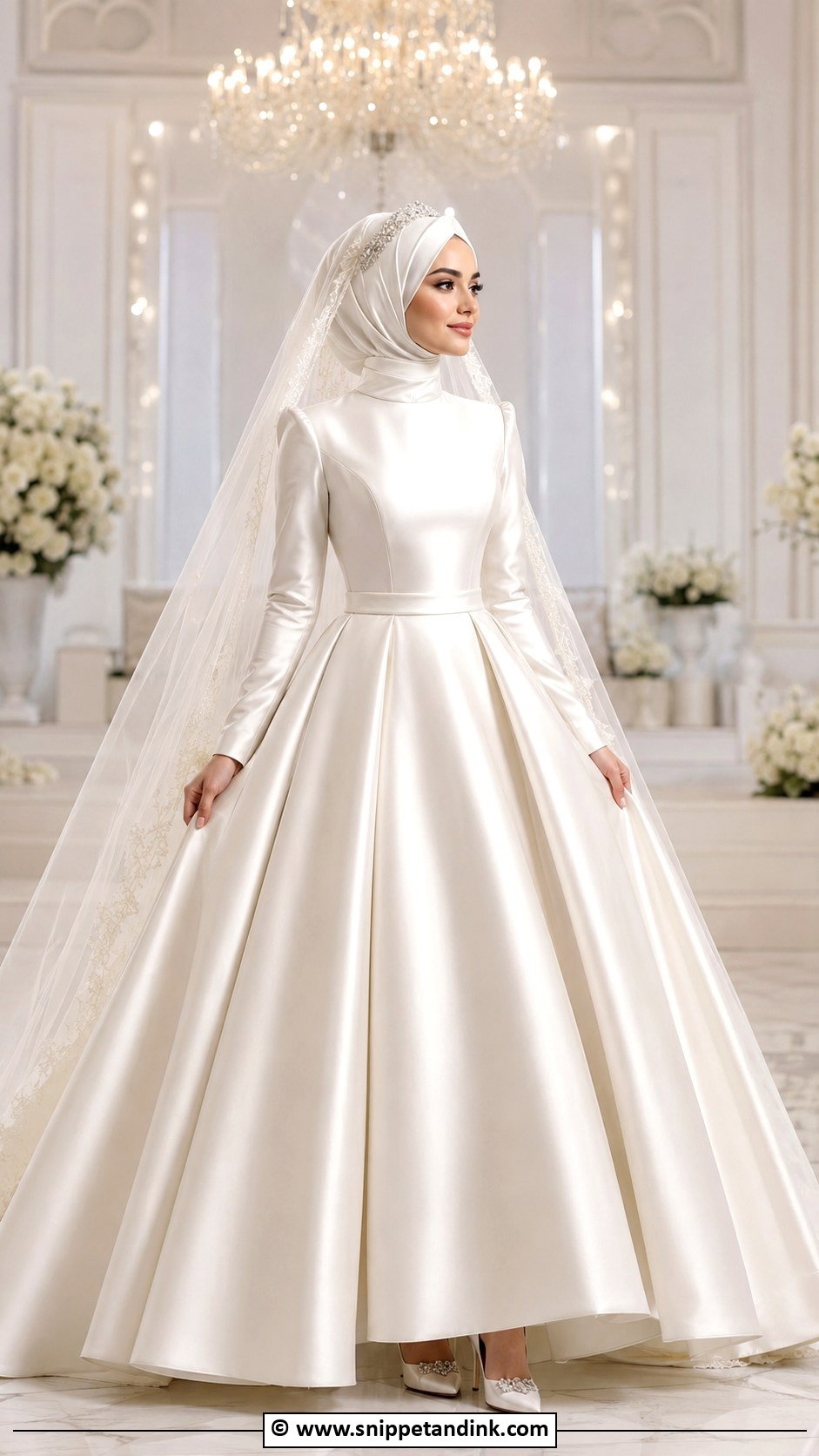
Satin ball gowns are dramatic, and they are also the heaviest thing on this list once you add a long veil. Duchess satin creases where you sit, so expect fold lines across the lap after the ceremony; a quick steam between the nikah and the reception fixes it. A satin hijab matches the sheen exactly, but a chiffon one is lighter on the head and softer in photos if you’ll wear a crystal headpiece over it. Since the skirt already has volume, keep shoes sleek and low enough to walk a long aisle. This is a dress for a large hall with space to move.
4. Embroidered Abaya Arabic Muslim Wedding Dress
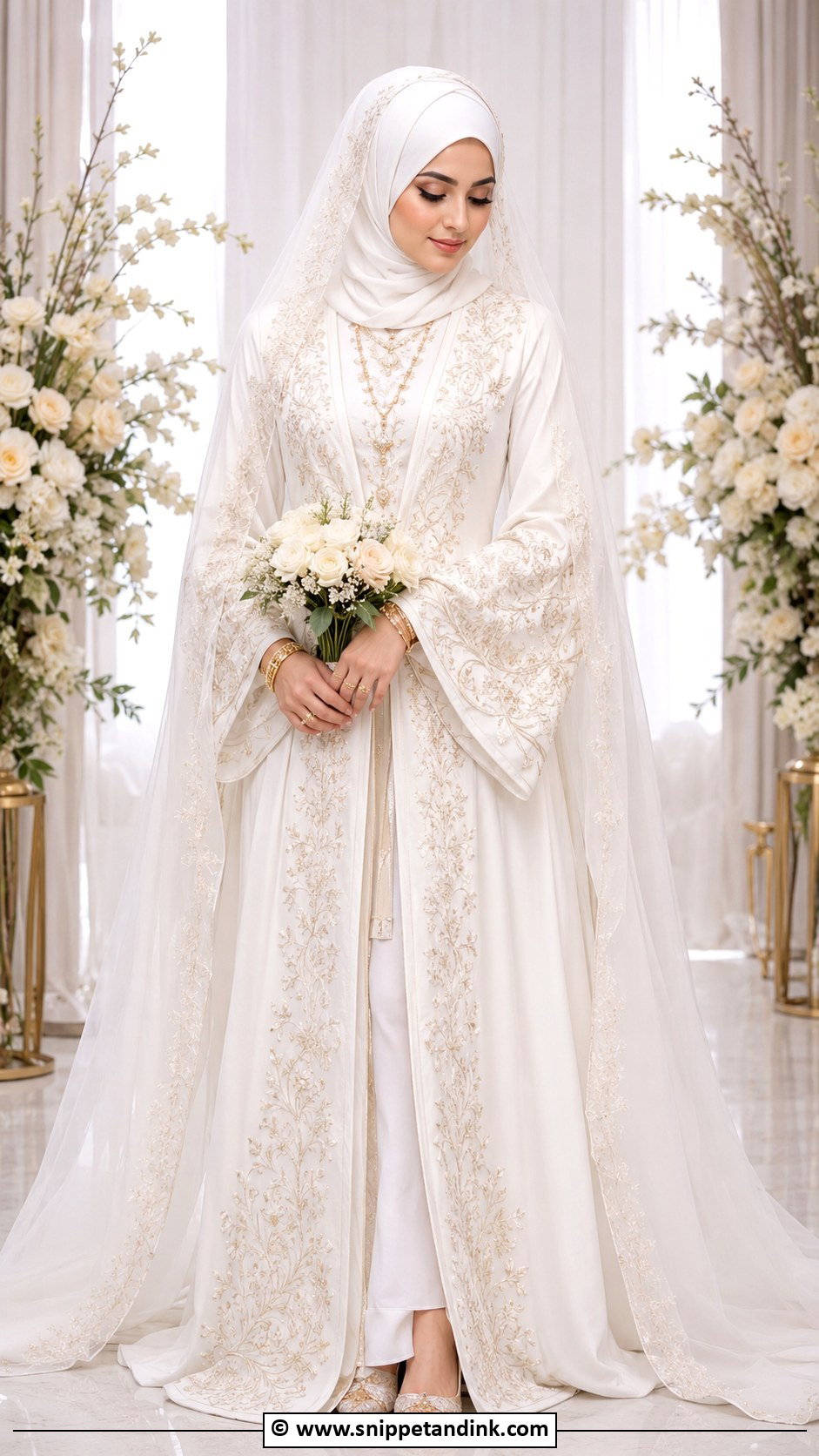
An embroidered abaya wedding dress is the most comfortable option here, and brides often underestimate how much that matters by hour six. The abaya falls from the shoulders, so the waist is free and the inner dress can be a simple slip in matching satin. When I fit one, I check that the embroidered front edges meet without gaping when you sit, because heavy borders pull the opening apart. Match gold or pearl jewelry to the thread colour, not the fabric. Embellished flats or low heels finish it.
5. Cape Arabic Muslim Wedding Dress
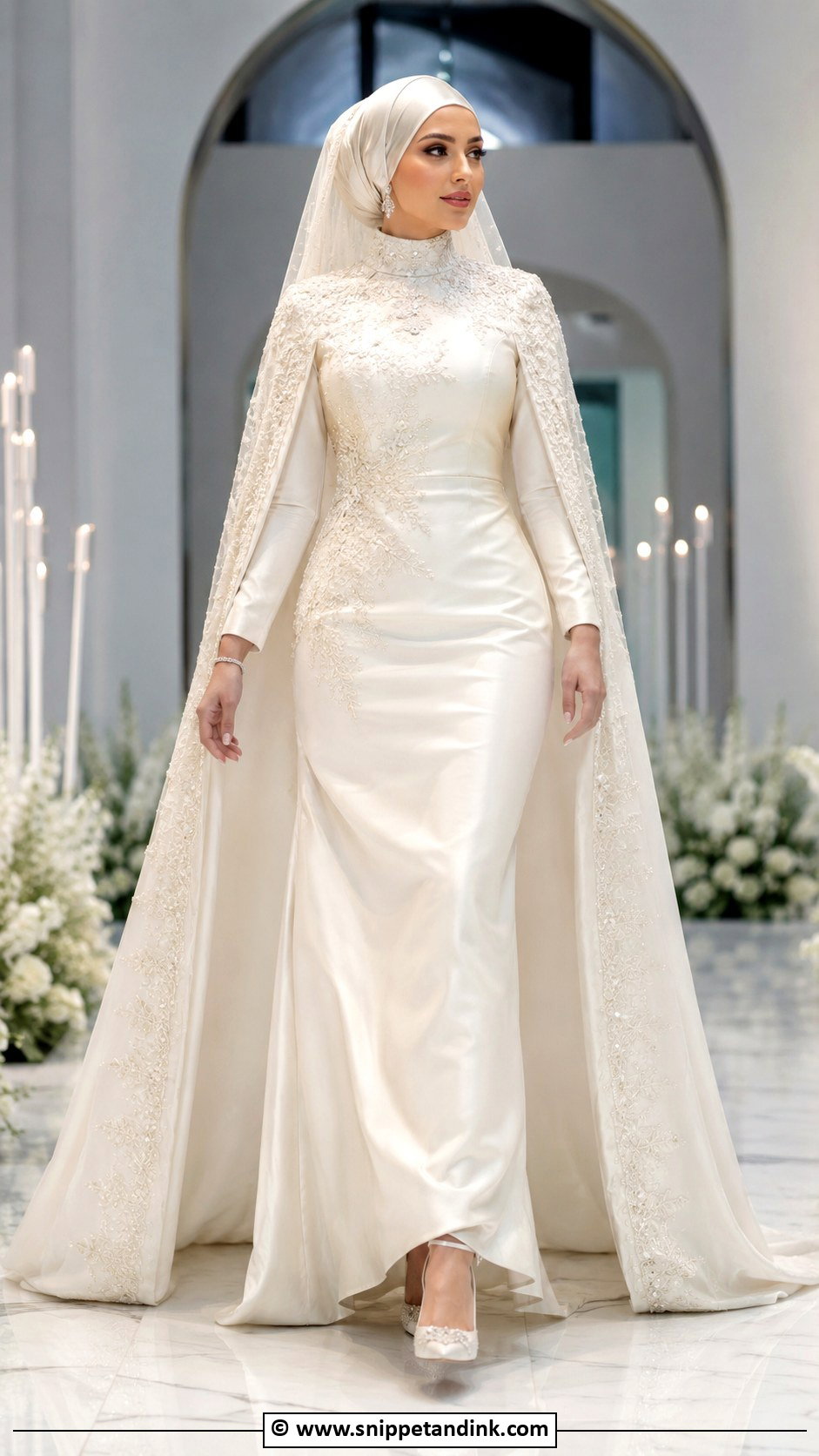
A cape gives you a proper entrance without adding a single inch of exposed skin. I prefer a detachable cape that clips at the shoulder seams, since an attached one gets caught under you every time you sit and pulls the neckline back toward the throat. Sheer embroidered tulle moves best; plain satin capes are heavier and can feel like a coat by the reception. Keep the hijab plain and jewelry minimal, because the shoulders are already doing the work. Pointed heels suit the long line.
6. Gold Embroidery Arabic Muslim Wedding Dress
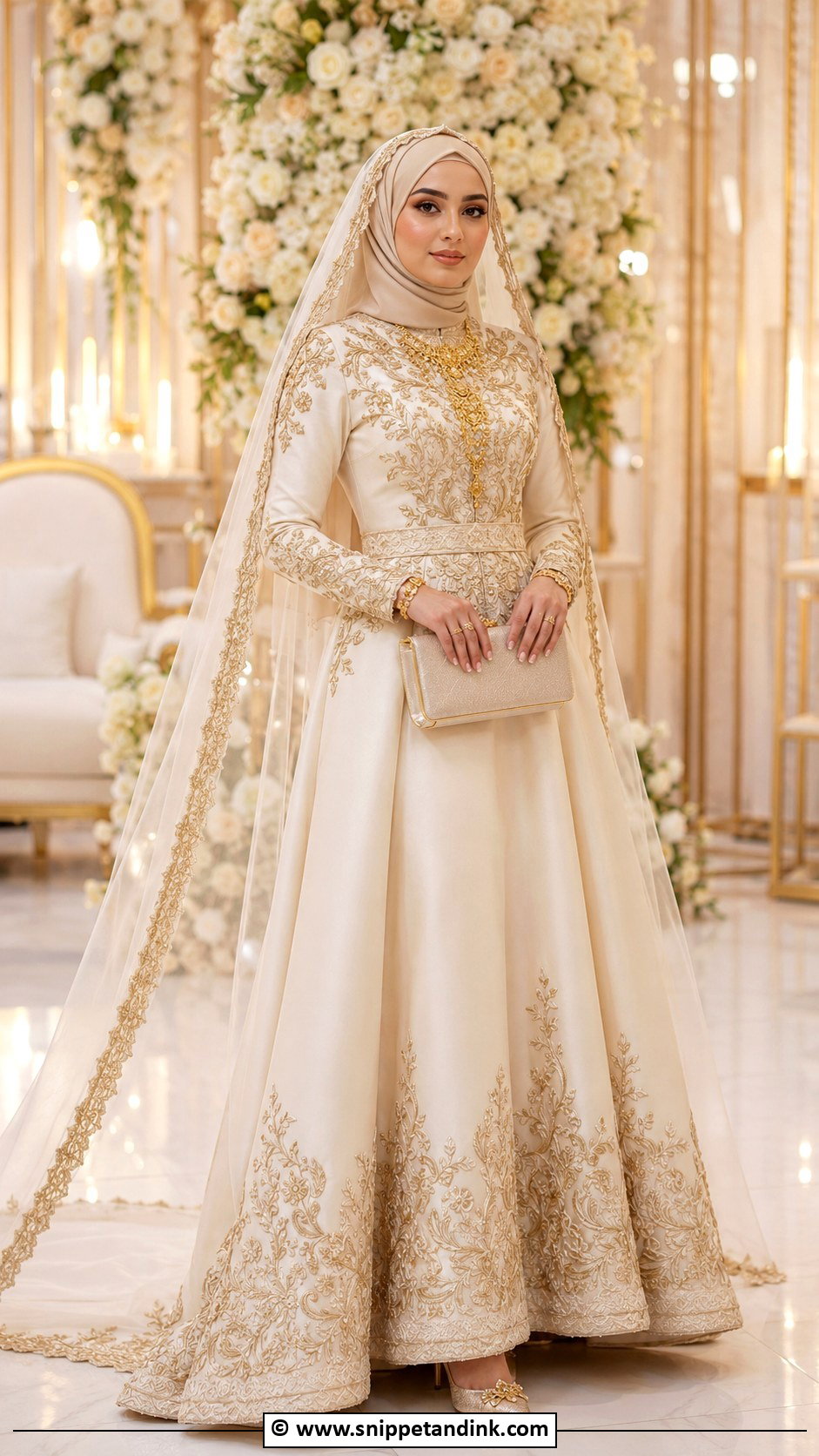
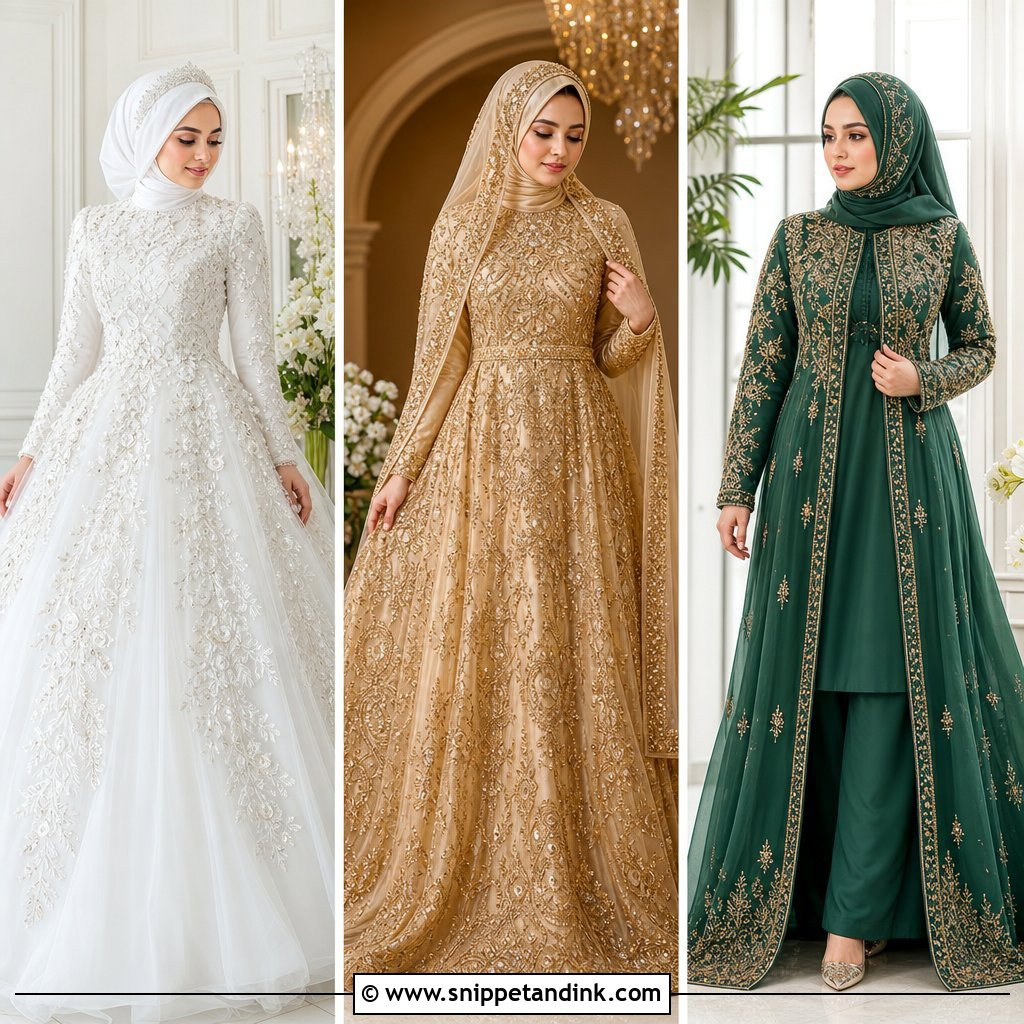
Gold threadwork brings warmth that suits evening light and candlelight especially well. The thing to watch is metallic thread against the skin: on sleeves and cuffs it can scratch, so I ask for a soft lining behind any embroidery that touches the wrist. An ivory, champagne or soft gold hijab ties the colours together. Statement earrings can sit outside the hijab if your style allows, or a fine necklace over a high neckline. Add champagne heels and a structured clutch for the reception.
7. Simple Nikah Arabic Muslim Wedding Dress
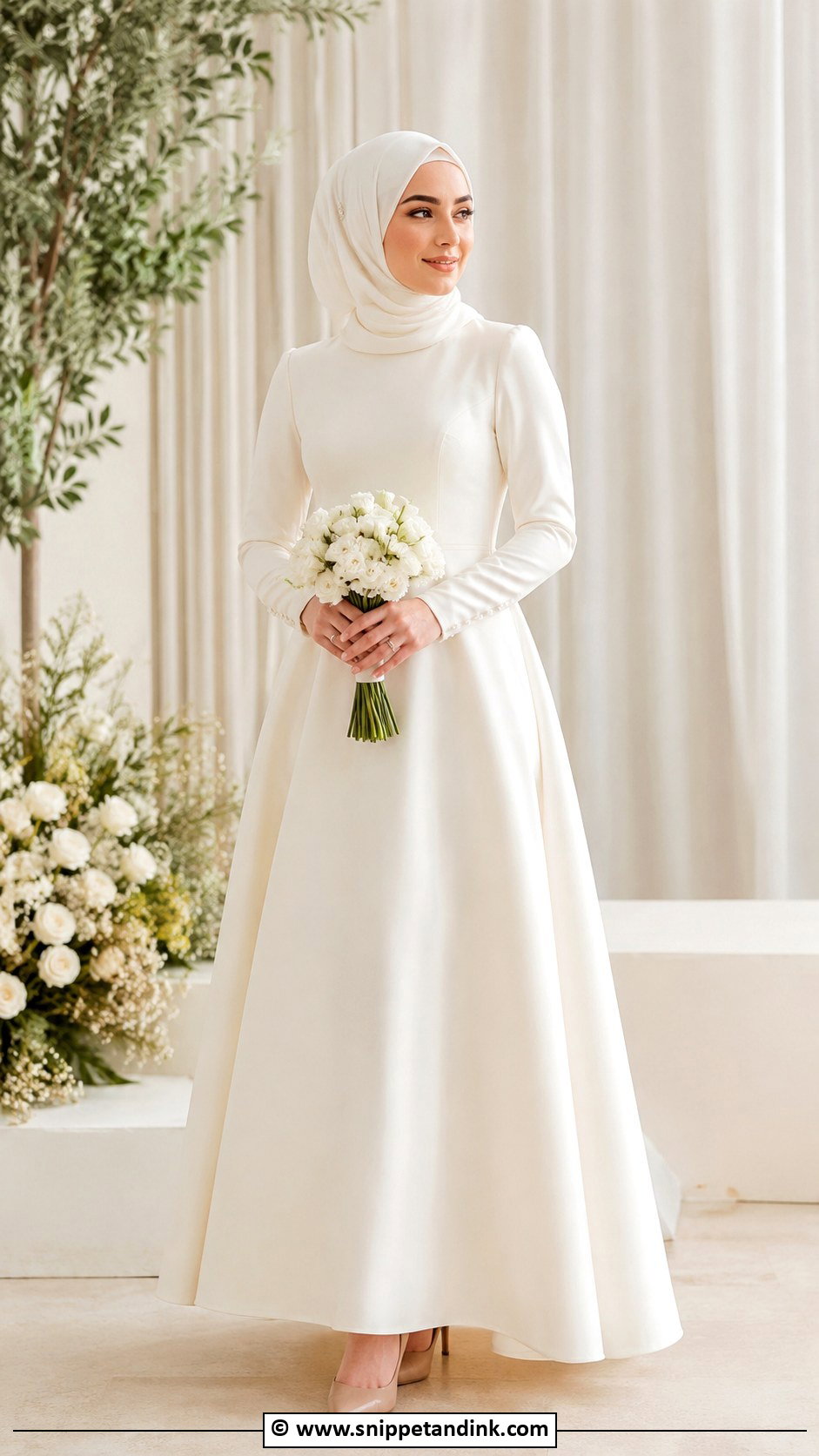
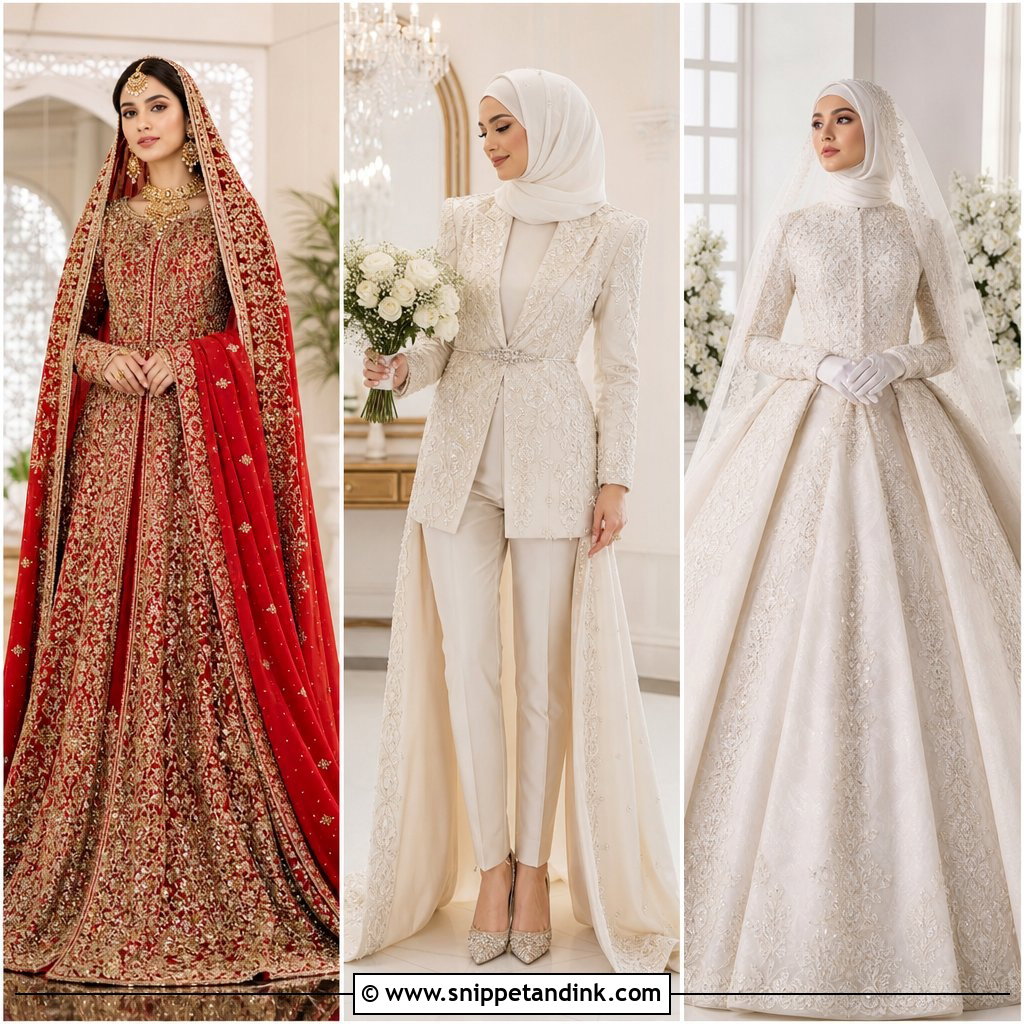
Not every bride wants a gown for the nikah itself, and a simple dress is often the smarter choice if the ceremony is in a mosque or at home. A relaxed A-line in crepe or georgette lets you sit on the floor, kneel and stand up without wrestling a skirt. I suggest a hem that just clears the floor in flat shoes, since mosque carpets mean you’ll likely take heels off. A neatly wrapped hijab in the same shade, a few pearl pins and a small bouquet are enough. Many brides then change into something grander for the walima.
8. Beaded Arabic Muslim Wedding Dress
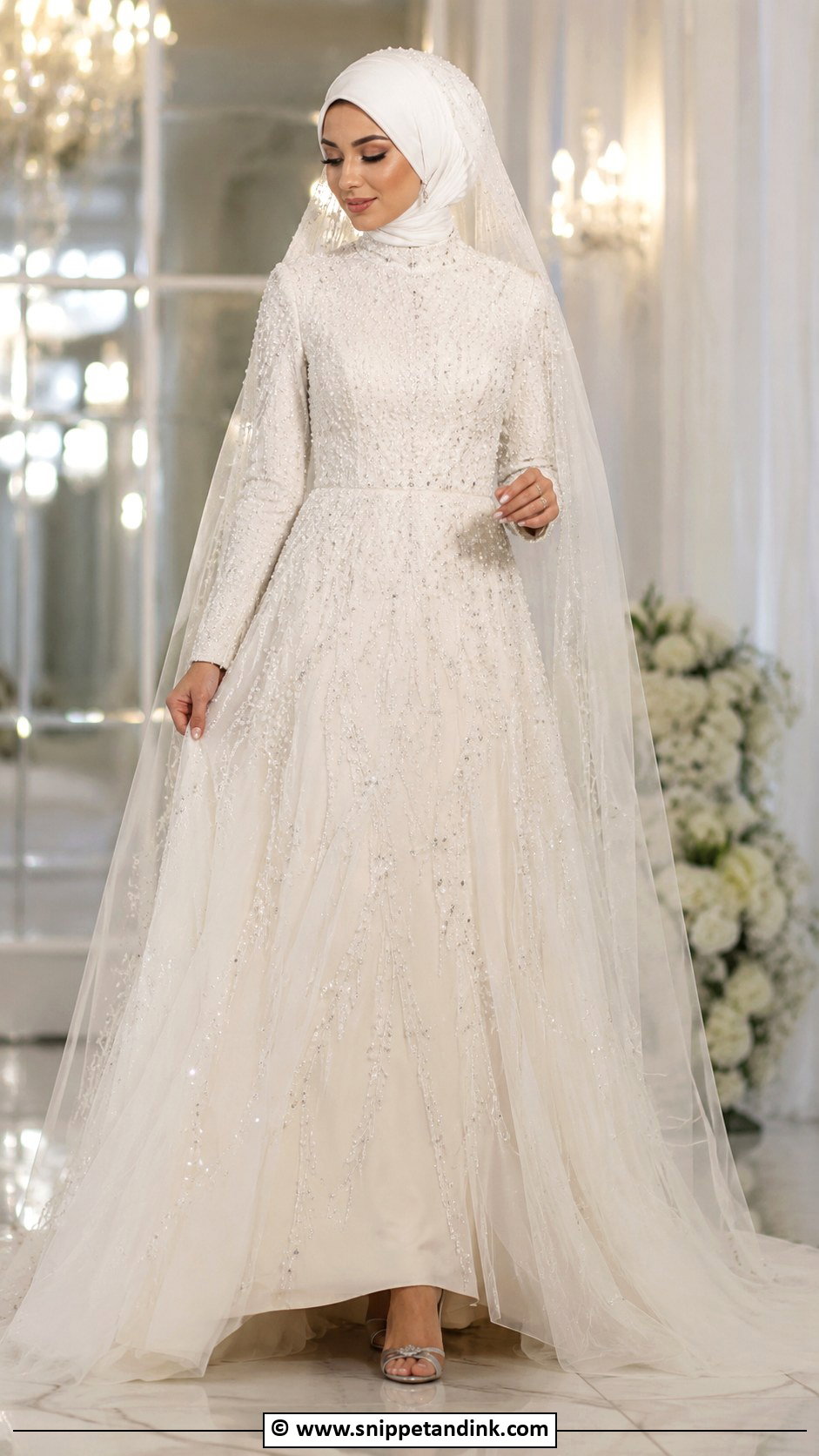
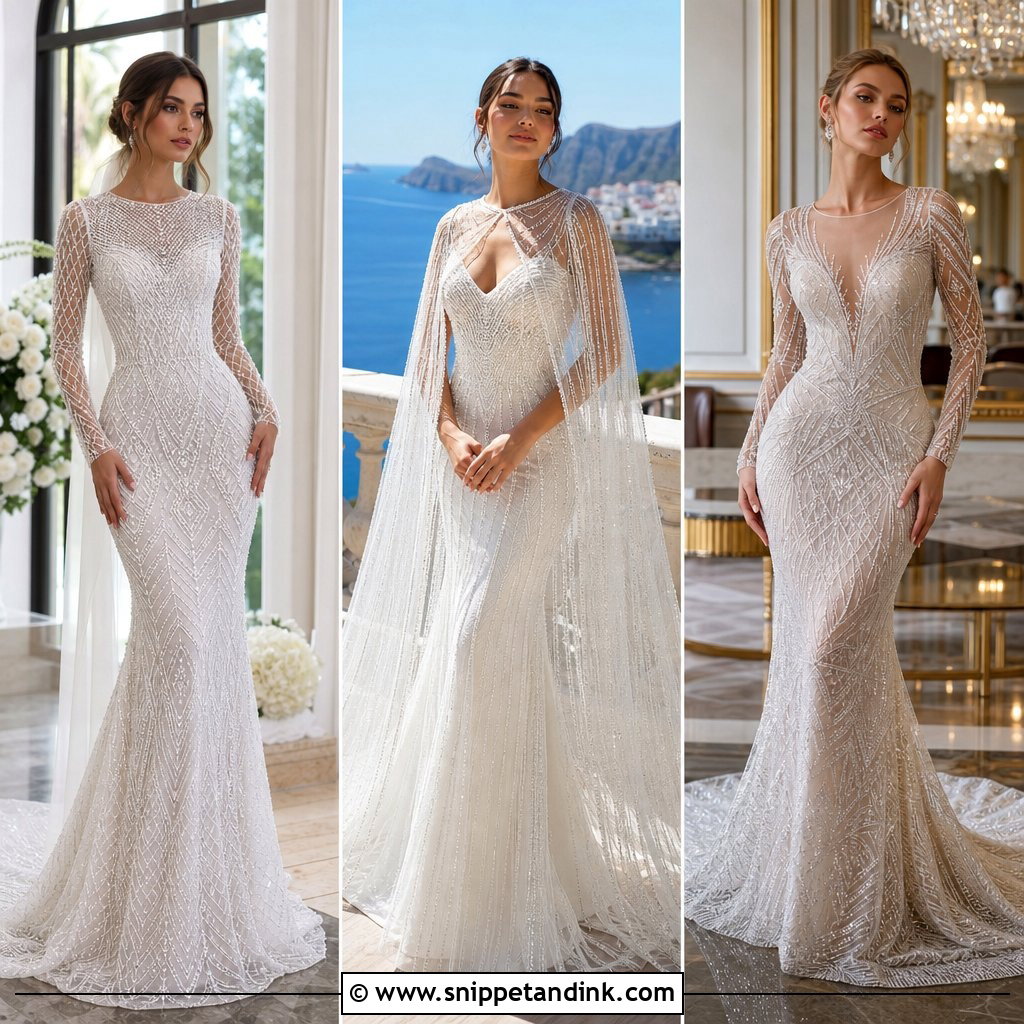
Beading gives the most shine of any finish here, and it adds real weight. A fully beaded gown can be noticeably heavy on the shoulders, so I always have brides wear it for twenty minutes at a fitting before deciding. Ivory, blush and champagne all carry crystal or silver beading well. Keep the hijab smooth and plain so the embellishment doesn’t look busy, and choose a veil with only a scattering of beads at the edge. Evening halls with warm lighting show this kind of work at its best.
9. Modest Mermaid Arabic Muslim Wedding Dress
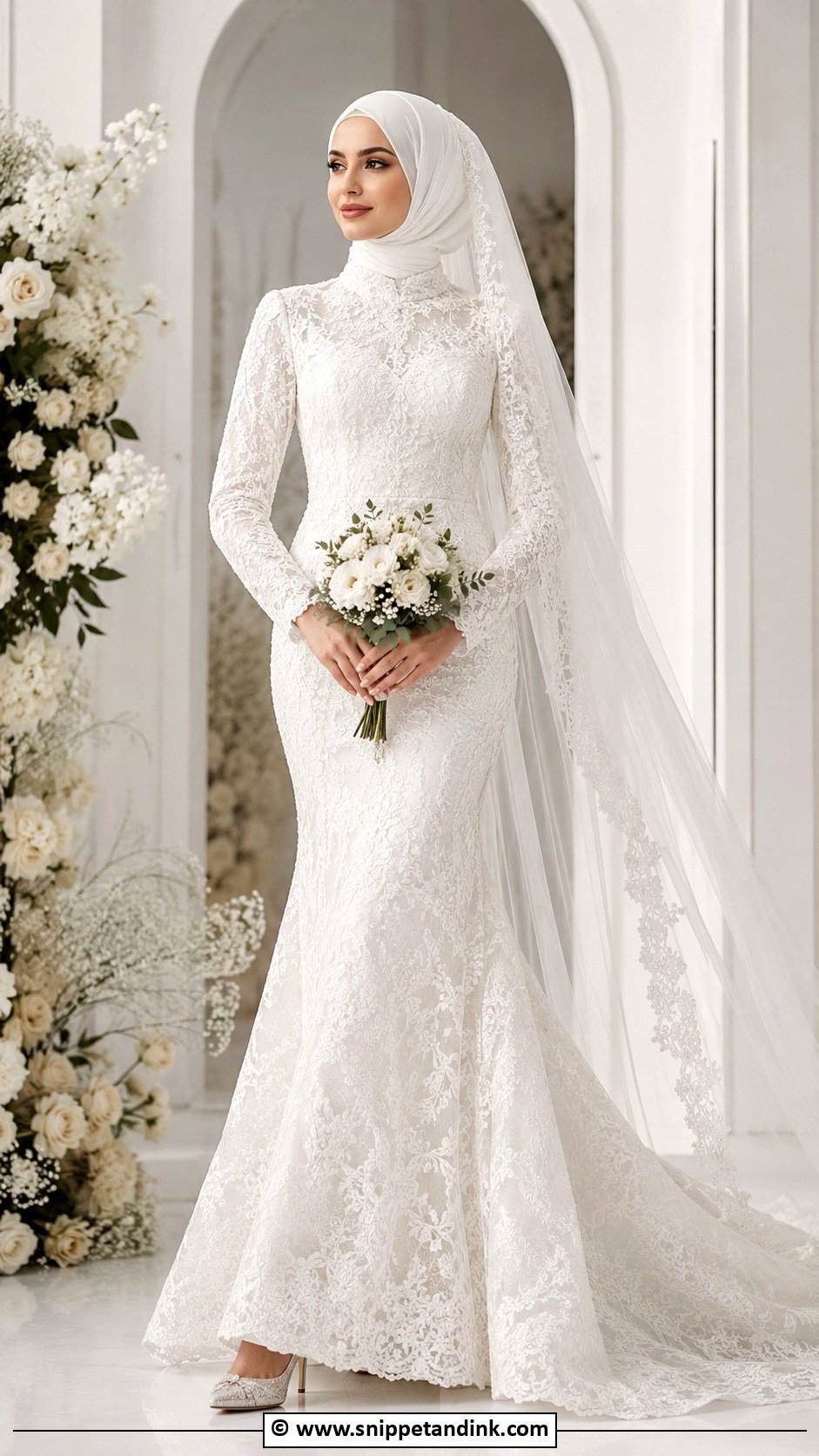
Mermaid shapes are where modest fit gets tricky. The gown has to skim the hips without pulling, and the flare needs to start low enough that you can still take a full stride and climb a stage step. I have brides sit, stand and walk stairs at every fitting in this silhouette. Lace and crepe forgive more than satin, which shows every pull line. A long veil over a matching hijab softens the fitted shape, and crystal heels finish it. If you’ll sit on the floor at any point, skip this one.
10. A Line Arabic Muslim Wedding Dress
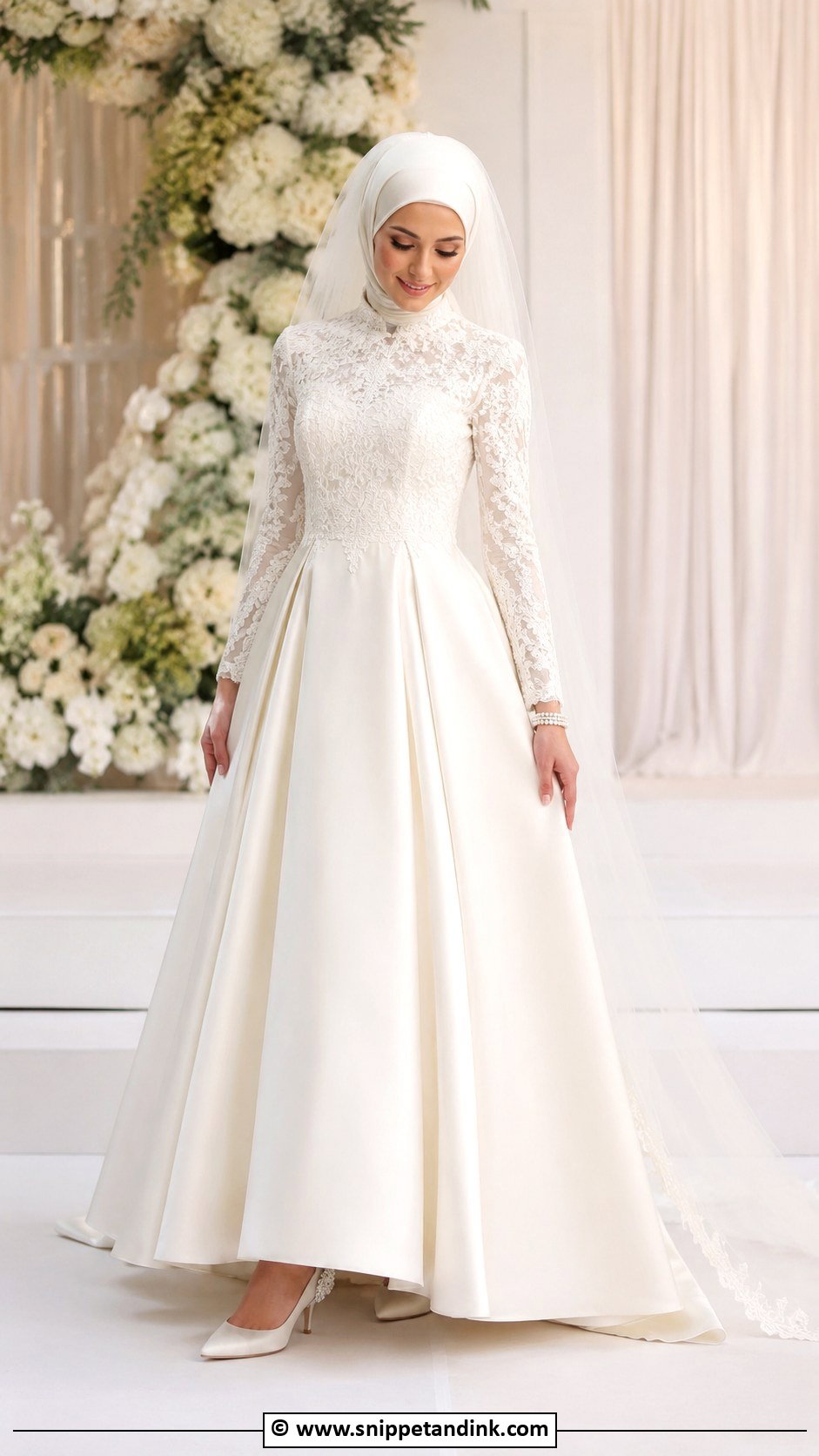
If a bride is unsure what suits her, I usually start her in an A-line, because it works on almost every body and sits comfortably for hours. The fitted bodice and gently flaring skirt give shape without clinging, which matters when full coverage is the priority. Long sleeves and a high neck in lace, tulle, satin or chiffon all work. A matching hijab and veil with pearl or crystal touches keep it classic. Petite brides should watch the waist seam placement, since a slightly high waist lengthens the leg line under a long skirt.
11. Chiffon Arabic Muslim Wedding Dress
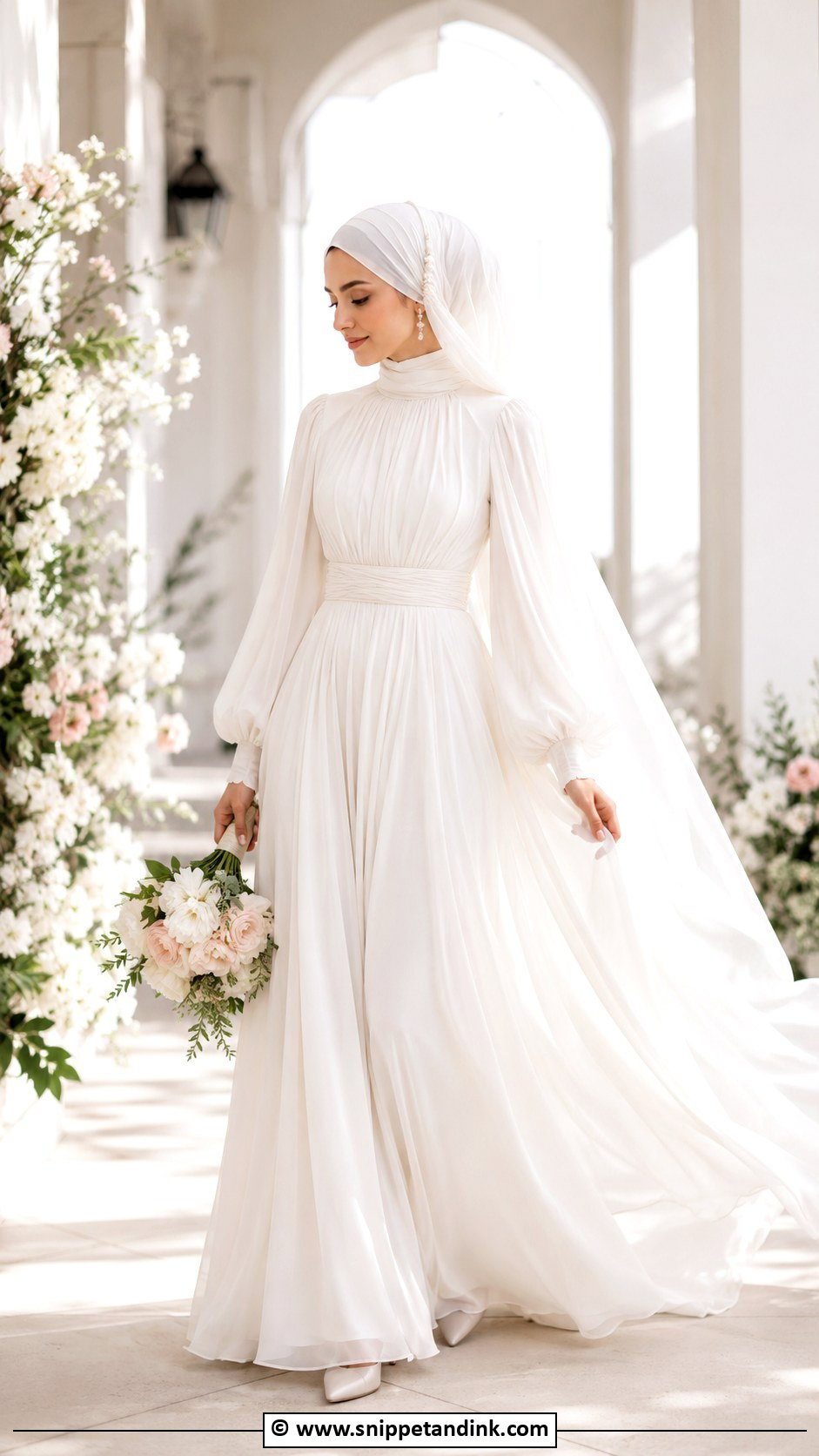
Chiffon is my first suggestion for summer and outdoor nikahs, because it breathes and moves. It’s also the most transparent fabric on this list, so the lining has to be complete and opaque, including the sleeves; check it outside in daylight before the final fitting. Draping at the waist or sleeves adds movement without bulk. A chiffon hijab in the same shade blends in, and pearl pins hold it without snagging if you pin through the fold rather than the single layer. Garden venues and daytime receptions suit it.
12. Tulle Arabic Muslim Wedding Dress
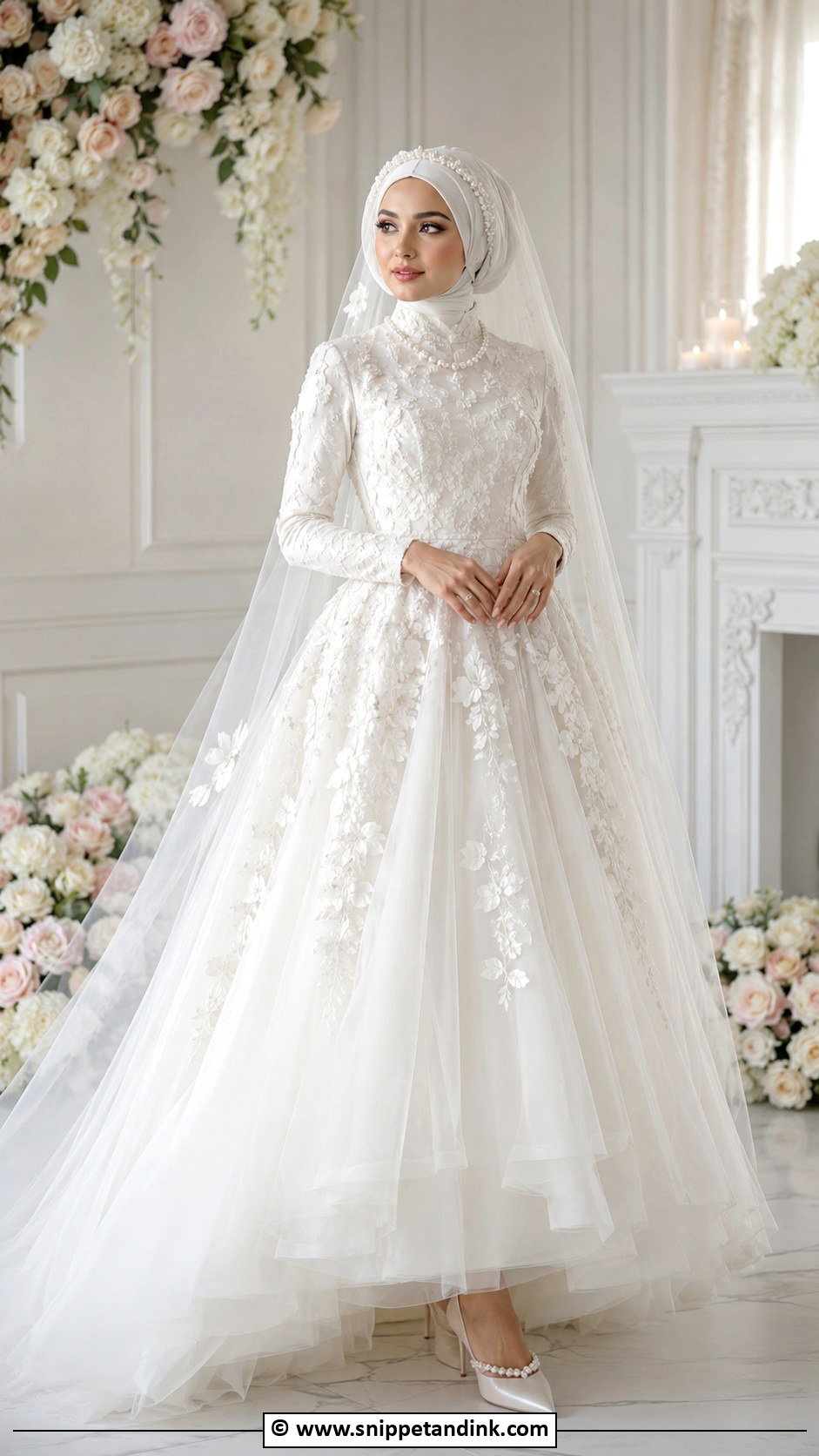
Tulle gives volume without the weight of satin, which makes a full skirt much easier to carry all day. I ask for a fully lined bodice and long sleeves in a finer illusion tulle so the arms are covered without looking heavy. Embroidered tulle adds detail; plain tulle is cleaner. Under a long tulle veil, a matching hijab should be pinned close so the two layers don’t slide against each other. With a very full skirt, keep the bodice neat. For a softer modest wedding dress with movement, this is an easy place to start.
13. Royal Kaftan Arabic Muslim Wedding Dress
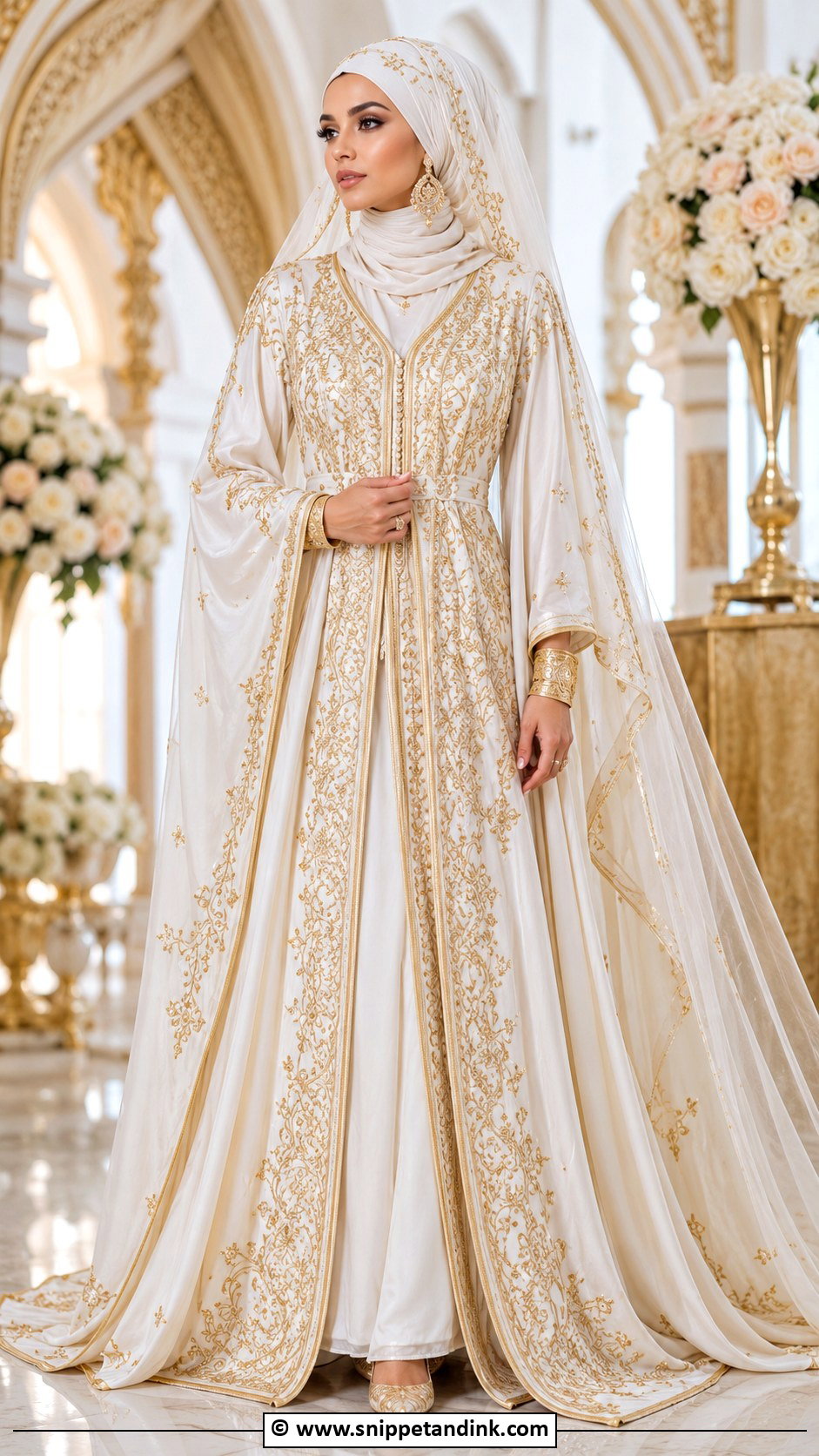
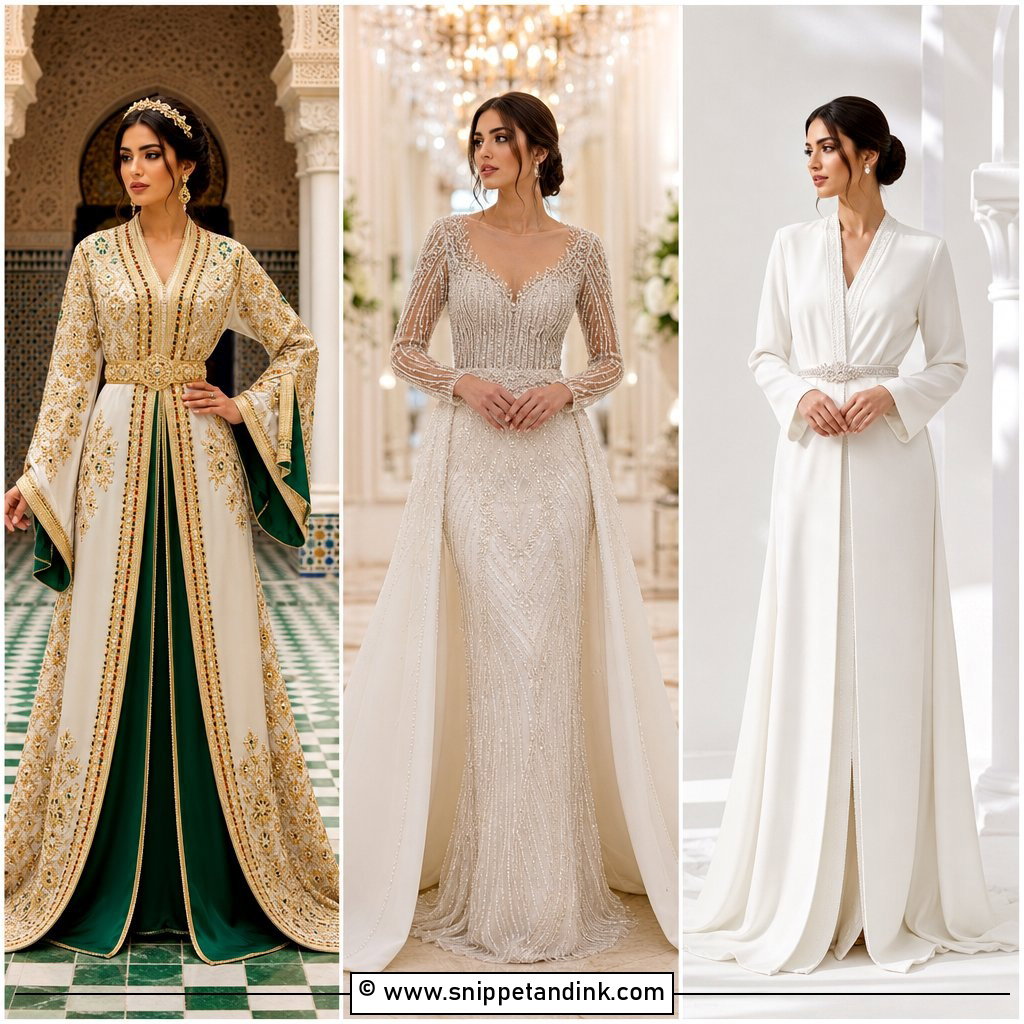
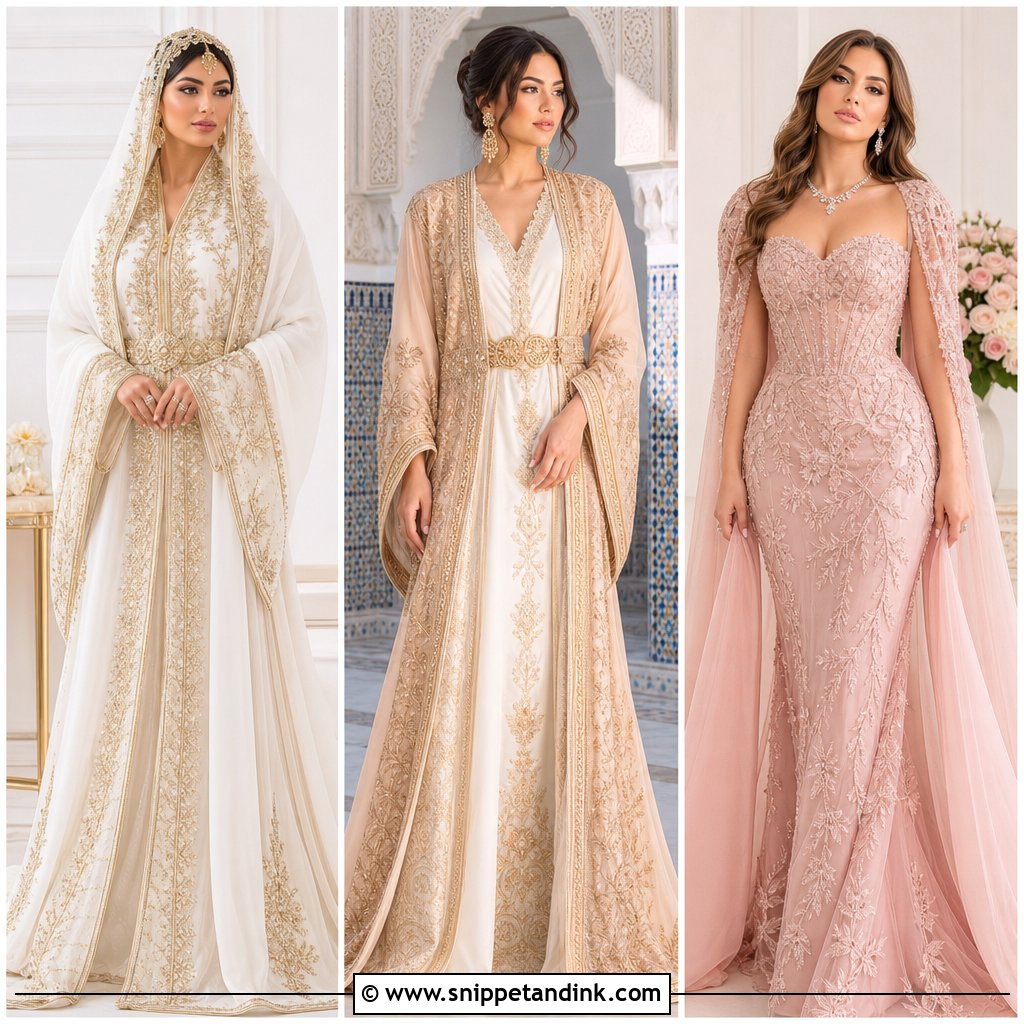
A royal kaftan Arabic Muslim wedding dress carries heritage and is wonderfully forgiving to wear. Look for structured shoulders so the wide sleeves fall in clean folds instead of collapsing, and ornate embroidery down the front. Gold, silver or pearl embellishment makes it regal. Wear it over a matching inner dress with a coordinated hijab and either a long veil or a draped headpiece. Statement earrings and a cuff bracelet suit the scale. I often suggest kaftans for henna nights and family celebrations where you’ll dance.
14. Moroccan Takchita Arabic Muslim Wedding Dress
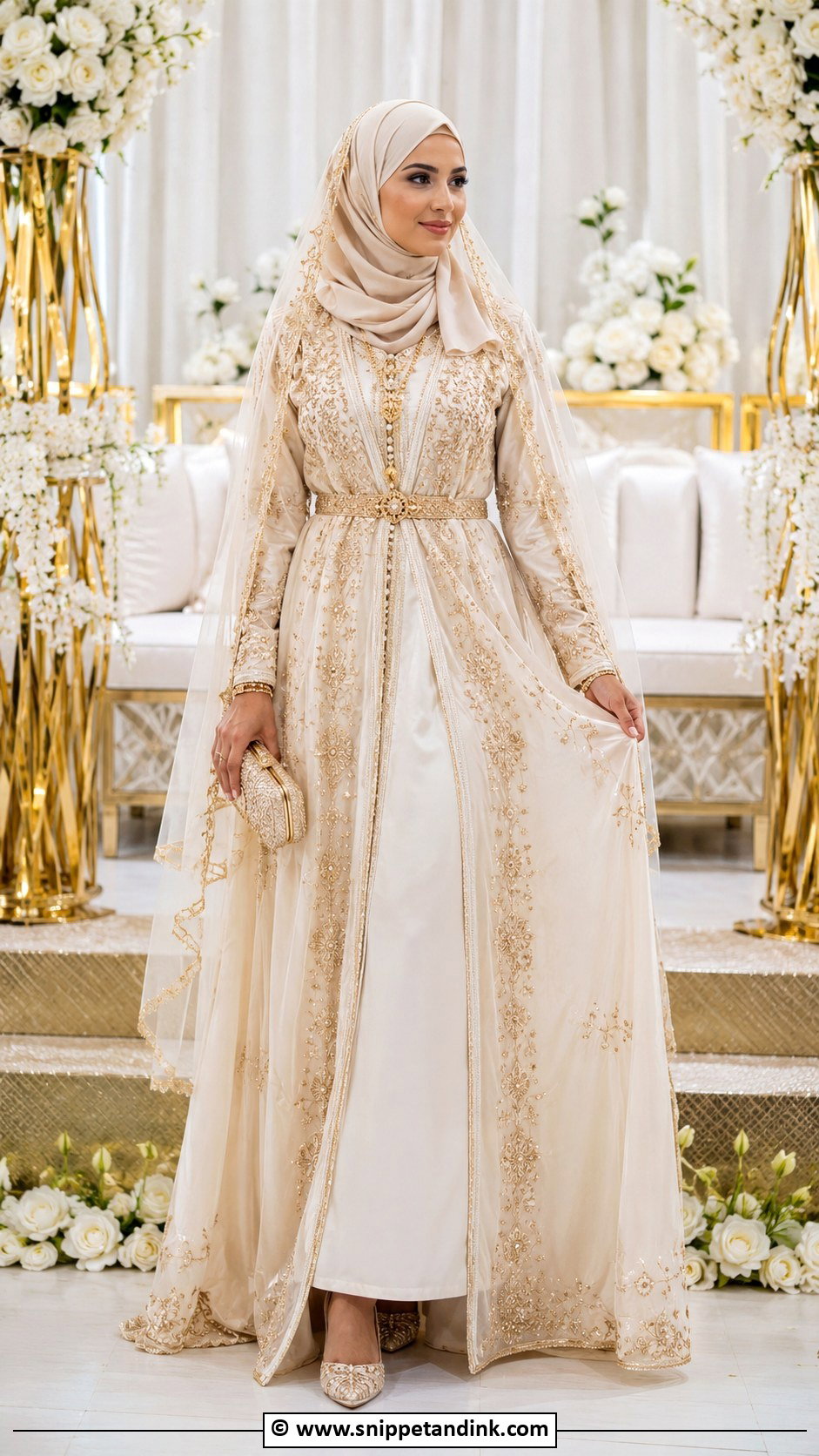
A takchita is two layers: an inner dress (the tahtiya) and an embroidered outer layer, cinched with a decorative belt at the waist. That belt is what gives shape, so a takchita never needs to be fitted to look polished. For a bridal version, ivory, white, champagne or soft gold all work. In Moroccan weddings brides often change several times, so if you choose one, ask early how quickly the belt and outer layer come off and go on again. Gold jewelry and embellished shoes finish it.


15. Palestinian Embroidered Arabic Muslim Wedding Dress
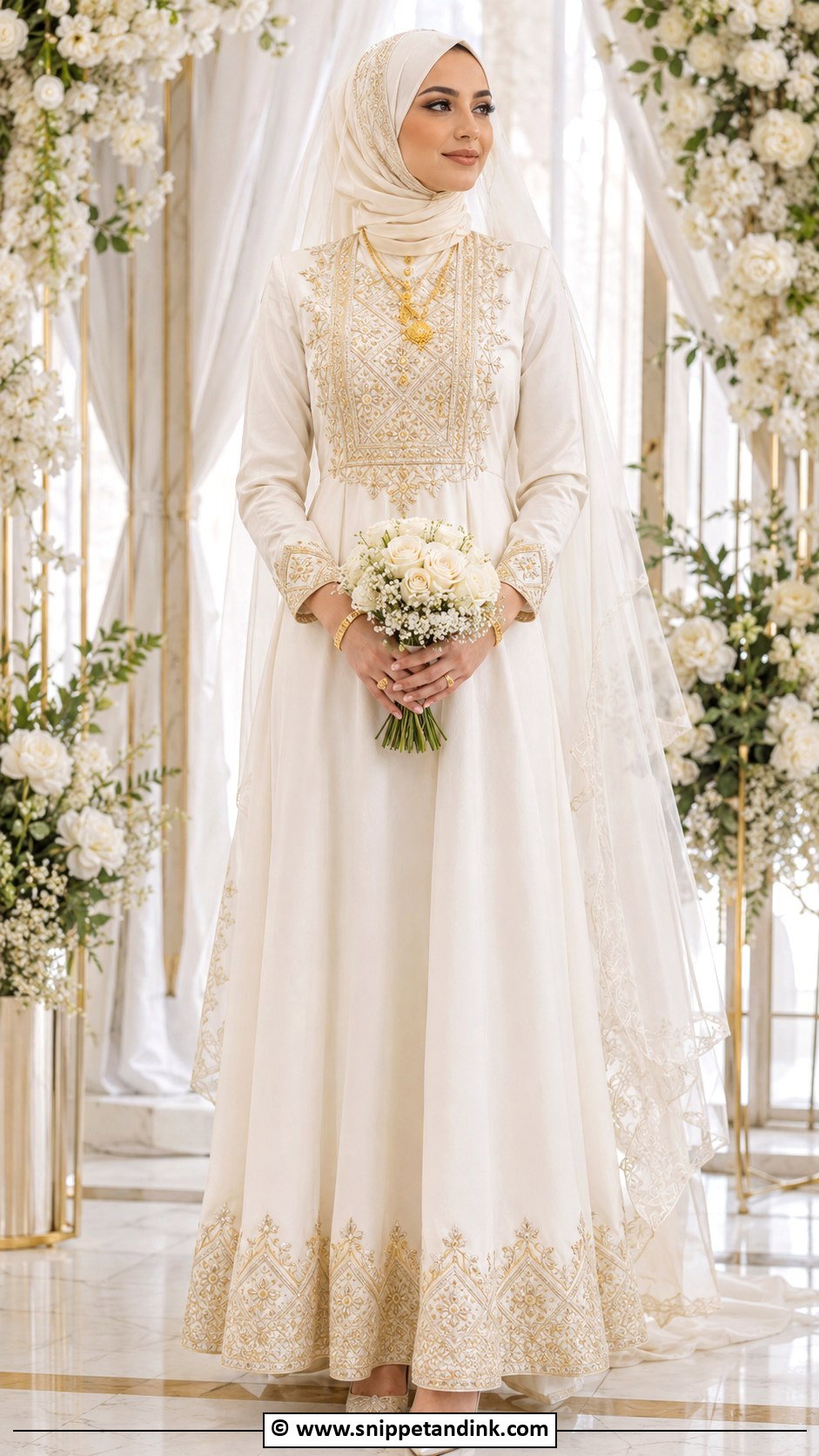
Tatreez is cross-stitch embroidery with patterns that differ by region and family, so I always ask brides whether there’s a design connected to their own family before choosing a generic motif. On a white or ivory dress it usually sits across the chest panel, sleeves, cuffs or hem. Red is the traditional colour, though black, gold and multicolour stitching are worn too. A plain hijab lets the embroidery speak, with a simple veil, gold jewelry and low heels. It means the most at nikahs and family-centred celebrations.
16. Lebanese Lace Arabic Muslim Wedding Dress
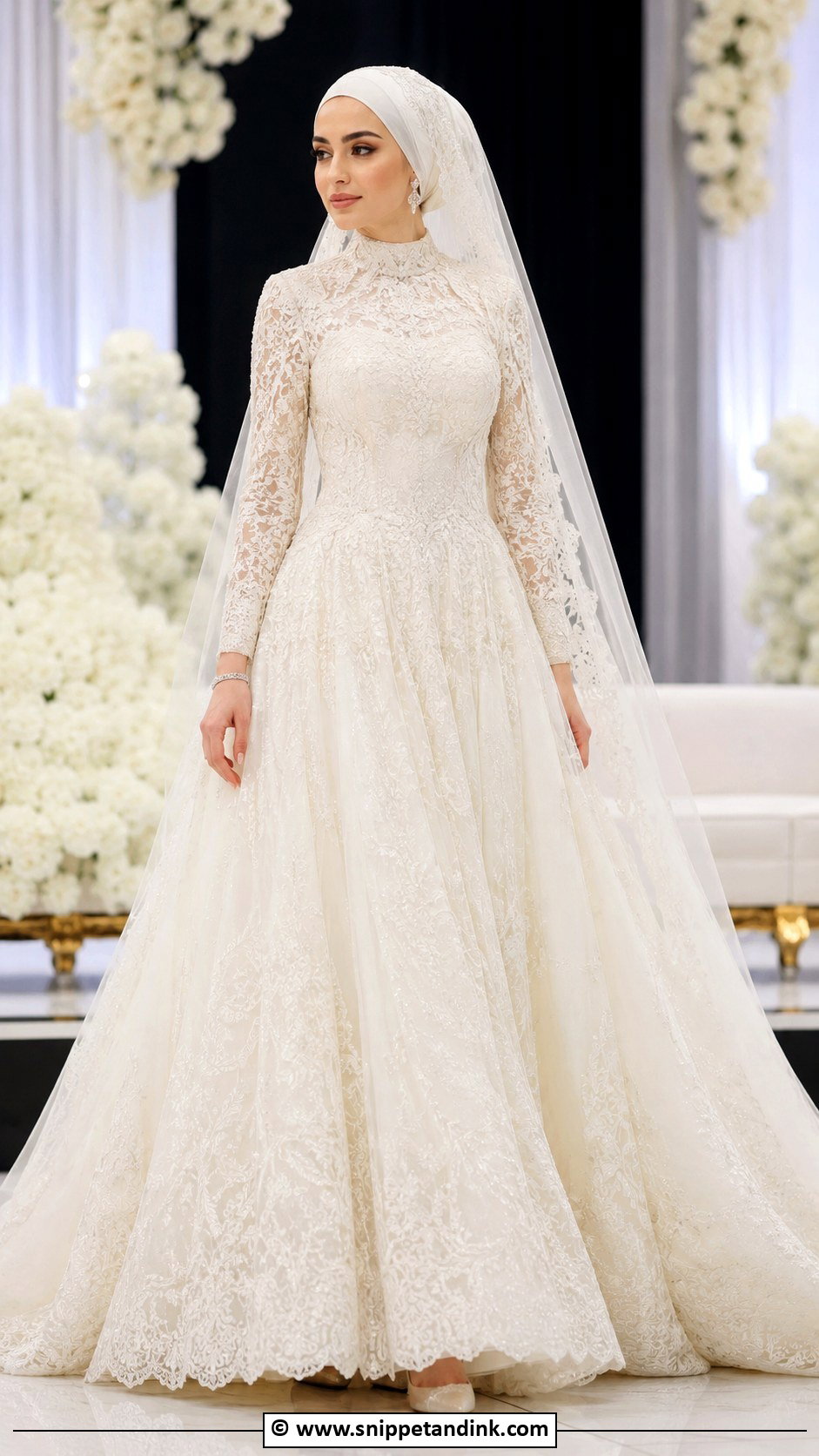
Lebanese bridal lace tends toward detailed appliqué and soft beadwork on a fitted bodice and flowing skirt. With long lace sleeves, ask the atelier to cut the lace motifs so they finish cleanly at the cuff; a chopped motif at the wrist is the first thing I notice in close-up photos. Pair it with a neat ivory or white hijab and a long lace-trimmed veil. Crystal earrings, a slim bracelet and classic heels complete it. Formal indoor weddings and hotel receptions are its natural home.
17. Dubai Luxury Arabic Muslim Wedding Dress
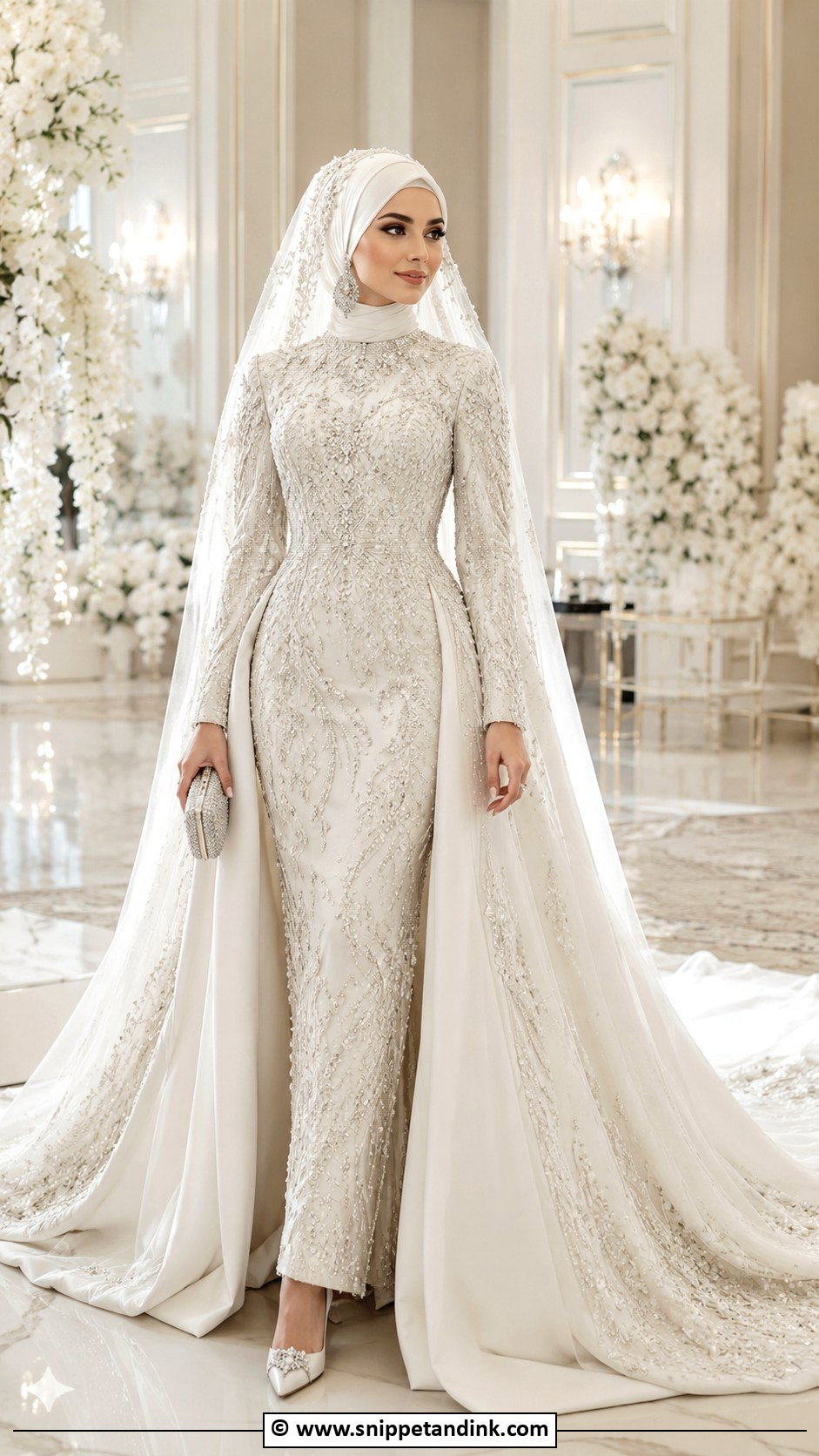
A Dubai luxury Arabic Muslim wedding dress is about fabric, embellishment and a long train. Trains like this need a bustle for the reception, so ask the seamstress to add hooks or ties and show a bridesmaid how to fasten them. Satin, mikado, lace or embroidered tulle all suit the look. A hijab and veil matched exactly to the gown make it feel custom. Choose heels you can stand in for hours, and keep makeup and bouquet restrained so the dress leads.
18. Turkish Inspired Arabic Muslim Wedding Dress
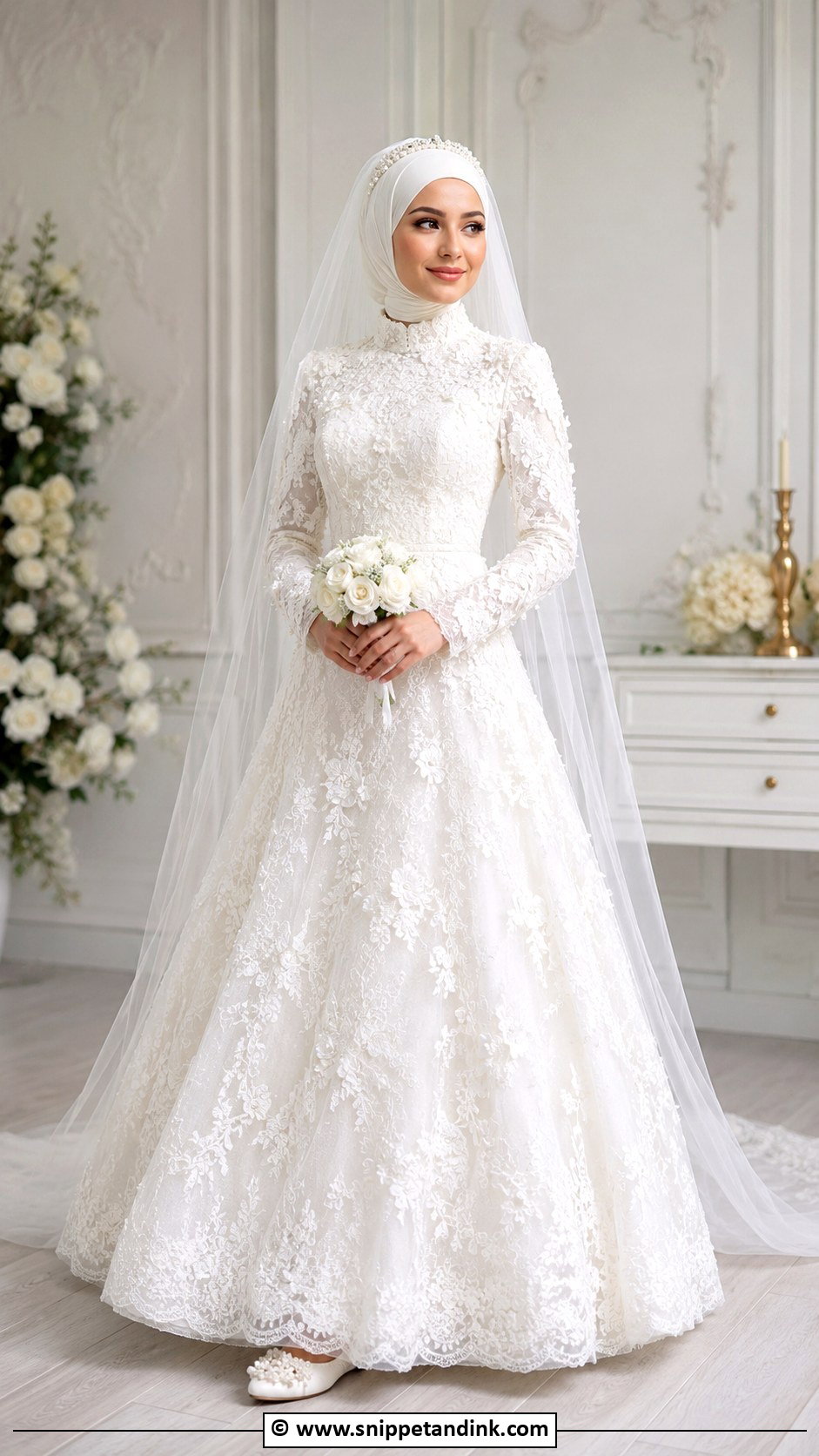
Turkish bridal styling usually means a high neck, long sleeves with lace and floral appliqué, and a full A-line or ball gown skirt with a very long veil framing the hijab. The veil is often pinned high on the crown of the hijab, so I have the hijab wrapped with a little volume at the back to give the comb something to grip. White or ivory hijabs keep it traditional, and pearl accessories soften it. Classic pumps or embellished flats work under a long skirt. It reads well indoors or out.
19. Blush Arabic Muslim Wedding Dress
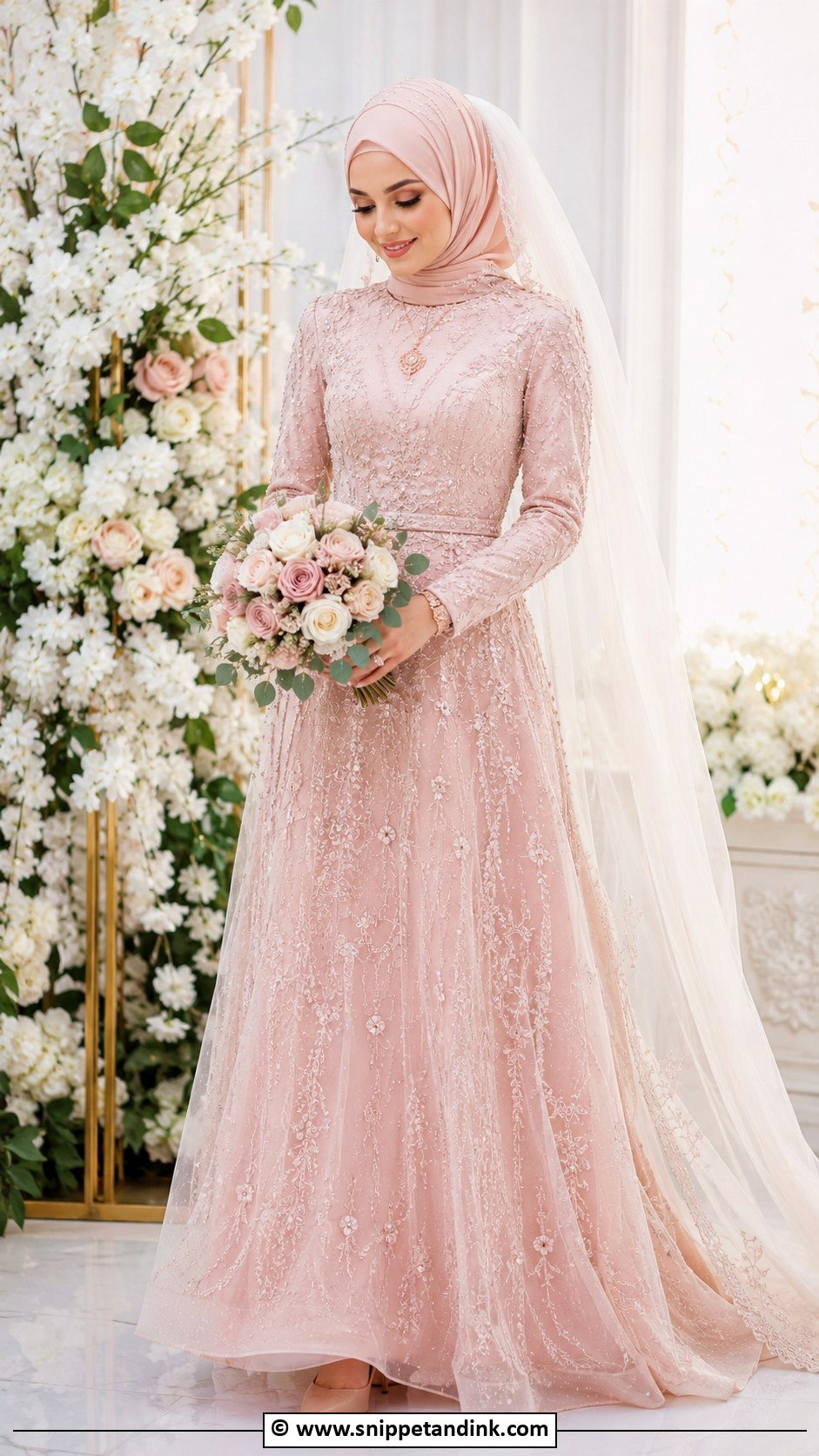
Blush is a gentle step away from white, and the shade matters more than brides expect. A pink with a yellow base suits warm skin, while a cooler, greyer blush suits fair or olive skin; hold the fabric to your face in daylight before you commit. A matching blush hijab creates a soft monochrome look, while an ivory veil makes it more bridal. Rose gold jewelry is the natural metal here. Spring weddings and daytime receptions suit it.


20. Champagne Arabic Muslim Wedding Dress
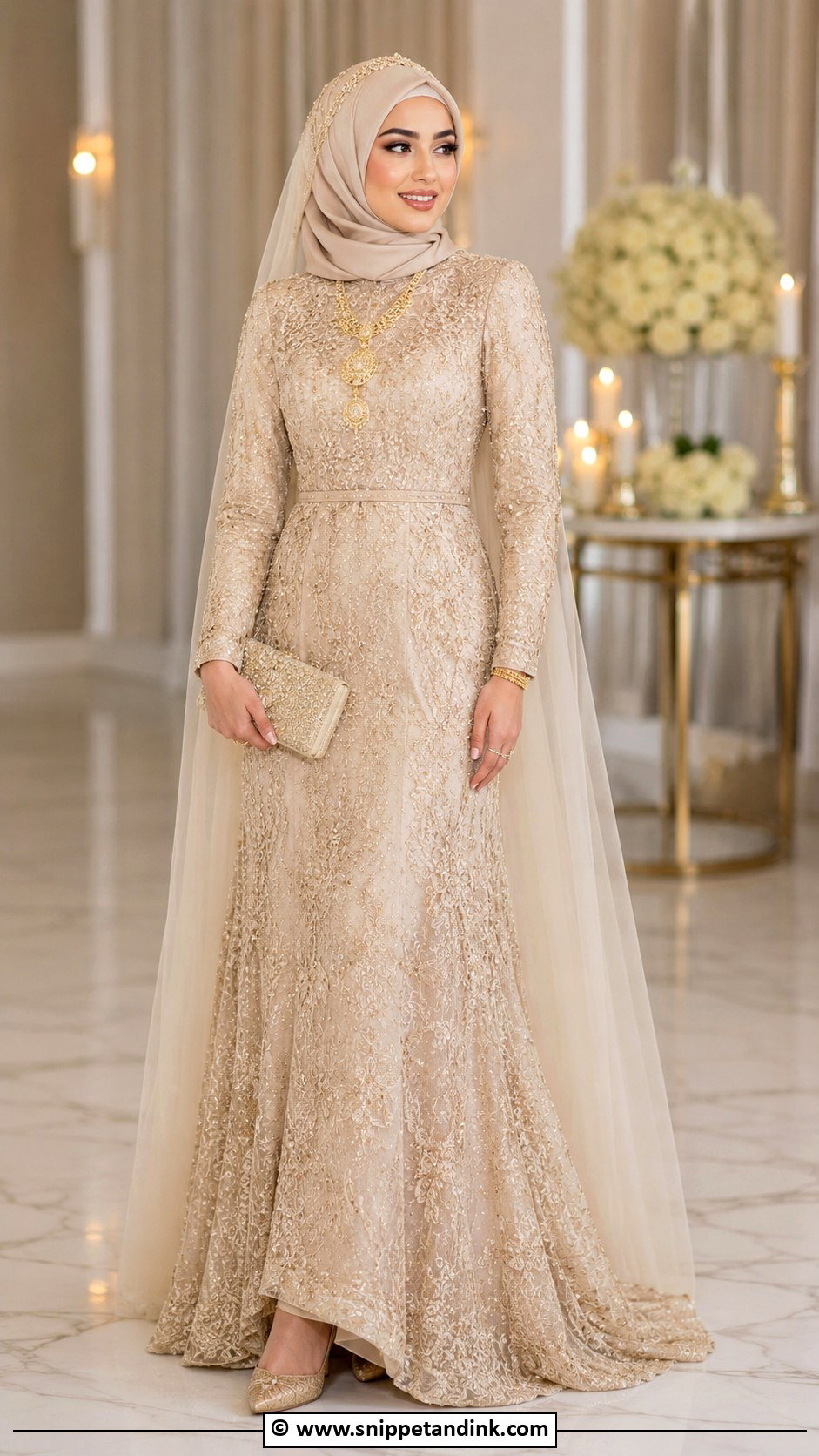
Champagne sits between ivory and gold, and it flatters a wide range of skin tones because it doesn’t drain colour from the face the way bright white can. In a long-sleeve gown with satin lining and tonal lace or beadwork, it looks rich without shine overload. A chiffon hijab in the same shade keeps the line smooth, while a light ivory veil brightens the face. Gold jewelry, champagne heels and a small embellished clutch finish it. It’s at its best at evening receptions.
21. Ivory Arabic Muslim Wedding Dress
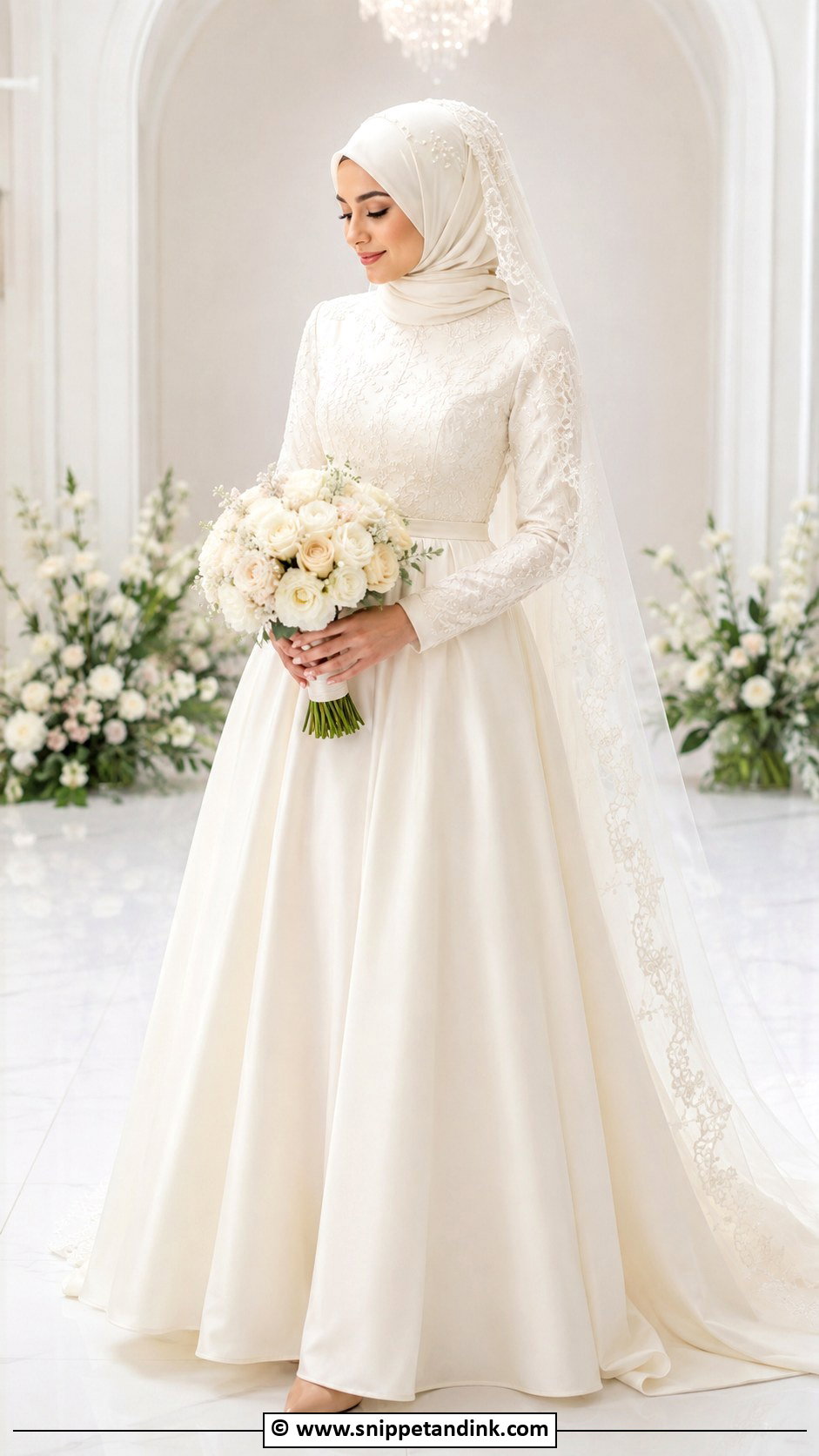
Ivory is softer than pure white and almost always kinder on camera, especially in warm indoor light. The trap is the hijab: shops label many different shades as ivory, so bring a fabric swatch from the gown when you buy the scarf and match it in daylight. A high-neck, long-sleeve gown with a flowing skirt and modest lining suits almost any setting. Pearl pins or a lace veil add detail. Choose nude, ivory or champagne shoes to match the gown’s undertone.
22. Green Arabic Muslim Wedding Dress
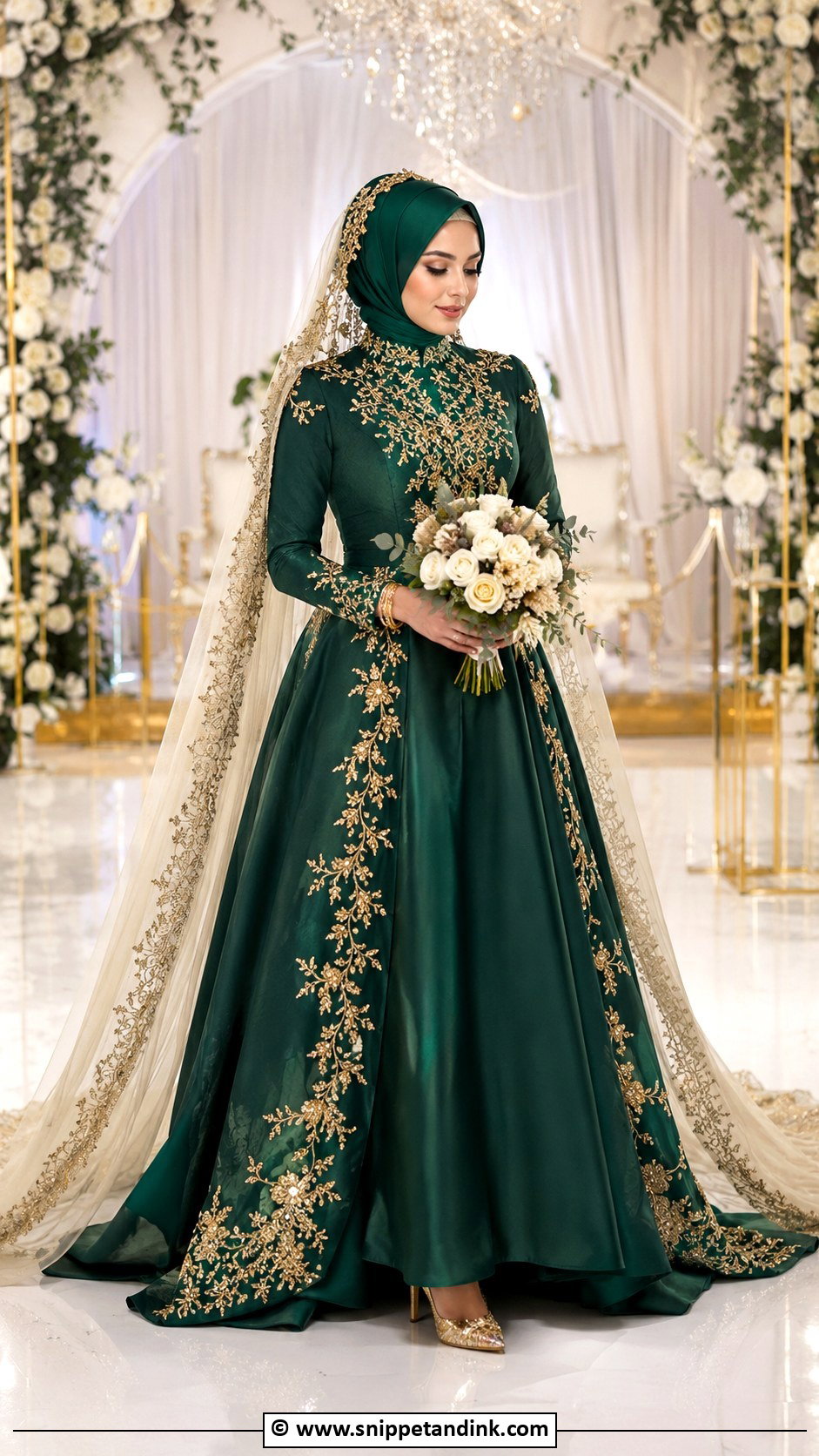
Green carries meaning for many Muslim brides, and in sage, emerald or deep olive it looks regal. I’d steer brides toward emerald or olive for evening, because pale sage can look washed out under yellow hall lighting. Long sleeves, a high neckline and gold or pearl embroidery keep it bridal. An ivory veil softens the colour; a green veil makes a bolder look. Gold heels and a bouquet with cream flowers complete it. It suits cultural weddings and evening receptions.
23. Two Piece Arabic Muslim Wedding Dress
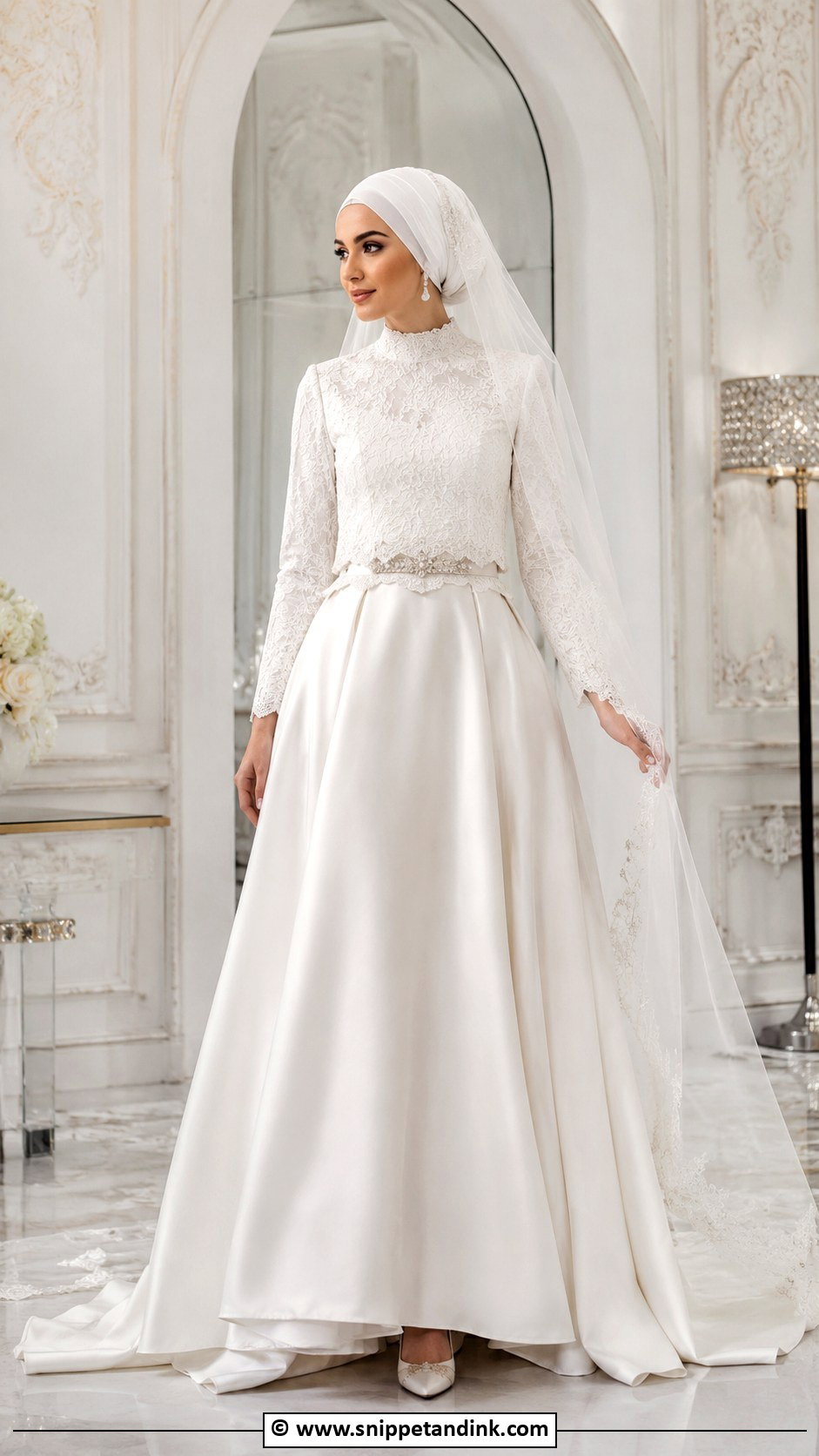
A two piece Arabic Muslim wedding dress stays modest as long as the top is long enough. I fit the top so it overlaps the skirt waistband by a few inches, because when you raise your arms to hug or pray, a short top rides up and shows skin at the back. A high-neck long-sleeve top over a full skirt in satin, crepe, lace or tulle works well, and an embroidered waistband or belt makes it bridal. Coordinated hijab, long veil and elegant heels finish it. Separates are also easier to alter and to wear again.
24. Plus Size Arabic Muslim Wedding Dress
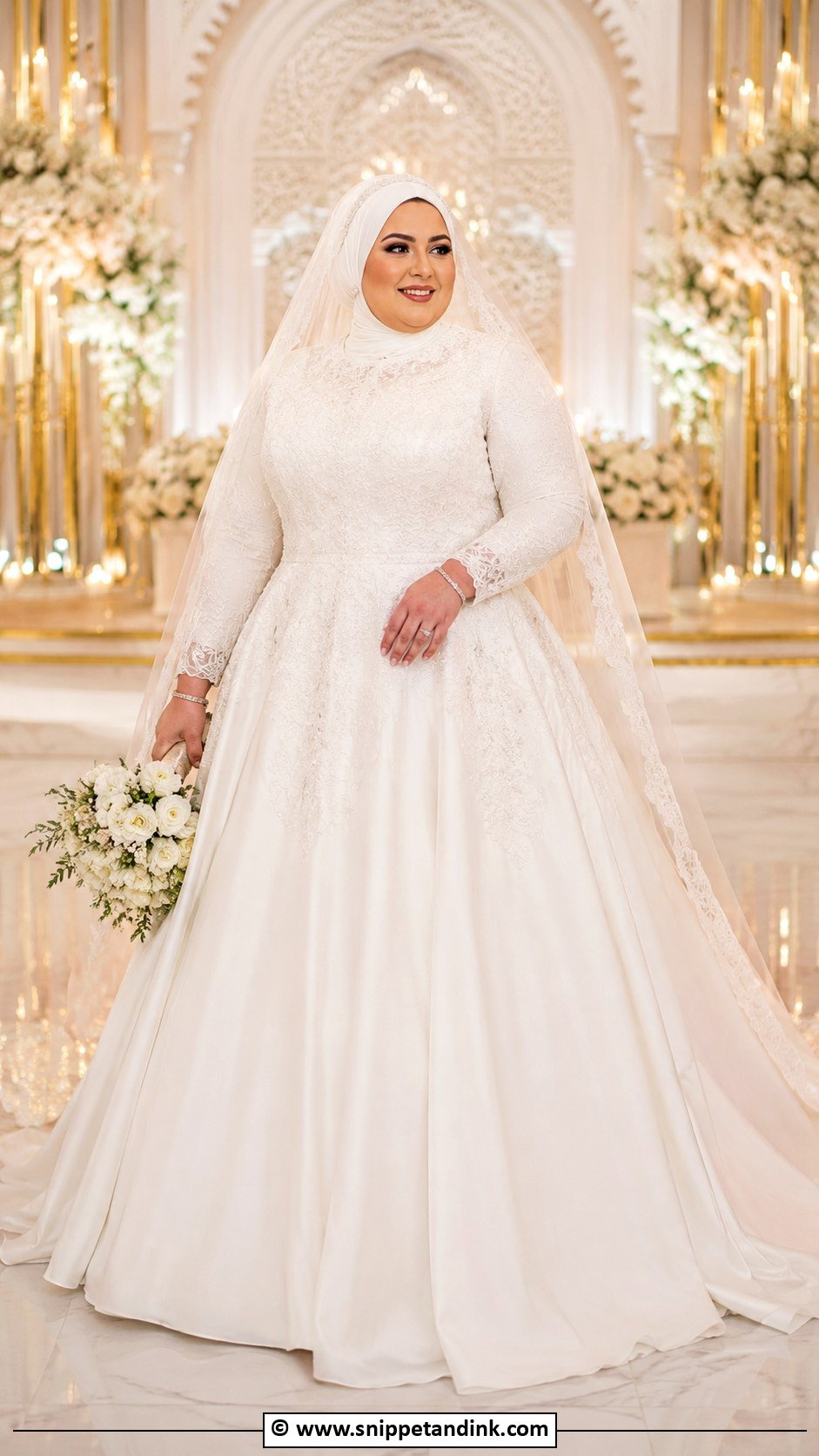
A plus size Arabic Muslim wedding dress should feel supported from every angle and never restrict your arms. A-line, empire waist and softly structured ball gowns all work. The fitting point I watch most is the sleeve: set-in sleeves cut too narrow pull across the upper arm and back as soon as you lift your hands, so ask for a little extra ease there. Satin, crepe, chiffon and lace all work when the fit is right. Choose secure shoes, especially under a full skirt.
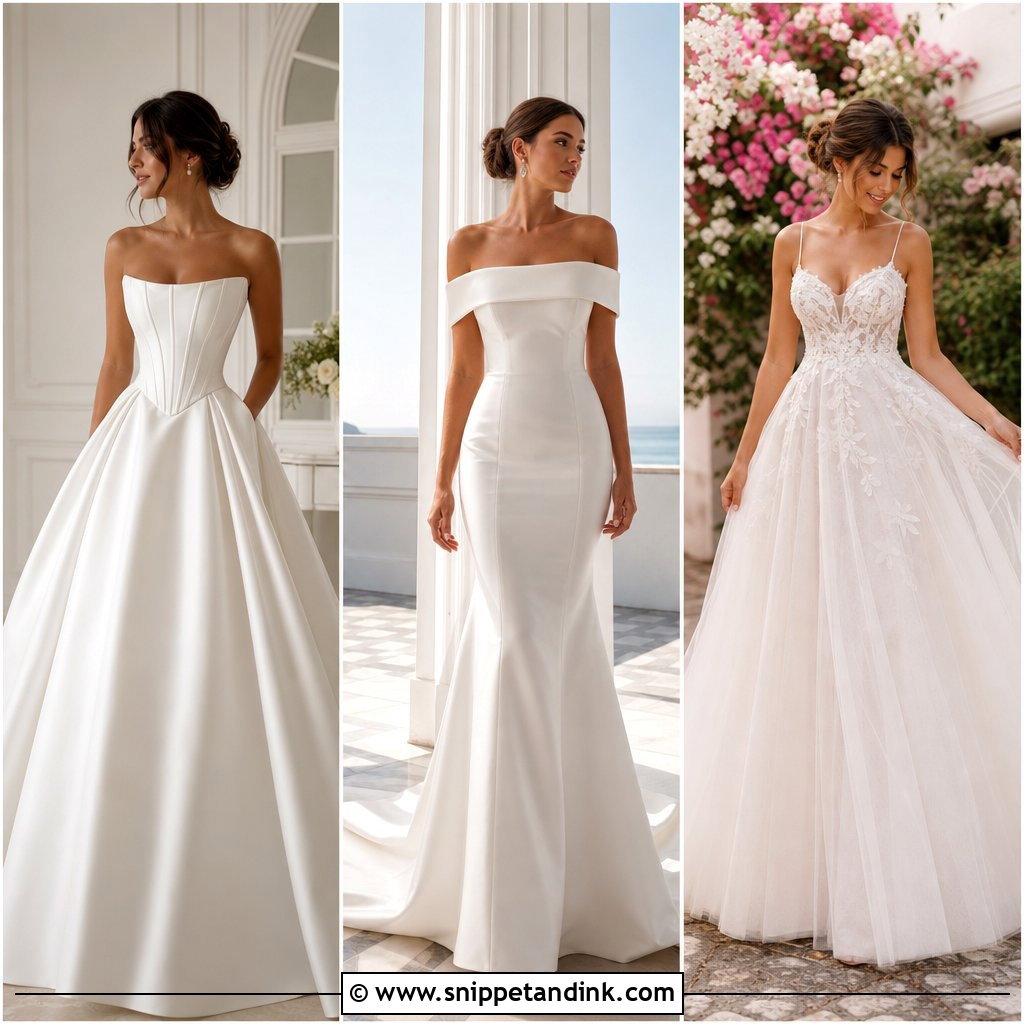
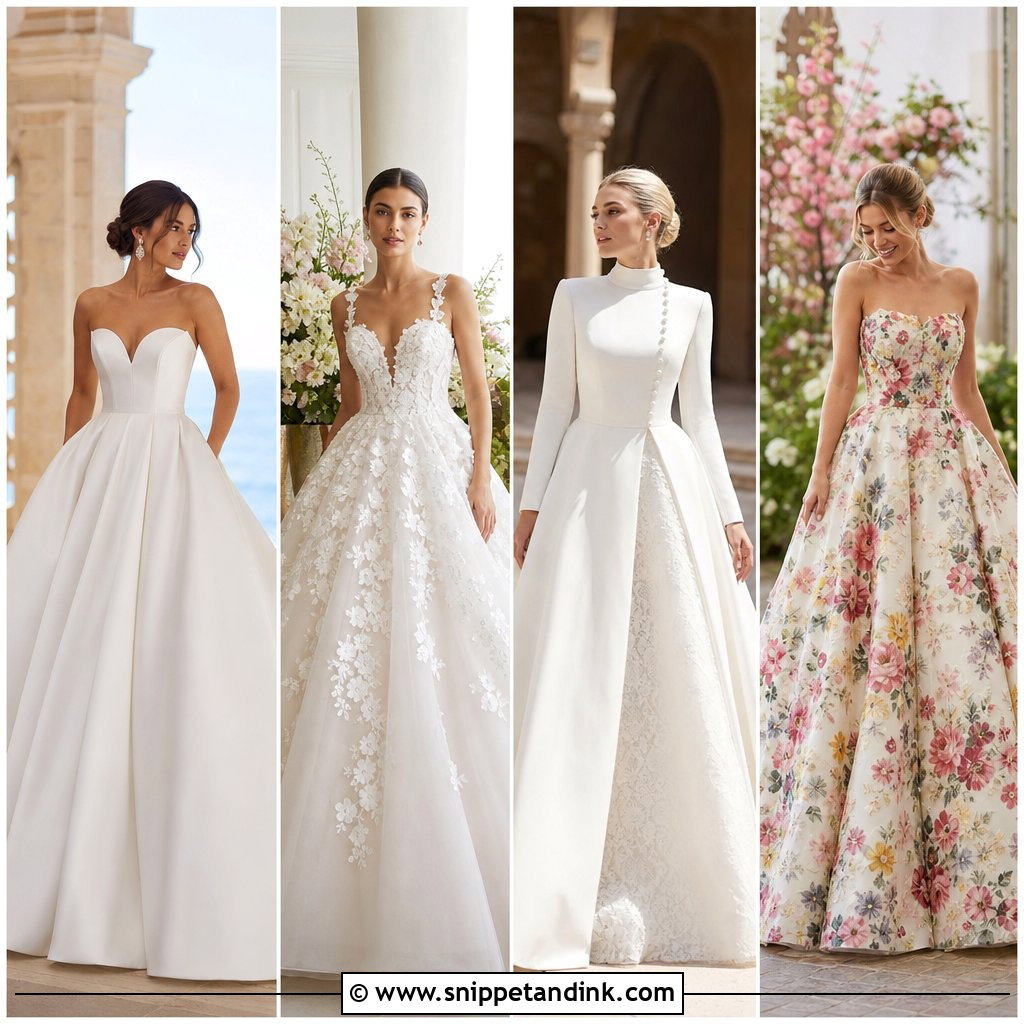

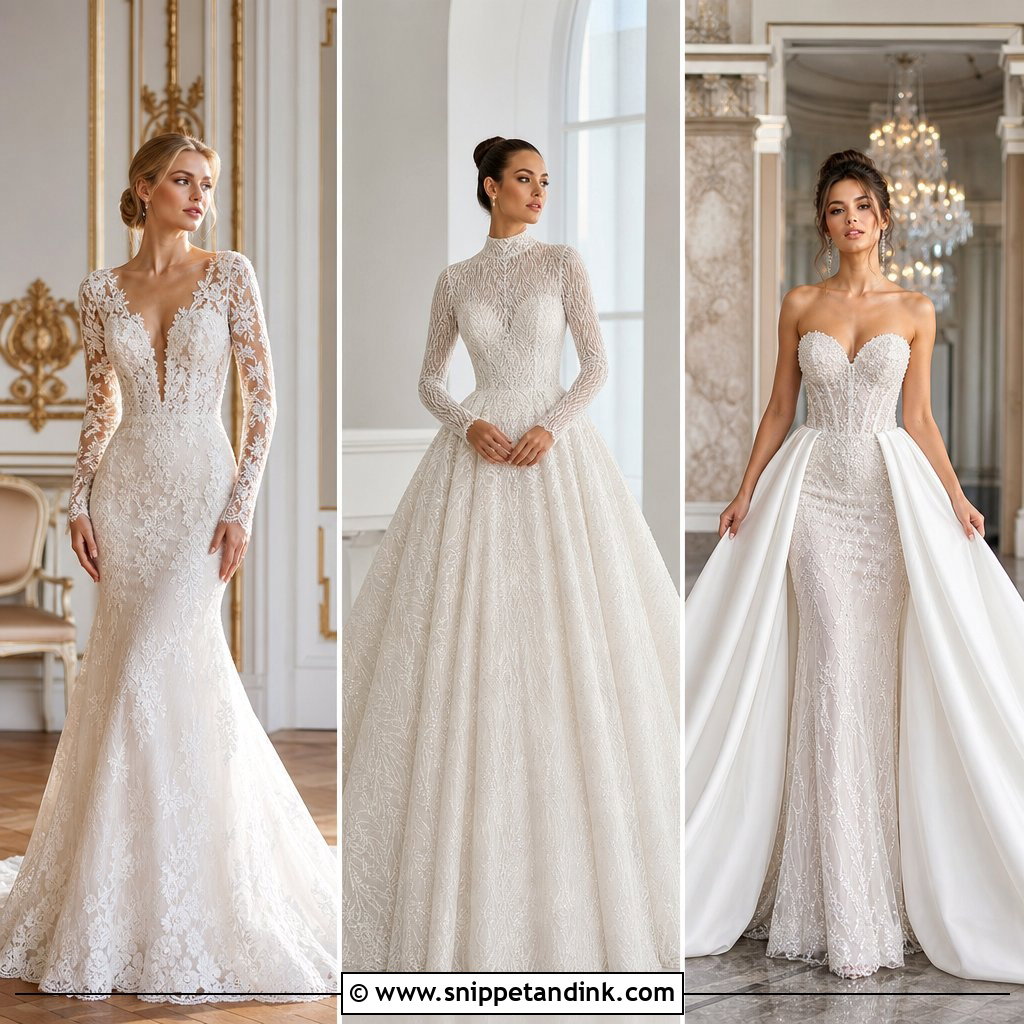

25. Minimal Arabic Muslim Wedding Dress
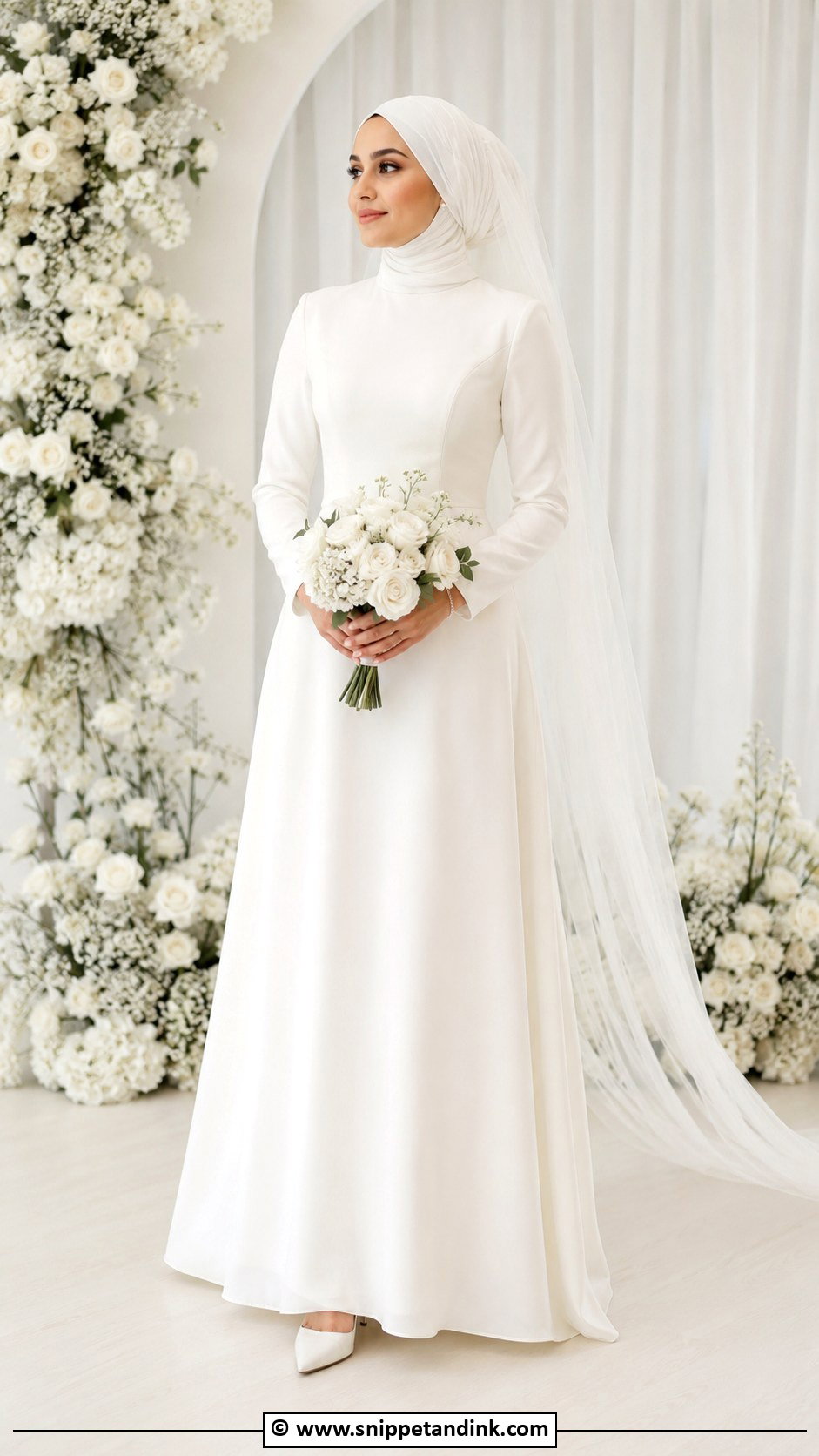
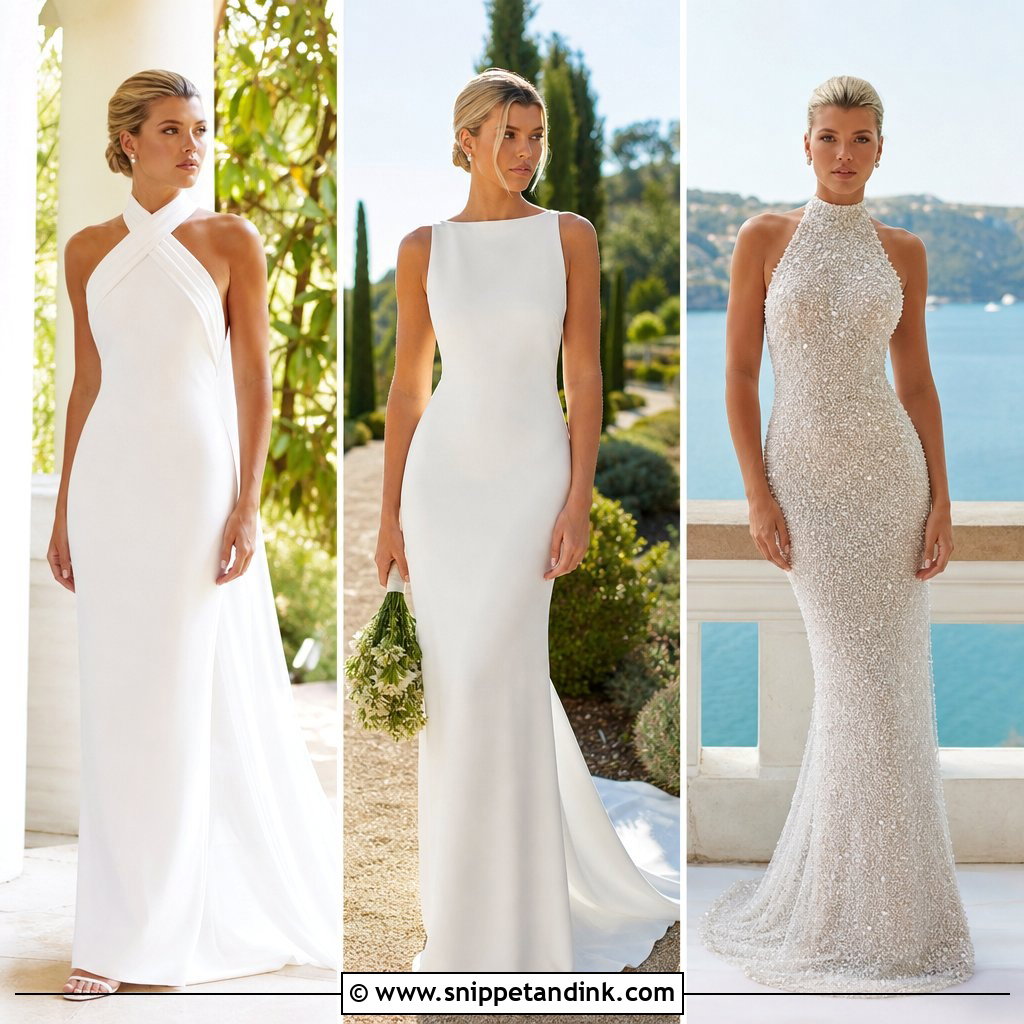
Minimal gowns leave nowhere to hide, so the fit and fabric carry everything. Crepe and mikado hold clean lines best; thin satin shows every seam and undergarment line, so try it on with the exact underpinnings you’ll wear. A long-sleeve gown with a high neckline and little embellishment, a smooth hijab in the same colour and a plain long veil are all it needs. Pearl studs, a slim bracelet and pointed heels or flats keep it modern. It suits nikahs, civil ceremonies and brides who dislike fuss.
How the Hijab, Veil and Headpiece Stack Up on the Head
Most discomfort on a modest wedding day comes from the head, not the dress. A cathedral veil, a crystal headpiece and a pinned hijab add up to real weight, and if it all hangs from a few pins at the temples you’ll feel it within two hours.
I build it in layers. A cotton or jersey underscarf goes on first, because it grips the hair and gives every pin something to hold. The hijab wraps over that, pinned at the back of the crown and under the chin, never through a single layer of chiffon, which tears. The veil comb then slides into the hijab at the crown and is secured with two crossed pins through the underscarf. A headpiece sits last, hooked into the hijab folds rather than the veil.
Do a full head rehearsal before the wedding
Bring the actual scarf, veil and headpiece to your hair and makeup trial and wear them together for at least an hour. That’s when you find the pin pressing behind the ear or the veil pulling the hijab backward. Ask a sister or friend to watch how it goes on so she can fix it after prayers or once the veil comes off for the reception.
Your Dress Should Let You Pray, Sit and Hug Freely
Every look above can be right for someone, and the dress that works is the one that respects your family’s traditions and still lets you move. Some brides want a lace gown and a flowing veil; others feel most themselves in an embroidered abaya, a kaftan or a plain crepe nikah dress. Whatever you choose, test it the way you’ll live in it: seated, kneeling, arms raised, hijab pinned. If it passes that, it will carry you through the whole celebration.
You'll Like These Ideas:






Leave a Reply