
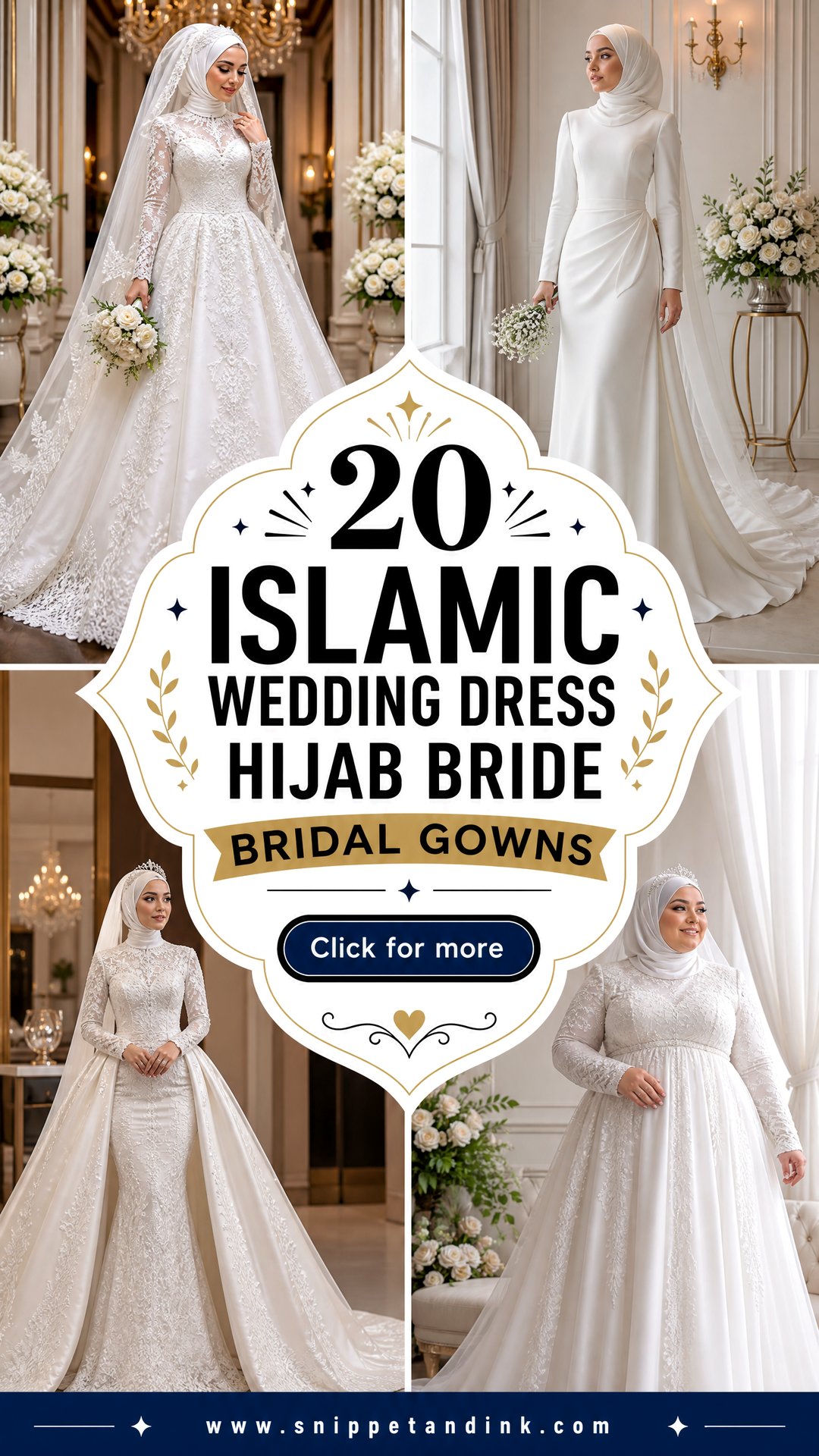
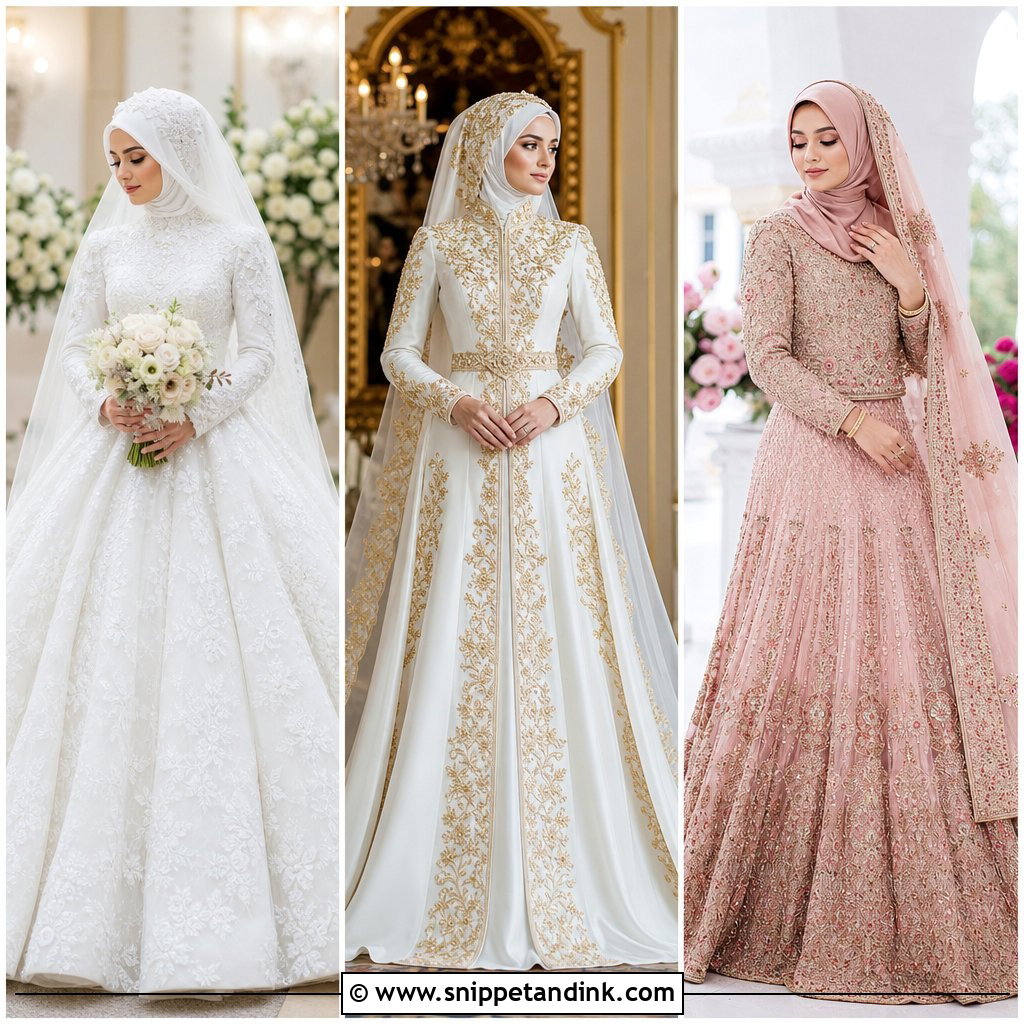
A covered bridal gown is built from a handful of decisions: sleeve, neckline, lining, skirt shape and how the hijab meets the dress. Get those right and almost any style can work, from clean satin to ornate lace, capes, ball gowns and outfits rooted in Turkish, Moroccan or Pakistani dress. Each of the twenty gowns here is shown with coordinated hijabs and finishing pieces, plus what I’d watch for at the fittings. Your venue, season, body shape and own understanding of modesty should all weigh in before you decide.
Can a Standard Bridal Gown Be Made Modest?
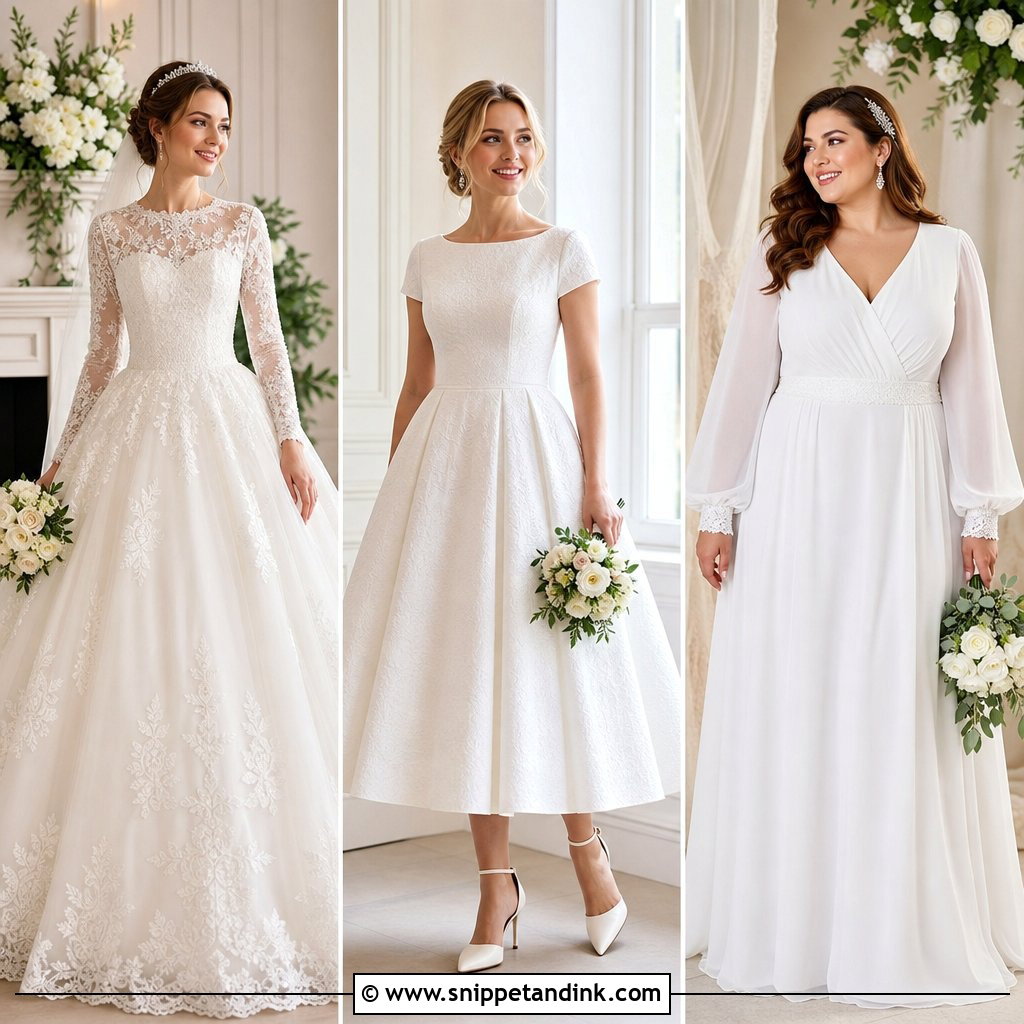
Often, yes. Plenty of brides fall for a strapless or sleeveless gown and assume it’s off the table. A skilled bridal seamstress can add a lot, but some changes look built in and others always look added on, so it helps to know which is which before you buy.
- Sleeves and a high neck: the easiest additions when the shop can order matching lace or fabric from the same maker. Ask about this before ordering the gown, not after it arrives.
- Lining under lace or illusion panels: usually straightforward, and the single change I make most often.
- A fitted bolero or jacket: a good option when matching fabric isn’t available, and it can come off for a women-only reception if that fits your plans.
- Raising a deep back or plunging neckline: possible, though a mismatched insert is visible in close photos.
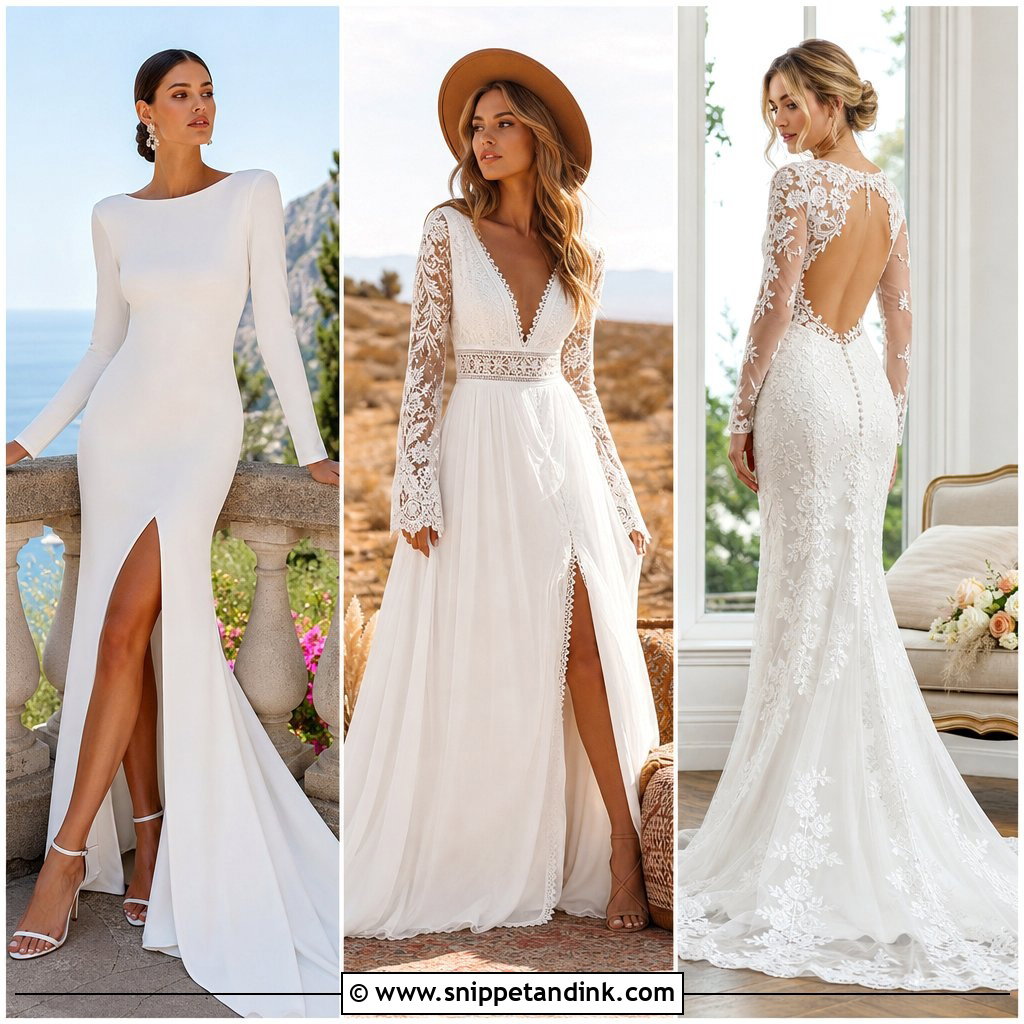
- Changing a fitted mermaid into a looser shape: rarely successful. Choose a different silhouette instead.
Budget extra time as well as money. Adding sleeves means additional fittings, and I’d start alterations on a converted gown a few weeks earlier than usual.
1. A-Line Islamic Wedding Dress With Lace Hijab
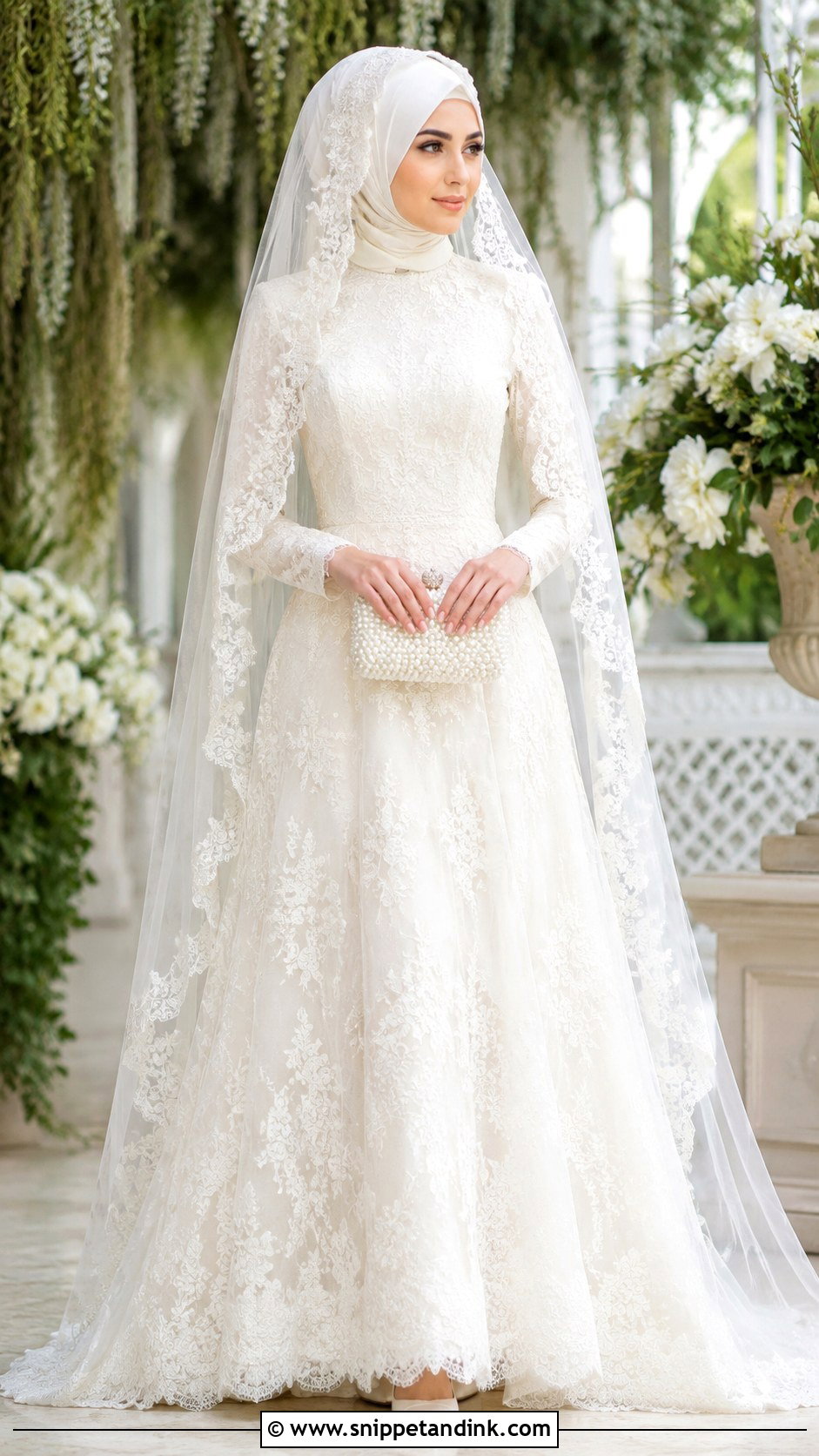
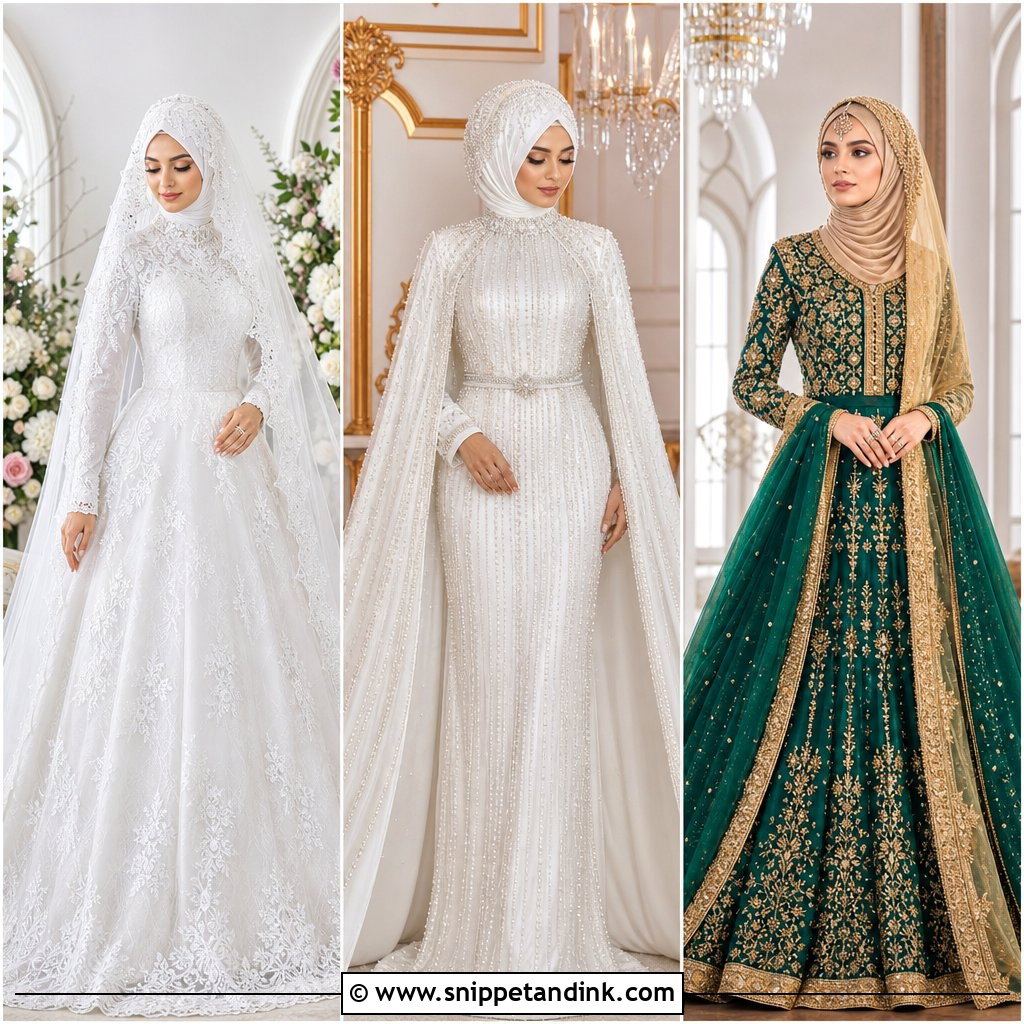
An A-line is the shape I suggest first to brides who aren’t sure what they want, because it rarely clings and suits most bodies. Ask for an opaque bodice, a high round neck and lined sleeves, with floral lace heavy on the bodice and thinning toward the hem. A crystal headpiece sitting over an ivory chiffon hijab gives the lace-edged veil something to anchor to. This Islamic wedding dress moves from a traditional ceremony to a ballroom or garden without looking out of place. The lace sleeves are what I check twice, lifting the bride’s arms under bright light to see whether the lining holds.
2. Satin Islamic Wedding Dress With Matching Hijab
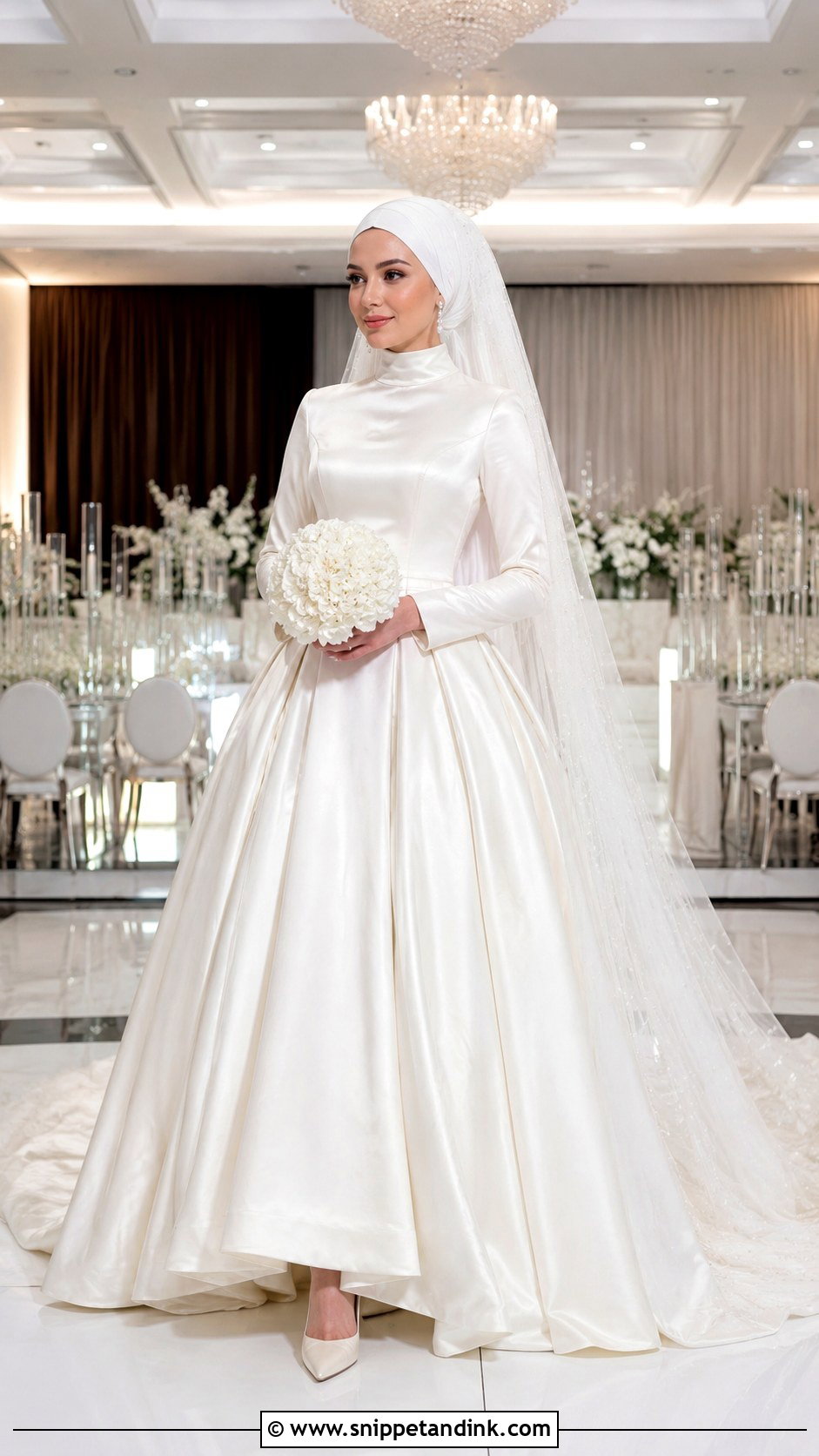
Satin with a matching satin hijab gives you a continuous column of sheen from head to hem. The gown wants a long sleeve, a structured high neck, a fitted natural waist and soft pleats into a full skirt. Because the hijab and dress reflect light the same way, any wrinkle in either one shows, so I steam both on the morning itself. An airy tulle veil softens all that polish. Satin also exposes poor tailoring and lumpy linings, so spend on fit rather than embellishment.
3. Cape Islamic Wedding Dress With Bridal Hijab
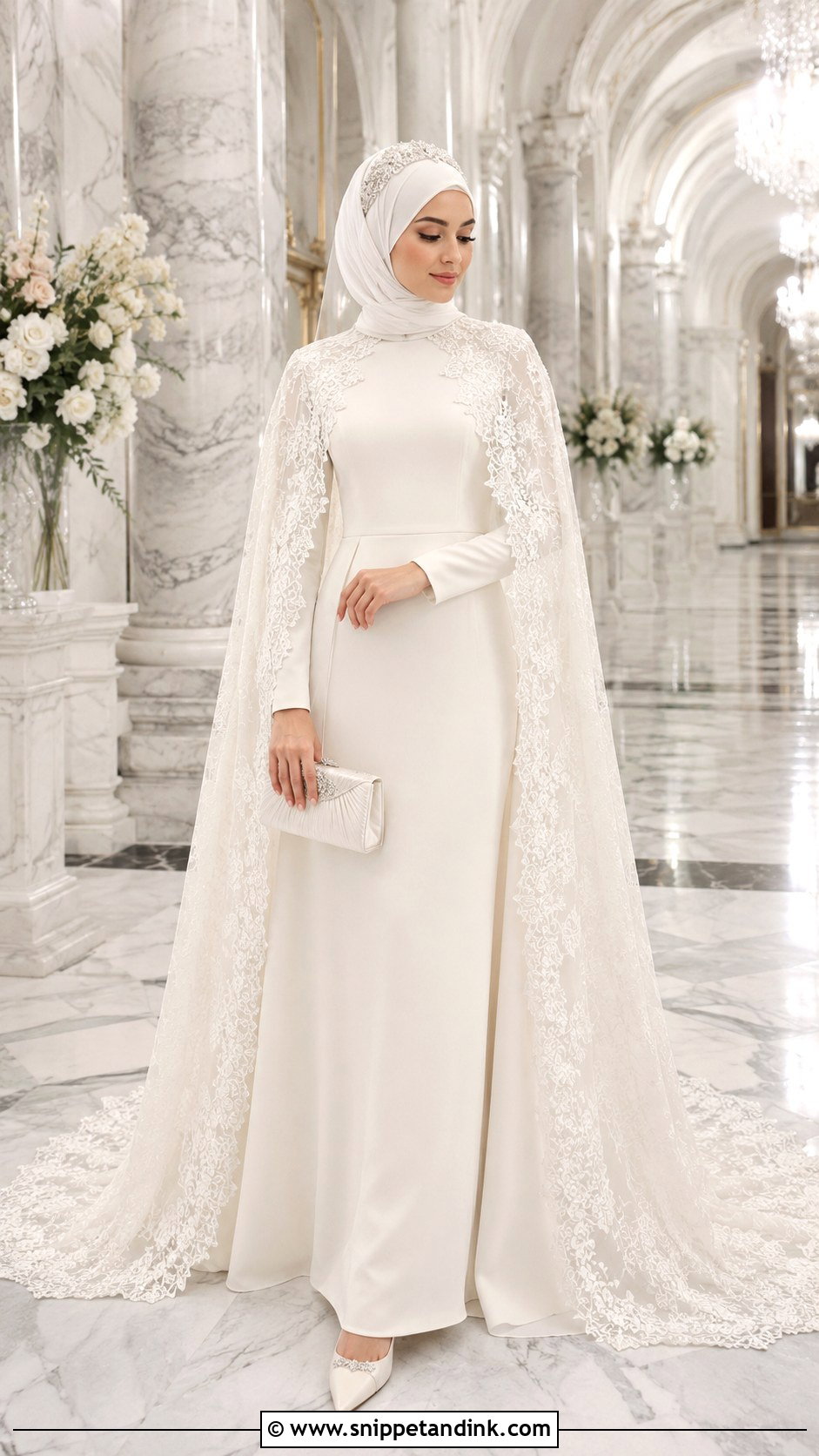
A detachable cape gives you a ceremony entrance and a lighter reception. Begin with a simple ivory crepe or satin dress, high neck, long sleeves and an A-line skirt, then add a floor-length cape edged in lace, pearls or fine beading. The hijab should be smooth and fairly structured, otherwise the cape and hijab layers pile up at the shoulders and look bulky. I ask for the cape to attach with hooks at the shoulder seams, never just at the neckline, so it can’t drag the collar backward.
4. Pearl Beaded Islamic Wedding Dress With Hijab
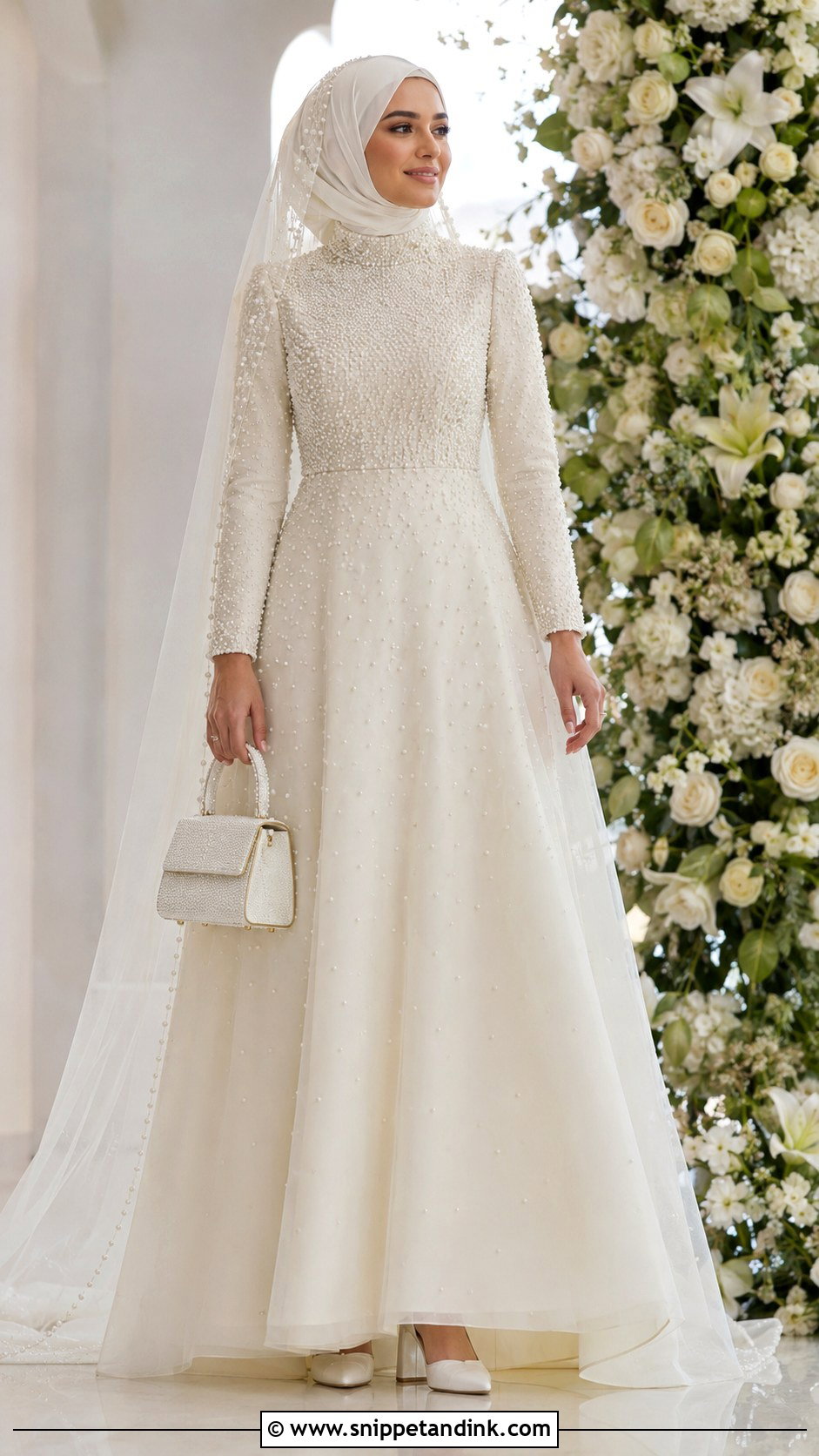
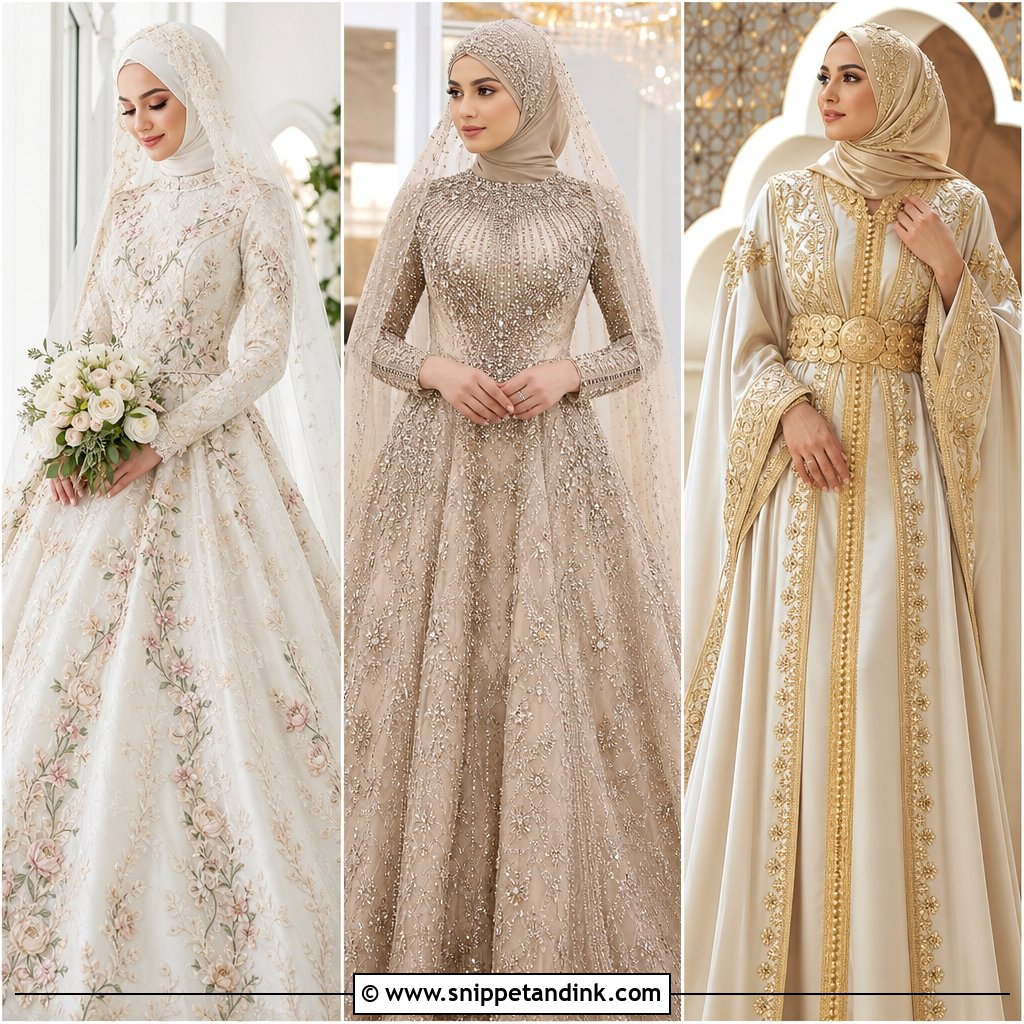
Scattered pearls on a lightly flared dress feel delicate rather than heavy. The sleeves can look sheer while being fully lined in a skin-neutral or ivory fabric, which gives that airy effect without exposing the arms. Pearls placed at the cuffs, shoulders, waist and upper skirt need breathing space between them. I’d skip pearl earrings with this one; the dress has enough. A matte chiffon hijab and a pearl-bordered cathedral veil suit it, and bright indoor venues catch the pearls far better than a dim evening hall.
5. Simple Crepe Islamic Wedding Dress With Hijab
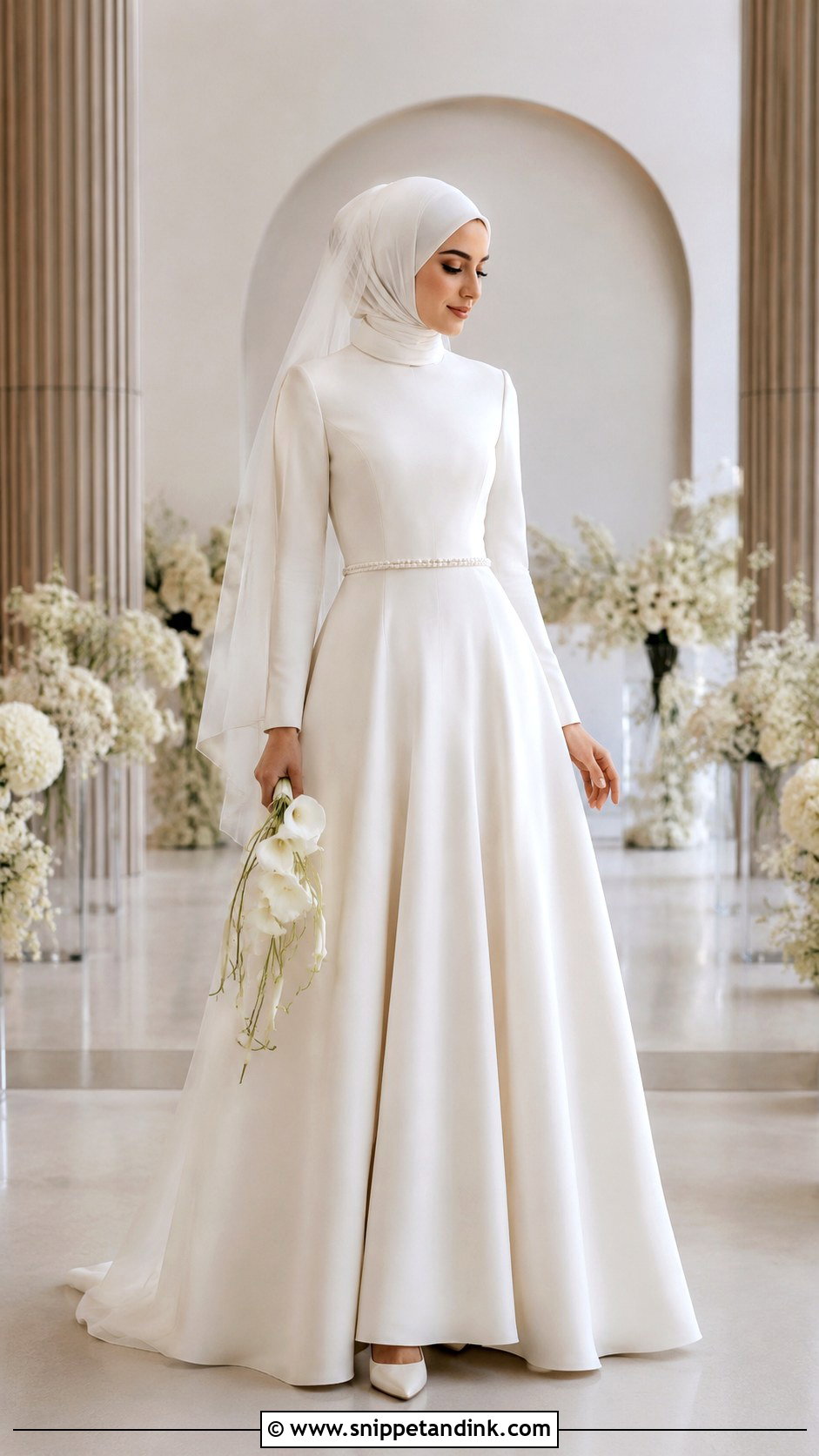
Crepe lives or dies on weight. A thin crepe that looks opaque in a fitting room can go see-through under a photographer’s lights, so I hold the fabric up to a lamp before anything else. A softly tailored gown with a bateau or round neck, fitted sleeves, a defined waist and a gently flared skirt is the shape. Covered buttons along the cuffs or back are all the detail it needs. It suits a courthouse, a mosque, an intimate nikah setting or a modern reception, and it’s the easiest gown here to accessorize.
6. Floral Appliqué Islamic Wedding Dress With Hijab
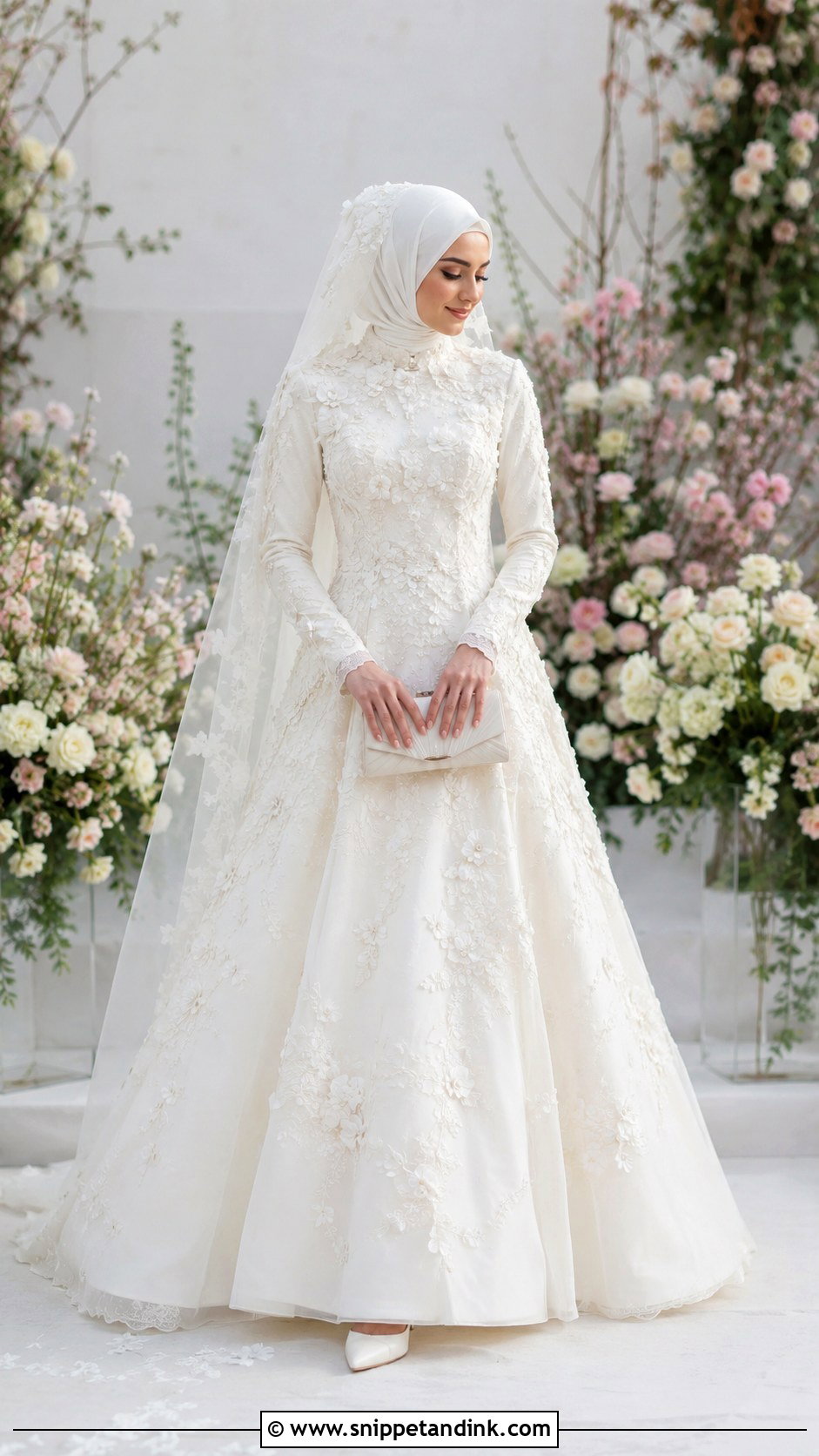
Three-dimensional flowers bring texture to a covered gown. On an A-line with long sleeves and a raised neck, appliqués made from embroidered lace, organza petals or pearl-centered blossoms can climb across the bodice, shoulders, cuffs and lower skirt. Mock necks and modest skirts pair especially well with them. Keep the hijab plain chiffon so the face stays uncluttered. Raised petals at the cuffs snag veils and catch on bouquet ribbon, so I’d keep the largest flowers away from the wrists. Spring weddings and garden venues suit it best.
7. Mermaid Islamic Wedding Dress With Detachable Overskirt
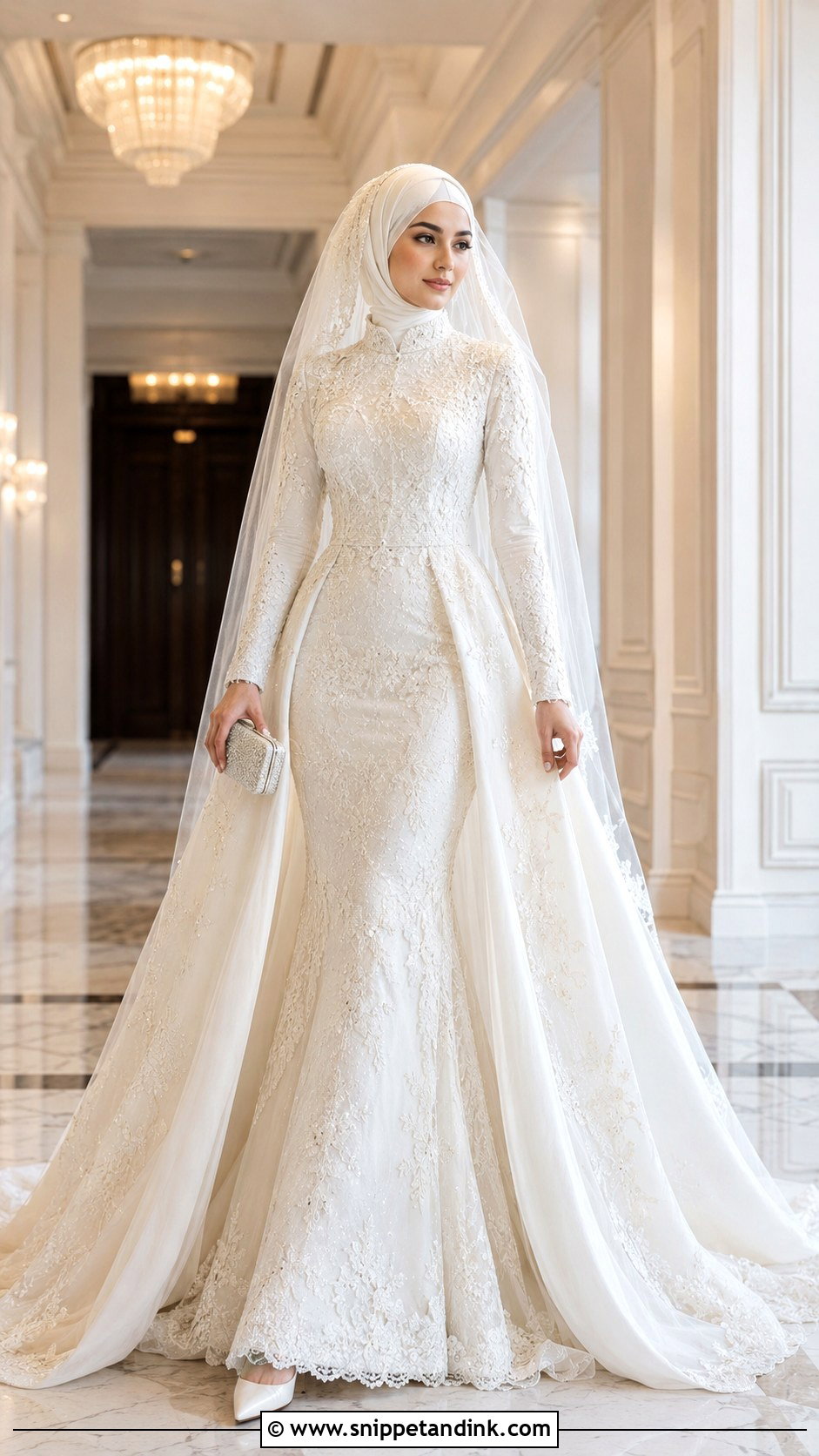
A mermaid shape can work for a modest bride, but only if it skims rather than clings, and that’s a fitting question more than a design one. Choose opaque lining, long sleeves and a high neck, then add a detachable A-line overskirt for the ceremony, which softens the hips into a more traditional outline. Whether you remove it later depends entirely on your own comfort. Mermaid skirts restrict the knees, so I have brides sit, climb a step and kneel for prayer at the fitting; if any of those is a struggle, the skirt needs releasing.
8. Princess Islamic Wedding Dress With Crystal Hijab
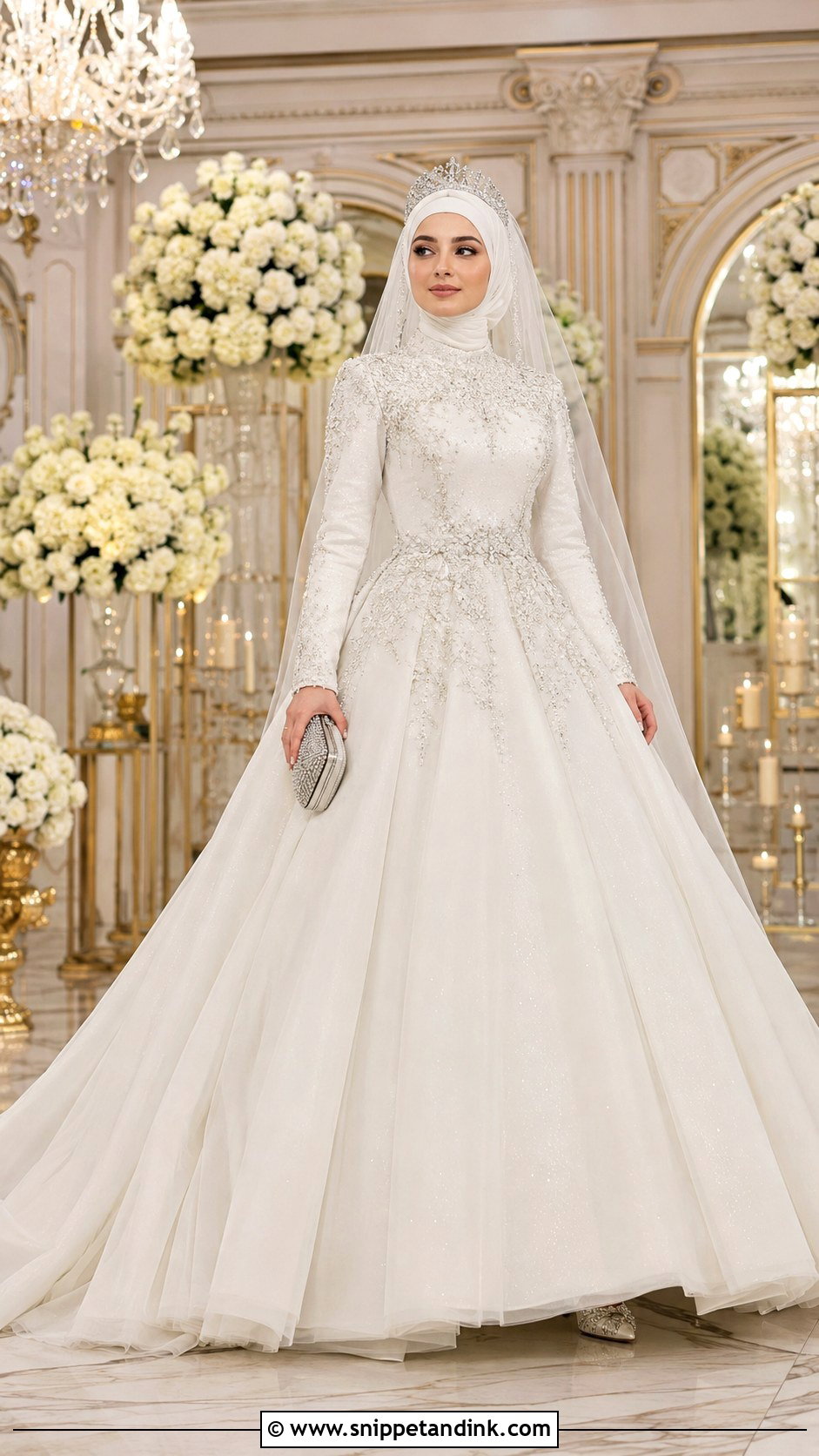
A princess ball gown belongs in a big formal room. The bodice is fully lined with long sleeves and a raised neck, the waist defined, and the skirt held out by light layers of tulle rather than a heavy hooped petticoat, which I find brides regret by the second hour. Crystal embroidery at the cuffs, waist and upper bodice adds sparkle where it’s seen. Over a smooth ivory chiffon hijab, a delicate tiara with a cathedral veil anchored behind the crown balances all that skirt volume. With this much going on below, keep the hijab neat and structured.
9. Chiffon Islamic Wedding Dress With Layered Hijab
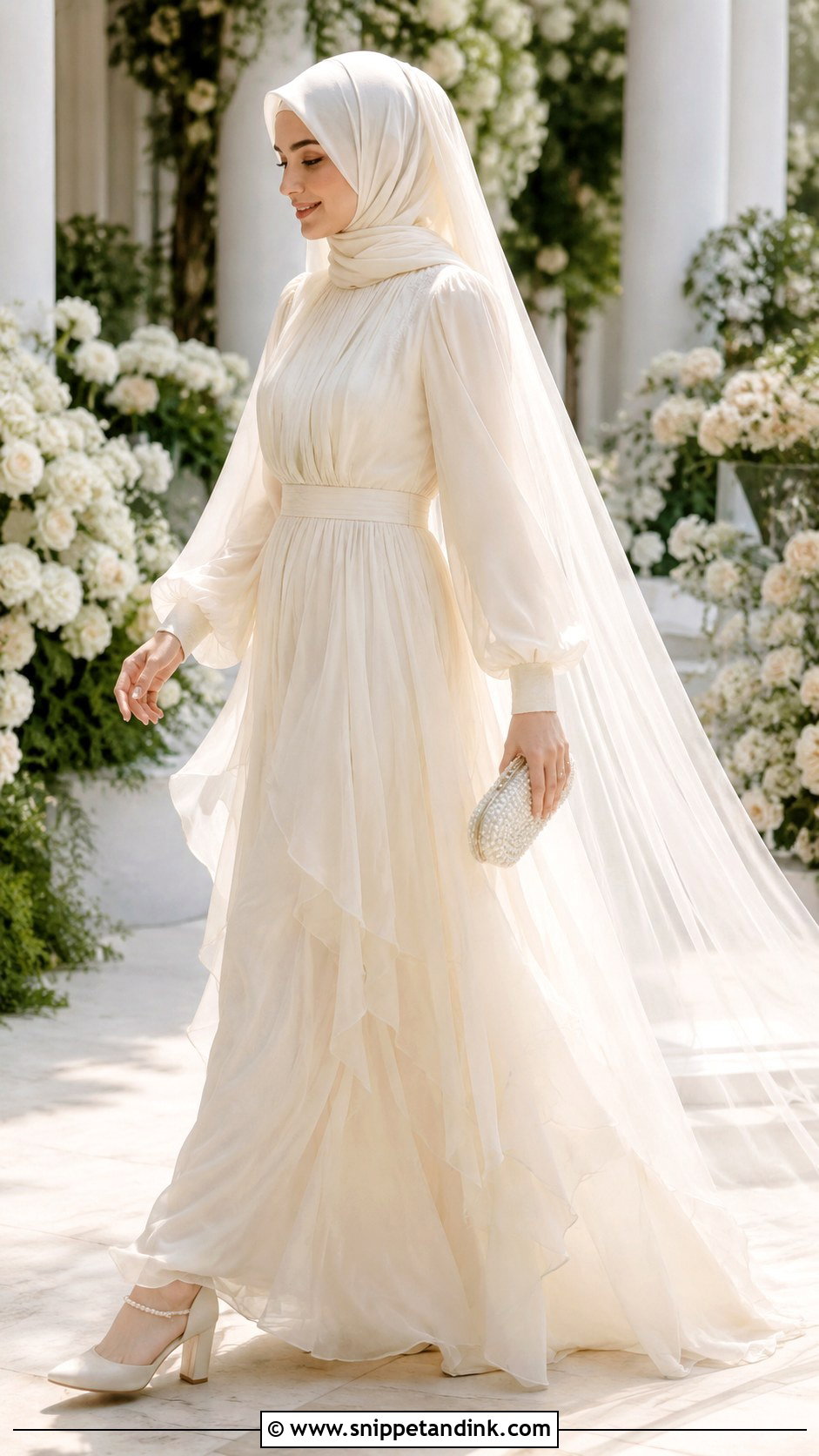
Chiffon is for warm weather and outdoor ceremonies. A fully lined gown with loose bishop sleeves, fitted cuffs, a high neck and a gathered A-line skirt with layered hem moves well and is easy to walk in. A matching chiffon hijab with clean folds and few pins keeps the head light, and a weightless veil catches the breeze in photos. On grass or stone paths, I’d choose pearl-trimmed block heels over stilettos. Check the lining in daylight from the side and back too, since chiffon is honest about everything beneath it.
10. Bridal Abaya Wedding Dress With Hijab
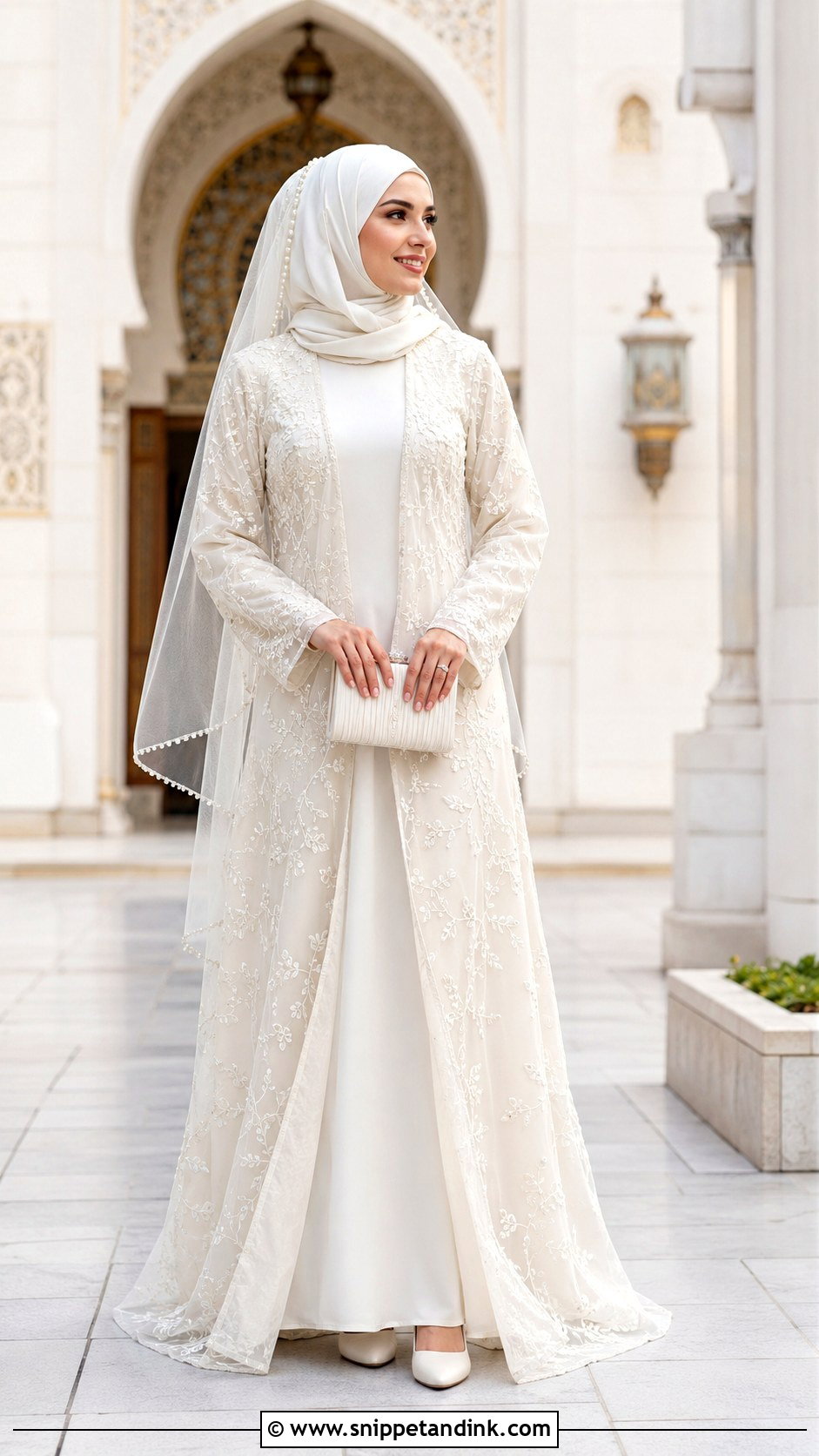
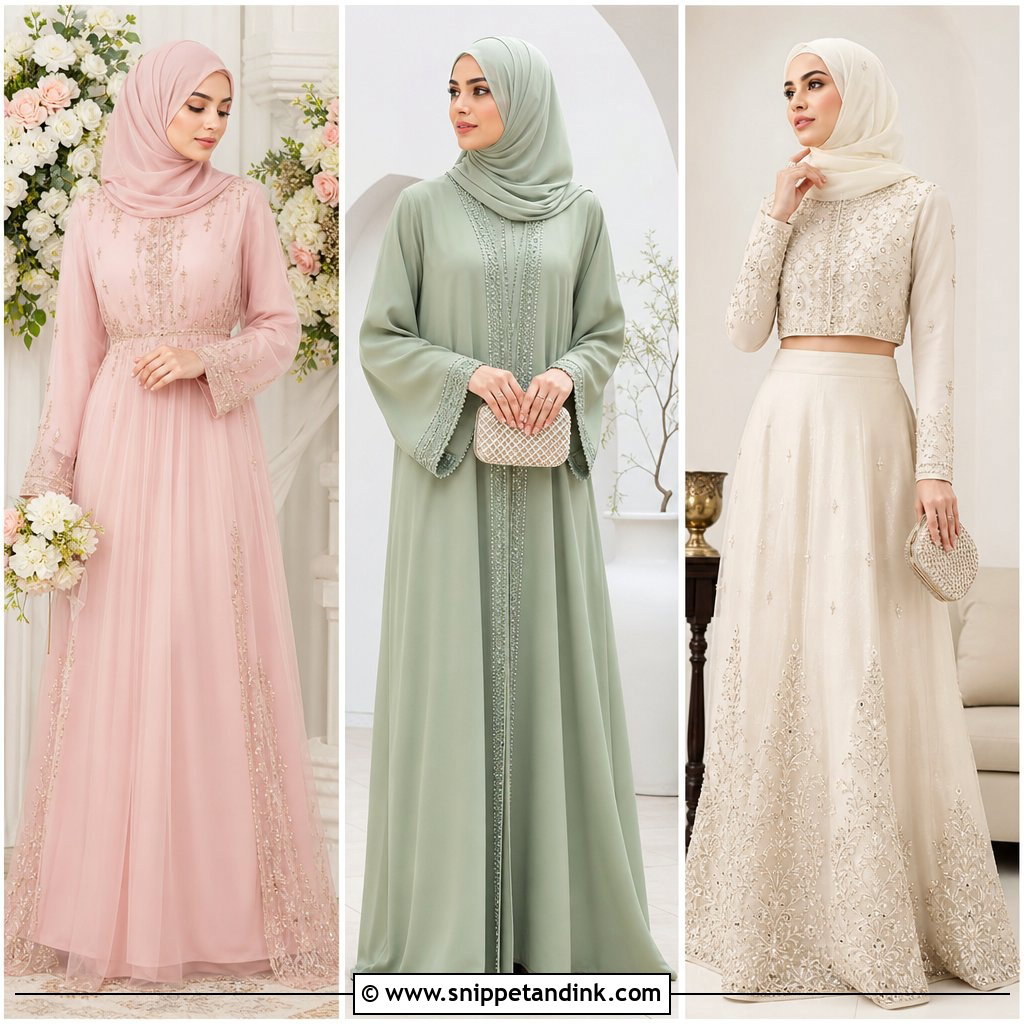
A bridal abaya gives full coverage with almost no alterations, which makes it the quickest outfit here to get right. Flowing ivory satin, crepe, chiffon or embroidered organza with full sleeves and a floor-length hem is the base. Wear an open abaya over a coordinating long-sleeved inner dress, or choose a closed one for a single-piece look. A matching hijab and pearl-edged veil complete it. I’d suggest it for a nikah, mosque ceremony or walima, or for any bride who wants to move freely and sit on the floor without thinking about it.
11. Turkish Islamic Wedding Dress With Hijab
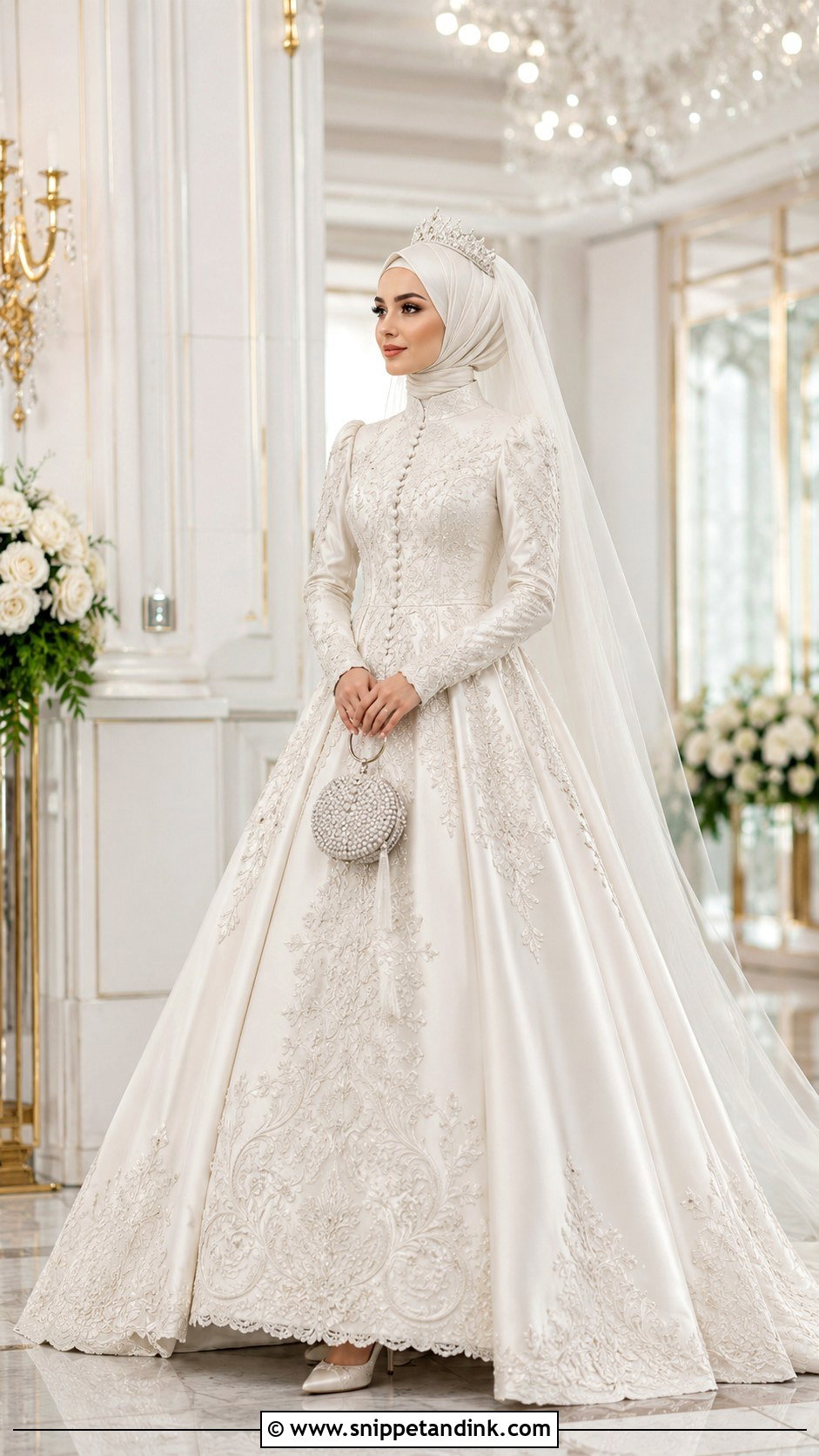
Structure and embroidery define a Turkish-inspired bridal gown: a high collar, fitted long sleeves, a defined waist and ornate lace or beading over the bodice, often with a row of covered buttons down the back and cuffs. The hijab is usually wrapped close to the face in satin or chiffon with a decorative crown and long veil on top. Some hijab styles in this tradition use volumizers or padding under the wrap. I’d keep that minimal if you’ll be wearing it all day, because the extra height adds weight and warmth by the evening.
12. Moroccan Kaftan Bridal Gown With Hijab
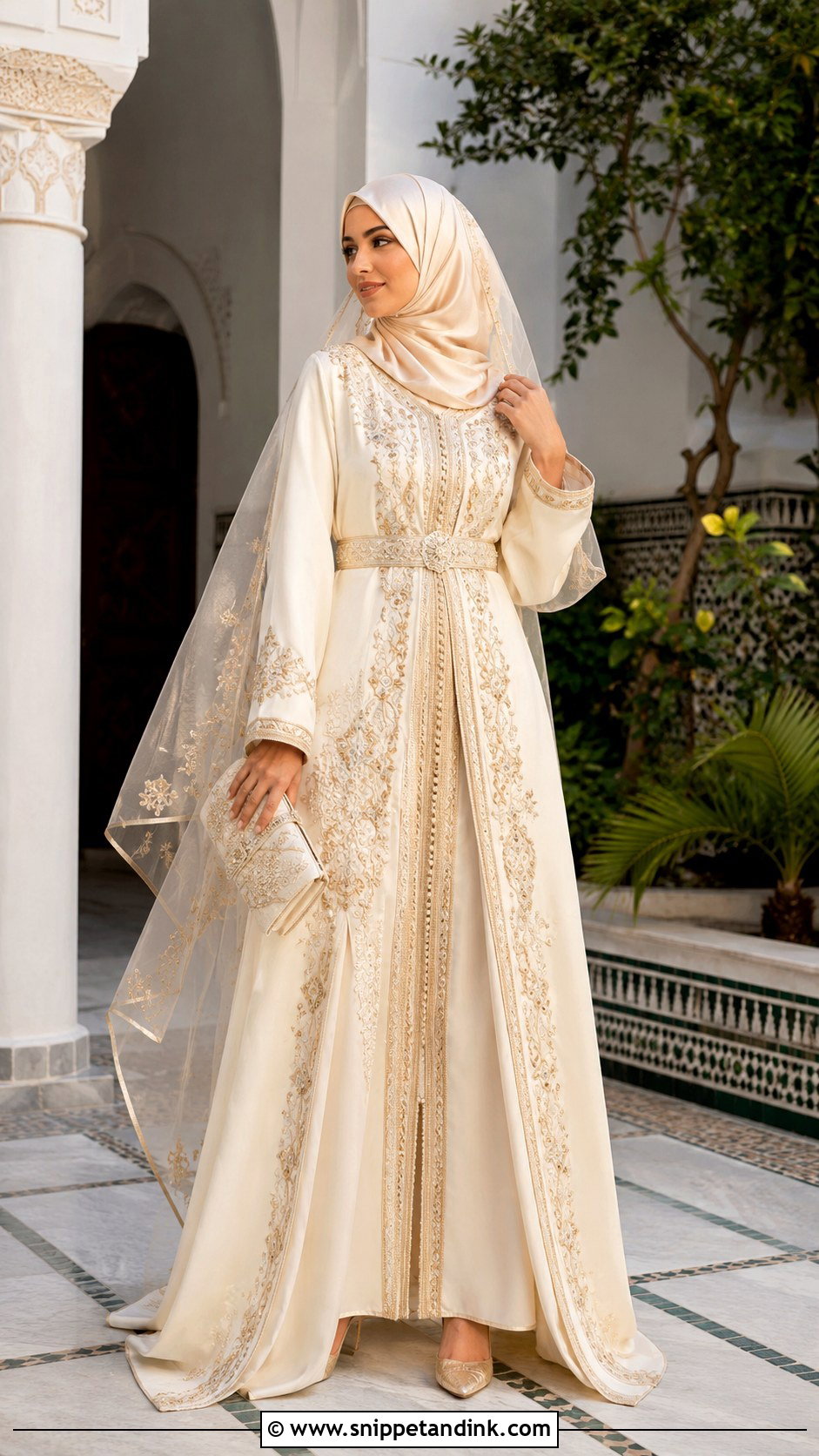
A Moroccan bridal kaftan is richly embroidered and naturally covering. Ivory, cream or soft gold with full sleeves and metallic embroidery along the neckline, front opening, cuffs and borders is classic. The decorative belt shapes the waist, but traditional mdamma belts are stiff, so I fasten them a notch looser than feels right standing up, because sitting is where they bite. Keep the jewelry restrained. This outfit means the most when it reflects your own heritage, and it suits a henna night, nikah or formal reception.
13. Pakistani Bridal Gown With Hijab And Dupatta
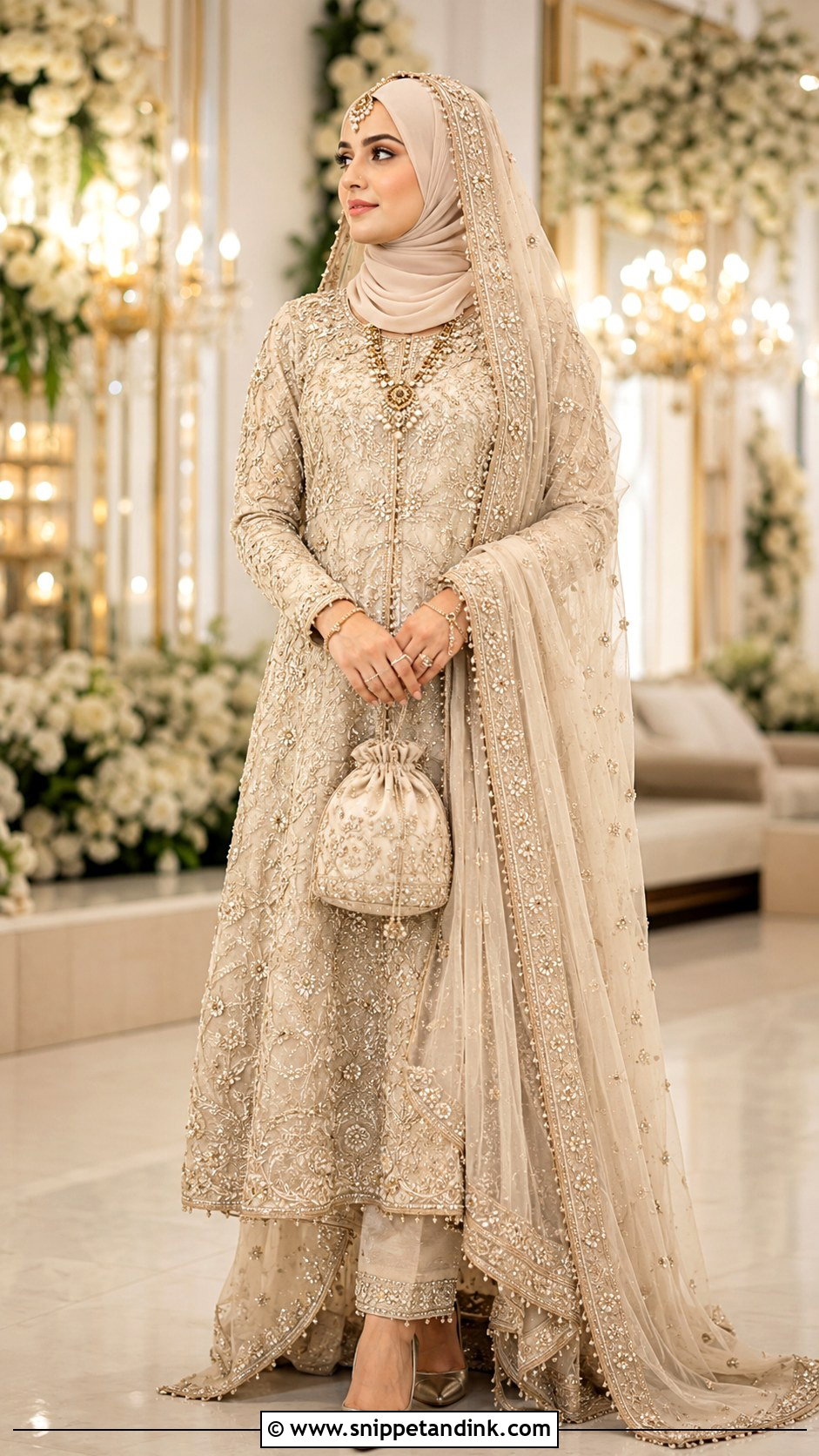
Pakistani bridal outfits are layered by nature: a long gown or kameez, straight trousers beneath, the hijab and a statement dupatta over it all. Ivory, champagne, red or deep maroon with dense embroidery around the bodice and hem are traditional. The trousers add coverage and make sitting on a stage much easier. Pin the dupatta over the head and one shoulder so it frames the face rather than hiding it. Weight is the real issue: an embroidered dupatta plus a veil can pull the hijab back within an hour, so I weigh them together at the trial and lighten one if needed.
14. Organza Islamic Wedding Dress With Embroidered Hijab
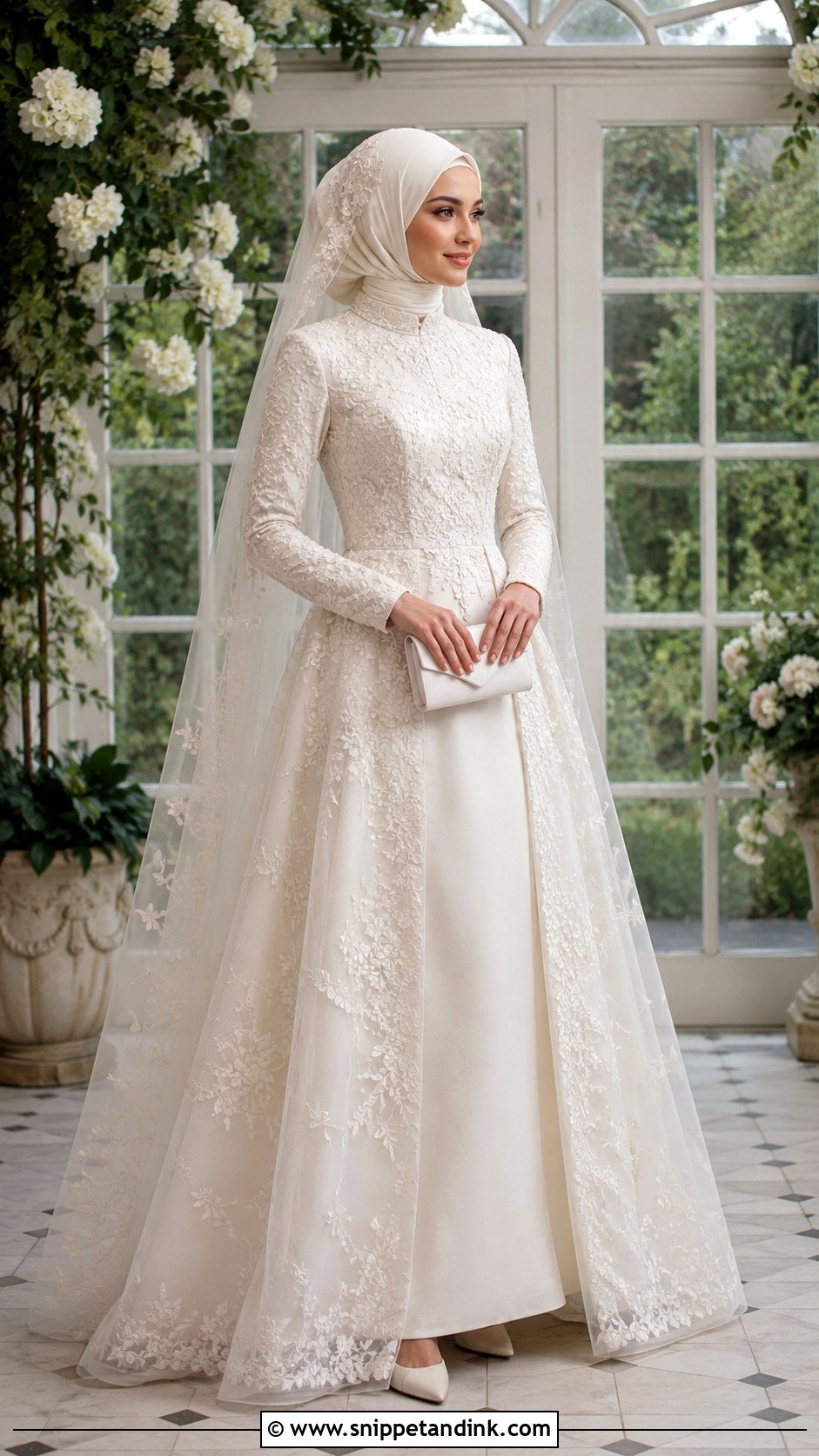
Organza holds a light, structured shape. An A-line with opaque satin lining, a high neck and long fitted sleeves takes an organza overlay embroidered with vines, small flowers or geometric motifs. A matte chiffon hijab avoids two stiff fabrics side by side. Repeating one skirt motif on the veil ties the back view together. Organza creases sharply and can scratch at the wrists, so I ask for soft facing at the cuffs and carry a handheld steamer on the day.
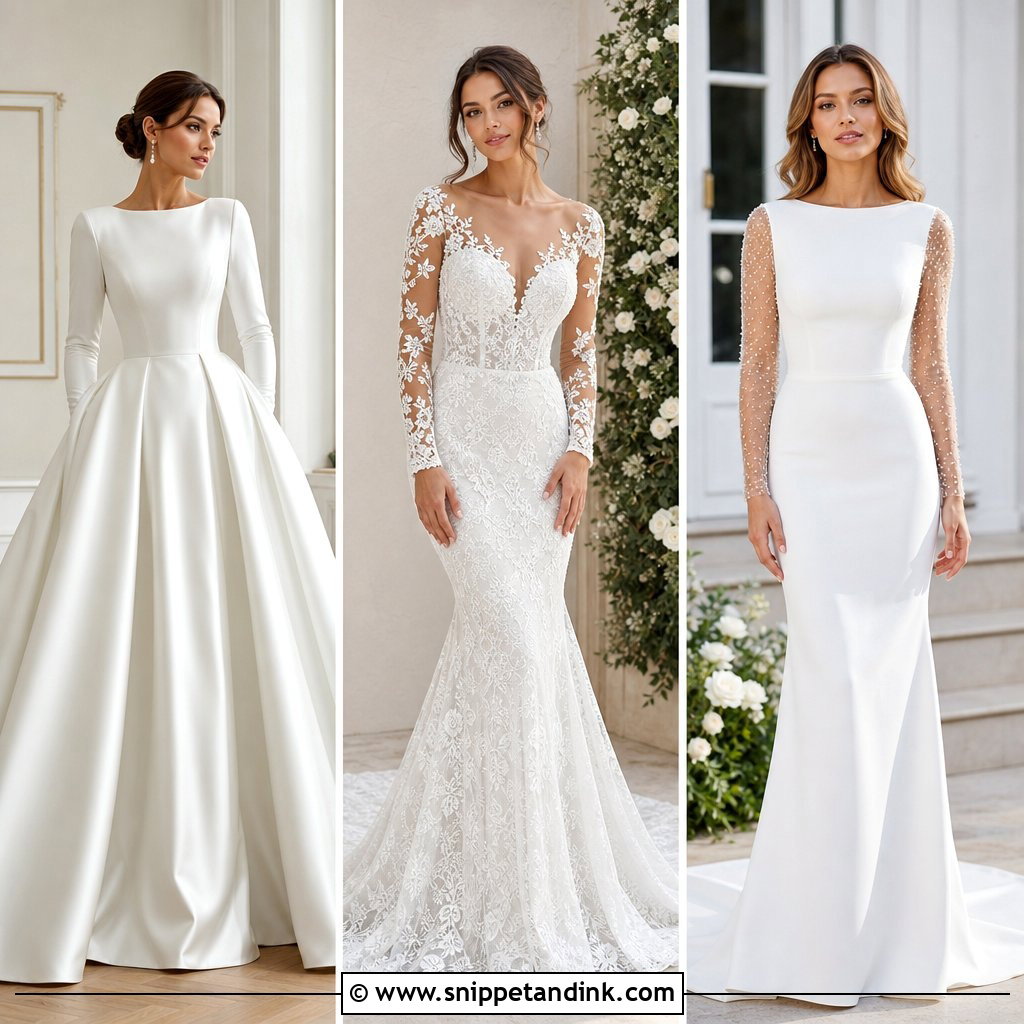


15. Bishop Sleeve Islamic Wedding Dress With Satin Hijab
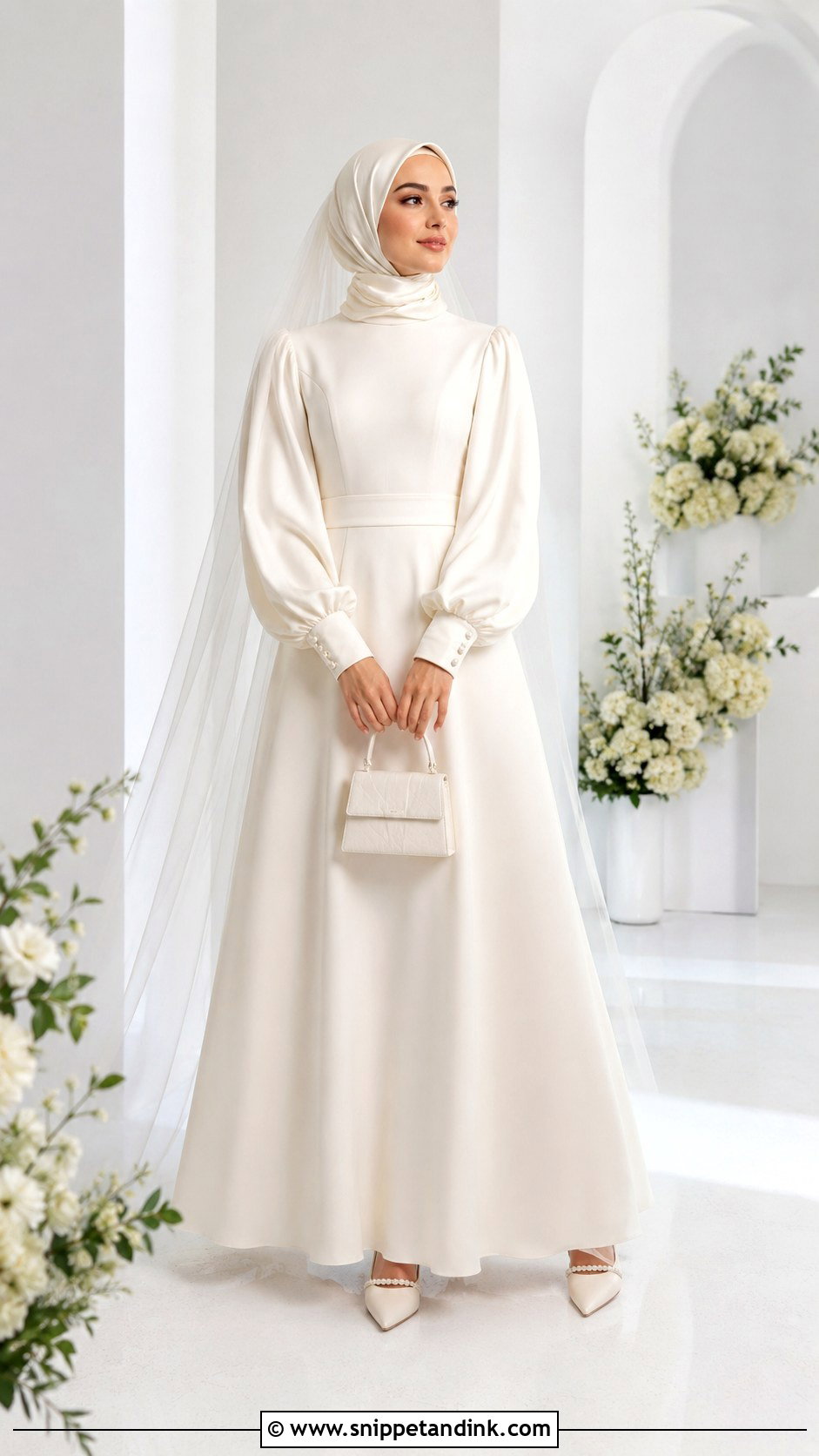
Bishop sleeves bring softness while keeping the wrists neat. A satin or crepe dress with a high neck, fitted waist, wide sleeves gathered into buttoned cuffs and an A-line skirt is the shape. The question I ask is how you’ll eat: very full sleeves drag through plates, so I keep the volume above the forearm. A satin hijab in the same shade looks continuous, and a matte undercap stops it sliding. Bracelets catch on the cuffs, so leave them off.
16. High Neck Lace Islamic Wedding Dress With Hijab
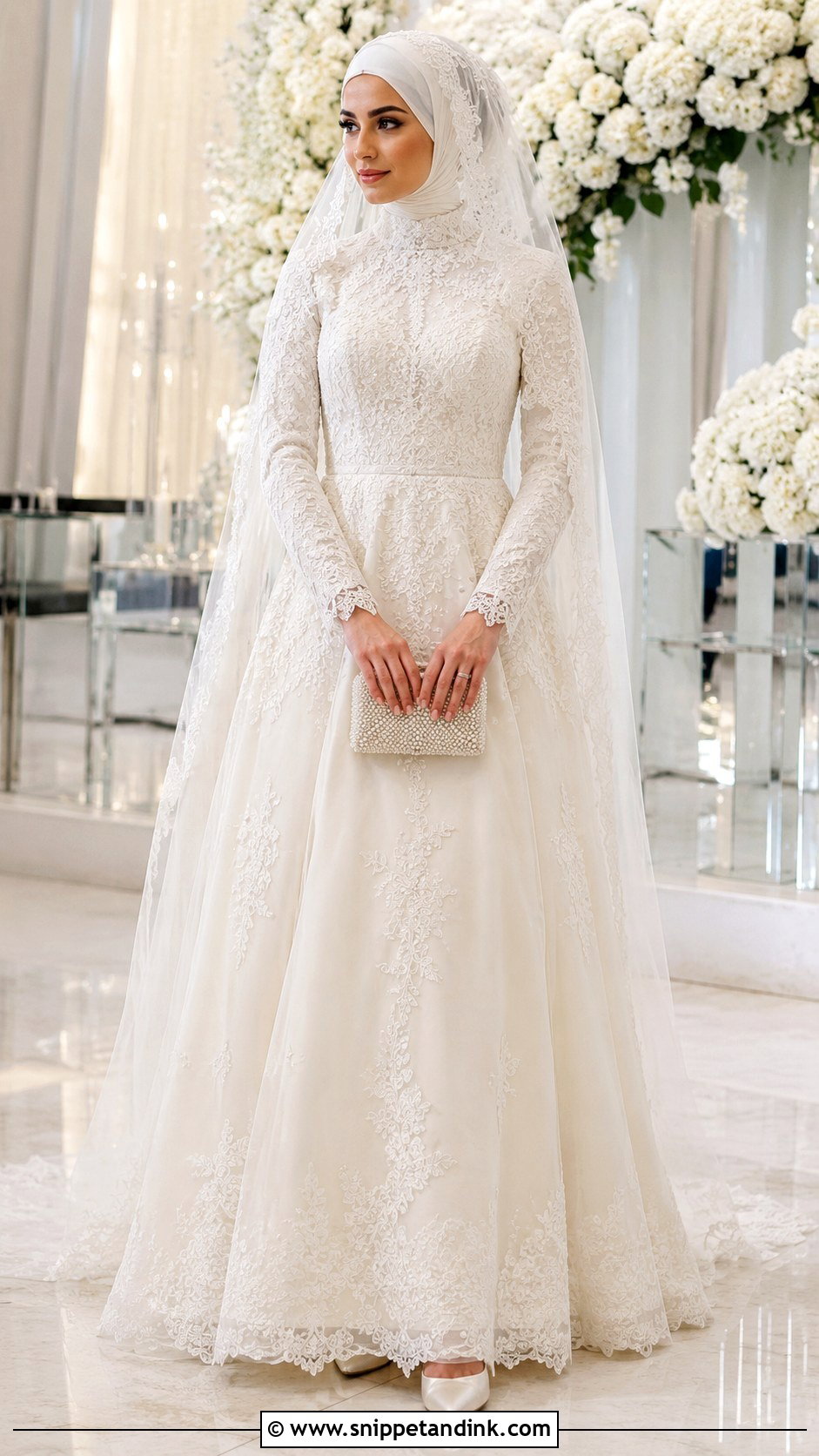
A high-neck lace gown runs coverage straight from hijab to bodice with no gap to manage. Choose a lined mock neck, full sleeves, a fitted waist and a flowing skirt, with the lace pattern matched across shoulders and cuffs. The lining can be chosen to match your skin tone or the ivory of the gown; skin tone gives a more delicate effect. Tuck the chiffon hijab cleanly into the neckline. Close collars bother some brides after a few hours, so if you dislike anything at your throat, ask for a softer lining and a slightly wider neck opening.
17. Islamic Wedding Dress With Detachable Train And Hijab
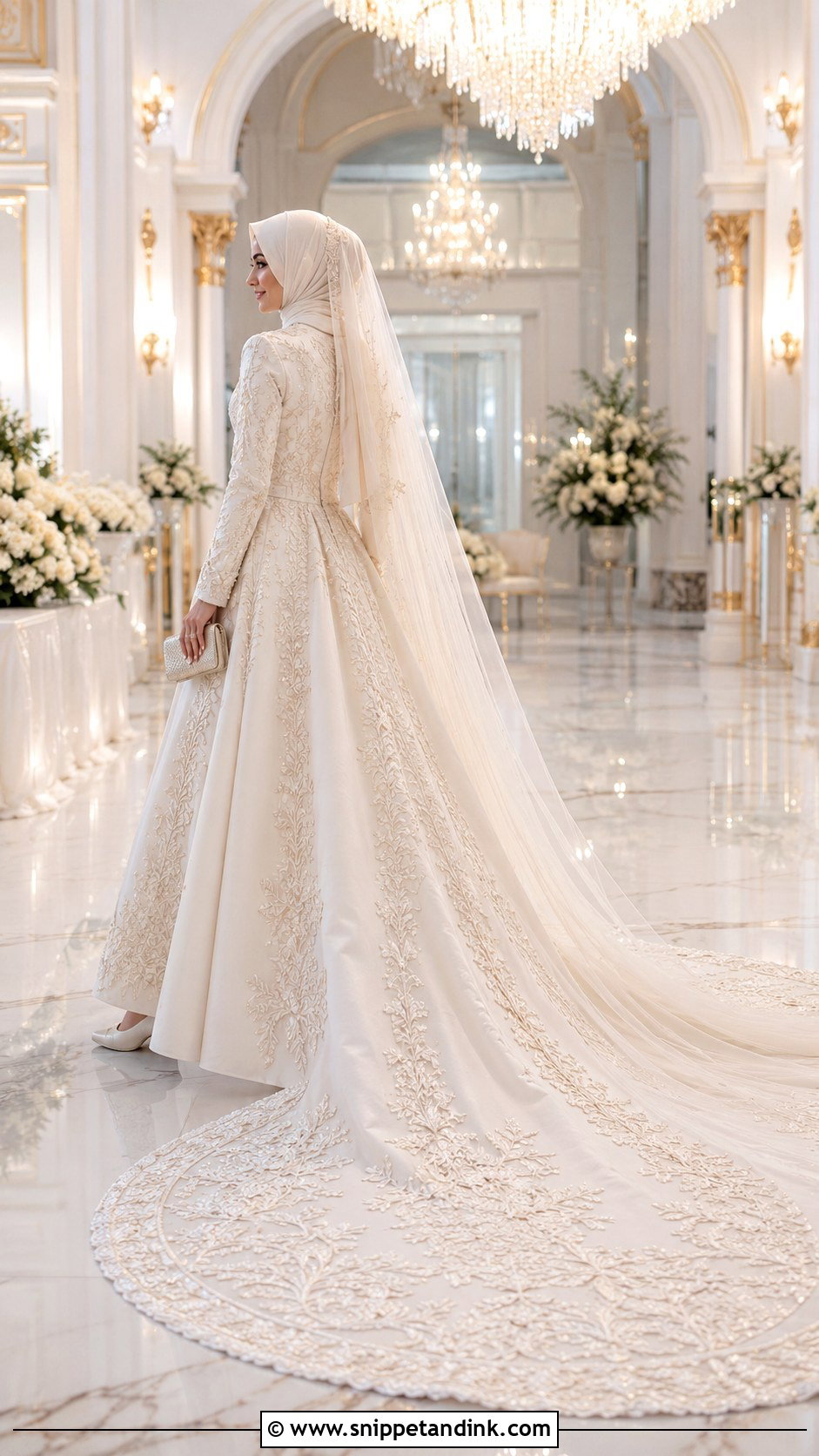
A long-sleeve column or A-line gown with a cathedral train attached at the back or waist gives you the entrance and formal portraits, and then a much easier evening. Lace appliqués or small pearls on the train connect it to the gown. Keep the veil fingertip length so it doesn’t tangle with the train. The fastenings are where cheap versions show: I ask for hooks, snaps or buttons fully concealed under a placket, so the back still looks finished once the train comes off.
18. Plus Size Islamic Wedding Dress With Empire Waist Hijab
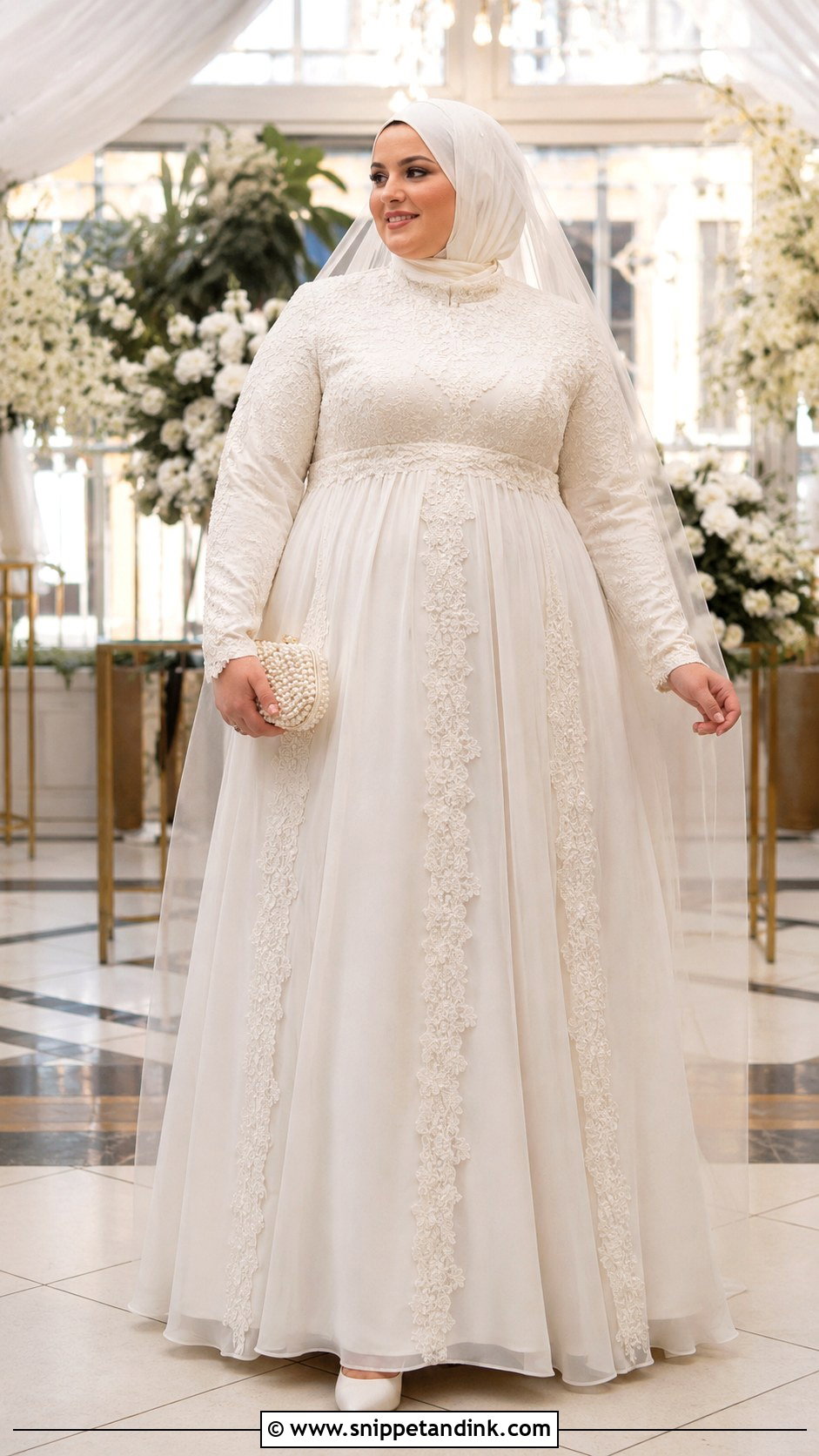
An empire waist starts the skirt just below the bust, so it flows past the tummy and hips rather than marking them. For a plus-size bride I’d choose soft crepe or layered chiffon over stiff fabrics, with a supportive opaque bodice, raised neck and full sleeves. Vertical lace lengthens; a lightly embellished neckline lifts attention toward the face. The label size matters far less than how it’s tailored. At fittings I check two things: the sleeves let you raise your arms freely, and the bodice doesn’t dig in when you sit.
19. Petite Islamic Wedding Dress With Column Skirt Hijab
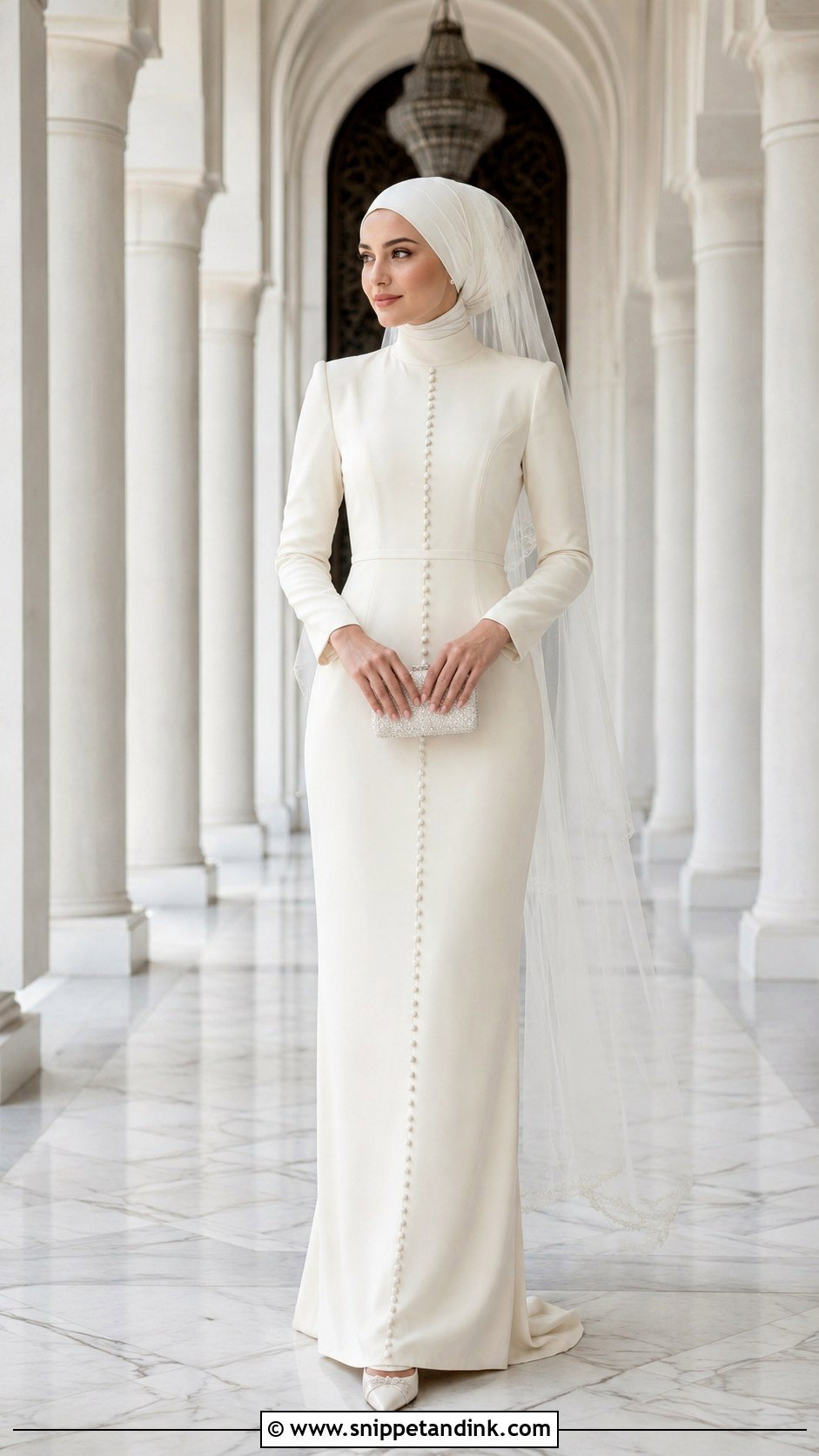
One uninterrupted line is the goal for a petite bride, and a column gown does that well. A high neck, slim long sleeves, a natural waist and a skirt that falls straight suit a shorter frame, with small lace motifs, narrow vertical seams or covered buttons for detail. A close-fitting chiffon hijab and a narrow floor-length veil keep the scale right. I’d avoid a very wide skirt or tall crown unless you want that drama on purpose. Hem precisely to your shoes; too long and you’ll trip, too short and the line is lost.



20. Champagne Islamic Wedding Dress With Tonal Hijab
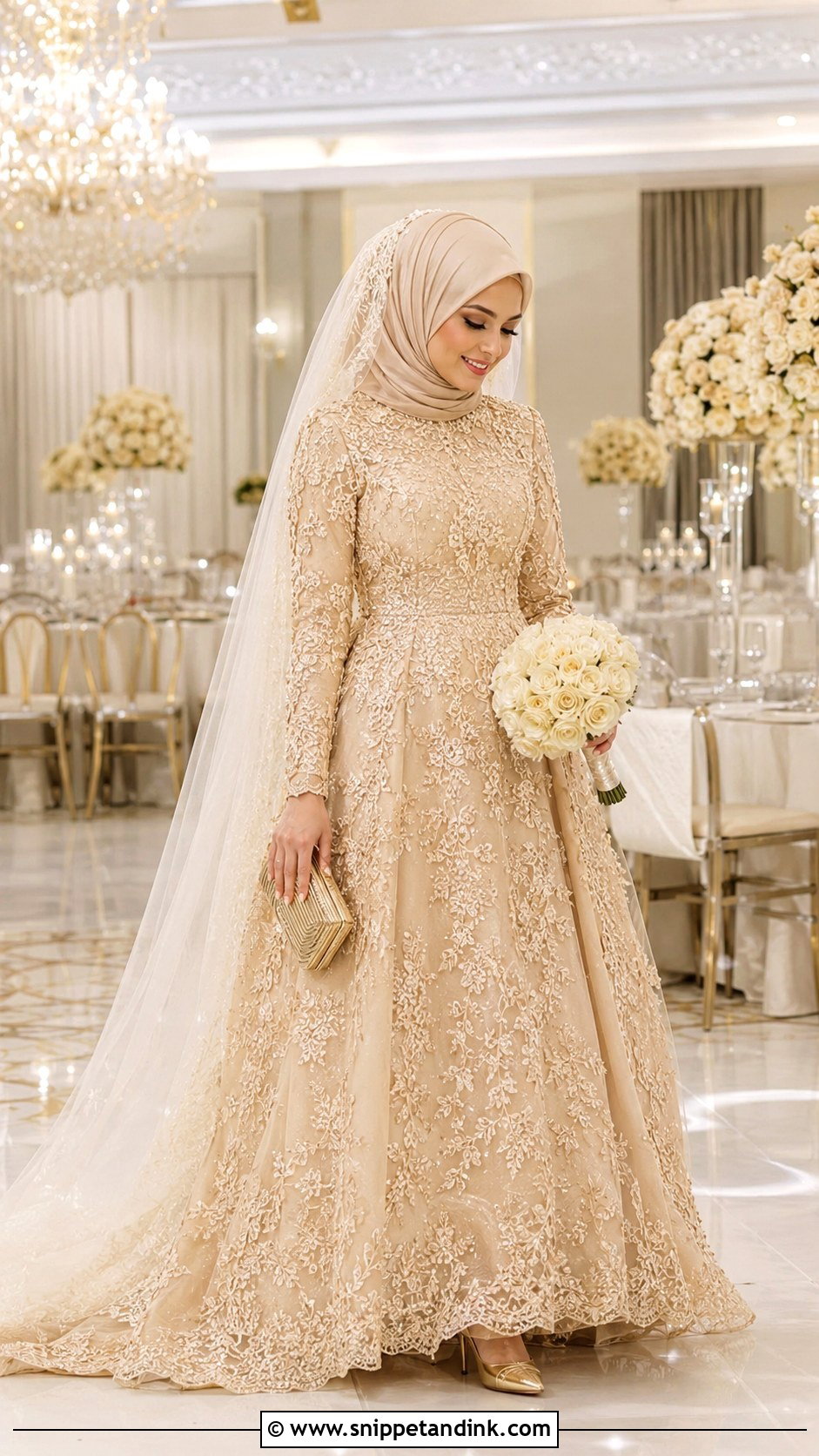
Champagne flatters lace, pearls and metallic embroidery, and it’s kinder than bright white to warm skin. Choose a covered A-line with long sleeves, an opaque high neck and tonal embellishment, then match a champagne chiffon hijab for a continuous color and add a lighter ivory veil for contrast. Champagne shifts more than any other bridal shade between daylight and warm venue bulbs, sometimes reading almost beige, so I test it in both before ordering. It suits autumn ceremonies and evening receptions.
Staying Cool Under Lining, Sleeves and a Hijab
Full coverage adds up to a lot of fabric, and a crowded hall with photography lights gets hot quickly. The heat problems I see rarely come from the outer fabric; they come from what’s underneath.
- Ask for linings in cotton, silk or viscose rather than polyester, which traps heat against the skin.
- Choose a breathable cotton or bamboo undercap. A satin one keeps the hijab from slipping but is warmer.
- Skip a second petticoat if the skirt holds its shape without it.
- Plan a cool, quiet room where you can sit for ten minutes between the ceremony and reception.
What to Do With the Gown the Week After
Makeup and food marks along the hijab edge and neckline set over time, so I tell brides to get the gown and hijab to a specialist cleaner within a few weeks rather than leaving them in a bag for months. Point out any stains and mention beading, pearls or metallic thread so they can be handled correctly.
For storage, use a breathable cotton garment bag or an acid-free box, never the plastic cover it came home in, and keep it somewhere dark and dry. Heavily beaded gowns are better folded with acid-free tissue than left hanging, because the weight slowly stretches the shoulders out of shape.
Coverage You Forget You’re Wearing
Coverage, comfort and how you feel in the gown should carry equal weight. Satin, lace, chiffon, crepe, organza, pearls, capes and cultural details can all make a full bridal outfit. Before you order, check opacity, sleeve movement, neckline comfort, hijab placement and hem length with your shoes. Book alterations early and bring your undergarments, undercap, hijab and accessories to every fitting. Above all, the look should match your own modesty preferences.
You'll Like These Ideas:








Leave a Reply