
A body-hugging wedding dress looks simple on a hanger and is anything but simple to fit. When I put a bride in a close-fitting gown, almost everything that makes it work is invisible: boning that carries the bodice, a stretch lining that lets the outer fabric sit smooth, seams placed to follow your body rather than a pattern block. Get those right and a fitted dress is comfortable for a whole day. Get them wrong and you’ll be standing for the entire reception. The twenty gowns below cover satin mermaids, lace fit-and-flares, crepe sheaths and two shorter options, and for each I’ve noted what I look for when a bride first steps into it.

How Much Room I Leave in a Fitted Gown
Skin tight on a bride never means zero ease. A fitted dress needs a small amount of room in specific places or you won’t be able to sit, eat or breathe properly by evening. At fittings I check:
- Hips: sit on a hard chair. If the side seams strain or the fabric pulls across the lap, it needs letting out a fraction.
- Ribs: take a full breath. A corset should hold you, but you should be able to breathe deeply without the bodice digging in.
- Knees: for a mermaid or trumpet skirt, take a long stride. The flare needs to start high enough that you can walk normally.
- Bust: lean forward. The neckline should stay against your skin rather than gaping.
Stretch matters too. A gown with stretch crepe or stretch satin can sit closer than one in rigid mikado or brocade, which needs more room built in.
1. Strapless Satin Skin Tight Wedding Dress
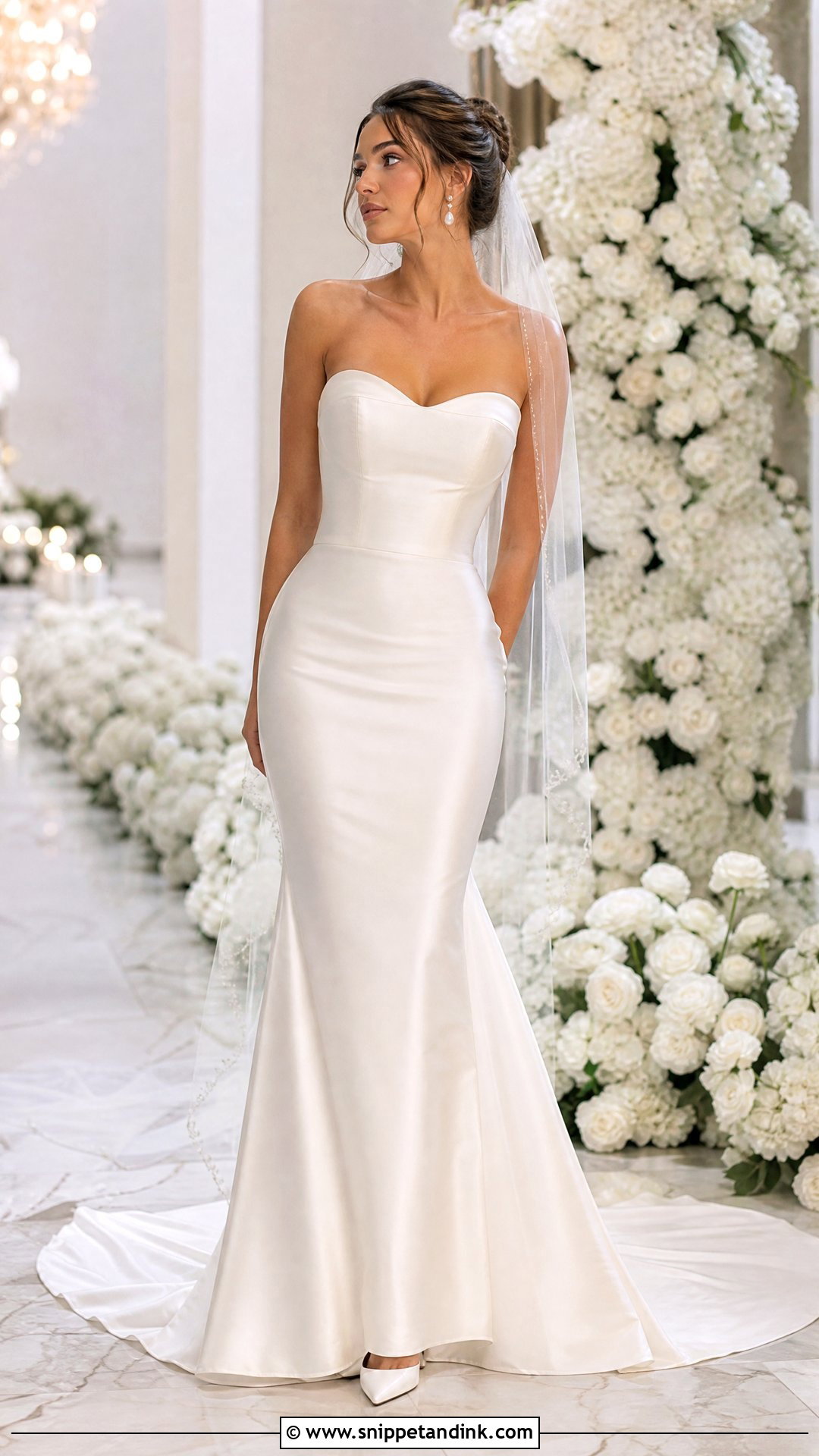
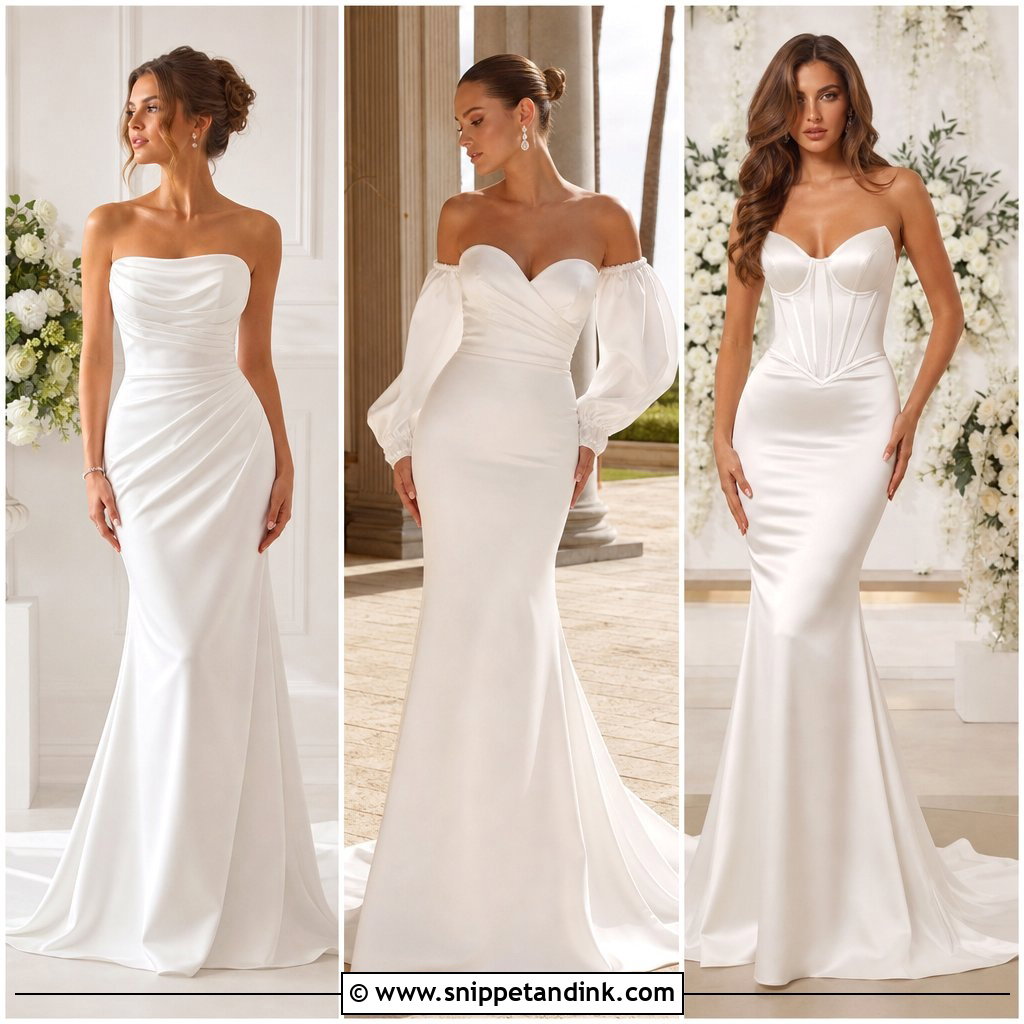
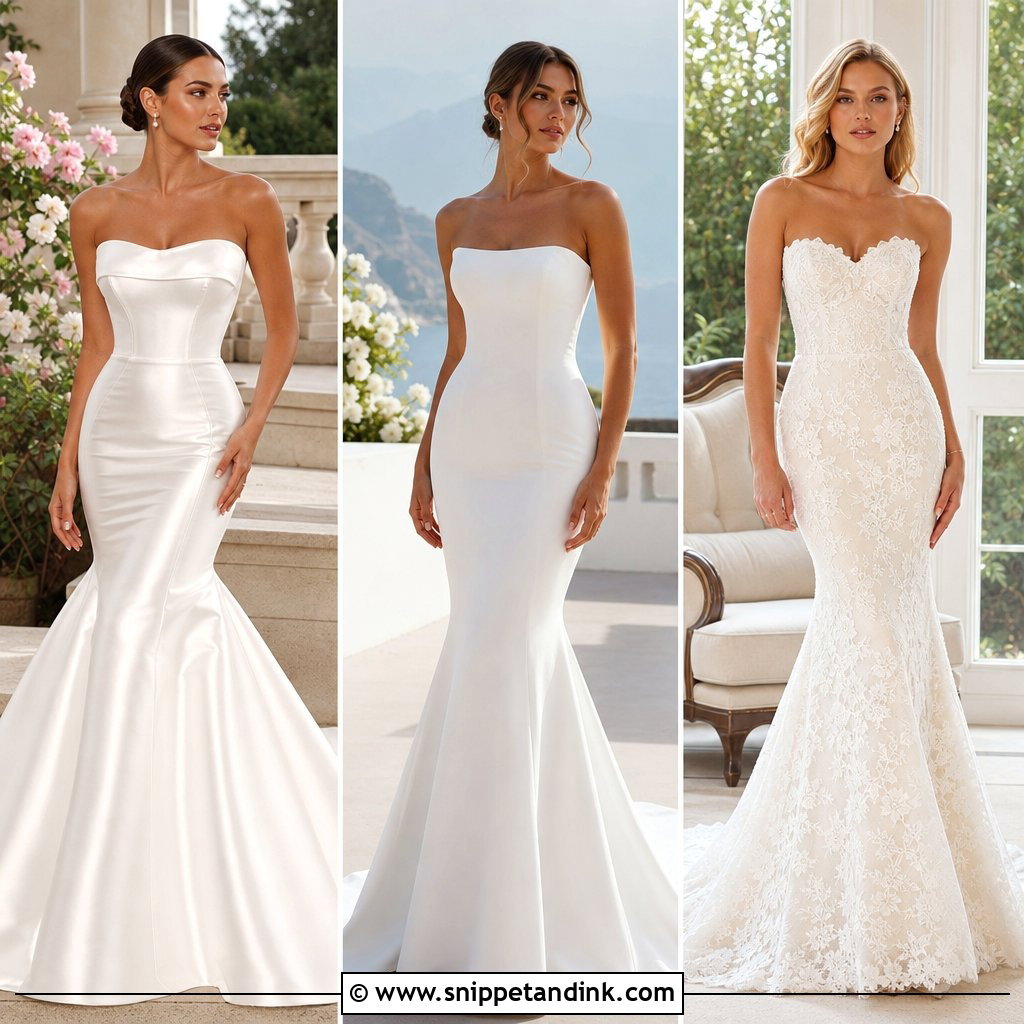
Satin is the least forgiving fabric for a fitted gown. It reflects light along every ripple, so a strapless satin mermaid needs internal boning, a waist stay and seams that run exactly down the side of the body. I check the hips first: satin under too much tension shows horizontal pull lines across the thighs, and the fix is letting the side seams out a little. A knee-level flare into a chapel train keeps it dramatic without beading. Walk and sit for the seamstress before the bustle is placed.
2. Lace Sweetheart Skin Tight Wedding Dress
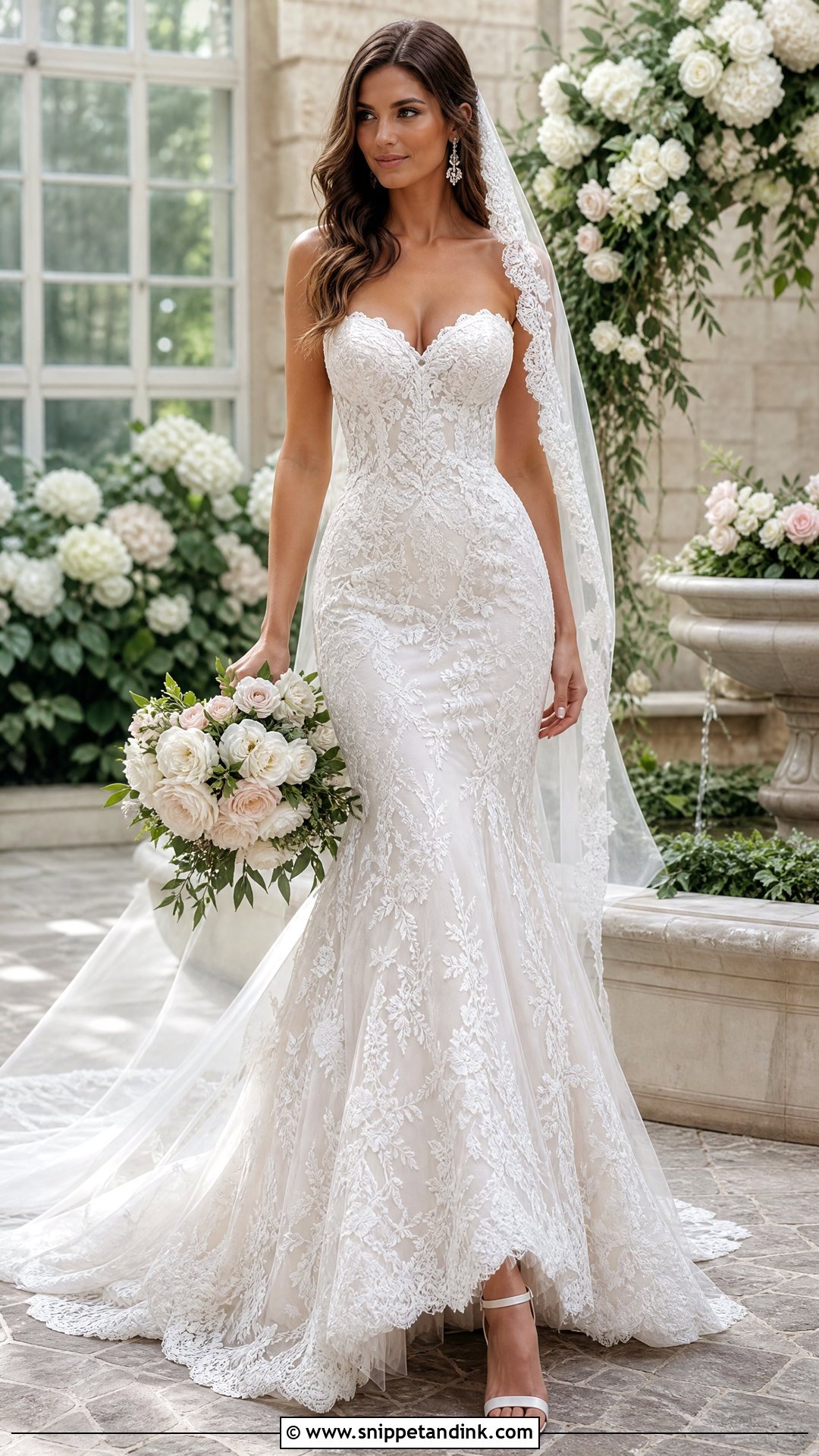
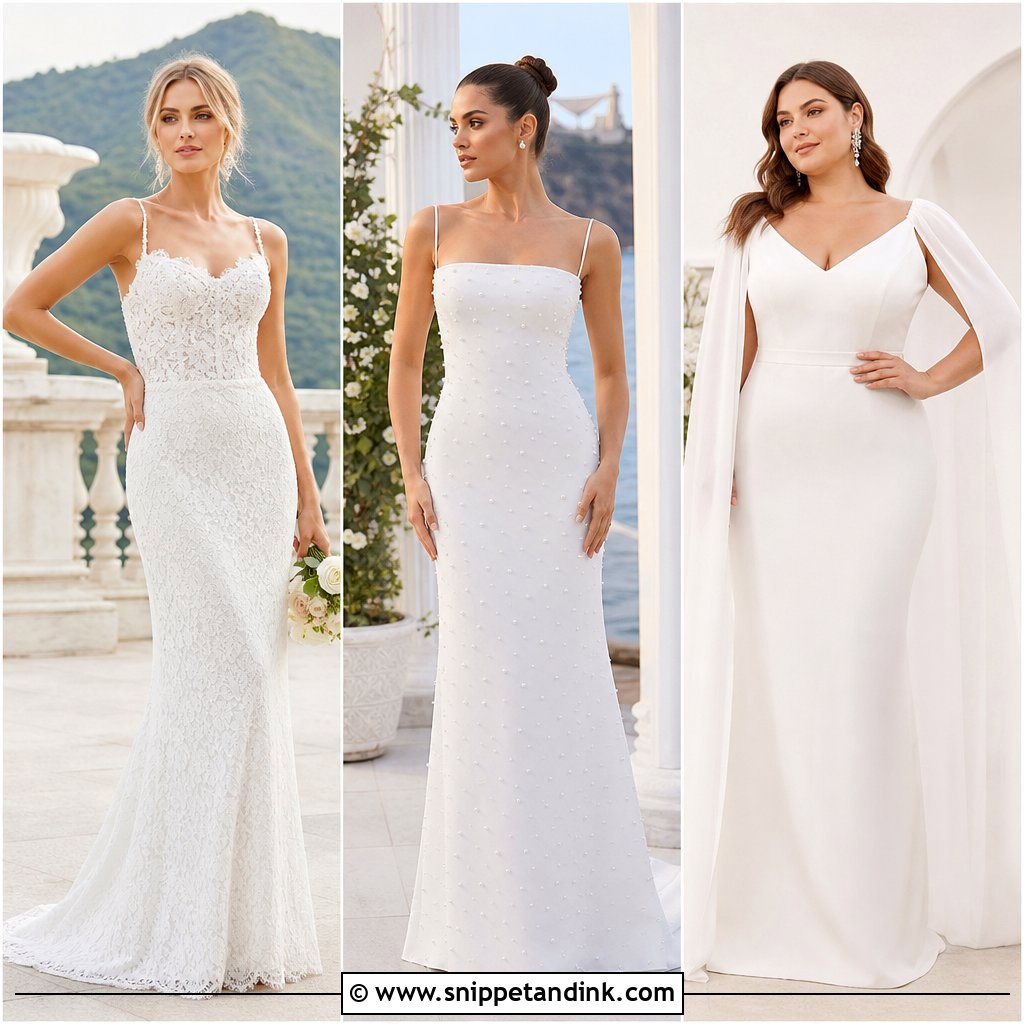
Lace makes a tight dress gentler, and it hides small fitting compromises that satin would expose. On a sweetheart fit-and-flare, I like appliqués that run vertically or on a diagonal, because they lead the eye down the body. The lining underneath should be close to your skin tone, or ivory if you want the lace to stand out. Lace over boning can rub after a few hours, so ask for a soft layer between the two.
3. Long Sleeve Crepe Skin Tight Wedding Dress
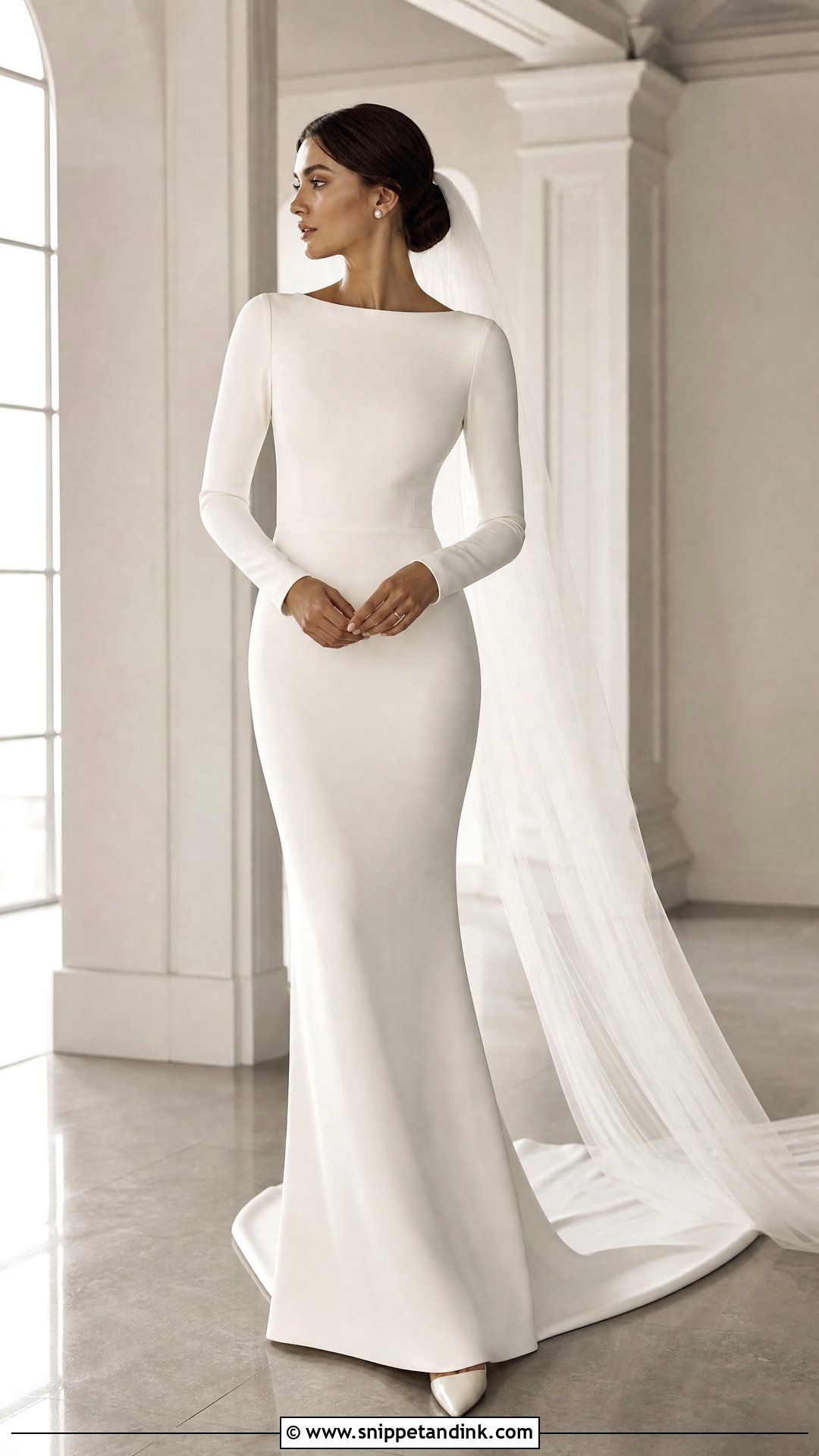
Long-sleeve crepe looks clean and modern, but sleeves on a fitted gown are the first thing that restricts you. Even stretch crepe has limits once it’s lined with a non-stretch fabric. Covered buttons along the back are a pretty detail and slow to fasten, so give your helper time. My test is reaching forward to hug someone and lifting a glass: if the back seam strains or the sleeves pull at the armhole, they need more ease before final approval.
4. Off Shoulder Corset Skin Tight Wedding Dress
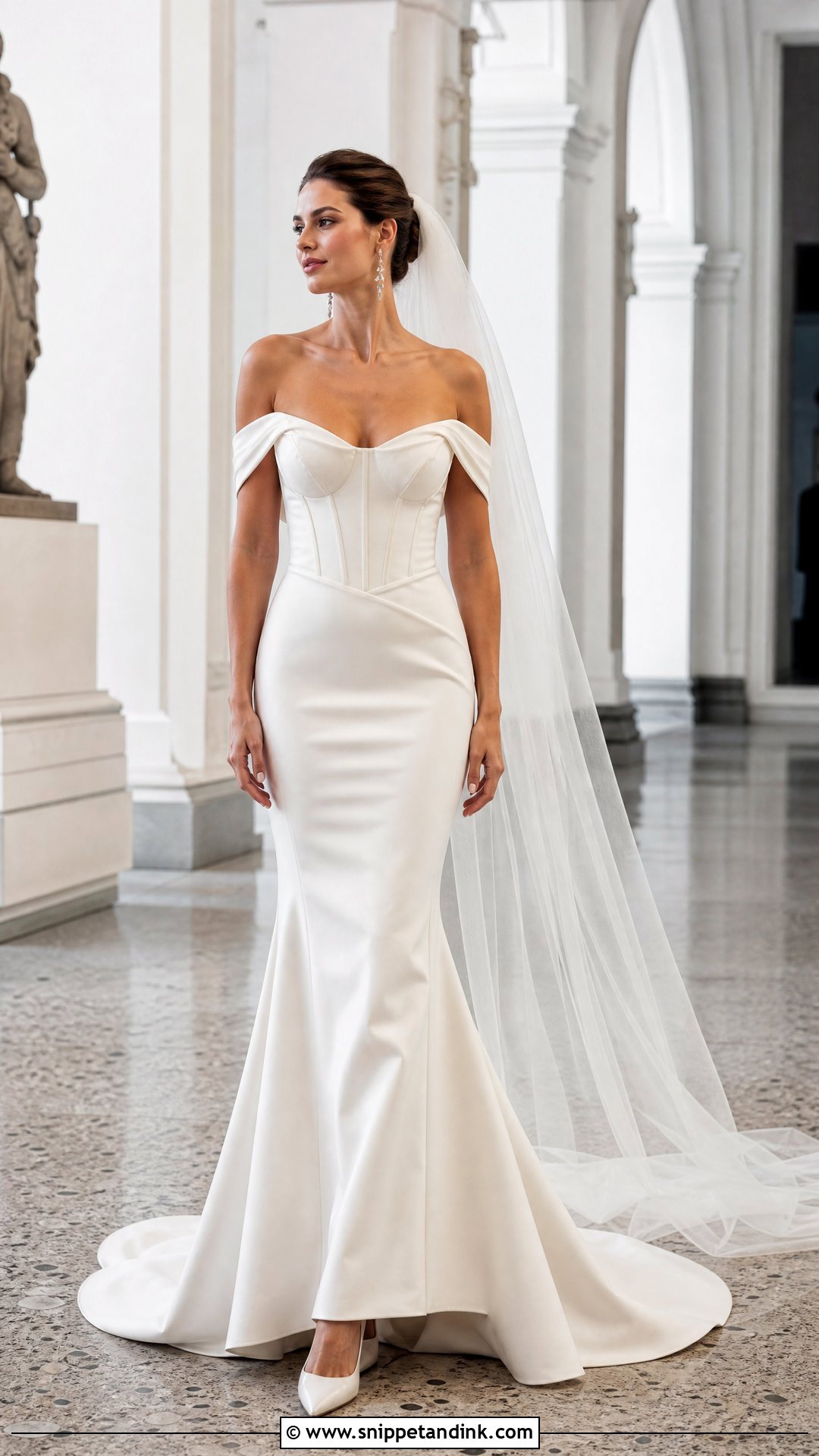
Off-the-shoulder corsets frame the collarbones and hold the dress up from the bodice rather than the sleeves, which is exactly as it should be. Mikado or satin gives the corset clean definition; a little stretch in the lining helps you breathe. The draped sleeves should rest below the shoulder and still let you raise your hands. I’d sweep your hair back so the shoulder line is visible, and remove the veil for the reception to show off the corsetry.
5. Square Neck Satin Skin Tight Wedding Dress
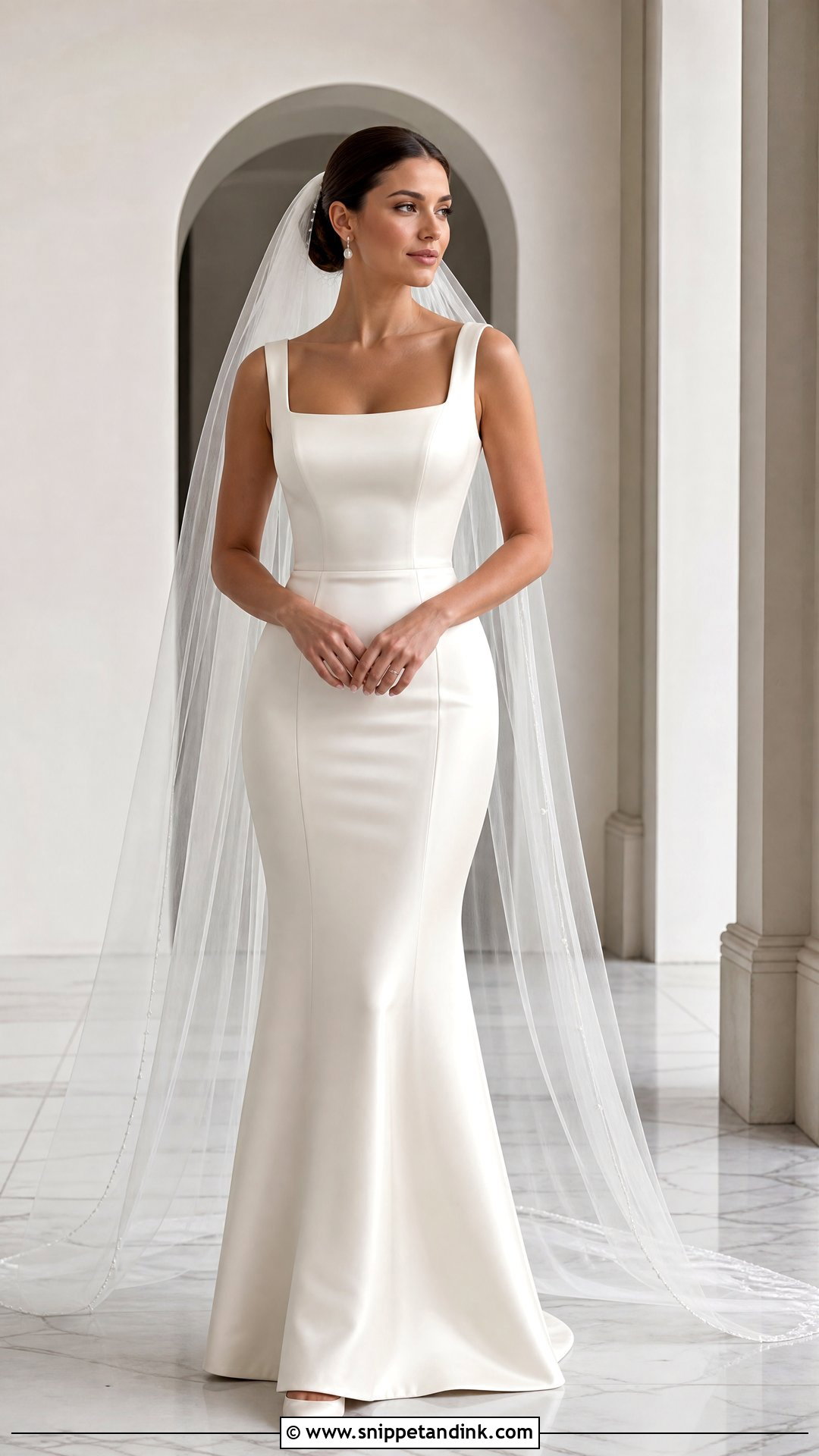
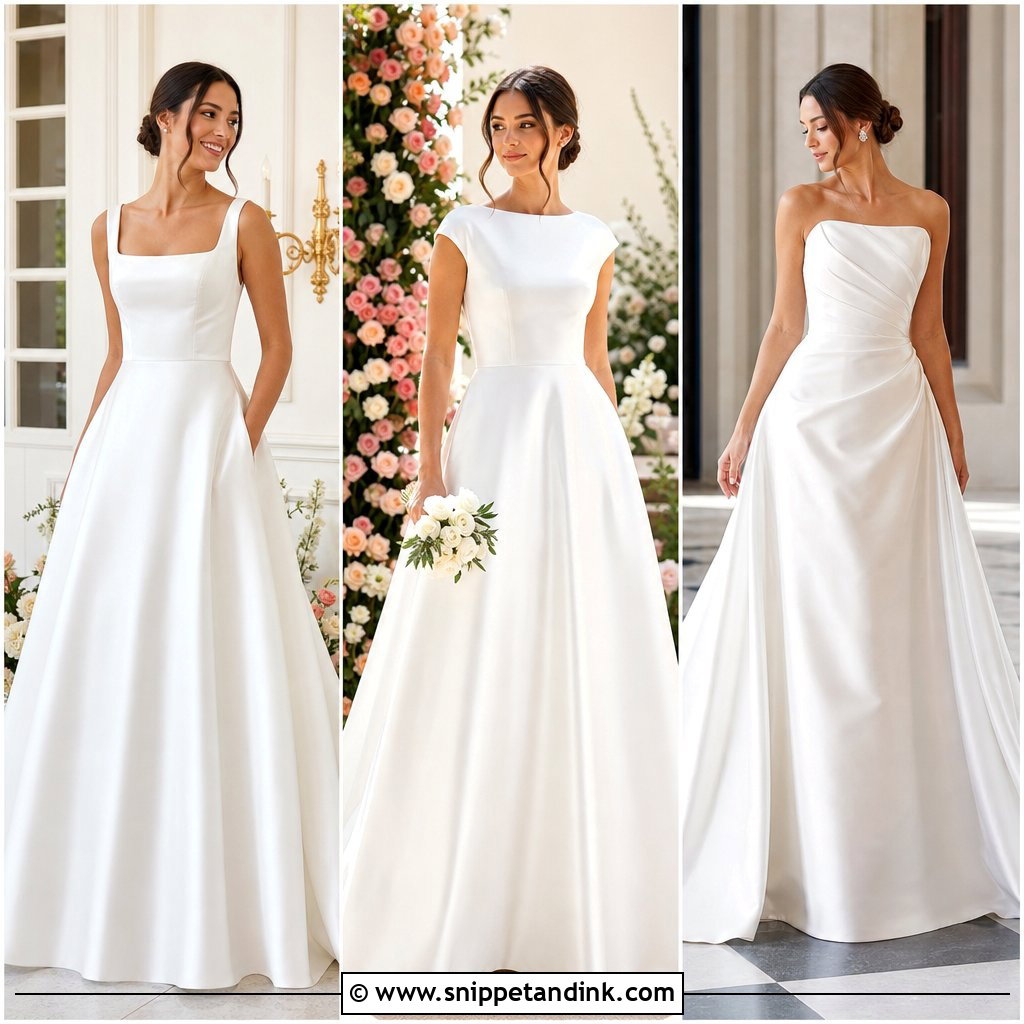
Square necklines on fitted satin are graphic and strong. The corners are what I watch: they tend to gape outward when you bend, and the fix is usually a small dart or stay tape inside the neckline. Wide straps and princess seams give shape through the bust and waist. Keep jewelry to pearl earrings so the geometry stays clean. Bend, sit and turn before you sign off.
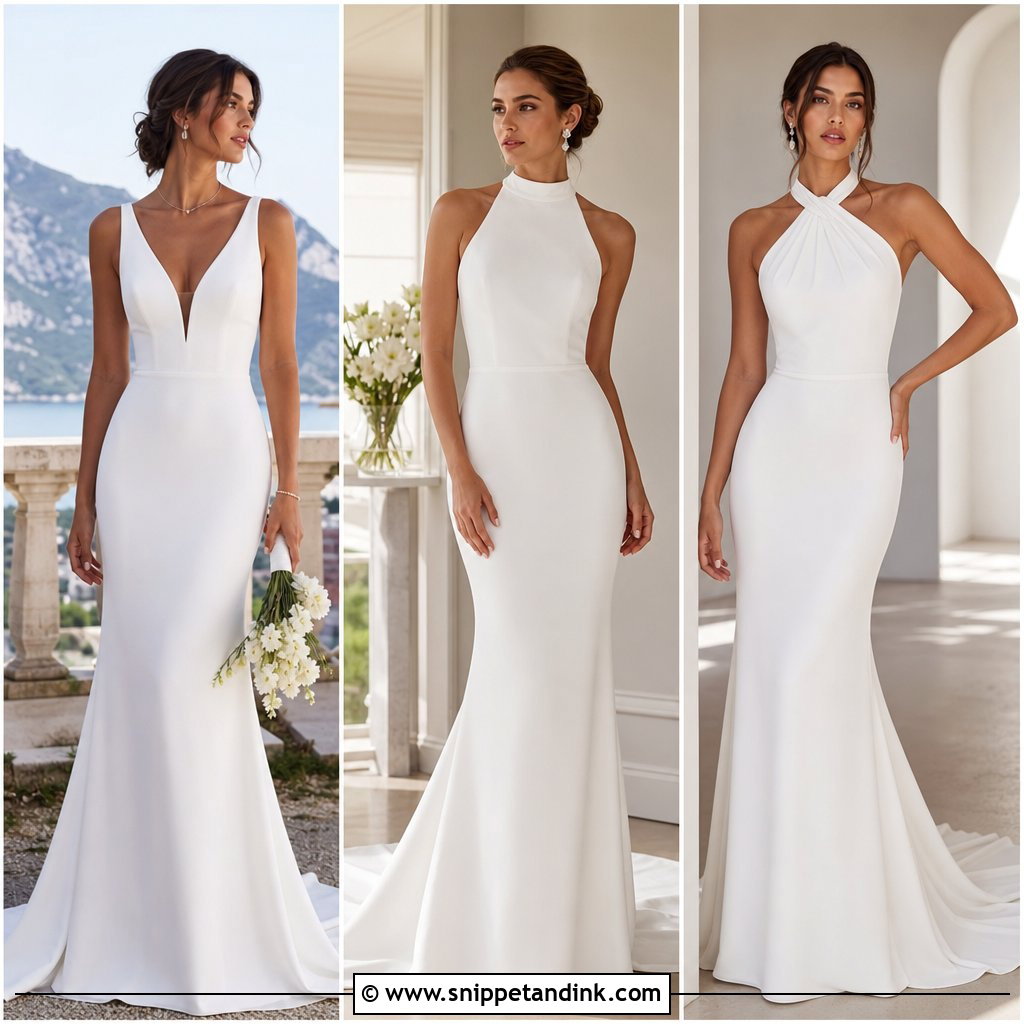
6. Halter Open Back Skin Tight Wedding Dress
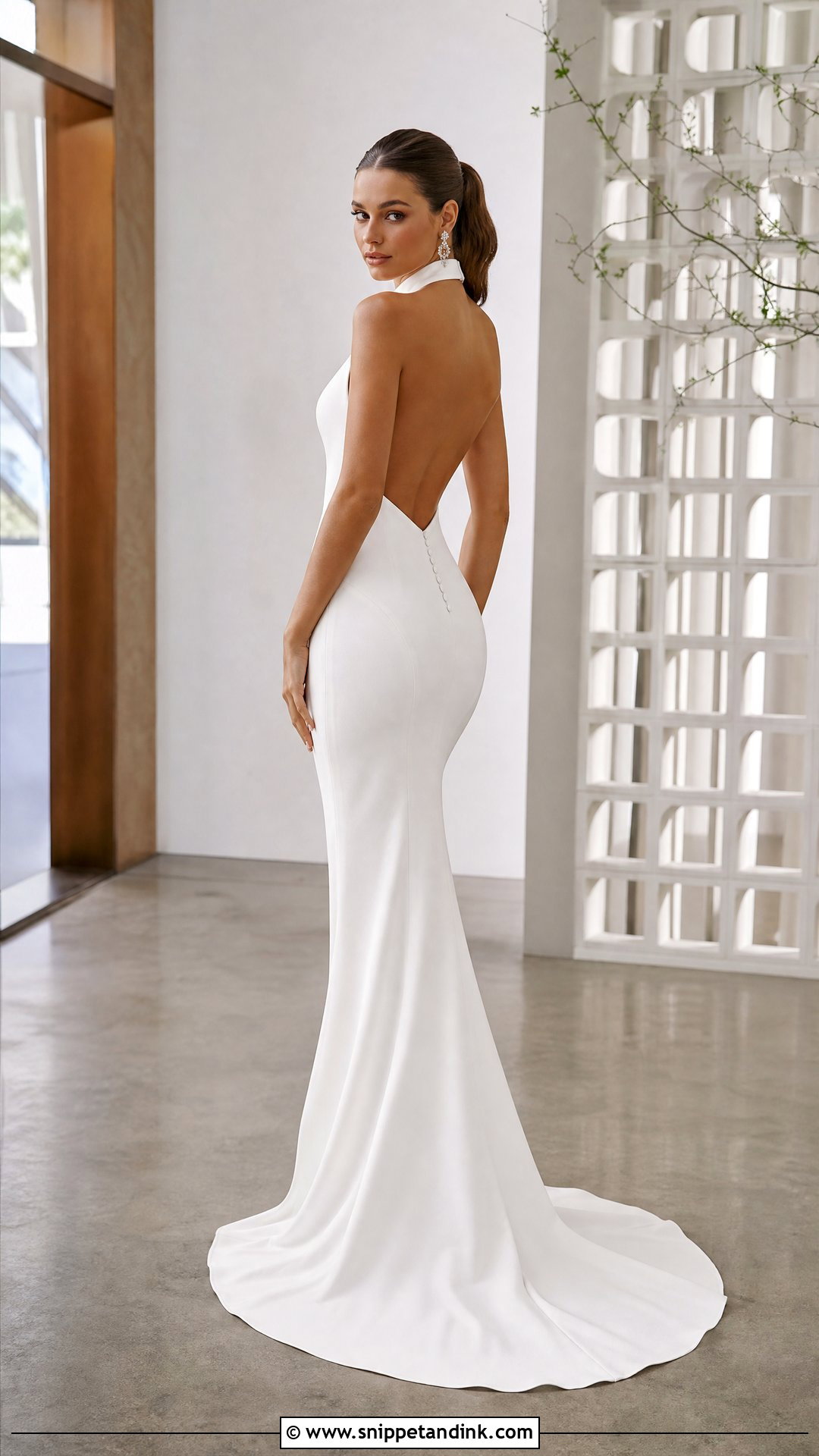
A halter neckline and open back is bold, and the back is the engineering problem. Without a back band, the support has to come from sewn-in cups, a mesh panel or the halter itself, so I raise this at the very first appointment. Crepe or stretch satin through the torso and hips falls into a subtle flare. Statement earrings and a sleek ponytail keep the back visible. Check the gown from behind in a three-way mirror while you move.
7. High Neck Lace Skin Tight Wedding Dress
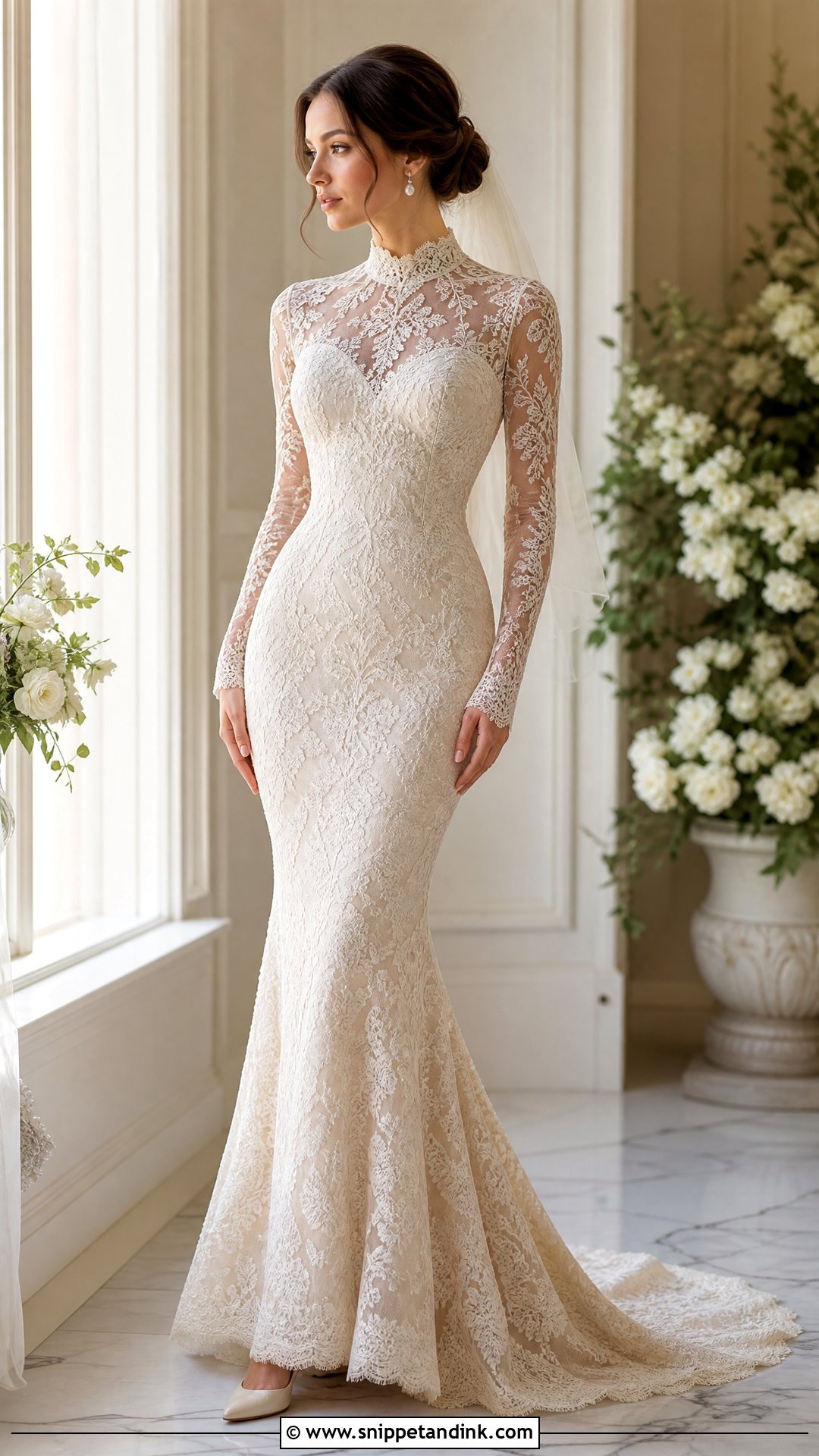
High-neck lace with sheer sleeves balances a fitted shape with coverage. What separates a good one from an average one is how the lace motifs match across the seams; on a quality gown, the pattern continues across the side seam without an obvious break. A keyhole or illusion back adds interest behind. Lace at the neck and armholes can itch, so ask for a soft lining there. Small pearl earrings and a veil tucked under a low bun.
8. One Shoulder Draped Skin Tight Wedding Dress
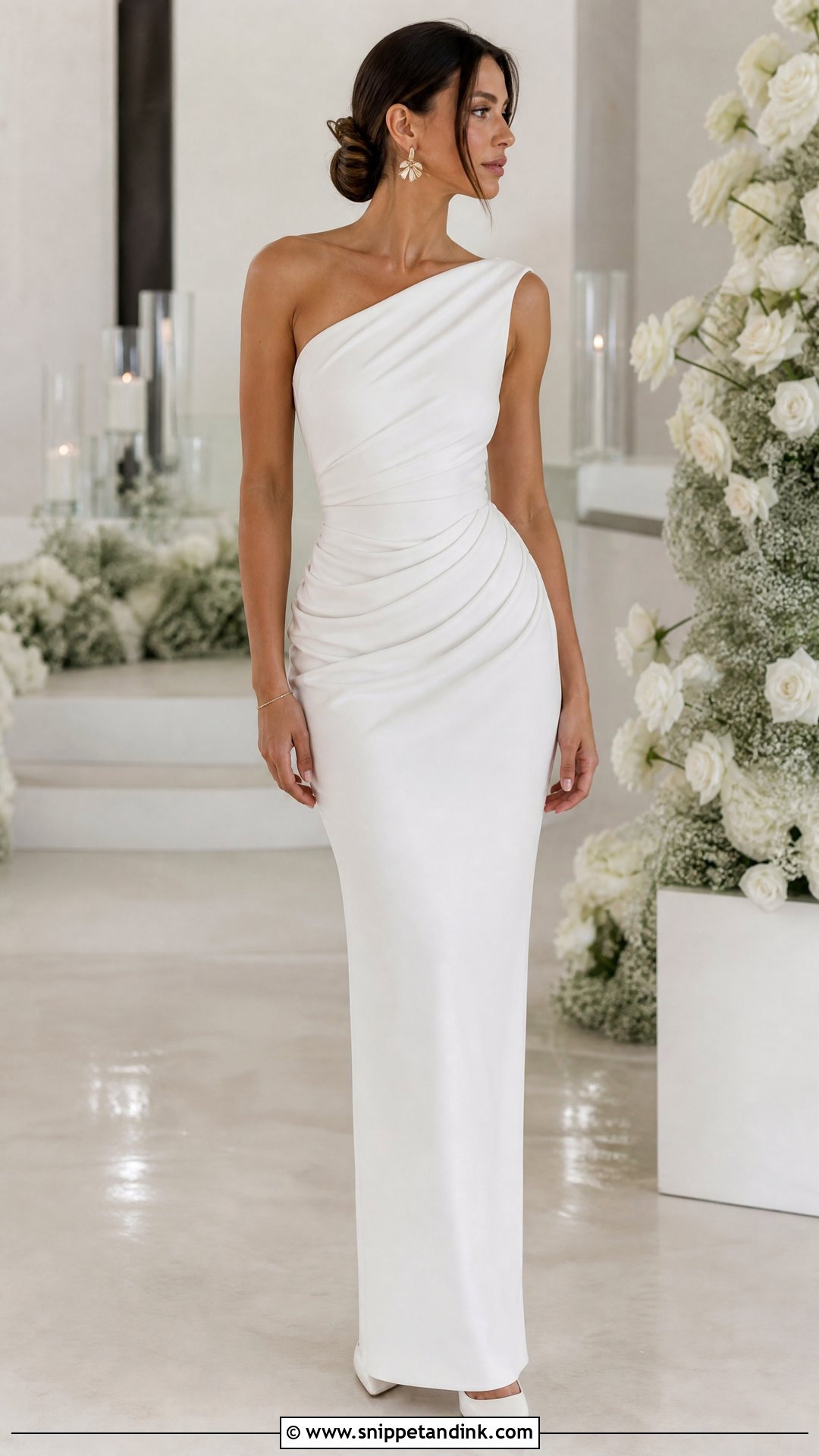
One-shoulder draping on a column needs to stay still when you move, and that’s harder than it sounds. Pleated fabric across a fitted bodice tends to twist toward the strap side. A secure inner corset stops it. Turn, sit and lift both arms, then look at the drape: if it has rotated, ask for the pleats to be tacked to the lining. A low side bun on the bare side balances the line.
9. Pearl Embellished Skin Tight Wedding Dress
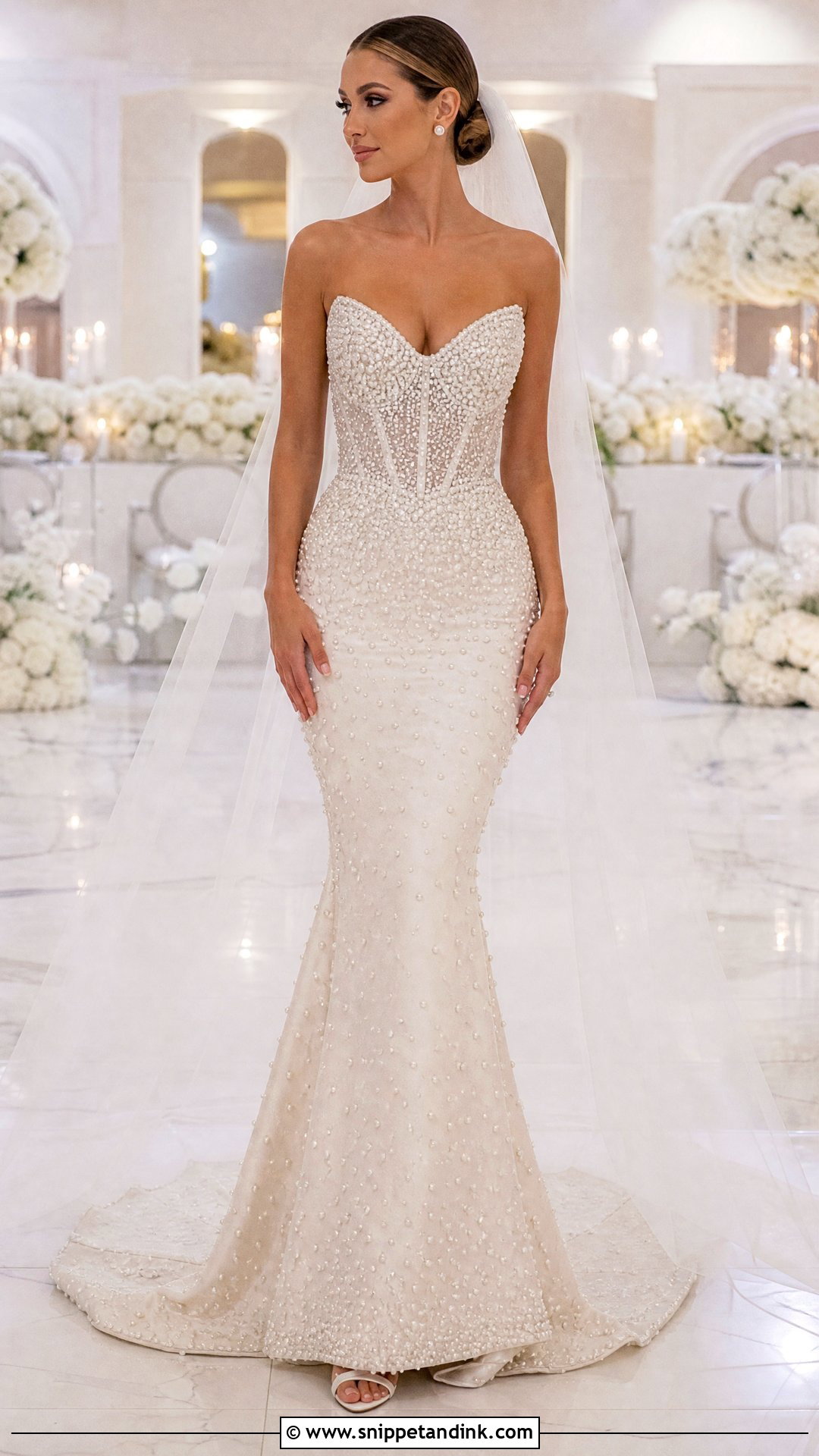
Pearls look best heaviest at the bodice and thinning toward the hem; even coverage all over can feel heavy and look busy. Sewn pearls also add weight, so the inner bodice needs real structure. The practical problem is snagging: raised pearls catch on veil tulle and lace gloves. I’d pick a plain veil with no beading and keep hair tucked behind the ears. Have the bustle secured well, as the beaded train is heavy to lift.
10. Beaded Corset Skin Tight Wedding Dress
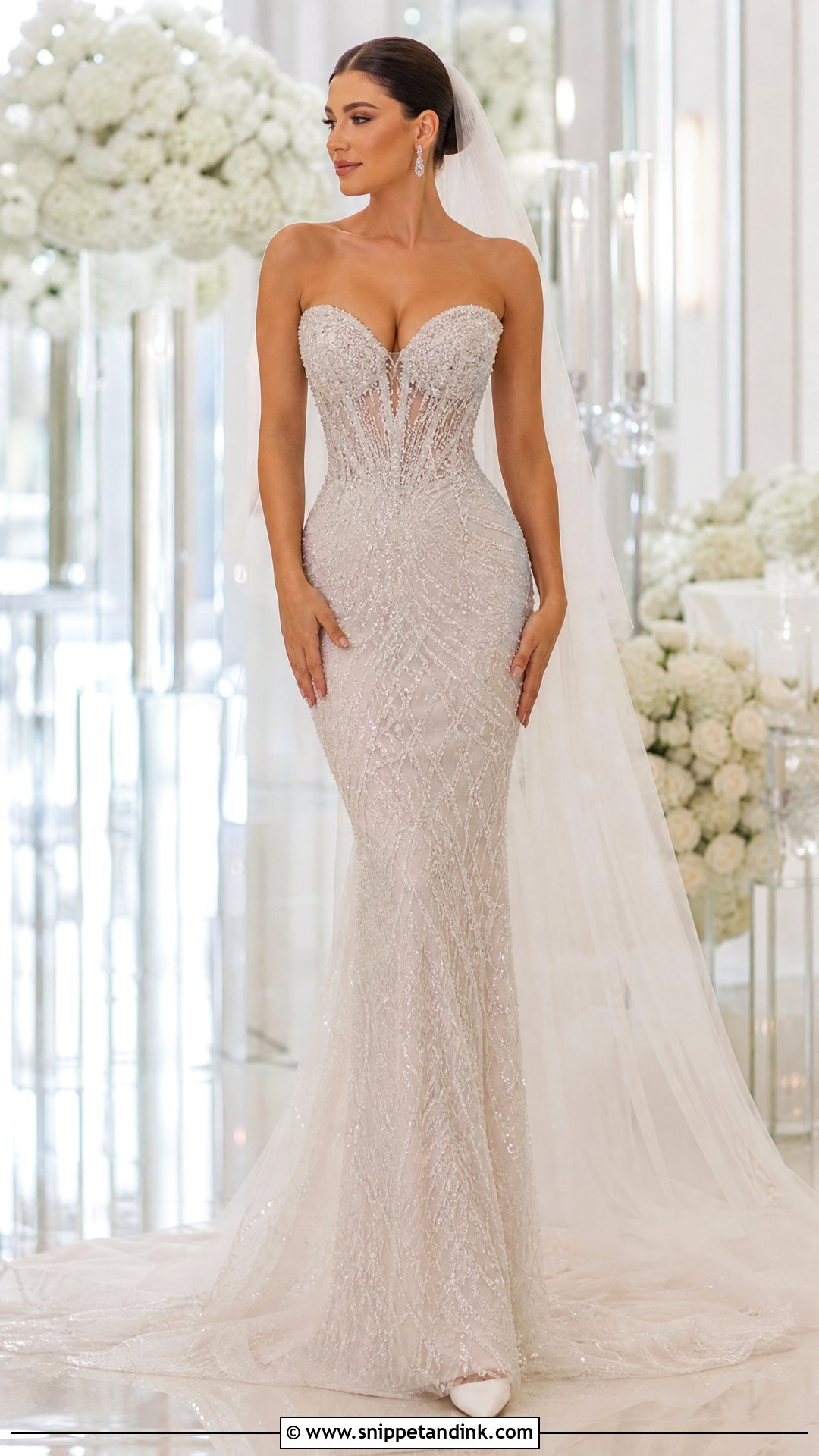
Beaded corsets are glamorous and heavy. Beading can add noticeable weight, which pulls the bodice down over a long day, so I look for firm boning, a waist stay and well-anchored straps or bodice construction. Check the underarms carefully, since beads rub there with every arm movement. A sleek updo keeps the corset visible; a plain tulle veil keeps the outfit from tipping into too much sparkle.
11. Basque Waist Skin Tight Wedding Dress
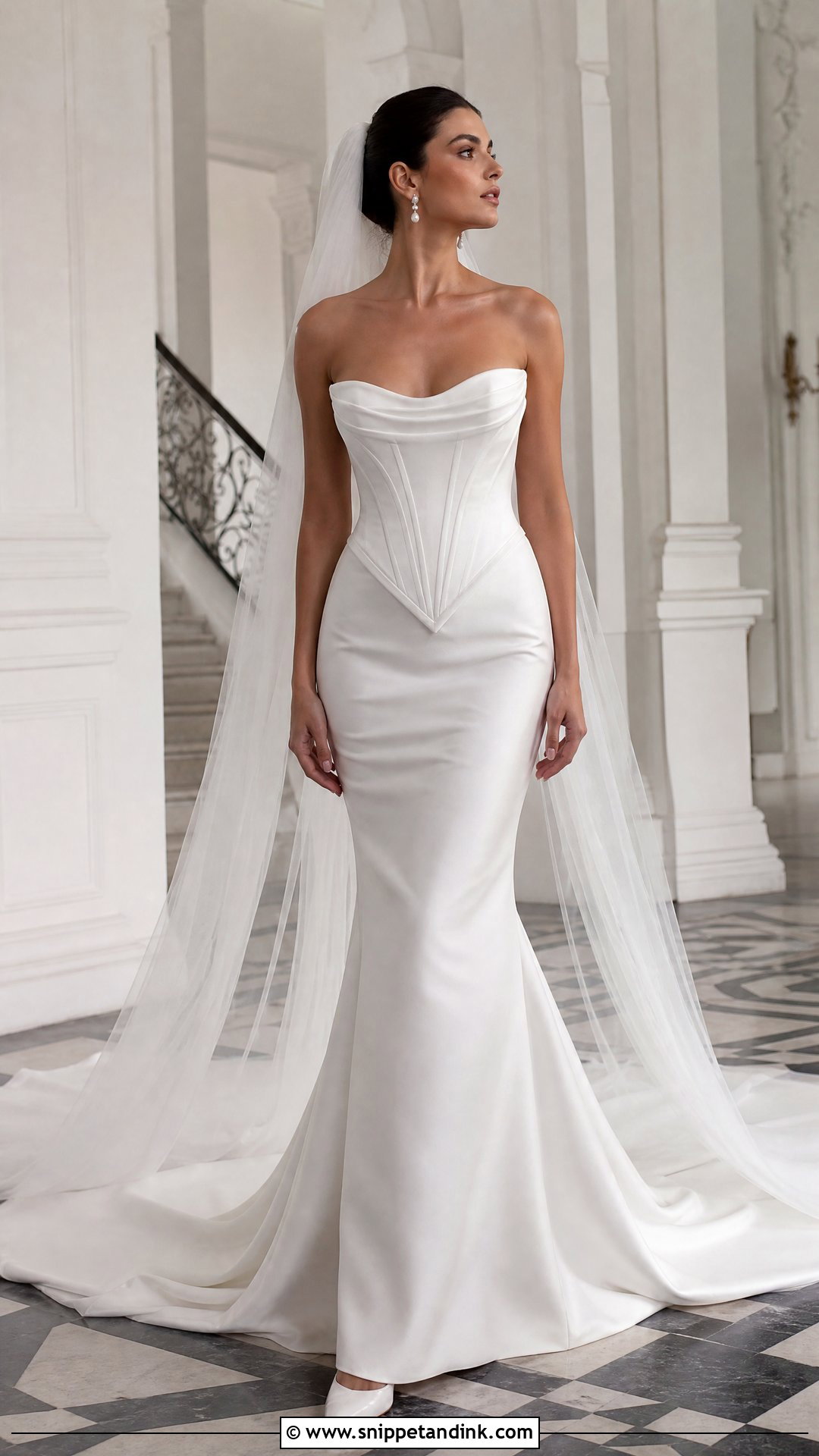
Extending the bodice into a soft V below the natural waist lengthens the torso and leads straight into a trumpet skirt. The V-point is the detail I fuss over: it must lie flat when you sit, not fold up into your lap. That depends on torso length, so if you’re short-waisted, the point may need shortening. Satin or mikado holds the shape. Pearl drops and a long sheer veil finish it.
12. Scoop Neck Minimalist Skin Tight Wedding Dress
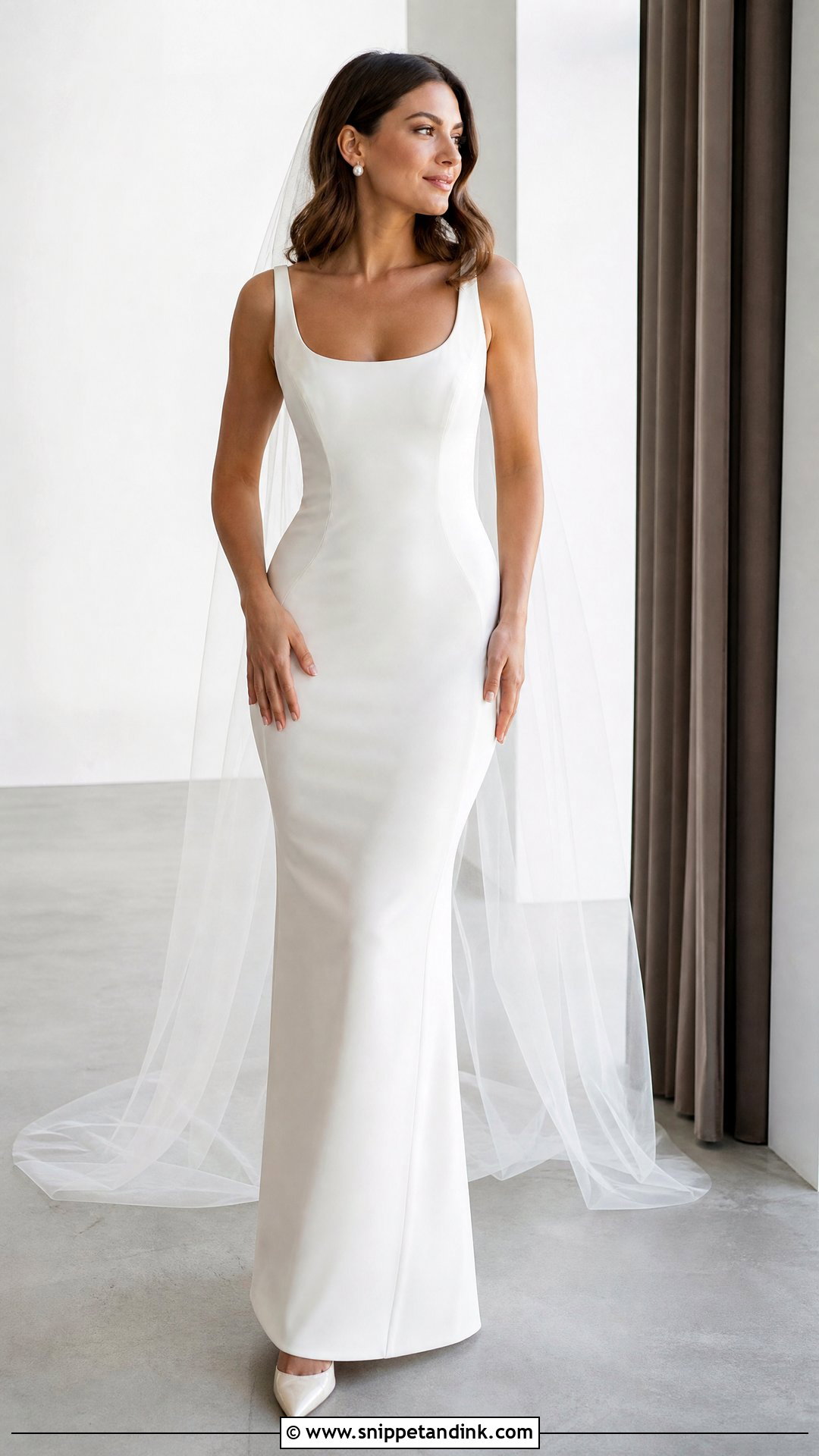
Minimal gowns put all the pressure on fit. With a scoop neck and a plain column skirt in stretch satin or crepe, the only details are the seams, so I look for curved princess seams over the bust and smooth sides. Pulling at the bust, waist or hips shows immediately. The lining should support without leaving ridges. Pearl studs and a cut-edge chapel veil are all it needs.
13. Cap Sleeve Vintage Lace Skin Tight Wedding Dress
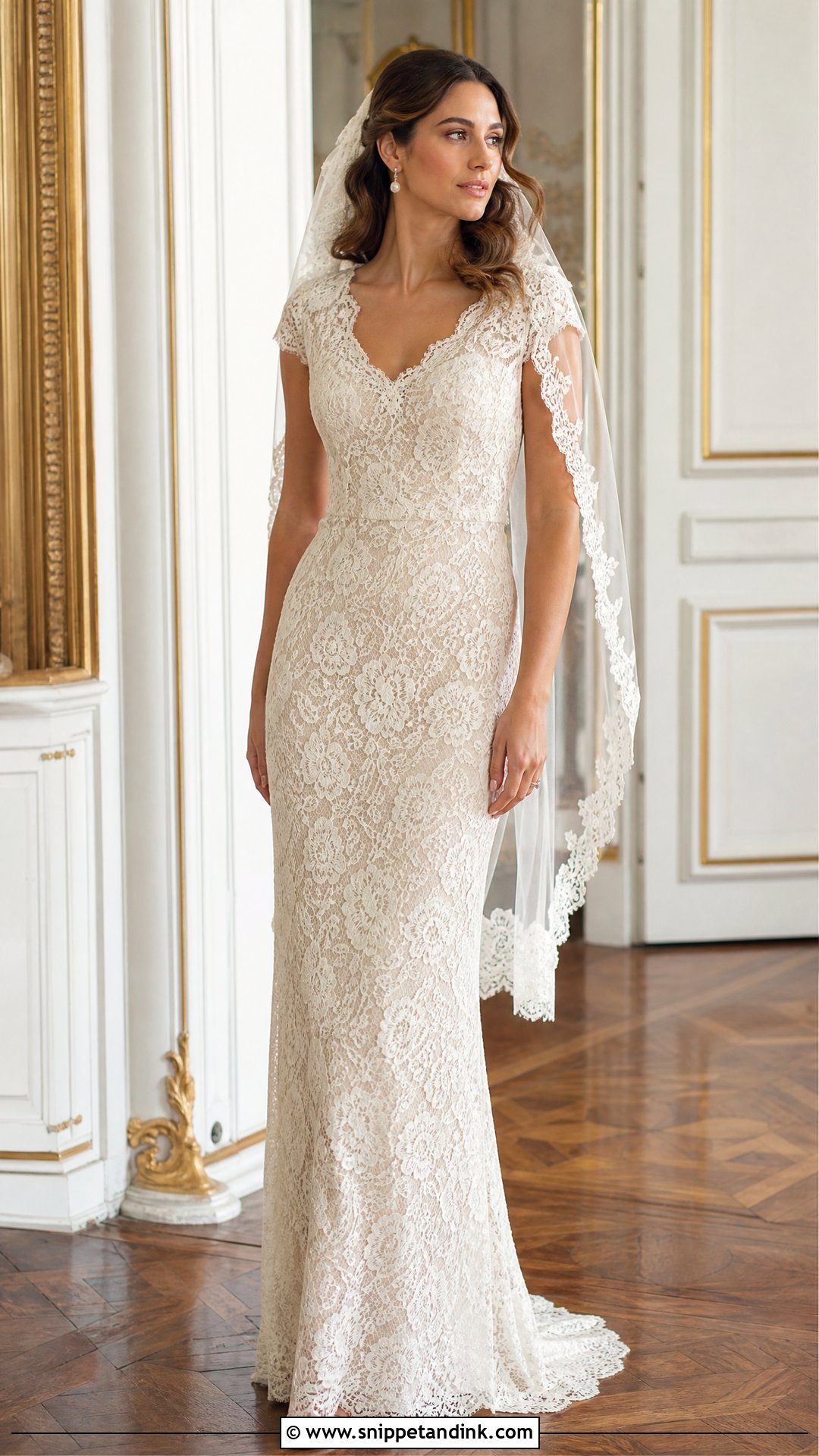
Cap sleeves sit on top of the shoulder and can pull the bodice upward when you raise your arms. I check this by having brides reach toward the ceiling. A seamstress can adjust the sleeve opening or add a discreet gusset. Scalloped vintage lace over a champagne underlay looks warm and shows the pattern clearly. A narrow lace-edged fingertip veil matches the period feel.
14. Detachable Overskirt Skin Tight Wedding Dress
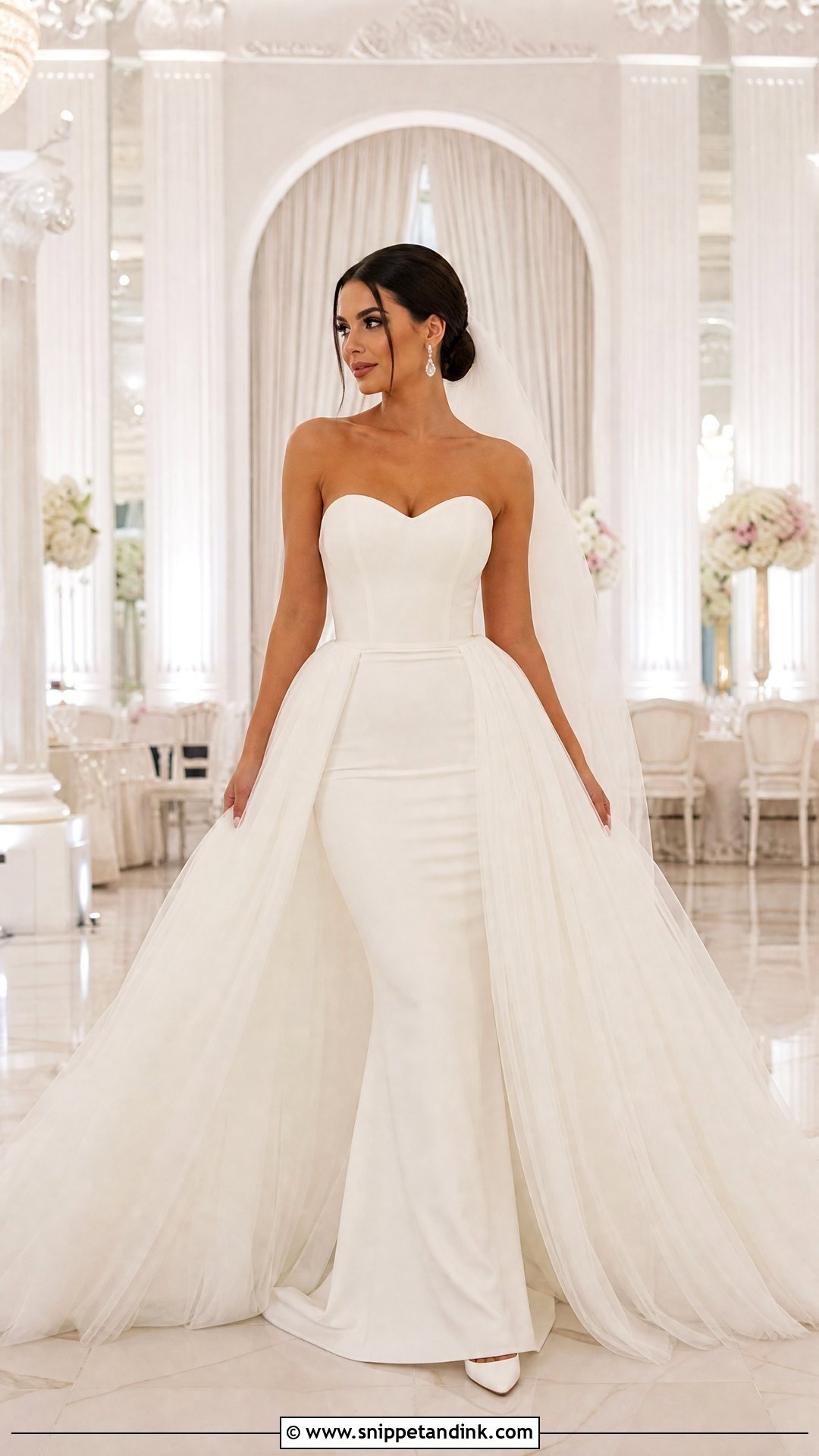
A fitted mermaid with a removable overskirt gives you volume for the aisle and freedom for the reception. Choose the base gown as if you’d wear it alone, because you’ll spend most of the day in it. The overskirt waistband should lie flat over the base gown and be easy to detach. Practise removing it with your helper at the last fitting; tulle overskirts fastened with snaps tend to come off faster than mikado ones with hooks.

15. Champagne Satin Skin Tight Wedding Dress
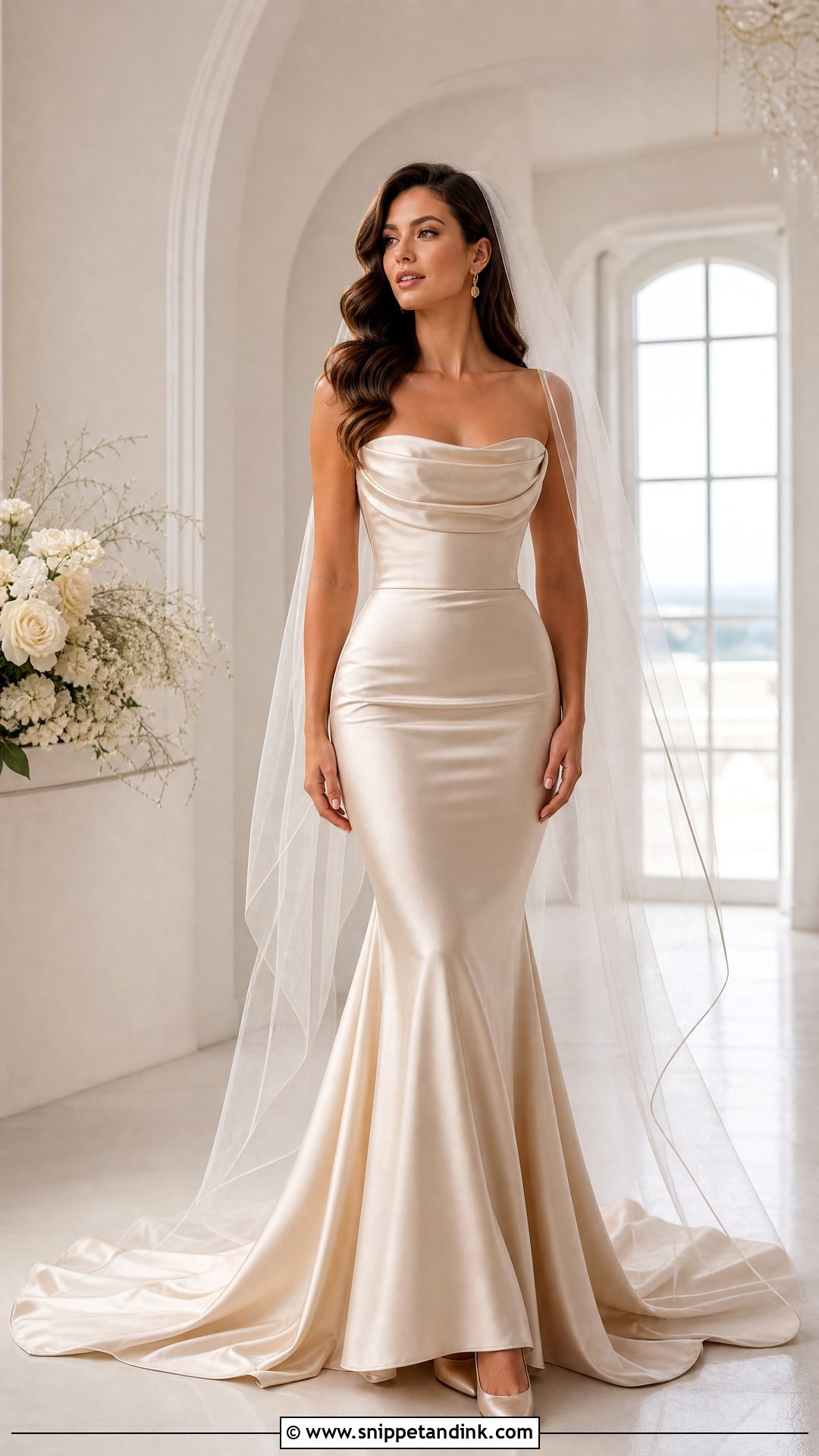
Champagne satin warms the skin and photographs with more depth than bright white. Fitted satin shows tension lines easily, so the gown should hold close without being compressed. Compare several shades in daylight and indoor light, since champagne can lean pink, gold or grey. Choose smooth, skin-tone underwear rather than white, which shows through warmer fabrics. An ivory veil sits comfortably beside it.
16. Plus Size Skin Tight Mermaid Wedding Dress
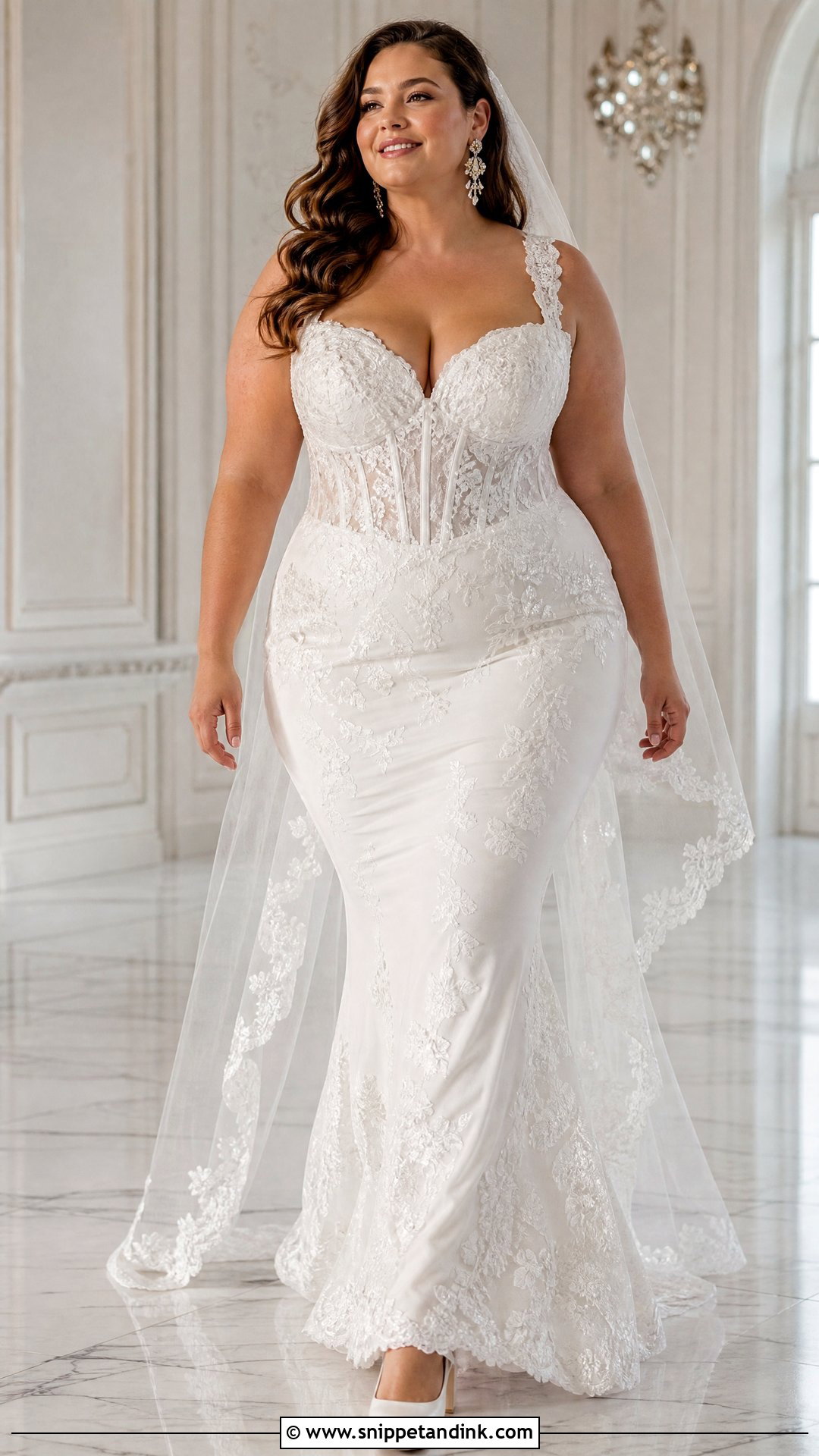
Fitted dresses aren’t reserved for any one body, and I’d ignore anyone who tells you otherwise. On a curvier figure, a mermaid needs a structured corset, wide straps or secure off-the-shoulder sleeves, and stretch lining through the hips. Well-placed lace appliqués define the waist without compression. Block-heel pumps give stability for a long day. Sit, walk, dance and climb stairs at every fitting so the final alterations follow how you actually move.
17. Petite Skin Tight Sheath Wedding Dress
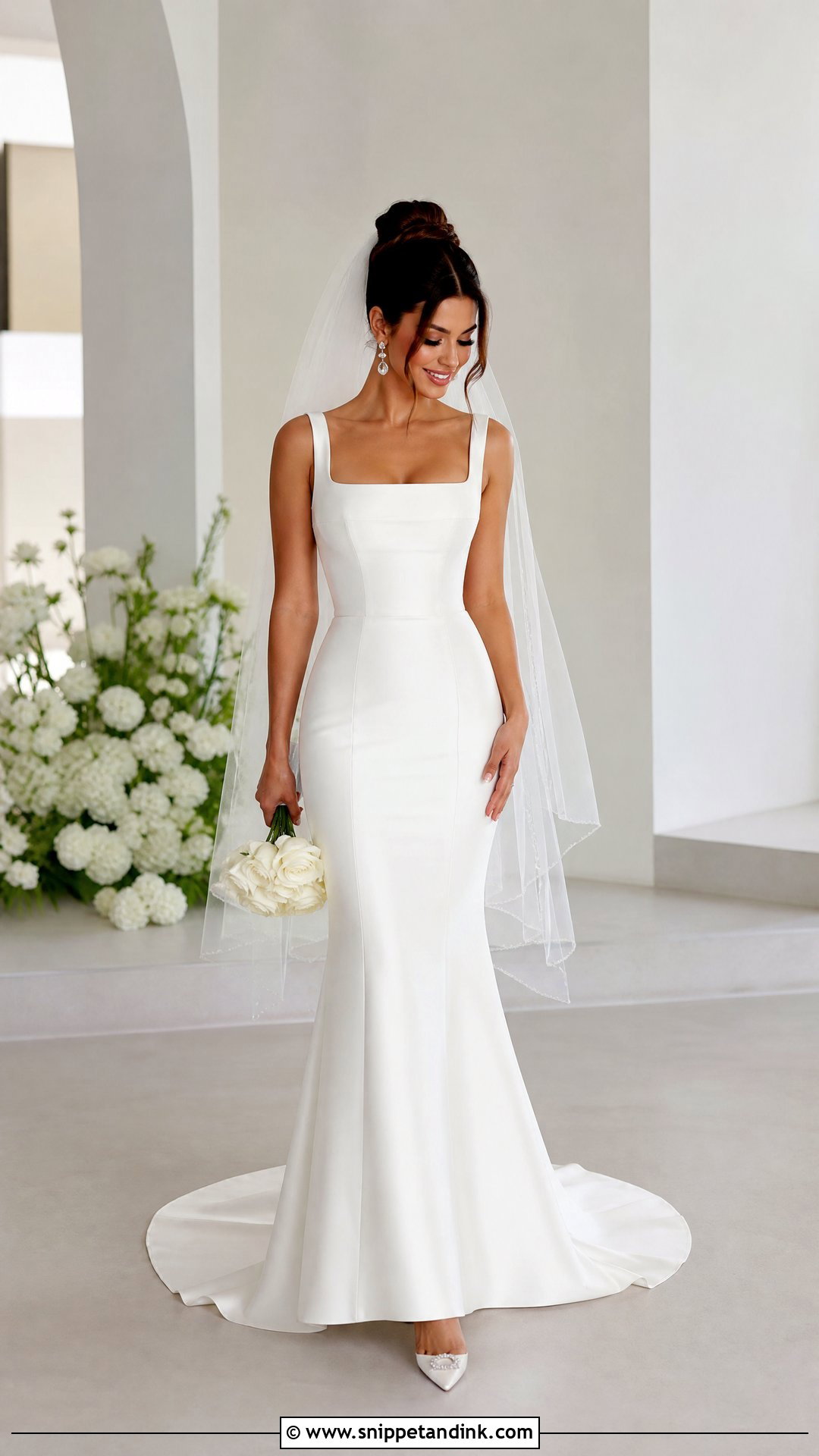
On a petite frame, a streamlined sheath gown creates one long line from neckline to hem. The common problem is proportion: standard patterns assume a longer torso, so the waist sits low and the hip curve lands in the wrong place. Ask your seamstress to shorten the bodice before anything else. A V-neck or scoop neckline helps elongate. Keep the veil narrow and simple; wide veils overwhelm a small frame.
18. Beach Skin Tight Crepe Wedding Dress
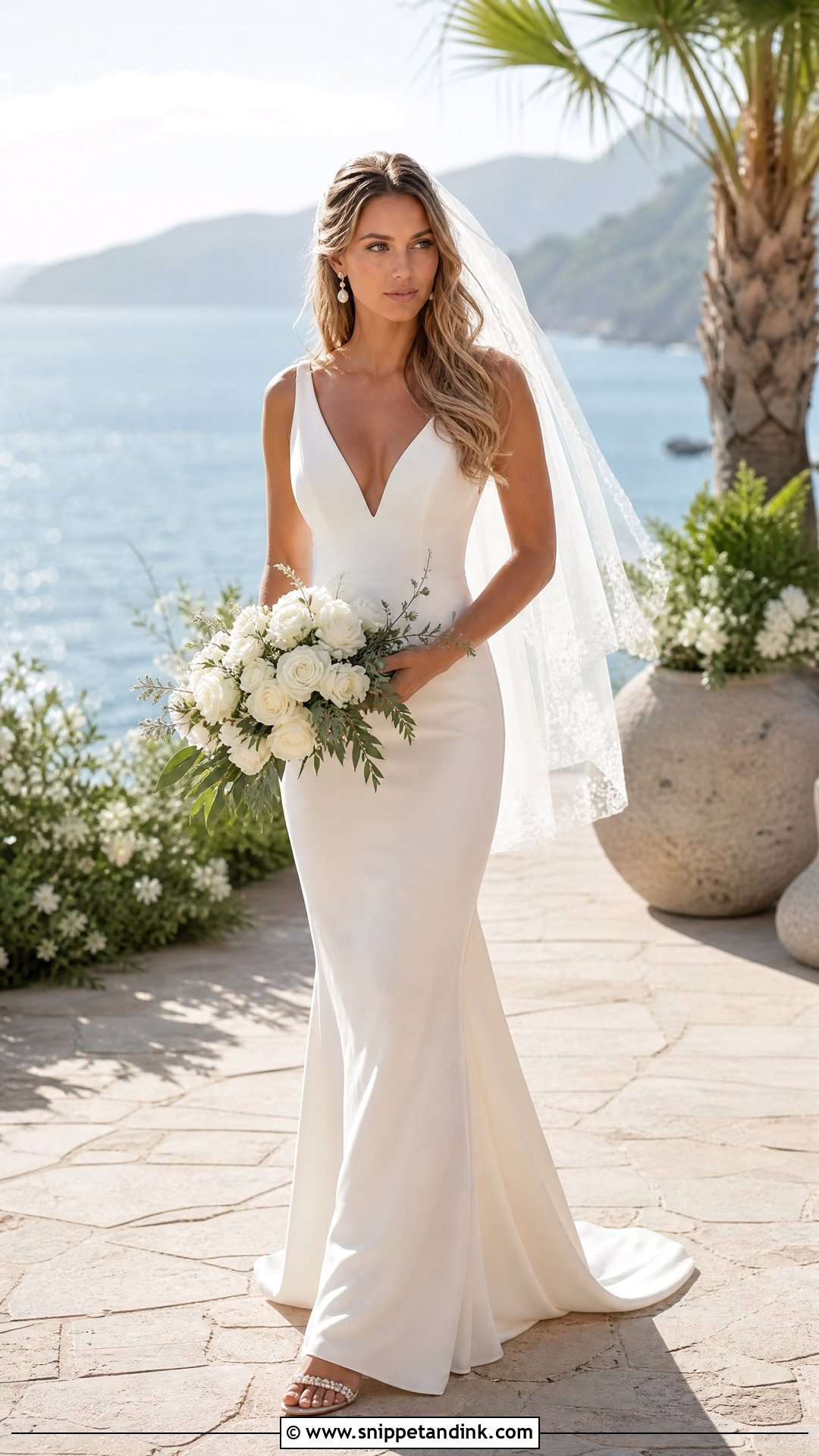
Fitted gowns and beaches can work together if the fabric is light. Lightweight crepe with some stretch breathes better than satin and doesn’t show perspiration as easily. Skip heavy beading and layered underskirts in humidity. Hem the dress to clear sand, and walk in your chosen sandals at the fitting. A veil that can be removed quickly is sensible when the wind picks up.
19. Courthouse Skin Tight Midi Wedding Dress
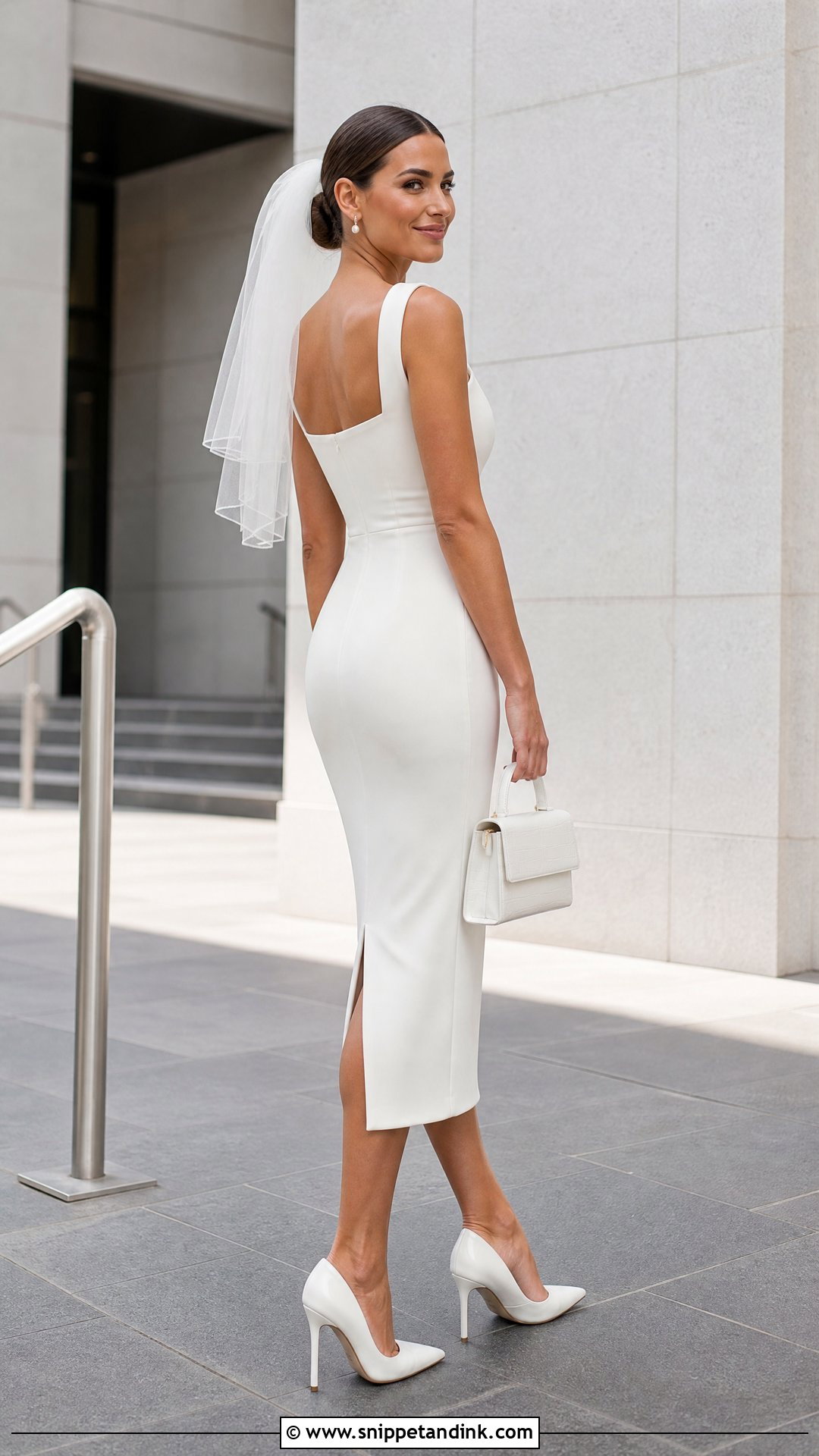
A fitted midi for a courthouse ceremony looks sharp and moves well if it has a back slit. Structured crepe or satin with a square neckline and defined waist ends below the knee or near the ankle. Tailoring is crucial, as waist, hips and hem are all on show. Climb a few stairs in it at the fitting; slim skirts often need the slit lengthened slightly. Pair with a birdcage veil or a hair bow.
20. Reception Skin Tight Mini Wedding Dress
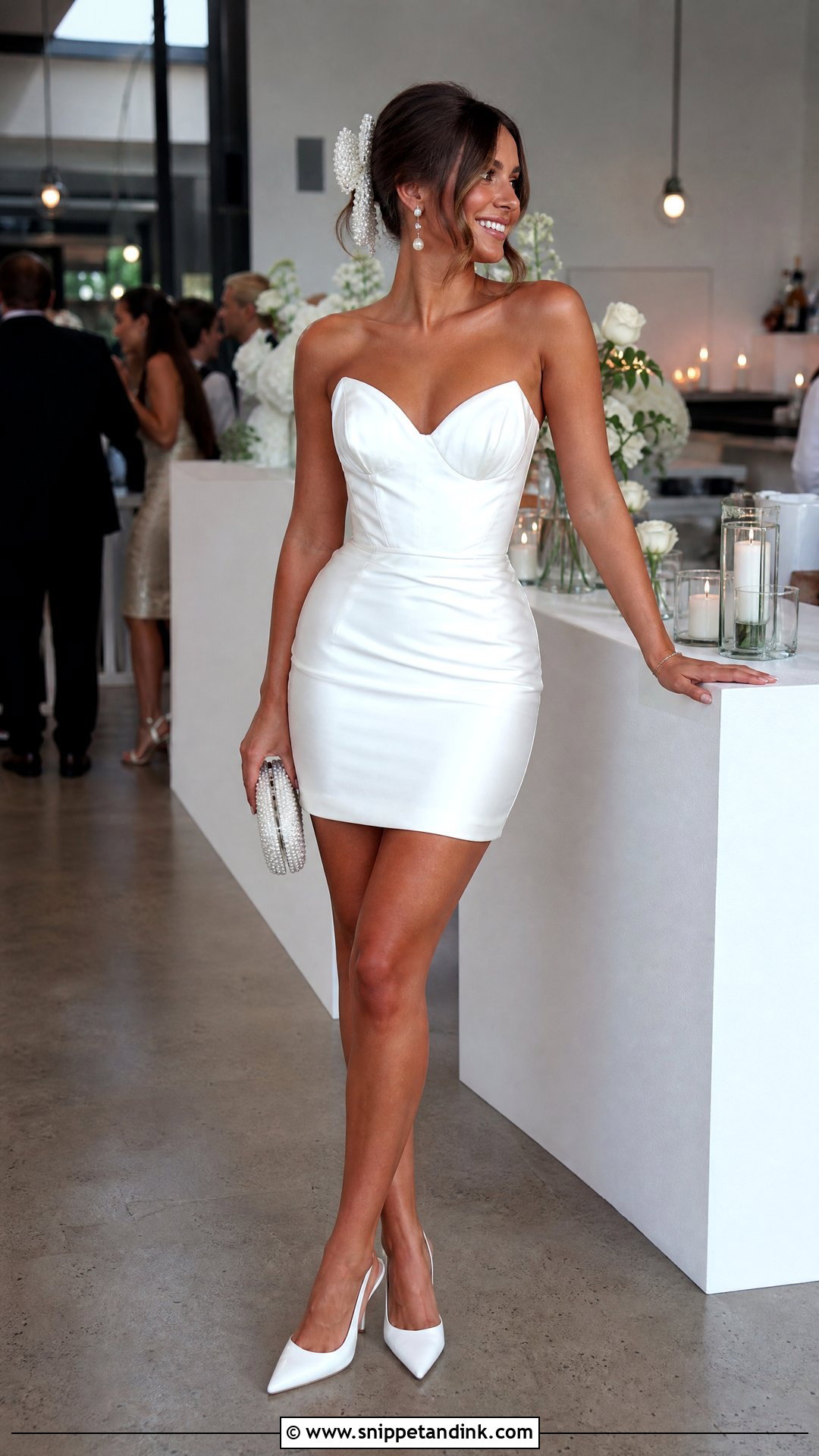
A fitted mini for the reception has to survive dancing, so it needs supportive boning and a hem that stays put. Structured satin, crepe or embellished fabric with a straight, scoop or sweetheart neckline all work. Before the day, dance in it at home: if it rides up or the neckline slips, ask for a grip strip or a slightly longer hem. A pearl headband keeps it bridal once the veil comes off.
Bathroom Trips, Long Dinners and a Car Ride
These are the moments that decide whether a fitted dress was a good choice, and brides rarely think about them until the day.
The restroom
In a tight mermaid, it’s often easier to sit facing the cistern so the skirt gathers in front of you. Practise in the dress before the wedding and decide who will help. Bustle the train first so it isn’t dragged across the floor.
Dinner and bloating
Bodies change over a long day, especially after a meal, in heat and depending on where you are in your cycle. I schedule the final fitting about two weeks before the wedding and have brides eat and drink normally beforehand, so the dress fits the body that will actually be wearing it.
Getting to the venue
Sitting for a long car ride in a fitted satin gown can crease the lap. Choose a car with space to sit back, or change at the venue if the drive is long.
One more habit worth keeping: put on the whole outfit, shoes included, the week before and wear it for an hour at home. A fitted dress tells you where it rubs long before the reception does.
Tight in the Right Places, Easy Everywhere Else
A fitted gown should hold you at the bust and waist and still give you room at the hips and knees. Satin brings structure, crepe brings clean lines and lace brings texture, but the corsetry, lining and seam placement inside matter more than the outer fabric. Judge each dress on a real-life test rather than a photo: sit, walk, hug and dance at every fitting until you can do all four without thinking about the dress.
You'll Like These Ideas:








Leave a Reply