
An old dress comes with something a new one can’t fake: someone else’s hand-finishing, a fabric mill that may no longer exist, and decades of wear that softened it. Edwardian lace, 1930s bias silk, 1950s tulle, 1990s slip dresses. The vintage wedding dresses I enjoy styling most have the details modern gowns keep trying to copy: covered buttons, basque waists, puff sleeves, hand beading, tea-length skirts. Vintage only looks like costume when the fit is off or every accessory matches the same decade. Get the tailoring right, mix one modern element in, and the dress looks like it was always yours. Here are thirty directions, from old Hollywood satin to Victorian high necks.
Inspecting a Genuinely Old Gown Before You Pay
Vintage-inspired dresses are new gowns cut in old shapes, and you buy them like any modern dress. True vintage is different. It has already lived a life, and I look it over the way a jeweller looks at a second-hand ring. Do it in daylight, ideally near a window, with the dress turned inside out.
- Underarms and waistline. Old perspiration and body oils leave yellow or brown marks that often show only from the inside.
- Small brown spots across the skirt. These are usually oxidised stains from old spills, sometimes invisible when they first happened, and they can be stubborn.
- The silk itself. Some early silks were treated with metallic salts to add weight, and these can split in fine lines when folded. If the fabric cracks like old paper, it can’t be altered safely.
- Seam allowances. Taking a dress in is easy. Letting it out depends on how much spare fabric sits inside the seams, and on many old gowns there’s very little.
- Zips and closures. Old metal zips can rust or break. Replacing one is a routine job, but it’s worth knowing before the fitting.
Ignore the size on the label. Vintage sizing doesn’t match today’s, and a dress marked with your usual number can be several sizes smaller. I go by bust, waist and hip measurements taken from the garment laid flat, then add a little room for movement.
1. Vintage Lace Wedding Dress
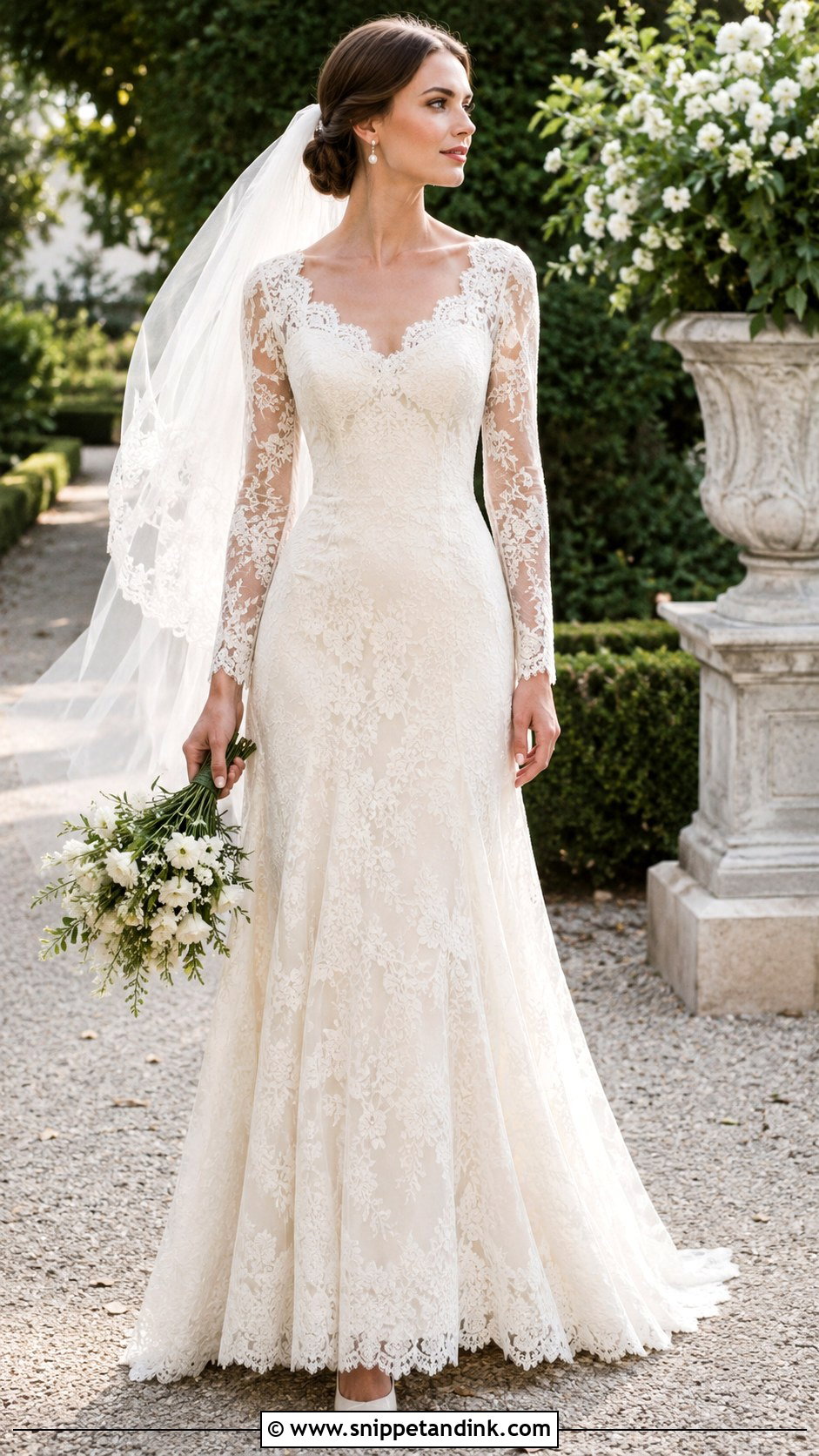
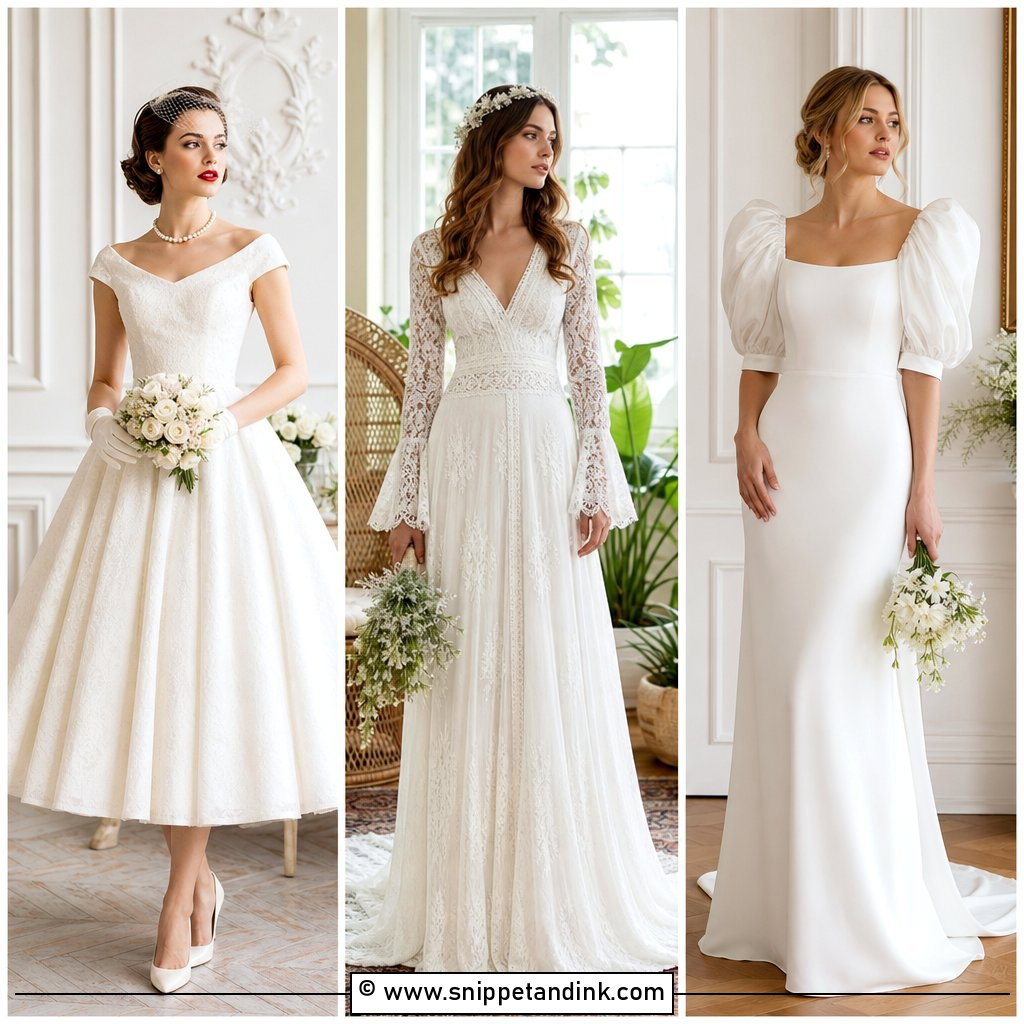
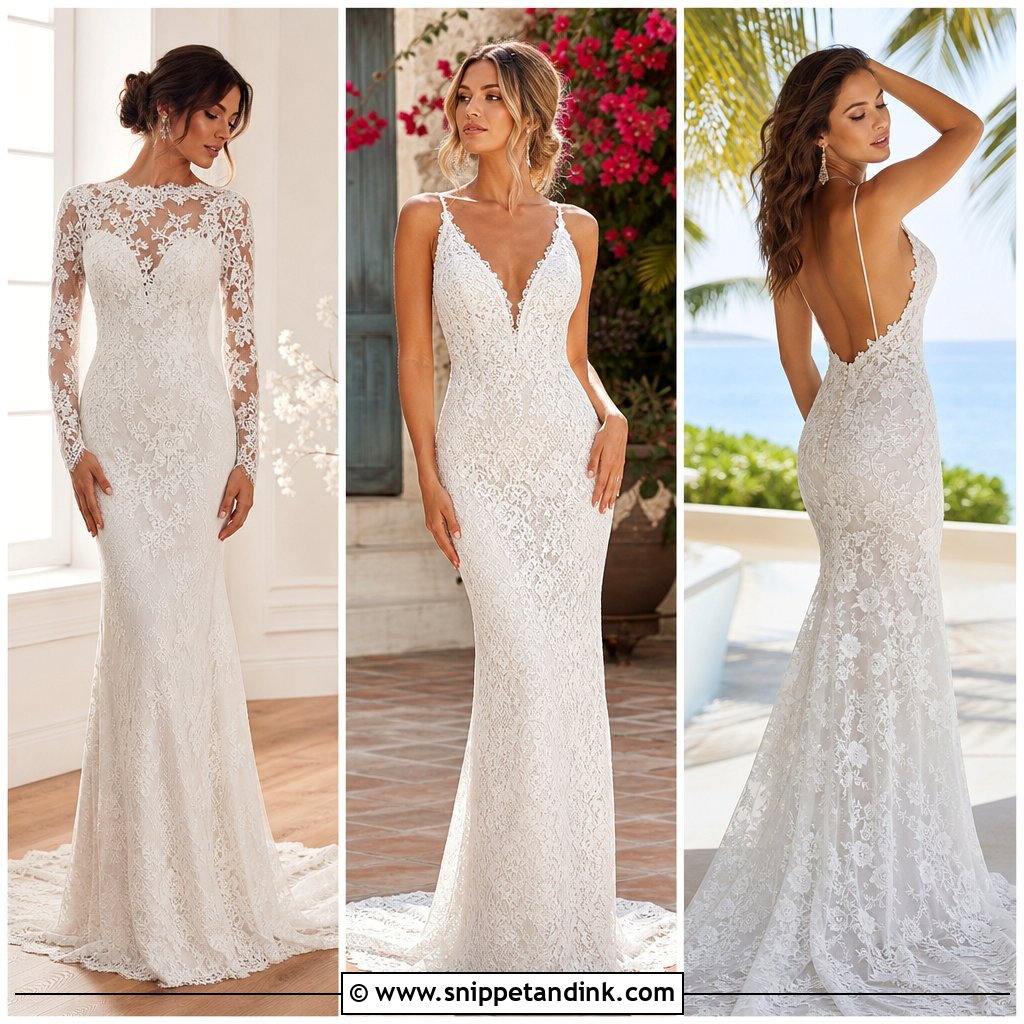
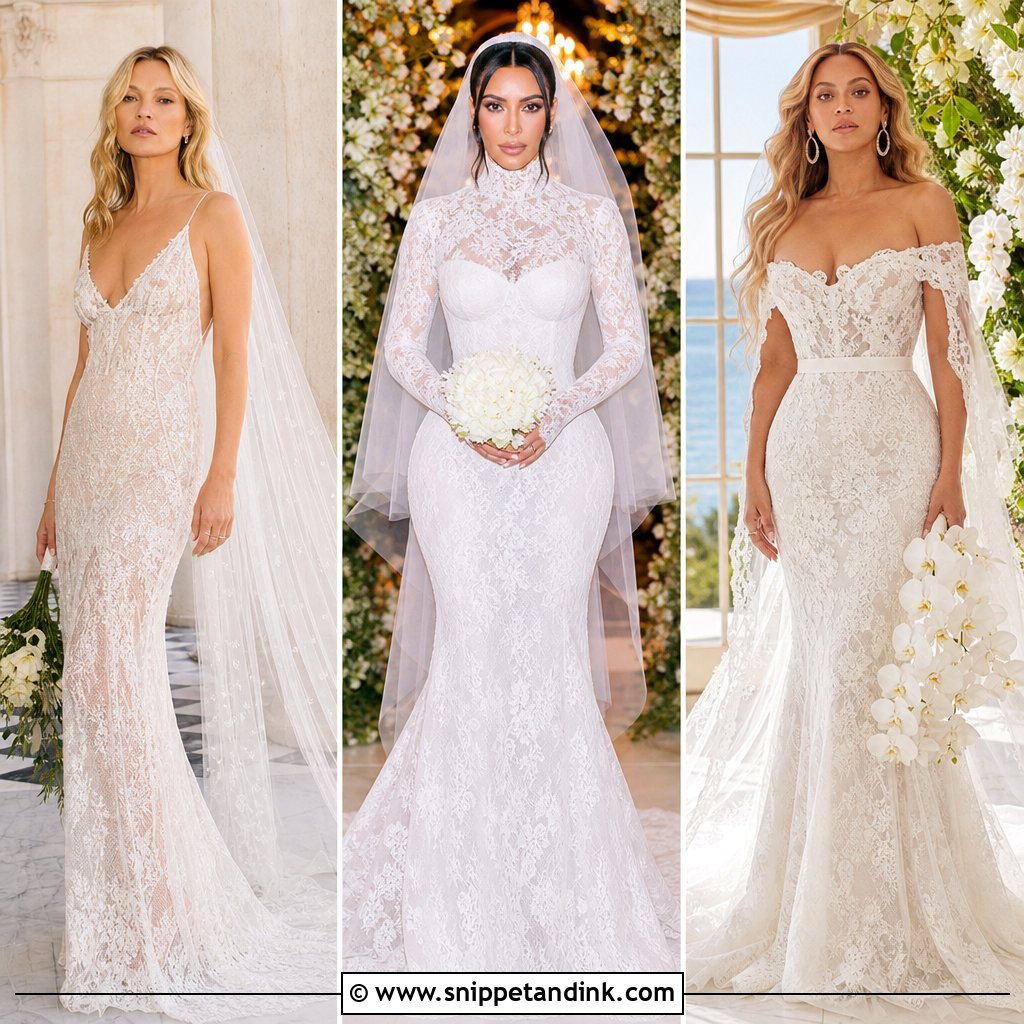
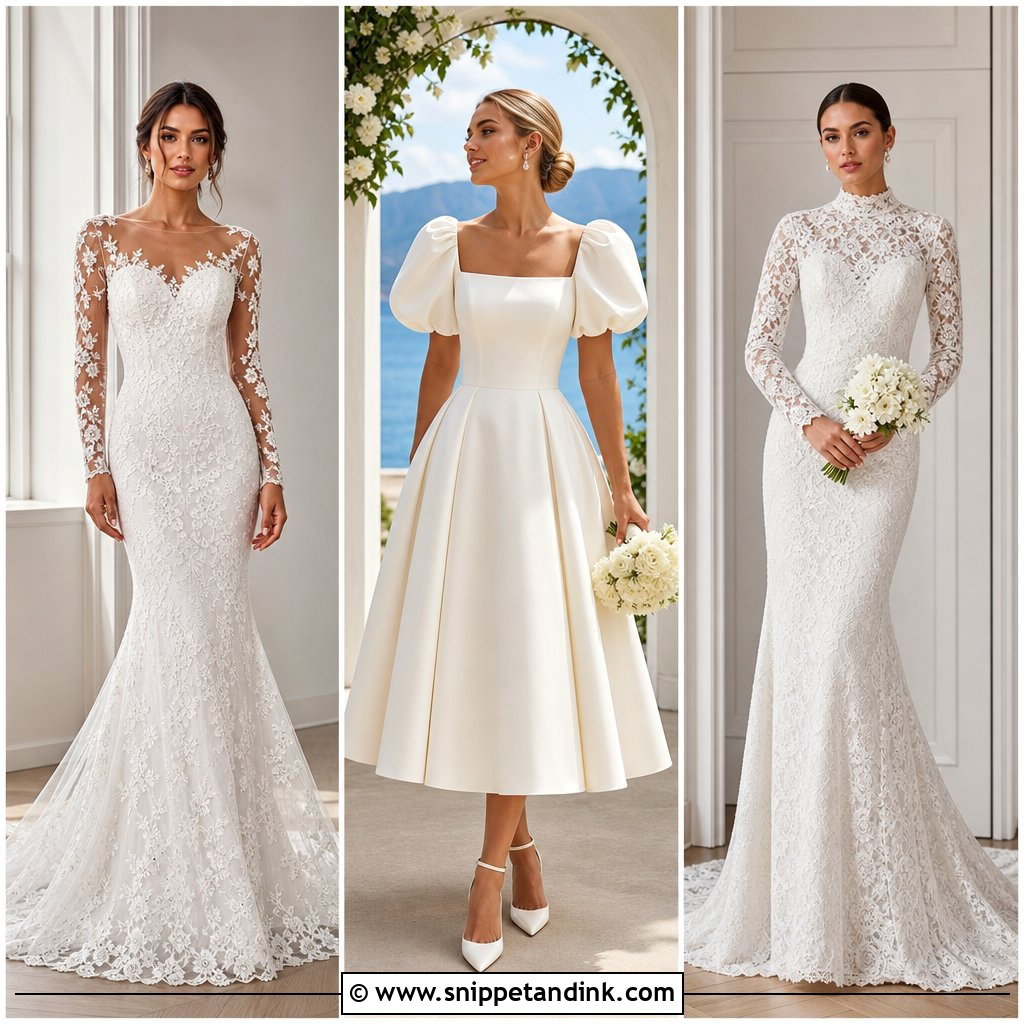
Lace is where most vintage searches start, and for good reason: it hides small repairs, flatters almost every shape, and ages gracefully. Look for floral lace with scalloped edges, long sleeves, or a fitted bodice over a soft skirt. On an old piece, I hold the lace up to a window first. Thin patches and small tears show up straight away, and a good seamstress can patch them with lace cut from the hem. Pearl drops, a plain veil and pointed ivory heels keep it from looking like a museum piece, and a low bun leaves the neckline visible.
2. 1950s Tea Length Wedding Dress
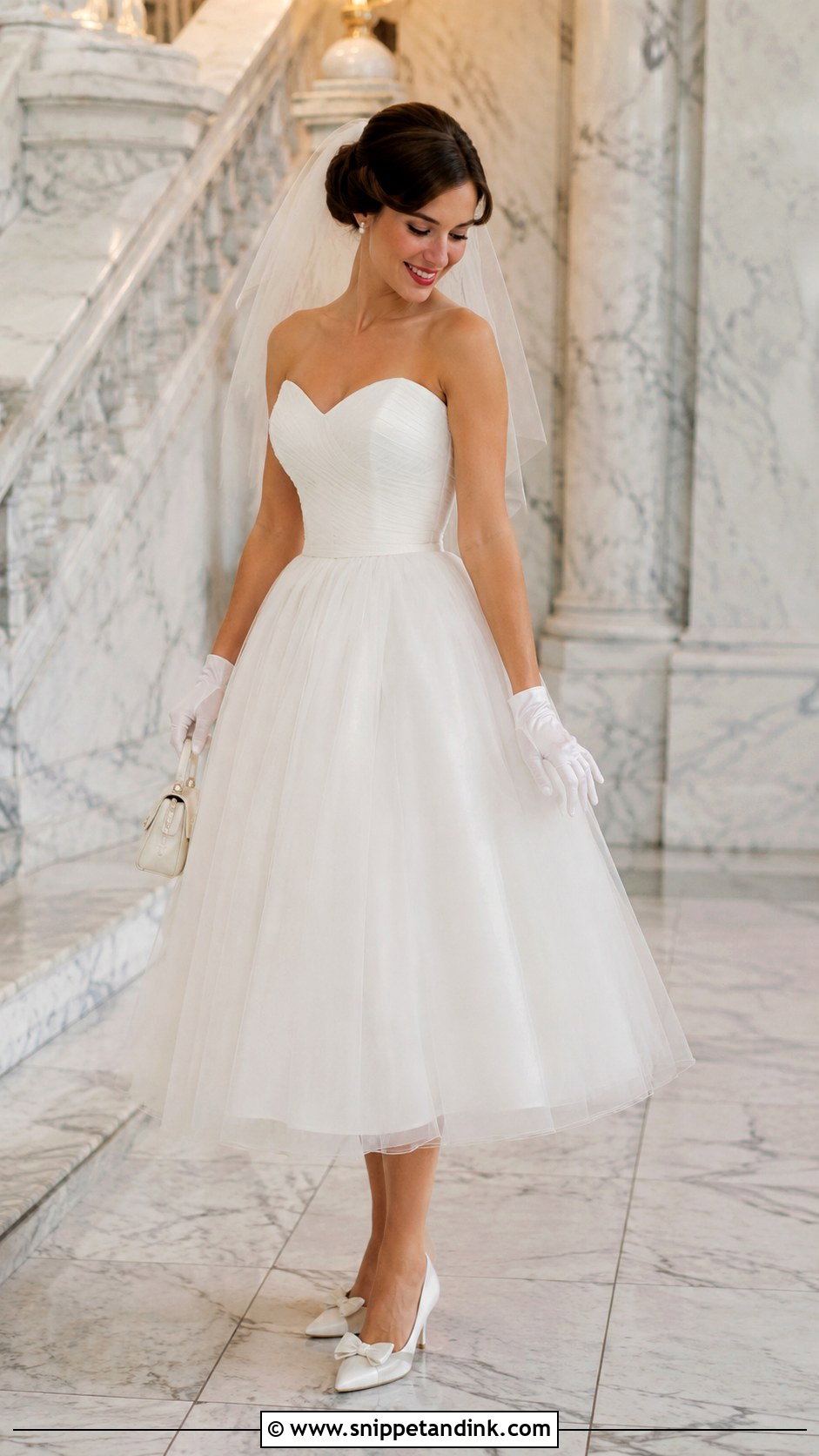
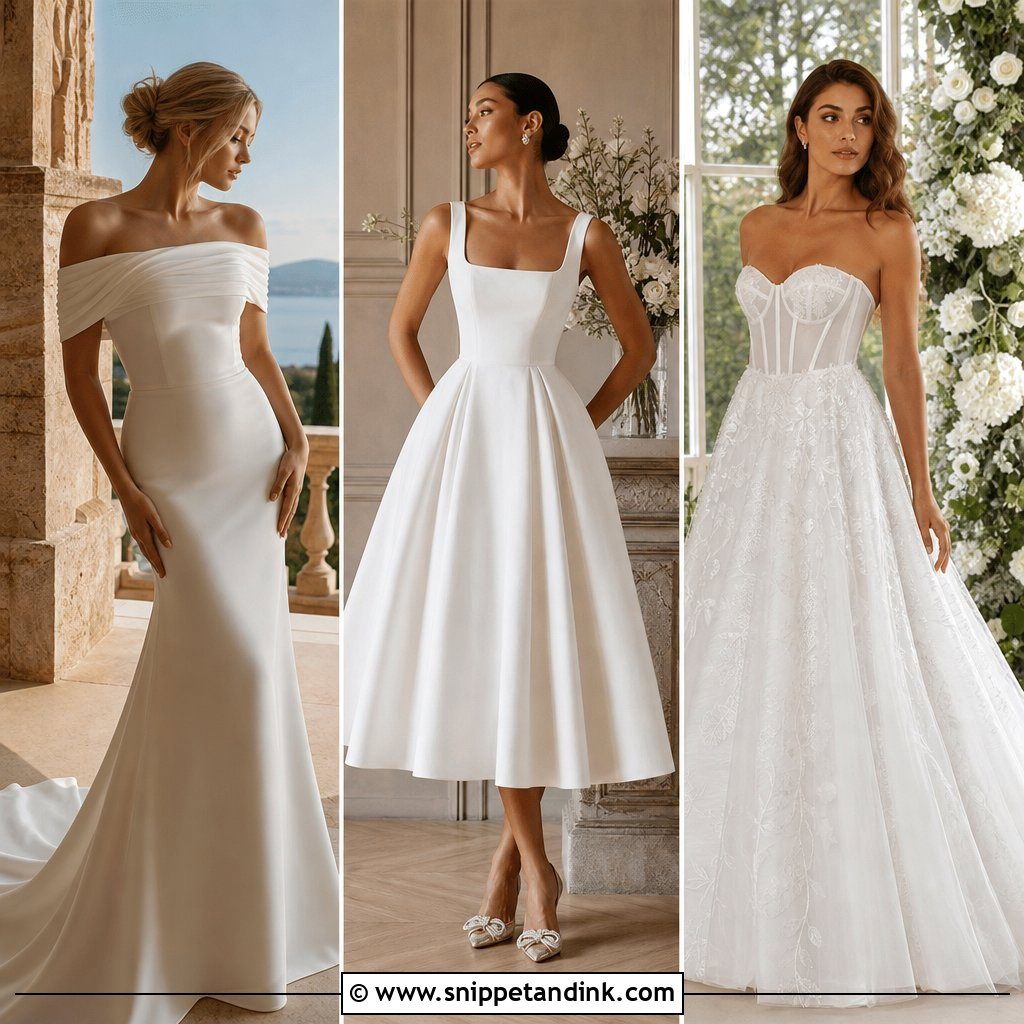
The 1950s tea length wedding dress is the most danceable shape on this list. Fitted waist, full skirt, sweetheart or bateau neck, and a hem that ends mid-calf so nobody steps on it. Because the shoes are on show, they become part of the outfit: satin pumps, bow heels or embellished flats. Original fifties dresses were made to sit over a crinoline, so I always ask whether the petticoat is included. Without one, the skirt can collapse. Short gloves and pearl studs finish it.
3. 1930s Silk Slip Wedding Dress
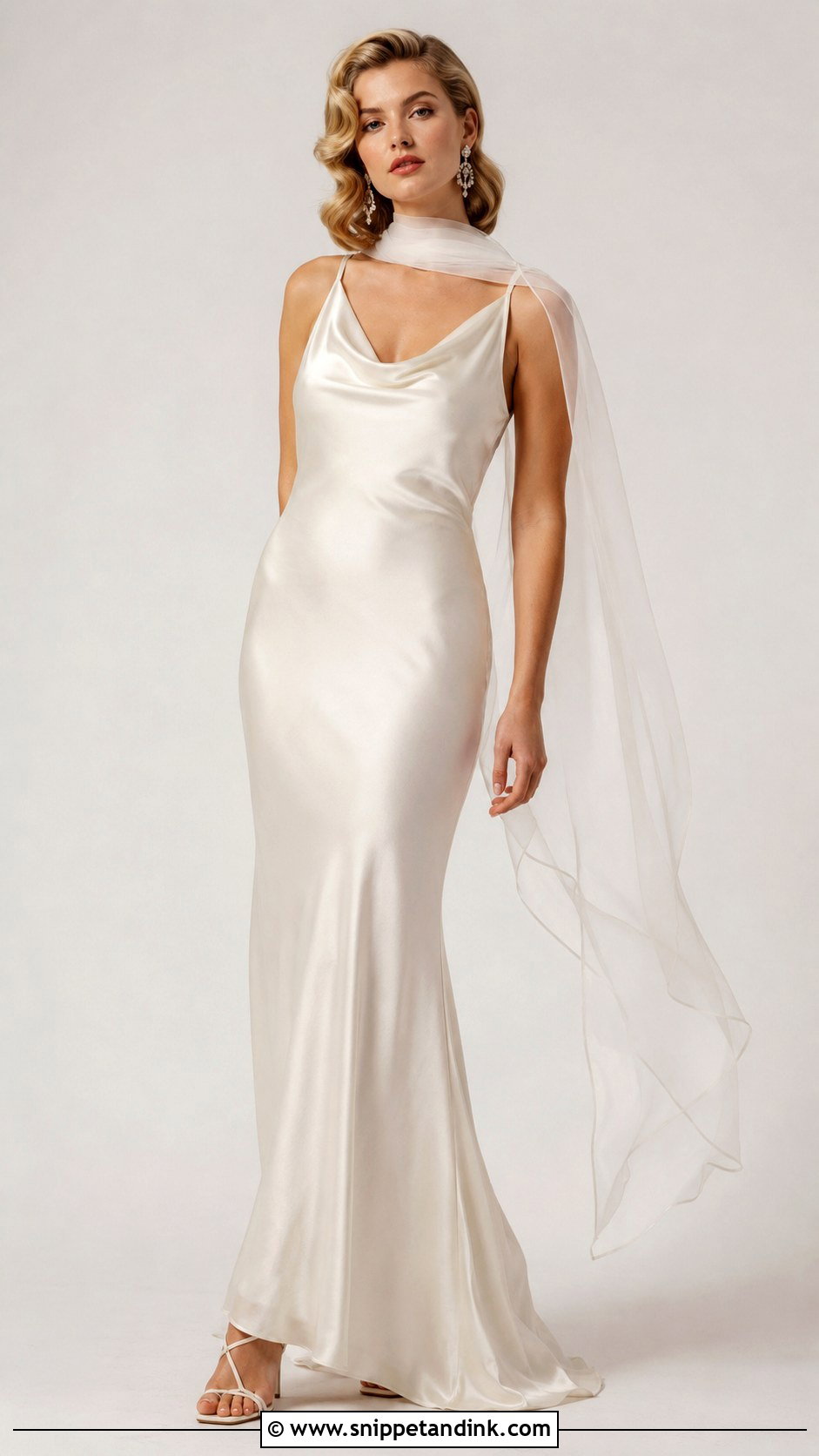
A 1930s silk slip wedding dress is cut on the bias, diagonal to the grain, which is why it pours over the body instead of hanging from it. That same cut is unforgiving. It shows every line underneath, so plan smooth, invisible underwear or a slip at the first fitting, not the last. Bias silk also stretches over time on the hanger; store it folded flat. Crystal earrings, strappy satin heels, brushed waves and a red lip bring out the old Hollywood side.
4. Victorian High Neck Wedding Dress
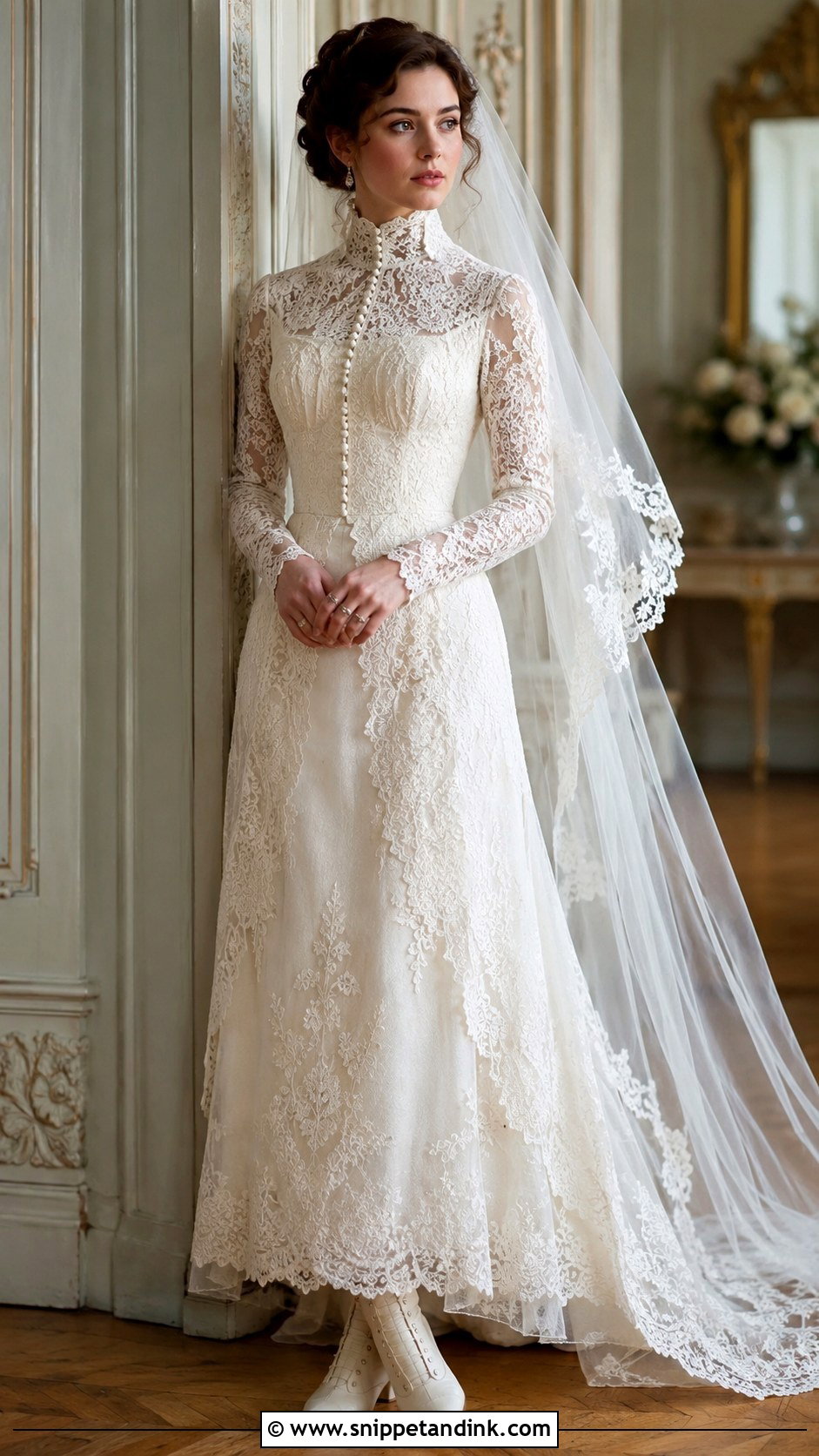
Victorian high necks frame the face so completely that a necklace becomes redundant; spend that budget on earrings or a veil instead. These gowns usually bring lace panels, long sleeves, rows of buttons and a fitted waist. Real Victorian bodices were built for corseted torsos, so an original rarely fits a modern ribcage without serious work. A reproduction in lighter lace with sheer sleeves gives the shape without the struggle. Ivory boots or slim heels suit it, and it’s a natural fit for cooler months and historic venues.
5. Edwardian Embroidered Wedding Dress
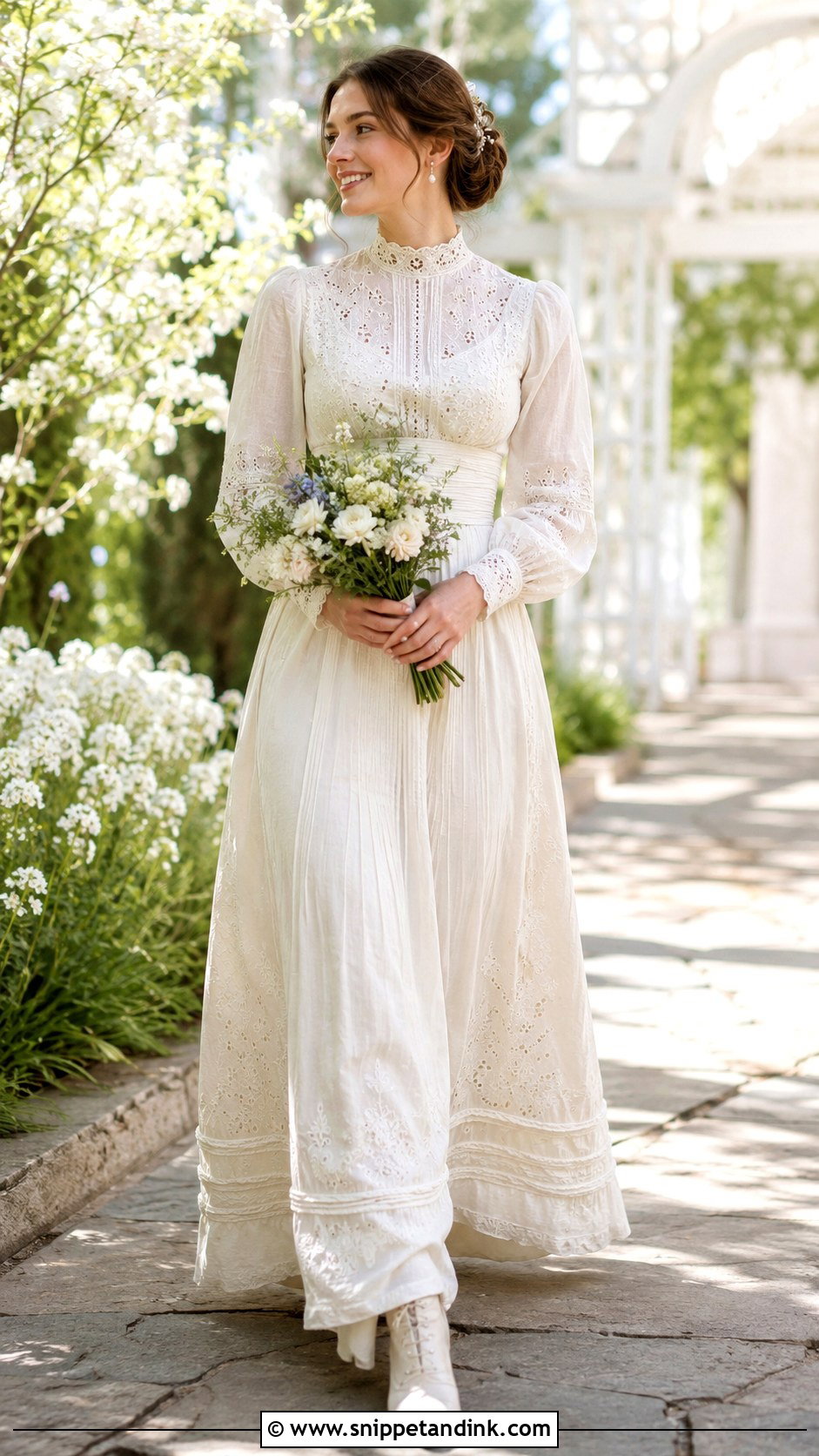
Edwardian dresses feel almost weightless: cotton lace, whitework embroidery, pintucks, eyelet and a relaxed column or empire line. An Edwardian embroidered wedding dress suits a bride who doesn’t want anything tight. Lace-up shoes, small pearl earrings, a loose braid and a simple bouquet match its gentleness. Genuine pieces from this era are over a century old, so I’d only let a tailor who works on antique textiles near one, and I’d ask them to check the fabric’s strength before any alteration.
6. 1970s Boho Wedding Dress
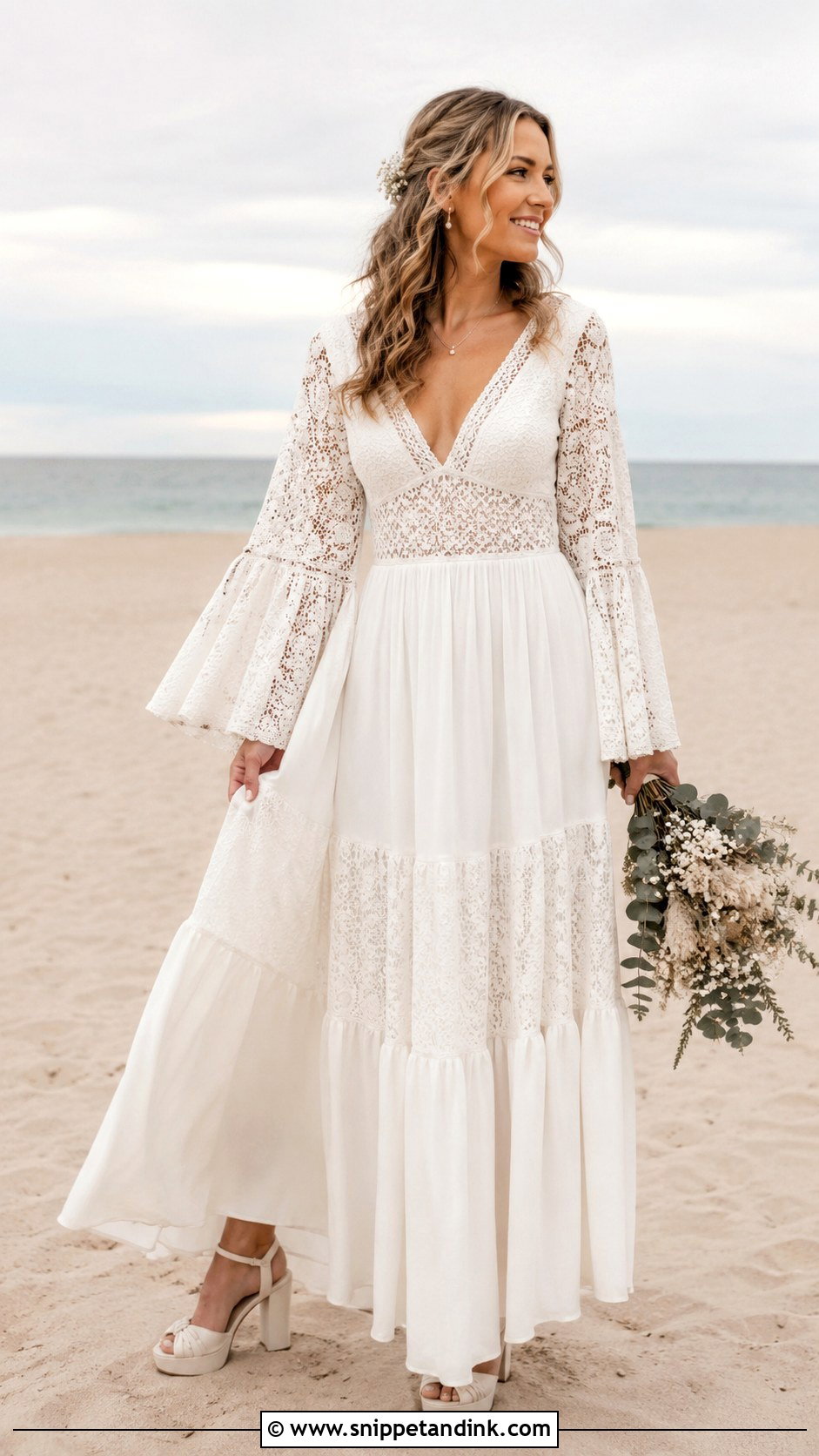
Bell sleeves, crochet lace, empire waists, cotton voile and a skirt that moves in the breeze: a 1970s boho wedding dress belongs outdoors. I keep accessories few, because the sleeves and texture already carry it. Suede or ivory block heels sink less on grass. If the dress reads too casual next to a formal venue, a long veil or pearl jewellery pulls it up a level. Soft waves and a simple comb, rather than a flower crown, keep it from tipping into costume.
7. Vintage Satin Ball Gown Wedding Dress
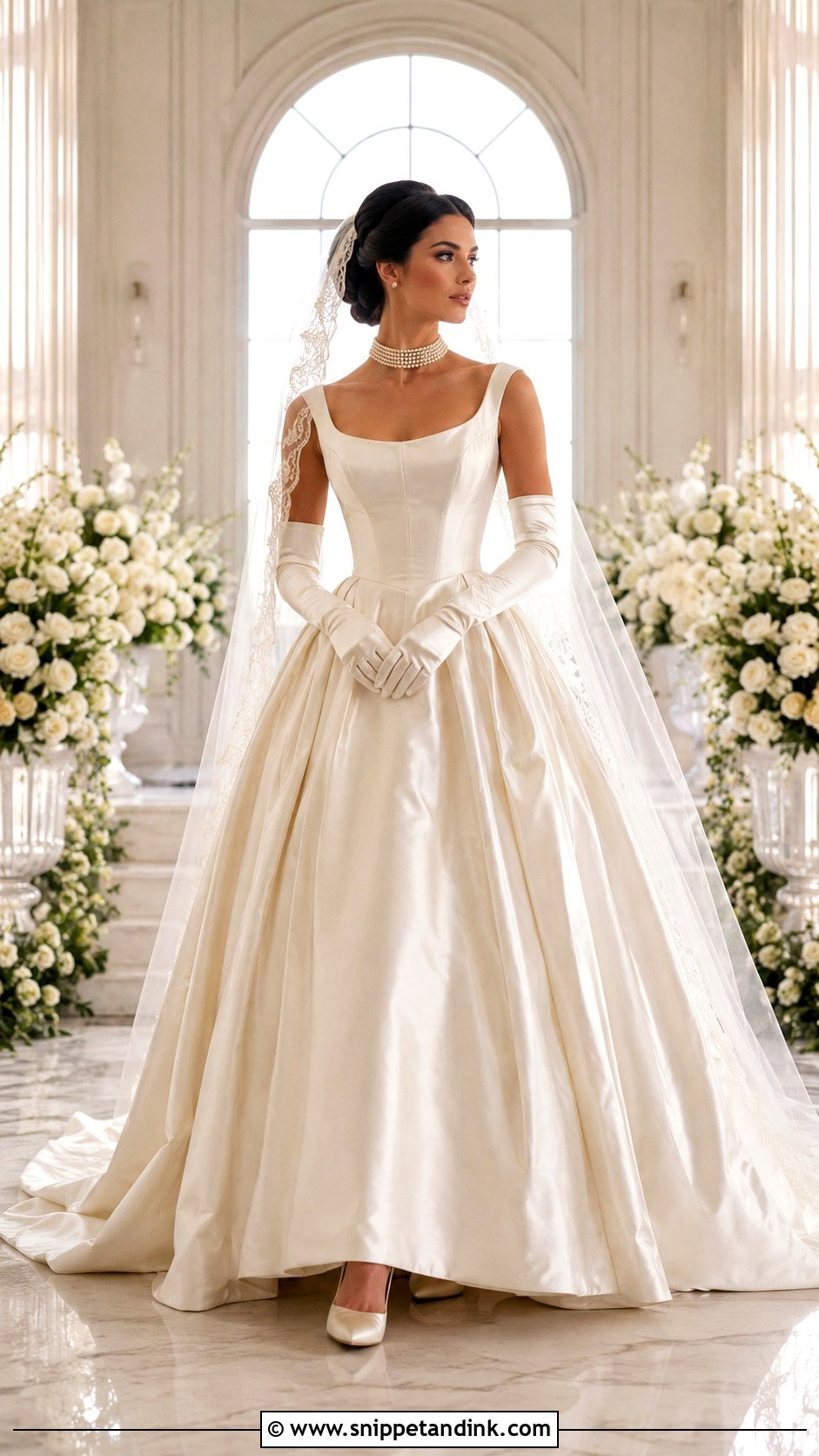
A satin ball gown needs no embellishment; the full skirt and structured bodice do all the work. That structure is everything, so the bodice must fit closely. If it gapes at the top when you breathe in, it’ll look borrowed in every photo. Opera gloves, a pearl choker or a cathedral veil turn it formal. Keep the neckline and hair sleek for a cleaner, modern edge. Older satin can show water marks and shine at the seams from previous pressing, so inspect it under daylight before you commit.
8. Vintage Beaded Wedding Dress
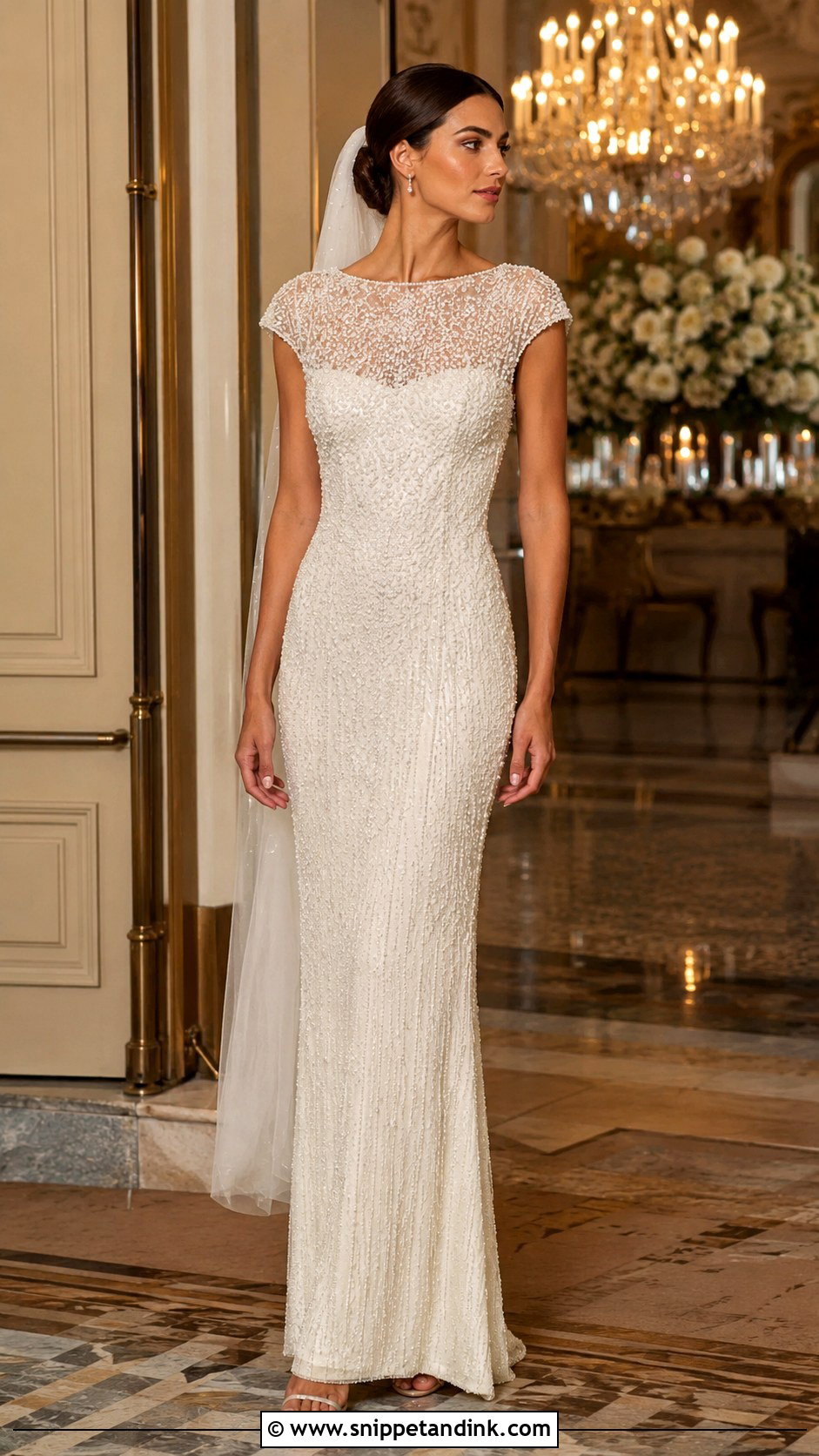
Let the beads lead. Art Deco patterns, tiny pearls, crystal embroidery or flat sequin work need only simple heels, small earrings and a plain veil, or none. On an ivory, champagne or blush base, a beaded gown reads soft rather than flashy, and it comes alive in evening light. Before buying vintage, turn the dress inside out. Beading on old gowns is often strung on one long thread, and one broken stitch can drop a whole row, so a few loose beads can signal a bigger repair.
9. 1920s Art Deco Wedding Dress
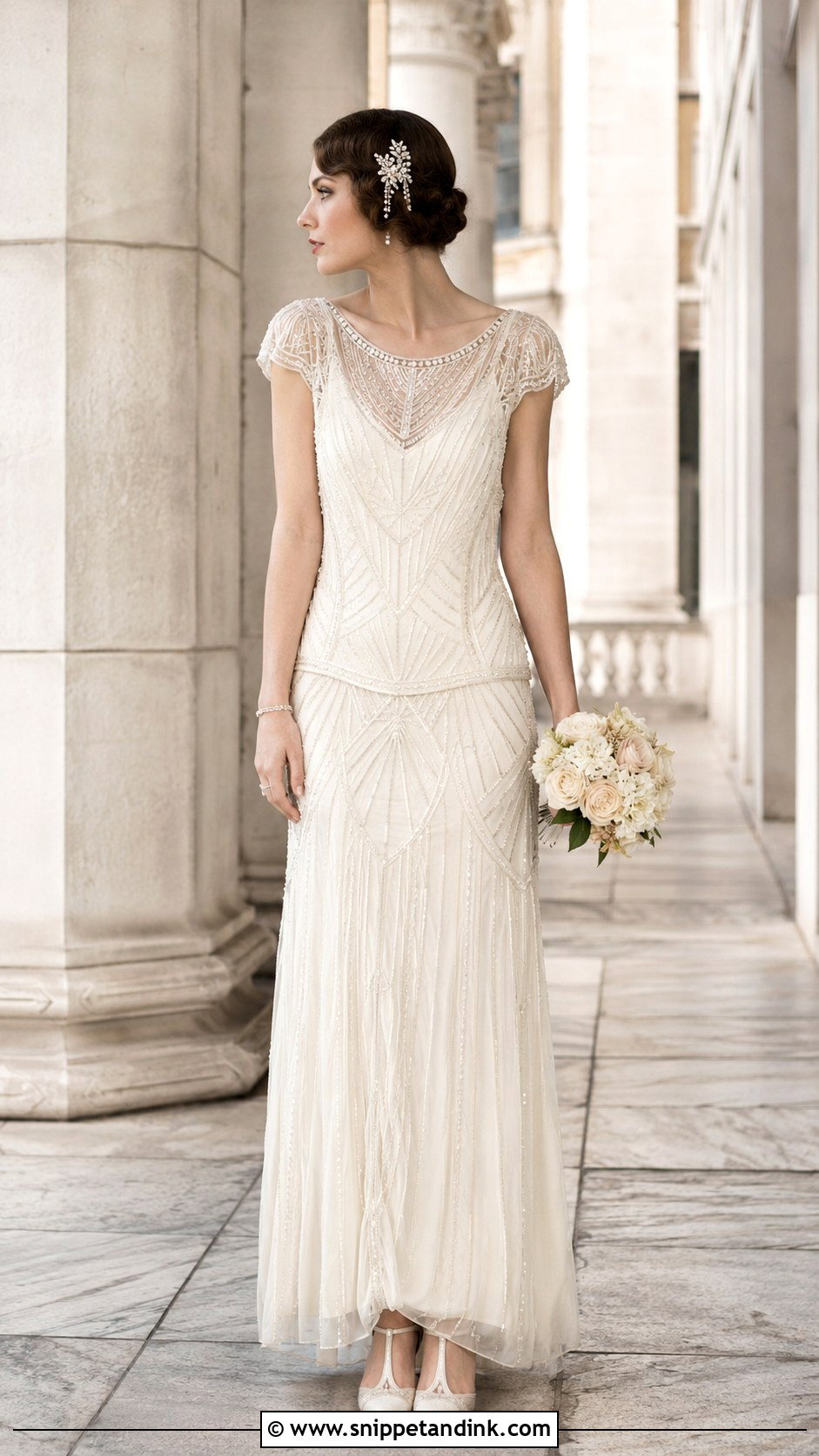
Slim and straight with geometric beading, a 1920s Art Deco wedding dress gives vintage glamour without a big skirt. Dropped waists, cap sleeves, fringe and intricate pattern work are typical. Because the cut skims rather than shapes, I nearly always take these in slightly at the hip so they don’t hang like a sack. T-strap heels, a beaded hair comb and a short veil that leaves the back detail visible complete the look. Original twenties beaded silk can be very fragile; hang it only briefly.
10. Vintage Drop Waist Wedding Dress
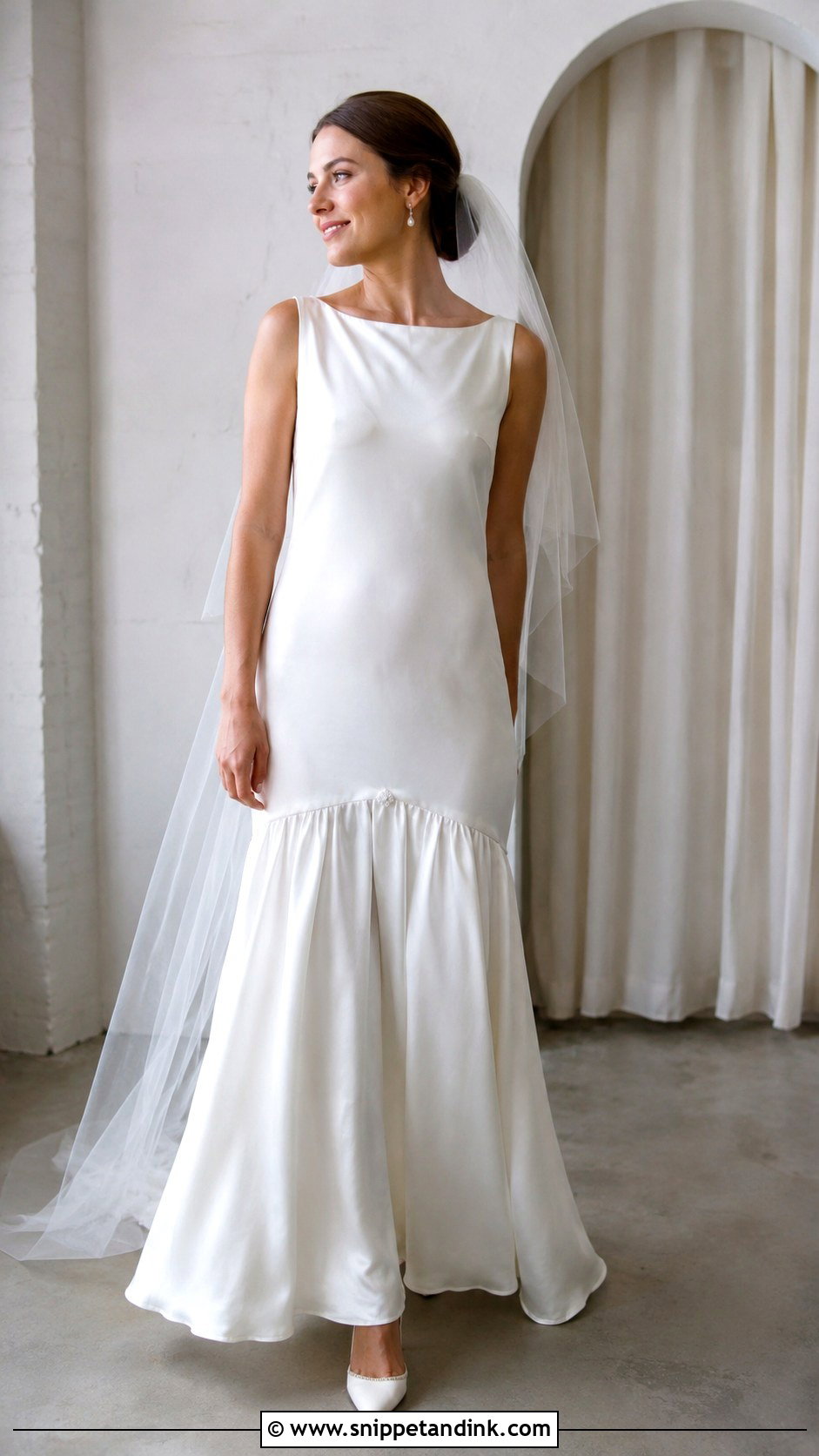
The drop waist lengthens the torso and holds the shape before the skirt opens out, and it’s back in fashion. You’ll find it in 1920s styles, 1980s gowns and modern reproductions. Petite brides should look for a softer drop; a seam sitting too low cuts the legs short. Tall brides can carry a deep basque or long bodice dramatically. Pointed heels, a simple veil and earrings that draw the eye up suit it.
11. Vintage Basque Waist Wedding Dress
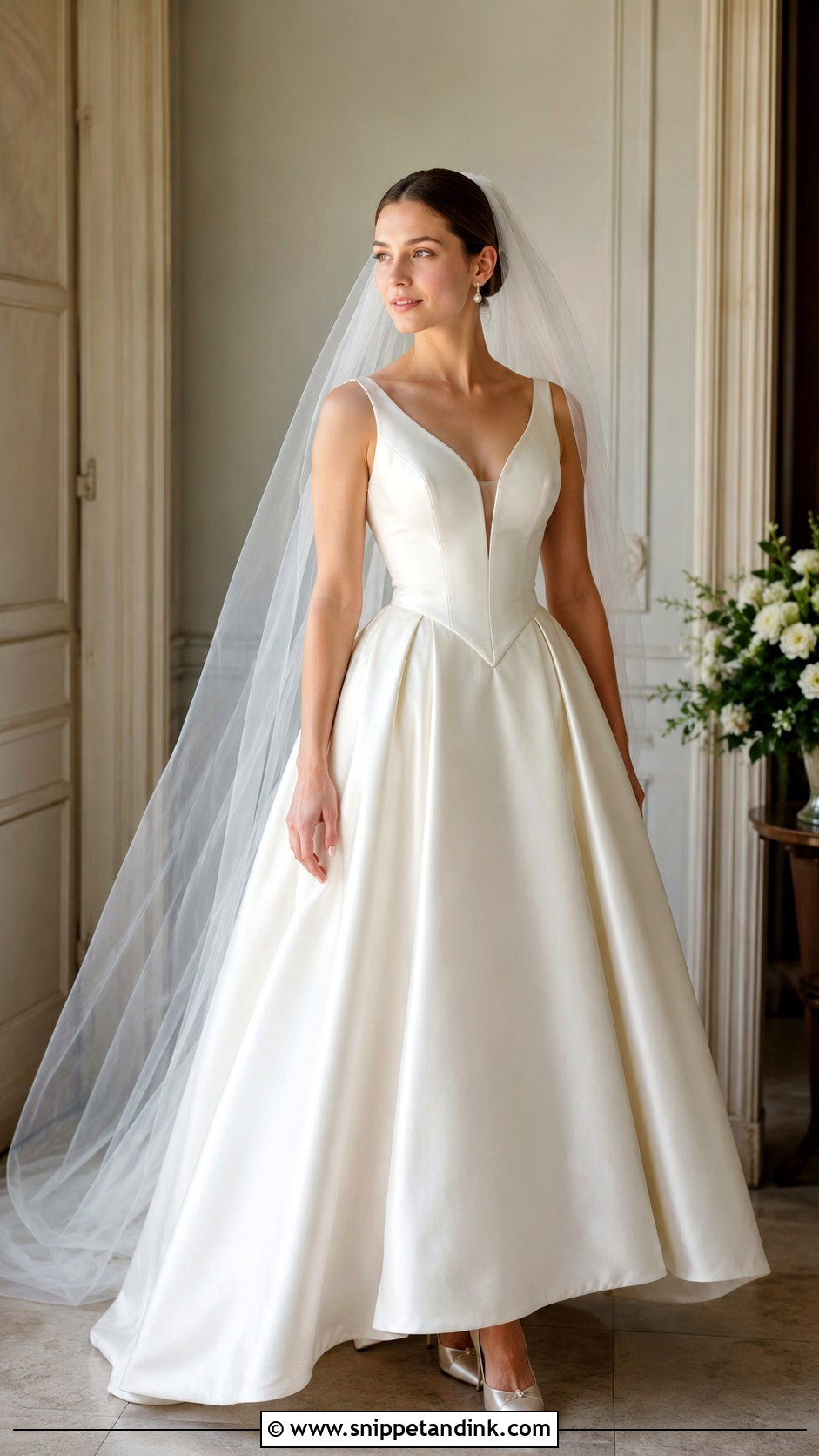
The basque waist dips into a V or curved point at the front, sharpening the waist before a full or A-line skirt. It’s had a strong return in bridal. Satin, taffeta, lace and organza all hold the point well. I keep the veil smooth and jewellery minimal so that waistline stays the focus. The point must sit exactly at your natural centre; even a centimetre off makes the whole bodice look twisted, which is why I’d budget for a tailor on any vintage basque.
12. Vintage Puff Sleeve Wedding Dress
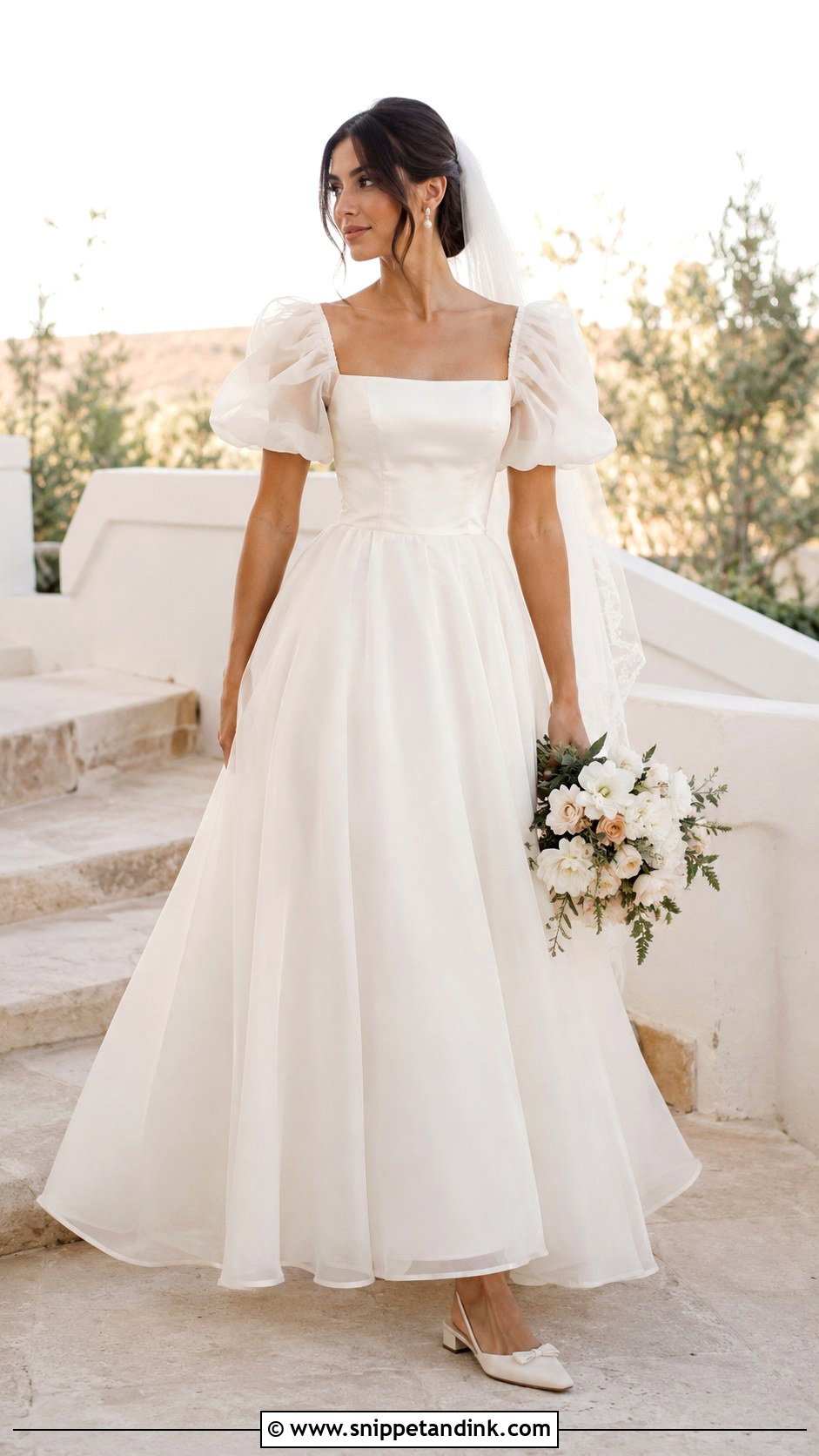
Puff sleeves are all about proportion. Small puffs feel sweet; big ones look editorial and can overwhelm a petite frame or crowd a small chapel. Balance them with a defined waist and a simple skirt, or go fully eighties with a full skirt. Soft organza, lace or tulle sleeves look current; stiff, over-structured ones date fast. If the sleeves have flattened in storage, a steamer and some tissue stuffed inside overnight usually bring them back. Pearl earrings, low heels and a veil tucked under the hair keep it neat.
13. Vintage Long Sleeve Wedding Dress
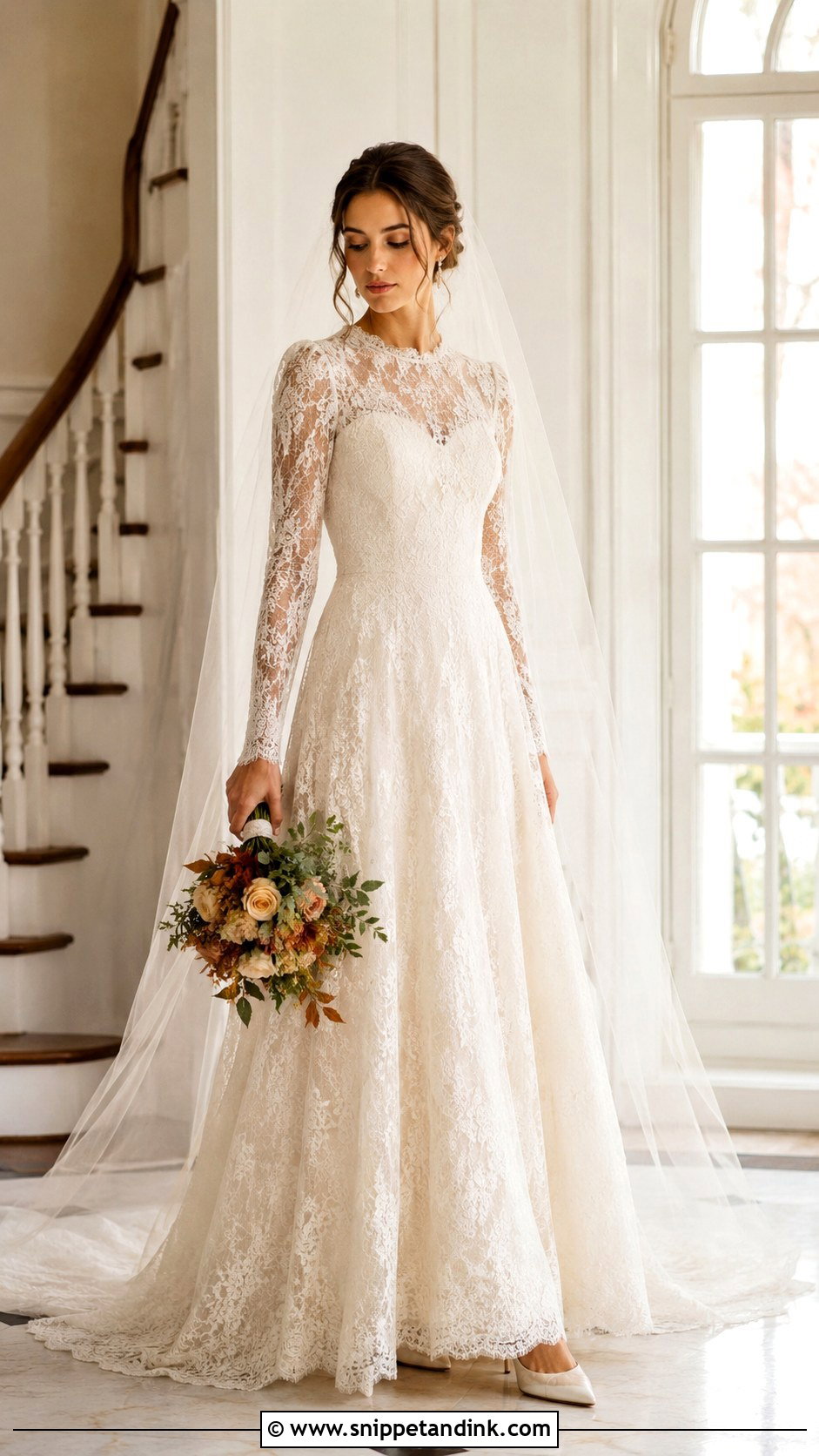
Long sleeves change the mood depending on the cut. Fitted satin sleeves look formal, bishop sleeves romantic, lace or sheer illusion sleeves delicate. The practical test I give every long-sleeve bride: raise both arms above your head as if hugging someone taller. Vintage armholes were often cut high and tight, and if the sleeve pulls the whole bodice up, it needs a gusset. Skip bracelets, keep the hair clean, and choose sheer lace if your wedding is in spring.
14. Vintage Off Shoulder Wedding Dress
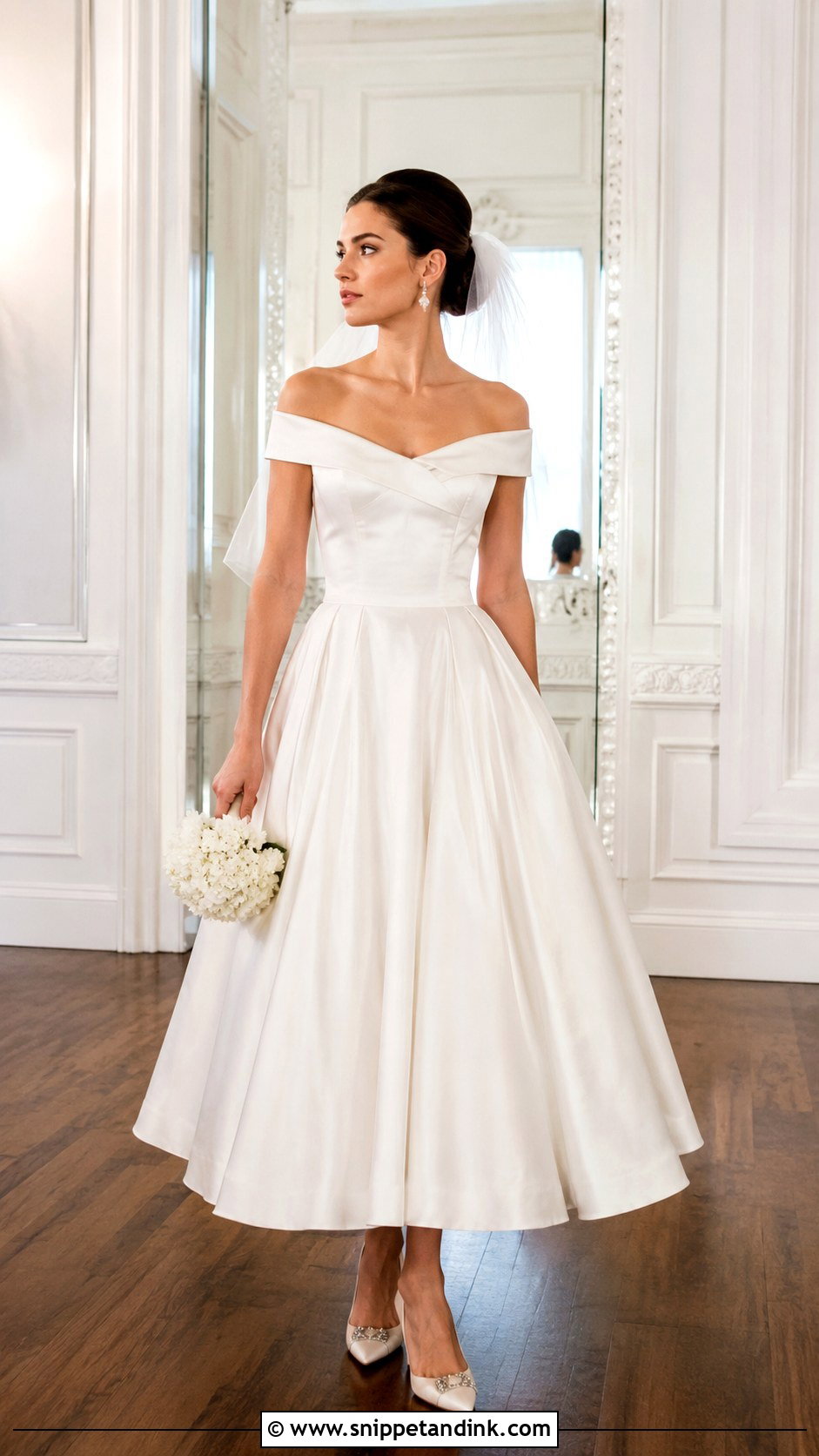
Off-the-shoulder necklines show off the collarbones and suit fifties, eighties and old Hollywood styles alike. Satin goes glamorous; lace or tulle goes softer. The real question is support. An off-shoulder bodice relies on boning and a well-fitted band, and I check it by having the bride hug, sit and reach for a glass. If it slips, the tailor needs to add grip tape or strengthen the boning. Drop earrings, a smooth updo and a short veil that clears the neckline suit it.


15. Vintage Square Neck Wedding Dress
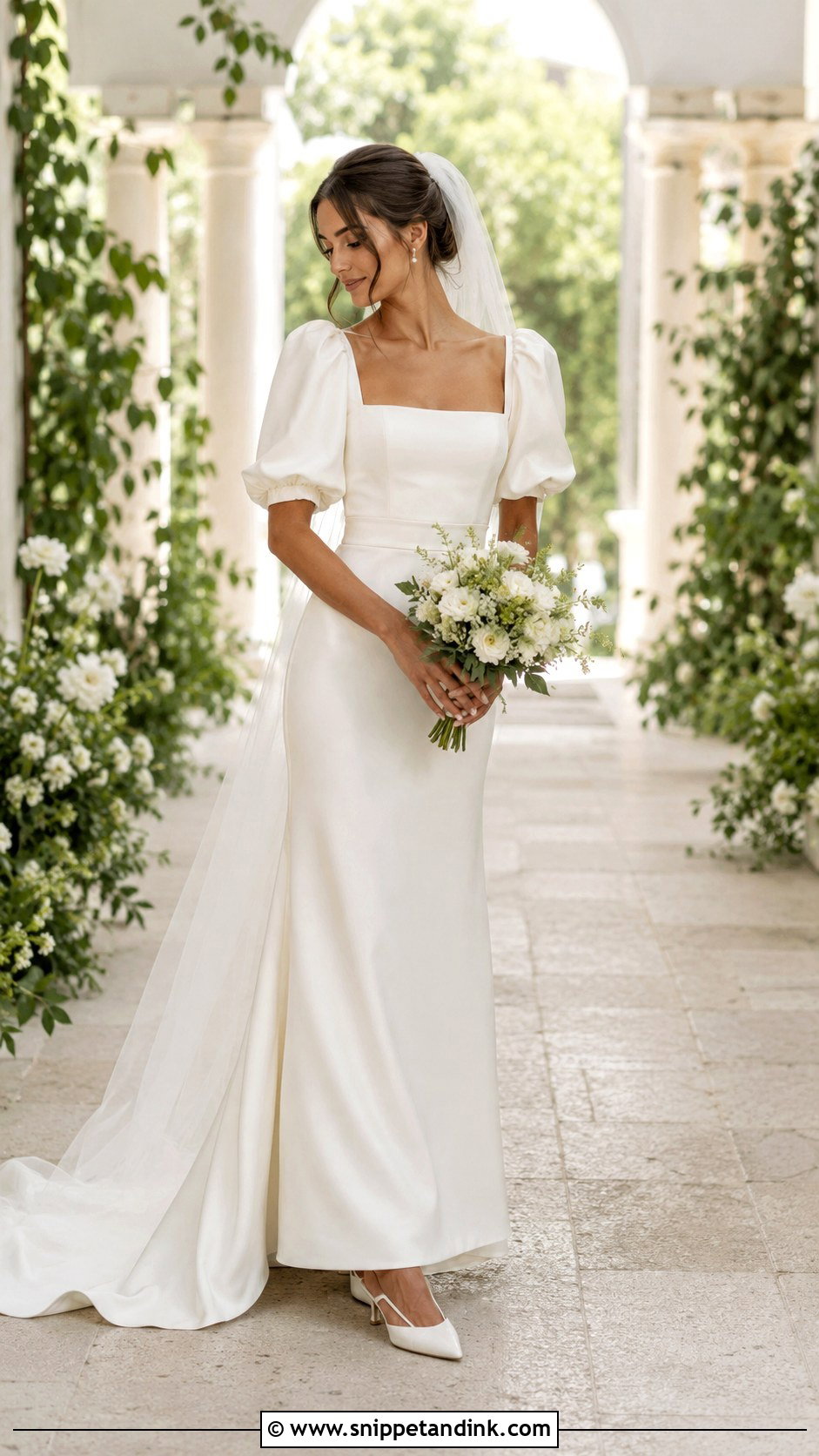
A square neck frames the face neatly and suits almost any sleeve, from puffs to long lace. It shows up in Regency, Edwardian and nineties styles. On a simple dress, add texture with the bouquet or a small embroidered bag; on a beaded or lace dress, keep everything else quiet. Pearl studs, satin slingbacks and a fine veil are my default pairing. It’s one of the easiest vintage necklines to wear if you’re new to the look.
16. Vintage Halter Wedding Dress
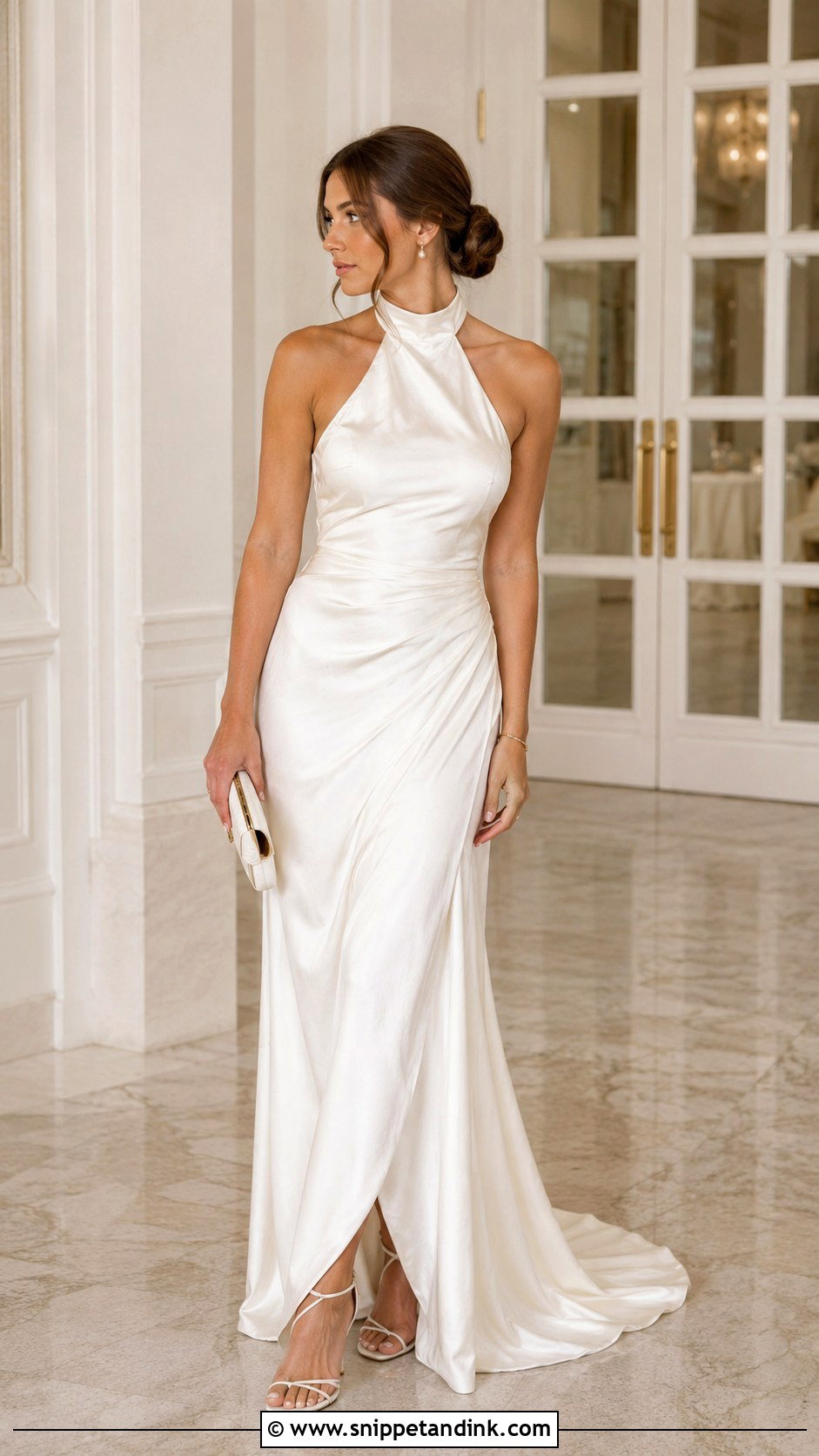
Depending on the cut, a halter can feel thirties, seventies or nineties. Satin reads glamorous; lace feels relaxed. Since the neckline already draws the eye, skip the necklace and wear small earrings with a low bun. Halters put weight on the back of the neck, so I’d wear the dress for an hour at home before deciding. Heavy satin can start to pull. Strappy heels, a slim clutch and a back detail like covered buttons finish it.
17. Vintage Corset Wedding Dress
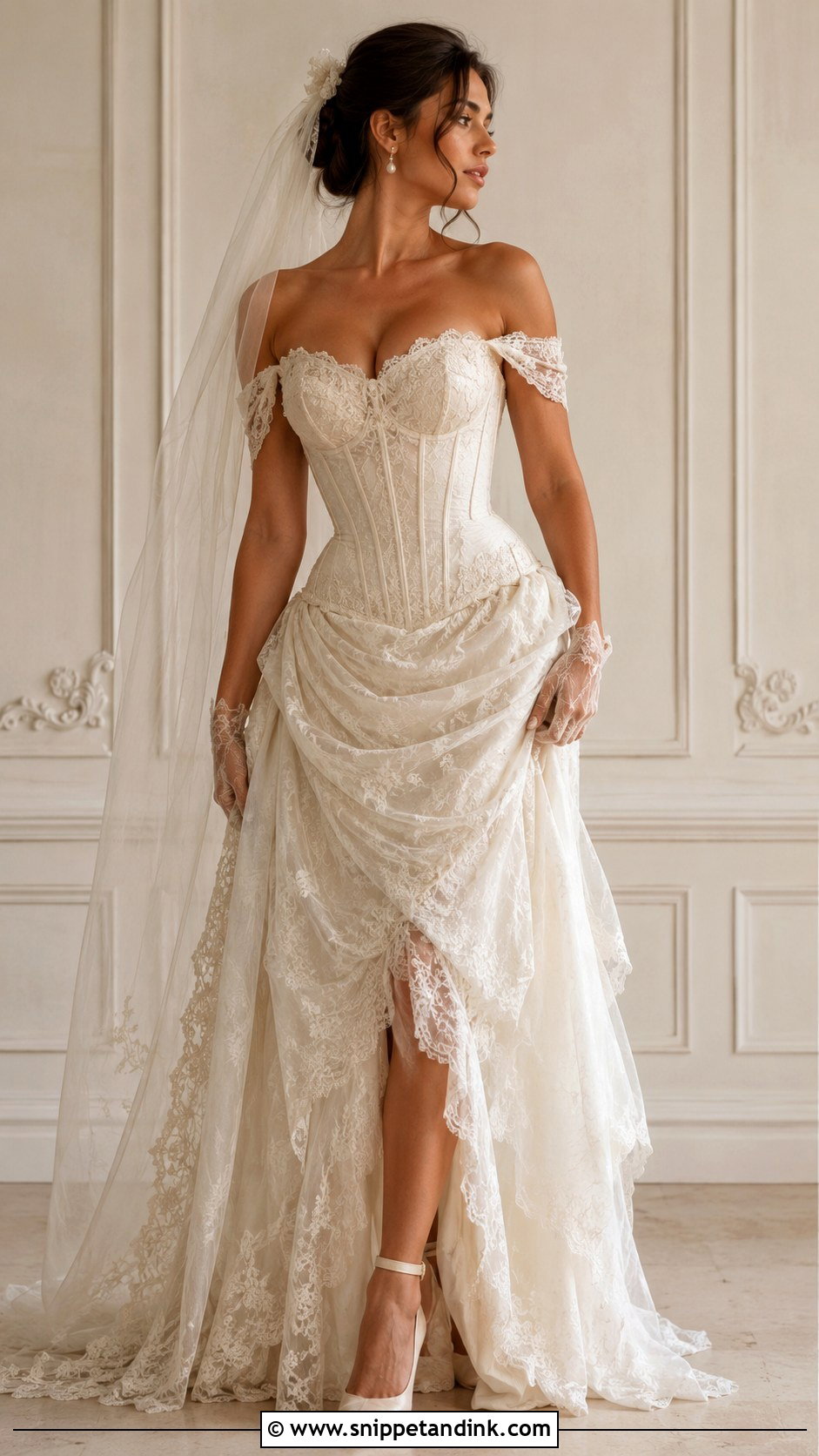
A corset bodice gives structure, but only if it fits. Look for boning, lace-up backs or exposed seams over a romantic skirt, in lace, satin or brocade. The test is simple: you should be able to sit, eat and breathe fully. Vintage corsets were laced for smaller ribcages, and old steel boning can rust or poke through worn casing, so check every channel. Soft veil, pearl earrings and classic heels keep the outfit from looking theatrical.
18. Vintage Sheer Sleeve Wedding Dress
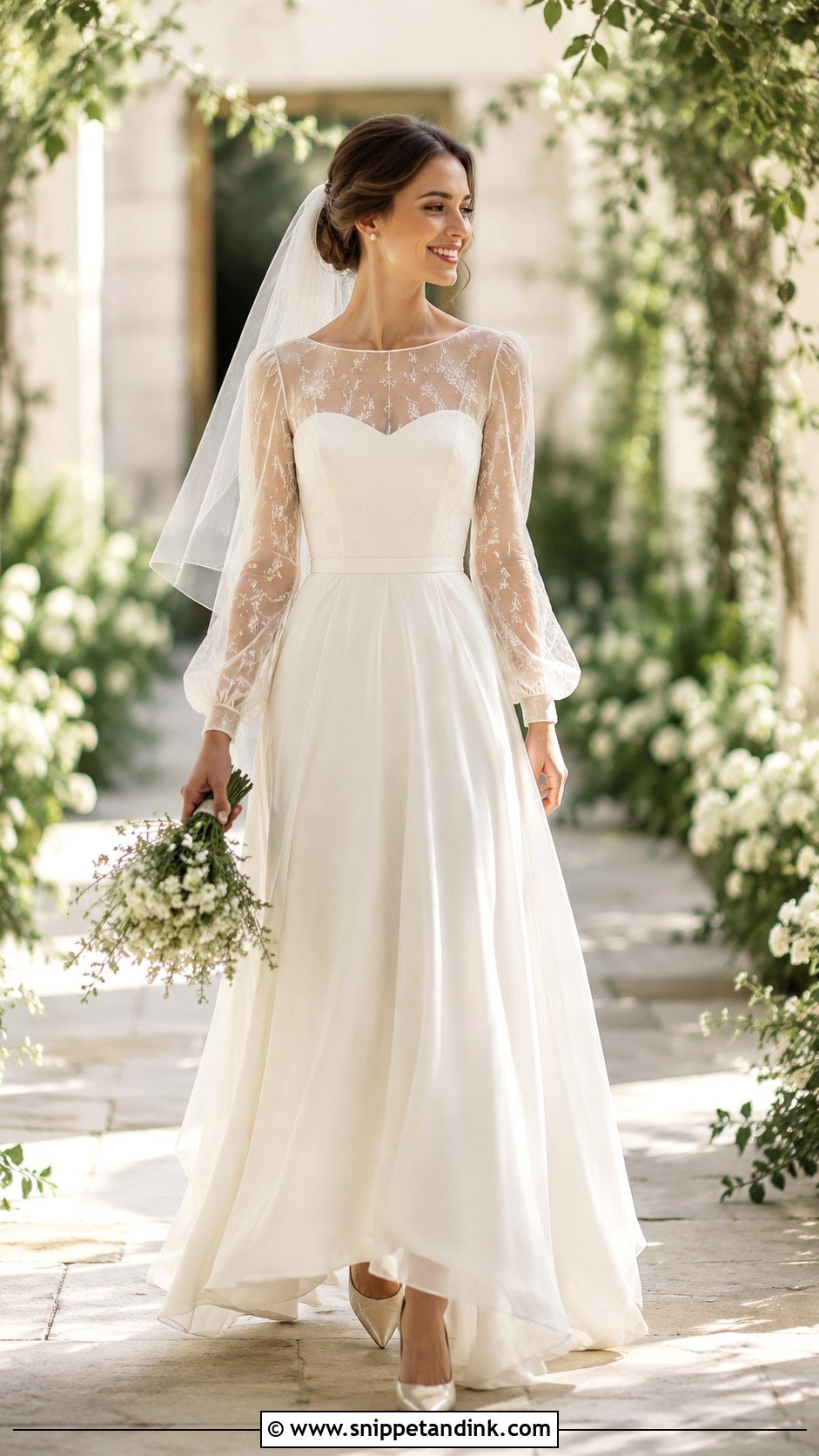
Sheer sleeves give coverage without weight: lace, tulle, chiffon or organza over bare arms. If the sleeves are embroidered, keep everything else plain. I’d check the sheer fabric closely on any old dress, because aged tulle becomes brittle and tears where the sleeve meets the armhole. Slim heels, a soft veil and small pearl or crystal earrings suit it, and the sleeves look lovely in spring and autumn light.
19. Vintage Floral Applique Wedding Dress
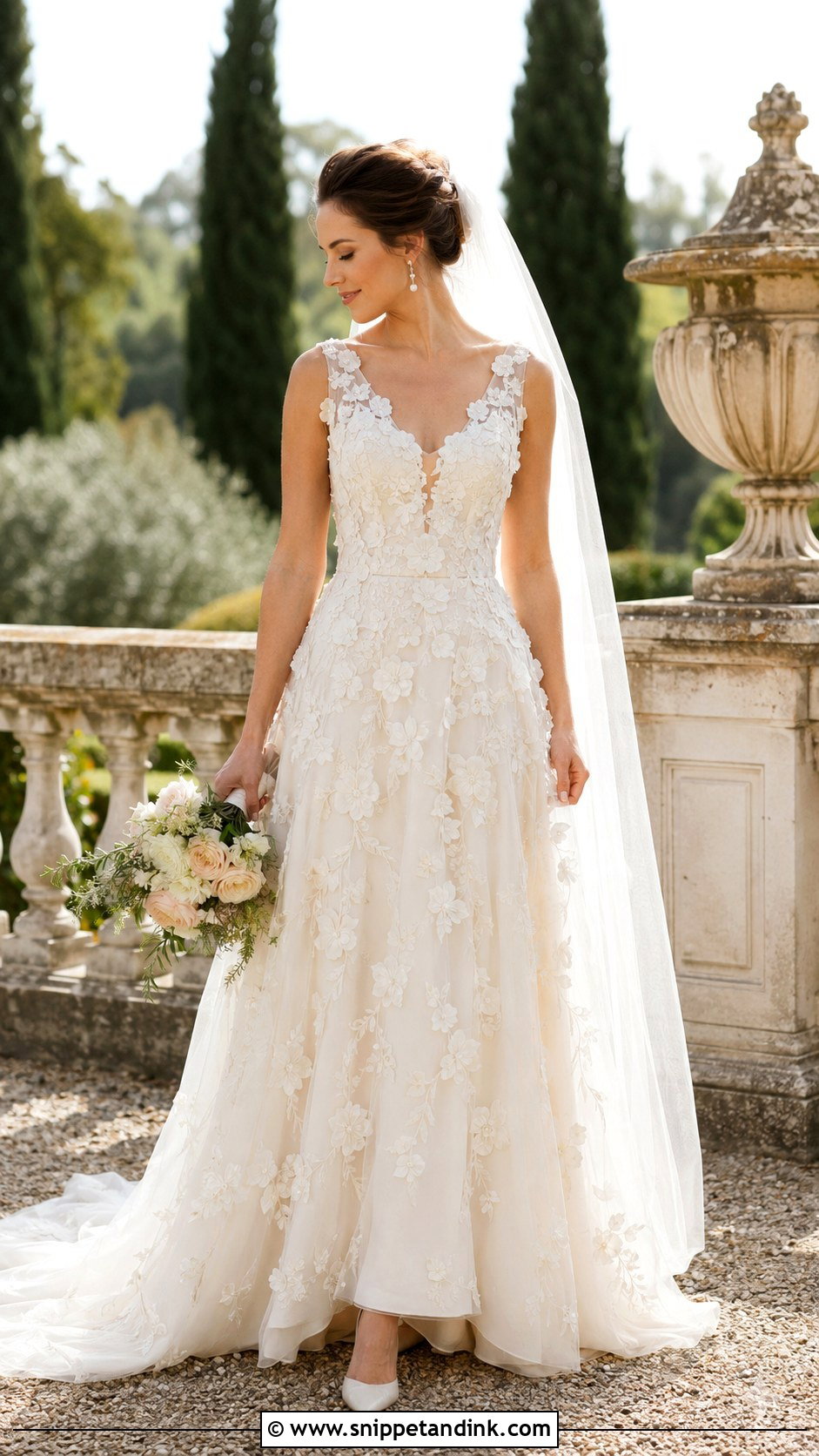
Appliqués change character with size. Tiny blossoms feel heirloom; large ones feel fashion-led. The best ones are placed to follow the body, curving along the waist or trailing down the skirt. With 3D flowers, skip floral hair accessories so the eye has one place to rest. Simple ivory heels, a clean veil and understated earrings let the texture speak. On vintage, check the edges: appliqués stitched by hand lift over time and need tacking down.


20. Vintage Pearl Wedding Dress
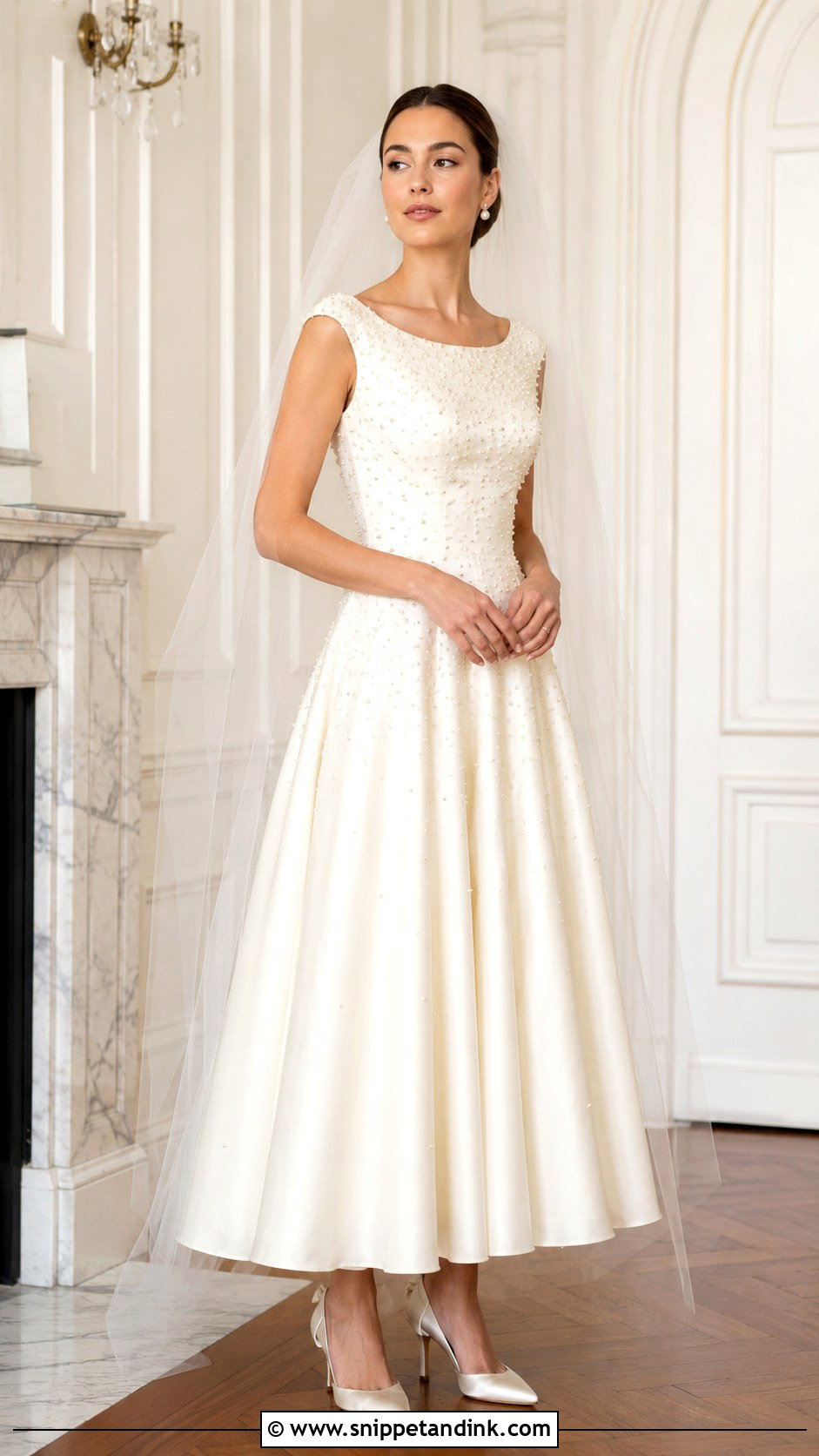
Pearls give a soft glow rather than crystals’ sharp sparkle. They may be scattered across the skirt, trim the neckline, accent the sleeves or cover the whole dress. Pair them with pearl studs, satin heels and a plain veil; more than that tips into a theme. Ivory, cream and champagne bases suit pearl best. Older faux pearls can lose their coating and look chalky, so check for peeling under good light and replace any that have gone dull.
21. Vintage Crochet Wedding Dress
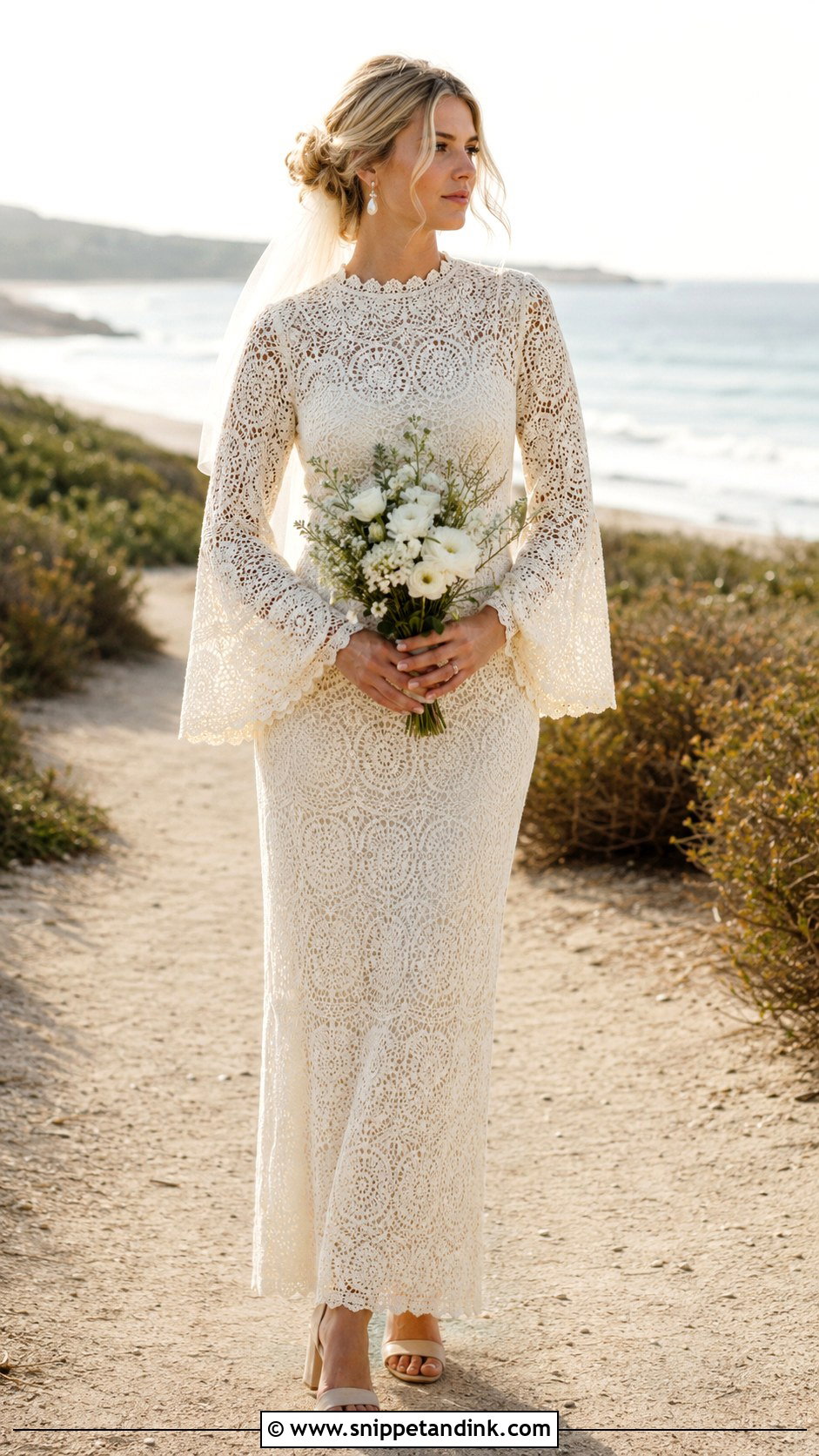
Crochet has a handmade warmth, tied to sixties and seventies bridal, especially with bell sleeves or a simple column. It can look casual, though, so I lift it with polished shoes, pearl earrings and a soft veil. Choose a lined version. Unlined crochet can be more see-through than it looks in a fitting room. Keep accessories light so it reads as bridal rather than festival. Crochet also stretches when hung, so store it folded.
22. Vintage Tulle Wedding Dress
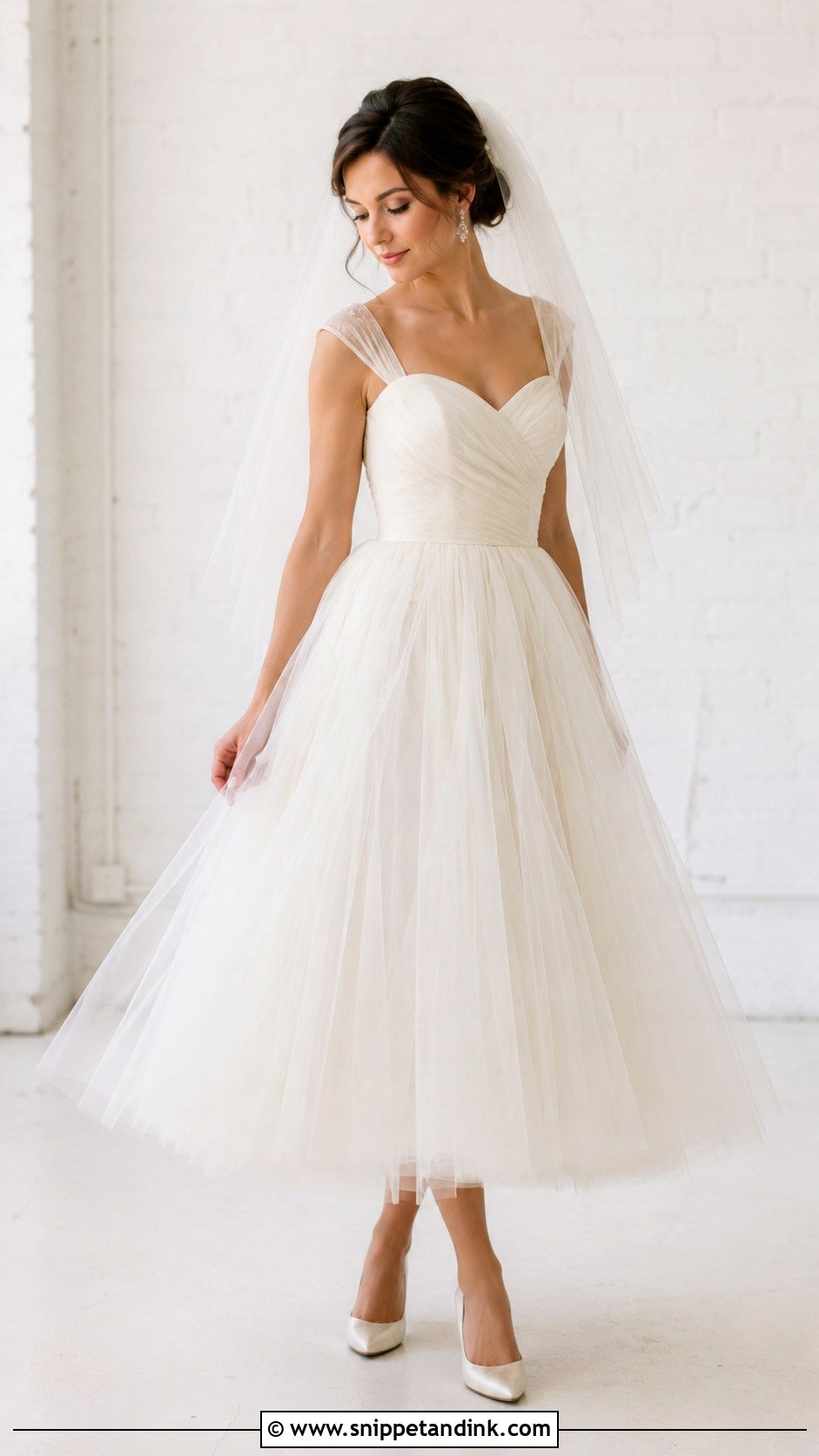
Tulle gives volume with almost no weight. A tea-length tulle skirt feels playful and ballet-like; a full-length layered one is formal. Pick a veil whose texture matches the skirt, plus satin pumps and delicate earrings. If you prefer clean, go for a plain bodice; if you love drama, add a beaded belt or lace top. Tulle adds bulk quickly, so stand sideways in the mirror. Too many layers can swallow a shorter bride.
23. Vintage Organza Wedding Dress
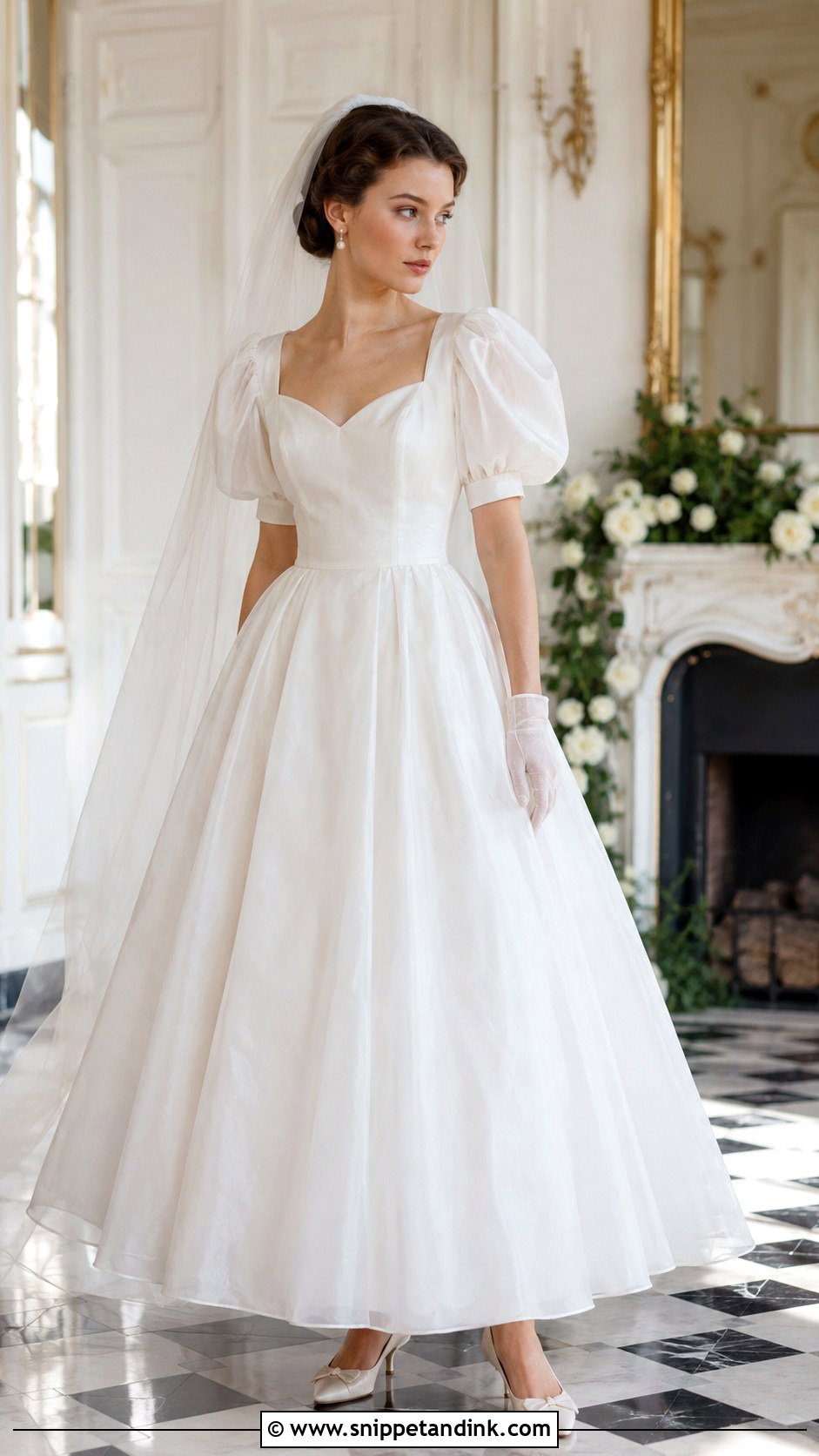
Organza is crisp and light, giving volume without the weight of satin or brocade. You’ll see it in full skirts, puff sleeves, overlays and ruffles. It has a gentle sheen that glows in bright rooms. The thing I warn about is creasing. Organza marks sharply where you sit and holds the line, so a steamer at the venue is worth having. Refined heels, pearl earrings and a veil that adds little bulk complete it.
24. Vintage Ruffle Wedding Dress
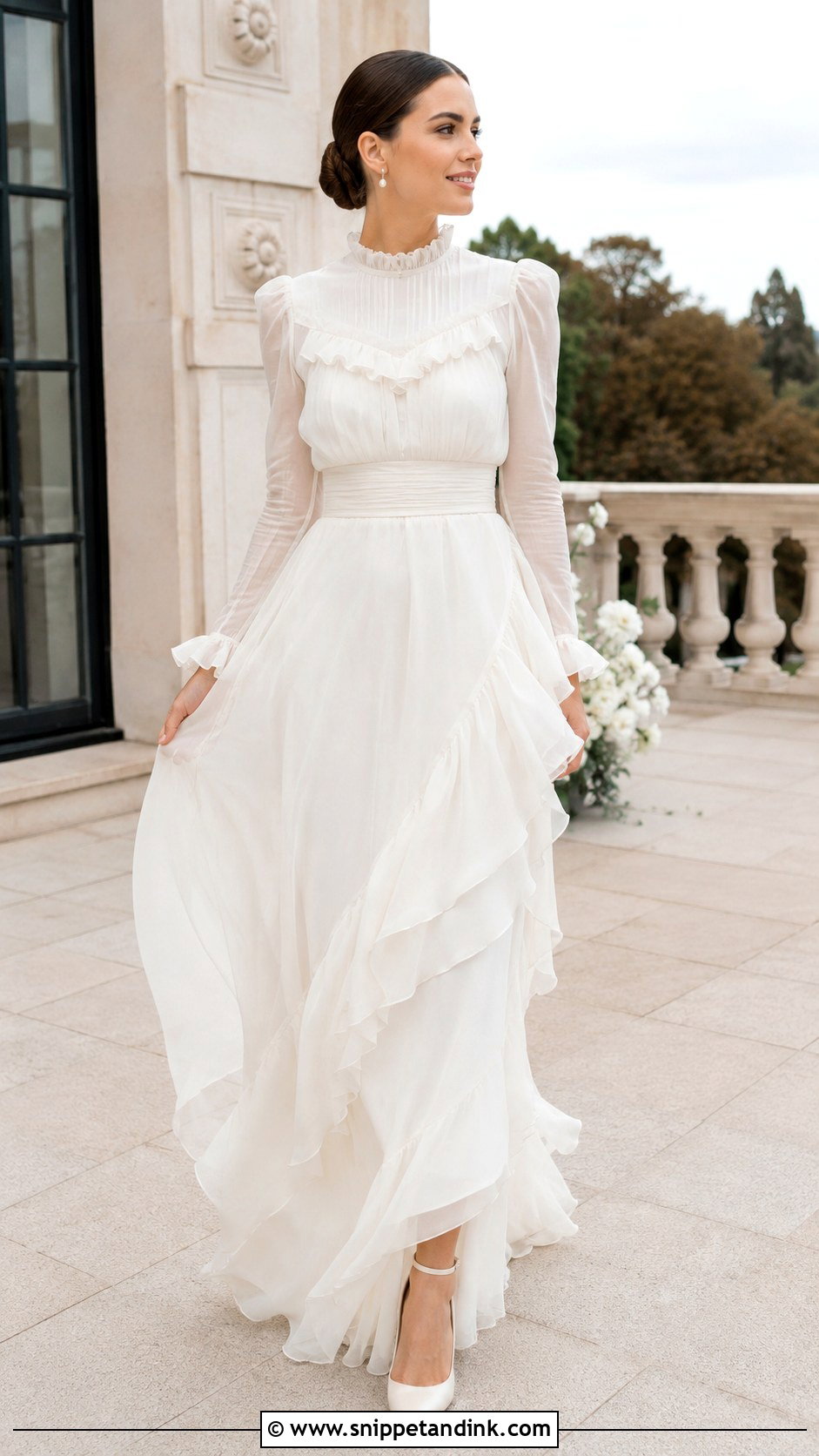
Ruffles behave differently by fabric: soft on chiffon, sculptural on taffeta, delicate on lace. Balance is the whole secret. A ruffled skirt needs a simple bodice, a ruffled neckline needs a clean skirt. Keep shoes simple, earrings small and hair smooth. Ruffles move with every step, which is why I always want at least one walking shot of this dress. Old chiffon ruffles fray at the edges, so check the hems.
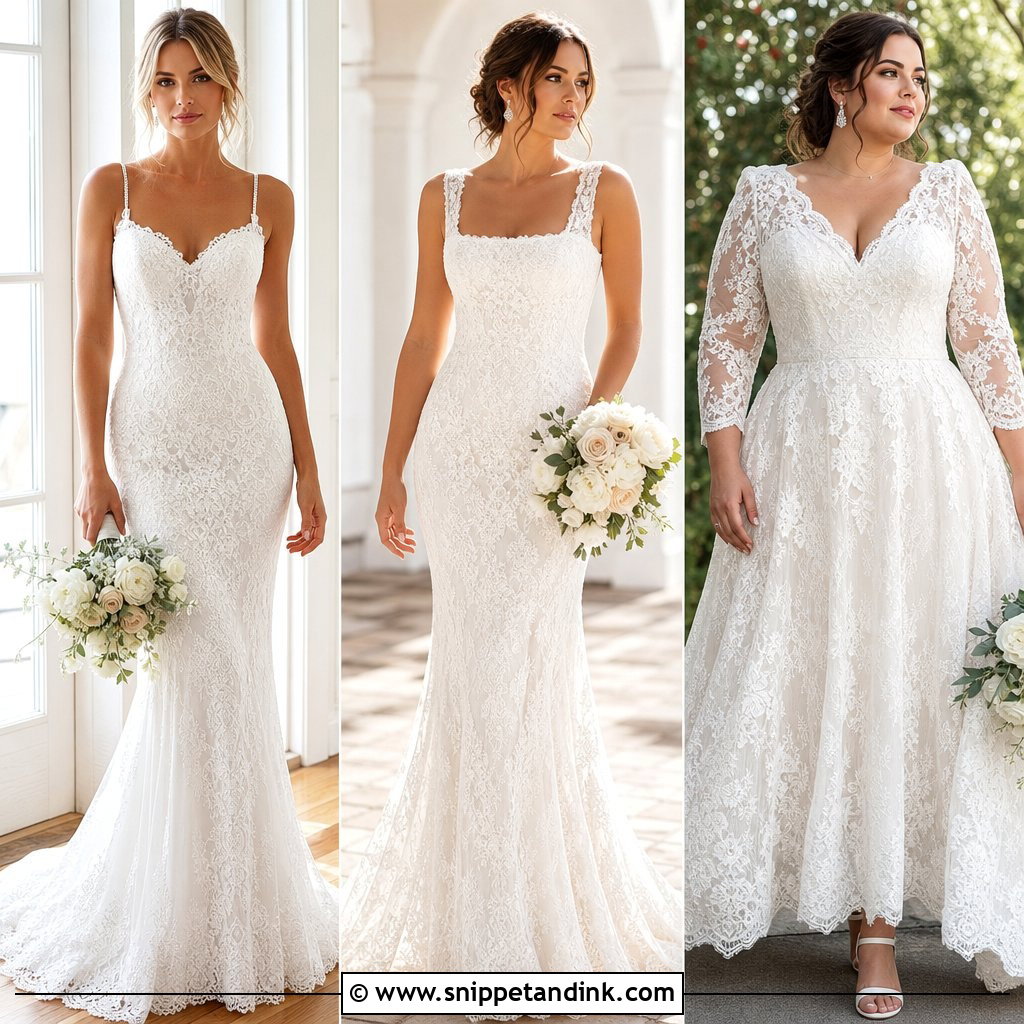
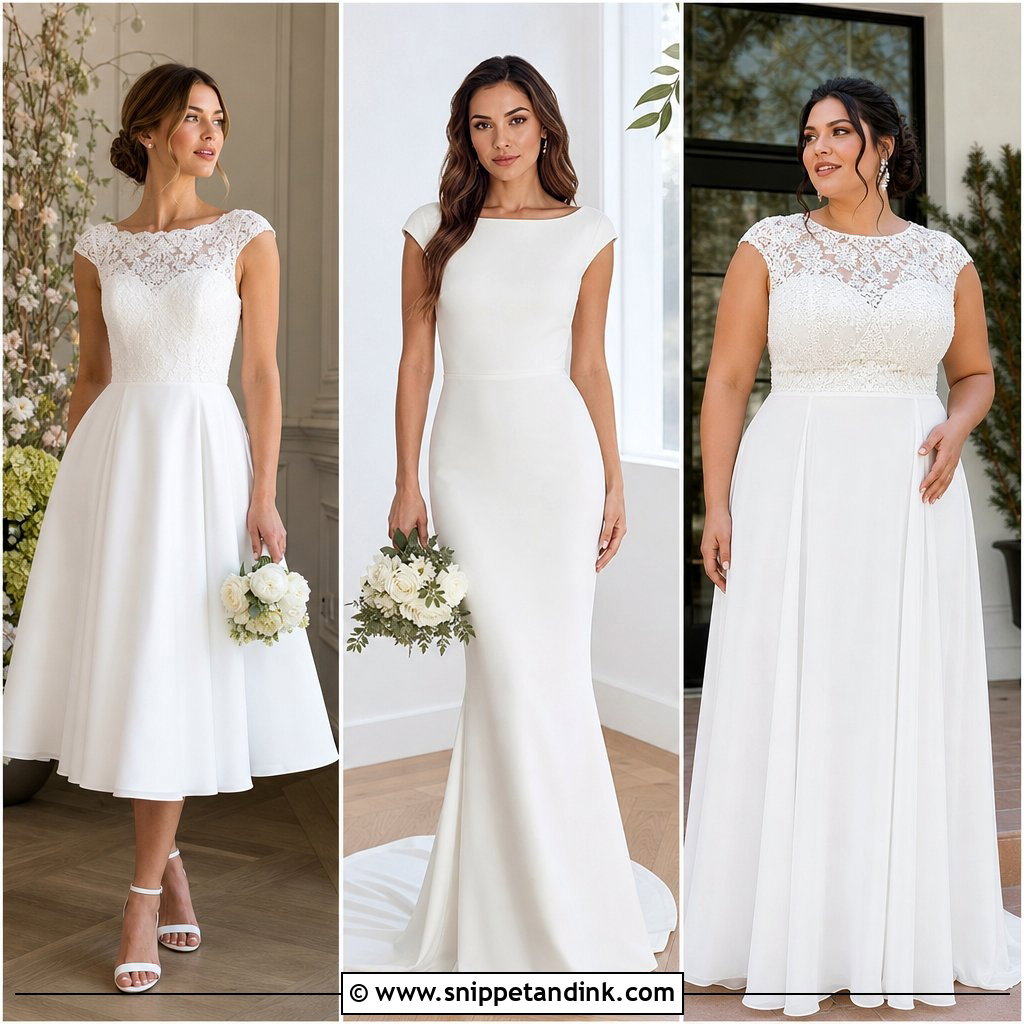
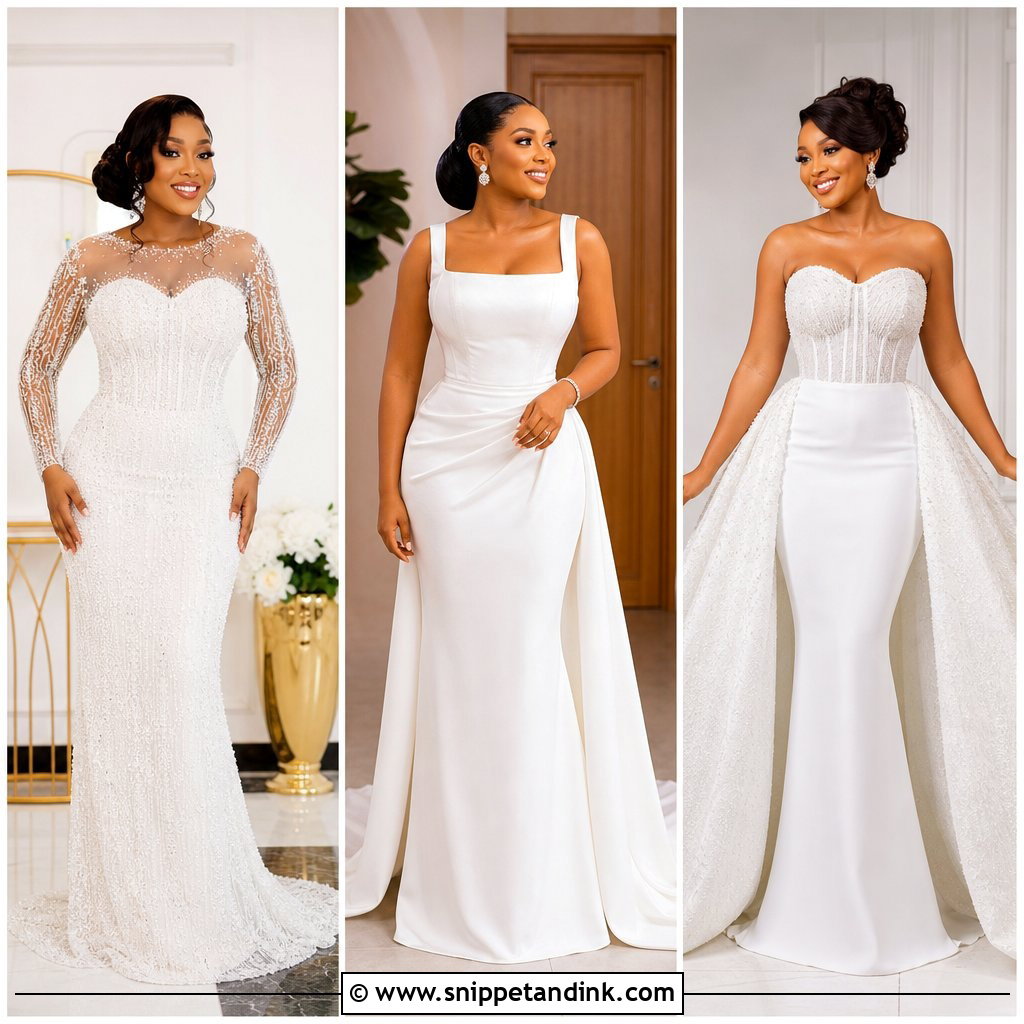
25. Vintage Cape Wedding Dress
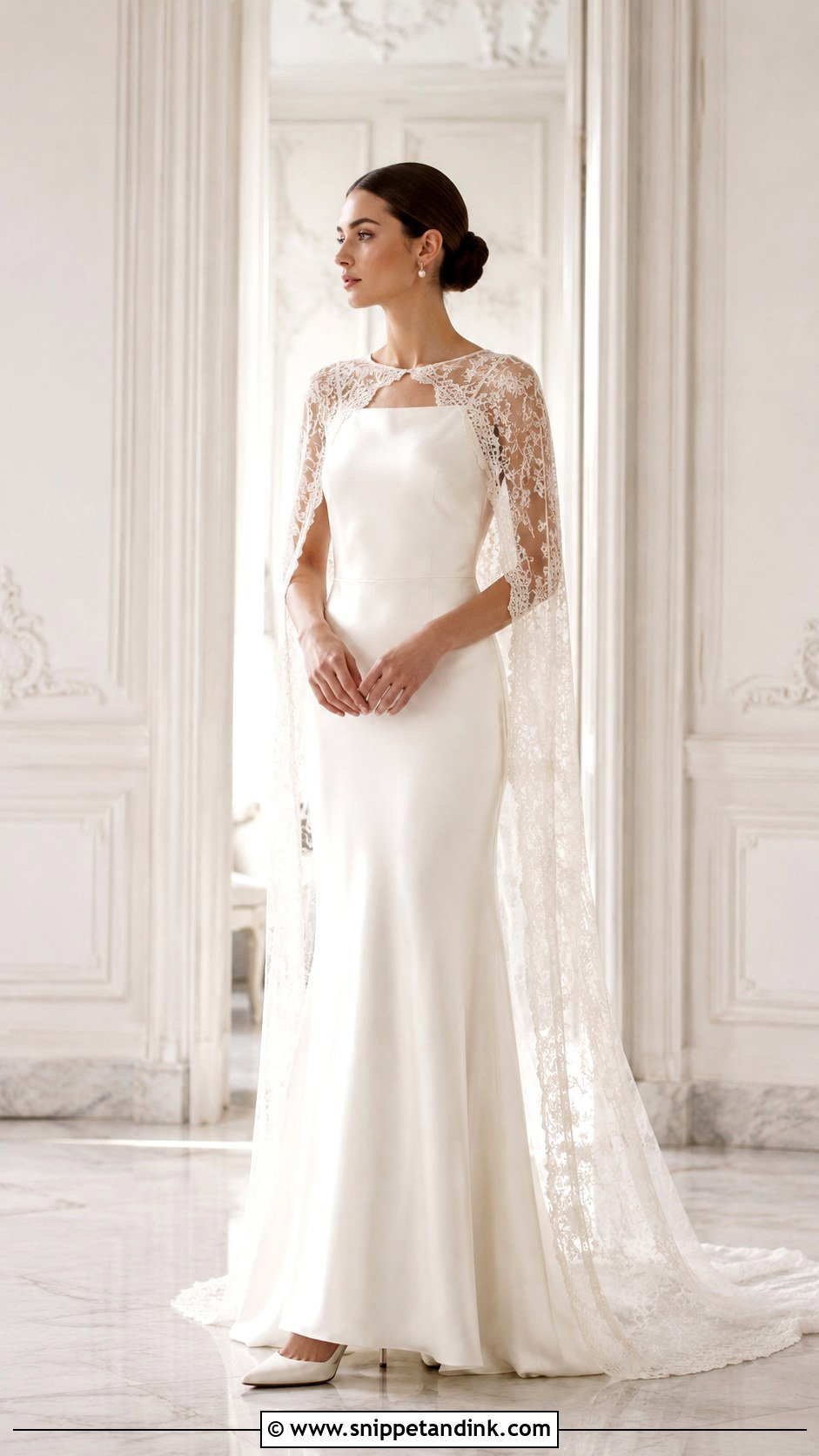
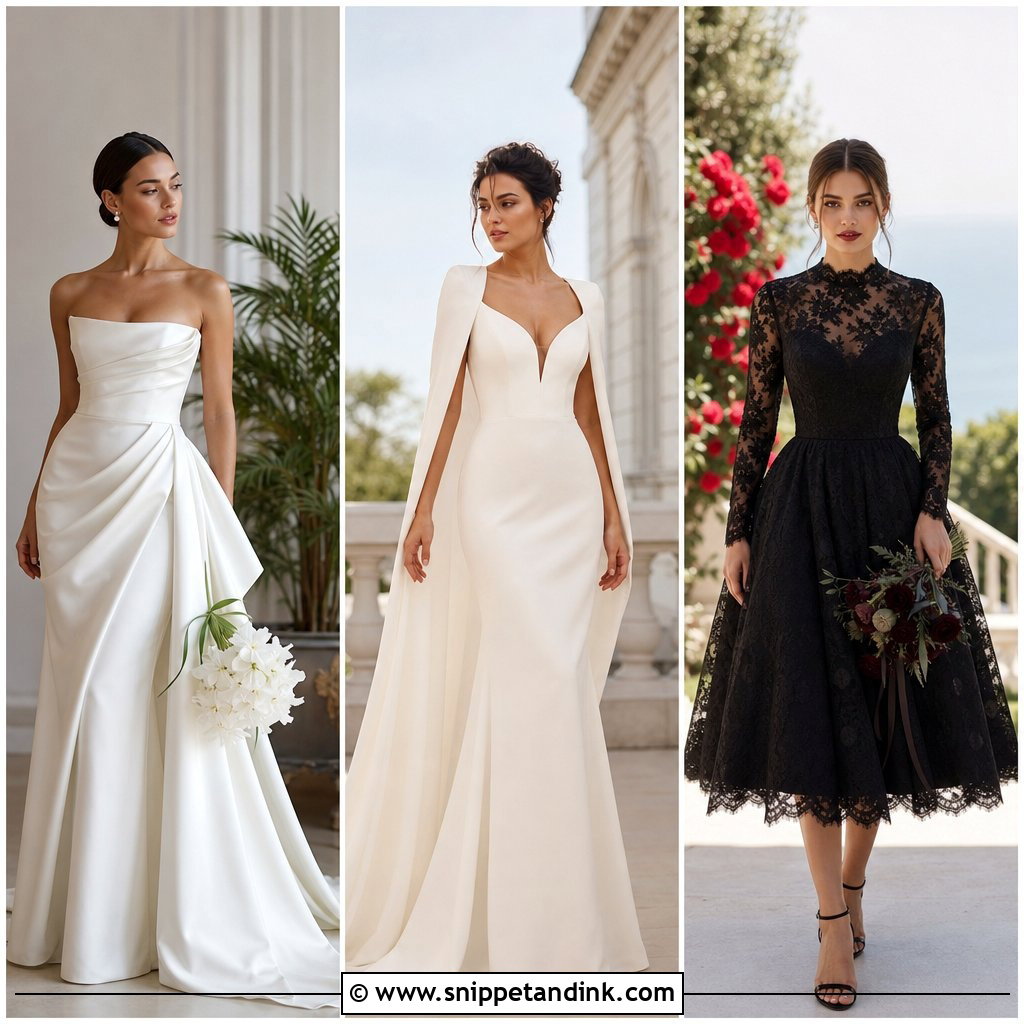
Swap the veil for a cape. Lace, chiffon or tulle over a simple satin gown, a crepe column or a beaded dress gives drama while staying soft. Because the cape draws a strong line down your back, keep shoes and jewellery minimal. It’s also practical: wear it for the ceremony and take it off for the reception. Ask the tailor to add discreet hooks at the shoulder so it doesn’t slide back when you hug people.
26. Vintage Suit Wedding Dress
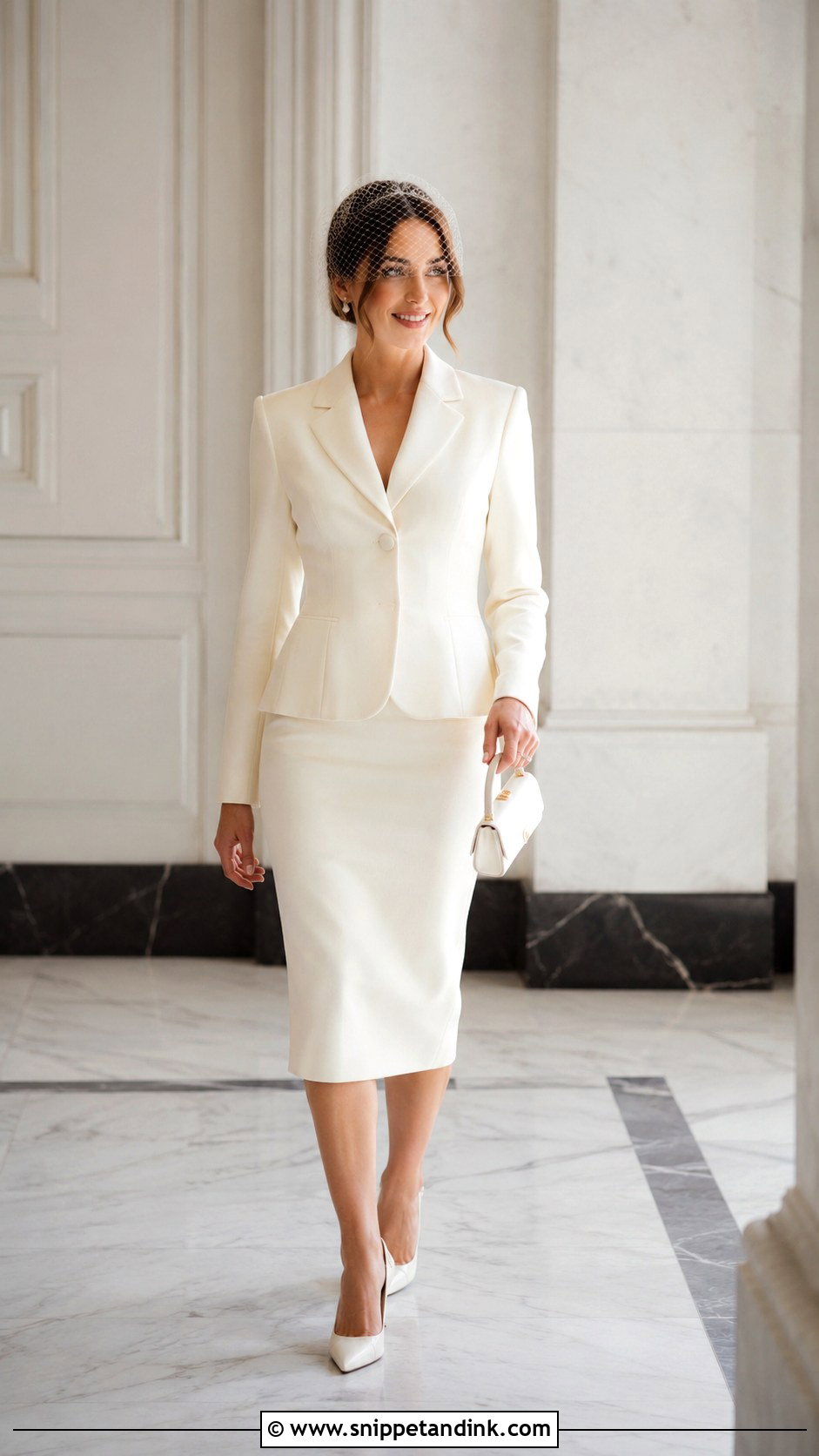
A suit can be bridal. For a courthouse wedding or an elopement, an ivory skirt suit, a lace-trimmed jacket, a peplum blazer or a structured eighties set feels tailored and unexpected. Silk, crepe, satin and textured jacquard keep it luxurious. I like that the pieces can be worn again afterwards. Pointed heels, pearl earrings, a short veil or a pillbox hat finish it. Vintage jackets often have shoulder pads; you can remove or reduce them for a softer line.
27. Vintage Mini Wedding Dress
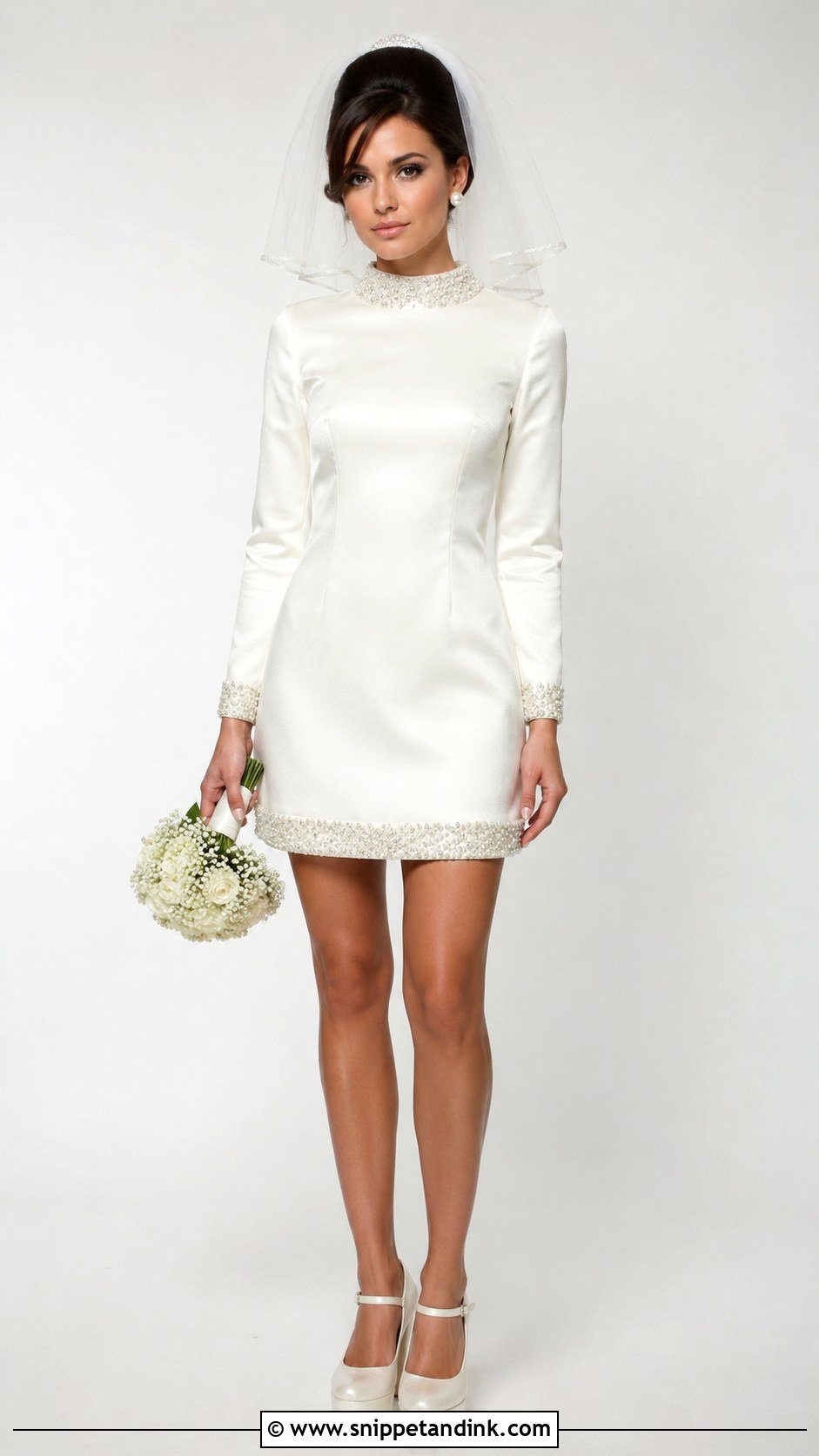
Short and fun, the mini works as a second look or for a small ceremony. A sixties-style mini with long sleeves, a high neck or beaded trim stays polished. Low block heels, satin platforms or embellished flats suit it, plus a short veil, pearl earrings or a bow clip. With so little fabric, tailoring is everything. Check the shoulders and hem, and sit down in it: a mini rides up more than you expect. I’d pick it for a bride who wants to move freely and make the photos lively.
28. Vintage Champagne Wedding Dress
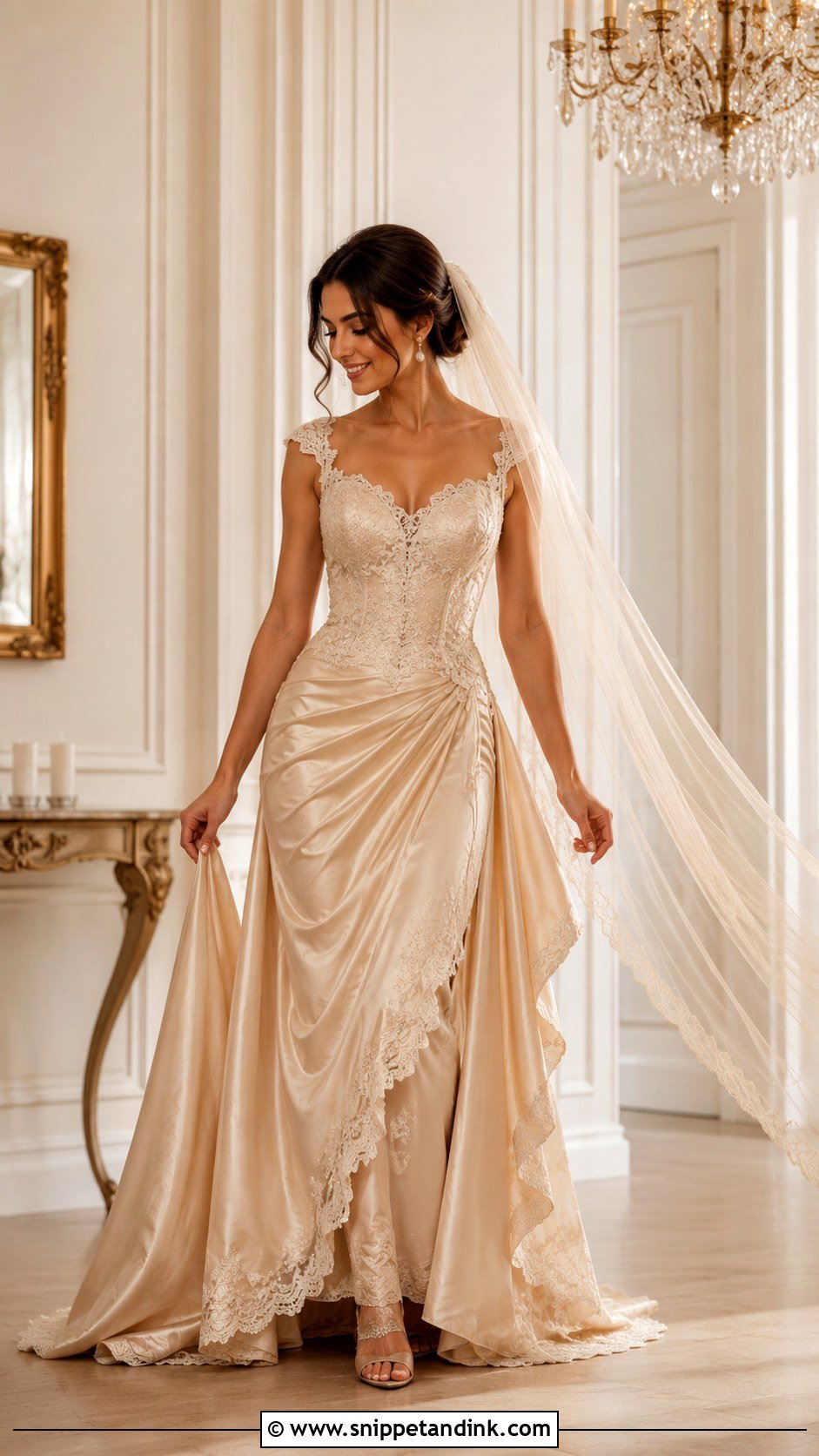
Champagne is a warm golden beige, and against many skin tones it looks softer than bright white. Lace, satin, beading and silk all gain depth in this colour. The mistake I see is stark white accessories: a pure white veil next to champagne makes the dress look yellow. Match the veil to the warm tone and choose ivory or nude heels and pearl earrings. Champagne gowns look rich and old-world without being loud.
29. Vintage Blush Wedding Dress
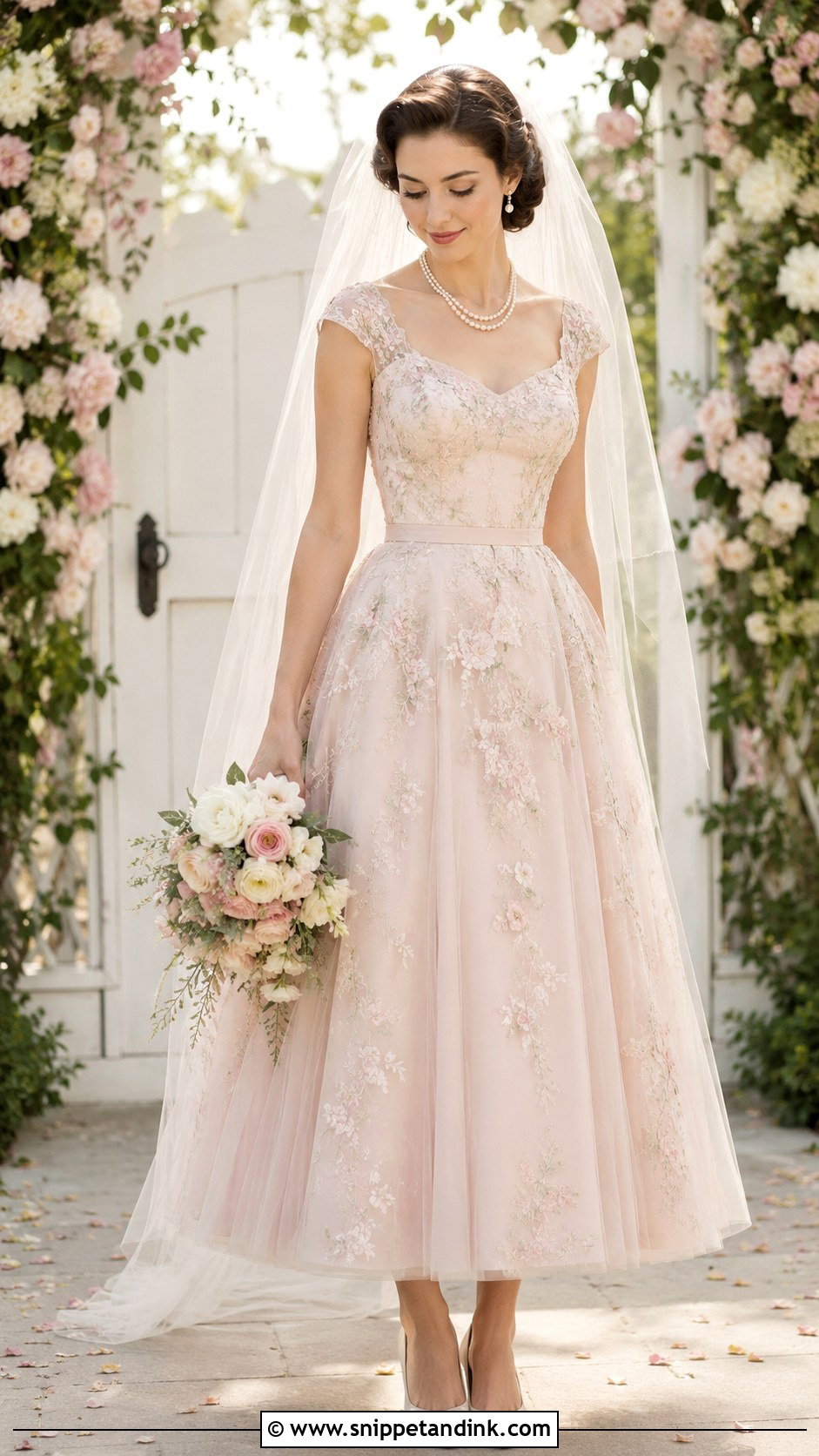
Blush is pink pulled back almost to white: pale pink, dusty rose, barely-there tones. On lace, tulle, chiffon or floral embroidery it looks romantic but still bridal. Ivory heels, rose-gold or pearl jewellery and a light, sheer veil keep it gentle. Stay with a muted shade; bright pink stops looking like a wedding dress. I’d always check blush outdoors, because some shades read beige in shade and peach in sun.
30. Vintage Black And White Wedding Dress
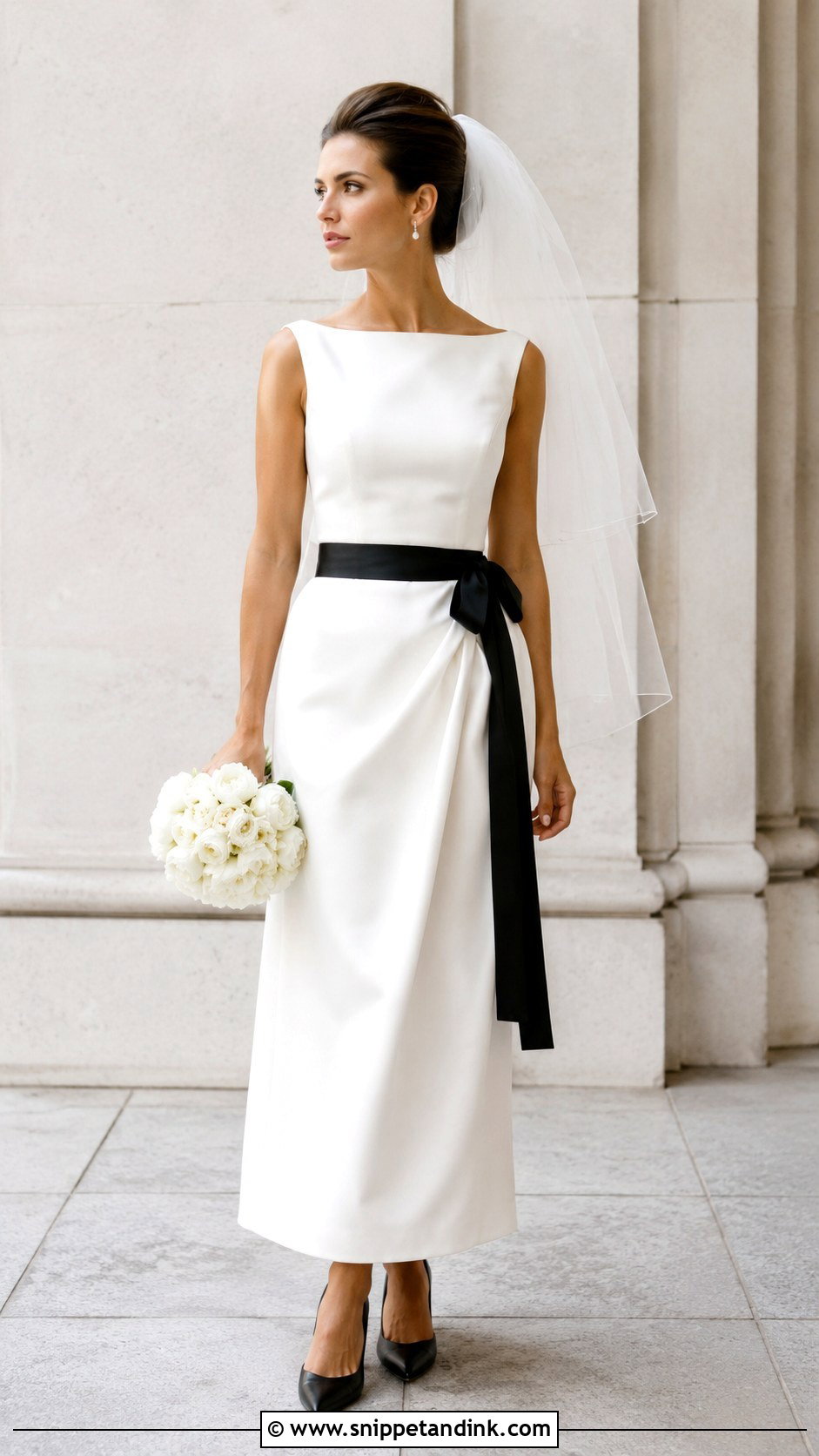
Black and white gives instant contrast. Think a white gown with black ribbon, black lace trim, a black bow, or a white suit with black accessories. Keep the silhouette elegant so the contrast looks deliberate rather than harsh. A narrow black ribbon at the neck or waist feels very old-world. Black satin heels, pearl earrings and a clean veil suit it. I’d suggest it for a city wedding or an art space where a sharp graphic look fits the room.
What a Seamstress Can Rescue, and What She Can’t
Give alterations on a vintage gown more time than you would a new one. I’d start them at least three months out, because old fabric often needs hand work, and a good specialist may want two or three fittings.
Usually fixable
Taking in the side seams, shortening a hem, replacing a zip with buttons and loops, patching lace with pieces cut from the hem or train, re-sewing loose beading, and adding a modern lining so scratchy or sheer fabric sits comfortably. Yellowing on cotton and linen can often be lifted by a specialist cleaner. Ask for a test on a hidden seam first.
Rarely worth fighting
Letting out a bodice with no spare seam allowance, rescuing silk that has begun to split, or removing old stains from delicate, dyed or weighted fabric. If two fittings in it still feels like the dress is working against you, I’d honestly rather a bride switched to a reproduction in the same cut. She keeps the era she loved, in fabric that will last the whole night.
A Dress With a Past, Fitted for Your Day
Which decade, shape and detail feel like you? Some brides fall for Edwardian embroidery or seventies crochet; others for fifties tea-length skirts, thirties silk slips or a basque waist. Accessories decide whether a vintage dress looks fresh or dated: shoes, veil, jewellery, gloves and hair. And never skip the practical part. Check the fabric’s condition, budget for alterations and think about your venue. A vintage dress should fit, survive the day and feel like your own.
You'll Like These Ideas:








Leave a Reply