
Texture is what stops a low bun from looking like the one you wear to the office. The bends, folds and slightly pulled sections give it depth in photos and, just as usefully, give pins and combs something to hold. It sits at the nape, clears the neckline, shows off earrings and takes a veil, pearls or flowers without fuss. You can wear it polished, braided, twisted, curled or softly messy. Below are fifteen versions and what I’d adjust for each depending on your hair.
Where the Texture Actually Comes From
Texture isn’t a single product. It’s a combination of heat, a little grit and the way the hair is handled after pinning, and the mix depends on what your hair does naturally.
Straight, silky hair needs the most help. I add a volumising mousse at the root while it’s damp, then a dry texture spray before curling. Without that grit, curls slide out and the bun turns smooth within a couple of hours.
Wavy hair often needs less than you’d think. A light cream to define the natural bend and a quick touch with the iron on any flat sections is usually enough.
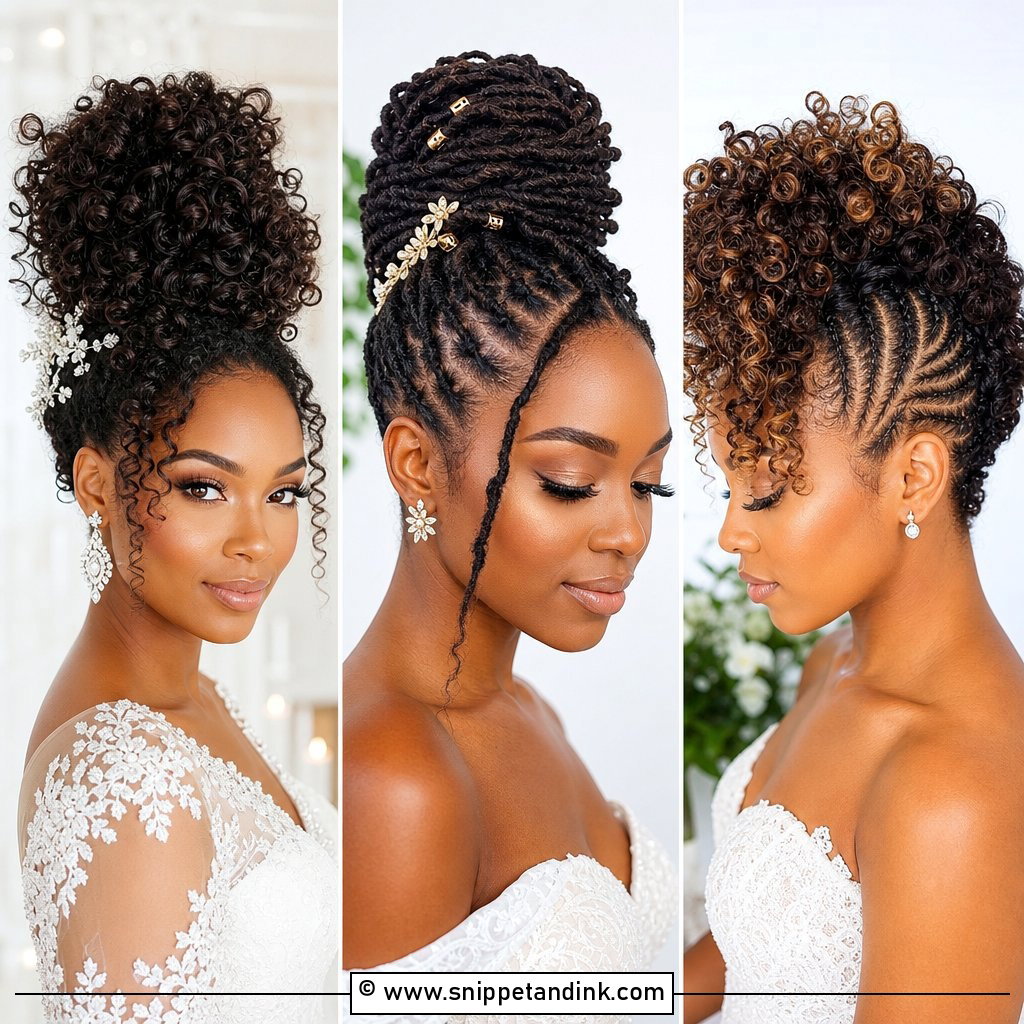
Curly and coily hair already has texture, so the work is moisture and definition rather than grit. Dry texture sprays can make curls feel rough and frizzy, so I skip them.
Salt sprays are worth a word of caution. They give great texture on oily or fine hair, but on dry, coloured or bleached hair they can leave the lengths feeling straw-like by the evening.
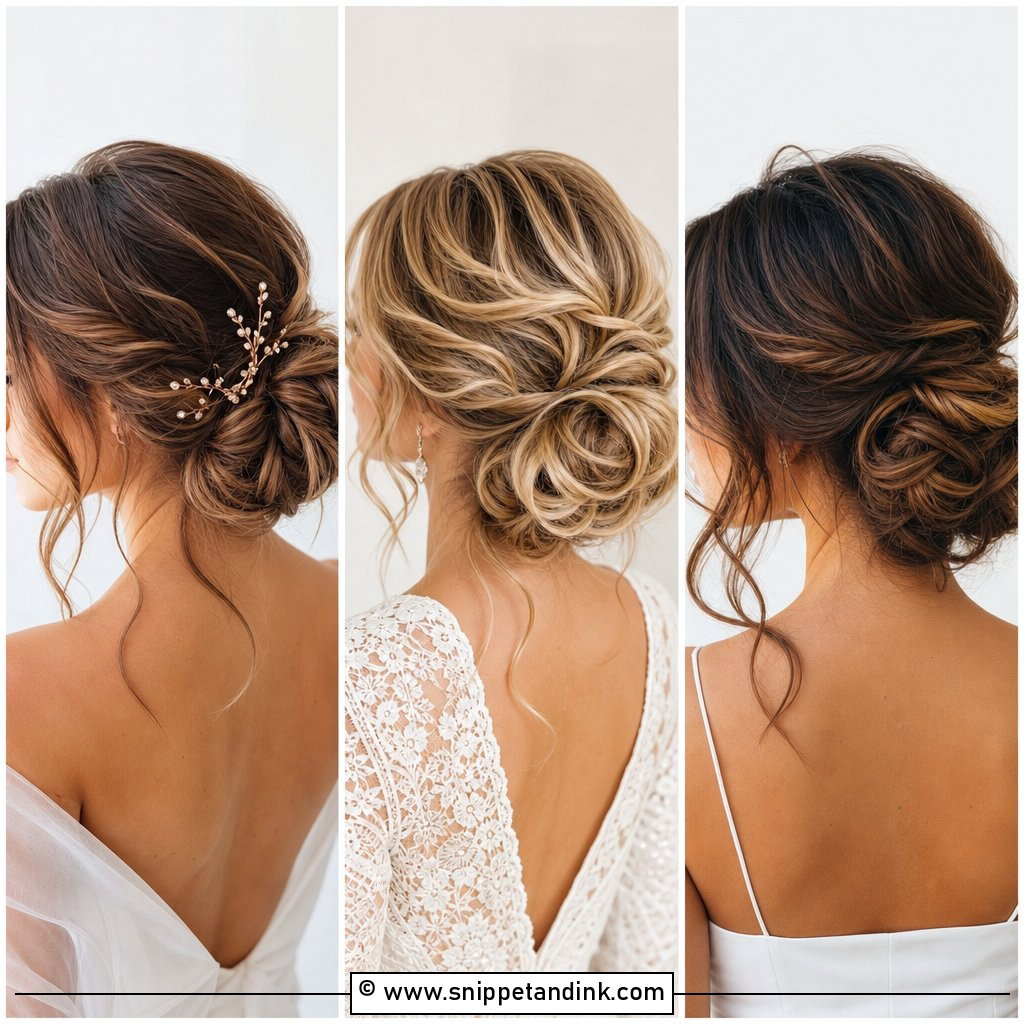
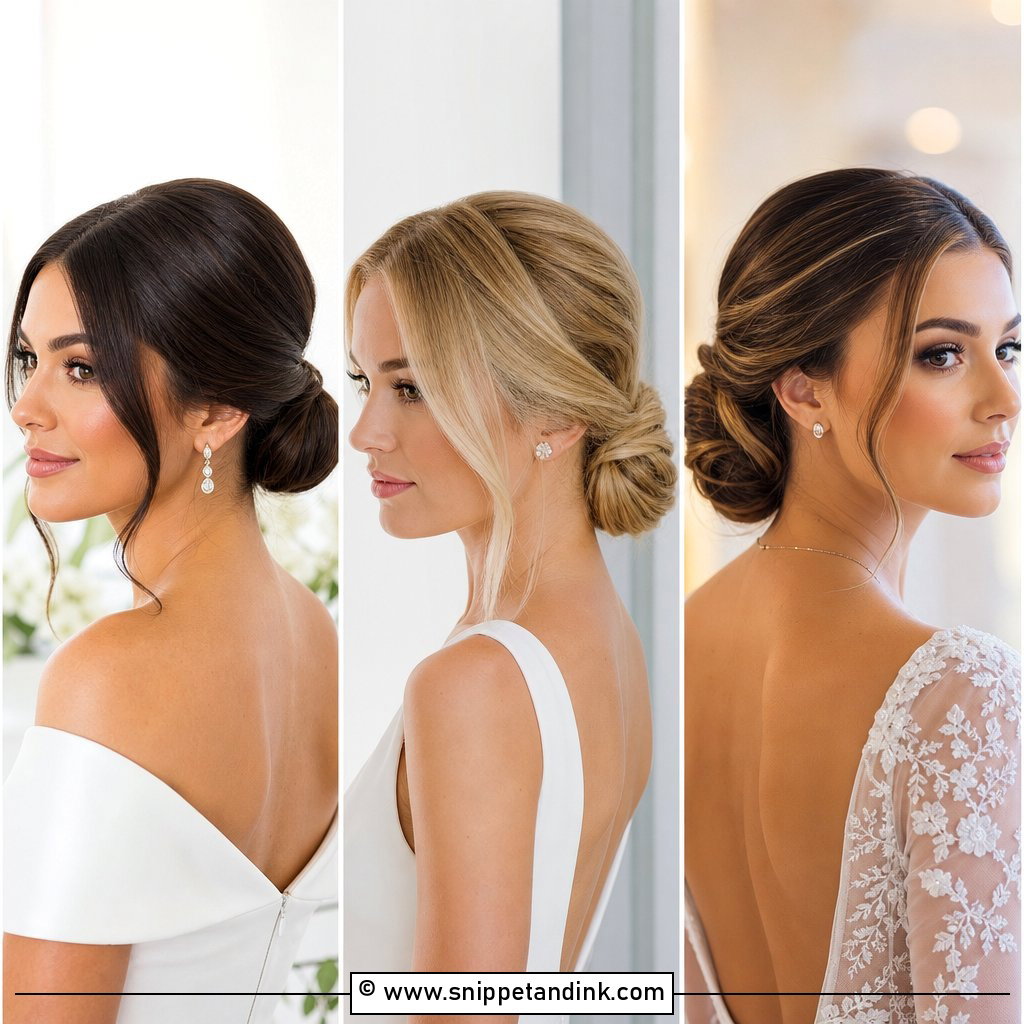
1. Low Textured Bun Wedding Hair With Face Framing Pieces
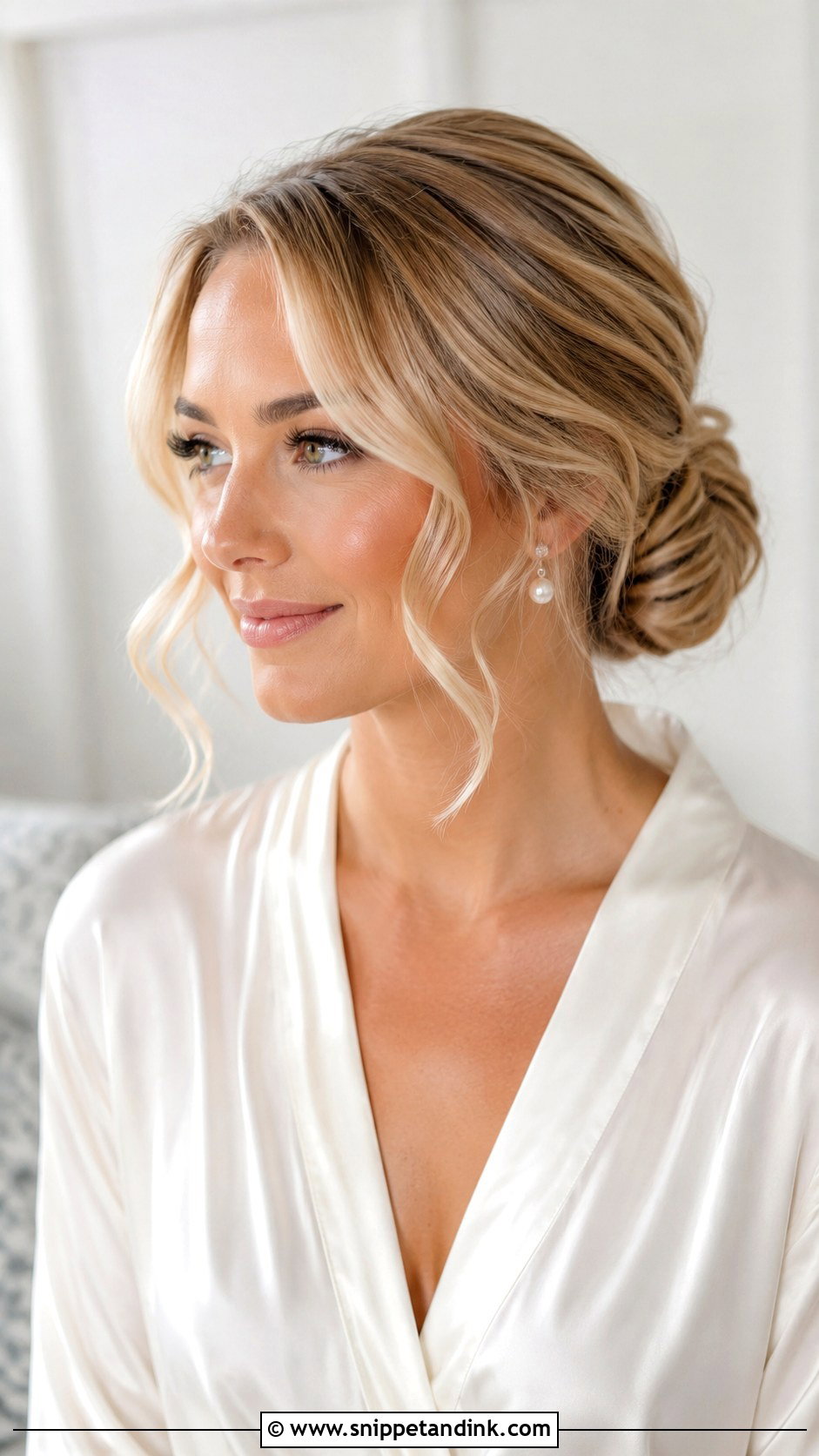
Front pieces are the reason many brides pick this over a plain bun. They soften the line along the cheeks and jawline and make a pulled-back style feel less exposed. They work with a middle part, a soft side part or barely waved pieces. I curl them away from the face and keep a little touchable lift at the crown. Go easy on the spray up front; a crunchy front piece looks stiff in close-ups even when the bun looks soft.
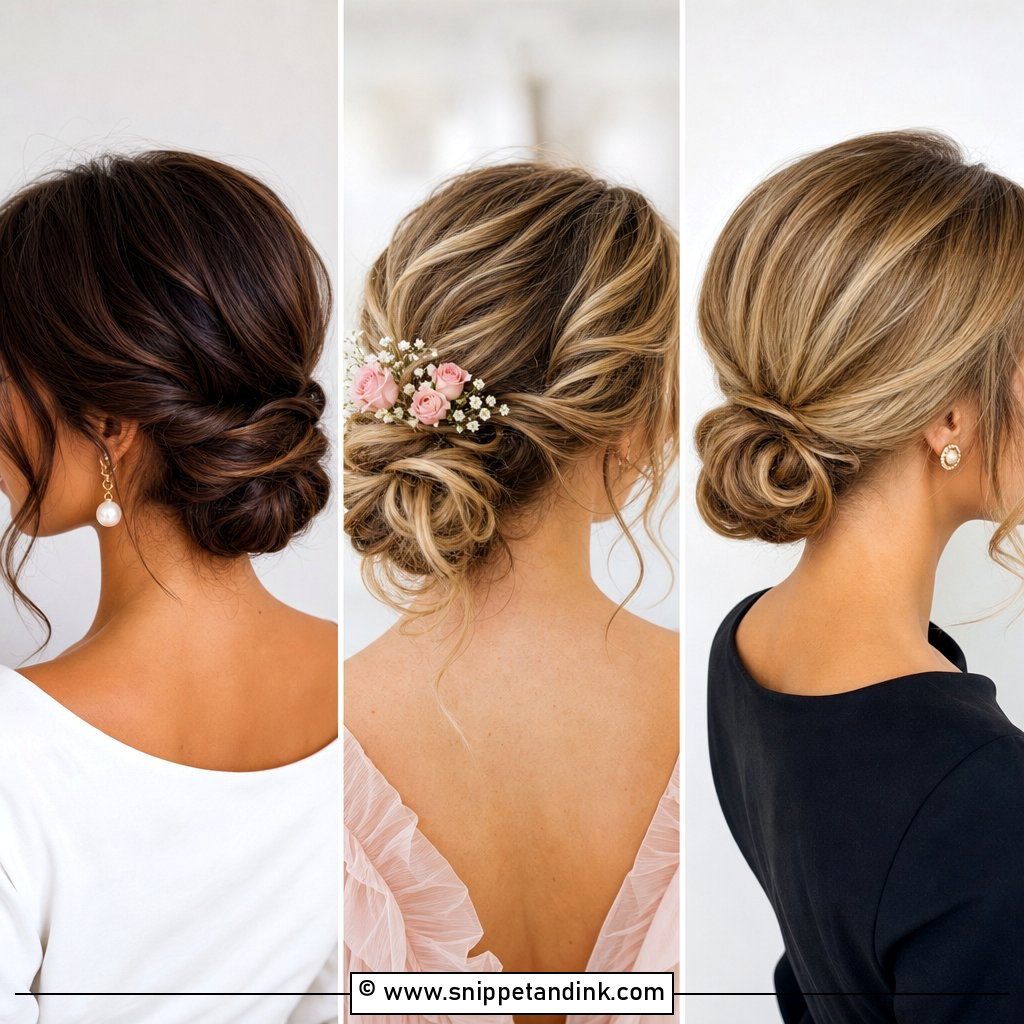
2. Messy Low Textured Bun Wedding Hair
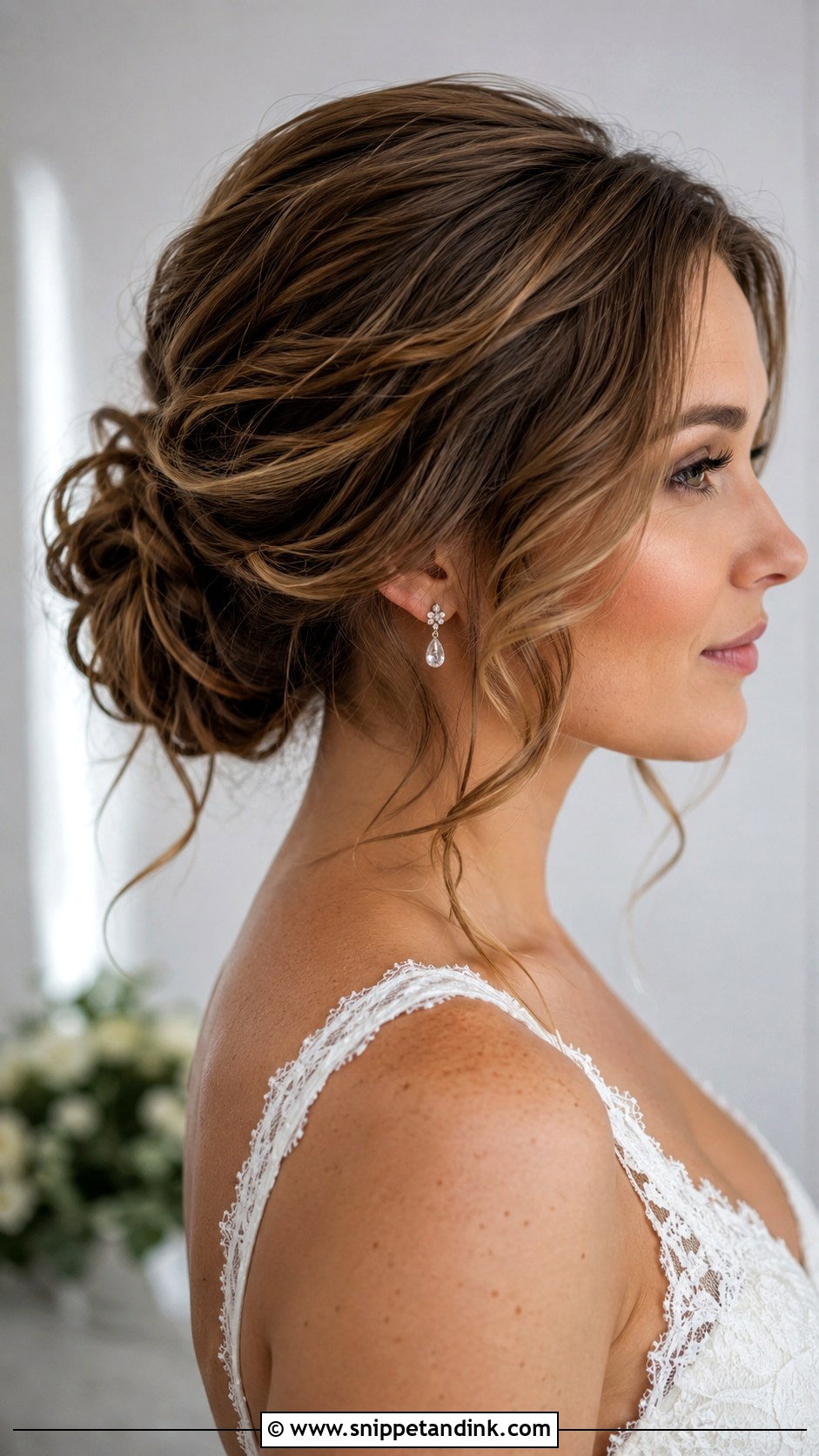
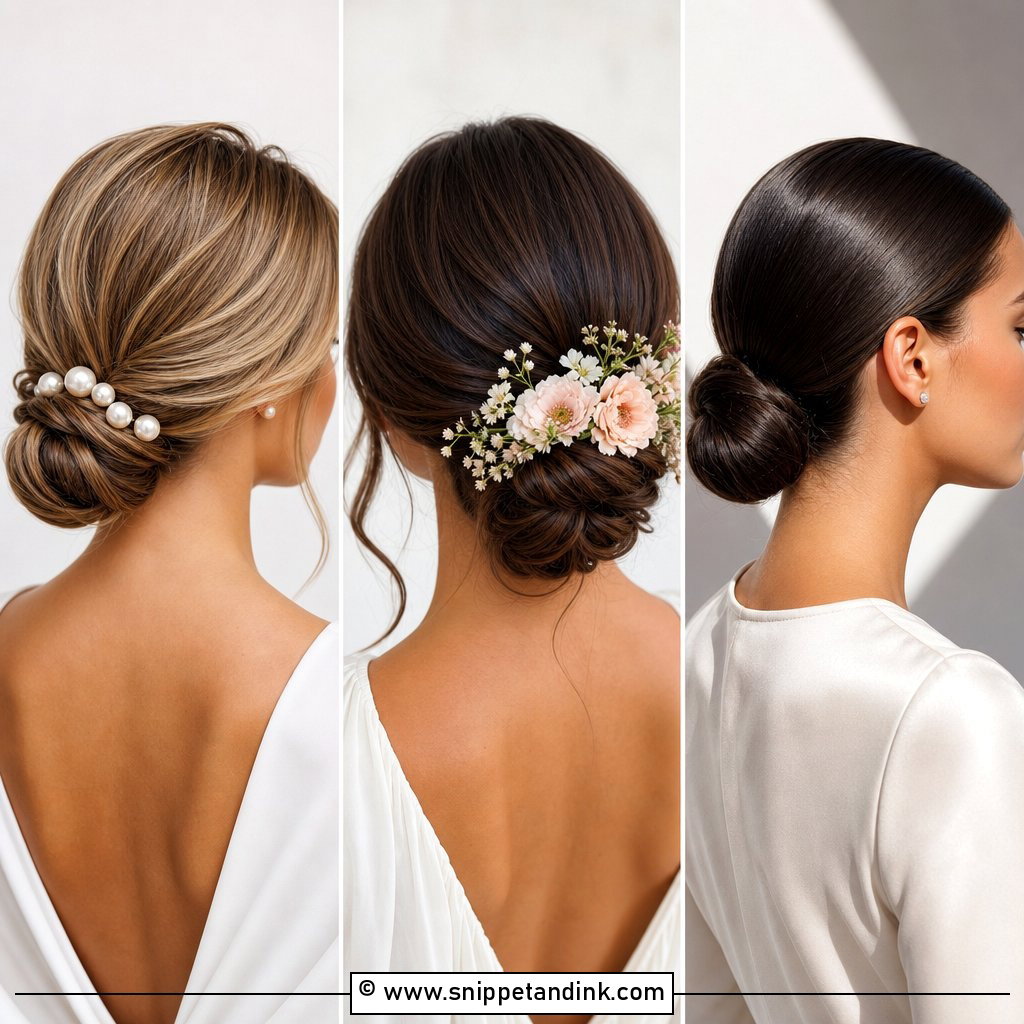
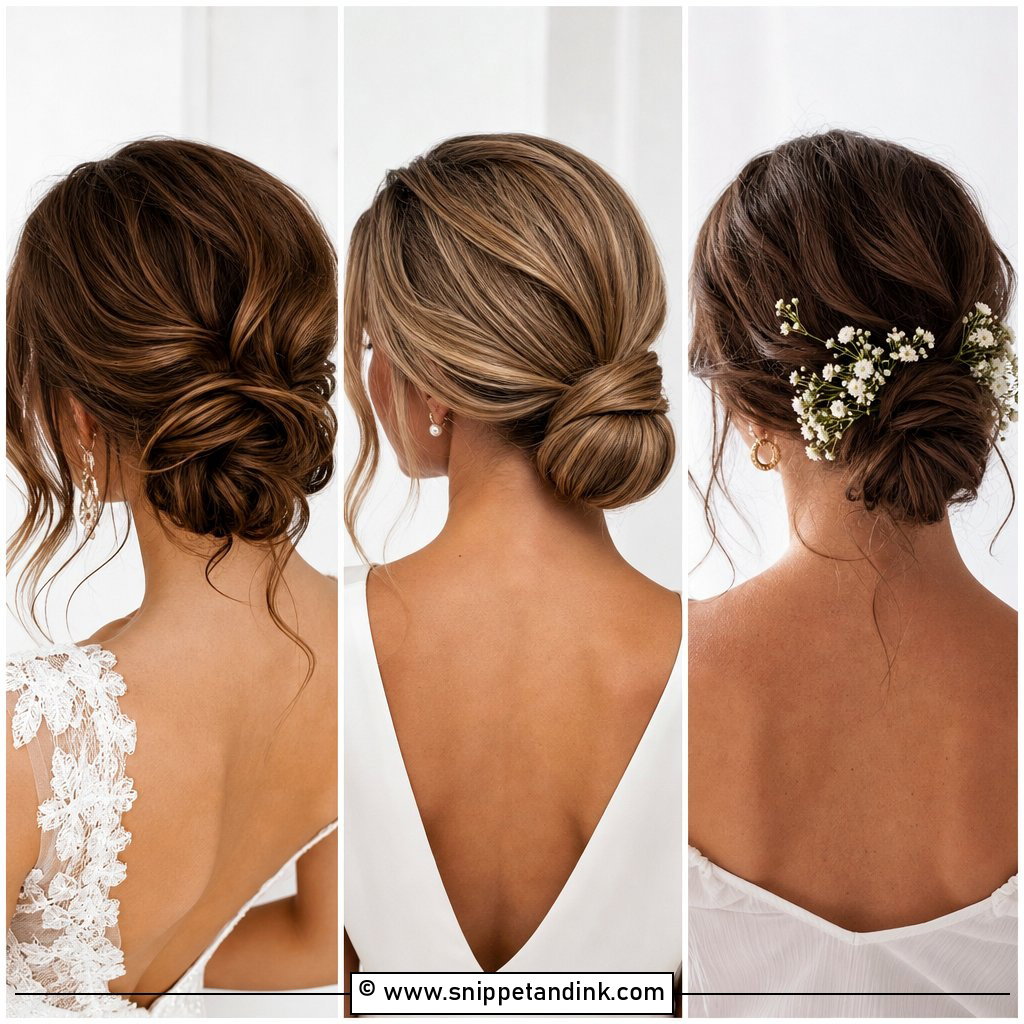
Messy only works when there’s a plan underneath. I wave or curl the hair, let it cool, then gather it low and pin it into a full bun so little bends show all the way through. Outdoor, garden and beach weddings suit it, and lace is a natural partner. Fine hair needs texture spray and a little backcombing before gathering. Very thick hair is the opposite problem; I pin it in smaller sections so the bun doesn’t turn into one heavy mass.
3. Low Textured Chignon Wedding Hair
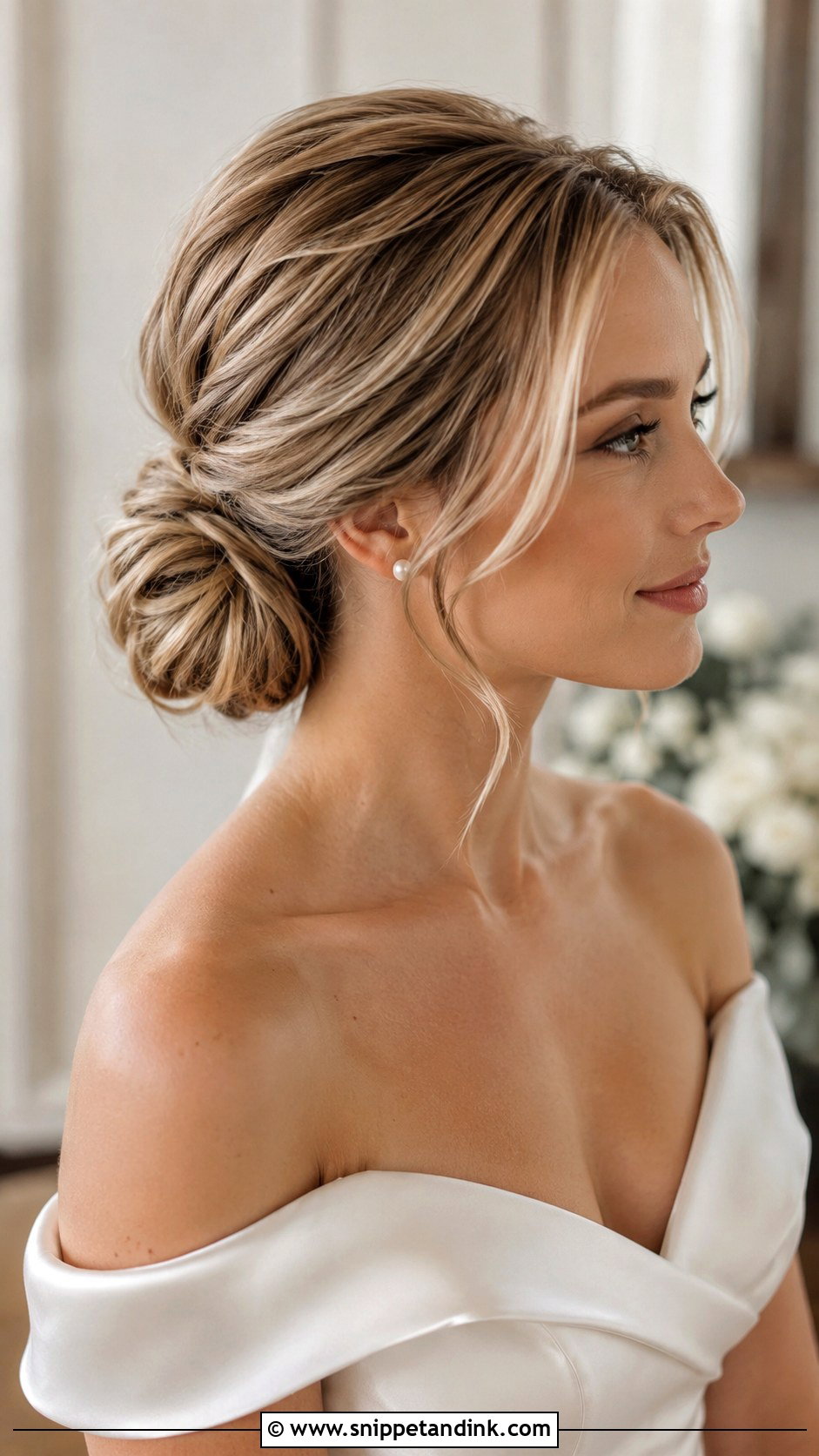
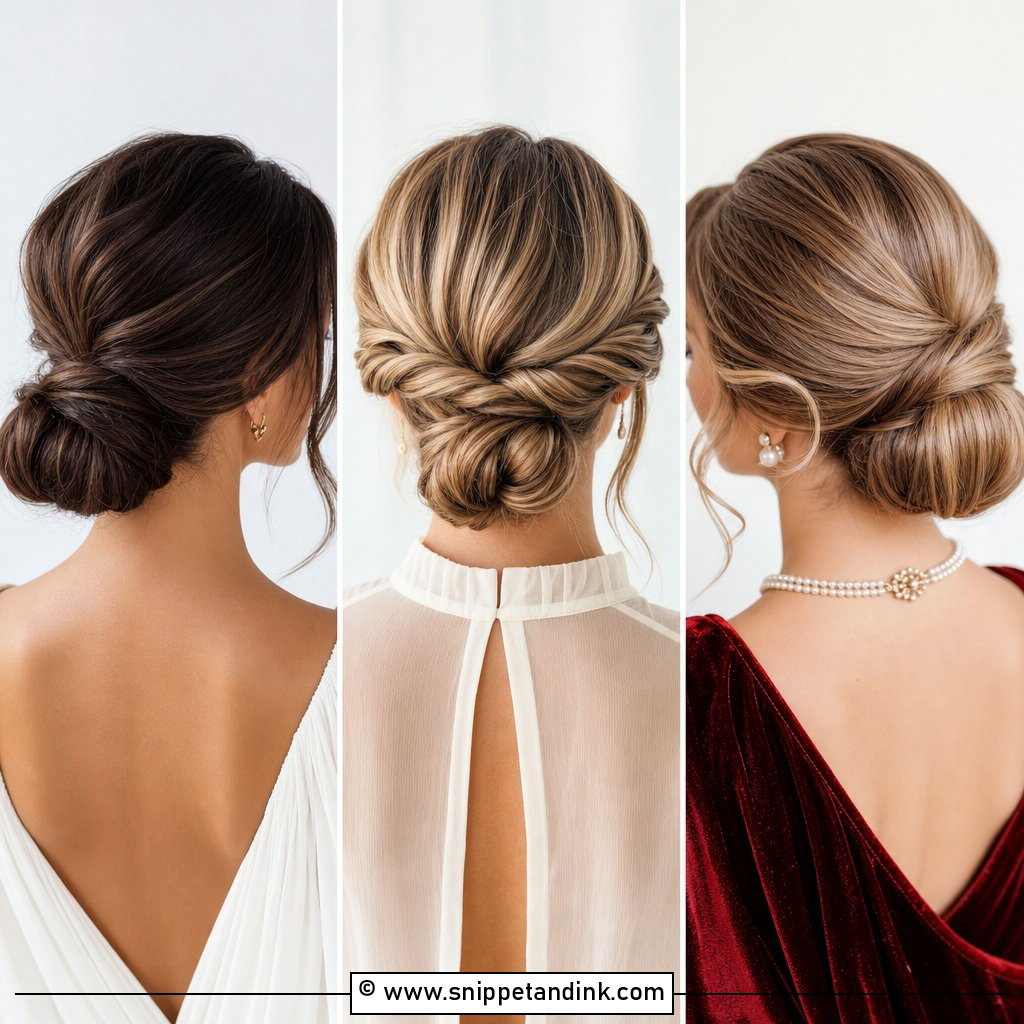
A chignon folds or rolls rather than coils, so the shape is longer and flatter than a round bun, and the texture keeps it from looking severe. Satin gowns, off-the-shoulder necklines and pearl earrings suit it. It also takes a veil above or below the knot without much fuss. I ask for a little crown volume and a smooth but touchable finish. If the roll is too perfect, I break up the surface with my fingertips after it’s pinned.
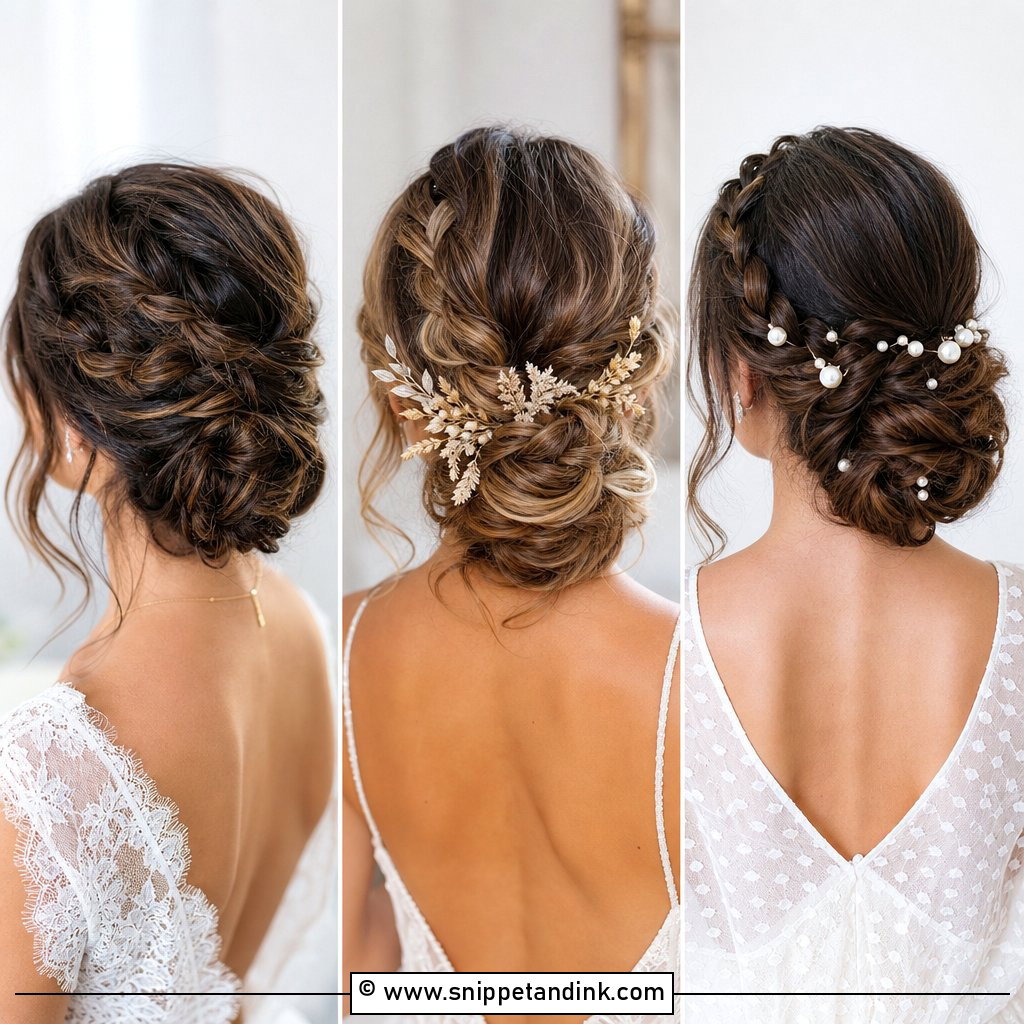
4. Braided Low Textured Bun Wedding Hair
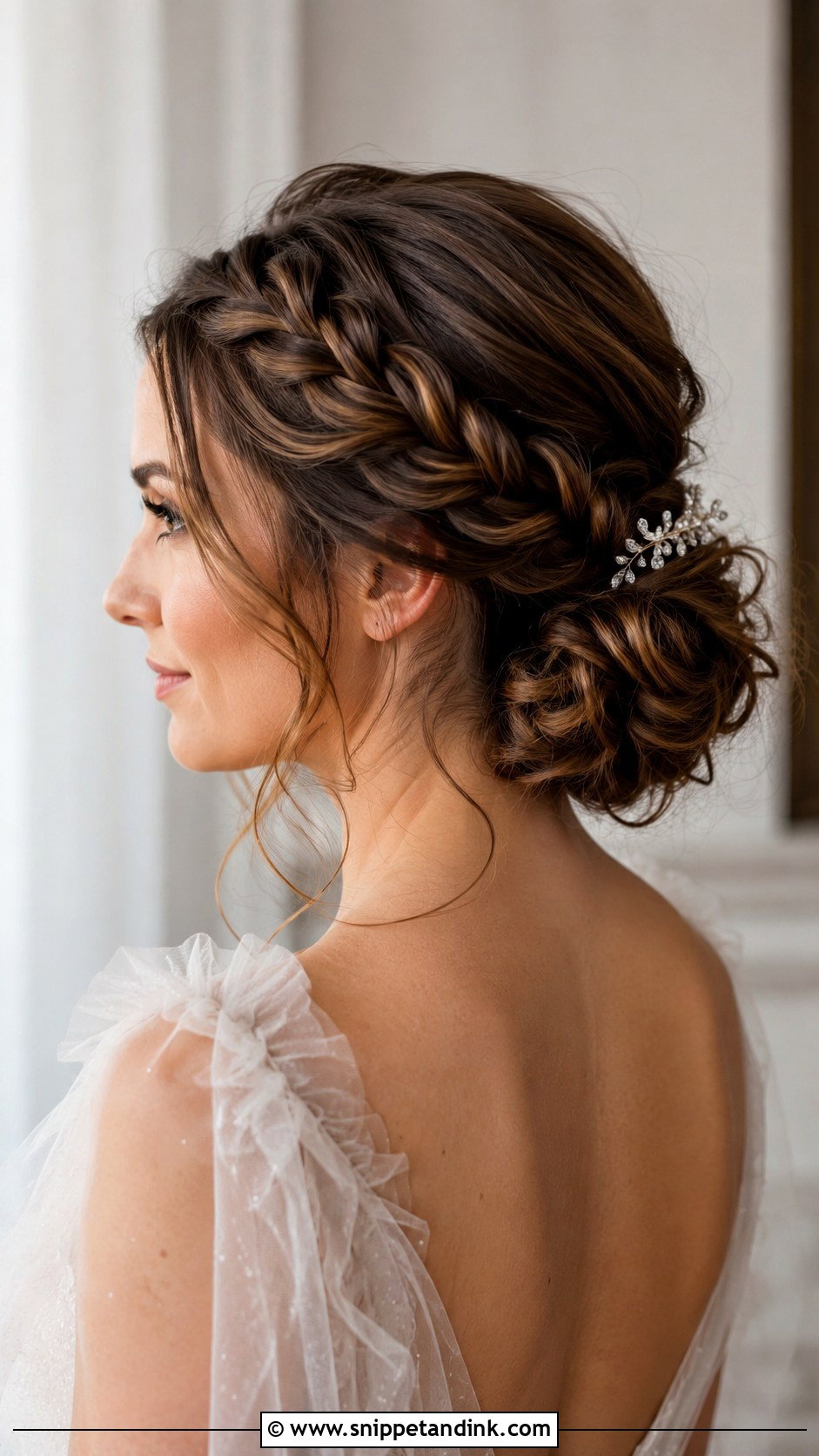
When the dress is plain, a braid gives the back of the hair something to say. Wrap it into the bun, run it down one side or build a crown before gathering at the nape. Highlighted hair shows every crossed section, so it reads well in photos. I braid tightly and then pull it apart, because a loose braid made loose from the start falls apart, while a tight one pulled wider holds. A few soft tendrils near the face keep the front from looking too tight.
5. Twisted Low Textured Bun Wedding Hair
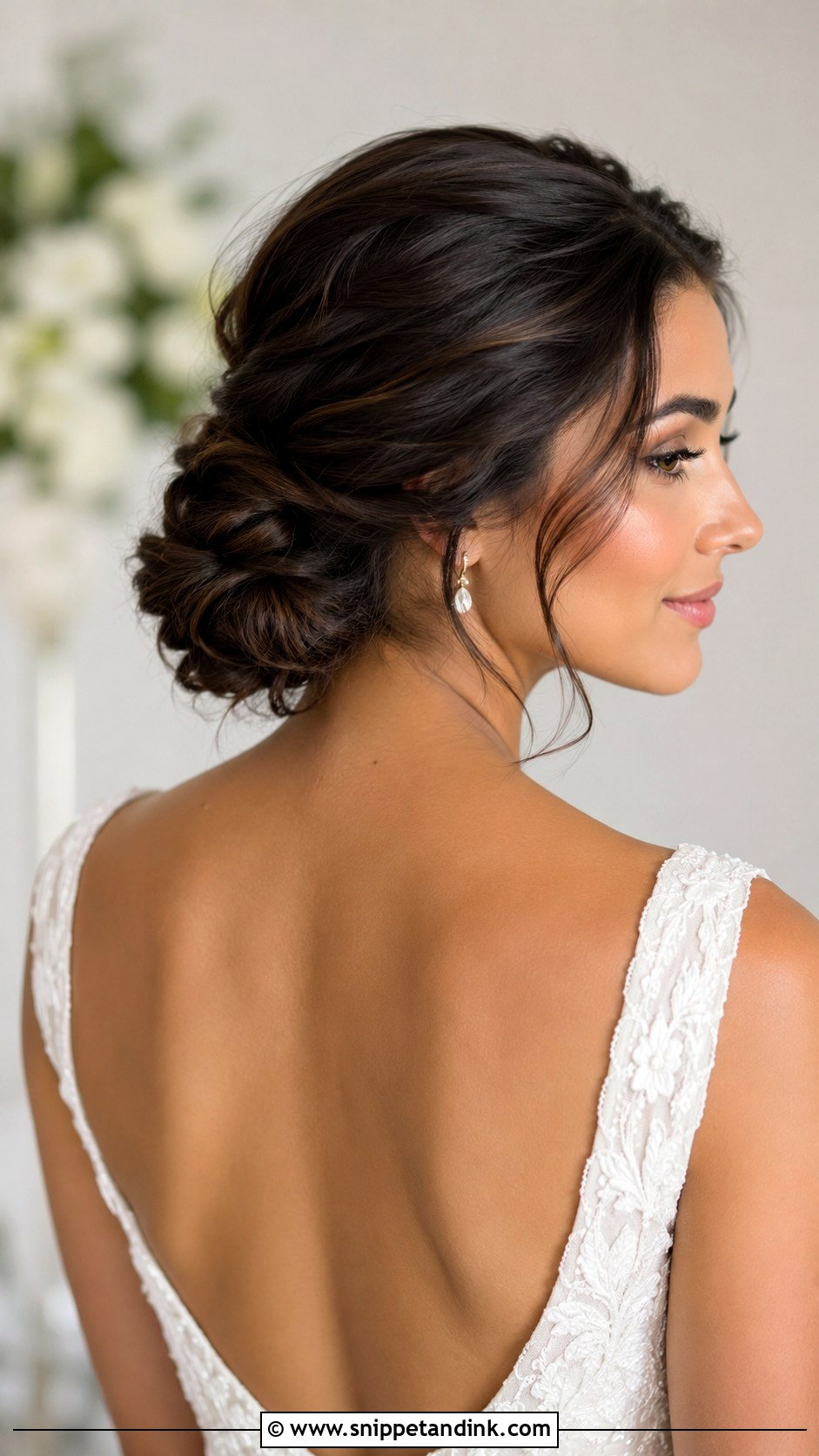
Twists give detail without the time a braid takes. Small sections are twisted back and pinned into the bun, leaving soft ridges you can see from any angle. Modern gowns, floral prints and classic silhouettes all work with it. Twists are especially handy on layered cuts, since short pieces can be caught up in each twist instead of escaping. Keep the twists even on both sides, or the bun looks lopsided from behind.
6. Side Part Low Textured Bun Wedding Hair
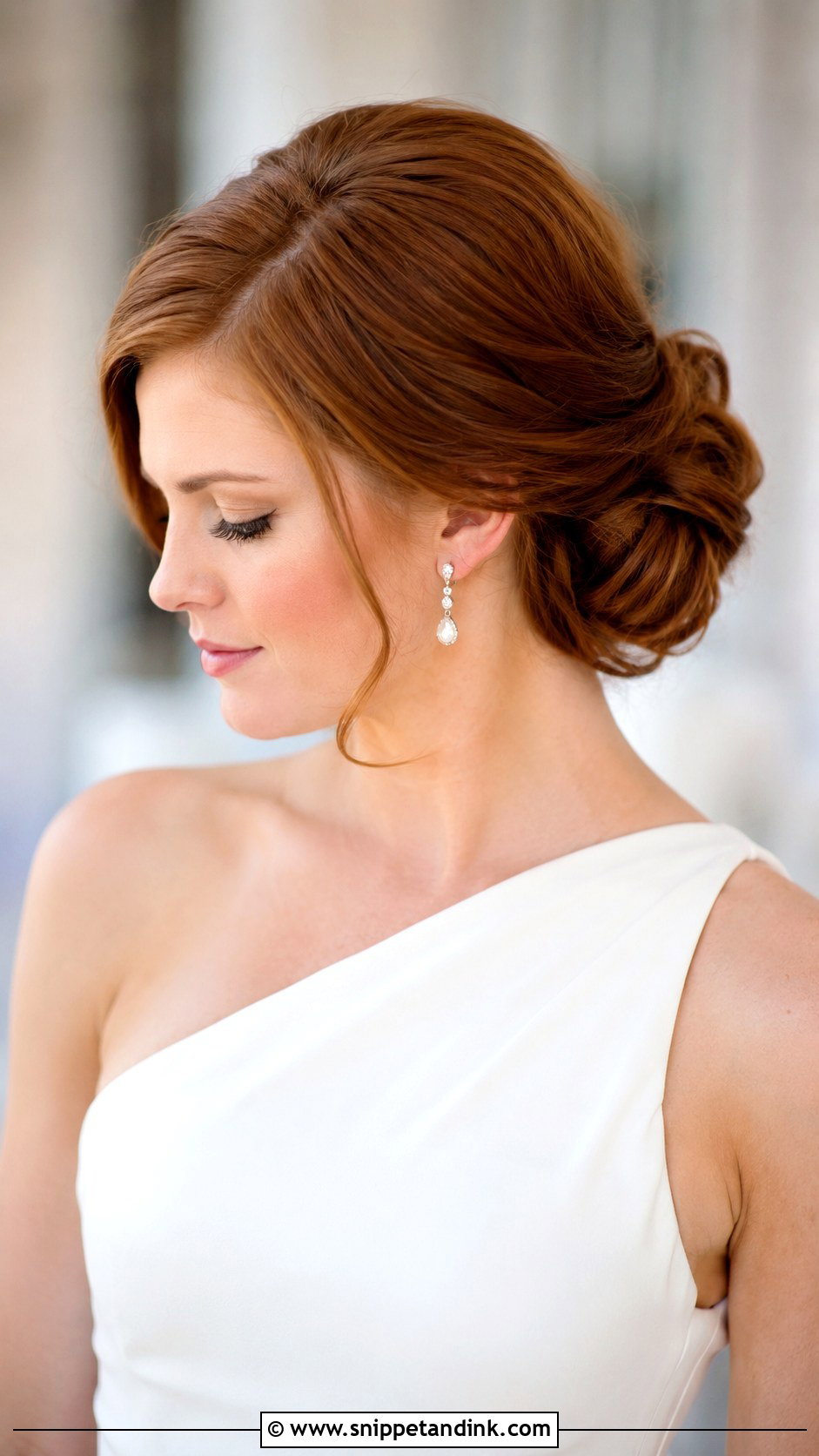
A side part gives the front of a simple bun more shape, particularly when the hair is swept softly past one temple. Drop earrings, one-shoulder dresses and veils all go well with it. The bun can sit centred at the nape or drift slightly towards the fuller side. I wave the hair before pinning so the sweep has a bend in it; straight hair swept across the forehead tends to slide forward into the eye by mid-afternoon.
7. Middle Part Low Textured Bun Wedding Hair
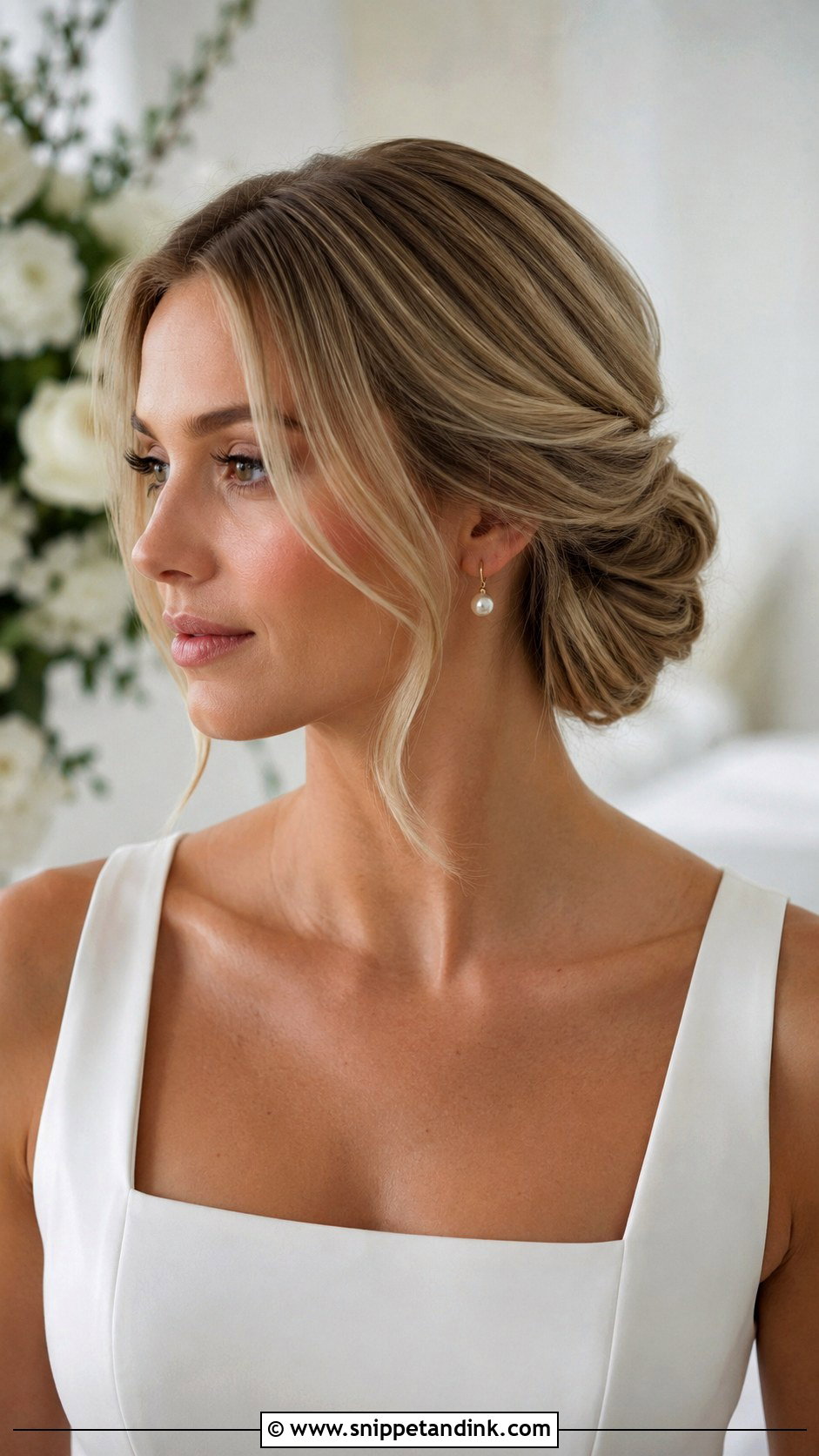
Middle parts can look harsh when everything behind them is tight, so the softness has to come from the front. I ask for loose bends around the face and a little lift just behind the part. Minimal gowns, square necklines, long veils and pearls suit it. Roots can be sleek or slightly airy. The bun itself should show folds and pinned sections, which is what keeps a symmetrical front from looking stern from the back. Test it on your own hair at the trial; a stubborn natural part will fight a centre line all day.
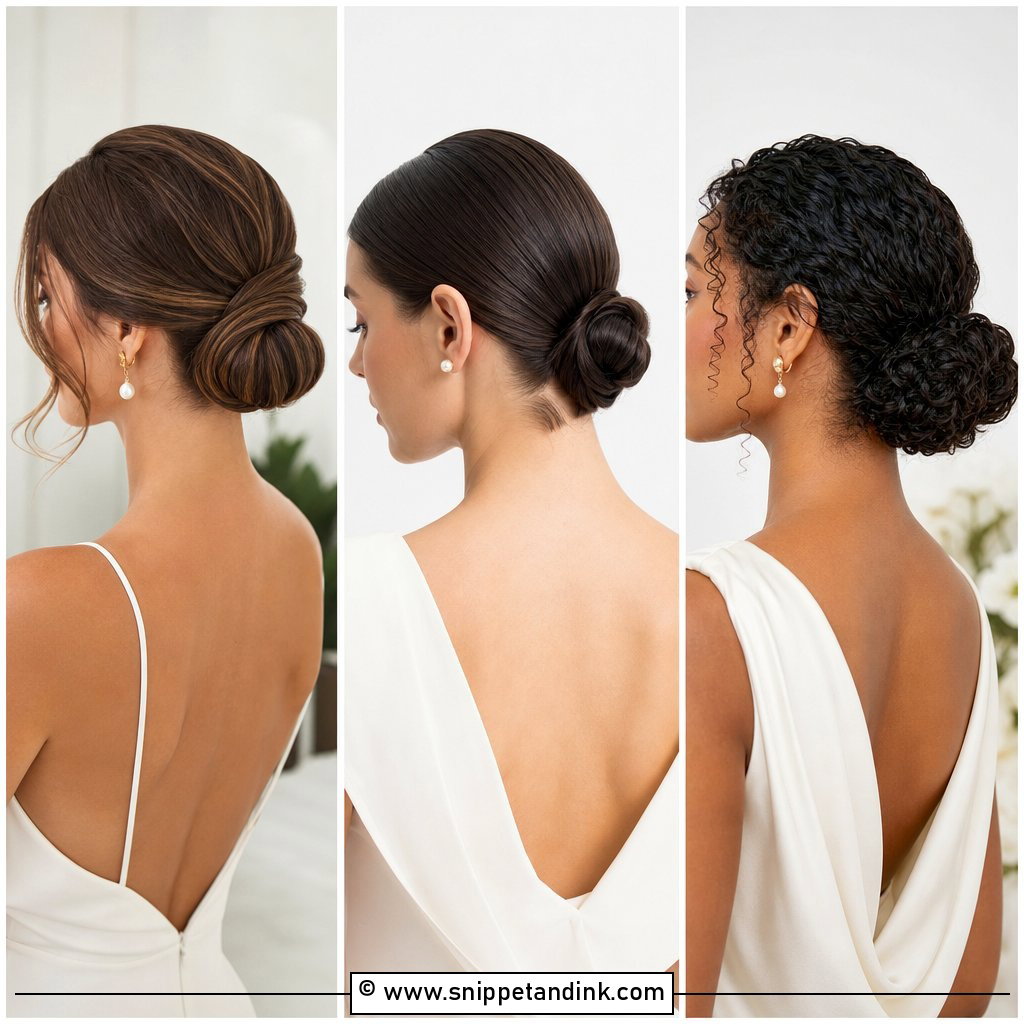
8. Curly Low Textured Bun Wedding Hair
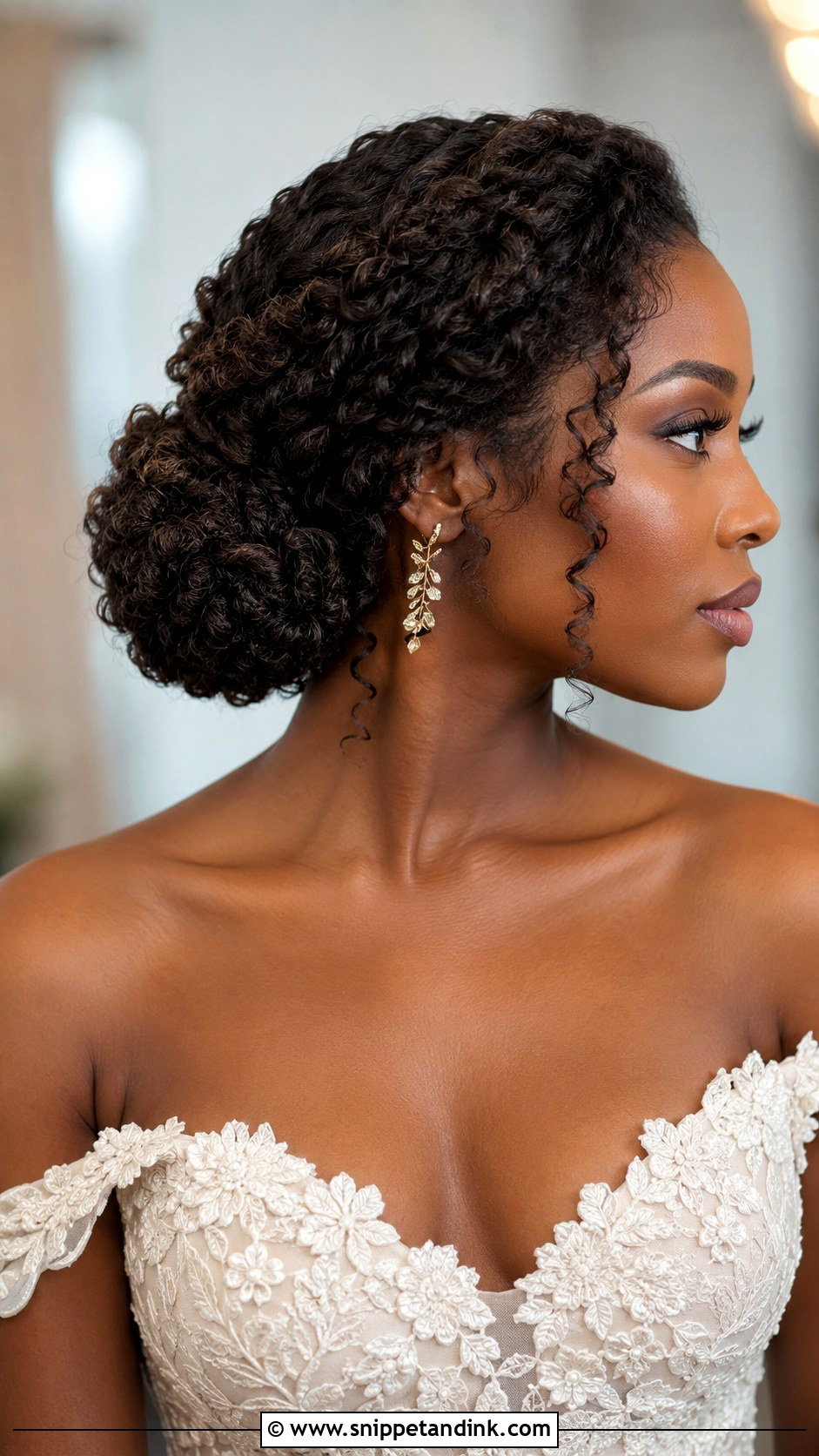
Curls bring their own texture, so I don’t fight them. Rather than smoothing them away, I shape the bun around the curls and let them provide the volume and detail. Naturally curly, coily and permed hair all suit it. Moisture the day before is important, and a defining product before styling keeps the curls from turning frizzy as they’re handled. I pin the curls low at the nape and leave a few soft pieces at the front. Small pins or a comb are optional; the curl pattern is already the main feature.
9. Wavy Low Textured Bun Wedding Hair
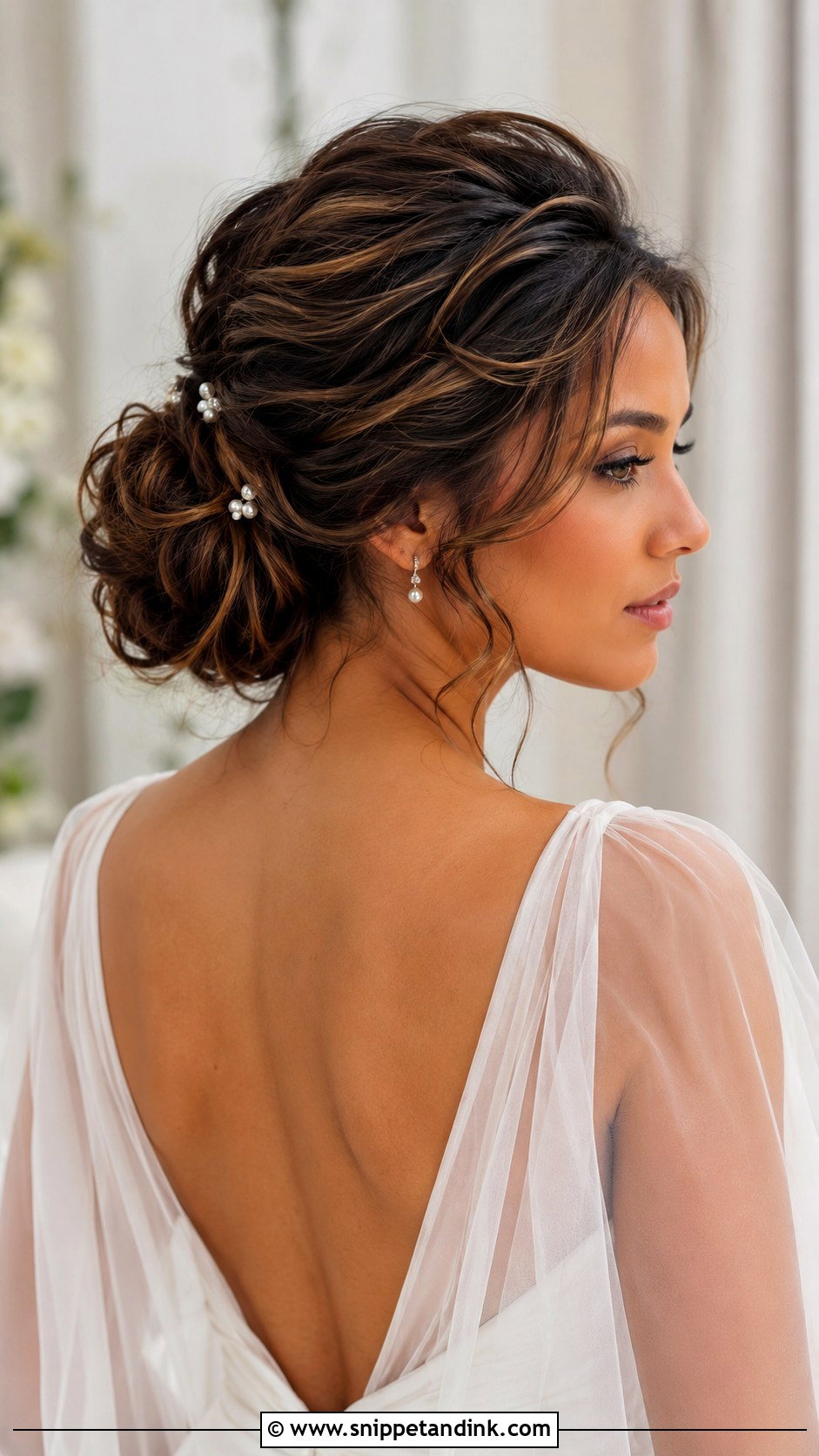
Waves make the easiest textured bun to wear, and it fits almost any setting. I wave the whole head, let it cool, then gather it into a soft bun so the bends create depth without looking overdone. Coloured hair benefits most: balayage, brunette ribbons, soft blonde tones and auburn all show more shades when the hair isn’t flat. Ask for a little lift at the crown and a bun pinned wide enough to balance your face. Flexible spray keeps the waves touchable all day.
10. Sleek Low Textured Bun Wedding Hair
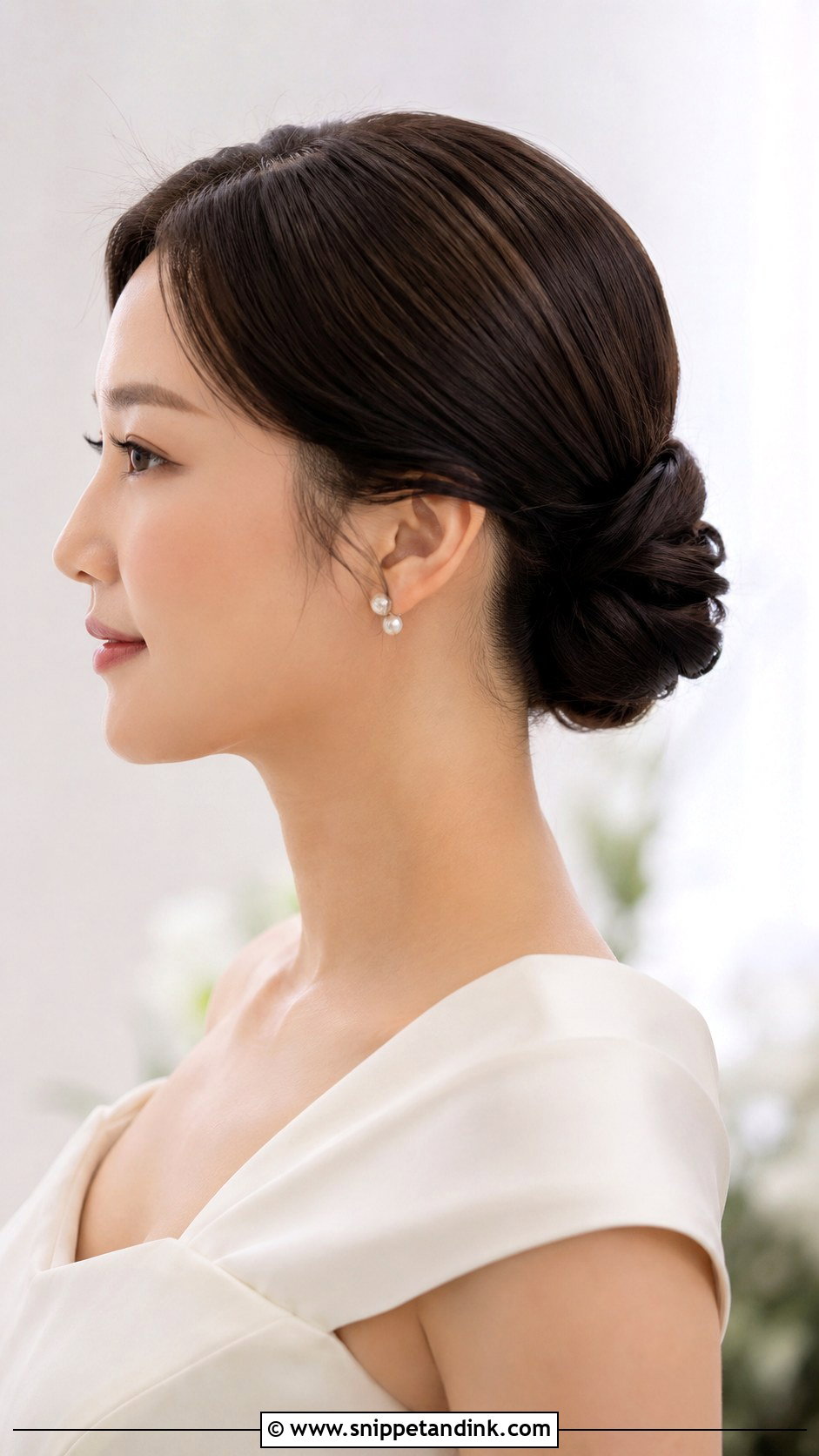
Smooth front, textured back. That’s the whole idea here, and it suits brides who like a polished finish but find a fully slick bun too severe. The front and crown are brushed sleek, while the bun has twists, folds or waves. Structured gowns, clean makeup and statement earrings go well with it. Use shine spray sparingly; too much on the sleek front reads as greasy under flash. It also gives a veil a tidy, secure base.
11. Low Textured Bun Wedding Hair With Pearl Pins
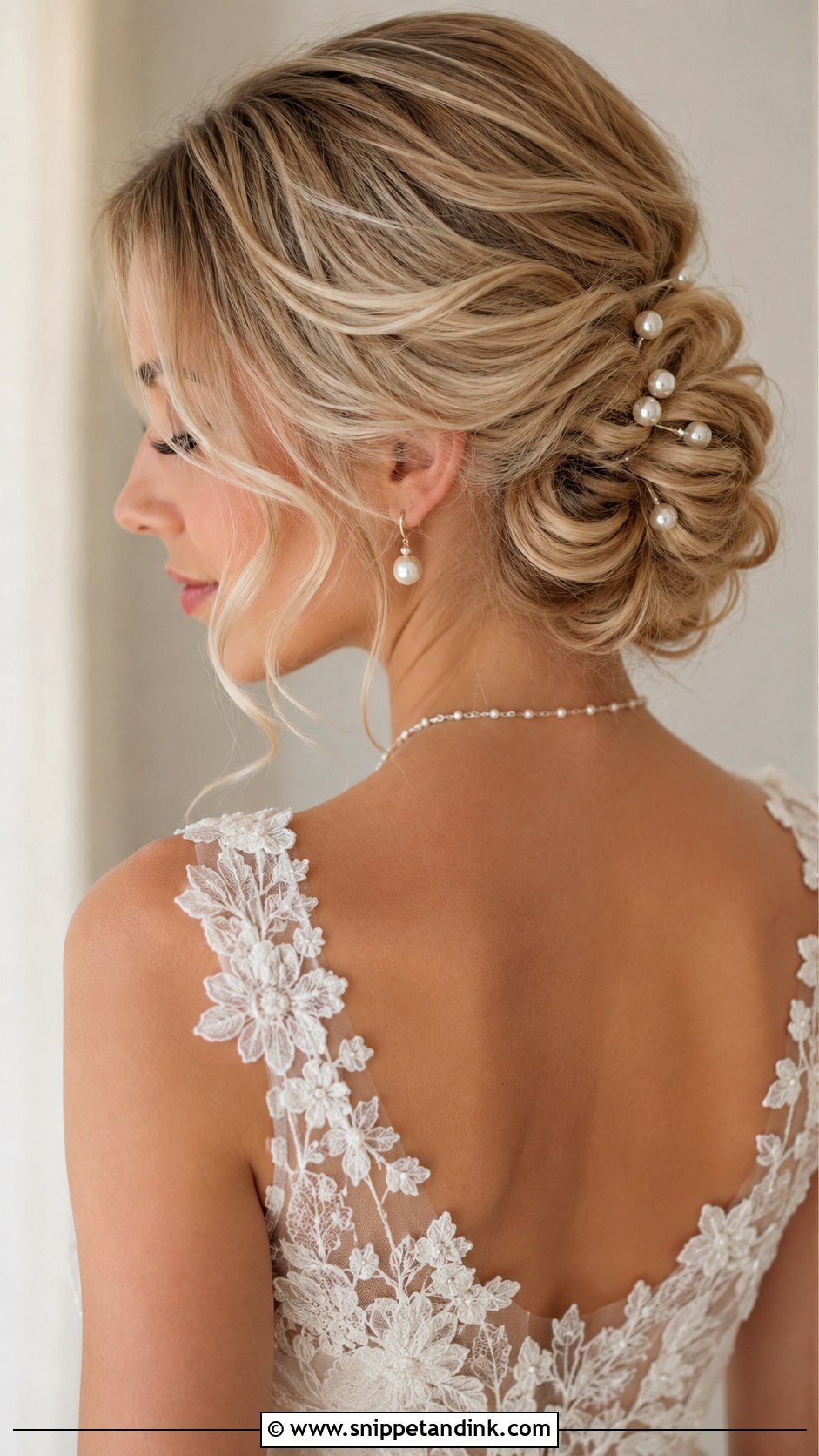
Pearl pins nestle into a textured bun rather than sitting on its surface, which is why this pairing works so well. Scatter them through the bun, line them along one side or tuck them near the base. If the pins are bold, I keep the front simple; with tiny ones, a few loose face pieces add softness. Lace, satin, tulle and simple courthouse dresses all suit them. Match the metal of the pins to your jewellery, since gold and silver backs can show between pearls.
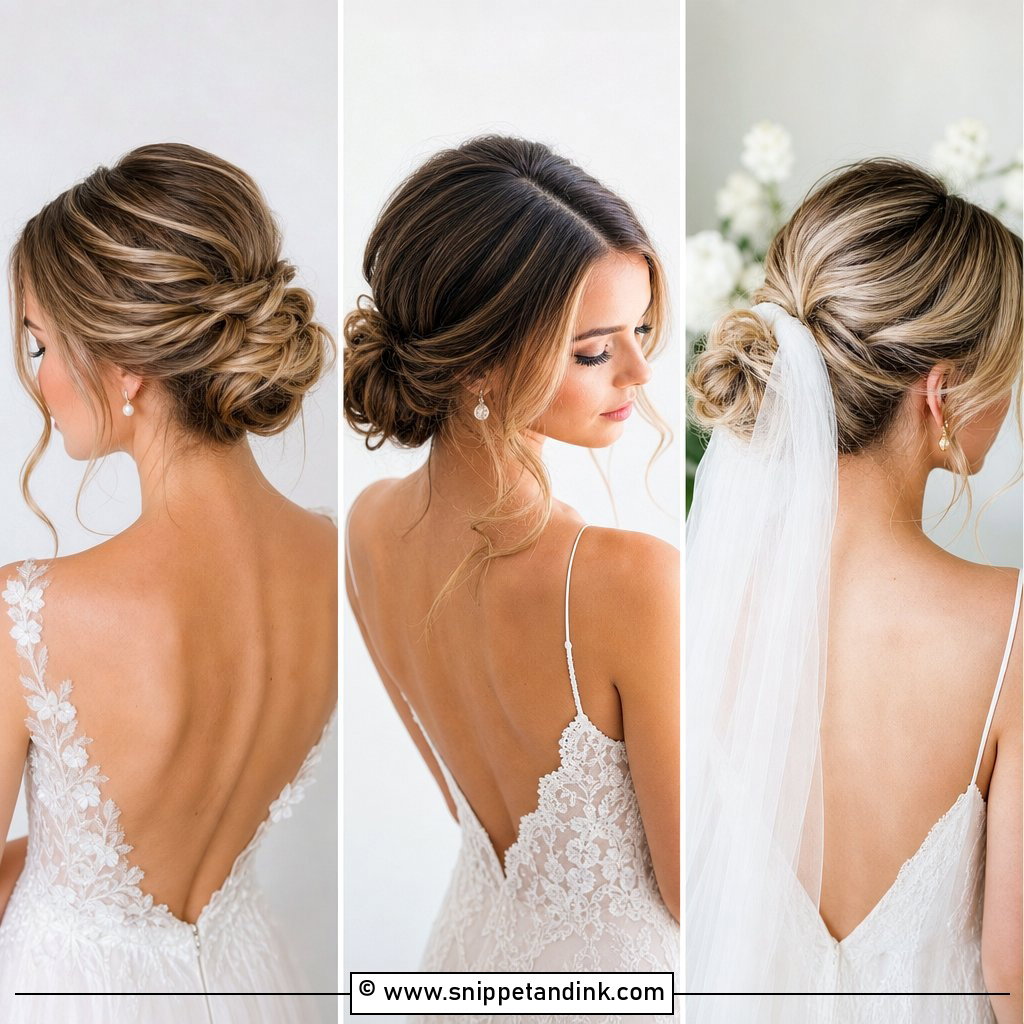
12. Low Textured Bun Wedding Hair With Veil
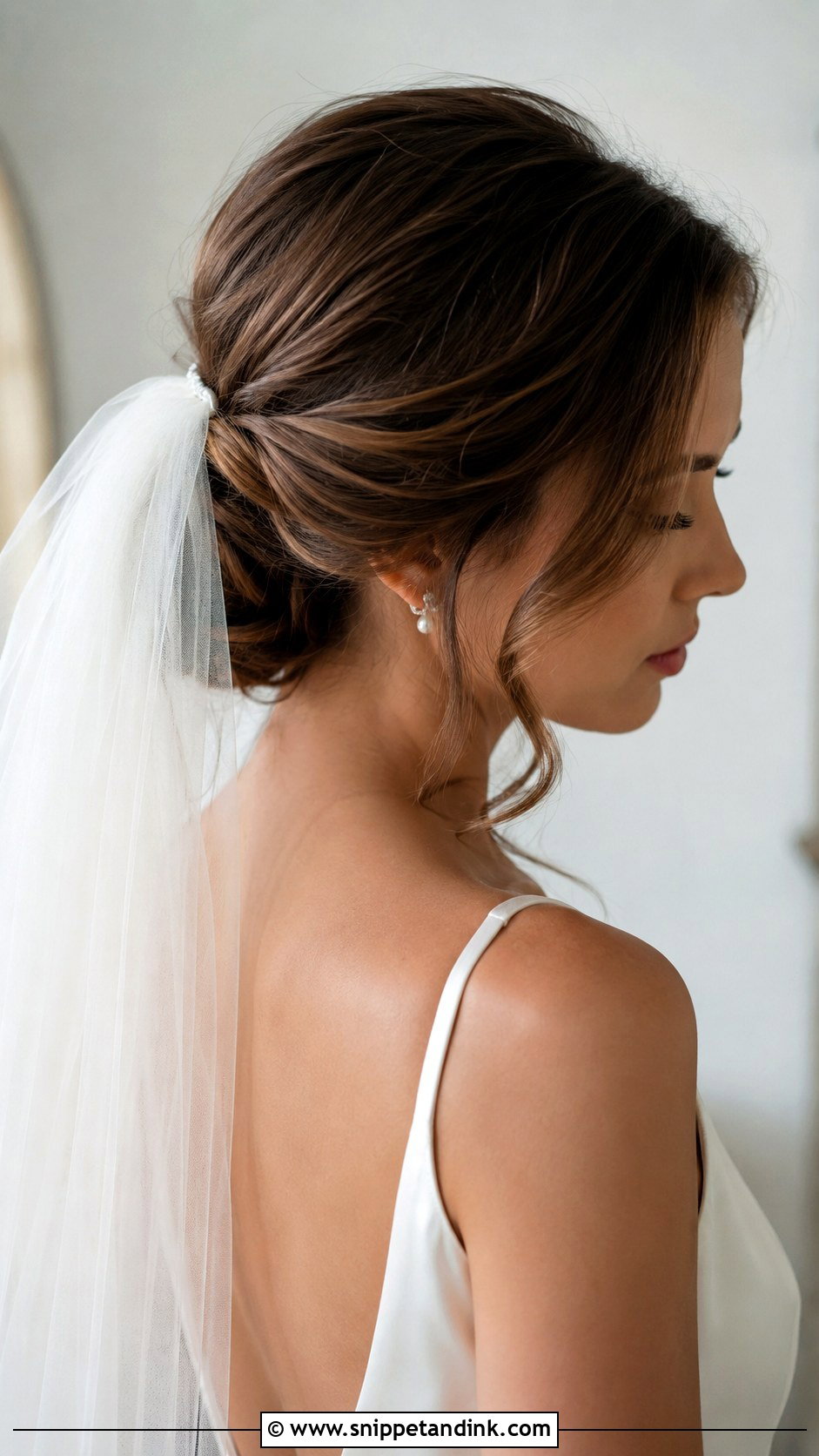
A bun is the most reliable veil anchor I know. Wear the veil above it for a classic outline or below for a softer drape, and the texture will look good once the veil is off at the reception. The trick is to make the bun firm on the inside and soft on the outside. I build a tighter core where the comb goes and loosen only the surface. Bring the veil to your trial so we can test the comb’s grip and check that it doesn’t pull.
13. Low Textured Bun Wedding Hair With Flowers
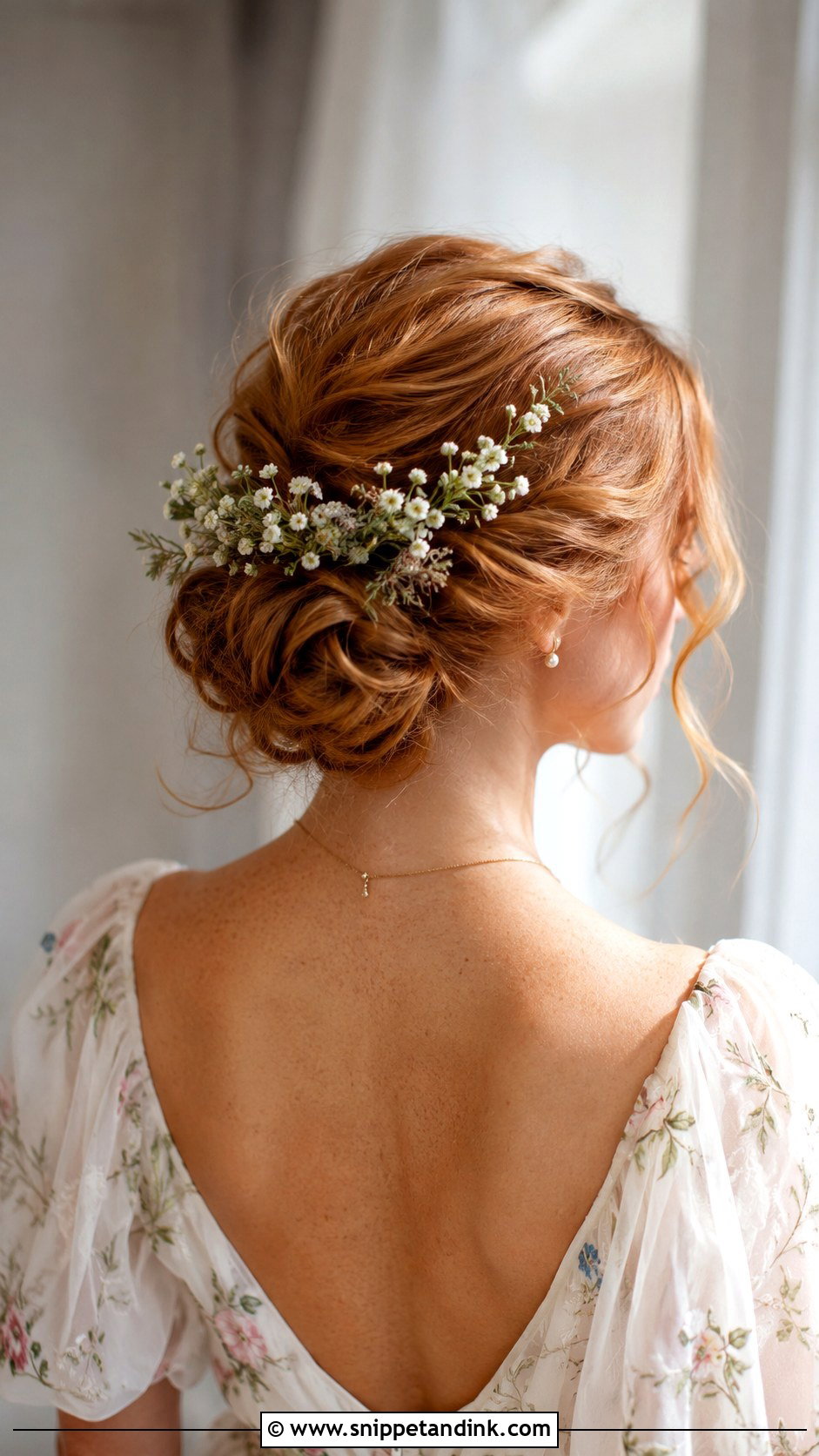
Garden, spring, summer and outdoor weddings suit small blooms, dried flowers or greenery tucked around the bun. Texture helps the stems blend in rather than looking stuck on top. Match them to your bouquet, but keep them light; heavy flower heads drag on the pins and tilt over the hours. Pair them with soft waves, loose tendrils and a slightly undone shape. In warm weather some flowers wilt quickly against the head, so ask your florist which blooms will last.
14. Low Textured Bun Wedding Hair For Thin Hair
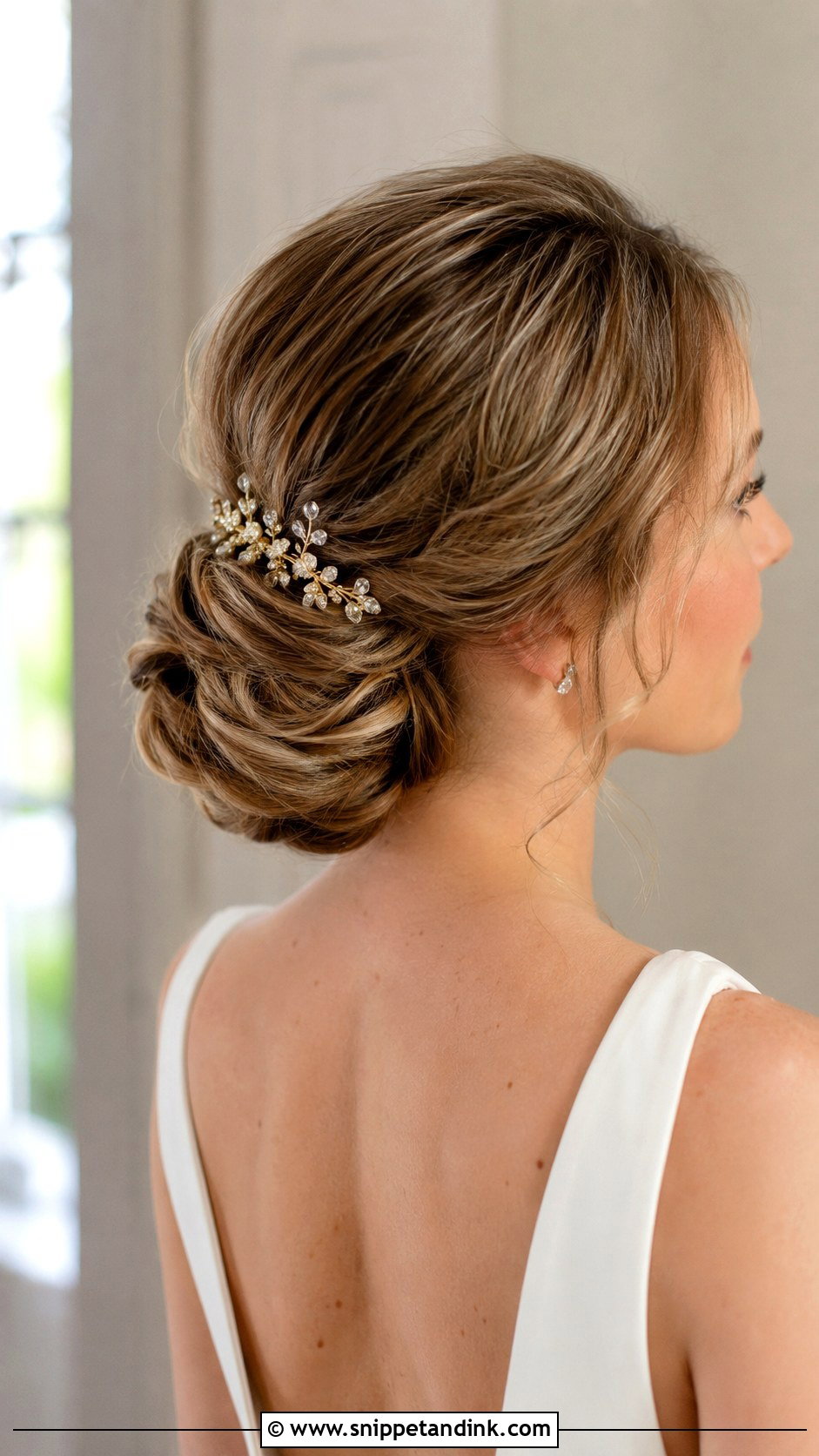
Thin hair needs grip more than stiffness. I use a volumising mousse at the root, texture spray through the lengths and sometimes hidden padding or extensions to build a fuller bun. Waving the hair before pinning adds bends that make it look thicker. A wider, softer bun photographs better than a small tight knot. Keep the front soft and lifted rather than slicked flat, which can show the scalp on fine hair. A pearl pin, a comb or a light veil adds detail without weighing it down.
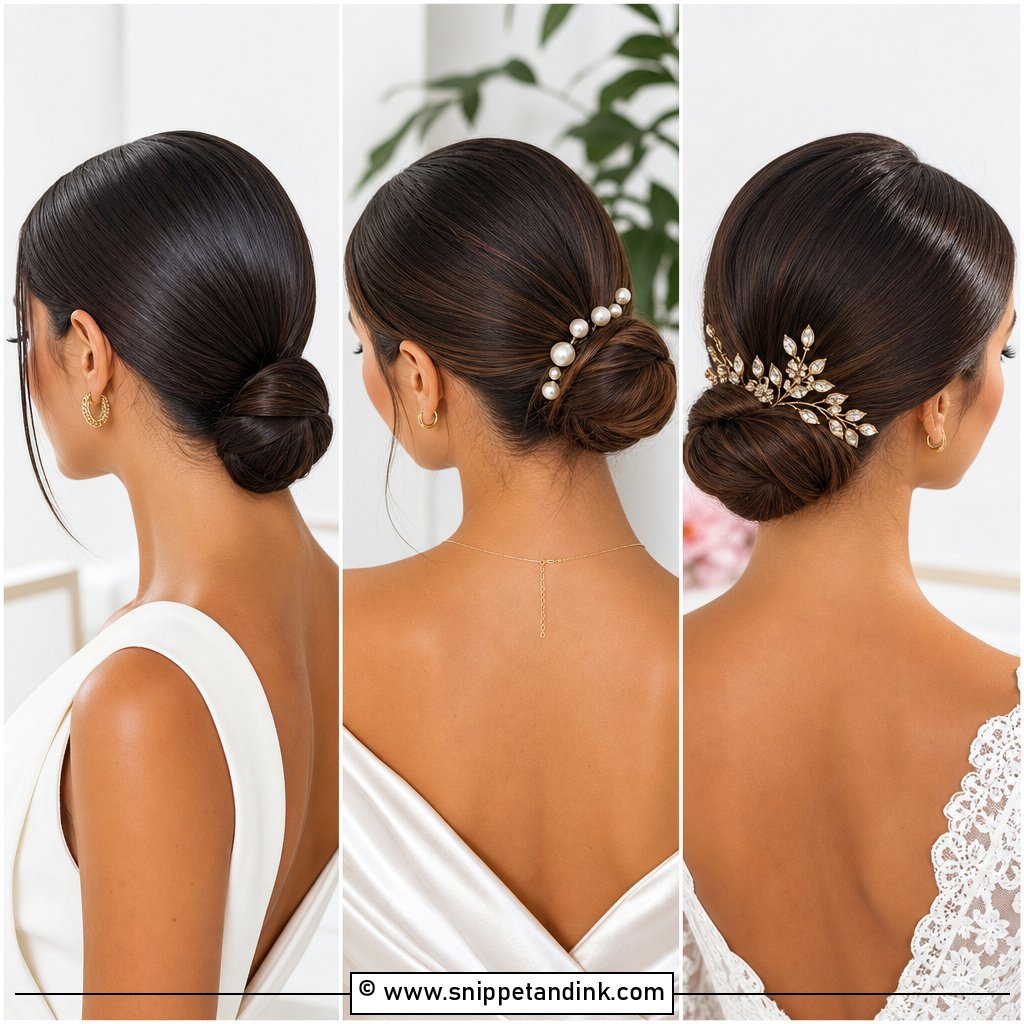
15. Low Textured Bun Wedding Hair For Long Hair
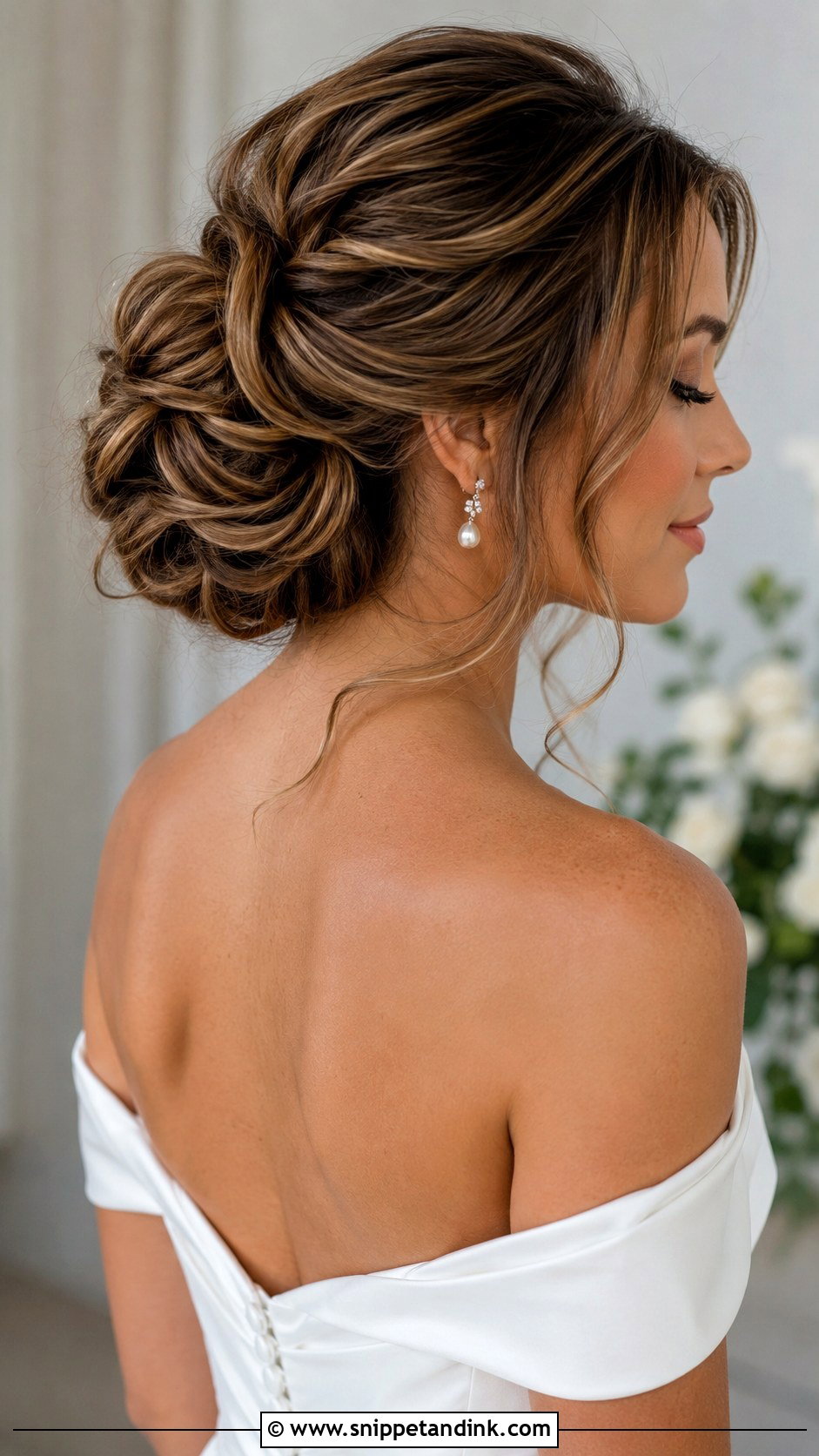
Long hair gives me plenty to fold and loop into a detailed bun at the nape, but all that length is heavy. Strong hidden pinning is non-negotiable, and I usually split the hair into two or three sections pinned separately so the weight spreads out. The bun should sit close to the head to feel secure, with enough texture on the surface to show movement. Dimensional colour looks good here since long sections show visible ribbons of tone. Very thick hair often feels more comfortable in a wider, flatter shape.
Layered Cuts, Bangs and Ends That Poke Out
A low bun gathers everything at the nape, which means any layer shorter than that point has nowhere to go. It’s the most common problem I see at trials, and it’s easy to fix if we plan for it.
Short layers
Layers that stop at the jaw or the shoulder get caught up in twists or small braids at the sides before they reach the bun. Any ends still loose get pinned underneath with a little texture paste so they don’t spring back out.
Curtain bangs and fringes
Curtain bangs blend nicely into face-framing pieces and are usually left out on purpose. A blunt fringe stays as it is; pinning it back rarely works and leaves a dent. If your fringe is growing out, a small sweep and a hidden pin at the temple can hold it for the day.
Planning a haircut
If you’re set on a textured bun, avoid adding new short layers in the months before the wedding. Ask for a trim to tidy the ends instead. If layers are already cut, a few colour-matched clip-ins can bridge the gap and make the bun look fuller.
Soft Outside, Strong Inside
A low textured bun mixes softness with real hold, and you can push it towards romantic, detailed, classic, modern or natural depending on what you add. It works with veils, pins, combs, pearls and most necklines. Bring clear photos to your trial and talk about your hair type, the weather, the veil and how much pulling your scalp can take. A good one feels secure, looks soft and still looks like you when you see the photos years later.
You'll Like These Ideas:


Leave a Reply