
What makes a design read as Pakistani, to my eye, is the spacing. The motifs are rich but each one sits in its own clear frame, with fine filling inside bold outlines and enough breathing room that the stain still reads from across a room. Most of my Eid clients want a hand they can finish in one sitting on Chand Raat and still show off at three family visits the next day. Others are planning a mayun, a nikkah or full bridal hands. The patterns below borrow from both Indian density and Arabic flow, built from tikki circles, paisleys, roses, jaali, vines, cuffs and finger work. I’ve noted roughly how long each takes and who it suits.
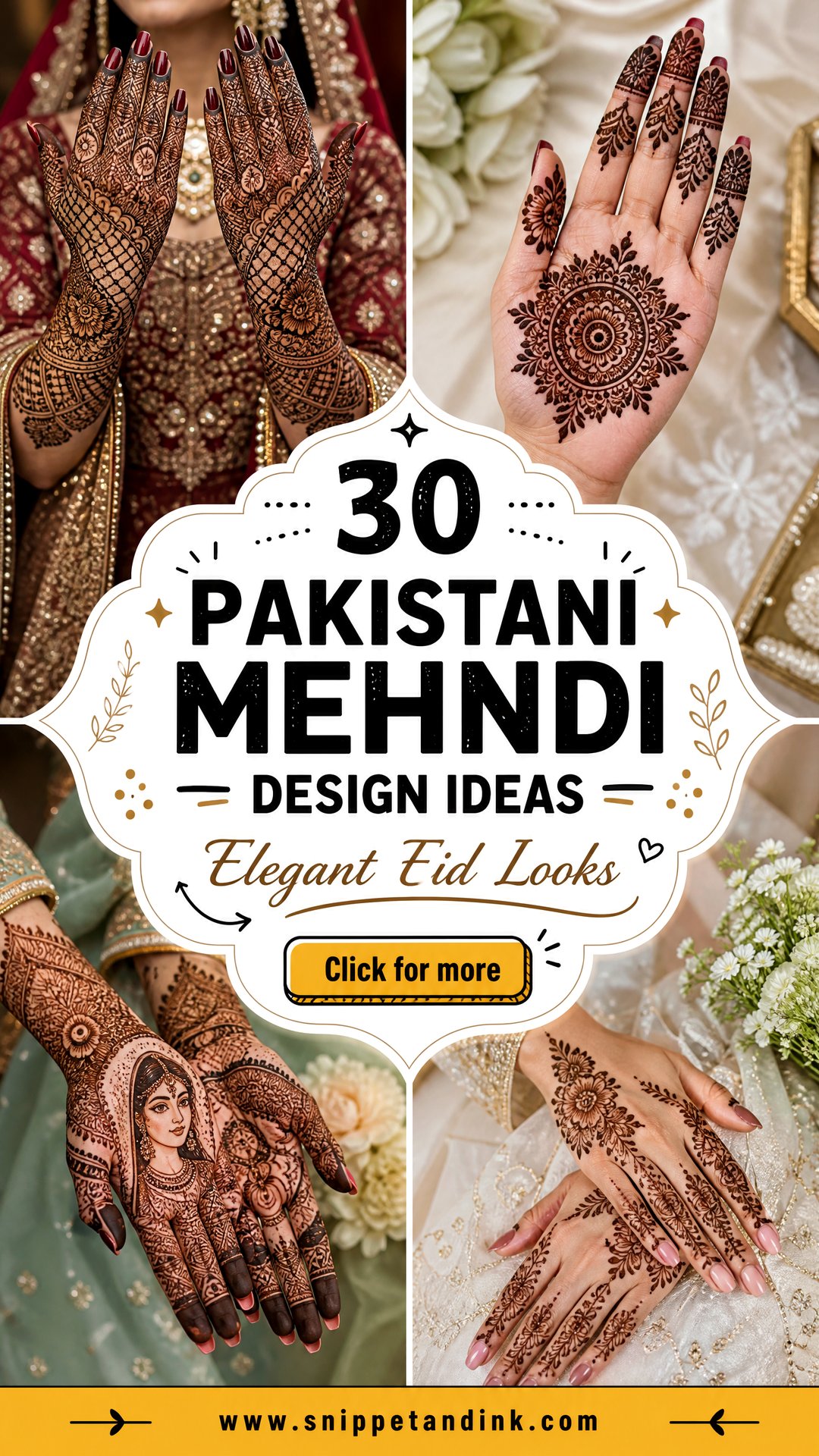
Timing Henna on Chand Raat So It Peaks on Eid Day
Natural henna does not come off the skin at its darkest. When you scrape the dried paste away, the stain is bright orange. It deepens over the next day or two into a reddish brown, sometimes maroon, as it oxidizes. That is how real henna works, and it’s why timing matters.
Most people apply on Chand Raat, which means the hands are still orange on Eid morning and look their best on the second day. If you want it darker for the first day of Eid, apply a day earlier if you can. The catch is that nobody knows exactly when the moon will be sighted, and salons and stalls are packed that night, so booking early in the last week of Ramadan gives you more choice.
- Palms and fingertips stain darkest; the back of the hand and wrists come out lighter.
- Warm hands stain better than cold ones, so keep them warm while the paste sits.
- A detailed bridal hand can take hours; a simple Eid palm usually far less, which matters on a busy night.
1. Pakistani Bridal Mehndi Design Full Hand
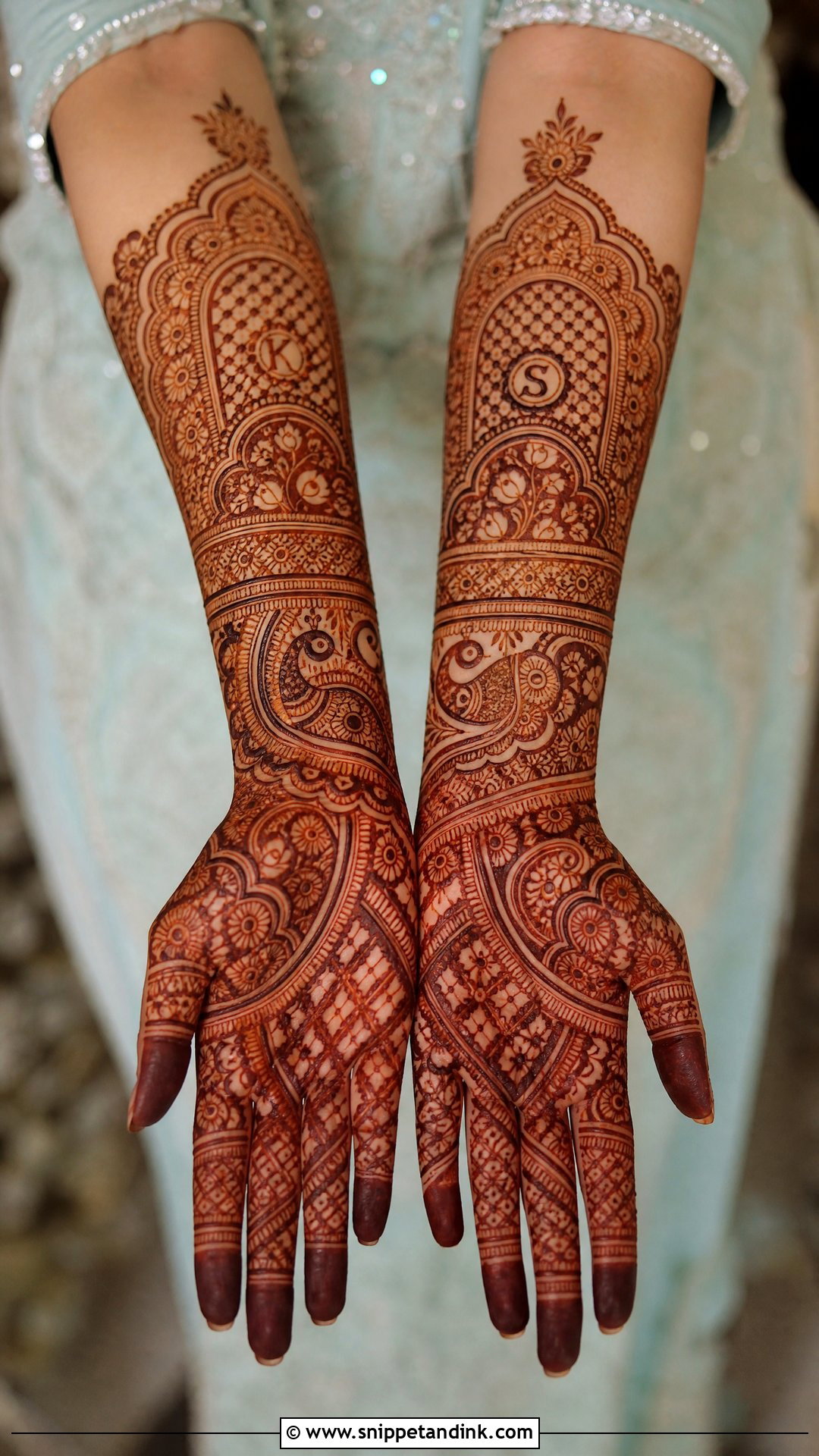
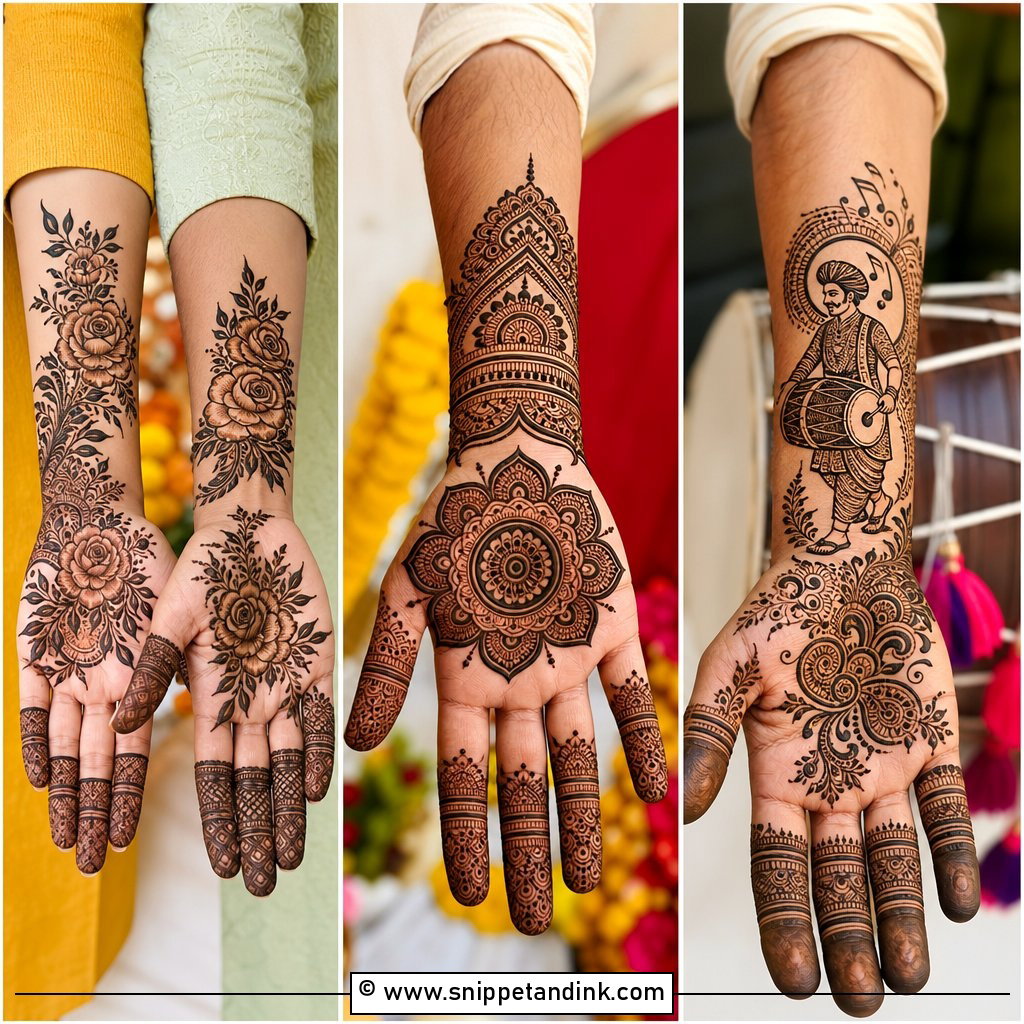
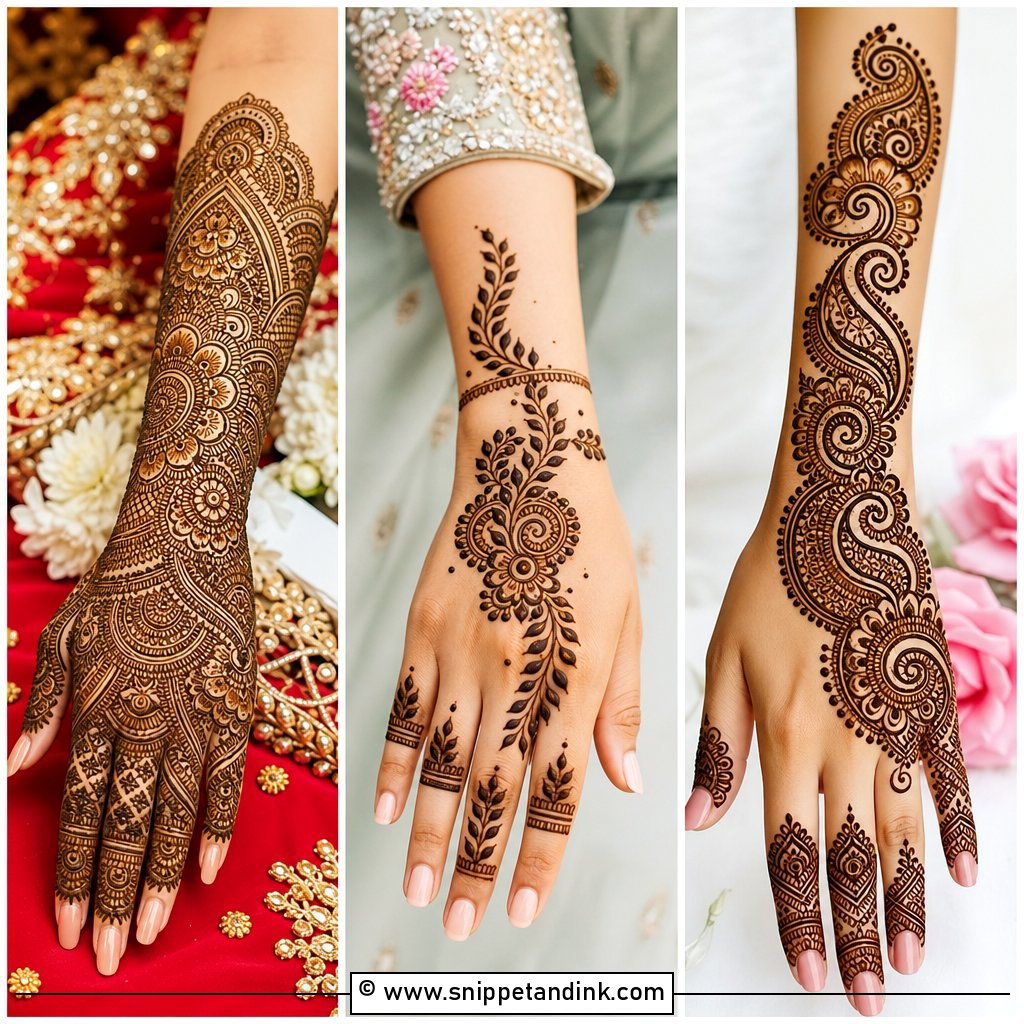
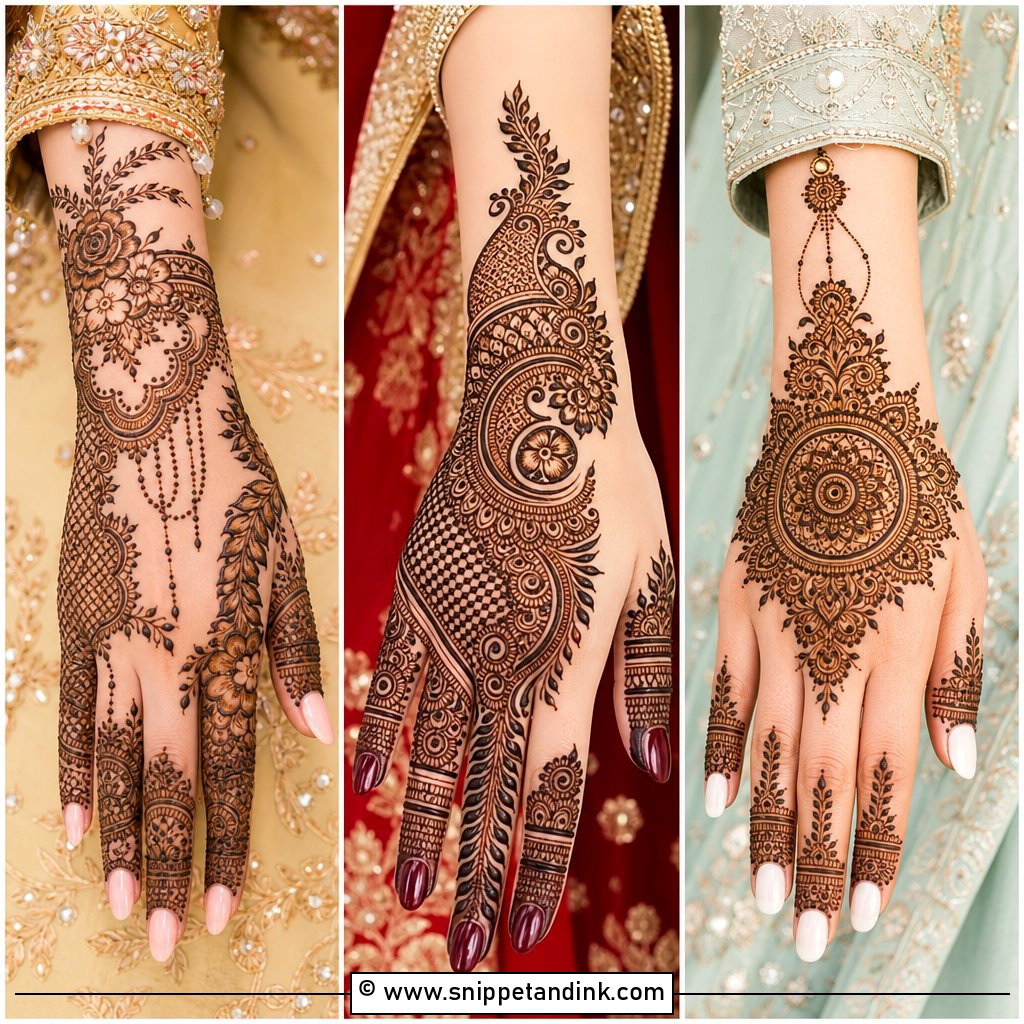
Full bridal hands are the longest sitting I do, often several hours for both sides up to the forearm, and the bride has to stay fairly still for all of it. Palms, fingers, wrists and arms are covered with paisleys, florals, mandalas, peacocks, jaali panels and bracelet borders, leaving very little bare skin. Initials or the wedding date can hide inside. I map both hands before starting so they balance even when each has a different centerpiece. Ask for strong outlines with fine filling. Dense fine lines on their own blur together as the stain darkens, while a bold outline keeps every shape readable in photos.
2. Pakistani Tikki Mehndi Design Front Hand
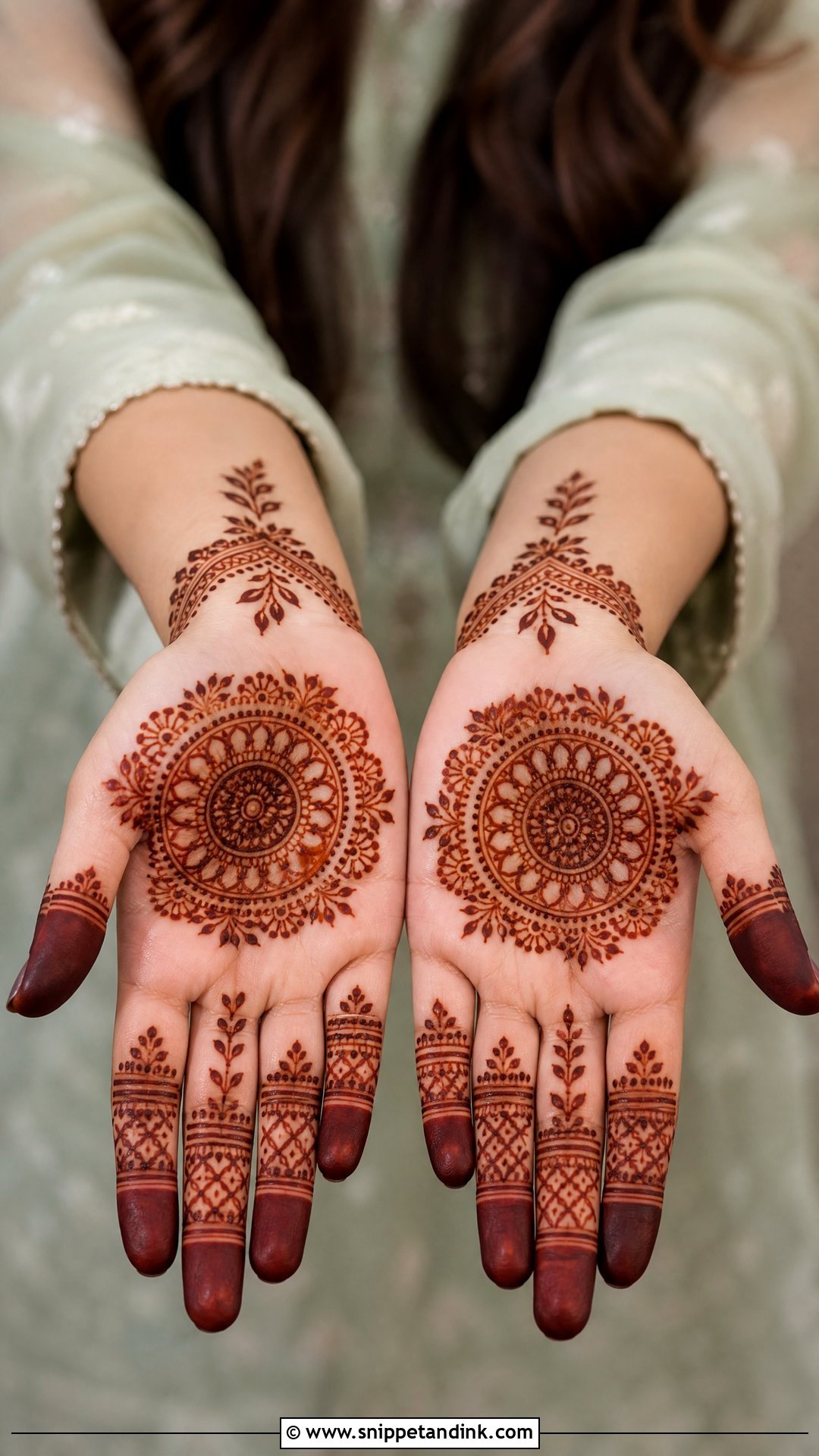
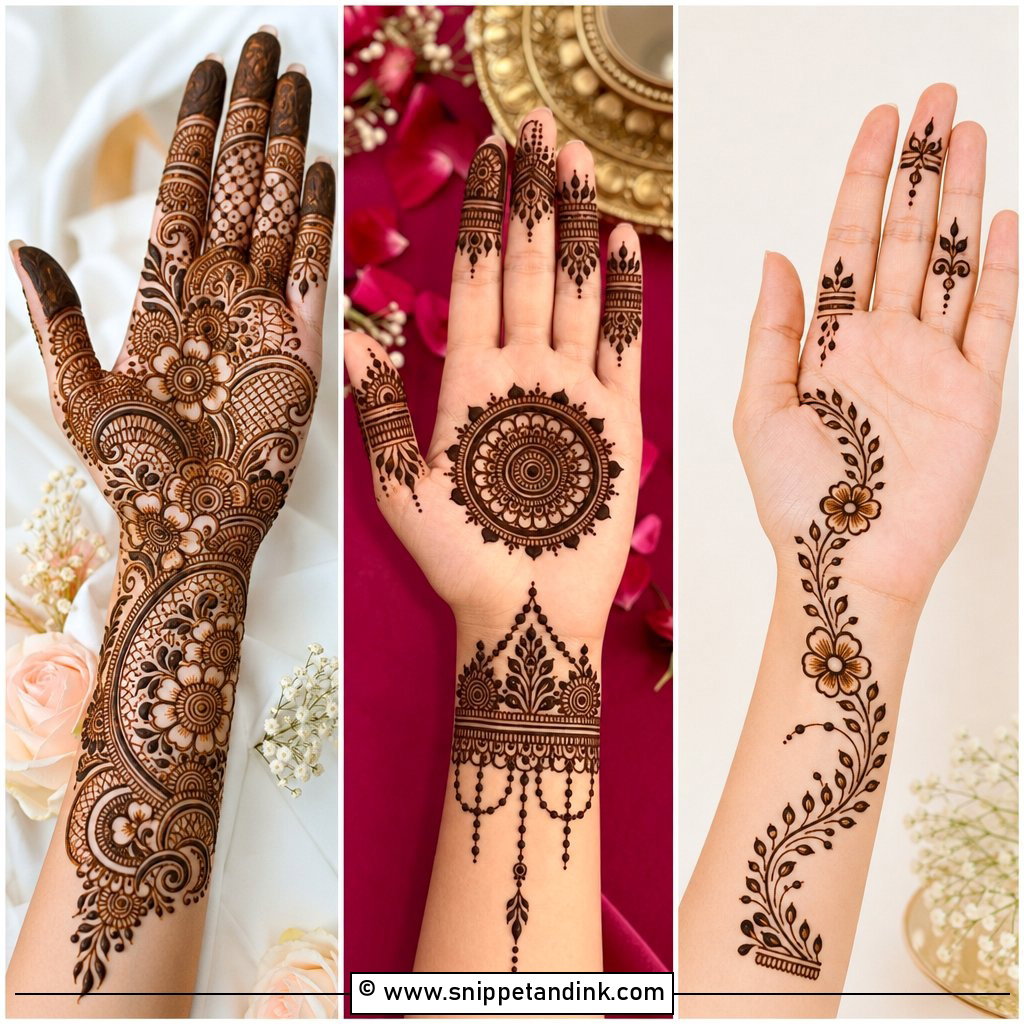
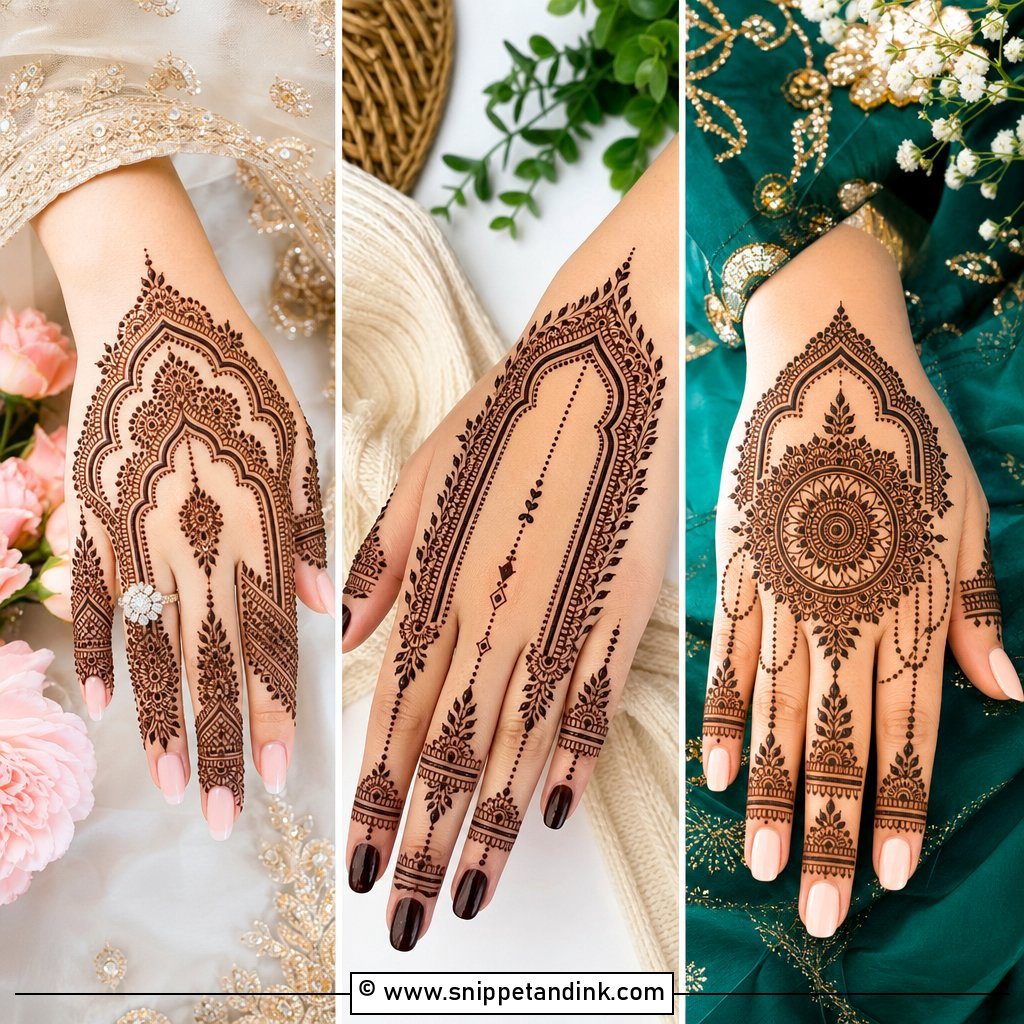
The tikki is the motif people recognize instantly as Pakistani: one round mandala in the middle of the palm, built outward with dots, petals, vines and borders. Its strength is symmetry, so I draw the circle in one steady pass and check it from the client’s side, not mine. Kept with open fingers, it’s a quick Eid design; with fingertip caps and a wrist band, it’s full enough for a dholki or mayun. Keep the circle bold and the details around it smaller. A tikki that’s too wide crowds the fingers and loses its shape.
3. Pakistani Arabic Mehndi Design Back Hand
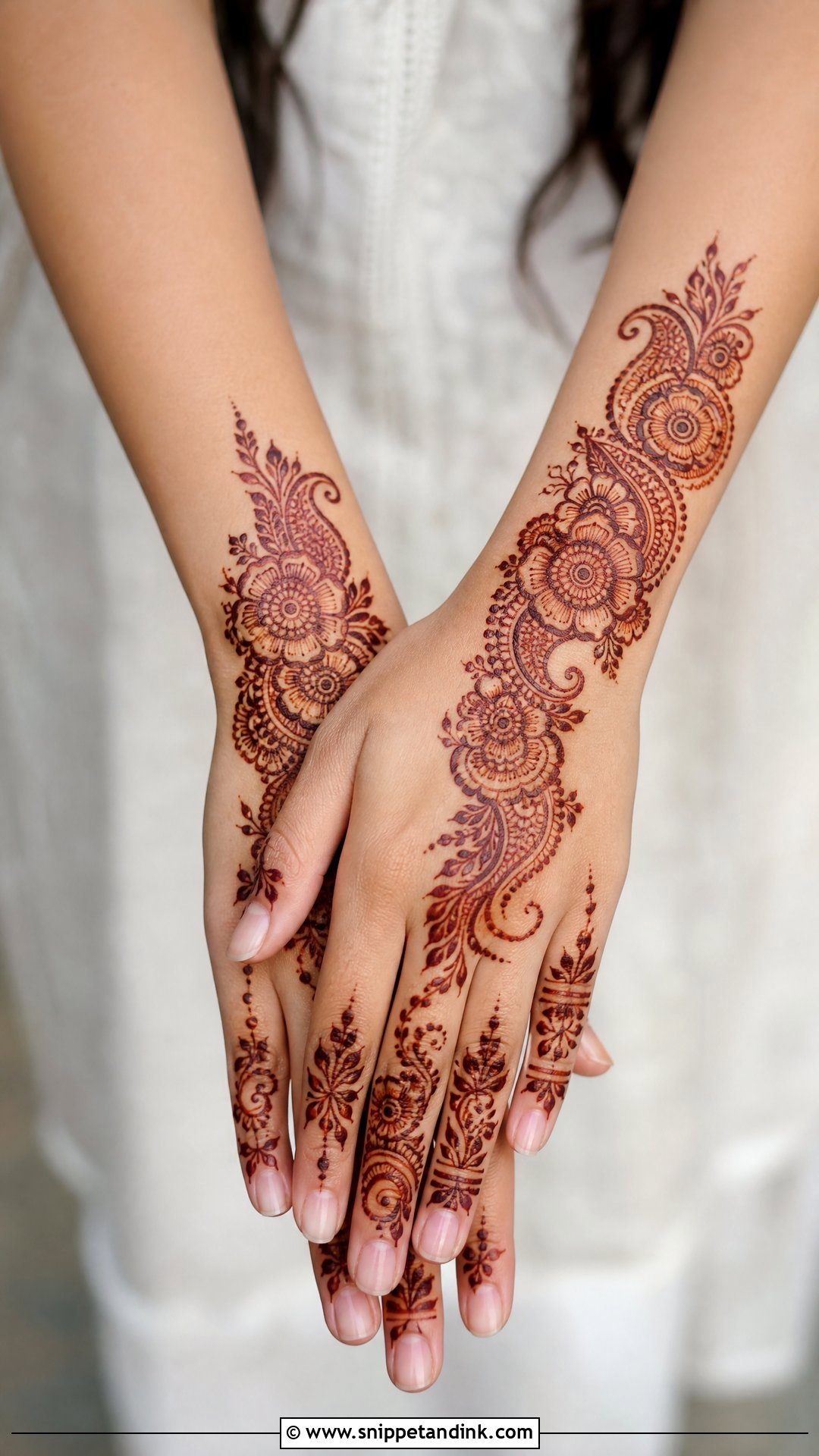
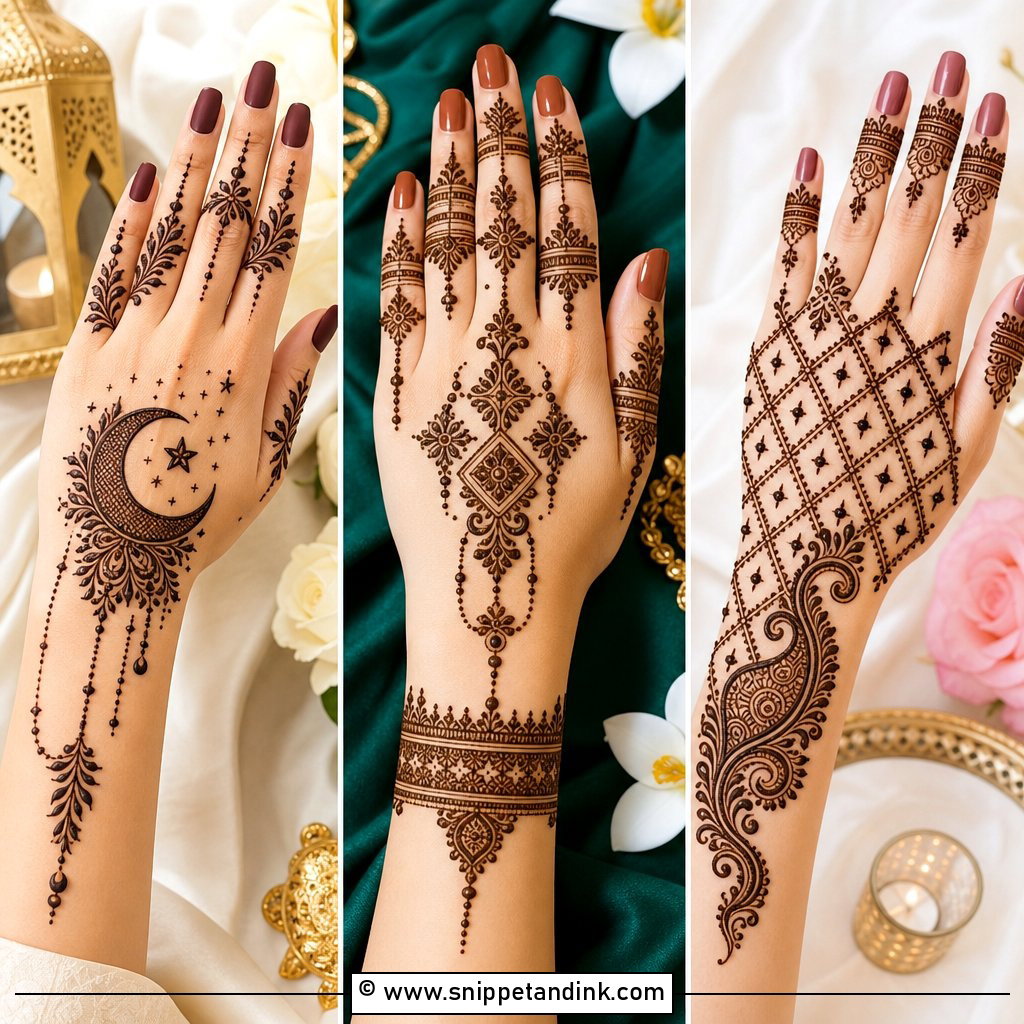
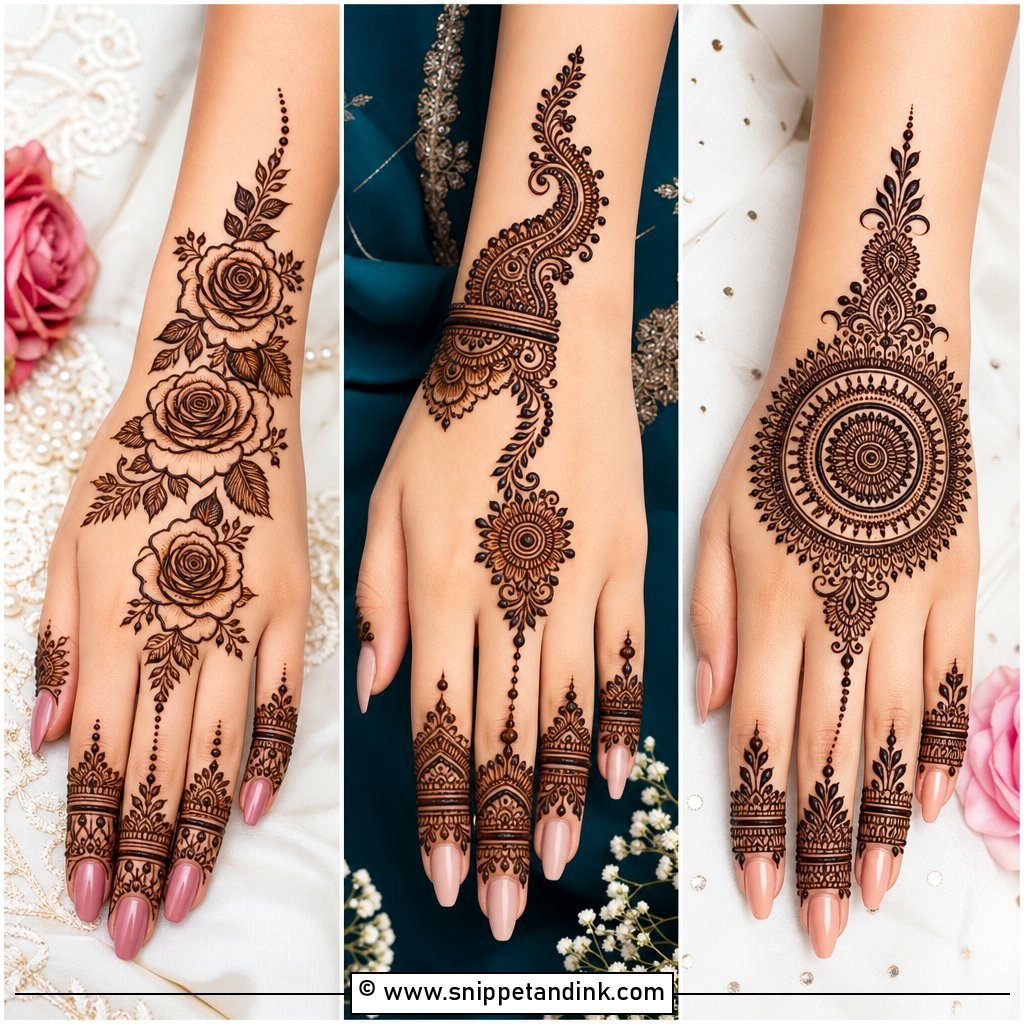
This trail starts at one finger and runs diagonally across the back of the hand toward the wrist, carrying roses, leaves, paisleys and shaded petals with dotted borders on either side. Because the diagonal follows the bones of the hand, it makes fingers look longer. The bare skin around it is part of the design. I go bold on the flower outlines and lighter on the shading, since the back of the hand stains paler than the palm and fine shading there can fade to a smudge.
4. Pakistani Simple Mehndi Design Front Hand
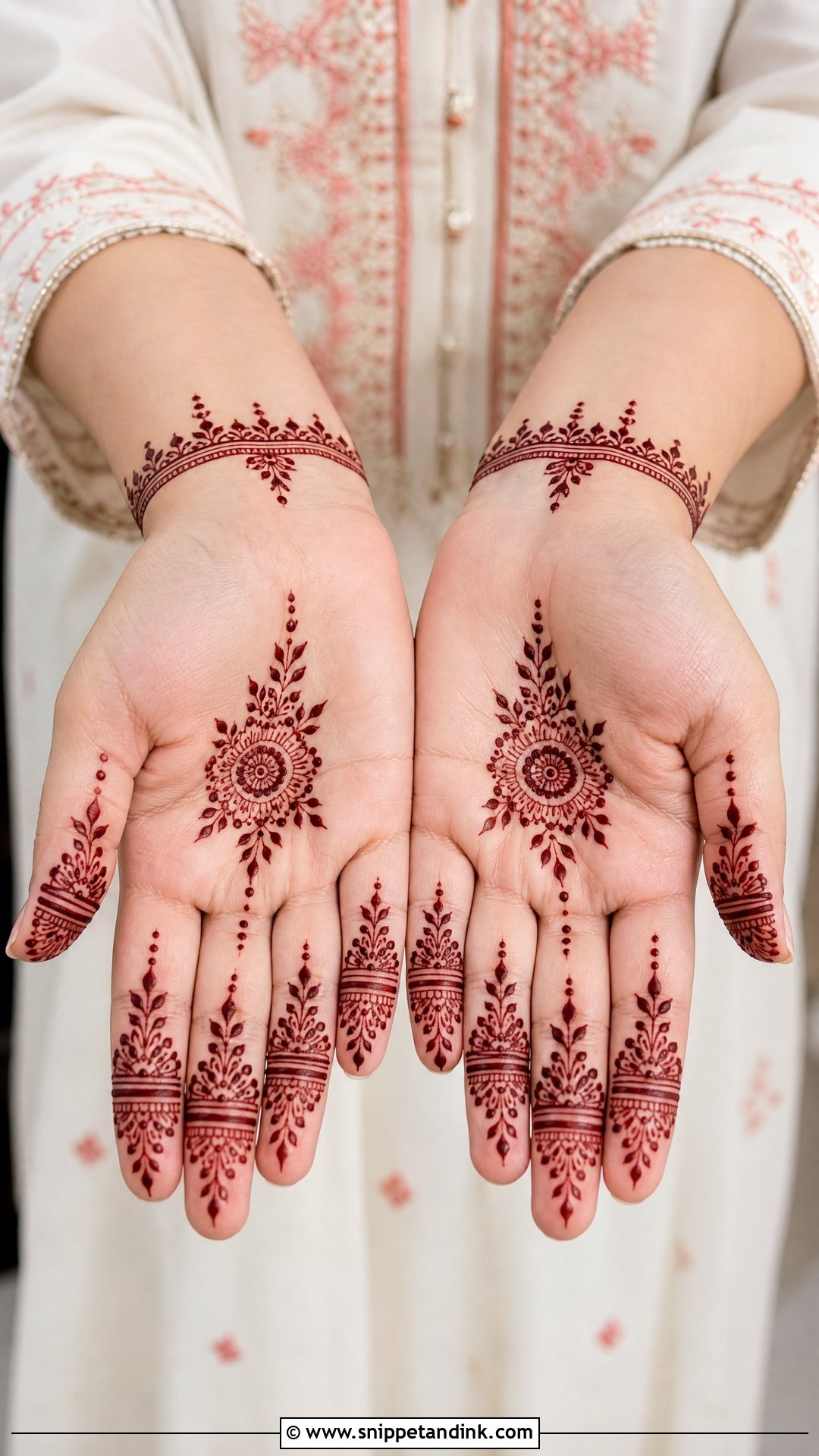
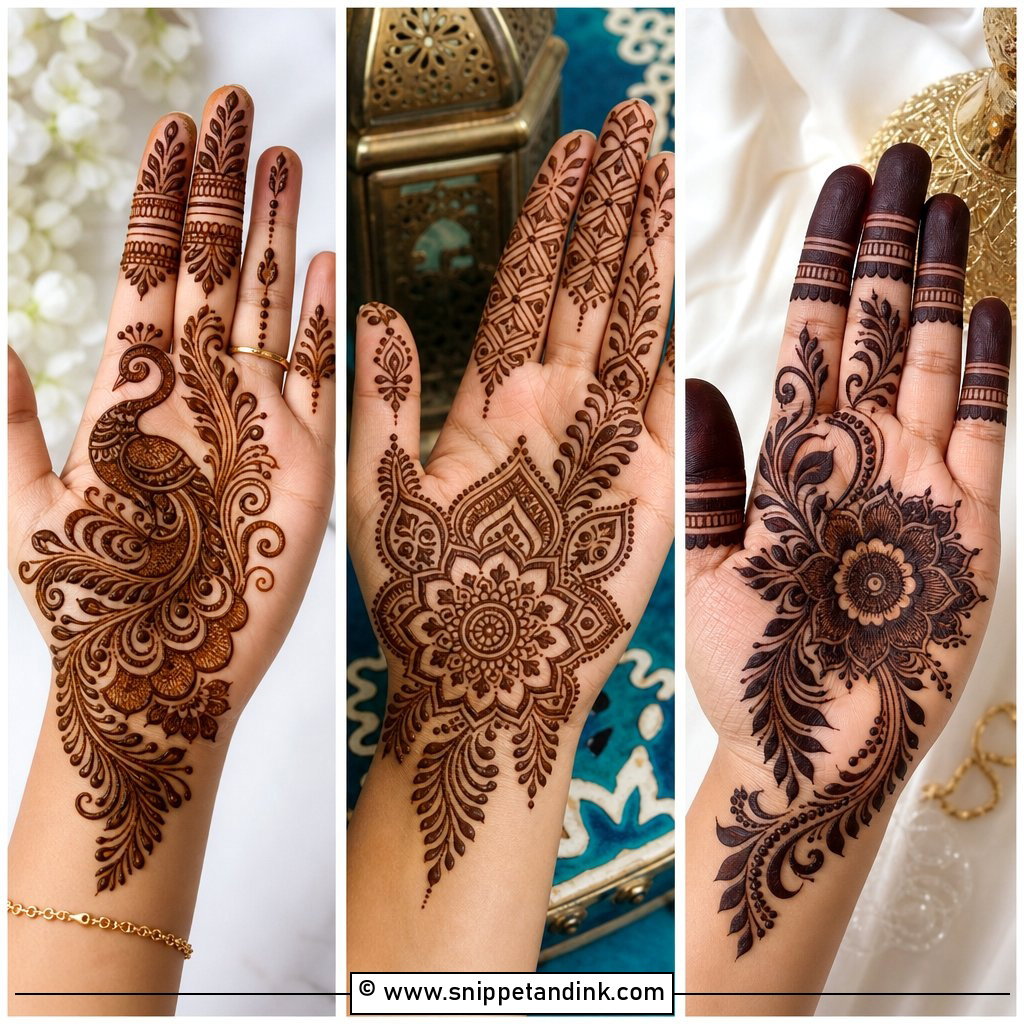
Short on time? This is the one I do most on Chand Raat, when the queue is long. A palm motif, light finger bands and a small wrist border, finished with small florals, paisleys and leafy curves, rather than full coverage. It suits younger girls, first-timers and casual family visits. The trick to keeping it Pakistani rather than generic is a strong center on the palm and fine lines on the fingers. Spacing does the rest.
5. Pakistani Rose Mehndi Design Back Hand
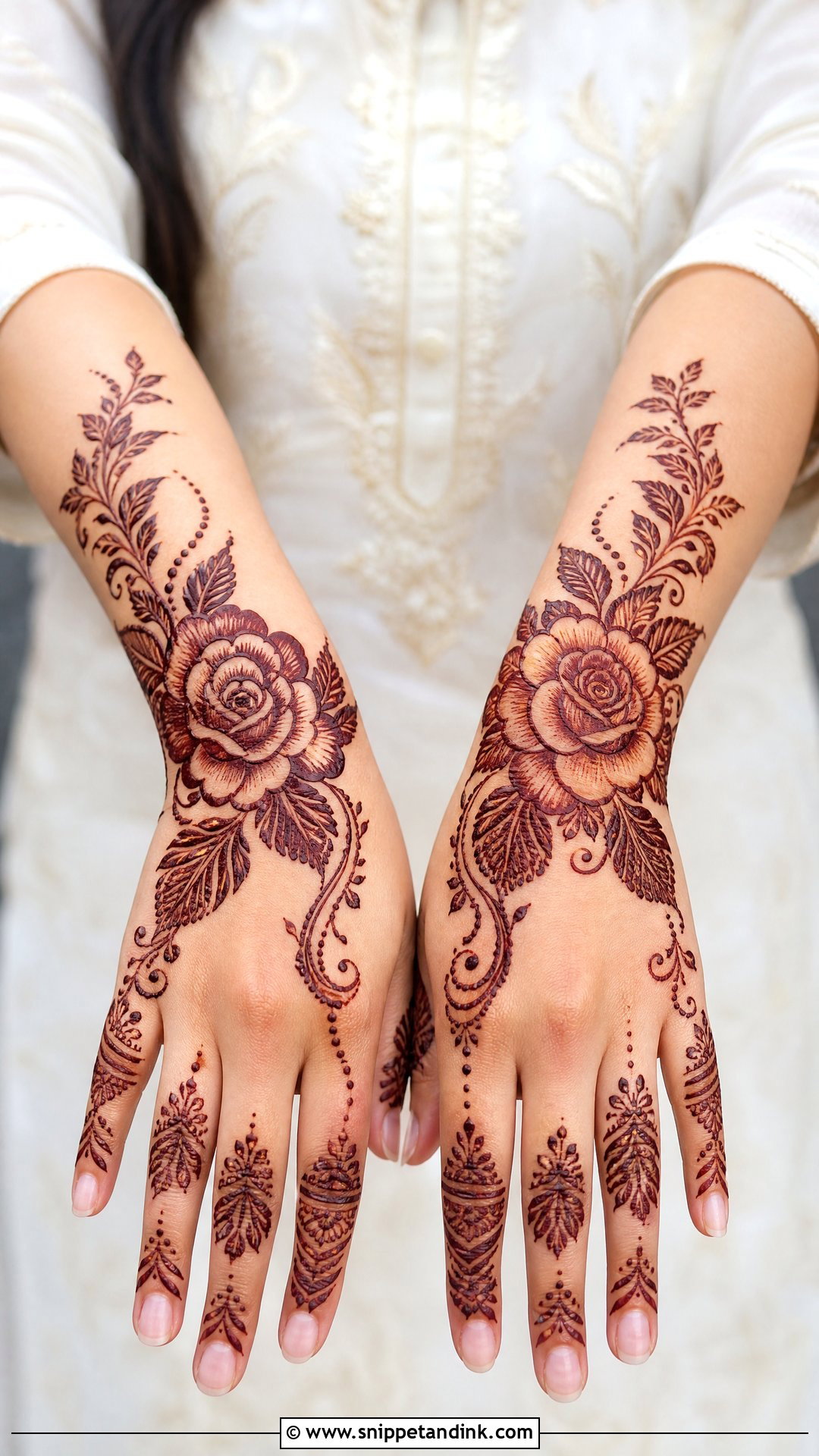
Large rose blooms sit around the center of the back of the hand, with vines reaching toward the fingers and wrist. Shading the petals gives depth, and I leave open skin between flowers so the hand looks light. Bridesmaids and Eid clients like it because it photographs well with bangles and bright clothes. The common mistake is drawing too many roses at the same size; I keep one or two large blooms and let smaller leaves and dots frame them.
6. Pakistani Khafif Mehndi Design Full Hand
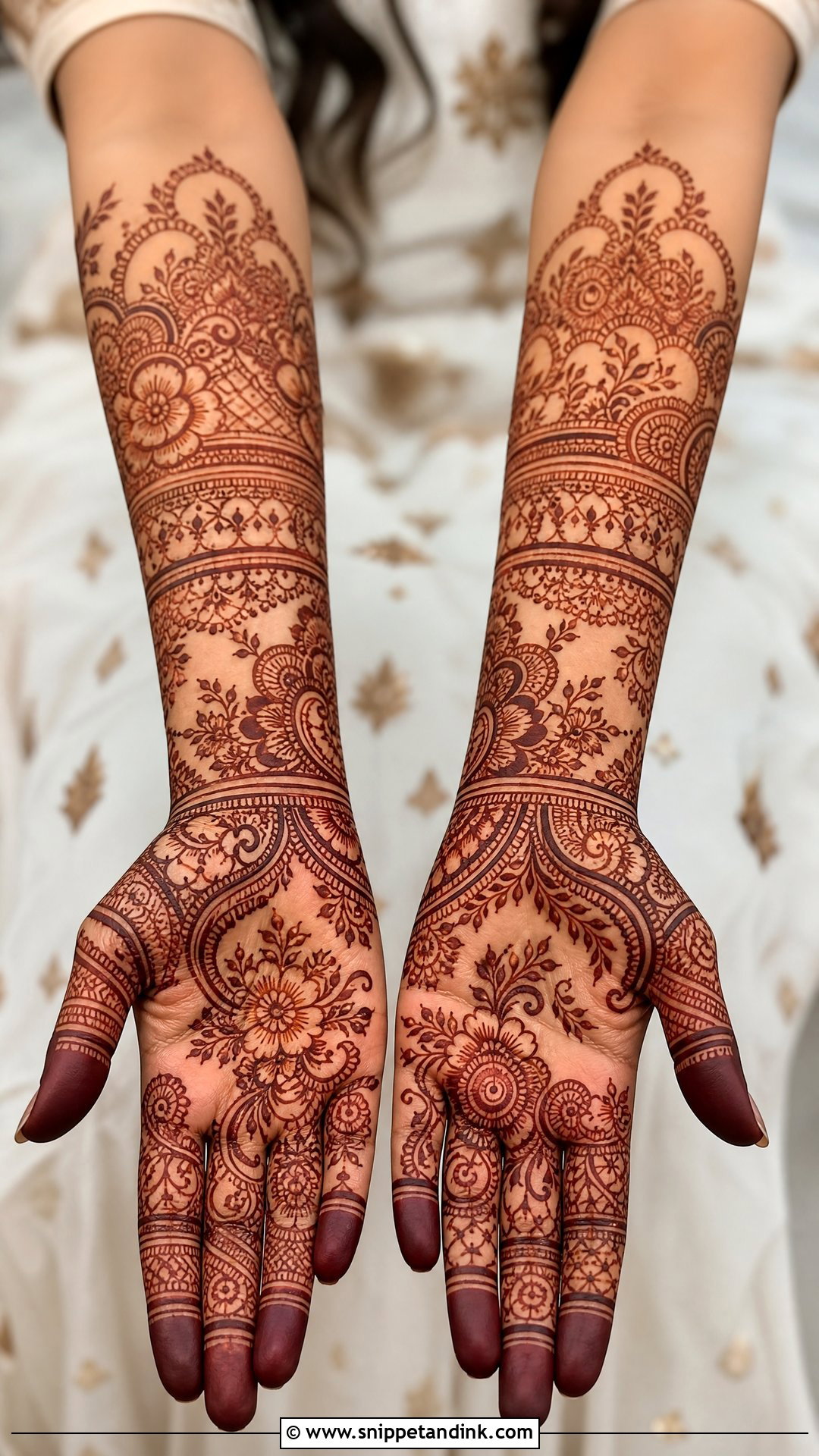
Khafif means light, and the style uses fine florals, tiny leaves, slim paisleys and lace bands with lots of negative space. It needs a cone with a very fine tip and paste that flows evenly; a lumpy batch makes khafif impossible because the lines break. Coverage can run from fingertips to wrist or a little past. It suits brides who find heavy bridal mehndi too much, and guests who want full hands that still look delicate. The consistency of the line width is what makes it look expensive.
7. Pakistani Jaali Mehndi Design Front Hand
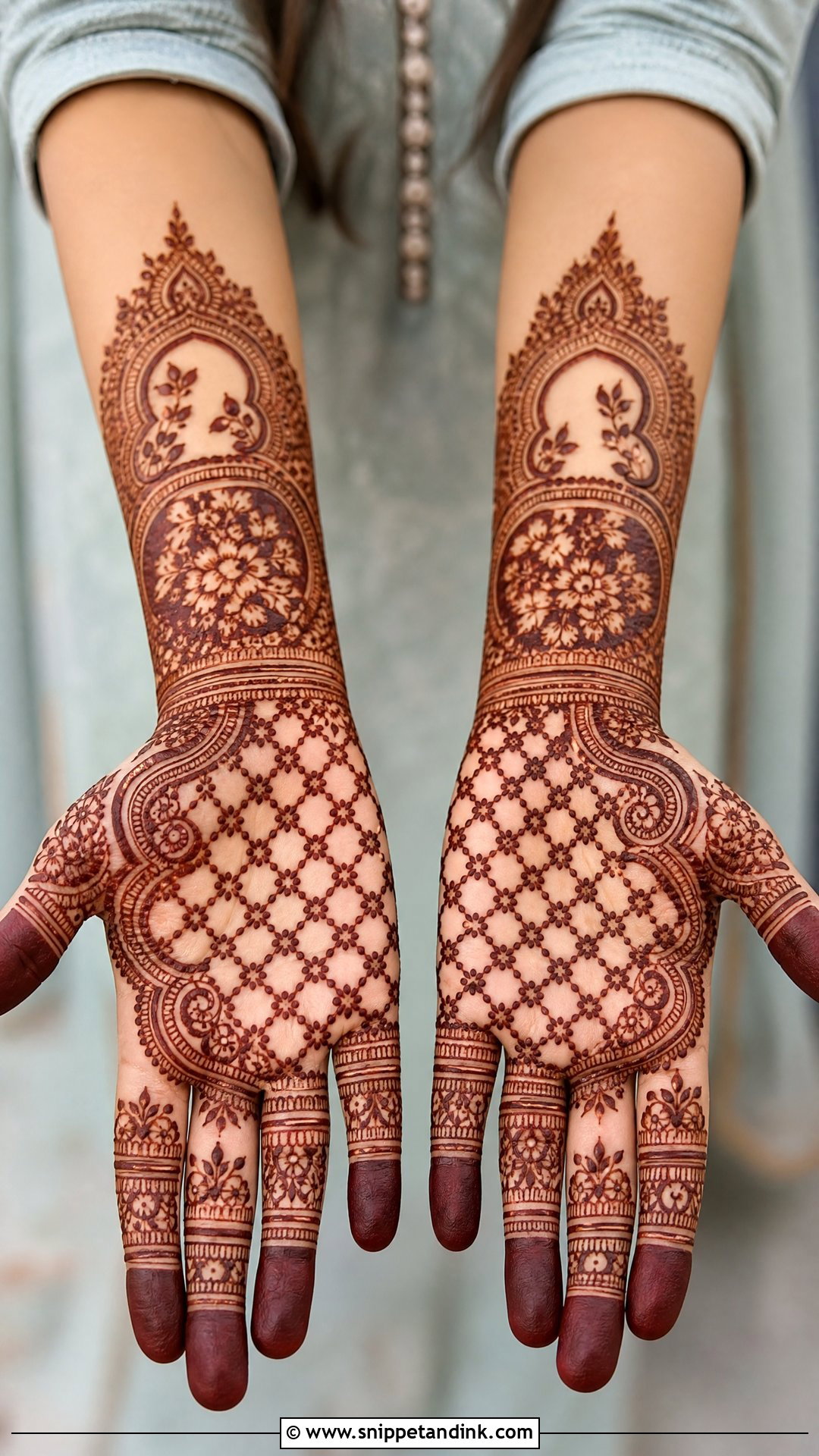
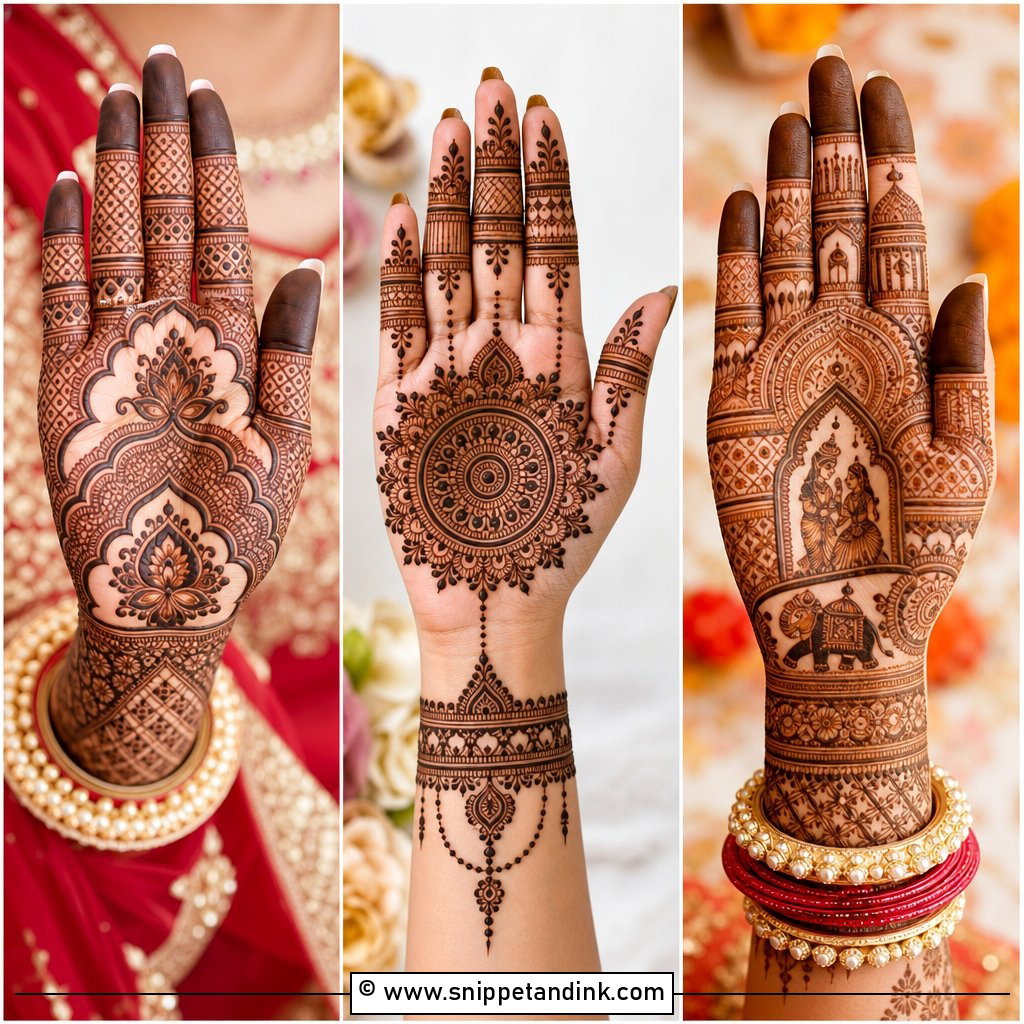
Jaali is a mesh pattern that looks like lace, set on the palm, wrist or side panels and combined with florals, paisleys, cuffs and finger detail. The lines have to be evenly spaced, so I draw the grid one direction first, let it settle for a moment, then cross it. Rushed jaali looks crooked as soon as it stains. Frame each mesh panel with a bold border so it reads clearly. It suits brides and guests who want a full look without solid filling.
8. Pakistani Bail Mehndi Design For Hands
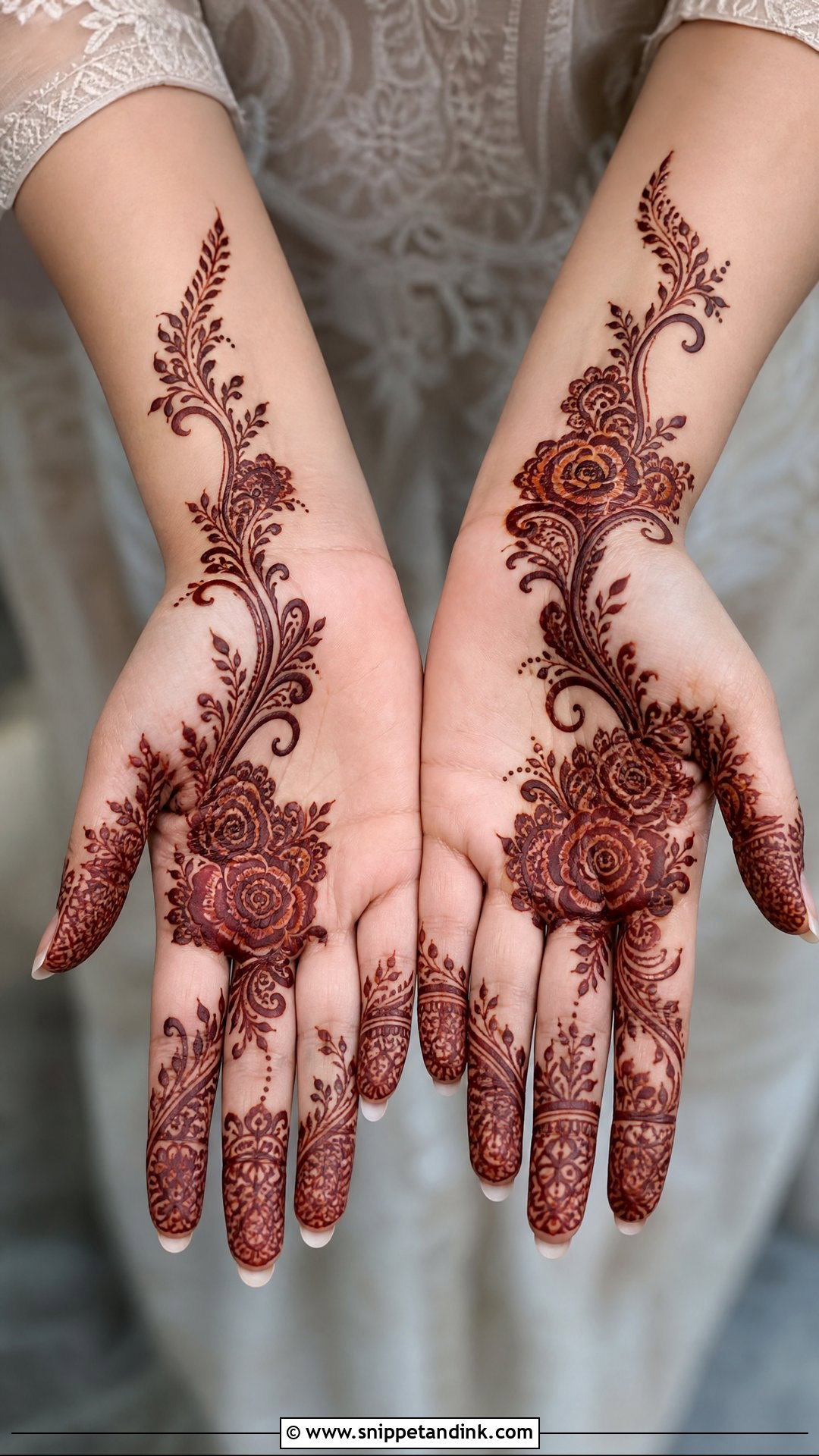
A bail is a single flowing vine, usually from the wrist up to the index finger or from one side of the palm across to the opposite finger. Roses, paisleys, leaves, dots and small mandalas sit along it. It’s light, quick and easy to wear for Eid, nikkah guests and parties. On its own it can look unfinished, so I add a small wrist band and fingertip detail to close it off.
9. Pakistani Mandala Mehndi Design Palm
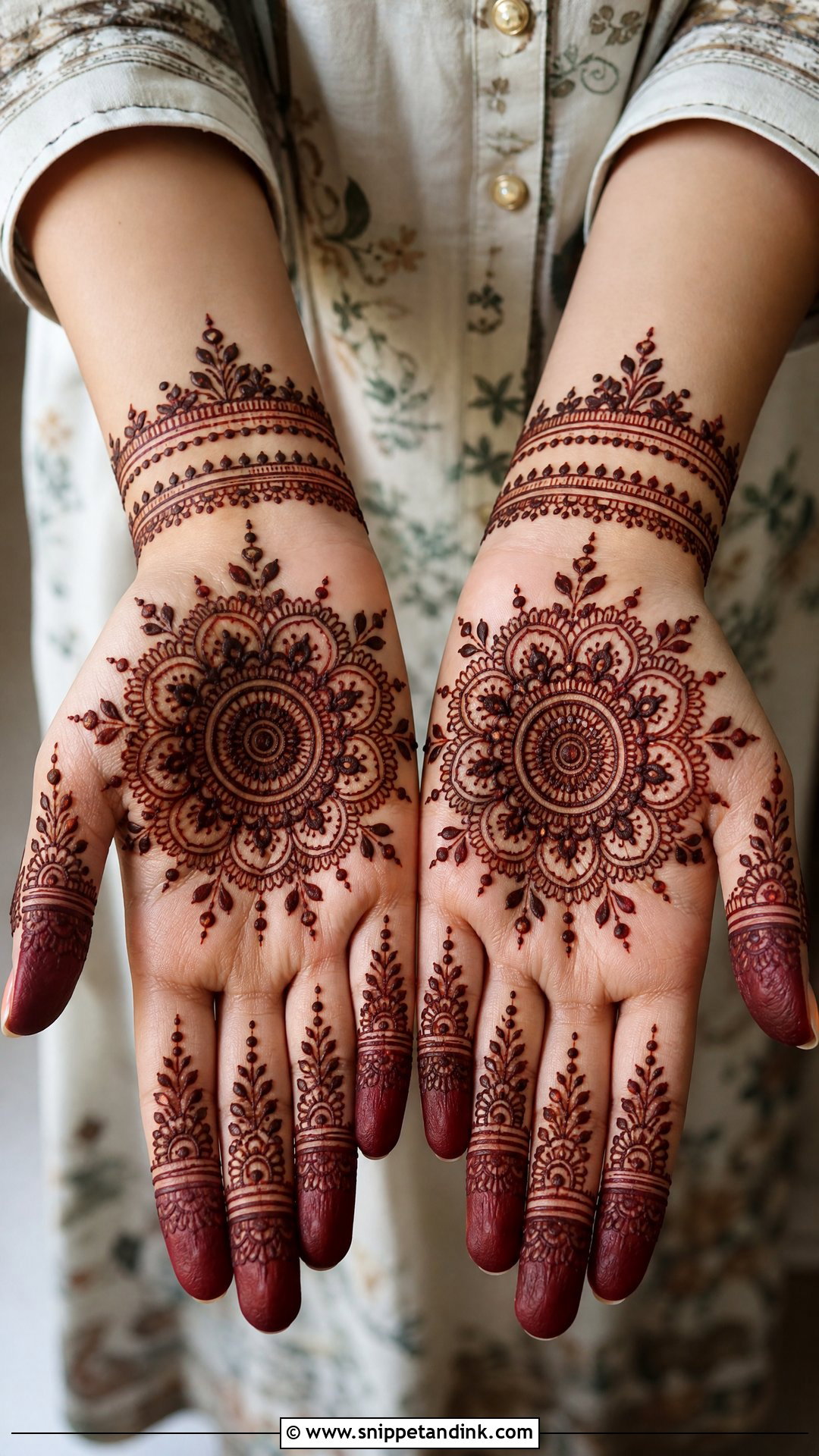
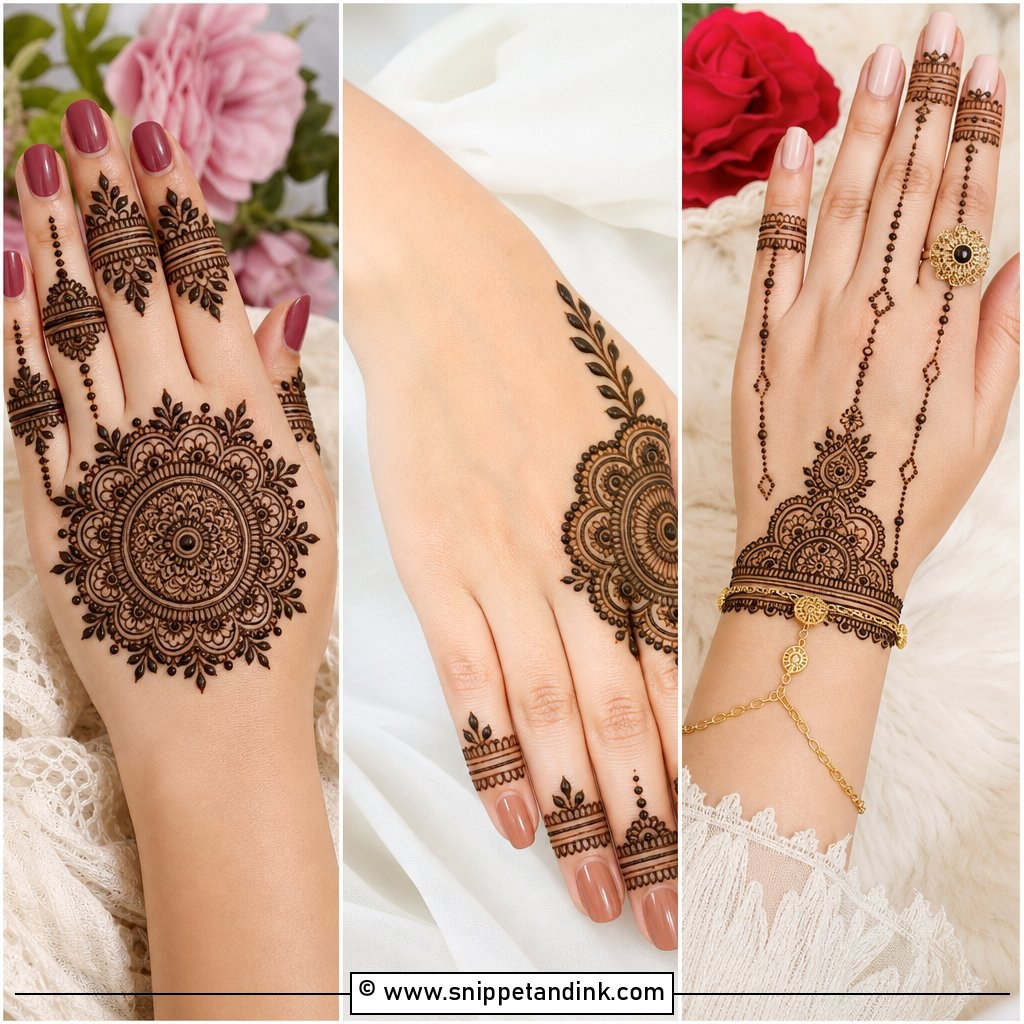
A round motif in the middle of the palm, ringed with petals, dots and fine circles, with decorated fingers and a bracelet at the wrist. Size is adjustable: a palm-width mandala is festive, a coin-sized one is minimal. It works for adults and teens. The circle must be smooth, so I turn the client’s hand as I draw rather than twisting my wrist. Wobbly edges are what make a mandala look amateur once stained.
10. Pakistani Eid Mehndi Design Front Hand
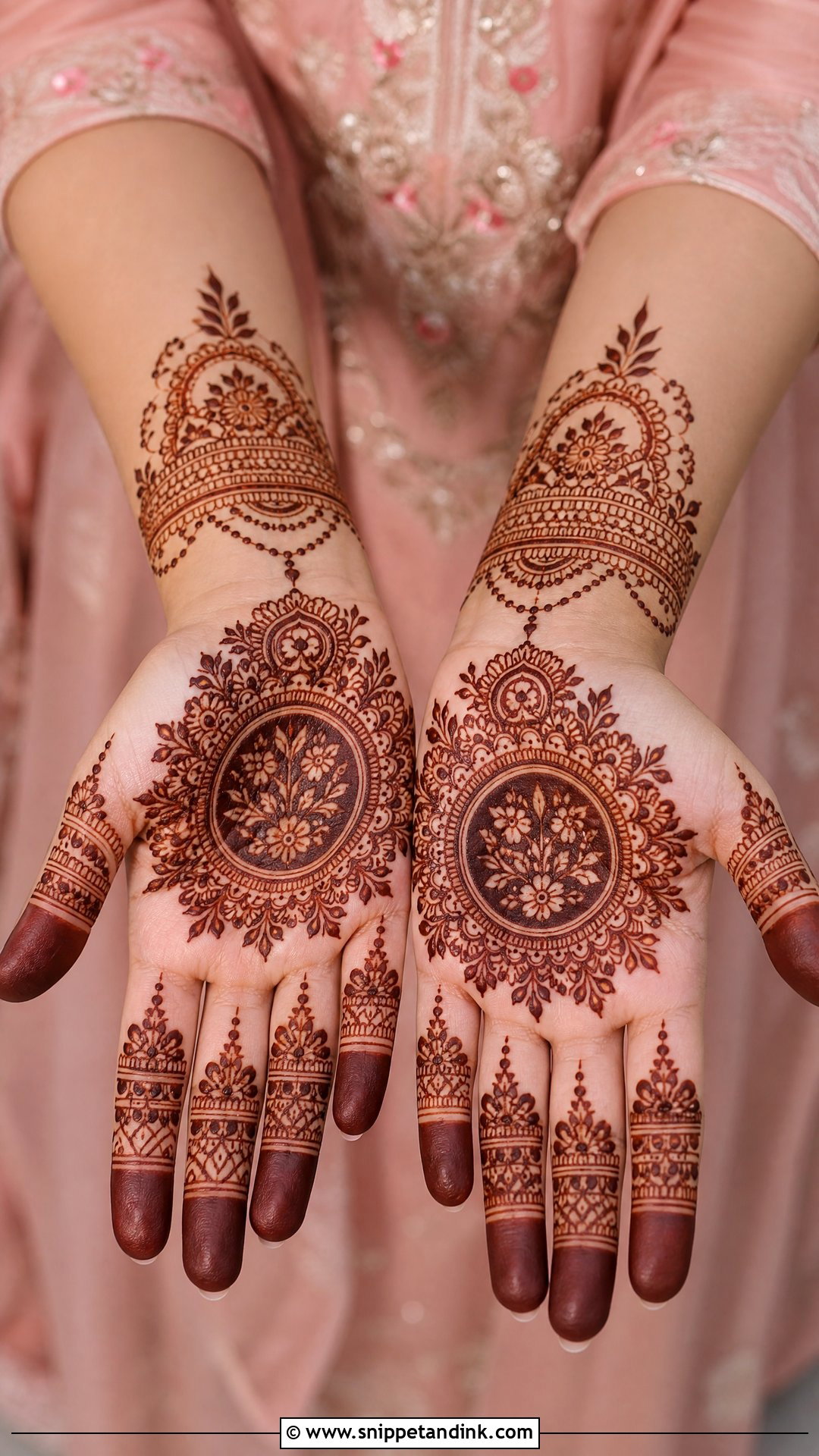
Eid mehndi has to survive a long day of cooking, greeting and eating with your hands, so I usually suggest light to medium coverage. Florals, tikki details, finger patterns and a small wrist cuff are typical. Open-space designs dry faster, which matters when you have to get home and sleep with paste on. Shaded flowers or tiny paisleys add detail if you want it. Neat fingertips and a balanced palm are what people notice when they hand you sweets.
11. Pakistani Bridal Mehndi Design With Portrait
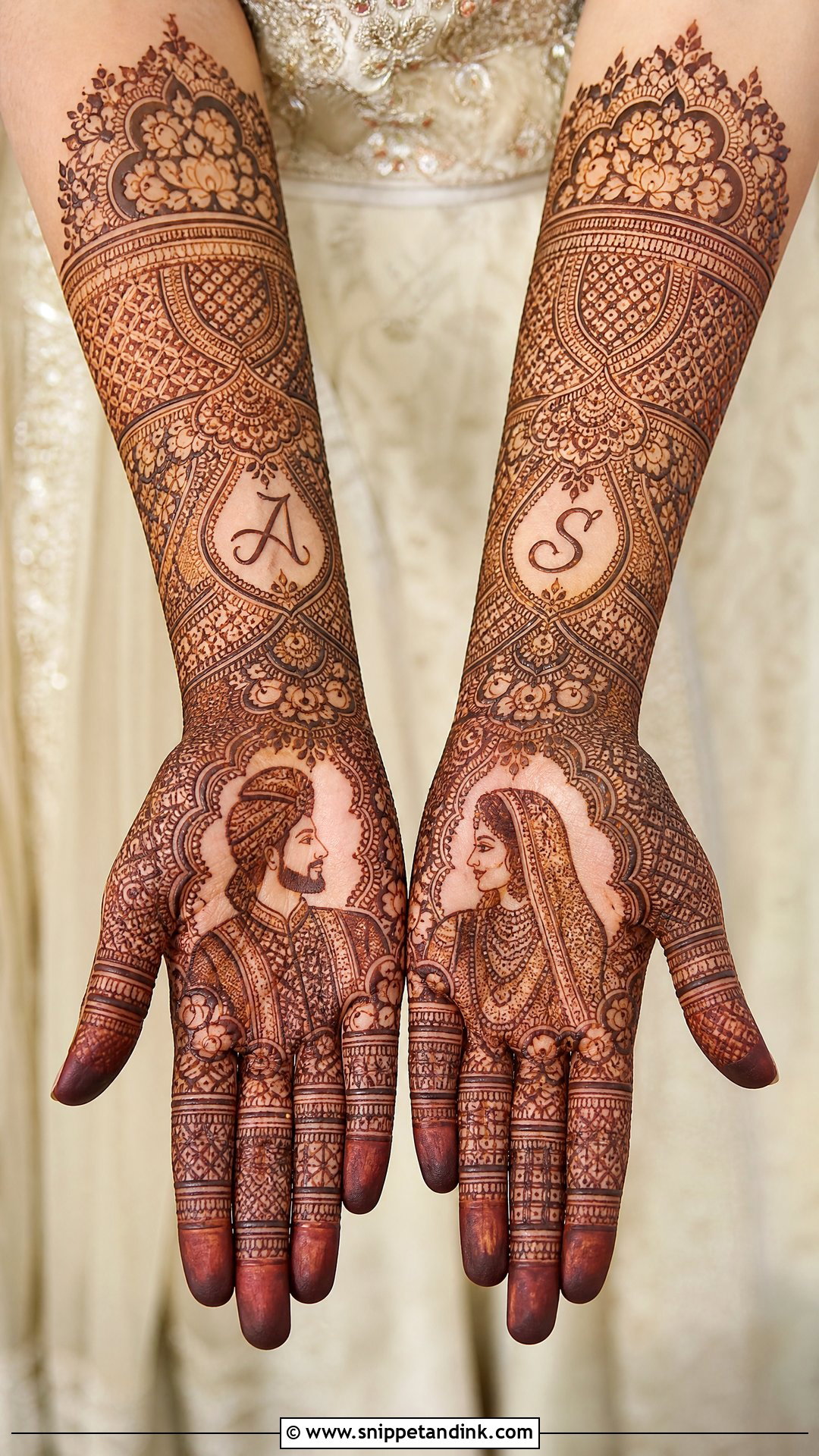
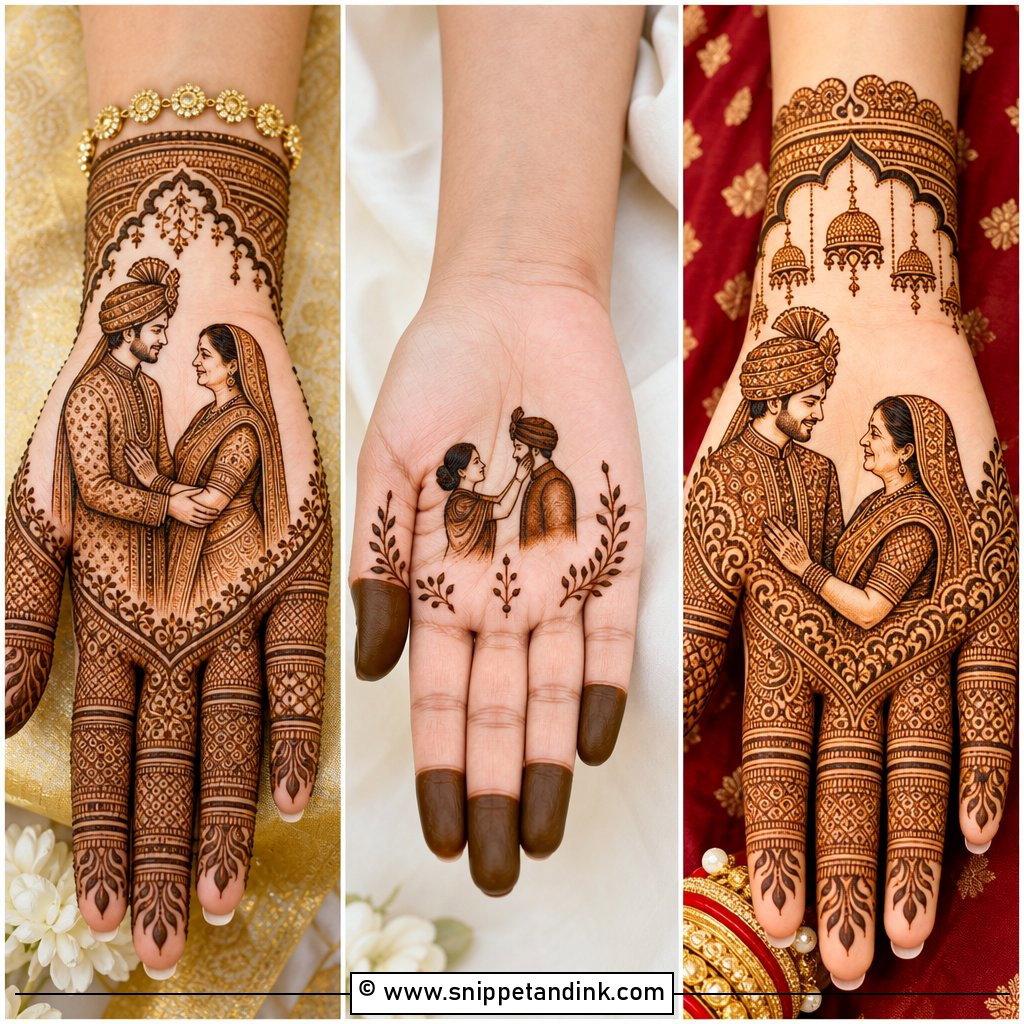
Portrait mehndi includes a small bride and groom, wedding symbols or initials inside a full-hand layout, surrounded by paisleys, florals, mandalas and jaali. It takes much longer than a standard bridal design, and not every artist draws faces well, so ask to see previous portrait work before booking. The figures don’t need to be large. A small couple motif placed carefully reads better than a big one that dominates. Balance it with traditional elements so the hand doesn’t look like a cartoon.
12. Pakistani Half Hand Mehndi Design
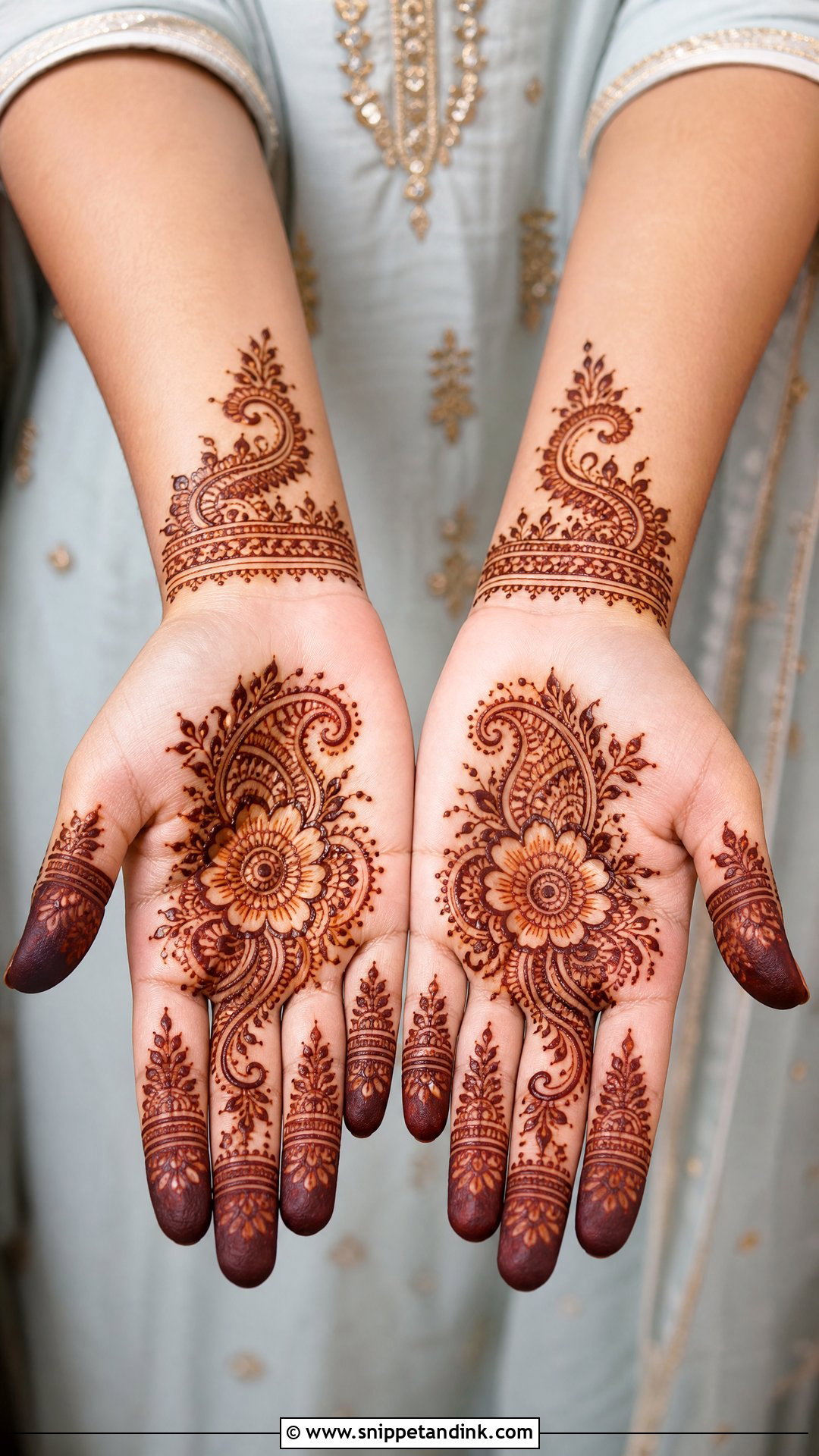
Half hand stops at the wrist or just past it, covering palm and fingers. It’s the format I suggest for bridesmaids, engagement guests and Eid, because it’s quick and feels lighter. Tikki and paisley details keep it traditional; roses and open space make it modern. The wrist border is the finishing line, so I make it clean and solid. The palm should stay the focus.
13. Pakistani Finger Mehndi Design Back Hand
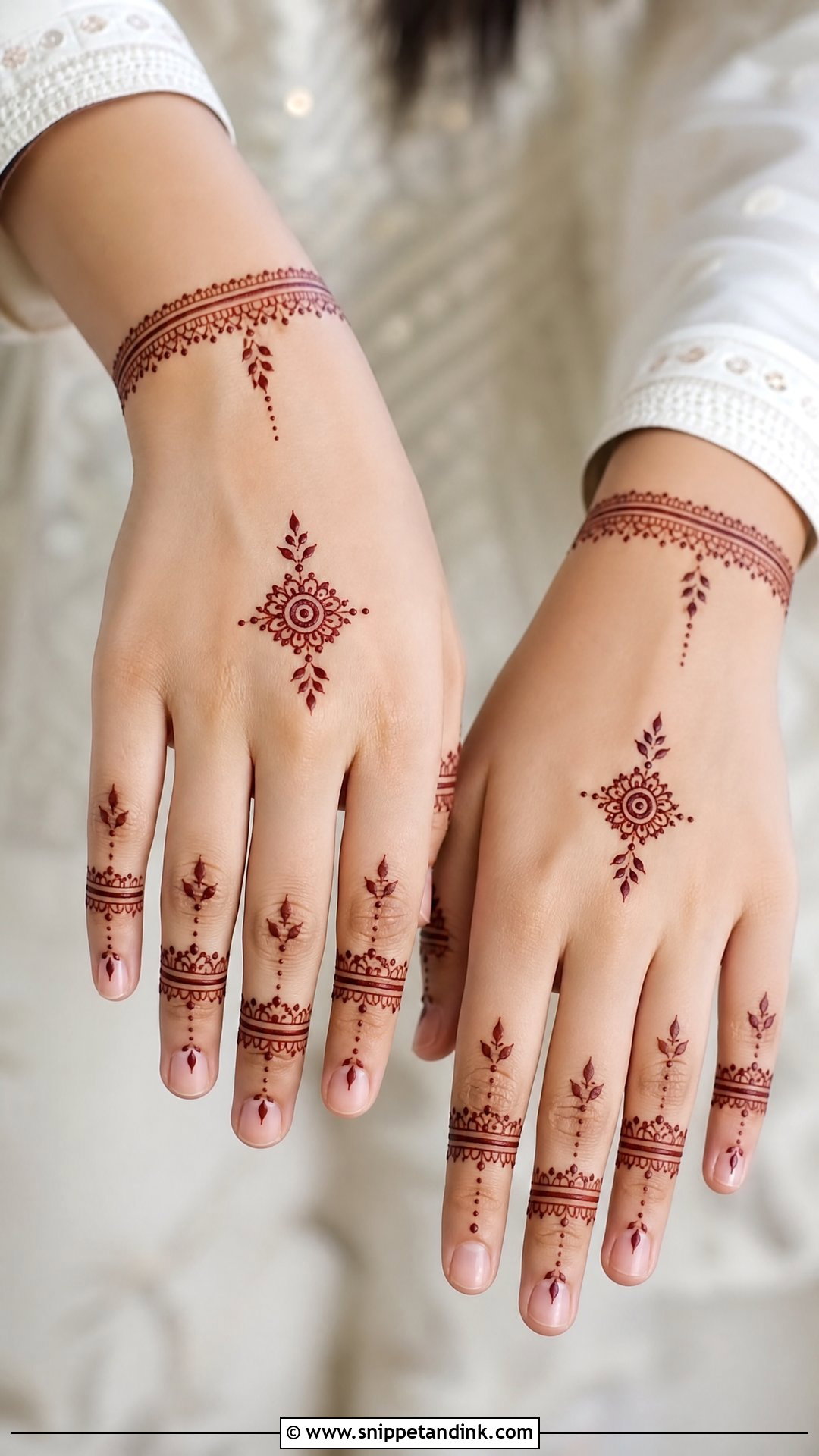
Finger designs leave most of the back of the hand bare and decorate each finger with bands, dots, leaves, tiny flowers and fine lines. Some versions add a small central motif or a chain linking a finger to the wrist. It suits workplaces, school and younger girls who want something trendy. I vary each finger slightly but repeat the borders and dots so they look like a set. Fingers stain well, so even this light design shows clearly.
14. Pakistani Mehndi Design With Paisley
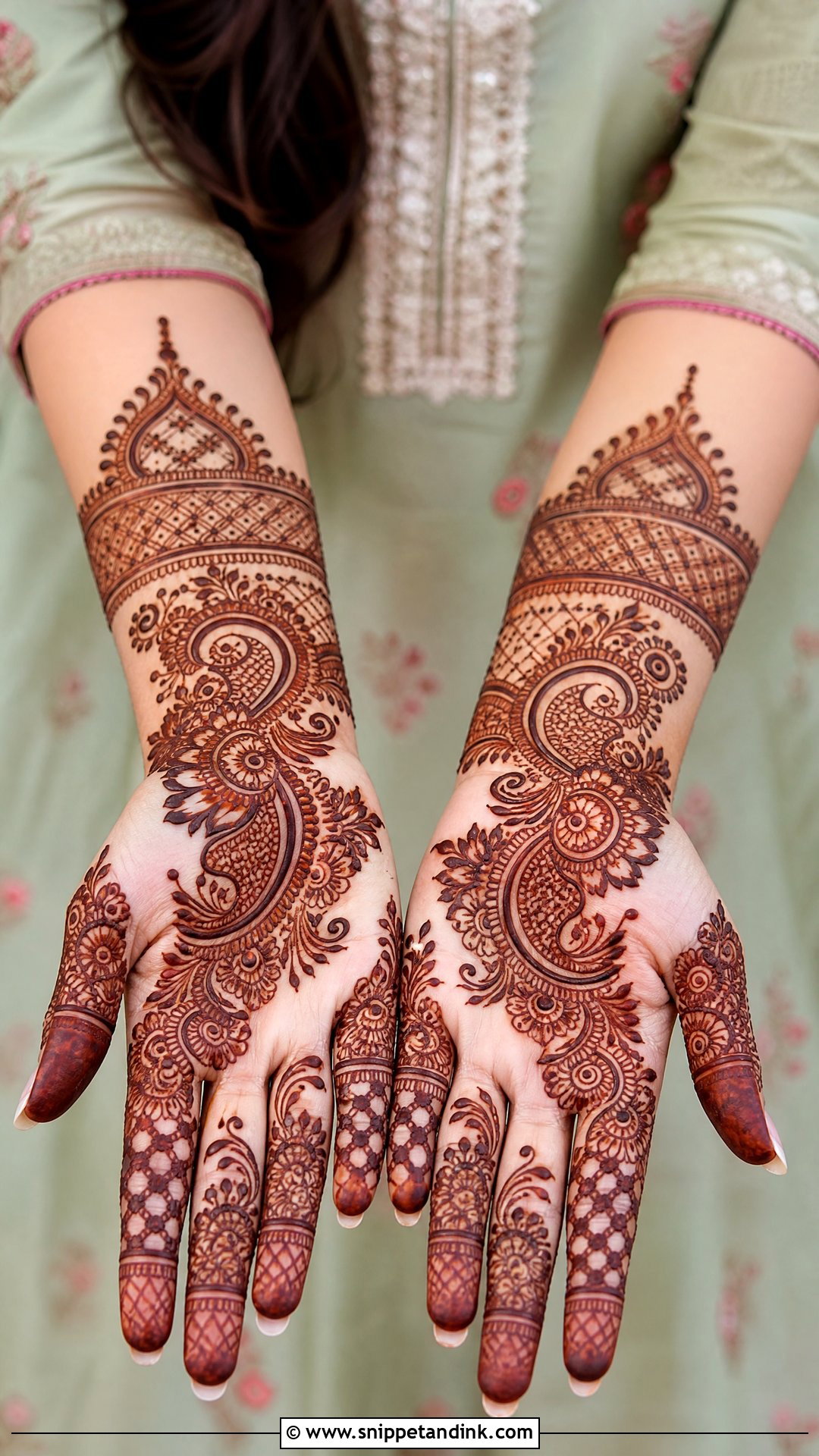
Paisley is the backbone of Pakistani mehndi. Large paisleys go across the palm or back of the hand, filled with tiny leaves, dots, checks and flowers, while smaller ones continue to the fingers and wrist. They can be bold and heavy or spaced out and soft. I draw the outline of each paisley first, in one smooth curve, then fill. Combine them with fine filling and a strong wrist border. It works for bridal events, Eid and formal family functions.
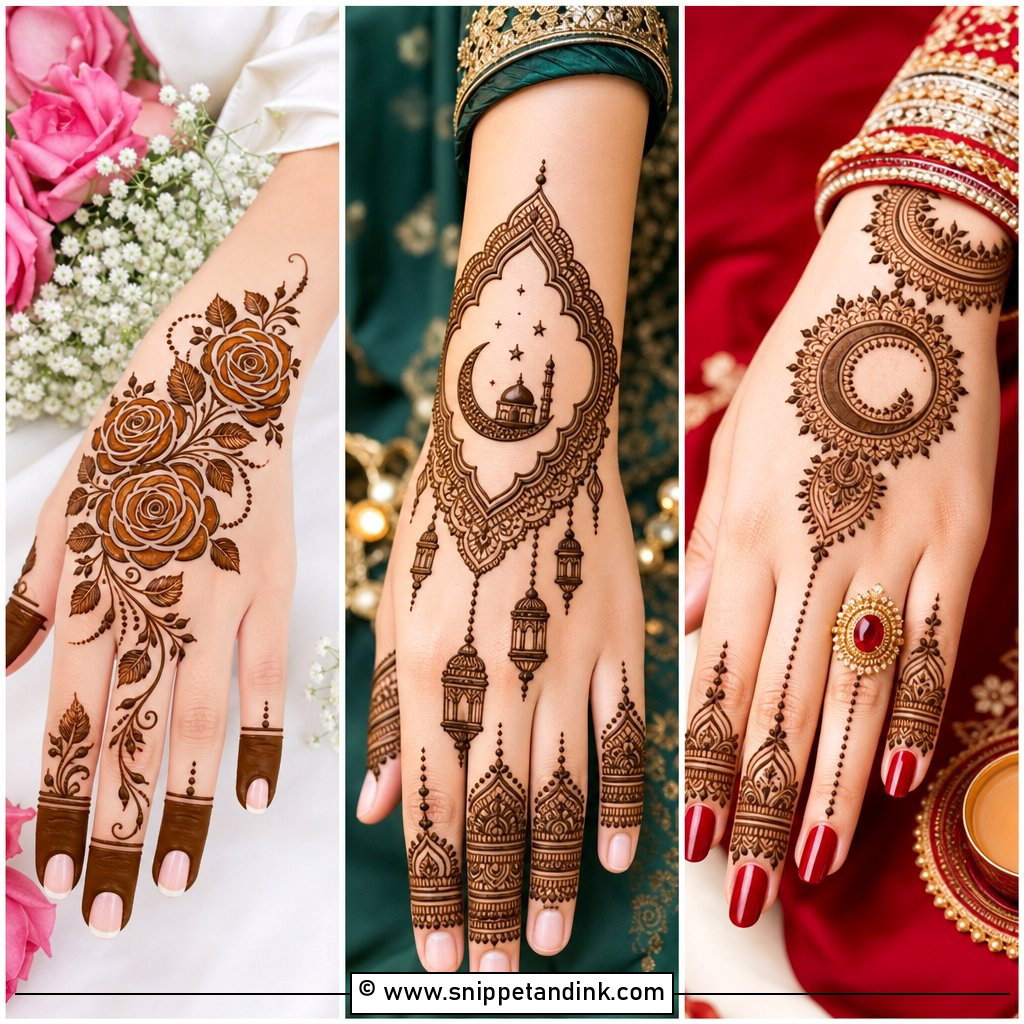
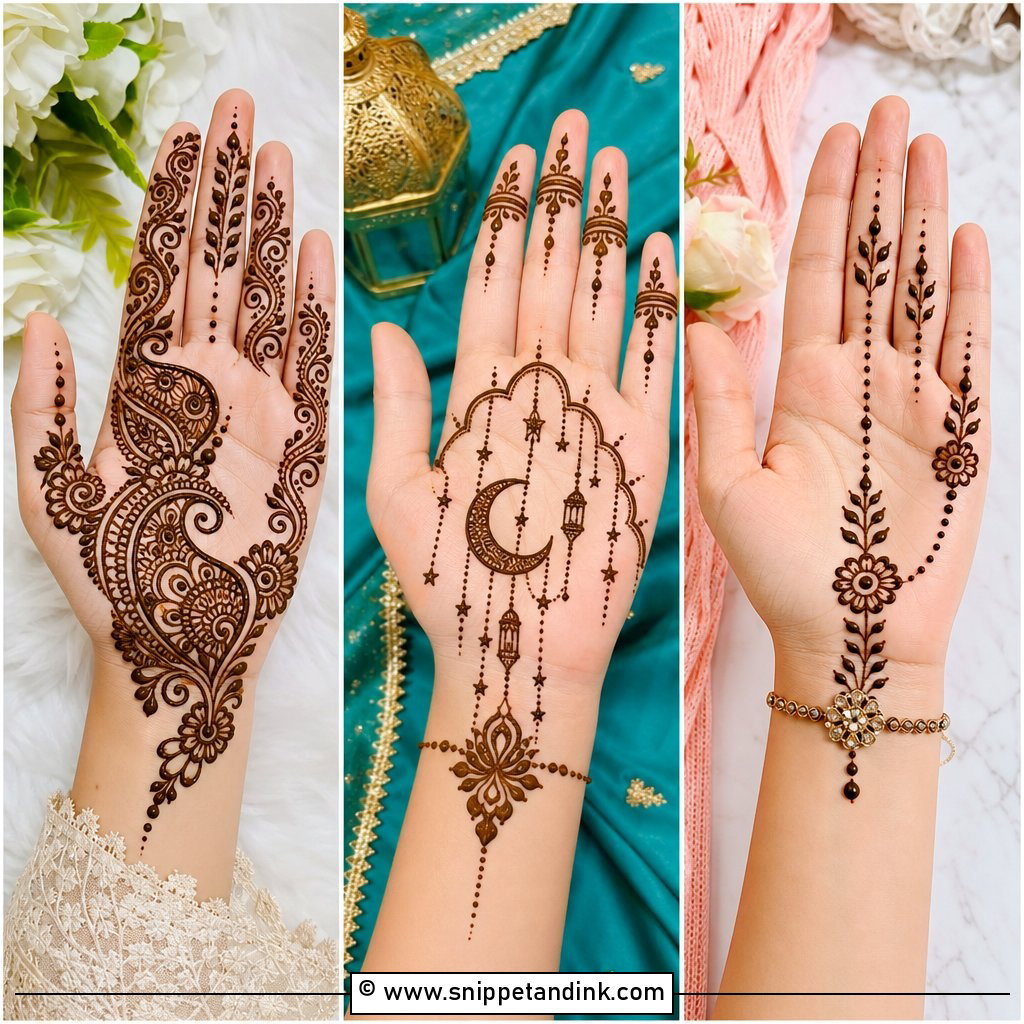
15. Pakistani Peacock Mehndi Design Full Hand
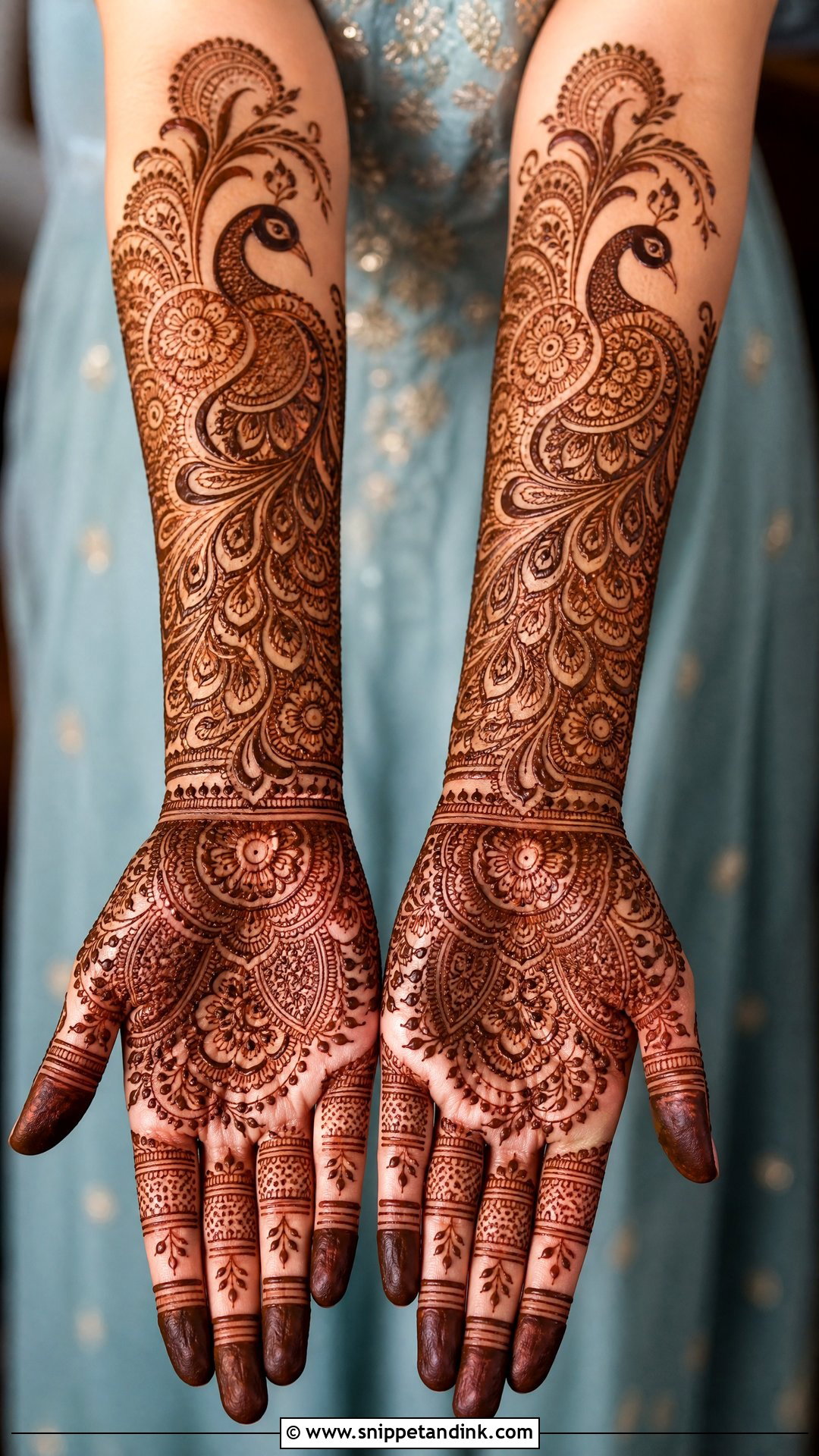
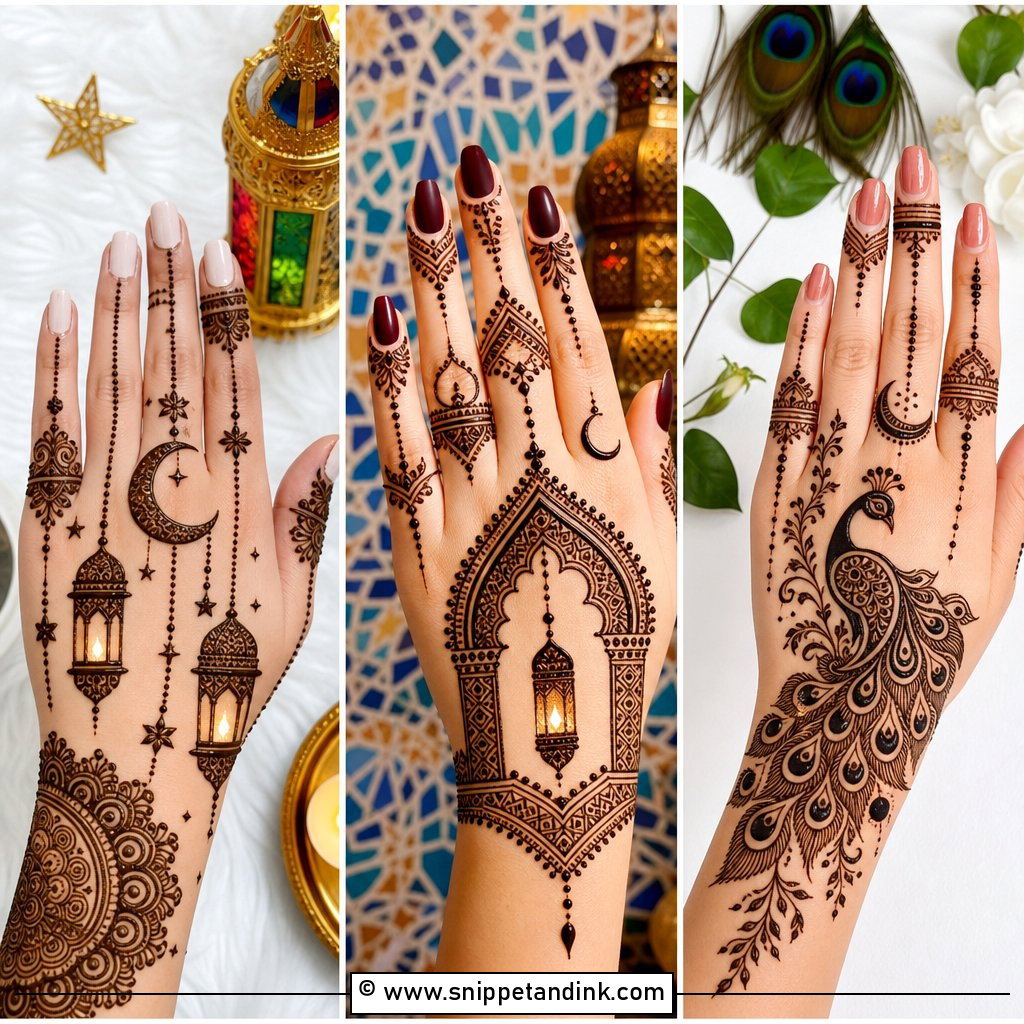
Peacocks are a favorite bridal motif, placed on the palm, wrist or forearm and surrounded by feathers, florals, paisleys and vines. The feathers create natural movement. The bird should be the focal point, with the rest supporting it; two peacocks fighting for attention look cluttered. A good artist blends the body into the pattern so it reads as decoration rather than a drawing. Check how the neck and head are drawn in the artist’s portfolio, as that’s where skill shows.
16. Pakistani Bracelet Mehndi Design Back Hand
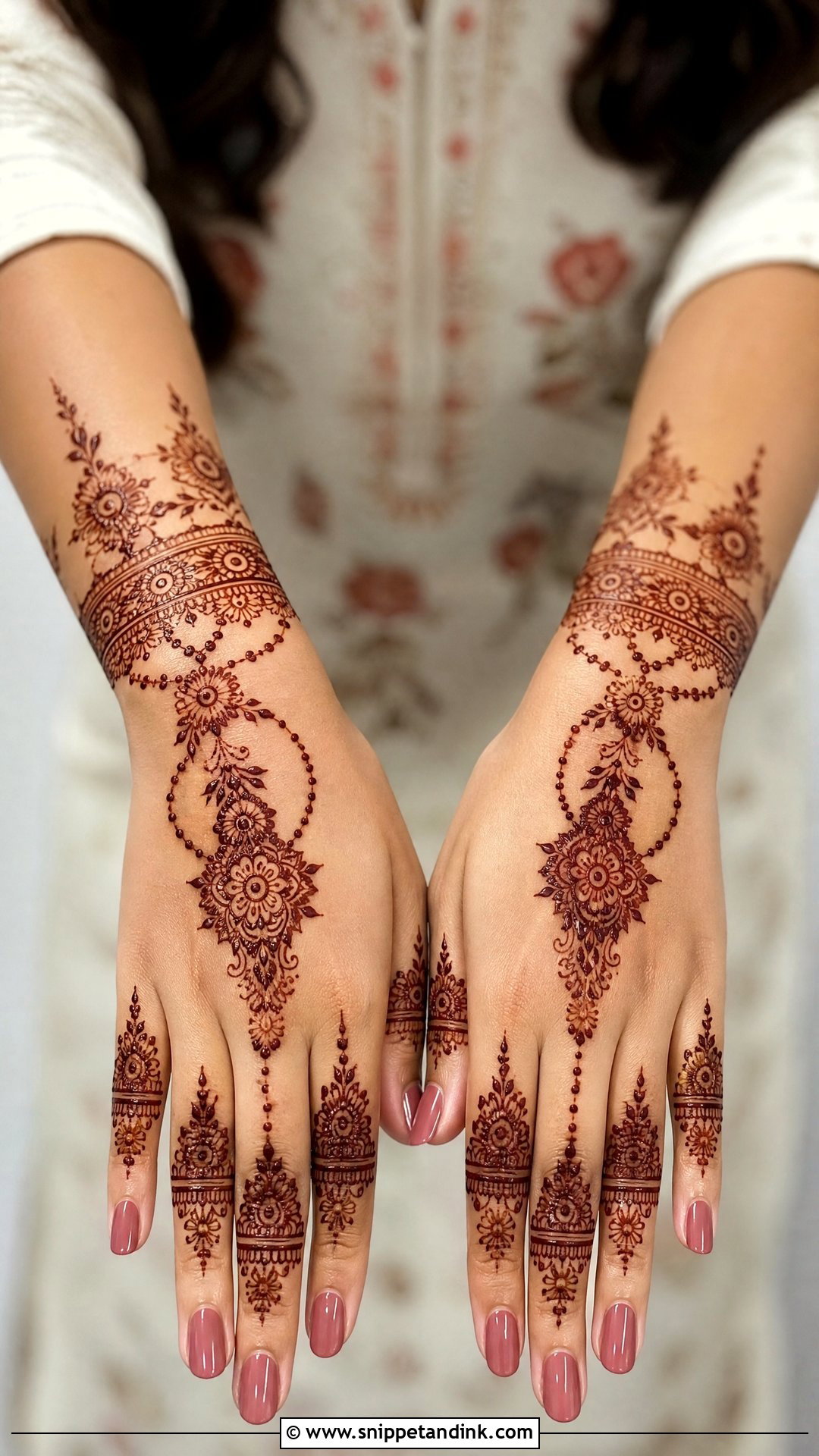
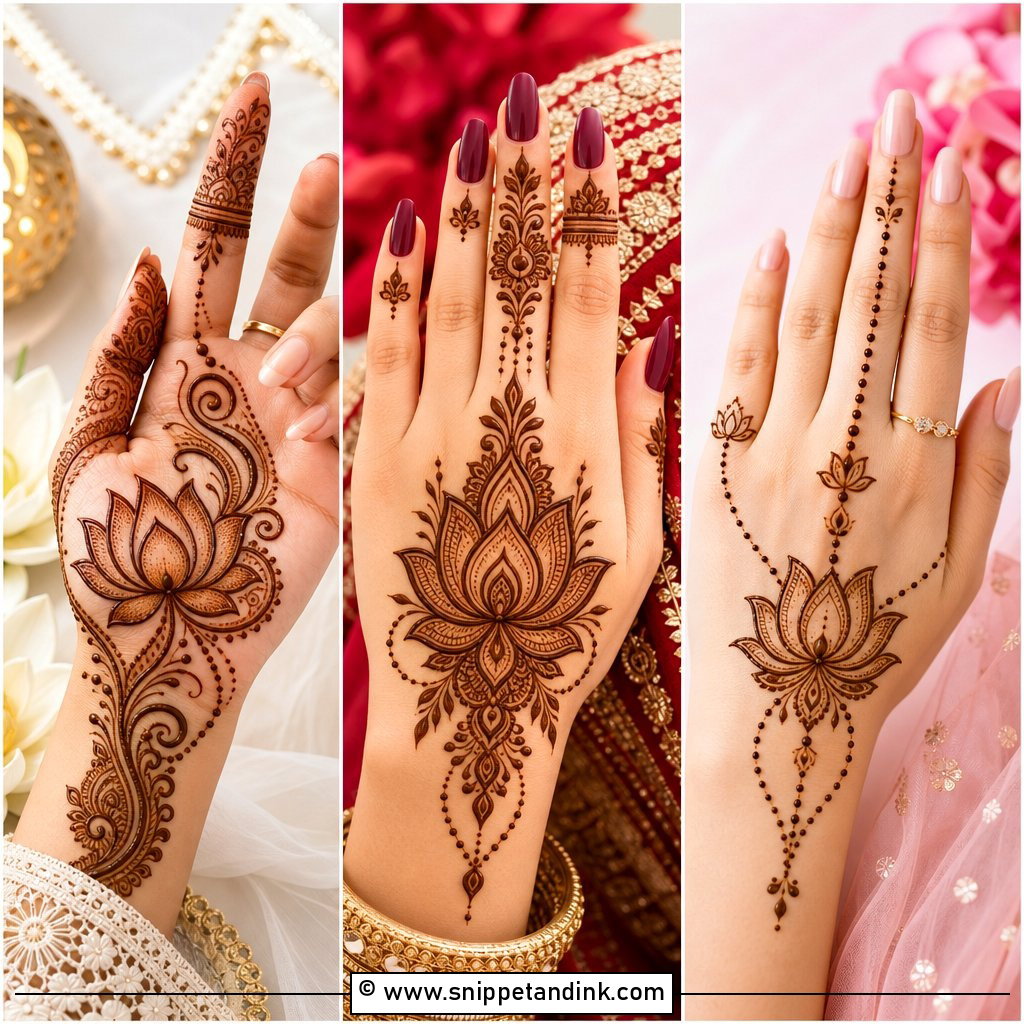
Bracelet designs make the back of the hand look like it’s wearing jewelry: a wrist cuff, chain details, finger rings and small linking motifs. Pakistani versions fill around the structure with florals, leaves and dots. It suits nikkah, engagement, Eid and bridesmaids, and pairs well with bangles. The lines of the chain must be even in thickness, so I keep steady pressure on the cone. Delicate finger patterns keep it from looking heavy.
17. Pakistani Minimal Mehndi Design Back Hand
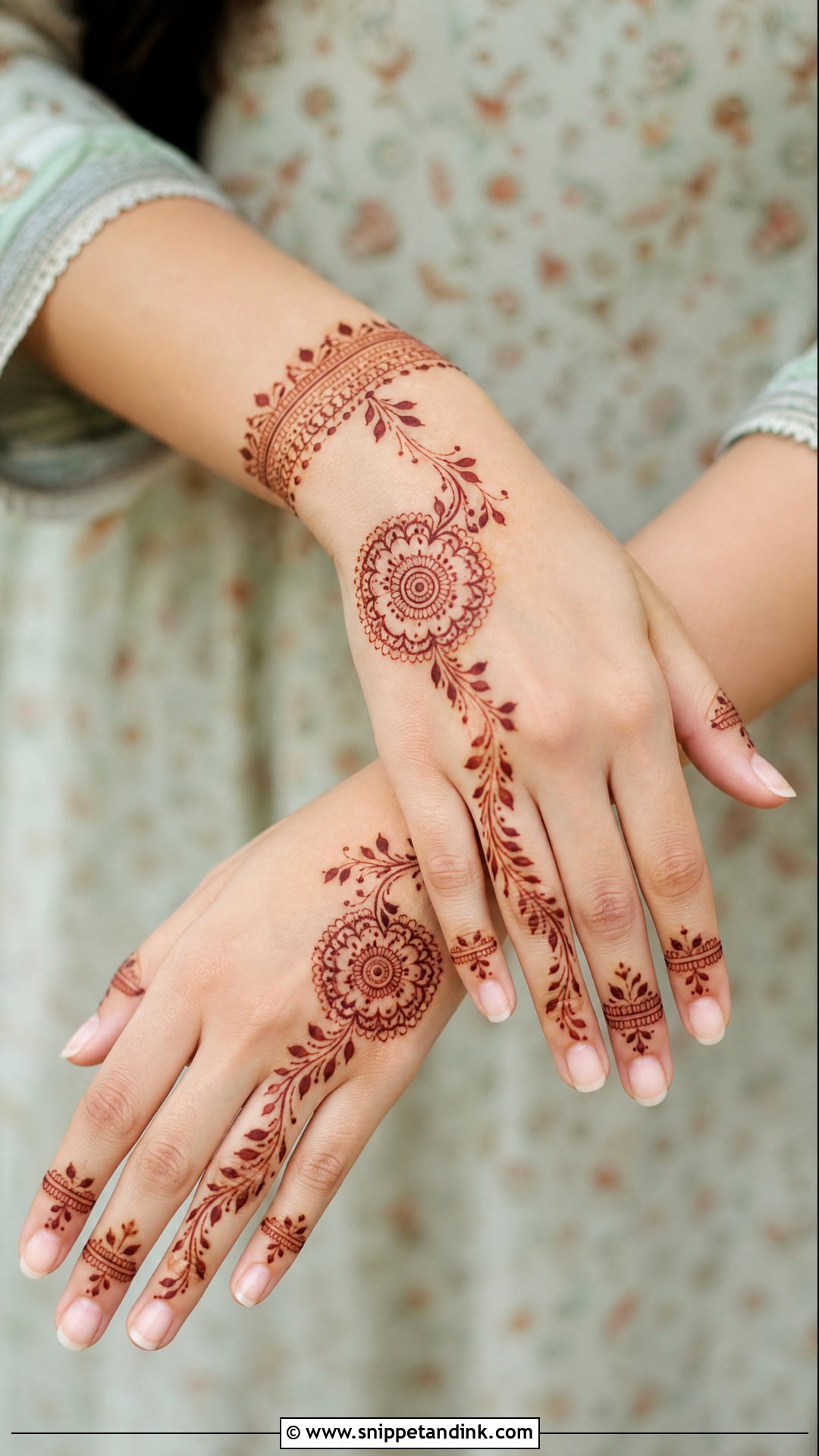
Minimal doesn’t mean plain if the lines are clean. A single floral trail, a small mandala, decorated fingers or a fine wrist border is enough. The open areas let each motif stand out. Small paisleys, vines or tikki-inspired details keep it Pakistani. This is my go-to for daytime gatherings and for clients who have never had mehndi and want to see how their skin stains.
18. Pakistani Heavy Mehndi Design Front Hand
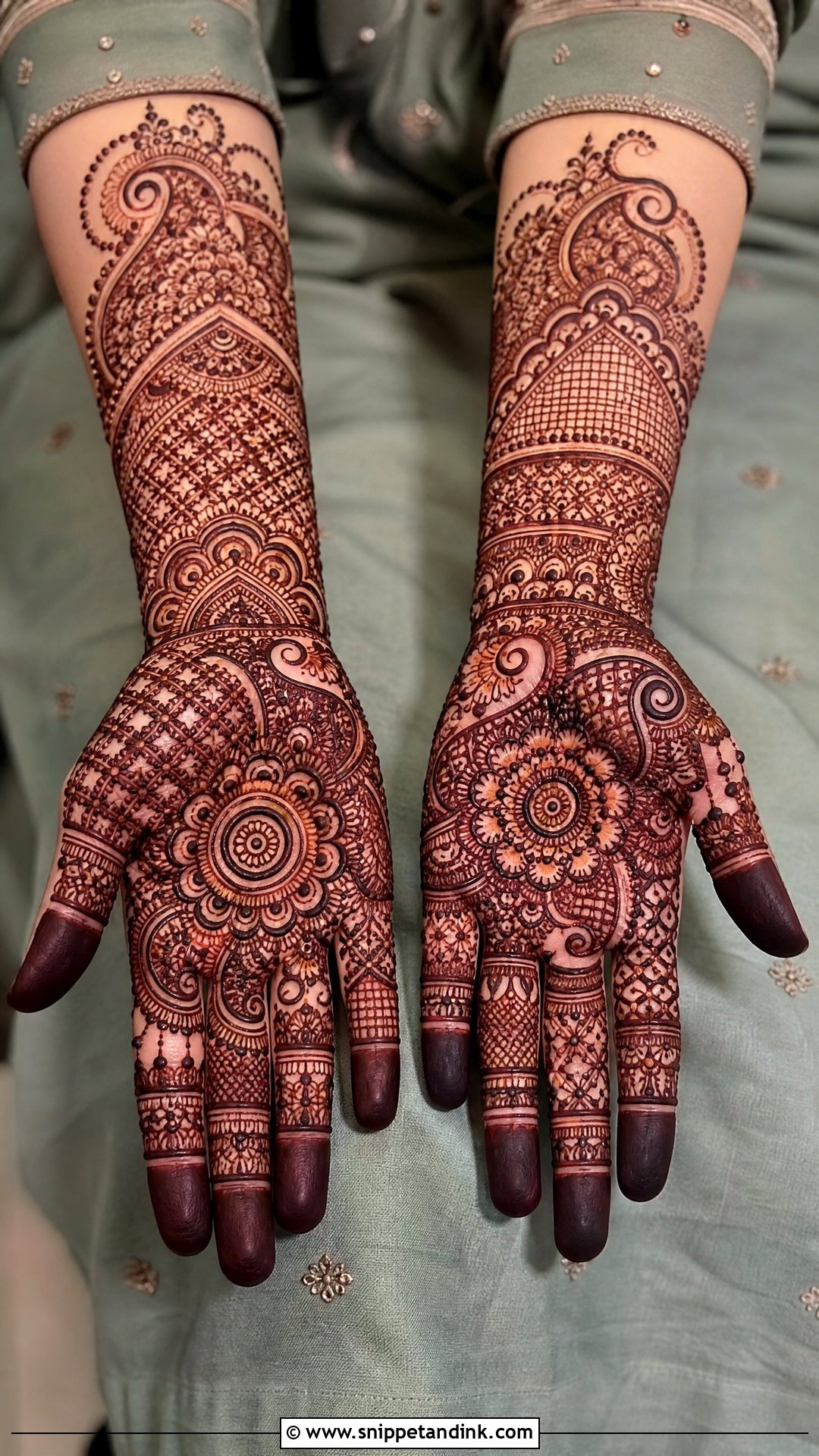
Heavy designs cover the palm, fingers, wrist and often part of the forearm with dense motifs: paisleys, jaali, florals, mandalas, dots, checks and filled fingertips. They suit brides and close family at formal functions. Balance is everything, so I place large motifs first and fill around them, never the other way round. Bold outlines and fine filling keep it readable. Without that contrast, a heavy hand turns into a dark blur once the stain develops.
19. Pakistani Floral Mehndi Design Front Hand
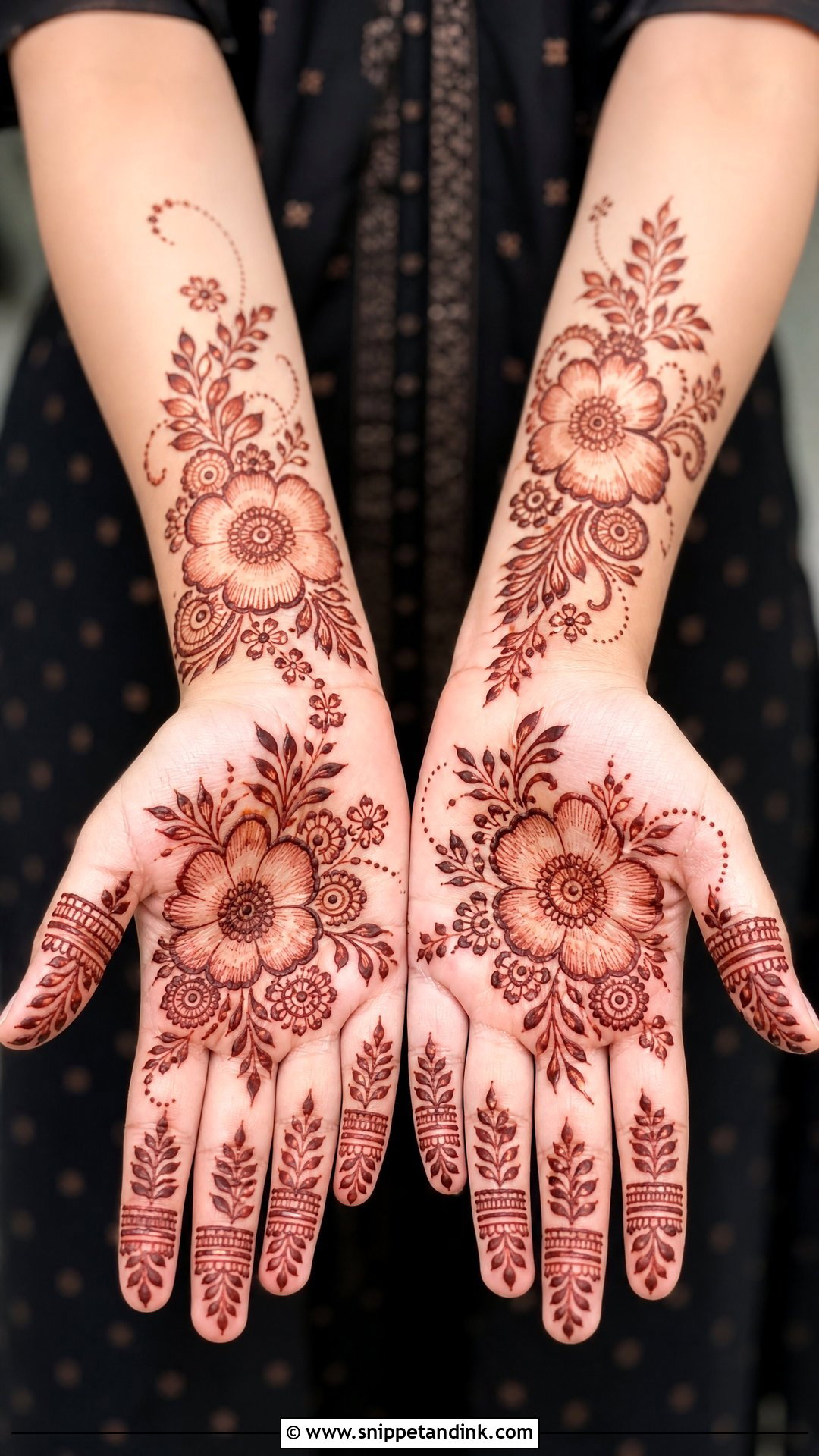
Large flowers on the palm, smaller ones near the wrist and leafy fingers make up a Pakistani floral front-hand design. Shading or line filling depends on the occasion. It suits Eid, engagements, mayun and guests. For more coverage, add paisley borders and dot chains; for a lighter result, leave space between the flowers. Florals are the easiest to adapt to any hand size, which is why I recommend them for first-timers.
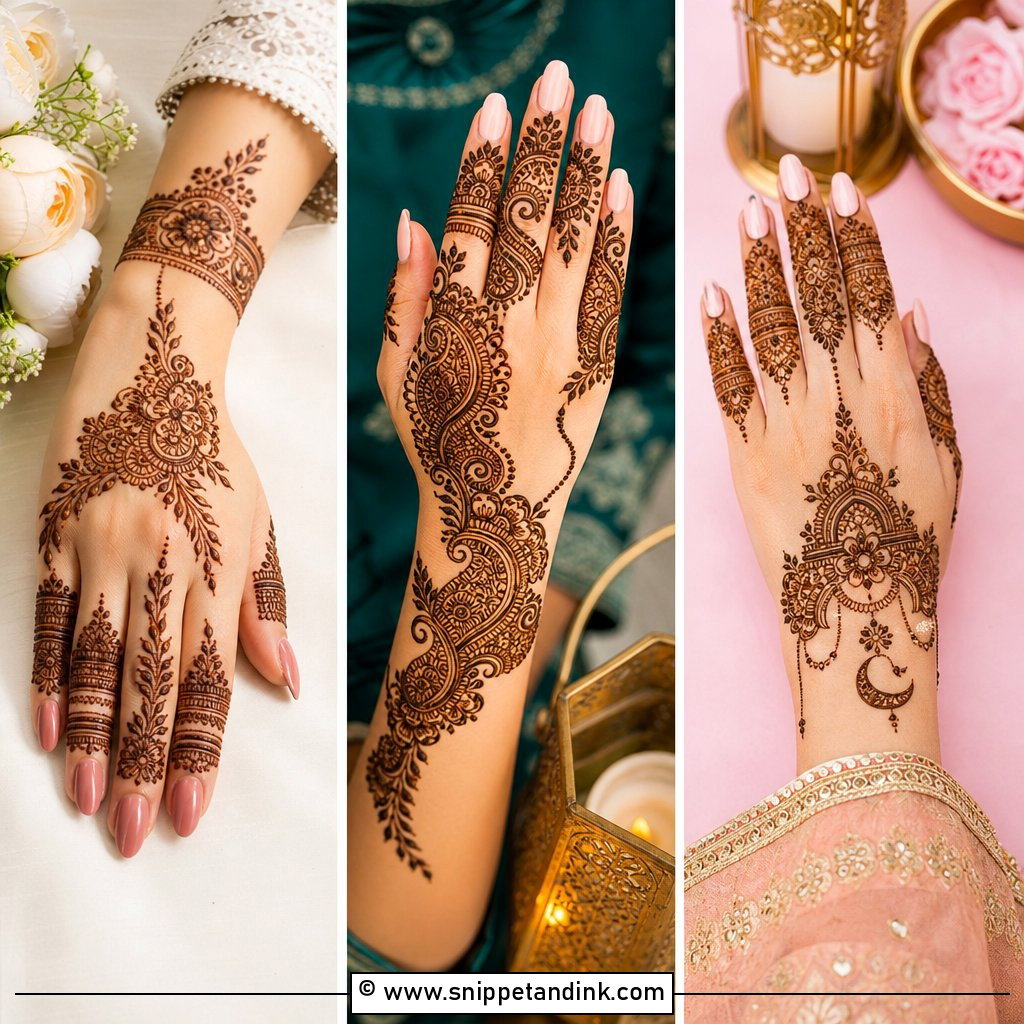
20. Pakistani Shaded Mehndi Design Back Hand
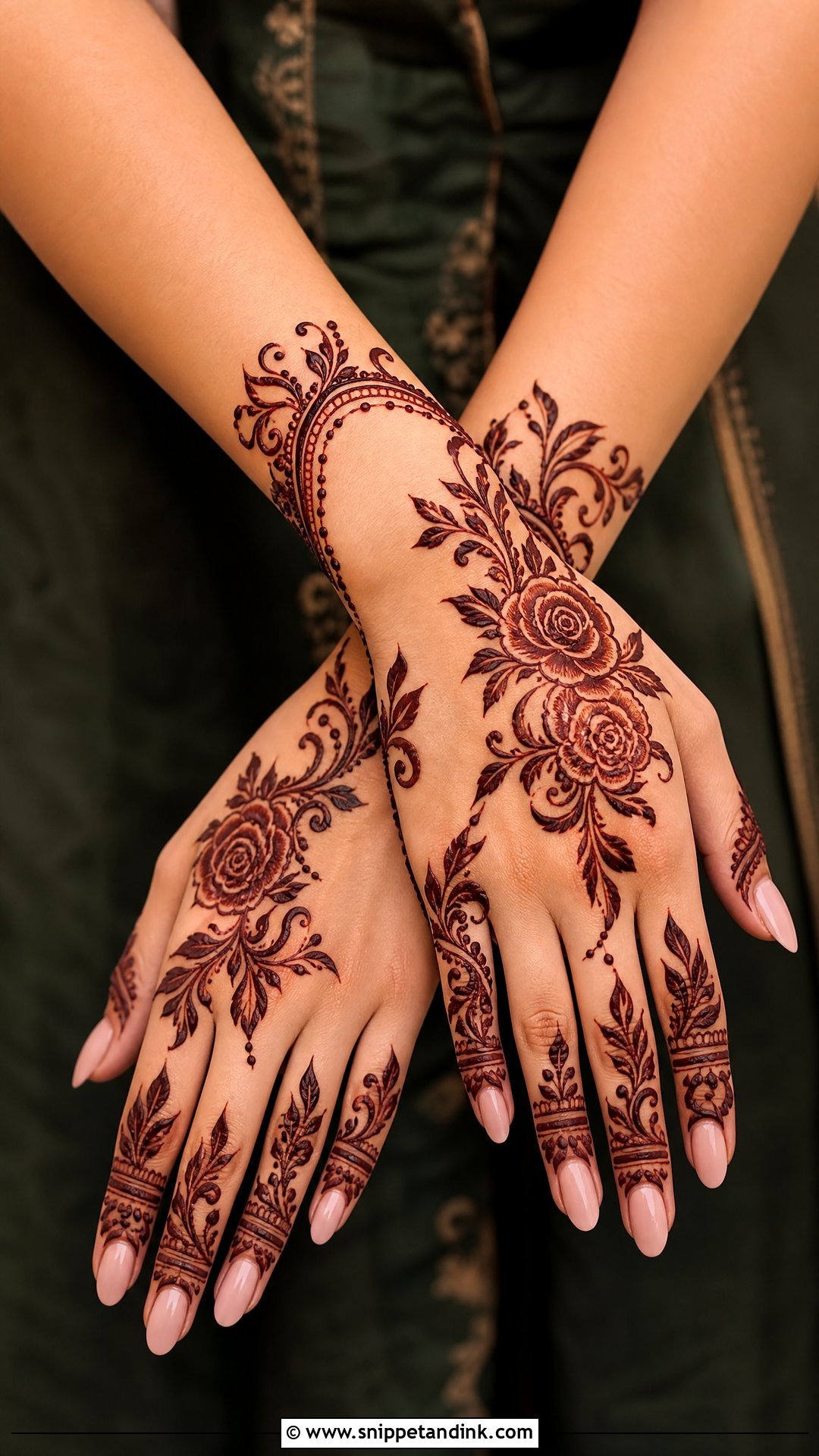
Shading gives petals and leaves depth. I do it with thin strokes, a thicker application or gradual spacing between lines. It’s especially good in Arabic-Pakistani fusion work, with bold roses and layered petals. Limit shading to petals and leaves. Overdoing it means the stain darkens unevenly and looks patchy, especially on the back of the hand where the skin is thinner and stains lighter.
21. Pakistani Nikkah Mehndi Design
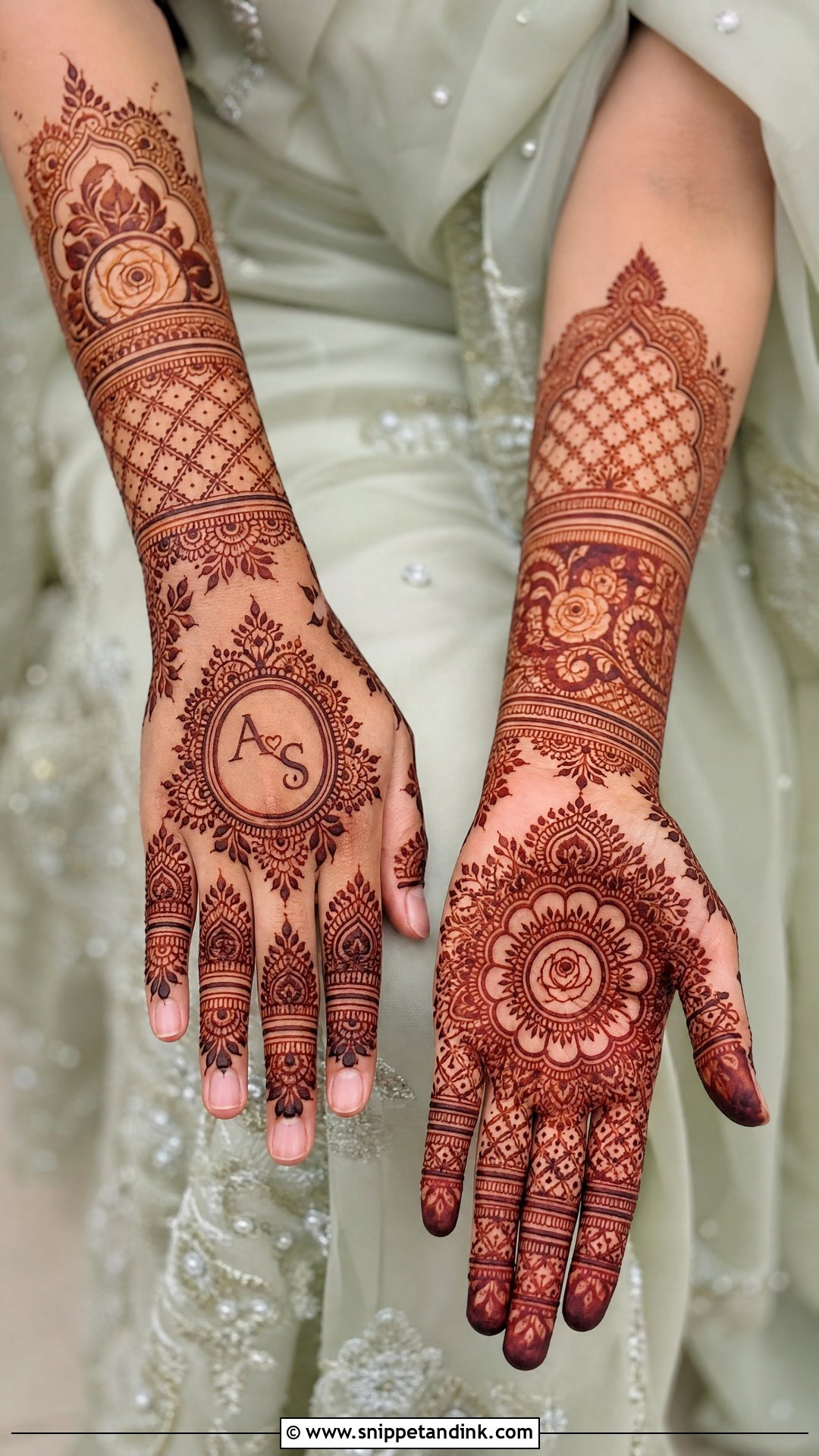
Nikkah mehndi is often lighter than the main bridal design: detailed palms, decorated fingers and a soft extension from wrist to forearm. Roses, mandalas, paisleys, jaali and small initials are common. Back-hand bracelet patterns suit nikkah because they sit well with rings and bangles in close-up photos. If your outfit is heavily embroidered, choose clean lines and balanced spacing so the hands don’t compete with it.
22. Pakistani Dholki Mehndi Design
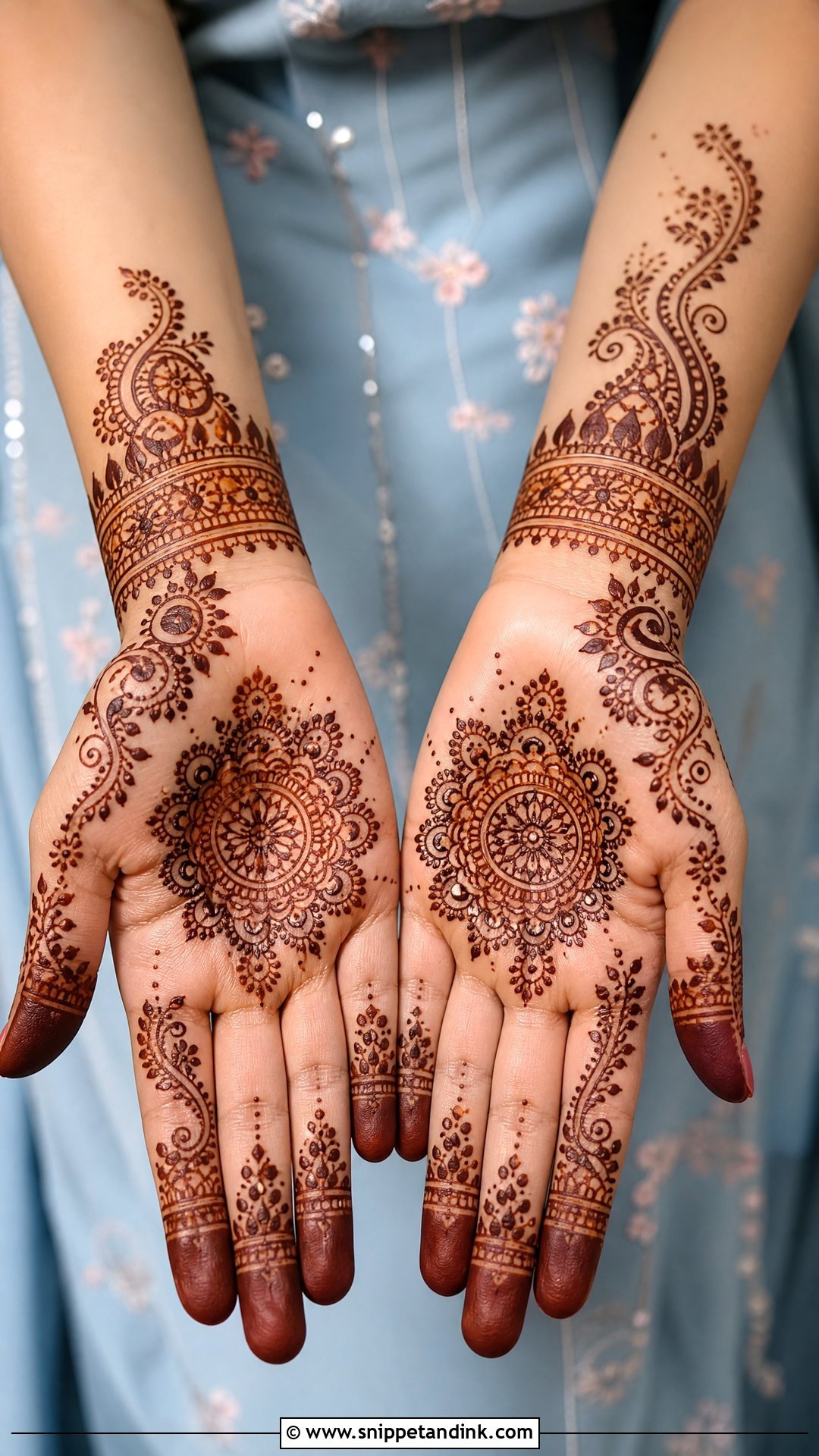
Dholki nights are loud and busy, and you’ll be clapping, dancing and handing out food. I suggest medium coverage with tikki motifs, floral trails, paisleys, dots and wrist bands, lighter than the main bridal mehndi. Sisters and bridesmaids often choose matching back-hand designs or front-hand bails. Small musical details like a dholak can be added for fun. Design it so you can move: wet paste on the fingers and palm makes everything difficult.
23. Pakistani Mayun Mehndi Design
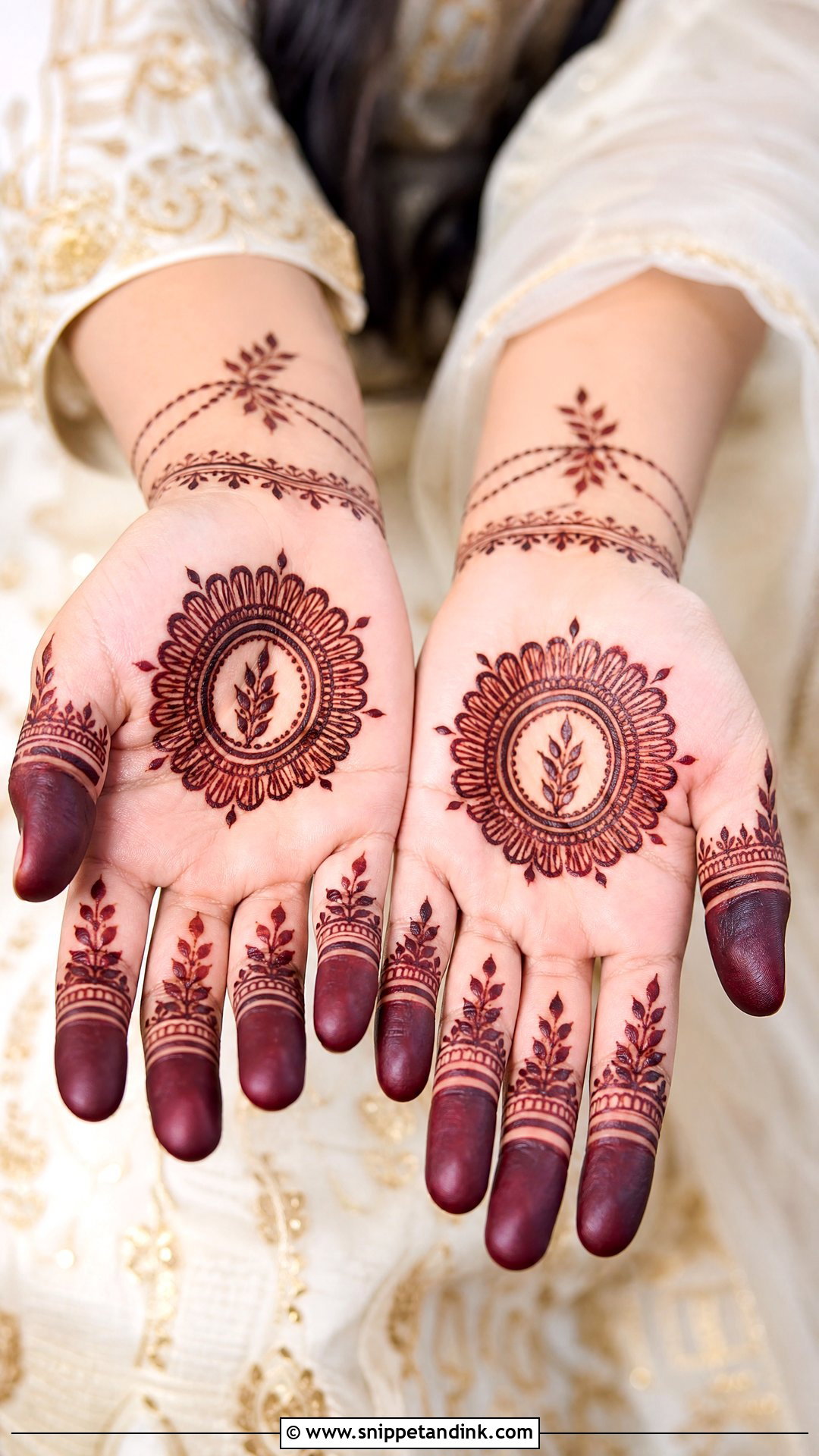
Mayun mehndi has a softer, traditional look: round tikki patterns, simple palm work, neat fingers and light wrist detail. It suits the yellow, orange and green outfits of the event. Brides often keep it medium because the full bridal mehndi comes later; doing a heavy design at mayun means the two stains overlap. Guests can choose small front- or back-hand designs. A central mandala with dotted borders and leaves on the wrist and fingers is a classic choice.
24. Pakistani Engagement Mehndi Design Back Hand
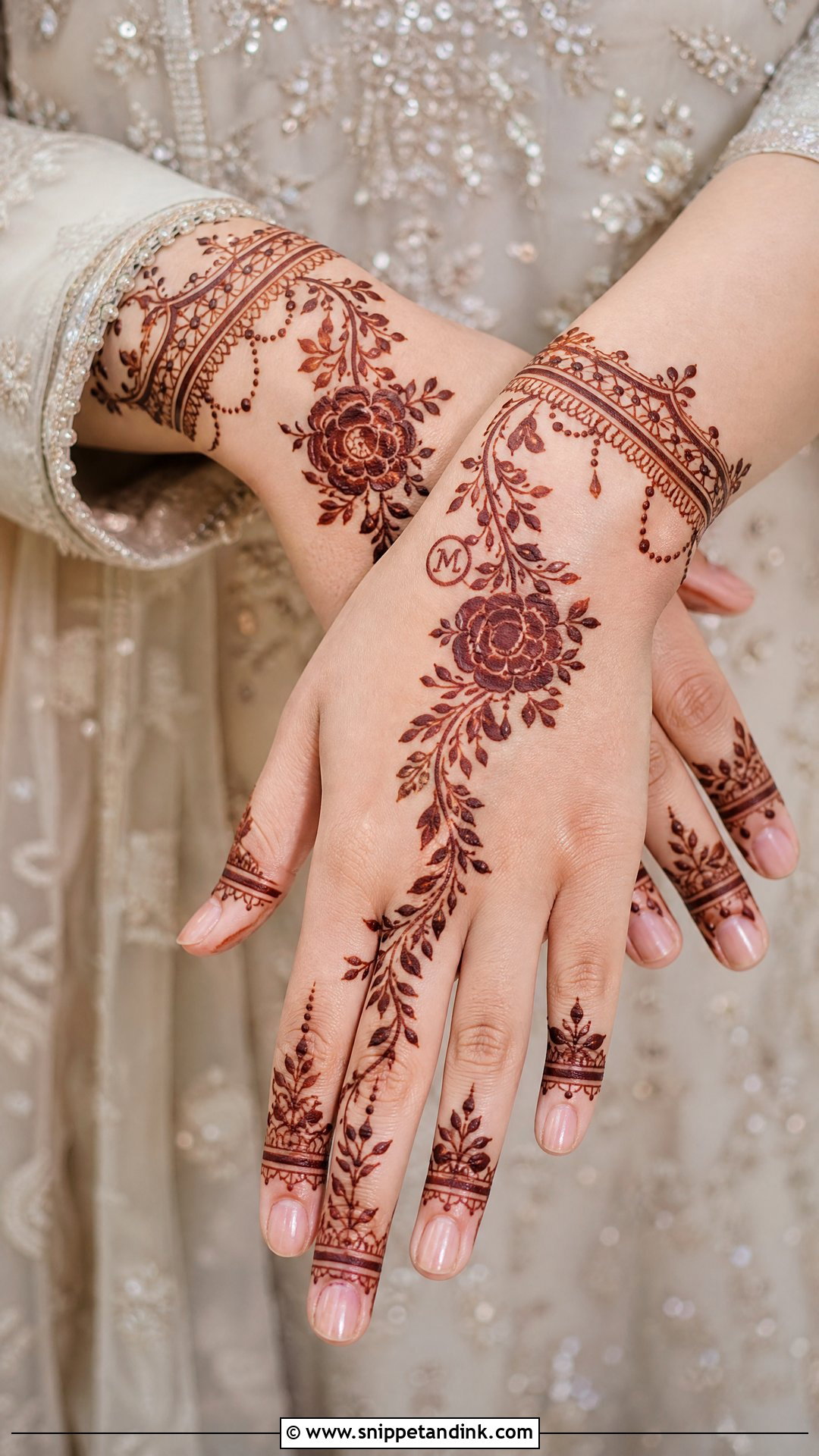
At an engagement, the hands are photographed up close during the ring exchange, so the design needs to look crisp. Bracelet patterns, floral trails, finger details and negative space are common. Keep the ring finger’s base clear so the ring doesn’t disappear into the pattern. A diagonal rose trail or a jewelry-style design works well. Initials can hide near the wrist. Lighter coverage with one strong focal point suits modern engagement looks.
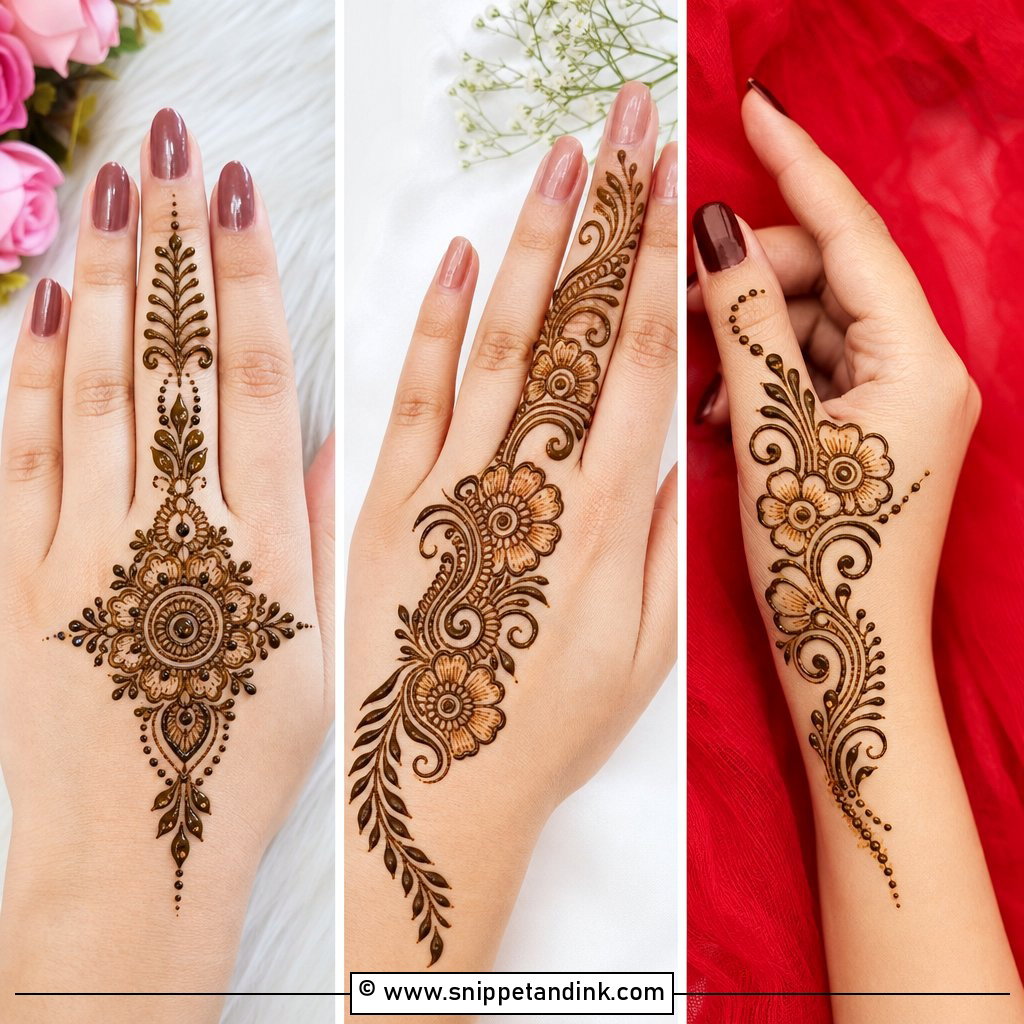
25. Pakistani Gulf Mehndi Design For Hands
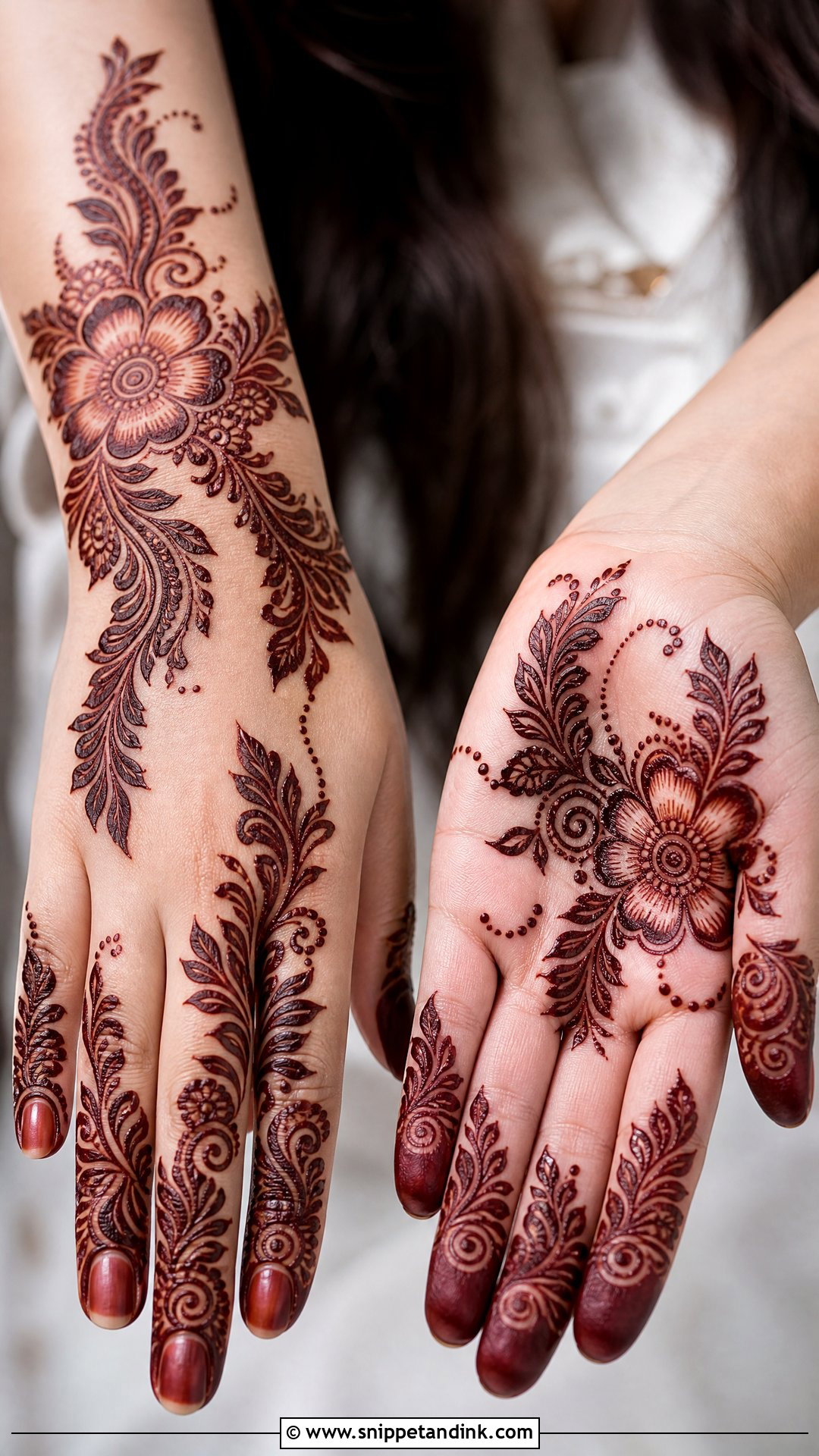
Gulf-inspired designs, often called Khaleeji, use large flowers, thick outlines, leafy curves, open spaces and soft shading. They look dramatic without full coverage and take less time than fine bridal work, which makes them practical for Eid evenings. The pattern can run diagonally across the back of the hand or cover the palm in bold sections. Adding small paisleys, delicate dots or thin finger bands gives it a Pakistani character. The contrast between bold and fine work is the point.
26. Pakistani Moroccan Mehndi Design Front Hand
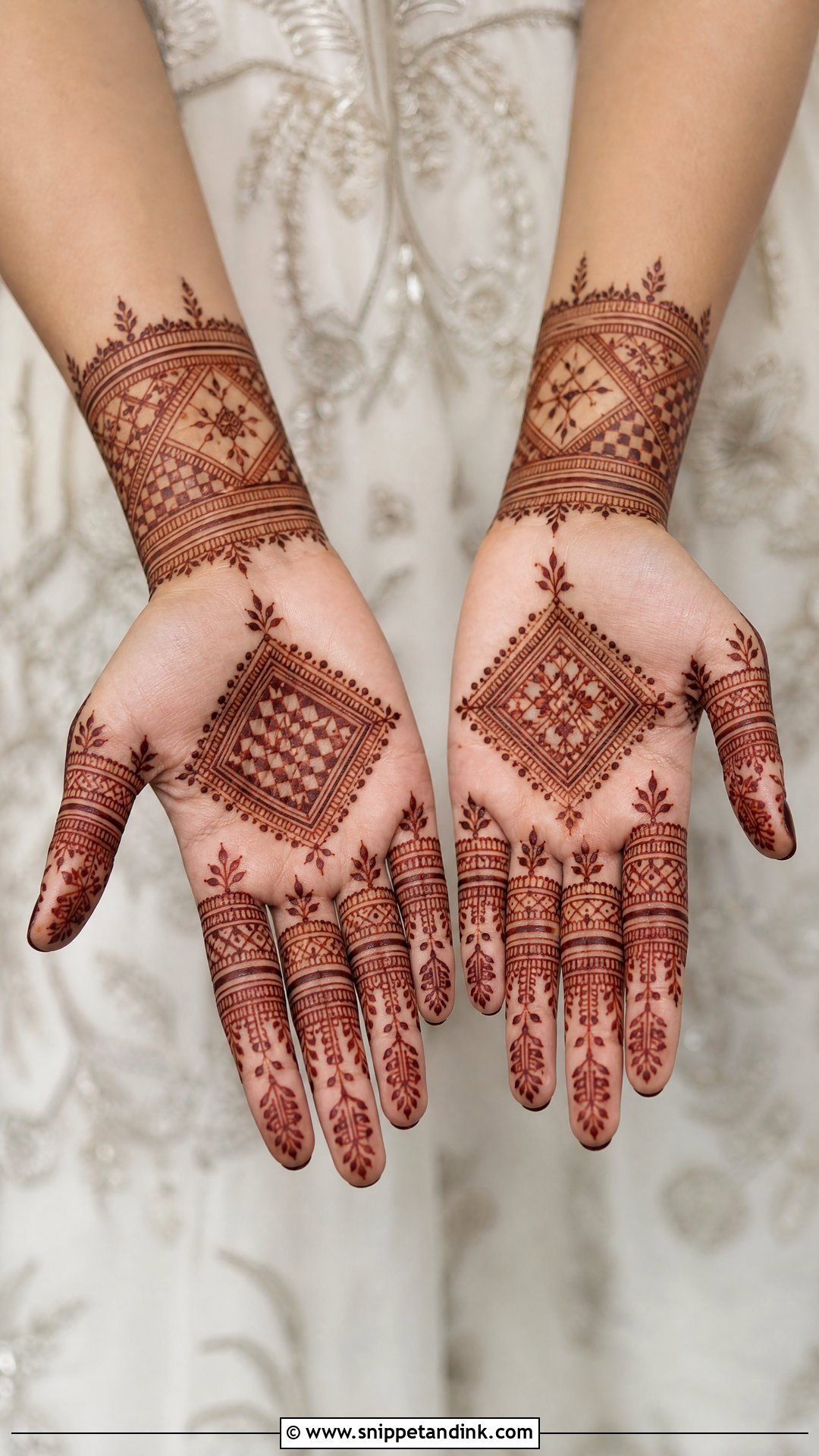
Moroccan-inspired designs use geometric lines, diamonds, checks and structured borders. Combined with Pakistani motifs, they create a front-hand design with a modern edge: a geometric panel on the palm, patterned fingers and a cuff at the wrist. This suits anyone tired of florals and pairs with simple outfits. Geometric work exposes every error, so I mark the center point of the palm first and build outward. Small leaves or dots between sections soften it.
27. Pakistani Indo Arabic Mehndi Design Full Hand
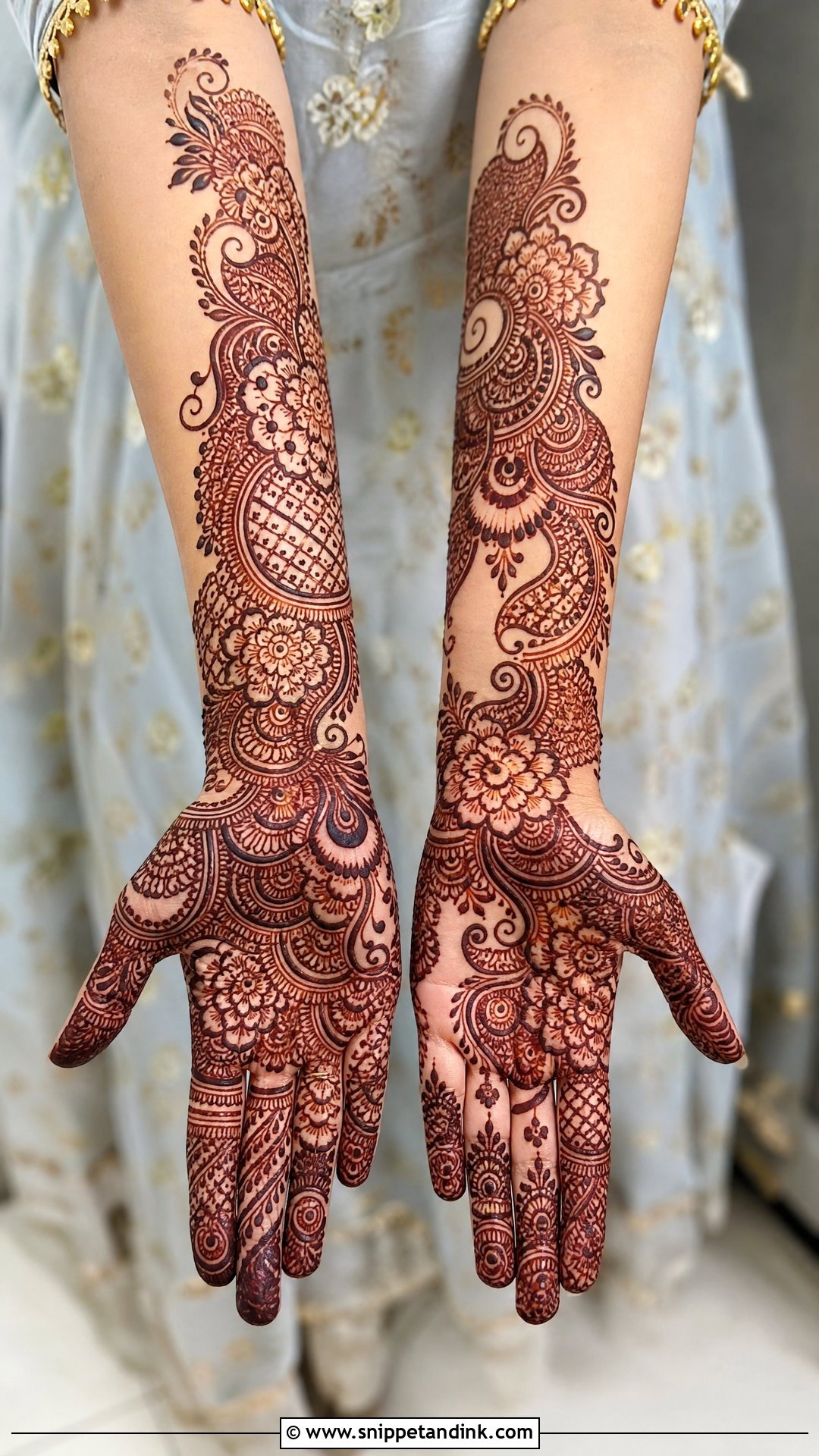
Indo-Arabic Pakistani mehndi combines Arabic trails with the dense filling of Indian and Pakistani work. Large florals, bold paisleys, mandalas, jaali panels and decorated fingers are arranged with open spaces between them. It’s lighter than full bridal mehndi but richer than a simple trail. Bridesmaids, guests and brides who want detail without total density choose it. Keep the main motifs bold and the filler delicate.
28. Pakistani Modern Mehndi Design Back Hand
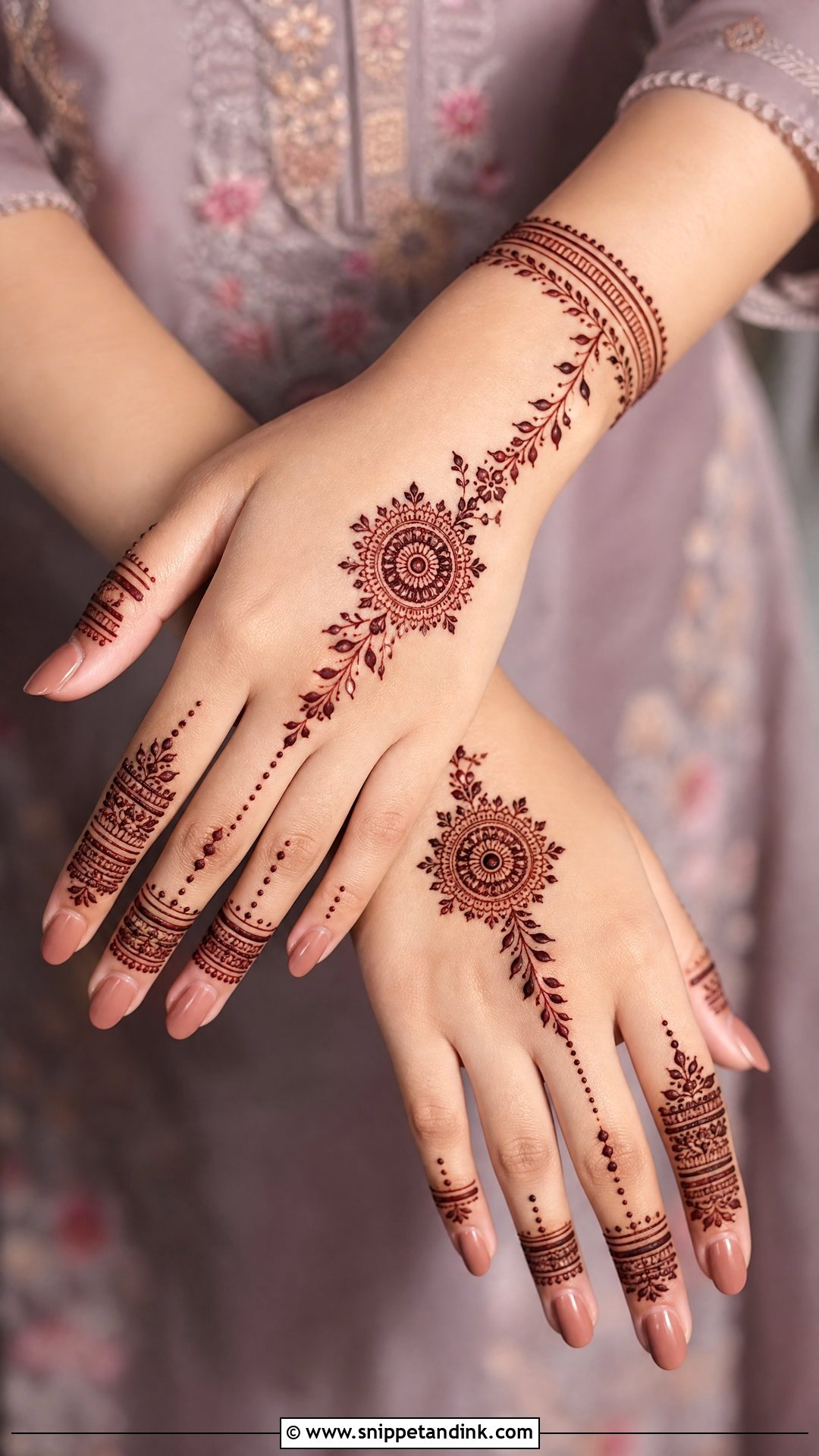
Modern back-hand designs focus on composition and spacing with fewer heavy fills: a floral trail, split finger patterns, bracelet lines or a small mandala at the wrist. The bare skin makes each detail easier to see. They suit Eid, parties, engagements and casual functions. Include one strong motif and repeat small accents across the fingers; otherwise the design can look unfinished.
29. Pakistani Foot Mehndi Design
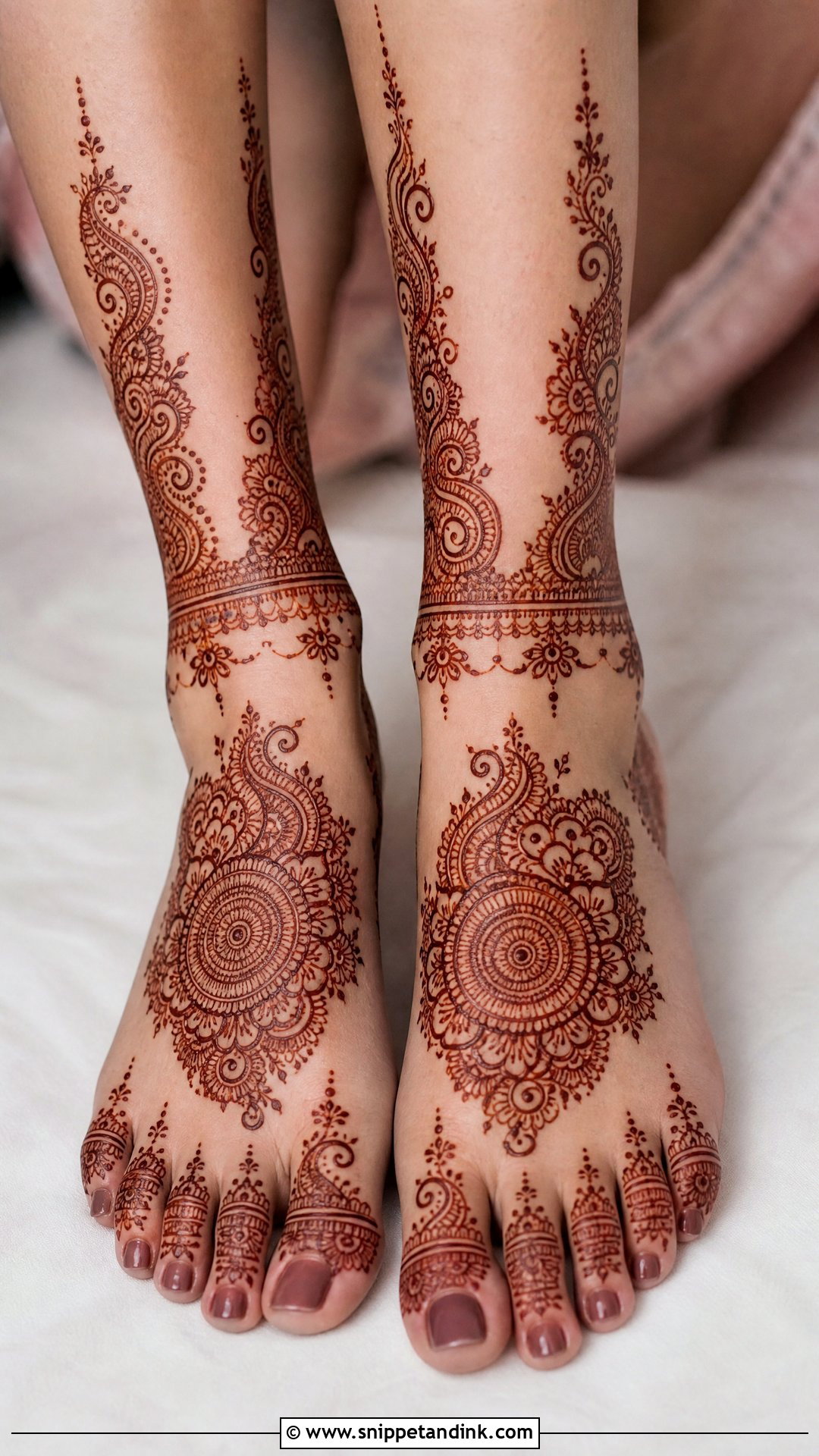
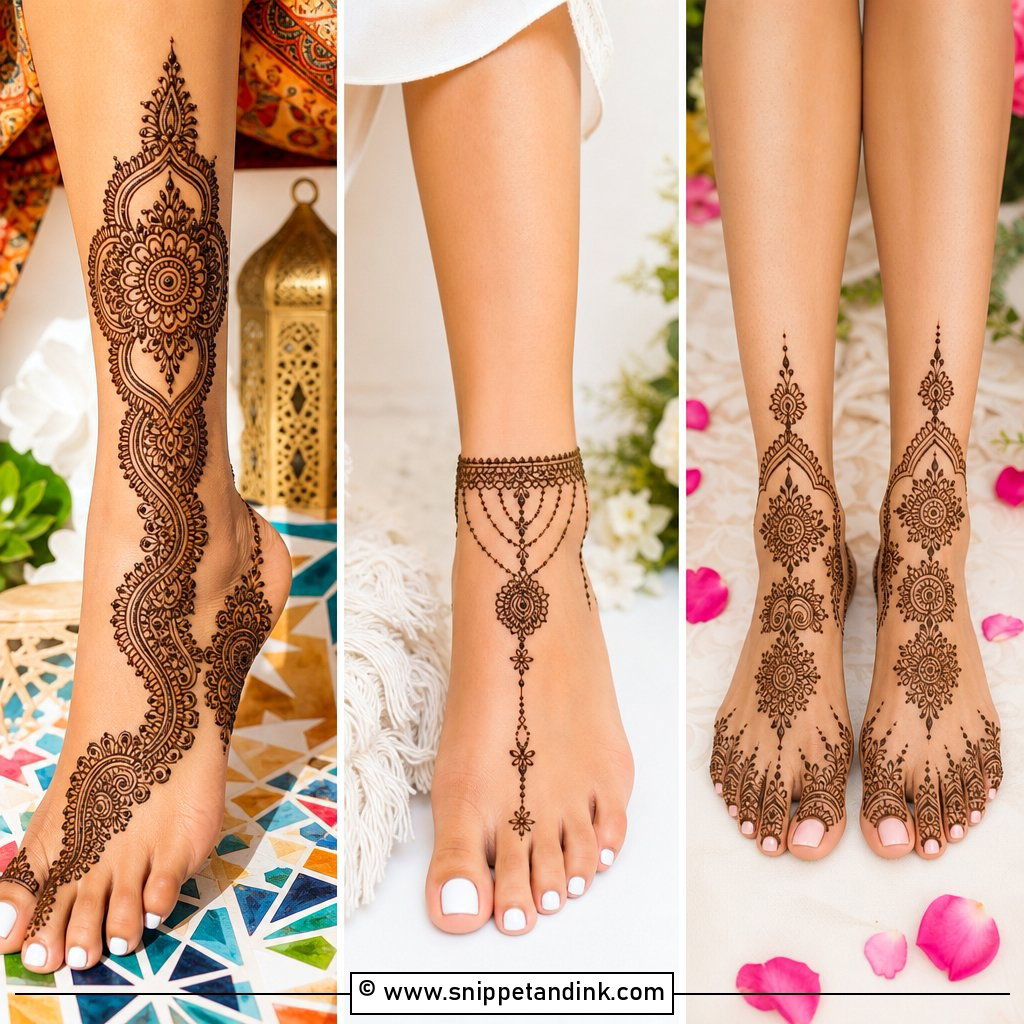
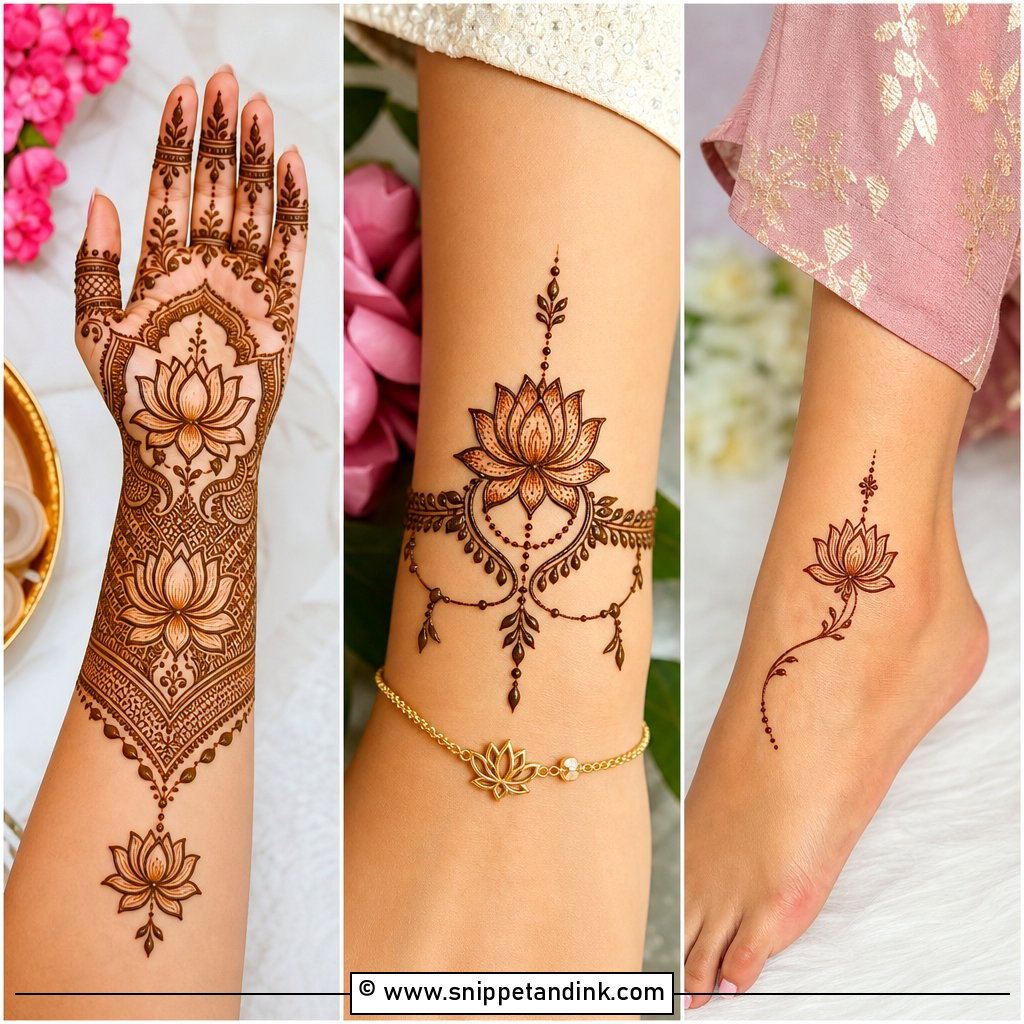
Feet stain darker than almost anywhere except the palms, because the skin is thicker. Designs can cover toes, the top of the foot and ankle, sometimes extending upward. Paisleys, floral vines, anklet borders, mandalas and toe details are typical. Bridal feet are dense, while Eid and guest designs are lighter. I design both feet as a pair, since they’re photographed together. Keep toe details simple; small areas crowd easily. Feet also take longest to dry, so plan to sit with them up.
30. Pakistani Kids Mehndi Design
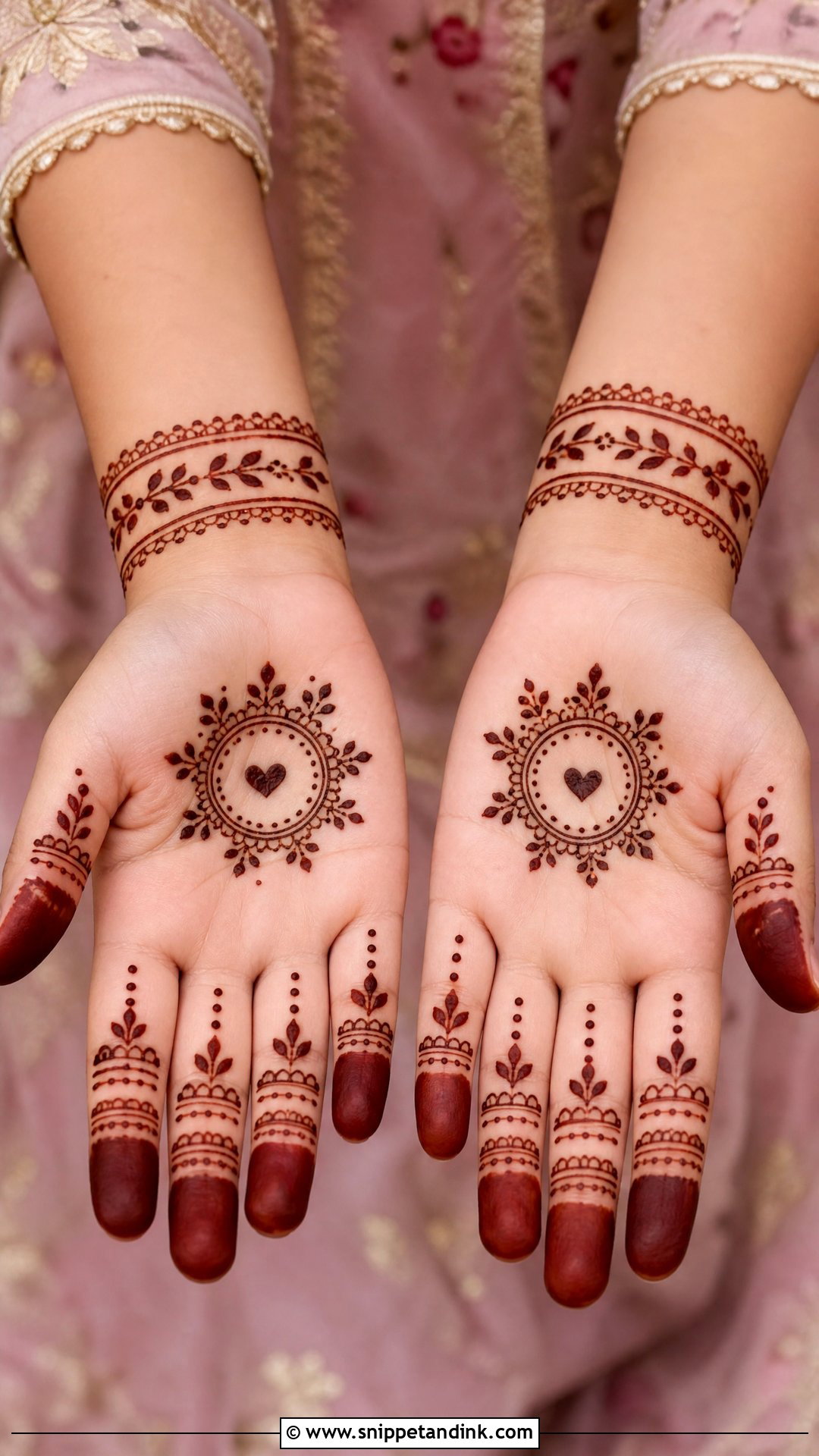
Kids’ Pakistani mehndi has to be quick, because children won’t sit still for long. Small tikki circles, flowers, hearts, vines, stars and bracelet bands are enough. The design can cover just the palm, the back of the hand or fingers and wrist. Bold lines and minimal detail stay clear after staining. Use only natural henna on children, and skip it for babies and toddlers. A small palm flower with dotted fingers lets them feel part of the celebration.
Is That Cone Safe? Reading the Paste Before It Touches Skin
Not every cone sold as mehndi is henna. Some ready-made cones contain chemical dyes that give a very dark result in minutes, and the darkest of these can contain PPD, a hair-dye chemical that can cause serious allergic reactions and blistering. I won’t use instant or black cones, and I’d steer you away from them for children especially.
- Real henna paste is green or brown in the cone, smells earthy or of essential oils, and stains orange first.
- Be wary of any paste that is jet black or promises a dark stain in an hour.
- If you haven’t used a brand before, try a dot on the inner arm a day or two before the event.
- Itching, burning or raised skin under the paste means wash it off and stop.
From wet paste to deep maroon
Aftercare decides how dark it gets. Leave the paste on for as long as you can, ideally six hours or overnight. A dab of lemon and sugar once it starts drying keeps it stuck to the skin. Scrape it off with the back of a butter knife instead of washing, then keep water away for the next several hours. A little oil or balm rubbed on afterward protects the stain while it darkens.
Which Gathering Are Your Hands Dressed For?
Every occasion calls for a different amount of henna. For Eid, a tikki, a bail or a light floral palm is easy to wear for a full day of visits; for a nikkah or engagement, a bracelet design or rose trail looks crisp in close-ups; for the bridal night, dense paisleys, jaali and mandalas. Hand shape matters too: long fingers suit diagonal trails, while smaller hands look best with a centered tikki. Save a few photos, show them to your artist, and ask how long each one will take before you sit down.
You'll Like These Ideas:


Leave a Reply