
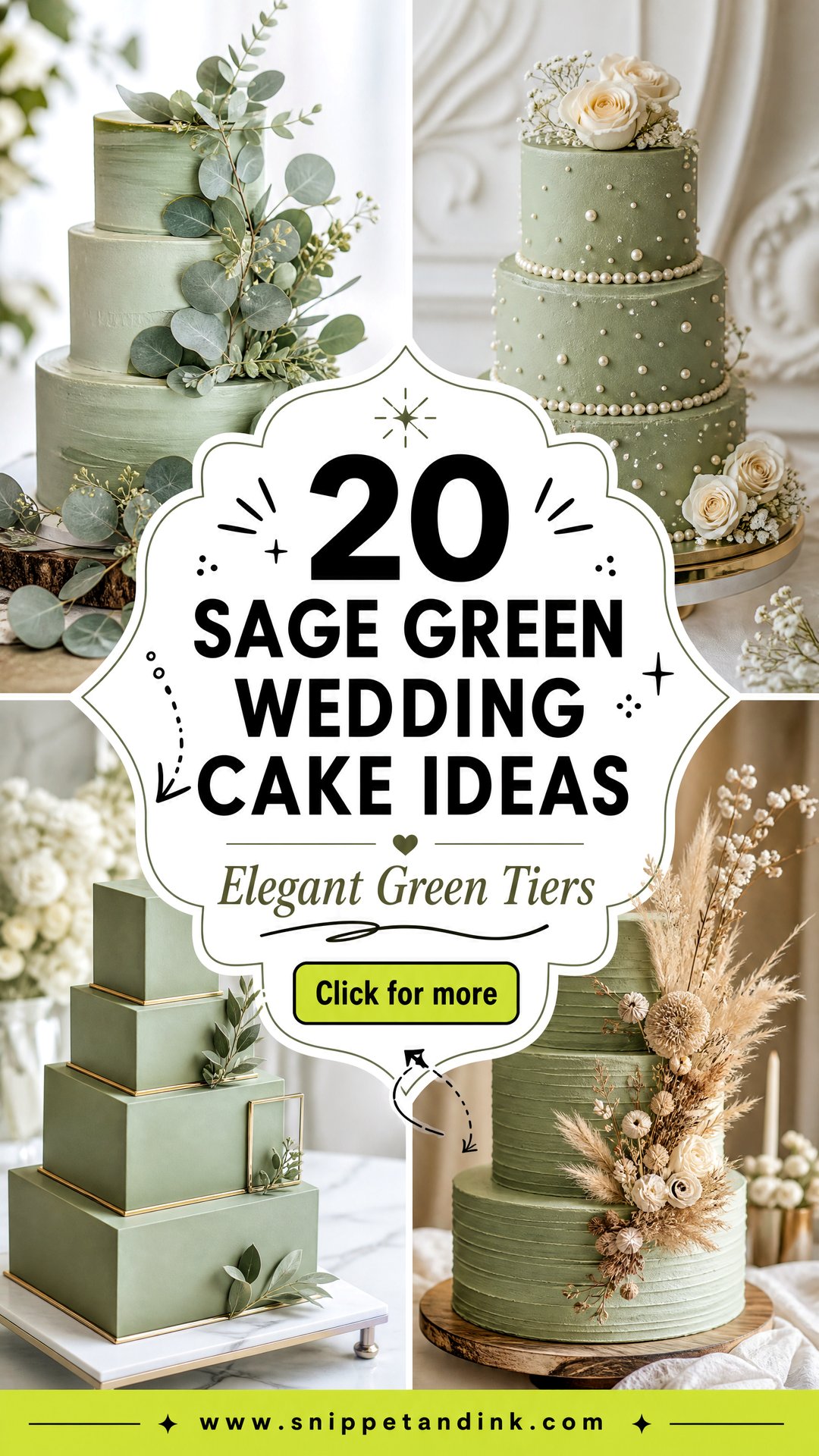
Sage is a forgiving color to build a wedding cake around. It sits comfortably beside ivory, blush, champagne, eucalyptus, dried flowers and pearls, and it doesn’t shout from across the room. What changes the mood is the finish: smooth fondant makes it modern, sugar flowers make it romantic, rough buttercream makes it rustic, and a little gold makes it formal. The twenty cakes below are grouped by one detail each, so you can see what a single change does. If you’re still settling on the shade itself, these Sage Green Wedding Cake Ideas show more of the color range.
Flavors That Belong Under Sage Frosting
Couples often design the outside first and pick a flavor last. I’d do it the other way round, because some fillings limit the finish. Fresh fruit and whipped cream fillings need refrigeration and can’t sit out under fondant for hours. Firm fillings such as ganache, curd set with buttercream or a stable buttercream hold up far better on a long reception.
- Lemon and elderflower: light and floral, a natural match for a garden palette
- Pistachio: the paste tints buttercream a soft green on its own
- Vanilla bean with raspberry: the safe crowd choice, with a pink layer that looks pretty against sage when cut
- Almond or honey: gentle flavors for rustic and dried-flower cakes
One caution on matcha. It does give a green tone, but it can taste bitter to some guests and the color dulls toward brown over time. I use food coloring for the sage and keep matcha, if you love it, inside as a filling.
1. Sage Green Wedding Cake With White Flowers
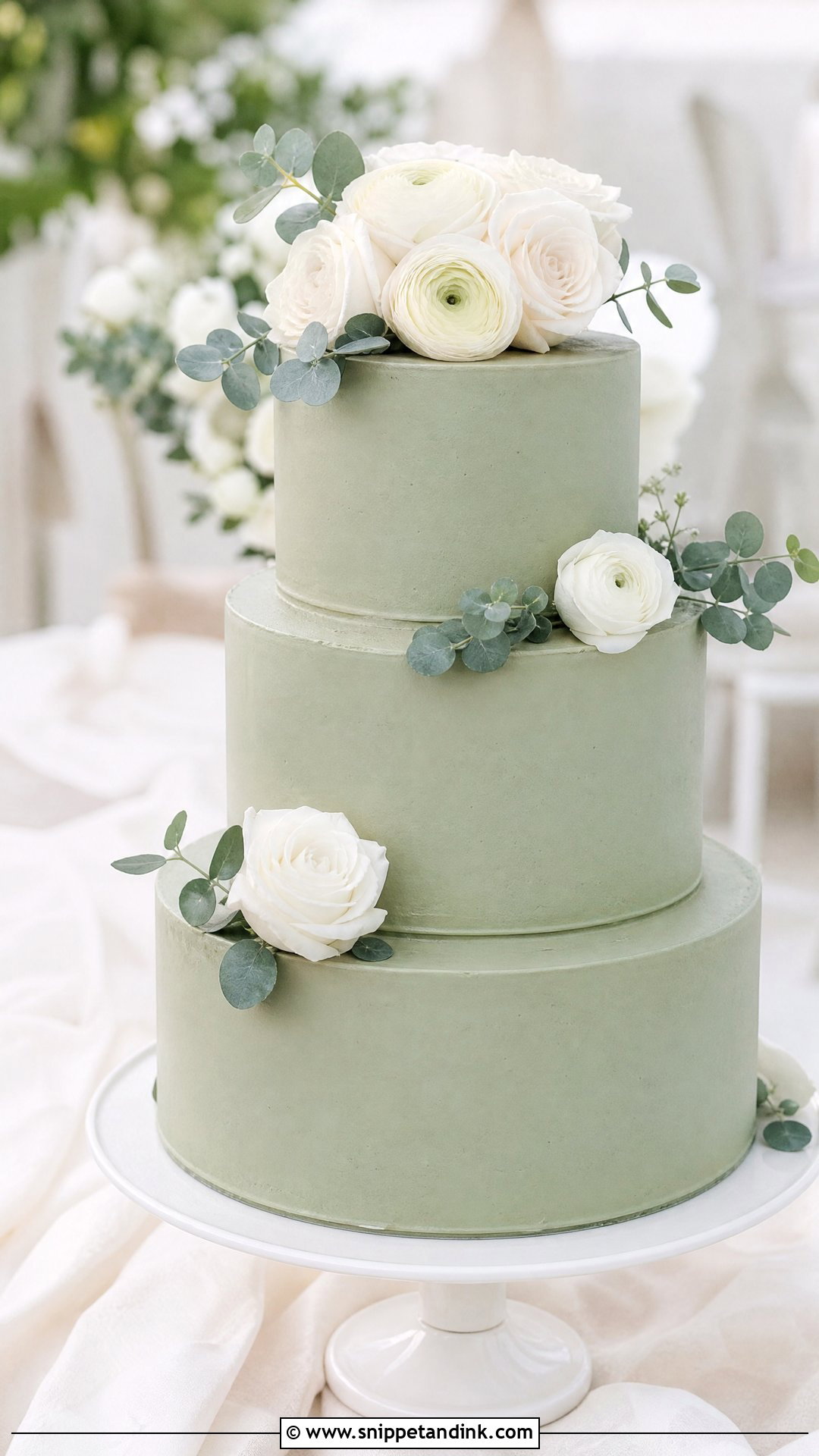
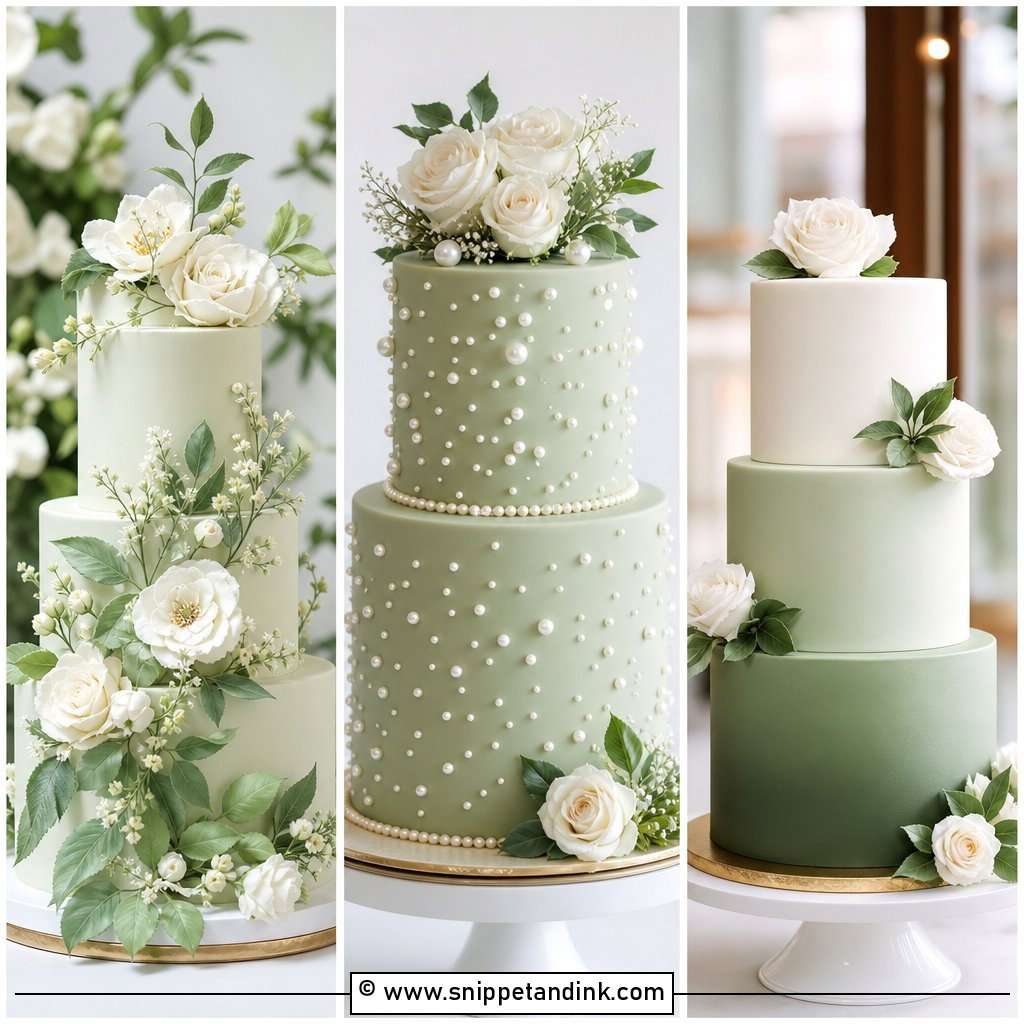
White flowers are the safest partner sage has. The green carries the color and the white keeps the cake bridal. I’d ask for smooth sage buttercream or fondant, then place white roses, ranunculus, orchids or peonies in one or two groups, with a few eucalyptus leaves to link the flowers to the frosting. Peonies are heavy and drop petals once they open fully, so I wire or support them. It works on two tiers, three tiers or one tall tier. A white stand keeps the look clean.
2. Sage Green Wedding Cake With Gold Leaf
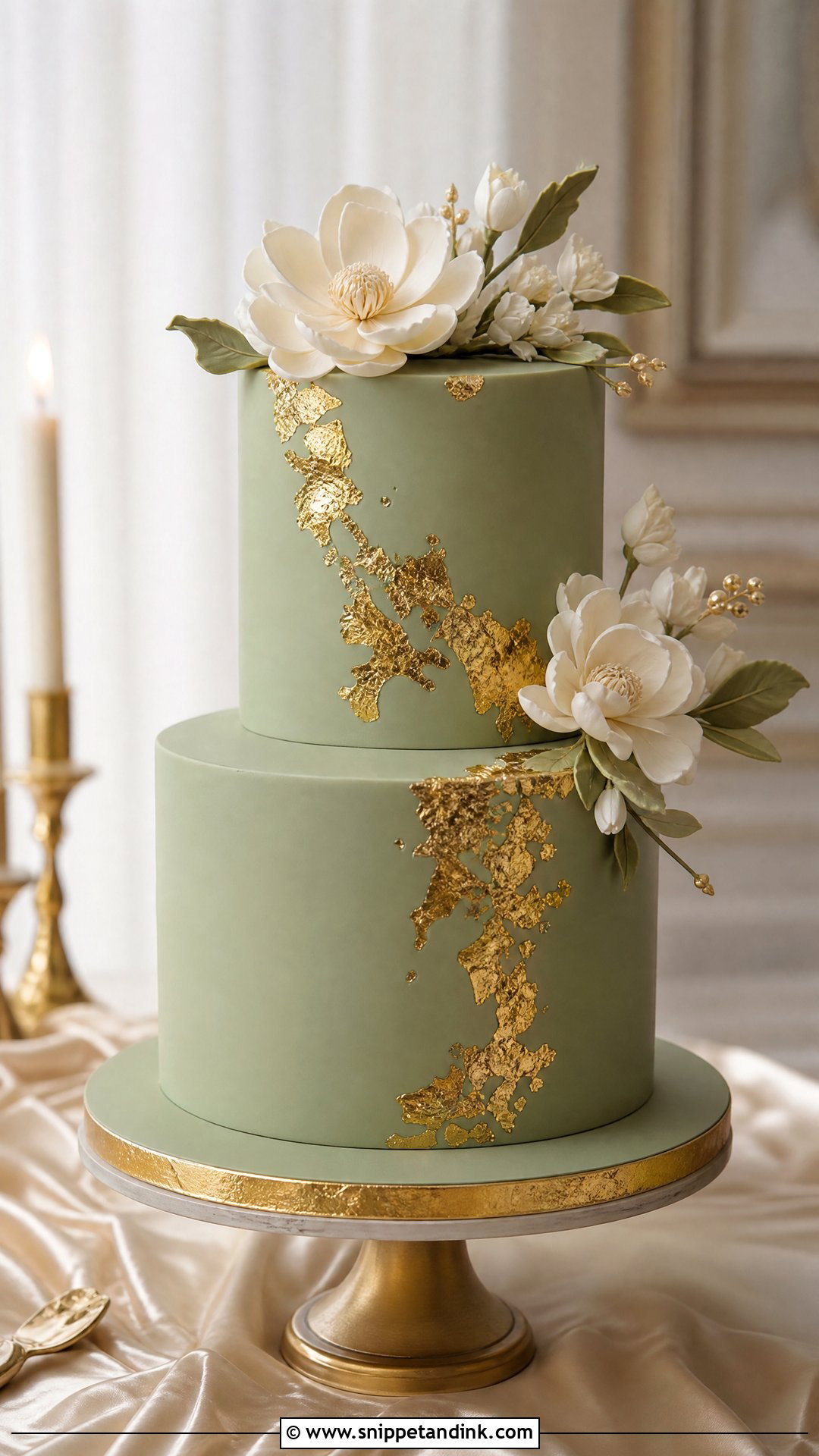
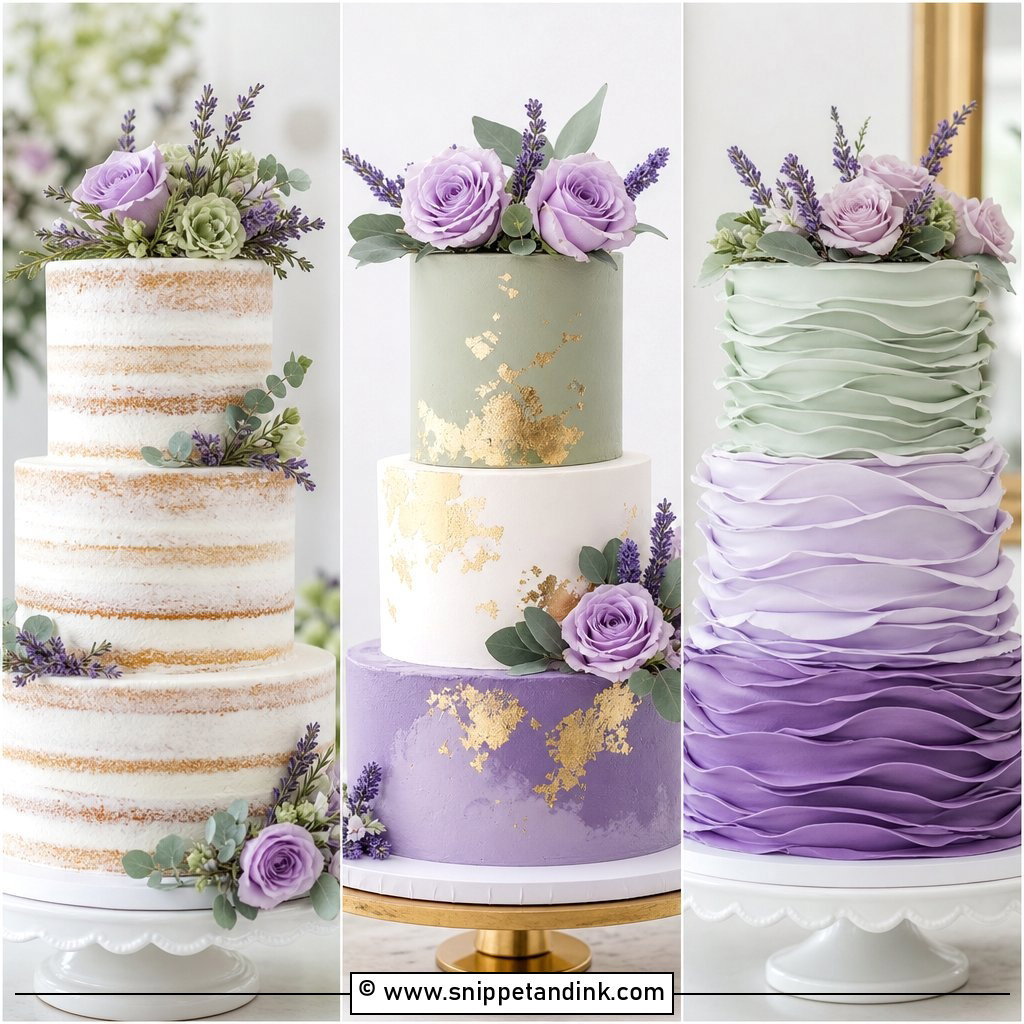
Gold leaf warms up muted green. I apply it in small torn pieces or along the edges of a smooth fondant finish, because leaf won’t sit flat on soft buttercream for long. For a modern version, I’d do one sage tier, one ivory tier and a fine gold line where they meet, with ivory flowers down one side. Edible gold leaf is so thin it lifts in a draft, so I keep the cake covered until it’s placed.
3. Sage Green Wedding Cake With Eucalyptus
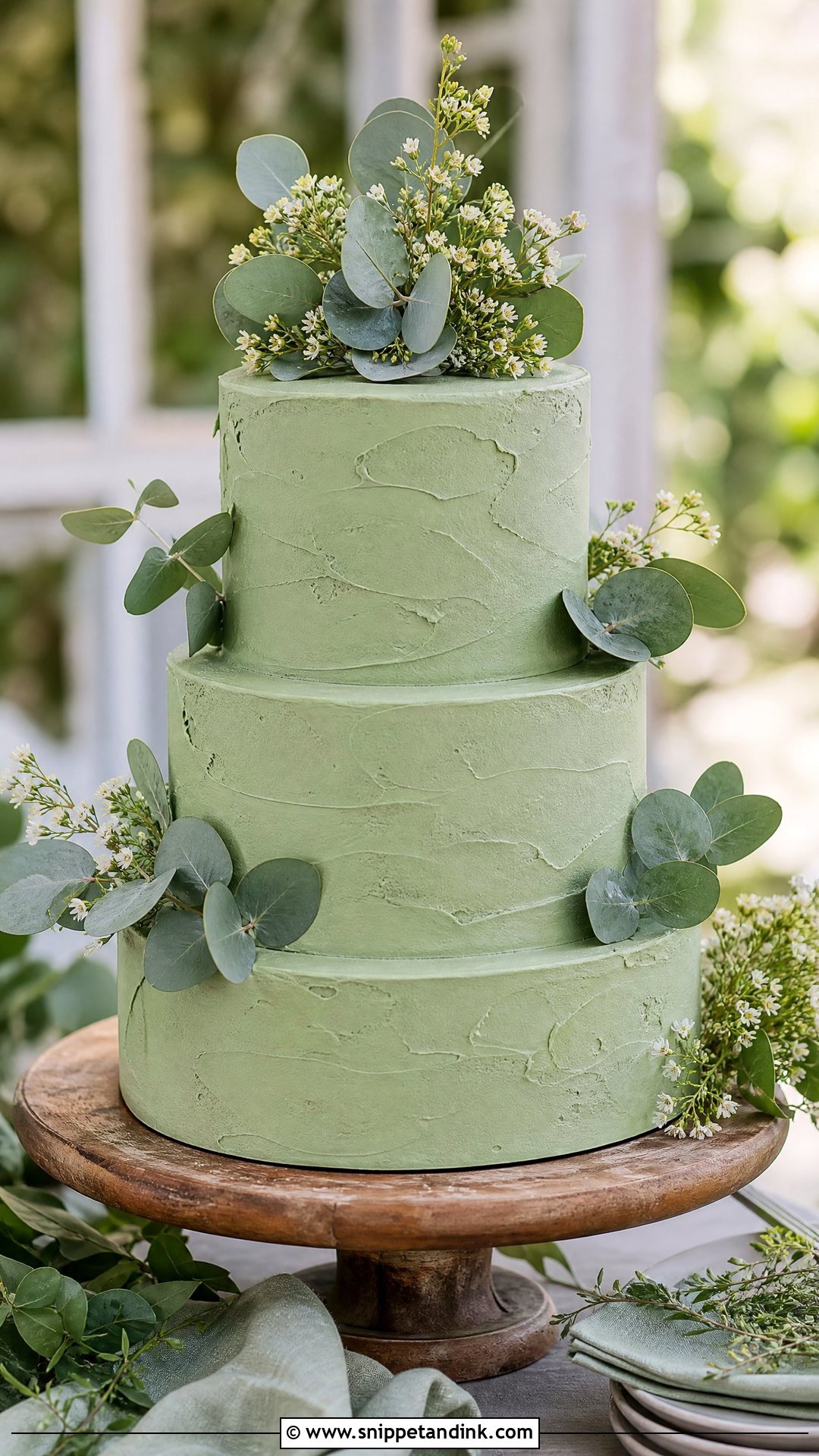
Eucalyptus and sage are almost the same color, so the cake reads as part of the florals rather than separate from them. I prefer sugar eucalyptus on the tiers themselves. Fresh eucalyptus isn’t safe to eat, and if a florist supplies it, the stems sit on a barrier and come off before cutting. Ivory flowers or small white buds finish it. Vanilla, lemon, almond and pistachio all suit the fresh, green feel.
4. Sage Green Wedding Cake With Buttercream
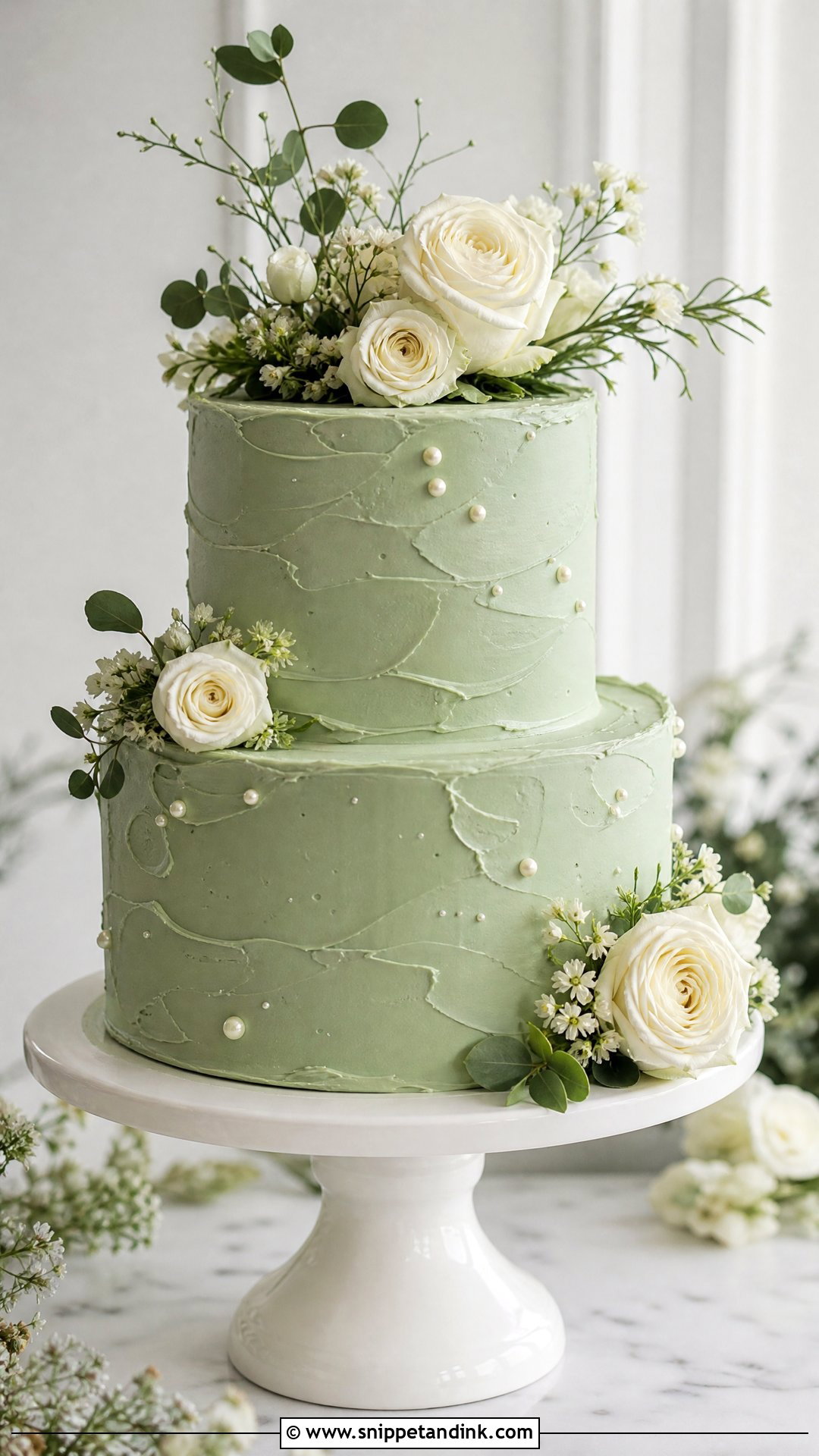
Buttercream gives sage a handmade softness, and it’s the finish most couples prefer for taste. It can be smooth, lightly textured or swept with a palette knife. A two-tier version with ivory flowers suits a small wedding; three tiers looks more classic. Piped borders, a few pearls or a thin white drip add detail. The trade-off is heat: buttercream softens in a warm room, so I’d plan where the cake stands before choosing this finish for a summer date.
5. Sage Green Wedding Cake With Fondant
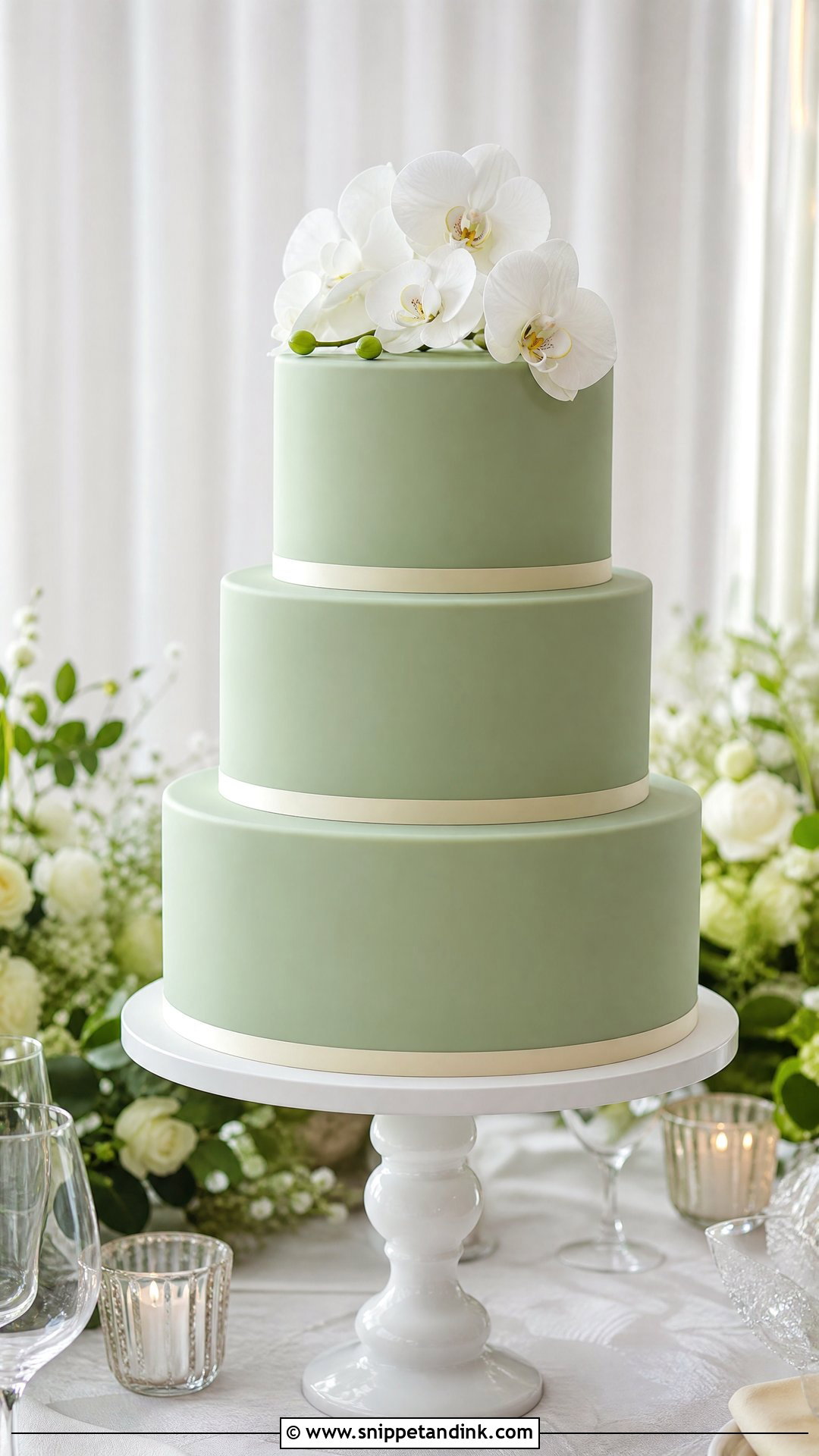
Fondant earns its place when you want sharp tiers, sculpted bows, drapes or unusual shapes. Sage fondant colors evenly if it’s kneaded thoroughly, and streaks are the sign it wasn’t. A plain fondant cake can look stark, so I add sugar flowers, edible pearls, thin gold edging or a textured white tier. Most guests peel the fondant off, which is fine; the cake and filling underneath are what they eat. It suits ballrooms and formal receptions.
6. Sage Green Wedding Cake With Pearl Details
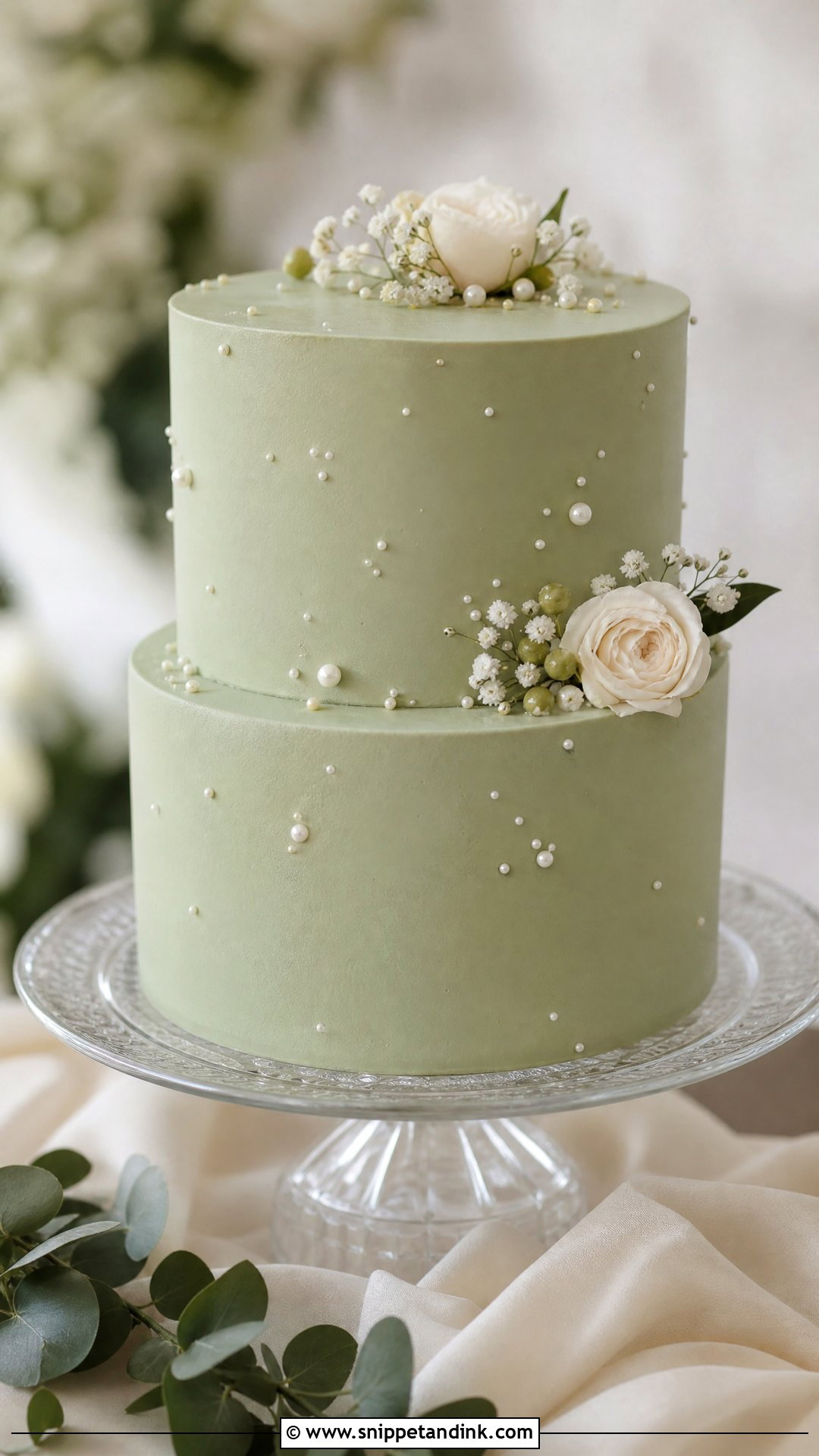
Pearls look delicate on sage and they’re quick to adapt: white for a classic look, champagne for a warmer one. I place edible pearls in clusters, as borders or scattered, on a smooth surface. With ivory piping alongside, the cake leans vintage without getting busy. Keep the flowers small, white roses or tiny sugar blossoms. Sugar pearls are hard, so I warn couples to keep big clusters away from the slices given to children.
7. Sage Green Wedding Cake With Blush Flowers
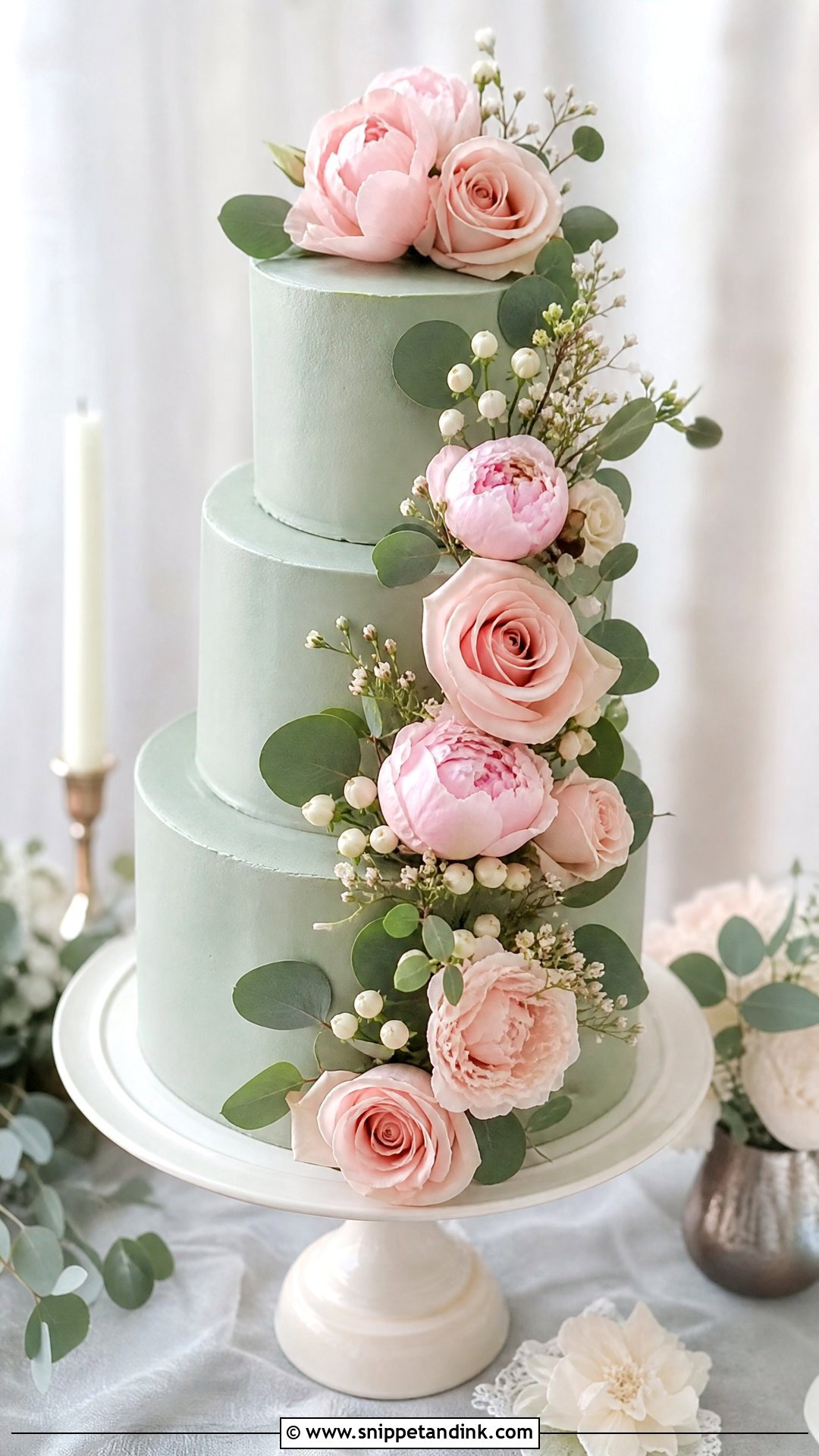
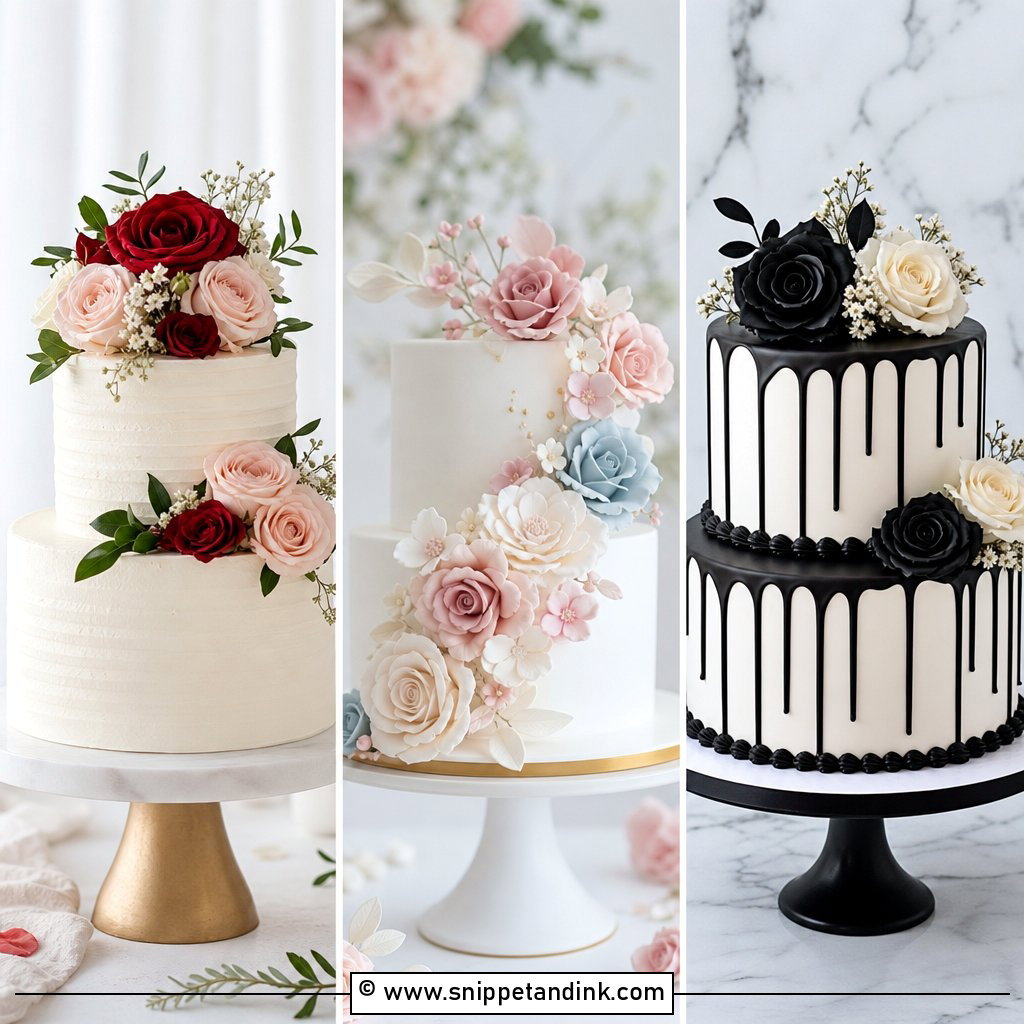
Blush adds warmth to sage, and the two balance each other well: one cool, one warm. I’d place roses, peonies, ranunculus or sugar flowers in a diagonal sweep across the tiers. A white or ivory tier lightens the whole cake if you want less green. Gold flecks or pearls add a little polish. It suits spring and garden weddings and holds up well under candlelight indoors too.
8. Sage Green Wedding Cake With White Drip
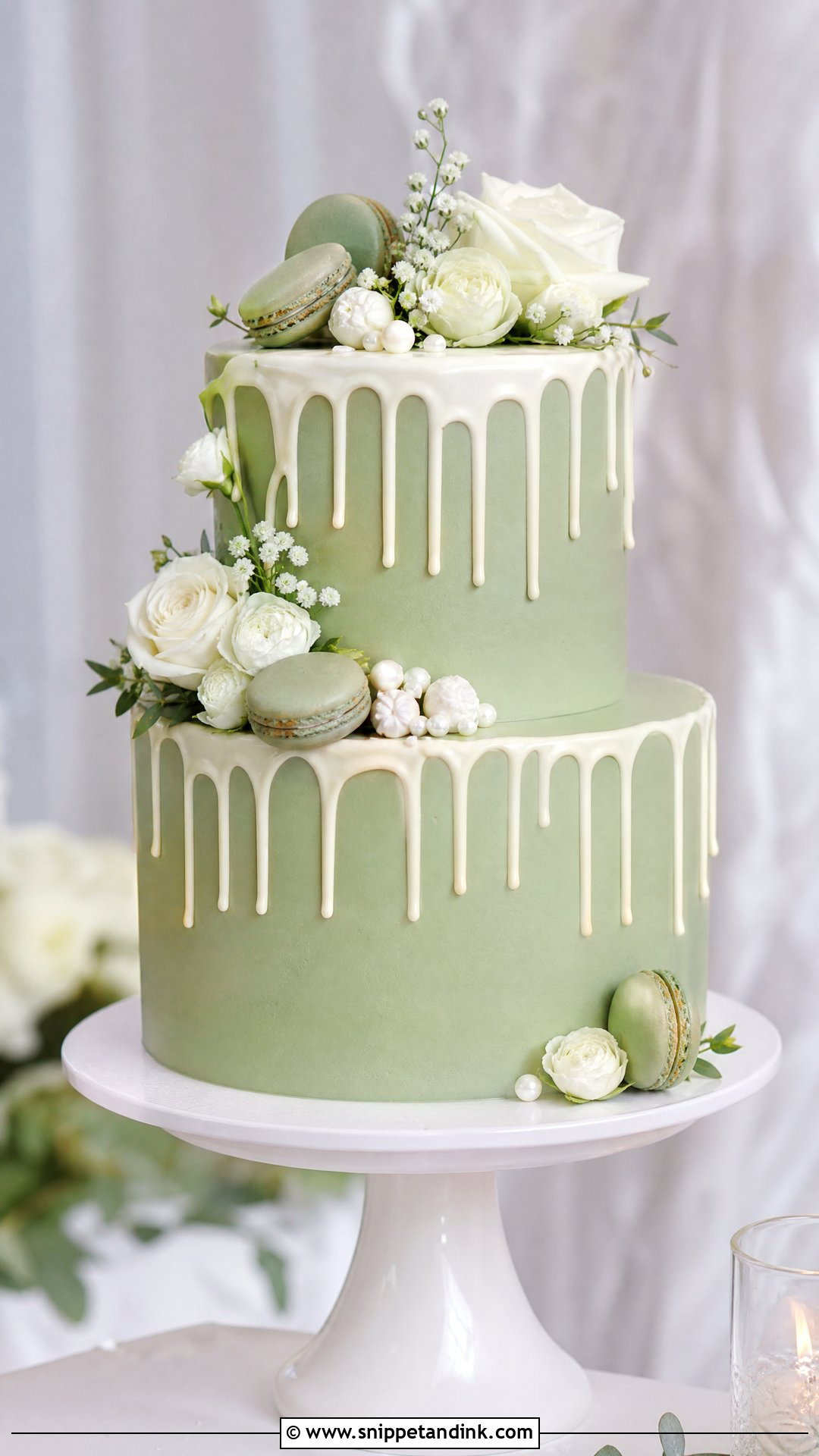
A white drip gives a clean contrast against sage with almost no other decoration. I use white chocolate ganache on a well-chilled buttercream cake, and I control the drip lengths so they stop high on the tier. Too thick and the drip looks heavy and hides the green. Top it with white flowers, macarons, pearls or small meringues. A two-tier version suits an intimate wedding; a taller cake gets more drama.
9. Sage Green Wedding Cake With Sugar Flowers
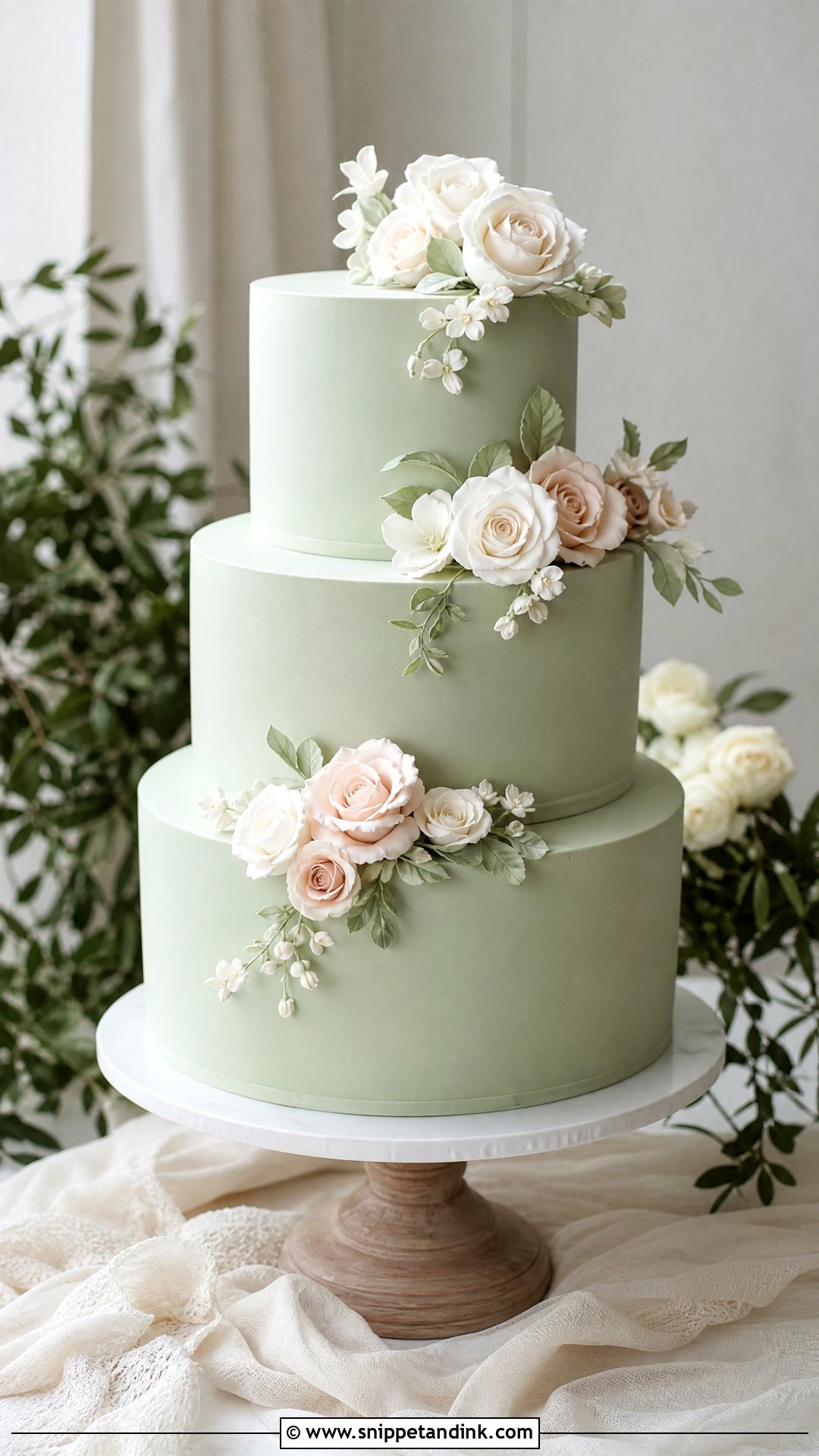
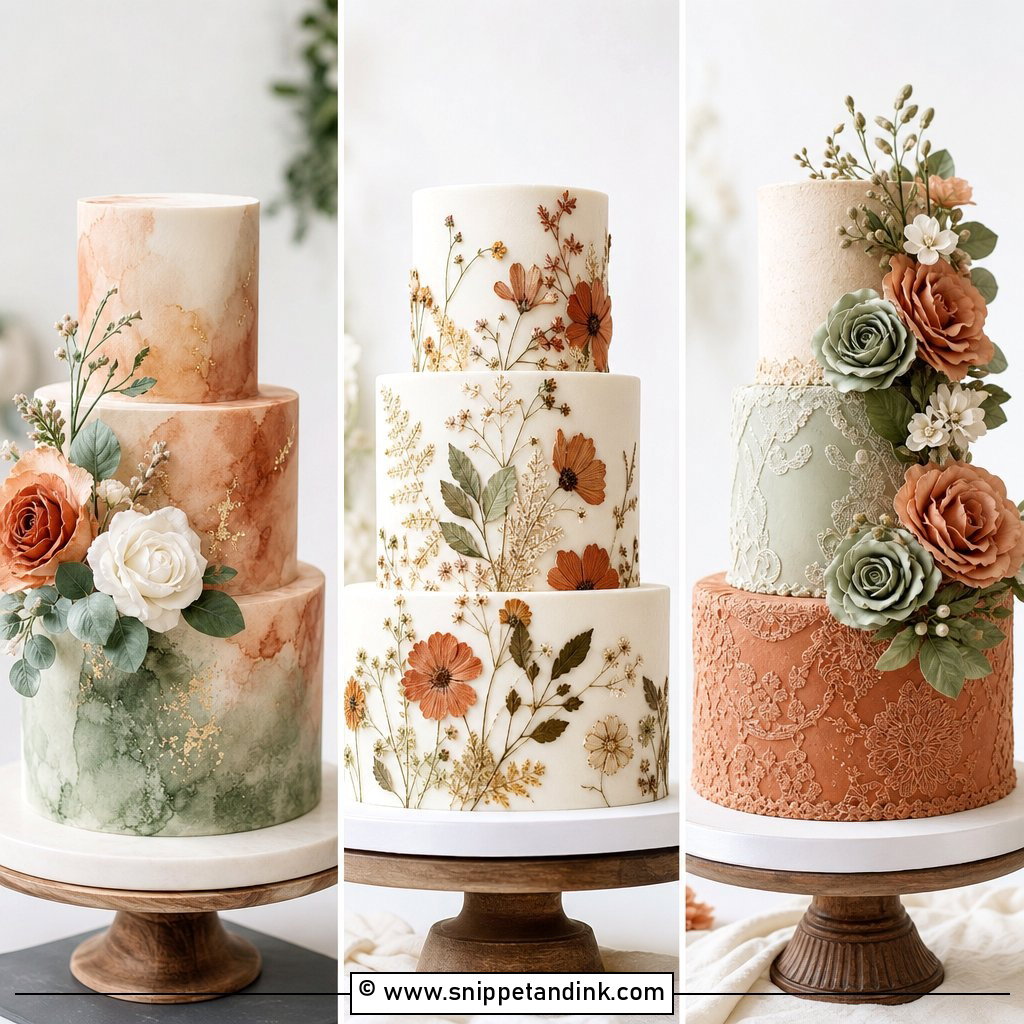
Sugar flowers are made petal by petal from gum paste, wired and dried over days, which is why they cost more and last indefinitely. On sage, white, ivory, blush and pale peach blooms look crisp. I can copy the flowers in your bouquet so the cake matches without any wilting. Place them at the base, down one side or between tiers. They’re fragile in transport and in humidity, so I fix them on at the venue.
10. Sage Green Wedding Cake With Rustic Texture
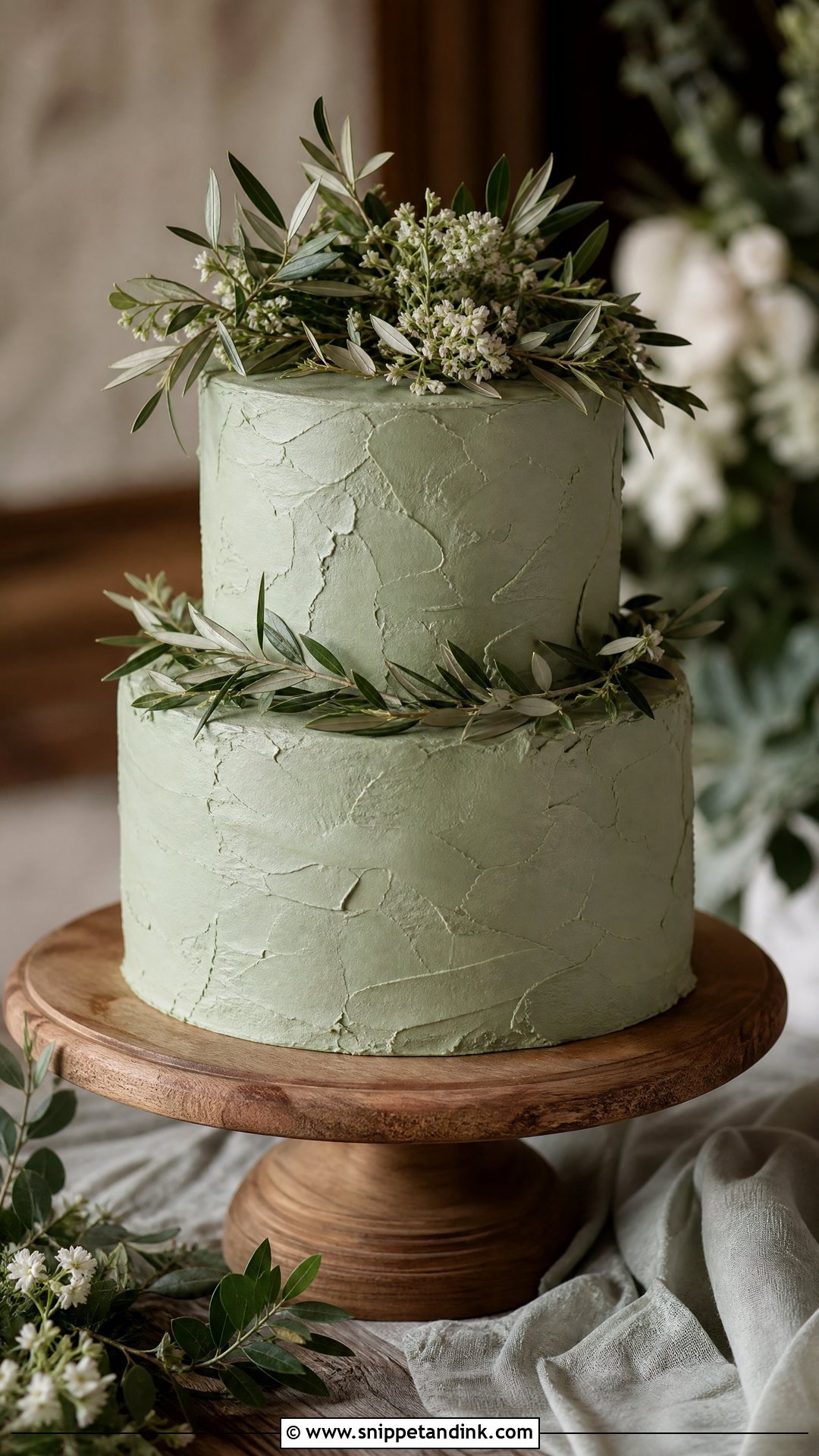
Texture is the whole decoration here: rough edges, spatula marks, uneven swoops. The relaxed finish also hides small knocks from transport, which matters on a gravel drive to a barn. Small white flowers, olive branches, eucalyptus kept off the frosting or dried grasses complete it. A wooden stand warms the green. Vanilla bean, honey, lemon and almond flavors suit it.
11. Sage Green Wedding Cake With Modern Tiers
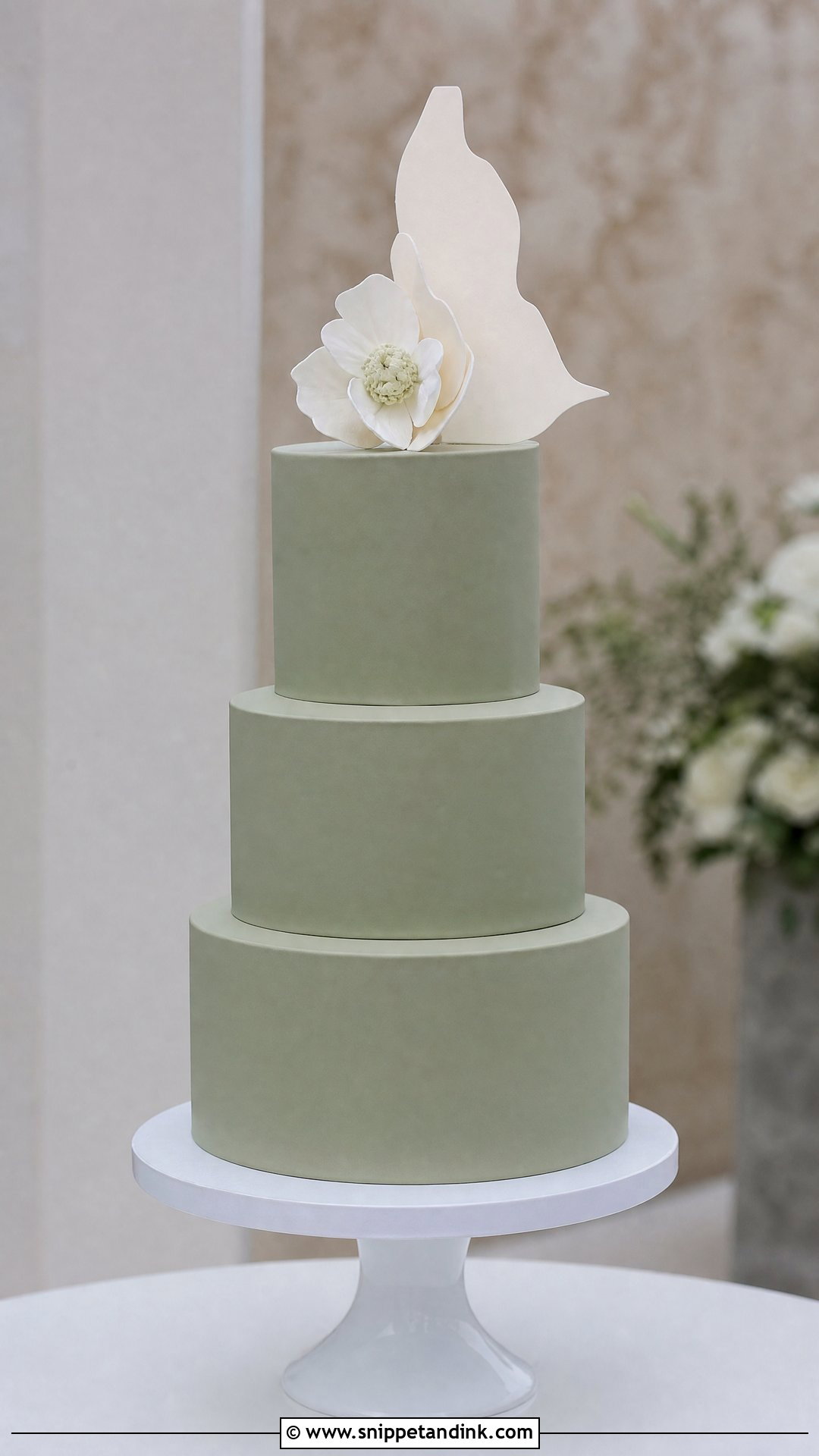
Modern sage cakes rely on structure: sharp edges, smooth frosting, tall tiers, sometimes a round and square mix. Tall or stacked tiers need proper internal supports, and an extra-tall tier is usually two cakes on boards, one above the other. I’d add one bold detail, a single sugar flower, a gold line or an abstract fondant piece, and stop there. Neutral tables and minimal venues suit it.
12. Sage Green Wedding Cake With Floral Cascade
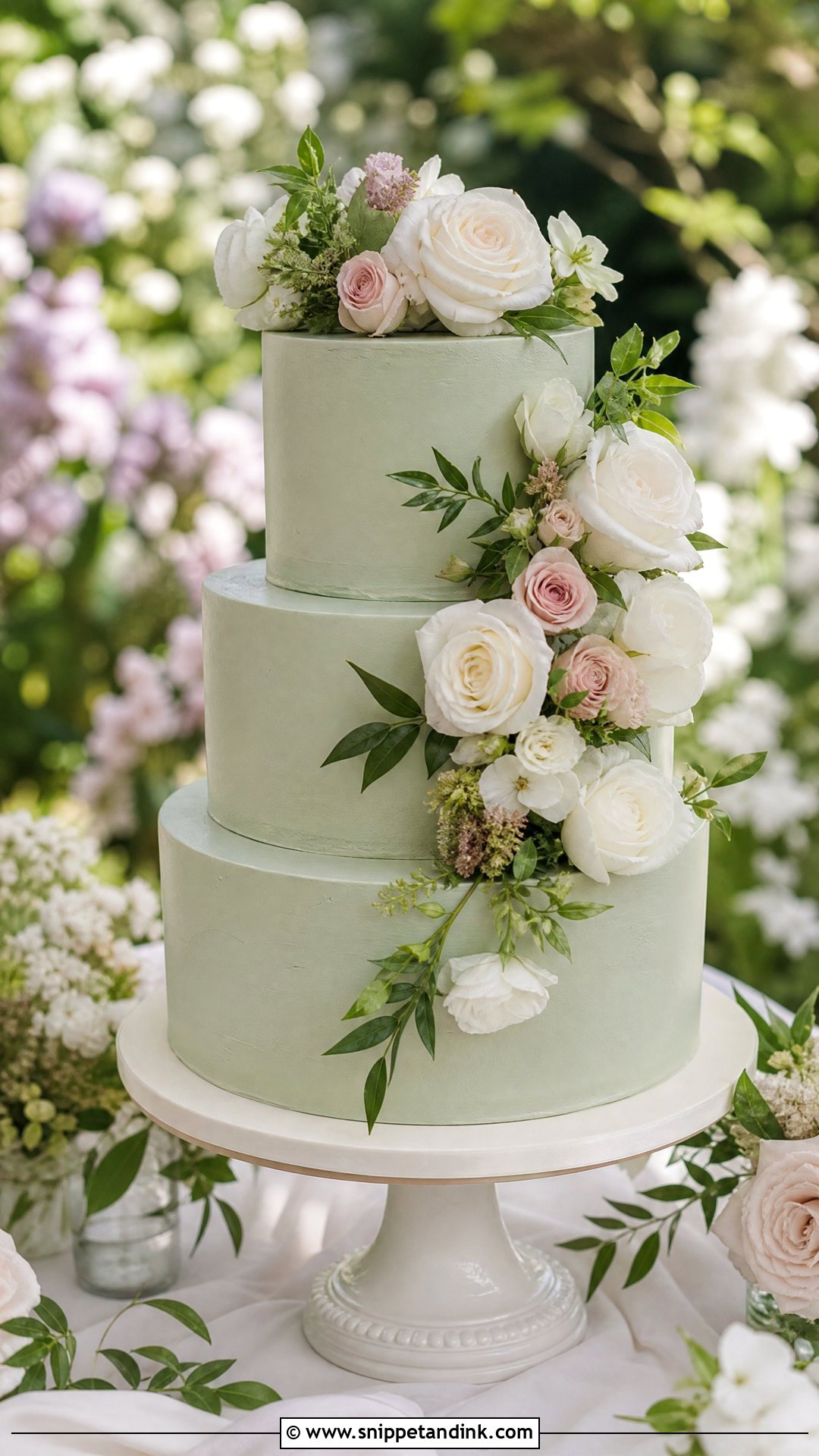
A cascade gives the cake movement and height, starting at the top tier and falling down one side. White, ivory, blush and pale green blooms all work on sage. The mistake I see is flowers all the same size, which looks flat; I mix large focal blooms with small fillers and trailing pieces. A smooth base keeps it clean, a textured one feels more garden-like. It’s a strong way to tie the cake to your bouquet.
13. Sage Green Wedding Cake With Minimal Flowers
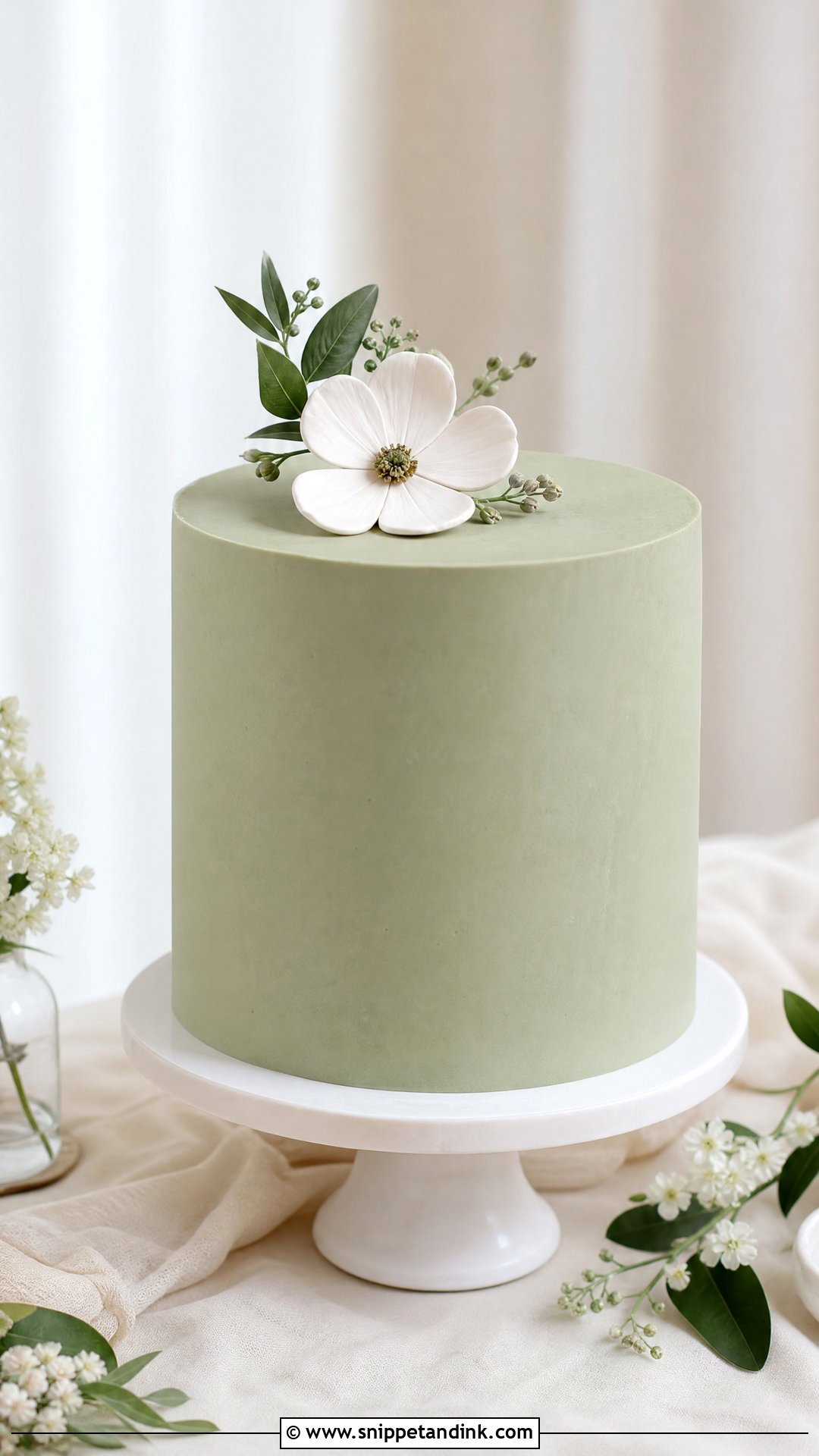
Minimal flowers ask more of the frosting. With one or two small white blooms, a single green stem or a tiny sugar cluster, the smooth sage surface has to be flawless, because nothing covers it. A thin pearl border or a white edge adds a bit of detail. Small weddings and courthouse celebrations suit it, and it’s a quiet, intentional choice.
14. Sage Green Wedding Cake With Ruffles
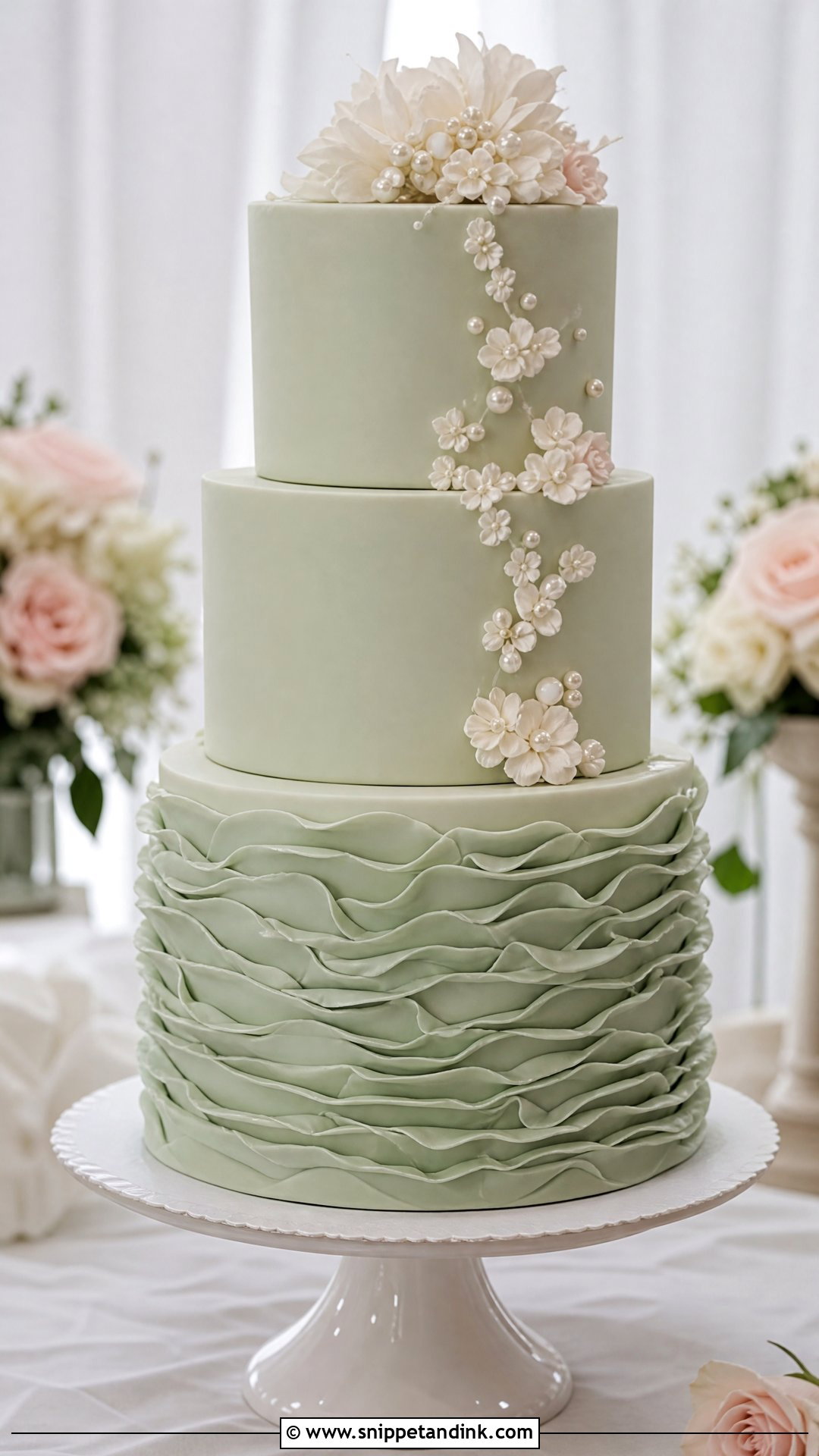
Ruffles can be buttercream, fondant or wafer paper, and each behaves differently. Buttercream ruffles are soft but heavy. Fondant ruffles hold shape but can look stiff. Wafer paper is the lightest and most delicate, though it curls in humidity, so I keep it for indoor or air-conditioned venues. Ruffles on one tier with smooth tiers around them is the balance I’d suggest; full ruffled tiers are more dramatic.


15. Sage Green Wedding Cake With Marble Finish
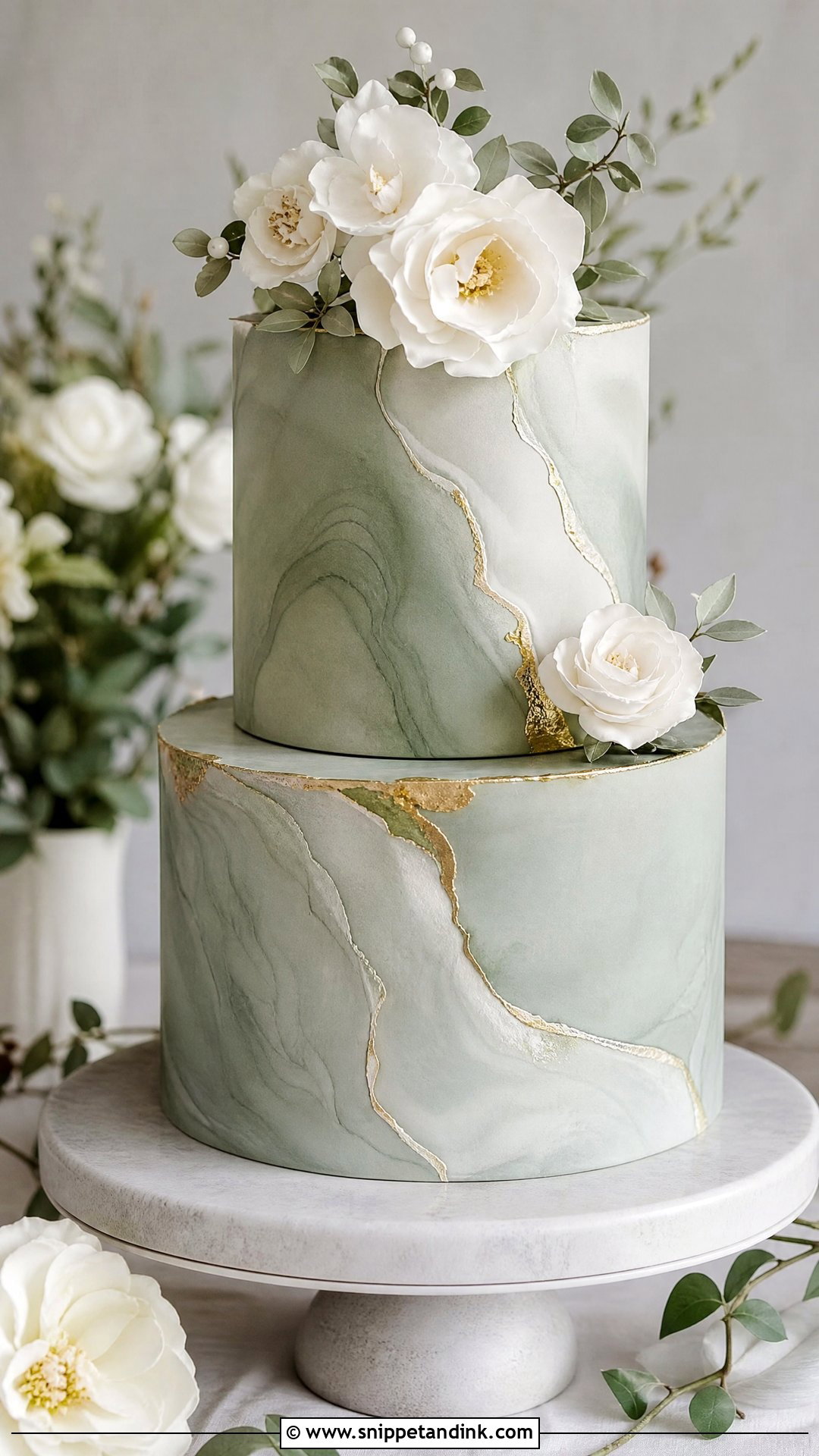
Marbling mixes sage, ivory, white and a little soft grey into a stone effect. Fondant is the right base, because I can fold the colors and roll them so the veins stretch naturally, which buttercream can’t do as cleanly. Thin gold veining makes it formal; plain stays modern. A few white flowers or sugar leaves soften the pattern. Neutral palettes and chic rooms suit it.
16. Sage Green Wedding Cake With Piped Borders
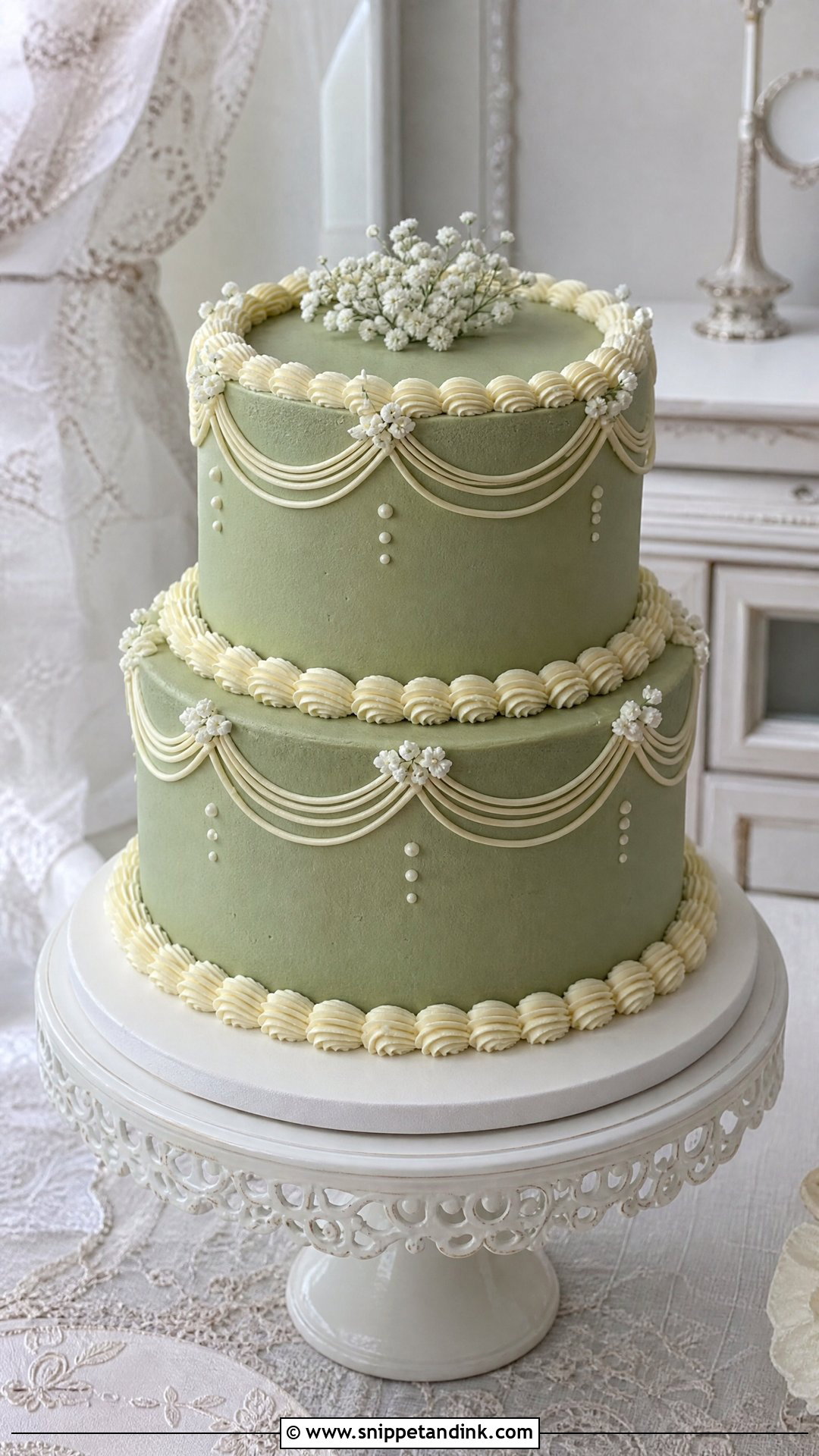
Piped borders are back, and sage makes them look fresh rather than dated. I’d do a smooth sage cake with ivory shells, dots, scrolls or soft swags, and add a few pearls or small flowers. Piping is unforgiving: shaky lines show, so look at close-up photos of your baker’s piping. Two tiers suit an intimate wedding; taller feels grand. Keep the color muted and the work neat.
17. Sage Green Wedding Cake With Dried Flowers
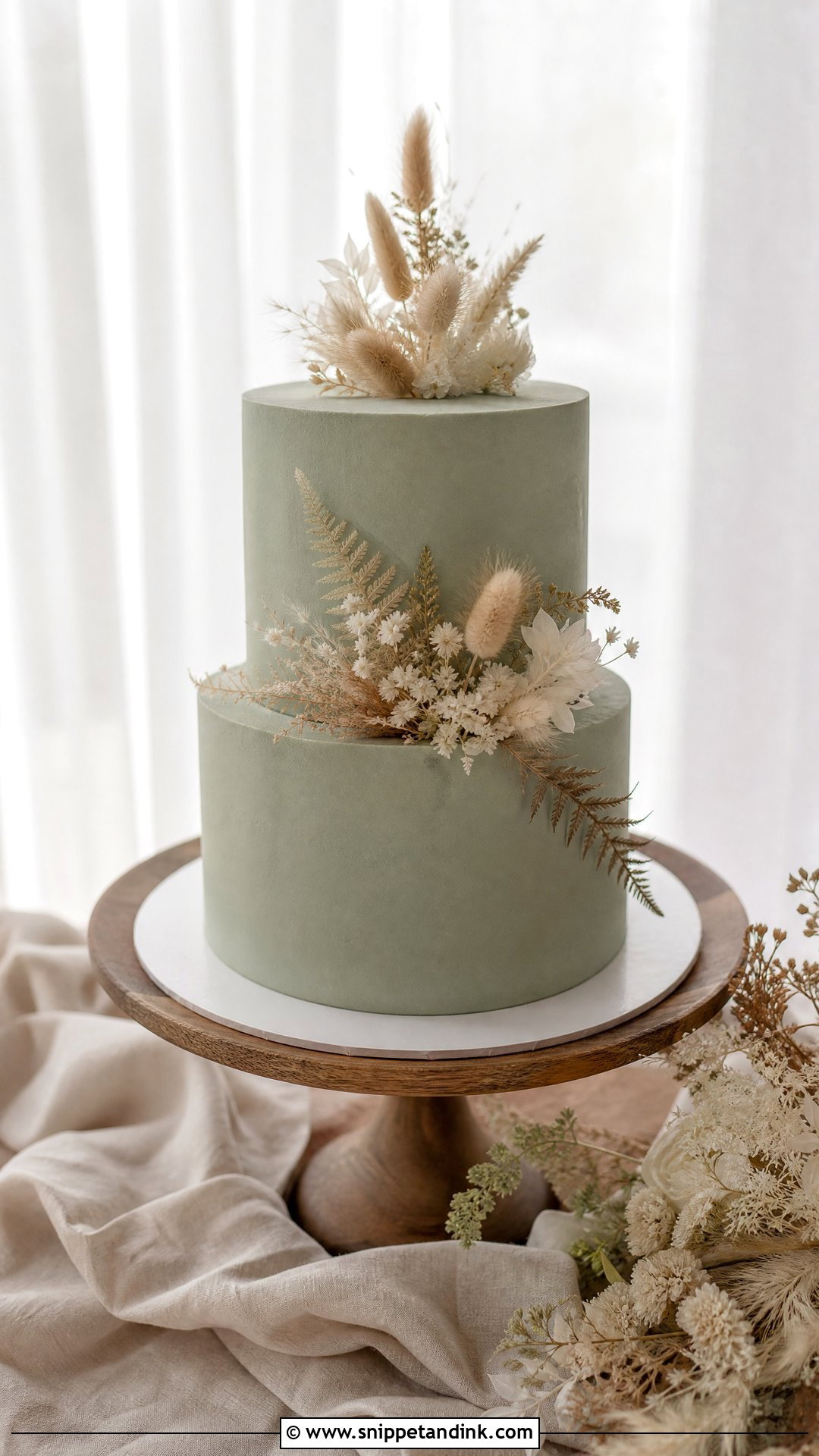
Dried flowers and sage share the same muted, natural tone. I’d set dried grasses, preserved white flowers, bunny tails or beige blooms on sage buttercream or fondant for boho, outdoor, fall or rustic weddings. Dried stems are brittle and often treated or dyed, so they go on a barrier or in picks, and I keep the arrangement light so the cake still looks edible. Almond, vanilla, spice, honey or pistachio flavors suit the warm natural style. A wooden stand and linen backdrop finish it.
18. Sage Green Wedding Cake With Lace Detail
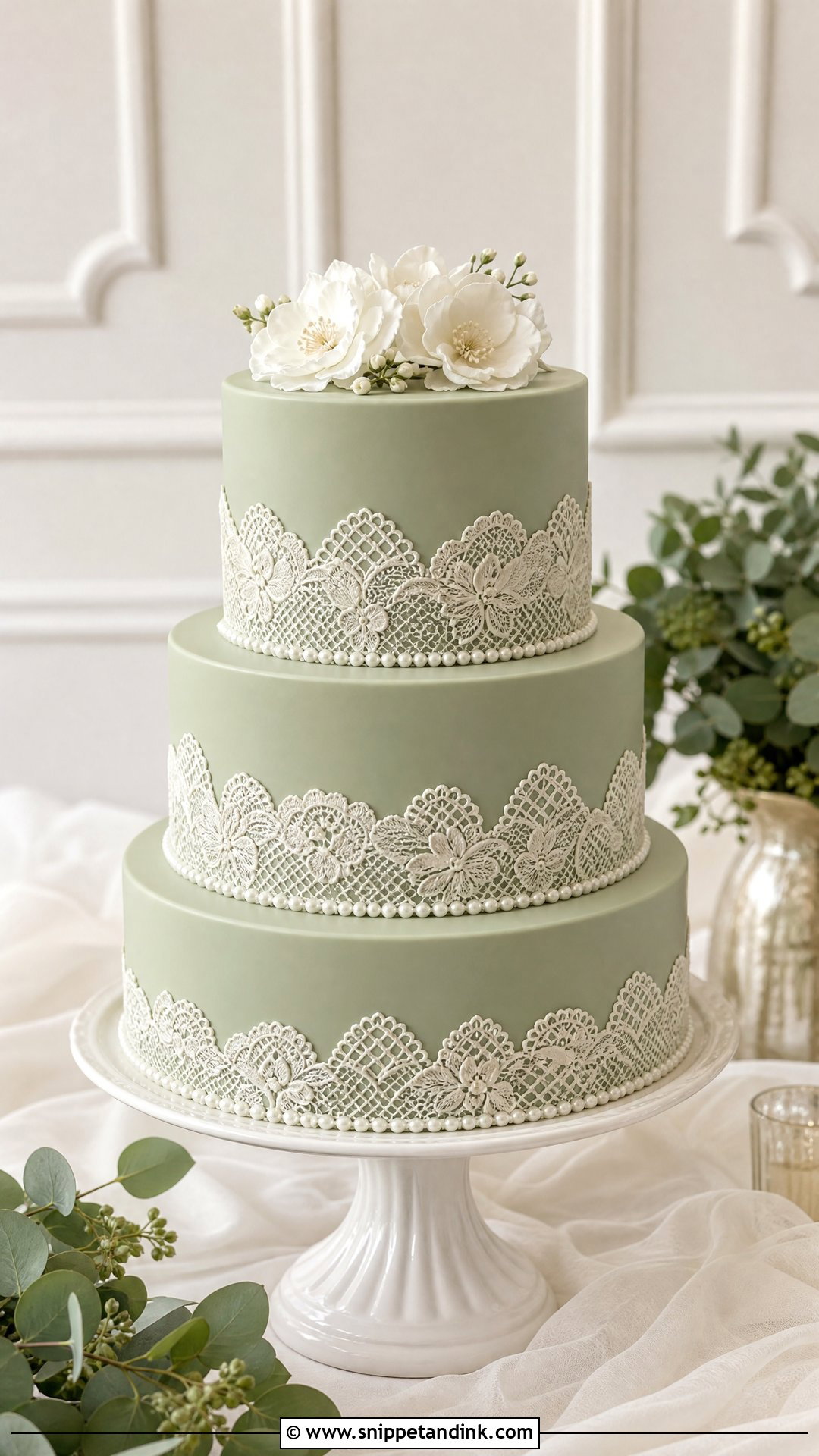
Lace can be piped, pressed into fondant with a mat or made as edible lace panels set in a mold. Ivory lace on a sage base shows the pattern clearly without being bold. If your dress has lace, bring a photo or a scrap to the tasting; matching the motif is one of my favorite small details. Small sugar flowers, pearls or a fondant band finish it for a traditional, romantic wedding.
19. Sage Green Wedding Cake With Square Tiers
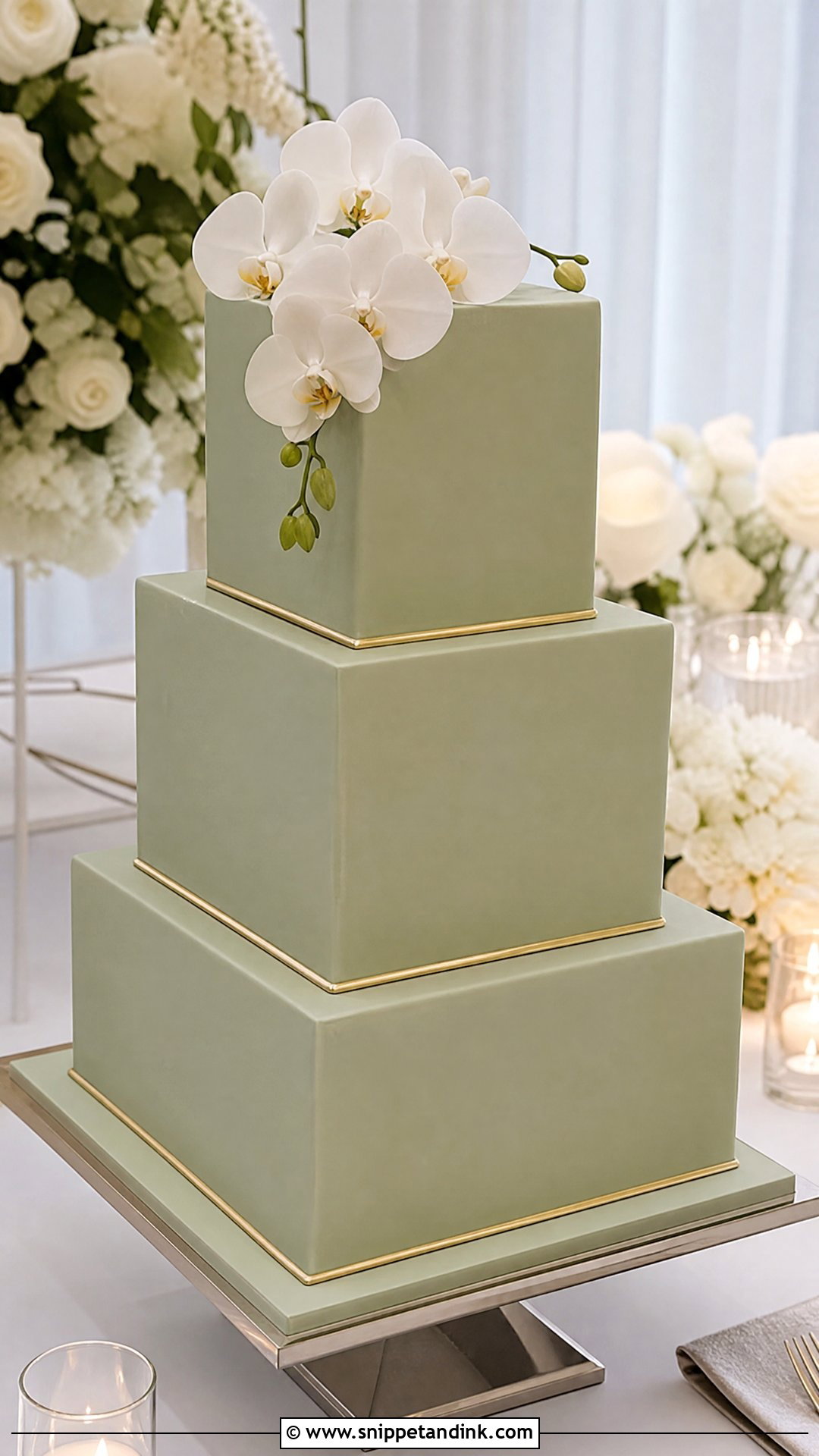
Square tiers give sage a structured outline. They take longer to frost than rounds, because each corner has to stay crisp, so I usually use fondant or a very firm buttercream. Stack all squares or mix square and round for interest. Thin gold borders or a few white flowers are enough decoration. Hotel ballrooms and sleek modern rooms suit it.



20. Sage Green Wedding Cake With Cupcake Display
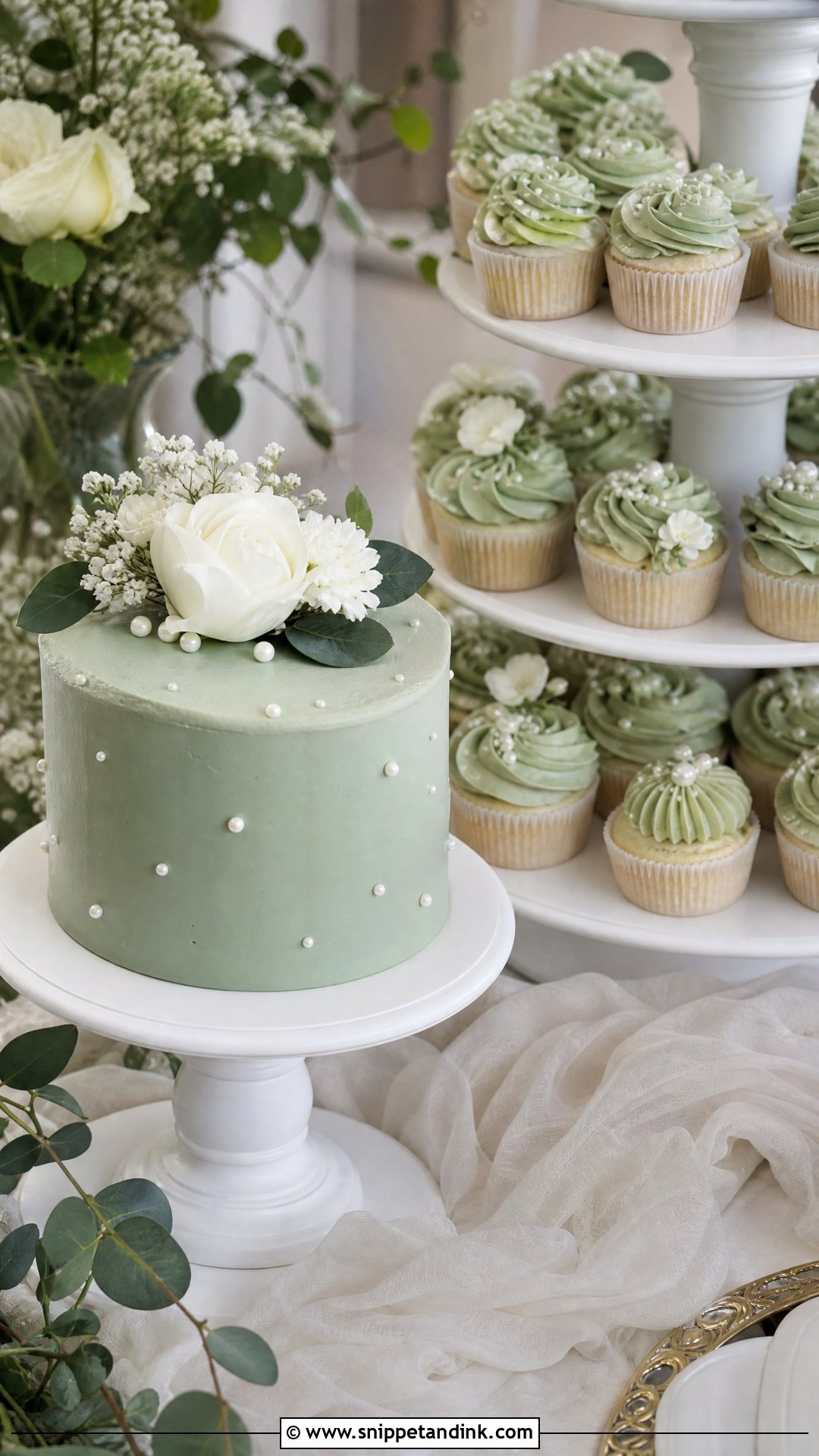
A small cutting cake surrounded by cupcakes in sage, ivory and white gives you the cake moment and makes serving far easier. A cupcake display lets the main cake carry flowers, pearls or a drip, while the cupcakes repeat those details simply. It’s also how I offer several flavors without several cakes. Tiered stands keep the setup tidy. Allow time for setup; arranging a full display takes longer than placing one cake.
Freezing the Top Tier for Your First Anniversary
Many couples still save the top tier. It can be done well, but it needs a plan before the wedding, because nobody remembers it at midnight. Remove all flowers, sugar decorations and supports first. Chill the tier until the frosting is firm, wrap it tightly in several layers of plastic wrap, then foil, and put it in an airtight box at the back of the freezer.
Which cakes freeze well
Buttercream and ganache cakes freeze reasonably well. Fresh fruit, custard and whipped cream fillings don’t, so if you want to keep a tier, I’d make that one tier in a sturdier flavor. Thaw it in the fridge overnight, still wrapped, then let it come up to room temperature for a couple of hours. Honestly, a year-old cake is a little drier than fresh, which is why some bakers offer a small fresh replica instead.
Who handles it on the night
Ask your venue or caterer to set the top tier aside before cutting starts, and bring a box for it. Assign one person to take it home and freeze it the same night.
Bring These Photos to Your Cake Tasting
Sage fits almost any wedding. It goes rustic with eucalyptus, romantic with blush, modern with sharp tiers and classic with lace and pearls. Before your tasting, save a handful of cakes you like and note what you like about each, the finish, the flowers or the shape. Bring your florist’s list and a dress photo too. With those, your baker can design one cake that fits your room instead of copying a picture.
You'll Like These Ideas:



Leave a Reply