
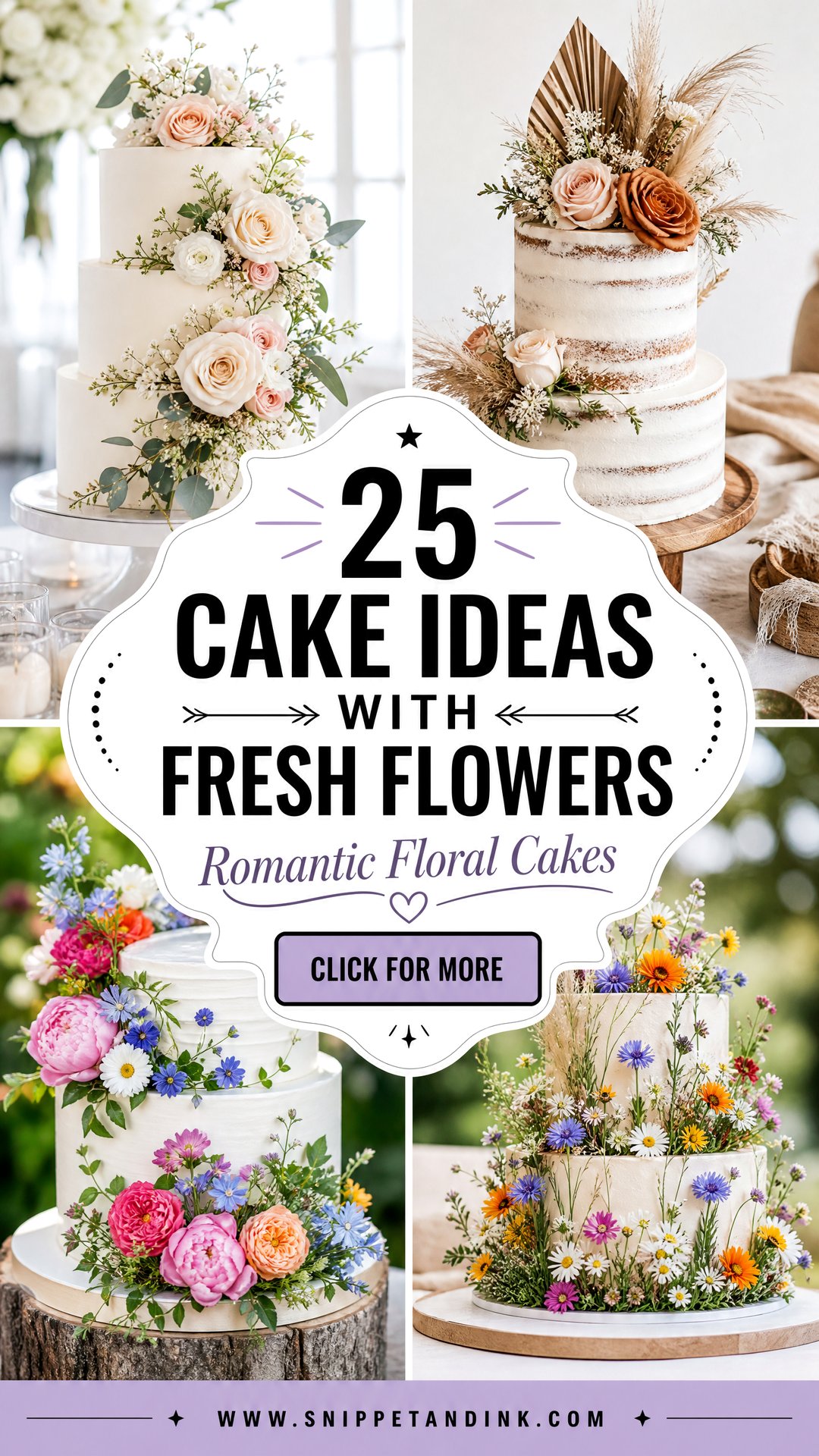
Real flowers do something sugar flowers can’t: they bring the bouquet and the reception tables onto the cake, with petals that move a little and catch light. The catch is that most florist stems were never grown to sit on food. So every design below starts with two people talking, your baker and your florist, about which blooms can go near the icing and how the stems get sealed. Garden roses on buttercream, orchids on a crisp white tier, or pressed edible blooms on a small reception cake all start that way. Read through the ideas with your own season and palette in mind, and notice which finishes the flowers sit against, because that choice matters as much as the flowers do.
Safe Stems, Toxic Favorites and What Sits Between Them
The first question I ask about any fresh flower cake is not color. It’s what the flowers were grown with. Most stems that come through a florist were sprayed at the farm, and some popular wedding flowers are toxic no matter how they were grown. Neither problem means you can’t have them. It means the flower must never touch the frosting directly.
Flowers I’m happy to place with a simple barrier
- Roses and spray roses, ideally organic or unsprayed
- Pansies, violas, calendula, cornflowers and chamomile, which are edible when food-grown
- Lavender, in small amounts, since the scent and taste carry into the icing
- Orchids, which are hardy and sit cleanly on smooth finishes
Flowers that never touch the cake
Hydrangea, lily of the valley, calla lily, sweet pea, ranunculus, baby’s breath, foxglove and eucalyptus all appear on wedding cakes, and none of them are safe to eat. They can still be used if every stem is wrapped and the heads sit on a barrier, or you can place them on the cake board and stand rather than the tiers. I’d also tell guests at the cutting table that the flowers are decoration only.
My barrier kit is simple: floral tape around every cut stem, food-safe flower picks or plastic straws pushed into the tier first, and small wafer paper or parchment rounds under any head that rests on the icing. Wet floral foam never goes on a cake. It isn’t food-safe and it leaks.
1. White Wedding Cake With Fresh Flowers
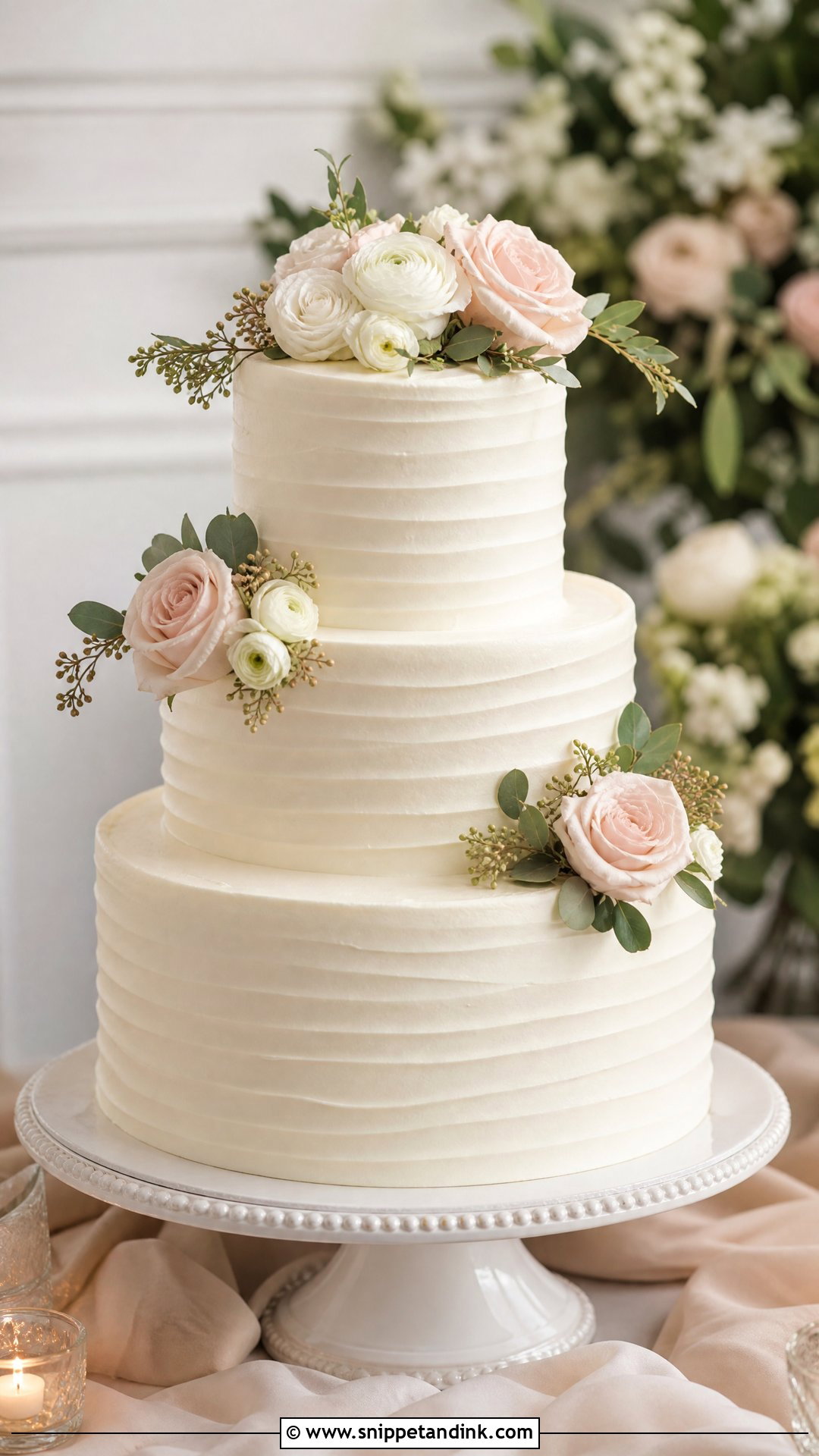
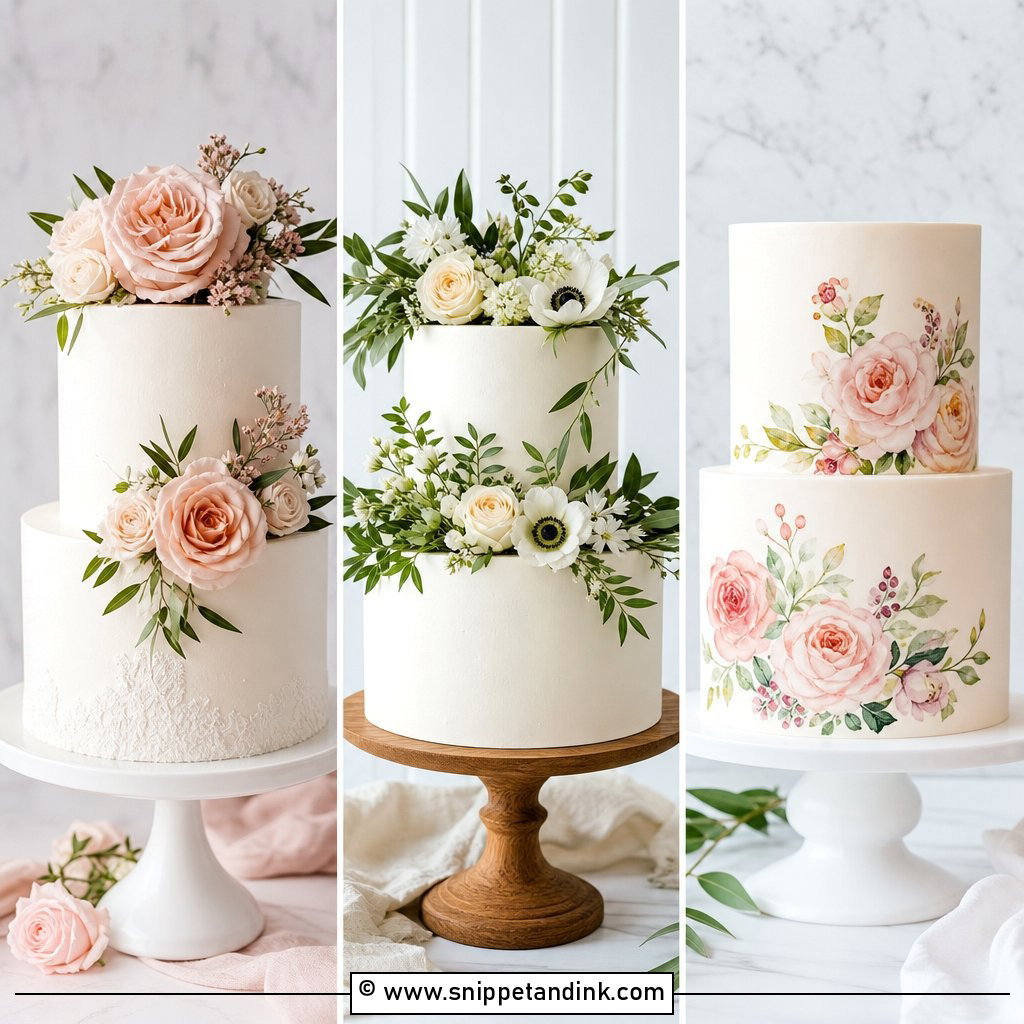
Plain white is the most forgiving canvas I work with. It sits happily in a barn or a ballroom, and it lets roses, ranunculus, peonies or lisianthus carry all the color. I usually pull two or three varieties straight from the bridal bouquet so the cake reads as part of the same design. Buttercream gives a softer edge; fondant gives a sharp, formal one. One thing I warn about: bright white fondant can make ivory flowers look dingy, so I match the icing shade to the petals, not the other way round.
2. Three Tier Wedding Cake With Fresh Flowers
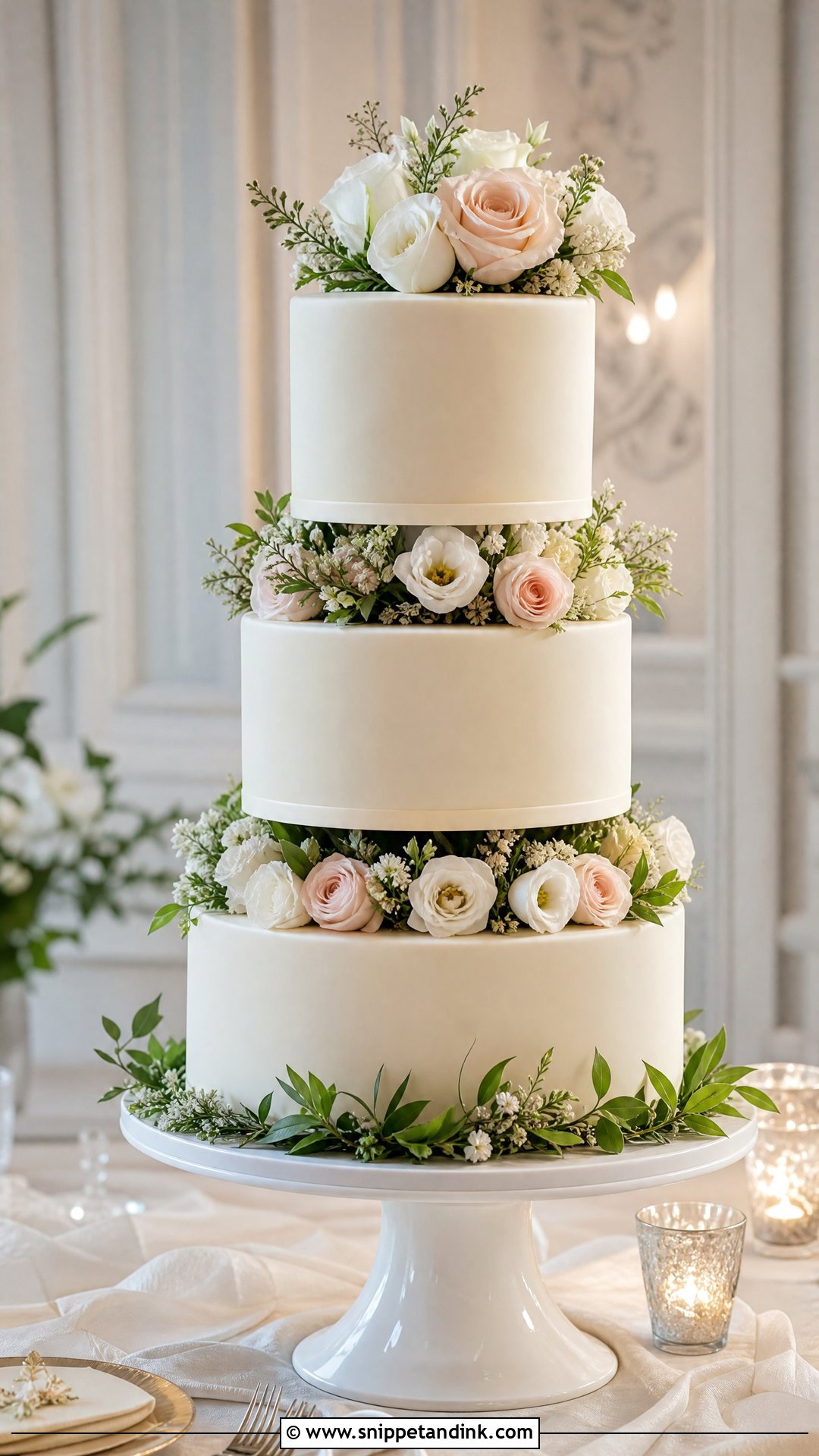
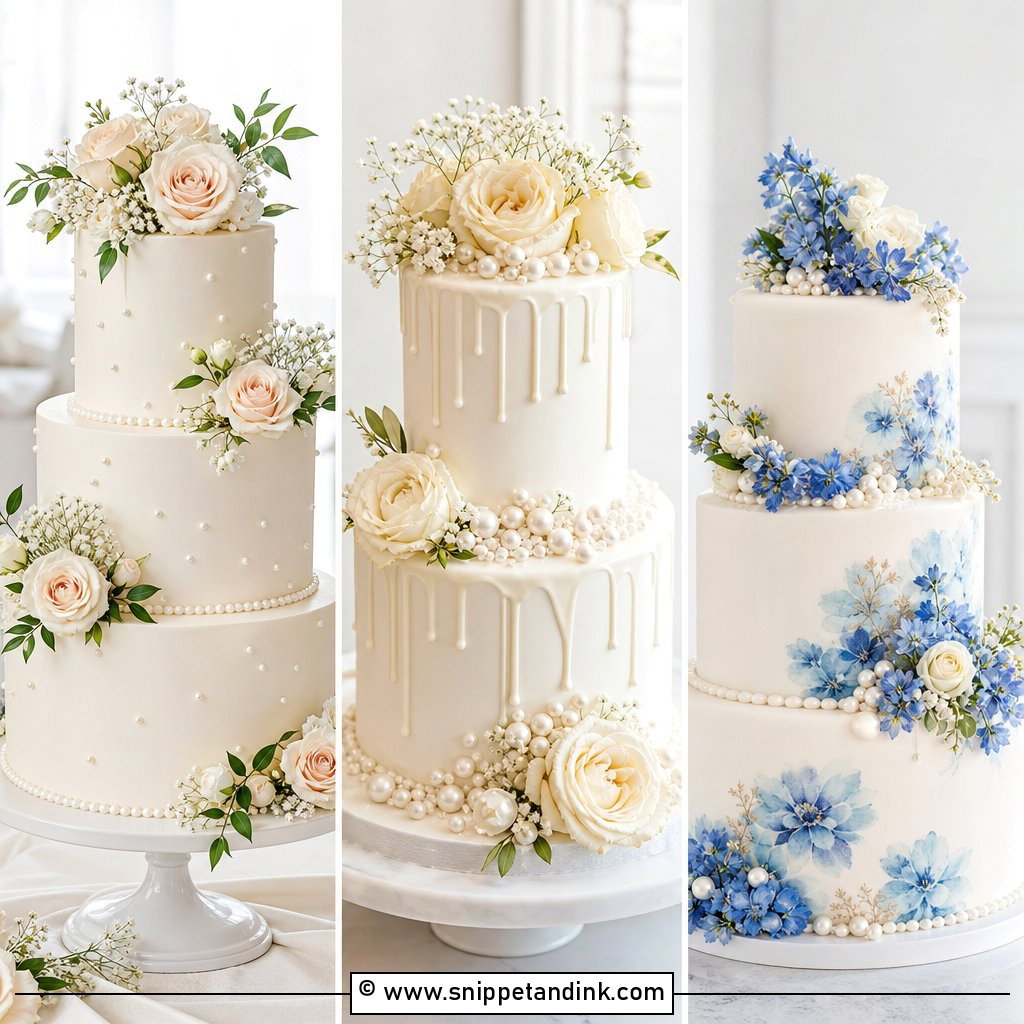
Three tiers is the height most mid-sized receptions want without the cake needing its own room. It also gives me enough shelf space at each seam to tuck small clusters, run a diagonal cascade, or keep it to a single topper. Smooth buttercream and fine ribbed finishes both hold flowers well. Ivory blooms with pale greenery stay quiet; deeper seasonal flowers bring drama. The detail people forget is weight. A heavy arrangement on one side of the top tier can tilt it over a warm afternoon, so I balance the flowers around the dowels and check the cake from all four sides before I leave it.
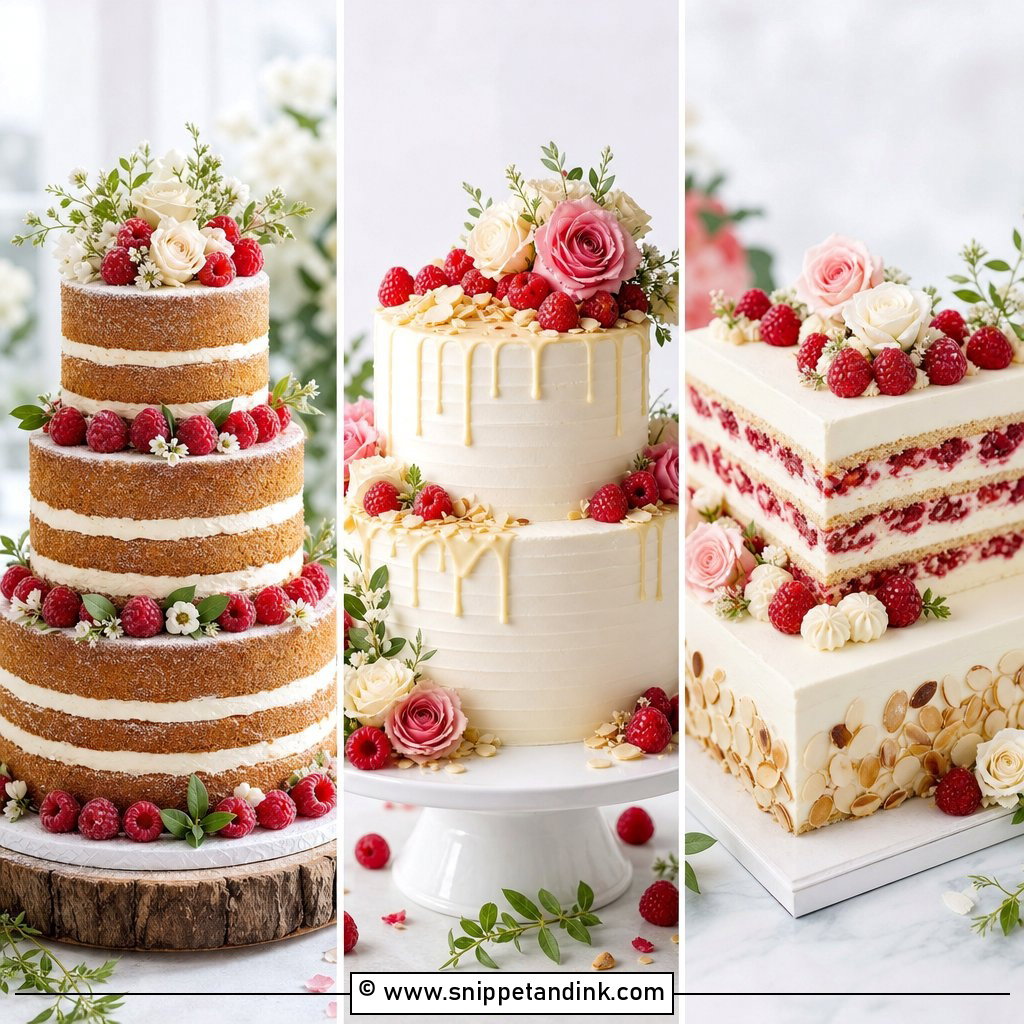
3. Buttercream Wedding Cake With Fresh Flowers
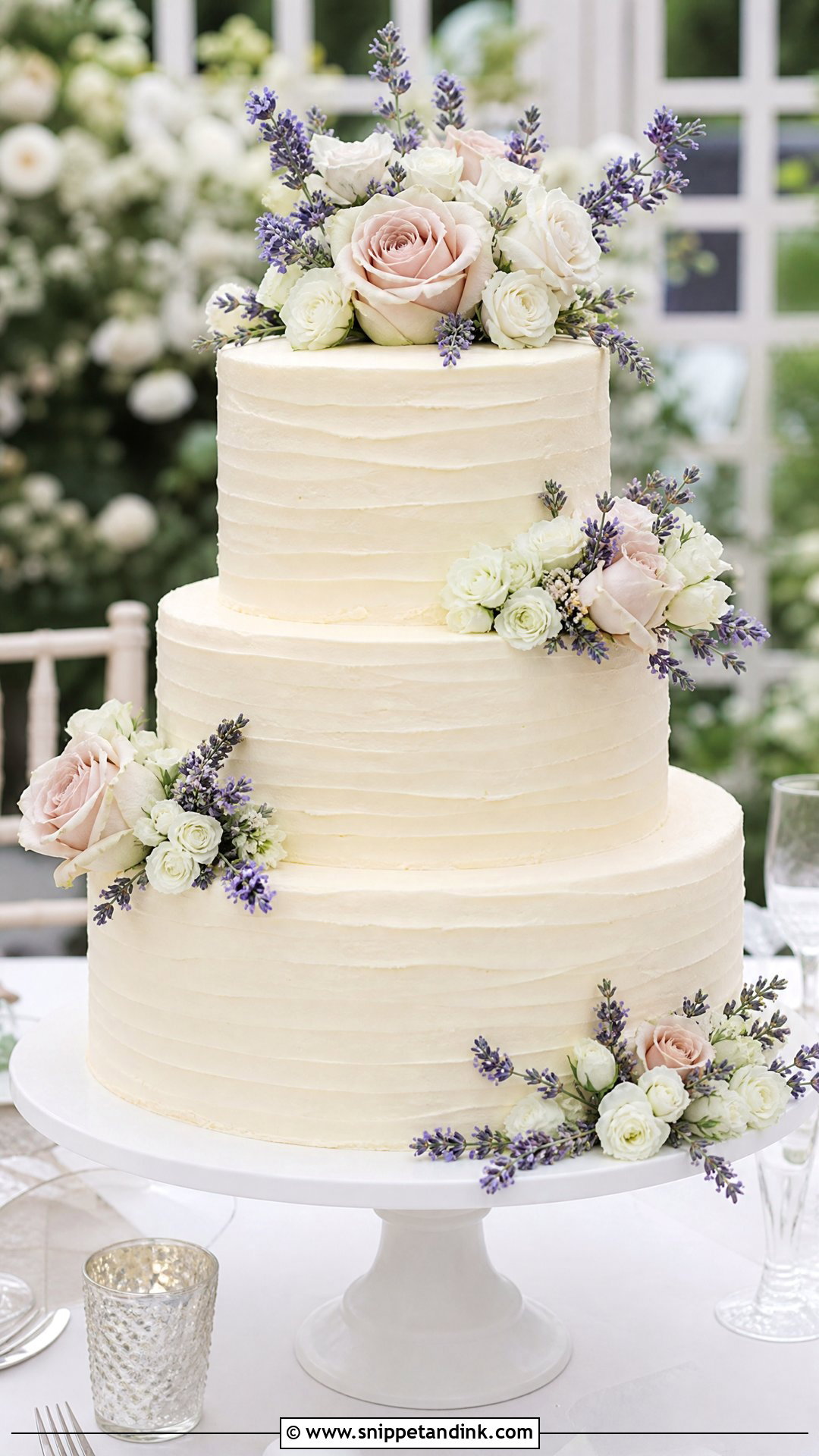
Buttercream has a soft, slightly handmade surface, and flowers settle into it rather than perching on top. I can finish it smooth, with a light swirl, or with a loose rustic sweep, depending on the room. Blush roses, white spray roses, lavender and a few small leaves sit well against it. The honest trade-off is temperature: a buttercream cake in a hot tent will soften and let heavy blooms slide, so I place the flowers as close to display time as the schedule allows and keep the big heads light.
4. Rustic Wedding Cake With Fresh Flowers
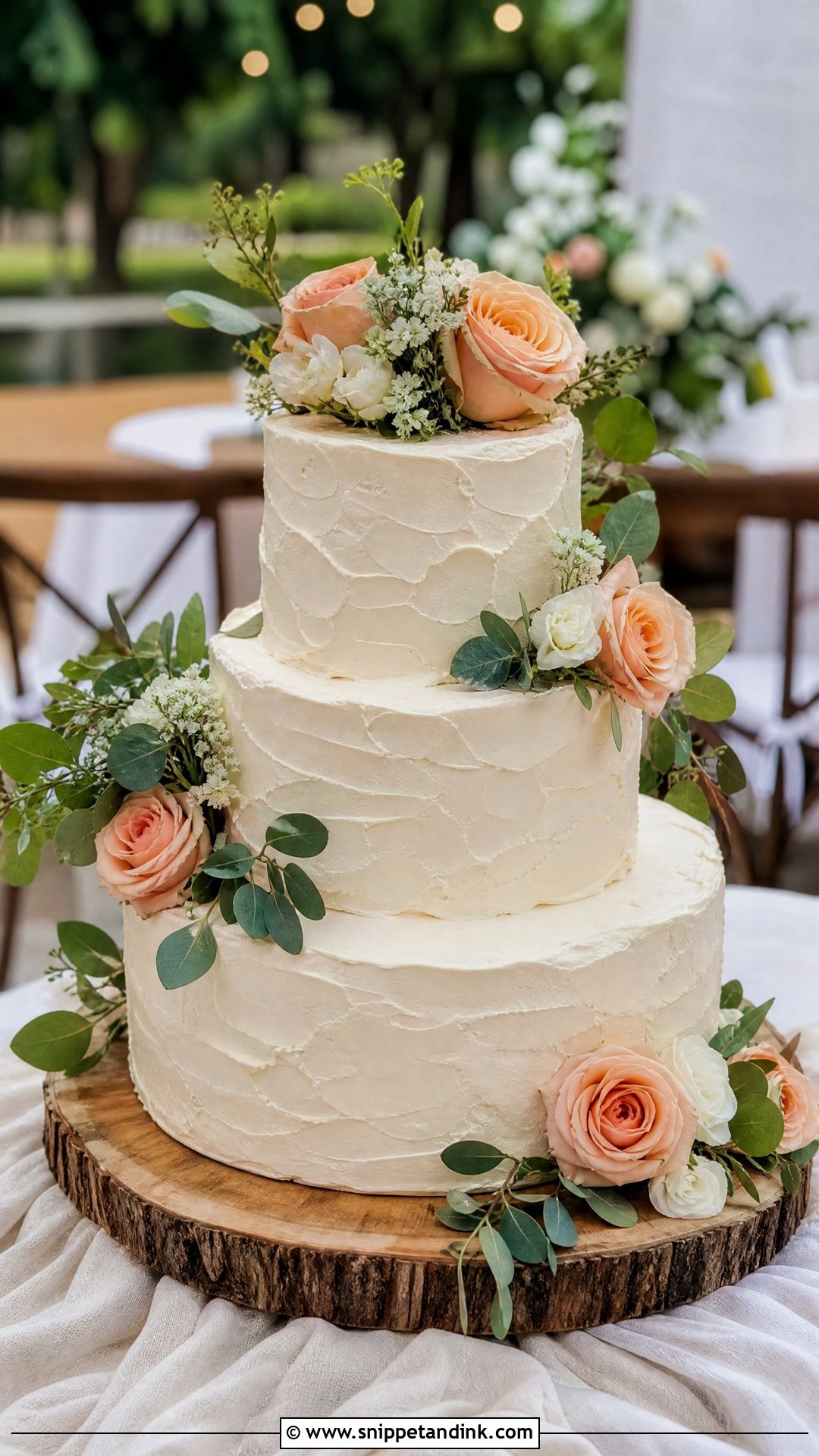
Wood tables, linen runners and an outdoor ceremony arch all point toward a rustic cake. Semi-naked sides, textured buttercream, or ivory icing with a few honest imperfections give it that feel. I like loose garden blooms and a sprig or two of the same greenery used on the arch, set slightly off-centre so it doesn’t look arranged by ruler. A wood slice stand finishes it, though a plain ceramic one can look calmer. Do check that a wood slice is sealed or lined, since raw timber isn’t a food surface.
5. Naked Wedding Cake With Fresh Flowers
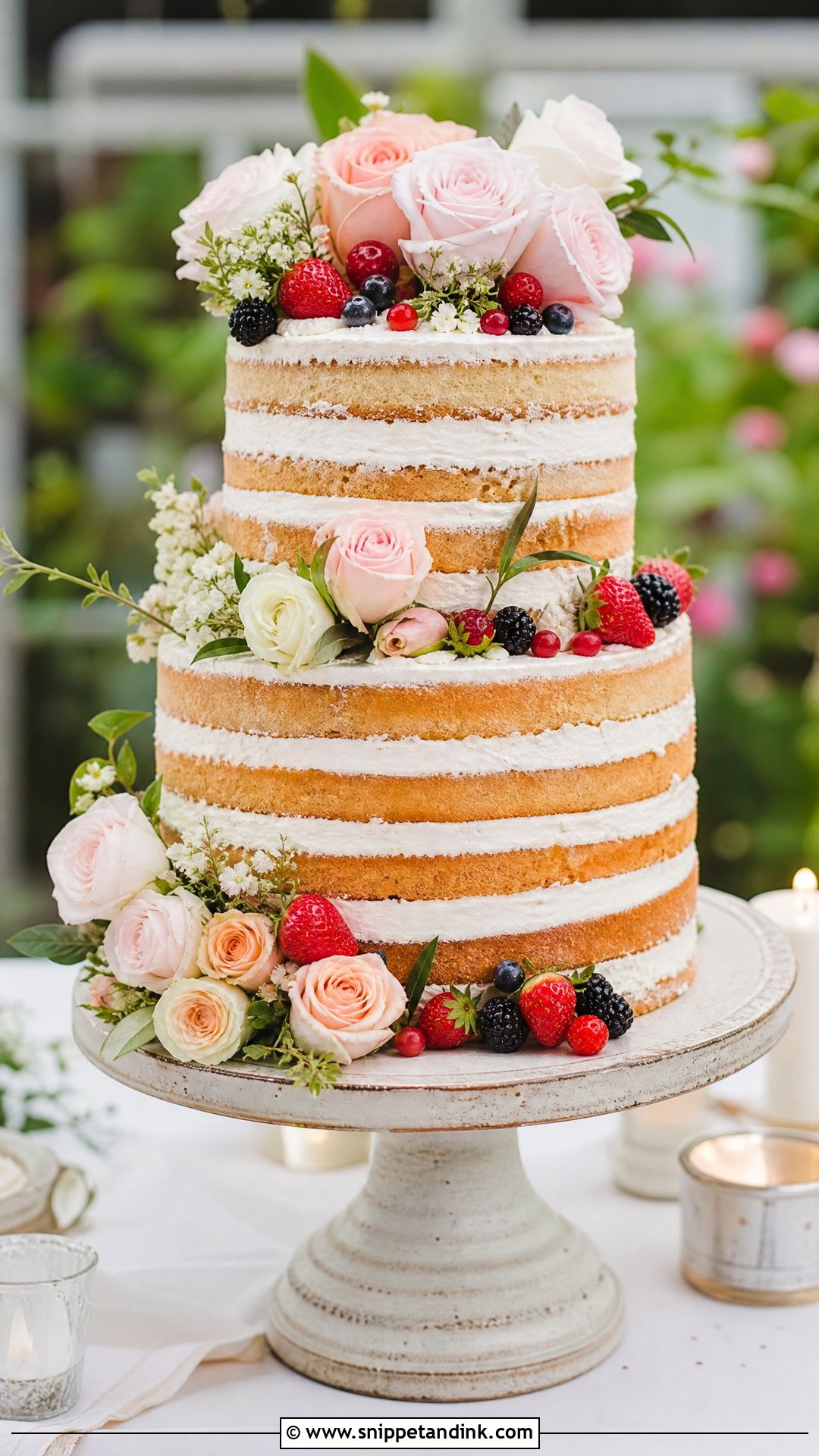
A naked cake shows its layers, so the sponge and filling become part of the decoration. Vanilla, lemon, almond and berry cakes look best here because the light crumb and cream filling contrast nicely. Flowers go on the top tier, around the base, or tucked between layers. The problem is exposure. With almost no frosting, the sponge starts drying from the edges once it’s out of the fridge, so I brush the layers with syrup, keep the cake cool until the last moment, and push for it to be cut earlier in the evening rather than after a long speech schedule.
6. Semi Naked Wedding Cake With Fresh Flowers
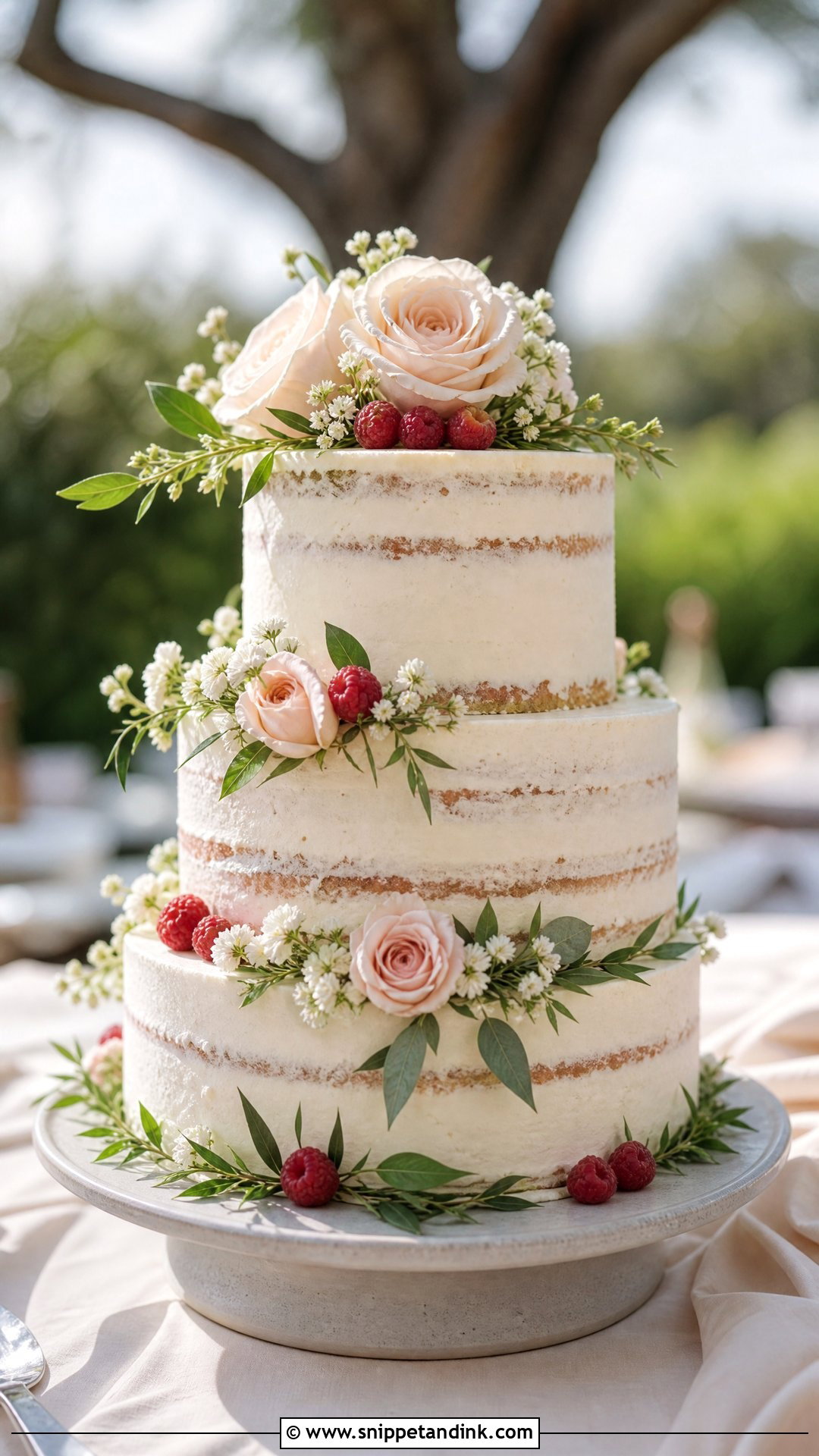
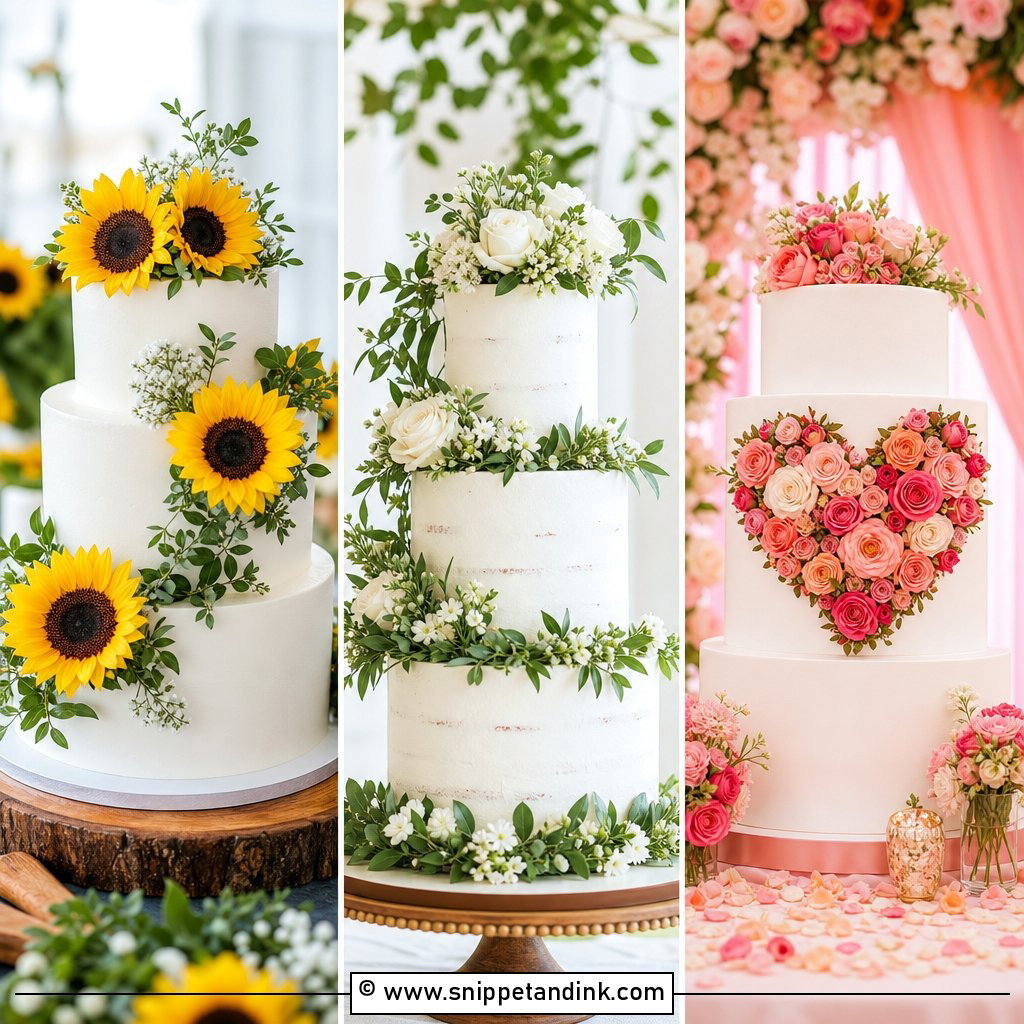
Semi-naked is the version I suggest when someone loves the naked look but is worried about dry edges. A thin scraped coat seals the layers while still letting the cake show through. Flowers tucked between tiers or running in a soft diagonal suit it, and pale roses, tiny chamomile-style flowers and greenery look natural against that sheer finish. Berries or a dusting of powdered sugar add detail, but add the sugar last: it dissolves into the frosting within an hour or so in a humid room.
7. Round Wedding Cake With Fresh Flowers
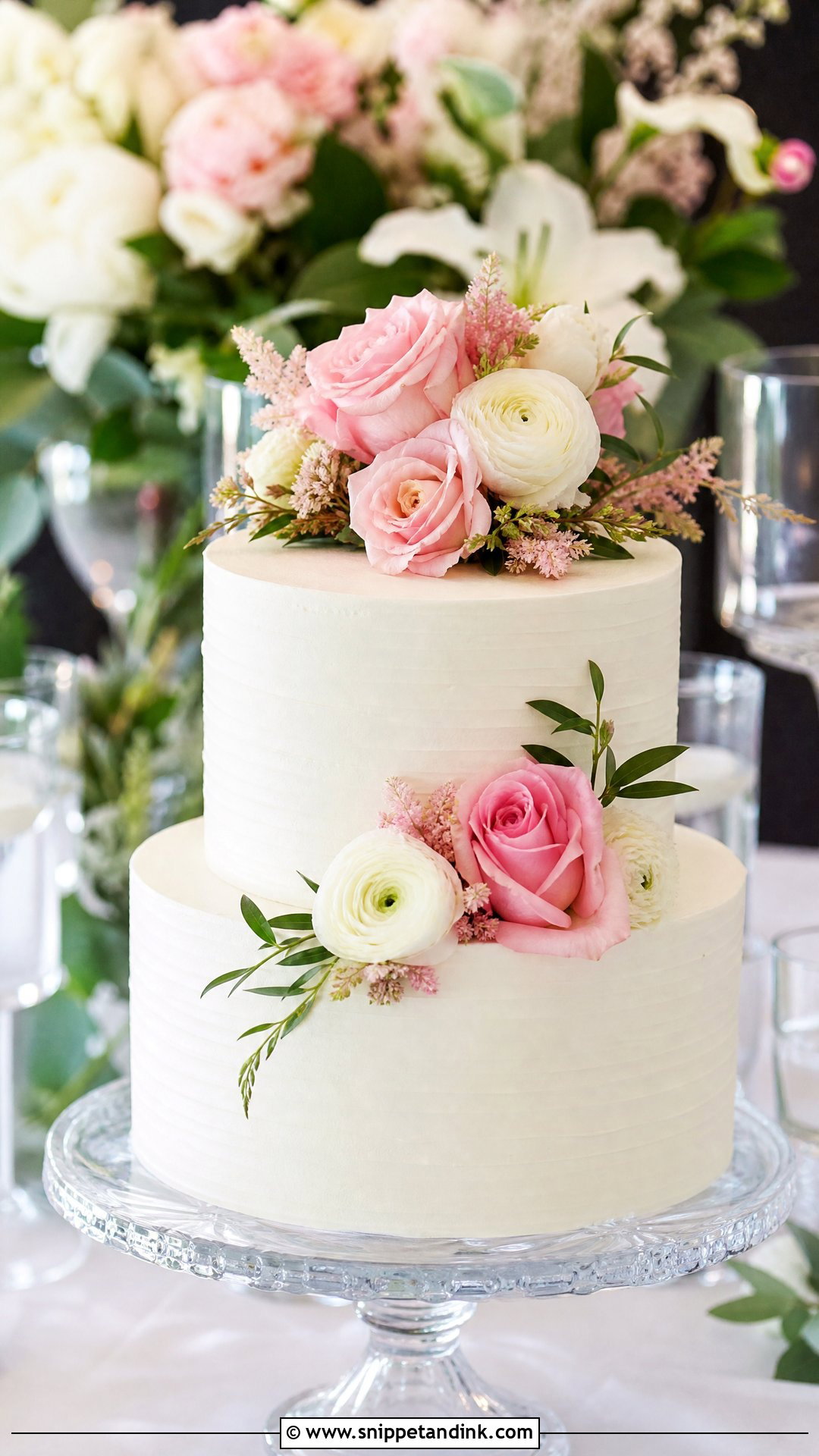
Round tiers are the shape every baker’s tools are built around, which is partly why they’re so easy to finish cleanly. One tier suits an intimate dinner; several stacked suit a bigger reception. The flowers can crown the top, trail down one side, or gather at the base. Fondant, classic buttercream and fine piping all work on rounds. I repeat the same two flower colors in small touches on every tier so the eye travels down the whole cake instead of stopping at the top.
8. Square Wedding Cake With Fresh Flowers
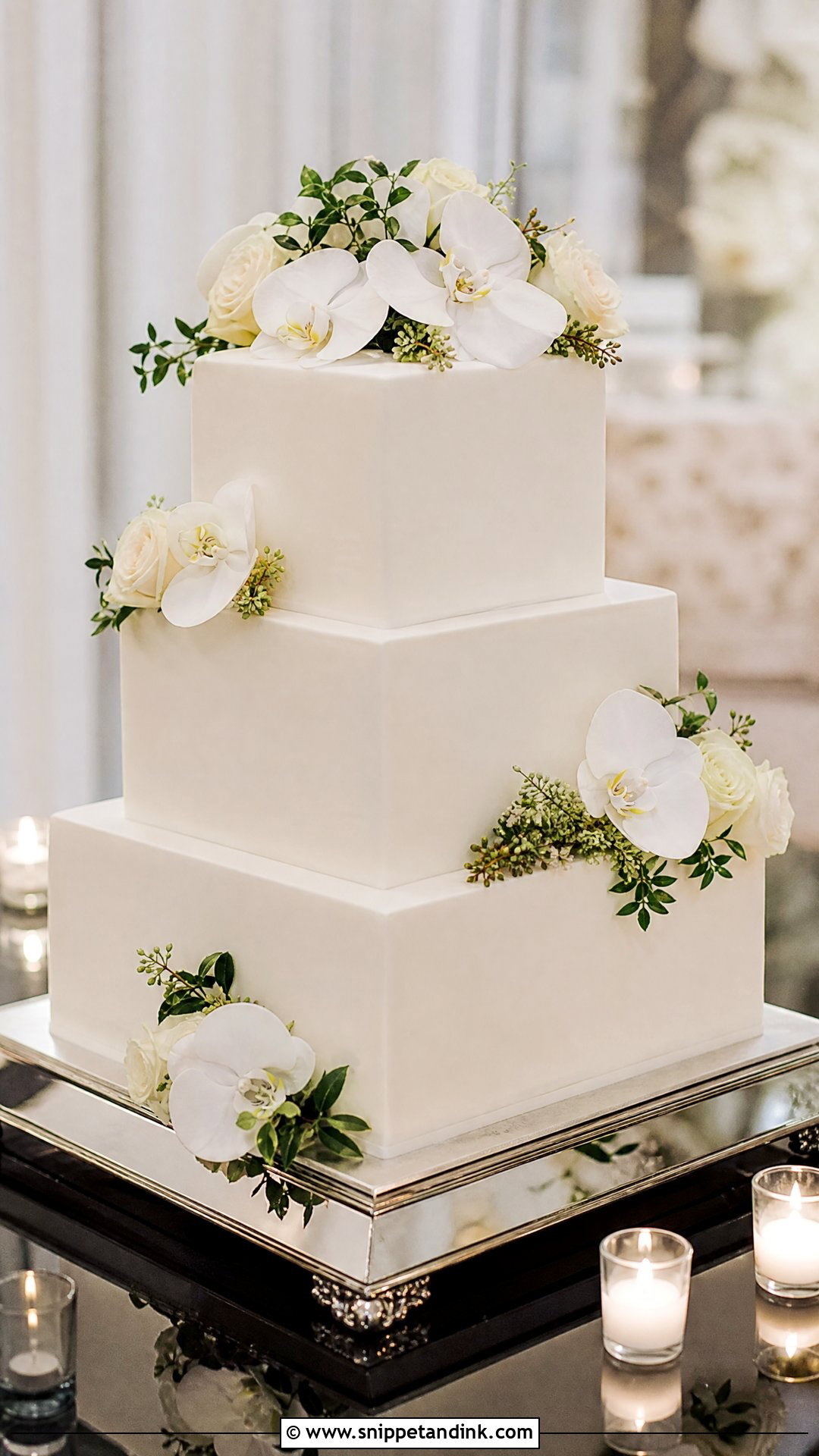
Square tiers look sharper and more architectural, which is why they suit hotel ballrooms and minimalist rooms. Flowers soften those hard lines. I place them at the corners, along one top edge, or in a neat diagonal. White orchids, roses, calla lilies and small greenery all suit the shape, though callas need a full barrier because the plant isn’t food-safe. Fondant gives the crispest corners. Buttercream can do it too, but square edges in buttercream take real skill and they’re the first thing to soften in a warm room, so ask to see your baker’s previous square cakes.
9. Small Wedding Cake With Fresh Flowers
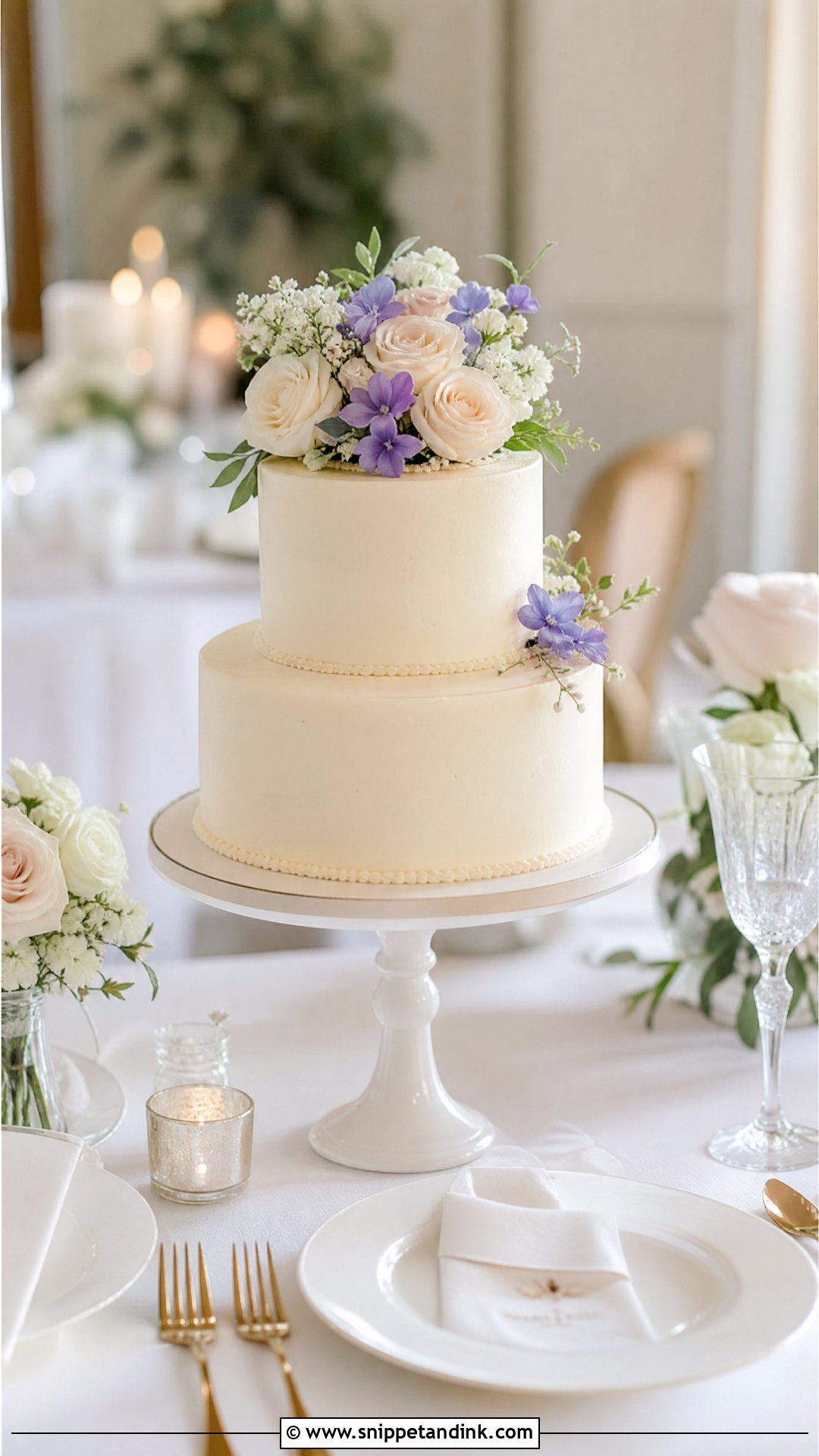
Elopements, courthouse weddings and couples running a dessert table often only need one or two tiers, and a small cake rewards careful flower choice more than a tall one does. Two or three blooms on top are enough to finish it. Buttercream, ganache and fondant all suit the size. I raise small cakes on a tall stand so they don’t get lost on the table. Scale is the thing to watch: one oversized peony can swallow a six-inch tier, so I reach for smaller roses, mini carnations, violets or edible blossoms.
10. One Tier Wedding Cake With Fresh Flowers
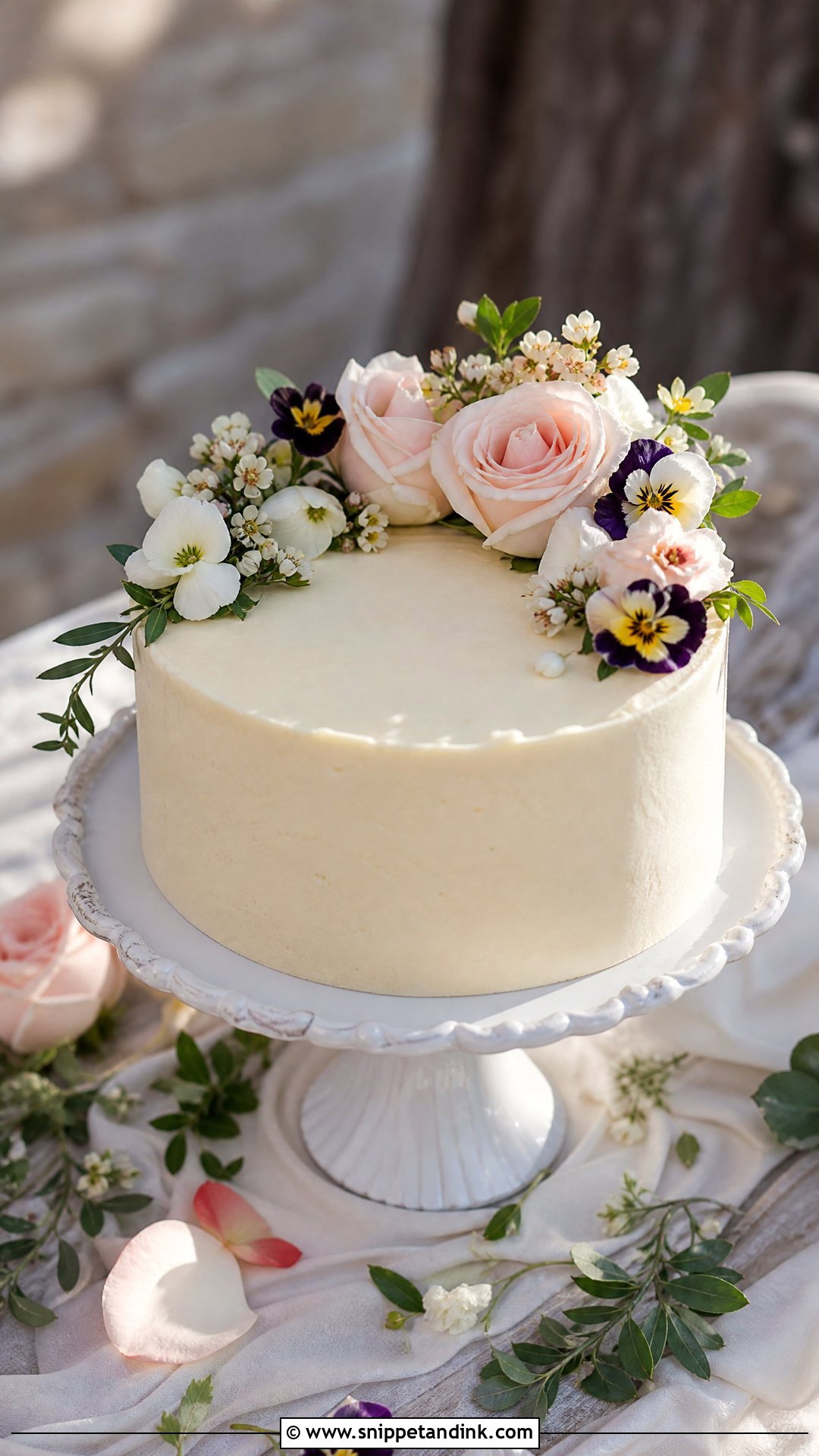
One tier can carry as much feeling as five if the finish is deliberate. I see it most at intimate receptions, bridal brunches and vow renewals, or as a cutting cake beside a dessert spread. Smooth buttercream, palette knife texture or a clean fondant wrap each give it a finished look. Flowers can sweep across the top in a half-moon or sit along one side. Keep the palette to two colors at most. With a single tier, the stand, the linen behind it and matching table flowers do a lot of the work.
11. Two Tier Wedding Cake With Fresh Flowers
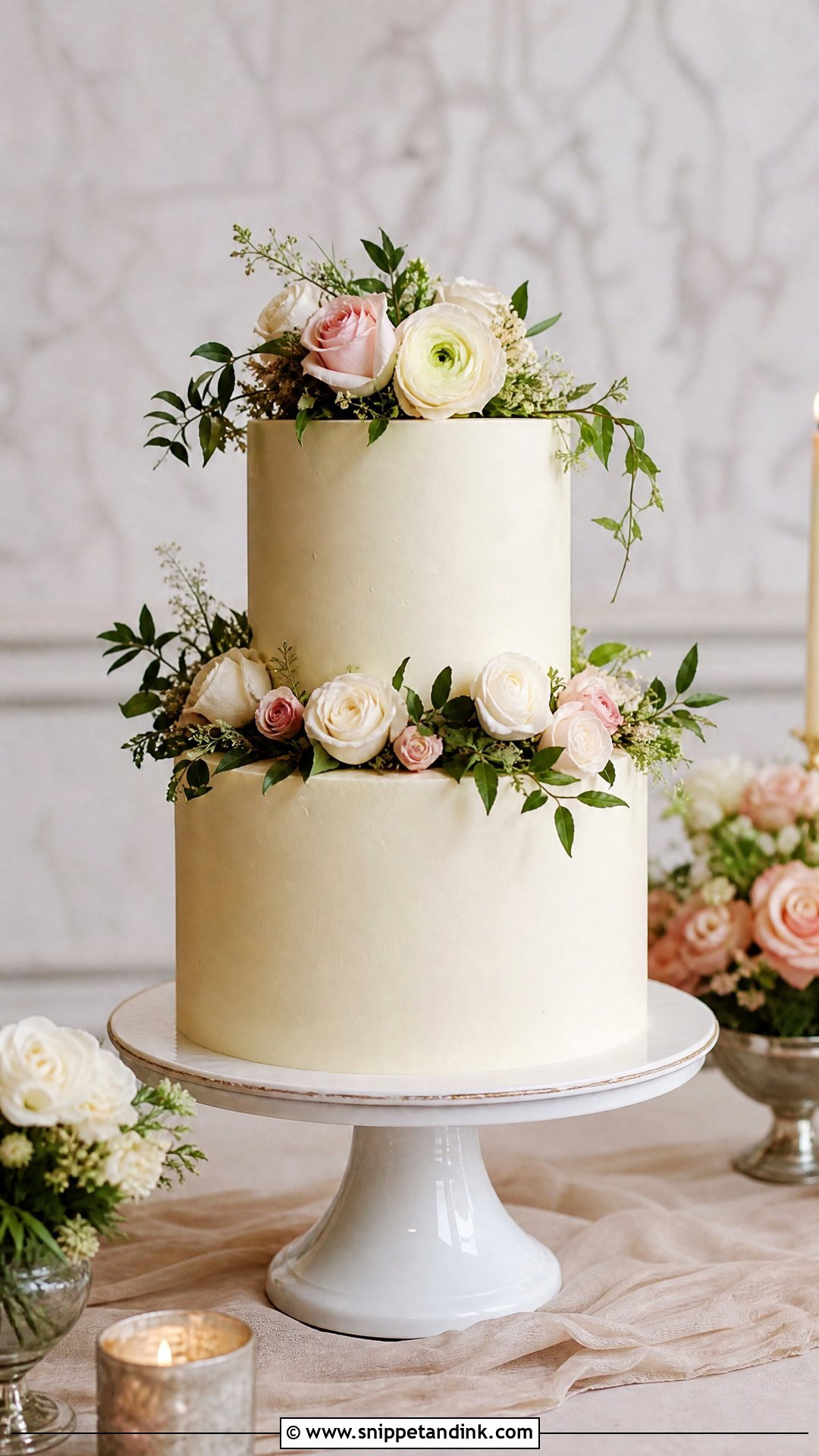
Two tiers is my practical favorite. It has height, but it’s light enough to carry and set up without a crew, and it fits rehearsal dinners, small weddings and dessert spreads. Flowers go at the tier seam, on top, or in a short cascade. You also get two flavors; vanilla almond on one tier and lemon raspberry on the other always gets a good reaction from guests. When flavors differ, I sometimes vary the frosting slightly too, so I keep the flowers identical on both tiers to hold the design together.
12. Tall Wedding Cake With Fresh Flowers
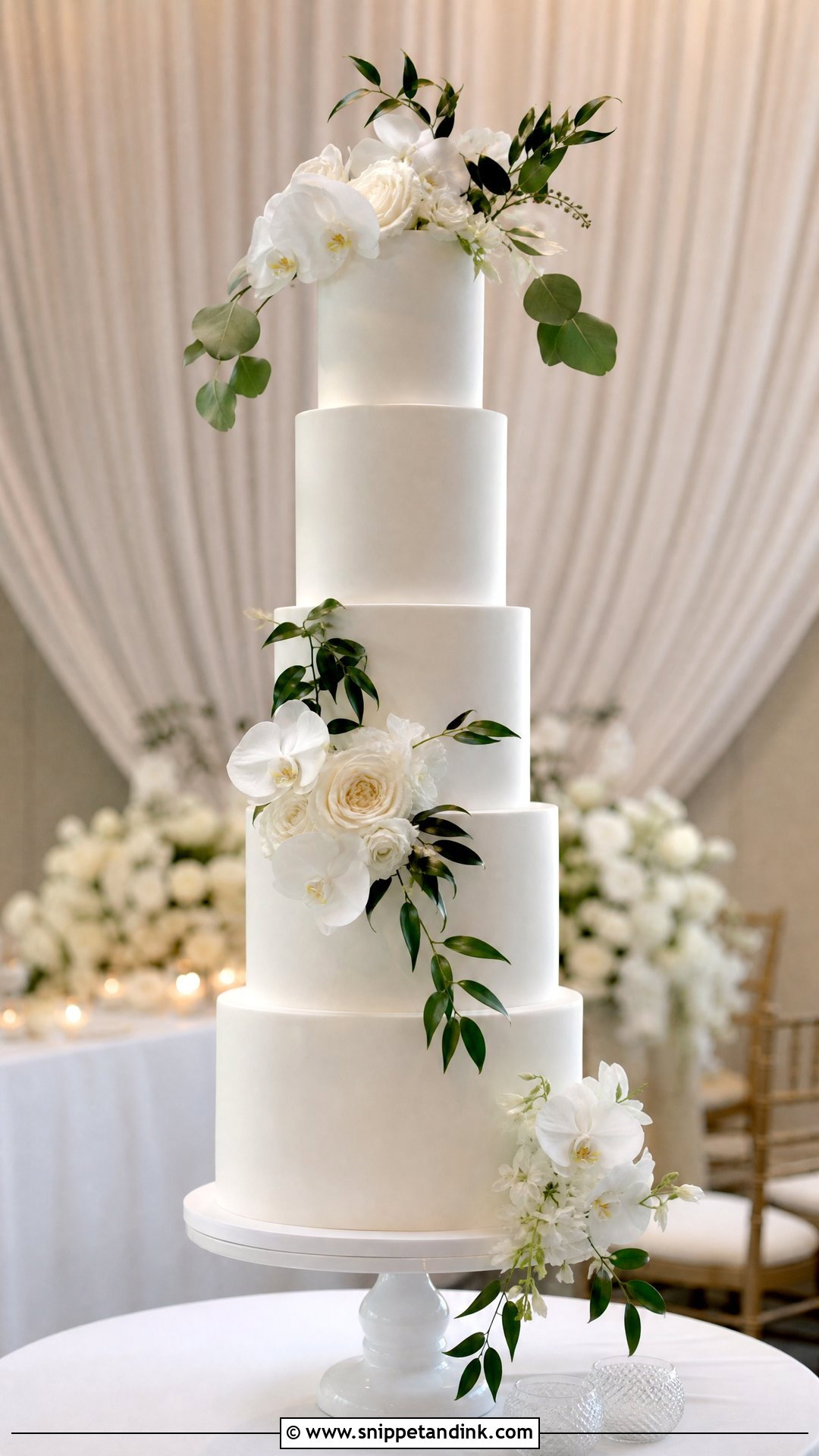
Extra-tall tiers, sometimes six or seven inches each, give an editorial look that needs very little decoration. Because the shape is already dramatic, I hold back on flowers: a few large blooms placed with care beat full coverage every time. Smooth buttercream or fondant shows off the height, and orchids, roses, anthurium or oversized garden flowers suit the scale. Tall tiers need extra internal support, with more dowels and sometimes a central rod, so hire someone who has built them before, especially if the cake will stand outdoors or be moved after setup.
13. Modern Wedding Cake With Fresh Flowers
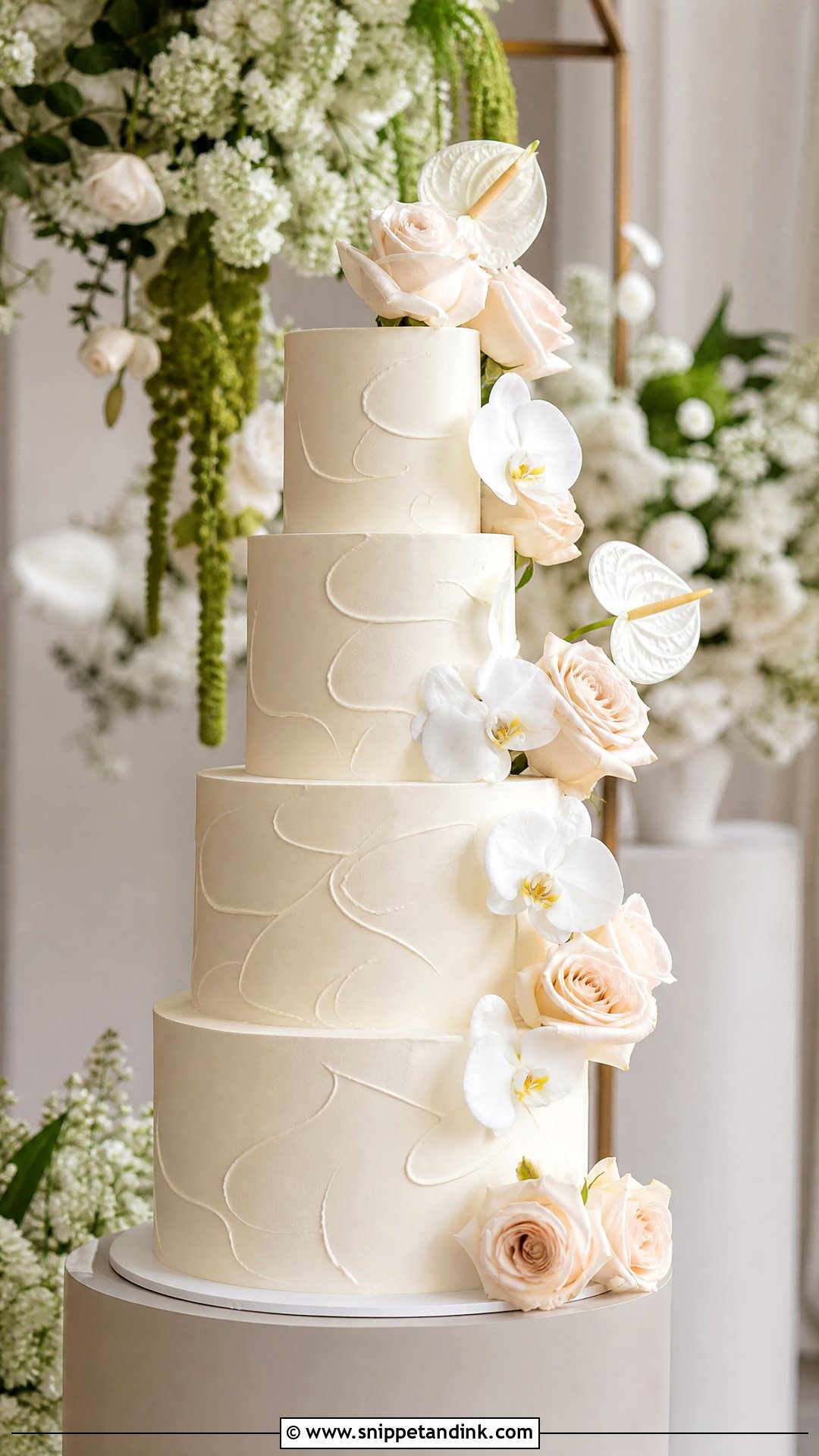
Modern cakes are mostly about the space you leave empty. Instead of covering each tier, I pick a few strong blooms and let the shape breathe. White, soft beige, sculpted buttercream or a little color blocking can form the base, and the flowers keep it from feeling cold. Orchids, roses, ranunculus and anthurium have clear outlines, which is exactly what this style needs. I’d skip props entirely and use a plain stand. Loft spaces, galleries and sleek hotel rooms are where I see this one most.
14. Vintage Wedding Cake With Fresh Flowers
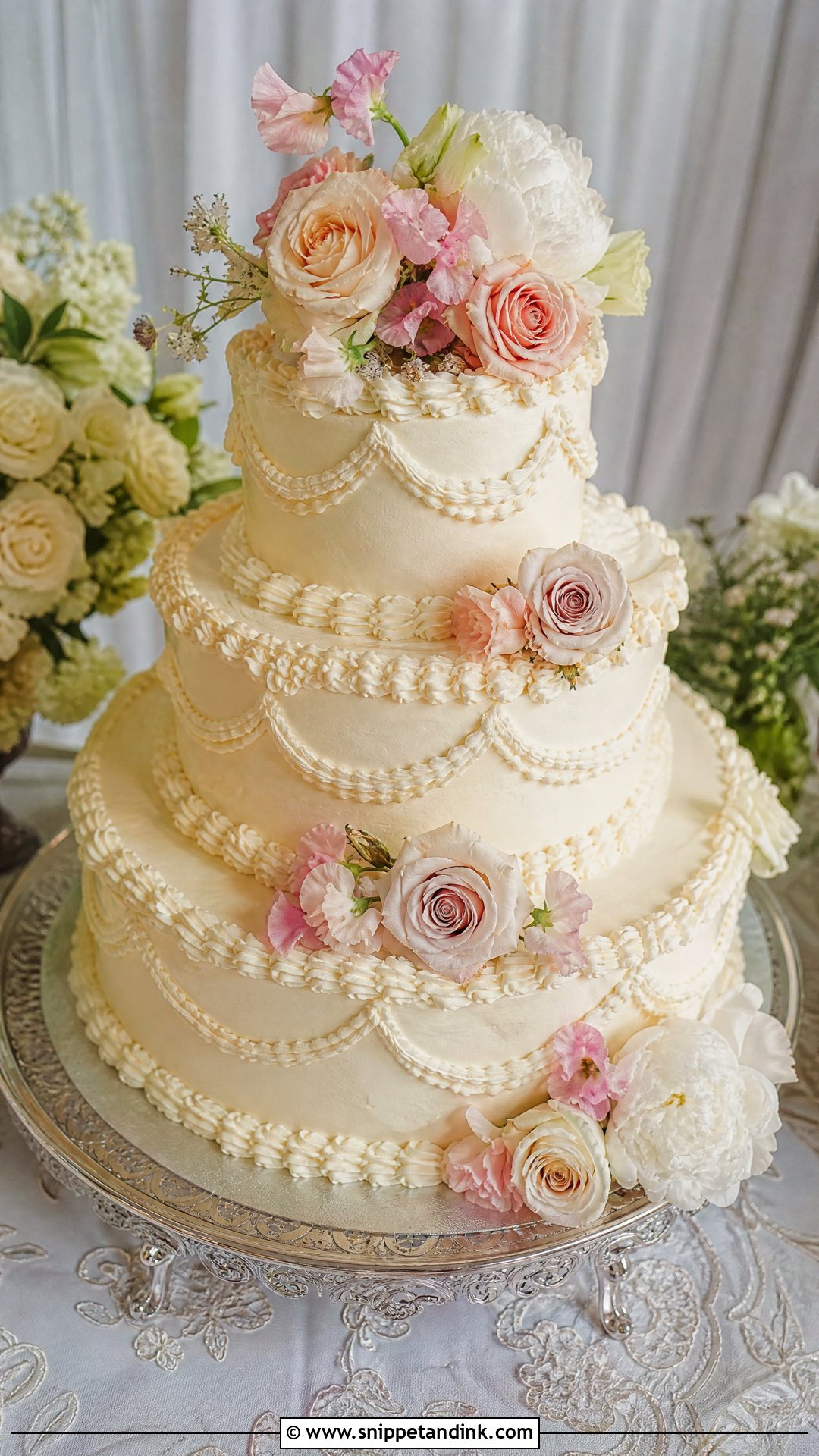
Vintage cakes lean on piping: borders, pearl dots, ruffles, lace patterns and Lambeth-style overpiping. Fresh roses and small romantic flowers suit all that detail as long as they stay small, because big heads hide the piping you’ve paid for. Spray roses, sweet peas, pansies and small peonies fit the scale, with sweet peas kept behind a barrier since the plant isn’t edible. Ivory, blush, butter yellow and dusty pink keep the mood soft. Lambeth work takes hours, so if this is your style, book a baker who shows it in their portfolio.



15. Boho Wedding Cake With Fresh Flowers
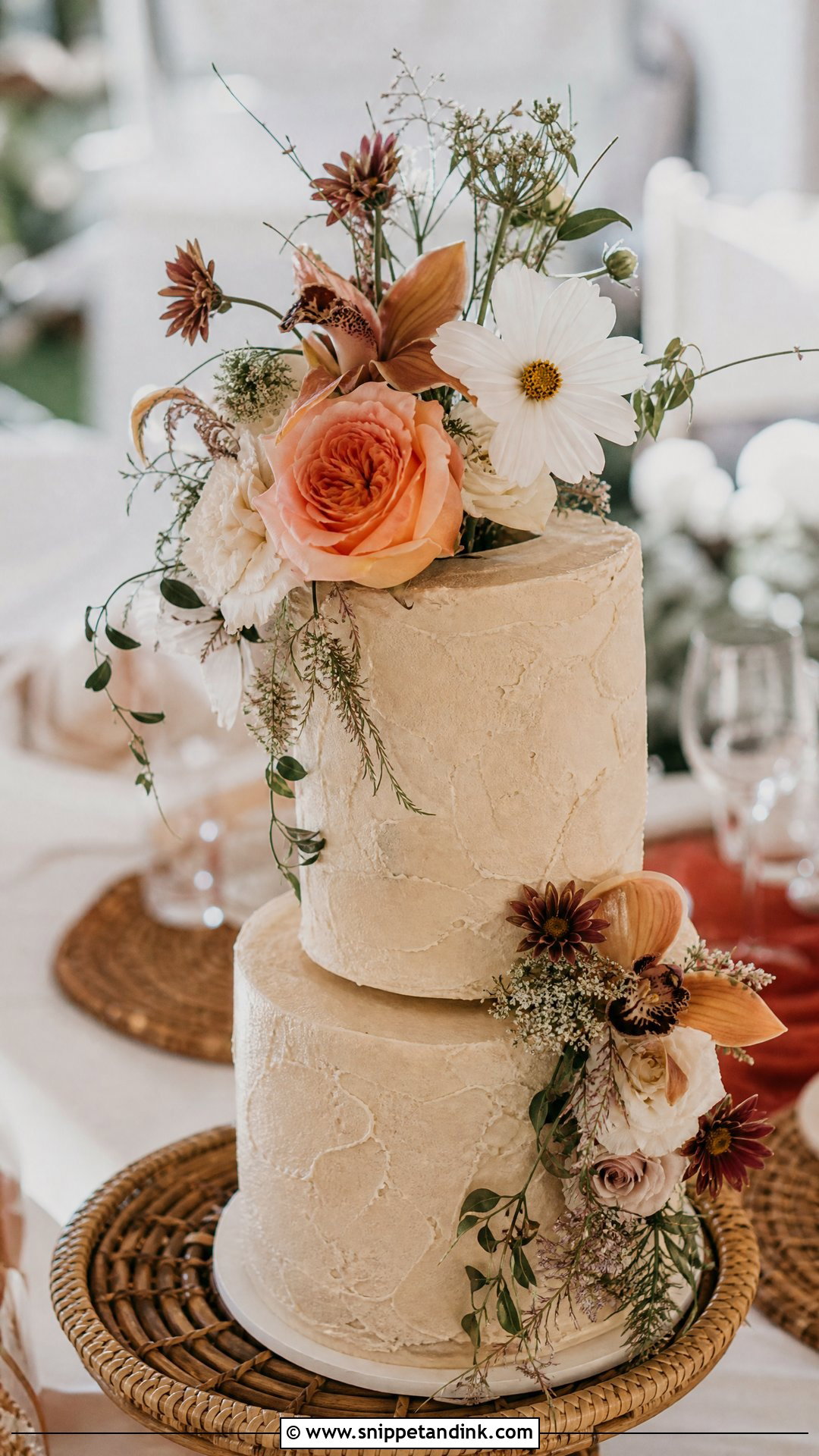
Boho cakes usually have heavy texture, neutral tones and a loose arrangement that looks gathered rather than placed. Since the flowers here are fresh, I build around fresh roses, orchids, cosmos or seasonal blooms and add dried grass only in small amounts, and only if your venue allows dried material. Ivory, sand, terracotta, peach and soft pink sit well together. A woven mat, a wood stand or plain stoneware all suit it. Cosmos wilt quickly out of water, so I add those last of all.
16. Garden Wedding Cake With Fresh Flowers
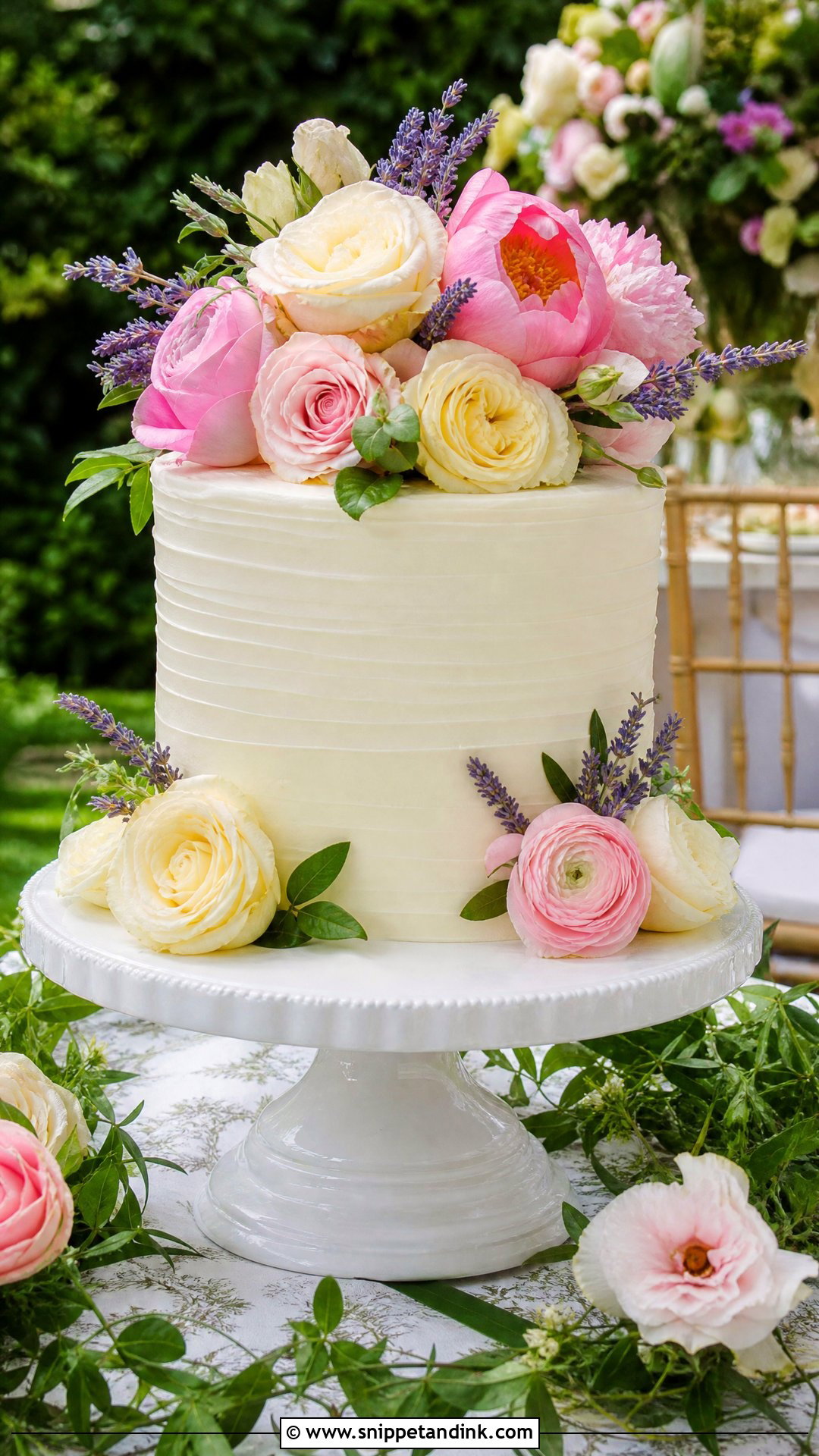
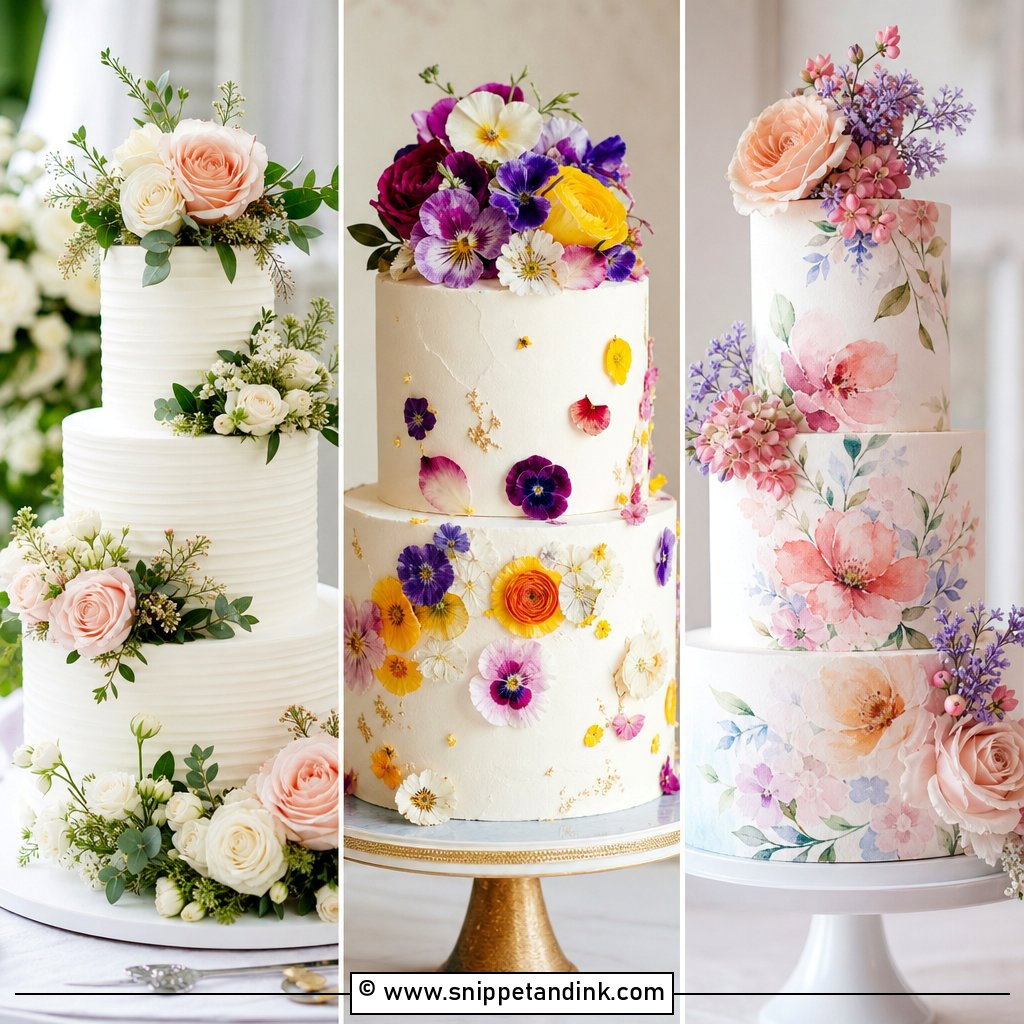
A garden cake should look like it was picked from the paths around it. That usually means soft buttercream, clustered blooms and colors taken from the garden itself. Roses, peonies, pansies, lavender, ranunculus, and herbs make a lush mix, though ranunculus should always sit on a barrier. Flowers can ring each tier or wind down like a vine, ideally echoing the centerpieces. Spring and summer suit it best, and early fall works with warmer blooms. Keep the frosting light; a heavy, sweet buttercream fights the fresh look.
17. Blush Wedding Cake With Fresh Flowers
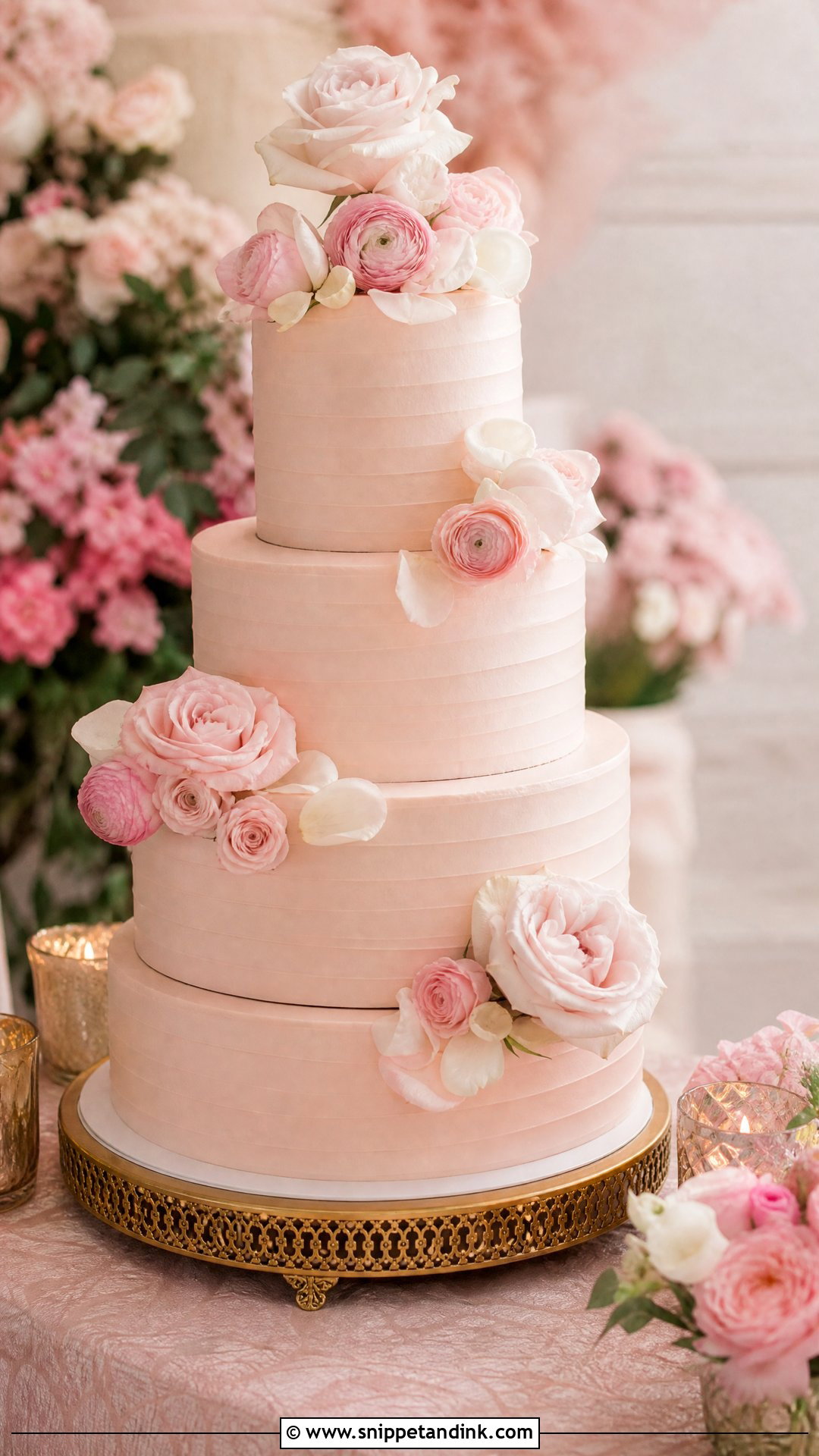
Blush is the easiest color to match to bridal flowers, which is why I see it so often. The cake can be pale pink, ivory with blush flowers, or an ombre fading from pink to white. Roses, peonies, carnations, ranunculus and lisianthus all come in shades that sit well together. Gold leaf can go on, but sparingly, or the flowers start to look fussy. Pink buttercream is harder to color evenly than people expect and can shift slightly under warm lights, so I always tint a test swatch and look at it beside a real petal before I commit.
18. Blue Wedding Cake With Fresh Flowers
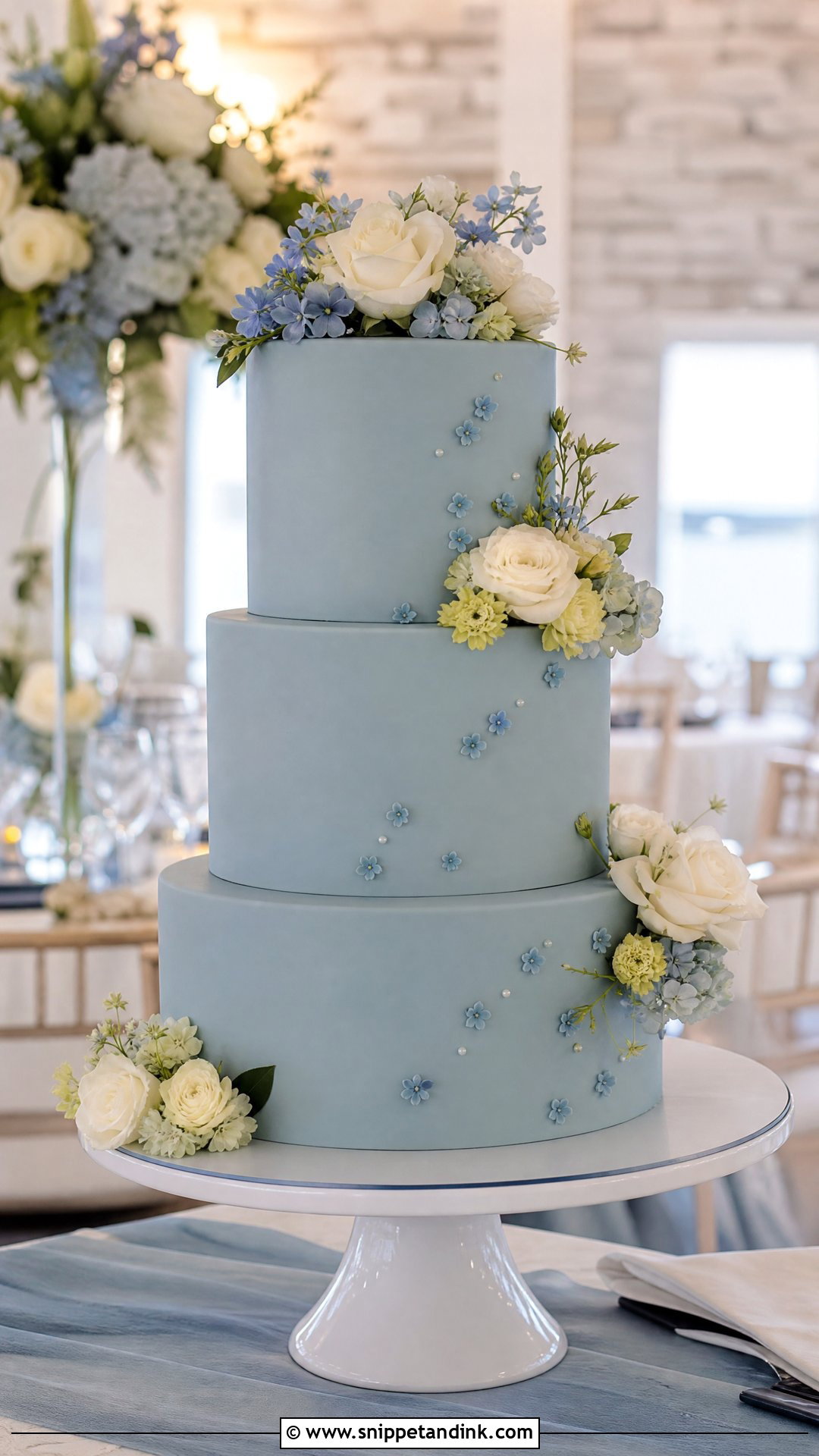
Blue cakes feel calm and stand out on a dessert table. Soft dusty blue or pale blue frosting suits coastal weddings, spring receptions and elegant indoor rooms. True blue flowers are scarce, so I pair the cake with white blooms, pale yellow accents or small blue edible flowers like cornflowers or borage. Hydrangeas often inspire the palette, but they’re toxic and shouldn’t touch the cake, so they stay on the table next to it. Keep flowers to small clusters so the frosting color remains the feature.
19. Greenery Wedding Cake With Fresh Flowers
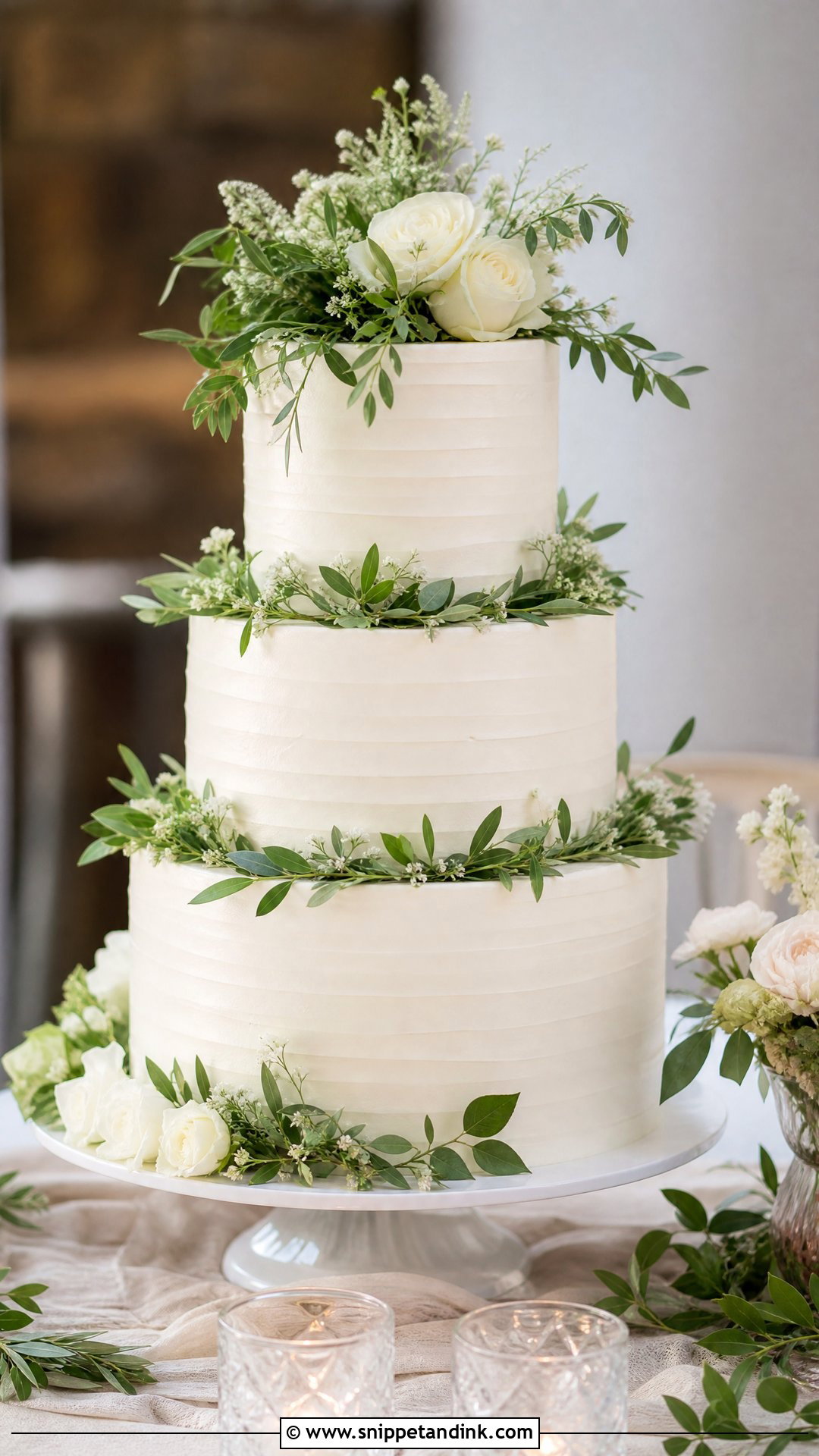
Greenery cakes rely on leaf shape and texture, with color kept to white or ivory blooms. They suit couples who want the floral feel without a strong palette. The leaf people ask for most is eucalyptus, and that’s the one I have to talk them out of placing directly on the cake: its oils aren’t food-safe. Wrapped stems, food-safe greenery and a barrier underneath solve most of it. Smooth white buttercream, semi-naked sides or simple fondant all suit the look.


20. Cascading Flower Wedding Cake
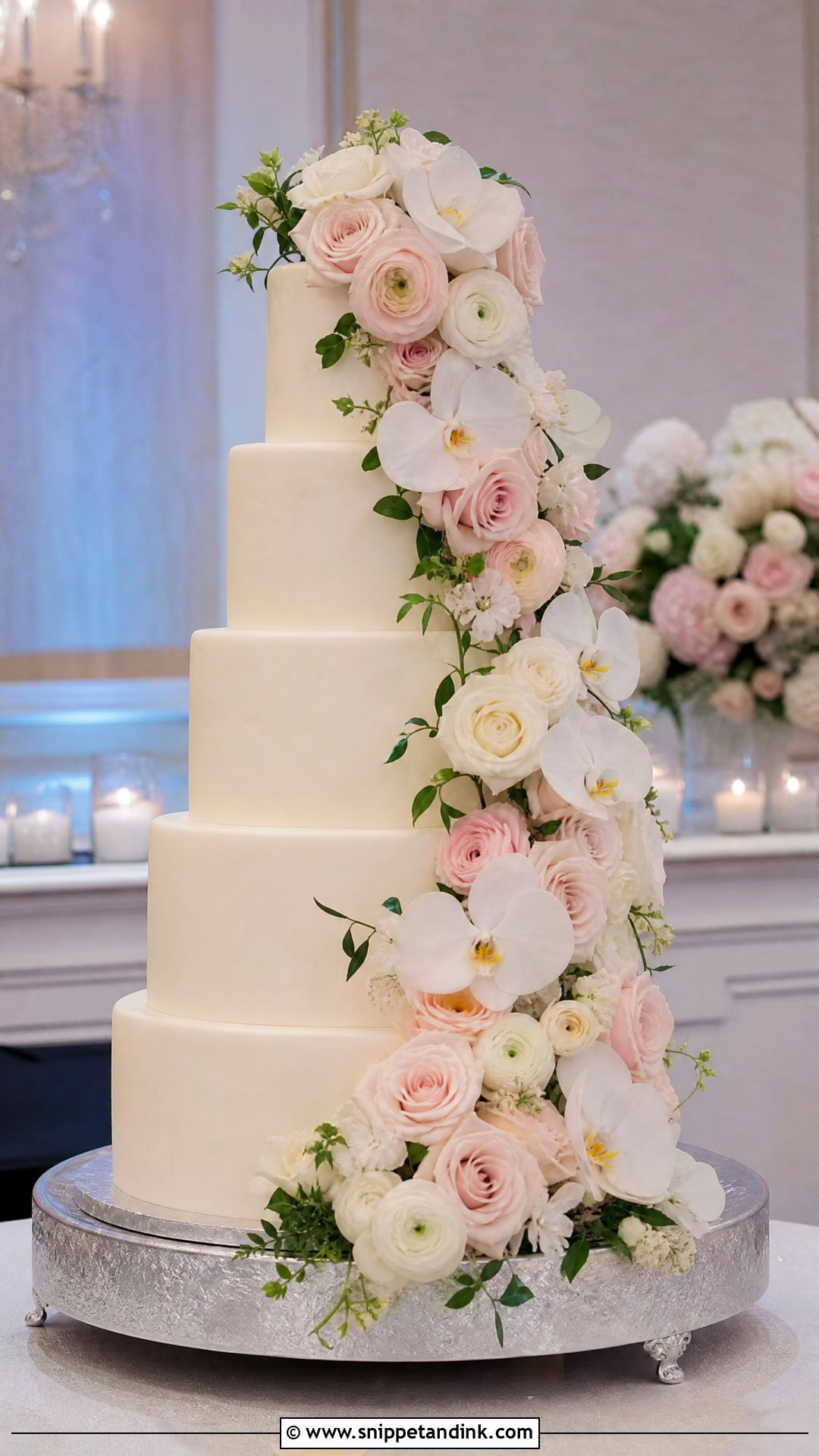
A cascade runs from the top tier to the base, which makes the cake feel like part of the floral design rather than food. It can be a full, heavy sweep or a light trail of small clusters guiding the eye down. Roses, orchids, ranunculus and trailing greenery all work when placed carefully. Cascades need height, so they belong on tiered cakes, and they need a plain surface; heavy piping underneath just looks busy. The arrangement is often built partly on wired picks, so ask who is doing it and allow time on the day.
21. Pressed Flower Wedding Cake
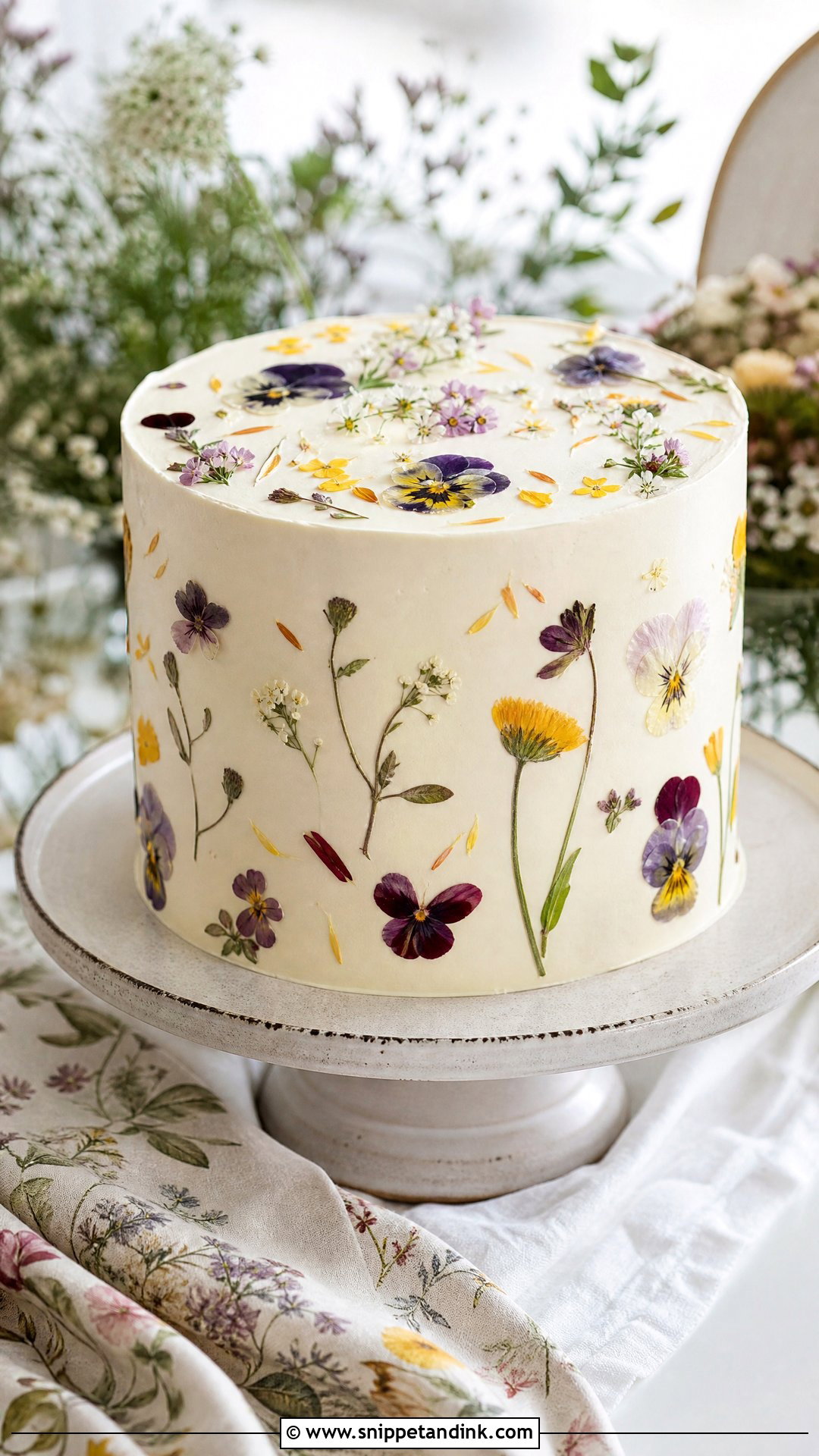
Pressed flowers lie flat against the frosting, making a botanical pattern that can be sparse or cover the whole tier. Because they touch the icing completely, these have to be truly edible flowers, grown without sprays and pressed for food use. Pansies, violas, calendula and loose petals give a colorful garden effect. Smooth buttercream is the best base since the petals sit flush. I keep the shape simple. One warning from experience: pressed petals slowly absorb moisture from buttercream and can darken if the cake sits out for hours, so they go on as late as possible.
22. Floral Wreath Wedding Cake
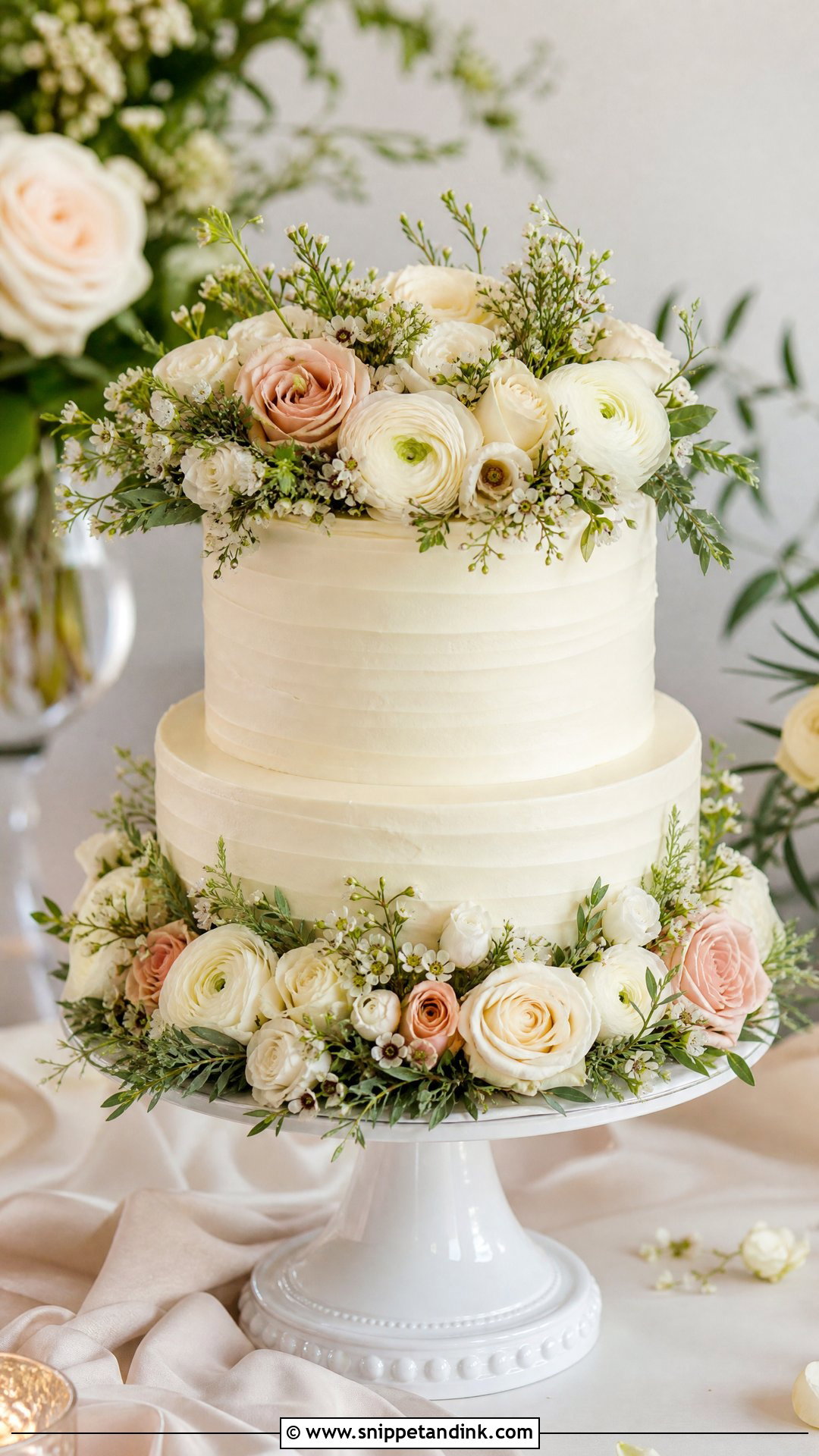
A wreath puts the flowers in a ring around the top, the base or each tier. It looks tidy and reads well from the front, which helps if you don’t want a cascade. Roses, ranunculus, small airy accents, herbs and seasonal blooms all suit a wreath, with baby’s breath kept on a barrier because it isn’t edible. A single tier with one ring looks charming; a tall cake can take a ring at each seam. I match the colors to the reception flowers so the cake ties into the room.
23. Orchid Wedding Cake With Fresh Flowers
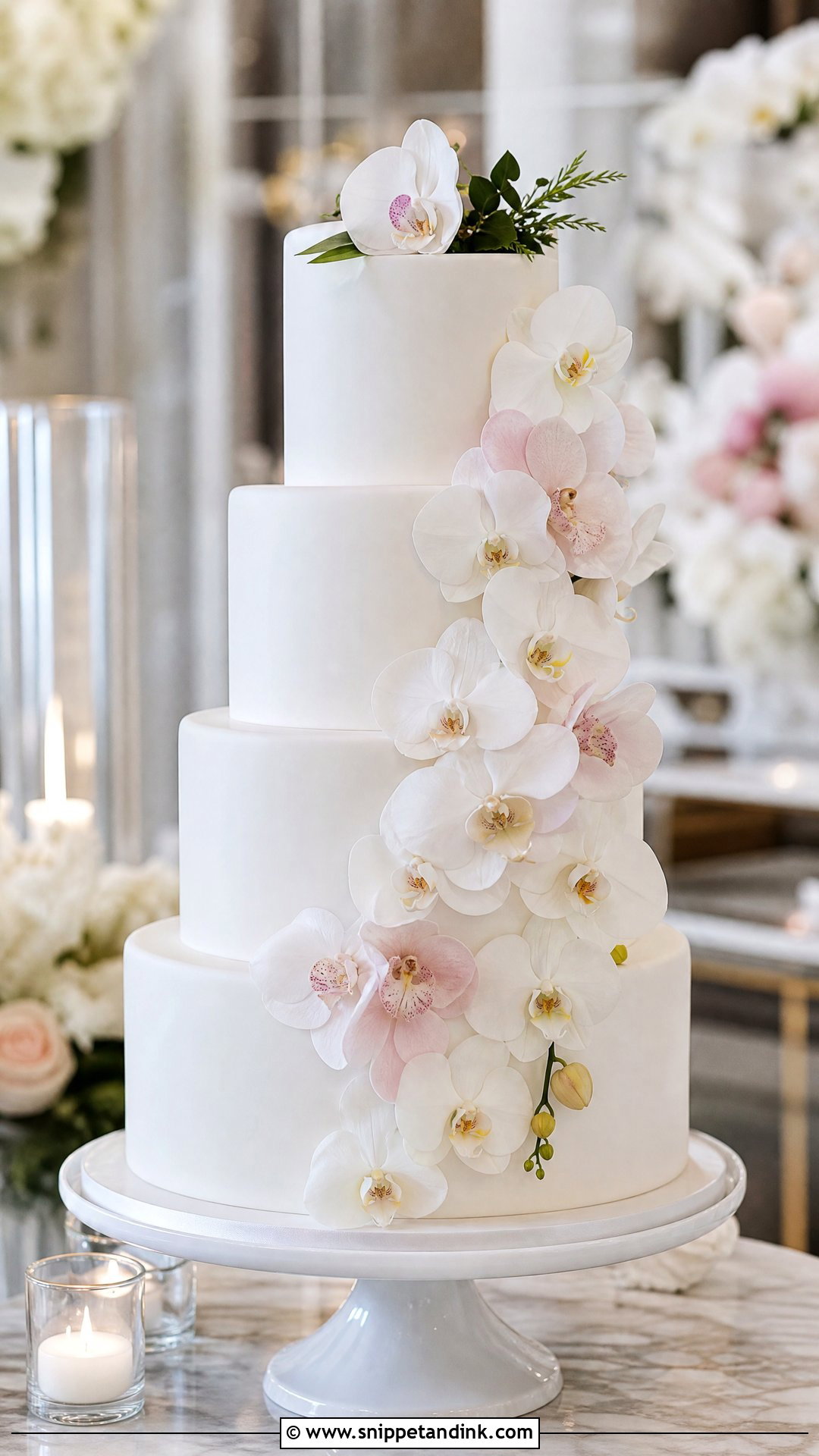
Orchids have clean, almost graphic shapes, so they pair naturally with smooth white buttercream or fondant and give a slightly tropical, modern feel without shouting. A few stems can drop down one side, or one large bloom can sit on top. White reads classic, while blush, peach, or lavender orchids bring more personality. They’re also one of the hardiest flowers I use: they handle a few hours out of water better than most garden blooms, which is why I like them for destination weddings and warm venues. Keep the rest of the decoration minimal.
24. Rose Wedding Cake With Fresh Flowers
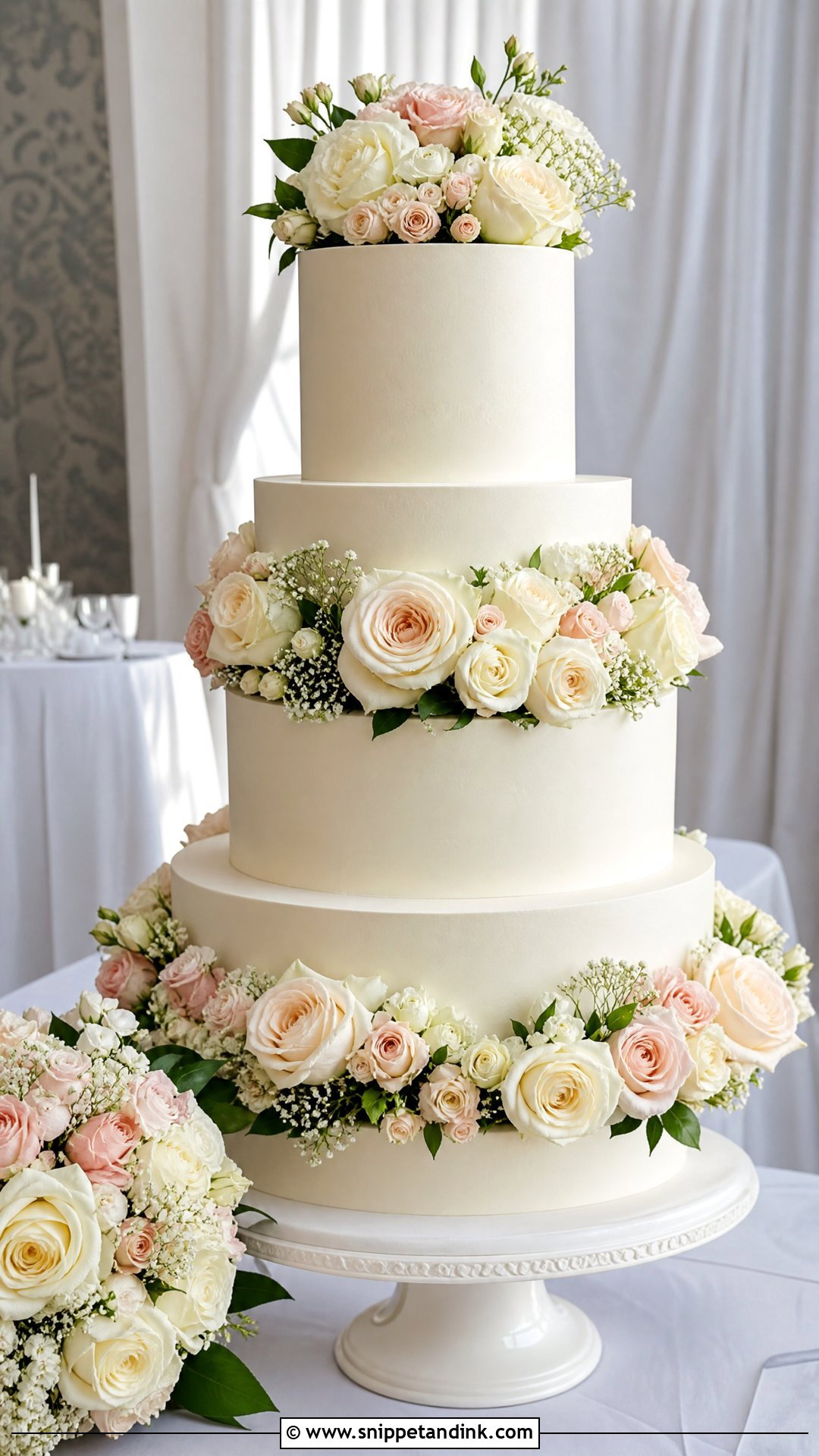
Roses are the flower I use most, and not just out of habit. They come in every size and color, and unsprayed roses are edible, which removes a lot of worry. Garden roses look romantic, spray roses delicate, large standard roses more formal. They can cluster between tiers, ring the base, or form a full topper. White or ivory frosting keeps them classic, while blush or champagne warms them. The one thing to insist on is that florist roses, which are usually treated, still have wrapped stems and a barrier under the heads.


25. Wildflower Wedding Cake With Fresh Flowers
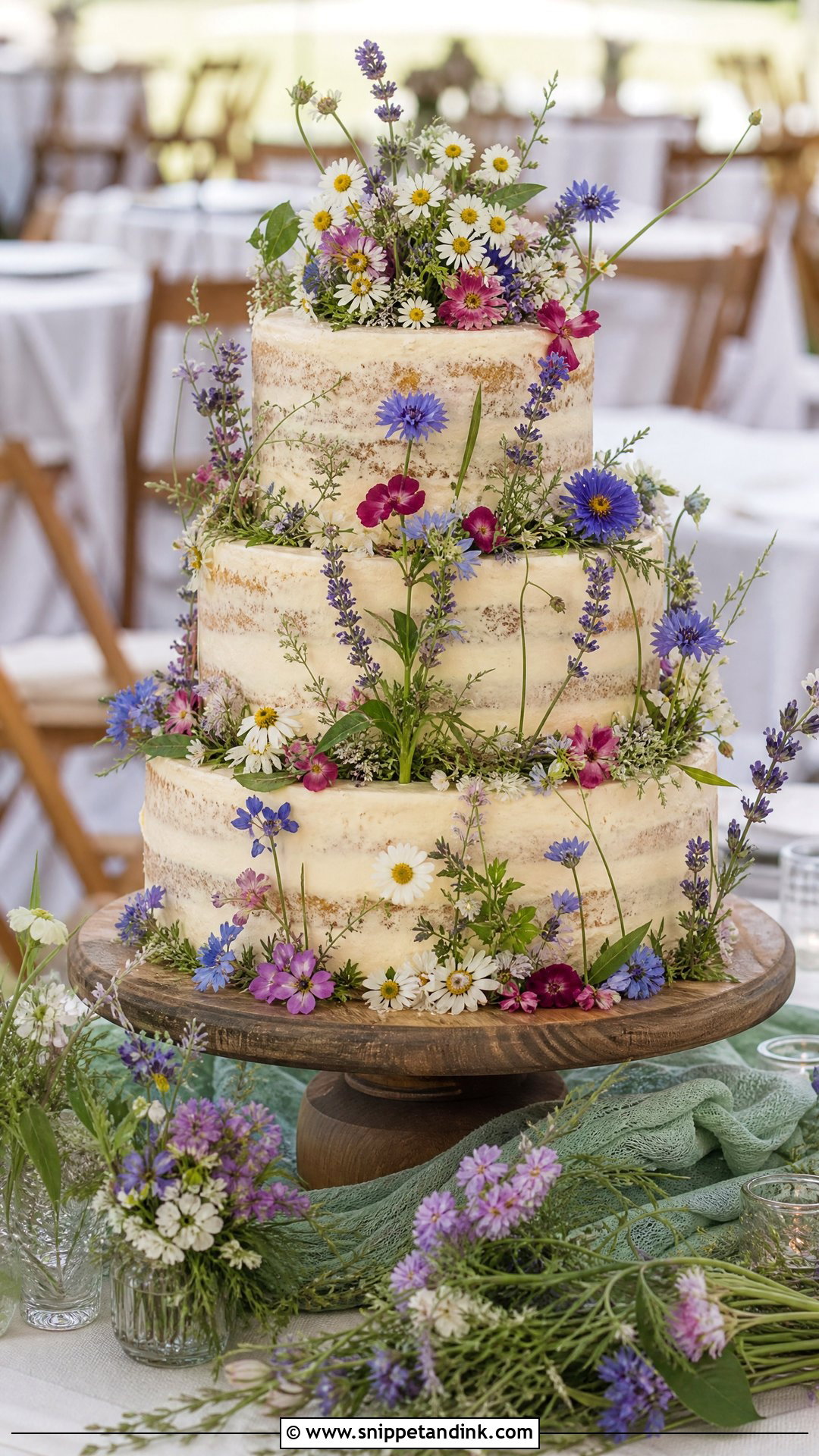
A wildflower wedding cake with fresh flowers brings a cheerful, relaxed mood, and it belongs at meadow weddings, backyard parties, tented receptions and colorful spring or summer celebrations. The trick is to make a loose look on purpose: I vary flower size and shape but repeat each color at least twice so it doesn’t look random. Smooth buttercream or semi-naked sides make a soft background. Small edible blossoms, chamomile-style flowers, lavender and little garden blooms create that field feel. Many true wildflowers wilt within an hour out of water, so those go on right before guests arrive.
Who Places the Flowers, and How Long They Last on the Table
Decide early whose job the flowers are. Sometimes the florist supplies stems and the baker places them; sometimes the florist does both after the cake is set. Either way works. What fails is when each assumes the other will do it. Put it in writing, and make sure the florist knows to set aside a separate bundle for the cake, a few extra heads more than seems necessary, in case some are bruised in transit.
Timing on the day
- The cake is delivered and leveled on its table first, ideally out of direct sun and away from heaters.
- Flowers go on within the last hour or two before guests arrive, not the night before.
- Delicate blooms such as cosmos, sweet peas and loose wildflowers are added last because they wilt fastest out of water.
- Hardy blooms such as orchids, spray roses and carnations can go on first and will still look fresh after several hours.
- Someone, usually the caterer, removes every flower and pick before the cake is cut and served.
Heat is the factor I watch most. A buttercream cake in a warm tent softens, heavy flowers sink, and petals collapse from the edges inward. If your reception is outdoors in summer, choose sturdier flowers, ask for a ganache layer under the buttercream, which holds shape better in warmth, and keep the cake inside until the last practical moment.
Bring Your Bouquet Photo to the Cake Tasting
Fresh flowers suit nearly every style of cake, from classic to rustic to modern, and the cake can carry three blooms or three hundred. What makes the difference is planning: flowers that fit the season, your bouquet and the frosting, handled cleanly and set on proper barriers. A few blooms can make a small cake feel special, while a full cascade turns a tiered cake into the centrepiece of the reception. Take the ideas you liked to both your baker and your florist at the same time, and let them agree on the flowers before anyone places an order.
You'll Like These Ideas:






Leave a Reply