
Pale colours are the hardest ones I mix. A strong red is forgiving; a whisper of lavender can shift to grey or pink depending on the butter, the light and how long the icing has been sitting. That’s worth knowing before you fall for a pastel cake, because the flowers are where most of that colour lives. Most of the wedding cake trends I’m asked for right now, smooth buttercream, sugar flowers, pressed botanicals, small statement cakes, suit pastel blooms well. Here are twenty pastel flower cakes, with what I’ve learned about making each one hold its colour.
Why Pale Shades Shift Between the Swatch and the Cake
Couples often bring a perfect pastel swatch and are surprised when the cake doesn’t match it exactly. A few things are working against pale colour in icing, and knowing them makes the conversation with your baker much easier.
- The base isn’t white. All-butter buttercream is cream coloured, so every pastel lands warmer than you’d expect. Blues can turn slightly green and lilacs slightly pink.
- Light fades colour. Purples and pinks in particular lose strength in sunlight. A cake displayed by a window for hours can look paler by evening.
- Colour develops. Many tints deepen as icing rests, so a pastel that looks right when mixed can be a shade stronger the next morning.
- Lighting changes it again. Warm reception lighting pushes peach towards orange and makes pale blue look grey.
My fix is to colour-test a small piece of the actual icing a day ahead and look at it in daylight and in warm light. I’d ask your baker to do the same, and to show you the sample, not the colour card.
1. Pastel Flower Wedding Cake
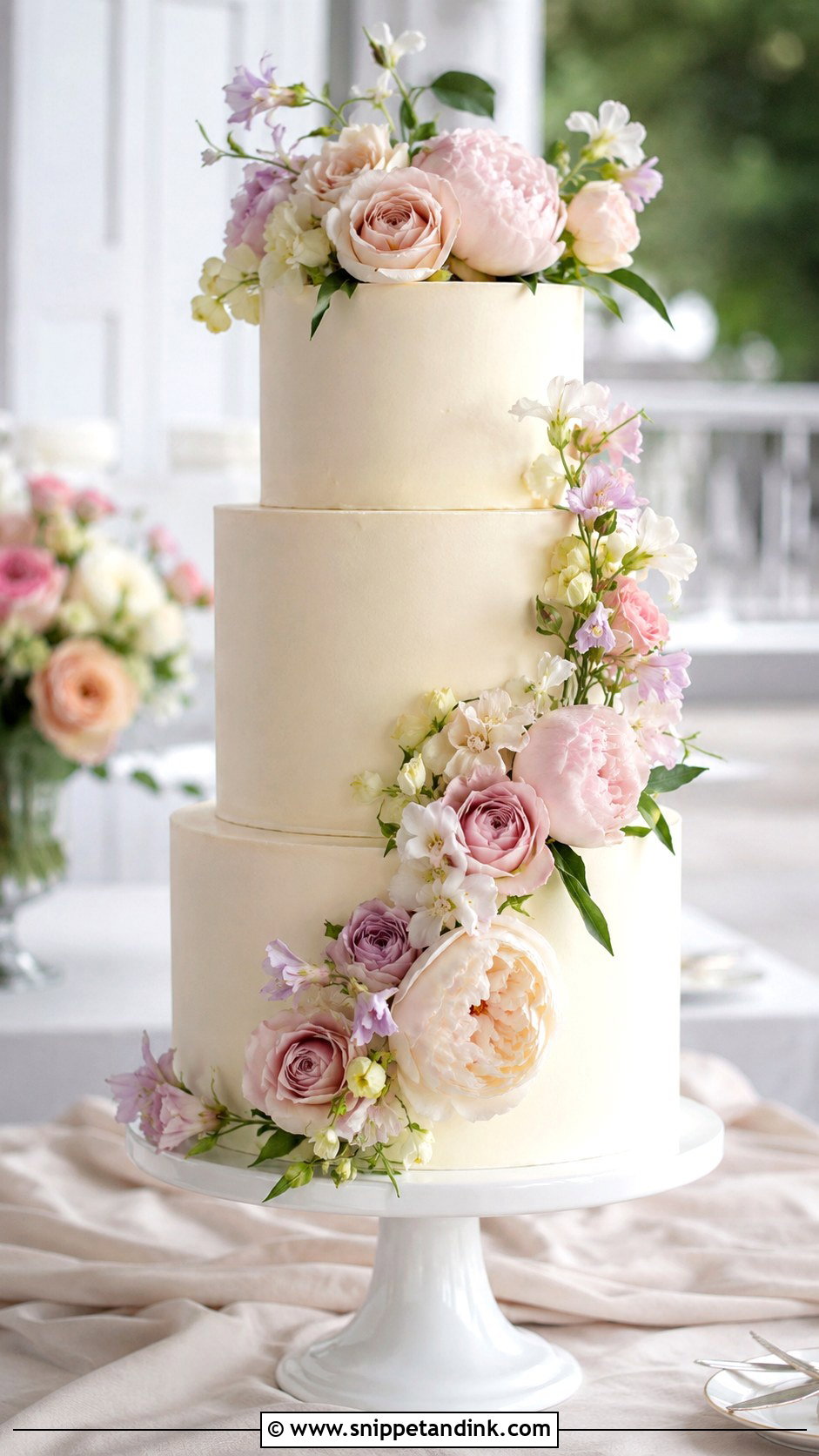
The mixed-pastel cake is the one I’d start most couples from. Ivory or warm white underneath, then roses, sweet peas, ranunculus and peonies in three or four soft shades, placed as a cascade, a side cluster or a loose border. The detail that makes or breaks it: keep every flower at a similar depth of colour. One bloom that’s a shade too strong pulls the eye and the whole arrangement reads as uneven. Vanilla bean or lemon keeps the flavour light.
2. Blush Pink Floral Wedding Cake
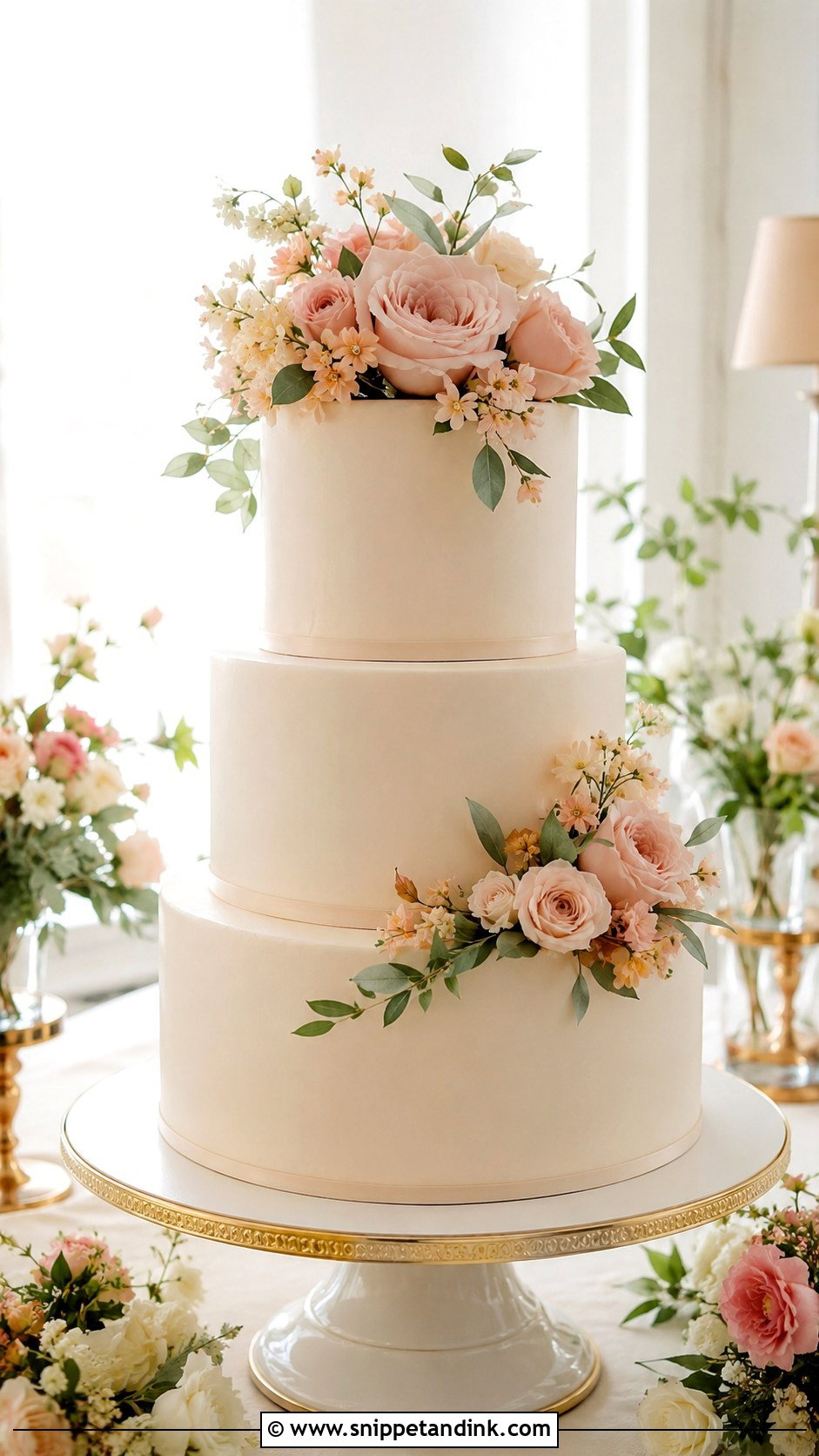
Blush sits close to the colour of buttercream itself, so it’s the pastel that blends most quietly. Ivory icing, pale pink sugar roses, a few peach blossoms and sage leaves. If you’d like more depth, a faint pink ombré on the tiers works, but I go very gently; ombré in pink can look like uneven icing if the steps between shades are too small. Gold or dusty mauve accents suit the palette.
3. Lavender Flower Wedding Cake
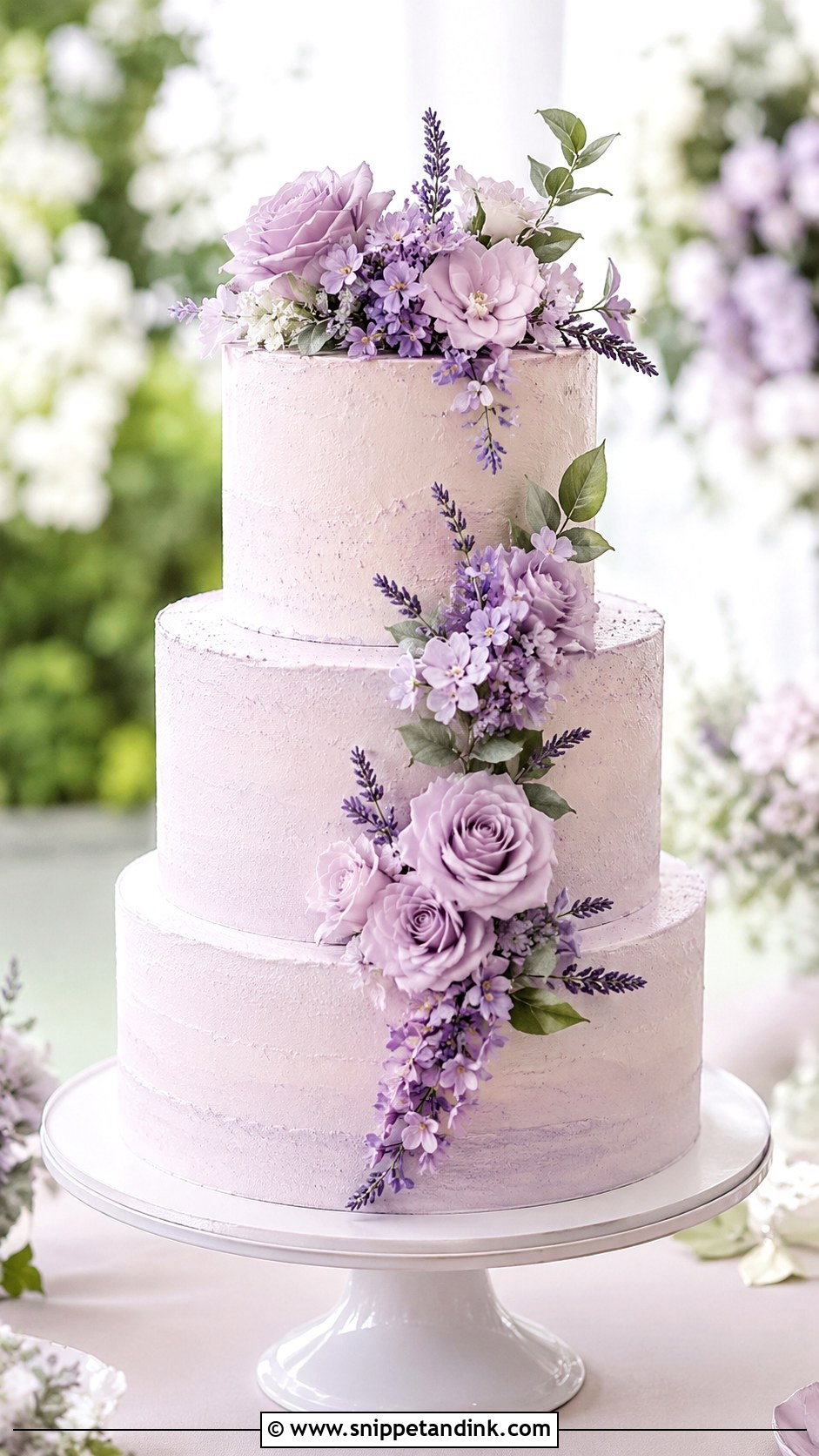
A lavender flower wedding cake gives you colour without pink’s sweetness. Lavender is the shade I’m most careful with, though. Purple gel colour fades noticeably under daylight and some violet colours drift towards blue as icing sits, so I tint on the day of finishing and keep the cake out of the sun. Sugar lilac, pale purple roses and soft foliage trail diagonally across three tiers. Earl Grey and lemon sponges suit it.
4. Pastel Blue Wedding Cake
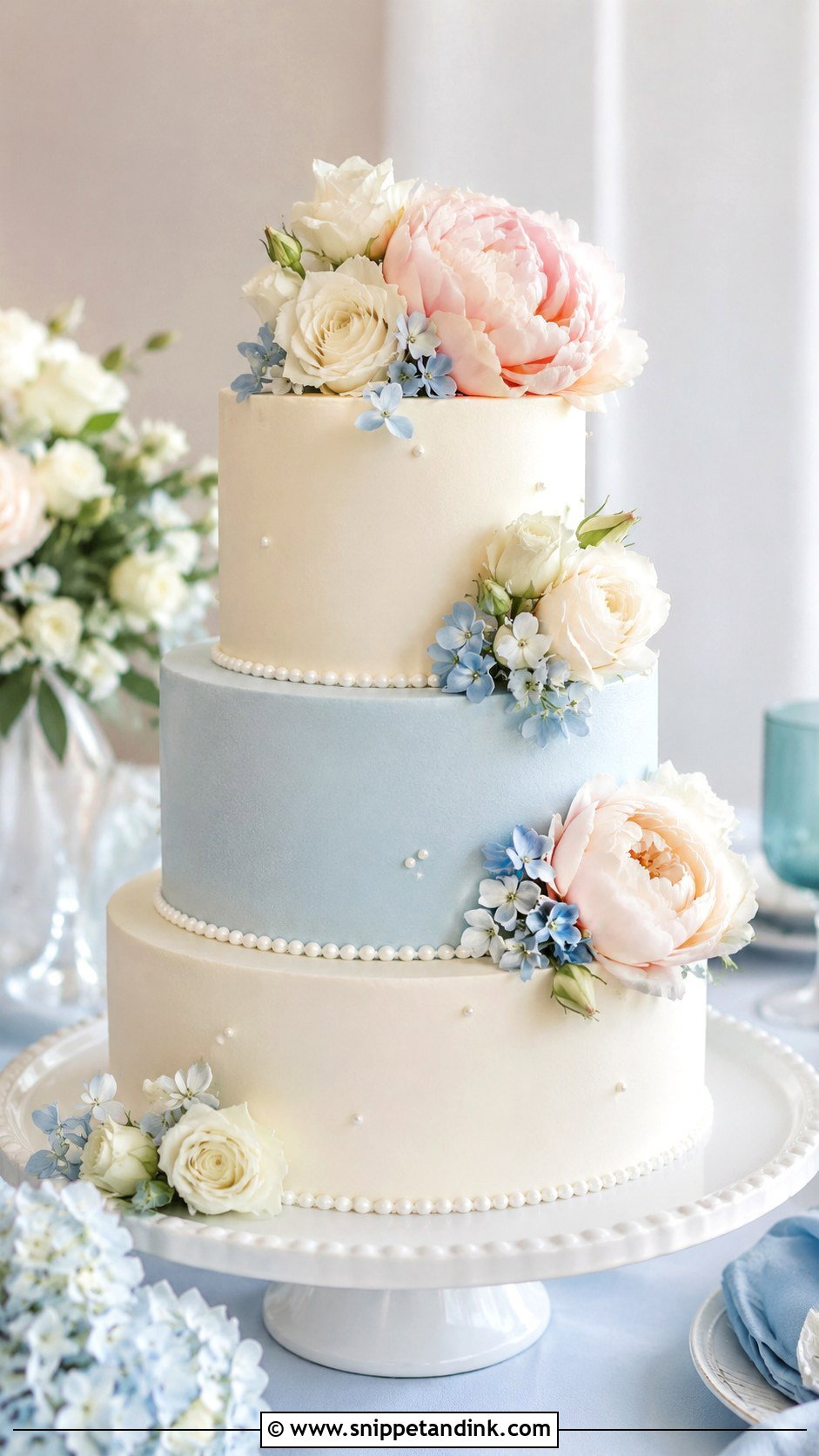
Here’s a quirk most people don’t expect: pale blue on an all-butter buttercream can lean green, because the butter’s yellow mixes with the blue. I either whiten the base first or use a Swiss meringue buttercream, which starts paler. Keep the blue soft rather than bright. Ivory roses and tiny blue hydrangeas (in sugar, or barriered if fresh) finish it. Using blue on one tier only keeps it classic.
5. Peach Flower Wedding Cake
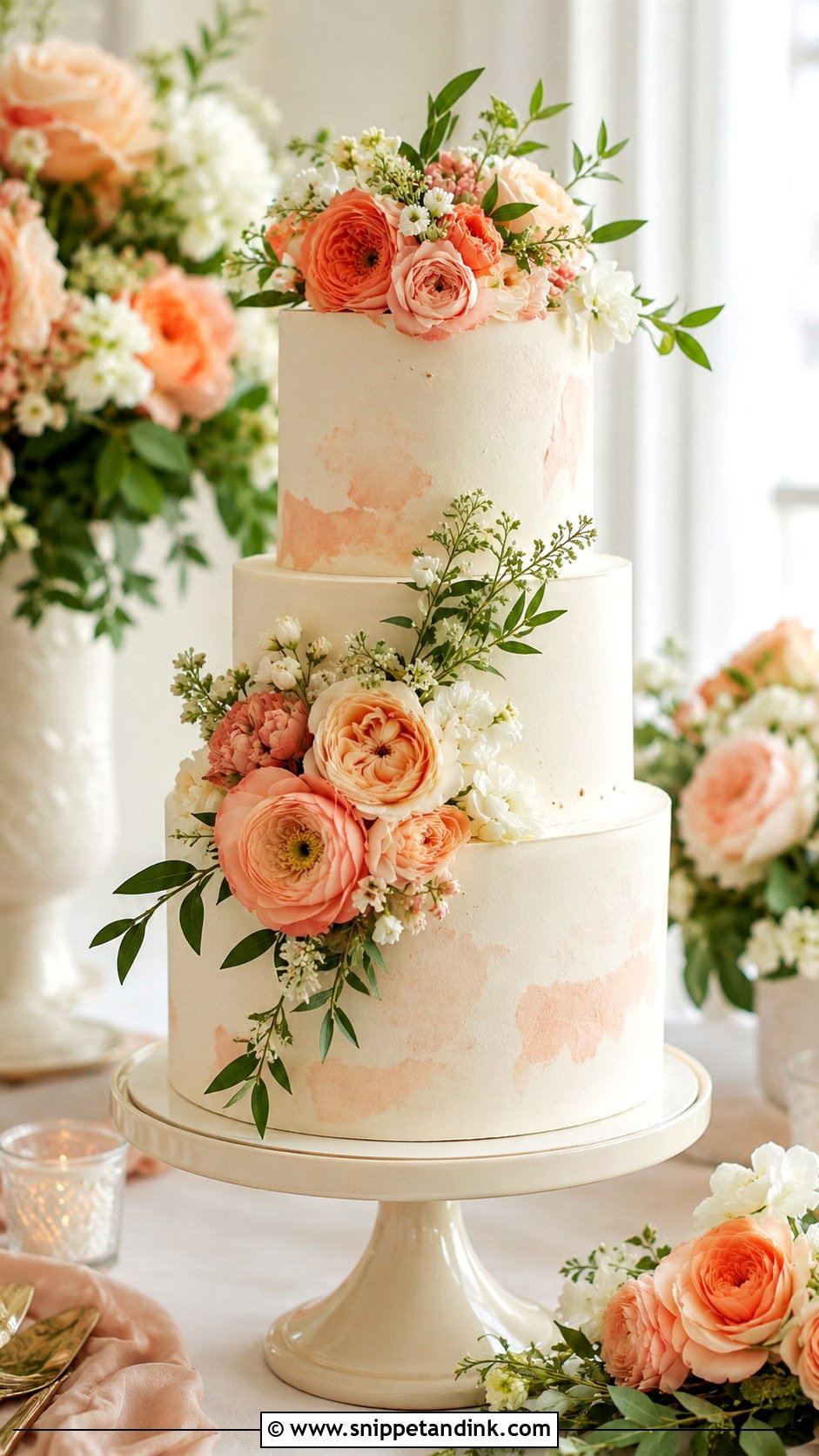
Peach is the warmest pastel and the most flattering in photos, because it sits close to skin tones. Peach garden roses, pale coral ranunculus and ivory blossoms on a smooth ivory cake. A faint peach watercolour wash looks modern, but peach tints can go orange under warm reception lighting, so I keep the wash lighter than the client’s swatch. It carries into early autumn with cream and soft greenery.
6. Pastel Garden Wedding Cake
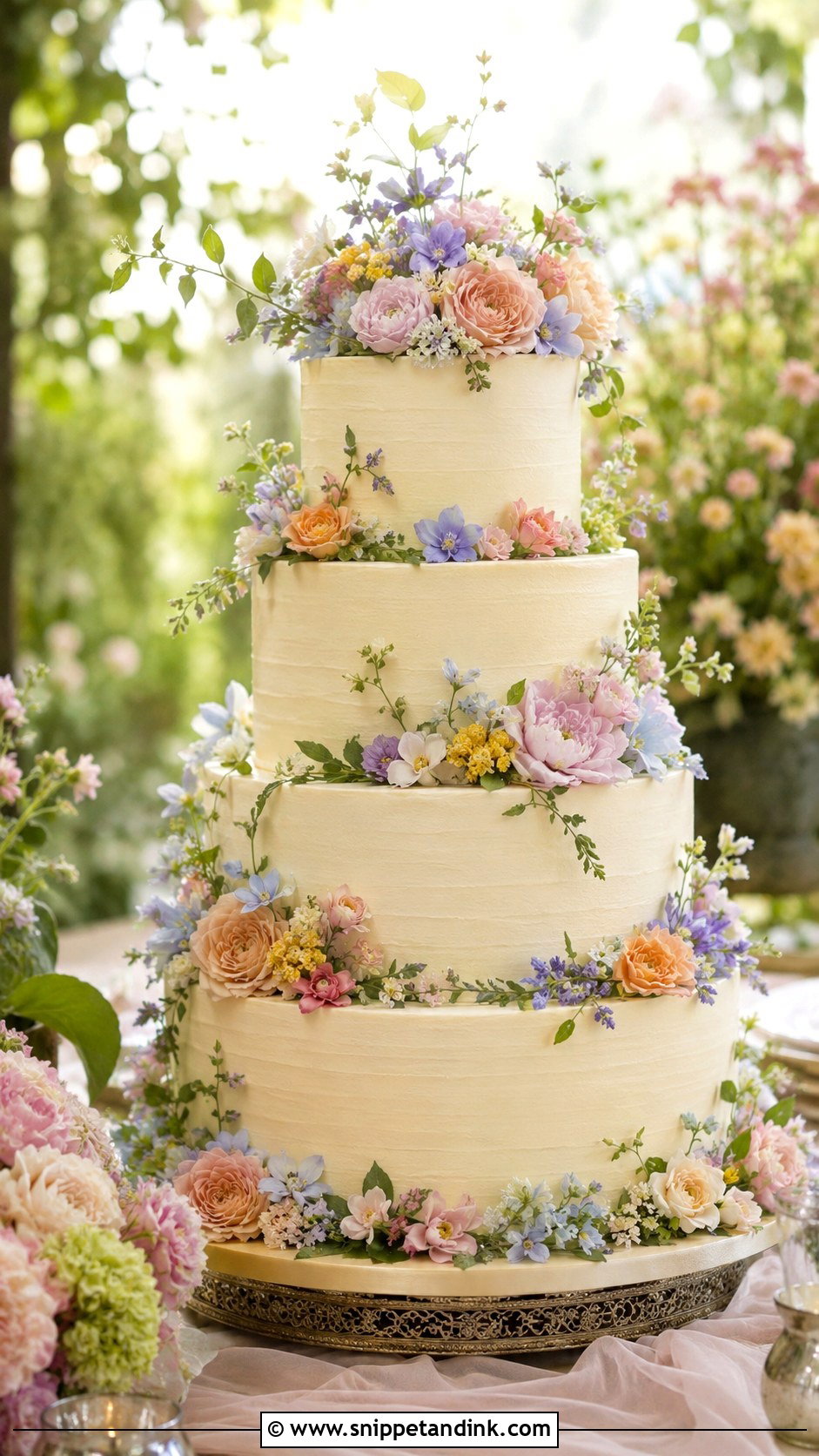
Garden-style cakes should look grown, not arranged. I build flowers in from the edges of each tier and let a few stems break the outline, mixing pink, lavender, peach and pale yellow with small leaves. Too many colours turns lush into messy, so I cap the palette at four. Semi-smooth buttercream suits this better than a perfectly polished surface. In a tent on a warm day, ask about a firmer crusting buttercream underneath.
7. Pressed Flower Wedding Cake
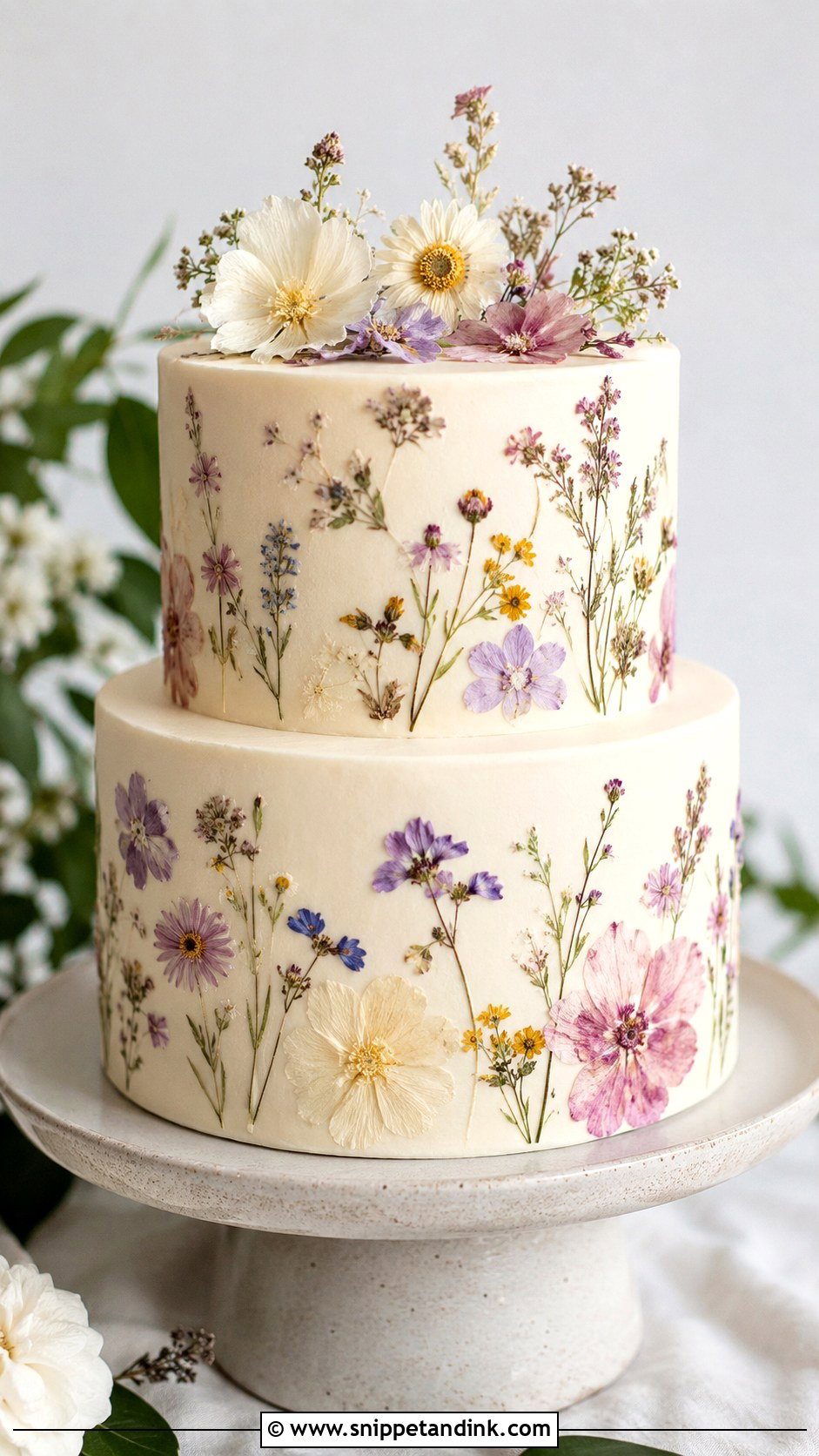
Pressed flower cakes depend on the flowers actually being edible: pansies, violas, cornflowers, borage and calendula are common choices, grown without sprays and pressed flat. I lay them on buttercream that’s chilled just enough to hold them without smearing, and brush a little piping gel over delicate petals to stop them curling. A plain base is essential. Pressed petals do darken and soften over a long day, so this cake belongs in a cool room.
8. Sugar Flower Wedding Cake
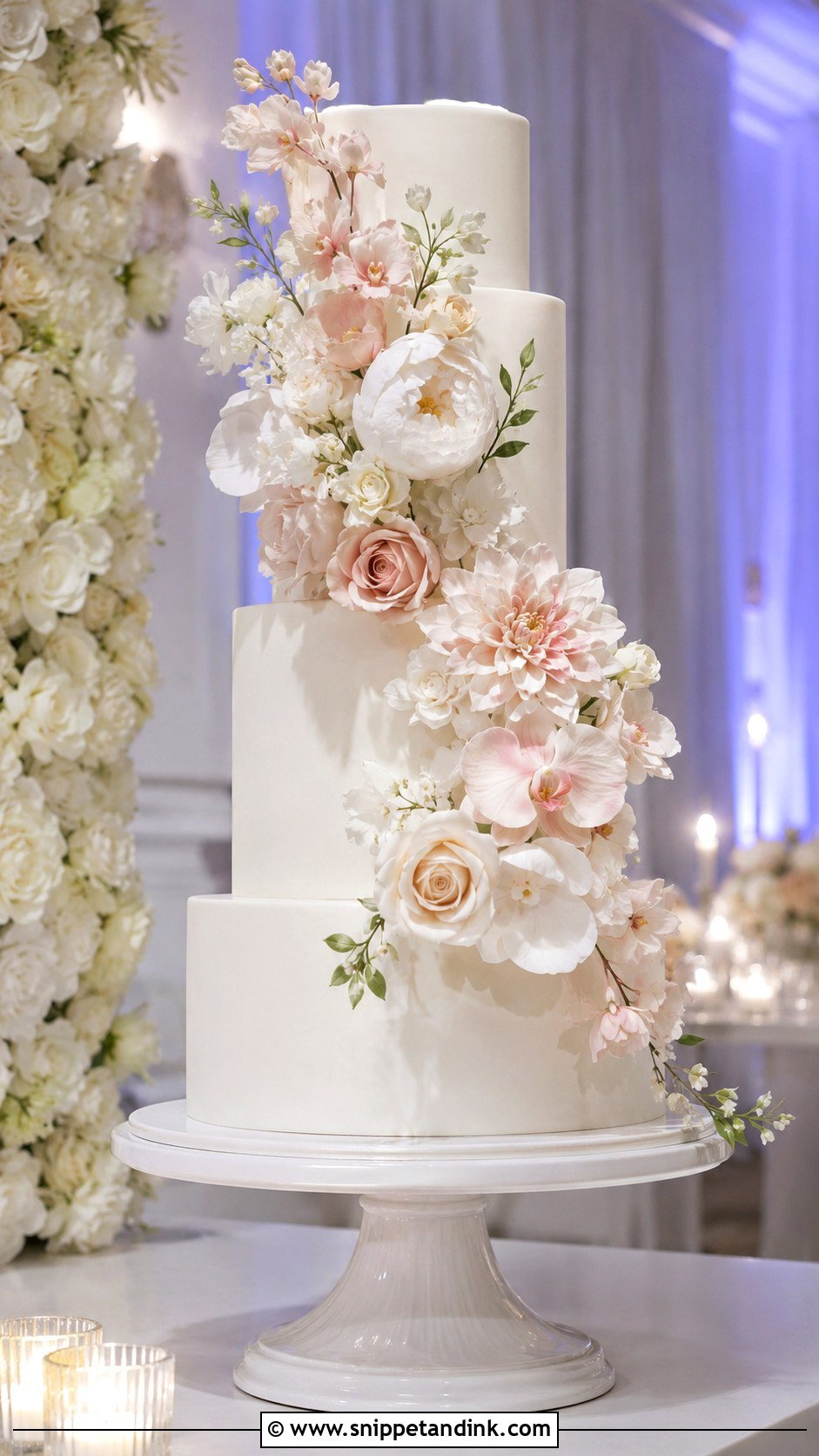
Sugar flowers let me make a pastel peony in October or a sweet pea the exact shade of your bridesmaids’ dresses. They’re made weeks ahead, petal by petal, and dried before they’re dusted with colour. The trade-off: they’re fragile and they hate humidity, which softens the petals, so they travel boxed separately and go on at the venue. Most contain wires, so they’re keepsakes rather than something to eat.
9. Buttercream Flower Wedding Cake
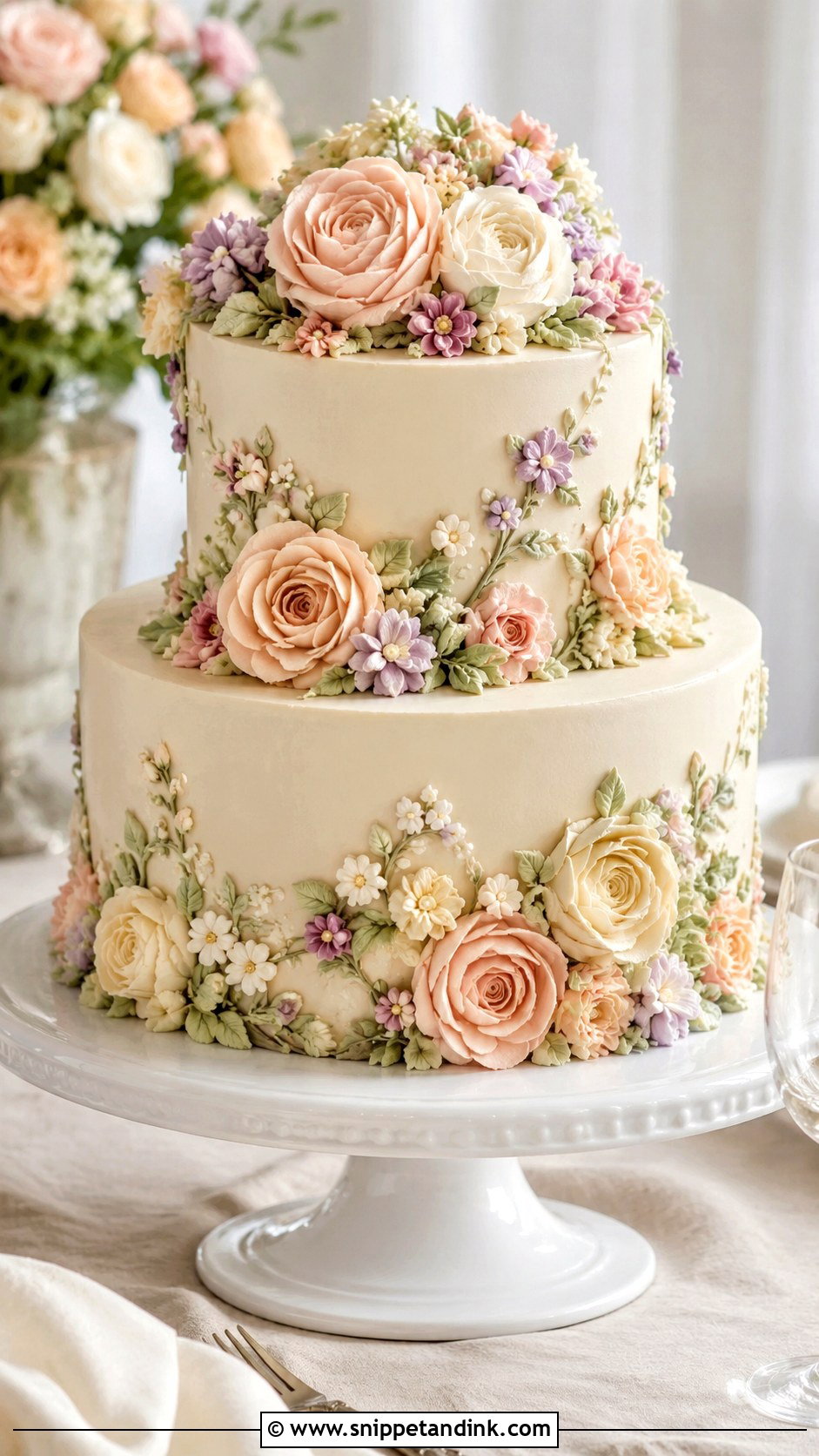
Buttercream flowers are piped straight onto the cake, so every part is edible. Rosettes, blossoms and leaves in blush, lavender and pale green suit a round tier, a sheet-style cutting cake or a small sweetheart cake. Piped petals soften in warm air faster than smooth icing does, and a rose that held its edges at 3pm can look like a smudge by 9pm in a hot room. I’d choose this for cooler venues or shorter displays.
10. Simple Wedding Cake With Pastel Flowers
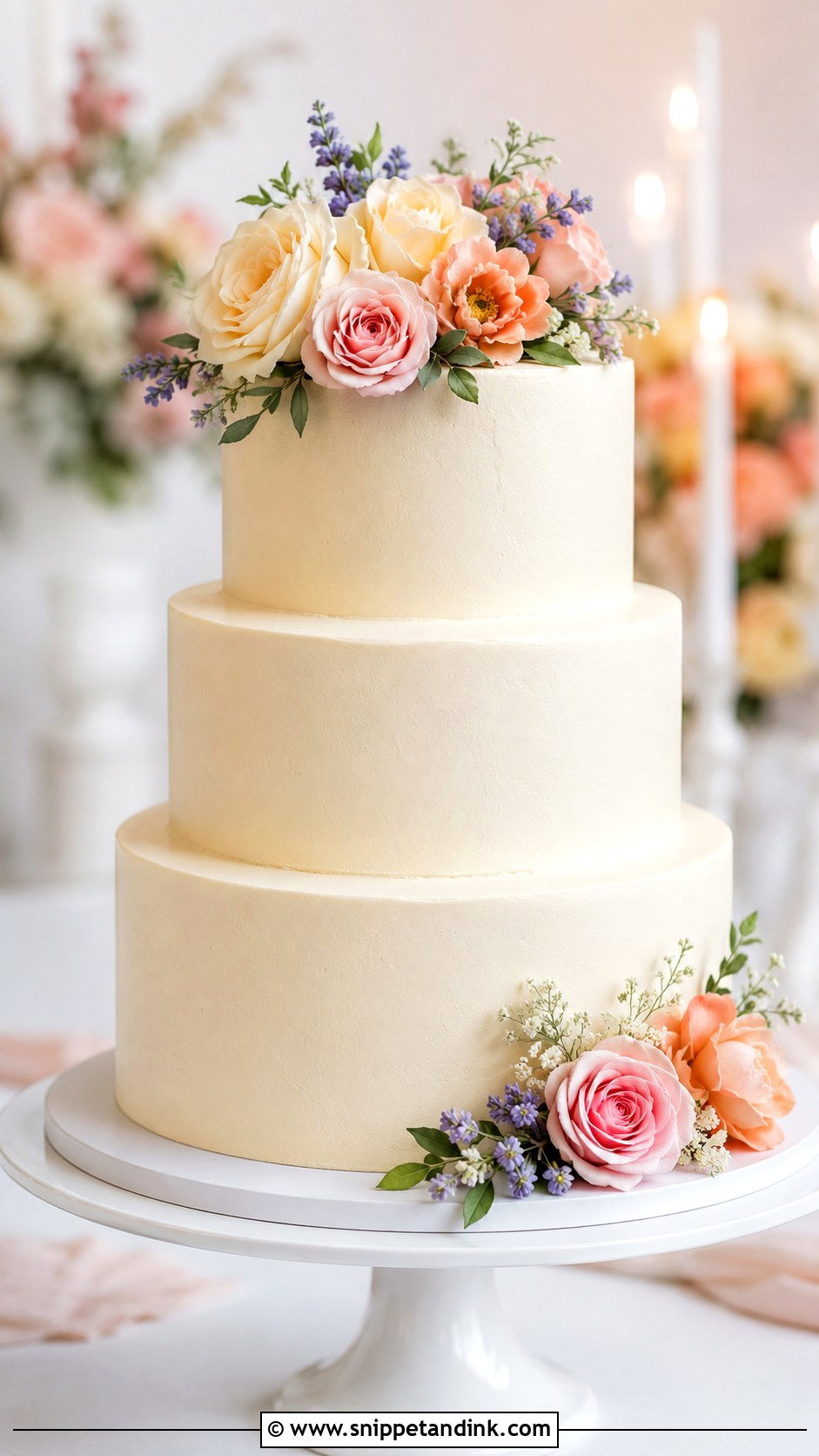
Two or three clean ivory tiers, one small cluster near the top and another near the base. That’s it. The clusters can echo the bouquet in softer tones. What makes simple cakes work is the empty space between flowers, so I place both clusters on opposite diagonals rather than stacking them in one line. Vanilla bean and lemon raspberry suit most guests.
11. Three Tier Wedding Cake With Pastel Flowers
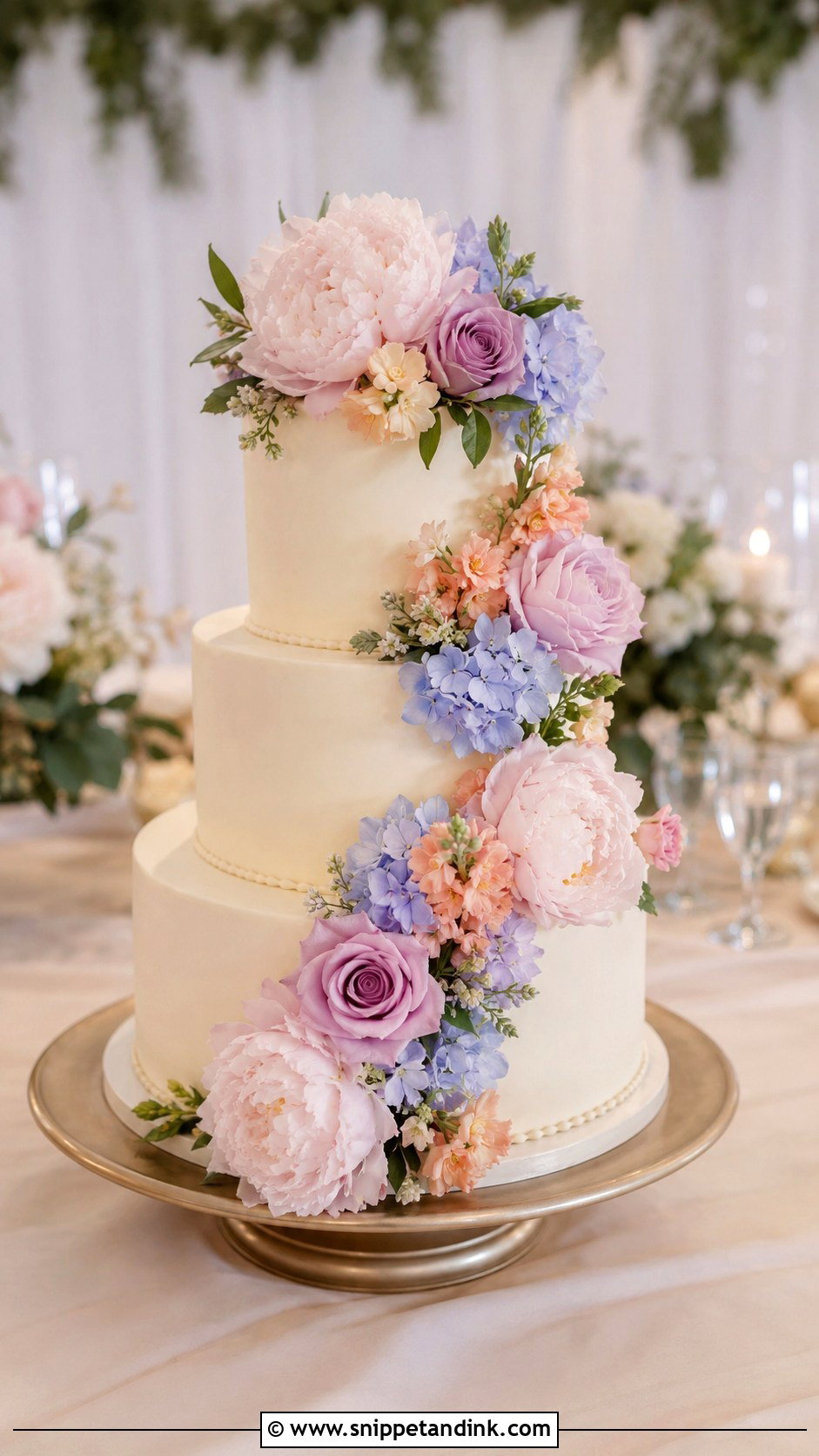
A three tier wedding cake usually covers a medium-sized wedding, especially with a kitchen cake or dessert table backing it up. Height lets flowers climb from bottom to top on a diagonal. I place the largest bloom low and on the side facing the room, because that’s where guests and cameras land first. A few bigger sugar flowers give focus among the softer fillers.
12. Two Tier Wedding Cake With Pastel Flowers
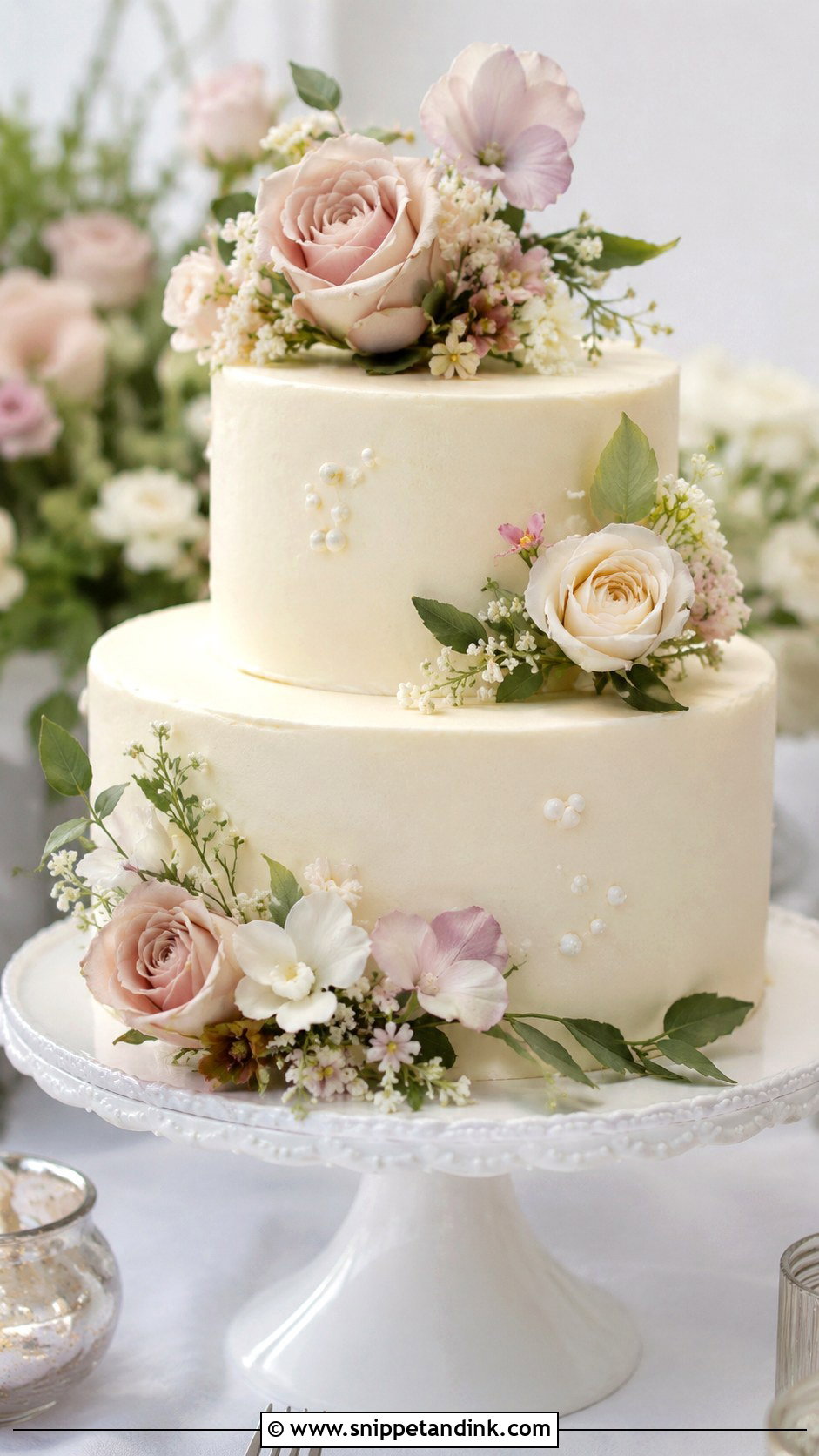
Small cakes punish oversized flowers. On two tiers, tiny roses, sweet peas and small blossoms keep the scale right; a full-blown peony can cover half the top tier. Pastel flowers at the top and on one side of the lower tier balance each other. A small ruffle or pearl piping adds interest. This size suits elopements and brunch receptions.
13. Vintage Wedding Cake With Pastel Flowers
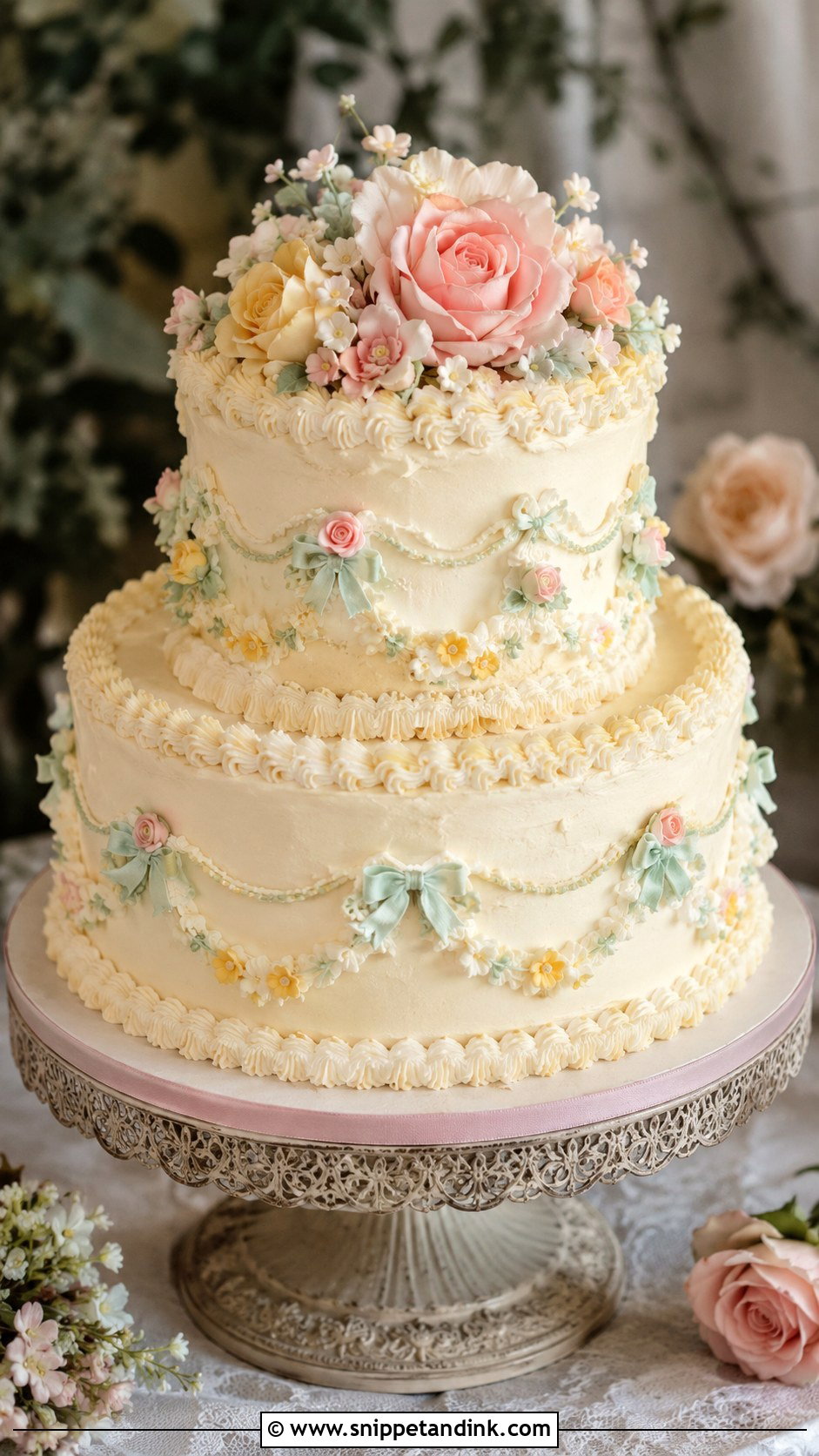
Lambeth-style piping, shell borders, bows and ruffles go back to an older tradition of decorating with the piping bag. Pastel sugar flowers sit within that piping, not over it. Round or heart-shaped tiers both work. I limit the palette to two pastels plus ivory, because detailed piping already gives the eye plenty to follow. vanilla, almond, raspberry, or champagne flavors fit the classic feeling.
14. Modern Wedding Cake With Pastel Flowers
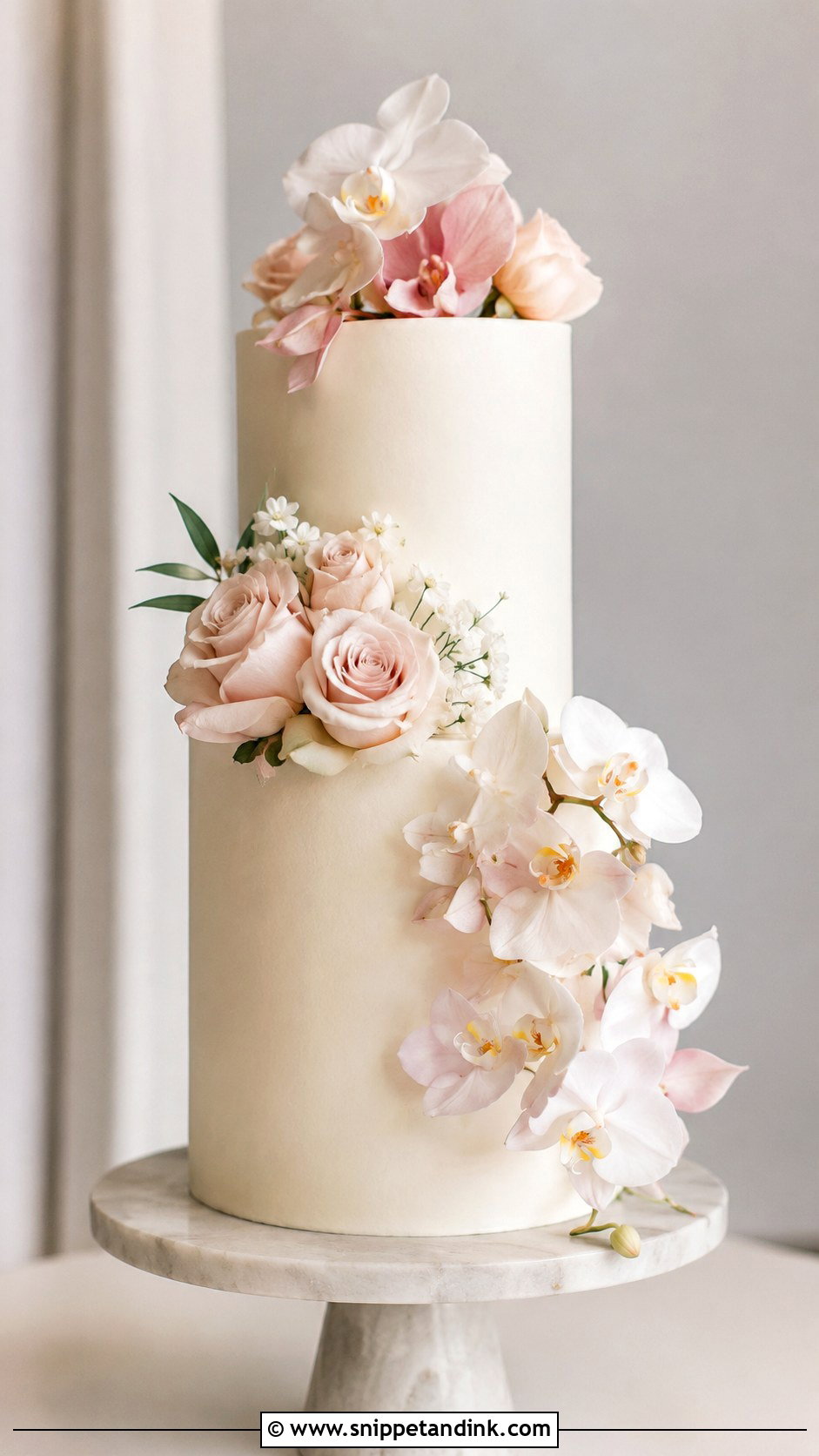
Negative space and one asymmetric flower placement are what make it modern. A tall two- or three-tier cake in smooth buttercream, with pastel orchids or sculpted sugar flowers in a single cluster. A colour-blocked tier in lavender or peach is a nice twist, but blocking needs a perfectly sharp line between colours, which is easier in fondant than in buttercream. Leave the rest bare.

15. Rustic Wedding Cake With Pastel Flowers
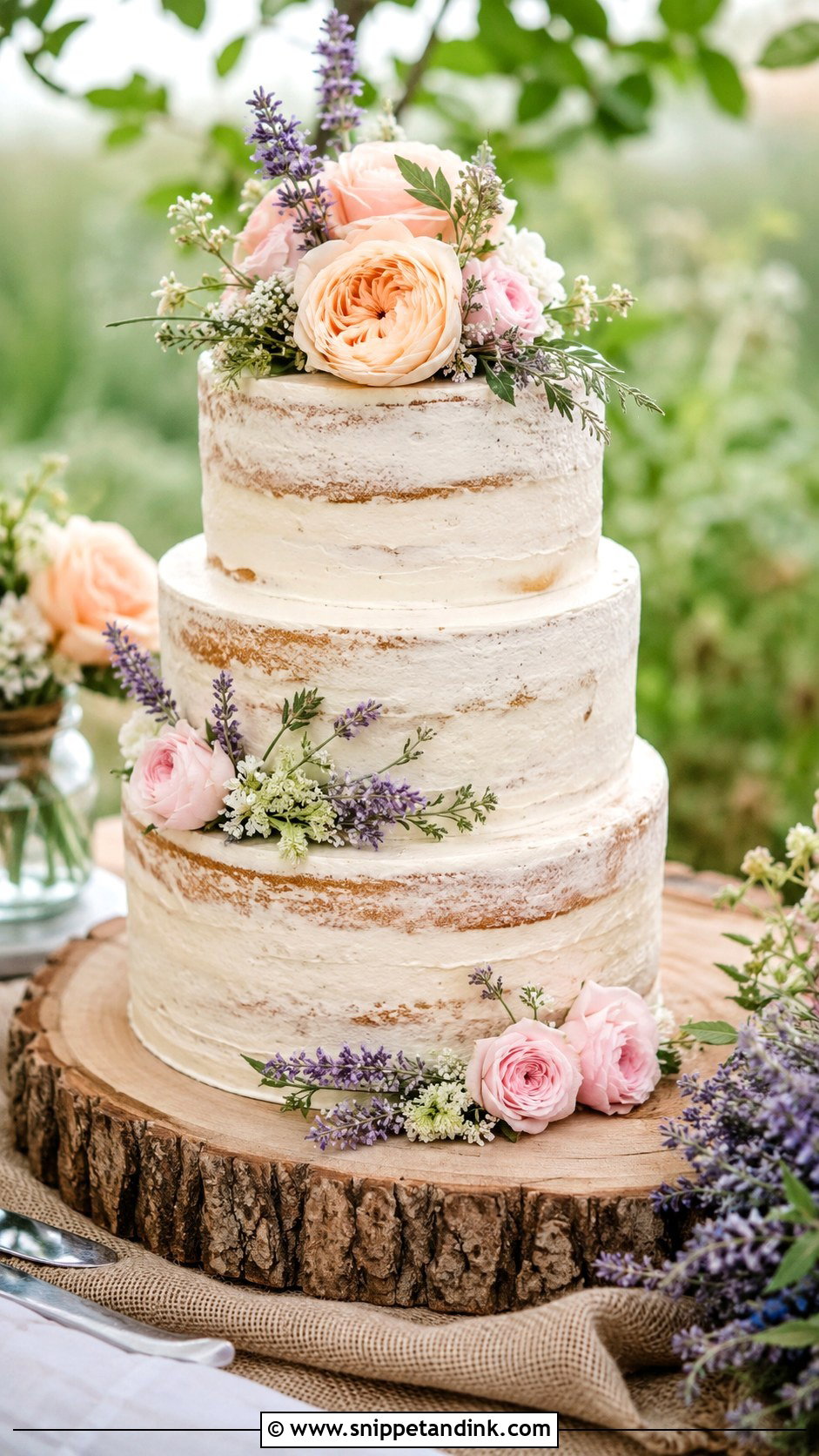
Semi-naked buttercream lets the sponge show, and pastel garden roses, lavender sprigs and greenery soften the edges. Fresh lavender sprigs are culinary-safe, but I still wrap the stem ends. Exposed sponge dries out quickly, so this cake stays covered until close to display. Carrot or honey cakes suit the mood. A wood slab or linen-covered table finishes it.
16. White Wedding Cake With Pastel Flowers
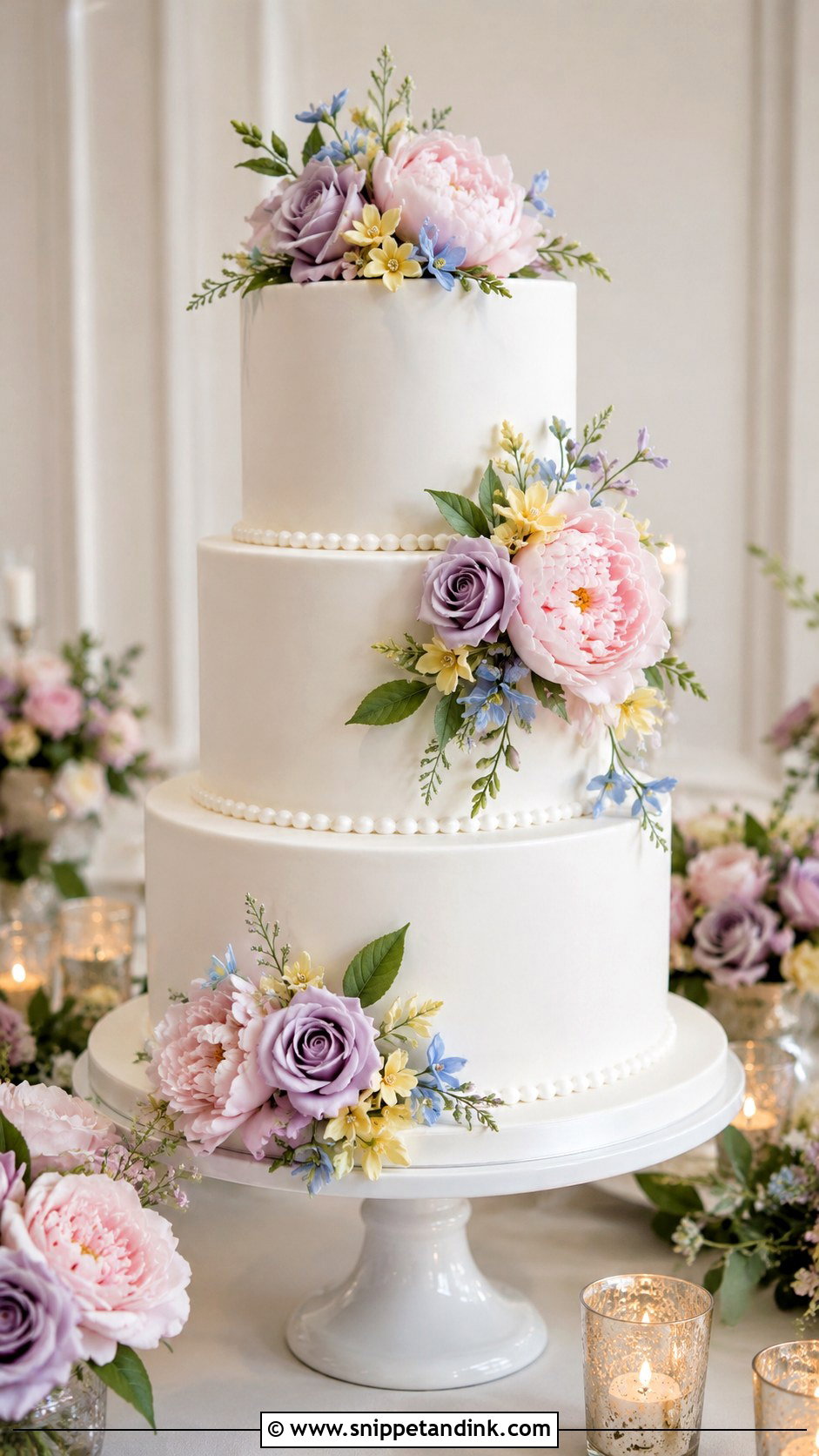
White icing gives the brightest background for pastels, which is helpful, because soft colours wash out against ivory in photos. Pink peonies, lavender roses and pale yellow blossoms with a touch of blue. Fondant looks formal; buttercream feels softer. True white buttercream needs a little whitening or a meringue-based recipe, since butter alone gives cream, so ask your baker which white you’ll get.
17. Floral Cascade Wedding Cake
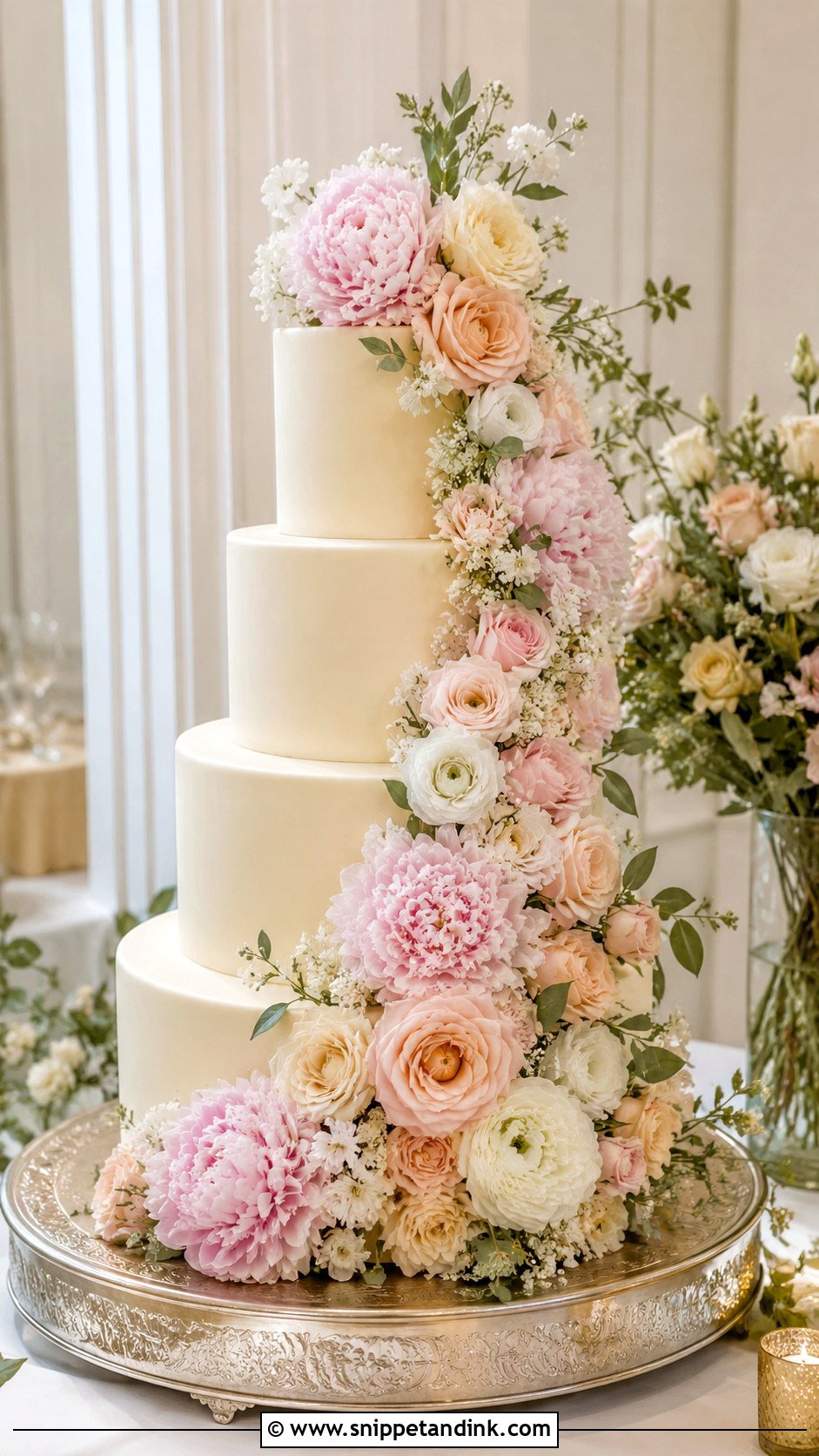
A cascade starts near the top tier and falls down one side. Peonies or roses anchor it, smaller blossoms fill. The cascade can be fresh, sugar or piped, and the choice affects budget and timing: sugar costs more in hours, fresh needs a florist and food-safe barriers, piped is edible but softer in heat. Keep the cake underneath plain.
18. Pastel Floral Mini Wedding Cake
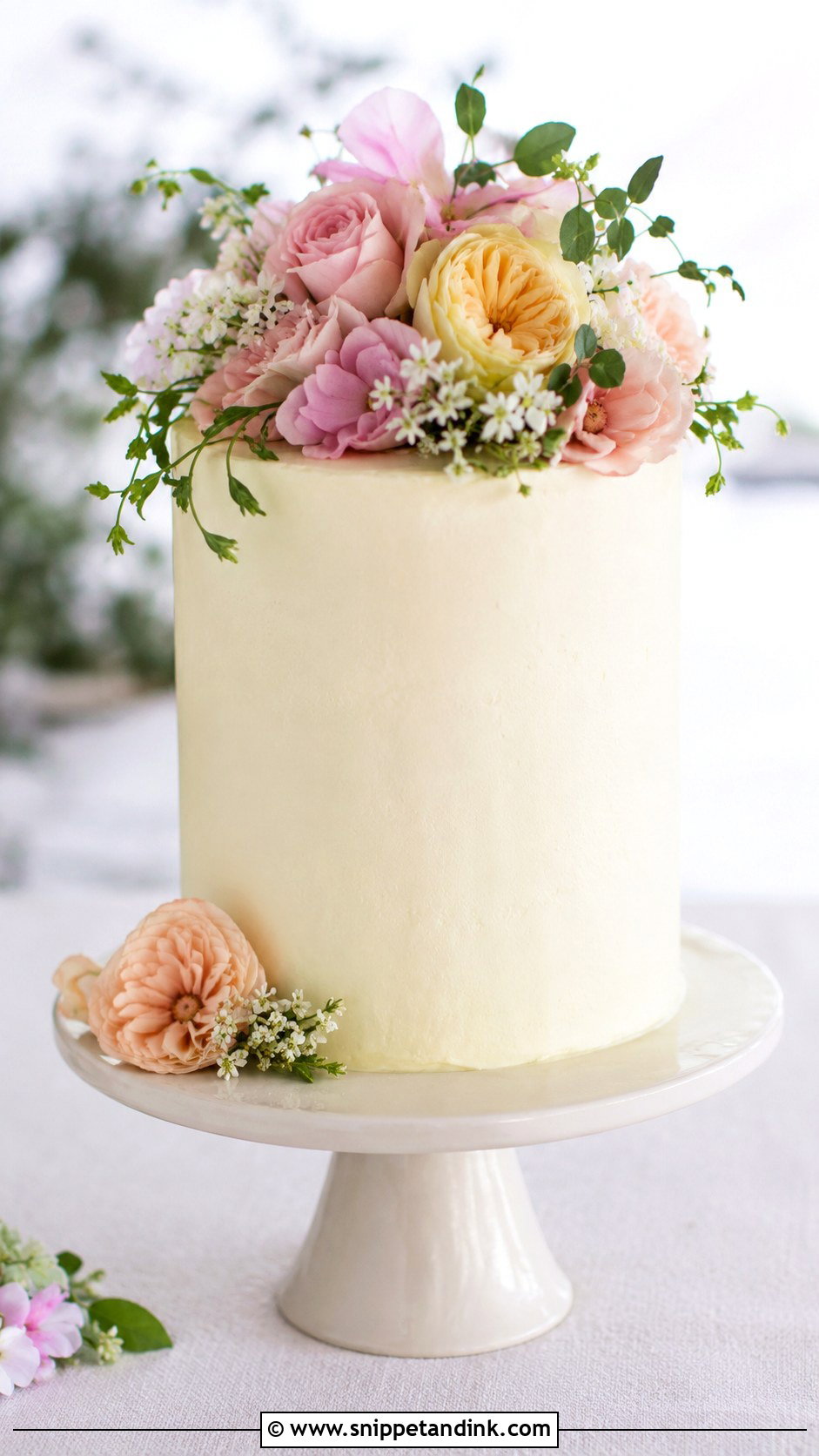
A single tall tier on a sweetheart table, with kitchen cake doing the feeding. Scaled-down flowers matter here: mini roses, sweet peas or a small floral crown at the top edge. Mini cakes are where I encourage playful flavours, lemon elderflower or pistachio, since the guest count isn’t riding on them. Set a few matching blooms on the table beside the stand.
19. Square Wedding Cake With Pastel Flowers
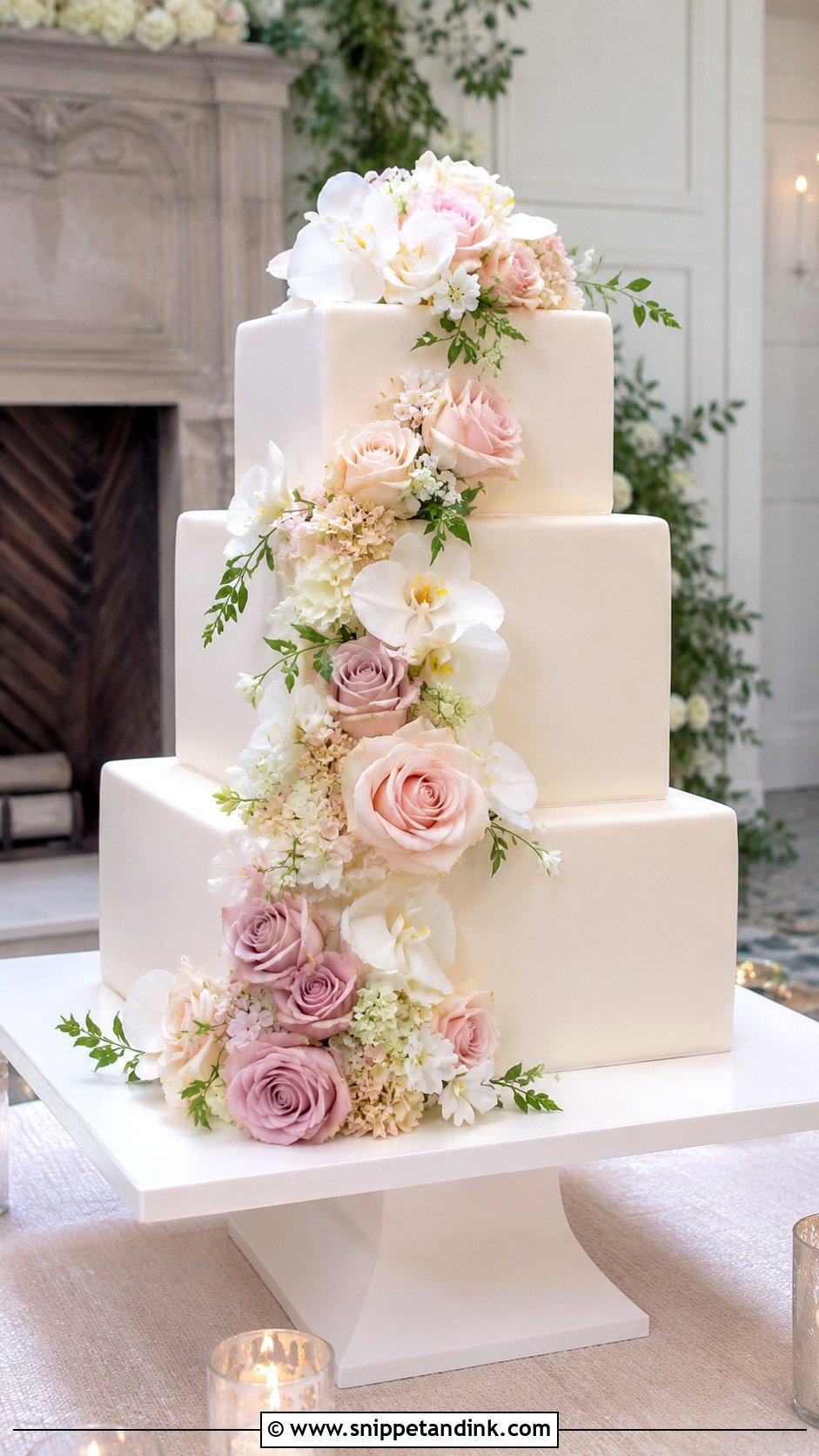
Square tiers need sharp edges, in fondant or very carefully finished buttercream, and pastel flowers soften the geometry. Corners are the natural spots for clusters, or a diagonal line across two faces. Square tiers also give more portions than round ones of the same width, which helps a growing guest list. Small hydrangea florets and sweet peas suit the clean lines.



20. Watercolor Wedding Cake With Pastel Flowers
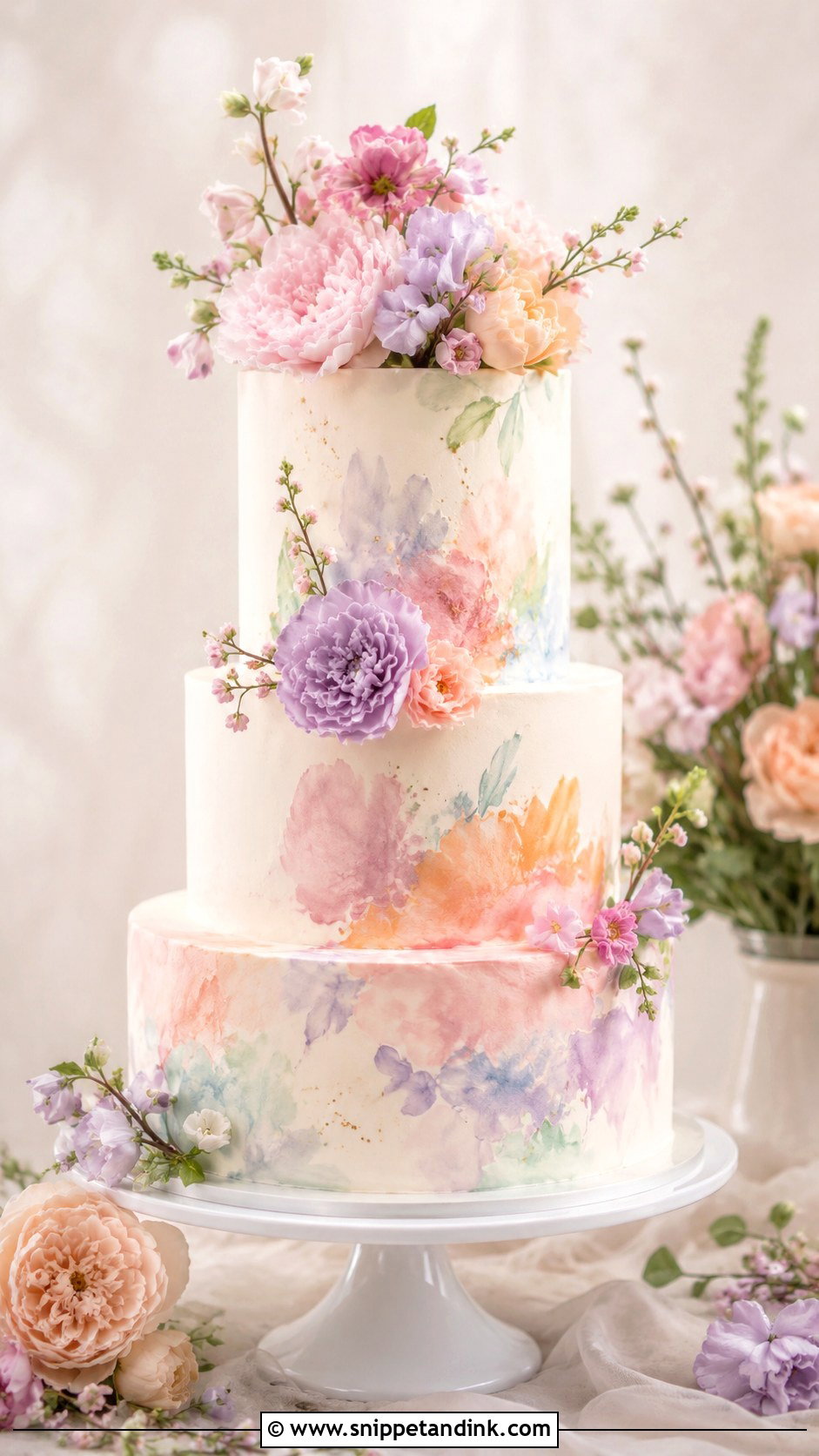
A watercolor wedding cake carries the pastel into the icing itself, with blush, lavender, peach or mint washes fading into one another. On buttercream I blend the colours with a palette knife while the icing is soft; on fondant I paint with diluted colour. Heavy strokes look muddy, so I build the wash in thin layers. Matching sugar or fresh flowers tie it together.
Fresh, Sugar or Piped: How Each Pastel Bloom Behaves on the Day
The three kinds of flower in this list look similar in photos and behave very differently in a warm room.
Fresh flowers
Several pastel favourites, including sweet peas, hydrangeas and lily of the valley, are toxic and should never be pushed straight into a cake. They can still be used, but only with wrapped stems inside food-safe picks, and they come off before cutting. Ask for blooms grown without pesticides if any petal will rest on icing.
Sugar flowers
They’re made weeks in advance, so they need booking early, and a cake designer will usually want your final colours well before the wedding. They hold their shape through heat better than fresh blooms but soften in high humidity. Most contain wire and florist tape, so they’re kept as a souvenir rather than eaten.
Piped buttercream flowers
Fully edible and usually the most affordable, since they’re piped onto the finished cake. They’re also the first to lose definition when a room warms up. For a summer afternoon outdoors I’d steer you towards sugar or fresh flowers on the outside and save the piped blooms for a cool indoor reception.
Soft Colour Needs a Firm Plan
Pastel flowers adapt to almost any cake style, whether that’s polished sugar flowers, piped blooms that taste as good as they look, pressed petals or a full cascade. The colour is the delicate part. Bring your baker a fabric swatch or a petal, ask how they’ll keep pale tints from fading or shifting, and talk through how long the cake will sit out and how warm the room will be. Those answers decide which of these twenty will look the same at the cutting as it did at delivery.
You'll Like These Ideas:








Leave a Reply