
Roses are the flower I put on cakes more than any other, and two tiers is a size where they really get to show. The roses themselves can be fresh, sugar, wafer paper, pressed, piped or painted, and each one changes how the cake looks, how far ahead it can be made and how it holds up through a reception. Below are twenty rose cakes I’d happily make, grouped loosely by color, finish and style, with what I’d tell you about each before you commit.
Fresh, Sugar or Piped? What Each Kind of Rose Asks of You
Before we talk color, I ask couples which kind of rose they’re picturing, because each one changes the order date, the budget and what happens on the day.
Fresh roses
They’re the least work for me and often the cheapest, but they depend on your florist, they wilt in heat, and they go on at the venue. Garden roses open quickly once out of water, so tighter standard roses or spray roses last longer on a cake.
Sugar roses
These take the longest and cost the most because each petal is cut, thinned, veined and dried. I’d confirm them at least a couple of months out. They don’t wilt, they match any shade, and you can keep them.
Piped and wafer paper roses
Piped buttercream roses are fully edible and softer looking but sensitive to warmth. Wafer paper roses are light and delicate, though they curl in humidity. Both sit somewhere between fresh and sugar on price.
1. White 2 Tier Wedding Cake With Roses
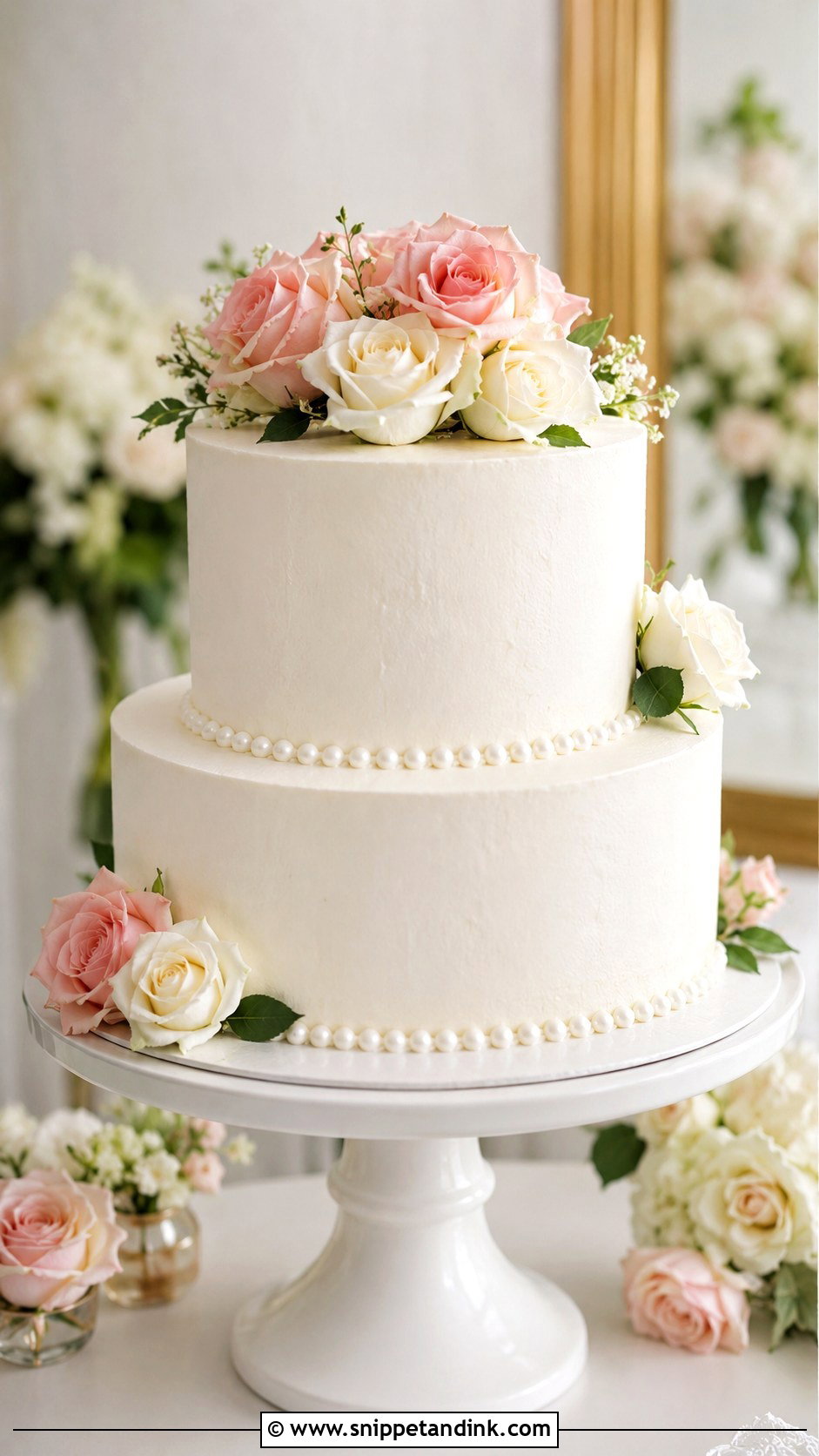
A plain white base is the most forgiving canvas for roses, because any bloom color reads clearly against it. Ivory, blush or cream roses look soft; deeper pinks give more contrast. I’d keep the flowers to one or two placements, between the tiers and a small cluster on top, rather than ringing every edge. Buttercream, fondant or a light texture all work, and a few pearl dots add detail if the cake looks too bare.
2. Blush 2 Tier Wedding Cake With Roses
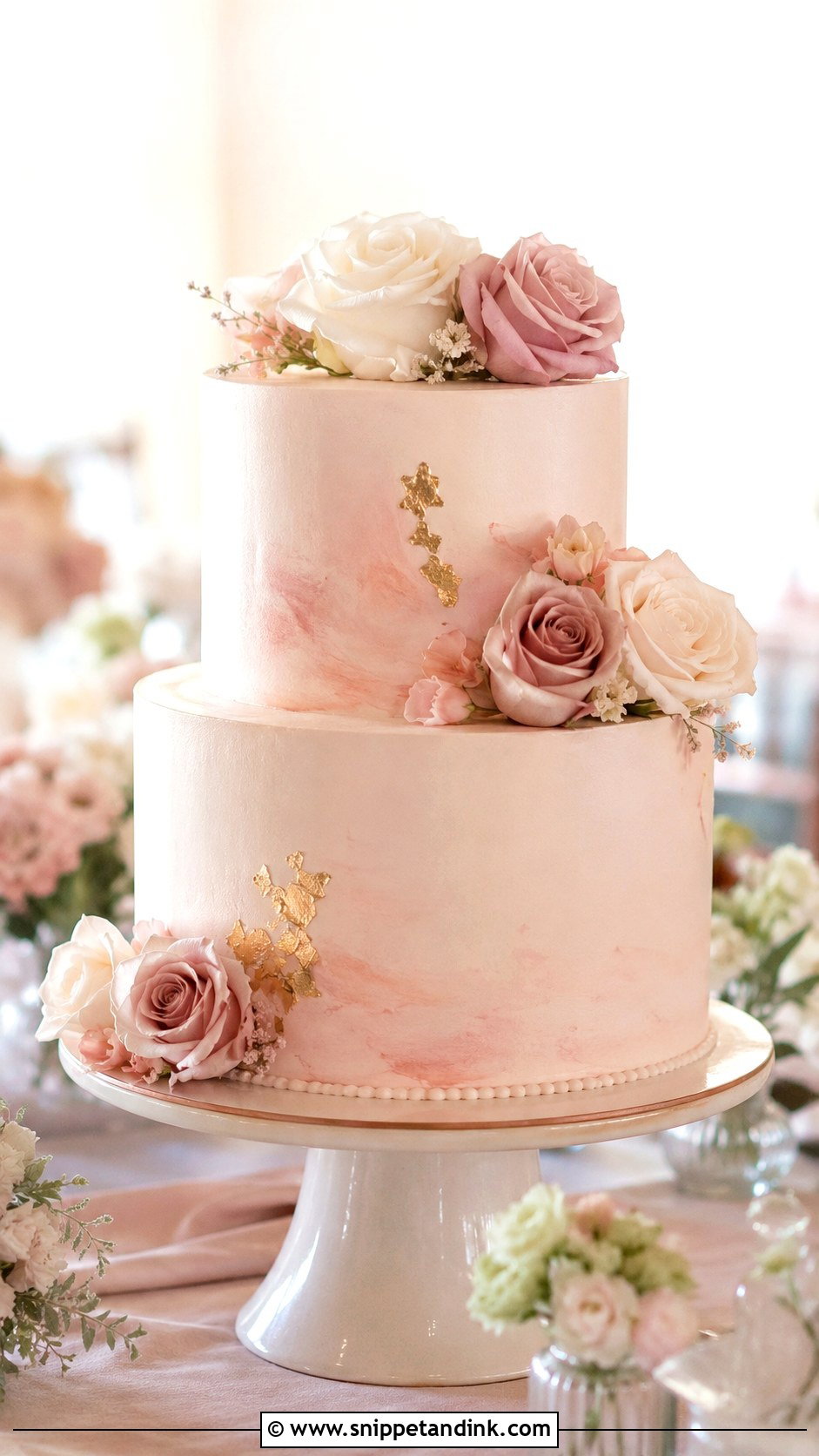
Blush buttercream is surprisingly hard to keep even, because the pale pink shows every streak from the scraper. I tint it a shade lighter than the swatch, since it darkens a little as it rests. Ivory, dusty pink or champagne roses all sit well on it. Gold leaf accents warm the pink. Smooth sides read modern, soft horizontal texture reads handmade. It’s a natural match for spring receptions with pastel table flowers.
3. 2 Tier Buttercream Wedding Cake With Roses
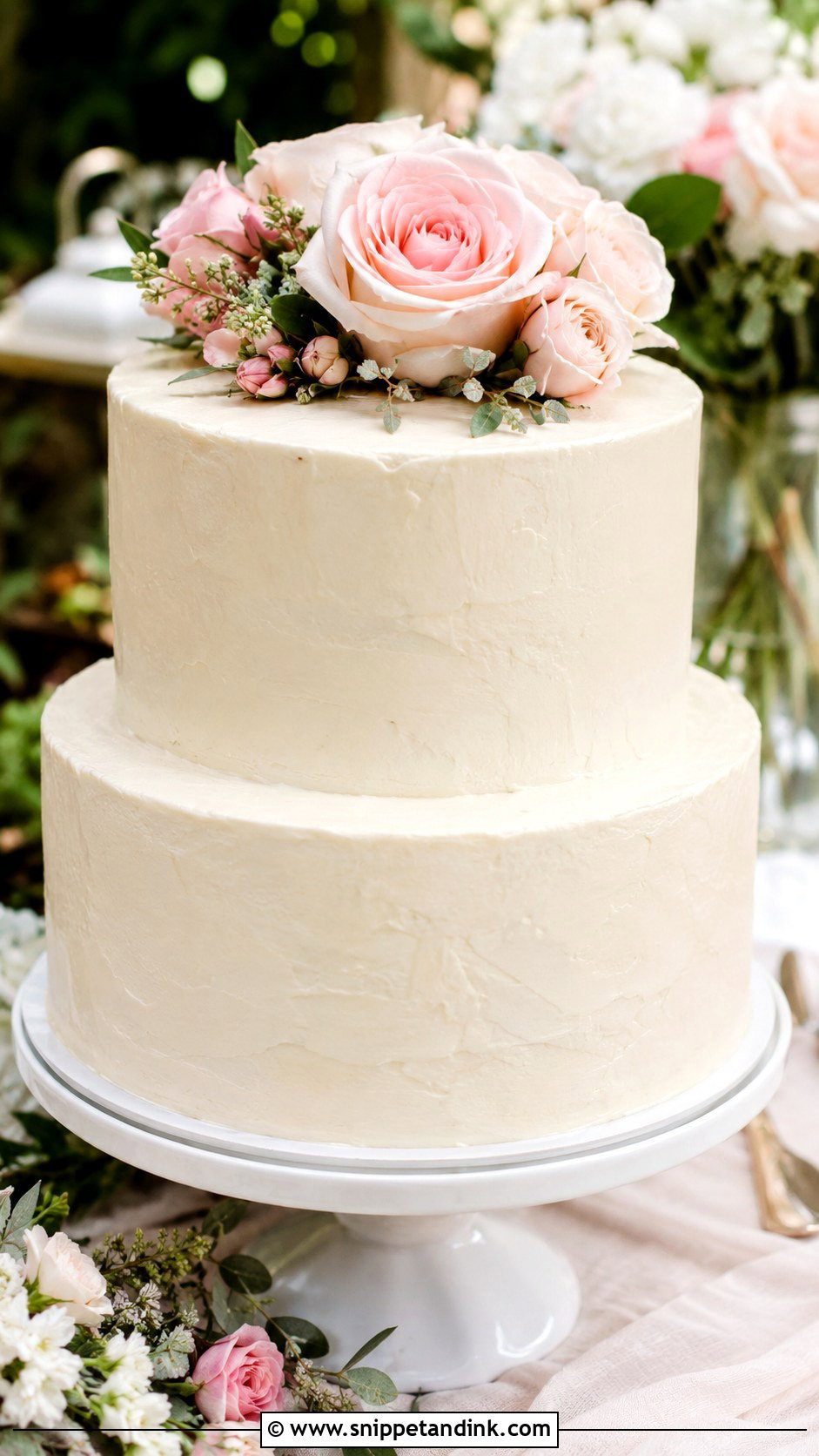
Buttercream and roses is the most requested combination I make, and the frosting is what guests remember tasting. It can be finished smooth, semi-smooth or with spatula marks. The catch is temperature: buttercream softens in a warm room and fresh roses add weight, so I chill the cake firm before flowers go on and ask for a cool spot at the venue. Vanilla, almond, lemon or strawberry cake inside keeps the flavor light. A crescent, a small cascade or a full crown of roses all suit it.
4. 2 Tier Fondant Wedding Cake With Roses
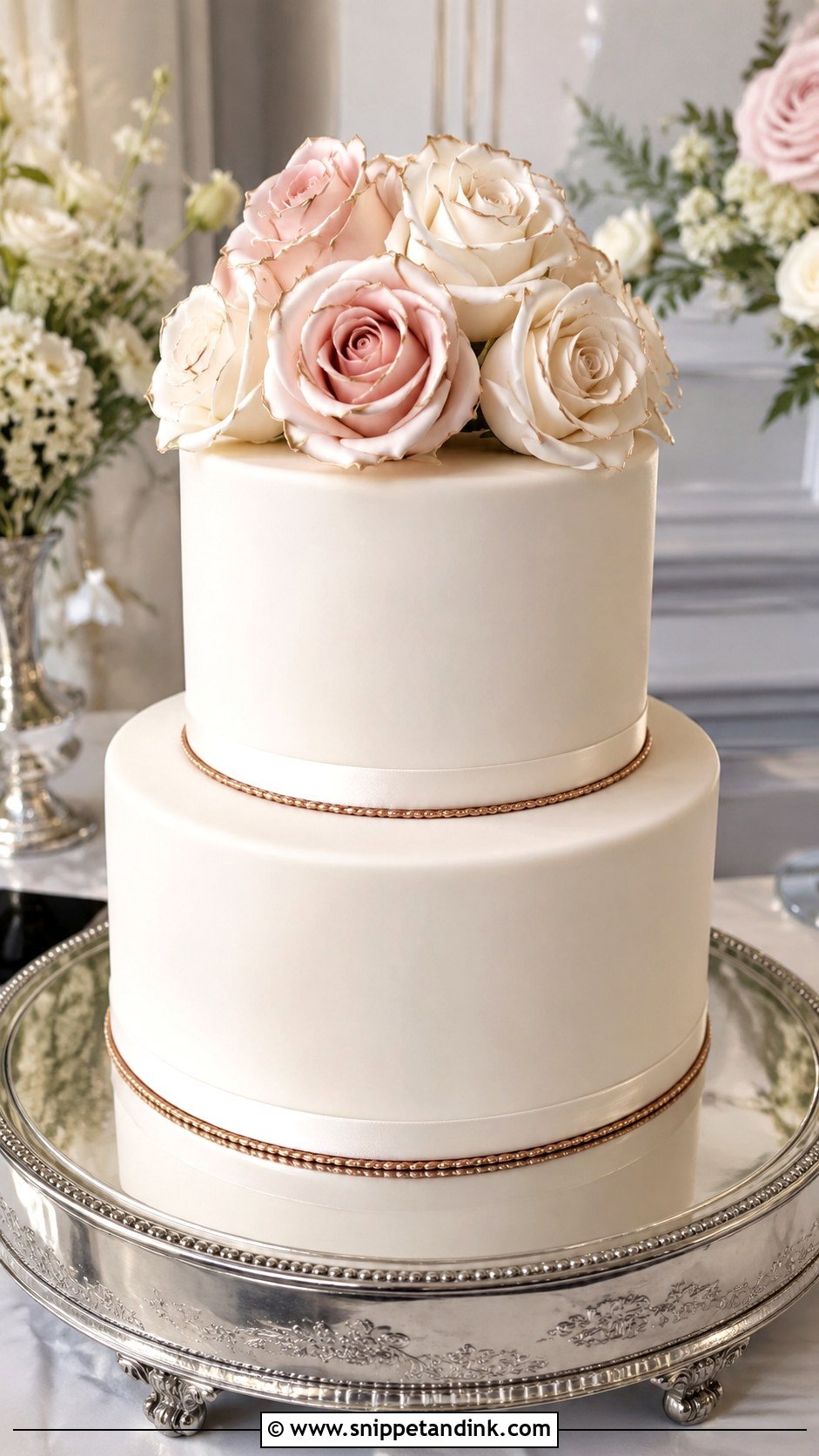
Fondant gives a smooth, formal surface where every rose stands out cleanly. Sugar roses are the natural match, since I can color them to an exact shade and wire them into precise placements. Keep the cake all white, add blush roses, or run a thin metallic trim around each tier for a hotel or black-tie room. Fondant also seals the cake from the air and stands up to warmth better than most soft frostings, which is why I often suggest it for summer.
5. 2 Tier Wedding Cake With Cascading Roses
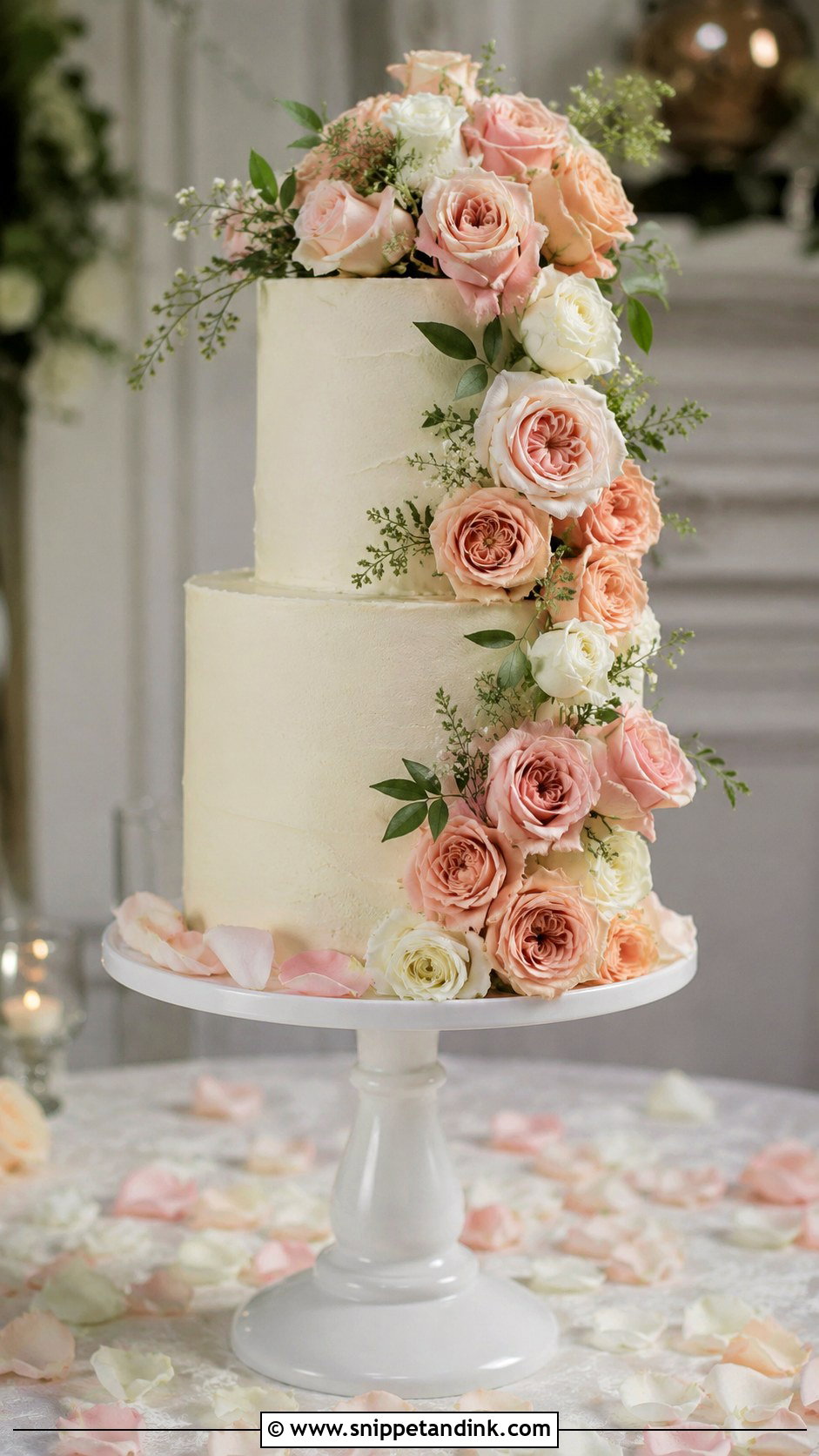
A cascade starts on the top tier, runs down one side and finishes near the base, and it makes a two-tier cake look taller than it is. The common mistake is spacing it too evenly; I build it from a few large blooms with smaller roses and buds filling the gaps, so it looks like it’s tumbling rather than lined up. Fresh roses feel lush, sugar roses look sculpted. A tall stand and a few loose petals at the base finish it.
6. 2 Tier Wedding Cake With Red Roses
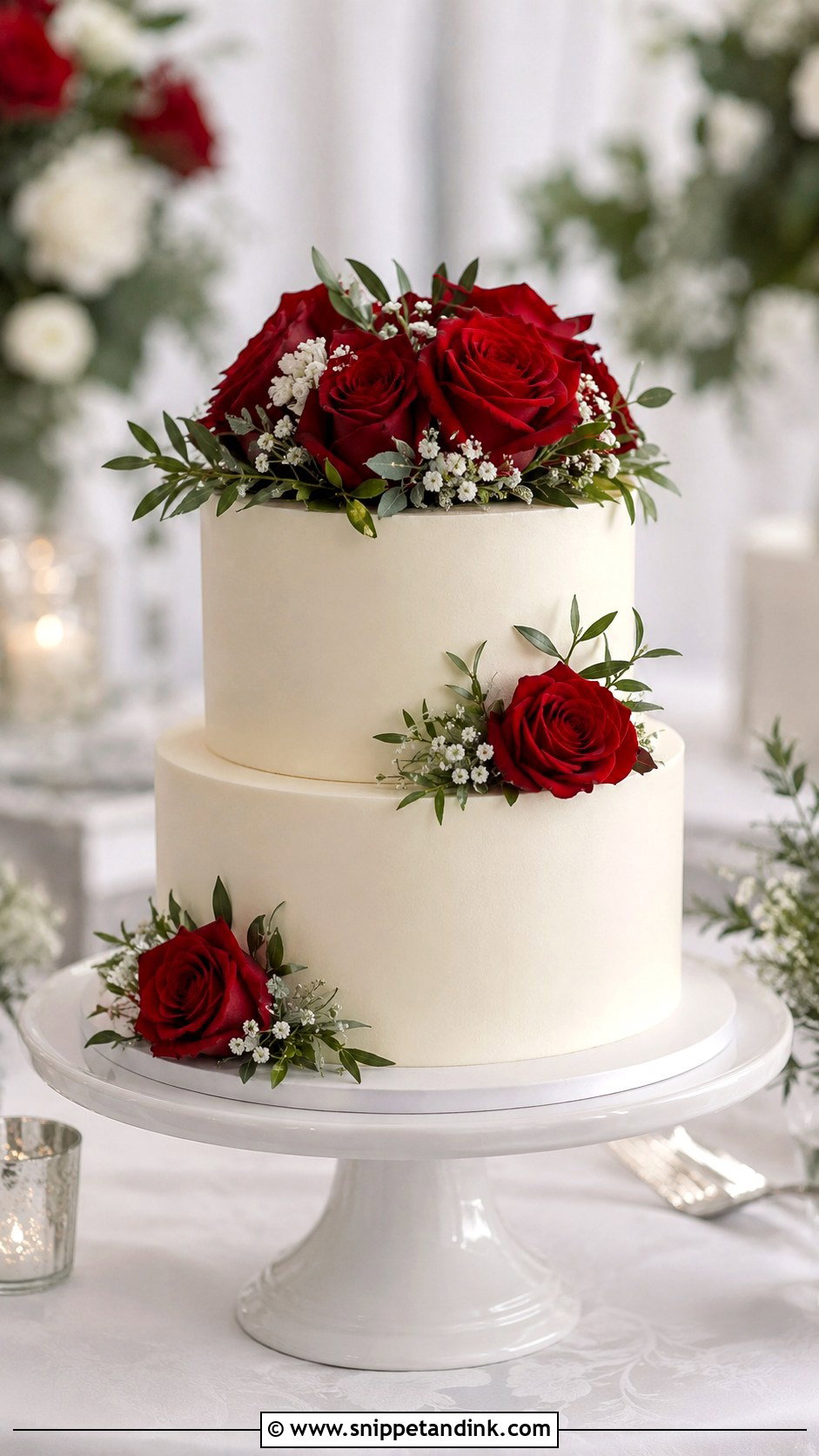
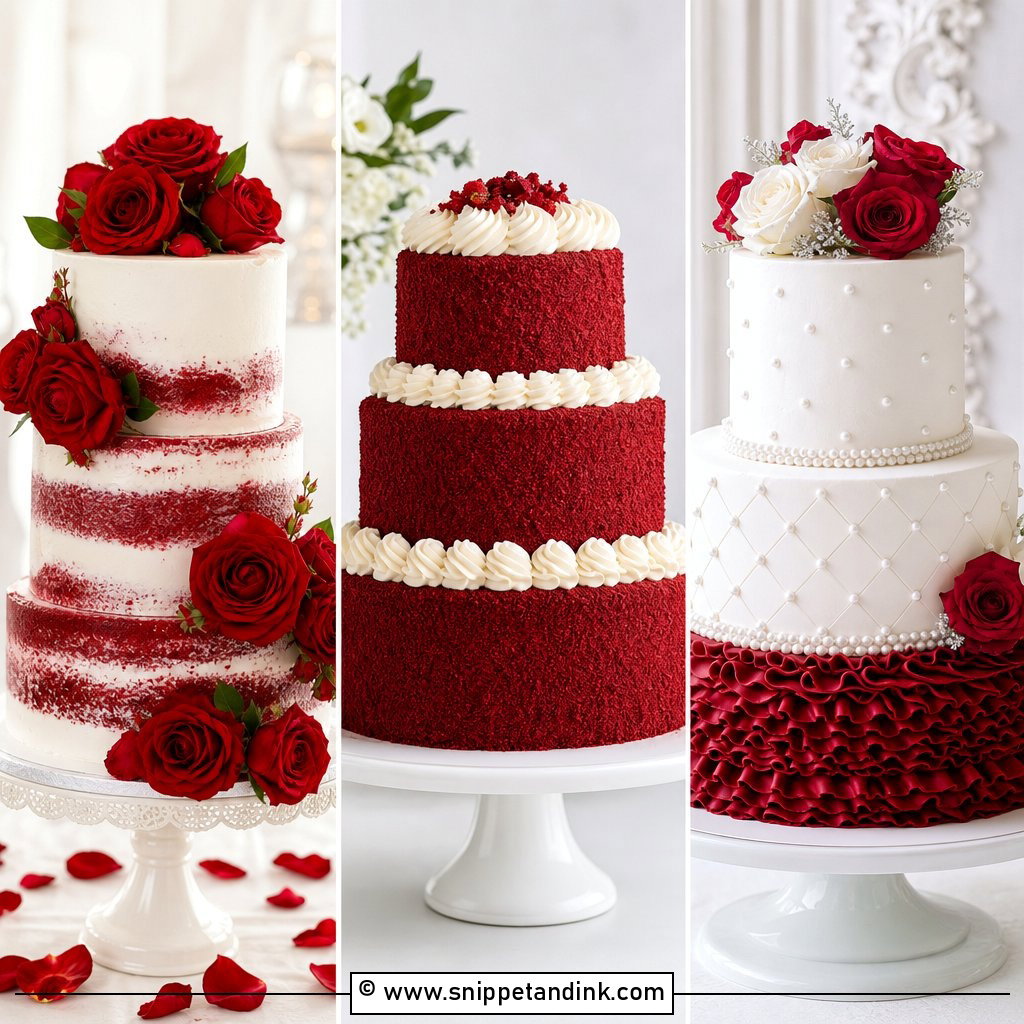
Red roses are bold, and on a cake a few go a long way. I’d set three to five in a diagonal cluster on an ivory or white base, then add white filler or greenery so the red doesn’t look heavy. Dark red petals bruise and show it quickly, so if they’re fresh I place them as late as possible. For an evening reception with rich table flowers, it’s a confident choice.
7. 2 Tier Wedding Cake With Pink Roses
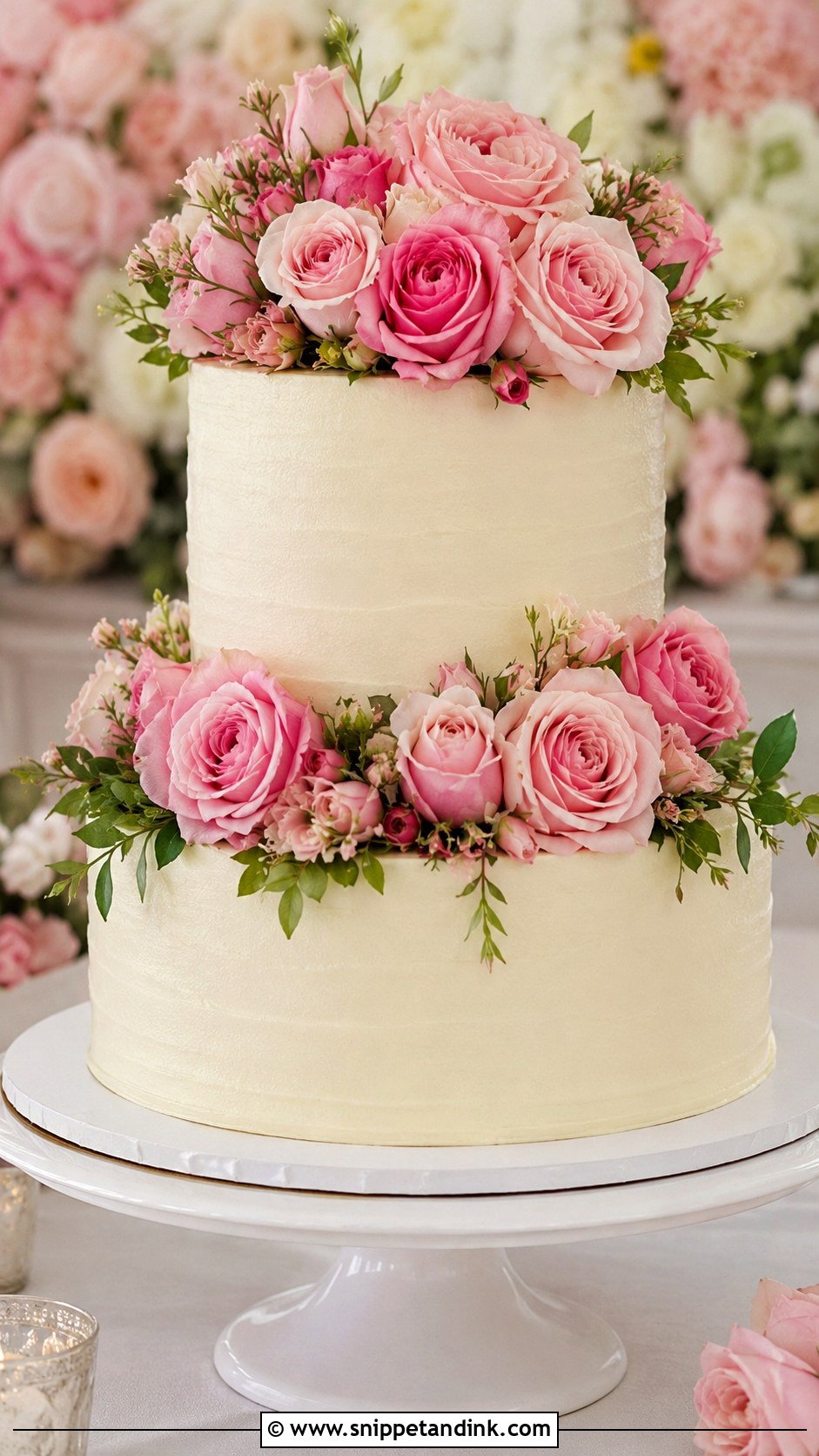
Pink roses suit every season, and they’re the easiest to tie into bridesmaid dresses and table flowers. Light pink feels classic, brighter pink feels like a summer garden. I’ll pair them with vanilla buttercream, ivory fondant or a barely tinted pink base. Tiny buds and a little greenery between the open roses soften the edges of the arrangement so it doesn’t look like a solid block of pink.
8. 2 Tier Wedding Cake With White Roses
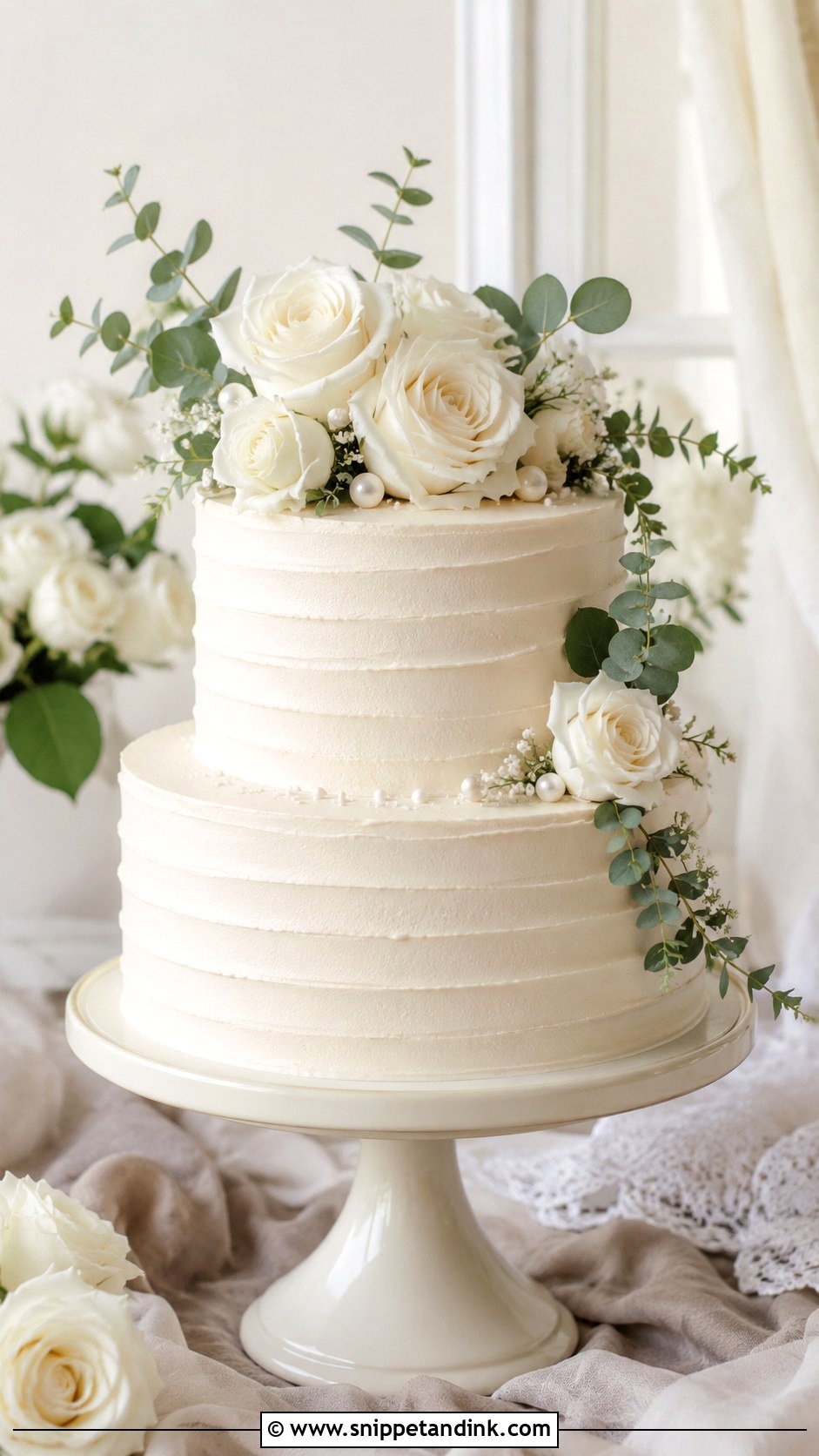
White roses on a white cake need texture, otherwise the flowers disappear into the frosting. I’d add delicate piping, fondant pleats or a light stucco finish so the roses have something to sit against. An ivory cake with pure white roses gives a gentle tonal difference that shows up well in photos. Eucalyptus, baby’s breath or a few pearls suit a church wedding or a quiet, minimal reception.
9. 2 Tier Wedding Cake With Sugar Roses
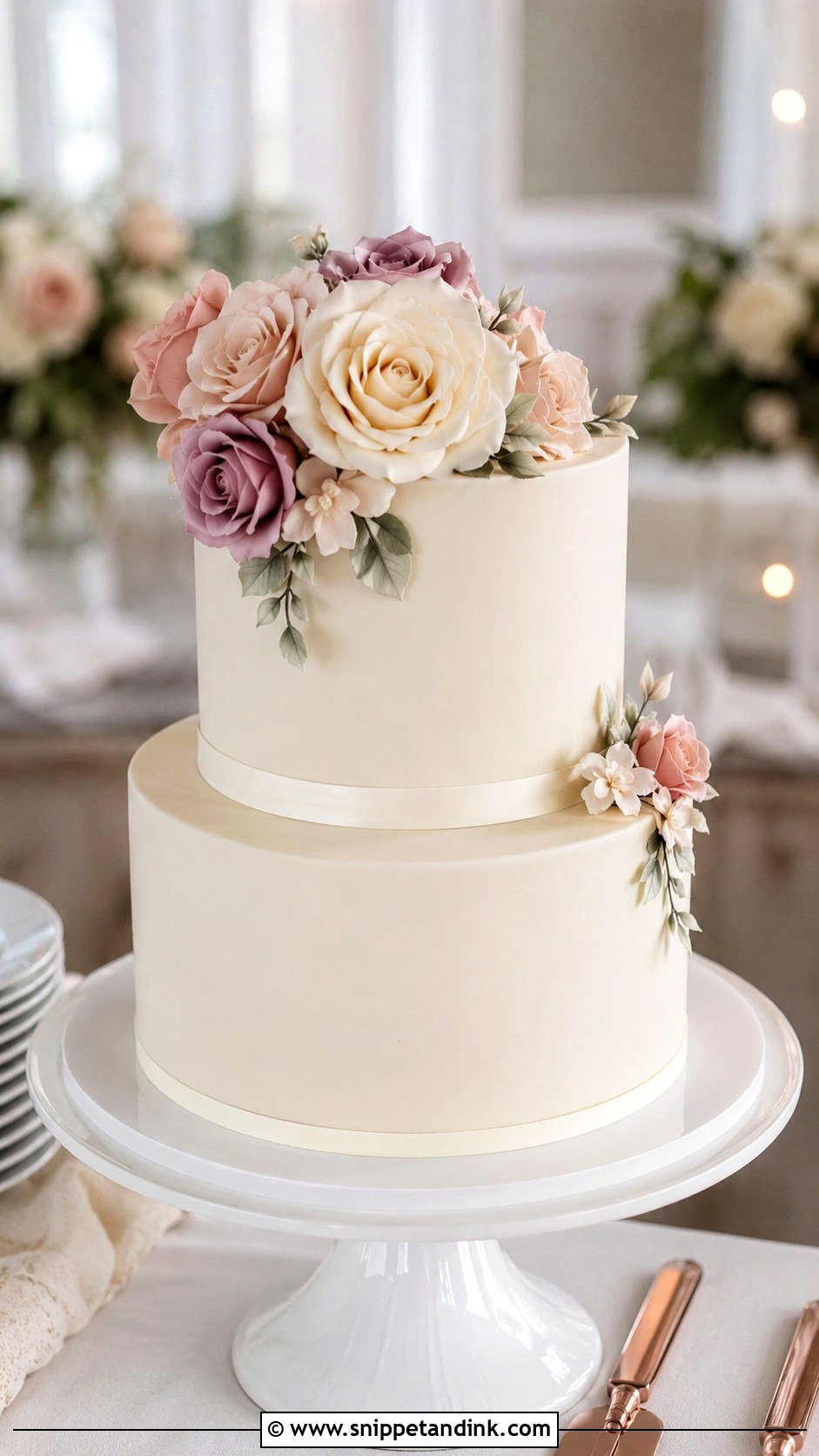
Sugar roses are made petal by petal from gum paste, dried and wired, and a large garden rose can take hours of work, so they need ordering well ahead. In return they stay perfect all day and can be kept afterward. They’re also the answer when the roses you want aren’t in season or haven’t been grown for food use. A clean base of fondant or very smooth buttercream shows them best. One statement rose, a small cluster or a soft cascade all work, in shades from ivory to dusty blue.
10. 2 Tier Wedding Cake With Fresh Roses
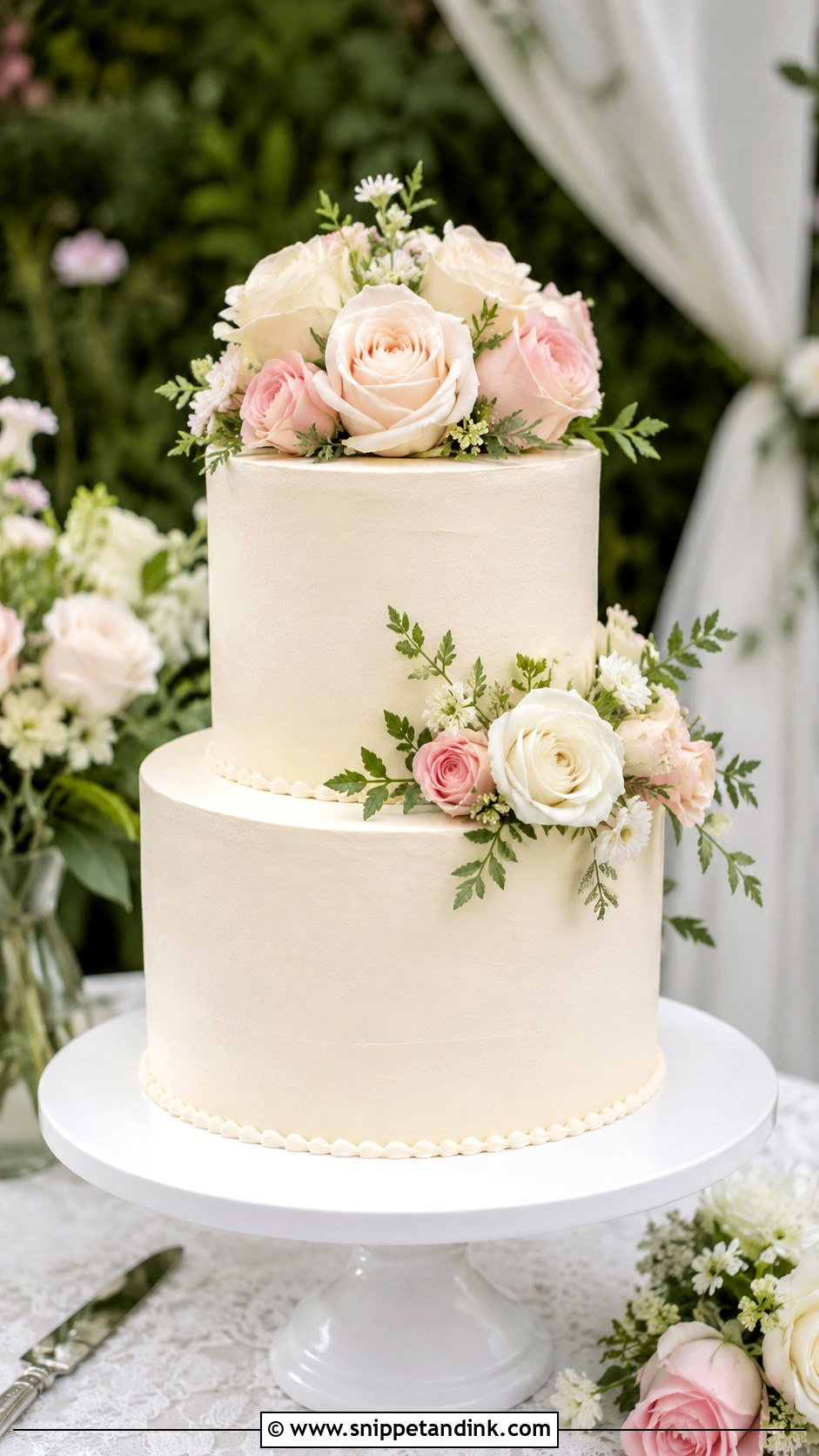
Fresh roses tie the cake to the bouquet and centerpieces, and they bring scent to the table. I keep the base simple so the blooms look like they belong. The preparation matters more than the arrangement: roses should come unsprayed, or from a grower who knows they’re going near food, with stems wrapped in floral tape and pushed into flower picks so nothing raw touches the cake. They look best in a top cluster, at the tier seam or in a soft side spray, and they’re the natural choice for a garden or outdoor reception.
11. Rustic 2 Tier Wedding Cake With Roses
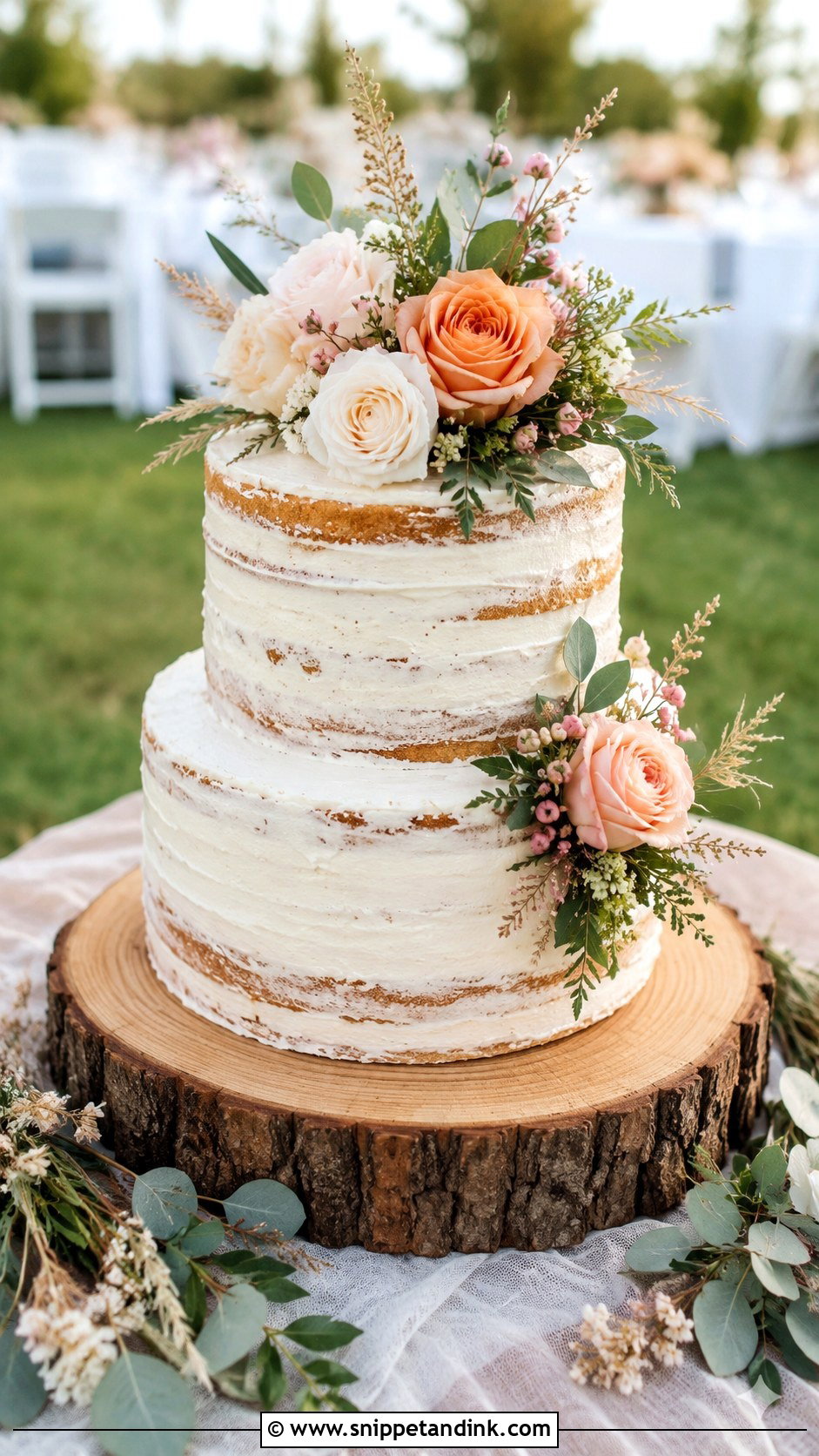
Rustic cakes use semi-naked frosting, palette-knife texture or soft uneven edges rather than a polished finish. Ivory, blush, peach or dusty pink roses with greenery tucked between them suit the style. Exposed sponge dries out faster, so I soak each layer and assemble close to the day. A wood slice or ceramic stand, a few berries or dried grasses, and it’s ready for a barn, backyard or vineyard-style venue.
12. Modern 2 Tier Wedding Cake With Roses
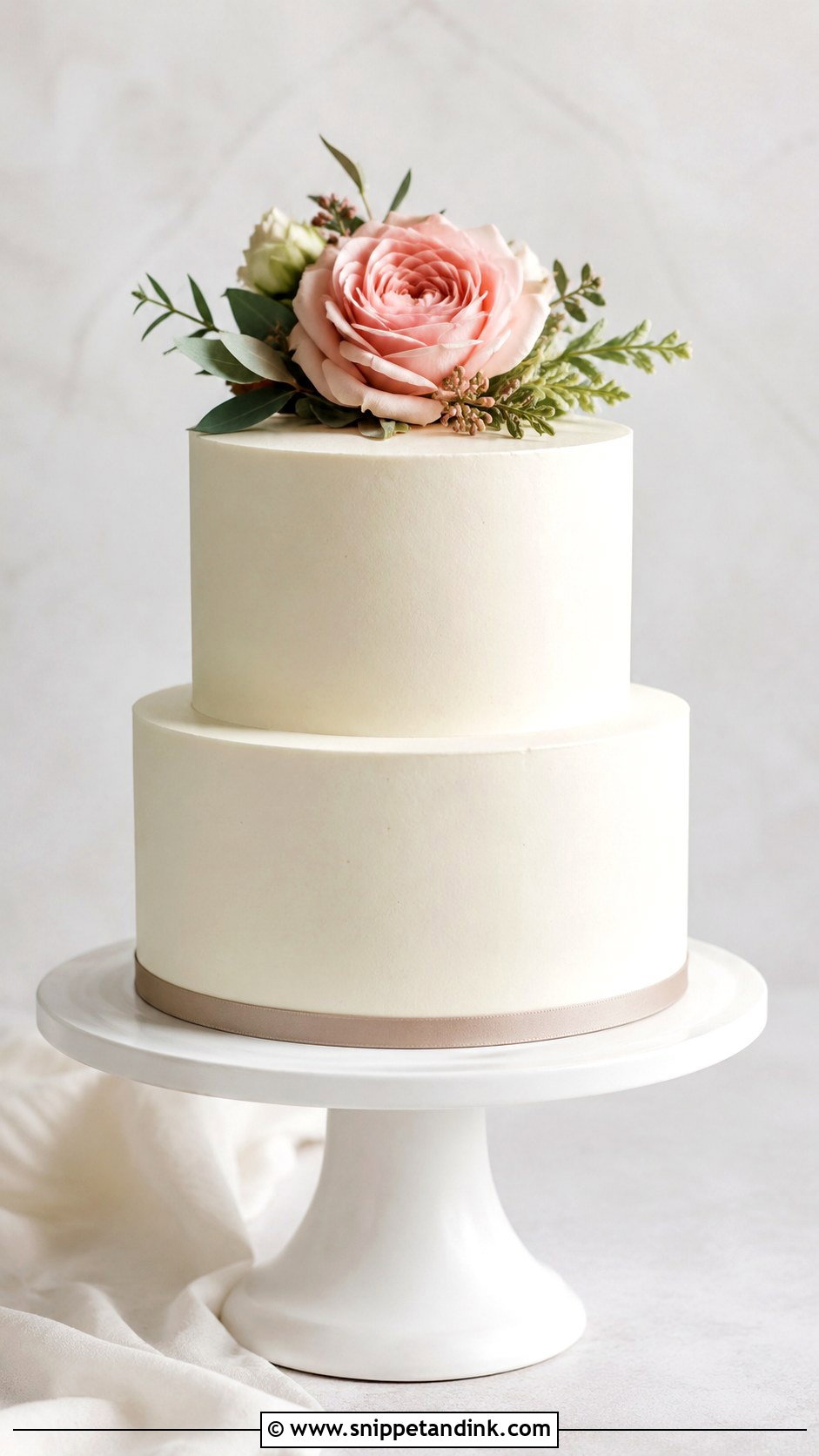
Modern rose cakes are mostly negative space. I’d place one sculptural cluster, often off-center, on a sharp-edged white buttercream or square fondant cake, and leave the rest bare. Black ribbon, taupe, muted pink or brushed gold can stand in for extra flowers. The hardest part is restraint; adding a second cluster usually undoes the look. It fits a rooftop or gallery reception well.
13. Vintage 2 Tier Wedding Cake With Roses
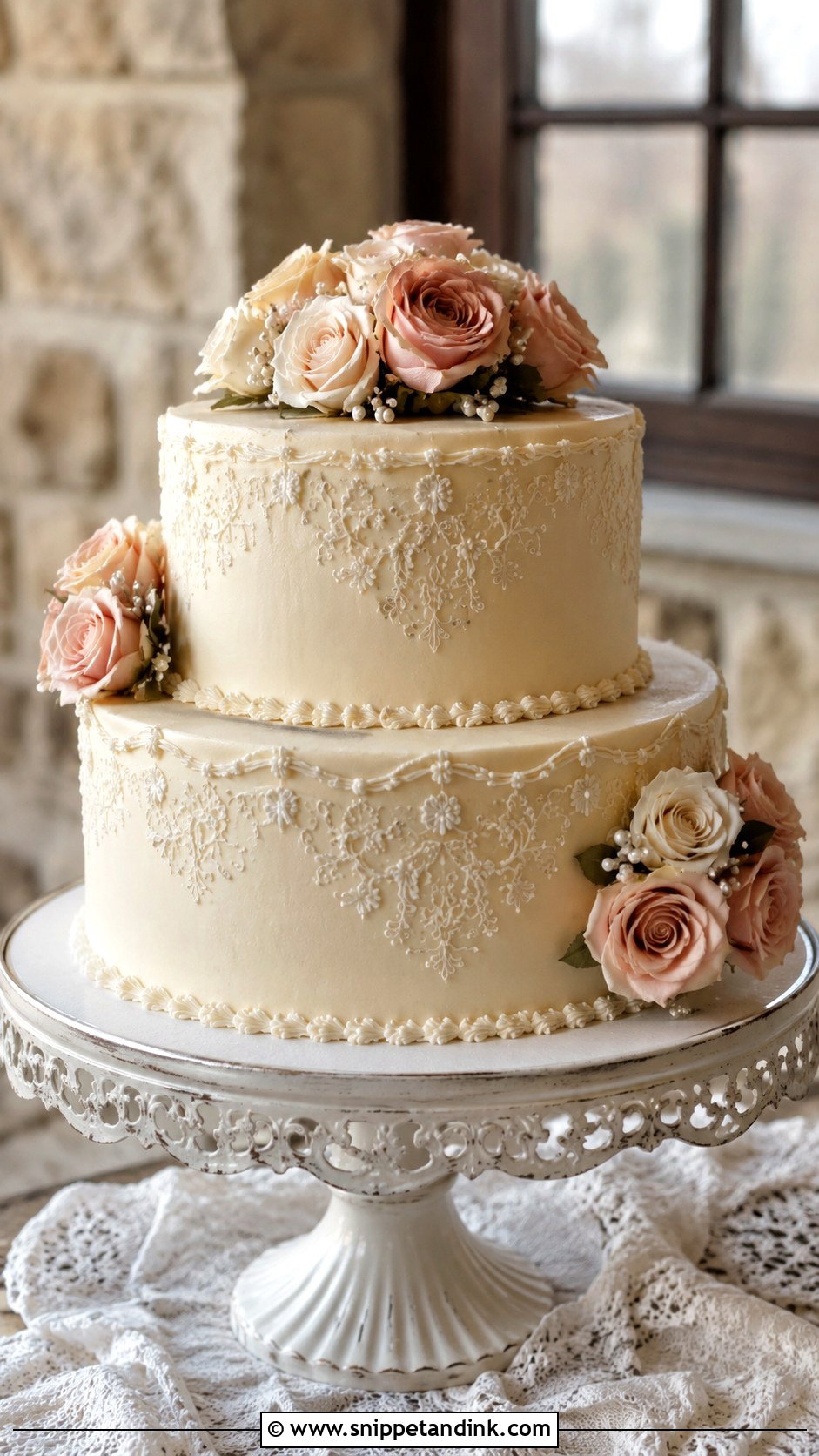
Vintage rose cakes lean on piped borders, lace patterns, soft ivory frosting and old-fashioned placement: roses sitting on top, shells or swags around each tier. Buttercream roses look most authentic here, though sugar or fresh work too. I keep the palette muted so the piping stays readable. Small pearls, antique tableware and candlelight suit a historic venue or a small wedding.
14. Gold 2 Tier Wedding Cake With Roses
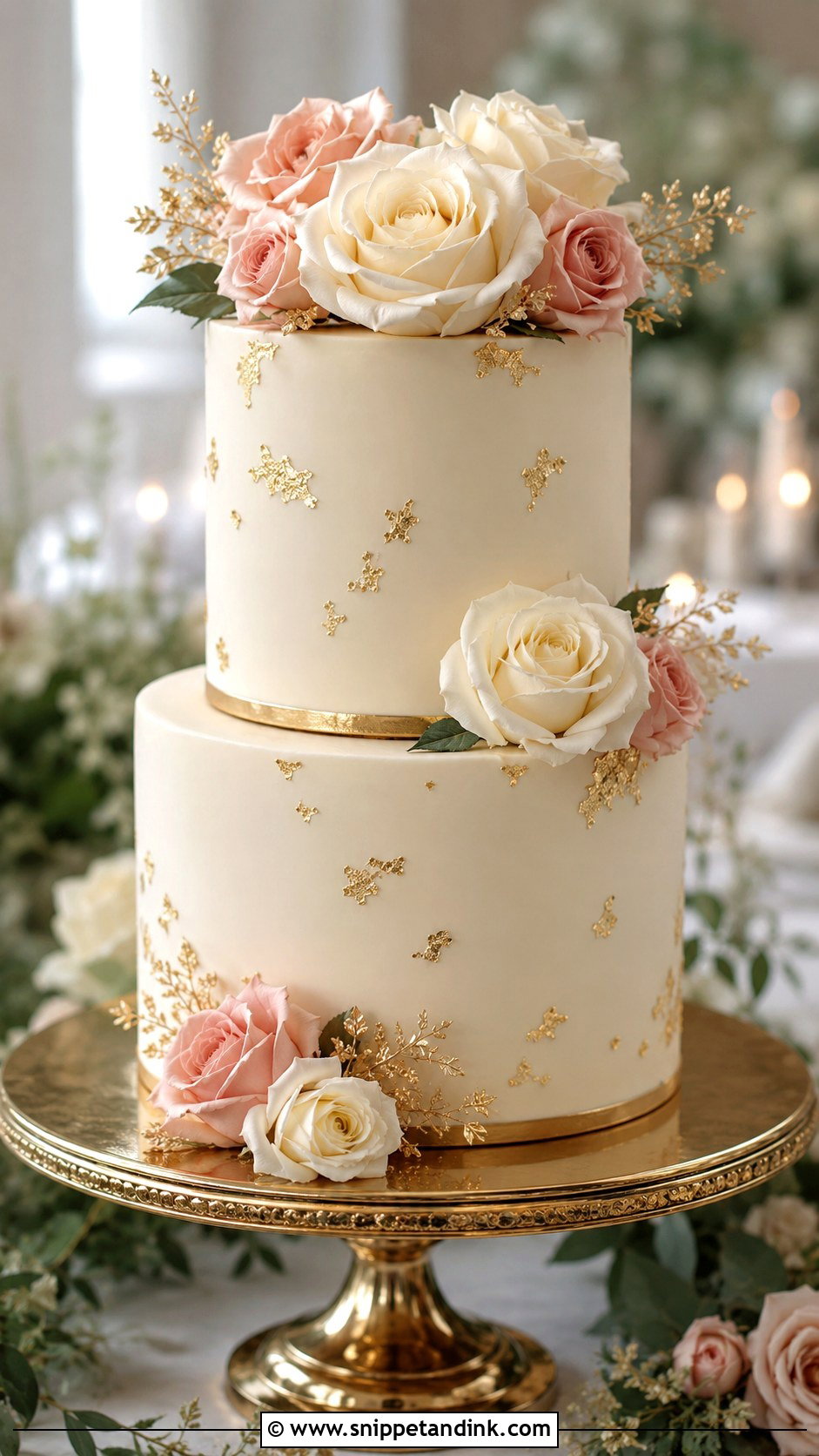
Gold works with roses when it’s an accent: a fine line around each tier, scattered gold leaf or a brushed band. Ivory, blush, white and burgundy roses all sit well beside it. Edible gold paint needs a firm, dry surface, so I apply it to chilled fondant or set buttercream rather than fresh frosting. A gold or white pedestal finishes it for an evening hotel reception.


15. 2 Tier Wedding Cake With Rose Garland
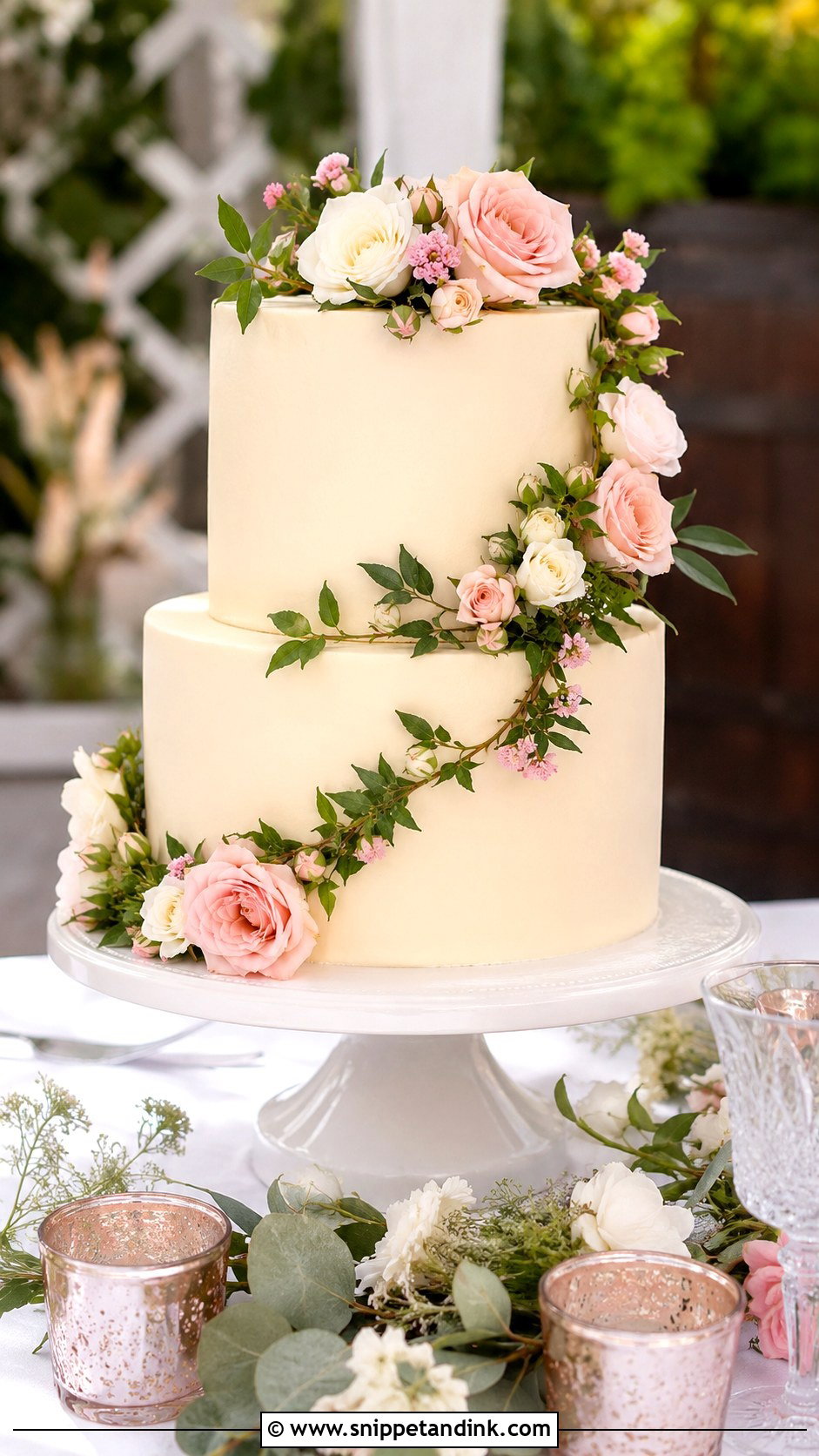
A garland wraps the cake instead of piling flowers in one spot. It can circle one tier, trail between both, or curl around the side like a vine. Small roses and rosebuds with greenery look most natural, since big open blooms make a garland look bulky. I build it so it continues round the back, which means the cake looks finished from every side of a long floral table.
16. 2 Tier Wedding Cake With Rose Topper
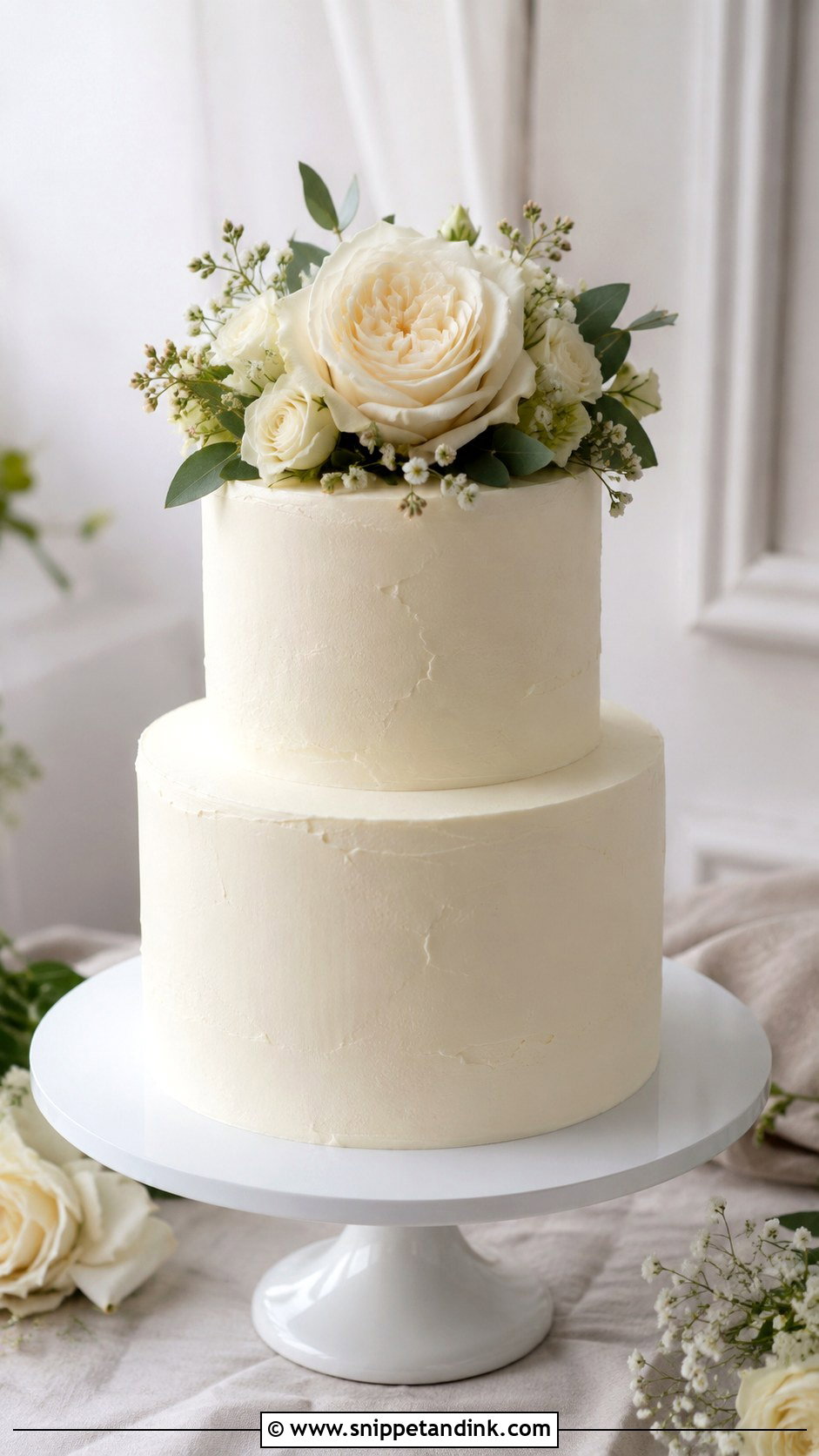
Putting all the roses on top keeps the design simple and the lower tier clean. One large garden rose, a cluster or a compact dome of blooms carries the floral moment, with light piping, texture or a ribbon below. Large fresh roses are heavy, so I anchor a topper arrangement on a small board or posy pick rather than pressing it straight into soft frosting. Sugar roses here can be lifted off and kept.
17. 2 Tier Wedding Cake With Rose Piping
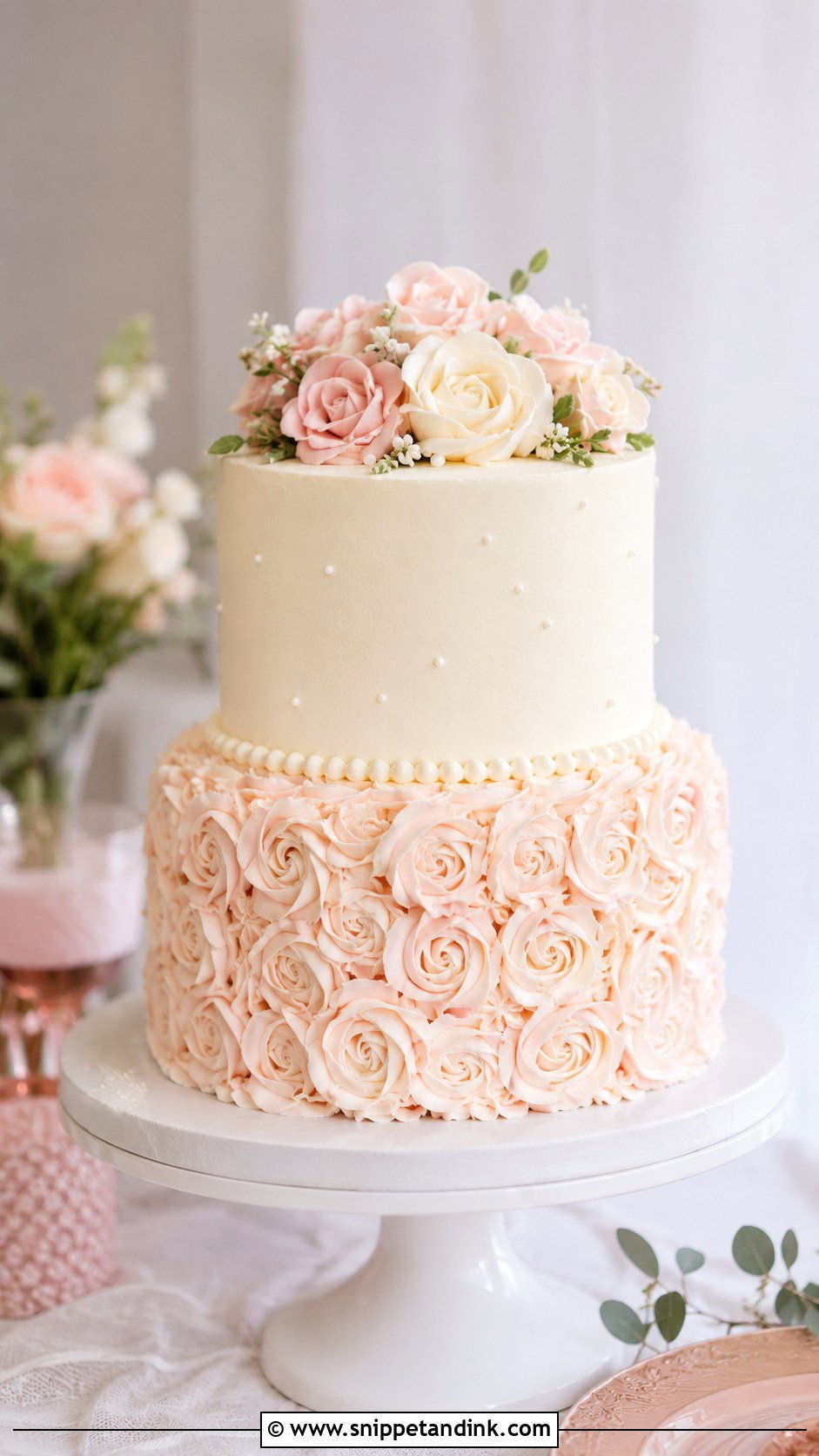
Piped roses are made entirely from buttercream, swirled into rosettes or layered petal by petal with a curved tip. A full tier of piped roses with a smooth tier beside it is my favorite version. They’re quicker than sugar flowers, which usually helps the budget, but they soften and lose their edges in heat, so a cool room matters. Pale pink, ivory, lavender and peach pipe most prettily for a brunch or a small garden wedding.
18. 2 Tier Wedding Cake With Pressed Roses
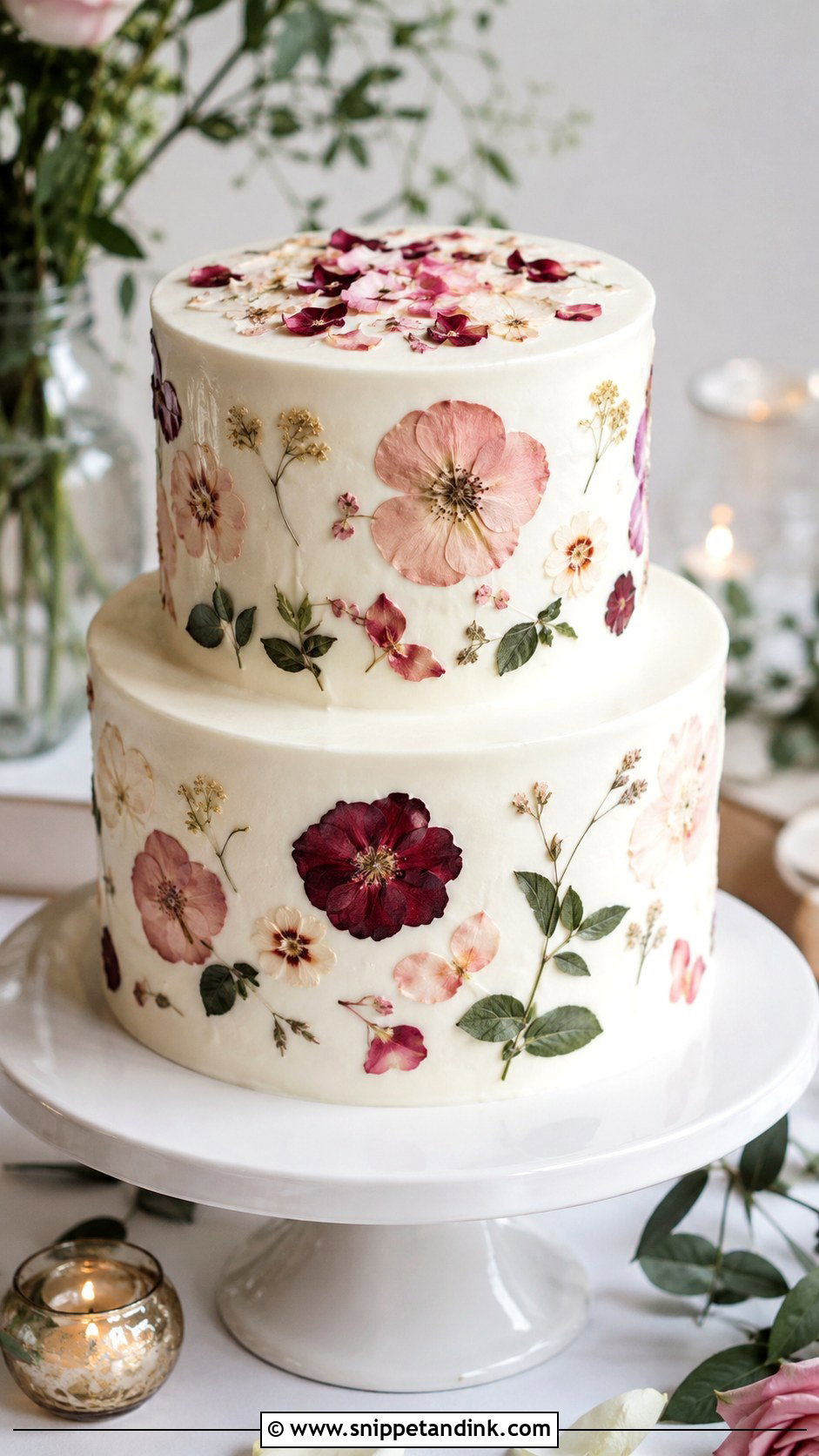
Pressed roses are laid flat against the frosting, almost like a botanical print. They need a perfectly smooth buttercream base and petals that are properly dried and safe to eat, because ordinary pressed craft flowers aren’t. I place them on a chilled cake and press gently so they don’t slide. Ivory frosting with soft pink or red petals looks light and spring-like. The arrangement has to look planned, so I sketch it before I start.
19. 2 Tier Wedding Cake With Rose Watercolor
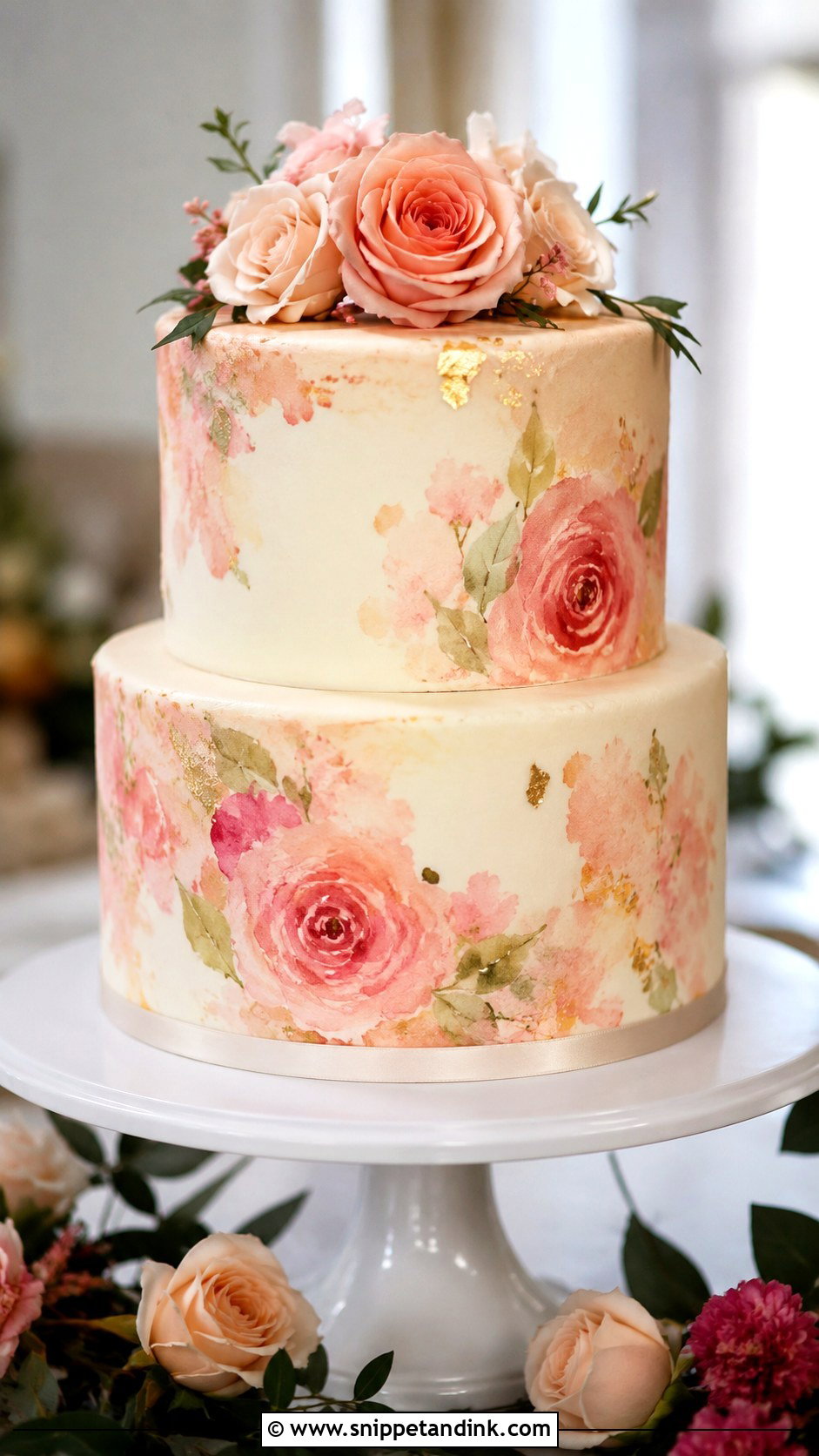
A rose watercolor cake is painted in soft washes of pink, peach, mauve or red over a white or ivory base, then finished with a few real or sugar roses so the painted color has a three-dimensional echo. Smooth fondant or buttercream gives the paint a clean surface; any bumps show through the wash. It suits couples who want roses without a heavy arrangement. A little gold leaf or a simple topper is plenty.

20. Small 2 Tier Wedding Cake With Roses
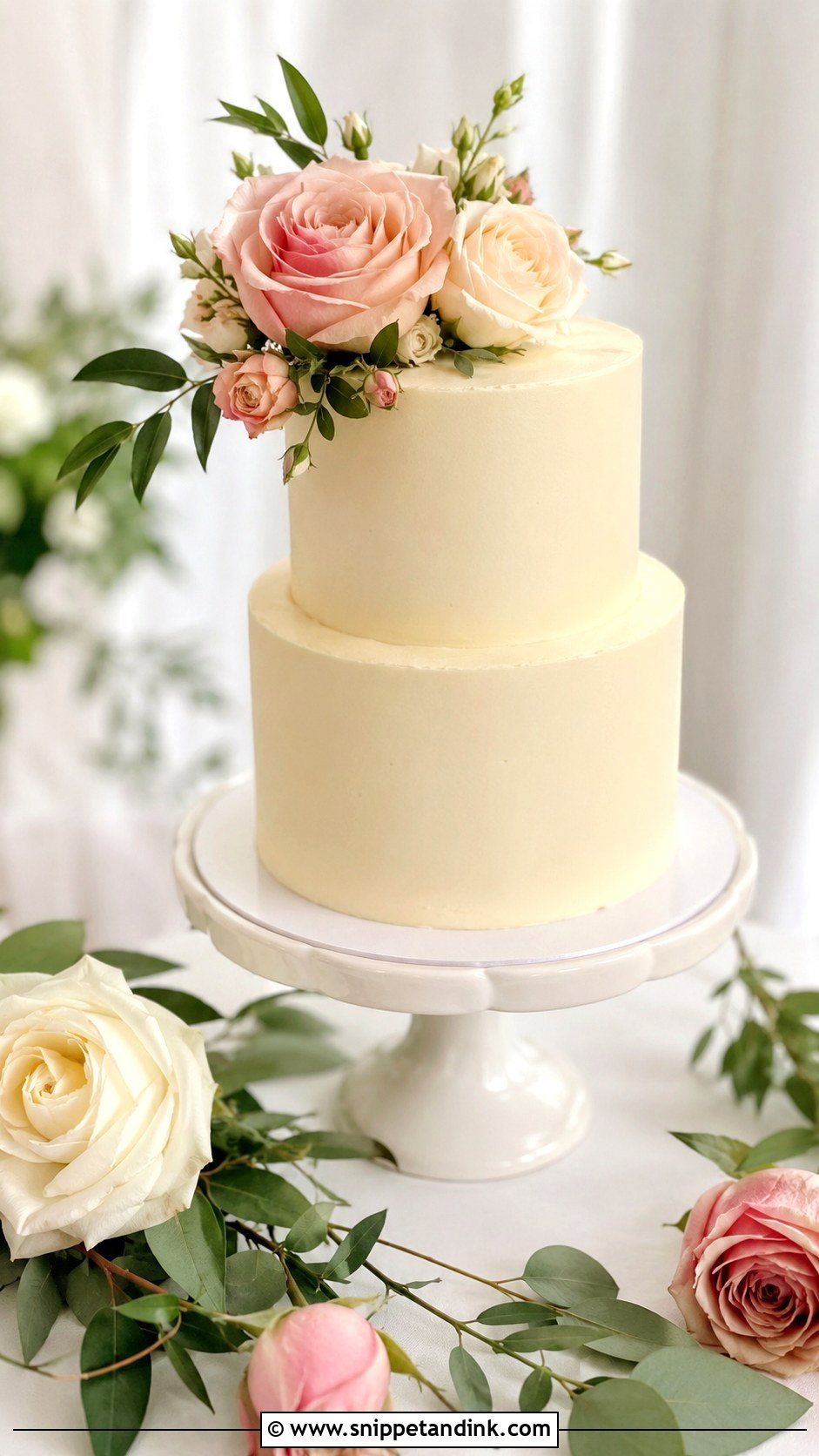
A small two-tier cake, usually 6 and 8 inch, works well for an elopement or as a cutting cake beside a dessert table. With so little surface, every detail shows, so I’d choose one clear floral placement: a few roses on top, a short cascade or a single ring of blooms. Lifting it on a raised stand gives it the height a small cake lacks. Tie the rose colors back to your wedding palette.
Who Puts the Roses on the Cake, and When
With fresh roses, this is the question couples forget to settle, and it causes most of the day-of confusion I see. Decide early whether your florist or your baker places them. I prefer to do it myself, because I know where the dowels are and where a stem can’t go, but I need the florist to leave cake flowers conditioned and ready for me.
- Ask the florist for roses grown without chemicals that shouldn’t touch food, and tell them the flowers are for the cake.
- Order a few extra stems; one or two always get damaged in transport.
- Keep cake roses in water until the last moment, then wrap and pick the stems.
- Avoid stems pushed straight into the cake, and don’t let leaves sit on frosting where they can leave marks.
- Agree who removes the flowers before cutting, so they don’t end up on plates.
If you choose sugar roses and want to keep them, ask your baker to set them on a separate pick or board so they lift off cleanly. Store them in a box in a dry, dark cupboard, never in the fridge, where damp air softens the petals.
Which Rose Cake Suits Your Room and Your Bouquet
Frosting, rose type, color and placement are the four choices that decide how a rose cake looks. A formal venue tends to suit fondant and sugar roses; a relaxed garden day suits buttercream and fresh blooms. Bring a photo of your bouquet and the cake stand you like to the tasting, and I’ll suggest the placement that keeps the roses looking deliberate on a two-tier cake.
You'll Like These Ideas:










Leave a Reply