
The 2024 bridal collections had one clear theme: versatility. Clean satin, sculpted corset bodices, floral applique, drop waists, bows, detachable sleeves, mini reception dresses and sleek courthouse looks all came through strongly, and most of them are still in shops and on sample racks now. Below are the thirty gowns from that season I’d still show a bride, each styled from shoes to veil. Alongside every one I’ve written what I’d actually look at in the fitting room, because a trend only works if the dress also suits your venue, your season and the way you move.
Two Seasons Later, What Still Looks Current
A season on, I can see which 2024 ideas have settled into the bridal mainstream and which are already dating. Clean satin, square and basque necklines, corset bodices and convertible pieces are still in new collections. Very large statement bows and heavily dropped waists are the details I’d think hardest about, because they fix a gown to a specific moment in photos.
That doesn’t mean avoiding them. It means deciding whether the trend is the whole dress or one detail you can take off. A detachable bow, sleeves or an overskirt let you wear the moment for the ceremony and keep a cleaner silhouette for the rest of the night.
A quick test I use at appointments
Cover the trend detail with your hand, or ask the consultant to unclip it, and look again. If you still love the gown underneath, the trend is a bonus. If the dress falls flat without it, you’re buying the trend, and that’s fine as long as you know it.
1. Strapless Satin Wedding Dress
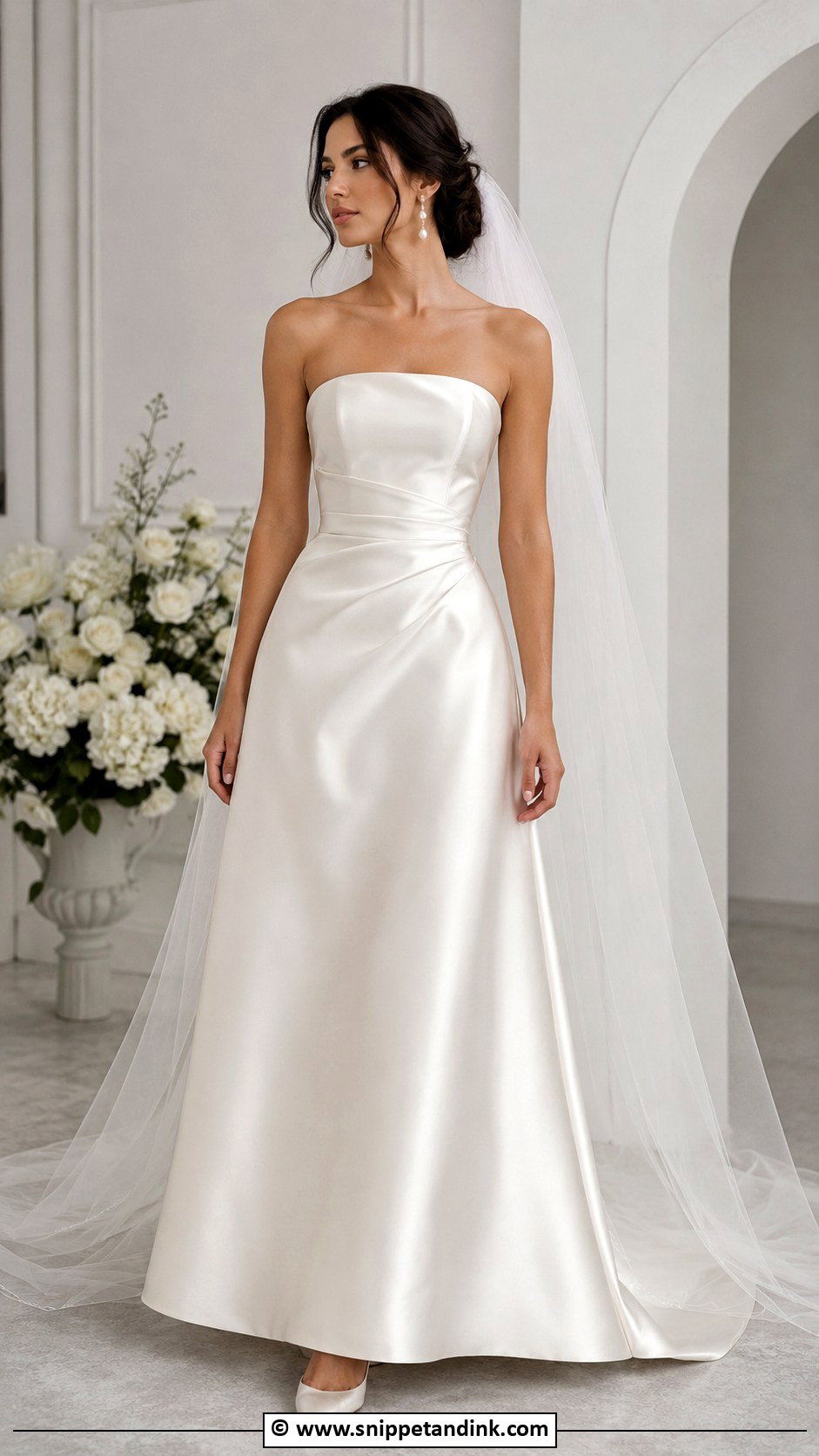
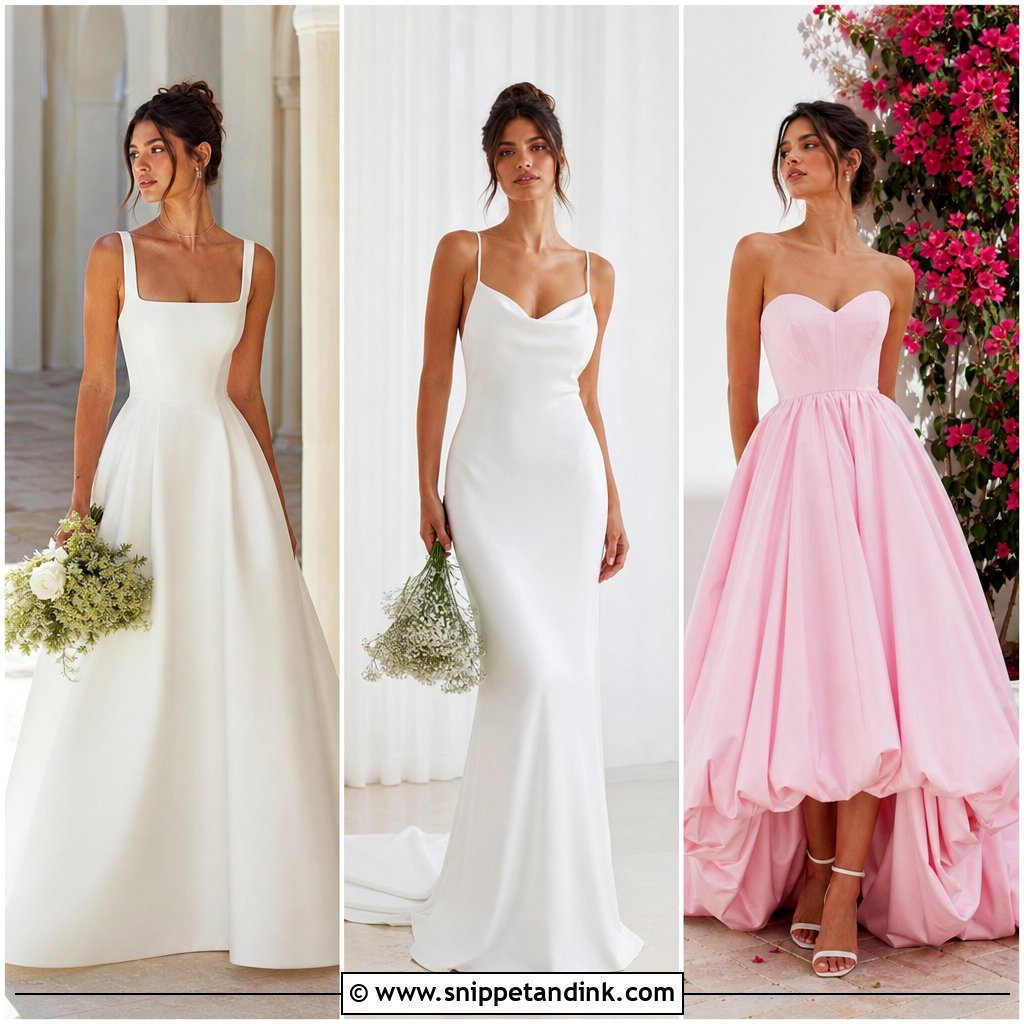
A strapless satin wedding dress is the backbone of that season. Smooth fabric, a bare neckline and nothing to hide behind. A fitted bodice over an A-line or soft ball gown skirt defines the waist and still lets you walk. I always check the top edge of a strapless bodice when the bride bends forward; if it gapes, it needs taking in or a silicone grip strip added. Pointed ivory pumps, pearl drops, a long sheer veil and a low bun finish it.
2. Drop Waist Wedding Dress
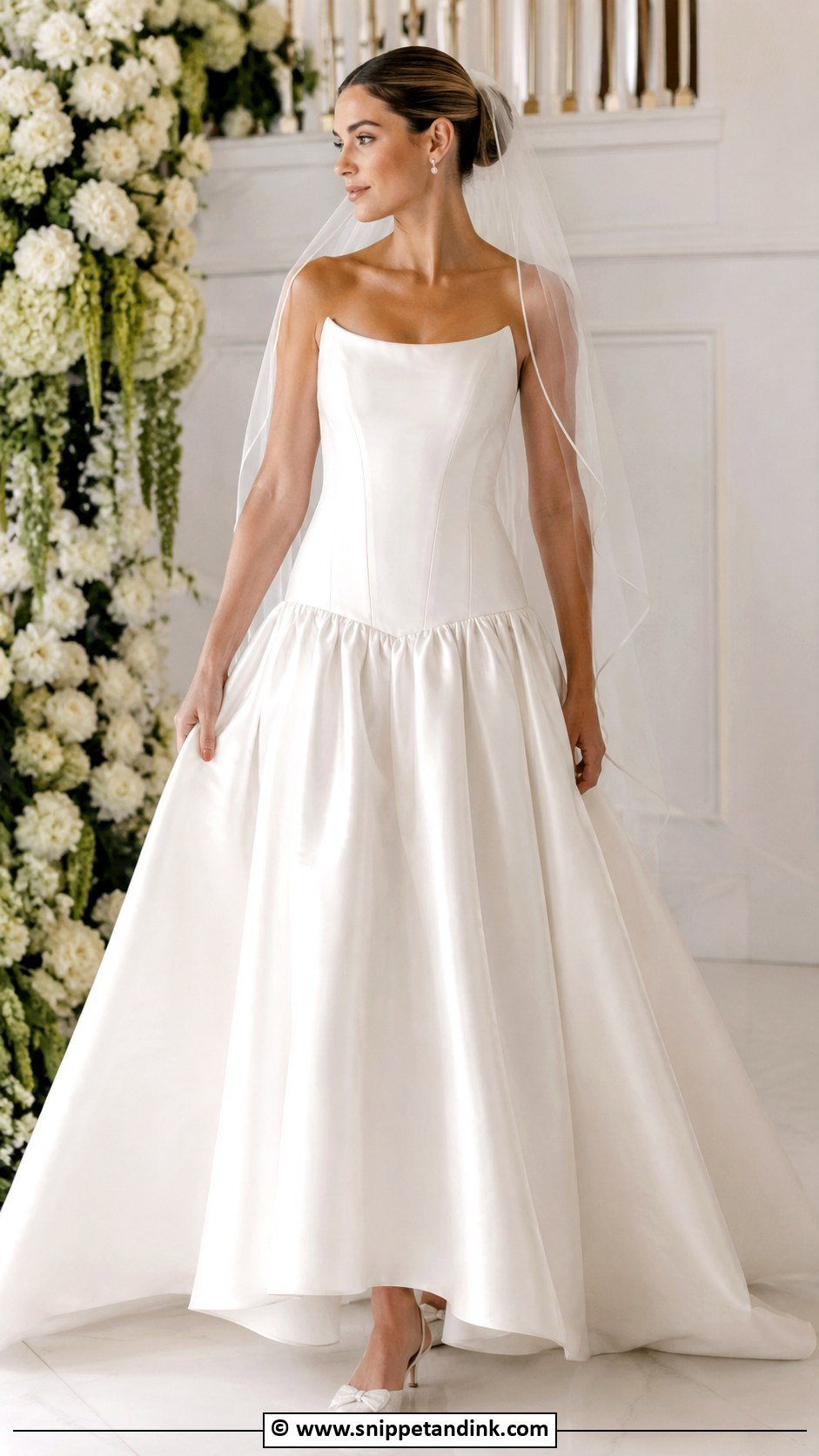
The shape everyone asked about in 2024. A drop waist wedding dress sets the seam low on the hips, which lengthens the torso before a fuller skirt. Satin, mikado, tulle and organza hold that transition crisply; soft fabrics blur it. It flatters long torsos most and can shorten the legs on a petite bride, so stand side-on to the mirror. Delicate slingbacks, small diamond studs and a fingertip veil keep it balanced, and a sleek middle part makes it look current.
3. Corset Wedding Dress
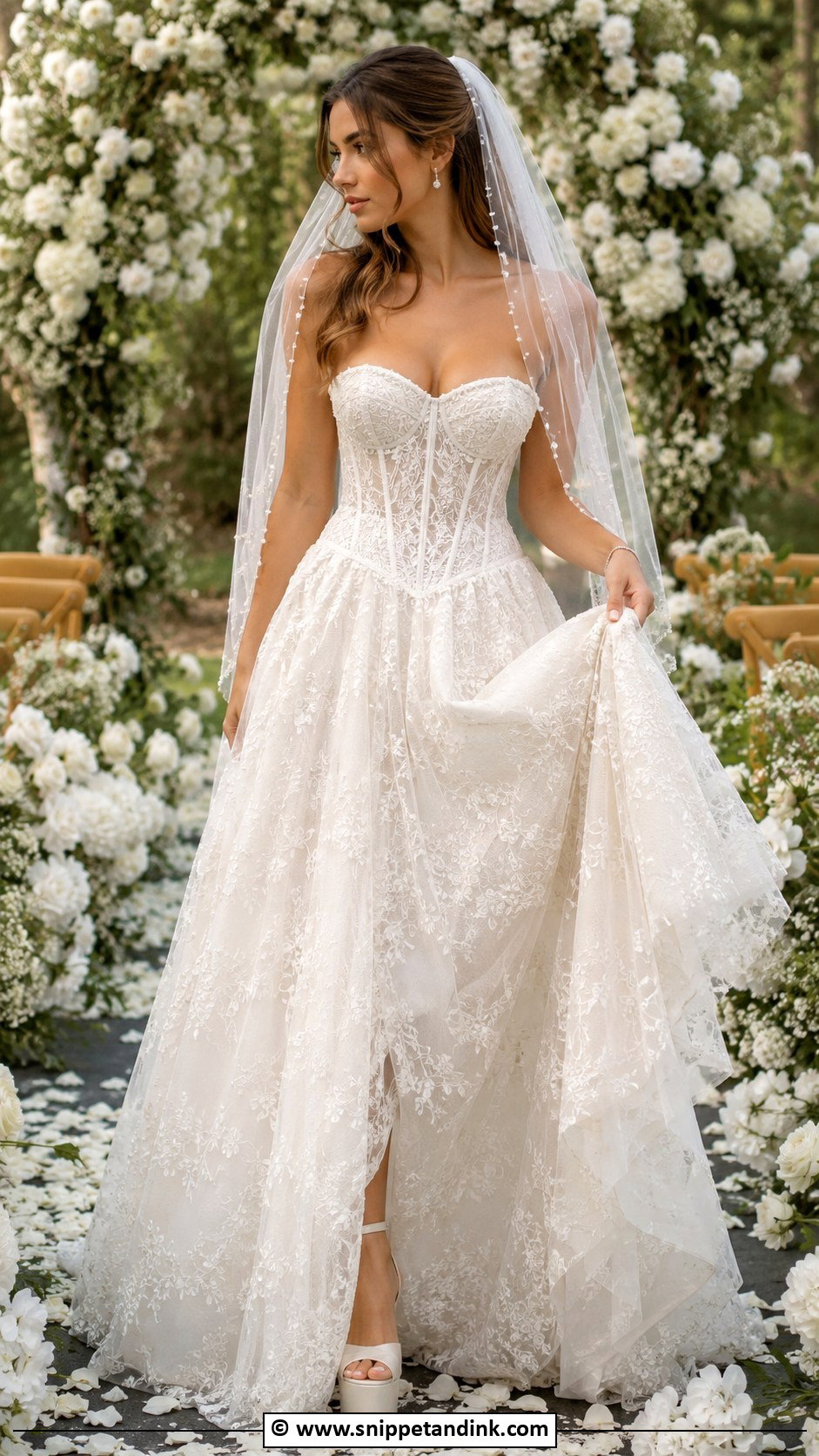
Corsets were everywhere that year, in lace with a softer finish or satin with exposed boning. Fit is the whole decision. A good corset holds you without the bride thinking about it, so sit, reach and breathe deeply at every fitting. Block heels or platforms help under a full skirt. A pearl veil, a dainty bracelet and rosy makeup keep it bridal rather than costume. Garden and ballroom venues both suit it.
4. Floral Lace Wedding Dress
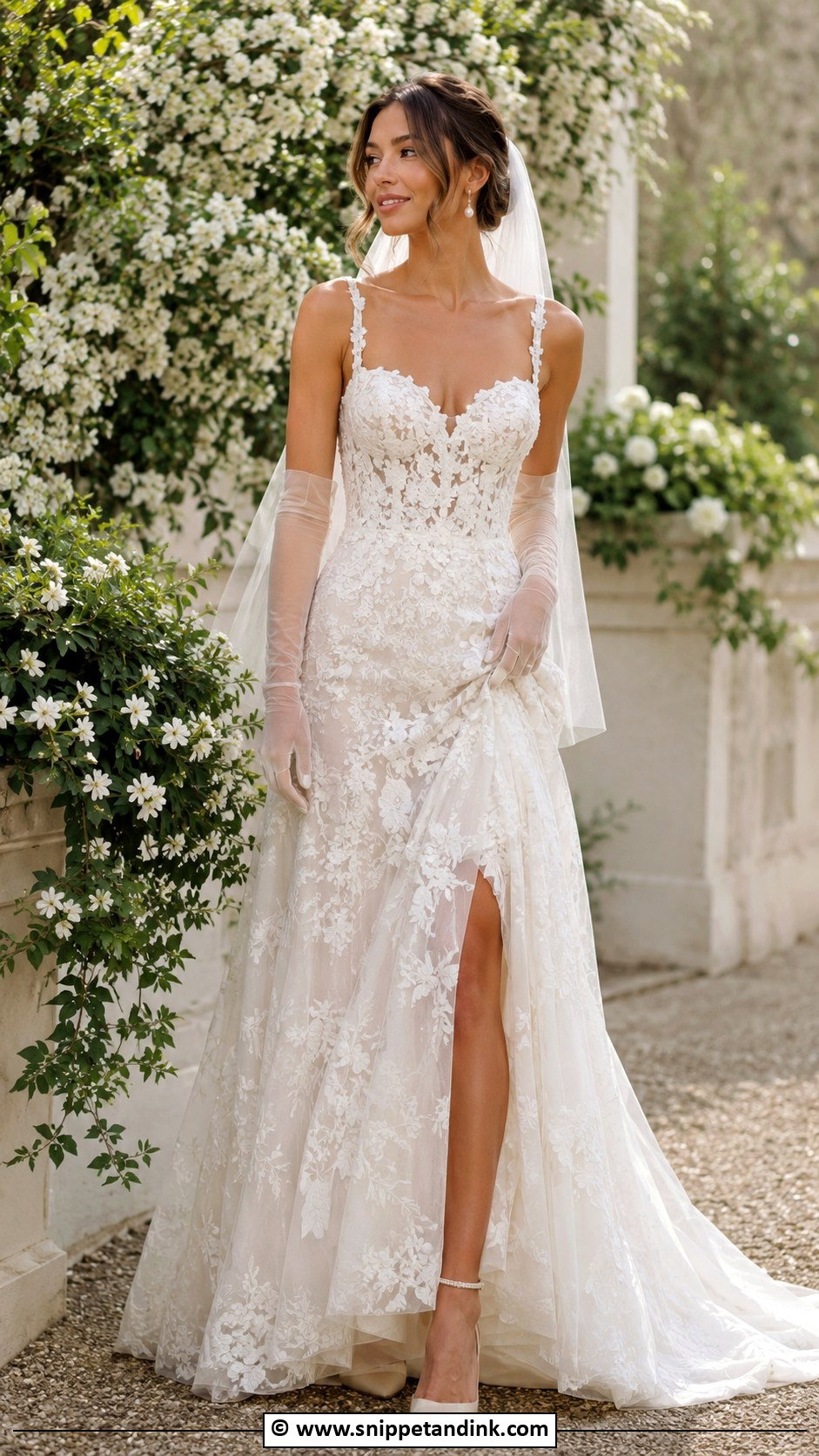
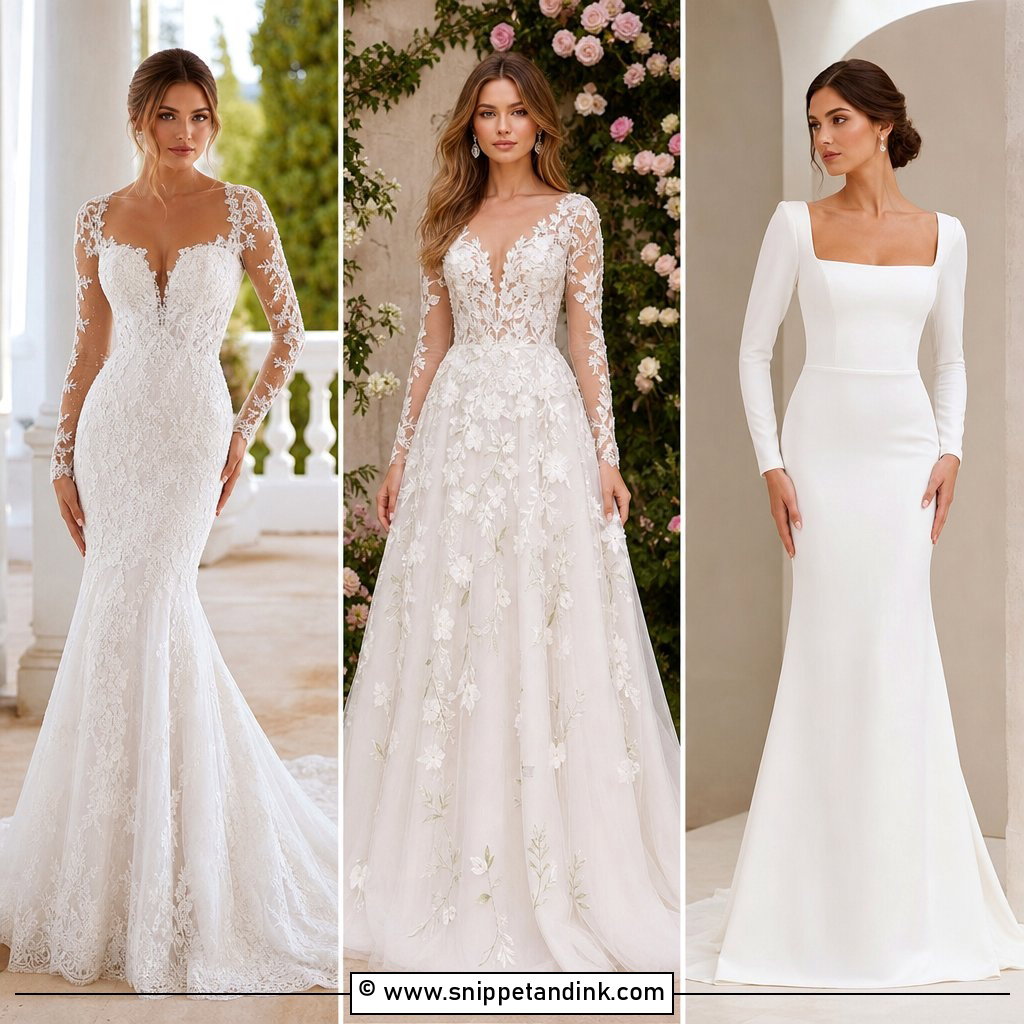
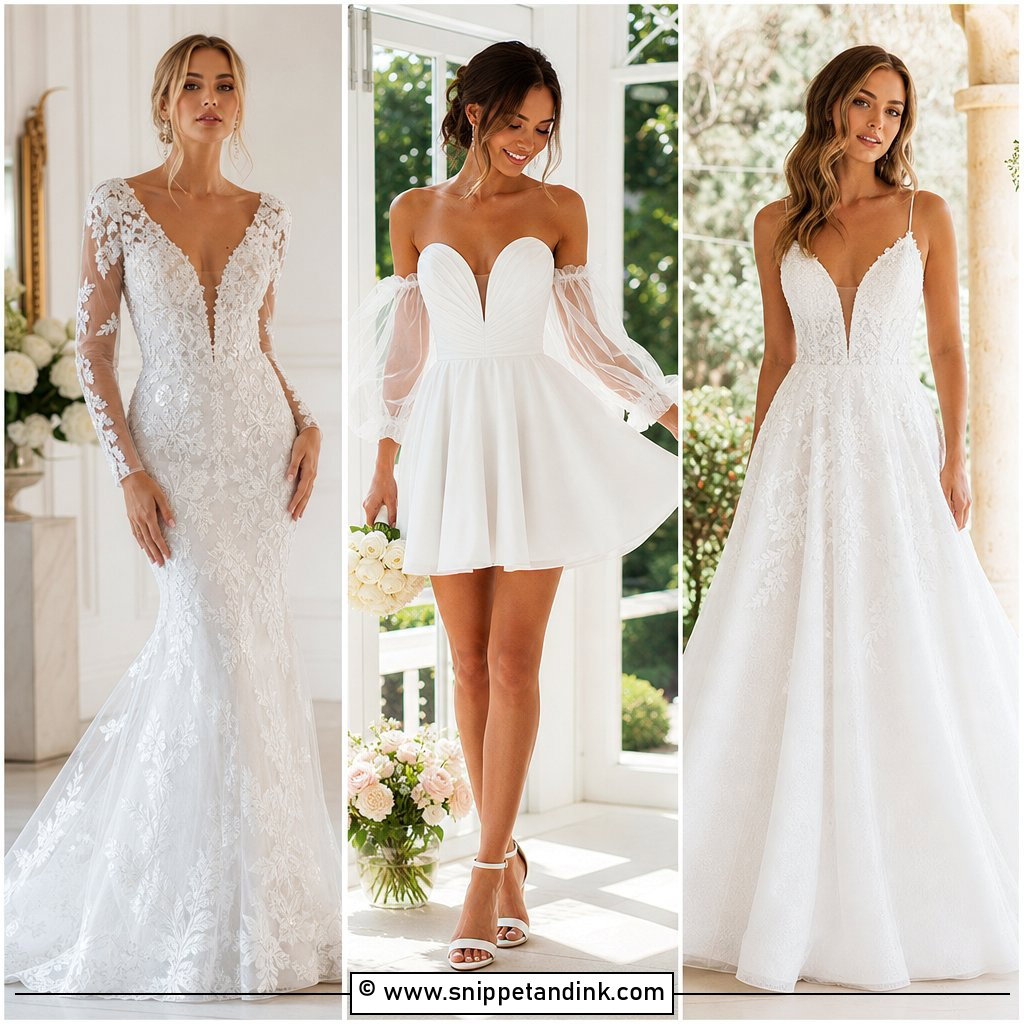
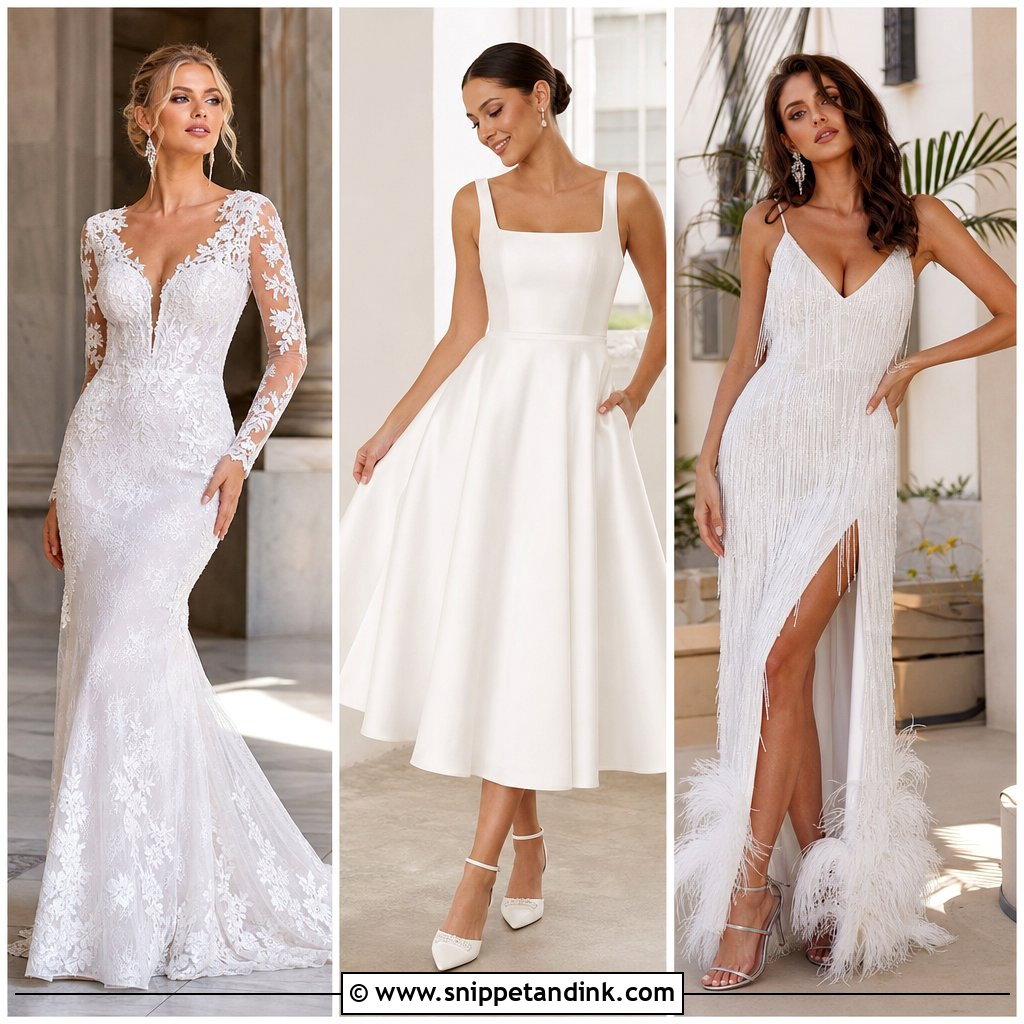
Lace felt new again because the patterns got bigger: large florals, layered applique and fine vine embroidery replaced the all-over Chantilly look. I’d pair it with sheer gloves, pearl earrings and ivory heels, and keep the veil plain so the lace stays the focus. Big motifs need careful placement over the bust and hips, so ask whether the seamstress can shift them during alterations. A loose updo with face-framing pieces adds movement. Estate venues and outdoor spring ceremonies suit it best.
5. Long Sleeve Wedding Dress
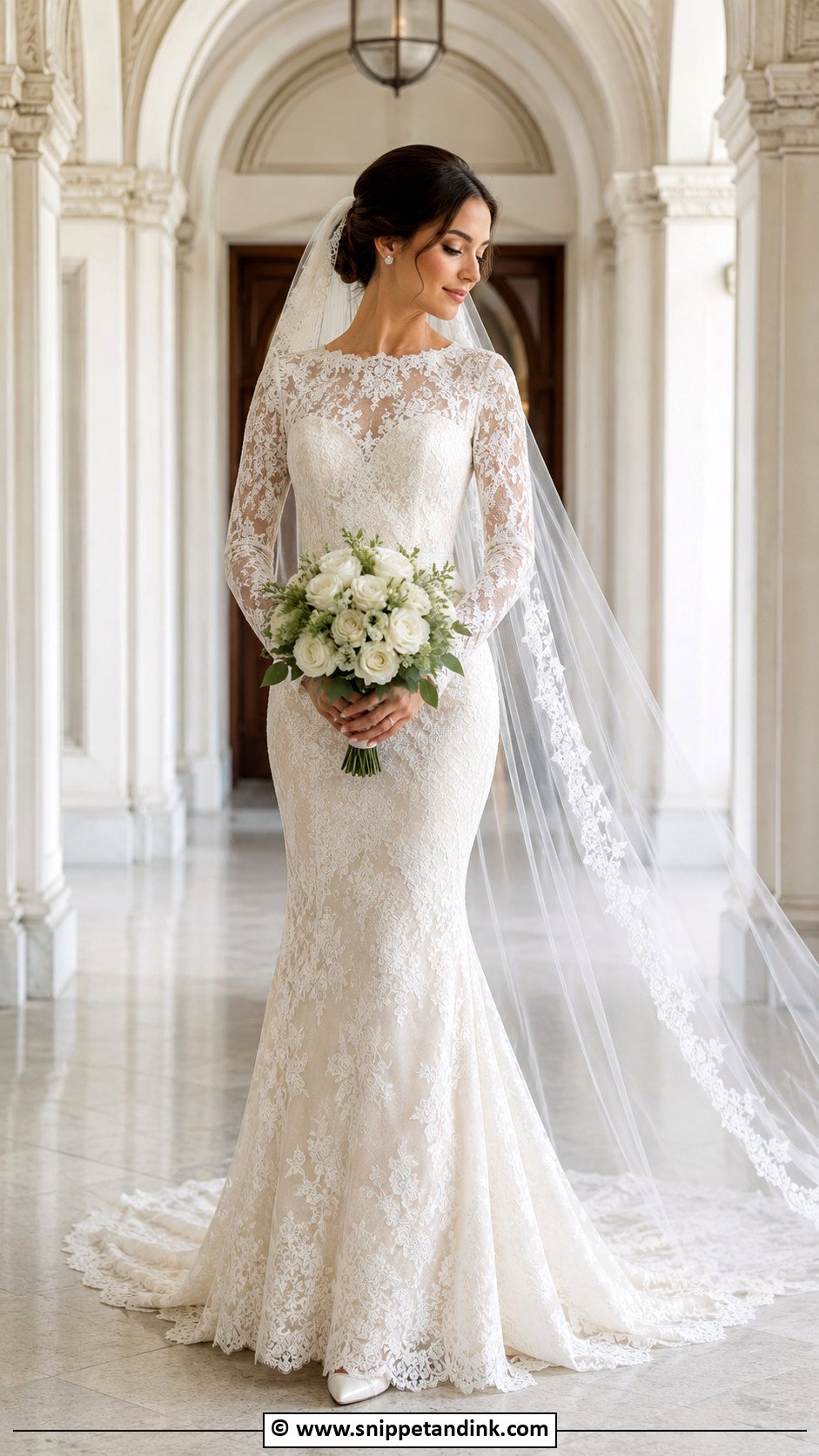
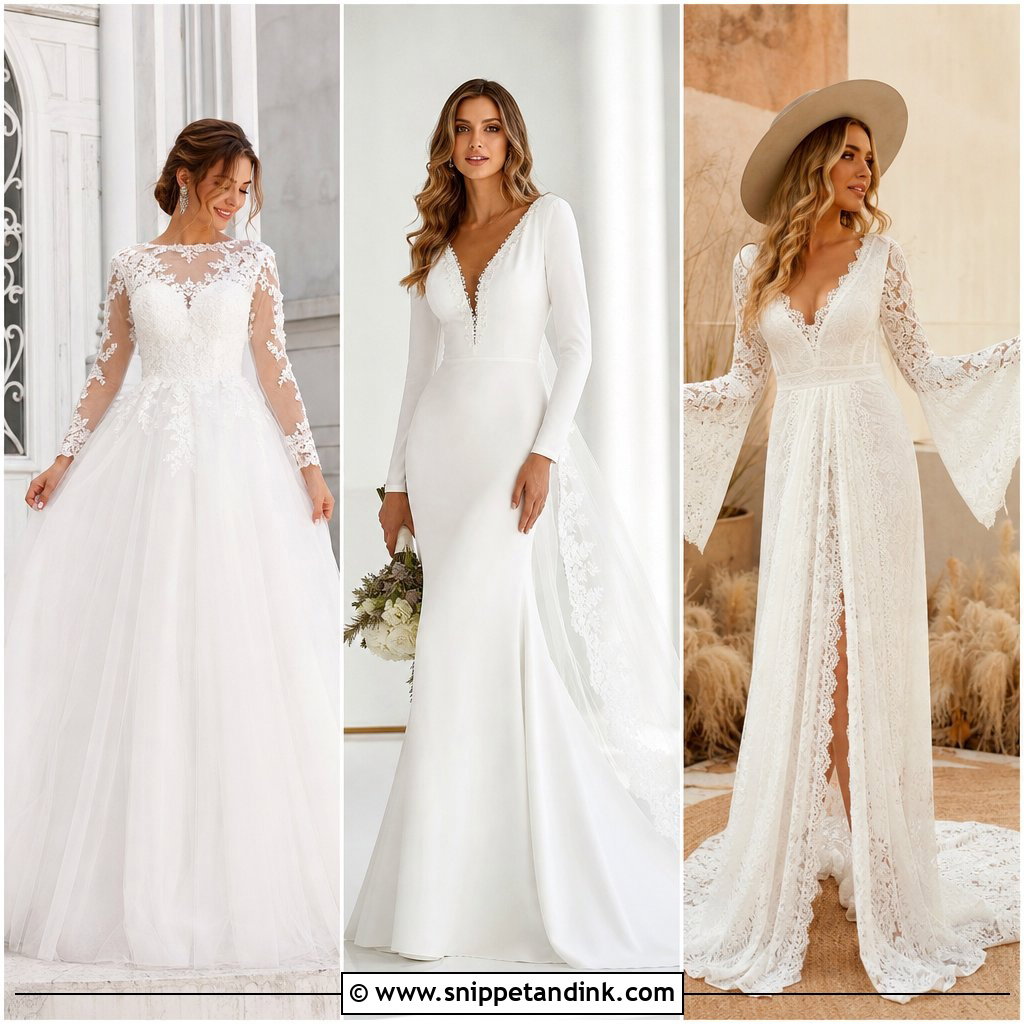
Sleeves are practical for cool weather and formal or religious venues, and they come in sheer lace, fitted crepe, puffed organza or clean satin. With sleeves I nearly always pull the hair back so the neckline and sleeve detail show clearly. Closed-toe heels, a cathedral veil and pearl or crystal studs finish it. Ask for breathable lining and enough ease at the elbow and shoulder to lift your arms, because a tight sleeve is the first thing brides complain about at the reception.
6. Off Shoulder Wedding Dress
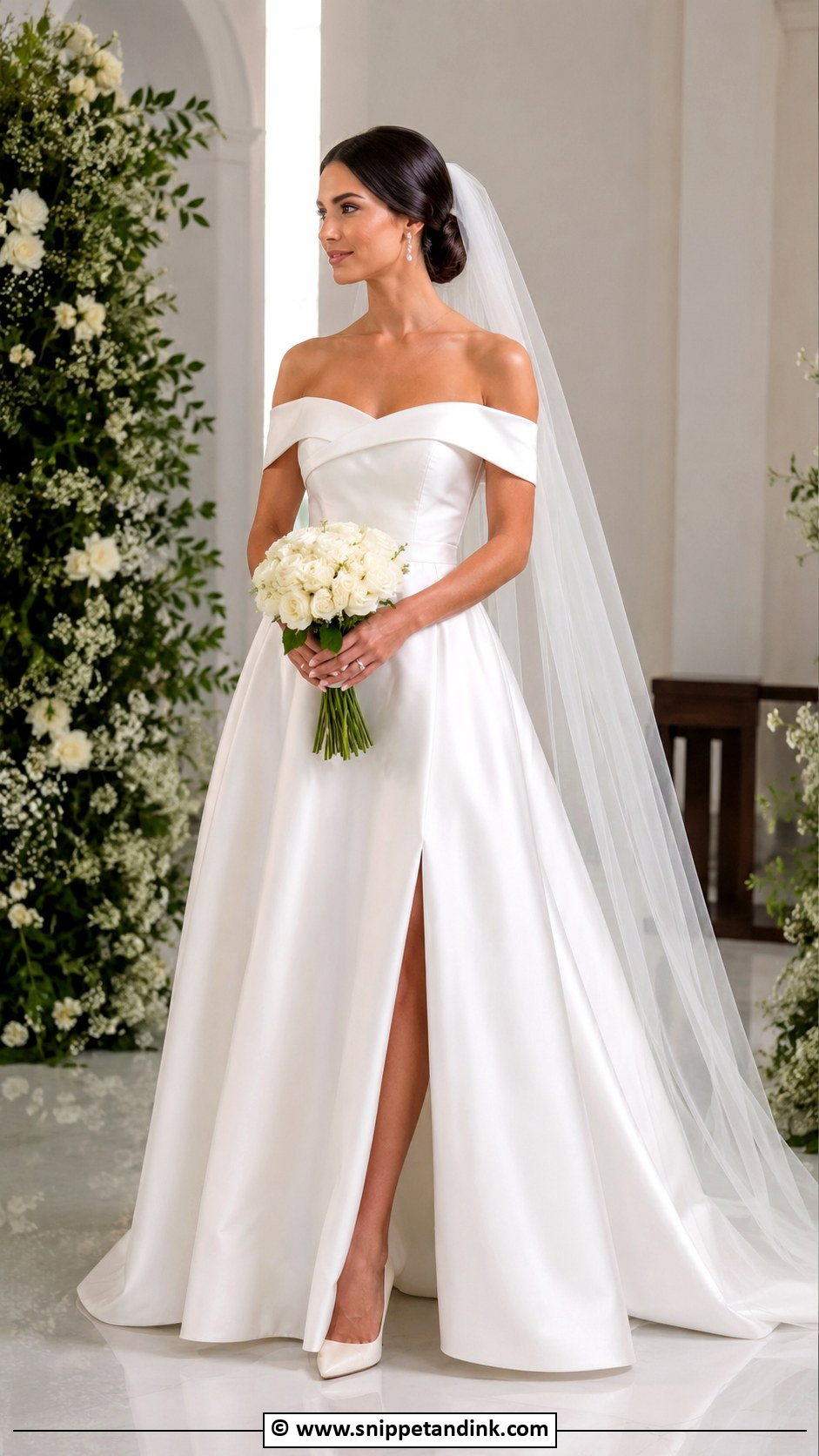
Off-shoulder necklines frame the shoulders and suit mermaid, A-line and ball gown skirts. Where they go wrong is the band: if it’s holding the dress up, it slides and needs constant hitching. A boned bodice should carry the weight instead. Delicate drop earrings, satin pumps and a sheer veil tucked under a low bun complete it. If the neckline has folded satin or lace edging, skip the necklace.
7. High Neck Wedding Dress
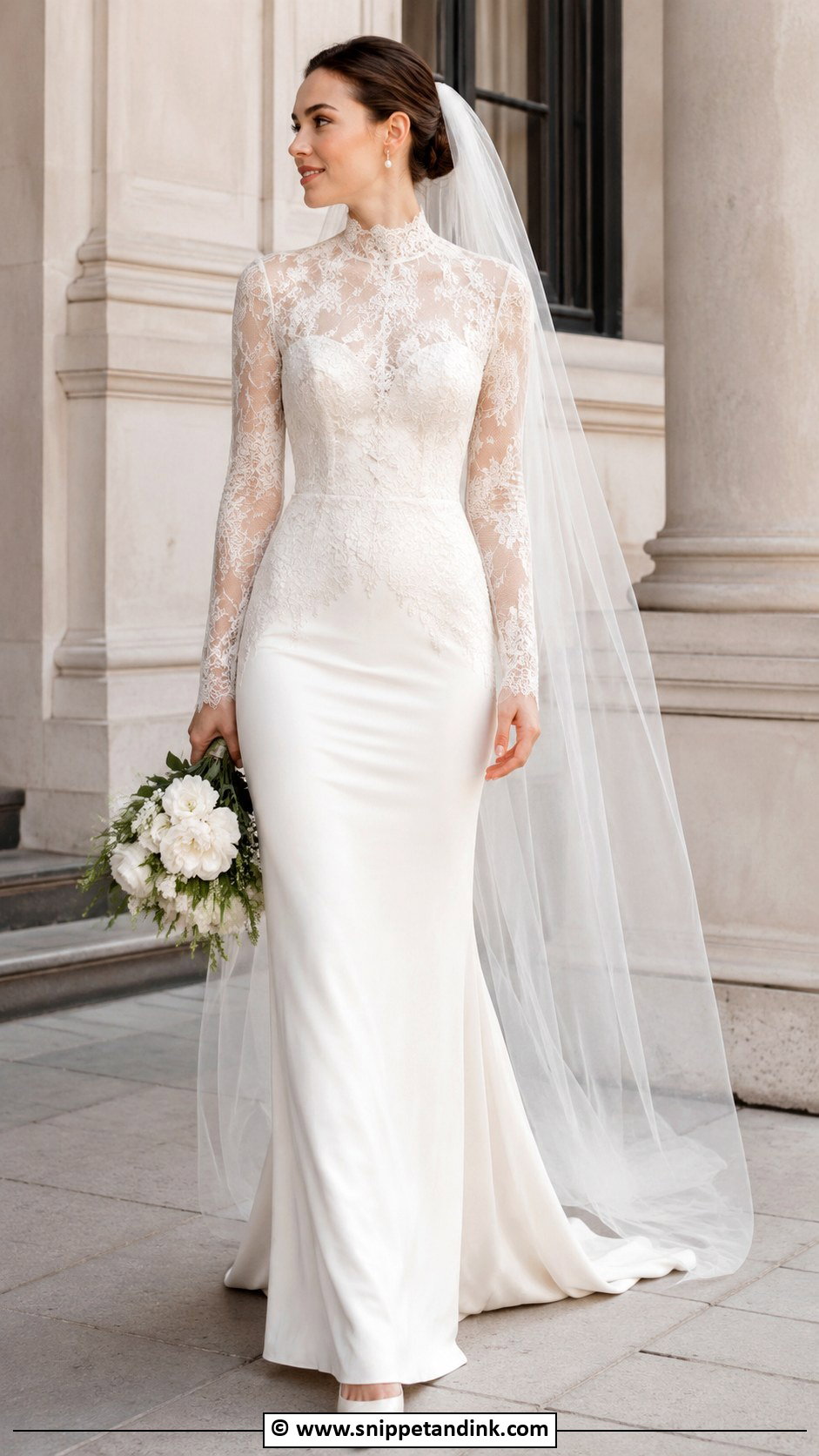
High necklines read modest and fashion-led at the same time, in sheer lace, sleek crepe, satin or subtly beaded fabric. The neckline is already the statement, so I keep everything else quiet: small earrings, a smooth bun, pointed heels. A long veil stops it feeling severe. An open back, fitted sleeves or a slim skirt balance the coverage. City weddings and formal venues suit it.
8. Square Neck Wedding Dress
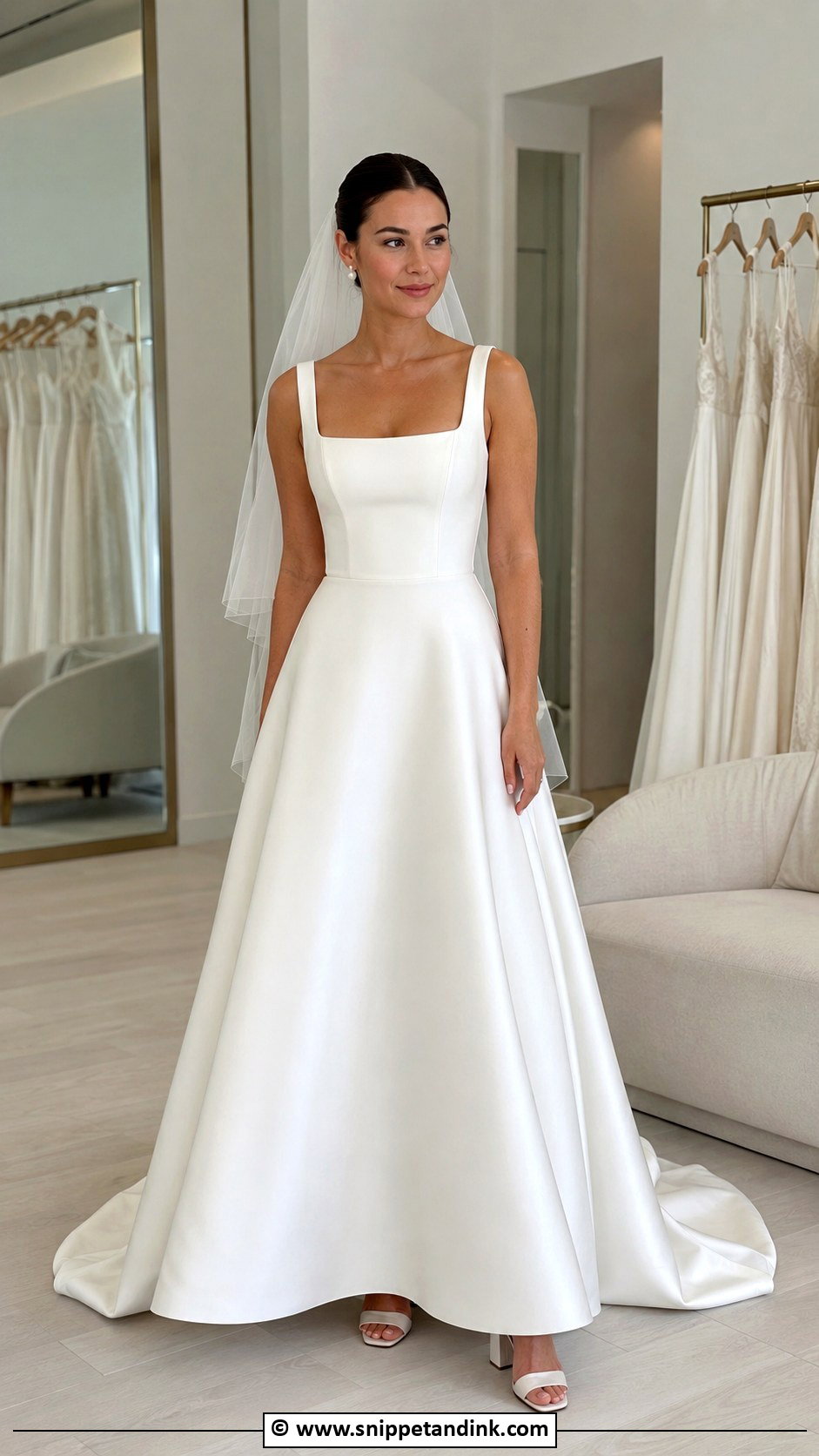
A square neck is the most wearable shape on this list. It frames the upper body cleanly, works in satin, crepe or structured lace, and its wider straps give support without sleeves, which matters if you’d rather not wear a strapless bra. Block heels, pearl studs and a simple veil keep it easy. Wear hair in a smooth chignon or waves pushed behind the shoulders so the neckline stays visible.
9. Basque Waist Wedding Dress
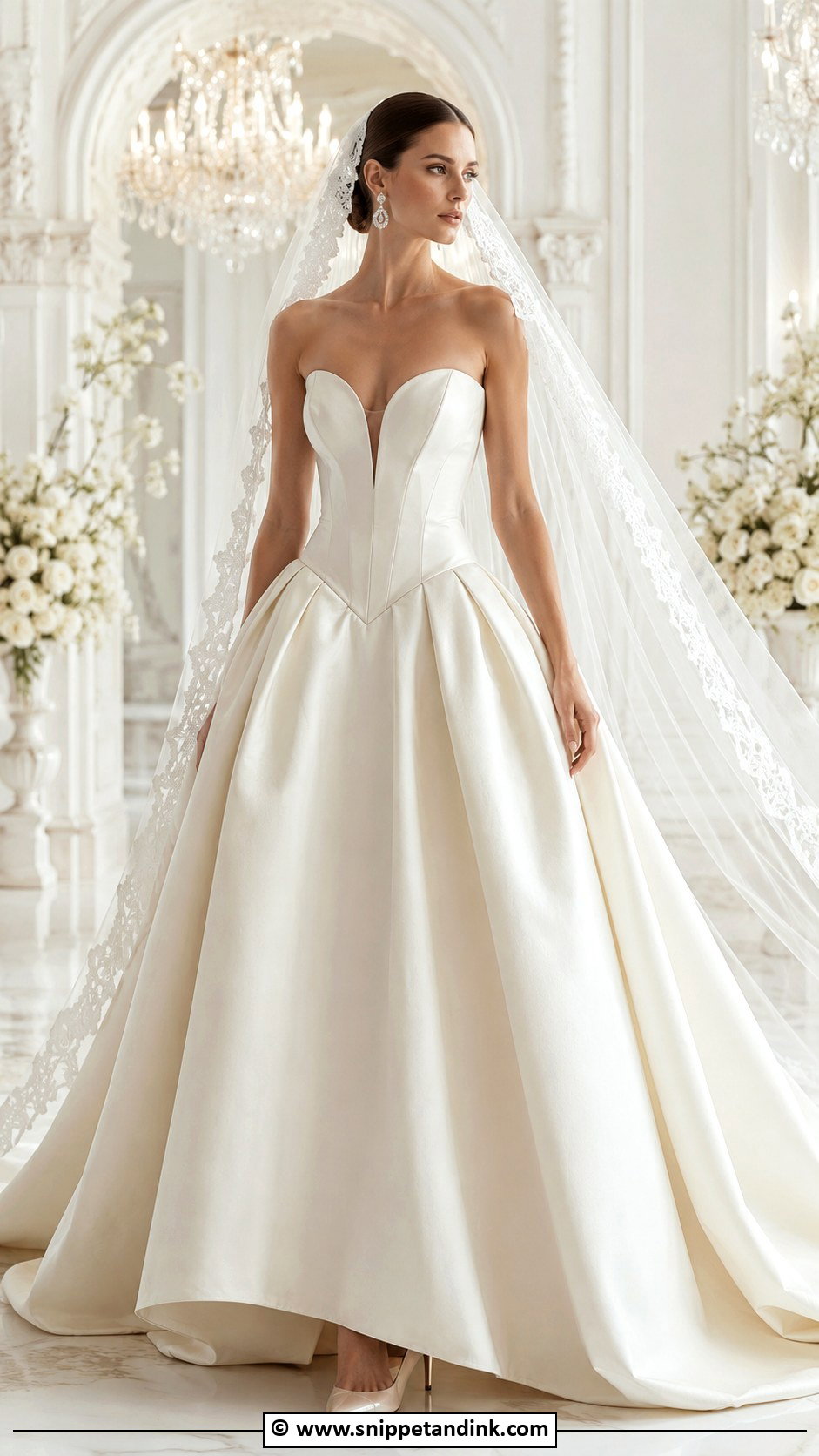
The dip at the front of a basque waist wedding dress creates a sculpted, slightly princess-like line, but in plain fabric it looks grown-up rather than sugary. It’s most dramatic on a ball gown, though a softer A-line works too. Skip belts and big accessories, since the waistline is the detail. Satin heels, a long veil, refined earrings, a classic updo and glowing makeup keep it polished. The V point should sit centred; I check it from the front and in photos at every fitting.
10. Ball Gown Wedding Dress
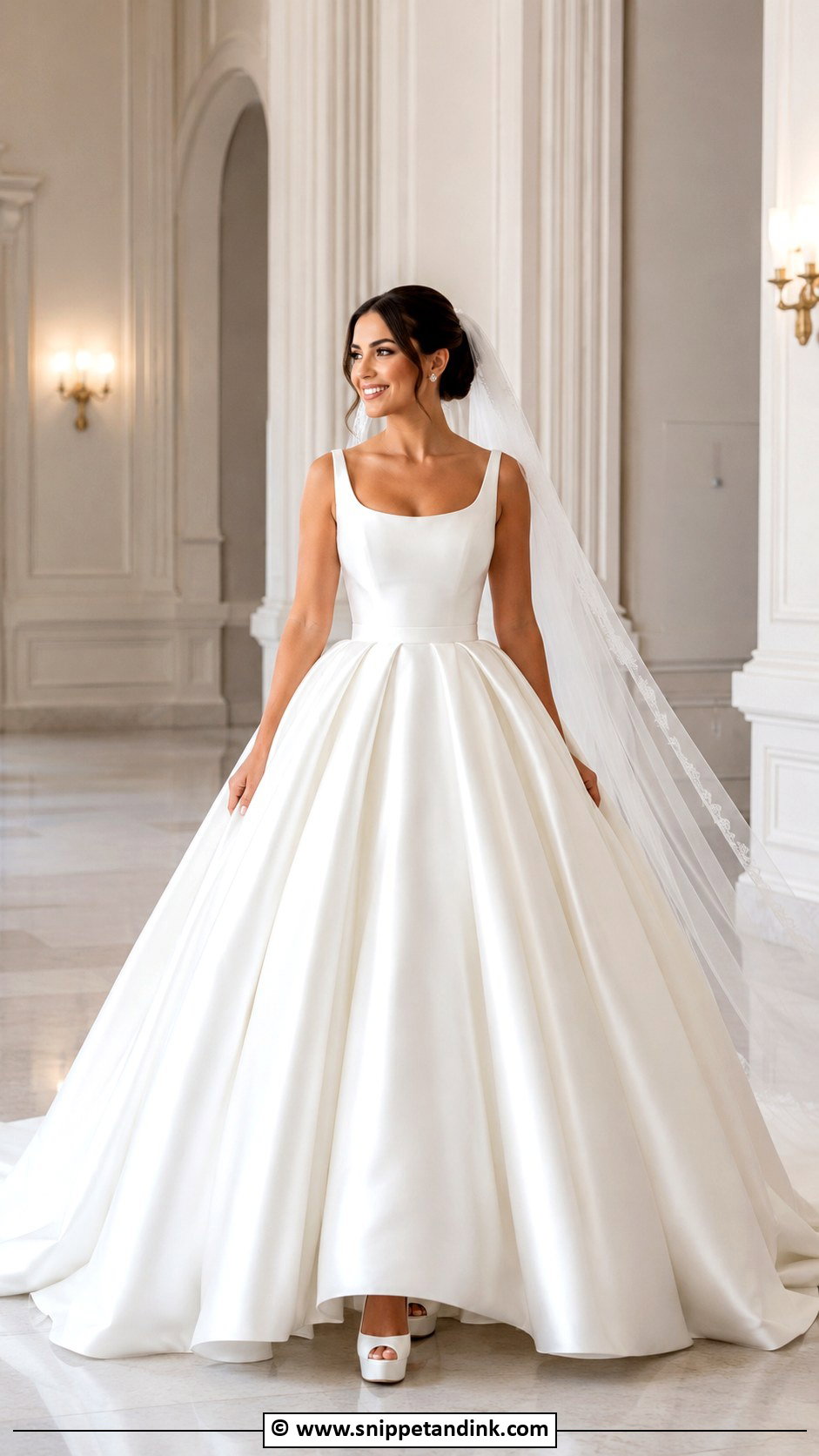
A ball gown still gives the biggest entrance. In 2024 they got cleaner, with fewer layers of beading and more oversized bows, applique and sculpted necklines. All that skirt changes how you move, so practise walking, sitting and turning at the fittings, and set the length so the hem just clears the floor in your shoes. Comfortable platforms, a cathedral veil and sparkling studs suit it. Keep the bouquet medium so it doesn’t compete with the skirt.
11. A Line Wedding Dress
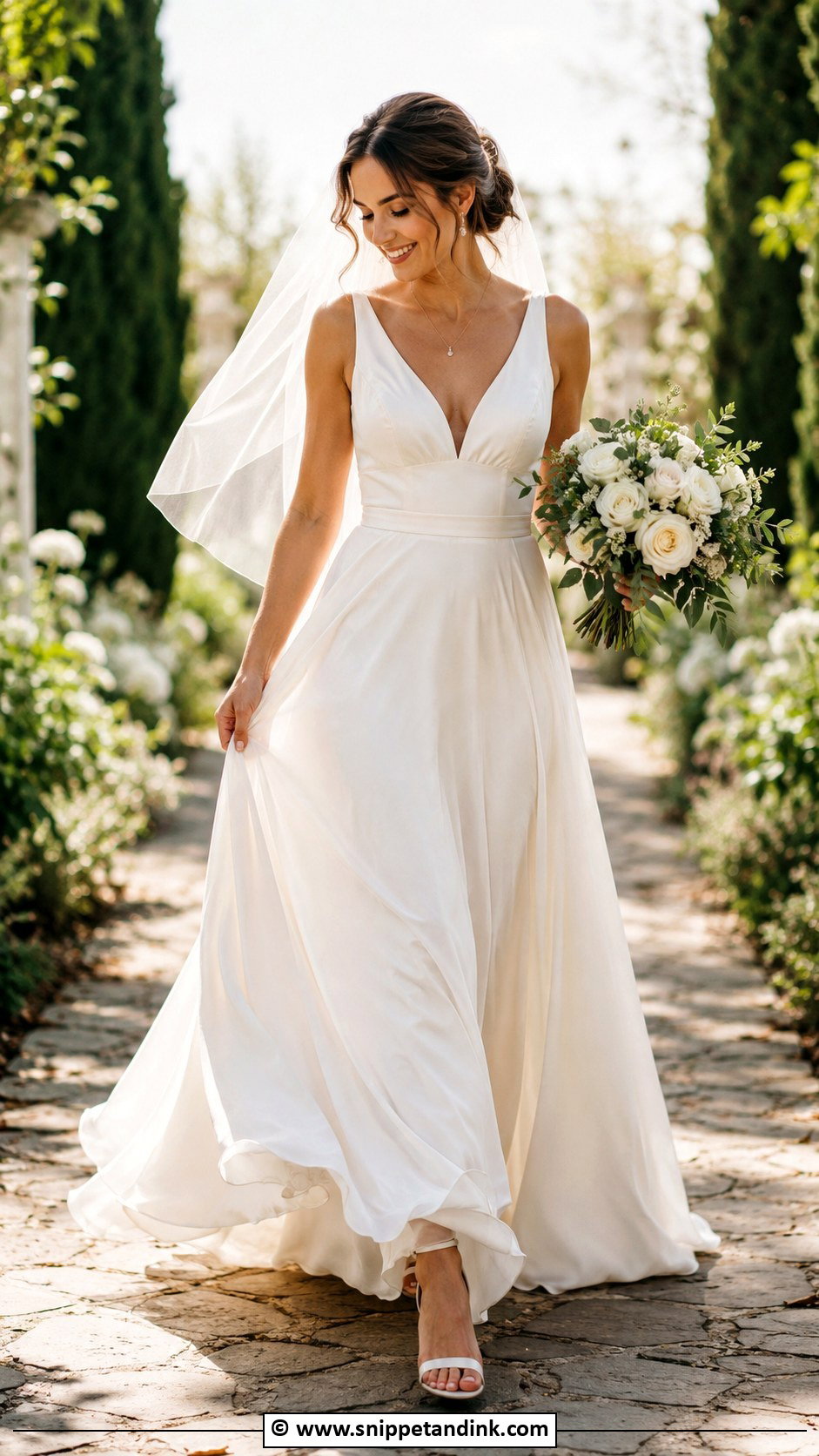
If you try one shape, try an A-line. It skims the waist and flows outward, giving you structure without weight, and suits outdoor ceremonies as easily as indoor receptions. Lace, satin, chiffon and tulle all hold the shape, so choose the fabric by mood. Ivory sandals, a soft veil and delicate jewelry keep it light. It looks good in motion, which helps in walking portraits.
12. Mermaid Wedding Dress
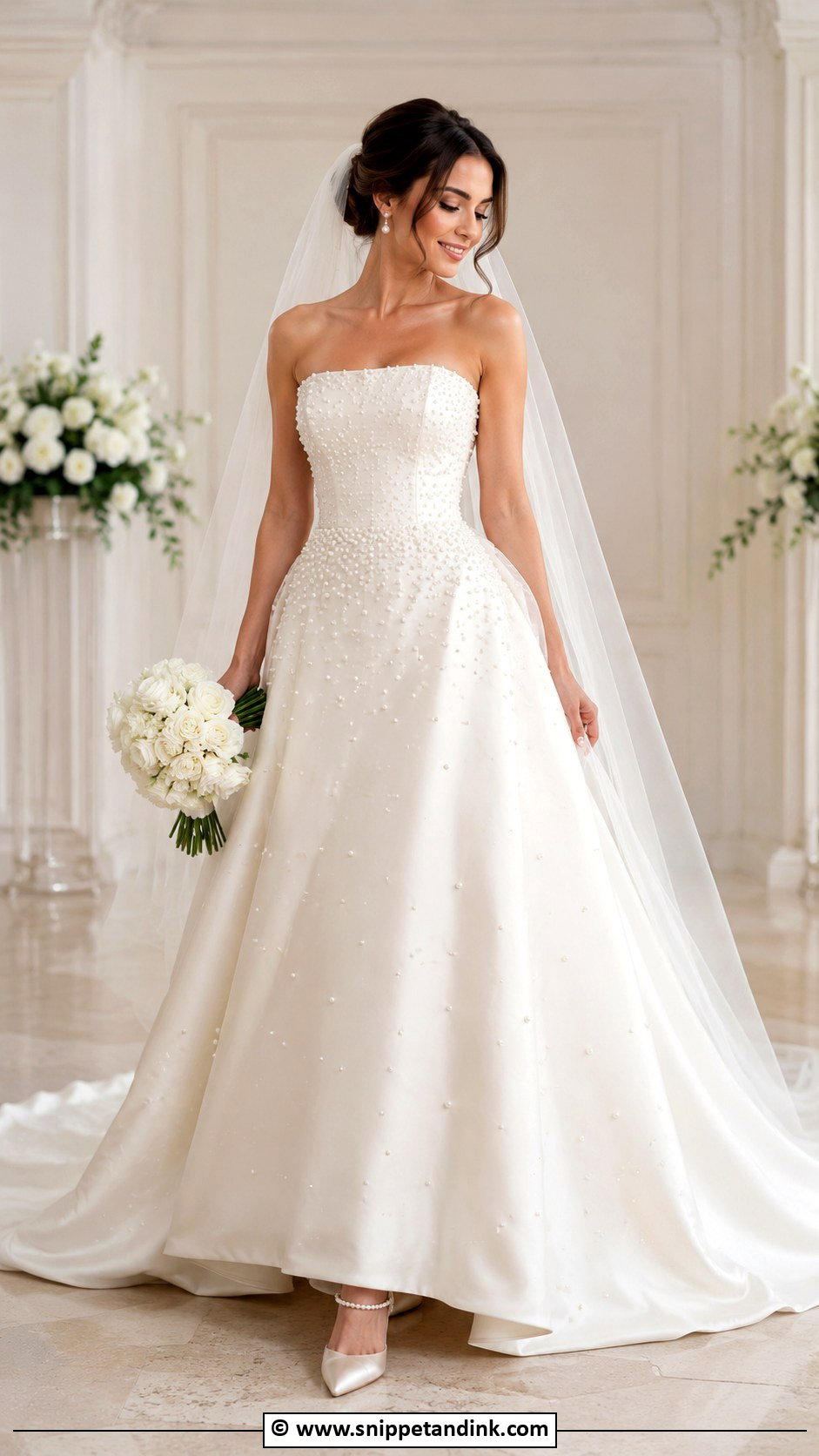
A mermaid wedding dress hugs through the bodice, waist and hips and flares near the knee or lower thigh. It is the silhouette most dependent on precise alterations, so book enough fittings and bring your actual shapewear and shoes each time. Choose jewelry that doesn’t fight the line, a long veil for softness and a sleek hairstyle. Want more movement? Stretch crepe, lace with flexible lining or a detachable overskirt make it easier to live in.
13. Sheath Wedding Dress
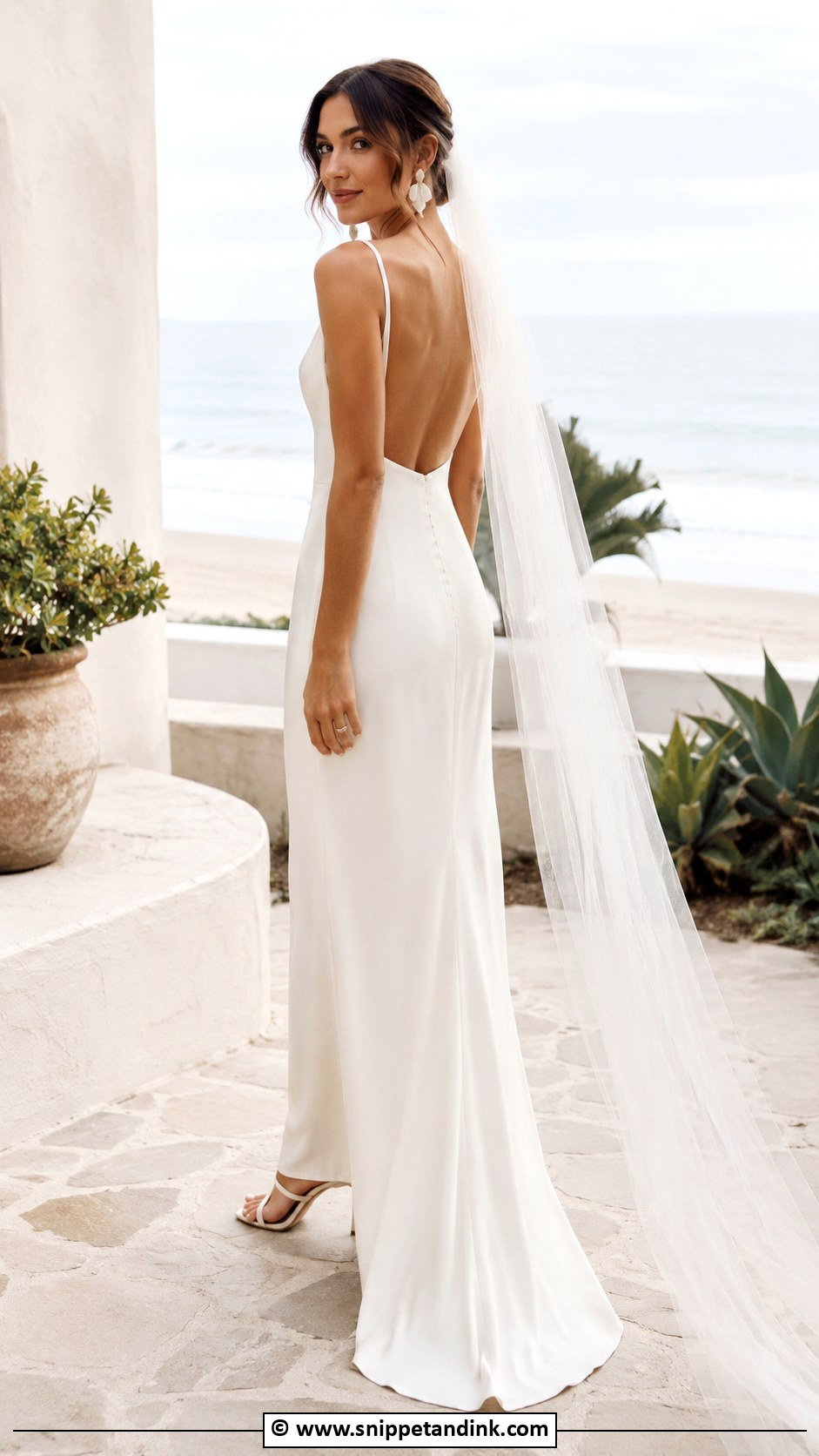
A sheath follows the body without a mermaid’s flare or a ball gown’s volume, so it’s light and easy for beach venues, courthouses and small city weddings. Crepe, satin and silk make it look polished. Strappy heels, a minimalist veil and sculptural earrings suit it. The fabric has nowhere to hide, so any pulling across the hip shows; I’d rather size up and take it in. A low back, side slit or subtle lace panel adds interest.
14. Column Wedding Dress
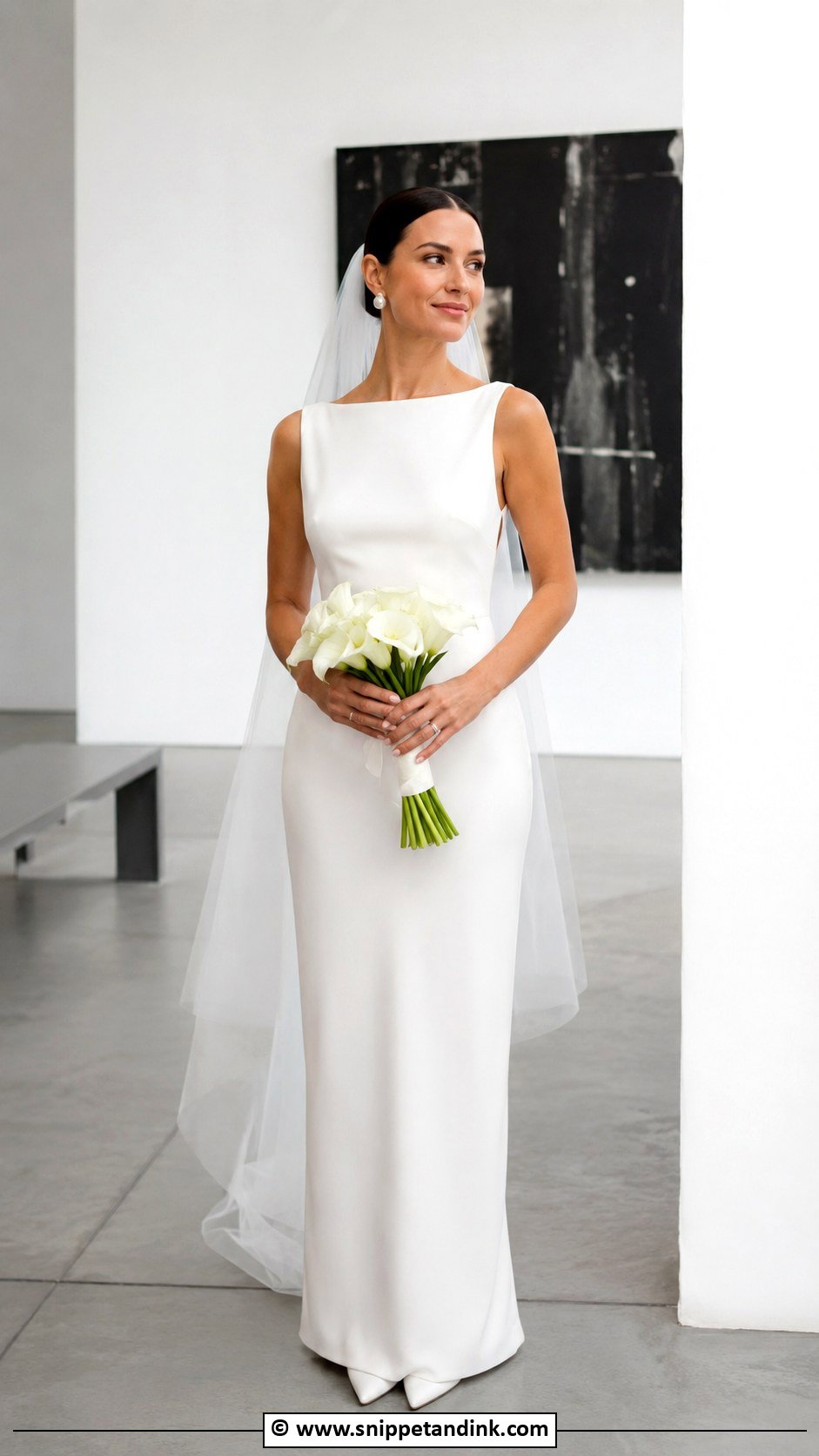
A column runs straight from neckline to hem and holds its shape more than a sheath, which makes it feel distinctly modern. Because the line is so simple, fabric quality is everything: smooth crepe, liquid satin or textured jacquard. Pointed pumps, a sleek veil and bold pearl earrings make it chic and bridal. Rooftops, galleries and civil ceremonies suit it. Keep the bouquet clean and the hair polished.


15. Minimalist Crepe Wedding Dress
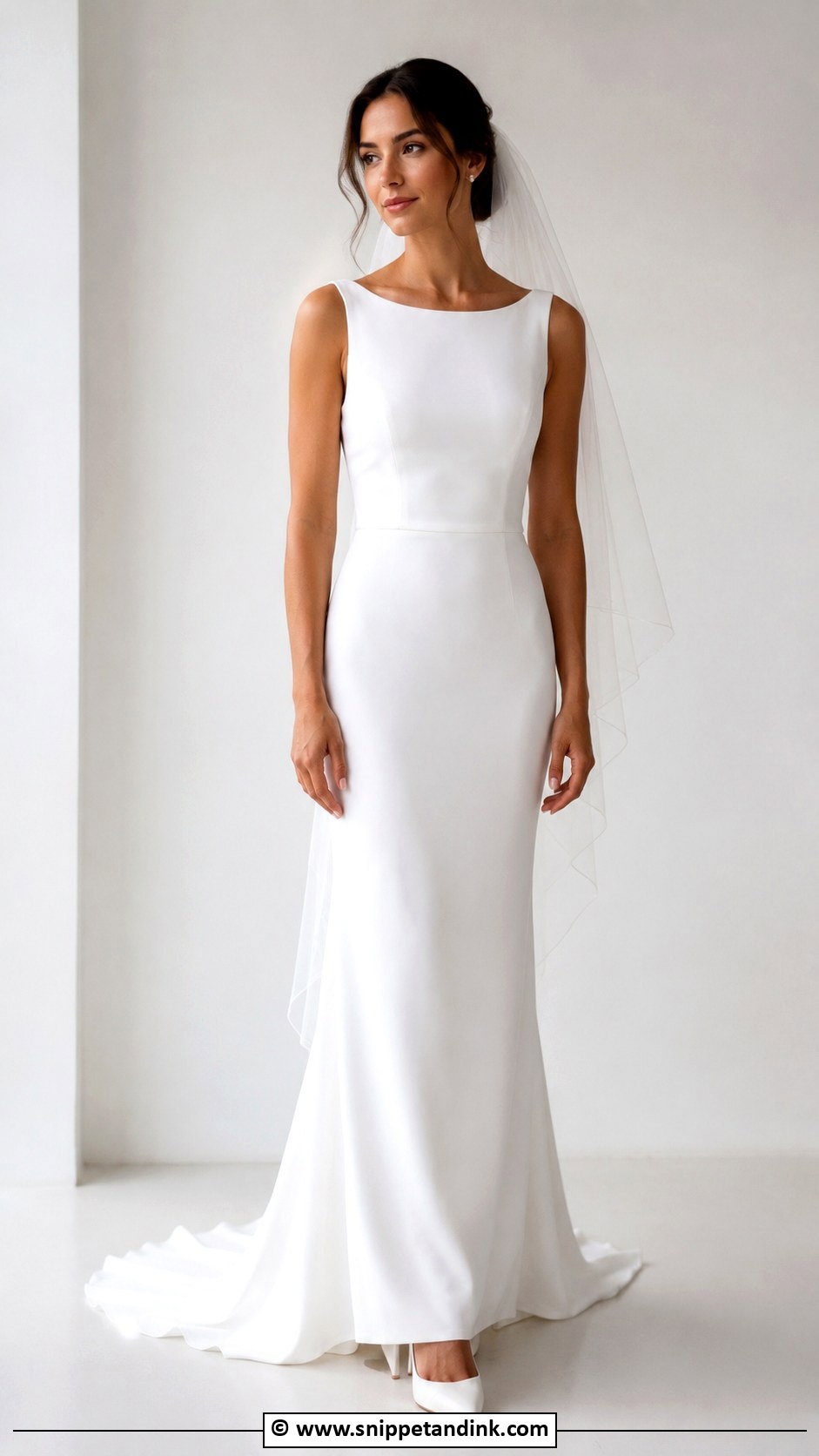
Crepe drapes with a slight weight and shows every seam and hem, which is why tailoring matters more here than with almost any other gown. A clean neckline, fitted waist and subtle train give quiet polish. Pearl studs, a low bun, pointed heels and a simple veil finish it. I steer brides toward crepe when they want no beading or lace at all and they’re comfortable letting the fit carry the look.
16. Pearl Wedding Dress
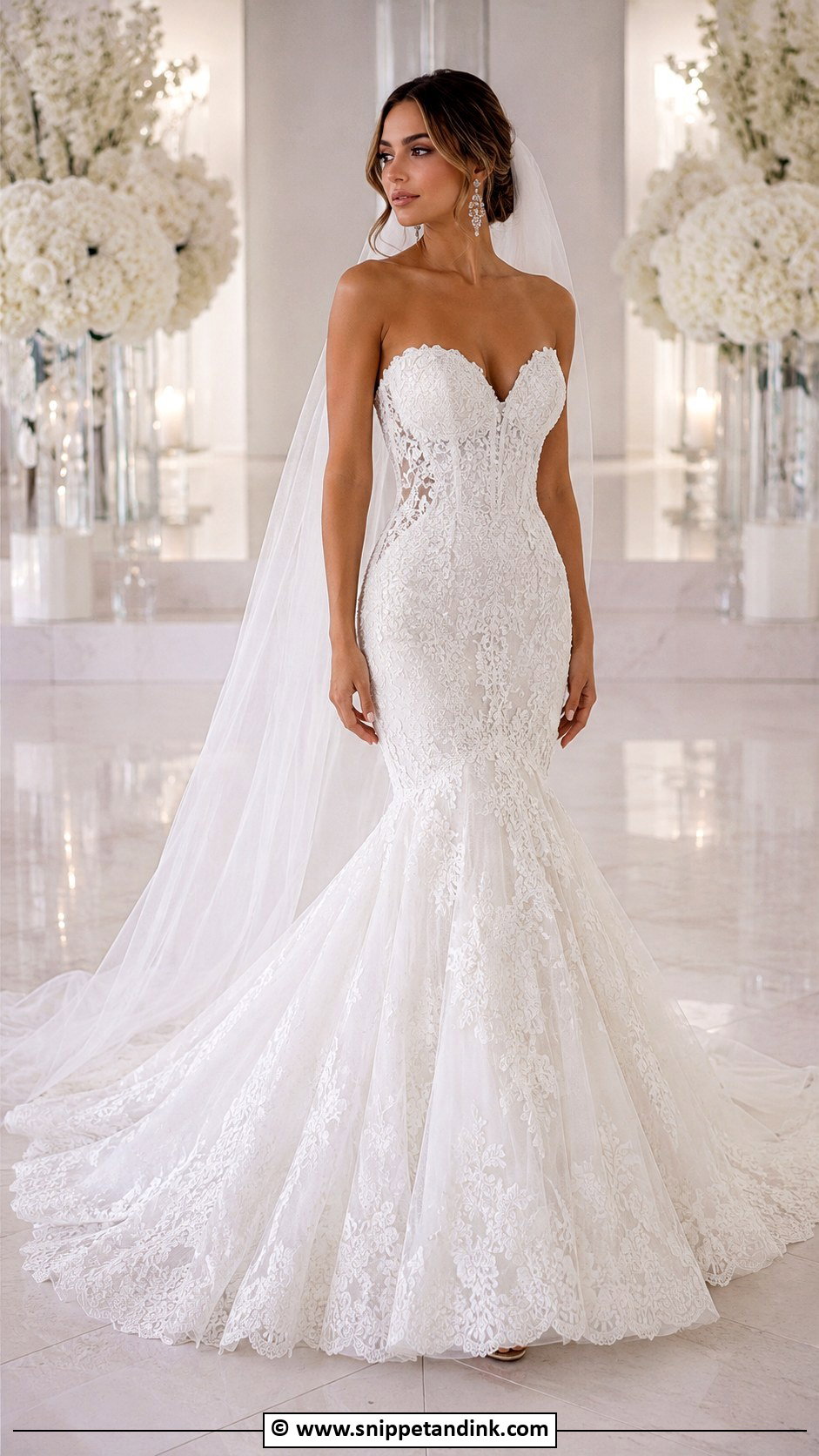
Pearls give soft shine rather than crystal sparkle. They can sit across the bodice, sleeves, veil or entire gown. If the gown has light pearl details, satin heels, pearl earrings and a clean veil echo them well; if it’s fully covered, keep accessories minimal. Pearl-heavy gowns are heavier than they look, so check the shoulders and straps for drag by the end of a fitting. Soft waves, glowing skin and a simple bouquet keep it fresh.
17. Bow Wedding Dress
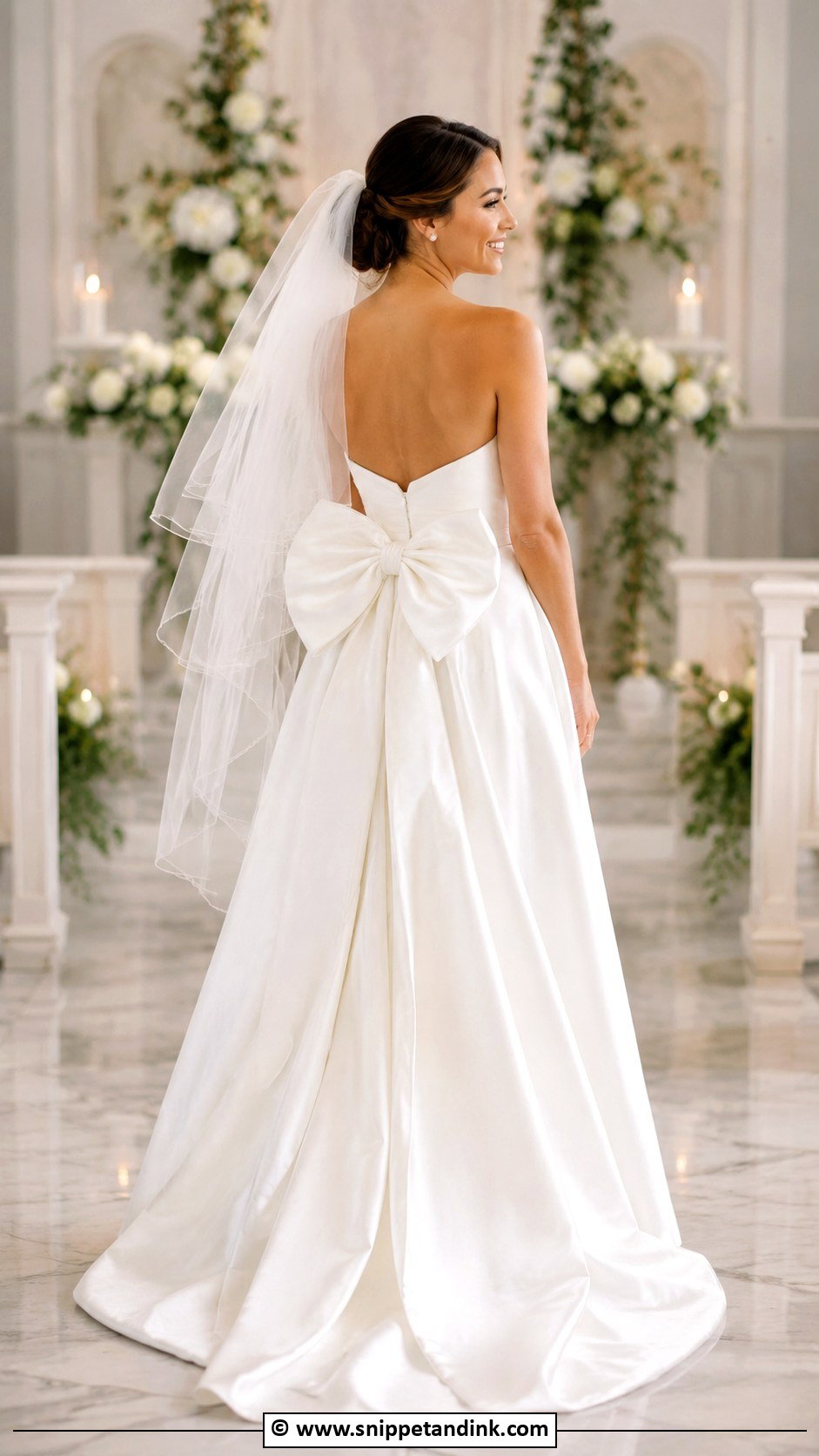
Bows were one of the defining details of that season, on the back waist, shoulder, neckline or as a train accent. My rule is one main bow, not several fighting each other. Satin and mikado hold a crisp loop; softer fabrics droop by evening. Choose simple heels, small earrings and a veil that doesn’t bury the bow. It adds charm and memorability without any embellishment.
18. Wedding Dress With Detachable Sleeves
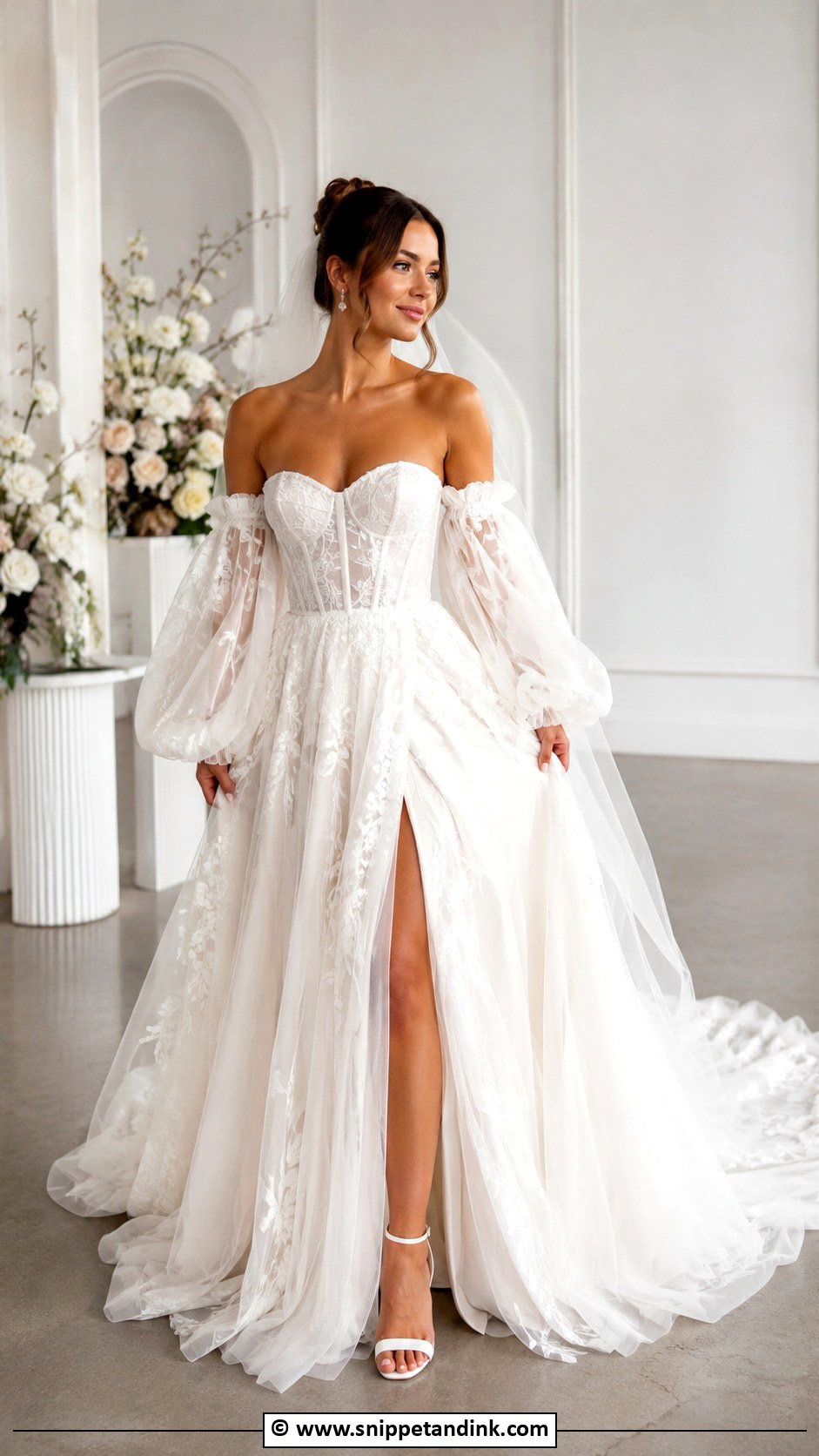
Detachable sleeves give you two looks without two gowns. Wear them for the ceremony, portraits or a formal entrance, then take them off for the reception. They suit strapless, corset and sweetheart gowns, in lace, tulle, satin or puffed organza. Test the attachment points by raising your arms and hugging, because sleeves that hang off a strapless bodice can pull it down. Comfortable heels, a soft veil and jewelry that works with both versions complete it.
19. Wedding Dress With Overskirt
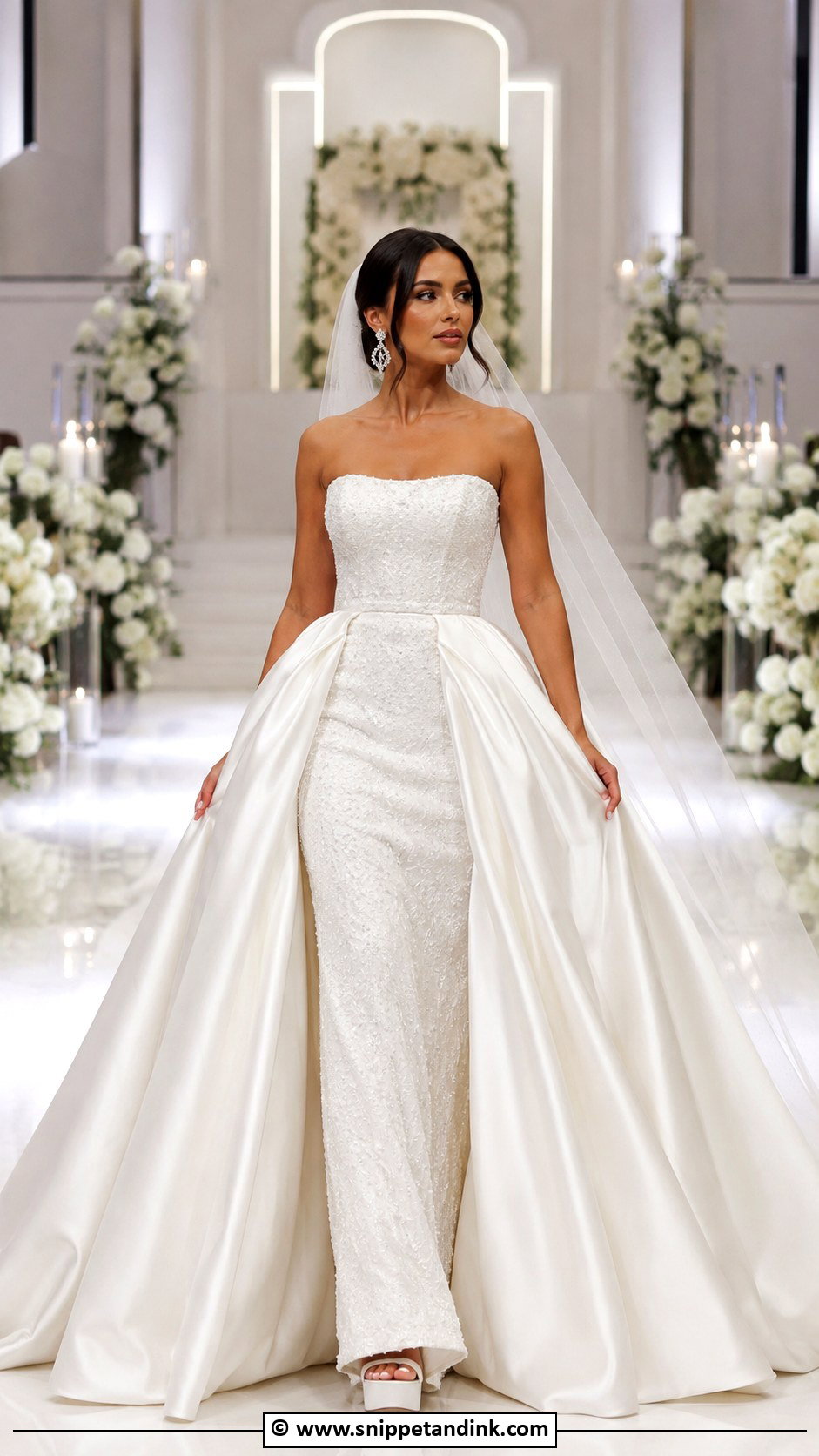
A wedding dress with an overskirt gives you drama for the ceremony and ease for the party. The overskirt fastens over a slimmer gown, turning it into a ball gown or full A-line; take it off later to reveal a sheath, mermaid or column. I’d practise removing it with a bridesmaid before the day, and check that the waistband fastenings don’t show through the dress underneath. Platform heels, statement earrings and a veil matched to the train length finish it.


20. Short Wedding Dress
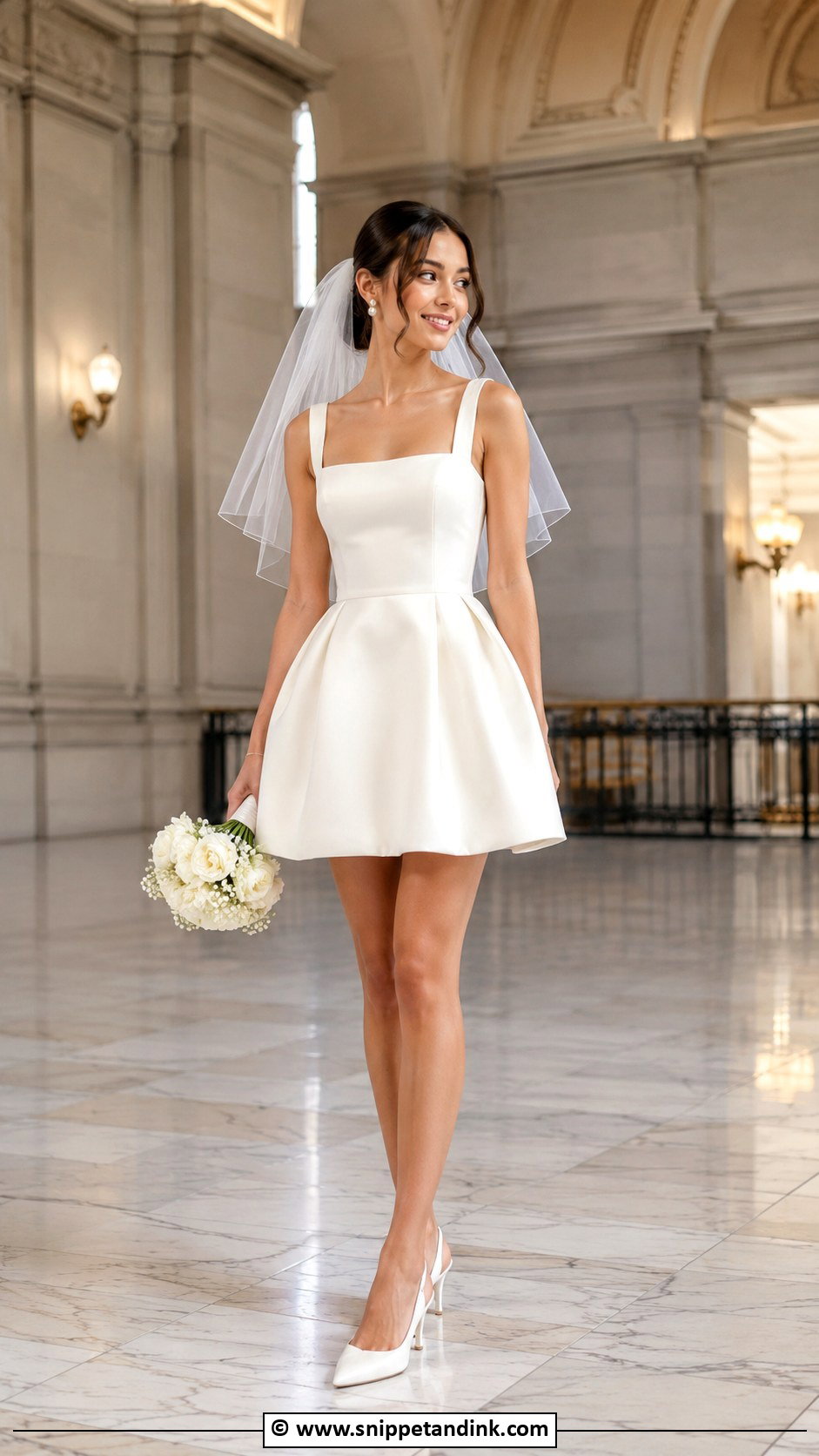
Short dresses feel bridal through fabric, fit and styling: structured satin, lace, feather trim, puff sleeves or a tailored mini. Slingback heels, pearl earrings, a short veil and a small bouquet make it unmistakably a wedding outfit. Sit down in it before buying, since a short hem rides up more when seated. It suits civil ceremonies, receptions and second looks, and you’ll move freely all evening.
21. Tea Length Wedding Dress
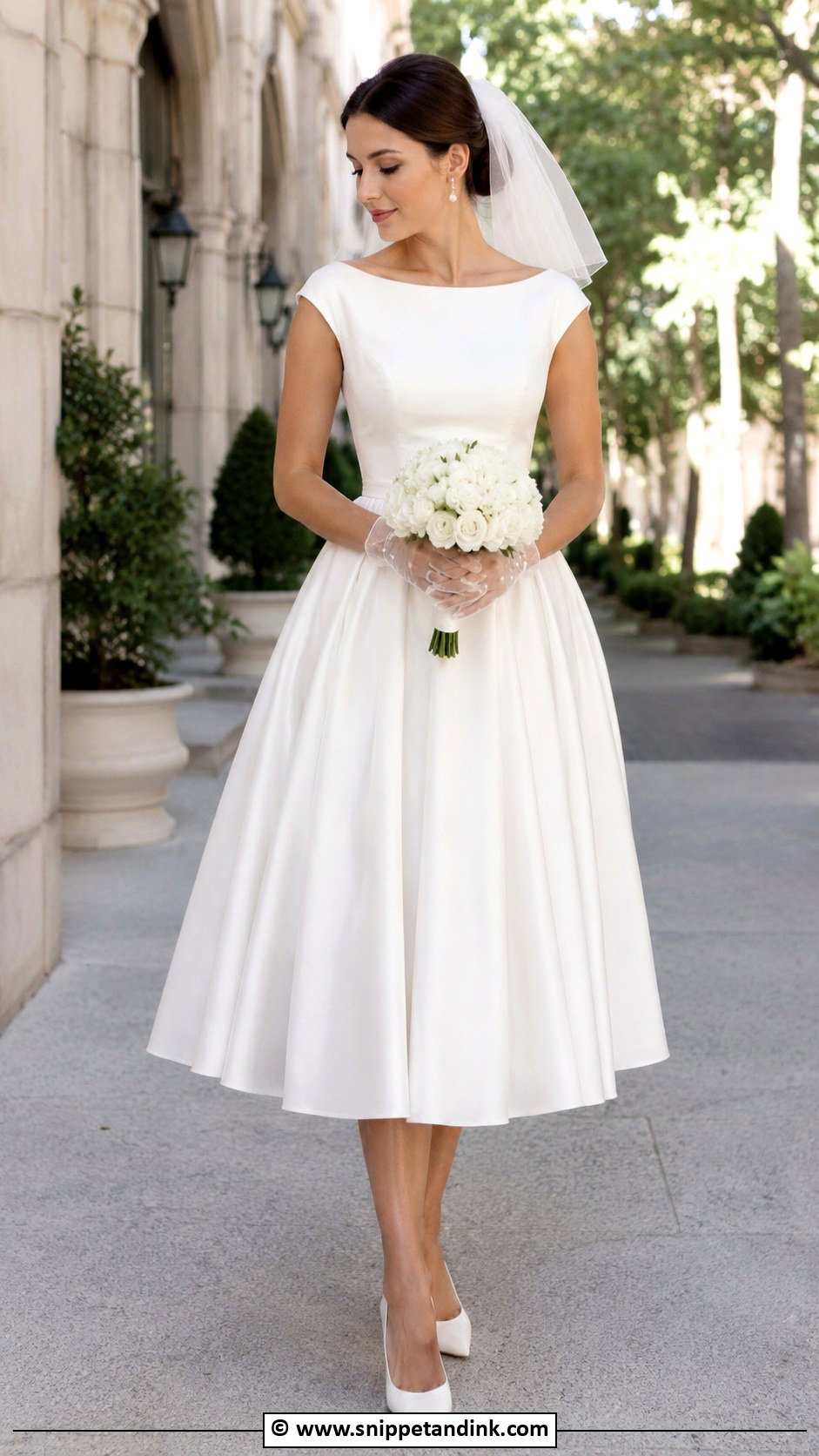
Tea length falls between knee and ankle and has a vintage feel that’s still easy to wear. A fitted bodice and full skirt in structured satin or tulle suit it best. Pointed pumps, a birdcage or short tulle veil, pearl earrings and a neat bouquet finish it. The hem position decides everything: it should end at the narrowest point of the calf, so I mark it standing in your actual shoes. Courthouse and garden weddings suit it.
22. Bridal Jumpsuit Wedding Outfit
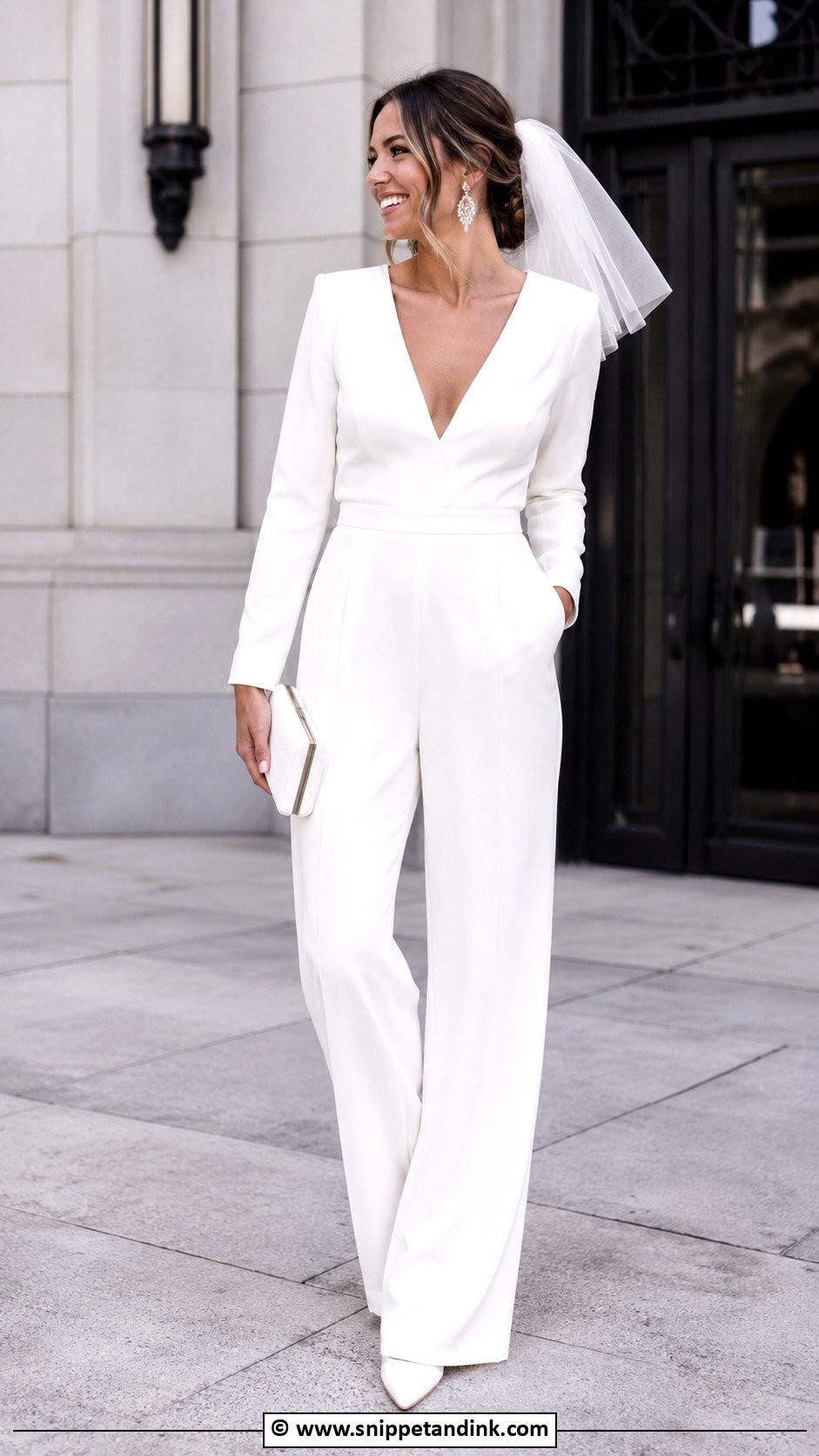
A bridal jumpsuit works for a courthouse ceremony, a rehearsal dinner, a reception change or the whole day. A tailored white jumpsuit with wide legs, a fitted waist and a strong neckline looks sharpest in crepe or satin. Pointed heels, statement earrings, a structured clutch and a short veil or hair bow make it bridal. Tailoring at the torso and hem matters more than with a dress, and check you can get in and out of it alone for bathroom breaks.
23. Two Piece Wedding Dress
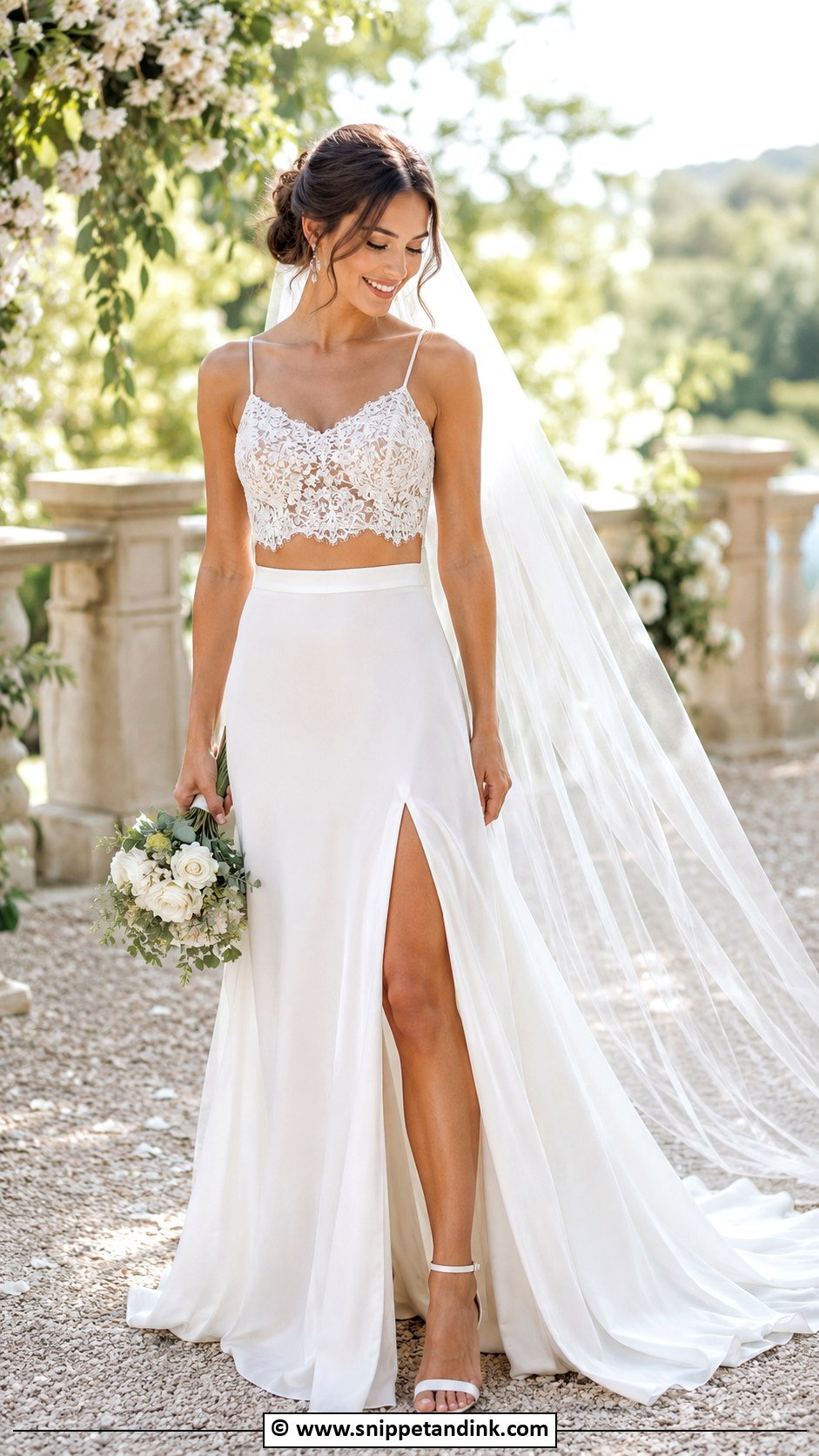
Two-piece bridal looks offer mix-and-match flexibility: a crop top and skirt, a lace blouse and satin skirt, or a structured bodice over a flowing bottom. The pieces have to feel connected through fabric, colour or detail, or it reads as separates. Check the waist stays put when you sit and pose; a small hook joining the top to the skirt waistband stops any gap. Clean heels, delicate earrings and a veil that complements the neckline finish it.
24. Floral Applique Wedding Dress
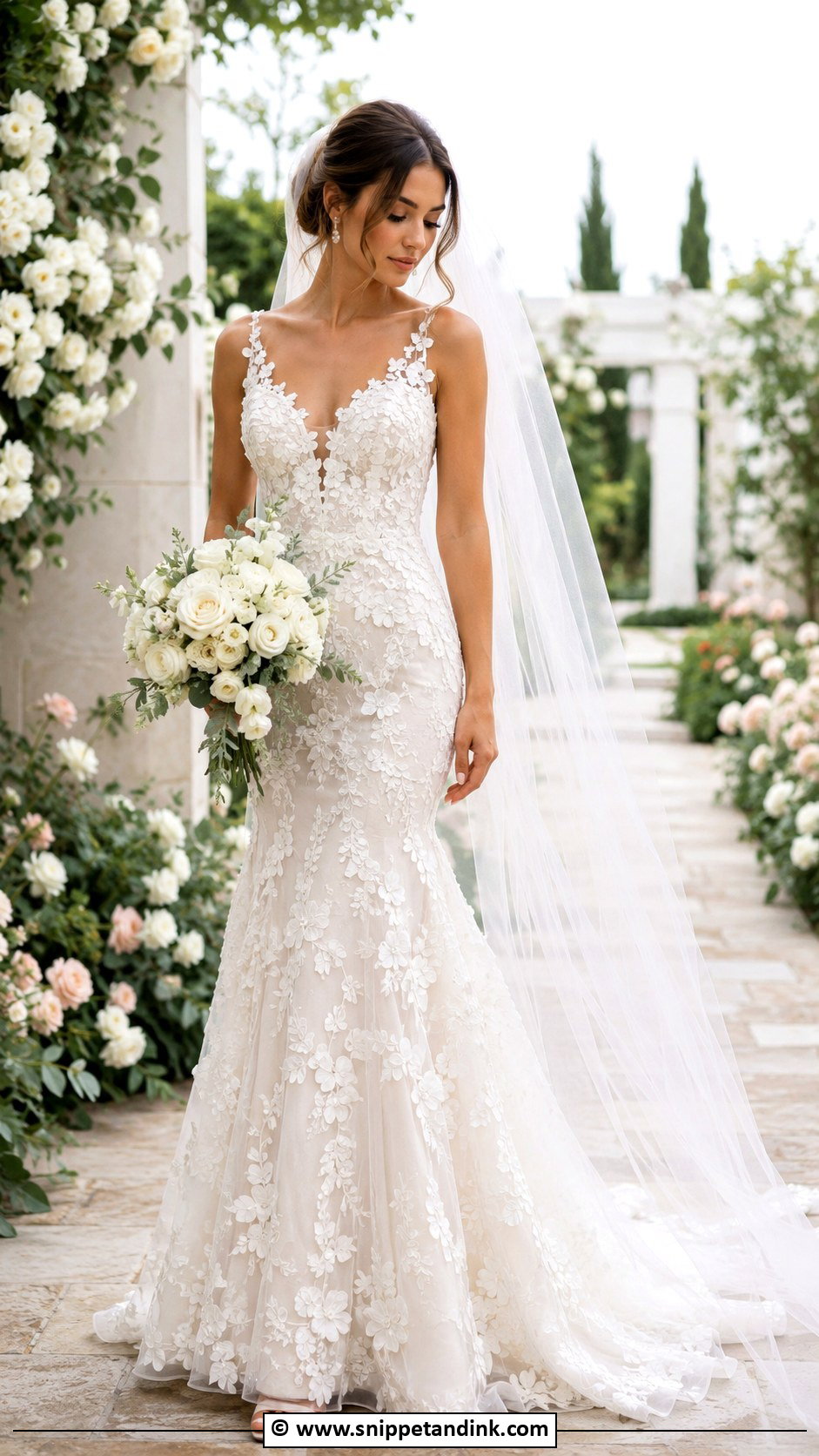
Raised flowers, embroidery and 3D petals give a gown depth and connect naturally with an outdoor venue. The applique gown can be fitted, A-line or ball gown, depending on how much drama you want. Soft heels, a sheer veil and simple jewelry keep the applique the focus. If the flowers are bold, choose a smaller, cleaner bouquet. A soft updo or loose waves suit it. Check how securely the petals are stitched, because loose ones get crushed when you sit.

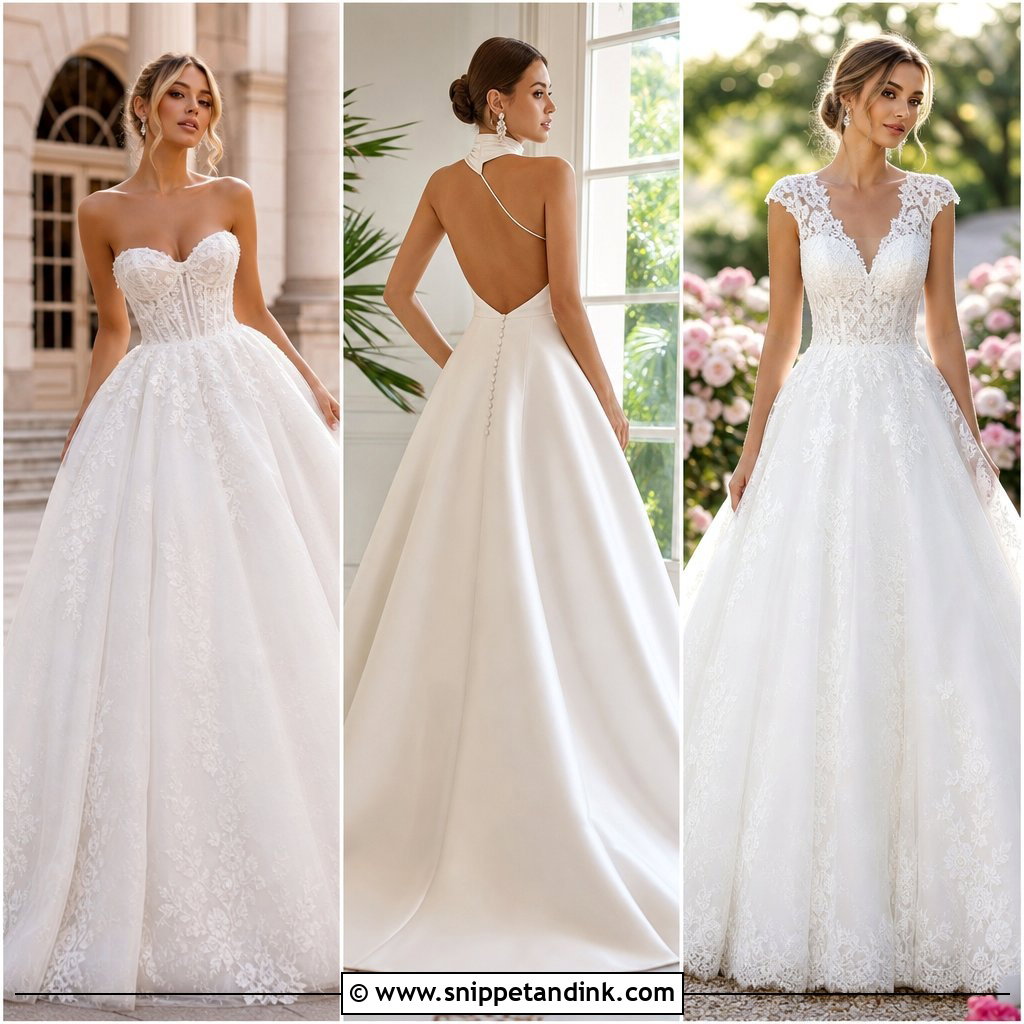

25. Tulle Wedding Dress
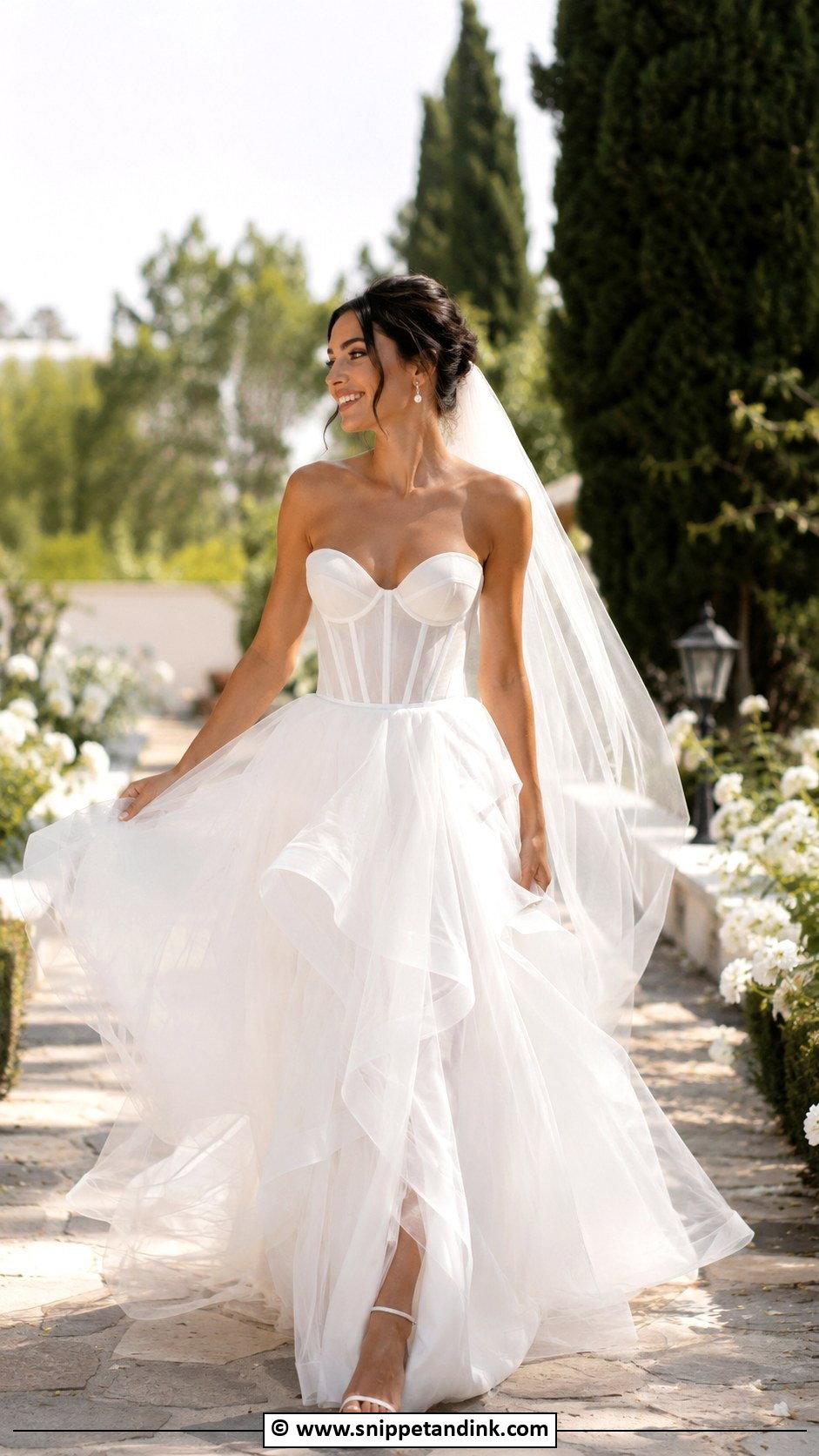
Tulle is light and airy and moves beautifully, in layered skirts, sheer sleeves, overlays or dramatic trains. Delicate sandals, crystal or pearl earrings and a veil as soft as the fabric suit it. With many layers, keep the bodice structured so the shape doesn’t swamp you. Tulle snags on rough surfaces and shoe buckles, so I check the inside hem for catches after every fitting. A little sparkle, applique or a blush undertone adds dimension.
26. Organza Wedding Dress
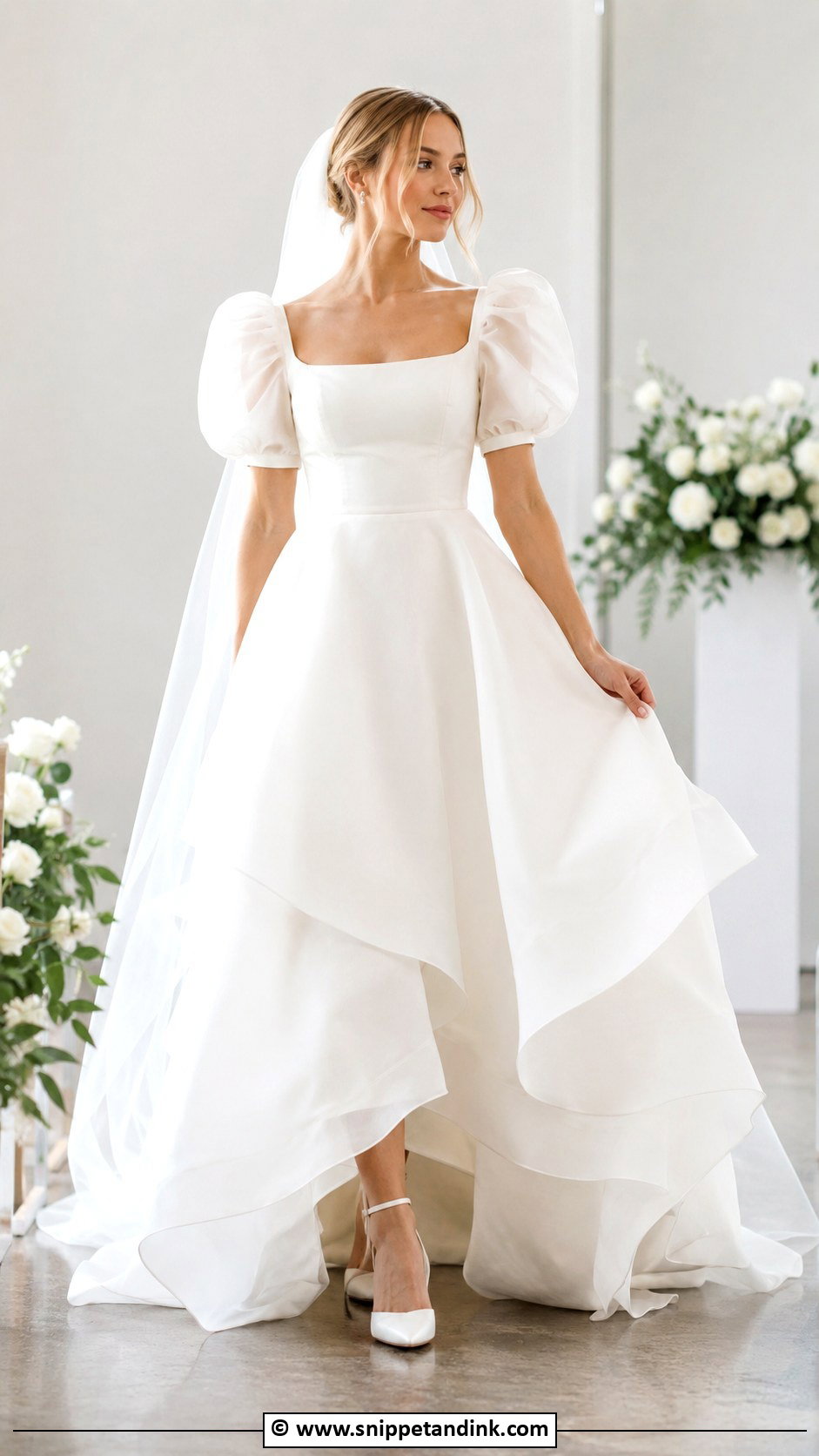
Organza gives volume without weight. It’s crisp and sheer, holding shape in full skirts, puff sleeves and sculpted overlays. Satin heels, a clean veil and minimal jewelry let its lightness show. The fabric catches air as you move, which makes walking photos lively. Because it’s transparent, the lining and seam finishing are on show; look closely at both before you buy. It’s my pick for drama in warm weather.
27. Colored Wedding Dress
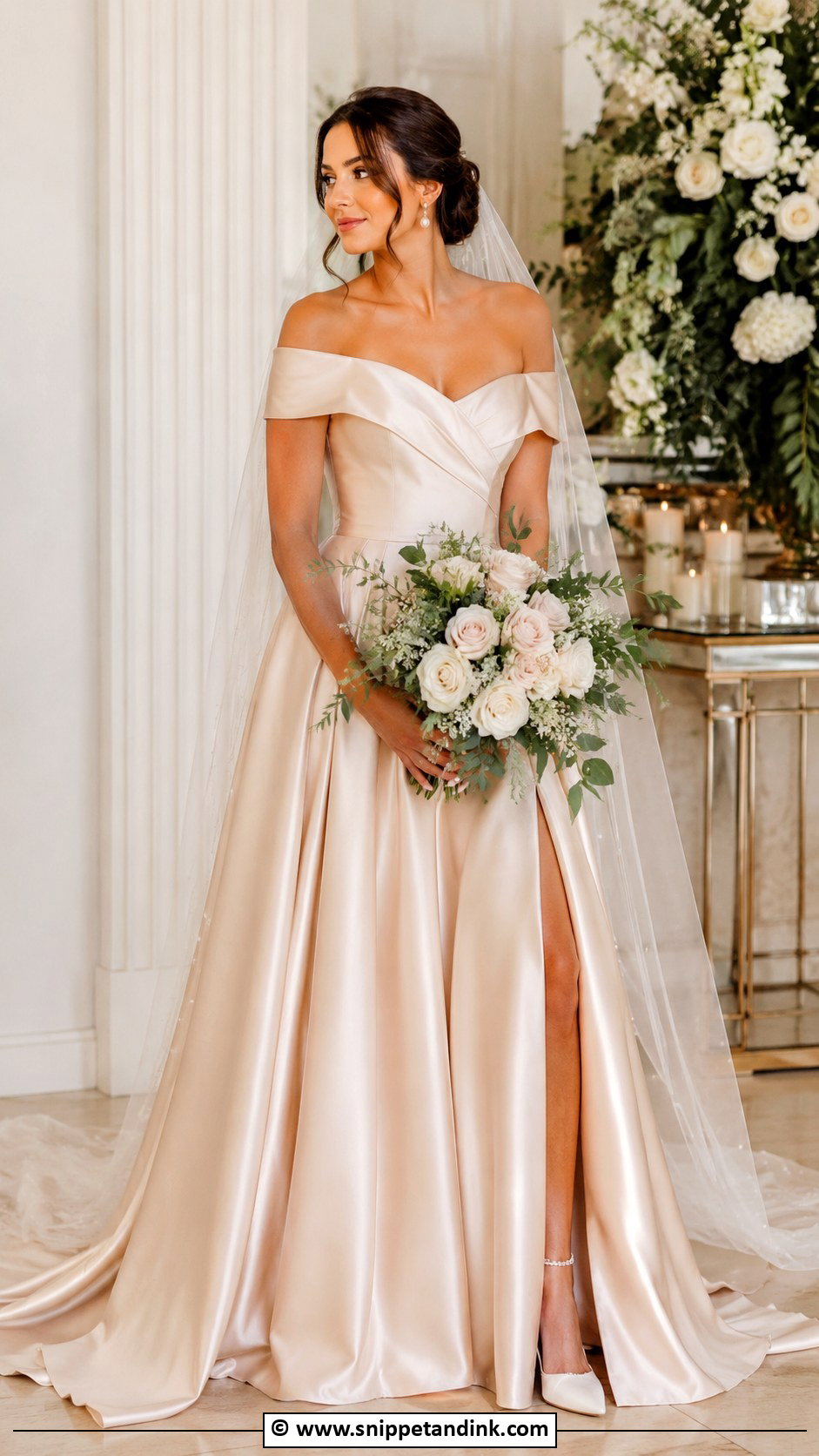
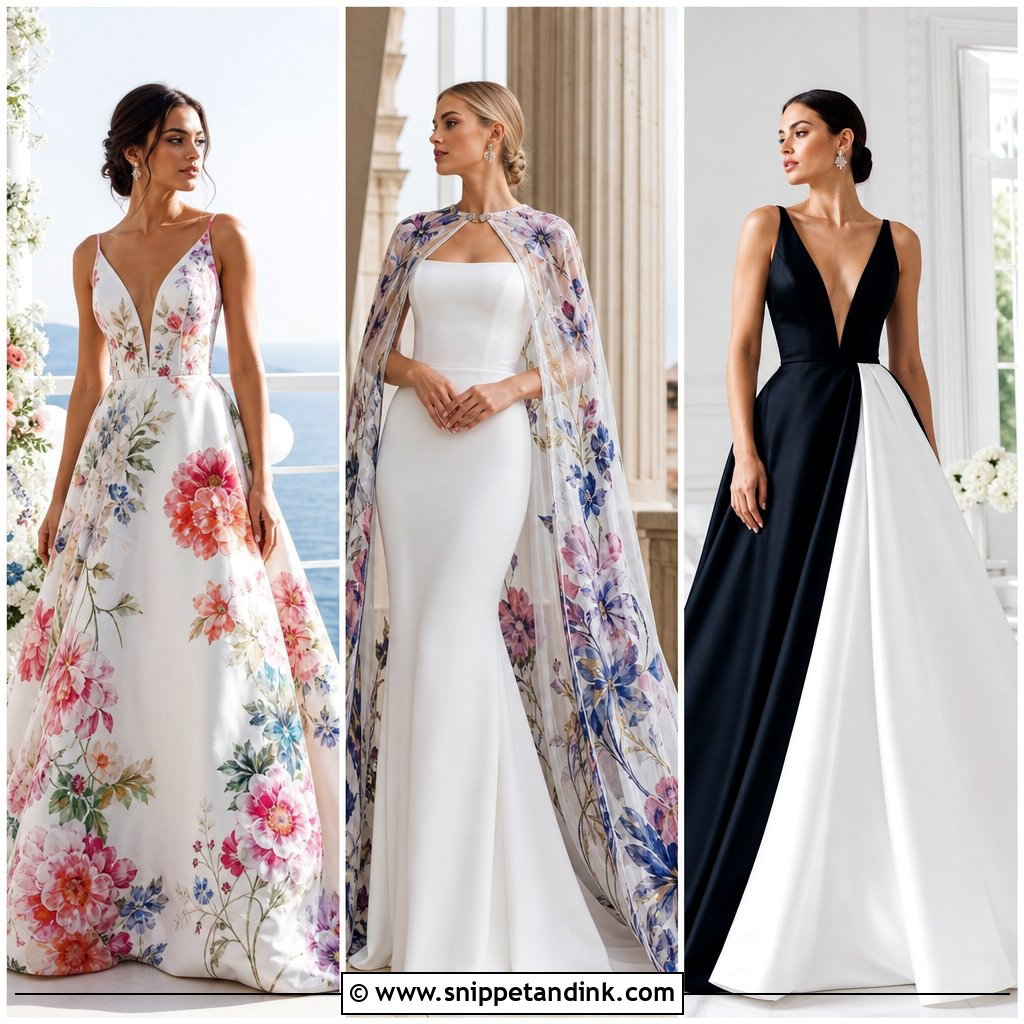
Colour gives a gentler or more personal alternative to bright white. Champagne, blush, pale blue, buttercream and soft silver were the popular choices. A champagne satin gown with ivory heels and pearls feels warm; blush tulle with a sheer veil feels romantic. Colour can add warmth to many skin tones, but always judge it in daylight, since boutique lighting is often warm and can flatter almost any tone. Match makeup to the dress undertone.
28. Black And White Wedding Dress
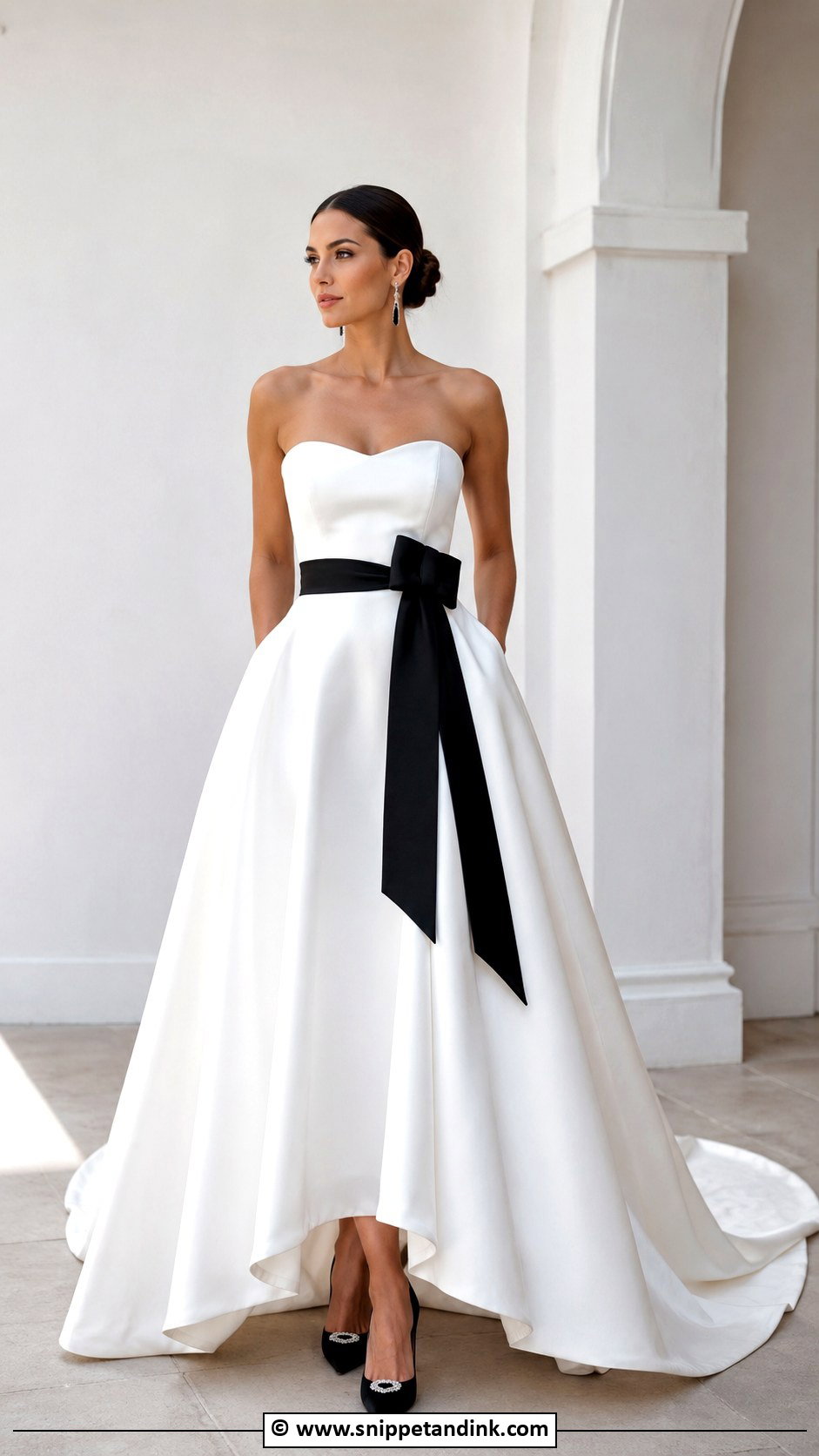
Black and white is bold and still elegant when the contrast is controlled. It can be a black bow, gloves, floral embroidery, a sash or trim on a white gown. White or black heels, sleek earrings and a clean hairstyle keep it refined, and a simple bouquet of white flowers and greenery stops it from becoming busy. Avoid adding other details; the contrast is already doing the work. Ask whether the black trim is colourfast, since spilled drinks can make dark dye bleed into white.
29. Reception Wedding Dress
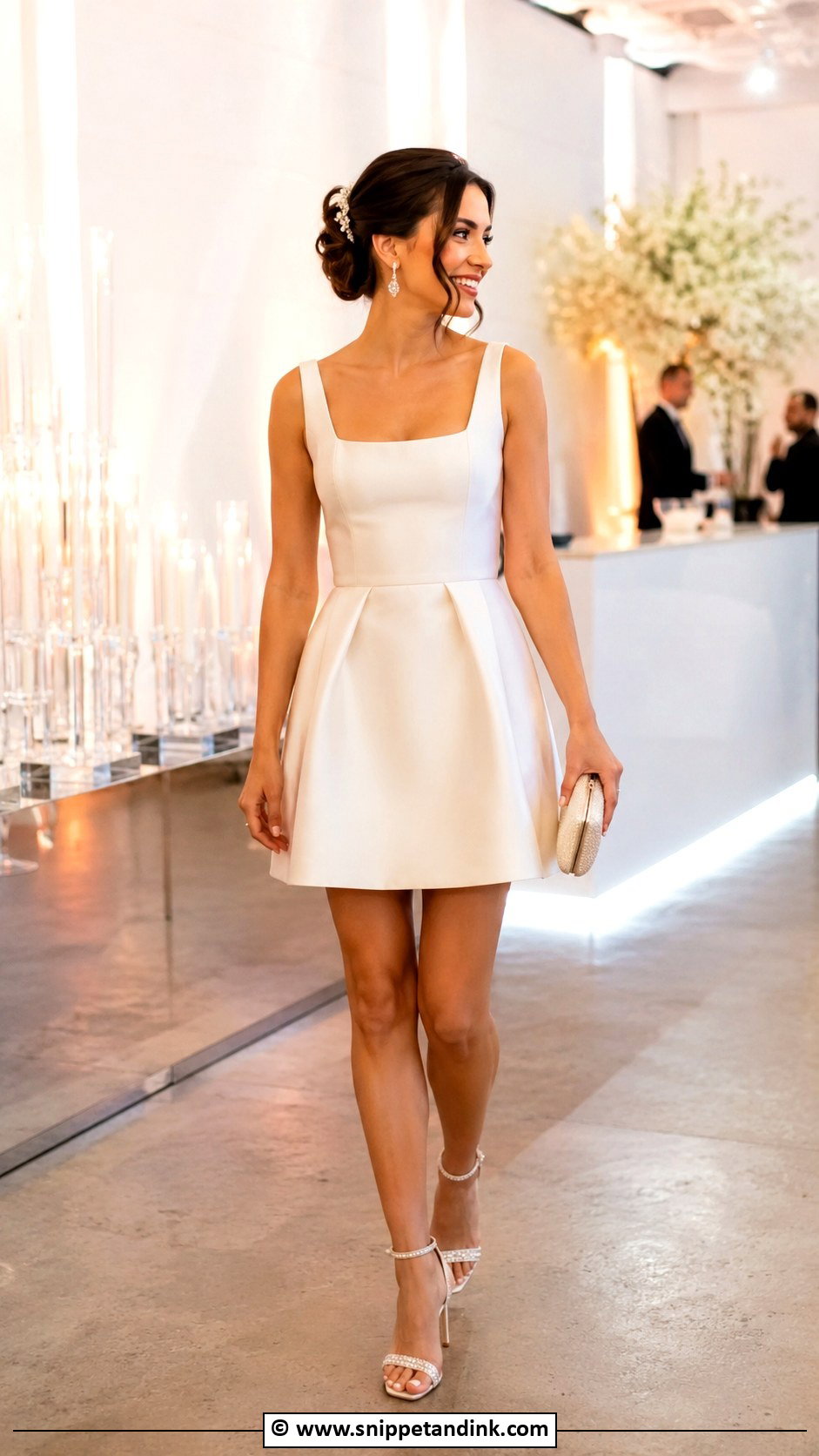
The reception dress should be lighter and easier to dance in: a mini, slip, feather-trimmed dress or fitted satin gown. Comfortable heels, sparkly earrings and a small clutch keep it festive and bridal. If the ceremony gown was formal, this one can show more personality, with a shorter hem, playful texture or a sleek silhouette. Book it into your alteration schedule as well; it needs to fit just as well in photos. Plan where the main gown goes while you’re dancing.
30. Courthouse Wedding Dress
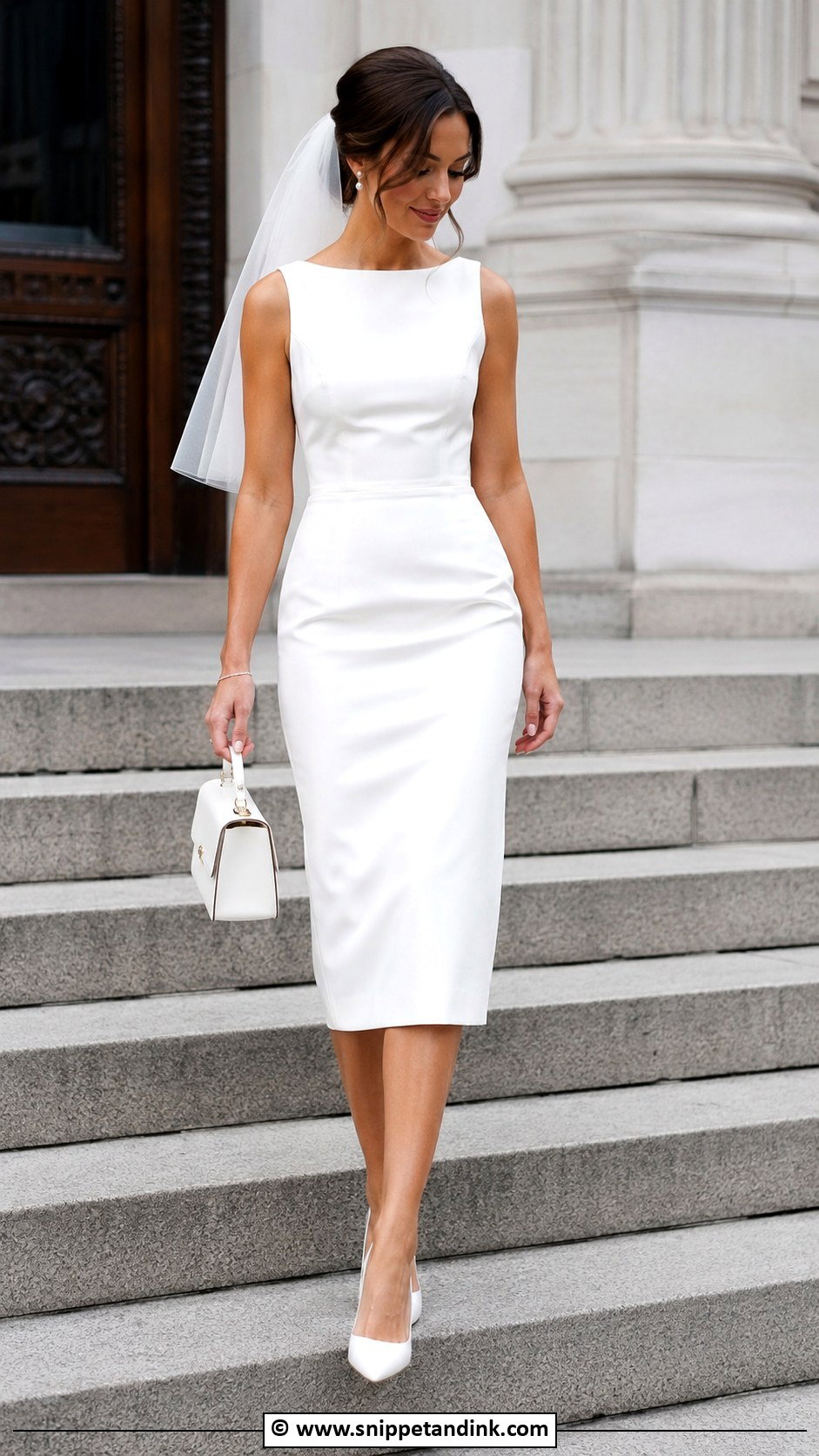
For a courthouse ceremony, a tailored midi, sleek mini, simple column gown, or white suit-style dress all work. Pointed heels, a structured handbag, pearl earrings and a short veil or hair accessory make it bridal. Photos usually happen on steps and city pavements, so choose a length and heel you can walk and climb in. Crepe, satin and jacquard look chic in a small setting. Fit and good accessories carry the day.
Buying a 2024 Gown Off the Sample Rack or Secondhand
Because these gowns are a couple of seasons old, many now turn up as discounted samples or pre-owned dresses. That can save a lot, but a used gown needs a closer inspection than a new order.
- Look at the underarms, neckline and inner bodice in daylight for makeup and deodorant marks. Most come out with professional cleaning, but ask the shop before you pay.
- Turn the hem up. Sample gowns get dragged across fitting-room floors, and a grey or frayed hem may need replacing or shortening.
- Run the zip and every button loop, and count missing beads or pearls along the seams.
- With a pre-owned gown, ask what size it was ordered in and what alterations were made. A hem that has been cut can’t be lengthened again, and seams that were taken in have less allowance to let out.
- Budget for alterations and cleaning on top of the price. A cheaper gown can still need the same seamstress time as a new one.
Sample sales and secondhand gowns are usually final sale, so try it on, sit down in it and lift your arms before you commit. If it’s a near fit, take the measurements to a seamstress for an honest opinion first.
A Trend Year Is Only the Menu
A trend year only gives you the menu. Bridal fashion can be classic, modern, romantic or bold, but the right dress depends on how the whole outfit works with your venue, comfort, season, photos and movement. One bride wants clean satin; another loves floral applique, a dramatic overskirt or a short party dress. Use the looks above as a starting point, then focus on fit, fabric and styling. When the dress feels like you, the trend becomes secondary.
You'll Like These Ideas:









Leave a Reply