
Brides walked into my fitting room in 2025 asking for waists. Basque and drop-waist silhouettes led the season, alongside full ball skirts, corsetry, dimensional flowers and bows big enough to see from the back row, while lace, satin and clean architectural shapes never went away. A fashionable gown that fights your venue or your proportions still isn’t the right one, though. For each style below I’ve added what I’d pair with it and the fitting detail that decides whether it works on the day, from ballroom entrances to barefoot ceremonies on a lawn.
Matching Fabric Weight to the Month You Marry
Half the comfort problems I see on wedding days have nothing to do with the silhouette. They come from wearing the wrong fabric for the season. Before you shortlist a style from this list, think about the temperature of your venue at three in the afternoon.
- High summer, outdoors: chiffon, organza, light tulle and soft crepe breathe. Heavy mikado and layered satin trap heat, and a fully boned bodice gets warm by the second hour.
- Spring and early autumn: almost anything works. Silk, lace and lighter satins are at their best when you won’t sweat through the lining.
- Winter or air-conditioned ballrooms: mikado, duchess satin and long lace sleeves feel right, and you’ll be grateful for them during outdoor photos.
- Humid or coastal venues: bias-cut silk shows damp patches and clings, while tulle can go limp. Crepe with a little stretch copes best.
If you have your heart set on a heavy gown for a hot day, plan around it: a cooler ceremony time, shade for photos, and a lighter reception change if the dress allows it.
1. Basque Waist Ball Gown
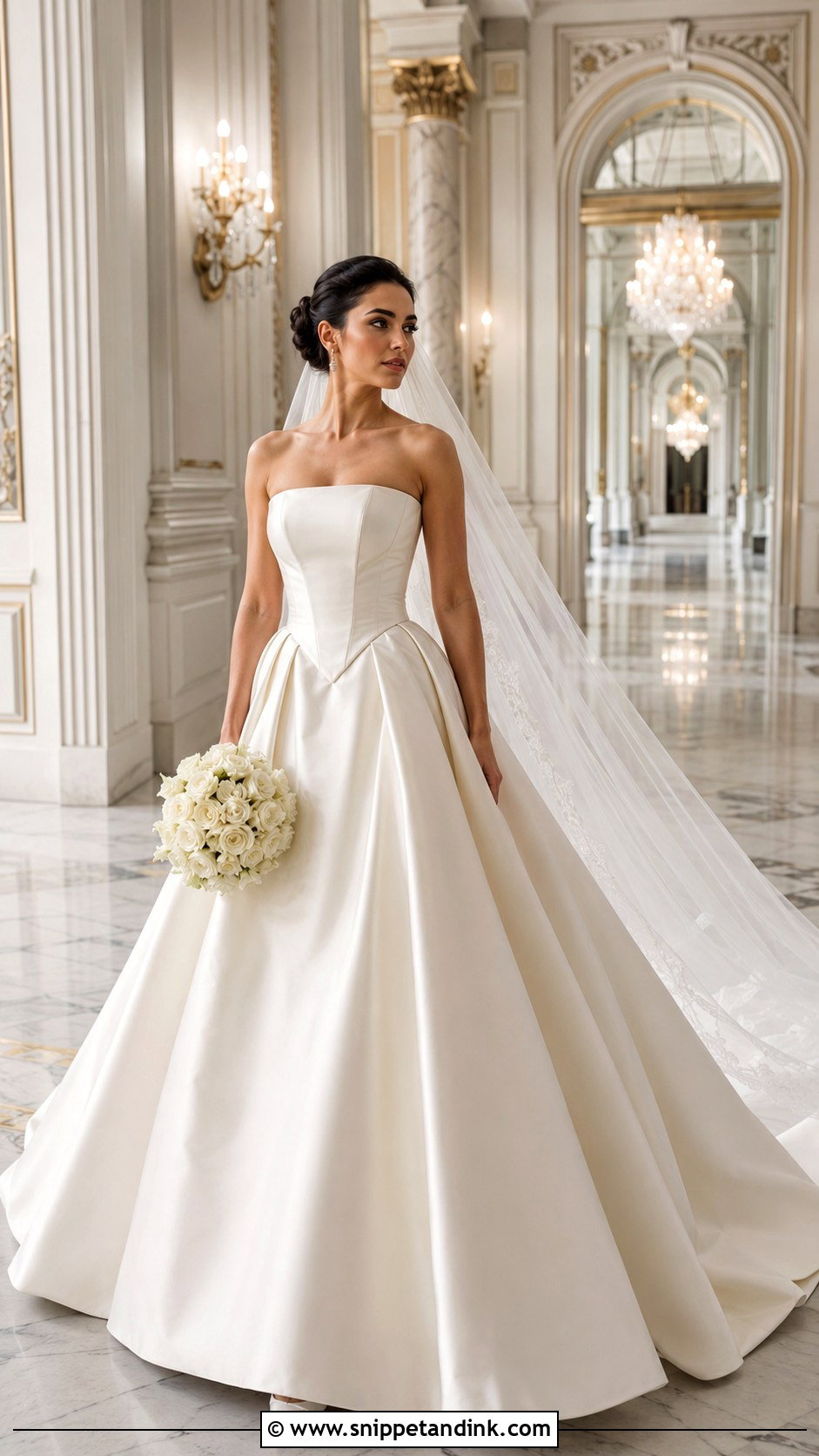
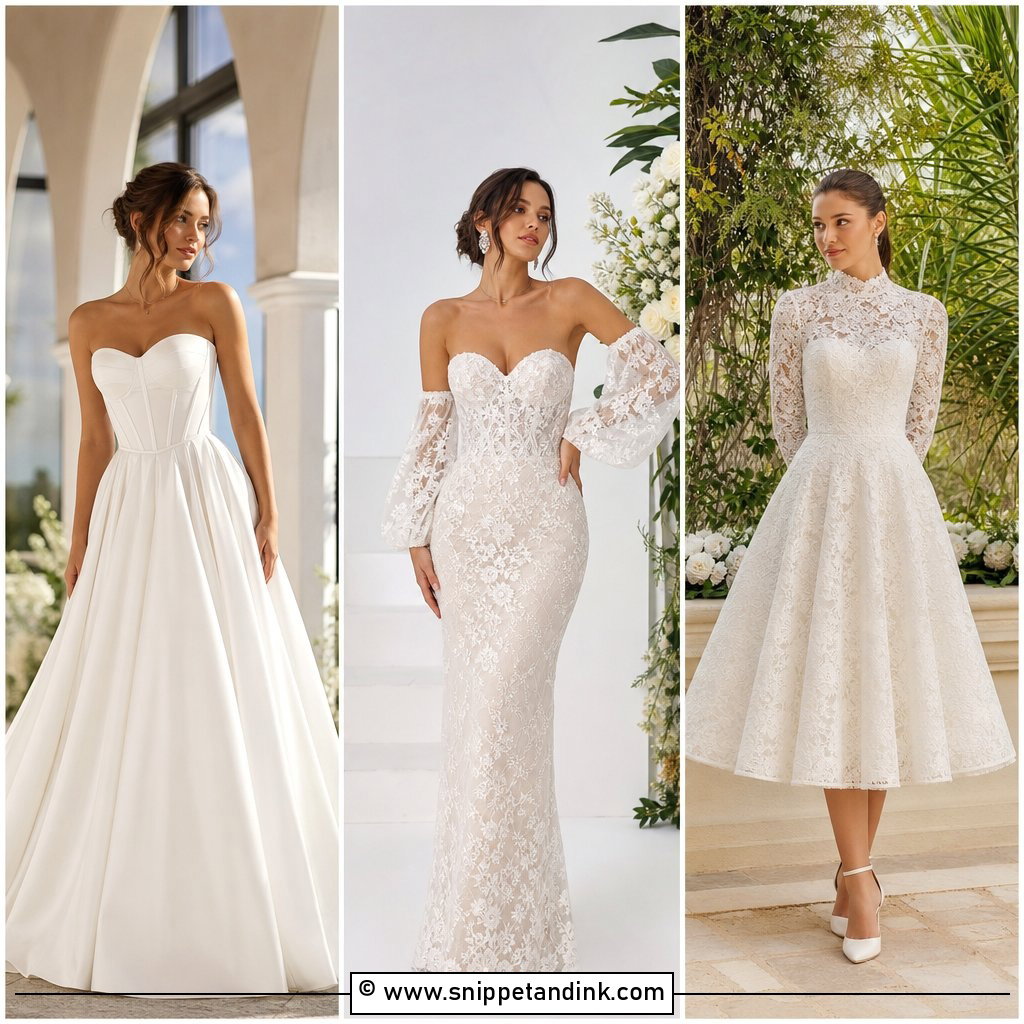
The basque waist dips into a V or a U below your natural waist, so your torso looks longer before the skirt takes over. It was the silhouette I fitted most in 2025. A luminous Mikado gives it architectural volume; layered tulle moves more softly. The bodice length is everything: if the point sits even slightly too low, it digs into your thighs when you sit, so I always check it seated. A strapless sweetheart neckline balances the point, and covered buttons tidy the back. Pearl drops, pointed satin pumps, a cathedral veil with a plain edge and a compact bunch of white roses keep it polished.
2. Drop Waist Satin Bridal Gown
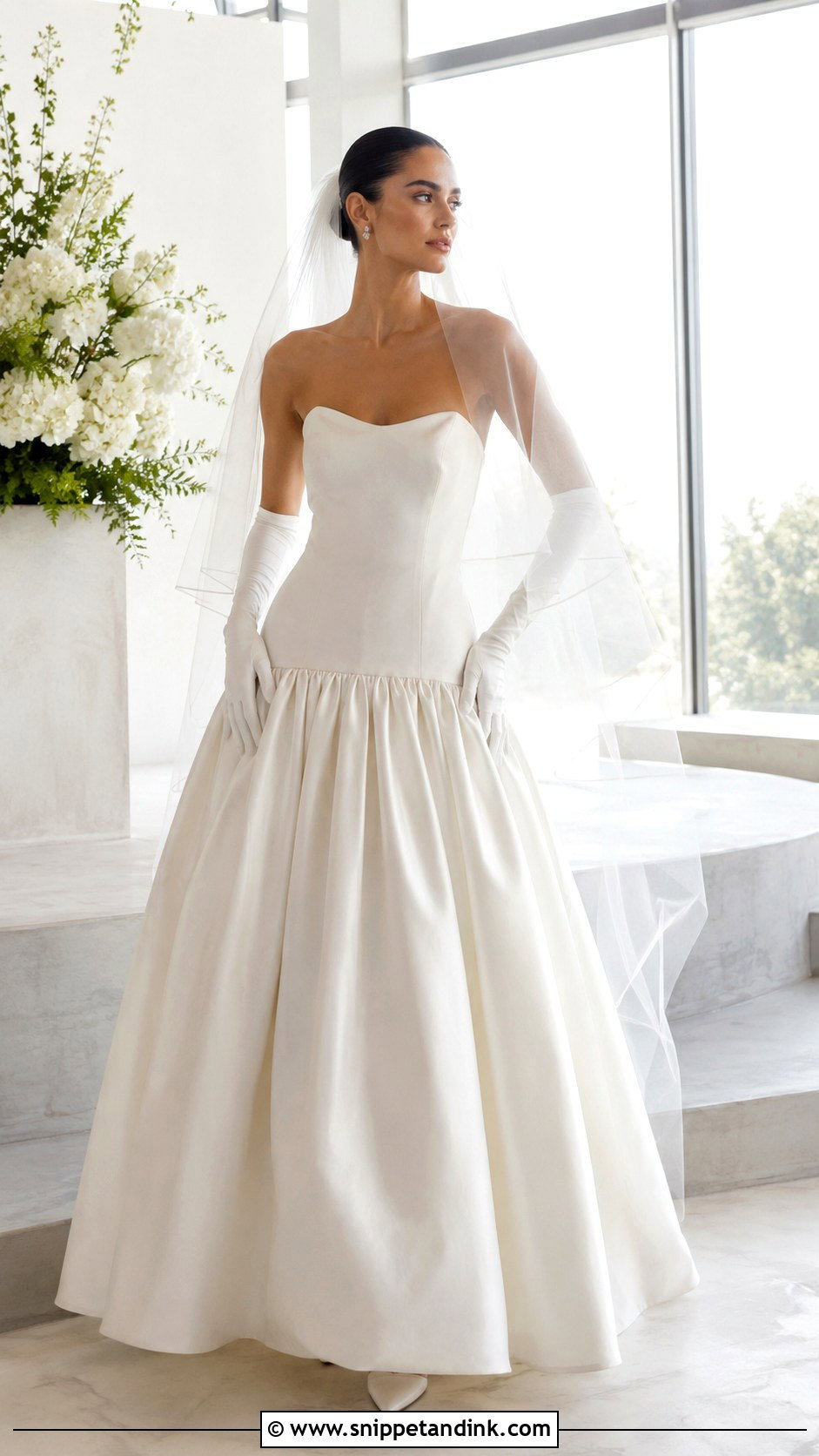
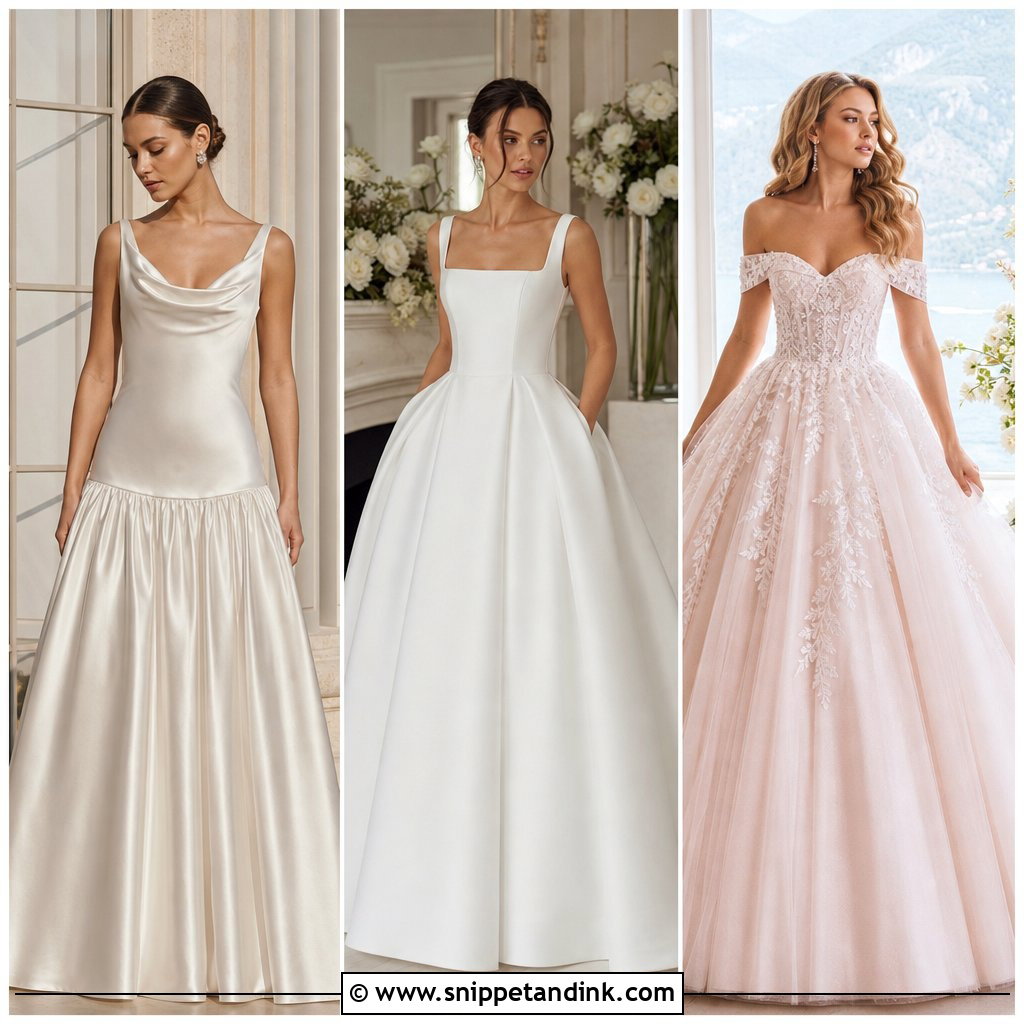
Satin and a drop waist make a cleaner, more directional pairing than satin usually allows. The fitted bodice runs down toward the upper hips, then the skirt opens smooth and full; spring 2025 collections were full of it. Satin shows every pull line, so I fit this one over the exact underwear and shapewear you’ll wear, and I’m fussy about the side seams lying straight. Choose a curved neckline for softness or a straight strapless edge for something more modern. Long gloves are a fun editorial touch. Crystal studs, ivory pumps, a low polished bun and a fingertip veil ending above the widest part of the skirt finish it.
3. Lace Corset Bridal Gown
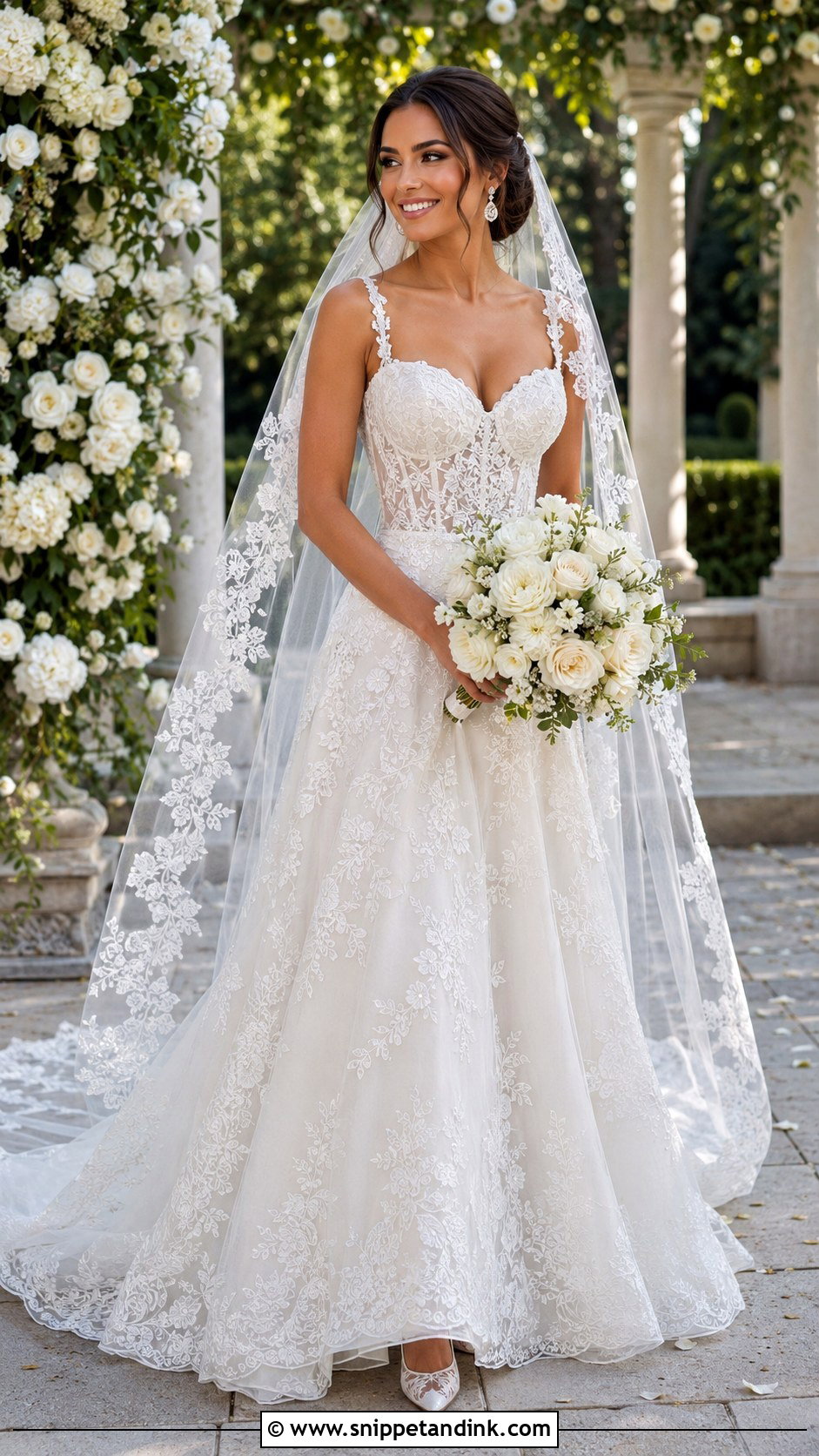
Lace softens corsetry in a way satin can’t. I look for boning placed under the lace rather than over it, floral motifs arranged so they meet at the seams, and a skirt that falls away from the hip instead of clinging. Narrow straps are worth considering if you plan a long ceremony and a lively reception; they take strain off the top edge. Lace-trimmed pumps, a scalloped cathedral veil and small crystal earrings suit it, with a loose chignon. Pick garden roses and quiet greenery rather than heavily textured flowers. For a church, a matching removable bolero gives you coverage you can lose later.
4. Strapless Mikado Ball Gown
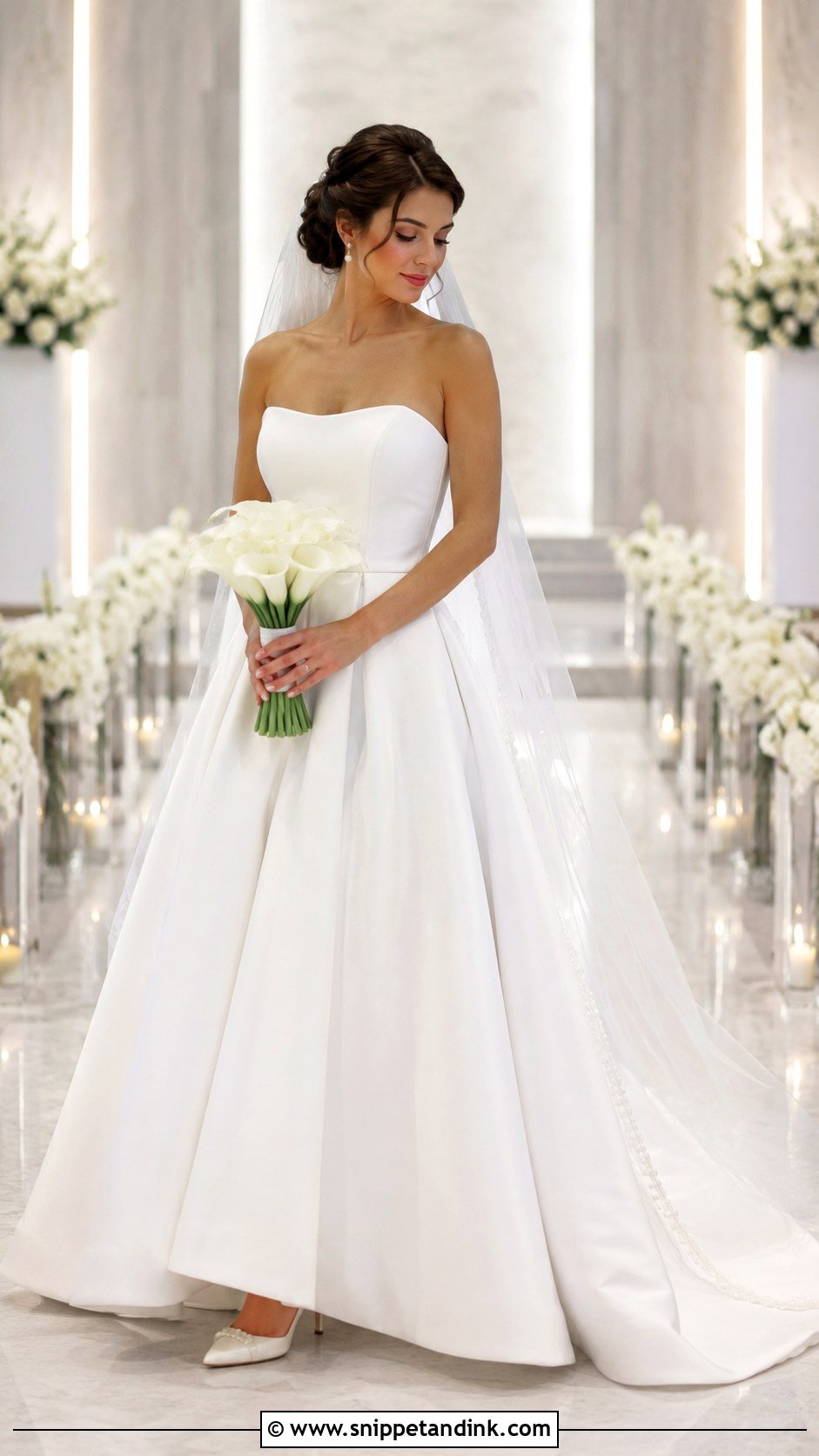
Mikado is the fabric I reach for when a bride wants shape without decoration. It’s a stiff, slightly ribbed silk or poly blend that holds a pleat and resists creasing better than duchess satin. On a strapless ball gown, the bodice should follow your body cleanly while the pleated skirt does the drama. Straight necklines look current; a gentle sweetheart is softer. Hidden pockets are a gift here. Style it with a structured cathedral veil, pearl earrings, ivory shoes under the hem and wrapped calla lilies. I’d always choose secure internal support over a tight fit, which only becomes painful by the speeches.
5. Off Shoulder Draped Bridal Gown
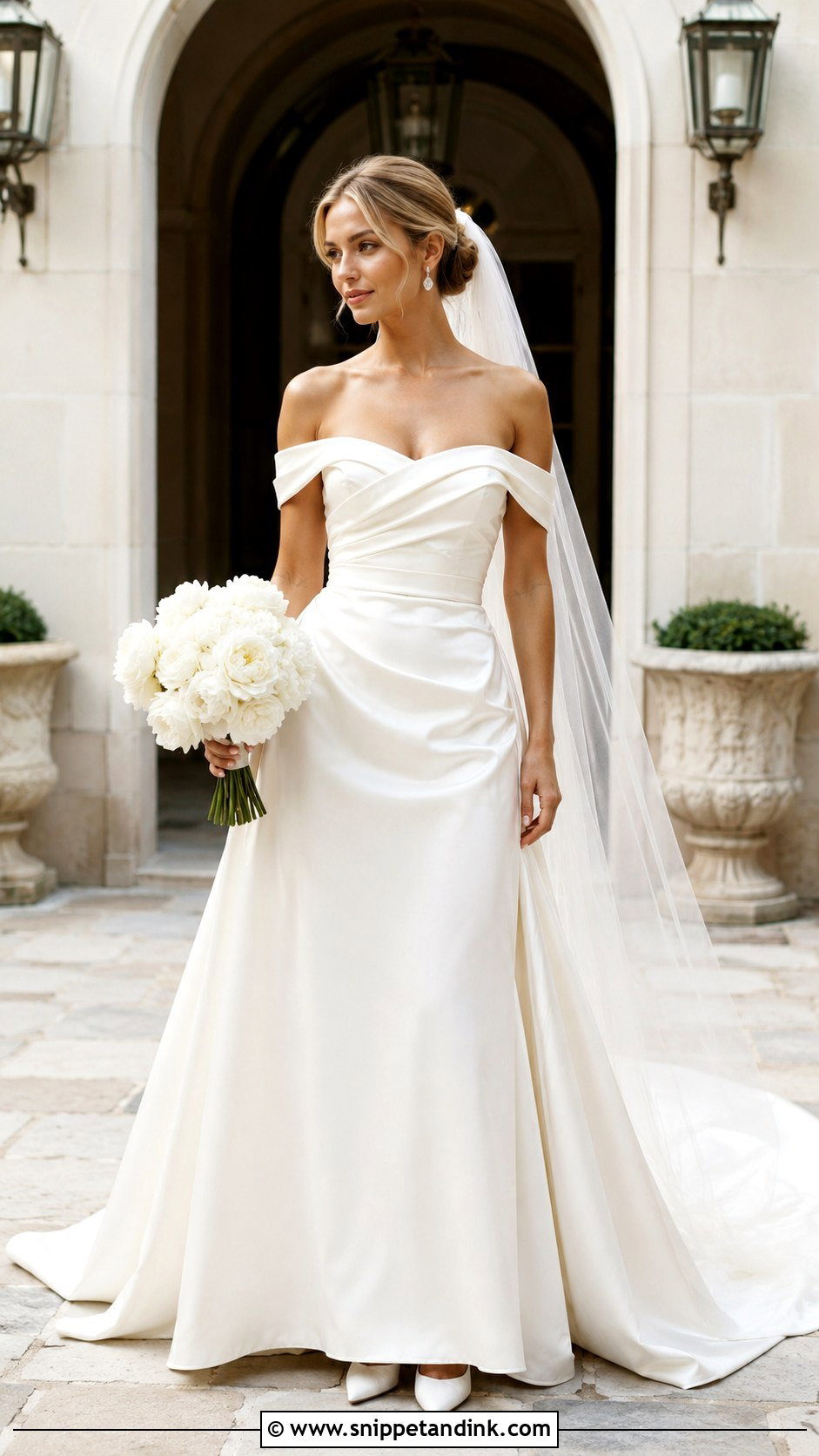
Draped off-the-shoulder necklines look gentle but restrict arms more than any other cut. Before you fall for one, try hugging someone and lifting your glass; if the bands cut in, ask whether they detach. Controlled folds in satin, crepe or silk look far better than heavy gathering, with a fitted waist and an A-line skirt for balance. A tennis bracelet, teardrop earrings and low satin heels keep it refined. Pin a sheer chapel veil beneath a smooth bun so the drape stays visible, and carry loose white peonies or whatever’s in season.
6. Long Sleeve Lace Bridal Gown
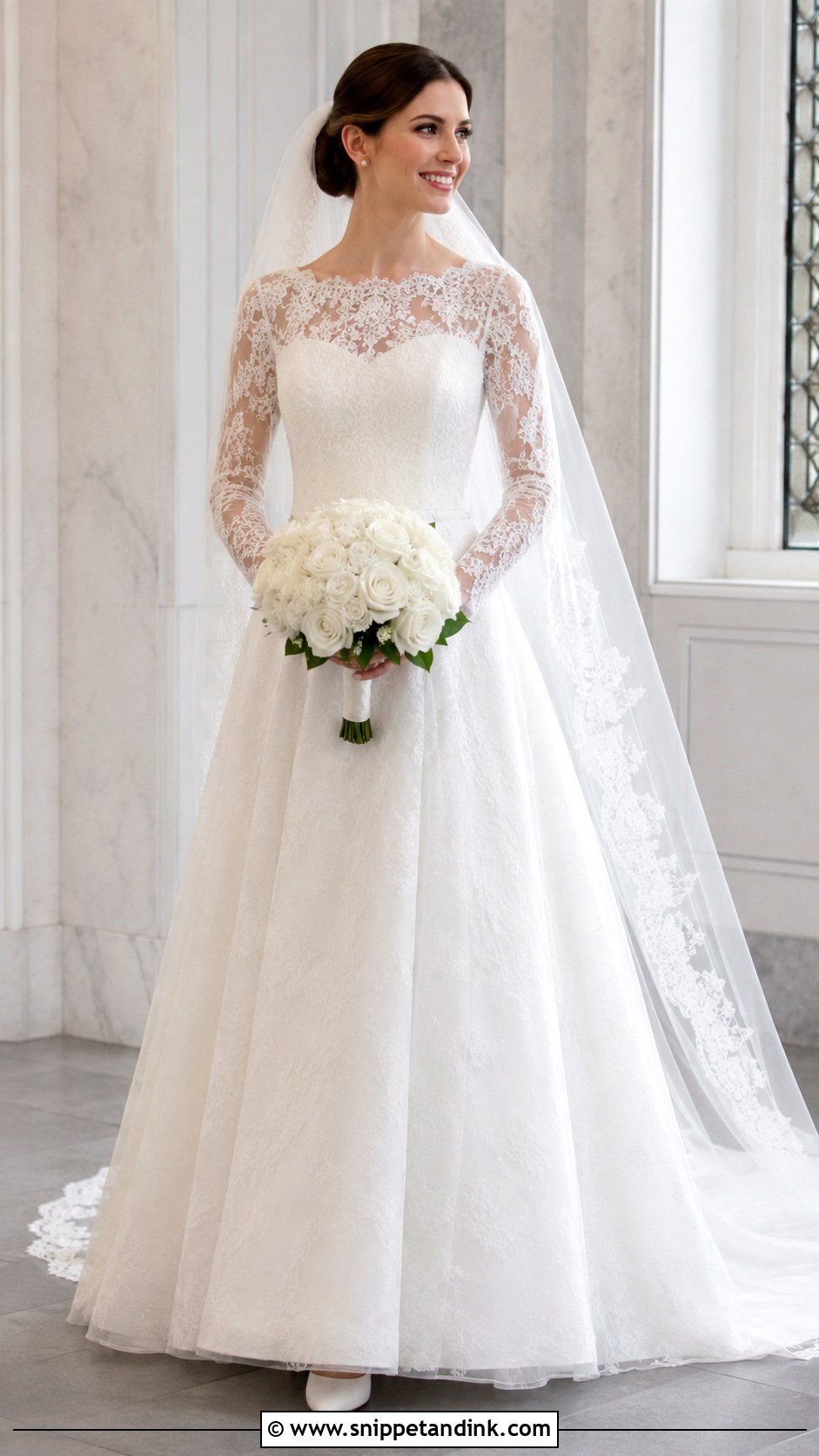
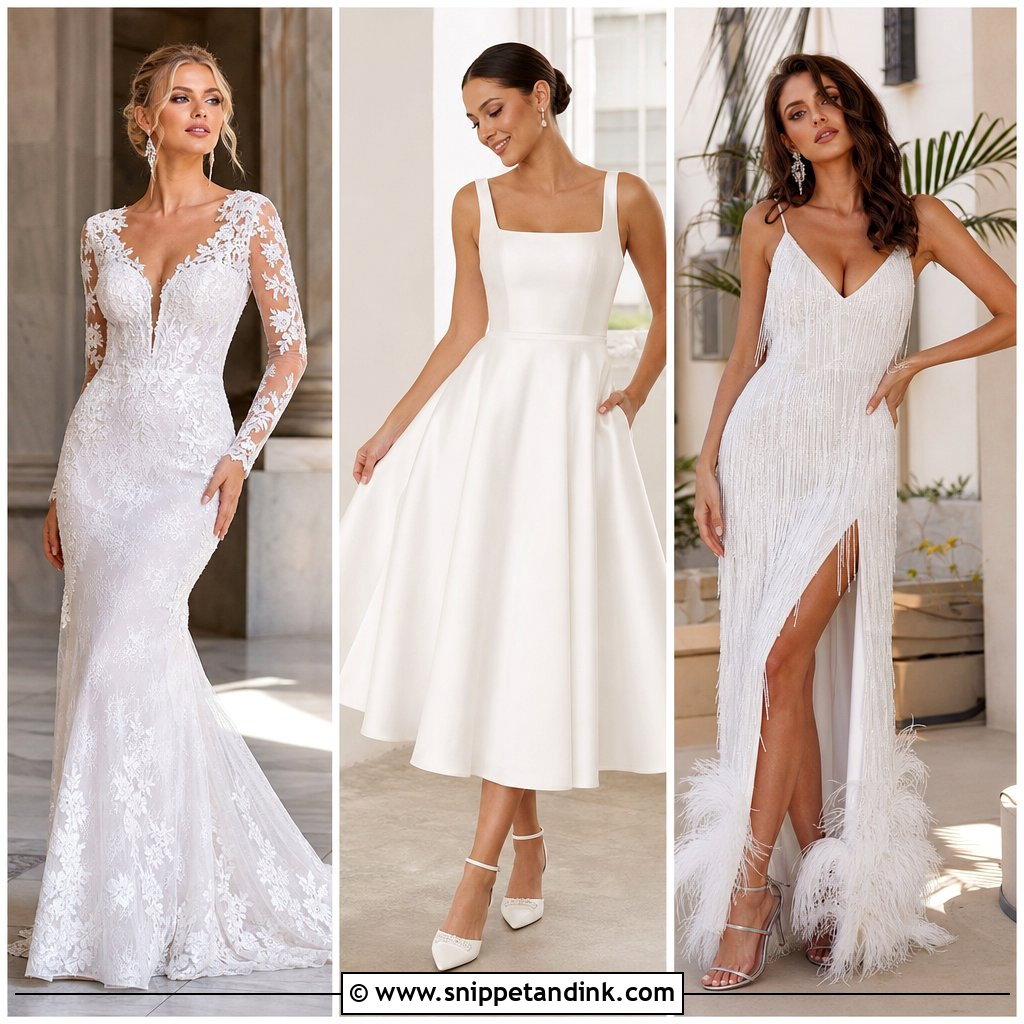
Long lace sleeves suit cooler weather and formal ceremonies, and the best ones barely feel like sleeves at all. Illusion tulle with appliqués placed one by one looks lighter than allover lace. I’m strict about two measurements here: the armhole and the cuff. Too tight and you can’t reach up to hug anyone or hold a bouquet comfortably. A lined bodice and an A-line skirt keep it easy to wear. Pearl studs, closed-toe ivory pumps and a lace-edged chapel veil are enough; skip an ornate necklace if the bodice already has pattern. White roses, ranunculus and restrained greenery suit the lace.
7. Square Neck A-Line Bridal Gown
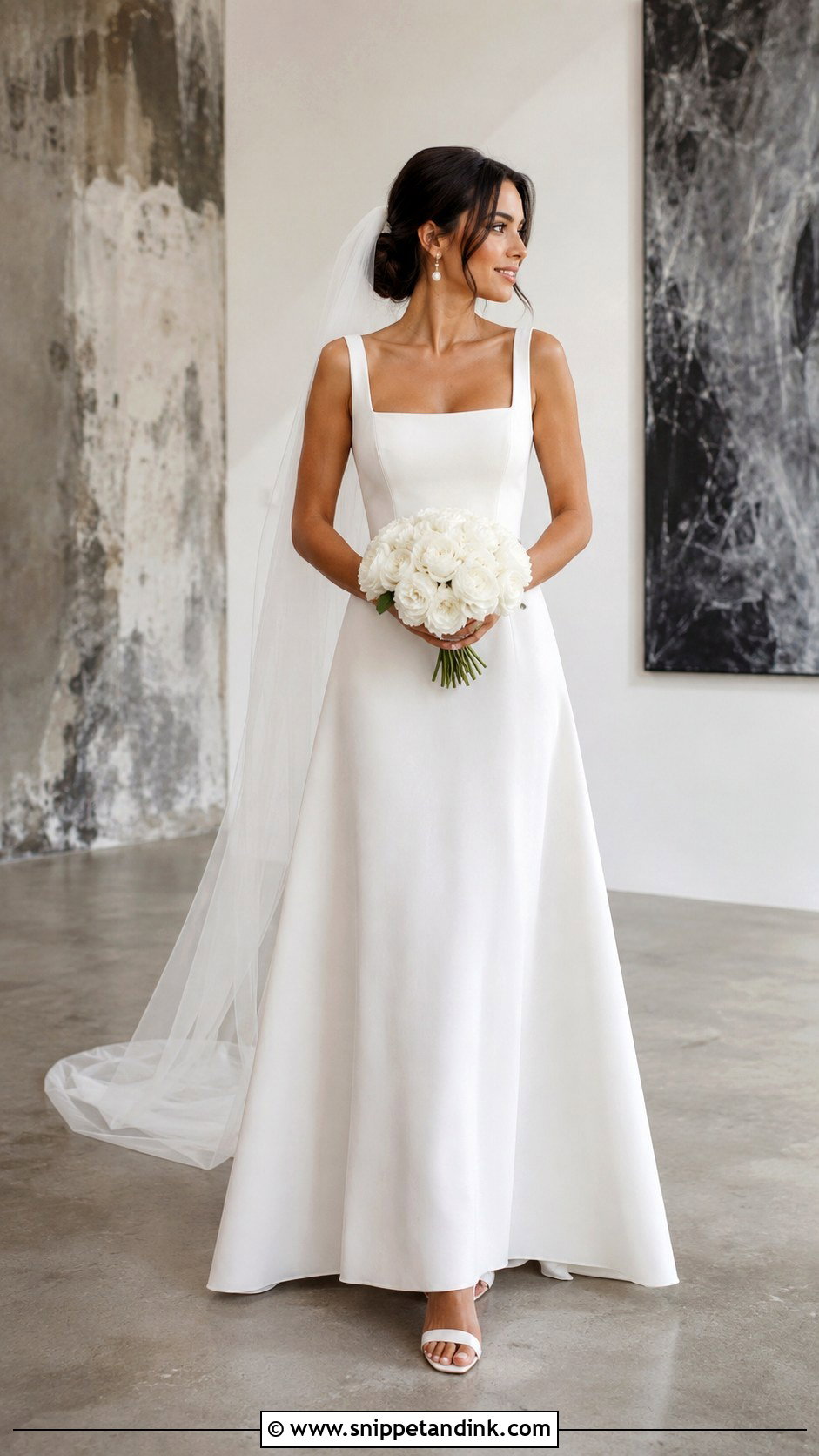
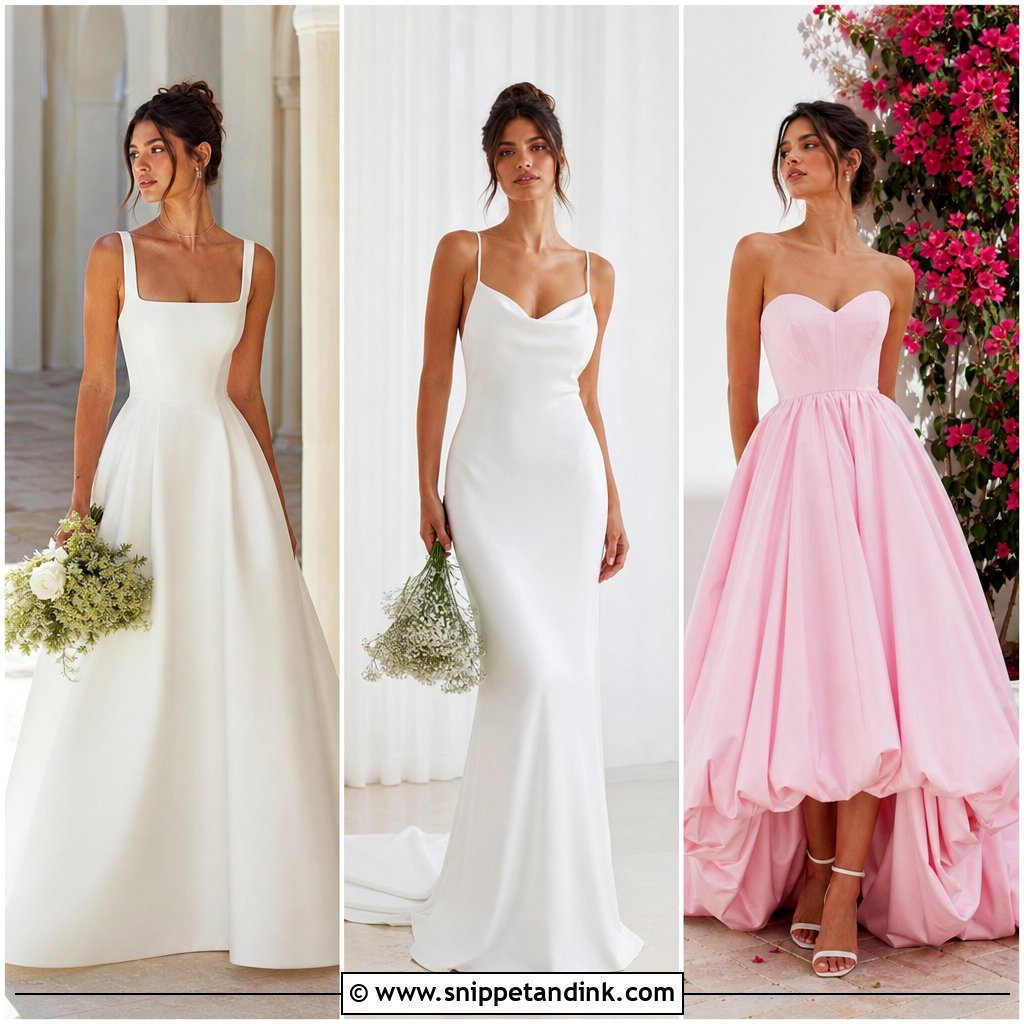
A square neck A-line is structure without ball-gown volume. Wide straps give dependable support, and the angular neckline frames your face and collarbones. In smooth crepe it’s minimalist; in a subtle jacquard it has texture. The common fault is gaping at the corners, which usually means the straps need shortening rather than the bodice taking in. I check it with the bride leaning forward to pick something up. A short pendant, pearl earrings, comfortable block-heel sandals and a long plain veil suit it, with a half-up style and a rounded bouquet.
8. High Neck Vintage Bridal Gown
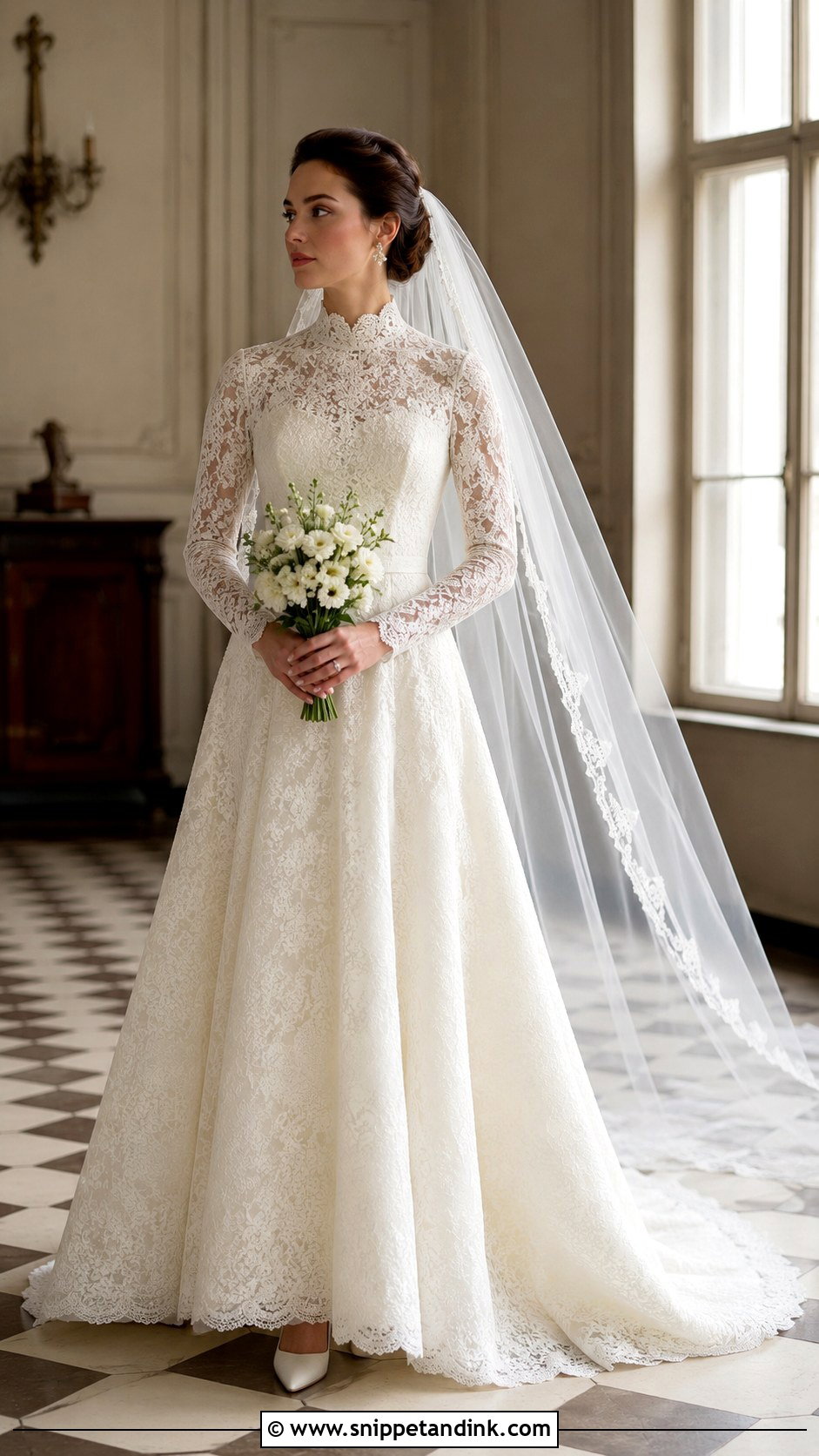
Vintage high necks carry a quiet drama without showing any skin. Fine lace, covered buttons, long sleeves and a gently defined waist, over a fluid A-line skirt, give that heirloom feel. A collar fits differently sitting down, because your chin drops and your shoulders round, so I adjust it in a chair, not only standing. It should never rub the throat. A Juliet cap veil leans fully vintage; a fingertip veil keeps it simpler. Pearl cluster earrings, low pointed pumps, a low twist in the hair and white roses tied with ivory ribbon complete it.
9. Minimalist Silk Column Bridal Gown
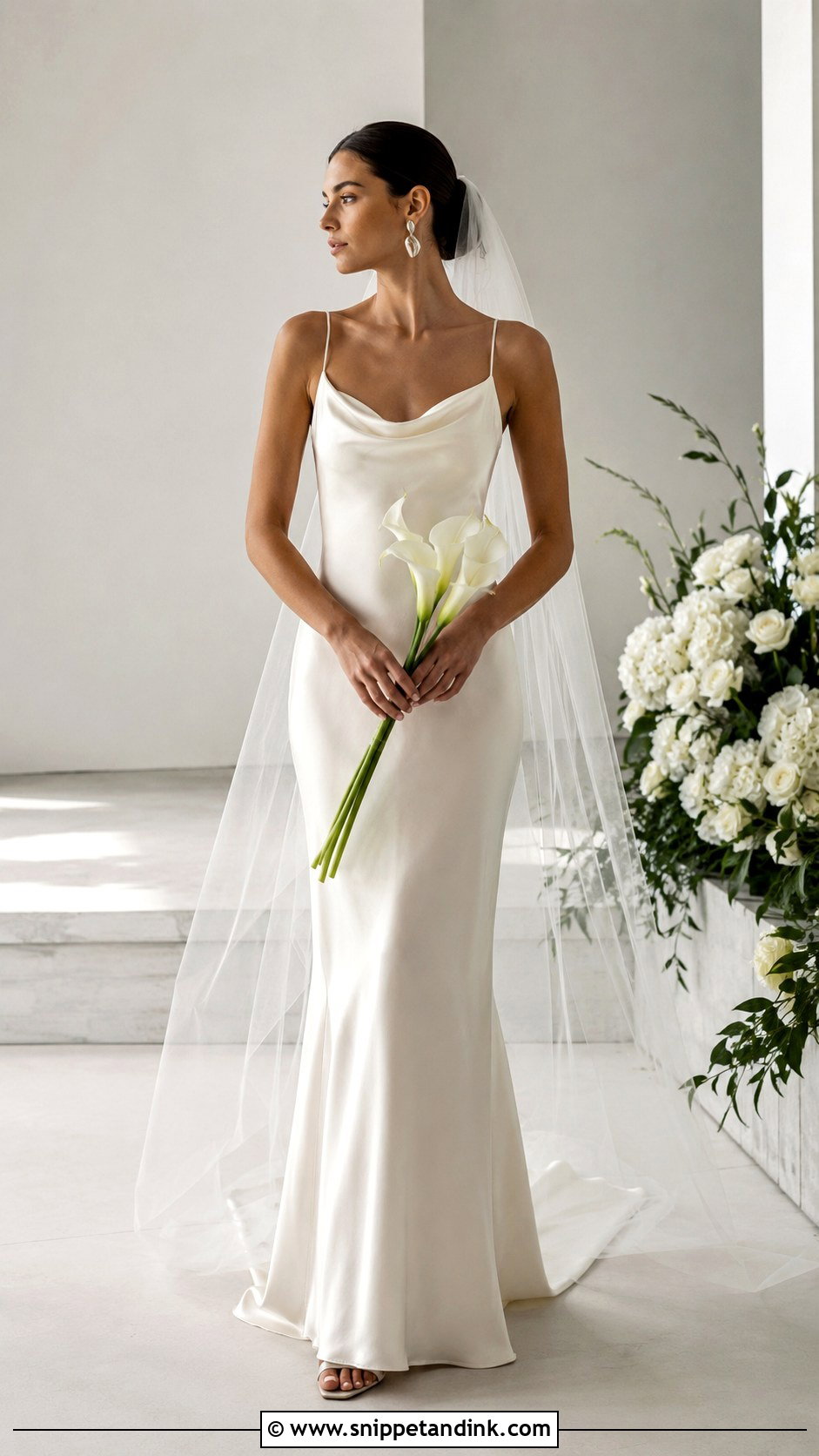
Bias-cut silk is a different animal from every other fabric in this list. Cut on the diagonal, it stretches and skims, which is why it pours over the body, and also why it shows every seam, bra line and bump. I insist on smooth foundation pieces and at least two detailed fittings. A softly draped or bateau neckline suits it. Keep the styling quiet: sculptural earrings, slim ivory sandals, a floor-length veil with no trim, a sleek bun and fresh makeup. A few long-stemmed calla lilies work better than a wide bouquet. A detachable silk scarf or light cape can give you a second look later.
10. Floral Applique Tulle Bridal Gown
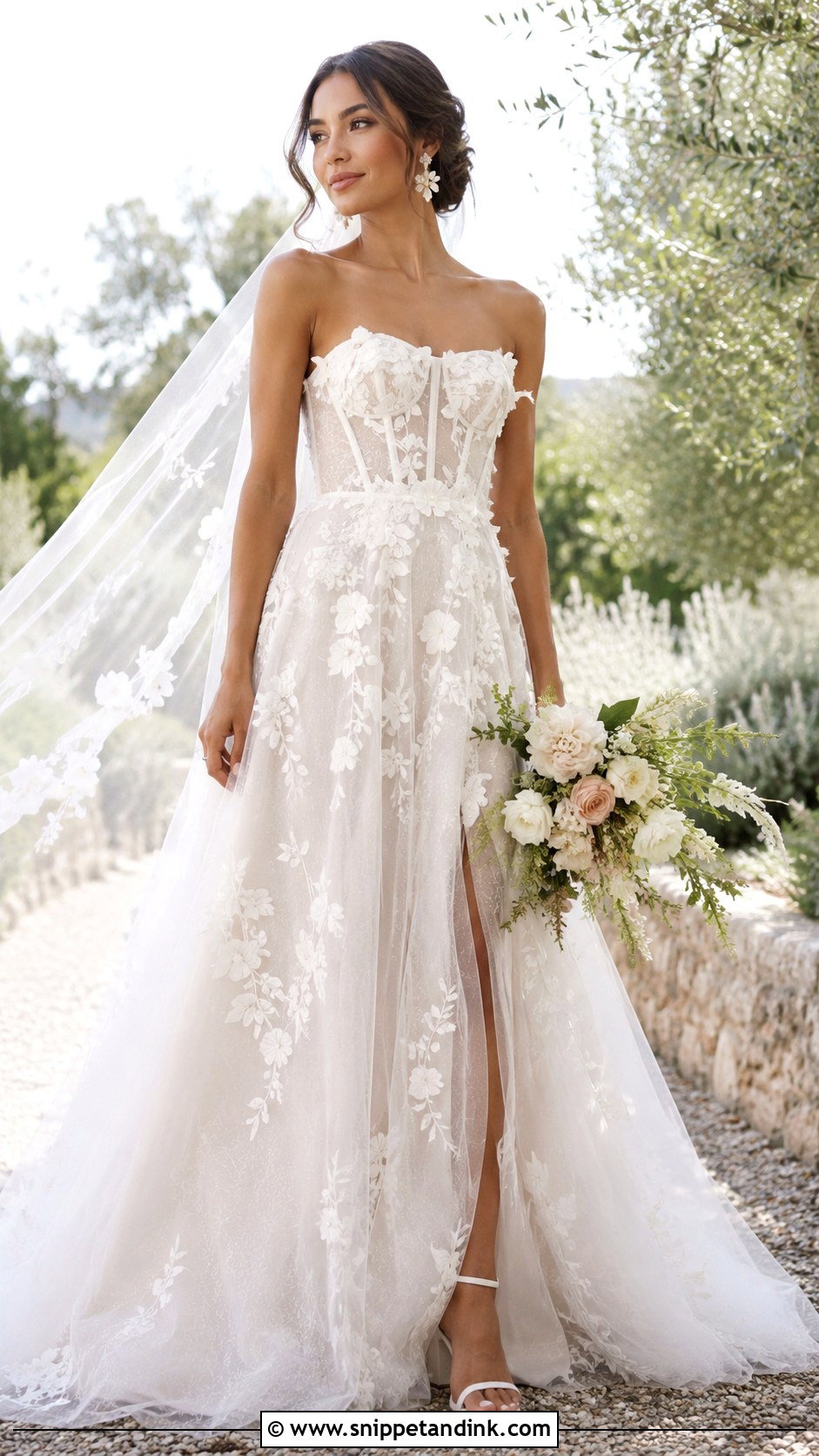
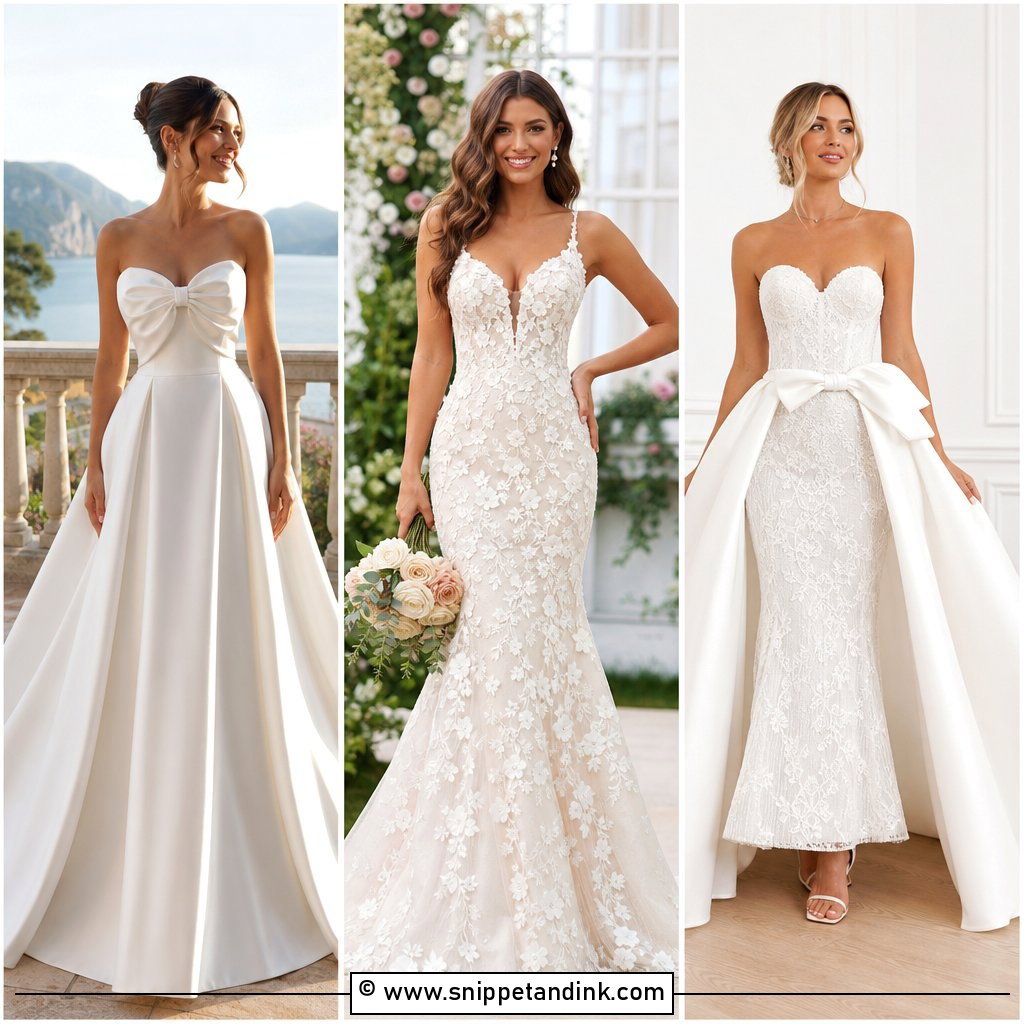
Flowers on tulle make the most sense in a garden or estate, where they look like they’ve drifted in. The best placement scatters appliqués over the bodice and lets them thin out down the skirt. A supportive corset base keeps the airy layers from looking limp. Raised flowers near the underarm and waist can scratch, so I run my hand over those spots before the bride buys. Floral studs, slim block heels and a sheer veil carrying just a few matching appliqués work well. 2025 paired these flowers with dramatic sleeves and structured bodices. Choose a relaxed updo and a bouquet that repeats one or two of the dress’s flowers.
11. Pearl Beaded Bridal Gown
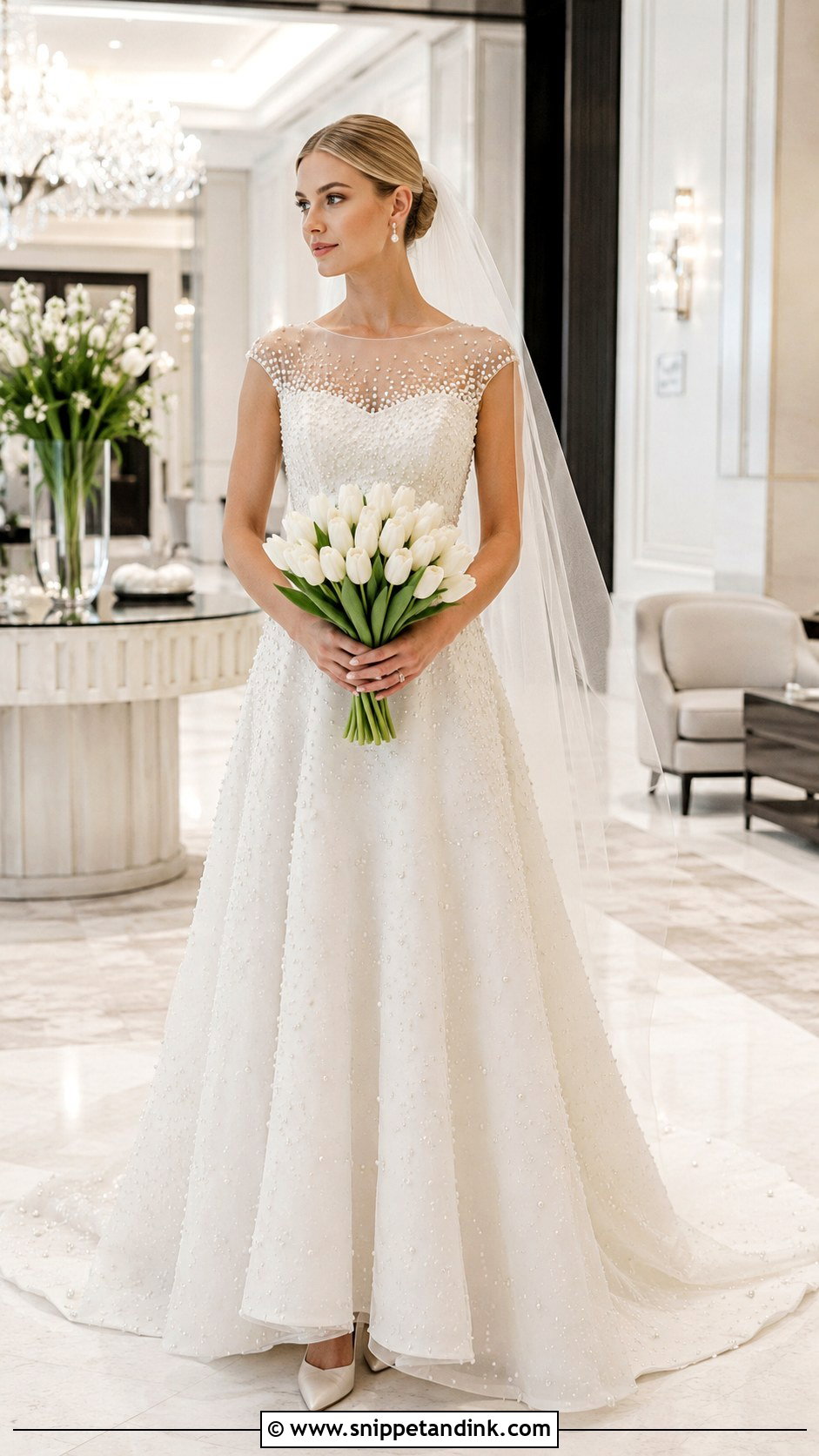
Pearls glow rather than sparkle, so they flatter in daylight and in candlelight alike. Scattered over illusion tulle they look delicate; packed onto a fitted bodice they look glamorous. Before buying I give a few beads a gentle tug and ask about spares. Heavy beading also adds real weight, so a strong bustle and reinforced hanging loops matter. An A-line or slim fit-and-flare skirt stops it tipping into too much. Pearl studs, satin pumps, a plain veil, a smooth chignon and a structured bouquet of white tulips or roses are all it needs.
12. Bow Back Bridal Gown
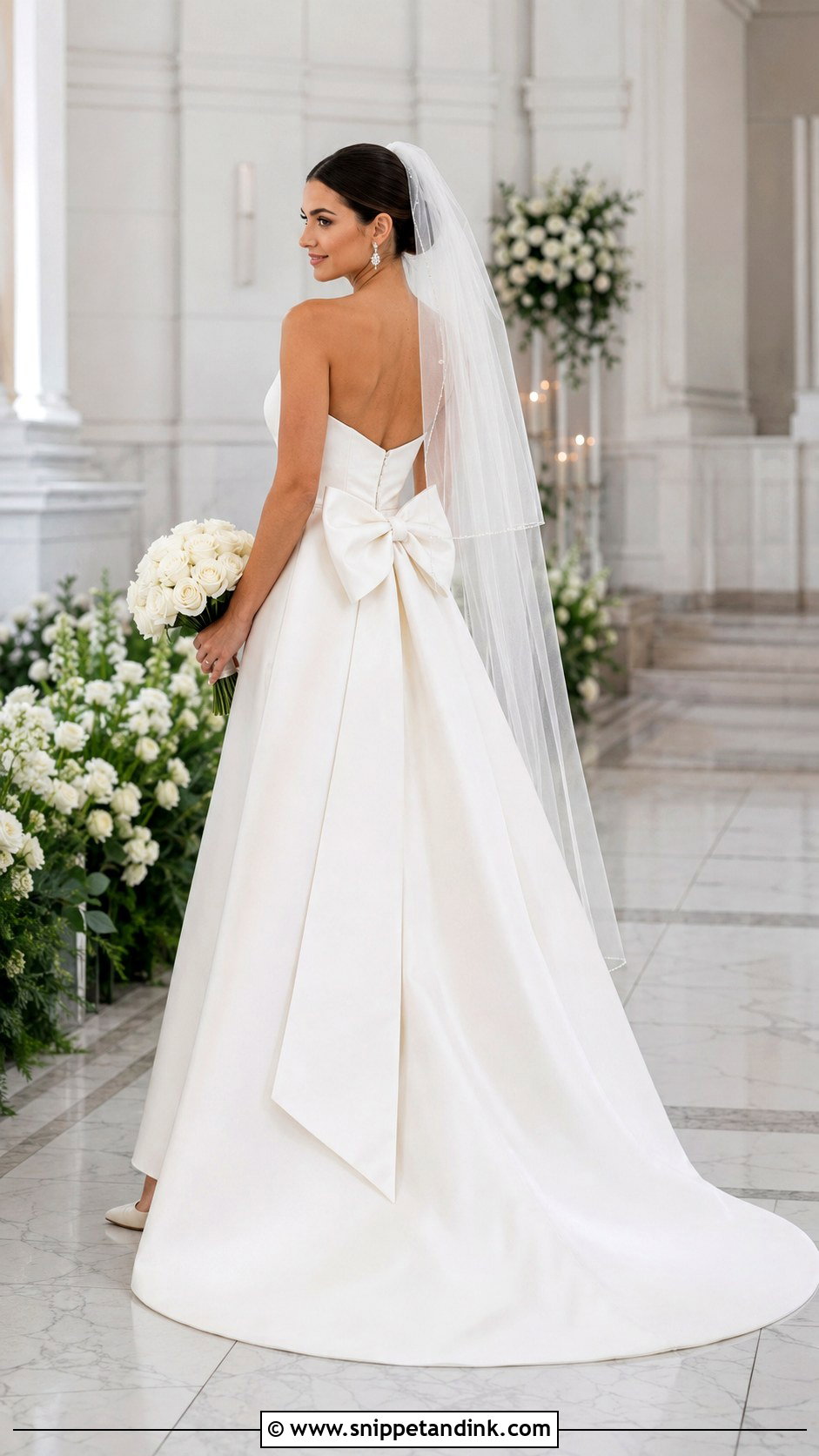
Bows were everywhere in 2025, as decoration and as convertible pieces. On a clean satin A-line, an oversized detachable bow at the waist or high on the train gives you a ceremony entrance and a simpler reception silhouette. Ask exactly how it attaches; hooks and loops are sturdier than a single snap. Keep the neckline plain, strapless, bateau or square, so the back has the attention. Crystal studs, pointed pumps and a fingertip veil short enough not to bury the bow work well. A polished ponytail shows it off better than loose hair falling over it.
13. Detachable Overskirt Bridal Gown
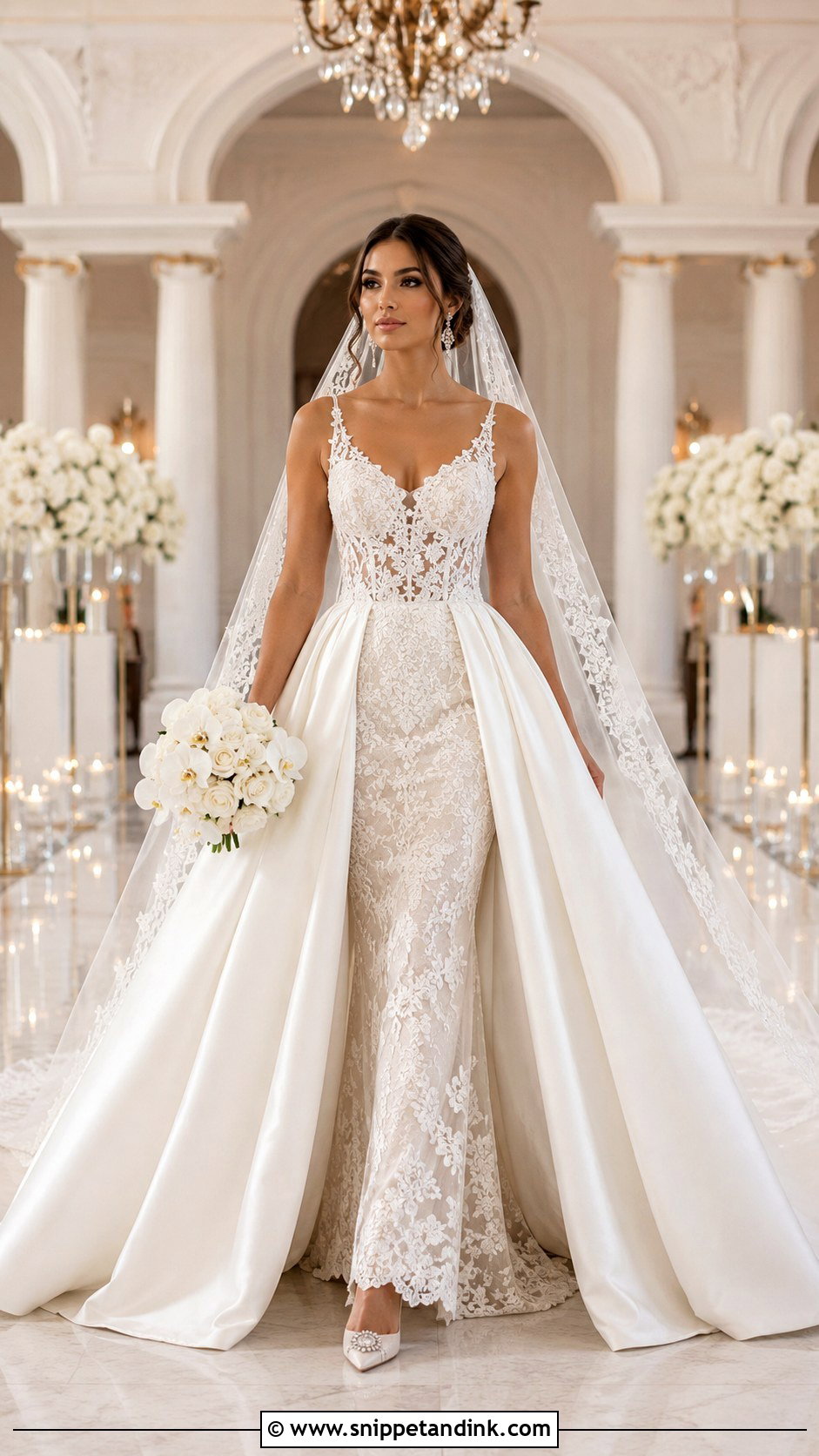
With a well-designed detachable overskirt, a fitted crepe or lace gown becomes a ball gown for the ceremony and a streamlined dress for the reception. Convertible pieces, detachable skirts and sleeves, were one of 2025’s most practical ideas. The attachment should be secure and hidden; a visible band of hooks spoils the illusion. I ask whoever will help you to practise removing it and folding it into a garment bag, because a full satin skirt dumped on a chair creases badly. Wear a cathedral veil, crystal earrings and comfortable pointed heels for the ceremony, then swap to a shorter veil or a jewelled comb.
14. Cape Sleeve Bridal Gown
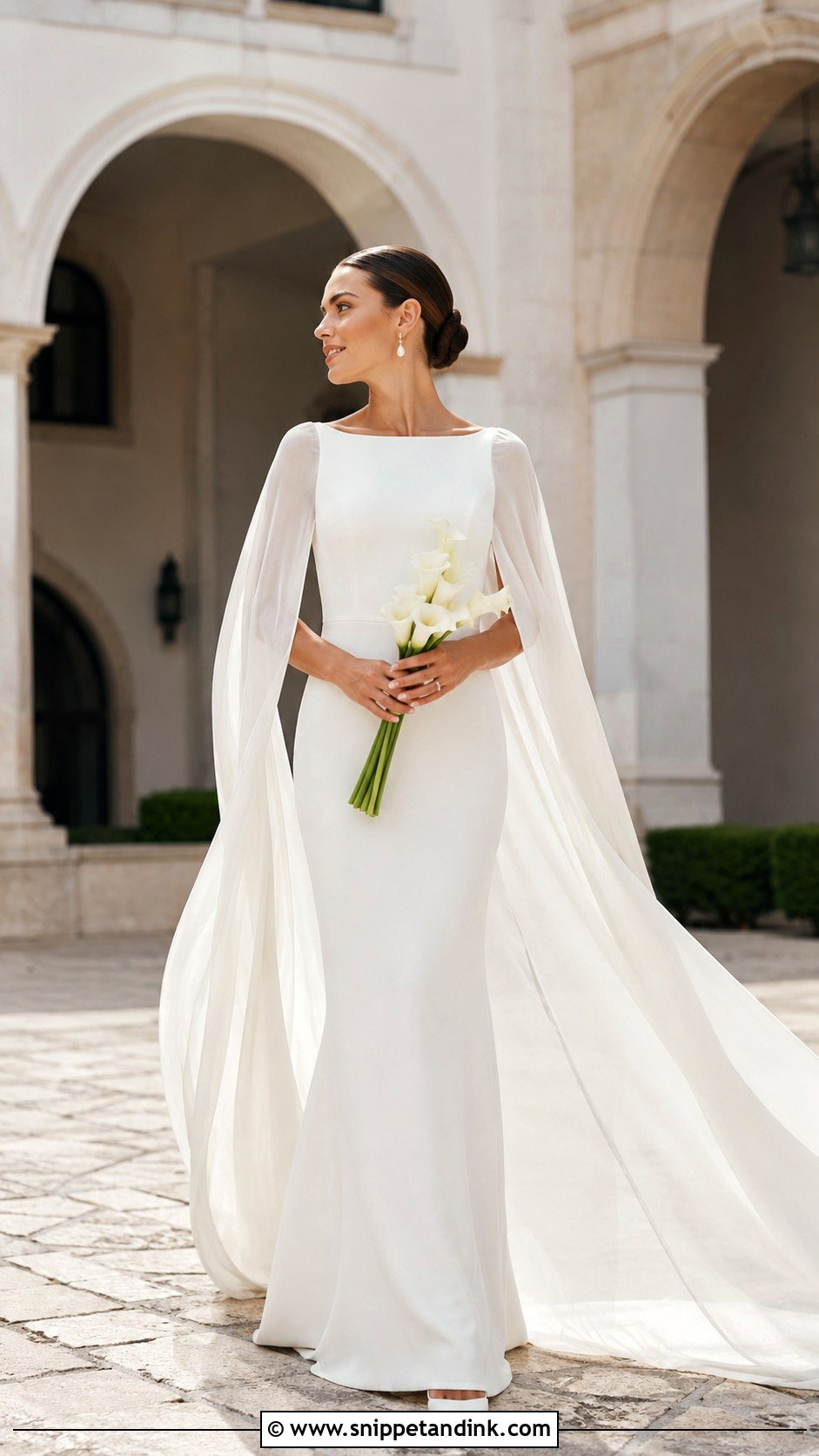
Cape sleeves cover the shoulders and let fabric float behind you, which means you can skip a veil entirely. A crepe column under a sheer chiffon cape, or an A-line with cape panels attached at the shoulder, both work. Watch the length: the cape should fall just inside the train, not tangle with it. Drop earrings, a smooth bracelet, closed-toe pumps and a low bun or waved bob keep the neckline clear. Carry a narrow bouquet that won’t snag. If the cape detaches, test the fastenings in the fitting; outdoors, a light breeze will lift it more than you expect.


15. Sheer Sleeve Bridal Gown
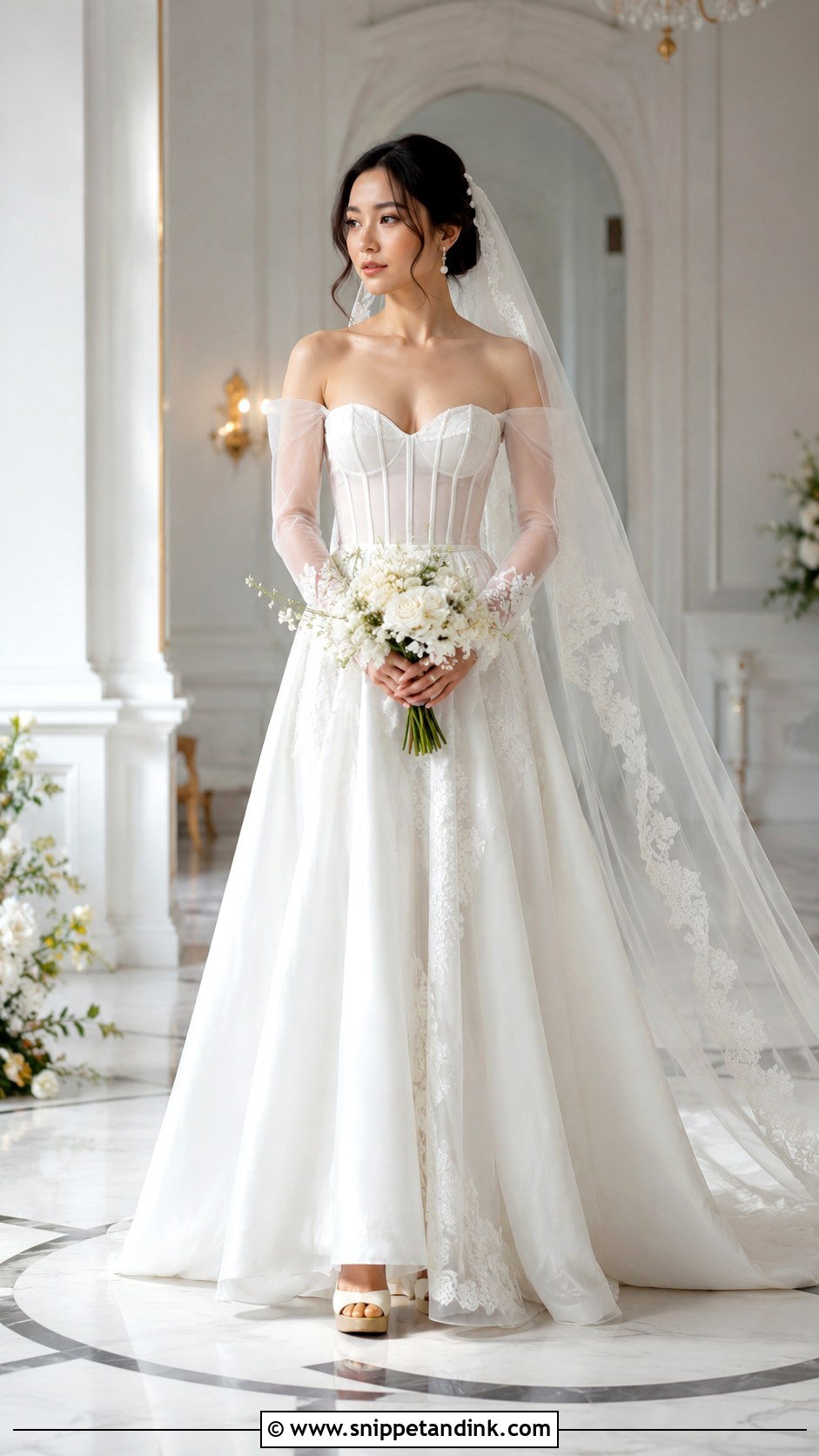
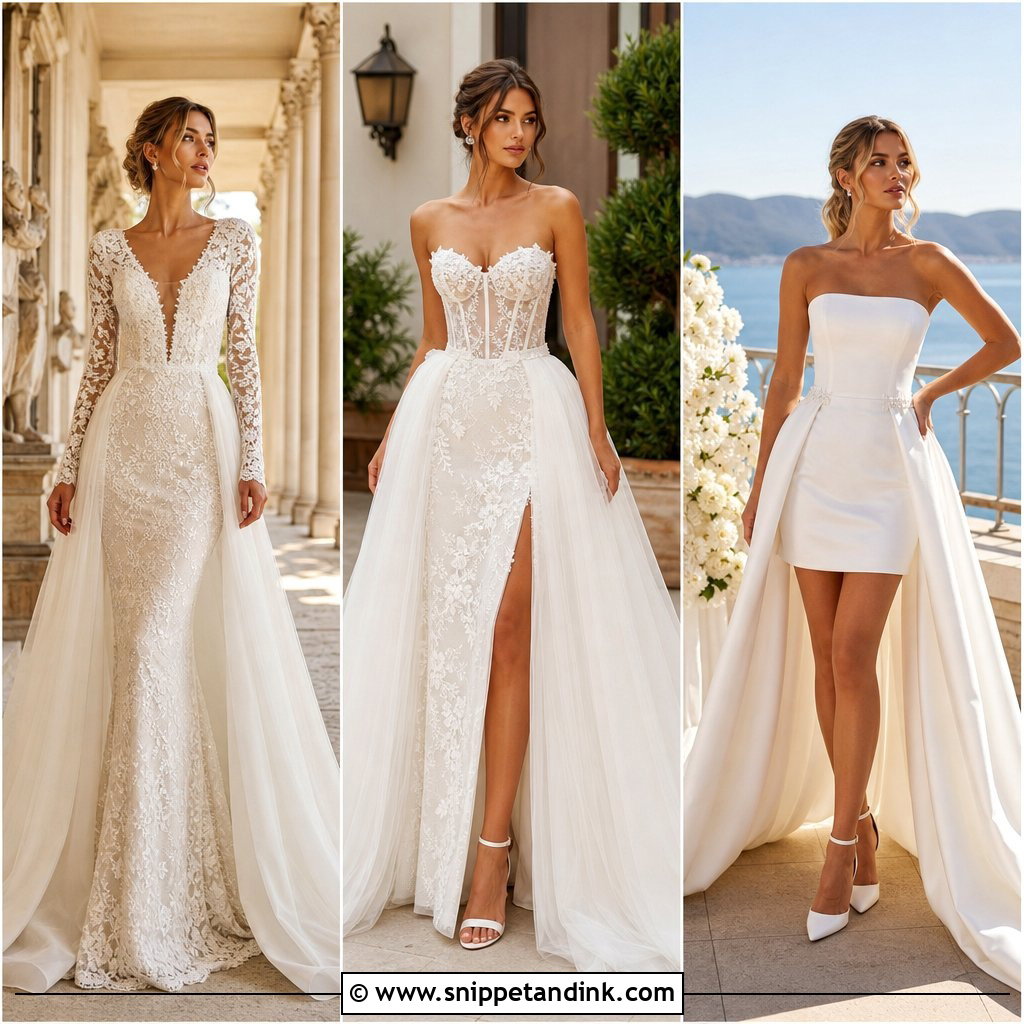
Sheer sleeves on a corseted bodice give coverage without weight. Fitted tulle with lace cuffs, small appliqués or tiny pearls look delicate, and a flowing A-line skirt balances the arms. The tulle colour matters more than people think. I match it to the bride’s skin in daylight, because mismatched mesh shows up in every close-up. Appliqués should sit symmetrically on both arms. Bend your elbows and lift your arms at the fitting. A chapel veil, pearl drops, ivory block heels, a low bun and a soft bouquet suit it, and detachable sleeves give you a reception change.
16. Mermaid Bridal Gown With Train
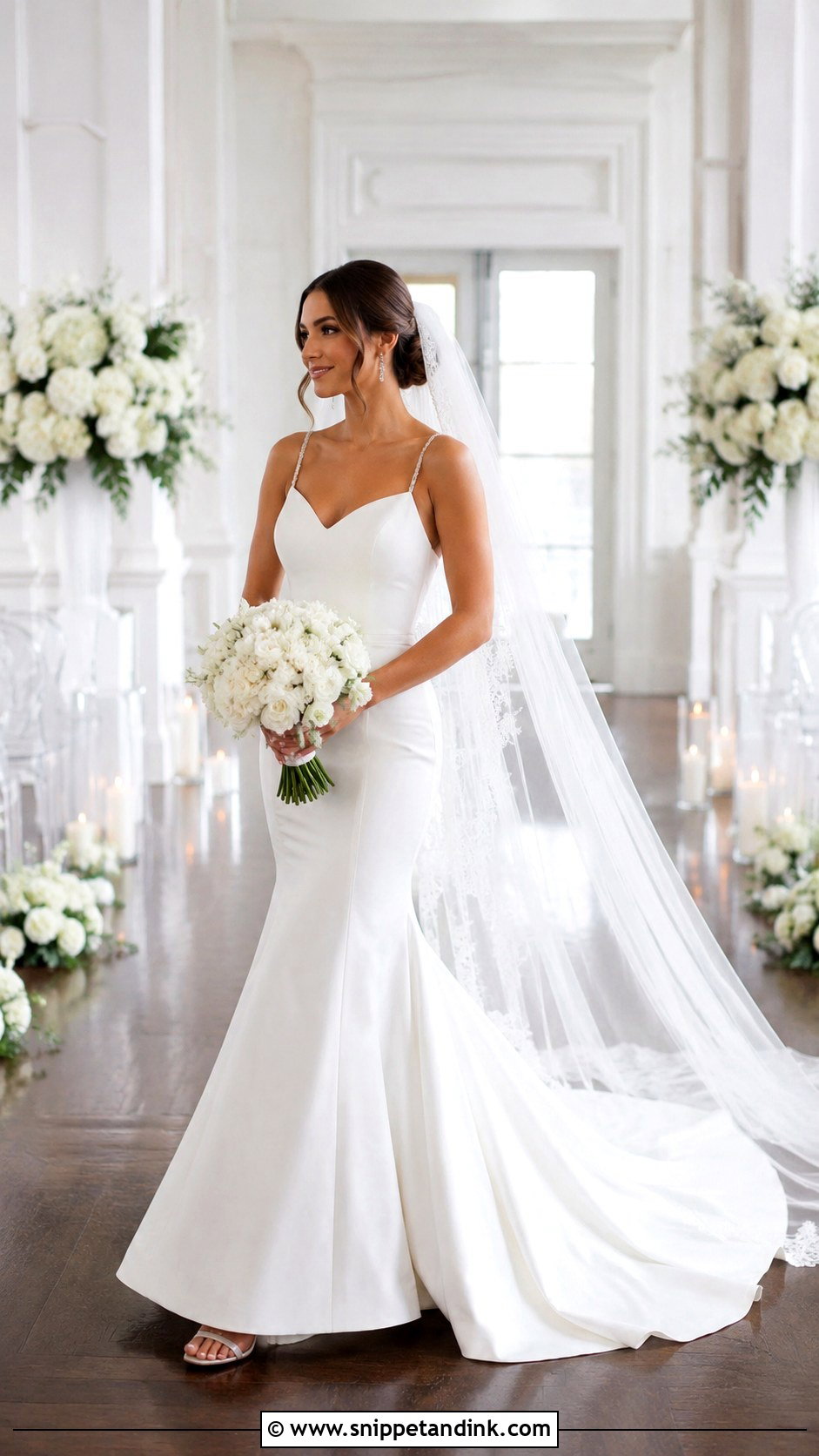
Mermaids are confident gowns, and they’re less comfortable than they look if the knee seam sits too low. Stretch crepe gives a smooth modern finish; lace adds texture. A long train needs a bustle built for its weight, and I’d test it at the fitting by bustling and walking ten paces. Practise sitting and stairs too. A simple cathedral veil, long earrings and supportive heeled sandals suit it, with a side-parted bun or polished waves. Carry a medium bouquet that doesn’t hide the waist. Supportive underwear and properly placed seams beat sizing down every time.
17. Tea Length Bridal Gown
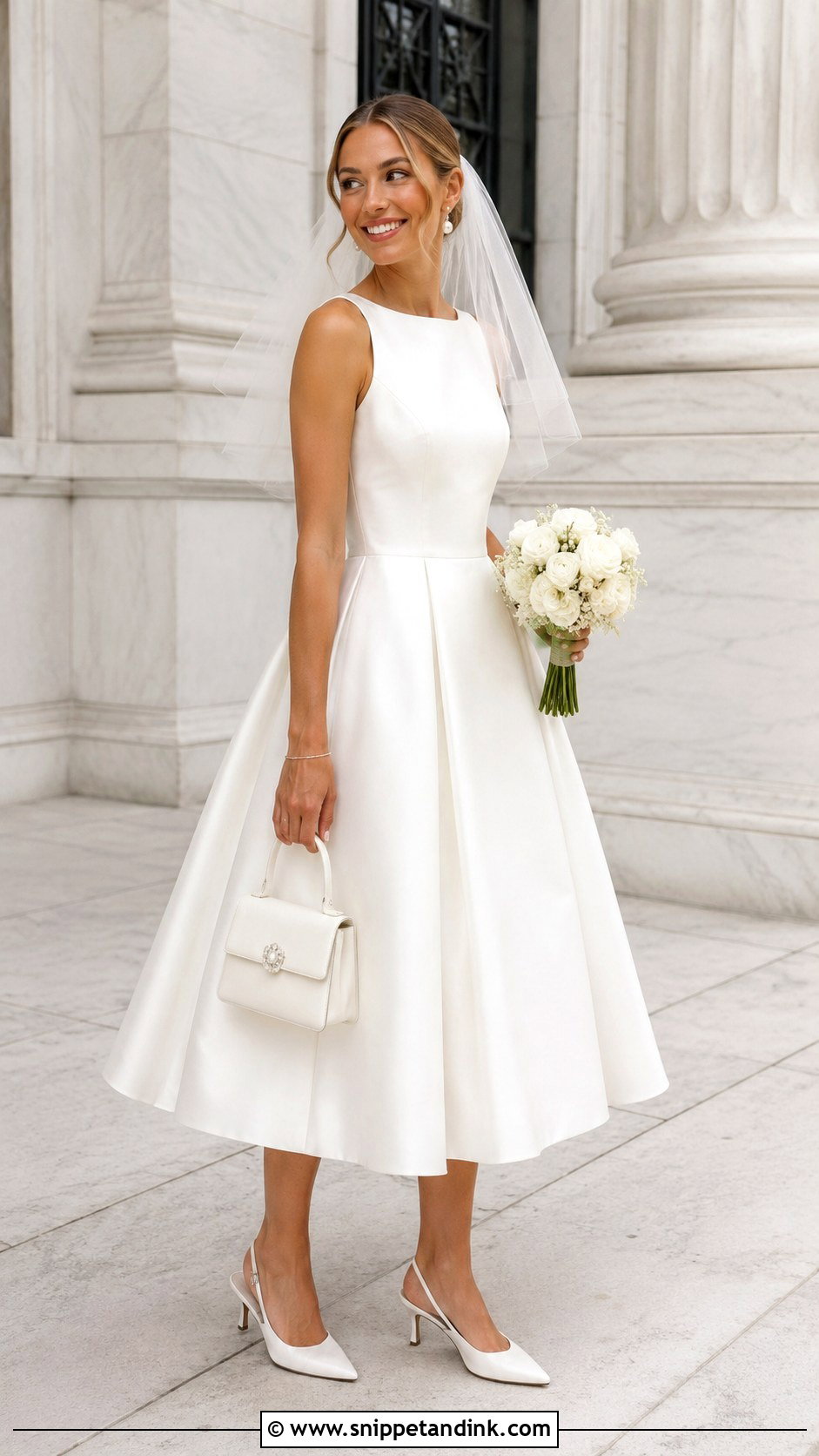
Tea length is my favourite answer for a courthouse, a brunch or a daytime party. The hem falls between knee and ankle, so the shoes become part of the outfit. Structured satin with a fitted bodice and a softly full skirt keeps it classic. The trick is hem placement: ending at the widest part of the calf shortens the leg, so I pin it slightly above or below that point. Pointed slingbacks, pearl earrings and a birdcage or shoulder-length veil suit it. A small top-handle bag, a neat bun or glossy waves, and a compact bouquet finish it.
18. Blush Tulle Bridal Gown
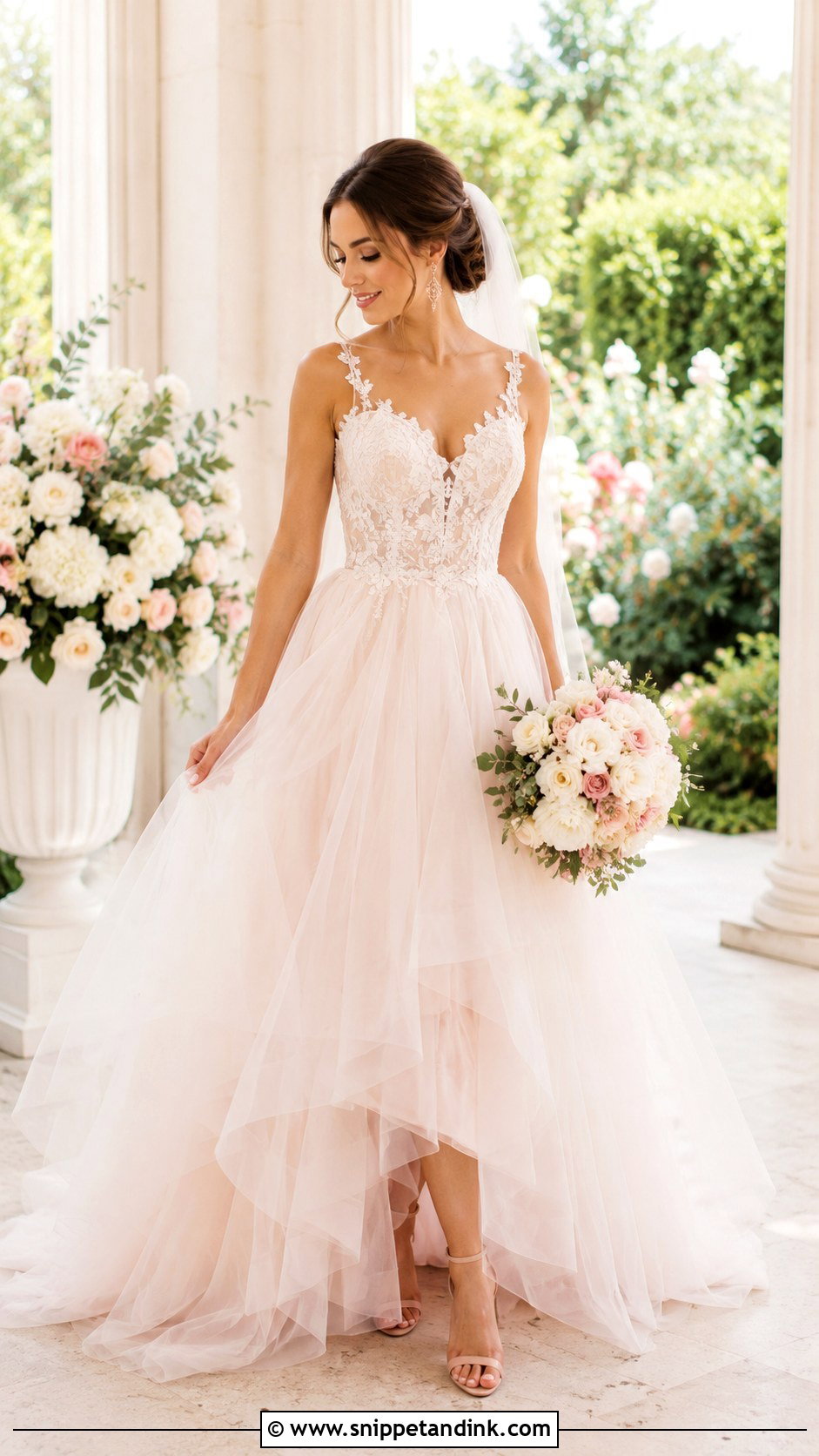
Blush tulle under ivory lace gives depth without reading as a coloured dress. Pale pink and warm nude layers behave differently, so I always look at both before deciding. Boutique lights flatter almost everything; take the gown to a window. A fitted bodice and full A-line skirt suit the palette. Champagne heels, rose-gold earrings and an ivory veil that blends with the lace keep it soft, with natural makeup, a muted pink lip and white and pale blush flowers. Bring a swatch when shopping for veils and shoes, since ivory, nude and blush can clash in surprising ways.
19. Plus Size Corset A-Line Bridal Gown
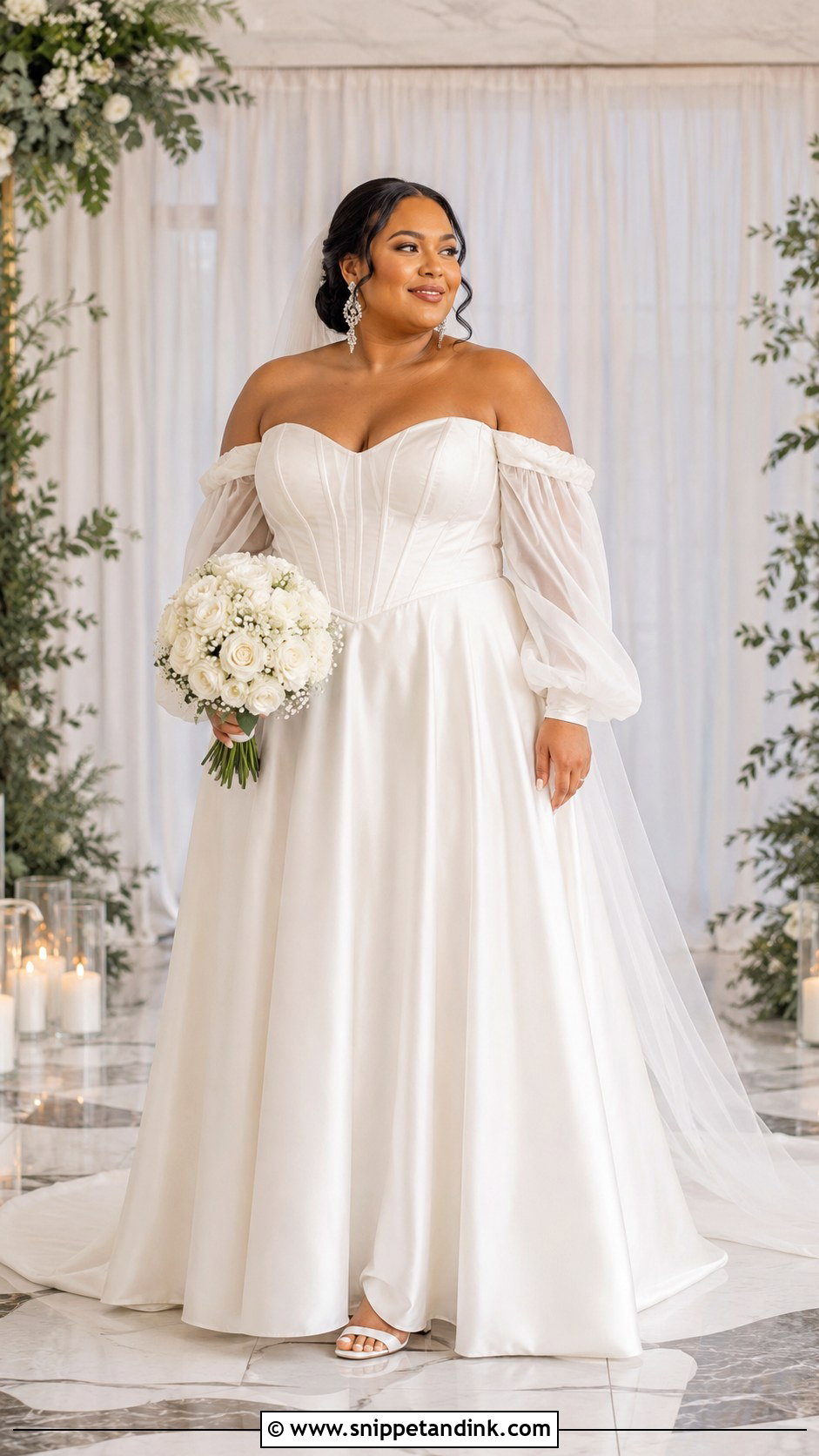
A corseted A-line works across a wide range of sizes because the support is built in rather than borrowed from your shoulders. I look for firm internal construction, wider straps or removable sleeves, and a waistline set for your proportions, not the sample’s. The skirt should skim out from the hip without extra bulk there. Satin gives clean structure; layered lace is softer. If the shop’s sample is too small to close, you can’t judge support, so ask to try one in your size range or about customisation before ordering. A chapel veil, statement earrings, supportive block heels and a medium rounded bouquet suit it. Alterations should shape the gown to you, never squeeze you into it.


20. Bridal Gown With High Slit
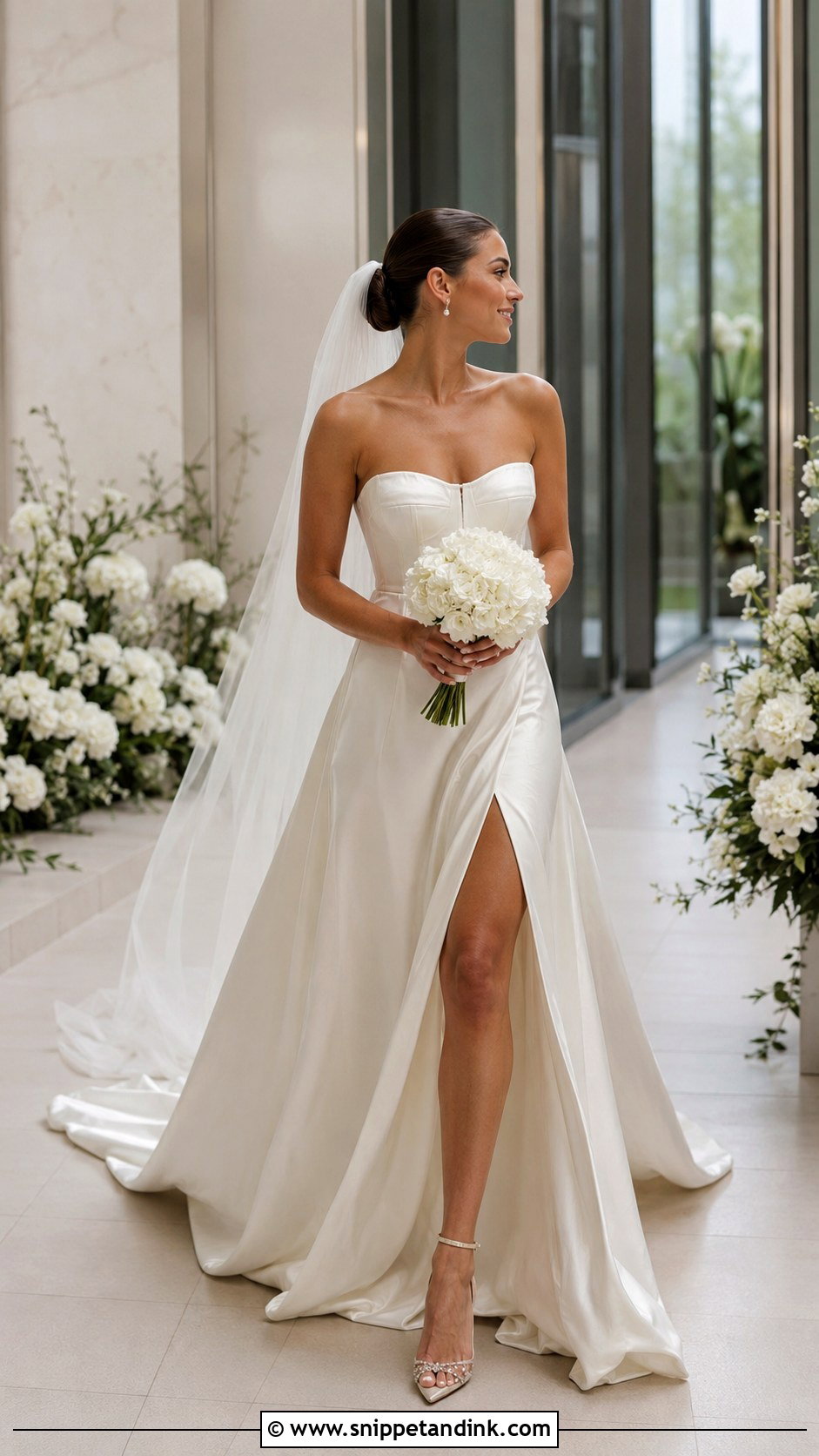
A bridal gown with a high slit gives you formal length and a flash of shoe. In satin or crepe, I prefer the slit placed slightly off to one side, where it opens as you walk rather than as you stand. An inner lining layer should still cover you when the outer skirt swings open. Walk, sit and climb steps at the fitting; fashion tape or a hidden interior panel adds security without changing the line. A corseted strapless bodice or clean square neck balances it. Embellished ankle straps, small drops, a long sheer veil and a sleek bun keep it sharp.
Where the Dress Goes the Morning After
Brides spend months on the gown and about five minutes thinking about what happens to it afterwards. Satin, silk and pearl-beaded 2025 styles all need a little care if you want them to look the same in ten years.
Get it to a specialist cleaner within a few weeks. Champagne, sugar and white wine dry invisibly, then oxidise into brown marks months later, and the longer they sit the harder they are to lift. Point out every spot you remember, and tell the cleaner about pearls, glued crystals or appliqués, since some solvents dissolve the adhesive.
For storage, I’d fold the gown loosely with acid-free tissue in the creases and keep it in an acid-free box or a breathable cotton bag, never the plastic it came home in. Heavy ball gowns shouldn’t hang for years, because the straps and shoulders stretch under their own weight. Keep it somewhere cool, dark and dry, which rules out most attics and basements. Take it out once a year, refold it along different lines and check for yellowing.
One Last Mirror Test Before You Say Yes to a 2025 Gown
From basque-waist ball gowns to silk columns and tea-length satin, 2025 gave brides an unusually wide range. My advice is to start with the silhouette you feel at ease in, then think about your venue, season, formality and how much you’ll move. Fabric and construction should serve the design. Bring your shoes and underwear to every fitting, sit and walk in each gown, and raise bustles and detachable pieces early. Veil, jewellery, flowers and hair should finish the dress, not compete with it. The right one is the gown you forget you’re wearing.
You'll Like These Ideas:










Leave a Reply