
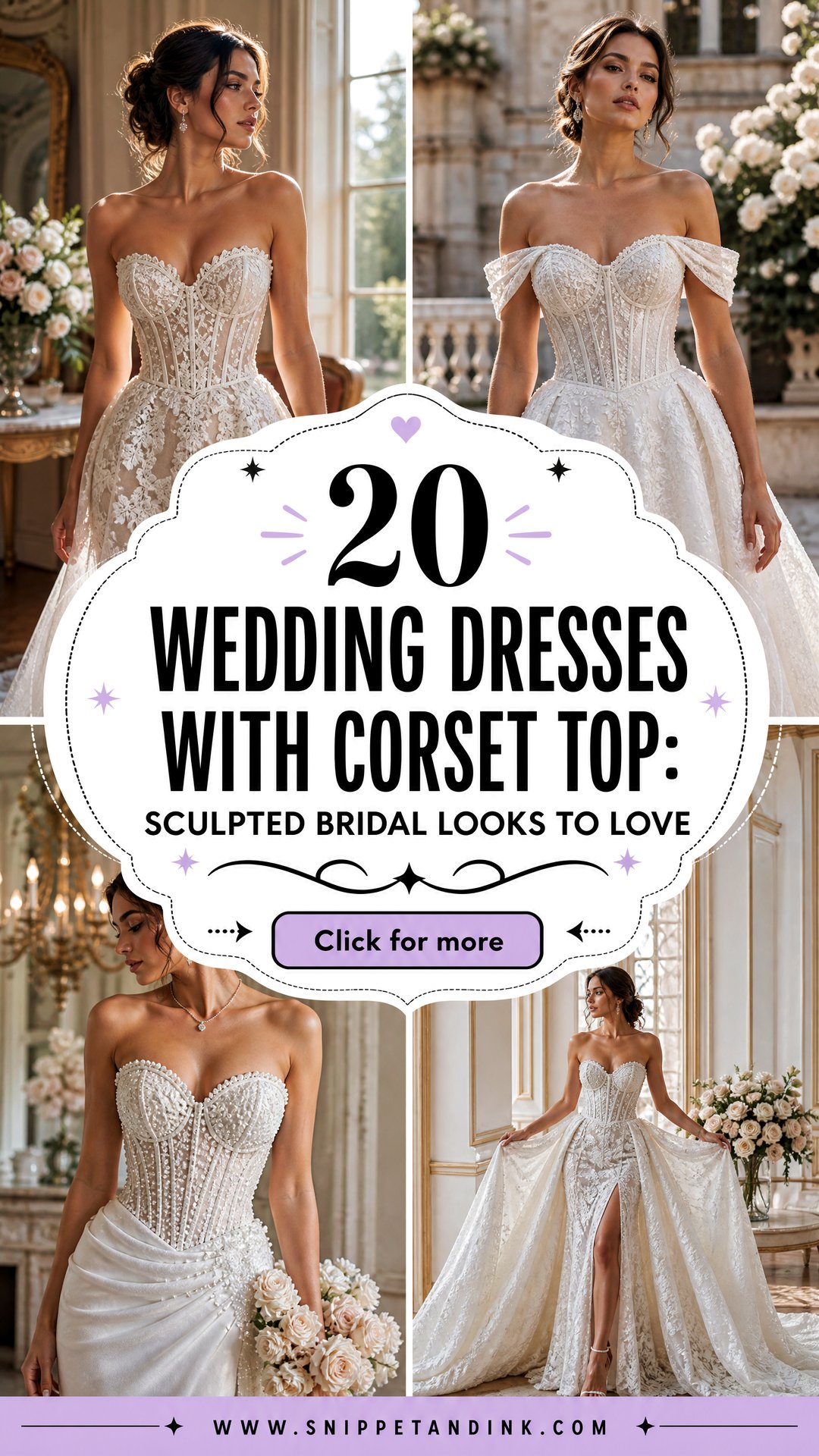
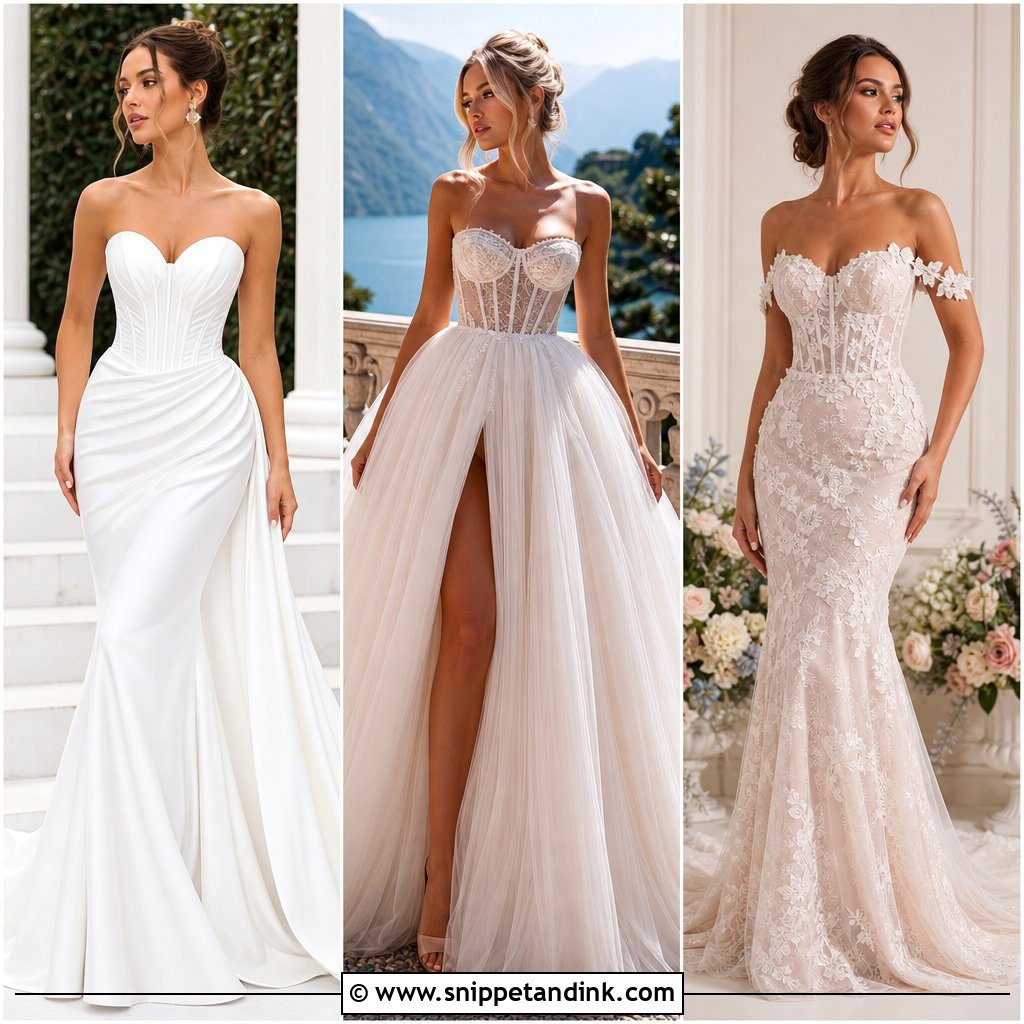
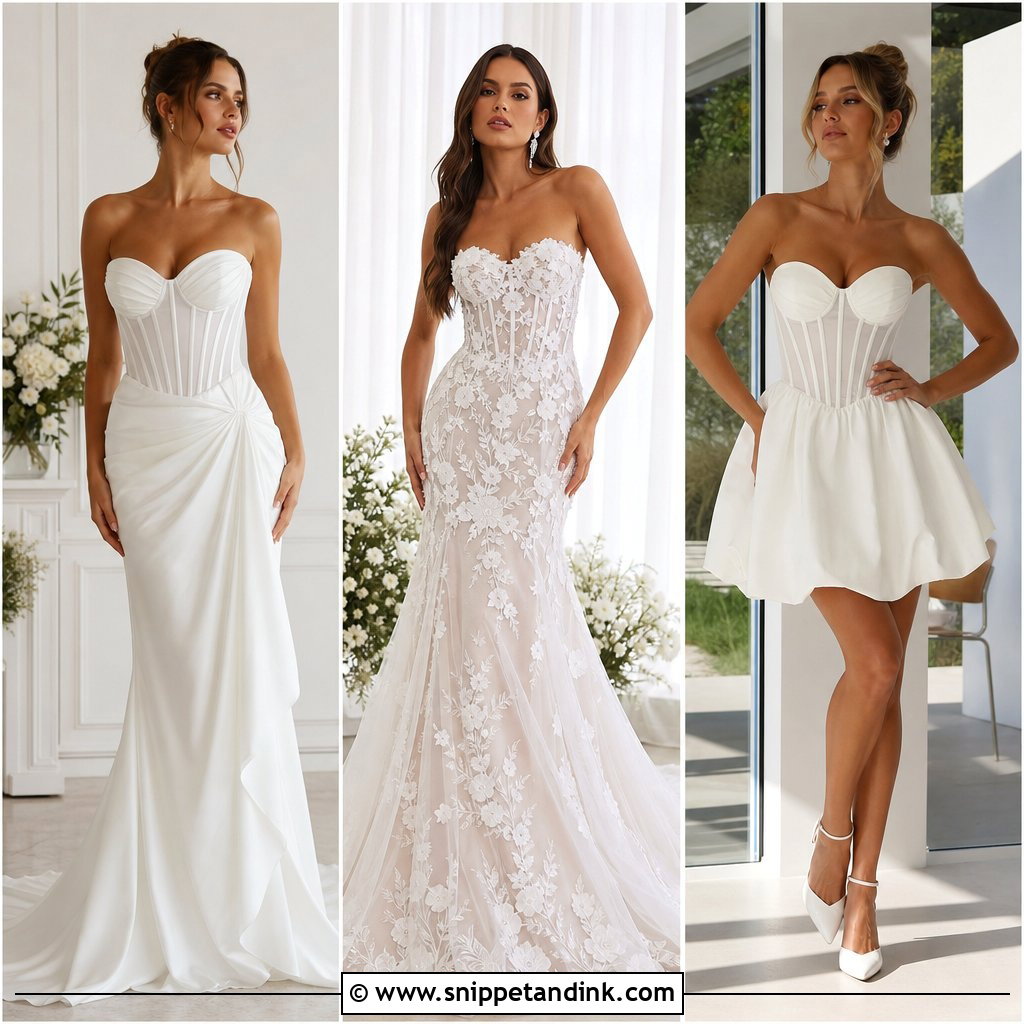
A corset bodice does real work. It holds the bust, shapes the waist and gives the skirt a firm edge to fall from, whether that skirt is airy tulle or heavy satin. Right now sculpted corsets, visible boning, Basque waists and long bodices are turning up on ball gowns, fitted dresses and two-piece sets alike. In fittings I care less about the trend than about three things: how the boning sits on your ribs, where the waist point lands on your body, and whether you can breathe deeply while laced. The twenty corset-top looks below cover lace, satin, minimal and convertible styles, with notes on what to check for each.
Spiral Steel or Plastic? Reading a Corset Bodice from the Inside
Two dresses can look identical on the hanger and feel completely different after six hours. The difference is inside, so I always turn the bodice inside out before a bride tries it on.
- Boning: spiral steel bends with your ribs and holds its shape all day. Plastic boning is lighter and cheaper but can warp with body heat and leave a ridge on the outside. Most bridal gowns use plastic or a mix, which is fine if the fit is good.
- Waist stay: a firm grosgrain band at the waist, hooked inside, takes the weight of the skirt off the bodice. If a heavy gown lacks one, ask your seamstress to add it.
- Cups: sewn-in cups that match your size mean you rarely need a bra. Moulded cups that are too big will dent when you lean forward.
- Modesty panel: a fabric strip behind a lace-up back. Without one, skin shows through the lacing gap.
Also notice where the boning ends. If it stops right on your hip bones, sitting will push it up into your ribs. A centimetre shorter can make the difference between comfort and counting the minutes until you can change.
1. Lace Corset Top Wedding Dress
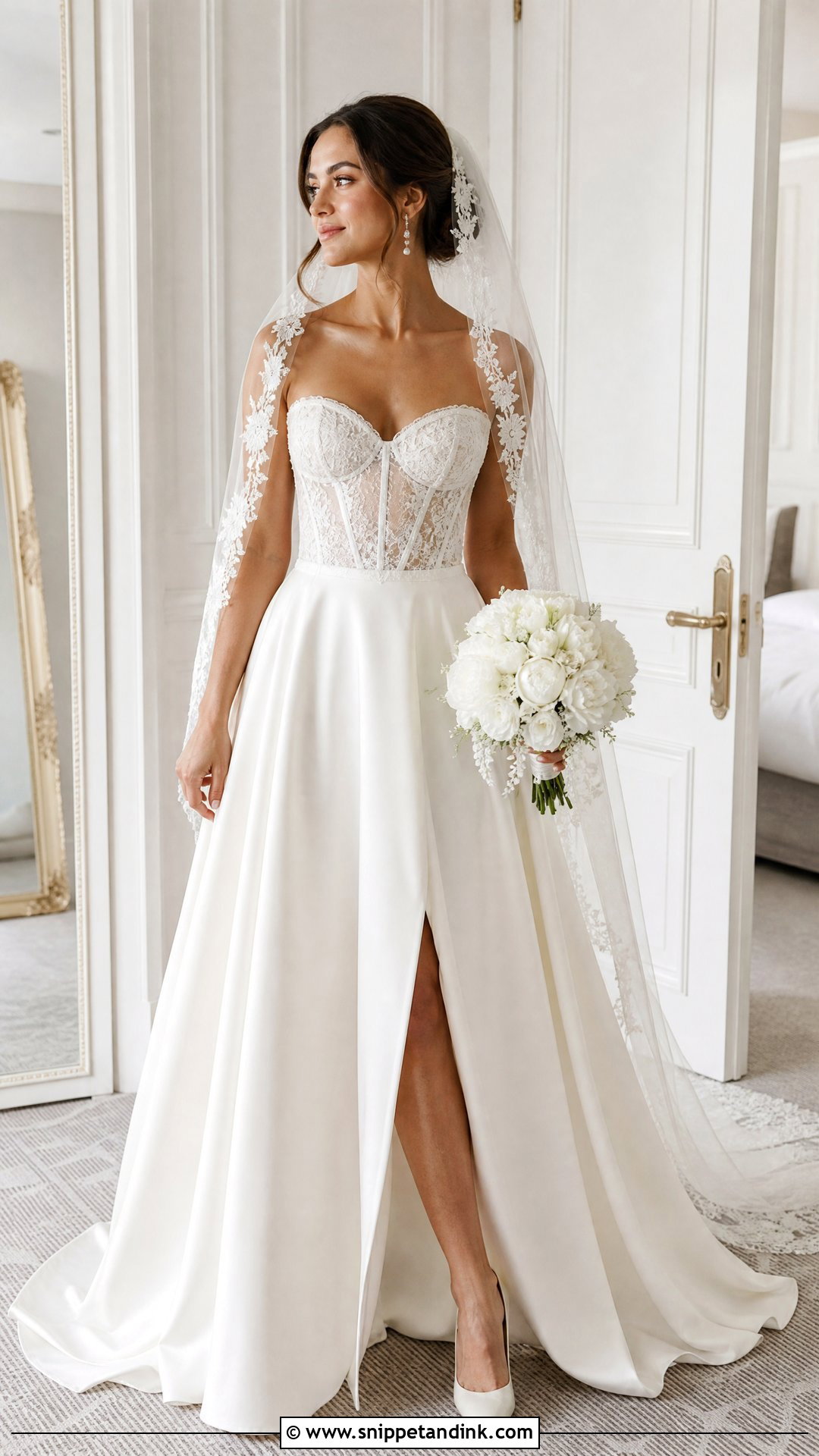
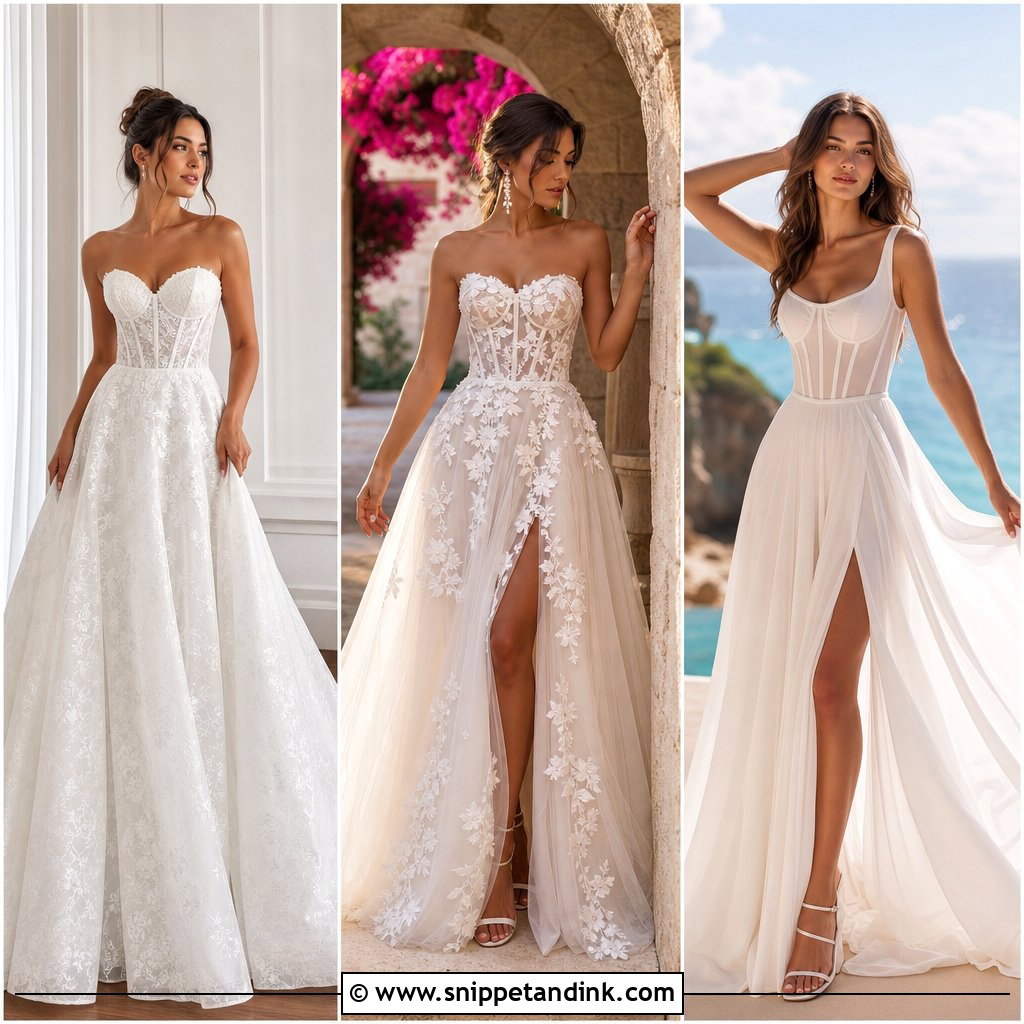
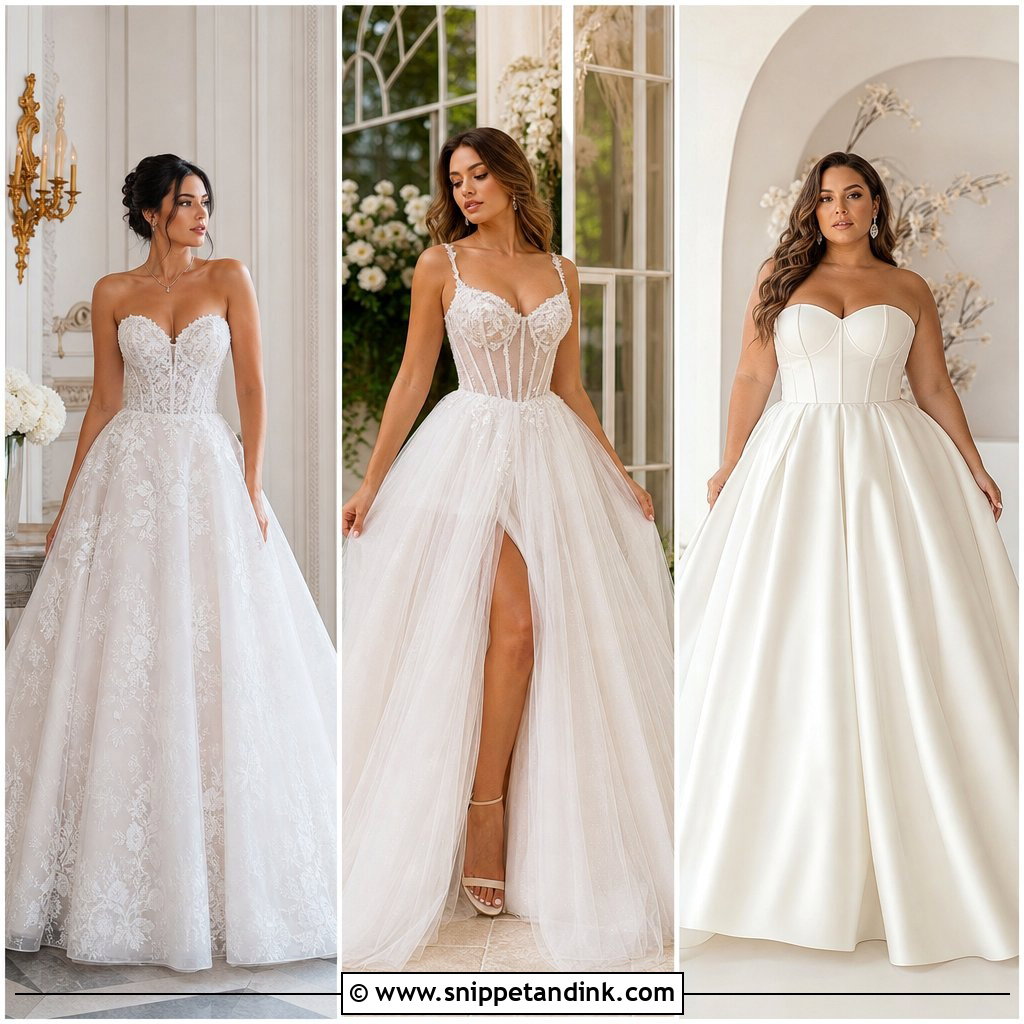
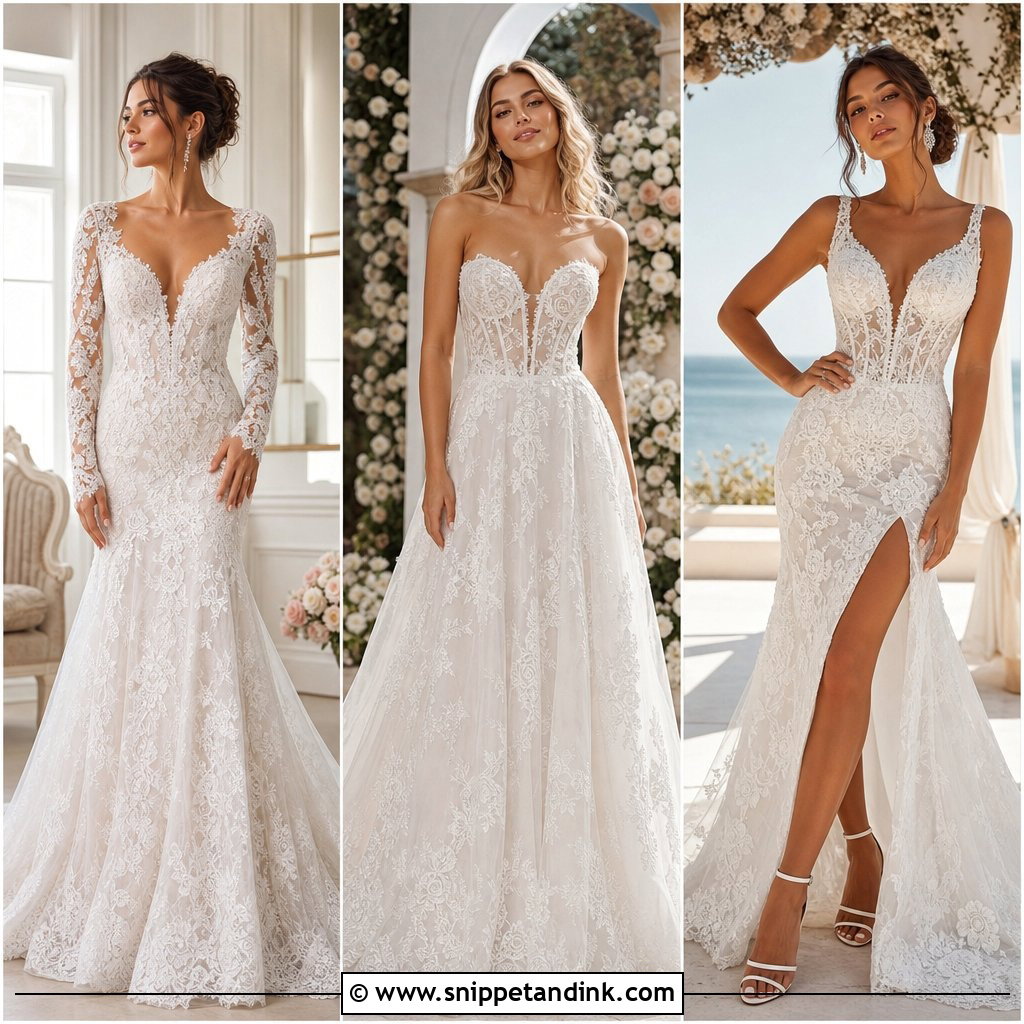
Lace over a corset is the classic, and it’s forgiving because the texture hides small fitting marks. A good version has proper cups, flexible boning and appliqués laid on a soft lining, finished with an A-line skirt that lets you move. I’d add a fingertip veil with a narrow lace edge, pointed ivory heels, pearl earrings and a small bouquet. For more coverage, a fully lined front with a fine illusion strip along the neckline works well. After alterations, check the appliqués: when a seamstress takes in the side seams, motifs often end up lopsided and need to be lifted and re-placed by hand.
2. Satin Corset Top Ball Gown
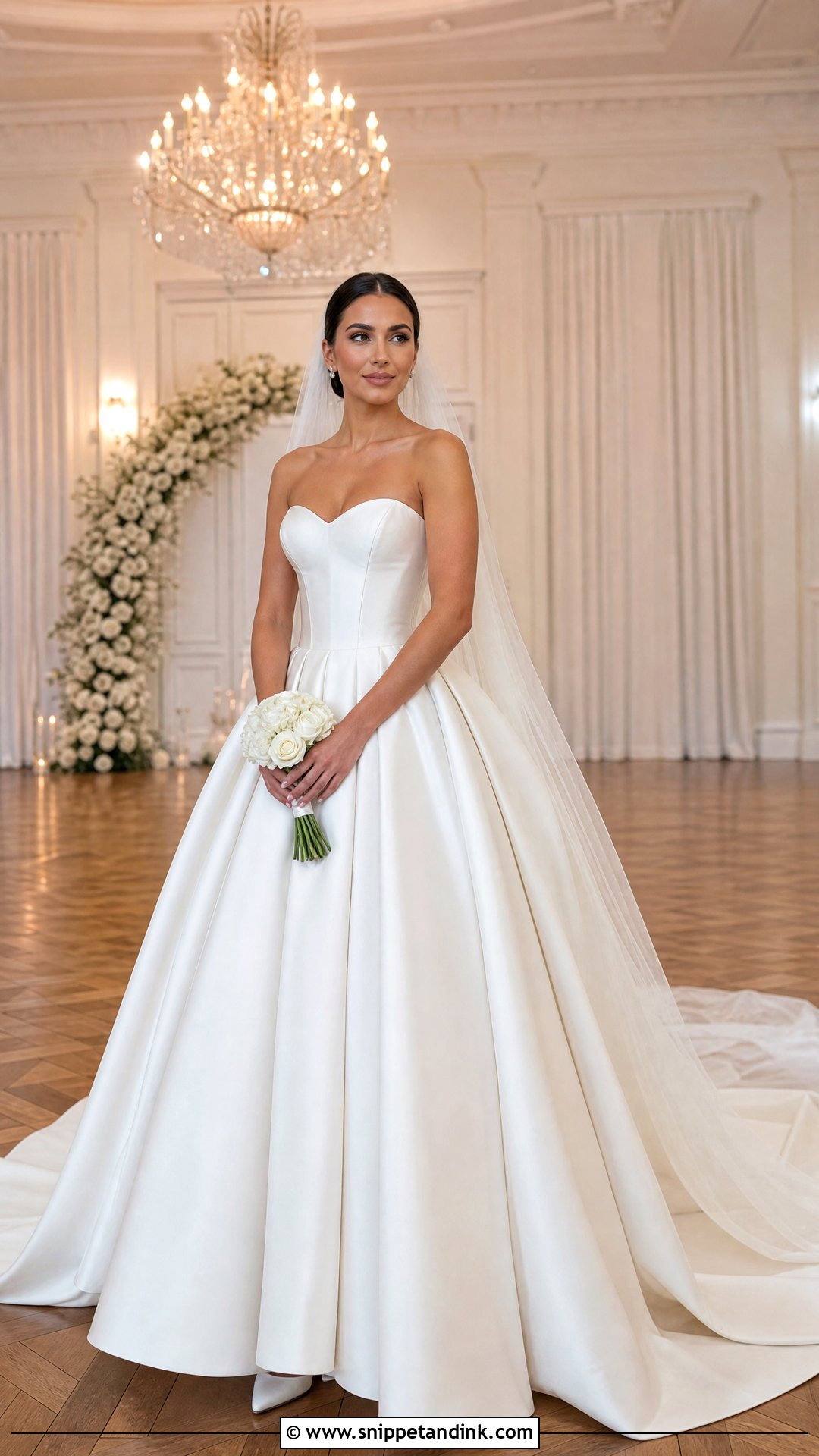
Satin shows every pull. On a corset ball gown that is the price of the clean, regal finish, so the bodice has to be fitted exactly; horizontal wrinkles across the waist mean it’s too tight or the boning is too short. A structured sweetheart with a full pleated skirt needs no decoration, and Mikado or duchess satin holds that shape best. Style it with a cathedral veil, crystal studs and closed-toe pumps under the skirt, hair in a neat bun. Sit and raise your arms at each fitting, and plan the bustle early, since a heavy satin train needs more than one hook.
3. Basque Waist Corset Wedding Dress
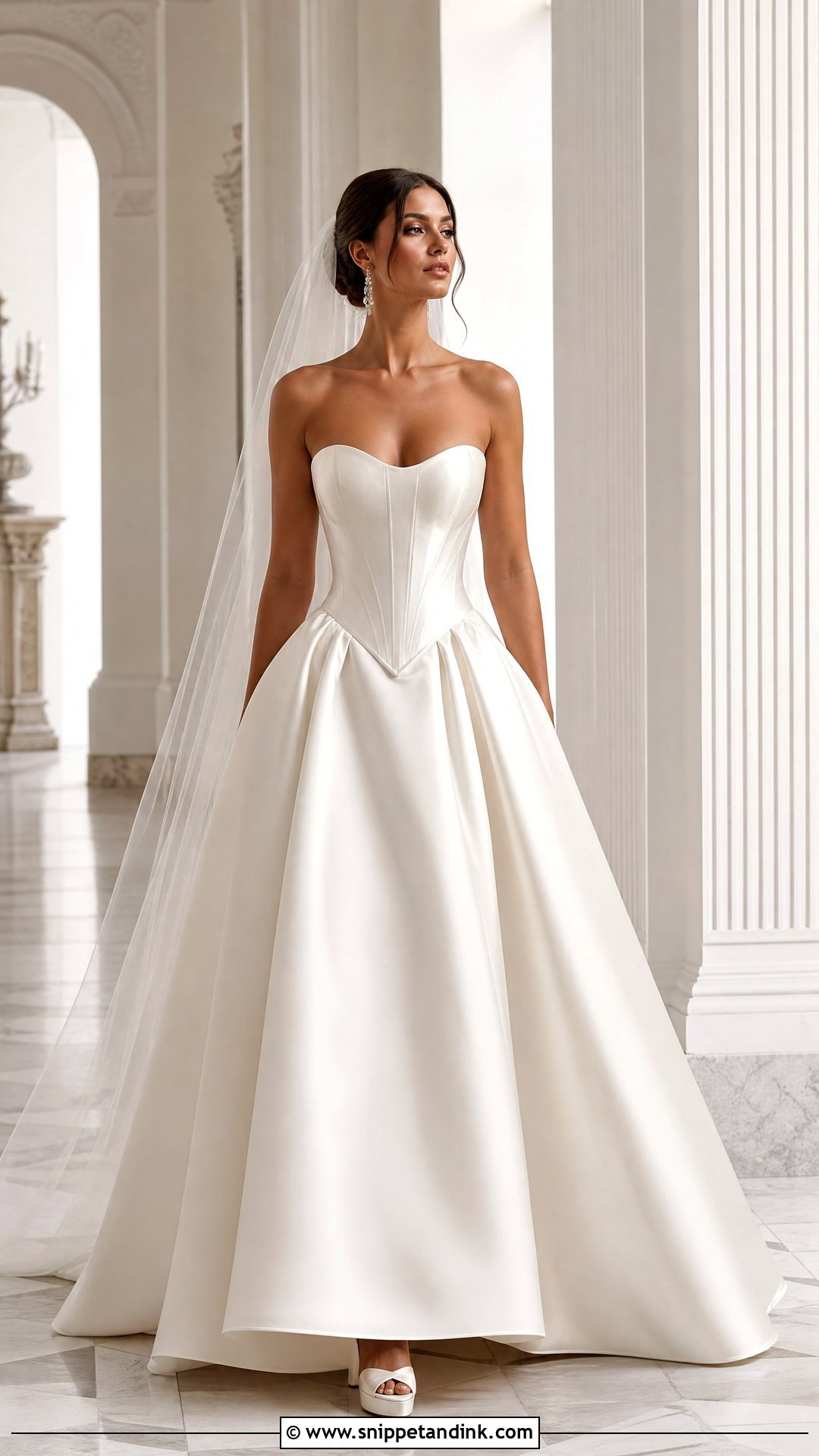
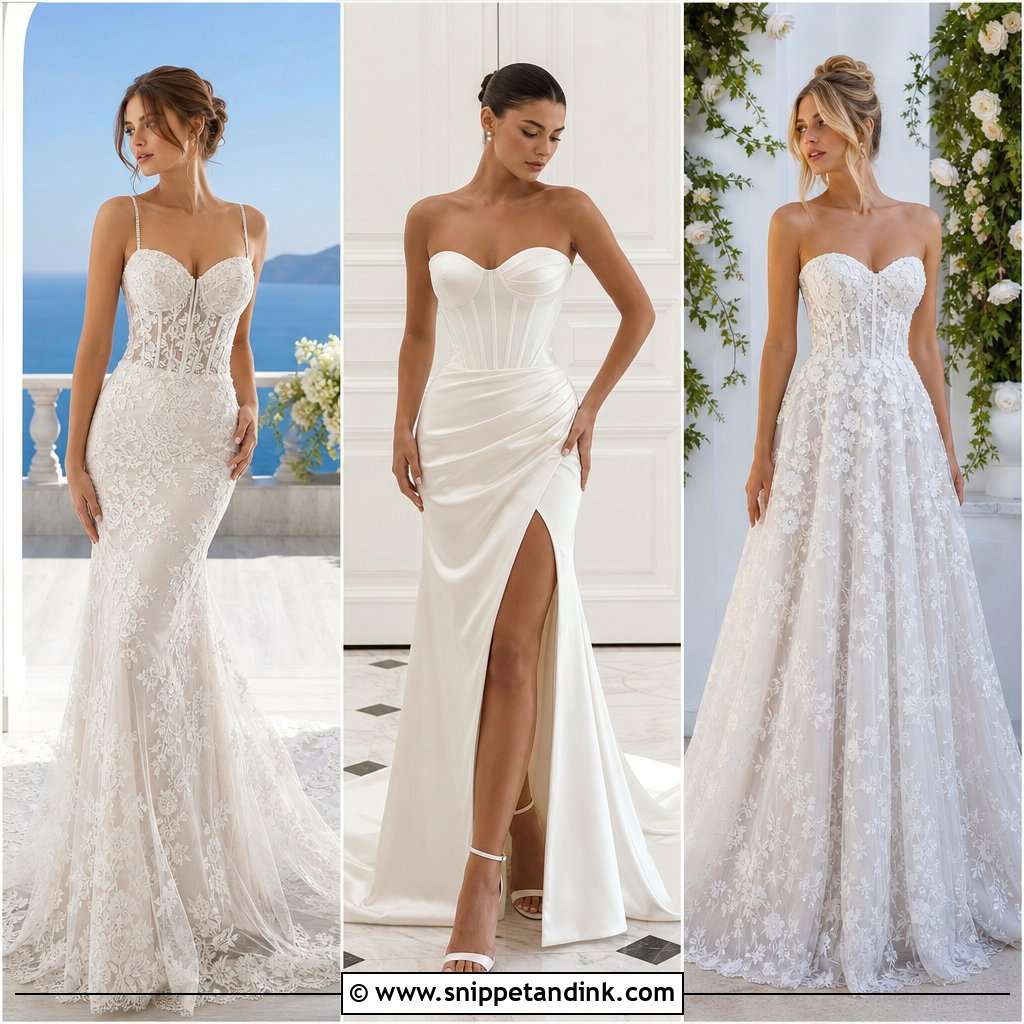
The Basque waist dips into a V below the natural waist, and that point is the whole design. Where it lands matters: too low and it digs into your thighs when you sit, too high and it looks like a regular waist with a lump. I check it standing and seated at every fitting. Matte satin makes it architectural, layered tulle softens it, and a strapless sculpted neckline with a lace-up back balances the point. A simple veil, drop earrings and low platforms are enough. A wide belt would cut straight through the line, so skip it.
4. Mermaid Corset Top Wedding Dress
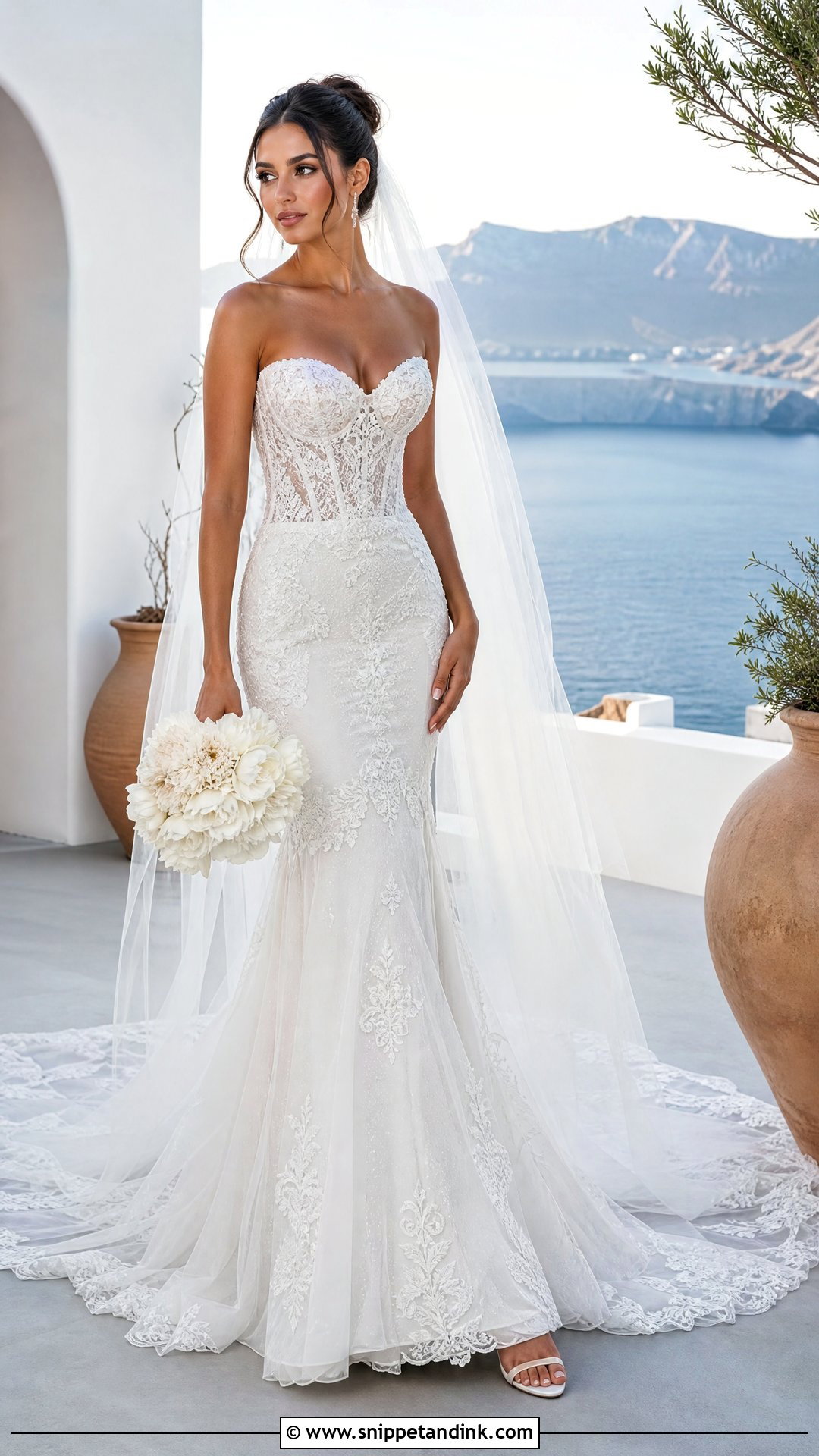
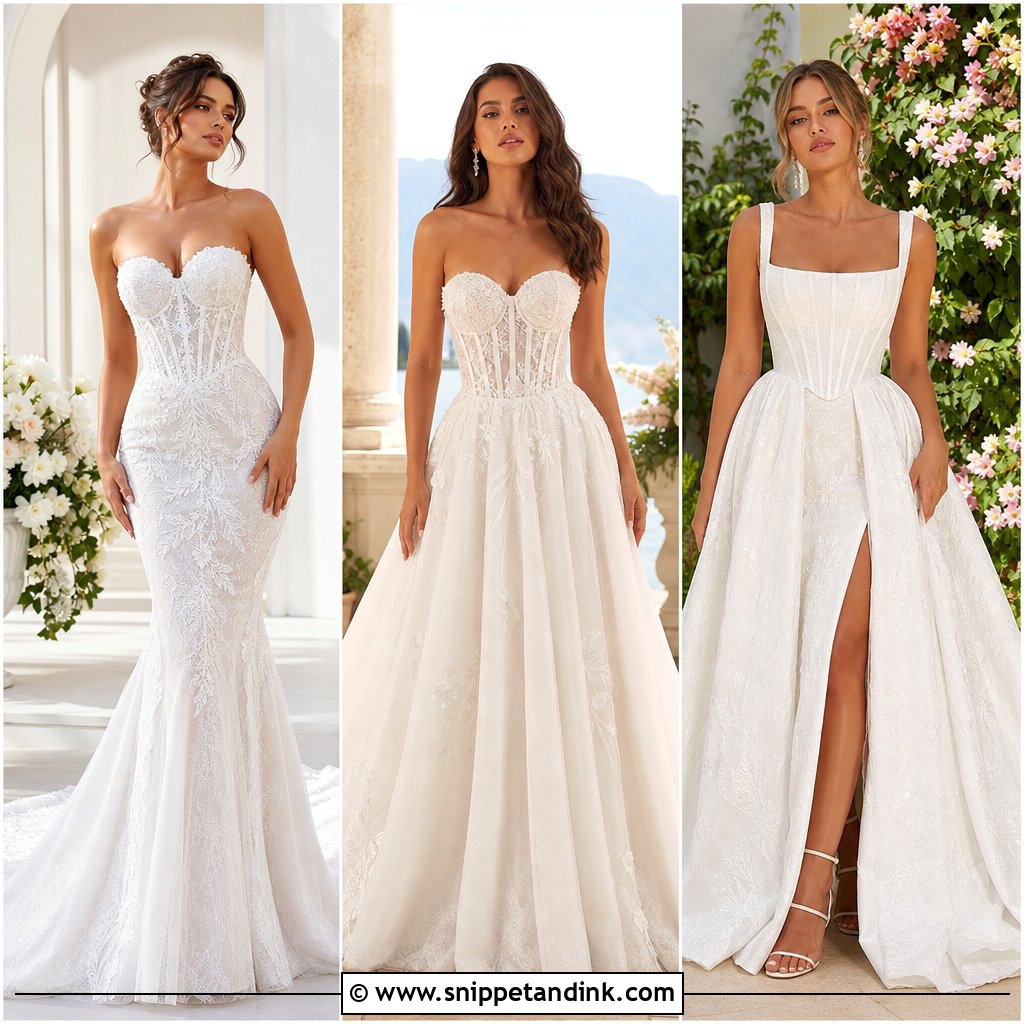
Mermaid corsets are the least forgiving shape here, because the fit has to hold from bust to knee. Stretch crepe looks smooth and modern; lace is softer and hides a little more. A sweetheart or gentle scoop balances the close fit. I always make brides walk, sit and climb a few stairs in it, since a skirt that only flares at the knee restricts your stride. Ask for enough ease through the hips, and whether the train can take a hidden loop or practical bustle for dancing. A chapel veil, slim drops, block-heel sandals and a small structured bouquet finish it.
5. A-Line Corset Top Wedding Dress
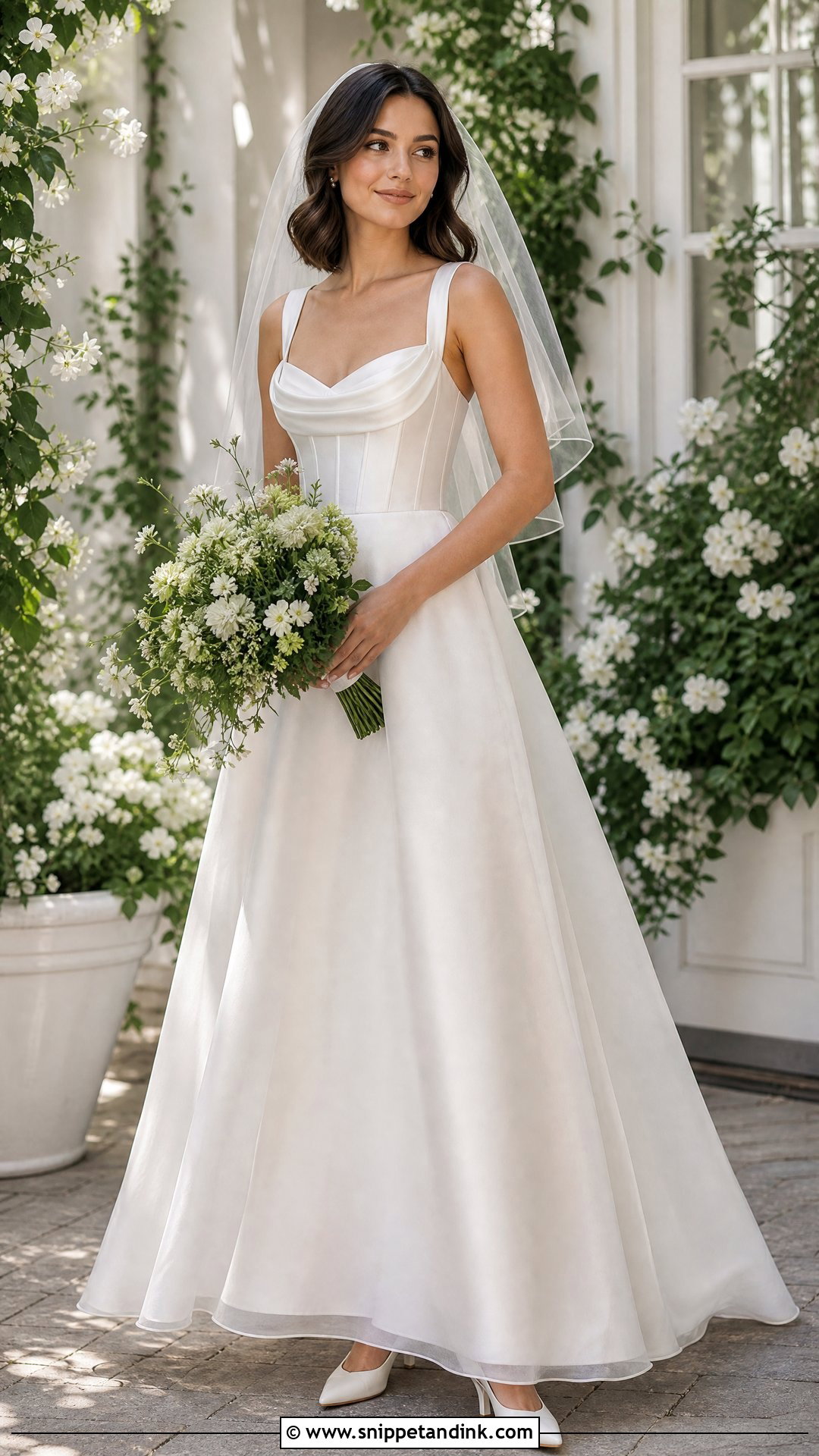
If you’re unsure about a corset at all, start with the A-line. Structure stops at the waist and the skirt falls away, so it suits ballrooms and garden ceremonies equally. A lightly draped satin bodice softens the look of the boning, and a tulle or organza skirt adds movement without weight. Shoulder-length veil, pearl studs and pointed kitten heels. For extra support, wider-set straps or removable cap sleeves help. Watch the waist seam: if the skirt is gathered heavily into it, it adds bulk exactly where the corset was meant to define.
6. Sweetheart Corset Top Wedding Dress
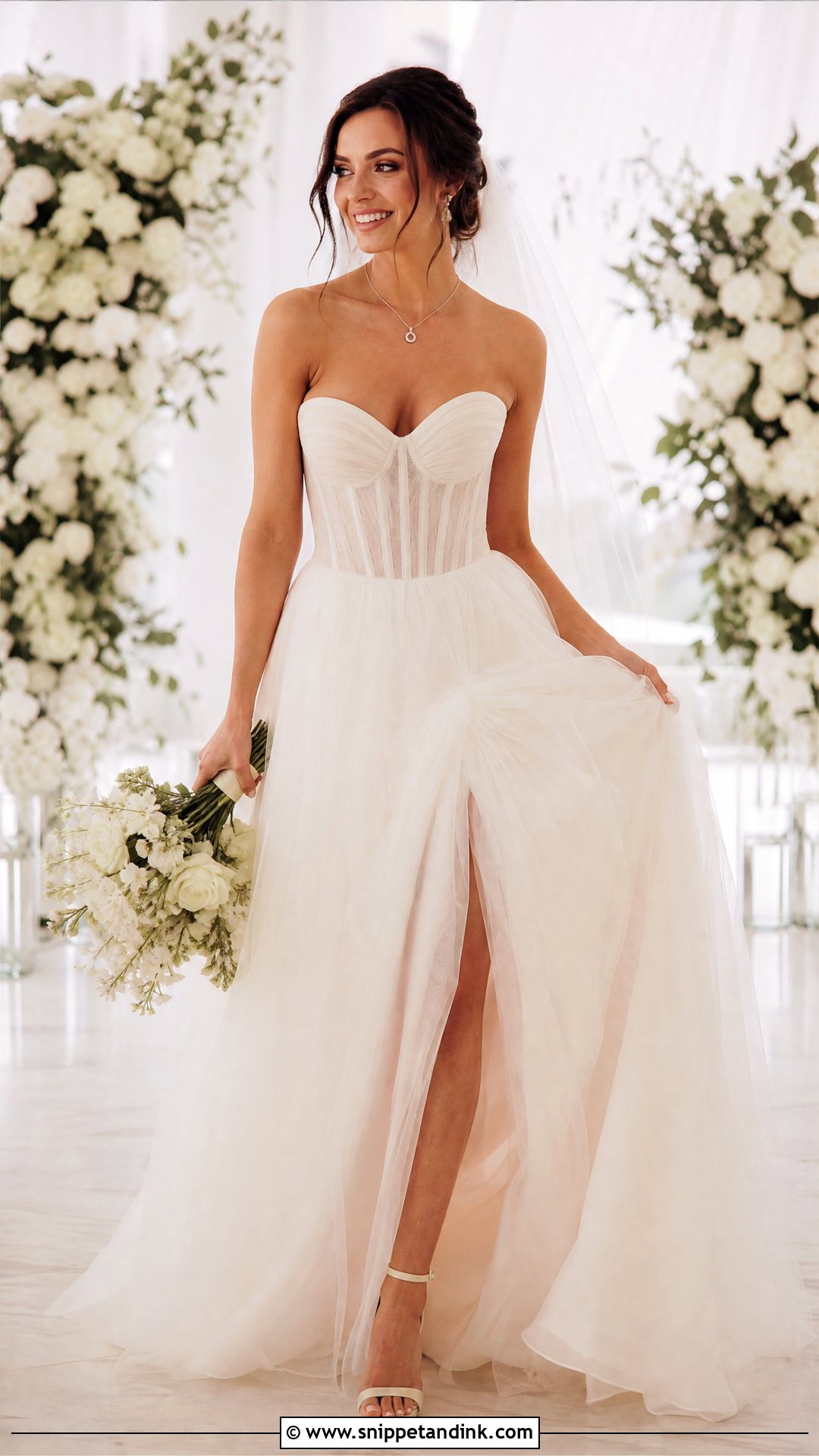
Sweetheart corsets highlight the collarbones, but the cups have to match your shape. Padding can’t correct a cup that’s the wrong size; it just gapes when you lean forward. I’d rather see shaped cups sized to you. Chiffon or tulle keeps the skirt light, satin makes it formal. A delicate pendant, small earrings, ivory heels with ankle straps and a fingertip veil suit it. If the neckline feels too open, removable off-the-shoulder straps or a sheer inset add coverage. The top edge should sit flat against the skin without you tugging it up all evening.
7. Sheer Corset Top Wedding Dress
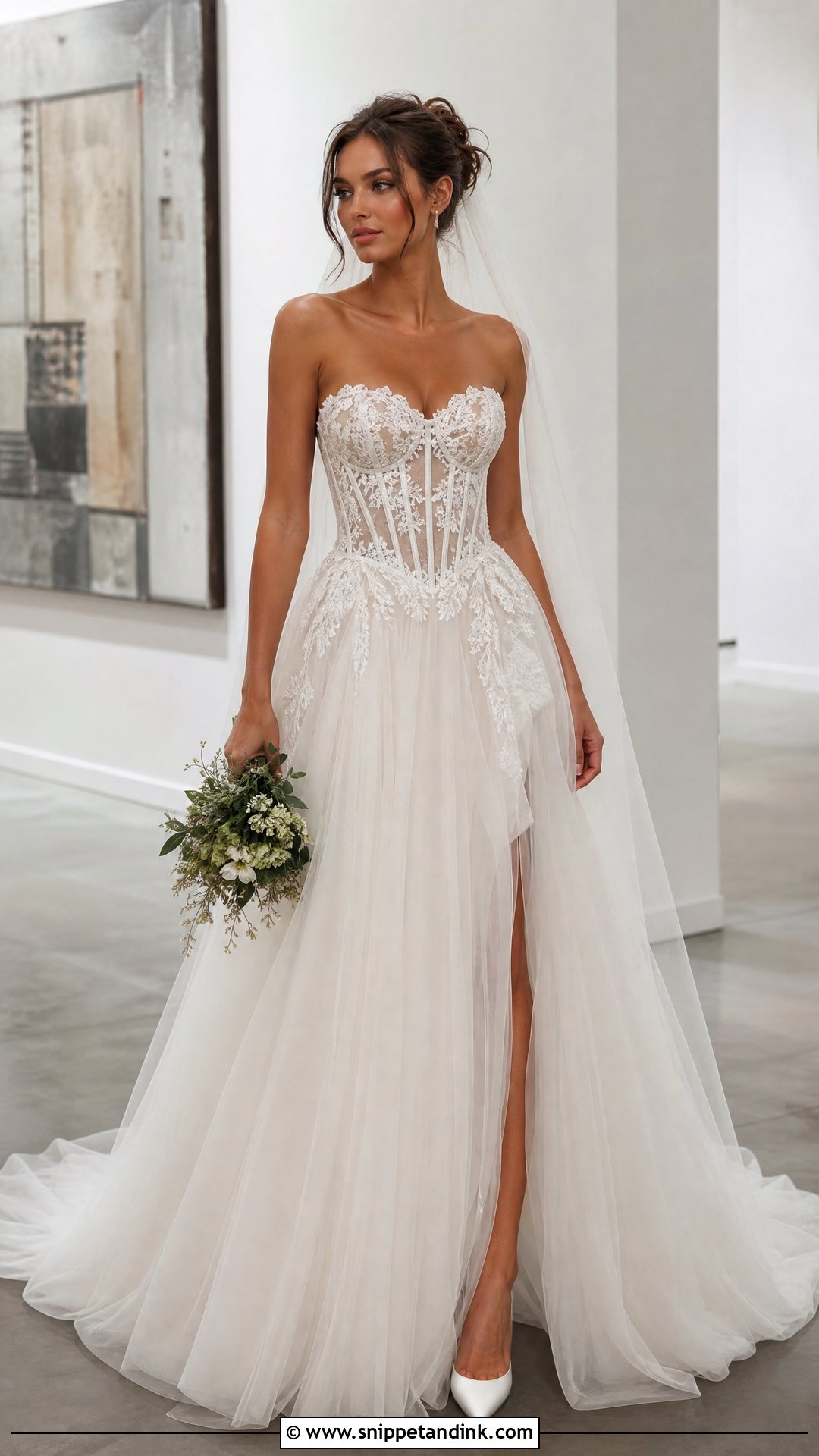
A sheer corset top wedding dress turns the construction into the decoration: boning channels, placed appliqués and a lightly transparent base. Pair it with layered tulle for softness or a fitted crepe skirt for contrast, and keep accessories minimal so the bodice reads clearly. Coverage can be adjusted with lining, lace placement or illusion mesh matched to your skin tone. The test I never skip is the camera flash. Sheer bodices that look modest in the mirror can look far more transparent in flash photography, so photograph it at the fitting with your phone’s flash on.
8. Off-Shoulder Corset Wedding Dress
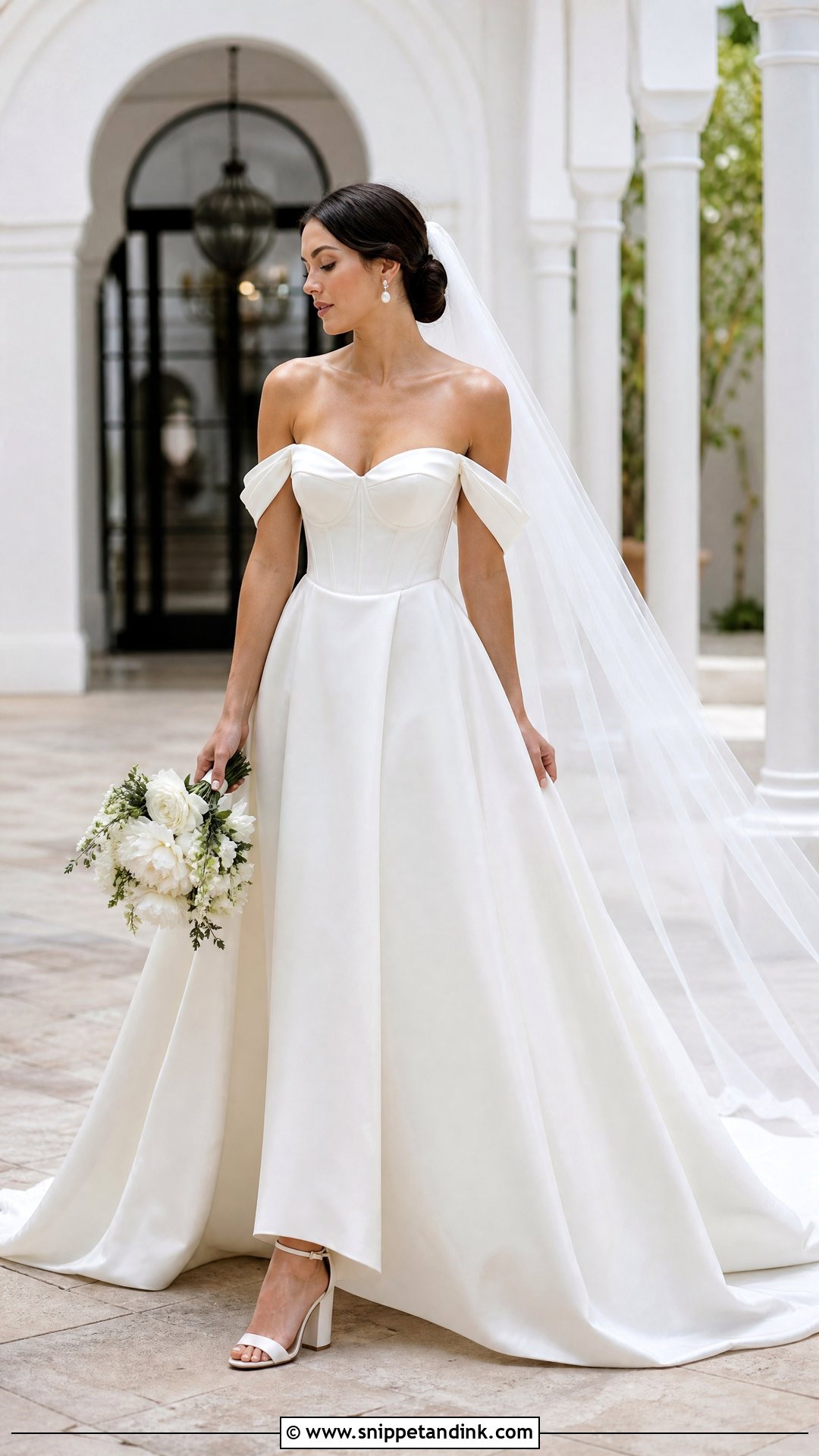
Off-the-shoulder sleeves soften a structured corset and add movement. Draped satin bands look sculptural; lace or tulle sleeves feel lighter. A full A-line skirt with a modest train keeps it formal but not overwhelming, styled with a low chignon, pearl drops and a raw-edge veil. The catch is arm movement. These sleeves pin your upper arms a little, which matters when you lift the skirt, hug or throw the bouquet, so test all three at the fitting. Detachable sleeves are a good compromise if you want the look only for the ceremony.
9. Long Sleeve Corset Wedding Dress
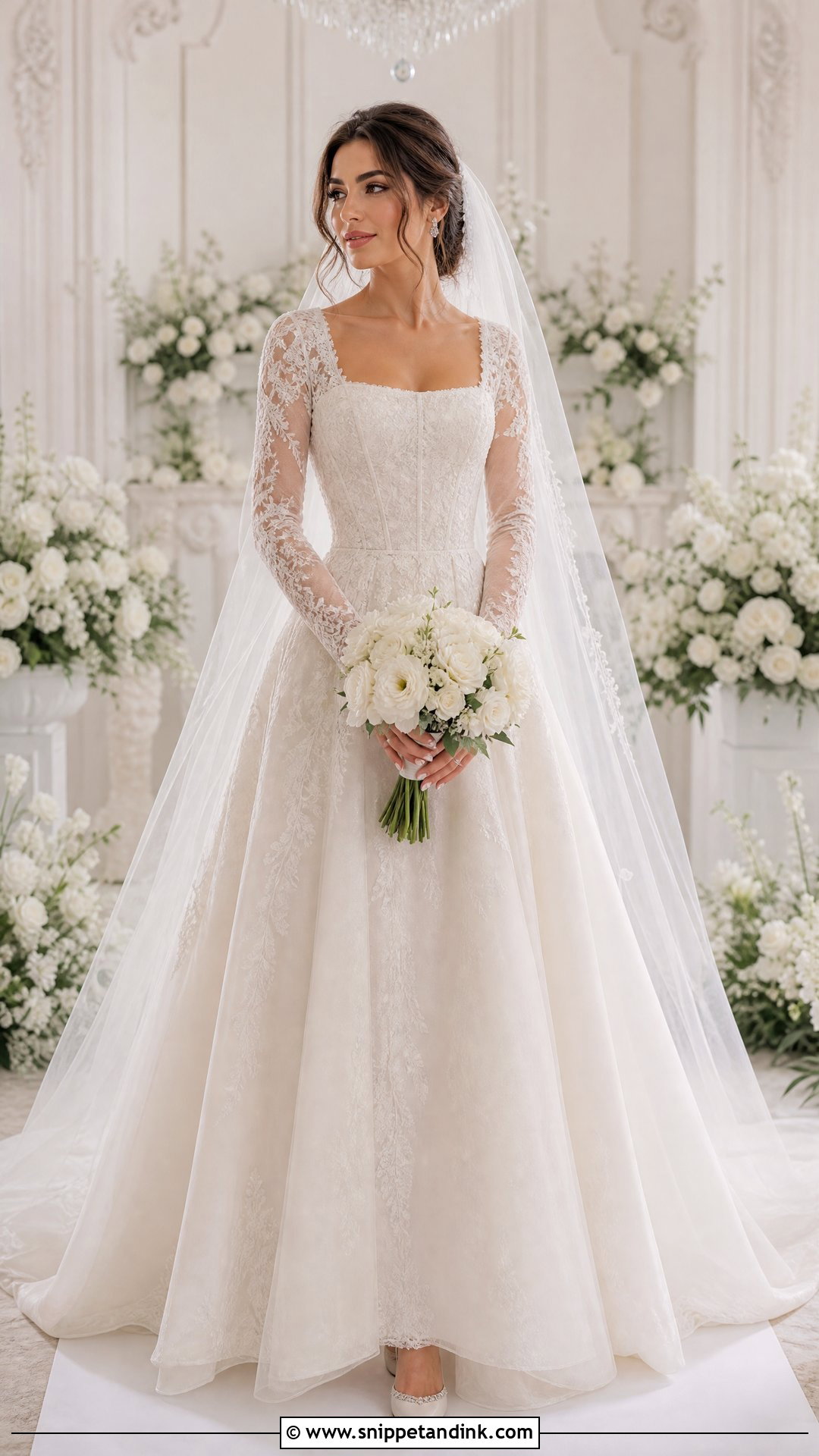
Long sleeves and a corset can fight each other. If the sleeves are set too tight, raising your arms drags the whole bodice upward, so I ask brides to reach overhead at every fitting. Sheer lace sleeves keep the gown light; lined crepe looks sleek and understated. A square or softly curved neckline with an A-line skirt, a long veil, crystal studs and closed-toe heels make a classic outfit, and a neat updo shows off the buttons down the back. For summer, choose breathable mesh and light lace over heavily beaded sleeves.
10. Floral Corset Top Wedding Dress
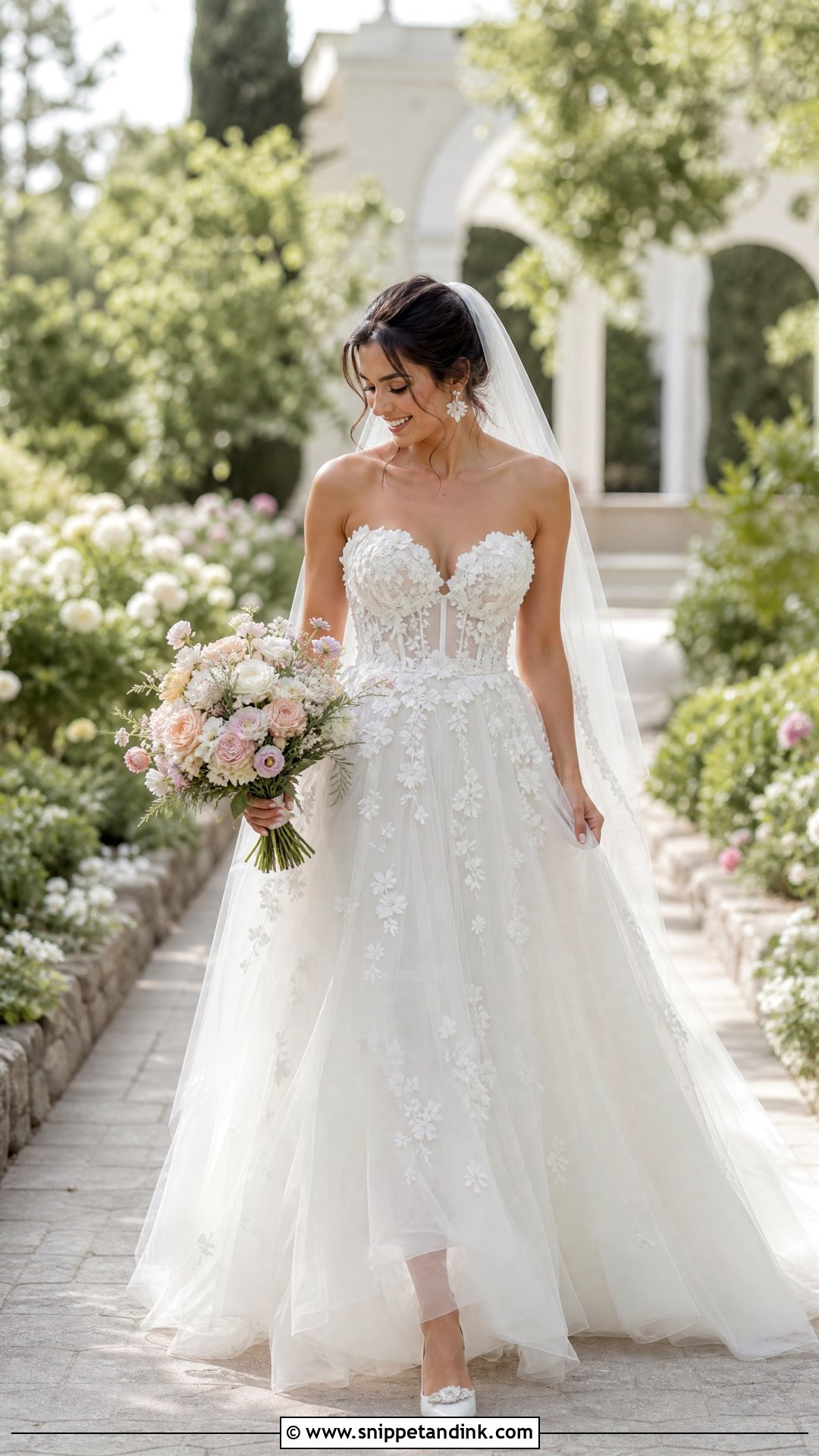
Dimensional flowers that start on the bodice and scatter down a tulle skirt give a gradual, garden-like effect instead of an abrupt join between fabrics. Ivory on ivory is subtle; pale pastel embroidery adds a hint of colour. Pair it with a plain veil, small floral earrings and low satin heels that cope with grass and stone. A loose bouquet should coordinate without copying every shade. Raised petals snag on veil combs and lace edges, so test where the veil sits before the day, and have loose petals stitched down after the final bodice alterations, not before.
11. Pearl Corset Top Wedding Dress
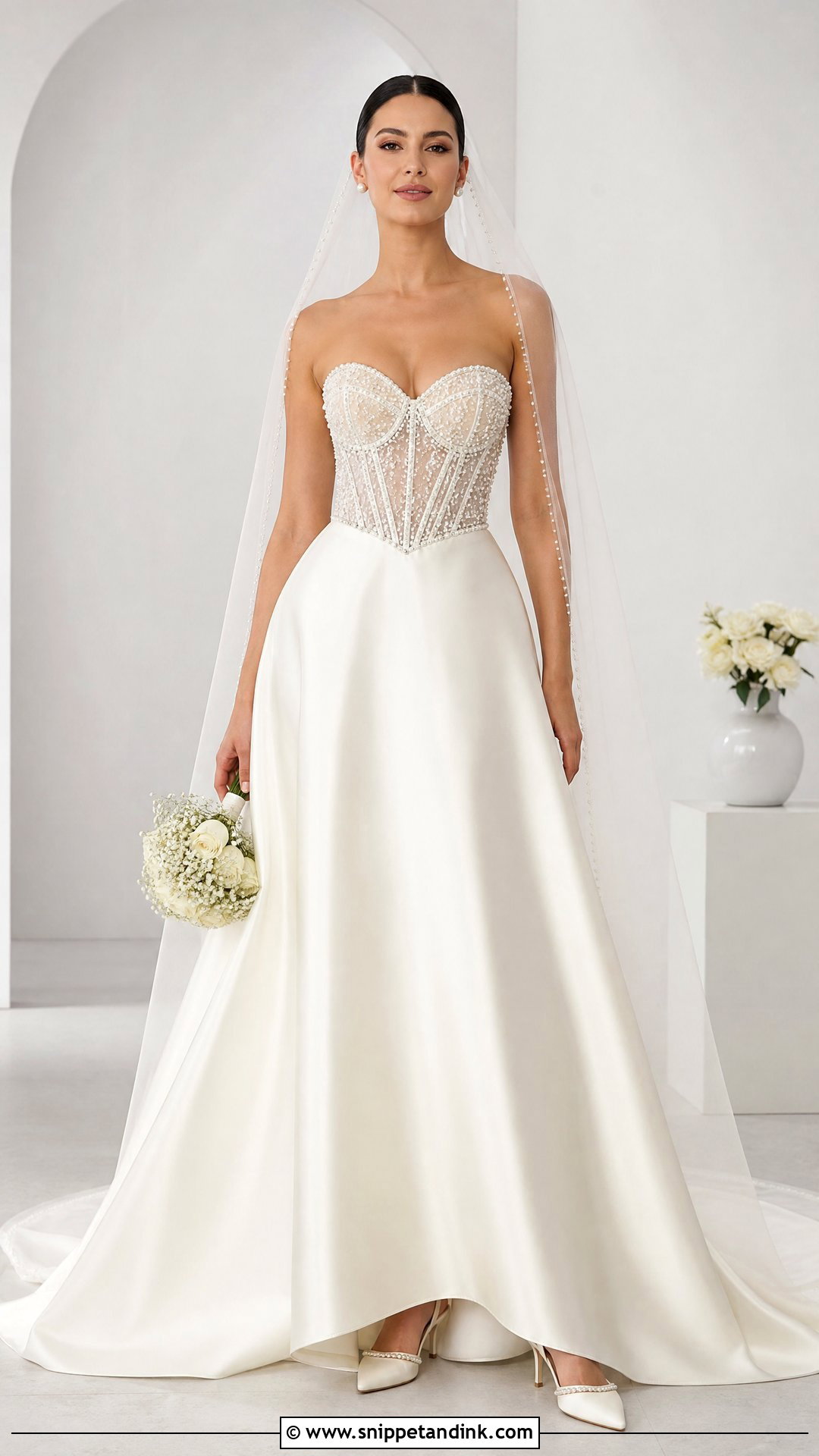
Pearls give a softer glow than crystals. Rows of small pearls running along the boning channels emphasise the structure; pearls scattered over illusion mesh feel softer. Pair either with a smooth satin skirt and keep the rest quiet: a pearl-edged veil, small studs, ivory slingbacks, and no necklace if the neckline is already busy. Pearls are heavy, though. That extra weight pulls a strapless bodice down over a long day, so the internal corset needs to grip properly at the waist. I always pack a few spare matching pearls and a needle in the emergency kit.
12. Sparkly Corset Top Wedding Dress
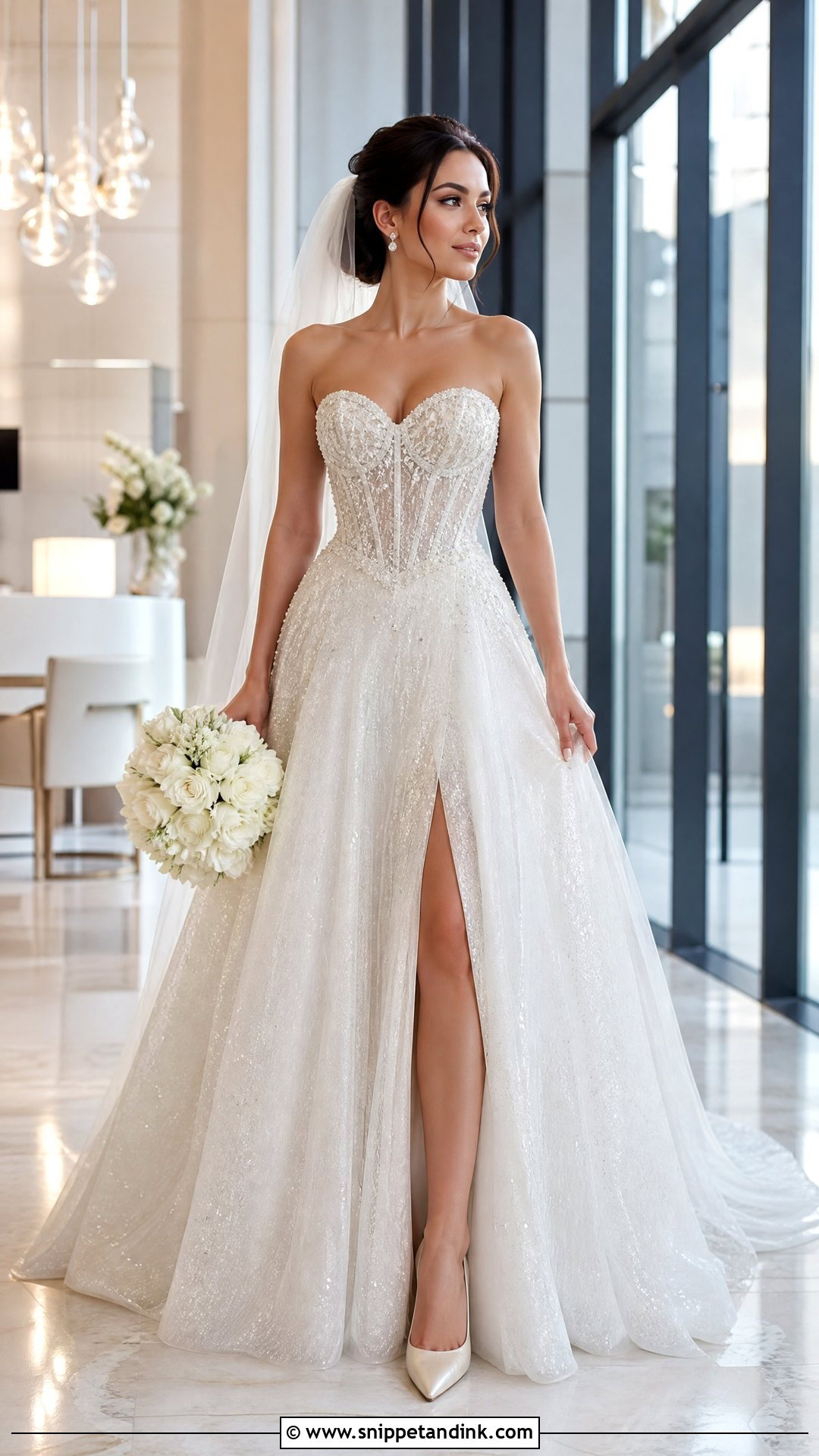
Sparkle works best after dark, under candles and reception lighting. I’d pick one type of embellishment, fine beading, sequined lace or crystal embroidery, rather than combining them. A fitted bodice over a flowing tulle skirt keeps it from feeling heavy. A clean veil, small earrings, metallic or ivory heels and a compact bouquet keep the front of the dress visible. Check the underarms: beading along the side seams rubs raw after a few hours of dancing. The lining needs to be strong enough for the weight, and the skirt may need a reinforced bustle.
13. Minimalist Corset Top Wedding Dress
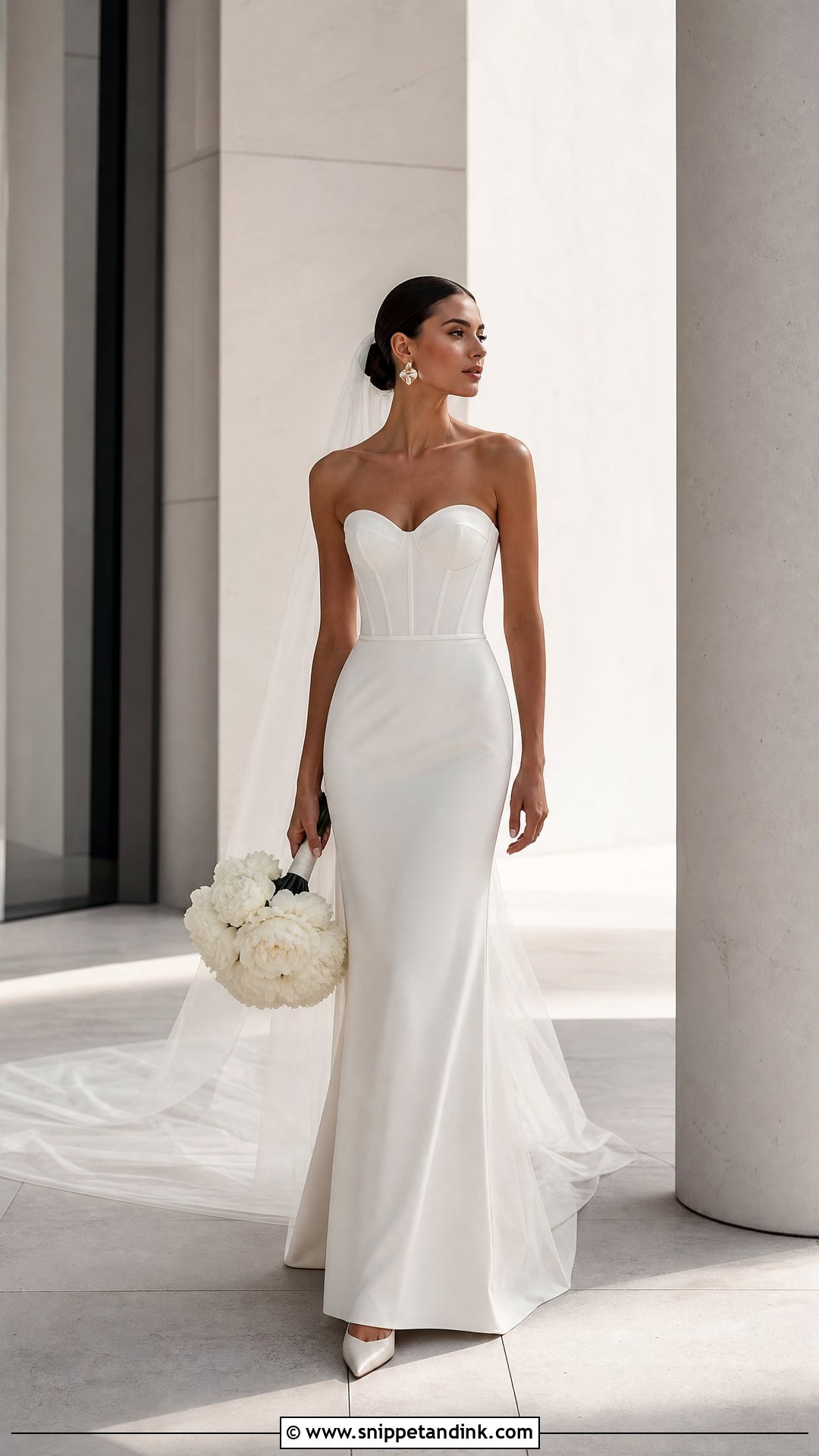
Minimal corsets are harder to make than embellished ones, because nothing hides the construction. Smooth crepe, satin or Mikado, a straight or softly scooped neckline and a column skirt with a subtle train look modern. Sculptural earrings, pointed pumps, a plain cathedral veil, a sleek bun and a single-colour bouquet keep it uncluttered. On a plain bodice, I look for boning that lies flat without ridges, cups that sit evenly and a skirt that hangs without twisting. Internal boning keeps the shape with a smooth exterior. Covered buttons down the back are about all the decoration it needs.
14. Drop Waist Corset Wedding Dress
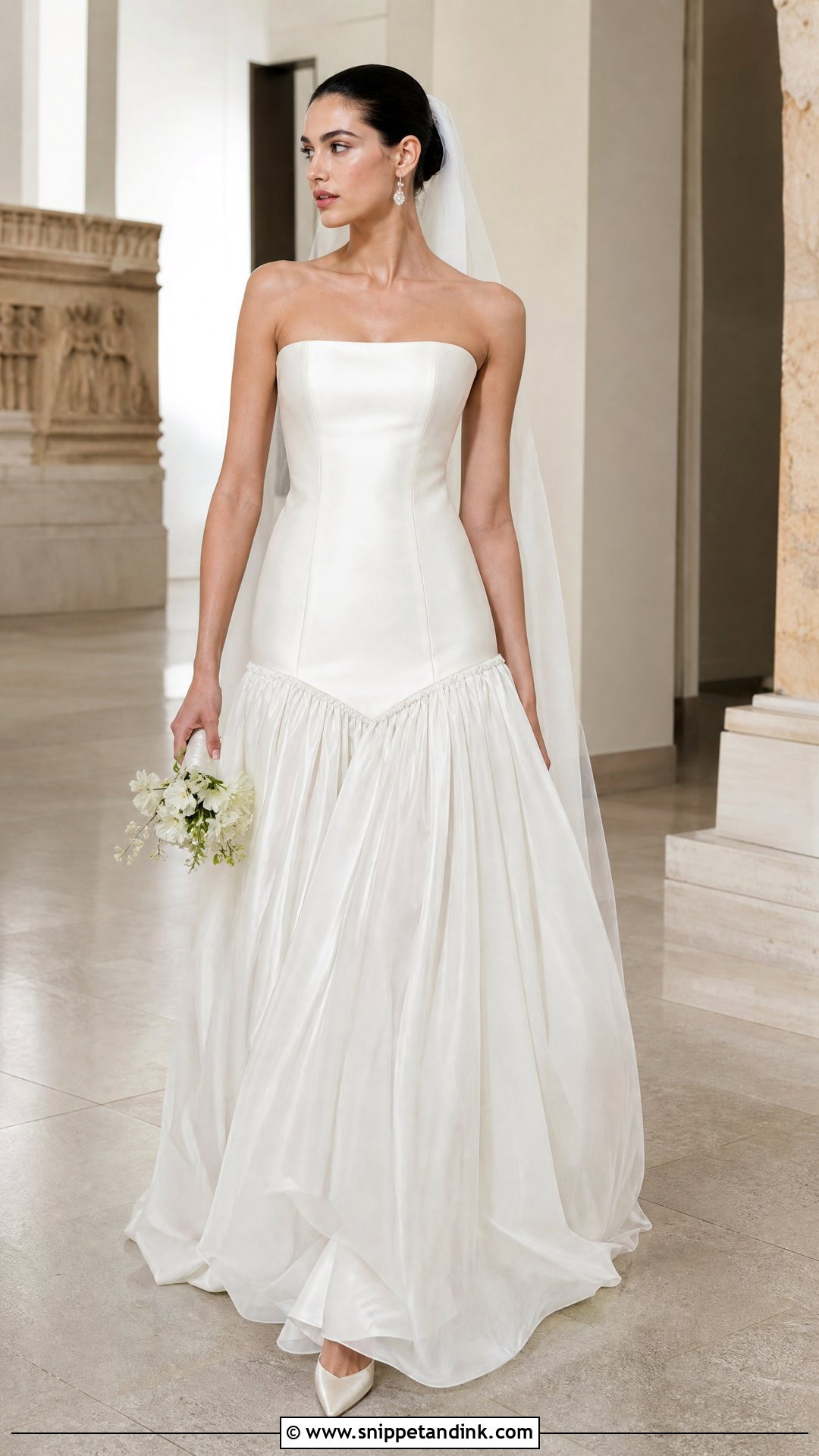
The bodice runs past the waist to the top of the hips before the skirt opens, so the torso looks longer and the dress looks fashion-led. Gathered tulle, bubble volume or smooth satin all suit it. A strapless neckline, a veil starting below a sleek bun, pointed heels and small statement earrings keep the proportions clear. Mobility is the concern: boning that reaches the hips presses into your thighs when you sit, so sit fully, climb steps and take long strides at the appointment. The skirt seam should lie flat, not cut across you, and may need moving to your most comfortable point.

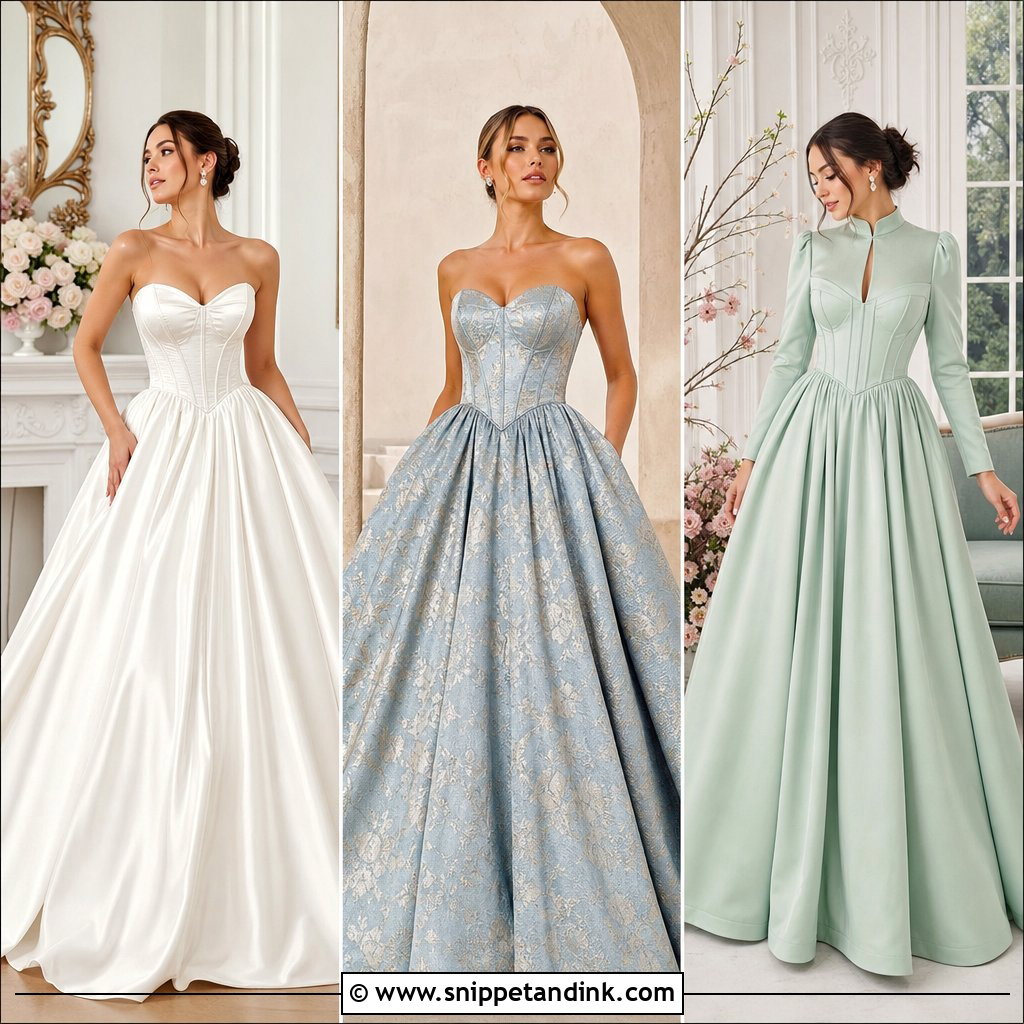
15. Two-Piece Corset Wedding Dress
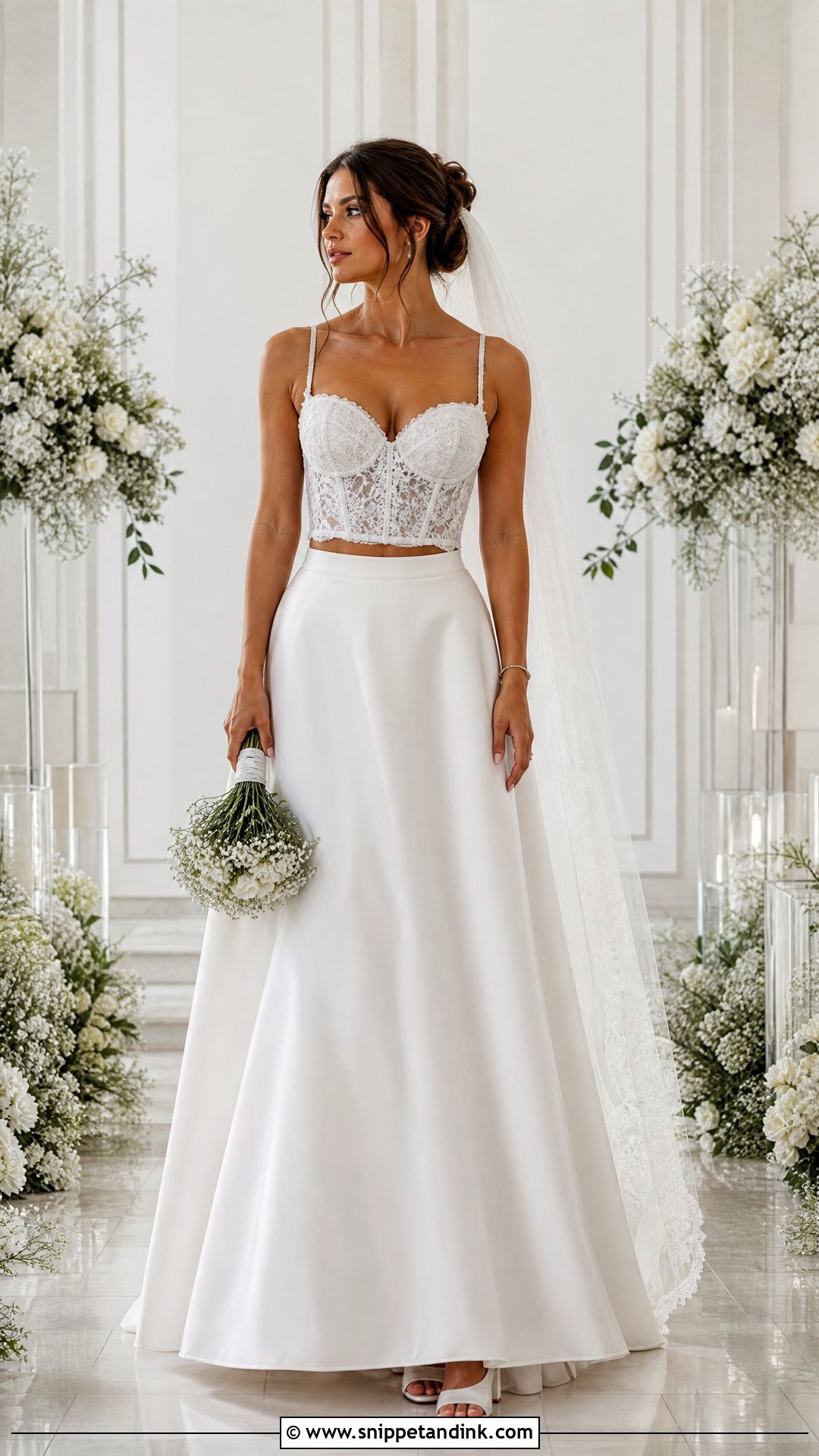
Two pieces give you a corset top and a skirt you can wear separately later. When both are cut from the same satin, lace or embroidery, they read as one gown; a lace corset over a plain A-line skirt gives deliberate contrast. A chapel veil, delicate bracelet and comfortable block heels suit it, and the top can be restyled with tailored trousers for another event. Raise your arms and sit at the fitting to see how much midriff shows. Hidden loops or snaps can keep the pieces aligned. Check both ivories side by side in bright light, since separate fabric batches rarely match exactly.
16. Corset Wedding Dress With Detachable Sleeves
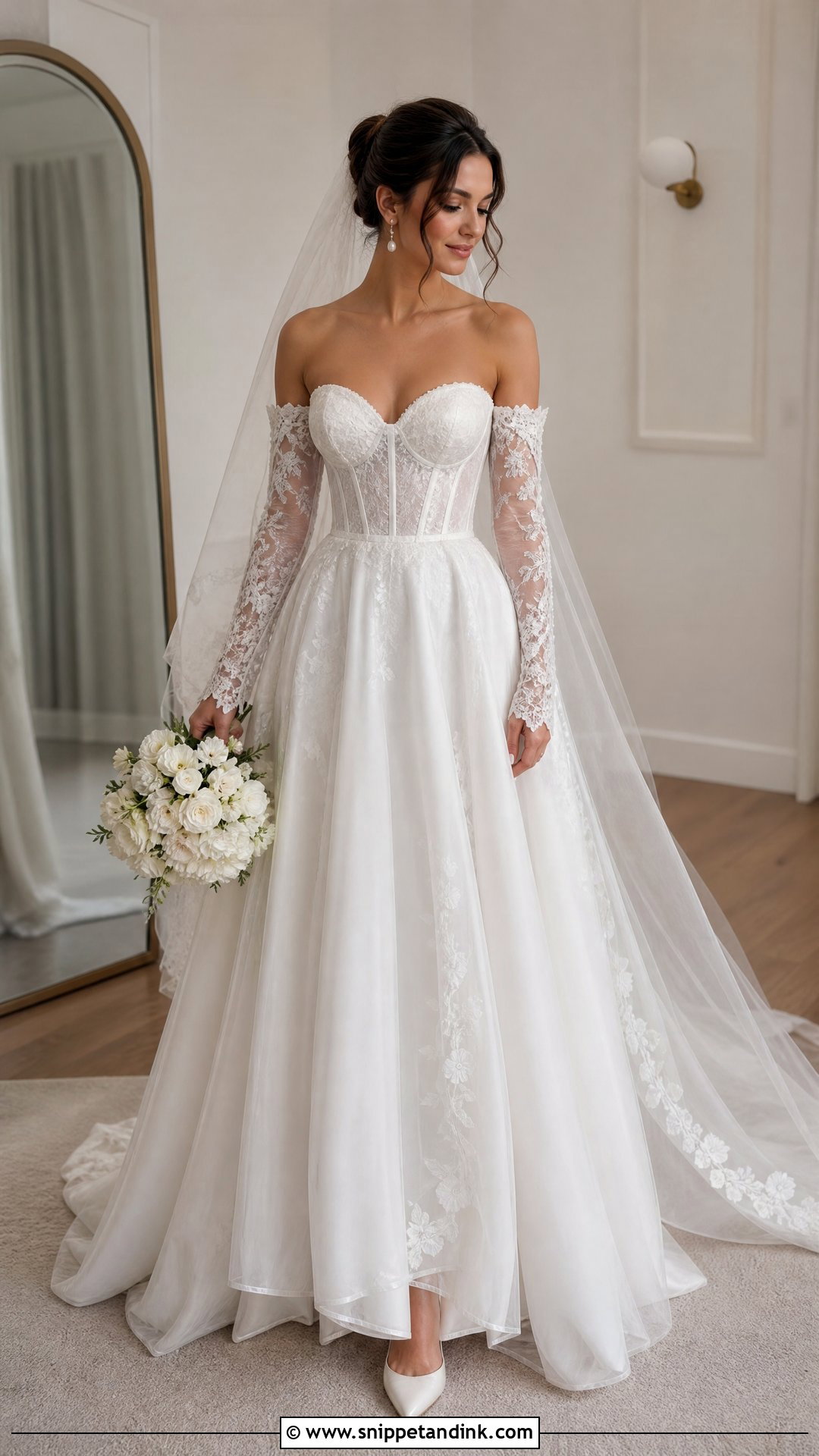
Detachable sleeves turn one corset dress into two outfits: fitted lace, sheer puffs or draped bands for the ceremony, and nothing for the dancing. A structured bodice and flowing A-line skirt work with or without them. Style the ceremony version with a long veil, pearl earrings and closed-toe heels, then switch to statement earrings or a shorter veil afterward. Look at the attachment points before buying: snaps and buttons should hold firmly and stay hidden. I’d have whoever helps you practise the removal once, and bring a labelled garment bag to store the sleeves flat.
17. Corset Wedding Dress With Detachable Overskirt
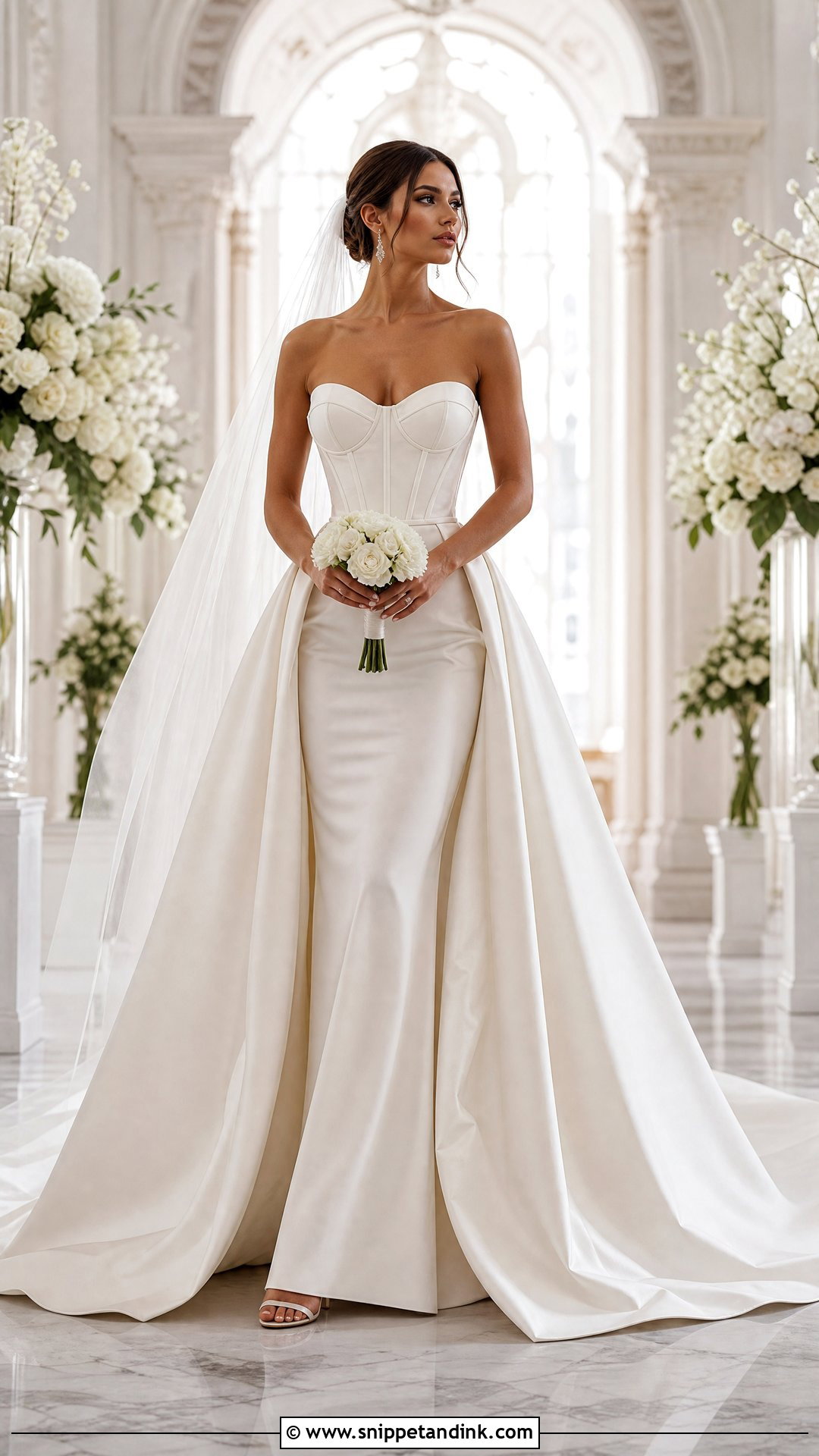
With a detachable overskirt you get ball gown drama for the aisle and a slim dress for the party. Under it sits a structured bodice with a slim crepe, lace or satin underdress, and over it a voluminous tulle or Mikado overskirt with a sweeping train. A cathedral veil, drop earrings and supportive heels suit the ceremony. Check the waistband from every angle, since the fastening has to disappear. The overskirt should come off without disturbing the corset lacing, so ask your tailor to demonstrate the removal and decide in advance where it will be stored.
18. Plus Size Corset Top Wedding Dress
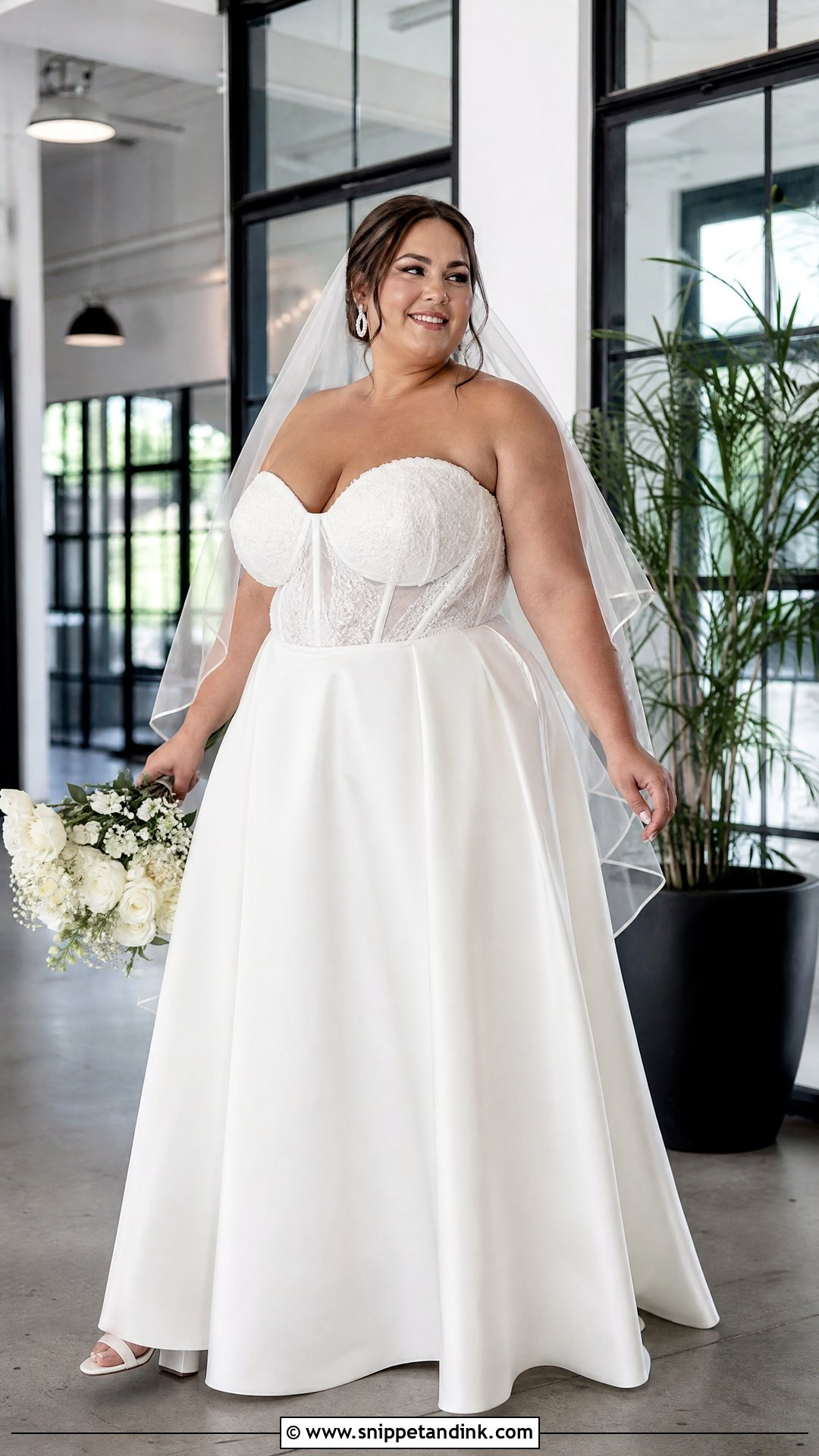
On a fuller figure, the corset has to be properly engineered rather than just scaled up. I look for reinforced boning, secure cups, a stable waist seam and a lace-up back or well-placed closure. An A-line or ball gown skirt flows smoothly from the bodice; a fitted mermaid defines more. Scale the veil to the gown and choose comfortable heels. Please don’t buy a smaller size expecting the lacing to fix it. Lacing adjusts a little, but the bust and waist should already sit in the right place. A seamstress experienced with full-bust adjustments makes a huge difference here.
19. Petite Corset Top Wedding Dress
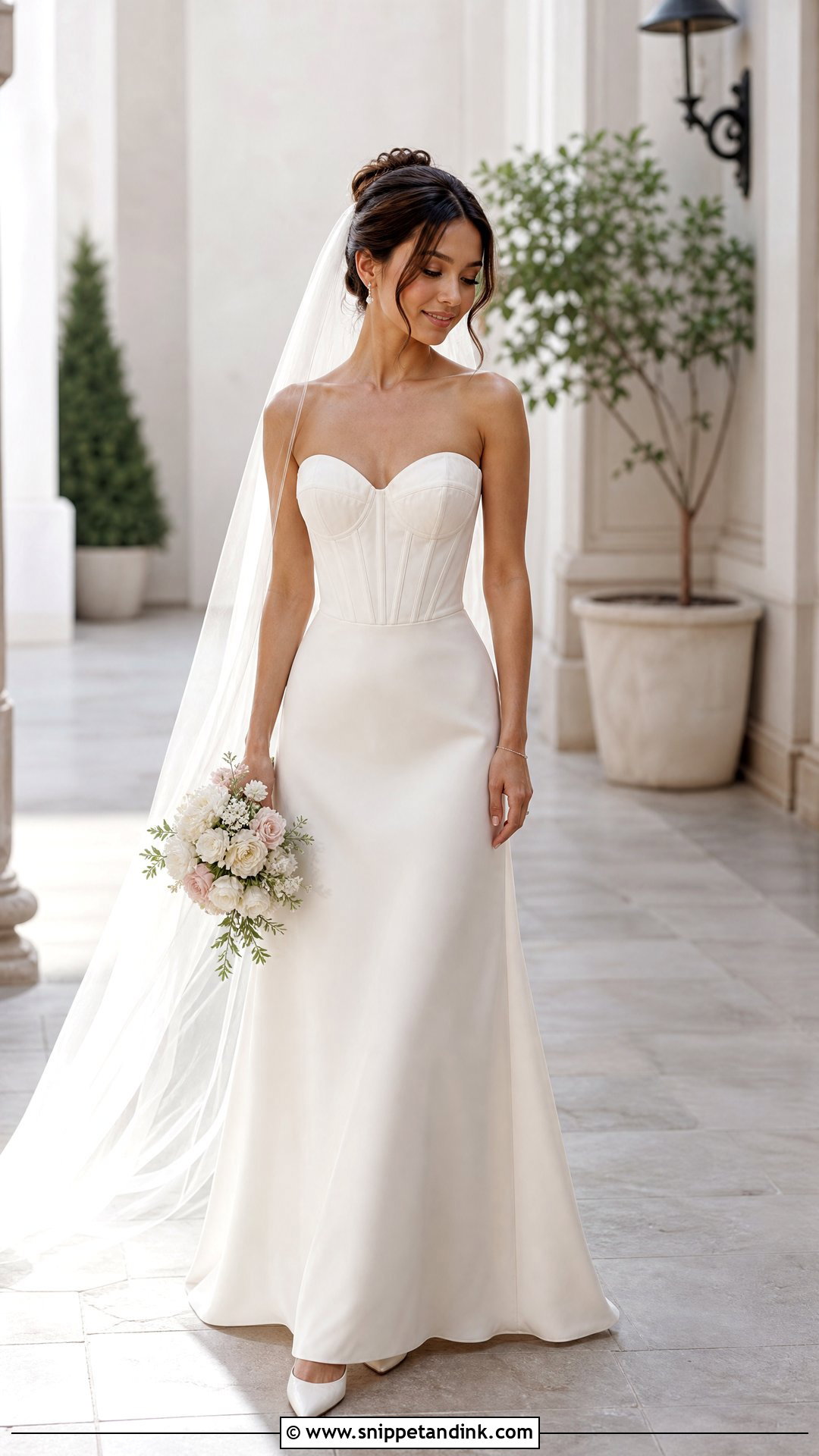
For petite brides, bodice length matters more than anything else. A corset cut for a longer torso pushes the waist down and makes the top swamp you, so a shorter corset with a defined natural waist usually looks balanced. Pair it with an uninterrupted A-line or slim column skirt, a modest train, a narrow veil, pointed heels and small earrings. Oversized appliqués overpower a small frame; finer lace and beadwork look lighter. Standard gowns often need the waist, boning and flare moved, not just the hem taken up. Ask about ordering in petite measurements first.
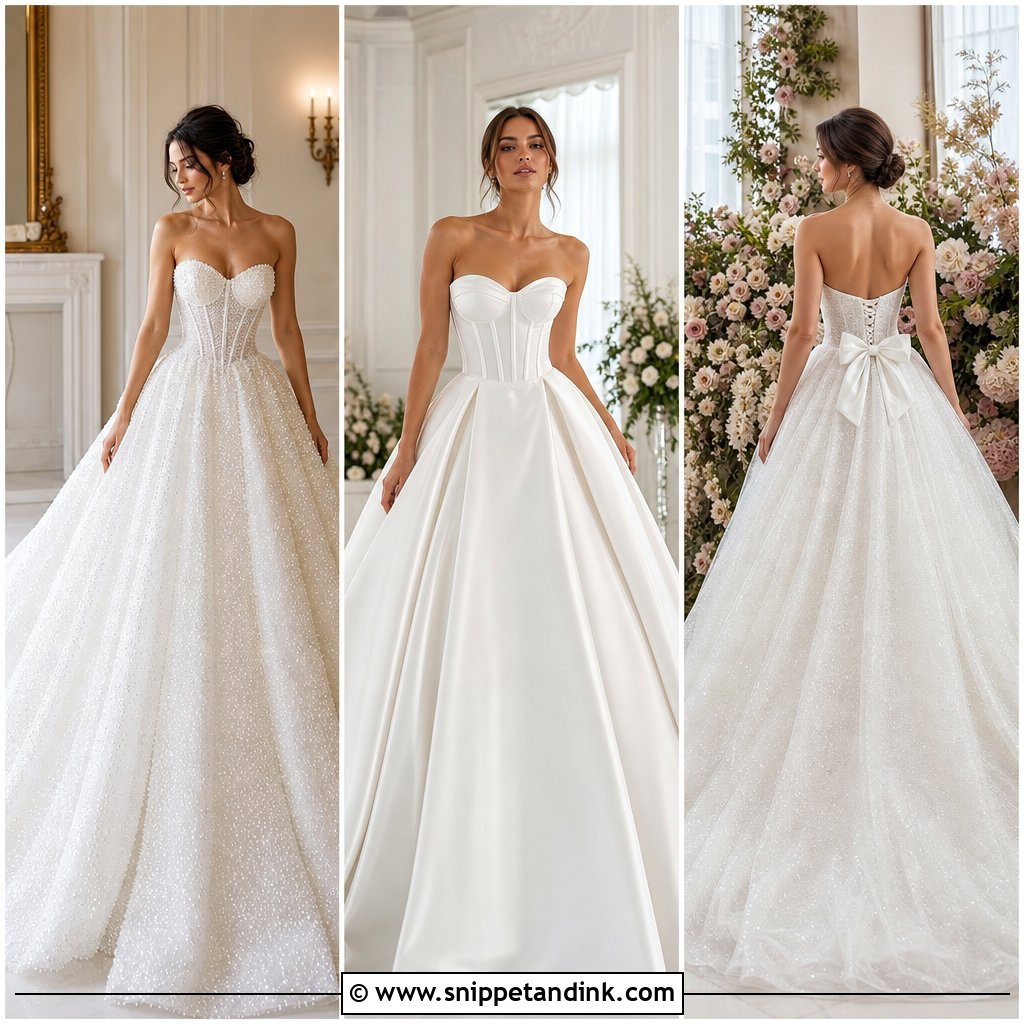




20. Modest Corset Top Wedding Dress
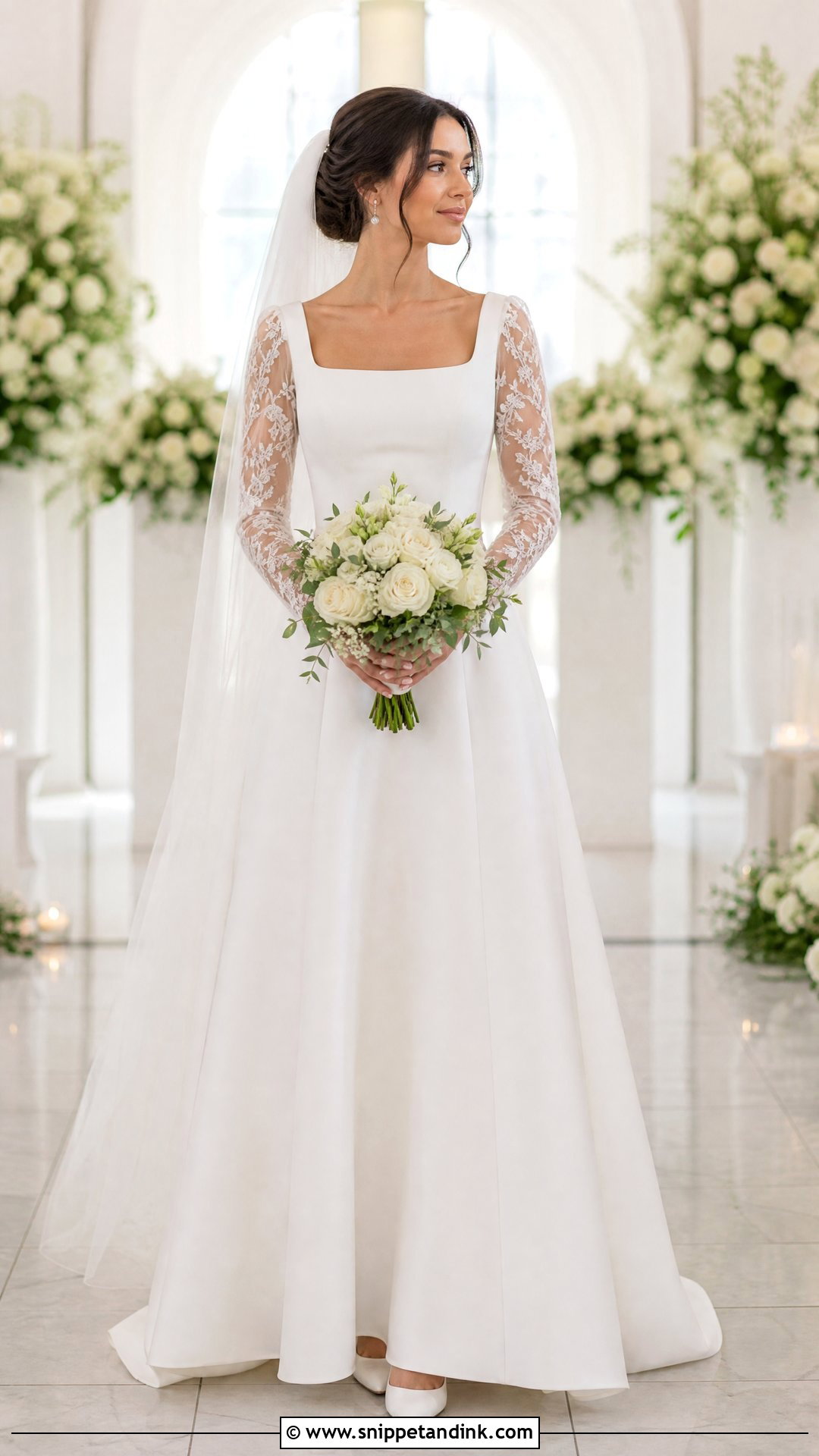
Structure and coverage go together easily. A lined bodice with a higher square neck, wide straps or an illusion bateau panel, long lace sleeves and an A-line skirt keep the waist defined while covering arms and chest. A simple veil, closed-toe pumps, pearl earrings and a soft bouquet finish it. Covered boning looks smoother than exposed corsetry, and a lace-up back keeps it adjustable. Check that the lining stays opaque in daylight and under flash. If you add a panel or sleeves, use fabric from the gown itself; added coverage in a slightly different ivory always looks like an afterthought.
Lacing Up on the Morning, and How Tight Is Too Tight
A lace-up back is only as good as the person pulling the ribbons. Pick that person early, bring them to the final fitting, and let the seamstress show them how she laces you.
I lace from the waist outward in both directions, taking up a little slack each pass rather than pulling hard from the top. The two edges of the opening should end up parallel, with the same gap top to bottom. A gap that’s wide at the top and closed at the waist means the bust is too tight; the reverse means the waist is.
The breathing test
Once laced, take a full breath, sit down and reach for something on the floor. If you can do all three, it’s right. A corset loosens slightly as it warms to your body, so it’s normal to snug it a little after the first hour, ideally before photos rather than after dinner.
Eating, bathroom breaks and the last dance
Eat a proper breakfast before lacing, and expect to eat smaller amounts at dinner. Show your bridesmaid how the bustle and lacing interact so she can help in the bathroom without undoing everything. Ask for the ribbon ends to be tucked into the modesty panel, not left hanging, or they’ll be stepped on by midnight.
A Bodice You Can Breathe, Eat and Dance In
A good corset bodice gives you structure while letting you move like yourself. It can sit on a lace A-line, a minimal satin column, a fitted mermaid, a ball gown or a convertible outfit. Decide on neckline, bodice length, skirt shape and coverage first, then let the fittings do the rest. Sit, walk, dance and raise your arms every time so pressure points show up early. You should feel held, never short of breath. Keep accessories complementing the construction rather than piling on top of it, and with careful tailoring the corset will feel like it was made for you.
You'll Like These Ideas:







Leave a Reply