
Kente gives a bride something few fabrics can: color, craftsmanship and family meaning in one cloth. At a Ghanaian traditional wedding you’ll sit, walk, greet elders and dance for hours, so the dress has to look good from every side and still let you move. I’ve gathered 20 bridal looks below, from fitted mermaid gowns and ball gowns to capes, kaba and slit, and relaxed wraps, each with jewelry, shoes, headwear and hair suggestions. Before you settle on a design, think about where the ceremony will be held, how heavy your cloth is, what your family expects, and how the woven pattern will meet at the seams. That last point decides more than most brides realize.
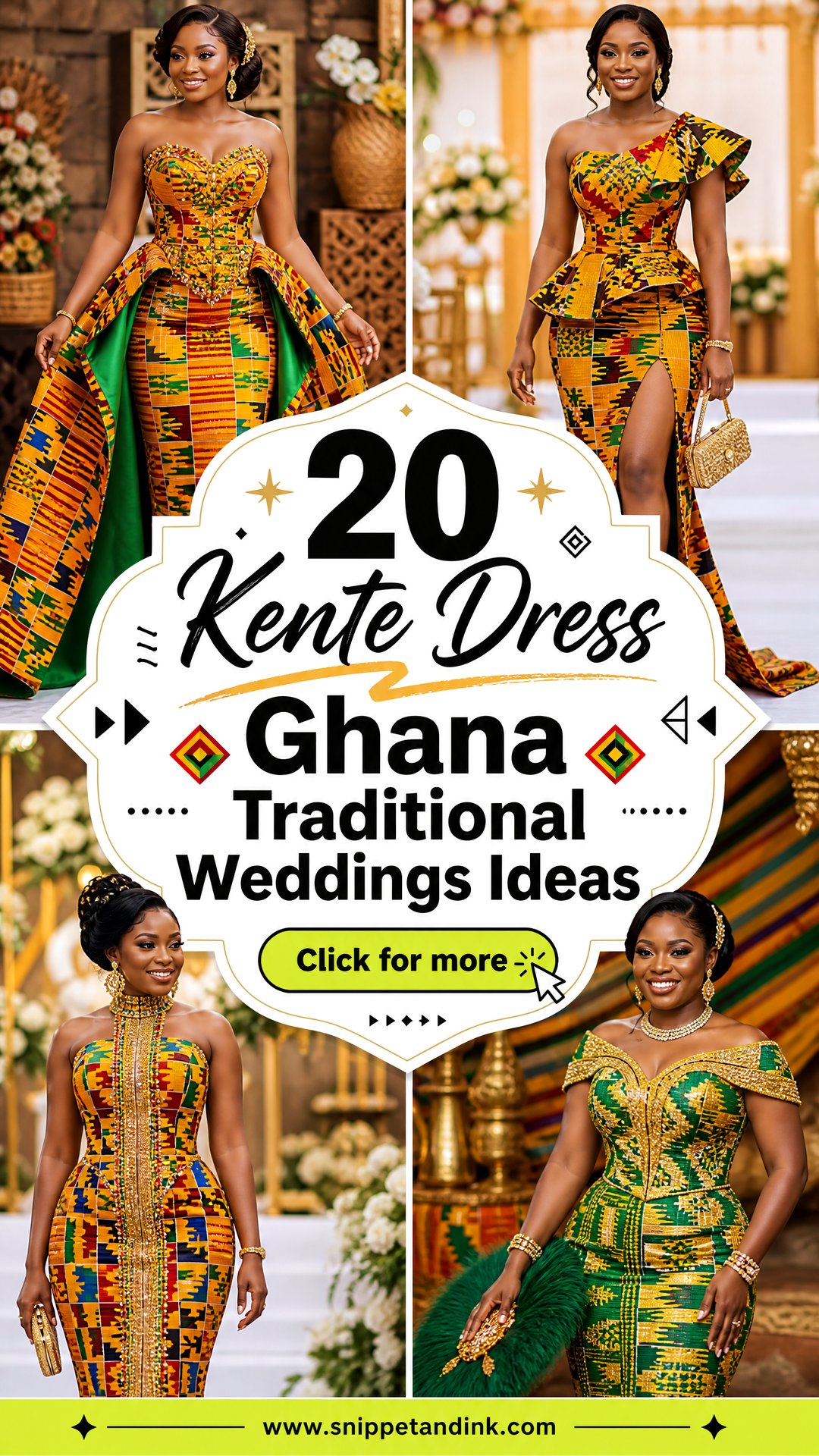
Strip-Woven Cloth Changes How a Kente Gown Is Cut
Handwoven Kente is made on narrow looms in long strips, which are then sewn together edge to edge into a larger cloth. That construction affects every dress in this list. The pattern repeats in blocks along each strip, the cloth is firmer and heavier than most bridal fabrics, and there is little stretch to help a close fit.
So when a bride brings me her cloth, the first thing I do is lay it flat and look at where the strongest motifs and colors fall. The dress is then planned around them, not the other way round. A design that needs many small pattern pieces, like heavy ruffles or a tight princess-seamed bodice, wastes cloth and breaks up the weave.
Woven or printed?
Machine-printed cloth with Kente patterns is lighter, cheaper and easier to sew, and it drapes more softly. Handwoven Kente has depth, texture and meaning that printed fabric can’t copy, but it is heavier and costs more. Some brides use woven Kente for the bodice or panels and a lighter fabric elsewhere, which keeps the weight down.
Ordering the cloth
- Order early. Handweaving takes time, and a custom color combination takes longer than buying a finished cloth.
- Buy more than the dressmaker’s minimum. Matching motifs at the seams uses extra length, and leftover cloth makes the headwrap, clutch trim or the groom’s matching accent.
- Talk colors through with both families. Kente colors and patterns carry traditional meanings, gold often linked with wealth and status, green with growth, blue with peace, and elders may have views on what suits the occasion.
1. Corset Kente Mermaid Dress
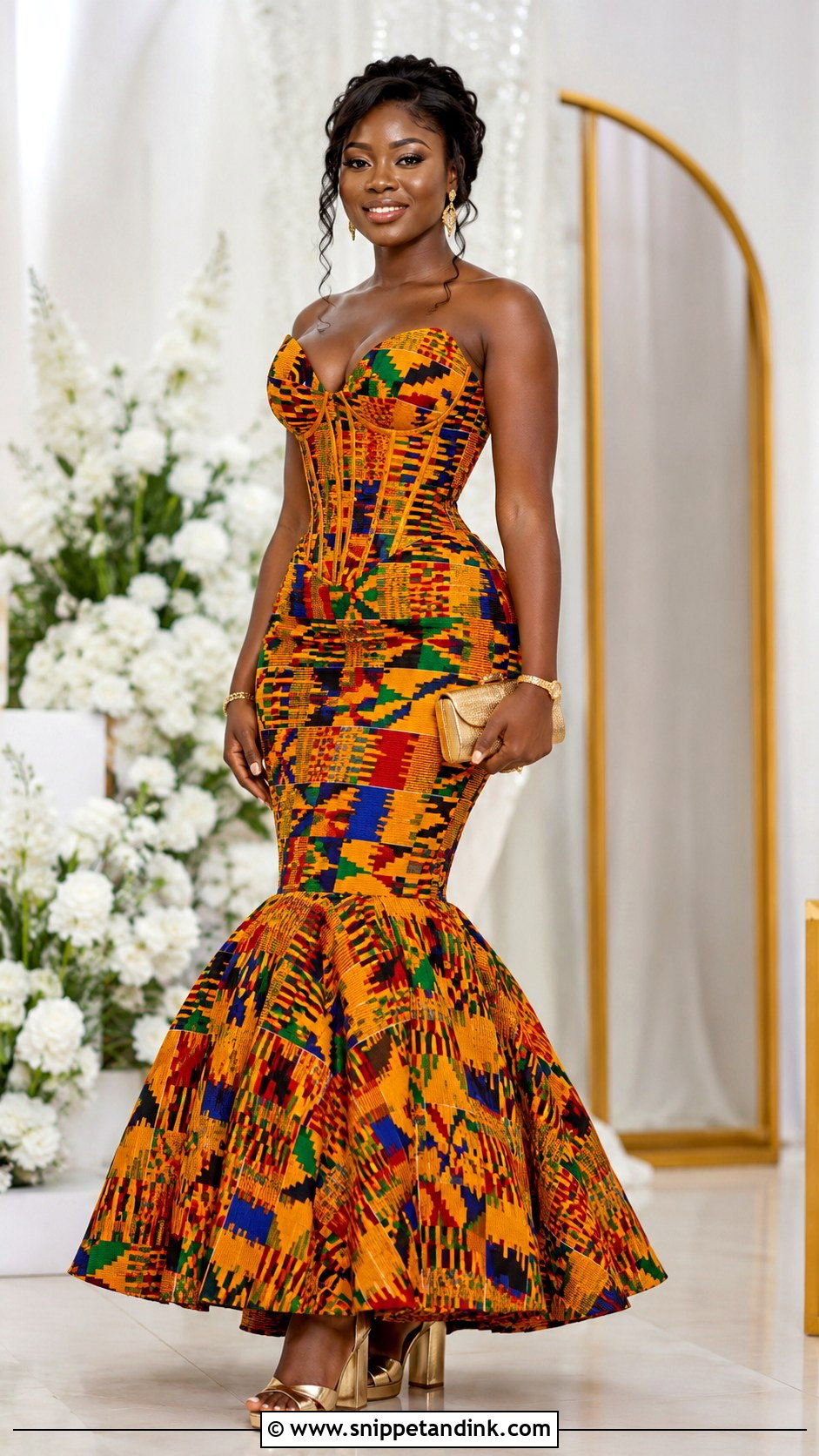
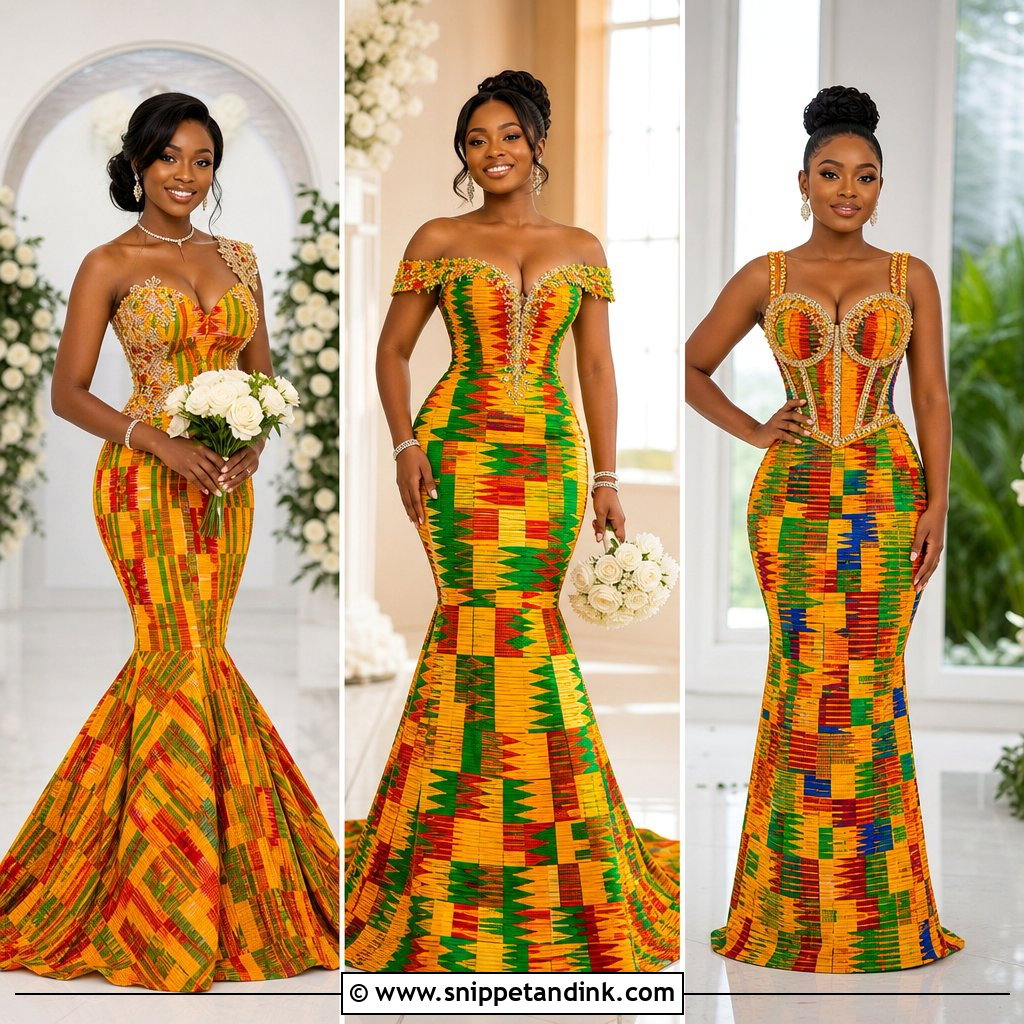
A corset mermaid is the most sculpted way to wear Kente, and also the most demanding to cut. Woven cloth has very little give, so the boned bodice and defined waist must be fitted precisely, and the flare should start below the knee with enough ease through the hips and knees for you to walk and sit. I always ask the designer to lay the pattern out before cutting so the motifs balance front and back; a mermaid shows a misaligned stripe at the hip immediately. Add crystal or gold beading at the neckline only. Metallic block heels, drop earrings, stacked bracelets and a small structured clutch finish it, with a low braided bun that keeps the neckline clear and holds a decorative hairpiece.
2. Off Shoulder Kente Ball Gown
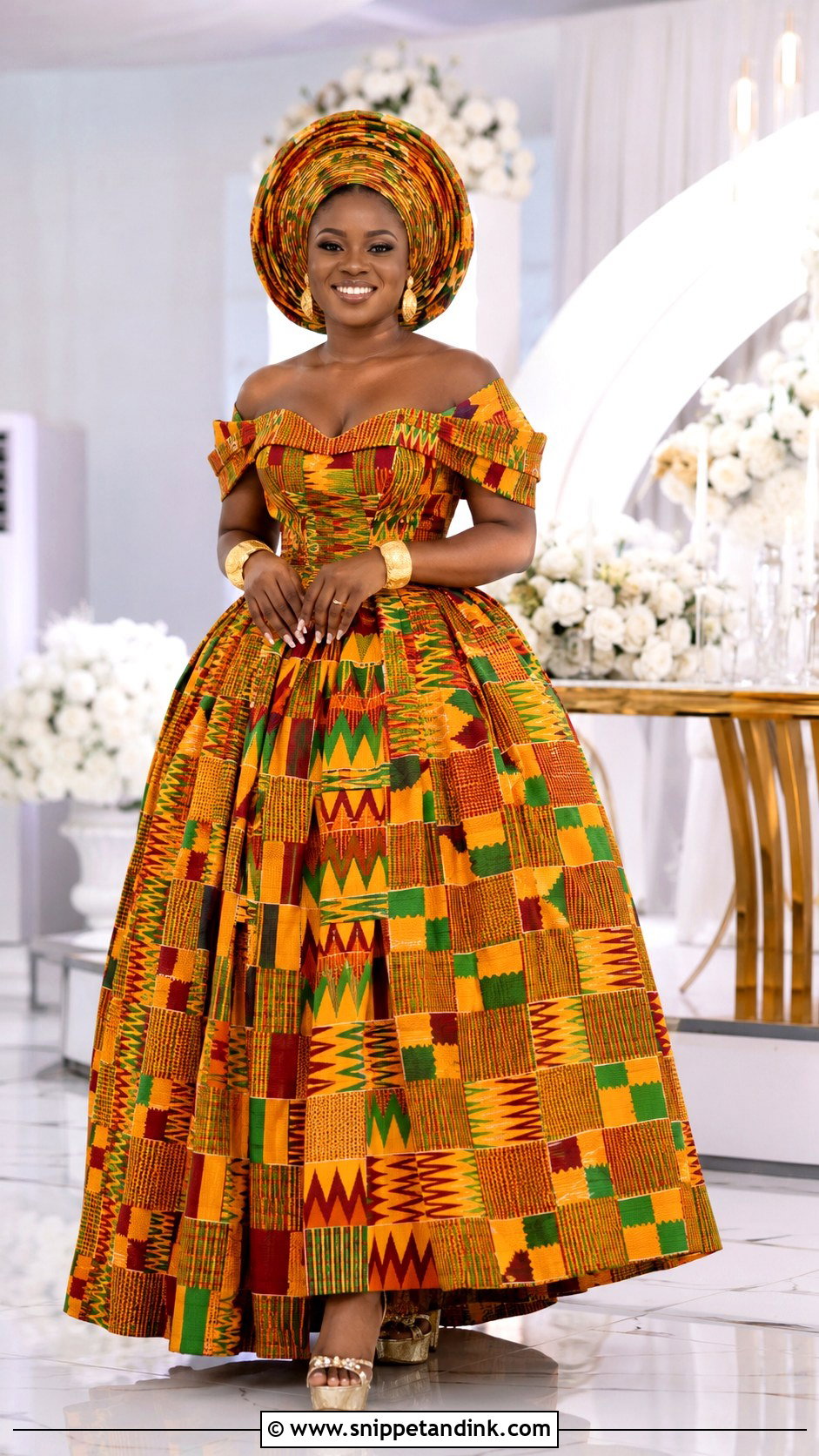
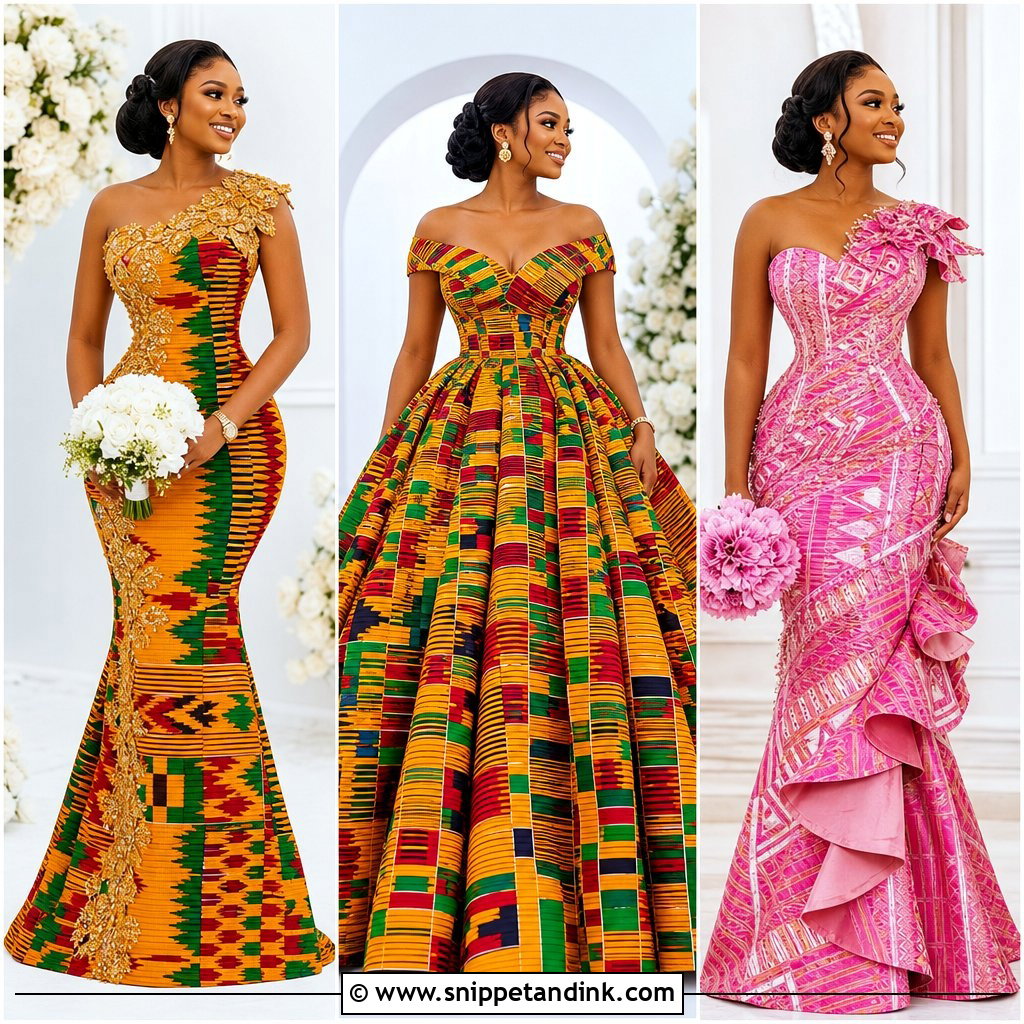
An off-shoulder ball gown gives you a regal entrance. It works best when the bodice sits in one dominant color and the skirt carries the busier geometric mix, so the eye reads the shape before the pattern. Soft pleats build volume without the stiffness that heavy Kente can bring. Because there are no straps doing any work, I’d ask for discreet inner straps or a firm internal corset, and a hidden loop to lift the train between the ceremony, portraits and the dance floor. A coordinated headwrap, polished gold earrings, a statement bracelet and platforms hidden under the hem complete it. A smooth updo or side-parted bun balances the wide neckline.
3. One Shoulder Kente Fishtail Dress
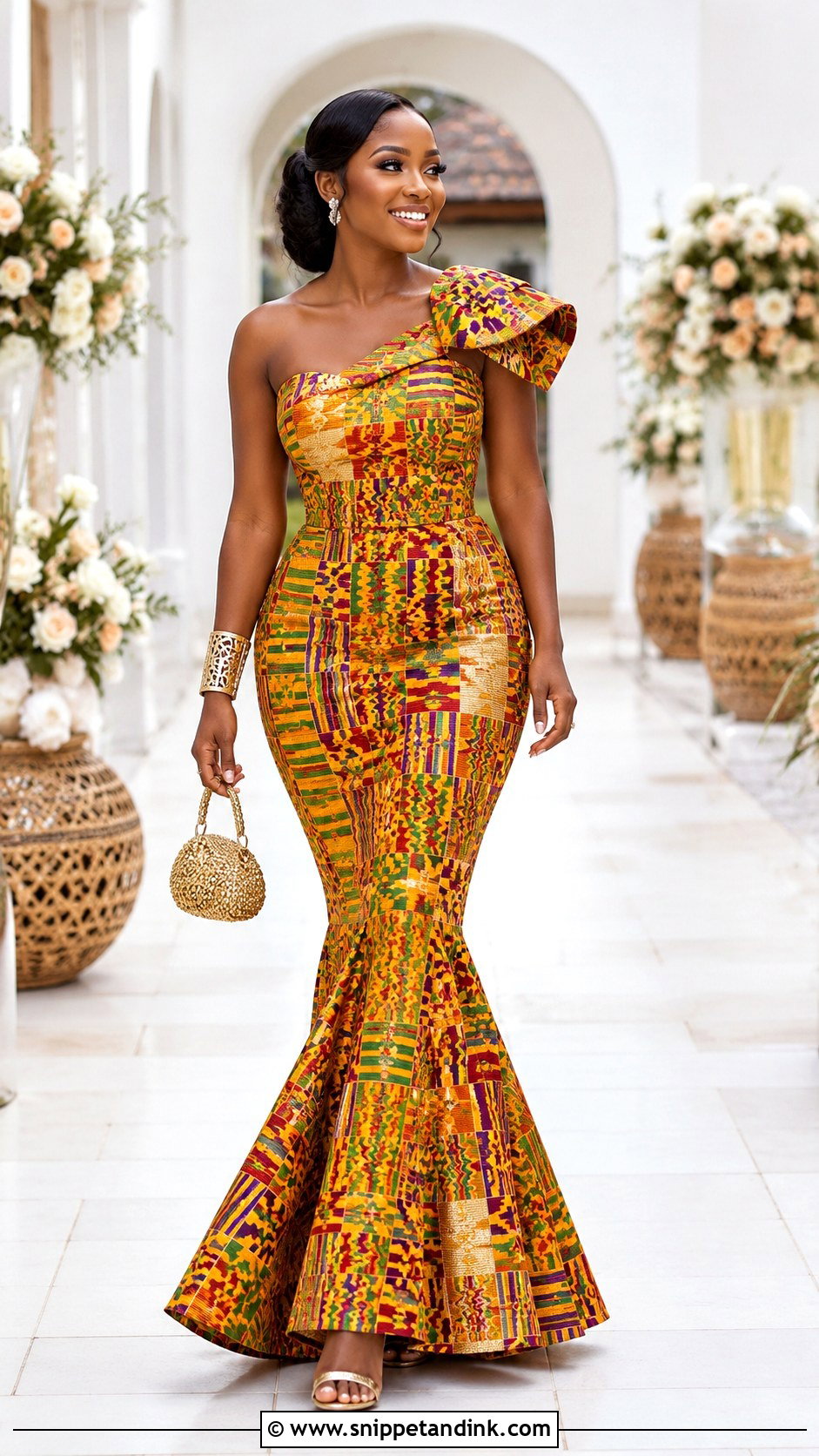
One bare shoulder gives a colorful look clean asymmetry. Finish the shoulder with soft pleating, a sculpted bow or a slim drape falling behind the arm, and keep the fitted bodice plain so the weave stays in front. The fishtail adds drama below a sleek waist and hips. Test the shoulder at every fitting by hugging and waving: a one-shoulder bodice in a firm fabric can slide toward the bare side, and a silicone grip strip inside the neckline fixes it. A cuff on the bare arm, simple earrings, metallic sandals and a compact beaded bag suit it, with a swept-back ponytail or twisted bun.
4. Strapless Beaded Kente Gown
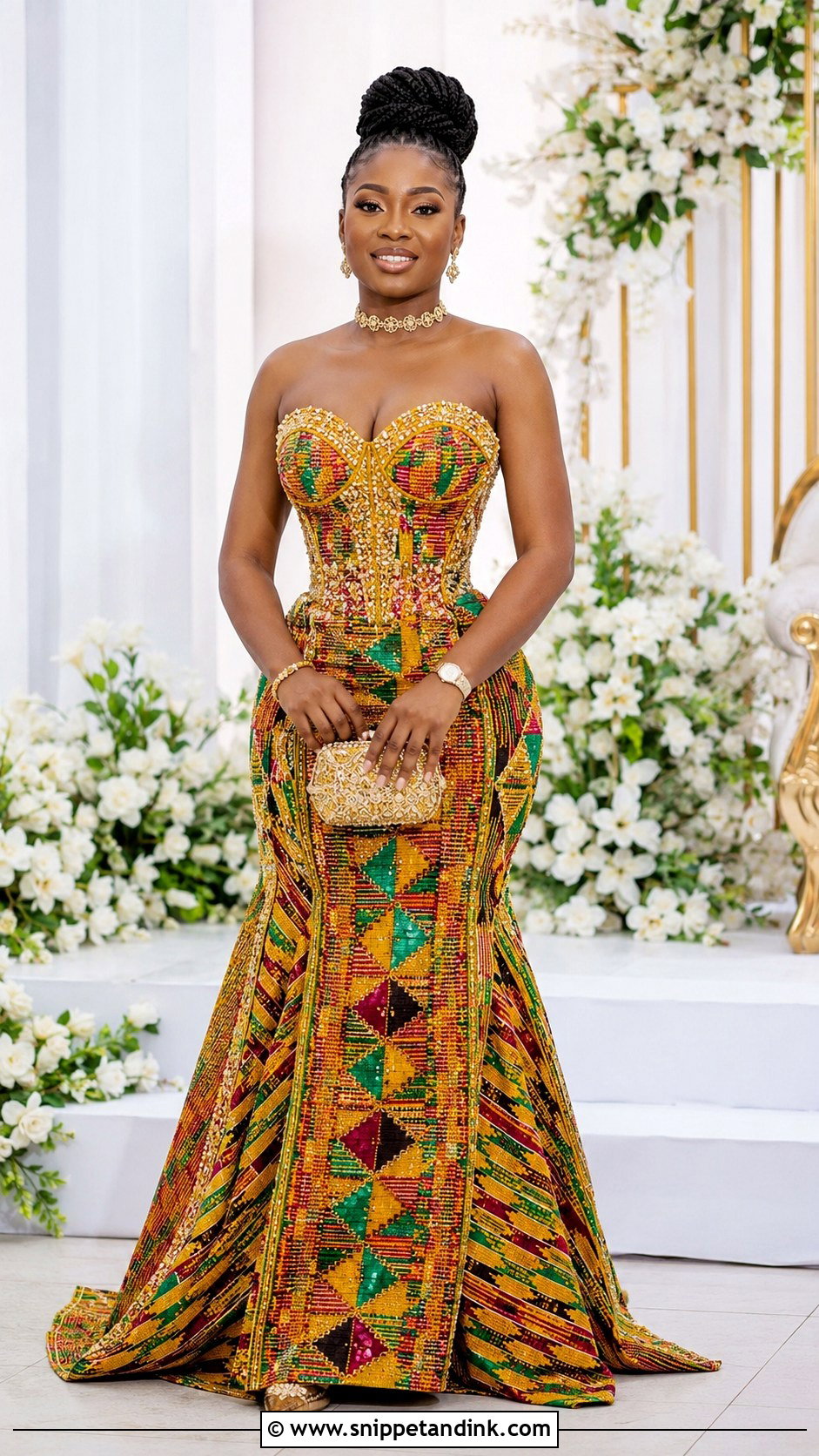
A strapless beaded gown is the glamorous choice, but I wouldn’t pair it with a perfectly straight neckline; a gently curved or sweetheart edge sits better on most busts and stays put. Start from a supportive corset. Beading belongs on the bodice borders, the waist and a few chosen motifs, where it picks up the weave instead of burying it. A softly flared skirt balances the top and is far easier to move in. A gold choker, matching earrings, pointed metallic heels and a small embellished clutch finish it, with a high bun or a braided updo. At the last fitting, raise your arms and sit down a few times to make sure the bodice stays secure.
5. Kente Dress With Detachable Overskirt
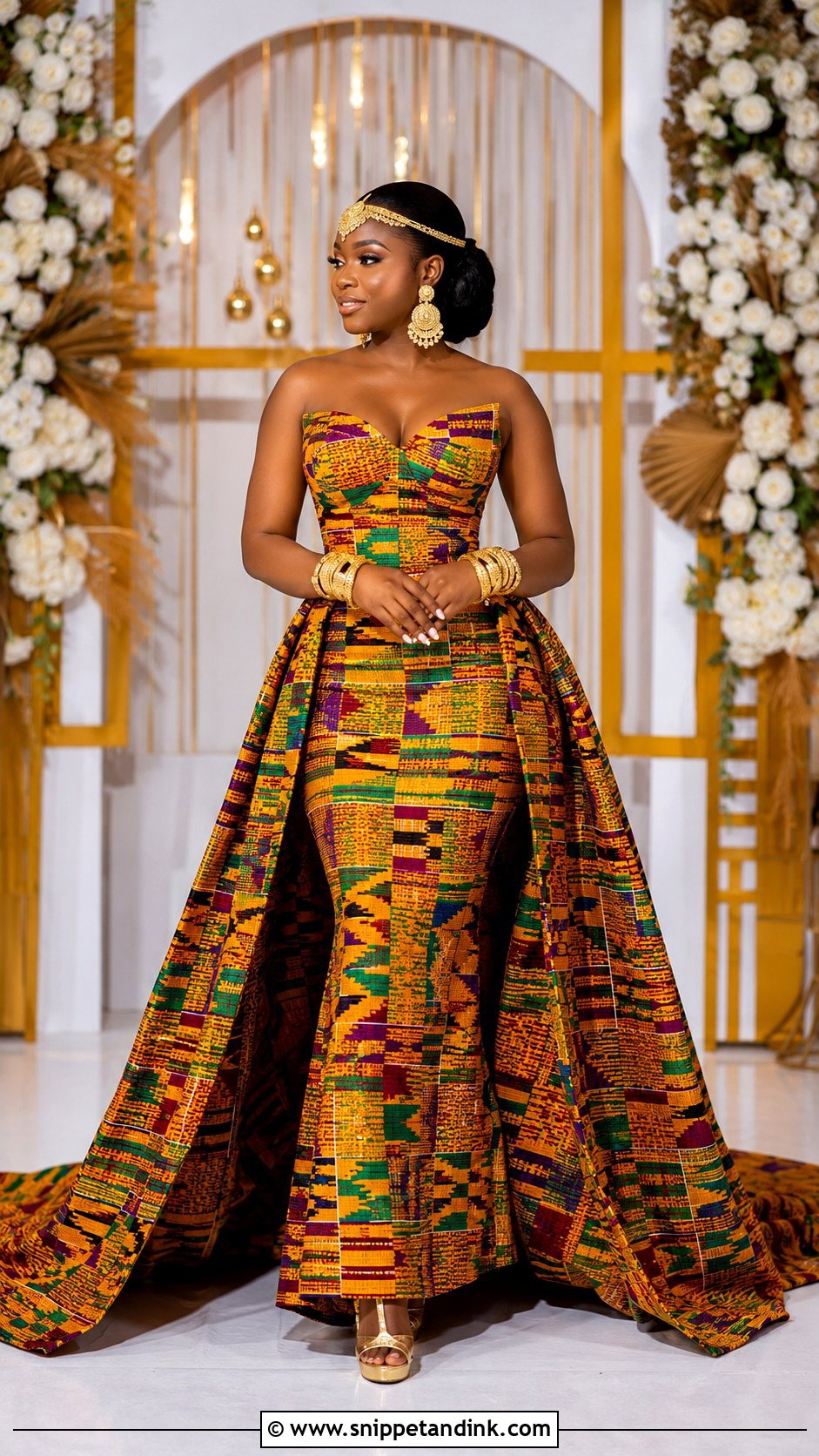
A detachable overskirt gives you two looks without a full change. The base is a fitted trumpet or column gown you can dance in, with a voluminous overskirt fastened at the waist for the entrance, the family presentations and portraits. Box pleats, a moderate train or a contrasting Kente panel that repeats the main colors all work. Kente is heavier than most bridal fabrics, so the fasteners matter; strong hidden hooks and a waistband on the base gown spread the weight, where a few snaps would pull the dress down. Wear statement earrings, stacked bangles, block heels and a sleek headpiece for the ceremony, then switch to a smaller clutch once the skirt comes off.
6. Peplum Kente Dress With Slit
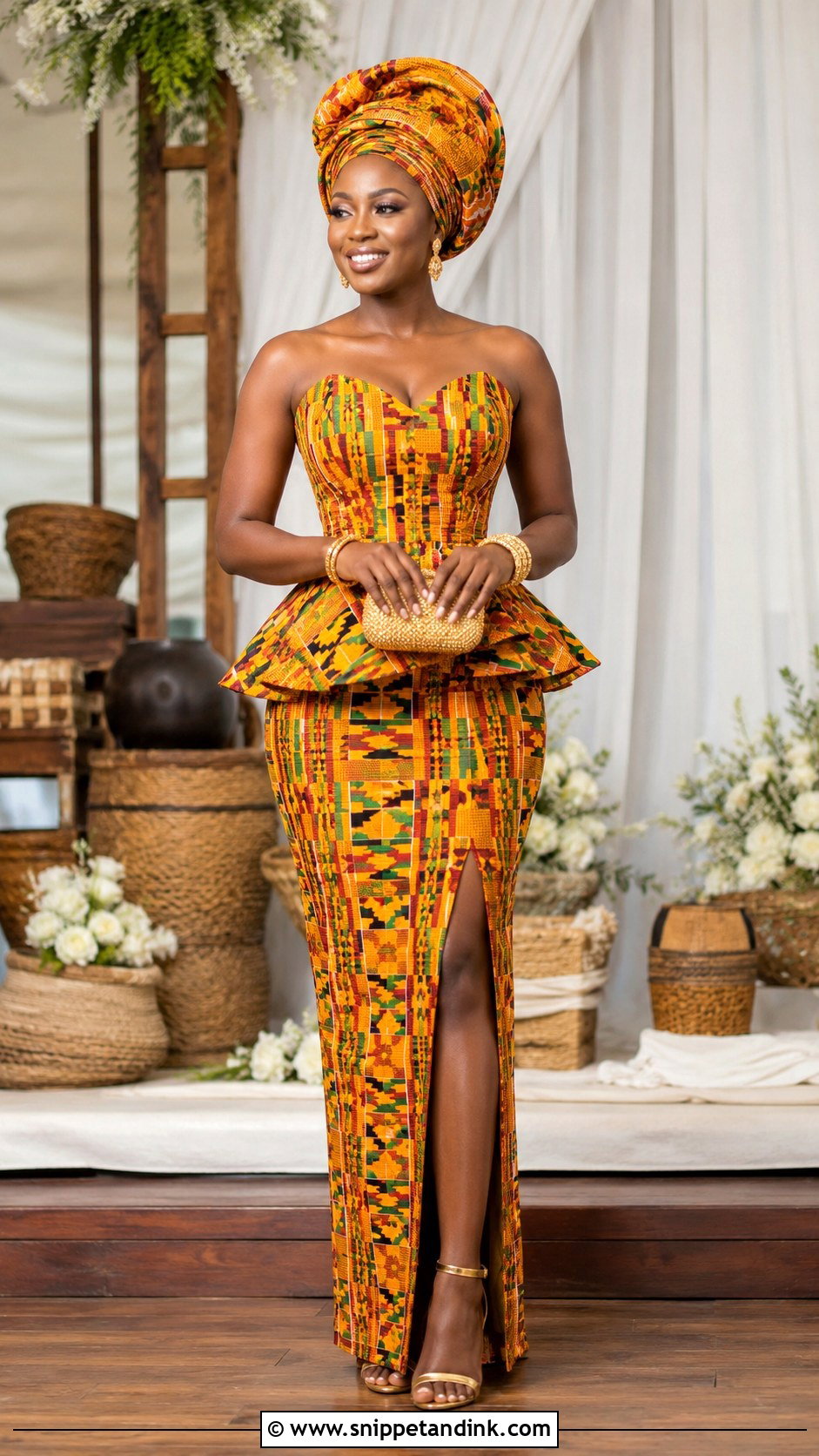
A peplum Kente dress with a slit gives waist definition and an easy stride. The peplum should begin at the natural waist and fall over the hips without bulk, which in a stiff cloth means fewer gathers and more shaping through darts or seams. A straight or slightly flared skirt keeps it polished, and a controlled front or side slit makes walking simple. Check the slit seated, since it opens higher than it looks standing. Gold ankle-strap heels, a coordinated clutch, medium drops and a few bangles finish it, and a sculpted headwrap adds height. Keep the neckline plain; the peplum and the pattern are already plenty.
7. Long Sleeve Kente Lace Dress
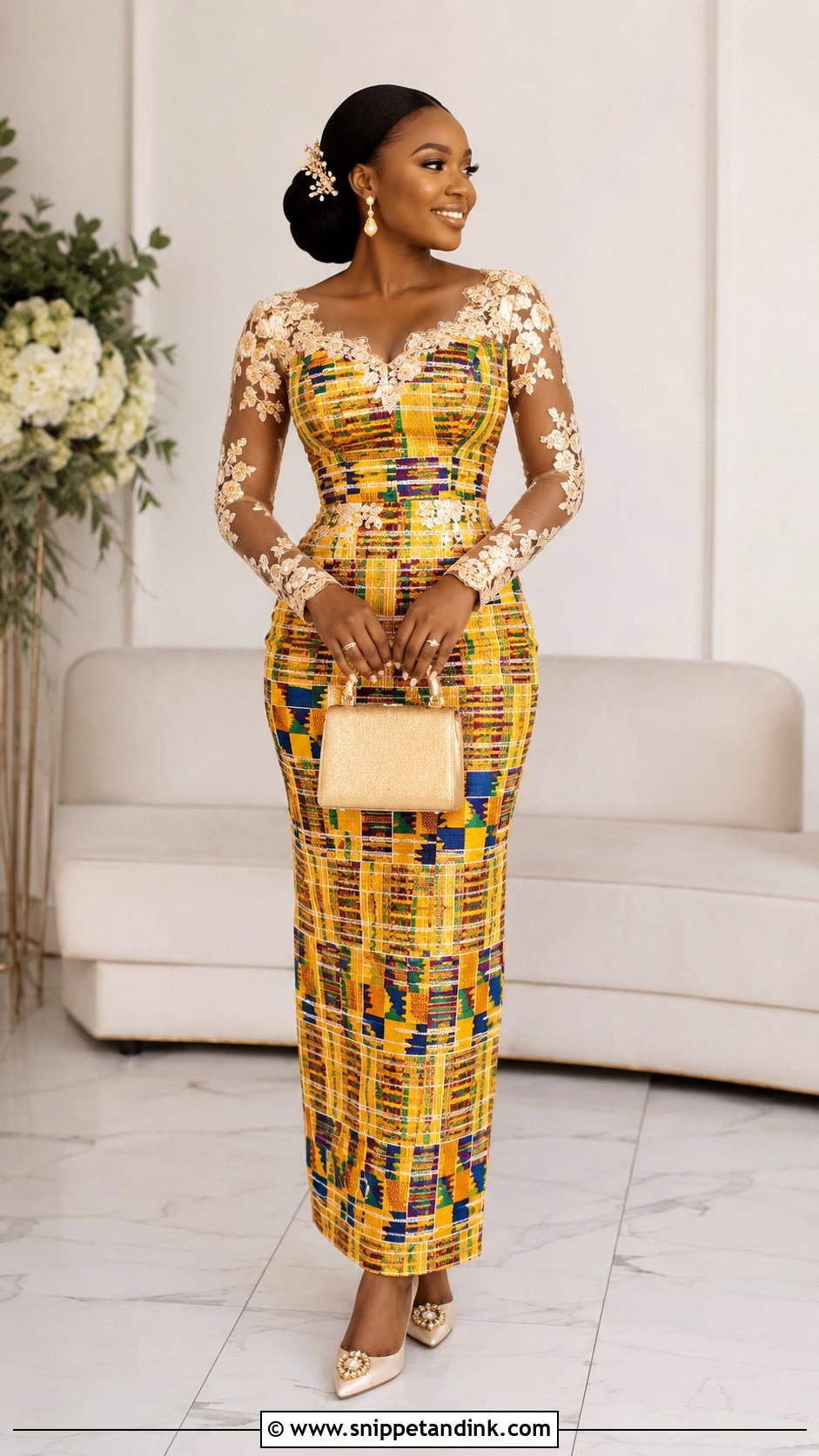
Long lace sleeves add coverage without dulling the color. I’d keep Kente for the fitted bodice and skirt and bring in sheer lace sleeves with appliqué around the shoulders and cuffs, matching the lace to the dominant shade of the cloth rather than defaulting to white. Ivory lace beside a deep gold weave can look grey in photographs. A bateau, illusion or modest V neckline balances the top. Leave enough room at the elbow and ask for a breathable lining, because tight lace in warm weather becomes uncomfortable fast. Closed-toe heels, a structured mini bag, delicate earrings and a slim bracelet suit it, with a low bun and a decorative comb.
8. High Neck Kente Column Dress
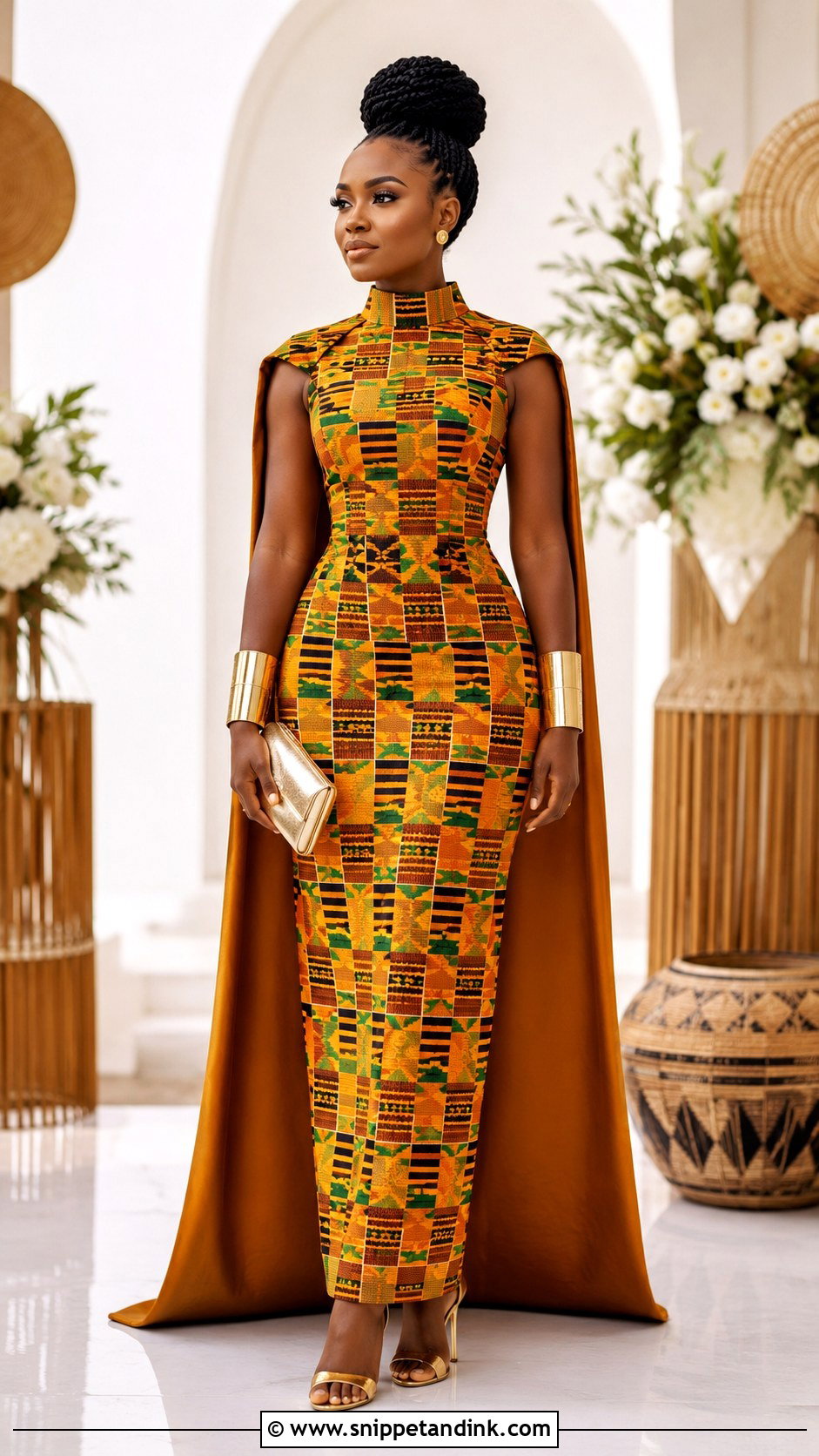
A high-neck column is all about tailoring. The skirt should skim rather than grip, leaving room for normal steps. A narrow standing collar, a softly draped neckline or a sheer upper panel keeps the high neck from feeling heavy, which matters with a thick woven fabric right under the chin. A removable back cape adds drama for the ceremony. Bold cuffs, small earrings, metallic heels and a smooth clutch complete it, and a high braided bun lengthens the whole line. Keep any embellishment to the collar or waist so the geometry of the cloth stays readable.
9. Sweetheart Kente Trumpet Dress
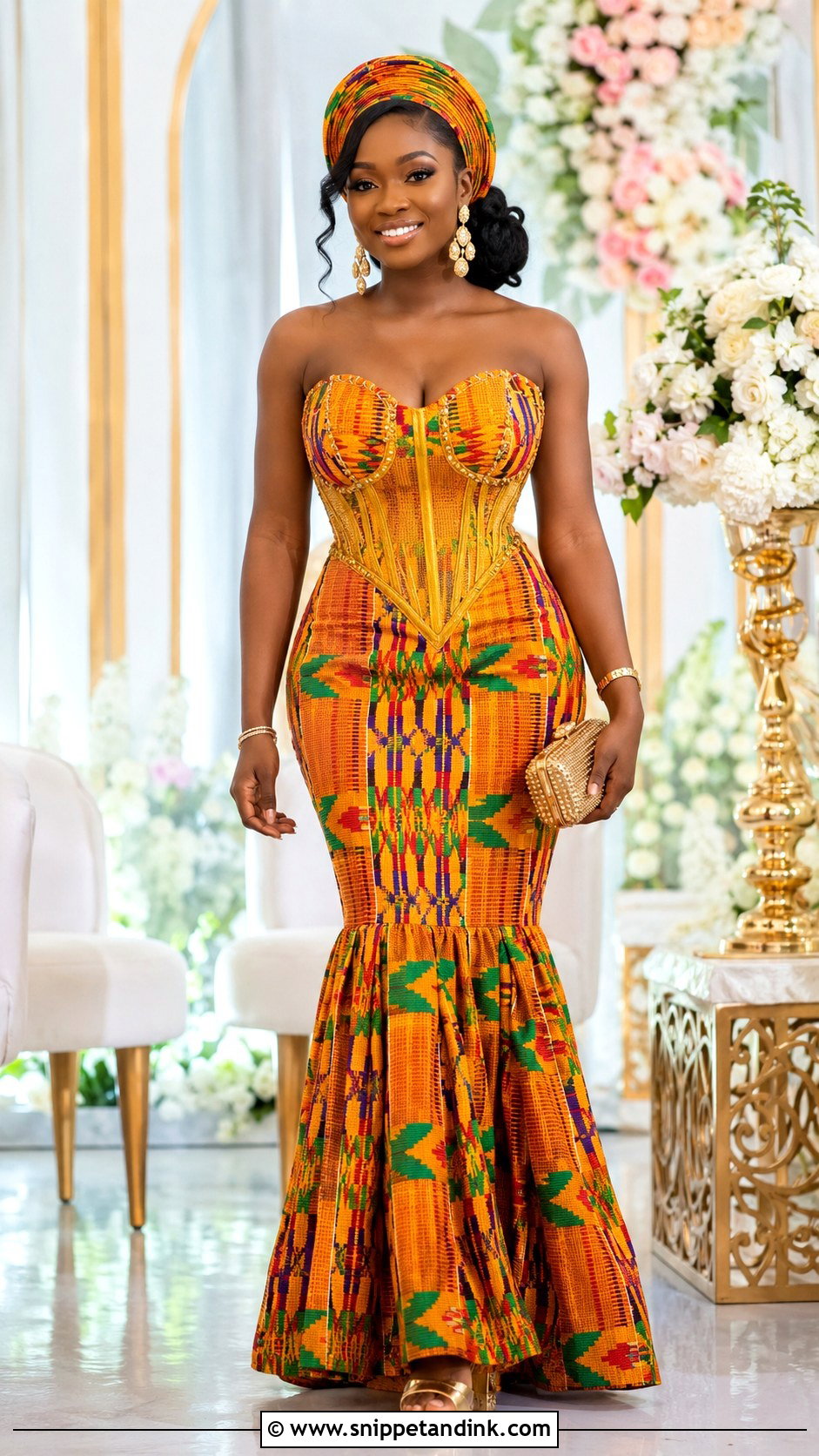
Sweetheart and trumpet together make a romantic, strongly structured gown. The bodice must fit securely across the bust, taper into a defined waist and follow the hips before flaring around mid-thigh. The detail I check hardest is the center seam. Kente motifs that don’t meet there make the whole front look off, so ask your tailor to match them exactly, even if it costs a little extra cloth. A removable beaded shoulder drape gives coverage for certain ceremony moments. A matching headwrap, chandelier earrings, gold block heels and a box clutch suit it, with soft curls pinned into a side bun.
10. Cape Sleeve Kente Wedding Dress
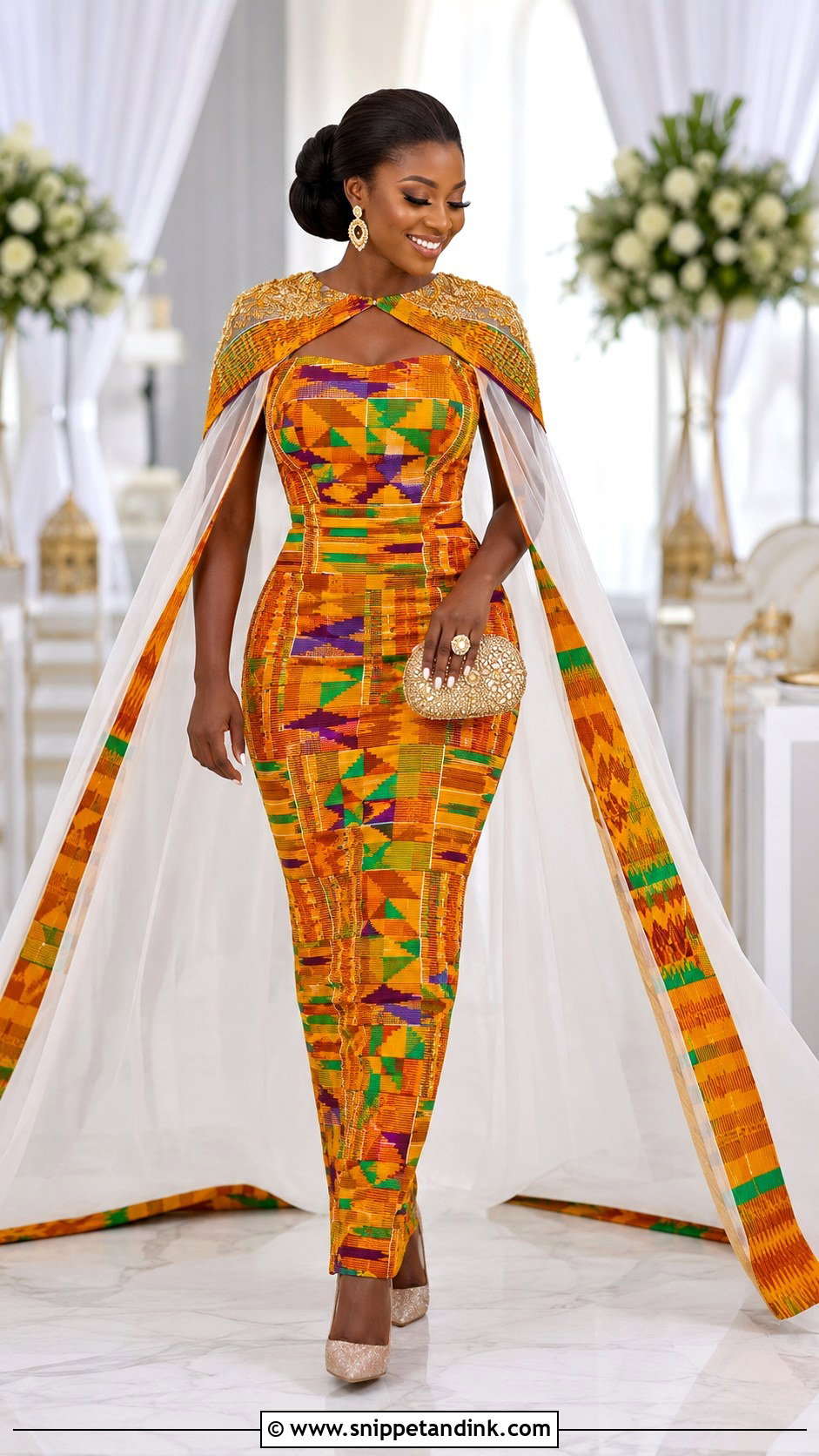
Cape sleeves give graceful coverage without the heat of fitted sleeves. Start from a slim sheath, trumpet or gently flared dress and add light cape panels falling from the shoulders to the elbow or wrist. Full Kente capes can be heavy, so I often suggest sheer fabric edged in Kente, or a solid fabric pulled from the dress palette, which gives the same frame with half the weight. Elegant pumps, a beaded clutch, statement earrings and one bold ring finish it. Skip big necklaces since the cape already frames the shoulders, and keep the hair up. A removable cape makes dancing after the portraits much easier.
11. Puff Sleeve Kente Midi Dress
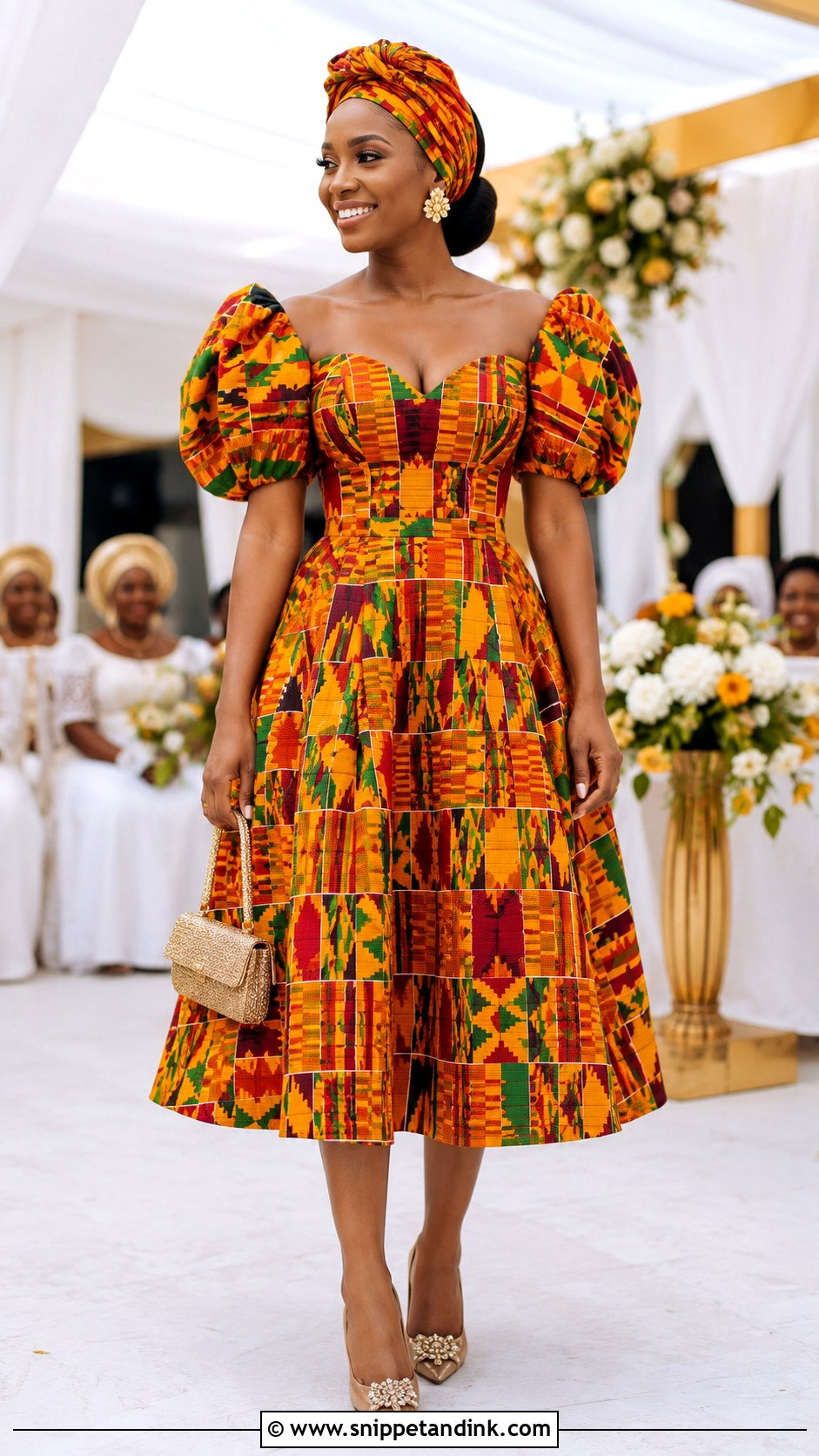
A puff-sleeve midi is cheerful and far easier to manage than a floor-length gown. A fitted bodice with structured sleeves that hold their shape without swamping the shoulders is the base, and the skirt can be tea-length A-line or pencil, ending below the knee or near the ankle. Woven Kente gives a puff sleeve natural body, so it rarely needs much stiffening; a soft lining keeps it comfortable on the arm. With a shorter hem the shoes are on show, so embellished pumps make sense. A small top-handle bag, gold earrings, a coordinated headwrap and a low bun finish it. It suits a smaller ceremony, an entrance look or a second outfit for dancing.
12. Asymmetrical Kente Ruffle Dress
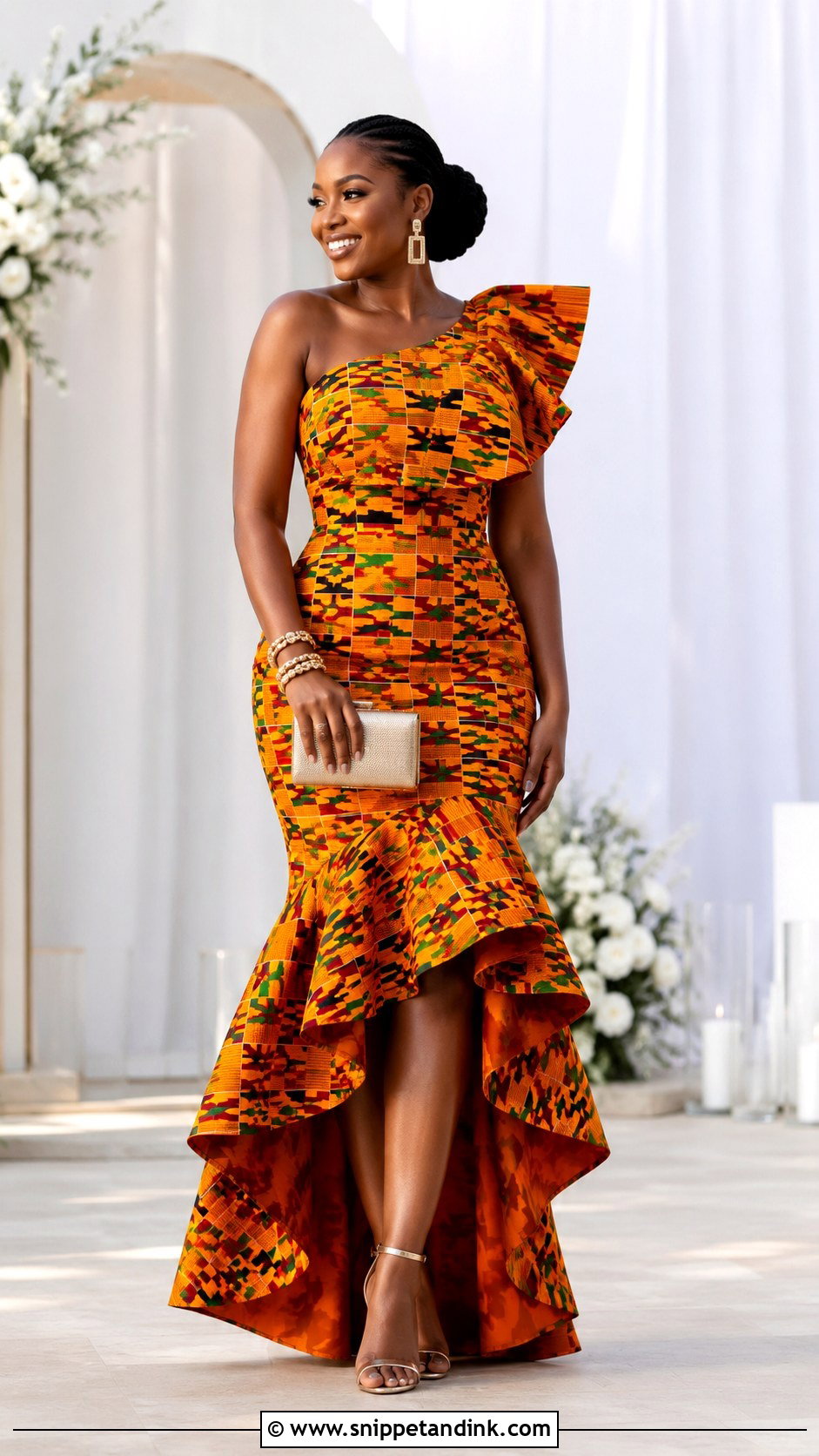
An asymmetrical Kente ruffle dress gets its character from shape and movement. Start with a fitted one-shoulder or diagonal-neck bodice and add one controlled ruffle at the neckline, the hip or the skirt opening. One really is enough, since the cloth already brings strong color and pattern. A high-low hem or side drape shows the shoes. Have the designer place the ruffle away from the widest motifs; a ruffle folded over a big block of pattern turns into a muddle. Metallic sandals, geometric earrings, stacked bracelets and a clean rectangular clutch suit it, with a smooth bun or a sculpted braided style.
13. Green And Gold Kente Dress
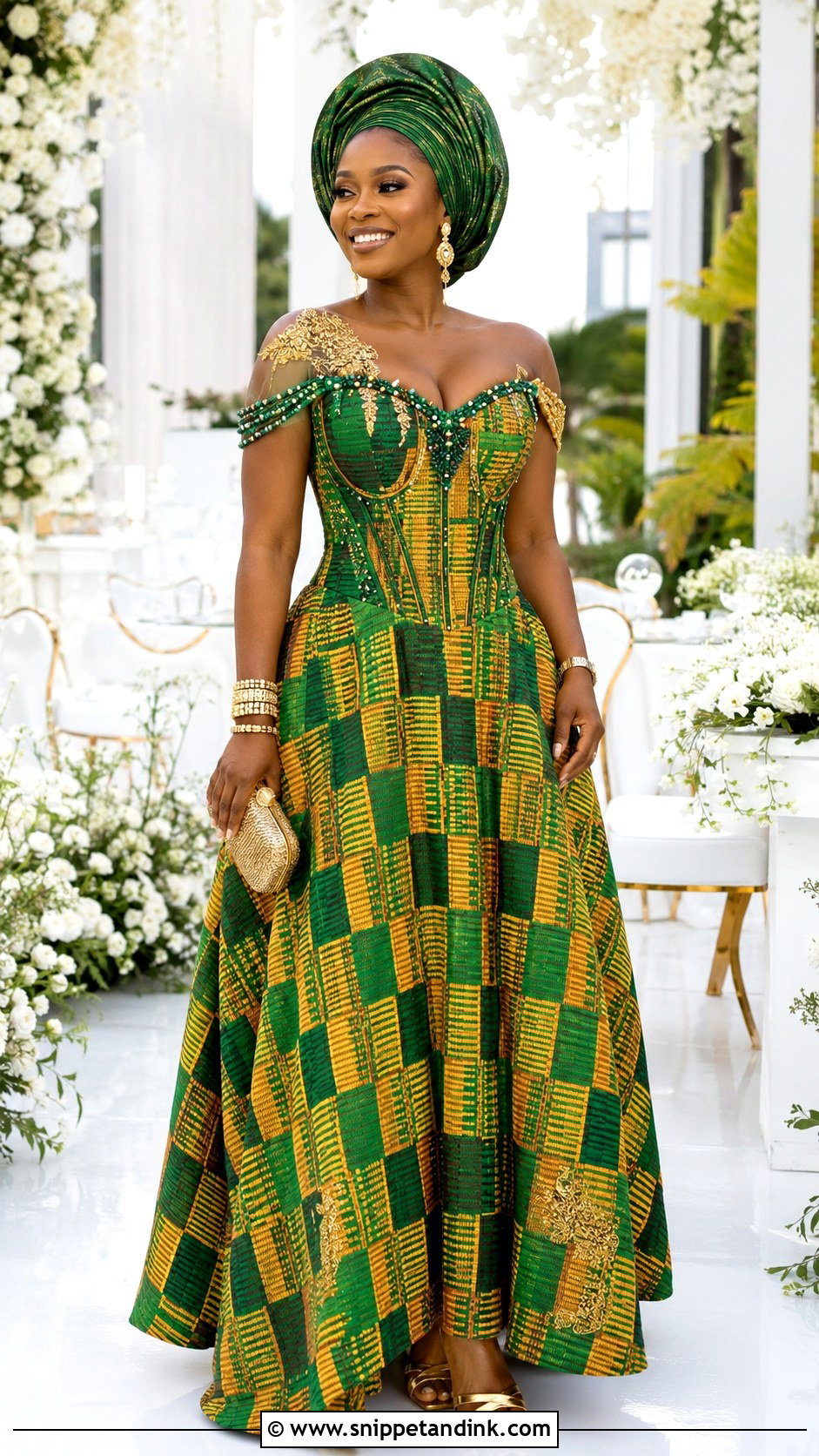
Green and gold is a rich, steady palette that holds up well in both bright daylight and indoor lighting. A fitted corset bodice with a flared skirt, or a structured A-line if you want ease, both suit it. Gold embroidery can trace the neckline and waist while emerald beads add depth. Before the cloth is cut, I’d lay out several arrangements so the brightest gold sections land near the face and at the waist, rather than falling unevenly across a seam. Gold heels, a metallic clutch, drop earrings and layered bracelets finish it, and a green headwrap with a narrow Kente border ties it together. Keep the makeup fresh with soft eyes and a neutral lip.
14. Red And Gold Kente Dress
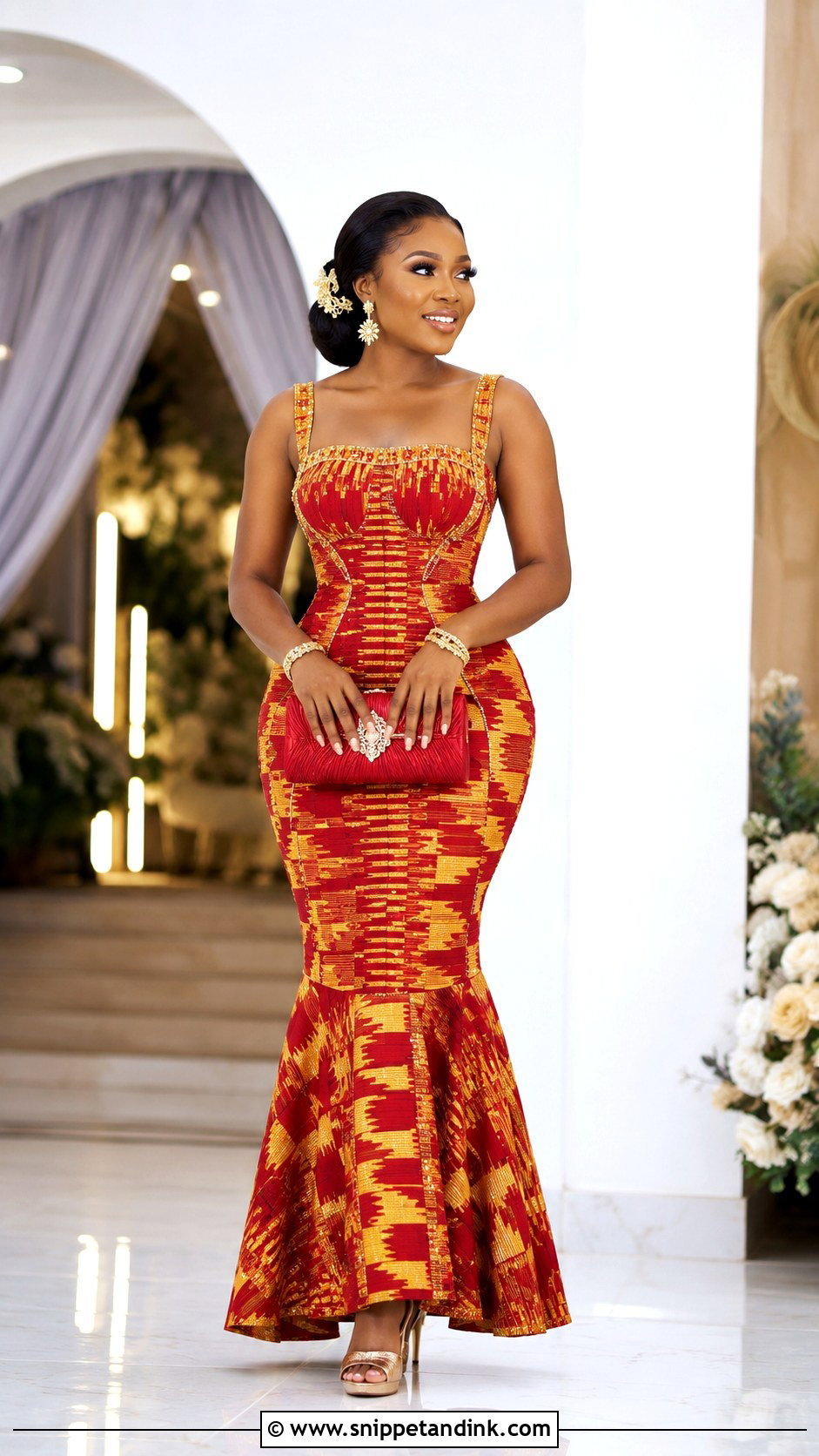
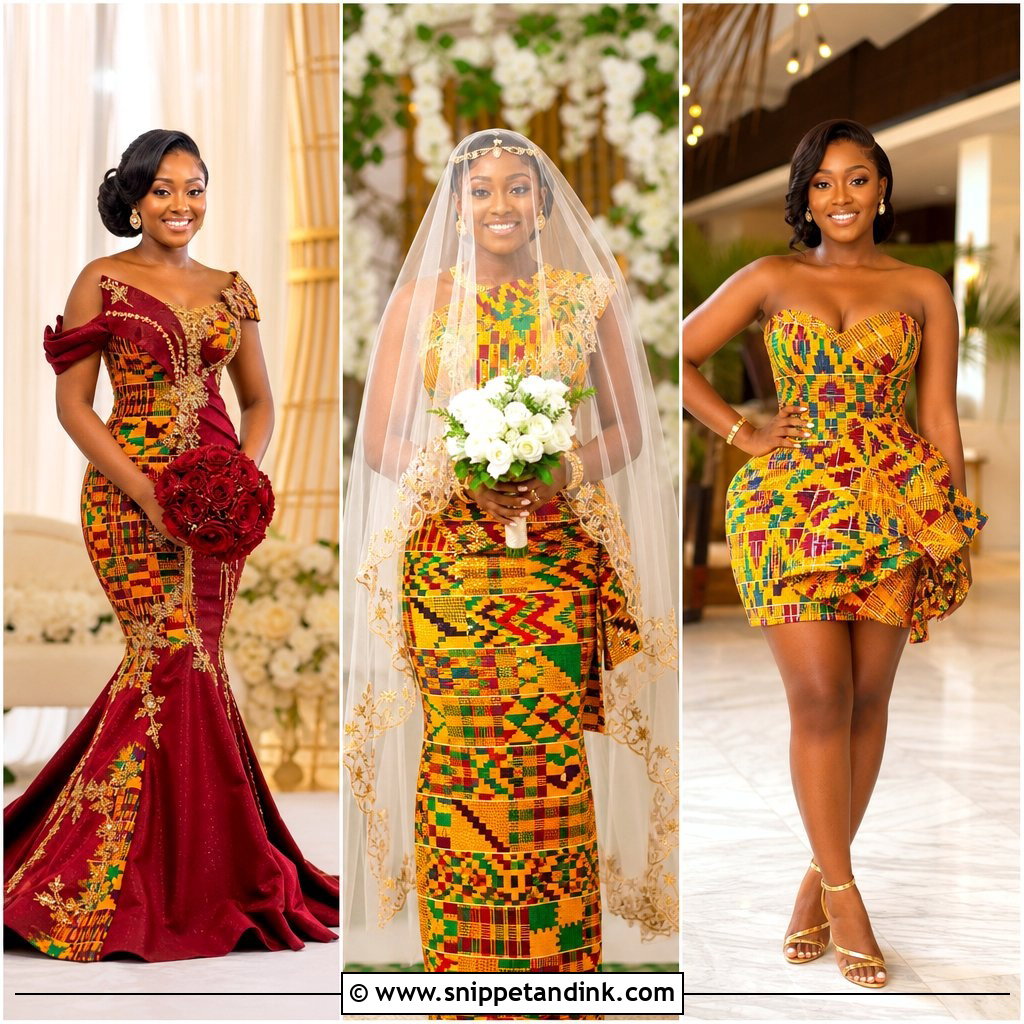
Red and gold is the boldest pairing here and needs confident, clean tailoring. A trumpet gown with a square neckline gives it a modern base; an A-line gives you more room to move. Keep gold beading to the neckline, cuffs or waist so the cloth still reads as woven. Ask for a supportive lining. Heavy red Kente on its own can crease at the waist and hips once you’ve been seated, and a good lining keeps the surface smooth. Gold block heels, a structured red clutch, polished earrings and a matching bracelet set suit it. A low bun with small gold ornaments is a lighter alternative to a big headwrap, with understated makeup to balance the color.
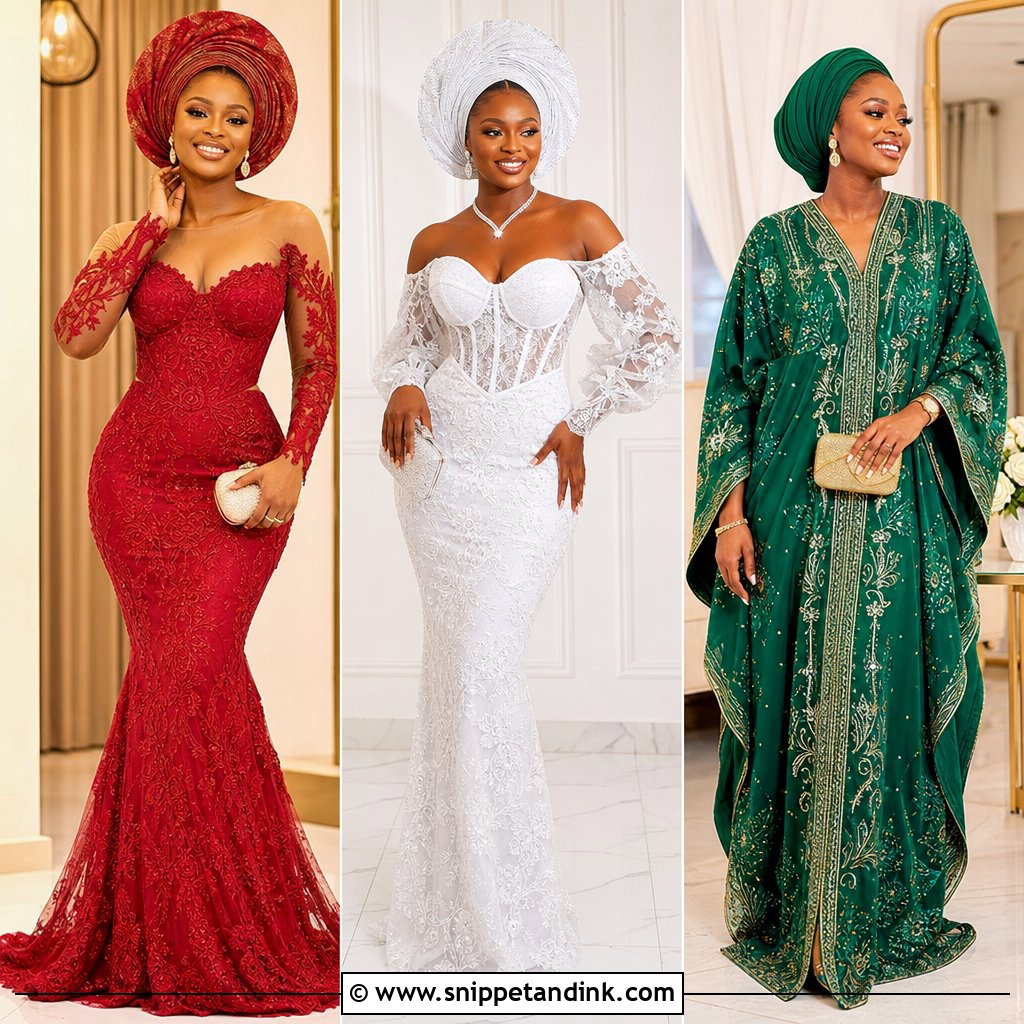
15. Blue And Gold Kente Dress
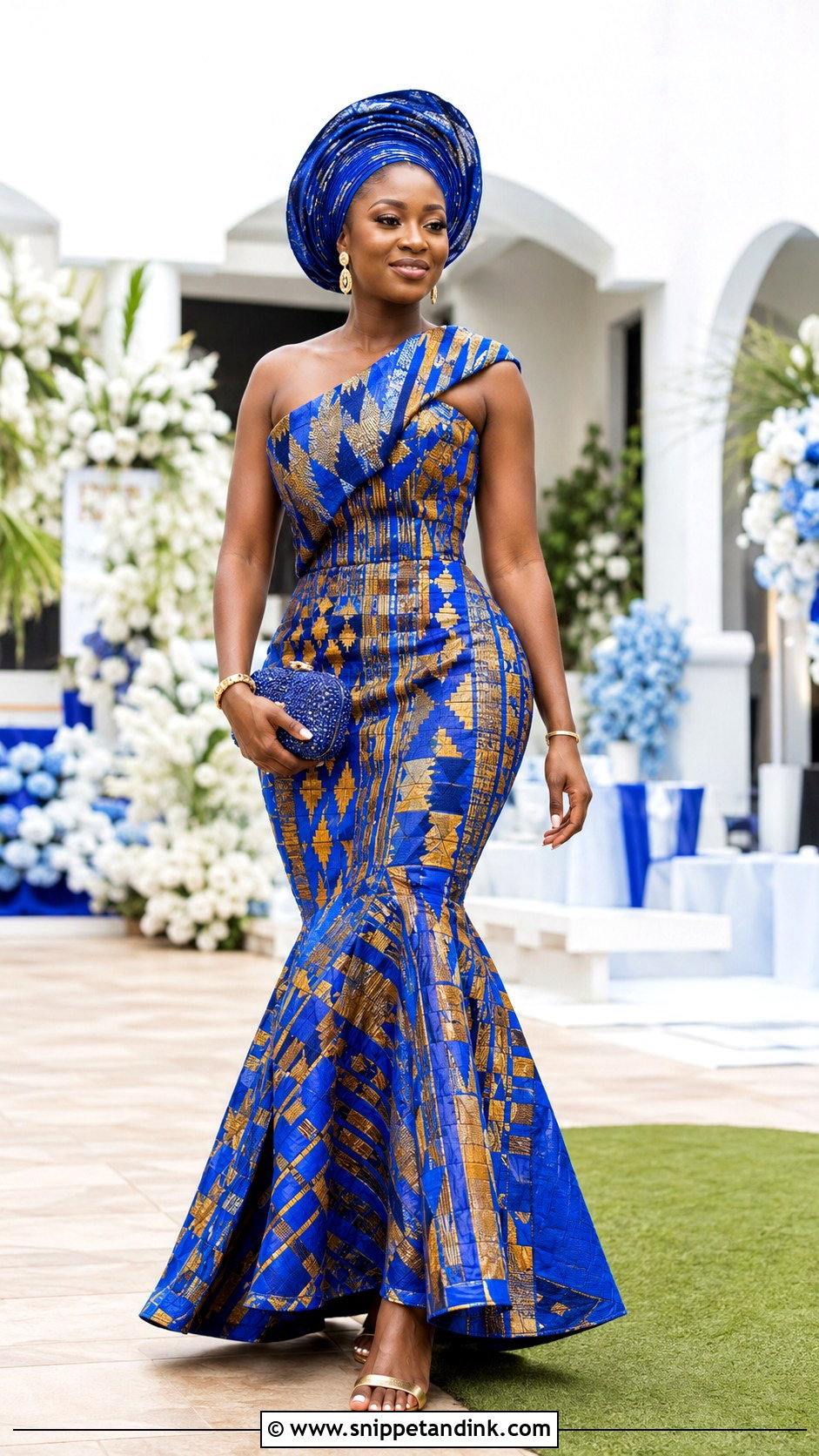
Blue and gold looks striking without leaning on the warmest traditional combinations. Deep royal blue is a strong base, with gold, cream or lighter blue motifs for contrast. A one-shoulder mermaid, a structured peplum or a flowing A-line all suit it. Add embellishment only where it supports the structure, at the neckline or waist. View the dress under bright light at a fitting, and if you can, take a quick phone video: some blues shift or lose their contrast on camera, and you want the shades to stay distinct. Gold sandals, a blue beaded clutch, drop earrings and a slim metallic bracelet finish it, with a matching blue headwrap or a braided bun.
16. Purple Kente Dress With Beading
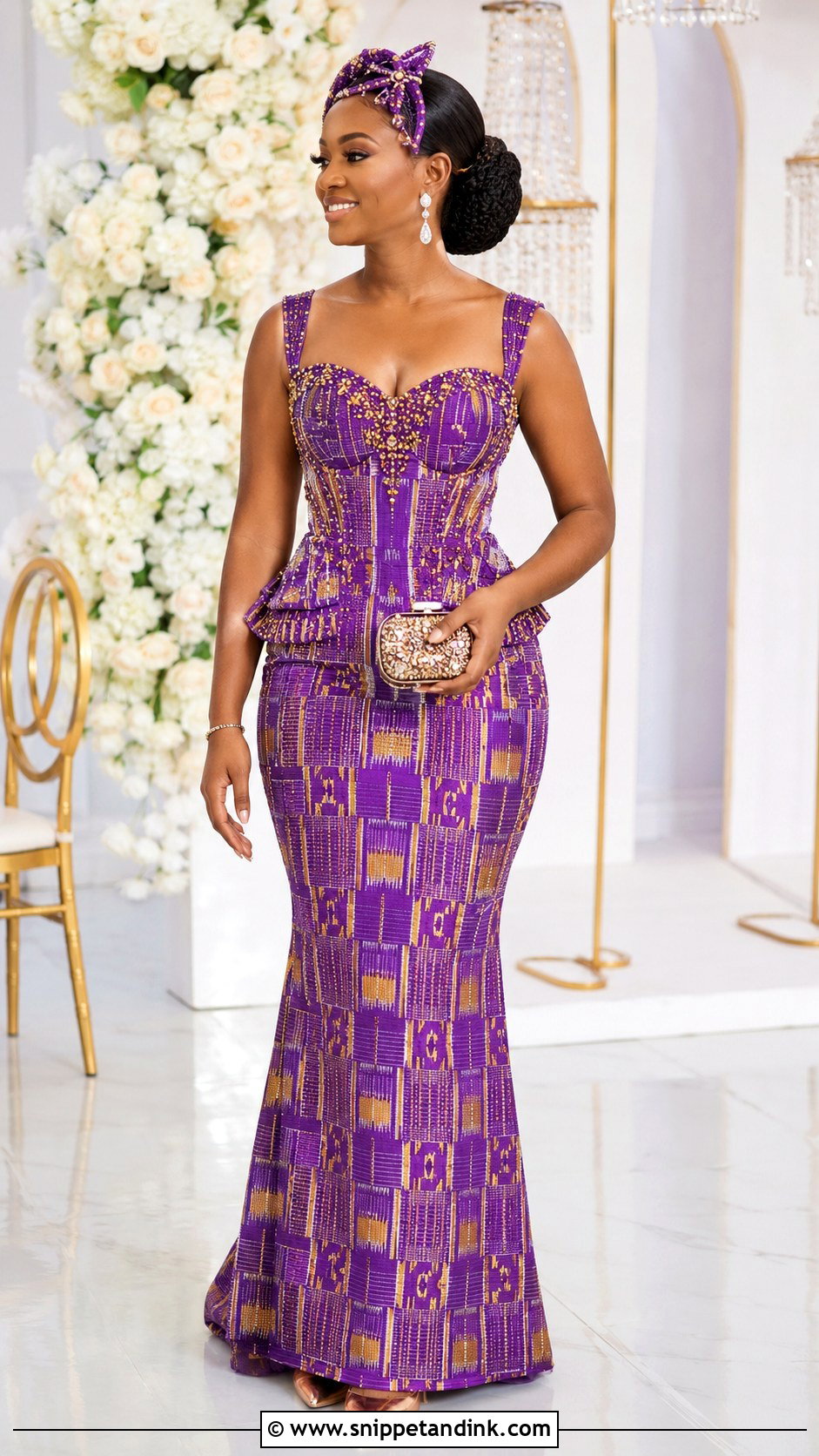
Purple Kente with beading gives you a rich color story and plenty of room for personal detail. A fitted gown with a gently flared hem, a structured neckline and beadwork in gold, crystal or matching purple is the classic version. Concentrate beads on the bodice and let the skirt show more uninterrupted pattern. Stick to one or two bead shapes; mixing many sizes and finishes makes the design look crowded and adds weight. Lightweight beads and a smooth lining keep it wearable through a long celebration. Metallic pumps, a jeweled clutch, drop earrings and a headwrap or sculpted hairpiece suit it, with a sleek ponytail or low braided bun.
17. White Kente Dress With Color Panels
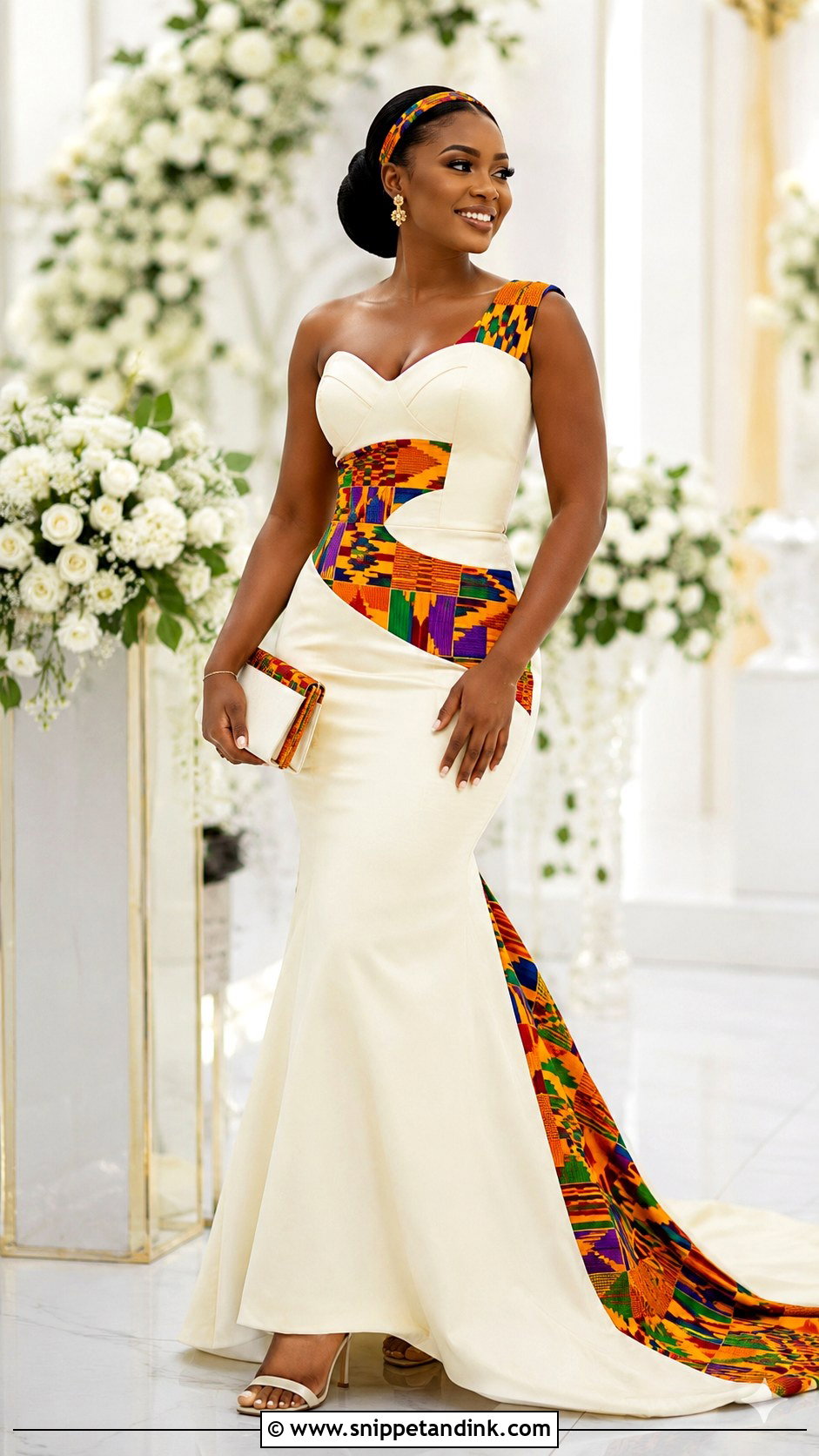
A white Kente dress with colorful woven panels combines a light bridal base with ceremony color. Begin with a white or soft ivory column, trumpet or A-line gown and add Kente panels through the bodice, waist, side seams or train. Use generous panels rather than small scattered patches, which look like an afterthought. The construction challenge is the join itself. Woven Kente is heavier than most white bridal fabrics, so choose a white with real structure and ask for every joining seam to be reinforced; otherwise the lighter fabric ripples beside the panel. Ivory heels, gold earrings, a Kente-trimmed clutch and a narrow headband or headwrap finish it, with a smooth bun.
18. Simple Kente Wrap Dress
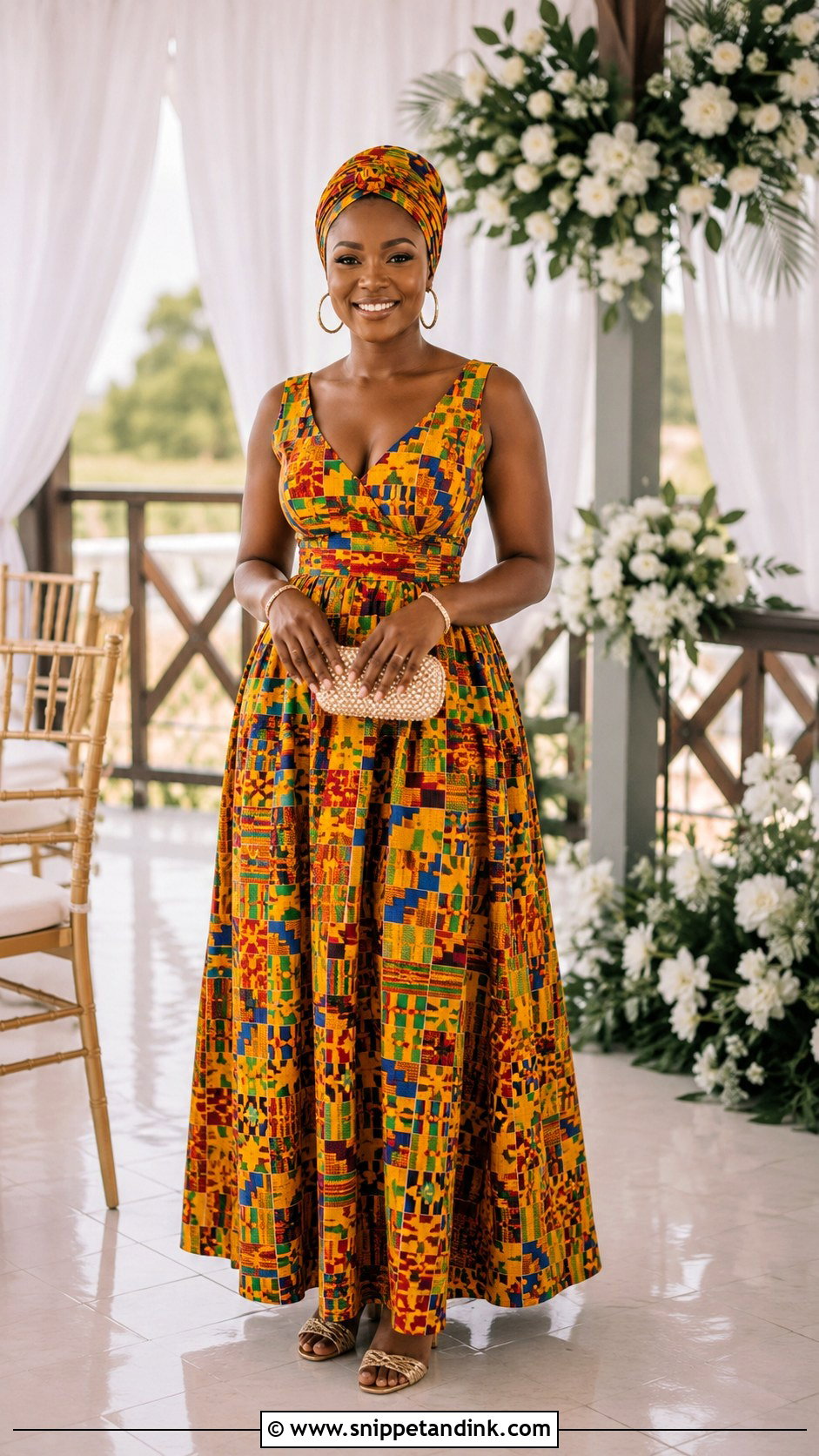
A simple wrap dress is the comfortable choice, and an adjustable one. A true wrap or a well-secured faux-wrap bodice with a V neckline and a defined waist, over a full-length A-line skirt, has presence without a train. Kente doesn’t drape as softly as jersey, so a real wrap tends to gape; I’d add hidden snaps at the neckline and waist and a soft lining against the skin. Keep embellishment minimal and let the pattern carry it. Low block heels, a small leather or beaded clutch, hoops and a stack of slim bangles suit it, with a neatly tied headwrap or a soft braided updo.
19. Kente Kaba And Slit Outfit
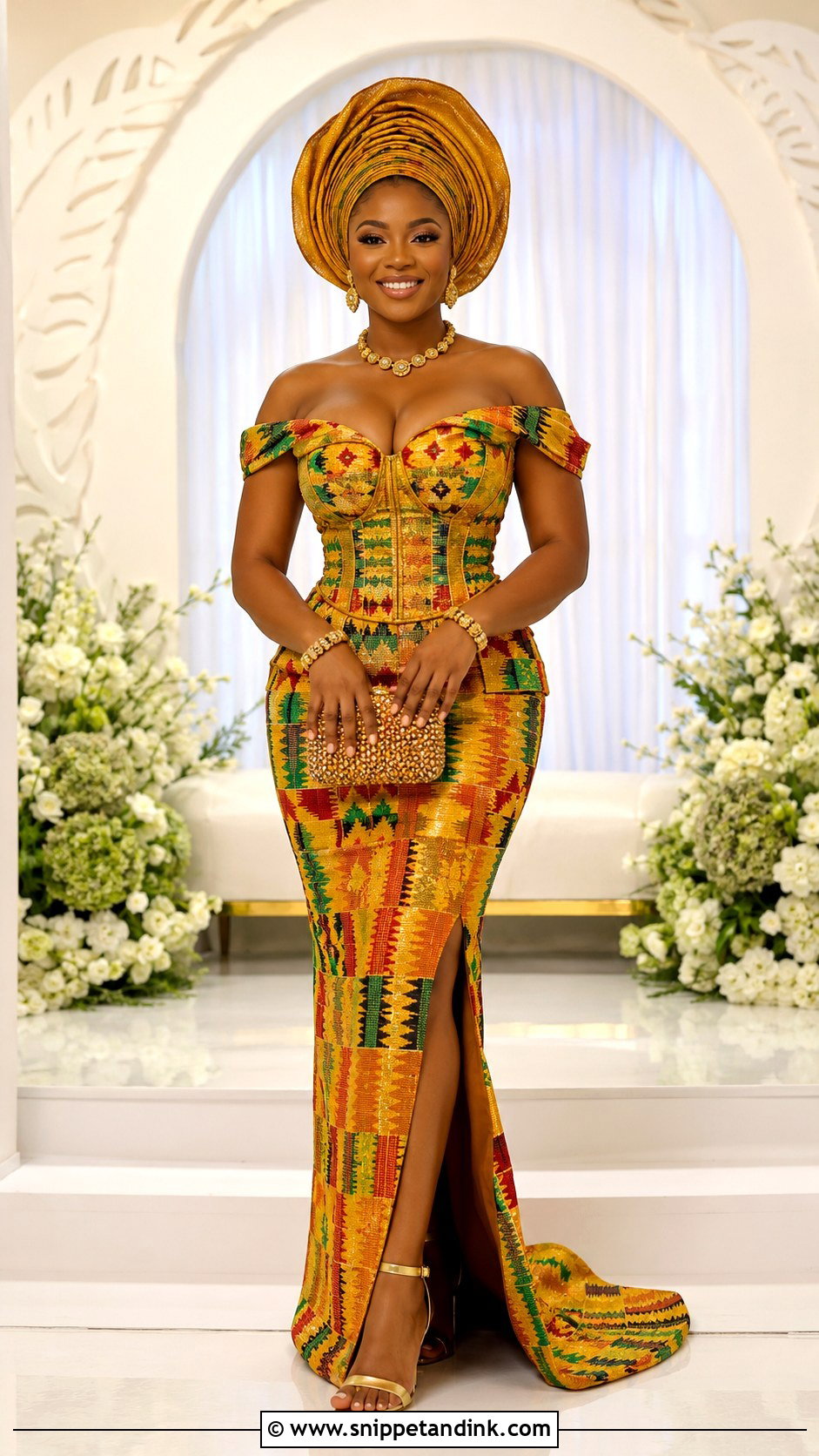
A Kente kaba and slit outfit is the most traditional look in this collection: a fitted blouse with a coordinated long skirt. Choose a sculpted kaba with a square, off-shoulder or modest sweetheart neckline, and a straight or flared slit, perhaps with a back train. You can use matching Kente for both pieces or pair a Kente skirt with a solid embroidered blouse in one of the cloth’s colors. The waistlines need to meet cleanly, which is a fitting job, not a sewing one, so try both pieces on together every time. Add a concealed walking slit or back vent so you can greet relatives and dance. Heeled sandals, traditional-style jewelry, a beaded clutch and an elegant headwrap complete it.
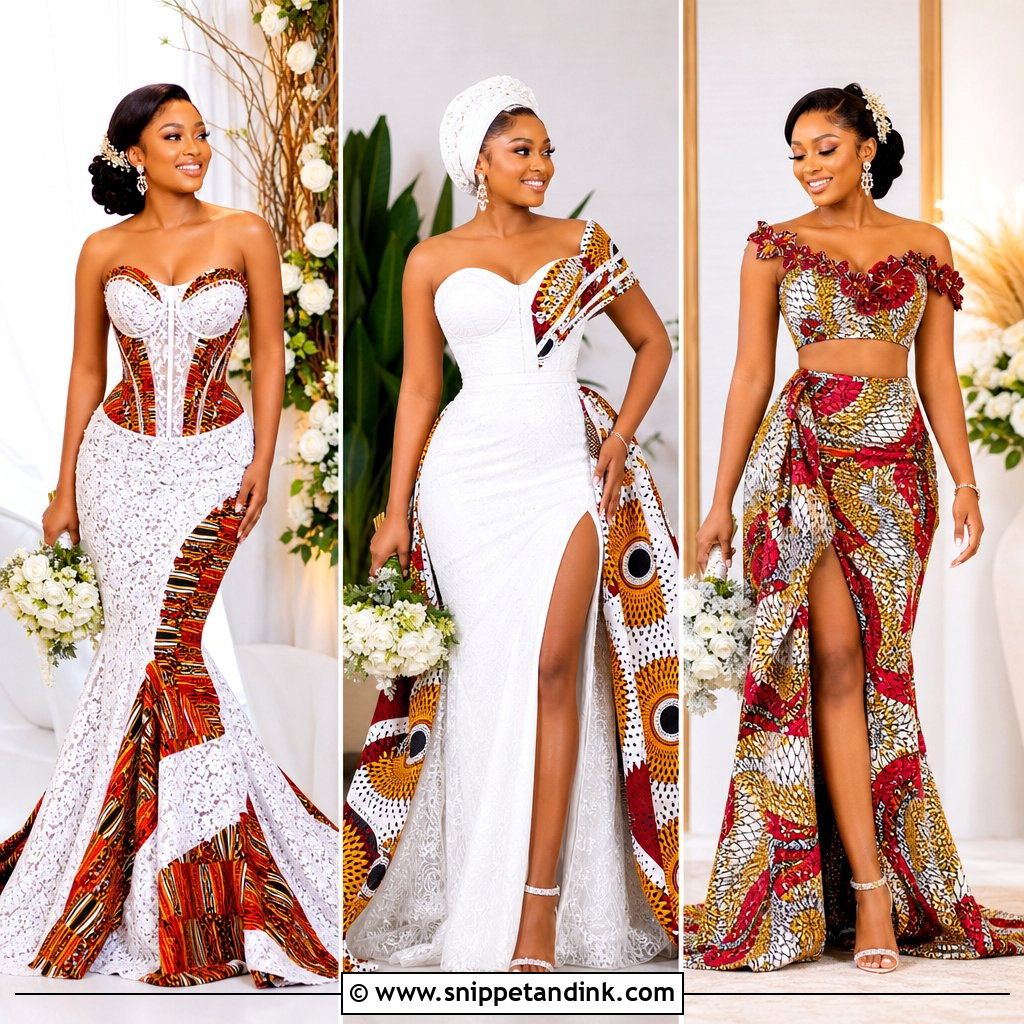

20. Kente Dress With Matching Headwrap
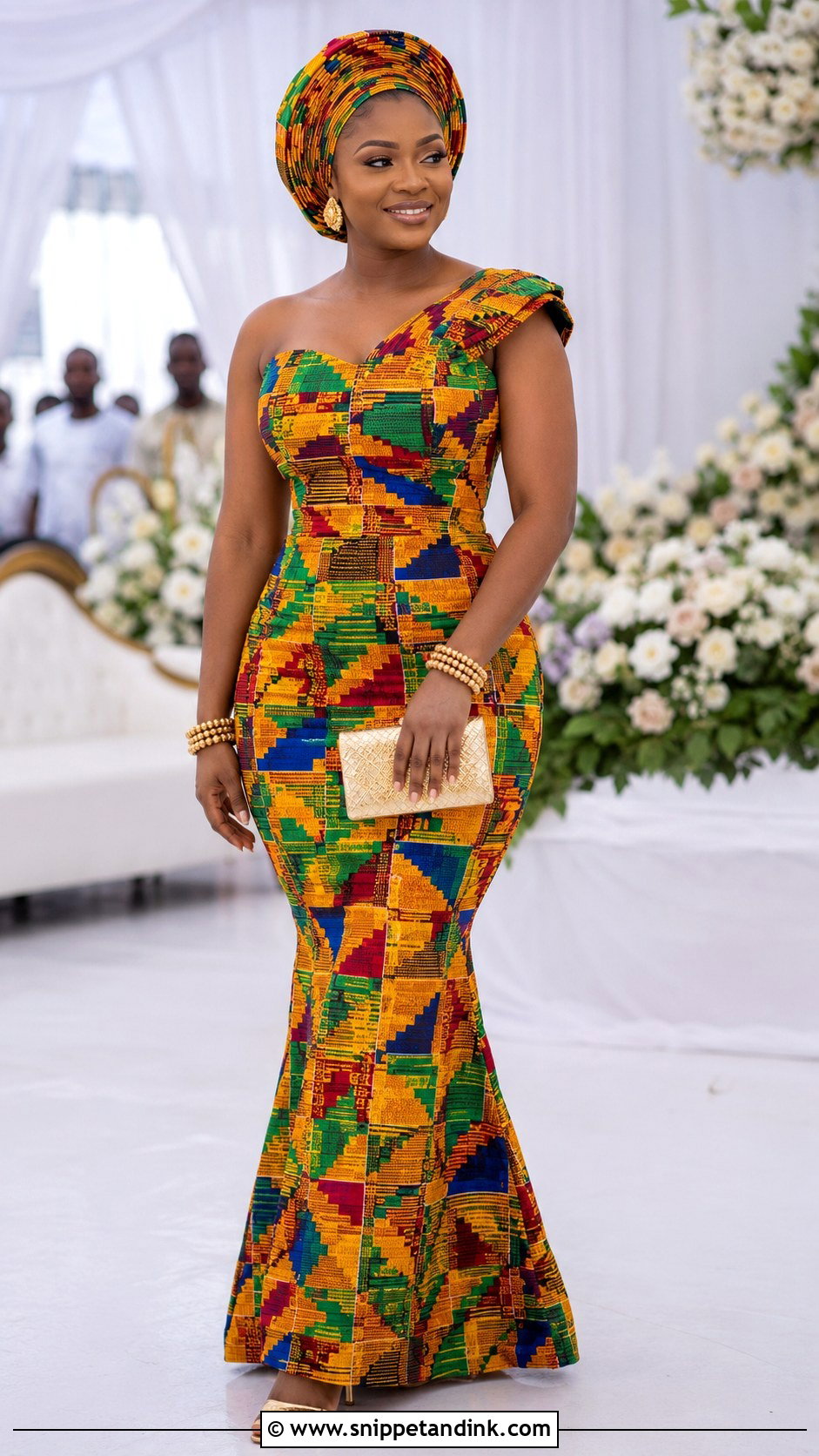
A matching headwrap pulls a Kente look together from head to toe, but the wrap and the dress have to share the attention. A tall, sculptural wrap wants simple shoulders and a clean neckline under it, on a fitted trumpet, structured peplum or clean A-line. Puff sleeves, ruffles or a dramatic cape call for a smaller wrap. Have it tied firmly but not tightly; a wrap that’s painful at hour one is unbearable by hour five, and a soft cap underneath helps it grip without pressure. Ask your headwrap stylist to show you a few tying options before the day. Gold earrings, comfortable metallic heels, a structured clutch and two or three bracelets complete it.
Heat, Outfit Changes and Caring for the Cloth Afterward
A traditional ceremony often runs for several hours, sometimes outdoors in strong heat, and many brides change outfits once or more during the day. Woven Kente is warm, so plan for it.
- Line the bodice in cotton or another breathable fabric rather than polyester, especially across the back.
- Keep a folding fan and blotting papers with your maid of honor, and choose long-wear makeup that won’t slide in humidity.
- If you’re changing, keep each outfit with its own headwrap, jewelry and shoes in one labeled bag, and allow a proper window for the change. Retying a sculpted headwrap neatly takes time.
- Coordinate with the groom’s cloth early. Many couples wear the same Kente or a complementary one, and the colors look far better when chosen side by side.
After the wedding, don’t throw a handwoven Kente gown in a washing machine. Spot-clean marks gently, use a dry cleaner who handles heavy woven textiles, and avoid wringing it if it ever gets wet. Store it rolled or loosely folded with acid-free tissue, away from sunlight, so the colors stay strong. Many families keep a wedding Kente for decades, and it can be remade into something new for the next generation.
Let the Weave Lead and Tailor Everything Around It
A Kente bridal outfit is about more than the brightest fabric or the biggest silhouette. It should support your body, suit the ceremony, reflect your taste and stay comfortable through every important moment. Use the looks above as a starting point, then work with an experienced weaver, designer, tailor and headwrap stylist to make it yours. At each fitting, look at fabric weight, pattern placement, support, movement and accessories together. A beaded mermaid, a ball gown, a wrap or a kaba and slit can all feel right when the cloth and the cut are planned as one.
You'll Like These Ideas:


Leave a Reply