
Traditional dress at a wedding says who you are and how you’re connected to the couple. The looks below are complete head-to-toe outfits for women, from South Asia, East and Southeast Asia, Africa and Latin America, each with shoes, jewelry, hair and accessories. I’ve written them for brides and for guests, because the same garment is styled very differently depending on who wears it. Wear dress from your own heritage, or cultural clothing when the couple has clearly invited guests to join in. Ask about ceremonial colors, modesty and anything reserved for the bride before you shop. Layered and draped garments also need proper tailoring, because they’re worn for hours, not minutes.
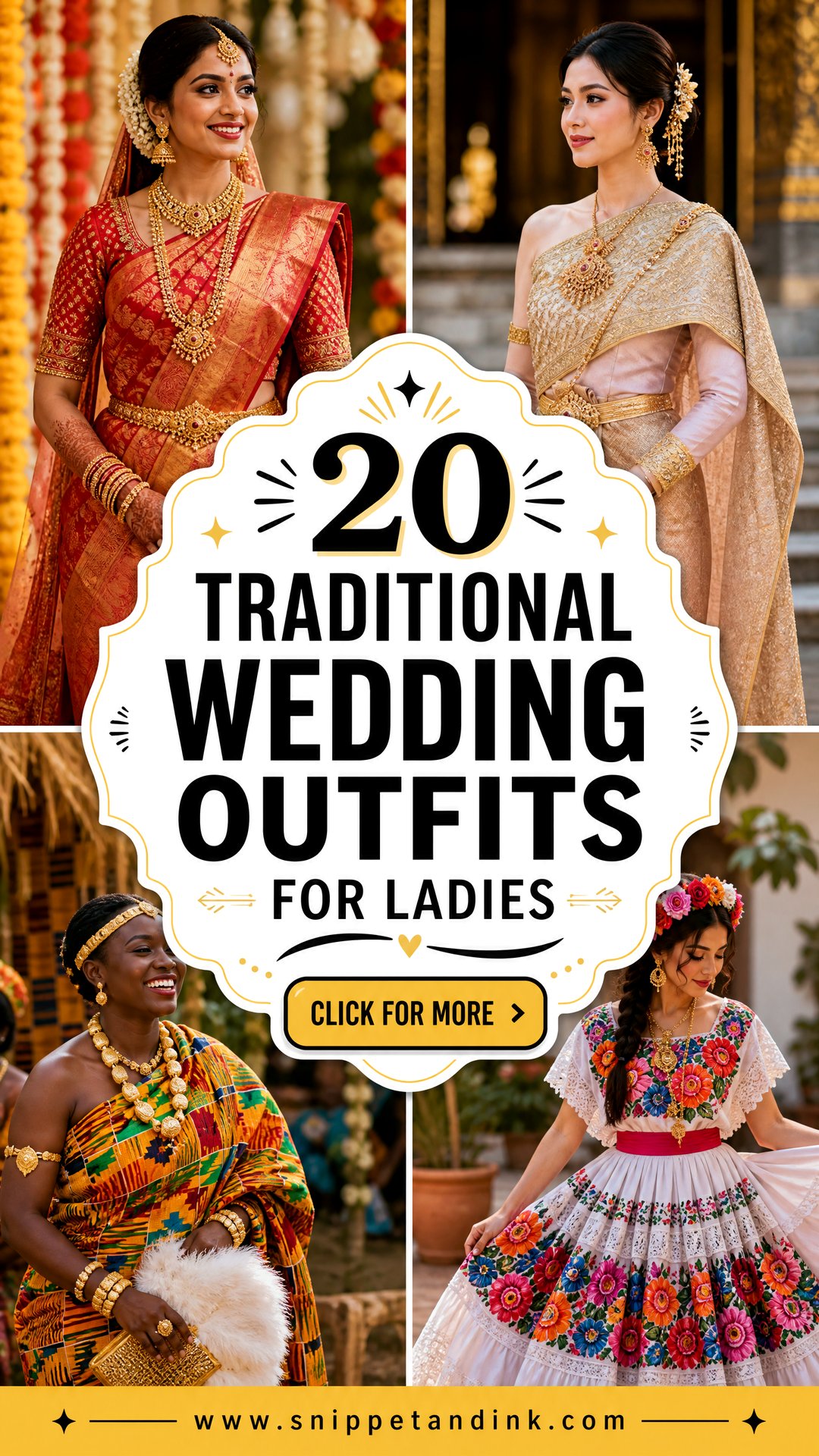
Bride, Mother or Guest? The Same Garment Dressed Three Ways
Most traditional garments are worn by the whole room, and what separates the bride from everyone else is how much is layered on. When I style a family, I scale three things.
- Weight of work. The bride carries the heaviest embroidery and the widest borders. Mothers and close relatives sit a step below, guests two steps below.
- Head and face. Crowns, gele tiers, tikkas and veils mark the bride. Guests keep their heads simpler unless the family has asked otherwise.
- Color. Many traditions reserve one shade for the bride, often red or white. Ask, and if you’re unsure, pick a color the bride definitely isn’t wearing.
When a family chooses a shared fabric for relatives and friends, as with aso ebi, wear it. Turning up in your own fabric reads as stepping out of the group.
1. Indian Bridal Lehenga Wedding Outfit
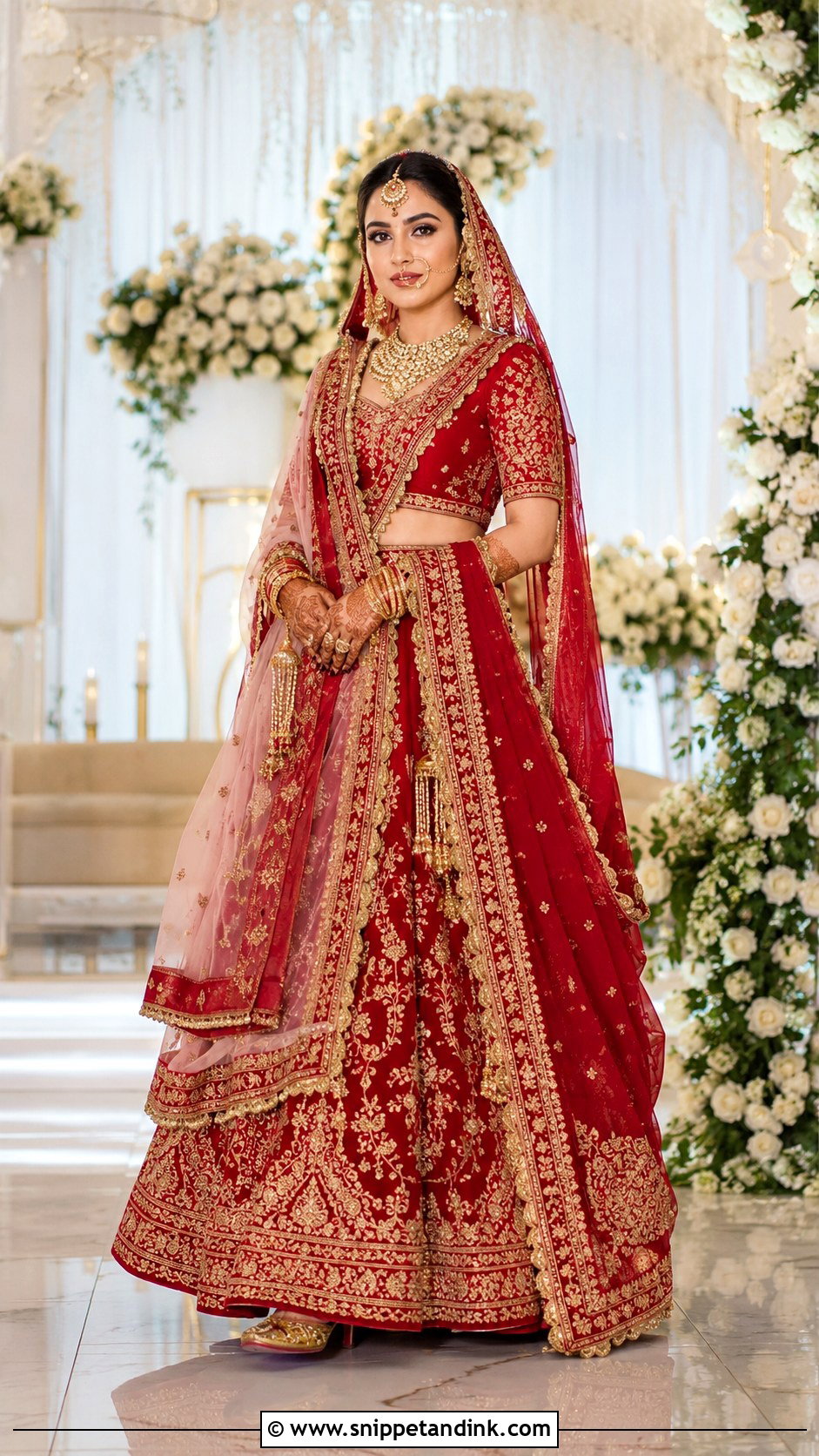
A lehenga’s shape comes from three pieces: a fitted choli, a full flared skirt and the dupatta. For an Indian bridal lehenga, silk, velvet, brocade or raw silk with zari, beads, sequins or embroidery are the usual choices. Red is the classic bridal shade, with maroon, coral, pink, green and ivory common in different regions and families. Juttis, stacked bangles, statement earrings, a necklace and a maang tikka finish it, and brides often add a second dupatta over the head. Hem the skirt in the exact shoes you’ll wear, since even a small heel change makes the hem drag. Guests: go lighter on embellishment and ask which colors the bride is wearing.
2. Indian Silk Saree Wedding Outfit
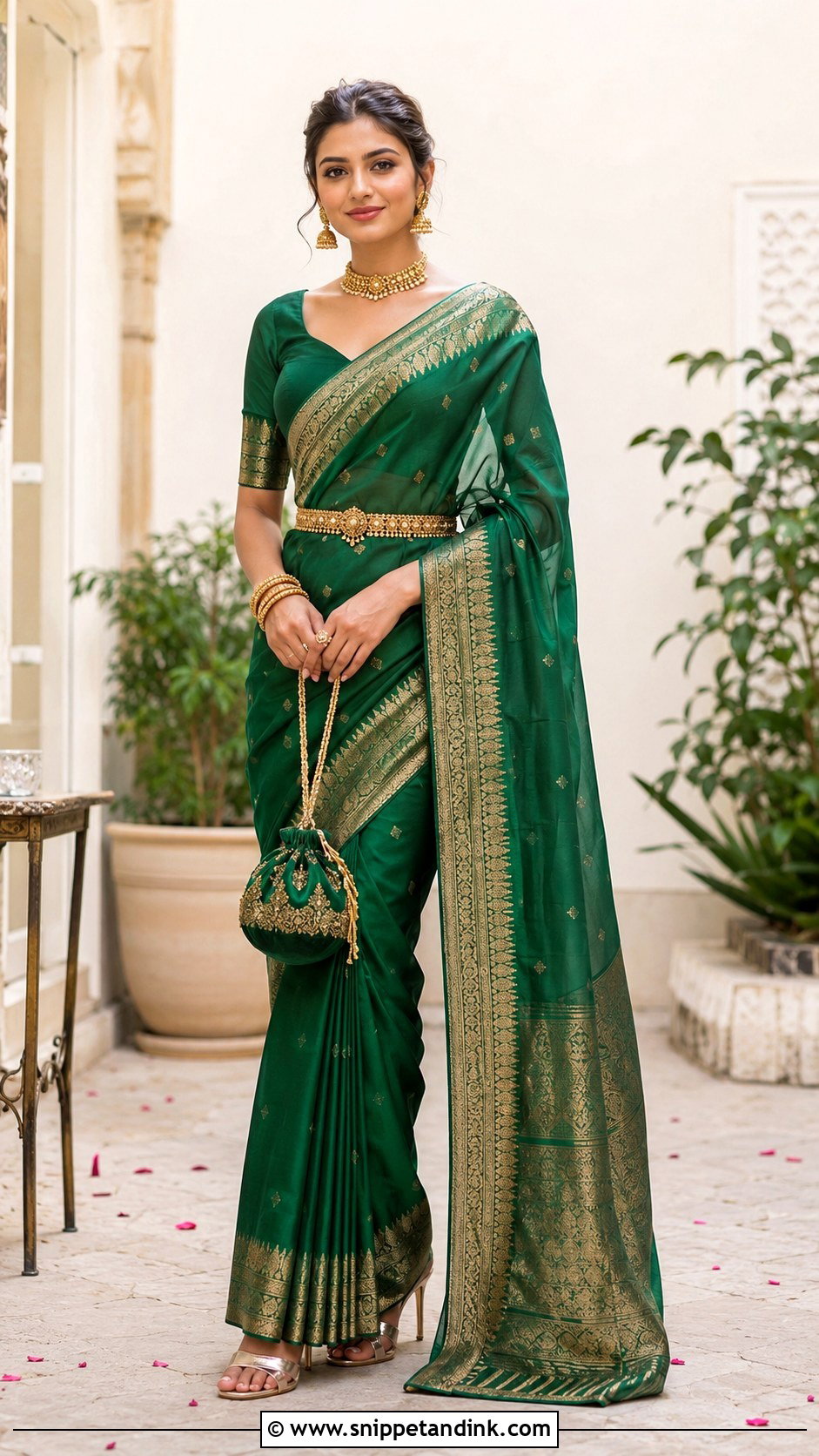
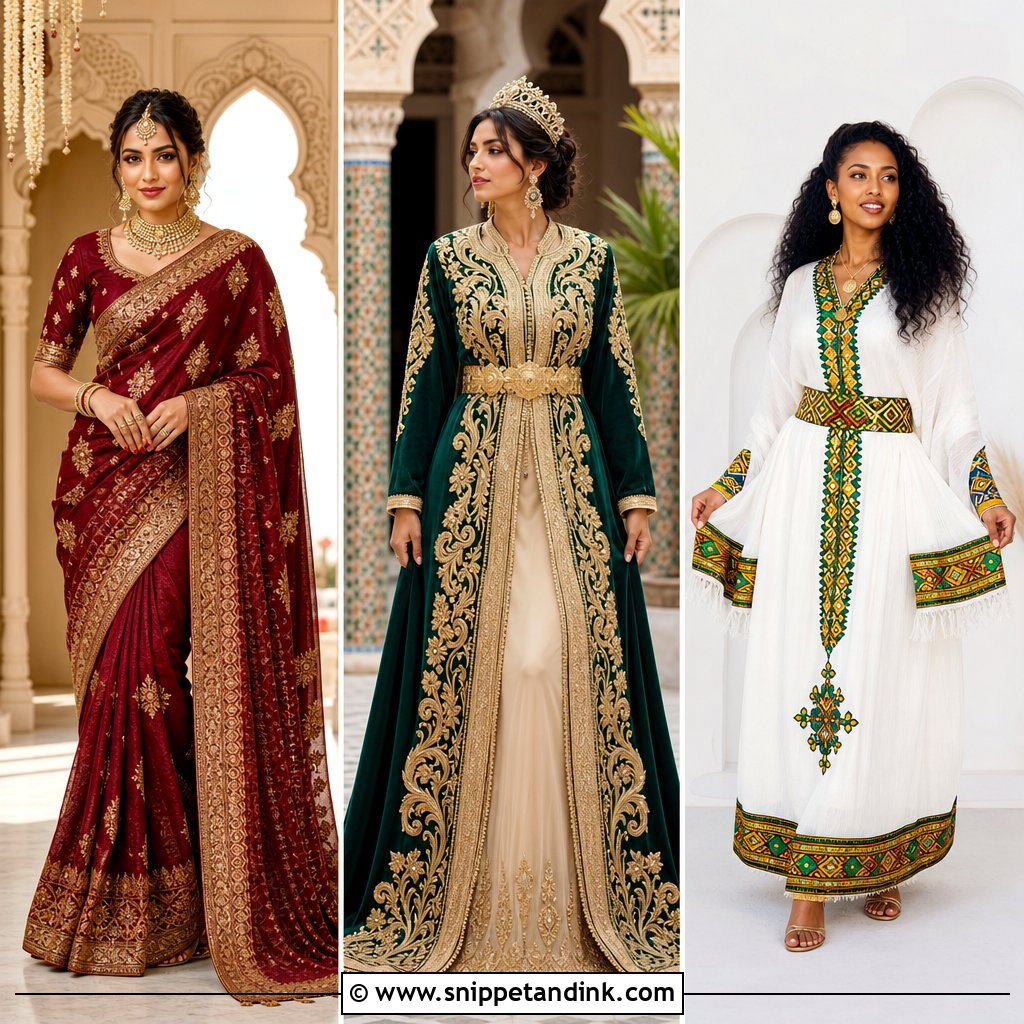
Each regional weave tells a different story. Banarasi has dense brocade, Kanjeevaram heavy silk with a contrast border, and Paithani its peacock-motif pallu, so choose one tied to your heritage or the event. The blouse should fit closely enough that the pallu doesn’t drag it off the shoulder. Gold sandals, a potli, bangles and traditional earrings complete it; brides add layered necklaces, a waist belt, flowers and a head covering. As a guest, I’d choose a narrower border and simpler jewelry. If you don’t drape sarees often, have it professionally pleated. A home-draped saree tends to loosen within a couple of hours of sitting and dancing.
3. Pakistani Gharara Wedding Outfit
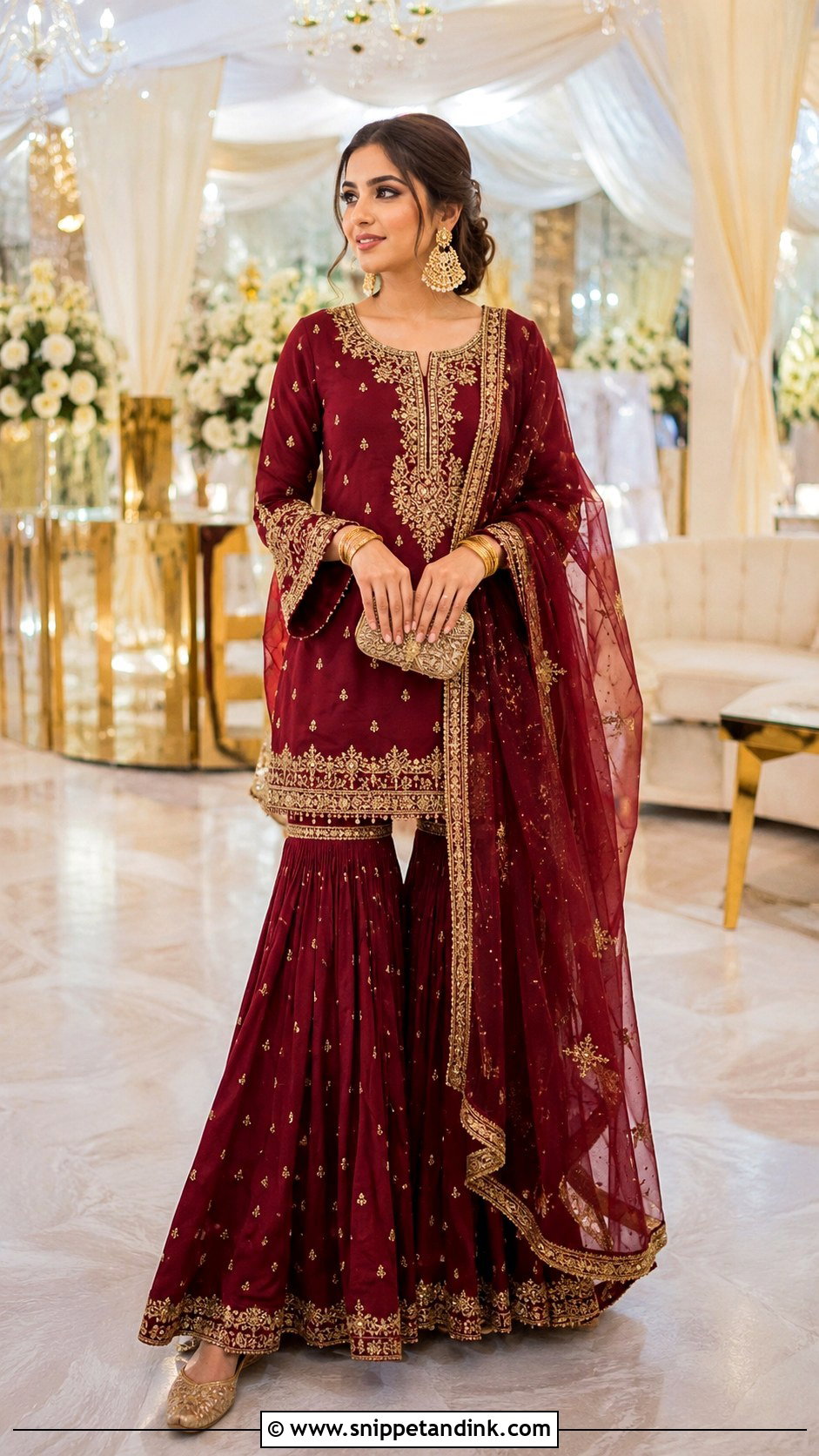
The gharara is fitted to the knee and flares from a gathered joint below it, which is why it moves so well when you walk. Pair it with a knee-length kurti and a generous dupatta, in jamawar, organza, silk or brocade, finished with gota, zardozi, pearls or threadwork. Busy trousers want a cleaner neckline and fitted sleeves. Khussas, chandelier earrings, bangles and a small embroidered clutch complete it; a bride adds a head dupatta, a statement necklace or a jhoomar passa. Guests look good in jewel tones, pastels or muted metallics with moderate embroidery. Have the hem cut so it brushes the shoe.
4. Bangladeshi Jamdani Saree Wedding Outfit
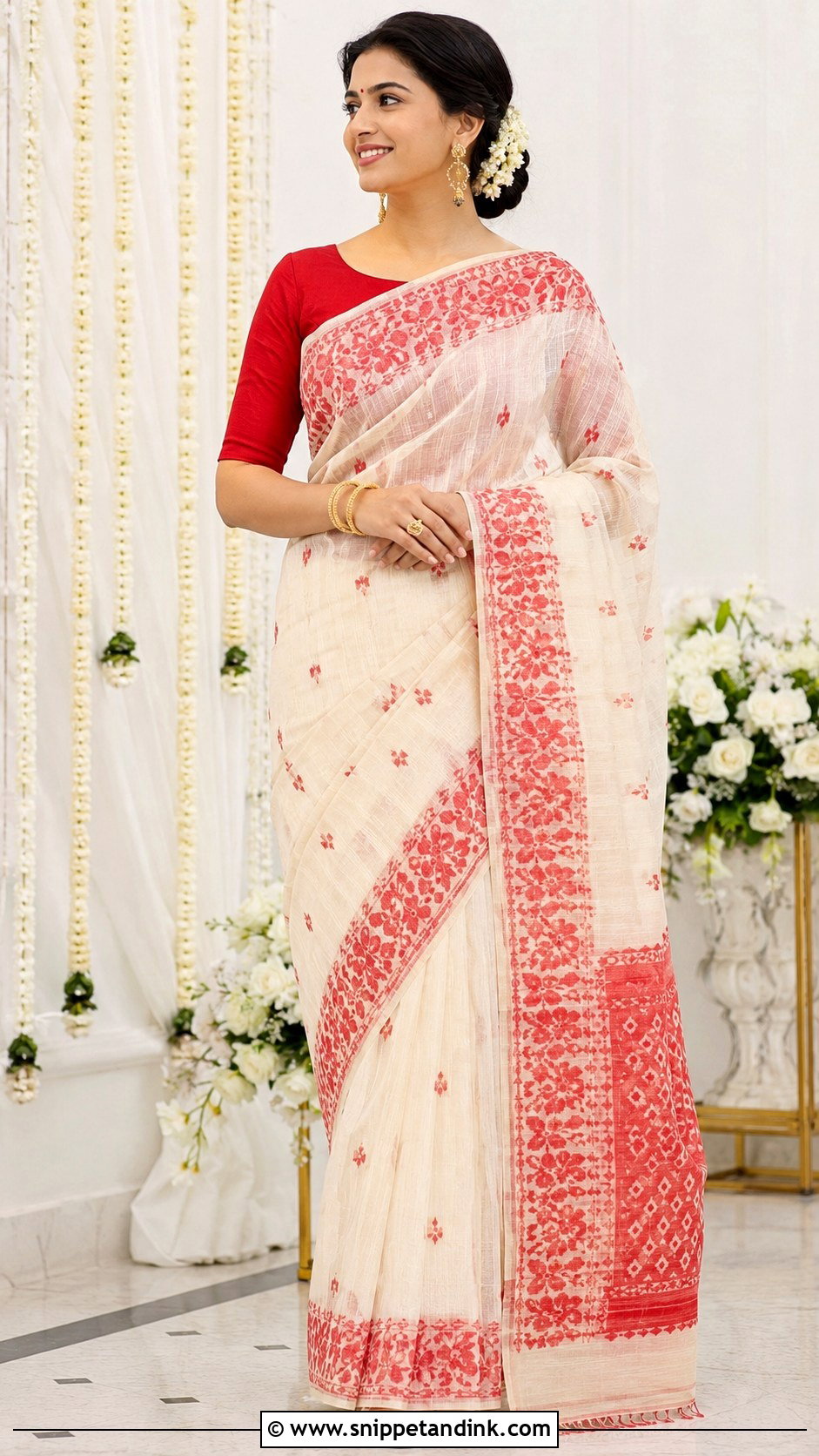
Jamdani is woven with the motifs inlaid by hand on the loom, which makes it fine, airy and a little fragile. It’s my first suggestion for a daytime or summer celebration. Cotton-silk is breathable; a silk blend is dressier. Red and white is the festive pairing, with blue, green, gold, pink and ivory as alternatives. Add a fitted blouse, heeled sandals, gold earrings, slim bangles, a potli and a bun with fresh flowers. Brides can add heavier jewelry and a veil; guests should keep it light. Watch your accessories. Jamdani’s loose weave catches on rough bag straps and claw-set bracelets.
5. Sri Lankan Kandyan Saree Wedding Outfit
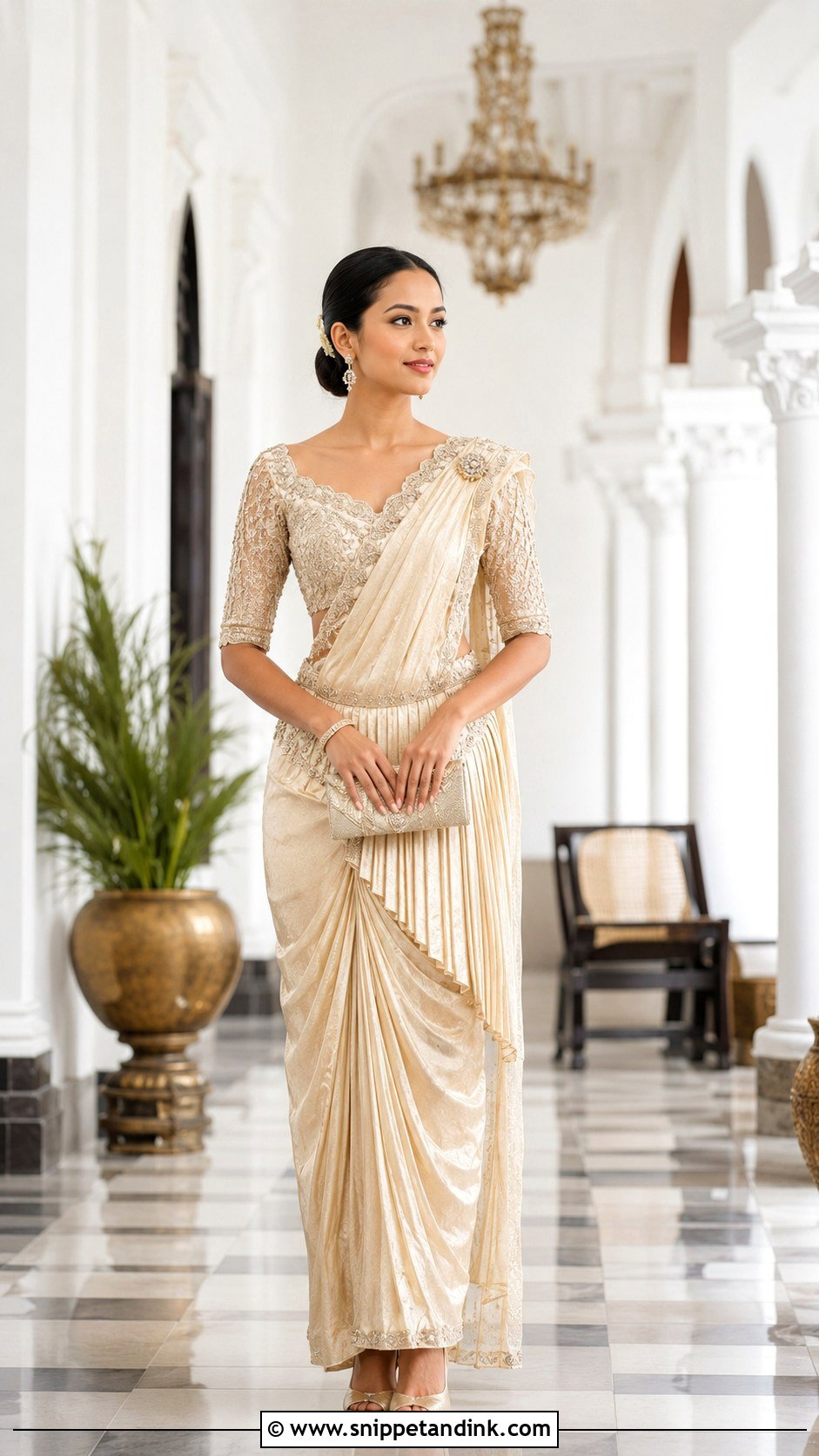
The Kandyan saree, or osariya, is draped with a pleated frill at the waist and the pallu taken over the shoulder in a fan, which gives it far more structure than a standard saree. It’s made in silk, brocade, lace or embellished fabric according to family custom, over a fitted blouse. Low heels, delicate bracelets, drop earrings and a coordinated clutch complete it. Brides often wear traditional Kandyan jewelry layered at the neck and a headpiece. Guests should go softer. Have the draping done by someone who does it regularly; the frill must sit evenly all round or it looks lopsided in photos.
6. Chinese Qipao Wedding Outfit
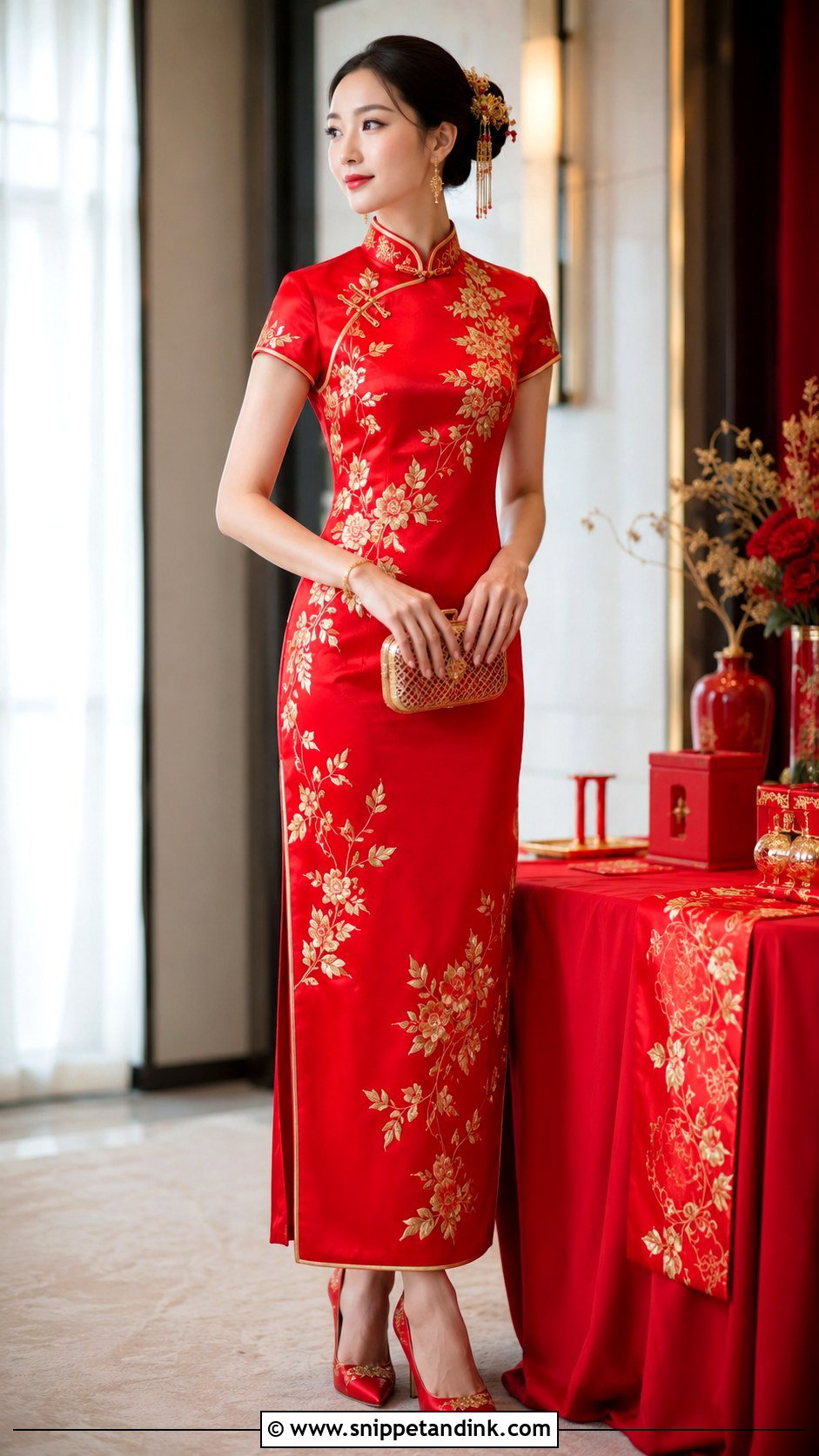
A red qipao is fitted, with a mandarin collar, shaped waist and side slits. That fit is the whole garment, and it has to be tailored on your body. I check the slits by sitting: if the dress rides up past comfort, the slit needs lowering or the skirt more ease. Silk or brocade with floral, phoenix or cloud motifs suits a wedding. Red or gold pumps, jade or gold jewelry, a small structured bag and neat hair finish it; brides often change into a qipao for the tea ceremony. Guests should skip red unless told otherwise, and avoid all-white or all-black, which many families associate with mourning.
7. Korean Hanbok Wedding Outfit
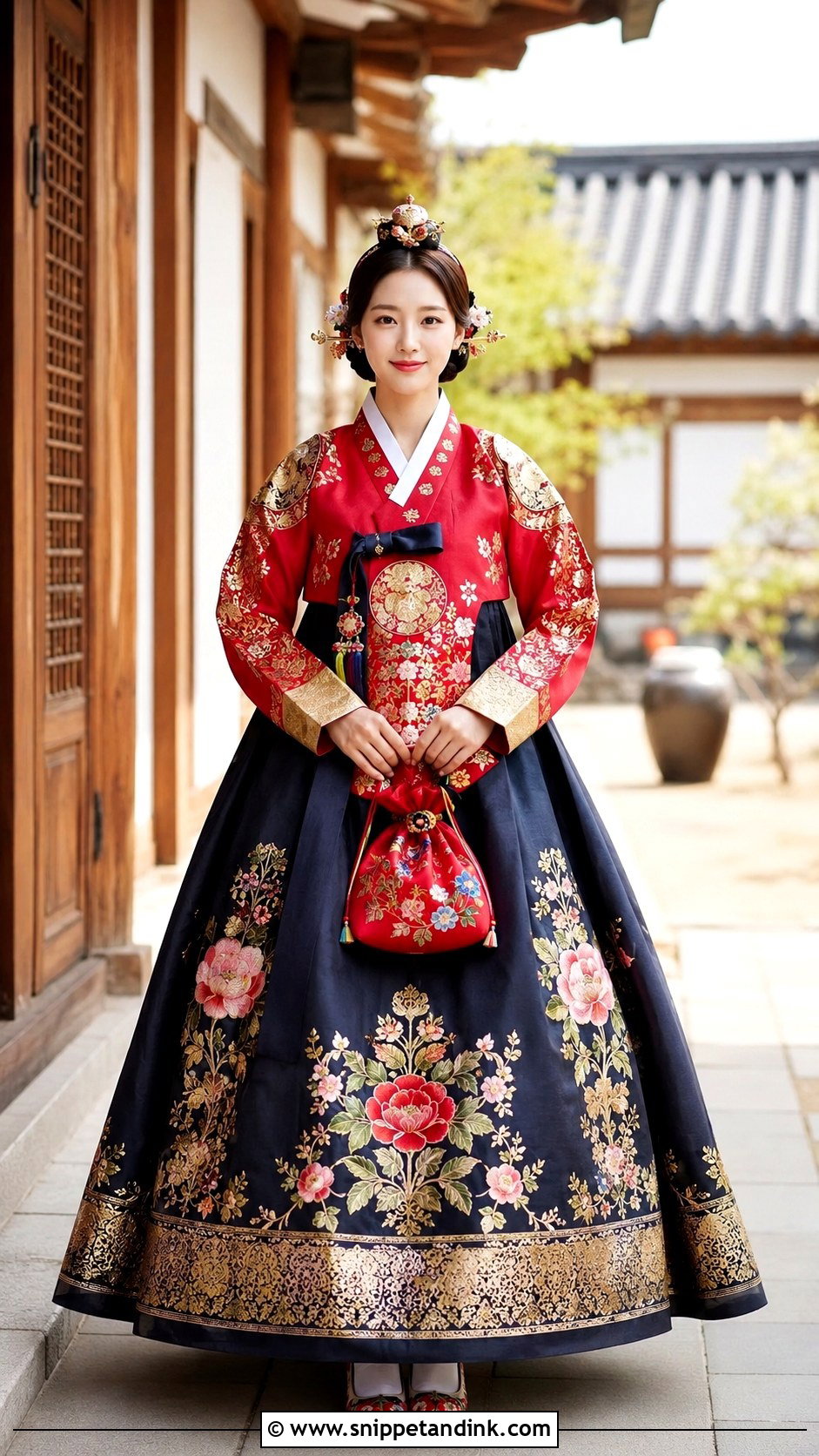
Hanbok colors often tell people who you are at a Korean wedding. In many ceremonies the mothers wear coordinated colors, frequently pink for the bride’s mother and blue for the groom’s, while the bride’s bridal look may include an embroidered ceremonial robe and formal headwear. The base is a short jeogori and a high-waisted chima. Add traditional shoes, a small embroidered pouch and hair kept off the collar. As a guest, choose a simpler hanbok and confirm colors with the family. Renting from a specialist gets you correct sizing and the right accessories, plus someone to tie the goreum properly.
8. Japanese Shiromuku Kimono Wedding Outfit
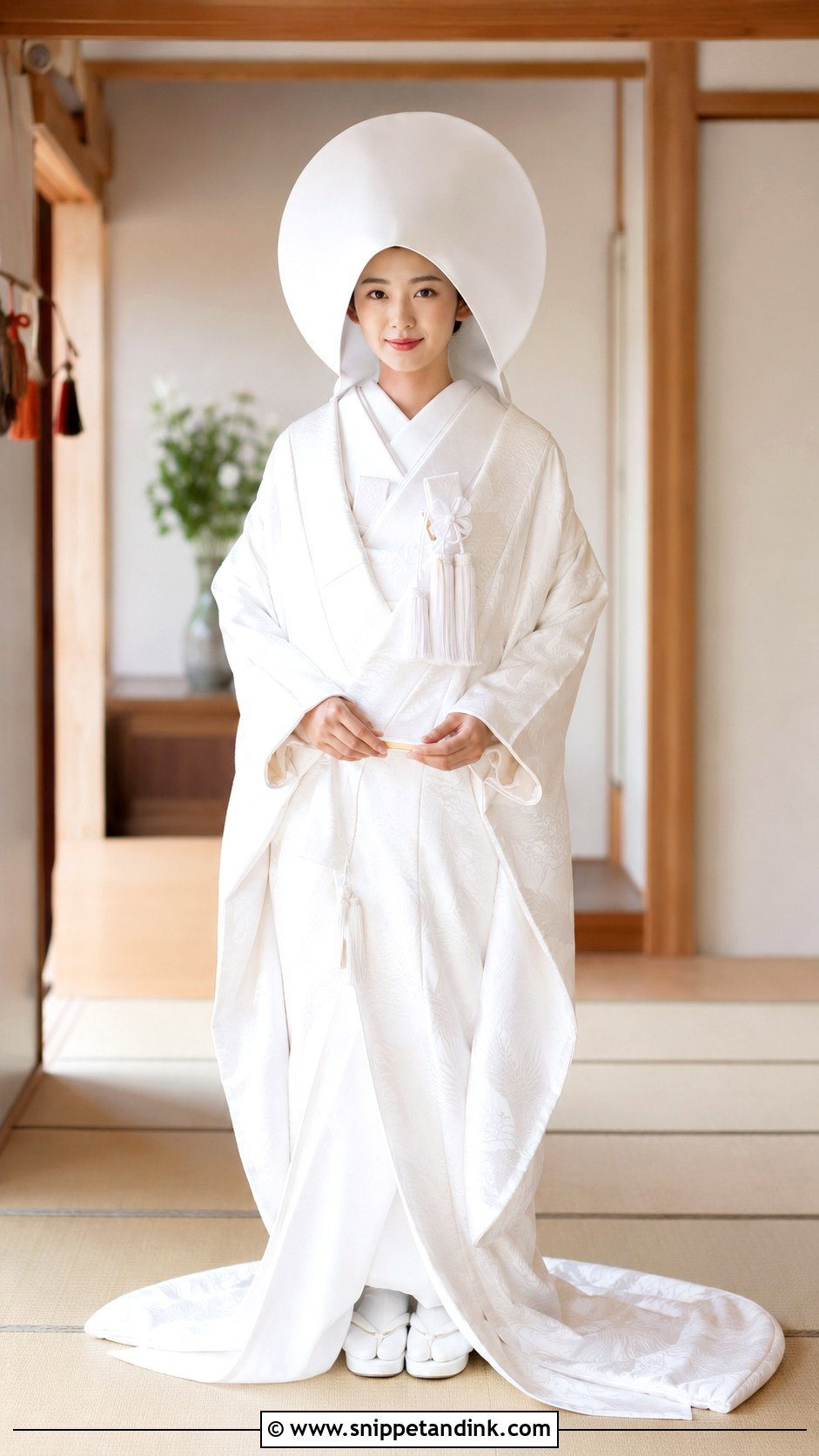
Shiromuku is bridal only. No guest should wear it. The Japanese shiromuku pairs a white kimono, white obi and layered underkimono with white footwear and a wataboshi or tsunokakushi, and its woven pattern shows only as light moves over it. A trained kitsuke dresser is essential for the layers, obi and hem length, and hair and makeup are planned around the headwear. Female guests and relatives wear their own formal kimono; married relatives often choose a kurotomesode. Ask the hosts which level of formality they expect.
9. Vietnamese Ao Dai Wedding Outfit
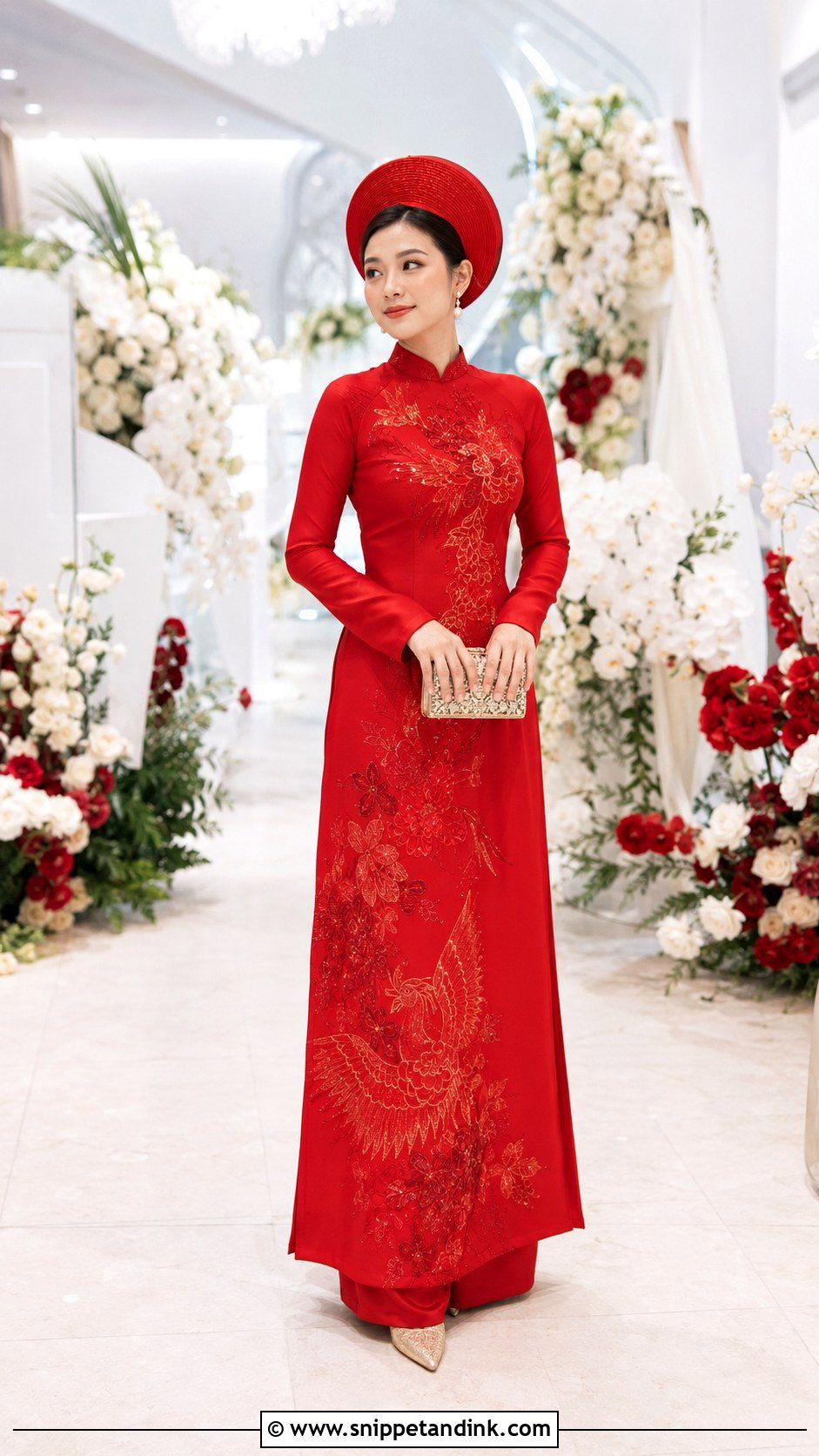
The áo dài works because of two front and back panels that fall from slits at the waist over loose trousers. Choose silk, satin, brocade or embroidered fabric soft enough to swing, not stiff. Brides tend toward red, white, gold or pastels, with pointed pumps, pearl or gold earrings and a khăn đóng headpiece where the family wants it. A small clutch keeps it neat. Guests can wear one if invited, in a quieter color with less decoration. The shoulders and torso must fit closely but let you sit. I have the trousers hemmed long, just grazing the floor in your shoes.
10. Indonesian Kebaya And Batik Sarong Wedding Outfit
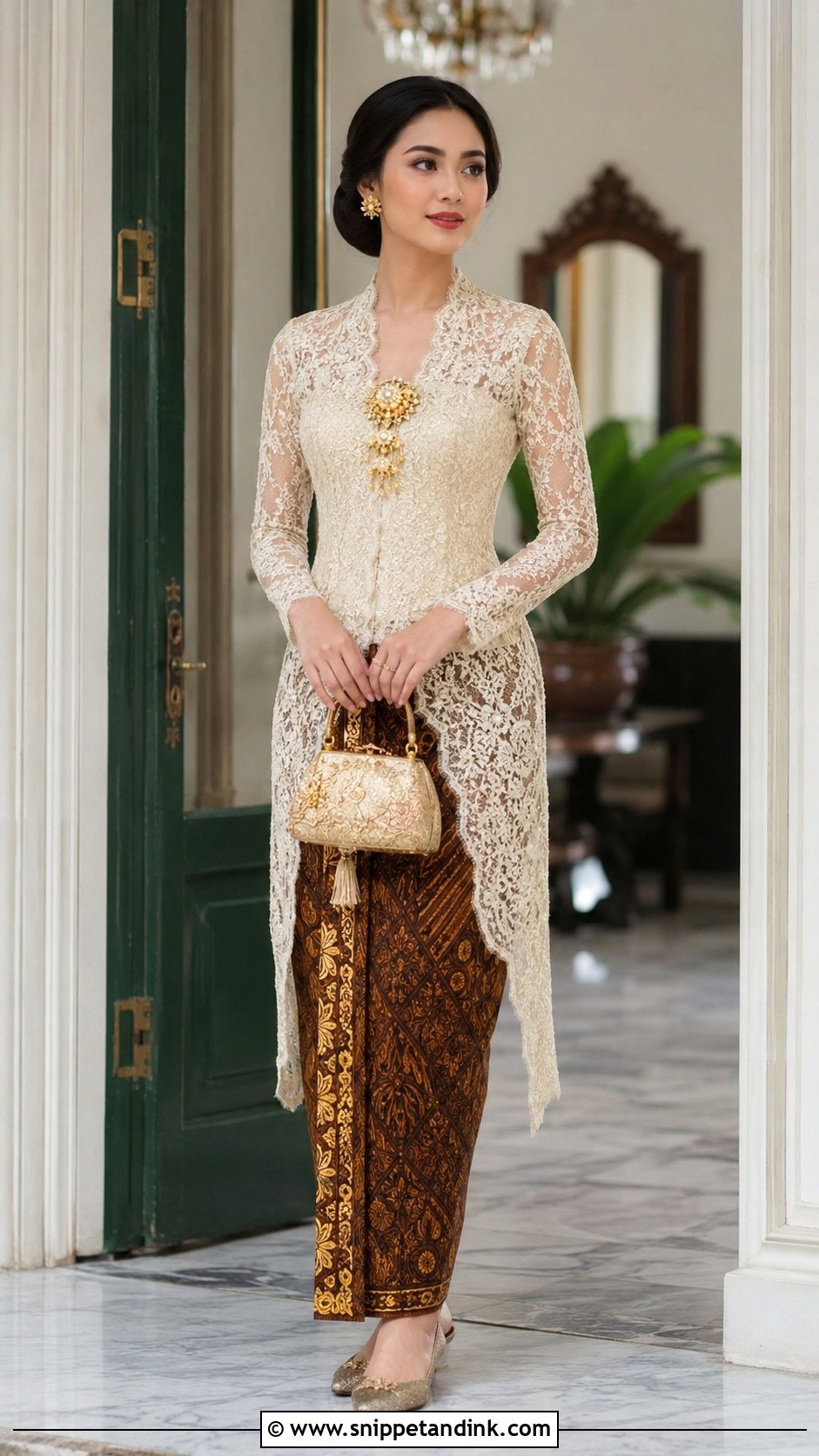
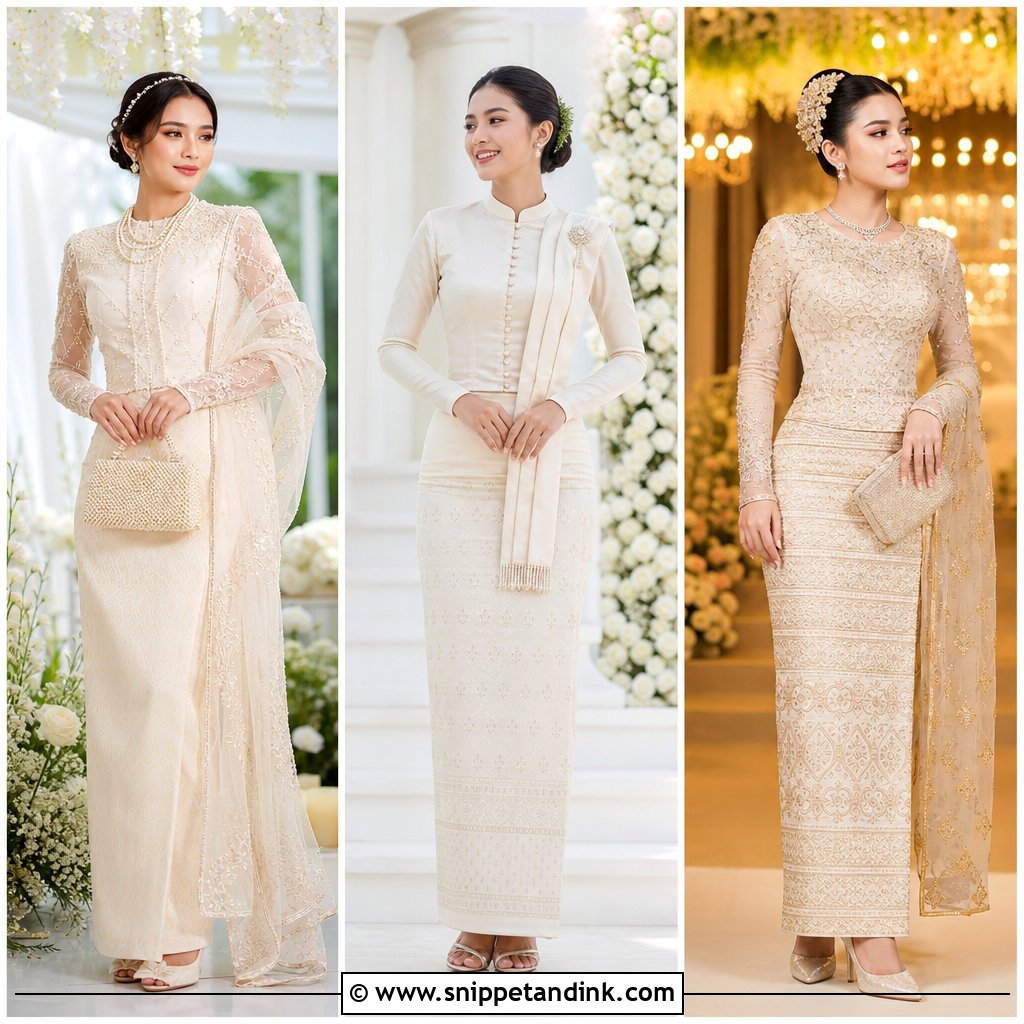
At its simplest, the kebaya is a front-opening blouse in lace, embroidered voile or richer fabric, worn over a fitted inner top and paired with a batik, songket or matching sarong wrapped at the waist. Brooches traditionally fasten the front. Low heels, gold earrings and a compact bag complete it, with a sleek bun or traditional hair arrangement. Brides choose denser embellishment and ceremonial pieces; guests choose simpler ones. A wrapped sarong restricts your stride, so I have it fitted while walking, not standing still. Traditions vary a lot between communities, so ask the hosts or a tailor about fabric, fastenings and formality.
11. Filipino Terno Wedding Outfit
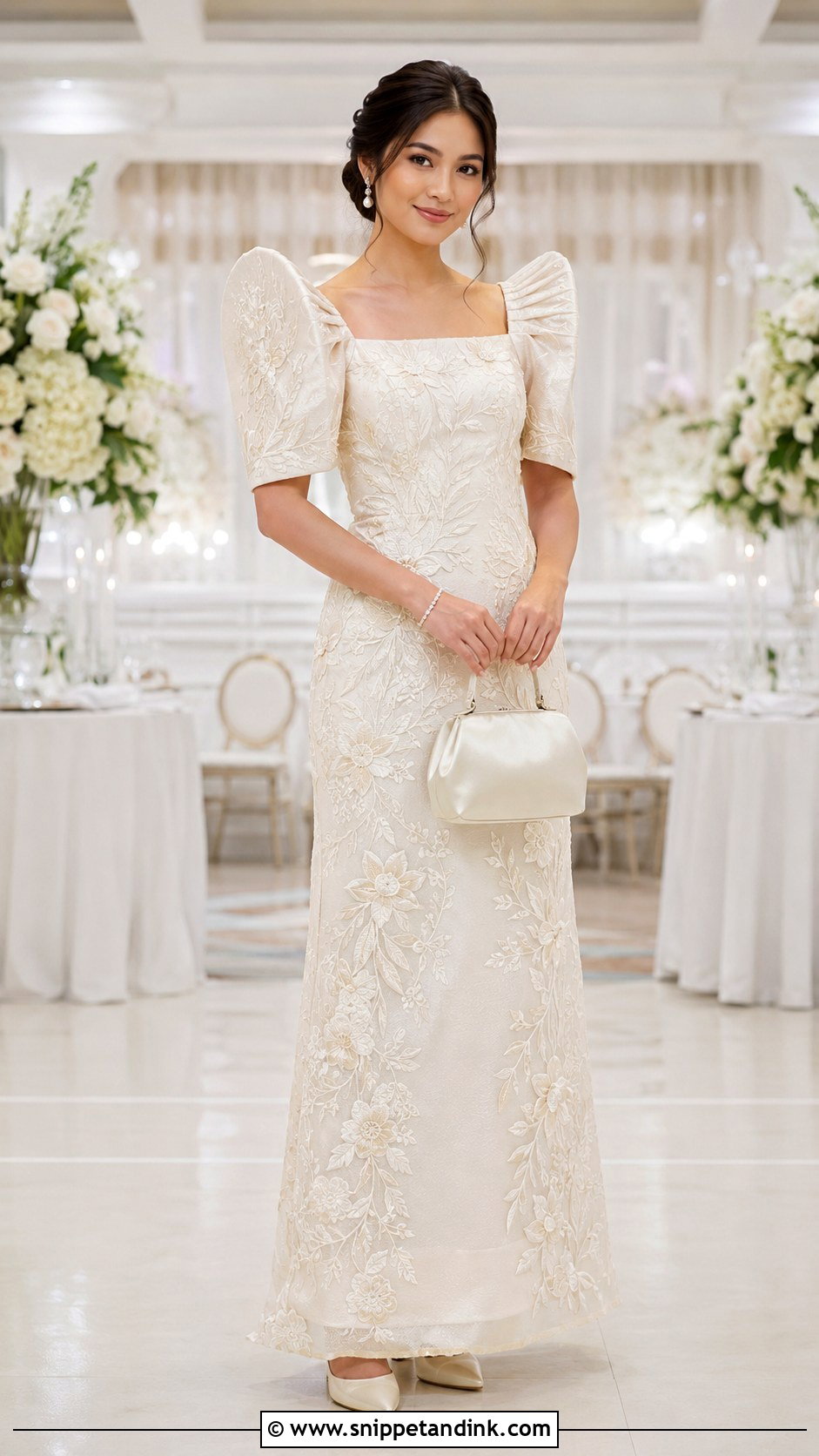
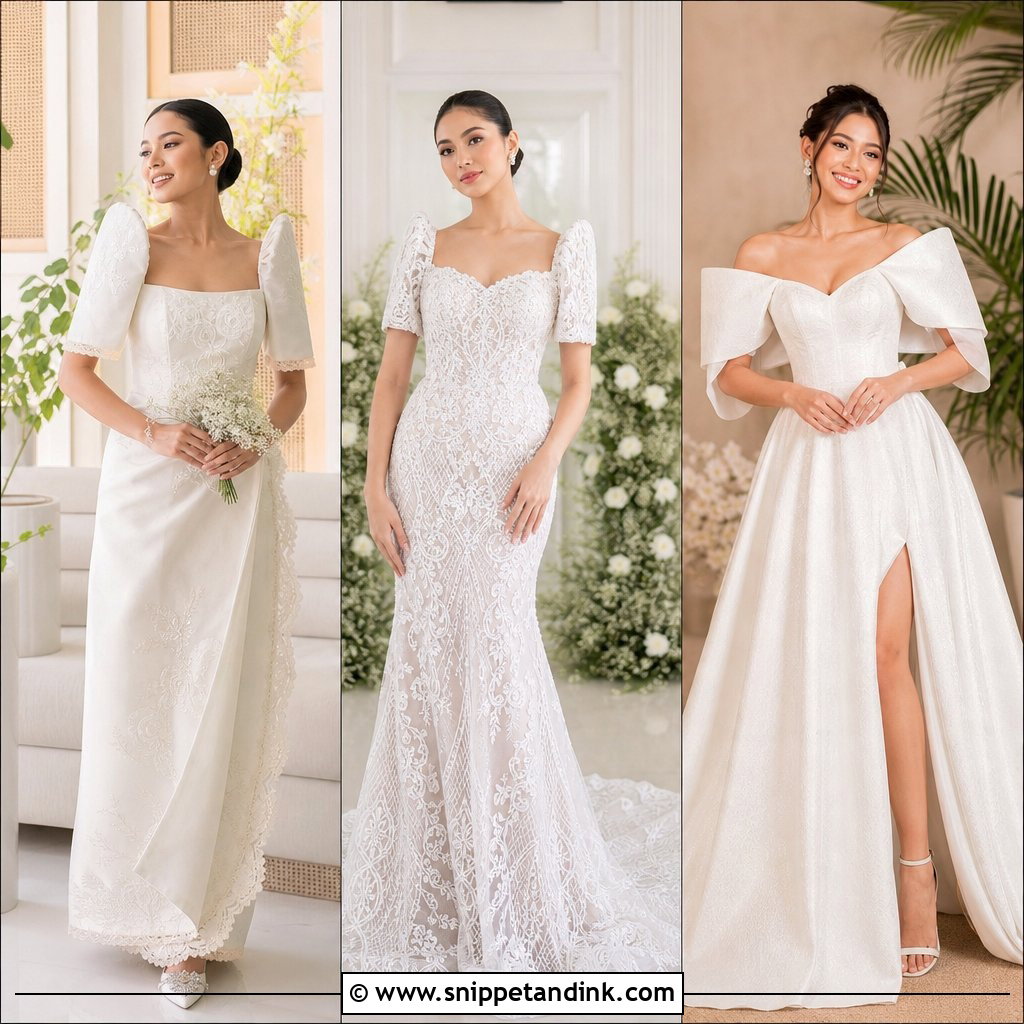
Terno sleeves are built up, not just starched, so ask any maker how they’ll structure them. Choose a full-length dress in piña or piña-blend, embroidered organza or silk with a fitted bodice and a softly shaped skirt. Pointed pumps, pearl earrings, a fine bracelet and a small evening bag are plenty. Smooth hair keeps it clean. Brides wear white, ivory or a ceremonial color; guests should avoid bridal shades unless told otherwise. Sleeve angle, waist placement and hem length have to be fitted together. Piña snags easily, so leave the textured clutch at home.
12. Thai Silk Chut Thai Wedding Outfit
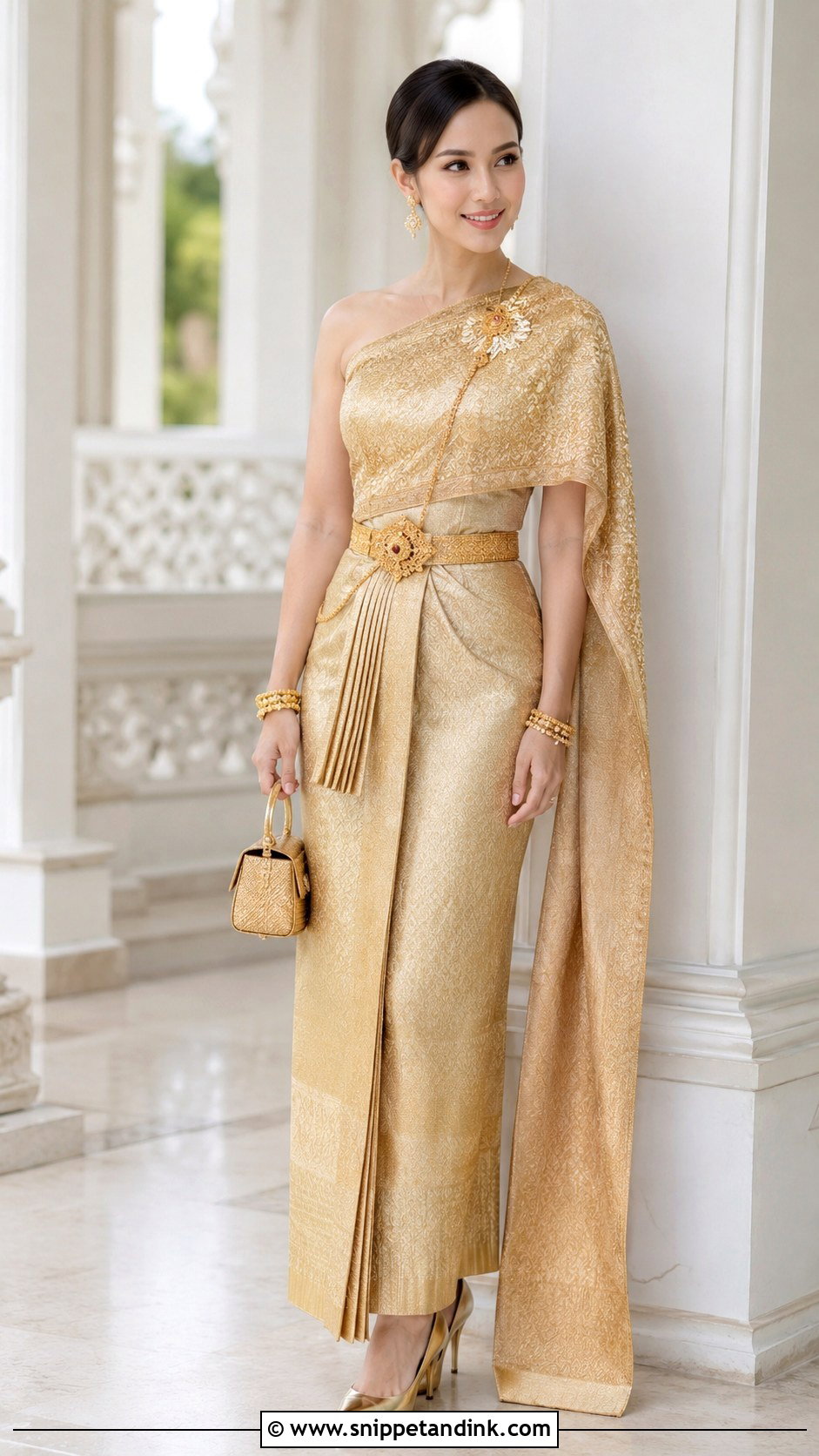
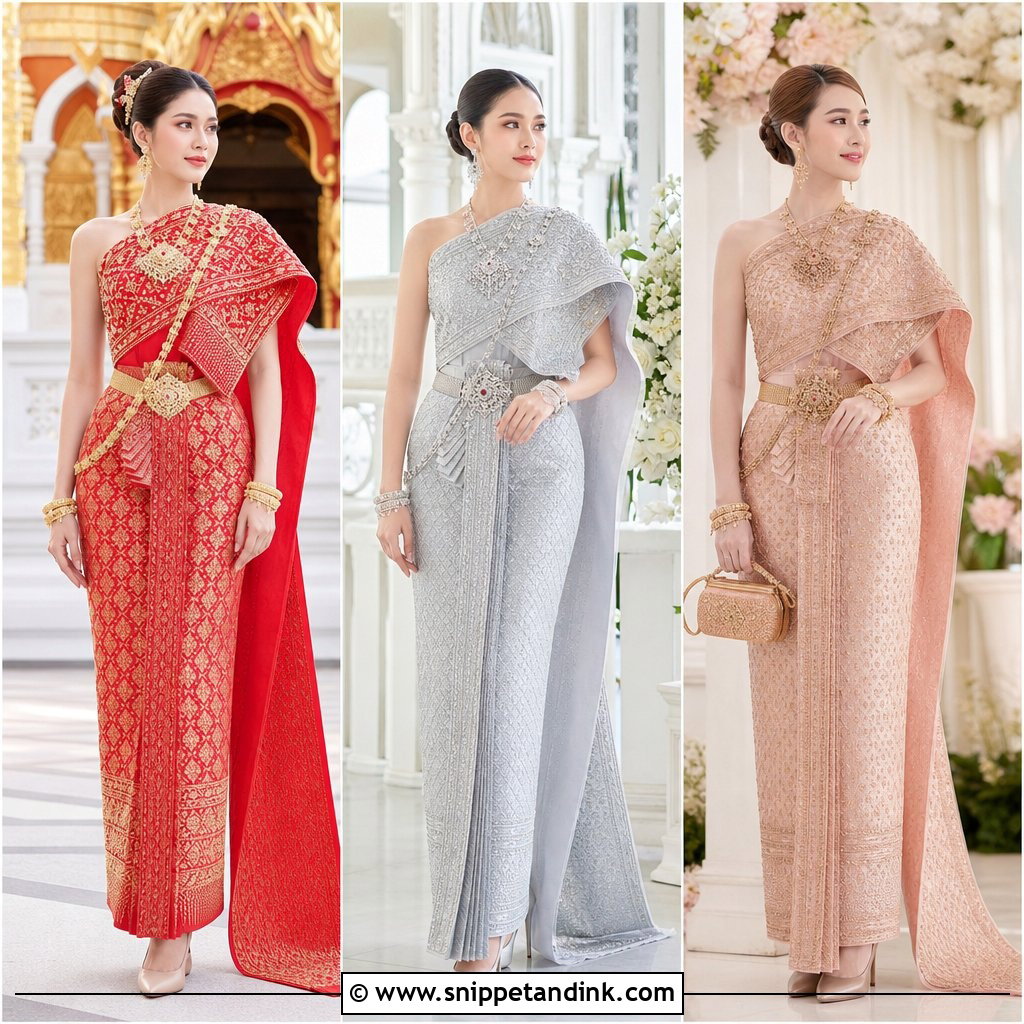
Chut Thai covers several recognised styles, from simpler daytime forms to the very formal ones, and the right one depends on the ceremony and family. A complete outfit may combine a fitted silk top, a wrapped or pleated skirt, a sabai shoulder cloth and a belt. Add pumps, gold earrings, bracelets and a small structured bag. Brides add richer embroidery and traditional jewelry; guests stay restrained. Thai silk holds pleats well but feels warm, so a lighter weave helps in humid weather. A dresser secures the wraps and sets the shoulder cloth. Don’t mix in unrelated accessories.
13. Cambodian Sampot Wedding Outfit
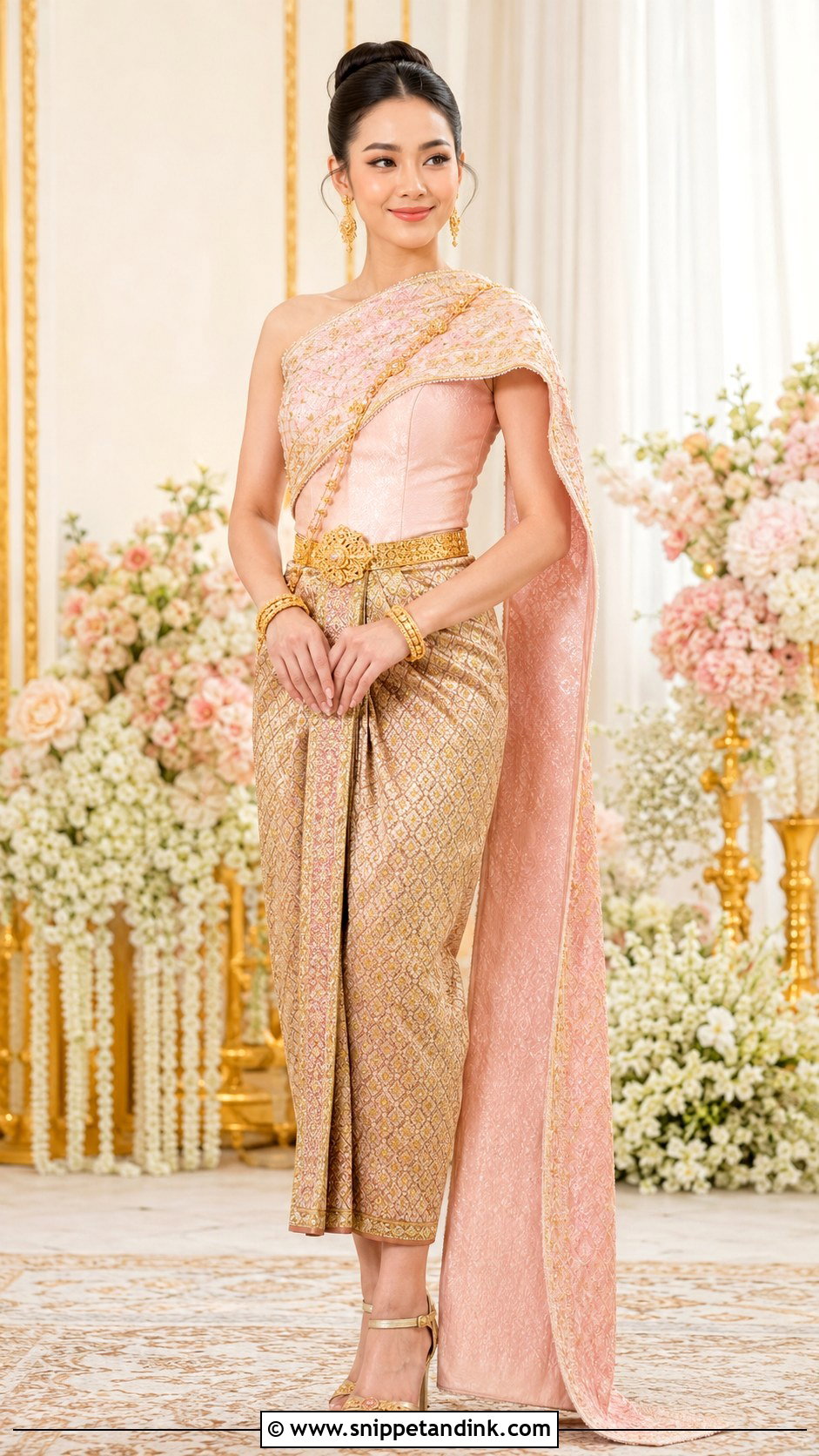
In a Cambodian wedding the bride may change outfits many times across the ceremonies, each in a different color, so think in sets rather than a single look. A fitted silk top, wrapped sampot and shoulder drape make the base, in lustrous fabric with woven gold or embroidery. The sampot is wrapped and tucked rather than sewn, and it needs a dresser who knows how to secure it for small steps. Gold heels, earrings, bracelets, a waist belt and a compact clutch complete it. Guests should choose a plainer version and check which shades suit.
14. Nigerian Aso Oke And Gele Wedding Outfit
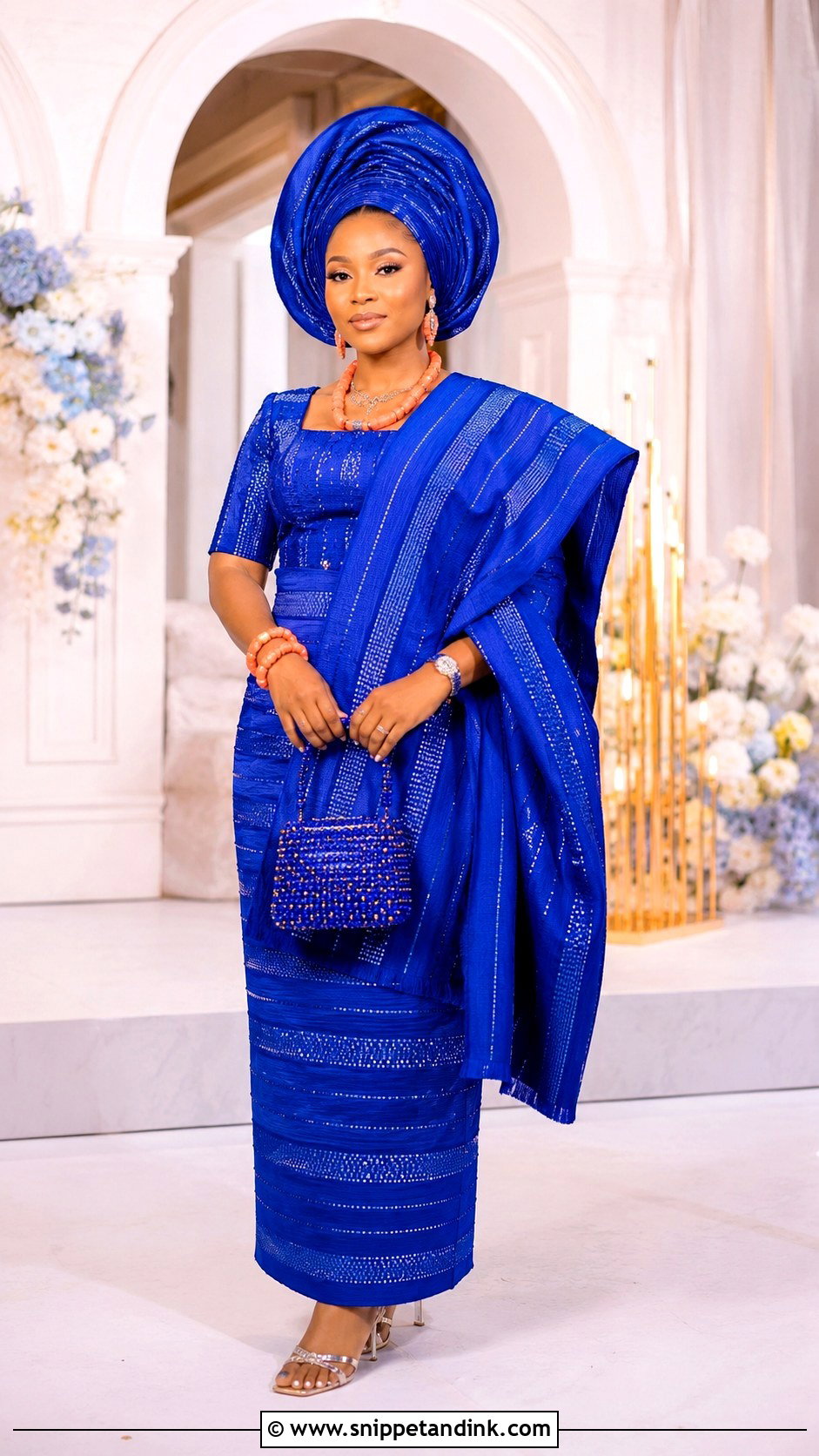
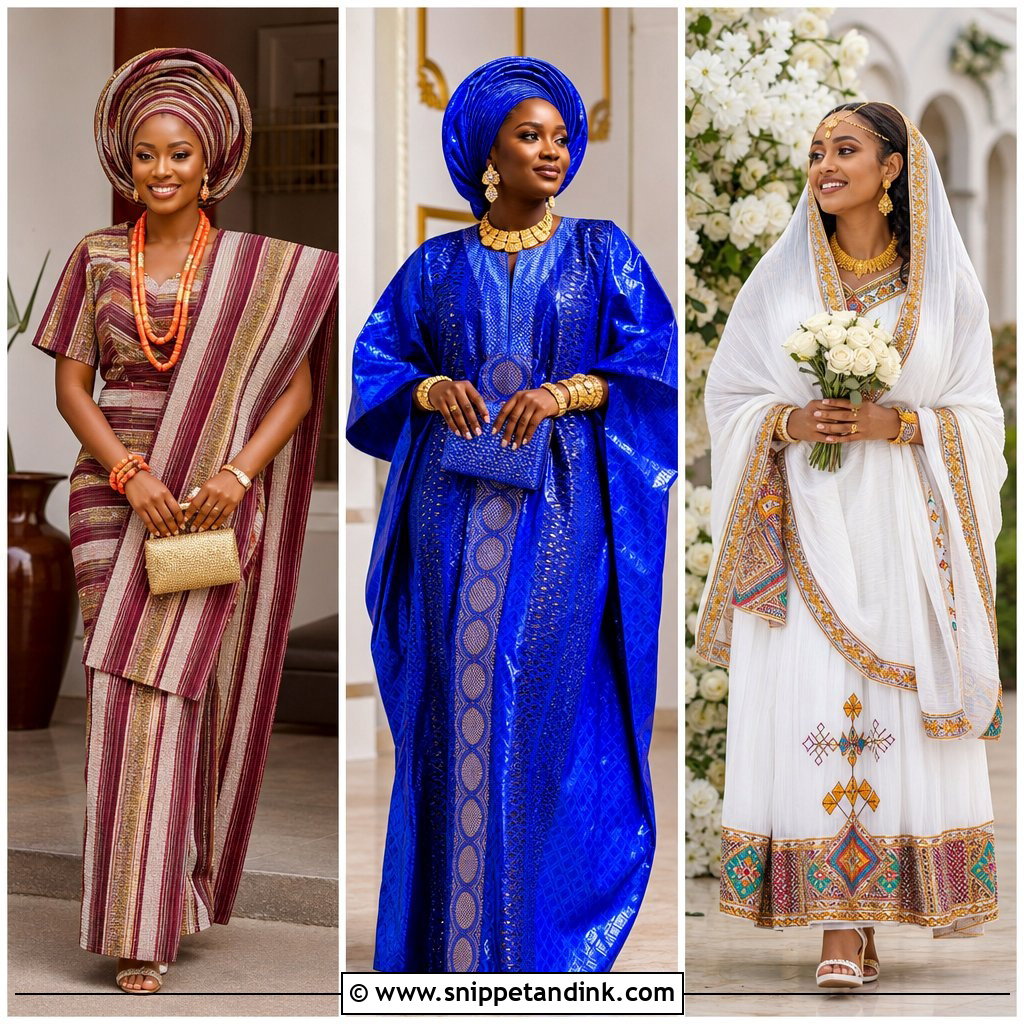
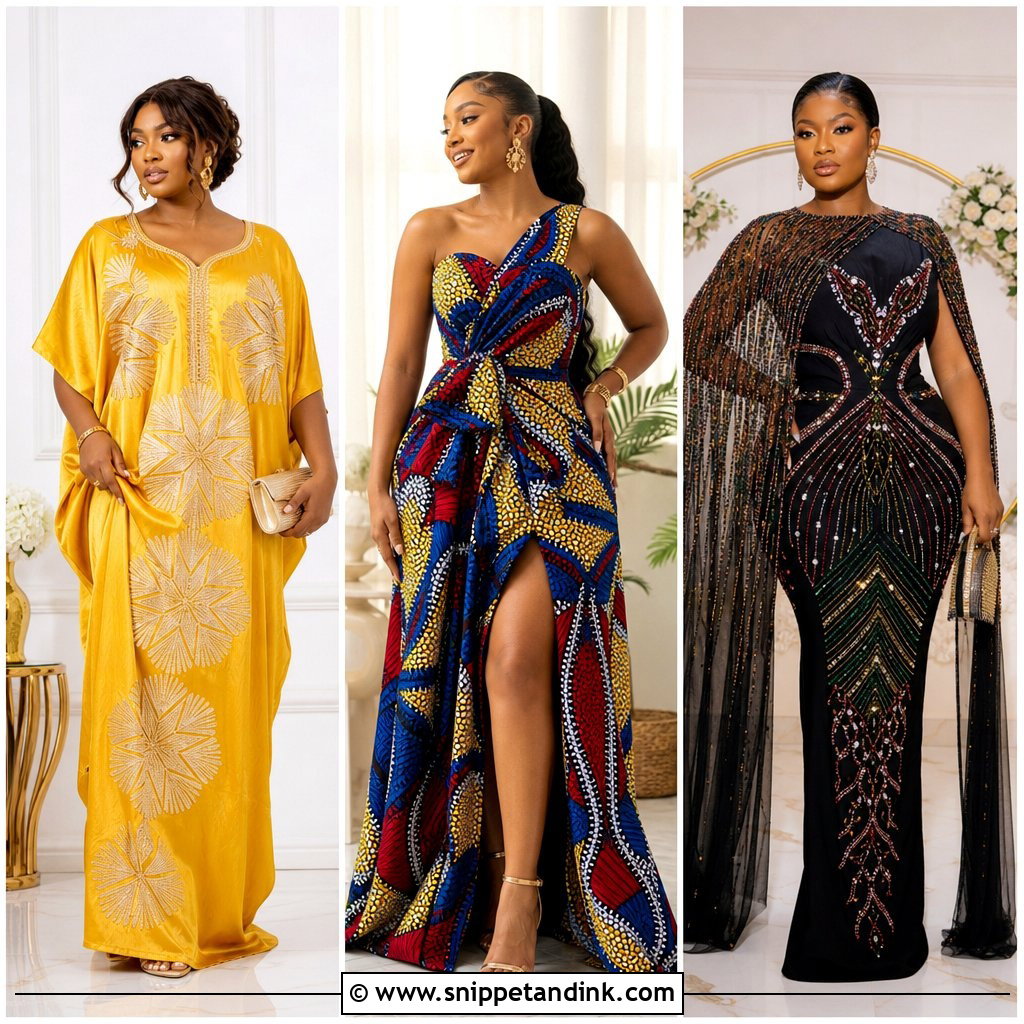
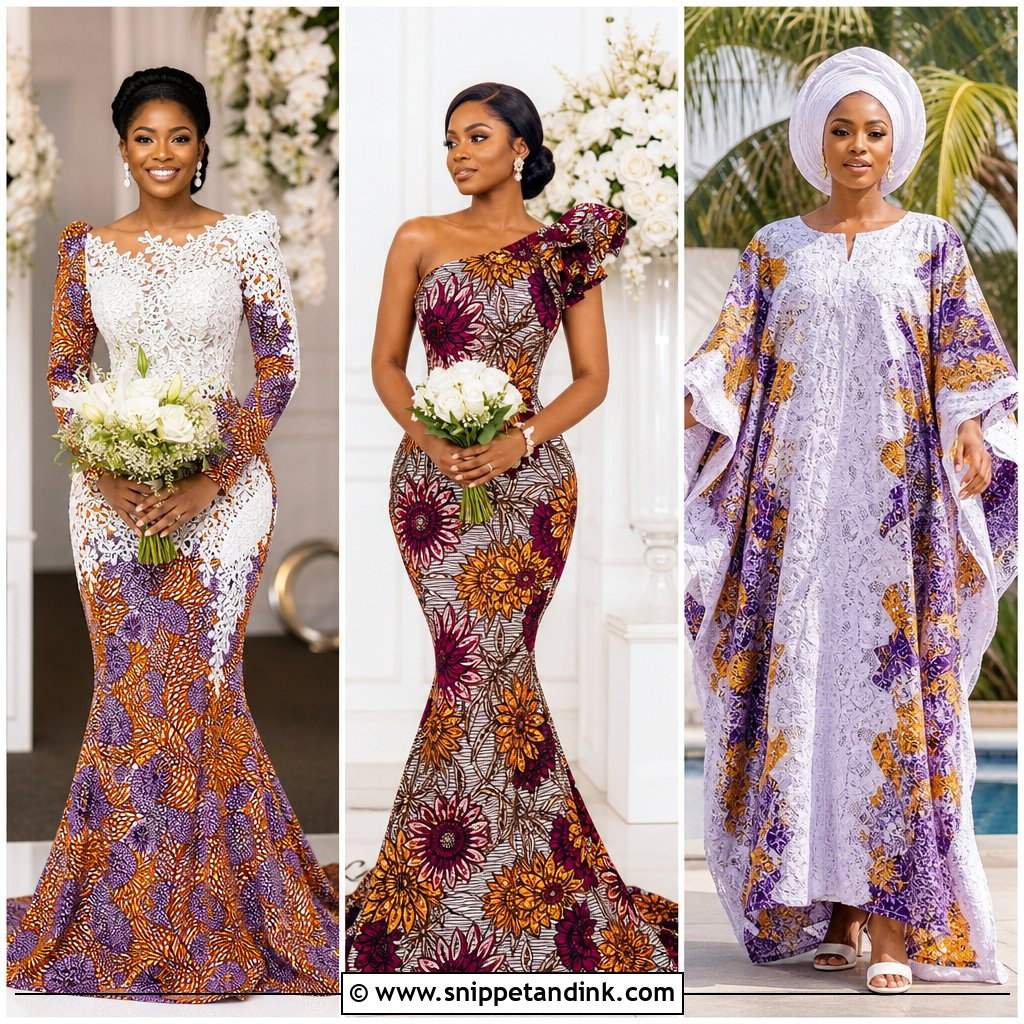
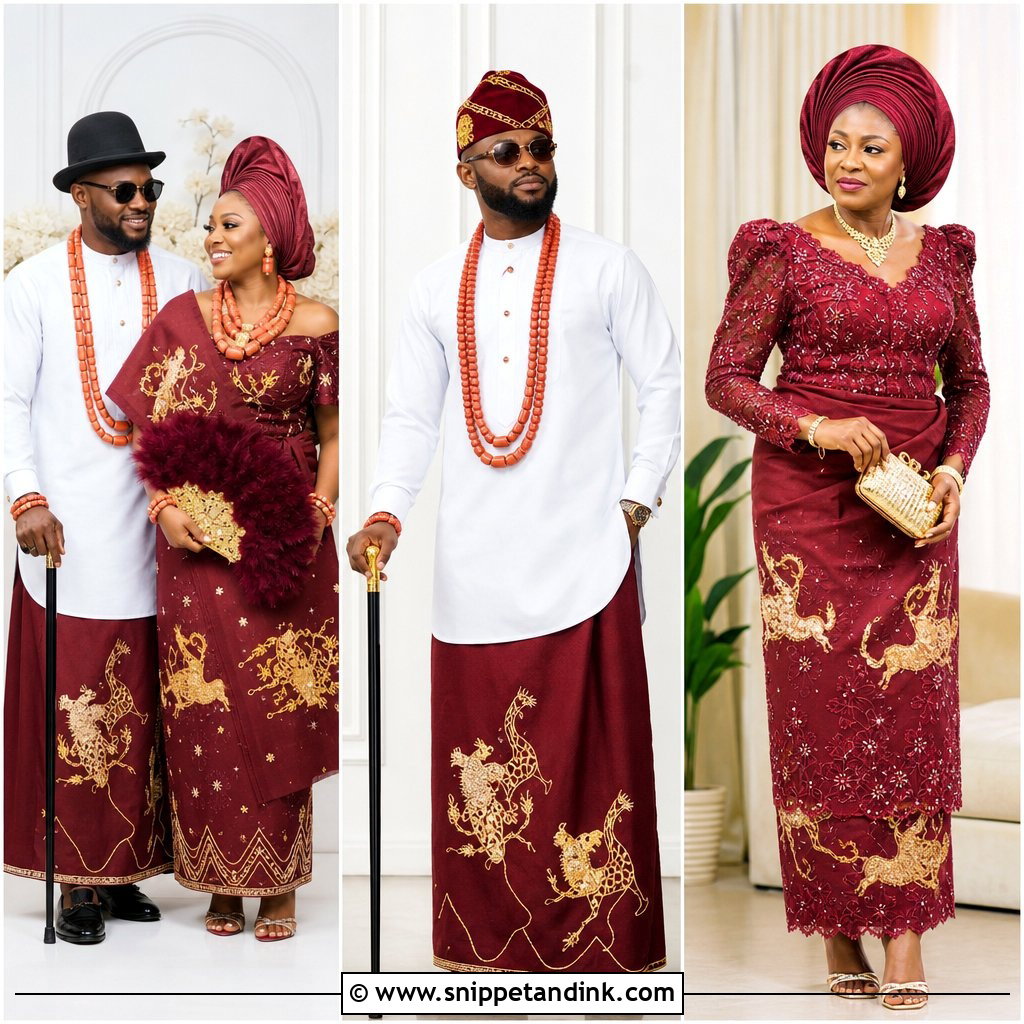
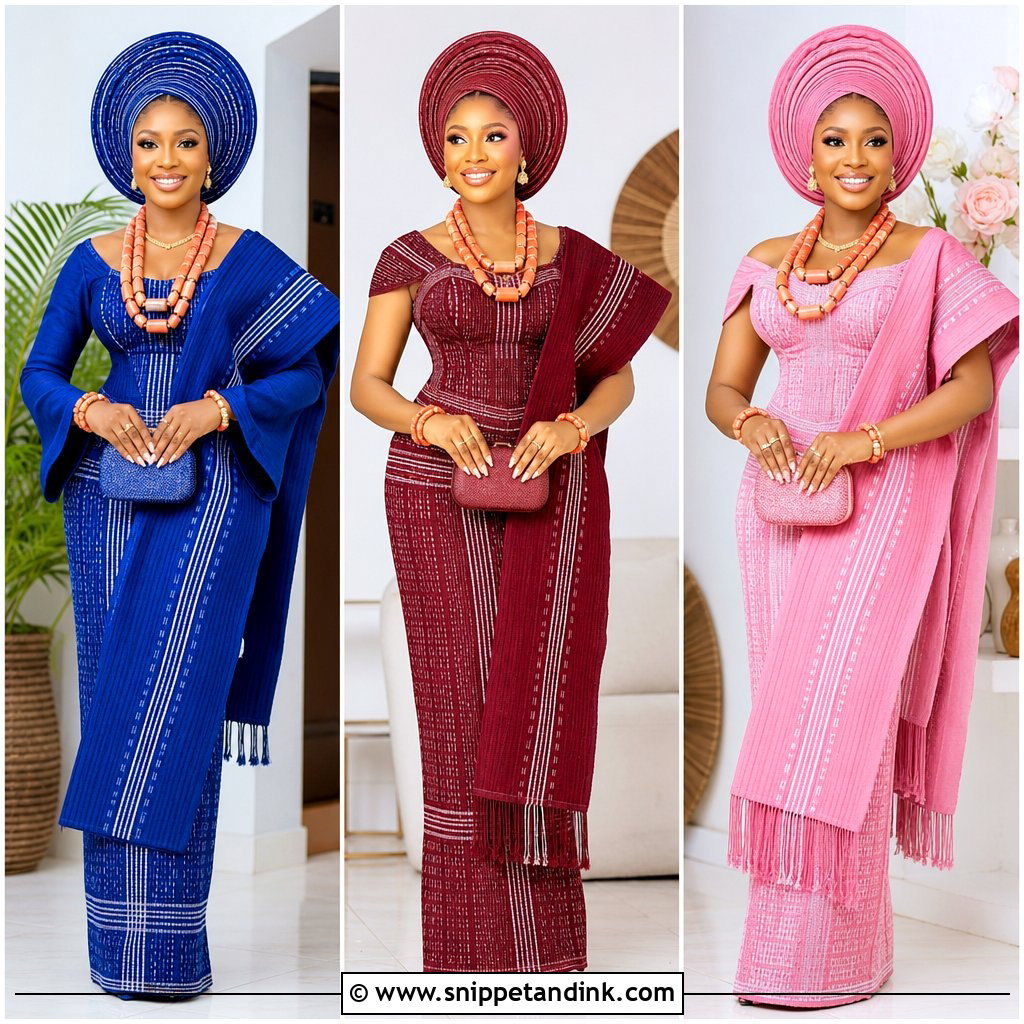
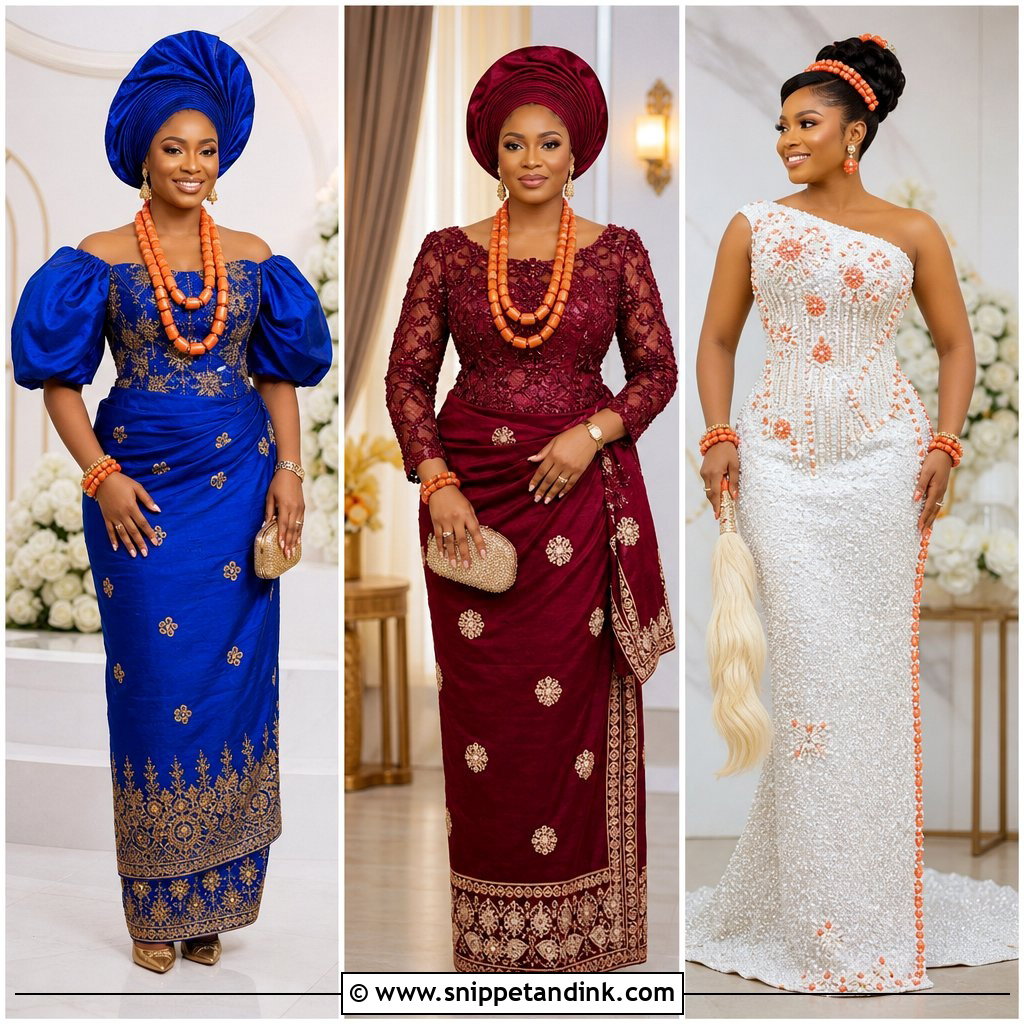
Aso oke is hand-loomed and firm, which gives a Nigerian wedding outfit its sculpted shape. A Yoruba-style women’s look is the iro wrapper, buba blouse, ipele over the shoulder and a gele. Coordinate the cloth across the outfit, then add heeled sandals, statement earrings, bangles and a small purse. As a guest, you’ll often be asked to wear the aso ebi, the fabric chosen by the family, so confirm before you shop. A gele should hold without squeezing; ask the tier to sit for a few minutes before you leave. Firm cloth needs ease through the arms and waist for dancing.
15. Ghanaian Kente Wedding Outfit
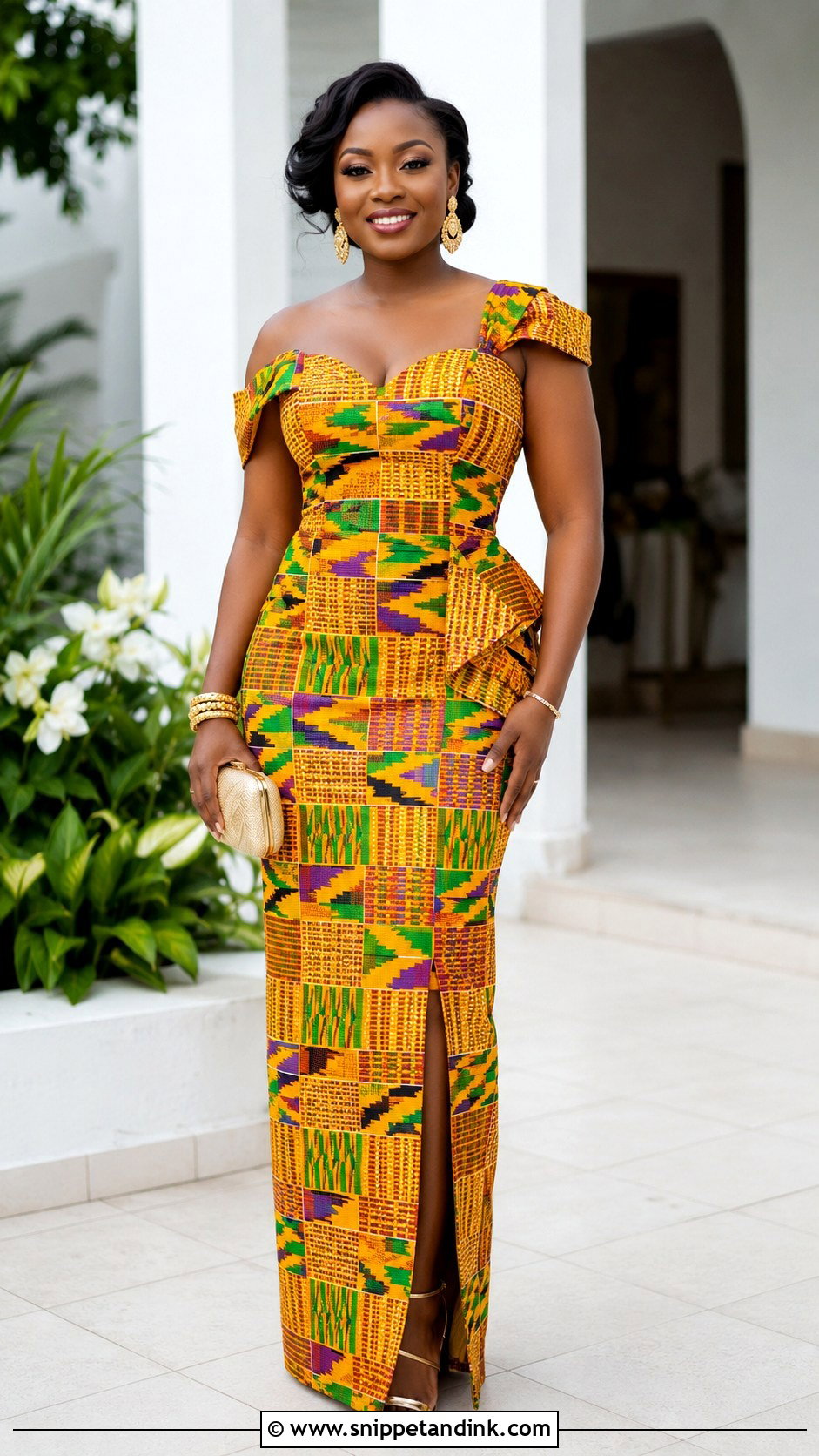
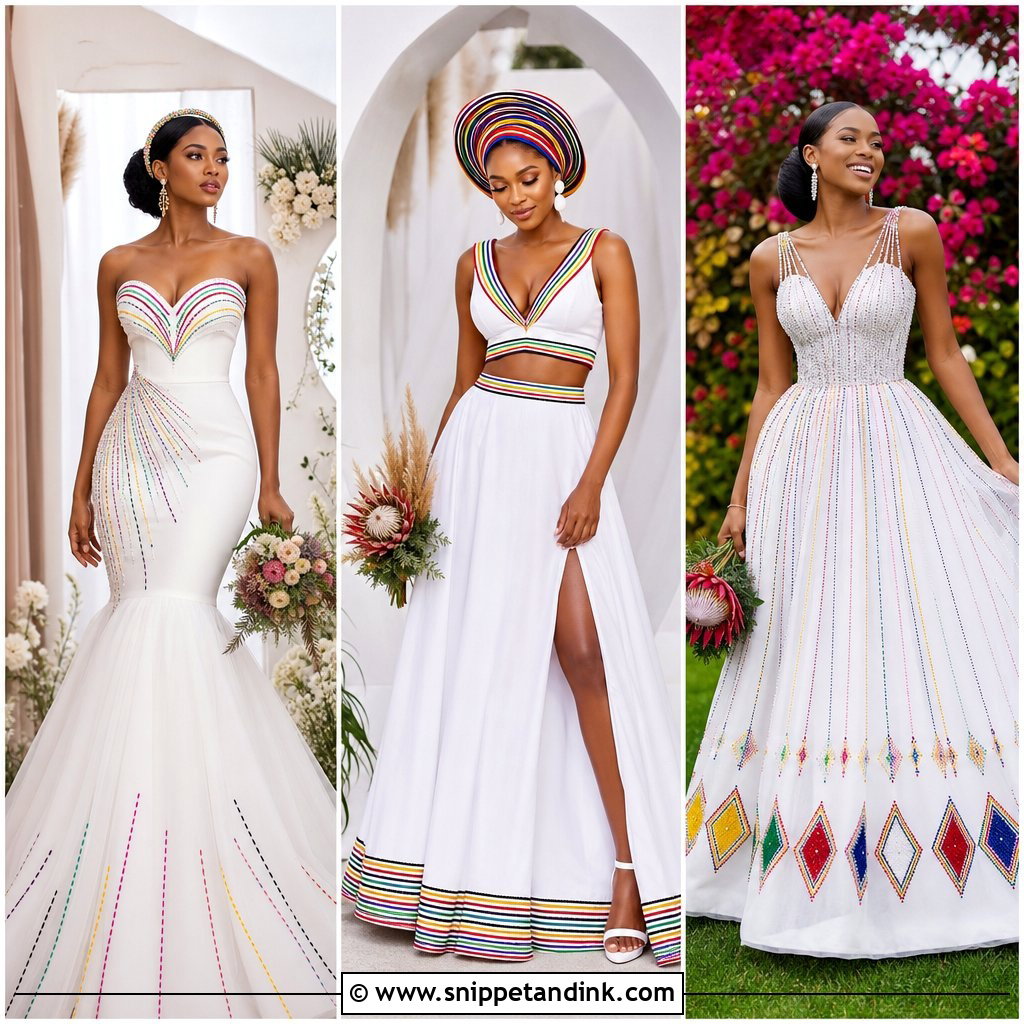
Kente is woven in narrow strips stitched together, so its pattern runs in bands. You can wear it wrapped, as a skirt and blouse, or as a fitted dress, but choose a cut that doesn’t slice through the most important bands of pattern. Heeled sandals, gold earrings, bracelets and a simple clutch complete it, with a clean updo. Brides may wear larger sections of handwoven cloth and bigger jewelry. Guests follow the couple’s colors and avoid copying the bridal arrangement. Handwoven kente is heavier than printed cloth. A good tailor lines it and leaves room to move.
16. Moroccan Takchita Wedding Outfit
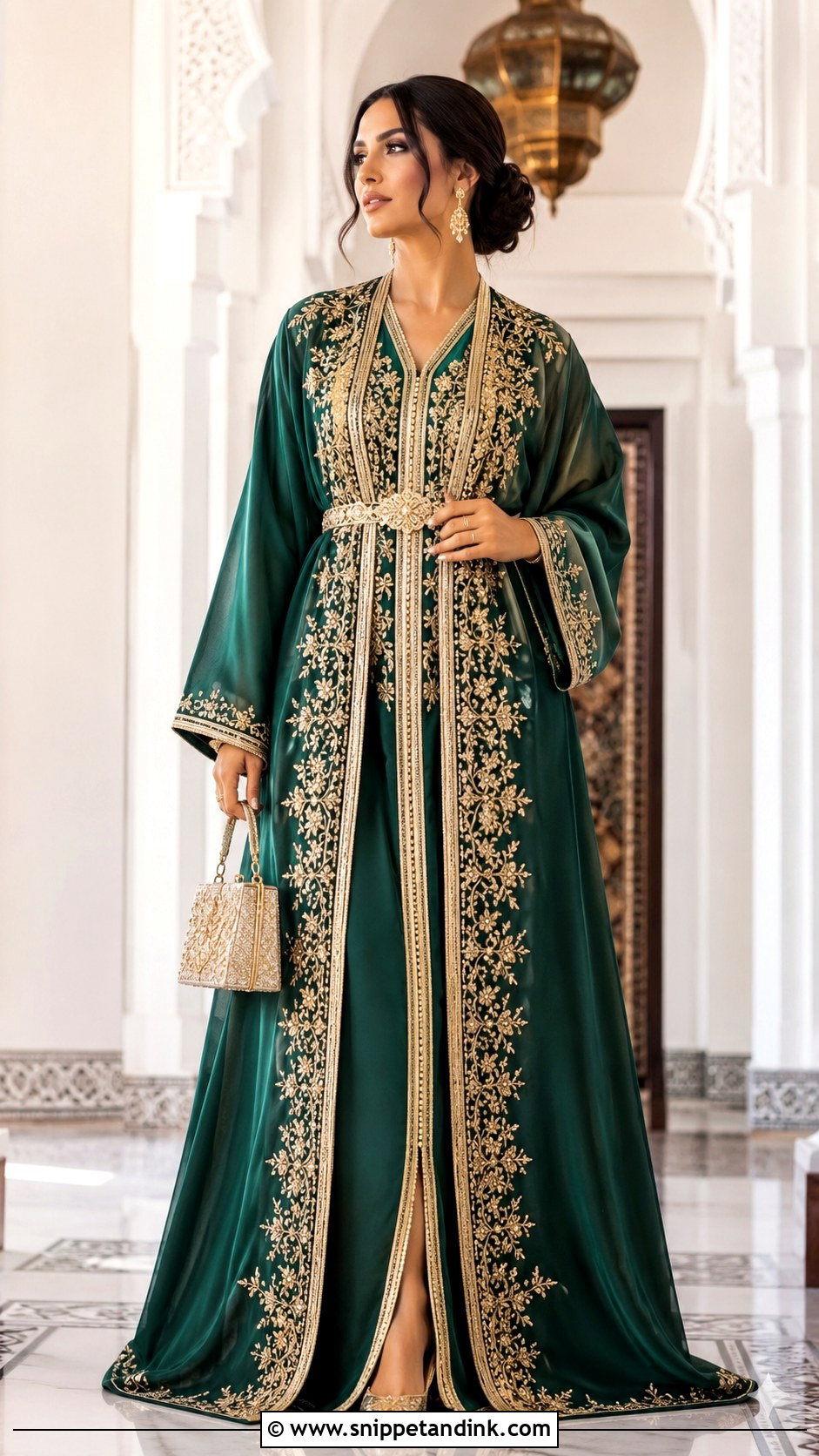
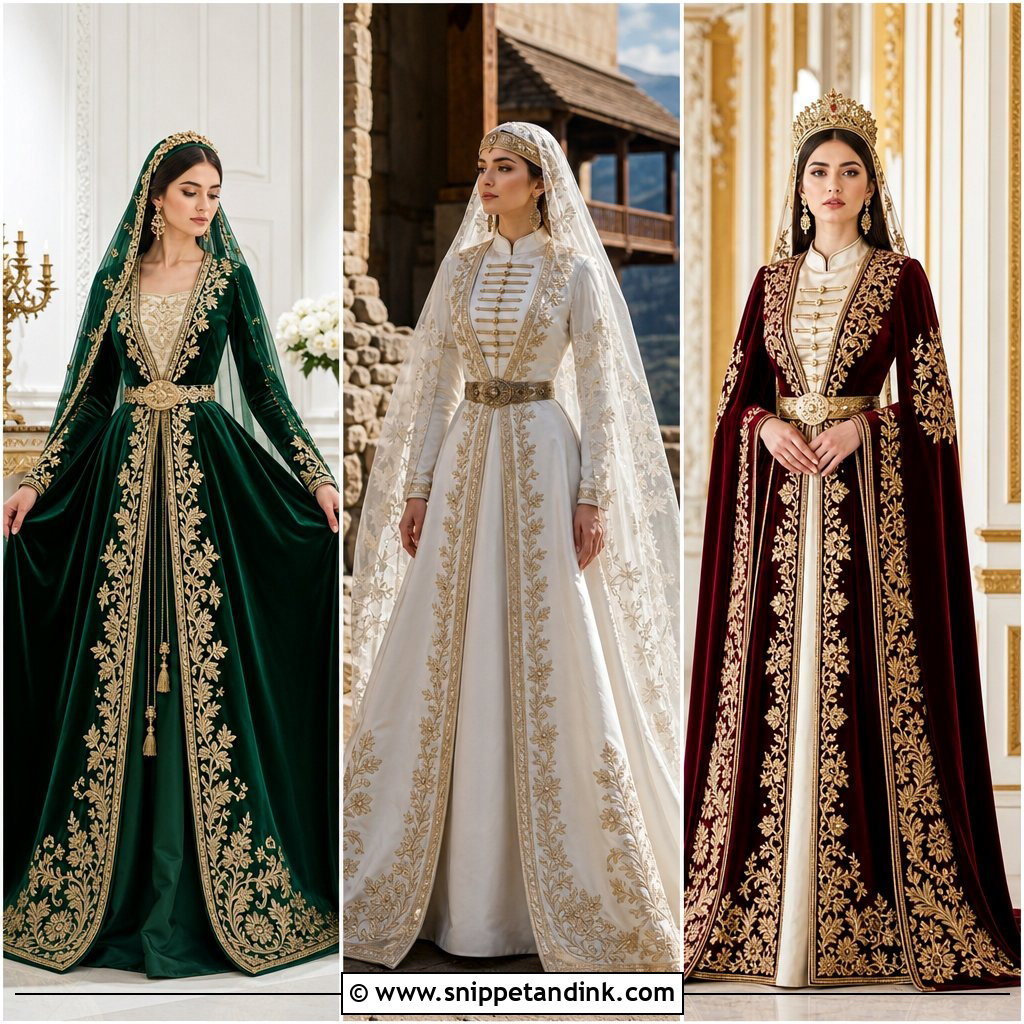
A takchita is two layers, a plain inner dress under a decorated outer one, cinched with a mdamma belt. I check the belt seated, not standing, because a belt that’s comfortable upright can stop you breathing once you sit for dinner. Choose silk, velvet, brocade or flowing satin with embroidery, beading or metallic trim. Pointed slippers or low heels, drop earrings and a small embellished bag complete it. Brides go heavier on ornament; guests should choose a lighter takchita that won’t compete. If the neckline is already worked, skip the necklace.
17. Ethiopian Habesha Kemis Wedding Outfit
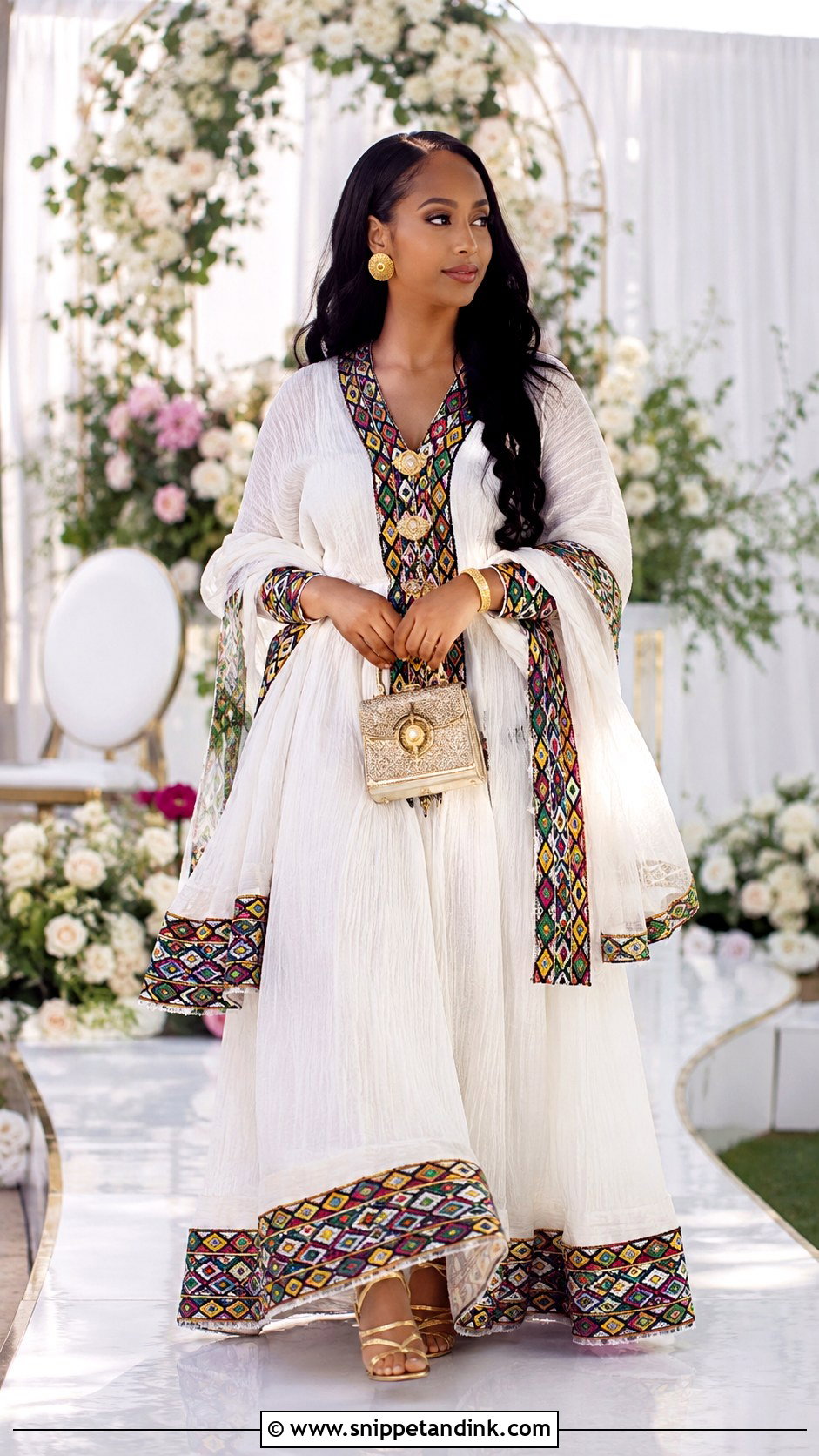
The Ethiopian habesha kemis wedding look is handwoven cotton with tibeb borders at the neckline, cuffs and hem. It’s light, which suits a long day. Drape a netela around the shoulders and add metallic sandals, gold earrings, bracelets and a structured bag. Brides wear wider, more elaborate borders and traditional jewelry; guests can pick narrower patterns. Thin white cotton can be see-through in sunlight, so line it where needed. I press the netela the night before and hang it, rather than folding it into a bag.
18. Somali Dirac Wedding Outfit
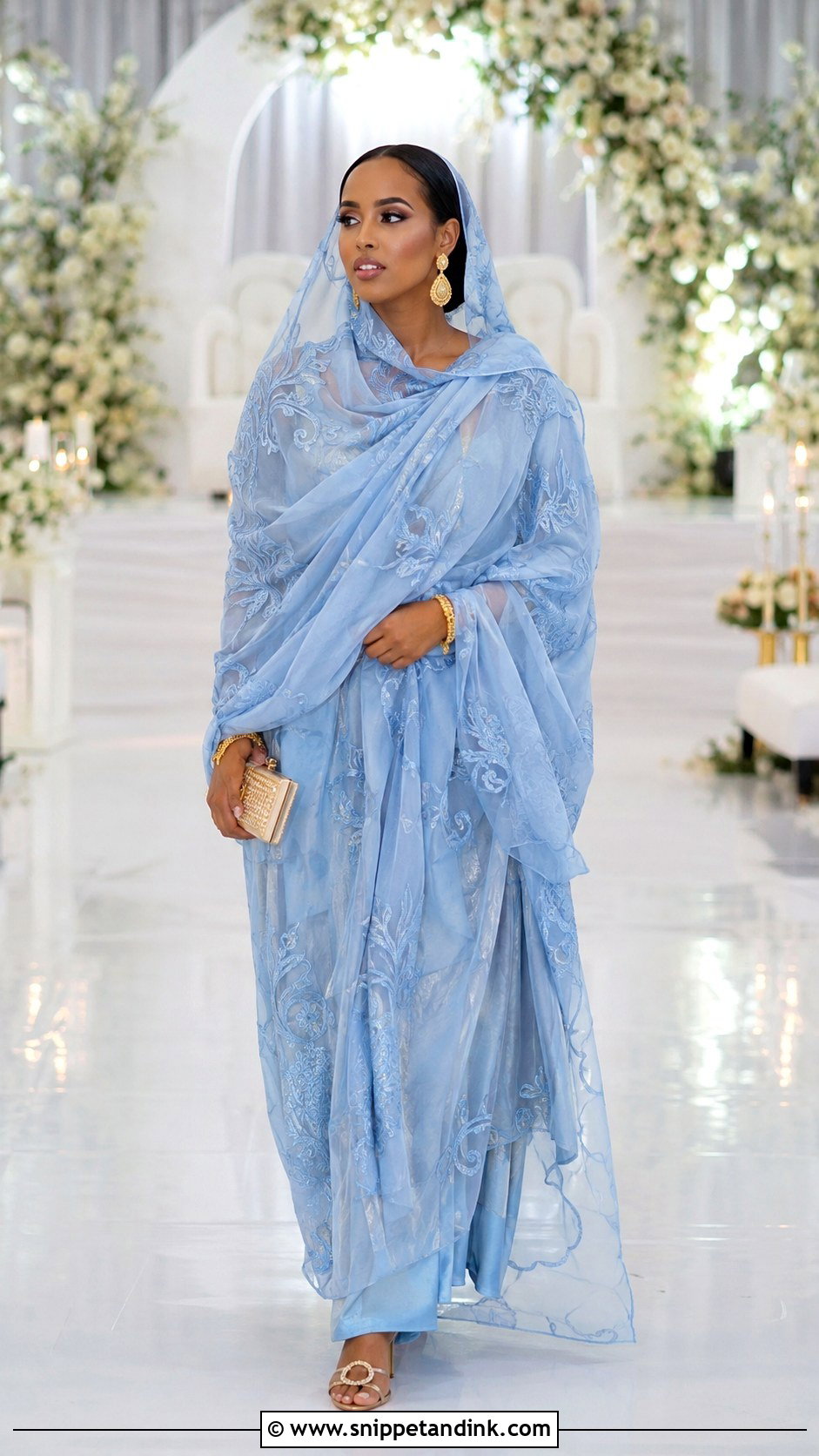
The dirac is a long, sheer dress worn over a gorgorad underskirt, with a garbasaar shawl draped over the head or shoulders. Sequins, embroidery and metallic motifs are common, balanced by a smooth underlayer. Add heeled sandals, gold jewelry, a small clutch and a head covering or hairstyle according to your practice. Brides and close relatives wear the richest fabrics; guests choose a simpler version in approved colors. Check every layer for opacity under bright light before you leave the house. I pin the garbasaar loosely, because you’ll be greeting and hugging a lot of people.
19. Ugandan Gomesi Wedding Outfit
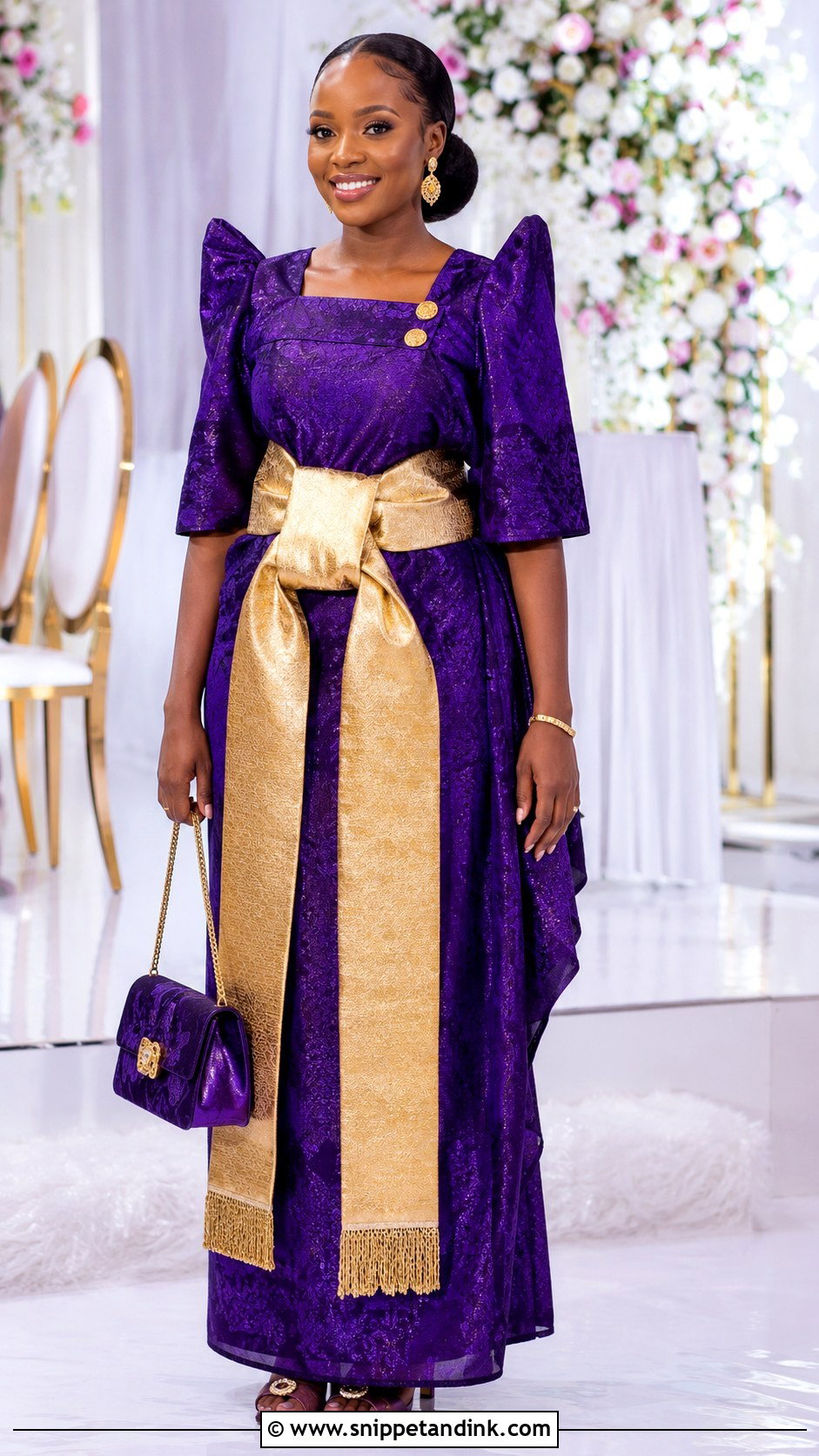
The gomesi, or busuuti, is a floor-length dress with a square neck, pointed puffed shoulders and a wide sash tied below the waist. It’s worn by women across Buganda for formal occasions, including the kwanjula introduction ceremony. Choose a fabric that holds the shoulders, from silk to satin to patterned cloth. Wrap the sash firmly, then add low heels, a matching bag, earrings and a bracelet. The shoulders and skirt already have a lot of volume, so keep jewelry modest. Women in prominent family roles may wear brighter colors. Guests follow the palette given. The neckline, skirt length and sash placement must be measured together.
20. Mexican Huipil And Full Skirt Wedding Outfit
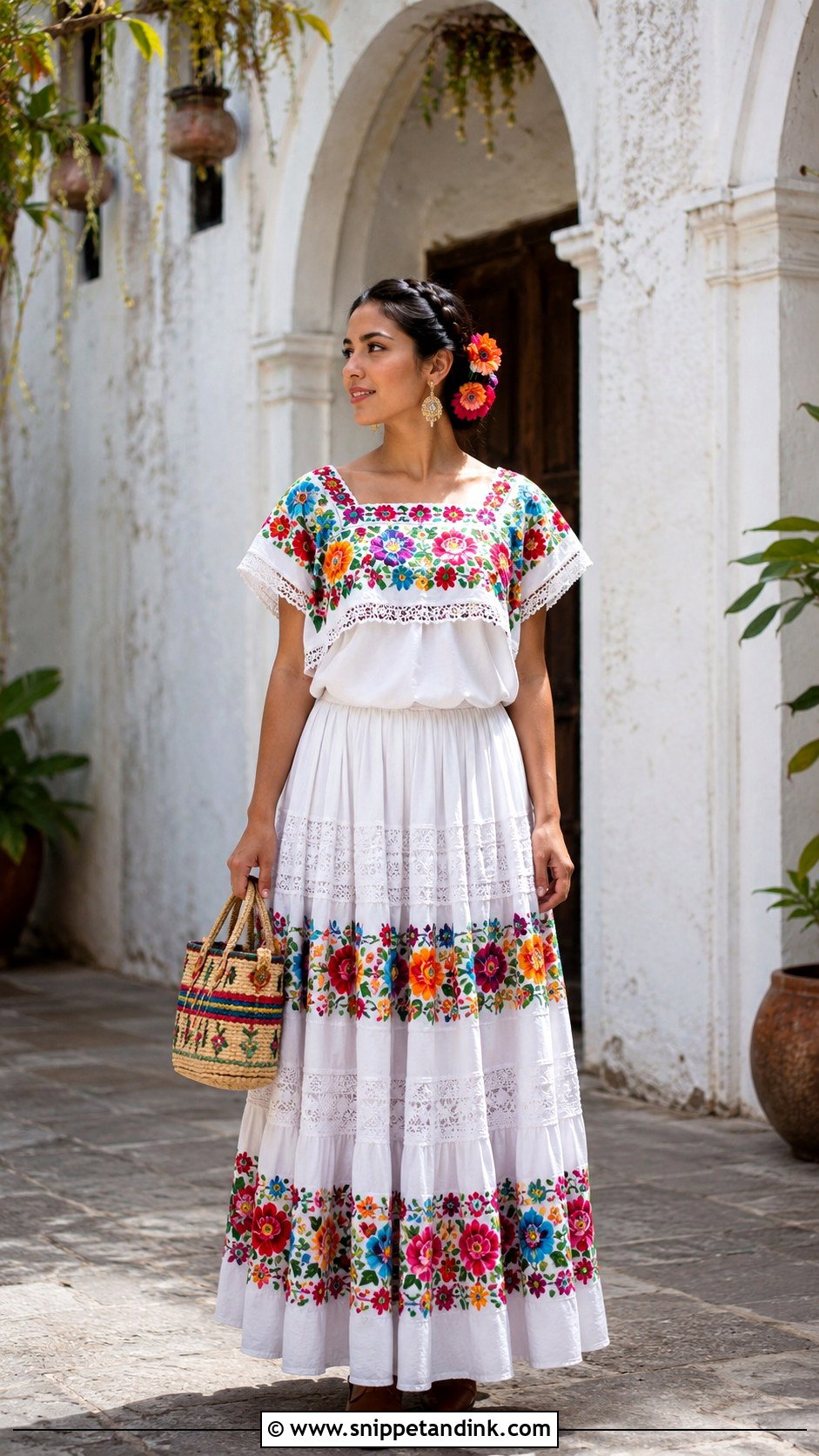
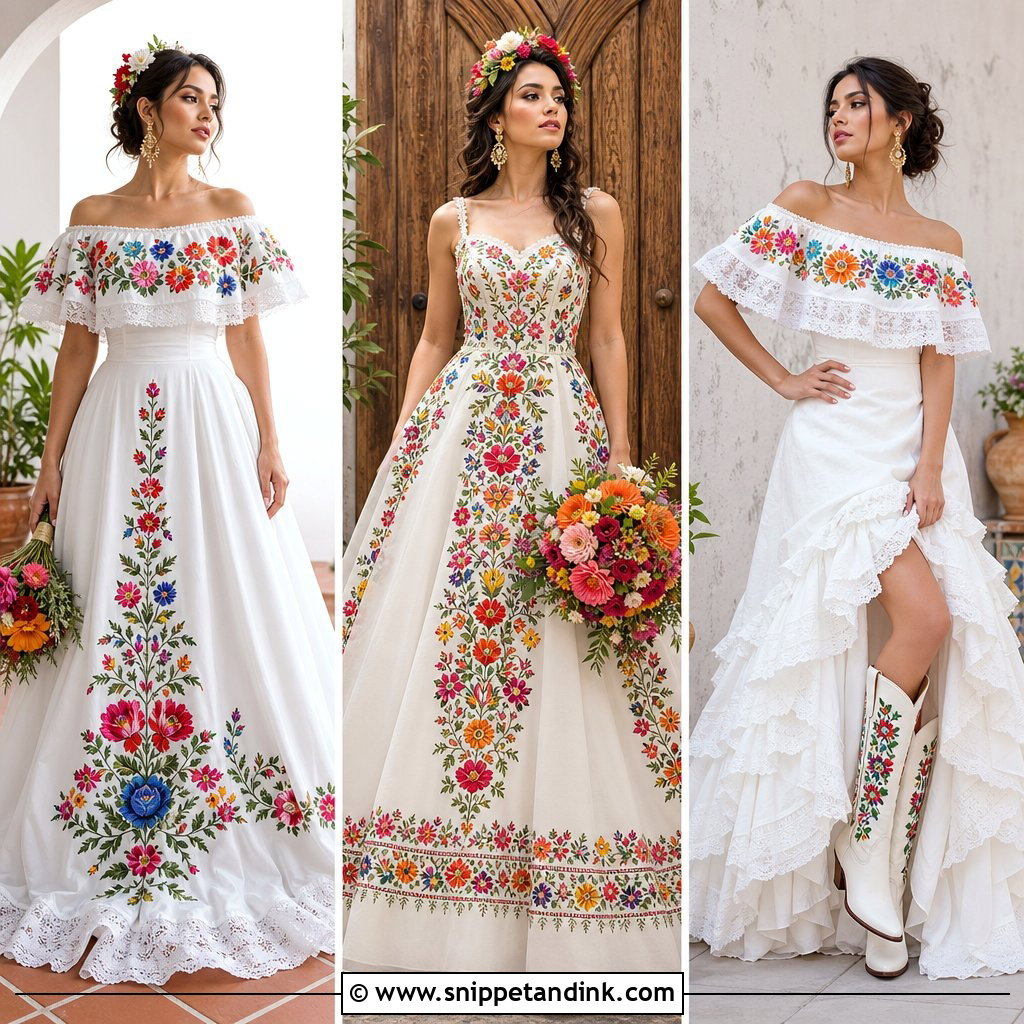
Huipil construction and motifs change from community to community, and some designs carry ceremonial meaning. Buy garments tied to your heritage, or directly from artisans who can tell you what you’re wearing. Pair an embroidered huipil with an ankle- or floor-length skirt, leather sandals or low heels, handmade earrings and a small woven bag. Braids, ribbons and fresh flowers suit some regions, not all. Brides can wear ceremonial textiles with family guidance. Guests should never treat community-specific designs as decoration. I’d let the huipil be the only embroidered piece, so it isn’t competing with a patterned skirt.
Wearing a Culture That Isn’t Yours, Because You Were Invited To
Couples often ask guests to dress in their tradition, and it’s a generous invitation. I’d handle it this way. Ask the couple, or a relative they nominate, where to buy or rent, then let the shop or tailor dress you. Pick a guest-level version, never anything bridal or ceremonial. Learn the garment’s name and what it’s for, so you can talk about it comfortably. If you’re unsure whether a motif or accessory carries meaning, leave it out.
Dressing yourself in an unfamiliar garment is the usual trouble spot. Sarees slip, gele collapses and wrapped skirts come undone, so book a dresser or arrive early and ask a family member for help. Most are glad to be asked.
The Small Kit That Saves a Draped Outfit
Draped and wrapped garments shift over a long day. I pack the same few things for every traditional dressing:
- Safety pins in two sizes, plus straight pins with pearl heads for veils and shawls.
- Double-sided fashion tape for necklines and pallus.
- A small sewing kit with thread in the garment’s main color.
- Blotting papers and a stain pen, kept away from silk until tested.
- Flat shoes for the dancing, if your ceremonial pair is high or stiff.
Give the kit to someone who’ll stay near you all day. You won’t be the one carrying a bag.
Ask the Couple, Then Call the Tailor
A traditional outfit should reflect heritage, craftsmanship, family custom and your role in the day. Start with cultural guidance before you choose colors, fabric or accessories, and be clear about your role: bride, relative, attendant or guest. Then invest in tailoring, secure draping, comfortable shoes and balanced jewelry. Don’t borrow ceremonial details whose meaning you don’t know. When the couple asks guests to wear cultural dress, buy or rent from skilled makers, artisans or specialist rental shops, and you’ll arrive dressed with respect.
You'll Like These Ideas:


Leave a Reply