
Traditional Swati clothing starts with emahiya, the printed cloth that is wrapped, knotted and draped rather than cut, and it usually comes with beadwork and ceremonial pieces the family will have opinions about. When I style a Swati bride, the first conversation is never about silhouette. It’s about which parts of the outfit carry meaning for her family and which parts are free for her to play with. Once that’s settled, the fabric can go almost anywhere: into a mermaid gown, a peplum set, a jumpsuit or a lace bodice with a printed skirt. Red, black and white is the classic palette, but yellow, blue and green prints work just as well, and the groom can pick up the same cloth in a smaller dose. Below are twenty complete looks, each with the styling choices I’d actually make.
Turning Emahiya Into a Fitted Gown Without Losing the Print
Emahiya was made to be wrapped, so cutting it into a structured dress changes how much you need and how you handle it. When I brief a dressmaker on a printed Swati gown, these are the points I settle before the first cut.
- Buy more cloth than the pattern says. Matching the print across seams and centring motifs wastes fabric, so I add roughly one extra length for a fitted gown and more for a ball skirt.
- Wash a small offcut first. Cotton prints can shrink, and strong reds sometimes release dye. If the water turns pink, keep that fabric away from white panels or have the whole length pre-washed before cutting.
- Decide where the main motif sits on the body while the cloth is still flat: centre front of the skirt, centre back, or running down one side.
- Line it. Cotton print has no drape of its own, and a lining helps a fitted skirt hang smoothly instead of clinging.
Give a custom piece time. I’d start the conversation five to six months ahead, with at least two fittings and a final one about two weeks out, wearing the shoes and the actual beadwork. Necklaces and collars change how a neckline sits, so fitting without them is fitting a different dress.
1. Traditional Red Swati Wedding Dress
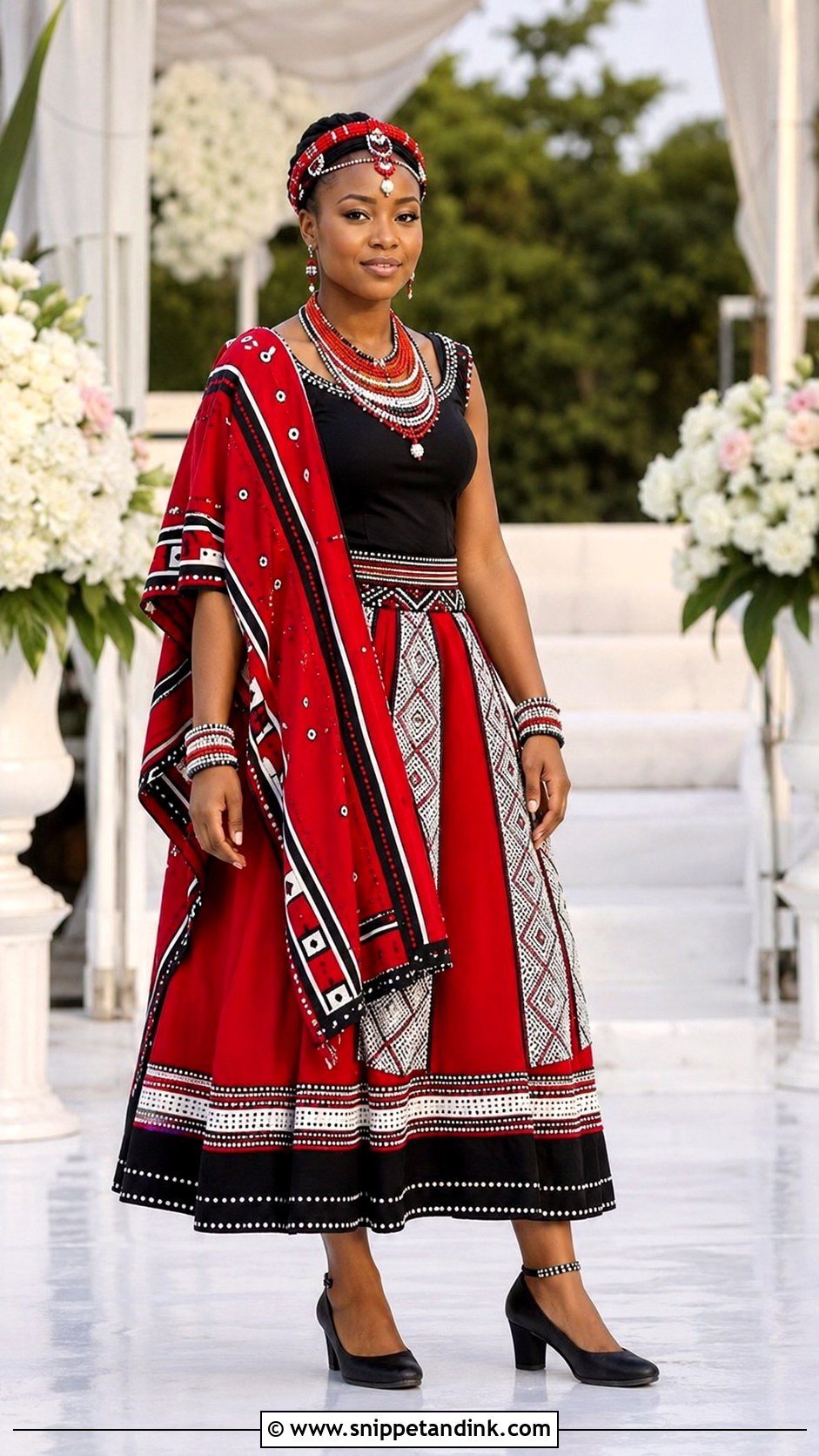
This is the look most families will recognise straight away: a red, black and white emahiya wrapped to the floor with a matching cloth over the shoulder. The wrap is where it lives or dies. I fold the top edge over twice before tying so the knot has something to grip, because a single fold loosens after an hour of sitting and standing. Put a fitted black or white top underneath for coverage, then add layered bead necklaces, bracelets and a headpiece chosen with the family’s guidance. Low black heels or flat embellished sandals will cope with dancing on grass. Dress the groom in a white shirt with emahiya details so the pair reads as one unit.
2. Red Swati Mermaid Wedding Dress
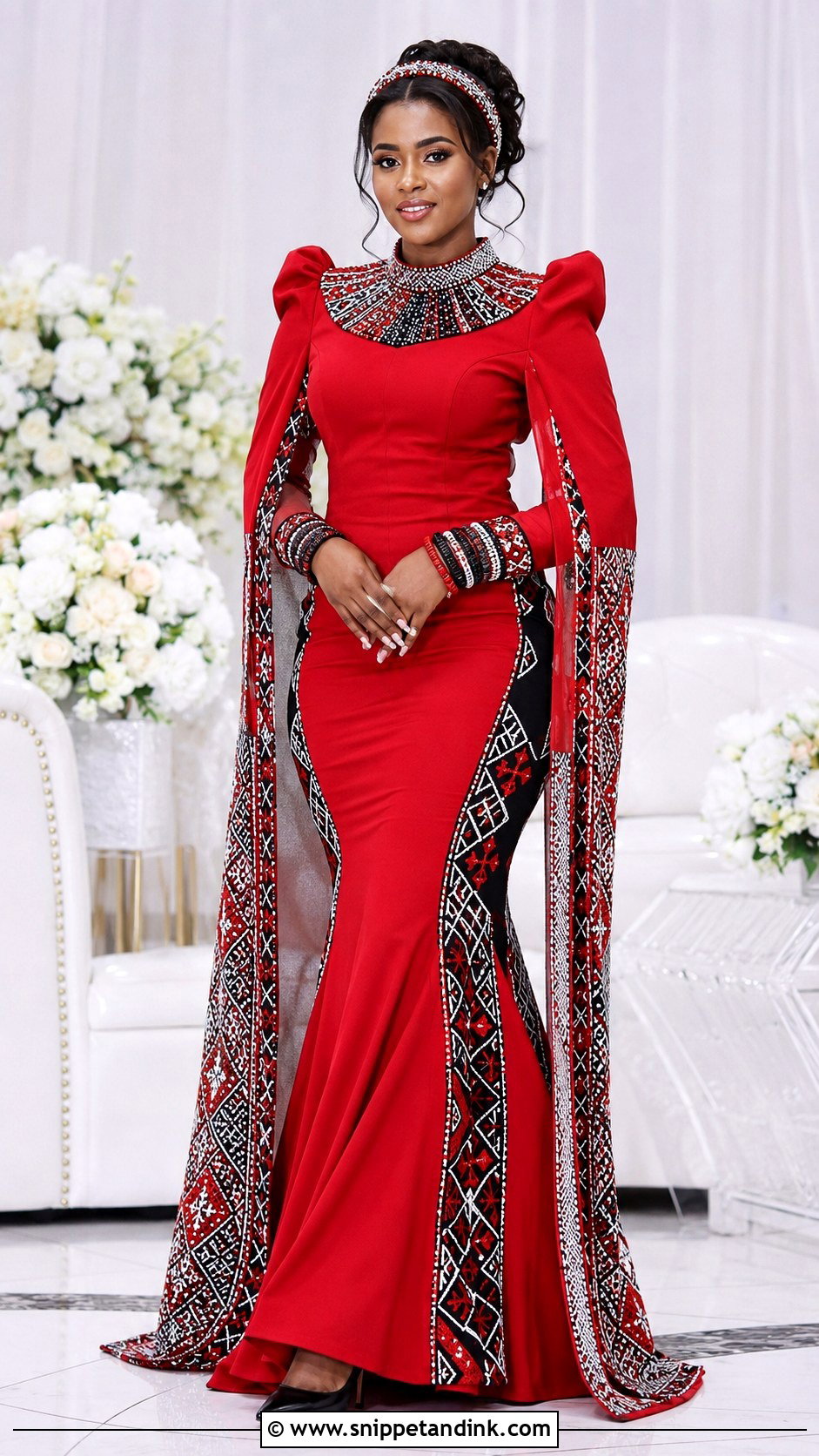
A mermaid cut needs the print placed with discipline. I ask the dressmaker to run the black and white emahiya panels vertically on the bodice, because vertical stripes pull the eye down to the waist and make the flare at the knee look deliberate. Keep the neckline modest, add structured sleeves and a detachable drape for the ceremony. One honest warning: a mermaid skirt in cotton print is tight to walk and climb steps in, so try it on a staircase at your last fitting. Black pointed heels finish it, or block heels if you’re outdoors. One beaded collar is plenty, and a low bun keeps it all visible.
3. Black And White Swati Ball Gown
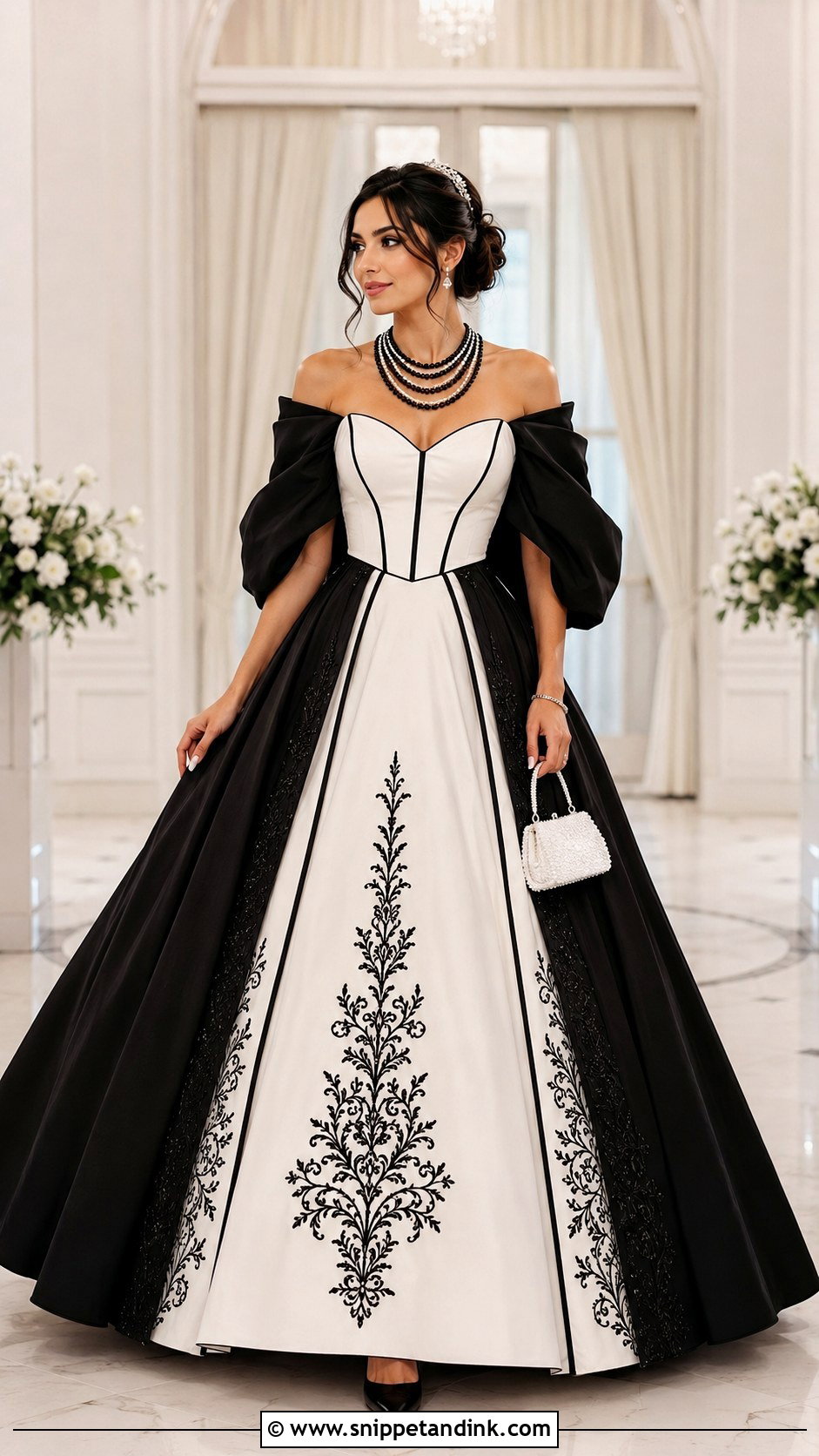
Symmetry matters more on a ball gown than anywhere else, since the skirt is the biggest flat surface in your photos. I mark the centre front of the emahiya before anything is cut so the main motif lands on the middle of the skirt, not off to one side. A fitted white bodice with black piping keeps the top calm. Off-the-shoulder or short sleeves soften the volume, and a removable wrap covers the arms for the ceremony. Black pumps, a small white bag and one bold multistrand necklace are enough. Pearl or crystal studs add light without fighting the print. Bridesmaids look tidy in slim black dresses with emahiya belts or scarves.
4. Yellow And White Swati Wedding Gown
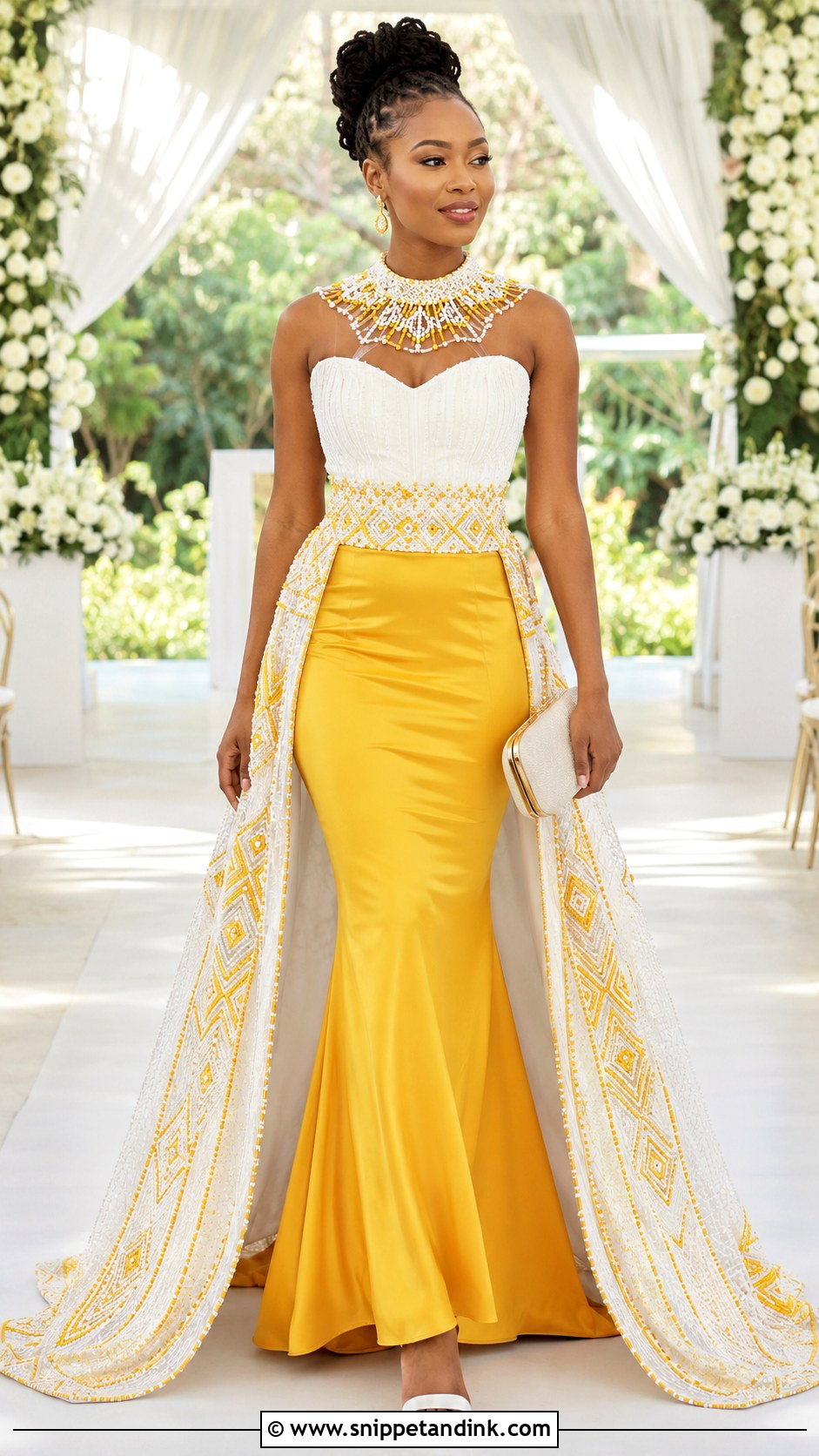
Yellow and white is a daylight palette. Under harsh indoor lighting yellow can turn slightly green in photos, so I’d save it for a garden or courtyard ceremony. A white bodice flowing into a yellow trumpet skirt, with emahiya trimming the neckline, waist and train, keeps the print in the places the camera looks first. Sheer long sleeves give coverage without weight. Make the train detachable with hooks hidden under the waist seam, and practise unhooking it once before the day. White block heels, yellow and white beadwork, gold-tone studs and a structured clutch complete it, with a draped cloth or headpiece framing the face.
5. Swati Peplum Top And Fishtail Skirt
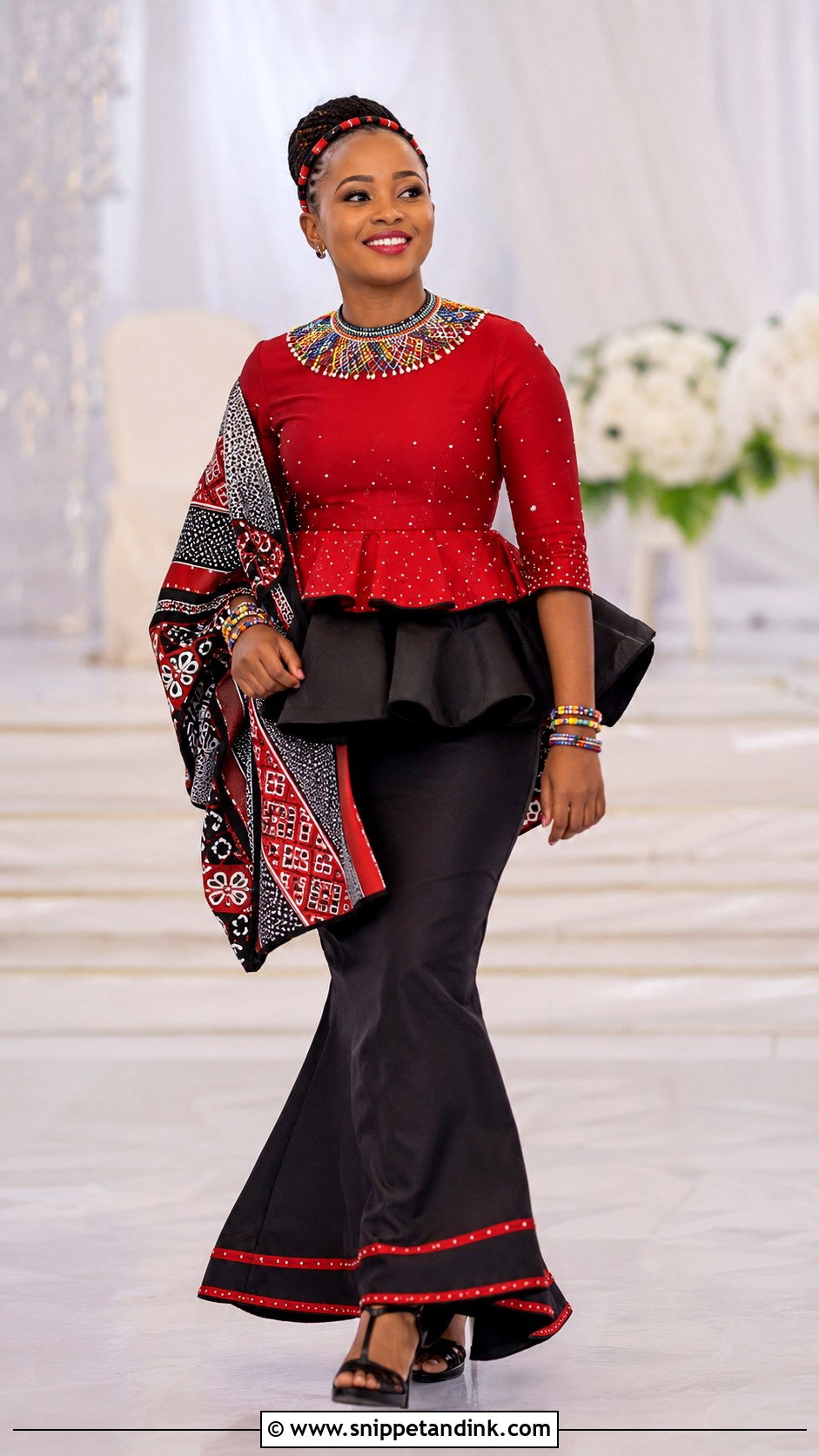
Separates are my favourite way to wear emahiya, because the top and skirt can be fitted independently and both get worn again. Here the red print covers the bodice, a solid black peplum sits exactly at the natural waist, and the skirt follows the body before flaring near the knee. The peplum has to hit the narrowest point of the torso. An inch too low and it widens the hips instead of defining the waist. Ask for a back slit hidden inside the flare so you can take full steps. A matching shoulder wrap ties the two pieces together, finished with black block heels, a beaded collar, studs and stacked bracelets.
6. Blue Swati Wedding Dress
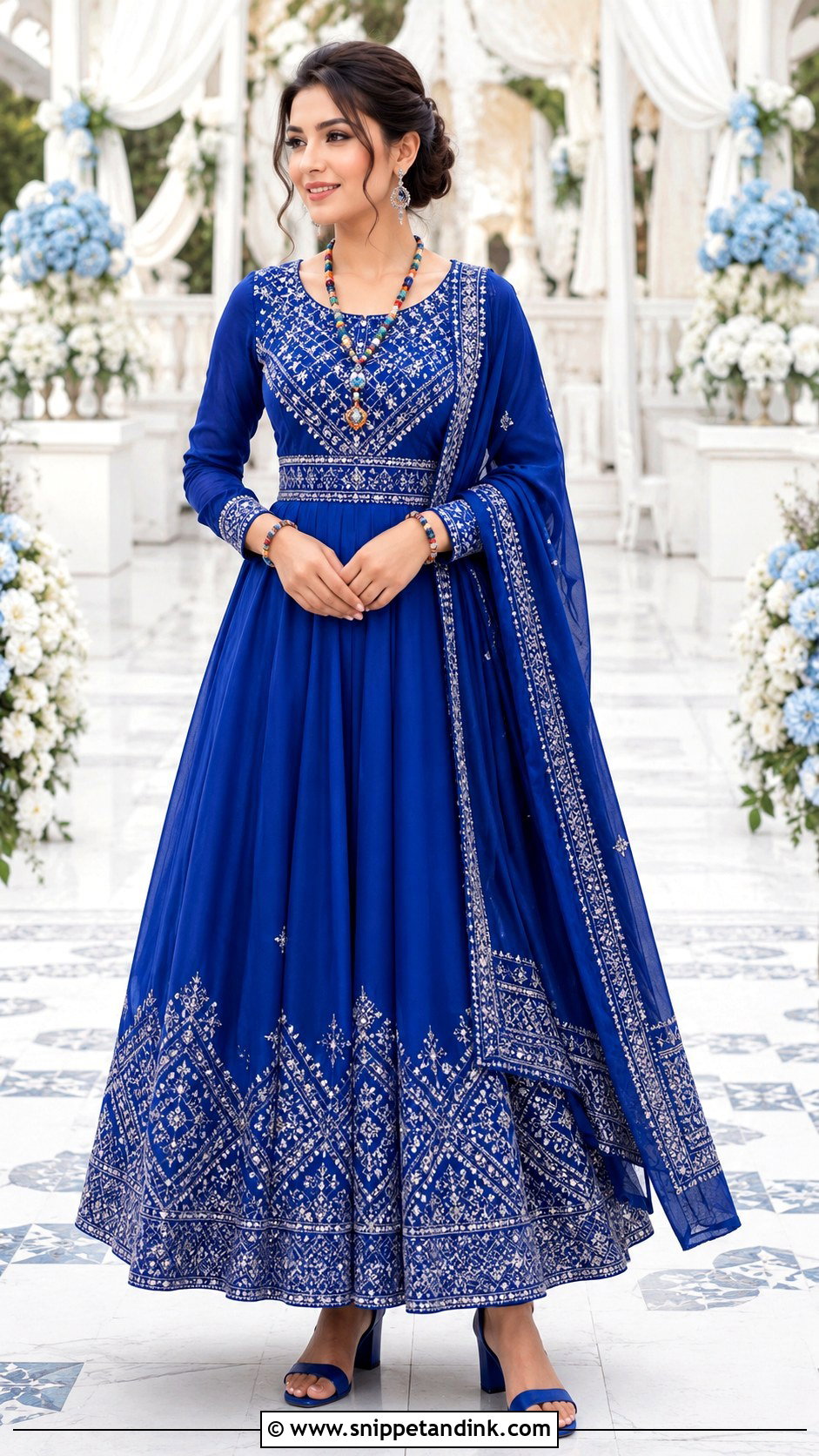
Royal blue reads confident and photographs richly in both shade and sun. I’d choose a full-length A-line with a solid blue bodice and emahiya worked into the waist, sleeves and lower skirt, using white to brighten and black trim to sharpen the shape. Pin the blue shoulder cloth at two points, not one, so it doesn’t slide off when you lift your arms to hug people. A colourful beaded necklace, bracelets and small silver-tone earrings sit well against blue, and a smooth braided updo keeps the neckline clear. If the groom wants a matching look, give him a blue shirt with a narrow Swati panel rather than a full copy of your fabric.
7. Green And Gold Swati Wedding Dress
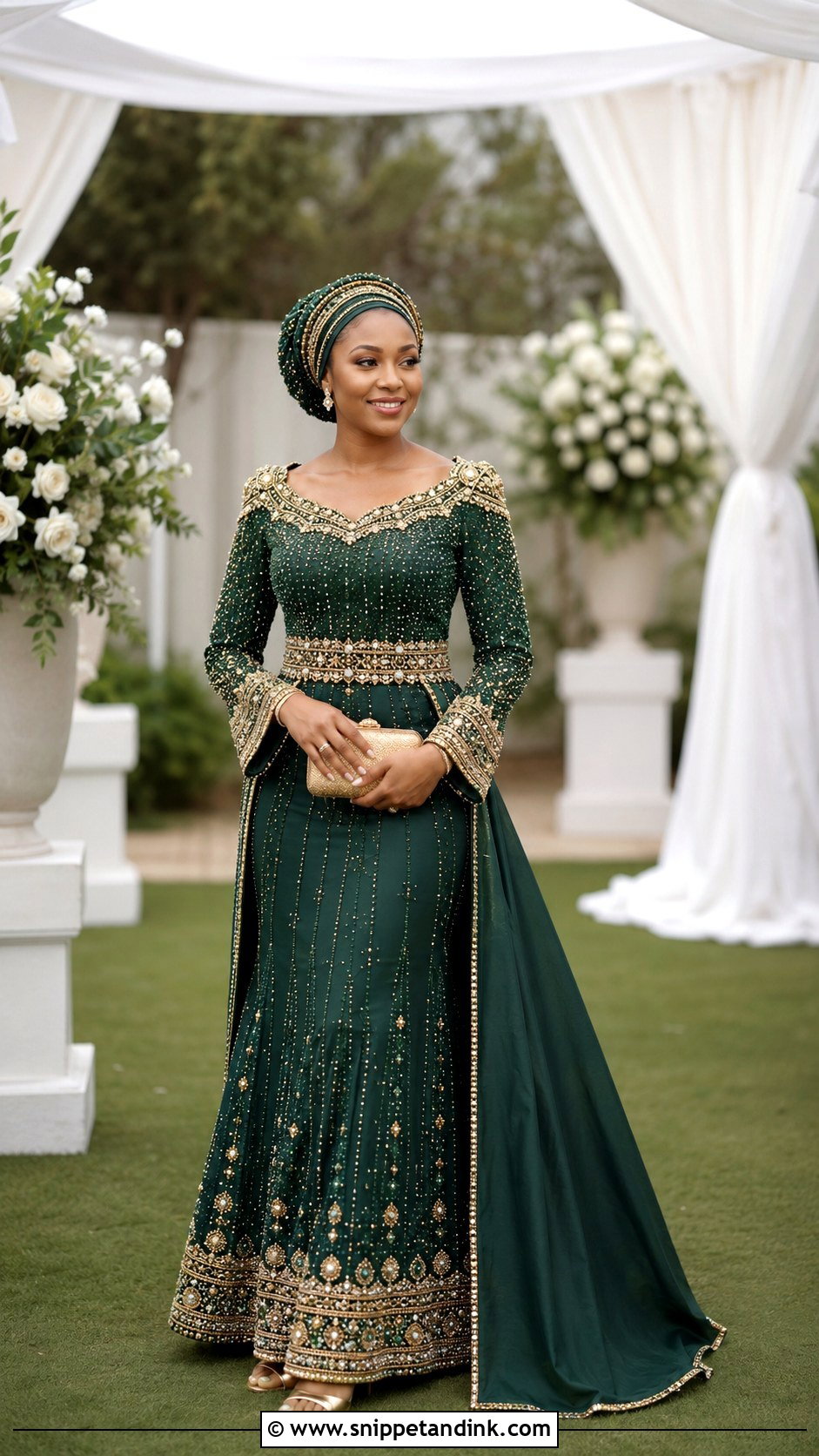
Deep green with gold is the most formal palette here. Start with a long green gown, fitted bodice and gently flared skirt, then put emahiya at the neckline, cuffs, waistband and a detachable train. If you add gold embroidery, it should outline the printed sections, never stitch over the print itself. Dense machine embroidery on cotton puckers the fabric and buries the pattern you paid for. Metallic block heels, a structured green clutch and a necklace mixing green, white and gold finish it. A coordinated head wrap works here if you like one.
8. Burgundy Swati Long Sleeve Wedding Dress
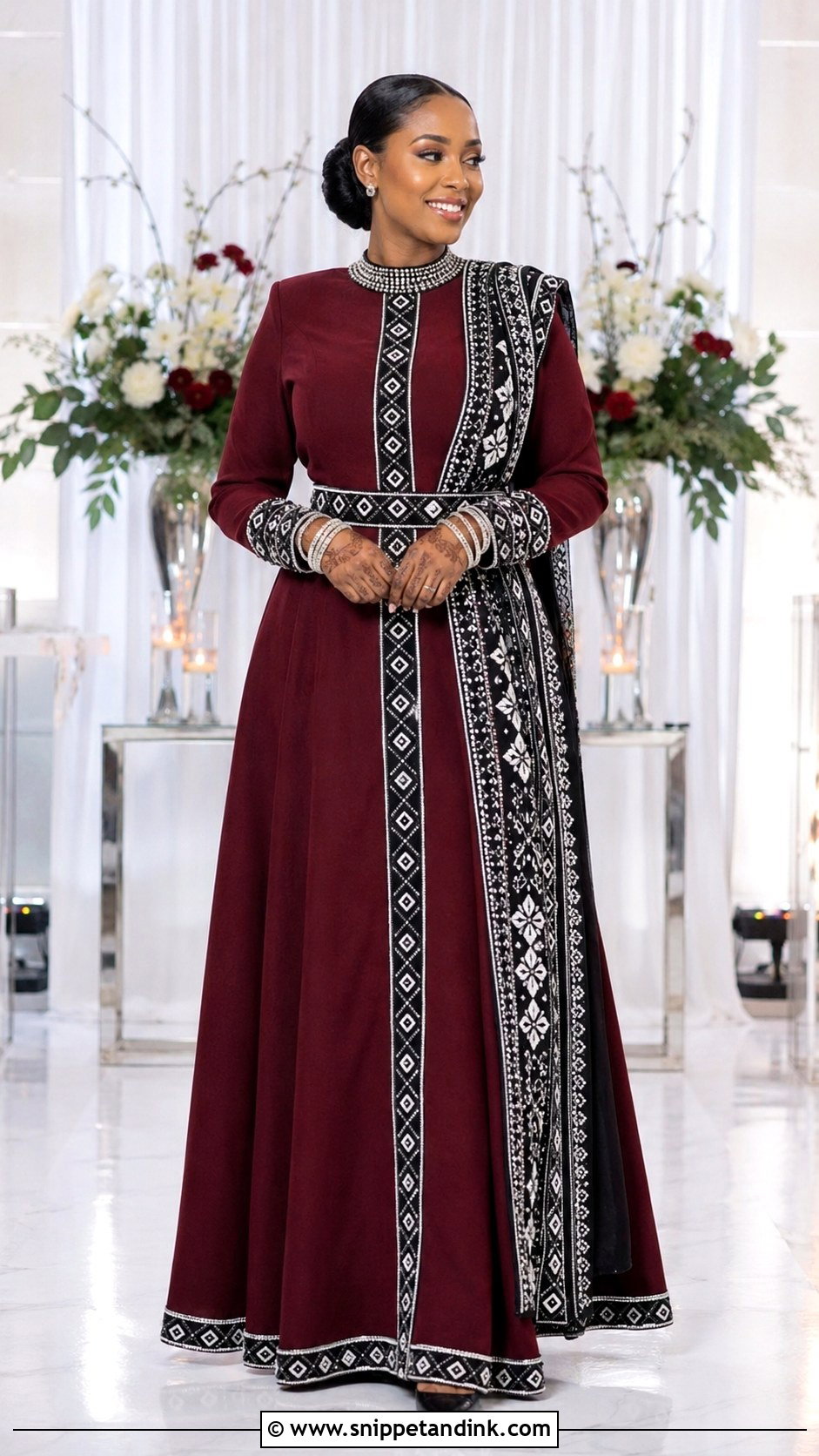
A burgundy Swati gown is what I’d suggest for a winter wedding, when bright red can look thin against grey light. Long fitted sleeves with black and white emahiya at the cuffs, waist and centre front, over a softly flared floor-length skirt, give coverage and movement. Covered buttons down the back look lovely but take a long time to fasten, so build in a concealed zip under them and save yourself ten minutes on the morning. Wear a patterned wrap for the ceremony and take it off for the reception. Black closed-toe heels, a beaded collar, bangles and small burgundy earrings complete it, with a braided bun or sleek low style.
9. Pink Swati Wedding Dress
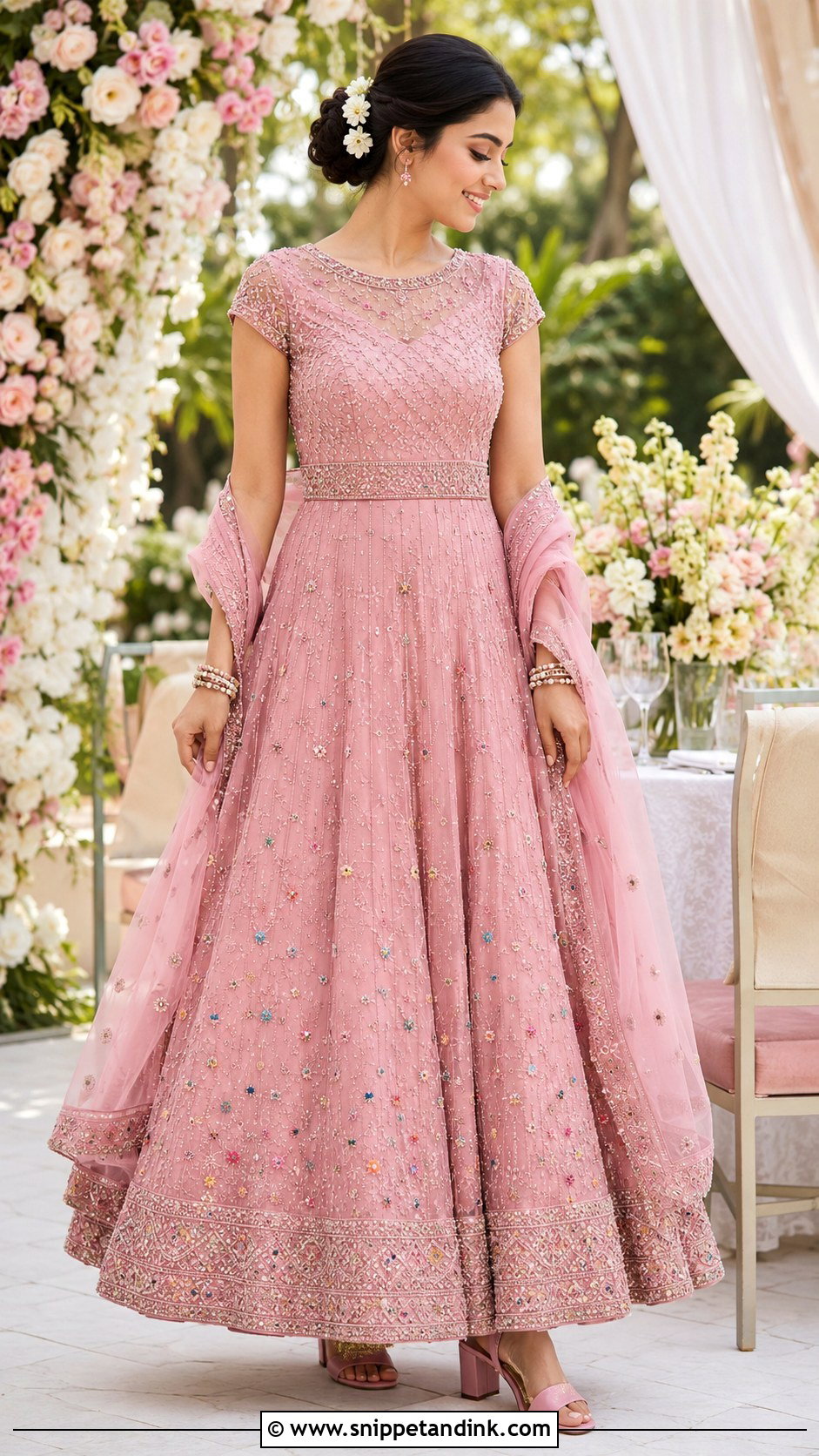
Dusty pink softens the whole outfit while letting the print do the talking. I’d use emahiya for the waistband, cap sleeves and a wide hem border on an A-line gown, with a matching wrap across one shoulder. The hem border is the part that suffers: if your ceremony is on grass or a dusty yard, a light pink skirt will show it by the photos, so consider making that border a little deeper. Pink block heels or neutral flats, depending on the ground. A colourful beaded necklace, bracelets and a compact bag finish it, and white flowers can go into a low bun. Bridesmaids in solid pink with narrow emahiya belts keep the palette together.
10. Purple Swati Wedding Dress
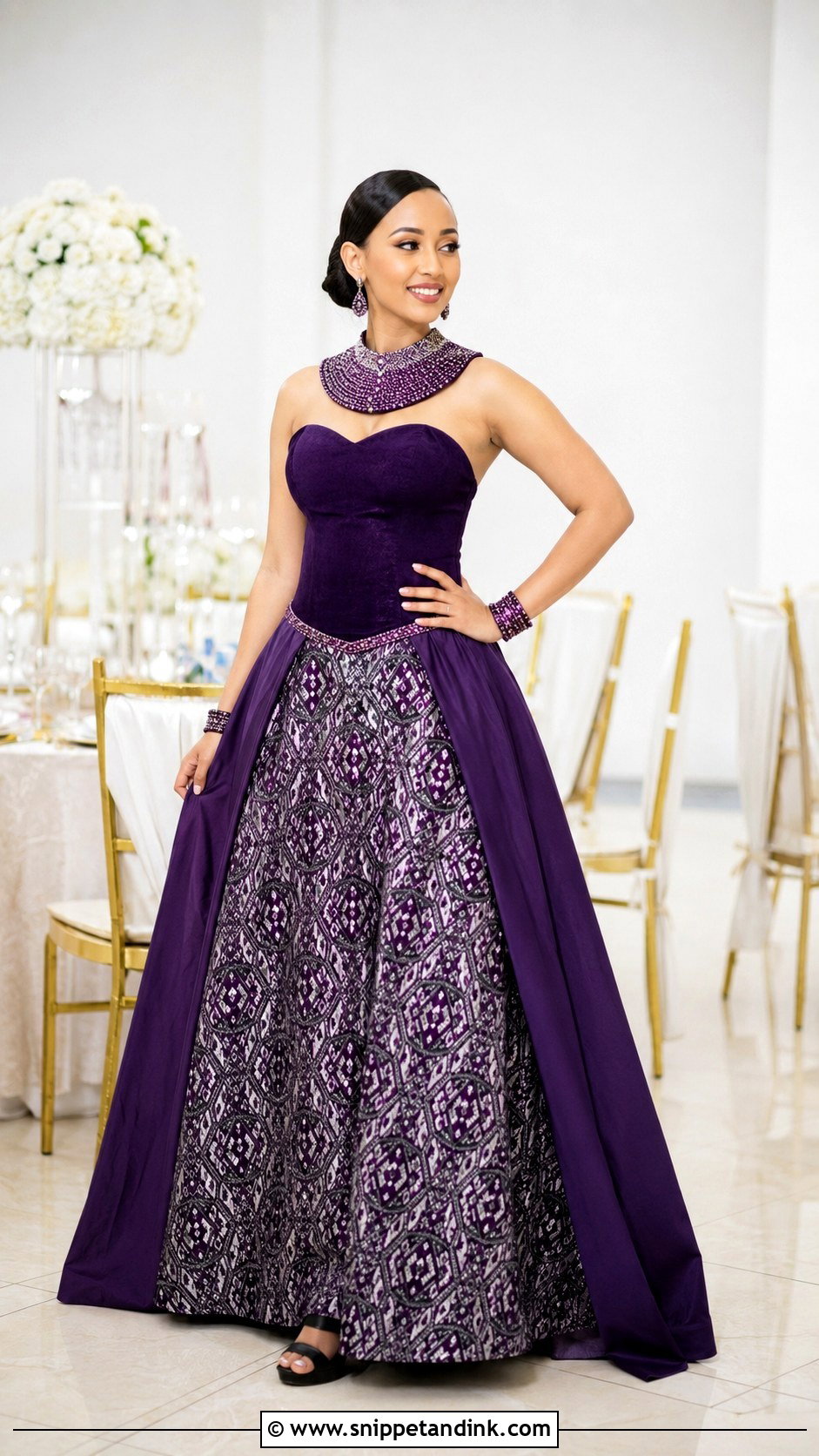
Purple is the colour I suggest when a bride wants something nobody will expect but still wants her outfit to be read as Swati at once. Pair a fitted purple bodice with a full skirt carrying the traditional red, black and white print. Keep the neckline plain, because a statement beaded collar needs a clean surface to rest on, and seams or trims under it make it sit crooked. A detachable purple overskirt adds volume for formal portraits and comes off for dancing. Black block heels, purple and white bangles, small drops and a shoulder cloth complete it. A smooth updo balances the skirt.
11. Ivory Swati Wedding Gown
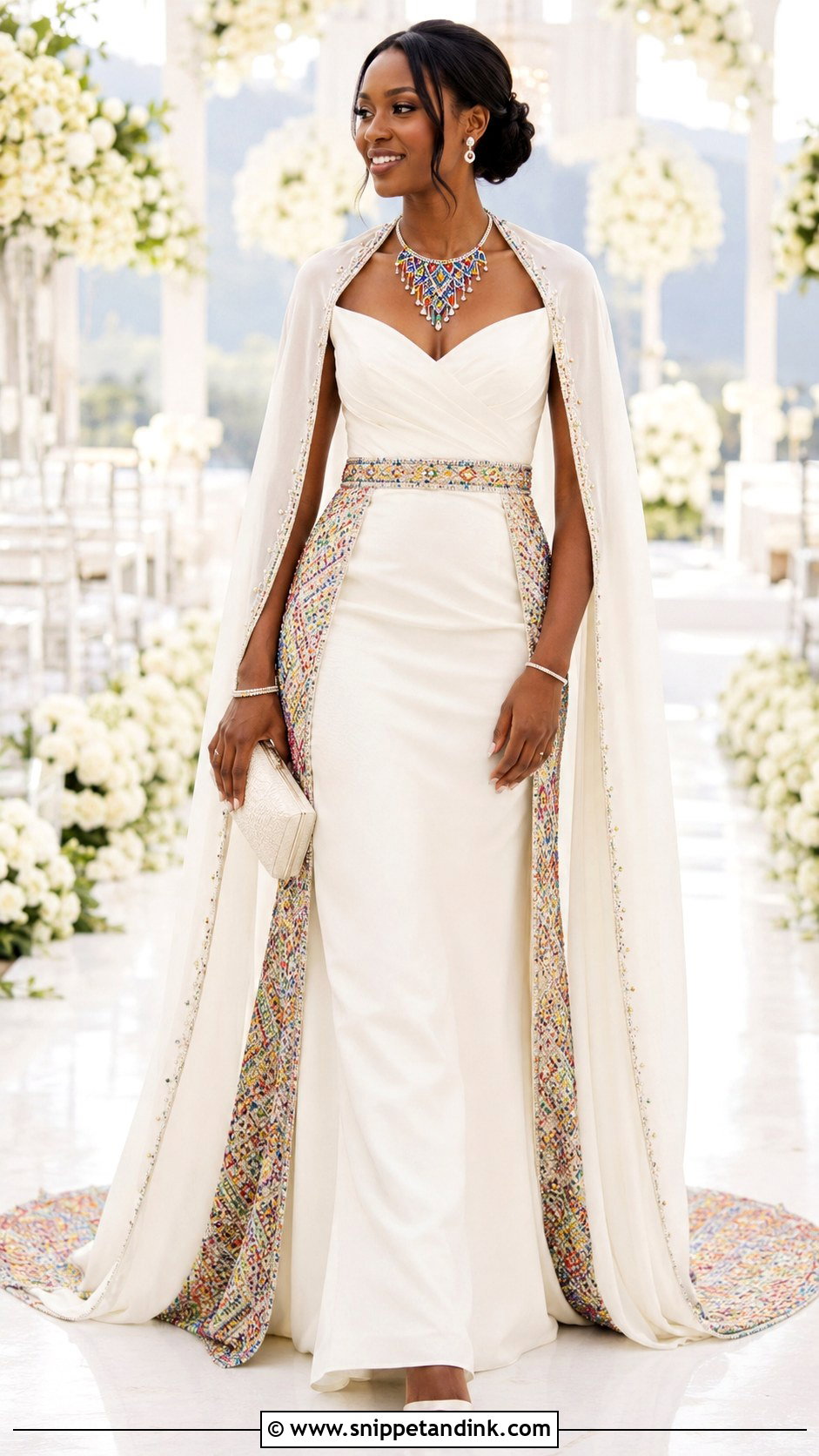
Ivory with emahiya accents suits a bride who is having both a white-wedding ceremony and a cultural one on the same day. The trick is making the print look planned. I place panels along the side seams, waistband and train so they echo each other, rather than scattering small pieces that look like patches. A clean A-line bodice with supportive straps and an ivory shoulder wrap edged in the same fabric holds it together. Ivory heels, a bright beaded necklace, slim bracelets, pearl studs and a structured clutch finish the outfit. Ivory marks easily, so keep a stain pen in the clutch.
12. Off Shoulder Swati Wedding Dress
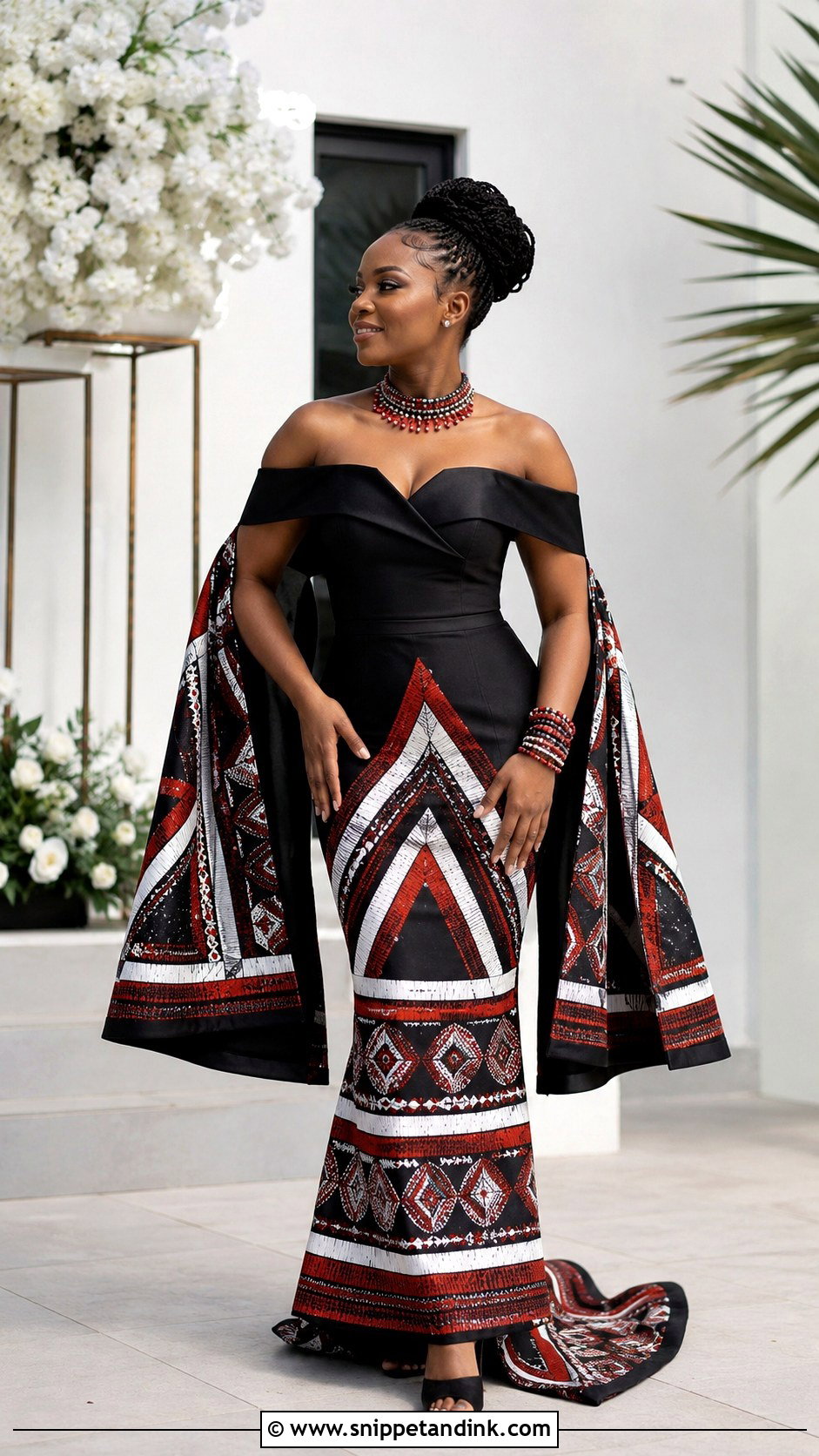
Off-the-shoulder necklines give beadwork the best background on this list, bare skin with nothing competing. A solid black bodice with an emahiya fold-over neckline, over a red, white and black panelled skirt, is the version I’d make. The fold-over needs boning or silicone grip tape inside, otherwise it creeps up every time you move your arms. A-line or trumpet both work; pick by how much structure you can stand for a full day. A shoulder cloth for formal moments, black heels, a bold collar, stacked bracelets and simple earrings complete it. A high braided bun keeps the shoulders clear.
13. One Shoulder Swati Wedding Dress
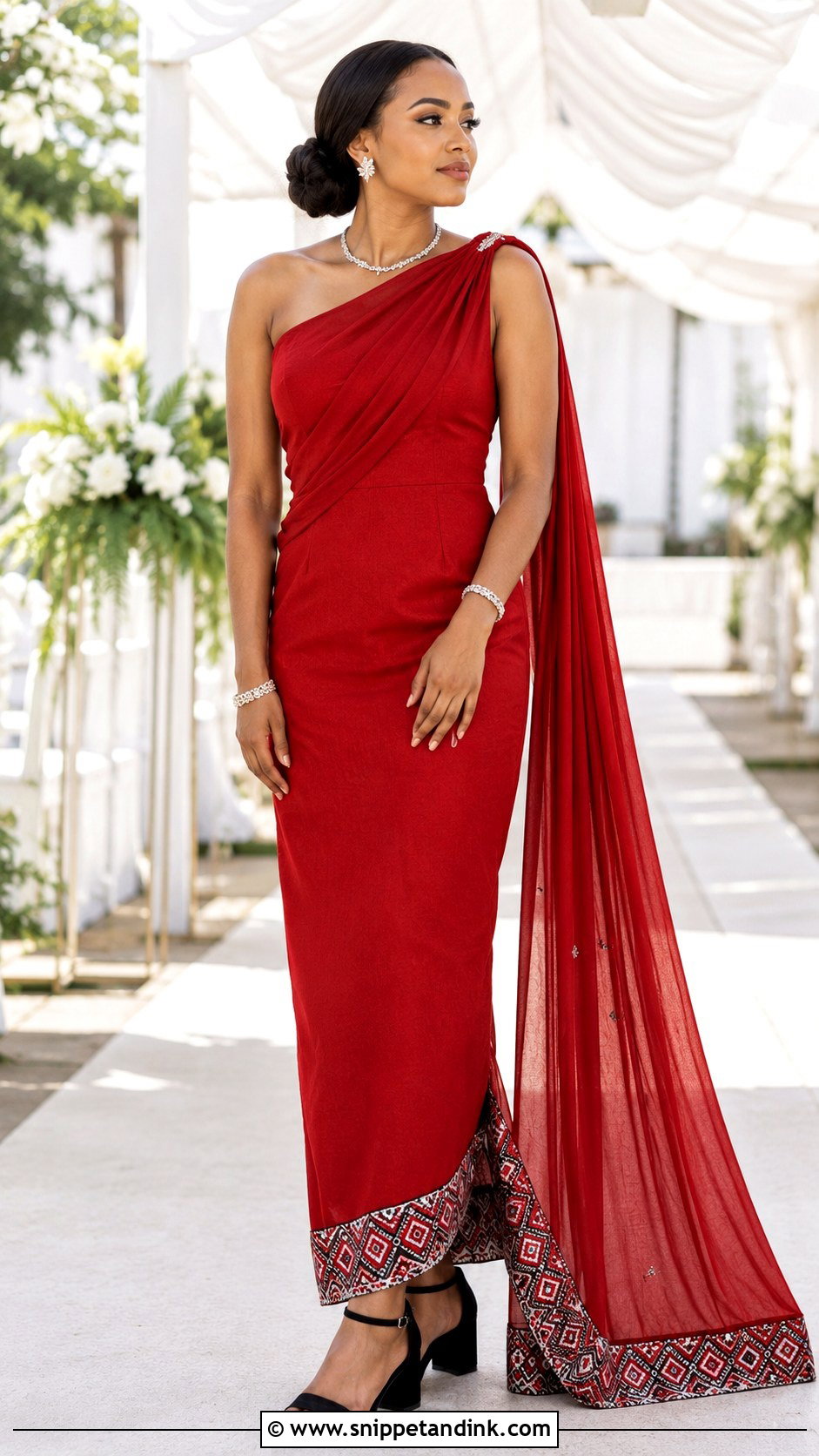
One-shoulder cuts and draped cloth come naturally together. Run an emahiya panel diagonally across a fitted red bodice and over one shoulder into a sash, then leave the skirt solid red or give it a printed hem border. If you want a side slit, I place it on the same side as the bare shoulder and stop it at mid-thigh, so the dress stays balanced and decent when you sit. Black ankle-strap block heels, a smaller beaded necklace, bracelets and sculptural earrings suit the lean shape. Sweep the hair into a low side bun on the opposite side to the sash, which evens out the asymmetry.
14. Swati Bridal Jumpsuit With Overskirt
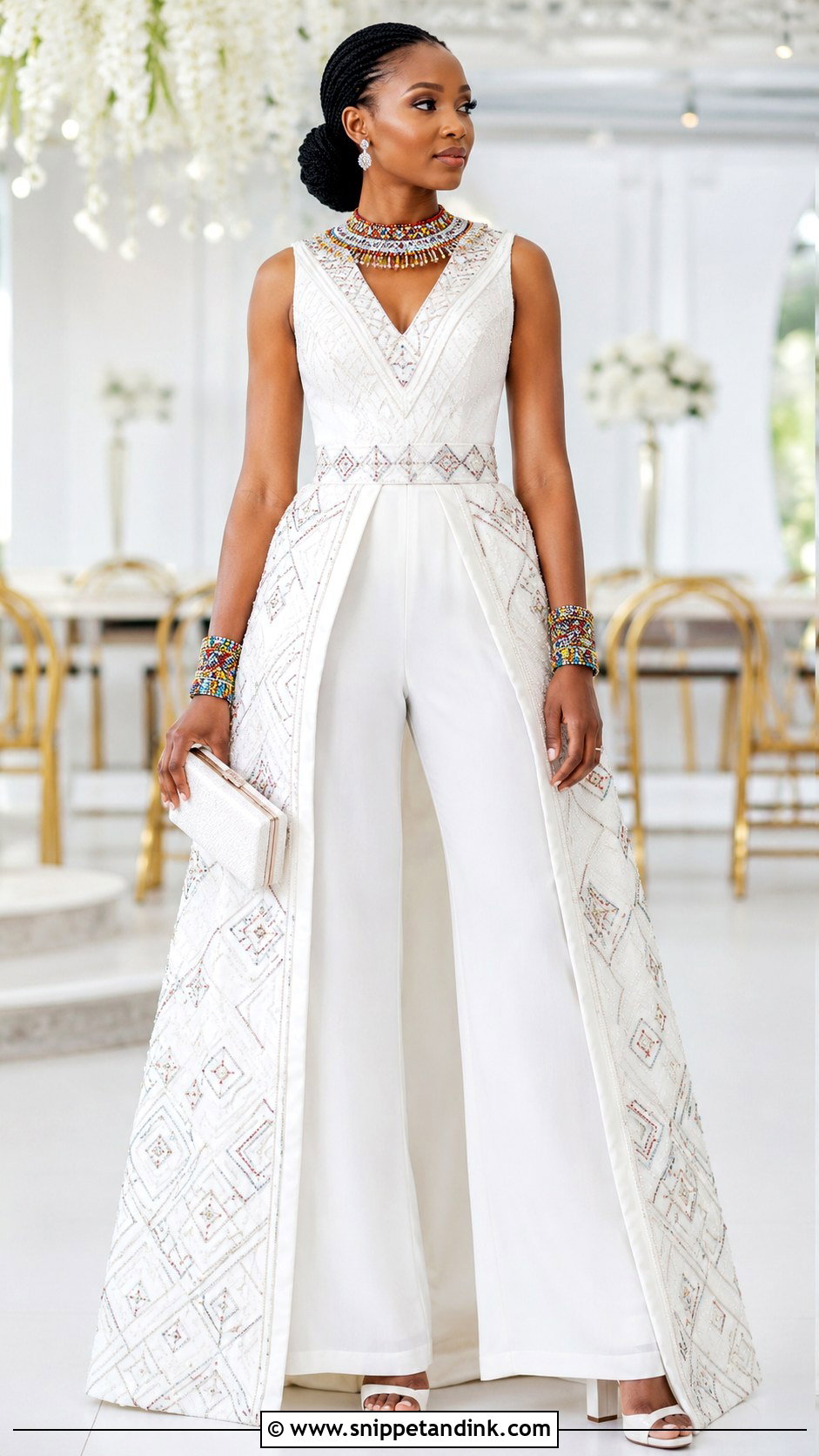
A jumpsuit under a removable overskirt is the most practical outfit here, and the one brides thank me for at midnight. Choose a white or black wide-leg jumpsuit with emahiya on the bodice, belt or cuffs, then add a full printed overskirt that fastens at the waist and opens at the front. Have the overskirt close with hooks and a wide waistband rather than a zip, so it can be unhooked in seconds without anyone kneeling behind you. Hem the trousers to the exact shoes you’ll wear, since a wide leg that drags will catch your heel. Block heels, a clutch, a colourful collar and bracelets finish it, with a sleek ponytail or braided bun.

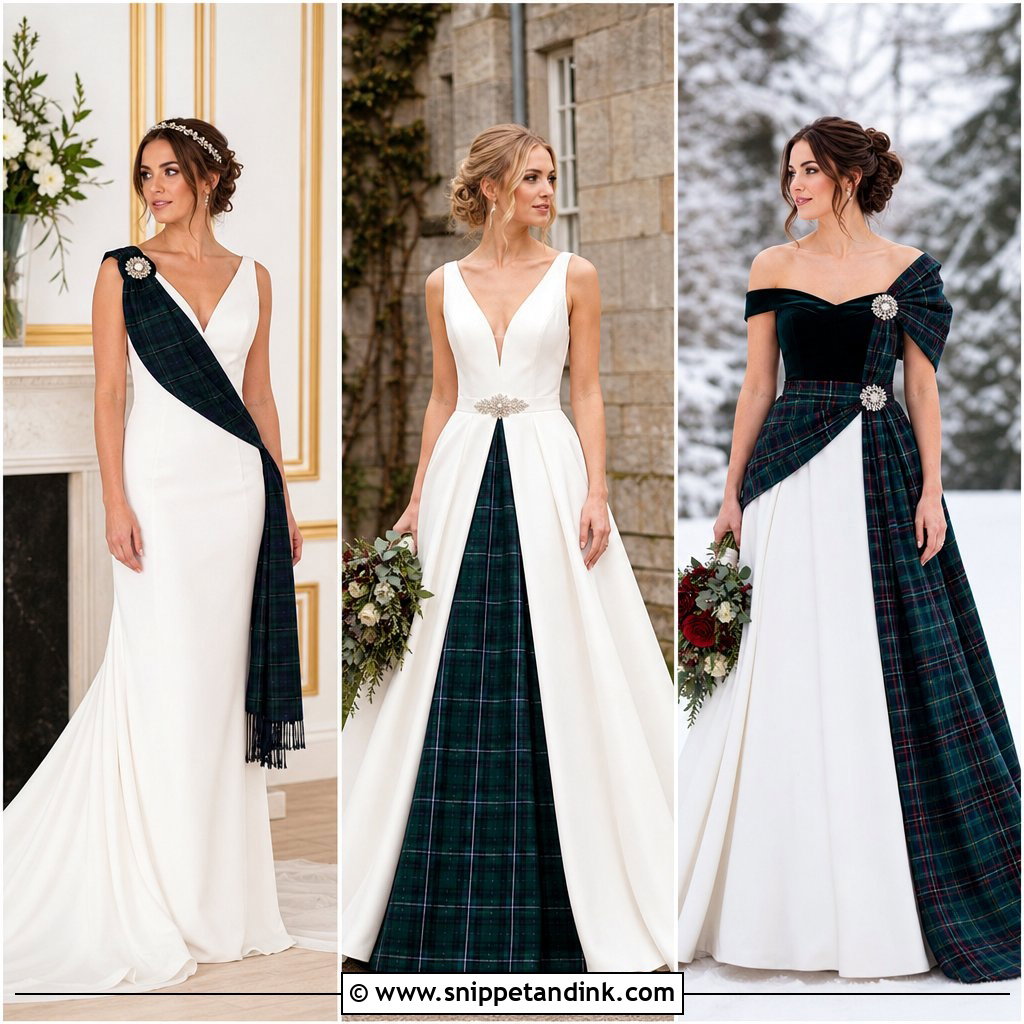
15. Two Piece Swati Bridal Outfit
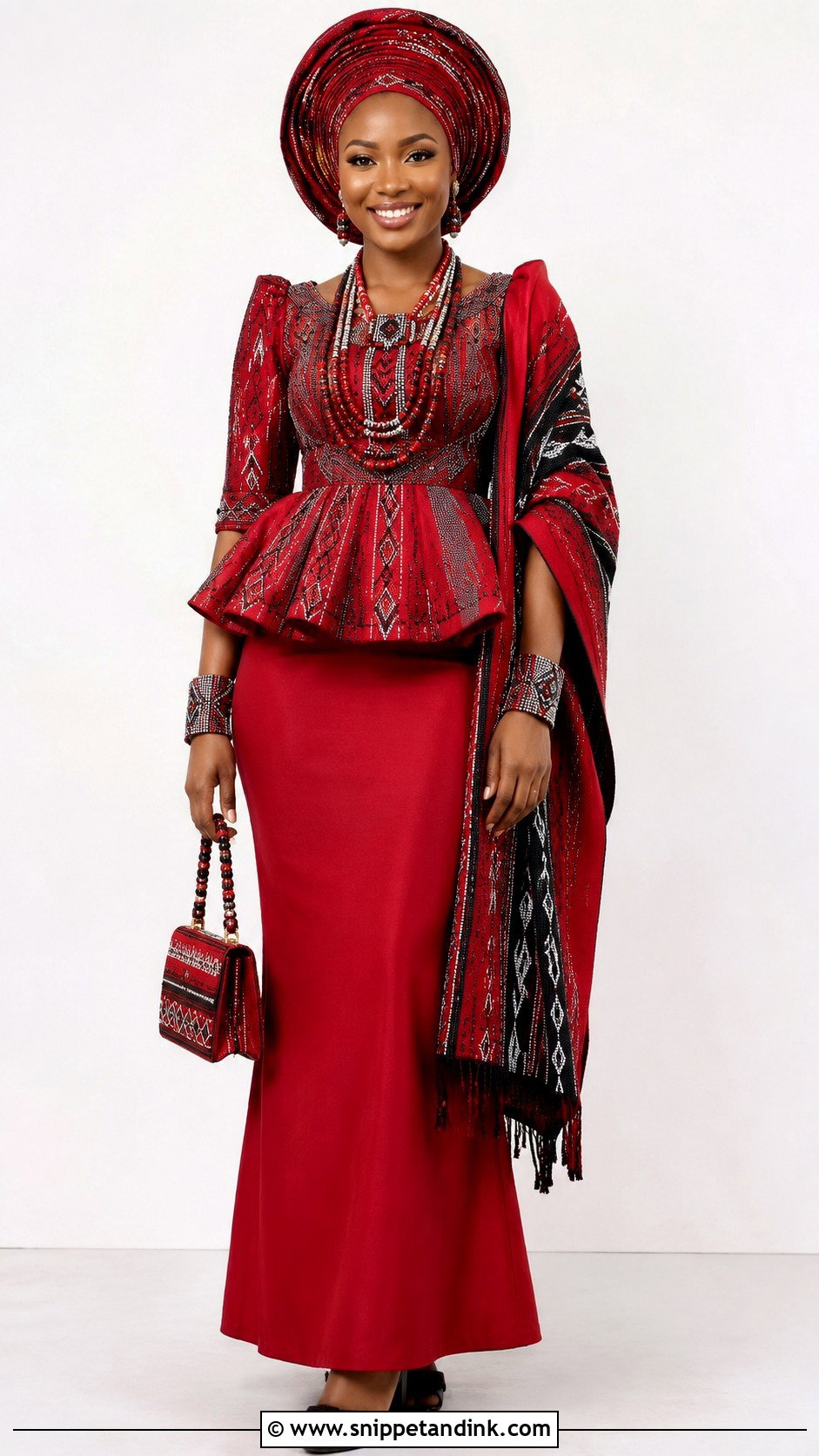
Two-piece sets solve fit problems a one-piece gown can’t. If you’re a different size through the bust than through the hips, separates mean each piece is cut for its own measurement. Pair a fitted printed top, elbow sleeves, round neck and a peplum hem, with a high-waisted floor-length skirt in solid red, black or white. A matching emahiya shoulder wrap connects the two pieces. Low block heels, layered bead necklaces, wrist cuffs and a small structured bag complete it, and a head wrap adds height above the full skirt. Ask the dressmaker for a waistband grip strip so the top doesn’t ride up when you raise your arms.
16. Lace And Swati Wedding Gown
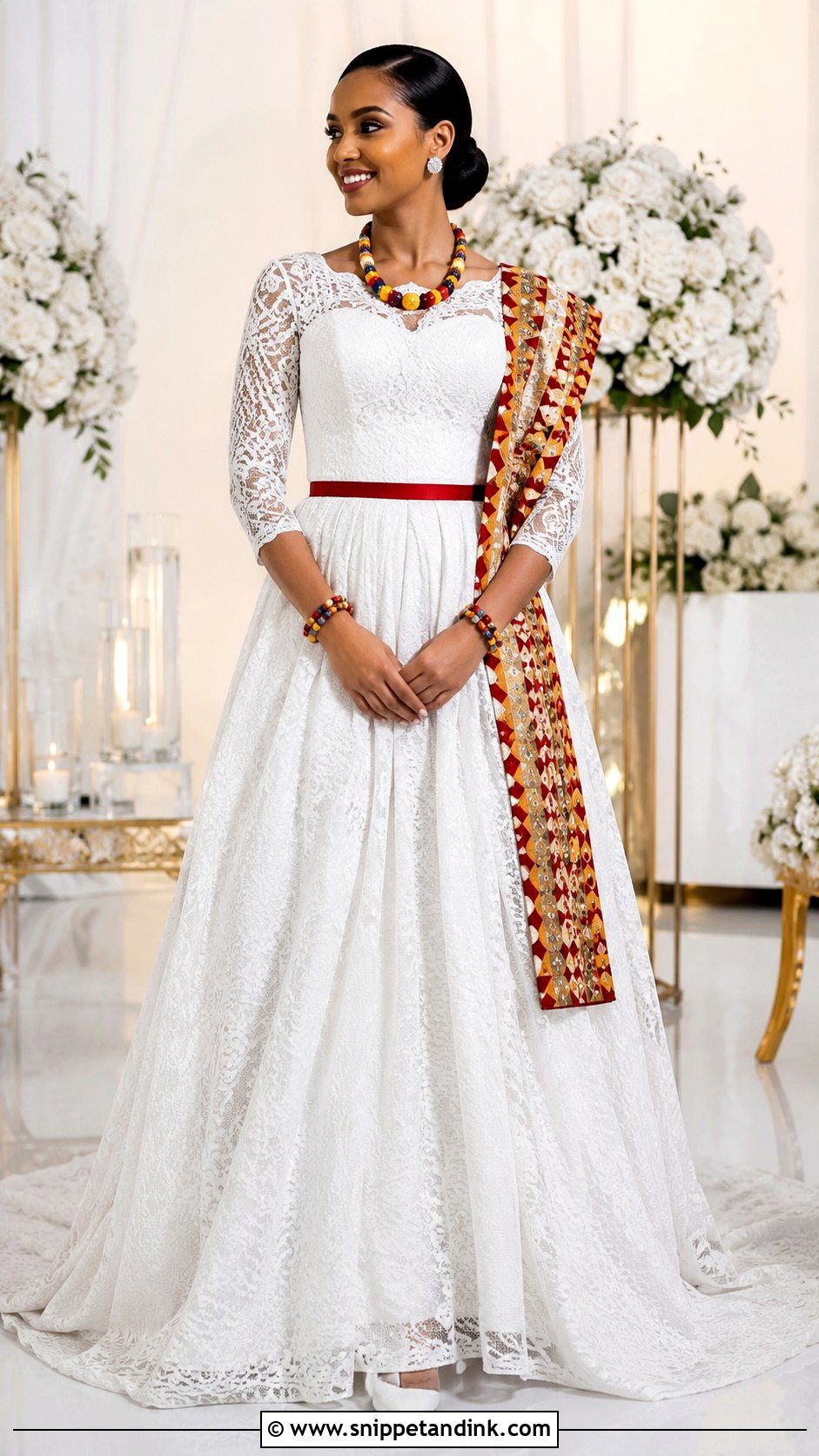
Lace and printed cotton behave very differently, so I give each one its own job: lace for the bodice, emahiya for the skirt, and a solid black or red waistband as a clean border between them. Never let lace overlap the print; the eye can’t read either. The lace bodice needs a full lining, as many lace patterns are see-through once you’re in strong light. Full or three-quarter sleeves, a floor-length structured skirt with a modest train, white heels, a multicoloured beaded necklace and small crystal earrings complete it. An emahiya-edged veil links top and bottom, and a low side-parted bun keeps the look simple.
17. Beaded Swati Wedding Dress
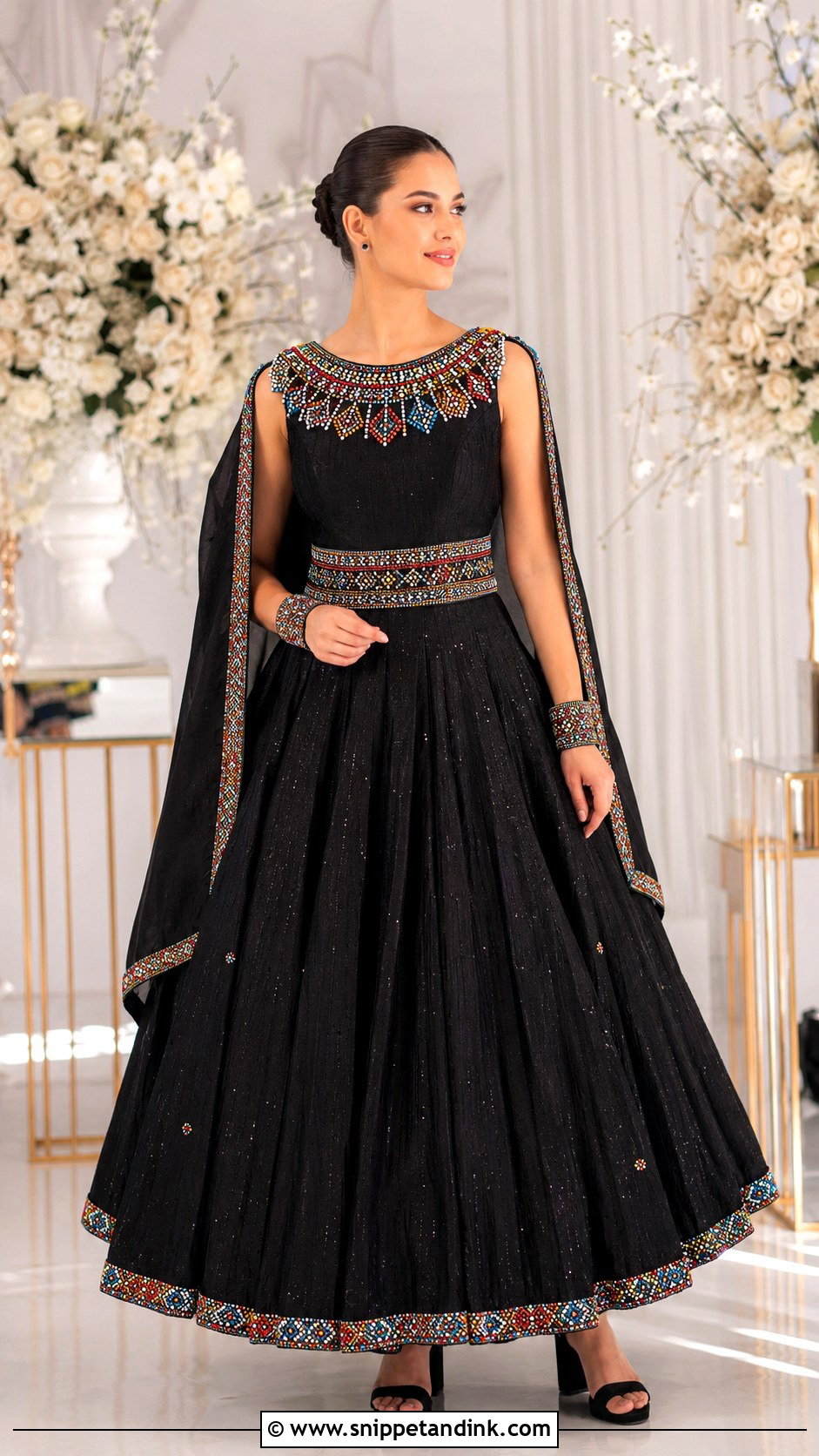
When the bodice is heavily beaded, everything else should step back. I’d choose a solid black or red fitted bodice with beads arranged around the neckline, shoulders and waist, and let a full emahiya skirt carry the pattern. Beading adds real weight, so ask for it to be stitched onto a firm interlining rather than straight onto the fabric, or the neckline will pull forward through the day. A shoulder cloth with a narrow beaded edge, black block heels, wrist cuffs and small earrings are all it needs. Skip the extra necklace. A sleek updo keeps the beadwork in view.
18. Plus Size Swati Wedding Dress
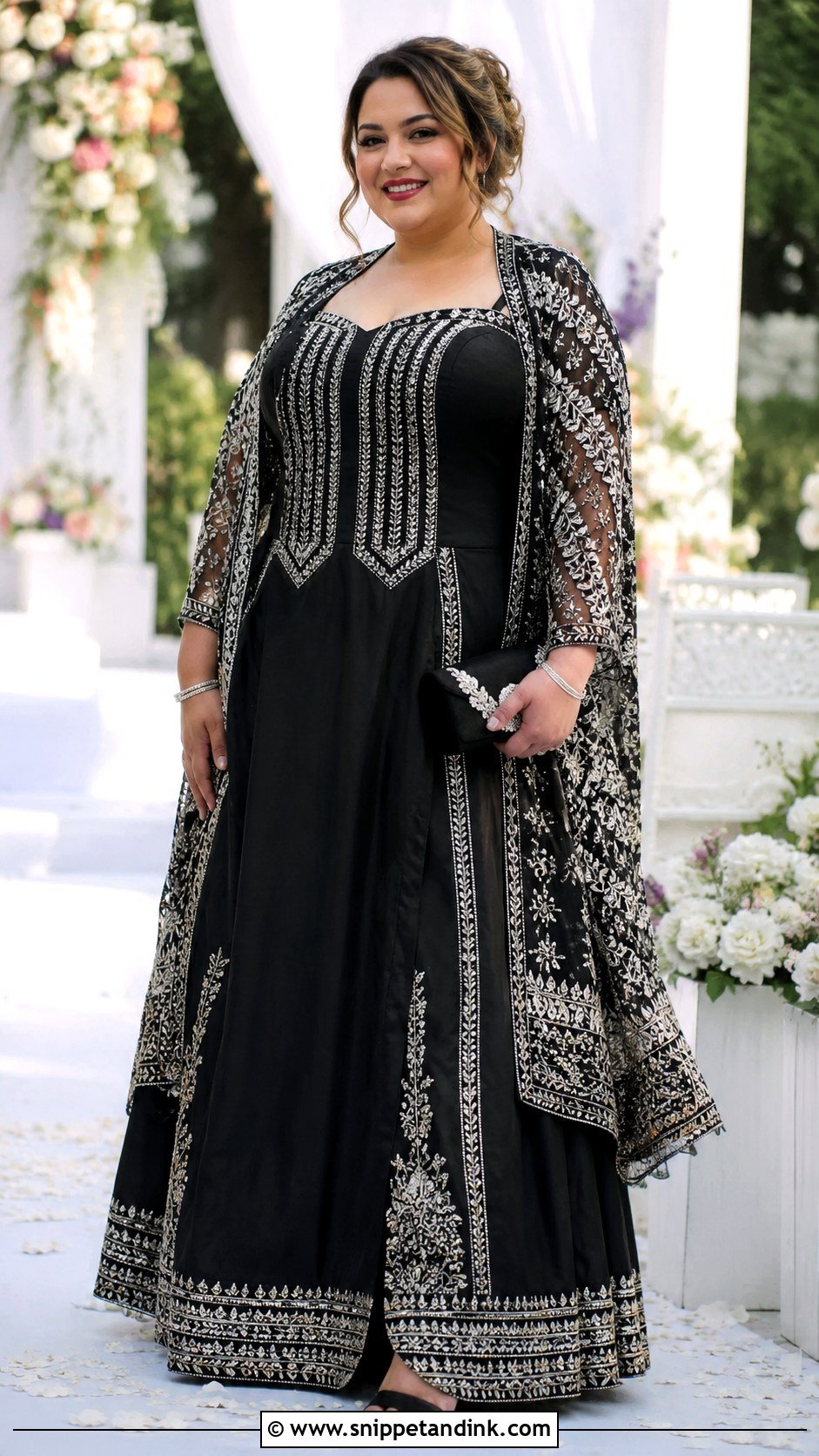
For a plus-size bride I fit for support and movement first, then decide where the print goes. A structured bodice with a defined waistband, wide straps and real inner construction lets the A-line skirt fall cleanly without anything digging in. Emahiya running through the centre bodice, sleeves and skirt border creates long vertical lines. Breathable lining matters: cotton print over polyester lining gets hot fast at an afternoon ceremony. Drape a coordinating wrap over one shoulder or loosely over both arms. Stable block heels or embellished flats, layered beadwork, bracelets and a medium clutch finish it. The dress should be cut to your measurements, not built to hide you.
19. Modest Swati Wedding Dress
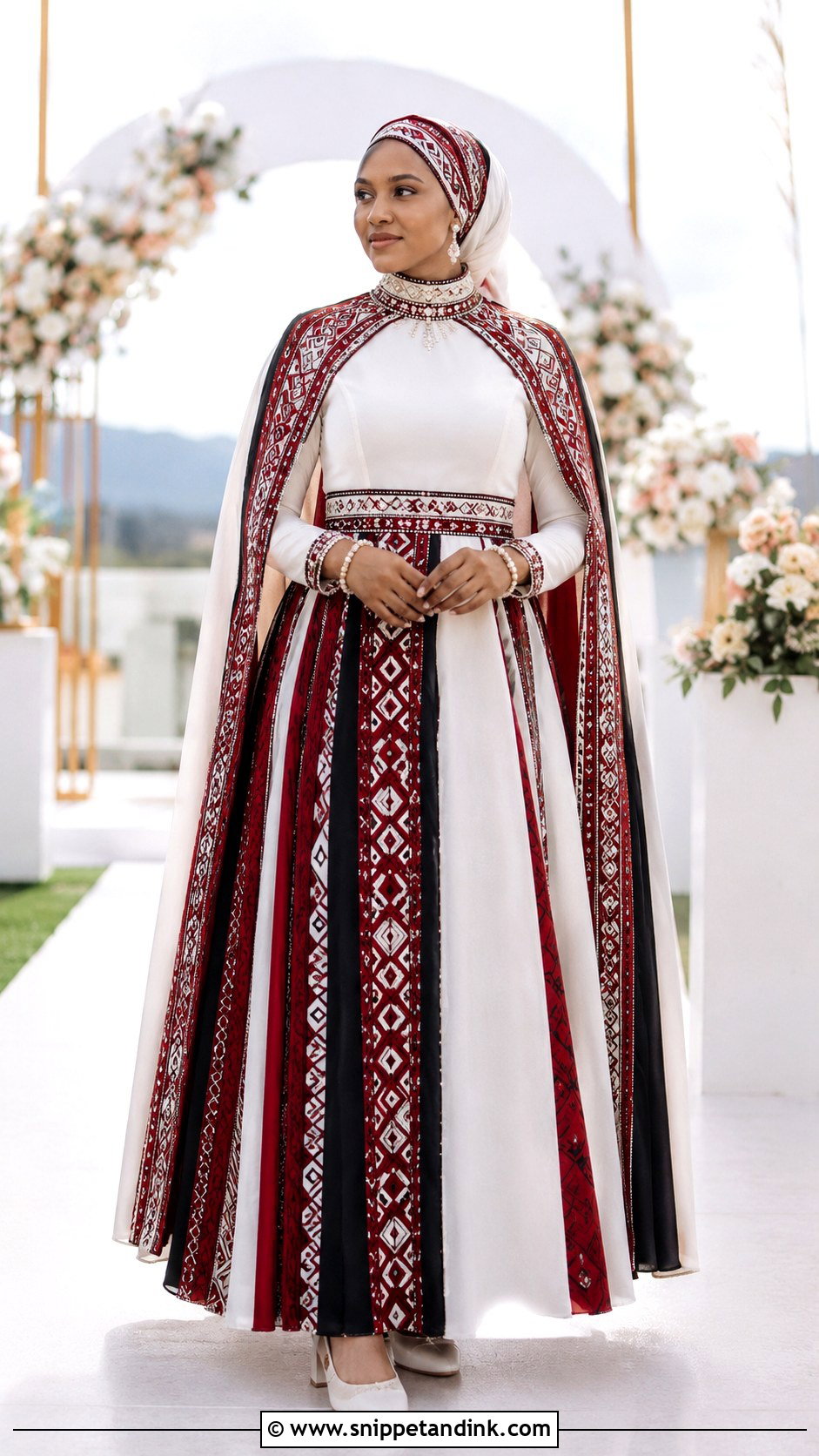
Full coverage and a good shape are not in conflict. A floor-length gown with long sleeves, a high round neckline and a softly defined waist can carry emahiya across the whole skirt while a solid bodice keeps it calm. I’d add a shoulder cloth or a cape that falls down the back, but keep it single-layer, because doubled cotton over long sleeves gets bulky and warm. Closed-toe block heels, a beaded collar, bracelets and simple earrings complete it. Brides who cover their hair can wear a neatly wrapped solid scarf with a narrow printed border, which suits families with a more formal dress expectation.
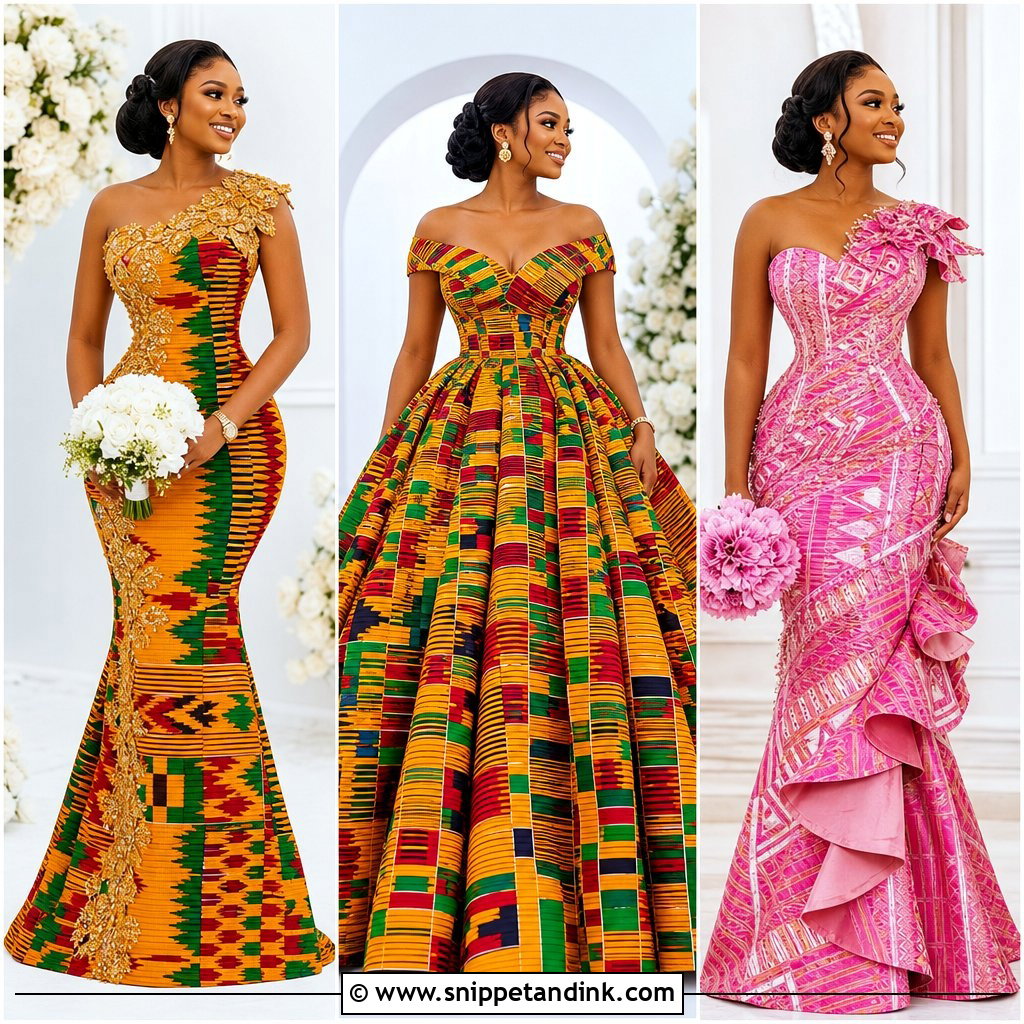
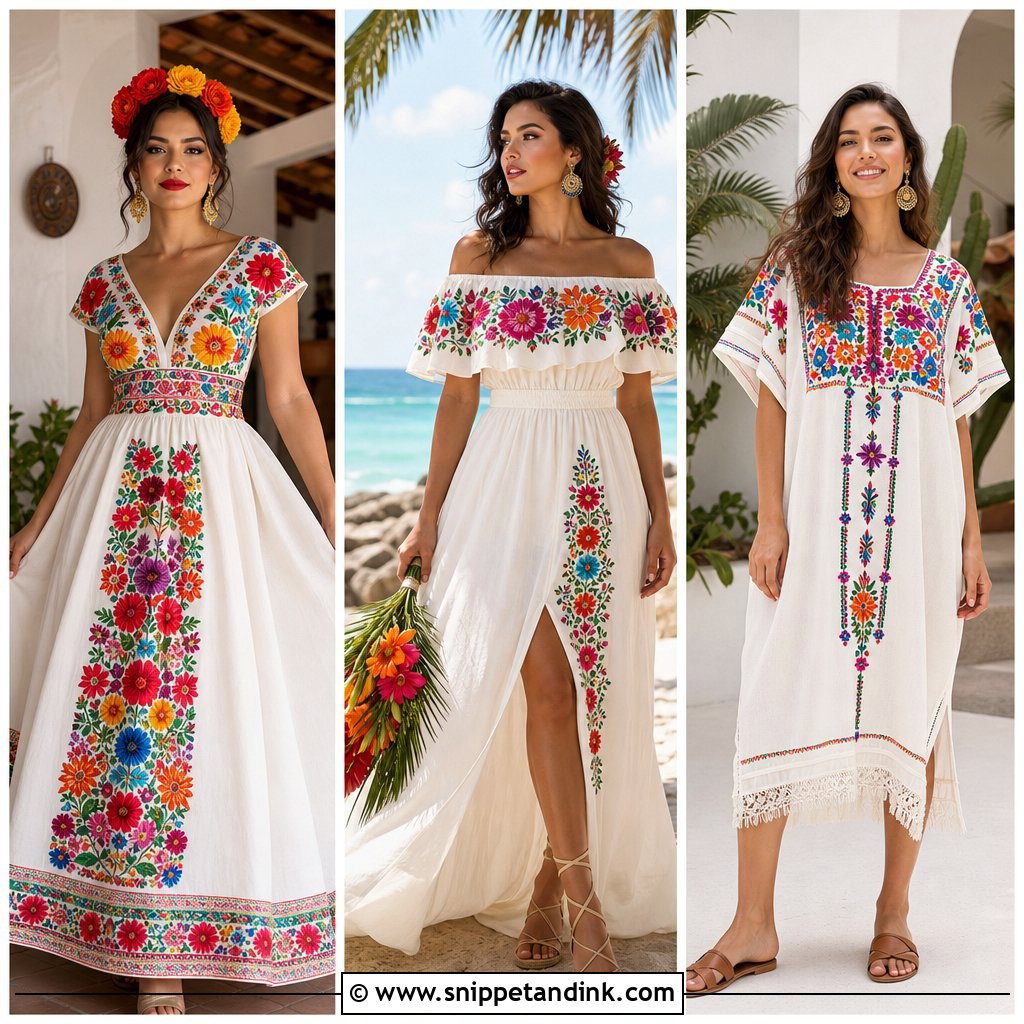
20. Swati Reception Dress With Detachable Train
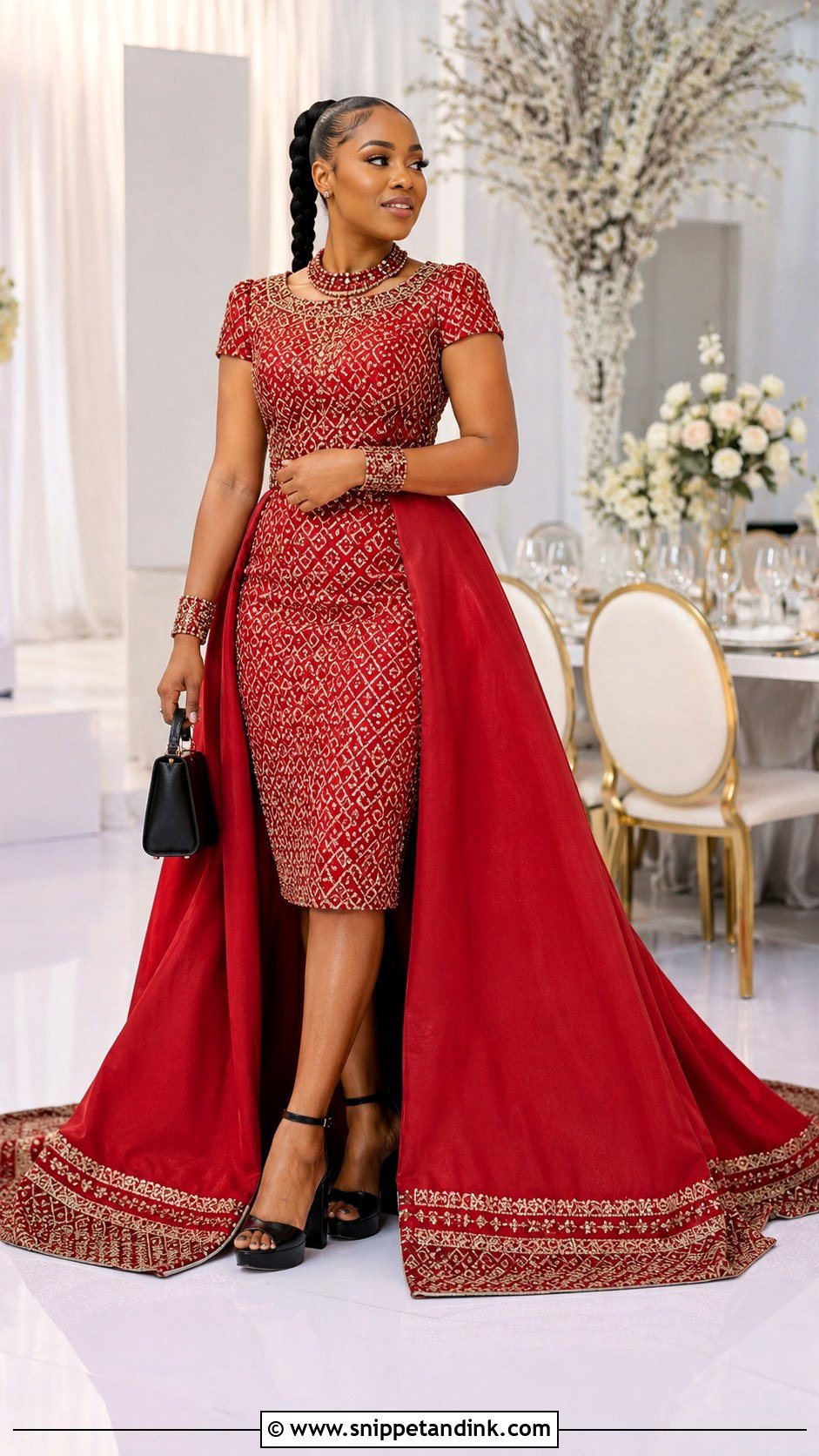
Two looks, one dress: a fitted knee- or tea-length emahiya dress with a structured neckline and short sleeves, plus a dramatic floor-length train attached at the waist for the entrance and portraits. I’d make the train from solid fabric with an emahiya border, since a fully printed train that long can swamp a short dress. Have it attached with hooks and loops inside the waistband, and assign one bridesmaid to the job of removing it. Black or red block heels, a compact bag, a beaded necklace, wrist cuffs and simple earrings finish it. A braided ponytail keeps it youthful.
How Cotton Print and Beadwork Hold Up From Ceremony to Last Dance
Printed cotton creases, and it creases most in the first hour of sitting in a car. I steam the outfit on the morning and ask the bride to stand rather than sit until after the ceremony photos if she can. A small handheld steamer at the venue fixes most of the damage before the reception.
Heat, rain and dye
If there’s any chance of rain or a very hot day, think about red print sitting next to white lace or ivory panels. Damp can move dye, and a pink shadow on a white bodice won’t come out easily. Pre-washing and lining help, and so does choosing a black or solid waistband between the two.
After the wedding
Take the beadwork off first and store it flat in a box, never hanging, since heavy collars stretch their own threads. Hand wash the cotton pieces in cold water, separately, and dry them out of direct sun so the print keeps its colour. Wrap pieces made from family cloth in plain cotton rather than plastic so they can breathe in storage.
Letting the Family Guide the Meaningful Pieces
Every outfit above works only when the silhouette, colour and comfort suit you as the person wearing it. Traditional emahiya wrapping gives the strongest ceremonial presence; gowns, peplum sets, jumpsuits, lace bodices and detachable trains are the modern routes. Treat beadwork, shoulder cloths, headpieces and shoes as support for the main print, not competition. Above all, sit down with the knowledgeable people in your family, or a dressmaker who knows Swati dress well, before anything is cut. Some pieces carry meaning that a fashion choice shouldn’t override, and it’s far easier to learn that at the sketch stage than at the final fitting.
You'll Like These Ideas:




Leave a Reply