
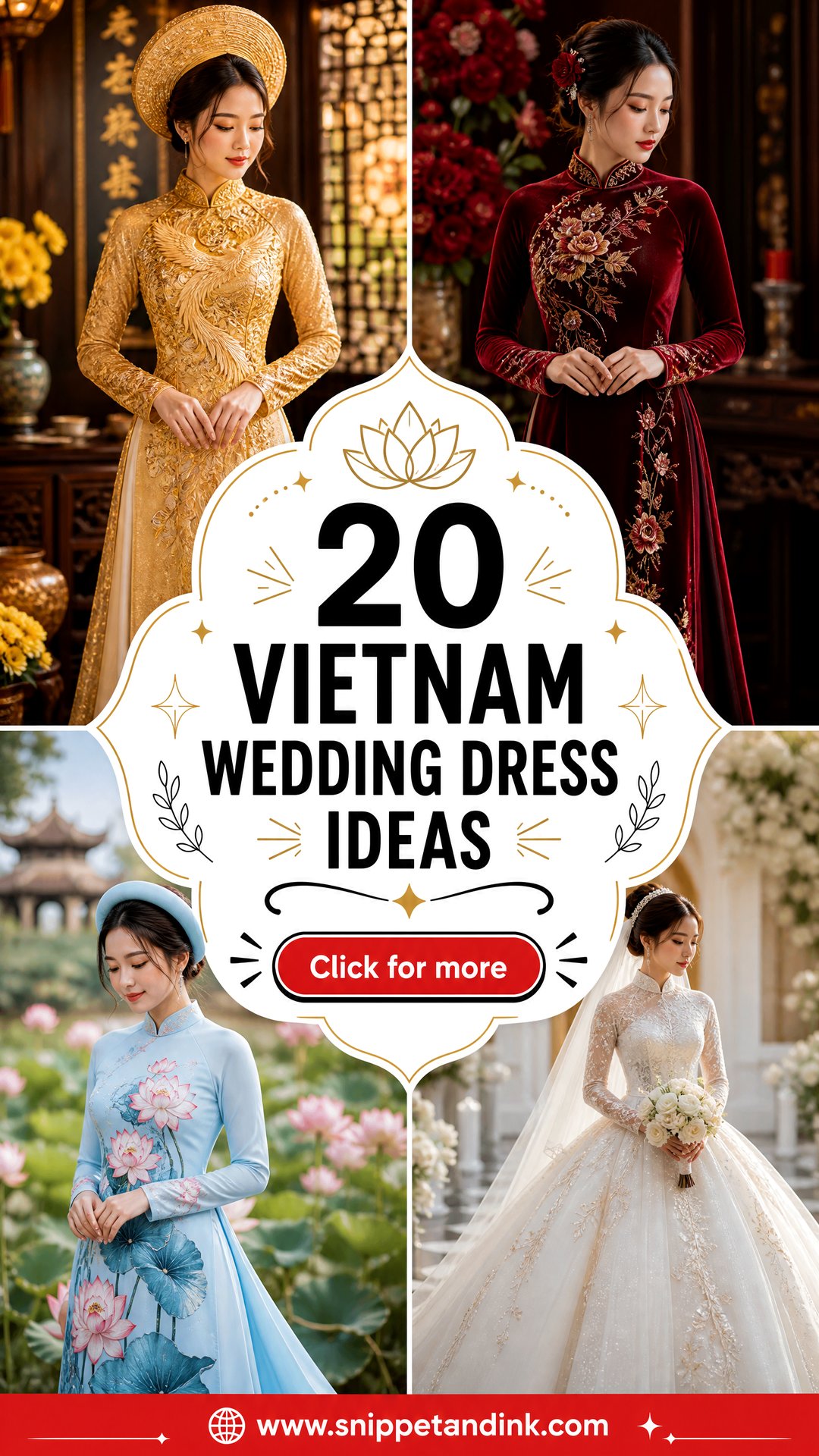
Most Vietnamese brides I dress end up wearing more than one outfit, because the engagement procession, the tea ceremony and the reception each ask something different of the clothes. The ideas below start with the traditional red áo dài and move through lace, royal ceremonial robes and fusion gowns. An áo dài is a fitted tunic with long front and back panels worn over loose pants, and the whole garment lives or dies on how closely it follows your body. Red and gold still carry the most meaning at family rituals, but I regularly style white, blush, blue and green for modern couples. For each look I’ve noted the pants, shoes, jewelry and headwear I’d put with it.
Ordering a Bridal Áo Dài Early Enough for Two Fittings
An áo dài is cut so close to the body that a ready-made one almost never fits a bride properly at the waist and bust. I treat it as a made-to-measure garment, even when the fabric is bought off the shelf. For a plain silk tunic, I’d order about three months out. Heavy hand embroidery, beading or a custom Nhật Bình robe needs longer, often four to six months, and more if the tailor is overseas and the garment has to be shipped.
The measurements a tailor needs are more detailed than a gown fitting: bust, under-bust, waist, hip, the distance from shoulder point to bust point, armhole, upper arm and the length from the collar to where you want the panels to end. Wear the bra and shoes you plan to wear on the day when you’re measured. Shoe height decides where the pant hem falls, and the pants should just brush the top of the shoe.
- First fitting: check the waist curve and that the side slits start just above the hip bone, not at the waist.
- Second fitting: sit, raise your arms, bow and kneel. Watch the collar and the side seams.
- Ask for a few centimetres of seam allowance at the side seams if your weight may change before the wedding.
- Silk can shrink slightly when pressed with steam, so the final press should happen after the last fitting.
1. Red Vietnamese Wedding Áo Dài
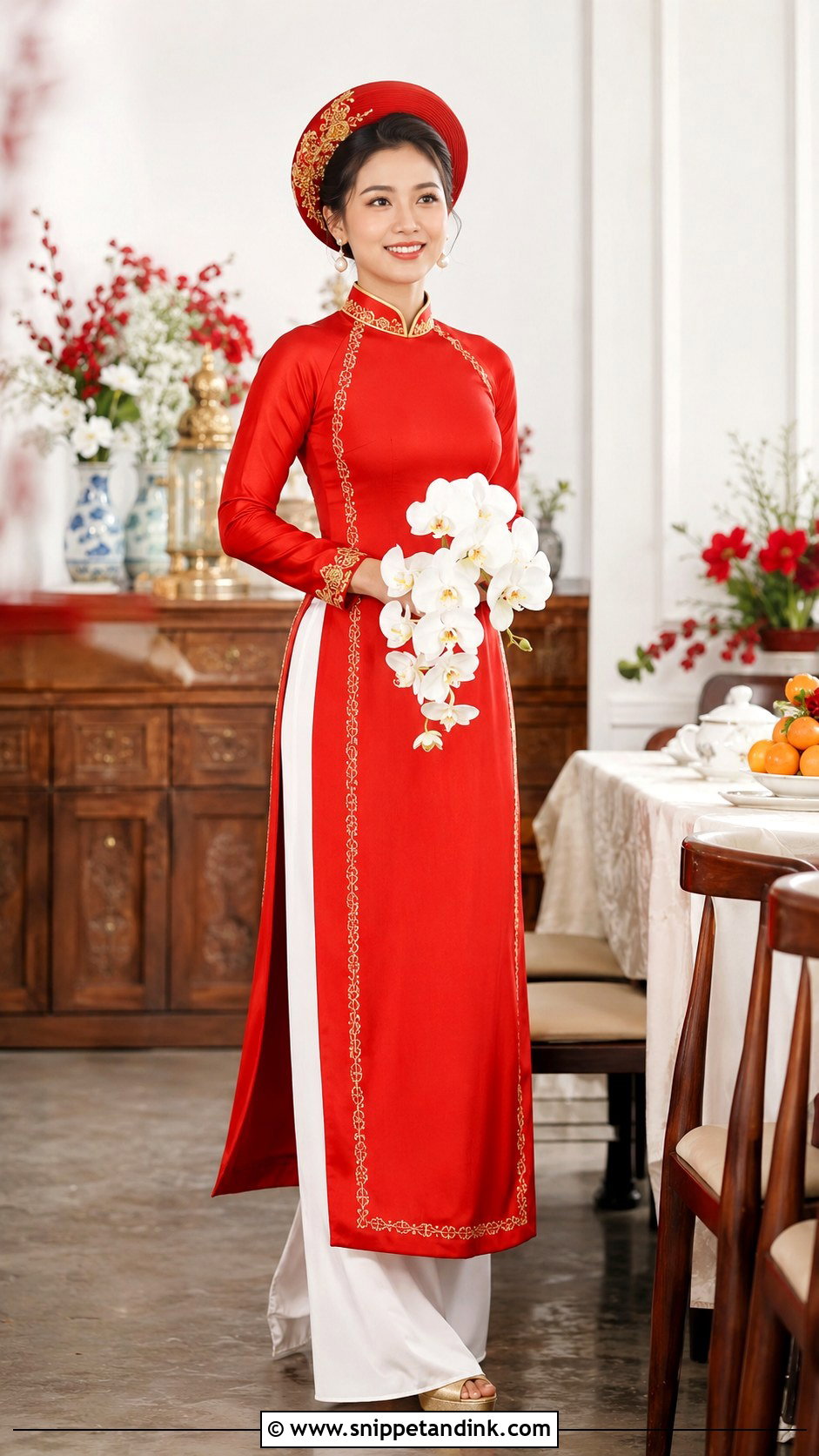
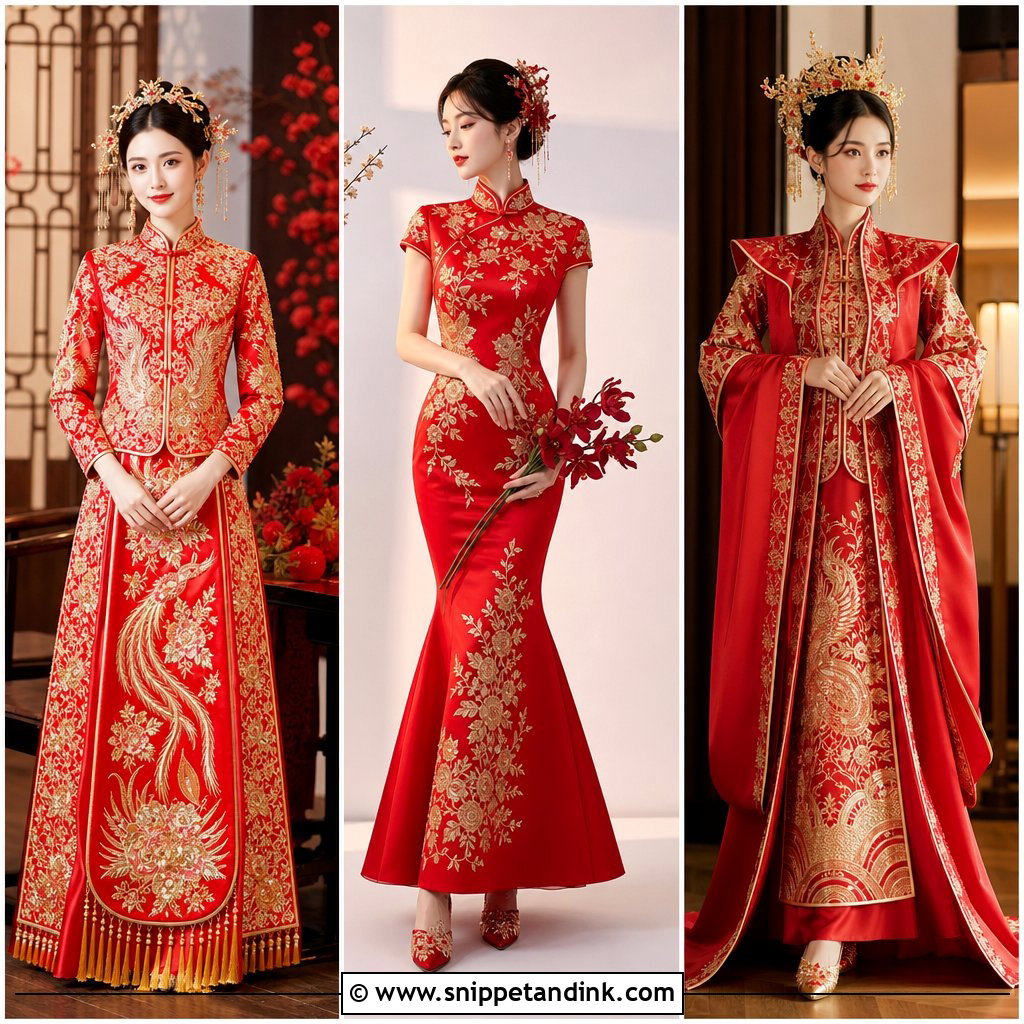
Red silk or brocade is still the outfit most families picture for a traditional Vietnamese wedding ceremony, since red stands for luck and happiness. I look for a high collar, long sleeves and panels that reach at least mid-calf, then pair the tunic with white or matching red silk pants. Keep the gold embroidery to the collar, cuffs and hem; brocade is already busy, and a fully embroidered red tunic reads flat in photos. A khăn vấn in the same fabric, pearl drops and gold block heels finish it. Block heels matter here: you will be bowing, kneeling for blessings and pouring tea, and a stiletto makes that awkward.
2. White Lace Vietnamese Wedding Áo Dài
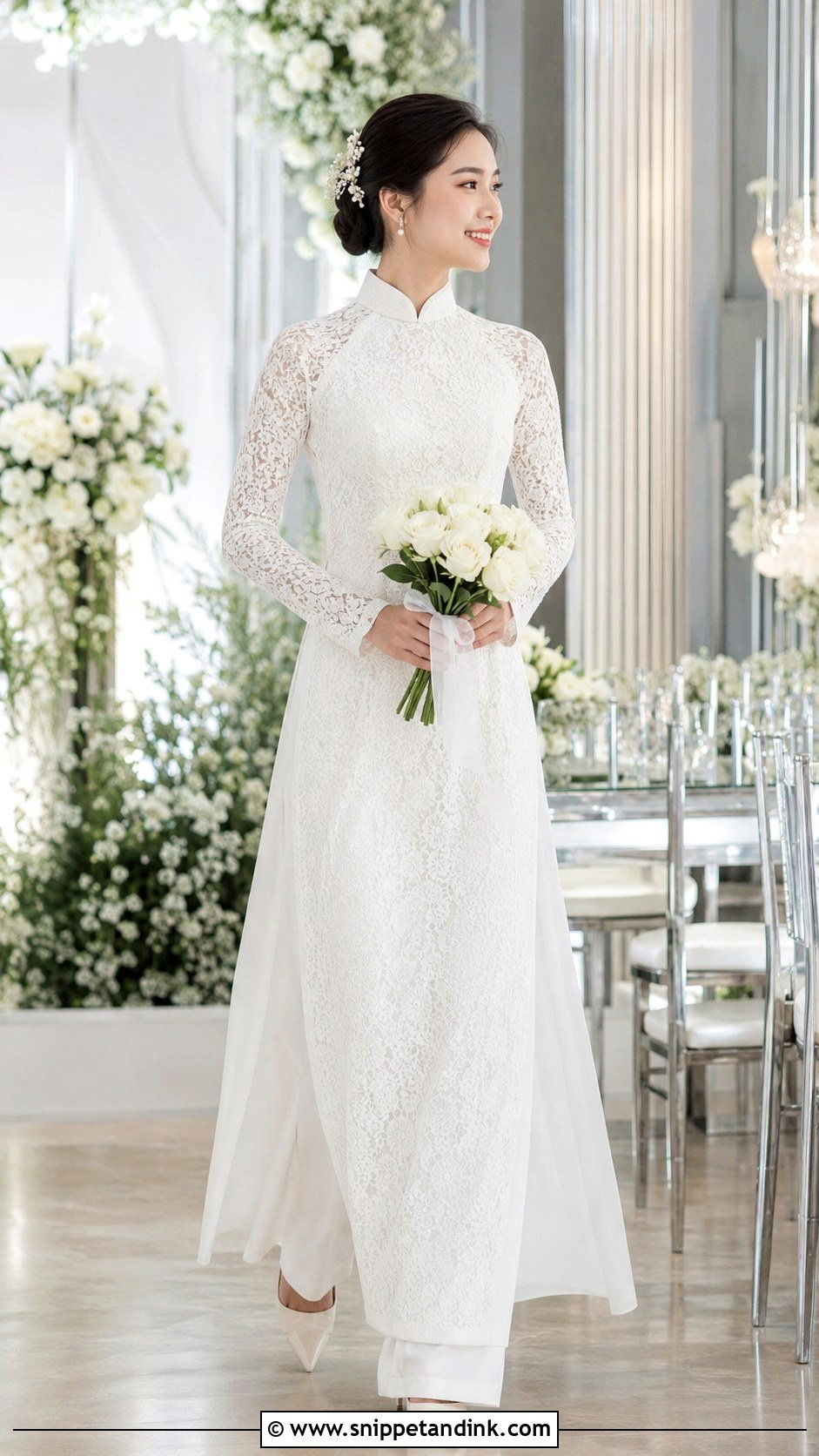
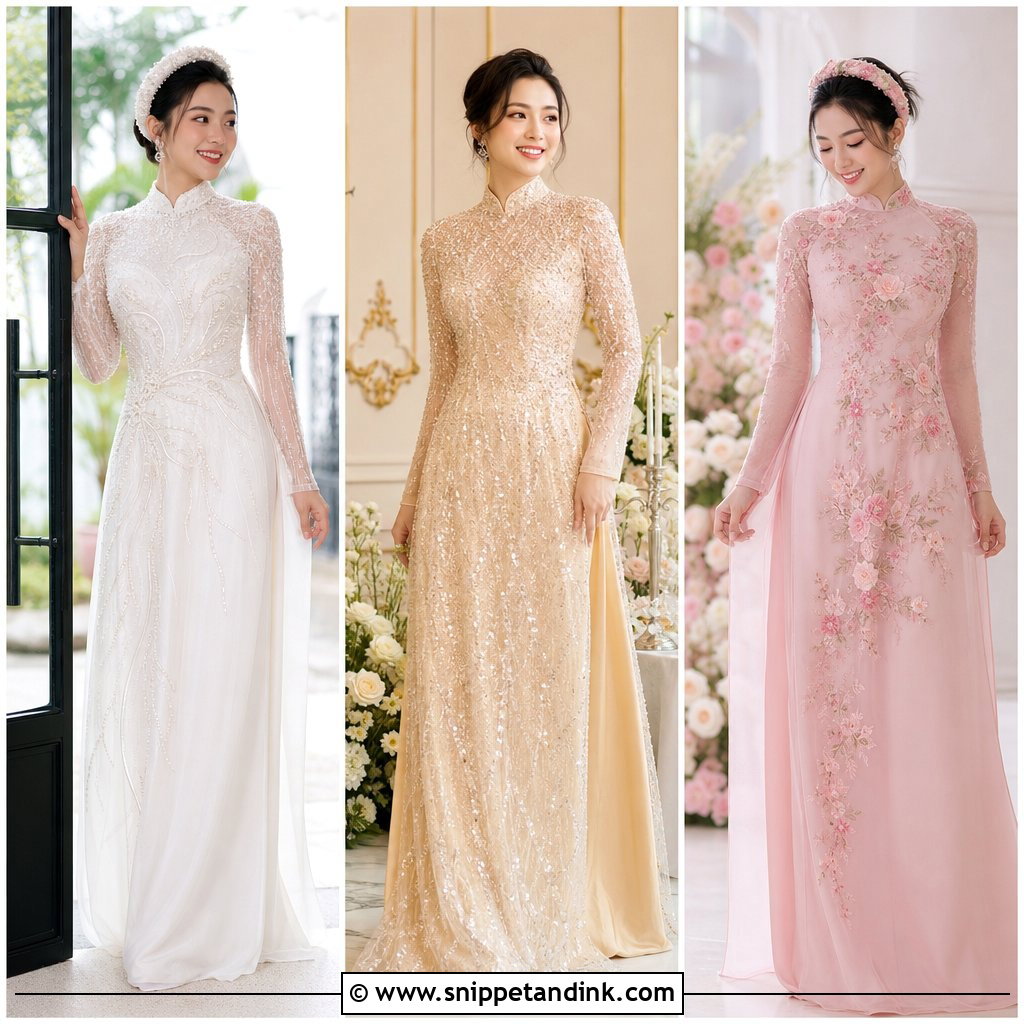
White lace over a solid lining is the version I steer brides toward when they want something closer to a Western gown without losing the áo dài shape. The lining is not optional. Unlined lace on a fitted bodice shows every seam of your bra, and the pattern disappears against skin in photos. Keep the neckline high and the sleeves fitted, then go quiet on accessories: pearl studs, a slim pearl comb, pointed ivory heels. If the lace is heavily corded, a simple low bun lets the fabric carry the look.
3. Red Phoenix Vietnamese Wedding Áo Dài
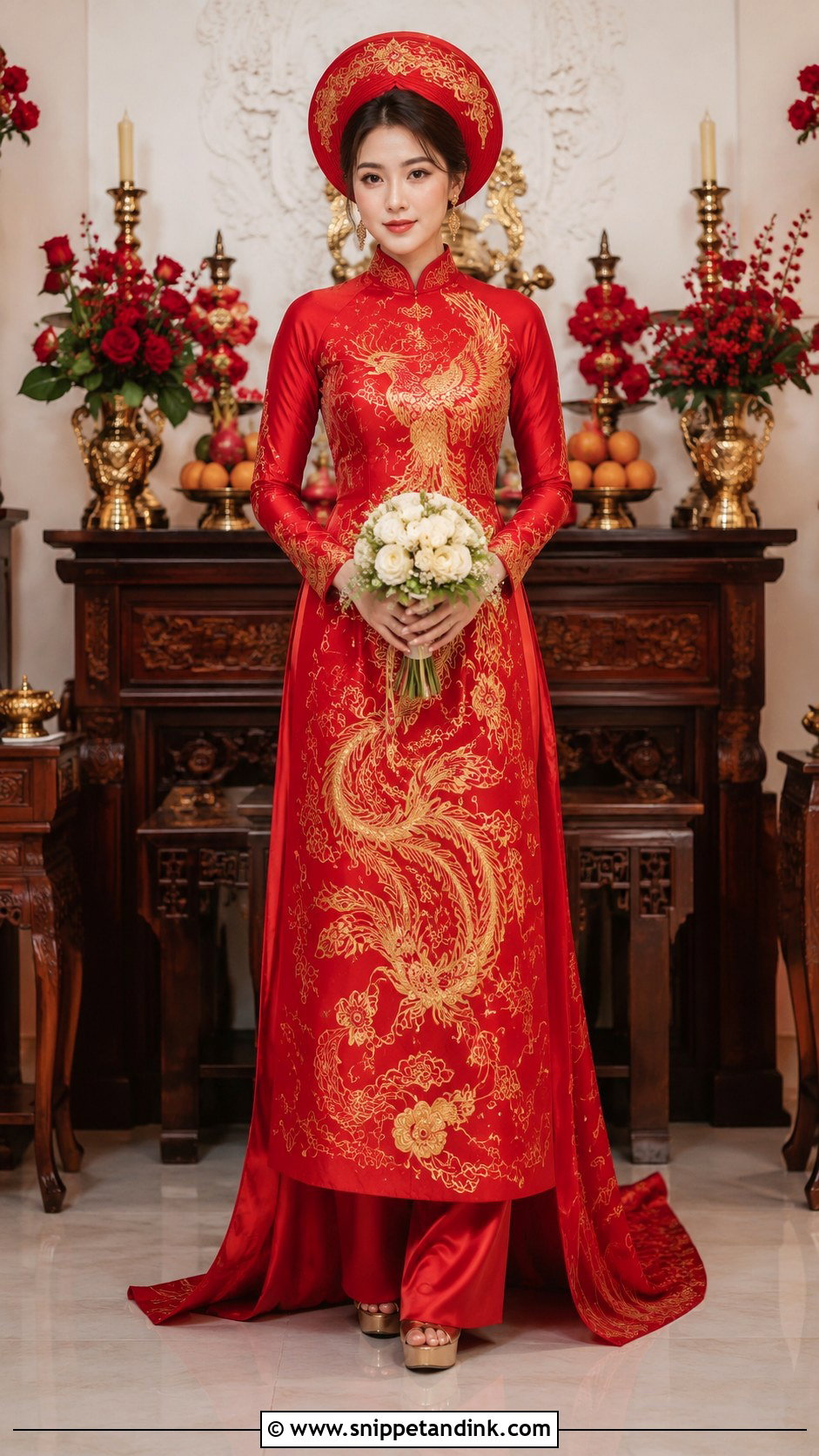
Phoenix embroidery is traditionally the bride’s motif, so it belongs on her tunic rather than the groom’s. Where it sits changes everything. I prefer the main bird running diagonally across the bodice or climbing one front panel, because the back panel is mostly hidden when you sit for tea. Gold thread with a scattering of small crystals is plenty; dense beading makes the panels hang stiffly and swing rather than flow. Match the khăn vấn to the tunic fabric, keep the jewelry to small gold drops, and carry a compact arrangement of ivory roses so your hands are free to greet relatives.
4. Gold Vietnamese Wedding Áo Dài
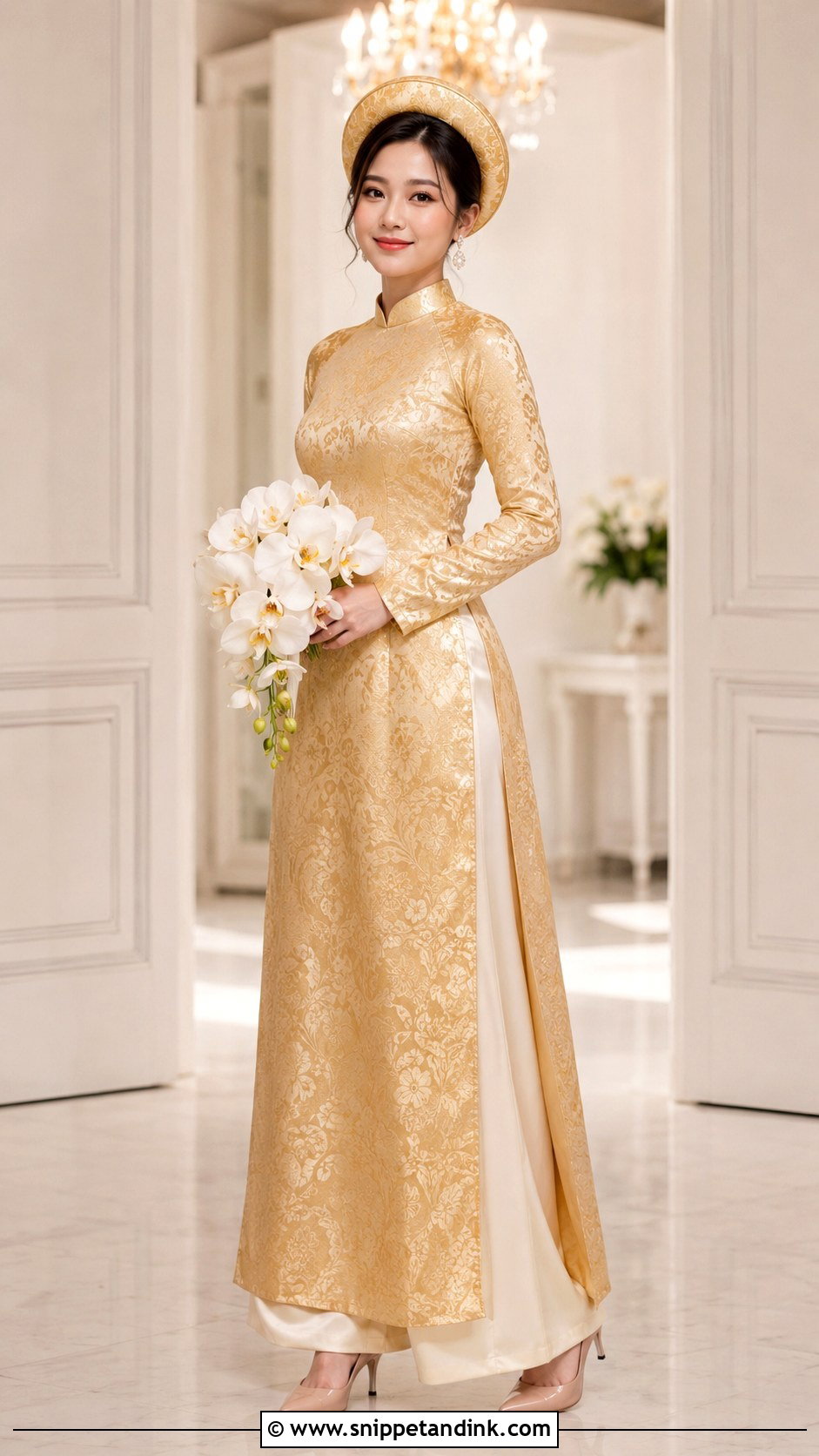
Gold works best indoors, under warm banquet lighting, which is why I usually suggest it for an evening reception or a second entrance rather than an outdoor morning ceremony where it can look brassy. Champagne-gold jacquard or embroidered tulle over a smooth lining gives sheen without the costume effect of metallic lamé. Ivory pants stop the outfit from feeling heavy. The mistake I see most is mixing yellow gold fabric with rose-gold shoes and silver earrings; pick one metal tone and hold it through every accessory, from the heels to the comb.
5. Blush Pink Vietnamese Wedding Áo Dài
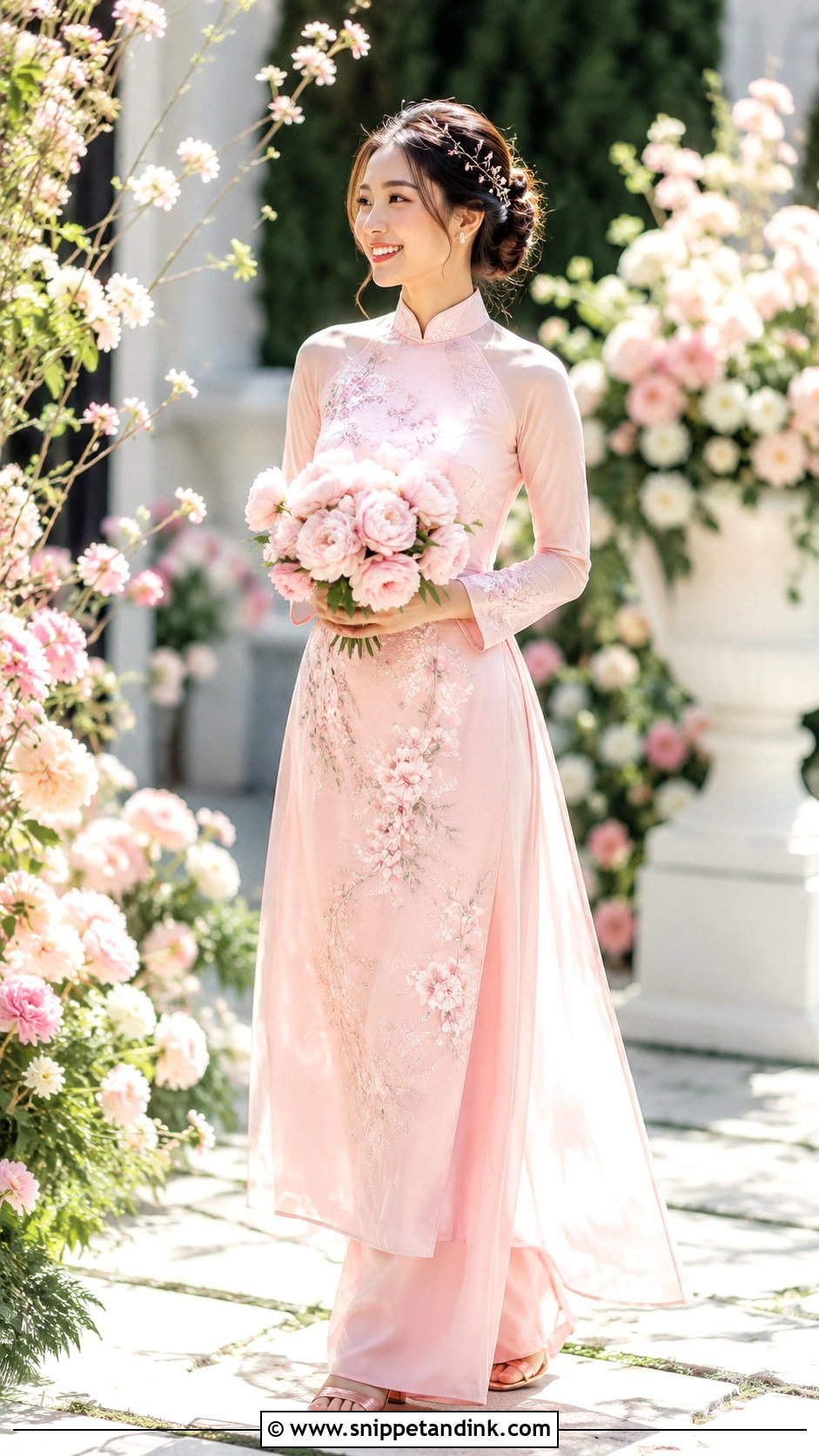
Blush pink suits brides who want festivity without the intensity of red, and it is kind to most skin tones in daylight. I’d choose silk or chiffon with light floral embroidery at the shoulders or the lower panels. Matching pants give one long line, which helps petite brides; ivory pants add contrast if you’re taller. Rose-gold heels, pearl studs and a hair vine in a low updo complete it. One honest warning: very pale pink silk shows perspiration at the underarms, so ask for dress shields sewn into the lining.
6. Champagne Beaded Vietnamese Wedding Áo Dài
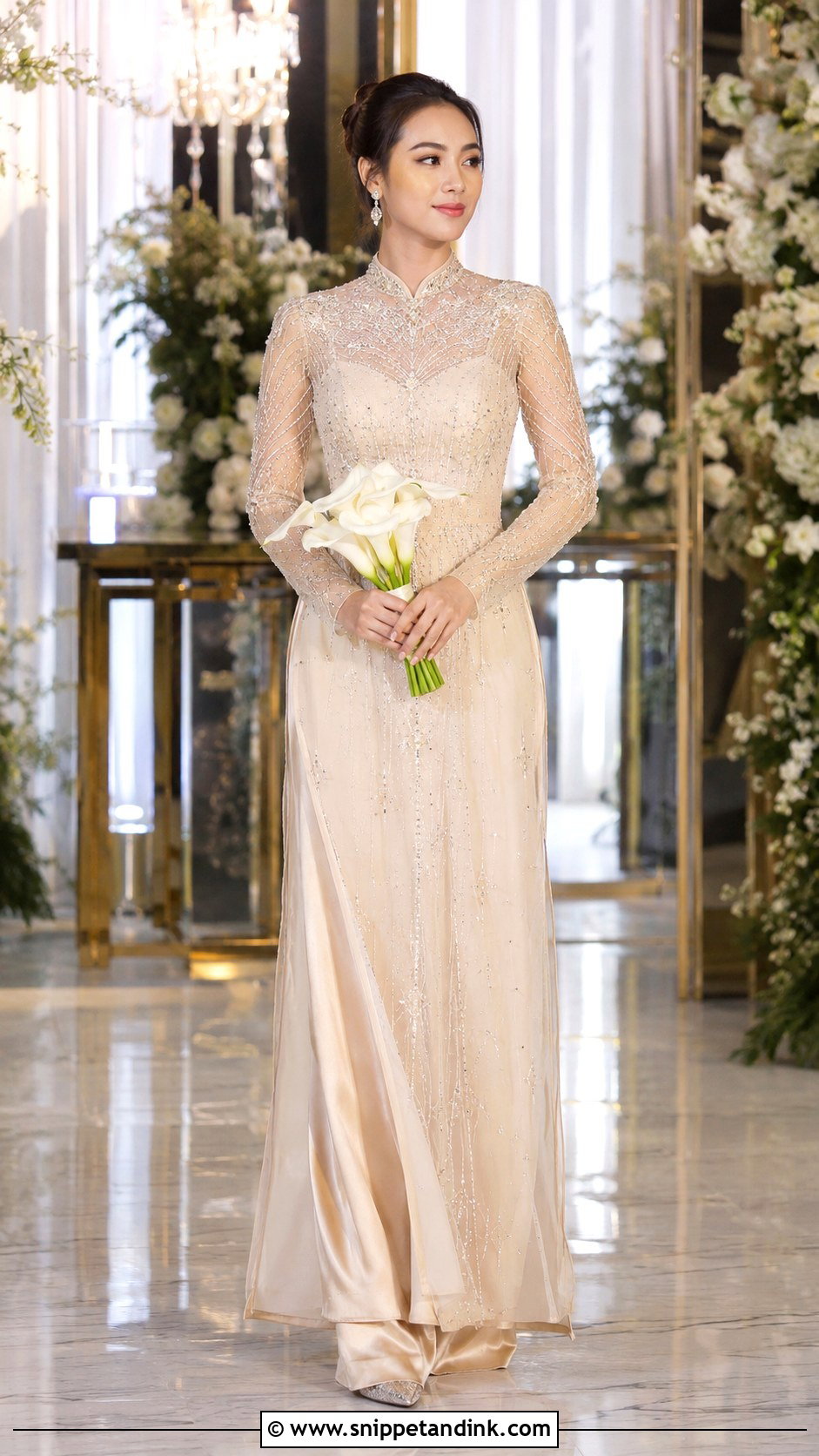
Beading concentrated at the neckline and bodice, then thinning out down the panels, is how I like to see a champagne áo dài embellished. That gradient keeps the weight up top, so the panels still move when you walk. Fully beaded panels drag, snag on chairs and pull the side slits open. Pair the tunic with smooth champagne pants, pointed metallic heels, crystal drops and a polished chignon, and skip the jeweled headpiece because the dress is already doing that job. It shines in a ballroom where the lighting is controlled; in harsh noon sun the beading glints in every photo.
7. Ivory Minimalist Vietnamese Wedding Áo Dài
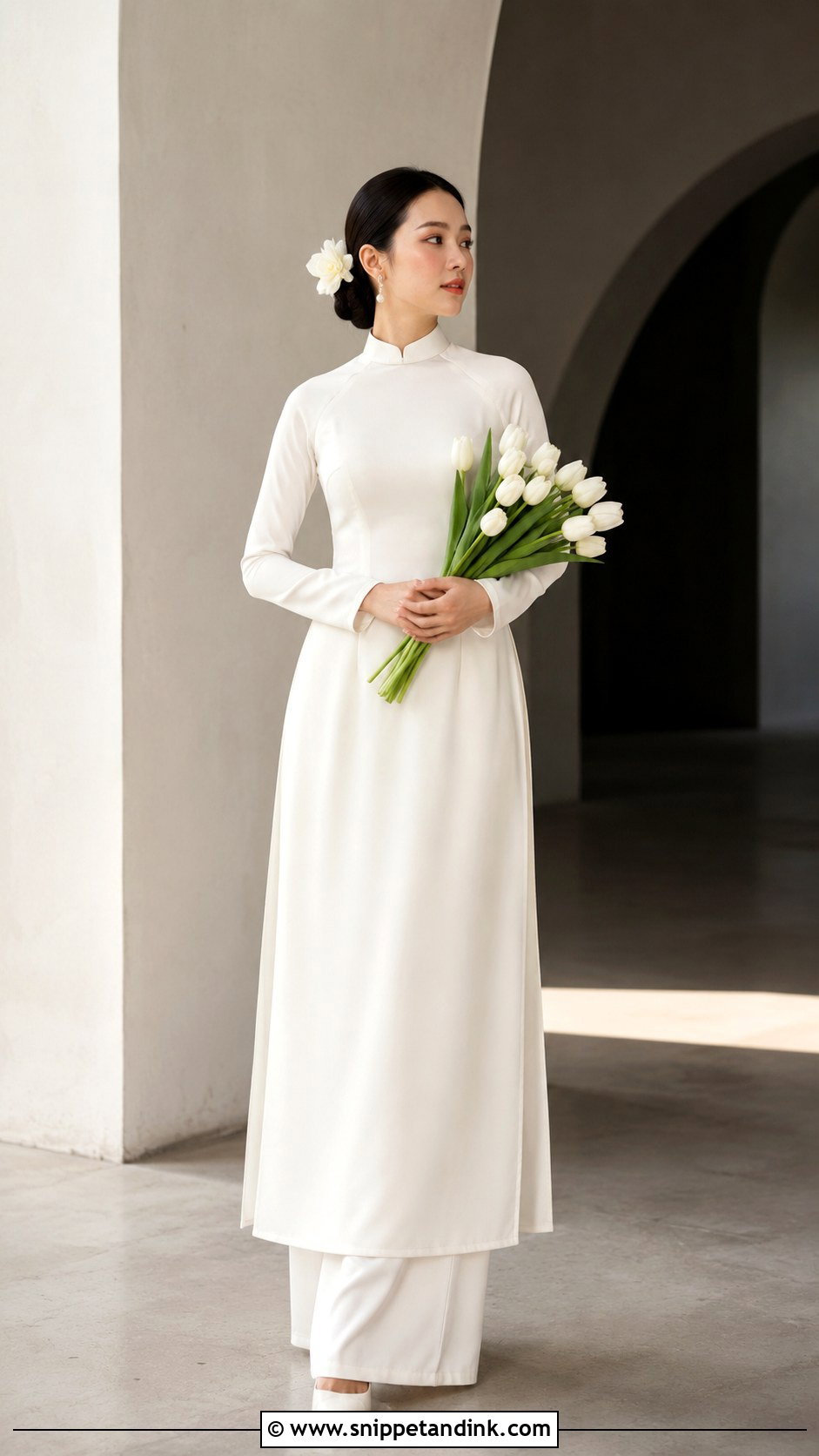
There is nowhere to hide in a plain ivory áo dài. Without embroidery, a wrinkle at the waist or a panel that twists to one side is the first thing anyone sees, so I tell brides to spend the budget on fit rather than decoration. Smooth silk crepe, a neat standing collar and unembellished panels over wide-leg ivory pants make a clean, modern outfit for a courthouse or a minimalist venue. Add sculptural pearl earrings, a sleek bun and one ivory flower behind the ear. If you want something personal, have your initials or a family name embroidered inside the hem where only you know it’s there.
8. Royal Blue Vietnamese Wedding Áo Dài
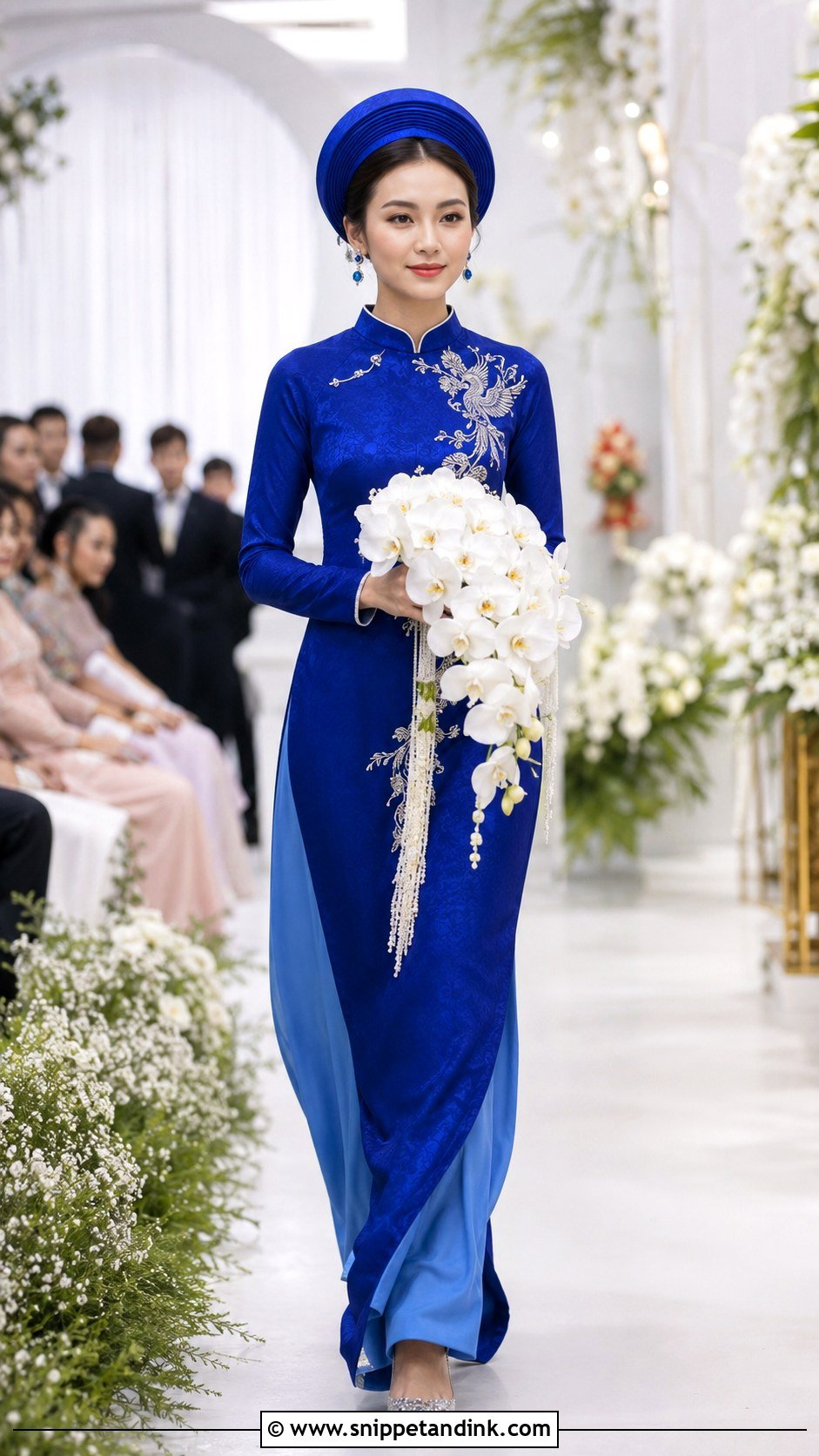
Royal blue is the color I suggest when a bride wants something formal that is clearly not red. Silk brocade with a subtle woven pattern, or plain silk with restrained silver embroidery on the collar and front panel, keeps it refined. Matching blue pants make a dramatic monochrome; white pants lighten it for daytime. Silver heels, sapphire-toned earrings and a structured blue khăn vấn complete the bride’s side. If the groom wears the same blue, use the identical fabric but give him less embroidery, so the pair looks related while the bride’s tunic stays the more detailed of the two.
9. Emerald Green Vietnamese Wedding Áo Dài
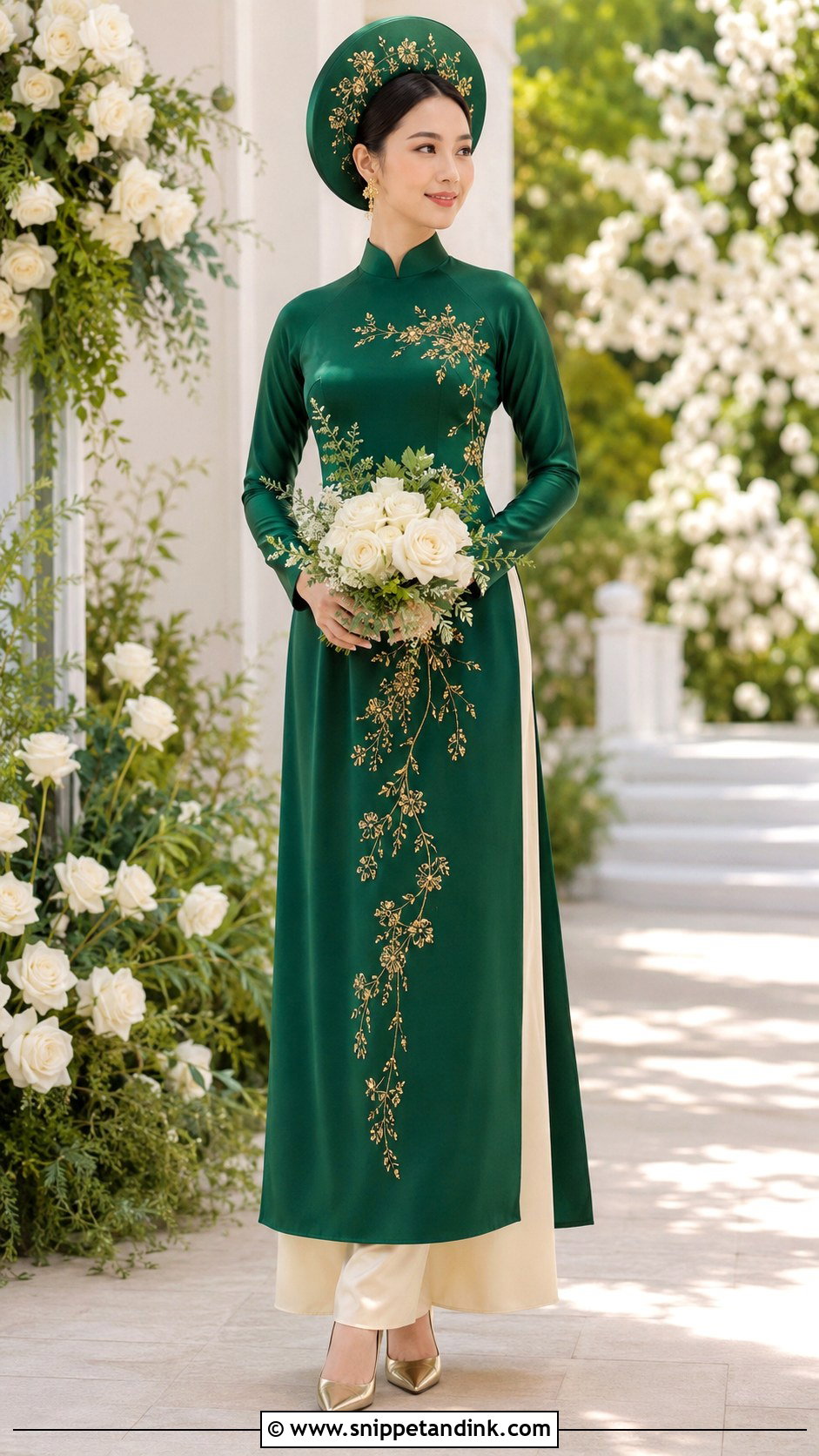
Emerald is a deep, saturated green, and it needs warm gold beside it, which is why I pair it with gold botanical embroidery rather than silver. Satin or silk brocade holds the color well; chiffon in emerald tends to look thin. Wear emerald pants for full drama or ivory for a softer read. Keep the embroidery around the upper bodice and panel edges so the color itself does the work. It suits autumn and garden venues, and warm neutral makeup with a smooth low bun sits easily against it.
10. Burgundy Velvet Vietnamese Wedding Áo Dài
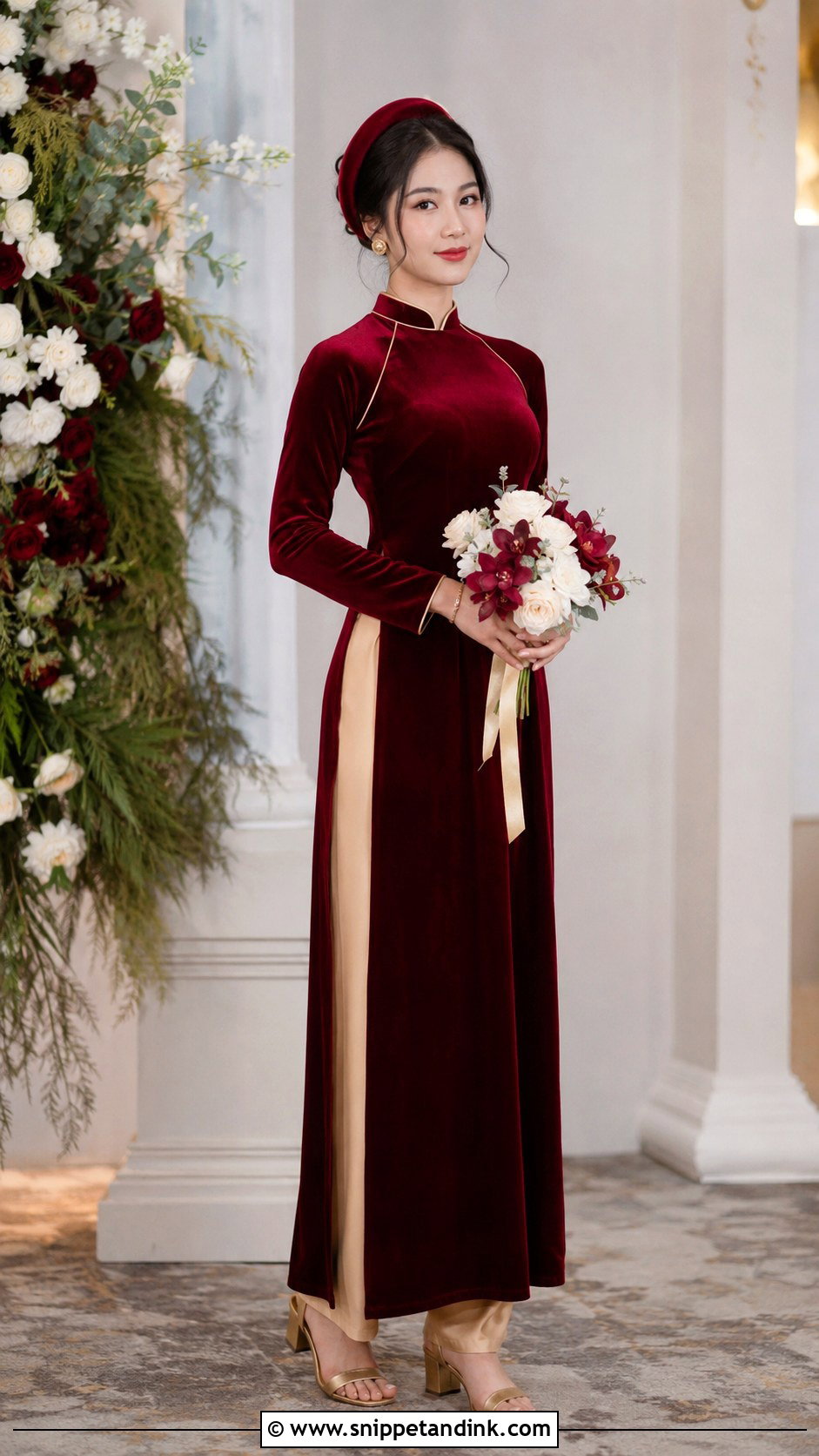
Velvet is heavy, both to look at and to wear, so I only recommend burgundy velvet for a cool-season or air-conditioned indoor wedding. Choose a streamlined tunic with almost no embroidery; fine gold piping along the collar, cuffs and panel edges is enough to outline the shape. Lightweight silk pants in burgundy or champagne keep the outfit from feeling like a coat. Velvet also crushes where you sit, so plan your portraits before the banquet, and ask the tailor to line the bodice in silk so it doesn’t cling. Gold block heels and a matching khăn vấn finish it.
11. Pastel Blue Lotus Vietnamese Wedding Áo Dài
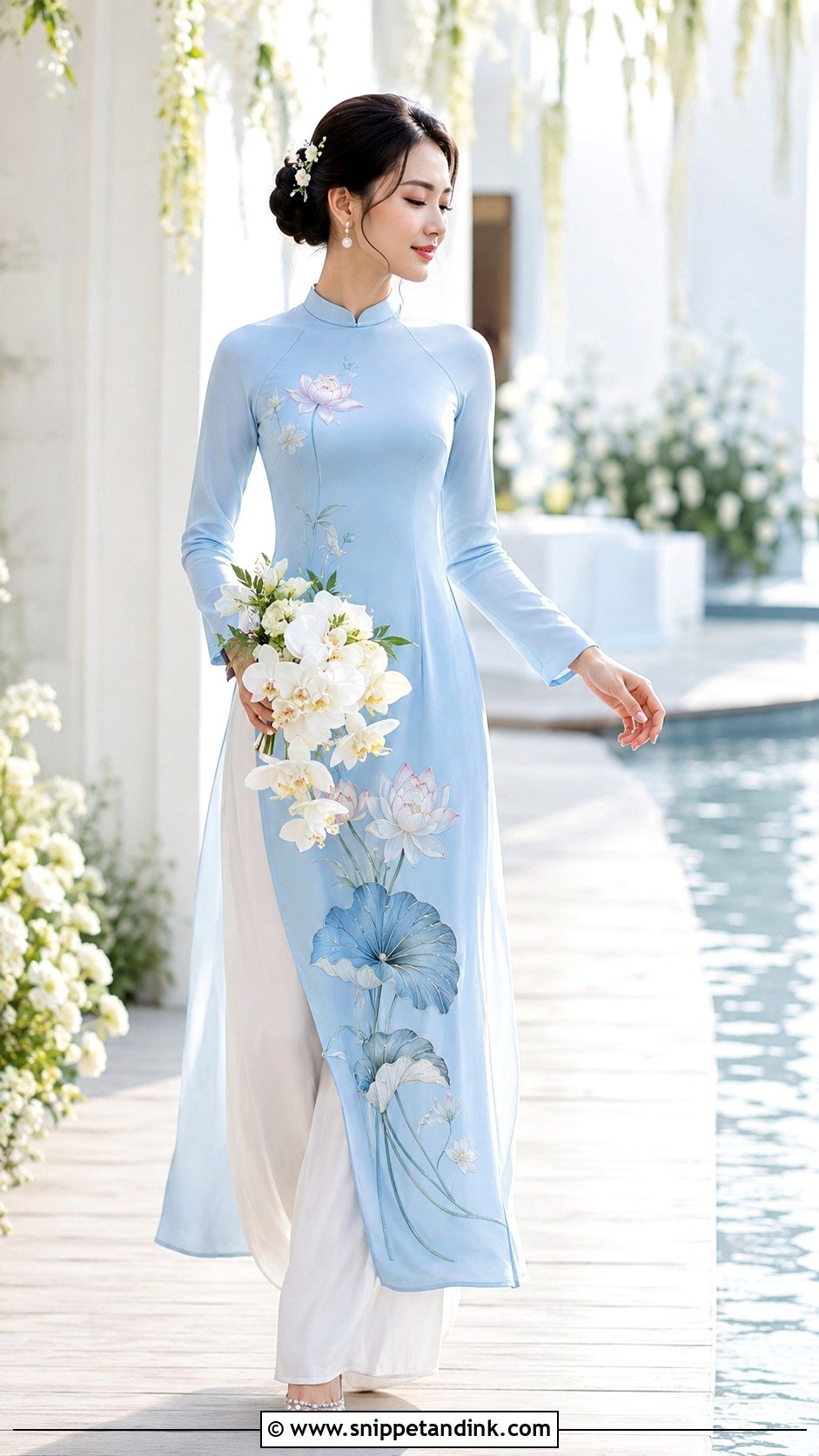
Lotus is a meaningful flower in Vietnam, and on a pastel blue áo dài it reads calm and fresh, which I love for a morning tea ceremony or a waterside summer wedding. Embroider the lotus near the waist and down the lower panels in soft silk, chiffon or organza. White or matching blue pants keep it airy. Pearl heels, pearl earrings and a low bun with small white flowers are all you need. Ask the tailor for tonal thread if you like a whisper of pattern, or pale pink and silver if you want the flowers to be seen across the room.
12. Nhật Bình Vietnamese Wedding Dress
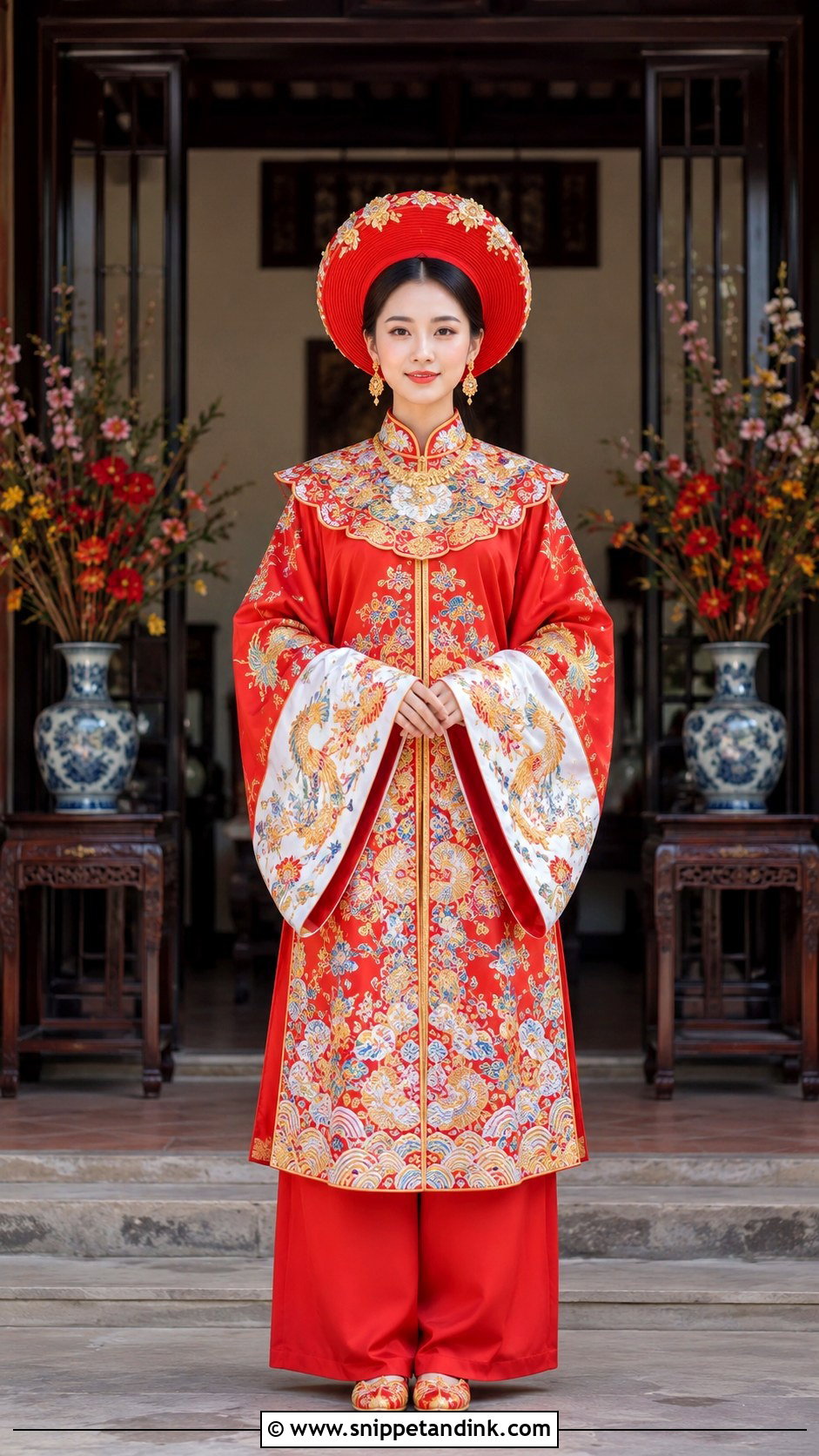
The Nhật Bình is a court robe with a broad, squared collar that lies over the shoulders, wide sleeves and decorated borders, and it brings real formality to a heritage ceremony. Red, gold or deep blue work as the base color, worn over coordinated silk pants or a long inner skirt depending on the cut. I keep the bouquet tiny or leave it out, because the collar already frames the face and a large arrangement hides it. This is not a garment to improvise. Work with a Vietnamese designer who knows how the collar is constructed and which headpiece belongs with it, so the result is respectful rather than costume.
13. Áo Ngũ Thân Vietnamese Wedding Dress
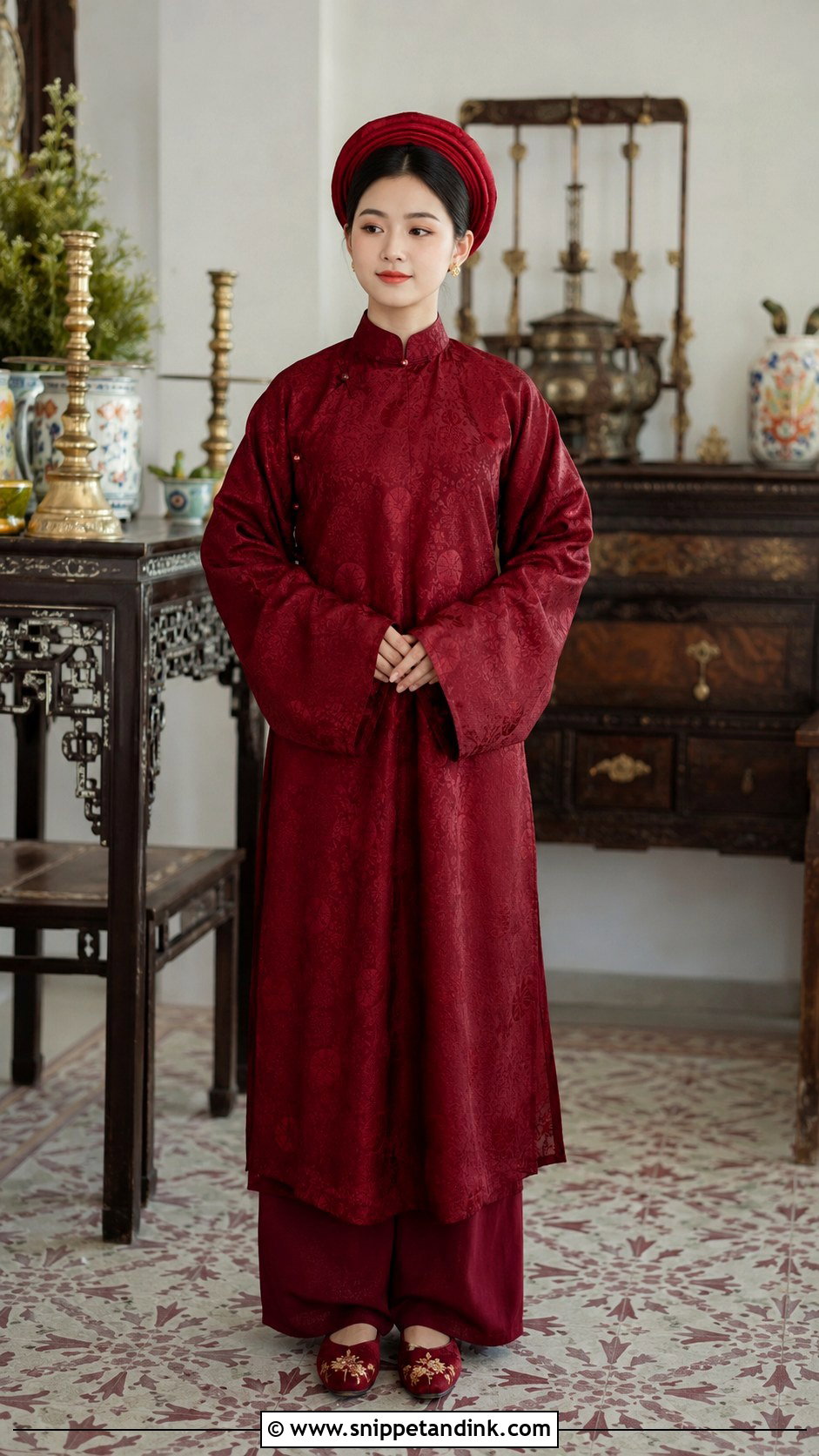
The áo ngũ thân predates the fitted modern áo dài and is cut from five panels, giving it a straighter, looser fall that many families find more traditional. Because it is not body-hugging, it is forgiving and comfortable through a long ancestor ceremony. Deep red, maroon, royal blue or gold brocade with traditional buttons all suit it, with restrained embroidered borders. Wear it over loose silk pants with embroidered flats or low block heels. I’d resist adding crystals or modern trims; the proportions of the panels and the weight of the brocade are what make this outfit look right.
14. Boat Neck Vietnamese Wedding Áo Dài
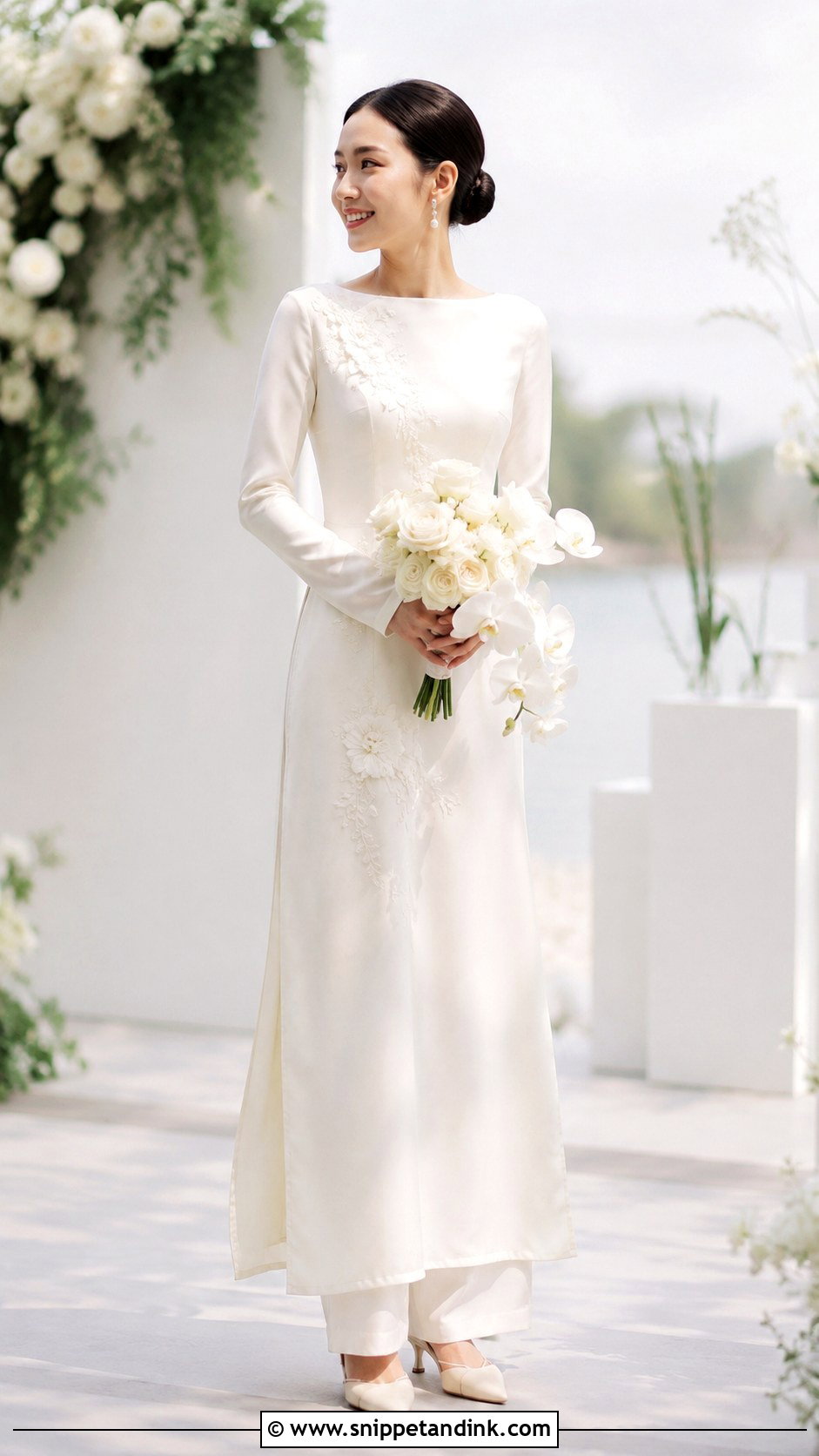
Plenty of brides tell me a high mandarin collar feels tight after a few hours, and a boat neck is my usual answer. The wider neckline sits across the collarbones while the fitted bodice and long panels keep the familiar áo dài shape, and it has become one of the common modern updates to the garment. White silk crepe or pale champagne satin with small floral appliqués at the neckline works well. Pair it with straight-leg matching pants and ivory slingbacks. Check the fit at the shoulders while raising your arms; a boat neck that’s cut too wide slips off the shoulder when you hug people.

15. Puff Sleeve Vietnamese Wedding Áo Dài
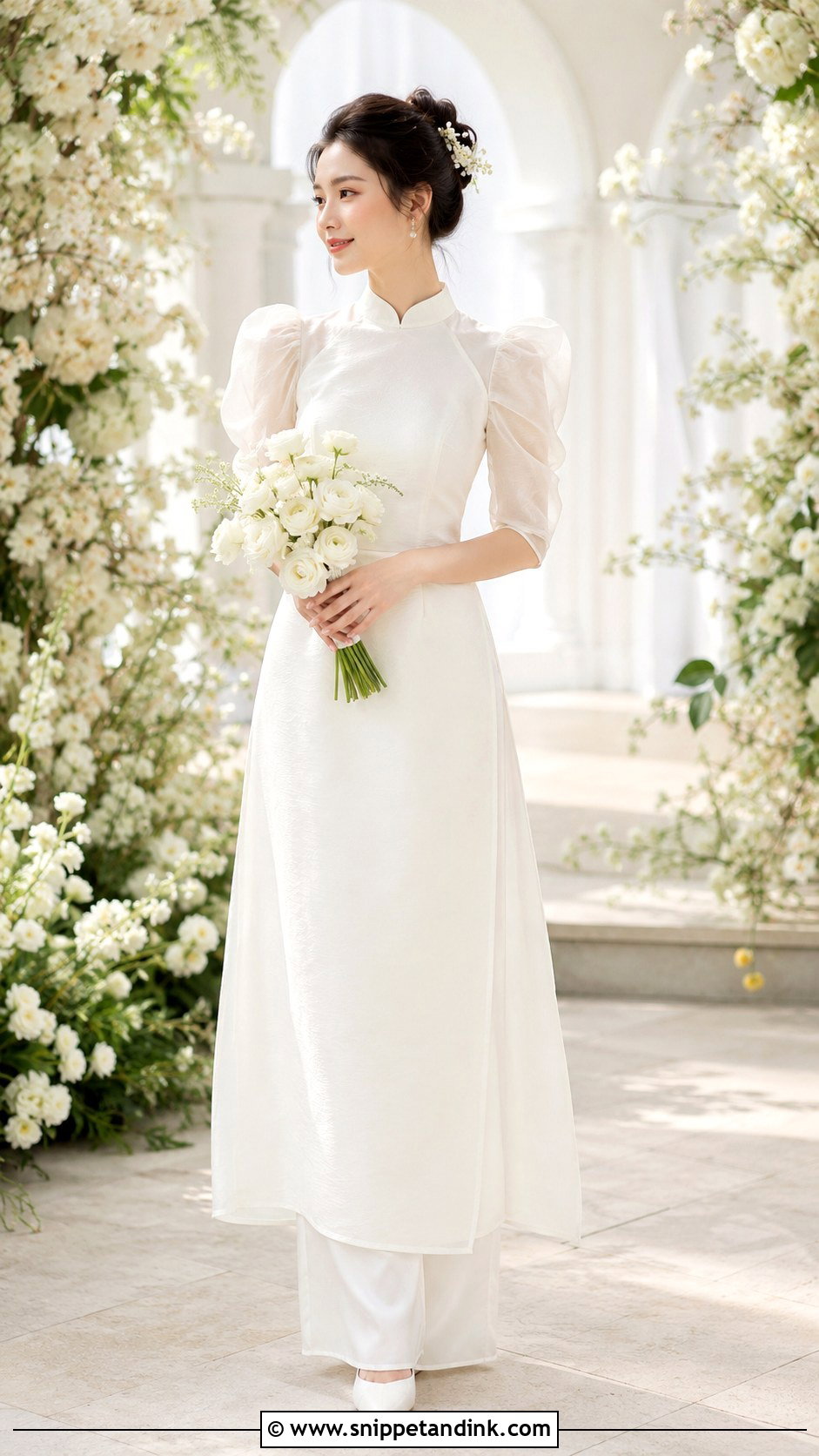
Puff sleeves change the proportions of an áo dài more than people expect. Lightly gathered organza with fitted cuffs gives a modern touch, but the volume has to match your frame: on a petite bride I keep the puff modest so the sleeves don’t overpower the narrow tunic, while taller brides can carry more. Keep the bodice smooth and plain so the sleeves are the one feature. Straight white pants, pointed satin heels and small pearl earrings sit underneath. Organza crushes when you hug or wear a jacket, so a handheld steamer in the bridal room is worth packing.
16. Illusion Lace Vietnamese Wedding Áo Dài
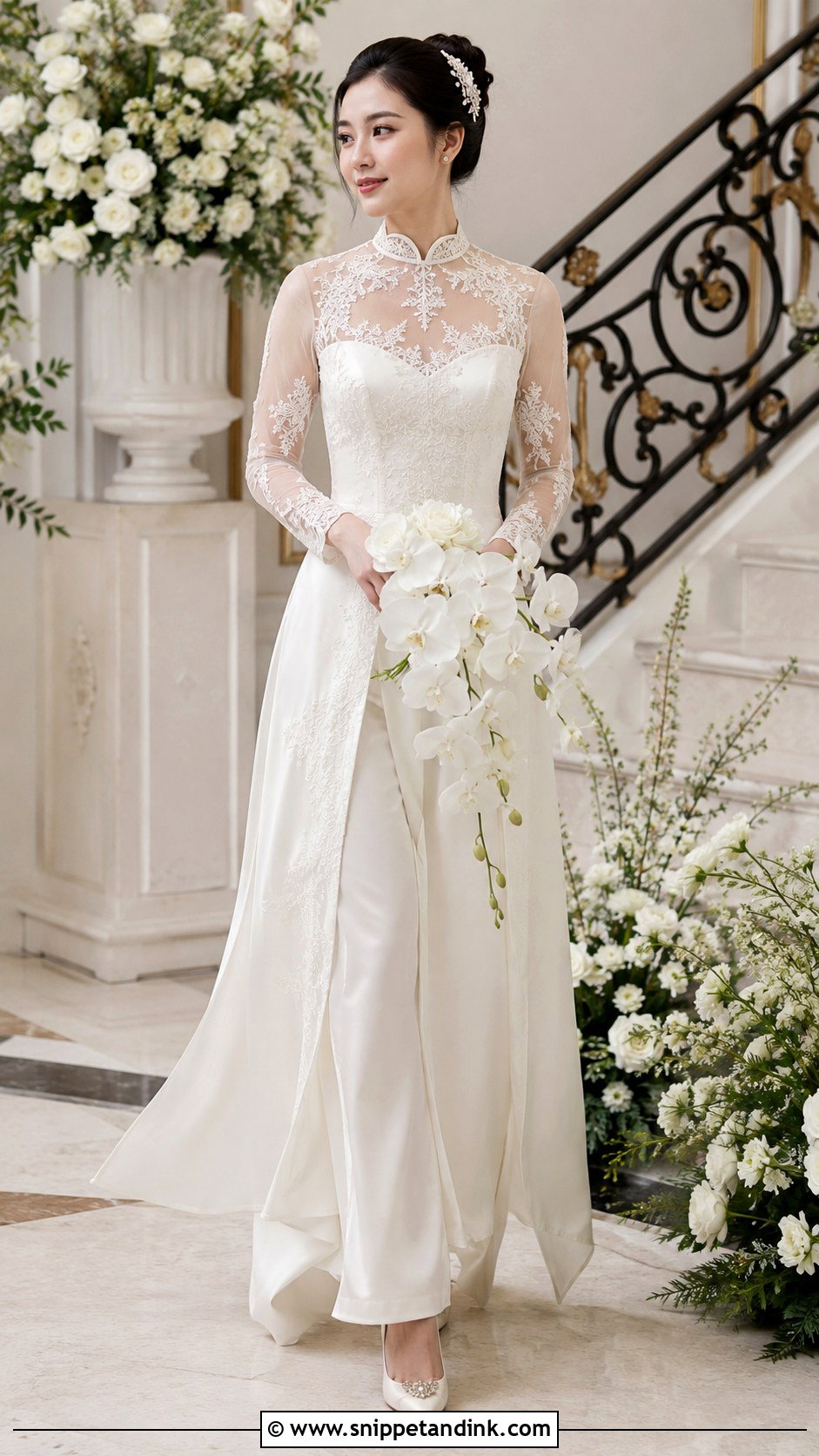
Illusion lace on an áo dài should sit where it adds lightness without asking you to manage coverage all day: the upper back, the sleeves, a band above the collar. I always have the lace mounted over a lined bodice and check the seams, because a pattern that doesn’t match across the side seam is very visible on a fitted garment. Satin panels and matching wide-leg pants balance the busy upper half. At the final fitting, sit, bend, kneel and bow in it. Whatever shifts during those movements will shift during the tea ceremony too.
17. Vietnamese Wedding Áo Dài With Train
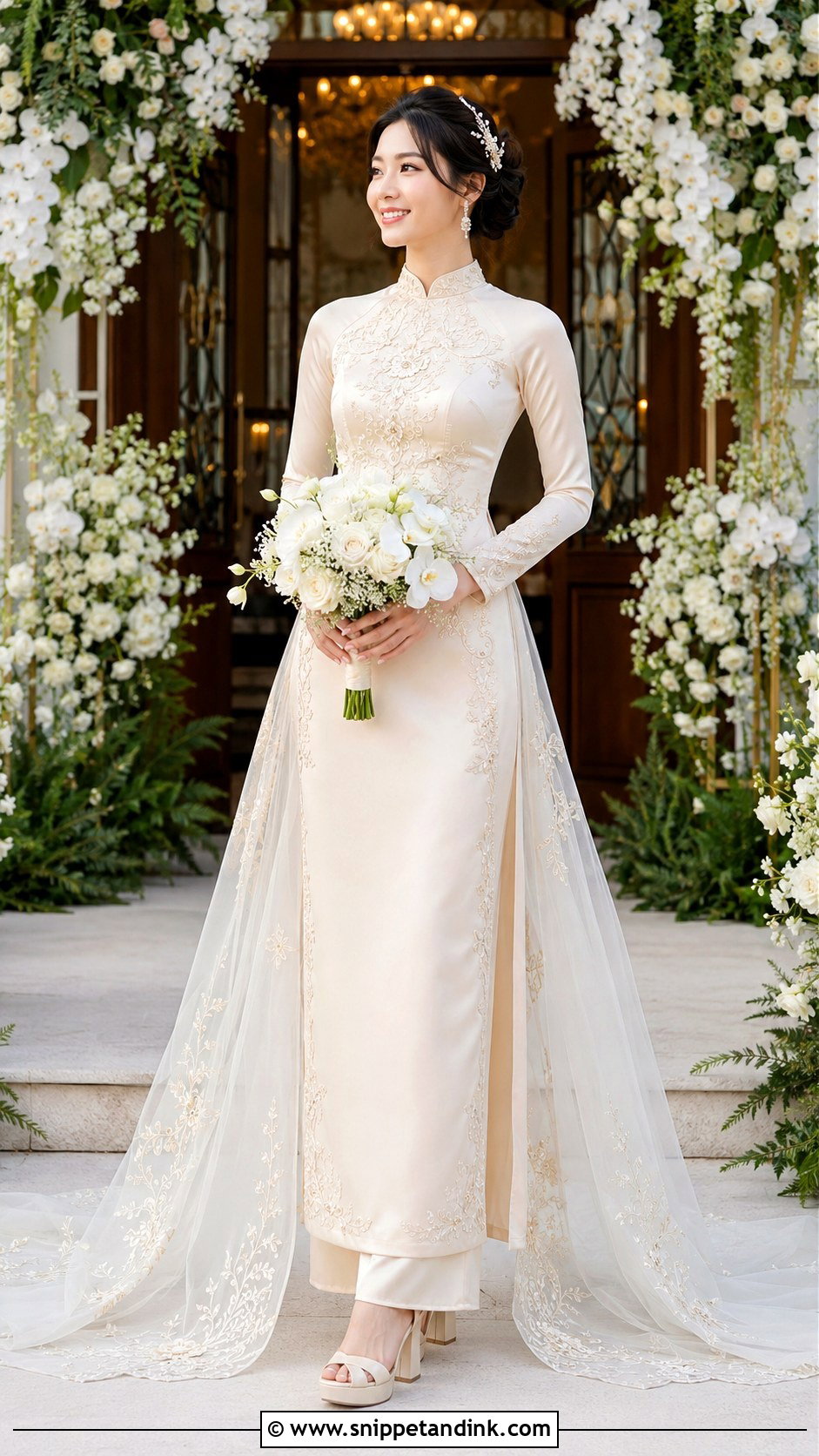
A train is not part of the traditional áo dài, so I treat it as a detachable layer that attaches at the waist over the panels and comes off after the entrance and portraits. Lightweight organza or embroidered tulle keeps it from dragging the tunic backward. Concealed hooks or snaps are better than buttons, which pull at the waist seam. Wear supportive block heels, because you’re carrying extra fabric, and have the tailor test the train on stairs before the wedding. Once it’s off, you’re back to a practical áo dài for tea service and greetings.
18. Vietnamese Wedding Ball Gown With Áo Dài Collar
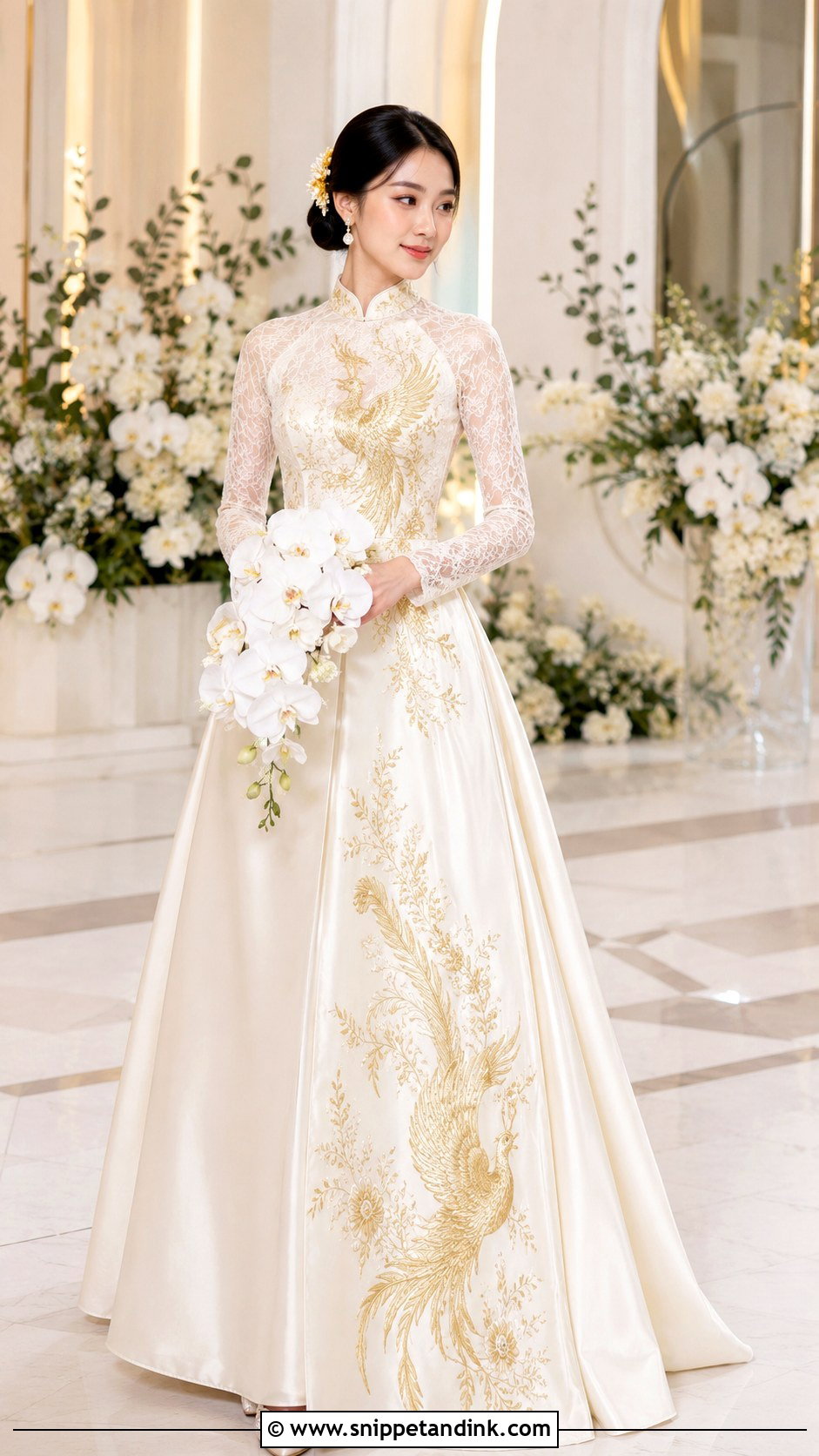
This is the dress for a bride who wants one formal gown in a Western ceremony that still nods to her family’s culture. An ivory ball gown with a standing áo dài collar, long lace sleeves and a full satin or tulle skirt makes a graceful fusion wedding outfit. I’d keep the Vietnamese embroidery, floral or phoenix, to the collar and waist. The collar is the hard part to get right, since a standing neckline on a heavy gown can pull forward; it needs interfacing and the bodice needs boning so the weight of the skirt doesn’t drag it down. A designer who builds the collar into the bodice pattern will give you a cleaner result than one who stitches it on afterward.
19. Convertible Vietnamese Wedding Áo Dài
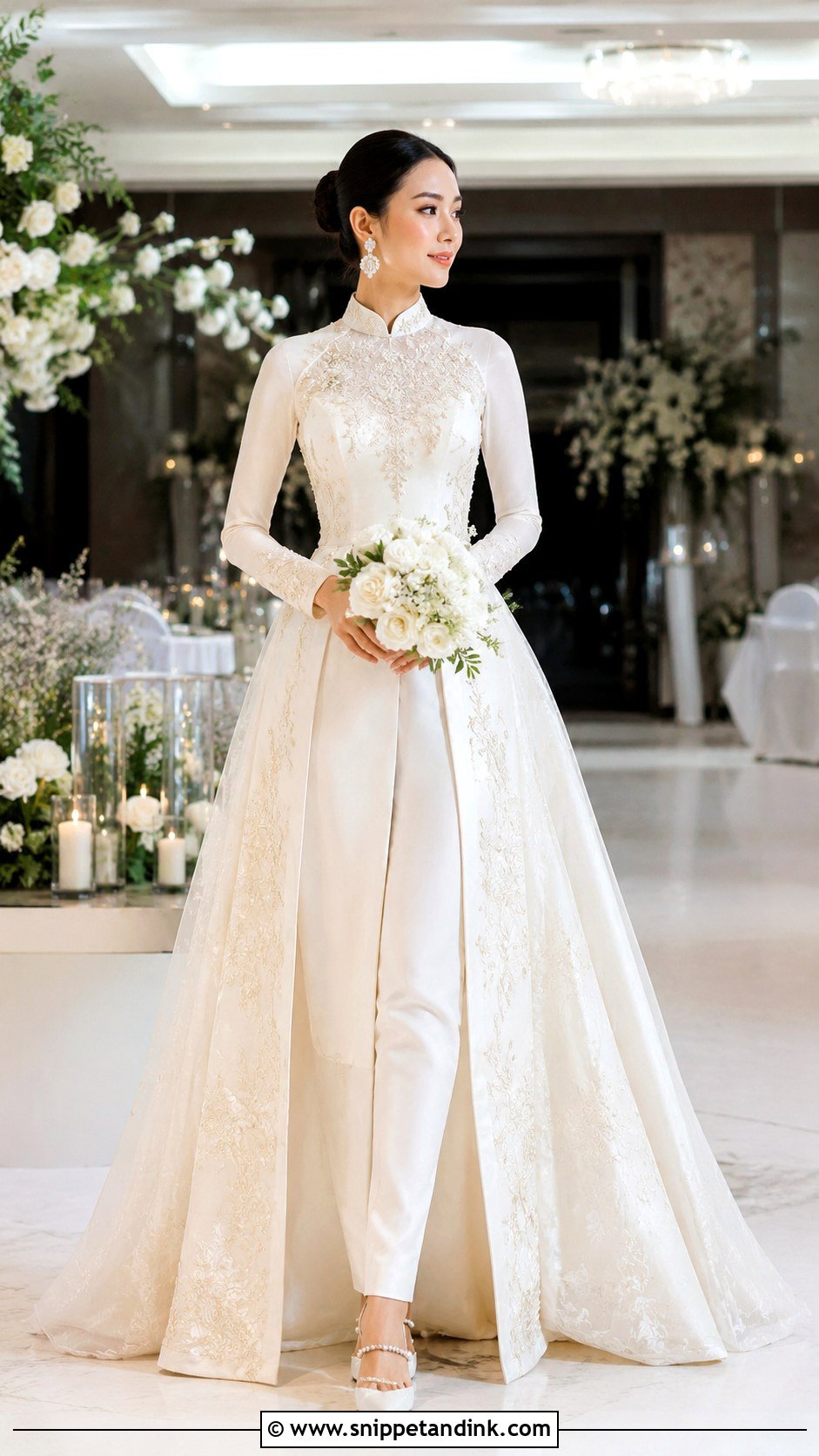
A convertible áo dài saves a full outfit change between the tea ceremony and the reception. The base is a fitted ivory bodice with slim silk pants; long embroidered panels attach for the traditional part, and a detachable full skirt goes over the pants later for a gown silhouette. Every piece should come from the same fabric family, or the conversion looks like two outfits meeting in the middle. Practice the change with whoever will help you, timed, at least once before the wedding. In my experience the fastenings are where these designs fail, so insist on strong concealed hooks and accurate hemming for both versions.
20. Matching Vietnamese Bride And Groom Áo Dài
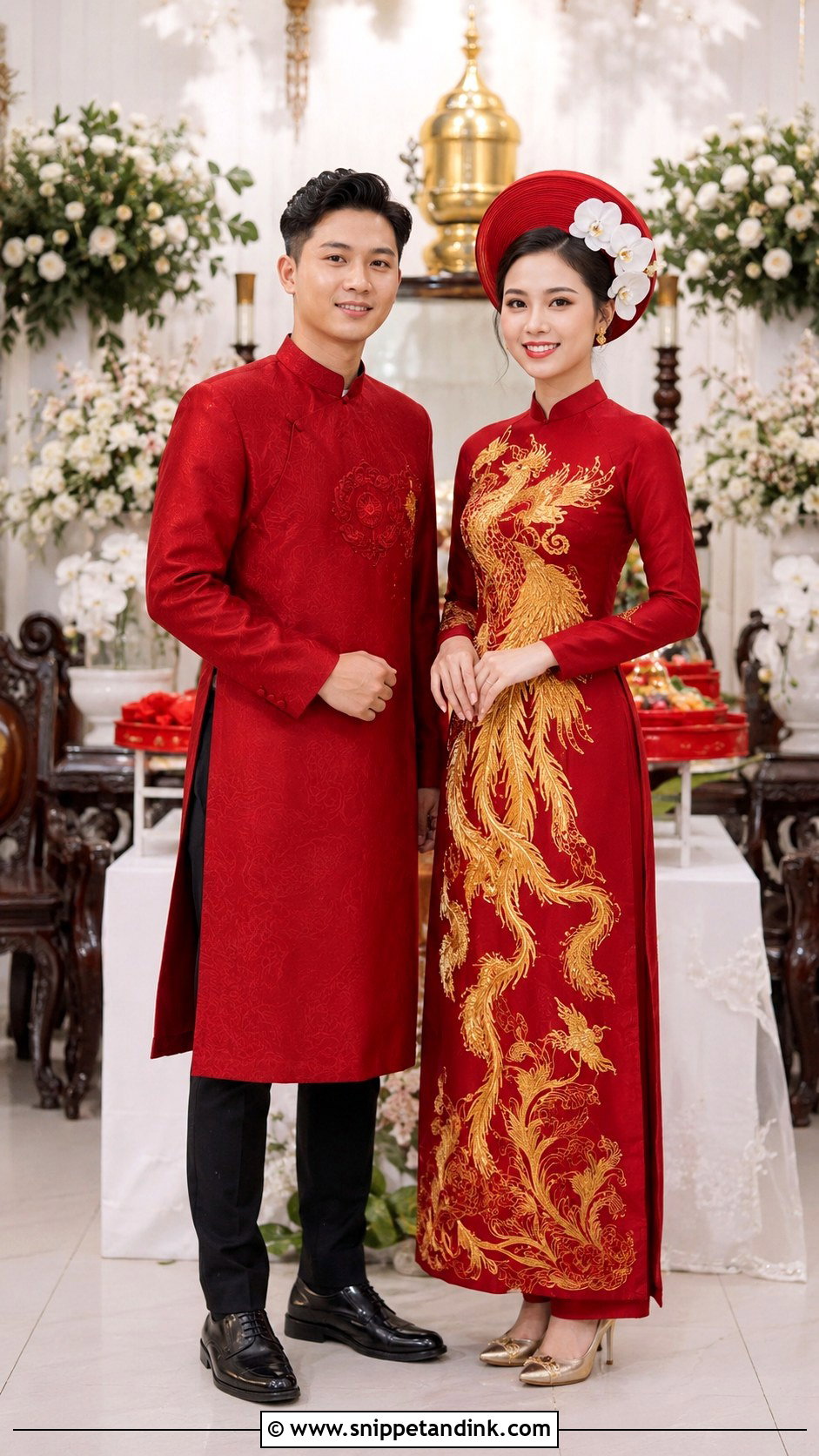
Coordinated bride and groom áo dài are a common choice for the tea ceremony because they make the couple read as a pair in family photographs. The bride’s red silk tunic can carry the gold phoenix embroidery while the groom’s red or gold áo dài shows a quieter related motif, often a dragon, with matching pants and formal shoes. Sharing a fabric or border pattern connects the outfits without making them identical. I always have both tunics cut from the same bolt and tailored together; two reds dyed in different batches look noticeably different under indoor light.
Dressing for the Engagement Procession, Tea Ceremony and Reception
Many Vietnamese weddings happen over more than one event, and I plan the outfits around what each moment physically asks of the bride. The engagement procession and tea ceremony involve standing, bowing, kneeling and pouring for elders, often in a family home with little room. That is where a traditional red or gold áo dài with a khăn vấn belongs, with low heels and a small bouquet or none.
The reception is where brides usually switch to white lace, a fusion gown or a beaded champagne áo dài, because they’ll be walking between tables and dancing. If you’re changing, give yourself at least twenty to thirty minutes and one helper who has practiced the fastenings. A khăn vấn needs to come off cleanly without pulling your hair, so ask your hairstylist to pin the updo with that change in mind.
Silk, Brocade and Velvet After the Wedding
Silk áo dài water-spot easily, so I tell brides never to dab a stain with water on the night. Blot it, leave it and take the garment to a cleaner who handles silk and embroidery. Spray perfume before you dress, not after, since alcohol can mark silk and dull metallic thread.
- Store the áo dài on a wide padded hanger with the panels folded once over a sheet of acid-free tissue, so the long panels don’t stretch.
- Roll velvet rather than folding it; a hard fold leaves a crushed line that is difficult to steam out.
- Keep embroidered pieces in a breathable cotton bag, never plastic, to protect gold thread from damp.
- Steam silk on the reverse at a low setting and keep the steamer moving.
Fit, Fabric and a Family That Recognizes You
The right outfit is the one your family recognizes as a wedding garment and you recognize as yourself. Work out which ceremonies you need to dress for, then decide how much movement each one demands before you look at color. Put money into tailoring, breathable linings, secure closures and shoes you can kneel in. For heritage garments like the áo ngũ thân or a Nhật Bình robe, bring in a Vietnamese designer who knows their construction. After that, the accessories are the easy part.
You'll Like These Ideas:





Leave a Reply