
A made-to-measure gown hands you control of the silhouette, fabric, colour, neckline and finish, and it can carry your personality in a way a sample off the rail rarely does. What it also hands you is responsibility. Every decision you’d normally let a manufacturer make lands on the table, so I always start a custom brief with the whole picture: the venue, the hours you’ll be wearing it, the shoes, the hair, the jewellery, the bag. A gown designed in isolation tends to fight everything around it. The twenty looks below are built head to toe for that reason, with the construction notes I’d raise with a dressmaker for each one.
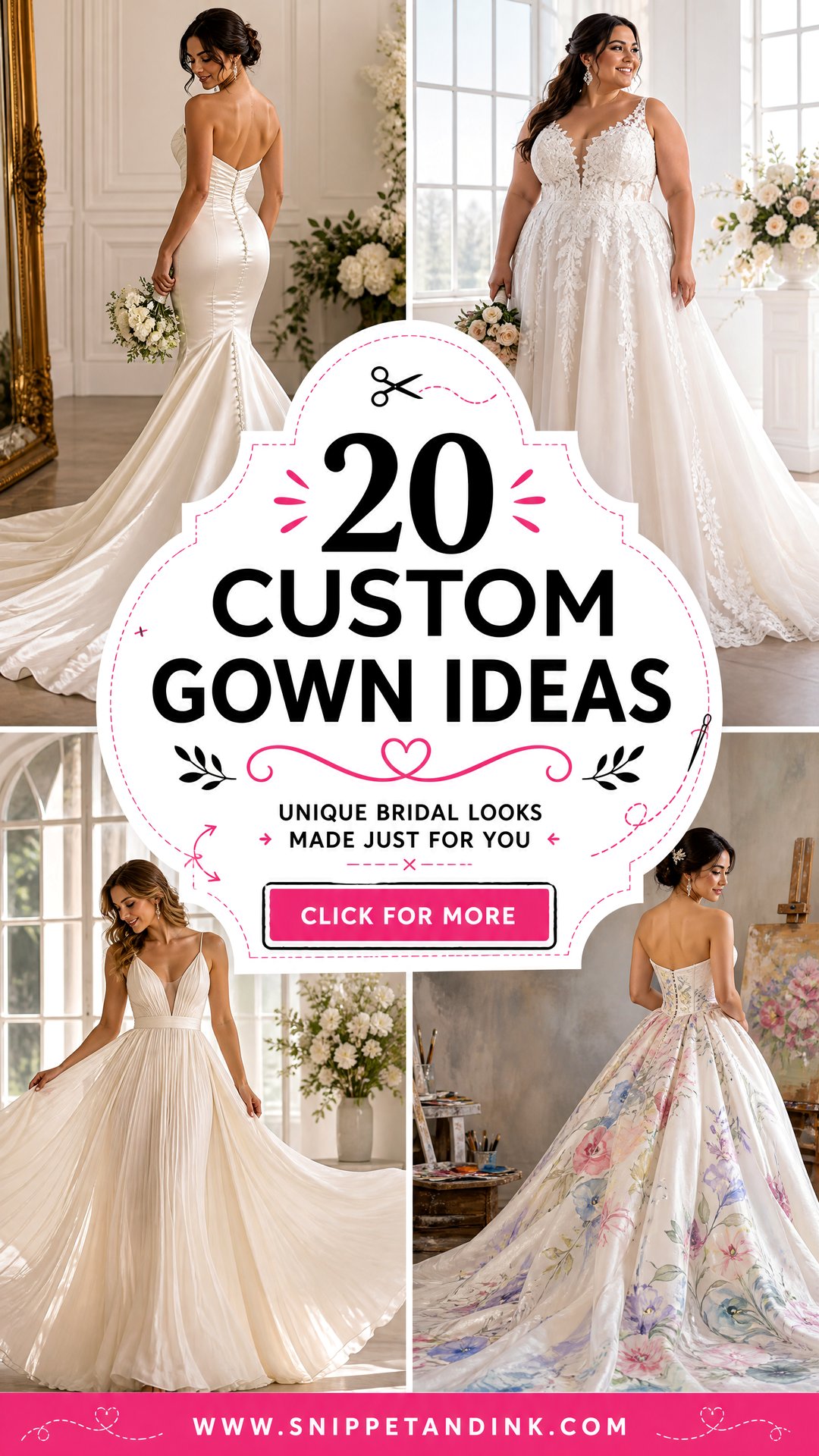
How a Made-to-Measure Commission Unfolds, Month by Month
Custom gowns take longer than most brides expect, and the time goes into steps you never see in a shop. Lead times vary a lot between makers, but somewhere around six to twelve months before the wedding is a comfortable window for a fully custom piece, with more needed for hand embroidery or painting. This is roughly how the process runs.
- Consultation and brief. You bring pictures, talk through the venue and how you want to feel, and the designer sketches a few directions.
- Measurements and fabric. Dozens of measurements are taken, and you sign off on swatches in daylight, not only under studio lights.
- The toile. A mock-up is sewn in plain cotton and fitted on your body. This is where the neckline, waist and length are really decided, so speak up here.
- Cutting and construction in the real fabric, plus any embroidery, beading or painting.
- Fittings, usually two or three, with the final one a few weeks before the wedding so the fit reflects your body as it is then.
The toile stage is the one I’d never skip. Changing a seam on cotton costs nothing; changing it on silk satin can leave needle marks that never fully disappear.
1. Custom Satin Mermaid Gown
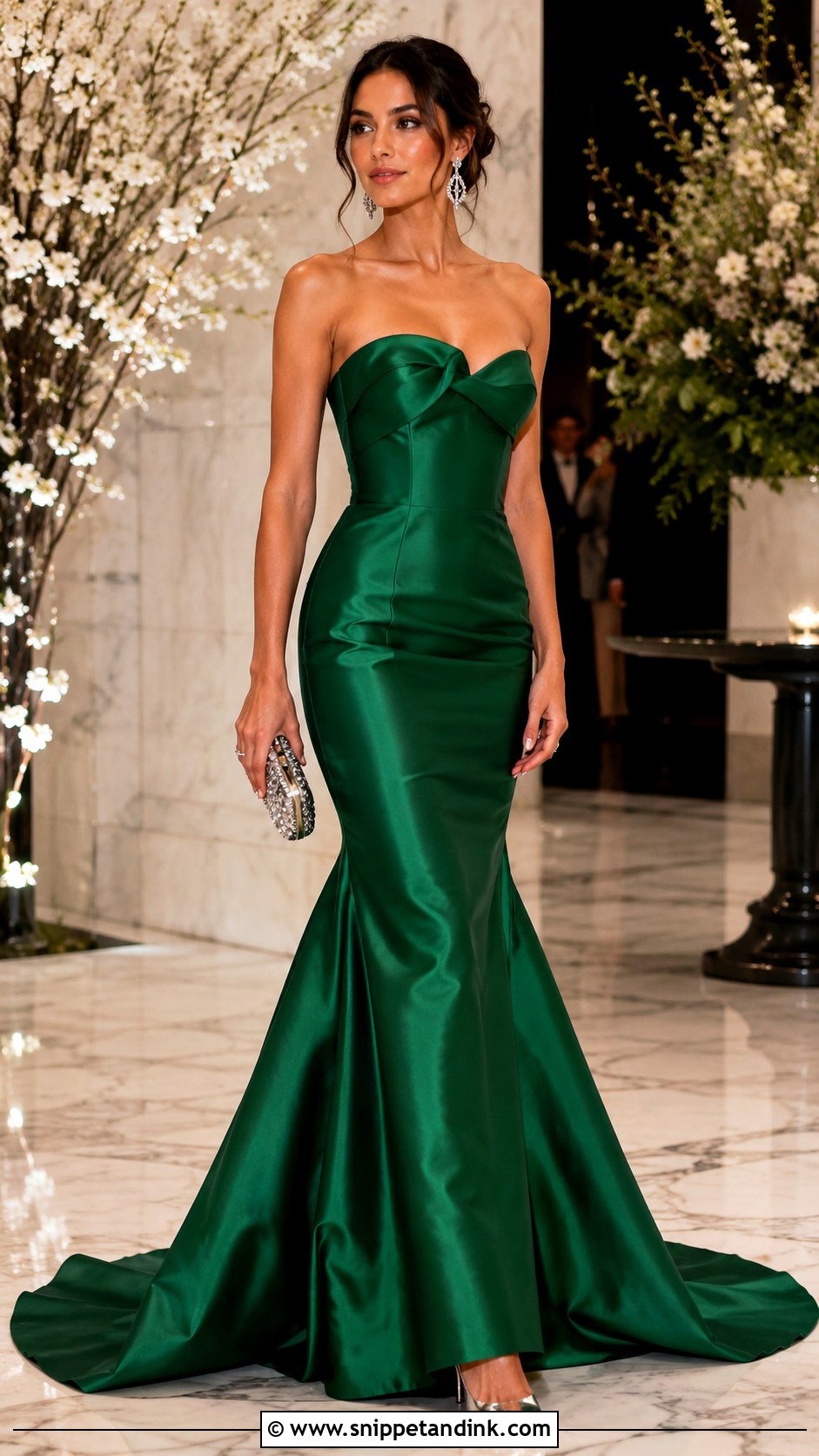
Satin mermaids depend almost entirely on the fabric. Heavyweight silk satin or a structured duchess satin follows the body smoothly and then opens below the knee; thin satin shows every seam, every line of underwear and every crease from sitting in the car. A softly curved strapless neckline with internal boning keeps the top clean, and covered buttons down the back with a medium train finish it. Metallic pointed heels sit neatly under the narrow skirt, with a small crystal clutch, drop earrings, a sleek low bun and luminous makeup. I always ask for a hidden back vent or a detachable train. The fit should skim, not squeeze, or the satin pulls into ridges in photographs.
2. Custom Off-Shoulder Ball Gown
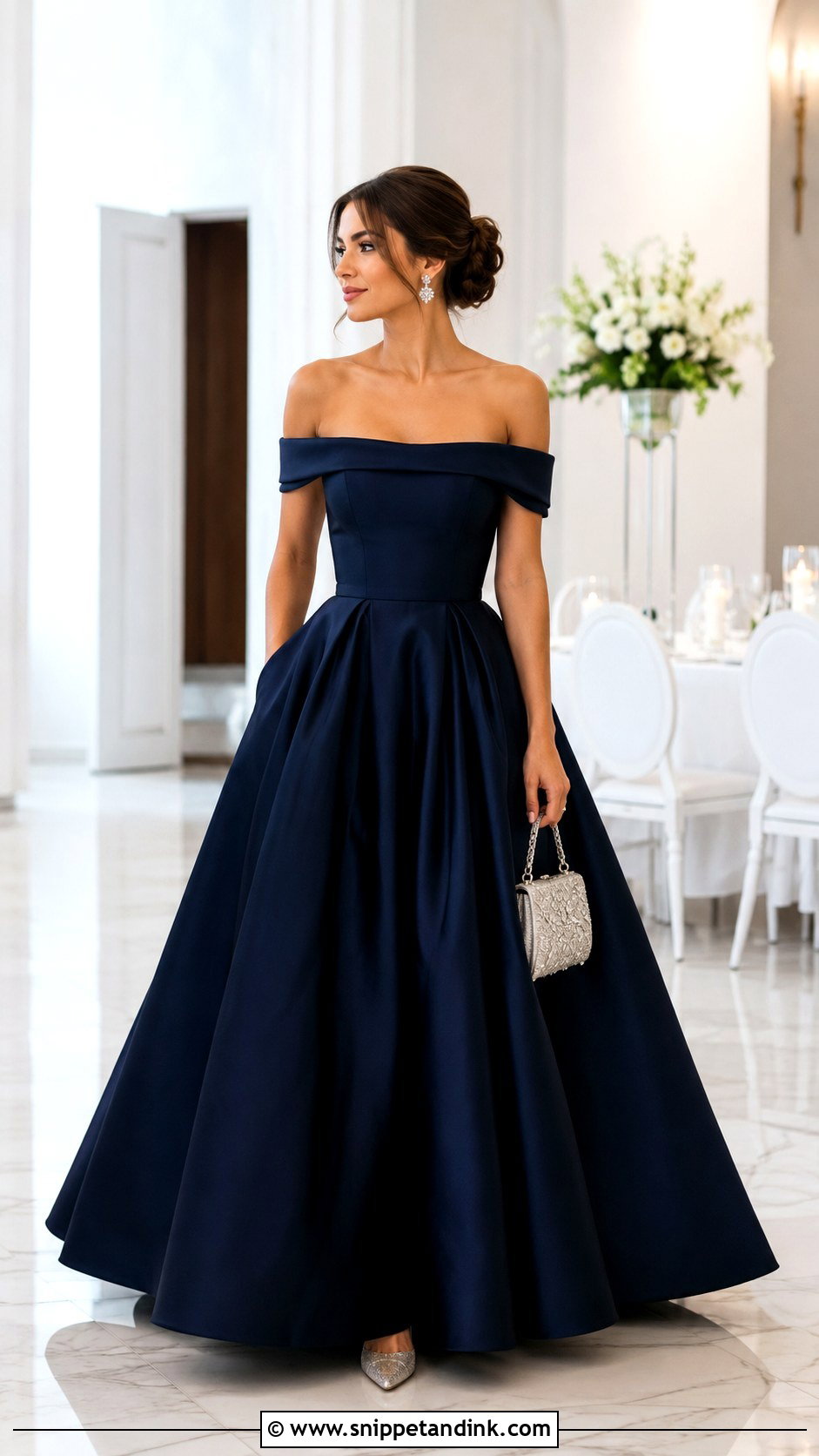
An off-shoulder ball gown is the most commanding shape here, and also the heaviest to wear. A corseted bodice has to sit securely across the shoulders without trapping your arms, and pleated mikado, satin or silk faille gives the skirt enough body to stand on its own. Custom means colour is open too: a deep jewel tone, a soft pastel or classic black. Pointed pumps, a compact top-handle bag and fine earrings leave the neckline clear, and a polished updo stops hair catching on the fabric. If the skirt feels like a weight at the first fitting, ask for a lightweight hoop or horsehair braid at the hem instead of more petticoats. And yes, ask for pockets.
3. Custom One-Shoulder Draped Gown
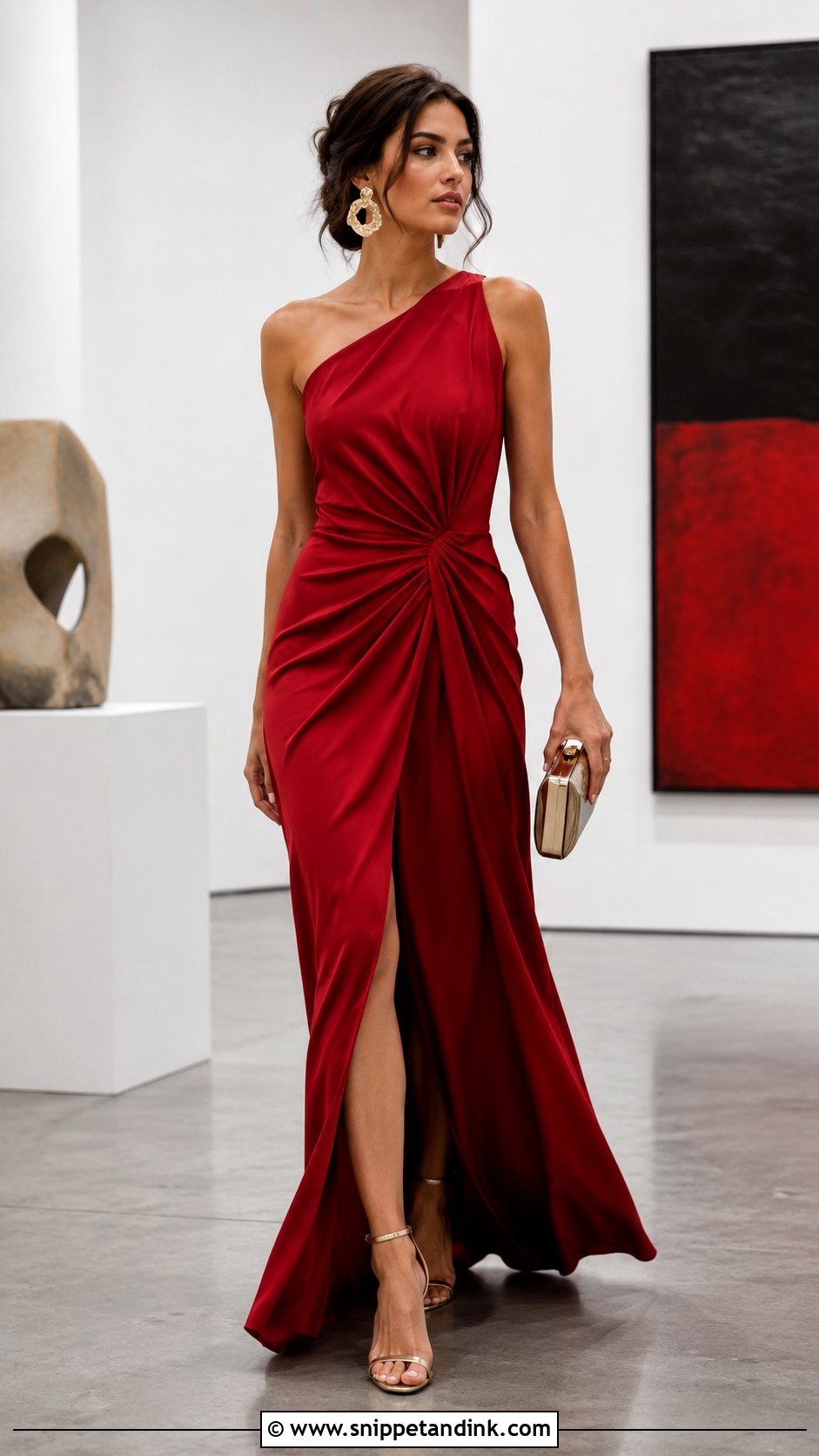
One shoulder carries the whole gown, so the construction inside matters more than the drape outside. Fluid crepe, silk jersey or satin-backed crepe suits the asymmetry, gathered softly across the waist so it shapes the body without clinging. A floor-length skirt with a controlled side slit adds ease and keeps the drape from looking heavy. Slim metallic sandals, a hard-shell clutch and one sculptural earring on the bare side are enough; keep the other side plain. A side-parted bun or smooth waves follow the neckline. I’d insist on a fitted lining, a firmly anchored strap and a little silicone grip inside the bodice, because the single shoulder will be tested every time you hug someone.
4. Custom Long-Sleeve Beaded Gown
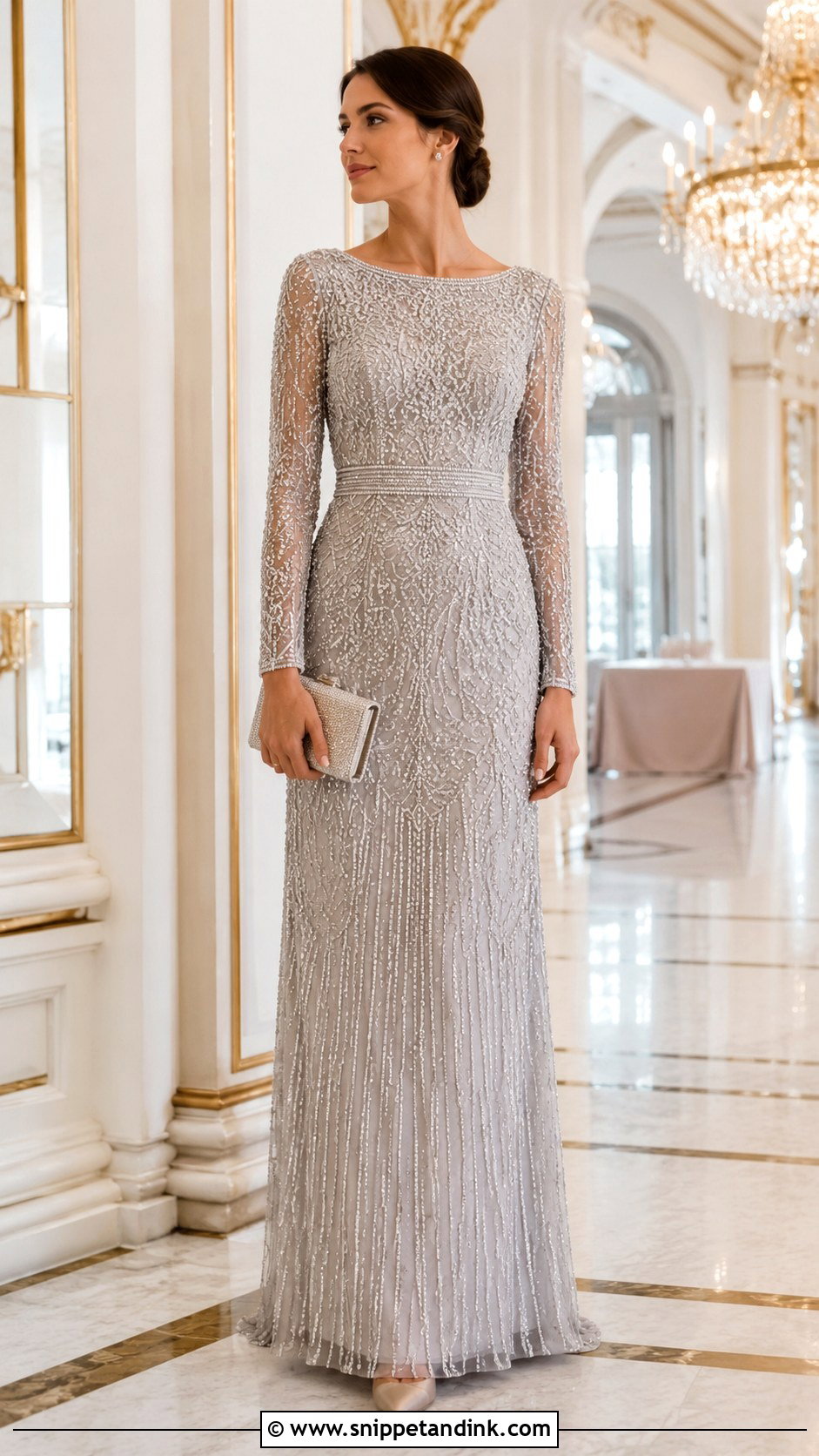
Beadwork reads as refined when it follows the seams of the gown rather than being scattered across it. Here a long-sleeve gown has a fitted bodice, defined waist and a straight or gently flared skirt covered in tonal beads, with a bateau, square or shallow V neckline giving comfortable coverage. A soft stretch lining under the beaded layer lets it move. Closed-toe satin pumps and a plain box clutch keep things quiet; small studs may be all the jewellery it needs. A low chignon or smooth ponytail shows off the sleeves. Heavy beads at the underarm will rub, so I ask for reinforced underarm panels and covered seam allowances. Tonal beading photographs more smoothly than several contrasting colours.
5. Custom Floral Embroidered Gown
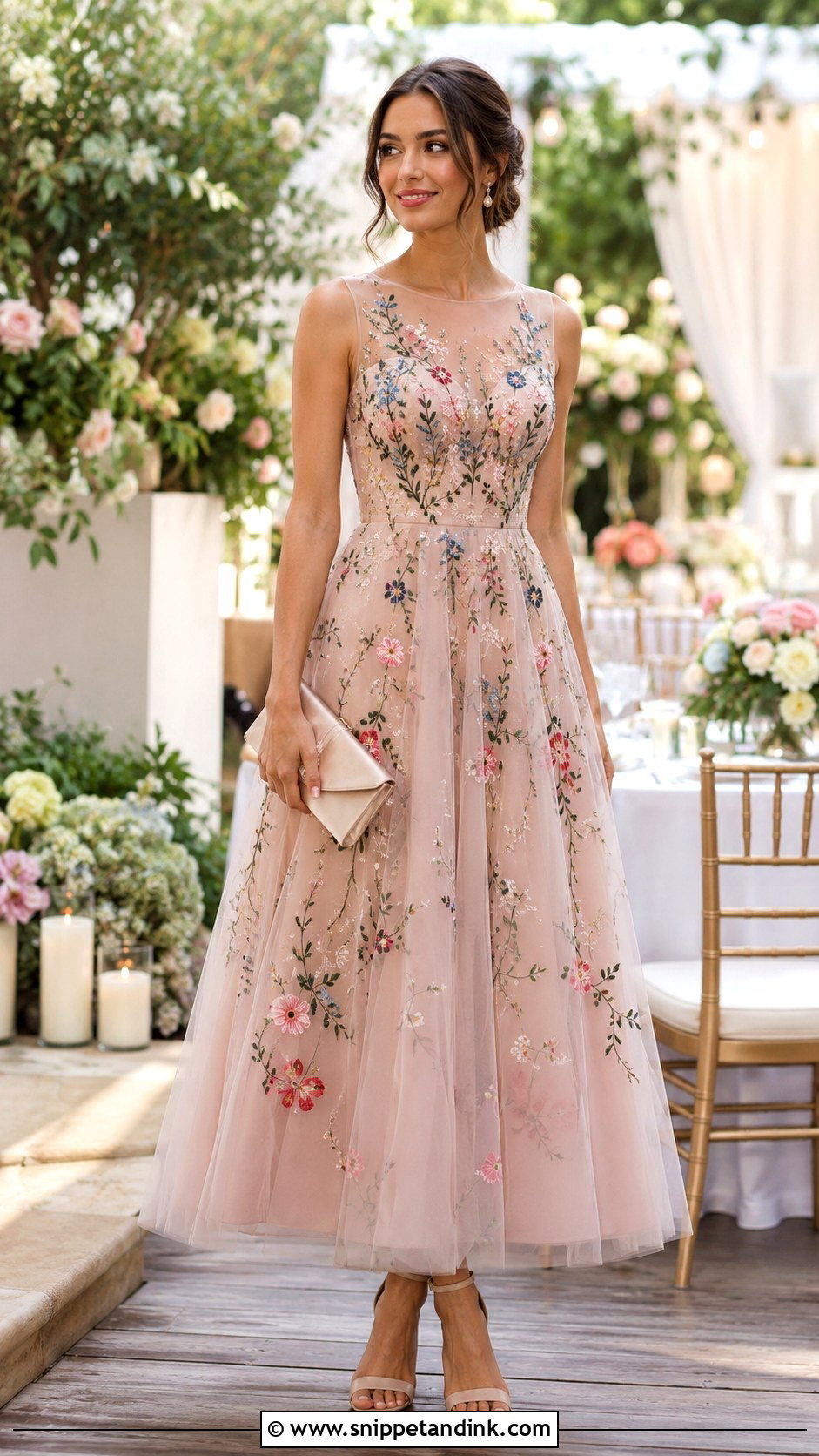
Embroidery is where a custom gown becomes yours, because the flowers can mean something: a bloom from your heritage, your wedding month or your mother’s garden. Placement is the skill. Vines around the bodice, waist and lower skirt with fabric left between motifs keep the work readable, while covering every inch turns it into texture. Tulle, organza or silk in an A-line gives dimensional flowers room. Neutral heels, a satin clutch and earrings that repeat one thread colour suit it, with loose waves or a softly pinned style. Always ask for a sample panel before production. Thread colour and scale look different on the real base fabric than on a sketch.
6. Custom Black Column Gown
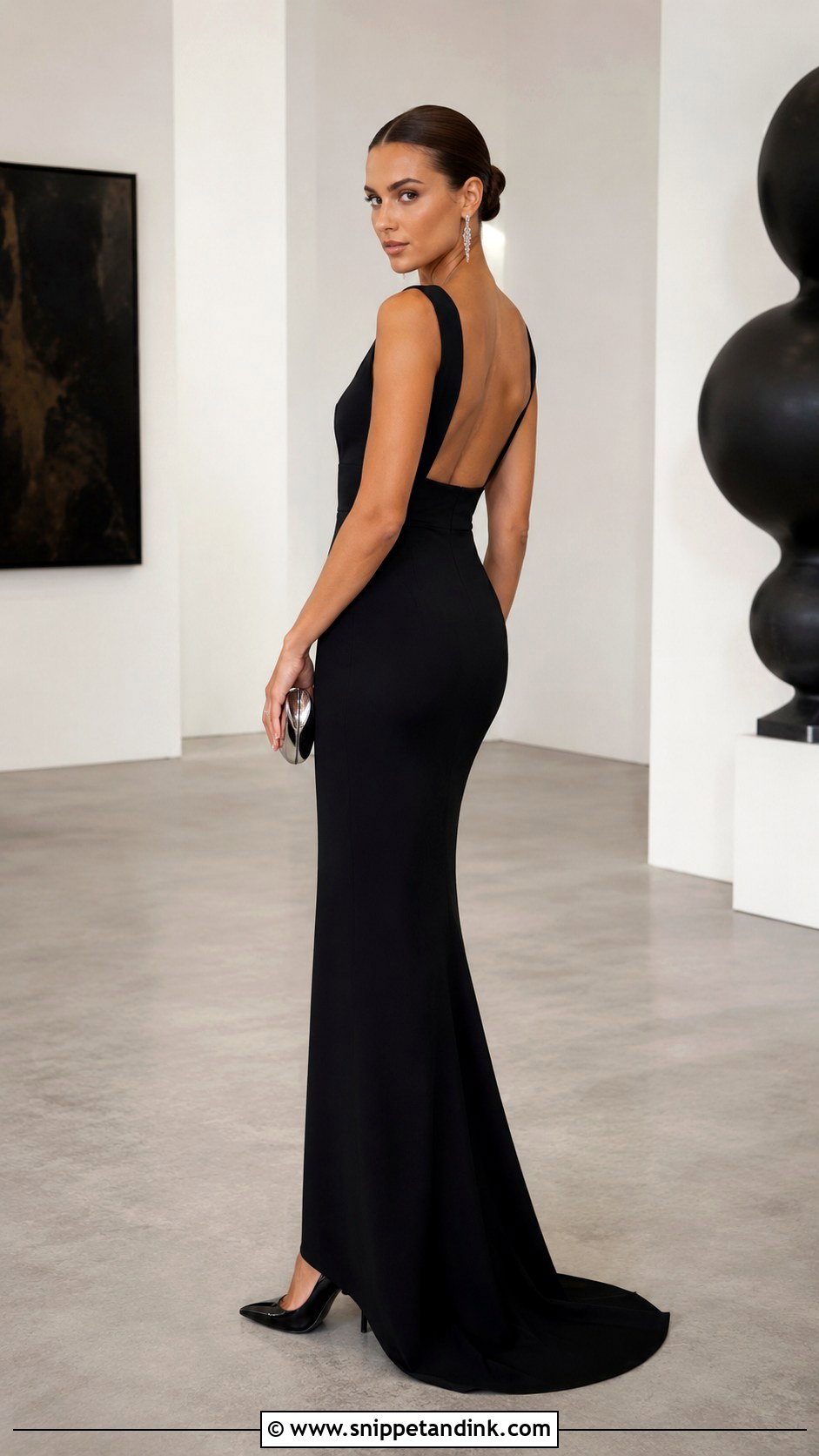
A black column has nowhere to hide a mistake. Tailoring, fabric and proportion are the whole design, so matte crepe or silk cady, a square neckline and a fitted waist are cut with real precision. A low back, a narrow train or a line of covered buttons adds interest without breaking the line. Black pointed heels keep it unbroken from neck to floor, and silver earrings with a mirrored clutch add contrast, with a sleek bun and a defined eyeliner. Inside, I want a supportive inner bodice and a smooth lining so the outer fabric never drags. Every seam shows on plain black, so expect this gown to need careful fittings rather than fewer.
7. Custom Cape Sleeve Gown
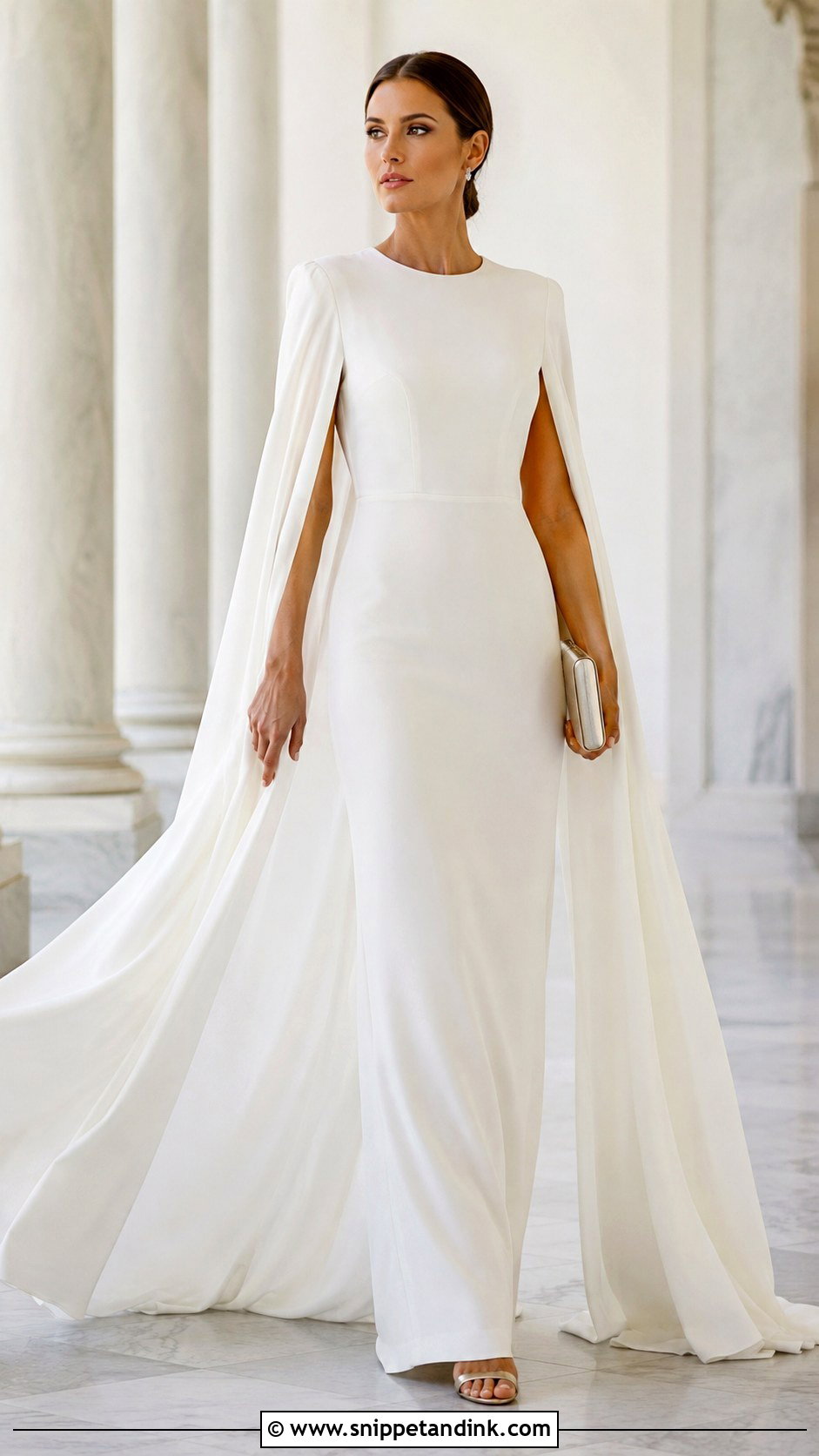
Cape sleeves give you a cape’s movement without an extra layer to manage. Build them onto a fitted column or softly flared gown in crepe, chiffon or light satin, falling from the shoulder to the elbow, the wrist or the floor. The bodice should stay simple so the floating fabric leads. Metallic sandals, a slim clutch and small earrings that won’t snag the chiffon finish it, and a neat updo keeps the cape visible from behind. If you’ll sit through a long dinner, I’d ask for side openings so your arms move freely. A detachable cape is worth considering; it makes the entrance and then comes off for dancing.
8. Custom Corset Bodice Gown
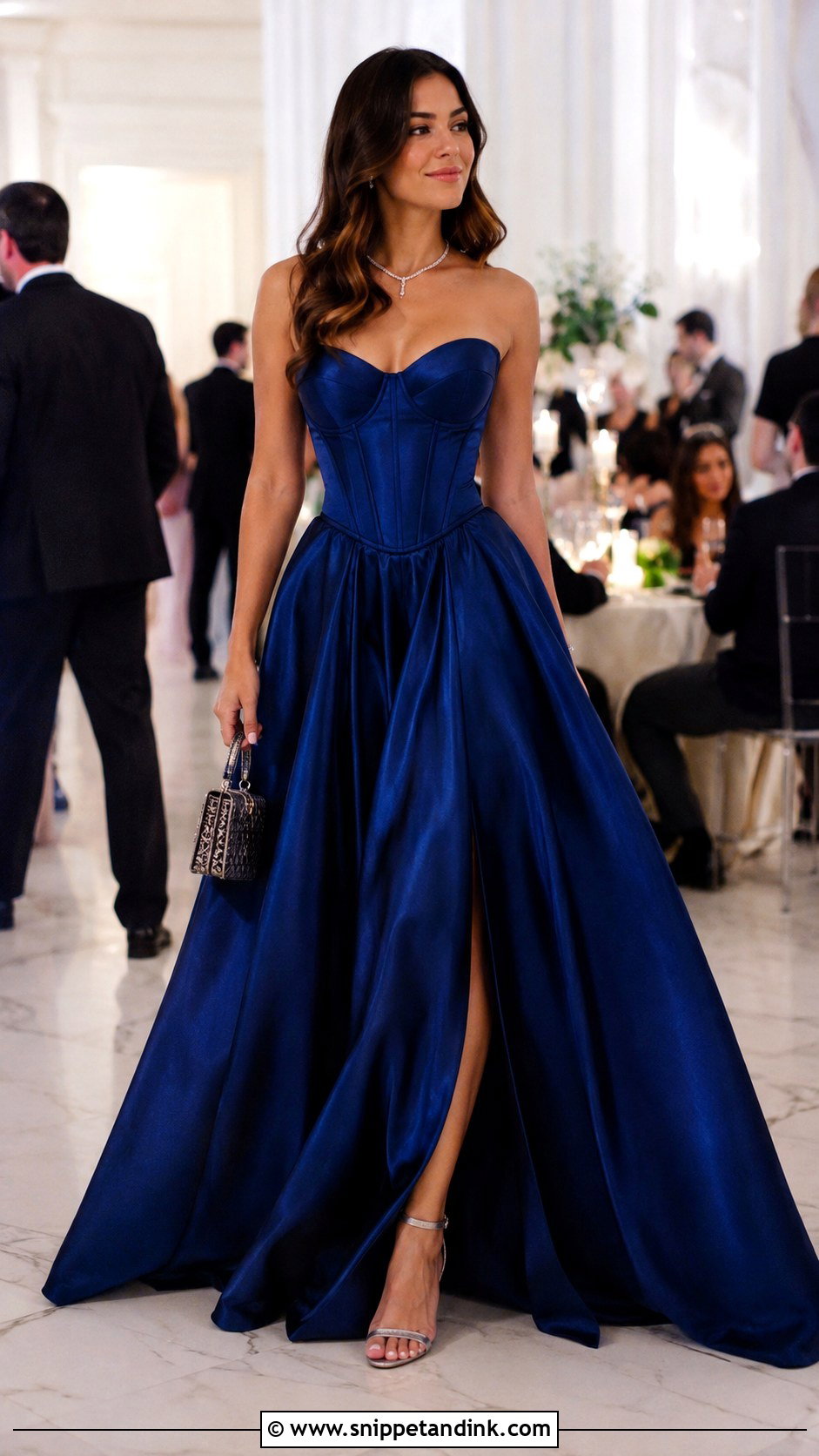
A corset bodice should hold you, not hold your breath. Visible seaming, internal boning and a lace-up or concealed back closure define the waist, and the neckline can be curved or straight. With a full satin skirt the effect is romantic; with a fitted crepe skirt it turns sharper and more evening. Ankle-strap heels, a structured mini bag and a fine pendant suit it, and soft waves soften all that structure. The two requests I make for every corset are a breathable lining and enough ease around the ribs to sit down and eat. A waist stay inside stops the gown sliding, so nobody is tempted to lace it tighter than they should.
9. Custom Velvet Winter Gown
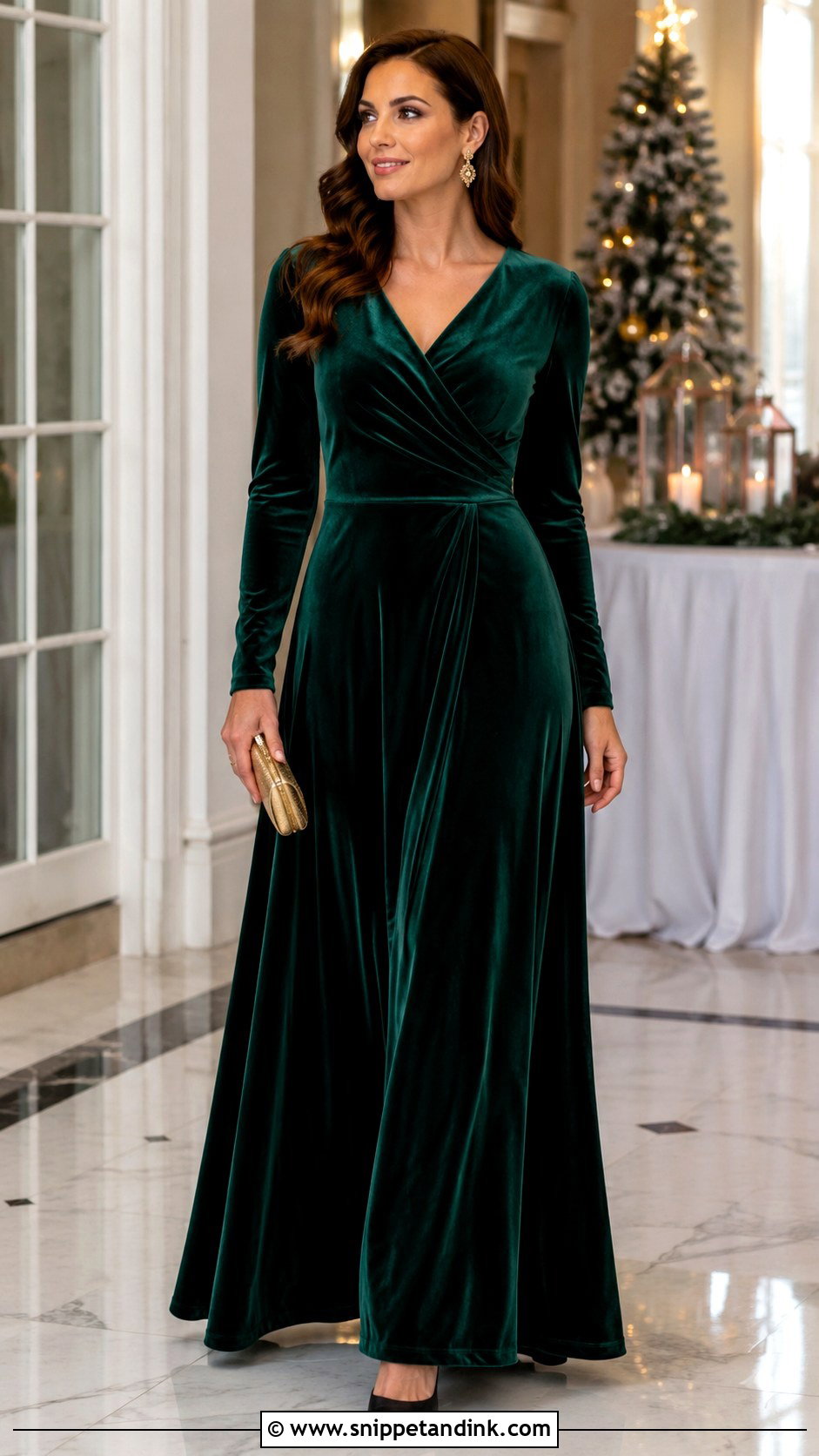
Velvet is the most rewarding winter fabric and one of the trickiest to sew. Silk velvet or a good stretch velvet drapes without bulk, cut into a long-sleeve wrap bodice with a defined waist or, more formally, an off-shoulder neckline. Deep shades like emerald, burgundy, navy, plum, or black suit the season. Closed-toe pumps, a metallic clutch and polished earrings, with a smooth side-parted style, keep the weight in check. Velvet pile catches light differently depending on direction, so every pattern piece must be cut with the nap running the same way, or panels look like two colours. Ask for reinforced hanging loops and a satin lining so the skirt slides over tights.
10. Custom High-Low Gown
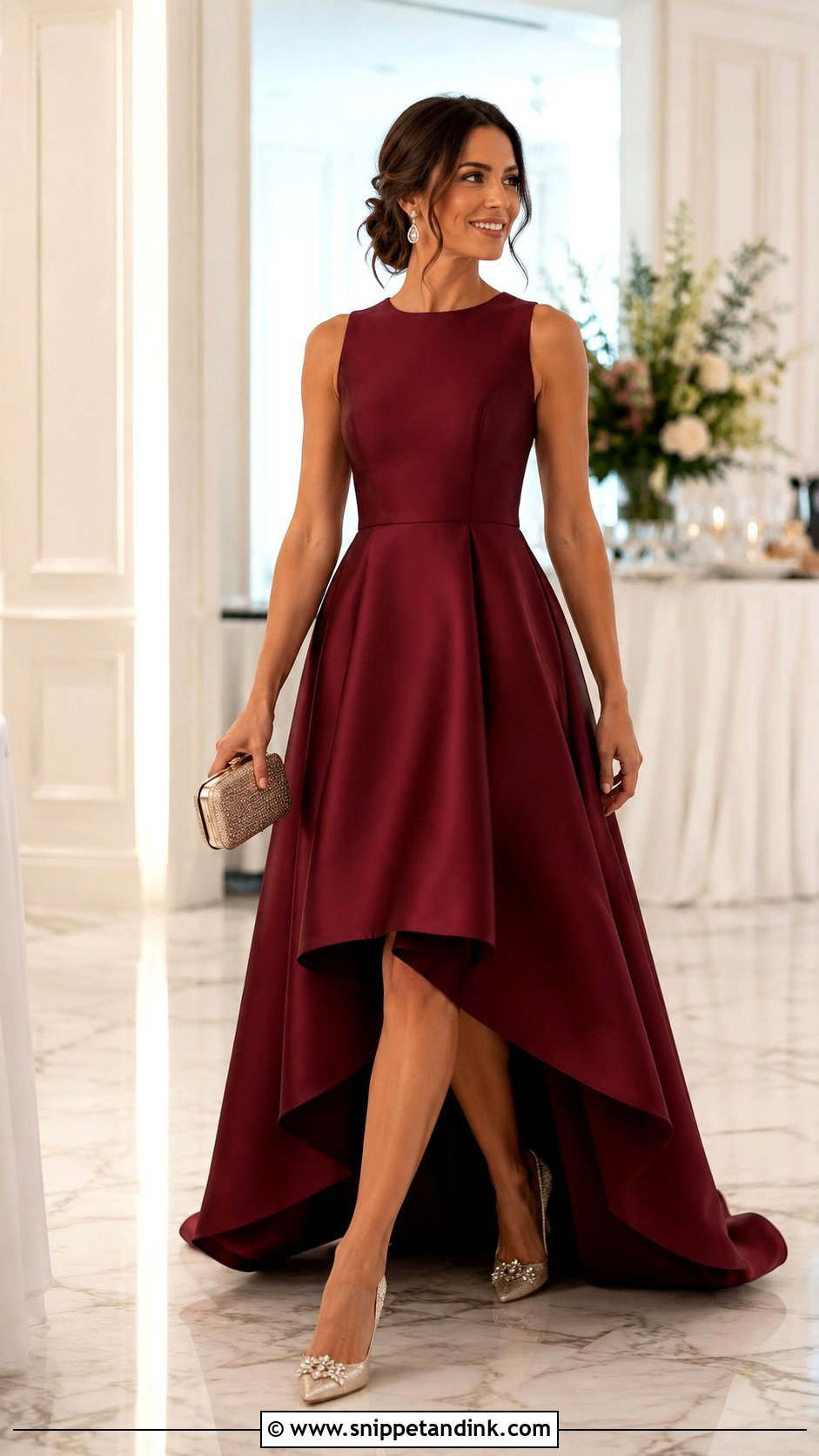
High-low hems put your shoes on show, so the hemline and the shoes are designed together. Keep the curve gradual; an extremely short front with a very long back looks like a costume. A fitted bodice over a structured taffeta or mikado skirt balances the shape, and pointed pumps, embellished sandals or sleek ankle-straps become part of the outfit. A small clutch, medium drops and a high ponytail or tucked waves match its playful swing. I have brides walk, sit and climb a step or two while the front hem is pinned. The shortest point must still feel comfortable when you’re seated, and pleats set at the back keep the volume away from the waist.
11. Custom Detachable Overskirt Gown
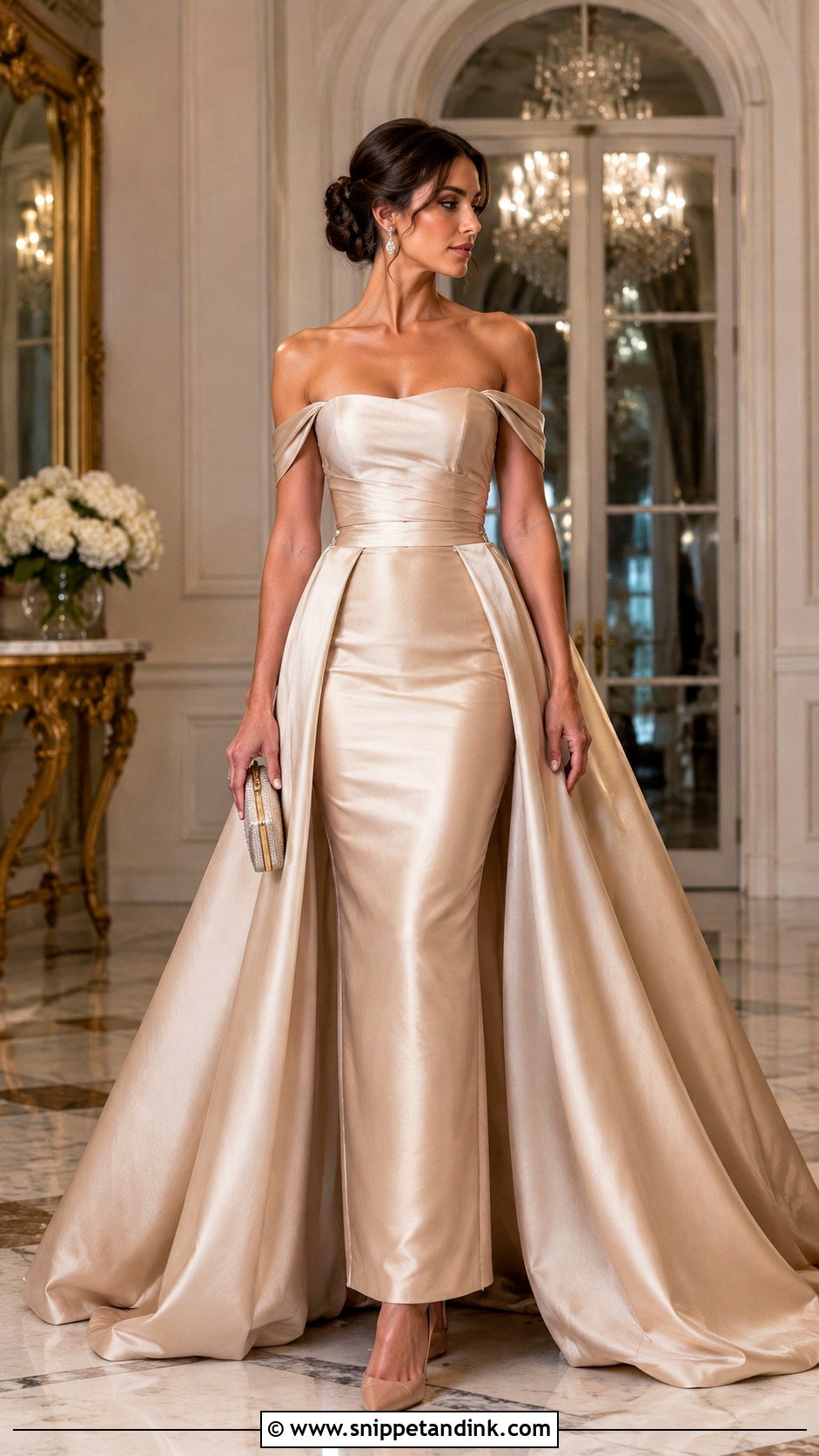
Two looks from one gown is the promise of a detachable overskirt, and the base dress has to earn it. A fitted column, mermaid or slim A-line should stand on its own, with a full overskirt in matching satin, organza or tulle for the entrance. The join sits at the natural waist, hidden under a belt, waistband or appliqué. Classic pumps and a structured clutch carry over to the narrower second look, with an updo or polished waves that suit both. Test the fastenings at every fitting. Hooks and bars or hidden snaps are the usual choice, and I’d make sure you or one helper can release it in under a minute without loosening it as you walk.
12. Custom Sequin Gown
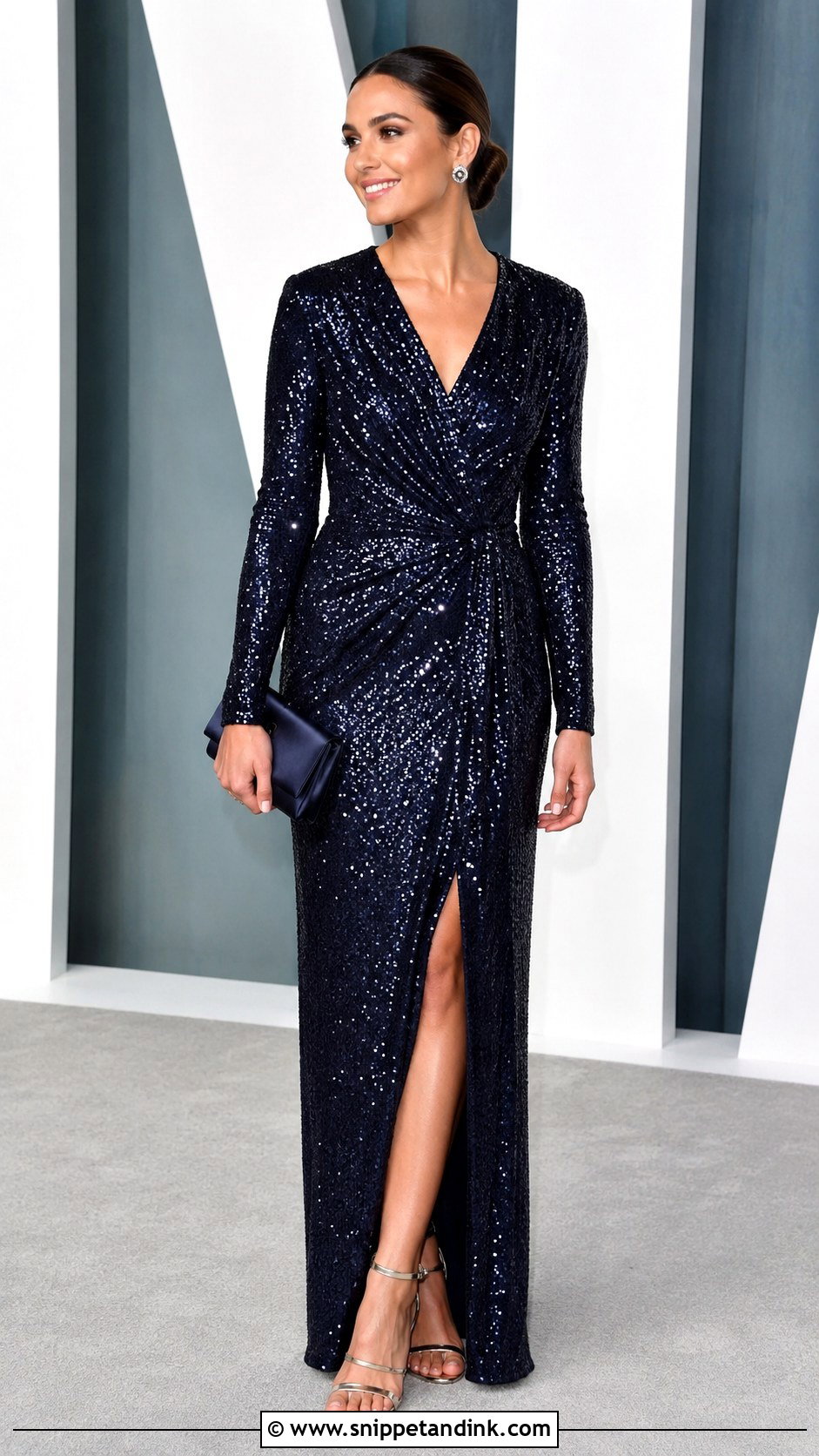
A custom sequin gown looks expensive when the sparkle sits on a simple shape: straight, wrap or gently fitted, and not combined with much else. Tonal navy, silver, emerald or black sequins give a smooth surface, and an ombré graduation adds movement without noise. A soft lining with stretch panels placed at the sides makes it wearable. Simple metallic sandals, a satin clutch, small earrings, sleek hair and fresh makeup keep the gown in charge. Sequins along seams and under the arms scratch, so ask the maker to remove them from the seam allowances before stitching. The fabric is heavy, so reinforced hanging loops and a modest back slit are worth requesting.
13. Custom Plus-Size A-Line Gown
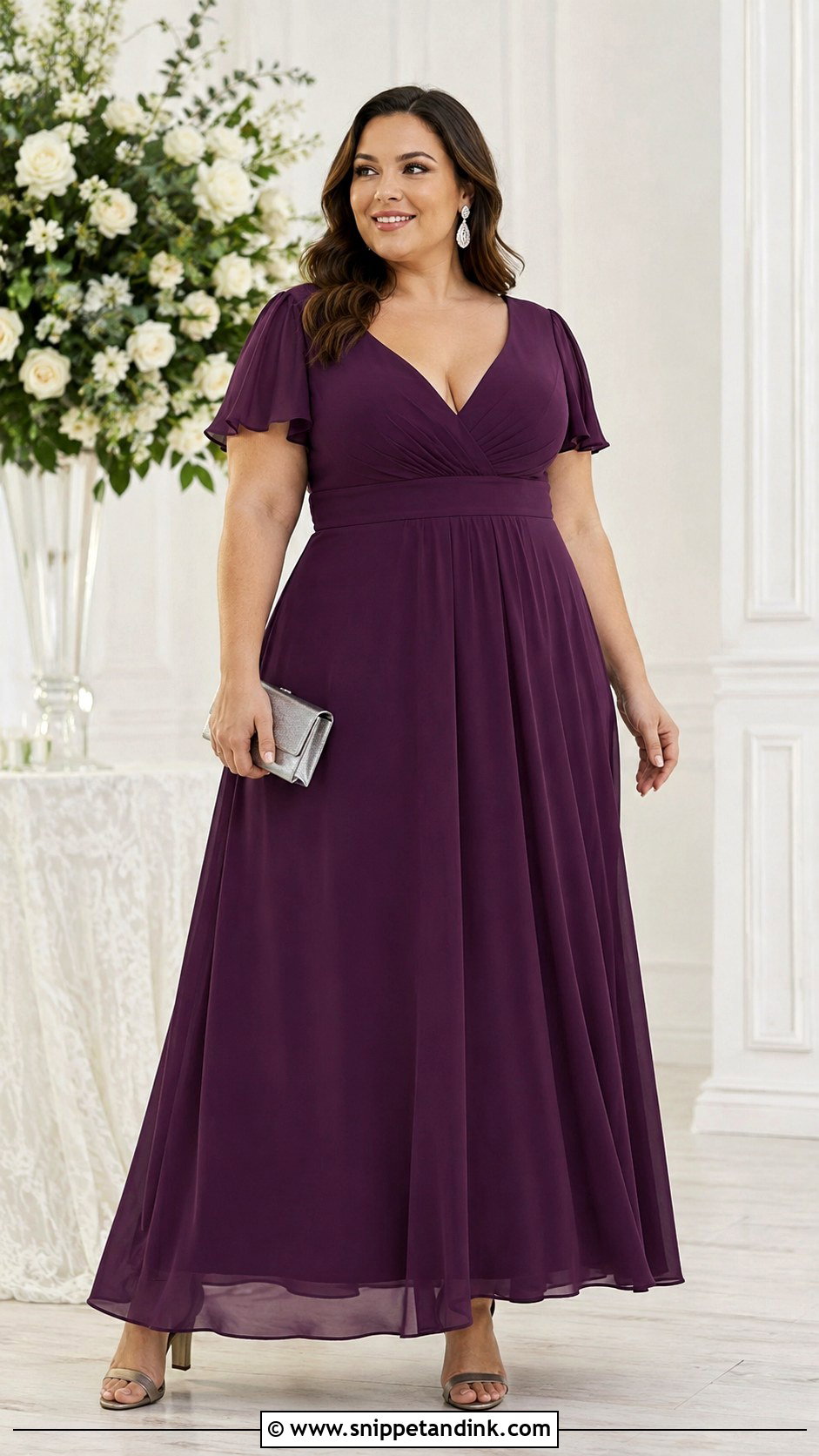
This is where custom work shows its value most clearly. An A-line drafted from your own measurements balances better than a smaller sample that’s simply been graded up, because the bust, waist and hip are placed where yours are. A shaped bodice supports the bust and follows the torso without pressing into the waist, and the square, sweetheart or V neckline can be set at whatever depth you like. Crepe, chiffon, satin or layered tulle fall smoothly from the waist. Comfortable block heels, a medium clutch, framing earrings and a half-up style or soft waves complete it. Wear the exact underwear and shoes to every fitting, since a different bra moves the whole bodice.
14. Custom Peplum Evening Gown
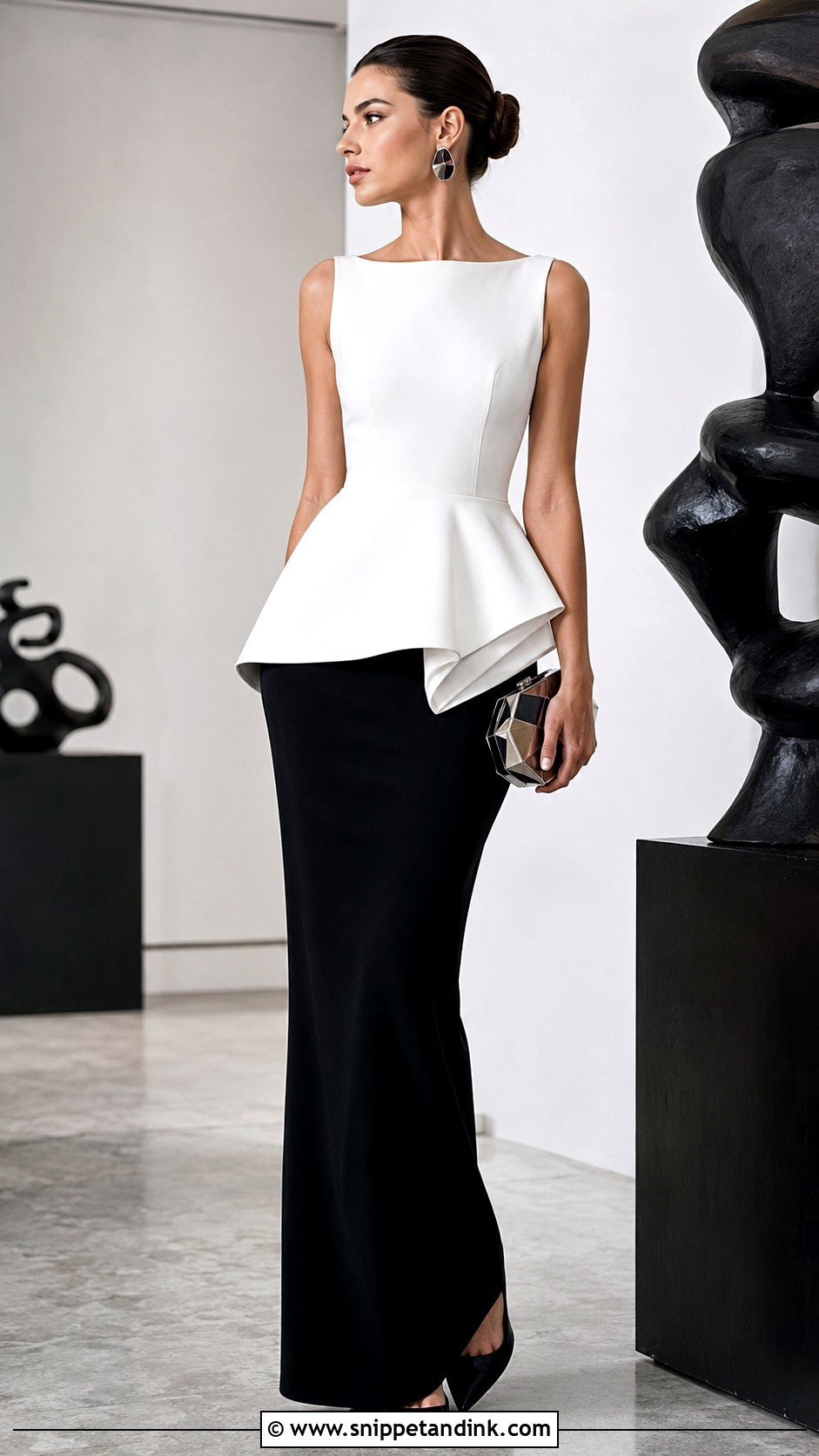
A peplum evening gown frames the waist, and its depth and angle decide whether it flatters or bulks. Keep it smooth and controlled, on a strapless or bateau bodice with a fitted column skirt, or go softer with an asymmetrical peplum over a slight flare. Crepe, silk faille and light mikado hold the shape. Pointed pumps, a geometric clutch and sculptural earrings with a slicked-back bun suit its sharp lines. The detail I adjust most is where the widest point falls. Moved slightly above or below the hip, the whole proportion of the gown changes, so I pin it at the fitting while the bride sits and walks.
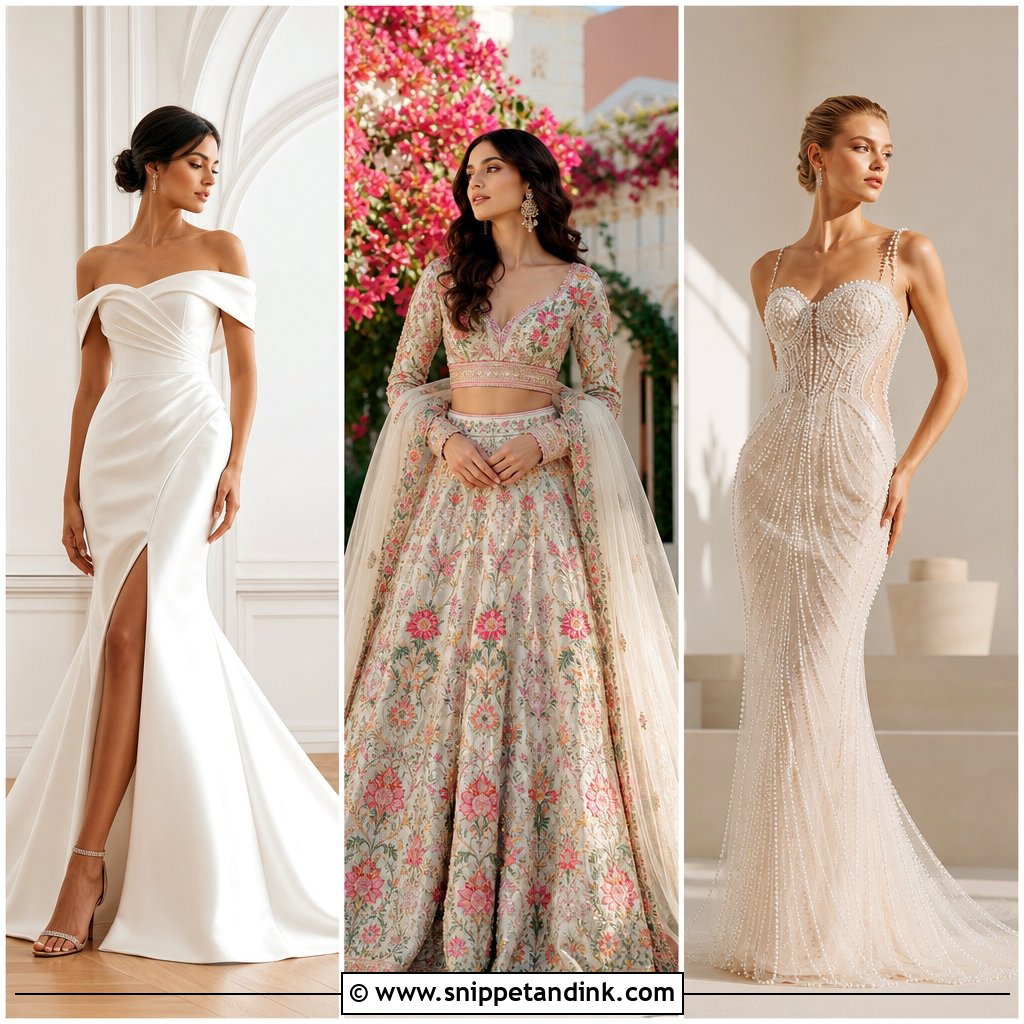
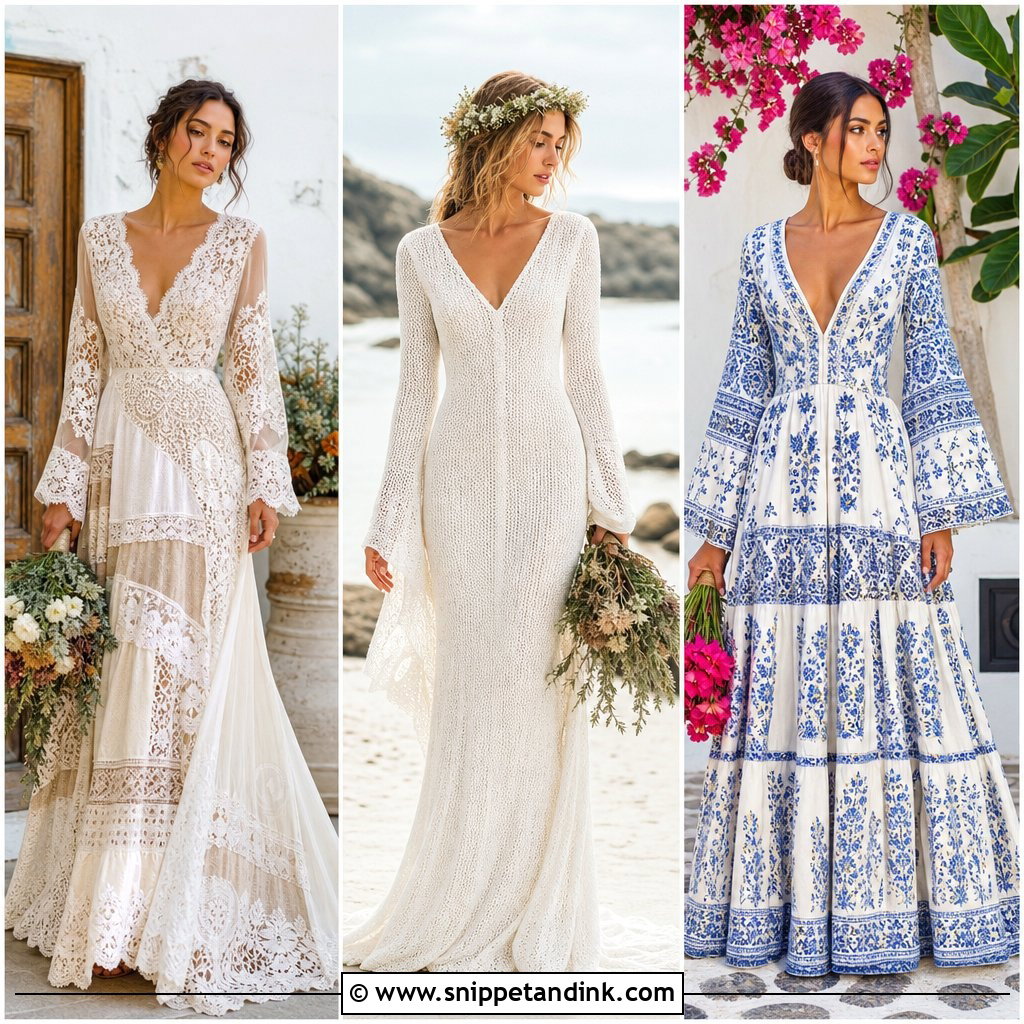
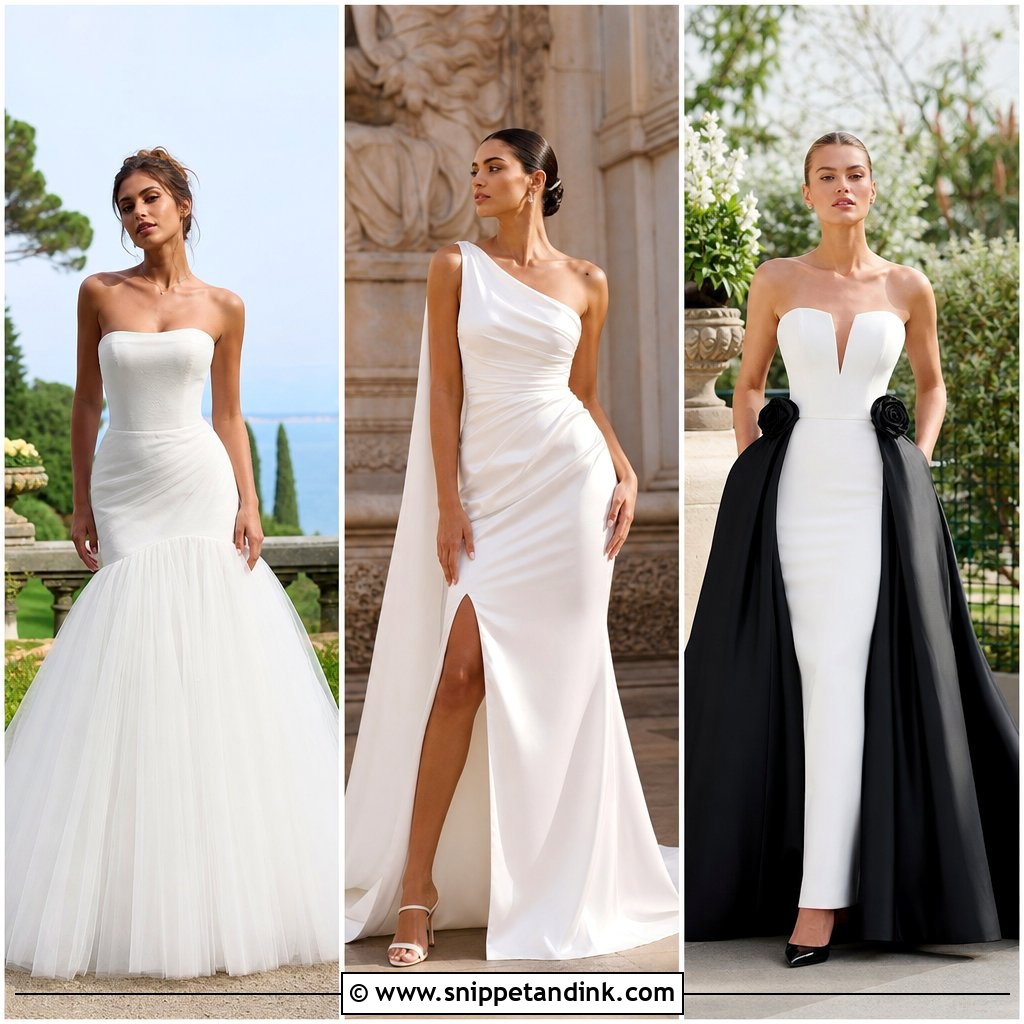
15. Custom Two-Piece Gown
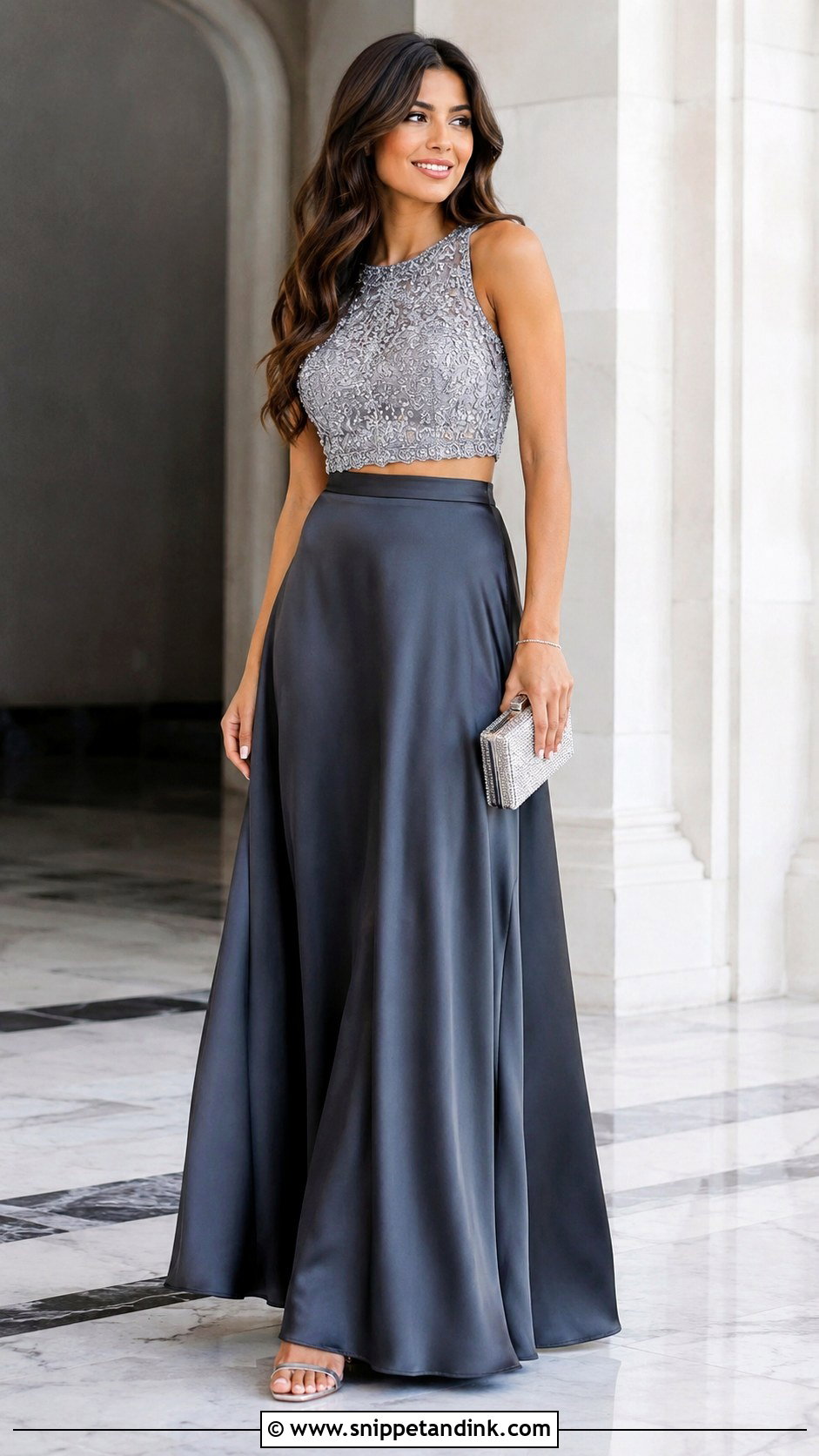
Two pieces are easier to fit than one gown, because the top and skirt can be adjusted separately to your torso and leg length. A fitted crop bodice meets a high-waisted floor-length skirt, with either a narrow line of skin or none at all. Matching fabric keeps it a set; contrast in texture, like an embroidered top over plain satin or a crepe bodice over flowing chiffon, adds depth. Slim heels, a compact clutch, a single bracelet and a low ponytail or loose waves suit the modern feel. I’d always add discreet snaps or grip tape where the pieces meet, and check the skirt waistband doesn’t roll when you sit.
16. Custom Halter Neck Gown
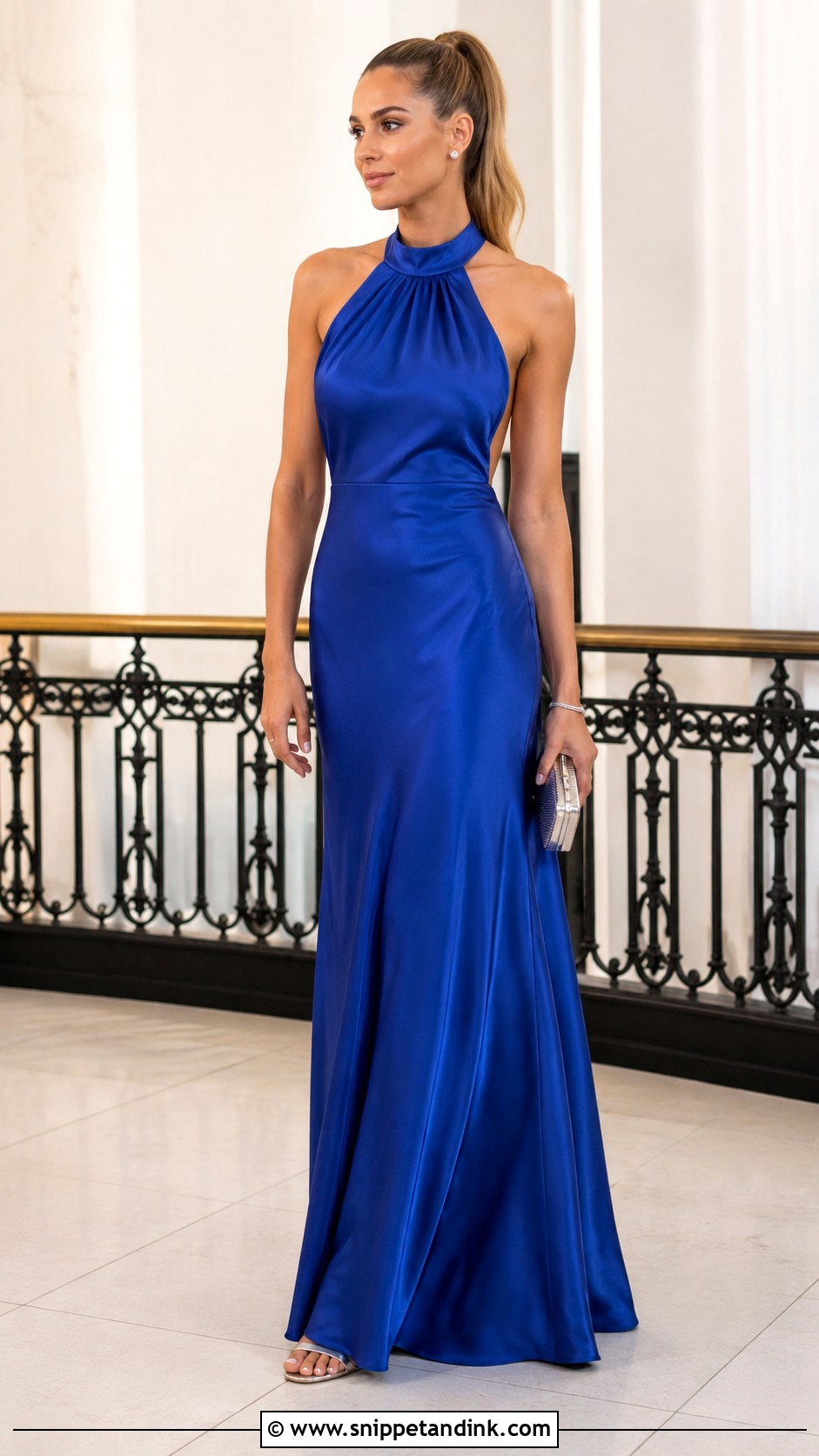
Halters draw a long line from shoulder to waist and show off the back. A high gathered neck gives more coverage; a narrow plunge is bolder. Fluid satin, silk jersey and crepe drape naturally into a column or softly flared skirt. Metallic sandals, a small clutch and studs are plenty, and leave the necklace off. An updo, braided bun or high ponytail keeps the shoulders clear. Halter straps pull on the neck over a long evening, so I ask for soft padding at the fastening. Build the bust support into the gown itself, since ordinary bra straps will show, and a concealed back zip and a well-placed waist seam keep the drape steady.
17. Custom Pleated Chiffon Gown
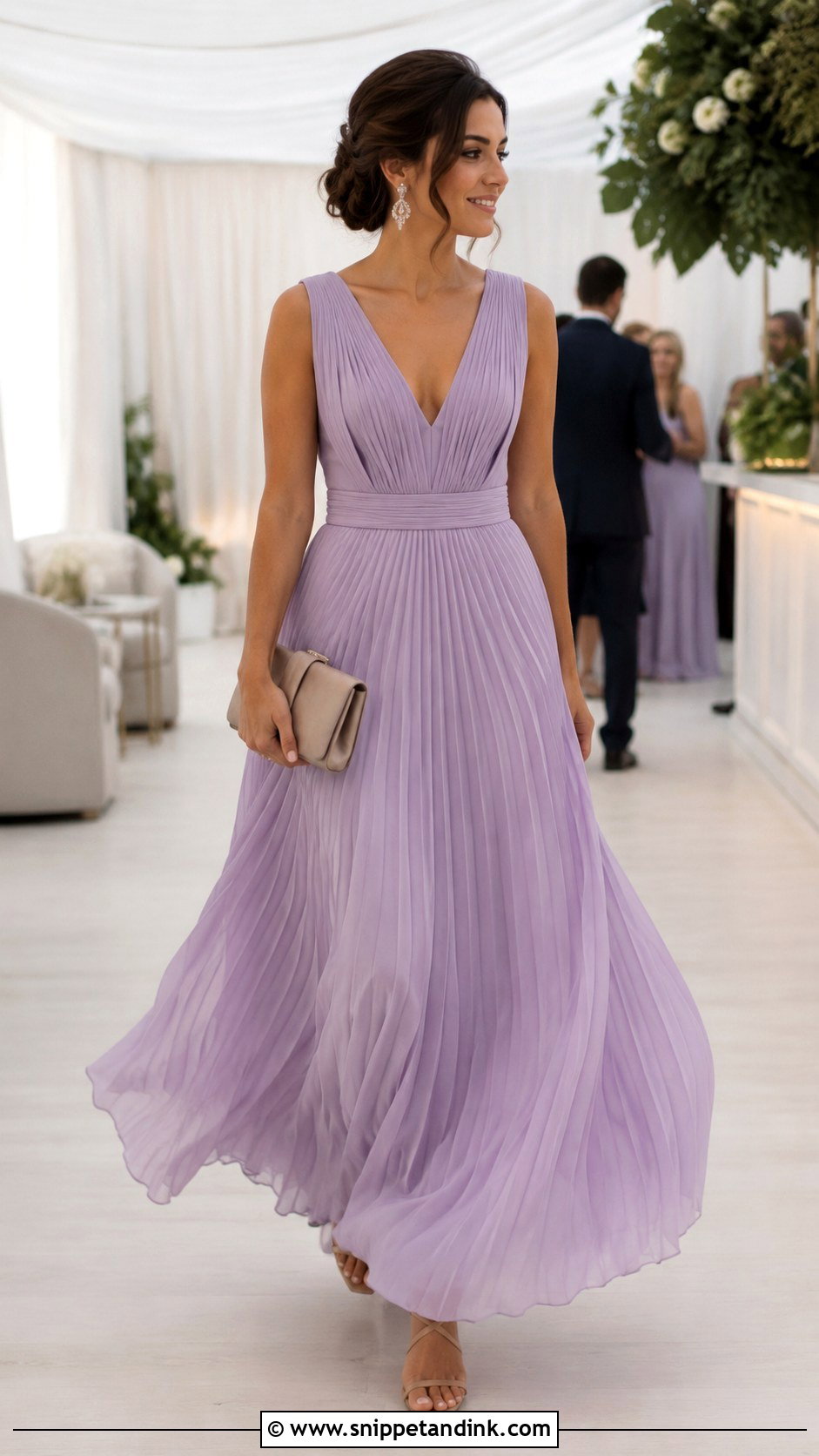
Pleated chiffon moves beautifully and weighs almost nothing. Fine sunray pleats look delicate; wider pressed folds look architectural. A fitted V-neck, wrap or gathered bodice runs into the skirt, and a clear colour like soft blue, lavender or sage shows the pleating far better than ivory does. Neutral sandals, a satin clutch, light-catching earrings and a softly twisted updo suit it. Chiffon is sheer, so ask for a full lining in a closely matched shade. I always mark the hem with the bride wearing her actual shoes, because light layers drop unevenly. A narrow waist stay holds the bodice without flattening the pleats.
18. Custom Square Neck Gown
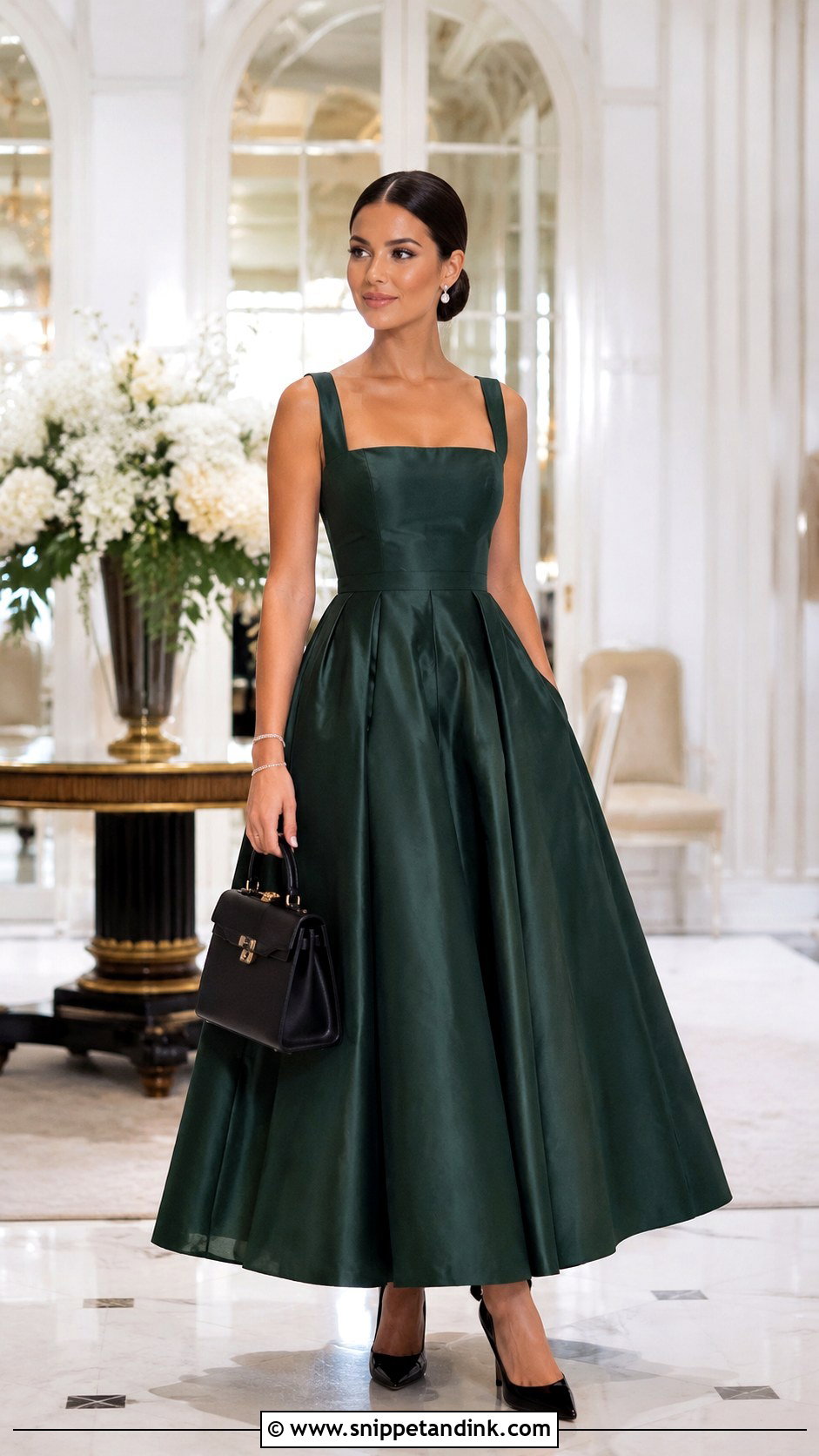
A square neckline frames the collarbone cleanly and gives a gown a slightly vintage note. Pair it with wide straps, short sleeves or long fitted sleeves depending on the season. Structured crepe, satin or silk faille keep the corners crisp; soft fabric lets them sag into a curve. A defined waist and an A-line or straight skirt continue the shape, with pointed heels, a structured bag, short drops and a centre-parted bun or tucked waves. Small changes to the width and depth of the square change the balance of the whole gown, so I adjust them at the fitting on the body, not on paper. Hidden cups and supportive side panels keep the bodice flat.
19. Custom Hand-Painted Gown
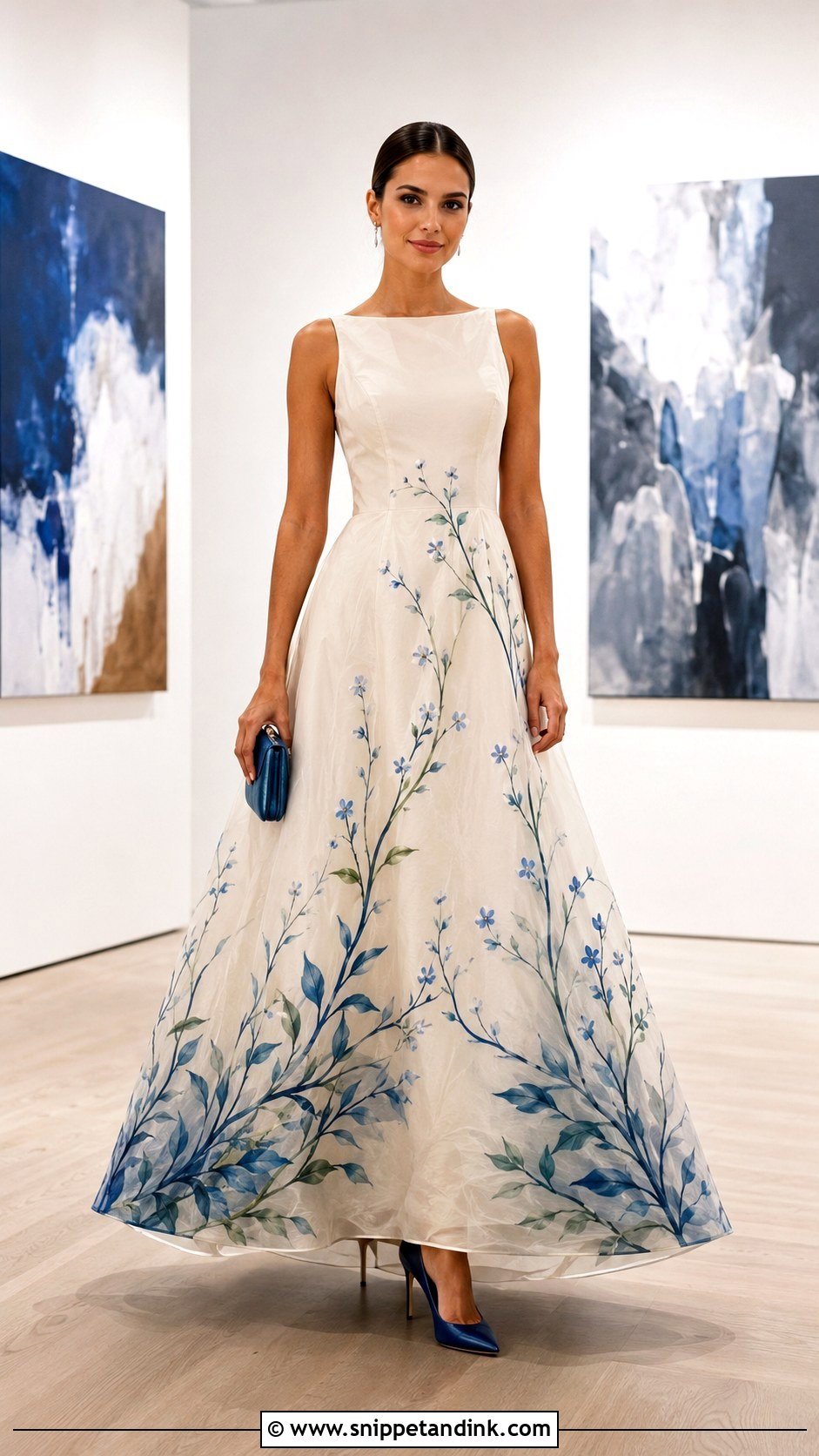
A hand-painted gown is wearable artwork, and the base needs to be calm enough to carry it: a simple column, A-line or ball gown. Floral branches, abstract colour washes, landscapes or celestial motifs can climb from hem to bodice. Silk organza or satin works only if the fabric has been tested with the artist’s paint, since some paints crack or stiffen when folded. Solid heels, a plain clutch, minimal jewellery and sleek hair let the art lead. Ask for a full-size placement sketch before any paint goes on, and get the cleaning and storage instructions in writing. The painting should follow the body’s lines rather than stopping at seams, and a light lining or transparent overskirt can protect it where appropriate.
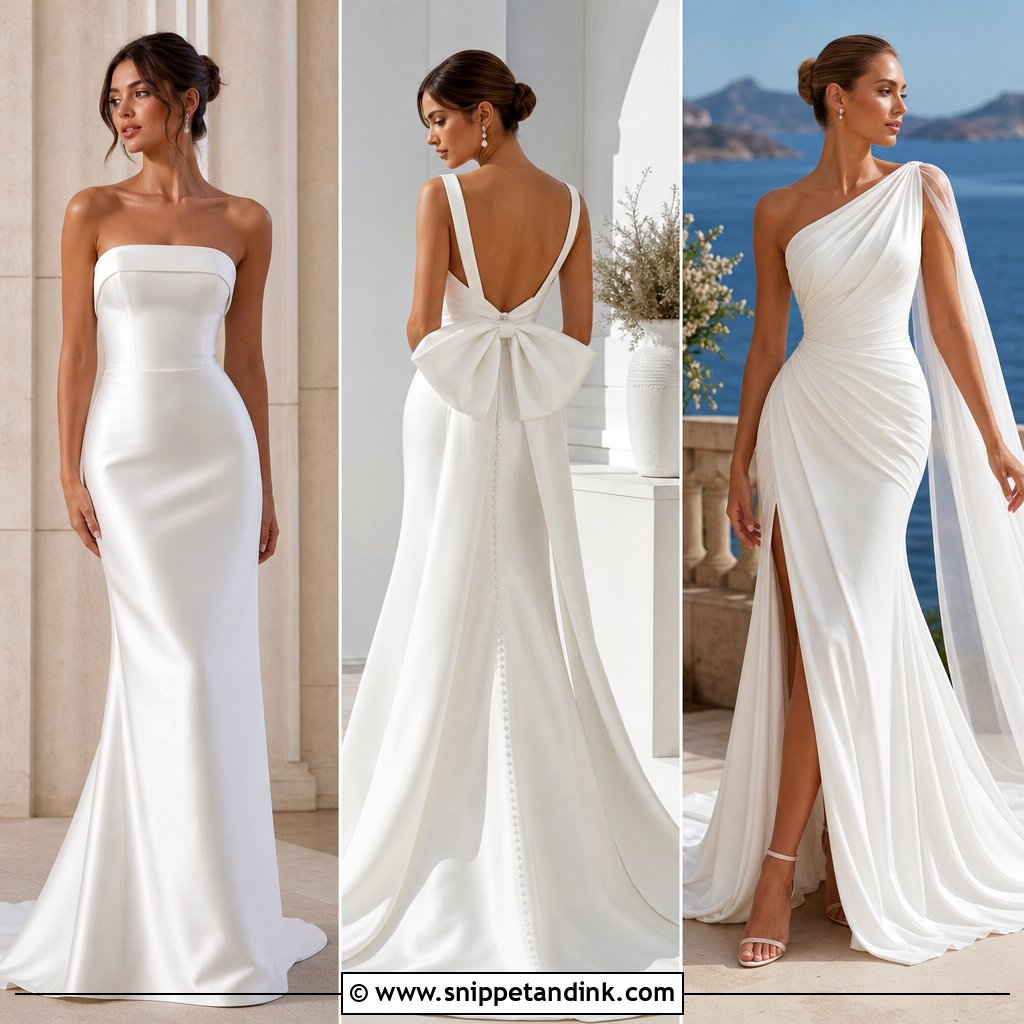
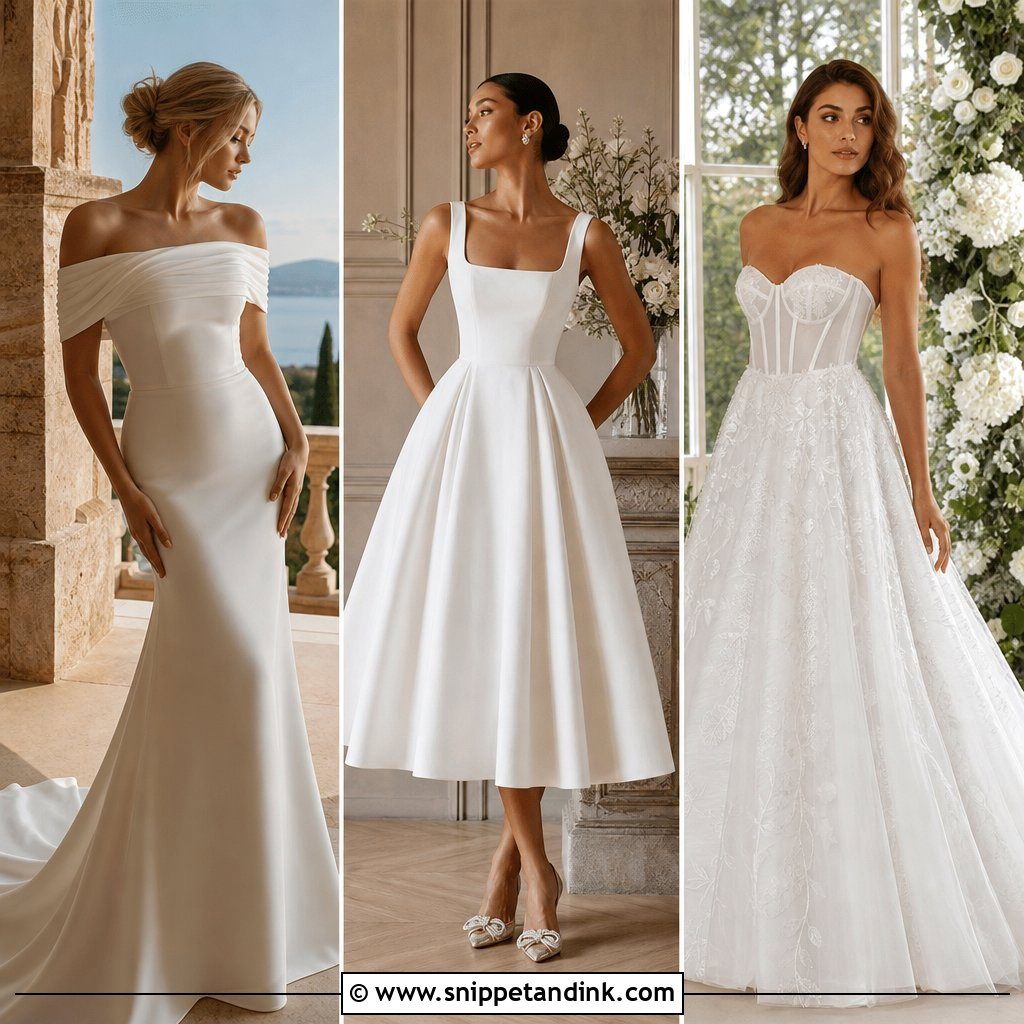
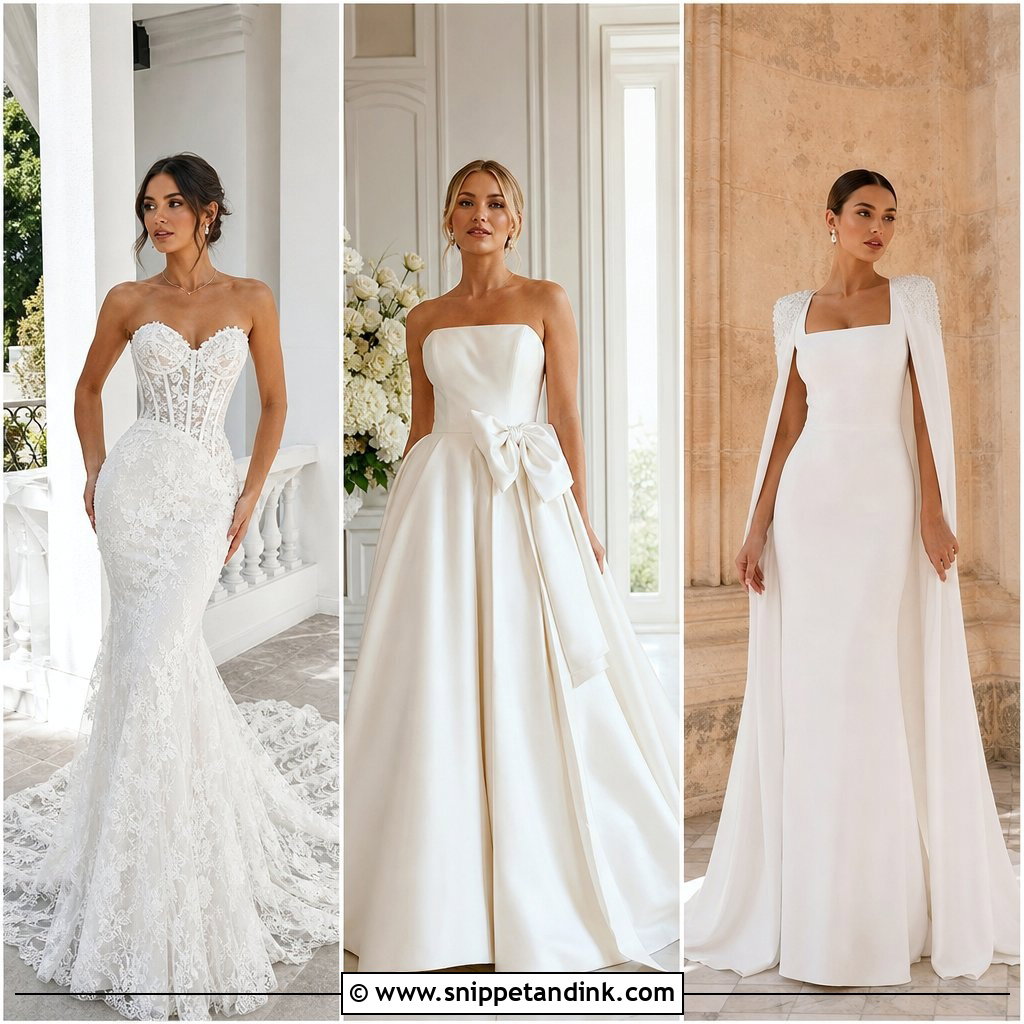
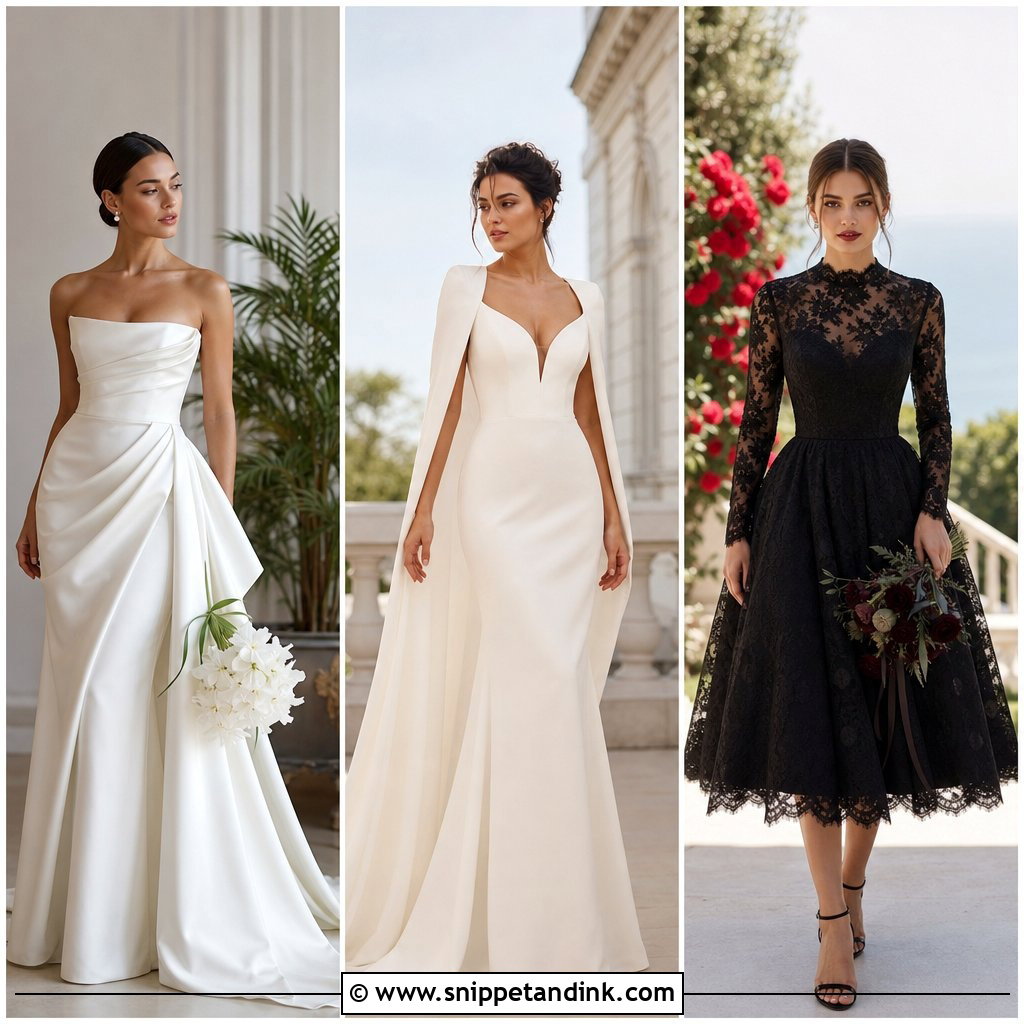
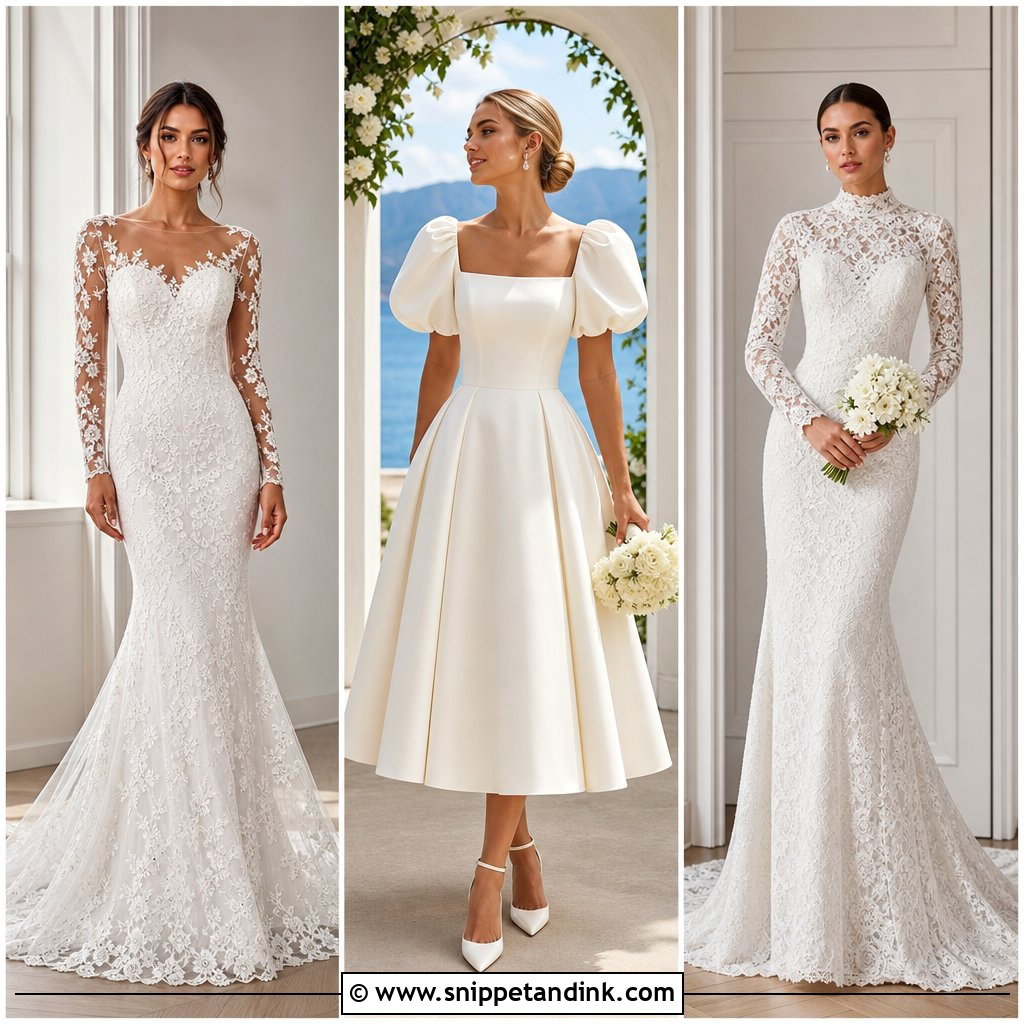
20. Custom Convertible Sleeve Gown
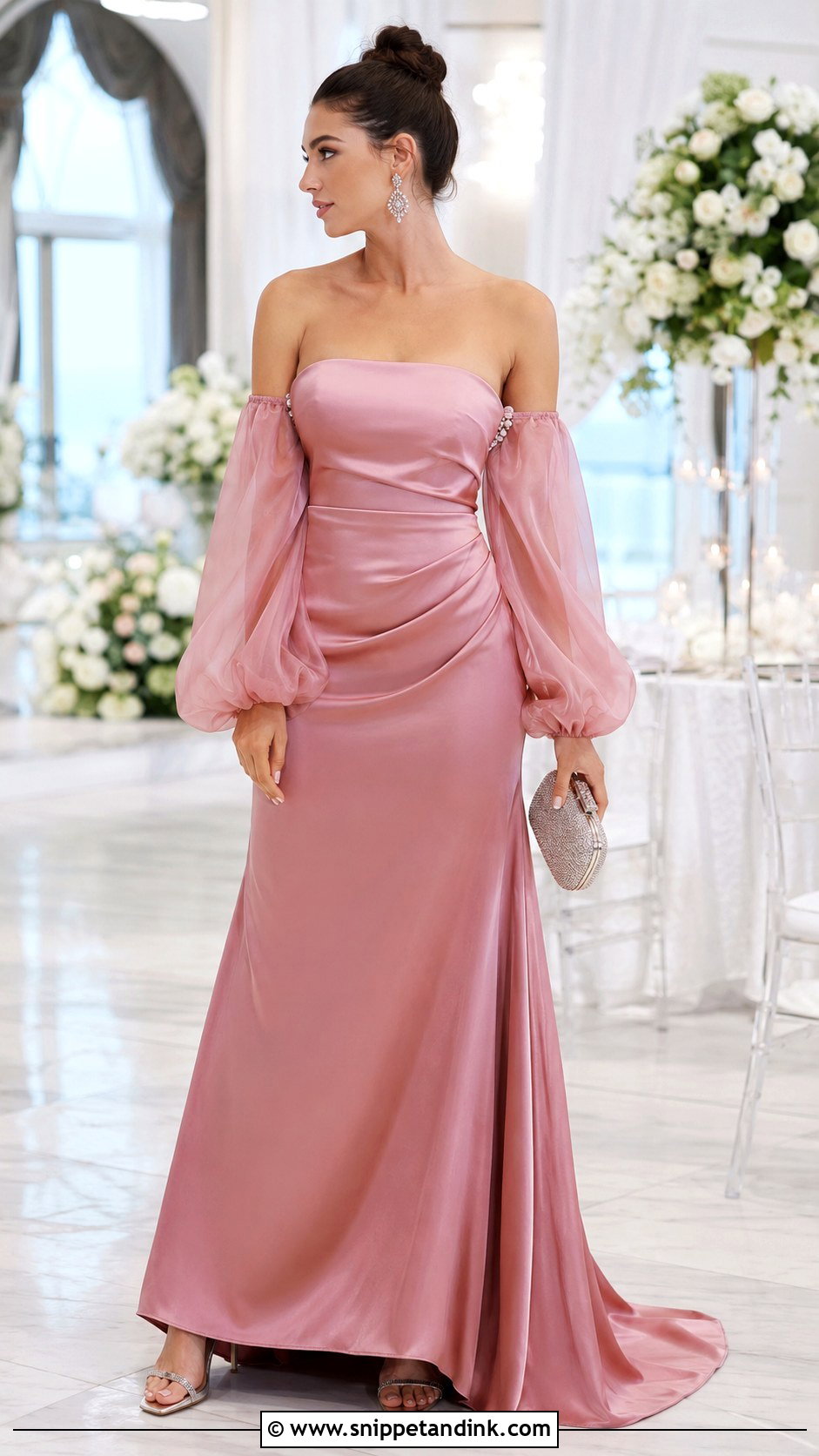
Convertible sleeves let one base gown change through the day. Start with a strapless, sleeveless or narrow-strap gown in satin, crepe or mikado and add removable off-shoulder bands, sheer long sleeves, puff sleeves or draped shoulder panels on hidden snaps. Wear them for the entrance and take them off before dancing. Classic heels, a small evening bag and earrings that work with both necklines keep it simple, and a polished bun stops the pieces snagging your hair. Test every attachment with your arms raised. I tell brides to keep the removed sleeves in a labelled fabric pouch with someone they trust, because they go missing at receptions.
Put These Terms in Writing Before the Deposit
Most problems I see with custom gowns aren’t about the sewing. They come from assumptions nobody wrote down. A short written agreement protects you and the designer, and a good maker will be glad to have one.
- How many fittings are included, and what an extra one costs.
- The payment schedule: what the deposit covers and when the balance falls due.
- What counts as a design change once the toile is approved, and how changes are priced.
- What happens if your measurements shift by the final fitting.
- The exact fabrics, with swatch references, so a substitution can’t quietly happen.
- The collection date, and whether pressing and a garment bag are part of the price.
Caring for a one-off gown afterwards
Ask the maker how the fabric should be cleaned before you leave with it. Painted, beaded and velvet gowns often need a specialist cleaner, and the sooner after the wedding the better, since sugar from spilled drinks is invisible at first and yellows over months. Store it flat or in an acid-free box with tissue in the folds, never in the plastic bag it came home in.
Where Your Own Pattern Pays Off
A custom gown works when the brief is clear: the occasion, the hours you’ll be in it, how much support you like and the shape you want to see in the mirror. Fabric, construction and accurate measurements matter as much as colour or embellishment. Bring pictures to your designer, but explain what you like in each one rather than asking for a copy, and you’ll get a gown that’s genuinely yours. Wear your planned shoes and underwear to fittings, practise sitting and walking, and look at the gown from behind as well as the front. From minimalist columns to embroidered ball gowns and convertible designs, these ideas adapt to different bodies, seasons and celebrations.
You'll Like These Ideas:




Leave a Reply