
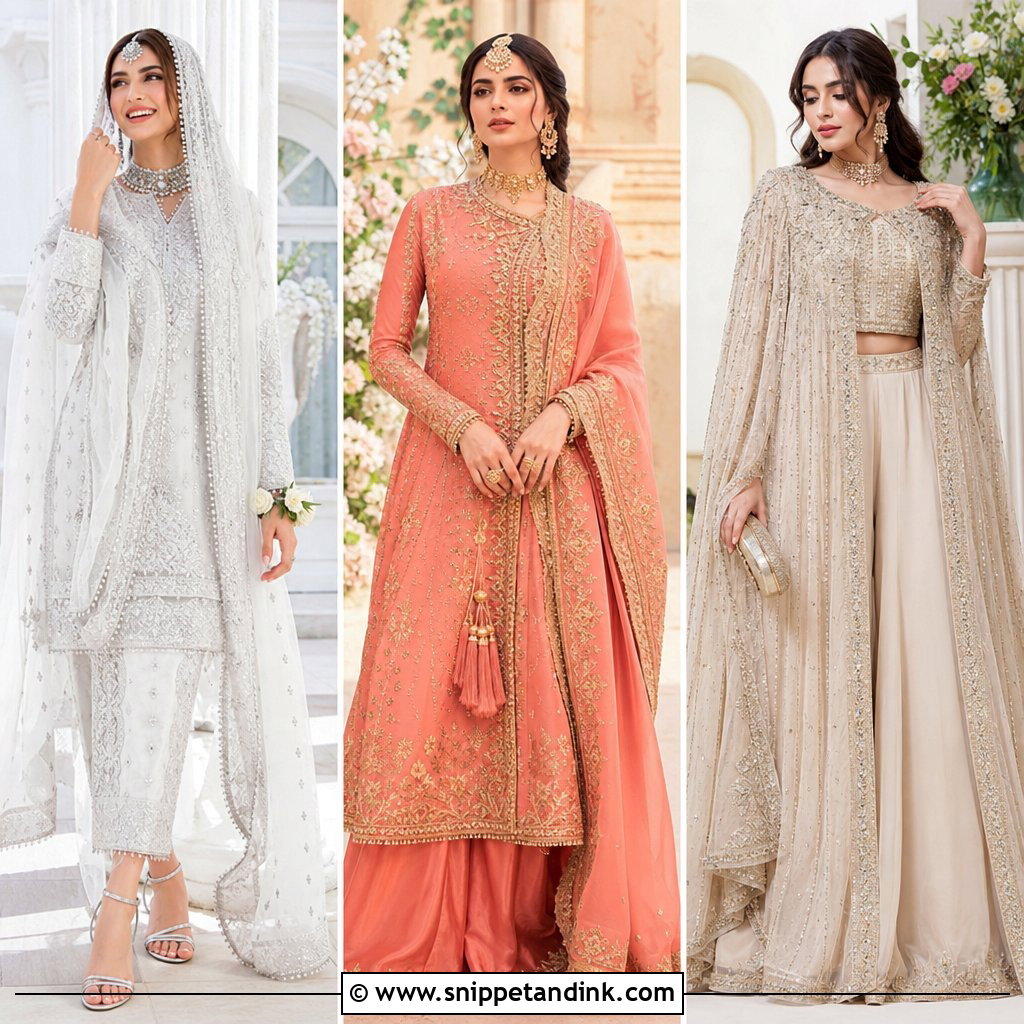
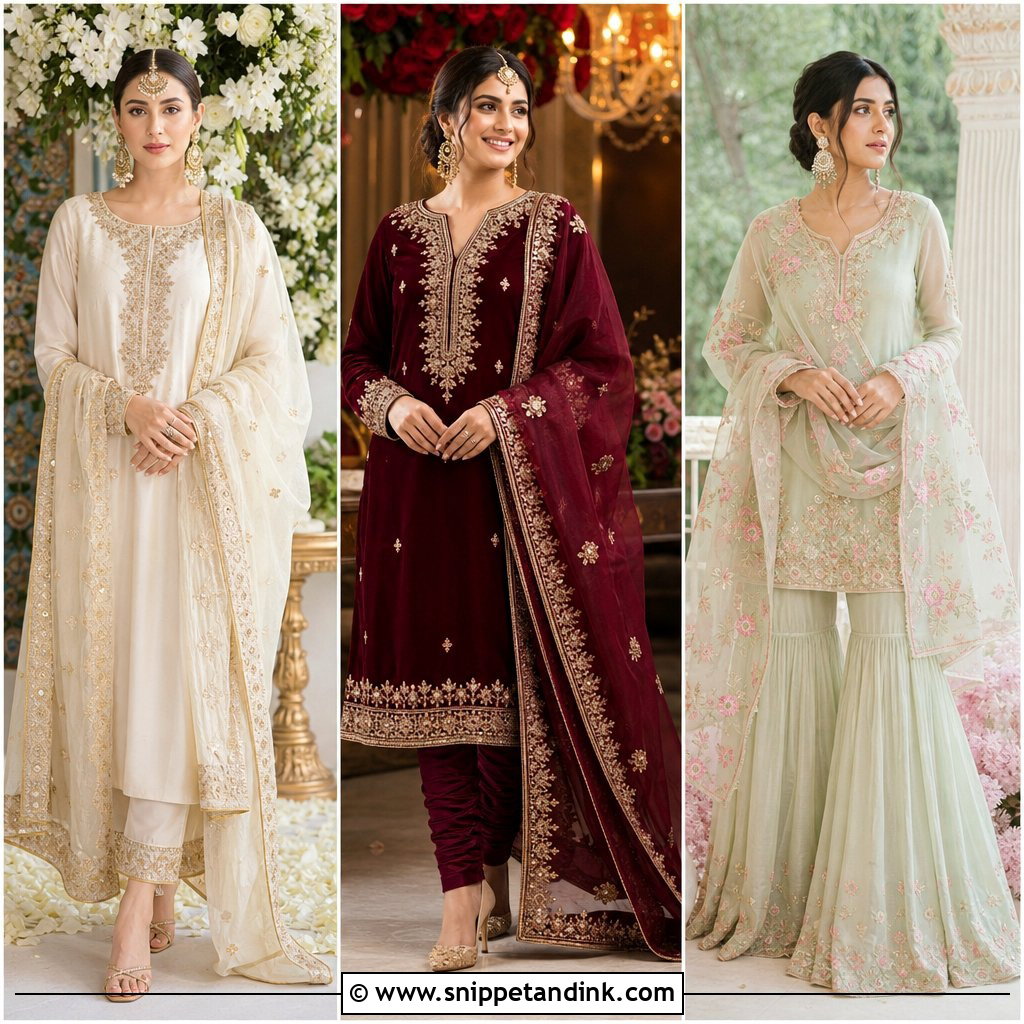
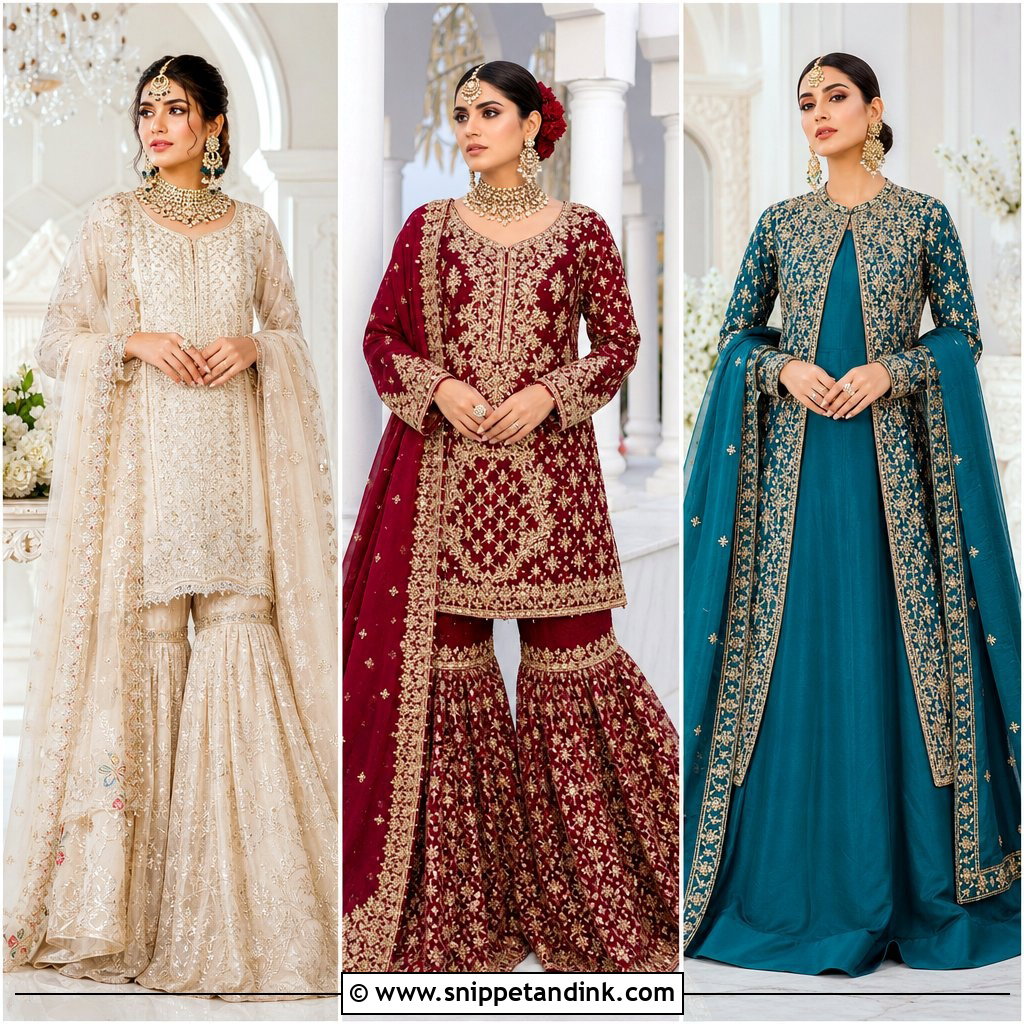
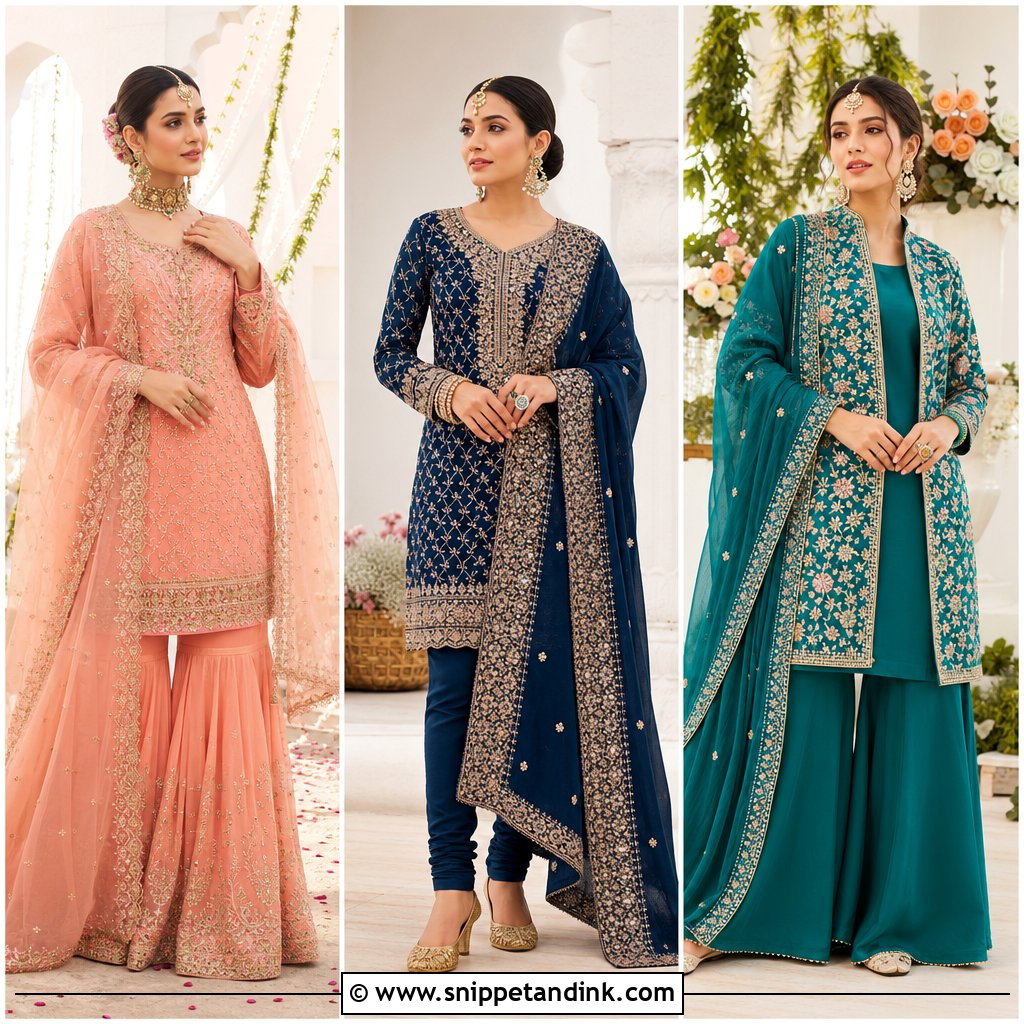
Sabyasachi salwar suits carry what the label’s bridal wear is known for, heritage craft, rich textiles, vintage color and regal Indian dressing, in a shape you can walk, sit and eat in. Think sweeping Anarkalis, tailored churidars, relaxed shararas and ornate dupattas, finished in zardozi, brocade, velvet, organza or traditional prints. I reach for a suit when a bride or someone close to her wants presence without the weight of a lehenga. The twenty looks below cover weddings, engagements, festive functions and family dinners, with fabric, color and accessories for each. Read them for the silhouette first. Jewelry and shoes are the easy part.
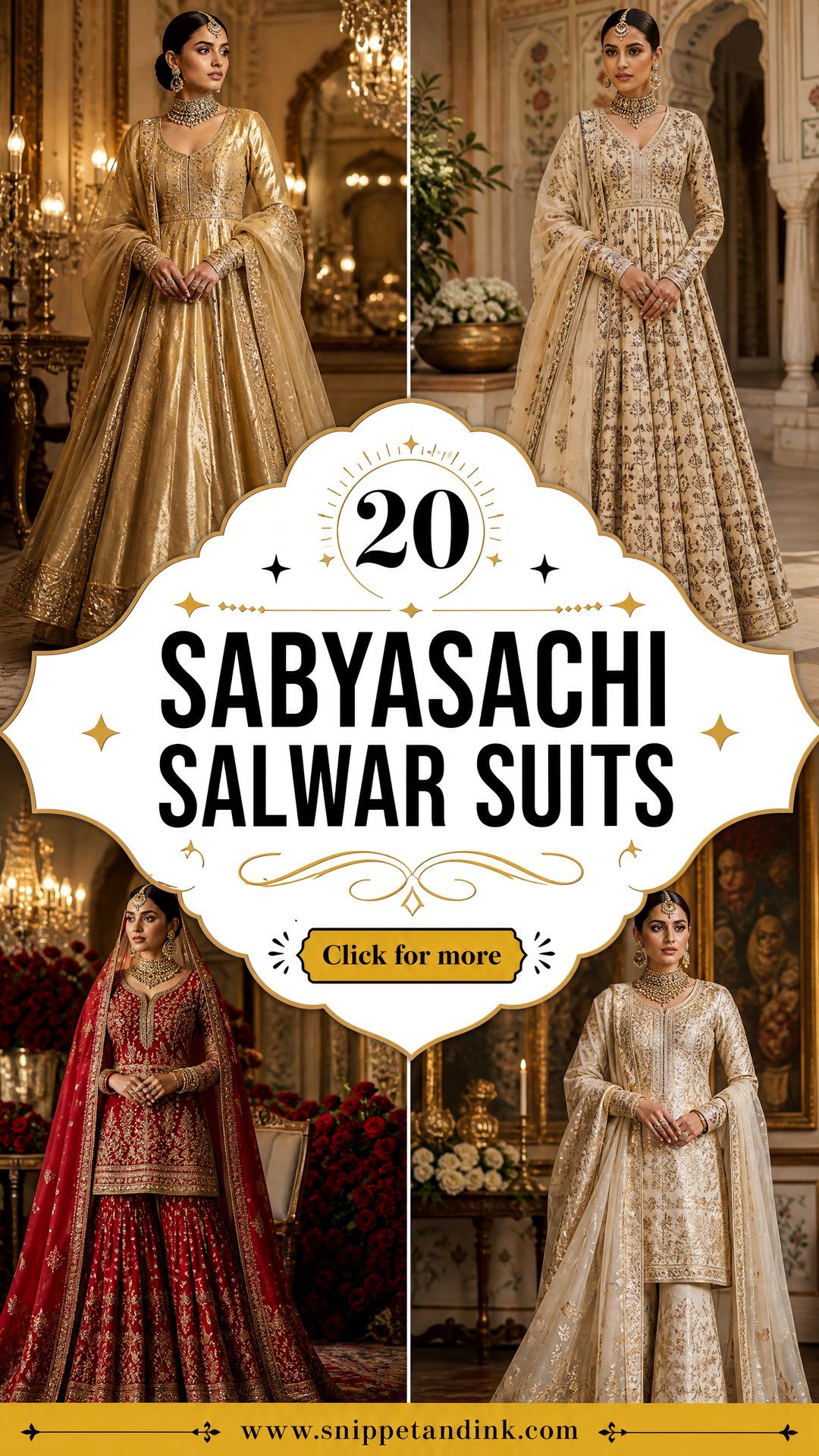
Which Bottom Suits the Hours You’ll Spend in It?
The kurta gets the attention, but the bottom decides how your day feels. Before I recommend one, I ask three things: how much sitting is involved, whether there will be dancing, and whether you’ll be walking on grass, marble or a lot of stairs.
Churidar
It is cut on the bias and extra long so it gathers into soft rings at the ankle. It looks sharp under an Anarkali or a straight kurta, but it is the least forgiving at the calf and knee. I fit it sitting down as well as standing, because a churidar cut tight across the knee pulls the moment you sit cross-legged on the floor.
Sharara and gharara
A sharara flares from the hip or waist; a gharara stays fitted to the knee and flares from a joint there. Both swing well on a dance floor and both catch heels on stairs, so the hem gets finished with your actual shoes on. Expect more fabric to manage in a car and in the bathroom.
Palazzo and straight pants
The easiest to wear for ten hours and the easiest to wear again afterward. They read a little less formal, so the kurta and dupatta have to carry the occasion.
1. Red Velvet Sabyasachi Anarkali Suit
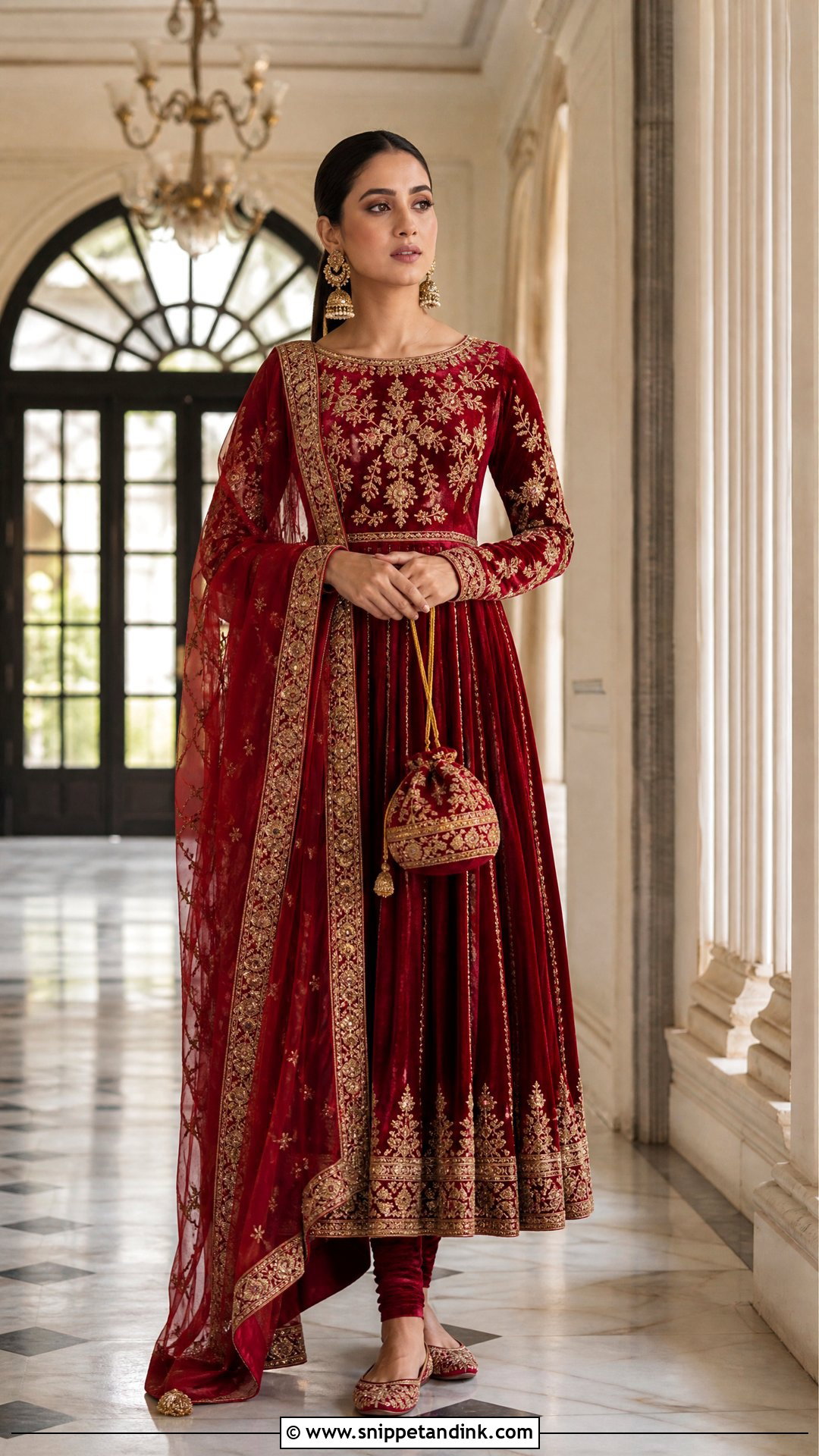
For a winter wedding or a formal reception, deep red velvet has real presence. Ask for a floor-length kurta with a fitted bodice, full sleeves and controlled flare. Velvet is heavy, and a very full Anarkali skirt in it drags the bodice downward as the evening goes on, which is why I keep the panels moderate and the bodice well lined. Antique gold zardozi at the neckline, cuffs and hem is enough decoration. A matching churidar keeps attention on the kurta, and a sheer red or muted gold dupatta with a narrow border finishes the line. Antique gold jhumkas, a small potli, embroidered juttis, a center-parted low bun and softly defined eyes.
2. Ivory Floral Sabyasachi Organza Suit
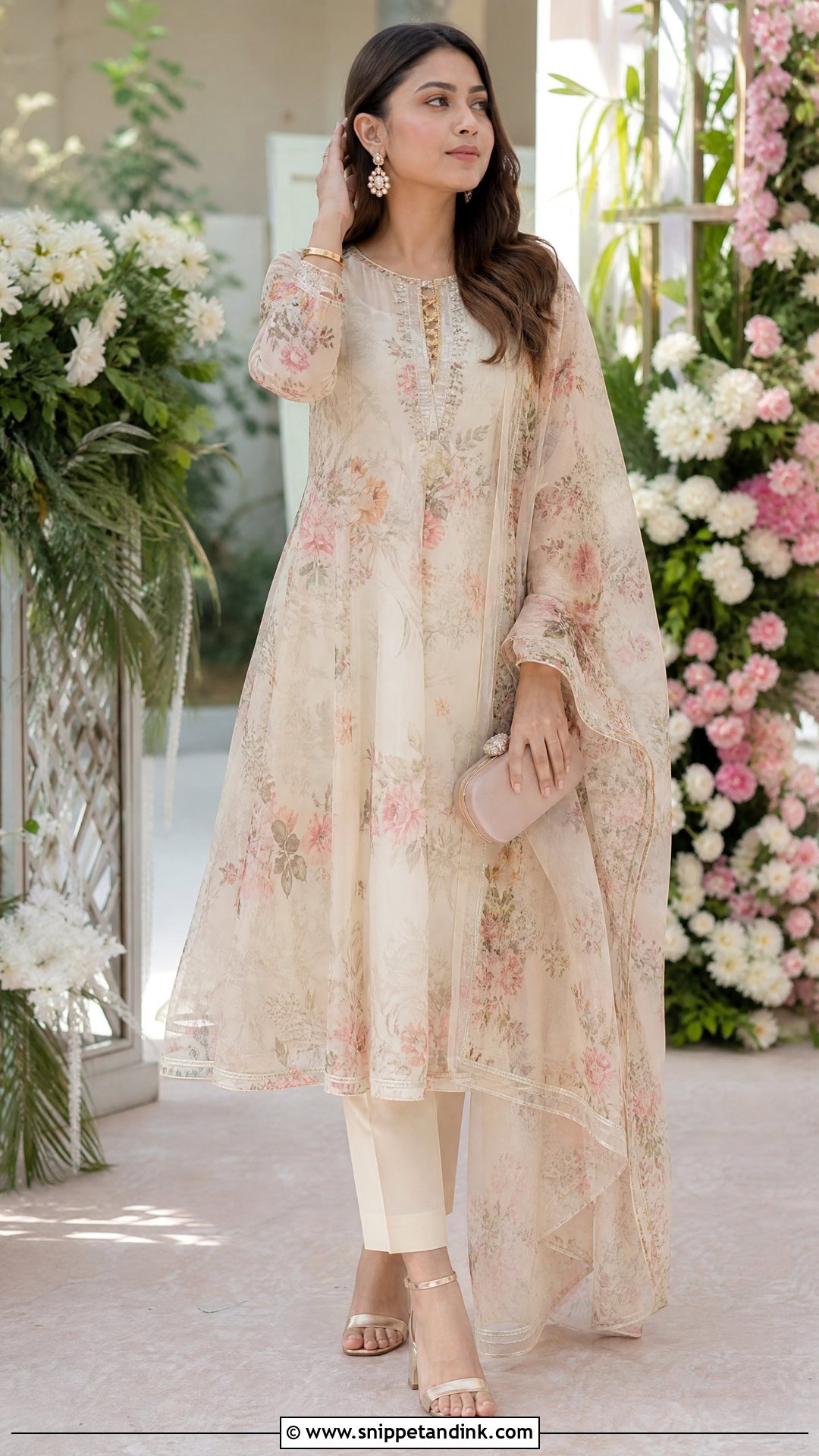
Ivory organza with small florals is my pick for a daytime engagement or a garden lunch, where dense embroidery would feel heavy. The kurta should be long, lightly flared and properly lined. Unlined organza turns see-through in sunlight, and that is the one thing I check by standing the client next to a window. Slim sleeves and a neat V-neck keep it tidy, while pink, peach and green flowers add color quietly to the pale ground. Straight ivory pants and a matching floral organza dupatta keep everything airy. Add pearl drops, a pastel clutch, champagne block heels or embellished flats, fresh makeup and a relaxed bun.
3. Black Sabyasachi Zardozi Churidar Suit
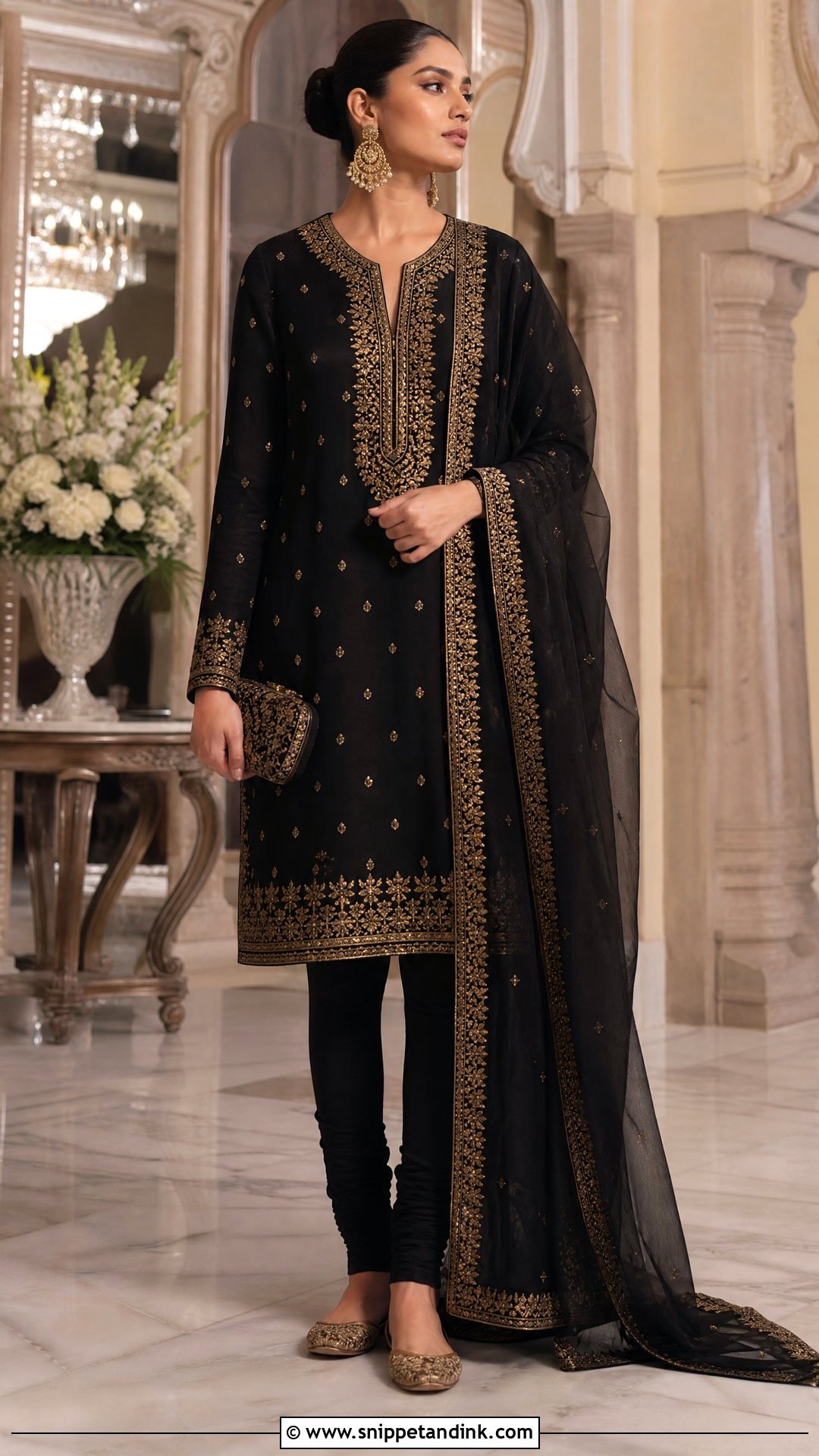
Black turns formal quickly once antique metallic embroidery and a sharp cut are involved. Choose a knee-length silk kurta with gold zardozi along the neckline, front panel, sleeve edges and side slits, over a fitted black churidar, plus a lightweight black dupatta with scattered motifs and a substantial border. Chandbalis, stacked bangles, a compact embroidered clutch, and black or bronze juttis rather than a contrasting shoe. Sleek bun, kohl, a muted lip. Before I suggest black for a wedding function, I’d check with the hosts. Some families are uneasy about it at auspicious ceremonies, and an evening reception is usually the safer place to wear it.
4. Mustard Bandhani Sabyasachi Sharara Suit
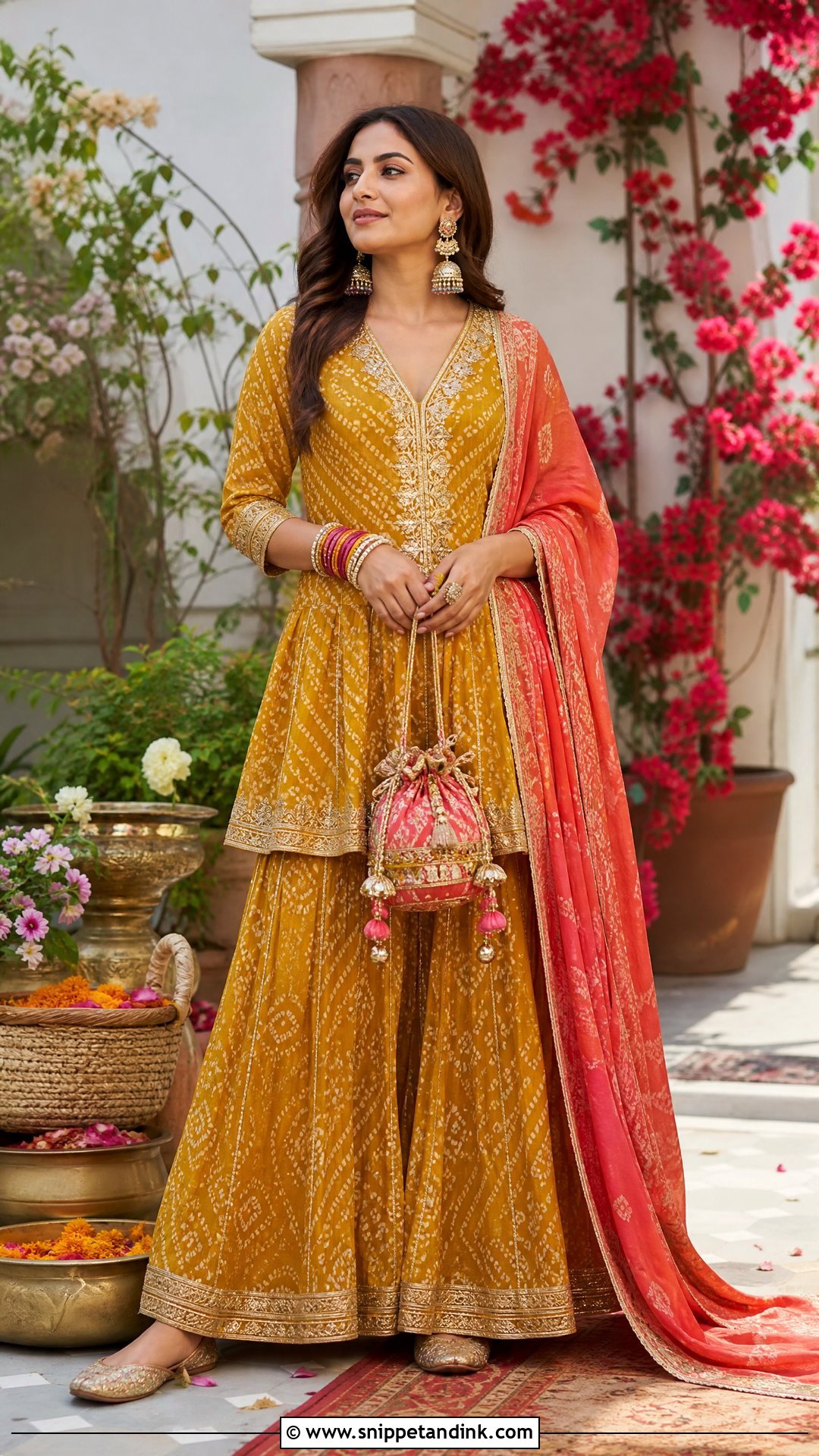
Bandhani is tie-dye: the cloth is pinched and bound at tiny points before dyeing, which leaves those dots and, on silk, a slightly crinkled hand. In mustard it reads as pure celebration, especially with a relaxed sharara silhouette. Pick a short silk kurta with a modest V-neck, three-quarter sleeves and restrained gota or metallic thread, over a wide sharara in the same dotted pattern or with a complementary border. A light Bandhani dupatta in mustard, red or coral adds movement. Oxidized gold earrings, colorful bangles, a small potli, gold juttis and a loose braid with floral pins finish it for a haldi or a festive lunch. If you’re near the haldi paste, sit back a little; turmeric stains silk for good.
5. Emerald Green Sabyasachi Brocade Suit
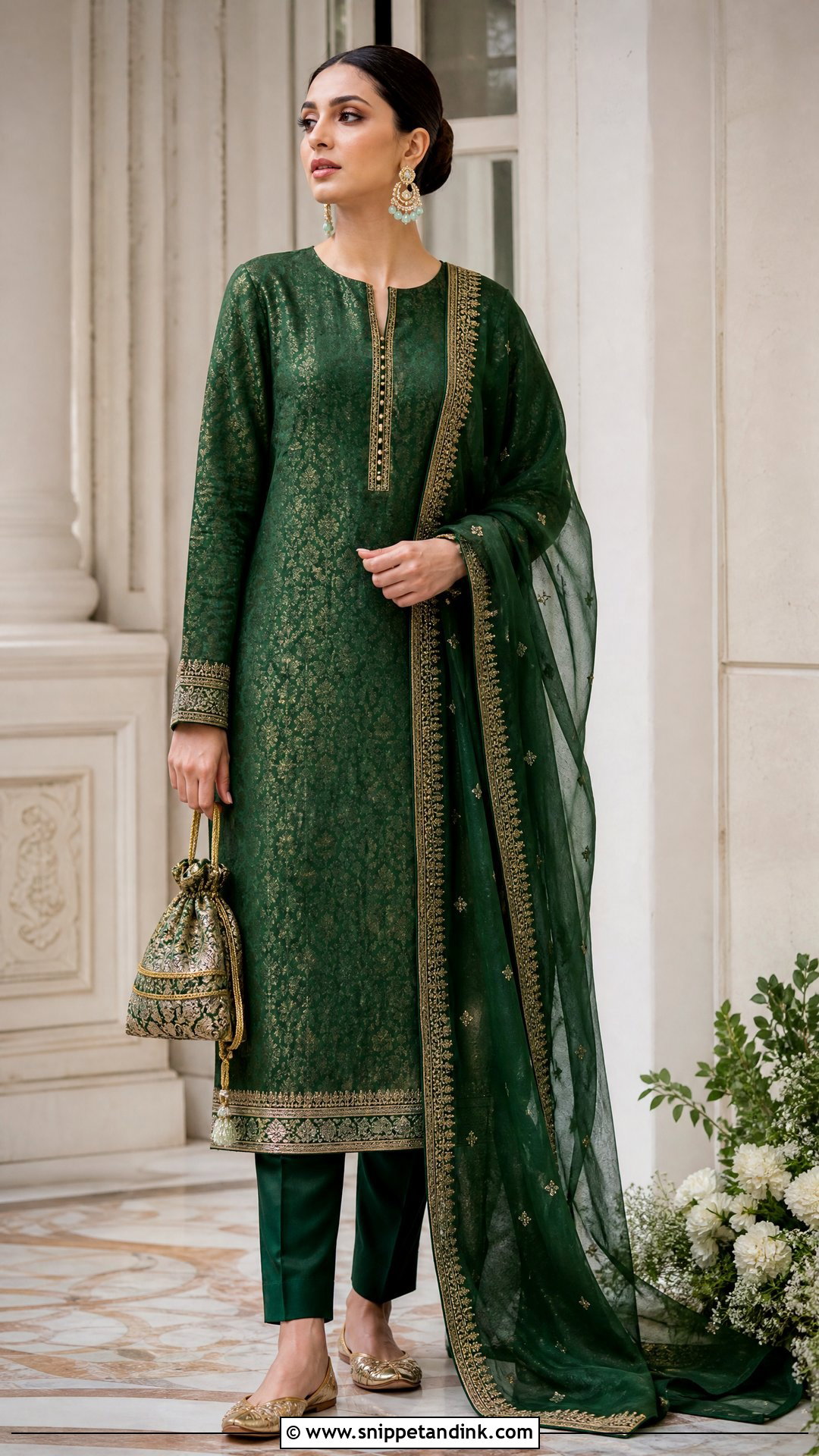
Brocade carries its pattern in the weave, so a straight emerald kurta needs almost no embellishment. I keep the cut simple, calf-length with a clean round neck, because every extra seam interrupts the woven motif, and a good tailor will match the pattern across the front panels. Narrow silk pants in green or antique gold sit underneath. A sheer organza dupatta with small embroidered motifs lightens the density. Choose a structured brocade potli, kundan earrings and gold slingback flats, then a low bun and softly luminous makeup. Engagements and winter evenings are where jewel-toned brocade looks most at home.
6. Blush Pink Sabyasachi Palazzo Suit
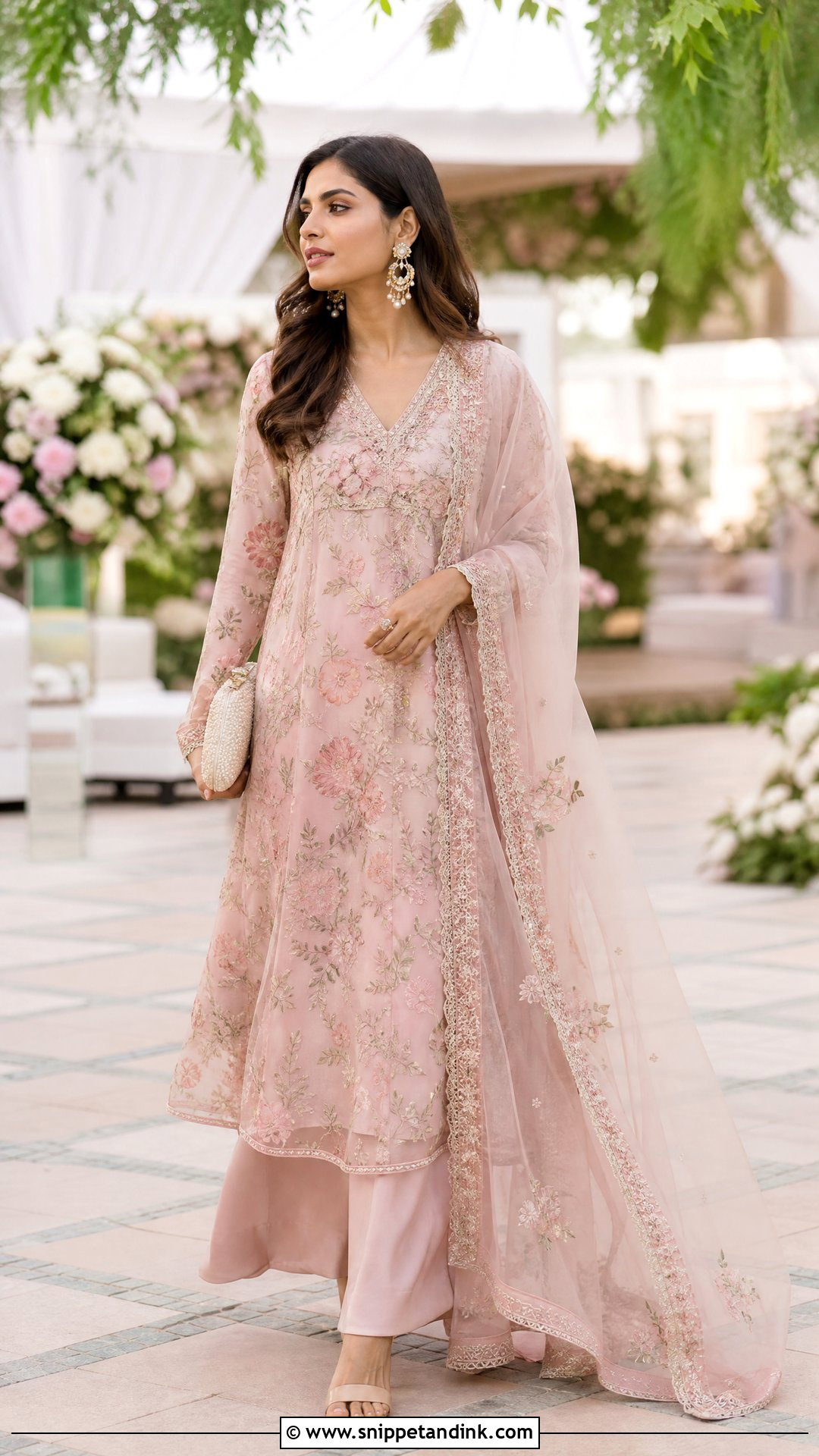
A palazzo suit is what I suggest to a bride’s mother or sister who will be on her feet hosting all day. Blush pink makes it formal enough: a long silk or organza kurta with faded florals, a V-neck and fine embroidery at the cuffs, over wide palazzos that move without clinging. Add a sheer matching dupatta edged in lace or antique gold trim. Keep jewelry to pearl-and-kundan earrings and one statement ring, with a small ivory clutch. Champagne block heels lengthen the line and stay comfortable. Soft waves or a low textured bun. Palazzo hems should just brush the top of the shoe; any longer and the back edge frays from being stepped on by evening.
7. Royal Blue Sabyasachi Velvet Anarkali Suit
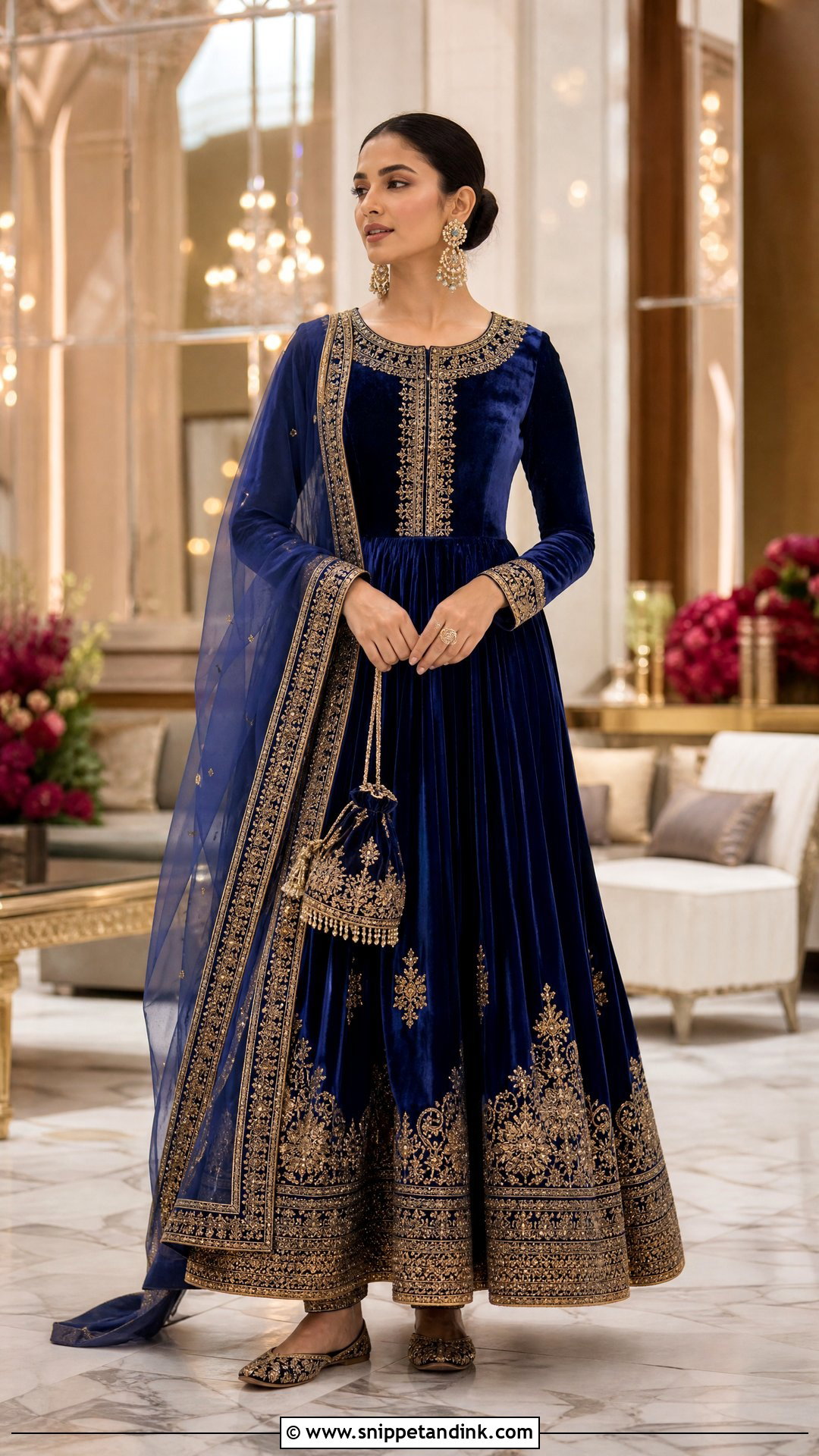
Royal blue velvet is dramatic, and the line between regal and costume is thin. A shaped bodice, full sleeves and a skirt that moves without ballooning keeps it on the right side. Antique gold embroidery at the neckline and hem gives definition against the saturated blue. Pair the Anarkali with a fitted churidar and a sheer blue dupatta with small metallic motifs, then kundan drops, a vintage-style ring, a dark blue potli with gold accents and embroidered juttis. Finish with a smooth center-parted bun and softly smoked eyes. Strong blue can throw a cool cast onto the face in photos, so I’d keep a little warmth in the blush. Save it for winter weddings and grand indoor evenings.
8. White Khadi Sabyasachi Salwar Suit
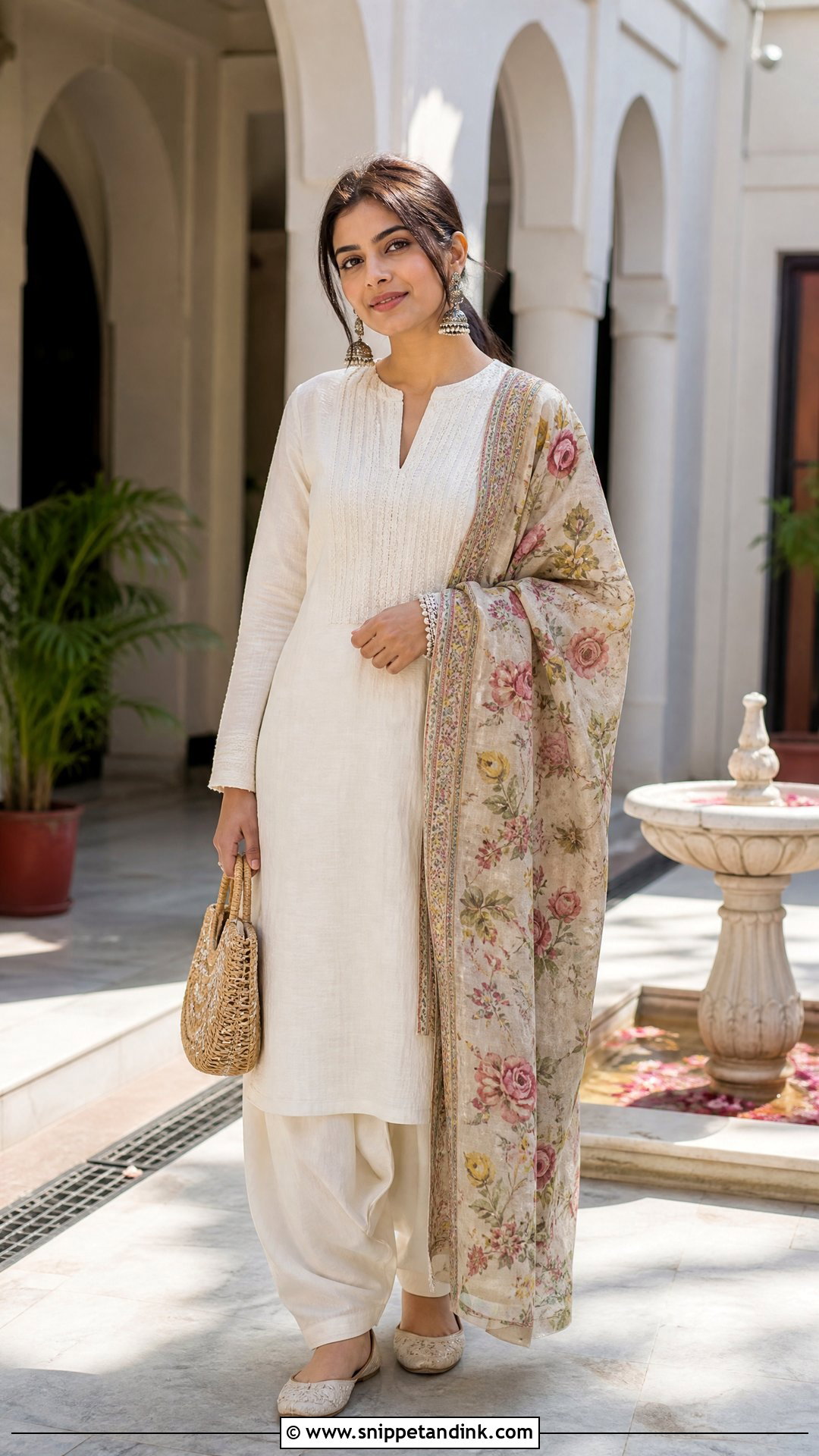
Khadi is hand-spun and hand-woven, so it has a slightly uneven texture and breathes better than almost anything else here. A long straight kurta with side slits and a simple V-neck goes over relaxed white salwar pants. The dupatta does all the talking: vintage florals, block patterns or a contrasting border in red, green and muted gold. Handcrafted silver earrings, a few slim bangles, tan or ivory juttis and a woven bag keep it grounded, with minimal makeup and a braid or low bun. Khadi creases readily, which is part of its character, but I’d still steam it just before you leave. It suits daytime cultural events and small family gatherings far better than an evening reception.
9. Maroon Sabyasachi Gharara Suit
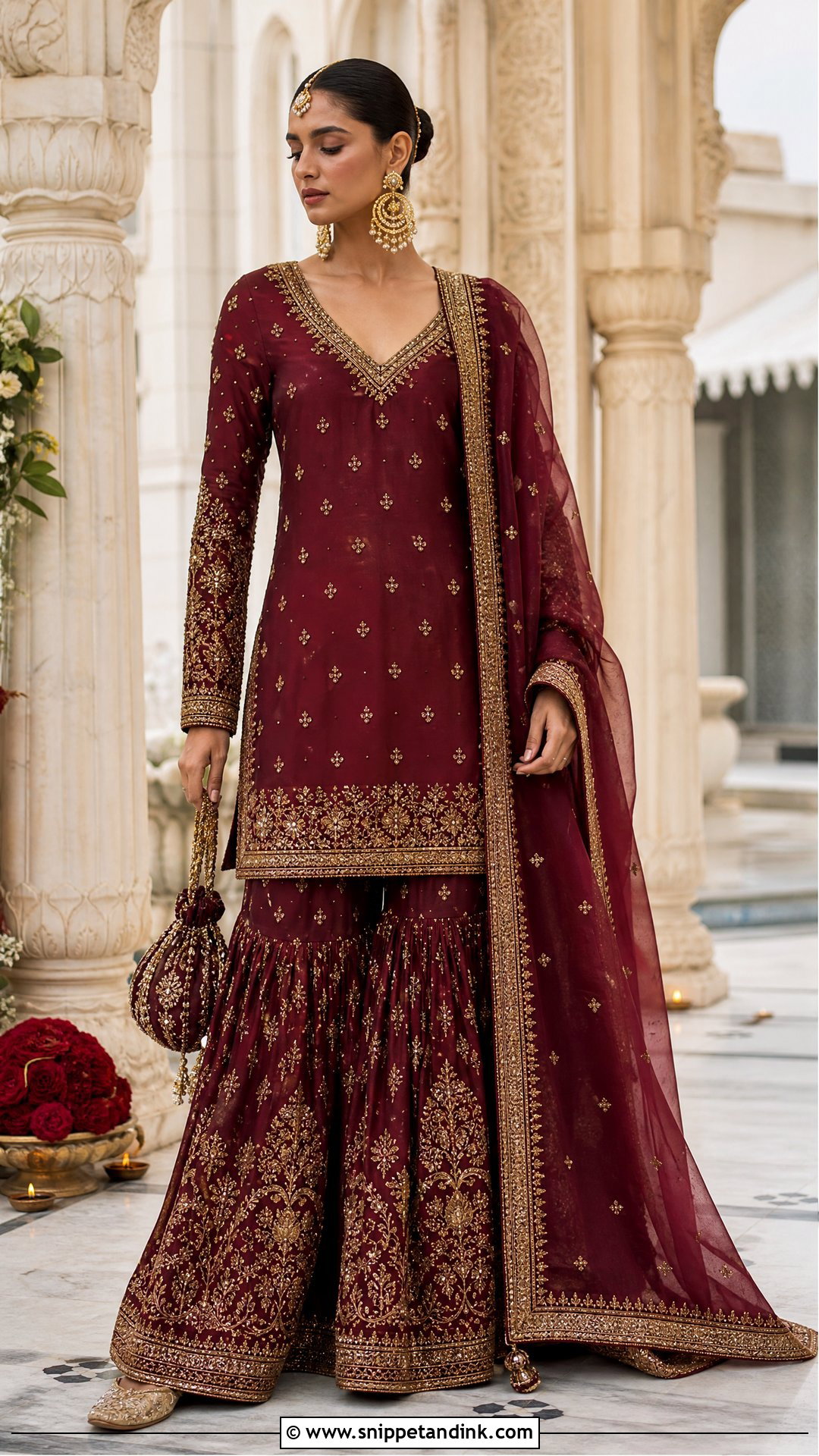
The gharara gets its shape from construction. It is fitted through the thigh, then a gathered flare is joined at the knee, with the seam usually hidden under an ornate border. That joint has to sit exactly at your knee, so I measure it with you standing in the shoes you’ll wear. Above it goes a short maroon silk kurta ending near the upper thigh, embroidered at the neckline, hem and sleeves. Drape a sheer maroon dupatta over one shoulder so the trousers stay visible. Antique gold chandbalis, a beaded potli, pointed embroidered juttis and a sleek low bun with one simple hair accessory complete it for ceremonies and festive evenings.
10. Gold Tissue Sabyasachi Anarkali Suit
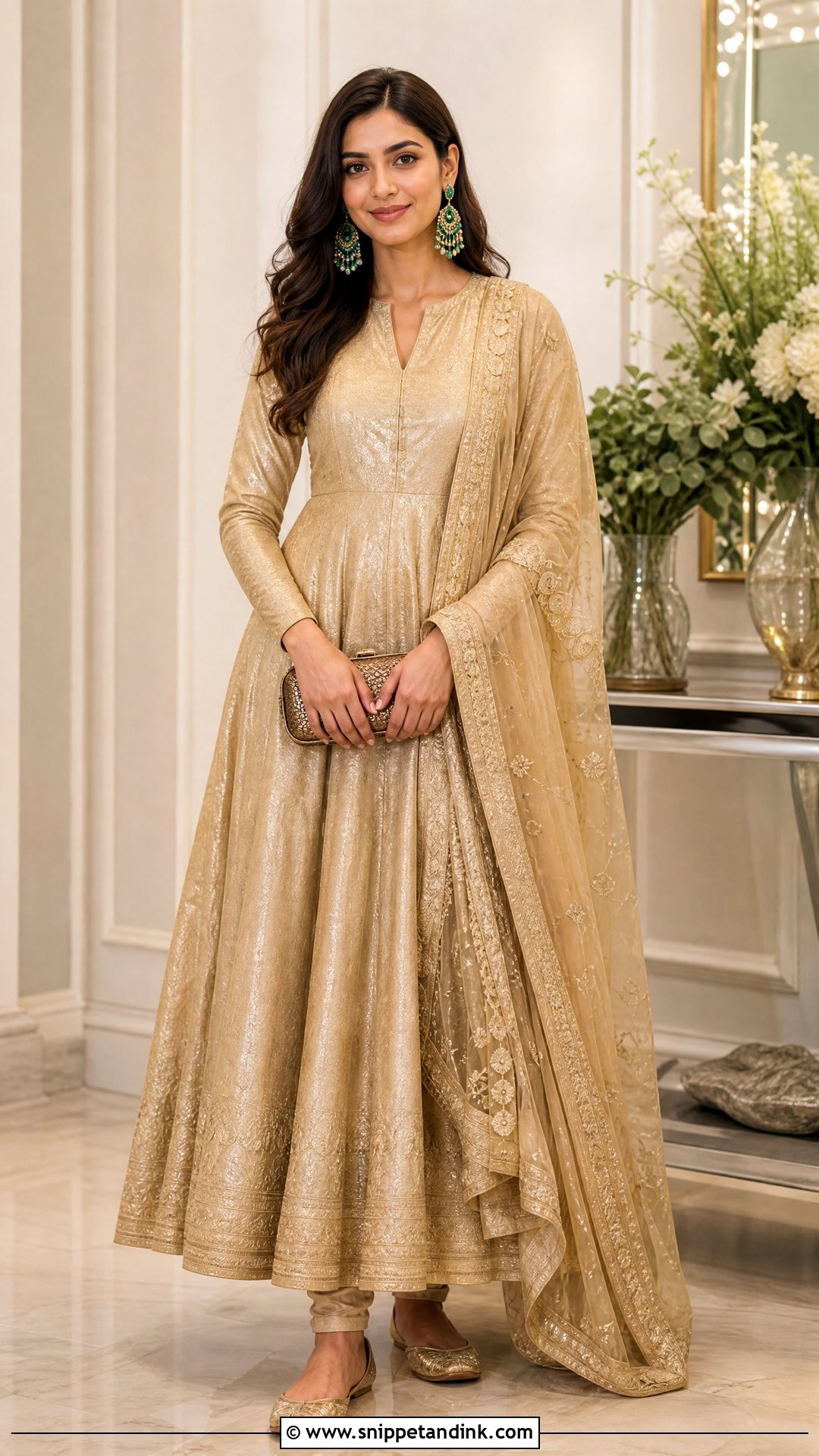
Shimmering gold tissue fabric is woven with metallic yarn, so it glows rather than glitters. Go for warm antique gold over brassy yellow gold; the warmer tone flatters more complexions. Ask for a fitted upper section, three-quarter sleeves and soft floor-length flare, with tonal embroidery and narrow velvet edging for definition. A neutral churidar sits underneath, with a sheer gold dupatta carrying a fine border. Emerald earrings for contrast, a bronze clutch, metallic juttis, softly highlighted makeup and a center-parted low bun. Tissue creases sharply and every crease shows on camera, so this one travels on a hanger and gets steamed just before you put it on.
11. Green Floral Sabyasachi Sharara Suit
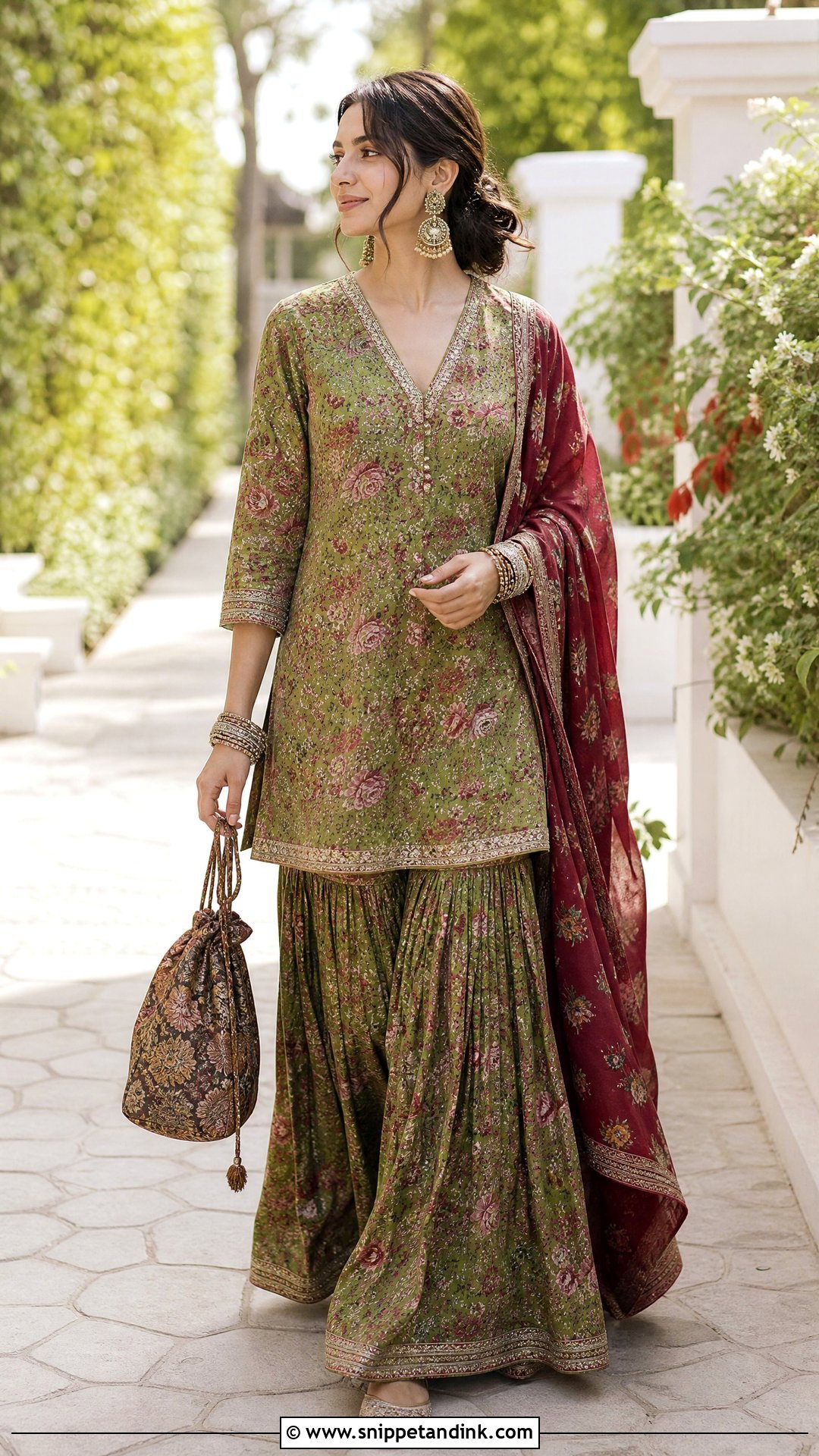
Chintz-style florals, small and dense, look vintage in a way that oversized prints don’t. Start with a short kurta in light silk or cotton-silk over a coordinated sharara that falls smoothly from the waist and widens toward the floor. The dupatta is where I’d bring in a second color, burgundy, mustard or faded pink, keeping the kurta and sharara matched so two prints aren’t fighting on your body. Antique earrings, stacked bangles, a compact fabric bag and neutral embroidered flats. Soft waves or a loose braid. Cotton-silk breathes, which is why this suit earns a place at daytime functions, outdoor gatherings and destination weddings somewhere warm.
12. Navy Sabyasachi Jacket Salwar Suit
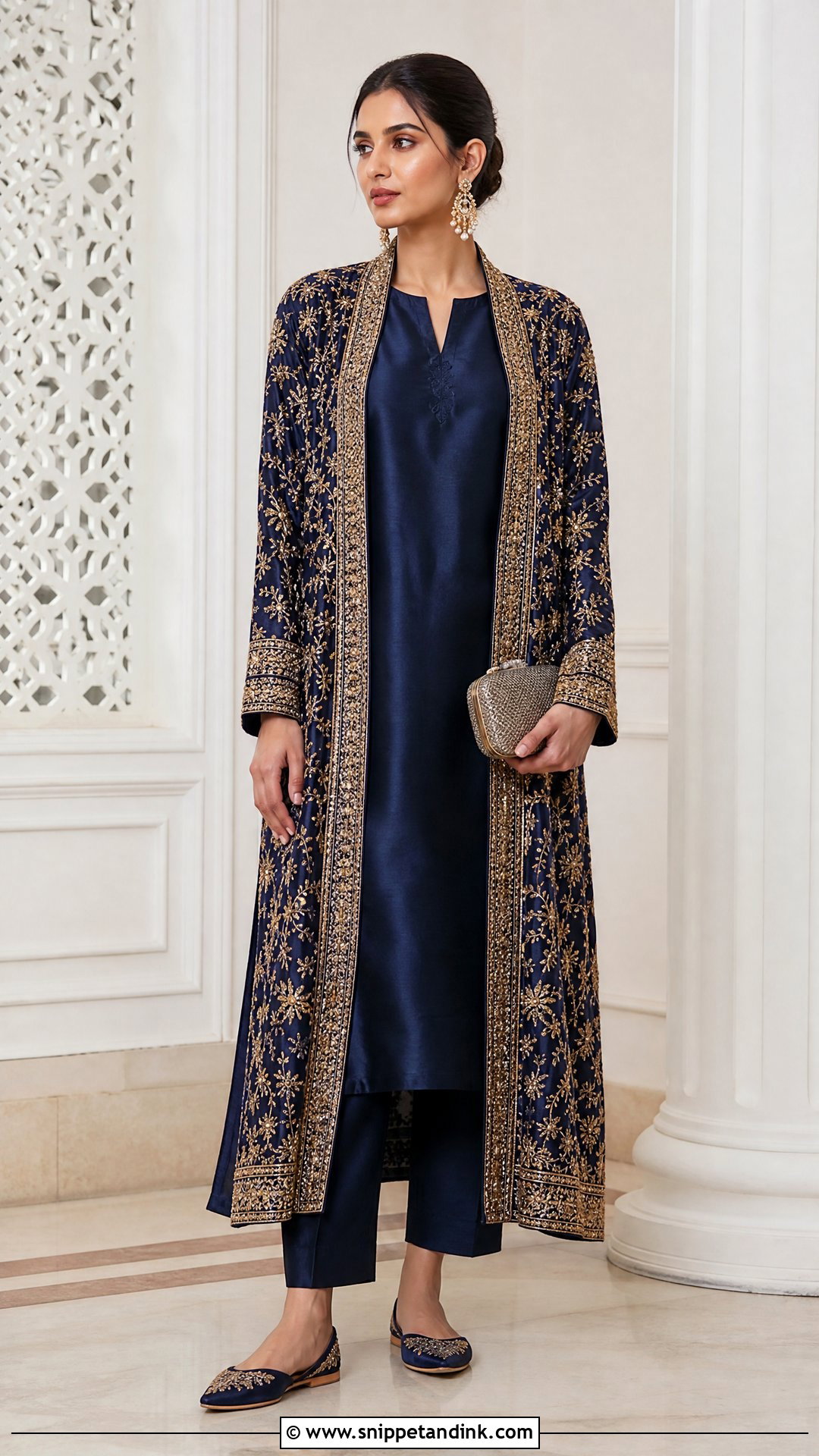
The long jacket does the heavy lifting here, so everything under it stays plain. Start with a sleeveless or short-sleeved silk kurta over straight navy pants, then a calf-length open jacket with antique gold threadwork, floral motifs and finished borders. Check the jacket armholes with the kurta underneath; two layers of silk at the shoulder can bind when you raise your arms to hug someone. A dupatta is optional, over one arm or left off when the jacket already has enough detail. Gold drops, a structured clutch, pointed navy juttis and a polished ponytail or smooth low bun. I’d bring it out for receptions and dinners in cooler weather.
13. Rust Silk Sabyasachi Straight Suit
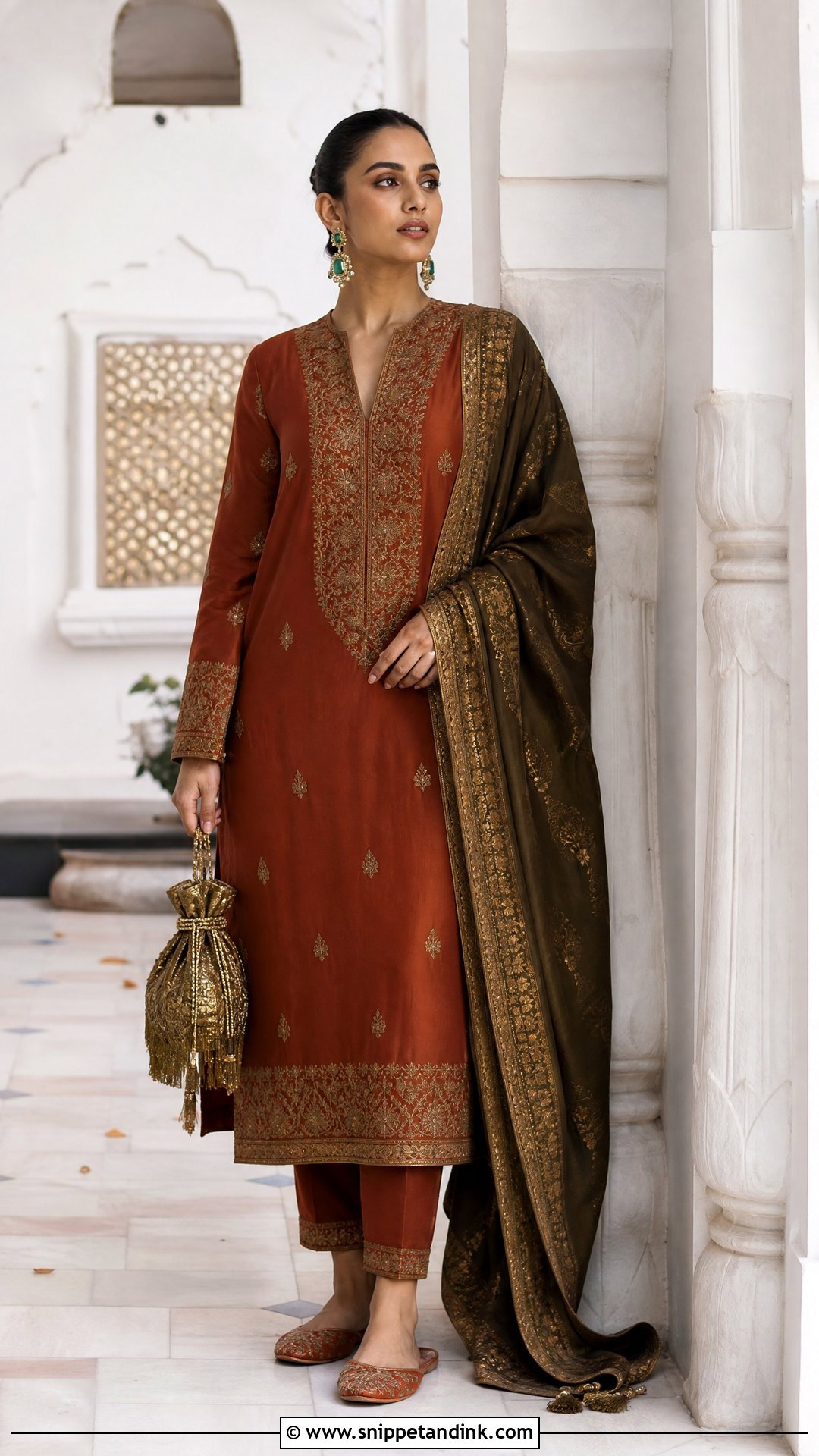
Rust is one of my favorite shades for autumn weddings because it sits so well with antique gold and deep green. Choose a straight, below-the-knee kurta with full sleeves, side slits and thread or zardozi work concentrated at the neckline, over matching cigarette pants. A printed or embroidered dupatta in rust, olive and muted gold brings in pattern. Green stone earrings, an antique gold potli and rust embroidered mules; a side-parted low bun and warm neutral makeup. One caution. Rust can drain cool-toned skin, so if your skin leans pink, look for a deeper brick shade rather than an orange one.
14. Mint Green Sabyasachi Organza Suit
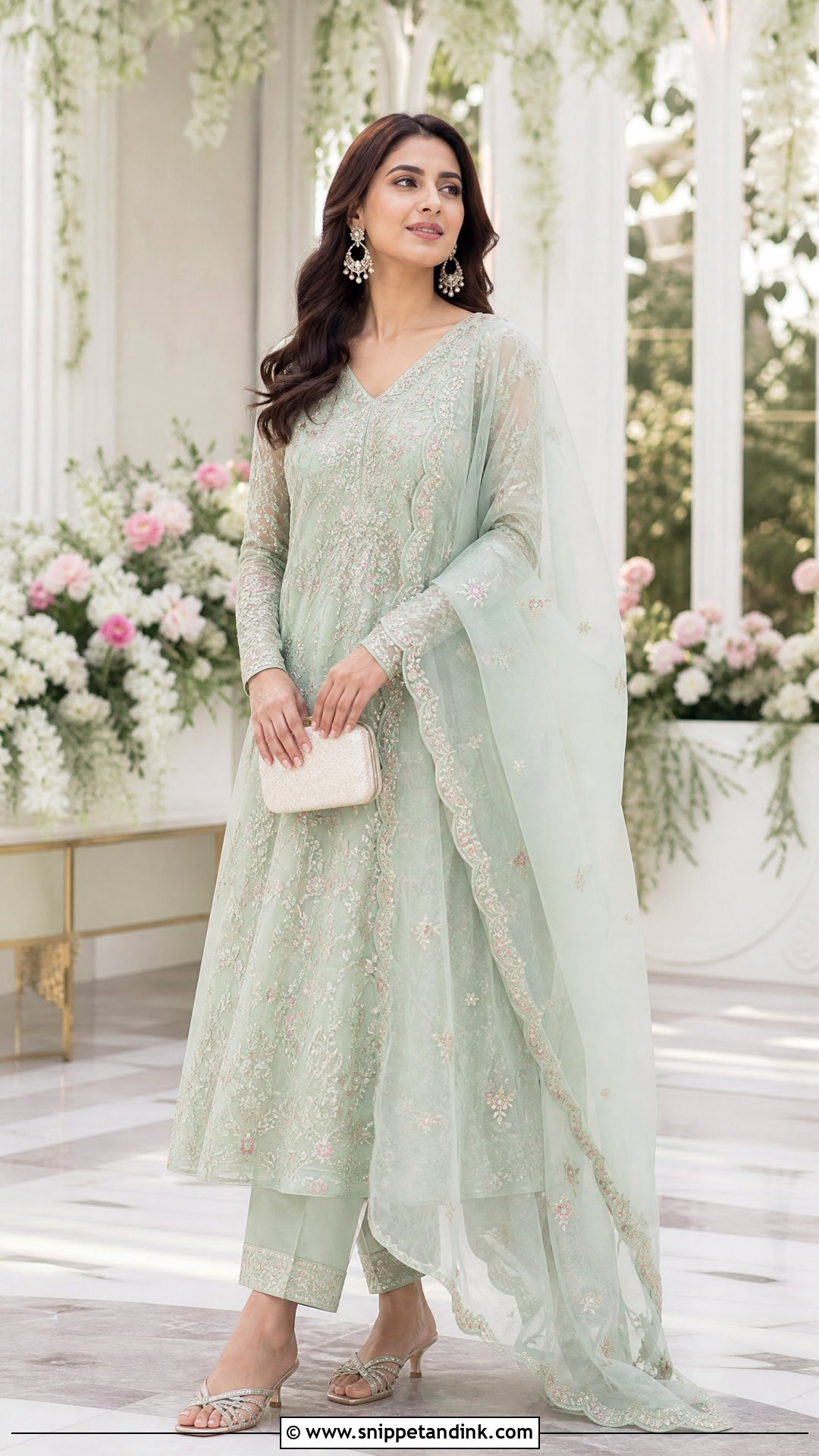
Mint organza is light and crisp for warm-weather events. The detail I care about most is the lining: organza on its own is sheer, so the body of the kurta needs an opaque lining in matching mint, or bright daylight shows your outline straight through it. A softly flared hem, sheer sleeves, and fine florals in ivory, blush and pale gold. Straight mint pants and a transparent dupatta with a scalloped embroidered border. Pearl chandbalis, an ivory box clutch and low metallic heels, with luminous makeup and a loose bun or gentle waves. Organza seams can scratch over a long afternoon, so I ask for the inside seams to be bound.

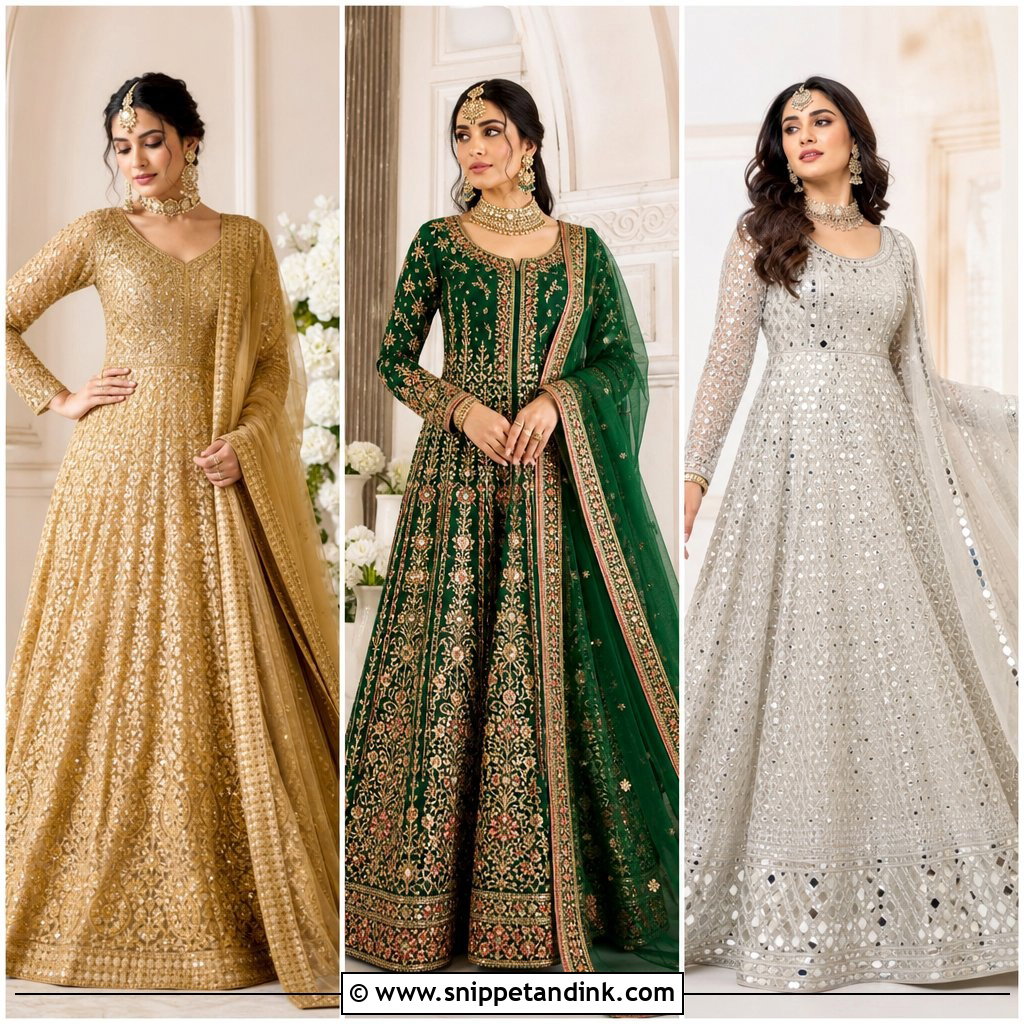
15. Fuchsia Sabyasachi Gota Patti Suit
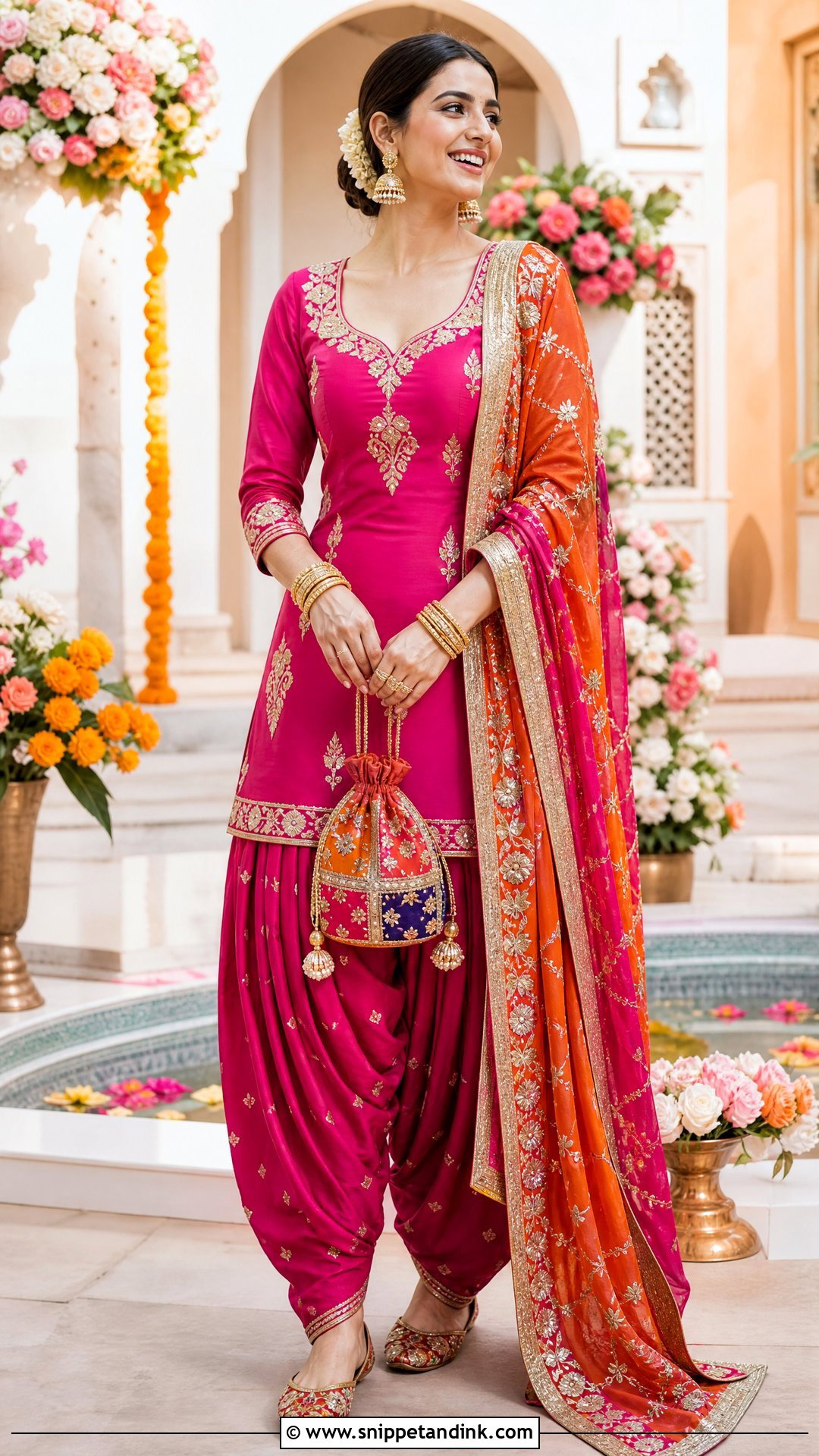
Gota patti is ribbon work: strips of metallic lace folded and stitched into shapes. It is far lighter than zardozi and catches light quickly, which suits vivid fuchsia. Choose a knee-length silk kurta with a clean neckline, fitted sleeves and placed work rather than all-over decoration, over a flowing salwar or softly pleated Patiala bottom. An orange, red or fuchsia dupatta with a gota border adds a second layer of color. Gold jhumkas, stacked bangles, a colorful potli, embroidered juttis and a braid or neat low bun. It belongs at a sangeet. Spray perfume before you dress, since metallic gota can dull where scent lands on it.
16. Beige Block Print Sabyasachi Anarkali Suit
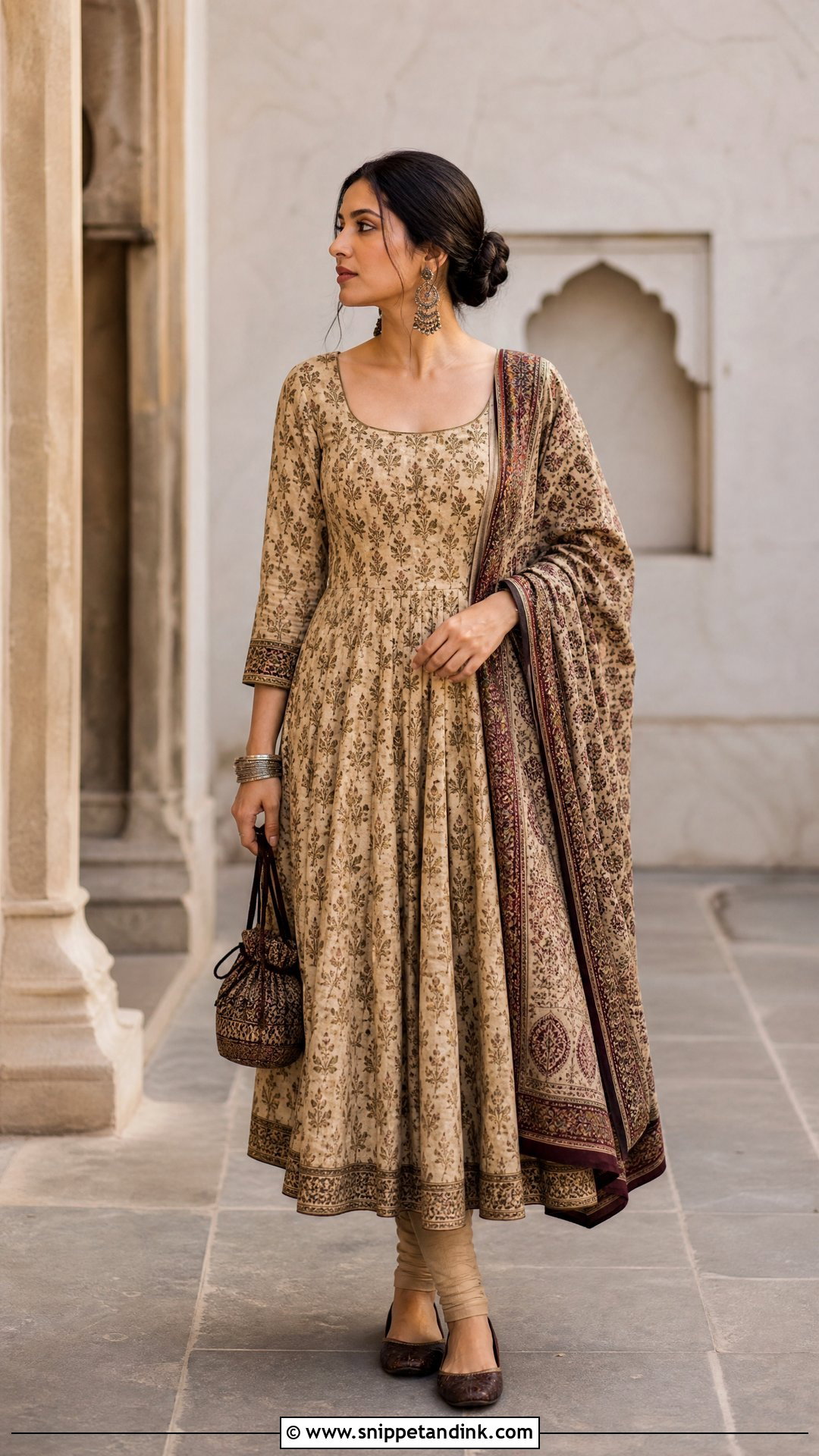
A beige block-print Anarkali is the quiet one in this list. Hand block printing stamps the pattern with carved wooden blocks, so small irregularities in the repeat are a sign of the real thing, not a flaw. Choose breathable cotton-silk with florals or geometrics in black, rust and muted red, with a fitted upper body, three-quarter sleeves and moderate flare ending at the ankle. A narrow churidar and a contrasting printed dupatta with a clear border. Oxidized silver earrings, a handcrafted fabric bag, dark brown juttis, a relaxed braid and natural makeup. Wash hand-printed cotton separately the first few times; natural dyes can still release color.
17. Purple Velvet Sabyasachi Churidar Suit
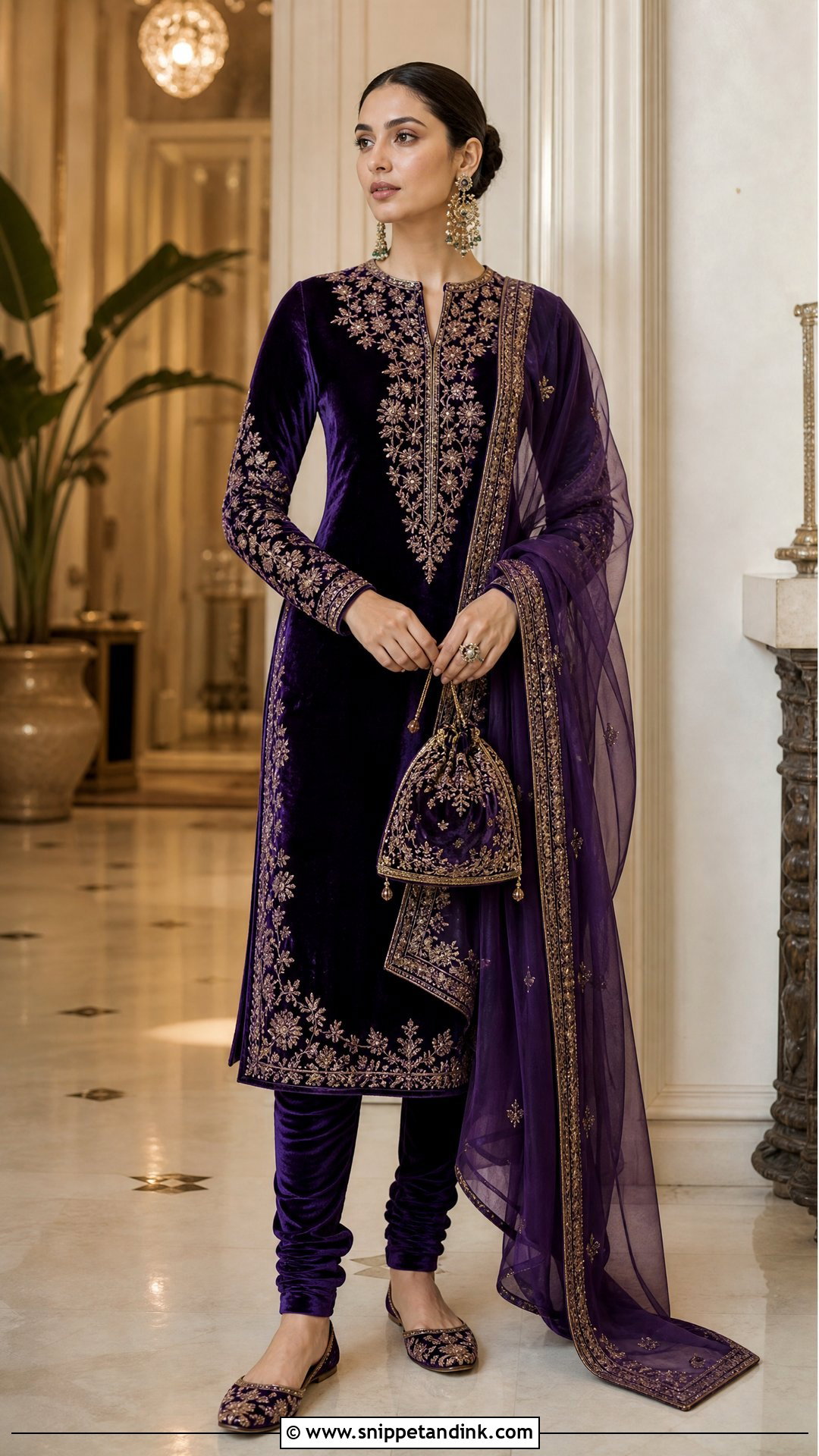
Purple velvet looks most regal cut close rather than flared. Ask for a knee-length kurta with a close fit, full sleeves and side slits. The slits matter: velvet has almost no give, and without them the kurta rides up every time you sit. Antique gold floral embroidery around the neck and cuffs is plenty against the pile. A matching churidar and a sheer purple dupatta with small metallic motifs, antique kundan earrings, a gold-edged potli and purple velvet juttis. A center-parted bun and plum-toned makeup carry the color through. Winter receptions and evening weddings indoors are its natural home.
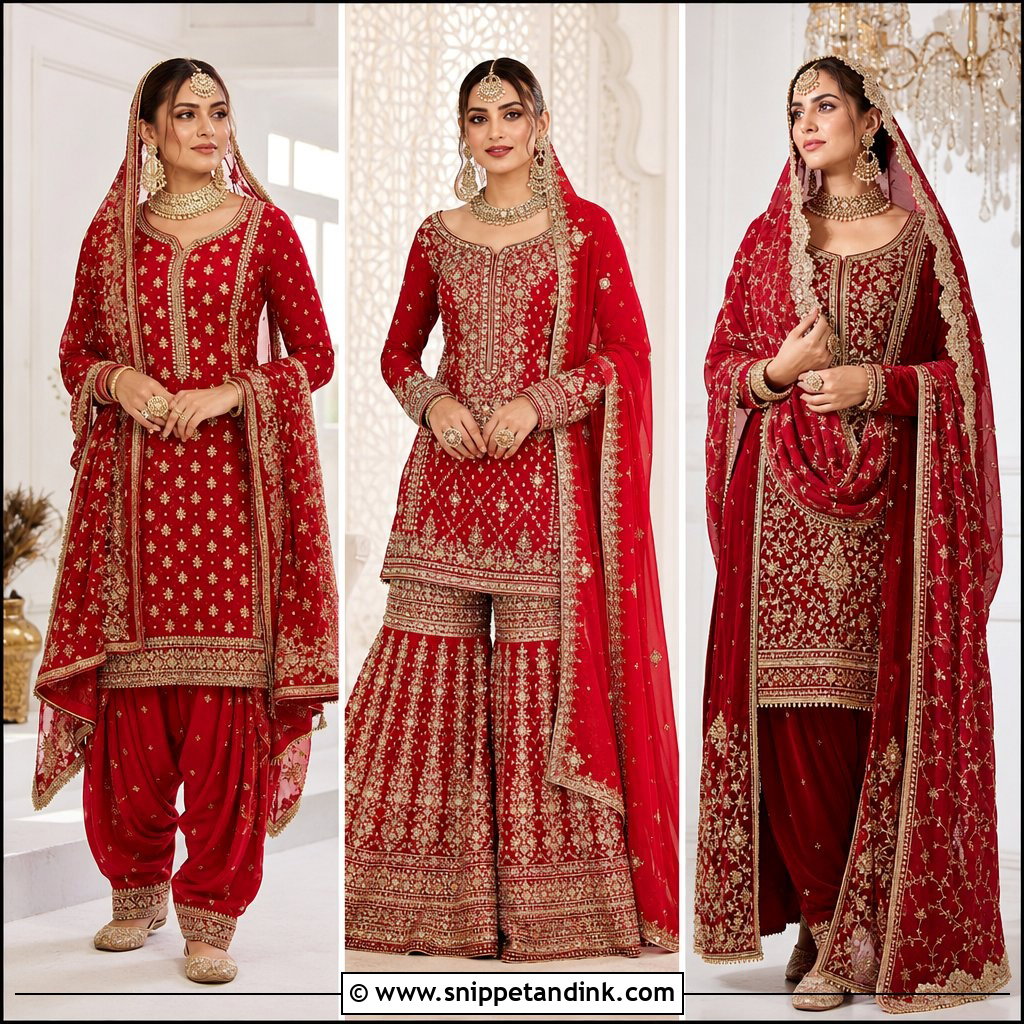
18. Red Bridal Sabyasachi Sharara Suit
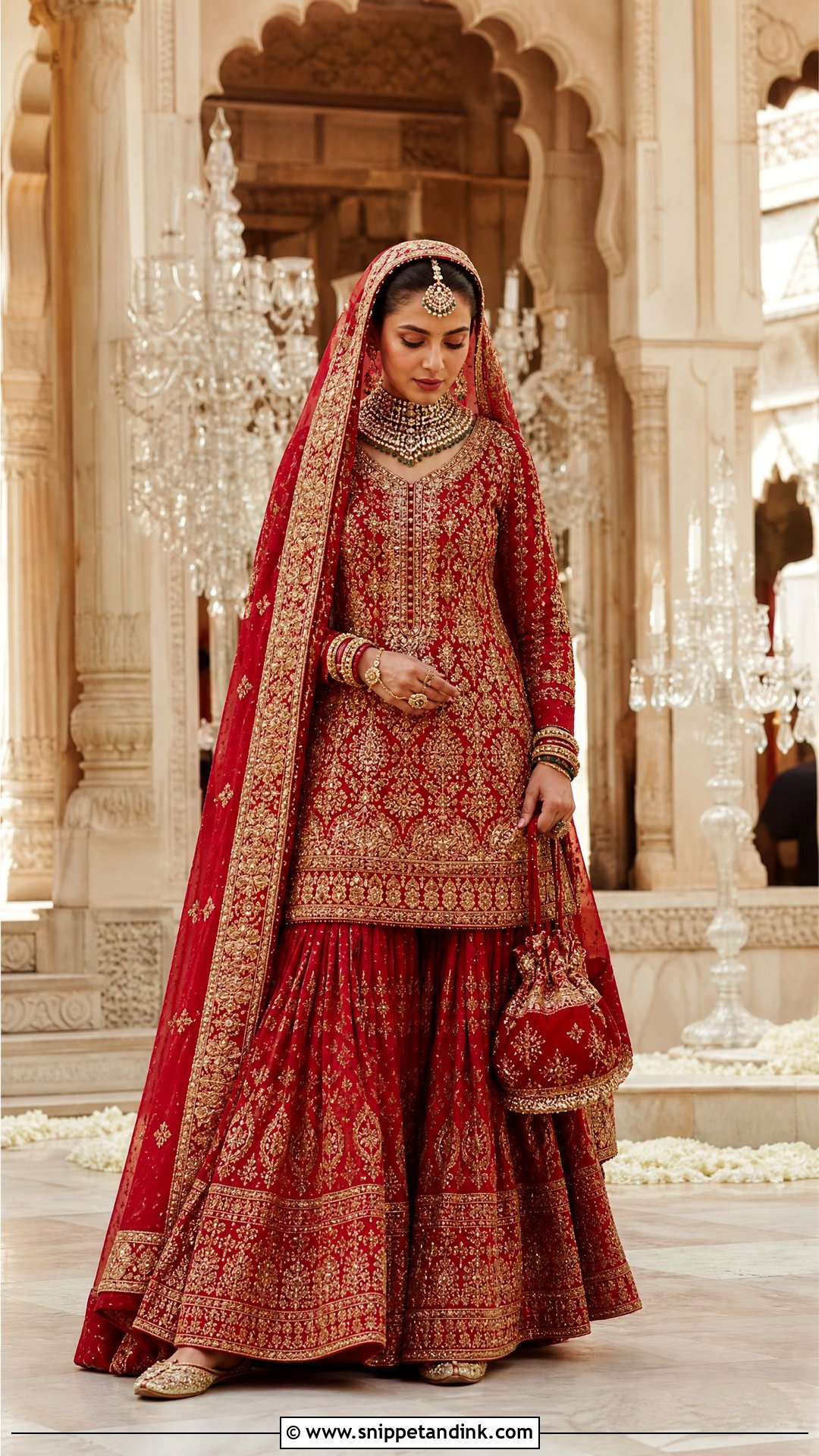
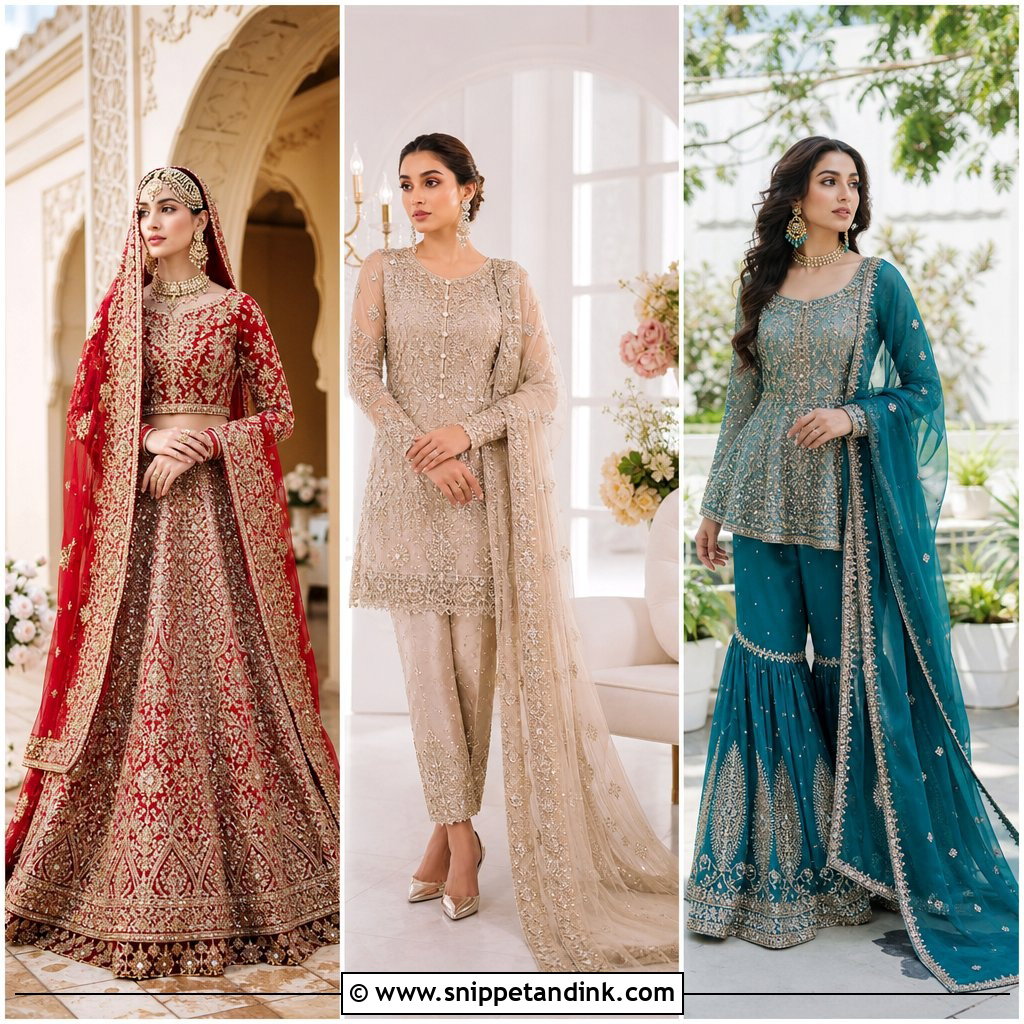
A red bridal sharara suit gives you the color of a lehenga with far easier movement, and I recommend it most to brides facing a long ceremony with a lot of standing up and sitting down. Choose a structured short kurta in silk or brocade with zardozi, tilla and floral embroidery, over a full sharara. Insist on a wide, comfortable waistband, because a heavily finished hem adds weight that all hangs from it. The red organza dupatta goes over the head or across both shoulders. Kundan necklace, matching earrings, bangles, an embroidered potli, gold juttis, defined makeup and a smooth bun tucked under the dupatta.
19. Ivory Gold Sabyasachi Brocade Suit
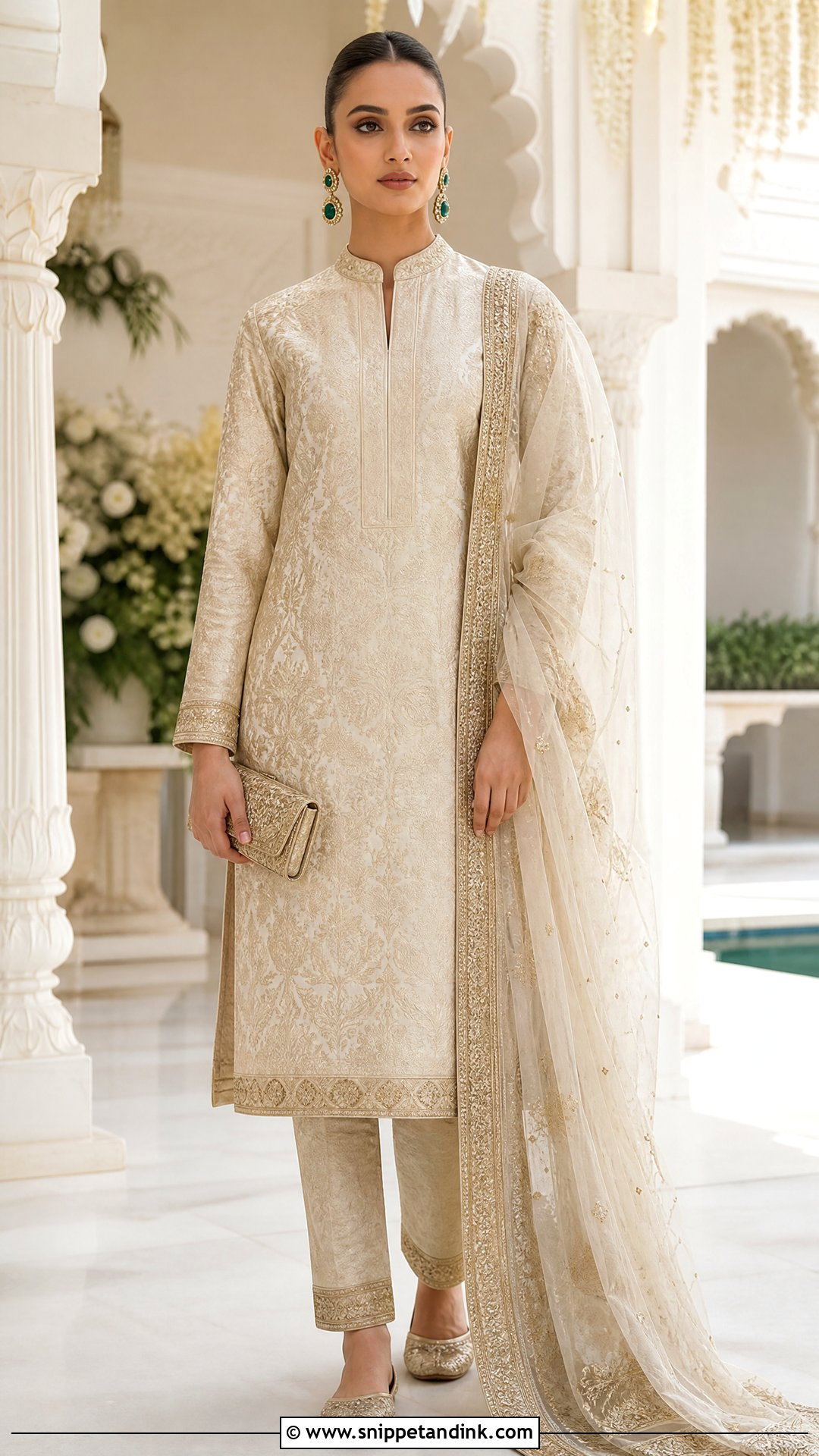
Ivory and gold suit two very different people: a guest who wants to look formal without competing, and a bride at a small civil or registry ceremony. Start with a straight ivory brocade kurta with a high round neck or modest V, over slim ivory pants for a long vertical line. A sheer dupatta edged in antique gold softens the stiffness of the brocade. Emerald or ruby earrings bring color, while the bag and shoes stay in ivory and gold. A structured clutch, pointed embellished flats, and soft waves or a neat bun. Ivory brocade can yellow when it’s stored sealed in plastic, so I’d keep it in a cotton garment bag.
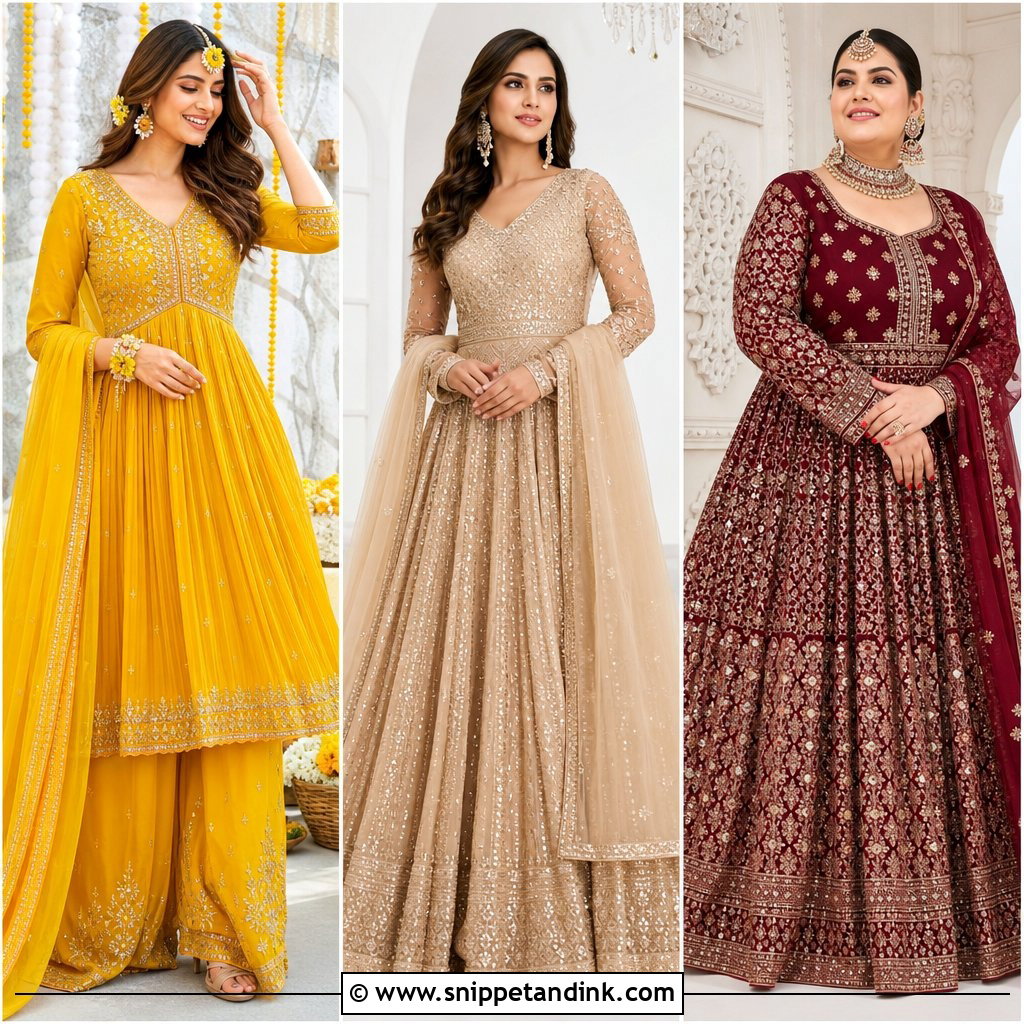
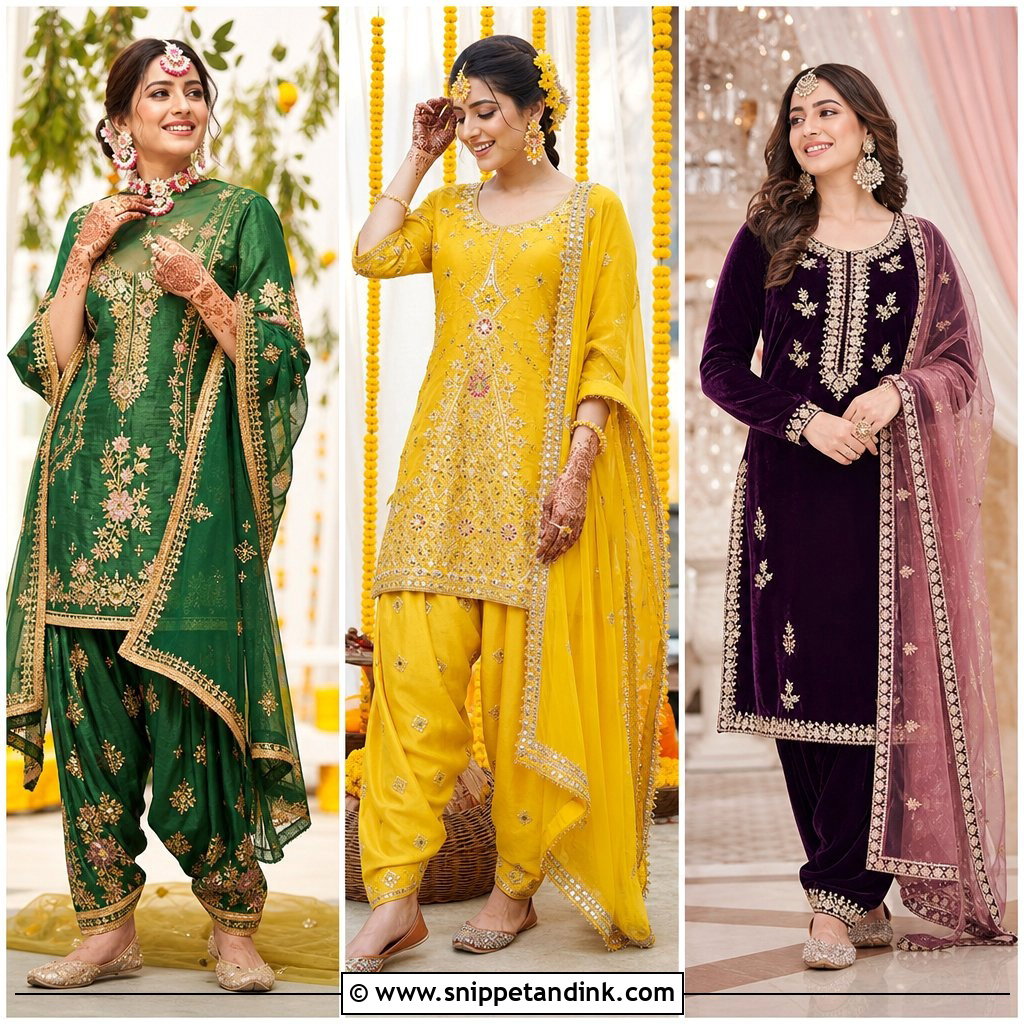
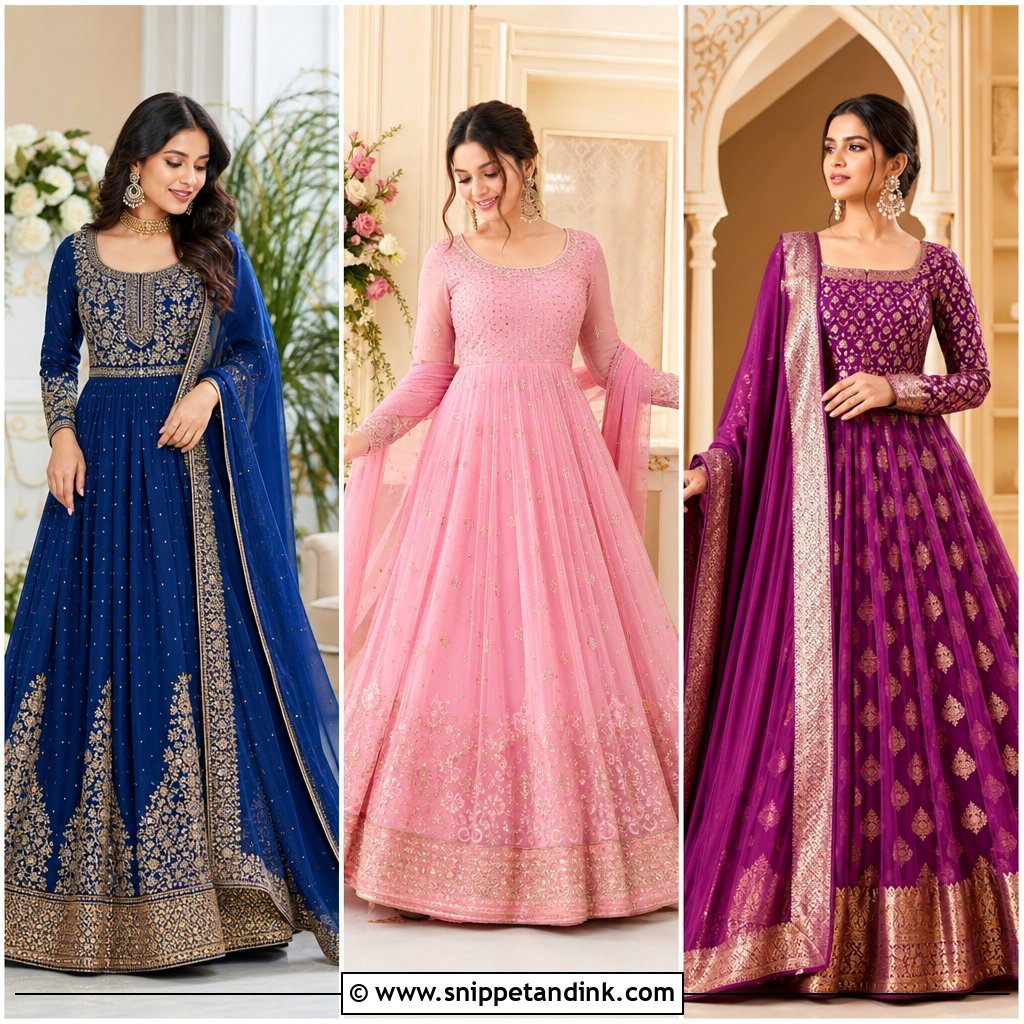
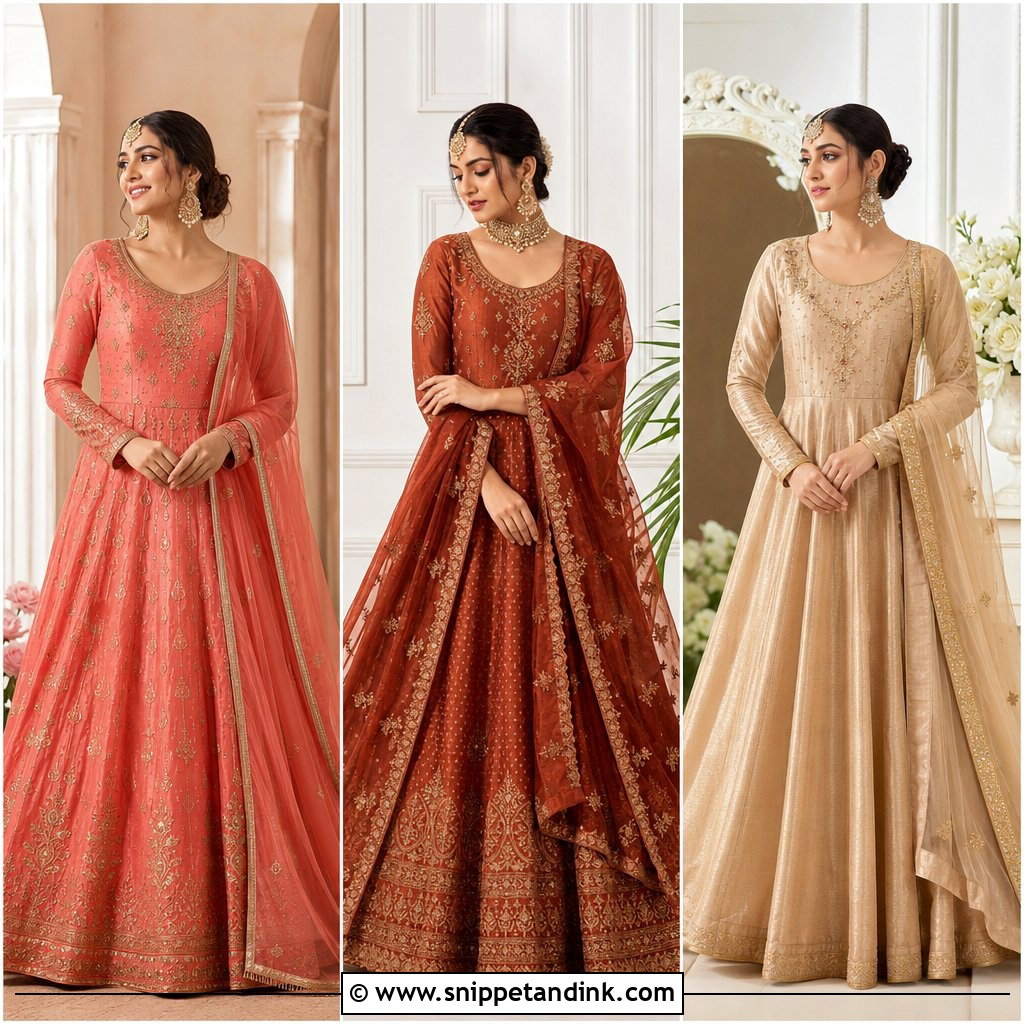
20. Black Floral Sabyasachi Organza Anarkali Suit
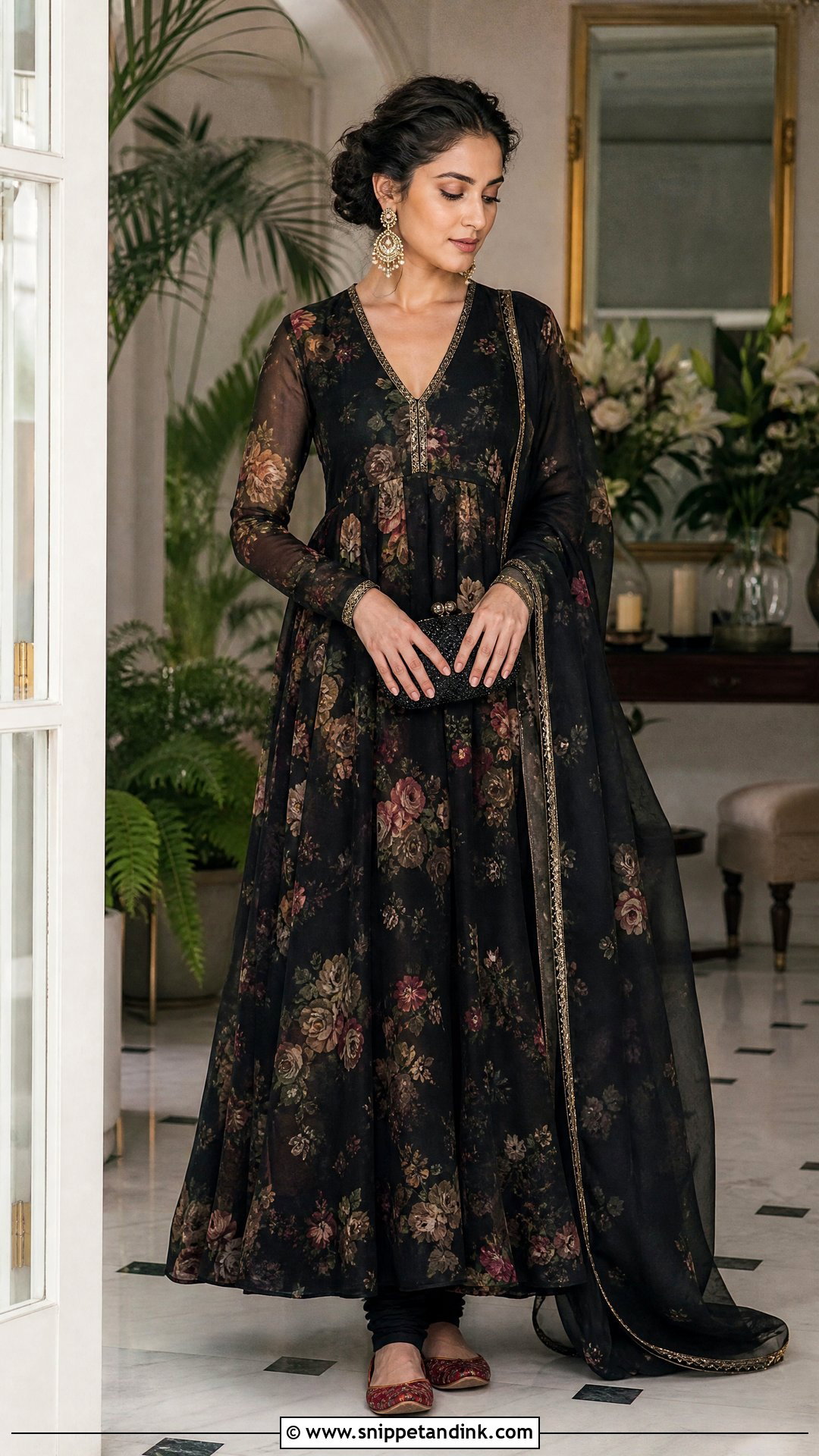
Muted florals in dusty pink, burgundy, olive and beige stop black organza from looking severe. Choose a lined floor-length Anarkali with a defined waist, sheer full sleeves and a gentle V-neck. A fitted black churidar goes underneath, with a coordinating organza dupatta trimmed in a narrow embroidered edge. Antique gold earrings, a black beaded clutch, and burgundy or black juttis. Loose waves keep it relaxed; a low bun makes it formal. Black organza shows every speck of dust and lint, so I keep a lint roller in my kit for exactly this kind of outfit. At receptions it gives you rich color without leaning on red or gold.
When You’re the Guest Rather Than the Bride
Many of these suits end up on sisters, cousins and friends rather than the bride, and in most families the etiquette is fairly settled. Bridal red, heavy zardozi and a dupatta worn over the head all read as bridal, so as a guest I’d leave at least one of those three out. Ask about colors as well. Some households avoid black or all-white at a wedding while others don’t mind at all, and it costs nothing to ask the family a week ahead.
- Think about the function itself: a haldi with turmeric paste flying around is no place for ivory organza.
- Think about the floor: sharara and gharara hems sweep up dust and grass clippings on a lawn.
- Pack a light shawl for evening functions at an open-air venue, unless you’re already in velvet.
- Keep your jewelry one notch quieter than the bride’s family; heritage earrings alone usually do it.
A Suit Can Be Rewritten by Its Dupatta
What I like about suits is how much a single outfit can do. Velvet Anarkalis bring drama, floral organza feels soft, and sharara, gharara, churidar, palazzo and straight pants give everyone a shape that works for their body and their day. Settle fabric, fit and embroidery first; accessories come last. A heavily worked suit rarely needs much jewelry, while a plain one comes alive with a striking dupatta or heritage earrings. Swap just the dupatta and the earrings and one kurta set can go to three different functions. Let comfort and the formality of the event make the final call.
You'll Like These Ideas:






Leave a Reply